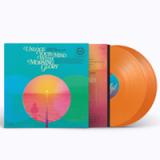
The breakout underground star of the past year, the deservedly hyped Thought Leadership returns with another X ideas: the deck this time chooses the suit of Cups. This new collection is closer to the Post-Punk tonality of Pentacles, than the breezy Balearic Jazz of Swords. Gone are the brushed drum samples and airy synths and in their place are BIG guitars, 808 thumps and a decidedly more prominent use of bass as a melodic device.
As the suit of Cups reflects the emotional heart of the Tarot, presented within are a further X pieces, this time displaying the full range and fervour of Thought Leadership.
You know the drill by now. Originally out on cassette only, we present the first ever vinyl issue. It's a hideously limited pressing of 300 for the world, so don't sleep on this.
Side A explores the emotional levels of consciousness; angst, joy, love, sorrow, relief, regret – they are all represented across the first seven tracks, and often within the same piece. XXI kicks us off with a huge tumbling D minor passage, layers and layers of guitar front and centre, whilst the drums pound away in the distance. Release is provided with a gorgeous G Dorian section, where we hear the bass take flight with a high melodic line.
We’re still in familiar Durutti Column meets Dif Juz territory here, but things switch up with XXII. This piece showcases a darker, more angular palette of guitars; think Alan Rankine (The Associates), or Deb Demure (Drab Majesty) in the unexpected harmonic shifts, knotty arpeggiated patterns and heavy, goth-adjacent modulation. A real love letter to 45+ years of darkly inclined guitar heritage.
XXIII enters the fray with tight, thumping 808s and Marr-esque guitar figures; and again, the bass providing heavy melodic counterpoint to the guitars. Enter chiming, lyrical lead phrasing, reminiscent of the eternal opening to "Everybody Wants To Rule The World". Another accidental perfect pop moment from the Thought Leader. Whilst on the topic of Tears For Fears, XXIV comes swinging out of the gate with some serious Sophisti-chug; we’re reminded of "Shout" in the A section, before being beautifully juxtaposed in the B section with more Vini-eqsue patterns, reminiscent of his timeless classic, Another Setting.
XXV gives us welcome pause to take stock midway through the A side. No drums this time, but instead a heartbreaking conversation between two guitars; think Kevin McCormick and David Horridge’s masterful Light Patterns, or perhaps even the early solo-Bill Connors mid-70s cuts for ECM. The moment of quiet reflection passes, and is quickly shattered by the thudding march of XXVI – this piece comes across like The Associates playing "Wicked Game"; heavy, moody, and utterly compelling. XXVII ends our journey across Side A with more Marr-inspired playing; one for the heads and already featured on mixes, this one is real testament to the vision of Thought Leadership.
Side B again takes us on a trip through three long-form semi-improvised pieces. XXVIII is like those classic Jonny Nash, early Melody As Truth releases, slowly unfurling, additional details introduced deliberately piece by piece, this idea builds across 7+ minutes culminating in some utterly joyous ebow fireworks at the end – well Balearic.
XXIX again, like XXV before it, dispatches the drums with a focus purely on melody and mood. The piece feels like a lost Save Room Theme from the Resident Evil series, pure golden age Capcom Sound Team vibes. Unadulterated aural nostalgia for hours spent with a PS1 in haze of hash.
XXX completes this majestic voyage with another Modal exercise; this time the Thought Leader has opted for the Lydian Mode. Beautifully dreamy, undeniably Soundtrack-y, and arguably the most concise distillation so far of everything this project stands for; drum machines, guitars, pedals, one-take improvised solos – XXX has the lot, and is surely destined for greatness.
So, another X epic statements for guitar, homespun with the humblest of means, for all the dreamers out there. The first ever vinyl release of IV Of Cups has been carefully remastered by Be With's engineer Simon Francis to ensure it sounds better than ever after its initial tape release. Cicely Balston's expert skills have made sure nothing is lost in the cut at Abbey Road Studios whilst the records have been pressed to the highest possible standard at Record Industry, in Holland. The original tape cover artwork, so crucial to Thought Leadership's striking visual aesthetic, has been rejigged for vinyl issue here at Be With.
The last 2 LPs flew. You have been warned.
Search:the end game is now
Repress
Underground stalwarts Voodoos & Taboos make their Duality Trax debut alongside a remix from rising talent Bertie, set to drop on November 8th. Now on its seventh release, Holly Lester’s vinyl imprint blends seasoned pioneers with the next generation of producers. A serendipitous moment at London’s E1 in 2023 was the genesis for the labels latest release, when DT label head Holly Lester unknowingly dropped a Voodoos & Taboos track only for the duo to walk in mid-way. Already known for their standout releases on iconic labels like Phonica, Bordello a Parigi, and Palms Trax's
CWPT, this chance encounter sparked a creative connection between Holly and the pair.
‘Time Out’ kicks things off with swirling synths and the duo's signature alien electronics, set to a playful breaks infused rhythm and morphing bassline, as command and control rings out overhead. ‘Endless Game’ comes with the usual V&T trimmings; an infectious bassline and with a scattering of curious sounds and samples, with a healthy dose of italo-inspired groove - the type of track reserved for bringing a dash of joy to the danceoor amidst a heads down body-moving groove. On the B-side, Australian newcomer Bertie steps up with her remix of ‘Time Out’, following her breakout EP and high-pro¬le remix by Ciel. In a short space of time, Bertie has already developed a signature sound injecting her productions with nostalgic 90s house and contemporary subtext; glued together by crunchy drums and a penchant for wide-eyed rhythms. Sticking to her guns, Bertie’s ip of ‘Time Out’ packs a serious punch, showingwhy she’s an artist on the rise. The EP closes out with the psychedelic ‘All Action’ with its vocoder vocal samples, bubbling acid and teleporting top-lines.
One of the most notable features of the duo's music is their ability to let things evolve over time, their music often accompanied by strong storytelling, an art that has been almost lost in today’s era of instant grati¬cation; their instrumentation often taking on a life form of their own and dosed with surprises.
- A1: ) | Anuradha Paudwal – Gayatari Mantra
- A2: ) | Baba Zula – Arsiz Saksagan (Cheeky Magpie)
- A3: ) | Orchestra Tout Puissant Marcel Duchamp – So Many Things (To Feel Guilty About)
- A4: ) | Christopher Martin – Playing Games With My Heart
- B1: ) | Geir Sundstøl – C’est Vide En Ville
- B2: ) | Brother Ah – Transcendental March (Creation Song)
- B3: ) | Les Abranis – Therrza Rathwenza
- B4: ) | Sparkels – That Boy Of Mine
- C1: ) | Maximum Joy – Stretch (7” Mix)
- C2: ) | Chillera – Schax
- C3: ) | Elijah Minnelli – I Hope The Goats Come Back (Ze-Hood De-Sham Lichdal)
- C4: ) | Siti Muharam – Pakistan
- D1: ) | Muriel Grossmann – Traneing In
- D2: ) | Catford Gyrations – Land Of 1000 Presets **
- D3: ) | Living Daylights – Let’s Live For Today
- D4: ) | Natalie Bergman – Shine Your Light On Me
Yellow / Pink Vinyl[49,37 €]
Crate digger and music enthusiast James Endeacott compiles ‘Unlock Your Mind With Morning Glory’ for Two-Piers Records – A glorious heady mix of the weird and wonderful eclectic music from his radio show ‘Morning Glory’
“One weekday afternoon towards the end of 2017 I sat in The Lyric pub on Great Windmill Street, Soho with my dear friend Raf. I’d just finished another of my weekly Soho Radio shows and was starting to think about the next one. Raf had been on as a guest playing some of his favourite tunes of the day. We had a few drinks, told a few stories and started to plot and scheme. It was always a dream of mine to have a daily radio show. Radio had always informed and excited me from my early teens listening to John Peel under the blanket when I should’ve been either sleeping or revising right up to the present-day musical excursions of NTS, WFMU and numerous internet based stations.
We decided to speak to Adrian and Dan who ran Soho Radio to see if they’d be up for us doing a daily morning show. To our surprise they were into the idea and within 5 minutes Adrain came up with the name Morning Glory. We all liked it. We were all excited. It was all systems go. In December 2017 Raf and myself started a daily 2 hour show. We did the show together, got guests in and the musical policy was whatever we felt like that day. After several months Raf found the mornings too much. Off he went into the distance occasionally coming back with a smile, and a bag of new music. I carried on alone and then suddenly in March 2020 the world stopped, and we went into lockdown.
We set up in my house in Catford, Southeast London and carried on. The show became 3 hours a day and I started to invite friends, record labels, record shops, bands etc.. to supply me with hour long mixes that I played every day. The show took off during this time. My musical tastes expanded as I spent all day long searching for new sounds from around the globe. People started to send me more and more music. I became obsessed with the show. The audience started to take to social media and ask for certain tracks or artists to be played. I got listeners to make me mixes to play on the show and I did several phone interviews with musicians while playing some of their favourite tunes.
I was grateful that Soho Radio left me to my own devices. They never told me what to do or what to play – they trusted ma and I trusted my instincts.
The music on this compilation is not a ‘best of’ it’s just how I felt when I compiled it at the start of 2025. Apart from a couple of tracks they are all things I’ve come across since the show started in December 2017. If I did a list of tracks now I’m sure it would be completely different. Surely that’s the point. We never stick in one place. We are always moving and searching. Always trying to unlock our minds. Put it on. Take your time and let it take you somewhere” James Endeacott 2025
Precisely one year after Lézire, Crush of Souls is back with his third full-length album.
The musical endeavour of Charles Rowell – active in the indie/punk global scene since 2008 with bands like Crocodiles, Flowers of Evil, Issue – is just like its creator: always cooking up something. Relentlessly.
Now, as it was perceivable by the trajectory undertaken by after his previous LP, Captive Youth leaves goth rock and dark folk aside and head swiftly towards some old school 80’s EBM & 90’s Industrial dance vibe. After all, any album exploring themes of dystopia, politics and sexuality requires a strong rhythm. So how could this new chapter not mention seminal synth-pop and body music classics such as Technique by New Order, Belief by Nitzer Ebb, Towards Thee Infinite Beat by Psychic TV and Pressure Points by Anne Clark?
Forever a displaced soul, Charles’ album number three feels like a revision of Crush Of Souls and also a reanimation of his captive youth spent moving from town to town. The energy of the wandering worker poet. Warehouse basslines, artillery fire backbeats. Romance and melancholy wrapped in barbed wire. All this and more oozes from nine new tracks that inevitably deliver that blurry sexy urban vibe that’s become the project’s trademark.
Features collabo hit single Domination with Sade Sanchez from L.A. Witch.
- 6: House Of Bliss
- 8: Leaving
- 9: Lady Blue
- 11: About That
- 12: Paradise (Stay Forever)
- 1: Moonrise Rapture
- 2: About That
- 3: Unlimited Luv
- 4: Misunderstand
- 5: To The Heart
- 708: 00
- 10: Christmas With U
Lemon Vinyl. Black Screen Records and Kaizen Game Works have once again teamed up for the vinyl repress of About That_ Paradise Killer B-Sides, the follow-up release to Barry "Epoch" Topping's vibrant funky city pop/vaporwave soundtrack to the open world adventure game Paradise Killer, which has proven to be a true essential release for itself. The record is featuring three new songs, vocal tracks, instrumental versions, remixes and piano arrangements along with a number of amazing guests, which are Fiona Lynch, Kyle Murray-Dickson, Fabian Hernandez, Ged Cartwright, Thomas Temple, MEEBEE and Okumura. Now available on lemon coloured vinyl with gorgeous cover art by José Salot. The sounds of Paradise. The music of a cosmic dream. Tunes from another reality. The tempo of the crime to end all crimes. The beat of long dead alien gods. The playlist of the investigation freak. Let the music take you away to Paradise. Feel the sun scorching your skin. Smell unbearably hot concrete. Savour the sweet taste of crime committed on a tropical island in another reality. Remember when we danced along the beach? Along the streets of Paradise? You made me this mix tape on the roof of your apartment block. We stared at the moon. You said you'd kill the moon. I didn't believe you. I was wrong.
e 5TO THE HEART [VOCAL VERSION]
[f] 6HOUSE OF BLISS [VOCAL VERSION]
[h] 8LEAVING [PIANO ARR.]
[i] 9LADY BLUE [MEEBEE & OKUMURA. REMIX]
[k] 11ABOUT THAT... [INSTRUMENTAL]
[l] 12PARADISE (STAY FOREVER) [INSTRUMENTAL]
[e] 5TO THE HEART [VOCAL VERSION]
[f] 6HOUSE OF BLISS [VOCAL VERSION]
[h] 8LEAVING [PIANO ARR.]
[i] 9LADY BLUE [MEEBEE & OKUMURA. REMIX]
[k] 11ABOUT THAT... [INSTRUMENTAL]
[l] 12PARADISE (STAY FOREVER) [INSTRUMENTAL]
- 1: Toronto 20Xx
- 2: Theme From Scott Pilgrim Ex
- 3: Player Select
- 4: One More Summer
- 5: Stephen's House
- 6: Shopping District
- 7: High Fashion
- 8: High Park
- 9: Wallace's House
- 10: Downtown T.o
- 11: Hollie Hawkes
- 12: Food Court
- 13: Julie Powers
- 14: Coffee Break
- 15: Window Shopper
- 16: Wallace Wells
- 17: Band Practice
- 18: Ice Age
- 19: Dino Surf Rock
- 20: The Beaches
- 21: Vegan Banter
- 22: Vegan Brawl
- 23: Playtime
- 24: King Of The Rails
- 25: Chill Minigame
- 26: Benvie Tech 1F
- 27: Benvie Tech 2F
- 28: Benvie Tech 3F
- 29: Benvie Tech Boss Battle
- 30: Vpd Hq
- 31: Eldest Son
- 32: Vpd Boss
- 33: Medieval Julienne
- 34: Subspace Ex
- 35: Unchill Minigame
- 36: Demon Chat
- 37: Demon Attack
- 38: Casa Vania
- 39: Lady Envy
- 40: Let's Fight!
- 41: Movie Studio
- 42: Let's Throw Down!
- 43: Peaceful Casa
- 44: Throne Room
- 45: Demon Boss
- 46: Let's Do This!
- 47: Old Timey Movie Studio
- 48: Big Band Intro
- 49: Big Band Boss
- 50: Riff Rift Revisited
Scott Pilgrim EX, the newest video game from the Scott Pilgrim franchise developed by Tribute Games, is out now with an all new original soundtrack from Anamanaguchi. The sprawling soundtrack, which accompanies a brand-new storyline co-written by series creator Bryan Lee O’Malley, perfectly connects the band's legendary electronic past with their fuzzed out garage rock present while maintaining their unmistakable punchy style. Known for resonant world building across past projects, the depth of emotion and the range of styles displayed on Scott Pilgrim EX are uniquely Anamanaguchi while delivering a host of melodically anthemic and new energetic hooks that are sure to pack a punch for both newcomers and old school fans of the band alike.
Anamanaguchi's collaborative relationship with the Scott Pilgrim universe goes back to the early days of the band. After cutting their teeth programming music with playable Nintendo cartridges and helping to bring a wider audience to a largely internet based 8-bit chiptune scene, the band was brought in to score the fan-favorite soundtrack for Scott Pilgrim vs. the World: The Game. The success of this game soundtrack would help them to launch an early crowdfunding success story with their campaign for their debut album, 2013's Endless Fantasy. From there the band would go on to collaborate with virtual pop star Hatsune Miku (resulting in the perpetually viral, Fortnite featured hit, “Miku”), and later develop the intricately soundscaped compositions displayed across their second album, USA, but throughout it all the connection between the band and the Scott Pilgrim universe would remain a pivotal source of inspiration.
After being brought in to score the animated Netflix series, Scott Pilgrim Takes Off, in 2023, band members Peter Berkman and Luke Silas would credit the live kinetic energy they channeled when writing songs for the in-universe garage band Sex Bob-Omb with helping them get back in touch with the roots of how they learned to play music even before Anamanaguchi's earliest releases. This process would eventually lead to Peter and Luke alongside the remaining two band members — Ary Warnaar and James DeVito — flipping their typically meticulous digital writing process for the more collaborative, straight to tape, distorted angst that can be found on 2025's Anyway, marking another significant evolutionary turn for the band to come out of their relationship with Scott Pilgrim.
Now fresh off the heels of a nationwide tour in support of Anyway, Anamanaguchi have returned to the 8-bit beat em up world of Scott Pilgrim with a relentlessly high energy and genre defying original soundtrack for Scott Pilgrim EX. A return to form that comes with a depth of knowledge and innovative skills that have allowed the band to continue to evolve and grow alongside the characters in the Scott Pilgrim universe and the multi-generational fanbase that continues to follow along with them.
The new soundtrack for the latest installment in the Scott Pilgrim franchise, Scott Pilgrim EX
MAXED OUT MAXI EP OF THE HIGHEST ORDER FROM TAPES, HONOURING JAHTARI'S 20 YEARS OF D.I.G.I.T.A.L. BUSINESS IN FINEST STYLE...LOADED WITH RIB-8-BIT PRESSURE!
Four digital dancehall scorchers with two accompanying 8-bit versions meticulously crafted with the soundsystem session in mind!
Tapes has been spreading wonky saturated riddim goodness since his ground breaking “Hissing Theatricals” EP in 2009. Now, after a brief hibernation in the northern spawning pools, he’s spinning up his reels once again to present a new killer set of amphibian friendly, nintendo-fied sound system depth charges!
The “Photos of My Frog EP” is croaking off with its oddly addictive namesake: a surefire pond party starter – Ribbit! Hopping along, the adorable but tuff “Cleat Skank” and its gameboy driven pollywog follow, swinging their 8bit melody lasso till the cows come home. Yeehaw!
“Ramp Up” on B is a dense and raw FM synth digi banger, sure to fry any nearby circuits, so best beware! “Back Cramp Riddim” then turns up the low end even more and swirls its drums and synths into the next delay vortex, warping into a pixelated 8bit conclusion.
Whatever your taste in insects there’s something on this record for any lover of vintage dancehall and amphibious wild life alike!
These are going to fly out - sticky tongues at the ready!
- A1: Chipppps - Prz Remix (04 31)
- A2: Exosphear - Pdqb Speedrun Suture (00 28)
- A3: Laserzimmer 1, Raum 3 16 - Noise&Noise Ghost Shell Remix (03 19)
- A4: Dodgedog - Pdqb Killscreen Suture (00 37)
- A5: Flossbite - Galaxian Artefacts Remix (04 23)
- B1: Tögtägtüu - Cem3340 Rework (03 52)
- B2: Maurodius-Papeda - Pdqb Demake Suture (00 38)
- B3: Boktay - Dark Vektor Inside Your Eyes Remix (05 14)
- B4: Binäry Gatoraders On Acid - Pdqb Bonus Stage Suture (00 42)
- B5: Lygöphobiä - Mesak's Broken Vectrex Mix (03 03)
The neon "pdqb Arcade" sign in Port Astra flickered with the same chaotic energy it had decades ago. Six men, now with more gray hair and worries than they once had, stood at the entrance. They were the "Lucky Six," reunited after years of scattered lives and separate paths.
"I can't believe this place is still here" said Noise, who had flown in from Tokyo. "It hasn't changed 8 bits, haha". CEM, now a father of 3340 synthesizers from Bari, replied with a grin. "We have. Look at Galaxian, he's unrecognizable!"
Each of them held a single, precious coin. Their plan, born of a wave of nostalgia and the understanding that they couldn't stay forever, was simple: one coin, one game, one last chance to be a legend. Each man would choose the game that meant the most to him and play the round of his life…
At the end, pdqb, the arcade owner, came up to the guys. "Don't be sad", he said. "Even if it was your last credit, there's always one more somewhere in some game". He then walked through the arcade and played four different machines that just happened to have an extra credit on them. "See?", he said.
Synaptic Cliffs proudly presents pdqb together with six black belt gamers (PRZ, Noise&Noise, Galaxian, CEM3340, Dark Vektor, Mesak), each a legend in their own right. They don't just replay pdqb's 8 1/2 Bit album; they become it. Together, they embark on a journey through legendary worlds, creating a place filled with soundscapes and challenges that blur the line between music and game. They move with the rhythm of the music and face the challenges within, weaving their own stories into the fabric of the iconic work.
2025 Repress
After a short hiatus Deep In Dis intl. is back in the game. This time bringing you a split EP by two young prolific producers who have been in our radar for quite sometime now, Eric OS and Lewis. With both artists being based in Sweden and each one of them with a characteristic sound, we thought it would be a good idea to split our next release between these two cutting edge talents and that's how the Timebomb EP came to life.
We first discovered Eric tunes through a Binh set last year at the Nostromo Festival and we instantly knew we had to get Eric on board for a future project with us and here we are. With releases on System Error, Eya Records and his own imprint Space Trace, Eric brings to the table all those elements that made us get up off the back stage sofa and lose it on the floor. Flipping the record we have the Data Flow head label Lewis bringing us another two special club cuts. Having released a digital EP with us before, we couldn't wait to press some of Lewis analog soundscapes.
A1. 'Eden' is a true dance floor filler , endless groove and quirky sounds penetrating your brain while taking you in a break with some dreamy pads and even stranger synth lines. A2. 'Timebomb' keeps the vibe going, even higher this time. The formula seems to be timeless. Progry melodies, wonky bassline, and solid drum patterns.B1. 'Project Mayhem' invites us to close our eyes and travel without moving with its hypnotic groove, the feeling of pleasure, energy and empathy increases and floats the dancefloor in a never ending way. Closing the EP 'Acid44' spills a lysergic groove on the floor with no possibility of escape or return. Infected synth lines, snappy snares and some serious bassline are the powerful potion of the track.
“To Model Phenomena” is a scientific concept that describes a computer’s ability to emulate, regardless of whether the emulated phenomenon exists outside its circuits or is purely imaginary.
Modeling communication platforms enables us to interact with each other or with computers. Modeling behavior patterns, nuclear fusion, or, as in the case of scientists from the Human Brain Project, a virtual human brain, allows us to simulate cognitive processes such as perception, memory, and decision-making, providing insight into the nature of human thought.
In this record, the phenomena modeled are those moments when the mind leaps into the void, confronting new paradigms. For instance, when science, art, or mass media introduces new information, propelling us into a transformed reality.
From this starting point, European musician Shifting Heigo maps a path between realities, evolving his narrative as his music unfolds. This work draws inspiration from Curtis Roads (vice chair of Media Arts and Technology at the UCSB) and his studies on granular synthesis and time scales, where each track on To Model Phenomena evokes a sense of movement, where nothing begins or ends in quite the same way.
A musician with strong ties to new technologies, Shifting Heigo has collaborated with the University of Málaga (Spain) in its PH Degree Program in video game design, composing interactive music, while also singing as part of the tenor section in the Qatar Concert Choir, affiliated with the Qatar Philharmonic Orchestra.
Currently based in Abu Dhabi, he is now part of a circle of electronic musicians surrounding the New York University Abu Dhabi, an institution that supports electronic and experimental music across the Middle East.
To Model Phenomena is the result of his search for a unique voice as a musician, where ternary rhythms, noise, and silence shape the narrative. This is a discourse from a musician’s perspective on the changes that science, technology, art, and the rapid flow of information demand of us. A direct gaze into the fear of change.
Always endeavoring to drop it a little way different, Ital Counselor Records once again stretch things in a forward direction while paying full and forceful tribute to that which has come before. This heartical 7" is a tribute to the late great Prince Lincoln Thompson in the form of a reimagined take on his composition "Kinky Money Game."
It is with great honor that ITAL COUNSELOR records has been able to work with two legends of the music business on this slab of plastic. Firstly, Jeb Loy Nichols comes with a storied history in music and the visual arts. He first came to ITAL COUNSELOR’s attention upon discovering the 1981 compilation, “Wild Paarty Sounds” via Cherry Red/On-U Sound. Later would be greater, with projects skirting the realms of country, soul, reggae, and leftfield. Bands like the Fellow Travelers, solo albums with Adrian Sherwood, and more recently writing songs for Horace Andy’s latest On-U album have all contributed to an impressive body of work.
Over the years when Jeb is not making music, he can be found writing books or churning out block prints of birds, leaves, pithy phrases, and the odd sleeve art for labels like Pressure Sounds, and, yes ITAL COUNSELOR. His sleeve work on this 7” indeed captures the essence of the music hiding under the cardboard exterior. Lo-fi, retro while poignantly on time. Social commentary manifested auditorily and visually.
Jeb’s reinterpretation of Thompson's original bubbles over a slow burning one drop built by none other than Studio One, Riz Records, and Tuff Scout Records alum Gil Cang. In yet another musical first brought to you by ITAL COUNSELOR, this piece of wax represents the only time Jeb and Gil have worked together. The results are a magical mix equally at home in the hands of a sound system operator unconstrained by the current ‘steppers’ norms as it is on a home stereo where one can deeply sit with the lyrics of depth and significance. An old time something feel for these nowadays times. An ITAL COUNSELOR Records essential.
Feel the vibes…
- A1: World Standard - Fellini & Rota
- A2: Masumi Hara - Your Dream
- A3: Normal Brain - M.u.s.i.c
- A4: Hiroyuki Namba - Who Done It? (Part 2)
- B1: Yasuaki Shimizu - Crow
- B2: Hiroyuki Namba - Tropical Exposition
- B3: Imitation - Exotic Dance
- B4: Pecker - Sha La La
- C1: Ep-4 - Db
- C2: Earthling - You Go On Natural
- C3: Masumi Hara - Camera
- D1: Geinoh Yamashirogumi - Rinne Kohkyogaku Meikei
- D2: D-Day - Ki·ra·i
- D3: Ryuichi Sakamoto - A Wongga Dance Song
Ever since he made his first trip to Japan to DJ, Optimo Music founder JD Twitch has been bewitched by Japanese music, and particularly the vibrant, imaginative, and often far-sighted sounds which emerged from the island nation during the 1980s. Now he’s put years of digging in Japanese record shops to good use on Polyphonic Cosmos, the latest release on his compilation-focused Cease & Desist imprint.
Subtitled ‘A Beginners Guide to Japan In The ‘80s’, the collection offers a personal selection of Japanese gems recorded and released between 1981 and ’86 – a period when advances in recording and musical technology offered the nation’s artists and producers a whole new tool kit to employ. When combined with the unique musical culture of Japan, where local traditions are frequently fused with Western styles to create timeless, off-kilter aural fusions, this embrace of locally pioneered music technology had spectacular, often unusual results.
Eight years in the making, Polyphonic Cosmos provides an endlessly entertaining musical snapshot of Japanese music of the early-to-mid ‘80s with all of the open-minded eclecticism and sonic twists that you would expect from the Glasgow-based DJ.
Compare and contrast, for example, the gently breezy, morning-fresh folk-plus-electronics bliss of ‘ばら二曲 Baranikyoku (Fellini&Rota)’ by World Standard – the most familiar alias of long-serving musician/producer Sohichiro Suzuki – and the hallucinatory, slow-motion tribal rhythms, post-punk rhythms and tape delay-laden electronics of Imitation’s ‘Exotic Dance’. Or, for that matter, the tipsy mid-‘80s electronic reggae of Pecker’s ‘Sha La La’, the grungy but melodic post-punk strut of ‘You Go On Natural’ by Earthling (a track Twitch accurately describes as “sheer unrelenting groove”), and the unearthly, swirling sonics, new age instrumentation and flotation tank vocals of prolific (and seemingly mysterious) act Geinoh Yamashirogumi’s ‘Rimme Kohkyogaku Meiki’.
It’s a credit to JD Twitch’s curatorial skills that the quality never dips, and sonic surprises lurk around every corner. Consider for a moment the hard to describe, far-sighted audio immersion of D-Day’s ‘Ki-Ra’ – all languid post-pop guitar, enveloping chords, spoken word vocals, shuffling 808 beats and marimba melodies – and the two contributions from video games soundtrack specialist (and driving instrumental synth-pop specialist) Hiroyuki Namba.
The collection naturally includes some selections that have long been favourites in Twitch’s DJ sets – see Masumi Hara’s ‘Your Dream’ – as well as a handful of tracks from artists who may be more recognisable to those with only rudimentary knowledge of Japanese musical culture. The great Yasuaki Shimizu, whose work as Mariah has become far better known in recent years thanks to reissues of some of his most magical albums, is represented via ‘The Crow’, a picturesque chunk of horizontal, hard-to-define jazz-not-jazz smokiness, while the collection fittingly concludes with a sublimely funky, oddball electronic workout from Yellow Magic Orchestra legend Ryuichi Sakamoto (the frankly incredible ‘Wongga Dance Song’).
Matt Anniss
Fate is a funny old thing. One day in 2011, DJ/producer Tom Trago found himself sharing a train journey with Steven Van Lummel, a DIY musician, artist and co-founder of PIP, an underground nightclub and cultural hub in The Hague. Over the course of a rambling, open-ended conversation, the idea of making music together came up; a few weeks later, Trago travelled to van Lummel’s place – a former industrial unit that was now home to a rotating cast of artists and musicians – and didn’t leave for a month.
Cossetted away from the outside world in van Lummel’s loft, with multi-instrumentalists Janneke Nijhuijs and Wieger Hoogendorp joining them to create a musical four-piece, MEGA WEGA was born. Over the course of four weeks, the quartet embarked on an almost continuous creative session punctuated only by impromptu parties and mixing sessions. Life-long bonds were made and over 70 tracks recorded before the mundanity of day-to-day life came calling.
For one reason or another, the project never saw the light of day, with tracks sat gathering dust on hard drives for the best part of a decade. During the madness and loneliness of the COVID-19 pandemic, Trago rediscovered the tracks. Delighted by what he heard, a collective decision was made to add finishing touches and release the resultant album on van Lummel’s PIP Records imprint. Further instruments and vocals were added over two days at Hoogendorp’s studio, before mutual friend Tom Ruig got on board to mix the album.
So, what can you expect from Haunted, Mega Wega’s debut album? First and foremost, it’s the sound of pure creative expression – the distillation of a freewheeling, no-holds-barred, spontaneous musical journey variously inspired by the do-it-yourself ethos of musical counterculture, shared inspirations and influences, epic jam sessions, distant stars (Wega, sometimes known as Fidis or ‘the harp star’, is one of the brightest in the night sky), imaginary journeys across dusty deserts, and the comradeship of four new friends.
Enchanting and alluring, it’s an album that gleefully denies lazy categorization and ploughs its own eclectic, atmospheric musical furrow in vivid sonic detail. It’s a collective exploration of heady musical eclecticism unified by saucer-eyed vocals, low-slung bass, loose-limbed beats, sweaty percussion workouts and hazy electric piano motifs.
Haunted begins with the woozy and hallucinatory slow-burn soundscape of ‘Get Things Done’ – an effects laden shuffle akin to lying flat on your back tripping under an intense desert sun – and ends with the creepy, mind-mangling post-punk funk of ‘Brain Carpaccio’; in between, you’ll find spaced-out, low-tempo lo-fi soul (‘Move Around’, ‘Haunted’), tactile synth-powered boogie revivalism (‘Make Me Work’), deep and off-kilter opioid jazz (‘Copenhagen’), intoxicating psychedelia (‘Last Night on Earth’), piano-laden dream-pop epics (‘Shake Or Fall’), and Latin-infused, percussion-powered hedonism (‘Chopping Heads’).
Born out of spontaneous collaboration and immersive, almost endless recording sessions, Haunted is an album shot through with imagination and boundless energy, captured for posterity by four friends and collaborators at the top of their game.
Known principally as a smooth titan of blue-eyed soul, Bobby Caldwell transcended genre tags with consummate ease; he was a musical icon of real class and versatility, cherished the world over. Tragically passing away in March 2023 at the too young age of 71, it still feels as if Bobby's true artistry is profoundly under-appreciated. His double platinum self-titled album from 1978 is a timeless masterpiece of sophisticated jazzy soul brilliance and is strictly canonical. Yes, it's perfect, yet it's been out of press on vinyl for years. We're deeply honoured to present the long-awaited reissue this summer.
Whilst Ned Doheny is known in Japan as "Mr California", native New Yorker Bobby Caldwell has always been "Mr AOR" to his Far-Eastern friends. His distinct charm is an irresistible blend of soul, jazz, and pop influences. He possessed phenomenal songwriting prowess, smooth vocal performances, was both a great soul guitarist and dextrous keyboard player and known for genius chord progressions. It all added up to a multi-layered brilliance entering the studio, and the singular sound he landed on was laced with soulful, sweeping strings and funky horns, touching lightly on disco, while allowing his supple voice to carry the stunning tracks he'd crafted.
String-swept opener "Special To Me" immediately sets the tone with its lush instrumentation, rich harmonies, and Caldwell's velvety-smooth vocals. Next up, a huge one. The infectious, mid-tempo bounce of "My Flame" showcases Caldwell's ability to effortlessly blend catchy pop hooks with soulful arrangements. It's an exquisite, emotive ballad that, at the same time, absolutely SLAPS. Game recognise game, and all that, so, accordingly, Notorious B.I.G. memorably ran with “My Flame” for his 1997 single “Sky’s The Limit”. The rolling, disco-very "Love Won't Wait" is a slick, uptempo track containing heartfelt lyrics intertwined with elegant strings and a horn section to die for. Aching - and achingly cool - single "Can't Say Goodbye" is a real fan favourite, and it's no surprise. It's a laconic, slow-mo jazz-funk stepper, with fantastic, very deliberate playing that closes out the A Side quite exceptionally. "Come To Me" slows proceedings down elegantly to open Side B before the universally agreed-upon masterpiece enters proceedings.
"What You Won't Do for Love," the standout hit that became a classic in its own right, perfectly captured Bobby's ability to infuse a contagious groove with introspective and relatable lyrics. With its instantly recognisable horn riff and Caldwell's soulful delivery, this timeless, chiller anthem continues to captivate audiences and define his musical legacy. He scored huge with the track, taking over the pop and R&B airways with this mellow soul stepper. It has remained a perennial favourite and has been heavily sampled, such is its unique allure; Aaliyah sang over snatches of it on "Age Ain’t Nothing But A Number" and you can hear Caldwell’s vocal sample used for the hook on Tupac’s posthumously released “Do For Love”.
Upon submitting the finished album to his label, they requested more material in hope of a big single. As Bobby remembered to Wax Poetics a few years ago: “Now at this point, I’m mentally exhausted...and bear in mind that I got so close to all the songs I’d written. I gave each song a profound amount of thought, and maybe too much. So, in haste, I went in and cut this song, "What You Won’t Do For Love". Wrote it in a day, cut the rhythm track, overdubbed the horns, I sang the song, and literally turned it in three days after. And lo and behold, the one song I gave the least thought to,” Bobby laughed, “ended up being a national anthem.”
The mysterious, magical "Kalimba Song" is a cosmic, kalimba-driven melodic-funk instrumental - short but oh, so sweet. It's followed by the supreme tear-jerker "Take Me Back To Then", Bobby's otherworldly voice deeply longing for a simpler time, "when life was mellow". I think we can all get behind this sentiment. The final cut is arguably its deepest, its low-key finest moment. For us, it is, anyway. The glorious, driving, effortlessly funky guitar-soul jam "Down For The Third Time" is a huge melancholic Be With favourite and has been played by discerning genre-hopping DJs with significant glee for years. Hypnotic, melodic, beautiful. Like the album it elegantly rounds out.
Bobby sadly passed away on 23rd March 2023, after a long struggle with mitochondrial damage and oxidative stress, due to an adverse effect from a fluoroquinolone antibiotic. The reissue of his wonderful eponymous album will be available on vinyl across the globe, ensuring that fans of his incomparable talent - and soul music enthusiasts worldwide - can radiate in the deep beauty of this seminal album. Meticulously remastered and cut by both Simon Francis and Cicely Balston respectively, it has been pressed to the highest possibly quality at Record Industry in Holland.
Beyond Paradise returns with a sumptuous slice of tripped out business from the mind of Richard Hardcastle aka Solid State, complete with two stunning remixes from Richard Sen and The Veteran Delinquents.
Over 35 years in the game, as a club DJ, radio presenter and producer since the late ‘80s, Richard Hardcastle is a true veteran of the scene and certainly knows a thing or two about what works on the dancefloor. ‘Seven More Minutes Of Funk’ delves into the psychedelic side of his production with a club-ready cosmic stomper complete with twisted guitars, hypnotic synths and wall shaking bassline.
‘Rhodes To Nowhere’ is more beachside than basement, a funked up retro electro cut with dazzling keys, ‘80s snares and a serious shot of feel-good flare.
On the flip, the title track gets the remix treatment from Richard Sen and The Veteran Delinquents, the former warping the original into an EBM powerhouse whilst the later turns into an end of the night, electro-infused chugger.
Hot on the heels of last year's Dear Diary EP on Lobster Theremin, explosive performances on HOR and an intimate interview with celebrated German publication Groove Magazine, frequent Berlin & Leipzig DJ Narciss comes through with four deep and groovy cuts of bass-driven techno.
'Feather Boa Constrictor' features one of Copenhagen's most exciting emerging producers in recent years - Vixen - fresh off her own acclaimed release, Hard Magik For Soft Souls, on Lobster Theremin in December. Now the pair link up on the DJ Mag Breakthrough Label of the Year imprint that blends all the best elements of the Berlin and Copenhagen scenes in a highspeed trip through psy-trance, synth-wave and techno.
Narciss is on his ones as we enter the A2; 'Lovechild' (Outrun Mix) is aptly named with its reference to the 1986 arcade game Outrun, which featured some of the best video-game music to ever be created. Deep basslines, swirling synth-stabs and a soothing deepness and contemplativeness that can only come with driving a virtual car down a never-ending highway. 'Tokyo' makes use of polyrhythms and textures blended with what sounds like an old Sampha record. It's a wonderful combination of dark, deep and forward-thinking sound, before Copenhagen producer Repro comes through with a typically EBM-focused remix combining elements of every track.
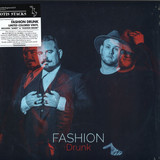
Otis Stacks, three syllables. A name and a first name that recall a mythical singer as much as the Memphis music label that got him to it's days of glory. A name that evokes him in particular and soul music in general. Behind a name that sounds familiar are Elias Wallace and Justmike, two men united to become one: Otis Stacks. In truth, the optimized version of a work started long ago, when Justmike was producing the Danish hip-hop sound of Dafuniks and decided to get in touch with Elias after hearing his voice on a friend's tune. He first wanted him to lay his voice on a
chorus, then a verse, and ended letting him take over the lyrics of 'All I Want', the song that would later bring Dafuniks on air and around Europe. After traveling miles and miles across the ocean and the seas separating California from Denmark, Elias undeniably became a member of the group. As gigs went on, stages after stages, Justmike got inspired by Elias's voice and presence. Thus, the idea of a duo collaboration between the two men geminated and grew in his mind. As the evidence of their getting along, 'Fashion Drunk' became the first tune to
infiltrate Nova and FIP radio playlists, as its music video reached 8 million views. This now obvious complicity as extended in the form of an album, also called Fashion Drunk, released by Underdogs Records. With this French stopover, the line between California and Denmark is now completed. The result is an artistic fusion in which Justmike has plugged his instruments to the machines he uses to compose, letting Elias in charge of the
lyrics and singing. Here, the soul music is printed as a guideline in an organic and digital composite matter. In an ethereal and aerial production that perches its arrangements in the air of the mix or buries them in its bases, letting electro music spread on a groove punched with black and white keys. Each element intervenes with discretion to let Elias stories be related with elegance. Frustrated, disappointed or aborted love stories.
UILTY RAZORS, BONA FIDE PUNKS.
Writings on the topic that go off in all directions, mind-numbing lectures given by academics, and testimonies, most of them heavily doctored, from those who “lived through that era”: so many people today fantasize about the early days of punk in our country… This blessed moment when no one had yet thought of flaunting a ridiculous green mohawk, taking Sid Vicious as a hero, or – even worse – making the so-called alternative scene both festive and boorish. There was no such thing in 1976 or 1977, when it wasn’t easy to get hold of the first 45s by the Pistols or the Clash. Few people were aware of what was happening on the fringes of the fringes at the time. Malcolm McLaren was virtually unknown, and having short hair made you seem strange. Who knew then that rock music, which had taken a very bad turn since the early 1970s, would once again become an essential element of liberation? That, thanks to short and fast songs, it would once again rediscover that primitive, social side that was so hated by older generations? Who knew that, besides a few loners who read the music press (it was even better if they read it in English) and frequented the right record stores? Many of these formed bands, because it was impossible to do otherwise. We quickly went from listening to the Velvet Underground to trying to play the Stooges’ intros. It’s a somewhat collective story, even though there weren’t many people to start it.
The Guilty Razors were among those who took part in this initial upheaval in Paris. They were far from being the worst. They had something special and even released a single that was well above the national average. They also had enough songs to fill an album, the one you’re holding. In everyone’s opinion, they were definitely not among the punk impostors that followed in their wake. They were, at least, genuine and credible.
Guilty Razors, Parisian punk band (1975-1978). To understand something about their somewhat linear but very energetic sound, we might need to talk about the context in which it was born and, more broadly, recall the boredom (a theme that would become capital in punk songs) coupled with the desire to blow everything off, which were the basis for the formation of bands playing a rejuvenated rock music ; about the passion for a few records by the Kinks or the early Who, by the Stooges, by the Velvet mostly, which set you apart from the crowd.
And of course, we should remember this new wave, which was promoted by a few articles in the specialized press and some cutting-edge record stores, coming from New York or London, whose small but powerful influence could be felt in Paris and in a handful of isolated places in the provinces, lulled to sleep by so many appalling things, from Tangerine Dream to President Giscard d’Estaing...
In 1975-76, French music was, as almost always, in a sorry state ; it was still dominated by Johnny Hallyday and Sylvie Vartan. Local rock music was also rather bleak, apart from Bijou and Little Bob who tried to revive this small scene with poorly sound-engineered gigs played to almost no one.
In the working class suburbs at the time, it was mainly hard rock music played to 11 that helped people forget about their gruelling shifts at the factory. Here and there, on the outskirts of major cities, you still could find a few rockers with sideburns wearing black armbands since the death of Gene Vincent, but it wasn’t a proper mass movement, just a source of real danger to anyone they came across who wasn't like them. In August 1976, a festival unlike any other took place in Mont-de-Marsan – the First European Punk Festival as the poster said – with almost as many people on stage as in the audience. Yet, on that day, a quasi historical event happened, when, under the blazing afternoon sun, a band of unknowns called The Damned made an unprecedented noise in the arena, reminiscent of the chaotic Stooges in their early adolescence. They were the first genuine punk band to perform in our country: from then on, anything was possible, almost anything seemed permissible.
It makes sense that the four+1 members of Guilty Razors, who initially amplified acoustic guitars with crappy tape recorder microphones, would adopt punk music (pronounced paink in French) naturally and instinctively, since it combines liberating noise with speed of execution and – crucially – a very healthy sense of rebellion (the protesters of May 1968 proclaimed, and it was even a slogan, that they weren’t against old people, but against what had made them grow old. In the mid-1970s, it seemed normal and obvious that old people should now ALSO be targeted!!!).
At the time, the desire to fight back, and break down authority and apathy, was either red or black, often taking the form of leafleting, tumultuous general assemblies in the schoolyard, and massive or shabby demonstrations, most of the time overflowing with an exciting vitality that sometimes turned into fights with the riot police. Indeed, soon after the end of the Vietnam War and following Pinochet’s coup in Chile, all over France, Trotskyist and anarcho-libertarian fervour was firmly entrenched among parts of the educated youth population, who were equally rebellious and troublemakers whenever they had the chance. It should also be noted that when the single "Anarchy in the UK" was first heard, even though not many of us had access to it, both the title and its explosive sound immediately resonated with some of those troublemakers crying out for ANARCHY!!! Meanwhile, the left-wing majority still equated punks with reckless young neo-Nazis. Of course, the widely circulated photos in the mainstream press of Siouxsie Sioux with her swastikas didn’t necessarily help to win over the theorists of the Great Revolution. It took Joe Strummer to introduce The Clash as an anti-racist, anti-fascist and anti-ignorance band for the rejection of old-school revolutionaries to fade a little.
The Lycée Jean-Baptiste Say at Porte d’Auteuil, despite being located in the very posh and very exclusive 16th arrondissement of Paris, didn’t escape these "committed" upheavals, which doubled as the perfect outlet for the less timid members of this generation.
“Back then, politics were fun,” says Tristam Nada, who studied there and went on to become Guilty Razors’ frontman. “Jean-Baptiste was the leftist high-school in the neighbourhood. When the far right guys from the GUD came down there, the Communist League guys from elsewhere helped us fight them off.”
Anything that could challenge authority was fair game and of course, strikes for just about any reason would lead to increasingly frequent truancy (with a definitive farewell to education that would soon follow). Tristam Nada spent his 10th and 11th unfinished grades with José Perez, who had come from Spain, where his father, a janitor, had been sentenced to death by Franco. “José steered my tastes towards solid acts such as The Who. Like most teenagers, I had previously absorbed just about everything that came my way, from Yes to Led Zeppelin to Genesis. I was exploring… And then one day, he told me that he and his brother Carlos wanted to start a rock band.” The Perez brothers already played guitar. “Of course, they were Spanish!”, jokes their singer. “Then, somewhat reluctantly, José took up the bass and we were soon joined by Jano – who called himself Jano Homicid – who took up the rhythm guitar.” Several drummers would later join this core of not easily intimidated young guys who didn’t let adversity get the better of them.
The first rehearsals of the newly named Guilty Razors took place in the bedroom of a Perez aunt. There, the three rookies tried to cover a few standards, songs that often were an integral part of their lives. During a first, short gig, in front of a bewildered audience of tough old-school rockers, they launched into a clunky version of the Velvet Underground's “Heroin”. Challenge or recklessness? A bit of both, probably… And then, step by step, their limited repertoire expanded as they decided to write their own songs, sung in a not always very accurate or academic English, but who cared about proper grammar or the right vocabulary, since what truly mattered was to make the words sound as good as possible while playing very, very fast music? And spitting out those words in a language that left no doubt as to what it conveyed mattered as well.
Trying their hand a the kind of rock music disliked by most of the neighbourhood, making noise, being fiercely provocative: they still belonged to a tiny clique who, at this very moment, had chosen to impose this difference. And there were very few places in France or elsewhere, where one could witness the first stirrings of something that wasn’t a trend yet, let alone a movement.
In the provinces, in late 1976 or early 1977, there couldn’t be more than thirty record stores that were a bit more discerning than average, where you could hear this new kind of short-haired rock music called “punk”. The old clientele, who previously had no problem coming in to buy the latest McCartney or Aerosmith LP, now felt a little less comfortable there…
In Paris, these enlightened places were quite rare and often located nex to what would become the Forum des Halles, a big shopping mall. Between three aging sex workers, a couple of second-hand clothes shops, sellers of hippie paraphernalia and small fashion designers, the good word was loudly spread in two pioneering places – propagators of what was still only a new underground movement. Historically, the first one was the Open Market, a kind of poorly, but tastefully stocked cave. Speakers blasted out the sound of sixties garage bands from the Nuggets compilation (a crucial reference for José Perez) or the badly dressed English kids of Eddie and the Hot Rods. This black-painted den was opened a few years earlier by Marc Zermati, a character who wasn’t always in a sunny disposition, but always quite radical in his (good) choices and his opinions. He founded the independent label Skydog and was one of the promoters of the Mont-de-Marsan punk festivals. Not far from there was Harry Cover, another store more in tune with the new New York scene, which was amply covered in the house fanzine, Rock News (even though it was in it that the photos of the Sex Pistols were first published in France).
It was a favorite hang-out of the Perez brothers and Tristam Nada, as the latter explained. “It’s at Harry Cover’s that we first heard the Pistols and Clash’s 45s, and after that, we decided to start writing our first songs. If they could do it, so could we!”
The sonic shocks that were “Anarchy in the UK”, “White Riot” or the Buzzcocks’s EP, “Spiral Scratch” – which Guilty Razors' sound is reminiscent of – were soon to be amplified by an unparalleled visual shock. In April 1977, right after the release of their first LP, The Clash performed at the Palais des Glaces in Paris, during a punk night organised by Marc Zermati. For many who were there, it was the gig of a lifetime…
Of course, Guilty Razors and Tristam were in the audience: “That concert was fabulous… We Parisian punks were almost all dressed in black and white, with white shirts, skinny leather ties, bikers jackets or light jackets, etc. The Clash, on the other hand, wore colourful clothes. Well, the next day, at the Gibus, you’d spot everyone who had been at this concert, but they weren’t wearing anything black, they were all wearing colours.”
It makes sense to mention the Gibus club, as Guilty Razors often played there (sometimes in front of a hostile audience). It was also the only place in Paris that regularly scheduled new Parisian or Anglo-Saxon acts, such as Generation X, Siouxsie and the Banshees, the Slits, and Johnny Thunders who would become a kind of messed-up mascot for the venue. A little later, in 1978, the Rose Bonbon – formerly the Nashville – also attracted nightly owls in search of electric thrills… In 1977, the iconic but not necessarily excellent Asphalt Jungle often played at the Gibus, sometimes sharing the bill with Metal Urbain, the only band whose aura would later transcend the French borders (“I saw them as the French Sex Pistols,” said Geoff Travis, head of their British label Rough Trade). Already established in this small scene, Metal Urbain helped the young and restless Guilty Razors who had just arrived. Guitarist for Metal Urbain Hermann Schwartz remembers it: “They were younger than us, we were a bit like their mentors even if it’s too strong a word… At least they were credible. We thought they were good, and they had good songs which reminded of the Buzzcocks that I liked a lot. But at some point, they started hanging out with the Hells Angels. That’s when we stopped following them.”
The break-up was mutual, since, Guilty Razors, for their part, were shocked when they saw a fringe element of the audience at Metal Urbain concerts who repeatedly shouted “Sieg Heil” and gave Nazi salutes. These provocations, even still minor (the bulk of the skinhead crowd would later make their presence felt during concerts), weren’t really to the liking of the Perez brothers, whose anti-fascist convictions were firmly rooted. Some things are non-negotiable.
A few months earlier (in July 1978), Guilty Razors had nevertheless opened very successfully for Metal Urbain at the Bus Palladium, a more traditonally old-school rock night-club. But, as was sometimes the case back then, the night turned into a mass brawl when suburban rockers came to “beat up punks”.
Back then, Parisian nights weren’t always sweet and serene.
So, after opening as best as they could for The Jam (their sound having been ruined by the PA system), our local heroes were – once again – met outside by a horde of greasers out to get them. “Thankfully,” says Tristam, “we were with our roadies, motorless bikers who acted as a protective barrier. We were chased in the neighbouring streets and the whole thing ended in front of a bar, with the owner coming out with a rifle…”
Although Tristam and the Perez brothers narrowly escaped various, potentially bloody, incidents, they weren’t completely innocent of wrongdoing either. They still find amusing their mugging of two strangers in the street for example (“We were broke and we simply wanted to buy tickets for the Heartbreakers concert that night,” says Tristam). It so happened that their victims were two key figures in the rock business at the time: radio presenter Alain Manneval and music publisher Philippe Constantin. They filed a complaint and sought monetary compensation, but somehow the band’s manager, the skilful but very controversial Alexis, managed to get the complaint withdrawn and Guilty Razors ended up signing with Constantin with a substantial advance.
They also signed with Polydor and the label released in 1978 their only three-track 45, featuring “I Don't Wanna be A Rich”, “Hurts and Noises” and “Provocate” (songs that exuded perpetual rebellion and an unquenchable desire for “class” confrontation). It was a very good record, but due to a lack of promotion (radio stations didn’t play French artists singing in English), it didn’t sell very well. Only 800 copies were allegedly sold and the rest of the stock was pulped… Initially, the three tracks were to be included on a LP that never came to be, since they were dropped by Polydor (“Let’s say we sometimes caused a ruckus in their offices!” laughs Tristam.) In order to perfect the long-awaited LP, the band recorded demos of other tracks. There was a cover of Pink Floyd's “Lucifer Sam” from the Syd Barrett era – proof of an enduring love for the sixties’ greats –, “Wake Up” a hangover tale and “Bad Heart” about the Baader-Meinhof gang, whose actions had a profound impact on the era and on a generation seeking extreme dissent... On the album you’re now discovering, you can also hear five previously unreleased tracks recorded a bit later during an extended and freezing stay in Madrid, in a makeshift studio with the invaluable help of a drummer also acting as sound engineer. He was both an enthusiastic old hippie and a proper whizz at sound engineering. Here too, certain influences from the fifties and sixties (Link Wray, the Troggs) are more than obvious in the band’s music.
Shortly after a final stormy and rather barbaric (on the audience’s side) “Punk night” at the Olympia in June 1978, Tristam left the band ; his bandmates continued without him for a short while.
But like most pioneering punk bands of the era, Guilty Razors eventually split up for good after three years (besides once in Spain, they’d only played in Paris). The reason for ceasing business activities were more or less the same for everyone: there were no venues outside one’s small circuit to play this kind of rock music, which was still frightening, unknown, or of little interest to most people. The chances of recording an LP were virtually null, since major labels were only signing unoriginal but reassuring sub-Téléphone clones, and the smaller ones were only interested in progressive rock or French chanson for youth clubs. And what about self-production? No one in our small safety-pinned world had thought about it yet. There wasn’t enough money to embark on that sort of venture anyway.
So yes, the early days of punk in France were truly No Future!
- 1: It All Depends On The Pleasure Man
- 2: Watching Heroes Come And Go
- 3: Slide On
- 4: So It Goes
- 5: Let's Start Over Again
- 6: Taoist Tale
- 7: Welcome To Mass Media
- 8: Song
- 9: Advertisement For Amerika
Orange Vinyl with exclusive illustrated notes/lyric insert ltd to 300 w/w.“Zimmerman conjures up a kind of Arcadian folk surrealism that is utterly his own” MOJO Never released before collection featuring Ian A Anderson & Maggie Holland recorded 72-80 is among Tucker’s finest - Free-ranging, Playful, Intimate - his Songpoet imagination unbound and in full bloom now on colour Vinyl for first time with (exclusive to this version) illustrated lyric insert with notes from Tucker.Recorded between 1972-80 this is the first ever release for ‘I Wonder If I’ll Ever Come True’ a stunningly beautiful, homegrown collection by Songpoet Tucker Zimmerman and friends. The range and depth is astonishing. From the heady surreal journey of ‘It All Depends’ Upon the Pleasure Man’, to the uplifting Gene Clark-esque 'So It Goes’, to some of his most beautiful & touching love songs in ‘Let’s Start Over Again’ & ‘Song’. Only one song has seen the the light of day before now - ‘Taoist Tale’ from his 1984 album ‘Word Games’. This recording from a decade earlier loses no power in its folkier stripped down style driven by Tucker’s strong narrative.
While living in bucolic seclusion in Belgium with Marie-Claire, Tucker invited visiting musicians (Derroll Adams, Wizz Jones, Maggie Holland, Dave Evans, Ian Anderson) into his home studio to play and live tape whatever songs he had at hand. Maggie Holland and Ian A Anderson feature, while Tucker found a freeing simplicity in just guitar, ’70s organ, bass and piano. We are so grateful to Ian A Anderson, who carefully kept and curated these recordings from 50 years ago. “Every time I would leave, Tucker would hand me another tape full of songs”. Ian worked with Tucker and ourselves to present this wonderful album. The collection is among Tucker’s finest - free-ranging, playful, intimate - his Songpoet imagination unbound and in full bloom. The ethos, the playing, the freedom, feels like Ronnie Lane’s time in the Welsh Borders. Unhurried, liberated, down-home and cosmic. Extraordinary music made among friends.
"Startling collection of intimate, home-recorded songs from the cult singer-songwriter adored by David Bowie and Big Thief alike.
When I first interviewed Tucker Zimmerman back in 2015 neither of us had any idea that, a decade later, he would be venerated by a new coterie of young fans, touring with maximal folk-rockers Big Thief and recipient of a concerted reissue campaign by the wonderful Big Potato Records. Last year I eulogised the “Arcadian folk surrealism” of his 1974 LP *Over Here In Europe but, if anything, this informal collection of intimate home-studio recordings is even better. Recorded between 1973 and 76 whilst living in Belgium and hosting such visiting folk musicians as Derroll Adams, Wizz Jones, Maggie Holland, Dave Evans, and Ian A. Anderson this is the kind of assured, organic freewheeling folk music that has the mellow, introspective rough-edged feel of some lost private-press LP, the kind rightly revered by Endless Boogie’s Paul Majors as “real people” music. A true find.” Andrew Male MOJO 4/5
“Here's a charming oddity: an unreleased album dating from the mid-Seventies by an American-born songwriter beloved of David Bowie and, more recently, Adrianne Lenker of the folk-rock band Big Thief. Zimmerman's a bohemian type who eschewed the big time for a life of gigging around Europe. He, his wife, Marie-Claire, and a handful of friends recorded these songs in seclusion in the Belgian countryside, and what songs they are. Slide On could have come from the Byrds when they discovered country music, Let's Start Over Again captures the dreamlike experience of being in love with unsettling clarity. This is a real unearthed gem.” 4/5 The Times
- 1: Crusader
- 2: Rock Of Ages
- 3: Horsemen Of The Apocalypse
- 4: Ready To Fly
- 5: Heroes, Saints & Fools
- 6: Follow The Piper
- 7: We Have Arrived
- 8: No More Lonely Nights
- 9: Swords Of Damascus (Cd Bonus Track)
When Saracen released their debut album ‘Heroes, Saints & Fools’ back in 1981, the UK Rock scene certainly took notice. Their combination of Magnum-like melodies and Uriah Heep intensity and vocal stylings immediately endeared them to fans of the NWOBHM scene, and fans of classic British Rock in general.
All songs and lyrics were written by lead guitarist Rob Bendelow, who left prior to the release of their second album, ‘Change Of Heart’, in 1984. While this sophomore effort still contained a few Bendelow songs, the band had changed direction, moving away from the almost Pomp and NWOBHM of the debut for a more polished and Melodic Rock direction.
Unfortunately, this new direction didn’t resonate with the fans, and the band broke up not long after.
However, Bruce Mee of Now & Then Records had always been a massive Magnum and Saracen fan. Having already convinced Bob Catley to start a solo career in the late 90s, he also had very productive talks with Rob Bendelow. This great friendship resulted in the band reforming and the release of ‘Red Sky’ in 2003. Rob Bendelow and Saracen were back.
Later signing to Escape and releasing several more great albums, Rob Finally retired from the music scene a few years ago, but the band gamely soldiered on, keeping his songs and legacy alive for their many adoring fans.
In an instance of total cosmic kismet, that same Bruce Mee was also co-organiser of the inaugural ‘Tower of Fire’ UK festival, and in 2024 invited Saracen to play the event along with other well recognised names of the scene such as Nitrate, Remedy, Atack, White Skies and Gabrielle de Val. The event was multi-track recorded, and the results of the Saracen set were so good that it was decided to release a very first live album.
The title of the live album is taken from the name of their crushing opening song: ‘Crusader’. And in a further act of unbelievable karma, the magnificent album artwork and design are created by Sebastian Kozak, the very same creative artist responsible for the brilliant artwork on the band’s come-back album ‘Red Sky’ back in 2003.
All but one of the songs that day were from that incredible debut and those 5 songs, along with 3 others previously recorded live by the band, make up this totally amazing live album. For fans of Saracen and NWOBHM, this is a moment we never thought we’d ever see: a brilliant live Saracen album with vocalist Steve Bettney sounding as incredible as he did over 40 years ago.
- Somewhere, Nowhere
- Angles Mortz
- False Prophet
- Fluoride Stare
- The Void
- Ascension
- Just A Kid
- Host
- Landslide
- Renaissance
- 7: Am
- Blue In Grey
2026 Repress
Flickering in ultraviolet, there is an elusive place where blue pill meets red, ups become downs, and day merges with night. Those liminal spaces where anything is possible is where you’ll find Nightbus and their hypnotic debut album Passenger. Doom, uncertainty, and opportunity lurk in the shadowy corners of their murky existence with stops at disassociation, co-dependency, and addiction before reaching its final destination - a glimmer of hope.
The in-between of Nightbus’ own Gotham lies where Manchester’s city pulse meets Stockport’s outer realm. An audio-visual entity formed among a musical family of friends, freaks, and foes in messy mills and after hours on dancefloors alike, their sound bleeds from tension where collective creative forces are bound together and collide with the fallout of being torn apart. Before even playing a show, their So Young released single ‘Mirrors’ – a knowing nod of respect to some well-known gloomy Northerners - may have made old school indie heads shimmy at shows in Salford’s The White Hotel but also signalled the duo’s knack for offering listeners a Bandersnatch approach to hitchhiking their own personal Nightbus in whatever direction they choose to take. “Everyone can have their moment with our songs; the music is our response to who we are as young people, living in the city full of this energy right now,” they say.
Whilst reverb hefty melodies and dread-filled loops embody isolation from writing at each of their home studio set-ups, magic happens in the ether across 90s trip-hop, indie sleaze and electronica; Jake’s production layers Olive’s pop sentimentality with drums and samples whilst tales of a cast of faceless characters place Olive as puppet master; her severed self’s perspective manipulating their stringed limbs at arm’s length to see how their stories play out when scenes reflecting her own lie close to the bone. “It’s a bit fucked; like having this out of body experience with a made-up movie running through my head,” she says. “As I write I can see they’re all from a similar world, but they allow me to explore different feelings without giving away part of myself.”
Recorded at The Nave in Leeds with producer-engineer Alex Greaves (Heavy Lungs, Working Men’s Club), surprise and danger lies in every crevice. Brooding whispers turn to chants on 6-minute opus ‘Host.’ Improvised when performed live, its immersive shift in tempo leads to hefty dub courtesy of Jake’s pedals. Even then, you won’t know shit’s hit the fan until its mid-point reveal when ominous bass blasts a thunderous soundtrack as its protagonist defiantly walks away after committing the perfect crime. “It makes you wait, and more songs should have sirens,” Olive grins.
Leaning deeper into alter-egos via the video game-psychological horror of a Silent Hill dystopia, the band’s Fight Club moment ‘Angles Mortz’ turns its literal translation of death angles on its head as it reflects upon kink and internalised shame reincarnated as pride. Elsewhere the ice cool ‘Landslide’ is a Requiem for a Dream about the addiction of being in a band; ‘The Void’ explores co-dependency and estranged relationships; and carefully selected samples revive house track ‘Just A Kid’ from the band’s early incarnation. Passenger’s every direction is to face challenges head on. “That is what’s so great about horror; you can see through predictable patterns so when the unexpected occurs it's more realistic and uncomfortable… I want to own the dark stuff!”
As for Passenger’s first single, the pulsating ‘Ascension’ is a spiralling deep dive into death, suicide, and legacy around who or what we leave behind. A noughties club banger by way of NYC beats - ergonomically designed for those who like to stay out a little too often and too late - it throbs like a house party’s partition wall as the literal levelling up undergoes a neon transformation; blue glitching to pink, diffusing the white construct of the Nightbus Matrix. “It really does feel like the end of something and was purposely written that way,” they say, “the ascension is like a firework going off!”
With wheels in motion, Nightbus has become a movement surpassing sonic realms. Between shows from Porto to Brighton taking in The Great Escape, Rotterdam’s Left Of The Dial and Paris’ Supersonic; DJing; remixing; guesting (BDRMM’s Microtonic album); and even enlisting talented like-minds to craft a 3-part queer coming-of-age music video series which ties in with a new ‘hyperpop’ phase in the evolution of their popular Nightbus Soundsystem club night, heads are now being turned from sports brands to high-end fashion designers. “There are things we can’t reveal just yet,” tells Olive, “but we’re excited about the direction this beast we’ve created is heading.” As the album philosophises and asks one ultimate question; what does it truly mean to be ‘Passenger’? Nightbus may not claim to offer a definitive answer, but it might make you feel a bit better about those demons.
Some things are just too good to be hidden from view. That's certainly the case with Things To Think About, the first album from Dutch electronic music legend Steve Rachmad's lesser-known Sterac Electronics project.
.
Rachmad first rose to prominence in the late 1990s, spearheading a surge in Dutch techno that was heavily inspired by the futurist intent and machine soul of Detroit. Since then, he has continued to successfully explore a wide range of dancefloor-centric electronic styles under a dizzying array of aliases.
It's a while, though, since the public has been treated to a heavy dose of Sterac Electronics material. He first established the alias at the turn of the millennium, primarily as an outlet for hardware-driven electro music shot through with funk and soul.
A handful of highly regarded 12' singles were released on Music Man and Interpersonal XP, before Rachmad began focusing on other projects. When inspiration struck, he returned to the project, jamming out tracks using a mighty collection of vintage synthesizers and drum machines.
Recently, Rachmad and Tom Trago decided to revisit the Sterac Electronics archive, discovering a killer collection of cuts created at different points over the course of the last 15 years.
Now 9 of those spellbinding hardware jams have been gathered together for the first time on Things To Think About, a warm, rich and evocative collection of electro-fuelled workouts that giddily pay tribute to the music of Rachmad's youth.
From the thrusting, synth-driven machine funk of Original Pattern' and mutant electrofunk revivalism of Game Changers', to the baggy West Coast boogie of Metratron' and intergalactic hustle of Archetype' (which sounds like Cybotron covering the 1988 version of The KLF's What Time Is Love'), Things To Think About is an lesson in the emotion-rich, mood enhancing possibilities of spontaneous hardware jams.
The highlights don't stop there, either. Check, for example, the crystalline synthesizer melodies, body popping drum hits and spacey chords of Tuning Into Frequencies' and the breezy humidity of opener Altruistic Endeavor'.
Like the rest of the tracks on the album, they feel timeless, as if they could have been made at any point during the last three decades. From Steve Rachmad, we wouldn't expect anything less.
Things To Think About will be released as a limited-edition double album, preceded by a 12' single featuring another previously unheard gem from the vaults.
- A1: Tip Off Time
- A2: Dirty Decibels (Feat. Pharoahe Monch)
- A3: Top Prospects (Feat. Defari, Evidence)
- A4: Dick Starbuck
- A5: B-Boy Document '99 (Feat. Mos Def, Mad Skillz)
- A6: The Last Hit (Feat. Eminem)
- A7: Ay Yo
- B1: Hot Spittable
- B2: The Meaning
- B3: In-Outs (Feat. Cage)
- B4: Papers Please
- B5: Shaquan & Eon (Feat. Mad Skillz)
- B6: The Half
- B7: Newman Skit
- C1: Hands On Experience Pt. Ii (Feat. Bobbito Garcia, Kool Keith, What? What?)
- C2: Weed
- C3: Open Mic Night (Remix) (Feat. Thirstin Howl The 3Rd, Wordsworth)
- C4: Mind Soul And Body
- C5: Friendly Game Of Football
- C6: Cranial Lumps
- D1: E=Mc2 (Og Version) (Prod. By The Alchemist)
- D2: Hands On Experience Pt. 2 (Og Version) (Feat. Bobbito Garcia, Kool Keith, What? What?)
- D3: High & Mighty (Og Demo Debuted On Wkcr)
- D4: The Vibe That I Give Em (High & Mighty Demo)
- D5: Under Pressure (High & Mighty Demo)
Celebrating 25 years since its original release, The High & Mighty's seminal debut album, "Home Field Advantage", returns in a special anniversary edition vinyl reissue. Originally launched under the iconic Rawkus Records banner, this album became a defining moment in underground hip-hop, showcasing the sharp wit and raw talent of Mr. Eon and DJ Mighty Mi. Now, in collaboration with Eastern Conference Records, RRC Music Co. revives this classic with the care and respect it deserves.
"Home Field Advantage” stands as a testament to the golden era of hip-hop, featuring an all-star lineup of guests who helped cement its legendary status. The album includes unforgettable appearances by Mos Def, Pharoahe Monch, Evidence, Eminem, Defari, Cage, Kool Keith, among others, each bringing their unique flavor to the project and amplifying its impact.
This 25th-anniversary edition is more than just a reissue; it's a revitalization. As a special treat for collectors and die-hard fans, this edition includes six bonus tracks, adding further depth to an already rich collection of tracks. Remastered for vinyl by the renowned Davide "Bassi Maestro" Bassi and packaged in a gatefold jacket with restored original artwork curated by Mr. Krum, this release pays homage to the album's legacy while celebrating its enduring influence.
This 25th anniversary reissue is not just a trip down memory lane — it's a reminder of why this album continues to resonate in the hip-hop community today. Don't miss the chance to own this piece of music history, reborn for a new generation.
Going Up, originally released in 1983, is one of the most curious and enduring records from British studio mavericks The RAH Band. Long out of print, it now sees its first ever vinyl reissue courtesy of Shocking Music and Rush Hour.
Led by super-producer, arranger, and multi-instrumentalist Richard Anthony Hewson, The RAH Band has always existed just outside the mainstream. Blending jazz-funk, sci-fi synth pop, and cosmic lounge, their sound never quite fit the mould. That might explain the cult status they’ve held ever since. Beloved by Balearic heads, rare groove collectors, and adventurous synth diggers, Going Up is perhaps their most influential record.
At the centre of it all is the intro track “Messages From The Stars”, the band’s runaway cosmic hit. A spacey, retro-futurist groove that has become a viral favourite in recent years, it now boasts hundreds of millions of streams, with a new generation discovering it through TikTok and YouTube. But it was originally just one track on this understated 1983 album.
The rest of Going Up is just as compelling, filled with dusty drum machines, off-kilter instrumentals, woozy vocals, and that unmistakable early '80s charm. It is a snapshot of a band in transition, blurring the lines between leftfield pop, sci-fi funk, and home-brewed synth experiments.
Out of print for over 40 years, Going Up finally gets the reissue treatment it deserves. Restored and remastered, and still sounding like nothing else.
- A1: Anuradha Paudwal – Gayatari Mantra
- A2: Baba Zula – Arsiz Saksagan (Cheeky Magpie)
- A3: Orchestra Tout Puissant Marcel Duchamp – So Many Things (To Feel Guilty About)
- A4: Christopher Martin – Playing Games With My Heart
- B1: Geir Sundstøl – C’est Vide En Ville
- B2: Brother Ah – Transcendental March (Creation Song)
- B3: Les Abranis – Therrza Rathwenza
- B4: Sparkels – That Boy Of Mine
- C1: Maximum Joy – Stretch (7” Mix)
- C2: Chillera – Schax
- C3: Elijah Minnelli – I Hope The Goats Come Back (Ze-Hood De-Sham Lichdal)
- C4: Siti Muharam – Pakistan
- D1: Muriel Grossmann – Traneing In
- D2: Catford Gyrations – Land Of 1000 Presets **
- D3: Living Daylights – Let’s Live For Today
- D4: Natalie Bergman – Shine Your Light On Me
Orange Vinyl[41,98 €]
Crate digger and music enthusiast James Endeacott compiles ‘Unlock Your Mind With Morning Glory’ for Two-Piers Records – A glorious heady mix of the weird and wonderful eclectic music from his radio show ‘Morning Glory’
“One weekday afternoon towards the end of 2017 I sat in The Lyric pub on Great Windmill Street, Soho with my dear friend Raf. I’d just finished another of my weekly Soho Radio shows and was starting to think about the next one. Raf had been on as a guest playing some of his favourite tunes of the day. We had a few drinks, told a few stories and started to plot and scheme. It was always a dream of mine to have a daily radio show. Radio had always informed and excited me from my early teens listening to John Peel under the blanket when I should’ve been either sleeping or revising right up to the present-day musical excursions of NTS, WFMU and numerous internet based stations.
We decided to speak to Adrian and Dan who ran Soho Radio to see if they’d be up for us doing a daily morning show. To our surprise they were into the idea and within 5 minutes Adrain came up with the name Morning Glory. We all liked it. We were all excited. It was all systems go. In December 2017 Raf and myself started a daily 2 hour show. We did the show together, got guests in and the musical policy was whatever we felt like that day. After several months Raf found the mornings too much. Off he went into the distance occasionally coming back with a smile, and a bag of new music. I carried on alone and then suddenly in March 2020 the world stopped, and we went into lockdown.
We set up in my house in Catford, Southeast London and carried on. The show became 3 hours a day and I started to invite friends, record labels, record shops, bands etc.. to supply me with hour long mixes that I played every day. The show took off during this time. My musical tastes expanded as I spent all day long searching for new sounds from around the globe. People started to send me more and more music. I became obsessed with the show. The audience started to take to social media and ask for certain tracks or artists to be played. I got listeners to make me mixes to play on the show and I did several phone interviews with musicians while playing some of their favourite tunes.
I was grateful that Soho Radio left me to my own devices. They never told me what to do or what to play – they trusted ma and I trusted my instincts.
The music on this compilation is not a ‘best of’ it’s just how I felt when I compiled it at the start of 2025. Apart from a couple of tracks they are all things I’ve come across since the show started in December 2017. If I did a list of tracks now I’m sure it would be completely different. Surely that’s the point. We never stick in one place. We are always moving and searching. Always trying to unlock our minds. Put it on. Take your time and let it take you somewhere” James Endeacott 2025
STANDFIRST Titanic, the project spearheaded by Mabe Fratti and Hector Tosta (aka I. la Católica), return with a sumptuous and life-affirming new album.
In her sensational 1929 biography Tiger Woman, dancer and socialite Betty May claimed her ‘coster’s eye’ meant she liked to wear as many colours as possible. “Colours to me are like children to a loving mother. Each is my favourite, yet I can never bring myself to deny the others by preferring one.” May’s bold and inclusive strategy is one that manages to transfer itself, almost a century later, to Hagen, the new record by Titanic.
Many will know Titanic as the Mexico City-based brainchild of cellist and singer Mabe Fratti and multiinstrumentalist Hector Tosta who is now operating under the pseudonym, I. la Católica, (taken, rather unusually, from the name of the street the pair live on). With Hagen, and their previous release, Vidrio, (2023), the pair are creating a distinctive signature sound in modern alternative pop music. Nobody else sounds quite like them. Both records have an open hearted nature and simple, winning melodies that play off against a taste for drama, spectacular orchestration and a feeling of otherworldly mystery. Hagen is the more ambitious, sometimes more mystical effort. From the opening handclaps of ‘Lágrima del Sol’, (a wonderfully uptempo playground chant translating as a tear from the sun but, surely, not referencing the brand of pineapple wine?), the record dances its way through various mid-to-late-eighties inspirations, lush and widescreen passages of melancholy and vertiginous contrasts.
Mystery is often found in the simple but slightly odd song titles. English translations of various track titles give, ‘you swallowed the gum’, ‘leak’, ‘a tear from the sun’, ‘raising the trophy’ ‘digging dimensions’, ‘the owner’, ‘the decapitated hen’ and ‘the trap is exposed’. All denote striking images, metaphysical hints and emotional cues or simple, even childlike actions. Though Fratti and Tosta don’t reveal its provenance, the album’s title could even be a crafty play on words: the listener would be forgiven in thinking the moments of brash contrast and eyebrow raising theatricalism in the music constitute a musical nod to German punk chanteuse, Nina Hagen.
On Hagen, singer and cellist Mabe Fratti once again displays her brilliant knack of speaking to us directly. There is never the suspicion of her playing to the gallery, and the directness of many of the lyrics don’t allow it. Parallel to this, Fratti has an almost magical ability to give Hector Tosta’s melodies, and her and Tosta’s lyrics ones imbued with an insight and meaning that feels otherworldly. Tosta admitted it was “pretty wild to hear Mabe take the interpretations to a different place” and the listener can pick up on the delight Fratti takes in (literally) adding a voice to the many narratives.
Two examples can be shown here: ‘Gotera’ (Leak) uses harsh slashes of cello and tough, gunfire-like guitars and drums and multiple vocal lines that could be acting as a Greek chorus. They play off brilliantly against Fratti’s soft, slightly baleful vocal take that delivers lyrics such as: ‘nobody knows where the leak is / but I know where it is / they fight in front of the door and / nobody can go in’. With ‘La Gallina Degollada’ the somewhat blithe melody melody line, sung with what could be sarcastic brio by Fratti, plays against an itchting rhythm and rasping guitar part. The punch comes when you see that the song is about a chicken that has been decapitated and read lyrics such as: ‘I already saw it, it moved, the decapitated chicken’ / ‘could it be that I'm broken’ and ‘Two people hurt each other by thinking that they no longer agree’/ ‘Hours pass and the chicken represents what scares me’.
There may be death and fights to deal with, but there is also a quality of chirpy self-reliance about Hagen that is a key part of its nature. Like Betty May and her colourful outfits, Hagen’s sound often revels in its own sense of richness. Throughout, the record delivers vaulting string sections or glutinous guitar squeals that could, like the powerful, driving ‘Escarbo Dimensiones’ (Digging Dimensions) have come directly from a glossy 1980s TV series. Fratti sees this “glam sound” developed by Tosta on the aforementioned track and ‘Te Tragaste el Chicle’ (You Swallowed The Gum), as moments that were truly “revealing” for the album as a whole during its making.
What else? The thud and thump of ‘La Trampa Sale’ (The Trap is Exposed), and its sudden change of tempo and mood betrays a monstrously ambitious piece of music, the players almost greedily creating the sounds. Other moments are heart wrenching: ‘Libra’ ends on a poppy chord switch that cleverly ramps up the emotion inherent in the music’s notation. You could almost imagine a teenager in a bedroom forty years ago, rewinding the track over and over on a small, cheap cassette player, unable to get enough of that sugarsweet switch. Elsewhere, Oneohtrix Point Never adds stardust and an unearthly sense of space on the changeable, slightly moody meditation, ‘Pájaro de Fuego’ (Firebird). The record ends with ‘Alzando el Trofeo’ (Lifting the Trophy), a track that could soundtrack a state wedding, what with its beautiful cascading piano parts, a sugary vocal and short triumphal guitar riffs that add a rich patina to the overall sound. Fratti: “When I doubled those vocals on ‘Alzando el Trofeo’ I felt there was an epiphany happening, right at that moment.”
Making a good record is a team game. Tosta and Fratti recall seeing Randall from Circular Ruin Studios in NYC “tweak the drums in ‘Libra’ to make that amazing effect of the gated reverb”, or the shaping of ‘Gotera’, “when (recording engineer) Nate Salon added some synths to the track.” Drummer Eli Keszler, “an amazing and versatile player” had the songs down pat in a couple of days” and, according to Tosta, Oneohtrix Point Never “just came to one of the sessions and we hung out, and after all the recordings he and Nate were together in some studio and out of nowhere they sent us some beautiful tracks for ‘Pájaro de Fuego’! Fratti concurs. “He decided that he wanted to record because he was listening to the record (Nate works closely with him) and he really liked it! It was a total honour, indeed!”
Bedazzled by the playing, the skyscraping ambition in the arrangements and the giddy moments of contrast thrown up by Hagen, we could allow ourselves a brief moment of flippancy and state that Titanic’s new record is Yacht Rock meets Aeschylus, full-on. It’s also worth speculating that, in this hyper-sensitive, intemperate age, Titanic’s music has the power, however fleetingly, to heal hurts. Hagen is a brilliant showcase for a fresh and enriching form of pop music: displaying a magpie eye for what glints and plundering what has gone before.
Like Vidrio, Hagen was partially and additionally recorded at Fratti and Tosta’s house, aka Tinho Studios in Mexico City, as well as Golden Girl Studios & Circular Ruin Studios in New York City. Mixing was done by Santiago Parra in Pedro y el Lobo Studios, Mexico City and mastered by Rafael Anton Irisarri at Black Knoll Studios, New York City. The recording engineer was Nate Salon.
Hagen featured Mabe Fratti on cello, vocals & backing vocals, I. la Católica on guitar, keyboards, prepared piano, bass & backing vocals, drums by Eli Keszler and synths in ‘Pájaro de Fuego’ from Daniel Lopatin and Nate Salon.
All compositions on Hagen are written by I. la Católica, except ‘Escarbo Dimensiones’ & ‘Pájaro de Fuego’, which were composed by I. la Católica and Mabe Fratti. The record was produced by I. la Católica and co-produced by Nate Salon & Mabe Fratti. And all lyrics are by I. la Católica except ‘Escarbo Dimensiones’, ‘Gotera’, ‘Gallina degollada’ & ‘Pájaro de Fuego’, which were written by I. la Católica & Mabe Fratti.
STANDFIRST Titanic, the project spearheaded by Mabe Fratti and Hector Tosta (aka I. la Católica), return with a sumptuous and life-affirming new album.
In her sensational 1929 biography Tiger Woman, dancer and socialite Betty May claimed her ‘coster’s eye’ meant she liked to wear as many colours as possible. “Colours to me are like children to a loving mother. Each is my favourite, yet I can never bring myself to deny the others by preferring one.” May’s bold and inclusive strategy is one that manages to transfer itself, almost a century later, to Hagen, the new record by Titanic.
Many will know Titanic as the Mexico City-based brainchild of cellist and singer Mabe Fratti and multiinstrumentalist Hector Tosta who is now operating under the pseudonym, I. la Católica, (taken, rather unusually, from the name of the street the pair live on). With Hagen, and their previous release, Vidrio, (2023), the pair are creating a distinctive signature sound in modern alternative pop music. Nobody else sounds quite like them. Both records have an open hearted nature and simple, winning melodies that play off against a taste for drama, spectacular orchestration and a feeling of otherworldly mystery. Hagen is the more ambitious, sometimes more mystical effort. From the opening handclaps of ‘Lágrima del Sol’, (a wonderfully uptempo playground chant translating as a tear from the sun but, surely, not referencing the brand of pineapple wine?), the record dances its way through various mid-to-late-eighties inspirations, lush and widescreen passages of melancholy and vertiginous contrasts.
Mystery is often found in the simple but slightly odd song titles. English translations of various track titles give, ‘you swallowed the gum’, ‘leak’, ‘a tear from the sun’, ‘raising the trophy’ ‘digging dimensions’, ‘the owner’, ‘the decapitated hen’ and ‘the trap is exposed’. All denote striking images, metaphysical hints and emotional cues or simple, even childlike actions. Though Fratti and Tosta don’t reveal its provenance, the album’s title could even be a crafty play on words: the listener would be forgiven in thinking the moments of brash contrast and eyebrow raising theatricalism in the music constitute a musical nod to German punk chanteuse, Nina Hagen.
On Hagen, singer and cellist Mabe Fratti once again displays her brilliant knack of speaking to us directly. There is never the suspicion of her playing to the gallery, and the directness of many of the lyrics don’t allow it. Parallel to this, Fratti has an almost magical ability to give Hector Tosta’s melodies, and her and Tosta’s lyrics ones imbued with an insight and meaning that feels otherworldly. Tosta admitted it was “pretty wild to hear Mabe take the interpretations to a different place” and the listener can pick up on the delight Fratti takes in (literally) adding a voice to the many narratives.
Two examples can be shown here: ‘Gotera’ (Leak) uses harsh slashes of cello and tough, gunfire-like guitars and drums and multiple vocal lines that could be acting as a Greek chorus. They play off brilliantly against Fratti’s soft, slightly baleful vocal take that delivers lyrics such as: ‘nobody knows where the leak is / but I know where it is / they fight in front of the door and / nobody can go in’. With ‘La Gallina Degollada’ the somewhat blithe melody melody line, sung with what could be sarcastic brio by Fratti, plays against an itchting rhythm and rasping guitar part. The punch comes when you see that the song is about a chicken that has been decapitated and read lyrics such as: ‘I already saw it, it moved, the decapitated chicken’ / ‘could it be that I'm broken’ and ‘Two people hurt each other by thinking that they no longer agree’/ ‘Hours pass and the chicken represents what scares me’.
There may be death and fights to deal with, but there is also a quality of chirpy self-reliance about Hagen that is a key part of its nature. Like Betty May and her colourful outfits, Hagen’s sound often revels in its own sense of richness. Throughout, the record delivers vaulting string sections or glutinous guitar squeals that could, like the powerful, driving ‘Escarbo Dimensiones’ (Digging Dimensions) have come directly from a glossy 1980s TV series. Fratti sees this “glam sound” developed by Tosta on the aforementioned track and ‘Te Tragaste el Chicle’ (You Swallowed The Gum), as moments that were truly “revealing” for the album as a whole during its making.
What else? The thud and thump of ‘La Trampa Sale’ (The Trap is Exposed), and its sudden change of tempo and mood betrays a monstrously ambitious piece of music, the players almost greedily creating the sounds. Other moments are heart wrenching: ‘Libra’ ends on a poppy chord switch that cleverly ramps up the emotion inherent in the music’s notation. You could almost imagine a teenager in a bedroom forty years ago, rewinding the track over and over on a small, cheap cassette player, unable to get enough of that sugarsweet switch. Elsewhere, Oneohtrix Point Never adds stardust and an unearthly sense of space on the changeable, slightly moody meditation, ‘Pájaro de Fuego’ (Firebird). The record ends with ‘Alzando el Trofeo’ (Lifting the Trophy), a track that could soundtrack a state wedding, what with its beautiful cascading piano parts, a sugary vocal and short triumphal guitar riffs that add a rich patina to the overall sound. Fratti: “When I doubled those vocals on ‘Alzando el Trofeo’ I felt there was an epiphany happening, right at that moment.”
Making a good record is a team game. Tosta and Fratti recall seeing Randall from Circular Ruin Studios in NYC “tweak the drums in ‘Libra’ to make that amazing effect of the gated reverb”, or the shaping of ‘Gotera’, “when (recording engineer) Nate Salon added some synths to the track.” Drummer Eli Keszler, “an amazing and versatile player” had the songs down pat in a couple of days” and, according to Tosta, Oneohtrix Point Never “just came to one of the sessions and we hung out, and after all the recordings he and Nate were together in some studio and out of nowhere they sent us some beautiful tracks for ‘Pájaro de Fuego’! Fratti concurs. “He decided that he wanted to record because he was listening to the record (Nate works closely with him) and he really liked it! It was a total honour, indeed!”
Bedazzled by the playing, the skyscraping ambition in the arrangements and the giddy moments of contrast thrown up by Hagen, we could allow ourselves a brief moment of flippancy and state that Titanic’s new record is Yacht Rock meets Aeschylus, full-on. It’s also worth speculating that, in this hyper-sensitive, intemperate age, Titanic’s music has the power, however fleetingly, to heal hurts. Hagen is a brilliant showcase for a fresh and enriching form of pop music: displaying a magpie eye for what glints and plundering what has gone before.
Like Vidrio, Hagen was partially and additionally recorded at Fratti and Tosta’s house, aka Tinho Studios in Mexico City, as well as Golden Girl Studios & Circular Ruin Studios in New York City. Mixing was done by Santiago Parra in Pedro y el Lobo Studios, Mexico City and mastered by Rafael Anton Irisarri at Black Knoll Studios, New York City. The recording engineer was Nate Salon.
Hagen featured Mabe Fratti on cello, vocals & backing vocals, I. la Católica on guitar, keyboards, prepared piano, bass & backing vocals, drums by Eli Keszler and synths in ‘Pájaro de Fuego’ from Daniel Lopatin and Nate Salon.
All compositions on Hagen are written by I. la Católica, except ‘Escarbo Dimensiones’ & ‘Pájaro de Fuego’, which were composed by I. la Católica and Mabe Fratti. The record was produced by I. la Católica and co-produced by Nate Salon & Mabe Fratti. And all lyrics are by I. la Católica except ‘Escarbo Dimensiones’, ‘Gotera’, ‘Gallina degollada’ & ‘Pájaro de Fuego’, which were written by I. la Católica & Mabe Fratti.
- Takeo Endboss (Video Version)
- Takeo Endboss (Remix Version)
- Bibi Hendl (Original Recording - 1974)
- New Bibi-Hendl (Rap - 2000)
Can you yodel gaming's most famous melody? Well, we know someone who can! For the 10th anniversary of the label, Black Screen Records is over the moon - or let's say "over the mountain" in this case - to announce the 7" vinyl release of Takeo Ischi's new single. "Takeo Endboss" shows the unrivalled yodel king from Japan performing game music's most iconic tune - the immortal theme of Tetris. After announcing the 7" release for Gamescom, where Takeo Ischi performed and did several signing sessions, the record is now available everywhere. Next to "Takeo Endboss" it also includes Takeo's cult hit "Bibi Hendl" and two remixes, both previously unreleased. Wrapped up in exclusive artwork, this is a must-have for not only Takeo's fans but also game music enthusiasts, listeners of German volksmusik and every serious vinyl collector. Secure yourself a copy while stocks last! With the release of "Takeo Endboss", the team of Black Screen Records is melting their passion for vinyl, game music and Japanese culture with their German heritage, while they're celebrating the label's 10th anniversary. There will be more announcements and special releases in the oncoming months - stay tuned for all kinds of exciting stuff!
- A1: Sonic The Hedgehog 2 - Sky Chase Zone
- A2: Pokémon Blue/Red - Pallet Town
- A3: The Legend Of Zelda: Ocarina Of Time - Song Of Storms (Hymne À Mr. Pichon)
- A4: The Colonel's Bequest
- A5: Super Mario 64 - Piranha Plant Lullaby
- A6: The Legend Of Zelda: Majora's Mask - Final Hours
- B1: Super Mario Galaxy - Gusty Garden Galaxy
- B2: Wario Land 3 - Golf Minigame Entrance
- B3: Final Fantasy 7 - Cait Sith Theme
- B4: Chrono Trigger - Delightful Spekkio
- B5: Street Fighter 2 - Balrog Theme
- B6: Mario's Picross - Mushroom Picross
- B7: Simcity - Village
These albums are the end result of a collaboration between Cartridge 1987 and the YouTuber Edward who created the YouTube channel "Retro Discovery". With over 200,000 subscribers, this YouTube channel aims to highlight everything related to the "Retro Gaming" culture and the nostalgia that surrounds it.
These albums put together all the musical credits of the 3rd and 4th seasons of Edward's YouTube channel. All the remixes come from the games featured in Edward’s videos.
This is like a tribute to the original composers of these tracks, who have carried these videogames even further than expected, thanks to their musical talents.
- Cryptmaster Theme
- The Four Pillars
- Use Your Words
- It Sees You
- Rats!
- Spell It Out
- Toad Palace
- Whatever
- Rumble Underground
- Countess Ulara
- Hubble Bubble
- Heavy Hitter
- Iss The Enticer
- Loria The Fair
- Klaxo The Lawless
- Payn The Destroyer
- For Shallya!
- Bending The Law
- Audo The Pure
- Cryptmaster Theme (Ending Version)
- Level Up!
White vinyl. The record is housed in a gatefold jacket, designed as your own personal treasure chest. Akupara Games and Black Screen Records are over the moon (and down in the crypt) to announce the soundtrack release of the game hit Cryptmaster on vinyl. For the music, sound expert Surasshu, part of the duo Aivi & Surasshu (i.a. Steven Universe), has teamed up with Stemage and Catton Arthur to virtuously solve the puzzle of a perfectly fitting game score. SAY ANYTHING in this bizarre dungeon adventure where words control everything. Fill in the blanks with text or voice to uncover lost abilities, embark on strange quests, and solve mindbending riddles. Can you conquer the crypt and uncover the mystery at the heart of Cryptmaster? In the ancient past, four brave heroes banded together to destroy a terrible evil, giving their lives to save countless others. But now their eternal rest has been disturbed by the Cryptmaster, a capricious necromancer in whose thrall they must ascend through the buried strata of the city above them - the gloomy Bonehouses, mysterious Sunken Sea and freakish Downwood. With the enigmatic Soulstone in hand, the four adventurers must recover their memories, solve whimsical puzzles and defeat outlandish enemies. From fishing and card games to bardic rap battles, finding the right word is the key to success. Who knows, maybe you'll even remember a little more than you bargained for. Surasshu, veteran of television and game music, brings out the best in the Cryptmaster soundtrack, featuring his peers Catton Arthur on bass and Stemage on guitar. From laid back accordions of the Bonehouses, to the shredding guitar of battles, to the piper's haunting melody, this album features enough musical morsels to keep all kinds of dungeon-crawling deviants tapping their toes.
- The Calm
- Tides
- Collider
- Dancing At The End Of The World
- The Crush
- I've Been Waiting For You All My Life
LTD CRYSTAL CLEAR ED[26,01 €]
The new darlings of the American post-rock underground present a collection of well-wrought bangers on their debut full-length album. Powerfully melodic and heavy at the same time, Wield shows the Philadelphia-based quintet mastering their game of creating compelling melodies that sound larger than life. 2022 saw HIROE burst onto the scene with an explosive debut minialbum "Wrought" full of soaring anthems and sublime soundscapes. Combining the sonic expansiveness of Deftones with the dynamic heaviness of bands like ISIS and Caspian, HIROE already figured out how to make the most majestic sounding post-rock early in their career. "Our first, Wrought was a statement of creation," explains principal songwriter EricKusanagi about the intent behind their debut. "This second record is about what to do with that creation. The thought was, we've created this, now how do we wield it?" "We wanted to show a larger range of musical themes on this record," continues Eric. "You'll hear us dive into some synth work, some piano work, some really interesting effects that Mario helped us dial up." Wield packs a lot of details, which are fun to uncover over repeated plays. «Collider» is almost completely driven by high precision tapping leads, which are ingeniously mirrored by the chords on the final climax. «The Crush» sees the band's three guitarists chugging away happily over a clever 7/8 rhythm subtly exchanging thrashy, sludgy and prog-inspired stylings. Nevertheless, Wield is still an affair of instant gratification for fans of guitar driven post-rock. From the soaring leads of «Tides» to the epic finale of «I've Been Waiting For You All My Life», HIROE show they've upped their game in every department, but especially the one that tugs at your heartstrings. Wield presents the brave new future we all need in these confusing times. A new American frontier on which we can build our wildest dreams and our most daring ambitions! FOR FANS OF Caspian, Isis, pg.lost, Red Sparowes, If These Trees Could Talk, Shy Low, Ranges, Pray For Sound
BLACK VINYL[22,65 €]
The new darlings of the American post-rock underground present a collection of well-wrought bangers on their debut full-length album. Powerfully melodic and heavy at the same time, Wield shows the Philadelphia-based quintet mastering their game of creating compelling melodies that sound larger than life. 2022 saw HIROE burst onto the scene with an explosive debut minialbum "Wrought" full of soaring anthems and sublime soundscapes. Combining the sonic expansiveness of Deftones with the dynamic heaviness of bands like ISIS and Caspian, HIROE already figured out how to make the most majestic sounding post-rock early in their career. "Our first, Wrought was a statement of creation," explains principal songwriter EricKusanagi about the intent behind their debut. "This second record is about what to do with that creation. The thought was, we've created this, now how do we wield it?" "We wanted to show a larger range of musical themes on this record," continues Eric. "You'll hear us dive into some synth work, some piano work, some really interesting effects that Mario helped us dial up." Wield packs a lot of details, which are fun to uncover over repeated plays. «Collider» is almost completely driven by high precision tapping leads, which are ingeniously mirrored by the chords on the final climax. «The Crush» sees the band's three guitarists chugging away happily over a clever 7/8 rhythm subtly exchanging thrashy, sludgy and prog-inspired stylings. Nevertheless, Wield is still an affair of instant gratification for fans of guitar driven post-rock. From the soaring leads of «Tides» to the epic finale of «I've Been Waiting For You All My Life», HIROE show they've upped their game in every department, but especially the one that tugs at your heartstrings. Wield presents the brave new future we all need in these confusing times. A new American frontier on which we can build our wildest dreams and our most daring ambitions! FOR FANS OF Caspian, Isis, pg.lost, Red Sparowes, If These Trees Could Talk, Shy Low, Ranges, Pray For Sound
- Crystal Cave
- New New San Antonio
- The Cloud And The Snail
- Dark Pleasure Of Endless Doing
- Remember The Night
- Mustand Island
- The Gate
- Murmuration
- The Great Divide
- The Golden Hour
Mustang Island, the third album from Austin-based band Little Mazarn, is a gentle force. Waves of grief crest like surf on the Texas coast. Wild horses break through long-shuttered gates, only to come back around. Lead songwriter, vocalist, and multi-instrumentalist Lindsey Verrill (she/her) joins bandmates jeff Johnston (he/him) and Carolina Chauffe (they/thern), The tensong, collection continues work with Dear Life Records. A full-throated romp through the capabilities of community-minded songcraft, Mustang Island is both naturalistic and futuristic, completely recasting Little Mazarn's origins in primitive folk. Instead, the band reaches towards sonic experimentation and spacious expansion. Lindsey's heart-opening vocals and jeff's singing saw, both trademarks of the project, mix with unexpected bombastic drums, dissonant synthesizers, and a chorus of orchestral oddities. This mid-career ode dances confidently in the creative liberties granted by decades in the game - more dazzlingly lively, and honestly somber, than ever before. The band's crossroads branch across prominent Southern outsider music: On cello, Lindsey has recorded with Patty Griffin and Dana Falconberry. The longtime side player wouldn't write her first song until age 34, Jeff has played in Bill Callahan's band, as well as with LIl Capin Travis and Orange Mothers. Carolina is known for prolific solo project hemlock, Little Mazarn has also collaborated with Lomelda to release their last EP, Honey Island General store (2023), following past LPs Texas River Song (2022) and lo (2019). Alongside silliness and reverence, including covers from Kate Wolf and Bob Wills * His Texas Playboys, griet directs much of Mustang Island. Lindsey left her job of seventeen years teaching cello at a local school, Recording also aligned with the passing of Jeff's facher, a career educator in Jeff and Lindsey's hometown of Dallas. "Grief, and the avoidance of grief, is a big part of being human," says Lindsey. "You make a choice, and then you grieve for the other choice. Or you finish a meal and literally grieve that it was so good. If you really befriend griet, you re like, 'Oh, it's here, in this pancake, which I loved so much that I ate the whole thing, and now it's gone.**
- Apartment Life
- The Machinist
- The Men Are Fighting
- Lakeland
- Seven And Seven
- Over & Over, Pt. 1
- Bells And Bells
Fit for Consequences: Original Recordings, 1984–1987 is the first ever archival release from Repetition Repetition, the “two-man electric minimalist band” consisting of Ruben Garcia and Steve Caton hailing from Los Angeles in the mid 1980’s. Repetition Repetition’s unique blend of cosmic art-rock minimalism / maximalism was self-released across a series of cassettes produced in micro editions, and while garnering the attention and participation of luminaries such as Harold Budd, remained under the radar during the band’s existence. Fit for Consequences: Original Recordings, 1984–1987 collects select material from across the duo’s catalog.
It was over a plate of Mexican breakfast food when Ruben Garcia and Steve Caton first told Harold Budd of Repetition Repetition and the worlds they intended to explore by respective way of synthesizers and guitars --- a rendezvous instigated by the former’s fan mail to the legendary composer. If the upstarts entered this restaurant from a one-way street of admiration, they would leave with not only Budd’s interest but, sometime later, a blessing in the wake of many hours shared by the three in Garcia’s Los Angeles home recording studio: “This is going to be difficult, but God help them, I think they’re great,” noted Budd in a USC lecture in 1985. Now several degrees removed from prior rock music aspirations, the real game was afoot.
Between 1984 and 1988, Repetition Repetition operated within something akin to the underground of the experimental underground, although even that designation perhaps overstates the case. The duo’s sparse output consisted of three cassettes self-released on Garcia’s Third Stone Music label: Repetition Repetition (1985), Lakeland (1987), and The Machinist (1987). Their songs would also be included during this period on Trance Port Tapes’ vital scene-scanning compilations assembled by A Produce. Live performances occurred with similar infrequency, but Garcia and Caton counted converts in quality over quantity, numbering among them the aforementioned Budd, a Chambers Brother, and, judging by a memorably drop-jawed reaction following a rare Repetition Repetition gig, Jackson Browne.
Likewise, critical support materialized in the form of KCRW deejays Brent Wilcox and Dean Suzuki, whose steady airplay positioned Repetition Repetition’s music amidst fearless company like Jon Hassell, Hiroshi Yoshimura, and Richard Horowitz. Yet, to hear fellow Trance Port featured players like Tom Recchion and Bruce Licher of Savage Republic tell it, Garcia and Caton moved as ghosts --- a notion more vexingly endorsed by the silence of record companies that failed to come knocking --- and therein lies an overarching truth to the work itself.
Journey to the heart of Repetition Repetition and one discovers a collective ear impossibly attuned to the hypnotic possibilities of stylistic convergence, the resulting music possessed of seamless multimodalities which beckon to a glimmering plane of the disembodied. Where Caton sought his artistic fixes at an intersection of popular genres, Garcia zoned in on the sonically spare, drawing from the same wellspring as the Enos and Rileys of his personal avant-garde pantheon, and in their coming together the two tapped into a deeper cosmic source. Synthetic walls of keyboard sound in forever states of reprise met waves of shimmering --- and at times even punishing --- guitar in reply, their soundscapes hovering convincingly between, as suggested in fittingly dualistic fashion in a press kit assembled by Garcia, such disparate sensations as bird flight in one song and oil drilling in the next.
But don’t call it a push-pull dynamic, as this was a creative partnership founded upon fluidity and organicism by way of, naturally, repetition. In contrast to, say, the Bressonian ideal of repetitive motion as a great stripping away, the concept in the hands of Garcia and Caton equated to ascendancy via continuous unfolding, a maximal route to minimalism. To be sure, their recording philosophy morphed over the course of the act’s short history, and what started as a process defined by consistent in-person interplay developed into a more isolated method formulated by Garcia, who eventually took to his own one-man bedroom-studio sessions in order to fully chart any and all potential ostinato-loaded paths which he could travel down, the Tascam-captured resonances subsequently provided to Caton as blueprints from which to take flight himself, adding layer upon layer of steel to the proceedings.
If the practice and execution changed, however, the evidence certainly didn’t rest in the results: The seamlessness remained, and, despite the brevity of their time together, so has Repetition Repetition. With this finely calibrated collection of songs in Fit for Consequences: Original Recordings, 1984–1987, Freedom To Spend sees to it that the private worlds of Garcia and Caton can now be visited by all rather than just the count-‘em-on-both-hands lucky few whose musical endeavors or collector vocations carried them into this once-distant dimension.
Repetition Repetition’s Fit for Consequences: Original Recordings, 1984–1987 will be released on Freedom To Spend in vinyl and digital editions on May 30, 2025. The collection includes extensive liner notes from Bill Perrine, and wil be offered alongside Over & Over, a supplemental collection of music available exclusively as a mail order cassette from Freedom To Spend and RVNG Intl.
- Be The Snake
- Actress
- Outliers
- See The Shine
- The Starkers
- Wired Corpse
- Godskin
- Hanging Sun
Scorpion Child wields a sound that hearkens back to when guitar rock ruled the airwaves and going to concerts was the ultimate main event. The Austin, TX quintet released its self-titled debut in 2013 via Nuclear Blast Records. The album landed at #26 on the Billboard Heatseekers Chart and #99 on the Billboard Hard Music Albums chart. Following its premiere by Eddie Trunk, iTunes named "Polygon Of Eyes" its "Single of the Week," and Scorpion Child earned a nomination for "Best New Band" at the Classic Rock Magazine presented "Classic Rock Awards." The group's second album, 2016's 'Acid Roulette' was recorded with GRAMMYr Award-nominated producer Chris "Frenchie" Smith Meat Puppets, _And You Will Know Us By The Trail of Dead and featured the fan-favourite tracks "Reaper's Danse", and "My Woman in Black". The band's new album, 'I Saw The End as it Passed Right Through Me', is set for release on February 14 '25. Austin, Texas band, Scorpion Child, plays dark rock and roll that blends haunting themes and atmospheric melodies; the group's unique fusion of post-punk, hard rock, and brooding aesthetic has garnered it a dedicated fanbase. On the heels of a multi-year reinvigoration, the unit returns in 2024, galvanized with a fortified lineup and renewed dedication. The first taste of what the strengthened Scorpion Child delivers lies in wait with the new single, "Outliers", a powerful punch of a song, filled with introspective lyrics, that perfectly encapsulates the band's distinct style. "Outliers" was recorded at Austin's Point West Recording with Charles Godfrey (Black Angels, The Mountain Goats) and represents the first official new music from Scorpion Child since the 2016 release of its full-length LP, 'Acid Roulette' (Nuclear Blast Records). "Outliers" will appear on Scorpion Child's impending new album, 'I Saw The End as it Passed Right Through Me', slated for an early 2025 release date via Noize In The Attic. With the drop of "Outliers" comes the track's accompanying music video; stream Scorpion Child's "Outliers" now at this location. "Outliers" deep dives into the organizational use of fear tactics and the related, unknown forces that we are supposed to run from, or conform to," offers Scorpion Child vocalist Aryn Jonathan Black. "The song is a look into the thought that "they" are always watching us and that we should play the same game from our POV in the shadows." The vinyl LP is milky clear.
- Intro/Dream Inducement 01:31
- Jackie 02:04
- Changes 00:41
- Speed Of Light 01:16
- Project 79 01:19
- No No 01:05
- Happenings 01:04
- Falling 01:20
- Grounded 01:24
- Heat Maps 00:54
- Mind Meeting 01:11
- Rainbow Eternity 02:17
- Do That Now! 01:00
- Stiff Arrow 01:09
- June 15 00:34
- Scroll 01:09
- Crying Games 01:42
- Lost In Osaka 02:03
- Nerd Nork 01:44
- Avalon Control 00:45
- What Is? 01:06
- Take Flight... 02:09
Illusive Bristolian producer Claude Cooper returns with ‘Friendly Sounds Vol 1’; part psychedelic trip, part romping beat tape, part party. The album was inspired by the vinyl discoveries made from Cooper’s months of digging and cataloguing the bulging inventory of Bedminster’s Friendly Records record shop. Cooper fed these myriad captured sounds through the studio and then, blurring the lines between sampling and performance, arranged and embellished them with keyboards, drum machines, bass guitar and more, also co-opting BEAK> bassist Billy Fuller and esteemed composer Ben Salisbury to contribute.
With most of the tracks in and out within 90 seconds, the album is best enjoyed as a continuous course. Play side A, play the B, then flip it back and listen all over again. Stand out moments include tremulous cut ‘n’ paste jam ‘Jackie’, the moody string-laden ‘Rainbow Eternity’, funky sitar workout ‘Nerd Nork’, and atmospheric closer ‘Take Flight’. Sharing a similarly broad and experimental sound palette as the likes The Avalanches, Madlib, The Go Team, and Edan; ‘Friendly Sounds Vol 1’ is the soundtrack to a wild joyride down South Bristol’s North Street, foot on the gas, hand on the horn, LPs spilling from the boot.
Cooper’s irrepressible debut album ‘Myriad Sounds' (Jan ‘22) caught the attention of the UK's press and radio alike. Mojo's four star review described it as “Bristol’s beat scene backdrops late night jams”, Uncut enjoyed the "rugged psych-funk romp" and Louder than War declared "it’s vital and vibrant and exactly what we need to kick start the year”. Bonus round 'More Myriad Sounds' (Apr ‘23) added Brooklyn vocalist Brain Fog to the melange with a bounty of pyretic vocal performances. DJ Mag called it “A fierce, kaleidoscopic trip” while Bandcamp Daily said “This album of cross-genre influences is as likely to get it included in any number of best-of columns, with the theme of serious fun as their common element”. Called a "mysterious Bristol breaks scientist" by Lauren Laverne, BBC radio DJs including Cerys Matthews, Gideon Coe, Huw Stephens, Jamie Cullum, Stuart Maconie, and Tom Ravenscroft have rinsed Cooper’s tracks, with Huey Morgan inviting Cooper to contribute a Block Party Mix for his show.
‘Stay A While’, the first showing of Cooper’s new shop sampling stunners, was released on 7” in January ‘24. Lush string flourishes sliced with 6Ts girl-group vocals and rollicking piano chords resulted in a dreamy, end of night, lights up anthem in-the-making that The Arts Desk called “A horn-fired, beatsy, chop-around that recalls The Avalanches”. Releasing the album is Friendly Records, the best little record shop in Bristol and now a burgeoning record label. Opened by Tom Friend on North Street in 2016, it’s gone on to become a hub of the local musical community. As well as Claude Cooper, the label has released LPs by Alison Cotton, Floating World Pictures, Christian Madden & The Enemy Chorus, Nick Craft, as well as handling the War Child series of 7”s with BEAK>, Idles, J Dilla, PJ Harvey, Portishead, and Sleaford Mods + Hot Chip.
Claude Cooper will DJ at the one-day Friendly Festival on 10th May in aid of War Child, which will feature Sleaford Mods, Katy J Pearson, The 45s, Zalizo and DJ sets by Ishmael Ensemble, Heavenly Jukebox and Friendly Records DJs.
LP 1 is Original Reissue, LP 2 is the Instrumentals. This album, originally released in 2019, was highly lauded with esteemed praise, topping many Album Of The Year lists inlcuding NPR, Pitchfork, Rolling Stone, Time Magazine. This vinyl has been out of print and in high demand, repress is restricted to limited quantities and will be out of print again in under a year. Now includes a 2nd LP featuring the never before available Hiding Places instrumentals from Kenny Segal. Fully produced by Kenny Segal, (Project Blowed, Kenstrumentals beat tape Series, Happy Little Trees). LP has unique gatefold artwork by Myra Musgrove and features custom “oakwood” coloured vinyls. Hiding Places is a collaborative album from Brooklyn-based rapper billy woods and Los Angeles beat scene veteran Kenny Segal. As a label, we at Backwoodz take a lot of pride in our physical products; in creating original artwork that will stand the test of time, and in issuing limited-pressings that stay limited. We had always resisted repressing a piece of vinyl and even when the demand for Hiding Places built to a fever pitch during 2019, we stuck to our guns. Still, by the end of the year, as the AOTY nominations kept rolling in, we knew that we needed to do something. But we also were determined not to sacrifice the uniqueness of that first pressing. So we decided to commission all-new artwork, and press up the instrumentals as well and put it all together as a GATEFOLD 2XLP. So, on top of the best album of 2019, you get Kenny’s incredible instrumentals, available on wax for the first time! On its face, it seemed an unlikely pairing; woods who moonlights as ½ of dissonant rap duo Armand Hammer is a chaotic force, the warped relic of an NY indie-rap wave that never happened. Meanwhile, Segal has been in L.A. for twenty years; from paying dues with Project Blowed to pushing the culture forward with Busdriver and Milo. All the while, his soulful, dreamlike production precariously tethered to earth by the right drums or rumbling bass. But look closer and it makes more sense. After all, Segal lent his production to a couple of songs on Paraffin, Armand Hammer’s critically-acclaimed opus, and the two artists have more than a few shared collaborators: Open Mike Eagle, ELUCID, and Hemlock Ernst amongst them. Hiding Places finds both artists deep in the labyrinth. Segal’s lush soundscapes have a new edge, woods’ writing is, paradoxically, at its most direct. Hiding Places is a child’s game: funny and cruel, as brutal as a fairy tale. The album features familiar names from both artists’ well of collaborators with ELUCID, Self-Jupiter, Blockhead and MOTHERMARY making contributions.

- A1: Queen - A Kind Of Magic
- A2: Philip Bailey & Phil Collins - Easy Lover
- A3: The Police - Message In A Bottle
- A4: The Killers - Mr. Brightside
- A5: Noah Kahan - Stick Season
- A6: Olivia Rodrigo - Drivers License
- A7: Lana Del Rey - Video Games
- B1: Coldplay - Trouble
- B2: Duran Duran - Ordinary World
- B3: Sinéad O'connor - Nothing Compares 2 U
- B4: Pretenders - I Go To Sleep
- B5: Shirley Bassey - Diamonds Are Forever
- B6: Dusty Springfield - I Only Want To Be With You
- B7: Soft Cell - Tainted Love
- B8: Ultravox – Vienna
- C1: John Lennon - Imagine
- C2: Billy Joel - Just The Way You Are
- C3: Céline Dion - All By Myself
- C4: Mark Ronson Feat. Miley Cyrus - Nothing Breaks Like A Heart
- C5: John Denver - Take Me Home, Country Roads
- C6: Glen Campbell - Wichita Lineman
- C7: Paul Simon - Graceland
- C8: Electric Light Orchestra - Last Train To London
- D1: Elton John - Tiny Dancer
- D2: Lewis Capaldi - Someone You Loved
- D3: Lady Gaga & Bradley Cooper - Shallow
- D4: Wings - With A Little Luck
- D5: Simply Red - Fairground
- D6: Stevie Wonder - Uptight (Everything's Alright)
- D7: The Supremes - Stop! In The Name Of Love
- D8: Dionne Warwick - Walk On By
- E1: Neil Diamond - Sweet Caroline
- E2: Cliff Richard - Devil Woman
- E3: Donna Summer - Macarthur Park
- E4: Gloria Gaynor - I Will Survive
- E5: Sophie Ellis-Bextor - Murder On The Dancefloor
- E6: Ed Sheeran - Galway Girl
- E7: Pharrell Williams - Happy (From "Despicable Me 2")
- E8: All-4-One - I Swear
- F1: Spandau Ballet - Gold
- F2: Survivor - Eye Of The Tiger
- F3: Take That - Rule The World
- F4: Bonnie Tyler - Lost In France
- F5: Marianne Faithfull - The Ballad Of Lucy Jordan
- F6: Blondie - Heart Of Glass
- F7: Tina Turner - The Best
NOW Music proudly presents NOW That’s What I Call Gold – The Ultimate Hits – this essential 3-LP set brings together 46 tracks by legendary artists with timeless anthems, celebrating some of the greatest hits of all time, including chart-topping classics and enduring favourites.
LP1 sets the stage with Queen’s electrifying ‘A Kind Of Magic’, followed by Philip Bailey & Phil Collins’ #1 ‘Easy Lover’. The Police feature with their #1 smash ‘Message In A Bottle’, while The Killers follow with their record-breaking anthem ‘Mr. Brightside’. The massive ‘Stick Season’ from Noah Kahan is up next before the first side finishes with Lana Del Rey’s stunning ‘Video Games’. Flip the LP over for contemporary classics from Coldplay and Duran Duran. Sinéad O’Connor’s ‘Nothing Compares 2 U’ still sounds raw and breath-taking and is followed by classics from the Pretenders, Shirley Bassey, Dusty Springfield, and Soft Cell’s ‘Tainted Love’, one of the best-selling UK singles of the ‘80s, whilst another of those closes out the first LP: Ultravox with their masterpiece, ‘Vienna’.
LP2 delivers a legendary lineup, including Billy Joel with his Grammy-winning ‘Just The Way You Are’ and Céline Dion’s powerful version of ‘All By Myself’. John Denver’s ‘Take Me Home, Country Roads’ and Paul Simon’s groundbreaking ‘Graceland’ are featured along with the pop genius of Electric Light Orchestra with ‘Last Train To London’. While on the other side timeless ballads from Elton John with ‘Tiny Dancer’ and Lewis Capaldi’s ‘Someone You Loved’ come ahead of Wings, Simply Red and ‘60s gems from Stevie Wonder, The Supremes and the peerless ‘Walk On By’ from Dionne Warwick.
LP3 opens with Neil Diamond’s universally beloved singalong anthem, ‘Sweet Caroline’ and Cliff Richard’s mid-70s classic, ‘Devil Woman’. Disco legends Donna Summer (‘MacArthur Park’) and Gloria Gaynor (‘I Will Survive’), lead into Sophie Ellis Bextor’s ‘Murder On The Dancefloor’ which became a smash for the second time recently. Ed Sheeran and Pharrell Williams had enduringly popular hits with ‘Galway Girl’ and ‘Happy’, and the side closes with the harmonic vocals of All-4-One and their beautiful signature song ‘I Swear’. The final side is packed with anthemic and uplifting classics kicking off with Spandau Ballet’s ‘Gold’, Survivor’s ‘Eye Of The Tiger’, and Take That’s soaring ‘Rule The World’. The remainder of the collection celebrates and showcases some of the ‘70s greatest tracks including Bonnie Tyler’s ‘Lost In France’, Marianne Faithfull’s poignant ‘The Ballad Of Lucy Jordan’ and Blondie’s era-defining and genre-defying #1 ‘Heart Of Glass’.
NOW That’s What I Call Gold is a must-have for all music lovers —packed with legendary artists, timeless hits, and unforgettable moments in pop. Don’t miss out on this golden treasure trove of musical brilliance!
Repress!
It’s almost hard to believe that a record with anthem status like Pete Heller’s ‘Big Love’ was created out of a happy accident, but that is exactly how it happened. Left to his own devices as his studio partner Terry Farley went to watch a Chelsea game, Pete Heller was playing around with his Akai sampler when he produced what is arguably one of the most recognisable pieces of dance music of the 1990’s. Earlier this summer Urbana Records boss and Spanish powerhouse David Penn took to remixing this enduring classic. Winning over dancefloors in Ibiza and beyond with his signature rolling bassline and infectious groove, the record soaring to both Beatport and Traxsource #1. Now Defected present a special 12” package that features David’s remix, joined on the A-Side by The Dronez Remix, where house masters Erick Morillo, Harry Romero and Jose Nunez lend their classic house capabilities to the track. On the B-Side is Pete Heller’s original, sounding as incredible as ever over twenty years after its original release, once again proving the timelessness of ‘Big Love’.
- A1: Mona Lisa
- A2: Let There Be Love
- A3: Got A Penny
- A4: When I Fall In Love
- A5: Love Letters
- A6: Too Young
- B1: Unforgettable
- B2: It's All In The Game
- B3: Sweet Lorraine
- B4: For All We Know
- B5: To The Ends Of The Earth
- B6: Ramblin' Rose
- C1: Let's Face The Music And Dance
- C2: I'm Gonna Sit Right Down And Write Myself A Letter
- C3: Love Me As Though There Were No Tomorrow
- C4: Get Your Kicks On Route 66
- C5: Tenderly
- C6: These Foolish Things (Remind Me Of You)
- C7: Ain't Misbehavin
- D1: The Very Thought Of You
- D2: Papa Loves Mambo
- D3: The More I See You
- D4: At Last
- D5: When Sunny Gets Blue
- D6: Those Lazy Hazy Crazy Days Of Summer
Nat King Cole was born Nathaniel Adams on the 17th March 1917 in Montgomery, Alabama, USA. His family held a key position in the local black community with his father being pastor of the local Baptist church.
His first professional break came touring with the Broadway show “shuffle along” which eventually found its way to Los Angeles. Where Nat ended up playing at the century club on Santa Monica boulevard. This was an in-place for musicians and Nat’s already developed and incredible piano playing became a great attraction eventually forming a trio with Oscar Moore on guitar and Wesley Price on bass. With Nat’s great voice and add libs the trio were a great success in 1939/40.
In 1943 Cole signed to the infant Capitol records and began his enormous string of hits for that label and eventual amazing career partnership with the great arranger and orchestra leader Nelson Riddle. This was at the time of popular music already pioneered by Bing Crosby and latterly Frank Sinatra and something Nat would become a master of, with his by now incredible, highly developed and unique voice which we all instantly recognise.
Right up until his untimely and tragic death on 15th February 1965, Nat made a string of successful records for capitol, a string of film appearances, and the first black presenter of his own tv show, which ran for many years and introduced a whole host of new and old artists to the television screens. As is so often with people so talented, Nat’s life was short but extremely successful. He was a well loved and admired person with his vibrant and kind personality with many great friends and colleagues and made an enormous contribution to the music industry, civil rights and the world in general.
As a singer and pianist, he was exceptionally talented, and his voice will live on in immortality. His ability to express and sing any song was quite extraordinary to say the least and these recordings are a fine example of that ability. A must have for all music lovers!
- A1: Heavy Is The Crown
- A2: I Can't Hear It Now
- A3: Sucker
- A4: Renegade (We Never Run)
- A5: Hellfire
- A6: To Ashes And Blood
- B1: Paint The Town Blue
- B2: Remember Me (Intro)
- B3: Remember Me
- B4: Isha's Song
- B5: Cocktail Molotov
- C1: What Have They Done To Us
- C2: Rebel Heart
- C3: The Beast
- C4: Spin The Wheel
- C5: Ma Meilleure Ennemie
- C6: Fantastic
- D1: The Line
- D2: Blood Sweat & Tears
- D3: Come Play
- D4: Wasteland
- D5: Enemy With Jid (Opening Title Version) From The Series Arcane League Of Legends
Alles, was endet, löst einen Neuanfang aus.” Der Arcane Season 2 Soundtrack von Riot Games kann
vorbestellt werden! Erlebe das musikalische Wunderwerk, das dazu beigetragen hat, die Geschichte der
letzten Staffel von Arcane zu erzählen.
Angeführt von der energiegeladenen Hymne ”Paint The Town Blue” von Ashnikko und Tracks von Stray
Kids, Young Miko und Tom Morello, d4vd, Twenty One Pilots, Marcus King, King Princess und mehr!
Out of the murky, mystic world of Komodo Kolektif slides the Gamma Knife.
In the corner of a dank, dark mind, a nebulous notion condenses and solidifies, featureless and blind...and from that Komodo Klay a new kreature is hacked, molded and (mal)formed.
“The foundations of some of these pieces were laid almost a decade ago, others more recently. All of them came into being as sketches intended as Komodo Kolektif tracks to develop but for various reasons this didn't happen. The Seven Heavenly Elements was first presented to the group in 2019 but partly through personal differences in musical taste as well as COVID throwing a spanner in the works it was put aside and never worked on collectively. The two Disciple of the Drum 'dubs' are essentially rhythm tracks using the rhythm and percussion of Disciple Of The Drone, also from 2019, stripping away the drone, the gamelan melody and finally, even the bass line, which was initially intended to be the fundamental driving force of at least one of these dubs. In the end neither of these two tracks became anything like the idea that I had in mind, but that's how creativity works sometimes. The vocal parts in Cantation Dub were added most recently, just a few months ago. Fire Dub is just an exercise in me trying to rein in some insane delays and barely managing. The Ghost of Water is an anomaly because many of the fundamental parts are taken from the same jam session recorded in 2015 that led to Djakarta 3001 from the first EP. If you listen closely you'll hear Graeme Miller on guitar (back when guitar was still featured in our weekly jam sessions). I discovered this unedited hour-long jam session on an older hard drive in late 2023 and decided to fashion something from it until what became Ghost of Water materialised: the heavily delayed saron instruments, the jaw harp, the percussion and so on. What makes the track an anomaly is that it is in some ways both the oldest and newest piece of the five. The Seventh Element takes one of the seven elements of The Seven Heavenly Elements (in this case the Mopho synth tuned to the Indonesian pelog scale and ran through the Boss DE-200's depth modulator) to which I then added some gong parts and field recordings from Bali.
Once complete, I realised with an album's worth of material sitting there which was more “Komodo Kolektif” than anything I would normally produce solo, there came the problem of trying to work out what to do with this distinctly Komodo-esque, non-Komodo material. I came up with the idea of releasing it under the name Komodo Kuts...but a part of me felt I'd be cashing in on the Komodo name so ditched that part entirely...but the kuts remained, which seemed appropriate when used alongside my Gamma Knife moniker (which has a long story of its own...in a nutshell I had a benign brain tumour which only 1 in 10,000 people get and which is most frequently removed with a gamma knife (radiation). In medical parlance the device used in this treatment is often shortened to GK machine. I had been using the DJ name GK Machine, which came from my signature GK Mackinnon, since 1994, in other words long before this diagnosis. In the end I had brain surgery in Spain without use of gamma radiation...but the synchronicity of the name connection fascinated me nevertheless. Sometimes the world works in mysterious ways).
Lastly, now that I've sent these tracks out into the world, I feel somewhat liberated and can move on from this fairly niche and specific sound. The gamelan instruments have been returned to Gamelan Naga Mas, from who we'd borrowed them, and the masks hung up. This does not mean that Graeme Miller and I won't work together again in future...I'm sure we will...it just means we won't be tied to working within the constraints of gamelan, synths, percussion and dub that we became known for. So stay tuned...surely something lurks around the corner” GKM, November 2024
- A1: Be Ill Feat. Kurupt & Masta Killa (Prod + Cuts By Rakim Allah)
- A2: Now Is The Time Feat. B.g, Hus Kingpin & Compton Menace (Prod. Rakim Allah)
- A3: Love Is The Message Feat. Nipsey Hussle, Planet Asia, Louis King & Snoop Dogg Additional Vocals By: Sally Green, Kobe Honeycutt & The La Grand Choir (Prod. Rakim Allah) (Violin Quartet Courtesy Of Nino Chikviladze)
- A4: God's Playground Feat. .38 Spesh, Fred The Godson & Skyzoo Additional Vocals: Dmx (Prod + Cuts By Rakim Allah)
- B1: Pendulum Swing Feat. Kxng Crooked, La The Darkman, Canibus & Chino Xl (Prod. & Cuts By: Rakim Allah)
- B2: International Feat. Kool G Rap, Tristate & Joell Ortiz (Prod. Rakim Allah)
- B3 - Sign Of Se7En Feat. Prodigy (Of Mobb Deep), Method Man, X-Raided & Big Twins (Prod. Rakim Allah)
Cassette[14,50 €]
Hip-hop legend Rakim is breaking new ground with his upcoming studio album, G.O.D.'S NETWORK (REB7RTH), by flexing his skills both on the mic and behind the boards. Widely lauded as the best lyricist of all time, The God MC himself is blessing the culture with the next step in his historic career.
“I feel like the battery in my back has been reenergized,” Rakim said about his new album, which arrives nearly four decades after the release of his classic debut with Eric B., Paid In Full. Since then, he’s continued to shape the landscape and culture of hip-hop as we know it, inspiring rising artists with his hype live shows and incredible studio albums. And while he’s produced some of his previous work—notably “Don’t Sweat the Technique,” “Juice (Know The Ledge),” and “Paid In Full”—this feels like new territory for the 18th Letter, whose production and scratching talents are nothing short of remarkable.
G.O.D.'S NETWORK (REB7RTH) is proof that Rakim is truly one of the most special artists we’ve known not just in hip-hop, but all of music. You can tell he feels that level of praise when speaking about the genesis of the album. “Having the ability to showcase my talents behind the boards coupled with the elite lyricism the world already knows and gives me infinite praise for alongside some of the best talents to ever do it is truly a blessing and for that I am humbled,” he said.
Rakim is more than an official triple-threat as an artist, because he’s also showing off skills as a curator. On this album’s seven tracks, he enlists a who’s-who of top hip-hop talent, including the dearly departed Nipsey Hussle, Fred the Godson, DMX, and Prodigy (of Mobb Deep). Rakim also linked with many of his contemporaries, such as Snoop Dogg, Method Man, KXNG Crooked, B.G., and Kool G. Rap, among others.
The album’s first single, “Be Ill,” is the perfect introduction, as it pairs Rakim’s raw rhymes and head-nodding production with slick guest features from Kurupt and Masta Killa. Elsewhere, Rakim slows it down for the soulful “Love Is The Message,” which features Nipsey Hussle, Planet Asia, Louis King, Snoop Dogg, Sally Green, Kobe Honeycutt, and the LA Grand Choir. And then there’s the chest-thumping “International,” a straight-up slapper with hard-hitting rhymes from Kool G. Rap, Tristate, and Joell Ortiz.
For fans of hip-hop, and especially of Rakim’s storied discography, there is so much to love on this record. You can hear his hunger as an emcee and producer on every track, as well as his desire to collaborate with so many respected artists. Despite having decades in the game and many classics to his name, it feels like Rakim is just getting started.
While the world awaits the July 26th release date, fans can catch Rakim performing live throughout the US from now until the end of year in support of G.O.D.S Network (REB7RTH). In addition to debuting new material, he’ll be performing all the classics from his beloved catalog.
- A1: Be Ill Feat. Kurupt & Masta Killa (Prod + Cuts By Rakim Allah)
- A2: Now Is The Time Feat. B.g, Hus Kingpin & Compton Menace (Prod. Rakim Allah)
- A3: Love Is The Message Feat. Nipsey Hussle, Planet Asia, Louis King & Snoop Dogg Additional Vocals By: Sally Green, Kobe Honeycutt & The La Grand Choir (Prod. Rakim Allah) (Violin Quartet Courtesy Of Nino Chikviladze)
- A4: God's Playground Feat. .38 Spesh, Fred The Godson & Skyzoo Additional Vocals: Dmx (Prod + Cuts By Rakim Allah)
- B1: Pendulum Swing Feat. Kxng Crooked, La The Darkman, Canibus & Chino Xl (Prod. & Cuts By: Rakim Allah)
- B2: International Feat. Kool G Rap, Tristate & Joell Ortiz (Prod. Rakim Allah)
- B3 - Sign Of Se7En Feat. Prodigy (Of Mobb Deep), Method Man, X-Raided & Big Twins (Prod. Rakim Allah)
Vinyl LP[25,17 €]
Hip-hop legend Rakim is breaking new ground with his upcoming studio album, G.O.D.'S NETWORK (REB7RTH), by flexing his skills both on the mic and behind the boards. Widely lauded as the best lyricist of all time, The God MC himself is blessing the culture with the next step in his historic career.
“I feel like the battery in my back has been reenergized,” Rakim said about his new album, which arrives nearly four decades after the release of his classic debut with Eric B., Paid In Full. Since then, he’s continued to shape the landscape and culture of hip-hop as we know it, inspiring rising artists with his hype live shows and incredible studio albums. And while he’s produced some of his previous work—notably “Don’t Sweat the Technique,” “Juice (Know The Ledge),” and “Paid In Full”—this feels like new territory for the 18th Letter, whose production and scratching talents are nothing short of remarkable.
G.O.D.'S NETWORK (REB7RTH) is proof that Rakim is truly one of the most special artists we’ve known not just in hip-hop, but all of music. You can tell he feels that level of praise when speaking about the genesis of the album. “Having the ability to showcase my talents behind the boards coupled with the elite lyricism the world already knows and gives me infinite praise for alongside some of the best talents to ever do it is truly a blessing and for that I am humbled,” he said.
Rakim is more than an official triple-threat as an artist, because he’s also showing off skills as a curator. On this album’s seven tracks, he enlists a who’s-who of top hip-hop talent, including the dearly departed Nipsey Hussle, Fred the Godson, DMX, and Prodigy (of Mobb Deep). Rakim also linked with many of his contemporaries, such as Snoop Dogg, Method Man, KXNG Crooked, B.G., and Kool G. Rap, among others.
The album’s first single, “Be Ill,” is the perfect introduction, as it pairs Rakim’s raw rhymes and head-nodding production with slick guest features from Kurupt and Masta Killa. Elsewhere, Rakim slows it down for the soulful “Love Is The Message,” which features Nipsey Hussle, Planet Asia, Louis King, Snoop Dogg, Sally Green, Kobe Honeycutt, and the LA Grand Choir. And then there’s the chest-thumping “International,” a straight-up slapper with hard-hitting rhymes from Kool G. Rap, Tristate, and Joell Ortiz.
For fans of hip-hop, and especially of Rakim’s storied discography, there is so much to love on this record. You can hear his hunger as an emcee and producer on every track, as well as his desire to collaborate with so many respected artists. Despite having decades in the game and many classics to his name, it feels like Rakim is just getting started.
While the world awaits the July 26th release date, fans can catch Rakim performing live throughout the US from now until the end of year in support of G.O.D.S Network (REB7RTH). In addition to debuting new material, he’ll be performing all the classics from his beloved catalog.
When Bob Vylan won the first MOBO award for Best Alternative Music Act in 2022, the punk-grime duo took to the stage and used the platform to speak about how they managed to achieve the impossible as independent artists in a genre-defying space. “We released an album this year that we produced entirely, mixed entirely, recorded entirely, all from my bedroom…so everybody that’s here, bigging up Atlantic and bigging up Warner, fuck that, us man did it ourselves”.
It was an acceptance speech that rattled the room and built anticipation for their next projects.
Humble as the Sun, the forthcoming album from Bob Vylan continues with much of the rage and urgency that they have come to be known and loved for, but this latest project shows that they are now stronger and wiser, bolstered by the wins and learnings that they have fought hard for along the way. The resulting tracklist aims to leave the listener feeling power alongside their anger, and brings a fresh and compelling blend of punk, rock, grime and rap together in an experimental way.
Following on from the last album, Bob Vylan Presents the Price of Life, the message woven throughout Humble as the Sun remains dark in places but is high-energy, defiant and unapologetic in its critique of a broken social and political system that so many have fallen victim to, but feel powerless against.
This album is for the underdogs, the ones who come out swinging and those who refuse to be defeated in the face of injustice, and aims to remind listeners that anger is a fire that can be harnessed and put to use. The album creation started from a conversation with the sun, which is, after all, a big ball of fire that sustains life.
From masculinity to myths about the G Spot, the themes and topics explored on Humble As The Sun make for an often humorously empowering celebration of the peoples ability to endure, overcome and bring about change.
The lyricism on this album is even more layered than their previous projects, still darkly humorous, anti-establishment and unforgiving but at times pauses to deliver much-needed words of afrmation to listeners, “You are loved. You are not alone. You are going through hell but keep going.” Bobby assures the listener, ofering an antidote to the state of the world, aiming to give some power and agency to those who hear it. At a time when so little trust or faith exists between the people and the powers that be, Bob Vylan ofers out a hand in the despondent darkness that has overwhelmed so many in the shadow of a burning planet. They guides the listener to a place where they can see some light and feel empowered to do something, to fight back, to continue pushing forwards despite the challenges faced along the way.
Mixing all of the best quintessentially British - and Jamaican - musical elements from punk to drum and bass, grime and rock, Bob Vylan creates a sound that reflects the state of the nation, at once voicing the frustrations that normal people have, while also highlighting one’s ability to persevere, overcome hardship and to change.
The two separate double vinyl sets are now available that correlate to the triple CD released earlier this year. TMTCH stumbled into existence onstage at the Alternative Country Festival, Electric Ballroom, Camden on Easter Sunday in 1984; after a long afternoon busking and drinking in a Hammersmith subway. They knew three chords and a hundred songs all of which sounded a bit the same, a frenzied skiffle that was exciting to jump around and drink snakebite to. If they thought about longevity at all, a lifespan of 40 days seemed most likely. It's forty years later and they are still running. Since those early days, and without much of a game plan other than always stepping onward, TMTCH have released around 20 albums plus many side projects, bootlegs, curios and an unknown number of T shirts. They've toured constantly, whether in dingy pub backrooms or Grand Ballrooms and Festival Stages. From Cairo to Reykjavik and all points in between, the TMTCH roadshow has shambled and thrilled through the decades, always passionate, always literate, occasionally dishevelled. Forty years of recording has spawned a vast back catalogue, well represented here by songs from each album, style and era; a tapestry of human stories and vibrant characters. So there are the fast sprints like early folk hoedown 'Ironmasters', the frantic shanty 'Raising Hell' and the amphetamine punk blues of 'Going Back to Coventry'. Then there are the waltzing folk ballads, from their impassioned version of the anti war standard 'Green Fields Of France' to the bitter regret of 'The Bells' and the righteous testimony of 'Our Day'. Elsewhere there are anthems galore; 'The Crest' a swirling gaelic chant, 'Rosettes', a fast marching assault of drums, fiddles and mandolins; historical epics such as 'Ghosts Of Cable Street', 'Shirt of Blue' and 'The Colours'; romantic ballads like the wistful 'Parted From You' and 'Island in The Rain'. All the eras are here; from the wiry lo fi of the first album, through the eighties into full blown MTV ready multi trackers with vast charging drums; the initial simplicity of their recipe deepening and darkening. And then on through the nineties, noughties and tens; always the double pronged vocals drifting between harmony and unison, always the celtic, folk and country tones vying for attention, the emotive fiddle, the top end mandolin above the thundering rhythm section. On through bouffant hair, spiky hair, dyed hair, thin hair and hats; on through Grunge, Baggy, Madchester, Rave, Britpop. On through the Miner's Strike, Poll Tax, New Labour, Iraq and Brexit. On through marriage, children, loss and revival. Forty years at the working end of rock and roll is a feat achieved by very few bands. It requires tremendous chemistry, a deep catalogue; both panoramic and miniature, a vital and irrepressible energy, all of which is on resplendent display in this sprawling 3 disc compilation. But most of all it requires an intense resilience, something that TMTCH possess in spades. Forty years on the run; was ever a band so aptly named?
- A1: Dudu Moraes – Eloiá
- A2: Yvette - Upa Neguinho
- A3: As Sublimes - Mangueira É Canção
- A4: Os Panteras – O Espaço
- A5: Chico Evangelista – Frutas & Línguas
- A6: Roman Andrén - Captain's Sword
- B1: Romeu Fernandes - Nagô Naê*
- B2: Conjunto De Percussão Dora Pinto - Noite De Temporal*
- B3: Gitte & Inger – Ud Af Buret (Can't Hide Love)
- B4: Truth & Devotion - Bless My Soul
- B5: Judson Moore – Everybody Push And Pull
- B6: Willy Chirino – Africa
- C1: Chain Reaction – Search For Tomorrow
- C2: Claude Jay - Find Your Light
- C3: The Shades Of Love - Come Inside
- C4: The Duncans - Too Damn Hot
- D1: Thandi Zulu & The Young Five – Love Games
- D2: Tony Wilson – Hangin' Out In Space (Dub Mix)
- D3: Jc Lodge – In Between The Sheets
- D4: Soyuz Feat Asha Puthli & Sven Wunder - Spring Has Sprun
Black Vinyl[27,31 €]
It's a pleasure, a labour of love and a yearly highlight to present a new volume of the Mr Bongo Record Club series. In this collection, we have curated new finds alongside old, treasured tracks that hold a special place in our hearts, selecting music inspiring us from the Brazilian, Latin, soul, disco, gospel, cosmic, dancehall and downtempo genres. We have chosen a diverse array of artists, including Os Panteras from Brazil, stomping underground disco by Claude Jay, the Danish soul sounds of Gitte & Inger and the gospel excellence of Truth & Devotion, to name a few.
Most of the selections in this volume are older vintage productions, however, there is one very special contemporary production, recorded exclusively for Mr Bongo Record Club 7. For ‘Spring Has Sprung’, we linked three of our cherished musical family together; the legendary cult artist Asha Puthli, the wonderous band SOYUZ and Swedish maestro Sven Wunder. The result, as you’d expect, is completely breathtaking.
Reflecting on Volume 7, it now feels like a record comprised of two themes. Firstly, we have gone quite heavy on the Brazilian selections. This saw us searching further afield and digging into other areas of the endlessly rich Brazilian musical tapestry. The reflection of a more folk / Afro-Brazilian sound than presented in previous volumes in the series, can be heard in the songs of As Sublimes, Romeu Fernandes and Conjunto de Percussão Dora Pinto. The second theme is a representation of the tracks that we have been playing in our club DJ sets and are aimed more at the dancefloor. Disco tracks such as 'Come Inside' by The Shades of Love and The Duncans' 'Too Damn Hot' have been firmly tested favourites in recent years.
We hope these songs, by the sensational artists on display, inspire you as much as they do us. Music is the gift that keeps giving and there is so much more to learn, find, and share.
- A1: Dudu Moraes – Eloiá
- A2: Yvette - Upa Neguinho
- A3: As Sublimes - Mangueira É Canção
- A4: Os Panteras – O Espaço
- A5: Chico Evangelista – Frutas & Línguas
- A6: Roman Andrén - Captain's Sword
- B1: Romeu Fernandes - Nagô Naê*
- B2: Conjunto De Percussão Dora Pinto - Noite De Temporal*
- B3: Gitte & Inger – Ud Af Buret (Can't Hide Love)
- B4: Truth & Devotion - Bless My Soul
- B5: Judson Moore – Everybody Push And Pull
- B6: Willy Chirino – Africa
- C1: Chain Reaction – Search For Tomorrow
- C2: Claude Jay - Find Your Light
- C3: The Shades Of Love - Come Inside
- C4: The Duncans - Too Damn Hot
- D1: Thandi Zulu & The Young Five – Love Games
- D2: Tony Wilson – Hangin' Out In Space (Dub Mix)
- D3: Jc Lodge – In Between The Sheets
- D4: Soyuz Feat Asha Puthli & Sven Wunder - Spring Has Sprun
Purple Vinyl[29,20 €]
It's a pleasure, a labour of love and a yearly highlight to present a new volume of the Mr Bongo Record Club series. In this collection, we have curated new finds alongside old, treasured tracks that hold a special place in our hearts, selecting music inspiring us from the Brazilian, Latin, soul, disco, gospel, cosmic, dancehall and downtempo genres. We have chosen a diverse array of artists, including Os Panteras from Brazil, stomping underground disco by Claude Jay, the Danish soul sounds of Gitte & Inger and the gospel excellence of Truth & Devotion, to name a few.
Most of the selections in this volume are older vintage productions, however, there is one very special contemporary production, recorded exclusively for Mr Bongo Record Club 7. For ‘Spring Has Sprung’, we linked three of our cherished musical family together; the legendary cult artist Asha Puthli, the wonderous band SOYUZ and Swedish maestro Sven Wunder. The result, as you’d expect, is completely breathtaking.
Reflecting on Volume 7, it now feels like a record comprised of two themes. Firstly, we have gone quite heavy on the Brazilian selections. This saw us searching further afield and digging into other areas of the endlessly rich Brazilian musical tapestry. The reflection of a more folk / Afro-Brazilian sound than presented in previous volumes in the series, can be heard in the songs of As Sublimes, Romeu Fernandes and Conjunto de Percussão Dora Pinto. The second theme is a representation of the tracks that we have been playing in our club DJ sets and are aimed more at the dancefloor. Disco tracks such as 'Come Inside' by The Shades of Love and The Duncans' 'Too Damn Hot' have been firmly tested favourites in recent years.
We hope these songs, by the sensational artists on display, inspire you as much as they do us. Music is the gift that keeps giving and there is so much more to learn, find, and share.
"A group of tried-and-true musicians got together and found the sort of camaraderie and kinship you typically only find once in a lifetime. They didn’t overthink it. They didn’t waste a second. They simply left their blood, sweat, and tears on tape—like they’ve always done. For as much as Better Lovers represents the union of former Every Time I Die members Jordan Buckley guitar,Steve Micciche [bass], and Clayton “Goose” Holyoak [drums] with The Dillinger Escape Plan and Killer Be Killed frontman Greg Puciato [vocals],and musician (Fit For An Autopsy/END) and GRAMMY® Award-winning producer, Will Putney [guitar], it really cements the bond of five friends around a shared vision. That vision is as uncompromising, unapologetic, and undeniable as anything they’ve individually done, yet it’s refined by experience and a commitment to a future together. They’re in it for the long haul... “To me, this band is refreshing,” exclaims Jordan. “Looking back, I’m so happy everything got me to where I am. The pandemic and the last few years made me hungrier and more grateful. This isn’t a hobby. This isn’t temporary. This is the next evolution for each of us. Greg and Will rejuvenated me and made me even more confident.
Now, everybody needs to know we’re a wild animal that just broke out of the zoo—there’s no trying to put it back in the cage.” “Better Lovers definitely feels like its own thing,” states Greg. “I’m in so many lanes right now, so it was important that one lane didn’t step on another. However, nothing I’m doing is this vicious. This is full-on scathing. It’s been really fun. I forgot how much I liked that.” As the story goes, Jordan ended up back in Buffalo, NY, jamming in a basement rehearsal spot with Steve and Goose during the winter of 2022. After working with Will on the last two Every Time I Die records, they shared a handful of early demos with him to produce. As the year progressed, Jordan caught Greg on the road with Jerry Cantrell in Las Vegas, mentioning the new music. Once ideas solidified, he shared them with the vocalist who replied at 3am one night in December. “The text said, ‘Let’s give these motherfuckers what they want’,”chuckles Jordan. “I went to bed smiling and laughing. There is no one like Greg on stage, off stage, or over text. Once I told Will, he was like, ‘Can I play?’ We said, ‘Of course!’ That’s how it was born.” “Once I pick up the scent, I’ll go for the kill,” smiles Greg. “We’ve all hung out, gotten to know each other, and it’s all fire now. Everyone has already been through shit. You know yourself better. Your ego isn’t as big as it used to be. You can share your opinions. It’s a cool dynamic.” Fittingly, they introduce this era with the single “30 Under 13.” A seasick guitar groove bleeds into an incisive riff punctuated by Greg’s vitriolic and venomous screams, “Hold onto me, try to let go of me, let go of what you’ll never be. ”This barrage unpredictably subsides on a haunting clean vocal, only to ramp back up into a pit-splitting thrash crescendo and rapid-fire solo played at warp speed. “We always try to up our game,” notes Jordan. “This is the next step for all of us. There’s just constant forward motion, and we don’t want to compromise that. We want to keep going. We’re doing a lot of shit we haven’t done before in Better Lovers. I’m not going to spoil it for you, but get ready.” “For some reason, this song got me,” recalls Greg. “Once that happens, you have the toe of the dinosaur skeleton in the dirt. You start brushing it away, and soon you have a fucking T-Rex.” The name might give you a hint of what’s coming—or it might not. So, what does the future hold for Better Lovers? Well, it’s entirely in their control. Expect a lot of touring. Expect more music. Expect these five guys to leave a trail of destruction in their wake—really would you want anything less? “We feel like we’re going to explode if we sit around any longer,” Jordan leaves off. “This is my life’s work. I learned all of my lessons, passed all of the tests, and took all of the right turns and the wrong turns. It turns out what I thought were wrong turns got me here, and that’s all that matters. I have no regrets. I know this is what I’m supposed to be doing.” “I just want you to view this on its own merits,” Greg concludes. “I hope it reaches some new people. For me, the enjoyment is making the music and putting it out. The second it’s released, I don’t look back. You drop the bomb and keep flying the plane. You don’t circle back to see how much destruction you cause. You keep moving, which is what we’re going to do.” "
Zimmerman conjures up a kind of Arcadian folk surrealism that is utterly his own.” MOJO "Startling collection of intimate, home-recorded songs from the cult singer-songwriter adored by David Bowie and Big Thief alike. I eulogised the “Arcadian folk surrealism” of his 1974 ‘Over Here In Europe’ but, if anything, this informal collection of intimate home-studiorecordings is even better. Recorded between 1973 and76 whilst living in Belgium this is the kind of assured, organic freewheeling folk music that has the mellow, introspective rough-edged feel of some lost private-press LP, the kind rightly revered by Endless Boogie’s Paul Majors as “real people” music. A true find.” Andrew Male MOJO magazine Never released before collection featuring Ian A Anderson & Maggie Holland recorded 73-77 is among Tucker’s finest - Free-ranging, Playful, Intimate - his Songpoet imagination unbound and in full bloom. Recorded between 1973-76 this is the first ever release for ‘I Wonder If I’ll Ever Come True’ a stunningly beautiful, homegrown collection by Songpoet Tucker Zimmerman and friends. The range and depth is astonishing. From the heady surreal journey of ‘It All Depends’ Upon the Pleasure Man’, to the uplifting Gene Clark-esque 'So It Goes’, to some of his most beautiful & touching love songs in ‘Let’s Start Over Again’ & ‘Song’. Only one song has seen the the light of day before now - ‘Taoist Tale’ from his 1984 album ‘Word Games’. This recording from a decade earlier loses no power in its folkier stripped down style driven by Tucker’s strong narrative.
While living in bucolic seclusion in Belgium with Marie-Claire, Tucker invited visiting musicians (Derroll Adams, Wizz Jones, Maggie Holland, Dave Evans, Ian Anderson) into his home studio to play and live tape whatever songs he had at hand. Maggie Holland and Ian A Anderson feature, while Tucker found a freeing simplicity in just guitar, ’70s organ, bass and piano. We are so grateful to Ian A Anderson, who carefully kept and curated these recordings from 50 years ago. “Every time I would leave, Tucker would hand me another tape full of songs”. Ian worked with Tucker and ourselves to present this wonderful album. The collection is among Tucker’s finest - free-ranging, playful, intimate - his Songpoet imagination unbound and in full bloom. The ethos, the playing, the freedom, feels like Ronnie Lane’s time in the Welsh Borders. Unhurried, liberated, down-home and cosmic. Extraordinary music made among friends.
Originally released in November 1984, Limahl’s debut solo album ‘Don’t Suppose’ is to be reissued on recycled lavender vinyl to celebrate its 40th anniversary. The album is probably best known for the aforementioned ‘Neverending Story’. As well as featuring in the film of the same name (which is being revived for the big screen once more), it more recently found a whole army of new fans when it appeared in the final episode of the third season of Stranger Things. Set in 1985, the song is sung by Dustin (Gaten Matarazzo) and his long-distance girlfriend Suzie (Gabriella Pizzolo) as a way to reconnect after not seeing each other for some time. Following the season's release on July 4, 2019, interest in the track surged; viewership of the original music video had increased by 800% within a few days according to YouTube, while Spotify reported an 825% increase in stream requests for the song.
Further reflecting on the album Limahl goes on… “I can’t believe it’s been 40 years, yet sometimes it feels like yesterday! Looking back now, it's surreal to think that at just 24 years old, being born and raised on a Wigan council estate with no family connections in the music business, I was thrust into a whirlwind of travel and appearances to promote my music worldwide via TV, radio, and press—long before the internet.
“I’m excited to imagine where and how the song will continue its journey. It’s amazing that it still feels relevant 40 years on. I’m not too shy to say how immensely proud I am of its achievements.”
Hidden Notes Records (Spindle Ensemble, Fran & Flora, Josh Semans) and Tardigrade Records (Cosmo Sheldrake, Howl) are excited to announce a unique collaboration to release ‘Selected Worlds’, the monumental and ambitious debut triple album by composer and pianist Daniel Inzani. Over the past 2 decades you might have seen Inzani performing with dozens of bands from Bristol’s underground alternative and avant-garde scene, blending classical, jazz, contemporary, improvisation, unusual harmony and rhythms as a band leader and collaborator. He’s released an avant-garde collaborative album with Alabaster dePlume, is the musical director and arranger for Cosmo Sheldrake’s 19 piece live band, leads his own critically acclaimed modern chamber quartet Spindle Ensemble and (the now disbanded) 8 piece Ethiopian Jazz meets Frank Zappa group Tezeta, He has toured worldwide as a keys player, collaborated with Canadian ensembles Evergreen Club Contemporary Gamelan and London Symphonia and co-founded Bristol’s experimental collective Bloom, leading to tours and releases with UK rocksteady favourites Count Bobo, the psychedelic space doo-wop of Dubi Dolzcek and many more. After years of recording, touring and eclectic composing he has gathered a trusted set of musicians who are both skilled improvisers and virtuoso players to record an instrumental triple album for release under his own name. The 3 vinyl discs act as albums in their own right, each with different sets of musicians, instrumentations, genres and intentions. The 3 discs were recorded live over 3 day periods in quick succession, with Daniel’s regular collaborator Cosmo Sheldrake engineering the recording sessions. It’s quite possibly the only album you’ll ever hear that starts with a neo-impressionist string quartet, goes on to merge avant-garde symphonic arrangements with group improvisation and ends with an 8 piece cosmic jazz band wigging out, yet Inzani’s voice is clear throughout making for a cohesive 2 hour odyssey from the mind of a composer whose idiosyncratic style thrives through variety Listeners will hear influences from the aforementioned composers including Mingus, Tsegué-Maryam Guèbrou, Ravel and Moondog in Inzani’s music but might also find the soundtracks of Morricone and Jonny Greenwood nestled alongside the loose freeform leanings of Alabaster dePlume, the contemporary jazz of Kamasi Washington and the unique collaboration by Floating Points and Pharoah Sanders (minus the electronics perhaps.) Daniel will be performing a special preview of the album with an 11 piece band at WOMAD Festival (27.07) and a launch concert at this year’s Hidden Notes Festival in Stroud (21.09), with further tour dates to be announced
Tuk Smith is the kind of rock'n'roll ambassador you didn't think existed anymore. Punk maverick from rural Georgia, Biters frontman, producer and solo artist, he's seen the best and worst of a music industry in constant flux. By turns it's left him critically acclaimed, poised for stadiums, dropped, burned out, back in the game and beloved by those for whom rock is still everything. Now based in Nashville, and with his own label Gypsy Rose Records, he creates from a more real place than most. The result is Rogue To Redemption, Tuk's second album with solo project The Restless Hearts. The sonic lovechild of Thin Lizzy, 90s power pop and melody-driven punk, it shows an artistic peak born from adversity. The sound of a man bottling a lifetime of experiences, stories and characters from working class America. Produced by Tuk and mixed by Chris Dugan (Green Day, Iggy Pop, U2), Rogue To Redemption was written over the last three years but recorded down to the wire - right up to the summer of 2024. Joined by long-term Restless Hearts compadres, drummer Nigel Dupree and bassist Matthew 'Ponyboy' Curtis, he cut the bulk of it at home. So if any of this resonates with you - if you crave rock'n'roll with substance, an edge, 21st century eyes and an old soul's heart - you've come to the right place.
Since forming in 2008, Falling In Reverse have racked up a fanatical fan base, so much so that the band"s legendary videos have been viewed over 30 million times. The attitude of the 1980"s Sunset Strip, the bravado of battle-ready rap, the take-no-prisoners bottom end of metalcore and the boundless revelry of underground EDM parties have all beautifully converged in this one band and this new album. It"s for everyone on Instagram, on Twitter, or anyone with a brain and two ears. "My dad raised me on metal, but my first serious love was hip-hop," Ronnie explains. "When I heard Dr. Dre"s The Chronic, that"s when I fell in love. I didn"t know what the hell they were talking about, the beats were intertwined, and it came inside of me and took me over. When we added hip-hop elements I was thinking, "Should I do this? This sounds crazy! Are people going to like this?" Now I"ve never been so proud of something. The final product, Fashionably Late, is the best work I"ve ever done." First time pressing on limited edition Clear w/Hot Pink Splatter vinyl to celebrate the album"s 15th anniversary!
Vol 1[14,24 €]
Come Play With Me and Breed Media are excited to present Come Play With Breed, Vol. 2. Featuring D5, Graft, Hannah Rowe and Mica Sefia, the 10” compilation spotlights the Northern Hip Hop and Soul scenes respectively. On the A-side, D5’s upbeat UK Rap opener, “What’s That”, is followed by Graft’s reflective Jazz-influenced Hip Hop track “Vows To The Art.” Hannah Rowe opens the B-side with an addictive fusion ballad for old souls. Finally, Mica Sefia closes the release with a powerful narration on her experiences as a black woman.
Artist Bios:
D5
Hailing from Leeds, West Yorkshire, D5 draws influence from the likes of Drake, Skepta and Brent Faiyaz and his sound flits between moody R&B and upbeat Rap that oozes a calm confidence. Elements of genres such as Garage, UK Rap and US Hip-Hop intertwine neatly to create his signature style. A style that crystalised on his 2020 EP Channel 5. Consisting of 8 songs, all helmed by producer and close friend CSHARP, the project is D5 at his most personal and led to the video for lead single ‘Silence’ premiering on Link Up TV and garnering him his highest streams to date. However, before ‘Channel 5’ D5 had created the EP If Only We Could Go Outside during the height of the pandemic. The track ‘Movies’ received airplay from the esteemed BBC Radio 1 Presenter Melvoin Odoom. With backing from the likes of GRM Daily and DJ Target spinning 2022 single ‘What’s Up’ on BBC Introducing, D5’s star is surely set to rise as he continues to develop his artistry. In addition to this, he has opened up for the likes of Novelist and fellow hometown hero Graft, proving with every successive performance and release that he is worthy of being a headline act.
Graft
Graft, winner of MOBO Unsung and BBC Three's The Rap Game UK, has propelled himself to national recognition for his unwavering sense of self and musical talent. Hailing from the vibrant city of Leeds, Graft’s topical and poetic approach to songwriting takes inspiration from genres such as Hip Hop, Neo-Soul, Jazz and Alternative Rap. This fusion of inspiration has seen him grace the stage at the acclaimed Reading and Leeds Festival, and has collaborated with esteemed brands such as Adidas, Virgin Media, Boohoo and Leeds United. Now with this national acclaim, Graft prepares for the release of his highly anticipated EP, Golden Child.
Hannah Rowe
Hannah Rowe’s emotional range transcends generations; the young singer writes about experiences and shifts in life, offering all listeners a sense of reflection within her rich, authentic, jazz-infused sound. Hannah is backed by a group of highly accomplished musicians who happen to be her adored closest friends. After finding one another at university, Sam Hughes on guitar, Luke Harrison on bass, Owen Moriarty on keys and Charlie Tanner on drums intertwined their varied influences to paint their own alluring and soulful sound - one difficult to define, but has been said to resemble the likes of Raye, Lianne La Havas, Moonchild and Yebba.
Mica Sefia
Liverpool born, Leeds-based future-soul Queen Mica Sefia endorses the interpretive nature of music as an art to be studied and related to by the public. Mica’s own exploration of self-expression solidified her passion in the production of a timeless and authentic style of music. Preferring to keep her lyricisms and narrative open to interpretation, Mica relates to a balanced approach to songwriting, in which her music remains subjective, but retains its emotive sensitivity. Mica’s music leans into the genres of Alt Soul, Rock and Jazz intertwining them to create atmospheric sounds and textured layers.
Fire-splattered vinyl is opaque red vinyl with yellow & orange starburst. As C418, composer and producer Daniel Rosenfeld designs sounds to resonate in both physical and pixelated realms. Best known for his original soundtracks to Minecraft, the single best-selling video game of all time, he's developed a discography of instrumental music over the last decade that traverses electronic pop patterns, neo-classical dreamscapes, and sparse ambient motifs. The latter element has broken from the "8-bit" pigeonholing of game music and earned him accolades that reference artists like Erik Satie (The Guardian) and Brian Eno (VICE). In 2015, after quietly self-releasing Minecraft Volume Alpha and Minecraft Volume Beta, Rosenfeld partnered with Ghostly International to reissue Minecraft Volume Alpha on vinyl and CD. The release garnered attention from proper music critics and the gaming community alike, becoming one of the most sought after records in the Ghostly catalog. Now, following several restocks of Alpha to fervent fan response, it is time for the soundtrack's second installment to shine. For the legion of listeners and players to, at long last, have Minecraft Volume Beta in tangible formats. Originally self-released in 2013, Minecraft Volume Beta was C418's longest batch of music to date at nearly 140 minutes. The collection features tracks that were "silently" added to Minecraft during its music updates and a few that never officially entered the game. The run time is now adapted to fit the double LP format, while digital downloads include the full set Rosenfeld's unmistakable abilities are on display; he creates a sweeping variety of musical ideas that mirror the limitless universe of Minecraft. Ghostly International is thrilled to give this unique collaboration its due treatment and hopes to see the creative inspiration which drives Minecraft and Rosenfeld continue to disperse by virtue of this unexpectedly universal music.
When Bob Vylan won the first MOBO award for Best Alternative Music Act in 2022, the punk-grime duo took to the stage and used the platform to speak about how they managed to achieve the impossible as independent artists in a genre-defying space. “We released an album this year that we produced entirely, mixed entirely, recorded entirely, all from my bedroom…so everybody that’s here, bigging up Atlantic and bigging up Warner, fuck that, us man did it ourselves”.
It was an acceptance speech that rattled the room and built anticipation for their next projects.
Humble as the Sun, the forthcoming album from Bob Vylan continues with much of the rage and urgency that they have come to be known and loved for, but this latest project shows that they are now stronger and wiser, bolstered by the wins and learnings that they have fought hard for along the way. The resulting tracklist aims to leave the listener feeling power alongside their anger, and brings a fresh and compelling blend of punk, rock, grime and rap together in an experimental way.
Following on from the last album, Bob Vylan Presents the Price of Life, the message woven throughout Humble as the Sun remains dark in places but is high-energy, defiant and unapologetic in its critique of a broken social and political system that so many have fallen victim to, but feel powerless against.
This album is for the underdogs, the ones who come out swinging and those who refuse to be defeated in the face of injustice, and aims to remind listeners that anger is a fire that can be harnessed and put to use. The album creation started from a conversation with the sun, which is, after all, a big ball of fire that sustains life.
From masculinity to myths about the G Spot, the themes and topics explored on Humble As The Sun make for an often humorously empowering celebration of the peoples ability to endure, overcome and bring about change.
The lyricism on this album is even more layered than their previous projects, still darkly humorous, anti-establishment and unforgiving but at times pauses to deliver much-needed words of afrmation to listeners, “You are loved. You are not alone. You are going through hell but keep going.” Bobby assures the listener, ofering an antidote to the state of the world, aiming to give some power and agency to those who hear it. At a time when so little trust or faith exists between the people and the powers that be, Bob Vylan ofers out a hand in the despondent darkness that has overwhelmed so many in the shadow of a burning planet. They guides the listener to a place where they can see some light and feel empowered to do something, to fight back, to continue pushing forwards despite the challenges faced along the way.
Mixing all of the best quintessentially British - and Jamaican - musical elements from punk to drum and bass, grime and rock, Bob Vylan creates a sound that reflects the state of the nation, at once voicing the frustrations that normal people have, while also highlighting one’s ability to persevere, overcome hardship and to change.
Patsy Cline was the first true Queen of Country, putting down markers in a male dominated musical world for the likes of Kitty Wells, Brenda Lee and Loretta Lynn. She is now revered by a new generation of performers. Invited to sing on American television’s Arthur Godfrey Talent Scouts show, the show’s producers insisted she sing Walkin’ After Midnight. The standing ovation it won from the studio audience told its own story, and a Number 12 Pop hit resulted. She came back strongly, recording another crossover hit in Crazy, written by Willie Nelson. It became her biggest seller, reaching Number 9 in the Billboard Pop listing that October. Other 1962-vintage tracks featured here are She’s Got You, When I Get Thru With You (You'll Love Me Too) and So Wrong, show an artist at the top of her game. But while 1962 would bring more acclaim, the story ended for Patsy Cline all too soon. However, her recordings ensure Patsy’s name lives on through her songs Heartaches, You're Stronger Than Me, Lonely Street, Stop, Look And Listen, Why Can't He Be You, You Belong to Me, Strange and the Hank Williams cover Your Cheatin' Heart.
- Senseless
- Inner Qualities
- Needle
- Fallen
- Competition In Hatred
- Love Story?
- Drift Apart
- Dragon
- My Source
- Serenade
- Illumination
- Fascistproof Armour
- City Of Hope
- Still The 17Th Century
- Despertar
- All Of Us
- Nothing
- Emptiness
- Monster
- Le Sacre De Sang
- Let's March!
- Junior
- Highway Tonight
- The Rumble
- Easy Digestion
- Showdown
- No. 1
- Centipede
- The Preacher
- Take It Away
- Shuffle The Deck
- La Musica Continua
- Confront Yourself
- Thousand Years
- Rising Fire
- Lifestyle
- Darkness Of Ignorance
- Spiritual Game
- Revolution
- Remark Of Frustration
- Demo
- Not Free
- Dragon
- All Of Us
- Skulls
- Meat Is Murder
- Crashing
- Desasir
- Rebels Rule
- Top Of The World
- Still United!
Orange, yellow, cyan blue, aqua blue, baby blue vinyl. Limited to 400 copies
After being out of print for decades, End Hits Records has partnered with the Swedish hardcore punk legends ABHINANDA to re-release their complete discography on vinyl. Founded in 1992 in Umea, now recognized as a European punk hub, ABHINANDA played a significant role in shaping the history and development of the 90's hardcore scene. Alongside their contemporaries REFUSED (with whom they frequently shared and swapped members), they were instrumental in the international breakthrough and popularization of Scandinavian hardcore. Much credit for this goes to singer Jose Saxlund, who, along with Dennis Lyxzen (Refused, Int. Noise Conspiracy), operated the Straight Edge label "Desperate Fight" and played a vital role in consistently releasing recordings from the thriving Swedish scene. Finally, the entire ABHINANDA discography will be available once again, this time on strictly limited vinyl: The five-vinyl box set comes in an elegant cardboard slipcase, with each individual record housed in a gatefold cover and accompanied by a large-format poster. Additionally, there are numerous never-before-seen pictures, along with detailed liner notes/interviews featuring band members and contemporaries such as Dennis Lyxzen (Refused), Vique Simba (Revelation Records, Simba Zine+Records), Sara Almgren (Doughnuts, Int. Noise Conspiracy), and Kate Tucker-Reddy (108). The box set includes the three full-length albums "Senseless," "Self Titled," and "The Rumble," as well as a double LP featuring all demo recordings, EPs, and 7" tracks. The music has been completely remastered, and the artwork has been entirely updated.
Conrad is back! 30 years after Flashback, the legendary game by Paul Cuisset, which made the license known around the world, is back with this new science fiction action-adventure game!
Flashback was ahead of its time and offered great innovations with great character animations. A true pioneer in 1992, the game has also reached legendary video game status thanks to its rich and endearing history. This now video game classic is regularly ranked among the 100 best games of all time!
It is now getting a facelift on the occasion of its 30th anniversary, and this brand new 2.5D version of Flashback 2… After his victory over the “Master Brain” in the first episode, Conrad and his allies are once again confronted with Morphs, which threaten all civilizations.
The completely new original soundtrack was produced by Raphael Gesqua, the most talented French composer of his generation. With around a hundred original soundtracks created for video games or cinema since the beginning of the 90s, Raphael reunites here with the one who got him started in the world of video games: Paul Cuisset, on Flashback: The Quest For Identity with the Commodore and Amiga versions.
Raphael offers us here a very rich soundtrack navigating between cinematic music, electronics and synthwave ambiances. A must have for all science fiction fans.
In the midst of the pandemic, Enjoy Jazz Festival has developed a musical project whose members will be recruited new every year and then debut at a concert on UNESCO International Jazz Day, April 30. The members come from the jazz scene of the German state of Baden-Württemberg. "We wanted," festival director Rainer Kern stresses, "not only to revitalize the fragile network of outstanding creative minds, but also to rethink it artistically as a rolling system." Two experienced and renowned band leaders, Alexandra Lehmler and Erwin Ditzner, now curate an annually changing ensemble of outstanding artists of the most diverse provenance. As part of a voluntary commitment, the ensemble is to be organized in a sustainable, diverse, and, in three years at the latest, completely gender-equal
and climate-fair manner. Thus, as a commitment to the goals of the "European/Local Green Deal" (and with reference to the jazz standard "On Green Dolphin Street"), the name Green Dolphin Orchestra was created. Another special feature: The renowned Oriental Music Academy Mannheim (OMM), a long-standing partner of the Enjoy Jazz Festival, receives a white card, so that musicians with a migration background or protagonists from other musical cultures are always part of this "orchestra of many" and constantly expand its sound language.
The project has a free improvisation approach with changing personnel. "We actually even thought of drawing lots for the different formats within the band pool," explains saxophonist Alexandra Lehmler. "We decided against it in the case of the first concert and instead put together curated formations." And drummer Erwin Ditzner adds, "In principle, however, this procedure remains an option." It was important to the two of them to also mix the genres represented by the individual musicians in such a way that free space for something truly new could emerge. "We wanted to challenge ourselves," Lehmler sums it up. The only restriction: a time code was assigned to each sub-project. "Each formation was given a time limit, although it was possible to virtually override this limit by spontaneous
reshuffling," says Ditzner, explaining one central of the few rules. "In concrete terms, this meant that after eight minutes, the improvisation in progress was either ended or new musicians simply joined in the ongoing creative process, while others took themselves out of the game."
Alexandra Lehmler summarizes the artistic impact of the ensemble as follows: "We really cross-fertilize each other. In order to push this process even further, we forced ourselves when putting together the ensemble not to fall back on our 'favorite playing partners', i.e. musicians with whom one feels particularly at home. In other words, we consciously wanted to step out of our comfort zone with this project." The present pieces were recorded live in Heidelberg during the ensemble's premiere concert on the occasion of International Jazz Day on April 30, 2022.
Soliton maximizes the compact format by further illuminating lesser-traveled paths. Contemplation and exploration weave harmoniously through five mysterious tracks. Influenced by a wide range of styles and sounds, such as Japanese ambient, the muted dissonance of Pharoah Sanders, and the chilly dub of the Scape catalog, Soliton evokes visions of lonely night drives punctuated by bright moments of bliss. The Calque EP from January 2023 saw them pursuing the minimal electronic side of their work even further. The opening track, "Kottbusser Tor,” showcases a conspicuous absence of the processed guitars that characterize most of their work, and instead explores sequenced filters, tape delays and analog synth patterns for eight minutes. On "Ammosel", they dive directly into dubby soundscapes, with crackling electronics and deep basslines, while "Kiyosumi" and "Fade Into Air" pay a visit to more familiar ambient territory. A darker undercurrent pervades on this EP, but one that goes particularly well with the coldest of seasons and its frosty air. The duo, consisting of Jason Kolb (Michigan, US) and Jonas Munk (Denmark) started working together in 2006, sending each other tracks across the Atlantic, eventually resulting in a full-length release on Felte in 2012. What started out as a side project to their respective main projects (Auburn Lull and Manual) have slowly become the main activity for both artists, now with a total of four full-lengths under their belt. Their music has also evolved and matured over the years, reaching a level of perfection that’s only granted producers who've been in the game for decades. Billow Observatory have by now established themselves as purveyors of highly refined ambient music and the Soliton EP sees them elegantly blend new and old, electronic and organic, into a gently drifting, enveloping whole. “.. mind drenching sunrises, glittering constellations, and sailing clouds, richly furnishing the familiar sense of hovering over vast natural orders that you're also inside. – Pitchfork // “So the world it inhabits is essentially that one between states, simulating a quietly vibrant ecology of sub-aquatic bass rumbles, washed out expanses of mid-range swirl and keening top end whose elusive colours seem to fade and coruscate in the low light. Lovely
With Scream If You Don’t Exist, Richie Culver metamorphoses from outsider musician to underground fixture, feeling his way from the fringes towards a growing community of musicians that have gravitated towards his singular sound world. Building upon the stark catharsis of his previous dispatches, on his sophomore album the artist draws from grimdark drone, industrial noise, experimental hip-hop and UK rave to map out a space for himself, caught between genre and discipline. While on his debut, I Was Born By The Sea, Culver took a last glimpse back at his grey, salt-flecked past while struggling towards somewhere brighter, here, he documents the process of finding fresh waters, parsing through the complexity of inhabiting a more open and optimistic place while contending with the weight of his resolve, staring hard won self-acceptance in the face. The album’s title speaks to this creative and emotional work, serving both as the foundational paradox from which the artist’s new discordant sound emerges and as a call to action, a defiant cry in the face of existential angst.
Part of this process involves visiting familiar territory with renewed focus. Macabre opener ‘Hottest Day Of The Year’ signals an unpleasant memory with crow caw, queasy, gas leak ambience and dental drill whir as Culver recalls a life lived in nihilism: “Everything is just something that happened / Reductionism, muscles spasms, a mother’s first contraction.” Yet, on Scream If You Don’t Exist, Culver’s irresistible formula for ragged machine poetry is shot through with palpable urgency. No longer listless and despairing, he finds new intricacies for these compositions, tracing a stark interplay between crushing bass excavations and penetrating vocal clarity, a contrast picked out in the delicate threads of rhythmic pulse suggesting themselves in the blunt pressure and skittering creep of ‘Weakness’, on which Culver offers up vulnerability as a tentative solution to self-described emotional constipation: “Please do / Do take my kindness for weakness / For I am weak / And that is ok.” The amniotic soundscape of ‘YOLO (then u die)’ gives way to depth charge drone and unnerving machinic improvisations, like a noise show heard from deep in the Mariana trench, while on ‘Underground Flower’ the low-end fog lifts to reveal a brighter, colder scene. “Love me for who I could be / Not who I am,” he pleads, tending gently to his own tenacious bud.
Scream If You Don’t Exist gives us a glimpse of this flower in bloom. On the album’s cursed self-help tape title track stuttering loops of off-kilter keys and childlike repetition make light of the very real risk of disappearing all-together, a nervous breakdown rendered as a malfunctioning nursery rhyme. Paranoiac anthem ‘Say 4 Sure’ introduces bit-crushed boom-bap stomp, as though hammered out on a water-logged Game Boy, swarms of loose-wire noise sparking up against guttural grunts and ragged exhalations, while ‘On The Top’ enacts a seance for the hardcore spirit, with loops of rave piano and hiccuping vocal chops pirouetting through knackered samples, air raid sirens and the ghostly crash of breakbeat cymbals. As though in response to the solitary nature of much of his musical exploration, this time, the artist invites other voices into the world of Scream If You Don’t Exist. On ‘Swollen’, the unflinching, brimstone prophecy of Billy Woods sounds clear through an expanse of spirallic bass, preaching the same frayed gospel as Culver when he issues the quietly devastating contemporary diagnosis: “Computer broke but it still works for now / That’s the best you can say for most of us anyhow,” while another fearless correspondent from the fringes, Moor Mother, brings earthbound heft to the ambient drift and obliterating barrage of ‘Restaurants,’ teasing out meaning with elongated intonation and pitch-shifted intensity.
It’s during the album’s most meditative moments that we might recognise this space Culver has found for himself for what it really is. ‘OMG They’re Gone’ follows a chopped and slowed monologue from Culver’s wife, who works as a death doula, reflecting on her own experiences with grief and the reality of living within a culture both terrified and ignorant of the process. Floating over glistening ebb, etherised croons and luminous chimes, her words stand as a prescient reminder of the power of ephemerality. Just as Culver flourishes in imperfection, here we can find enormous strength in transcience. But it’s with ‘Just Jump In,’ which unfurls like a buoyant counterpart to the sparkling oil rigs of ‘I was born by the sea’, that Culver illuminates the hopeful waters we realise we’ve been making our steady way towards. “I know now / That you loved me,” he admits, a revelation a lifetime in the making. Through the rawest reflection Culver has found a way forward, driven by an optimism drawn from a resolve to be better, to love and be loved, an admission to weakness and the discovery of a new kind of strength. “Don’t test the water,” he reassures us and himself, “just jump in.”
Scream If You Don’t Exist will be released in November 2023 by Participant, on limited edition vinyl, and digital download . The release will be accompanied by a series of films directed by Mau Morgo, Josiane M.H Pozi, William Markarian-Martin, Simon Bus, and Bruxism.
Get ready for psych funk and a cover from far left field. PP12005 has all the makings of an instant classic.
Enter the dark opium den — a release reminiscent of those pioneers of funk, early Parliament and Funkadelic. These found tracks by Bruce Marshall and Bill Thomas were likely recorded around the time of “Osmium” and “Maggot Brain” — in fact, the artists featured here may have been directly influenced by the movement as it was happening, making these discoveries remarkable entries into the history of psych funk.
Where to begin with Bruce Marshall’s Gimme My Wife on the A side? Try to imagine a psychedelic football game, with driving wah wah funk as the halftime show. The frenetic instrumentation is guided by an infectious guitar hook, coupled with a loose chorus of voices and whistle blows. They all come together at the end to chant what sounds like “parrrr-tay,” a foreshadowing of that refrain the Beastie Boys would popularize.
For our EP-exclusive track on the A side, we present to you a haunting cover of the Ides of March song, Vehicle. Bruce Marshall’s version is much more sparse — a psychedelic dirge that’s almost unrecognizable compared to the original. Dark, simmering and sensual, it explodes into a soul-splitting vocal wail as the track reaches its end.
Things get a little more solemn on side B with an instant classic by Bill Thomas, Ease My Mind Pt. 1. A surprising dirge of fuzzy guitar leads into a chorus that sings, like a mantra, “I have seen much trouble...ease my mind.” Things morph into tight horns backed by some prominent organ — in fact, this is one of the tightest horn sections on any of our releases to date.
For the exclusive EP B-side, Bill Thomas and band pick up right where they left off with Ease My Mind Pt. 2 — an extended instrumental of “Ease My Mind Pt. 1.” It kicks off with a drum solo, then throws you into some horn-driven funk, with guitars holding down the background. Sax and organ take turns on the lead in this hot and delicious track that’s ready for your enjoyment.
Funk is alive and well on our fifth release — adding a new dimension to the amazing body of psych funk that’s already out there. Who knows what could have happened had these cuts reached ears during the 70s — but the time for the Marshall-Thomas ship to land is now. Put this on to get your next party going, and it’ll do most of the work for you.
Enter the dark opium den that is PP005 — a release reminiscent of those pioneers of funk, Parliament and Funkadelic. These found tracks by Bruce Marshall and Bill Thomas were likely recorded around the time of “Osmium” and “Maggot Brain” — in fact, the artists featured here may have been directly influenced by the movement as it was happening, making these discoveries remarkable entries into the history of psych funk.
Where to begin with Bruce Marshall’s Gimme My Wife on the A side? Try to imagine a psychedelic football game, with driving wah wah funk as the halftime show. The frenetic instrumentation is guided by an infectious guitar hook, coupled with a loose chorus of voices and whistle blows. They all come together at the end to chant what sounds like “parrrr-tay,” a foreshadowing of that refrain the Beastie Boys would popularize.
Things get a little more solemn on side B with an instant classic by Bill Thomas, Ease My Mind Pt. 1. A surprising dirge of fuzzy guitar leads into a chorus that sings, like a mantra, “I have seen much trouble...ease my mind.” Things morph into tight horns backed by some prominent organ — in fact, this is one of the tightest horn sections on any of our releases to date.
Funk is alive and well on our fifth release — adding a new dimension to the amazing body of psych funk that’s already out there. Who knows what could have happened had these cuts reached ears during the 70s — but the time for the Marshall-Thomas ship to land is now. Put this on to get your next party going, and it’ll do most of the work for you. Get this special, split 7” on limited-run vinyl while you can.
- Sky
- Shortwave Radio
- Uninhibited
- Bailer
- Now And Then
- Failure
- Reconstructing Barriers
- Controller Controller
- Driver
- Satellite Screens
- Security
- Drifting
- In Motion
- 10: 22/94
- Curve
- Drown
- Two Left Standing
- Table
- The Game
- Archaeologist
- Blocks And Channels
- Untitled
- Spark Lights The Friction
- Rope And Pulley
- Add And Subtract
- Fine Day
- One Two
- In Betweens
- Nick's Question
- I Say
- Newest Sound System
- Believe In
Shotmaker was formed in 1993 by three friends from the small towns of Tweed and Belleville in Ontario, Canada: Matt Deline (drums, vocals), Tim McKeough (guitar, vocals), and Nick Pye (bass, vocals). The band relocated to Ottawa in 1994 before ending its run in 1996. They are widely recognized for influencing the direction of emo and post-hardcore music. During their relatively short time together Shotmaker harnessed the collective creativity of the Canadian DIY community to make something special happen. They wrote and recorded two 7”s, two LPs, a split LP (with Washington, D.C., based Maximillian Colby) and numerous songs for compilations and other split records.
The band thrived on playing live shows and completed three coast-to-coast North American tours in addition to many smaller tours. They regularly shared the stage with bands like Policy of 3, Los
Crudos, Unwound, Rorschach, Cap’n Jazz, Indian Summer, Rye Coalition, Modest Mouse, Propagandhi, Hoover, Clikatat Ikatowi, Blonde Redhead and Fugazi. "A Moment in Time: 1993-1996"
is a band-curated, 3xLP box set on colored vinyl. Also included is a 12 page booklet with never before seen images from Canadian photographer Shawn Scallen who chronicled much of the band's history.
All the music has been mastered for vinyl by Brad Boatright at Audiosiege in Portland, OR.
Moana Pozzi in the late 1980s, following in the footsteps of her illustrious colleague Ilona Staller/Cicciolina, made her official singing debut by recording several songs arranged and produced by Jayhorus. The music ended up in several of her films as well as being performed in her hot live shows.
Discographically at the time only a few tracks were released on 7″ and 12″ singles that are now cult collector’s items for fetishists and weird DJs.
At last, Cinedelic has gotten their hands on the original masters, unearthing some unreleased ones as well, producing a luxurious gatefold LP.
This is part two. From the original master tapes. Unmissable!
BOTANICA is the newly established Japanese label created by DJ/ Producer, Iori Wakasa. It was formed for him to utilize it as a foundation for the realization of his own unique, artistic expression.
And now, he has the pleasure to announce his label’s inaugural title with the release of his own BOTANICA EP.
Born in 1988 in a rural Japanese city surrounded by mountains and the sea with a mild climate, Iori grew up playing RPGs with a father who was a devoted game aficionado. And he was introduced to electronic music through game music from an early age and formed his musical sensibilities through playing the classical piano around the same time.
Influenced by the spirituality and idiosyncrasies of punk rock and ethnic and indigenous music in his youth, also gradually influenced by the Tokyo club scene and the music, it didn't take him long before
he made the choice to start DJing at the age of 17 and soon afterwards, started exploring the path of music production as a form of self-expression.
Iori set up Botanica to convey 2 main concepts of 'presenting music that provides each listener with their own viewpoint' and ‘to construct a fusion between 'nature' and 'man-made objects and human
activity’. Through the experience of traveling around Japan, Europe and Asia and connecting with people of different languages and cultures, he became to appreciate that music transcends all languages and grooves, and the framework in which he would like to shape his perspective and embody it as his way of life is what he envisions as the vital expression for BOTANICA, The two tracks and the artwork included in this first EP are the first steps towards hopefully chronicling the story of the vortex that he resides in now and the new forest that he plans to weave in the future with his label.
'The Pure Land' means in Japanese 'Gokuraku-Jodo (= a space where you can live in bliss)', but in English it is closer to 'utopia' or 'paradise'. However, 'The Pure Land' is a musical work that evokes a
hypnotic and pleasant euphoria through the gradual layering of multiple rhythms and soft particles of spatial sound design. It is also shaped with the aim of liberating the listener and guiding them towards their primal self.
In contrast, 'Lunar Down' expresses the changes that occur in the human state of mind during the extended period from moonrise to moonset especially when the moon sets from its zenith and is completed with a focus on maximum dance floor impact via an inner voice that resonates in the brain that echoes throughout a well-textured bass line and rhythm track.
The artwork for the front cover of this EP was created by SHINOZAKI HILOSHI, an illustrator who has been traveling and painting to express his true way of life that he learnt in the 10+ years of commuting between Tokyo (the end) and the Hawaii Islands (the beginning), and the graphic designer hiro, who stands by Iori`s side as his life partner and as the person who understands him the best. Iori`s first steps are complemented by the label design and art direction by graphic designer hiro, who stands by his side as his life partner and most understanding partner, and the proof is the physical cut, which is presented as the foundation for the future.
Freak Frequency was a fitting title for the new material Greg Obis was planning for Stuck, the frenetic and twisted post-punk outfit he formed in 2018. Inspired by the doomy social economics of Mark Fisher’s Capitalist Realism, the bleak worldbuilding of horror games Demon’s Souls and Bloodborne, and the bombastic yet arty satire of Devo, Obis channelled his audio analogy into Freak Frequency, an album ringing out with explosive sounds and ideas.
Stuck formed after Obis’ previous projects, Yeesh and Clearance, called it quits in short proximity. Obis is on guitar and vocals, which span from booming theatrics to ecstatic yelps. The project’s rhythm section is completed by shoegaze guitarist-turned-chugging bassist David Algrim and tightly wound drummer Tim Green—also a graphic designer, and the artist responsible for Stuck’s distinctively unified visual aesthetic. Original co-guitarist Donny Walsh contributed freely inventive lines for the first few years of the project, including on Freak Frequency; Ezra Saulnier of Red Tunic, the newest member of the band, now brings calculated contrapuntal riffs to match Obis’ parts.
The building blocks of Stuck include the egg punk eccentricities of Uranium Club and The Coneheads filtered through noise rock power, à la Jesus Lizard or Slint; that melange is glittered with the precision microtones of Unwound and Women. “I want the feeling of immersion and chaos and tension, with a big guitar amp playing a big chord,” says Obis of his inspirations, citing friends and peers Cloud Nothings and Preoccupations. “But I want it delivered by having a lot of smaller points of light poking through.”
In fact, writing for Freak Frequency began while Content’s recording was still underway—beginning with “Scared,” which features acoustic layers under feedback squalls. “Time Out,” with motoric guitars in the sputtering lineage of Wire, was also composed in late 2019. Obis wrote it about the cycles of compulsion and shame woven into social media use, and the way negativity drives algorithmic engagement. It became an exciting exercise for the group in ramping up speed; “I thought I knew how far I could push Tim’s tempos,” Obis recalls. “But Tim kept insisting we do it 20 bpm faster than what I had. He is an absolute monster for playing that.”
Album opener “The Punisher,” a spiral staircase of disembodied guitars and rhythmic slams over a 2/4 beat, came in the aftermath of the January 6 insurrection. It felt immediately emblematic to Freak Frequency, and Obis describes it as his favorite Stuck track: one he wishes he could write again and again. “It hits all the boxes that Stuck can do: it’s goofy, but there’s a lot of intricate guitar interplay, and at the end, there’s a big payoff,” he explains. The last song written was “Do Not Reply,” a pre-album single that came to Obis after engineering for Melkbelly and channelling their earworm melodies. Algrim wouldn’t let it on the record unless Melkbelly’s front person Miranda Winters dueted on vocals; she was happy to oblige, and the gritty epic closes Freak Frequency.
With slippery snark, percussive heft, and funhouse mirrors of sludge, Freak Frequency delivers its needed screeds with gratifying nuance. If Stuck’s interpretation of this messed-up world goes down like a bitter pill, it’s only because its sugar coating is too delicious to keep from eating.
- A1: Zoos Of The World
- A2: The Big Game Hunters See The Cheetah
- A3: Western Dragon (Pt 3)
- A4: Western Dragon (Pt 2)
- A5: Moon Journey
- B1: Music For Advertising #6
- B2: Black Eye (Main Theme)
- B3: Western Dragon (Pt 1)
- B4: Music For Advertising #7
- B5: Captain Dj Disco Ufo (Pt Ii)
- B6: Three Tv Ids
- B7: Music For Advertising #8
- B8: Love Is A Garden
- B9: The D-Bee's Cat Boogie
- B10: Black Eye (End Credits)
red LP[24,79 €]
LP includes Poster.
When Sacred Bones first began their Mort Garson reissue project in 2019 with a proper reissue of Plantasia, the Garson-naissance began in earnest. Soon after, you could hear Mort Garson and his Moogs bubbling up on TV shows, documentaries, podcasts, hip-hop tracks, or anywhere else, the man a cultural phenomenon once more.
Like a perennial that returns with each new spring, the Mort Garson archives have brought to bear yet another awe-inspiring bloom.
Journey to the Moon and Beyond finds even more new facets to the man's sound. There's the soundtrack to the 1974 blaxploitation film Black Eye (starring Fred Williamson) alongside some newly unearthed music for advertising. Just as regal is "Zoos of the World," where Garson soundtracks the wild, preening, slumbering animals from a 1970 National Geographic special of the same name.
The mind reels at just what project would have yielded a scintillating title like "Western Dragon," but these three selections were found on tapes in the archive with no further information. The crown jewel of the set is no doubt Garson's soundtrack to the live broadcast of the 1969 Apollo 11 moon landing, as first heard on CBS News. That's one small step for man, one giant leap for Moogkind. But for decades, this audio was presumed lost, the only trace of it appearing to be from an old YouTube clip. Thankfully, diligent audio archivist Andy Zax came across a copy of the master tape while going through the massive Rod McKuen archive.
So now we get to hear it in all its glory. Across six minutes, Garson conjures broad fantasias, whirring mooncraft sounds, zero-gravity squelches, and twinkling études. It showcases Mort's many moods: sweet, exploratory, whimsical, a little bit corny, weaving it all together in a glorious whole.
Maybe at the time it scanned as crass and opportunistic for Garson to apply his keyboards to subjects like astrological signs, the occult, hippiedom, houseplants, or the moon landing. But more than most other electronic music pioneers of his ilk, Garson foresaw the integration of such electronics into our daily lives, how they would allow us to engage with the world.
- A1: Zoos Of The World
- A2: The Big Game Hunters See The Cheetah
- A3: Western Dragon (Pt 3)
- A4: Western Dragon (Pt 2)
- A5: Moon Journey
- B1: Music For Advertising #6
- B2: Black Eye (Main Theme)
- B3: Western Dragon (Pt 1)
- B4: Music For Advertising #7
- B5: Captain Dj Disco Ufo (Pt Ii)
- B6: Three Tv Ids
- B7: Music For Advertising #8
- B8: Love Is A Garden
- B9: The D-Bee's Cat Boogie
- B10: Black Eye (End Credits)
black LP[21,22 €]
LP includes Poster.
When Sacred Bones first began their Mort Garson reissue project in 2019 with a proper reissue of Plantasia, the Garson-naissance began in earnest. Soon after, you could hear Mort Garson and his Moogs bubbling up on TV shows, documentaries, podcasts, hip-hop tracks, or anywhere else, the man a cultural phenomenon once more.
Like a perennial that returns with each new spring, the Mort Garson archives have brought to bear yet another awe-inspiring bloom.
Journey to the Moon and Beyond finds even more new facets to the man's sound. There's the soundtrack to the 1974 blaxploitation film Black Eye (starring Fred Williamson) alongside some newly unearthed music for advertising. Just as regal is "Zoos of the World," where Garson soundtracks the wild, preening, slumbering animals from a 1970 National Geographic special of the same name.
The mind reels at just what project would have yielded a scintillating title like "Western Dragon," but these three selections were found on tapes in the archive with no further information. The crown jewel of the set is no doubt Garson's soundtrack to the live broadcast of the 1969 Apollo 11 moon landing, as first heard on CBS News. That's one small step for man, one giant leap for Moogkind. But for decades, this audio was presumed lost, the only trace of it appearing to be from an old YouTube clip. Thankfully, diligent audio archivist Andy Zax came across a copy of the master tape while going through the massive Rod McKuen archive.
So now we get to hear it in all its glory. Across six minutes, Garson conjures broad fantasias, whirring mooncraft sounds, zero-gravity squelches, and twinkling études. It showcases Mort's many moods: sweet, exploratory, whimsical, a little bit corny, weaving it all together in a glorious whole.
Maybe at the time it scanned as crass and opportunistic for Garson to apply his keyboards to subjects like astrological signs, the occult, hippiedom, houseplants, or the moon landing. But more than most other electronic music pioneers of his ilk, Garson foresaw the integration of such electronics into our daily lives, how they would allow us to engage with the world.
Stimela were a popular and successful South African Afro-fusion outfit led by guitarist, vocalist, songwriter, producer and arranger Ray Phiri. The band was formed under the name ‘The Cannibals’ during the 1970s when Phiri got together with drummer Isaac Mtshali, keyboard player Thabo Lloyd Lelosa and bass player Jabu Sibumbe. They initially started out as instrumentalists, but later evolved to Afro-fusion when they joined forces with vocalist Jacob “Mparanyana” Radebe in 1975. The story of ‘The Cannibals’ ends when Radebe died in 1978 but the ‘Stimela’ story was only just beginning.
In 1979, after a life-changing experience in Mozambique (where they were stranded for three months) the band members had to sell all their belongings to take a train home. This trip was a watershed moment as it was here where they conceived the new name for the band: The Zulu word for “locomotive-train” STIMELA.
Stimela would soon become little short of an institution in their home country of South Africa. With soulful tunes and gripping lyrics, the band has recorded platinum-winning albums such as Fire, Passion and Ecstasy, Shadows, Fear and Pain & Look Listen and Decide. In addition to recording their own material, the group supplied instrumental accompaniment on albums by a lengthy list of legendary artists. Stimela would go on to gain global fame after being featured on Paul Simon’s iconic 1986 ‘Graceland’ album and the mega tour that followed.
Ray Phiri would enter into many successful collaborations with major acts and artists such as Harari, Joan Baez, Willie Nelson and Manu Dibango. In 2017 he was diagnosed with lung cancer and died at the age of 70. Phiri has received many awards in recognition for his contribution in the music industry, one of these is the Order of Ikhamanga awarded to him by the South African president. This was to honor his sterling contribution to the South African music industry and the successful use of arts as an instrument of social transformation.
Stimela is the tale of a South African band who have battled their way through dark days to take their rightful place in the forefront of the South African apartheid-era music invasion. One of their most memorable tracks “Whispers in the Deep” was even restricted from being broadcasted by the old South African Broadcasting Corporation.
On the album we are presenting you today (Fire, Passion and Ecstasy from 1984) the unique sounds of Ray Phiri’s Stimela are fully showcased. Expect infectious hypnotic build-up grooves, cinematic lowdown jazz-funk, Afro-soul, delightful reggae, gospel influences and funky synth-boogie sounds…all with a touch of early eighties new wave and hints of Island disco mixed with sensual bubblegum pop. It comes as no surprise that the album has now become a sought-after item due to its addictive and original-sounding nature, a must-have for any self-respecting record digger!
These recordings completely encapsulate Stimela’s fusion style. They managed to craft a modern South African sound that continues to influence SA musicians to this day. Never in a rush, yet always with a sense of purpose and direction – like the steam train after which they took their name.
Tidal Waves Music now proudly presents the first reissue of this fantastic Afro-fusion classic since 1990 (originally released in 1984 on Gallo Records) & this is also the first time the album is getting a release outside of the African continent. This rare record (original copies tend to go for large amounts on the secondary market) is now finally back available as a limited 180g vinyl edition (limited to 500 copies) complete with the original artwork. Also included is a double-sided insert containing rare pictures of the band.
Autokinetic’s techno roots reach back to 1993 when Mike McClure and John Golden formed Auto K in Minneapolis, forming the vibrant MPLS rave scene alongside Freddy Fresh, Woody McBride, and DVS1. Auto K then changed their name to Auto Kinetic, and now Mike McClure is ripping hypnotic modular techno in hyperspace solo as Autokinetic. These tracks have been secret weapons in DVS1 sets for the past couple years.
“great stuff as always” - Decoder
“Very cool” - Justin Cudmore
“It bangs!” - CMD
“Really good” - 2Lanes
“Great release!” - PlayPlay
“Sounds great!!” - Golden Medusa
“Big blend potential with these trax!” - Escaflowne
The A side consists of “Sidewinder” and the cheekily titled “Didgeradont”. Both of these are bonafide heady techno hits. I mean, the production on these…higher consciousness inducing dancefloor rolling mania. For the old ears and fresh feet alike.
The B side opens up with “File003”, which has a robotic restraint and up-beat bassline to keep you locked in for the never ending tunnel ride of a track. “Wakeword” ends the EP with a proper, slightly acidic challenger to meet all late night crowds with taste. But no chin scratching here. This is techno at its tastiest. Mike is a pro who knows how to kick and punch with full peak euphoric power. He’s been in the game for three decades at this point, and is still pushing his craft and himself to new heights.
300 copies pressed worldwide. Not to be missed out on.
Produced and performed by Mike McClure in MPLS, MN USA
Mastered by Dietrich Schoenemann.
Design by Nick Owen.
Distributed by One Eye Witness.
- A1: Horse Steppin' - Sun Araw
- A2: Paris - M.o.o.n
- A3: Miami Disco - Perturbator
- B1: Knock Knock - Scattle
- B2: Hotline - Jasper Byrne
- B3: Crystals - M.o.o.n
- B4: Vengeance (The Return Of The Night Driving Avenger) - Perturbator
- B5: Musikk Per Automatikk - Elliott Berlin
- C1: Silver Lights - Coconuts
- C2: Hydrogen - M.o.o.n
- C3: Daisuke - El Huervo (Feat Shelby Cinca)
- C4: It's Safe Now - Scattle
- C5: A New Morning - Eirik Suhrke
- D1: Flatline - Scattle
- D2: Release - M.o.o.n
- D3: Turf - El Huervo
- D4: To The To - Scattle
- D5: Miami - Jasper Byrne
- E1: Deep Cover - Sun Araw
- E2: Inner Animal - Scattle
- E3: Crush - El Huervo
- E4: Electric Dreams - Perturbator
- F1: Rust (El Huervo Remix) - El Huervo
- F2: Subbygroove - M.o.o.n
- G1: Untitled 2 - The Green Kingdom
- G2: Detection - Prey Growl
- G3: Blizzard - Light Club
- G4: Voyager - Jasper Byrne
- G5: She Meditates - Light Club
- G6: Guided Meditation - Old Future Fox Gang
- H1: Dust - M.o.o.n
- H2: Disturbance - Endless
- H3: Technoir (Feat. Noir Deco) - Perturbator
- H4: Divide (Miami Edit) - Magna
- H5: Simma Hem - Riddarna
- I1: Hollywood Heights - Mitch Murder
- I2: Richard - Life Companions
- I3: Chamber Of Reflections - Sjellos
- I4: Decade Dance - Jasper Byrne
- I5: Interlude - Chromacle
- J1: New Wave Hookers - Vestron Vulture
- J2: Around - Modulogeek
- J3: In The Face Of Evil - Magic Sword
- J4: The Winding Theme #1 - Dag Unenge
- J5: Remorse - Scattle
- K1: Frantic Aerobics - Mitch Murder
- K2: Sexualizer (Feat. Flash Arnold) - Perturbator
- K3: Java - Old Future Fox Gang
- K4: Rust - El Huervo
- K5: We’re Sorry - Life Companions
- F3: Hotline (Analogue Mix) - Jasper Byrne
- K6: Loodline - Scattle
- L1: Delay - M.o.o.n
- L2: Roller Mobster -Carpenter Brut
- L3: Keep Calm - Endless
- L4: Run - Iamthekidyouknowwhatimean
- M1: Ghost - El Huervo
- M2: Hotline Miami Theme - Benny Smiles
- M3: Quixotic - M.o.o.n
- M4: The Way Home - Magic Sword
- M5: Richard Theme - Dubmoo
- N1: Narc - Mega Drive
- N2: The Rumble - Cinimod
- N3: Le Perv - Carpenter Brut
- N4: Ms Minnie - Auto Delta Time
- O1: She Swallowed Burning Coals - El Tigr3
- O2: Acid Spit - Mega Drive
- O3: Slum Lord - Mega Drive
- O4: Future Club - Perturbator
- P1: Fahkeet - Light Club
- P2: Abyss - Lippi Sound
- P3: Abyss Intro - Lippi Sound
- P4: Black Tar - Nounverber
- P5: Escape From Midwich Valley - Carpenter Brut
- P6: You Are The Blood - Castanets
- F4: Angel Dust – Perturbator
To celebrate the 10th anniversary of the iconically brutal-yet-stylish Hotline Miami, the head honchos at Devolver Digital, Dennaton Games and Laced Records picked up the phone and made the call to bring back two killer soundtracks to vinyl.
This Standard Edition of the Hotline Miami 1 & 2: The Complete Collection 8LP box set includes traditional black vinyl.
Every in-game track from Hotline Miami and Hotline Miami 2: Wrong Number is present and correct, including Castanets’ “You Are The Blood” (not previously available via the HM2 Steam soundtrack release.) 76 tracks remastered for vinyl will be pressed to heavyweight LPs that come in spined inner sleeves, contained in a rigid board lift-off lid box with spot UV highlight.
Also included in the box are two 12” art prints of the front and back cover pieces, and a 50 Blessings symbol felt slipmat and metallic sticker.
The box set features brand new eye-exploding artwork by long-time Dennaton collaborator Niklas Åkerblad — aka El Huervo aka Beard — alongside illustrator -IZMA-. El Huervo’s grisly covers depict contradictory accounts of a berserk face-off between Jacket and Biker, replete with entrails. -IZMA-’s disc sleeves explore scenes from the series’ lore, tapping into the violence, psychedelia and nihilism that pervade its characters and themes.
10 years on, neon-soaked indie hit Hotline Miami has become a cultural touchstone in a way that few video games ever achieve — and the electronic soundtracks for both series titles are held up as modern classics that have transcended gaming. At turns brutal and laid-back, pulsating and aimless, coked-up and checked-out, these two ultracool compilations were at the heart of the retro-’80s synthwave scene that swept the Internet over the 2010s.
Nearly five years on from their acclaimed debut, Bennett Wilson Poole reveal the follow up. It's been a long time coming, but...
That eponymous first album was only ever intended as a one-off collaborative project — a serendipitous series of events which began with a late evening session where the trio wrote ‘Hate Won't Win’. A response to the murder of MP Jo Cox, it was something of a fresh take on Crosby Stills Nash and Young’s classic protest song ‘Ohio’. The release saw Bennett Wilson Poole embraced by the Americana community, playing live on the Andrew Marr show and crowned as ‘UK Artist of the Year’ at the 2019 UK Americana Awards, in front of a watching crowd including Graham Nash himself.
The new album came together in similar fashion; Robin (Bennett) and Danny (Wilson) started writing new songs late into the night whilst on tour to promote the first record — a tour which unfolded from a three-night residency in a London pub into a year-long odyssey culminating in a headline show in Hall One at King’s Place — and before they knew it, there were enough songs to begin recording an unplanned second album.
Where the first record drank deep from 70s US west coast folk-rock, the second has been heavily spiked with 1960s British psychedelia, even featuring a cover by legendary counterculture artist John Hurford (whose credits include 60s artwork for Oz Magazine and International Times).*
Tony Poole’s meticulous and inspired production has spun Robin and Danny’s fresh batch of songs into a delicate web of musical delight. Fans of the ‘spot the reference’ game Tony started on the first record won’t be disappointed this time either, as there are plenty more to be found here.
As with the first album, the lyrics don’t shy away from current affairs – by the end of that year of touring, the band were already playing “I Wanna Love You (But I Can’t Right Now)”, reflecting on the state of US politics, yet optimistic that the problems are only temporary.
Many of the tracks on the new album feature live rhythm section Fin Kenny (drums) and Joe Bennett (bass) for the first time on a BWP record.
The title of the album comes from the lyrics of ‘Help Me See My Way’, the first single, a prayer for strength in difficult times, the trippy animated video for which was originally issued during lockdown. The dreamy positivity of the line "I saw a star behind your eyes" is tempered with the plea "don't let it die away", a message which feels as important as ever two years on.
All three collaborators have had critical acclaim in their own right. Danny Wilson’s credentials go back to his days in Grand Drive with brother Julian, and his consistent high calibre output with his Champions of the World led them to sweeping the board at the first UK Americana Awards with Album, Artist and Song of the year awards richly deserved; Tony Poole’s Starry Eyed and Laughing were hailed as “the English Byrds” on the back of their two CBS-released albums in the mid-seventies and he has since built an enviable reputation as producer and engineer; Robin Bennett has been relentlessly turning out timeless songs from his Oxfordshire base in bands from Goldrush to The Dreaming Spires
With his new album, Gecko Turner confirms that he is a standout artist in the global groove scene, a must for the outernational sounds aficionados.
Somebody From Badajoz is the fifth studio album in his much lauded discography and his first in seven years, eagerly anticipated by both his fans and himself: "this business of dedicating yourself to music and making songs... it's a long game."
With the release of his first two, remarkable, albums, Guapapasea! (2003) and Chandalismo Ilustrado (2006), Gecko started cultivating what one astute journalist defined as Afro-maduran soul—the "maduran" bit referencing Extremadura, a region in central-western Spain.
Badajoz, Gecko's birthplace, is the biggest city in the area, on the border with Portugal, by the Guadiana River. It is a place that oozes history, where there is constant movement at the border, and people's character is friendly and open-minded with foreign habits.
Gecko's Afro-maduran soul isbuilt on Afro-American music and drenched in Brazilian, African, Latin American and Jamaican sounds. There are also echoes of a youth marked in equal parts by our man's admiration for the Beatles and the flamenco that could be heard everywhere in Badajoz in the seventies. It makes for a singular sound and a musical language of its own—spicy, succulent, full of nuances, but with a very personal flavour.
The album opens with the Nigerian talking drums of Twenty-twenty Vision, (neo) soul in a magical falsetto, carried by a sumptuous orchestral arrangement with a cinematic flavour: "I'd been thinking about doing something called 'Twenty-twenty Vision' for some time, making a play on words with the vision we have of the world after the year 2020 and the medical expression, which, in ophthalmological terms, means 'normal or complete vision.' Beyond that particular song, I think that's the mood of the album: a look at society in the twenties of the 21st century and the feelings and demons it produces."
It's followed by De Balde, a very special song born from a posthumously discovered lyric by the great writer Carlos Lencero, a regular collaborator of Camarón, Pata Negra, and Remedios Amaya, and also from Badajoz. While conceived as a fandango, Gecko has moulded it into his sound in such a seamless way it now seems as if the words could only have been written to be embraced by the percussion, brass, and backing vocals heard on the album. It's the only lyric on Somebody From Badajoz not written by Turner, still it sits rather comfortably with the rest, sharing the same emotivity and sensitivity, as well as the trademark humour and irony.
Other tracks see more protagonism for the rhythm.The beat-driven Ain't No Fun Preachin' to the Choir features Gecko's vocals walking the thin line between singing and talking over a phenomenal afro-disco-funk-infused trailblazer. In Am I Sad? it's impossible to not bob your head to the queen of Papatosina's mongrel rhythm, as close to the banks of the Guadiana river as it is to the shores of the Mississippi. Qué Siesta Tan Buena, He Babeao Y To! is an ode to the snooze in true Afro-Maduran fashion. And in Come And Try, the Caribbean influence is evident—lovers' rock that invites you to dance in good company.
In these songs, and throughout the album, for that matter, the musicians accompanying Gecko, who himself plays many of the instruments as well, shine brightly. All hailing from Extremadura, Javi Mojave (percussion), Álvaro Fdez 'Dr. Robelto' (bass), and Rafa Prieto (guitar) have been carrying him with delicate forcefulness since he started out as a solo artist. At the same time, the wonderful and essential voices of Deborah Ayo, Astrid Jones, Fani Ela Nsue, and Miriam Solís give the album a sunny variety of colours. And there are many more—a sensational group of musicians contributes dazzling harmonic bursts to many of the songs. The palette of sounds is very diverse and rich in textures and nuances, including, for example, the ngoni, bells, and various repurposed kitchen utensils.
The groove is always around, moving between the magical border sound of Everybody Knows Somebody From Badajoz and Little Dose, the silky soul of The Sibariteo Appreciation Society, and the exultant celebration of End Of The World (which surprisingly sees Gecko turning to the occasional use of autotune), a piece that could be used for the final credits of a Monty Python film and, in fact, closes the album.
Gecko Turner has done it again with Somebody From Badajoz, looking to the future without losing sight of the roots. In times of upheaval all over the globe, when people are looking for purity, he delivers a formidable piece of work: risky, optimistic in spite of everything, and with a decidedly bastard sound. Let's rejoice.
With his new album, Gecko Turner confirms that he is a standout artist in the global groove scene, a must for the outernational sounds aficionados.
Somebody From Badajoz is the fifth studio album in his much lauded discography and his first in seven years, eagerly anticipated by both his fans and himself: "this business of dedicating yourself to music and making songs... it's a long game."
With the release of his first two, remarkable, albums, Guapapasea! (2003) and Chandalismo Ilustrado (2006), Gecko started cultivating what one astute journalist defined as Afro-maduran soul—the "maduran" bit referencing Extremadura, a region in central-western Spain.
Badajoz, Gecko's birthplace, is the biggest city in the area, on the border with Portugal, by the Guadiana River. It is a place that oozes history, where there is constant movement at the border, and people's character is friendly and open-minded with foreign habits.
Gecko's Afro-maduran soul isbuilt on Afro-American music and drenched in Brazilian, African, Latin American and Jamaican sounds. There are also echoes of a youth marked in equal parts by our man's admiration for the Beatles and the flamenco that could be heard everywhere in Badajoz in the seventies. It makes for a singular sound and a musical language of its own—spicy, succulent, full of nuances, but with a very personal flavour.
The album opens with the Nigerian talking drums of Twenty-twenty Vision, (neo) soul in a magical falsetto, carried by a sumptuous orchestral arrangement with a cinematic flavour: "I'd been thinking about doing something called 'Twenty-twenty Vision' for some time, making a play on words with the vision we have of the world after the year 2020 and the medical expression, which, in ophthalmological terms, means 'normal or complete vision.' Beyond that particular song, I think that's the mood of the album: a look at society in the twenties of the 21st century and the feelings and demons it produces."
It's followed by De Balde, a very special song born from a posthumously discovered lyric by the great writer Carlos Lencero, a regular collaborator of Camarón, Pata Negra, and Remedios Amaya, and also from Badajoz. While conceived as a fandango, Gecko has moulded it into his sound in such a seamless way it now seems as if the words could only have been written to be embraced by the percussion, brass, and backing vocals heard on the album. It's the only lyric on Somebody From Badajoz not written by Turner, still it sits rather comfortably with the rest, sharing the same emotivity and sensitivity, as well as the trademark humour and irony.
Other tracks see more protagonism for the rhythm.The beat-driven Ain't No Fun Preachin' to the Choir features Gecko's vocals walking the thin line between singing and talking over a phenomenal afro-disco-funk-infused trailblazer. In Am I Sad? it's impossible to not bob your head to the queen of Papatosina's mongrel rhythm, as close to the banks of the Guadiana river as it is to the shores of the Mississippi. Qué Siesta Tan Buena, He Babeao Y To! is an ode to the snooze in true Afro-Maduran fashion. And in Come And Try, the Caribbean influence is evident—lovers' rock that invites you to dance in good company.
In these songs, and throughout the album, for that matter, the musicians accompanying Gecko, who himself plays many of the instruments as well, shine brightly. All hailing from Extremadura, Javi Mojave (percussion), Álvaro Fdez 'Dr. Robelto' (bass), and Rafa Prieto (guitar) have been carrying him with delicate forcefulness since he started out as a solo artist. At the same time, the wonderful and essential voices of Deborah Ayo, Astrid Jones, Fani Ela Nsue, and Miriam Solís give the album a sunny variety of colours. And there are many more—a sensational group of musicians contributes dazzling harmonic bursts to many of the songs. The palette of sounds is very diverse and rich in textures and nuances, including, for example, the ngoni, bells, and various repurposed kitchen utensils.
The groove is always around, moving between the magical border sound of Everybody Knows Somebody From Badajoz and Little Dose, the silky soul of The Sibariteo Appreciation Society, and the exultant celebration of End Of The World (which surprisingly sees Gecko turning to the occasional use of autotune), a piece that could be used for the final credits of a Monty Python film and, in fact, closes the album.
Gecko Turner has done it again with Somebody From Badajoz, looking to the future without losing sight of the roots. In times of upheaval all over the globe, when people are looking for purity, he delivers a formidable piece of work: risky, optimistic in spite of everything, and with a decidedly bastard sound. Let's rejoice.
- A1: Alan Fitzpatrick & Reset Robot - Alpha
- A2: Red Axes - First Look
- A3: Ak Sports - Accept That All Things End And Your Life Will Improve In These Five Ways
- B1: Lis Sarroca - Oasis Floor
- B2: Laurence Guy & Miller Blue - My Heart Still Leans On You
- B3: Marc Brauner & Tender Games - Iss
- C1: Main Phase - All The Girls
- C2: Soul Mass Transit System - Take Me To Xtc
- C3: Borai - Seafoam Green
- D1: Coldpast & Tuff Trax - Wilder
- D2: Killjoy & Kwam - Active
- D3: Peaky Beats - Cats From The Back
- E1: Testpress - On My Own
- E2: Ams - Rue Du Transvaal
- E3: Kassian - Burst Mode
- F1: Module One & Soela - If I Only Knew
- F2: Kaysoul - Woodward Avenue
- F3: Alex Virgo & Benjamin Groove - Relie
blue + red + pink vinyl
It's a huge link-up. We proudly present our fifth compilation, celebrating seven years of service. Over the course of the 18 tracks, divided across 3 discs, a whopping 25 individual artists show us what they can do, repping the distinct sound they bring to the label.
On the first disc, techno giant Alan Fitzpatrick teams up with Drumcode affiliate Reset Robot on a big-room techno slammer before Israeli duo Red Axes take us into the big room of our mind with a transcendental techno cut. Laurence Guy guides us in a different direction completely, joining Lis Sarroca, Marc Brauner and Tender Games in creating a groove that you can sit back into, losing yourself amongst Lis' syrup-smooth house, Miller Blue's soul-stroking vocals and MB & TG's piano tickles.
Before you get too comfortable, the Time Is Now lot come through with a suitable dose of ruffage, from Main Phase and Soul Mass Transit System's giddy UKG and speed garage, to the '90s-inspired atmospheric garage house of Borai and Coldpast & Tufftrax.
Closing proceedings are SNF's melody specialists. Ams, Kassian and Kaysoul each offer their take on blissed-out deep house whilst Module One & Soela and Alex Virgo & Benjamin Groove infuse stripped-back garage and breaks instrumentals with contemplative atmosphere.
Order SNFLP013 now
- A1: Logic System - Unit
- A2: Kraftwerk - Computerwelt (2009 Remastered
- B1: Whodini - Magic's Wand
- B2: Rocker's Revenger - Walking On Sunshine (Feat Donnie Calvin
- C1: Klein & Mbo - Dirty Talk (European Connection
- D1: Liaisons Dangereuses - Los Niños Del Parque
- D2: Yello - Bostich
- E1: The The - Giant
- F1: The Residents - Kaw-Liga
- G1: Clan Of Xymox - Stranger
- G2: A Split - Second - Flesh
- H1: Severed Heads - Dead Eyes Opened
- H2: The Weathermen - Poison!
- I1: New Order - Blue Monday
- J1: Anne Clark - Our Darkness
- J2: 16 Bit - Where Are You?
- K1: Phuture - We Are Phuture
- K2: Model 500 - No Ufo's (Vocal
- L1: Frankie Knuckles Feat Jamie Principle - Your Love
- L2: Quest - Mind Games (Street Mix
- M1: Jasper Van't Hof - Pili Pili
- N1: Guem Et Zaka Percussion - Le Serpent
- N2: Hugh Masekela - Don't Go Lose It Baby
- O1: Sly & Robbie - Make 'Em Move
- Q1: The Ecstasy Club - Jesus Loves The Acid
- R1: Foremost Poets - Reason To Be Dismal?
- S1: Lhasa - The Attic
- S2: A Guy Called Gerald - Voodoo Ray
- T1: M/A/R/R/S - Pump Up The Volume - Usa 12" Mix
- T2: Bobby Konders - Nervous Acid
- U1: Meat Beat Manifesto - Helter Skelter
- V1: Raze - Break 4 Love
- W1: Sueño Latino With Manuel Goettsching Performing E2-E4 - Sueño Latino (Paradise Version
- X1: Off - Electrica Salsa
- O2: Brian Eno - David Byrne - Help Me Somebody
- P1: Primal Scream - Loaded (Andy Weatherall Mix
For this uniquely personal retrospective spread over twelve vinyl discs, Sven Väth takes us back to the early days of his DJ career. On What I Used To Play we meet great pioneers of electronic music, gifted percussionists, obscure wave bands, and innovative producers of a bygone 'new electronic' era. Rough beats and irresistible grooves from the identification stage of house, techno, and acid remind us not just how far electronic music has evolved over the past four decades, but how great it was to dance to EBM, techno, and house for the very first time.
If there is one protagonist of the electronic music scene who has remained curious, innovative and at the very cutting edge of music for over four decades, it's Sven Väth. His multi-layered artist albums and Sound of the Season mix compilations have been defining the genre for over two decades, and even today, he is constantly on the lookout for the next top tune to add to the highlights of his next set. At least, that's the case when he's not producing them himself as an artist or remixer. "Actually, it's always been part of my DNA to think ahead," and nothing had been further from his mind than looking back at his past, but when in spring of 2020 the international DJ circuit had to be scaled down to virtually zero, the 'restless traveler' suddenly had time. Time to stop and reflect on "how it actually was back then, at the very beginning of my career..."
"It was a great trip and with every track, beautiful memories came flooding back".
In the London apartment, he had just moved into, Sven has set up a "little music room", where he cocooned himself for several days, "to look way back for the first time and review my musical journey through the eighties, so to speak."
The interim result was six thematically oriented playlists with a grand total of 120 tracks from 'early 80s' to 'Balearic late 80s', together with excursions into afrobeat, European new wave, and EBM sounds and a few epochal techno/house tracks from the USA in between. From these 'Best of Sven Väth's favorites', the project What I Used To Play crystallized. Sven remembers how the Cocoon team reacted to his proposal: "They found the idea of making a compilation out of it MEGA from the beginning and everyone said 'Sven, go for it', but then, of course, the work really started, namely, to clear the rights and to get clean sounding masters of the up to 40-year-old tracks. There was also disappointment, of course. We couldn't clear certain titles because the rights holders in the USA had fallen out with each other or simply disappeared from the scene. In short, it wasn't easy, but now I can safely say we got the most important tracks."
Finally, after two years of research, curation, design, and administrative fine-tuning, the "little retrospective" from 1981 to 1990 is available. The exquisitely packaged, and three-kilo heavy box set is not only physically impressive, WIUTP is also the definitive record of Sven Väth's musical development. On each of the twenty-four sides of vinyl, you can trace track by track, what influenced him during which phase, and how he took off as a DJ from his parents' Queen's Pub straight into the spotlight at Dorian Gray. There and at Vogue (later OMEN), Sven became the style-defining player in the DJ booth that he still is today.
1981 - 1990: Future Sounds of Now
In the early eighties, the crowd in clubs like Vogue and Dorian Gray danced to what nowadays we call 'dance classics' - mainly disco, funk, soul, and chart pop. It was up to a new generation of DJs, including Sven Väth, the youngest protagonist in the Rhine-Main area at the time, to create their own club-ready music mix. Good new tracks and potential floor-fillers were rarities that had to be sought out and found, in order to prove oneself worthy.
Without MP3s, internet streaming, or other digital download possibilities, music didn't just gravitate to the DJ, instead, it had to be tracked down. In well-stocked record stores in Frankfurt and Wiesbaden or even in Amsterdam, London, or New York, Sven and friends sourced the material for countless magical nights. On WIUTP we can follow Sven's very personal journey through this wild, innovative era in which synth-pop, funk, hip-hop, and disco were successively replaced as 'club music' by house, techno, acid, and breakbeat. By the end of the decade, it was clear to see that these once exotic 'fringe' phenomena would soon become 'mass' phenomena.
Early 80s
Dirty Talk by the Italian-American duo Klein & M.B.O. represents the most innovative phase of the Italo-disco genre in the early eighties like no other track. Mario Boncaldo (I) and Tony Carrasco relied entirely on the original synthetic drum and percussion sounds of the Roland TR-808, coupled with the raunchy vocals of Rossana Casale and guitar accents of Davide Piatto. Of course, other tracks from this period were also influential in style, most notably Unit by Logic System, which worked as the perfect soundtrack to the laser lighting system at the legendary Dorian Gray club. With stomping beats and robotic rap interludes, Bostich by Yello also belongs on Sven's eternal playlist - after all, it caught the attention of Afrikaa Bambaataa, who invited the Swiss duo to perform at the Roxy in New York in 1983.
EBM Wave - Mid 80s
From today's point of view, the almost ten-minute-long, downtempo track Giant by Matt Johnson's band project The The, would probably not be considered an obvious club classic. However, a closer (re)listen reveals the rhythmic intricacies of the percussion overdubs by JG Thirlwell (aka Foetus) on Johnson's composition, and it becomes clear why this exceptional piece of music is one of Sven's absolute favorites. Other classics from this phase include Kaw-Liga by the mysterious The Residents, the hypnotic-synthetic Our Darkness by Anne Clark (and David Harrow), and last but not least, the somber, monotonous anthem Where Are You? by 16Bit, one of Sven Väth's projects together with Michael Münzing, Luca Anzilotti from 1986.
US House - Late 80s
You certainly can't talk about Chicago house without mentioning Frankie Knuckles. The resident DJ at the Warehouse not only gave the name to an entire genre, but also produced epochal floor fillers on the Trax label like the timeless Your Love, sung (and moaned) by Jamie Principle. Acid house protagonists Phuture also hail from Chicago, and on We Are Phuture (also released on Trax) we hear the chirping acid sounds of the legendary Roland TB-303 in full effect. Another featured classic is No UFO's by Detroit's Model 500 aka Juan Atkins, who is rightly considered the 'Godfather of Techno' even if the genre-defining track from 1985 still breathes with the spirit of hip-hop and electro from the first breakdance era.
Afrobeat
Le Serpent, by Algerian-born Abdelmadjid Guemguem, is a track that sounds completely different from everything else on WIUTP. Made in 1978, it's a monumental, rousing groove created without bass or synths, just with five congas! Even though Guem sadly passed away in 2021, his immortal, acoustic beats are understood all over the world and will continue to enrich many thousands of DJ sets for years to come. Another classic that not only Sven appreciates beyond measure is Hugh Masekela's Don't Go Lose it, Baby. In addition to being one of the most important jazz pioneers, the trumpeter and freedom fighter from Johannesburg was very experimental, integrating electronic sounds into his music in later years, in a similar vein to Miles Davis and Herbie Hancock. Dutch jazz pianist Jasper van't Hof's afrobeat project Pili Pili has also aged well. The trance-like, almost sixteen-minute-long track of the same name, manages to fill a whole side on the seventh of twelve vinyl discs in the WIUTP box.
UK-US-Euro - Late 80s
Time for a change of scene, in the truest sense of the word, and from a musical perspective, this section is like landing on another planet. First up is Andrew Weatherall's classic remix of Primal Scream's Loaded, featuring the iconic Peter Fonda sample (lifted from the 1966 biker film Wild Angels) that came to personify the mood triggered by the British Second Summer of Love in the late eighties: "We wanna be free to do what we wanna do, and we wanna get loaded...". This period also saw the emergence of M/A/R/R/S whose only single, 1987's Pump Up The Volume, became a club classic with support from DJ legend CJ Mackintosh. In this most eclectic of sections, we also encounter New York house and reggae producer Bobby Konders and his seminal Nervous Acid.
Balearic - Late 80s
Those who know him, know that Sven had already lost his heart to the 'magic island' of Ibiza as a teenager, so with that in mind, the WIUTP project couldn't end without a Balearic chapter. Inspired by Manuel Göttsching's E2-E4, the immortal, eponymously titled Sueño Latino belongs in there without question. Equally popular on the island was, and still is Break 4 Love by Raze, which thinking about it, would also fit perfectly into the house chapter. Last, but not least, there's an overdue reunion with Sven Väth himself, in his role as frontman of the successful Frankfurt trio OFF. Together with Michael Münzing and Luca Anzilotti (later of Snap!) this 'Organization For Fun' created the off-the-wall club hit Electric Salsa in 1986 which incidentally turned into an international chart smash, putting Sven in the enviable position of having to decide between pop stardom and a DJ career. Well, we all know how that decision turned out and the rest, as they say, is history. A not insignificant part of his story is What I Used To Play. Enjoy!
- 1: Feel You Around Me
- 2: Me And The Boys
- 3: Music Goes Round And Around
- 4: Beverly
- 5: That I Get Back Home
- 6: Roll Call
- 7: I Don’t Think Of
- 8: Want You To Feel Good Too
- 9: Never Take The Place Of You
- 10: You Can’t Hide
- 11: Definition Of Love
- 12: Hobbies
- 13: Big Goodbyes
- 14: Tiddlywinks Tv Spot
- 15: Tiddlywinks Radio Ad
Expanded reissue of their 1980 classic Featuring the hits “Me And The Boys,” “Never Take The Place Of You,” plus four bonus tracks Packaging contains new liner notes from original Engineer Tom Mark • Available on LP, CD, and Digital Over a decade into their career, NRBQ entered Bearsville Studios and recorded their eighth album. The line-up featured Terry Adams (keyboards), Joey Spampinato (bass), Tom Ardolino (drums) and Al Anderson (guitar), plus The Whole Wheat Horns (Donn Adams and Keith Spring). The end result was Tiddlywinks, which contained the singles “Me And The Boys” and “Never Take The Place Of You.” It immediately became another fan favorite NRBQ classic album, and provided an entry point for new a new audience to come on board as “Me And The Boys” garnered repeat airplay on radio stations across the country. Now, over four decades later, Tiddlywinks returns. This time, four bonus tracks are added to the mix; “I Don’t Think Of…” and “Big Goodbyes” – recorded during the Tiddlywinks sessions and released on 1983’s Tapdancin’ Bats collection, plus the Radio and TV Spots originally issued on the flip side of the “Never Take The Place Of You” 7” single. Featuring updated artwork and liner notes from original engineer Tom Mark (who had worked with the band on At Yankee Stadium), the Tiddlywinks experience is now complete. From Mark’s liner notes: “Working with those guys was such a pleasure. We always had fun. Four amazing musician/writers really listening to each other, what else do you want? Thank you NRBQ.” Available on LP, CD, and Digital, it’s time to stop playing games, and grab some Tiddlywinks!
[g] 7. I Don’t Think Of... [Bonus Track]
[m] 13. Big Goodbyes [Bonus Track]
[n] 14. Tiddlywinks TV Spot [Bonus Track]
[o] 15. Tiddlywinks Radio Ad [Bonus Track]
The Belgian minimal synth band's three releases – a cassette and two vinyl EPs – were all titled »Against The Dark Trees Beyond«. This compilation collects the songs from these records.
"They were interesting times, the early eighties. Against a backdrop of cold war and economic crises, the DIY attitude of the earlier punk movement had spawned near countless new genres where artists and bands broke the three-chord guitar mould and experimented with new content matter, singular song structures and – in many cases – new instruments. Synthesizers became affordable and were no longer the sole privilege of rock millionaires. All around the globe, musical creativity boomed as never before, and Belgium was no exception: Digital Dance, Snowy Red, The Names, Pseudocode, Marine, 1000 Ohm, De Kommeniste, M.Bryo & D.M.T., De Brassers, Struggler, Siglo XX are but a few legendary names of bands and artists who started making a name for themselves.
In Leuven, things were happening as well. Until then, the music scene in this rather provincial town had been dominated by straightforward rock and blues acts. Not for much longer, though: in places like Arno'z and (later) The Gladhouse, where young budding artists met with kindred spirits, bands were often formed on the spot and, more importantly, started to make ripples.
Ludo Camberlin and Karel 'Bam' Saelemaekers already had a certain track record in Leuven's burgeoning music microcosm. But what they shared would become the cornerstone of A Blaze Colour (Against The Dark Trees Beyond): a fascination for new forms and instruments, a penchant for sonic adventure and a profound love for gripping songs. The full band name, by the way, was inspired by a phrase from the Irish-American novelist J.P. Donleavy, a writer who belongs in the definitely-worth-checking-out section.
After appearing on the first No Big Business LP (1981) with the instrumental 'Fisk', A Blaze Colour's first proper release, as was so often the case in those days, was a self-produced cassette. The music – which would later be dubbed 'minimal' – was characterized by the use of basic rhythm machines (Boss Dr. 55, mainly) and analog synthesizers (for the synth geeks: Korg Delta and MS20, Roland SH-2 and Jupiter IV, and the infamous Casio VL-1). Camberlin’s vocals, meanwhile, displayed an aloofness totally in sync with the zeitgeist. Equally important, though: all five tracks on this cassette were bona fide songs with a clear sense of structure, aided by a sonic mastery that demonstrated a high level of experience: 'Means To An End' started out as a proto-industrial track before bursting out into a moroderesque finale. The remix of 'Fisk' was as sprightly as the next river salmon, while 'Or Lie Again' proved the perfect soundtrack to a nightly walk through wet deserted streets. On the other hand, 'Through With Life', rife with disturbing sound effects countered by a slow portamento, could have been a prize track on a post punk 'Lamb Lies Down On Broadway'. And in true dramatic fashion, 'Follow The Signs' was the perfect ending of this five-song cycle: a driving sequencer and gripping chord progression coupled with a simple but powerful vocal line. Considering the limited technical means the duo was working with, this was no less than a triumph.
A few months later, the band released a seven-inch single on its own ABLACO label. 'Dark Trees Beyond', a quirky pop song, was coupled with 'Addict Of Time', a dark and brooding spoken word piece. Not the kind of single to storm hit parades, but it didn't go unnoticed. The Minny Pops' Wally van Middendorp, who had founded the Plurex label in 1978, invited A Blaze Colour to his studio in the Netherlands, to record an EP. It would prove to be a massive step forward: recording in a semi-professional studio offered great possibilities, the recently acquired TR-808 drum machine allowed for a broader rhythm palette, and the three new tracks (next to the re-recording of 'Through With Life') showed a band on the top of their game: 'The New Ones' was a wry and haunting song built around a live drum loop and an ominous bass pattern, while 'Nowhere Else' was a near-pop track with very un-minimal vocal harmonies. And it's a mystery why 'Altitude' – another instrumental – was never used in a stylized, high-profile detective soundtrack.
Another song from these sessions, the revved-up 'Cold As Ever' turned up on the high-profile Plurex "Hours" compilation, where it shone brightly, next to songs of a.o. X-Mal Deutschland, Nasmak, Minny Pops and Section XXV.
Meanwhile, Camberlin had already carved out a bit of a reputation for himself as a producer, while Saelemaekers was a respected graphic designer. It remains uncertain if this played a big part in the end of A Blaze Colour, but the fact remains: as studio recordings go, 'The Ultimate Fight' on the "No Big Business 2" compilation, was to be their swan song. What a way to go, though: maybe their best song ever, this was a synthetic bastard funk groove, complete with shout-out chorus and punch-drunk middle-eight. It shut a door, for sure, but it did so with a resounding bang.
So there it is and there it was. Short, sweet, visionary, pioneering and highly influential. And as anybody listening to this first ever compilation will be able to assess probably one of the most colourful electronic acts of its time.
On a more a personal note, A Blaze Colour proved to be instrumental in my own coming of age as a lyric writer, when Ludo and Bam graciously adopted some of my earlier writings, warts and all. To hear them translated into songs was no less than magic, and it certainly gave me the confidence to start our own band a bit later. And the magic continued when Ludo became our producer and Bam designed our record sleeves. But that’s another story, obviously. Because this is the place and the time to dive back into the wondrous world of A Blaze Colour!"
Bart Azijn (Aimless Device)
100% GALCHER was by all accounts a game-changer when it landed in 2013 as an hour of original music from a relatively unknown producer ushered in by the beloved mix series Blowing Up The Workshop. Galcher Lustwerk's signature sound — a smoky stream-of-consciousness baritone shadow-boxing with beats, informed by funk, rap, rhythm, and blues — felt like an epiphany, impossibly hypnotic and complete. Resident Advisor writes, "100% GALCHER laid out a louche, lysergic and resolutely black take on deep house." Pitchfork remembers the music's immediate impact: "It's the sort of gem you felt inclined to pass around” — and by year-end list time, word-of-mouth intensified. It was Resident Advisor and Juno's mix of the year, and earned a top-ten placement in FACT Magazine's albums list, as well as Philip Sherburne's personal rundown for Spin." Since then, select songs from 100% GALCHER have seen small-run pressings, while the album has lived primarily on SoundCloud and YouTube as a low-key cult legend. The gateway into Lustwerk's now well-established catalog, known for its reliability as a late-night listen and its prophetic vision for the near future of underground dance music. RA would later name it a mix of the decade, citing its influence and imagination: “Original in every sense — unknown, unheard and unbelievably good.” In late 2022, marking ten years since he first recorded the material, Lustwerk returns to Ghostly International to release 100% GALCHER as a remastered limited-edition double LP.
Lustwerk is a product of the Midwest. Growing up in Cleveland, he'd tape over his parents’ cassettes and spend hours at his family computer recording loops and designing artwork for the jewel cases of burned CDs. In high school, he turned to Ableton Live and absorbed every electronic music magazine he could find at the local Borders Books store. In excerpts from the 100% GALCHER liner notes, Lustwerk looks back: "My dad drove me to this shop on the westside Bent Crayon, where I would get anything the blogs told you to get + whatever the clerk recommended. CDs stayed in their packaging, there was always an overflow of vinyl stacked on the floor. I was too shy to listen to anything before buying."
As a college student at RISD, he played in noise bands, plugged into Providence's DIY scene via Myspace, and started DJing weeknights at bars downtown. There he connected with Young Male and DJ Richard, who would go on to found White Material Records and offer their third release to Galcher Lustwerk, an alias realized via CAPTCHA test, a perfect artifact of its internet age. By 2012, Lustwerk had drifted to New York City and settled into a graphic design job, quickly growing disenfranchised by office culture. "Some days I felt like a token, other days I felt invisible." At night, he and his friends were carving out their own space
MILK GREY VINYL
100% GALCHER was by all accounts a game-changer when it landed in 2013 as an hour of original music from a relatively unknown producer ushered in by the beloved mix series Blowing Up The Workshop. Galcher Lustwerk's signature sound _ a smoky stream-of-consciousness baritone shadow-boxing with beats, informed by funk, rap, rhythm, and blues _ felt like an epiphany, impossibly hypnotic and complete. Resident Advisor writes, "100% GALCHER laid out a louche, lysergic and resolutely black take on deep house." Pitchfork remembers the music's immediate impact: "It's the sort of gem you felt inclined to pass around" _ and by year-end list time, word-of-mouth intensified. It was Resident Advisor and Juno's mix of the year, and earned a top-ten placement in FACT Magazine's albums list, as well as Philip Sherburne's personal rundown for Spin." Since then, select songs from 100% GALCHER have seen small-run pressings, while the album has lived primarily on SoundCloud and YouTube as a low-key cult legend. The gateway into Lustwerk's now well-established catalog, known for its reliability as a late-night listen and its prophetic vision for the near future of underground dance music. RA would later name it a mix of the decade, citing its influence and imagination: "Original in every sense _ unknown, unheard and unbelievably good." In late 2022, marking ten years since he first recorded the material, Lustwerk returns to Ghostly International to release 100% GALCHER as a remastered limited-edition double LP. Lustwerk is a product of the Midwest. Growing up in Cleveland, he'd tape over his parents' cassettes and spend hours at his family computer recording loops and designing artwork for the jewel cases of burned CDs. In high school, he turned to Ableton Live and absorbed every electronic music magazine he could find at the local Borders Books store. As a college student at RISD, he played in noise bands, plugged into Providence's DIY scene via Myspace, and started DJing weeknights at bars downtown. There he connected with Young Male and DJ Richard, who would go on to found White Material Records and offer their third release to Galcher Lustwerk, an alias realized via CAPTCHA test, a perfect artifact of its internet age. By 2012, Lustwerk had drifted to New York City and settled into a graphic design job, quickly growing disenfranchised by office culture. "Some days I felt like a token, other days I felt invisible." At night, he and his friends were carving out their own space, throwing parties in small basements, office buildings, and off-beat karaoke bars in Manhattan, influenced by series such as Mr. Sunday in Gowanus and The Bunker at Public Assembly. The lifestyle started to bleed into Lustwerk's musical vision. He remembers the night it clicked in Providence, partying and listening to tunes with Morgan Louis and Alvin Aronson. He went back to New York and pieced together his bedroom setup: a Dave Smith Tempest drum machine, a Waldorf Blofeld synthesizer, and a TEAC cassette recorder. Early snippets went straight to SoundCloud, where Lustwerk tested the crowd. Comments and messages offered instant feedback. One DM proved to be the greenlight: from Matthew Kent, an invitation to his burgeoning mix series Blowing Up The Workshop. 100% GALCHER traveled fast and far. A phenomenon he could only enjoy for a short period before discovering that nearly all the masters of the tracks got wiped by water damage to his computer. "The only copies were now on the 192kbs mp3 mix I sent Matt." Until now, after Lustwerk revived the lost tracks and handed them to Josh Bonati for remastering. "The original mix was never mastered so I hope older fans can find something new here." Hearing the enhanced set for the first time delineated by tracklist reveals this was a proper album all along. Sly synth interludes (all titled "Stem") clear the air for raspy house anthems like "Fifty" and "Parlay," the set's original breakout. Themes present across Lustwerk's catalog first materialize in this iconic run _ the link between the meditative state of Midwest driving and the solitary comedowns of nightlife. Lust- werk, the narrator, is an elusive character, a secret agent of the club, embodied by the hooks: "One minute I'm on / next minute I'm gone," he reminds us on cult-favor- ite "Put On." These narcotic, one-line refrains stick with you; look no further than the original YouTube upload of "Kaint" to know that fans can't let these phrases go. While recorded alone, 100% GALCHER was a collective moment. A decade later, Lustwerk sees the legacy as shared: "Making music can be an alienating experience, especially for DJs who travel a lot, it's all super isolating. It's easy to express lone- liness in the music itself, but when it comes down to getting things done, putting music out, you def should go on that journey w other people, friends, or maybe just a group of people online, build things with your friends then they can build to help you."
100% GALCHER was by all accounts a game-changer when it landed in 2013 as an hour of original music from a relatively unknown producer ushered in by the beloved mix series Blowing Up The Workshop. Galcher Lustwerk's signature sound — a smoky stream-of-consciousness baritone shadow-boxing with beats, informed by funk, rap, rhythm, and blues — felt like an epiphany, impossibly hypnotic and complete. Resident Advisor writes, "100% GALCHER laid out a louche, lysergic and resolutely black take on deep house." Pitchfork remembers the music's immediate impact: "It's the sort of gem you felt inclined to pass around” — and by year-end list time, word-of-mouth intensified. It was Resident Advisor and Juno's mix of the year, and earned a top-ten placement in FACT Magazine's albums list, as well as Philip Sherburne's personal rundown for Spin." Since then, select songs from 100% GALCHER have seen small-run pressings, while the album has lived primarily on SoundCloud and YouTube as a low-key cult legend. The gateway into Lustwerk's now well-established catalog, known for its reliability as a late-night listen and its prophetic vision for the near future of underground dance music. RA would later name it a mix of the decade, citing its influence and imagination: “Original in every sense — unknown, unheard and unbelievably good.” In late 2022, marking ten years since he first recorded the material, Lustwerk returns to Ghostly International to release 100% GALCHER as a remastered limited-edition double LP.
Lustwerk is a product of the Midwest. Growing up in Cleveland, he'd tape over his parents’ cassettes and spend hours at his family computer recording loops and designing artwork for the jewel cases of burned CDs. In high school, he turned to Ableton Live and absorbed every electronic music magazine he could find at the local Borders Books store. In excerpts from the 100% GALCHER liner notes, Lustwerk looks back: "My dad drove me to this shop on the westside Bent Crayon, where I would get anything the blogs told you to get + whatever the clerk recommended. CDs stayed in their packaging, there was always an overflow of vinyl stacked on the floor. I was too shy to listen to anything before buying."
As a college student at RISD, he played in noise bands, plugged into Providence's DIY scene via Myspace, and started DJing weeknights at bars downtown. There he connected with Young Male and DJ Richard, who would go on to found White Material Records and offer their third release to Galcher Lustwerk, an alias realized via CAPTCHA test, a perfect artifact of its internet age. By 2012, Lustwerk had drifted to New York City and settled into a graphic design job, quickly growing disenfranchised by office culture. "Some days I felt like a token, other days I felt invisible." At night, he and his friends were carving out their own space
'Night Of The Endless Beyond', the sophomore album by Lord Of The Isles AKA Neil McDonald for the ESP Institute, had almost become a mythical piece of work. The tracks very slowly crept into formation from the lowest depths of 2021, and once the completed album finally made the leap from creation into manufacturing, an entirely new onslaught of follies and delays awaited at the pressing plant. We began to laugh, for not only did Mario Hugo’s otherworldly sleeve artwork visually translate this music so well, but it was an uncanny premonition to the album being lost in space, falling through a black hole, evaporating into the aether like a dream that never really happened. But, at long last, ground control has confirmed contact! It did happen, it will arrive, and it’s not a myth.
Listening to 'Night Of The Endless Beyond' now feels like the return of a strayed friend, one whose distance left us pining for an embrace. Although this Techno relies on unassuming means, there is a remarkably complex and persuasive emotional statement embedded here, insisting we learn to endure the long game and allow ourselves patience to investigate and appreciate the minutiae contained not only within the notes, but their negative space. From its introduction, through its mellow crests and valleys, there is a conveyance of restraint — subtle dynamics that quietly beg for attention, repetition so hypnotic that imaginary melodies are inescapable, transient peaks so deliberately scaled that we mourn the subsequent decay. In accordance with Neil’s ESP debut, 'In Waves', we never feel attacked by instrumentation but shielded from sharp edges, able to step inside the music, breathe the air it occupies and know its true intentions, whether bright or bleak.
Just prior to the album close, a film dialogue excerpt summarizes everything quite honestly by proposing, “The truth of the universe is waiting … the truth of what is … it’s all going to go away … everything … into blackness … the void … and nobody is in charge.”
“…and what do you do with that?”
We stare long into the 'Night Of The Endless Beyond' and answer… “You smile.”
While frontman Tom Greenhouse’s off-kilter observations and bizarro anecdotes remain front and centre, this time round the band up their game with a more vigorous sound that keeps pace with Greenhouse’s wholly distinctive lyrical style. Greenhouse continues to revel in telling increasingly surreal short stories, rejoicing in the power of the deadpan one-liner and bedecking his songs with far-flung cultural references. But now the band employ a variety of techniques with improved pro- duction, from the impulsively bashed keyboards and jubilantly repetitive guitar stabs that have be- come their trademark, to flirtations with–heaven forbid!–melody, chord progressions and arrangements which elevate their tried-and-tested blueprint into a more exciting and cohesive whole.
Opener Musicians is the perfect embodiment of this conscious development. Here, Greenhouse re- counts a sarcastic tale of half-truths that see him galavanting around town trying to put a band to- gether. Sonically, it begins with a caustic callback to the group’s first EP Crap Cardboard Pet and its über-minimalist aesthetic. But by the end of the song a joyous festival of afrobeat-inspired in- struments including samba whistles, bongos and saxophones are added to the mix as the front- man, ironically, fails in his mission to recruit more players.
With Get Unjaded, the band have somehow conjured something close to pop, without abandoning the repetition and wit that’s relished by their early fans. I Lost My Head also adopts a jangle-pop sheen with a luscious synth melody, as the frontman ditches the spoken-word for a surly croon (his first known attempt at actual singing!) that provides a welcome breather from the onslaught of dense recantations that are the band’s bread-and-butter.
While the lyrics here are still often humorous and political, Greenhouse has also notably expanded his interests on this album to include a new host of topics. The influence of extraterrestrials, for ex- ample, infiltrates the subject matter frequently. On The UFOs, the mysterious protagonist Blinkus Booth’s isolationist lifestyle is apparently interrupted by the spectres of otherworldly visitors, while closer The Neoprene Ravine feels like an extract from a deep space rock opera. Here, jaunty and angular instruments pile-on as we are fed images of an interstellar Spinal Tap, the titular fictional band “The Neoprene Ravine” who are “the alien equivalent of the Velvet Underground” and include an alien Lou Reed yelping “too busy sucking on my little green ding dong!”.
Meanwhile, Hard Rock Potato is propelled by a vortex of keys and synths, a real noise-pop gem comprised of real guitar chords (!) and rock-orientated riffs. Here the stream-of-consciousness lyrics take shots at the sinister financial industry, and include one of the many top-tier one-liners on the album: “It’s not gambling if you’re wearing a tie (even if you’ve got no trousers on)”.
On Sod’s Toastie, The Cool Greenhouse have pushed their distinctive flavour of post-punk to the point of perfection – their incongruous riffs, alchemical instrumental chemistry, and irreverent spo- ken-word vocals are a delight throughout. Sod’s Toastie is hilarious at times, and at others just hilariously good – a not-so-difficult second album.
Yellow and black splatter
While frontman Tom Greenhouse’s off-kilter observations and bizarro anecdotes remain front and centre, this time round the band up their game with a more vigorous sound that keeps pace with Greenhouse’s wholly distinctive lyrical style. Greenhouse continues to revel in telling increasingly surreal short stories, rejoicing in the power of the deadpan one-liner and bedecking his songs with far-flung cultural references. But now the band employ a variety of techniques with improved pro- duction, from the impulsively bashed keyboards and jubilantly repetitive guitar stabs that have be- come their trademark, to flirtations with–heaven forbid!–melody, chord progressions and arrangements which elevate their tried-and-tested blueprint into a more exciting and cohesive whole.
Opener Musicians is the perfect embodiment of this conscious development. Here, Greenhouse re- counts a sarcastic tale of half-truths that see him galavanting around town trying to put a band to- gether. Sonically, it begins with a caustic callback to the group’s first EP Crap Cardboard Pet and its über-minimalist aesthetic. But by the end of the song a joyous festival of afrobeat-inspired in- struments including samba whistles, bongos and saxophones are added to the mix as the front- man, ironically, fails in his mission to recruit more players.
With Get Unjaded, the band have somehow conjured something close to pop, without abandoning the repetition and wit that’s relished by their early fans. I Lost My Head also adopts a jangle-pop sheen with a luscious synth melody, as the frontman ditches the spoken-word for a surly croon (his first known attempt at actual singing!) that provides a welcome breather from the onslaught of dense recantations that are the band’s bread-and-butter.
While the lyrics here are still often humorous and political, Greenhouse has also notably expanded his interests on this album to include a new host of topics. The influence of extraterrestrials, for ex- ample, infiltrates the subject matter frequently. On The UFOs, the mysterious protagonist Blinkus Booth’s isolationist lifestyle is apparently interrupted by the spectres of otherworldly visitors, while closer The Neoprene Ravine feels like an extract from a deep space rock opera. Here, jaunty and angular instruments pile-on as we are fed images of an interstellar Spinal Tap, the titular fictional band “The Neoprene Ravine” who are “the alien equivalent of the Velvet Underground” and include an alien Lou Reed yelping “too busy sucking on my little green ding dong!”.
Meanwhile, Hard Rock Potato is propelled by a vortex of keys and synths, a real noise-pop gem comprised of real guitar chords (!) and rock-orientated riffs. Here the stream-of-consciousness lyrics take shots at the sinister financial industry, and include one of the many top-tier one-liners on the album: “It’s not gambling if you’re wearing a tie (even if you’ve got no trousers on)”.
On Sod’s Toastie, The Cool Greenhouse have pushed their distinctive flavour of post-punk to the point of perfection – their incongruous riffs, alchemical instrumental chemistry, and irreverent spo- ken-word vocals are a delight throughout. Sod’s Toastie is hilarious at times, and at others just hilariously good – a not-so-difficult second album.
“The Long Meadows is the endless stream never getting to the sea, through the lens of a couple in love unable to buy a home. It's the Now and the Past both melding into one cry of confusion, unanswered and forever in pursuit, “locked out of the next life”.
Following both a global pandemic and an acclaimed, landmark debut album, inimitable Irish Alt-Folk act Junior Brother returns today with details of his new album The Great Irish Famine, and a new single titled “No Snitch”. The album follows his much lauded 2019 Pull The Right Rope and is out 2nd September via multidisciplinary Irish label Strange Brew.
The Great Irish Famine leaps boldly forward into an exciting new chapter, and into a shaken new world - staggeringly profound, brutally beautiful in its epic sweep.
Speaking about the themes across the album Kealy further explains, "I was very conscious to bring each element of the debut into this follow-up, but dramatically dig ten times deeper and stretch ten times further down into each avenue”. “No Snitch" soars amidst darkly comic self-reflection ("This Is My Body"), anxious reflexes on modern living ("No Country For Young Men"), and the painful role the past plays in a nation's present ("King Jessup's Nine Trials").
Both startlingly dynamic and profoundly accomplished, The Great Irish Famine reflects fall-out of trauma both personal and universal, national, and international, minor, and mountainous, historic, and contemporary - all uncompromisingly conveyed through the magnetic, emotionally potent vision of a one-of-a-kind artist at the top of his game.
- 1: River Of Birds
- 2: Who Let The Sheepdogs Out?
- 3: Authorities > Authority
- 4: The End Is Nye
- 5: Imperialist Pigs In Space
- 6: Cattle Tyrant
- 7: Q And Children A Real Children
- 8: Love And Science 1
- 9: Judas Goat
- 10: Defy Extinction
- 11: Outlive The Bastards
- 12: Ch@D
- 13: Blizzard Brigade
- 14: Love And Science 2
- 15: New World Vultures
- 16: Biomass
- 17: Youtube Disasters
To say that R.A.M.B.O. occupies a singular space in punk history is an understatement. During their initial run from 1999 to 2007 the Philadelphia band took influences from thrash, anarcho-punk, d-beat, crust, and hardcore and combined that with intelligent but very fun – and at times downright ridiculous – lyrics to create what was very much a DIY powerhouse. In those eight years they released two albums, 7" splits with Crucial Unit and Caustic Christ, and played thousands of gigs across the country and across the world. They might have gone out at the top of their game but now, 15 years later, R.A.M.B.O. is back with their aptly titled new album, Defy Extinction. This is not a nostalgia trip, or an attempt at recapturing past glory; R.A.M.B.O. have their sights trained on the present. On these 16 tracks of pounding epic crust-infused hardcore punk and beatdowns, R.A.M.B.O. is imploring you to believe in science, fight authoritarianism, and most of all DEFY EXTINCTION!
Several things happened before a warm day when I met the four members of Frankie Cosmos in a Brooklyn studio to begin making their album. Greta Kline spent a few years living with her family and writing a mere 100 songs, turning her empathy anywhere from the navel to the moon, rendering it all warm, close and reflexively humorous. In music, everyone loves a teen sensation, but Kline has never been more fascinating than now, a decade into being one of the most prolific songwriters of her generation. She's lodged in my mind amongst authors, other observational alchemists like Rachel Cusk or Sheila Heti, but she's funnier, which is a charm endemic to musicians. Meanwhile Frankie Cosmos, a rare, dwindling democratic entity called a band, had been on pandemic hiatus with no idea if they'd continue. In the openness of that uncertainty they met up, planning to hang out and play music together for the first time in nearly 500 days. There, whittling down the multitude of music to work with, they created Inner World Peace, a collection of Greta's songs changed and sculpted by their time together. While Kline's musical taste at the time was leaning toward aughts indie rock she'd loved as a teenager, keyboardist Lauren Martin and drummer Luke Pyenson cite "droning, meditation, repetition, clarity and intentionality," as well as "'70s folk and pop" as a reference for how they approached their parts. Bassist/guitarist Alex Bailey says that at the time he referred to it as their "ambient" or "psych" album. Somewhere between those textural elements and Kline's penchant for concise pop, Inner World Peace finds its balance. The first order of business upon setting up camp in Brooklyn's Figure 8 studios was to project giant colorful slides the band had made for each track. Co-producing with Nate Mendelsohn, my Shitty Hits Recording partner, we aimed for FC's aesthetic idiosyncrasies to shine. The mood board for "Magnetic Personality" has a neon green and black checkerboard, a screen capture of the game Street Fighter with "K.O." in fat red letters, and a cover of Mad Magazine that says "Spy Vs. Spy! The Top Secret Files." On tracks like "F.O.O.F." (Freak Out On Friday), "Fragments" and "Aftershook," the group are at their most psychedelic and playful, interjecting fuzz solos, bits of percussion, and other sonically adventurous ear candy. An internal logic strengthens everything, and in their proggiest moments, Frankie Cosmos are simply a one-take band who don't miss. When on Inner World Peace they sound wildly, freshly different, it may just be that they're coming deeper into their own. Inner World Peace excels in passing on the emotions it holds. When in the towering "Empty Head" Kline sings of wanting to let thoughts slide away, her voice is buoyed on a bed of synths and harmonium as tranquility abounds. When her thoughts become hurried and full of desire, so does the band, and she leaps from word to word as if unable to contain them all. As a group, they carry it all deftly, and with constant regard for Kline's point of view. Says Greta, "To me, the album is about perception. It's about the question of "who am I?" and whether or not the answer matters. It's about quantum time, the possibilities of invisible worlds. The album is about finding myself floating in a new context. A teenager again, living with my parents. An adult, choosing to live with my family in an act of love. Time propelled us forward, aged us, and also froze. If you don't leave the house, who are you to the world? Can you take the person you discover there out with you?" - Katie Von Schleicher
- A1: Rock This Mother
- A2: Talk To Me Girl
- A3: You Can Find Me
- A4: Check This Out
- A5: Jesus Going To Clean House
- A6: Hope You Understood
- A7: Is It What You Want
- A8: Love Is Everlasting
- A9: This Is Hip-Hop Art
- A10: Opposite Of Love
- A11: Do You Know What I Mean
- B1: Saving All My Love For You
- B2: Look Out Here I Come
- B3: Girl You Always Talking
- B4: Have A Great Day
- B5: Take My Hand
- B6: I Need Your Love
- B7: Your Town
- B8: Talk Around Town
- B9: Booty Head/Take A Little Walk
- B10: I Love My Mama
- B11: I Never Found Anyone Like You
Vinyl LP[23,49 €]
As the sun sets on a quaint East Nashville house, a young man bares a piece of his soul. Facing the camera, sporting a silky suit jacket/shirt/slacks/fingerless gloves ensemble that announces "singer" before he's even opened his mouth, Lee Tracy Johnson settles onto his stage, the front yard. He sways to the dirge-like drum machine pulse of a synth-soaked slow jam, extends his arms as if gaining his balance, and croons in affecting, fragile earnest, "I need your love… oh baby…"
Dogs in the yard next door begin barking. A mysterious cardboard robot figure, beamed in from galaxies unknown and affixed to a tree, is less vocal. Lee doesn't acknowledge either's presence. He's busy feeling it, arms and hands gesticulating. His voice rises in falsetto over the now-quiet dogs, over the ambient noise from the street that seeps into the handheld camcorder's microphone, over the recording of his own voice played back from a boombox off-camera. After six minutes the single, continuous shot ends. In this intimate creative universe there are no re-takes. There are many more music videos to shoot, and as Lee later puts it, "The first time you do it is actually the best. Because you can never get that again. You expressing yourself from within."
"I Need Your Love" dates from a lost heyday. From some time in the '80s or early '90s, when Lee Tracy (as he was known in performance) and his music partner/producer/manager Isaac Manning committed hours upon hours of their sonic and visual ideas to tape. Embracing drum machines and synthesizers – electronics that made their personal futurism palpable – they recorded exclusively at home, live in a room into a simple cassette deck. Soul, funk, electro and new wave informed their songs, yet Lee and Isaac eschewed the confinement of conventional categories and genres, preferring to let experimentation guide them.
"Anytime somebody put out a new record they had the same instruments or the same sound," explains Isaac. "So I basically wanted to find something that's really gonna stand out away from all of the rest of 'em." Their ethos meant that every idea they came up with was at least worth trying: echoed out half-rapped exhortations over frantic techno-style beats, gospel synth soul, modal electro-funk, oddball pop reinterpretations, emo AOR balladry, nods to Prince and the Fat Boys, or arrangements that might collapse mid-song into a mess of arcade game-ish blips before rallying to reach the finish line. All of it conjoined by consistent tape hiss, and most vitally, Lee's chameleonic voice, which managed to wildly shape shift and still evoke something sincere – whether toggling between falsetto and tenor exalting Jesus's return, or punctuating a melismatic romantic adlib with a succinct, "We all know how it feels to be alone."
"People think we went to a studio," says Isaac derisively. "We never went to no studio. We didn't have the money to go to no studio! We did this stuff at home. I shot videos in my front yard with whatever we could to get things together." Sometimes Isaac would just put on an instrumental record, be it "Planet Rock" or "Don't Cry For Me Argentina" (from Evita), press "record," and let Lee improvise over it, yielding peculiar love songs, would-be patriotic anthems, or Elvis Presley or Marilyn Monroe tributes. Technical limitations and a lack of professional polish never dissuaded them. They believed they were onto something.
"That struggle," Isaac says, "made that sound sound good to me."
In the parlance of modern music criticism Lee and Isaac's dizzying DIY efforts would inevitably be described as "outsider." But "outsider" carries the burden of untold additional layers of meaning if you're Black and from the South, creating on a budget, and trying to get someone, anyone within the country music capital of the world to take your vision seriously. "What category should we put it in?" Isaac asks rhetorically. "I don't know. All I know is feeling. I ain't gonna name it nothing. It's music. If it grabs your soul and touch your heart that's what it basically is supposed to do."
=
Born in 1963, the baby boy of nine siblings, Lee Tracy spent his earliest years living amidst the shotgun houses on Nashville's south side. "We was poor, man!" he says, recalling the outhouse his family used for a bathroom and the blocks of ice they kept in the kitchen to chill perishables. "But I actually don't think I really realized I was in poverty until I got grown and started thinking about it." Lee's mom worked at the Holiday Inn; his dad did whatever he had to do, from selling fruit from a horse drawn cart to bootlegging. "We didn't have much," Lee continues, "but my mother and my father got us the things we needed, the clothes on our back." By the end of the decade with the city's urban renewal programs razing entire neighborhoods to accommodate construction of the Interstate, the family moved to Edgehill Projects. Lee remembers music and art as a constant source of inspiration for he and his brothers and sisters – especially after seeing the Jackson 5 perform on Ed Sullivan. "As a small child I just knew that was what I wanted to do."
His older brother Don began musically mentoring him, introducing Lee to a variety of instruments and sounds. "He would never play one particular type of music, like R&B," says Lee. "I was surrounded by jazz, hard rock and roll, easy listening, gospel, reggae, country music; I mean I was a sponge absorbing all of that." Lee taught himself to play drums by beating on cardboard boxes, gaining a rep around the way for his timekeeping, and his singing voice. Emulating his favorites, Earth Wind & Fire and Cameo, he formed groups with other kids with era-evocative band names like Concept and TNT Connection, and emerged as the leader of disciplined rehearsals. "I made them practice," says Lee. "We practiced and practiced and practiced. Because I wanted that perfection." By high school the most accomplished of these bands would take top prize in a prominent local talent show. It was a big moment for Lee, and he felt ready to take things to the next level. But his band-mates had other ideas.
"I don't know what happened," he says, still miffed at the memory. "It must have blew they mind after we won and people started showing notice, because it's like everybody quit! I was like, where the hell did everybody go?" Lee had always made a point of interrogating prospective musicians about their intentions before joining his groups: were they really serious or just looking for a way to pick up girls? Now he understood even more the importance of finding a collaborator just as committed to the music as he was.
=
Isaac Manning had spent much of his life immersed in music and the arts – singing in the church choir with his family on Nashville's north side, writing, painting, dancing, and working various gigs within the entertainment industry. After serving in the armed forces, in the early '70s he ran The Teenage Place, a music and performance venue that catered to the local youth. But he was forced out of town when word of one of his recreational routines created a stir beyond the safe haven of his bohemian circles.
"I was growing marijuana," Isaac explains. "It wasn't no business, I was smoking it myself… I would put marijuana in scrambled eggs, cornbread and stuff." His weed use originated as a form of self-medication to combat severe tooth pain. But when he began sharing it with some of the other young people he hung out with, some of who just so happened to be the kids of Nashville politicians, the cops came calling. "When I got busted," he remembers, "they were talking about how they were gonna get rid of me because they didn't want me saying nothing about they children because of the politics and stuff. So I got my family, took two raggedy cars, and left Nashville and went to Vegas."
Out in the desert, Isaac happened to meet Chubby Checker of "The Twist" fame while the singer was gigging at The Flamingo. Impressed by Isaac's zeal, Checker invited him to go on the road with him as his tour manager/roadie/valet. The experience gave Isaac a window into a part of the entertainment world he'd never encountered – a glimpse of what a true pop act's audience looked like. "Chubby Checker, none of his shows were played for Black folks," he remembers. "All his gigs were done at high-class white people areas." Returning home after a few years with Chubby, Isaac was properly motivated to make it in Music City. He began writing songs and scouting around Nashville for local talent anywhere he could find it with an expressed goal: "Find someone who can deliver your songs the way you want 'em delivered and make people feel what you want them to feel."
One day while walking through Edgehill Projects Isaac heard someone playing the drums in a way that made him stop and take notice. "The music was so tight, just the drums made me feel like, oh I'm-a find this person," he recalls. "So I circled through the projects until I found who it was.
"That's how I met him – Lee Tracy. When I found him and he started singing and stuff, I said, ohhh, this is somebody different."
=
Theirs was a true complementary partnership: young Lee possessed the raw talent, the older Isaac the belief. "He's really the only one besides my brother and my family that really seen the potential in me," says Lee. "He made me see that I could do it."
Isaac long being a night owl, his house also made for a fertile collaborative environment – a space where there always seemed to be a new piece of his visual art on display: paintings, illustrations, and dolls and figures (including an enigmatic cardboard robot). Lee and Issac would hang out together and talk, listen to music, conjure ideas, and smoke the herb Isaac had resumed growing in his yard. "It got to where I could trust him, he could trust me," Isaac says of their bond. They also worked together for hours on drawings, spreading larges rolls of paper on the walls and sketching faces with abstract patterns and imagery: alien-like beings, tri-horned horse heads, inverted Janus-like characters where one visage blurred into the other.
Soon it became apparent that they didn't need other collaborators; self-sufficiency was the natural way forward. At Isaac's behest Lee, already fed up with dealing with band musicians, began playing around with a poly-sonic Yamaha keyboard at the local music store. "It had everything on it – trumpet, bass, drums, organ," remembers Lee. "And that's when I started recording my own stuff."
The technology afforded Lee the flexibility and independence he craved, setting him on a path other bedroom musicians and producers around the world were simultaneously following through the '80s into the early '90s. Saving up money from day jobs, he eventually supplemented the Yamaha Isaac had gotten him with Roland and Casio drum machines and a Moog. Lee was living in an apartment in Hillside at that point caring for his dad, who'd been partially paralyzed since early in life. In the evenings up in his second floor room, the music put him in a zone where he could tune out everything and lose himself in his ideas.
"Oh I loved it," he recalls. "I would really experiment with the instruments and use a lot of different sound effects. I was looking for something nobody else had. I wanted something totally different. And once I found the sound I was looking for, I would just smoke me a good joint and just let it go, hit the record button." More potent a creative stimulant than even Isaac's weed was the holistic flow and spontaneity of recording. Between sessions at Isaac's place and Lee's apartment, their volume of output quickly ballooned.
"We was always recording," says Lee. "That's why we have so much music. Even when I went to Isaac's and we start creating, I get home, my mind is racing, I gotta start creating, creating, creating. I remember there were times when I took a 90-minute tape from front to back and just filled it up."
"We never practiced," says Isaac. "See, that was just so odd about the whole thing. I could relate to him, and tell him about the songs I had ideas for and everything and stuff. And then he would bring it back or whatever, and we'd get together and put it down." Once the taskmaster hell bent on rehearsing, Lee had flipped a full 180. Perfection was no longer an aspiration, but the enemy of inspiration.
"I seen where practicing and practicing got me," says Lee. "A lot of musicians you get to playing and they gotta stop, they have to analyze the music. But while you analyzing you losing a lot of the greatness of what you creating. Stop analyzing what you play, just play! And it'll all take shape."
=
"I hope you understood the beginning of the record because this was invented from a dream I had today… (You tell me, I'll tell you, we'll figure it out together)" – Lee Tracy and Isaac Manning, "Hope You Understand"
Lee lets loose a maniacal cackle when he acknowledges that the material that he and Isaac recorded was by anyone's estimation pretty out there. It's the same laugh that commences "Hope You Understand" – a chaotic transmission that encapsulates the duality at the heart of their music: a stated desire to reach people and a compulsion to go as leftfield as they saw fit.
"We just did it," says Lee. "We cut the music on and cut loose. I don't sit around and write. I do it by listening, get a feeling, play the music, and the lyrics and stuff just come out of me."
The approach proved adaptable to interpreting other artists' material. While recording a cover of Whitney Houston's pop ballad "Saving All My Love For You," Lee played Whitney's version in his headphones as he laid down his own vocals – partially following the lyrics, partially using them as a departure point. The end result is barely recognizable compared with the original, Lee and Isaac having switched up the time signature and reinvented the melody along the way towards morphing a slick mainstream radio standard into something that sounds solely their own.
"I really used that song to get me started," says Lee. "Then I said, well I need something else, something is missing. Something just came over me. That's when I came up with 'Is It What You Want.'"
The song would become the centerpiece of Lee and Isaac's repertoire. Pushed along by a percolating metronomic Rhythm King style beat somewhere between a military march and a samba, "Is It What You Want" finds Lee pleading the sincerity of his commitment to a potential love interest embellished by vocal tics and hiccups subtlely reminiscent of his childhood hero MJ. Absent chord changes, only synth riffs gliding in and out like apparitions, the song achieves a lingering lo-fi power that leaves you feeling like it's still playing, somewhere, even after the fade out.
"I don't know, it's like a real spiritual song," Lee reflects. "But it's not just spiritual. To me the more I listen to it it's like about everything that you do in your everyday life, period. Is it what you want? Do you want a car or you don't want a car? Do you want Jesus or do you want the Devil? It's basically asking you the question. Can't nobody answer the question but you yourself."
In 1989 Lee won a lawsuit stemming from injuries sustained from a fight he'd gotten into. He took part of the settlement money and with Isaac pressed up "Saving All My Love For You" b/w "Is It What You Want" as a 45 single. Isaac christened the label One Chance Records. "Because that's all we wanted," he says with a laugh, "one chance."
Isaac sent the record out to radio stations and major labels, hoping for it to make enough noise to get picked up nationally. But the response he and Lee were hoping for never materialized. According to Isaac the closest the single got to getting played on the radio is when a disk jock from a local station made a highly unusual announcement on air: "The dude said on the radio, 107.5 – 'We are not gonna play 'Is It What You Want.' We cracked up! Wow, that's deep.
"It was a whole racist thing that was going on," he reflects. "So we just looked over and kept on going. That was it. That was about the way it goes… If you were Black and you were living in Nashville and stuff, that's the way you got treated." Isaac already knew as much from all the times he'd brought he and Lee's tapes (even their cache of country music tunes) over to Music Row to try to drum up interest to no avail.
"Isaac, he really worked his ass off," says Lee. "He probably been to every record place down on Music Row." Nashville's famed recording and music business corridor wasn't but a few blocks from where Lee grew up. Close enough, he remembers, for him to ride his bike along its back alleys and stumble upon the occasional random treasure, like a discarded box of harmonicas. Getting in through the front door, however, still felt a world away.
"I just don't think at the time our music fell into a category for them," he concedes. "It was before its time."
=
Lee stopped making music some time in the latter part of the '90s, around the time his mom passed away and life became increasingly tough to manage. "When my mother died I had a nervous breakdown," he says, "So I shut down for a long time. I was in such a sadness frame of mind. That's why nobody seen me. I had just disappeared off the map." He fell out of touch with Isaac, and in an indication of just how bad things had gotten for him, lost track of all the recordings they'd made together. Music became a distant memory.
Fortunately, Isaac kept the faith. In a self-published collection of his poetry – paeans to some of his favorite entertainment and public figures entitled Friends and Dick Clark – he'd written that he believed "music has a life of its own." But his prescience and presence of mind were truly manifested in the fact that he kept an archive of he and Lee's work. As perfectly imperfect as "Is It What You Want" now sounds in a post-Personal Space world, Lee and Isaac's lone official release was in fact just a taste. The bulk of the Is It What You Want album is culled from the pair's essentially unheard home recordings – complete songs, half-realized experiments, Isaac's blue monologues and pronouncements et al – compiled, mixed and programmed in the loose and impulsive creative spirit of their regular get-togethers from decades ago. The rest of us, it seems, may have finally caught up to them.
On the prospect of at long last reaching a wider audience, Isaac says simply, "I been trying for a long time, it feels good." Ever the survivor, he adds, "The only way I know how to make it to the top is to keep climbing. If one leg break on the ladder, hey, you gotta fix it and keep on going… That's where I be at. I'll kill death to make it out there."
For Lee it all feels akin to a personal resurrection: "It's like I was in a tomb and the tomb was opened and I'm back… Man, it feels so great. I feel like I'm gonna jump out of my skin." Success at this stage of his life, he realizes, probably means something different than what it did back when he was singing and dancing in Isaac's front yard. "What I really mean by 'making it,'" he explains isn't just the music being heard but, "the story being told."
Occasionally Lee will pull up "Is It What You Want" on YouTube on his phone, put on his headphones, and listen. He remembers the first time he heard his recorded voice. How surreal it was, how he thought to himself, "Is that really me?" What would he say to that younger version of himself now?
"I would probably tell myself, hang in there, don't give up. Keep striving for the goal. And everything will work out."
Despite what's printed on the record label, sometimes you do get more than one chance.
In 1973, a fast-talking hustler by the name of Sport played a huge part in the birth of Hip-Hop. Brought to life by Lightnin’ Rod a.k.a Jalal of The Last Poets and backed by music from Kool & The Gang, Buddy Miles, Billy Preston and more, ‘Hustlers' Convention’ is a concept album documenting the rise and fall of Sport, a street gambler who ends up in jail after a shoot-out with the police. His street tales of card games, throwing dice and chasing women influenced the Wu Tang Clan, Ice T, Public Enemy, Jungle Brothers and many more while also playing a key role in establishing rap as an accepted modern musical art form. A documentary about the album and its pivotal role in the evolution of hip hop is currently being made. The film features interviews with Chuck D, Melle Mel, KRS One, Fab 5 Freddy and more. This remastered vinyl edition is pressed on 180-gram vinyl and is packaged in a facsimile gatefold sleeve and also reproduces the illustrated inner booklet from original pressings. “this is a masterpiece of jailhouse blues and cinematic street rap... it deserves its growing reputation as a lost classic.” * * * * Uncut “a cornerstone in the development of what is now a part of global culture” Fab 5 Freddy “a verbal bible” Chuck D (Public Enemy)
- A1: Rock This Mother
- A2: Talk To Me Girl
- A3: You Can Find Me
- A4: Check This Out
- A5: Jesus Going To Clean House
- A6: Hope You Understood
- A7: Is It What You Want
- A8: Love Is Everlasting
- A9: This Is Hip-Hop Art
- A10: Opposite Of Love
- A11: Do You Know What I Mean
- B1: Saving All My Love For You
- B2: Look Out Here I Come
- B3: Girl You Always Talking
- B4: Have A Great Day
- B5: Take My Hand
- B6: I Need Your Love
- B7: Your Town
- B8: Talk Around Town
- B9: Booty Head/Take A Little Walk
- B10: I Love My Mama
- B11: I Never Found Anyone Like You
Cassette[11,72 €]
As the sun sets on a quaint East Nashville house, a young man bares a piece of his soul. Facing the camera, sporting a silky suit jacket/shirt/slacks/fingerless gloves ensemble that announces "singer" before he's even opened his mouth, Lee Tracy Johnson settles onto his stage, the front yard. He sways to the dirge-like drum machine pulse of a synth-soaked slow jam, extends his arms as if gaining his balance, and croons in affecting, fragile earnest, "I need your love… oh baby…"
Dogs in the yard next door begin barking. A mysterious cardboard robot figure, beamed in from galaxies unknown and affixed to a tree, is less vocal. Lee doesn't acknowledge either's presence. He's busy feeling it, arms and hands gesticulating. His voice rises in falsetto over the now-quiet dogs, over the ambient noise from the street that seeps into the handheld camcorder's microphone, over the recording of his own voice played back from a boombox off-camera. After six minutes the single, continuous shot ends. In this intimate creative universe there are no re-takes. There are many more music videos to shoot, and as Lee later puts it, "The first time you do it is actually the best. Because you can never get that again. You expressing yourself from within."
"I Need Your Love" dates from a lost heyday. From some time in the '80s or early '90s, when Lee Tracy (as he was known in performance) and his music partner/producer/manager Isaac Manning committed hours upon hours of their sonic and visual ideas to tape. Embracing drum machines and synthesizers – electronics that made their personal futurism palpable – they recorded exclusively at home, live in a room into a simple cassette deck. Soul, funk, electro and new wave informed their songs, yet Lee and Isaac eschewed the confinement of conventional categories and genres, preferring to let experimentation guide them.
"Anytime somebody put out a new record they had the same instruments or the same sound," explains Isaac. "So I basically wanted to find something that's really gonna stand out away from all of the rest of 'em." Their ethos meant that every idea they came up with was at least worth trying: echoed out half-rapped exhortations over frantic techno-style beats, gospel synth soul, modal electro-funk, oddball pop reinterpretations, emo AOR balladry, nods to Prince and the Fat Boys, or arrangements that might collapse mid-song into a mess of arcade game-ish blips before rallying to reach the finish line. All of it conjoined by consistent tape hiss, and most vitally, Lee's chameleonic voice, which managed to wildly shape shift and still evoke something sincere – whether toggling between falsetto and tenor exalting Jesus's return, or punctuating a melismatic romantic adlib with a succinct, "We all know how it feels to be alone."
"People think we went to a studio," says Isaac derisively. "We never went to no studio. We didn't have the money to go to no studio! We did this stuff at home. I shot videos in my front yard with whatever we could to get things together." Sometimes Isaac would just put on an instrumental record, be it "Planet Rock" or "Don't Cry For Me Argentina" (from Evita), press "record," and let Lee improvise over it, yielding peculiar love songs, would-be patriotic anthems, or Elvis Presley or Marilyn Monroe tributes. Technical limitations and a lack of professional polish never dissuaded them. They believed they were onto something.
"That struggle," Isaac says, "made that sound sound good to me."
In the parlance of modern music criticism Lee and Isaac's dizzying DIY efforts would inevitably be described as "outsider." But "outsider" carries the burden of untold additional layers of meaning if you're Black and from the South, creating on a budget, and trying to get someone, anyone within the country music capital of the world to take your vision seriously. "What category should we put it in?" Isaac asks rhetorically. "I don't know. All I know is feeling. I ain't gonna name it nothing. It's music. If it grabs your soul and touch your heart that's what it basically is supposed to do."
=
Born in 1963, the baby boy of nine siblings, Lee Tracy spent his earliest years living amidst the shotgun houses on Nashville's south side. "We was poor, man!" he says, recalling the outhouse his family used for a bathroom and the blocks of ice they kept in the kitchen to chill perishables. "But I actually don't think I really realized I was in poverty until I got grown and started thinking about it." Lee's mom worked at the Holiday Inn; his dad did whatever he had to do, from selling fruit from a horse drawn cart to bootlegging. "We didn't have much," Lee continues, "but my mother and my father got us the things we needed, the clothes on our back." By the end of the decade with the city's urban renewal programs razing entire neighborhoods to accommodate construction of the Interstate, the family moved to Edgehill Projects. Lee remembers music and art as a constant source of inspiration for he and his brothers and sisters – especially after seeing the Jackson 5 perform on Ed Sullivan. "As a small child I just knew that was what I wanted to do."
His older brother Don began musically mentoring him, introducing Lee to a variety of instruments and sounds. "He would never play one particular type of music, like R&B," says Lee. "I was surrounded by jazz, hard rock and roll, easy listening, gospel, reggae, country music; I mean I was a sponge absorbing all of that." Lee taught himself to play drums by beating on cardboard boxes, gaining a rep around the way for his timekeeping, and his singing voice. Emulating his favorites, Earth Wind & Fire and Cameo, he formed groups with other kids with era-evocative band names like Concept and TNT Connection, and emerged as the leader of disciplined rehearsals. "I made them practice," says Lee. "We practiced and practiced and practiced. Because I wanted that perfection." By high school the most accomplished of these bands would take top prize in a prominent local talent show. It was a big moment for Lee, and he felt ready to take things to the next level. But his band-mates had other ideas.
"I don't know what happened," he says, still miffed at the memory. "It must have blew they mind after we won and people started showing notice, because it's like everybody quit! I was like, where the hell did everybody go?" Lee had always made a point of interrogating prospective musicians about their intentions before joining his groups: were they really serious or just looking for a way to pick up girls? Now he understood even more the importance of finding a collaborator just as committed to the music as he was.
=
Isaac Manning had spent much of his life immersed in music and the arts – singing in the church choir with his family on Nashville's north side, writing, painting, dancing, and working various gigs within the entertainment industry. After serving in the armed forces, in the early '70s he ran The Teenage Place, a music and performance venue that catered to the local youth. But he was forced out of town when word of one of his recreational routines created a stir beyond the safe haven of his bohemian circles.
"I was growing marijuana," Isaac explains. "It wasn't no business, I was smoking it myself… I would put marijuana in scrambled eggs, cornbread and stuff." His weed use originated as a form of self-medication to combat severe tooth pain. But when he began sharing it with some of the other young people he hung out with, some of who just so happened to be the kids of Nashville politicians, the cops came calling. "When I got busted," he remembers, "they were talking about how they were gonna get rid of me because they didn't want me saying nothing about they children because of the politics and stuff. So I got my family, took two raggedy cars, and left Nashville and went to Vegas."
Out in the desert, Isaac happened to meet Chubby Checker of "The Twist" fame while the singer was gigging at The Flamingo. Impressed by Isaac's zeal, Checker invited him to go on the road with him as his tour manager/roadie/valet. The experience gave Isaac a window into a part of the entertainment world he'd never encountered – a glimpse of what a true pop act's audience looked like. "Chubby Checker, none of his shows were played for Black folks," he remembers. "All his gigs were done at high-class white people areas." Returning home after a few years with Chubby, Isaac was properly motivated to make it in Music City. He began writing songs and scouting around Nashville for local talent anywhere he could find it with an expressed goal: "Find someone who can deliver your songs the way you want 'em delivered and make people feel what you want them to feel."
One day while walking through Edgehill Projects Isaac heard someone playing the drums in a way that made him stop and take notice. "The music was so tight, just the drums made me feel like, oh I'm-a find this person," he recalls. "So I circled through the projects until I found who it was.
"That's how I met him – Lee Tracy. When I found him and he started singing and stuff, I said, ohhh, this is somebody different."
=
Theirs was a true complementary partnership: young Lee possessed the raw talent, the older Isaac the belief. "He's really the only one besides my brother and my family that really seen the potential in me," says Lee. "He made me see that I could do it."
Isaac long being a night owl, his house also made for a fertile collaborative environment – a space where there always seemed to be a new piece of his visual art on display: paintings, illustrations, and dolls and figures (including an enigmatic cardboard robot). Lee and Issac would hang out together and talk, listen to music, conjure ideas, and smoke the herb Isaac had resumed growing in his yard. "It got to where I could trust him, he could trust me," Isaac says of their bond. They also worked together for hours on drawings, spreading larges rolls of paper on the walls and sketching faces with abstract patterns and imagery: alien-like beings, tri-horned horse heads, inverted Janus-like characters where one visage blurred into the other.
Soon it became apparent that they didn't need other collaborators; self-sufficiency was the natural way forward. At Isaac's behest Lee, already fed up with dealing with band musicians, began playing around with a poly-sonic Yamaha keyboard at the local music store. "It had everything on it – trumpet, bass, drums, organ," remembers Lee. "And that's when I started recording my own stuff."
The technology afforded Lee the flexibility and independence he craved, setting him on a path other bedroom musicians and producers around the world were simultaneously following through the '80s into the early '90s. Saving up money from day jobs, he eventually supplemented the Yamaha Isaac had gotten him with Roland and Casio drum machines and a Moog. Lee was living in an apartment in Hillside at that point caring for his dad, who'd been partially paralyzed since early in life. In the evenings up in his second floor room, the music put him in a zone where he could tune out everything and lose himself in his ideas.
"Oh I loved it," he recalls. "I would really experiment with the instruments and use a lot of different sound effects. I was looking for something nobody else had. I wanted something totally different. And once I found the sound I was looking for, I would just smoke me a good joint and just let it go, hit the record button." More potent a creative stimulant than even Isaac's weed was the holistic flow and spontaneity of recording. Between sessions at Isaac's place and Lee's apartment, their volume of output quickly ballooned.
"We was always recording," says Lee. "That's why we have so much music. Even when I went to Isaac's and we start creating, I get home, my mind is racing, I gotta start creating, creating, creating. I remember there were times when I took a 90-minute tape from front to back and just filled it up."
"We never practiced," says Isaac. "See, that was just so odd about the whole thing. I could relate to him, and tell him about the songs I had ideas for and everything and stuff. And then he would bring it back or whatever, and we'd get together and put it down." Once the taskmaster hell bent on rehearsing, Lee had flipped a full 180. Perfection was no longer an aspiration, but the enemy of inspiration.
"I seen where practicing and practicing got me," says Lee. "A lot of musicians you get to playing and they gotta stop, they have to analyze the music. But while you analyzing you losing a lot of the greatness of what you creating. Stop analyzing what you play, just play! And it'll all take shape."
=
"I hope you understood the beginning of the record because this was invented from a dream I had today… (You tell me, I'll tell you, we'll figure it out together)" – Lee Tracy and Isaac Manning, "Hope You Understand"
Lee lets loose a maniacal cackle when he acknowledges that the material that he and Isaac recorded was by anyone's estimation pretty out there. It's the same laugh that commences "Hope You Understand" – a chaotic transmission that encapsulates the duality at the heart of their music: a stated desire to reach people and a compulsion to go as leftfield as they saw fit.
"We just did it," says Lee. "We cut the music on and cut loose. I don't sit around and write. I do it by listening, get a feeling, play the music, and the lyrics and stuff just come out of me."
The approach proved adaptable to interpreting other artists' material. While recording a cover of Whitney Houston's pop ballad "Saving All My Love For You," Lee played Whitney's version in his headphones as he laid down his own vocals – partially following the lyrics, partially using them as a departure point. The end result is barely recognizable compared with the original, Lee and Isaac having switched up the time signature and reinvented the melody along the way towards morphing a slick mainstream radio standard into something that sounds solely their own.
"I really used that song to get me started," says Lee. "Then I said, well I need something else, something is missing. Something just came over me. That's when I came up with 'Is It What You Want.'"
The song would become the centerpiece of Lee and Isaac's repertoire. Pushed along by a percolating metronomic Rhythm King style beat somewhere between a military march and a samba, "Is It What You Want" finds Lee pleading the sincerity of his commitment to a potential love interest embellished by vocal tics and hiccups subtlely reminiscent of his childhood hero MJ. Absent chord changes, only synth riffs gliding in and out like apparitions, the song achieves a lingering lo-fi power that leaves you feeling like it's still playing, somewhere, even after the fade out.
"I don't know, it's like a real spiritual song," Lee reflects. "But it's not just spiritual. To me the more I listen to it it's like about everything that you do in your everyday life, period. Is it what you want? Do you want a car or you don't want a car? Do you want Jesus or do you want the Devil? It's basically asking you the question. Can't nobody answer the question but you yourself."
In 1989 Lee won a lawsuit stemming from injuries sustained from a fight he'd gotten into. He took part of the settlement money and with Isaac pressed up "Saving All My Love For You" b/w "Is It What You Want" as a 45 single. Isaac christened the label One Chance Records. "Because that's all we wanted," he says with a laugh, "one chance."
Isaac sent the record out to radio stations and major labels, hoping for it to make enough noise to get picked up nationally. But the response he and Lee were hoping for never materialized. According to Isaac the closest the single got to getting played on the radio is when a disk jock from a local station made a highly unusual announcement on air: "The dude said on the radio, 107.5 – 'We are not gonna play 'Is It What You Want.' We cracked up! Wow, that's deep.
"It was a whole racist thing that was going on," he reflects. "So we just looked over and kept on going. That was it. That was about the way it goes… If you were Black and you were living in Nashville and stuff, that's the way you got treated." Isaac already knew as much from all the times he'd brought he and Lee's tapes (even their cache of country music tunes) over to Music Row to try to drum up interest to no avail.
"Isaac, he really worked his ass off," says Lee. "He probably been to every record place down on Music Row." Nashville's famed recording and music business corridor wasn't but a few blocks from where Lee grew up. Close enough, he remembers, for him to ride his bike along its back alleys and stumble upon the occasional random treasure, like a discarded box of harmonicas. Getting in through the front door, however, still felt a world away.
"I just don't think at the time our music fell into a category for them," he concedes. "It was before its time."
=
Lee stopped making music some time in the latter part of the '90s, around the time his mom passed away and life became increasingly tough to manage. "When my mother died I had a nervous breakdown," he says, "So I shut down for a long time. I was in such a sadness frame of mind. That's why nobody seen me. I had just disappeared off the map." He fell out of touch with Isaac, and in an indication of just how bad things had gotten for him, lost track of all the recordings they'd made together. Music became a distant memory.
Fortunately, Isaac kept the faith. In a self-published collection of his poetry – paeans to some of his favorite entertainment and public figures entitled Friends and Dick Clark – he'd written that he believed "music has a life of its own." But his prescience and presence of mind were truly manifested in the fact that he kept an archive of he and Lee's work. As perfectly imperfect as "Is It What You Want" now sounds in a post-Personal Space world, Lee and Isaac's lone official release was in fact just a taste. The bulk of the Is It What You Want album is culled from the pair's essentially unheard home recordings – complete songs, half-realized experiments, Isaac's blue monologues and pronouncements et al – compiled, mixed and programmed in the loose and impulsive creative spirit of their regular get-togethers from decades ago. The rest of us, it seems, may have finally caught up to them.
On the prospect of at long last reaching a wider audience, Isaac says simply, "I been trying for a long time, it feels good." Ever the survivor, he adds, "The only way I know how to make it to the top is to keep climbing. If one leg break on the ladder, hey, you gotta fix it and keep on going… That's where I be at. I'll kill death to make it out there."
For Lee it all feels akin to a personal resurrection: "It's like I was in a tomb and the tomb was opened and I'm back… Man, it feels so great. I feel like I'm gonna jump out of my skin." Success at this stage of his life, he realizes, probably means something different than what it did back when he was singing and dancing in Isaac's front yard. "What I really mean by 'making it,'" he explains isn't just the music being heard but, "the story being told."
Occasionally Lee will pull up "Is It What You Want" on YouTube on his phone, put on his headphones, and listen. He remembers the first time he heard his recorded voice. How surreal it was, how he thought to himself, "Is that really me?" What would he say to that younger version of himself now?
"I would probably tell myself, hang in there, don't give up. Keep striving for the goal. And everything will work out."
Despite what's printed on the record label, sometimes you do get more than one chance.
Formed in 1985 in Athens, GA by David Barbe (Bob Mould's Sugar),
Mercyland's blast of post-punk was ahead of its time
The band was nourished by a steady diet of the Minutemen's Double Nickels on
the Dime, Husker Du's Metal Circus, Meat Puppets 2, Dinosaur Jr's Yr Living All
Over Me, Volcano Suns, and Mission of Burma. There were few experiences as
exhilarating as seeing Mercyland tear up sweaty rock clubs like Athens' own 40
Watt on a Friday night. Mercyland frequently left clubbers up and down the east
coast in a meltdown. The group disbanded in 1991 and the nine songs marking
their first official collective release here are a necessary historical document of
the end of the criminally unknown band. The time for Mercyland to be better
known is now.
Like meeting an old friend again, Dalmata Daniel welcomes DJ Overdose back to their catalog. Six years ago the infamous Dutchman's '05 Poly 800 Loop' EP was released, which served as a powerful launch to Dalmata Daniel, opening the first chapter in their story. Later in 2019, a split release with Sematic4 was also a highlight in the life of the label; and now, 3 years later, DJ Overdose checks in with the 'Powers of Ten EP' with a J. Mono remix, available both in digital and vinyl format, the latter having 2 bonus tracks.
The distinct, crunchy sound of DJ Overdose, bearing aspects of old school hip-hop-infused sampling and contemporary analog vibes creates the perfect blend of both worlds. 'Garden of Lust' opens up the adventure with a combo of warm basslines and solid drum-programming. This initial track feeds us these cardinal elements as the bread and butter they are: subtle variations and fine spices do appear here and there as the track goes along, but the key, beating pulse in 'Garden of Lust' brings massive hits stable as a sledgehammer in the hands of a blacksmith.
'Feed The Beats' elevates the game to cinematic territories: its majestic string-like central melody makes me alert and ablaze, making me feel like I'm in a late 80s L.A. setting facing malevolent zombie-aliens in my Wayfarer shades. Blasting beats and Carpenterian coolness all over the place, while the spooky bassline just keeps sneaking up on me endlessly.
If you are wondering when's the best time of the year to bring out your boombox at last, then this is your lucky day: with 'BOB', the first bonus track on the vinyl, we can experience some roarin' bassdrums, snappy snares, MCs with the speed of light and all that jazz. The low-bit sampling and vinyl scratching come and kick you right in the face so hard that it becomes pretty obvious you'll can't help but start some serious beatbox battles in your bathtub with your rubber duck.
A feverish groove in the prime time of a funky bash, in the haze of a sensual rave-up: that's all one really wants when going for a Saturday night out. We definitely get this and much more from 'Room 714', another vinyl-only bonus track. A berserk voice and ethereal chords guide us through this mysterious track, but while we are busy trying to impress our crushes on the dance floor, things around us are slowly getting very, very freaky, maybe a bit way too freaky.
As wobbly and jolly as it gets, our Dutch friend ends his session with 'Ðr ¡v€ M€ ¢r@z¥', a vocoder-heavy disco banger, full of merry vocal FX and smart rhythmic glitches as he completes his flight. To close the EP, our local hero, J. Mono delivers an insane remix of 'Ðr ¡v€ M€ ¢r@z¥': one can clearly imagine how he grabs and turns the BPM knob all the way up, fires up some arpeggios on his mighty synths and casts a complete reimagination of the original track.
- 1: Thug Love
- 2: Cinderella Story
- 3: Me And My Guitar
- 4: Might Not Give Up (Feat. Young Thug)
- 5: Numbers (Feat. Roddy Ricch, Gunna And London On Da Track)
- 6: Stain (Feat. Dababy)
- 7: Hit ‘Em Up (Feat. Trap Manny)
- 8: Dtb 4 Life
- 9: Calm Down (Bittersweet)
- 10: Another Day Gone (Feat. Khalid)
- 11: Good Girls Gone Bad
- 12: Blood On My Denim
- 13: R.o.d
- 14: Big Shit
- 15: Right Back
- 16: Luv Is Art (Feat. Lil Uzi Vert)
- 17: King Of My City
- 18: Mood Swings
- 19: Reply (Feat. Lil Uzi Vert)
- 20: Streets Don’t Love You
A Boogie Wit da Hoodie will be releasing his third studio album ‘Artist 2.0’ on vinyl on the 5th August.
The Bronx-bred artist Artist Dubose, better known as A Boogie Wit Da Hoodie, first hit the rap scene with the breakout hit “Still Think About You” which was featured on his 2016 debut mixtape, ARTIST. The mixtape also introduced fans to “My Shit” which went on to become RIAA certified platinum and was also listed as one of “The Best Songs of 2016” on Apple Music. A Boogie quickly proved himself to be one of the game’s newest heavyweights after XXL dubbed him as “one of the hottest and newest up-and-comers in hip-hop” and included him in the 2017 Freshman Class. The young star also went on to release the 3x platinum “Drowning feat. Kodak Black” along with the platinum certified singles “Jungle” and “Timeless.” A Boogie went on to release his highly anticipated, now gold certified, debut album, THE BIGGER ARTIST, which quickly sprung into the Top 5 on Billboard’s Top 200. He also became the top emerging acting in the U.S. as he simultaneously sprung to #1 on Billboard’s Emerging Artists chart.
It is easy to see why The New York Times named A Boogie “the most promising young rapper the city has produced in some time.” A Boogie earned a BET Award Nomination for “Best New Artist” at the end of 2018 in addition to releasing his gold-certified sophomore album, HOODIE SZN, which made its debut at #2 before spending three non-consecutive weeks at #1 and maintaining a stunning 17-week streak within the top 10 on the Billboard Top 200 chart. The album also soared on streaming, garnering over 83 million streams the week it went #1. Following his latest album as well as his sold out “A Boogie Vs. Artist” tour, there’s no doubt A Boogie will continue to make waves and redefine the sound of New York rap.
[i] 9. Calm Down (Bittersweet) [feat. Summer Walker]
Dewa Alit, Bali’s master of contemporary Gamelan composition, returns to Black Truffle with Chasing the Phantom, presenting two recent works played by the composer’s Gamelan Salukat, a large ensemble that performs on instruments specially built to his designs, using a unique tuning system that combines notes from two traditional Balinese Gamelan scales. Alit explains that the ensemble’s name suggests “a place to fuse creative ideas to generate new, innovative works” and both compositions demonstrate the composer’s ability to wring stunning new possibilities from variations on the traditional Gamelan ensemble. While using familiar elements of Balinese Gamelan music, such as unison scalar melodies and stop-start dynamics, Alit’s music is overflowing with harmonic, rhythmic, and timbral inventions, the latter often facilitated by unorthodox playing techniques.
“Ngejuk Memedi”, an English translation of which gives the LP its title, results from Alit’s reflection on the complex relationship between tradition and modernity in Balinese culture, particularly in the way that belief in the phantoms or spirits known as ‘memedi’ are shared through social media using digital technologies. Embodying this uncanny co-existence, the opening passages of the piece are at once immediately recognisable in their use of the metallophones of the Gamelan ensemble and strikingly reminiscent of electronics in their timbre and movement. At points, what we hear seems to have been fragmented with digital tools, or even to originate in some incessantly glitching DX7. Short melodic figures loop irregularly, with the ensemble splintering into polyrhythmic shards before unexpectedly recombining for intricate unison passages. After several minutes of this manically tinkling metallic sound world, the metallophones are joined by drums for a meditative passage of lower dynamics, as the uniformly high pitch range explored in the opening sections gradually opens up to include resonant low gong hits. Recovering some of the manic energy of the opening, but now enhanced with the full range of percussion, the piece weaves through a series of tempo changes to a stunning passage of rapid-fire melodies and ringing chords that sweep across the metallophones, their unorthodox tuning creating complex clouds of wavering harmonies.
“Likad”, written during Covid-19 lockdowns, channels anxiety and uncertainty into musical form, resulting in a piece that, even by Alit’s standards, is stunning in its complexity and the virtuosity it demands of Gamelan Salukat. Its opening section is perhaps most remarkable for its mastery of texture, with rapid transitions between dry, muted strikes and metallic shimmers calling to mind the use of filters in electronic music. At points, the complex irregular repetitions of short melodic patterns, where the music seems to get stuck or be suddenly interrupted by a skip, recall the mad sampler works of Alvin Curran or the skittering surface of prime period Oval more than anything familiar from acoustic percussion music. Moving through a dizzying series of twists and turns, the piece ends with a majestic sequence of chords possessing an almost hieratic power. A major statement from a radical contemporary composer, one cannot help but agree with Alit when he sees Chasing the Phantom as an answer to the “question of the future of Gamelan music”.
• From critically acclaimed composer, producer and multi-instrumentalist Bobby Krlic comes the Ivor Novello-nominated Original Soundtrack to Returnal™. Returnal is a roguelike psychological third-person shooter developed by Housemarque and published by Sony Interactive Entertainment. The game launched last April on PlayStation 5 and won several end-year accolades, including Best Game at the 18th British Academy Games Awards.
• Best known for his work as the Haxan Cloak, Bobby Krlic brings his experience as an award-winning to Returnal, imbuing the score with a gritty and experimental quality that matches the tone of the third-person shooter game. Punctuated by atmospheric strings and intensely foreboding synths, the music captures the high stakes energy of the futuristic world.
• Published by Milan Records the score to Returnal is now available on vinyl and is pressed on a transparent yellow vinyl housed in a dress jacket.
• The album marks Krlic’s first-ever video game title as lead composer and follows his critically acclaimed, award-winning scores for director Ari Aster’s Midsommar, Hulu’s Reprisal, TNT’s Snowpiercer and The Alienist, and more. With each project, Krlic adds new elements or experiments with techniques that he has never used before. Returnal was no exception. His creative process began in a similar way, as usual, tinkering away with melodies and themes on his acoustic instruments. But much like the ever-shifting environment in the game, the acoustic roots of Returnal’s sound shifted, allowing Krlic to venture further into the world of modular synthesis.
• “With Returnal, it felt to me that they wanted to do something with that genre that I hadn’t really seen before. In the game, when you die, you never die. You wake up back at this crash where your spaceship landed. The landscape is ever so subtly changing every time you wake up, so you have this constant feeling of disorientation that grows bigger and bigger. I thought that concept was so cool. There were so many ideas that I could build into the music from that.”- Bob Krlic
- 1: Dark Day Road
- 2: I Need Help Feat. Sick Jacken
- 3: Waging War Feat. Rite Hook
- 4: Murdered Tonight
- 5: Stay True
- 6: Blind Feat. Q-Unique & Sadie Vada
- 7: Crispy Innovators Feat.vinnie Paz
- 8: Archie Bunker Feat. Nems
- 9: High Times Feat. Sick Jacken
- 10: America Feat.apathy
- 11: Now Or Never Feat. Skam2? & Rite Hook
- 12: To Thine Own Self Be True Feat. Rite Hook
Repressed
It's been four-years since La Coka Nostra released their sophomore album, Masters Of The Dark Arts, (the groups first project without Everlast was also their most critically acclaimed project - featured collaborations with Vinnie Paz, Sean Price & production from DJ Premier and Statik Selektah) and the music industry has changed considerably in that time. However, a few things still remain constant; La Coka Nostra will always be as their aptly-titled 2009 debut verified, A Brand You Can Trust, and the group will continue to dazzle their rapid fan-base with sold out shows around the globe with their rau-cous live performances. Always known for tackling controversial topic matter, the group’s new album, To Thine Own Self Be True, finds them once again in torchbearing mode, addressing subjects that most artists shy away from.“This album was created during a time of unique and individual transformation for each member of the group” ILL Bill stated. “Speaking for myself, it’s been a heavy last couple of years.It’s definitely the most personal record we’ve made under the La Coka banner and while we’re still making music that’s hard as fuck, there’s a maturity to this latest batch of songs that makes it different from a lot of the older stuff. I notice the biggest reactions come from the songs our listeners can personally relate to and we needed to make a record like this right now, not only for the fans, but for ourselves. I got alot off my chest on this one. Making music can be extremely therapeutic and making To Thine Own Self Be True was a rebirth and a re-ignition for me.” Slaine had a similar take on the projects thera-peutic manifestation “You don’t put as many years in the game as we have without having ups and downs. We all have gone through struggle and adversity—personally and professionally”Slaine la-mented. “This album was recorded as I walked out of a very dark time toward a place of truth and understanding. Music has been how I feed my family, my plane ticket around the world and a place I’ve built real friendships; but at the very core it’s a tool I use to get through life.This album is a moment in time. It is visceral and real.” While DJ Lethal continues to oversee the production end ofToThine Own Self Be True, the group also enlisted Statik Selektah, Marco Polo, Salam Wreck (D-12, Obie Trice, Proof, B-Real, Tha Dogg Pound) & ChumZilla (from the Demigodz) and get vocal contributions from extended family members such as Vinnie Paz, Apathy, Q-Unique, Sick Jacken, SKAM2? & Rite Hook.
In the ever-competitive hip-hop arena, Tha God Fahim has proven to be a formidable opponent. With an unmistakable voice and an irrepressible flow, the Atlanta rapper has won over countless fans with a unique blend of style and substance, delivering sophisticated street wisdom over raw, soulful beats.
Expanding an extraordinary catalog that already includes more than 100 mixtapes, Tha God Fahim is now debuting "Six Ring Champ", his second studio album with Nature Sounds. A meditation on achievement and the hard work it requires, the album is a triumphant statement from an inspiring artist. "Six Ring Champ" features multiple appearances by Your Old Droog, plus production by Nicholas Craven, Camoflauge Monk, Thrasherwulf, and Fahim himself.
New Heavy Sounds is proud to present the new album by Mammoth Weed Wizard Bastard. now known simply as MWWB. There has been some speculation amongst fan circles that the final part of the trilogy of albums that preceded this, marked the end of Mammoth Weed Wizard Bastard’s five-year mission. Not so. We can categorically confirm that having officially slimmed their name down to the acronym, MWWB are continuing their voyage through the far reaches of the galaxy. The first phase of that journey is their new album ‘The Harvest’. ‘The Harvest’ is the band’s fourth album, and of course it is a record shot through with the trademark heavy MWWB sound, and their unique blend of metal and shoegaze. However it also sees the band adding more experimentation, a progressive approach, and going a bit more left field conceptually. To some extent, it shares similarities with Pink Floyd’s ‘Dark Side Of The Moon’. Not only by having the mix of experimentation and melodicism as that seminal record, but also in the way that it has been engineered and constructed as a seamless piece. Nine tracks flowing into one another. Space age riff monsters segueing into shorter musical interludes, where John Carpenter, rubs shoulders with Pink Floyd and a maelstrom of moog and mellotron. There are surprises, and of course a bucketload of heavy shit. With ‘The Harvest’ MWWB have refined and honed their sound, it’s a carefully crafted distillation of ideas, written, conceived and sequenced to be listened to in its entirety (preferably in one sitting). MWWB have always loved film scores and this new album is in many ways, the soundtrack to a film. MWWB provides the musical narrative (the song titles also provide a pointer) and the listener's imagination does the rest. ‘Oblok Magellana’ and its spooky atmospherics set the scene. before things really kick in with the riffs of title track ‘The Harvest’. A grooving Sabbathian chug intro’s Jessica Ball, who at the top of her game throughout. Her voice simultaneously sweet yet dark; almost neofolk; which when put against those riffs, is always a startling juxtaposition, nevertheless it perfectly crystallises MWWB’s distinctive dynamic. ‘Interstellar Wrecking’ is a succinctly crafted nugget of John Carpenter-esque drama, you can imagine the thundering mothership forging its way through the universe on some nameless quest before encountering ‘Logic Bomb’ and its fat fuzzed-up ride through light and shade guitar/vocal interplay. Ball’s voice soaring and shimmering throughout. ‘Betrayal’ gives a nod to Pink Floyd’s ‘On The Run’ but with its freaky spoken word and four on the floor kick it’s almost a dance track, yet there’s no incongruity here. ‘Altamira’ is epic MWWB, adding large doses of psych into a melodic concoction of dreampop and metal. Ball’s vocals here are many layered and textured effortlessly gliding through the weight of the backing. ‘Let’s Send The Bastards Whence They Came’ is another little gem. A plaintive repeating synth figure that builds with bass, drums, mellotrons and synths into ‘Strontium’ which rounds off the album’s ‘heavy’ numbers, a blend of monster grooves, and Ball’s swooning vocals. Finally, and outstandingly, Jessica strips things back to a distorted guitar and voice on ‘Moonrise’. Shorn of the layers of fuzz, it is a simple, beautiful and fitting catharsis to an epic voyage. MWWB are a thrilling proposition. They demonstrate that you can seamlessly mix crushing power, experimentation and delicate vulnerability into something that transcends any genre.
In March 2020, Tahiti 80 had a plan to start recording their new album in the studio. That plan, of course, along with everything else in the world, got derailed. But the five-piece group was resilient and resourceful. They quickly shifted to a socially distanced plan B that included file swapping and virtual sessions, all refereed by producer Julien Vignon. The result, due for release in March 2022, is the buoyant Here With You, a collection of eleven upbeat songs that unfold like a prescription for a post-pandemic panacea.
“When lockdown in France happened, we said, 'We're not going to stay at home not doing anything,'” says singer-guitarist Xavier Boyer. “And our new plan became a hopeful thing, waking up every morning and seeing what the other guys had worked on. It wasn't always easy, but this new method allowed a freer approach where we could really go all the way with an idea without being influenced by each other’s suggestions. It must've been overwhelming for Julien, who ended up selecting all our arrangements. But he stayed positive all the way through.”
To help stay inspired and focused during their time in isolation, the band created a mood board, with the centerpiece a photo of an early '90s rave in the UK.
Boyer says, “Whenever you see pictures from this era, people seem very innocent. There are no cell phones and everybody is in to what they are experiencing. We kept that picture in mind as a kind of mantra that would help everyone feel connected to this idea of people celebrating, gathering and just having fun. We were missing the connection with people, and thought it would be great if we could create music that would inspire that kind of emotion.”
Indeed, the songs on Here With You are brimming the feeling of communion that we've all been missing over the past two years. It's there in the catchy opener Lost in the Sound, which walks the walk with Chic guitar flicks, urban nightfall sparkles and an inviting chorus (“Your heart grooves like a thousand 808s on the right time”). It's there in the Jackson 5-style syncopated bounce of “Vintage Creem,” the lush, dreamy “Breakfast in L.A.” and the panoramic sweep of “UFO.” And it's there in the first single “Hot,” which matches an irresistible groove with a neon-lit, percolating arrangement that evokes the disco clubs of 1979.
What's remarkable is that though Tahiti 80 displays a clear affection for sounds of the past, from bubble gum to '70s soul, they never trade in mere pastiche. Their take is more a slightly warped and playful carnival mirror mash-up of classic pop styles, given depth through Boyer's hang-gliding, coolly emotive vocals and lyrics that often rub against the euphoric grain of the music.
“I like to think of songs as a three-minute drama,” says Boyer. “This concept of drama definitely adds different levels to our music. There's the melody, the lyrics, then the production that can maybe emphasize or counterbalance the interaction between the yin and yang in a song.
“There's a difference between the very upbeat, sunshine-y soft rock and the lyrics, even on our past albums,” he continues. “Not dark, but a little more melancholy, and also looking for some kind of motivation, talking to yourself. Like with a lot of Motown songs, you get that feeling where you body’s dancing while your mind’s reflecting, reminiscing.”
That alluring blend of happy-sad has been a signature part of the Tahiti 80 sound from the time Boyer and bassist Pedro Resende formed the group in 1993, as students at the University of Rouen. Taking their name from a souvenir t-shirt given to Boyer's father in 1980, the duo recruited guitarist Mederic Gontier in 1994, and with the addition of drummer Sylvain Marchand a year later, the lineup was complete. The foursome released a self-produced and self-financed EP, 20 Minutes, in 1996, which resulted a record deal with French label Atmospheriques in 1998. Their full-length debut Puzzle, produced with Ivy's Andy Chase and mixed by Tore Johansson, went gold and featured the international hit “Heartbeat” that established the band throughout Europe and Asia.
In the years since, Tahiti 80 – with the additions of Raphaël Léger on drums and Hadrien Grange on keys - has released eight acclaimed albums. The band has fused what MOJO called a “glorious entente of old and new technology” (including singles like “Yellow Butterfly,” “1000 Times,” “Sound Museum,” “Crush!” and “Big Day,” which was featured on a FIFA video game soundtrack), while collaborating with such producers and arrangers as Richard Swift, Tony Lash and Richard Anthony Hewson, who famously arranged The Beatles' “Long and Winding Road.” Boyer has also put out two solo albums, the first under the anagram Axe Riverboy and the second under his name. In 2019, the band released Fear of an Acoustic Planet, a stripped-down reimagining of some of their best-loved tracks from the previous twenty years. It served not only as a look back but a reminder of their formidable songwriting skills.
Boyer is definitely a student of the timeless three-minute pop song format pioneered by '60s artists like The Beatles and The Beach Boys. He says, “I see it as kind of a frame for a painting. Most of the songs on this album, I wrote a verse, pre-chorus and chorus. There aren't many middle eights. I wanted it to be very concise. I feel like people have less attention. There's so much music. It's too easy to switch off or skip to another track, so I want to hook the listener. The three-minute song is kind of an easy code to crack, but at the same time you have to figure out a new way to tell the stories that we've heard before.”
And the stories on Here With You are very much about the longing for connection. Of the album title, Boyer says, “In the world right now, that can mean a lot of different things. Like missing our fans, missing going to concerts. In a way, it can be a statement of what happened last year, and a wish of 'I want to be here with you again.' It's our ninth album. We've had some had some very open, conceptual titles like Puzzle, Activity Center. Sometimes they were more specific like Fosbury orWallpaper for the Soul. Here with You, seems more personal, more engaging in terms of relationships. When I suggested that title, everyone in the band said, 'Yeah, that's it.'”
Until Tahiti 80 can resume a full tour schedule, Boyer says he hopes the new record will make that personal connection. “If I see from the point of view as a music fan, sometimes I see albums I like as companions throughout my life. So if we can be a part of people's existence, even if it's a song that reminds them of the time they were driving with the windows open and it was sunny. Or a sad song that resonates with them after a breakup. That's what we're all looking for when we're making music. You do this very personal thing and you want it to touch as many people as possible.”
First vinyl pressing is Limited to 1500 copies in 2 Colour variants. Transparent Aquamarine and green twisted stripe and transparent blue and cherry twisted stripe vinyl (Indies Only). Gatefold sleeve. Full download included as well. CD package is a 4 panel digipack, with a 4 page booklet. New Heavy Sounds is proud to present the new album by Mammoth Weed Wizard Bastard. now known simply as MWWB. There has been some speculation amongst fan circles that the final part of the trilogy of albums that preceded this, marked the end of Mammoth Weed Wizard Bastard’s five-year mission. Not so. We can categorically confirm that having officially slimmed their name down to the acronym, MWWB are continuing their voyage through the far reaches of the galaxy. The first phase of that journey is their new album ‘The Harvest’. ‘The Harvest’ is the band’s fourth album, and of course it is a record shot through with the trademark heavy MWWB sound, and their unique blend of metal and shoegaze. However it also sees the band adding more experimentation, a progressive approach, and going a bit more left field conceptually. To some extent, it shares similarities with Pink Floyd’s ‘Dark Side Of The Moon’. Not only by having the mix of experimentation and melodicism as that seminal record, but also in the way that it has been engineered and constructed as a seamless piece. Nine tracks flowing into one another. Space age riff monsters segueing into shorter musical interludes, where John Carpenter, rubs shoulders with Pink Floyd and a maelstrom of moog and mellotron. There are surprises, and of course a bucketload of heavy shit. With ‘The Harvest’ MWWB have refined and honed their sound, it’s a carefully crafted distillation of ideas, written, conceived and sequenced to be listened to in its entirety (preferably in one sitting). MWWB have always loved film scores and this new album is in many ways, the soundtrack to a film. MWWB provides the musical narrative (the song titles also provide a pointer) and the listener's imagination does the rest. ‘Oblok Magellana’ and its spooky atmospherics set the scene. before things really kick in with the riffs of title track ‘The Harvest’. A grooving Sabbathian chug intro’s Jessica Ball, who at the top of her game throughout. Her voice simultaneously sweet yet dark; almost neofolk; which when put against those riffs, is always a startling juxtaposition, nevertheless it perfectly crystallises MWWB’s distinctive dynamic. ‘Interstellar Wrecking’ is a succinctly crafted nugget of John Carpenter-esque drama, you can imagine the thundering mothership forging its way through the universe on some nameless quest before encountering ‘Logic Bomb’ and its fat fuzzed-up ride through light and shade guitar/vocal interplay. Ball’s voice soaring and shimmering throughout. ‘Betrayal’ gives a nod to Pink Floyd’s ‘On The Run’ but with its freaky spoken word and four on the floor kick it’s almost a dance track, yet there’s no incongruity here. ‘Altamira’ is epic MWWB, adding large doses of psych into a melodic concoction of dreampop and metal. Ball’s vocals here are many layered and textured effortlessly gliding through the weight of the backing. ‘Let’s Send The Bastards Whence They Came’ is another little gem. A plaintive repeating synth figure that builds with bass, drums, mellotrons and synths into ‘Strontium’ which rounds off the album’s ‘heavy’ numbers, a blend of monster grooves, and Ball’s swooning vocals. Finally, and outstandingly, Jessica strips things back to a distorted guitar and voice on ‘Moonrise’. Shorn of the layers of fuzz, it is a simple, beautiful and fitting catharsis to an epic voyage. MWWB are a thrilling proposition. They demonstrate that you can seamlessly mix crushing power, experimentation and delicate vulnerability into something that transcends any genre. MWWB are Jessica Ball, vocals and synths. Paul Michael Davies, guitar and synths. Stuart Sinclair, bass and Dom McCready, drums.
Suzanne Santo has never been afraid to blur the lines. A tireless creator, she's built her sound in the grey area between Americana, Southern-gothic soul, and forward-thinking rock & roll. It's a sound that nods to her past — a childhood spent in the Rust Belt; a decade logged as a member of the L.A.-based duo HoneyHoney; the acclaimed solo album, Ruby Red, that launched a new phase of her career in 2017; and the world tour that took her from Greece to Glastonbury as a member of Hozier's band — while still exploring new territory. With Yard Sale, Santo boldly moves forward, staking her claim once again as an Americana innovator. It's an album inspired by the past, written by an artist who's only interested in the here-and-now. And for Suzanne Santo, the here-and-now sounds pretty good. Yard Sale, her second release as a solo artist, finds Santo in transition. She began writing the album while touring the globe with Hozier — a gig that utilized her strengths not only as a vocalist and multi-instrumentalist, but as a road warrior, too. "We never stopped," she says of the year-long trek, which often found her pulling double-duty as Hozier's opening act and bandmate. "Looking back, I can recognize how much of a game-changer it was. It raised my musicianship to a new level. It truly reshaped my career." “Defiant” - American Songwriter “a bluesy ripper that gets its sizzle not just from her dynamic vocals but from a dirty, undulating guitar line from Gary Clark Jr” - Buzzbands “On “Fall For That,” she digs deep to sing about the push and pull between needing human connection and solitude, chaos and calm” - Buzzbands “bold storytelling and introspective reflection” - CMT “Catchy-as-hell” - Glide “she digs deep” - KCRW “Suzanne Santo is one of those musicians that come along every once in a blue moon.” - National Rock Review “Santo takes ownership and power back with crass and candor, introducing shameless, self aware dialogue that opens the door for conversation that leads to real healing.” - Paste "spunky" - Premier Guitar “Southern-gothic soul” - Rolling Stone Country “vivid musical portraits” - San Diego Union-Tribune
If this word "music" is sacred and reserved for eighteenth and nineteenth century instruments, we can substitute a more meaningful term: organization of sound.
- John Cage
Kista returns from a long hiatus with his first ever all instrumental LP.
Songs From The Seas Edge takes us on a journey into the mind of producer and Graffiti Writer Kista.
It's an album where all his early influences or things that intrigued him, all come together, his love for Sc-Fi Movies, Hip Hop, 80's Arcade Games, John Carpenter Soundtracks and Films (you will notice a few vocal samples from his films nestled away among the songs) and many other things that influenced him growing up as a kid.
In a world now dominated by Playlists and the digital age, Kista took a step back to try and make an album that all fitted together, a concept album based around living on the coast as a kid in the 80's.
“ I started going through samples i put aside years ago and started to go back to them, to try and make them all fit and blend together to form an instrumental album”.
“It's kind of hard to explain where Songs From The Sea's Edge fits to my previous work” explains Kista
“ I wanted to make something for myself that I could then share, a journey, something to listen to from start to finish,with certain samples making an apperance in more than just one track.
Songs From The Sea's Edge has an hypnotic and haunting synergy to it, it's atmospheric, melodic but is still firmly rooted in Kista's love for Hip Hop.
Press play and enjoy.
- A1: Elle Cato - I Feel Love
- A2: Ultra Nate - I Can Dream
- A3: Michelle Perera - Never Give Up
- B1: Mr V - Dj Rae - Scott Paynter - The Feels
- B2: Blondewearingblack - What Can I Do
- B3: Blakkat - Second Chance
- C1: Joe Roberts – Easy
- C2: Dj Rae - Come Undone
- C3: Blakkat - Can’t Get Enough
- D1: Michelle Perera - Life Is A Song (Philly Mix)
- D2: Lea Lorien - Never Looking Back
- D3: Michelle Perera – Addicted
There is nothing quite like an evening under the rhythmic spell of the legendary David Morales. Stepping on the dancefloor while he's behind the decks requires full trust and surrender. You agree to hand the reins of your mind, body, and spirit to his intuition and ability to guide you to where you need to be at all times. It will occasionally be cathartic and intense. It will often make the hairs on your body stand on end, and make you sweat more than you ever have before. The endorphin release will be powerful. You will feel like you can touch joy and euphoria it in the air around you. As he gently brings you back down to reality, you will feel renewed and ready for anything life brings your way. This is more than a night of dancing. This is an experience at the hands of a magical maestro of music. How is this possible from a night on the dancefloor? Well, it begins with the brilliant mind of an artist at the peak of his creative power, imbued with the empathy necessary to connect with what has become a global legion of fans. "If there is any secret, it's really simple: I love what I do with all of my heart," Morales says. "I'm a DJ first. I thrive on human interaction. I am always adjusting my sets based on what the people in the room need. Each night, we form an emotional connection that inspires the music as it comes."
For Morales, "working in the studio is important, but it exists as a way of supporting the DJing experience. It's all to inform how it will work on the dancefloor."
To that end, you're reading these words as you dive into a new collection of Morales classics. Ever the collaborator, he has enlisted the input of a wide range of voices and talent. There is the diva power of fellow legend Ultra Nate, who brings her signature sass to "I Can Dream," while Michele Perera's explosive chemistry with David is all over the inspiring "Life is a Song" and "Never Give Up", as well as the impassioned "Addicted."
Morales reminds the listener of his ever-evolving musical scope in collaborations with blondewearingblack ("What Can I Do"), Lea Lorien ("Never Looking Back"), and Blakkat ("Can't Get Enough"). There's the clubland supergroup of David with Mr. V, Scotty P. and DJ Rae on "The Feels." Rounding out the set is a reunion with longtime muses Elle Cato ("I Feel Love") and British soul icon Joe Roberts ("Easy"). Just be sure to listen closely, because there's bound to be a surprise tucked between these grooves to tickle your ears and move your body.
The beauty of this sparkling new foray into electronic music is the heightened intimacy between Morales and the music. What you are hearing here is almost exclusively from the man's own fingertips. "The technology has evolved in the most extraordinary and liberating ways," he says, adding that he is now able to be far more directly hands-on during the building of each track. "Back in the '90s, I had to have more people involved, With the changes and growth in technology, I can now do it, myself. I don't even have to be in the studio anymore. It's smart, financially, but it's also way more fun and creative."
David adds, "I don't have to wait to manifest an idea anymore. I can just build my ideas as they come to me." In fact, he reveals that many of these new tracks were born in unique places, like planes, cars, his bedroom, and a host of other settings. "Music is always spinning around my mind. I no longer worry about losing an idea."
Surviving the highs and lows of an ever-changing world has also brought Morales back to the basic essentials of life and music. "The pandemic has brought things full circle for me," he says. "I love what I do and I still have the passion of a kid who is just getting started"
Yet, we know that Morales has been in the game for longer than a minute. He's a Grammy award-winning producer, remixer, and songwriter. He has lent his skill to countless of records by icons that include Mariah Carey, Madonna, Whitney Houston, Michael Jackson, Aretha Franklin, Donna Summer, Seal, and Jamiroquai. As a turntable artist originally from New York City, he earned his bones of credibility back in the '80s and '90s in clubs like the Paradise Garage, Red Zone, Tunnel, and Club USA. He initiated the concept of DJs touring beyond their hometowns with countless, wildly successful treks that have taken him the farthest-reaching corners of the world. As electronic music thrives on pop radium, David tops the list of every young artist and DJ as a primary influence.
Even with such a staggering legacy, Morales never looks over his shoulder.
"That is how you stumble and fall," he says. "If you get all caught up in the past, you're going to lose sight of what is right in front of you. You lose the excitement of discovery. That is what gets me off; taking what I know and combining it with what I don't know as I learn it. There is nothing better than experiencing how it all comes together. It's different every time."
And that is the ultimate secret to that extraordinary spell that David Morales casts over us all every single time.
- A1: Part 1 - Welcome To Coral Island
- A2: Lover Undiscovered
- A3: Change Your Mind
- A4: Mist On The River
- A5: Pavillions Of The Mind
- A6: Vacancy
- B1: My Best Friend
- B2: Arcade Hallucinations
- B3: The Game She Plays
- B4: Autumn Has Come
- B5: End Of The Pier
- C1: The Ghost Of Coral Island
- C2: Golden Age
- C3: Faceless Angel
- C4: The Great Lafayette
- C5: Strange Illusions
- C6: Take Me Back To The Summertime
- D1: Telepathic Waltz
- D2: Old Photographs
- D3: Watch You Disappear
- D4: Late Night At The Borders
- D5: Land Of The Lost
- D6: The Calico Girl
- D7: The Last Entertainer
The wheels rattle into the thrilling unknown on The Coral’s first new music since 2018, finding the unsurpassed, metamorphic gonzo-pop five-piece in the company of crooks, sell-by-date candyfloss and plastic skeletons as they release Faceless Angel. Of misplaced memories from a place and time that might never have been, the track precedes a new and vividly evocative body of work from the legendary Merseyside band in the form of their TENTH and first, ever double-album: Coral Island.
Squinting into the neon-lit penny arcades and draining an after hours glass with the displaced and dispossessed once the power is pulled, The Coral’s latest caper concerns listeners with the light, shade, thrills and profound melancholy of coastal palaces packed with fun and fright. Both now and then, or perhaps never as fiction encroaches on reality, the feverous anticipation of a night amongst the screams, fights and romance of the fair become part of life on the newly-built Coral Island.
Welcoming travellers one trepidous step at a time, Faceless Angel sits amongst a series of promised audio visual portraits of and inspired by the Island’s inhabitants. Conceived and created by artist, Edwin Burdis, the single’s video was filmed ‘on’ Coral Island itself, a sprawling diorama purpose-built inside a deserted Chinese restaurant in Cardiff. It’s the band and fans’ first venture onto the surreal land mass, populated by surreal sculptural forms, charity shop-finds, looming mountains and gathering storm clouds. Filmed in debt to the traditional model-based filmmaking methods of greats like George Lucas or Ray Harryhausen, Burdis navigated Coral Island at waist-height and via camera-friendly pathways to gather 360 degree footage from inside and outside his and The Coral’s fascinating, fabricated world. The expansive and ambitious installation also provides the album artwork for Coral Island as well as designs for Faceless Angel and future singles.
Indebted in part to the classic pre-Beatles rock and roll era of Duane Eddy and Chuck Berry alongside the clattering of a weary ghost train’s rusted wheels on worn steel, Faceless Angel’s title evokes DC Comics ominous occult detective series, Hellblazer and the broken character of the strip’s protagonist, John Constantine.
- A1: Part 1 - Welcome To Coral Island
- A2: Lover Undiscovered
- A3: Change Your Mind
- A4: Mist On The River
- A5: Pavillions Of The Mind
- A6: Vacancy
- B1: My Best Friend
- B2: Arcade Hallucinations
- B3: The Game She Plays
- B4: Autumn Has Come
- B5: End Of The Pier
- C1: The Ghost Of Coral Island
- C2: Golden Age
- C3: Faceless Angel
- C4: The Great Lafayette
- C5: Strange Illusions
- C6: Take Me Back To The Summertime
- D1: Telepathic Waltz
- D2: Old Photographs
- D3: Watch You Disappear
- D4: Late Night At The Borders
- D5: Land Of The Lost
- D6: The Calico Girl
- D7: The Last Entertainer
The wheels rattle into the thrilling unknown on The Coral’s first new music since 2018, finding the unsurpassed, metamorphic gonzo-pop five-piece in the company of crooks, sell-by-date candyfloss and plastic skeletons as they release Faceless Angel. Of misplaced memories from a place and time that might never have been, the track precedes a new and vividly evocative body of work from the legendary Merseyside band in the form of their TENTH and first, ever double-album: Coral Island.
Squinting into the neon-lit penny arcades and draining an after hours glass with the displaced and dispossessed once the power is pulled, The Coral’s latest caper concerns listeners with the light, shade, thrills and profound melancholy of coastal palaces packed with fun and fright. Both now and then, or perhaps never as fiction encroaches on reality, the feverous anticipation of a night amongst the screams, fights and romance of the fair become part of life on the newly-built Coral Island.
Welcoming travellers one trepidous step at a time, Faceless Angel sits amongst a series of promised audio visual portraits of and inspired by the Island’s inhabitants. Conceived and created by artist, Edwin Burdis, the single’s video was filmed ‘on’ Coral Island itself, a sprawling diorama purpose-built inside a deserted Chinese restaurant in Cardiff. It’s the band and fans’ first venture onto the surreal land mass, populated by surreal sculptural forms, charity shop-finds, looming mountains and gathering storm clouds. Filmed in debt to the traditional model-based filmmaking methods of greats like George Lucas or Ray Harryhausen, Burdis navigated Coral Island at waist-height and via camera-friendly pathways to gather 360 degree footage from inside and outside his and The Coral’s fascinating, fabricated world. The expansive and ambitious installation also provides the album artwork for Coral Island as well as designs for Faceless Angel and future singles.
Indebted in part to the classic pre-Beatles rock and roll era of Duane Eddy and Chuck Berry alongside the clattering of a weary ghost train’s rusted wheels on worn steel, Faceless Angel’s title evokes DC Comics ominous occult detective series, Hellblazer and the broken character of the strip’s protagonist, John Constantine.
German multi-instrumentalist and producer, The Micronaut has made a name for himself through his richly textured and enthusiastic compositions. His 2016 album, "Forms" has been described as a true melting pot of sounds and it caught the attention of the electronic music scene with its very playful and original amalgamation of rhythms and samples. Last year, The Micronaut released Olympia (Summer Games) - an album that continued to draw on his elaborate production style as well as on the values of camaraderie and solidarity of the Olympic Games. Continuing on this Olympic journey, the German producer now releases the second part to the project, Winter Games, containing a fresh twelve tracks that capture the essence of winter sports. Winter Games is an eclectic ride, but far from chaotic; transitions are fluid, the momentum uninterrupted and the direction cohesive. Behind the music's energetic flow are sophisticated arrangements and quasi-scientific constructions which crush stylistic boundaries and give birth to a new collage-based genre of music. The music is all the more impressive considering that every sound contained therein is crafted by The Micronaut himself, who has been called a one-man-orchestra for exactly that reason. In the EDM-influenced track Bobsleigh, which contains samples from a DJ describing the state of his own profession, The Micronaut seems to be drawing a line between what he's doing, a true Olympic feat in some regards, to a lot of the lazy productions around today. 'He thinks it's cool to just play with an iPod or a USB stick,' we hear a voice say over a hyper-synthetic beat. It's The Micronaut's critical statement on the superficialness that much of dance music has come down to, "Of course there are exceptions, but unfortunately there are only a few," he notes. At times, Summer Games veers towards techno and at others it seems to be inspired by electro-pop. Towards the end of the album, 'Curling' is a refreshing vocal piece filled with warm chord progressions. "Bernhardt's vocals are really touching, they give warmth to the minimalistic structure of the song," says the Micronaut. The track offers a comforting counterpoint to the high-energy feelings of competitiveness present in the rest of the album with lush pulsating synths and a laid-back groove. "Every time, when I wanted to continue working on "Curling" I was afraid of destroying its very fragile initial structure, but in the end, I think it worked," adds the producer.
Los Angeles-based duo SANA SHENAI began in 2009 when their Dublab radio-affiliated ambient quintet Golden Hits went on hiatus. Jimmy Tamborello (Dntel, The Postal Service) and Mitchell Brown (LAFMS, Sun Araw, Sissy Spacek) have since amassed a mountain of material culled from 10 years of home recording. In late 2018 the 5-song digital EP "Forewarm" was released by Leaving Records, which now joins seven other pieces on this physical debut double LP for Les Albums Claus, "WARM FORMER".
Brown reveals: "We initially set out to make oddball minimal techno using 50's-80's musique concrete studio techniques and modular synthesizers. This almost happened, perhaps best exemplified by the cut "Humid Beings", but even by the first session's end we'd given in to the open-endedness of our gear, jamming entirely different stuff." Warm Former's sound palette is vast with plenty of almosts and could be's, hosting shape-shifting polyglot sound-field games to investigate, decipher and redecipher. Tracks "Frozen Host" and "Laqua" might be considered uncanny and reminiscent of memories not quite your own. "No One There to Confirm" is the moody melodic sprawler that heavily features both Serge and Buchla synths. Wonky, splicey 1/4" analog tape loops are hiding all over this album but are definitely the stars on "Wizard A Baby". "Worm Farmer" might be the most accessible tune, falling near the crossroads of motorik 70's krautrock and the sprightlier side of Tamborello's own Dntel catalog.
Imagine deserted volcanic wasteland, freezing winds and the all-embracing darkness of the longest winters on this planet: The obvious inspiration for rather vicious and somber tunes for lonely evening hours that the biggest part of Iceland’s heavy music scene is known for. Who would even dare to think of tales about brave warriors and mystical creatures coming from such an island? Power metal seemed like a fairytale until 2017 when Reykjavík based sextet POWER PALADIN (originally founded as PALADIN) rose in quest of carrying out their uplifting tunes and finally proving everyone wrong. On an island known for its musical doom and gloom, they are the midnight sun. “Iceland has such a great representation of extreme metal. We didn’t feel we had much to add to that scene so why shouldn’t we do the complete opposite?” the band recall their origins. A truly wise decision! Their first live performances and demo releases were of such good reception that they were booked for Iceland’s main underground festivals, Eistnaflug and Norðanpaunk, and subsequently played at one of the country’s biggest music events, Iceland Airwaves, in 2019. Highly praised as a “standout” act by The Reykjavík Grapevine, POWER PALADIN kept crafting material at Windfyre Studios, composing their 9-track strong debut album titled »With The Magic Of Windfyre Steel«. The opus is a historical landmark for both the group and Atomic Fire Records, being the label’s first full-length release since its recent founding. “We actually started to write some of these tunes in the very beginning of our band history and captured them over the course of about two years at various places: at Ingi’s bedroom, at Atli and Bjarni’s workplace, at a cabin outside Reykjavik etc.”, POWER PALADIN say about their approach to songwriting and recording. And while self-producing such a splendid album has been no easy quest, it almost reads like a part from Joseph Campbell’s »The Hero’s Journey«:“So we went through a whole lot of trials, but that’s why we’re even happier and prouder of this record now!” Mixed by Haukur Hannes at Mastertape Studios (AUÐN, DYNFARI etc.) and mastered by Frank de Jong at Hal5 Studio (BLEEDING GODS etc.),
” they explain. The group’s love for fantasy games and books from authors such as Brandon Sanderson and Joe Abercrombie doesn’t remain unnoticed either: James Child (Astral Clock Tower Studios) translated that inspiration into the album’s adventurous artwork. »With The Magic Of Windfyre Steel« gets the listener's attention immediately. Air guitar-provoking lead single 'Kraven The Hunter‘, a track that’s frequently been aired via Iceland’s radio stations prior to the album’s release, peaking at position #1 of X-977’s chart, sets the right tone for this 51-minute venturesome ride. A ride that ranges from songs in the vein of the opening track like 'Creatures Of The Night' to rather aggressive bangers such as the second single 'Righteous Fury' and 'Ride The Distant Storm'. In the end, critics might say that “only a ballad is missing” to deliver all ingredients for a great heavy metal album. But does a power metal saga whose first chapter has just been written need one at all? Well, we will find out in chapter 2...
Imagine deserted volcanic wasteland, freezing winds and the all-embracing darkness of the longest winters on this planet: The obvious inspiration for rather vicious and somber tunes for lonely evening hours that the biggest part of Iceland’s heavy music scene is known for. Who would even dare to think of tales about brave warriors and mystical creatures coming from such an island? Power metal seemed like a fairytale until 2017 when Reykjavík based sextet POWER PALADIN (originally founded as PALADIN) rose in quest of carrying out their uplifting tunes and finally proving everyone wrong. On an island known for its musical doom and gloom, they are the midnight sun. “Iceland has such a great representation of extreme metal. We didn’t feel we had much to add to that scene so why shouldn’t we do the complete opposite?” the band recall their origins. A truly wise decision! Their first live performances and demo releases were of such good reception that they were booked for Iceland’s main underground festivals, Eistnaflug and Norðanpaunk, and subsequently played at one of the country’s biggest music events, Iceland Airwaves, in 2019. Highly praised as a “standout” act by The Reykjavík Grapevine, POWER PALADIN kept crafting material at Windfyre Studios, composing their 9-track strong debut album titled »With The Magic Of Windfyre Steel«. The opus is a historical landmark for both the group and Atomic Fire Records, being the label’s first full-length release since its recent founding. “We actually started to write some of these tunes in the very beginning of our band history and captured them over the course of about two years at various places: at Ingi’s bedroom, at Atli and Bjarni’s workplace, at a cabin outside Reykjavik etc.”, POWER PALADIN say about their approach to songwriting and recording. And while self-producing such a splendid album has been no easy quest, it almost reads like a part from Joseph Campbell’s »The Hero’s Journey«:“So we went through a whole lot of trials, but that’s why we’re even happier and prouder of this record now!” Mixed by Haukur Hannes at Mastertape Studios (AUÐN, DYNFARI etc.) and mastered by Frank de Jong at Hal5 Studio (BLEEDING GODS etc.),
” they explain. The group’s love for fantasy games and books from authors such as Brandon Sanderson and Joe Abercrombie doesn’t remain unnoticed either: James Child (Astral Clock Tower Studios) translated that inspiration into the album’s adventurous artwork. »With The Magic Of Windfyre Steel« gets the listener's attention immediately. Air guitar-provoking lead single 'Kraven The Hunter‘, a track that’s frequently been aired via Iceland’s radio stations prior to the album’s release, peaking at position #1 of X-977’s chart, sets the right tone for this 51-minute venturesome ride. A ride that ranges from songs in the vein of the opening track like 'Creatures Of The Night' to rather aggressive bangers such as the second single 'Righteous Fury' and 'Ride The Distant Storm'. In the end, critics might say that “only a ballad is missing” to deliver all ingredients for a great heavy metal album. But does a power metal saga whose first chapter has just been written need one at all? Well, we will find out in chapter 2...
Imagine deserted volcanic wasteland, freezing winds and the all-embracing darkness of the longest winters on this planet: The obvious inspiration for rather vicious and somber tunes for lonely evening hours that the biggest part of Iceland’s heavy music scene is known for. Who would even dare to think of tales about brave warriors and mystical creatures coming from such an island? Power metal seemed like a fairytale until 2017 when Reykjavík based sextet POWER PALADIN (originally founded as PALADIN) rose in quest of carrying out their uplifting tunes and finally proving everyone wrong. On an island known for its musical doom and gloom, they are the midnight sun. “Iceland has such a great representation of extreme metal. We didn’t feel we had much to add to that scene so why shouldn’t we do the complete opposite?” the band recall their origins. A truly wise decision! Their first live performances and demo releases were of such good reception that they were booked for Iceland’s main underground festivals, Eistnaflug and Norðanpaunk, and subsequently played at one of the country’s biggest music events, Iceland Airwaves, in 2019. Highly praised as a “standout” act by The Reykjavík Grapevine, POWER PALADIN kept crafting material at Windfyre Studios, composing their 9-track strong debut album titled »With The Magic Of Windfyre Steel«. The opus is a historical landmark for both the group and Atomic Fire Records, being the label’s first full-length release since its recent founding. “We actually started to write some of these tunes in the very beginning of our band history and captured them over the course of about two years at various places: at Ingi’s bedroom, at Atli and Bjarni’s workplace, at a cabin outside Reykjavik etc.”, POWER PALADIN say about their approach to songwriting and recording. And while self-producing such a splendid album has been no easy quest, it almost reads like a part from Joseph Campbell’s »The Hero’s Journey«:“So we went through a whole lot of trials, but that’s why we’re even happier and prouder of this record now!” Mixed by Haukur Hannes at Mastertape Studios (AUÐN, DYNFARI etc.) and mastered by Frank de Jong at Hal5 Studio (BLEEDING GODS etc.),
” they explain. The group’s love for fantasy games and books from authors such as Brandon Sanderson and Joe Abercrombie doesn’t remain unnoticed either: James Child (Astral Clock Tower Studios) translated that inspiration into the album’s adventurous artwork. »With The Magic Of Windfyre Steel« gets the listener's attention immediately. Air guitar-provoking lead single 'Kraven The Hunter‘, a track that’s frequently been aired via Iceland’s radio stations prior to the album’s release, peaking at position #1 of X-977’s chart, sets the right tone for this 51-minute venturesome ride. A ride that ranges from songs in the vein of the opening track like 'Creatures Of The Night' to rather aggressive bangers such as the second single 'Righteous Fury' and 'Ride The Distant Storm'. In the end, critics might say that “only a ballad is missing” to deliver all ingredients for a great heavy metal album. But does a power metal saga whose first chapter has just been written need one at all? Well, we will find out in chapter 2...
- A1: Alpha – Anteludium – Omega Alive
- A2: Abyss Of Time – Countdown To Singularity – Omega Alive
- A3: The Skeleton Key – Omega Alive
- A4: Unchain Utopia – Omega Alive
- B1: The Obsessive Devotion – Omega Alive
- B2: In All Conscience – Omega Alive
- B3: Victims Of Contingency – Omega Alive
- C1: Kingdom Of Heaven Pt 1 – A New Age Dawns Part V – Omega Alive
- D1: Kingdom Of Heaven Pt 3 – The Antediluvian Universe – Omega Alive
- E1: Rivers – A Capella – Omega Alive
- E2: Once Upon A Nightmare – Omega Alive
- E3: Freedom – The Wolves Within – Omega Alive
- F1: Cry For The Moon – The Embrace That Smothers Part Iv – Omega Alive
- F2: Beyond The Matrix – Omega Alive
- F3: Omega – Sovereign Of The Sun Spheres – Omega Alive
For many years now, the comparative of epic has simply been EPICA. Since their formation in 2002 and their quick ascension to stalwarts of symphonic metal noblesse with trailblazing masterpieces “The Divine Conspiracy” (2007) or “Requiem for the Indifferent” (2012), Dutch metal titans only knew one way: Up. Especially with their last three releases “The Quantum Enigma”, “The Holographic Principle” and this years’ “Ωmega”, forming a metaphysical trilogy that’s both alpha and omega of all things symphonic metal, EPICA became rightful monarchs of a genre they themselves helped made become a global phenomenon.
Yet, as every other band, EPICA couldn’t take their latest installment of breathtaking cinematic grandeur to the seven corners of the world as they would have normally done. You know why. Thus, plans have been made and visions fulfilled to produce a once-in-a-lifetime event that couldn’t be further away from yet another streaming show. What EPICA unleashed upon the world on Saturday, June 12th, 2021, was a monument to their music, their career, and their enduring legacy as forebears of a whole genre. Now finally being released on Blu-ray and DVD and various audio formats, “Ωmega Alive” is the EPICA show of your wildest dreams, brought to life by blood, sweat, tears and a healthy dose of megalomania. Think Marvel meeting Cirque de Soleil in a Tim Burton universe.
Celebrating the release of their gargantuan new opus magnum, „Ωmega“, the streaming event saw fans from over a 100 countries flock to the screens to witness a show that has proven to be the defining moment in EPICA‘s concert history. A show that’s nothing short of the band’s most explosive performance to date, brought to life with an enormous production on an ever-evolving stage setting that’s full of visual surprises. For the first time ever, EPICA performed songs like ‘The Skeleton Key’ or the insanely monumental “Kingdom of Heaven Part 3” from “Ωmega”, alongside the band’s most popular songs, rare songs, fan favorites and huge surprises. “What started as a basic idea to do an online release show for “Ωmega” quickly spiraled out of control and became our most ambitious project to date,” creative director and keyboard wizard Coen Janssen says. “As usual, we wanted to push the boundaries, explore the limits, and think outside the box. We found ourselves back in our happy place. This concert film, our ray of light for you in the dark times that we have all been living in.”
For half a year, the band worked tirelessly on a show that’s been setting a new standard for concert films and streaming events. “What we wanted to do was the ultimate EPICA show where we could fulfill every dream we ever had, where there was room for all the ideas, effects and props that are just too big to be taken on tour.” Far from your usual streaming concert, the band developed a trademark feature called a “living backdrop.” Coen explains: “We built another stage right behind our stage where lots of things were going on the whole time. And we meant that very literally,” he laughs. “Every song got something extra, something unique that was fitting its world.”
He can say that again: Elaborate visuals, tailor-made videos and graphic effects, fire, and flames on a Nibelungen level, dancers and actors, artistic performances or fire performers all add to the aura of symbolism and cinematic splendor, setting the stage for a band that can’t be happier to finally bring their new album to life, harmonizing wonderfully and giving their A game for a show to remember. “It was so great finally playing with the band again, actually standing on stage with them. Boy, did we miss this,” Coen emphasizes and adds: “We also built a pretty cool new stage with some fire-breathing snakes and lots of rotating elements. Good thing is, we might also take it on the road when we can finally tour again.”
Until then, “Ωmega Alive” will be a more than efficient remedy against no-concerteritis – for bands, fans, and crew alike who all look back on an extra-long dry spell. Divided into five acts as there are letters in EPICA and “Ωmega”, each part gets a different theme, look, and feel, complemented with references to the history of EPICA, the symbolism of the band and the videos they did. It’s, in short, the best show they ever did, a two-hour spectacle spanning their storied career up to their latest endeavors and graced by Simone Simons’ breathtaking a-cappella rendition of ‘Rivers’ from “Ωmega” complete with choir, easily the most emotional and achingly beautiful moment in their entire career. Frankly, you don’t see this on a normal tour.
What EPICA brought to life here with the help of 75 artists and crew members is a testimony to their burning will to take their band ever higher – even now, in the darkest of times we ever had to endure. Let “Ωmega Alive” be your ray of light as it was theirs, a journey into the heart, body and soul of one of the most passionate and visionary metal bands alive today.
- A1: Wallpaper For The Soul
- A2: 1,000 Times
- A3: The Other Side
- A4: Separate Ways
- B1: Get Yourself Together
- B2: Happy End
- B3: Fun Fair
- B4: Sould Deep
- B5: Open Book
- C1: The Train
- C2: Don't Look Below
- C3: Memories Of The Past
- C4: Don't Misunderstand
- C5: Silently Walking
- D1: Listen
- D2: Antonelli
- D3: Aftermath
- D4: Strange Thing
- D5: Better Day Will Come
- D6: In My Arms
After the worldwide success of their first album Puzzle (1999), which sold over 200,000 copies and went gold in Japan, Xavier Boyer (vocals, guitars), Pedro Resende (bass), Médéric Gontier (guitars) & Sylvain Marchand (drums) reunited with producer Andy Chase to record the follow-up, Wallpaper for the Soul, in New York City. Starting in November 2001 at Stratosphere Sound, the prolific sessions gave birth to twenty tracks, twelve of which appeared on the original tracklist. The eight outtakes were compiled on the mini albums A Piece of Sunshine (2003) & Extra Pieces of Sunshine (2004). This new vinyl edition will be the first time all these songs appear together.
Almost 20 years on, WFTS is a tour de force of contemporary songwriting with obvious nods to the past somehow revisited in a timeless fashion. Tahiti 80’s second effort can also be seen as an alternative and more sophisticated snapshot of an era often associated with the rebirth of rock (The White Stripes, The Strokes…). This set of songs also established them as stalwarts of the Post French Touch cannon, showcasing both their ability to write catchy songs and their knack for mélanges & experimentation. 1,000 Times or The Train are unique examples of blue-eyed soul augmented with French flair (« Prefab Sprout as produced by Thomas Bangalter » suggested Uncut which listed WFTS in their Top Ten’s albums of 2003). Listen to Don’t Look Below today, and ask yourself who was mixing Destiny’s Child with My Bloody Valentine in 2001? Delicate numbers like Open Book or live favorite Better Days Will Come both demonstrate T80’s songwriting skills and their innate sense of melancholia.
Listening back to WFTS today, one cannot help but think of it as an album recorded in a state-of-the-art fashion. All four members would typically perform together in the same room. Basic takes were printed on a 24-track analog tape machine and then bounced onto a computer for editing. A fine example of this method is the title track itself. Originally written on acoustic guitar, Wallpaper … is the result of three eight minutes synthesizer jams pieced together. The Frenchmen were keen to try out multitude of ideas and had developed a taste for experimentation. The sessions also coincide with a rich outburst of creativity from a band on top of their game after several months of touring around the world.
Another typical WFTS characteristic is Richard Hewson’s orchestration. Veteran string arranger, famous for arranging The Beatles’ The Long And Winding Road or writing RAH Band’s ‘80s classic Clouds Across The Moon Hewson gave the songs a sweeping orchestral touch. Strings, Horns & woodwinds were all performed at the now defunct Olympic Studios in London. Urban Soul Orchestra, a 24-piece ensemble who played on Oasis’ or Spice Girls’ hits can be heard on five songs: the opening trilogy Wallpaper…, 1,000 Times and The Other Side, then on the Northern Soul revival Soul Deep and lastly on the album’s closer Memories Of The Past.
Rouen’s most famous four-piece, now relocated in a house on France’s North West Coast, in the quiet seaside town of Étretat, added more bells & whistles and resumed production on the songs. With one last transatlantic leap during the summer of 2002, the boys flew to Portland, Oregon to attend the mixing sessions held by sound wizard Tony Lash (Elliott Smith, The Dandy Warhols…). Suggested by Sub Pop’s craftsman Eric Matthews, also a guest on trumpet and keyboards, Lash would later become a major collaborator on Tahiti 80’s subsequent albums.
In the meantime, Laurent Fétis, the designer behind Puzzle’s iconic artwork, had started working with artist Elisabeth Arkhipoff on a set of nostalgic photographs transfigured with a soft air-bush technique. Those visuals, like their predecessors, have since become an inseparable companion to Tahiti 80’s music.
Many musical fashions and flavors of the month have come and gone, but twenty years after its release, WFTS still sounds fresh and relevant. And always forward-looking, Tahiti 80 is currently wrapping up the recording of their eighth album, to be released in early 2022.
There are records with empathy, records which are your friends and then there's the others... There might be little difference between them, a certain "je ne sais quoi", an "almost nothing but still something" which makes the difference between almost pointless and vital records. Despite, or rather thanks to his cynical despair, Matt Elliott's music never holds up a moralizing mirror to us - on the contrary, it creates a compassionate dialogue with listeners like the rhythm of two steps that synchronize to become as one. In 2016, Matt Elliot brought out his seventh solo album The Calm Before whose obscure title is neither exactly threatening nor comforting... the calm before what? Before the storm for sure but maybe also before the great record, the immediate classic we felt might be coming for a long time in the dual discography of the Bristol-born artist working under his own name and his electronic alias Third Eye Foundation. The elegant details and perspectives of Little Lost Soul (2000) already hinted at the upcoming masterpiece from the English singer-songwriter. The Mess We Made (2003) was Matt Elliott's first solo album and portrayed a universe in a kind of flight towards Balkan horizons made up of visceral despair. With the Songs trilogy, he put aside the electronic side of his work to continue working with a minimalist, stark and lucid style of writing. The Broken Man (2012) was full of tears and long laments sometimes carried by Katia Labèque's piano on a record which painted new shades of grey. On this record Matt began working with the producer, arranger and multi-instrumentalist David Chalmin (La Terre Invisible) who has kept on collaborating with the Bristol-born singer since then. Their partnership continued on Only Myocardial Infection Can Break Your Heart (2013) and The Calm Before (2016). Stéphane Grégoire is the head of the Ici D'Ailleurs label which has accompanied Matt Elliott since 2005 and perhaps he describes this album the best: "This new record by Matt is without a doubt his best album to date, a record that takes him into another dimension where he fully asserts himself as a songwriter and singer of the calibre of artists like Bill Callahan, Leonard Cohen or Johnny Cash." Matt Elliott's other records all seemed like empathic links between each other. Farewell To All We Know is an instant classic based on the sensitive piano and superb arrangements of David Chalmin, the sensitive cello of Gaspar Claus, the subtle bass of Jeff Hallam (who has also played with Dominique A and John Parish). There is a clear form of alchemy in all of this and still we find Matt Elliott's usual atmospheres and scenery, the same Eastern European folk music, long songs that take time to settle over time. Everything is the same but also is transfigured. By making his music stark and purifying and redefining the subject matter, Matt Elliott's work became so much more delicate. However this work is never frail nor really turned in on himself and thus becomes like a vital tune that vibrates and unfolds. The opening song Farewell To All We Know seems torn between the fear of what tomorrow may bring, inevitability and hope for the future in a permanent and progressive dramatic tension expressed by his Spanish guitar, the impressionist style piano and Matt's voice teetering on the edge of whispers. A funereal tribute to endless twilights and the dawns we all dream of seeing. There are touches of Leonard Cohen from Songs from a Room or Thanks For The Dance in The Day After That with Gaspar Claus's counterpoint cello. There is no spirit of resignation in Matt Elliott's work - life's path has to be followed against all odds. We have to follow the river's flow to reach the immense ocean and its infinite freedom. The haunted instrumental Guidance Is Internal harks back to the atmospheres of Howling Songs (2008) with its guitar parts full of scansions and muted threats. The music is transcendental but never seems afraid of the risk of falling. This is also what Bye Now tells us with its quasi-obsolete simplicity and sunburst melancholy reminiscent of the work of Luiz Bonfá, Bill Evans on Peace Piece or laidback crooners of the 50s. In Farewell To All We Know, Matt Elliott incessantly alternates between the dual desires to face up to the world or to protect himself from it. Hating The Player, Hating The Game is a lucid statement about the dullness of our daily lives sometimes, our right to get out of the game and no longer want to be part of it. Matt Elliott is tender but spares no one, particularly himself. Aboulia speaks of the tiredness of living and of looming death while Crisis Apparition says that there is always a time for reconstruction after chaos. This is like initially wearying wandering in the ruins of Aleppo with the slow dilution of the melody into a hallucinated drone. However the smell of great fires always fades and the earth always regenerates. Matt Elliott seems to suggest that the survival instinct is stronger than any cold winds could ever be. Matt Elliott never sings of certainties and prefers possibilities. Possibly the worst is over? Maybe... Maybe the storm has passed and devastated everything, now we just have to rebuild and live again. Farewell To All We Know shows us the distance that still needs to be walked and he walks next to you - right next to you, he is the friend who doesn't spare you the truth like all true friends really do.
Welcome aboard! We're about to slide into the wide musical landscapes of True Flavas Band. Please take place on your seat, enjoy the smell of a cup of Douchka black tea , close your eyes, the train's door is shutting then the locomotive pulls the heavyweight transSiberian slowly.
The Journey starts to reach the "Polar Circle" and its deep soaring atmosphere, snowy forest and the steppes' flatness. Now You recognize, that it's all about immersive laidback
funk. The band breaks with the white screen view blowing up at the wagon's window, crosses some more urban ensembles with the uptempo "Take It Straight", the intriguing "Estonia" and "Ghlmly". The expression touches climax offering a view from the mountain's
top in "4Hero" and "Double Trouble" with transversal dynamic and flight sensations. The four musicians offer nights full of stars and aurora borealis moments in tracks like "Gamekeeper" and "Jazz'N'Bass". At the end "Countryside" brings us into a gradual rise of leftfield ambience sustained by Krautrock guitars and Gregorian like chants, hypnotic.
With this first LP on Stereophonk, True Flavas Band show ten beautiful, fine and wellmatured pieces. Strong of a rich musical experience and influences, the quartet from SaintPetersburg composed by Roma (drums), Danik (keyboards and electronics), Dima (bass) and Alexey (guitar) have evolved since 2005 to achieve a perfect combination. TrueFlavas performed with artists such as Tricky, Dj Vadim, Dj Krush, Theo Parrish, Badbadnotgood, Gaslampkiller, Fatima, Themselves, Jimi Tenor... and toured all over Russia.
THE NIGHT FLIGHT ORCHESTRA is back! The band that formed as an idea of friends from several well known rock/metal bands (SOILWORK, ARCH ENEMY, MEAN STREAK) back almost a decade ago and has been dropping jaws ever since. With 5 albums already under their belt, 2 nominations for the Swedish Grammies, countless live shows and praises from fans and media alike, TNFO have steadily upped their game when it comes to paying tribute to a decade that influences all sorts of people and even industries to this day - the 80s. With hits like ‘Domino’, ‘Lovers In The Rain’, ‘West Ruth Ave’, ‘Divinyls’ or ‘This Time’, the band manages to maintain a variety of vibes and emotions within every album. From hard rockers, poppy digressions to progressive epics, disco-esque songs and almost cheesy yet loveable ballads.
Enter 2020, TNFO had just released their recent record, ‘Aeromantic’, and kicked off their European tour in support of it, when the Covid-19 pandemic hit. Björn Strid, the AOR dictator helming this exceptional collective called NFO, recalls “We made it one week into the tour after some absolutely amazing shows and then it all went south and we had to go home. Just about everyone on the tour got sick when they came home, with varied conditions.”
The band didn’t step back and accept the situation but decided to do what they do best instead: “It was pretty clear after some months into the Covid madness, that it was here to stay and that we weren’t gonna be able to tour for quite some time. So we made the best out of it. The remedy was simply to hit the studio again as soon as everybody was well again. It ended up being an incredibly creative 1,5 years and so many amazing songs came out of it.”
That being said, the second part of the ‘Aeromantic’ saga really captures what this band is all about: being in motion and romanticizing traveling, sometimes even with a broken heart - accompanied by the good things in life. Namely with songs like ‘White Jeans’, yet another jaw dropping classic rock gem about hot young love, cramped with nostalgia, or ‘Change’, which encompasses all the vibes you know from your favorite decade: Urgency, emotion, warmth and excitement. But also groovy danceable songs like ‘Chardonnay Nights’, a groovy, dreamy, yet uplifting homage to parties and hot love, or ‘Burn For Me’, a true feel good anthem for the summer - driving people to dance in the streets, all worries aside, to a brighter future.
On the other hand there are tracks like the almost progressive ‘Amber Through A Window’. A little throwback (at least titular) to the NFO’s epic 2017 album ‘Amber Galactic’: “Amber is with us wherever we go and I think she’ll keep coming back. She’s our mascot of escapism. The song was very interesting to compose. It takes you on quite a journey with key changes and goes from minor to major when you least expect it and throws you between different set of emotions. At the same time it feels pretty direct and operates like a mini epos. Really happy with how it turned out“, cites Strid.
Besides all this, the band has also stepped up their game when it comes to music videos for their timeless anthems. “White Jeans” for instance features Swedish TV personality Fredrik Lexfors and is a sweet little homage to the LGBTQIA+ community. “Fredrik is a good friend of mine and has loads of experience in the musical/theatre world and is super creative. He created this character called ”Kantorn” (The Cantor) some years ago and became a hit on YouTube. He has a very twisted and unique way of singing and acting, which is very funny. He was a part of Sweden’s Got Talent TV Show and went really far and became a crowd favorite. Fredrik has a lot of friends in the LGBTQIA+ community and I also have quite a few. We saw it as a joyful tribute and we’ve only gotten really good response. It’s of course also humorous but has a very nice balance and a very positive message.”
The bold and jovial video for “Burn For Me” on the other hand maybe among the biggest and best productions, the NFO ever recorded for the depths of the internet: “I’ve had this idea to film a ”Dancing in the Streets” video, where curious people come out of the woodworks and join the party in the streets. It’s a very classic 80’s scenario and very common in videos back then. Sort of the video to IRENE CARA’s ”Fame”. You don’t see it very often these days. We felt that it was needed and after “Burn For Me” was done I immediately envisoned it being the perfect ”post corona dancing celebration in the streets-song”.”
Those two videos are by far not everything the band will have to offer visually, but we won’t tell any more just for now. To be continued…
With all that new greatness up their sleeves, NFO are ready to take the world by storm – again! Even though coming up with a setlist for their scheduled tour starting in September may prove to become problematic according to the AOR Dictator: “Making a setlist might end up being a nightmare haha… I would be up for doing only songs off »Aeromantic I« and »Aeromantic II« since that’s really where we’re at right now, but I think most of our the Midnight Flyers would like to hear some old stuff, too. Maybe we could get away with it as long as we play “West Ruth Ave” as the ending song and create the good old conga train?”
- A1: The Motions - It’s Gone
- A2: The Sandy Coast - Being In Love
- A3: The Outsiders - Touch
- A4: The Incrowd - I’ll Be Free
- A5: The Beat Buddies - I Don’t Care
- A6: The Heralds - I Wish I Was Strong
- A7: The Scarlets - Please Come Home
- A8: Baldwin - The Land At Rainbow’s End
- A9: The Counts - I Should Be Better Off Without You
- A10: Short ’66 - Ev’ry Moment
- B1: The Haigs - Saturday Night
- B2: The Bobby Green Selection - The Game Of Love
- B3: 1-2-3-4-5 - The Snake (Unreleased English Version)
- B4: The Bumble Bees - Maybe Someday
- B5: Dimitri - Got A Dog Named Sally (Mono)
- B6: Nou& - Like My Dear Cigarette (Mono)
- B7: Indiscrimination - Wishful Thinking
- B8: B.z.n. - Maybe Someday
- B9: Dragonfly - Celestial Empire (Mono)
- B10: The Fool - Rainbow Man
- B11: Pol & Paul - Anywhere I Go
- C1: Shocking Blue - Love Buzz
- C2: The Sound Of Imker - Train Of Doomsday
- C3: Names And Faces - The Killer
- C4: Popera - Because I Love You
- C5: Modesty Blaise - Mingus
- C6: The Tykes - Let’s Dance
- C7: Amsterdam - Blue Steel 44
- C8: Airport - Pride Of Man
- D1: World - She Don’t Care About Time
- D2: Jug Session - Easy Here
- D3: The Freddies - Comedy Is Over Now
- D4: Alligatorman - Alligatorman
- D5: Holland - Hans Brinker Symphony
- D6: Nanda - Everything Is Allright
- D7: Painting House - It’s Alright
- D8: Supersister - Radio
Behind The Dykes is a 2LP compilation presenting the best bands and artists the Dutch had to offer in the period 1964-1972. The Netherlands were the first non-English speaking country to storm the Billboard Hot
100 with a string of hit singles from bands such as Shocking Blue,
Focus, George Baker Selection, Golden Earring and Tee-Set. This
2LP presents the bands that followed closely behind, with singles and albums that internationally have become highly sought-after records. Some bands with a rich discography, others with no more than one or two singles under their belt. Original singles of many of these tracks are currently offered and/or sold for hundreds of Euros on Discogs, and many original pressings were so limited at the original time of release that they are impossible to find.
The album is released under the Decca brand with the classic logos and labels. The full color printed inner sleeves contain liner notes about each individual band with the original single artwork, while the inside of the gatefold sleeve contains photos of the artists featured on this album.
Dissolution Sessions' is the first release by art punk rockers The Imbeciles since their well received eponymously named debut album earlier this year. The six-track EP
features a new band line up - and a different sound. 'We've slimmed down from a meandering, vegan, six member prog rock combo, to a tight-knit, guitar-led, steakeating 4-piece,' says lead Imbecile, Butch Dante. 'The guitar sound is fuzzy punk beast-master AF, and we like it.'
The band had originally gone into the studio earlier this year to record a radio session for 6Music. That ended up being cancelled because of the pandemic crisis. 'We
were there anyway so we started riffing on some new songs and everything came together real fast,' continues Butch. The result is three new songs and three new
versions of tracks that first appeared on the album. 'The music is still weird; but everything just gets to the point faster,' he adds. "You can hear that energy in 'Yes I
Am'; it's the sound of a band having fun being creative again after a difficult year.'
That particular new track is a Foo fighters/STP/Stooges-style banger, but played on Imbeciles terms - one note leads and guitar scrapes, with off beat stabs and a pop
punk drum track that pulls the whole together. And the overall vibe of the EP is a NSFW hybrid of 1979 London punk (Skids and Ruts), with second guitar stolen from
eighties Echo and Bunnymen and a leavening of Bauhaus art rock.
'Sunday Leaguer' was inspired by Butch's love of English football. The song is both a banging punk celebration of the beautiful game, and a lament to the gaping hole left
in peoples' lives when Coronavirus forced the cancellation of all football in March. As well as the Premier League, MotD and other football staples, the song also
celebrates the unsung legends of amateur Sunday League football. Dante, a Crystal Palace fan, enlists Palace's Holmesdale Fanatics on the track, who are heard chanting
'Eagles', while the video for the song pays tribute to the club's mascot, Keya, who sadly passed away this summer.
Charlie Conkers makes his debut on the EP as the band's drummer. 'He's young, good looking, and talented. It's quite annoying, actually,' Butch says. New lead guitarist
Stan Moseley makes a sideways move into the band from his previous role as The Imbecile's chief engineer and co-producer - the producer role now being occupied by
music legend, Youth, with whom the band has just started working on a new album, to be released in 2021.
'Having Youth involved as producer and co-writer is the most dope thing that has ever happened to the band,' says lead singer and bass player Kip Larson. 'Everyone is in
a super positive, hyper creative place right now and we can't wait to see what we come up with.'
So what about the name, Dissolution Sessions? Was it a nod to the pandemic, or a reference to the band breaking up and reforming again with its new members?
Neither, according to Butch. 'Kip was super hung over at the session. too many Dos Equis, yo. Hence: Dissolution Sessions.'
- A1: Banana Peel Samba
- A2: Thrasher In The Fastlane
- A3: Girl In The Random Dark
- A4: Una Noche En Tijuana
- A5: Satellite Samba
- A6: Space Jazz From Spazzmotica
- A7: Nu Roman Tek Ride
- B1: Weird Thrash Hop
- B2: World Of End
- B3: The Serious Metal Question
- B4: The Salsatronic Theme
- B5: Funky Spy Suite
- B6: Theme Of The Heroine
- B7: Hummn' With Mr Synth
Original compositions for virtual game music recorded in 1995 by Los Microwaves founder David Javelosa. That period in the 90s was one of rare times that Los Angeles was sort of a fun. You'd go somewhere for a drink and hear the late 1950s-early 1960s quirky instrumental pop that became known that year by the "Space Age Bachelor Pad Music" sobriquet. Many of the 14 tracks you are ideally hearing now for the first time were inspired by that long-gone cocktail-glass-shaped crack in time. Made in a tiny Santa Monica studio, surrounded by bits and pieces of torn-apart game consoles, trashed Casios and forgotten keyboards, inventing this set of ephemeral computer-generated sounds. Javelosa remembers what begat the tunes. Thrasher in the Fast Lane, inspired by driving on Bay Area freeways, fast, after hours, an Astor Piazzolla melody blowing with the wind, a party in Mexico City, an exotic perfume, Chet Baker in the background. He's always been fascinated by the concept of computer-generated jazz – still is. The sound of uncertainty, musical cut 'n' paste, excitement when something occurs that maybe has never happened before.
Leng Records has long had close ties with the underground music scene in San Francisco, with low-slung dub disco and psychedelic disco outfit 40 Thieves releasing their acclaimed album The Sky Is Yours on the imprint way back in 2014. Now Leng has turned to another stalwart of the Bay Area scene, Cole Odin, on a single that’s every bit as trippy and engrossing as you’d expect from one of San Francisco’s most frequently overlooked talents. Cole made his Leng debut earlier in the year, contributing the electro-influenced track ‘Numbers Game’ to the label’s 10th anniversary compilation. On ‘Little Boxes’, he’s joined by good friend Eddie C, a much-loved disco and house producer from Canada best known for his releases on Endless Flight and Red Motorbike. The pair recorded the track while Eddie was staying with Cole in San Francisco last year.
In keeping with the low-slung, hallucinatory sound that has always been a big feature of the San Franciscan scene, ‘Little Boxes’ is a trippy, mind-altering affair in which waves of sitar sounds, cosmic synths, effects-laden guitars and kaleidoscopic electronics rise above a weighty punk-funk bassline and crunchy, snare-heavy beats. It has serious dancefloor chops but is also atmospheric and immersive: perfect 5am music for Bay Area beach parties and mushrooms-fuelled forest raves.
Fittingly, it’s 40 Thieves who provide the accompanying remix, a 10-minute epic created with the assistance of Adonis and Rodney from the psych rock band ‘Guavatron’ for additional synths and the guitars. Beginning with tabla-style percussion, swirling chords, psychedelic guitar licks and mystical sitar sounds, the remix builds in waves, with looser drums and even weightier bass propelling the track forwards at a metronomic and hypnotic pace. By the time the eyes-closed guitar solos drop two thirds of the way through, you’ll be tripping hard and reaching for the lasers. It’s a genuinely stunning remix of a genuinely intoxicating, mind-mangling track.
Throughout his vast career, the New York based Australian composer JG Thirlwell has adopted many masks as a means of infiltrating and subsequently subverting a wide range of pop cultural forms. His work under the Foetus moniker has taken on everything from big band to opera to noise-rock. Steroid Maximus embraced exotica and the world of soundtracks, while his Manorexia project continued his quest to the outer limits of contemporary composition and musique concrete. Thirlwell has also carved out a significant output in the field of the soundtrack via the large body of work created for the animated television shows Archer and The Venture Bros. In addition he has been commissioned to create compositions by such notables as Kronos Quartet, Bang On A Can, Alarm Will Sound, String Orchestra of Brooklyn and many others.
Now we have ‘Omniverse’, the second release under the moniker Xordox. Xordox is a synthesizer-based project, and on this evocative album we see the project branch into many new avenues. The science fiction element brushes up against crime noir, even veering into areas that could well fit in the video game soundtrack genre. With an audacious attitude and an arsenal of machines Thirlwell serves up a selection of thrilling retro-future mind capsules. This is music made from a life saturated in culture, both underground and mainstream, high and low. Tense sequencing and noir tinged keyboard lines invoke a powerful visual image of films and memory, of screens and speakers, of sound and space, all entering the cosmos and the subsequent galactic race. Thirlwell’s decades long exploration of sampling and sequencing, composing and ingesting a daunting amount of audio and visual artworks speaks volumes for the bold assimilations exposed here. ‘Between Dimensions’ lays out a tense theme which starts off like a score to a a crime thriller before morphing into a simulacra of Kraftwerk scoring a video game. The living ghosts of Giorgio Moroder and John Carpenter haunt ‘Oil Slick’ as it permeates wormholes, updating lifeforms with its stealth sequencing and tense momentum.
‘Omniverse' is a synthesised soundtrack journey, one which embraces past forms whilst reshaping them for the new unknown. ‘Omniverse' is a thrilling liquid ride through fear and hope, and like all the best of Thirlwell’s output, is simply one hell of an enjoyable journey to take.
- A1: Theme Of Art Of Fighting 2 (Title)
- A2: I Chose This One (Player Select)
- A3: The Horse And Me (Ryo Sakazaki Bgm)
- A4: Ferrari Man (Robert Start Demo)
- A5: Swing The House (Robert Garcia Bgm)
- A6: Gang (Jack Turner Bgm)
- A7: Chinese Old Man -Neo Asian Mix- (Lee Pai Long Bgm)
- B1: The Pumpkin And The Clown (King Bgm)
- B2: Towards Glory (Mickey Start Demo)
- B3: Prelude To Glory (Mickey Rogers Bgm)
- B4: Bonus Game (Bonus M.e. ~ Bonus Select)
- B5: Acquisition (Bonus Success) ~ Again, In The Next Chance (Bonus Failure)
- B6: Initiation To The Super Special Moves (Old Temple ~ Old Factory)
- B7: Nature (Energy Enhancement Screen) ~ 100-Man Kumite
- B8: Next Stage (Movement Map Screen)
- C1: Mustang Man (John Crawley Bgm)
- C2: The Way Of The Shinobi (Eiji Kisaragi Bgm)
- C3: Foghorn (Temjin Bgm)
- C4: Diet (Yuri Sakazaki Bgm)
- C5: Master (Takuma Sakazaki Bgm)
- C6: Blue Moon Factory -Oh Oh Big Mix- (Mr.big Bgm)
- D1: Commissioner (Geese Taking Demo)
- D2: Huh Geese (Geese Appearance Demo)
- D3: A Kiss For Geese -Cyber Edit- (Geese Howard Bgm)
- D4: Towards "Fatal Fury" (Geese Escape Demo)
- D5: Let's Meet In "Fatal Fury" (Geese Epilogue)
- D6: Bright, Enjoyable (Ryo, Robert, Yuri, Temjin Ending)
- D7: Ambition (Jack, Big Ending)
- D8: Here Is A New Medicine (Lee Ending)
- D9: A New... (Mickey, John Ending)
- D10: The Way Of Fighting (Kisaragi Ending)
- D11: Hope (King, Takuma Ending)
- D12: Too Long!! (Staff Roll)
- D13: Continue ~ Game Over
Japanese Edition[20,38 €]
Beautiful and highly collectible item: 2xColored LP (Orange / Translucent) + Booklet + Gatefold. Both CDs and 2LP contains download code. Official licence with SNK.
The soundtrack for the sequel to SNK's classic fighting franchise, ART OF FIGHTING 2, is now available on vinyl! Featuring 34 breathtaking NEO GEO tracks across 2-LPs and CD, take the ART OF FIGHTING 2 soundtrack for a spin and relive the classic days of SNK music.
Following the hard-hitting return single ‘Anxious’ and a slew of mysterious ‘West Gazette’ posters appearing around the UK hinting at the announcement (including Birmingham, Manchester, Glasgow, Bristol and London), West London’s AJ Tracey assumes the character of a rising young basketball player appearing in a livestreamed press conference to reveal his next move: a lucrative deal with major
franchise Revenge Athletic ahead of a crucial playoff game. The broadcast ends with the true reveal: AJ’s highly anticipated sophomore album ‘FLU GAME’ will finally arrive.
Always pushing boundaries with his creative output, AJ’s campaign draws influence from the story of Michael Jordan and his Chicago Bulls team in the late 90s, with ‘FLU GAME’ referencing one of MJ’s most memorable championship games where he overcame a nasty bout of food poisoning (brought on by a dodgy takeaway pizza) and took the Bulls to the championship. Revenge Athletic are a franchise on the brink of a massive championship win and AJ is their new star. All we know for now is that AJ is about to take us into this new world, as he dons the number 10 jersey and states he’s “ready to get going and do what I’ve always done.”
‘FLU GAME’ sees AJ showcasing twelve brand new tracks, with tantalising features including Kehlani, T-Pain, SahBabii, NAV and Millie Go Lightly. On the production
front, AJ calls on regular collaborators Nyge, The Elements, Kazza, AoD and Remedee.
The project also features the UK Top Five singles ‘Bringing It Back’ with Digga D, ‘West Ten’' with Mabel and the Platinum smash ‘Dinner Guest’ featuring MoStack. AJ Tracey is a man on an unstoppable, independently built trajectory. 2020 was his
biggest year to date, with (certified Gold) single ‘West Ten’ alongside Mabel landing in the wake of chart-scaling ‘Dinner Guest’ featuring MoStack (Platinum), Number 1 charity single ‘Times Like These’ (alongside Dua Lipa, Rag & Bone Man and The Foo Fighters) and the Platinum-certified TikTok sensation ‘Rain’ with Aitch, which went on
to become the most watched UK YouTube video of 2020. AJ finished the year with a stand-out feature on Headie One’s enormous anthem ‘Ain’t It Different’ alongside Stormzy, a Platinum certified track that peaked at Number 2 in the UK Singles Chart.
In 2019, AJ released his debut self-titled album which, after landing at Number 3 in the UK Official Charts, has gone on to clock over 350 million streams globally and is certified Gold. His Conducta-produced breakout hit ‘Ladbroke Grove’ was officially the
top selling independent single of 2019, spending an astounding 14 weeks in the UK Top 10, and is now certified Double Platinum (over 1.2 million sales). It was nominated for a BRIT, was named Best British Song at the NME Awards and is now the biggest-selling UK Garage record of all time - an incredible feat. AJ rounded off a
huge 2019 with two sold-out headline shows at London’s 10,000 capacity Alexandra Palace.
A music and cultural icon, and boasting over 1 billion global streams independently, AJ’s formidable talent and unmatched creative vision is set to see him scale even higher heights in the coming months.
a Anxious [prod Remedee]
[b] Kukoč (ft. NAV) [prod Pxcoyo + Yung Swisher]
[c] Bringing It Back (with Digga D) [prod. The Elements + AoD)
[d] Cheerleaders [prod Kazza & Swidom]
[e] Draft Pick [prod 5ive Beatz] Eurostep [prod AJ Tracey]
[f] Cherry Blossom [prod Nyge & AoD]
[g] Glockie [prod The Elements & AoD]
[h] Little More Love [prod YOZ BEATZ, RyFy & Mark Raggio]
[i] Top Dog [prod Nyge & AoD]
[j] Summertime Shootout (ft. T-Pain) [prod Nyge & AoD]
[k] Perfect Storm [prod YOZ BEATZ & JBJ]
[l] Coupé (ft. Kehlani) [prod The Elements]
[m] Numba 9 (ft. SahBabii & Millie Go Lightly) [prod The Elements]
[n] Dinner Guest (ft. MoStack) [prod The Elements & AJ Tracey]
[o] West Ten (with Mabel) [prod FRED & Take a Daytrip]
[a] Anxious [prod Remedee]
[b] Kukoč (ft. NAV) [prod Pxcoyo + Yung Swisher]
[c] Bringing It Back (with Digga D) [prod. The Elements + AoD)
[d] Cheerleaders [prod Kazza & Swidom]
[e] Draft Pick [prod 5ive Beatz] Eurostep [prod AJ Tracey]
[f] Cherry Blossom [prod Nyge & AoD]
[g] Glockie [prod The Elements & AoD]
[h] Little More Love [prod YOZ BEATZ, RyFy & Mark Raggio]
[i] Top Dog [prod Nyge & AoD]
[j] Summertime Shootout (ft. T-Pain) [prod Nyge & AoD]
[k] Perfect Storm [prod YOZ BEATZ & JBJ]
[l] Coupé (ft. Kehlani) [prod The Elements]
[m] Numba 9 (ft. SahBabii & Millie Go Lightly) [prod The Elements]
[n] Dinner Guest (ft. MoStack) [prod The Elements & AJ Tracey]
[o] West Ten (with Mabel) [prod FRED & Take a Daytrip]
I met SUGAI KEN a few years ago in Tokyo, outside the Dommune radio studios. His personality and music, a very special brand, touched me. His music is a coded vision of a dream world. A trade that is progressive yet traditional - in the most positive sense of the word.
Recently out of the blue, Sugai San sent me a collection of personal field recordings he made of folklore groups and public performances in Tokyo, Toyama, Kanagawa, Kyoto, Tottori, … The close listener already knows that Sugai San’s aesthetics speak of a great knowledge of these performing arts.
An open invitation: “the traditional local performing arts in the 21st century intrinsically conceive “fragility” as they are vulnerable to extinction. The Japanese local performing arts that appear in this recording is no exception, endangered by the declining birth rate and aging population which are typical to the country. (SUGAI KEN)”
I bring the original recordings into conversation with new elements like a ‘monomane’ - tr. imitating – sound game. But when i throw these old and new figurines together on the podium, the objects immediately disappear in the cracks of the stage wood. Thus only the understament of the suggestion remains. And relentlessly the significance of every movement now becomes a question.
Furthermore, what’s in focus? The manipulation? Or the content? Or are we zooming in on the aspect of archiving ~ preserving? Dubious.
In KAGIROI – tr. heat haze - people coexist for a moment severely carved in time like a high contrast still of dancing flames. When you bring this composition home, it will never boil yet merely evaporate. And when you gaze at the clouds of condensed droplets inside your own darkness, on a soft volume, You complete our puzzle."
Mondo, in collaboration with Back Lot Music, is proud to present a vinyl pressing of James Newton Howard's Golden Globe Nominated score to Universal Pictures’ powerful new film from acclaimed filmmaker Paul Greengrass, News of The World.
Set five years after the end of the Civil War, News of the World follows Captain Jefferson Kyle Kidd (Tom Hanks), a veteran of three wars, who now moves from town to town as a non-fiction storyteller, sharing the news of presidents and queens, glorious feuds, devastating catastrophes, and gripping adventures from the far reaches of the globe.
In the plains of Texas, Kidd crosses paths with Cicada, aka Johanna Leonberger (Helena Zengel, System Crasher), a 10-year-old taken in by the Kiowa people six years earlier and raised as one of their own. Johanna, hostile to a world she’s never experienced, is being returned to her biological aunt and uncle against her will. Kidd reluctantly agrees to deliver the child to where the law says she belongs. As they travel hundreds of miles into the unforgiving wilderness, the two will face tremendous challenges of both human and natural forces as they search for a place that either can call home.
The film is a moving exploration of our present through the lens of our past, and the music by eight-time Academy Award® nominee James Newton Howard (The Hunger Games, The Sixth Sense, Signs, The Fugitive) is innovative, emotional, and beautiful, as it follows Captain Kidd’s journey from regret to redemption. A haunted, and healing sound of vintage Americana floods from your speakers as the tender strings and piano guide you over gorgeous landscapes.
- A1: The Military System
- A2: Barracks
- A3: Blue Water Fangs -The Island Of Dr. Moreau
- A4: Marine Diver
- A5: The Unknown World
- A6: Steel Beast Beats
- A7: Midnight Wandering
- A8: Devil's Snow Cave
- B1: Metamorphosis
- B2: The Shallow Sea
- B3: Hard Water
- B4: Assault Theme
- B5: Secret Factory
- B6: Desert
- C1: Pyramid
- C2: The Cenotaph
- C3: The Japanese Army
- C4: Into The Sky
- C5: The Kidnapping
- C6: Into The Cosmos
- C7: Kiss In The Dark
- D1: First Contact
- D2: Bioinformatics
- D3: Escape
- D6: Gravestone
- D7: Carry Out
- D4: Final Attack
- D5: End Title
Revive the epic Arcade adventure with the Metal Slug 3 soundtrack on 2LP (Red/White splatters) and CD with booklets on both, officially licensed by SNK.
Following Samurai Shodown 2019, Wayô Records and SNK Corporation once again join forces to deliver an international edition of Metal Slug 3's original soundtrack, in honor of the game's 20 anniversary! Originally exclusive to Japan, this album is now available in this double vinyl edition.
With its distinctive "rock orchestra" sound, the music for SNK's series turned out to be as essential as the games themselves thanks to its uniqueness and incredible energy. Composed by the legendary SNK Sound Team, this soundtrack has a lot in common with the other titles in the series, but stands as the densest and most inspired. Filled with biting humor and explosive action, Metal Slug 3 is often regarded by fans as the best game in the series!
- Two vinyl discs, 33 rpm
- First Print Edition translucent red with white splatters
- Complete soundtrack newly remastered for the vinyl format
- Gatefold with a central wide illustration and two individual illustrated sleeves for each disc
- New comments from the game team
- Officially licensed by SNK
When Claud Mintz's mother finally heard the 13 songs on her kid's magnetic first album, Super Monster, she asked a concerned question: Just how many people had her 21-year-old dated? From beginning to end, these sparkling pop tunes capture the assorted stages of a relationship's delight and dejection_the giddy sensation of a first kiss during the beaming "Overnight," the heartsick longing of a pending rejection during the yearning "Jordan," the reluctant call for a requisite breakup during the smoldering "Ana." Claud, though, replied that these songs detailed the phases of only two or three relationships, simply written during them or at various points after they were over. The debut release on Phoebe Bridgers' Saddest Factory Records, Super Monster is a vertiginous but joyous coming-of-age reckoning with such young love. Claud sees relationships as games of endless wonder, intrigue, and second-guesses, a roller-coaster thrilling you even when it's terrifying. If "Gold" turns the tension and indecision of a bad match into an undeniable bit of lithe disco, "That's Mr. Bitch To You" uses a spurt of righteous indignation to fuse a little soul and emo into one breathless hook. Super Monster is like a compulsive compilation that Claud culled from a lifetime of musical enthusiasms_the arcing alt-rock of '90s airwaves, the rapturous pop of '00s chart-toppers, the diligent genre-hopping of modern online life. Claud emerges as the chameleonic mastermind of this mélange, channeling all of love's emotions into songs so sharp they make even the hardest times feel fun. Perhaps you are in the throes of one of these romantic moments yourself right now, resentful of a frustrating paramour like Claud during "Pepsi" or indulging in lust like "In or In Between." Or maybe these songs recall those wild days and tough situations. Incisive, instant, and addictive Super Monster works on either level_to remind us of love's wild ups and downs or to help us deal with them in real time. In that way, Mom, these songs are about dating, well, everyone.
Thinking about a fox face may give many warm, fuzzy feelings,
but don’t forget that foxes have teeth.While Milwaukee quartet
Fox Face may not bite one’s face, their new album End Of Man
might just melt it off.
Featuring players drawn from various corners of the Brewtown
music scene, Fox Face came together organically ahead of the
recording sessions for their November 2017 debut album, Spoil
+ Destroy. Main songwriter Lindsay DeGroot (The Olives)
started working on her songs with multi-instrumentalist Lydia
Washechek (Static Eyes). Eventually fellow Olives member
Mary Hickey joined up on bass, and the final piece of the band
was found with the addition of drummer Christopher Capelle
(Midwest Beat, Long Line Riders). Spoil + Destroy was one of
the best garage punk albums of 2017-2018, taking on science
deniers, misogynists and other jerks with songs anchored by
fiery guitar playing and rock-solid ensemble playing.
End Of Man bumps up the furious guitar sound of Spoil +
Destroy a few more notches. It’s not hard rock, per se, but the
album’s sound edges in that direction. And one can tell that Fox
Face has been playing together for several years now, because
these recordings are tight AF. There’s no filler or extraneous
padding; the arrangements and playing make for a cohesive
whole, and lyrically the songs are direct and to the point while
still remaining universal enough to be met on personal terms by
the listener.
End Of Man may not be a party record … at least, once letting
the lyrics filter past the lizard brain enjoyment of the blazing
riffs. But art is not supposed to be all fun and games. Standing
up and speaking truth may not be the easiest path for a band or
its listeners, but there is much to be said for catharthis. Anyone
feeling despair and helplessness about the current political and
societal breakdown should find some common ground to rage
along with these new songs from Fox Face.
January 12th, 2020, a Sunday night in Toronto - Matthew Tavares and Leland Whitty (of BADBADNOTGOOD fame) are reunited at Burdock for a live improvised Jazz session. The pair are joined on stage by bassist Julian Anderson-Bowes and drummer Matt Chalmers as part of Burdock’s Piano Fest, an annual event at the city's brewery and music hall.
Two days later an email from Matthew hits Mr Bongo's inbox... "I think it turned out amazing, brought some really nice recording gear and it sounds almost like a studio record, thought I'd share. Moments definitely get to the jazzier side but there is some spiritual moments that are so far out". The Bongo office were all blown away by this free-flowing session, one which sounded like a well-rehearsed set at the end of a long tour, rather than a one-take improvised assembly. The chemistry between the musicians is magical. The tight friendship and musical connection between Tavares and Whitty are self-evident, however, Chalmers and Anderson-Bowes have a great contribution to make too. They act as the solid foundation that leaves Tavares and Whitty free to roam and explore moments of darkness and light, intensity and beauty. From the first time of hearing this intimate session, we knew this had to be shared.
The same quartet feature on Matthew Tavares & Leland Whitty's 2020 album 'Visions'. The plan to promote 'Visions' was to tour, with each night comprising a uniquely improvised set. Sadly due to world events, this couldn't happen, but for now 'January 12th' is a snapshot of the wizardry that would have been from four amazing musicians at the top of their game.
The electronic musician and Poker Flat founder's contemplative new studio album takes in minimal house music, moody techno and effervescent breaks across 11 unique tracks. His previous LP Paradise Sold alongside Langenberg was released in 2018 to critical acclaim, and described as "elegantly euphoric" by Mixmag. Never Ending Winding Roads is an entirely solo release however, with much of it produced during the months of enforced isolation due to the coronavirus pandemic. Many of the track titles reflect Steve's headspace during this time, with themes of solitude, contemplation and reflection brought to the fore perhaps more than with any of his previous work. Steve's formative musical years were spent during Germany's techno and acid-house heyday, with his love for a perfect groove as apparent now as it was back then. His DJ skills and a keen, innovative ear led him not down the typical path of the early nineties trance and harder dance scene, but instead towards a fresher, hybrid sound-merging stripped deep house, tweaked out acid and more minimal forms of techno and electronic music: a strand of music he fiercely champions to this day.
"My mindset when making Never Ending Winding Roads was completely different to any other project I have embarked on. I didn't have to tour, and instead could focus 100% on writing music without having the dancefloor as a constant influence. This allowed me creative freedom to explore a range of styles and emotions, and as a result, it is the album I feel most satisfied with to date." says Steve Bug.
With 11 brand new tracks, Never Ending Winding Roads is a meticulously produced and deeply engaging electronic album; one that explores various shades of house, techno and broken beat with Steve's celebrated attention to detail and consummate originality. Album opener Lucid Loops perfectly sets the tone, immediately ensnaring you with a hypnotic, undulating synth line and a faintly menacing undertone thanks to hushed, discordant strings and unnerving vocal stabs. This atmosphere of quiet paranoia permeates many of the tracks on Never Ending Winding Roads, most explicitly in the sinewy groove and sketchy, panic-inducing synth line of Locked Away In My Head.
This album more than perhaps any other in his career sees Steve experimenting with broken-beats, to incredible effect. Tracks like A Conscious Machine and Electro Harmonix are melodic, emotionally-rich cuts: burst of radiant optimism that juxtapose beautifully with the album's darker moments. Elsewhere tracks like Yellow Snake find Steve exploring deep, dubby territory, while album closer Upon Mountains is a cosmic, arpeggiated masterpiece: an 8bit computer game soundtrack reimagined as a poignant electro ballad.
Outfitted with anthemic romps, tongue-in-cheek pastiches, and percussions that pivot from rolling adventures to rain hitting the windowpane, Intimacy's 'Across the Bridge' marks the artist's fifth release on vinyl and first release on Bouquet.
A grab bag of fun, dancefloor-ready tracks written across 2019, the EP delivers his aesthetic of old computers, sci-fi movies, and science class educational videos configured into deep, spacey line-toting bedroom techno and melancholic house.
The title track features a catchy electroclash-esque (!!!) saw wave bassline, complete with emo Roland D50 strings and bells, all laid over a very beefy electro beat. It crossbreeds a Drexciya strain of low-end thump with a chewy, Eurotrash bassline evoking that time you lost your wallet at Tresor in '98. Strings and bells from the Roland D50 introduce the same euphoric high found in most of the products crawling out of Perdue's lab these days.
'Angelo's House' is a full-forced banger built around a well-traveled sample of Angelo Badalamenti's theme from Twin Peaks, recorded from an Intimacy live set early last year.
The flipside leads with the spiritual acid techno masterpiece 'Datalore 66'. Bubbling basslines hit a boiling point when placed in sequence with flutes showing genetic linkage to the Hartnoll family. Highly reactive material.
'Eternal September' opens a portal to the earliest hours of morning via synthesis of swirling pads and snapping drums. Closing the EP in introspective fashion, the track shows just how much emotional range Intimacy can pull out of decades-old disciplines.
ABOUT THE ARTIST
Parks Perdue is a Memphis-born electronic musician. A culmination of internet research and home listening in the club-barren Tennessee city, his style draws from stoned out Dutch West Coast concept albums, video game soundtracks, and old-school midwest house and techno. Perdue made his vinyl debut under the alias Intimacy in 2016 on the short lived UK, DJ Haus-run label Vector Works. Perdue is now based in Los Angeles, California.
2x12"
Parisian label Another Moon are pleased to announce the imminent release of the second collaborative album by Scott Monteith aka Deadbeat and Paul St Hilaire aka Tikiman entitled 4 Quarters of Love and Modern Lash. When asked about about the album's motivations and production process, Monteith had the following to say: “I first heard Paul's voice back in 1996 when I stumbled upon the first Burial Mix 10 inch in a local shop, and it would be no exaggeration to say it has echoed in my mind ever since. We began working together in 2008, and it's fair to say the experience of performing and learning from him has left an indelible mark on my artistic process and my outlook on life in general. He is possessed of a truly electrifying spirit. I’ve had a folder on my hard drive called “For Tiki” for 14 years now, for those more often than not late night studio moments when I stumble upon a rhythmic or musical phrase and hear that unmistakable voice bubbling up in my mind. When that folder fills up with enough of those little magic moments I know it's time to call him, though strangely enough, he more often than not ends up calling me around those times. Such is his deep universal awareness.” “I wrote the initial sketches for what would eventually become this new album over the course of last year to a large extent as a way of trying to process what I perceived as a creeping darkness and sickness in both my own life and the world in general that desperately needed exorcising. When I received his initial responses I nearly fell off my chair. It goes without saying that Paul is a lyricist and poet second to none, and anyone familiar with his enormous body of work can attest to that. And yet, there was something in these latest pieces that hammered the proverbial nail clean through the wood. They perfectly captured this sense of rising tension, of a world that was getting almost psychedelically weirder and darker by the day, and both held a mirror up to this and offered some much needed release. Little did we know, nor could we possibly have imagined, that by the time the record actually hit the shelves, things would get exponentially weirder and darker still.” “It is my great hope that at some point in the coming months we will be able to get back on the road and share these new pieces with people in a live setting, as performing with Tiki is truly one of my greatest joys, and I think it’s where the fire in our work together truly burns brightest. In the meantime, it is my great hope that these 4 long form meditations might provide a little solace for people in their isolation, be it quietly, eyes closed lying on the coach, or cranked up, full on raving in their living rooms.”
**LP FORMAT IS VERY LIMITED - PLEASE BE AWARE THAT UNFORTUNATELY THERE MAY BE CUTS TO ORDERS**
For Los Angeles' The Black Queen, the depths of isolation and loss have always functioned as a gateway to being born anew. Much has transpired since the band released their cold, cutting debut album Fever Daydream (a record that Revolver described as 'a haunting exploration of the darker side of pop music'). But throughout it all, the trio of Greg Puciato (former frontman of the now-defunct The Dillinger Escape Plan), Joshua Eustis (of Telefon Tel Aviv, Puscifer, and Nine Inch Nails), and Steven Alexander (a tech member for Nine Inch Nails, Ke$ha, and A Perfect Circle) have emerged as triumphant and intense as ever, documenting their journey via the synth-streaked industrial anthems of their sophomore release, Infinite Games.Formed in 2011 after a chance meeting between Puciato and Eustis backstage at a Dillinger show in which they both realized they were huge fansof each other's work, The Black Queen became a labor of love for its members to explore sounds and emotions that they couldn't quite fit into their full-time projects. Injecting a pained, twilit edge into slick new-wave tracks as fit for the dance floor as they are for some imagined dystopian skyline, the trio have managed to channel their scattered, eclectic influences into a surprisingly cohesive vision. 'We've got a pretty weird cross section,' Puciato says of the band's musical chemistry. 'We can go out for food and listen to Power Trip on the way there, then Baltimore club music on the way back, and then talk about how killer Maxwell's Embrya album was, and then get sidetracked and talk about the Celeste video game soundtrack, then all have to be quiet so that we can grab a voice recording of some weird sounding radio interference. It's all over the place and unusually far reaching,and there's a lot of passion for discovery.'After releasing their 2016 debut album Fever Daydream to critical acclaim however, the trio underwent several major upheavals that cast the project in a completely new light. Puciato's main project The Dillinger Escape Plan disbanded. Chris Cornell of Soundgarden killed himself while Puciato was on tour with him. Eustis put out music under his beloved Telefon Tel Aviv monikerfor the first time since his former bandmate Charles Cooper died in 2009. Thetrio's storage space was robbed. Puciato suffered a relapse into crippling anxiety and paranoia. Once again, in the face of tragedy, The Black Queen had to rebuild everything from the ground up.The first step was acquiring a new studio space, which immensely helped the band get back into the rhythm of freely collaborating with one another, and experimenting with sounds for as long (and as loud) as they wanted. The resulting album, Infinite Games, marks a massive leap forward for The Black Queen. Not only are the band's icy R&B instincts more sharply pronounced; they've also rendered their morbid electronics in more lush detail than ever before, filling out the corners of their songs with chilling ambient passages
that create a wide-screen backdrop for Puciato's eerie, tortured vocals. 'I think this album is actually hookier, but more insidious in that it reveals itself over time,' Puciato says about Infinite Games. His choice of words says something about the album's creeping, pitch-black approach to pop music.With this release, the group have also announced a new undertaking in the form of their new label, Federal Prisoner. Resisting the more marketing-centricapproach that feels standard at this point for the record label game, the goal of Federal Prisoner is to provide an outlet for projects that emerge naturally from The Black Queen's own creative endeavors and collaborations with otherartists. In a way, Federal Prisoner solidifies TBQ's commitment to creating music on their own terms, following the same organic sense of inspiration that led them to forming in the first place. As Puciato puts it, 'It's just an expression of passion and individualism in a way that opens more doors for us to create and to own what we create with minimal compromise. It's as much an act of refusal as it is a statement of intent.'Infinite Games, the second album from experimental Los Angeles synth-pop trio The Black Queen, comes out on September 28th
It goes without saying that the global metal scene would not be the same without Sepultura. For 35 years now, the Brazilian icons are not only a band revered worldwide; they have been, are and forever will be at the very forefront of Thrash Metal, trailblazing ever since they released their long-since legendary debut album “Morbid Visions” in 1986.
While quickly establishing themselves as leaders of the second wave of Thrash already in the late eighties, to this day they never came even close to stagnation. “Quadra”, their mighty new undertaking, is proof of a will unbroken, a thirst unquenched and a quality so staggeringly high it’s a wonder this band doesn’t implode. Now three albums deep into what may very well be their strongest incarnation yet – uniting the talents of old-school members Andreas Kisser (guitars, vocals) and Paulo Xisto Pinto Jr. (bass), vocal force of nature Derrick Leon Green (vocals) and drummer Eloy Casagrande – Sepultura are an unleashed power to be reckoned with, uniting bucketloads of experience and youthful vigour in a totally revived way.
“On ‘Quadra’, we felt the urge to revisit that old thrash feeling of ‘Beneath the Remains’ or ‘Arise“,’ only seen through the eyes of today,” Andreas Kisser utters the magic words. “Add to that the tribal percussion, the orchestral elements, the choirs, the melodies and the clean vocals and you get a thorough run-through of our entire career, backed by a very contemporary approach.” Fuelled by an energy almost uncanny for a band that has been active for so long, Sepultura storm through a contemporary thrash monument, backed by sublime melodies, a very eerie atmosphere and a fiendishly high level of technicality. Kisser is appreciating these compliments, still maintaining his very down to earth approach. “We don’t heed the past and we don’t try to be preoccupied by the future too much,” he shrugs. “We’re in the now, trying every day to make Sepultura a little bit better. That’s what keeping us strong.”
And that’s what they have been doing for the last 30+ years. Album after album, tour after tour, no gap in between records longer than three years. “Music is all we do,” Kisser states matter-of-factly. “If it wouldn’t be for Sepultura,” he laughs, “I would be a sad and lonely guy. Sepultura is what we are.” And “Quadra” is living testimony to that. The old Sepultura echo through the very fibre of the songs in all its raw and morbid splendour, but yet it’s the present, the experienced and refined beast that is Sepultura in 2020 that’s blasting out thrash metal anthems for a fucked-up age.
With now 15 albums under their belts, Sepultura are the work horses of the metal world, always ready to attack. In many ways, “Quadra” broadens the vision the Brazilian thrash troopers had on “Machine Messiah” (2017), again relying on the impeccable talent of Swedish producing giant Jens Bogren and his Fascination Street Studios. “He is so full of passion, it’s unbelievable, man,” Kisser raves. “He’s really there, he really cares about the projects he’s doing. For Sepultura, he’s like the fifth member of the band. The chemistry was so amazing, 99 percent of what we were trying do to actually worked. That was insane!” Even after more than 30 years at the forefront of international thrash, guitarist Kisser sounds positively baffled by working with Bogren. “We felt like we were in our rehearsal room.”
Bringing together a monumental grandeur and a wild, untamed ferocity, Sepultura stepped up their game musically – and conceptually as well. “We were possessed by the number four, by the numerology of it”, Kisser starts to explain. “I divided the album into four parts as if we were doing a double vinyl. Side one is the pure and raw thrash side. Side two brings in the rhythms and percussion from our ‘Roots’ era. Three is getting a bit experimental and four brings forth the melodies and the acoustic guitars.” With John North’s book “Quadrivium” as a further source of inspiration, Sepultura dive deep into a mystical world full of hidden meanings. “You have four seasons and twelve month in a year just to pick one example. A lot of stuff in our culture is divided like that.”
Plus, Quadra also is the Portuguese word for ‘sport court’ that by definition is a limited area of land, with regulatory demarcations, where according to a set of rules the game takes place,” he adds. “We all come from different Quadras. The countries, all nations with their borders and traditions; culture, religions, laws, education and a set of rules where life takes place.” In the Quadra of thrash, however, we all are the same. And we bow our heads in unison to the mighty leader that is Sepultura.
We’ve worked with Ian Willson to reissue his insanely good, self-released West Coast classic “Straight From The Heart”. Privately pressed and originally released in 1985, this is the only album Ian ever put out. A magical blend of AOR/sophisticated funk/synth-boogie/spiritual jazz and modern soul, it’s a spellbinding record of many colours.
You might already know “Straight From The Heart” for the dubby-disco paranoid-balearic anthem “Four In The Morning”, and it’s easy to assume this is probably just another one of those one-track LPs. But trust us when we say it’s definitely not. This is an impressively slick record from start to finish, just ask those modern soul DJs and AOR collectors who’ve managed to find a rare copy in the last 35 years. It could’ve (should’ve?) been number 1 all over the world back in 1985.
Album opener “Think About It” is all sorts of right. It’s emotional. It’s tops-off. It’s funk in its purest form. And take the proto-modern-funk of the title track (half Dâm-Funk / half Dâd-Funk).
The shimmering, spiritual Bossa-Jazz of “If I Were You” serves as the album’s soaring centrepiece. A gorgeous suite of Cosmic vibes to get Gilles frothing, it sounds like nothing else on the record which makes sense given that it was recorded a couple of years earlier, and is the only track on the LP that wasn’t recorded in Ian’s own studio.
Side B opens with the propulsive ode to love that is “Two Is Better Than One”. Wonderfully sparse when it needs to be, it’s also richly percussive and that special kind of California-warm. Frenetic, speaker smashing synth and horn workout “Funk Invasion” dares you not to dance and “A Game Called Love” is heavily indebted to Prince with its lush, deep funk stylings. The sweeping sax-drenched instrumental “Song For Katelyn” is head-nod, beat-heavy AOR for that melancholic magic hour we spend our days longing for. It all adds up to the ultimate BBQ record.
Almost all of “Straight From The Heart” was recorded over a few months between 1983 and 1984 on Ian’s brand new Otari 8 track in the Oakland, California studio he built just the year before. Only “If I Were You” was recorded elsewhere, at Bay Sound in 1982.
A “full time poor musician” at the time (and he says he still is), Ian produced the album himself and played all of the instruments, except for guitar. That’s Peter Fujii you can hear, his good friend from growing up together.
Tower Of Power, Average White Band, Earth Wind & Fire and Stevie Wonder was the list of influences Ian gave us when we asked. No wonder the record’s just so easy on the ears.
And why did he put the record out himself? Simple, he had no idea how to go about getting a record deal.
When we first got in touch with Ian he had no idea that “Straight From The Heart” had become something of a cult record, let alone that there were those of us out there that thought the album deserved to be pressed again. The original tapes have long since been lost so this re-issue was only made possible by remastering Ian’s one and only pristine copy of the finished LP.
The end results have been worth the work, including reproducing the original’s unmistakeable sleeve. Ian Willson’s “Straight From The Heart” is yet another Be With release that will find an easy home on the shelves of those of you who up to now have only dreamt of finding a copy and also those of you who who never knew it even existed.
Something is stirring in downtown Tucson. That's no great surprise perhaps: Calexico have been sending out missives from the desert for 20 years now, Giant Sand for even longer than that, and the Green on Red revival is surely overdue. Let us remind ourselves that this isn't a big city in the American sense, but that its hinterland is indeed as big as it gets. For an hour south, Mexico starts. And this is where things get interesting.
Born in Nogales, Arizona, raised in Nogales, Sonora, multi-instrumentalist and band-leader Sergio Mendoza grew up listening to the Mexican regional styles jostling for headspace in a young, music-mad mind - cumbia mainly, but mambo, rancheras and mariachi too. The border is always a fierce arena of exchange, both commercial and cultural, and so there was American music too. At one point 'rock and roll, the classics', as Mendoza himself deadpans, seemed to win out and he stopped playing those 'Latin styles' for a good decade and a half.
The return to those sounds was a strong one in 2012's Mambo Mexicano, co-produced by Mendoza and Joey Burns of Calexico - a band for which Mendoza has become an increasingly integral touring and recording member. While that record had a studied air, tentative in parts (as befits the renewal of an old love affair), ¡Vamos A Guarachar! is another beast entirely: by turns raucous ('Cumbia Volcadora', featuring Mexican electronic pioneer Camilo Lara), tender ('Misterio', surely Salvador Duran's finest moment with the band so far) and plain serious fun, as in 'Contra La Marea' and 'Mapache', it also bears a robust electronic edge, a keen pop sensibility and all the hallmarks of Mendoza's love of 60s rock, with the closing track, 'Shadows of the Mind', sure to be included if anyone decides to update the Nuggets collection for the 21st century. This is roundabout way of saying that it appears to have everything, but never too much of anything. Focused, fierce and beautifully executed by a superbly drilled set of musicians, it is a record that fully matches the band's explosive live performances.
You could, of course, take the trip to Tucson yourself, to the home of this essential set of field recordings. The scene hangs out together, so ... if the stars align and their frantic tour schedules permit, you might see any number of folks from Calexico, Giant Sand or up-and-coming cumbia rockers Xixa deep in conversation somewhere in town with a quiet young man in black. That's Sergio. Right now, in this endless game of Tucson tag, Orkesta Mendoza are IT.
Completing a red hot trio of remix EPs of Calm’s By Your Side album is this final part with Lucas Croon, Cantoma and Gallo and Yuri Shulgin all serving up expansive and mind altering new versions.
He doesn’t release often but when he does you need to listen to Lucas Croon. His unique take on ‘Before Landing’ is a proper dance floor heater to get you on your toes. Once you're there, a gentle rush of rave euphoria tases over you and sends shivers down your spine as old school breakbeats and glowing pads complete the trip.
Elsewhere, long time Balearic pin up, scene hero and all round blissed out boss man Phil Mison has a new album corn gin the spring. Before that, he becomes Cantoma for a timeless version of ‘You Can See The Sunrise Again’ that has bright blue skies and jaunty chords making you move.
Regular label artist homie Gallo is in the form of his life right now - he's resident DJ at Hell Yeah's weekly Balearic night Buena Onda in Berlin, has a growing reputation for being one of the best eclectic selectors in the game and is currently working on compiling the forthcoming BUENA ONDA comp with label head Marco. He gets long legged on his deep cut remix of ‘Sky Color Passing’ which is another killer that slowly but surely works you in a slow motion acid trance.
Completing this most exquisite outing is Yuri Shulgin, a multi-instrumentalist music producer from Tajikistan with credits on Cocktail d'Amore Music. His spellbinding take on 'Ending of Summer, Beginning of Autumn' is a fusion of jazz, leftfield and electronica will have you in a spin and your head lost in the clouds amongst the twinkling stars and cosmic pads.
Sauce Combo is a powerful and dynamic jazz trio lead by Marcjean, saxophonist from Bestown (Besançon), sided by the mercenary drummer Tom Moretti and the melodious
Victor Pierrel on bass. The trio's music takes place in the modern jazz renewing coming especially from England and the USA. France has now a champion. Inspirated by vintage african and west indies jazz, 70's jazz funk and fusion but also 90's drum & bass, broken beat and hip hop, the repertoire is a rich jazz bomb exploding to the
ears. Each second brings its his new colorful burst to admire. The band's brilliant game makes it a living listening experience. The music is rich and versatile but cohesive and united. Why?
Crash Test came to light in one day during a single 7 hours recording session at the Honey For Bear laboratories. Arnaud Bataillard, the sound's engineer, wanted to try several new
tubes and audio gears added in his studio set up. The trio went to test it in a crash test session. All the recordings could have been compromise somewhere but... What was before planned as a try ended into a fantastic album. The mental disposition, while playing
when you know that all can be lost in a minute, gave the musicians the proper dimension to express their feelings in a total freedom. They were playing for pleasure and without any pressure. It was for all, but it could have been also for nothing. And we can literally feel that. This unique record had to be release as soon as possible to transmit the freshness of this beautiful impact to the listeners. Above all, Clément Laurentin's "Equilibre Précaire VI" achieves this album, offering a painting with four figures at the edge of the fall, in a constant imbalance, playing with time and gravity. It's the perfect allegory for the three band's members plus the engineer while making this record.
- A1: Laurent Garnier - Water Planet
- A2: Mono Junk - Beyond The Darkness
- B1: Psychick Warriors Ov Gaia - The Valley
- B2: Melody Boy 2000 - Plenty Of Love
- C1: Drax Ltd Ii - Amphetamine
- C2: Dan Curtin - 3Rd From The Sun
- C3: Front 242 - U-Men
- D1: The Prince Of Dance Music - E3 E6 Roll On
- D2: Pan Sonic - Lahetys/Transmission
- D3: Burial - Archangel
Beyond Space And Time is the new record label from Japanese music festival, Rainbow Disco Club (RDC). RDC has been welcoming music loving people to Japan for over a decade. Throughout the festival's history, RDC have been fortunate to constantly encounter performers and DJs who've collaborated with them in establishing a beautiful dance floor year in, year out. These relationships have lead RDC to start their own label, and now gives them the opportunity to reveal one of the best-kept secrets: What is in a DJ's record bag?
This time around, festival regular DJ Nobu kindly opens up his collection and shares the music he loves with us all. On visual duty we welcome Senekt - his representational yet contemporary drawing illustrates the emotion we feel from DJ Nobu.
We have much more music to come in future from artists that we trust and respect.
▼ DJ Nobu describes 10 tracks this way ▼
A1. Laurent Garnier - Water Planet
Highly respected French DJ/Producer Laurent Garnier has been releasing tracks for decades capturing the very essence of Detroit Techno and Breakbeat. He always manages to create something truly emotional. This is not his biggest hit, but it's my favorite.
A2. Mono Junk - Beyond The Darkness
This track represents the very early days of Techno with it's ravey atmosphere. It has a primitive feel, and the obscure mixdown sounds almost unbalanced. That said, this one really stands out when DJing. Very cool.
B1. Psychick Warriors Ov Gaia - The Valley
It was always my intention to include this track in a compilation if were I ever to do one. It has a fat underlying groove, with some indigenous spices thrown in. The whole thing is put together beautifully. No complaints!
B2. Melody Boy 2000 - Plenty Of Love
I wanted to include a track that had Jacking feel to it - that is my definition of dance music. This track mixes well in both Techno and House DJ sets.
C1. Drax Ltd. II - Amphetamine
This is my all time favorite track by Thomas P Heckman. It asks questions and strikes down all the boring 'wanna be cool' techno tracks. It is obviously a well known tune already, but I include it here because I'm often asked for it's track ID from new kids in the game. This is a classic that should be passed down.
C2. Dan Curtin - 3rd From The Sun
Curtin's refined synth grooves and bass lines make this a true timeless classic. It do not get tired of listening to his rhythms and melodies - he always gets it just right.
C3. Front 242 - U-Men.
The originator of Electric Body Music. Their husky vocals, hard rhythms and strong synth basslines made the group very popular at the time, and they are still to this present day. To me, this track represents what the Belgian New Beat scene is all about.
D1. The Prince Of Dance Music - E3 E6 Roll On
This is the track I played the most up until around 2006. It is a genuine house track that cuts through trends in music. A hidden floor killer.
D2. Pan Sonic - Lähetys / Transmission
Electronic music has existed for decades, and if you are to choose some of the best from all scattered & hidden places, Pan Sonic's 'Lähetys / Transmission' must be considered. The track emerges beautifully - breaking structures and transcending the past. Every layer of the piece is produced with such delicacy and care, that as a whole it magically drags you into the world of the unknown.
D3. Burial - Archangel
This track merges melancholic emotions with technological prowess at the highest level, and deeply impacted the dance music scene on it's release. I recently played this track at the end of my set at the forward thinking Terraforma Festival in Milan. It faded out to huge applause from the open minded crowd. A moment to be remembered.
A mind-bending blend of modular synth performance, Anthony Baldino’s dynamic Twelve Twenty Two LP is a treat for all ears. Baldino’s transcendent album is available both digitally and on vinyl on Thursday, October 24 via MethLab Recordings.
“The record focuses heavily on the modular synth as a composition tool and instrument. I originally approached this as a collection of tracks that were recorded straight out of the machine with little to no editing. The work flow of generating a complex patch and then figuring out the overall arch and performance of the piece was really exciting. The Tip Top Audio Circadian Rhythms was a key compositional tool in this process and was used to organize the overall structure of these pieces. It wasn’t until I stumbled upon a patch, the opening synths in ‘Fading Quickly Now,’ that I went back to how I used to write and shifted to harvesting sounds and rhythms from the modular and arranging and editing them in the box. That patch was originally created for a different track on the album, which I’ll let you find, but IH ad accidentally changed the clock rate before tearing the patch down. Hearing it in that new way triggered a whole new thought process and emotional reaction for me.” - Anthony Baldino
Originally approached as a collection of tracks recorded straight out of Baldino’s machine with little editing, Twelve Twenty Two is a complex piece of thoughtful modular work. A truly stunning display of masterful sound design, Baldino’s sound resonates with listeners from first note to last. Existing in a unique space where ambient sounds meet vivacious bass, Baldino seemingly exists in an impressive league of his own, with Twelve Twenty Two standing apart powerfully from the masses. With an already powerful arsenal of artists and releases, MethLab Recordings adds a brilliant 10-track addition to their already wild playbook.
“From the beginning, it was important for me to keep this record musical and emotional and not just an exercise in technicality, so using both the modular and the computer to arrange felt really good both emotionally and sonically and created a different balance to the record that I really liked. Switching the process up a bit halfway through kept things interesting and I think the body of work really benefits from it. This record is split in half with performance based/straight out of the machine tracks and the other half organized in the box. But when listening back, the two approaches overlap so much that it’s hard to tell where one approach ends and the other begins.” - Anthony Baldino
About Anthony Baldino:
Born and raised in New York, Anthony Baldino is an LA-based composer and sound designer whose work spans an enormous range of production avenues. The likelihood that you haven’t heard his world is nearly impossible, with music and sound design in too many trailer campaigns to list, including Prometheus, Interstellar, Ex-Machina, Star Wars: Rogue One, and Avengers: Infinity War and End Game just to name a few. From there, his work ventures to the opposite pole of production with custom sound design based compositions for Dolby Labs mixed in Atmos, beautifully glitched out remixes, and continues on to mind-bending modular synthesizer performances.
With his debut artist release, he delivers a devastatingly beautiful album grounded in IDM that focuses on modular synthesizers/ While a vast amount of modular synth music is currently being released, this album goes far beyond the typical beeps and boops that one may expect when they hear “modular IDM record.” This record is as technical as it is emotive. Tasteful and incredibly detailed, Twelve Twenty Two bridges the gap between sound-design laden beats and cinematic motifs and ambiences. This record does not disappoint and is sure to become a favorite of electronic music fans.
The album opens up with a slowly unfolding melody that seems to be within grasp, but never actually repeats itself. Incredibly tasteful glitchy sound design leads us into a build that one would only expect to be in a movie, and then drops into a full-on sonic assault of impeccable drums and rich synths. From there, the record traverses a wide array of texture, time and technique. Closing with a track that makes you feel like you could actually reach out and touch the sound and float in its space, the sonic landscape created in Twelve Twenty Two is a true treat for ears.
- A1: Mission (Title Demo)
- A2: Strain (Start Demo)
- A3: Back Alive (Stage 1)
- A4: Cry Out Enemy (Stage Boss)
- A5: Stirring (Stage Clear)
- A6: Seen Through (Stage 2)
- A7: Wrath Of Earth (Stage 3)
- A8: The Jupiter Spirit (Stage 3 Boss)
- A9: Cheer Up (Stage 4)
- B1: Forest Of Planet (Stage 5)
- B2: Foul Smell (Stage 6)
- B3: Dark Nebula - Ankoku Seiun (Stage 7)
- B4: End Of War (Stage 8)
- B5: Galactic Ruler (Final Stage - Final Boss)
- B6: Revive (Ending)
- B7: Ocean War (Continue)
- B8: Game Over
- B9: Head Waver (Name Entry)
- C1: Mission (Title Demo)
- C2: Strain (Start Demo)
- C3: Back Alive (Stage 1)
- C4: Cry Out Enemy (Stage Boss)
- C5: Stirring (Stage Clear)
- C6: Seen Through (Stage 2)
- C7: Wrath Of Earth (Stage 3)
- C8: The Jupiter Spirit (Stage 3 Boss)
- C9: Cheer Up (Stage 4)
- D1: Forest Of Planet (Stage 5)
- D2: Foul Smell (Stage 6)
- D3: Dark Nebula - Ankoku Seiun (Stage 7)
- D4: End Of War (Stage 8)
- D5: Galactic Ruler (Final Stage - Final Boss)
- D6: Revive (Ending)
- D7: Ocean War (Continue)
- D8: Game Over
- D9: Head Waver (Name Entry)
SNK and Brave Wave Productions are proud to reveal their third collaboration : Generation Series 09 - PULSTAR for CD and vinyl.
Originally released for NEO GEO in 1995, 2D shooter PULSTAR became a cult classic among SNK fans, featuring fast-paced gameplay, graphics and music. The soundtrack is composed by ex-SNK composer Harumi Fujita.
PULSTAR The Definitive Soundtrack features the entirety of the original music remastered and restored to the highest possible quality, in collaboration and consultation with SNK and original composer Harumi Fujita. This re-release features both the Neo Geo AES and Neo Geo CD versions of the PULSTAR soundtrack, giving fans a choice of which arrangements to listen to.
PULSTAR The Definitive Soundtrack on CD and vinyl will feature a booklet containing artwork from the SNK archives, in addition to in-depth track-by-track liner notes written by composer Fujita herself. Fujita recalls her feelings on each song, detailing the methodology in which they were created and what inspired their direction, which includes historical events that occurred in Japan during the mid-1990s.
PULSTAR The Definitive Soundtrack features an exclusive cover drawn during the game’s development but has never been publicly revealed until now. Fans of the original package design will find it reproduced faithfully in the center gatefold.
The vinyl release will come on 2 LPs, with Disc 1 (Sides A and B) dedicated to the Neo Geo AES version and Disc 2 (Sides C and D) dedicated to the Neo Geo CD version.
©SNK CORPORATION. All rights reserved. Licensed for use by BRAVE WAVE PRODUCTIONS.
A year on from the highly-acclaimed album 'It's A World Before You', Kaidi Tatham brings more new music to First Word Records - a continuation of his previous EP's for the label (2017's 'Changing Times' & 'Hard Times'), here we enter 'Serious Times'.
Kaidi Tatham is one of the most revered multi-instrumentalists in the game. Dubbed by Radio 1's Benji B last year as "the UK's Herbie Hancock", his versatility as a musician is actually more akin to Prince in the sense that he can play most instruments, and play them well. His contributions as a musician, composer & producer have included work with Bugz In The Attic, Amy Winehouse, Slum Village, Mulatu Astatke, Soul II Soul, Moonchild, Leroy Burgess, Amp Fiddler and loads more over the years, additionally to being a key player on Jazzy Jeff's PLAYlist album 'Chasing Goosebumps' along with Masego, Stro Elliot, 14KT, Tall Black Guy, Rich Medina and the like, and various projects alongside Dego (2000 Black) and First Word label-mates Eric Lau, Darkhouse Family & Children of Zeus.
'Serious Times' is another 4-track set comprised of Kaidi's unmistakable style, encompassing broken beat, jazz, boogie and hip hop. The EP starts off with the hype jazz-funk bruk of 'Cost of Living', maintaining the tempo into 'Don't Cry Now' which leads with a sweet latin-tinged piano riff. Onto the flipside, and we're treated to the slinky synth-boogie of 'Sugar' before dropping the tempo down & closing the selection with a warped but jazzy instrumental boom bap piece entitled 'Zallom'.
Kaidi is a national treasure quite frankly, and this EP is another mere taster of this man's endless talents and unique vibes. Some grown folk music, perfect for these 'Serious Times'…
Vinyl & digital released on Friday 19th July 2019 on First Word Records (Worldwide Awards 'Label of the Year 2019').
- One 140 gram RED Vinyl Disc in plain white paper inner sleeve
- 4/color Single-pocket jacket - shared with 093624903444
- 4/c over 4/c Lyric Insert - shared with 093624903444
- 2/c (PMS 186 + Black) 2.0' x 4.0' FYE Exclusive Marketing Sticker
- 1/c (Black) UPC sticker and affix directly on jacket over existing barcode.
Global superstar Michael Bublé is scheduled to release(pronounced love) as his first studio album in two years on November 16th following a two year break from public life to spend time with his family.
The Canadian singer-songwriter returned to the studio with a new perspective on life and a renewed commitment to honouring the music he has always loved.
I didn't anticipate returning to recording or performing and I was fine with that. My entire world view has changed completely these last few years. I wanted to spend all my time with my wife and kids. That was my focus. During that time, I also learned how much love and humanity is out in the world from the prayers and good wishes we received. But slowly, along with understanding what my priorities in life are, I began to feel a new commitment to express the emotions and lessons I've embraced. Whether I am the narrator, the observer, the main character, the dreamer, the broken hearted guy at a bar or having the night of a lifetime, I have stories to tell on this record. It's all there in the songs. I have had so many blessings in life and one of them is that I hold the torch to keep these songs alive for generations to come. I take the responsibility very seriously. My end game for the new record was to create a series of short cinematic stories for each song I chose and have it stand on its own. I'm so proud of what we accomplished,' commented Bublé.
Bublé co-produced his new album and brings new love to several rich classics from the American Songbook. The album opens with the idealistic and dreamy 'When I Fall In Love.' It also includes a haunting take on another Rogers & Hart standard, 'My Funny Valentine.' Other standouts are an ebullient 'When You're Smiling,' a swinging 'Such A Night' as well as Bublé's hand-picked favorites including 'Unforgettable,' 'Help Me Make It Through The Night,' and 'I Only Have Eyes For You.' Two standout tracks are Charlie Puth's swinging 'Love You Anymore' and an achingly poignant 'La Vie En Rose' -a Bublé duet featuring singer Cecile McLorin Salvant. A touching Bublépenned original 'Forever Now' demonstrates his songwriting skills, which were previously shown in such Bubléwritten hits like 'Home,' 'Haven't Met You Yet' and 'Everything.' The album closes with a show-stopping version of 'Where or When.'
was produced by David Foster, longtime collaborator Jochem van der Saag and Michael Bublé. The trio brought Bublé's visions to life with luscious arrangements surrounding his rich vocals. Michael Bublé has sold over 60 million records worldwide, performed hundreds of sold-out shows around the globe, and won four Grammys and multiple Juno Awards during the course of his extraordinary career.
Eagerly awaited debut album from oft-cited UK's most out-there band, features in the works with The Quietus and Wire already.
180GM PRESSING - 500 COPIES ONLY.
Difficult times required difficult music, my Yarns, that's why we had Guttersnipe; with its own sort of energy-kind there then.Reiner: A singular yield, a singular yield now.Barns: A whot
Reiner: A singular yield mate! Rich guitar strang, flow motive pounding underneath.Vox like Death come winding through the fields. Barns: Hell of a way to describe a vocal style.
Me: Nah but for real my Donny, Have you read a presser 1 sheet lately It's the most
They say the PR era, circa late 80's killed the golden age of music journalism:
They say Guttersnipe have continuously melted all the forms that they come up against. They are right. Because Guttersnipe is not part of a tradition we know well. You will identify the departure from it though, immediately, upon hearing My Mother The Vent. This LP, the promotional version of which, likely sits in your hands (disk, whatever). The innovation here is a FIRM commitment to the flowmotive polyrhythm underwriting the seared, nay fried, tonal rainbow and de-reasoned vox.
Not Nate Nelson, nor John the masseuse dude from Sightings but TIPULA CONFUSA. Don't want to put the captain obvious pants on so tight I can't jump around the yard because why waste a good yard hang. I'll put on my blighty nighty instead. UROCERAS GIGAS has bridged so many gaps, finally unlocked the AxeWeld CODE and is really playing the thing. Not to mention bringing forth a world-view so utterly unique. Good luck finding anything like it.
Finally some REAL disjunction in the music; clear and intended. In an age when most computer music composers use stochastic systems and still manage to drop some linear pathground shit, the brawler drums and slanky guitar constructions on My Mother The Vent are a genuine treat. I've spent too much of my adult life so far hearing too much of this shit to not recognize REAL GAME. And here it crawls out of the grey shadows of ol' BLIGHTY.
Our post-music age: after the fine human endeavour known as music, the result of letting the cybernetic run ITS horrible game on us. I'm not waxing confusingly in a rarefied tone here. Nor running the boring sci-fi script. I really think that is were we is. We left the human-music-on-a-human-scale behind and much to our detriment. Here we sit in our crumbling reality. But Guttersnipe come paleo, like the rhapsodes with long ass memories rattling off Homeric verse well into the age of manuscript culture, but here, with future tones. Luckily. Otherwise, me and the record label here wouldn't be wasting our time and yours with a 1 sheet for My Mother The Vent.
So a proper first time on wax for these amazing creatures is a welcome addition to the world of things. These drums and these guit-lines are so cranké, as they say here in my odd neighborhood. These voices are so utterly expressive without even the damn language at hand ; like the great horns. We'll rinse this record out, I'll put on my old blighty nighty and go dance in the street. Alex Moskos, Montreal, August 2018Guttersnipe is:UROCERAS GIGAS - Guitar, Analog Synth, VoxTIPULA CONFUSA - Drums, Drum Synth, Vox
On her deeply moving debut album At Weddings, Sarah Beth Tomberlin writes with the clarity and wisdom of an artist well beyond her years. Immeasurable space circulates within the album's ten songs, which set Tomberlin's searching voice against lush backdrops of piano and guitar. Like Julien Baker and Sufjan Stevens, she has a knack for transforming the personal into parable. Like Grouper, she has a feel for the transcendent within the ordinary.
Born in Jacksonville, Florida, and now based in Louisville, Kentucky, Tomberlin wrote most of At Weddings while living with her family in southern Illinois during her late teens and early twenties. At 16, she finished her homeschooling curriculum and went to college at a private Christian school she describes, only half-jokingly, as a "cult." By 17, she had dropped out of school, returned home, and begun to face a period of difficult transition in her life. The daughter of a Baptist pastor, Tomberlin found herself questioning not only her faith, but her identity, her purpose, and her place in the world.
"I was working, going to school, and experiencing heavy isolation," Tomberlin says of the time when she first began writing the songs on At Weddings. "It felt monotonous, like endless nothingness. It was a means to get through to the next step of life." In songwriting, Tomberlin found relief and lucidity she had trouble articulating otherwise. When she was 19, she wrote "Tornado" on her parents' piano, and began to develop confidence in her music. A year later, she had written enough songs to fill an album.
Throughout At Weddings, Tomberlin's lyrics yearn for stability and belonging, a near-universal desire among young people learning to define themselves on their own terms for the first time. "I am a tornado with big green eyes and a heartbeat," she sings on "Tornado," her voice stretching to the top of her range. Rich, idiosyncratic imagery — a fly killed with a self-help book, brown paper bags slashed violently open, clouds that weep over a lost love — sidle up to profound realizations about learning to be alive in this world. "To be a woman is to be in pain," Tomberlin notes on "I'm Not Scared." On "A Video Game," she muses, "I wish I was a hero with something beautiful to say."
Tomberlin cites the hymns she grew up singing in church as her greatest musical influence, and while At Weddings in many ways documents the unlearning of her childhood faith, it's easy to hear the reverential quality of sacred music in her songs. "A lot of hymns talk about really crazy stuff — being saved from the depths and the mire, judgment. When you actually realize what you're singing, it becomes really overwhelming," Tomberlin says. "I grew up singing in church. I was still helping to lead worship when I started coming to terms with the realization that I didn't know if I believed. I felt nauseous and shaky reading these words I was singing and feeling their intensity. If I did believe this, how could I sing these words without being scared out of my mind That's what's influenced how I write."
At Weddings is laden with reverence for music itself, for the power it has to heal others and help people navigate their lives. It is a record about learning to love oneself and others without reservation, from a place of deep sincerity — a lifelong challenge whose tribulations Tomberlin articulates beautifully. "My number one goal with my music is for honesty and transparency that helps other people find ways to exist," she says. With At Weddings, this remarkable young songwriter offers up comfort and wonder in equal measure.
a1 | Any Other Way
a2 | Untitled 1
a3 | Tornado
a4 | You Are Here
a5 | A Video Game
b1 | I'm Not Scared
b2 | Seventeen
b3 | Self Help
b4 | Untitled 2
b5 | February
LP,180, 2018 REISSUE - REMASTERED FROM ORIGINAL TAPES, CAREFULLY REPRODUCED ORIGINAL ART
The 'vivid contemporary sounds for a fresh visual image' make up the now canonised Synthesis from Alan Hawkshaw and Brian Bennett. These two greats go deeper than usual on this collection, and the end result is a synth concept record of sorts. Released in 1974, it's an essential companion piece to
their Synthesizer and Percussion LP, released on Themes International Music in the same year.
Like most of our favourite library records, Synthesis has that gloriously funky, 'weird electronic music' vibe without ever being inaccessible. With the awesome ARP Odyssey at the fore, Hawkshaw and Bennett have created a blissed-out soundscape that, whilst laid back in all the right places, somehow remains heavy on the funk. It's a sort of throbbing, proto-G Funk sound and you can fnd it on many of these low-lit basement workouts.
Take the ice-cool 'Alto Glide'. It's a sunset-funk highlight with an electro-fute refrain that conjures those dreamier Dre / DJ Quick instrumentals from '91 to '92.
Stereolab, Koushik (again) and all those Ghost Box artists were clearly listening very closely in the years since. The equally relaxed 'Mermaid' glides efortlessly with soft, shimmering piano, understated percussion and kaleidoscopic synths.
It's a really beautiful piece.With these two soft-focus closing tracks allowing the LP to foat away over the horizon, the preceding ten tracks have a more insistent, neck-snapping rhythm
section to back the synth overload. Highlights include the head-nod funk of 'Getting It Together' and the synth break in 'The Executive', which informed classic video game soundtracks.
For once Be With really is stuck for words to describe just how good this record is.
Best just to listen. As with all ten re-issues, the audio for Synthesis comes from the original analogue tapes and has been remastered for vinyl by Be With regular Simon Francis. We've taken the same care with the sleeves, handing the reproduction duties over to Richard Robinson, the current custodian of KPM's brand identity.
Fast-moving Times, In Which Popularity And Quality Are Often Equated Or Commonly Confused With One Another, Aids And Abets This Imitation Game Some Call Conformity, Others Professionalism. In The End, Both Paths Will End Up In Predictability. Here's Where Stathis Kalatzis, Aka Mr. Statik, Comes To Play. The Resident At Athens' Multi-purpose Cultural Space Six D.o.g.s Has Not Only Been One Of The Scene's Pivotal Figures, But Since He Started To Release His First Solo Releases In The Mid-00s, The Now Berlin-based Greek Dj Has Earned A Reputation For Being A Trend-ignoring, Unconventional Producer.
Whether His Output For Bpitch Control, Rotary Cocktail, Or Even Last Year's Debut Ep "rogue
Cherub" For Away - Mr. Statik Enjoys Thinking Outside The Box By Crossing His Diverse Pop-cultural Interests And Pulling In Expertise And Perspective From Beyond The Usual Functional Formulas. After A Decade Of Not Staying In One Comfort Zone Or Sticking To One Musical Direction, He Finds Himself More Comfortable In His Producer Shoes Presenting His Debut Album "metamorphose". Housing A Few Film References In This For Mr. Statik Typical Nebulous Fashion, The Ten Tracks Not Only Carrying The Narrative Potential Of An Imaginary Score, But Primarily Exploring A Versatile Array Of Influences, Themes, And Contradictions (which Mr. Statik As An Illustrator Also United On The Albums' Artwork). Ranging From The Sci-fi Infused Album Opener "insomnia", The First Non-dancefloor Piece He Ever Produced Around 7 Years Ago, Over "atastrophe", An Homage To Ancient Greek Theater, To Collaborate With Others Such As Beatrice Ballabile, Jan Niklas Jansen (locas In Love), And Rbma Alumnus Claude Speeed, Who Contributed Synth Work On "soulfur".
"metamorphose" Succeeds In Constantly Changing Its Tones, While Maintaining An Emotional
Frame, In Which Mr. Statik's Melancholic, Introvert, At Times Hopeful And Euphoric, Bottom End
Inclined Electronic Music Can Elaborate.
Mr. Statik On His Album Debut:
"i Have Always Tried To Approach Producing As Storytelling Exercises. This Allowed Me To
Experiment Finding Myself In Uncharted Territories, More Specifically In Music That Doesn't
Necessarily Fit To A Dance Floor - Unless It's A Very Adventurous One. 'metamorphose'' Is Loyal To That Mindset. I Usually Draw Inspiration From Cinema And Comic Books And Have Always Been Fascinated With Sci-fi, South Asian Culture, Surrealism And The Dreamworld. Initially The Album Was Supposed To Be A Collage Of The Various Influences That Had Shaped My Life, But Ended Up Being Something Very Different. During The Conceptualization And Recording Process A Lot Of Things Around Us Have Changed, Primarily For The Worse. I Became More And More Sensitive And Susceptible To Pessimism And Trendy Visions Of 'dystopian Futurism', So That The Lp Emerged Being An Exercise In Positivity: 'metamorphose' Is A Verb Describing The Act Of
Conversion, But In Greeklish It Is Describes The Urge Towards Others To Start Transforming Their
Environment, In This Case For The Better."
OK THEN GP IS ONE OF MY CLOSEST PPL IN THIS GAME, IT'S ME AND HIM TILL THE FKIN END.
WE'VE BEEN PUSHING EACH OTHER FOR A DECADE NOW AND IT'S THE BEST BUZZ TO RELEASE A FULL 3 TRACKER OF ALL OG MATERIAL FROM MY FAVOURITE GUY.
THE FIRST CHUMP WHO CALLS ANY OF THESE TUNES AN EDIT IS GETTING DECKED BTW...
THIS IS PURE CREATION FROM A TOP JOCK...RHYTHMS FOR UR FLOOR STRESS-TESTED THE WORLD OVER.
FUCK ALL PRESSED SO DIVE IN WHILE THERE'S STILL SOME WATER IN THE POOL.
The wonderfully monikered Golden Flamingo was one of many labels operating alongside the now legendary P&P Records imprint in late 70's to early 80's NYC. Fans of deep Disco, raw gritty Soul and rare as hen's teeth Electro and early Rap know of the cult status of it's brief but influential output and in recent years the P&P label and it's associated entities have enjoyed further popularity through the exposure of it's music by some of the world's most respected DJ's and selectors, and rightfully so. An amazingly lo-fi, endearing and overtly underground aesthetic runs through all of the labels, from the label artwork down to the music itself. This style is evident on Margo Williams' epic 'God Save And Protect All The Children', a colossally rare 12" from back in 1980.
A huge, drifting soulful Gospel number, 'God Save...' has been an oft overlooked gem in the wider P&P related catalogue. Not much info is known about Williams other than she contributed backing vocals to some classic Disco records including Inner Life's 'Inner Life II' and The Salsoul Orchestra's christmas LP as well as appearing on other P&P projects. The production on this record was handled by the absolute powerhouse duo of Peter Brown and Patrick Adams so it oozes that amazing quality that these 2 legendary studio figures brought to all of their projects - the trademark P&P sound. It's all here in this beautiful stirring plea to the lord to look after all of us set to some incredible arrangement and production. It's obvious these self-made music industry legends were at the top of their game back then and one only has to explore the rich and diverse catalogue of amazing music they've given us over the decades. Absolutely essential repress action here.
This is a 100% legit reissue, made in conjunction with Above Board distribution and the Demon Music group, lovingly remastered with love by Optimum Mastering, Bristol UK. Housed in original 1980 release full sleeve artwork.
- A1: Stilted
- A2: Swingtheory
- A3: Lie
- B1: Ghost
- B2: If You Only Knew
The 2nd Release On 823, A Creative Project Founded By Ta-ku, Is Featuring The Label Debut Of Portland Wunderkind Quickly, Quickly.
823 Is Also The Numerical Representation Of The Phrase 'thinking Of You'. It Represents The Appreciation For The People/ideas/places That Inspire Us And Push Us Forward. As A Label We Are Proud To Present A Series Of Musical Releases That Showcase The Artists Musical & Visual Endeavors. The Artwork Is Shot By The Artist Themselves & Each Release Has An Accompanying Photo Zine That Acts As A Visual Story That Compliments The Music They Wrote At That Time.
There's A Maturity To The Sound Of Portland, Oregon-based Producer Quickly, Quickly That Makes It Difficult To Believe He's Just 17 Years Old. Using Elements Of Jazz, Hip Hop, And R&b, Quickly, Quickly Weaves A Tapestry Of Wispy Productions That Feel Equally Inspired By The Dusty Drums Of Early '90s Boom Bap As They Do By The Whimsical Electronics Of Head-turning Contemporaries Like Tennyson. Taking Over On Vocals, Bass, Drums, And Piano, He Offers Insight Into A Greater Understanding Of Musicality, There's Time Devoted To Each Audible Layer And It Shows.
Ta-ku:
graham First Caught My Eye With His Film Photography - It Was Only Co-incidental That He Also Made World Class Sounds & Made Me Ever So Jealous With His Musical Talent At Such A Young Age. Graham Is One Of Those Wunderkinds That Have Managed To Create Such A Strong Musical Identity For Himself And Makes It Look So Effortless. Graham Is The Reason Why I Started 823. He Is The Epitome Of Someone Who Embodies That Free Flowing Creative Energy That Needs To Be Showcased To The World!
Music Has Always Been A Part Of Quickly, Quickly's Life, As He Started Playing Piano When He Was Two Years Old. This Love Of Music Shaped His Young Life And Created A Solid Musical Foundation For Future Efforts. In 5th Grade Quickly, Quickly Found Hip-hop, Citing Common Market, J Dilla, Blue Scholars, And The Pharcyde As Early Influences. With His Love Of Hip-hop And Early Musical Background, It Seemed Only Right That Quickly Would Begin To Produce His Own Music.
Having Now Made Beats For Around Six Years, Quickly, Quickly Is Producing At The Top Of His Game. The Production On His Debut Ep over Skies' Is As Easy-going As It Is Complex, And The Fact That There Are No Samples On The Ep Makes It All The More Impressive. Inspired Heavily By The Sky And The Many Forms It Takes, This Ep Blends Genres And Crosses Musical Borders With Ease.
Repress!
First Word Records is very proud to present the debut album by Children of Zeus - 'Travel Light'. It's been a long road leading to this album for Tyler Daley and Konny Kon.
They first embarked on their expedition into the music game two decades back - Tyler entered the scene as a songwriter, producer and vocalist, originally under the moniker Hoodman, whilst Konny began MCing, DJing and beat-making for hip hop crews The Microdisiacs and Broke'n'£nglish, along with DRS & Strategy.
To date, Children of Zeus have released three sell-out singles on First Word ('Still Standing', 'I Can't Wait' and 'Slow Down') and a compilation EP comprised of tracks made by the duo over the last decade entitled 'The Story So Far...'. Children of Zeus are finally at the stage where they are releasing their debut album proper, the over-riding ethos of which is about keeping their eyes on the road ahead, whilst shedding the baggage they've accumulated over the years - 'Travel Light'.
Features mainly come from Manny family, ( K S R ), LayFullStop, Metrodome (Levelz) and former Broke 'n' £nglish spar DRS. Guest production comes in the form of Switzerland's Sebb Bash, Nottingham's Juga-Naut, and London's Beat Butcha, and there's your favourite DJ's favourite DJ,
Mr Thing, slicing up the turntables on two tracks too. There's a few extra special ingredients on this album, along with their trademark sub-heavy, rhodes-laden hip hop soul hybrid. Reggae music has always been an integral piece of the CoZ sound-system ethic, so we see Tyler putting on his lover's rock hat for 'Hard Work', and they invite soul queen Terri Walker to join them on the fierce 'Sling Shot Riddim', while the album closes with the epic K15-produced jazz-bruk opus, 'Vibrations', on which Konny breaks it down quite simply: "high frequency means that you travel light, so get lifted yo, we'll live gifted".
Long as the journey has been, the time for looking back is over. This is about the present and future of Children of Zeus. A shining light in Manchester's now-school, and rightly heralded by many as the best new act to emerge in British soul music in the past decade. Aside from the above features, this project is written, performed and produced entirely by Tyler and Konny.
Since the crew first took flight, the end destination has never changed, the aim remains the same - to create timeless music, in their own unique style, without compromise, irrespective of industry and life distractions. The moral being this - travel light.
"Real name Takeshi Fukushima, Takecha has been a key figure within Japan's electronic music scene for decades and belongs to the same pioneering crew as Soichi Terada and Shinichiro Yokota. Now in his mid- fifties, 'Deep Soundscapes' is an album encompassing Fukushima's sound with every track written by the producer between 1990 and 2013. Intricate percussion and crystalline chords set the tone in 'Deep Drive' before a funky bassline joins serene synths in 'Midnight Things'. Appearing in Soichi Terada's mix for Resident Advisor (under its promo title 'Deep Loop C'), 'Gradual Atmosphere' is comprised of a galloping beat and saccharine chimes, 'Factory 141' sees Takecha demonstrate a murkier aesthetic, whilst 'Rhodes Detox' is a definitive example of Takecha's flair for expertly balancing elements within his productions. An homage to Shufflepuck Cafe´, an old Mac Plus video game Takecha would play on a black and white 9- inch monitor back in the day, 'Shufflepuck' blends ghostly melodies with clicks, whirrs and pops. 'Calm Imagination' is a poignant affair from start to finish with its hypnotising atmosphere, contrasting to the more up-tempo 'Warm Rondo' with its soulful keys and purring low-end. Tying it all together, 'Genuine Innocence' is a cut that Takecha made two versions of; one with a solo from a pianist and another with more emphasis on the beat, the latter of which appears on this album."
Alien Ensemble's trombone man Mathias Goetz caused quite a splash when he released his eponymous debut LP under his Le Millipede moniker back in 2015: The multi-instrumentalist's initial offering was clearly something else, impossible to grasp, a musical vessel beyond genre, beyond style or era, seemingly beyond space and time even, a vessel that carried an almost cosmic kind of song-craft - music with no fixed stamp of origin, though it did somehow feel like an Alien Transistor release. Followed by remix album Mirror Mirror, which comprised reworks by 1115, Protein, LeRoy, Olaf Opal, and Saroos, to name a few, it's now time for album #2: The Sun Has No Money.Let's face it: There's nothing as majestic as the sun. At least not in our world. If it runs out of juice one day, it's game over: The End. Light's out. For everyone. At that point, it wouldn't even matter if you're rich or poor. We're all equal under the sun. Same level. And yeah, this might not be major news, but then again... we're talking about the sun. The sun! Guess it's about time to acknowledge its power and superiority, right In fact, you can feel it on your bicycle: pedaling at night, when it's on duty in other hemispheres, and you're working hard at the dynamo, sweating, you can actually feel how powerful it is. In the end you get off the bike all recharged, a tune on your lips - and somehow feeling like a miniature version of the sun yourself. And whenever you feel like that, that's exactly the right moment to grab a melodica and get to work.Following an initial warm-up round sans electricity, this new album soon begins to glow: Mathias Goetz aka Le Millipede doesn't need pedals, he boosts circulation by single-handedly* playing tons and tons of different instruments - it actually feels like thousands, easily. And thus begins a show that has countless levels to it: There are various sonic illusions... and yet Le Millipede doesn't hide anything: He's also willing to show the inner workings, the actual recording process and everything else. In short: he goes meta. Makes songs about making songs. That's right: why not use all these beautiful means to address the issue of money It's not the sun that casts shadows, all it does is recharge, fuel: growth & thriving, that's the sun's area of responsibility. And yet there came a man whose plan was simple: steal the fruit from your garden, only to sell it right back to you, for money. We can hear the sea gulls crying in the distance, as somebody is throwing breadcrumbs up into the wind that carries their voices...It's not the sun that casts shadows - all it does is radiate light. And yet there came a time when someone blocked those rays of light. Now if you're some kind of Diogenes, you'll simply say, Move at least a little out of the sun.' But if you're a teacher, you'll maybe light up your pipe and use that to lighten up. What matters is that the percussion parts, in this case, resemble some serious musique concréte. The sun doesn't know shadows - all it knows, is itself. And yet somebody entered the picture and built an entire city. A city full of streets, so that houses can cast shadows into these avenues. Plus, there's music in the streets, music originally written inside the walls of said houses.One of those streets is known as the Tin Pan Alley: a place that got its name from a music writer who compared the sound of so many pianos to the banging of tin pans. That sound: that's one side of the road that is this album. Some of these melodies appear to be shadows of earlier tunes, dating back to, say, 1898 or even before that, melodies that were first registered in the Tin Pan Alley publishers' offices back in 1912 or 1917. We actually get to see this Alley at that point in time. We see the ropes, the workings. How things come together, the actual act of creation. Suddenly, we can hear the shadows!
Okay, so one side of this street is America. The US of A. The opposite side: Russia. And smack dab in the middle: Europe. A pothole in the center. All the back-and-forth that occurs between these two poles ultimately depends on the movement of the sun. Night and day, taking turns, commuting in and out of sight. We get to meet Prokofiew's and Scriabin's ghost, among other spirits, reframed and published by Le Millipede's own imaginary label imprint on the historic Tin Pan Alley. Indeed there are moments on this album when Le Millipede seems to be playing Scriabin's clavier a` lumie`res (tastiera per luce), when his performance seems to be based on synesthesia, a wild cross-pollination of colors and sounds. In case you didn't know this: In the States, Prokofiew goes by the name Brian Wilson, and Scriabin's also known as Sun Ra - yet another guy who's usually broke, but gets to spend a lot of time out in the sun. Together, these assorted protagonists ask the people of the Antilles for Mutabor dance-tokens and send postcards to Moondog in Germany, right back into the darkness. On the postcards you can see people dancing the Biguine...Firing foreign fossil fuels from all pipes (Brennelementsteuer!), Le Millipede controls the very center of this hustle and bustle: going as far as to employ some southern Chopped & Screwed styles, he's 100% current and zeitgeisty! Houston, we've got a problem: there's some kind of myriapod, centi- or millipede on the loose! Well, give me another sip of lean, sizzurp, dirty Sprite, and on goes the journey in the Pullman coach. Let's follow the sun! Keep on moving, keep things motorik! Here comes the Trans-Eureka-Express. Cherish the backpacking days! A piercing rhapsody of sound (bohrende Rhapsodie), we'll remember them fondly! And thus things move on, the sun, the days, the earth: rise, set, action, round and round... onwards eternally. The sun: the biggest loop known to mankind. As if it was some kind of sonic Rube Goldberg contraption, time seems to be stretching out while listening to that hmmm. After all: time is a lot (a lot!) more than just money. And yeah, the sun is the real big shot on (or rather: above) Planet Earth. Le Millipede's live line-up also includes Markus & Micha Acher (The Notwist etc.), Nico Sierig (Joasihno), and Manuela Rzytki (G. Rag & die Landlergschwister, Kamerakino etc.).
*sole exception: Evi Keglmaier (Zwirbeldirn, Hochzeitskapelle) plays the viola. Words/sun worship: Pico Be