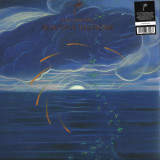
Boudica is a platform founded and curated by DJ and producer Samantha Togni, that aims to give visibility to women, trans* and non-binary artists. It was launched in 2019 and has since evolved into a series of club events in London at The Pickle Factory, FOLD and E1, a radio show, a music conference and a record label.
Their mission is to promote greater gender equality within the music industry. By showcasing diverse role models from marginalised communities, they aim to inspire the new generations of artists from all backgrounds to pursue their talents.
Their second vinyl is the reflection of the continuous evolution of Boudica throughout the years and its commitment to pioneering uniqueness in the electronic music industry with a forward-thinking vision.
Following the previous vinyl artwork cover, they showcased another member of the Boudica LGBTQIA+ community, bringing the vinyl to life and fully capturing the essence of what the Boudica project represents.
The second vinyl opens up with a song by Infinity Division, which title "Dreams That I Can't Quite Remember" inspired the name of the VA itself. The track opens up with pulsating percussions and a rave infused melody, the two marry together perfectly into an hypnotic journey.
"Love Q", the second track of the project, is an uplifting and dreamy adventure by Copenhagen based artist Peachlyfe. In the artist's words "I made this track as a declaration of love to someone very special to me and played it for her on her birthday on a big sound system. It's an over-the-top, melt-where-you-stand, dance-your-heart-out, unapologetic love song!"
Side two opens up with a fast paced journey by Sentimental Rave, the song is called "Miles Away". The vocal snippet in the track guides the listener on a march led by distinctive Hardcore kicks and a fierce groove that the artist is a master at creating. Guided by the vocal snippet, the listener is led on a march by the artist's mastery in creating fierce grooves accompanied by their unique kicks.
Yazzus delivers a phenomenal end to the vinyl, with a track that's already a psychedelic anthem. "Grand Theft Audio" constantly evolves but never drops momentum, instead it demands a non-stop feet mover from the listener. This mind-blowing uncompromising Electronic track is due to be an unmissable gem in everyone's playlist.
Suche:the essence
What’s Mu about? Mu is about everything: Songs about heartbreak and parting share the album with songs marvelling at the scale of the universe. Mu is a concept from Zen and Chan Buddhism that means: “nothingness” and also, “pure awareness.” The awareness at the source of all things. In Hannah’s words: “There is so much life in every moment. Endless patterns, algorithms and instances repeating and changing and adapting. Spiralling outwards from the source. What source? The source.” In search of the source, Hannah has composed and arranged an undefinable, cinematic album that leads the listener on a winding path through her imagination. Sonically as well as thematically, Mu is an album of extremes and lofty ambitions. Fragile and delicate vocal and violin textures contrast with crunchy noisescapes and brooding synthesizers. Hannah’s commanding voice shares the spotlight with a string section and is backed by spacious production featuring many acoustic instruments. Sonically, producer Nick Herrera has brought a reassuring chunkiness to this unplugged palette, in particular the head nodding drums that anchor Hannah’s celestial musings. Like a film soundtrack or a symphony Mu is best listened to and understood as a whole - it circles back to themes and refrains and re-examines them. Sometimes a song is a song, sometimes it’s a soundscape dreaming of a song. “When making this album, I had a specific concept for how I wanted the music to sound. I don’t mean in terms of genre… it was more of a visceral, sensory concept which I knew I could only realise by allowing myself to experiment and create simultaneously, believing in my rough ideas enough to grow them, to weave them into stories. I began allowing myself to enter and remain in a very heightened state of awareness, which is a state I have continued to pursue and learnt to enjoy ever since. I let my mind dissolve into blackness each day. From there the most wonderful colours can appear. I have decided to call the album “Mu” to signify the empty chasm I allowed to hold within me whilst these songs were born.”
First time reissue of mega rare 1972 psych-folk album from Venezuela.
180g LP.
One of the most obscure records ever released in Venezuela that was originally distributed in tiny quantities as a promo-only album.
A magic blend of protest songwriting, with a strong environmentalist statement, and folky pop with psych ingredients —such as the use of sitar sounds— recorded by the collective of artists “Una Luz”, and “El Zigui” who was once described as the local Bob Dylan.
The late ‘60s was a short period of time, long enough to turn the world upside down.
Music, paying attention to the ancient Greeks who said that changes in society are also reflected in it, also undergoes violent transformations in its structure. The turbulent joy of rock and roll and twist gives way to the meditative sounds of the waves of the sea contained in surf to finally welcome music of soft and delicate harmonies with songs full of references in their lyrics to the state of society and their relationships with the environment.
On the other hand, in Venezuela, although the expansive wave of May 68 had not reached it, a certain degree of dissatisfaction began to be perceived, especially through the music of a singer-songwriter from the countryside of Venezuela known as Ali Primera, El Cantor del Pueblo. Thanks to a scholarship from the German government, he studied for a few years in that country, and it was there that he recorded his first album, with songs whose lyrics reflect the essence of authors such as Bob Dylan and Atahualpa Yupanqui. And Ali Primera becomes one of the greatest influences of our artist: El Zigui.
Guillermo Sánchez Corao —known as El Zigui for some strange reason— was born in the Venezuelan city of Maracay, capital of the State of Aragua, on January 13, 1948. From a very young age he began to study guitar playing and, already in his teens, we can find him as part of the duo El Zigui & Franklin together with Franklin Laudelino Mejías, another young man with a great musical pedigree.
It is during his bohemian phase as a troubadour, in the surroundings of the Ateneo de Caracas, when his music caught the attention of producer Mario Tepedino, the most important youth music producer at the time. Mario takes him to his TV show “2001 Juvenil”. With the incorporation of other musicians such as Rubén "Micho" Correa —who would later become a great arranger and record producer— he created the group El Zigui y Una Luz, which would later be joined by musicians such as Carlos "Nene" Quintero and Alfredo Padilla, members of the amazing Grupo Pan. Later on, another outstanding singer would also join Una Luz: Guillermo Carrasco.
With this formation they made it into a recording studio in 1972 where they managed to record, in just 30 hours, a long-playing album of which only 60 copies were pressed and has therefore gained cult status among collectors. As expected, the strong content of the lyrics was not supported by the media, making the promotion of the album impossible to accomplish. However, it was with the help of Mario Tepedino that they made it to television, with appearances on “2001 Juvenil” and “Antesala Lunar”, a show that was especially produced for the broadcast of the arrival of man on the Moon.
That was probably one of the main reasons for El Zigui to move to Canada and then France until 1978 when he returns to Venezuela. He would then join bands like Xabañón, Fogón and De Vuelta al Futuro, a 12-member super group. The former members of Una Luz had become well known musicians in the country, especially Guillermo Carrasco who was one of the greatest ballad artists in the ‘80s and targeted by the biggest record companies at the time. El Zigui died in a traffic accident on June 22, 1999. If he had lived through these crazy times... where would he have gone?
Today sees Belgian-Caribbean provocateur Charlotte Adigéry and her long-term musical partner, Bolis Pupul announce their debut album Topical Dancer, due for release on March 4 2022 via Soulwax’s iconic label DEEWEE.
Cultural appropriation. Misogyny and racism. Social media vanity. Post-colonialism and political correctness. These are not talking points that you’d ordinarily hear on the dancefloor but Charlotte Adigéry and Bolis Pupul are ripping up the rulebook with their debut album Topical Dancer. The Ghent-based duo, who broke out with their 2019 Zandoli EP, are rare storytellers in electronic music: they take the temperature of the time and funnel them into their playful synth concoctions – never didactic and always with a knowing wink.
Their debut studio record – which cements them as a duo under both their names for the first time and is co-written and co-produced by Soulwax – is both a triumph of kaleidoscopic electro-pop and “a snapshot of how we think about pop culture in the 2020s.” It captures Charlotte and Bolis’s essence as musical collaborators and the conversations they’ve had over the past two years on tour, as well as their perspectives as Belgians with an immigrant background, Charlotte with Guadeloupean and French-Martinique ancestry and Bolis being of Chinese descent.
Beyond the album’s thematic heft, Topical Dancer reflects Charlotte and Bolis’s idiosyncratic sound: it’s thoughtful but it bangs. Their take on familiar genres is always off-kilter; songs sound undone or a little wonky; but these are nocturnal heaters to make the club throb. “We like to fuck things up a bit,” laughs Bolis. “We cringe when we feel like we're making something that already exists, so we're always looking for things to combine to make it sound not like a pop song, not like an R&B song, not a techno song. We’re always putting different worlds together. Charlotte and I get bored when things get too predictable.”
Topical Dancer is fizzing with ideas – there’s certainly no filler among its 13 tracks. But above all, perhaps, it has a restlessness, a desire not to be boxed in and to escape others’ narrow perceptions of who they are. It’s summarised by the refrain of their new single, ‘Blenda’: “Don’t sound like what I look like / Don’t look like what I sound like.” “One thing that always comes up,” says Bolis, “is that people perceive me as the producer, and Charlotte as just a singer. Or that being a Black artist means you should be making ‘urban’ music. Those kinds of boxes don’t feel good to us.”
‘Blenda’ in particular references how “I am a product of colonialism,” says Charlotte, “and I feel guilty for taking up space in a white country.” The song was inspired in part by Reni Eddo-Lodge’s book Why I’m Not Longer Talking To White People About Race. “It talks about the colonial past and post-colonial present in the UK,” Charlotte continues, “but that isn’t merely a British or American problem, Belgium is part of that as well.” She says that her home country is likewise “oblivious to a big part of its history” which “results in general ignorance and a lack of understanding and empathy towards Belgian inhabitants of immigrant descent.”
On Topical Dancer, it’s less about finger pointing or being dogmatic about all the things they speak about. It’s about emancipation through humour. “I don’t want to feel this heaviness on me,” says Charlotte. “These aren’t my crosses to bear. Topical Dancer is my way of freeing myself of these issues. And of having fun.”
Following from the 7-inch release of her enduring classic “Say That You Love Me,” soulful songstress AK teams up with Most Excellent Unlimited once again for a new already highly acclaimed single “Beautiful You”, appearing on vinyl in the compact format for the first time. AK, the veteran singer songwriter gives her fans a message of empowerment and affirmation, lyrically uplifting with a groove to match, presented here with GRAMMY® award-winning remixer Hex Hector’s dancefloor-tailored remix alongside the original’s gleaming pop arrangement. For this single release, the first from her upcoming new full-length album, maestro Danny Krivit has contributed his own edit of Hector’s rework, an edit that follows his reliable method of boiling down arrangements to their perfect essence and is exclusive to this single. Completing the package is a full color sleeve, complimented by a translucent pink vinyl within.
LA-based event series and DIY music collective New Palm began back in 2017 and in the six years since has turned plenty of heads. It is now a core part of that local underground scene and so here it makes the natural next step of starting its own label. The imprint kicks off with a fresh EP by resident and label co-boss Charles Edward. He shows off his love for dubbed-out rollers with music that captures the essence of the New Palm parties - heady pads, smooth grooves and classy moods. Here's looking forward to many more.
hand-numbered 12" limited to 300 copies
Constantly evolving and adapting his sound, Shackleton has releases
spanning labels such as Honest Jon’s, Perlon and his own imprints, Skull Disco (co-founded with Appleblim) and Woe to the Septic Heart!.
Shackleton now finds a home for a brand new project on the Barcelona-based, Modern Obscure Music.
Undoubtedly Shackleton, but taking the meditative aspects of his sound to a new plane, The Purge of Tomorrow, is an alias born to transmit a less dancefloor-orientated experience to whomever is ready to receive it.
‘The Other Side of Devastation’ is an investigation into a novel form of
deepness. Adverse to the reductive label of ‘Ambient’, these tracks are spawned from a live performance context. The essence was to create an immersive encounter where listeners are called on to actively unburden their mind of unnecessary thoughts. Staying true to the trance elements that Shackleton is renowned for, this EP is not dependent on traditional structures or a linear narrative.
‘Time Moving’ presents itself through a journey of disquieted moments and contemplative states. Hypnotic strings provided by Kathy Alberici construct pastoral phrases that mesh with the larger looming drones,
culminating to conjure a daydream-like energy. Following on, ‘Waves’
twists through various forms, awash with cascading vocal splices and
soothing murmurs contrasted with rousing sub pressure.
Reflective and sometimes provocative, as an artist who resents the
pigeon-holes of genre, The Purge of Tomorrow presents an exciting new direction for Shackleton. Bursting-at-the-seams with emotional
complexity as to echo the woes of the human condition, this EP is
steeped in feelings of forgone events doomed to be replicated.
Recital presents »As Above, So Below, a new album from French multi-instrumentalist Delphine Dora. Over the past decade, from poetry reading, chansons, organ performances, tape compositions and so on, each album in Dora’s lush discography feels like a feather from a different bird. A keen ability to defy any singular “sound,” always diving to different depths.
»As Above, So Below« centers around mystic piano and voice recordings. In a distinct gothic landscape, each of the nine tracks float into one another. From verdant piano works that revolve like beautifully stretched out miniatures, expanding and bending like shadows across the floor, to foggy vocal arrangements hovering above beds of rural field recordings. Quiet synthesizers crawl in the backdrops, never disturbing the spirit of the piano motions.
On the track »Cantique spirituel,« Dora, from a cloud of her phantasmal caroling, recites a poem by German author Novalis (1772-1801). »Blindly we strayed in night’s confusion…« This poetic essence is found throughout the album… »gladness and grief alike consume.«
»As Above, So Below« was produced and mixed by the brilliant British musician Andrew Chalk, whose presence tints the air throughout Dora’s album. Chalk ornaments the pieces with additional instrumentation, along with Jean Noël Rebilly playing clarinet.
London’s own Trev appeared on our first release, Body Music Vol 1, as well as other key releases on CoOp Presents and Local Talk. We’ve been fans from the start and, after Trev joined the family, his music went from strength to strength. It was already out-of-this-world production, with serious attention to detail, and this EP is nothing short of excellent! He told us 'there’s no hiding that this EP is, in essence, a long love letter to Brazil', but that it’s also written to 'Iran, London, Lisbon, Japan, probably more - too many to remember!'. Trev described his process as 'listening, learning, combining my favourite elements of all this music that has brought me so much joy over the years'. Right on!
This EP is fresh, different and sonically on point. It’s Bruk, it’s Brazilian, it’s Bass, it’s… all-round-really-good dance music! Trev is a real modern musician, an awesome keys player as well as a producer. He understands the importance of musicality and originality, together with weighty beats and bass, working just as well on the dance floor as they do at a house party… or dinner party, for that matter!
'Nightjar', the title track, draws you in with hypnotic plucks like crickets on a hot summer’s night. Eerie pads float in building tension before the beat drops - Pandeiro and Caxixi serving broken-beat with the kick - pumping the sonic palette and pumping the dancefloor. Deep sinister chords pulse in and out, percussive melodies bring love from the middle east, and we reach a beautiful jazz-harmony break - then it’s straight back to the body movement - this time letting loose with the cowbells and the shakers. Think Brazil, think Persia, think Jazz, think dance-floor, it’s all in there!
'Late Flip' pulls us into a more ethereal intro, with the Koto and skate sounds laying our dream scene. Morphing out of flutes, modular synth plucks pay tribute to the sounds of Lisbon as we drop - a rolling broken beat punch, playful Rhodes and distant vocal chops ring out with the Koto dripping in warm echoes. A truly amazing composition and arrangement that leaves you wanting more!
'Beijo' is one of our faves on this EP. We’re straight in with a kiss - MWAH! - a classic Baile rhythm gets a warm Bruk embrace. It’s passionate and dark and tells a story as old as history. Get lost in the movements between drums and percussion, in the flutes and cicadas, until the organ bass calls it - time to get moving. This really is Trev’s signature dance floor style. A banger with a naughty-yet-subtle bassline, and its own game of perspective - feel this rhythm in more ways than one. Vocal chops and Tamborim place São Paulo’s influence front and centre.
'Grey' takes us on a dusty House/Bruk journey with filtering chords that grow patiently until the beat drops - getting your feet moving and neck bopping! Burning slow, Trev is playful with the harmony, keeping the fun with a roller of a bassline that pulls it all together. It’s a six-and-a-half-minute rich musical journey that feels more like half that time!?
Complete your Dance Regular Vinyl collection with this absolute killer EP from the one called Trev.
Since his last outing on Control Freak with the sold-out Bunzunkunzun EP, Syz has built a reputation as one of the UKs most distinctive club producers, weaving playful, percussive techno with soundsystem-driven bass music. Releases via Shanti Celeste’s Peach Discs and more recently on Banoffee Pies have cemented his position as a rising star of the UK scene.
Much of this acclaim started with 2020’s Mindforms - a self-released mini-LP which saw the young producer step away from the dancefloor to explore an expansive sonic world, ‘balancing the tranquility of the ecological world with the immediacy of the digital one. Tropical botany meets ethereal cyberspace through a fusion of styles, influenced by UK techno, hip hop, ambient, acid, and sound-system-driven bass music’.
The original release was accompanied by a highly limited run of just 10 dubplates. Deeming this 6-tracker too good not to receive a proper pressing, Control Freak are proud to present the first ever complete vinyl run for Mindforms, housed in full-colour centre-cut sleeves featuring an adaptation of the original artwork by Jamie Fallon (Ghost Cell), reworked by London-based designer Blixa Aguerreberry.
Alongside the record, Syz & Control Freak have curated Clubforms, a collection of remixes available digitally from some of our favourite producers, each bringing the original release firmly onto the dancefloor with their own production flourishes.
New York painter and musician exploratory industrialist Tor Lundvall initially envisioned his 14th album, Beautiful Illusions, as an entirely instrumental affair, "inspired by memories of sitting in a church or cathedral watching the shifting sunlight through stained glass." Although he ultimately chose to wreath the majority of the tracks with hushed, poetic vocals, his original muse still resonates. These are certainly songs of shadowplay and vaulted skies, the quiet grandeur of dusk deepening on the horizon. Lundvall characterizes the lyrical subject matter, too, in ways both specific and surreal, exploring "the doubts, the anxieties and even the bleak fantasies the mind spirals into during moments of isolation, separation and distance." Tricks of the eye, mind, and ear, magnified by silence and the looming long winter. Shivering pulses and muted bass lines tread the twilight while icicle synths and wiry guitar map the melody until the voice enters, narrating oblique moods of essence and absence, tenderness and truth. Glimpses of dark humor flicker in the wordplay but the greater sonic landscape is one of falling leaves and failing light, small gestures rendered as revelation, cloaked in reverb and spatial fog. Lundvall's mastery of nuance and negative space continues to heighten, whispered brushstrokes of the invisible and the unsaid, what lies beneath and what lies beyond: "Behind the shields and false fronts is usually a sadness. The heartbreaking reflections of what might have been."
smokey vinyl
French label and promoter Much More recordings is proud to present the first vinyl our collection.
This vinyl features 6 tracks ranging from breaks to techno and passing by acid and electronica, designed for soundsystem and anchored in their proper original and analogic techno sound.
We believe that redefining the essence of the genre is now critical. After years of promoting parties in Paris and Europe, Much More has gathered artists considered to be the essence of techno. Artists who know how to turn knobs without screens.
They continue to make the mob sweat on the dance-floor, with a simple at first yet efficient recipe that holds a myriad of subtleties.
On our table lies a lemon slowly withering away, a fruit that once was as much suave than sour. Our artists are as ripe as this yellow sphere lying in the open. They possess the experience and knowledge needed to forcefully broadcast this emergency rebirth that techno desperately needs. Our creations are neither nostalgic nor futuristic, they aim to be atemporal. They are naked to artifices, raw to over-tuning, built and cut upon the very ageless tools that defined and will name what is Techno.
Far from us the desire of claiming to be the only definition of the genre, nor forgetting about its primal cravings. Whereas Amarou, Skudge and Sawlin showcast the narrative scope of our passion, Wrong Assessment, Arnaud le Texier and Falling Echoes will remind us what is raving under the strobe's fire.
It's music from urban centers and countrysides, for big room and inner space.
It's music without tag or time, where every loop stops and unfolds on its own.
We are back to the essence, and yet, much more.
When we established Balmat in 2021, neither of us could have imagined that within two years, we’d be putting out an album by one of our musical heroes: Mike Paradinas, aka µ-Ziq. The British producer has been an inspiration to label co-founders Albert Salinas and Philip Sherburne since the 1990s. In fact, his album-length remix project The Auteurs Vs µ-Ziq was one of the very first pieces of electronic music that Philip bought, way back in 1994. To have the opportunity to release his music now feels like a real full-circle moment.
Paradinas, of course, needs no introduction. Under a slew of aliases, chief among them µ-Ziq, the British artist revolutionized leftfield electronic music in the 1990s—coincidentally, this year marks the 30th anniversary of his debut album, Tango N’ Vectif, for his friend and sometime collaborator Aphex Twin’s Rephlex label—and his label Planet Mu has built up a formidable catalog of visionary, forwardlooking records, mapping virtually every corner of the electronic spectrum. With 1977, he turns the clock backward in a sense, and not just with the album’s title: Rooted in classic ambient and electronic sounds, these 15 tracks evoke the anything-goes spirit of the early ’90s, before the tools and tropes had calcified into cut-and-dried styles.
There’s no shortage of familiar sounds on 1977. There are echoes of raves and chillout rooms and transmissions from the fringes of techno; there are detuned synths and glistening reverb tails and, above all, gauzy vox pads, the eerie glue that holds it all together. The title, he says, is meant to invoke a general sense of nostalgia, bookmarking a year in his boyhood when he became more selfaware. More than anything, 1977 sounds like µ-Ziq distilled: Stripped of his signature breakbeats and customary chaos, Paradinas’ first-ever strictly (well, mostly) ambient album presents the essence of his music in a whole new light.
Along the way Paradinas touches on dark-ambient drones (“Marmite”), horror-film themes (“Belt & Carpet”), jungle breaks (“Mesolithic Jungle”), and even house music (“Houzz 13”), which marks the first bona fide dance-floor moment on Balmat to date). Yet the album never—to our ears, anyway— feels expressly retro. Rather, Paradinas plucks timeless sounds out of the ether and gives them a gentle tap, spinning them into unexpected new orbits. At times, 1977 feels like an experience of extended déjà vu: When we first listened to it, we had the sense that we already knew this music. It was as though we had heard it years ago, perhaps on a battered cassette tape lent to us by a friend, and been searching for it ever since. We hope you feel the same.
Serious Beats Classics releases Robbie Tronco's legendary house track "Fright Train" on vinyl, now featuring a brand new remix by none other than DJ Ghost.
"Fright Train" was originally released in 1998 and has since become a true classic in the house scene. With its signature beat and rousing synths, the song revolutionized the clubs at the time and is still played by DJs around the globe to date.
With DJ Ghost's new remix, "Fright Train" gets a modern update while keeping the essence of the original, ready to rumble festival stages. Known for his catchy and energetic productions, the Belgian DJ and producer has once again proven why he belongs to the top.
The release of this new version of "Fright Train" is sure to send a wave of nostalgia among the older generation of house lovers, while also appealing to a new generation unfamiliar with the original.
Club culture in France would have been different if not for Micky Milan (real name Milan Zdravkovic). He is one of the true trailblazers of what is known today as French Boogie.
It all started when he was the in-house DJ of the highly popular club L'échappatoire in the Parisian suburb of Clichy sous Bois. In those days, he was well connected with Champs Disques, back then, the hippest record shop located on the Champs Élysées and had privileged access to the best imported U.S. 12" thus making his club the undisputed stronghold of disco funk.
A significant fact is that he is one of the very few French artists signed on the legendary U.S. Salsoul record label with the song "Quand tu danses". Teaming up with funkateer and close friend François Feldman, the track was recorded with Feldman on keyboards along with the Gibson Brothers on percussions, drums and keyboards, a French group, originally hailing from Martinique and Kamil Rustam who later went on to work to the who&who of soul and funk music adding his powerful licks of funky guitar. The influence of Lamont Dozier of "Going back to my roots", fame is that of a tutelary god all over these tracks. The goal behind this EP is to highlight Micky Milan’s multifaceted musical talents, from disco funk to jazz and synth pop. The record contains two tracks never previously released on vinyl, the groovesque “Paris amour” built on guitar riffs carrying the sexy voice of Alexandra and the instrumental version of "Quand tu danses"; epitomizing the essence of funk and the power of a sound on par with the American productions of the time. Hail to the pioneer.
To celebrate the 50th release of Visions Recordings, Alex and Stephane Attias present here a 3 track EP featuringSohan Wilson on keyboards.
Starting on the A side with a long deep slow disco vibe and a shifting bass line, “In My Mind” will take you on a journey, a repetitive groove, a long jam that simply celebrates the essence of Visions Recordings with a soulful vibe.
On the B side we have “Overtones” a crazy dancefloor jam with a simple beat based on a kik drum and some percussions. The key to the track lies in the sick bass line and haunting piano riff that builds to a peak reaching a higher state of moody funkyness.
Rounding out the B-side, “Skylite” is a funky disco house track with a healthy dose of sunshine, pads, and keyboards by the wizard Sohan Wilson.
Sintering or frittage is the process of compacting and forming a solid mass of material by heat or pressure without melting it to the point of liquefaction. The material produced by sintering is called sinter. The word sinter comes from the Middle High German sinter, a cognate of English cinder.
Born in the mid-60s, German musician and sound designer Uwe Zahn came on the scene of electronic music with his debut full-length album for DIN, titled “Atol Scrap.” In the very same year of 2000, the influential City Centre Offices label has signed Arovane for his majestic “Tides,” which has withstood the test of time for over two decades now. Back then, electronic music was split between the dance floors and the bedroom listening, with the latter carrying the now-famous acronym for Intelligent Dance Music. And Zahn’s compositions were indeed just that – more than a gimmicky, knob-twisting, stuttering randomization of experimental rhythms and tone, Arovane’s music evoked real emotion which has assembled his followers from around the globe. But his arrival on the scene was more than a predictable trajectory. Zahn’s sound began to take shape in the late 80s when the cut-up hip-hop beats were layered with synthesizer pads and looped samples. This experimentation progressed into what the 90s coined as breakbeat and glitch.
As the 2000s rolled over, and the monumental imprints, such as Skam and Warp, honed their staple repertoire defining the future of electronic music, City Centre Offices had a staple of their own. Often referenced alongside Boards of Canada and Autechre, Arovane’s sound quickly gained a discerning audience, tuning into his melancholic melodies, advanced textures, and complex polyrhythms. The pinnacle of his production was released in 2004, when suddenly, on “Lilies,” Zahn signed off with the final track, which he has titled “Good Bye Forever.” And then there was silence. For nearly nine years, the scene and yours truly mourned the loss of Arovane, assuming that he’s given up. That is until, in 2013, Zahn came out with a brand new album, “Ve Palor,” on the surviving post-IDM imprint, n5MD.
While on hiatus, Uwe spent his time researching, reconnecting, and reflecting on all he’s built. The sound experiments went on, and so did the music scene, morphing, dissolving, re-shaping itself into a new form for new followers. During that time, Zahn spent some time with sound design, creating patches for Access Virus TI, as well as sample packs for various sound developers. After “Ve Palor,” Zahn began collaborating with various musicians from around the world, exploring, directing, and fusing their distinguished sound with his own. On his subsequent releases, he shared credits with ambient artists Porya Hatami, Hior Chronik, Darren McClure, and even yours truly. During our collaboration, Zahn often described the process of building a new vocabulary for our very own defined language, with which my piano spoke through sound.
With nearly two dozen studio releases under his belt, numerous EPs and singles, and just as many appearances on various compilations, Zahn continues to split his time between his fascination with sound design, sonic programming, and musical composition, which sees the light via his ongoing projects, releases, and contributions towards audio plug-ins, software synths, and sound sets for advanced hardware. It’s effortless to slot Zahn’s sound between the genres, scenes, and names, but very difficult to peel apart, define, and then express the essence using words. However, what is simple and essential for the ones who understand, is recognizing, admiring, and subsequently falling in love with all that is encompassing of Arovane. (by Mike Lazarev)
Elias Devoldere is the drummer in bands such as Nordmann, Hypochristmutreefuzz, Suwi, Robbing Millions, and John Ghost. Following an ep, Kaiku, released last summer, Bloomed > Exploded is his debut full length as a solo artist. Besides writing and singing, he composed, played, recorded, and produced the bulk of the ten songs himself. 'Everything blooms', he explains the title of his first album. 'Until it explodes, and something else is able to grow from it'. In this case, what came full cycle is an intimate coming-of-age album of intangible atmospherics, crisp melodies, and understated rhythmical patterns.
BLOOMED >
'As a kid, I just wanted to play football, you know?', says Elias. 'But when I was eight years old, my parents made me choose between drawing school and music school'. And thus began a dedication to rhythm for Elias. At 18, he enrolled at the Royal Academy of Fine Arts in his hometown of Ghent, opting for a jazz education. 'Not because I aspired to become a master 'jazz drummer', but to learn music, to become a good musician'. It was at the academy that, after an impromptu jam session, Nordmann first came together. The exhilarating instrumental quartet went on to win second place at the prestigious Humo's Rock Rally in 2014, and released three albums to critical acclaim, with a new one in the works.
Devoldere, in the meantime, had completed his degree with a craving - ironically - for music. 'I was in over my head with jazz for such a long time, and went on an epic discovering spree. Moses Sumney, James Blake, Kendrick Lamar, Connan Mockasin... Lots of stuff I had missed over the years. In a way, I reconnected with the kind of music I was into before jazz dominated my life. Pink Floyd was my first love, for instance, and later Radiohead proved to be a game changer. Diving back into those kind of sounds, I was feeling the urge to follow my old dreams, of being a solo artist - or something more than 'just' a drummer, anyway. So I bought a guitar, an interface for my laptop, and started writing'.
EXPLODED
When he released his 5 track ep Kaiku in the summer of 2021, it summarised a lot of firsts for Elias. First time writing lyrics, first time as a lead vocalist, first time recording his own songs all by himself. The songs had been around for a while, but taking those leaps took a long time. 'Making the ep helped me to find my voice, in every way possible'. Still, in the aftermath of the pandemic, the songs on Bloomed > Exploded sprouted in a time of upheaval. 'Musically the album is quite serene, gentle even. But the themes speak of internal unrest and uncertainty. There are a lot of questions on the album, as it turned out. Duality, as the title suggests, coming from the struggle between a wish to turn everything upside down and a search for peace. Honestly: the prospect of my 30th birthday was messing with my head too'.
Recording during a period of solitude in France, Elias initially relied heavily on synthesizers and drum machines. 'Explode / Boalis was one of the first songs I wrote for this album, and pivotal for its atmosphere, based mostly on electronic elements. Later, I did use 'real' drums on most of the other songs, though, and contributions from other musicians, but the overall mood is very cohesive'. 'Pure', that's how Bruno Ellingham, the UK engineer who mixed the album, described it. Much to the delight of Elias, who reached out to Ellingham because of his previous work with bands such as Massive Attack and Portishead. 'Hearing the end result, I thought he really captured the essence of the original demo's. For me, that adds to this album being a sincere reflection of my true self. 'Take a dive/ Into the place where it's more quiet', as I sing in the last song, that kind of sums it up for me'.
The Well & The Gentle, two of the major works of Pauline Oliveros, are presented here in a first time reissue on double vinyl in a gatefold sleeve with extensive liner notes.
If Oliveros had followed a more conventional path she may have, all social obstacles aside, been considered among the major composers of her time. However, Oliveros approached composition in a more egalitarian manner. She wrote music for musicians to interact with or, in the composers words, she wished to create "an inclusive and interdependent and unfolding world of relationships."
Oliveros' propensity towards inclusion is part of what makes this work so remarkably distinctive. The Well & The Gentle is carefully crafted, allowing performers to participate in the creation of the work. Players are asked to collaborate, focus, react and make imaginative choices. Only then can the performers "pass through stages of awakening to the possibilities inherent in making music, working together, leading to the essence of what can shape musical impulses and individual freedom simultaneously."
Unlike most major composers of the era, Oliveros' work focuses on collaboration and improvisation. For Oliveros, the processes involved in making music are as fundamental as the music itself. Oliveros creates, as Arthur Sabatini put it so eloquently in the liner notes, "A world in which sound and the practices entailed in making music merge; become, at once, source and atmosphere, energy and essence, presence and dynamic."
Pauline Oliveros was an electronic music pioneer, accordionist, composer and educator who resided in Kingston, New York. Her instrument was tuned in Just Intonation and she often included it in her meditative improvisational music. Her music is not meditative in the sense that it is intended for listening to while meditating, rather each piece is a form of meditation, such as her aptly titled Sonic Meditations.
A central figure in post-war electronic art music, Oliveros is one of the original members of the San Francisco Tape Music Center (along with Morton Subotnick, Ramon Sender, Terry Riley, Steve Reich and Anthony Martin), which was the resource on the U.S. West coast for electronic music during the 1960s. The Center later moved to Mills College, where she was its first director, and is now called the Center for Contemporary Music. Oliveros often improvised with the Expanded Instrument System, an electronic signal processing system she designed, in her performances and recordings.