- A1: Tok Tok Tok - Satisfaction
- A2: Bugge Wesseltoft - Angie
- A3: Shemekia Copeland - Under My Thumb
- A4: Rémi Panossian - Paint It Black
- A5: Anthony Joseph & The Spasm Band - Dead Flowers
- B1: Ann Peebles - Miss You
- B2: Pucho & His Latin Soul Brothers - You Can't Always Get What You Want
- B3: Slowfeet - The Last Time
- B4: Antoine Hervé - Backstreet Girl
- B5: The Mighty Mocambos (Feat. Afrika Bambaataa, Charlie Funk & Deejay Snoop) - Hot Stuff
Suche:the flow
Dawn of Demise entstand, als die Mitglieder Bjørn Jensen und Martin Sørensen beschlossen, dass sie einfachen und schweren Death Metal
spielen wollten. "Lasst uns etwas spielen, was wir auch wirklich können, etwas wie die schweren, groovigen Parts von Bands wie Suffocation, Pyrexia, Internal Bleeding, Dying Fetus, früheren Cannibal Corpse und so weiter". "Hate Takes Its Form" ist das Ergebnis dieser ersten Gedanken und Ideen. Die Band hat jahrelang hart an dem gearbeitet, was später ihr Debütalbum werden sollte.
Das Line-Up, das für das Album verantwortlich war, bestand neben Bjørn und Martin, die immer noch in der Band sind, aus Jakob Nyholm (der später bei Koldborn und Hatesphere einstieg), Kim Jensen (spielte auch bei Koldborn und Illdisposed) und nicht zuletzt Scott Jensen. Scott, der früher in der Death Metal-Band Infernal Torment aus Silkeborg spielte, hat sich aus dem Death Metal-Ruhestand zurückgezogen, um der Band beizutreten. Zuvor hatte er erklärt, dass er mit dem Spielen in Bands fertig sei und keine Lust mehr habe. Vielleicht konnte ihn sein jüngerer Bruder Bjørn überzeugen.
Das Album hat sich im Laufe der Jahre den Titel eines modernen dänischen Death-Metal- Klassikers verdient. Die Band ist immer noch stark, aber viele Fans schwören immer noch auf das Debüt und bezeichnen es als die beste Leistung der Band. Auf die Frage nach dem Erfolg des Albums sagte die Band: ... "Wir waren eine sehr neue Band, verwirrt und wussten nicht genau, wie wir klingen wollten. Vielleicht war diese "Verwirrung" und das "Experimentieren" eine gute Sache".
"Hate Takes Its Form" wurde von Marco Angioni in den Angioni Studios neu gemastert.
After releasing her sophomore album Inner Song in the midst of the pandemic, Kelly Lee Owens was faced with the sudden realisation that her world tour could no longer go ahead. Keen to make use of this untapped creative energy, she made the spontaneous decision to go to Oslo instead. There was no overarching plan, it was simply a change of scenery and a chance for some undisturbed studio time. It just so happened that her flight from London was the last before borders were closed once again. The blank page project was underway. Arriving to snowglobe conditions and sub-zero temperatures, she began spending time in the studio with Lasse Marhaug. An esteemed avant-noise artist, Marhaug envisioned making music that would fall loosely in line with Throbbing Gristle. Kelly, on the other hand, had planned to create something inspired by Enya, an artist who has had an enduring impact on her creative being. They met each other halfway, pairing tough, industrial sounds with ethereal celtic mysticism, and creating music that ebbs and flows between tension and release. One month later, Kelly called her label to tell them she had created something of an outlier, her `eighth album'.
180g vinyl pressing.
During the late 2010s, music lovers around the world began obsessively listening to increasingly esoteric albums on Youtube. More often than not, they’d leave the browser on autoplay. This was how Facundo Arena, the composer and producer behind The Kyoto Connection, discovered the technonaturalistic pleasures of Kankyō Ongaku (environmental music), a distinctly Japanese interpretation of European, British and American minimalist composition and ambient music. “It was a kind of algorithmic magic,” he says.
Upload by upload, the utopian music of Hiroshi Yoshimura and his 80s Japanese contemporaries transported Facundo back to his childhood. When he was five, his father placed him in karate lessons and began watching martial arts movies with him. From those early experiences, Facundo became fascinated Japanese history, tradition, and culture, particularly that of Kyoto - the cultural capital of Japan. Kankyō Ongaku reminded him of hearing the sounds of Japanese folkloric instruments as a young boy, and suddenly, the way the influence of Japan had manifested in his music made sense. “I had the sensation that for many years, I’d been doing something similar to the style,” he explains.
Inspired, Facundo used an iPad and an old Akai cassette deck to record Postcards, his homage to Japanese minimalism and Kankyō Ongaku. By this stage, he was twelve years deep with The Kyoto Connection, the musical project he launched in 2005 in his hometown of Buenos Aires, Argentina. Over that late 2000s and 2010s, Facundo, later on joined by collaborators Rodrigo Trado (drums), Jesica Rubino (violin) and Marian Benitez (vocals, now his wife), released numerous D.I.Y albums. Project by project, they followed the threads between 80s synth-pop, ambient, new age, house, techno and acoustic composition.
Postcards introduced The Kyoto Connection to listeners around the world and brought Facundo into our orbit. During Argentina’s covid lockdown, Facundo received a set of soundscapes recorded in Kyoto by the Japanese musician and sound designer Masafumi Komatsu. Over several insular months, he decorated them with synthesisers, samples and subtle rhythms, creating The Kyoto Connection’s next album, The Flower, The Bird and the Mountain to be released via Isle Of Jura offshoot Temples Of Jura.
Ostensibly made up of twelve distinct tracks, listening to The Flower, The Bird and the Mountain feels more akin to spending calm, meditative time in twelve specific environments. Although the foundations they rest on are recordings made in geographic locations around Kyoto, Facundo has yet to visit Japan. As a result, the landscapes he paints sit somewhere between fiction and fact, richly pictorial sonic imagination juxtaposed with echoes of reality. Regardless, as his bubbling melodies and glistening synthesisers glide against Masafumi Komatsu's recordings, Facundo guides us into a blissful zone of tranquillity well worth spending time within.
3rd album by Have You Ever Seen the Jane Fonda Aerobic VHS? Artist: Have You Ever Seen the Jane Fonda Aerobic VHS? Genre: Garage pop Formats: Digital + vinyl (Black Vinyl + Ltd Edition Yellow Vinyl) Finnish“flower-garage”3-pieceHave You Ever Seen the Jane Fonda Aerobic VHS? have carved out a unique sound for themselves, opting to use keyboards instead of guitars. This is after songwriter Ekku Lintunen and drummer Janne-Petteri Pitkälä, on seeing the film Drive, instantly decided to form an 80ssynth-pop band as a side project to the garage-rock act they were in at the time. When Susse Stemma-Sihvolacame in on vocals, bringing her scuzzed out bass tones with her, it ended up being garage-rock with a twist. They are further shaped by the aesthetic and sonics of the underground cassette culture punkbands in their small town of Kouvolarely on, as well as the thread of styles that have tied the towns musical history together through the decades. Amish-mash of 60s girl-groups, punk, glam, grunge and NYC/Manchester indie coming together generates their electrifying style that has given rise to one of the most exciting and infectious bands to come out of the Nordics in recent years. Lintunen likens his songwriting to crafting surreal movies. Starting with a picture in his mind, he throws out lyrical phrases to create this image for the listener. Enough is held back though that there are more questions than answers. Like all great films, the listener interprets as they do. After their debut album Teenage Sweetheartwas released in autumn 2015and following with their sophomore album Jazzbelle 1984 / 1988the trio have been praised in the international music media, and gathered fans around the world.
Justin Thurgur has been at the heart of the UK's World Music scene for over twenty years; principally in his collaborations with the former Fela and Femi Kuti keyboardist, Dele Sosimi, and with the pianist and composer Kishon Khan, most recently in his groups Lokkhi Terra and Cubafrobeat. He has also worked with the likes of Afrobeat drum legend Tony Allen, and with the Cuban giants Giraldo Piloto, Julito Padron and Changuito. Thurgur is also a member of the seminal English folk group Bellowhead.
'Many Faces' brings together this musical journey, with Afro-infused grooves and nods towards Cuban Jazz and Dub, with Thurgur's early passion for the likes of Miles Davis, Coltrane, Lee Morgan, Wayne Shorter, Herbie Hancock, et al....
It features both Khan and Sosimi, who have contributed as co-writers as well as bringing their own inimitable sounds on piano, rhodes and hammond organ. Alongside them are some of the leading musicians on the UK's African, Cuban and Jazz scenes, plus collaborations with rising star singers Jade Pybus and Sahra Gure.
Justin Thurgur - trombone (and some additional keys)
Graeme Flowers - trumpet and flugel horn
Simeon May - tenor, baritone and alto sax
James Allsopp - bass clarinet
Jade Pybus - vocals (on 'Woman')
Sahra Gure - vocals (on 'Be A Little Wiser')
Kishon Khan - piano, rhodes and hammond organ (on tracks 1,3,4 and 5)
Dele Sosimi - piano (on tracks 2 and 6) and vocala (on track 6)
Phil Dawson - guitar
Suman Joshi - double bass (except track 5)
Jimmy Martinez - double bass (on track 5)
Tansay Omar - drums (on tracks 1,3 and 4)
Kunle Olofinjana - drums (on tracks 2 and 6)
Yoann Julliard - drums (on track 5)
Afla Sackey - congas and djembe (on tracks 1,2 and 6), shekere and cowbell, and vocals (on track 6)
Oreste 'Sambroso' Noda - congas (on tracks 3 and 5)
Evie Hilyer-Ziegler - violin and viola
Paul Sartin - violin
Track 1 written by J Thurgur and S Gure
Tracks 2 and 6 written by J Thurgur and Dele Sosimi
Track 3 written by J Thurgur
Track 4 written by J Thurgur and J Pybus
Track 5 written by J Thurgur and K Khan
Recorded at Fish Factory by Simone Gallizio and Sean Douglas, at Boneman Studios by Justin Thurgur, at Better Pass Your Own Studios by Phil Dawson, at Thank You Please Studio by Kishon Khan and at 224 Studios by Matteo Musetti.
Mixed at Hi Street Studio by Mauro Caccialanza.
Mastered at Gearbox by Caspar Sutton-Jones.
Artwork by Matthieu Dufour
Photos of by Siobhan Bradshaw, Justin Thurgur, Stephanie Sian Smith,
Chantal Azari, Alex Bonney, Heather Hoyle, Nicole Thurgur, Joanna Mendel, Tansay Omar, Richard Gearey, Faye Hilyer-Ziegler and Svetlana Onye.
"Big Time" entstand mit einem Peitschenhieb in den seltenen, fruchtbaren Momenten, in denen sowohl frische Trauer als auch frische Liebe gleichzeitig auftreten, in denen sich Kummer und Verliebtheit gegenseitig verstärken, verkomplizieren und erklären. Verlust ist schon immer ein Thema in Olsens Songs gewesen, aber nur wenige können Elegien mit einer derart rücksichtslosen Energie schreiben, wie sie. Wenn diese aus allen Nähten platzende, bergab rasende Energie für ihre Arbeit unüberwindbar schien, beweist "Big Time", dass Olsen jetzt von einem verwurzelteren Ort der Klarheit aus schreibt. Dabei arbeitet sie mit einer elastischen Beherrschung ihrer Stimme - sowohl klanglich als auch künstlerisch. In diesen Liedern geht es nicht nur um die Transformation von Trauer, sondern auch darum, Freiheit und Freude in den Entbehrungen zu finden, die diese mit sich bringen. "Big Time" ist ein Album über die expansive Kraft der neuen Liebe, geschrieben in der Zeit, als Angel Olsen sich als queer outete und ihre ersten Erfahrungen mit queerer Liebe und Herzschmerz machte. Aber dieser Glanz und Optimismus wird durch ein tiefes und vielschichtiges Gefühl von Verlust gemildert. Während Olsens Prozess der Auseinandersetzung mit ihrem Queer-Sein und der Konfrontation mit den Traumata, die sie davon abgehalten hatten, sich selbst voll und ganz zu akzeptieren, fühlte sie, dass es an der Zeit war, sich ihren Eltern gegenüber zu outen - eine Hürde, die sie eine Zeit lang vermieden hatte. "Some experiences just make you feel as though you're five years old, no matter how wise or adult you think you are", schreibt sie über diese Zeit. Nach diesem tränenreichen, aber erleichternden Gespräch feierte sie mit ihrem/ihrer Partner*in, ihren Freund*innen, mit Austern und Wein. "Finally, at the ripe age of 34, I was free to be me." Drei Tage später starb ihr Vater, dessen Beerdigung Olsen zum Anlass nahm, den/die Partner*in ihrer Familie vorzustellen. Nur zwei Wochen später erhielt Olsen den Anruf, dass ihre Mutter in der Notaufnahme lag. Eine Zeit im Hospiz kam bald darauf, und eine zweite Beerdigung folgte kurz nach der ersten. Eine weitere Reise zurück nach St. Louis, eine weitere Trauerbewältigung, eine weitere Vertiefung und Intensivierung dieser noch jungen Liebe. Drei Wochen nach der Beerdigung ihrer Mutter war Olsen im Studio, um dieses unglaublich weise und zärtliche neue Album "Big Time" aufzunehmen. Ausgelassene Anspielungen an Tammy Wynette und Kitty Wells tauchen auf "Big Time" ebenso auf wie die komplexen Orchestrationen ihres genreübergreifenden 2019er Albums "All Mirrors". Während jenes Album voller dramatischer Veränderungen und Wendungen war, liegen die Überraschungen hier in ihrer Einfachheit - ein langsames Anschwellen der Streicher, eine Instrumentierung, die wie ein Sturm zyklisch ist, oder funkelnde Hörner in einer lichtdurchfluteten Break-up-Ballade, während kaum ein Synthesizer in Sicht ist. "Big Time" wurde zusammen mit dem Co-Produzenten Jonathan Wilson in seinen Fivestar Studios in Topanga, Kalifornien, aufgenommen und gemischt. Drew Erickson spielte Klavier, Orgel und kümmerte sich um die Streicherarrangements. Olsens langjährige Bandkollegin Emily Elhaj spielte durchgehend den Bass.
Having soothing melodies go hand in hand with catchy rhythms is an achievement in and of its own. But to make them memorable and something to come back to time and time again is something else entirely! Still, Hanna – alias of Warren Harris – does it again. After the release of Love All, Contrafact Records proudly welcomes him back with the Skate and Flow EP. It demonstrates the artist’s tremendous skill and the basis for his continuous popularity within the Detroit House Scene, in which Harris is deeply rooted.
Hanna’s groovy melodies gently kick in. Especially of note here is a masterly smooth collaboration with Jeru the Damaja! Together, the three tracks on this record form a perfect – should we say crucial? - ingredient to moments of total relaxation.
Wherever and whenever you are, Hanna’s Skate and Flow EP’s got your back!
Jackie Mittoo, organ and piano maestro, was not only a founding member of the legendary Jamaican Ska group The Skatalites, but through the course of Jamaican music’s long history has produced a body of work under his own name and of that with his various group incarnations, The Soul Brothers, Soul Vendors and the Sound Dimension. His distinctive organ and piano sound and musical arrangements have all played a major part in Jamaica's musical history.
Jackie Mittoo (born 1948, Kingston, Jamaica) began playing musical instruments at a very early age. Taught piano by his grandmother he was performing live by the age of 10 and recording by the age of 15. Two Kingston bands that he played with the Rivals and the Sheiks brought him to the attention of Studio 1's founder Coxsone Dodd. Who at the time was putting a group of musicians together to be his studio band. Impressed by his skills on both the organ and the piano, Jackie was asked to join in what would become Jamaica's foremost band The Skatalites. The fellow band members were Lloyd Brevett (bass), Lloyd Knibbs (drums), Don Drummond (trombone), Tommy McCook, Roland Alphonso and Lester Sterling (Sax), Johnny Moore (trumpet), Jah Jerry(guitar) and Mr Mittoo (piano). This line up ruled the Jamaican scene between 1964 - 1965 as well as inventing the Ska sound, they also performed the backing duties for the other top labels of the time including Duke Reid's Treasure Isle and Justin Yap's Top Deck label.
1965 saw The Skatalites disband, and Jackie Mittoo move on to his next musical project The Soul Brothers. Formed with fellow Skatalite Roland Alphonso,this band would back all the hits coming out of Studio 1 for the next three years with Jackie Mittoo working as band leader and musical arranger. Around this time Jackie also had his own single released, a Ska underground classic called 'Got My Bugaloo'. Rare, as it also features Jackie in the unusual role for him, as lead singer!!!!. 1966 saw the Ska sound evolve into Rocksteady, again with Jackie's band at the helm, and his first hit single the Rocksteady cut 'Ram Jam'. The success of which would lead to a solo career and album releases under his own name such as 'Now', 'Macka Fat', 'Evening Time', 'In London' and 'Keep on Dancing', to name but a few. In 1967 the hits at Studio 1 were still flowing when The Soul Brothers morphed into The Soul Venders and began backing such luminaries as Ken Boothe, Alton Ellis, Delroy Wilson, The Heptones, The Cables, The Wailers and many other of the label’s solo artists.
By 1968 Jamaican music was ready for another change and Rocksteady rolled into a slower groove soon to be called Reggae. Jackie Mittoo would be at the forefront with his latest band The Sound Dimension. A line-up that included Leroy Sibbles (bass),Roland Alphonso and Cedric Brooks (saxophone),Eric Frater and Ernest Ranglin (guitar) and Bunny Williams (drums). Being the house band at Studio 1 they backed all the leading names of the time, John Holt, Horace Andy and Alton Ellis, all of Studio 1's output carried his sound. Jackie Mittoo emigrated in the late 60's to Canada but travelled to Jamaica and London to record with many of the big new names, who were trying to redress Studio 1's supremacy and needed his magic touch. Such producers as Bunny Lee used Jackie Mittoo on many of his sessions,Sugar Minott among others were always glad of his services.
For this release we have put together a selection of some of his finest recordings done with legendary reggae producer Bunny Lee. 1970’s cuts that feature Jackie’s numerous talents, showing his ability to embellish tracks with a feel few could better. Musical arranger, band leader and all around studio ace.
We hope you enjoy this great set with Jackie Mittoo in fine style and his organ super powered indeed…
Out of the primordial chaos of pandemic and two years since their last full-length outing SUPERSAN, those sassy purveyors of World Dance of the highest calibre return with a bang. Duo's 3rd studio album soon to be released by Boom Selectah Records promises to turn heads and perk ears of the aficionados of Afro House but also has a potential to spill out from the niche and conquer the hearts of wider audiences.The album titled 'Little Dakar' is' the labour of love of two long time collaborators from Greece, Kostas and Valantis. This time their quest for musical purity and honesty is enriched and enhanced by stirring alliances. Scattered inside the audio-tapestry of this exotic wax flower you will find the vocals from 'the voice of Senegal' Jefree, and enchanting strumming from the fret of George Koltsiou. While rich traditions of Senegali music are particularly evident (and reflected in the album title), 'Little Dakar' goes far and beyond the sounds of a steamy Dakar Disco dancefloor. Finely tuned ear is in for a treat and could easily travel the distances between Senegal, Angola, Ghana, Uganda and Mali to name but a few. But you don't have to be an expert to fall in love with this album. The multidimensional colours of African musical heritage are easily accessible to a novice too as the references to better known House and Funk traditions could be heard loud and clear throughout the record.
Alien Imprints is back with their second release which includes some well-respected artists along with rising talents showcasing their skills.
False prophets - Relpek A.K.A. Kepler is a DJ/producer who hails from the North of England. His offering is a crisp electro track that generates a calculated bass, analogue stabs and phrases with sweeping synths.
Spider Ink - Ollie Drummond, a respected DJ from London gives us a proper tech house number solid 4:4 beats, crafted basslines and pad effects that follow with acid riffs.
Thibo - Bronxy and ETRE from the Ukraine collaborate on this deep house affair, with soulful grooves, smooth deep bassline and "spacey vibe" pads create a cool hypnotic flow.
(Re-issue 2022)
Die schwedischen Progressive-Rock-Legenden The Flower Kings und ihr langjähriger Labelpartner InsideOutMusic werden 2022 eine umfangreiche Wiederveröffentlichungskampagne starten, bei der der gesamte Katalog der Band auf CD und Vinyl in remasterten Versionen neu aufgelegt wird, wobei viele der Alben zum ersten Mal auf Vinyl erhältlich sein werden. Den Anfang machen 'Back In The World of Adventures' von 1995 und 'Retropolis' von 1996, die beide in der Besetzung Roine Stolt, Tomas Bodin, Michael Stolt, Jaime Salazar, Hasse Fröberg, Ulf Wallander und Hasse Bruniusson erschienen. Sie werden als Ltd. CD Digipak & Gatefold 180g 2LP+CD & LP-Booklet erhältlich sein, beide mit remastertem und teilweise neu abgemischtem Audiomaterial und erweitertem Artwork und Fotomaterial aus dieser Zeit.
Joona Toivanen Trio makes their We Jazz Records debut with their new album "Both Only", out 25 Feb 2022. A landmark work for the long standing group, the album showcases a new sound for the band, trekking deep into new ideas for an acoustic jazz piano trio. Since their formation as teenagers in mid-1990's, the trio of pianist Joona Toivanen, bassist Tapani Toivanen and drummer Olavi Louhivuori (of Superposition, Ilmiliekki Quartet and Linda Fredriksson "Juniper") has developed their remarkably coherent band sound step by step, touring the world over. Nowadays, the trio is geographically split between Gothenburg, Sweden (Joona), Copenhagen, Denmark (Tapani), and Helsinki, Finland (Olavi), but the unit has never sounded so together as one, and as adventurous as on "Both Only".
"Both Only" by Joona Toivanen Trio is a cocoon, a welcoming shelter of sound that opens up naturally for the listener to inhabit. The album is moody and introspective, even dark at times, but by the time you get to the closing track, "This and This", you'll likely notice something hopeful brewing up. This is not music dealing with nostalgia or a world lost. Instead, it's a body of work with delicate dynamics, taking a minute just to listen and to look inwards to learn something, to move forward.
The first single "Enlightened" is perhaps the most traditional piece on the album, yet it flows like a vessel beyond genre, conveying a mood, a feeling and an idea. Listen to how the piano, bass and drums discuss, how the groove moves with the instruments having their clear roles but also supporting each other and documenting a musical aging process exactly as that of a quality bottle of red wine. As a song like "Direction" proves, the melody is there all the way, yet there is nothing obvious about how it's carried by the trio. Things remain surprising, fresh and moving at all times. "Except For" keeps its intensity, while nearly erupting into a full on 4-to-the-floor banger. Nearly! The key here is how the energy sustains itself, building the intensity within the music.
"Both Only" is a powerful statement from a band ready to renew itself time and again, and one willing to do it slowly, outside of the hype. This process makes the impact enduring, nuanced and lovely.
WJLP37 Joona Toivanen Trio "Both Only" is available on vinyl as a black vinyl edition and as a LP+7" bundle also including WJ0716 "Except For (7" Edit)" / "Keyboard Study No. 2".
“More excellent poetic soundscapes from We Jazz! Love the flow through the tracks here – textural pieces moving into more rhythmic jazz abstractions. Beautifully recorded too.”
Quinton Scott — Worldwide FM
“Following on from the excellent Linda Fredriksson album We Jazz extend the journey with this innovative Joona Toivanen Trio set.”
Paul Bradshaw — Straight No Chaser
“You’ll look in vain here for extravagant splashes of color or bright swathes of sound, but what you will discover are a finely-chiselled set of compositions that make the most of the trio’s limited palette: flint-sharp melodies hewn from the ice, crisp and crackling rhythms.”
Cal Gibson — Ban Ban Ton Ton
“Incredible album from Joona Toivanen Trio and a strong start to the new year from We Jazz.”
Kerem Gokmen — Dubmission
“Encapsulating a new movement in jazz.”
Jay Scarlett — Sounds Supreme
“Interesting listen on the shortest day of the year. They have a very definite and saturated style.”
John Chacona — All About Jazz
“Airplayed the track”
Tom Ravenscroft — BBC6 Music
“Jazz album of the year released already in February?”
Ralf Sandell — Hufvudstadsbladet
“★★★★★”
Iida Simes — Voima Magazine
- A1: Dobie Gray - Out On The Floor (02:54)
- A2: The Show Stoppers - Ain't Nothin' But A House Party (02:39)
- A3: Richard Temple - That Beatin' Rhythm' (02:16)
- A4: Billy Butler & The Enchanters - The Right Track (02:30)
- A5: The Valentines - Breakaway (02:31)
- A6: The M.v.p.'s -Turnin' My Heartbeat Up (02:17)
- A7: Melba Moore - Magic Touch (02:25)
- A8: The Seven Souls - I Still Love You (02:23)
- B1: James Barnett - Keep On Talking (02:34)
- B2: The Olympics - Baby Do The Philly Dog (02:20)
- B3: The Hesitations - I'm Not Built That Way (02:42)
- B4: Eddie Parker - I'm Gone (02:46)
- B5: Mary Love - Lay This Burden Down (02:38)
- B6: Maxine Brown - It's Torture (02:33)
- B7: Kim Weston - Helpless (02:53)
- B8: Chairmen Of The Board - Give Me Just A Little More Time (02:42)
- B9: Earl Van Dyke & The Motown Brass - 6 By 6 (02:19)
- C1: Ann Sexton - You've Been Gone Too Long (02:16)
- C2: Eloise Laws - Love Factory (03:25)
- C3: Barbara Lynn - Movin’ On A Groove (03:17)
- C4: Tommie Young - Hit And Run Lover (02:34)
- C5: The Montclairs - Hung Up On Your Love (03:22)
- C6: Four Below Zero - My Baby's Got Esp (03:32)
- C7: Freda Payne - Band Of Gold (02:55)
- D2: The Chandlers - Your Love Makes Me Lonely (02:25)
- D3: The Monitors - Crying In The Night (03:05)
- D4: Tommy Good - Baby I Miss You (02:58)
- D5: Chuck Jackson - Hand It Over (02:22)
- D6: Frances Nero - Keep On Lovin' Me (02:25)
- D7: Edwin Starr - Headline News (02:33)
- D8: Jimmy Radcliffe - Long After Tonight Is All Over (02:30)
- C8: Just Brothers - Sliced Tomatoes (02:20)
- D1: Al Wilson - The Snake (03:30)
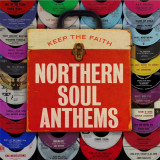
Demon Music is proud to bring together a selection of popular and exciting classic Northern Soul Anthems on a new 2LP thirty-three track collection. These are the original recordings by some familiar names and one or two that may have passed you by.
As the Sixties came to a close and the initial success of labels like Atlantic and Motown began to wane, there remained a dedicated fanbase of Soul devotees who would rather be out on the floor than wearing flowers in their hair. They continued to seek out new and previously overlooked releases, many on small labels that had never enjoyed chart success, making surprise hits of a few in the process.
Northern Soul could easily have passed into music history as a fad, something on the fringes of mainstream popular music; instead its popularity has remained and even grown. It is no longer the preserve of venues in the north of England (who had always attracted coachloads of devotees from across the nation), with Soul clubs opening in Europe, Asia, Australia and even - in perhaps the ultimate example of "coals to Newcastle" – America
Every few years Northern Soul enjoys a resurgence in popularity and welcomes a new generation of younger fans, keepers of the faith. This collection is for those with a passing interest and fans both old and
new - music fashions may change but the quality, the infectious excitement and the urge to get up and dance has endured in these fantastic records.
- A1: Neo & Trinity Theme (Johnny Klimek & Tom Tykwer Exomorph Remix)
- A2: Opening: The Matrix Resurrections (Alessandro Adriani Remix)
- A3: My Dream Ended Here (Marcel Dettmann Remix)
- A4: Nosce (Almost Falling Remix)
- B1: Bullet Time (Moderna Remix)
- B2: Back To The Matrix (Eclectic Youth Remix)
- C1: Welcome To The Crib (System 01 Remix)
- C2: Flowing (Thomas Fehlmann Remix)
- C3: Temet (Esther Silex & Kotelett Remix)
- D1: Choice (Psychic Health Remix)
- D2: Monumental (Gudrun Gut Remix)
The infusion of electronic music into the score ultimately expanded into the inclusion of 11 remixes on the album, and it was an amalgam of inspirations which brought that idea to fruition. Both composers have worked extensively with electronic music, including their work on the celebrated, techno-infused Run Lola Run soundtrack.