1961 schenkte Rolf Zuckowskis Vater ihm eine Gitarre. Als Mitglied der Schulband „The beAthovens“ des
Albrecht-Thaer-Gymnasiums in Hamburg, das er besuchte, war Rolf Sänger und Gitarrist; dort sammelte er
1964 erste Erfahrungen in der Musik. Das einzige Album der Band, „Happy to be happy“, mit ersten von
Rolf geschriebenen Songs im damals typischen Beat-Sound, bedeutete 1967 den Anfang seiner Musikerkarriere. Anlässlich Rolf Zuckowskis diesjährigem 75. Geburtstag wird diese Rarität nach 55 Jahren erstmals
wieder auf Vinyl veröffentlicht! Titel wie das von Rolf ganz im Stile der frühen Beatles geschriebene und
gesungene ”Little Darling” oder das seinerzeit besonders beim weiblichen Publikum beliebte „Paradise“
sind eine tolle Entdeckung nicht nur für Oldie-Fans!
quête:the fuer
- 1
- A - Ricardo Eddy Martínez Y Expreso Rítmico - La 132
- B - Juan Pablo Torres Y Algo Nuevo - Rompe Cocorioco
- C - Farah María - Ámame Y No Pienses Mas
- D - Grupo Ismaelillo - Amanecer - Dj Koco Edit
- E - Fa-5 - Muévete Con Las Fuerzas Del Corazón - Dj Koco Edit
- F - Grupo Los Yoyi - Paco La Calle
- G - Juan Pablo Torres Y Algo Nuevo - Y Viva La Felicidad
- H - Orquesta Riverside - En Casa Del Trompo No Bailes
- I - Grupo Fa-5 - Ya Tengo Un Amor Verdadero
- J - Rembert Egües - Tema Para Un Amanecer
Two years since DJ KOCO aka SHIMOKITA curated his sold-out Mr Bongo Brazil 45 boxset, he is back with another Record Store Day special, this time turning his attention to Cuba. Following a meteoric rise to the top, the Japanese DJ / turntablist extraordinaire has won the world over with his unquestionable humility, refreshing positivity, and flawless skills. The DJ’s DJ, it’s as much about taste as it is technicality for one of the world’s best showmen.
When the idea arose for a Cuban Classics 45 Boxset to mark RSD 2026, DJ KOCO was top of the list. With a deep-seated passion for Cuban music, its melting pot of cultures, its focus on rhythm, and its undeniable groove, DJ KOCO presents a selection of his favourite Cuban cuts, as well as two exclusive edits for the boxset.
It kicks off with the Latin funk sounds of Ricardo Eddy Martínez y Expreso Rítmico’s ‘La 132’ from 1978, before rolling into one of two spellbinding Juan Pablo Torres y Algo Nuevo cuts found on the boxset. Elsewhere, you’ll hear Farah María’s slow disco ‘Ámame Y No pienses Mas’, an unusual American-leaning production for Cuba at the time, given the state of US-Cuban political relations in that period. Other highlights include Orquesta Riverside’s ‘En Casa Del Trompo No Bailes’, taken from a rare collectable 7”, channelling a low-slung Latin bounce which explodes into an Afro-Cuban dancer as the track progresses.
In signature style, DJ KOCO has also served up two exclusive edits for the boxset. These include a reworking of the Cuban children's band Grupo Ismaelillo’s quirky ‘Amanecer’, giving it a more DJ-friendly structure. You’ll also find DJ KOCO’s take on FA-5’s much-loved funky dancer ‘Muévete Con Las Fuerzas Del Corazón’ with its heavy b-boy/girl break from 1976.
Testament to Cuba’s vast and vibrant musical landscape, DJ KOCO has cherry-picked some of the finest recordings to emanate from the country, spanning a wide range of styles and rhythms. Yet what ties all the tracks on this boxset together, is a hip hop sensibility and thirst for a breaks-heavy, danceable energy which radiates through DJ KOCO’s masterful DJ sets.
- 1: Come On (Ven Aquí)
- 2: Ana
- 3: Demolicin
- 4: Lonely Star (Estrella Solitaria)
- 5: Camisa De Fuerza
- 6: Cementerio
- 7: Te Amo
- 8: Fugitivo De Alcatraz
- 9: Salvaje
- 10: El Entierro De Los Gatos
- 11: Besando A Otra
- 12: Intensamente
- 13: El Mercernario
- 14: Un Poquito De Pena (Canta Erwin)
- 15: Viejo Y Enfermo
- 16: Tu Nombre En La Arena
- 17: Un Poquito De Pena (Canta Pancho)
Zum ersten Mal auf Kassette! Mit nur sechs Singleveröffentlichungen zwischen 1965 und 1966 und von einem musikalisch abgelegenen Ort wie Lima erschufen LOS SAICOS einen rohe, wilden Sound, der Einiges mit dem gemeinsam hatte, was zur gleichen Zeit auf der Nordhalbkugel ,Garage Rock" getauft wurde. LOS SAICOS teilten sich Gene mit THE SONICS, ROCKET FROM THE TOMBRS, THE CRAMPS und BLACK LIPS. Diese Veröffentlichung versammelt sämtliche ihrer Aufnahmen und erzählt die grandiose Geschichte von LOS SAICOS. Die Archäologie des Rock'n'Roll hat viel gemeinsam mit anderen Formen des Grabens. Wichtige Fundstücke erfordern eine Neueinschätzung der alten Gewissheiten. Ich hatte niemals zuvor von LOS SAICOS gehört, hatte jedoch die WAU Y LOS ARRGHS!!! Version von ,Demolicion" genossen. Während mir die Wildheit des Tracks gefiel, dachte ich nicht eine Sekunde daran, dass das Original noch verstörter sein könnte. Was noch viel wichtiger is: dieser fauchende Strudel Nihilismus wurde in Lima aufgenommen, während der Rest der Welt die BEATLES abfeierte. Chemie ist ein Faktor, der wichtiger als theoretische Kenntnisse oder Können. Es gibt einen Punkt, an dem die Natur die Führung übernimmt - das Individuum muss gehorchen. Wer hätte gedacht, dass es da draußen in Peru eine Combo geben würde, die THE SONICS nach den verdammten SIMON & GARFUNKEL klingen lässt? Best ever Saicotherapie!
Diffuse Reality presents RVDMNTL - La Fuerza De Mostrarse Vulnerable. A 12" vinyl and digital release built on solid, robust Techno. Four tracks on vinyl, complemented by three additional digital cuts. Powerful sounds, raw textures, and atmospheres that pull you deep into an inner ocean. The vinyl includes remixes by Adriana Lopez and Tensal, adding even more rigidity and intensity with their signature sound. Here, the sound reveals itself as aggressive and abrasive, a record that will go straight into your bag for those moments of pure tension and impact.
Long considered a "Holy Grail" of Latin vinyl, The Booga Mambo Beat (1967) by Steve Hernández y Su Orquesta Latinoamericana returns.
This LP has puzzled collectors for decades: who was Steve Hernández, the shadowy figure behind this powerful orchestra including top Puerto Rican and New York musicians?
Arranged by Ray Santos and featuring vocalist Vitín Avilés, the album delivers a unique mix of mambo, boogaloo, descarga, proto-salsa and 1950s big-band swing. A rare bridge between the Palladium sound and the emerging salsa era. Originally self-released and barely promoted, the record became a cult favorite among DJs and collectors.
Sourced directly from the original master tapes, discovered in outstanding condition, this edition is pressed on 180-gram vinyl and includes extensive liner notes by Pablo E. Yglesias (DJ Bongohead).and a digital download code.
A must-have archival release for collectors, DJs, and anyone fascinated by the hidden corners of Latin music history.
Nicolini is back with 'Quita Maldicion' - an album of hyper riddim tracks, mixing up Memphis-tinged beats, pitched vocal chops, blown-out bass, and fever dream Dembow. With guest appearances from Chimira, Sharp Shin, Cheba Tmax, and Toff Youth, 'Quita Maldicion' hits like the zaps of an alien rave defibrillator, reanimating your lifeless body for the dance. Remove the curse on this world!
Microm Records V/A Vol.One reúne a siete productores españoles en su mejor momento.
Un recorrido por el electro contemporáneo desde distintas perspectivas, mostrando la fuerza y la diversidad de la escena nacional.
Microm Records V/A Vol.One brings together seven Spanish producers at their finest.
A journey through contemporary electro from different perspectives, showcasing the strength and diversity of the national scene.
Edición limitada a 200 copias.
- A1: Hal Incandenza - I Know What You Are
- A2: Guillermo Medín & Henry Saiz - In Jeopardy
- A3: Robert Feltman - About Gravity
- A4: Karmon - Continuum
- B1: Royksopp - This Time, This Place (Henry Saiz Downtempo Egodeath Version)
- B2: Genius Of Time - Sungswell (Henry Saiz's Cuban Acid Trip Remix)
- C1: Milio - Dew
- C2: Henry Saiz - Entre Dos Mundos
- C3: Brassica - Celestial Suspension
- D1: Marshall White & Henry Saiz - Stargazer
- D2: Henry Saiz & Imalgi - Kickboxer
- D3: Moonlight Wolves - All I Need (Third Son Remix)
- E1: Nvsbl - Purple Dawn
- E2: Henry Saiz - Mindtrap
- E3: Polygonia - Implosion Of The Known (Henry Saiz Remix)
- F1: Moonlight Wolves - Mantra (Henry Saiz Remix)
- F2: Somfay & Henry Saiz - To Steal A Star From The Night
- F3: H. Haze - La Fuerza
3LP in gatefold sleeve + download code including the full mix.Created over the span of two years, Balance 032 marks a creative high point in the career of Madrid-based artist Henry Saiz, and this marks his third appearance for the hallowed compilation series.
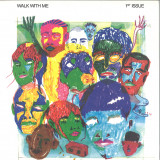
ALI presents its first Various Artists under the project "Walk With Me".
Pressed with Green Vinyl Records
100% recyclable records / 90% energy saving / less waste during production process.
- Sumba Ale
- La Luna
- Malvada
- Mi Bombo
- La Vida Es Un Baile
- La Memoria De Justino
- Si Yo Fuera
- Todo En Vida
- Ojunjo
Nuevos Ríos ist das neue Projekt, das aus der Zusammenarbeit zwischen der legendären kolumbianischen Band Canalón de Timbiquí, angeführt von der unverwechselbaren Stimme von Nidia Góngora (Quantic, Ondatrópica, The Bongo Hop), und dem in Toulouse ansässigen Trio Reco Reco entstanden ist, das für seine Erkundungen tranceartigen Rhythmen aus Südamerika und darüber hinaus bekannt ist. Als neueste Kreation der pulsierenden kolumbianischen Szene, die sich durch vielfältige Hybridisierungen auszeichnet, bietet Nuevos Ríos einen atemberaubenden Einblick in die afro-kolumbianischen Traditionen der kolumbianischen Pazifikküste, ergänzt durch elektronische und verstärkte Elemente. Das Ergebnis ist beeindruckend: eine Odyssee, die nie von ihrem Kurs abweicht, Grenzen überschreitet und die Zuhörer auf die Entdeckung eines neuen Flusses voller gewundener Pfade mitnimmt. In dieser Musik spüren wir tropische Hitze, die verkörperte Kraft musikalischer Traditionen und den Schweiß europäischer Tanzflächen in einem einzigartigen Cocktail - sofort süchtig machend, manchmal introspektiv und immer unwiderstehlich tanzbar. Das Projekt entstand an den Ufern des Flusses Timbiquí und nahm durch die Begegnung zwischen Canalón de Timbiquí - der Gruppe, die von Maestra Nidia Góngora gegründet wurde, deren faszinierende und sofort erkennbare Stimme Projekte wie Quantic, Ondatrópica und The Bongo Hop geprägt hat - und Reco Reco, leidenschaftlichen Entdeckern tranceartiger Musik, insbesondere aus Südamerika, Gestalt an. Weit abseits der ausgetretenen Pfade, im Herzen der kolumbianischen Pazifikregion, fanden die beiden Gruppen auf natürliche Weise im Dorf Timbiquí zusammen, dem Ursprung der Musik von Canalón und von Nidia Góngora selbst. Durch eine Reihe von improvisierten Jam-Sessions im Erdgeschoss von Nidias Haus wurde die Verschmelzung ihrer Musik zu einem offensichtlichen Weg - geboren aus dem gemeinsamen Wunsch, aufmerksamen Zuhörern die Kraft dieser menschlichen und musikalischen Begegnung zu offenbaren. Dieses erste Kapitel, veröffentlicht bei ZZK Records - einem Label, das dafür bekannt ist, südamerikanische Juwelen zu entdecken (Son Rompe Pera, Nicola Cruz, La Yegros_) - wird von der einzigartigen Komposition und Klangfarbe von Nidia Góngora getragen. In den Tracks findet jedes Element des Ensembles seinen richtigen Platz: Die Kraft der kolumbianischen Pazifik-Percussion und die Poesie der Marimba de Chonta fesseln uns mit einem würzigen Gitarrenriff, das nie weit von Westafrika entfernt ist; die Stärke der Stimmen wird durch elektronische Texturen noch verstärkt, während sich Schlagzeug und Bass zu einem doppelten Motor für das gleichnamige Schiff Nuevos Ríos verbinden. Die Texte erzählen vom Alltag in enger Verbindung mit der Natur, rund um einen Fluss, der sowohl eine zentrale Verkehrsader als auch ein Kanal des Austauschs ist - ohne die harten Realitäten einer Region zu verschleiern, die von den internen Konflikten Kolumbiens gezeichnet ist. Und vielleicht ist diese Musik bereits eine erste Antwort auf einige dieser Wunden, in Form eines Rituals der kollektiven Feier. Das selbstbetitelte Debütalbum bietet eine einzigartige Perspektive auf das afro-stämmige Erbe der kolumbianischen Pazifikküste - ergänzt durch die Kraft verstärkter und elektronischer Musik. Man spürt die Wärme der Tropen, die Kraft der perkussiven und vokalen Traditionen und den Schweiß europäischer Tanzflächen, was zu einem unwiderstehlich hypnotischen und zum Tanzen animierenden Ergebnis führt.
- Mantequilla Y Mermelada
- Pégate Por Favor
- Cosas Que Salen Mal
- He Descubierto Mi Silla Favorita
- Godzilla Vs Rayquaza
- Spiderman
- Gasolina Mutante
- Estos No Son Los Droides Que Buscais
Comic Sans are back! The San Sebastián Midwest Emo quartet has finished their second album, "Todas las cosas que nos salieron mal", following" Éramos felices y no lo sabíamos" and the EP "Ojalá fuera mi cumpleaños". However, "Todas las cosas que nos salieron mal" and its opening single mark an evolution within Comic Sans"s perfectly recognizable style. Without abandoning the parameters of midwest emo, the San Sebastián band wants to reach a wider audience and sound more like themselves than their influences. They have matured, and it shows in deeper lyrics, while still remaining honest and direct, and in a more personal choice of structures, effects, and melodies. Everything"s more indie, really; understanding indie no longer as a genre (which it never was) or a classification related to the size of a band"s distribution channels, whether more mainstream or more underground, but as the desire to move away from the conventions of the style in which they emerged and took their first steps in order to develop something genuinely their own.
- A1: Roudi Vagou - Gleisende Lichter
- A2: Roudi Vagou - Halb So Schwer
- A3: Roudi Vagou - So Sueß
- A4: Roudi Vagou - Lila Gibt Es Nicht
- A5: Roudi Vagou - Iss Mich Ganz Auf
- A6: Roudi Vagou - Grenzueberschreitung
- A7: Roudi Vagou - Aufgeben Ist Kein Verzicht
- B1: Läuten Der Seele - Komischer Anruf
- B2: Läuten Der Seele - Punkt Mitternacht
- B3: Läuten Der Seele - Nur Fuer Uns Zwei
- B4: Läuten Der Seele - Mineralwasserflasche 1
- B5: Läuten Der Seele - Glaskopf Mit Watte
- B6: Läuten Der Seele - Rathausdach
- B7: Läuten Der Seele - Ein Kitzeln In Den Graebern
- B8: Läuten Der Seele - Mineralwasserflasche 2
- B9: Läuten Der Seele - Mondraetsel
Across an extensive suite of enchanting miniatures, Matthias Kremsreiter and Christian Schoppik present the hypnagogic vision of Taghelle Nacht. Recording under their respective Roudi Vagou and Läuten der Seele aliases, Kremsreiter and Schoppik combine their distinct but equally accomplished instrumental practices into a new collaboration that weaves swooning samples amongst instrumental passages. They lead us through 16 vignettes that revel in the cognitive dissonance and seductive magic of moonlight at midnight.
Both artists have past form within the folds of contemporary experimental electronic music in Germany. Kremsreiter's work as alibikonkret has manifested on DIY tape releases created with a methodical, technically-minded approach. Debuting his Roudi Vagou pseudonym on Taghelle Nacht, he pivots to a more playful, instinctively felt method that allows the compositions to flow with a natural cadence. Schoppik has been a key figure in the celebrated dark-ambient-folk scene, not least as part of the group Brannten Schnüre. His work as Läuten der Seele includes the acclaimed 'water trilogy' of LPs between 2022 and 2024, with a greater emphasis on instrumental, atmospheric production, and a last, stunning collaborative album with Nový Sv?t's Jota Solo.
On Taghelle Nacht the precise ingredients of each piece soften at the edges as tape loops and swathes of reverb seal the joints between spellbinding melodic refrains. Opening track and lead single 'Gleisende Lichter' sets the tone with ghostly murmurs, spine-tingling string refrains and splashes of cymbal that cut through the gloom with stark clarity. A lilting romanticism stirs at the heart of the orchestral samples that populate the likes of "Grenzu?berschreitung" - old-world beauty sometimes buried in dust, elsewhere rendered with startling clarity. 'So Süß' lets buzzing, sustained drones and dissonant sweeps of extended technique glide in and out of each other. Granular processing subtly breaks apart the mellow swell on 'Komischer Anruf', and forlorn sax calls out into heavy-hearted space on 'Glaskopf Mit Watte'. At every turn a new scene is painted, distinct from the last and yet all bound up in the pervasive, pale blue light cast over the sleeping landscape Kremsreiter and Schoppik have sculpted.
Snatches of song drift by like dreamlike fragments, and achingly tender flourishes fleetingly appear and retreat - ideas and expressions momentarily caught in the light before retreating into the shadows once more. This is the evocative world of Taghelle Nacht - an unsettling depiction of the surreal blend of memories and imagination that merge into each other once the sun goes down.
The wild lunar landscape of Lanzarote is the dreamy frame in which Populous paints his new album, “Isla diferente”.
An instrumental trip between cumbia and latin ambient music through the mysterious and magical landscape of Lanzarote, with some gloomy vocal interventions from Fuera (Italy), Javier Arce (Costa Rica), Eva de Marce (Mexico) and Esotérica Tropical (Puerto Rico).
An organic mixture of sweet ethereal melodies and experimental electronic sounds which the artist himself labeled as “latin ambient”.
- Refran Tradicional
- El Efecto Del Licor
- A Comer Merengue
- Ejemplo Boricua
- Con Que Corto Mi Caña
- Tres Amores
- Llevame En Tu Pico
- Me Quede Con Hambre
- Tiempos Que Se Fueron
- Quedate Con Tu Dinero
- Tu Ausencia
- La Belleza De Mi Prima
This is a reissue of the original 1963 album El Decano De Los Cantores 4. Chuíto el de Bayamón (Jesús Sánchez Erazo) was a legendary Puerto Rican troubadour and one of the earliest jíbaro singers to appear on the radio, also known as "el decano de los cantores" (the dean of the singers). Known for his witty décimas and lively improvisation, he helped popularize traditional Puerto Rican music. His work influenced generations, including salsa greats like Héctor Lavoe. In the 1940s, he became the lead-singer for cuatro player and composer Ladislao "Ladí" Martínez's Conjunto Típico Ladí, created in New York City. With Ladí, he recorded "Un jíbaro en Nueva York," a controversia with Ernestina Reyes "La Calandria." It was actually Ladí who baptized him as "Chuíto el de Bayamón". From 1949 to 1977 Chuíto collaborated with Abelardo Díaz Alfaro, the famous Puerto Rican author, in the radio program "La vida de Teyo Gracia y su mundo" aired in WIPR. In addition, Chuíto participated in the films "La trulla" (1951), "Preciosa" (1965), and "El otro camino" (1959). Throughout his career Chuíto recorded more than 40 LPs and performed in New York, Boston, Chicago, New Jersey, Hawai'i, Spain, Cuba and other Latin American cities. His repertoire is characterized by its witticism and sense of humor, and sophisticated musical arrangements. Along with Flor Morales Ramos "Ramito", Odilio González and Daniel Santos, he had a huge influence in the singing style of Puerto Rican salsa star Héctor Lavoe. In 1975 and 1976 he was recognized with the "Agüeybaná Gold Album" award. This is the forth edition of Ansonias Chuito reissue series.
- A1: Intro
- A2: Roma
- A3: Abrázame Fuerte
- A4: La Vida Y Sus Cosas
- B1: Una Como Tu
- B2: Te Hice Una Balada (Feat. Robi)
- B3: Aiunii
- B4: Nsqmq
- C1: Aveces Siempre
- C2: Casita
- C3: Track Loading…
- C4: Dañao Pa Siempre
- D1: Nota (Feat. Omar Courtz)
- D2: Verte Por Ahí
- D3: Te Amo (Feat. Shantty)
GIRASOLES is the ninth studio album from multi-platinum singer-songwriter Jay Wheeler. In what many will find is some of his most personal work to date, it’s clear that music is his refuge, with the album representing the birth of a renewed version of himself. The moving 15-track album musically represents three stages: difficulties faced in life (represented by planting a seed), a period of transformation (growth), and maturity (a full bloom). GIRASOLES represents the feeling of being stuck, life’s challenges and the moments where personal growth seems impossible. However, as you mature through time, overcoming challenges and obstacles, you bloom into something beautiful. The message is clear: “Never settle and keep working on yourself, show love to others, and continue to evolve despite difficulties, just as sunflowers continue to grow toward the light,” Wheeler expressed. “People talk about outcomes, but no one talks about the process of getting there. This is ‘Girasoles,’ an album full of emotions, showing my evolution as an artist and a man. I want fans to identify with each track and make it their own,” shared Jay Wheeler about “Girasoles”, an album dedicated to the three most important women in his life: Zhamira (his wife), Aiunii (his daughter), and his mother. 2xLP, pressed on Canary Yellow Vinyl and housed in a Gatefold Jacke
- A1: Voces Fugaces (Cautivo Y Desarmado)
- A2: Mirando Atras (En La Rebelión)
- A3: Radical (Noctámbulo)
- A4: Fuera De Lugar (Tierra Negra)
- A5: Entre Bastidores (Sobre Otra Ruta)
- A6: Una Vez Mas
- B1: La Frontera Perdida
- B2: El Éxodo (Es Solo El Comienzo)
- B3: Bajo Un Cielo Abierto
- B4: Sinceridad (Contra La Naturaleza)
- B5: Un Hombre Solo
- B6: Paisaje Rural
Décima Víctima were a Spanish-(Swedish) band that, during their short-lived career between 1981 and 1984, developed a very personal sound reminiscent of Joy Division, The Cure and other British post-punk bands. Although commercial success evaded them, rarely has any Spanish band achieved such a high degree of quality and coherence in their music and personality. This LP contains previously unreleased tracks recorded by Décima Víctima in November 1983, one month before their last concert. Seven of these songs feature different lyrics to the ones later recorded for the "Un hombre solo" album. This is the way they performed them that night on the Rock-Ola stage, so this record can be considered, to some extent, an approximation to their last show and to their powerful live sound. After many years a rehearsal session that DV had recorded on an old cassette tape has been resurfaced. It had originally been laid down on a four-track recorder but unfortunately the tape got lost.The story of these tracks goes back to the last weekend of October 1983, when DV went to record at friend Paco Trinidad's family home in the mountains north of Madrid. Paco recorded the latest songs on a four-track tape recorder at the house. It was done live, except for extra takes of clarinet and some guitar details. The garage sound, as the name suggests, was achieved in the garage and an adjoining room where the drums were played. The sleeve design is a photo montage of our performance for the Maqueta de Oro (Gold Demo) at the Diario Pop awards in March 1983, plus another photo of the band in the dressing room at Rock-Ola after playing our last gig. The directness and passion of the tape makes it an interesting item for collectors and fans and the fact that some of the lyrics were not the definitive ones is an added rarity that reveals the development process for the following LP "Un hombre solo".
Mit einem Dutzend wilder und gefeierter Alben seit Daemon Qui Fecit Terram (1996) praesentiert Hate mit dem dreizehnten Album Bellum Regiis ein noch kuehneres und aggressiveres Klangbild als je zuvor. Die neun Songs von Bellum Regiis zeigen, wie Saenger und Gitarrist ATF Sinner, Gitarrist Domin, Schlagzeuger Nar-Sil und Bassist Tiermes einen modernen Sound mit unheimlicher Atmosphaere und Tiefe formen. Produziert wurde das Album von David Castillo (Candlemass, Carcass, Dark Tranquility, Katatonia) in den Grondahl Studios in Stockholm. Textlich ist Bellum Regiis ein persoenlicheres, mehr auf die Menschheit fokussiertes Album als Rugia. Die Songs, so Gruendungsmitglied Sinner, sind eine aktuelle klangliche und visuelle Auseinandersetzung mit dem "Kampf um Macht und allem, was damit einhergeht."Hate, gegruendet 1990 in Warschau, wird als "Inbegriff von Konstanz" gefeiert und als "glatte und praezise Death-Metal-Maschine" gelobt. Seit dem 2017er Album Tremendum hat sich die Band thematisch auf die Natur und ihre Mysterien konzentriert. Wie Sinner erklaert: "Egal ob die Natur in uns, um uns herum oder aus der Ferne betrachtet - die daraus gewonnenen Perspektiven und ihre Verbindung zu verschiedenen uebergeordneten Themen haben jedes Album gepraegt." So behandelte etwa Auric Gates of Veles (2019) den Tod - insbesondere die slawische Sichtweise darauf. Sechs Jahre spaeter widmet sich Bellum Regiis der Menschheit selbst und der Frage, warum wir als Wesen so tief durch Konzepte wie Macht, Reichtum, Ruhm und Glauben motiviert sind. Das zentrale Thema ist der Kampf um Macht und alles, was damit verbunden ist.Daher auch der Albumtitel Bellum Regiis, was uebersetzt "Krieg der Koenige" oder "Koeniglicher Krieg" bedeutet. Sinner stellt sich die grossen Fragen rund um Macht - macht uns deren Erreichung abartig oder sind wir es von Natur aus? Der Titelsong bildet das Leitmotiv des Albums. "Als Song besitzt Bellum Regiis sowohl eine tiefe Melancholie als auch eine gewisse Erhabenheit", sagt Sinner. "Der Gesang von Eliza Sacharczuk (eine bekannte Saengerin und Gesangslehrerin, die ein ganzheitliches Kunstzentrum in Bialystok leitet) verleiht dem Lied ein starkes Zeitgefuehl. Ob das nun Nostalgie, Rueckblick, Reue oder Vorbereitung auf die Zukunft ist, liegt im Auge des Betrachters. Diese Kriege, diese Kaempfe gibt es seit Anbeginn unserer Existenz", erklaert der Frontmann. "Ob sie sinnlos sind oder nicht, sie sind Narben auf unserer eigenen Natur."Verkaufsargumente/Treiber (Karriere-Highlights/Fakten/Marketing-Infos):- HATE ist seit mehr als 25 Jahren eine feste Groesse im slawischen Black/Death Metal- Bellum Regiis wurde von David Castillo (Candlemass, Carcass, Dark Tranquility, Katatonia) in den Grondahl Studios in Stockholm produziert- HATE haben mehrfach durch Europa, Nordamerika, Asien und Australien getourt und auf zahlreichen Metal-Festivals weltweit gespielt- Nordamerika-Tour im Fruehjahr 2025 bestaetigt - als direkter Support von Belphegor; weitere US-Tour fuer 2026 geplant- Europatour mit Venom Inc. fuer 2025 bestaetigt; zusaetzliche Europatour in Planung fuer 2026- Tour durch Lateinamerika fuer Oktober 2025 bestaetigt- Hochwertiges Musikvideo zur ersten Single "Iphigenia" verfuegbar- Erhaeltlich auf allen digitalen Plattformen
- A1: Wie Es Geht
- A2: Geld
- A3: Gib Mir Zeit
- A4: Dir
- B1: Mondo Bondage
- B2: Onprangering
- B3: Leichenhalle
- B4: Der Optimist
- B5: Alles So Einfach
- C1: N 48 3
- C2: Manchmal Haben Frauen
- C3: Las Vegas
- C4: Yoko Ono
- C5: Rock Rendezvous
- D1: Baby
- D2: Kann Es Sein?
- D3: Ein Sommer Nur Fuer Mich
- D4: Rock'n'roll Uebermensch
- D5: Herrliche Jahre
Es ist das Jahr 2000. Der Begriff „Kuschelrock“ muss neu bewertet werden. Nach dem Megaerfolg des Vorgängers „13“ soll ein neues Album her. die ärzte wollen es noch ein bisschen alberner. Also wird zum Aufwärmen mit „5, 6, 7, 8 – Bullenstaat“ erstmal eine Ultra-Deutschpunk-EP eingespielt. Die Entstehung des neuen Albumtitels ist zwar beschreib- aber nicht erklärbar. Und: Plüsch. Unter der flauschigen Hülle entpuppt sich „Runter mit den Spendierhosen, Unsichtbarer!“ als Füllhorn von Hits, die nahezu alle noch ein knappes Vierteljahrhundert später einen festen Platz im nicht gerade schmalbrüstigen Klassiker-Kanon der Besten Band der Welt innehaben und dabei dem Zeitgeist weit voraus eilen. Denn die ärzte sind – Überraschung! – vor allem bei einem Thema außerordentlich divers aufgestellt: Geschlechtsverkehr. Den gibt es in allen erdenklichen Spielarten, inklusive mehr oder weniger geläufiger Probleme, die den Spaß zwischen Männern, Frauen und allem dazwischen leider zu oft verkomplizieren. „Du nervst noch mehr als Yoko Ono“ ist nicht nur längst Alltagssprache sondern landet für das kurze, aber schmerzvolle Video sogar im Guinness-Buch der Rekorde. „Manchmal haben Frauen“ wächst sich ob des handfesten Themas fast zu einem mittleren Skandal aus, wird dann – dank des noch handfesteren Videos – zum Radiohit und zeigt letztendlich eine Option zur feministischen Selbstermächtigung auf. „Rock Rendezvous“ ist überaus F-Wort-intensiv und hemmungslos lustig. Aber auch sonst sind BelaFarinRod äußerst gut aufgelegt, reimen sich selbst für ihre Maßstäbe extensiv um Kopf und Kragen und sind außerdem noch total Rock.
Barro Music Label sigue apostando por el techno más duro y oscuro y por eso, su lógico paso siguiente era publicar un EP de NX1. Necesitaríamos mucho espacio para describir todo lo que significa NX1, pero dejémoslo en que es el proyecto de los barceloneses Surit y Samot con el que llevan varios años reventando amplificadores y haciéndonos bailar hasta la extenuación. Con este AKA han publicado en sellos tan top como Bite, Semantica, Planete Rouge y Earwiggle, además de en Nexe Records, su propia casa (discográfica). Ahora podemos escuchar sus últimos temas en Barro, en un disco que reúne cuatro temas y una remezcla de Nöle. No será la última vez que los veamos juntos, ya que han unido fuerzas para crear un nuevo sello llamado Kätte que ya ha publicado su primera referencia.
En BR1 nos traen un contundente temazo de techno industrial post-apocalíptico dominado por un bombo atronador en el que destacamos el gran diseño de sonido. Los dos siguientes temas están más enfocados a la pista y son una gran muestra del lado más duro y oscuro de NX1. BR2 es una composición hipnótica con sonidos industriales y afilados con un bombo con una pegada tremenda y un bajo que se te queda marcado en la piel. Y aunque parezca imposible, el EP continúa con un tema incluso más duro: BR3. NX1 alcanzan una intensidad increíble en esta composición, marcada por unos sintetizadores saturados, un sonido duro y agresivo y un sample que te ordena obedecer. Para el siguiente tema, bajan los BPMs y se centran en crear una atmósfera industrial, que nos inspira imágenes de carreteras desiertas y ciudades abandonadas. Por su parte Nöle, pilla BR2 y le da protagonismo a los samples vocales mientras juega con el ritmo, creando otro irresistible rompepistas.
Support from: Dave Clarke, Phase Fatale, The Hacker, Lokier, NX1, Unhuman, Alienata, Reka, and many more.
Texto: El Garaje de Frank
The first Escapismo output was described by Bleep as “a slow burning synth-pop killer”. Bandcamp’s “New & Notable” section has defined Escapismo as “Marvelously gothy electronic music from Barcelona. A New Wave delight”. And according to Boomkat, “Escapismo brings a touch of ‘80s romance”.
This LP includes the first three Escapismo EPs (a short run of 10″s which fastly sold out) plus one additional song. A mixture of post-disco, dark italo, new wave, post-punk and a hint of Belgian new beat. An obscure collection of songs already supported by renowned DJs like Stephen Dewaele from Soulwax / Despacio or Ivan Smagghe and Nathan Gregory Wilkins, who have played Escapismo on their Channeling show on NTS Radio.
Limited edition of 100 copies on vinyl, 50 black and 50 transparent. No reissue.
The fertility of the Cuban music scene in the 1970s was rich and blooming. FA-5’s self-titled album from 1976 is a perfect example of the energy and vitality emanating from the country’s musicians and marks the next release in Mr Bongo’s Cuban Classics series. A unique musical fusion that encompasses Latin rock, funk, soul, disco and Afro-Cuban rhythms to form a diverse and alluring album.
The exquisite, funk-fuelled opener, 'Muevete Con Las Fuerzas Del Corazon', is maybe the most-known song on the album. It is a super catchy cut powered by a dynamite bassline, joy-filled horn playing and splashes of drum breaks that will ignite any dancefloor.
The record surfs through genres as it progresses. 'Di Tu Que Haras Sin Mi’ and 'Paso Sin Mas' lean back with a West Latin rock / AOR flavour to their grooves. Elsewhere, the dreamy, cosmic, Balearic-tinged 'El Blue' and fuzzy funk-rock breaks of 'Pero Lo Cierto Es Que No Quise Mas' further show the breadth of styles at play on the LP. Another big highlight on the album is the Latin, disco-funk sounds of 'Casa De Ladrillo', which morphs into a cover version of the Commodores 'Brick House'. The result is a superb alternative take on a much-loved classic.
Released on the state-owned Areito Records, the album was directed by Nestor Caballero, who arranged the songs alongside Aneiro Taño and Osvaldo Caraballoso. The prolific Tony Taño produced the album with the recording courtesy of Tony Lopez who worked with Juan Pablo Torres, Los Reyes 73, Grupo Los Yoyi, Raúl Gómez and many other Cuban greats that we have featured in the Cuban Series.
A fabulous, under-the-radar classic, that will enrich any collection.
A journey, in 16 tracks, through the career of this pioneer band of the Latin American Punk 'n' Roll scene, active since 1987 and founded in the city of Quilmes (Argentina). Punk 77, Street Punk and Punk 'n' Roll on glorious vinyl and for the first time in Europe. DESCRIPTION Doble Fuerza is a pioneering band of the Latin American punk 'n' roll scene that has been active since 1987 (hence the title of the LP). Founded in the city of Quilmes (Argentina), south of the Buenos Aires metropolitan area, they have built their own recognizable sound, influenced by punk 77, street punk and punk 'n' roll. For the first time in Europe, on a long-playing record, on glorious vinyl, 16 tracks that represent a detailed tour through Doble Fuerza's 35-year career, remastered for the occasion. The result is most entertaining and activating. Primitive sonorities of angry young men doing street-punk without concessions in "Disturbios" Riots and "La Vida Se Va" Life Goes, give way to heartfelt street love in a hard-power-pop vein ("¿Por Qué No Me Llamas?" [Why Don't You Call Me?], "Encontrarte" [Find You], "Sola" [Alone]) and Ramonesian essences in "Desocupado" [Unemployed]. And all of this leads to their personal punk 'n' roll sound with a Buenos Aires accent, i.e. punk-rock clearly influenced by punk 77 and the rock 'n' roll of the 50s and 60s. In "Leave Me Alone", "Anestesiado" [Anaesthetised], "Grito de Revolución" [Revolution Yell], "Almas Gemelas" [Twin Souls] and "Canción de Libertad" [Song of Revolution] you can sense some of the many bands of the three decades that are part of their wide musical background and that have served as teachers to forge their style. Nor do they forget the cheerful tavern hymns to sing loudly and to overcome the struggle and heartbreaks with good humor, "Otra Vuelta de Cerveza" [Another Round of Beer] and "El Rey del Fernet" [The King of Fernet]. The three covers of this collection deserve special mention. Three adaptations sung in Spanish that the quintet led by Hugo Irisarri makes totally their own: "Pibes de Barrio" (Cockney Rejects), "Laburando" (Cock Sparrer) and "Spanish Bombs" (The Clash). The accent may be different, but the situations, the sound references, the messages... become immediately familiar and recognizable. "1987" is a careful presentation letter on this side of the pond of the Argentinean band's wide repertoire that unites commitment, fun and enthusiasm in equal parts
This single comprises two stand out tracks from “Power-Fuerza” (1972), one of the best Latin funk albums ever recorded, with all the right ingredients to shake dance floors worldwide. Produced by boogaloo-don Bobby Marin, these tracks are a vibrant tapestry, weaving together the raw energy of the South Bronx streets and the soulful melodies born from the band's Puerto Rican heritage. The Bronx in the 1970s, marked by the presence of notorious gangs, presented a complex and challenging urban landscape reflected in abandoned buildings and neglected public spaces. The prevalence of street gangs, such as the Ghetto Brothers, contributed to an atmosphere of heightened tension and occasional violence. The Ghetto Brothers, originating from the Melendez family who moved from Puerto Rico to the South Bronx in the 1950s, faced challenges involving violence and crime. Despite this, Benjy Melendez, a key figure, directed the group towards community improvement. The Ghetto Brothers embraced music, crafting a potent, NYC-flavored musical fusion that caught the attention of record mogul Ismael Maisonave (Salsa Records). Their collaboration resulted in the recording of eight tracks in a single electrifying day at Manhattan's Fine Tone Studios, skillfully produced by Latin studio maestro Bobby Marin (Harvey Averne, La Lupe, Brooklyn Sounds…) This musical odyssey showcases the band's ability to seamlessly blend genres, creating a NYC-flavored stew that captivates listeners with its authenticity.
The next release in the Mr Bongo Cuban Classics series, is one of Juan Pablo Torres' most-known and loved albums, the iconic Super Son from 1977. A wonderful record of tripped-out rumbas, psych-Afro-Latin funk and quirky orchestrated tracks with a big band horn section courtesy of Torres’ band, Algo Nuevo.
As well as being the director of Algo Nuevo and Cuban all-star ensemble Estrellas De Areito, the trombonist, bandleader, arranger and producer also released a wealth of albums under his own name predominately on the state-owned imprint Areito/EGREM.
Post-revolution, there was a contrast in Cuba’s musical world. State censorship was at play, but professional musicians were on the government payroll which gave them an artistic freedom. Experimentation emanated in the ‘70s and ‘80s and Super Son is a prime example of that. ‘Y Que Bien' kicks off the album taking you down a tripped-out, cosmic rabbithole, psych guitars and skat vocals opening up into a joyful funk groove laced with jazzy Afro-Cuban horns stabs. Tracks such as 'Pastel En Descarga' seem to come out of nowhere and are completely unique. Fuzzed-up guitar lines and percussion lay the groundwork, with those jubilant horns adding to the energy of this forever building track.
Elsewhere, there’s the ‘70s TV theme-tune feeling of 'Con Aji Guaguao', a playful funk number that boils and bubbles with blistering trombone playing by Torres. Or ‘Son A Propulsión' and ‘Son Riendo’, two more brilliant examples of psychedelic funk, wrapped up in a blanket of Afro-Cuban rhythms. The former sweeping you up in rushes of wind as trumpets, trombones and distorted guitars trade off, the latter, an intergalactic fiesta of tradition and exploration.
Super Son is up there as one of the funkiest Cuban records around, a playful fusion of ideas from a producer, player and group on fine form and, for us, one of our favourite gems to come out of Cuba in this period. A sheer masterpiece.
Following their four-song demo from 2022, FUERA DE SEKTOR are back with their debut LP. Sharing members with BARRERA and ALGARA, the Barcelona-based band have carved their own sound, mixing the amphetamine edge of 80’s punk with the angular post punk sensibility. The extremely isolated guitar work takes centre stage, navigating a sea of mid-tempo riffs, and backed by an extremely solid rhythm section to perfectly seal the recording. Think the pop side of LOS ILEGALES or LOS TRAIDORES, the sexuality of DESECHABLES, and the uniqueness of LA’s X. FUERA DE SEKTOR lyrics look at the world from an existentialist angle with a dark and poetic approach to complement their music perfectly. Full of desire, lust, loss and confusion, each song unravels as a very modern anxious tale. It's an album that stands on its own in the current DIY landscape
- Brotherhood Of Steel (Full Version)
- The Ghoul
- Ice Cream And Apple Pie
- Vault 33
- Artifact
- Shady Sands
- Feo Fuerte Y Formal
- Rebuild Together
- Surface Dweller Tradition
- Golden Rule
- Are You Compromised
- I Hate It Up Here
- Bringing Order To The Wasteland
- Management
- Vault-Tec
- Think About The Future
- All The Answers
- Run For The Hills
- War Never Changes
- Do The Right Thing
- T-60
Originaler Soundtrack für die Amazon-Serie "Fallout", die auf einem Spiel-Franchise basiert.
Transnational Speedway League ist Clutch’s allererste Album Veröffentlichung (1993) und wurde bis dato nie auf Vinyl veröffentlicht. Es ist das nächste Album in unserer Clutch Collector’s Serie. Clutch’s Gitarrist, Tim Sult, war federführend inder Neuentwicklung dieses Albums. Das Album ist remastered und die farbige LP wurde auf 180 gr Vinyl gepresst. Das Artwork ist von Dan Winters (dem ursprünglichen Grafiker) und Tim Sult neu interpretiert worden. Der Hochglanzdruck des Albumcovers auf einem Spezialpapier lässt Teile des Gatefold Covers fast metallisch erscheinen. Wie üblich beinhaltet das Album einen nummerierten und von den Bandmitgliedern handschriftlich unterzeichneter Kunstdruck ist vielleicht das wichtigste Element fuer den potentiellen Käufer. Clutch Fans weltweit werde sich um diese limitierte Auflage von 7,500 Stück reißen.
Mano De Fuego land on Yaxteq with the mighty Fuerza EP. In 2022, los hermanos Cedillo also known as Soul of Hex launched their Mano De Fueogo alias from Underground Resistance headquarters in Detroit. Their debut for Yaxteq showcases their versatillity as producers. Sagrada is pure musical magic for the dancefloor with rising chord swells, relentless bass and strings that reach into the cosmos. Aztec Obelisk gives a latin flavor to the classic Detroit electro-bass blueprint. Fuerza dives deep into hi-tech jazz including an interstellar saxophone improvisation courtesy of Tijuana’s own Manuel Paez Armendariz. DJ Dex then takes the soul of Fuerza and remixes it with the concrete foundation of jaaackin US house music. All tracks were mixed and arranged at the Yaxteq studio in Los Angeles. Saludos!!
The mind-flowing 'Dices' somehow did not make it onto the Grupo Pan's only album and instead found its home on the B side of a long-forgotten 1972 single. One can only wonder why this great song with a devastating guitar riff and an irresistible rhythm section was not granted a place in the grooves of the LP of the Venezuelan band_ Late 60s hard rock sounds made by salsa musicians! On the flip, a rare hard psych gem from Peru by the one and only Jean Paul "El Troglodita". First time single reissue! The few records released by Venezuela's most prolific percussionist, Nené Quintero, and his first band sound like a somewhat artisanal classic rock recording from the end of the 60s but made by "salseros" (as involved in Salsa music). Their only LP "Pan" (recently reissued for the first time on Vampisoul) succeeded in overcoming through its grooves the eternal rivalry between the followers of the hard rock sounds and those who, on the contrary, were devotees of salsa. Grupo Pan also released a bunch of 45s mostly comprising LP tracks. However, the mind-flowing 'Dices' somehow did not make it onto the album and instead found its home on the B side of a 1972 single. Enrique Tellería (aka Jean Paul) was nicknamed "El Troglodita" (The Caveman) due to his wild performances in his native Peru. Screams, extreme body shaking and, quite often, stage destruction were part of his energetic shows. His hard psych gem 'Fuera de Atracción' was originally released on a much sought-after 45 on the tiny Peruvian label Rey Record. We thought it would be a perfect pairing with the stunning A side to finish off this single. First time single reissue!
Agrio is a duo from Madrid, Spain and using a "what if..." methodology they write instrumental songs that they send later to a revolving cast of their talented and generous friends so they can add their magic. With this in mind they sent music to MARK LANEGAN, Enablers frontman PETE SIMONELLI & to SCOTT MCCLOUD from Girls Against Boys, Soulside and so much more. 'El Amigo Americano' is the result of these collaborations, 10 tracks of some of the most beautifully striking music around. The work with Mark Lanegan and Pete Simonelli were originally released as two vinyl EPs and Scott McCloud as a digital EP. EP 1 - EP one 'La Murga Ep' with Mark Lanegan was their debut on feb. 2020. EP2 - followed it that same autumn with The Thin Man EP featuring Pete Simonelli (Enablers). Both were originally released on vinyl via the San Francisco based label Broken Clover Records. These records sold out fast. EP 3 - "Repeat to Infinity EP" (digital only), with Scott McCloud's (Girls Against Boys, New Wet Kojak, Paramount Styles) on voice and guitar. The three EPs are compiled together on one LP as "El Amigo Americano". La Murga Ep* + The Thin Man Ep** + Repeat To Infinity EP*** = EL AMIGO AMERICANO AA I. Nike Italy France *** II. Dj's In Heaven*** III. People Used To Dream*** IV. A Mayores * V. Nomeolvides ** B I. A Drink Of Poison Water * II. Cisnes * III. The Scales Of Embrace ** IV. Waking ∦ ∆** The album is mastered by John McBain (Monster Magnet, Wellwater Conspiracy) Agrio is David Flores and Jorge Fuertes with Mark Lanegan, Pete Simonelli and Scott McCloud.
The Bronx in the 1970s, marked by the presence of notorious gangs, presented a complex and challenging urban landscape. Amidst the crumbling infrastructure and economic decline, neighbourhoods bore the scars of disinvestment, reflected in abandoned buildings and neglected public spaces. The prevalence of street gangs, such as the Ghetto Brothers, contributed to an atmosphere of heightened tension and occasional violence. Graffiti adorned subway cars and buildings, expressing both social unrest and the vibrant creativity of the community. Despite the challenges, there was a resilient spirit among residents, evidenced by grassroots efforts to address social issues. The Bronx during this era was a dynamic yet tumultuous mix of cultural expression, social struggle, and the determined spirit of a community facing adversity. The Ghetto Brothers, originating from the Melendez family who moved from Puerto Rico to the South Bronx in the 1950s, faced challenges involving violence and crime. Despite this, Benjy, a key figure, directed the group towards community improvement. The Ghetto Brothers embraced music, crafting a potent, NYC-flavored musical fusion that caught the attention of record mogul Ismael Maisonave (Salsa Records). Their collaboration resulted in the recording of eight tracks in a single electrifying day at Manhattan's Fine Tone Studios, skillfully produced by Latin studio maestro Bobby Marin (Harvey Averne, La Lupe, Brooklyn Sounds…). This musical odyssey showcases the band's ability to seamlessly blend genres, creating a NYC-flavored stew that captivates listeners with its authenticity. The hypnotic rhythms, infectious guitar riffs, and impassioned vocals reflect the Ghetto Brothers' commitment to expressing their unique experiences and uplifting their community through the universal language of music. "Power-Fuerza" is not just an album; it's a sonic testament to the Ghetto Brothers' fusion of resilience, cultural richness, and musical innovation. Each track is a vibrant tapestry, weaving together the
raw energy of the South Bronx streets and the soulful melodies born from the trio's Puerto Rican heritage. Embrace the timeless resonance of the Ghetto Brothers’ “Power-Fuerza”, one of the best Latin funk albums ever recorded…
The Vampisoul chicas are back. And for the third time. And, although collectors and connoisseurs have never stopped playing the songs by these Spanish female singers, here they are again, sounding as vibrant as they did half a century ago. Because these children of their times, the musical decades of the 60s and 70s covered by this compilation, boldly ventured into the limited spaces of freedom open to female artists back then. And they did so with attitude, in search of the right repertoire, proudly presenting new, daring personal projects often breaking away from the demure tone adopted by mainstream local female singers. And they were canny about it too. Realizing that the censors working back would just listen to the song that the record company flagged up as the listening target on the A side and not bother to flip the single over, they recorded many of their racier songs on the B side. That exciting dark side of singles, which have long tempted collectors. Lacking the freedom and visibility enjoyed today, these daring records by these female singers went as far as they could and a few managed to go beyond. The songs on this compilation tell everyday stories, narrating small socio-musical conquests revolving round the enduring theme of young love. Sass, sex, boy-girl rivalry, the defense of liberating women's fashion and, saying what women think loud and clear, all characterize these grooves. Performed in a variety of musical styles ranging from ye-yé, twist, disco, beat, popcorn, flamenco pop to Northern Soul, and, even more surprisingly, sung in an everyday, natural and self-assured tone that must have ruffled some feathers. As in previous volumes of "¡Chicas!", this third compilation includes female singers from outside Spain but whose career, their decision to sing in Spanish or their long tours and local stays, and occasionally permanent residence, meant their albums were created, recorded or produced here in Spain. It's a winning proposition for everyone. Take the band Los Bravos, four of the singers that passed through the ranks of this quintessentially Spanish group were foreigners. It's part of our open-door policy. Spain is different. In every sense. But let's get down to the serious stuff and the ritual: vinyl on the turntable and needle poised ready to play. Third volume of Vampis' ¡Chicas! series, an irresistible collection of ye-yé, twist, disco, beat, popcorn, flamenco pop and even Northern Soul! From the early 60s and in the middle of a difficult political and social context, Spanish female singers - and those who moved to Spain - disregarded conventions and overcame all barriers to be part of a music movement that shook the Spanish society of the period. Many of the 24 tracks are reissued for the first time, including very hard-to-find records. It includes extensive notes by Vicente Fabuel featuring all the original record sleeves and artist photos.
A Dream Team of folclóricas covering the wide spectrum of African-American influenced 1970s dance music spiced with flamenco. The hits of Isaac Hayes, Billy Preston or The Temptations in the charts showed the way to go. An almanac for 20th Century Rosalías headed by Lola Flores, Isabel Pantoja, Rocío Jurado and a bunch of female singers, copleras, cantaoras and rumberas. A black and white lysergic dream amidst post-Franco’s Spain. Stick your ears to the speakers. Here comes an emotional rollercoaster!
Antes de presentarte esta novedad, hay que entender que en la segunda mitad de los años setenta, algo estaba cambiando en la escena musical. Los grupos musicales estaban en su auge hasta que llegó la llamada al servicio militar obligatorio. Entonces, todo el mundo volvía de él sin sus largas melenas y sin dinero. Los baladistas sin personalidad tomaban el control de la música, según lo dictado por las discográficas. Es entonces cuando las copleras, cantaoras y rumberas se convierten en la respuesta necesaria para combatir la insípida melosidad. A pesar de un contexto sociocultural desfavorable, arreglistas y productores invertían horas de sueño para revivir un sonido que estaba al borde de la extinción. A pesar de los cambios que haya podido haber desde entonces, el más significativo es que ahora la inmediatez digital dicta el rumbo.
Es por toda esta importancia que finalmente ha llegado un álbum que reúne a un elenco de folclóricas en una combinación única, fusionando el concepto del groovy funk; con canciones que abarcan todo el espectro afroamericano de la música de baile de los setenta, con toques de gritos y susurros aflamencados que le dan un giro impresionante. Podríamos considerarlo el álbum destacado de las Rosalias del siglo XX, una especie de viaje lisérgico en blanco y negro a la España de la posfranquista. Con su hiperrealismo revolucionario, este disco nos ofrece a una una estirpe de artistas sin igual.
En este encontrarás las joyas ocultas de artistas como Flores, Pantoja, Jurado, Polaca, entre otras. Aunque se mantuvieron fieles a sus estilos, todas ellas fueron famosas por otras facetas de sus extensas discografías, y muchas incluso aparecieron en la portada de Interviú en más del cincuenta por ciento de los casos, como las feministas de los años setenta según Francisco Umbral.
Frankie Cosmos, Palehound, Jay Som, Helado Negro, Lala Lala, Mamalarky, Sword II. Atlanta three-piece Kibi James announce their debut full-length album, delusions, out August 25th on Bayonet Records. Mari (guitar, keys), MJ Corless (bass) and Pomi Abebe (drums) join forces in crafting intoxicatingly dreamy melodies, their soft, siren-like voices sweeping you into their world as they bilingually share reflections on love in its many forms – romantic, familial, self – but most prominently the love that comes from their friendship. Co-produced, recorded and mixed by Drew Vandenberg (Faye Webster, SPELLLING, Toro y Moi) at Chase Park Studios in Athens, GA, and mastered by Heba Kadry, delusions is laden with vividly lush portraits of the places they call home Atlanta, their music community, their physical house, and the sense of home they have in one another. While the outside world is often a source of chaos, Kibi James finds security and intimacy in their shared domestic life together – the details of which come in the form of the intimate narratives and memories that make up delusions. From the manifestation spell for their now-apartment that's included in the first verse of "mister g," to finding homely solace in loved ones on "right now" and "bender," the band's ultimate sense of home is both fluid and utterly unshakable, as long as they have each other. They harmonize in both English and Spanish as their voices softly intertwine, singing of their hopes for the future over hazy, treated guitars and the soft pattering of drums. Their strong sense of unconditional love and mutual camaraderie keep them grounded, preserving the warm, optimistic light that has shone through every aspect of the band since their genesis. Corless says, "We're proud of where we come from and where we're headed. We're absolutely going to keep these delusions going."
- A1: Yankee Y El Valiente (Trooko's Versión)
- A2: Ooh La La Ft. Santa Fe Klan (Mexican Institute Of Sound's Versión)
- A3: Fuera De Vista Ft. Baco Exu Do Blues (Trooko's Versión)
- B1: Santa Calamifuck (Eva, Chucho, Yulian X Nick Hook's Versión)
- B2: Goonies Contra E.t. Ft. Sarah La Morena & El Individuo (Danny Brasco X Nick Hook's Versión)
- B3: Caminando En La Nieve Ft. Akapellah, Apache & Pawmps (Orestes Gomez X Nick Hook's Versión)
- C1: Ju$T Ft. Pharrell Williams & Zack De La Rocha (Toy Selectah's Versión)
- C2: Nunca Mirar Hacia Atrás (Bomba Estéreo's Versión)
- C3: El Suelo Debajo (Son Rompe Pera's Versión)
- D1: Tirando El Detonador Ft. Lido Pimienta, Javier Arce & Iggor Cavalera (Mas Aya X Nick Hook's Versión)
- D2: Unas Palabras Para El Pelotón De Fusilamiento (Radiación) Ft Lin-Manuel Miranda (Adrián Terrazas-González X El Producto's Versión)
RUN THE JEWELS haben ihr Hit-Album "RTJ4" durch das Prisma Lateinamerikas neu interpretiert. Mit dabei sind Bomba Estéreo, TROOKO, Baco Exu do Blues, Lido Pimienta, Akapellah, Iggor Cavalera, Sarah La Morena, Danny Brasco, Santa Fe Klan & mehr. Künstler aus 10 LATAM-Ländern - Produzenten, Rapper, Sänger, Musiker, Programmierer - beteiligten sich an der Schaffung dieses
hybriden, bahnbrechenden und zukunftsweisenden Projekts.
A limited edition 7' release by Francisco Aguabella, both tracks taken from the rare Hard Hitting album released 1970 on EPSILON records. These two have never been on 7' before, includes wonderful re-production cover of the original sleeve
Track A1 - 'Desire' - Amazing vocal club classic which has stood the test of time always in demand. Never before pressed and released as 45. A massive dancer and a must have release.
Track B2 - 'Casa fuerte' - if you like Latin jazz dancers this is for you - top class banger.
Exclusive and limited 7” with two new recordings by Don Letts and Greg Foat & James Thorpe, recorded for the new RELATIN project (the reimagining of Latin musical roots from another time for our generations).
Don Letts, together with the producer Gaudi, applies his vast knowledge of dub and spatial sound he is known for to a song recorded by the Venezuelans Un Dos Tres... Y Fuera in the 70s. At the time an avant-garde folk sound from South America gets dubbed out in the hands of an innovator of British rock. The track included here is a edit version from the one heard on streaming platforms. Greg Foat brings an unprecedented jazzy sensibility to a song from the Colombians Cumbia Moderna de Soledad (from the late 70s), a band set out to modernize the folk music of their people.
Following a live debut at Berghain and standout shows at De School and Institut fuer Zukunft, Daniel Martin-McCormick returns as Relaxer with the fourth installment in the project's eponymous EP series. Jamie Lee' takes over the a-side, harrowing screams are framed by strobing chords and a deadly groove. Simultaneously euphoric, agonizing and cathartic, Jamie Lee' was written as the climax of Relaxer's live set and is a prime example of the artist's uniquely feral techno. Drawing equally on punk confrontations and more haunting emotional explorations, Jamie Lee' is a lacerating and visceral descent.
On the b-side, Unwind' oozes from the speakers, a miasmic cut that builds on the white knuckle tension of Jamie Lee.' A lone synth figure worms its way through pulsating 3D drones, shimmering dissonances and hiccuping drums, rocking out into a quasi catatonic infinity. Finally Regime Change' gently floats on the surface of a trash-filled sea, a fading, smog choked reverie.
- A1: Juan Pablo Torres Y Algo Nuevo - Y Que Bien
- A2: Orquesta Los Van Van - Por Que Lo Haces
- A3: Los Latinos - Quemando
- A4: Farah Maria - Amame Y No Pienses Mas
- B1: Fa 5 - Muevete Con Las Fuerzas Del Corazon
- B2: Tambores De Enrique Bonne - Como Arrullos De Palma
- B3: Ricardo Eddy Martinez - Expresso Ritmico
- C1: Los Papines - Solo De Tumba Y Bongo
- C2: Grupo Sintesis - Aqui Estamos
- C3: Los Van Van - Llegada
- C4: Grupo Raices Nuevas - Baila Mi Guaguanco
- D1: Luis Carbonell - La Rumba
- D2: Orquesta Riverside - En Casa Del Trompo No Bailes
- D3: Juan Formel & Los Van Van - Llegue, Llegue
- E1: Grupo Los Yoyi - Tu No Me Puedes Conquistar
- E2: Los Papines - Para Que Niegas?
- E3: Grupo De Experimentacion Sonora Del Icaic - Cuba Va!
- E4: Raul Gomez - Luces En La Pista
- F1: Los Brito - El 4-5-6
- F2: Leo Brouwer - Tema De El Rancheador De La Naturaleza
- F3: Ricardo Eddy Martinez - La 132
- F4: Los Reyes 73 - Finalizo Un Amor
Cuba: Music and Revolution: Culture Clash in Havana: Experiments in Latin Music 1975-85 Vol. 2 is the new album compiled by Gilles Peterson and Stuart Baker (Soul Jazz Records) that takes off in exactly the same vein as the much-acclaimed Vol. 1 – exploring the many styles that came out of Cuba in the 1970s as Latin and Salsa mixed with heavy doses of Jazz, Funk, and Disco to create some of the most dancefloor-friendly music ever made!
The album comes as a heavyweight 3xLP and deluxe 2xCD set, complete with extensive sleeve notes, and is jam-packed with heavy bass lines, synth and Wah-Wah guitar funk combined with the heavyweight percussion, powerful brass lines and the all-encompassing Latin rhythms of Cuban music known
throughout the world.
Much of the music on this album is featured in the deluxe large format book ‘Cuba: Music and Revolution: Original Cover Art of Cuban Music: Record Sleeve Designs of Revolutionary Cuba 1959-90’, released by Soul Jazz Books and also compiled by Gilles Peterson and Stuart Baker (Soul Jazz Records),
featuring the music and record designs of Cuba, made in the 30-year period following the Cuban Revolution.
The music on this new album features a host of rarities from legendary Cuban artists such as Los Van Van, alongside Grupo De Experimentación, Farah Maria, Ricardo Eddy Martinez, Juan Pablo Torres, Grupo Sintesis and Orquesta Riverside, most of whose names remain largely unknown outside of Cuba but have long been favourite club tracks and secret-weapons in Gilles Peterson’s record boxes!
The music on this album reflects the most cutting-edge of Cuban groups that were recording in Cuba in the 1970s and 1980s – all searching for a new Cuban identity and new musical forms reflecting both the Afro-Cuban cultural heritage of a nation that gave birth to Latin music and its new position as a socialist state. Most of the music featured on this album has never been heard outside of Cuba.
Both Gilles Peterson and Stuart Baker have been involved in Cuban music for more than two decades – Gilles Peterson with his many Havana Cultura projects for his Brownswood label and Stuart Baker with a number of Soul Jazz Records albums recorded in Cuba. This Soul Jazz Records album is released in conjunction with Egrem, the Cuban state record company, and has been put together after the many crate-digging trips that both compilers have made on the streets of Havana and beyond in Cuba stretching over a 20-year period, searching out rare and elusive original Cuban vinyl records
Ángel Rada is one of the most interesting music experimantalists of Venezuela. He started his career in the late 1960s as a member of The Gas Light, one of the big names on Venezuela's live circuit in the era, sharing the stages with other artists such as Apocalipsis, Un Dos Tres y Fuera, Vytas Brenner, Daniel Grau, Pablo Schneider, Miguel Ángel Fuster... Rada is one of the three basic artists who set an electronic music scene in Venezuela, along with Miguel Ángel Noya and Vinicio Adames.
Rada had attended the Escuela Superior de Música José Ángel Lamas and then continued his studies in Germany, where he was impressed by krautrock music, especially by its more electronic side. He met Kraftwerk when they were recording at Kling Klang Studio, and also knew Klaus Schulze–who would become an example for him to to follow. This contact with the Kraut scene would be the biggest influence on his works from the 1970s, which would end synthesizing in Rada's first record: 1983's Upadesa, originally released on his own independent label Uranium Records. Since then he has released more than 20 albums up to date, making him one of the most prolific experimental musicians not only in his country but also in the whole world.
Rada's aproach to electronic music is based in what he calls ethnosonic music. He is interested in the mixture of various styles which he filters through the use of technology, so in his electronic compositions one can hear echoes of ethnic sounds from all over the globe as well as some jazz influenced improvisation, ambient and synthesized sounds.
The Wah Wah edition is the first ever vinyl reissue of this landmark LP and has been remastered for vinyl by Roger Prades @ Prades Mastering. Includes an insert with liner notes by Salvatore Maldera.
It is a strictly limited edition of 500 copies only.
Rolf Zuckowski wurde 1947 in Hamburg geboren - am 12. Mai 2022 feiert er seinen 75. Geburtstag. Seine musikalische Laufbahn begann er 1966 mit der Schülerband „the beAthovens“, später wurde er
Co-Produzent und Textdichter des Schweizer Trios „Peter, Sue & Marc“, schrieb Lieder u. a. für Nana Mouskouri, Paola und die Finkwarder Speeldeel. Sein erstes und bis heute noch erfolgreiches Album für Kinder, „Rolfs Vogelhochzeit“, produzierte er 1977. Der große Durchbruch in der Öffentlichkeit vollzog sich aber mit den Liedern „Du da im Radio“ (1981) und dem Auftritt als „Rolf und seine Freunde“ in „Wetten dass...?“ mit dem Titel „…und ganz doll mich“ (1982), das auch Nr. 1 der ZDF-Hitparade war. Diese erfolgreiche Phase repräsentieren die beiden Alben ”Rolfs Radio Lollipop” und ”Lieder, die wir Brücken sind (Neues von Radio Lollipop)”, die zusammen über 1 Mio. Alben verkauften und jetzt zusammen auf
einem Doppelalbum und damit endlich wieder auf Vinyl erhältlich sind. Das Gatefold und die Innenhüllen greifen die Original-Artworks der Ursprungsalben samt aller Liedtexte auf. Trotz der Zeitlosigkeit weiterer hier enthaltener Klassiker wie ”Wie schön, dass du geboren bist” und ”Stups, der kleine Osterhase” bietet diese Doppel-LP eine herrlich nostalgische Reise 40 Jahre zurück, als wichtige Grundsteine für die deutschsprachige Kindermusik und Familienunterhaltung an sich gelegt wurden.
As Could Change begins, you'll notice how little audio material is really needed for your brain to start turning things into things. The merest slice of a plosive becomes a beat. The notes buried in every vowel are a bass line that nobody's fingers can reach. And of course the lyrics are the music: a synthetic voice, stripped of its humanity, that will relentlessly call to your brain like a siren and beg you to make sense of what doesn't. This piece isolates your perceptive abilities in the audio realm the way an optical illusion works on your eyes. Its melody is the amount you'll struggle to turn sound into sense. On top of that, it's delightfully fucking annoying. Marc Matter first came around as part of Institut fuer Feinmotorik, The Durian Brothers and Salon des Amateurs and has been politely shoving vocal recordings through various sorts of blenders ever since. (Angela Sawyer)
'Deutsche Krimi passionnel' oder 'Ostalgie fuer begeisterte Kranken'? Well, this album may very well have been the perfect soundtrack of some very obscured 5-year-planned and very mentally disturbing, for truly some very fucked-up alienating D.D.R. / East German Democratic People's Republic remake of Tarkovski's old sci-fi classic 'Stalker' and that somehow, thank God, never made it to the Elevated Socialist Working Masses, for otherwise that 'Berliner Mauer' would have collapsed much earlier and certainly with a hell lot of more drastic damage! I mean, ''Mein Selbstmord! Im Monschein hinter dem Baum!'', now, what psychotic poetry of Goethean-Nietzschean 'Faustian' 'Sturm und Drang Tragoedie' and Romantic Mass-Industrial 'Todestrieb' Mantra is that? 'Das Ewig Weibliche (oder gibt's vielleicht auch Das Ewig Maennliche?) des alten Werthers Leiden in Teutobuerger Schwarz-und-buchenwaldklinik?' For this dark synth-guided croonin' could have turned into the ultimate 'Alan Vega Suicide' Project of the Soviet Bloc, its bloody very last Collective Act! Mastered by Guy Tavares.
“Hitting Hard” originally released in 1977 by Epsilon Records is widely regarded as one of Aguabella's seminal works, with its “street-style” rare groove fusing Brazilian, salsa, Latin jazz, and funk flavors. Playing with a talented cast of heavyweights including San Francisco vibist Nerio De Gracia, the dynamic Cedric Deon Bi on vocals, and percussion great Armando Peraza. With original copies still fetching a pretty penny in the secondary market, this limited reissue of essential Latin jazz-funk is a worthy addition to any record collection.
The Room will be Ricky Reed’s first artist album since becoming a house-hold-name producer, and launching his own label with Nice Life Recording Company. The project features Leon Bridges, Jim James of My Morning Jacket, Dirty Projectors, Terrace Martin, Duendita, Ayoni, Lido Pimienta, St. Panther & John-Robert and more. The Room is a title that came to him in the wake of the death of George Floyd and the galvanizing of the Black Lives Matter movement across America and the world. He wanted to create a communal place where it’s as necessary to cry as it is to rejuvenate; where it’s as vital to be angry as it is to find joy. The music is an invitation to share experiences, commiserate, rejuvenate, and offer hope. It is upbeat in places, meditative always, and has real soul to it. Ultimately, Reed feels fundamentally changed by quarantine, particularly with his process of creating. All the songs were written via text and voice memos. The Room feels like an offering to the world at a time when Reed was back in the process again. Back at a new start. “When this comes out, whether it is well or not, the only thing that matters is that I made it.”
Since 1994, when "Eins Zwei Polizei" climbed to the top of the European charts, if you happen to type the keyword "polizei" within Google search engine you will see on top of the ranking Mo-Do's first video.
If we consider that thousands of videos were inspired by this song viewed everyday on Youtube, we understand that almost thirty years later its popularity has not diminished at all.
To the young generations who discover this evergreen today we dedicate the reissue of the Picture Disc of "Was Ist Das?" the only album by this unforgettable artist.
Fuera de Ambiente (2006), the latest album by Uruguayan musician and reference, Jaime Roos, now first time on vinyl! Includes a new cover artwork, designed especially for this edition, and a new audio master that far exceeds the original. Groove and introspection in the new millennium. With a unique mix of music roots and cosmopolitan sounds, Jaime Roos would become one of the most successful and influential artists of Uruguayan music. Released in 2006, Fuera de Ambiente is his last album of original material so far. Without leaving aside the groove of candombe fusion music, the eloquence of murga and his distinctive blend of Latin-American rhythms with pop and rock touches, this is one of his most introspective and sophisticated works. A timeless record that has gained recognition over the years as one of Roos' greatest albums. This is the first time ever that Fuera de Ambiente is released on vinyl.
Conjuring up lush minimal soundscapes intertwined with noise elements and hard as nails riff rock, reminiscent of some kind of weird mixture between a Mondriaan and Pollock painting, H A S T is mind-blowing, ear-blowing and heart-blowing, exploring extreme dynamics, pure simplicity and everything in between.
H A S T, founded by alto saxophone player Rob Banken, is an instrumental band rooted in jazz, heavy rock and improvisation. Their signature sound can best be described as not shying away from exploratory intellect while still maintaining passages of stunning simplicity, rock riffs and free improvisation.
Ubi Sunt (Where are... they?), is part of the Latin question "Ubi sunt qui ante nos fuerunt?". (Where are those who were before us?'). This kind of questioning evolved into a stylistic figure in medieval poetry, which was mainly used in the then popular elegies (a reference to 'Elegy', the debut album of H A S T).
Originally an expression of a sense of nostalgia, it became more and more a reflection on transience and mortality. The music on 'Ubi Sunt' was written and recorded in the middle of a the coronacrisis. Ubi Sunt: "Que sont mes amis devenus. Que j'avais de si pres tenus. Et tant ames? ..." (Rutebeuf).
Recorded, produced & mixed by Koen Gisen (Nordmann, De Beren Gieren, Flying Horseman, Dans Dans, SCHNTZL, ...) at Studio La Patrie, Ghent, BE.
Mastered by Karel De Backer.
No Tengas Miedo' es un disco que se gestó durante los recientes tiempos de pandemia y que nos hace recordar que no debemos de tener miedo de vivir ni de morir, que tenemos que replantear las formas de vida que teníamos antes de que todo el mundo se detuviera pero que sigue siendo un privilegio seguir vivos. Creemos que esta es
una nueva oportunidad de remediar todos los daños que le hemos hecho a la Madre Tierra, a nuestro cuerpo, a nuestra alma, a nuestros semejantes. Creemos que debemos de tener fe y esperanza en el humano, aún cuando nuestros gobernantes nos dan demasiados motivos para creer lo contrario gracias a sus acciones (y sus inacciones). Todos enfrentamos diferentes obstáculos en nuestras vidas, pero debemos de saber que no estamos solos, que nos tenemos los unos a los otros, todos como hermanos y hermanas, sin banderas ni fronteras. Muchas veces pensé en no realizar este disco por el miedo que la sociedad y gobiernos nos inculcan a siempre esperar los peores escenarios, pero estoy harto de vivir con miedo, de vivir aguantándome las ganas de averiguar lo que puede ser o no ser. Además, desde que yo recuerdo, mis abuelos ya hablaba de crisis, mis padres también, y siempre hemos sabido salir adelante, porque nuestro espirítu es más fuerte que todos sus intentos por derribarnos. He decidido que no voy a parar de luchar por lo que quiero hasta el último día de mi vida. Queremos que todo aquel que compre este disco sienta el mismo espíritu con el que fue hecho y quenos ayude a esparcir la esperanza y fe que tanta falta le hace al mundo. Queremos salir adelante junto con todos ustedes, hombro a hombro, corazón con corazón.
Futuro de Hierro, hailing from Barcelona, is the project by one of the Màgia Roja label/club/community collaborators… mostly known for this work with Dame Area but his solo project Futuro de Hierro is equally (or more?) interesting… the loud repetitive broken beats, noises and powerful delivered Spanish vocals make up for a punk influenced industrial techno sound which borders rhythmic noise at times… like something in between Liaisons Dangereuses, Esplendor Geométrico and Sonar…
This is an uncompromising EP filled with harsh tracks that still work for the dance floor… especially for those fed up with hearing the same beat over and over and over again…
- A1: Tomás Tello - Valle Interandino (Peru)
- A2: Wellman – Cumbianchina (Argentina)
- A3: Joa Joys – Nadando (Argentina)
- A4: Horacio – Chacbril (Argentina)
- A5: Simón Vs Saimon - Amor10 (Peru)
- A6: M3Y – Aguas (Argentina)
- B1: Manrico Montero - Canto Interandino (Mexico)
- B2: Gil Sanson - Interludio Con Mbira (Venezuela)
- B3: Pandelindio - La Fuerza Domesticadora De Lo Pequeño (Argentina)
- B4: Gustavo Obligado - Gaoh El Gigante (Argentina)
- B5: Ciudad Satélite - Los Muertos De Siempre (Bolivia)
- B6: José Soberanes – Sus (Mexico)
La Danza del Agua" (The Dance of Water) is an eclectic musical journey through Latin American experimentalism - a sort of unofficial companion to the Anthologies of Atypical Portuguese Music volumes but focussing on South American music themes instead.
Originally released as two volumes on digital and tape versions on Papaki Records (2017, Argentina), this new concise edition presents 12 of the original 38 artists. Not to be seen as exhaustive document representing the wide styles of the even wider continent, it hopes to showcase some of its more marginal music with artists from a variety of countries such as Argentina, Mexico, Peru, Bolivia & Venezuela.
As such, this compilation shines a wider light on new and exciting sounds from the vast continent with a wide range of styles such as digital cumbias, sound experimentation, freak folk, noise, exotica, danceable beats and much more, mixed together to give life to the continuing strange world of contemporary South American experimental music.
A logical continuation of our New Weird South American explorations after releasing works from Meridian Brothers, Romperayo, Chupame El Dedo and a tape batch on Sucata sister label featuring Panchasila, Los Siquicos Litoraleños, Bardo Todol, Tomás Tello and more.
"With its latest release, Altered Moods Recordings explores the mind of Spanish talent Jesus Gonsev, who co-owns and runs the Troubled Kids record label. Jesus, who has recorded for not only his own Troubled Kids but also for stalwarts such as Prog City Deep and deepArtSounds, has made waves in both his native Spain and the rest of Europe as a DJ and producer, playing alongside pioneers such as Ernie Albacete of Minuendo Recordings and Detroit wunderkind Delano Smith, and recording a cracking EP on his own label with deepArtSounds boss Dan Piu. AMR is the first US label he has recorded for, and he brings a special treat to these shores."
It has been bubbling for almost four years now inside the walls of a basement in the small-town idyll of Salzburg. Word gets around about ecstatic nights in an intimate atmosphere in the Heizkeller location of the cultural association FREAKADELLE. The monthly events held by the club culture collective, which formed in 2011, have long since become known beyond city and state borders, and so, national as well as international guest artists would frequently pay visits to Mozart town in the last years. Following the club members' wish to maintain relations to the artists beyond the fleeting transience of a night in the club, this release aims at strengthening and cementing these interpersonal ties. The compilation includes tracks by Hüseyin Evirgen aka MAGNA PIA (Cassegrain), Institut fuer Zukunft resident PERM, techno pioneer PATRICK PULSINGER and Pop theorist Didi Neidhart aka LOW PROFILER.
Limited hand-stamped 12'' edition. Comes in five different versions of screen printed sleeves.
- A1: Te Digo Wayno (4:36)
- A2: E-Chango (3:12)
- A3: Algo (Feat La Yegros) (3:13)
- A4: Como Saber (1:24)
- A5: Pachama (Feat Iara Nardi) (4:05)
- B1: Pa Que Yo Te Cure (Feat Balvina Ramos Y Queen Cholas) (4:11)
- B2: Tierra De King Coya (Feat La Walichera) (4:59)
- B3: Dorremi (3:18)
- B4: Icaro Llama Planta (Feat Isabel Pinedo Rengifo) (5:16)
King Coya ist das digitale Alter Ego des argentinischen Musikers, Produzenten und Komponisten Gaby Kerpel. In den Neunzigern entwickelte Kerpel die furiose Theater-Performance "De la Guarda" mit, später setzte er seine Kreativität für das preisgekrönte Showprojekt "Fuerza Bruta" ein. Abgesehen davon ist er bekannt für die innovative Verbindung lateinamerikanischer Folklore mit moderner elektronischer Musik. Seit seinem 2009 veröffentlichten Solodebüt "Cumbias de Villa Donde" fertigte der König Remixe für Acts wie Amadou & Mariam, Brazilian Girls, Julieta Venegas, Luzmila Carpio, Chancha Via Circuito, Tom Tom Club, Petrona Martinez und Magin Díaz an. Weiterhin beteiligte er sich als Mitglied der Band Terraplén an den Aufnahmen zu "Tira Torito" (2010). Mit "Tierra de King Coya" setzt Kerpel den eingeschlagenen Pfad weiter fort. Zur Geltung kommen neben kolumbianischer Cumbia und argentinischem Folk insbesondere traditionell in den Anden gebräuchliche Instrumente wie das Zupfinstrument Ronroco oder die Schnabelflöte Tarka. Natürlich werden alle Sounds vom King so lange am Computer aufbereitet, verfremdet und geschichtet, bis sich explosiv-tanzbare Songs ergeben. Neun Stück sind es auf "Tierra de King Coya" geworden. Bei diesen wird er von La Yegros, Iara Nardi, Isabel Pinedo Rengifo, La Walichera, Balvina Ramos und Queen Colas am Mikrofon begleitet.
Already played & supported by Laurent Garnier, Patrik Skoog, Marko Nastic, Jamie Behan, Patrick Lindsey, Martin Landsky, Ramon Tapia,
Orbis X is a sublabel of Orbis Records and will be mainly focusing on softer yet often usable as DJ material for the broader mass interested in Electronic music. This sublabel is an extension of Orbis Records' softer, more melodical and experimental side. Music will be ranging from house, dub, chicago over melodic acid and even breaks. Not any track makes it to this sublabel if it can't stand on its own and stand the test of time!
Maik Richter was born 02.02.1987 in Karl-Marx-Stadt / Chemnitz / Germany. He lives in Switzerland since 6 years.
In 2005 Maik Richter gets his first appearances as Live-Act... Professional Music Production is the order of Maik R. The project is going to professional song composition but in which live performance will remain further a component. The sound of Maik R budges to minimalistical domains - the contrary to beginning of its musical representation. Gentleless and deep pressure sounds are significant for Maik's musical interpretation - the music should be stimulating you for dreaming. For new inspirations Maik R. leaves himself by other artists and external influences (e.g. society, nature) to enrich.
Known from his debut on Orbis Records, Grg is back with his typical warm & analog sound, we appreciate very much!
Born and raised in the GDR, today East Germany, Grg started making music in '94 using analog Equipment.
early 1995, he already played live-sets with 2 friends as Ensemble Acid Paul and later as "grg" on his own. He released on TeKknik Experimental and EAP records.
Still producing with the amazing MPC3k, he never focused on one single Genre. "it's just Electronic Music" he told us. A modest guy.
This EP contains a full side of each Artist.
The A-Side, by Maik, shows you how beautiful and wide dub can be. If you're fan of dreamy dub, you'll love this for sure!
The B-side is a melodic beauty. No words needed. Grg pur sang!
"Leidenschaft" is very dreamy soundscape based on smooth dub rhythm. Gentle, Subtle. Amazing. An ideal track to open or close the dancefloor. A secret weapon for laid-back moments with friends and a good glass of red wine.
"Klangbaum" feels like a statement. Deep, Dark, Swiss dub. Great stuff if you like the deeper side of dubby tracks.
On the B-side, "Chroma": a track that starts as a very basic yet surprising arrangement evolves in a very clean and sharp gentle melodic danceable track. Works on the floor as well in the background having dinner with openminded and electronic enthusiastic friends.
The second track "Fuer Pe Mi" could be categorized under trance, but it isn't. It's just an amazing track full of warm feelings. A track Grg wrote to celebrate the love between his and his wife. We're very honored he's willing to share this track with the rest of the world. Big respect.
"Aquatic System"" is the second installment of the series, written and composed in two remote geographical places - namely at waters in Finland and Fuerteventura. Inspired by the complexity of water, its movement, various forms, inhabitants and hidden energy, the album was assembled mainly using synthesizers and processed field recordings of the ponds, streams, lakes and oceans of the different locations. With a vibrant story and conceptualization the focus lies in taking the listener on a observing, thoughtful and reflective journey through the aquatic system of our waters. Aquatic System opens with an impression of a frozen surface imagining icy and calm underwater movements underneath. Soon a slow process of melting begins and while the water starts to move in tiny streams of sound, small lifeforms evolve, curiously sending out small pulses in their flowing and constantly moving habitat. The aquatic nature awakens. Zooming out to larger waters high frequencies arise and colliding forms become audible. Larger marine life forms can be faintly heard when entering a much wilder environment, sensing sound-swirls of wind, foaming water tops and impressive large waves crashing on dark rocks. Finally ending at the shore, where the great ocean appears on the horizon, the environment is surrounded with moisture. From the calm reflective landscape derives an inward moment, recalling the organic and atmospheric quality of the sound journey. ""Aquatic System"" has been developed into an audiovisual performance together with visual artist Emilia Kwiatkowska and was performed several times in Spain and Finland, before the music has been finalized for the tracks.
With Contemplative Figuration we see Broshuda pushing his amorphous, impossible-to-pin-down music in exciting new directions. Stitched together in various European cities over the last few years, it is the artist’s most dynamic and ambitious release thus far, drawing equally from musique concrete, beat research, ambient, tape collage, and spoken word. Episodic in nature, the collection functions well as a sort of impressionistic travelogue, with romantic, hazy atmospheres coaxed from borrowed equipment, serendipitous recording sessions with old friends, and even a drum sequence programmed with Mario Paint, among other curios and sleights of hand. Broshuda deftly wrings bonafide cohesion and balance from these disparate source materials, tools, and locations, as on opener “Kakigori,” which allows a snaking harmonic drone the space to evolve before exploding it into a sort of seething, dubbed out pointillism. Later, “Lied Für Hase” concocts a potent, humid atmosphere of beautifully evolving acoustic piano loops and elegant narration. Taken as a whole, Contemplative Figuration is a weightless, transportive record, one that is bursting at the seams with ideas, mischief, and a restless spirit.
Mastered by Helmut Erler at D&M, Artwork by Alex McCullough and Niall Wynne Lewis.
- 1