York Pennsylvania born and raised, R&B vocalist Carman Bryant has performed throughout the U.S. and all over the world. There’s a saying in the Harrisburg/York Pa.area “If you want a seat, you better get there early” for a performance by Carman and her band.
Carman's recording "Midnight Star” is an unreleased recording that was produced many years ago by Cecil DuValle of the Teddy Pendergrass band. The original studio masters were lost when Cecil moved to England because Teddy Pendergrass stopped performing. "Take a Chance" is a duet by Doug Payne and Carman from the same recording sessions at Alpha International Studios that was located in South Philadelphia. This was during the time that Doug Payne was on the "We are Family" tour with Philly recording group "Sister Sledge''. Doug Payne is a graduate of Howard University Washington D.C., and Fiorello LaGuardia High School of Music & Art in New York City, this is the same school that was used for the movie and television series "FAME" starring Debbie Allen and Irene Cara. Doug had two songs signed with TSOP Gamble & Huff's publishing that were selected to be recorded by Phyliss Hyman before her death. In 1981 Doug Payne started his own label in Philadelphia with the release of "HOLIDAY" by Doug Payne & Polygon.
Carman and her son Terrell Bryant aka Nakuu both have been busy lately
recording new music to hit the scene around the same time.Terrell Bryant is
the son of Jason Bryant who started The SOS Band.
Doug's wife June Payne is a former member of Philadelphia recording group The "Three Degrees".
out of Stock
Last delivered 5 years ago available to reorder, subject to availability
DEATH, the heavy metal institution founded, realized, and helmed by legendary guitarist Chuck Schuldiner, released the Individual Thought Patterns album (the follow-up to their watershed Human release) in 1993. Expectations were high following Human, but Schuldiner proved once again that he could rise to any occasion. Individual Thought Patterns further honed the forward-thinking and progressive direction birthed with Human, and included “The Philosopher”; arguably the best song to ever come from the world of extreme metal and to this date the most widely-recognized.
DEATH, the heavy metal institution founded, realized, and helmed by legendary guitarist Chuck Schuldiner, released the Individual Thought Patterns album (the follow-up to their watershed Human release) in 1993. Expectations were high following Human, but Schuldiner proved once again that he could rise to any occasion. Individual Thought Patterns further honed the forward-thinking and progressive direction birthed with Human, and included “The Philosopher”; arguably the best song to ever come from the world of extreme metal and to this date the most widely-recognized
“Montreal’s genre-defying post-rock combo BIG|BRAVE could very well be the most noteworthy recent heavy curiosity to come out of the city in recent years.” - NOISEY
“…combines elements of Björk, Neurosis and Sunn O))) into a cohesive whole; but this whole is an ever evolving and challenging sonic mass.
- THE QUIETUS
Minimalism and instinct, structure/freedom and meticulous timing form the cornerstones of their precise, rhythmical sound.
Lyrically, the album explores the weight of race and gender, endurance and navigating other people’s behaviours, observation and protest. The band further comment “this album involves what it means navigating the outside world in a racialized body and what it does to the psyche as a whole while finding individual worth within this reality.”
This time featuring the core trio Robin Wattie, Mathieu Ball and Tasy Hudson, for their most collaborative record they’ve made so far. The band elaborate “having cut our teeth in very different musical backgrounds respectively, our intuitions vary, which has an interesting effect on our individual approaches and ears.”
For this record, BIG | BRAVE once again made the trek down to Rhode Island to record with Seth Manchester at Machines with Magnets. They remark “we fully trust his instinct as an engineer and his creative output, getting to experiment with textures, concepts, layers, and with pretty much every single recorded sound, the process of making records with Seth is an absolute journey and pleasure.”
With the initial seeds planted in 2012, with no other goal than simply experimenting with the instruments in their possession, Robin Wattie and Mathieu Ball started writing subtle ambient/minimalistic folk songs together. When long time friend Louis Alexandre Beauregard joined on drums, the goal still remained to play as tranquil as possible. After an incident where Wattie’s acoustic guitar broke, and having borrowed a friend’s electric as a replacement, larger amps that Ball had in storage from previous bands started to get incorporated to the outfit. Now with amplitude as a compositional tool, BB never lost interest in the power of minimalism and fragility. It became clear that loud volume would become just as effective as the lowest possible ones and the juxtaposition of both would become something BB still uses as their main MO to this day.
After self-releasing Feral Verdure in 2014, the band had the opportunity to open for Thee Silver Mt Zion in Montreal QC. After which, Efrim Manuel Menuck found something meaningful in the members and the band and invited them to open on future shows with Mt Zion and with Godspeed! You Black Emperor.
In 2015, the band entered the studio with Menuck and recorded “Au De La”. With no home for the record, they decided to take a chance in writing to Southern Lord. As luck would have it, Greg Anderson happened upon their email among hundreds and responded. Since then, the band has had a home with Southern Lord Records. (Along with Au De La, Southern Lord has released Ardor in 2017, A Gaze Among Them in 2019 and VITAL in 2021).
After Beauregard’s departure in 2018, the band traveled down to Rhode Island with Loel Campbell on drums to make a first record with Seth Manchester at Machines with Magnets. After the album’s release, with Campbell unable to tour, Tasy Hudson joined the ranks and the band spent most of the year touring their 2019 album “A Gaze Among Them”.
In 2020, the core trio of Ball, Wattie and Hudson once again made the trek down to Machines with Magnets to record their 5th LP “VITAL”.
Since their inception, the band has had many honours and privileges of touring a number of times in North America and Europe with bands such as Sunn O))), MY DISCO, The Body, Thou, Primitive Man and Thee Silver Mt Zion.
Melodic Motion sees Martin Matiske use his machines in a new way. Across four tracks, the German musician inspires. “Digital Emotion” is built on crisp drum patterns, patterns from which Matiske arcs rich analogue notes. Vocals, employed almost like samples, give a human quality to this future-world vision. Technology is a central theme of the EP. Human qualities melt in robotic currents in “Computer Dance,” colder electro tones merging with warm and cheer-filled videogame echoes. “Information Product” maintains some of the electro character of its predecessor. Yet this is far from a dark piece, its uplifting piano keys surging with optimism. The icier tones of “Transmission” closes. Warm arpeggios rise against a front of crystalline chords in this final foray into this ever-so-close world of tomorrow.
out of Stock
Last delivered 19 months ago available to reorder, subject to availability
We’ve all been fans of each other from the start, says Jimmie Dale Gilmore, “but the thing that’s always struck me about The Flatlanders is that, first and foremost, it’s a band rooted in friendship. Beyond the music, we just connect with each other in these deep and personal ways, and that’s been a lifelong treasure.” Take a listen to Treasure of Love, The Flatlanders’ first new album in more than a decade, and it’s clear that those bonds are deeper and stronger now than ever before. Completed during COVID-19 lockdowns with the help of longtime friend and collaborator Lloyd Maines, the record finds the iconic Texas trio of Joe Ely, Jimmie Dale Gilmore, and Butch Hancock in classic form, serving up a rollicking collection of twang-fueled, harmony-laden performances full of wry humor and raw heartbreak. While a few of the songs here are never-before-heard originals, the vast majority of the tracklist consists of vintage tunes the band picked up during their 50-year career, some stretching as far back as the group’s earliest performances in the honkytonks around Lubbock, TX, where you might have spotted Willie Nelson or Townes Van Zandt in the audience on any given night.
Binding a deep social and political conscious with rigorous musical experimentation, the Brussels based, Italian pianist, performer, composer, Giovanni Di Domenico, delivers Downtown Ethnic Music, the 4th instalment of Die Schachtel’s Decay Music series, focused on inspired contemporary experimental efforts in the ambient, ethereal, and emotively abstract music.
Over the last decade or so, Giovanni Di Domenico has carved a deep path through a diverse number of discrete fields within experimental music, working in various ensembles - Abschattungen, AufHeben, Bonjintan, Cement Shoes, Delivery Health, Going, etc. - as well as producing a discography of critically heralded solo efforts, and intimate collaborations with Jim O'Rourke, Tatsuhisa Yamamoto, Akira Sakata, Arve Henriksen, Tatsuhisa Yamamoto, Alexandra Grimal, Nate Wooley, Chris Corsano, and others.
Downtown Ethnic Music encounters Di Domenico reimagining the future of urban music, pluming the mysterious and emotive depths of self, to arrive at vision of sonorous utopia, radically divergent from those of the past. Hybridizing numerous forms of musical practice, while making a conceptual nod to Jon Hassell’s notion of the "fourth world”, as well as the cross-temporal transnationalism of Roberto Musci, Aktuala, Futuro Antico, and the Third Ear Band, Di Domenico’s vision of democracy - rendered through the creative metaphors of sound - is a true to life, bristling conflict, as open-ended as it is ordered, and as dramatic and tense as it is beautiful, playful, and refined.
A colorful tapestry of ideas, experiences, histories, and reference points, woven from a pallet of electronics, synthesis, and various acoustic sources - the intervening rhythms of drummer João Lobo, vocals by Pak Yan Lau and Patshiva CIE women choir, the horns of Ananta Roosens and Jordi Grognard etc. - across the length of Downtown Ethnic Music, the boundaries between idiom, expressive concept, collective, and individual blur, giving way to a visionary, forward-thinking rendering of electroacoustic music, that subtly reminds us of the social and political potential of art.
Seamlessly incorporating bubbling electronic abstraction, sprawling ambience and long tones, throbbing kosmische, acoustic free improvisation, and the human voice, Giovanni Di Domenico’s Downtown Ethnic Music represents a high-water mark in an already astounding career. Issued by Die Schachtel in a one-time edition of 250 copies, pressed to 180g marble vinyl and housed in a pro-printed inner sleeve and jacket, contained in a silk-screen PVC sleeve.
Muck Spreader found a home in the London circuit, performing alongside the likes of Fat White Family, Wolf Alice, Warmduscher and Black Midi; though this is not an indication of their sound, which continues to be forever morphing, unique and uncategorizable. The band’s latest EP Abysmal is their first vinyl release and signals a louder and further departure into sonic experimentation.
The EP follows Rodeo Mistakes, released last year to acclaim from the likes of So Young Magazine, DIY, Dork, Huw Stephens at BBC 6music and Jack Saunders at BBC Radio 1. With Abysmal we find deranged screams and a music rich with filthy bass, sludgy guitar, shrieking saxophone, and glitchy effects. The drums anchor the chaos.
On EP openerTake Flight Muck Spreader offer the following: "Fasten your seatbelts, find your nearest exit, and in the event of an emergency please assume the brace position. It’s going to be a bumpy ride. You are now in the safe hands of Captain Frosty Theodore, and the crew will do everything in their power to Keep it Mucky Take Flight"
The album features a notable line-up of musician such as: Sami Yaffa (New York Dolls/Joan Jett), Dave Richmond (Serge Gainsbourg/Elton John), Christophe Deschamps (Jean-Michel Jarre), Kath Guifford (Stereolab), Will Crewdson (Adam & The Ants/The Selecters), Danny Ray (Bo Diddley/Brian Setzer)...Mastered at the legendary Abbey Road Studios and cut to vinyl across a 180g LP in a gatefold sleeve with booklet. L'homme de l'ombre immerses you from start to finish in a sonic and lyrical journey that rewards your mind and emotions. Here you will find the glamorous rock attitude of Marc O's musicianship colliding brilliantly with the wise and witty writing of french philosopher Bruno Pons Levy. The result is not so much a double identity, but an intangible and powerful third element, much like the mathematical equation described in the song The triangle squared (Le triangle au carré). This song is emblematic of Marc O's persona: a musician of style and vision, crossing cultures and decades to collaborate with a remarkable team and create this, his most personal album. Press quotes: Ten well realised, vintage aesthetic fantasies ****" MOJO "Singular debut set that lurches from glam-punk to Air-meets-Gainsbourg purr, infectiously Pulp-ish electro-rock and gauche, Bowie-esque panther strut. Formidable! 8/10" UNCUT "Never less than fascinating, this is an important and hugely enjoyable work ****" RECORD COLLECTOR "Propelled by his core rhythm section and lyricist collaborator, they address some weighty subjects with passion ****" SHINDIG! "Blends aggressive and powerful textures and melancholic soundscapes to break down language barriers and deliver a powerful, evocative and stunning album" LOUDER THAN WAR "The music is as strong as Pons Levy's lyrics, mingling melodic rock with chanson in the grand tradition ****" RNR
DEATH, the heavy metal institution founded, realized, and helmed by legendary guitarist Chuck Schuldiner, released its final studio album The Sound of Perseverance (’98) to massive worldwide critical acclaim. The Sound of Perseverance is the masterstroke of one of metal’s true pioneers and innovators, and indeed worthy of the worship, adoration, and accolades that announced its original release (’98). The swansong of the metal legends, finally available once again in a gatefold double LP.
* Bristol music Godfather Rob Smith (Smith & Mighty) was a major force in the 1st wave Bristol Dubstep scene, not only as a huge musical influence on the likes of Pinch and Peverelist but also as a producer in his own right. This typically dubwise 12' is one of his best from that era, repressed for 2016.
out of Stock
Last delivered 5 years ago available to reorder, subject to availability
Velour’s highly praised debut album on WOLF Music sees four of its standout tracks remixed from WOLF family old and new. Mainstays of the label Frits Wentink and Hulk Hodn join forces with new link ups, Footshooter and 20/10, for this crispy 10 inch.
First up to bat, German beatsmith Hulk Hodn fires up the MPC and chops ‘Tom’s Garage’ into a hazy, head nodder before South London’s Footshooter takes ‘Into The Blue’ through a synth heavy whirlwind of broken beat grooves.
On the flip, and fresh off the back of his Dekmantel release, Frits Wentink stamps his idiosyncratic expertise on ‘Pose’ for a walking bass bubbler. Closing out proceedings, Velour’s very own Vinzent Wirth, under the moniker 20/10, reworks ‘Luminate’ into a Detroit influenced, jazz tinged, sunset house gem.
out of Stock
Last delivered 3 years ago available to reorder, subject to availability
Original compositions for virtual game music recorded in 1995 by Los Microwaves founder David Javelosa. That period in the 90s was one of rare times that Los Angeles was sort of a fun. You'd go somewhere for a drink and hear the late 1950s-early 1960s quirky instrumental pop that became known that year by the "Space Age Bachelor Pad Music" sobriquet. Many of the 14 tracks you are ideally hearing now for the first time were inspired by that long-gone cocktail-glass-shaped crack in time. Made in a tiny Santa Monica studio, surrounded by bits and pieces of torn-apart game consoles, trashed Casios and forgotten keyboards, inventing this set of ephemeral computer-generated sounds. Javelosa remembers what begat the tunes. Thrasher in the Fast Lane, inspired by driving on Bay Area freeways, fast, after hours, an Astor Piazzolla melody blowing with the wind, a party in Mexico City, an exotic perfume, Chet Baker in the background. He's always been fascinated by the concept of computer-generated jazz – still is. The sound of uncertainty, musical cut 'n' paste, excitement when something occurs that maybe has never happened before.
out of Stock
Last delivered 5 years ago available to reorder, subject to availability
Tape Crackers: An Oral History Of Jungle Pirate Radio. Rollo Jackson is a London-based filmmaker who grew up immersed in the city's dance music culture of the mid-90's. His films, whether for the likes of Hot Chip, Man Like Me, or Warp Records bare the traits of someone whose formative years were spent clad in the brash hues of a Versace print shirt and the bright white of a fresh pair of Reeboks. Whatever his subject, the spirit of too many late nights spent doing homework to the crackling sounds of pirate radio, or of weekends spent in booming, sweaty warehouses on the outskirts of London is always threaded throughout. Rollo presents a documentary DVD entitled Tape Crackers, an oral history of Jungle music and an affectionate, touching, and, at times, incredibly funny, tale of bedroom obsessiveness. Told through Michael Finch's tape collection which he recorded while growing up in Islington, North London, it's also an untold (or more accurately unheard) history of UK underground music of the last 10 years - Jungle, Garage and Grime are all knitted into the story through the MCs and DJs who manned the decks and mics. Movers of the underground today such as Riko Dan and B Live are on some of the tapes played in the film. The D90s might be dusty but this music still sounds ultra-crisp. Warning, may contain: late days of Dream FM, middle days of Kool FM/MC Ruff and DJ Uproar on Dream FM/MC Fize and DJ Swiftly/Riko Dan on Pressure FM/Evil B on Rude FM/DJ Target and Maxwell D on Rinse FM/DJ Brockie, MC Five-O and MC Moose on Kool FM in 1993/DJ SL with Strings, Koji and Flinty Badman (Ragga Twins) + Demon Rockers.
Continuing our ambitious People Like Us vinyl reissue program with Welcome Aboard – a strangely relevant 10-year-old album (originally released in May 2011) when People Like Us aka Vicki Bennett became stranded in the US after the Icelandic Eyjafjallajökull volcano eruption closed much of northern Europe’s airspace.
Volcanically marooned in Baltimore and NYC, Bennett utilized some of her “free” time to work on the album and even gained audio contributions from fellow experimental musicians Jason Willett (of Half Japanese) and M.C. Schmidt (of Matmos) via her extended stay
Bennett derived thematic material of displacement, travel, and a longing for elsewhere from the natural disaster that caused her own predicament. Now strangely echoed by the Covid-19 outbreak and the various grounding of planes and stay at home policies worldwide.
While the general mashup culture often centres on the instant gratification of seamlessly juxtaposing hooks, People Like Us tracks transform the source material into collages that are equal parts dissonance and pleasure, making artful commentaries on our culture and Bennett’s own existential amusement within such a wondrous world. No one could have predicted how relevant this album would have been 10 years later.
Volcanoes or Viruses, Welcome Abroad is what happens when you’re stranded due to a freak natural occurrence trapping people all over the world and causing mass plane cancellations.
out of Stock
Last delivered 5 years ago available to reorder, subject to availability
Soul Jazz Records are releasing this 20th anniversary edition of their classic Studio One Soul on unique Record Store Day EXCLUSIVE coloured vinyl + download code. This new edition is a one-off special pressing exclusively for Record Store Day 2021.
Owned and founded by Clement "Coxsone" Dodd, Studio One's output serves as a comprehensive guide to the history of Reggae music.
Studio One Soul tracks the link between American Funk and Soul and Jamaican Reggae at the legendary Studio One Records.
Curtis Mayfield, Aretha Franklin, Otis Redding, The Temptations, King Floyd, Booker T and The MGs - all these artists had a huge influence on Jamaican artists and this album contains versions of songs by all of them. Featuring classic and rare Reggae Funk and Soul cuts from the Reggae giants alongside rarer cuts, Studio One Soul spans over 20 years of classic Reggae from the Rocksteady Funk through to the deep Roots music.
out of Stock
Last delivered 5 years ago available to reorder, subject to availability
This, one of the greatest radio shows ever made onto a record as it combines a Radio interview with Roky Erickson in full gloom while he is presenting the demos of tracks that may ended up on the great great The Evil One LP Earlier versions of mine mine mind, two headed dog, and click your fingers applauding the play previously released on vinyl by France's Sponge Records in 1976.. The bonuses (interviews, demos, rarities) are dandy, but the album is treasure enough. Its retro-metal chops have more kaboom than the irony-diluted pap of current poseurs, and its bent lyrics mop the floor with wannabe-kooks like Jad Fair. Some savvy touches- such as Roky's progressive pre-PC designation that the swamp monsters are 'alligator-persons'- hint that Roky was more lucid than he let on.
Legendary artist Isotonik steps back to the front with this HUGE ep of classic rave sounds. Hitting the slower, piano led and summery vibe had always been his strong point, and it remains so with these three future classics, each containing more soul and style than the majority of rave releases from then or now.
out of Stock
Last delivered 4 years ago available to reorder, subject to availability
Grup Ses presents Program #03: A Mixtape of Rare & Unreleased Beats
İstanbul based producer Grup Ses returns with the final episode of 'Program' trilogy for Sucata Tapes. Program #03 focuses on productions of Grup Ses between 2008 and 2021.
Grup Ses project dates back to 2007 which at the time focused on v/vm style edits and breakcore infused mash ups. Starting from 2008 Grup Ses started to build a version of Stones Throw & Brainfeeder influenced beatmaking mixed with a touch of humour. A blend including all kinds of local recorded material like records, tapes, radio broadcasts etc., which became the building blocks of signature Grup Ses sound.
This hour long mixtape showcases styles Grup Ses visited last 10+ years. Enjoy!
out of Stock
Last delivered 5 years ago available to reorder, subject to availability
Discos Transgénero re-issue the Marnie Weber classic first solo LP, “Songs Hurt Me” originally from 1989. This seminal record was an important part of the Los Angeles post-punk performative art rock scene. Brooding synthesizers, heavy bass, strange melodies, and poetic lyrics lead you through an industrial journey. These songs were born from Weber’s earliest performance art characters: a deer, an old woman, a manic courtesan, and a butterfly. Songs Hurt Me was originally co-produced by Phillip Drucker AKA Jackson Del Ray of Savage Republic and 17 Pygmies fame.
Marnie is a pioneer in art rock from the 80’s in Los Angeles. She emerged early in the music scene as the bass player in the Party Boys, a formative and important Los Angeles post-punk downtown art scene band. During this period, the Party Boys performed shows with The Minute Men, Savage Republic, The Red Hot Chili Peppers, Fourwaycross, The Blue Daisies, Perry Farrell’s first band Psi Com, Camper Van Beethoven, and many more. Bruce Licher of Independent Project Records, whom Marnie met in art school, released the first Party Boys record. After performing with the Party Boys, Marnie went on to become a noted solo performative art musician in her own right. She has released five solo records and numerous group album releases.
As a visual artist Marnie created the cover of Sonic Youth’s A Thousand Leaves album – interesting to note Marnie is the hamster girl on the cover. She also designed posters for Sonic Youth and did a co-release of her second album with Thurston Moore on his label Ecstatic Peace. Expanding from her musical roots, Marnie exhibits artwork, films, sculptures, collages, sound installations, and costumes internationally in museums and galleries. She has had two extensive survey exhibitions of her artwork – most recently at the Museum of Contemporary Art in Geneva.
Songs Hurt Me was remastered by Mark Wheaton at Catasonic Studios Los Angeles using the original tapes for an unprecedented restoration of this historic album. Discos Transgénero has thoughtfully designed and pressed the reissued LPs in Germany. This unique edition of Songs Hurt Me is a limited release of 400 copies distributed worldwide.
out of Stock
Last delivered 5 years ago available to reorder, subject to availability
Blue Vinyl
Lynch protégé and Twin Peaks sound designer Dean Hurley coaxes an incredible puzzlebox of atmospheres and mood pieces on this killer contribution to our Documenting Sound series, now remastered and pressed on vinyl for what is, perhaps unsurprisingly, the most cinematic and neon-lit instalment in the series. Like a
smudged and overdubbed copy of the BoC Maxima tape, with added iridescence.
Across almost 40 minutes we transition from aerosolised synths to romantic chromatics, thru to Nurse WIth Wound-style severed rhythms and fading glimmers of hope, ‘Concrete Feather’ epitomises Dean Hurley’s prized knack for nuanced instrumental story-telling in the finest and most engrossing style we could imagine. Against the backdrop of the Hollywood film industry that has primed us for as long as we can all remember, the music spans a panorama of lush, mirage-like choral pads and starry flickers thru to gloaming
nightmare sequences and screwed drums, while touching on some of the dankest synth tones this side of his ‘Anthology Resource’ volumes or indeed his soundtrack work for Twin Peaks: The Return. It’s full of dread and a slowly unfolding sense of tragedy.
“Having a regular practice of recording is probably the single most important element to my craft. It’s a way of dropping indiscriminate mile markers while constantly moving forward in time without ability to pause.
Over the years, working for David Lynch taught me a great deal about this and the concept and importance of experimentation. I’ve found myself clinging to those lessons during this time and using them as tools for both productivity and balance. His notion of experimentation is a simple one, yet incredibly profound. It was one of the very first words I heard him say during our initial meeting, and I never stopped hearing the term daily over the subsequent 13 years working together. An ‘experiment’ can provide a legitimate mental back-entrance into the act of creation. It can position an approach toward discovery as opposed to effort, and eliminate the thought that one needs to ‘will’ something into existence. It also aids in calming the judgmental
side of a brain from stepping on/interfering with expression…after all, experiments are not about success or failure, they’re simply about learning. In the Lynch school of thought, multiple experiments then become firewood…and with firewood, one can not only build but actually sustain a fire…even turn it into a multipleacre blaze or more.
Dean Hurley
8-Infinities represents Discos Transgénero’s first contemporary release after several reissues and archival projects. Stepping away from customary North-American guitar traditions, Ameel Brecht (core member of Razen) presents an utterly singular take on early European music with an album which evokes the inner conflicts of growing up and their connection to the concerns of fatherhood.
A classically trained musician, Brecht resorts once again to the use of resophonic guitars and mandolins as a way of finding a middle ground between the virtues of being a schooled musician and the ability to escape pre-established tendencies in pursuit of what he has referred to as ‘metaphysical freeform string music’.
Additionally, the album features a series of fascinating and subtly merged contributions by label associates Marnie Weber and Jabir, along with Bob Rutman’s distinguished steel cello and Walter Hus’ automated glockenspiel. Echoing the likes of Renaissance and Baroque music on plucked instruments, Brecht assembles here a collection of timeless compositions.
In view of the immense Black Lives Matter mobilisation in reaction to the murder of George Floyd and the comparatively meagre societal reaction to the attack in Hanau, the question arises: How come our society does not show the same empathy and solidarity towards its own fellow citizens with Kurdish, Turkish, Bulgarian, Bosnian, Afghan migrant backgrounds or members of the Roma and Sinti?
How limited is our postcolonial discourse if we are unable to address the racist exploitation of those who repair our cars, deliver our parcels or harvest our asparagus?
It’s all a sham. Shake it off like a biometric photograph. Shake off that false consciousness. The Black Diaspora is a transatlantic lie invented by music curators and journalists. Embrace this nuanced return to structures and superstructures, to articulations and historical constellations as analytical tools.
Allow me to dampen your expectations. This is not the sound of decolonisation. This is no compilation of BLM protest songs. This is no celebration of Black emancipatory struggles. You will not be able to play this at your hip post-pandemic house party. This will not go down well with your woke friends. This is music for the square in the room. For that reluctant BAME/Person of Color repelled by your fetishisation of the African-American experience.
This is music for gated communities. This is Fehler Kuti singing of class relations, not of identities and positionalities. This is Fehler Kuti resisting.
Listen to these songs of infrastructure and appraisal of the welfare state. Join me in mourning the broken promises of prosperity for all. Send that “Ausländer“ of your mind to heaven. Colonialism fucked you up. Platform Capitalism is keeping you in chains. Are we to unionise all human and non-human workers at Amazon? Will modernity always have that "forever nigger“? What about those dispossessed field hands harvesting your asparagus?
All is lost. The system is rigged. Because all histories, gestures and identities have been absorbed into this late capitalist apparatus we call diversity. It can integrate anything and anyone. It made me. It is the price of the ticket. And it is unable to challenge its own premise of an atomised society. As if you and I had so little in common.
They will try and help you. They will build a museum for your history and a scholarship program for your future. I warn you. Don‘t let them give you a name. Resist appellation. Don’t get that German passport. Don‘t eat asparagus.
Fehler Kuti, Spring 2021
All songs by Julian Warner. Produced by Markus Acher and Tobias Siegert.
recorded and mixed by Tobias Siegert at Minga Records, july – december 2020 mastered by Moritz Illner at Duophonic
Cover art and photography by Andreas Neumeister. Layout by Sascha Schwegeler.
Fehler Kuti “Professional People” is part of the same multiverse as “The History of the Federal Republic of Germany as told by Fehler Kuti und die Polizei”. A production by Julian Warner. In cooperation with Münchner Kammerspiele. Funded by the Department of Arts and Culture of the City of Munich. Released by Alien Transistor.
out of Stock
Last delivered 5 years ago available to reorder, subject to availability
I first discovered khroniky – Ukranian folk songs – in the Highlands of Scotland. I was watching a screening of Bajka, a mesmerising documentary made by the filmmaker Lucia Nimcová and sound artist Sholto Dobie. I knew nothing about these ballads beforehand, but I was fascinated by these odd, beautiful songs, especially the easy way in which they mixed misery and levity, where gentle melodies blend with tales of dark violence. The folk songs describe hardship, murder, torture, death in gulags, heavy drinking, outsmarting men, love affairs. But they’re often very funny too – many of the songs make fun of marriage, and there’s an amazing subcategory of khroniky songs called potka (vagina) songs.
The khroniky have never been properly documented because they were considered too crude, or contained lyrics that were problematic, politically. When Ukrainian folk songs have been archived in the past, it’s normally a sanitised, more polite version of the ones that Lucia remembers from her childhood. Lucia grew up on the other side of the Ukrainian border in Slovakia. She is part of the Rusyn (Ruthenian) minority ethnic group found in the borderlands of Slovakia, Hungary, Romania, Ukraine and Poland. Rusyn is a centuries-old Slavic language, looked down upon as a poor, uneducated dialect by the neighbouring Ukraine and Slovakia. It was forbidden to talk about Rusyn culture at Nimcova’s primary school, but the khroniky stayed in her memories.
“I remember weddings when I was young,” says Lucia, who now lives in Addis Abeba, Ethiopia. “At the end of the night, when everyone was drunk and the young couple would go around their guests, people would sing in Rusyn. There was singing and dancing, and songs about being in prison or falling in love. I picked up the lyrics and sometimes my mum would make my sister and I sing them for people we met on the train. I was about five or six but the lyrics still come back when I sing to my kids.”
Determined that these rich, nuanced, unique songs shouldn’t be forgotten, she decided to record them. Over two years, Lucia, joined by experimental musician Sholto Dobie, visited Rusyn villages high in the Carpathian mountains to rediscover the songs and make the documentary. It was at the beginning of war breaking out in Ukraine in 2014.
“The Rusyn community is a very closed one,” explains Lucia. “Sometimes we’d have to wait several days to hear someone sing; we had to earn their trust before they shared something very personal to them. We’d stay up ‘til 5am at a wedding, then go straight to a morning baptism, or collect haystacks with the villagers, hoping they’d sing while they were working.”
DILO is named after an important independent Ukrainian daily newspaper that was shut down when the Red Army entered Lviv in 1939. The four long tracks on DILO blur field recordings with song; an unpolished, privileged glimpse into a private world. We hear dogs barking and insects buzzing in the summer heat, then a blast of hurdy gurdy or violin will drift in, or a plaintive song soars softly over the rural background noise, with casually harrowing lyrics about a cuckoo, “lifeless in a world of misery”, as translated in the album’s booklet.
For both Lucia and Sholto, it was important not to tamper too much with what they heard. “When you think about ethnography,” Lucia explains, “you have to have a lot of time, love and respect to document it with sensitivity.”
“The songs all have their own atmosphere and intimacy from the spaces they were recorded in and it was important to maintain these particularities and move with them,” adds Sholto, who now lives in Vilnius, Lithuania. “They guide and sometimes interrupt a journey between interiors – domestic spaces; in kitchens, by the fire – and exteriors; marketplaces, cow sheds. We used contact microphones to record metal bridges and fences, and we spent one afternoon recording a wool processing machine, the details of the rattling and tuning wheels are the ground layer for the third track.”
Lucia took rough notes and diary entries during the recording process, which are now shared in the booklet alongside a selection of lyrics, loosely translated, but revealing the depth and astonishing beauty that sometimes lies in the language of these folk songs.
The feel of the album is intimate, flipping between laughter, where a woman sings about selling her pussy to buy a cow in one track, then shifts to a raw, painful truth; an adult son asks his mother why his dad won’t be back for dinner, as he’s gone to war.
Since Lucia and Sholto began working together in 2014, they have shared the audio recordings on radio and film and shown photos in gallery spaces, making sure these special, smutty, poignant songs don’t get lost. This new record and booklet joins that same continuum, another glorious fruit from the same rare tree.
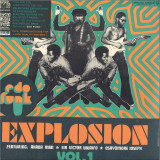
Analog Africa Presents Edo Funk Explosion Vol. 1, available on
2xLP/Gatefold LP with 20-page booklet / CD with 36-page booklet. It was
in Benin City, in the heart of Nigeria, that a new hybrid of intoxicating
highlife music known as Edo Funk was born.
It first emerged in the late 1970s when a group of musicians began to experiment with different ways of integrating elements from their native Edo culture
and fusing them with new sound effects coming from West Africa s night-clubs.
Unlike the rather polished 1980 s Nigerian disco productions coming out of the
international metropolis of Lagos Edo Funk was raw and reduced to its bare
minimum.
Someone was needed to channel this energy into a distinctive sound and Sir
Victor Uwaifo appeared like a mad professor with his Joromi studio. Uwaifo
took the skeletal structure of Edo music and relentless began fusing them with
synthesizers, electric guitars and 80 s effect racks which resulted in some of the
most outstanding Edo recordings ever made. An explosive spiced up brew with
an odd psychedelic note known as Edo Funk.
That’s the sound you’ll be discovering in the first volume of the Edo Funk Explosion series which focusses on the genre’s greatest originators; Osayomore
Joseph, Akaba Man, and Sir Victor Uwaifo: Osayomore Joseph was one of the
first musicians to bring the sound of the flute into the horn-dominated world
of highlife, and his skills as a performer made him a fixture on the Lagos scene.
When he returned to settle in Benin City in the mid 1970s - at the invitation of
the royal family - he devoted himself to the modernisation and electrification
of Edo music, using funk and Afro-beat as the building blocks for songs that
weren’t afraid to call out government corruption or confront the dark legacy of
Nigeria’s colonial past.
Akaba Man was the philosopher king of Edo funk. Less overtly political than Osayomore Joseph and less psychedelic than Victor Uwaifo, he found the perfect
medium for his message in the trance-like grooves of Edo funk. With pulsating
rhythms awash in cosmic synth-fields and lyrics that express a deep personal
vision, he found great success at the dawn of the 1980s as one of Benin City’s
most persuasive ambassadors of funky highlife.
Victor Uwaifo was already a star in Nigeria when he built the legendary Joromi
studios in his hometown of Benin City in 1978. Using his unique guitar style as
the mediating force between West-African highlife and the traditional rhythms
and melodies of Edo music, he had scored several hits in the early seventies,
but once he had his own sixteen-track facility he was able to pursue his obsession with the synesthetic possibilities of pure sound, adding squelchy synths,
swirling organs and studio effects to hypnotic basslines and raw grooves. Between his own records and his production for other musicians, he quickly established himself as the godfather of Edo funk.
What unites these diverse musicians is their ability to strip funk down to its
primal essence and use it as the foundation for their own excursions inward to
the heart of Edo culture and outward to the furthest limits of sonic alchemy.
The twelve tracks on Edo Funk Explosion Volume 1 pulse with raw inspiration,
mixing highlife horns, driving rhythms, day-glo keyboards and tripped-out guitars into a funk experience unlike any other.
out of Stock
Last delivered 5 years ago available to reorder, subject to availability
Snapped Ankles return to the forest, but it's not as they left it. Trees planted in neat rows. A well-ordered monoculture with access roads and heavy machinery. The smell of greenwashed money in the air. There's no sign of the ancient woodland they emerged from on debut album, Come Play The Trees. And it's far cry from the gentrified East London they found themselves hawking on Stunning Luxury. All is not well in the face of progress. Welcome to the Forest Of Your Problems. Even among the famously close-knit woodwose community there are factions forming. Meet The Business Imp, The Cornucopian, The Nemophile and The Protester. Each with their own motivations and belief systems. Their own sense of injustice: contradictions, anxieties and guilt. There are woodwose who have risen to the top in the boom and bust world of real estate and hedge funds. Grab what you can before the next crash. Others find euphoria in the absolute conviction that wealth and technology will see us through this. There are those with their recycling in order, who are well-versed in the prospect of imminent ecological and economic collapse, burying themselves in vegan cookery and extensive international holiday itineraries. And there's an increasing number angry at the state of the world, ready to take to the streets and the trees in an attempt to force real change. Forest Of Your Problems runs the gamut of modern woodwose emotions. In this neat human approximation of the forest, it's an increasingly knotted affair. Despite all of this, Snapped Ankles haven't lost their innate ability to make you want to move your feet - their Teutonic forest rhythms are still shot through with post-punk lightning. Whether they're exploring those opportunities which might arise when a Nigerian prince emails out of the blue on 'The Evidence', or referencing the crooked woodwose attempting to go straight on 'Rhythm Is Our Business', this is music to lose your inhibitions to. The moments of pure elation on 'Shifting Basslines Of The Cornucopians' are worth the admission price alone - "It's a great time to be alive!" ...apparently. Snapped Ankles outsider status has always allowed them to hold a mirror up to society. Now the boundaries are not so clear. In the four years since Come Play The Trees was released, their cult has flourished. Previous album Stunning Luxury saw the band invited to play the BBC 6 Music Festival and a KEXP session on the back of a sold-out UK tour which culminated with two nights at Village Underground in London. As those who have witnessed the shamanic ritual of their live shows will attest, they are a truly unique, communal experience. Forest Of Your Problems will see the woodwose bring their ancient forest rhythms and high-wire, multi-media live act to ever bigger stages - including Camden's iconic Roundhouse in October.
Following the 70s Peruvian cumbia compilation by Ranil last year, Analog Africa returns to Latin America to highlight the work of one of Perú’s undisputed masters of the electric guitar: Manzanita. This 13th release in the Limited Dance Edition Series includes 14 mostly instrumental compositions of electrifying Peruvian cumbia and guaracha. Manzanita's unique guitar lines rest on confident foundations that shifts gears effortlessly. Limited Edition LP in Gatefold Cover pressed on 180g high quality virgin vinyl
"I was in Lima, hanging out with collector-extraordinaire Victor Zela, who had spent the previous few years pouring his passion for Peruvian Cumbia into the blog „la cumbia de mis viejos“, a trove of incredible music. But after the birth of his first child, his priorities shifted and he decided to part with some of his rarest LPs. I was one of the lucky few given an early chance to examine his treasures, and when I picked up the album Manzaneando com Manzanita, Victor said: “Take it! its one of the best LPs ever recorded in Perú … easily in the top five”. That was all the encouragement I needed … two years later many of the songs from that masterpiece have made it onto Manzanita y su Conjunto, a compilation of electrifying Cumbia sides from Manzanita’s golden era.
Berardo Hernández – better known as Manzanita – first surfaced during the psychedelic Cumbia craze. At the head of the scene were the magnificent Los Destellos, whose leader, Enrique Delgado, was such a six-string wizard that other guitarists found it impossible to escape his shadow. But when Manzanita arrived, his electric criollo style sent shockwaves through Lima’s music scene and posed a serious threat to Delgado’s dominance as king of the Peruvian guitar.
Manzanita had come to Lima from the coastal city of Trujillo, five hundred miles up the coast – a place where Spanish, African and indigenous populations had been living and making music together for centuries – and came of age at a time when the first wave of psychedelic rock from the US and UK was starting to sweep the airwaves. But the sounds of Cream and Hendrix disappeared from the radio just as quickly in 1968 when Juan Velasco seized control of the country in a military coup. The new regime, which favoured local traditions over cultural ‘imports’ from the north, was a blessing in disguise for the Peruvian music scene.
Record labels flourished as new bands, raised on a hybrid diet of electric guitars and Cuban rhythms, rushed in to fill the vacuum created by the lack of imported rock. A new genre, known as Peruvian cumbia, was born and Manzanita quickly became one of its most original voices.
Starting in 1969, Manzanita y su Conjunto released a steady stream of singles that used Cuban guaracha rhythms as the foundation for dazzling electric guitar lines. After countless 45s and several years on the touring circuit, the band signed to Virrey, an important Peruvian label, and recorded two LPs acknowledged as masterpieces among aficionados of tropical music. Most of the songs on Analog Africa’s new compilation Manzanita y su Conjunto are drawn from those legendary sessions of 1973 and 74.
Although he scored a few more hits in the later 70s, his dissatisfaction with the music industry caused him to withdraw from the scene for several years; and when he finally retired for good, the golden age of Peruvian cumbia was a distant memory. But when Manzanita was at the top of his game he had few equals. Victor Zela was right: this is some of the best music ever recorded in Perú."
out of Stock
Last delivered 5 years ago available to reorder, subject to availability
fter a hiatus of over eight years Fuzzy Lights are making a welcome return. Burials is the follow-up to the critically acclaimed album Rule of Twelfths, and the fourth album from the Cambridge-based post-folk collective.
Their sound has been stripped back to its component parts, deconstructed and rebuilt under less obvious influences. There’s a bedrock of folk-rock - predecessors like Trees and Fairport Convention - but this is then built upon through multiple layers, from the stillness of Talk Talk to the orchestral chaos of Godspeed You! Black Emperor. With Burials Fuzzy Lights have cultivated these sounds and influences into something new and fresh that distances the album from the rest of the folk-rock crowd.
The most striking element of these songs is how intimate they are. Lyricist Rachel Watkins has revealed a lot about herself in these seven songs, which have been written from a very personal perspective. Raw experiences have been distilled into each piece, her translucent vocals often betraying the content of the songs themselves. The album is bookended with the most personal of these. Opener ‘The Maidens Call’ reveals her loss from suffering a miscarriage, whilst album closer, ‘The Gathering Storm’ frames the rallying cry of women’s rights around how individuals must work together now, and in future generations, to destroy prejudice. There is also engagement with humanity’s immediate surroundings and the environment. ‘Under The Waves’ deals with devastation of coral reefs, ocean resources and our natural world, and ‘The Graveyard Song’ imagines the perception of time from the juxtaposed views of a yew tree and a young woman.
As scenarios, paths, and outcomes shift around us, Burials’ amalgam of glowering, intense instrumentation, timeless, weightless melody, and exactingly revealing lyricism carves a very particular path through the world. This is music that tears us away from the everyday not just as a form of escapism, but as a means of self-reflection on hardship and the strategies we develop to overcome it. It is the band’s rawest yet most accomplished statement to date.
Andrés Vargas Pinedo is a prominent composer of Amazonian popular music from Peru. He is blind and has excelled as a player of the quena and the violin. He was born in the city of Yurimaguas but he developed as an artist in Lima, for thirty years he has worked as a traveling musician on a street in the San Isidro district of Lima. Throughout his career, he has formed and joined various popular music groups. This compilation presents fifteen songs of his authorship, belonging to his first two groups: Conjunto típico Corazón de la Selva and Los Pihuichos de la selva, active between 1965 and 1974, and which helped define the sound of Amazonian popular music.
These years saw the emergence of an Amazonian popular music movement led by Vargas Pinedo as well as groups such as Los Solteritos, Flor del Oriente or Selva Alegre. These artists based their music on the rhythms of the Amazonian folklore (pandilla, sitaracuy, movido, cajada, chimayche) and were nourished by influences from the coast and the highlands of Peru, as well as by the tropical rhythms of Brazil, Colombia and Ecuador, achieving a musical synthesis that is an invitation to collective celebration and endless dance. A sound that is defined by a constant and hypnotic rhythmic base of kick and snare drums, upon which the quena and violin develop imaginative melodic lines. Sometimes there is a singing voice, sometimes the voices playfully appear as sounds that identify Amazonian popular speech or that emulate jungle animals.
The fifteen tracks gathered in 'El fabuloso sonido de Andrés Vargas Pinedo: Una colección de música popular amazónica' (1966-1974) / 'The fabulous sound of Andrés Vargas Pinedo: A collection of Amazonian popular music' (1966-1974) are a good introduction to the work of an essential creator of Peruvian music, whose sound expresses the spirit of the Amazonian people and summarizes the transition from tradition to the popular in the context of the emergence of a record industry of Amazonian music. Andrés Vargas constitutes a fundamental basis for the music of the Amazon, as his work synthesizes diverse influences, having that original root as its main motive.
This compilation is presented in vinyl format and includes a brochure with extensive information and photos. The audio has been remastered directly from the original tapes. Edition of 300 copies. Art by Jordy García (Blumoo Posters).
The fourth studio album from Melbourne’s 7-piece heavy groove combo is an abstruse journey into the darker fringes of instrumental music, drifting from funk to spiritual jazz and through to psychedelic fuzz rock.
Inspired by the catastrophic year that was 2020, the bands recording sessions were rescheduled three times due to extended Melbourne lock downs, before finally being recorded in November 2020. The album’s title, The Old World, refers to life before the onset of the pandemic which shattered 21stcentury humanity’s sense of stability and invincibility. Arcing back to the simplicities and blissful ignorance that existed before the grim onset of empty supermarket shelves, deserted streets and a world locked down.
The album begins with psychedelic-soul lament, Death of the Old Gods, before rolling into apocalyptic-dancefloor-fillers Hold Fast to the Void and Abode of the Clouds, then momentarily mellowing out on laid-back number, Never Again. Side 2 opens with Harry Cooper pt II (a tribute to the bands sax player and a follow up to part I from their 2017 album Drinking Water) before launching into brutal and fiery, The Beast, then finally closing with the epic 12 minute spiritual-jazz title-track, The Old World. The astute listener may also hear sprinkled across the album hints of Afrobeat, Free-Jazz and Stoner-Doom (yep, Stoner-Doom), along with plenty of the bands new favourite instrument, the goat bell.
Released on local Melbourne label, Northside Records, the album will be available on limited edition night-sky marbled vinyl and features cover artwork by Australian artist, Daniel Hend.
Up to kick off 2021 in the most adequately frenzied, thoroughly corrosive fashion, DDS04 serves up a quintet of chrome-tanned, hi-velocity beats courtesy of Italian hardware fetishist Anna Funk Damage (previously heard on the likes of Mind Records, Lux Rec, Lazy Tapes and more) and Austrian-Hungarian outfit Dutch Courage - alias Superskin & Új Bála - each of whom step up to the plate to deliver an exquisitely ear-wormy slice of their deranged industrial gospel.
A-side starts off to the sound of AFD's hard bouncin' "48 Hours Death" - a raw-cooked deluge of head-reducing EBM grit, flaring binary signals and Giallo-infused arpeggios out a blood-stained Suspirian tale. Fear for the deadly scalp hunters lurking in the club's darkest nooks, they've just sniffed out your trail.
Brutal churner "Youssef" picks up the torch and pulls out the quake-inducing breaks without further ado, dressed out with languorous Orientalistic melodies and steely distortions tailored to bend mind by the dozens. Forged in the furnace, the full-out punk-minded "I Come From Fire" rounds off the side on a drum and bass-heavy note, drawing as much from 60s psych-garage as it does from 80s deconstructionist tape music.
Flip sides and here's Budapest unit Dutch Courage taking the reins with the off-kilter treat "Hand Of The Sword" - navigating a weird zone of its own, floating astride post-apocalyptic Bristol bass, sliced-and-diced abstraction and overly textured yet equally bone-bruising riddims.
Wrapping up the journey with both force and serenity, "Neo-Soulmates" follows a similar path with its warped synth flexions and raucous machine cries making the rounds from one end of the spectrum to the other effortlessly, merging to give birth to something genetically contrasting from any contemporary. A most fitting finale to an EP that celebrates and encourages sonic bizarro in all its forms and manifestations.
out of Stock
Last delivered 5 years ago available to reorder, subject to availability
Not Waving renders his pop soul on a definitive album opus ‘How To Leave Your Body’, starcrossed with guest appearances by Jim O’Rourke, Jonnine Standish, Marie Davidson, Spivak and Mark
Lanegan
An escapist parable for the times, Alessio Natalizia marks a career high with his most sensitive production and songwriting illuminated by a coterie of notable collaborators. Its 11 songs deal with the necessity of friendship, the fragility of loss and spiritual transcendence via a spectrum of strategies that ultimately arrive at a mutual conclusion: love is the message. It packs sample amounts of nostalgia into a fantasy sequence of elegiac pop, skewed rave and midnight lullabies that fine-tune over 20 years of devotion to his craft, perfectly matching experimental restlessness with enduring pop appeal.
Perhaps unavoidably, circumstances had a hand in the creation of ‘How To Leave Your Body’, forcing Natalizia to work with collaborators remotely. Yet the strength of his bonds bleeds through in the album’s handful of poignant vocal pieces, none more so than the hushed intimacy of Marie Davidson on the bewitching downbeat trance hymn ‘Hold On’, but also in the bruised blush of ‘My Sway’ featuring Jonnine’s spine-tracing lilt over hovering organ and dembow bumps, while the hook-up with Mark Lanegan once again yields bittersweet fruit on ‘Last Time Leaving Home Part 2’, with gravelly blues vox diffused into detuned, miasmic cello that really tugs.
Effortless and made for rinsing, the whole album is testament to the humility and pathos of Natalizia’s oeuvre, which has gotten better with age. It plays out like a lovingly crafted mixtape, decanting all original material with a classic cadence and fleeting play of styles, from aerial jazz notes in ‘You Are Always Younger Than The Future’, to the gnawing club grind of ‘Define Normal’, a noisily gurning ‘Self-Portrait’, and the lushly resolved admittance of ‘My Best Is Good Enough.’
Comparisons don’t really work with this one, it’s just Not Waving.
out of Stock
Last delivered 5 years ago available to reorder, subject to availability
Dauw welcomes Taylor Deupree to the label with his new record 'Mur'. With this release Dauw also introduces Jelle Martens, a Belgian graphic designer and painter, for the artwork of this release.
Deupree describes the album title “as if there’s always something about my music that’s like a murmur”, resulting in a murmuring effect when pronouncing the names of each track. Mur is a personal journey through the challenging year that 2020 has been. The fifth and last track on the album, Mar, contributes as a catharsis to this turbulent period in Deupree’s personal life, which is defined by the interaction between the loud sounds and the soft keys of the piano. As if the storm has died down and the waters have found their peace.
Taylor Deupree is an American musician and mastering engineer based just outside of New York. As a former member of the American electronic band Prototype 909, Deupree has had numerous collaborations with artists such as Ryuichi Sakamoto, Stephen Vitiello, Alva Noto and Marcus Fischer. Curating 12k, a New-York based music label, is another aspect of Deupree’s career and brought together over one hundred releases since its beginnings in 1997. Having some similar artists in our catalog (Federico Durand, Will Samson and Steinbüchel for example), it’s safe to say that Deupree’s new release through Dauw will be in good company.
out of Stock
Last delivered 4 years ago available to reorder, subject to availability
With “The Giggle Gallery” musical performance duo Brik Tu-Tok takes you on a surreal trip to an obscure giggle theatre of the 21 century. It’s an delicous muddle full of sophistated and sparkling weird pop songs, all baptized in absurdity. The soul of the album lies in its poetic lyrics and cryptic storytelling. Brik Tu-Tok's imagery is a combination of pleasantly derailed thoughts and offbeat fantasy. They mix joy with panic and evil with laughter. “The Giggle Gallery” is an theatrical album with sharp edges. Fresh yet nostalgic. Catchy eclectic!
Brik Tu-Tok is the musical library of theatre makers Maxim Storms and Linde Carrijn. Together they mould the theatrical with the musical into a new absurd universe, where eccentric characters sing out their souls. Brik Tu-Tok is poetic, brutal and humorous. “The giggle gallery” released on vinyl on Rotkat Records.
A bridging of minds and energies, a confluence of souls and spirits. Midnight Shift releases an exclusive collaboration between Prequel Tapes and dBridge - Ionize. Cast all genres aside, as two electronic worlds collide to produce a third sonic space.
Start your engines with 'Divisible Cause' speeding and hurtling into the great atmospheric unknown. Outlier for the freaks, 'Stray Thrills' amalgamates between the classicist EBM and futurist UK bass. Stumble through 'Pleasure Systems' with light sabres, wrangled beats and gun shots ricochetting off the walls in one heady disorientation. Then wander aimlessly into the warehouse at 170bpm with 'Mindless', led by twilight tones and menacing machines at every turn.
out of Stock
Last delivered 4 years ago available to reorder, subject to availability
Yen Tech’s second album is fully eye-popping cyber-theatrical medieval deconstructed nu-metal. Like Amnesia Scanner banging out Slipknot covers with Siri and Arvo Pärt in a distant space prison.
‘Assembler’ is a bizarre record, even for SVBKVLT. Yen Tech’s debut “Mobis” was a future-facing hi-tech part rap deconstruction, all blitzed trap and vaporwave shimmer. “Assembler” is completely different proposal, addressing the post-COVID world with growling anxiety and lavish, multidimensional digital fireworks.
Hoarse semi-human vocals are meticulously painted over hydraulic, machine-gun kicks, drunken synth drones and simulated choirs. Techpilled harpsichord chimes burp and resonate over swirling, supernatural soundscapes, while alien chatter butts heads with disembodied artificial voices. “Herd immunity,” a voice echoes on ‘Leech’, as unsettling drones build through clouds of white noise.
Yen Tech takes Amnesia Scanner’s dystopian deconstructed airlock club template and debones it to fit the actual dystopia of 2021. Jarring, fanged and packed with sneering nu-metal adjacent attitude, “Assembler” sounds as awkward and genre-allergic as an algorithmic playlist. It’s an uneasy listening experience that’s both familiar (‘Extinction Game’ is almost chart-ready future pop) and defiant all at once.
Polo & Pan's debut album Caravelle reached the heights of professional recognition by being certified platinum in the international market, gold in France, with three singles exceeding the threshold of gold certification outside of France, consecrating Polo & Pan as the new French Touch ambassadors. Now, our two explorers invite us with Cyclorama to a journey through time, along the steps of human existence. After a year of lockdown introspection, the duo decided to create music that weaves themselves into the backgrounds of our lives. From birth to death and transcendence, Cyclorama offers a colorful score to the "comedy of life" as Celentano sang, this existential theatre that is played-out by every human being.’’ Out everywhere on 6/25.
out of Stock
Last delivered 2 years ago available to reorder, subject to availability
Re-mastering by: Cicely Baston at Alchemy/Air Mastering, Lyndhurst Hall, London
A two-LP set on Theresa, Rejoice features Pharoah Sanders in excellent form in 1981. Sanders sounds much more mellow than he had a decade earlier, often improvising in a style similar to late-'50s John Coltrane, particularly on "When Lights Are Low," "Moments Notice," and "Central Park West." The personnel changes on many of the selections and includes such top players as pianists Joe Bonner and John Hicks, bassist Art Davis, drummers Elvin Jones and Billy Higgins, vibraphonist Bobby Hutcherson, trombonist Steve Turre, trumpeter Danny Moore, a harpist, and (on "Origin" and "Central Park West") five vocalists. The music always holds one's interest, making this one of Sanders' better later recordings. Scott Yanow/AMG
COLTRANE'S classic "Moments Notice" is a complete gas! Sanders like Coltrane, pulls and holds attention with his entrances. Bobby Hutcherson's and Hicks solo's are heated and models of vivid imagination. The three put forth some of the very best solo...'s in the entire album.
Then there's the arresting new talent introduced here -GEORGE V JOHNSON JR., whose marvelous lyrics and vocal work are truly auspicious! He sings with James Moody on occassion and is happily remindful of the insistent giftness of the late EDDIE JEFFERSON. Johnson's three stanzers close with "Relax dig the sounds of Coltrane's Music. Coltrane fills your heart with love and harmony. Trane played with magic. Listen to the melodies and you will see momently. When you here the message of his song!". There's no doubt in my mind that henceforth George V Johnson should and will be sought for his own gift to the music. He sang the song for Sanders at the Village Vanguard, and Sanders "felt that George ought to be heard".Thank you, Pharoah Sanders for Sharing.... by Herb Wong