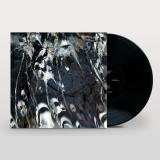
George Otsuka (or Ohtsuka), sadly passed away in March 2020, was one of Japan’s most renowned jazz drummers. ‘Sea Breeze’, released in 1971on the Union label, is his first record in quintet formation and is reissued here on a single LP housed in a gatefold sleeve.
And we can say that George Otsuka knew how to surround himself: Shunzo Ohno is on trumpet and Flugelhorn, Takao Uematsu on tenor sax and soprano, Takashi Mizuhashi on bass and Hideo Ichikawa on electric piano.
If all the tracks on this album are solid, included the astonishing cover of “Fool on the Hill”, it is especially “Sea Breeze”, the eponymous track opening the album that will make an impression. A super and long jazz-funk track where the five musicians, in perfect osmosis, leave each other enough space to express the full extent of their talent.
Recent copies of the original vinyl,which were only released in Japan have sold for £200-300.
Manchester-based producer Lily Mumby, the creative force behind Lapalace, has chosen Lavender as her botanical muse for this sixth instalment. Like the aromatic herb that grows from tiny seeds to fragrant purple stalks, her compositions unfold with a similar patience and elegance. Her synthesisers breathe with a natural rhythm, creating textures that emerge and recede like morning dew on lavender buds waiting to bloom.
The standout track ‘new age night’ – a stunning love child of William Basinski's decaying tape loops and Aphex Twin's intricate programming—carries subtle lavender-inspired tones, balancing the plant's calming essence with hypnotic rhythms. Just as lavender requires thoughtful tending before rewarding the gardener with its distinctive aroma, Lapalace's landscapes reveal deeper complexities with each listen.
Much like gardening itself, Mumby demonstrates an innate understanding of when to intervene and when to allow natural development. This approach echoes throughout her career, from her debut EP "Ephemera" which caught the attention of Insult to Injury Records' Timothy Clerkin, through to her contributions to Chez De Milo's "So It Goes" Remix EP and Manchester label Skiptrace's various artists compilation.
Her work across BBC Introducing and fossil.radio reflects this same philosophy – creating environments where sound, space, and organic movement find their natural harmony. But this composition really feels that Mumby has come of age. "Music To Watch Seeds Grow By Vol. 6" represents the continued cultivation of Lapalace's distinctive sound and demonstrates the maturity of an artist way beyond her years. This music stands as a lighthouse through a thick fog of nostalgia, much like lavender standing tall amidst an English cottage garden.
Early DJ support including - Auntie Flo, Ruf Dug, Courtesy, Vladimir Ivkovic.
Midway through Martin Luther King, Jr's historic speech at the 1963 March on Washington, a voice rang out from behind him: "Tell them about the dream, Martin!" That voice belonged to Mahalia Jackson, King's close friend and one of the most revered gospel singers of the 20th century - Glorious Mahalia, a visionary tribute to Jackson's life by the internationally renowned Kronos Quartet, uses that moment as a springboard to explore the depth of Jackson's musical craft and its impact on the Civil Rights Movement, including her relationship with Clarence Jones and Studs Terkel, other luminaries of the time
Ediciones Espectro Oculto returns with EOD003, its third release and the opening instalment of a new Split Series — a side each for two artists who deal in the shadows: Mick Wills & Blackmoon77.
Mick Wills handles the A-side in familiar territory, mining the margins of European DIY synth culture for cuts & edits. A1, “Six Six Six Sex”, resurrects a forgotten wave track laid down in 1983 by Venlo duo Carin & Henk, Carin Kollenbrander’s conspicuous, sexed-up vocals carrying the unmistakable spirit of the early-’80s minimal synth underground. A2 cuts “New York” by MCL a new beat staple first issued on German’s Boy Records, tightened into a playful, dancefloor-ready tool. Closing the side, Mick Wills turns to Folkvett’s “Kommando Kamprad” — originally out on Pater Noster Ltd. in 2012 — an ethereal, out-of-body drift that pulls the mood inward.
On the flip, Blackmoon77 doubles down on their signature across three originals: dark, raw and hypnotic wave built for bold & audacious DJs and fierce dancers.
All tracks mastered by Alden Tyrell.
As always, this is a one-time pressing of 250 copies — no repress, and no digital until the vinyl is gone.
Rakete returns with its fourth release from Minneapolis-based producer and DJ, Baher.
The Cairo-raised artist has spent years carving out club-focused hardware-driven sounds that drift between different shades of techno, house, and the spaces in between, drawing inspiration from old school rhythms, underground culture and distant memories.
The artist’s debut EP on Rakete, Fragments, is a reflection of those moments. From the desert winds of Cairo to the intimate warehouse raves of Minneapolis, each track from the founder of Rakete carries an emotional imprint and raw energy onto the dancefloor, shaped by the artist’s diverse and wide-reaching influences that feel distant yet familiar.
Fragments EP is the founder's first complete body of work stitched together with precision through classic drum machines and old school synthesizers. Music full of soul, movement, and energy, made for the dance floor.
Accomplished trumpeter, composer, bandleader and educator, Kamal Abdul-Alim has been actively involved in creative music for decades. He has toured Africa, Europe, the Caribbean and the United States. He has recorded with all kinds of bands, large and small, and performed in festivals all over the world. “He takes the postbop of the 50s and free-form jazz of the 60s and turns it into an even balance of fine textures. Alim, who is highly underrated, has one of the most beautiful tones and concepts of jazz. A master of improvisation, he knows the art of weaving different ideas, whether they stem from Manhattan’s lower East Side or Europe” (Hugh Wyatt, New York Daily News). “Dance” was recorded in 1983 but first released on vinyl in 1987. Rhythm section includes drummer Idris Muhammad. Original pressings are extremely rare and expensive. “Brotherhood” is a much sought after track on the jazz dance scene. There is a high demand for this title again on vinyl and pressings are limited to 1000 copies, all individually hand numbered.
Originally released on CD in Japan in 2003, as a love letter & thank you to his Japanese fans. Recorded at home, produced, engineered & mixed by Matthew Sweet (bass, guirars & vocals) with the classic ‘Girlfriend’ era lineup of Ric Menck (drums), Greg Leisz (guitars) and the genius electric lead guitar of Television’s Richard Lloyd. The sleeve art is by renowned artist Yoshimoto Nara. In the liner notes, Sweet describes the album's title as an attempt at reverse English: "If I did it correctly, the title should seem a little strange or wrong, but still meaningful! The true definition is supposed to be a 'love you' life, one devoted to loving someone or something, even life itself!"
“an excellent modern guitar pop album, filled with great hooks and harmonies and irresistible ringing six-strings”
Allmusic
“Kimi crackles with Girlfriend‘s energy, as Lloyd and Sweet’s guitars provide antagonistic foils as they did more than a decade before on cuts like “Tonight We Ride.”
Rolling Stone
Mihail A. Popov is a Russian with two decades in the game behind him, partly under his given name, but half of that time has also seen him work as I Gemin. Now he lands on Deeppa Records with a conceptual EP "built around depth, patience and underground exploration." The aim is to explore all new musical ground and follow newly emerging paths, and the result is a fine four-tracker. 'Like The Star' is a lush, deep nu-disco jam, 'Love Undercover' has a seductive slide to the live-sounding drums and playfulness in the horns, while 'Terra Incognita' brings jazzy chords and a balmy late-night warmth. 'Melancholy' gets more heavy and roughed up with smudged neo-soul and r&b samples, making it a romantic affair. Kid Sublime and 6th Borough Project drop remixes that bring more club-ready grooves and complete a superb EP.
A key architect of European minimal house returns here and it seems that the years have only deepened the German's craft. Following the acclaimed Belongs on the legendary Playhouse label, Losoul's latest for Logistic Records is organic and rich with musical narrative that reveals itself slowly. 'Cult Rodeo' is a deep cut and dubby swinger that teases with crowd noise and 'Shake' then gets more glitchy as sounds pan across the setter field and a jerking rhythm slowly manifests. 'No Jacks Given' swings low and heavy as a freaky vocal injects arresting immediacy and 'Some Pals Were Sleepers' slips into a more foggy and atmospheric minimal dub world. 'The Peek A Boo Scratch' is an abstraction of the afterparty kind and improves with time.
An absolute, hard-charging funk hammer from the Dap-Kings - an incredible instrumental co-written and co-produced by Dapper Bosco Mann and Kenny Dope! If "Nervous Like Me" has a title that reflects some kind of apprehension, the track is anything but! It's simply pummeling - with a rhythm that kicks out from some stealth bongo and rolling trap that build into some playful guitar and bass response until the horns crash and boom! The beats on the flip isolate the funky drums, providing a sizzling beat track.
One of the most popular and notorious of all British hardcore acts, the Exploited were formed on a dire Edinburgh council estate in 1978 by singer Terry Buchan and guitarist Stevie Ross, although Buchan’s brother Wattie would soon become leader and the lineup seldom stayed stable. Influenced by the Pistols, they built their large working class and skinhead following through an aggressive, fast-paced, and uncensored hardcore style. Gathering singles from their street punk days and the best tracks from their first three albums, Totally Exploited was the band’s first compilation and it remains the best by far. Essential Exploited!
Known for his deep, melodic sound and genre- blending approach, Bop enlists the vocal talents of DRIIA and Doktor, alongside a collaboration with bass music specialist Chime. 'Cravings' sets the tone with lush melodies and deep atmospherics and a hypnotic vocal. Minimal yet powerful, this is some of Bop's drum & bass work at its finest. The second track on the EP, 'Siren Eyes', sees DRIIA's ethereal toplines intertwine with Doktor's signature dancehall energy. DRIIA, a rising star in the electronic scene, has been named one of BBC Radio 1's Future Stars for 2024, while Doktor's powerhouse vocals have graced multiple collaborations with the likes of Chase & Status, Sigma, and Friction.
'Dormant' brings a fresh twist with Leeds- based producer Chime who's influence injects a unique blend of melody and weight, crafting an immersive soundscape through mind- boggling sound design. Closing the EP, 'Fungification' dives into Bop's garage influences. Weighty and stepping, expect intricate rhythms, evolving textures and an absolute bouncer of a bassline.
Yesca is back on Shall Not Fade with ‘Paint on Walls’ 12” EP.
2024’s Yesca EP on SNF - “Mood Loops” - set a high bar, so when we say this record is something special you should take note. Of course if you already know Yesca’s music or have had the pleasure of a Yesca DJ set then you will have already this queued up.
Sweet Spot: Ben Sims, Deetron, Oliver Ho, Vince Watson, Grain (Artwork’s Techno alias). Planet-E, Primate Recordings, Paul Mac & Stimulus Recordings found the sweet spot.
According to the OED the first use of the phrase “Sweet Spot” was in 1976 in reference to tennis rackets and golf swings. It’s where everything hits just right. And that’s what this EP does, hits just right. What strikes me is how descriptive the phrase ‘Sweet Spot’ is. Given enough swings and some luck we all know what it feels like to hit the sweet spot in some regard. Finding the sweet spot regularly though takes time and skill. But being able to hit the sweet spot by design every time, well that’s something different. That’s what makes the greats great.
For us at SNF there’s a consensus that in the lineage of electronic music there have been many moments where artists & labels converged on a sweet spot. One such sweet spot for us is in Techno
around 2003 when at the tail end of Hardgroove tempos began to slow and a groovier more refined tech house infused goodness appeared in the racks from a group of killer techno labels & artists (some mentioned above) that moment before the fuller emergence of the 2nd wave of Tech House in the mid 00’s.
That sound, while often emulated, never quite hit the same for us at least – until Yesca came along. His music has everything that we love about that sweet spot. Raw driving groove, rolling basslines and hip shaking percussion. What’s different on ‘Paint on Walls’ is that Yesca stepped on - he had already found the sweet spot on 2024’s Mood Loop EP - now his sound (or swing) is natural. Repeatable, refined and seemingly effortless. To revisit the tennis and golf analogy, this is the start of a Grand Slam run from an artist ready to etch their name in dance music history. Tiger..... Serena......Yesca.
Run the Tracks:
‘How I Do It (They Wonder)’ - A masterclass in less is more, and a serious DJ tool. Full of groove - slow it down and it will light the touchpaper in a house set - speed it up and you’ve got techno weaponry. Forget gatekeeping, this will make you feel like you just found a 2004 techno white label from the likes of Grain or Ben Sims.
‘I Desire’ - House music that I reckon Deetron would be proud of... Blissed out machine funk, whispered vocals, slick jazzy chords and dubbed out techno stabs are all grounded by Yesca’s impeccable, loopy drum programming. The best tunes always end too soon.
‘Domination’ - The ever rising bass, err, dominates this track and this track will dominate on many a dancefloor, but Yesca's knack for dubbed out swinging synth lines has to get a shout out here too. He turns what would be melodic elements into what feels like part of the percussion. Double Threat. Hands Up and Heads Down business.
‘Paint on Walls’ - It would be a tough call to say Yesca’s saved the best til last with the EP’s eponymous track given what’s come before, but Paint On Walls works all the highlights from the rest of the EP into a latin techno/house infused anthem. Skittering percussion, a hint of Detroit goodness and a deep deep rolling bassline and THAT vocal. In every way hopeful yet resistant, and that is what techno is all about.
Tenuous Links welcomes Torino’s very own VIOLA to the label with his new ‘Wrinkles’ EP. As the label owner of Reflue Records, VIOLA first caught my attention with his debut full-length release, a body of work that showcased a deep, rugged sound and a clear technical prowess shaped by his surroundings rugged coastlines and industrial landscapes of Torino in northern Italy. After speaking with Cristiano for over a year, it felt like a natural progression to bring his music to Tenuous Links. “The music I write almost always functions as a visceral soundtrack to whatever environment surrounds and infects me while I'm creating. Deeply rooted in the architectural contrasts of the places I’ve inhabited.”
‘Wrinkles’ is VIOLA’s second full-length body of work, yet the years of graft and dedication behind it are immediately apparent. Across three original tracks and a remix from London’s Jay Duncan, the EP delivers pure grit and crunch, inhabiting large, cavernous atmospheres grounded by pummelling bass, dynamic drums and intricate rhythmic detail.
The title track ‘Wrinkles’ is an ode to club spaces and the scene that revolves around them. Its broken rhythm channels the dancefloors of Cristiano’s formative years, spent partying in abandoned bunkers and warehouses in and around Torino. VIOLA explains: “Crafting such a raw, gritty bassline felt like an absolute necessity during the writing process, retracing memories of long nights spent dancing in silence.” The track’s cavernous atmosphere mirrors those pitch-black, unlit spaces, drawing us deeper and deeper into the abyss, with only brief glimmers of light offering reprieve from its relentless, all-enveloping bassline.
‘Mon Tom’ draws heavily from VIOLA’s hometown and his complicated relationship with Torino ,a city where tranquillity and beauty sit alongside heavy industry. The calm of the coastline is violently interrupted by vast steelworks and plumes of black smoke, leaving an imposing industrial mark on both the landscape and its people. The track reflects these contrasts. Metallic yet fluid, it moves at a faster pace, built around a driving 4/4 rhythm designed to suspend the listener while skittering percussion creates an increasingly uneasy sense of movement. It’s a meeting point between the beauty and brutality of the environment that inspired it.
‘P Maggiore’ was written between 2019 and 2020 while VIOLA was living in Rome’s chaotic Porta Maggiore district. Surrounded day and night by the grinding noise of trains, screeching tram brakes and beaten metal, he translated those raw auditory memories directly into high-pressure sound design. Yet, in contrast to the intensity of his surroundings, VIOLA deliberately pulls back the tempo.
Rounding off the EP is a skeletal remix of ‘Wrinkles’ from London’s Jay Duncan. She strips the original back into a techy, rolling cut, retaining its atmosphere and darkness while introducing a lighter touch of minimal-esque sound design. The result is a subtly transformed take on the title track that provides a fitting conclusion to the EP.
‘Wrinkles’ EP is a record shaped by place, by architecture, industry, memory and the physical spaces that leave their mark on us. From Torino’s industrial coastline to the chaos of Rome and the darkness of abandoned club spaces, VIOLA turns his surroundings into sound. Coming to vinyl and digital October 16th of October.
Cultivated Electronics celebrates two decades at the forefront of electro with its landmark 50th release on the main label, returning to the very beginning with a new release from Signal Type - the collaborative project of label head Sync 24 and Matt Whitehead. The anniversary EP pays homage to the sound that launched Cultivated Electronics back on CE001 A1, with Signal Type delivering "Break Through", a snappy, driving and psychedelic electro workout built firmly for the dancefloor. Funky, spacey and packed with the restless energy that has defined the label since its inception, the track feels both like a nod to CE's roots and a statement of where the label stands today. The celebrations continue with three remixes from long-standing Cultivated Electronics collaborators and influential figures within the electro scene. Keith Tenniswood, aka Radioactive Man, brings an old-school, Mad Mike-esque Underground Resistance flavour to his rework, injecting the original with raw Detroit-inspired energy and machine-driven propulsion. Carl A. Finlow, operating under his Silicon Scally moniker, takes things deeper, delivering a heady after-hours interpretation built around immersive, late-night club sonics. Rounding out the EP, Finnish electro pioneers Morphology deliver a hypnotic, 90s-inspired roller, bringing their distinctive analogue sensibility and futuristic groove to the original. The vinyl edition arrives on blue marbled translucent coloured vinyl, housed in a full-sleeve package featuring artwork from Geometric Love. From its first release to its 50th, Cultivated Electronics has remained dedicated to forward-thinking electro, connecting classic machine funk with contemporary club sounds. CE050 marks both a celebration of the label's history and a salute to the artists and sounds that continue to shape its future. Here's to another 50 releases.
Part celebration, part reflection, THE TIME OF OUR LIVES arrives as both the final release of Lancey’s twenties and the closing chapter of a creative world he has spent the last decade constructing. The most expansive statement of his career to date, moving freely between trap, alternative R&B, dance music, Afro-influenced rhythms and more, Lancey explores triumphant highs and lows of stark vulnerability across the album, interrogating ideas of success, freedom, loneliness and what it truly means to have the time of your life. Lancey Foux stands at the forefront of UK rap’s evolution, blending elements of hip-hop, cloud rap, trap, Jersey club, drill, and more into a sound that’s uniquely his own. Since emerging from Newham, East London in 2015 with a clutch of freestyles and SoundCloud singles, Lancey has occupied a lane entirely of his own making. As he closes out his twenties, Lancey looks ahead to the next decade full of more unpredictable artistry as he continues to break the rules and change the game.
Anyone who has had the sheer pleasure of seeing and hearing Leroy Burgess perform in concert will know just how amazing the live renditions of his iconic compositions of Disco Boogie hits and classics sound with a full band and a fully fueled audience. Accompanied by the ten piece French band and long time Leroy Burgess collaborative outfit Saving Coco, BBE Music is releasing live versions of two of those classics Let’s Do It and Big Time. Recorded and released by Rick James in 1980 Big Time is an absolute killer of a track that sounds so fresh decades later in this crowd energising performance. Famously released by Convertion Let’s Do It was a huge club hit in the early 1980s and is the perfect track to accompany Big Time on this release. Leroy Burgess is a certifiably genuine legend of Black music; his compositions have moved dancefloors across the world since the early 1970s as a member of Black Ivory, then Convertion, Paradise Garage favourites LOGG, Kleer and electro outfit Aleem. His collaborations with Patrick Adams, Inner Life, Dazzle and solo artists such as Eddie Kendricks, Rick James and Fonda Rae have cemented Leroy Burgess’ place in the annals of Black Music History. As a founder-member of the Universal Robot Band he co-wrote the massive perennial favourite Barely Breaking Even. Leroy Burgess feat. Saving Coco-Big Time/Let’s Do It is released as a 12″ vinyl and digital download and definitely belongs in the ‘make sure you get this’ category. Mixed by Marc Mac and mastered at the Grammy-nominated Carvery Studio by Frank Merritt. Available as 12″ vinyl and digital download. Release date September 25th, 2026
DJ Deep and Traumer continue the Get-Rooted journey with a new four-track EP that once again reflects the label’s concept: two artists sharing their individual perspectives while complementing each other’s musical language.
The release opens with DJ Deep’s original version of “Come Get It”, a timeless House cut deeply inspired by the spirit of the early ’90s, with a subtle nod to the legendary sound of Murk. Traumer then delivers his own interpretation of the track, transforming it into a more contemporary and forward-looking production while preserving its original essence.
Bridging the two versions is a dedicated DJ Tool, designed to seamlessly transition from one interpretation to the other, or to be used creatively in the mix alongside other records.
The EP closes with “Le Coton”, an elegant and sophisticated House track whose timeless groove perfectly rounds off this third Get-Rooted release.
Drop the needle on this latest dispatch from the tape vaults, and we are back in Chicago at The Curtom Studios in 1977. For instalment number five in the "Hutson Sevens" series, Home of The Good Groove Records are so very honoured to deliver this previously unreleased cut from Leroy Hutson—a true titan of soul music and an absolute master of his craft.
"Betting On My Love" carries that signature smooth orchestration we have come to expect from Hutson’s finest hours. It moves with a wonderful, breezy optimism. Hutson’s joyful, velvet lead tones skip effortlessly across the groove, wrapped in lush backing harmonies that instantly evoke the feel of the Hutson II
classic, "I Think I’m Falling in Love".
Now, a brief confession of pure, crate-digging indulgence: if tailored strictly for the dancefloor, the track arguably hits its logical peak and fade just past the three-minute mark. But to cut it there would strip away the raw human magic of the session. If you let the wax ride to the very end, the arrangement dissolves into a wonderful, lingering instrumental outro, culminating in the studio players purposely "clattering" their instruments in a moment of pure creative release. It is a brilliant, candid studio artifact that was fortunately preserved on the original master recording. Essential listening for the global soul family—do not sleep on this debut pressing.
For the flip we present Leroy Hutson’s 1979 cut “ So Nice”, a masterclass in late-70s soul music. A stand out track from the “Unforgettable” album and a vital reminder of Hutson’s unmatched ability to inject sophisticated romanticism into the bleeding edge of that disco era.
Slightly edited for the 7-inch pressing, up steps our remastering and editing maestro Mr Phil Ward. Phil always has the utmost respect when remastering and editing original content, ensuring that every second of the groove is fully respected and preserved. His stellar work here includes the studio recording of the three-count drum intro, never heard before now, leading into that meditative smooth groove layout.
It is an exquisite arrangement of simmering electric keys, nimble basslines courtesy of the legendary Keni Burke, and subtle bongo accents that collectively deliver a timeless masterpiece. Now available on 7-inch vinyl for the first time.
When the first JIM album Love Makes Magic was released in 2023, it was the end product of an experiment that had begun during the strange days of the pandemic. Cooped up in his studio, James Baron started fiddling about with an as-yet unnamed new album idea. It became Vicious Charm’s first LP release. Labelled variously as Balearic, folktronica, blue-eyed soul and Laurel Canyon, Love Makes Magic was perhaps all and none of those things: a record rooted less in Californian mythology than in Baron’s own musical world, somewhere between Sherwood, Nottingham, classic songwriting, electronic soul and the no-nonsense good times that have long run through his work under his other monikers (principally the anagrammatic Ron Basejam and, of course, Crazy P) One thing was indisputable, it connected with people... and still does.
The album was a minor hit, appearing in many a Best of 2023 chart and voted Album of the Year in Bill Brewster’s Furtive 50. A tour and a few memorable festival appearances – his 2024 We Out Here Festival being one of those wonderfully timed ‘moments’ - perfectly captured the horizontal vibes on the album, while injecting some live energy into its delivery. While there was a follow-up remix album for Love Makes Magic, JIM was already preparing a sophomore LP: “I wrote the majority of The Curious Case Of Existence in a couple of months at the beginning of 2024, then it was just a case of making the record over the next couple of years in between everything else.”
Repressed LP on Neon Orange Vinyl. Come Away With ESG - 35-year anniversary release of the classic genre-busting debut album by the Bronx sisters ESG. The sample-friendly opus that’s the inspiration for hip-hop, house and post punk. Music that falls outside of the no wave, new wave and post punk library, it’s for the dance floor but it’s not funk, there’s no horns, no driving organ; it’s the opposite of Sly And The Family Stone but no less cool and no less groovy. “A lasting document of their unique brand of minimal funk that would influence subsequent post-punk, hip-hop, and dance music acts. Stripped down to the most basic of drumbeats and rudimentary bass lines, ‘Come Away’ confirms the notion that the real rhythm is what happens between the beats. AllMusic // “This is dub disco with a punk edge.” Paste // “Uncut punk-funk straight off the streets of the South Bronx.” Record Collector // “ESG are that rare thing” Guardian // “Come Away with ESG sounds so shockingly current.” Paste // “A musical snapshot of New York City at the beginning of the '80s.” Allmusic
The third release on Uprising pairs a sax-driven rockabilly thumper with one of the coolest dance craze records of the mid-60s. ‘Red Hot Car’ was Bobby Verne’s only recording and came out on the tiny Californian Doc Holiday label in 1962. Judging by the current price and collector demand for an original copy only a small quantity were pressed. This is a powerhouse of a tune that has been filling dancefloors across the globe for some time now.
As for the flip, in 1965, Buddy Wayne added self-penned lyrics to Gary Paxton’s rendition of the James Bond theme. Released on the Big Ben label – that only put out four records − it sat unwanted for decades. Then the rockabilly scene picked up on it in a big way when they discovered that it was the perfect stroller. This was closely followed by the northern soul and mod scenes. Today, it is at last crossing over to a more mainstream audience.
Though Scratch may have at times seemed crazy, it is worth noting that creative
genius appears so because geniuses see things others do not see and inhabit
realities unseen. As the music on this album reveals, Lee Perry's Black Ark creations
re-arrange the familiar into something new and magical.
Lee spent his early days working with legendary producers Coxsone Dodd, Duke Reid,
Joe Gibbs, Clancy Eccles and Prince Buster, and by 1968 he was an independent
producer, naming his studio musicians The Upsetters and scoring instrumental hits
with innovative rhythms that helped forge the new reggae style. In 1970-1971 he
produced what many consider the greatest works by the Wailers; in 1968 one of his
Upsetters productions hit #5 on the UK pop chart and more hits followed. That gave
him the funds to build his own studio and in 1973 the legendary Black Ark was born.
Among the many landmark classics cut at Black Ark are such incisive political
commentaries as Max Romeo's "War Ina Babylon," and Junior Murvin's "Police and
Thieves" (covered by the Clash). The Congos' "Heart of the Congos" album is a roots
classic and there are many wonderful obscure singles such as Carlton and the Shoes'
"Better Days." Many dub creations made innovative use of Scratch's sonic wizardry via
echo, phasing, reverb, fanging, wah-wah and various sound effects.
It all came to an end in 1978 as Lee, besieged by extortionists, freeloaders, religious
fanatics and assorted pilgrims, let the studio lapse. And then he set it on fre, some
say due to frustration, others say from mental collapse. He left Jamaica, collaborated
with musicians around the world, toured as a sort of mystic trickster/ shaman and
prospered. But his work at Black Ark will always stand as his ultimate creative
achievement.
On Chuck Strangers’ latest opus, Glory Of The King’s Hand, he raps, “I still rap from the perspective of my government name…” The stage name “Chuck Strangers” is, of course, an alias but it’s not necessarily an alter ego. For the man born Che Jessamy, his rap moniker isn’t some over-the-top rock star persona contrived for public consumption, it’s just a name. What you hear on his records is really who he is - a heavy-tongued griot from East Flatbush, Brooklyn with a gift for vivid stream-of-consciousness storytelling. His bars are imbued with the wisdom he’s gained in his lifetime - especially in the 14 years since he first made his debut with the Pro Era collective.
The elaborate title of his new album, Glory Of The King’s Hand, speaks to his gratitude for the hand that life’s dealt him, which is a pretty good one. At age 34, he does what he loves professionally and does it on his own terms. That’s something to be thankful for.
Glory Of The King’s Hand, not only represents Chuck’s matured attiGlory attitude but also his matured sound. Key to this refined approach was tude collaboration. Chuck is a proficient beatmaker in his own right as evidenced by his production for himself and artists like Joey Baevidenced Badass, and Boldy James. But this time around Chuck chose to be a dass, producer in the Quincy Jones sense of the word, bringing together vocalists, producers, and musicians instead of handling all of the beats and rhymes himself. d Up Reprise
The list of contributing producers is a who’s who of underground sound scientists including The Alchemist, Animoss, Theravada, Kensound Kenny Segal, Preservation, Child Actor, and Morriarchi.
This one means a lot to us. A project we’ve been working on for a couple of years. One where we hand over the curatorial keys of the label to very specific artists in whom we have absolute trust and who have an almost academic knowledge of a specific rhythm or a specific region where our eyes and sensitivity cannot reach. In order to amplify powerful voices from the global south, where the true underground is happening today, and that move away from the traditional axis of New York, London, Berlin. We present to you: Mzansi Bass curated by Shannen SP.
A project meant to explore the space between 3-step, Gqom, the dark sides of Amapiano, and mutations of Pritori rap deeply rooted in Black African rave music from the local scenes of Durban, Johannesburg, Cape Town, Eastern Cape, and their global mutations from Brazil and the Netherlands. The project is anchored around the legacy act of DJ Lag and new comers of South African bass whose music has broken international barriers with pure-emotionally-rich dance music. The release works as both a celebration of the roots and the future offering it projects. As Shannen puts it, it's electronic music with a futuristic feel, both raw but minimal, trance-inducing and deeply physical, built in a very particular geographic space for
the whole world to enjoy.
Indulge into this special soundscapes crafted by their own inhabitants. Expect a couple each year from now on.
Following the success of two collaborative releases (EMC “The Show”/2008 and Ace & Edo G “Arts & Entertainment” /2009), Masta Ace joins forces with the metal faced MF Doom for Son of Yvonne, a highly personal concept album that celebrates the life and legacy of Ace’s recently departed Mother. Like his 2004 landmark Disposable Arts, Son of Yvonne is meticulously constructed with stories, settings, and characters that resonate with flesh and bone humanity. Interstitial vignettes provide a thematic backbone to the experience, and each track complements and completes the previous to form a narrative whole: a sometimes visceral, sometimes nostalgic slice of Ace’s young life in Brownsville, Brooklyn. Entirely underscored by MF Doom’s iconic Special Herbs instrumentals, Son of Yvonne features the Juice Crew general Big Daddy Kane, new comers Pav Bundy (The Bundies), Reggie B and even MF Doom on the mic. It’s Masta Ace’s no frills flow, however, that looms largest above the dusty samples and digger loops that define Doom’s production. Ace’s photo-realistic rhymes about stick-up kids, spraycan artists and wack emcees add extra gravity to his already celebrated reputation as “truly an under-appreciated rap veteran and underground luminary” (Allmusic Guide). Like Eminem recalls in his 2008 autobiography The Way I Am, “Masta Ace had amazing storytelling skills. His thoughts were so vivid.” TRACKLIST: A1. DJ Ski's Intro A2. Ninteen Seventy Something A3. Son Of Yvonne B1. Da Pro B2. Store Frontin B3. Me & My Gang B4. Crush Hour feat Pav Bundy C1. Think I Am feat Big Daddy Kane & Mf Doom C2. Fresh Fest Reggie B C3. Hoe-Tel-leftovers C4. Slow Down D1. Home Sweet Home feat Pav Bundy D2. Dedication D3. I Did It D4. In Da Spot feat Milani The Artis D5. Outtakes
Yes, yes funky people, another super sexy, soul, classic dancer makes it onto the DYNAMITE CUTS 7” series. This all-time soul gem “That what friends are for” by the amazing Madeline Bell and Alan Parker. This version is taken from her solo album, uplifting, with a touch of Latin hip movement, is the fresh, must-have 45 everyone is waiting for. On the flip “That’s the way I like it” is a banging version club mover. When you get the best British Library musicians with one of the hottest American soul singers, the magic happens. The band is made up of some of the biggest library legends; Alan Parker, Alan Hawkshaw, Chris Karan and Duncan Lamont to name a few.
Fully licensed ! Ltd to 500 copies. Singer and guitarist Ram John Holder was born in. 1939 in Georgetown, British Guiana, then moved to Cincinnati
in 1954, and to the East Coast to work as folk blues singer in the early 1960s. In 1963, he took residency in England where he recorded several
albums. Released in 1969 Black London Blues is surely is masterpiece. A socio-political manifesto the album chronicles the trials and tribulations
that were the result of being a black-immigrant in London, and it contains all the pathos and pain one can imagine. Self-conscious, as concept
albums often are, the record is almost like an audio A-Z or pub guide. It’s funky/soul and represents his own black experience. It is a must have
for all the blues revivalist out there, a record to rank along the lines of early Mike Cooper and American stalwarts like Eugene McDaniels or Sixto
Rodriguez!
Tracklist:
SIDE A: 1. Loie - 2. Lloro Tu Despedida - 3. Goin’ Home - 4. Me ‘N You
SIDE B: 1. Liebestraum - 2. Shu Shu - 3. Blue Samba - 4. Favela - 5. Linda Flor
SOULGRA
Fans and headz worldwide have been clamoring for a follow- up, but all Emapea wanted to do was just 'zone out.' And that's what happened, with the release of Emapea's twenty song album Zoning Out, Volume 1. Emapea's cuts are meant for the listener to get lost in - but they're not only for chilling, or when deep in thought, but also for getting in that crucial head-nod zone, like when the DJ drops the dopest beat. Expertly crafted and sequenced, the album presents a boom-bap journey that's dreamy and spacey while remaining tough and jazzy. "Check It Out" exemplifies the mood with its smooth drums, chiming keys, subtle sax riffs, and hip hop shout-outs. The vibe expands on "Motion", adding an exotic, worldly flavor to the seductively loping rhythm. And "Classy" features a smokey saloon piano melody that cruises smugly out of jeep-beat speakers.
For its second release, the Parisian vinyl-only imprint Mustard & Pickles takes a bold step into the V/A format, a challenging one where balancing diverse styles is key—here, the gamble paid off. The EP kicks off with a stellar deep house cut from Berlin based Hustache, using a hypnotic vocal to lure us straight into 'That Beautiful Place'. Over on the A2, things get bouncy yet mysterious, featuring an addictive vocal loop that keeps you hooked. Flip the record, and M&P label head Tom Cler serves up a tailor-made break-to-4/4 weapon, packed with deep leads and the VA's signature : insane vocal lines. Closing out the wax, Numero 6 drops a gorgeous deep house gem. With its lush pads, quirky textures, and enchanting vocals, it feels like he’s casting a spell on the dancefloor—and we’re totally here for it.
A tasty slice of early 90s New Jersey hip-hop makes this inaugural release from Concrete Flowers a real doozy. Apache's 'Gangsta Bitch' was produced by Q-Tip and taken from his 1993 debut Apache Ain't Shit, so it is a portal back to the raw, unfiltered energy of a time when the Flavour Unit collective was at its most vital. Apache had already appeared alongside Naughty By Nature, Queen Latifah and 2Pac before this record landed and the Q-Tip production connection to A Tribe Called Quest gives it a lineage that still hits hard. The Beatnuts' 'Hit Me With That' on the flip doubles down on the era's boozy, sample-heavy swagger, making this a perfectly paired two-sider that reminds you exactly why the golden era was so golden.
Last year, Downside Up chief Brandon De Carlo aka BDC decided to bring the label to vinyl following a decade of digital-only releases. Release number one, which is finally available worldwide, naturally comes from the man himself. It's the first EP in his ongoing A Thousand Cuts series, which to date includes a quartet of digital missives. It offers a neat summary of his trademark sound, a blend of heady deepness, sonic grit, focused rhythms and an overall sense of tension-and-release. On side A, the muscular, raw and hypnotic 'Funny How Things' is backed by the deeper and wonkier 'Peer Pressure', while the flipside sports warped techno jacker 'Shell Of My' and weirdo ambient soundscape 'Uncommon Courtesy'.
Hector Ram and Ricky Ramirez are starting to celebrate ten years of Short Attention Records and it's US house stalwart DJ Aakmael they've enlisted to pop the champagne cork and cut the cake. He's one of those artists who turns out plenty of music, much of it sounding within the same consistent deep house framework. But there's always a little something to his tunes that keeps you coming back for more - a perfectly chosen sample, a nagging bassline, a sense of melancholy that you cannot escape. All of that is true on his latest. 'Things Always Happen' has keys that convey beautiful pain, then 'If You Believe' is a deep house haze with smudgy samples and blues-y ache. 'Free' is more light with trilling jazz-funk keys and earthy guitar frets sprinkled into the mix. 'Stopmotion' shuts down with a signature Aakmael bump. Just timeless stuff.
Dungeon Meat and SlapFunk sit right at the vanguard when it comes to house music that truly kicks. It's deep but driving and never too much of a slave to tradition. This is a second collaborative outing that welcomes emerging producers to submit tunes for the chance to feature. Khun goes first with 'Prince,' a delightfully well-swung sound with subtle synth tones and room for the atmosphere to land. Nay Barr's 'Kidnapped' is a more hunched over slammer with a firmer groove, while Patrizio Scope's 'Terdiek8' gets more loose with squirming FX and liquid bass. Yugwan's 'Fungeondunk' is a razor-sharp garage, tech and house fusion to get the floor sweating.
The Synewave label has legendary status amongst those who know and now boss man Damon Wild is back on it with a quartet of deep techno treasures. 'Avoidant' is a roaming, cavernous sound with gentle synth notes rising and falling over hefty kicks. 'Invincible' is more sci-fi in style with icy modulations and roaming pads over slinky, kinetic drum patterns and 'Organica' is a jumbled mix of feather hi-hats and more bleeping pulses with kicks pulled far apart. After the Detroit stylings of 'Coronas,' Sonic Mind records boss Donnel Knox aka D-Knox remixes it into something more direct and rhythmically rugged.
In 2000, after almost two decades of hibernation under the ambient waves and dub currents of the Sargasso Sea, LSD revived the seminal ‘Auntie Aubrey's' series, an Orb Remix Project. Released as a 2 x CD compilation, Part 3 is a veritable smorgasbord of classic, new and unreleased labour-of love remixes that span three decades yet still transcend space and time.
Many influential artists have been involved with The Orb since the beginning, and the project keeps evolving and adapting. Dr. Alex Paterson, the gravitation centre of the Orb is known for his playfully subversive remixes and true to form this album highlights the diversity of his musical mind.
We see the good doctor remix the melancholy and evocative “The Last Lighthouse Keeper” from The Transit Kings, an early British electronic music group that included Jimmy Cauty of The KLF, one of the original members of The Orb. The remix of ‘Davy Jones’ Locker’ from System 7 takes you surfing on a sun-dappled sea of ambient dance nostalgia, while Killing Jokes’ ‘European Super State’ remix (in which LSD label founder Martin ‘Youth’ Glover plays bass guitar) sounds like the soundtrack for an imaginary spy thriller with the powerful lyrics and hypnotizing voice of Jaz Summers.
Legendary producer Youth teams up with Lx yet again on a psychedelic rocker with spellcasting vocals by Lara Smiles, and this is just the beginning! Boasting an all-star lineup, the compilation includes many of our scenes most esteemed electronic music producers such as Coldcut, David Harrow, Sendelica and Gaudi as well as the ambient blissed out vibes from the enigmatic DF Tram, Duende India Collective and The Gyuto Monks of Tibet, this collection offers up such the variety to appease even the most dedicated Orbsessives and music connoisseurs
Battlefield sees No Ice Cream Sound knock on the door of the real foundations of Roots Reggae and Dancehall culture with a heavyweight, riddim-focused multi-vocalist release.
The release perfectly balances a bold and fresh contemporary sound while retaining the spirit; energy and rawness of the classic riddims we all know and love. Battlefield creates a sturdy platform for the carefully curated selection of vocalists to showcase their respective styles and patterns.
At the heart of the release is a unique vocal link-up that reflects the ever-growing globalisation of the Reggae Sound-system culture. Each of the men behind the microphones invites us to embark on a journey; connecting the dots on the map that represent the places they call home. We start in The South West of England and track across country to Southend-on-Sea; from here we make the mission all the way down to Madrid before taking a bearing on the North Star to guide us over hills and valleys to Scotland.
Where the riddim creates a constant, the vocals provide variety. Made by design the track allows them a spacious environment for the individual styles and messages to come across with precision and clarity.
Hailing from different backgrounds; accents of different origins, insights and perspectives drawn from their own stories all come together over one sound. This could be seen as an analogy of the ethos and motivation behind Reggae music itself. Reggae music as a genre tells the same story, Reggae artists tell their version of the story. Via this timeless format we are always building on the teachings of yesteryear while simultaneously learning something new. The gift that will forever more continue to give!
Killer Groove Records presents a new 7" by Electric Circus, pairing "High Fever" and "Ogres": raw, hypnotic funk built on obsessive bass lines, sharp horns, dub delays and wah-wah guitars.
Both tracks are taken from Rites, the band's second studio album, out November 27 on limited-edition LP, CD and digital. The 7" is limited to 500 copies worldwide and is out September 25.
On the A-side, "High Fever" maps Electric Circus's territory: '70s funk, Afrobeat and psychedelia meet in a steady build toward a climax of synths and groove. The track grew from a bass line written over one feverish weekend and runs as a single continuous rise in tension.
The groove takes its cue from The Meters, locking syncopated accents into place while a punchy horn section cuts through from the opening bar. Dub delays and layered textures then open the arrangement out, trading space with wah-wah guitars and a treated clavinet that sounds vintage without dating the mix. After a darker, nocturnal passage, the saxophone rises over percussion and synths for the climax.
On the B-side, "Ogres" was the first track conceived for the album and the last to be completed. It began as a bass-and-percussion ostinato in an Ethiopian pentatonic scale, modelled on a war march, and grew into a dense groove with psychedelic and trip-hop textures. Its rhythm conjures a twilight bestiary of dark, menacing or perhaps merely curious creatures, building to a tense climax before resolving into a smooth, dreamlike finale that suggests awakening, or re-emergence.
Like the rest of Rites, both tracks started in jam sessions and were recorded in stages: live takes of the core arrangements first, then dedicated sessions for synths, horns and overdubs. Marco Sirio Pivetti engineered at Metrò Rec Studio in Riva del Garda, Gio Solo at Sberdia Studio in Turin. Overdubs were reamped through tube amplifiers and analog outboard. The band co-produced with Pivetti, who also mixed; Riccardo Ricci mastered at Velvet Room Mastering Studio in Brighton.
Electric Circus are based in Turin. They released their debut album, Canicola, in 2018 and have toured the U.S. Scoring Contrecourant (2021), a documentary series shot in Senegal and Mali, led them to Sahel Roots, a duo from the north of the country. The two groups recorded On est ensemble (Mieruba, 2023) remotely between Turin and Bamako, each writing two pieces for the other to finish.
For fans of The Heliocentrics, Calibro 35, BADBADNOTGOOD.
For the second installment of its renewed imprint, Fuse's own in-house resident and one of Belgium's proudest exports Phara takes the reins for a deep dive into thick percussion and vibrant club landscapes. 'The Wall' puts current dance music under a microscope with a brush of truly vintage spontaneity, merging techno's confrontational nature with house's harmonic genuineness. This duality is reflected through Phara's own relationship with his home base Fuse and the complementary contrast between its two rooms.
The EP's title track serves as a hypnotic introduction for the A1, imposing a bass-heavy rhythm and a persistently oscillating synthline. A dense production full of energy, 'The Wall' inspires intrigue throughout its duration, revealing its true intentions through a capable sound system. Sharing the first side of the press is 'Blaes 208', a name that Fuse club goers will likely recognise, that guides the listener from effect into embrace. With lush keys echoing past a comforting drum sequence fit for a close-eyed dancefloor experience, Phara's impactful tendencies meet his affinity for the melodic through a blissful six minutes of crowd to selector connection. Switching sides, a return to a cold cold aesthetic is quickly apparent through 'Hush Now 206'. A pummeling, saturated bass competes with a kick of equal effect, rolling through a storm of metallic stabs. Mastering the message of urgency, Phara presents a lightshow of resonating percussive work, defining his space just to cut right through it. To close out with a lasting impression, the producer mutes the acoustics of his work through razor-sharp sound design dotting along playful snares, a duality reminiscent of the dynamism of Detroit electro. 'Motion Steps', referring to the stairs that ascend from Fuse's main room to its more left-field counterpart, captures the atmosphere of the almost shimmering music that can be expected to be played there; a place where Phara and many others have been known to explore the extremities of their music. He swiftly throws in melodic elements to recontextualize an otherwise pressing composition, and after three chapters of considerable weight, he concludes his record with infectious groove that flaunts technical ability.
here is a direct and enduring connection between the roots of Italian electronic music and the underground club culture of today.
Boldly pulling that thread are Marta Paradise, the duo from Martina Franca (Puglia, Italy), who have established themselves as a go-to name for anyone craving an elegant, refined sound that remains unapologetic.
For their latest release, they team up once again with a true legend: Fred Ventura. As one of the most iconic artists of early Italo Disco, Ventura brings an unmistakable vocal timbre that turns every track into an instant classic.
The result of this cross-generational collaboration is Call In The Night, a track that bridges authentic Italian heritage with the sharpest edges of modern Indie Dance. It delivers everything discerning clubbers live for: shimmering synths cutting through the dark, an octave-driven bassline that locks you to the dancefloor and a nocturnal, dreamy, relentlessly catchy vocal line.
Elevating the package even further is a stellar remix package featuring some of the hottest names on the current circuit, including Mystery Friend, Day Ventura, the unmistakable touch of the legendary Flemming Dalum, and Slow Motion label boss Franz Scala.
Far from a simple nostalgia exercise, Call In The Night is a forward-looking journey with a vintage soul that never falls into cheap clichés. Past and present merge to set the world’s most visionary DJ booths ablaze.
Written by GIANLUCA SERVETTI
HEY CABRERA
Owner of the Magazine “rockerilla”
On My Way is a forthcoming photo memoir that follows Larry Heard to over 30 countries across 40 years, performing in Fingers Inc, The It, Mr. Fingers, and Larry Heard Live. Published independently by Alleviated Records, this 380 page book draws from Mr. Heard's extensive archive of thousands of photographs, event flyers, and historical documents, many of which have never been seen before. On My Way contains excerpts from over 8 hours of interviews, but the journey is primarily visual: the photographs taken by Mr. Heard and his collaborators serve as a personal and artistic odyssey, documenting almost every single one of the over 350 gigs Mr. Heard has performed in his career. On My Way also presents a history of technology in the arts. We see music equipment evolve, become sleeker, sexier, the studios housing the gear more grandiose. Personal cameras transition from 35mm to digital, first declining in quality as the world embraced the freedom of lightweight yet low resolution lenses, eventually arriving at the contemporary DSLR. The designs of rave flyers begin with photocopied images and hand drawn text, evolving with the genre through the 90s and 00s to take on a futuristic, utopian quality. We watch trends in fashion and art become referential as the 21st century embraces nostalgia. Institutions rise up to support this scene, most notably Red Bull Music Academy, a significant patron of electronic music in the 2010s that sought to connect new musicians to their roots by hosting visionary global festivals and panel discussions. Along this journey we see familiar faces: singers, DJs, club kids, and music industry professionals, as well as the enigmatic gaze of the man whose work has inspired millions.
Phwoar! TD go four for the floor on Volume 9, letting loose with a set of sure-shot hits from all corners of their sonic spectrum.
A tag team match up, this action spectacular trades peak-time pump, Balearic cool, Italo thrust and dance-punk theatrics on its way to snatch the championship.
Obviously TD ooze subtlety and taste, so as we sat sipping Schnapps from our Stanley cups, we couldn't help but take a little inspo from our kitchen decor. 'Live Love Pump' - what a mantra. In musical form, this philosophy takes the shape of a capital D-isco delight, equal Pats Cowley & Adams, EQ-freaked and filtered into something dafter than a pair of chrome clad millionaires. Big room mirrorball magic if ever we've heard it.
The A2 sees the drunk AOR funk of 'Sure Line' take a leisurely stroll down the coast, a Gauloises in the gob and tattered Baldwin in the back pocket, flipping and flopping along the prom to buoyant bass, melting brass and more than a little melancholy.
Booting off the B-side, 'Un America' is a massive mid-tempo chugger replete with laser fire, synth scree and nipple high guitar. Powering along on a serious bass sequence armed with hooks-a-plenty, mostly incomprehensible lyrics and a groove which won't quit, this has all the ingredients required for an Italo all-timer.
The finale finds us in the company of some punk pioneers at their absolute silliest, bringing the kind of whacky vocal vibe, surf-centric style and off kilter groove the B-52s made a career of. Add in animal chatter and scratchy guitars and you've got the sort of secret weapon the Idjuts unleash waaaay post peak.
Limited Press - Numbered Insert - Drum Fun Guaranteed
Party Store Records is back with their third release and are digging deep into the current Detroit
underground with a debut EP from live duo Lock & Hammer and an ethereal remix from legend
Terrence Dixon as Population One.
The four cuts are locked in across a range of vibes making this record a useful weapon across
the spectrum of peak time intensity to deep after-hours absurdity.
The title track, “Hofmann’s Bicycle”, is a mind melter that has the promise of a psychedelic
anthem. A driving, swirling stomper that will push you to limits you didn’t know existed. Fire up
the grill as your brain’s about to get cooked.
Population one aka Terrence Dixon delivers a cathartic and ultra deep remix of “Hofmann’s
Bicycle”, injecting a classic Detroit take with heavy strings overlaying a dense kick and hypnotic
groove.
“Freq” is a trip into the void, with sinister synth lines and hard hitting percussion propelling the
journey. Peak time engagement awaits any dancefloor it’s played on.
To round the package out “Sour Monkey” dives right back into pure absurdity, hanging at the
edge of right and wrong with drug addled rhythms and low end attack, this is already a cult hit in
the darkest of rooms.
Since the release of DAMAGED in 2024, Michael Fiedler aka GHOST DUBS has been surfing intensifying waves of adulation, earning praise from such diverse underground legends as Justin Broadrick (Godflesh/Jesu), Regis, Stefan Betke (Pole) and Steve Von Till (Neurosis). With second album Oblique, his mastery of sculpting sound waves results in a spellbinding set of alien soundscapes: larger in scale, richer in tone and considerably more cinematic than its predecessor. Lower, deeper and moodier, its cloudy abstractions, shadowy pulsations and submerged rhythms find Fiedler reaching further into his own sonic void, crafting blurred melodies and addictive narco loops into something simultaneously heavyweight and hypnotic.
Lead single and album opener “Low Times” sets the atmospheric pressure to maximum, resembling a dream date between prime dirt-house era Andy Stott and Berlin dub-tech pioneers Basic Channel. From there, Oblique descends into a series of enchanting mood scenes: the furtive, balletic gyrations of “After All”, the haunting ambience and buried heartbeat throb of “Soft Collapse”, and the noirish atmospherics of “Blackout Dust”, which worms its way into the mind like some forgotten David Lynch scene. The spirit of reggae is more distanced here than on DAMAGED, but the ghost of Jamaican dub still permeates these foggy soundscapes, particularly on “Bombed Suburbs”, where Augustus Pablo-style melodicism is chopped, screwed and slowed into a magnetic lock groove.
Superficially minimal but maximal in its minute detail, Oblique is a record of contorted reflections, mesmeric echoes and tantalising audio mirages. By the vaporous mist of closing track “Almost a Structure”, obvious rhythm has been craftily filtered away, leaving a blurred and blunted residue full of mystery and implied narrative. Dense in the best possible sense and crushing when played loud yet equally potent played quiet, Oblique imagines dub techno burning its own rigid rulebook: sensual, funky and concussive rather than dry or alienating. Following Fiedler’s recent work scoring Sound of Falling, recognised at Cannes in 2025, Oblique finds Ghost Dubs shedding his influences and making it clear he has arrived at a sound entirely his own — essential deep listening and a bewitching dose of future shock.
Dublin deep house fixture Glenn Davis returns with four tracks steeped in the smoked-out warmth of classic Chicago and New York house music, though there's enough personality here to stop things drifting into pure revivalism. 'The Journey' opens through supple drum movement and glowing Rhodes figures that unfurl lazily across the groove, as little chord flourishes flicker at the edges like light catching dust through half-drawn curtains. 'Love Is' softens the mood further through hazy vocal vapour and richly upholstered keys that melt gently into the rhythm. On the flip, 'Free Your Mind' introduces firmer rhythmic pressure without disturbing the record's low-lit sensuality. 'Da Jazz' closes things beautifully through brushed percussion and featherlight piano motifs with a rolling swing that feels most elegant in its looseness. Very classy deep house, this.
This is the reissue of original 1993 Rephlex double vinyl album, completely remastered from DATs by Beau Thomas, with the original artwork, and photography by Richard James. µ-Ziq's Tango N'Vectif was released in 1993, a classic year for auteurist electronic music that didn't always fit on the dancefloor. Written by Mike Paradinas in his late teens with some help from Frank Naughton, it still stands up really well today and its influence on electronic music in the decades since is obvious. Across an expanse of ideas, taking influences from early Aphex, Detroit Techno and UK Hardcore, Mike created this spirited, funky, jerry-rigged, lo-fi version of rave; with crunchy drums and a knack for melody that fell somewhere between John Barry and classic TV themes. Without owning a computer, Mike had been writing techno, house and industrial tracks on and off since 1990, playing live keys alongside drum machine rhythms on his 4-track recorder. µ-Ziq started when Mike linked up with Frank who was also writing dance-influenced music, and importantly owned an Atari 1040ST computer with Cubeat software. They pooled their equipment and Mike would travel up to Frank's house a couple of miles away in Wimbledon to record together. By 1992, and after a false start when a proposed EP for Mark Pritchard and Tom Middleton's Evolution label got shelved, Mike had started at Kingston University where he deejayed and met like-minded people including a couple of guys who knew Aphex Twin who was also a student at Kingston too, and they passed Aphex a demo of Mike's material. A few days later Mike got a message from his mum to 'call Aphex Twin' and he gave Mike some advice, and seemed interested in releasing something. So when Frank and his family went on holiday that summer Mike borrowed his Atari and synths and wrote the majority of the Tango N'Vectif album during that 2 weeks. By the end of 1992 a release with Aphex Twin and Grant Wilson Claridge's Rephlex label had been agreed - Aphex had moved to the house in Clissold Crescent where he recorded a lot of his early classic albums and Mike went over to collect his advance, in the form of his very own Atari computer.
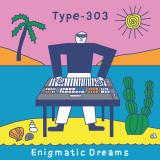
Type-303 is the project of Tampere-based Finnish producer, DJ and vinyl collector Dan Greijer. His releases for labels including Super Rhythm Trax, I Love Acid, Verrazzano, Zeitnot and 45 Live Records explore the connections between acid house, rave, early-'90s house and Balearic-influenced electronic music.
Enigmatic Dreams is Type-303’s first release on Cold Blow, a six-track 12" focused on the melodic and atmospheric side of classic electronic sounds. The release features Dr. Rhythm aka Mark Woollard, connecting Type-303’s production with the Cold Blow catalogue following the label’s previous compilation of Dr. Rhythm’s original 12"s, Hits The Vibes 91-92. Across the EP, Greijer draws from late-'80s acid, Italian dream house and early-'90s Balearic influences, using classic sounds including the Roland TB-303, 808 rhythms and M1-style piano tones.
Released in 2000 on Tommy Boy, the album fi nds Capone and Noreaga leaning into their chemistry: Capone's colder, clipped delivery grounding Nore's wild-eyed charisma and off-kilter bounce. The record features heavyweight production and appearances from names like DJ Premier, The Alchemist, Havoc, L.E.S., Nas, Mobb Deep, Foxy Brown, and Carl Thomas, surrounding CNN with some of New York rap's most recognizable voices and architects. Highlights like "Bang Bang," "Invincible," "Queens Finest," and "Phonetime" keep the album rooted in hard drums, prison- call tension, borough pride, and that unmistakable CNN slang. Commercially, it made a solid showing, reaching No. 31 on the Billboard 200 and No. 8 on Top R&B/ Hip- Hop Albums, with "Phonetime" hitting No. 22 on Hot Rap Songs. The Reunion stands as a hard-nosed second chapter for CNN: a tough, guest-heavy, post- millennium Queens record that captures Capone and Noreaga reconnecting without sanding off the grime. This deluxe edition features the remastered original album with 3 bonus tracks.
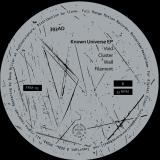
Full Range Motion co-founder 393AD returns to his own label with 'Known Universe EP', providing four more introspective modular-based jams using Perkons as the main rhythm box. The Amsterdam-based DJ, producer, and nightlife devotee opens the EP with 'Void' a percussive, rolling, and fluttering cut. 'Cluster', on the same side, is a devious tool in the right hands with its abstract groundwork and overwhelming single stab 3D sound design. Over on the flip, 'Wall' is straitjacket paranoia-techno in stripped form. Closing this EP is 'Filament', the name itself providing a vivid cosmic image for the track: intertwining, spiralling melodies connecting filmic scenes of interstellar dust.
Pirka Vinyl Cuts returns with a new chapter in its unknown edits series, featuring four anonymous cuts built strictly for the dancefloor.
From the rolling grooves of “KINR” and the raw energy of “Ruffneck”, to the sun-soaked swing of “Sun Goes Back” and the late night vibes of “Get Me Down”, the record delivers four funky house tools packed with classic samples, tight drums and peak-time flavor.
A no-nonsense DJ weapon designed for long blends, sweaty rooms and proper moments behind the decks. Limited vinyl release on Pirka Vinyl Cuts.
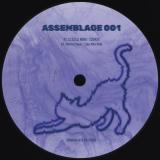
Minimalista Records' first vinyl does not choose one face: it chooses four. Two MURI collaborations (with C.I.S.C.O and C4STRO), a track from Martim Tonic, and the production debut of Little Freak, the new alias of Alex Mendes, form an Assemblage that favours diversity over uniformity. A conscious decision: to show from the very beginning that the label's philosophy, minimal as a lens not a limit, holds more than one sound. Lisbon, 2026. The first pressing of a scene taking shape.
UK-based DJ and producer Drum Dance returns with a fresh three-track dance 12” on his Into The Cosmos label. Opening title track ‘Space Ritual’ is an almost 12-minute-long journey beginning somewhere in dreamy ambient, dub techno territory before evolving into a deep meditative trance with hypnotic percussive rhythms, rolling dubbed out hi-hats and euphoric synths; like Balearic meets Black Ark. The track then veers off in a new direction; playful arpeggiated synthesizers and stripped-back electronic drums taking it somewhere resembling early house or a cosmic Italo disco dub mix.
Techno goes outernational on ‘Arp Sequence 3 Dub’; stuttering lo-fi machine sounds and samples collide with pitched calypso percussion, dubbed out roots steppers drums and a deep walking bassline before heating up into a driving frenzy of 4/4 drums, siren synths and run-away FX.
‘Cosmo Jam’ starts life like a raw, moody Detroit house jam; tape-saturated kalimba, electric keys and loose drums skipping in and out of time. The track eventually gives way to a more ruff UK broken beat sound; cosmic jazz keys weave around outernational percussion, rhythmic vocals and a heavy low-end.
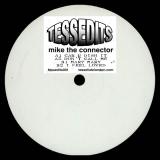
Tessellate launches their new white label series featuring edits and reworks of some older records. For the first edition they welcome Mike The Connector.
Diffuse Reality presents Hashashin - BASTION. A 12inch vinyl and digital release built on solid, robust Techno. Four tracks driven by a constant groove that keeps the energy flowing from the very first beat. Dynamic, enveloping drums create a powerful and playful sonic experience. Without a doubt, this is a record that will earn a permanent place in your bag, shaking foundations wherever it lands. Closing the EP is Achtervolging, a powerful breaks cut designed as a moment to catch your breath, recharge, and prepare for what comes next.
On edit imprint Disco Mind's tenth release, they hand over the reins to iconic Italian DJ, producer and remixer Beppe Loda, once resident DJ at influential rural club Typhoon during the 1980s - and it's that period that inspired the four scalpel jobs on show. 'Mr Rocket' is a chugging chunk of oddball early 80s headiness, while 'Tu Sei' sees Loda rework what sounds like a synth-laden fusion of space rock and intergalactic jazz-funk. On side B, he does a great job on spiralling, big hair-sporting disco-rock number 'Falling', before showcasing more spacey synths and chugging rock riffs on 'Marzio'.
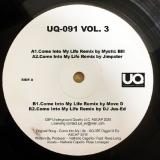
The third and final volume of remixes of 'Come Into My Life' by Nathalie Capello and Rose Lonegran is yet another doozy for lovers of emotive, meaningful deep house. Another bunch of heavyweights step up, starting with Mystic Bill who teases out a steamy-hot lead and builds a vibe around it. UK mainstay Jimpster plays with a dubby and bubbly low end, while Move D finds jazz-funk in the squelchy bass. Last of all, Underground Quality head DJ Jus-Ed steps up with his remix and explores more dusty textures, a slightly unsettling synth vibe and roomy, hypnotic grooves for late-night dancing.
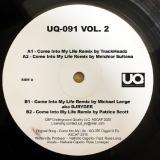
Jus-Ed's Underground Quality label has been living up to its title for more than 20 years now. The brief is simple - deep, smoky house music with soul, and it keeps coming at a steady rate from a blend of newer names and more established stars. Next up this late summer is a three-part remix package that revisits a gorgeous original by Nathalie Capello and Rose Lonegran. TrackHeadz kicks off with a nice swaying and dubby rework that is blissed out and spine-tingling, while Melchior Sultana taps into a melodic and Mediterranean sound perfect for sunset. DJRYDER's closer is a more percussive and prickly affair and Patrice Scott locks you into a zoned-out, late-night roller. Top-notch deep house.
Feeling both familiar and forward-looking, MBK004 expands its reach with an international lineup of
producers united by a shared appreciation for the New York underground sound.
Crafted by Tunisian producer Gringow, our first two tracks take listeners to the darker side of minimal.
Also owner of the HeardOf label, Gringow lends his talent to Minimal Brooklyn with 15 minutes of
hypnotic rhythms. “Black is the new color” gives chills, while “My K” triggers introspection.
Flipping the record will bring listeners to a brighter space. We begin with Chilean DJ/producer
Francisco Ruíz-Tagle and his original track “Primal Depths”. Francisco introduces textures that have
been cultivated throughout his life. His submission to Minimal Brooklyn holds nothing back, delivering
a multidimensional auditory experience to listeners.
MBK004 ends with “Bean Water”, an original track from Chicago-based producer Double Dipp. This
spell-casting production truly highlights the attraction of minimal. Dynamic instrumentals with clean
resolution. This is Double Dipp’s formula for timelessness.
Nacho Marco drops Colors in Dub Vol.1—deep house soaked in warm analog dub. From the hypnotic “Midnight Blue” and its Satoshi Tomiie remix to the raw pulse of “Bumblebee Yellow” and “Electric Green,” this wax rides late-night frequencies straight from Valencia to Paris.
DJ Feedbacks :
Francois Kevorkian (Wave) : Love the Satoshi mix
Eddie Fowlkes (Detroit Wax, Rekids, Classic Music Company) : thanks
Travis Kirschbaum (Warehouse Preservation Society) : Loving this. Especially Midnight Blue!
Sascha Dive : Midnight Blue for me!!
Brothers' Vibe (Luv4Wax) : Super ep, great works!!
Radio Slave (Rekids) : Another superb ep from Phonogramme and Satoshi's mix is great.
Giles Smith : "midnight blue" is nice
Alexkid (Rawax / FUSE / NG Trax) : Totally my vibe. <3
Aleqs Notal : Yes !!
Italojohnson (Italojohnson) : Track 1 for me!
Ben Sims : Now downloading... will check asap!
Okain (Talman / Infuse / Pleasure Zone) : Electric Green is dope!
Satoshi Tomiie (Abstract Architecture) : Receiving great feedback from the dance floor!
Steffi (Dolly) : lovely release!!
Laurent Garnier : Cool tracks
DJ Bone (FURTHER) : Electric Green and Satoshi Tomiie remix work for me.
Harri (Sub Club) : lovely stuff, will play and support
Rob Pearson (Evasive Records / Sine 102.6fm) : lovely - right up my street, cheers ;-)
Felix Dickinson (Futureboogie, Rush Hour, Cynic) : Solid E.P. current fave Electric Green
Jorkes (Freeride Millenium) : lovely, thanks so much. xo
Kassian (Phonica White / Heist Recordings) : wicked
Jaye Ward (Dalston Super Store / Netil Radio) : massive quality as ever!! super deep and pulsing gear, electric green is ace! thx
Tim Sweeney (Beats In Space) : Sounds great
Chloe Caillet (Smile Records) : love this!
Stevie Cox (Sub Club) : really lush, thank you !
Raresh (ar:pi:ar) : thanks
Ame (Innervisions) : thanks
Geir Aspenes (G-Ha (Sunkissed)) : Thank u
Saoirse (Body Movements) : Super nice dubby vibes
Amotik : Very nice :)
Kai Alce (Real Soon) : Satoshi remix is hot!
Domenic Cappello (Subclub) : nice dubby house
Cee ElAssaad (ENSOULED) : Just the way I like it! dubby and groovy.
Mike Shannon (Cynosure) : Excellent work here from Valencia's finest!
A new pandemic is making its way to you—from New York to Berlin. A bond destined to last for centuries, this release carries that same timeless energy.
Deep bass, hypnotic rhythms, and subtle percussion come together, pulling you deeper and deeper into the progression. A journey built on tension, movement, and atmosphere.
Coil’s 17-minute soundtrack for »How to Destroy Angels«, performed on January 19, 1984: ritual music ›for the accumulation of male sexual energy‹, structured around magickal and numerological concepts.
Throughout history man has made and used music for two distinct and separate purposes. In recent years, particularly since the advent of sound recording, the most popular use of music has been for entertainment - the temporary amusement and distraction of as large a number as possible. As a consequence, many people tend to overlook its more fundamental and ancient use as a tool for affecting man's body and spirit. The many varieties of religious music from around the world contain a vast quantity of clues to the way in which sound can affect the physical and mental state of the serious listener, yet many find their associations with religion itself too difficult a stigma to overlook in their appreciation of the sound and its potential, for its own sake.
On this record, hopefully the first in a series, we have tried to produce sound which has a real, practical and beneficial power in this modern Era. Specifically, it is intended as an accumulator of male sexual energy. Although we make neither claims nor rules for its use, we do suggest that for maximum potency it should only be played in circumstances that exclusively male and/or onanistic in nature. What these are is entirely up to you.
The execution of the piece was structured around concepts we felt would work for us - in this case magickal and numerological rather than conventionally musical in form. One image or symbol which we drew upon that may be useful to bear in mind is that of Mars, often indicated by the male symbol.
Should this music have any power, over and above the banal and transitory titillation achieved by most records available now, it is a positive and beneficial power to be used and controlled by the listener, as he desires.
Coil’s 17-minute soundtrack for »How to Destroy Angels«, performed on January 19, 1984: ritual music ›for the accumulation of male sexual energy‹, structured around magickal and numerological concepts.
Throughout history man has made and used music for two distinct and separate purposes. In recent years, particularly since the advent of sound recording, the most popular use of music has been for entertainment - the temporary amusement and distraction of as large a number as possible. As a consequence, many people tend to overlook its more fundamental and ancient use as a tool for affecting man's body and spirit. The many varieties of religious music from around the world contain a vast quantity of clues to the way in which sound can affect the physical and mental state of the serious listener, yet many find their associations with religion itself too difficult a stigma to overlook in their appreciation of the sound and its potential, for its own sake.
On this record, hopefully the first in a series, we have tried to produce sound which has a real, practical and beneficial power in this modern Era. Specifically, it is intended as an accumulator of male sexual energy. Although we make neither claims nor rules for its use, we do suggest that for maximum potency it should only be played in circumstances that exclusively male and/or onanistic in nature. What these are is entirely up to you.
The execution of the piece was structured around concepts we felt would work for us - in this case magickal and numerological rather than conventionally musical in form. One image or symbol which we drew upon that may be useful to bear in mind is that of Mars, often indicated by the male symbol.
Should this music have any power, over and above the banal and transitory titillation achieved by most records available now, it is a positive and beneficial power to be used and controlled by the listener, as he desires.
Season Two continues with its fifth edition - a shift south this time, from KiF's English hedgerows to the island of Lutruwita, Tasmania, and the work of Soda Lite.
A gooseberry plant took root in the sand between the bricks of Alex's back patio - nutrient-deficient leaves and all - and fruited regardless. That's most of the appeal: "I'm drawn to species that survive in the interstices of human industrialisation." The husk itself carries the same idea, shielding the berry until it's ready to be let go.
Past Soda Lite records - Earthbound, Aqua Solar Cura, Vale & Stone - built outward from field recordings first. Here that flipped: you can't field-record a plant, only the noise around it, so only two tracks (Vibrant Matter and An Sí Gaoithe) carry field sound at all. The rest came from narrowing to a single species instead of the wider non-human world, and "trying to create and replicate sound and energy on the level of the plant and its perceptive world."
Two more things worth knowing. ‘Bryn Celli Ddu’ takes its name from a Neolithic burial chamber in Wales, aligned so the summer solstice sunlight reaches its back wall - the sun turning up again as its own recurring character. And ‘An Sí Gaoithe (Return)’ is a reworking of a Vale & Stone title, old fragments reprocessed into something new - "a bit like composting."
Soda Lite is the recording project of Alex Last, a gardener and composer working from Lutruwita on unceded Palawa land. Their music moves through field recordings gathered directly from the island's own biomes - coastline, forest, alkaline lake bed - alongside slow, warbling synth work, built less as backdrop than as document: proof of a specific place, at a specific time, being listened to closely. Past records have taken their titles and themes from geology and land relationships as often as botany - Aqua Solar Cura, Earthbound, Vale & Stone - so a plant with its own mineral-adjacent etymology (soda, found in dried alkaline lakebeds; lite, from the Greek for stone) suits the pairing.
Pleasurewood return with 'Electric Telepathy', their second full-length LP offering Simla Space Funk, Psych-Library and Vintage-Cinematic Raga-Rock grooves.
This new offering from the band embraces more of their vintage Hindi Cinema soundtrack influences — "Chump Change", "The Hoverfly" and "RAMMM" could easily fit into the middle of an R.D. Burman score, each with their incongruous synthesis of different genres, infectious percussion, classical modes and funk chops.
There is also a slight sweep across a too-slow-to-disco tempo and feel with the moody Johnny Guitar Watson-esque slow burn of "Good Falcon" up to the nonchalant four-to-the-floor of "Last Dance Saloon" with its lyrical warning of digital over-saturation in our social-media saturated world and a foreboding of the mini-monoliths sat in the palms of our hands that in a Kubrickian way threaten to cosmically absorb us all as a species into their individual jet-black abysses.
And then, coming into focus like a sweet slice of disjointed, lo-fi, 8 bit space disco, "Mojave Desert" is a slacker-strut with telephone vocals dub guitars, dry cosmic synths and futurist Farfisa organ driven by an almost Acid-Jazz meets Post-Punk Bass line. The song is autobiographical in its account of an excursion along the 29 Palms Highway reflecting on an escape from the City of Angels not so far away, up into the stark psychedelic desert realm.
There is a lot to unpack in this record and yet more to discover so it will be best to allocate 40 minutes in a comfortable dimly-lit room with eyes closed and maybe a cognac in hand, to have a deep-dive into its well-travelled and esoterically funky grooves.
Selected by Lea Lisa, Many Shades Of House - Vol 2 is a reflection of time, movement and memory. Built from decades of digging, collecting and playing records, this new chapter captures the many emotional layers of house music.
From uplifting, groove-led moments to deeper, more obscure and cerebral territories. Each track has been chosen not only for its musical strength, but for the stories it carries: nights behind the decks, connections on the dancefloor, and the quiet influence these records have had along the way.
True to the spirit of the first volume, this selection celebrates diversity and timelessness without compromise. It is a tribute to the artists’ vision, to the culture that surrounds this music, and to the shared experience that continues to unite listeners, dancers and selectors across generations.
Golden Seconds has arrived — a brand-new Disco label brought to you by Johannes Albert. In the 1990s, Disco House records became dancefloor anthems, drawing on the nostalgia of disco's golden era while incorporating modern production techniques like sampling. Pioneered by influential producers like JohNick or DJ Sneak, Disco House revitalized the uplifting spirit of Disco while infusing it with the infectious rhythms of House Music. A young Johannes became addicted to this happy music in a heartbeat. Fast forward two decades, and he’s crafted his own updated take on the genre, guided by one simple philosophy:
"Sometimes all it takes to make a room go bang is a beat and a sample."
Golden Seconds Vol. II opens the vaults again and delivers a selection of tracks straight from the stash — timeless grooves, dancefloor heat, and that unmistakable disco glow.
Sexy cover included.
RAWAX welcomes Valerio Vaudano to the artist family!
We are very happy to present you this talented producer from Italy with two parts of "The Sampling Theory" on CHIWAX.
High energy House at it's best!
Highly recommended!
Madelyn Byrd returns to Glasgow’s Somewhere Press with a hazed set of weightless soundscapes. »Night Rider« opens in widescreen with the chirp of cicadas dancing across a desert landscape, before Shiroishi’s saxophone eventually cuts through the dark like neon. The story Byrd tells is close to their heart: they spent their teenage years in the Sonoran Desert, the vast subtropical expanse spanning parts of Arizona, California, and Mexico. Its seemingly alien landscape — pocked with giant, tree-like cacti and looming rocky outcrops — is lodged in the cultural memory, a quality Byrd draws on as they slowly reveal their poetic narrative.
The album plays like a road movie of sorts, moving through Byrd’s memories and setting them to very different rhythms. Clattering drums emerge on »Of Nature, Of Bodies, Of Dreams«, while Byrd’s soft tones, processed to sound almost otherworldly, glide gently across the metallic clangs. Each track highlights a form of movement: there is the microscopic, insectoid crunch of »Imprint«, where guitar prangs meet Shiroishi’s spirited runs, while »Into Sonoran Pool« creates motion from the atmosphere itself, recreating the thick desert air with shimmering electrical currents and psychedelic processes.
At this point, the album begins to echo Robert Ashley’s late-period theatrical work: compositions that broke with familiar formats, juxtaposing dialogue with knowingly experimental orchestral flourishes. Byrd strikes a similar note through a fusion of poetry, sound design, choral music, and chiming, listless ambient elements that also recall Harold Budd. Budd grew up in the Mojave Desert, which borders the Sonoran, creating an eerie parallel with the moods he conjured throughout his long career.
Byrd finds a similarly aesthetic link to the West Coast landscape, referencing the history of experimental music while establishing their own voice. As the album rides into the sunset with a roar of engines, they offer a distinct vision of pop: »What Is, What Was« integrates a chugging break and ketamised vocal hook, while the finale, »In Perfume, Remember«, lands as a James K-like heartmelter.
Dark Entries is Filling Your Silence with the help of J.D. Slater. Legendary actor, director, and composer J.D. Slater is sometimes known as “the Lou Reed of gay porn.” Slater cut his teeth in the New York punk scene, even opening for the Talking Heads and Blondie at CBGB with his project Frenzy. A true polymath of the erotic, he co-founded Raging Stallion Studios with Chris Ward in 1999, which has remained a prolific outlet in the world of gay pornography. Having spent years in front of and behind the camera, 1999’s Filling Your Silence was his debut as maestro. This album collects the soundtracks from the first two Raging Stallion films - Sexpack One and Sexpack Two - to bring us nine tracks of sleazy beats and trance-like moments of pure ecstasy. Album opener “Seduction” begins with the iconic synthetic pan flute, one of the defining sounds of the 1990s, before pulling us along with its wild grooves.
Halfway through its nine-and-a-half- minute course, it breaks down to bust out a jazzy electric piano vamp. “Running with Scissors” ups the tempo with some crunchy breakbeats to undergird its portamento-laced lead synth. Elsewhere, like on “Mercy” and “Mercy (2nd Movement),” we see Slater embracing a bleep-adjacent sound close to early Nightmares on Wax or 808 State. Filling Your Silence’s endless grooves pursue that oceanic feeling. This record comes with a one-sided insert that includes archival Raging Stallion press materials. In the words of the Bay Area Reporter, Filling Your Silence is “quite possibly the best music for sex ever written.” A bold claim, but we can’t help but agree.
'The Shadow BoxerÔ - a tale of oppression, discipline, and inevitable revenge - is re-interpreted by British producer Heritage, whose musical style perfectly aligns with the Shaw Cuts squad.
Ku Ding trained in Tai Chi under Master Yeung for over a decade. This discipline prioritizes health, self-defense and above all, the virtue of tolerance. 'Looking Back, Moving ForwardÔ mirrors this holistic training for body and mind through its broken rhythms, dreamy pads, and warm bass.
Despite facing relentless harassment at work from his tyrannical boss Jin Dasheng, Ku Ding remains calm and endures the humiliation. The playful percussions, vocal snippets, and powerful low-end grooves of 'DancehallÔ underscore the protagonist's deep-rooted discipline and resilience.
However, after his lover A Bao is killed and both his master and his friend Hu Binglian are successively murdered, he is forced to rise up and fight back using his martial arts prowess.
'2003Ô comes in swinging, fueling Ku Ding with the perfect mindset for the battle ahead via punchy drums and an energetic bassline.
Driven to mete out justice, Ku Ding prepares for his revenge without betraying his sacred tolerance. The complex breakbeat patterns of 'HaywireÔ carried by recurring, subtle chords, give him a final boost. But can this rational approach succeed? You better find outÉ
Electronic musician nthng presents his fifth album, Last Light of the Sun, his debut release on topo2. Renowned for his meticulous productions and quietly distinctive artistic voice, nthng continues to move effortlessly between ambient, IDM, dub techno, and drum & bass without ever feeling bound by genre. Last Light of the Sun shows that the album format is a natural home for nthng's expansive musical vision. Throughout its ten compositions, the album moves gracefully between dreamlike melodic passages, restrained, fragile 4/4 structures, melancholic drum & bass punctuated by vintage house vocal fragments, and spacious ambient compositions that feel unmistakably his own.
The double LP is released by adventurous electronic music label topo2 on October 2, 2026. The record is pressed on two 180-gram discs of ICCS-certified bio-vinyl and housed in a heavyweight full-colour gatefold sleeve. Mastered by Isabel Schröer at OLO Mastering, with artwork by Alyssa Warren and Raen Coplin. Additional contributions include bamboo flute on "Flutter" by Temple Rat and typewriting by Karina Rovira.
In the early 90s, led by Nicola Conte, the Fez collective in Bari, Italy, reshaped contemporary jazz through groove, experimentation and a distinctly Mediterranean sensibility. Within this environment the earliest recordings associated with what would become Schema Records first appeared, released at the time through Right Tempo. With a series of three 45rpm releases Schema Records revisits some of its earliest productions, all newly remastered from the original masters. In this third 7”, The infectious pulse of “Sweat” contrasts beautifully with the refined elegance of “Fez Bossa”, together painting a vivid portrait of a scene driven by creativity, musicianship and an unwavering passion for groove. Newly remastered from the original recordings, this 45rpm edition brings these landmark performances back to life for a new generation of listeners while offering longtime collectors a beautifully renewed listening experience.
Raw deep house pressure from Sascha Dive, four cuts blending soul, groove, and late-night mood, with Roland Clark blessing the mic. Limited green vinyl for those who still move to the real sound.
DJ Feedbacks :
Laurent Garnier : Cool tracks
Josh Wink (Ovum) : Liking 'Im Inspired' the best here.
C-Rock : Those Nights for me, nice NYC dub House touch!
Radio Slave (Rekids) : I've always been such a big fan of Sasha's productions and "There Is No Tomorrow" hits the spot.
Fleur Shore (Undergrowth / Cuttin' Headz) : im inspired, beautiful track
Reboot (Cecille / Cadenza) : schöne tracks ️
Satoshi Tomiie (Abstract Architecture) : Solid release!
Alinka (Twirl, Classic, Crosstown Rebels, Batty Bass) : Nice one
PBR Streetgang : Invocation and Im Inspired are great
D'Julz (Bass Culture) : those night is the one for me here
Damian Lazarus (Crosstown Rebels) : Thanks for sending. Xx
Ben Sims : Now downloading... will check asap!
Archie Hamilton (Microhertz / FUSE) : Nice thanks
Eddie Fowlkes (Detroit Wax, Rekids, Classic Music Company) : thanks
Tim Sweeney (Beats In Space) : Lovely
Doc Martin (Sublevel) : Sascha on a good one,with the voice of house music Roland Clark no less!!!
Terry Farley : THOSE NIGHTS WORKS FOR ME
Chloe Caillet (Smile Records) : love this!
Oliver $ (Classic Music Company / Play It Down) : Sooo gooood!
Ame (Innervisions) : thanks
Danny Tenaglia : Downloading for Danny Tenaglia, thanks!
Robert Owens (Trax / Musical Directions) : Cool tracks
Kai Alce (Real Soon) : Nice deep tracks from Sascha
Mark Farina : dig them.
Lea Lisa (Phonica Records / Folklor Club) : Really good definition of House
Alexkid (Rawax / FUSE / NG Trax) : Phonogramme (and Sascha Dive) on fire at the moment...
Harri (Sub Club) : lovely stuff, will play and support
Following the success of Denshi Ongaku No Bigaku Vol. 1 and Vol. 2 in 2023, Cosmocities returns in 2026 with two new chapters in its acclaimed compilation series dedicated to the rich heritage and continuing evolution of Japanese electronic music.
Compiled by label owner Matt Soulie, Denshi Ongaku No Bigaku Vol. 4 further explores the depth, sophistication and diversity that have long made Japan's electronic underground one of the world's most inspiring musical landscapes.
Since its inception, the Denshi Ongaku No Bigaku project has celebrated the artists and sounds that have profoundly influenced the Cosmocities vision. Across four volumes, the series has journeyed through ambient soundscapes, deep house, boogie, jazz-infused electronics and forward-thinking club music. Volume 4 shifts the focus firmly towards the deeper end of the dancefloor, bringing together timeless classics, rare gems and sought-after reinterpretations from some of Japan's most respected producers.
Opening proceedings is Kaoru Inoue's remix of Soft's "Art Farmer", a rolling percussive Afro-house excursion rich in hypnotic groove and organic rhythm. XTAL's "Heavenly Overtone" follows with a beautifully cosmic house journey, combining shimmering keys and celestial atmospheres that perfectly capture the compilation's expansive spirit.
On the B-side, Slow Didi's "Follow Me (Hidaway Mix Instrumental)" delivers a deep and hypnotic groove before Tokyo Black Star's "Fantastique Voyage" channels the soulful, sophisticated energy of classic 1990s deep house. The journey continues with Manabu Nagayama and Soichi Terada's "Low Tension", presented here in a sublime instrumental remix by Satoshi Fumi and Yoshi Horino, where warm piano melodies and elegant synth work create a timeless late-night mood.
The final stretch moves into more driving territory. Hiroshi Watanabe's "The Orionids (2025 Revised)" subtly raises the tempo, blending deep house sensibilities with sleek tech-inflected textures. Kaoru Inoue's "Ground Rhythm", reworked by The Backwoods, plunges deeper into hypnotic territory with a heads-down groove designed for intimate basement spaces and low-lit dancefloors.
Closing the compilation is Bitowa and YAMADAtheGIANT's "Forest (Mixtacy Exclusive Version)", a trippy, immersive finale that leaves listeners suspended in a dreamlike state between nature, rhythm and imagination.
A carefully curated collection of deep, cosmic and forward-thinking sounds, Denshi Ongaku No Bigaku Vol. 4 once again showcases the enduring creativity, innovation and global influence of Japanese electronic music.
For its second chapter, Esoteric Ears switches up mood, presenting two tracks for extended sessions, memorable moments and special sunrises.
Lead track ‘Minute Machine’ comes from mysterious new entity Sektor 13. A sleek, contemporary take on Kraftwerkian Teutonic electronic funk, it slinks and slides its way onto any open open-minded dancefloor.
On the flip, bonafide legend Carl Finlow provides a remix, operating under his renowned Random Factor alias. This retains the spirit and vibe of the original, but amps up the funk and composition, swaggering its way into an epic emotional crescendo. Up there with Random Factor's finest work, it’s a true honour to share this with the world. Gracias Sr. Finlow.
Esoteric Ears is a new label from Barcelona’s Conor Brophy.
Its first release comes from an unsung hero of the early 00s: Julian Foddy. As Katakana, Foddy released a string of now sought-after EPs, with a signature, brooding sound in the sweet spot between progressive, breaks and tech house. EARS 01 represents Katakana’s first release in over two decades, archival tracks forgotten for 20 years but that sound like they could have been produced yesterday, perfectly tuned for contemporary dance floors and listeners.
Side-long A1 ‘Incline’ is a driving but patient percussive progressive groove: heavy but spacious. On side B the stabs and bass pressure of ‘Xii’ are primed for peak time play; B2 ‘Fear of the Unknown’ is more heads down and pensive, with gradually unfurling hopeful melodies, perfect for mornings and after hours.
++REC opens its catalogue with a four-track various artists 12", one cut per artist, two per side. Samuel Jabba sets the pace with System Thriller, a driving electro workout built on a relentless bassline. Tomie follows with Re:Frecuency, tighter and more hypnotic. On the flip, Buraye's Canopy Cells brings hardware-driven acid with a live feel, and Caruan closes with Rocco N'Roll Robot, the fastest and most playful track of the four. Mastered and cut by Marco Pellegrini at Analogcut. Distributed by Outside In Distribution.
Riviera Records presents XTC002: The Atlantic Connection with non-stop flights to X-Coast from Ireland, UK and USA.
The first route offers a very intuitive bass and breakbeat driven ride with a Tama Gucci signature, sensual vocals cutting through the airspace. The second journey is flying over (hard) house territory
with DJ Torture serving the snacks.
The B side we have a UK to X-Coast red eye flight with a trance edge courtesy of Capt. Ejeca. B2 is the only supersonic flight offered at this time navigated by Tommy Holohan: a shuffled up Reese bass powered techno from Ireland to X-Coast in just 4 minutes and 57 seconds - buckle up.
Trixie Whitley returns with 'Folded Time', her first full-length album in seven years and one of her most adventurous and rhythmically driven records to date. Written largely at the kitchen table of her Brooklyn apartment and recorded between Brussels, New York and Montréal, the nine-track album finds Whitley moving freely between rock, soul, R&B and more experimental territory.
Rhythm sits at the heart of 'Folded Time'. Whitley plays drums, bass, guitar and piano herself, with her love of polyrhythms running throughout the record. Heavy, slow-moving drums turn opener 'Carry' into a mantra, 'Fascinating and Fun' grew out of studio improvisation, while on 'Carnaval' Whitley and Cem Misirlioglu face each other behind two drum kits for what she calls a "drum rave". Her unmistakable voice remains at the centre, moving just as easily between restraint and raw power.
Across the album, Whitley looks at motherhood, womanhood, heartbreak, desire and forgiveness, and at how the past continues to shape who we become. It is a record about taking stock without standing still: instinctive and physical, but full of detail.
Isaac Kniveton (fka Keplrr) steps out with Daydreaming, a four track deluge of psychedelic club projections for Call Super and Parris’ can you feel the sun imprint.
Having boasted a notable reputation as Keplrr for labels like Control Freak and Midgar, Isaac Kniveton now embraces transition. On Daydreaming, his debut release under his own name, he maintains an unclassifiable sound with newer purpose; a sound that cascades in brighter colours. It’s a renewed sense of focus and subtlety that produces some of his most arresting work to date.
The ornate funk of opener Flutter angles for the wide-eyed, a cosmic stepper that pins tight drums to a weightless melodic base. Love Groove’s inebriated swing trips out further, a steady cut that binds vocals from GRACE founder Katiusha with entangled melodies. Symmetry’s wayward rhythm ups the ante with subtle rave tension, gently rising as its circular bassline swells. On closer Molecule, he locks in for an exploratory dive, offering shades of Detroit and twisted theremins.
A fascinating new era for Isaac Kniveton that finds solace in can you feel the sun’s forward-leaning club manifesto.
With Phosphène Island, Pairi Daeza explores a territory at the crossroads of fourth world, jazz fusion, experimental electronics and new age.
Acoustic and electronic instruments merge into a fluid, shifting music, where an apparent lightness finds its way into carefully crafted compositions.
The melodies seem to emerge from an imaginary folklore, born of an inner world, utopian and lush: Phosphène Island.
It brings to mind the borderless landscapes of Jon Hassell, the synthetic elegance of Wally Badarou, or the opening credits of a yet-unmade season of The White Lotus.
Chapterhouse was a British band that eventually became part of the burgeoning shoegaze scene along with bands such as Lush, Ride and Slowdive. Between 1987 and 1994 they only released two albums of which Whirlpool was their debut.
Unlike their counterparts, Chapterhouse heavily employed structures borrowed from electronic music creating heavy, yet strangely uplifting grooves. The record spent three weeks in the UK Albums chart peaking at number #23 and includes the single "Pearl" featuring Rachel Goswell of Slowdive. Pitchfork in turn ranked the album at #17 on its list of the 50 best shoegaze albums of all time.
Whirlpool is available on black vinyl and includes an insert.
"From the Toolkit of Lovers" is the latest from Brian Leeds, known publicly under several monikers: Huerco S., Pendant, and Loidis - a play on his own surname. Recorded over the summer of 2025, Leeds expounds upon the sound of One Day in a 110-minute meditation on life, love and dub
He's back once again is Monsieur Van Pratt with more of his so-wrong-they're-right disco edits. This fight volume has two edits reshaping source material with the usual deft touch. His opener 'Linda' runs on clipped drums, tight bass loops and bright string stabs then 'Oye Un Momento' keeps its original vocal but reinforces the groove with heavier kicks and 'El Ritmo Que Te Atrap' has a kitsch Europe feel. On the flip, Disco 86 shifts towards something classier with 'Crees Que Soy Sexy' riding lush chords and plenty of glistening melodies drawn from the Rod Stewart original and 'Tu Amor' is packed with electric vocals and retro future keys for a full send finish.
After opening the DOMU catalogue with our first release, Tensal returns to mark another chapter for the label. Huge Rings of Hot Plasma inaugurates our label’s physical series, bringing his unmistakable language back into focus. Across four tracks, repetition becomes momentum as tight rhythmic structures shift through layers of tension and movement. The record stays locked on its course, carrying the mental drive of Tensal’s sound through a continuous pull towards the floor.
Recommended. Compilation format, six producers, one shared idea of dub house done properly. Erratic and Nicola Brusegan open heavy on the low end, dubby without overdoing the effects. Nick Italy keeps the A side moving, no drama, just groove. Flip side goes warmer. Lorenzo Dada and Michura work more melody into the pulse, Peter Kir shuts it down slow and hypnotic. Nothing flashy, nothing filler either. Solid all the way through.
Four tracks moving between deep house warmth and dub house shadow. please welcome two very talented italian producers from pisa. funksonik had an exceptional track on the goodies 4 u. The record stays close to the floor, understated, built more for the peak of a long night than the first hour.
Like Roses aus Berkeley, Kalifornien, sind eine echte Macht. Offenherzige Texte über Liebeskummer, Verlust und Selbstreflexion treffen auf energiegeladene Hooks und rauen, melodischen Gesang, der geradezu dazu einlädt, lauthals mitzuschreien - eine Kombination, die der Band eine treue Fangemeinde sowie Nordamerika-Tourneen an der Seite von Acts wie Pierce the Veil, Neck Deep und Mayday Parade eingebracht hat. Seit 2018 ist die Band am Start, hat ein paar Singles und EPs veröffentlicht und präsentiert nun ihr erstes richtiges Album. "Gänzlich unprätentiös beschreiben Like Roses ihren Sound wie folgt: "Leute mit Instrumenten, die davon schreien, wie traurig sie sind - und zwar über den Lärm, den sie mit besagten Instrumenten machen." So weit, so emo. Aber eben mit Pop-Punk-Drive und einem Fünkchen Mathrock." - Visions 2023 "Emo is alive and well in the Bay Area band Like Roses, whose song "Wrist" captures the nostalgic sound of early-2000s melodic pop-punk through the lens of queer yearning" - "Wrist" (Like Roses), New York Times - Song of the Week Für Fans von Joyce Manor, Modern Baseball, Tiny Moving Parts
The single was released in Italy in 1984 as a 12-inch vinyl. What immediately stands out about the pressing is the complete absence of a record label; it was released as “Not On Label” with the catalog number HAS 1958. We are reissuing the original and also including a few unique interpretations/remixes by A.P. Mono and O.C. Lee. Once again, a true collector’s item! Limited edition pressing of 200 copies.
From the globally acclaimed spiritual jazz album RUSHIN' (Mono Jazz), "PHAROAH'S MESSAGE" channels the spiritual legacy of Pharoah Sanders and John Coltrane into the present day. At its center is Joe Claussell's expansive alternate remix, where Afro-diasporic ritual, deep house, and jazz mysticism converge. Also featuring Didje Doo, with a Balearic sound and WATH with an Eastern Sound, this release reimagines the spirit of jazz for a new generation of listeners, dancers, and seekers.
Bristol innovator Addison Groove has long been reshaping footwork and bass music, but now steps into an entirely new world as Astel. Shards is an album in which he explores ambient frontiers with a sense of space, emotion and hints of nostalgia on Biofield Records, a new label from Darwin designed for deeper listening. There is a weightlessness to the music, with 'Cosmic Affinity' casting you adrift in the deep unknown with smeared pads and gentle flutters of hope way off in the distance. 'Starlight Shards' is all shifting tones and feathery lines, while 'Astral Radiance' has a sandy texture as well as long, sweeping synth arcs. It's an escapist world that provides plenty of prompts for your own endlessly deep reflection.
XAMAN is the collaborative project of Dino Sabatini and Luigi Tozzi, where two distinct artistic paths converge into a shared musical language shaped through years of independent research and mutual exchange.
Across eight compositions, XAMAN takes shape through gradual transformation. Every element is introduced with intention, allowing subtle shifts in density, tension and space to shape the music over time, revealing its full form through uninterrupted listening.
Released as a double vinyl on Outis Opera Series, the curated imprint of Outis Music, XAMAN reflects a process shaped through listening, exchange and time.
Released in 2013, Forward features vocal performances by N’Dea Davenport and Dawn Joseph and combines classic Heavies grooves with a polished contemporary production. Highlights include “Sunlight”, “Do You Remember”, “On the One” and “Lifestyle”. Our release marks the album’s first-ever appearance on vinyl. It has been prepared as a high-quality 180g 2LP gatefold edition, cut at 45 RPM. This album will also be reissued as CD Digisleeve
Riviera Records presents an uncompromising clash of sounds from all over the globe. 5 tracks from the likes of Lewis Taylor, DJ Pacifier, Cult, Lil Na$$ty, DJ RaDa & X-Coast spanning from house, techno, trap to experimental rave.
Die lang erwartete, auf 1.000 Exemplare limitierte Neuauflage des begehrten Debütalbums auf durchscheinendem lila ,Ritual Wine"-Vinyl - zum ersten Mal seit über 8 Jahren erhältlich. Erstmals wieder mit dem Original-Cover kehrt die ,Original Messe Noire" zurück. Zum ersten Mal seit ihrer unheiligen Geburt erhebt sich "Twin Temple (Bring You Their Signature Sound... Satanic Doo-Wop)" erneut aus der Gruft. Das Debütalbum von Twin Temple ist ein brillantes, blasphemisches Meisterwerk, das die Grenzen des modernen Rock 'n' Roll neu definiert. Durch die nahtlose Verschmelzung der klassischen amerikanischen Klänge der Girlgroups der 1950er- und 1960er-Jahre mit einem unerbittlich kompromisslosen, zeitgenössischen satanischen Ethos schafft das Duo ein Hörerlebnis, das zugleich schockierend originell und zeitlos ist. Das Album wurde unter Verwendung traditioneller analoger Techniken aufgenommen, unter anderem durch eine Live-Aufnahme auf Band in nur zwei Tagen, die die Essenz der Live-Qualitäten von Twin Temple brilliant einfängt.
Continuing M-Plant's Perpetual Masters series, October sees the vinyl release of Robert Hood's "Red Passion I".
"Red Passion I" was original released in 1999 on his Duet label featuring three tracks of Minimal Techno at its most hypnotic and effective, stripped back to the essentials. It layers taut rhythms, subtle modulation and deep Detroit groove. Hood's mastery lies in making tiny shifts feel monumental, creating sustained tension and movement without excess.
A timeless example of minimalism achieving maximum impact, which is now remastered for 2026 by Thomas P. Heckmann.
Grooved throughout, built for dancing, no filler. Pressed in Italy on 140g black vinyl. Solid. Liro back on Bosom LTD with four deep, dubby cuts. Viaje Circular opens loose and circular, percussion looping under a warm bass. Ritmo Atemporal tightens up, minimal touches, hi-hats doing the work. La Pausa on the flip, dub chords, space to breathe. Los Tatas closes heavier, more percussive drive.
He makes his debut with us with Love & Learn, a 3-track EP where romantic and emotional elements meet a more driving, electronic and techno-infused sound.
Warm, hypnotic and full of feeling, the three tracks move between intimacy and the dancefloor, each carrying its own atmosphere while sharing BOBBY.’s distinctive touch.
Born 2 Be Free label head Azaad has been kicking out his twist on UKG for a few years now, and in that same time he has also been beavering away on his debut album. Ahead of that drop, he teases us with a sampler from it that covers plenty of ground. 'Isthisluv (feat Elias Mazian)' is a deep one with an expansive comic backdrop and cool grooves. 'Dubble Lively' is more tightly coupled and punchy, kick-driven garage house, then he remixes 'Lost Worlds' into something dubby but kicking. Two B-side cuts roll deep with deft sampling. Bring on the album!
Bridgeport Records is a new venture from Windy City house heads Jerry Morrison and Vick Lavender, and they kick off with a serious EP of delicious Chicago house depths from some standout stars. Glenn Underground opens up with one of his deepest and most serene sounds in some time: 'Slander' rides a rolling kick drum and is infused with dreamy, wispy pads and gentle cosmic details that empties your mind perfectly. Anthony Nicholson brings a little funk to the dancefloor with his equally classy 'Boogie Aftermath' and its jazzy melodies, while Lavender himself offers 'Deep Funk Dance', a timeless and soul-drenched gem. Dejay Cease's closer 'Seeing Is Believing' has a more pronounced, subtly off-kilter groove with loungey piano chords and lush strings. Pure class.
Erasmo Carlos’ Carlos, Erasmo is a landmark of early-’70s Brazilian rock, where Tropicalia, fuzzed-out psych, soul, funk and Brazilian pop meet in brilliantly adventurous form. Produced by Manoel Barenbein with arrangements by Rogério Duprat, it also features Os Mutantes players Sérgio Dias, Dinho Leme and Liminha, plus guitarist Lanny Gordin.
Opening with De Noite na Cama, written for Erasmo by Caetano Veloso, the album moves with real freedom between sensual pop, hard-edged psych and off-kilter grooves. Erasmo’s partnership with Roberto Carlos sits alongside songs by Jorge Ben and Marcos Valle, making this a genuine meeting point for some of Brazil’s most inventive voices.
Tracks like Maria Joana, Agora Ninguém Chora Mais, 26 Anos de Vida Normal, Ciça Cecília, Mundo Deserto, Sodoma e Gomorra and Masculino Feminino show just how wide Erasmo’s vision was: raw, playful, soulful and beautifully unruly.
Put your hands together and please welcome Linda Lo to Shall Not Fade's Time is Now imprint. The LA producer/DJ's new 12" EP "Masa" drops 23rd Oct 2026 and f**k is it sick.
Linda Lo fuses* mambo, samba, and salsa with UK garage, dubstep, and club rhythms to make guaranteed rewind material that is gonna light up the dance…
* imma talk about this fuses sh*t in a minute.. First we need to get a bit philosophical. Cos rewinds and fusions aside, this EP is alive. It's part of something bigger and cyclical, without a start or an end. It is music. It was part of someone else's music before and it will be part of other people's music in the future. Right now though, it's Linda Lo's music.
Too esoteric? Let me elaborate and, let's talk about fusion. There is the fusion that is – steal a bit of genre X and culture Y, chuck it on the grid and strut about professing fusion – and then there's actual fusion: Music that is something "new" and real and genuine. Music that you end up describing excitedly as a "fusion of" things (even if it inevitably ends up doing it a disservice). Music that is simultaneously one thing and not that thing, and also something else and not that something else too. Music that is just "music" to the creator but is also part of the progression and evolution of music for others. Mala wasn't making "dubstep". Skream & Benga ended up not making Garage. Like many before and after they were making their music and Linda Lo is making her music so let's hear from her about it. Big up Linda. This is real.
Notes from Linda:
-----------------
“Like Croydon by way of Havana”
“Masa, or corn-based dough used to make tortillas and tamales, is a traditional staple food for many in Mexico and throughout LatAm. In the Maya worldview, people's flesh is made out of masa. In order to make masa, corn must be dried, nixtamalized, ground, and mixed (often by hand) to create the right textured dough. I find much of my music work is a collision and a mixing of many elements, all worked into one product. In this way, I've worked these songs, transforming raw rhythms and sub bass into hand-mixed tunes. ‘Masa - EP' presents four delicious heaters. The title track explodes with a fiery double-time dubstep groove. Mambo horn stabs bite through a bass inferno. ‘Cenote' looks down upon a subterranean pool of sound—still on the surface but impossibly deep. ‘Minifalda', pure flirt and gyration, calls in cuica and other voices from a samba bateria. Finally, claves stitch across ‘Mestiza', a fusion of blooming lush orchestration and jagged 2step rhythm.
Around 1960, my grandparents were regular dancers at the Palladium in Los Angeles: young, Mexican, and falling in love to dance music, specifically big band mambo. My mom, consequently, is a fantastic dancer, and her mambo collection along with my dad's exotica records formed the base of my own vinyl collection. When I first discovered garage and dubstep, there was something indescribably familiar to me, something mambo-like about the syncopated offbeat hits and drama. Later, as I began stitching together mambo claves and 2step drums, I assumed I was trying out something totally new. The farther I go, the more I see that I was wrong.
Dubstep, garage and jungle share a parental lineage back to dub reggae, originating from Jamaica. Mambo hails from Cuba, and sister genres of salsa to NYC & PR, and bachata and meringue to the Dominican Republic. Yet, these musical genres of the Caribbean have not developed in isolation. Reggae, mambo, dancehall, salsa, even son jarocho from Veracrúz, Mexico (where my family is from), all developed together, influencing each other fundamentally. Ultimately, all musics of the Caribbean have come from West African polyrhythmic musical heritages. Garage, mambo, dubstep, and salsa are points in time along one musical continuum.
I feel very honored to be a selector working in Los Angeles (and elsewhere!). I hope I can share some music for the next generation of young people to fall in love to. "
-----------------
I'm moved by what Linda writes here. #1 Doing what you love, and finding you are part of something bigger. Creating for yourself freely and hoping to inspire others with healthy amounts of care, humility, freedom, self awareness and enjoyment. (It is inspiring and I'm honoured we are now a part of sharing Linda's music). #2 There's something wonderful about finding connection and a sense of place. A place physical, spiritual and in time. Music can help us all find connection and be part of a place. Wheel it up wherever you are.
IRST ALBUM IN 10 YEARS.
TOURING WITH TROPICAL FUCK STORM IN NOVEMBER (DATES BELOW).
PRODUCED BY DAN LUSCOMBE (THE DRONES) WHO IS ALSO PART OF THE LIVE BAND.
PREVIOUS ALBUMS ON HARDLY ART/SUB POP AND REMOTE CONTROL.
VERY LIMITED BLACK VINYL AND INDIES ONLY PINK VINYL . NON-RETURNABLE.
‘Jarrod Quarrell, creator of Lost Animal, is one of the most underrated songwriters in Australia and one of our all-time favourites. He creates poetic expressions. His work is very interesting in a highly original way and richly emotional. The songs reveal themselves more over many listens and always feel fresh. His powerful, beautiful, transformative, and unforgettable songs possess the vast depth of the human spirit.’ - GIMMIE GIMMIE GIMMIE ZINE
‘Quarrell has developed a collaged techne that embodies a heart-on-sleeve attitude. Lush melodic delays wash with an influx of lyrics that pierce with uncanny imagery and diction.’ - VICE
It’s not every day you hear about a new Lost Animal album. In fact, it’s been ten years between drinks. The debut Ex Tropical (Hardly Art/Sub Pop) was released in 2011, and followed by You Yang (Remote Control) in 2016. So what happened, and where’s frontman/mastermind Jarrod Quarrell been for the last ten years?
From the horse's mouth, “I don't give a fuck about productivity”. A humbling reply. It confirms Quarrell's MO: here’s an artist as a non-conformist. And when he does see fit to bless us with his unique vision of what music can sound like, it has the ability to completely charm and disarm. Amongst a sea of rock bands, LA is essentially a solo act. Simply put; LA is JQ. But on the other hand, amongst an ocean of solo acts, LA possesses the grandiosity of a full band, punk in spirit, but without being fast, or heavy.
Armed with keys and synths, timbres align more with what a toucan might listen to, as opposed to what's heard commonly throughout Melbourne's gig economy. Strings are gently plucked and horns are tenderly blown. These are the colourful brush strokes that decorate the upper frequencies. They’re the ticket to a far away land;exotic, and potentially very dangerous. If the crew from Hear My Eyes are reading this, consider Lost Animal performing Give Some Get Some as the soundtrack to the next time you screen The Hangover Part 2. Yeah, the one where shit gets super fried in Thailand.
The album examines the underbelly of what a ten year journey might rub up against. As one may expect, a lot of that action is below the belt. Tracks like Do That Thing, and In
Rewinding, a few things have happened in the past ten years that are worth illuminating. Shags is no longer commandeering the bass full time. Though he does make an appearance on a couple tracks. The main difference from present day to yesteryear LA is Dan Luscombe (The Drones). Luscombe has jumped into the role of producer (and also part of the live band). One could say he’s a producer of the Spector-ilk: playing a hands-on approach and assisting Quarrell's song crafting. He may have suggested to add a chorus or two, but the chord progressions remain distinctly Lost Animal. You'll recognise them easily by their beauty, combined with either fragility or rigidity. Luscombe is arguably the defining force that made this album happen. Perhaps he had Quarrell at gunpoint. Yet to be confirmed. Regardless, thank fuck for Luscombe because it may have been another decade.
But the album's defining feature is arguably Quarrell's lyricism. He may not cross-examine where he's been, but his voice does unmask where he is: absolved and reincarnated. The decade-long journey has resulted in him looking inwards and unlocking himself. The album's many mantras suggest that he may be a bird (I'm a Bird Now), or that he is living on another planet (Never is Forever). Whatever and wherever he may be,
Give Some Get Some invites the listener to reflect on their own journey over the past decade. Because the game's got a price. So ask yourself what have you taken, and what have you given? Life ain't a box of chocolates. It's a bowl of berries. And when fruit symbolizes temptation, get some.
IRST ALBUM IN 10 YEARS.
TOURING WITH TROPICAL FUCK STORM IN NOVEMBER (DATES BELOW).
PRODUCED BY DAN LUSCOMBE (THE DRONES) WHO IS ALSO PART OF THE LIVE BAND.
PREVIOUS ALBUMS ON HARDLY ART/SUB POP AND REMOTE CONTROL.
VERY LIMITED BLACK VINYL AND INDIES ONLY PINK VINYL . NON-RETURNABLE.
‘Jarrod Quarrell, creator of Lost Animal, is one of the most underrated songwriters in Australia and one of our all-time favourites. He creates poetic expressions. His work is very interesting in a highly original way and richly emotional. The songs reveal themselves more over many listens and always feel fresh. His powerful, beautiful, transformative, and unforgettable songs possess the vast depth of the human spirit.’ - GIMMIE GIMMIE GIMMIE ZINE
‘Quarrell has developed a collaged techne that embodies a heart-on-sleeve attitude. Lush melodic delays wash with an influx of lyrics that pierce with uncanny imagery and diction.’ - VICE
It’s not every day you hear about a new Lost Animal album. In fact, it’s been ten years between drinks. The debut Ex Tropical (Hardly Art/Sub Pop) was released in 2011, and followed by You Yang (Remote Control) in 2016. So what happened, and where’s frontman/mastermind Jarrod Quarrell been for the last ten years?
From the horse's mouth, “I don't give a fuck about productivity”. A humbling reply. It confirms Quarrell's MO: here’s an artist as a non-conformist. And when he does see fit to bless us with his unique vision of what music can sound like, it has the ability to completely charm and disarm. Amongst a sea of rock bands, LA is essentially a solo act. Simply put; LA is JQ. But on the other hand, amongst an ocean of solo acts, LA possesses the grandiosity of a full band, punk in spirit, but without being fast, or heavy.
Armed with keys and synths, timbres align more with what a toucan might listen to, as opposed to what's heard commonly throughout Melbourne's gig economy. Strings are gently plucked and horns are tenderly blown. These are the colourful brush strokes that decorate the upper frequencies. They’re the ticket to a far away land;exotic, and potentially very dangerous. If the crew from Hear My Eyes are reading this, consider Lost Animal performing Give Some Get Some as the soundtrack to the next time you screen The Hangover Part 2. Yeah, the one where shit gets super fried in Thailand.
The album examines the underbelly of what a ten year journey might rub up against. As one may expect, a lot of that action is below the belt. Tracks like Do That Thing, and In
Rewinding, a few things have happened in the past ten years that are worth illuminating. Shags is no longer commandeering the bass full time. Though he does make an appearance on a couple tracks. The main difference from present day to yesteryear LA is Dan Luscombe (The Drones). Luscombe has jumped into the role of producer (and also part of the live band). One could say he’s a producer of the Spector-ilk: playing a hands-on approach and assisting Quarrell's song crafting. He may have suggested to add a chorus or two, but the chord progressions remain distinctly Lost Animal. You'll recognise them easily by their beauty, combined with either fragility or rigidity. Luscombe is arguably the defining force that made this album happen. Perhaps he had Quarrell at gunpoint. Yet to be confirmed. Regardless, thank fuck for Luscombe because it may have been another decade.
But the album's defining feature is arguably Quarrell's lyricism. He may not cross-examine where he's been, but his voice does unmask where he is: absolved and reincarnated. The decade-long journey has resulted in him looking inwards and unlocking himself. The album's many mantras suggest that he may be a bird (I'm a Bird Now), or that he is living on another planet (Never is Forever). Whatever and wherever he may be,
Give Some Get Some invites the listener to reflect on their own journey over the past decade. Because the game's got a price. So ask yourself what have you taken, and what have you given? Life ain't a box of chocolates. It's a bowl of berries. And when fruit symbolizes temptation, get some.
Ever-evolving Amsterdam duo ANOTR continue their forward momentum with the release of their highly anticipated third studio album, ‘Withness’, out via their own imprint No Art. Rooted firmly in dance music, ‘Withness’ sees the pair refine their sound into their most dance-floor focused and cohesive project to date.
Born during their global tour, ‘Withness’ was shaped in real time: written, tested and refined on dancefloors across the world. Following the expansive, genre-blurring approach of their 2025 LP ‘On A Trip’, the duo felt a pull back toward the club - not as a limitation, but as a unifying space. “We really wanted to have a wide variety of songs that we can play out and create moments,” they explain. “Every track needed to make sense wherever people come together to dance.”
That intention sits at the heart of ‘Withness’. A title that reimagines the idea of “witnessing” into something more active and collective. ‘Withness’ is an album about experiencing life with others. It’s about the moments you share, the people who shape them, and the energy that becomes real only when you’re fully present. The album captures the collective high of friendship. Whether in a packed club, at a festival, or in a living room with friends, the album is designed to soundtrack moments of connection.
“The memories you make with people, they’re the witness of those moments. Withness is about being in it together.” - ANOTR
Sonically, the album marks a clear evolution. Drawing from their early club roots while building on the songwriting confidence developed on their previous records, classic drum machines and 909 samples sit alongside warm, 80s-tinged textures, layered vocals and modern production techniques, creating a sound that feels both nostalgic and forward-thinking.
A key part of the process was spontaneity. The duo embraced a free-flowing, collaborative studio environment, often working with a rotating cast of contributors. Their now-signature “open mic” approach encouraged anyone in the room to experiment with melodies, lyrics and vocal ideas. This energy translates directly into the album’s standout moments. From the euphoric pull of ‘Withness’ to the groove-led ‘Do It With Ya’, the uplifting ‘Paradise’, each track is built to live beyond a single setting.
The LP comes at a timely moment, as their single ‘Talk To You ft. 54 Ultra’ has become the biggest global breakout dance single this year. Sitting firmly in Spotify’s Global Top 200, it has surpassed 175 million streams, and is currently No. 21 in the UK Singles Chart. Spotify have tipped it in their much-coveted global ‘Sound Of The Summer 2026’ list and other highlights include peaking at No. 7 in Shazam’s Global Chart, No.1 on Beatport Top 100 and gaining over 600M UGC views so far.
If you dig deep enough into the internet's lower depths, you'll find a shaky video shot on a camcorder. In 43 seconds, we see a makeshift drum kit built out of backyard Ostbahnhof trash, hear distorted vocals, and feel the anarchic energy of band and ravers dissolving into each other. It's now been twenty years since Bonaparte played their very first show at the legendary Bar25 on Berlin's Spree river. The ringmaster of this unhinged musical theater was Tobias Jundt then, and it's Jundt again now bringing the Bonaparte extravaganza back to the stage. New and nostalgic sit close together when the party's been going this long. Or, as they put it: "PARADISE IF YOU CAN STAND IT."
From late October through mid-November, Bonaparte will tour Germany, Austria, and Jundt's native Switzerland at full intensity, the full lineup - band to burlesque. Since their 2006 debut through their supposed farewell in 2019, Bonaparte played over 800 shows in 28 countries. Bottom line: "Too Much" isn't enough to properly celebrate a body of work like this. And the new songs from "PARADISE IF YOU CAN STAND IT" are far too significant not to bring to the stage. The lo-fi trash-punk of Bonaparte's earliest records has been built out with added layers, in production (largely alongside British avant-garde electronic artist HELiX) and in the songwriting itself.
The world certainly hasn't gotten any simpler since 2006. Tracks like "EVERYBODY PRESiDENT," loosely riffing on Zoe Leonard's poem "I Want A Dyke For President," and the corrosive "BRAiN ROT" mirror the social chaos we find ourselves in 2026. "OBEY (THERE iS STiLL A RiOT GOiNG ON)" is just as furious, though here the principle of hope still holds, as a multigenerational choir concludes "everything will be okay." Jundt speaks across generations again on "i LOVE YOU (MORE LATER)," dedicated in equal measure to his parents and his daughters: "Let the echo chamber bleed - from here into eternity."
The reconciliation and hope Bonaparte allows for and tends to, amid violence and all that noise, make "PARADISE IF YOU CAN STAND IT" a singular document of an artist grown wiser. Separation and grief don't cancel out love and vitality - they depend on each other. Ultimately, the album is a record of searching for and finding a home. To arrive, you have to let go.
And what better place to let go than in step with Bonaparte's wild, hedonistic party circus, finally back to gently terrorize our cities?
No Home is the new album by Lane Hartley, releasing October 23rd 2026 on Royal Oakie Records. Produced in collaboration with David Hartley of The War On Drugs & Adam McDaniel (Animal Collective, Angel Olsen, Geologist), the album was recorded at Drop of Sun Studios in Asheville and features contributions from North Carolina’s tight knit music community–including Mary Lattimore, Seth Kaufman of Floating Action & Dream Sitch, David Hartley, Jack Victor Johnson, and more.
After recording his debut album Naming Horses, Lane left Los Angeles and returned home to the Carolinas, eventually landing in Asheville. It wasn’t too long until the songs started flowing and Lane found himself reaching out to Adam McDaniel at Drop of Sun Studios–a vaunted space that’s been at the heart of indie-rock the past few years, bringing to life recent albums from MJ Lenderman, Wednesday, Fust, and more. McDaniel introduced Lane to David Hartley, and what originally started with discussions to record one song quickly turned into a plan to track a whole album live with a six piece band. Once in the studio, co-producer McDaniel encouraged the group to lean on intuition–“All of the players on this record really brought it to life in such a cosmic way. They instilled so much childlike wonder and fun into the making of the album. It inspired me to keep going” says Lane.
Lyrically the album is a collection of vignettes about people who’ve become alienated from their deepest desires of connection, belonging, intimacy, and autonomy–inspired both by Lane’s own life and the lives of people he’s loved. The unique character of the album emerged when Lane made the decision to pair the dark lyrical content with bright & lush arrangements, inspired by Gene Clark’s No Other, Neil Young’s After the Gold Rush, and Amen Dunes’ Love. In Lane’s words, “The content of the songs got way darker, and my reaction was to make the songs catchier, and to lean harder into the music that influenced me. I wanted each song to feel like a room in a haunted house, with a beautiful garden growing outside”.
Album opener “I Am Not Ashamed” was inspired by the anti-memoir of actress Barbara Peyton, a 1950’s Hollywood starlet who met an untimely end; “It’s about knowing that whatever you’ve done to survive, you still deserve love” says Lane. “Mother” pairs lyrics about ancestral trauma with the sunshine-pop influence of Colin Blunstone, featuring backing vocals from Lane’s sister Barrett Hartley. “It's about coming to terms with the fact that the people meant to protect us are dealing with their own trauma…”
Meanwhile, “All Of This Is Yours” and “Tone Poem” form the spiritual center of the album, an attempt to transmute anger & pain to bittersweet acceptance in the wake of a breakup. “I feel like on the surface this is essentially a breakup album, a lot of these songs are about mourning the end of a relationship and reflecting on what went down. I was falling in love and getting my heart broken, then waking up and driving across the country and doing it all over again.” “Love Is Not A Song” was inspired by Margo Guryan’s Love Songs, pairing bright piano with playful lyrics about an old man who’s been beaten down by life but still believes his greatest love is yet to come. Last but not least, title track “No Home” sums up the album’s key theme of alienation, “It all goes back to this feeling of wanting to belong to someone or somewhere, wanting to belong in your own body.”
At the foot of the mountain. Our gaze is inclined toward the summit.
Toward the ascent. The destination that awaits us.
From the valley, we look up at the summit: our destination. But also the path: the true destination.
We can already trace our route, and we are already imagining ourselves walking up there. Along the small ridge, just above the tree line. There, we take a short break and look for the exact spot in the valley where we were standing earlier. It is strange to grasp that we have actually climbed this mountain. To look down from up here at the place where we were just moments ago – the same place we looked up from, toward the place where we are standing now.
And now, knowing what it is like to be up here, we remember what we imagined it would be like back then. What we believed it would mean to stand here.
Along the way, our gaze wanders back and forth. Up toward the mountain, down into the valley, sometimes only at our shoes. We keep walking, one step after another. Our thoughts detached. Our body functioning purely mechanically.
Step left. Step right. Step left. Step right.
Our mind has completely detached itself, and our thoughts race at an immense speed. They summon the most different moments. Moments from our lives. Moments that shaped us, that made us who we are. Or are we perhaps simply trying to understand who we are and how we got here?
It is strange that reaching the summit and looking down could make us believe that we have finally reached, or are striving toward, some superior, triumphant position. When in fact, it is really only about looking at the path we inevitably have to take. Processing impressions from a certain distance. Reconsidering what we have experienced, without losing sight of what lies ahead.
Our gaze turns back toward the summit.
Is there a destination?
An ascent? A summit? A descent? The return?
Or is it only about the insights we encounter along the way?
Am Fuß des Berges. Unser Blick ist zum Gipfel geneigt.
Auf den Aufstieg. Das Ziel, das uns erwartet.
Vom Tal aus blicken wir auf den Gipfel: unser Ziel. Aber auch den Weg: das wahre Ziel. Unsere Route kann man jetzt schon abstecken, und wir stellen uns bereits vor, wie wir dort oben laufen. Über den kleinen Grat, leicht oberhalb der Baumgrenze. Dort machen wir eine kleine Pause und suchen genau die Stelle im Tal, an der wir vorhin noch standen. Es ist verrückt, zu begreifen, dass wir diesen Berg tatsächlich hinaufgestiegen sind. Von hier oben auf den Ort hinunterzusehen, an dem wir eben noch waren – an denselben Ort, zu dem wir hinaufgeblickt haben, als wir noch dort unten standen. Und jetzt, da wir wissen, wie es ist, hier oben zu sein, erinnern wir uns daran, was wir uns damals darunter vorgestellt haben. Was wir geglaubt haben, es würde bedeuten, hier zu stehen.
Unterwegs wandert unser Blick hin und her. Hinauf zum Berg, hinunter ins Tal, manchmal nur auf unsere Schuhe. Wir gehen weiter, einen Schritt nach dem anderen. Unsere Gedanken losgelöst. Unser Körper funktioniert rein mechanisch. Schritt links. Schritt rechts. Schritt links. Schritt rechts.
Unser Geist hat sich völlig losgelöst, und unsere Gedanken rasen mit einer ungeheuren Geschwindigkeit. Sie rufen die verschiedensten Momente herauf. Momente aus unserem Leben. Momente, die uns geprägt haben, aus denen wir geworden sind, wer wir sind. Oder versuchen wir vielleicht einfach nur zu verstehen, wer wir sind und wie wir hierhergekommen sind?
Es ist schon seltsam, dass das Erreichen des Gipfels und der Blick nach unten uns glauben lassen könnten, dass wir endlich eine überragende, triumphale Position erreicht haben oder anstreben würden. Dabei geht es doch eigentlich nur um den Blick auf den Weg, den wir zwangsläufig beschreiten müssen. Eindrücke mit etwas Abstand zu verarbeiten. Erlebtes noch einmal Revue passieren zu lassen, ohne den Blick nach vorne zu verlieren.
Unser Blick wendet sich wieder dem Gipfel zu. Gibt es ein Ziel? Einen Aufstieg? Einen Gipfel? Einen Abstieg? Die Rückkehr? Oder geht es nur um die Erkenntnisse, die uns unterwegs begegnen?
Built with the immediacy that comes from limitation, iPhone Grime is almost exactly what it says on the tape case. Pulled directly from the portable communication device of Front Left Life's Louis Payne, iPhone Grime is the perfect distillation of raw ideas through a simple medium. When producers can drown in the infinite possibilities of the DAW vortex, a simple phone app can steer you swiftly to the sharpest results. Snippets of real world sound captured on the mic ground these quick-fire beats in a time and place, dynamic and street-level like grime and early dubstep was when it was being imagined on PlayStation games and filmed on ropey phone cameras.
Payne is undoubtedly bringing perspective to his sketches, having forged a connection with London's club scene through his part in the widely hailed Front Left Life parties in Catford, at Venue MOT and elsewhere. With a roll call of guests that cuts a sharp line through the best of bassweight club music right now, his taste and knowledge precedes his first steps into the production arena. Rather than puzzling out the path to a thousand likes for a hardware jam reel, he's opted for a direct line between his brain and the beat at the end of it.
You can hear the naivety behind vocal loops like the one nagging away on 'Follow That', calling to mind the first time you ever tried making a Fruity Loops beat. But these are no amateur throwaways — the technology has moved on and Payne's instincts guide him towards legit constructions that could easily do damage in the club. Sometimes they exist as no more than an eight bar loop, while others like 'Wind It Up (Dream Dealers Version)' or 'Extra Dimensional Being' stretch an idea out. Throughout it all, the looming throb of square wave bass glues the record together and anchors the grime dimension of Payne's job lot of phone jams.
Payne's work is all his own, and the snatches of real life around the beats anchor this music in his own London life. But, like previous shifts in technology and accessibility, iPhone Grime also raises an important prospect—that anyone with one of these apps, a Bluetooth speaker and an idea can bring music out of studios and into the world. History has already proven, when that happens the possibilities become thrillingly unpredictable.
For South Central’s premier singer, songwriter, and producer, success was never an overnight accident; it was a blueprint executed with meticulous precision. With his highly anticipated project, Labor of Love, Blxst delivers a masterclass in modern West Coast R&B and Hip-Hop, proving that true artistry requires both sweat and soul. The album serves as a sonic manifesto on the price of ambition, the weight of loyalty, and the delicate balance of maintaining romance while building an empire. It stands as a definitive evolution of the distinct sound Blxst pioneered, blending crisp, trunk-thumping 808s with soulful, nostalgic chords and his signature, effortlessly smooth vocal runs.
Entirely self-produced and co-written, Labor of Love bridges the gap between the sun-drenched grit of Los Angeles street culture and the vulnerability of late-night bedroom playlists. From the bounce of celebratory anthems to introspective, late-night drive confessionals, Blxst curates a tracklist that feels both deeply personal and universally resonant. It explores the sacrifices made in the pursuit of greatness, paying homage to the sonic pioneers of LA while firmly cementing his own place as the vanguard of the city's modern sound. It is a celebration of independence and the self-made mentality, reminding listeners that he remains the chief architect of his own destiny.
Ultimately, Labor of Love is a testament to the grind, capturing the sleepless nights and tested relationships that pave the road to success. Blxst puts his heart on the line to show that the work itself is where the true passion lives, creating an album for the city, for his family, and for everyone who stays dedicated to their craft. More than just a collection of radio-ready hits, this project is a cohesive, cinematic experience from one of music's most reliable hitmakers. It is a definitive reminder that Blxst isn't just riding the wave—he is directing the current.
Industrial noise terrorists LARD, the legendary collision of Jello Biafra and Ministry masterminds Al Jourgensen and Paul Barker, return with the long-awaited repress of their 1990 full-length masterpiece, The Last Temptation of Reid.
A vicious fusion of industrial metal, punk rock, political outrage, and black humor, The Last Temptation of Reid remains as relevant, confrontational, and sonically devastating today as it was when it first detonated over three decades ago. From the opening assault of “Forkboy” (later featured on the Natural Born Killers soundtrack) to the twisted brilliance of “Pineapple Face,” “Drug Raid at 4 AM,” and their unhinged reinvention of “They’re Coming to Take Me Away,” (originally performed by Napoleon XIV), LARD created a collection of songs that still sounds unlike anything before or since.
This new edition has been worth the wait. After production setbacks and multiple rounds of test pressings, Jello Biafra personally halted the project to completely remaster the album, ensuring it finally received the sonic treatment it deserved. The result is the best-sounding vinyl edition of The Last Temptation of Reid ever released. As a special bonus, this edition now includes bonus one sided 12” vinyl of “I Am Your Clock.” Originally a UK exclusive 12”, it’s never been repressed until now.
Originally released on Alternative Tentacles in 1990, The Last Temptation of Reid captured the paranoia, hypocrisy, corruption, and media madness of its era with razor-sharp wit and a patented wall of noise and sonic wizardry. The unsettling truth is that it may hit even harder today.
Industrial noise terrorists LARD, the legendary collision of Jello Biafra and Ministry masterminds Al Jourgensen and Paul Barker, return with the long-awaited repress of their 1990 full-length masterpiece, The Last Temptation of Reid.
A vicious fusion of industrial metal, punk rock, political outrage, and black humor, The Last Temptation of Reid remains as relevant, confrontational, and sonically devastating today as it was when it first detonated over three decades ago. From the opening assault of “Forkboy” (later featured on the Natural Born Killers soundtrack) to the twisted brilliance of “Pineapple Face,” “Drug Raid at 4 AM,” and their unhinged reinvention of “They’re Coming to Take Me Away,” (originally performed by Napoleon XIV), LARD created a collection of songs that still sounds unlike anything before or since.
This new edition has been worth the wait. After production setbacks and multiple rounds of test pressings, Jello Biafra personally halted the project to completely remaster the album, ensuring it finally received the sonic treatment it deserved. The result is the best-sounding vinyl edition of The Last Temptation of Reid ever released. As a special bonus, this edition now includes bonus one sided 12” vinyl of “I Am Your Clock.” Originally a UK exclusive 12”, it’s never been repressed until now.
Originally released on Alternative Tentacles in 1990, The Last Temptation of Reid captured the paranoia, hypocrisy, corruption, and media madness of its era with razor-sharp wit and a patented wall of noise and sonic wizardry. The unsettling truth is that it may hit even harder today.
Following the international praise for their 2024 debut album Where Did You Go?, Sandman Project return with Hearts Forever, the first album entirely composed, arranged and produced by guitarist, composer and bandleader Tal Sandman. Rooted in psychedelic groove, Middle Eastern musicality, funk, jazz and desert rock, it is a record driven above all by a wider spiritual belief in music as a force for connection.
If Where Did You Go? introduced Sandman Project as a borderless, brass-heavy outfit with a cinematic sound, Hearts Forever takes that vision somewhere more intimate and self-assured. Written following Tal's move from Jaffa to Leipzig, the album reflects a period of personal and creative transformation. Arriving in Germany without knowing whether she would find the right collaborators, she gradually assembled a new band through recommendations from fellow musicians, discovering a group capable of bringing her musical vision to life. For Tal, the music is not about drawing neat lines between styles or traditions. It is about taking inspiration from wherever it appears and reshaping it into something honest and alive. "If music touches my heart, it inspires me", she says. "So much music already exists, but what we are doing is creating something new out of inspiration. You take the ingredients and make a new thing".
This is the quiet force behind Hearts Forever. Almost entirely instrumental, the album deliberately leaves space for listeners to find their own stories within it. Without lyrics, the music is never confined to one language, nationality or identity.
Following support for Where Did You Go? from All About Jazz, DJ Magazine, Bayern Radio, Greedy For Best, Pipelines Magazine, Ban Ban Ton Ton and Laurent Garnier, Hearts Forever finds Sandman Project entering a new chapter: more confident, broader in vision and more deeply rooted in Tal Sandman's own creative voice. Rich, restless and full of feeling, Hearts Forever is music for uncertain times; a record about holding on to innocence, choosing compassion and believing, however quietly, that connection is still possible.
Mit Selbstbewusstsein und Präzision kehrt der sich ständig weiterentwickelnde Musiker, Produzent und Rapper Ishmael Butler als Shabazz Palaces mit It's a Style Sport zurück. It's a Style Sport bleibt dem Stil von Shabazz Palaces treu - mit seiner gewagten Mischung aus experimentellem Hip-Hop und freier Poesie - und offenbart gleichzeitig eine nachdenklichere und direktere Seite des Musikers aus Seattle. ,It's a Style Sport" zeigt, wie Butler das, was er in seiner legendären Karriere gelernt hat, zu einem verspielten, schillernden Portal zusammenfügt und sich damit erneut als Künstler mit chamäleonartigem Ehrgeiz beweist, angetrieben von Neugier, Mut und grenzenloser Fantasie. Das Album ist das Ergebnis einer gemeinschaftlichen Zusammenarbeit mit vielen Mitgliedern von Butlers Tourband: Evan Flory-Barnes am Kontrabass und E-Bass; Thaddeus Turner an Gitarre, Keyboards und Gesang; Kassa Overall am Schlagzeug; Gerald Turner am Bass und Gesang; Marquetta Miller am Gesang; und Carlos Overall am Saxophon. Butlers langjähriger Freund und Mitstreiter Erik Blood übernahm Instrumentierung, Produktion und Abmischung. Auf It's a Style Sport wird ein Bild von Butlers früheren Leben als Rapper und Performer seiner heutigen Persönlichkeit gegenübergestellt - provokativ und aufschlussreich zugleich. Im Kern ist It's a Style Sport eine Ode an die Rap-Szene vergangener Jahre, als der spielerisch-wettbewerbsorientierte Ehrgeiz das Genre dazu trieb, seine Kollegen stets zu übertrumpfen, zu überholen und an Raffinesse zu übertreffen.
The third and final full-length, double album from the Elephant 6 Recording Co. co-founders. Their first record in 27 years from the Athens, GA band. A legend is a heavy thing to carry. It has been 27 years since the last album by The Olivia Tremor Control. In that time, they have influenced countless bands, been the subject of documentaries and biographies, and now, finally, improbably, there is a third Olivia Tremor Control album. In the 1990s, The Olivia Tremor Control released two albums of experimental and psychedelic pop genius, Music from the Unrealized Script: Dusk at Cubist Castle (1996), and Black Foliage: Animation Music Vol. 1 (1999). As founding members of the Elephant 6 collective, they redefined the US underground scene, injecting bright paisley colors and sonic adventure into a scene weighed down by grim irony and a fear of pretension. Work began on the album as far back as 2005 but progress was slowed by other projects, other responsibilities, but in 2010, the band of Hart, Doss, John Fernandes, Pete Erchick, Eric Harris, and Derek Almstead began to record. By 2011 The Olivia Tremor Control had reemerged as a fully active band and added AJ Griffin to the lineup as well as touring members Scott Spillane and Robbie Cucchario. The band was now recording constantly and were fast on their way to completing the album. Then in the summer of 2012, Bill Doss suddenly, tragically passed away. With everyone still in shock and grieving, work on The Same Place came to a halt. Every attempt to resume the project stalled until 2023, when, after watching the Elephant 6 Documentary, Athens producer/musician Jason NeSmith came on board to help. In 2024, with the album nearly finished, Will Hart unexpectedly passed away. Drawing on Will's extensive collections of notes, The Same Place was finally completed by the surviving band members, the broader Elephant 6 community, and producers Derek Almstead, Jason NeSmith, and Ron Kwasman. The Same Place does everything The Olivia Tremor Control ever did well. It also does it better, and goes further, than anyone could have imagined was possible.
The songs of Jules de Corte are condensed, folky gems with an almost effortless charm. Poised between the intimate and the universal, between lightness and darkness, they touch on religion, love, loss, and the small dramas of everyday life. Yet they resist easy translation. Packed with wordplay, de Corte’s signature alliterations, humor, and local cultural references, the songs inevitably lose something in another language. Still, when a Belgian quartet of improvisers takes them on, joined by American songwriter Bonnie ‘Prince’ Billy, the songs are reborn rather than merely transposed: literal fidelity gives way to interpretation, and what is lost in words is often gained in spirit.
Even without tracing every change, their overall effect is fascinating. Songs are slowed down, often doubled in length, and filled with unexpected musical intrusions. They gain fuller arrangements and are placed in an entirely new context. Replacing de Corte’s piano with guitar can create a radically different vibe, as in “Mariska.” An added solo can heighten the contrast between childlike perspective and the almost matter- of-fact brutality of “Little Anita.” In “The Stranger,” another use of contrast unsettles the everyday harmony, transforming it with a subtle, disorienting twist.
Ultimately, these performances show that interpretation is not successful simply because it is literal. With the groundwork laid by Linus, Bonnie ‘Prince’ Billy further liberated the songs from their original versions. Lyrics and melodies become malleable, shaped by his recognizable cadences, timbre, and personal quirks. Like his collaborators, he allows himself the freedom to bend the material to his own approach. There is no radical break between this performance and his other records. Listeners familiar with the originals may be puzzled at first; for those new to de Corte, it is a wholly different experience.
Does it really matter that the original “Little Jesus, Mighty God” is a 100-second nugget combining playful naivete with biblical fervor? In the hands of these five explorers, the song becomes an intriguing contemplation, with subtle musical shades and a recitation in which every syllable carries a maturity that offers a new perspective. Then there is “The Outsider,” which feels as genuine as any original American folk song. The musicians’ process is more than reinterpretation—it is reimagination, bringing new musical compatibility and emotional depth. Whether that depth was there from the start, waiting to be uncovered, or created in the process is beside the point. What matters is that Linus and Bonnie ‘Prince’ Billy have made the essence of these songs their own, paying homage yet dancing to their own tune.
Linus is the Belgian duo of guitarist and banjo player Ruben Machtelinckx and reedist and synthesiser player Thomas Jillings. Across five previous albums — Onland (2014), Linus + Skarbø / Leroux (2015), Felt Like Old language at the crossroads of folk, jazz, minimalism, chamber music and free improvisation. Their music is adventurous, shaped by a particular sensitivity to texture, timbre and the subtle interaction between musicians.
What began as a duo gradually grew into a flexible musical world, bringing Linus together with musicians such as Nils Økland, Ingar Zach, Niels Van Heertum, Øyvind Skarbø and Frederik Leroux. Yet each new constellation has remained recognisably Linus: music in which carefully considered forms leave space for intuition, interaction and the unexpected.
For their sixth album, Linus takes a new step by moving into the world of song and text. Inspired by a shared love for the late Dutch songwriter Jules De Corte, the album is a reimagining of De Corte’s unique repertoire. More than simply interpreting De Corte’s songs, they absorb and reshape them, bringing them into dialogue with their own musical language. In keeping with this open approach, they are joined by celebrated vocalist Bonnie “Prince” Billy. With albums such as 1999’s I See a Darkness appearing on several greatest album lists, Bonnie “Prince” Billy is a cult figure in the alternative folk scene, and his highly intuitive way of singing seamlessly matches the subtle interplay Linus has developed over more than a decade.
Hector Gannet have always known that place and music are inseparable. For songwriter and guitarist Aaron Duff, North Shields high on England’s north east coast, shaped by fishing, shipbuilding, and the sea, is not just a backdrop but a source. Everything flows from it: the imagery, the politics, the particular stoicism of people who absorb more than their share and keep moving anyway.
‘The Great Shakedown’, their third album, is where that source runs deepest. Featuring bold brass arrangements alongside choir and church bells recorded live at the 17th-century Christ Church in North Shields, the album is Hector Gannet’s most ambitious and most searching work. The brass is a constant throughout: driving the Dexys-style urgency of the title track, lounging through the jazz-tinged Big White Telephone, surging euphorically through singles The Mother Tongue and Seven Signs.
The singles capture something essential about the album, euphoric on the surface, quietly devastating underneath. Beneath its propulsive brass lies an examination of stoicism as both armour and wound, of shared language used to avoid saying the very things that need to be said. It’s a quality that runs through the whole record, which looks at human history and art, the ordinary and the extraordinary, the actions of those in power and the communities who live with the consequences. It is both communal and euphoric - a powerful rallying cry for people at a time when we need it most.
On their third album, FANGS, London collective HMLTD have created an entirely new genre: Götherdammerüng (or ÜberGöth). Predictably unpredictable, it could not be further away from their last outing, 2023 rock opera The Worm. The sixteen-piece orchestra has been traded in for Ableton, the timpani and violins replaced with side-chained four-to-the-floor and rave synths, and the gospel choir swapped for guttural gothic howling and black metal screams. The result is both unique and terrifying: a total reinvention and rehabilitation of the goth genre, through the looking glass of modern electronic and doomscroll-era dance music.
This new beginning was accompanied by a change in personnel, with Theo Spark and Andrei Martynchyk joining the fray alongside original members Henry Spychalski and Duc Peterman. Decamping to a ruined château in the Loire Valley, the quartet became obsessed with vampire lore, and the EBM and goth sound that inspired their early work: Fad Gadget, DAF, Nitzer Ebb, Suicide and Bauhaus. FANGS also points to more contemporary influences like Crystal Castles, German hardcore, 2000s blog-house a la Justice, and 2020s sleazepop.
The world crafted in FANGS is full of cosmic pessimism, glowing horror, imperceptible evil and digital dismemberment, ancient curses and ruined castles, Vampires. But it is also a thoroughly fun, and funny, record, as danceable as it is deep. Born of the club, some tracks would not sound out of place on Brat. Like a Smiths song which sounds happy and carefree until your brain tunes in to the misery of the lyrics, it can be listened to - and enjoyed - on two levels. One can get lost in the throb of bass and ludic synths, or tune into the horror of the lyrics which overlay them.
FANGS attempts to offer up a reflection to a culture that - like a Vampire - has lost its own. The result is something not only thoroughly modern, original, and inventive - but that feels genuinely dangerous and potent. FANGS delights in this ambiguity: simultaneously indicting decadence, decay, and moral rot, while luxuriating in its intoxication by it. Cacophonous sub-bass becomes a chthonic call of the void; seraphic rave synths become the screech of Valkyries; four-to-the-floor becomes a deathly funeral march. Vampire apocalypse.
On their third album, FANGS, London collective HMLTD have created an entirely new genre: Götherdammerüng (or ÜberGöth). Predictably unpredictable, it could not be further away from their last outing, 2023 rock opera The Worm. The sixteen-piece orchestra has been traded in for Ableton, the timpani and violins replaced with side-chained four-to-the-floor and rave synths, and the gospel choir swapped for guttural gothic howling and black metal screams. The result is both unique and terrifying: a total reinvention and rehabilitation of the goth genre, through the looking glass of modern electronic and doomscroll-era dance music.
This new beginning was accompanied by a change in personnel, with Theo Spark and Andrei Martynchyk joining the fray alongside original members Henry Spychalski and Duc Peterman. Decamping to a ruined château in the Loire Valley, the quartet became obsessed with vampire lore, and the EBM and goth sound that inspired their early work: Fad Gadget, DAF, Nitzer Ebb, Suicide and Bauhaus. FANGS also points to more contemporary influences like Crystal Castles, German hardcore, 2000s blog-house a la Justice, and 2020s sleazepop.
The world crafted in FANGS is full of cosmic pessimism, glowing horror, imperceptible evil and digital dismemberment, ancient curses and ruined castles, Vampires. But it is also a thoroughly fun, and funny, record, as danceable as it is deep. Born of the club, some tracks would not sound out of place on Brat. Like a Smiths song which sounds happy and carefree until your brain tunes in to the misery of the lyrics, it can be listened to - and enjoyed - on two levels. One can get lost in the throb of bass and ludic synths, or tune into the horror of the lyrics which overlay them.
FANGS attempts to offer up a reflection to a culture that - like a Vampire - has lost its own. The result is something not only thoroughly modern, original, and inventive - but that feels genuinely dangerous and potent. FANGS delights in this ambiguity: simultaneously indicting decadence, decay, and moral rot, while luxuriating in its intoxication by it. Cacophonous sub-bass becomes a chthonic call of the void; seraphic rave synths become the screech of Valkyries; four-to-the-floor becomes a deathly funeral march. Vampire apocalypse.
Donato Basile AKA DJ Plant Texture always wants his music to tell a story, and with his debut EP on Tresor Records, entitled Life, he’s now trying to tell the biggest story there is. According to the artist, “Life is about the fear of growing up”; both the anxiety itself and acknowledging and moving past it.
This narrative seems to have struck a chord with those who have heard the track, “People want to reflect themselves in the music; something personal. Lots of people have been in touch after hearing it; I guess they feel something melancholic in it. Personally, I imagine the track is like the life of a person; going from being born through childhood and youth and onwards, so perhaps they hear this?”
Having used an MPC since the early 2000s, Basile feels an intuitive connection to the hardware he uses, and so the creative process is very spontaneous: “I know where everything is so the music is made immediately. I make everything in the first ten minutes; after that if it’s not right then I just abandon it and start something else.” This immediacy, and familiarity with his equipment is apparent on the A-side, where Basile’s previous life as a drummer comes to the fore and tracks like Cycles and Ripetivo display his native understanding of groove but also how to stir things up - the three A-side tracks find classic techno rhythms seemingly falling apart only to snap back into place even stronger. The B-side finds Donato exploring more of his melodic side with WTT and the aforementioned title track showing Plant Texture’s love of breakbeat and classic techno.
The three digital bonus tracks continue this exploration of melody and syncopated beats - The EXP Days echos the wistful feeling of Life, as Basile meditates on the times spent at EXP, his record shop in Bari, which functioned as a meeting place for electronic producers in the area.
After almost twenty years of releasing music, Sven Tasnadi finds himself circling back to some of the sounds that first drew him into house music. Explorer was written at home following a longer break from producing and after moving out of his studio, a change of setting that coincided with a shift in priorities. "The tracks on this EP came together at home after a longer break from music and after I moved out of my studio," he explains. "Musically they are very deep and minimal, at times almost meditative. They were inspired by a new chapter in my life as well as my never-ending love and connection to artists like Lawrence from Smallville and Frank & Tony from Scissor and Thread."
That sense of returning to something runs through the whole record. For much of Tasnadi's career, producing and DJing were closely connected, with many releases naturally shaped by the club. Things have changed. "DJing is no longer my main focus, so I can dedicate myself to these deep and minimal sounds again, free from pressure or expectations," he says. "In a way, after almost twenty years of releasing music, things have come full circle for me."
"Atlas (Chapter 1)" and "Atlas (Chapter 2)" grew from the same initial idea but followed separate paths during production. Chapter 2 came first, while Chapter 1 emerged later from a variation Tasnadi discovered while the track was still essentially a loop. "I was still looking for the right theme for the original idea when another version suddenly opened up," he recalls. He saved that variation for later so he could stay focused on the first version. When he returned to it, the two had developed distinct enough identities to stand independently. Their shared DNA is still audible in the restrained rhythms, slowly shifting details and the way small changes carry much of the movement.
The title track moves further into dub techno, another longstanding passion for Tasnadi. "Explorer is almost a classic dub techno track," he says. "Subtle movements within a constantly repeating pattern create a particular atmosphere. It feels like the track could just keep going forever." It is a patient approach to repetition that he connects to artists such as Moritz von Oswald and his friend Daniel Stefanik.
"Megasektor", one of the first tracks Tasnadi made at home with a new equipment setup, brings the EP into deep house territory. "To me it's almost classic deep house, or at least how I define deep house for myself." Warm, compact and gently propulsive, it provides a natural closing point for a record that is ultimately less about changing direction than reconnecting with an instinct that has always been there.
Explorer captures Tasnadi at a point where making music has become more personal again. The four tracks come from following ideas for their own sake and from rediscovering the deeper, more minimal sounds that have stayed with him throughout his career.
Ossie lands back on Heist after his 2025 hit ‘Are U still smiling?’ with a 4 track EP featuring Miraa May.
How on earth do you follow up your debut when that record got dancefloors moving across the world and picked up radio & dj plays from dance music’s finest selectors?
Many producers would get instant writer’s block, but not Ossie. His new EP on Heist is full of joyous melodies, catchy vocals and euphoric dancefloor moments. Across 4 tracks, Ossie takes us on a trip through rolling electronics, catchy UK sounds and big room anthems.
His Heist debut in 2025 did not go by unnoticed, and Ossie kept a busy calendar since, with regular shows in London and Hï Ibiza with Skepta’s Mas Tiempo crew, his own Supercali imprint as well as his appearance alongside heavyweights Louie Vega, Kerri Chandler, Cinthie and more on Heist’s ‘House of House’ much celebrated compilation.
The Motivation EP kicks off with a bumpy UK track that somehow reminds us of Bicep early day hit ‘Vision of love’. Where the Bicep boys went for a big sample, Ossie landed a surprise studio session with Algerian born-London native Miraa May where they wrote ‘Motivation’ in a single session. The track is stripped back to its core with catchy scats and chants from Miraa May and keys that’ll stick with you far after the track is over. If you’d need any extra motivation for your daily routine, to get out of bed or to go out dancing, this is your jam.
‘Can it get any better’ is a loopy house affair with soulful vocal chants, hints of disco and a subtle piano theme that drives the track into big room territory. It’s energetic without ever getting over the top; a thin line Ossie navigates effortlessly on this record.
On the flip, we’ve got ‘Left side’; a deep groover built around a synth & disco loop and cleverly sampled vocals singing ‘I believe… oooh yes I do’. This one is definitely a lowkey banger, where Ossie turns that one simple loop into a powerful theme made to ignite dancefloors.
The EP closes with the heavy warehouse groove of ‘Don’t stop’. A cavernous low end, rough percussion and chopped synth stabs all come together on this beast of a track. Ossie cleverly plays around with vinyl backspins, vocal chops and small changeovers to keep things interesting, while the groove just keeps on going.
Ossie’s ‘Motivation’ EP has dancefloor written all over it and with all its forward energy, there’s no doubt you’ll be hearing this one a lot in clubs all over the world.
Pronounced Zero (ay ay) RIOT
Shit and Shine go fully CAN on their eleventh album release for Riot Season since their debut way back in 2004.
DEEP SOLID GROOVE REPETITION !!
Fully CAN in the sense that the rhythms are VERY CAN LIKE, but with a modern sharper edge and less flowery decoration. If CAN had a Roland TR-1000 drum machine it might sound a lot like this!
Basically all your favourite bits of krautrock, but sharpened up with modern tools, and it works perfectly! Say it again … DEEP SOLID GROOVE REPETITION !!
It’s definitely danceable, if that’s your thing, but also definitely deeply listenable. Something to put on and fill the space with infectious groove while you wash the dishes or drive your car, have your workout (I’ve heard from several sources $&$ makes excellent workout music) or whatever.
Two long songs on each side of the record. It’s an absolute beauty and actually sounds like shit and shine might be taking things a bit more seriously for a fuckin’ change! BRAVO !!!
Stoked to announce the debut record by Faulsk on Ruff Kutz!
Sometimes life can feel cyclical and having the first solo release on the label by someone other than myself had to be the right choice, it just so happened to be the producer from Tāmaki Makaurau / Auckland, which is where I started my lifelong obsession with Electronic music.
Shortly after playing a gig together at Whakamana in late 2024, we started exchanging tunes and I immediately wanted to put a release together with the first track he sent.. The release also features 2 collaborative tracks with myself and consists of 4 deep psychedelic grooves across the tempo ranges, built with the sound system in mind. This is an outrageous debut EP, and I am stoked to have it on Ruff Kutz!
Whilst having a low social media profile and only a few tracks released into the wild, Faulsk seems to have carved out a honed in sonic identity. Mixing Techno and Dub production techniques whilst still having swagger and depth that appeals to the bass heads. Expect expertly crafted soundscapes, interesting loopy grooves, lush evolving pads/stabs and low end wizardry. Genre - Faulsk, just how we like it.
Galvanize was the first track to build the EP with a relentless 4x4 groove, perfectly balanced low end and washy atmospherics, the track gradually evolves to show that less is more sometimes - with it's use of stripped back restraint and negative space to create energetic mood shifts.
On the A2, the first collaboration track Exhalation slows the tempo to 100 BPM for some kind of bass mutation straight from the underworld. This one taps into the tense atmospherics of Galvanize whilst cranking up the intensity with evolving drones and razor sharp percussion to sit amongst the dense soundscape.
The title track on the flip, is a 9 min roll out, reminiscent of early Forest Drive West. The subtle modulation and dubbing on musical parts draws you in and is a nice juxtaposition to the crunching percussion, militant groove and precise low end. Chugging away at 115 BPM, this is a versatile track to inject some kinetic energy into your local underwater dancehall.
Closing out on the B2 we have another collaboration. Upping the tempo to the mid 120s, Retrospect sinks deeper into hypnotism with polyrhythmic grooves and an unresolving feel which creates steady momentum, coupled with lush and evolving synth work which take the track into serenity. Regulate your sound system.
The Disco Express presents Best of 2026 - a deluxe, special edition 12" pink vinyl celebrating six of our favourite records from another landmark year on the label.
Showcasing the breadth of The Disco Express sound, the compilation journeys through funk-fuelled disco, jackin’ house, soulful grooves and peak-time dancefloor energy, bringing together some of the standout moments from our 2026 catalogue.
Featuring music from Make It Disco, Bustin’ Loose, MGR Mike, Ayce & Spirit of House, LEFTI, La Felix and more, Best of 2026 captures a label continuing to push forward while staying firmly rooted in the spirit of disco.
From the feel-good vocal energy of “What You Gonna Say” and the funk-driven swagger of “Less Struggle, More Hustle”, through to the 70's inspired “The Movers”, the soulful lift of “Stronger” and the irresistible drum rhythms of “Muchacho” and “Run It Up”, this is music made first and foremost for the dancefloor.
The music featured on Best of 2026 has already picked up support from some of the world’s most respected selectors, including Roger Sanchez, Danny Rampling, Marco Carola, Jamie Jones, Joseph Capriati, Paco Osuna, Claptone, Danny Krivit, Sam Divine and Arthur Baker, alongside many more.
Pressed on limited edition pink vinyl, Best of 2026 is a snapshot of The Disco Express in full motion.
Released by Polydor Records on April 1, 1972, Mandrill Is is the second album by Mandrill, the Brooklyn seven-piece led by brothers Carlos, Lou, and Ric Wilson.
Recorded at Electric Lady Studios during the winter of 1971?72, it finds the band refining the adventurous blend of funk, soul, jazz, rock, and Latin rhythms established on their acclaimed debut. With its powerful horn section, deep grooves, percussion-rich arrangements, and flashes of psychedelia and jazz-rock, Mandrill Is sounds both tighter and more ambitious than its predecessor. "Ape Is High" and the horn-driven "Git It All" deliver the album's most immediate funk, while "Cohelo" and "Kofijahm" explore Latin and Afro-diasporic rhythmic traditions. "Children of the Sun" and "Lord of the Golden Baboon" stretch further into expansive, progressive territory, revealing a band as interested in atmosphere, arrangement, and instrumental interplay as in the groove itself. The album's strength lies precisely in that refusal to settle into one category. Mandrill use funk as a foundation for moving freely between soul, jazz, rock, Latin music, and psychedelic textures, creating a sound that is unmistakably their own.
Mandrill Is captures the group at an important early peak: more focused and confident than their debut, yet still willing to follow the music wherever it leads. Pressed on 180g vinyl.
Phenomena begins with two artistic voices that seem to speak different languages. Barcelona-based producer R-010 (Lucas Rojo) approaches composition through rhythm, space and electronic transformation; Madrid-born vocalist and multidisciplinary artist Venerandi through texture, breath and the expressive possibilities of the human voice. By the time the album reaches its final moments, that distinction has quietly disappeared.
Rather than functioning as a meeting point between two individual practices, Phenomena gradually
becomes a third language—one that belongs to neither artist alone. Voice no longer sits above the music
but moves inside it, dissolving into layers of synthesis, percussion and guitar until performance itself
becomes another malleable sound source. Likewise, electronic production never behaves as a fixed
environment; it constantly adapts, absorbs and responds, allowing acoustic gestures and digital
manipulation to reshape one another in real time.
This continuous transformation defines the record more than any particular genre ever could. Echoes of trip hop, bass music, psychedelia and experimental electronics drift across its surface, yet they are never
presented as stylistic markers. Instead, they appear as temporary states within an ecosystem that remains
in constant motion, where dense rhythmic passages collapse into suspended atmospheres and moments
of stillness carry as much weight as those driven by pulse.
The presence of Matteo Caro (guitar and percussion), Pablo Gorostiaga (guitar) and Alessio Rodolico
(percussion) further expands this dialogue. Their contributions are not decorative additions but structural
ones, gradually dissolving the distinction between composition, improvisation and production. Instruments
emerge, mutate and disappear inside the same sonic fabric, making it increasingly difficult to distinguish
what was performed from what was transformed.
With Phenomena, Lapsus Records presents a work that feels less interested in crossing genres than in
questioning the borders between artistic identities themselves. The album never asks the listener to decide
where the human ends and the machine begins. Instead, it quietly suggests that, after enough careful
listening, the question itself may no longer matter.
It was in the year 2008 when Too Much came out: a 15-track debut that turned Berlin's underground upside down and made excess into a musical principle.
The album sounds like a party that has already gone off the rails - and is getting better because of it. Tobias Jundt's deadpan, heavily accented delivery collides with jagged guitars, rattling bass, vintage synths and restless dance grooves. Rock'n'roll, electroclash and dance-punk blur into something that never quite sits comfortably in any genre.
The songs are deliberately ridiculous, catchy and hedonistic. Too Much is full of party anthems, absurd one-liners and hooks that get stuck in your head whether you want them to or not. The title track itself became one of Bonaparte's signature songs - one of the early Myspace-era tracks that helped turn the band into a genuine underground sensation.
But Too Much was never just a record. Bonaparte's world extended into circus costumes, provocative performances, striptease, queer aesthetics and wildly excessive live shows. What began with illegal gigs under Alexanderplatz quickly moved to the Montreux Jazz Festival, international tours and legendary parties - with the band becoming one of the most distinctive acts to emerge from Berlin in the late 2000s.
Now Too Much returns on vinyl. A document of a particular Berlin moment - chaotic, funny, sweaty and impossible to ignore.
15 songs. Zero restraint. Still too much.
Do you know what time it is? It’s Prime Time, the new EP on Punctuality from mischievous French duo Pureblast . Marking the label’s twelfth release, the record serves as a bold statement of intent from the Parisian pair and demonstrates why they’re quickly earning a reputation as one of France’s most exciting live acts.
Across the EP’s five tracks, Pureblast weave together a broad spectrum of influences while remaining deeply rooted in the duo’s singular vision. Every cut is fat, pumping, gritty and playful, ready to turn heads and hips on the dancefloor.
Side-stepping easy genre classifications, Prime Time is modern rolling prog at its most energetic. Tightly wound low-end, pummelling drums and restless basslines drive each track forward with purpose, while sa+ga’s vocals are manipulated and distorted to humanoid perfection. The result is something distinctly personal beneath the machine funk: robotic yet seductive, gritty yet playful.
Deep listeners will spot nods to tranced up breakbeats, Ray of Light-era big beat, Detroit electro and contemporary UK techno with psy-fluenced synth swirls and texture. Far from pastiche, these influences are absorbed into the Pureblast machine and transformed into something entirely their own.
Gritty, pumping, sexy and playful. It’s Pureblast, it’s Prime Time.
credits
Light Touches Records is devoted to shed new lights on hot rarities, unknown grooves as well as forgotten classics.
As the attention to the older volume is rising, Light Touches camp pushes things further with four uncompromising tunes.
On A side, “Do It This Way” is an intense lost disco roller with oniric string machine and thundering bass, while “It’s True” goes deeper with a relentless Philly groove with psychedelic tones. On the flipside, “Jus’ta Funky Jam” opens things up with some killer groovy arrangement, and “Dance With You” closes the release with a dreamy, mellow jazzfunk tune.
All tracks have been carefully edited without overdubs, in order to bring the spirit of classic disco manipulators to today’s dancefloors!
Strawberry Guy’s new album ‘Give Me A Dream’ unfolds as a tender, fragile and intimate record. The 14 track album arrives as the ultimate hopecore long player, in a time when we need it most. It's a guiding light, healing for the mind, exploring the tight-rope balance that is making it through life intact. Strawberry Guy evolves from the dreamy indie-pop home recordings to a perfectly formed crystalline vision, utilizing an immersive studio approach. Shifting from sparse & fluid piano parts to rich, engulfing layered strings, infectious melodies and an exquisite rumination on manhood from fraught emotional states. Give Me A Dream is a big step up, brimming with ideas, glistening production, and a tender heart.
There's a moment during every great dance floor experience when the music takes over and everyone becomes part of something bigger. "SHOUT!", the latest release from 2SoulFusion Presents Ascension, captures that feeling in its purest form. Featuring the powerhouse voices and ad-libs of Dames Brown and Dawn Tallman, along with an all-star ensemble of master vocalists including Josh Milan, Rahsaan Patterson, Lisa Fischer, Cindy Mizelle, Audrey Wheeler, Ramona Dunlap, and Lea Lorien, this joyful anthem is an invitation to let go, lift your spirit, and celebrate through music.
Produced, written, arranged, and mixed by 2SoulFusion—Louie Vega and Josh Milan—"SHOUT!" draws inspiration from the communal spirit of gospel while embracing the energy and freedom of house music. Driven by simple yet powerful affirmations—"Shout," "Sing," "Move," "Love," "Get Up On Your Feet," "Listen Up," and "Let This Music Take You Higher"—the song transforms into an experience where every voice becomes part of the celebration. It's a journey of anthemic hooks, soaring harmonies, infectious grooves, and unforgettable melodies designed to ignite dance floors, uplift hearts, and remind us that music has the power to unite people through rhythm, joy, and love.
The inspiration for "SHOUT!" was born from a creative exchange between Louie Vega and Charaf Tajer, founder and creative director of the internationally acclaimed fashion house Casablanca. Introduced by longtime friend Joseph Capriati, Charaf shared a bold vision—to bring together the worlds of fashion, gospel, and house music for one unforgettable Casablanca runway presentation in Paris.
Louie Vega recalls: “Charaf was introduced to me by my friend Joseph Capriati, who said Charaf was looking to meet me about an idea he had. His vision was to marry fashion, gospel, and house music within Casablanca's collection. At first, he wanted me to DJ and play gospel house music. I said, 'Instead of playing existing music, why don't I create an original song with a gospel house flavor?' I immediately got together with my 2SoulFusion partner Josh Milan, and together we came up with 'SHOUT!'”
That vision came to life during Casablanca's spectacular Paris presentation inside a breathtaking cathedral, where Louie Vega premiered the original twelve-minute and nine-second composition live. As the music echoed through the cathedral, Dames Brown joined the London House Gospel Choir in a soul-stirring performance while the models walked the aisle on Casablanca's carpet made of their signature green color and a dashing vibrating giant mirror echoing the runway visually. Renowned DJs Luciano and Chloé Caillet were among those who walked the runway, while friends of Charaf Tajer and special guests—including Jaden Thompson, Folamour, Dimitri From Paris, Kapela, and many others—were in attendance, making it an unforgettable gathering where music, spirituality, fashion, and culture merged into one extraordinary experience.
Inspired by that magical evening in Paris, Louie Vega and Josh Milan returned to the studio to expand the original composition into the powerful recording heard today. Built around rich live musicianship, Josh Milan's keyboards, organ, piano and synth bass provide the foundation alongside Axel Tosca's expressive grand piano recorded live, Sherrod Barnes' soulful guitar, and Gene Perez's unmistakable bass groove. Together they create an infectious, organic driving sound that allows the vocals to soar while delivering the unmistakable musical depth and musicianship that define 2SoulFusion.
Leading the celebration are Dames Brown and Dawn Tallman, whose commanding performances are elevated by an extraordinary choir of world-class vocalists. Dames Brown's spirited sermon and ad-libs, and Dawn Tallman’s powerful ad-lib vamping out together with the soaring harmonies of Lisa Fischer, Cindy Mizelle, Audrey Wheeler, Rahsaan Patterson, Ramona Dunlap, Lea Lorien, and Josh Milan, recreate the feeling of a joyful gospel congregation—not confined to four walls, but alive on dance floors around the world. Every chorus encourages listeners to get up, listen up, feel it, sing, move, love, and become part of the experience. Recorded between Honeycomb Studios in Pennsylvania, The Hub Ibiza and Manhattan Center Studios, New York City, and mixed at The Hub Ibiza, "SHOUT!" reflects the continuing vision of the Ascension project, where spirituality, musicianship, community, fashion, and dance music become one.
For their eagerly awaited third album, the Parisian trio Howlin' Jaws have teamed up with Swedish producer Kalle Gustafsson Jerneholm (bassist with The Soundtrack Of Our Lives and producer for Foals, The Hives, Jose Gonzalez and Junip) and have taken a major step forward, affirmingthe universal appeal of their explosive yet elegant psych-rock. This new album, Living The Dream, crystallises just about everything we'd ever dreamt of hearing from Howlin' Jaws. Here, more than ever, their dreams take the form of unifying choruses, transforming grief ("Troubled Mind") or separation ("Do What You Gonna Do", "So Sorry") into genuine bursts of hope. Rich in texture (with the Omnichord and Mellotron featuring on the spellbinding "Miss You" and the twilight-tinged "Up On The Roof" respectively) and in wit (led by the biting "Living The Dream"), the eleven-track album is equally diverse in its range of influences. Disco looms large on "Terminal Buzz", country creeps in on "Sunset Laundromat", whilst the fiery "Maximum Speed" is a joyful reminder of King Gizzard & The Lizard Wizard's trippy flights of fancy. The trio are stunning when they're in full swing, but just as impressive when they slow the tempo down. Behind its layers of cosmic keyboards, "Time Has Come" immediately sets the scene and subtly invites introspection. Like an echo at the end of the journey, "That Kind of Pain" rubs shoulders with the stars of the French Touch (the Air school), letting the strings of the Stockholm Philharmonic Orchestra burst forth amidst its melancholic swells. All in all, whether he simmers his albums like an omelette or a beef bourguignon, Howlin' Jaws proves he's never short of imagination.
For their eagerly awaited third album, the Parisian trio Howlin' Jaws have teamed up with Swedish producer Kalle Gustafsson Jerneholm (bassist with The Soundtrack Of Our Lives and producer for Foals, The Hives, Jose Gonzalez and Junip) and have taken a major step forward, affirmingthe universal appeal of their explosive yet elegant psych-rock. This new album, Living The Dream, crystallises just about everything we'd ever dreamt of hearing from Howlin' Jaws. Here, more than ever, their dreams take the form of unifying choruses, transforming grief ("Troubled Mind") or separation ("Do What You Gonna Do", "So Sorry") into genuine bursts of hope. Rich in texture (with the Omnichord and Mellotron featuring on the spellbinding "Miss You" and the twilight-tinged "Up On The Roof" respectively) and in wit (led by the biting "Living The Dream"), the eleven-track album is equally diverse in its range of influences. Disco looms large on "Terminal Buzz", country creeps in on "Sunset Laundromat", whilst the fiery "Maximum Speed" is a joyful reminder of King Gizzard & The Lizard Wizard's trippy flights of fancy. The trio are stunning when they're in full swing, but just as impressive when they slow the tempo down. Behind its layers of cosmic keyboards, "Time Has Come" immediately sets the scene and subtly invites introspection. Like an echo at the end of the journey, "That Kind of Pain" rubs shoulders with the stars of the French Touch (the Air school), letting the strings of the Stockholm Philharmonic Orchestra burst forth amidst its melancholic swells. All in all, whether he simmers his albums like an omelette or a beef bourguignon, Howlin' Jaws proves he's never short of imagination.
Following the success of the inaugural all-Jiri Jiri edition, Batov Records returns with the second instalment of its Give Me Disco series, once again curated by label co-founder and globe-trotting selector DJ Kobayashi. Rather than revisiting familiar disco classics, Give Me Disco Vol. 02 digs deeper, bringing together four dancefloor discoveries from across Europe and Asia, including two previously unreleased tracks available here for the first time.
Spanning Portuguese jazz-funk, Norwegian cosmic oddities, Japanese-inspired psychedelic disco and cinematic groove, the EP reflects the breadth of Kobayashi's record bag - a carefully assembled selection of tracks that have soundtracked his DJ sets for years alongside exclusive material rescued from the vaults.
Opening the record is The Bam Jam Band's brilliantly understated "Theme", a soaring slice of jazz-infused disco from Portuguese musicians Sérgio Alves and Pedro Tenreiro. Originally released only as a now long-sold-out 7 inch on Mad About Records, the track has become one of Kobayashi's trusted secret weapons, championed by discerning selectors including Darryn Jones and Red Greg. Built around Alves' dazzling synthesiser work, "Theme" finally gets the wider audience it deserves. The EP's first exclusive arrives courtesy of D. Apal, instrumentalist and member of Norway's Flammer Dance Band. His only solo release, issued on the band's Lysketrekk Records, has become a cult favourite among adventurous record collectors. Batov now unveils the previously unreleased "60 Meter'n (Rytme)", an extended instrumental dub that strips away the vocals to let the handclaps, cavernous bassline, dub effects and wonderfully eccentric synthesisers breathe, transforming an underground favourite into an irresistible dancefloor weapon.
Side B opens with YĪN YĪN's "Tokyo Disco", taken from the band's acclaimed third album Mount Matsu on Glitterbeat Records. Long-time admirers of the Dutch quartet, Kobayashi has championed them since first hearing the breakthrough pairing of "Dis ̄ kô Dis ̄ kô" and "Dion Ysiusk" on Bongo Joe. Since then, he has hosted the band twice on Soho Radio and supported them live in London. "Tokyo Disco" perfectly captures YĪN YĪN's distinctive blend of Japanese-inspired psychedelia, Southeast Asian influences, post-punk funk and shimmering disco grooves, making it a natural fit for the Give Me Disco series.
Closing the EP is another exclusive from Jiri Jiri, whose contribution helped launch the series on Vol. 01. Ahead of their forthcoming album later this year, the duo unveil the previously unreleased "Spaghetti Western", a wonderfully off-kilter fusion of Morricone-esque cinematic atmosphere, taut funk rhythms and the soulful modern groove of SAULT. Equal parts soundtrack and dancefloor curveball, it provides a fitting finale while offering another tantalising glimpse of what's still to come. With two exclusive cuts sitting alongside two carefully chosen modern classics, Give Me Disco Vol. 02 is another lovingly curated snapshot of DJ Kobayashi's musical universe: borderless, groove-driven and unapologetically built for adventurous DJs, discerning collectors and open minded dancefloors alike.
Underoath reinvents the balance between chaos and harmony with each successive release. Their compositions, conjured from creative tension, become iconoclastic anthems. Even when the band almost combusts, the crackling energy coalesces into something deeply resonant for millions.
Each time they have a chance to do something safe, Underoath challenges themselves instead, with integrity and attitude. Their pair of gold albums and three Grammy nominations stand in stark defiance of the idea of commercial compromise. The Underoath catalog weaponizes noise, aggression, and ambiance as skillfully as melody.
This year the band celebrates 20 years of their album Define The Great Line. Coming on the heels of 2004’s They’re Only Chasing Safety, Define The Great Line saw Underoath pivoting towards a more aggressive sound. The record’s unconventional – and, at times, jarring – intensity served as a stark contrast to the pop-leaning trends that were taking over heavy music at the time.
Featuring fan favorites like “Writing On The Walls”, “In Regards To Myself”, and “You’re Ever So Inviting”, Define The Great Line defied expectations when it debuted at No. 2 on the Billboard 200. It is widely regarded as one of the definitive heavy records of the early 2000s, solidifying Underoath’s legacy as one most influential bands of the genre.
The heart of their sound, which delivers naked vulnerability with thrilling force and cinematic lushness, can be heard in generations of bands who’ve pursued their trailblazing spirit. But Underoath refuses to sit still. Walking an artistic tightrope between immersive access and isolationist otherness, Underoath owns the space between huge choruses and forward-thinking heaviness, both on record and onstage.
Nine-time GRAMMY® winner Anderson .Paak and GRAMMY®-nominated rapper Cordae have been operating on the same wavelength for years. What started as pure chemical reaction on 2019’s “RNP” slowly turned into one of hip-hop’s most natural, low-ego partnerships, fueled by back-and-forth gems like “Two Tens” and “Summer Drop” and a series of dynamic TV performances that felt more like two best friends hanging out than a polished routine. On their debut collaborative album, Heavy Is The Crown, that organic bond gets the full-length treatment it’s always deserved.
At its core, the project is a tightrope walk between serious real-life stakes and uncompromising fun. The title isn't just bravado—it speaks directly to the shared weight both artists carry as the primary providers and anchors for their families. But instead of letting that pressure crush the vibe, .Paak and Cordae lean into each other. Meeting as total equals, .Paak’s elastic, soul-drenched musicality anchors Cordae’s razor-sharp lyricism, allowing both to unpack the heavy reality of success and family responsibility without ever losing their spark.
That balance is what makes the album tick. To drive the point home, the album art pays homage to the cult comedy Step Brothers—a nod to the silly, irreverent friendship that birthed the music in the first place. Heavy Is The Crown doesn't feel like a forced corporate crossover or a calculated career move. It’s a record about brotherhood, family, and what happens when two masters of their craft step into the studio simply because nobody makes them laugh, rap, or create quite like the other.
Nine-time GRAMMY® winner Anderson .Paak and GRAMMY®-nominated rapper Cordae have been operating on the same wavelength for years. What started as pure chemical reaction on 2019’s “RNP” slowly turned into one of hip-hop’s most natural, low-ego partnerships, fueled by back-and-forth gems like “Two Tens” and “Summer Drop” and a series of dynamic TV performances that felt more like two best friends hanging out than a polished routine. On their debut collaborative album, Heavy Is The Crown, that organic bond gets the full-length treatment it’s always deserved.
At its core, the project is a tightrope walk between serious real-life stakes and uncompromising fun. The title isn't just bravado—it speaks directly to the shared weight both artists carry as the primary providers and anchors for their families. But instead of letting that pressure crush the vibe, .Paak and Cordae lean into each other. Meeting as total equals, .Paak’s elastic, soul-drenched musicality anchors Cordae’s razor-sharp lyricism, allowing both to unpack the heavy reality of success and family responsibility without ever losing their spark.
That balance is what makes the album tick. To drive the point home, the album art pays homage to the cult comedy Step Brothers—a nod to the silly, irreverent friendship that birthed the music in the first place. Heavy Is The Crown doesn't feel like a forced corporate crossover or a calculated career move. It’s a record about brotherhood, family, and what happens when two masters of their craft step into the studio simply because nobody makes them laugh, rap, or create quite like the other.
Layne & Chang might not be household names to everyone, but in the underground they’re long-established fixtures. Chang—who’s released music under a string of aliases over the years—was tipped by Urb magazine as one to watch back in the mid-’90s and has been embedded in dancefloor culture ever since. Alongside him, Layne Fox (formerly San Francisco, now back in Florida) brings deep disco credentials, having helmed the cult-loved Disco Dimensions label and recording as 40 Thieves—best known for the underground anthem Don’t Turn It Off. In short, the boogie lineage on this record runs deep.
And that’s before you even get to Dan Tyler. As one half of the Idjut Boys and co-founder of Noid Recordings, Tyler helped lay the groundwork for London’s edit culture long before it became a global phenomenon. His involvement here only strengthens the package.
“Shake Your Body” opens the release with a locked-in, funk-driven groove—swirling melodic lines, subtly acidic textures, warm vocoder touches, and tight, punchy drums all dialed for peak-time movement. On the A2, “In The Desert” shifts the mood into something more transportive: a hazy, late-night burner equally suited to open-air parties, after-hours sessions, or home listening with the lights low.
Flip to the B-side and Dan Tyler delivers two cosmic reworks that push things further out. Psychedelic, elastic, and built for serious systems, both cuts hit that sweet spot between heady and physical—already circulating among a handful of tastemaker DJs and primed for heavy rotation as festival season ramps up.
A strong, floor-ready release that sits comfortably in the Whiskey Disco catalogue—rooted in disco, but reaching well beyond it.
By the time Michael Nau completed Popfly, the songs felt less like compositions than companions. Arriving in fragments, notebook lines, and fleeting observations, these pieces kept company for years until taking their final form. The result is one of Nau's most openhearted, expansive records, both homespun and otherworldly at once. Radiant folk melodies, tape-warped textures, and flashes of everyday wonder coexist in perfect balance on Popfly. Nau has never been a songwriter who forces songs into existence. Instead, he follows them, trusting intuition over agenda and allowing songs to gradually reveal themselves. Writing and recording often blur together, with melodies evolving before lyrics are finished and stray recordings forming the basis for new songs. Popfly showcases these creative detours: thoughtful folk songs, sonic experiments, and accidental beauty transformed into fully realized compositions. Many songs began at home, growing in meaning. Since he entered the Vermont studio, Little Jamaica, with longtime friend and collaborator Benny Yurco, many of them had already lived several lives. "Studio recording feels like covering my own songs," Nau says. This idea flows throughout: performances are lived-in, feeling effortless, as if assembling itself. The title track carries a flicker of wonder in its simple observations. "New Slack" moves with the loose confidence of a song content to follow its own path. On "Lost Station Hideaway," soft static and fading signals become something strangely comforting, as if the song itself is being broadcast from somewhere just beyond reach. Family and friendship are deeply woven throughout the record. Nau's children contribute vocals, bringing warmth and spontaneity to the album's communal spirit, with longtime collaborator and wife Whitney McGraw lending her serene voice. The harmonies that drift from them extend the album's central impulse of people gathering to make something beautiful. Across Popfly, loose-limbed folk songs mingle with homespun psych-pop, porchside country-folk, dreamlike atmospherics, and quietly profound observations. The record moves with the ease of conversation among old friends, finding beauty in tiny revelations, strange coincidences, and everyday mysteries. The record is full of transmissions from different moments in Nau's life, stitched together by instinct, affection, and time. Taken together, they form a portrait of a life spent paying close attention to the world and its small miracles.
As part of the 20 Years of BM anniversary celebrations, Bondage-Music proudly presents Bondage Games Pt. 11 — a special five-part vinyl series. Each release is named after a constellation, together forming a unique tribute to two decades of Bondage-Music.
With Bondage Games Pt. 11, the label's iconic vinyl series returns in its most ambitious edition to date. Created to celebrate 20 years of Bondage-Music, the series unfolds across five constellation-themed releases, each featuring four exclusive productions from artists closely connected to the label.
The first chapter, Ursus, brings together four exclusive tracks from Roger Gerressen, Sascha Dive, Rhadow and Lola Palmer. From Roger Gerressen's hypnotic groove-driven Patterned Shards and Sascha Dive's unmistakable deep house craftsmanship on Dub Chronicles #10 to Rhadow's atmospheric Ripples and Lola Palmer's warm and emotional Slow Down, the record perfectly reflects the timeless musical identity that has defined Bondage-Music since day one — deep, soulful, groove-focused and made for both intimate listening and late-night dancefloors.
Pressed on heavyweight 180g vinyl and housed in an individually printed sleeve, Ursus continues Bondage-Music's longstanding commitment to exceptional quality in both music and design. The artwork was created by BM's longtime Head of Artwork, Pete Bombart — a close friend and an integral part of the label since its earliest days. His unmistakable visual language has become inseparable from the Bondage-Music identity, earning a loyal following far beyond the music itself.
Whether collected as part of the complete anniversary series or enjoyed on its own, Bondage Games Pt. 11: Ursus is a celebration of the artists, the friendships and the unmistakable sound that have shaped Bondage-Music over the past twenty years.
As part of the 20 Years of BM anniversary celebrations, Bondage-Music proudly presents Bondage Games Pt. 11 — a special five-part vinyl series. Each release is named after a constellation, together forming a unique tribute to two decades of Bondage-Music.
With Bondage Games Pt. 11, the label's iconic vinyl series returns in its most ambitious edition to date. Created to celebrate 20 years of Bondage-Music, the series unfolds across five constellation-themed releases, each featuring four exclusive productions from artists closely connected to the label.
The first chapter, Ursus, brings together four exclusive tracks from Roger Gerressen, Sascha Dive, Rhadow and Lola Palmer. From Roger Gerressen's hypnotic groove-driven Patterned Shards and Sascha Dive's unmistakable deep house craftsmanship on Dub Chronicles #10 to Rhadow's atmospheric Ripples and Lola Palmer's warm and emotional Slow Down, the record perfectly reflects the timeless musical identity that has defined Bondage-Music since day one — deep, soulful, groove-focused and made for both intimate listening and late-night dancefloors.
Pressed on heavyweight 180g vinyl and housed in an individually printed sleeve, Ursus continues Bondage-Music's longstanding commitment to exceptional quality in both music and design. The artwork was created by BM's longtime Head of Artwork, Pete Bombart — a close friend and an integral part of the label since its earliest days. His unmistakable visual language has become inseparable from the Bondage-Music identity, earning a loyal following far beyond the music itself.
Whether collected as part of the complete anniversary series or enjoyed on its own, Bondage Games Pt. 11: Ursus is a celebration of the artists, the friendships and the unmistakable sound that have shaped Bondage-Music over the past twenty years.
NAILS is beyond brutality. These grindcore tyrants of the American underground have triumphantly returned with their 2nd full length “ABANDON ALL LIFE”! Like the band's debut album: “Unsilent Death", was recorded with CONVERGE’s Kurt Ballou.
These 10 tracks of barbaric rage have no resemblance to the laughable retro party metal that passes as extreme music in today’s world. Abandon All Life viciously carpet bombs the listener with a horrifying brand of Death/ Grind/ Hardcore chaos.
Bludgeoning beatdowns, grinding blasts, hyper-distorted vocals, hard-hitting metallic chugs and early death metal riffs intensifies to a climatic end where the guitars wail and militant drum breakdowns send us marching. With profound hatred, the howling war cry of ABANDON ALL LIFE shows NAILS as a band without equal in their class.
''A swirling, savage and harrowingly sincere listen from start to finish, the record introduced the world to the band in the most brutal and brilliantly harsh manner possible. The new version of the album also features tracks that were never released from the sessions over a decade ago and completes the story of one of the most influential and affecting crossover releases of the century so far.'' ROCK SOUND
'When Southern Lord picked up and re-released their 2010 debut LP Unsilent Death after its smaller first pressing sold out, they offered a comparison of 90s AmRep bands and early Cro-Mags going faster than either. That sort of works. So does Eyehategod's songbook played by 2013 Converge. This music is more suffocating than it is Suffocation; it also pulls largely from hardcore and comes with plenty of raw emotion attached to it.'' PITCHFORK
Skarra Mucci, the globally acclaimed Jamaican MC known as the "Dancehall President", partners with Manudigital, one of Europe's top producers, to bring us the full-length album Ragga Blasta.
Following the success of their self-titled EP, the duo doubles down by expanding the concept into a complete 10-track album, delivering a varied, multi-inspired showcase where hybrid beats meet core sound system culture. This project retains the essence of their initial release: the energy of title track Ragga Blasta blending reggae and boom-bap hip-hop, Angel’s ragga beat and intoxicating Likkle Devon sample, alongside the heavy basslines of Freedom Fighter. It also features the more introspective rub-a-dub vibe of Inna Mi Brain, the explosive ska collaboration with Queen Omega on Feel It, and the atmospheric dub of Natty, where Skarra delivers razor-sharp rap flows.
This long-form edition packs an even bigger punch with four brand-new tracks built to shake sound systems and dancefloors alike. Skarra Mucci showcases his technical mastery on Lyrics Machine, a hard-hitting, hip-hop-infused track, while delivering a powerful, anthemic dancehall tune with Nah Fraid No Police. The tracklist further elevates with a legendary feature from Johnny Osbourne on What A La La, before broadening its musical horizons through the festive, hybrid sounds of Rock This Cumbia.
For more than two decades, Vidmantas ?epkauskas has occupied a singular position within European underground culture. As the driving force behind Opium Club and gallery 1986 in Vilnius, founder of Ant Bangos, Alfavilnius and OLE festivals, curator, label owner, promoter, DJ and artist, he has spent much of his life creating the conditions for other people's music to be heard.
It makes sense then that he has no shortage of friends and collaborators in play. Across ten tracks, V presents shades of Italo, krautrock, post-punk, minimal synth, industrial pop and neon-noir romanticism, arriving somewhere between the dancefloor and a dream-state. The cast of collaborators both contextualize and help sharpen the vision.
First and foremost, much of the album was crafted alongside Frankfurt's Philipp Lauer, whose friendship with V grew through marathon studio sessions. Curses lends his unmistakable blend of dark romance and theatrical energy to "Is This What You Want?", Australian cosmic journeyman Dreems joins for the kaleidoscopic "Blitz Disc," Domenique Dumont brings their unmistakable emotive touch to "Avventura," while Lithuanian artists Noyus and Ruta MUR, both distinctive voices from the country's queer scene, whose vocals add another dimension to the record's emotional palette. As V puts it, "These are the people I've been vibing with."
That he finally delivers a full-length LP with such elusive qualities is more than a clue to his character. The title itself, a nod to Magritte's famous paradox and his years living in Brussels, suggests that any attempt to define V through a single image is destined to fail. At once playful and philosophical, 12:55 (Ceci n'est pas une V) questions ideas of identity and artistic value while marking the closing chapter of the musical persona that followed ?epkauskas' earlier success as Vidis. Neither retrospective nor statement of intent, it feels like a connected set of reflections spanning a lifetime of influences.
Kay Slice’s music is more than meets the ear. He channels a movement. His sound moves beyond borders, blending highlife rhythms and poetic verses into a sonic force that connects the soul of Africa with its scattered children across the globe. Slice is rooted in legacy but speaks to the now. Bold, layered, and deeply aware.
This isn’t fusion. It’s ancestral alignment with a futuristic edge.
From the electrifying grooves of West Africa to the sharp truths of hip-hop, Kay’s music isn’t merely entertainment; it’s a cultural awakening. His performances are highlights: Ghanaian drums, balafon chants, and rhythmic prophecy shaking stages to their core. His storytelling is vivid, raw, and intentional. The immigrant experience reimagined through sound and soul. And as Kay says about this new single, “Moving with purpose, driven by the will to put in the work. The time is now to raise Mother Africa.”
Following his powerful debut From Back To Back (2022), Kay is stepping into full artistic clarity. In 2026, it all comes to a head with Kay’s next album, scheduled for autumn 2026, forged across borders, driven by the spirit of his Ghanaian ensemble and a love letter to highlife, elevated with modern energy.
No longer bound by survival, Kay is moving like a general of sound. Leading with grace, grounded in legacy, but always forward-moving. His shows? Think rituals. Think liberation. Think sweat, spirit, and rhythm. Kay Slice isn’t finding his voice. He is the voice of diasporic pride, ancestral rhythm, and future Africa.
Following up 2007s well received X-dub was the Phalaenopsis 12inch that came out later that year. A track selection that came from the same hyped mysterious MySpace track folder, but now transmitted through Frustrated Funks subsidiary, the now defunct Frantic Flowers imprint that was emerging through the early Clone channels. Signing there, without the staffs knowledge of the producers identity, further muddied the waters. Exploring a more housy dub-techno vibe and diving deeper into experimental dub territory. And with it deploying an even bigger smokescreen around Ovatows real identity. Both Phalaenopsis versions re-appear now, for the first time after almost 20 years, fully retouched and remastered, together with an unknown unreleased track (edit) called So It Goes. This is the second in a series of Ovatow work, revived for the heads that appreciate the foggy deep of the Undacurrnt.
“The Hollowing of Godflesh is the most complete representation of Crown Magnetar we've ever put together. We pushed every aspect of our songwriting further without losing the intensity and rawness that defines the band. We wanted to take what people expect from us and push it further by adding more atmosphere, bigger moments, and even more aggression without sacrificing anything. You’ll hear it in the insane riffing of new guitarist Rob Maramonte, who has spent time as a member of Fallujah and The Zenith Passage, as well as performed live with Thy Art Is Murder and All Shall Perish.” “The Hollowing of Godflesh is a highly sharpened version of Crown Magnetar. It delivers unrelenting brutality and is sure to please old and new fans alike.”
Numa Crew are back with a full release at 140 bpm. A journey through the crew’s diverse range of styles, each with its own unmistakable character. It kicks off with ‘Philly Blunt’, a track conceived and created for the dancefloor, pure dubstep, with a wobble bass that cuts through a driving groove and carries with it many nuances of dub. Track number two, ‘Big Champion’, is produced by Lapo with contributions from the crew’s two MCs, XL Mad and Ninjaz MC. The riddim blends old-school jungle and grime and features vocals in both Jamaican patois and Italian. There are no boundaries of any kind within Numa Crew! Nor are there any boundaries to be seen on track 3, ‘Easton Riddim’, produced by Lapo and Ago, which seamlessly blends two styles very dear to the crew: UKG and reggae. It will be the perfect platform for many MCs to showcase their skills. To round things off, undoubtedly the craziest track on the EP, ‘Run Tune’ – produced by Ago and Leon P. A frenzied arpeggiator and dark atmospheres take us on a journey through sub-lines and distorted vocals.
Earlier this year, Blue Hour released his debut album Selva, a record steeped in the imagery of lost and forgotten worlds. Now, rather than let that world stand still, Blue Hour opens it up, inviting a handpicked crew of fresh talent to step inside and make it their own.
The result is a remix companion that reimagines Selva through fresh eyes and ears. Each remix artist brings their own sonic fingerprint to the source material, some peeling back the original's dense atmospherics to expose skeletal rhythms underneath, others pushing further into the album's dreamlike haze. What emerges isn't a simple tribute, but a genuine dialogue: new talents in conversation with an album that was already asking questions about memory, erosion, and what gets left behind when a world disappears.
It's a fitting extension of Selva's original premise: if the debut album conjured ruins and jungles swallowed by time, this remix project treats those same soundscapes as living, mutable spaces, ready to be excavated, reinterpreted, and given new life by a new generation of voices.
Armoonia is the work of Armooniaman, also known as Lele DJ, together with Mattia Fabbri. It sits between tech house and acid house, and it keeps everything smooth. The grooves are easy and fine, nothing pushes hard, everything rolls. Travel at 6 am and Botta open the first side, Bass again and Temperament follow on the second. The record moves from tech house toward acid house without breaking its flow. On a floor that means a steady, groovin line that lets the room settle in rather than forcing it. Four tracks, one mood, and a smooth way to keep a night moving.
It's 1995 and techno has hit max speed while house is going deep. UK soon-to-be-legend Baby Ford has different ideas as he kicks off his now cult Trelik label with this EP from Ian David Loveday aka Tan-Ru that strips everything back, layers in dubby low ends and masters the art of loop building. It's still driving and mind-melting but with a restrained and futuristic sound that is utterly fresh. As well as the original is a more textured dub and the flip-side classic ' Assembly'. This one is in a hurry, with claps and feathery snares riding the swinging drums. Freaky stabs bring some fun and decades on the EP, which started it all, still sounds unmatched.
The East Bay's mighty Charger has returned with five new songs on 12" vinyl... Last Call is on its way from Pirates Press Records just in time for your motorcycle trip to hell! Charger members hail from legendary punk bands such as UK Subs, Rancid, and Jello Biafra & The Guantanamo School of Medicine, just to name a few, but make no mistake, this band is its own entity with its own sound forged together! The band laid down these tracks in July 2025 at Studio 2200 in Sausalito, CA - formerly known as the Bay Area's legendary Record Plant - with Chris Dugan at the helm
'When Southern Lord picked up and re-released their 2010 debut LP Unsilent Death after its smaller first pressing sold out, they offered a comparison of 90s AmRep bands and early Cro-Mags going faster than either. That sort of works. So does Eyehategod's songbook played by 2013 Converge. This music is more suffocating than it is Suffocation; it also pulls largely from hardcore and comes with plenty of raw emotion attached to it.'' PITCHFORK