Limited Clear Vinyl edition, 500 copies! Originally released on Impulse in 1962 “Soul Trombone and the Jazz Clan” was a major statement from one of the great trombone players in American jazz. Here Fuller displays an outstanding hard-bop ensemble based on a bunch of great individuals all at the top of their game. Fuller himself is part of a super strong horn section with trumpeter Freddie Hubbard and tenor saxophonist Jimmy Heath, while the groove is assured by a hard swinging rhythm section with pianist Cedar Walton, bassist Jimmie Merritt and drummer Jimmy Cobb. Fuller gives lots of space to his musicians who naturally respond and empathize with great solos.In one word: an outstanding record!
Cerca:the jazz clan
- 1
- A1: A Long Distance Call
- A2: The Book Of Self Doubt
- A3: In A Rut Ft Sydney Spann
- A4: Score Ft Anysia Kym
- A5: Seems Like I A6. Flatline Ft Miho Hatori
- B1: Peak Again Ft Alan Sparhawk
- B2: Habits And Patterns Ft Tirzah
- B3: Wish I Was Like U
- B4: Ending Us All Ft Le3 Black X Fyn Dobson
- B5: Forever Still (Steel)
- B6: See Through
Forged from the fire of internal struggles, Loraine James was wrestling with confidence and a desire for change when she embarked on “Detached From The Rest Of You”. A guiding hand came through producing 2025's “Clandestine” EP with singer Anysia Kym, which gave her the experience of a more 'pop' setting and the tools and insight to work her instrumentals into more conventional shapes; a shift from club driven sounds and winding instrumentals into more precise song forms.
Loraine’s production is stripped to the bone, soundscapes of clicks and glitches inspired by Aoki Takamasa, Ryoji Ikeda, and the early-00s Clicks & Cuts school. Here, often with not much more than sparse keyboard chords to fill in with subtle colouring, she uses the space around the sounds and vocals to draw the listener in to a succinct and direct album, her most confident yet.
Guest contributors include vocalist Sydney Spann on “In a Rut”, Alan Sparkhawk (Low) on downcast anthem “Peak Again”, Miho Hatori (Cibo Matto) on “Flatline”, Anysia Kim on “Score”, and Tirzah on “Habits and Patterns”. Finally her old spar, the rapper Le3 bLACK returns to spit fire with the jazz-indebted track “Ending Us All” with Fyn Dobson backing on tumbling drums.
Digi Dub re-enter the vinyl world with a handful of archival 10” releases, the first collating tracks harvested from four releases which originally came out in the early 90s.
The Aliens EP provides a perfect showcase of the adventurous and experimental approach that the label took at a time when breakbeat hardcore was starting to fragment. Taking none of the paths that their peers took, the artists in the Digi Dub stable infused their breakbeat science with a playful dubwise methodology to create idiosyncratic dance music operating at the interstice between modern dub mechanics and rave dynamics that was a premonition of much of the experimental bass music that the UK has become known for.
The first track comes from the trio L.S. Diezel whose Alien In The Woods marries cosmic interference with a steppers reinforced breakbeat and a tough digital bassline. The Diezel boys are joined by label owner Lee Berwick under his Launch DAT pseudonym for the second track Rougher Than A Lion. Beginning with what sounds like a sort of distorted tribal ritual, the track erupts into a symphony of skittering breakbeats, processed jazz lines, bursts of acid and discombobulated ragga chat.
On the second side the collaboration between Diezel and DAT continues with Poor Mans Glory that sees a weighty sped-up funk break allied with a suitably robust dub bassline overlaid with bursts of rasta invocation rattling around in the echo chamber. L.S. Diezel’s Get Your Spear Out rounds out the package with a clangorous proto-dubstep breaker forging the link between a Jah Shaka dance and Horsepower Productions.
With the original 12s now rare as rocking horse shit, grab yourself a 10” and make your bass bins smile.
Dino Lenny debuts on Rekids with the ‘Not About The Volume’ single. The bona fide legend arrives backed with a remix from Rekids regular Tiger Stripes.
Dino Lenny debuts on Radio Slave’s Rekids with ‘Not About The Volume’ on 5th December 2025 alongside a remix from label regular Tiger Stripes. Active for over three decades, Italian/UK DJ, producer, singer, and Fine Human Records label owner Dino Lenny has released on R&S, Diynamic, Innervisions, and Bedrock, while working with artists such as Underworld, Missy Elliott, Wu-Tang Clan, and Madonna on remixes and collaborations. Since 2021, he’s hosted Tomorrowland’s Core, the festival’s alternative electronic stage's radio show, which has featured Nina Kraviz, Ellen Allien, DJ Tennis, and more.
Lenny’s ‘Not About The Volume’ boasts a loopy groove that forms the base for impactful, jazz-infl ected hits, and at the centre, a quirky, party-starting vocal that’s sure to cement itself in the minds of the dancefl oor. Tiger Stripes reworks ‘Not About The Volume’ with a fresh new bassline, quicker drums, and amplifi ed synth elements for a more hypnotic take on yet another Rekids anthem.
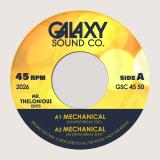
Release #50 celebrates the digging, care & musical curiosity that’s made the GSC series essential for DJs, collectors & break seekers alike.
For years GSC has built a catalog that earns immediate “cop-on-sight” status. Thoughtful edits. Deep respect for the OG recordings. Breaks that knock w/out feeling heavy-handed. The kind of taste that reminds you these are real heads behind the decks.
Side A pulls from Jerry Butler’s “I’m Your Mechanical Man,” released in ’74 on the Sweet Sixteen LP. The track contains a raw drum break hip-hop producers recognized instantly. Most famously it powers Method Man’s “Bring The Pain,” 1 of the defining solo joints from the Wu-Tang Clan era. The break later resurfaced in Missy Elliott & Method Man’s 2002 version & Snoop Dogg’s “I Miss That Bitch.”
On the flip, GSC draws the source into pure DJ tooling: a sample break edit, a full drum break edit & the “Mechanical Wu” mix — built for selectors who know the power of letting a break breathe.
Then they deliver a beautiful surprise. Instead of leaving empty wax, GSC slides in Les McCann’s “Vallarta,” from the 1977 album Music Lets Me Be. Jazz-funk heads know it instantly — the hypnotic groove behind Biggie’s “Ten Crack Commandments.”
This is why Galaxy Sound Co. matters. They’re not just pressing edits — they’re curating moments. Unearthing grooves DJs need back in rotation. Some originals now cost serious money on Discogs. Others simply faded from memory. GSC dusts them off & hands them back to the community.
50 releases in & the curiosity still runs deep.
Black Truffle is thrilled to announce Spilla, the second album from Nantes-based Ensemble Nist-Nah, 48 minutes of music for Gamelan, drum kits, wood and metal percussion instruments, and plucked strings that will surely count as one of the most electrifying records you hear this year. Founded by the Australian drummer/percussionist Will Guthrie in 2019, continuing the explorations begun in solo form on Nist-Nah (Black Truffle, 2020), the ensemble (eight or nine core members with occasional guests) has been consistently active in the half-decade since: composing, rehearsing, recording and touring Europe (with a mass of equipment in tow) to great acclaim. Spilla tracks the continuing evolution of the project since the recording of their first album, Elders (Black Truffle, 2022). The two sides of this record document two different iterations of the group, and the members' compositional input has increased: each side contains one piece by a member other than Guthrie. It has become clearer than ever that Ensemble Nist-Nah is not an attempt at a European Gamelan ensemble but rather a hybrid percussion ensemble that uses instruments from a Javanese Gamelan alongside other percussion to perform original music informed by a variety of South East Asian music but also by everything from free jazz to contemporary hip-hop: while Nist-Nah and Elders both featured traditional Javanese pieces, on Spilla the only tune not generated by a member of the group is by Guthrie’s long-time musical hero and occasional collaborator Roscoe Mitchell.
The two short pieces that open the record could almost be the two sides of a wild 7” selected to show off what the Ensemble can do. On opener ‘Gerak Maju’, intricately skittering open-snare patterns bounce over clanging metal, chiming bell-like tones and deep gong hits, adapting the rhythm-register connections heard in traditional Gamelan musics—where the lowest pitched sounds are heard least frequently—to a cut-up breakbeat straight off Feed Me Weird Things. ‘Strollabout’ then moves into an entirely different realm of meditative repeating patterns, performed entirely on Chinese, Javanese and Vietnamese gongs. The remaining seven pieces, ranging from three to twelve minutes, offer up a wealth of different percussive, compositional and arrangement possibilities. On ‘Ghostly Klang’, two drumkits mirror each other’s moves, bouncing hats and snares across the stereo field in a way that recalls On the Corner and the jittering hi hat patterns of trap, while slow moving melodies on the tuned instruments add a sense of majesty contrasted by scurrying details in resonant wood. The epic closing track presents a take on Roscoe Mitchell’s ‘Uncle’, performed by the Art Ensemble of Chicago on their classic Urban Bushmen live album. Where the Art Ensemble used Mitchell’s dirge-like melody as a jumping off point for virtuosic improvisational flights, Ensemble Nist-Nah rethink the piece as a near-static dialogue between the monumental, slow-moving sequence of unison tuned percussion notes and a textural cloud that grows in richness and intensity from whispering cymbal rolls into a mass of gong overtones and bowed metal.
Beautifully recorded and mixed, Spilla arrives in a sleeve decorated with core member Charles Dubois’ drawings of cymbals and gongs. Against the backdrop of a wider musical landscape dominated by over-produced electronic slop and bland harmonic wallpaper, Ensemble Nist-Nah stands out as a reminder, vital and unpretentious, of the joys and possibilities of human beings playing instruments together.
The record captures an expansive performance in Poitiers, France in November 2023. First working together in an unpredictable trio with minimalist legend and eccentric extraordinaire Charlemagne Palestine, Ambarchi and Thielemans quickly established a remarkable musical chemistry that led to an ongoing series of duo concerts, including the performance documented on their LP Double Consciousness (Matière Mémorie, 2023).
Kind Regards finds the duo refining their shared language while continuing to take risks, allowing the music’s gravitational pull to lead them from meditative calm to unexpectedly expressive passages of melodic invention and rhythmic drive.
Recorded in sparkling fidelity and carefully mixed by Ambarchi’s longtime collaborator Joe Talia, the LP contains a single unbroken performance, stretching out for over 45 minutes. Guitar and drums weave together into a symbiotic whole that nevertheless affords us ample opportunity to marvel at the highly personal approaches these two musicians have developed to their chosen instruments through decades of diverse collaboration and prolific performance. The set begins with Thielemans’ hypnotic tom patterns, around which Ambarchi’s wavering, shimmering guitar tones—achieved with the help of the rotating speaker of a Leslie cabinet—flurry and swirl. Thielemans’ drums play subtle tricks with time and perception, adding and dropping beats within repeated patterns to create an effect at once rhythmically insistent and liquified. Growing at first into a rapidly pulsing texture of brushed drums and flickering harmonics, the music builds momentum into an irregular groove over which Ambarchi’s guitar is transformed into haunting, monumental electric organ chords, strikingly recalling the Wurlitzer work of Alice Coltrane, before settling into a section of gentle portamento melody embedded into the tactile clicks and clangs of Thielemans’ percussion.
When Thielemans adopts a more traditional jazz approach to the kit in some of the set’s second half, the results are stunning, demonstrating a feel for shifting accents and sensibility to the touch of the stick on the drum or cymbal that recalls greats like Jack DeJohnette or Billy Hart (one of Thielemans’ mentors). And when Ambarchi turns up the heat, he does so in an unexpected and delightful way, letting loose a swarm of jittering delayed tones straight out of Henry Kaiser’s classic It’s a Wonderful Life, with a more active use of the guitar’s fretboard than his usual approach to the instrument allows. As the performance draws to a close after a climactic episode of distorted harmonic groans and crashing cymbals that manages to be at once thunderous and carefully attuned to detail, it is clearer than ever that, for these two serial collaborators, this is a very special pairing.
Kind Regards shows us the kind of magic that can happen when two masters who have dedicated decades to reimagining their instruments simply begin to play, following the music wherever it goes.
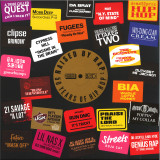
- A1: Dr. Jeckyll & Mr. Hyde - Genius Rap (7" Single Version)(1981)
- A2: Run Dmc - It's Tricky (1986)
- A3: Rob Base & Dj Ez Rock - It Takes Two (Radio Edit) (1988)
- A4: A Tribe Called Quest - Can I Kick It (7" Radio Edit) (1990)
- A5: Dj Jazzy Jeff & The Fresh Prince - Summertime (Single Edit)
- A6: Da Brat - Funkdafied (1994)
- B1: Cypress Hill - Insane In The Brain (1993)
- B2: Wu-Tang Clan - C.r.e.a.m. (Cash Rules Everything Around Me)
- B3: Mobb Deep - Shook Ones (Part 2) (1995)
- B4: Fugees - Ready Or Not (1996)
- B5: Nas - Ny State Of Mind (1996)
- B6: The Beatnuts - Watch Out Now (1999)
- C1: Outkast - Ms. Jackson (2000)
- C2: Clipse - Grindin' (2003)
- C3: Dead Prez - Hip-Hop (2000)
- C4: Three 6 Mafia - Poppin' My Collar (2005)
- C5: Too $Hort - Blow The Whistle (2006)
- C6: Ugk (Ft. Outkast) - Int'l Players Anthem (I Choose You)('07)
- D1: Travis Scott - Goosebumps (2016)
- D2: 21 Savage - A Lot (2018)
- D3: Doja Cat - Streets (2019)
- D4: Future - Mask Off (2017)
- D5: A$Ap Rocky (Ft. Skepta) - Praise The Lord (Da Shine) (2019)
- D6: Lis Nas X (Ft. Billy Ray Cyrus) - Old Town Road (Remix)(2019
- D7: Bia - Whole Lotta Money (2020)
Vinyl only. Twovi aka Vito Loperfido helps Inner Balance enter its adolescence on this deep house 4-tracker. Using familiar ingredients of bumping basslines, driving percussion and soulful keys, each cut finds allegiance in a different clan of classic US house sounds...with an extra Italian flavour!Check the Jovonn swagger of 'Sweet Eyes' or the Glenn thump of 'Theo Docet', the expansive floorfiller 'Fake Love' or the jazzy interludes in 'Tropical Age': this EP takes its place in an unmistakeable tradition that goes right back to Vibraphone and MBG in '92.
Clikno Is Proud To Present The Second Strike Of Dr.nojoke's Double Ep 'zero'.
'aplose' Is A Straight 10 Minute-stomper, Which Sounds Like A Wild Horde Of Percussionists Clanging And Banging Cans And Pots. The Truth Is The Doctor Just Threw Glass Marbles On A Wooden Floor. Fun-time! For The Hips He Adds A Low Rolling Bassline And For The Head Some Freaky, Randomly Pitching Chords And Off It Goes! Call It Afro-kraut-jazz-tech Or Just Clikno - Aplose Is A Counter-action To Electronic Music Production With Electronic Machines - Marbles Do It As Well!
'kumuestu' On The Flipside Is The Antagonal Piece On Zero.two - More Dark And Deep It Is Music For A Fictional Ritual. Carried By A Hypnotic Fluctuating Bass-figure And Drones The Tune Slowly Mutates Into A Shamanic Rhythm Monster Creating A Resonating Field For Transcendental Dancefloor Action - From Here To Eternity.
Zero.two Is Purely Audiophile Electricity To Twitch Your Body In All Directions. Do The Clikno!
Again Zero.two Is A Limited Vinyl-only Release Pressed On Transparent Vinyl Coming In A Transparent Sleeve - Transparent As Light, As Ideas, As Music And As The World Should Be - No Borders, But Freedom, Peace And Equality For Everyone!
- A1: Harris & Orr - Spread Love
- A2: Terry And Deep South - Trying To Get By
- A3: Toshiyuki Honda - Burnin' Waves
- A4: Igna Igwebuike - Disco Bomp
- B1: Janette Renee - What's On Your Mind (Super Club Remix)
- B2: Grupo Serenata - Sodade, Tem Pena D’mim
- B3: Vital Disorders - Zombie
- B4: Alphonsus Idigo - Flight 505
- C1: Dj Food - Peace (Harvey's 30 Something Mix)
- C2: Man Jumping - In The Jungle
- C3: Stars - Dancin’ People
- D1: Gaucho - Dance Forever (Club Version)
- D2: 49Th Floor - Night Passage (Bongo Mix)
- D3: Orion Agassi - Desacato
- D4: Fatdog - Remember Feat Cj Raine
black vinyl[28,36 €]
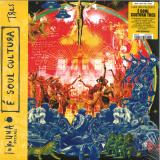
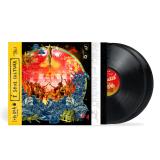
With two deeply cherished compilations already in the bag, Luke Una steps up for the third volume in his É Soul Cultura series on Mr Bongo. A love letter to the dancefloor and its power to unite people from all corners of society amid growing division and extremist politics. Genre-spanning in nature, the 15 tracks travel between cosmic soul, boogie, proto-house, slo-mo technoid grooves, drum machine afro, astral bass-bugging futurism, jazz funk, dance, and disco. Each having the ability to move the body as much as the heart.
From his formative years in Sheffield to co-founding Manchester’s much-fabled Electric Chair with Justin Crawford, through to helming the iconic LGBTQ institutions of Homoelectric / Homobloc, Luke has spent 40 years immersed in dance music. His latest outlet, É Soul Cultura, has grown from a label to a globe-spanning events series with Luke holding residencies and embarking on tours across the world from Japan and Australia to America and Europe.
“For me, the dancefloor was never about a one-dimensional, thudding, 130 BPM beat only. It's a much more dynamic, broader vision than that. I cut my teeth in an era where a 100 BPM record had as much impact, excitement, and energy as a 134 BPM dancefloor jazz funk or techno record”, Luke mentions. É Soul Cultura Volume 3 is the perfect embodiment of that notion: “It’s about four decades in the trenches playing dance music, the late-night afters, the shebeens, the basements, warehouse parties, the eight-hour journeys in East London, through to festival sets at Houghton and We Out Here. It’s music unconstrained by genre or tempo and more about making your body move”.
But this isn’t simply a collection of disparate dance tracks; they carry meaning and soul. “It’s less about escapism, more about reconnection. My experience of post-covid has been the coming together of all the clans in various clubs and gatherings. A reaction to a very toxic world out there, where the aggro rhythms of division have sought to divide us, and people don't meet as often. The coming back together face-to-face in clubs has encouraged a real love in the air, there's a real togetherness and collective spirit”.
Opening up the compilation is a track that channels that very message, the transcendental, soul-rousing Harris & Orr ‘Spread Love’. Joining the dots from there, to the low-slung deep house closer of Fatdog ‘Remember’, you’ll find electronic drum machine Nigerian funk, sitting side by side with dancefloor Cape Verdean brilliance, a post-punk cover of Fela Kuti, rubbing shoulders with cosmic electro, and an Una-championed, 8-minute, kickless DJ Harvey remix. There’s jazz funk in various guises moving from boogie synth to astral travelling, slo-mo acidic raw techno, and a ‘79 soul stepper, alongside swirling percussive Italo disco and tribal-charged house. All infused with an innate ability to bring people together.
As society becomes increasingly fractured, É Soul Cultura Volume 3’s message is more than movement. It’s about dance music’s power to unify people from all walks of life and break down the barriers that divide us.
- A1: Harris & Orr - Spread Love
- A2: Terry And Deep South - Trying To Get By
- A3: Toshiyuki Honda - Burnin' Waves
- A4: Igna Igwebuike - Disco Bomp
- B1: Janette Renee - What's On Your Mind (Super Club Remix)
- B2: Grupo Serenata - Sodade, Tem Pena D’mim
- B3: Vital Disorders - Zombie
- B4: Alphonsus Idigo - Flight 505
- C1: Dj Food - Peace (Harvey's 30 Something Mix)
- C2: Man Jumping - In The Jungle
- C3: Stars - Dancin’ People
- D1: Gaucho - Dance Forever (Club Version)
- D2: 49Th Floor - Night Passage (Bongo Mix)
- D3: Orion Agassi - Desacato
- D4: Fatdog - Remember Feat Cj Raine
yellow vinyl[28,15 €]
With two deeply cherished compilations already in the bag, Luke Una steps up for the third volume in his É Soul Cultura series on Mr Bongo. A love letter to the dancefloor and its power to unite people from all corners of society amid growing division and extremist politics. Genre-spanning in nature, the 15 tracks travel between cosmic soul, boogie, proto-house, slo-mo technoid grooves, drum machine afro, astral bass-bugging futurism, jazz funk, dance, and disco. Each having the ability to move the body as much as the heart.
From his formative years in Sheffield to co-founding Manchester’s much-fabled Electric Chair with Justin Crawford, through to helming the iconic LGBTQ institutions of Homoelectric / Homobloc, Luke has spent 40 years immersed in dance music. His latest outlet, É Soul Cultura, has grown from a label to a globe-spanning events series with Luke holding residencies and embarking on tours across the world from Japan and Australia to America and Europe.
“For me, the dancefloor was never about a one-dimensional, thudding, 130 BPM beat only. It's a much more dynamic, broader vision than that. I cut my teeth in an era where a 100 BPM record had as much impact, excitement, and energy as a 134 BPM dancefloor jazz funk or techno record”, Luke mentions. É Soul Cultura Volume 3 is the perfect embodiment of that notion: “It’s about four decades in the trenches playing dance music, the late-night afters, the shebeens, the basements, warehouse parties, the eight-hour journeys in East London, through to festival sets at Houghton and We Out Here. It’s music unconstrained by genre or tempo and more about making your body move”.
But this isn’t simply a collection of disparate dance tracks; they carry meaning and soul. “It’s less about escapism, more about reconnection. My experience of post-covid has been the coming together of all the clans in various clubs and gatherings. A reaction to a very toxic world out there, where the aggro rhythms of division have sought to divide us, and people don't meet as often. The coming back together face-to-face in clubs has encouraged a real love in the air, there's a real togetherness and collective spirit”.
Opening up the compilation is a track that channels that very message, the transcendental, soul-rousing Harris & Orr ‘Spread Love’. Joining the dots from there, to the low-slung deep house closer of Fatdog ‘Remember’, you’ll find electronic drum machine Nigerian funk, sitting side by side with dancefloor Cape Verdean brilliance, a post-punk cover of Fela Kuti, rubbing shoulders with cosmic electro, and an Una-championed, 8-minute, kickless DJ Harvey remix. There’s jazz funk in various guises moving from boogie synth to astral travelling, slo-mo acidic raw techno, and a ‘79 soul stepper, alongside swirling percussive Italo disco and tribal-charged house. All infused with an innate ability to bring people together.
As society becomes increasingly fractured, É Soul Cultura Volume 3’s message is more than movement. It’s about dance music’s power to unify people from all walks of life and break down the barriers that divide us.
- 1: You Don't Dream
- 2: Overwhelmed
- 3: Really (Nothing Is Cool)
- 4: Keep Me In The Picture
- 5: Wanna Dance
- 6: Afternoon
- 7: My Mother's Mother Feat. Jally Kebba Sussa
- 8: Higher Ground
- 9: Q&A
- 10: Ancestry
- 11: Magic
- 12: Guided Feat. Ebi Soda
- 13: Only Your Love
Anushka's third album Ancestry comes out on BBE Music as both digital and vinyl and represents a massive hitting of the duo's potential as songwriters, musicians and performers following their well received and critically acclaimed previous releases on Brownswood and Tru Thoughts respectively. Indeed Ancestry represents their best album to date and one which befits a release on one of the UK's (and the world's) premiere independent record labels. Anushka is the collaborative name for Victoria Port and Max Wheeler. The duo first met in the vibrant club, music and arts scenes in that creativity incubating south coast town that is Brighton.
With their first single, Yes Guess, gaining support from major broadcast influencers such as Gilles Peterson they released their debut album, Broken Circuit, in 2014. With major airplay support from Mary Anne Hobbs, Annie Mac, the aforementioned Gilles Peterson and others the second album Yemaya was released in 2021. On this second record they experimented with their sound, exploring darker and more complex songs and palettes. Both albums forged Anushka's sound and production values, combining a deep respect for the UK's electronic club culture mixed with Jazz and Soul. Now, with the release of Ancestry on BBE Music, the duo has created an album that furthers their sound, their songwriting, their arrangements and their production. Victoria's songwriting for Ancestry is influenced by her love of Ella Fitzgerald, Sampha, Jimmy Cliff and Georgia Anne Muldrow.
Max's approach to the production on Ancestry is driven by his own ancestral back catalogue of music from Moodymann and Theo Parrish and further back to Larry Heard, Wu Tang Clan and the 90's electronica of Tricky, Portishead and David Holmes. It definitely bears repeating that list of influences has resulted in Ancestry being Anushka's best album yet. Releasing on BBE Music, on both digital and vinyl formats, Ancestry is an album that is a must for lovers of the highly innovative, jazz and soul fuelled club sound that is part of the UK's contemporary music scene.
- 01: Baton Feat. Phill Most Chill, Dillon & Kyza
- 02: Walker Mill Road Feat. Yu & Richard Halligan
- 03: The Gift Feat. Prince Po, U-George & Jazz T
- 04: Hits Hits Hits Feat. Jehst
- 05: Perfect Match Feat. Large Professor, Tiye Phoenix & Nick Maxwell
- 06: Back In The Days Feat. Truck North & Richard Halligan
- 07: Aisle 9 Feat. Dynas
- 08: Get It Feat. Maddy & Wordsmiff Flip
- 09: Valiant Feat. Press1, Essa & Dr Syntax
- 10: Ego Juice Feat. Big Ole Lil Young Blaise
- 11: Influential Feat. Supastition & Boog Brown
Salsa Verde is the latest release from artist, Tom Caruana and, the newest instalment of Def Pressé’s series of projects made in partnership with KPM (and associated music libraries).
In 2021 Def Pressé entered into a deal with KPM whereby the deeper KPM and associated libraries can be used, exclusively, by Def Pressé. Sampled, replayed and reimagined, this vast catalogue has provided music for TV and Cinema for decades. Sampled, often illegally, by practically every Hip Hop producer ever, the library is available to select Def Pressé artists to utilise in order to create new pieces of music. This music is then fed back into the KPM/Sony AVI library for use in TV and Cinema, and the Def Pressé artist in question is then a KPM Artist in their own right. Completing the circle and hopefully providing music to inspire the new generation of beat makers/sample-based producers.
With several titles in the series, notable names like Blockhead, Damu the Fudgemunk and Stro Elliot since its inception in 2021, the Def Pressé Editions x KPM series, Crate Diggers continues into the seventh episode.
Producer & multi-instrumentalist Tom Caruana has been producing Hip Hop for over 25 years. Incorporating both samples and instruments in his production has helped him create a signature sound which covers a wide range of moods. He has produced quirkier and more humorous material for the likes of Dr Syntax & Professor Elemental, live production for his band Son Of Sam,
sample heavy material in a range of projects with MCs as well as notoriously remixing Wu-Tang Clan with The Beatles and Jimi Hendrix.
First-time vinyl reissue of cult UK dance classic.
One of the cult acts of the heyday of London clubland in the early 1990s, the Ballistic Brothers consisted of later-X-Press 2 members Ashley, Rocky and Diesel, alongside David Hill and Uschi Clansen. After the success of underground smash ‘Blacker’ and ‘vs. Eccentric Afros Vol. 1’, The Ballistic Brothers returned with the second volume of their sampledelic good times with ‘Vol. 2’. The group came armed with years of dance floor expertise, and record making acumen, and delivered a further 8 tracks of good time funky grooves.
The opener ‘Delancey Street…The Theme’ paid tribute to their Camden-based record label and was an immediate anthem, while ‘Goodvibes…Goodnight’ was an irresistible mash-up. Elsewhere are jazz, funk, reggae influences and images of the streets of New York.
A vital snapshot of a very unique place in time, specially remastered for this Acid Jazz release, set in a spined sleeve for the first time, with a beautiful expansion of the original artwork
- A1: Fujitronic (Flute Mix)
- A2: Money Palaver (Extra Warm Mix)
- A3: Jupiter Rising (Disco Dub)
- B1: Otto Part 1 (Synthethic Dub)
- B2: Artificial High (Rhythm Mix)
- B3: Artificial High (Vocal Mix)
- B4: Clave Song (Extra Dubbed Mix)
- B5: Anthem (Room Dub)
- C1: Musical Message (Disco Dub)
- C2: Otto Part 4 (909 Mix)
- C3: Message (Room Dub)
- C4: Tronic Rhythm (Flute Dub)
- D1: Ritm Dub (Piano Mix)
- D2: Kabu Anthem (Cosmic Dub)
"No Warranty Dubs" is made by a logic powerhouse combination, Jimi Tenor & Kabukabu meets DJ Sotofett, with most of what you can expect from all parts involved. You're served Afro Dub & Jazz in a bold and classic sonic execution. Through all 15 cuts the echoes are real and rhythms upfront, with proper extended Disco Dubs and versions of Afrobeat and Free Jazz contrasting body and soul. The album is tuneful and rugged, some cuts have vocals & synth swimming alone, while others glue the drummers groove to slick piano from beginning till end.
Followers of Jimi Tenor's life in music will be able to dive into his trademark song writing, signature flute breathing and indistinguishable style of saxophone playing, as well as his tender and electrifuingly psychedelic vocals known from early days of Puu/Sähkö and Warp releases. Kabukabu's heavyweight instrumental performance trancends regular studio recordings with joy and precision as a core element. Kabukabu's Ekow Alabi Savage aka Ekowmania (from last years "Dr.Afrodub" album) embeds deep rhythm knowledge throughout the entire musical landscape. Last in the chain is DJ Sotofett, producing and mixing his probably most classically crafted output to date. With silky gloves and clanking wrenches every element has been tweaked, re-mixed & dubbed excessively to justify a fully musical, psychedelic, warm and rhythmically rich experience.
"No Warranty Dubs" is as warm as the chords of "Money Palaver (Extra Warm Mix)", and as bombastic as opening track "Fujitronic (Flute Mix)". The album reaches it's most tender moments with the sweet "Musical Message (Disco Dub)" and dives straight into obscurity when guest drummer Ilmari Heikinheimo contributes to "Otto Part 4", a rare freejazz cut with TR-909 tickering from start til end. The simplicity of "Tronic Rhythms (Flute Dub)" is worthy a tear in an eye, while brittle souls can scatter to the thunderous horns and drenched rhythms of "Kabu Anthem (Cosmic Dub)".
Labi Siffre's Remember My Song (1975) is a soulful fusion of funk, jazz, and R&B, with the track "I Got The..." gaining iconic status through its bassline, famously sampled in several hip-hop classics. Notably, Eminem's "My Name Is," Jay-Z's "Streets Is Watching," and Wu-Tang Clan's "Killa Beez" all drew from this song. The album’s rich instrumentation and introspective lyrics highlight Siffre's unique style, leaving a lasting legacy across genres.
Søren Skov Orbit's debut album, "Adrift," is at once subtle and profound. The saxophonist and his collaborators have created something quite special and consistently deep. This record may not easily be classifiable, but the most interesting music creeps between the lines
Danish tenor and soprano saxophonist Søren Skov (Debre Damo Dining Orchestra) and keyboardist Peder Vind co-founded the trippy quintet Søren Skov Orbit in 2016 to explore “more jazzy ideas,” as the saxophonist puts it. Joined by a rhythm section steeped in contemporary improvisation and psychedelia, bassist Casper Nyvang Rask, drummer Rune Lohse and percussionist Ayi Solomon of the legendary 80's Ghanaian roots/highlife band Classique Vibes, the Orbit belts out a richly focused helping of broadly African-inspired modern jazz with a hazy sheen.
On the opening “Notifications of Nothingness,” Skov digs in his heels, a steely but languid unspooling of burnished tenor lines atop condensed, quavering piano and the thick footfalls of bass and percussion. As a tenor player, Skov has done his homework and has a kinship with Albert Ayler, Archie Shepp, J.R. Monterose, and the Dutchman Hans Dulfer, but he clearly has got his own robust phraseology and expressiveness. He also cites multi-reedists John Gilmore, Yusef Lateef, and Bilal Abdurahman as, “some of the players I’ve been listening to the most for the last 10-15 years.”
A healthy dose of reverb is present throughout the album, echoing Alton Abraham’s studio wizardry with the Sun Ra Arkestra or the trance-inducing and compressed fidelity of certain Ethio-jazz and Mystic Revelations of Rastafari sessions. Skov notes that, “everything is recorded live at the same time in the same room. I wanted to do it that way in order to catch the dynamics and authenticity of the music.” There is, in fact, a complex teeter- totter between crisp and hazy execution, achieved by a delicately balanced mix that keeps the group’s sound simultaneously advancing and receding. Vind’s phrasing is terse and introspective, a vibrating echo that nudges and reflects on Skov’s brusque tenor in a dance of sonic displacement.
“Orbiting” pits a chunky backbeat and the teetering, taut hand-rhythms of Solomon against an infectious, almost microtonal piano riff, while Skov’s arpeggios are clean and florid as he patiently rises up from under a carpet of funky loops. Following the freer “Reflections of Rif,” “Naration” lilts with a wink at “Footprints” and tugs between up-tempo polyrhythmic drive, clanging keyboard accents, and the innately steadfast keenness of the bandleader. The coupling of Solomon and Lohse is a big part of the group’s detailed energy; as the leader puts it, “Ayi knows everything about regional differences in drum patterns. He is always listening and super responsive, and his and Rune’s dynamics are amazing.” The music both presents a “vibe” and keeps the door open for engaging well under the surface as repeated listens will be extremely rewarding.
Tangential Music is pleased to present the new album from veteran Spanish DJ and producer, Dj Toner (aka Antonio Herrera). Alongside his co-writer/arranger Daniel Molina and with guests that include the legendary Blue Note Records innovator Erik Truffaz and Grammy winning flautist and saxophonist Jorge Pardo, he has created a 10 track collection of slow-burning instrumentals that straddle the worlds of hip hop, jazz and electronica.
With a personal, precision tooled approach to his craft, the Andalusian has offered up an album of finely modelled downbeat moods.
At first glance, ‘Out Side’ is made up of recognisably superior hip hop instrumentals but if you listen carefully, and with patience, one can hear a craftsman at work. A wooden box is just a box until you look closer. The hidden joints, the perfect lining up of the grain, the years of artisanal graft and laser-focussed attention to detail that go into making something that has nothing present, that doesn’t deserve to be there. This is how Dj Toner operates.
The two singles that preempt the album’s release reveal different sides of his craft. ‘Camina’ struts with tough intentions. Soundtrack-y in an exploitation police drama manner, the get-out-of-my-way drum break and tension-filled chords suggest the bad cop, Erik Truffaz’s piercing lyrical trumpet lines, the good. The Afro-jazz horns led second release ‘Surprise’ is an altogether more playful, sunbaked affair. Sensual and slow-burning, there’s still an edge but it’s too hot to quarrel.
Dj Toner’s minimalist attitude to creation is shared with his co-composer Molina - an individual’s contribution may be cut to the bone, leaving just its aura or tone. The echo of a piano, a single blast of tuneful wind from a flute, a perfectly positioned drum hit.
Since the Wu-Tang Clan’s RZA began applying his beatmaking prowess to movie soundtracks, the hip hop instrumental has been acknowledged as something to listen to, as much as being used as a DJ tool or backing for an MC. Dj Toner’s instrumentals can, therefore, be seen as soundtracks. Soundtracks to his life and craft, vignettes of his environment in both the urban sprawl and the wider and slower spaces of “el campo”.
The sweet-tempered jazz-blues of ‘La Rimosa’ is a gentle welcome to the album. A simple, laid back groove with the most romantic of piano hooks that one could imagine Common dropping rhymes on. You’re kept on your toes with the odd purposeful moment of discordant interruption but the tender heart of the composition is never far away.
‘O’Beat’ hints at John Coltrane with the sparse but full-sounding upright bass before a head-snap break leads into a curious piano groove, a vintage organ swirls into a psychedelic fractal, whilst the bluesy female vocal snippets add the spice, that zing in the Granadan gazpacho.
The flamenco guitar driven ‘Flama’ is an excellent example of intricate sample placement and musicality. Old school (school yard) scratch interludes, sweet piano hooks, a minimalist but knife sharp flute contribution from Jorge Pardo, and the crunchiest of drums taking us for an intriguing walk round the corner.
We’ve mentioned them before but it’s on ‘Sweetband’ that we can feel that Wu-Tang dread hanging off its shoulders. A brooding orchestral number with powerful horns and a cavernous piano hit. The title of the piece is in stark contrast to the dark shadows of the tune.
Erik Truffaz returns in fine form on the super lethargic jazz-funk-hop of ‘The Day’. His instantly identifiable muted trumpet sound paints dazzling colours over the more earthy tones of the filtered down keys as a rubbery upright bass keeps the forward momentum. Dj Toner’s ‘Blessed Are The Weird People’ album, was rated in Jazz Magazine as one of the 20 jazz albums of 2021, so he isn’t some dilettante when it comes to playing with the complex hues of jazz but he does like to strip it to its bare essentials.
‘Fanega’ sees a gorgeous flute contribution from Jorge Pardo. An eerie boom-bap groove with sprinkles of electronic pulses and washed out chords is the canvas on which the award-winning multi-instrumentalist evokes the heat shimmer of the savannah.
‘Esperanza’ translates as ‘hope’ in English and this lovely slow, swinging jazzy groove really does provoke feelings of positivity and belief. Sublime vibraphone and another stunning trumpet offering from Erik Truffaz, take us on a journey of warm days and possibilities, the shuffling drums and sweet chord patterns are nicely finished off by a tranquil horn chorus towards its unhurried end.
‘Under Beat’ ends on a beefy boom-bap groove with a liquid funk bassline, elegant synth strings and old school scratching. Again, there’s that undisputable soundtrack edge, action and motion, the smell of the city.
There you have it, 10 tracks that go beyond the surface, deep into the dedicated craft of Dj Toner. Decades of experience and collaboration purified and refined into beat-heavy emotions, listen closely or crank it up, it’s down to you!
very dope.
With this EP an attempt is made at documenting the vibrant action happening during the late 1970s and early 1980s in the Pioneer Valley area of Western Massachusetts, US. The story is richer than the snapshot we present here, and a more detailed account is to be found in the accompanying book that can be purchased separately.
The Five Colleges in Hampshire County congregated a vast student population that inevitably interacted with the towns in the area. Bars, music and record stores, live music and a lot of experimentation and free thinking. Hampshire College, especially, promoted new approaches to teaching, subjects that might be considered radical by some even today, although a more favourable context would now surely exist for openly debating such topics as American Indians, Kayak Design, Black Oral Tradition, Food Management, etc. And the music? The immediate "punk effect" motivated the creation of numerous bands, many short lived, others evolving into New Wave / Power Pop territory, eventually crossing into Post-Punk experimentation. What is captured in "Noho EP" is a more electronic disposition, favoured by the existence of EMS gear and other equipment at Hampshire College and University of Massachusetts. We chose to focus on a group of musicians who, for a time, played together in different combinations under the loose umbrella of the Tekno Tunes label and the structure around it.
These musicians come from very different backgrounds and the nucleus portrayed here consisted of Christopher Vine, Elliott Sharp, James Whittemore and Nicholas Brown.
Of the several line-up changes The Scientific Americans went through, it was actually only the duo of Chris Vine and Jim Whittemore who recorded "Among Bodge Watt". Never before released, it is a companion piece to their track "El Salvador" available on the 1981 ROIR tape-album "Load & Go!". The Sci Ams were founders of the Tekno Tunes label and also created the Tekno Tours "concert promotion agency", under which name they exposed local audiences to bands such as The Stranglers, The Slits, Pylon, Pere Ubu, The Psychedelic Furs, The Bush Tetras, Steel Pulse, etc. Their own sound kept progressing but at its best there's a solid dub undercurrent, pretty obvious in "Among Bodge Watt".
Human Error was born out of a collective jam by Chris Vine, Elliott Sharp, Jim Whittemore and Nick Brown. Elliott Sharp had moved to Northampton in August of 1978 and naturally became involved in the local music scene, hooking up first with Whittemore at a hi-fi audio store where he worked at the time. Basement jams followed stimulating conversations, and other musicians joined the sessions. "Clandestinator" sounds gorgeously loose, an effortless groove coming from a quasi-dub set-up. Nothing here seems calculated, the music just flows, contagious and irregular as the handclaps in the mix.
The Higher Primates later evolved into a "proper" band but started as Nick Brown's solo project. The Primates only ever released a (now sought-after) 7" single in 1980 (on the Tekno Tunes label, precisely). Both tracks on "Noho EP" were recorded the following year and never released until now. "Auto Music in the Disco Dub Style" is self-explanatory, with a steady, mid-tempo TR808 beat running through, supporting synth squelches, echoes and reverbs, a fat bassline, dissonant melodic lines and odd vocal snippets. Kind of a DJ tool when the concept was barely in place. The more uptempo "Teresa Variations" adds a Fender Jazz bass and Selmer sax to the electronics. It actually sounds more "Disco", even with the robotic, unintelligible vocals. On top of this, the vibe is sealed by the overall Radiophonic Workshop analogue strangeness applied to a dance beat.
Black Truffle is pleased to announce the first vinyl reissue of Trancedance, a wild slice of Swedish Afro-fusion from Christer Bothén, originally released in 1984. A major figure in Swedish jazz and improvised music since the 1970s, often heard on bass clarinet and tenor sax, Bothen studied doso n’koni (the large six-stringed ‘hunter’s harp’ of the Wasulu) in Mali in 1971-2 before turning to the guinbri (the three-stringed lute of the Gnawa/Gnauoua) in Marakesh later in the decade. In between, he performed extensively with Don Cherry during his Organic Music Society period and taught Cherry the doso n’koni. In the later 70s and 80s he worked with the most important figures in the distinctive Swedish jazz-rock-world fusion scene, joining Archimedes Badkar for their African-influenced Tre and participating in Bengt Berger’s legendary Bitter Funeral Beer Band. Many of the musicians who played on the Bitter Funeral Beer Band’s ECM LP (including Berger on drums, Anita Livstrand on voice and percussion and Tord Bengstsson on piano, violin and guitar) joined Bothén for one of the sessions that produced Trancedance, the first release under his own name, dedicated to his compositions. The other session introduced his seven-piece group Bolon Bata, heard on the second track of each side. The title track opens the album with the rubbery buzzing strings of the doso n’goni playing a hypnotic ten beat pattern, soon joined by bass and piano before the entire nine-piece group kicks in with a rollicking Afro-jazz workout, Berger’s drums driving an intricate, winding melodic line played by the horns with Mattias Helden’s cello throwing in pizzicato slides and smears. Bothén then takes centre stage on tenor sax, soloing with a wide, vibrating tone and moving seamlessly from soaring melodies to guttural stutters. After a return to the composed horn lines and a solo from Elsie Petrén on alto sax, the piece builds to an ecstatic conclusion of yelping voices and handclaps, gradually simmering down to return to the solo doso n’koni where it began.
The hypnotic sounds of the hunter’s harp carries over to ‘Mimouna’, where it is joined by Bothen’s overdubbed guinbri. The piece develops into a haunting whispered and sung invocation, gradually building momentum until the organic textures of strings, voices, and hand percussion are ruptured by Lennart Söderlund’s distorted guitar, which brings an unmistakable touch of 1984 to the otherwise timeless sound. Joined by chicken scratch guitar and increasingly dominated by the insistent clang of three of Bolon Bata’s members on karqab (a kind of cast-iron castanet), the grove develops frenetically.
The B side opens with the multi-part epic ‘9+10 Moving Pictures for the Ear’, at over 16 minutes the record’s longest piece. Though Bothen is heard only on horns on this piece, the hypnotic repeating bass line carries on the first side’s link to African musical traditions. Using an expanded 16-piece ensemble, the music balances untethered improvisation with carefully arranged passages of knotty ensemble playing that at points suggest Mingus, Moacir Santos or some of the ambitious post-free work being done in the same years by figures like David Murray or Henry Threadgill. The piece ends with a triumphant passage of looping unison melody reminiscent of the Scandinavian folk explorations of Arbete och Fritid (whose Kjell Westling is heard on bass clarinet and soprano sax here). The sound of Bjorn Lundqvist’s fretless bass introduces the odd left turn made by the record’s final track, a spaced-out expedition into bluesy horn lines and distant guitar atmospherics set to a semi-reggae beat, perfumed by the core Bolon Bata group and bearing the appropriate title of ‘The Horizon Stroller’. A must for fans of the Swedish scene around groups like Arbete och Fritid and Archimedes Badkar, as well as any listener who has been seduced by Louis Moholo’s Spirits Rejoice!, The Brotherhood of Breath, or, more recently, the guinbri grooves of Natural Information Society, Trancedance is a lost classic ripe for rediscovery.
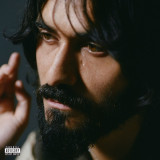
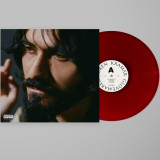
If the Chateau Marmont could sing. This would be it. Loren Kramar's voice vibrates with the shameless hum of a room after a celebrity exits Ecstatic aspiration. Doubt. Proximity. Desire. The album "Glovemaker" is about the skins we craft to be seen by the world, and Loren reminds us that we are all in drag. All exposed. No matter what gloves we slip on. "I'm a slut for all my dreams", Loren Kramar sings with Patti Smith brashness, "I'm a whore for them, I've got more of them". Loren's lyrics move like tinsel, shimmering bravely, then just as quickly, curling, fragile under the spotlight. Loren has always been obsessed with fame. Not with famous people, but with the electricity that perverts attention - the crushing desire to be truly seen. And all of Loren, and this obsession, is in this album. He grew up in the Valley, forced to hide his Barbies from his father, so the closet was a gorgeous Spanish ranch house on a gilded cul-de-sac crawling with celebrities. Naturally this gay boy wanted to be a child star so his mother secretly shuttled him to tap and jazz and figure skating lessons. "I've got hands and feet to put in the concrete", Loren croons, in "Hollywood Blvd", a song which clangs with brawny bravado. But "Gay Angels" reminds us that Loren's infatuation with stardom is inextricably linked with his queerness and his own desire to live outside of fear. To be famous is to be out. To be known. To be himself. "Glovemaker has become a kind of code for art making itself. A glove as a covering or mask that follows the contours of the life beneath it. As a song and a symbol, this is an album about studying and tracing a life - and then sharing what's there," Loren says. And his desire to share truth feels urgent. To listen to Loren is to understand there is no choice; the songs must tear through the air right now. This very second. "I see myself tearing and splitting and becoming a trampoline", he belts in "No Man," breaking our hearts right alongside his. Part poet, part theatrical diva, Loren loops together the tragedy of breathing on this planet, because like Eartha Kitt or Cat Stevens, Loren is at his core - an incredible story teller. This whole album is a shrine, a mantle atop a blazing fire of life, spread with the memorabilia of Loren; all of the pain and lust dazzling on unabashed view. This is a songwriter's album. Loren's lyrics are all his, and you feel it with every bright, Maraschino-cherry-like word that falls from his lips. "Like a lover, You scream and I shatter, I hit like a hammer" Loren sings. And we get to feel what Loren feels We live in his brain, riding his genre bending emotions, on a wave of modern pop. And the songs lift, they are anthems of belief, "Hollywood Blvd", "I'm a Slut", "Euphemism", "Gay Angels", are all odes to triumphing over the corroding powers of fear and doubt. And on this ride, Loren's voice is the guard rail, ever eager to stretch and transform, belting, talk-singing, multiplying, keeping us safe. "Glovemaker" slaps and soars. The album is an ecstatic overture to love and loneliness, to dreams and promises, to everything Los Angeles dangles. Buckle up. Loren knows how to craft space, how to move us through darkened bars, strobing arenas, beige carpeted bungalows and yellow lit highways. "How do you like LA?" Loren asks. I hope you love it.
Red Vinyl
If the Chateau Marmont could sing. This would be it. Loren Kramar's voice vibrates with the shameless hum of a room after a celebrity exits Ecstatic aspiration. Doubt. Proximity. Desire. The album "Glovemaker" is about the skins we craft to be seen by the world, and Loren reminds us that we are all in drag. All exposed. No matter what gloves we slip on. "I'm a slut for all my dreams", Loren Kramar sings with Patti Smith brashness, "I'm a whore for them, I've got more of them". Loren's lyrics move like tinsel, shimmering bravely, then just as quickly, curling, fragile under the spotlight. Loren has always been obsessed with fame. Not with famous people, but with the electricity that perverts attention - the crushing desire to be truly seen. And all of Loren, and this obsession, is in this album. He grew up in the Valley, forced to hide his Barbies from his father, so the closet was a gorgeous Spanish ranch house on a gilded cul-de-sac crawling with celebrities. Naturally this gay boy wanted to be a child star so his mother secretly shuttled him to tap and jazz and figure skating lessons. "I've got hands and feet to put in the concrete", Loren croons, in "Hollywood Blvd", a song which clangs with brawny bravado. But "Gay Angels" reminds us that Loren's infatuation with stardom is inextricably linked with his queerness and his own desire to live outside of fear. To be famous is to be out. To be known. To be himself. "Glovemaker has become a kind of code for art making itself. A glove as a covering or mask that follows the contours of the life beneath it. As a song and a symbol, this is an album about studying and tracing a life - and then sharing what's there," Loren says. And his desire to share truth feels urgent. To listen to Loren is to understand there is no choice; the songs must tear through the air right now. This very second. "I see myself tearing and splitting and becoming a trampoline", he belts in "No Man," breaking our hearts right alongside his. Part poet, part theatrical diva, Loren loops together the tragedy of breathing on this planet, because like Eartha Kitt or Cat Stevens, Loren is at his core - an incredible story teller. This whole album is a shrine, a mantle atop a blazing fire of life, spread with the memorabilia of Loren; all of the pain and lust dazzling on unabashed view. This is a songwriter's album. Loren's lyrics are all his, and you feel it with every bright, Maraschino-cherry-like word that falls from his lips. "Like a lover, You scream and I shatter, I hit like a hammer" Loren sings. And we get to feel what Loren feels We live in his brain, riding his genre bending emotions, on a wave of modern pop. And the songs lift, they are anthems of belief, "Hollywood Blvd", "I'm a Slut", "Euphemism", "Gay Angels", are all odes to triumphing over the corroding powers of fear and doubt. And on this ride, Loren's voice is the guard rail, ever eager to stretch and transform, belting, talk-singing, multiplying, keeping us safe. "Glovemaker" slaps and soars. The album is an ecstatic overture to love and loneliness, to dreams and promises, to everything Los Angeles dangles. Buckle up. Loren knows how to craft space, how to move us through darkened bars, strobing arenas, beige carpeted bungalows and yellow lit highways. "How do you like LA?" Loren asks. I hope you love it.
our Flies' 45s series continues to pay tribute to the golden age of Italian film music, this time with the first 7-inch release ever of two super-groovy themes from Gianni Marchetti's soundrack to Milano: il clan dei calabresi (known in English as The Last Desperate Hours), a 1974 poliziottesco film directed by Giorgio Stegani.
"M2", on side A, is a re-versioning of a timeless classic – Quincy Jones' "Ironside" theme – where the punch of funk comes to the fore and is fused with the acid sound of early 70s Italian prog rock. This combination of jazz-funk and prog rock is found also in "M3", on side B, which weaves a tapestry of powerful horns and gently weeping guitarover a driving, funk-blues bass line.
A must-have for lovers of rare grooves and poliziottesco films! But don't wait around, it's a limited edition!
Delasi, the Koforidua-based producer, singer and rapper has released his new single ‘Amplifier’ featuring Nii Noi Nortey.
Prophetic, spiritual and frenetic, ‘Amplifier’ is Delasi’s testimony in musical form. A manifestation of Delasi emerging triumphant after many years in limbo as he searched for a long-awaited breakthrough in the music industry.
Produced by Delasi himself alongside Morgan Greenstreet, ‘Amplifier’ is underpinned by the texture of coastal rhythms indigenous to Accra and tightly ornamented with bustling drum breaks, electronic synth lines and jazz sensibilities.
Veteran Ghanaian multi-instrumentalist and sound designer Nii Noi Nortey appears on the track to deliver an explosive and rhythmically intense saxophone performance throughout as it tastefully builds to an emphatic crescendo.
Self-described as a prayer, the track’s maximalist and percussive instrumentation is cleverly juxtaposed with minimal lyrics where Delasi’s faint vocal repeats a series of repeated phrases like evoking the mood and semblance of a meditative chant and religious experience. Harkening to the work of afrofuturistic jazz musicians like Sun Ra and Pharaoh Sanders.
Speaking on the track’s meaning, Delasi said: “‘Amplifier’ is my prayer and like with other songs of mine it can scare me because I write things and then it’ll manifest in exact detail. The song is basically outlining how hard I’ve worked and how I need an amplifier to have my desires fulfilled. It's like a mantra and that’s why it's not so lyrical”.
‘Amplifier’ marks Delasi’s first release as a lead artist since his 2015 self-released project ‘#thoughtjourney’ which garnered support and praise from Rolling Stone, BBC6 Music, Worldwide FM, KCRW, Afropop Worldwide, Deutschlandfunk Kultur, NRK and legendary French DJ/Producer Laurent Garnier. Additionally parlaying into touring and festival gigs across Nairobi, Berlin, Morocco, Denmark and Sweden.
Delasi is an artist that has been quietly prolific for over a decade. Honing his musicianship exploring sonic possibilities with Ableton and Teenage Engineering. Eventually entrenching himself in the Ghanaian rap scene via collaborations with Hammer of The Last Two, Reggie Rockstone and Yaw P with whom he would release a joint project ‘Imperfections: The Break Up Vol 1’ in 2013.
He was musically raised on a diet heavily influenced by his father who exposed him to the sounds of Marvin Gaye, Bob Marley & The Wailers, Bobby McFerrin, Jim Reeves and Billy Ocean alongside the soundtracks for movies like Doctor Zhivago, The Sound of Music and La Bamba. Delasi’s own tastes would be heavily informed by linchpins of US Hip-Hop like Wu-Tang Clan, Nas, Onyx and M.O.P in addition to alternative R&B artists Frank Ocean and James Blake.
After many years of operating as a proudly independent and self-contained artist, Delasi has now partnered with Gilles Peterson’s Brownswood Recordings. One of the world’s leading indie labels, famed for their instrumental role in breaking the likes of KOKOROKO, Yussef Dayes, Swindle, Joe-Armon Jones, Shabaka And The Ancestors, Zara McFarlane and Ghostpoet.
With Delasi now being granted resources to give his music the grand and worthy footing, he is now on the cusp of the artistic breakthrough that was long out of reach. Speaking further on how the deal with Brownswood inspired the new single, Delasi said:
“The music I’ve created this go round is so strong that I can’t handle it all by myself. Though I had a lot of fun doing it all by myself with ‘#thoughtjourney’, this time around I needed it to be with a home who could properly amplify it.”
Polish jazz rebels sneaky jesus are back with their second studio album For Chaching Taphed.The highly imaginative quartet out of Wroclaw comprising Maciej Forreiter (Guitar), Matylda Gerber (Saxophones), Ben Łasiewick i(Bass) and Filip Baczyński (Drums) have won fans around the world for their restless, quirky brand of jazz which takes in breakbeats, twisting chord progressions and improvisation as well as a wealth of musical influences.
The band have been touring their asses off ever since they surprised the world with their debut album For Joseph Riddle in 2021. From out of nowhere their debut LP of 500 copies sold out in a month and they quickly went on to sell close to 1,000 CDs of the album. Fast-forward to 2023 and the band are sharing stages with artists such as Ill Considered and Theon Cross.
For Chaching Taphed was created in complete isolation. The group locked itself in a barn at the Museum of Agricultural Technology in Piotrowice Świdnickie. It worked on its sophomore output surrounded by machinery, trucks and carriages. These new compositions mirror the abstract conversations which the group frequently has just for fun. Contrary to For Joseph Riddle, this album is simple and does not rely on ongoing grooves. This enabled the group to be much more experimental. The band was joined by friends Flautist Mariya Mavko on Piękno Niemożliwe (Impossible Beauty) and her playing is sampled in Hipotetyczny Taras (Hypothetical Terrace). Pięciu Pszczelarzy (Five Beekeepers) closes the album featuring EABS' Jakub Kurek on trumpet. His fiery solo is one of the most intense moments of the album.
Spacer Po Nadodrzu (A walk around Nadodrze) opens the album and is inspired by one of the districts of Wrocław. It is a sonic story depicting a walk through Nadodrze late at night. A steady bass rhythm imitates a careful pace and the responding sax line is a spooky theme that might pop to oneʼs head in a moment of uncertainty.
The album's first single Krztusiec (Whooping Cough) finds the group diving head first into their most recent influences. The trackstarts with drum improvisation, rolling into a solid hip-hop backbeat provided by Ben Łasiewicki on Bass and Drummer Filip Baczyński. Sax and Guitar weave steady but dissonant lines, written by Maciej Forreiter after many hours spent listening to the Ethiopian jazz greats. The track takes off right after that. Matylda Gerber delivers a fiery Sax solo, while the group picks up the tempo and quickens the groove. The essence is the middle section, a dubby collective improvisation. Forreiter, Gerber and Baczyński take turns playing both classic dub phrases and fierce avant grade lines. Łasiewicki keeps everybody in check with a steady bassline. The energy slows down until Baczyński's drum solo, which explores phrasing detached from the rest of the tune.
Second single Chiński Sprzedawca Smażonych Kasztanów (Chinese roasted chestnut seller) is a fusion of breakbeats, energized songo rhythms and motifs inspired by South African melodies. Presenting the group with spacious and rhythmic horn lines, guitarist Maciej Forreiter wrote a chord progression while Beniamin Łasiewicki and Filip Baczyński took care of the rhythm section. This first part of the track suddenly drops out and explodes into the dramatic main motif which includes double sax and fierce guitar playing in harmony, plus the rhythm section playing more and more jungle-esque. Powerful guitar and sax solos feature before we return to the main theme with a completely different rhythmic backdrop.
W Klatce z Bykiem (In a cage with a Bull), starts like a race. The music plays with an incredible nerve and when the theme is right on edge it suddenly stops. It is followed by an animalistic growl on the saxophone and a doom metal-esque bash of downtuned, distorted guitars and heavy drums. In this heavy fashion it slowly approaches the finishing line hitting one final metallic clang.
Piękno Niemożliwe (Impossible Beauty) features wonderful flute playing of Mariya Mavko (Kadabra Dyskety Kusaje). Her work in the opening motif evokes sounds of Polish and Ukrainian folklore. This brief mellow moment serves as a contrast to the usual frantic sounds of sneaky jesus. It is an appreciation of thepolish jazz music of the past, intrinsically-linked to folklore. The band took this idea and reworked it into their own unique style.
Hipotetyczny Taras (Hypothetical Terrace) is built on top of a lengthy vamp in an unusual 7/8 time-signature. The bass anchors the quartet in a simple line, while the rest of the quartet share an emotional conversation. This track is the most open of the whole project and it ends accordingly. The final burst is a call back to the basics ofspiritual jazzand the whole band shows every emotion simultaneously and gracefully fades out.
Pięciu Pszczelarzy (Five Beekeepers) is For Chaching Taphed's conclusion and is a non stop assault of heavy horn lines, punk rhythms and noise. The band is joined by the extraordinary trumpeter Jakub Kurek from EABS, who blends in perfectly with sax and guitar. His exchange of solos with Maciej Forreiter is a combination of classic jazz phrasing and discordant clatter. In the same fierce manner the whole group works within the motif, switching up accents and breaks.
In the short space of two years, sneaky jesus has gone from ambitious upstart looking to break out from its home city playing spit and sawdust venues, to touring Europe as well as prestigious Jazz clubs such as Jassmine in Warsaw. In the process, it has delivered two full-length albums that don't stay in lane or pander to established jazz sub-genres as so many groups do. Some artists make the same record twice or even more than that, but not sneaky jesus. For Chaching Taphed shows the band as restless, experimental, fun, irreverent but purposeful as never before.
“A lot of over-hyped improv / jazz projects out there at the moment and Sneaky Jesus are genuinely excellent and out on their own. Drawing on the expansive atmospherics of a barn as the recording's setting, the album immediately pulls you in with the unsettling 'Spacer Po Nadodrzu' and lifts off on 'Krztusiec', effortlessly moving from angular, abrasive jazz to trippy dub and cinematic intrigue. Tempos shift and intensities shift naturally. The whole set warrants a deep listen from start to finish and watch out for two great guest features from flautist Mariya Mavko and Jakub Kurek bringing some mad fuzz licks to the boisterous closer. Brilliant album.”
Quinton Scott — Strut Records
The debut recording by Setting, a trio comprising Nathan Bowles (solo/trio, Pelt, Black Twig Pickers); Jaime Fennelly (Mind Over Mirrors, Peeesseye); and Joe Westerlund (solo, Califone, Sylvan Esso, Jake Xerxes Fussell). Deluxe LP edition features 140g black virgin vinyl and a reverse board jacket with art by Timothy Breen. Deluxe CD edition features a gatefold jacket with art by Timothy Breen. RIYL: Popol Vuh, Brian Eno’s Ambient 4, Harmonia, The Necks. Setting, befitting its name which can be read as noun or verb, and simultaneously suggests the sun, or any star in the firmament from our earthbound perspective; a story and its surroundings, its scenic context or mise en scène; or a psychedelic experience, as in the prescription to mind one’s “set and setting” arose outdoors, uncontained and unconstrained by architecture. The group’s debut recording Shone a Rainbow Light On traverses textural, phosphorescent topography with a certified organic folk-engine. Kosmische correspondences are inevitable and valid, but also somewhat deceptive, given this meditative music’s terrestrial rootedness in the familiar natural world, more in native humus and humidity than in outer space. Fuelled by a vibratory hybrid of acoustic and electronic instrumentation, these four stately longform pieces sound like a UFO slowly sinking into a peat bog (or, as we call it in North Carolina, a pocosin). An instrumental trio comprising Nathan Bowles (solo/trio, Pelt, Black Twig Pickers) on strings, keys, and percussion; Jaime Fennelly (Mind Over Mirrors, Peeesseye) on harmoniums, synthesizers, and piano zither; and Joe Westerlund (solo, Califone, Sylvan Esso, Jake Xerxes Fussell) on drums, percussion, and metallophones, Setting established its own setting and found its footing in regularly scheduled improvisational sessions outside Westerlund’s home in Durham, North Carolina, beginning in 2021. The three players began as two, in the context of occasional Bowles and Westerlund percussion duo performances dating back to 2018. Fennelly provided the initial impetus to gather and play together with intentionality and discipline, as well as an harmonic adhesive and thickening agent in the grain and gravity of his harmonium and synthesizer. As always, Bowles’s background as a pianist and drummer informs his approach to banjo, imparting a woodiness, a piney verticality and resinous tang. Westerlund’s training with Milford Graves is apparent in his polyrhythmic flow and its correspondences to human circulatory and corporeal rhythms. They recorded their collective discoveries with engineer Nick Broste in the spring of 2022.The record begins, like the group’s name, and like the language of its unique instrumental interplay, with ambiguous grammar: “We Center,” the first and longest track at thirteen and a half minutes, builds patiently to a percolating climax of tidal heaving, with ceremonial connotations. “Zoetropics,” the shortest piece, follows, offering a more diaphanous counterpoint to the density of its predecessor. The zithery, shivering “A Sun Harp,” its title redolent of Sun Ra, showcases Westerlund’s unfettered drumming, which skitters restlessly until anchored, at its conclusion, by a minor bass progression. Finally, “Fog Glossaries” exhales through the maritime and meteorological evocations of its title, distant buoys clanging. Although certainly elements and strategies of so-called ambient and drone musical traditions are invoked and deployed, those diffuse terms feel inadequate to describe everything else happening here: the devotional valences, the minimalist rigor, and even submarine jazz inclinations perceptible beneath the surface. Throughout this four-movement program, which invites deep listening, it is often difficult to differentiate individual instruments from the massed choir of the group’s unified sonic presence. At times what sound like field recordings cicadas, birds, wind, water splash out of this slow but powerful current, only to be revealed as overtones produced by harmonium, banjo, or cymbals. Setting’s sound is fundamentally synthetic in the sense of synthesis, not artifice—in a manner remarkable for its almost entirely acoustic arsenal of instrumentation, often registering as the product of a single alien technology, perhaps the rainbow lights of that bog-marooned UFO. (“Setting,” of course, can also refer to a machine’s variable operational amplitude its temperature, volume, speed, elevation, etc.) Sometimes the most seemingly extraterrestrial lifeforms are in fact our unfamiliar earthbound neighbors. Despite the destruction of many such habitats, the coastal plains of eastern, tidewater North Carolina is home to more pocosins freshwater, evergreen wetlands with deep, acidic, sandy, peat soils than anywhere else in the world. These threatened peat-bog ecosystems are the only native environment to sustain the carnivorous Venus flytrap, among other oddities. The sonic ecosystem of Setting similarly deep, acidic, and boggy contains equivalent wonders, savage and delicate, for listeners willing to take the time to sink.
Alien Transistor is proud to announce a reissue of Such December, the fourth album by Japanese indie folk-pop artist, Gratin Carnival. Listeners might already know Gratin Carnival from their appearance on the Alien Parade Japan compilation of indie pop groups working with brass and woodwind; compiled by Markus Acher of The Notwist and Saya of Tenniscoats, it introduced this beautiful genre to the wider world. Gratin Carnival’s “Just Watching” was one of the many highlights of that compilation, and its gentle bossa-folk glide reappears on Such December.
Originally released in 2020, Such December captures beautifully the happy-sad charm of Gratin Carnival. The project of Koreyuki Mitsunaga, Gratin Carnival started in 2011; Mitsunaga had been home recording for some time and decided on the name as an umbrella for his music-making. Mitsunaga’s main instruments are guitar, which he uses to great effect throughout, his gorgeous acoustic playing reminiscent of players like Ueno Takashi of Tenniscoats or João Gilberto, and alto saxophone and clarinet. Those three instruments make up the core of Gratin Carnival’s sound, along with Mitsunaga’s charmingly doleful singing.
Recording at his parents’ home, with a four-track cassette recorder and a MacBook, Mitsunaga created Such December during 2020, though the songs on it stretch back to 2016. The closing “On The Train” was the first song written for the album – “a song about a small trip,” Mitsunaga recalls – and from there, he built a beautiful collection of songs that sit together perfectly. There’s great clarity in Mitsunaga’s writing, with nothing extraneous getting in the way of the lucid arrangements and gorgeous melodies; there’s something of chamber jazz about it at times, so it’s no surprise that Mitsunaga shares his love of Benny Goodman’s small group playing.
He's also a fan of Japanese folk artists like Kenji Endo and Kyouzou Nishioka, and grew up listening to Japanese popular music, The Beatles, and The Carpenters. You can hear trace elements of all this in Such December, in the clear-headedness of the melodic decisions made by Mitsunaga, and the quiet charm of the song’s gentle arrangements. They take on different shapes live, too, where Mitsunaga often invites other musicians to join in – his live band currently includes Masafumi Ezaki (trumpet), Nahoko Kamei (bass clarinet, piano, keyboards) and Tadashi Yonago (trombone, self-made instruments).
As with plenty of musicians from the Japanese underground, Mitsunaga is involved in other music, too – he’s been working with The Otoasobi Project, which performs music in collaboration with individuals with learning disabilities, and their families; and he’s also involved in improvised music. With Such December, though, you get to hear Mitsunaga’s music at its most personal and individual, ten songs of still, gorgeously poised indie folk-pop, where the swooning clang of six strings meets the breathy bliss of woodwind and brass.
- 1: Main Theme (Feat. Raphaêl Minfray, Martin Drozd & Franck Boutin-Albrand)
- 2: Istanbul Station (Feat. Franck Boutin-Albrand)
- 3: Cabin Secrets
- 4: Midnight Intrigue
- 5: Twisted Alibis (Feat. Franck Boutin-Albrand)
- 6: Departure
- 7: Jazz Quartet (Feat. Nora Kamm)
- 8: Hidden Truth (Feat. Franck Boutin-Albrand)
- 9: The Detective’s Dilemma (Feat. Nora Kamm)
- 10: Clandestine Meetings (Feat. Martin Drozd)
A crime is committed on board the Orient-Express. During the journey, Hercule Poirot finds himself surrounded by a group of singular characters, all suspects, each with their own secrets and motivations, as he attempts to solve the murder that has just taken place. The soundtrack was composed by Jean-Luc Briançon (Abigoba, Kurtz Mindfields), assisted by Roman Perreton and featuring a host of guests from Nuage7 Studio. This soundtrack is coloured with mystery, suspense and cinematic atmospheres to take you irresistibly on board this Orient Express to the end of the journey ...
Junges Blut bei Verve Records!
Wenn man als 23-Jähriger eine derart gereifte Musikalität als Pianist, Schlagzeuger, Komponist, Arrangeur und Bandleader an den Tag legt wie der Amerikaner Julius Rodriguez, muss man sich wohl hin und wieder auch noch die Bezeichnung ”Wunderkind” gefallen lassen. Nach einigen digitalen Singles legt er jetzt sein weltweites Albumdebüt auf dem Verve-Label vor, ein kraftvolles, facettenreiches Werk, das den Hörer von der ersten Sekunde an zu packen vermag.
Wie in der heutigen Jazzszene üblich, integriert auch Rodriguez’ Musik ohne Scheuklappen Elemente aus Jazz, R&B, Hip-Hop und Pop. Als Sideman hat er bereits mit Wynton Marsalis, Wu Tang Clan, Meshell Ndegeocello u.a. gearbeitet. 2021 führte er mit seiner Herbie-Hancock-Coverversion „Actual Proof“ Spotifys „Best Jazz Songs of 2021“-Playlist an.
Mit seinem Debüt ”Let Sound Tell All” dürfte Julius Rodriguez’ Jazz-Karriere jetzt den Turbo einlegen.
Incredible jazz / prog / folk score to groundbreaking tattoo film by maverick filmmaker. Unreleased until now, so don’t go saying it’s a reissue because it isn’t, but I’m sure some people will because they always do.
John Samson (1946 - 2004) was a truly great documentary maker. He must be as I’ve been obsessed with his work for many years. Educated first at Glasgow School Of Art (circa 1963) and then finally in the art of film making at The National Film And Television School in Beaconsfield - he headed there in its opening year of 1971 having made a short film that got him a scholarship.
It was at the NFTS that Samson met Mike Wallington, who was to become his right hand man and eventual producer; together as a quite brilliant team they made a handful of inspiring, entertaining and hugely prescient films about important, overlooked, unseen and marginal fringes in society. Tattoo (1975) Exploring the rather clandestine world of tattooing in the UK. Dressing For Pleasure (1977) Exploring the rather clandestine world of festish in the UK. Brittania (1979) A film about railway enthusiasts and a steam train restoration.
Arrows (1979) The life of dart player Eric Bristow. Drag Ball (1981) An unreleased film about the annual Porchester Hall Drag Ball. The Skin Horse (1983) BAFTA winning film about The Outsiders Club, a dating agency for disabled people. The subject matter in all films was always unusual for the time, and Samson managed to navigate his way with compassion, interest and subtlety, immersing himself in the chosen scene and producing moving, fascinating and sometimes darkly amusing situations. His documentaries also do not rely on traditional voiceovers, with stories, facts and narrative threads being dictated by the subjects.
I’ve tried for a long time to find the music for a couple of his early films (there was actually an original 7” for Arrows) - so far this is the only unreleased soundtrack I have found. This one was written by Steve Jolliffe, who met Samson at the NFTS. Joliffe was the resident composer and had a room at the college complex where he could work on scores for the fledgling film makers. Jolliffe was and still is a multi-instrumentalist and prolific composer who had met Edgar Froese at the Berlin Konservatorium in the late 1960s and played in an early incarnation of Tangerine Dream. He toured with blues rock outfit Steamhammer, before hanging out at the NFTS, making this recording (and many others) and eventually rejoining Tangerine Dream in the late 1970s. Jolliffe still writes, records and releases today and once i had made contact with him we traced the original Tattoo master tape to a box at his brother’s house. Musically it’s charming, slightly folky, a touch baroque, there’s a whiff of prog too, and it perfectly suited this early documentary about the art and desire of tattoos. I only wish it was longer. But the film is only 16 minutes long. Seek it out if you can. Try and find all the Samson films, they really are a joy.
As well as featuring intimate footage of tattooed people, the film also includes a rare and very early interview with Alan Oversby (better known as Mr Sebastian), a seminal character in the development of tattoos and body modifications worldwide - it was he who eventually was to tattoo and pierce Genesis P-Orridge.
The images for this vinyl release were all found in Mike Wallington’s Tattoo documentary research folder from 1974, and were photos sent in to Mike and John by people who wanted to feature in the film. Most answered an advert in Time Out, and others included people from my home town of Aldershot where tattooist Bill Skuse and his wife, Rusty (the most tattooed woman in Britain at the time, and featured in the film) were based. His parlour was situated at the back of the arcade where we all used to lose all our pocket money in the slot machines.
The Musicians:
Steve Jolliffe - keyboards, flute, sax Geoff Jolliffe - bass guitar Julian Furniss - guitar Mick Kirby - drums
'Malombo music is an indigenous kind of music. If you listen to it, you can feel that it can heal you, if you’ve got something wrong. It’s healing music.'
Lucky Ranku
"Lucas ‘Lucky’ Madumetja Ranku (1941-2016) was one of the greatest African guitarists of his generation. He first made his name with the Malombo Jazz Makers – the successor group to the legendary Malombo Jazzmen, formed in Mamelodi township by guitarist Philip Tabane, drummer Julian Bahula and flautist Abbey Cindi. When Tabane left the Jazzmen in 1965, Bahula and Cindi called on Lucky to replace him, and the Malombo Jazz Makers were born. Building on the popularity and success of the original Malombo Jazzmen, the Malombo Jazz Makers become immensely popular, touring widely, winning numerous jazz competitions, and recording two successful albums for the Gallo label.
The deep and hypnotic Down Lucky’s Way was their third album. Recorded in 1969, it was the first Malombo Jazz Makers album to feature additional instruments, and the first to feature Abbey Cindi on soprano saxophone as well as flute. But more than anything else, Down Lucky’s Way is a transfixing showcase for Lucky Ranku’s sui generis guitar virtuosity. Quite different from their previous recordings, the album shifted the Jazz Makers’ sound toward hypnotic, extended compositions, layered by organ bass and guitar overdubs. Of all the Malombo Jazz Makers recordings, Down Lucky’s Way is the deepest of mood, and the richest of vision.
However, through one of the erasures that are ubiquitous in South African musical history under apartheid, it seems that the record may not ever have been properly issued. Original copies are outrageously rare – only a few are known among collectors. When we asked Lucky about the album, he was unaware it had ever been released, and had never seen a copy. Perhaps it was pulled; perhaps it was pulped; perhaps Gallo simply took their eye off the ball. Nobody knows, but it is not impossible that the apartheid authorities were involved, for by 1969, the Malombo Jazz Makers were well known to them.
Julian Bahula’s introduction of malopo drums to the music of the original Malombo Jazzmen was a moment of crucial political and cultural radicalism for South African jazz. Traditionally used by BaPedi people for healing, the malopo drums of Malombo music re-centered jazz
around indigenous sounds and culture, and over the next decade, the Malombo Jazz Makers became deeply involved in political opposition to apartheid. Their recovery of indigenous sounds made them the musical standard bearer for the Black Consciousness movement, and they toured South Africa clandestinely with the writer and anti-apartheid activist Steve Biko. They also broke apartheid laws by playing with the white rock group Freedom’s Children, sometimes appearing on stage in masks or made up with UV paint to avoid detection by the authorities; they appeared regularly at the rule-bending Free People’s Concerts organized by David Marks, where Marks’ clever exploitation of a loophole – mixed audiences were prohibited from attending ticketed concerts where anyone was being paid, but the law said nothing about private functions played by artists for free – meant people could come together in defiance of apartheid laws. The notorious Special Branch would raid their concerts; Lucky remembered police storming an auditorium, throwing smoke bombs.
Eventually the political situation became too dangerous, and the band were being actively sought by the police. Though Abbey Cindi remained in South Africa, both Julian Bahula and Lucky Ranku went into political exile in the UK, where Bahula founded the group Jabula with Lucky and former members of Cymande, Steve Scipio and Michael ‘Bami’ Rose. With Jabula, Julian and Lucky worked tirelessly for the anti-apartheid movement, raising funds and awareness all over Europe and in the US. They played with Dudu Pukwana’s Spear in the joint formation Jabula-Spear, and worked together in Bahula’s Jazz Afrika formation, and Bahula organized the first Concert for Mandela in 1984 (it was Jabula that supplied the chorus for The Special A.K.A.’s hit single ‘Nelson Mandela’). Lucky also played and recorded with Chris McGregor’s South African Exiles Thunderbolt group. After the fall of apartheid, they both remained living and working in the UK. In 2012 the South African government awarded Julian Bahula the Gold Order of Ikhamanga for his cultural work during the struggle against apartheid.
Until his death in 2016, Lucky continued to play with countless groups and musicians. putting together the band Township Express with Pinise Saul, and leading his own African Jazz Allstars. The influence of his playing on the international perception of South African township music was immense, and he was held in the highest regard by his peers – ‘Lucky was a guitarist who could bring any house down’, said Michael ‘Bami’ Rose.
But despite his continuous presence on the UK live circuit over four decades, Lucky Ranku never recorded an album as leader. And so as well as restoring an important lost piece of South African musical heritage, Down Lucky’s Way is a precious opportunity to hear one of Africa’s foremost guitarists stretching out, in focus and in his element."
First issue since 1969 of the Malombo Jazz Maker’s unknown third album.
Liner notes featuring interviews with Julian Bahula and Lucky Ranku.
Fully licensed from Julian Bahula.
Ghost Producer aka Badawi (aka Raz Mesinai aka Bilal ibn Yakub al-Badawi) is a prolific producer and artist who has been on the forefront of underground experimental jazz and electronic music scenes around the world for over thirty years, with a catalog of albums on labels as ROIR, Asphodel and Tzadik under various monikers dating back to the late 1980s.
Ghost Producer released his first albums starting in the late 80’s under the monikers Psy Co. and Ruff Riddim Productions, selling his cassette tapes in NYC. He produced, on average, at least one album per week since 1988 until today. One of the twenty or so monikers was Badawi, later being signed to ROIR Records and releasing the seminal experimental dub, punk albums »Bedouin Sound Clash« and later »The Heretic of Ether« on Asphodel. Spending time as a child between Occupied Jerusalem, the West Bank (Balata) and New York City (Rock Steady Park) during the height of the B-Boy era in the 70s and 80s informed Ghost Producer’s singular sound of heavy driving Sufi rhythms, sonic experiments, percussion, piano playing and sound design which has connected him to a wide variety of artists ranging from Maryanne Amacher to John Zorn, to added elements of darkness to music by such artists as Hanz Zimmer (Black Hawk Down) and rappers Danny Brown (Pneumonia) and Skepta and Double D (Don) among many others.
At age 14, Ghost Producer was discovered by visionary jazz and rock musician, Juma Sultan (Jimi Hendrix) whom later trusted Ghost Producer with producing the archive of over 2000 hours from recordings from »Studio We« and the Free Jazz Loft Movement in NYC in the 60s and 70s. As a composer, he has worked with Kronos Quartet and has had premiers at Carnegie Hall (Cross Fader, The Echo of Decay) and Lincoln Center (String Quartet For Four Turntables). In addition, Ghost Producer has released several albums on John Zorn’s Tzadik label, where he explored producing to the books of Franz Kafka (Before The Law, Resurrections for Goat Skin, Cyborg Acoustics)
As a composer for film, he coined the term »score design» to describe his work in conceiving and producing scores for films with particularly demanding needs, working on such films as A Late Quartet (director Yaron Zilberman composer: Angelo Badalamenti), The Fountain, Black Swan and The Wrestler (Darren Aronofsky/Clint Mansel), Black Hawk Down (Ridley Scott/Hans Zimmer) and many more. In 2014, he was awarded as a fellow in the Sundance Composers Lab.
In 2015, Ghost Producer formed the Underground Producers Alliance, a unique program for developing producers, performers and composers, with co-founders Scotty Hard (Wu Tang Clan, Medeski Martin and Wood, De La Soul), HPrizm aka High Priest (Anti Pop Consortium), Honeychild Coleman (the 1865, The Slits) and Prince Paul (Jungle Brothers, De La Soul), where Ghost Producer produces entire albums with student participation in his master course.
This album, »The Book of Jinn«, is one of many productions done within the course, featuring players/mentors Juma Sultan (percussion), Chandenie (voice) and Shahzad Ismaily (electric bass), with additional student participation from Adam Culbert and Jonah Sollins (aka Goodnight 1500) on synths and percussion as well, then all remixed and rearranged by Badawi into what you hear here, The Book of Jinn.
- A1: Mike Patton – Teenage Mutant Ninja Turtles Theme
- A2: Tee Lopes – The Wrecking Crew
- A3: Tee Lopes – Jaw-Breaking News!
- A4: Tee Lopes – Big Apple, 3 Pm
- A5: Tee Lopes, Anton Corazza – Mutants Over Broadway!
- A6: Tee Lopes – Rumble In The Zoo
- A7: Tee Lopes – Inner Peace
- B1: Tee Lopes – Turtle Throwdown
- B2: Tee Lopes – King Of The Spill
- B3: Tee Lopes – Mall Meltdown
- B4: Tee Lopes – Roof Running Reptiles!
- B5: Tee Lopes, Jonny Atma– Panic In The Sky!
- B6: Tee Lopes – Crisis At Coney Island!
- B7: Tee Lopes – The Side Hustle
- C1: Tee Lopes – Rush Hour Power
- C2: Tee Lopes – A Few Screws Loose
- C3: Tee Lopes – Dinosaur Stampede!
- C4: Tee Lopes – It Won't Fly!
- C5: Tee Lopes – Technodrome Redux
- C6: Tee Lopes – Clash Of The Outcasts
- C7: Tee Lopes – Partners In Slime
- D1: Tee Lopes – Cypher Cats
- D2: Tee Lopes – The Lost Archenemies
- D3: Tee Lopes – Outworld Strangeoids
- D4: Raekwon, Ghostface Killah – We Ain't Came To Lose
- D5: Tee Lopes – Wrath Of The Lady
- D6: Tee Lopes – A Dish Best Served Cold
- D7: Tee Lopes, Mega Ran – It's A Pizza Party!
Der Soundtrack von Tee Lopes (Sonic Mania, Streets Of Rage 4: Mr. X's Nightmare) zur neuesten Ausgabe der Spielereihe 'Teenage Mutant Ninja Turtles: Shredder's Revenge' (2022) ist eine Hommage an klassische TMNT-Songs mit einer guten Portion Spaß und fließendem Wechsel zwischen 80er/90er Elektro, Funk, Rock und jazzigen Melodien mit Chiptune-Vibes. Ferner steuerten namhafte Gäste exklusive Tracks für das Spiel und den OST bei: Raekwon The Chef und Ghostface Killah von der legendären Rap-Band Wu-Tang Clan, sowie Mike Patton, Frontmann von Faith No More und Mr. Bungle.
- Doin Nothin (Feat. U-God)
- Everything Ok (Feat. Jack Davey)
- Everybody Nose (Feat. Sa-Ra And Nola Darling)
- Above Crenshaw (Feat. Cashus King)
- Slngbngrs!
- Soupa (Feat. Suzi Analogue)
- Hours
- Annie Hall (Feat. Chop, Cherry Pop, And Tiombe Lockhart)
- Tags (Feat. Exile)
- Spring Winter Summer Fall (Feat. Jimetta Rose)
- Down To Earth (Feat. Donel Smokes, Definite, And Dubble Oh)
- My Sunshine (Feat. Nia Andrews)
- Jazmin (Feat. Andy Allo)
- Jazzmen
- Ronald Morgan (Feat. Edan)
- Keep Ush Inn
- Doin Somethin (Feat. El Prez, Pac Div, U-N-I, Tiron & Ayomari, And J*Davey)
Experience an experiment turned masterpiece…"York". Originally titled "NoYork" and slated to be the major label debut from acclaimed Los Angeles emcee Blu, this much-discussed collection was eventually renamed and (finally) released through Nature Sounds in 2013. The result was a certified classic that remains one of Blu’s most ambitious projects to date.
Infused with the electronic experimentation of the early 2000s L.A. beat scene, "York" covers a wide spectrum of sound, displaying the production of beat icons like Flying Lotus, Madlib, Exile, Dibia$e, Shafiq Husayn, Daedalus, Knxwledge, and Samiyam. Melding world-class lyricism with sonic textures encompassing psych rock, dub, broken beats, and jazz, the album strikes a unique balance between golden era hip-hop and eclectic futurism. Several guest artists helped Blu realize this vision, including U-God of Wu-Tang Clan, Edan, Sa-Ra, Pac Div, Suzi Analogue, U-N-I, J*Davey, and more.
With the original 4LP pressing long out of print, Nature Sounds is celebrating the 10-year anniversary of "York" with the release of this new redesigned gatefold 2LP edition.
- A1: Al Norte 01 00
- A2: Into Love / Stars 05 44
- A3: Exit Strategy To Myself 03 08
- A4: Where You Find Me 02 31
- A5: Ship 04 04
- B1: Loose Ends 05 31
- B2: Into The Ice Age 06 21
- B3: Oh Sweet Fire 03 50
- B4: Ghost 01 23
- B5: Sans Soleil 03 16
- C1: Night‘s Too Dark 02 55
- C2: *Stars* 01 10
- C3: Al Sur 03 18
- C4: Into Love Again 05 08
Black Vinyl[26,85 €]
2023 Repress on Yellow Vinyl
On Vertigo Days, the first album in seven years for The Notwist, one of Germany’s most iconic independent groups are alive to the possibilities of the moment. Their music has long been open-minded and exploratory, but from its engrossing structure, through its combination of melancholy pop, clangorous electronics, hypnotic Krautrock and driftwork ballads, to its international musical guests, Vertigo Days is both a new step for The Notwist, and a reminder of just how singular they’ve always been. Most importantly, the core trio of Markus and Micha Acher and Cico Beck are reaching out: as Markus reflects, “we wanted to question the concept of a band by adding other voices and ideas, other languages, and also question or blur the idea of national identity.”
It’s been seven years since The Notwist’s last album, Close To The Glass, and in that time the various members of the group have been busy with side projects (Spirit Fest, Hochzeitskapelle, Alien Ensemble, Joasihno), guest appearances, a record label (Alien Transistor), movie scoring, helping organise the Minna Miteru compilation of Japanese indie pop & running a festival (Alien Disko). Those divergent paths feed back into Vertigo Days in surprising ways, from its structure, built from group improvisations, with songs flowing and melting into one another in a collective haze, to its spirit, which feels refreshed and alive. There’s something cinematic about Vertigo Days too, reflective of the group’s time working on soundtracks, and reflected in the rich, moody photographic artwork by Lieko Shiga that adorns the cover.
The first sign of this newfound openness was the album’s lead single, “Ship”, where the group were joined by Saya of Japanese pop duo Tenniscoats, her disarmingly hymnal voice sighing over a propulsive, Krautrocking beat. Elsewhere, American multi-instrumentalist Ben LaMar Gay sings on “Oh Sweet Fire”, also contributing “a love lyric for these times, imagining two lovers in an uprising hand in hand.” American jazz clarinettist and composer Angel Bat Dawid adds clarinet to the spaced-out dream-pop of “Into The Ice Age”, while Argentinian electronica songwriter Juana Molina gifts some gorgeous singing and electronics to “Al Sur”. Saya also reappears as a member of Japanese brass band Zayaendo, who guest on the album. Throughout, The Notwist also capture the openness of their live performances, too, where they mix and link their songs in unexpected ways.
Indeed, what’s most impressive about Vertigo Days is the way it sits together as one long, flowing suite, the album conceptualised as a whole entity – it’s perfect for the long-distance, dedicated listening experience. This is also captured by the album’s lyrics, which Markus states, “feel more like one long poem.” The dimensions of that poem are multi-faceted, something intensified by the geopolitical weirdness of its times: “As the situation changed so dramatically, while we were working on the record, the theme of ‘the impossible can happen anytime,’ more about personal relationships in the beginning, became a global and political story.” But it also works at a level of poetic abstraction, such that each song gestures in multiple directions – the deeply private pans out to the global. The one certainty is that there is no certainty. “It’s maybe mostly about learning and how you never arrive anywhere,” Markus concurs. To sit within uncertainty is brave, but it’s also where we feel most alive, and Vertigo Days is an album that is brimming with life, with enthusiasm and love for music and for community, all wide-eyed and dreaming.
- A1: Al Norte 01 00
- A2: Into Love / Stars 05 44
- A3: Exit Strategy To Myself 03 08
- A4: Where You Find Me 02 31
- A5: Ship 04 04
- B1: Loose Ends 05 31
- B2: Into The Ice Age 06 21
- B3: Oh Sweet Fire 03 50
- B4: Ghost 01 23
- B5: Sans Soleil 03 16
- C1: Night‘s Too Dark 02 55
- C2: *Stars* 01 10
- C3: Al Sur 03 18
- C4: Into Love Again 05 08
Yellow Vinyl[37,52 €]
2023 Repress On Vertigo Days, the first album in seven years for The Notwist, one of Germany’s most iconic independent groups are alive to the possibilities of the moment. Their music has long been open-minded and exploratory, but from its engrossing structure, through its combination of melancholy pop, clangorous electronics, hypnotic Krautrock and driftwork ballads, to its international musical guests, Vertigo Days is both a new step for The Notwist, and a reminder of just how singular they’ve always been. Most importantly, the core trio of Markus and Micha Acher and Cico Beck are reaching out: as Markus reflects, “we wanted to question the concept of a band by adding other voices and ideas, other languages, and also question or blur the idea of national identity.”
It’s been seven years since The Notwist’s last album, Close To The Glass, and in that time the various members of the group have been busy with side projects (Spirit Fest, Hochzeitskapelle, Alien Ensemble, Joasihno), guest appearances, a record label (Alien Transistor), movie scoring, helping organise the Minna Miteru compilation of Japanese indie pop & running a festival (Alien Disko). Those divergent paths feed back into Vertigo Days in surprising ways, from its structure, built from group improvisations, with songs flowing and melting into one another in a collective haze, to its spirit, which feels refreshed and alive. There’s something cinematic about Vertigo Days too, reflective of the group’s time working on soundtracks, and reflected in the rich, moody photographic artwork by Lieko Shiga that adorns the cover.
The first sign of this newfound openness was the album’s lead single, “Ship”, where the group were joined by Saya of Japanese pop duo Tenniscoats, her disarmingly hymnal voice sighing over a propulsive, Krautrocking beat. Elsewhere, American multi-instrumentalist Ben LaMar Gay sings on “Oh Sweet Fire”, also contributing “a love lyric for these times, imagining two lovers in an uprising hand in hand.” American jazz clarinettist and composer Angel Bat Dawid adds clarinet to the spaced-out dream-pop of “Into The Ice Age”, while Argentinian electronica songwriter Juana Molina gifts some gorgeous singing and electronics to “Al Sur”. Saya also reappears as a member of Japanese brass band Zayaendo, who guest on the album. Throughout, The Notwist also capture the openness of their live performances, too, where they mix and link their songs in unexpected ways.
Indeed, what’s most impressive about Vertigo Days is the way it sits together as one long, flowing suite, the album conceptualised as a whole entity – it’s perfect for the long-distance, dedicated listening experience. This is also captured by the album’s lyrics, which Markus states, “feel more like one long poem.” The dimensions of that poem are multi-faceted, something intensified by the geopolitical weirdness of its times: “As the situation changed so dramatically, while we were working on the record, the theme of ‘the impossible can happen anytime,’ more about personal relationships in the beginning, became a global and political story.” But it also works at a level of poetic abstraction, such that each song gestures in multiple directions – the deeply private pans out to the global. The one certainty is that there is no certainty. “It’s maybe mostly about learning and how you never arrive anywhere,” Markus concurs. To sit within uncertainty is brave, but it’s also where we feel most alive, and Vertigo Days is an album that is brimming with life, with enthusiasm and love for music and for community, all wide-eyed and dreaming.
- A1: Logic System - Unit
- A2: Kraftwerk - Computerwelt (2009 Remastered
- B1: Whodini - Magic's Wand
- B2: Rocker's Revenger - Walking On Sunshine (Feat Donnie Calvin
- C1: Klein & Mbo - Dirty Talk (European Connection
- D1: Liaisons Dangereuses - Los Niños Del Parque
- D2: Yello - Bostich
- E1: The The - Giant
- F1: The Residents - Kaw-Liga
- G1: Clan Of Xymox - Stranger
- G2: A Split - Second - Flesh
- H1: Severed Heads - Dead Eyes Opened
- H2: The Weathermen - Poison!
- I1: New Order - Blue Monday
- J1: Anne Clark - Our Darkness
- J2: 16 Bit - Where Are You?
- K1: Phuture - We Are Phuture
- K2: Model 500 - No Ufo's (Vocal
- L1: Frankie Knuckles Feat Jamie Principle - Your Love
- L2: Quest - Mind Games (Street Mix
- M1: Jasper Van't Hof - Pili Pili
- N1: Guem Et Zaka Percussion - Le Serpent
- N2: Hugh Masekela - Don't Go Lose It Baby
- O1: Sly & Robbie - Make 'Em Move
- Q1: The Ecstasy Club - Jesus Loves The Acid
- R1: Foremost Poets - Reason To Be Dismal?
- S1: Lhasa - The Attic
- S2: A Guy Called Gerald - Voodoo Ray
- T1: M/A/R/R/S - Pump Up The Volume - Usa 12" Mix
- T2: Bobby Konders - Nervous Acid
- U1: Meat Beat Manifesto - Helter Skelter
- V1: Raze - Break 4 Love
- W1: Sueño Latino With Manuel Goettsching Performing E2-E4 - Sueño Latino (Paradise Version
- X1: Off - Electrica Salsa
- O2: Brian Eno - David Byrne - Help Me Somebody
- P1: Primal Scream - Loaded (Andy Weatherall Mix
For this uniquely personal retrospective spread over twelve vinyl discs, Sven Väth takes us back to the early days of his DJ career. On What I Used To Play we meet great pioneers of electronic music, gifted percussionists, obscure wave bands, and innovative producers of a bygone 'new electronic' era. Rough beats and irresistible grooves from the identification stage of house, techno, and acid remind us not just how far electronic music has evolved over the past four decades, but how great it was to dance to EBM, techno, and house for the very first time.
If there is one protagonist of the electronic music scene who has remained curious, innovative and at the very cutting edge of music for over four decades, it's Sven Väth. His multi-layered artist albums and Sound of the Season mix compilations have been defining the genre for over two decades, and even today, he is constantly on the lookout for the next top tune to add to the highlights of his next set. At least, that's the case when he's not producing them himself as an artist or remixer. "Actually, it's always been part of my DNA to think ahead," and nothing had been further from his mind than looking back at his past, but when in spring of 2020 the international DJ circuit had to be scaled down to virtually zero, the 'restless traveler' suddenly had time. Time to stop and reflect on "how it actually was back then, at the very beginning of my career..."
"It was a great trip and with every track, beautiful memories came flooding back".
In the London apartment, he had just moved into, Sven has set up a "little music room", where he cocooned himself for several days, "to look way back for the first time and review my musical journey through the eighties, so to speak."
The interim result was six thematically oriented playlists with a grand total of 120 tracks from 'early 80s' to 'Balearic late 80s', together with excursions into afrobeat, European new wave, and EBM sounds and a few epochal techno/house tracks from the USA in between. From these 'Best of Sven Väth's favorites', the project What I Used To Play crystallized. Sven remembers how the Cocoon team reacted to his proposal: "They found the idea of making a compilation out of it MEGA from the beginning and everyone said 'Sven, go for it', but then, of course, the work really started, namely, to clear the rights and to get clean sounding masters of the up to 40-year-old tracks. There was also disappointment, of course. We couldn't clear certain titles because the rights holders in the USA had fallen out with each other or simply disappeared from the scene. In short, it wasn't easy, but now I can safely say we got the most important tracks."
Finally, after two years of research, curation, design, and administrative fine-tuning, the "little retrospective" from 1981 to 1990 is available. The exquisitely packaged, and three-kilo heavy box set is not only physically impressive, WIUTP is also the definitive record of Sven Väth's musical development. On each of the twenty-four sides of vinyl, you can trace track by track, what influenced him during which phase, and how he took off as a DJ from his parents' Queen's Pub straight into the spotlight at Dorian Gray. There and at Vogue (later OMEN), Sven became the style-defining player in the DJ booth that he still is today.
1981 - 1990: Future Sounds of Now
In the early eighties, the crowd in clubs like Vogue and Dorian Gray danced to what nowadays we call 'dance classics' - mainly disco, funk, soul, and chart pop. It was up to a new generation of DJs, including Sven Väth, the youngest protagonist in the Rhine-Main area at the time, to create their own club-ready music mix. Good new tracks and potential floor-fillers were rarities that had to be sought out and found, in order to prove oneself worthy.
Without MP3s, internet streaming, or other digital download possibilities, music didn't just gravitate to the DJ, instead, it had to be tracked down. In well-stocked record stores in Frankfurt and Wiesbaden or even in Amsterdam, London, or New York, Sven and friends sourced the material for countless magical nights. On WIUTP we can follow Sven's very personal journey through this wild, innovative era in which synth-pop, funk, hip-hop, and disco were successively replaced as 'club music' by house, techno, acid, and breakbeat. By the end of the decade, it was clear to see that these once exotic 'fringe' phenomena would soon become 'mass' phenomena.
Early 80s
Dirty Talk by the Italian-American duo Klein & M.B.O. represents the most innovative phase of the Italo-disco genre in the early eighties like no other track. Mario Boncaldo (I) and Tony Carrasco relied entirely on the original synthetic drum and percussion sounds of the Roland TR-808, coupled with the raunchy vocals of Rossana Casale and guitar accents of Davide Piatto. Of course, other tracks from this period were also influential in style, most notably Unit by Logic System, which worked as the perfect soundtrack to the laser lighting system at the legendary Dorian Gray club. With stomping beats and robotic rap interludes, Bostich by Yello also belongs on Sven's eternal playlist - after all, it caught the attention of Afrikaa Bambaataa, who invited the Swiss duo to perform at the Roxy in New York in 1983.
EBM Wave - Mid 80s
From today's point of view, the almost ten-minute-long, downtempo track Giant by Matt Johnson's band project The The, would probably not be considered an obvious club classic. However, a closer (re)listen reveals the rhythmic intricacies of the percussion overdubs by JG Thirlwell (aka Foetus) on Johnson's composition, and it becomes clear why this exceptional piece of music is one of Sven's absolute favorites. Other classics from this phase include Kaw-Liga by the mysterious The Residents, the hypnotic-synthetic Our Darkness by Anne Clark (and David Harrow), and last but not least, the somber, monotonous anthem Where Are You? by 16Bit, one of Sven Väth's projects together with Michael Münzing, Luca Anzilotti from 1986.
US House - Late 80s
You certainly can't talk about Chicago house without mentioning Frankie Knuckles. The resident DJ at the Warehouse not only gave the name to an entire genre, but also produced epochal floor fillers on the Trax label like the timeless Your Love, sung (and moaned) by Jamie Principle. Acid house protagonists Phuture also hail from Chicago, and on We Are Phuture (also released on Trax) we hear the chirping acid sounds of the legendary Roland TB-303 in full effect. Another featured classic is No UFO's by Detroit's Model 500 aka Juan Atkins, who is rightly considered the 'Godfather of Techno' even if the genre-defining track from 1985 still breathes with the spirit of hip-hop and electro from the first breakdance era.
Afrobeat
Le Serpent, by Algerian-born Abdelmadjid Guemguem, is a track that sounds completely different from everything else on WIUTP. Made in 1978, it's a monumental, rousing groove created without bass or synths, just with five congas! Even though Guem sadly passed away in 2021, his immortal, acoustic beats are understood all over the world and will continue to enrich many thousands of DJ sets for years to come. Another classic that not only Sven appreciates beyond measure is Hugh Masekela's Don't Go Lose it, Baby. In addition to being one of the most important jazz pioneers, the trumpeter and freedom fighter from Johannesburg was very experimental, integrating electronic sounds into his music in later years, in a similar vein to Miles Davis and Herbie Hancock. Dutch jazz pianist Jasper van't Hof's afrobeat project Pili Pili has also aged well. The trance-like, almost sixteen-minute-long track of the same name, manages to fill a whole side on the seventh of twelve vinyl discs in the WIUTP box.
UK-US-Euro - Late 80s
Time for a change of scene, in the truest sense of the word, and from a musical perspective, this section is like landing on another planet. First up is Andrew Weatherall's classic remix of Primal Scream's Loaded, featuring the iconic Peter Fonda sample (lifted from the 1966 biker film Wild Angels) that came to personify the mood triggered by the British Second Summer of Love in the late eighties: "We wanna be free to do what we wanna do, and we wanna get loaded...". This period also saw the emergence of M/A/R/R/S whose only single, 1987's Pump Up The Volume, became a club classic with support from DJ legend CJ Mackintosh. In this most eclectic of sections, we also encounter New York house and reggae producer Bobby Konders and his seminal Nervous Acid.
Balearic - Late 80s
Those who know him, know that Sven had already lost his heart to the 'magic island' of Ibiza as a teenager, so with that in mind, the WIUTP project couldn't end without a Balearic chapter. Inspired by Manuel Göttsching's E2-E4, the immortal, eponymously titled Sueño Latino belongs in there without question. Equally popular on the island was, and still is Break 4 Love by Raze, which thinking about it, would also fit perfectly into the house chapter. Last, but not least, there's an overdue reunion with Sven Väth himself, in his role as frontman of the successful Frankfurt trio OFF. Together with Michael Münzing and Luca Anzilotti (later of Snap!) this 'Organization For Fun' created the off-the-wall club hit Electric Salsa in 1986 which incidentally turned into an international chart smash, putting Sven in the enviable position of having to decide between pop stardom and a DJ career. Well, we all know how that decision turned out and the rest, as they say, is history. A not insignificant part of his story is What I Used To Play. Enjoy!
Repressed! Illmatic, the 1994 studio debut of Nasir "Nas" Jones, was more than just a critical success for the Queensbridge-based rapper. At a time when East Coast hip-hop was increasingly being taken less seriously than their West Coast counterparts, Illmatic's raw jazz and soul-based production, dire atmosphere and lyrics, coupled with Nas' uncompromising flow was integral in restoring interest in the East Coast as a hotbed of hip-hop artistry. Along with key releases from Wu-Tang Clan and Notorious B.I.G.,it shifted attention away from the funky, dayglo synth-based G-funk coming out of California and back to the grimy streets of New York. After such an unprecedented debut record, expectations were understandably high for Nas' follow-up. What came next threw critics and fans for a loop, but was no less influential than Illmatic, and would become the most commercially successful album in the entirety of Nas' discography. The 1996 sophomore follow-up was titled It Was Written, and in contrast to the urban bleakness of his debut, had Nas dipping his toes into the world of mafioso rap. Amidst production from heavy hitters like Trackmasters, Dr. Dre, L.E.S., Havoc of Mobb Deep, and Illmatic-collaborator DJ Premier, among others, Nas weaves evocative narratives of gang warfare, downtrodden neighborhoods, drug deals gone awry, and gangsta triumph, against a backdrop of samples from Sam Cooke, Etta James, the Isley Brothers, and even Chuck Mangione. It Was Written was not hard up for top-tier guests either, featuring major guest turns from Lauryn Hill and Joel "JoJo" Hailey of K-Ci & JoJo. It also introduced the world to The Firm, the brief Nas-led supergroup featuring rappers AZ, Foxy Brown, and Cormega. It even managed to cause some minor controversy in the hip-hop community for its collaboration with West Coast producer Dr. Dre, at a time when the East Coast/West Coast rap feud was reaching a fever pitch, briefly attracting the ire of one Tupac Shakur. Not only was It Was Written received warmly by critics, but became a major commercial success, reaching the top of the Billboard 200 charts, reaching platinum sales status four times, and alongside albums like Raekwon's Only Built 4 Cuban Linx, helped usher in the era of mafioso rap in the mainstream. It rendered chart hits out of singles like the Eurhythmics-mimicking "Street Dreams", and the Grammy-nominated "If I Ruled The World (Imagine That)", and proved to be a major influence on artists like Kendrick Lamar, Lupe Fiasco, and many more.
In 2003, Pisco Crane assembled a six-piece band from motivated and talented like minds in the Kinshasa slums where he grew up. Pisco had been involved with a handful of local rap acts when he was younger, but after meeting legendary instrument builder Bebson De La Rue, he was inspired to follow a new path. He set about building instruments from the discarded trash that surrounded his city: bits of old computers or oil cans were fashioned into bass guitars and drums, and keyboards were bashed together using springs, metal pipes, and offcuts of tubing. If there was a core philosophy that guided Pisco at this stage in his journey, it was that everyone should have access to instruments, no matter where they come from or what their budget might be. And following in the footsteps of Bebson, Pisco locked into a Congolese tradition that touches on the eccentric genius of globally lauded artists like Konono Nº1 and Staff Benda Bilili. Over the years, Fulu Miziki's notoriety grew in the Kinshasa underground - their utopian vision of the future was infectious. Eventually, they were joined by performance artist, sculptor and fashion designer Lady Aisha, who offered the band unique colour and a soulful central focus. Influenced by Kinshasa's street performance scene, Aisha helped the band devise vivid masks and costumes that were as electric and singular as the instruments they played, and the scene was set. In 2020, as the world was plunged into lockdown, footage of Fulu Miziki went viral and their star began to grow exponentially, with a video of the band preforming the track 'Tikanga' racking up millions of views on Facebook. The band used this opportunity to work on documenting their sound, and shored up at the Nyege Nyege studios in Kampala for a year to assemble a definitive album. Recorded by HHY & The Macumbas' Jonathan Saldanha, this record captures the band's furiously innovative mixture of industrial sonics, spiritual jazz, punk, and Congolese soukous pressure. At their best, Fulu Miziki sound almost completely out of time, curving pounding rhythms around microtonal clanks, rousing chants and spiky sonics. On 'Mutangila', there's a hint of disco in the 4/4 stomp, but it's been shifted into a post-punk ritual, adorned with complex bell percussion and overlapping vocals. 'Congo' is even harder to define; electrified buzzes form a bassline, but it's the mindboggling rhythms that shuttle the track into psychedelic realms, led confidently by Lady Aisha's limber rhymes. Fulu positively slither on the sultry, industrial-influenced 'Sebe', while 'Tikanga' reminds of Congo's rumba-derived soukous traditions, materializing the sounds into the future with tight, pounding percussion and head-melting fx. The story of Fulu Miziki is sprawling and complex and constantly evolving, with various offshoots and band iterations. Two members left the band in 2016 to form KOKOKO! with French producer Débruit. Not long after they recorded this magnum opus album, several other original members left to form a similarly named outfit currently based in Europe. This other incarnation recently released an EP of electronic productions without the band founder Pisko Crane and lead vocalist Lady Aicha, on the UK based Moshi Moshi records. Pisco and Lady Aicha currently lead a different outfit in Kinshasa made up of completely new musicians. This full-length is the remaining proof of Fulu Mziki at their most vital and most complete - it won't be repeated - and can never be recreated. It's an essential portrait of one of the Democratic Republic of Congo's most innovative contemporary outfits, and some of the most surprising hybrid music you're likely to hear.
- A1: Burying Ground
- A2: Sunday
- A3: Clang Bang Gang
- A4: Out
- A5: Your Home Is Where You're Happy
- A6: Falling
- B1: Die Right Now
- B2: Two Weeks In Another Town
- B3: Plaster Caster
- B4: Come To The Window
- B5: Take Her Down
- B6: Postcard
- B7: Live Without
- C1: Sunday (Mp3)
- C2: Cease To Exist
- C3: Burying Ground
- C4: If Only You Were Dead (Early Mallo Cup - 1987 Live On Wers)
- C5: Out
- C6: Nib
- C7: Clang Bang Gang
- C8: Take Her Down
- C9: Falling
- C10: Instrumental
- C11: From Here To Burma (With Juliana Hatfield - 1988 Live On Wers)
Black vinyl LP with DL.
Note - Sleeve says contains a bonus CD, these represses do not have a bonus CD, they have a download card.
Hate Your Friends is the 1987 debut album by the Lemonheads, one of only three full-length releases to feature the original band line- up of Evan Dando, Ben Deily, and Jesse Peretz. The album showcases a hardcore-punk-to-pop-rock sound and sensibility as playfully fierce as it is surprising…especially to listeners who know the band only from their better-known major label recordings of the 1990s. The roots of Hate Your Friends begin with the genesis of the band itself: when high school friends Ben Deily and Evan Dando—inspired by a shared love of the 70’s absurdist comedy troupe the Firesign Theatre, literature, and punk rock—began playing their own songs together in 1985. Dando and Deily first started out as a two-piece ensemble: swapping back and forth between a shared Guild guitar (and a crappy amp) and vocal mic, and pounding a drum kit “borrowed” from the high school jazz band. With the addition of classmate and friend Jesse Peretz on bass, the two-man outfit quickly became a power trio. With a handful of original songs, a passionate love for their favourite bands—from Husker-Du, the Replacements, Black Flag and the Germs, to the Saints, Wire and ‘77 UK punk—and a tiny recording budget, the Lemonheads set about their first studio session within days of their high school graduation in June of 1986. During that summer, a significant amount of what would become the band’s debut album was recorded in Brookline, Massachusetts, with Deily and Dando sharing vocal, guitar and drumming duties. Above and beyond bass, Jesse proved pivotal as the band’s manager, booker and tireless promoter—helping arrange for the Lemonheads self-released debut EP, Laughing all the way to the cleaners, later that summer, and shortly thereafter helping establish the relationship with Curtis Casella of TAANG! records that paved the way to full-length LP Hate Your Friends. Finally, with the addition of full-time (and fairly short-lived) drummer Doug Trachten, the last songs of Hate Your Friends were recorded in the winter of 1986-7. BONUS TRACKS: This Fire Records re-issue features bonus tracks including 12 never-before-released live tracks from a 1987 radio session, rare tracks from the early compilation Crawling From Within, and additional tracks not included on the original release of Hate Your Friends (“Buried Alive” and “Gotta Stop”).
Greek genius Christos Chondropoulos’ stunning debut for The Death of Rave finally lands on vinyl - an incredibly imaginative masterwork rich with quartertone melody and meticulously chiselled production, shaped into a future-folk songbook that deeply expands on his wonders for 12th Isle and The Wormhole. Highly recommended if yr into Paul DeMarinis, Rashad Becker, Ryuichi Sakamoto, Kara-Lis Coverdale's 'Aftertouches', Jonathan Bepler’s soundtracks for Matthew Barney, Black Sabbath or Aphex Twin. Floors us every time!
Continuing Christos’ singular fascination with, and reappraisal of, Ancient Greek modes, ’Relics’ further excavates the deeptime topography of Greek music prior to the ban of “oriental” or 1/4 tone microtonal modes nearly 100 years ago.
Clandestine, euphoric, hyperreal and otherworldly; it takes shape as faintly familiar forms of new age folk, avant-techno and metal musicks, but with an alien appeal that treats the past almost like another planet, never mind a foreign land. Christos studiously raids the past for lost treasure, navigating his tuned instincts as an improvising percussionist, and lover of non-Western composition, to create a uniquely absorbing soundworld that resembles an AI’s dreams after ingesting encyclopaedia entries on thousands of years of Greece prior to 1936. In the process, the album acutely questions his and our relationship to the past, and what has become lost in translation with reliance on prelaid templates and the “wisdom” of elders.
Bursting to life with the iridescent arps and new age AI chorale of ‘First Love Fereter’, and concluding with bone-clacking raverie of ‘Jungle X’, the album offers a stunning advance of the themes and aesthetics in Christos' previous records, from the self-released free jazz of ‘Fingerpainting’ (2013) to 2021’s 12th Isle released ‘Athenian Primitivism.’
Thanks to meticulous detailing, ‘Relics’ allows a finer play of textured light and almost tangible - yet entirely generated - voices into his music: most strikingly on the sublime songcraft of ‘Regret’ and ‘I Dream Of You’, while the likes of ‘Asham’ are bathed in deeply uncanny atmosphere, and his percussive proprioceptions are most heightened in the delirious battery of ‘War Horns’ and ‘Sacrifice’, with ‘Cyber Crust’ calling up demonic, cthonic pagan spirits resembling Black Sabbath undergoing regression therapy.
Planet Battagon – Episode 01, a labyrinth of different sounds and textures was created live, purely on machines. Creating Experimental and other-worldly tones, all three tracks hail from the quirky "Planet Battagon" world, with "Like You, Like Me" the most likely contender for Club play by the more adventurous DJs. Touching on early Techno and Space-Jazz, Episode 01 is certain to take you on a sonic journey like no other...
Gilles Peterson – “Love it, I can’t wait to play this one out”
Rob Da Bank - “ WOW what a fresh and unique sounding record…drumtastic! "
Felix (Basement Jaxx) - " It's like the Clangers playing at a bass music festival ”
Rhythm Doctor - “ Explosive, Techno Jazz experiment. . .will become a classic ”
Toddla T - "Refreshing, Sic!”
Further support from Riton, Sinden, Canblaster and Brodinski
- A1: Bonjour (Feat Julie Normal & Bob Junior)
- A2: Lungo Il Fiume E Sull'acqua
- A3: Desire (Feat Egeeno)
- A4: Gli Inglesi E Gli Americani (Feat Emanuela Villagrossi)
- A5: Turn To See Me (Feat Chiara Castello)
- A6: I Am Here
- B1: Energy & Love
- B2: Empty Window/Empty Space
- B3: What's Your Path, Man (Feat Jonathan Clancy & Maurizio Marsico)
- B4: Water & Sea
- B5: Pronuncia Di Levante
- B6: Notturno Cileno (Feat Gianpiero Kesten)
"Turn To See Me" is yet another step forward for The Dining Rooms, an artistic duo that never lacked creativity. This ninth album of theirs is a further confirmation: an intense record, inevitably influenced by the events of the last two years and therefore imbued with dark and melancholy sounds, but at the same time positive and aimed at a hopefully better future. Once again, there are numerous collaborations and blends of various musical genres (hip-hop, folk, jazz, electronic, trip hop) that do not, however, betray the 'cinematic' trademark of the Milanese outfit.
- A1: 日が昇る / Higa Noboru / The Sun Rises (2022 Remaster) 04 39
- A2: ひこうき / Hikoki / Airplane (2022 Remaster) 08 12
- A3: 空気の底 / Kuki No Soko / The Bottom Of The Air (2022 Remaster) 04 29
- A4: パパイヤ / Papaya (2022 Remaster) 04 42
- A5: さっぽろんどん / Sappolondon (2022 Remaster) 03 57
- A6: ニュー・シーズンズ・デッド / New Seasons Dead (2022 Remaster) 05 15
- B1: ポー・フローデン / På Floden / On The River (2022 Remaster) 03 27
- B2: 砂漠 / Sabaku / Desert (2022 Remaster) 06 00
- B3: 誕生日の予感 / Tanjobi No Yokan / Expectation Of Birth (2022 Remaster) 04 10
- B4: 濁る空気わるくない / Nigor / Cloudy Air Is Not So Bad (2022 Remaster) 02 11
- B5: Come Maddalena (2022 Remaster) 05 17
- B6: ルーティー・ルーティー / Lutie Lutie (2022 Remaster) 04 17
Just over a decade ago, Japanese indie-pop duo Tenniscoats recorded »Papa's Ear« (2012) and »Tan-Tan Therapy« (2007), two albums made with musical and production help from Swedish post-rock/folk trio Tape. Originally released on Häpna, they are beautiful documents of the exploratory music made by a close-knit collective of musicians, fully at ease with each other, playing songs written by Tenniscoats and arranging them in gentle and generous ways. Released during a particularly productive time for Tenniscoats – during the late ‘00s and early ‘10s, they would also collaborate with Jad Fair, The Pastels, Secai and Pastacas – they have, however, never been available on vinyl. In collaboration with Alien Transistor, Morr Music is now reissuing these albums both digitally and on double vinyl, with extra tracks.
This reissue mini-series starts with »Papa’s Ear«. The second album from this expanded line-up of Tenniscoats, you can hear the musicians are immediately comfortable in each other’s presence, and they’ve almost intuitively understood what they can offer to one another. Saya and Ueno of Tenniscoats bring their magical, gentle folk-pop sensibility, and their winning way with straightforward, yet lush melodies. Johan Berthling, along with fellow Tape member Tomas Hallonsten, plus guests Fredrik Ljungkvist, Lars Skoglund, Andreas Söderstrom and Andreas Werlin, all generous and creative presences in the Swedish jazz underground, shades in the songs with endlessly inventive arrangements, highlighting the warmth and curiosity at the core of the Tenniscoats’ aesthetic – sometimes taking the songs in unexpected directions, other times pillowing the melodies with the softest of brushstrokes and the kindest of tones.
»Papa’s Ear« includes some of Tenniscoats’ most memorable songs. »Papaya« is a lustrous dreamland of a song, with the Swedish musicians singing ‘pa-pa-ya’ as an enchanted tattoo, while Saya’s piano and melodica clank and huff out, further expanding the song’s horizon. It’s followed by the spindly and mysterious »Sappolondon«, where drums and double-bass shuffle and pulse under weeping accordion and bittersweet clarinet. Saya’s voice sighs into the frame while the musicians breathe lungfuls of sweet drones and flick glittering countermelodies across the song’s surface. It reminds a little of the wild kindness of Movietone, or the regal charm of Carla Bley’s compositions.
Elsewhere, you can hear Tape and their friends embracing the freedom offered by the songs of Tenniscoats: see, for example, the glistening electronics in »På floden«, like a keyboard conducting a music box on a distant planet; or the descending phrase for winds on »Sabaku«, dovetailing beautifully into a creek of moon-lit texturology. The double-LP ends with two extra tracks, drawn from the 2008 Tenniscoats/Tape split single, also released by Häpna., »Lutie Lutie« is a sweet delight, driven by a clacking drum machine, the Tenniscoats duo joined by Hallonsten on glockenspiel and synthesizer, and special guest, Japanese indie-pop legend Kazumi Nikaido, as choir. »Come Maddalena« rounds off the set, a brooding cover of an Ennio Morricone tune, the music by Tape, the vocals by Tenniscoats and Nikaido. Open-hearted and full of puckish spirit, »Papa’s Ear« is an album of great tenderness and warm friendship.
- A1: Class Compliance – Cuadro
- A2: Cotonete – Super Vilain Wants Love (Dj Deep & Romain Poncet Remix)
- A3: James Holden & The Animal Spirits – The Neverending
- B1: Bantu Clan Vs. Sarabi – Africa Ni Leo (Esa & Nonku Phiri Kaap Mix)
- B2: Shina Williams & His African Percussionists – Agboju Logun
- C1: Lucas Croon – Türkischer Tee
- C2: Mille & Hirsch – Pentagon Flow
- D1: Typesun – Last Home (Dj Nature Remix)
- D2: Brandi Ifgray – Bones (Maurice Fulton Vibe Mix)
- D3: Ben Sturm – Francebeat
- E1: Toshio Matsuura Group – At Les
- E2: Marni – Floor Of Soul
- E3: Oliver Kieser – Oscura Serenata
- F1: Aera – Line Of Conception
- F2: Martin Buttrich – Meeting Dave Dish
- F3: All Is Well – Day Two
- G1: Arnau Obiols & Kayyak – Tunacheza
- G2: Kevin Yost – Another World (Original Mix)
- G3: Ron Deacon Feat. Johanna Jaeremo – Untitled B2
- H1: Don Carlos – Mediterraneo
- H2: Rudoulpho – Sunday Afternoon
2024 Repress
Cool - gelassen - überraschend: Volume 15 dieser superlativen Serie wurde wieder von Compost’s Mentor Michael Reinboth zusammengestellt. Das pralle Paket birgt 21 Tracks, davon 8 exklusive unveröffentlichte Delikatessen und gibt es als 4-LP / 2xCD. Viel Vergnügen.
Die exklusiven Tracks kommen von: Area (schätze, man kennt seine brillianten Innervisions Veröffentlichungen), Arnau Obiols & KAYYAK (schwer von Gilles Peterson gefeatured, ihre EP “Chang‘an” war in seiner 2021 top 5 Liste), Ron Deacon (gehört zur Workshop-Crew mit Move D, Even Tuell and Kassem Mosse), Class Compliance, oh man was für ein Hammer Track, Mille & Hirsch (Operatoren des feinen Polish Records - Labels), All Is Well (dahinter steckt natürlich Fred Everything), Ben Sturm (ein neues Talent aus Leipzig’s viraler Underground Szene) und Oliver Kieser (bestens bekannt als Teil von Kieser & Velten mit einigen Platten auf G-Stone).
Gut, schön, wie immer, fast alle Tracks sind wunderbare Hybride, perfekt für jedes eklektische Set, aber auch für den entspannten Genuss von Wein, Bier, härterem oder grünem Zeug. Vielleicht besonders zu erwähnen wäre der Esa Williams Remix von Bantu Clan Vs Sarabi and Kevin Yost’s Original Mix von “Another World”, die gab es so in den Versionen bisher nicht auf Vinyl.
Diverse Magazine haben die Future Sounds Of Jazz als eine der besten Compilation - Serien aller Zeiten gewählt. Wir sind geschmeichelt. Mit dem Start der Reihe 1995 wurde das Genre Future Jazz quasi aus der Taufe gehoben, unetabliert.
Second release from Takashi Nakazato on Ten Lovers Music following last years amazing Clandestina album which had some incredible guest appearances from Luisito Quintero and Roberto Quintero amongst others. This time Takashi introduces his band Galavanters where he is joined by his fellow member: Soncho - Trombone and Shakuhachi, Toshitaka Shibata - Keyboards, Kenichi Fukushima - Tenor Saxophone, Ryozo Obayashi - Bass, Ippei Sawamura - Drums.
Takashi provides the percussion and also wrote, produced and mixed the whole EP which is an amazing journey through Japanese inspired modern jazz fusion. All four tracks showcase the wealth of talent in this sextet of musicians.
Translucent Orange Vinyl. "Deep States" ist ein Protestalbum, das neues kulturelles Terrain erforscht und im subjektiven Zustand zeitgenössischer Panik gräbt. Aber TROPICAL FUCK STORM predigen heimlich, immer im Bewusstsein der Tatsache, dass sie schließlich Popmusik machen, egal wie avantgardistisch oder "out there" es wird. Entsprechend kommt "Deep States" komplett mit Q-Drops, Anspielungen auf den Capitol Riot vom 6. Januar 2021, einem Riff auf Pizzagate, Waterboarding-Marsianern, gefährlichen Kulten von Heaven's Gate bis The Shining Path und, nicht zu übertreffen, Romeo-Agenten, die uns nachts ins Bett legen, um uns am Morgen zu verraten. Wir leben in einer Welt, in der das Bizarre zum Normalen geworden ist, und TROPICAL FUCK STORM lotet dieses Paradoxon aus. Was TROPICAL FUCK STORM so großartig macht, ist die Schnittmenge zwischen ihrem düsteren, aber satirischen Storytelling und den musikalischen Arrangements, die darauf abzielen, erhaltene Kanons und Weisheiten zu pervertieren. Diese Songs sind ein Experiment, das sich in seinem eigenen idiosynkratischen, zutiefst beunruhigenden Tempo vor- und zurückbewegt. Sie hängen am schrägen Beat und gleiten in jazzige, verzerrte Jams, die so turbulent sind, dass sie Charlie Mingus stolz machen würden. Musikalisch macht "Deep States", was es will: Pop, R&B, New Wave im Stil der Talking Heads, Delta Blues, Tom Waits und einige der HipHop-Lieblinge der Band wie Wu-Tang Clan und Missy Elliott. Barrieren werden nicht nur durchbrochen, sie scheinen komplett weggefallen zu sein.
- A1: Kid Frost - La Raza
- A2: Bahamadia - Rugged Ruff
- A3: Pete Rock Feat. Slum Village - Da Villa
- A4: De La Soul - Shopping Bags (She Got From You)
- A5: Super-Wolf - Super-Wolf Can Do It
- A6: Funky 4+1 - That's The Joint (Remix)
- B1: Dj Jazzy Jeff Feat. Baby Blak & Pauly Yamz - For Da Love Of Da Game
- B2: Pete Rock Feat. Rza & Gza - Head Rush
- B3: Dilated Peoples - Clockwork
- B4: Bubba Sparxxx - Ugly
- B5: Masters At Work Feat. Screechie Dan - Give It To Me
- B6: King Tim Iii - Charley Says! (Roller Boogie Baby)
The always affordable Wanted series returns this week with another set of beautifully presented, expertly selected comps covering a variety of genres. Here we have a set of overlooked and under the radar Hip Hop heaters including the lyricism and flow of De La Soul, Bubba Sparxxx and RZA & GZA from Wu Tang Clan and the production talents of Pete Rock, Jazzy Jeff and Timberland. Beats to make your head nod til your neck snaps.
- A1: Revisionist History
- A2: The American Negro
- A3: The Black Broadcast
- A4: Revolutionize
- A5: Double Consciousness
- A6: Watch The Children
- A7: Dying On The Run
- A8: Intransigence Of The Blind
- A9: James Mincey Jr
- A10: Disadvantaged Without A Title
- A11: Mama (You Will Make It)
- A12: The Black Queen
- A13: Margaret Garner
- A14: Race Is A Fallacy
- B1: Light On The Horizon
- B2: A Symphony For Sahara
- B3: America Is Listening
- B4: The March On America
- B5: Paradox Of The Positive
- B6: The Death March
- B7: Black Lives Matter
- B8: Rotten Roses
- B9: Jim Crow's Dance
- B10: Patriotic Portraits
- B11: George Stinney Jr
- B12: Sullen Countenance
The American Negro is an unapologetic critique, detailing the systemic & malevolent psychology that afflicts people of color. It should be evident that any examination of black music is an examination of the relationship between black & white America. This relationship has shaped the cultural evolution of the world and its negative roots run deep into our psyche. With an elaborate orchestral and soulful display, The American Negro re-invents the black native tongue: a politically conscious LP with a prescription to eradicate hate in America. "The American Negro is the most important creative accomplishment of my life. This project dissects the chemistry behind blind racism, using music as the medium to restore dignity and self-worth to my people": Adrian Younge is a multi-instrumentalist, film composer and producer with an analog studio and record store in Los Angeles. He is a member of The Midnight Hour and has produced for entertainment greats ranging from Jay Z, Kendrick Lamar and Wu Tang Clan. He's composed for television shows such as Marvel's Luke Cage (with Ali Shaheed Muhammad), and films including Black Dynamite. He owns the boutique record label, Linear Labs, and is co-owner of Jazz Is Dead. When he's not working on scores for major studios or networks, he's making albums that speak to his own artistry. For The American Negro, Younge not only wrote, but played every instrument of the album's rhythm section; he also orchestrated a 30-piece orchestra and recorded them in his analog studio.
- Track 1 Rub-A-Dub Style - Shorty The President
- Track 2 Gorgon Style - U Roy
- Track 3 Greedy Girl - Jah Stitch
- Track 4 Babylon Dub – Dillinger
- Track 5 Dub Dunza - U Brown
- Track 6 Stick By Dub - Dennis Alcapone
- Track 7 Dub To The Lonely - Prince Jazzbo
- Track 8 Control Dub - Shorty The President
- Track 9 3 Wisemen In Dub - I Roy
- Track 10 Yu Nuh Here Dub - U Brown
- Track 11 Dub Chalice - Prince Jazzbo
- Track 12 Rebel Dub Skank - Shorty The President
- Track 13 Don’t Touch The Dub - I Roy
- Track 14 Hard Time Dub - U Brown
One of the two great chapters in reggaes history was the DJ phenomenon that conquered the Sound Systems in and around Kingston town in those heady 1970's, the other was the dub plates specials that allowed the DJ's to explore a tune in the first place. Giving some fine question and answers to its original vocal, emphasising its meaning or taking it into another subject matter altogether. When you have these two styles and add to it that original vocal, dubbed in at various points you get a fantastic melting pot that lifts a tune and can take it almost anywhere it likes.
Although DJ's were operating in Jamaica in the 1950's and 1960's with the likes of Count Matchuki and Sir Lord Comic, their role was that of mainly selector with a few vocal embellishments to instrumental tracks to gee up the crowd. 1969 saw the art form broaden with the likes of DJ King Stitt (Winston Spark) who scored a couple of hits for producer Clancy Eccles with 'Fire Corner' and 'Herbsman Shuffle'. But it was Clancy Eccles next releases with a certain U Roy (Ewart Beckfort) in the same year that saw the style explode. When hearing the DJ holding the crowd’s attention on King Tubby's Home Town Hi - Fi Sound System, the producer rushed the DJ into the studio and cut 'Wake the Town' and 'Rule The Nation'. Which would top the Jamaican charts in the soon to follow 1970.
In true Jamaican musical style when a new sound hits on the radio waves, many would soon follow. With an abundance of already tried and tested hits, producers would get the new
toasters of which there were many and revamp and breathe new life into their back catalogues.
But what makes this set of cuts, chosen for this release that little bit more interesting, are the working of the dub plates and effects alongside these vocal talents. Adding another layer to this musical cake.
A fine selection of tunes worked over by the cream of the 1970's DJ circuit.U Roy, I Roy. Jah Stitch, U Brown, Dillinger, Prince Jazzbo, Dennis Alcapone and the vastly underrated Shorty the President alongside some classic King Tubby dubs surely a match made in heaven...
Hope you enjoy ride…….
Fabrizio Maurizi makes his debut on Infuse this October as he delivers his latest EP ‘Jumping’, backed by a remix from Pierre Codarin.
A staple within the Italian house and techno scene for over a decade, Bologna’s Fabrizio Maurizi is a producer and DJ now known across the globe for his seamless blend of the two styles across his productions and DJ sets. One half of the duo Bassa Clan, with material via their self-titled imprint, and a member of the Bolo Represent collective, Maurizi’s recent releases include EPs via labels such Bodyparts, Memoria, Want?, Re.face, whilst playing sets worldwide for renowned institutions such as fabric, Robert Johnson, Womb and Cocoricò. Next up, October signals the arrival of a new name to his catalogue as he heads to FUSE sister imprint Infuse to deliver three fresh productions in the form of his ‘Jumping’ EP – accompanied by bubbling UK talent Pierre Codarin on remix duties.
The slick and paired back title track ‘Jumping’ opens proceedings as Maurizi fuses minimal soundscapes with more jazz-influenced notes and tones, whilst Pierre Codarin’s remix ups the energy levels as he introduces metallic drum licks, spiralling electronics and a snaking bassline to the mix. On the flip, ‘Night and Day’ harnesses a classy blend of dubby chords, slinking hats and echoed vocals, before closing the package via the off-kilter rhythms and loose, glitch-driven drums of hypnotic after-hours cut ‘Caravel’.
- A1: If I Could See Heaven Without Dying Feat Scott Burton
- A2: Ce-Les-Tial
- A3: Sunwalkers Part Two And Three Feat Bill Summers
- A4: Just A Little While Longer
- A5: African Bahia Sol Feat Dr Who Dat?
- B1: Viberian Waves 1 & 2 Feat Capitol Peoples
- B2: Broken Arted
- B3: Banana Peel (Cáscara De Plátano) Featuring Masauko Chipembere
- B4: Trop-Pics
- B5: Let The Cuica Play Feat Café And Micröclimate
In 2018 Far Out Recordings signed a record deal with Brooklyn born, nomadic producer Jneiro Jarel. Having just put the finishing touches to the recordings, Jarel suffered an ischemic stroke while living and working in Costa Rica and his wife Indigo was forced to set up a crowd fund to cover special medical transport back to the states to receive treatment. The release was put on hold, but thanks to the generosity of friends and fans around the world, Jarel was able to get the care he needed and is now on the long road to recovery. We’re overjoyed to finally announce that Jneiro Jarel’s After A Thousand Years is now set for an October 2020 release.
Throughout a career that has spanned over twenty years and seen collaborations with MF DOOM, Thom Yorke, Damon Albarn, BadBadNotGood, Portishead’s Beth Gibbons, Kimbra and Khujo Goodie (Dungeon Family), Jneiro Jarel’s consistently distinctive, forward thinking productions, as well as his love for the music of Brazil, made his partnership with Far Out a perfect fit.
Recorded between New York, New Orleans, Miami and Costa Rica, After A Thousand Years features legendary multi-instrumentalist Bill Summers, famed for his work with Herbie Hancock, Quincy Jones and Eddie Henderson. The album also features Malawian-American guitarist Masauko Chipembere who has worked with the likes of RZA from Wu-Tang Clan and Ladybug Mecca from Digable Planets.
For Jarel, After A Thousand Years is “a culmination of the longstanding musical contributions of the African diaspora.” Permeating the Brazilian music and Latin jazz Jarel has loved and drawn inspiration from, as well as the stateside jazz, soul and funk Jarel grew up around, the influence of Africa and its musical history, on both North and South America, is key to the album’s sound.
On lead single “Banana Peel”, Jarel’s outernational perspective makes for a track that is almost impossible to place geographically: you can hear the swing of Jarel’s native New Orleans jazz, the vibrance of Costa Rican rainforests as well as the influence of Jarel’s vast collection of Brazilian records. “Viberian Waves 1&2” is equally nonconformist, morphing from funky baroque-flavoured instrumental hip hop into a bossa inspired, percussive jam.
Taking its inspiration from the biblical prophecies found in the books of Isaiah, Daniel, and Revelation, foretelling the fully realized, physical and spiritual restoration of the earth and mankind after the thousand year reign of the Messianic Kingdom, After A Thousand Years contemplates and celebrates a world where everlasting love, peace, and harmony abound under a sovereign, divine rulership.
After A Thousand Years will be released on Vinyl LP and CD on the 30th October 2020 via Far Out Recordings.
FEEDBACK
“great release. Really like this!” Antal (Rush Hour)
“Banana Peel is exactly what we need now. Visionary Jneiro Jerel at his finest channelling healing sounds and rhythms from Mother Earth. A much-anticipated lens through Jneiro’s third eye. Thank you!” King Britt
“Sounding real good!” Errol Anderson (Touching Bass)
“I love it!!!!!!!” Raffaele Costantino (RAI RADIO 2)
“Sounds great. Congratulations. Will play it on my radio shows.” Batida
“Will pitch album to my editors” Dean Van Nguyen
“Please send me the full album once it's finished.” Francisco Noronha (Publico PT)
“Beautiful man. So happy that he's ok” King Hippo (WLPN-LP / Worldwide FM)
“cracking tune. already lined up to add to playlist. might go into radio show too.. love it” Oli Brunetti (Collectivo Futuro / Olindo Records)
“Amazing! Ive not heard anything from JJ for a long time but a welcome return, this is a cracking track. Looking forward to hearing more new material.” Mickey Jukes (1BTN FM)
“Very vibrant, fresh release! It gets better every time I am listening to it.” Shantisan (Superfly FM Vienna)
“This is a pretty special track , unique sound but very accessible , like it a lot and will play in my show Look forward to hearing the LP” Andy Wilson (Ibiza Sonica Radio)
“So good to hear Jneiro again, loving this cut. Thanks!” Chris Knight (Astrojazz)
“sublime !!!! will definitely play !!!” Mark Milz (Radio Corax)
“I-Robots approved!” Thanks for sharing...” I-Robots
HIGHLIGHTS First ever reissue of "Kabwlú", a very hard-to-find album released by Discos Fuentes in 1965. The mysterious Los Picapiedra (which translates as The Flintstones, inspired by the 1960s American cartoon show), was a short-lived studio group with one albumto their name, "Kabwlú", mixing 'folkloric' and 'modern' elements with calculated 'caveman' humor. It is very musically diverse; not only are there the requisite genres that could be found on similar Colombian teenage-oriented groups' records of the time, such as cumbia, gaita, rock, twist and pachanga, but there is also a smattering of surf, doo-wop, Latin jazz, guajira, ska, and calypso. But what makes the whole thing so special is the odd, off-kilter arrangements, spooky tunings, rudimentary clanging percussion, invented 'cave' language, prominent twanging electric guitar and many zany sound effects. Several of Los Picapiedra's songs became very popular in Colombia as well as Venezuela and especially in the 'rebajada' (slowed down) version as played by the 'sonidero' sound system DJs in Mexico, such as "La Hossa". Presented in its original artwork and pressed on 180g vinyl. Part of Vampisoul's reissue series of classic Fuentes LPs. DESCRIPTION While Discos Fuentes was known for recording all sorts of interesting sounds from traditional folkloric Colombian music to the latest popular international styles, every once and a while they would put out a "novelty" record, perhaps to exploit a passing fad, and at times the label would green-light something strange or even outlandish. Many of those left-field releases have their merits and have subsequently become collectors' items over the years. One such case is the mysterious Los Picapiedra (which translates as The Flintstones, no doubt inspired by the 1960s American sitcom cartoon show), a short-lived studio group with one album to their name, "Kabwlú" (an unpronounceable, invented "caveman" term that is also untranslatable, but seems to have been the 'traditional rhythm' of Los Picapiedra's 'homeland'). What is interesting about the record is that it is very musically diverse; not only are there the requisite genres that could be found on similar Colombian teenage-oriented groups' records of the time, such as cumbia, gaita, rock, twist and pachanga, but there is also a smattering of surf, doo-wop, Latin jazz, guajira, ska, and calypso. But what makes the whole thing so special is the odd, off-kilter arrangements, spooky tunings, rudimentary clanging percussion, invented 'cave' language, prominent twanging electric guitar and many zany sound effects. Much like its namesake American cartoon The Flintstones, "Kabwlú" trades in creative anachronism, mixing 'folkloric' and 'modern' elements with calculated 'caveman' humor that works on many different levels. For instance the title tune seems to have been inspired by the pachanga craze and recalls the vibe of Ray Barretto's massive 1962 hit, 'El Watusi', but it has a certain joyful simplicity and rock-solid underpinning that elevates it beyond mere novelty or exploitation - and argues for its timely reissue for today's audience. The band was a studio invention that had no major significance in Medellin's live music activity. However, several of Los Picapiedra's songs were very popular in Colombia as well as Venezuela and especially in the 'rebajada' (slowed down) version as played by the 'sonidero' sound system DJs in Mexico, such as "La Hossa". Pablo E Yglesias (aka DJ Bongohead, Peace & Rhythm) Additional research by Luis Daniel Vega
Big Crown Records is proud to present Adult Themes, the latest full length offering from El Michels Affair. This album takes the band's "Cinematic Soul" aesthetic literally and sends the listener on a journey through a whirlwind of moods and energies. With their 2005 debut album Sounding Out The City, EMA spearheaded an instrumental funk / soul movement that inspired a slew of bands and even lead to the creation of a few independent record labels. El Michels has since lent his signature sound to artists from Adele to Dr John, Lana Del Rey to Aloe Blacc, and a who's who list of others. In 2016 he co-founded Big Crown Records and has since produced the lion's share of its output. A short stint as the touring band for Wu Tang Clan in 2007 led to the cult classics Enter The 37th Chamber (2009) and Return To The 37th Chamber (2017). Adult Themes marks the long awaited, highly anticipated return to an album of original compositions from El Michels Affair. In 2017 in between producing, playing, and recording on other artists' records Leon Michels began creating compilations of short interludes intended to be sampled by hip hop producers. Some of these wound up becoming songs by Jay Z & Beyonce, Travis Scott, and Don Toliver. These minute-long snippets were inspired by the dense moody work of `60s composers like David Axelrod, and Francois de Roubaix, as well as Moondog's brand of classical jazz. Michels was having so much fun creating these instrumental / orchestral nuggets that he decided to expand on some of the ideas and create what would become the soundtrack for a movie that has yet to be made, an imaginary film entitled "Adult Themes." The album plays like the colors on an artists pallet. Songs like "Rubix" and "Villa" are densely orchestrated with the hard-hitting drums that El Michels Affair is known for. On "Life of Pablo", Leon's son makes his first appearance on record and intros a song with an epic arrangement and a moving mood. "Hipps" is a drum heavy ballad that could've easily fit on EMA's debut record, Sounding Out the City. Other compositions like "The Difference" and "Kill The Lights" are bare, melodic mood pieces with sparse drums and sophisticated chord movement. All of these tunes come together to make perfect backgrounds for dialogue and action. One of the beautiful things about instrumental music is that the listener can decide what the narrative is. With Adult Themes El Michels Affair has created a "choose your own adventure" in musical form.
Pressed On Limited Edition Black And White Vinyl! Available on 2LP, with the look of a silk-screened jacket we are excited to bring to you these Liquid Swords Instrumentals. There are many reasons why Wu-Tang Clan rapper GZA's second solo album Liquid Swords is considered one of the greatest hip-hop records of all time. Critics and historians point to GZA's raw, and starkly poetic lyrics which featured references to chess, crime and philosophy, as well as superb guest performances from his Wu-Tang Clan contemporaries. One can't comment on Liquid Swords' brilliance however without touching upon the production, courtesy of Wu-Tang's own mastermind RZA. Behind a hazy and murky backdrop of rare samples and classic boom-bap beats, RZA crafted a bleak atmosphere of urban dystopia for GZA's esoteric rhymes to flourish in,cribbing from a wide panoply of sources ranging from the dusty soul of The Bar-Kays and Ohio Players, the nostalgic jazz of Cannonball Adderley and Willie Mitchell, and even the experimental weirdness of Mothers Of Invention. In a retrospective 5-star AllMusic review of Liquid Swords, writer Steve Huey said of RZA’s production: “The Genius' eerie calm is a great match for RZA's atmospheric production, which is tremendously effective in this context; the kung fu dialogue here is among the creepiest he's put on record, and he experiments quite a bit with stranger sounds and more layered tracks.” These instrumentals, peppered with frequent interludes of dialogue from the classic samurai flick Shogun Assassin, became the core of the GZA’s acclaimed sophomore LP. The full Liquid Swords instrumentals are now available in a white and black vinyl pressing, a nod to the chessboard art synonymous with the album’s cover art. All tracks have been restored, with re-mastered audio from the original source tapes.
- A1: Moon Hike
- A2: Pre-Memory Circle
- A3: Song For The Spirit Flights
- A4: Heart Way (Chapeau) (Chapeau)
- A5: Up In Flames (Feat Iogi)
- A6: Aura Sight
- A7: Earth Talk (Feat Sam Wilkes)
- B1: Crystal Lagoon
- B2: My Beans (Feat Kerendun)
- B3: The Pride, Oh, The Pride
- B4: No Bells Rang That Day (Feat Nitai Hershkovits)
- B5: Lemons (Feat Jenny Penkin)
- B6: Third Eye Jungle Run
- B7: Eagle In The Lodge
- B8: There Is Time
Rejoicer is a Tel Aviv-based musician making cosmic jazz-tinged electronica. 'Rejoicer' has collaborated with Mndsgn, Georgia Anne Muldrow and Dudley Perkins, as well as being a member of the band Buttering Trio and running the Raw Tapes label.
Several tracks on ‘Spiritual Sleaze’ include vocals, with featured guests including iogi, KerenDun, Nitai Hershkovits, Jenny Penkin and Sam Wilkes. Key tracks from the album have had videos made by visual collaborator Jengo, who will also tour with Rejoicer to perform their live A/V show in 2020.
Rejoicer cites Sun Ra, Aphex Twin, Steve Reich, Dabrye, Eric Satie, Wu Tang Clan and Scientist among his musical inspirations. For fans of Kiefer, Mndsgn, Teebs, Flying Lotus, BADBADNOTGOOD, Thundercat, Shigeto.
Press - Reviews & features in 405, RA, Faze, Clash, Mojo, Electronic Sound, Stamp The Wax, Mixmag, Faze, Musikexpress, Jazz News, Tsugi. / Online - 6 Music, Worldwide FM, NTS, Radio Nova, ByteFM, EGO FM, Triple J, Double J.
Italian producer and Fine Human Records label head Dino Lenny lands on Crosstown Rebels for the first time this November, bringing his distinct and personal style to the label on the absorbing Doctor, also featuring a remix from Nuiton. The haunting, emotive vocals of Dino impress throughout on Doctor, chugging groove moves alongside waves of dark electronics and panic-struck, devilish synth. A track crafted to capture the inner workings of Lenny’s mind, transforming them into a hypnotic piece. Nuiton remixes Doctor on the reverse, adding energy to the original with skipping hats and quirky arrangements, building tension that reaches an intense jazzy crescendo of percussion and brass to leave you in a headspin. On the digital release a dub version loses the voice but retains the mysticism. With almost 30 years of releasing records under his belt, Dino Lenny has naturally built an incredible back catalogue of remixes and collaborations. He’s worked with some of the biggest names in the business, yet his productions retain a unique style that is all his own. A true lover of the 80s, when he needs that extra touch he will add his vocals to the music, always trying to deliver something original that will stand the test of time, often opting for imperfect unique experience over precise emotionless never-ending loops. Alongside this, he has remixed huge names like Missy Elliott and Timbaland and has collaborated with legends including Madonna, Wu-Tang Clan, Seth Troxler and Dixon. Lenny has been named as “a wizard of electronic music” by the Chemical Brothers, played live with Underworld, released music on the likes of Crosstown Rebels sister label Rebellion, Innervisions, Diynamic, Cocoon & Correspondant, and is currently signed to Ellum. Constantly evolving his sound, Dino is unpredictable & eclectic.
House music is a global love thang. Viennese label secret crunch releases its fourth EP and his 2nd various artists sampler, which unites producers from all over the world.
On Side A Vienna based Sam Irl opens with a jazz infused bouncy groove. "Come back" shines with its exciting musical diversity and suspense. Tijuana born Soul Of Hex alias Sebastian Vorhaus delivers a subtle rave vibe that grows into an uplifting groove.
On the b side Moff & Tarkin impresses with a subtle steady builder based on a funky baseline, fueled with floaty space sounds. Italian Clang 83 finishes in style with a deeper than deep banger.
- 1: Roland Alphonso & His Alley Cats - Jerk Pork
- 2: Neville Esson - Lover's Jive
- 3: Monty & The Cyclones - Lazy Lou
- 4: Owen Gray - Get Drunk
- 5: Monty & The Cyclones - Dog It
- 6: Clancy Eccles - More Proof
- 7: Tommy Mccook & The Skatalites- Exodus
- 8: Clue J And His Blues Blasters - Swanee River Rock
- 9: Delroy Wilson - Spit In The Sky
- 10: Roland Alphonso - Federal Special
- 11: Owen Gray - Grandma Grandpa
- 12: Don Drummond - Cuban Blockade
- 13: Theophilus Beckford With Clue J & His City Slickers - Little Lady
- 14: Tommy Mccook - Away From You
- 15: Clancy Eccles With Hersan & His City Slickers - I Live And I Love
- 16: Roland Alphonso & His Alley Cats - Hully Gully Rock
- 17: Delroy Wilson - Lion Of Judah
- 18: Tommy Mccook - Two For One
- 19: Toots & The Maytals - Sweet Sweet Jenny
- 20: Roland Alphonso - Grand National
- 37: Don Drummond - Mr. Propman
- 21: Owen Gray With Hersan & His City Slickers - Sinners Weep & Mourn
- 22: Tommy Mccook - Peanut Vendor
- 23: Toots & The Maytals - Shining Light
- 24: Lascelles Perkins With Clue J & His Blues Blasters - Lonely Moments
- 25: Toots & The Maytals - Six And Seven Books Of Moses
- 26: Cecil Lloyd - It Happens
- 27: Bunny & Scully - Don't Do It
- 28: Don Drummond - Scrap Iron
- 29: Lascelles Perkins And Clue J & His Blues Blasters - Creation
- 30: Tommy Mccook - Don't Slam The Door
- 31: The Rhythm Aces - Joybells Of Independence
- 32: Roland Alphonso - Jack Ruby
- 33: Toots & The Maytals - Hallelujah
- 34: Bob Marley & The Wailers - Habits
- 35: Frank Anderson & Tommy Mccook - Wheel And Turn
- 36: Busty & Cool - Kingston To Mo'bay
- 38: Higgs & Wilson - Mighty Man
- 39: Tommy Mccook & Roland Alphonso - Trotting In
- 40: Bunny & Skitter With Count Ossie And His Wareikas - Cool Breeze
- 41: The Mellow Larks - Light Of My Life
The Sound Of Young Jamaica - More Early Cuts From The Vaults Of Studio One 1959-63
This is the second collection to bring together many of the visionary producer Clement 'Sir Coxsone' Dodd's early recordings made with Jamaica's most exciting young artists and musicians who helped define the world of reggae music over the decades following Jamaican Independence. These recordings were made when Sir Coxsone ruled the dancehalls of Kingston in the late 1950s and early 1960s with his number one Downbeat Sound System, where songs were tested out on dub plates at a dance to see a crowd's reaction - the most popular of which were then released commercially. Featuring early material by Roland Alphonso, Don Drummond, Tommy McCook (all of whom would form The Skatalites), Toots and The Maytals, young singers such as Bob Marley and The Wailers, Delroy Wilson, Owen Gray all captured in their formative days. The music here spans a wealth of styles - Jamaican rhythm and blues, jazz, gospel, proto-ska, Rastafarian - all of which were drawn upon to create the future sounds of Jamaican reggae that Sir Coxsone and the artists featured would soon create at Studio One which opened its doors in 1963. This collection is released on heavyweight triple-vinyl plus download code and double CD with slipcase. Sleevenotes and text is by the author Noel Hawks.
- 1