Merging doom, pychedelic sludge, grind, black metal and mighty mighty riffs to create a sound wholly their own, INTER ARMA deliver their Relapse debut Sky Burial, easily an early contender for heavy music record of the year. Emerging from the ever-fertile metal breeding grounds of Richmond, Virginia, INTER ARMA have spent the last few years touring relentlessly, perfecting a hypnotically punishing live show. Sky Burial brings that focus onto record, and what a record it is. Truly heavy in all senses of the word, Sky Burial is a spiritually intense journey through the halls of extreme metal. INTER ARMA have made a decisively loud proclamation with Sky Burial---this is a band that could very well be the next crown-holder in a regal line of iconic Relapse bands. Includes Digital Download
Third Matinee (or 3rd Matinee) was an American rock band formed by vocalist and bassist Richard Page with keyboardist Patrick Leonard. The group formed after the breakup of Page’s band, Mr. Mister, and the demise of Leonard’s band, Toy Matinee. Leonard and Page were writing partners whose efforts included the Madonna hit “I’ll Remember.”
The rest of the band were: Brian MacLeod (drums), Tim Pierce (guitar), and Guy Pratt (bass), Marc Bonilla (guitar) and was completed by keyboard player and Toto member Steve Porcaro.
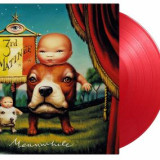
Third Matinee released only one album, Meanwhile, which was released in 1994. It features artwork by Mark Ryden, who is also known as “the godfather of pop surrealism” and mastered the Lowbrow style. He previously designed artwork for Aerosmith’s Love In An Elevator, Michael Jackson’s Dangerous, and One Hot Minute by Red Hot Chili Peppers.
`Gentle Confrontation', Loraine James's third Hyperdub album, opens a new chapter of her real and sonic life in which she examines her past and present. It's a positively languid, enjoyably disjointed set made while listening to her teenage favourites; math rock and emo-electronic such as DNTEL, Lusine and Telefon Tel Aviv. The album also features an ever more diverse set of peers, placing them in her unusual musical settings and drawing out sensitive and reflexive performances. At other times the album stretches out into a drifting ambience as if seeking a sense of bliss in the everyday. `Gentle Confrontation' is about relationships (especially familial), understanding, and giving back a little grace and care, while the tone of the record criss-crosses watery ambience with denatured rhythm and asmr beats. These 16 tracks are Loraine's best work yet, and a personal and musical leap forward, delivering a totally unique vision of electronic pop music.
Fachwerk boss Mike Denhert rolls up on TECH-UM 006 with for another heavy selection of intuitive techno jams on his 'TESTET' EP. With the focus squarely on the dance floor the Berlin-born wizard's latest creations makes for another unique voyage into cutting edge techno. Kostik with its dark wall of sound opens the release sporting an gargantuan bassline and metronomic percussion that resonates through the speakers. Freakin' Me offers a slow and low machine funk strut, with its heads-down groove and sassy vocal chops. On the flip Mike hits out hard with Mino. A heady concoction that's one part Chicago, one part Detroit, one part Berlin, coming together to create the perfect party piece. Dehnert then closes with one final gem. Sampling a broken escalator from a NYC train station, he engineers layer upon layer of mechanical madness. Creative clanging. Welding sounds and strikes like a vibrating visionary, he presents a final silvery sonic sensation.
out of Stock
Last delivered 3 years ago available to reorder, subject to availability
The classic quote originally coined at the DMC World DJ Championships and now an eye-catching design that will enhance the features of your decks.Made from the finest but strongest felt material, DMC slipmats are the no.1 choice for djs and vinyl lovers across the World.Dependable & hard wearing, they are also resistant to dust & other particles, so will not scuff, scratch or damage vinyl.Great for your home, studio, club or in competition.DMC's superior slipmats are your turntable and vinyl's best friend.
Vinyl was made in two versions - black and limited to 100 copies black&white vinyl. Both 180g.
The debut album from our specialist in bass sounds from Wrocław - TVB. AAfter many bootlegs and two acclaimed EPs (including official Sam Binga remix), the time has come for the official cross-genres long play, where, apart from solo tracks, there are many vocal guests - Mila, Bryndal, Cheeba, Krzaquu, Marceli Bober and JupiJej. An amazing mix of experienced MCs with a new generation of artists.
"The Very Bass" LP is a fresh club sound inspired by the British wave of bass music, which resulted in a mix of 2step, UK garage, dubstep and drum'n'bass.
Vinyl was made in two versions - black and limited to 100 copies black&white vinyl. Both 180g.
The debut album from our specialist in bass sounds from Wrocław - TVB. AAfter many bootlegs and two acclaimed EPs (including official Sam Binga remix), the time has come for the official cross-genres long play, where, apart from solo tracks, there are many vocal guests - Mila, Bryndal, Cheeba, Krzaquu, Marceli Bober and JupiJej. An amazing mix of experienced MCs with a new generation of artists.
"The Very Bass" LP is a fresh club sound inspired by the British wave of bass music, which resulted in a mix of 2step, UK garage, dubstep and drum'n'bass.
ENEMY, the trio of drummer James Maddren, pianist Kit Downes and bassist Petter Eldh make their We Jazz Records debut with their third album The Betrayal, out 22 September 2023. After their self-titled debut (Edition, 2018) and the follow up (Vermillion, ECM 2022), the explosive yet lyrical trio is seeking new directions with the 12-track new record, arguably their strongest yet.
ENEMY, the trio of drummer James Maddren, pianist Kit Downes and bassist Petter Eldh make their We Jazz Records debut with their third album The Betrayal, out 22 September 2023. After their self-titled debut (Edition, 2018) and the follow up (Vermillion, ECM 2022), the explosive yet lyrical trio is seeking new directions with the 12-track new record, arguably their strongest yet.
Seit mehr als 35 Jahren sind BONFIRE der Inbegriff von "Hard'n'Heavy made in Germany". Jetzt veröffentlichen sie ihre beliebtesten Alben "POINT BLANK", "FIREWORKS" und "DON'T TOUCH THE LIGHT" als MMXXIII Re-Recording-Versionen mit einem komplett neuen Artwork! Erstmals digital bei allen Streaming-Anbietern, als farbig limitierte und nicht limitierte Vinyl und als CD-Digipack verfügbar. In ihrer Karriere sammelten Bonfire mehrere Millionen Streams und Plays und erreichten mit einer ihrer letzten Veröffentlichungen "Fistful Of Fire" Platz 35 in den deutschen Albumcharts und stiegen auch in der Schweiz auf Platz 43 ein.
Seit mehr als 35 Jahren sind BONFIRE der Inbegriff von "Hard'n'Heavy made in Germany". Jetzt veröffentlichen sie ihre beliebtesten Alben "POINT BLANK", "FIREWORKS" und "DON'T TOUCH THE LIGHT" als MMXXIII Re-Recording-Versionen mit einem komplett neuen Artwork! Erstmals digital bei allen Streaming-Anbietern, als farbig limitierte und nicht limitierte Vinyl und als CD-Digipack verfügbar. In ihrer Karriere sammelten Bonfire mehrere Millionen Streams und Plays und erreichten mit einer ihrer letzten Veröffentlichungen "Fistful Of Fire" Platz 35 in den deutschen Albumcharts und stiegen auch in der Schweiz auf Platz 43 ein.
Seit mehr als 35 Jahren sind BONFIRE der Inbegriff von "Hard'n'Heavy made in Germany". Jetzt veröffentlichen sie ihre beliebtesten Alben "POINT BLANK", "FIREWORKS" und "DON'T TOUCH THE LIGHT" als MMXXIII Re-Recording-Versionen mit einem komplett neuen Artwork! Erstmals digital bei allen Streaming-Anbietern, als farbig limitierte und nicht limitierte Vinyl und als CD-Digipack verfügbar. In ihrer Karriere sammelten Bonfire mehrere Millionen Streams und Plays und erreichten mit einer ihrer letzten Veröffentlichungen "Fistful Of Fire" Platz 35 in den deutschen Albumcharts und stiegen auch in der Schweiz auf Platz 43 ein.
Seit mehr als 35 Jahren sind BONFIRE der Inbegriff von "Hard'n'Heavy made in Germany". Jetzt veröffentlichen sie ihre beliebtesten Alben "POINT BLANK", "FIREWORKS" und "DON'T TOUCH THE LIGHT" als MMXXIII Re-Recording-Versionen mit einem komplett neuen Artwork! Erstmals digital bei allen Streaming-Anbietern, als farbig limitierte und nicht limitierte Vinyl und als CD-Digipack verfügbar. In ihrer Karriere sammelten Bonfire mehrere Millionen Streams und Plays und erreichten mit einer ihrer letzten Veröffentlichungen "Fistful Of Fire" Platz 35 in den deutschen Albumcharts und stiegen auch in der Schweiz auf Platz 43 ein.
Seit mehr als 35 Jahren sind BONFIRE der Inbegriff von "Hard'n'Heavy made in Germany". Jetzt veröffentlichen sie ihre beliebtesten Alben "POINT BLANK", "FIREWORKS" und "DON'T TOUCH THE LIGHT" als MMXXIII Re-Recording-Versionen mit einem komplett neuen Artwork! Erstmals digital bei allen Streaming-Anbietern, als farbig limitierte und nicht limitierte Vinyl und als CD-Digipack verfügbar. In ihrer Karriere sammelten Bonfire mehrere Millionen Streams und Plays und erreichten mit einer ihrer letzten Veröffentlichungen "Fistful Of Fire" Platz 35 in den deutschen Albumcharts und stiegen auch in der Schweiz auf Platz 43 ein.
Seit mehr als 35 Jahren sind BONFIRE der Inbegriff von "Hard'n'Heavy made in Germany". Jetzt veröffentlichen sie ihre beliebtesten Alben "POINT BLANK", "FIREWORKS" und "DON'T TOUCH THE LIGHT" als MMXXIII Re-Recording-Versionen mit einem komplett neuen Artwork! Erstmals digital bei allen Streaming-Anbietern, als farbig limitierte und nicht limitierte Vinyl und als CD-Digipack verfügbar. In ihrer Karriere sammelten Bonfire mehrere Millionen Streams und Plays und erreichten mit einer ihrer letzten Veröffentlichungen "Fistful Of Fire" Platz 35 in den deutschen Albumcharts und stiegen auch in der Schweiz auf Platz 43 ein.
SHAFTY was a house music project made in Italy by Andrea Gemolotto and Ralf. They both can be considered two pioneers of the early italo house scene, Gemolotto already made a big hit
in 1989, Sueno Latino' , and he also won the italian DMC Championship as Cutmaster-G.Antonio Ferrari, aka Dj Ralf , has been a nightclubbing icon for almost 30 years. Since 1987 he has remained a key element of the Italian house music scene, taking his signature style to clubs all over Europe and the world. Deep Inside (Of You)' was the first release on Heartbeat catalogue (1991), and it's now officially repressed by Groovin Recordings (all tracks have also been remastered).
The Keplar label presents the next instalment in a series of reissues from the catalogue of Sasu Ripatti’s seminal Vladislav Delay project. Originally released on Mille Plateaux, the vinyl edition of »Entain« from 2000 omitted two shorter tracks and included all others in an abridged form. With this reissue, the full album as it was pressed on CD is finally made available on vinyl. Besides a new remaster by Kassian Troyer, it was also given new cover artwork by Marc Hohmann that picks up on that of the »Whistleblower« reissue, released in early 2023 by Keplar. This serial visual approach highlights the conceptual continuity between those masterful explorations of the interplay between dub techniques, noise, and repetition.
Ripatti himself had reworked material from 1999’s »Ele« album for the release of »Entain,« which means that it can be considered the debut album proper of his Vladislav Delay project. It saw the Finnish artist aim more vigorously for abstraction than in his earlier releases as Vladislav Delay for labels such as Chain Reaction, which were collected on the iconic »Multila« compilation in 2000; another milestone from his back catalogue that has been reissued by Keplar in recent times. To mark this special occasion, »Multila« will be repressed by Keplar with a new artwork that matches the new design of »Whisteblower« and »Entain«.
»Multila« and »Entain« correspond with each other conceptually as much as they seem to differ on a musical level. The material on »Multila« was clearly indebted to the Berlin dub techno sound, marked by its grainy and at times abrasive sonic aesthetics. From the very first moments of the 22-minute long opener »Kohde« however, it becomes clear that »Entain« takes things further away from the dancefloor, aiming less for physical impact than for intellectual stimulation. A sort of electronic minimal music, it was primarily interested in letting discrete elements freely come into play with one another.
Much like »Multila,« however, »Entain« highlighted the subtle differences embedded in what only feels like repetitive music. Of course the massive bassline and ghostly dub riddims that permeate »Notke« as well as the deconstructed beat at the core of »Ele« still hint at Ripatti’s roots in beat-driven music. However, they also make his artistic transformation audible by turning their sources of inspirations into something entirely unheard of. »Entain« took the dub techno formula further than any other record before it—onwards into the realms of pure abstraction.
out of Stock
Last delivered 3 months ago available to reorder, subject to availability
Curated by 78-rpm record collector Pat Conte, The Secret Museum of
Mankind: Atlas of Instruments - Fiddles, Vol 1 continues the legendary
series and seeks to show the diverse range of fiddle sounds and styles
developed and practiced across the globe
The compilation, drawn from Conte's pioneering and remarkable personal
collection of 78- rpm discs recorded in the 1920's-1950's, presents fiddle music
recorded across the world from Crete to Madagascar, Mexico, England, Sicily,
Norway, India, the USA, Cape Verde, China and more.
The album is available via digital download and on vinyl, in a beautiful gatefold
package. It includes a liner notes booklet by curator Pat Conte, original drawings
of rare and unique fiddles in Conte's collection, by artist Jeff Tocci, and beautifully
remastered audio by Don Fierro. Additionally, the interior gatefold design features
a selection of historic images of fiddlers, also curated by Conte and drawn from
his collection.
The second instalment of Healthy Scratch comes direct from Phoenix Arizona via the godson of house, Kareem Ali. In short order, Kareem has ascended with a relentless production output and focus like none-other.
Here we present his first vinyl release as well as what may be the only release, he does outside of Cosmoflux, his personal imprint. A producer of all music, for us he’s made 4 house tracks, perfect for any occasion and sure to get your feet moving, in the living room or on the dance floor.
out of Stock
Last delivered 11 months ago available to reorder, subject to availability
The story of the invention of the term, 'deepfunk' is probably only known among fans and practitioners of this niche-genre. In short, it all started in the 1990s when DJs like Keb Darge, Mark 'Snowboy' Cotgrove and others began spinning obscure and feral Funk 45 RPM singles from local American bands, ostensibly generating another sub-category branch off of the mighty Northern Soul tree. The dance-club phenomenon inevitably spilled over to contemporary groups on the funk scene which immediately tried to record their music the way their idols did. The 'rare groove' and 'acid jazz' movements had run their course and there was a concerted effort to reinstate primitive idiomatic styles and techniques into the music, most notably by 90s funk collective The Poets of Rhythm. As more years passed by the number of bands steadily increased (although in tiny numbers, compared to the mainstream market). Almost every country had a representative with the majority of them coming from the United Kingdom. The deepfunk sound was still a niche, however a very few bands made it onto the mainstream charts, most notably Sharon Jones & the Dap Kings.
At the height of the retro-soul movement a questionable development took place. As more bands arrived on the scene, the production became more and more polished and pop-ish. Some of that squeaky-clean tidiness began to creep into the recordings, encouraged in part by the signature sounds of the digital recording technology available at that time. Some bands even tried to jump onto the possibility of promoting their music as 'deepfunk' although they were actually playing slick, funky pop music. This way some people who thought they were listening to raw, energetic funk actually felt quite ambushed when hit with real deepfunk. In fact, a certain percentage of funk music produced within the past 20 years does not deserve to be described as 'deepfunk' at all. Fortunately there were (and are) some pleasant exceptions which did not just imitate but actually rendered amazing funk music just like some of the finest funk combos of the 1960s and 70s.
One of those creative minds is without a doubt Joel Ricci aka Lucky Brown. Originally from Seattle, Washington, USA, he has enriched the deepfunk community since the mid-2000s with his stellar abilities. He is not only an amazing musician playing multiple instruments, but also a brilliant composer, arranger, and producer too. But for us here at Tramp he is much more, a close friend and remarkable human being. Whenever we were struggling, whether with the label or in private life, Joel and his musical work helped us to overcome everything and to keep going our path.
So here we are in 2023. The songs you are listening to right now are the complete Space Dream collection, split into two parts, representing the two living-room recording sessions from which his 2011 Tramp Records debut was compiled. Each fully remastered album contains unreleased material and comes with brand new, beautifully reimagined artwork by Ricci himself, housed in an authentic 1960s tip-on cover. A first class product from a first class musician for the discerning funk enthusiast.
out of Stock
Last delivered 3 years ago available to reorder, subject to availability
The story of the invention of the term, 'deepfunk' is probably only known among fans and practitioners of this niche-genre. In short, it all started in the 1990s when DJs like Keb Darge, Mark 'Snowboy' Cotgrove and others began spinning obscure and feral Funk 45 RPM singles from local American bands, ostensibly generating another sub-category branch off of the mighty Northern Soul tree. The dance-club phenomenon inevitably spilled over to contemporary groups on the funk scene which immediately tried to record their music the way their idols did. The 'rare groove' and 'acid jazz' movements had run their course and there was a concerted effort to reinstate primitive idiomatic styles and techniques into the music, most notably by 90s funk collective The Poets of Rhythm. As more years passed by the number of bands steadily increased (although in tiny numbers, compared to the mainstream market). Almost every country had a representative with the majority of them coming from the United Kingdom. The deepfunk sound was still a niche, however a very few bands made it onto the mainstream charts, most notably Sharon Jones & the Dap Kings.
At the height of the retro-soul movement a questionable development took place. As more bands arrived on the scene, the production became more and more polished and pop-ish. Some of that squeaky-clean tidiness began to creep into the recordings, encouraged in part by the signature sounds of the digital recording technology available at that time. Some bands even tried to jump onto the possibility of promoting their music as 'deepfunk' although they were actually playing slick, funky pop music. This way some people who thought they were listening to raw, energetic funk actually felt quite ambushed when hit with real deepfunk. In fact, a certain percentage of funk music produced within the past 20 years does not deserve to be described as 'deepfunk' at all. Fortunately there were (and are) some pleasant exceptions which did not just imitate but actually rendered amazing funk music just like some of the finest funk combos of the 1960s and 70s.
One of those creative minds is without a doubt Joel Ricci aka Lucky Brown. Originally from Seattle, Washington, USA, he has enriched the deepfunk community since the mid-2000s with his stellar abilities. He is not only an amazing musician playing multiple instruments, but also a brilliant composer, arranger, and producer too. But for us here at Tramp he is much more, a close friend and remarkable human being. Whenever we were struggling, whether with the label or in private life, Joel and his musical work helped us to overcome everything and to keep going our path.
So here we are in 2023. The songs you are listening to right now are the complete Space Dream collection, split into two parts, representing the two living-room recording sessions from which his 2011 Tramp Records debut was compiled. Each fully remastered album contains unreleased material and comes with brand new, beautifully reimagined artwork by Ricci himself, housed in an authentic 1960s tip-on cover. A first class product from a first class musician for the discerning funk enthusiast.
out of Stock
Last delivered 3 years ago available to reorder, subject to availability
When one of South Africa's most sought after trumpet players steps forward after a career alongside the very best in the International jazz scene, you know it's going to be a special record.
Dennis Mpale was one of South Africa's heavyweights. You'll find his name springing up on every important South African jazz record and billing since the 1960's. Chris McGregor's iconic Jazz/The African Sound LP, Abdullah Ibrahim's Dollar Brand, Barney Rachabane in the highly influential ensemble Roots, and early work in house bands appearing alongside Nick Moyake in The Soul jazz Men to name just a few. His trumpet playing had character, an extension of the body and amplifier of that great South African sound.
Leaving South Africa during Apartheid as a strong supporter and member of the ANC, Dennis made London his home, joining the newly established SA Jazz scene and standing in solidarity against the oppressions back in Africa.
Moving between London and South Africa during the 70's and 80's It wasn't till the early 1990's when Dennis finally settled again to make his biggest transition to solo artist, redefining his Jazz past and putting a heavy kwaito infused house slammer on the agenda. 1994s 'Paying My Bills' (a title maybe more appropriate now than it ever has been) is a mighty jazz kwaito house effort: From the heavy synth beat and gorgeous floating solo opener of 'Paying My Bills', to the highly infectious vocal phrasing on thumping house anthem 'Take My Time'. Paying My Bills takes the sensibilities of a jazz maestro and pairs it with one of South Africa's biggest producers Peter 'Hitman' Moticoe, creating the perfect recipe for a certified summer slammer.
Having previously only ever been released on CD, this is the first ever vinyl pressing of the album (hazy early test pressings lurk on a small number of lucky shelves). Vinyl mastering is handled by The Carvery's very own Frank Merritt here in London, with the resulting tracks generously split over 2 discs to fully appreciate the swampy heavy dub bass drolls for full dancefloor effect. It's loud and punchy and makes space for those glorious trumpet improvisations while keeping the synth refrains and heavy bass thumping.
Early plays include resident NTS DJ's and a feature on Palms Trax Radio 1 residency with surely more support to follow.
out of Stock
Last delivered 2 years ago available to reorder, subject to availability
Death Is Not The End sub-label 333 turns up the gold again with this repro of the much in-demand Flames cut of Nairobi Sisters' Promised Land. Sampled by Q-Tip for "Whateva Will Be" (appearing on ATCQ's final long-player) and on a range of earlier 90s boom-bap era productions, it is not at all hard to figure out why it's a coveted record. That break is as low-slung and funky as it gets, and best showcased on the superbly stripped-back dub on the flip.
The Nairobi Sisters were singers Terrie Nairobi and Judy Mowatt (later of the I-Threes, alongside Rita Marley & Marcia Griffiths). Promised Land was originally recorded together with The Gaytones for Sonia Pottinger's Gay Feet label, with this later version cut for Winston Jones' Brooklyn-based Flames Records. It is issued here under license from producer and songwriter Jones - the original singer and composer of Stop That Train (later made world-famous by Keith & Tex's version) with his Spanishtonians in the early 1960s - who later moved from JA to NYC where he established and ran the Flames label, a core imprint in Brooklyn's reggae scene from the mid-1970s until the early 1990s. 333 has licensed a range of Flames-era productions from the now Texas-based Jones, so keep and eye out for more as it comes... but for now, jump on this before it's gone!
out of Stock
Last delivered 18 months ago available to reorder, subject to availability
After years of unforgettable releases on the mighty Hospital Records,
Cambridge-raised producer Hugh Hardie, having recently made the move over to Soulvent Records, prepares to deliver his third and arguably most exciting album to date in 'Juicebox'
With the tone set by the first two singles 'Blush' featuring Zara Kershaw and 'Face Off' with PAV4N of Foreign Beggars, 'Juicebox' highlights the remarkable extent of Hugh's musical prowess and boasts a wealth of rich collaborations, including the likes of Footsie, Degs, Killa P and more.
out of Stock
Last delivered 2 years ago available to reorder, subject to availability
The early days of "Baltimore Club Music" saw it played at popular venues like Club Fantasy, The Ozone, Hammerjack's, and Paradox. DJs Sean Marshall, Marc Henry, Shawn Caesar (at DJs Outlet in Old Towne Mall), Scottie B and Danny Class (at Inner City Records), Technics (at Music Liberated), DJ Patrick (at Sound of Baltimore), and Diamond K and Kenny B (at Electronics & More) all contributed to the mix of hip-hop, house music and homemade beats that made up this new sound. "Booty Mission" (1992) is a creation of Shawn Caesar and Ty "Flex" James and is considered one of the most influential releases, an essential for any Baltimore Club Music fan. It is sure to remain timeless.
out of Stock
Last delivered 3 years ago available to reorder, subject to availability
Madison Beer veröffentlicht "Home To Another One" als Leadsingle ihres zweiten Albums. Inspiriert von Lana Del Rey und Tame Impala, präsentiert sie mit ihrer unverkennbaren Stimme einen einzigartigen Alternative-Pop-Sound. Die Single handelt von einem Treffen mit ihrem über sie hinweggekommenen Ex-Freund. Mit nostalgischem Unterton fesselt der eingängige Song die Zuhörer:innen mit dem emotionalen Text und bildet den Start zum neuen Album "Silence Between Songs",
Released via RCA Records - ''Silence Between Songs'' is Madison Beer's second major label full length release and a sonic departure from her previous efforts. The x14 song album features the singles 'Home to Another One', 'Dangerous', 'Reckless', and 'Showed Me (How I Fell In Love With You)', a beautiful interpretation of the Turtles classic 'You Showed Me'.
BOTANICA is the newly established Japanese label created by DJ/ Producer, Iori Wakasa. It was formed for him to utilize it as a foundation for the realization of his own unique, artistic expression.
And now, he has the pleasure to announce his label’s inaugural title with the release of his own BOTANICA EP.
Born in 1988 in a rural Japanese city surrounded by mountains and the sea with a mild climate, Iori grew up playing RPGs with a father who was a devoted game aficionado. And he was introduced to electronic music through game music from an early age and formed his musical sensibilities through playing the classical piano around the same time.
Influenced by the spirituality and idiosyncrasies of punk rock and ethnic and indigenous music in his youth, also gradually influenced by the Tokyo club scene and the music, it didn't take him long before
he made the choice to start DJing at the age of 17 and soon afterwards, started exploring the path of music production as a form of self-expression.
Iori set up Botanica to convey 2 main concepts of 'presenting music that provides each listener with their own viewpoint' and ‘to construct a fusion between 'nature' and 'man-made objects and human
activity’. Through the experience of traveling around Japan, Europe and Asia and connecting with people of different languages and cultures, he became to appreciate that music transcends all languages and grooves, and the framework in which he would like to shape his perspective and embody it as his way of life is what he envisions as the vital expression for BOTANICA, The two tracks and the artwork included in this first EP are the first steps towards hopefully chronicling the story of the vortex that he resides in now and the new forest that he plans to weave in the future with his label.
'The Pure Land' means in Japanese 'Gokuraku-Jodo (= a space where you can live in bliss)', but in English it is closer to 'utopia' or 'paradise'. However, 'The Pure Land' is a musical work that evokes a
hypnotic and pleasant euphoria through the gradual layering of multiple rhythms and soft particles of spatial sound design. It is also shaped with the aim of liberating the listener and guiding them towards their primal self.
In contrast, 'Lunar Down' expresses the changes that occur in the human state of mind during the extended period from moonrise to moonset especially when the moon sets from its zenith and is completed with a focus on maximum dance floor impact via an inner voice that resonates in the brain that echoes throughout a well-textured bass line and rhythm track.
The artwork for the front cover of this EP was created by SHINOZAKI HILOSHI, an illustrator who has been traveling and painting to express his true way of life that he learnt in the 10+ years of commuting between Tokyo (the end) and the Hawaii Islands (the beginning), and the graphic designer hiro, who stands by Iori`s side as his life partner and as the person who understands him the best. Iori`s first steps are complemented by the label design and art direction by graphic designer hiro, who stands by his side as his life partner and most understanding partner, and the proof is the physical cut, which is presented as the foundation for the future.
out of Stock
Last delivered 19 months ago available to reorder, subject to availability
Woods are in bloom again, inviting you to disappear into a new spectrum of colors and sounds and dreams on Perennial. Formed in Brooklyn in 2004, Woods have matured into a true independent institution, above and below the root, reliably emerging every few years with new music that grows towards the latest sky. Operating the Woodsist label since 2006 and curating the beloved homespun Woodsist Festival for the musical universe they’ve built, Perennial is the sound of a band on the edge of their 20th anniversary and still finding bold new ways to sound like (and challenge) themselves. Perennial grew from a bed of guitar/keyboard/drum loops by Woods head-in-chief Jeremy Earl, a form of winter night meditation that evolved into an unexplored mode of collaborative songwriting. With Earl’s starting points, he and bandmates Jarvis Taveniere and John Andrews convened, first at Earl’s house in New York, then at Panoramic House studio in Stinson Beach, California, site of sessions for 2020’s Strange To Explain. With a view of the sparkling Pacific and tape rolling, they began to build, jamming over the loops, switching instruments, and developing a few dozen building blocks. The album’s resulting 11 songs, 4 of them instrumental, are in the classic Woods mode--shimmering, familiar, fractionally unsettling--but with the half-invisible infinity boxes of Earl’s loops burbling beneath each like a mysterious underground source. From source to seed to bloom, each loop unfolds into something unpredictable, from the jeweled pop of the aching “Little Black Flowers” to the ecstatic starlit freak-beat of “Another Side.” They are blossomings both far-out and comforting, like the Mellotronic cloud-hopping of “Between the Past,” or sometimes just plain comforting, like the widescreen snowglobe fantasia of the instrumental “White Winter Melody,” touched by Connor Gallaher’s pedal steel. Woods have long used the studio as a place of songwriting, naming 2007’s At Rear House after their shared dwelling and recording space. But Perennial also carries with it an even longer view of Woods. Emerging from the process alongside the music was Earl’s reflection that “perennial plants and flowers are nature’s loops,” an idea rolling under the album’s lyrics like the loops themselves. It certainly applies to the band, too, who have quietly tended to a long, committed project of being a band in the weird-ass 21st century, both individually and communally. Though separated by coasts, the communal sprit carries through Earl, Taveniere, and Andrews’ collaboration, a living embodiment of the freedoms rediscovered every time a new collectively created piece of music emerges. For nearly two decades, Woods have survived subgenres, anchored in the fertile soil below hashtags like lo-fi and freak-folk and psychedelic and indie, and built a shared history that’s something to marvel at. As the flagship band for Woodsist, they’ve accumulated a striking extended family of collaborators (and Woods alum) that have made the label one of the most dependable imprints in the kaleidoscopic low-key underground. It’s a glow that’s transferred whole to the blissed-out Woodsist Fests held in Accord, New York in recent years, which have folded in a wide range of diverse sounds, from the the jazz cosmoverse of the Sun Ra Arkestra and adventurous legends Yo La Tengo, to a hard-to-even-count family tree of contemporaries, like Kevin Morby (who served a few tours of duty as Woods bassist) and Kurt Vile (who released his 2009 debut on Woodsist), a living community in sound. Perennial carries all of this, shaped by decades, but made in the moment, and here right now. The smell of the flowers doesn’t remain, but sometimes the flowers do. Jesse Jarnow Recorded and mixed by Jarvis Taveniere at Panoramic House in Stinson Beach, CA with additional recording at The Ship in Los Angeles, CA and Cottekill Bird Sanctuary in Stone Ridge, NY. Produced by Jarvis Taveniere and Jeremy Earl. Mastered by Timothy Stollenwerk at Stereophonic Mastering in Portland, OR. Jeremy Earl - vocals, guitars, drums, percussion, sk-5, mellotron, vibraphone, autoharp, loops Jarvis Taveniere - guitar, bass, upright bass, hammond, vocals John Andrews - piano, organs, mellotron, drums, vocals Connor Gallaher - Pedal Steel Kyle Forester - sax, wurlitzer
Woods are in bloom again, inviting you to disappear into a new spectrum of colors and sounds and dreams on Perennial. Formed in Brooklyn in 2004, Woods have matured into a true independent institution, above and below the root, reliably emerging every few years with new music that grows towards the latest sky. Operating the Woodsist label since 2006 and curating the beloved homespun Woodsist Festival for the musical universe they’ve built, Perennial is the sound of a band on the edge of their 20th anniversary and still finding bold new ways to sound like (and challenge) themselves. Perennial grew from a bed of guitar/keyboard/drum loops by Woods head-in-chief Jeremy Earl, a form of winter night meditation that evolved into an unexplored mode of collaborative songwriting. With Earl’s starting points, he and bandmates Jarvis Taveniere and John Andrews convened, first at Earl’s house in New York, then at Panoramic House studio in Stinson Beach, California, site of sessions for 2020’s Strange To Explain. With a view of the sparkling Pacific and tape rolling, they began to build, jamming over the loops, switching instruments, and developing a few dozen building blocks. The album’s resulting 11 songs, 4 of them instrumental, are in the classic Woods mode--shimmering, familiar, fractionally unsettling--but with the half-invisible infinity boxes of Earl’s loops burbling beneath each like a mysterious underground source. From source to seed to bloom, each loop unfolds into something unpredictable, from the jeweled pop of the aching “Little Black Flowers” to the ecstatic starlit freak-beat of “Another Side.” They are blossomings both far-out and comforting, like the Mellotronic cloud-hopping of “Between the Past,” or sometimes just plain comforting, like the widescreen snowglobe fantasia of the instrumental “White Winter Melody,” touched by Connor Gallaher’s pedal steel. Woods have long used the studio as a place of songwriting, naming 2007’s At Rear House after their shared dwelling and recording space. But Perennial also carries with it an even longer view of Woods. Emerging from the process alongside the music was Earl’s reflection that “perennial plants and flowers are nature’s loops,” an idea rolling under the album’s lyrics like the loops themselves. It certainly applies to the band, too, who have quietly tended to a long, committed project of being a band in the weird-ass 21st century, both individually and communally. Though separated by coasts, the communal sprit carries through Earl, Taveniere, and Andrews’ collaboration, a living embodiment of the freedoms rediscovered every time a new collectively created piece of music emerges. For nearly two decades, Woods have survived subgenres, anchored in the fertile soil below hashtags like lo-fi and freak-folk and psychedelic and indie, and built a shared history that’s something to marvel at. As the flagship band for Woodsist, they’ve accumulated a striking extended family of collaborators (and Woods alum) that have made the label one of the most dependable imprints in the kaleidoscopic low-key underground. It’s a glow that’s transferred whole to the blissed-out Woodsist Fests held in Accord, New York in recent years, which have folded in a wide range of diverse sounds, from the the jazz cosmoverse of the Sun Ra Arkestra and adventurous legends Yo La Tengo, to a hard-to-even-count family tree of contemporaries, like Kevin Morby (who served a few tours of duty as Woods bassist) and Kurt Vile (who released his 2009 debut on Woodsist), a living community in sound. Perennial carries all of this, shaped by decades, but made in the moment, and here right now. The smell of the flowers doesn’t remain, but sometimes the flowers do. Jesse Jarnow Recorded and mixed by Jarvis Taveniere at Panoramic House in Stinson Beach, CA with additional recording at The Ship in Los Angeles, CA and Cottekill Bird Sanctuary in Stone Ridge, NY. Produced by Jarvis Taveniere and Jeremy Earl. Mastered by Timothy Stollenwerk at Stereophonic Mastering in Portland, OR. Jeremy Earl - vocals, guitars, drums, percussion, sk-5, mellotron, vibraphone, autoharp, loops Jarvis Taveniere - guitar, bass, upright bass, hammond, vocals John Andrews - piano, organs, mellotron, drums, vocals Connor Gallaher - Pedal Steel Kyle Forester - sax, wurlitzer
CELESTE have been breaking the outer boundaries of heavy music for over fifteen years. When they first evolved from the Lyon hardcore punk scene, they were absolutely brutal and entirely unique, delivering extremity on their own terms that they pushed further and further with each successive album. “We just wanted to get darker and more violent,” says drummer Antoine Royer, until 2017’s Infidèle(s) saw the incorporation of a more melodic streak. Their most focussed record yet, it was tremendously received, critically adored, and backed with the band’s biggest shows to date.
Its follow-up was always going to be something radical. Even by their own inordinately high standards, however, new record Assassine(s) is one hell of a step forward. Even if this album still contains cyclonic walls of guitar, of battering rhythm, and passages of blissful, rushing release. it’s unlike anything the band have ever released; embracing a modern and forward-thinking production, they're just as complex but more direct, diverse and accessible than before. “Our leitmotif here was to open our minds,” says guitarist Sébastien Ducotté. “We made a real effort to think outside of our box.”
During lockdown CELESTE’s members were forced to each write individually. “We each went further into our personal, inner views of what the songs were,” says bassist and vocalist Johan Girardeau. When eventually they began sessions under producer Chris Edrich, it was gruelling. “We ended up exhausted, physically and mentally” says Johan. “There was no break in two weeks. We didn’t see the sun at all during that time. Every night we were so tired that we didn’t enjoy being together as much as we’re used to.” Nevertheless, in the same way the hardships of isolation led to richer and more complex songwriting, it’s that relentlessness that led to the record’s razor-sharp edges.
Above all else, CELESTE are innovators. Whether by pioneering French avant-garde metal when they formed at the turn of the millennium, by making their boldest leaps despite being seven albums deep into their career, or using two years away from live shows to tightly finetune their stagecraft, they refuse at all costs to rest on their laurels. There can be consequences to this instinct – fans of the band’s older work might be thrown off by their constant shifts of pace – but they’re throwing caution to the wind. A bit of backlash “would be a good thing, because it would mean that we’ve really changed,” says Guillaume . “It's not disrespectful, it's just that we never made music to please people, but just to enjoy what we're doing.” In the end, CELESTE are a band so forward-thinking that they can only be judged on the strength of their latest work. And when it comes to a record as bold as Assassine(s), they’ve hit a whole new peak entirely.
Cypress Hill’s self-titled debut album was hard as nails, with very few pop concessions. There was humor, but it was laced by cackling, homicidal sneering. Not well known outside of the hardcore hip-hop scene at first, faces of the three group members weren’t usually shown clearly in press photos; they preferred the shadows. As their first singles began hitting the airwaves and record racks, the press and music fans started to take notice.
From the opening notes of the group’s first single, “The Phuncky Feel One,” to deeper album cuts like “Stoned Is The Way Of The Walk” and “Tres Equis,” it was clear that Cypress Hill was something different. And very, very dope. The world Cypress Hill espoused was gang-ridden and far from cheery, but they managed to laugh through the pain. Lead rapper B-Real took each fuzzed-out, rock-hard DJ Muggs beat as a challenge, jumping around it like a spark off a joint as it makes its way to the concrete. MC Sen Dog always had B-Real’s back, to bring intensity and a no-bullshit gruffness that made the group both menacing and unpredictable.
When they introduced percussionist Eric Bobo to the mix in the early 90s, it brought new dimension to the band, making their live performances one of the most unique and accomplished shows in hip-hop. Journalist and author Chris Faraone highlights the group’s relationship in the reissue’s liner notes (which is included only in limited edition Skull) saying, “By the late ‘80s the undisputed Cypress unit finally formed. B and Sen realized that their diametric styles - the latter’s deep wrangle, the former’s inimitable high notes - complemented one another righteously. By then Muggs had bangers in the bag, as well as industry experience from a jaunt with the New York duo 7A3. B and Sen waited while Muggs messed with 7A3, and in that time began to build the blueprint for their raucous and weeded no-holds-barred style. Besides getting schooled on industry pitfalls, Muggs had also grown into hip-hop’s most formidable young producer, while straddling the bi-coastal gap.”
Cypress Hill’s debut went gold by the end of 1991 and has since pushed past double platinum status, making it the first album for a Latino-American hip hop group to do so. The album received raves from the likes of Rolling Stone and the Los Angeles Times, saw a #1 Hot Rap Single with the release of “The Phuncky One” and helped the band win Artist Of The Year at the 1992 Source Awards. After 25 years, it should come as no surprise that Cypress Hill is a cornerstone of the group’s live set to this day.
The album features 15 tracks, showcasing Bastien’s truly cinematic sound while exploring new sonic territories. The album touches on the melancholic funk drifting between voiceovers of longing and hurt, through surreal, hallucinogenic folk ballads. It’s the juxtaposition of these genres sewn together with ambient synth skits that really makes the album a musical journey. Playful and serious, as the album title suggests, Bastien manages to induce a rye smile with a tear in the eye.
In Seb’s words, “The album tells the story of a failed relationship, as the man narrators missing his other. Whilst he imagines her comforting him, before accepting the end of the relationship, and feeling that the love he feels, she never did.”
Sharing common ground with luminaries such as David Axlerod, Kate Bush, Roy Orbison, Madlib and The Delfonics; Keb plays guitar, trumpet, bass, drums, piano, flute and more Keb’s writing and recording approach is slightly unique. He explains a little about how his records sound the way they do...
“I have a lo-fi approach to recording, for me it’s about the moment, all my records are time capsules of a certain time in my life, so the sound of the recording is secondary. It’s all about heart, that’s all I’m interested in. If I get a melody I have to record it asap, if the mic isn’t plugged in I use the macbook mic, if I’m not by the computer I’ll record into my phone.
For me personally using/sampling other peoples music isn’t making your own music, using your own soul, showing your own heart, it's just my personal opinion. It’s not right for me. No slur on those that do. If there are any samples on my records, it’s me sampling me. For me, this means the music is mine. It’s ‘of me’. That’s really important for me, because I feel that’s where the honesty is. If my music sounds ‘dusty’, that’s why”.
This approach provides us with a wonderfully inclusive record. The album feels almost ‘performed’ to us, live, on each listen. Coupled with Bastien’s capacity to write music which is almost visual, the album is quite enveloping.
Bastien returns to Def Pressé with this new album after the brilliant, Holy Mountain. Released under the name Grandamme, with friend and collaborator Claudia Kane.
Guy Pedersen's magical Maxi Music, originally released on cult Parisian library label tele Music in 1972, is psyche-rock and jazz-funk gold. It's a vital Pederson outing, oscillating between the rough and the smooth, but always with those hypnotic grooves. It's a start-to-finish winner, yet the final 13-minute-long opus will blow minds. Trust!
Stirring opener, "Prétexte Pour Indicatifs" is so mighty, it was covered by Keith Mansfield on "Hot Property" from Big Business/Wind Of Change on KPM. It's a track in 4 deliberate parts, the first a rapid tour de force, the second and third presenting organ-and-wah-wah-drenched slo-mo funk workouts and the fourth a return to the frenetic energy of the opening bars. Phew, pretty sensational. "Purgatoire Mood (Interlude)" is a beautiful segue into the stunning horn-laced, swift-paced aggressive jazzy excellence of "Purgatoire Mood 1" and the more poetic "Purgatoire Mood 2". Fast-paced funk beats and dramatic interplay!
"Christophus Colombus" is another song with multiple sections; the intro a rapid wah-wah-enhanced psych-rock statement that truly thrills before settling into a more steady yet no-less unrelenting guitar-funk showcase with wordless vocals and, later, reflective guitar and piano in gorgeous harmony. Closing out this electrifying side, the elegant "Bass In Love" is a soft'n'sultry slo-mo funk instrumental, as rough cello, jazzy piano and salacious, breathy vocals combine to create the scent of lingering heat to pretty rousing effect.
Ushering in Side B, "Sing Song Bass" is a slow starter but, once the drums kick in brilliantly, we're treated to a deeply melodic, propulsive, organ-flute-piano-bass gem - it's truly memorable and absolutely fantastic. The wonky, delirious psych-pop of "Petit Moujik De Nuit" is a curiously compelling number but it serves, for us at least, only as the pre-curser to the phenomenal closing track. An absolute beast that totally slays all before it!
Yes, despite Maxi Music being that rarest of library records - a record that can stand up on its own from front to back - it really does contain that *one* absolute killer track. And Peterson saved the best until last. The real highlight - can you imagine there's better?! - is the blazing psych-rock funky burner that is the infamous 13 minute thriller "Kermesse Non Héroique". Containing a wicked flute solo it genuinely sounds like something off the first Dungen album. Yes, that good. What a way to go out!
The audio for Maxi Music has been remastered by Be With regular Simon Francis, ensuring this release sounds better than ever. Cicely Balston's expert skills have made sure nothing is lost in the cut whilst the original, iconic Tele Music house sleeve has been restored here at Be With HQ as the finishing touch to this long overdue re-issue.
out of Stock
Last delivered 3 years ago available to reorder, subject to availability
Michael Mayer’s IMARA imprint is proud to announce a reissue of German electronica maestro Schlammpeitziger’s second album, Freundlichbaracudamelodieliedgut. Originally released in 1996 by Köln’s A-Musik label, it was the first Schlammpeitziger release to signal to a much wider audience that there was something very special going on in the music of Jo Zimmermann, the mastermind behind Schlammpeitziger. And while he’s subsequently gone on to release a further eight albums for labels like Sonig, Pingipung, and Bureau B, Freundlichbaracudamelodieliedgut is where it really all started for this most singular musician, illustrator and performance artist. Named after the ‘Schlammpeitzger’ or Weather Loach, a fish that breathes through its intestines, moves through substrate, and is surprisingly sensitive to changes in barometric pressure – hence its name – Schlammpeitziger is a similarly remarkable, singular creature.
Like all Schlammpeitziger’s music, Freundlichbaracudamelodieliedgut is overflowing with melody. Using the simplest of set-ups – much of his early music was made with Casio keyboards – Zimmermann magics entire worlds of joy and melancholy. The nine songs here are both rich tributes to the joys of the everyday, and surreal fantasias. “Cosmic Fick” sails out to sea on clouds of taffy and spindrift; “Winterschlafsüßbärentraum” slips and slides around a dream aviary of the mind; the closing “Mango und Papaja auf Tobago” is a diorama spun from springs and Slinkys. Sometimes there are echoes of more peaceable Kosmische music – think Cluster circa Sowiesoso – and both the pacing and the amorphous, tactile textures sometimes recall Chris & Cosey. But Zimmermann’s unique signature is everywhere on Freundlichbaracudamelodieliedgut – simply put, no one else makes music quite as lovely and incandescent as this.
The album’s initial release coincided with an explosion of interest in the music coming out of Köln. This was a unique moment – one where pop, techno, house, ambience, avant-gardism, musique concrete, heavy DSP, and all kinds of other creative phenomena got muddied up in the ‘general jelly’ of Köln’s fast-moving, spirited musical communities. Zimmermann was closely aligned with the music coming out of the A-Musik and Sonig labels – a tightly-knit collection of artists centred around the A-Musik record store, making all kinds of weird and wonderful music, from the electronica of Mouse On Mars to the compositions of Marcus Schmickler, from the electro-acoustics of C-Schulz and Hajsch to the digitalia of FX Randomiz. Zimmermann himself would collaborate with the latter on an album under the name Holosud; friends such as Mouse On Mars and Kompakt’s Reinhard Voigt turned up on Freundlichbaracudamelodieliedgut’s remix EP.
Here, then, is one of the loveliest albums of its era, a pop-electronics album of serious play, one as moistly melancholy as it is melodically riveting. Freundlichbaracudamelodieliedgut is rare beauty indeed.
Michael Mayers Label IMARA ist stolz darauf, eine Neuauflage des zweiten Albums des deutschen Electronica-Maestros Schlammpeitziger, “Freundlichbaracudamelodieliedgut”, bekannt zu geben. Ursprünglich 1996 vom Kölner Label A-Musik veröffentlicht, war es die erste Veröffentlichung von Schlammpeitziger, die einem viel breiteren Publikum signalisierte, dass in der Musik von Jo Zimmermann, dem Mastermind hinter Schlammpeitziger, etwas ganz Besonderes vor sich ging. Obwohl er seitdem weitere acht Alben für Labels wie Sonig, Pingipung und Bureau B veröffentlicht hat, ist “Freundlichbaracudamelodieliedgut” der Ort, an dem alles für diesen einzigartigen Musiker, Illustrator und Performance-Künstler begann. Schlammpeitziger, benannt nach dem “Schlammpeitzger” oder Wetterbarsch, einem Fisch, der durch seine Därme atmet, sich durch den Untergrund bewegt und erstaunlich empfindlich auf Veränderungen im Luftdruck reagiert – daher der Name – ist ebenfalls eine bemerkenswerte, einzigartige Kreatur.
Wie alle Musik von Schlammpeitziger ist auch “Freundlichbaracudamelodieliedgut” voller Melodien. Mit einfachsten Mitteln – ein Großteil seiner frühen Musik wurde mit Casio-Keyboards gemacht – zaubert Zimmermann ganze Welten voller Freude und Melancholie. Die neun Songs hier sind sowohl reiche Hommagen an die Freuden des Alltags als auch surreale Fantasien. “Cosmic Fick” segelt auf Wolken aus Karamell und Gischt hinaus aufs Meer; “Winterschlafsüßbärentraum” schlittert und gleitet durch einen Traum-Vogelkäfig im Geist; das abschließende “Mango und Papaja auf Tobago” ist ein Diorama aus Federn und Slinkys. Manchmal gibt es Echos von friedlicherer Kosmischer Musik – denke an Cluster circa “Sowiesoso” – und sowohl das Tempo als auch die amorphen, taktilen Texturen erinnern manchmal an Chris & Cosey. Aber Zimmermanns einzigartige Signatur ist überall auf “Freundlichbaracudamelodieliedgut” zu hören – ganz einfach, niemand sonst macht Musik so lieblich und leuchtend wie er.
Die ursprüngliche Veröffentlichung des Albums fiel mit einem Aufschwung des Interesses an der Musik aus Köln zusammen. Dies war ein einzigartiger Moment – einer, in dem Pop, Techno, House, Ambient, Avantgardismus, Musique Concrete, Heavy DSP und allerlei andere kreative Phänomene sich in der “Allgemeinen Gelee” der schnelllebigen, lebendigen musikalischen Gemeinschaften von Köln vermischten. Zimmermann stand in enger Verbindung mit der Musik der Labels A-Musik und Sonig – eine eng verbundene Gruppe von Künstlern rund um das A-Musik-Plattengeschäft, die alle möglichen seltsamen und wundervollen Musikrichtungen produzierten, von der Electronica von Mouse On Mars bis zu den Kompositionen von Marcus Schmickler, von der Elektroakustik von C-Schulz und Hajsch bis zur Digitalia von FX Randomiz. Zimmermann selbst würde mit letzterem an einem Album unter dem Namen Holosud zusammenarbeiten; Freunde wie Mouse On Mars und Reinhard Voigt von Kompakt tauchten in der Remix-EP von “Freundlichbaracudamelodieliedgut” auf.
Hier also eines der schönsten Alben seiner Zeit, ein Pop-Electronics-Album voller ernsthaftem Spiel, so feucht melancholisch wie melodisch fesselnd. “Freundlichbaracudamelodieliedgut” ist wahrlich eine seltene Schönheit.
out of Stock
Last delivered 3 years ago available to reorder, subject to availability
Nonesuch releases Sorry I Haven’t Called, the new album by Vagabon, the moniker of Lætitia Tamko. Co-produced by Tamko and Rostam (Vampire Weekend, Haim, Clairo), it finds Tamko reinventing herself once again and features the most playful and adventurous music of her career, as evidenced by its lead track and opening song ‘Can I Talk My Shit?’. Vagabon has also announced an autumn tour that includes a headline run in the US, as well as European dates with Weyes Blood.
“I didn’t feel like being introspective,” says Tamko of her new album. “I just wanted to have fun.” Following her intimate 2017 debut Infinite Worlds, the New York artist favoured expansive and evocative electronic textures in her breakthrough 2019 self-titled follow-up. But her latest album feels like a wholly new era for Tamko, one that’s transformational and uncompromising. Across 12 vibrant tracks she wrote and produced primarily in Germany, she channels dance music and effervescent pop through her own confident sensibilities. These conversational songs are alive and unselfconscious, a document of an artist fully embracing her vision and reclaiming her joy.
The first words she sings on the album are, “Can I talk my shit? / I got way too high for this.” It’s a statement of purpose for the rest of the album that this is an unapologetic artist. “This whole record is how I talk to my friends and how to talk to my lovers,” says Tamko. “I think honesty and conversational songwriting can become poetry. There’s beauty in plainly speaking without metaphors and without flowery imagery.”
The story of Sorry I Haven’t Called started in grief after Tamko’s best friend died in 2021. This devastating and unexpected loss unmoored Tamko but also gave her a newfound clarity. “The things that I thought I cared about, I no longer cared about,” she says. “I had a realization that I need to make sure to feel everything that comes my way.” She decided to sell her things and move to a small lakeside village a few hours north of Hamburg in northern Germany to process everything. “There's no linear path to grief, and everyone handles it differently, but uprooting my life just felt like exactly what I had to do,” says Tamko. “I needed a place to think and go through my discomfort privately but to also explore the newness and urgency I was feeling in my life.” In the village, her phone didn’t work and there were no close grocery stores or restaurants, so she spent her time alone working on music.
Despite the palpable absence in her life, her new songs were her most disarming and ebullient yet. The first one she wrote was ‘Carpenter’, a mesmerizing track anchored by a tangible bass groove, where she sings, “I wasn’t ready to move on out / but I'm more ready now.” It’s a fully-realised track and feels like the culmination of her catalogue so far. “A lot of the music that I was making there had nothing to do with my grief at all,” says Tamko. “Once I gave myself permission to make a record that's full of life and energy, I realized that’s the point of this album. In the midst of going through all of these tough things, it became a record because of the vitality that these songs had.” For Tamko, there’s power in pursuing happiness.
While writing in Germany, Tamko nurtured her love for dance music and let it seep into her new songs. “The only things that were giving me access to a feeling were dance music and going to a rave in an extremely dark club where if I wanted to cry, I could do it and be around other people,” she says.
After a few months in Germany that included marathon writing sessions and a whirlwind romance, Tamko decided to stay with friends in Los Angeles and finish her record. She enlisted co-producer Rostam to help her unify her vision.
Sorry I Haven’t Called is a warm and resilient album about embracing the ecstatic moments wherever you can by knowing how you love and how you mourn. It’s an album born of both communal dancefloor revelations and the clarifying peace from solitude, an emotional rebirth as well as an artistic one. “This record feels like what I've been working towards,” says Tamko. “When I think of this album, I think of playfulness. It's completely euphoric. It's because things were dark that this record is so full of life and energy. It’s a reaction to what I was experiencing at the time, not a document of it.”
European funk fusion of the highest order, Michel Gonet's Phasing News Volume 1 is the essential companion piece to the venerated Volume 2. It's truly a library treasure that every home must own. As Tele Music themselves said, it contains "tense and mysterious underscores in a range of styles"; whilst we don't disagree, we'd add swaggering, orchestral drama-funk-jazz-breaks. Vital.
Opener "Moon To Light (Number II) - A" is a total wonder. It's incredible, and what a way to begin a record. The percussion is electrifying, complimenting the dark, heavy piano, eerie organ work, electric guitar soling and rhythm section brilliance. Part B is virtually identical but without the electric guitar. The slow "Soul Cathedral (Number II) - A" is an ambient spacey synth gem which is both beatless and drenched in phased organ. Pretty captivating. Part B plays it rather straighter, a church organ continuing the same melody and tempo but with less of the swirling synthy effects.
"Light In The Rains (Number II) - A" sounds like something Diamond D would've sampled in the mid-to-late 90s, conjuring as it does that peculiar, creeping Axelrod-funk, all eerie electric guitar and organ, bass and spacey effects. Part B loses the electric guitar and adds brass.
The swirling, dramatic "Mondial Scoop (Number II)" has that urgent News At Ten feel with its prominent timpani drums whilst "Mecanic Bird Song" is a frenetic, abstract track with disorientating keyboard interplay.
*Total highlight* "Mephisto Jet (Number II) - A" rides a slick, proto-hip-hop beat with melodic, warm Rhodes yet, thrillingly, casually ups the drama with strings and timpanis. It then returns to its more mellow state. Ace. Part B adds acidy, phased percussion to create a more hypnotic, tripped out feel to proceedings. Part C is half as long but, pared back to just drums and Rhodes, it's arguably twice-as-nice.
To close, the shuffling, bell-laced urgent jazz of "Phasing News - A" is another highlight, riding a great bassline and augmented by ace drums, organ and electric guitar. Part B is also great, removing the guitar and doubling down on the head-nod funk.
The audio for Phasing News Volume 1 has been remastered by Be With regular Simon Francis, ensuring this release sounds better than ever. Cicely Balston's expert skills have made sure nothing is lost in the cut whilst the original, iconic Tele Music house sleeve has been restored here at Be With HQ as the finishing touch to this long overdue re-issue.
out of Stock
Last delivered 3 years ago available to reorder, subject to availability
Rare Montreux festival sessions from 1982.
Live Album by Detroit/Tribe Jazz Icon Reggie Fields.
Featuring an All-Star Line-up.
First ever vinyl reissue.
180g BLACK vinyl limited to 500 copies (w/obi strip) . Non-Returnable.
The Real ShooBeeDoo (AKA Reggie Fields) has always been a consistent name on the Detroit jazz scene … Fields who played with Pharoah Sanders while he was living in Motor City, worked with Sun Ra in the late 1970s and early 80s and who was also a close associate of the Afro-centric TRIBE label and artist collective, leaving his marks on a few essential TRIBE sessions such as Phil Ranelin’s “The Time Is Now!” as well as Ranelin & Wendell Harrison’s masterpiece “A Message From The Tribe”. It was Wendell Harrison who gave Fields the chance to record his landmark solo album (Reminiscing from 1981) to be released on his Wenha imprint. Reggie chose to record under his moniker “The Real ShooBeeDoo” because he built a rock-solid reputation as an internationally acclaimed performer under that name.
In 1982 he embarked on a European tour and performed at various clubs in countries such as Germany, Holland, Belgium, Italy, Switzerland, Luxemburg, France and Norway. This ecstatic touring vibe can later be heard on his fantastic ‘‘Live at Montreux Jazz Festival, 1982” album (simply called ‘Good To Go’).
“Good To Go” which we are proudly presenting you today features 10 tracks consisting of smooth Jazz-rumbas, French avant-garde jazz vocalizations, bass lines that can blow through walls as if they were made from paper, foot stomping rhythmic beats, lyrics that are pure poetry and ecstatic beats that took the crowd on a musical trip that ended in them raving for more. Playing before a large and enthusiastic crowd, Reggie’s spiritual cosmic free-flowing rhythms took the audience by storm…and the stakes were high because the bill was pretty impressive, he shared the stage with some of the biggest names in the genre (the festival bill also included Miles Davis, Dizzy Gillespie and Sonny Rollins).
Also…a quick closer look at the cast of all-star players featured on the album is most likely to be enough to get an impression that this is a very special record. Detroit preferred pianist Earl Van Riper brings his rich musical experience to the table that he perfected during his collaborations with Marcus Belgrave, Eddy ‘Cleanhead’ Vinson, Dinah Washington, Wes Montgomery and countless others. On the tenor saxophone we have Robert Barnes known for his work with Donald Bird…and last but not least we have Tani Tabbal on drums who is famous for his performances and recordings with Roscoe Mitchell and Sun Ra!
All of the above makes this rare album a total must-have that just begs for a prominent place in your record collection.
Tracklist:
Jumping With The Bellboy , Dark Eyes , Qu'est Ceque C’est , Do You Call that Friendship , Oo Shoobee Doo , Crazy She Calls Me , Have You Met Miss Jones , Ye Brac Hareesee , Hit That Jive Jack , Too Late Now
Recorded in 1989 on the remaining ten minutes left at the end of Swiz’s Hell Yes I Cheated reel-to-reel and originally released at the time as a 33 RPM 7-inch, this 2023 release presents a 12-inch 45RPM version remastered by Tim Green with an extra song recovered from the tape archives of Jason Farrell. The brief story of Fury: At some point in 1989, members of Washington DC punk bands Swiz and Ignition formed Fury as a loose experiment with no intentions beyond being a diversion. The band existed for a few months, wrote six songs, and played two shows. Shawn Brown and Chris Thomson switched their musical roles from their regular bands as vocalist and bass player. The eyes-closed leap into those unfamiliar positions imbued the recording its feeling of deranged chaos, while the well-seasoned duo of Jason Farrell and Alex Daniels nailed down each song with the signature agility and power displayed in their more familiar work together. The recording is a vexing listen that sounds like a Neapolitan swirl of Swiz, Void, and the Germs. Was it precision theatre? Or was it a natural step back into a more primitive and comfortable place for four young veterans that just wanted to fill the daily void of existential restlessness? The track “Resurrection” famously made it onto the final Swiz LP. The final track “Last One” got cut off halfway through recording and the band looped and spliced it into a dizzying psychedelic nightmare / masterpiece. The recording has faded into somewhat of an obsurity, a footnote to the larger careers of all of its members. In its time, it was revered by a small cult of obsessives from numerous early ’90s underground punk circles. It notably had a pronounced influence on the emerging Gravity Records scene, where its echoes can be heard on quite a few of the earlier releases. Resurrection is finally getting the deluxe treatment that it deserves after 34 years!
'The double Oscar-nominated and multi-award-winning Icelandic composer Jóhann Jóhannsson (1969-2018), known for his film scores for "Arrival", "Sicario", or "The Theory of Everything", was renowned for his innovative and unique blend of classical and electronic elements. With his original, profound, and moving works for film and stage, he achieved worldwide fame and is considered one of the most celebrated film composers of the last decade.“Jóhannsson’s music gives the impression of having arrived in a time capsule from a distant planet that is a mirror image of our own. His own absence now adds further mystery and magic to his music’s unique sound world.” - Gramophone.The monumental orchestral work "A Prayer to the Dynamo," reminiscent of a lost symphony, was inspired by Jóhannsson's great fascination with technology. In particular, he drew inspiration from recordings of electrical installations and generators that he had made at the Elliðaár Power Station in Iceland, which are deeply intertwined with the orchestral sound. Furthermore, he was also captivated by the works of Edison, Tesla, and especially a chapter in the memoirs of American historian Henry Adams (1838-1918). In that chapter, Adams described his impressions of the 1900 Paris World Exhibition and the hidden power of the enormous machines he had seen there. Deutsche Grammophon now releases the world premiere recording of this outstanding orchestral work performed by the Icelandic Symphony Orchestra, conducted by Daníel Bjarnason. The album also includes two suites from Jóhannsson's soundtracks for "The Theory of Everything" and "Sicario", both of which were nominated for Oscars and various other awards, with the former winning the Golden Globe for Best Original Score.
Le Magnifique is a cult film. Many a viewer has memorized the lines of this character, whose role was tailor-made for Jean-Paul Belmondo. In the year of our Lord 1973, Belmondo reunited with director Philippe de Broca, a pair who, decades before the Jean Dujardin version of OSS 117, were unknowingly making meta cinema. The film's soundtrack, by Claude Bolling, successfully navigates between the first and second degree, without ever sinking into the clumsiness of "fantasy music". For the record, Claude Bolling is none other than the chief composer of the all-female group Les Parisiennes and of some 100 film scores, including Borsalino, which is certainly the best-known. Above all, he is a genius of French jazz, whose talent makes his music sound relaxed and familiar, even when you're listening to it for the first Tme. From the very first track on the album, "TaQana", postcard images of Mexico spring to mind. Claude Bolling plays with the codes of film music without ever losing a certain communicaTve jubilaTon. With the soundtrack to Le Magnifique, Claude Bolling equals the Anglo-Saxon masters of the easy-jazz pop genre, such as Henri Mancini. Fans of jerks to dance to at the ambassador's parTes will be delighted by the composiTon "Pop Mod". Even today, those who invented the term "lounge core" would go out of their way to own an original Claude Bolling vinyl. Thanks to Claude Bolling and his original French Touch, before thedays of Dimitri From Paris and Bob Sinclar who, if they hadn't been able to take advantage of this musical and cinema to graphic heritage, wouldn't have had anything to sample.