For their first album as Gilla Band (formerly Girl Band), the
foursome have redrawn their own paradigm. ‘Most Normal’ is like
little you’ve heard before, a kaleidoscopic spectrum of noise put in
service of broken pop songs, FX-strafed Avant-punk rollercoaster
rides and passages of futurist dancefloor nihilism.
Lockdown robbed Gilla Band of any opportunity to try the new
material out live, but the pandemic also incinerated any idea of a
deadline for the new album. They were free to tinker at leisure, to
rewrite and restructure and reinvent tracks they’d cut, to, as
drummer Adam Faulkner puts it, “pull things apart and be like,
‘Let’s try this. We could try out every wild idea.’”
The group also fell under the spell of modern hip-hop, “where
there’s really heavy-handed production and they’re messing with
the track the whole time,” says Fox. “That felt like a fun route to go
down, it was a definite influence.”
‘Most Normal’ opens with an absolute industrial-noise banger that
sounds like a manic house party throbbing through the walls of the
next room as a downed jetliner brings death from above. What
follows is unpredictable, leading the listener through a sonic house
of mirrors, where the unexpected awaits around every corner.
The common thread holding ‘Most Normal’’s ambitious Avant-pop
shapes together is frontman Dara Kiely. Throughout, he’s an antic,
antagonistic presence, barking wild, hilarious, unsettling spiels,
babbling about smearing fish with lubricant or dressing up in binliners or having to wear hand-me-down bootcut jeans (“It was a
big, shameful thing, growing up, not being able to afford the look I
wanted and having to wear all my brother’s old clothes,” says
Kiely).
‘Most Normal’, then, is a triumph, the bold work of a group who’ve
taken the time to evolve their ideas, to deconstruct and reconstruct
their music and rebuild it into something new, something
challenging and infinitely rewarding. It’s a headphone masterpiece.
It’s a majestic exploration of the infinite possibilities of noise. It’s a
bold riposte to your parochial beliefs on whatever a pop song can
or should be. It’s the best work these musicians have put to
(mangled) tape.
Bringing together the elder statesman of the Zulu guitar Madala Kunene and internationally acclaimed Sibusile Xaba, kwaNTU pulls two generations of South African guitar mastery into a single point of focus. Under-represented on recordings outside of South Africa, Madala Kunene (b. 1951), the ‘King of the Zulu Guitar’, is revered as the greatest living master of the Zulu guitar tradition. Sibusile Xaba, whose collaboration with Mushroom Hour Half Hour reaches back to his first recording in 2017 (Open Letter To Adoniah/Unlearning), has garnered international acclaim for his unique voice and virtuoso guitar stylings, which bring together multiple South African guitar lineages in an original, spiritualised fusion. Collaborating with Mushroom Hour and New Soil for kwaNTU, the two players come together to weave a filigree sonic fabric which reaches down to the heartwood of Zulu guitar music but moves resolutely outward, building on the past to create a deeply rooted statement about present conditions and future travels. kwaNTU – which can be roughly translated ‘the place of the life-spirit’ – is also conclave of teacher and student, as Xaba has been taught by Kunene for the last decade. Meditative, rich and sonically sui generis, kwaNTU finds these two musicians linking up within the inimitable space of sound and spirit that they share through Kunene’s teaching.
The great masters of South African music have not all had equal exposure. For many years the generation of musicians who were exiled during apartheid took centre stage, as the regime made it very difficult for those at home to be heard. More recently, a new cohort of important voices, especially in jazz, has broken through to international consciousness. But for the generation of musicians in between – those who shone like beacons in the most difficult final years of apartheid and immediately afterward – international recognition has been slow in coming.
Madala Kunene, ‘the King of the Zulu Guitar’, is among this number. A revered figure for current generations of South African musicians, Kunene began his recording career in 1990, at the bitter end of apartheid, with a now classic self-titled LP for David Marks’ storied Third Ear imprint. Born in 1951 in Cato Manor, near Durban, he had determined to be a musician from early childhood, and by the time he first entered a recording studio he had already had a long career as a popular performer. His virtuoso absorption and transformation of the venerable Zulu maskanda guitar tradition and his richly spiritualised approach to music immediately marked him out as someone special, and in the years that followed, Kunene cemented his position as one of South Africa’s musical elders. He is without doubt the grand master of the Zulu guitar tradition, but his sound and sensibility ranges far beyond it into varied sonic terrain, and he has collaborated with a wide range of musicians both at home and abroad. Now in his mid-seventies, he remains a shining light for those that are making music in contemporary South Africa.
‘He is really an amazing person,’ says the guitarist Sibusile Xaba, who has been mentored by Kunene for over a decade, and now invites a collaboration with him on kwaNTU. ‘As a mentor, he's really powerful in showing us the way. For us to have this opportunity to make music together and have a project together is really a blessing to me.’
Xaba himself grew up in Newcastle, KwaZulu-Natal, where his mother had been in a band and his father sang in a church choir, and from early childhood Xaba played homemade tin guitars. He only later realised that music was his calling. ‘I just loved music. I was fortunate. My parents loved music. And when it was time for me to leave home and go to study outside Newcastle, I knew that music was what I wanted to do. There was no second option. It was just music.’ Moving to Pretoria to study music formally, Xaba committed himself to his craft, developing a unique style that draws on both US jazz masters such as Wes Montgomery and Jim Hall, and the rich and varied heritage of the South African guitar, from inspirational jazz players such as Allen Kwela and Enoch Mthalane, to the music of the Malombo groups and Dr. Philip Tabane (Xaba has previously collaborated with Dr. Tabane’s late son, Thabang), and the Zulu guitar tradition embodied by Kunene.
‘I was really in love with the jazz guitar, I really admired it, and I was digging a lot in that direction,’ says Xaba, recalling his first encounter with Kunene’s music, over a decade ago. ‘And then one day on my timeline, Kunene popped up, and I was like – “What's this sound?” I was so connected to it. It really touched me deep. I started checking out his records, and then I found out he's from the same region as I am, which is Zululand.’ After Kunene played a show at the Afrikan Freedom Station in Johannesburg, Xaba make contact with him, and visited him at home in Durban. They struck up a friendship, and Xaba became the elder’s student, as Kunene began to pass on his knowledge and his inimitable way of playing.
kwaNTU is a tribute to this relationship and the deep learning that has defined it. The album was recorded in Zululand in the town of Utrecht, at a cultural centre called Kwantu Village, which gives its name to the album. ‘It's such a broad word,’ Xaba says, ‘but the elders teach us that Ntu is basically an energy, almost chi, an energy, a force that all living beings have within them. It's a living energy, so kwaNTU is like, almost the place of this energy.’ The two men sequestered themselves for five days of jamming, improvising and planning, and then the session was recorded in one take over a single night, with Gontse Makhene joining on percussion and backing vocals and Fakazile on vocals. Other voices and overdubs were later added in the studio in Johannesburg.
The result is a rich and meditative recording that finds two generations in a deeply engaged dialogue. Teaching and passing on his knowledge, the elder Kunene has brought Xaba into a space of sound and knowledge that they now share; Xaba’s own practice of deep communion with nature and his dedication to his musical craft make him the perfect interlocutor for Kunene. The result is an album that foregrounds the two musicians engaged at the highest levels of responsive listening, sympathetic unity, and collaborative concentration. Bringing an elder statesman of South African music to an international listening audience for the first time in decades by pairing him with one of South Africa’s most important new voices, kwaNTU is a meeting of generations and a powerful demonstration of musical lineage and continuity.
‘Before music, there is sound,’ Xaba observes, speaking of Kunene’s unique approach to music. ‘And sound is like a common compartment…it's not restricted to particular people or particular geographic places, you know what I mean? It's sound. Everybody can hear it. So when he constructs that sound into music, I think everybody resonates with the energy behind his construction of sound into song. Here at home, we really love him for preserving our history through the guitar, through his stories as well the music, the songs that he writes. We really, really admire him.’
Multi-faceted musician and co-founder of the Hungry Music label, Worakls, has unveiled the full tracklist for his stunning production 'Orchestra', an ambitious project filled with 10 brand-new productions, including recent single 'Cloches.'
Allowing his musical film influences to fully express themselves by incorporating them into his music, 'Orchestra' combines the grandiose feeling of album opener 'Nikki' with the melodic rhythms of 'By The Brook', and wistful yet percussive tones of tracks like 'Detached Motion.' Packed with cinematic elements throughout, Worakls explains his creative process, stating:
'Along the years, I have become more sensible to the emotions of film music, and I wanted to lead my universe into that direction. My aim is to mix in the emotions of this music with the freedom and energy of electronic music.'
With the original music composed to be specifically played with an orchestra, the album is accompanied by a tour of the most prestigious venues in Europe where Worakls will be accompanied by an orchestra formed of 20 musicians. Having recently kickstarted the schedule in Paris, the tour will take in a further 9 sold-out dates across France and Belgium throughout February, March, and April.
Spending the last ten years travelling the globe's most prestigious concert halls and festivals, Worakls' journey into composition started at the age of 3, learning the piano amidst his family of musicians. However, it was the 2015 launch of his 'Hungry Band' group alongside fellow frenchman N'to and Joachim Pastor which earned the French producer widespread acclaim. Proving his skills in composing film scores as well as electronic and orchestral productions, Worakls recently scooped the 'Best Original Soundtrack' prize at the Deauville Green Awards for Ushuaia and InFocus. The accolade was awarded to Worakls for his work on 'Une Oasis d'Espoir' alongside Nicholas Van Ingen & Jean Baptiste-Puchain.
More than a first album, more than a show, 'Orchestra' is the culmination of an inimitable artist whose inspirations touch all generations of music lover. After more than a decade of waiting, 'Orchestra' marks the first solo album from Worakls, and is set for a physical release in Spring 2019.
Klur (Patrik Kindvall) has quickly become one of the most exciting names in melodic and progressive house. Since his breakout debut, Summit / Odysée, the Swedish producer has captivated listeners with his signature blend of organic textures, meticulously crafted synths, and evolving melodies, garnering over 100 million streams across DSPs and a loyal fanbase of over 1 million monthly listeners on Spotify.
His music across labels including Colorize, Anjunadeep and This Never Happened, has found global resonance, earning radio support from SiriusXM Chill, where he is one of the most-played artists in the last few years, and DJ endorsements from Lane 8, Madeon, Tritonal, Above & Beyond, Black Coffee, Sultan + Shepard, and more. Recognised as one of Sweden’s fastest-rising songwriters (+100! by STIM), Klur continues to push boundaries, proving that electronic music can be both deeply emotional and sonically cutting-edge.
Beyond the studio, Klur has taken his immersive sound to stages worldwide, with performances in New York City, ADE, London, L.A., San Francisco, Seattle, Phoenix, Denver, Austin, Toronto, Montreal and beyond. His music is more than just sound—it’s an invitation to explore a world where the digital and natural coexist in harmony, stirring emotions and inspiring connection.
Klur drops his sophomore album ‘After The Rain’ on Colorize this October, followed by an album tour across Q4 and into 2026.
Eramus Hall's 1980 album 'Your Love Is My Desire' is one of the most collectable and in fact desired modern soul albums of all time. Copies of the original pressing on Westbound have exchanged hands for over £400. From the LP comes two of its most desirable tracks, neither released before on 7' outside of a limited run of the LP reissue on Expansion for this year's Record Store Day.
Eramus Hall are in fact a group taking their name from a building George Clinton saw and gave them while he was in Chicago. The group comprise lead vocalists Michael Gatheright and James Wilkerson with musicians Ronald Wright, Marvin Williams, Joe Anderson, Grady Smith, Charmie Currie and William Tillery.
Interception, the second long player from Jensen Interceptor following 2018's Mother, is something of a state-of-the-nation that finds Melas consolidating several eras of his career, past and present, to form a distinct new sound that is the most experimental work he has produced to date.
In 2024, a freak accident at an event he was playing left him with multiple broken bones in his foot. The forced downtime became an opportunity for introspection, allowing him to revisit earlier projects and explore new musical territories. Blending his signature electro with genres such as IDM, footwork, and baile funk, Melas used this recovery period to fuse old influences with fresh global sounds. "Since I started making music I've always made music geared towards use in my DJ sets but there's always been an urge to explore the deeper side of electronic music.
That time off after the accident gave me the space to dive into genres and really experiment.
" The accident came at a time when he had already spent time, like so many others though the COVID-19 pandemic, assessing his next move. A full tour schedule had left him feeling constrained by the limitations of working in a single genre. As such, Interception is the end point of this reassessment and the start point of what Melas sees as the next stage of his musical evolution.
"I really wanted to challenge and, I guess, prove myself in other spheres, to take my music to a new place. I've never wanted to be too repetitive and found that expectations, imagined or real, were forcing me to get stuck on a specific sound both in my productions and DJ sets." This renewal is reflected in the title of the album, which eagle-eyed fans will note is the same as the first EP that was released under the Jensen Interceptor moniker, and the emotional and personal nature of the LP is likewise mirrored in the abstract impressionism of the artwork created by fellow Australian, Brodie Kaman, the artist behind the visual look of Lady Gaga's recent Mayhem LP as well as works for FKA Twigs, Nine Inch Nails, and more.
The design-resembling oil drifting across a microscope slide-uses a mix of vivid pastels and moody darks to express the album's emotional depth: a collection of distinct elements coalescing into something richer and more evocative.
Conoley Ospovat delivers again with another missive on his mostly solo platform, Continental Drift. With supporters like Move D, Daniel Bell, Snad, Gavin Hardkiss, & DJ 1985, he always seems to find himself in the record bag of underground tastemakers & adventurous selectors. On the Tokyo Techno Girl 12" he continues to refine his sound - ranging from the B-side dusty dub roller Culture Lag to the playful shimmer of the lead tune: Stars.
In between, the wistful title track is a shuffling ode to a faithful furry studio companion. Then classical house roots shine through on Jam bij de Vrij Paleis, catapulting a buoyant bassline groove to the fore with a deep spirit sure to grab fans of Smallville or Giegling. Do not miss this.
Tokyo producer Yusuke Iguchi aka RGL makes his long-form debut with Touzan, an album that expands on the soulful, groove-rich sound introduced on his inaugural EPs for Breaker Breaker.
Named after the Kawagoe Tōzan fabric woven by Iguchi’s mother and featured on the artwork, the record weaves together house, hip-hop and jazz-tinged textures into RGL’s most distinctive statement yet - a deeply crafted vision of modern Japanese house music.
The Unique series returns, showcasing 12 brand new and original tracks from some of the world’s most exciting producers. With tracks from Jerome Isma-Ae, Dino Lenny & Nuiton, Einmusik, Ash Nova, Qrion, Trilucid & Brett Gould, Markus Homm, D-Nox & Stereo Underground, Spada, Alex Kennon feat. Lunar June, AIKON & SAINT CODE, Grigoré & Serve Cold and Paul Roux.
“…I still don’t understand what is the meaning of these Poppers records, please unsubscribe me from this newsletter.”
• Hans Zimmer
If you’ve ever been in the countryside and happened to lift a larger rock that might have been laying about for a while only to find an entourage of many different insects scrambling about in awe of the existence of sunlight and wondered what music they might have been listening to in that moment, the A-side tries to explore ways of responding to such curiosities. While the B-side, to end things on a good note, offers a convenient edit of live Japanese cover version of Paul McCartney’s “Silly Love Song” along with the quintessential prelude (or interlude) to a Horse Meat Disco party with the opening monologue of Sidney Lumet’s Equus. All in all, a Swiss Army knife packed with an assortment of most likely useless tools, courtesy of DJ Dipshit.
To mark three decades of Classic, this special edition double vinyl comes housed in a raw reverse board sleeve, calling back to the very first ‘Season’s’ release on the label. The inner sleeves feature stunning orange and pink GMUND card stock, complete with embossed detailing—a tactile nod to Classic’s design-led legacy and attention to craft.
Volume 1 of the 3-part compilation series dives into Classic’s most cherished moments—spanning both foundational tracks from the label’s early years and key highlights from its post-2011 rebirth.
Record One celebrates some of the first outings of Classic's original era.
It opens with Matthew Herbert’s sought-after 1996 cut ‘Got To Be Movin’—a raw, Chicago-inspired groover that captures the sound of Classic’s roots.
Also featured is the monumental ‘Somewhere Between Distance and the Impossible’ by Chris Nazuka (of Rednail Kidz with Derrick Carter), a 1997 masterpiece steeped in atmosphere and widely regarded as one of the label's most transcendental releases.
Flip to Side B for Blaze’s legendary ‘Lovelee Dae’, remixed into a club ready, ethereal dreamscape by Jon Marsh of The Beloved.
To finish we have Gemini’s hypnotic ‘In My Head’, transformed by prolific remixers on Classic - Freaks (Luke Solomon & Justin Harris) into a dubbed-out vocal trip that oozes character.
Record Two picks up the story with Classic’s reawakening in 2011.
Seven Davis Jr’s ‘The One’ (Live Edit) was the track that caught Luke Solomon’s ear, paving the way for his Friends EP and long-standing connection with the label.
Red Rack’em’s infectious and eccentric ‘Wonky Bassline Disco Banger’ found its perfect home on Classic in 2016, quickly becoming one of the most talked-about records of the year.
Then there’s Eli Escobar’s ‘Happiness Pt. 2’—a rich, emotive standout from his Classic album work, showcasing his skill at blending deep grooves with raw soul.
Rounding out the release is the iconic ‘Play the Game’ by Kenny Hawkes & Louise Carver. A pillar of UK house history, this essential track was reissued in 2019 with a powerful remix from his best buddy’s The Space Children (Luke Solomon, Jonny Rock & Leon Oakey), honouring Kenny’s lasting influence.
Come Clean is the the highly succesfull major-label debut and second studio album by the American rock band Puddle of Mudd. Originally released in 2001, the album's music was responsible for breaking Puddle of Mudd into the mainstream music scene. The album reached the Billboard 200 Albums chart peaking at #9. It has sold over 5,000,000 copies and was certified 3 times platinum by the RIAA.
The lead single Control' was also the theme song for WWE's Survivor Series 2001, which was critically acclaimed. The second single off the album, Blurry' turned out to be Puddle of Mudd's most successful single, reaching No. 5 on the Billboard Hot 100 and No. 8 in the UK Singles Chart, and also winning an ASCAP song of the year award. Drift & Die' was also released as a single spending six weeks at the No. 1 on the Mainstream Rock Chart. The fourth single, She Hates Me' reached the No. 1 spot on the Mainstream Rock Tracks chart and won the ASCAP award for most played rock song of the year.
In support of the album the band embarked on a European and American tour as the opening act for Godsmack and Deftones, and were also a part of the Family Values 2001 tour, alongside Linkin Park, Stone Temple Pilots, and Staind.
Available on vinyl for the very first time, Come Clean is pressed on clear vinyl, limited to 1.000 numbered copies!
Following Volume 1, this second instalment of Classic’s 30th Anniversary series dives even deeper into the label’s visionary, genre-bending catalogue—balancing pioneering remixes, cult favourites, and future classics.
Once again, this 2x12” release is beautifully presented in a raw reverse board sleeve, a tactile nod to Classic’s earliest releases. Inside, are deep teal and green GMUND card stock inner sleeves with embossed detailing elevate the package into a collector’s item worthy of the music it holds.
Record One opens with one of the most revered remixes in house history. Isolee’s ‘Beau Mot Plage’ (Freeform Reform Parts 1 & 2), originally licensed from Germany’s Playhouse and lovingly reworked by Freeform Five’s Anu Pillai with a live ensemble. It’s a sprawling, euphoric journey that helped define Classic’s international reach and is still widely regarded as one of the greatest house records ever pressed.
Up next is Greenskeepers’ off-kilter banger ‘Bang in Your Face?’, showcasing the quirky, ‘G-swing’ sound for which James Curd and his crew became known for during their long-standing relationship with the label.
On the flip, Pépé Bradock’s jaw-dropping rework of Iz & Diz’s ‘Mouth’ takes center stage—a remix composed entirely from human sounds, equal parts sensual and surreal. Universally praised, it’s a masterclass in sonic innovation and remains one of the most acclaimed house remixes of all time.
The side closes with Markus Nikolai’s beloved ‘Bushes’, The First Re-Creation (Version 1.2) by Classic co founder Derrick Carter—a distinctive and maximalist edit that draws out the Latin horns, strings, and quirky vocals, turning a cult hit into a distinctly ‘Classic’ anthem.
Record Two captures Classic’s renewed energy in the 2010s.
Folamour’s ‘Devoted To U’ from his Umami LP is a 10-minute odyssey in groove—warm, progressive, and cinematic, with soaring piano lines and narrative richness.
Then comes Crazy P’s ‘One True Light’, shimmering with spacey textures, cosmic energy, and the deep, effortless groove the band has perfected over decades.
On Side D, we have Girls of the Internet’s lush and emotionally rich ‘When U Go’, blending soulful vocals with clean, spacious production that balances melancholy with movement.
Closing out Volume 2 is Sophie Lloyd’s now iconic ‘Calling Out’, featuring the unstoppable vocal force of Dames Brown. A modern gospel-disco-house anthem, the track glows with raw energy, live instrumentation, and spiritual fire—cementing its place as one of Classic’s defining moments of the last decade.
d B2. Markus Nikolai - Bushes (Derrick Carter's First Re-Creation) Version 1.2
d B2. Markus Nikolai - Bushes (Derrick Carter's First Re-Creation) Version 1.2
d B2. Markus Nikolai - Bushes (Derrick Carter's First Re-Creation) Version 1.2
d B2. Markus Nikolai - Bushes (Derrick Carter's First Re-Creation) Version 1.2
d B2. Markus Nikolai - Bushes (Derrick Carter's First Re-Creation) Version 1.2
"Waxwork Records is proud to announce the next entry into their collection of FRIDAY THE 13th soundtrack releases on vinyl, FRIDAY THE 13th PART 3. Waxwork and composer Harry Manfredini re-visited the original analog tapes in an effort to faithfully master the complete soundtrack for vinyl. FRIDAY THE 13TH PART 3 includes every musical cue featured in the film and encompasses two 180 gram LP's clocking in at nearly one hour of chilling audio which serve as a dark musical backdrop to one of the most beloved franchises for horror fans. Originally released in 1982 and in 3-D, FRIDAY THE 13TH PART 3 is the first film to feature the legendary slasher, Jason Voorhees, wearing his signature hockey mask. This image of a machete wielding, hockey masked killer became the trademark for the franchise, as well as an iconic image in American cinema and horror films in general. To keep in tune with the original 3-D theatrical release of the film, Waxwork created a deluxe quality 3-D lenticular mounted album cover for the heavyweight old-style tip-on gatefold jacket which houses two LP's featuring the complete score.
Waxwork Records incorporated the lost, deleted final scene of the film into the inner gatefold illustration. This deleted scene from the film depicted an unmasked Jason Voorhees violently beheading the “final girl"". Deemed too graphic by the film studio, the scene was cut from the movie altogether. Here's your chance to see it up close and personal through the artistic vision of Gary Pullin.
And yes, this soundtrack release includes the now famous “Disco Theme"" from FRIDAY THE 13TH PART 3's opening credits!
Despite immense challenges, SOYUZ have delivered a career-defining album in KROK.
“Krok” means “step” in Belarusian - and for Alex Chumak and his band this word comes with a lot of meaning. It’s the title and theme that ran throughout СОЮЗ (SOYUZ)'s fourth album, reflecting the journeys the band has navigated in recent years, having moved to Warsaw due to political unrest in their homeland of Belarus and the outbreak of war in Ukraine. Embracing the uncertainty became both the inspiration and main lyrical theme for Alex Chumak, SOYUZ’ composer and arranger, who also decided to go a step further and change the language in which he writes songs from Russian, which is used as lingua franca in many post-Soviet countries, to his native Belarusian. The result is nine songs about dreams and outer space, ordinary miracles, things very close and very distant at the same time.
In early 2022, Chumak and original members, Mikita Arlou and Anton Nemahai, joined tens of thousands of Belarusians seeking safety abroad. Resettling in Warsaw, the band released Force of the Wind in October 2022, garnering widespread acclaim, a string of major European gigs, and led to Polish musicians Albert Karch and Igor Wiśniewski joining the band.
Deeper and more melancholic than previous works, KROK is quintessentially SOYUZ, laced with hope, dreams and a celebration of life. Given the difficulties with finding rehearsal and recording spaces in Warsaw and the departure of the drummer Anton Nemahai from the band, Chumak explored alternative options. He reached out to friend and fellow musical collaborator, Sessa, about the possibility of recording the new album in his recently finished studio in São Paulo, with Sessa and Biel Basile coming onboard as recording engineers.
At the tail end of 2024, Chumak and SOYUZ’ new drummer, Albert Karch, made the trip to São Paulo to record the first sessions for KROK. Laid down directly to tape, these sessions featured prominent Brazilian musicians Sessa, Biel Basile, and Marcelo Cabral, with a guest vocal feature by Tim Bernardes recorded at a later date. The final touches were then added back in Europe. Lush string and woodwind arrangements written by Chumak and Karch were recorded at the Polish Radio studio in Warsaw, and Rhodes parts were added by Chumak at Sven Wunder’s studio in Stockholm.
Though primarily recorded in Brazil, KROK is not a Brazilian or MPB album. It blends the band’s Eastern European roots with jazz, folk and global influences. The genre of the music is hardly identifiable: there are folk ballads and jazz-driven pop compositions covered in lush and often dissonant string and woodwind arrangements where each note is placed with care and meaning behind it.
The title track was the first song Chumak wrote in Belarusian as an adult, making for a fitting opener and one of the band’s finest tracks. Darker than most of SOYUZ’ songs, the tensions lift and lighten as the track progresses. The cinematic library jazz of 'Voo Livre', with ghostly vocals sung by Ciça Góes and Ina, feels like a modern twist on the Italian library composer Alessandro Alessandroni through its sublime choir and woodwind orchestration. Elsewhere, the heartfelt 'Lingua Do Mundo', composed, written, and sung by Chumak and the incredible Tim Bernardes, features one of the standout string arrangements from Chumak and Karch. 'Cichi Karahod' is an instant SOYUZ classic, almost Pat Metheny-esque as it opens, with the acoustic guitar and bass riff transitioning into jazzy AOR / pop-folk territory. The record closes with 'Smak žyćcia', a gentle, dreamy spoken-word poetry piece in Japanese by singer-songwriter Manami Kakudo.
Soul Jazz Records’ new Soul Jamaica brings together a wicked selection of
reggae funk and soul tracks from the legendary Studio One stable, featuring
a stellar line-up of artists including Jackie Mittoo, The Heptones, The
Gladiators, Sim Smith, Peter Tosh and The Wailers, Cedric ‘Im’ Brooks and
many more.
For a short period of time at the end of the 1960s and early 1970s, nestled
between the end of rocksteady and the arrival of roots reggae, Studio One
released a small stream of superb soul and funk reggae tunes – covering
everyone from Sly and The Family Stone, Diana Ross and The Supremes,
Nina Simone, Gene Chandler, Tyrone Davis and more.
Most of the tracks featured on Soul Jamaica were only ever released on
Studio One’s UK-subsidiary label Bamboo in small-run pressings and are
now consequently extremely hard to find.
The cover photograph features images of Air Jamaica, the new airline
created by the Jamaican government at the end of the 1960s, showing how
in the years following independence the
country assumed its place on the world
stage, with reggae music playing a key
role in creating the island’s new
cultural identity.
System Olympia presents a bold, cinematic compilation that redefines the sound of sensuality. Love Language is an
18-track double-vinyl release pressed on deluxe heavyweight black vinyl.
It’s accompanied by a provocative, limited-edition 24-page fanzine, exclusive to 18+ audiences.
This is not just a compilation, Love Language is a manifesto. A carefully curated sonic journey through eroticism, artistic rebellion,
and liberation, it spans nearly five decades of music and features exclusive edits and rare gems that illuminate System Olympia’s
radical aesthetic vision.
****
Since her emergence on the electronic underground, System Olympia has carved out a distinct, sensual sonic universe, equal parts
vulnerable and defiant. With Love Language, she presents her most audacious project to date: a compilation rooted in what she
calls The Aesthetics of Sexual Desire in Sound.
It’s a daring declaration that desire is more than a feeling - it’s a language. Across 20 tracks, including her own sultry opener “The
Heat Of The Night (feat. REINEN)” and a rare System Olympia edit of Working Men’s Club’s “Ploys”, this compilation speaks in
rhythms and textures that evoke longing, intimacy, and ecstatic release.
This is not a traditional compilation. System Olympia’s sequencing is cinematic and deliberate. Every track a scene in a film that exists
only in the listener’s imagination. From the retro-futurist seduction of Flavia Fortunato’s Italo gem “Se Tu Vuoi” to the deep, extended
tension of Musclecars’ “Running Out of Time,” each piece plays its part in an arc of anticipation, climax, and reflection.Uniting artists as diverse as Daniele Baldelli, Piero Umiliani, and DJ Rocca, Love Language refuses boundaries of genre, era, or
expectation. It dances between vintage Italo-disco, dreamy electronica, sweaty club tracks, and avant-garde jazz, forming a rich
tapestry of sound and sensation.
System Olympia explains, “This is music for lovers, outsiders, and dreamers. It's a rebellion made of velvet and
basslines.
The accompanying 24-page fanzine insert, restricted to adults, further deepens the narrative, with erotic visual fragments and
poetic texts that amplify the compilation’s raw, sensual energy. A tangible extension of the music’s spirit, the zine invites listeners to
step into Olympia’s world and engage their senses fully.
As much a provocation as it is a celebration, Love Language is a deeply personal curation and a radical act of creative freedom. It
champions eroticism as art, desire as dialogue, and music as a liberatory force.
a A1. System Olympia - The Heat Of The Night (feat. REINEN) 3:44
b A2. Flavia Fortunato - Se Tu Vuoi 3:38
c A3. See Thru Hands - Hot City 3:57
d A4. Daniele Baldelli, Francesca Amati - Inner Light [4:43]
[e] A5. Ruins - Sexual Desire [3:14]
[f] B1. Midnight Magic - Beam Me Up (Eli's Mix) [5:13]
[g] B2. musclecars - Running Out Of Time [5:10]
[h] B3. Working Men's Club - Ploys (System Olympia Edit) [4:56]
[i] B4. Royalty - Heart Strings [5:05]
[j] C1. Dirty Art Club - Daysleeper [3:45]
[k] C2. Admiral - Soho Girl [4:14]
[l] C3. Tom Sharkett & Raf Rundell - Where's It All Go? [3:41]
[m] C4. Gina Calabrese - Nobody Lives Forever [4:40]
[n] D1. Romolo Grano, Gianni Oddi & Edda Dell'Orso - Kilimangiaro [3:55]
[o] D2. LNDFK - Hana-bi [1:55]
[p] D3. Fitness Forever - Vederti Distante [2:47]
[a] A1. System Olympia - The Heat Of The Night (feat. REINEN) [3:44]
[b] A2. Flavia Fortunato - Se Tu Vuoi [3:38]
[c] A3. See Thru Hands - Hot City [3:57]
[d] A4. Daniele Baldelli, Francesca Amati - Inner Light [4:43]
[e] A5. Ruins - Sexual Desire [3:14]
[f] B1. Midnight Magic - Beam Me Up (Eli's Mix) [5:13]
[g] B2. musclecars - Running Out Of Time [5:10]
[h] B3. Working Men's Club - Ploys (System Olympia Edit) [4:56]
[i] B4. Royalty - Heart Strings [5:05]
[j] C1. Dirty Art Club - Daysleeper [3:45]
[k] C2. Admiral - Soho Girl [4:14]
[l] C3. Tom Sharkett & Raf Rundell - Where's It All Go? [3:41]
[m] C4. Gina Calabrese - Nobody Lives Forever [4:40]
[n] D1. Romolo Grano, Gianni Oddi & Edda Dell'Orso - Kilimangiaro [3:55]
[o] D2. LNDFK - Hana-bi [1:55]
[p] D3. Fitness Forever - Vederti Distante [2:47]
System Olympia presents a bold, cinematic compilation that redefines the sound of sensuality. Love Language is an
18-track double-vinyl release pressed on deluxe heavyweight black vinyl.
It’s accompanied by a provocative, limited-edition 24-page fanzine, exclusive to 18+ audiences.
This is not just a compilation, Love Language is a manifesto. A carefully curated sonic journey through eroticism, artistic rebellion,
and liberation, it spans nearly five decades of music and features exclusive edits and rare gems that illuminate System Olympia’s
radical aesthetic vision.
****
Since her emergence on the electronic underground, System Olympia has carved out a distinct, sensual sonic universe, equal parts
vulnerable and defiant. With Love Language, she presents her most audacious project to date: a compilation rooted in what she
calls The Aesthetics of Sexual Desire in Sound.
It’s a daring declaration that desire is more than a feeling - it’s a language. Across 20 tracks, including her own sultry opener “The
Heat Of The Night (feat. REINEN)” and a rare System Olympia edit of Working Men’s Club’s “Ploys”, this compilation speaks in
rhythms and textures that evoke longing, intimacy, and ecstatic release.
This is not a traditional compilation. System Olympia’s sequencing is cinematic and deliberate. Every track a scene in a film that exists
only in the listener’s imagination. From the retro-futurist seduction of Flavia Fortunato’s Italo gem “Se Tu Vuoi” to the deep, extended
tension of Musclecars’ “Running Out of Time,” each piece plays its part in an arc of anticipation, climax, and reflection.Uniting artists as diverse as Daniele Baldelli, Piero Umiliani, and DJ Rocca, Love Language refuses boundaries of genre, era, or
expectation. It dances between vintage Italo-disco, dreamy electronica, sweaty club tracks, and avant-garde jazz, forming a rich
tapestry of sound and sensation.
System Olympia explains, “This is music for lovers, outsiders, and dreamers. It's a rebellion made of velvet and
basslines.
The accompanying 24-page fanzine insert, restricted to adults, further deepens the narrative, with erotic visual fragments and
poetic texts that amplify the compilation’s raw, sensual energy. A tangible extension of the music’s spirit, the zine invites listeners to
step into Olympia’s world and engage their senses fully.
As much a provocation as it is a celebration, Love Language is a deeply personal curation and a radical act of creative freedom. It
champions eroticism as art, desire as dialogue, and music as a liberatory force.
a A1. System Olympia - The Heat Of The Night (feat. REINEN) 3:44
b A2. Flavia Fortunato - Se Tu Vuoi 3:38
[c] A3. See Thru Hands - Hot City [3:57]
[d] A4. Daniele Baldelli, Francesca Amati - Inner Light [4:43]
[e] A5. Ruins - Sexual Desire [3:14]
[f] B1. Midnight Magic - Beam Me Up (Eli's Mix) [5:13]
[g] B2. musclecars - Running Out Of Time [5:10]
[h] B3. Working Men's Club - Ploys (System Olympia Edit) [4:56]
[i] B4. Royalty - Heart Strings [5:05]
[j] C1. Dirty Art Club - Daysleeper [3:45]
[k] C2. Admiral - Soho Girl [4:14]
[l] C3. Tom Sharkett & Raf Rundell - Where's It All Go? [3:41]
[m] C4. Gina Calabrese - Nobody Lives Forever [4:40]
[n] D1. Romolo Grano, Gianni Oddi & Edda Dell'Orso - Kilimangiaro [3:55]
[o] D2. LNDFK - Hana-bi [1:55]
[2:47]
[a] A1. System Olympia - The Heat Of The Night (feat. REINEN) [3:44]
[b] A2. Flavia Fortunato - Se Tu Vuoi [3:38]
[c] A3. See Thru Hands - Hot City [3:57]
[d] A4. Daniele Baldelli, Francesca Amati - Inner Light [4:43]
[e] A5. Ruins - Sexual Desire [3:14]
[f] B1. Midnight Magic - Beam Me Up (Eli's Mix) [5:13]
[g] B2. musclecars - Running Out Of Time [5:10]
[h] B3. Working Men's Club - Ploys (System Olympia Edit) [4:56]
[i] B4. Royalty - Heart Strings [5:05]
[j] C1. Dirty Art Club - Daysleeper [3:45]
[k] C2. Admiral - Soho Girl [4:14]
[l] C3. Tom Sharkett & Raf Rundell - Where's It All Go? [3:41]
[m] C4. Gina Calabrese - Nobody Lives Forever [4:40]
[n] D1. Romolo Grano, Gianni Oddi & Edda Dell'Orso - Kilimangiaro [3:55]
[o] D2. LNDFK - Hana-bi [1:55]
[2:47]
Indo Warehouse presents ‘Bombay Acid’ on Crosstown Rebels, featuring Kunal Merchant and Raja Kumari. The hypnotic new single, fusing heritage and future-focused touches, lands with a remix from SYREETA
Making their debut on Crosstown Rebels, New York collective Indo Warehouse unveils ‘Bombay Acid’. The release is a collaboration between co-founder Kunal Merchant and acclaimed vocalist Raja Kumari, capturing the Indo Warehouse ethos: hypnotic grooves, ancestral textures,and underground energy fused into one expansive, ritualistic journey.‘Bombay Acid’ pairs Merchant’s meticulously layered production, melding deep, hypnotic grooves with textures drawn from South Asian musical traditions, with Kumari’s commanding vocals. The track unfolds as both a club-ready cut and an immersive ritual, bridging cultural heritage and contemporary electronic sounds. A Grammy-nominated rapper, singer, and classically trained dancer, Raja Kumari bridges Indian tradition with contemporary global music. She has collaborated with Timbaland, Dr. Dre, Gwen Stefani, John Legend, and Iggy Azalea, and has performed at Coachella, Wireless, and India’s NH7 Festival. Her imprint, Godmother Records, and projects such as ‘The Bridge’ (2023) and ‘Kashi to Kailash’ (2025) explore resilience and spiritual depth, making her one of the most distinctive voices in modern music.
On the flip, SYREETA delivers a striking rework. Authentic and fearless, the UK favourite has shattered glass ceilings while drawing on chunky basslines and energetic grooves from house and techno to craft her own sound and style. Her remix injects ‘Bombay Acid’ with that signature low-end punch, while driving and harnessing the track’s cosmic energy for late-night dancefloors.Kunal Merchant has spent years building a sound that is simultaneously drawn from his South Asian lineage and futuristic. From appearances at Coachella, Hï Ibiza, Fabric London, and Brooklyn Mirage, to releases across the Indo House spectrum, he has become a central figure in shaping the genre and bringing South Asian voices to the global electronic stage. Indo Warehouse, co-founded by Merchant and Kahani in 2022, has evolved from its underground origins in New York into an international movement. Their live shows are immersive experiences, rituals where identity, tradition, and club culture collide, and their releases continue to push the boundaries of house and techno while remaining deeply grounded in their origins. With ‘Bombay Acid’, Merchant and Kumari deliver a production that is both hypnotic and expansive, inviting listeners
into a universe where rhythm, culture, and underground energy meet in unison.
Dutch DJ & Producer Serti Drops New Album on Structured Records.
Structured Records, in collaboration with Pax Romana, is proud to present the new album from Dutch DJ and producer Serti, “If u are curious”, arriving worldwide on October 23, 2025, as a double vinyl release and on all digital platforms.
This album is the result of three years of experimentation and dedication, a project made from a pure love of music. Designed as a front-to-back listening experience, it moves seamlessly between high-energy tracks and more intricate, textural compositions, rewarding listeners who take it all in from start to finish.
While not a conventional club record, it features dancefloor-ready tracks built with raw intensity, driving beats, and striking melodic moments that hit hard on any system.
Serti crafted the album using a wide range of gear, including Eurorack modular systems, Sherman Filter Bank, DSI Pro 2, Korg MS-20, Digitone, and Analog Rytm.
Inspired by artists like Clark, Plaid, and Piezo, he experimented with off-grid melodies and live-played sequences, creating a dynamic record full of character and immediacy.
With this release, Serti delivers a bold statement: a record that combines technical skill, adventurous sound design, and undeniable energy, establishing him as one of the Netherlands’ most exciting new voices in electronic music.
Mister Joshooa consolidates his delivery on Party store this time with a proper full length EP,
with 3 originals and 2 remixes from Delano Smith and Mass Prod that will keep the dancefloor
busy for a while.
A very solid release that goes from Bass to House to Techno, all solid club tools that will keep
the club busy, five bangers that all evoke the Party Store blueprint feeling: FRESH OUTTA JAIL
Strong of his release on Planet E and his Performances in the world's temple of Techno Music
between his own Detroit and Berlin, Josh is always on point with cutting edge productions that
go straight to the point, to party.
Cosmo is a timeshifting bass tool, so abstract yet so powerful, so empty yet so present that it
will allow you to take your crowd towards the most twisted cuts of club music, perfect to merge
Bass, Minimal House and Techno.
Delano Smith and Mass Prod both deliver a more 4 to the floor/ Club friendly version of Cosmo.
Delano takes the core groove of the track and brings it up on a monstrous Detroit House Tool,
heavy on basseline and chords, it flows like water on day 3. you just wanna play this more and
more, the more you listen to it.
Mass Prod delivers a darker, lower body versions of the title track, a Minimalistic after hour tool
where aerie vocals and percussions are rolling over a primitive House groove that will keep the
dancefloor simmerin for a while.
Adult use is a perfect party track to set the vibe and to get completely weird. Dub Acid Stepper
at his best, proper after party fuel, one to make people stand from couches and blankets in the
morning!
Ketchup popsicle is a pure Detroit Banger with psych vocals and digital acid at his best with full
on trancey effects and percussions, not for the faint of heart, a track that will take you to new
levels of party time!
DDE Signature Tracks is a record label based in Bogotá, Colombia, curated by the team behind Discos del Espacio Record Shop.
For our third release, we proudly present Stand Your Ground — a refined EP by Colombian producer Bralan Arias, who delivers four deep yet dynamic original tracks that carry emotional depth while remaining fully suitable for the dancefloor. Emerging as one of the most talked-about names in Colombia’s house music scene, Arias draws inspiration from jazz and collaborates closely with Bogotá-based musicians, infusing his productions with organic textures and harmonic richness. His sound bridges atmospheric depth with infectious groove, creating tracks that resonate in both intimate and late-night settings.
On the flip side, Emilio Mustafá reinterprets a track called On My Own with a distinctive UK garage twist. His remix injects syncopated percussion, shuffled grooves, and infectious energy, offering a playful counterpoint to the original’s depth and making it an essential weapon for adventurous selectors.
Body Clinic joins us for our next 12” release with four tribal tech-house cuts, recalling the sound of early-2000s Pacha. With E-Talking on Papa Nugs’ label running the festival circuit this summer, he’s already become the talk of the scene—and this EP makes clear why.
Each track is driven by drums at the highest grade—rugged, weighty basslines locking in with sci-fi warped FX, keeping the floor in constant motion. Trippy vocal cuts thread through the grooves, getting deep into our heads and sending minds off into nearby dimensions. And that’s just the a-side.
Flip it over and Bongo Loco comes rolling in—a true cruiser. Built around a huge breakdown of layered bongos, it kicks back in with the kind of chest-rattling low end that have become Body Clinic’s signature. It’s the moment where hands shoot in the air, the rhythm carrying you further into the night. On b2, My Mate Dave shifts gears again—jumping off the old-school tech foundations and landing closer to the progressive sound we know BC for. It’s a peak-time anthem through and through.
Promo downloads have quickly come in from Chris Stussy, Josh Baker, Christopher Ledger, Roza Terenzi, and East End Dubs, marking it as one of the most anticipated releases of 2025.
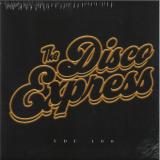
Regarded as one of London's "leading disco labels" The Disco Express is one of the most consistent and influential forces in the modern nu-disco scene.
A record label, international event series and DJ collective, TDE is dedicated to original, soul-infused house and disco music. With a global family of artists, the label blends vintage warmth with modern energy to honour the past whilst envisioning the future.
TDE100 is a 15 track compilation that distills the label's essence. Packed with fresh originals and hand-picked gems, the compilation blends funk, soul, nu-disco, house, and electronica. Crafted to move seamlessly from peak-time dance floors to laid-back Sunday listening, it's both timeless and forward-thinking.
Pressed across 2 X LP’s in a Gatefold Sleeve featuring John Morales / Derrick Carter & Inaya day.
This is original house & disco for 21st century dance floors and this train ain't slowing down anytime soon…
Terence Fixmer Reissues Two Cult Techno Anthems on Red 10 inch Vinyl
Techno pioneer Terence Fixmer re-releases two of his most iconic tracks - Electrostatic and Electric Vision - now remastered for a more contemporary and powerful sound, and pressed on a limited edition 10 inch red vinyl.
Originally released on Gigolo Records in the late 90s and early 2000s, both tracks quickly became underground anthems. Played by legendary DJs such as Dave Clarke, Sven Vath, and many others, they were also named Tracks of the Year by renowned techno publications like Groove magazine.
With these two groundbreaking cuts, Terence Fixmer helped open a bold new chapter in the history of techno - giving birth to Techno Body Music (TBM), a genre blending the raw, industrial force of EBM with the driving energy of techno. Electrostatic, in particular, is considered a foundational track of this hybrid style.
Now regarded as true techno classics, Electrostatic and Electric Vision have stood the test of time and are still played regularly by DJs worldwide, continuing to energize dancefloors decades after their release.
This is the first official repress in over 20 years, and the first time these two cult tracks appear together on one record - sharper, louder, and more essential than ever.
Tame Impala’s fifth full-length album ‘Deadbeat’. On it, Parker sculpts a collection of wickedly potent club-psych explorations as a vehicle for some of his most direct, brain-wormy songwriting to date, recasting Tame Impala as a kind of future primitive rave act in the process.
Deadbeat sounds like the work of an artist with a levelled-up mastery and bristles with a revitalized energy for experimentation. 12 songs crafted with a newfound embrace of spontaneity for the renowned perfectionist. How that manifests is a distinct minimalism and crunch to many of the tracks, with a clutch of crucial details, timbres and textures that add an ineffably new dimension to the sound, as well as a richer, more playful vocal range than ever.
Mechatronica proudly presents 'Nexus of Shadows', DJ MELL G's most uncompromising release yet. Across five tracks, she unleashes dystopian electro, breakbeat grit, and cyberpunk fire-raw soundscapes and futuristic vocals channeling rebellion, resilience, female rage and divine retribution in a relentless fusion of electro and industrial.
“Where Animals Play” is the second General Dynamics album, arriving two years after their successful debut LP “Weaponize Your Dreams”. This second manifestation is the logical and brutal continuation of their distinct sound; menacing vocals splayed across an array of precision sampling, destructive percussion and finessed synth work. The duo (consisting of members SARIN + QUAL) embodies, assimilates and re-interprets the ethos & defiance of industrial & cyberpunk culture, taking their approach to new, harsh extremes. Their most recent hallucinatory output is a broad rejection of the current & dominant global trajectory; one that seeks to enslave and destroy humankind via an unhinged amalgamation of fascism, deregulated capitalism & the exploitative use of emerging technology.
“Vox Flora Vox Fauna” is an invocation in which ECE CANLI channels the voice of Earth itself. A ritual of breath, rebirth, bone, and buried memory. Like the most transcendent moments of Dead Can Dance, the soundscapes are primitive, tribal, atmospheric, and utterly cathartic: echoes of a wounded planet, mourning and resisting at once. They unleash the raw force of Gaia, vibrating through ancient rhythms and spectral chants that seem to rise from the soil itself. In an age of collapse, this is music as prayer, protest, and purification, an elemental cry from the Mother to all who still listen. ECE CANLI “Vox Flora Vox Fauna”. Ltd. Edition Album presented in ONE-OFF truly limited edition of 100 copies lacquered pressed on 180 gr. high quality solid BLACK vinyl. Includes a printed innersleeve.
Carefully arranged jazzy cuts circle the first appearance of the enigmatic Edrift. For sure a future classic to fill your colorful afternoons, or to serve as a tapestry for late night conversations, will most likely end up on your forever loved records. Lovely melodies drift in perfect balance on top of some of the coolest beats. Unpack, throw it on the turntable, and enjoy it in the most relaxed way, as it was intended.
El AMBIE—TÓN is back. The reference #002 is an exercise of Memory (Memoria), it is a place where the water blooms on the earth and the wind in the mountains. It is jungle and city. Mountain and noise. Imbalance and harmony. It is a lake in the sky, a forest between seas. A still cloud in la cordillera, a name that floats. This collaboration between Colombian Drone Mafia and Gibrana Cervantes is the beginning and end of a fragile geography, like the magic and mafia of our platanal.
But who is behind this new combo and bridge between South and Central America? CDM is the new alias of Nyksan, a Bogota-born techno-affiliated deejay and sound artist who is also one of the co-founders of TraTraTrax. From the other side, Mexican composer and violinist Gibrana Cervantes is one of the most outstanding string voices in the daring electronic music landscape in recent times. The duo's cabalistic work creates intricate and dark ambient, all woven around gut-moving sonorities. Colombian Drone Mafia dissolves the boundaries between synthesis and field recordings, crafting experimental yet primitive textures that infect listeners through the layered melodic spaces that Gibrana masters.
We cordially invite you to listen to this journey of immersive drones through vegetation and concrete jungle, music that is at times contemplative and at other times violent. Music framed between deep listening and deep boredom. A glimpse of the sound of the end.
Dave Huismans (ex_libris, A Made Up Sound) presents In Transit, a self-titled LP of arresting downtempo vignettes, with origins dating back to over a decade ago.
Renowned for some of this century’s most notorious rhythmic advances, the work of Dave Huismans (fka A Made Up Sound and 2562) continues to provide a blueprint for new generations of innovation-obsessives. After a long hiatus from releasing original material, he returned in 2025 with two beloved EP’s as ex_libris. Now he returns to FELT as In Transit, following up on his remix of Civilistjävel! from 2023.
Borrowing its name from the closing dialogue of a novel by Dutch author Hella S. Haasse, In Transit was written in just two weeks in the summer of 2013 on a Korg ESX sampler. Since then, he has patiently refined its constituent parts.
Over the course of 38 minutes across six tracks, In Transit maps out an absorbing vista. The music shimmers with a celestial quality, underpinned by rhythmic stamina and creeping intensity. Tangential to Huismans’ previous work, the beats here are decentred and further scattered, acting as buoys to the constantly evolving and intricate narratives of layered textures.
In Transit marks a fascinating new addition to Huismans’ sprawling catalogue, a truly remarkable racket to be crafted with such humble means, finding a suitable context within FELT’s continued venture into parallel sounds.
The begena is a large ten-stringed lyre which is part of the traditional Amharic heritage of Ethiopia. The Amharas, who have long formed the politically and culturally dominant people of Ethiopia, mainly inhabit the central and northern part of the country. In the majority, they follow the monophysite Orthodox Tewahido Church established in the early fourth century AD.
Music plays a very important part in the life of the church. Most of the liturgy is sung and, contrary to secular music, it is accompanied by percussion instruments only. The begena occupies a special place because it is the one melodic instrument exclusively dedicated to the spiritual repertory. Because of its mythical origin, it is highly respected. Tradition holds that the begena was given to king David by God, and brought to Ethiopia by Menelik I, together with the Ark of the Covenant. It has always been the instrument of kings and nobles. Played by pious men and women of letters, it never became widespread. But it never disappeared either, not even under the Derg regime (1974-1991) which had banned the instrument.
Among Amhara string instruments, the begena is the most carefully crafted, especially with regard to the ornately sculpted crossbar. Its ten gut strings are cleaned and twisted several times. The characteristic buzzing timbre equalled by no other Amhara instrument is due to the enzirotch, that is, small bits of leather placed between each string and the bridge. This plays an important part in the sound production by creating a brief contact between the string and the upper rim of the bridge, thus modifying the vibrating properties of the string. In this manner, the spectrum of the sound is considerably enhanced (up to over 10 kHz).
The begena is a very powerful instrument, it keeps the devil thirty steps away, and its presence in the home wards off malicious spirits. Priests and preachers recommend its presence, especially during Lent (Fassika Tsom) when the Orthodox Amharas ponder their sins and repent. Because of its spiritual import, the begena generates intense emotion. According to some musicians, playing the begena brings them into direct contact with God or the Virgin Mary. The religious role of the begena is underscored by the shape of the instrument, each part symbolises an important element of the faith. The crossbar for instance, which reaches across the entire width of the instrument, represents God who is above all things. The belly which "gives birth" to the sound represents the Virgin Mary, and the ten strings recall the Ten Commandments.
Recorded by Stéphanie Weisser in Addis Ababa, Ethiopia, March 2002-December 2005.
This album is not just a homage — it’s a gentle act of remembrance. A way of tuning in to what Lucier showed us: that listening is an art in itself. A meditation on resonance, memory, and the quiet power of pure sound. Or to quote Alvin Lucier himself: “I guess I’m trying to help people hold shells up to their ears, and listen to the ocean again.”
The influence of Alvin Lucier’s work on acoustic phenomena and the interplay between sound and space is difficult to overstate. His legacy continues to echo through the work of countless composers and sound artists today. Lucier’s music is marked by a sense of childlike wonder and sonic simplicity - shifting our perception from what we hear to how we listen.
At the heart of his compositions lies the sine wave: the purest, most elemental form of sound. Clarinetist Dries Tack pays tribute to this master of minimalism with an album centered around two works Lucier composed as intimate ‘In Memoriams’ for friends. Both pieces explore a single, elegant idea: the interaction between an instrumental tone and a sine wave.
Out of that interaction, ‘beatings’ emerge — a pulsating rhythm that accelerates or decelerates as the waves draw nearer or drift apart. Though built on the same concept, the two works are like mirrored reflections of one another: In Memoriam Jon Higgins, the sine wave glides in a slow glissando while the clarinet holds steady tones. In Memoriam Stuart Marshall, it’s the clarinet that dances around a fixed sine wave.
Dries Tack is a clarinetist specializing in contemporary performance practices. He performs with ensembles such as Nadar Ensemble, Curious Chamber Players, and Ensemble Fractales. As co-artistic director of the GLoW Collective, he explores collaborative practices across artistic disciplines in the broadest sense. In addition to his ensemble work, Dries curates solo projects that offer fresh perspectives on existing repertoire or give rise to entirely new works at the intersection of composition and improvisation.
What makes チトチック/クラクラ (CHITOTIHC/KULA-kura) so fascinating is that, in some weird way, it’s a meeting of minds and musical language of disparate artists at the forefront of a new kind of groove. There might be no “L” in the Japanese language but that doesn’t stop it from trying to find a working substitute. Similarly, Chito enlisted members from his Asiabeat and East Pulse, others from Mu-Project, K2, and Adi, and brought in Haruomi Hosono to play mercurial bass. In the great expanse of experimental Japanese-made pop music all of them might have gone in “out-there” in separate directions but on this record it was Chito who pointed their focus all on the same track.
“Bayou (バイヨー)” presents this floating idea of dance music with beats and rhythms that hover among the ethereal. Other like “Scribble Dance (らくがき)” use Harry’s acid bass lines to dig cavernous grooves that only come up for air via adrenaline-fueled jumps by Haruo Kubota’s quite Adrian Belew-esque guitar lines. Perhaps, Discipline-era King Crimson is an apt comparison to what Chito and his crew pull off here.
Where Discipline signaled a way to reconcile the most out-there polymeter music of prog with the more satisfying parts of post-punk and the new electronic wave, so to do I think チトチック/クラクラ (CHITOTIHC/KULA-kura) has that bit of heart/spirit in mind. This is the out-there of Japanese experimental music satisfying the best parts of the, then, new electronic wave. It takes a certain degree of proficiency and sheer chutzpah to go from “11” to the wonderfully impressionistic, ambient minimalism of a track like “Sanghyang (サンヤン)”.
It’s the joy of not knowing what each new track will hold and just letting yourself follow the hard-working hands of such learned musicians that brings the most out of Chito’s vision. It’s this very liquid music that keeps you on your toes on tracks like “Astral Lamp (無影灯)”. Tracks like “Jagg-chagg (ジャグチャグ)” and “Filament (フィラメント)” present a fourth world music bifurcated in exponential parts by the glitch of newer, modern, electronic modalities, intersected by expressions by differing voices. Every track you switch to presents a new way to get lost in the many phases and places Chito wants you to travel to.
In the end, as always, it’s not the destination but the journey through it that plants this album in your memory. – Diego Olivas
Soulwax 's first new album in 8 years, entitled "All Systems Are Lying" and set for October 17th release. Available on CD & various 2LP fromats . The campaign will kick off July 9th with a double single “All Systems Are Lying / Run Free”, album announcement + pre-order launch. Since 1995, David and Stephen Dewaele have consistently pushed the boundaries of music into new and innovative territory by diversifying into many different guises. They are a band (Soulwax), djs (2manydjs), a record label (DEEWEE) and a sound system (Despacio, created along with James Murphy from LCD Soundsystem).
They are also widely renowned as one of the most innovative remix and producer teams around. They have released 7 studio albums to date, including the critically acclaimed ‘Any Minute Now’ and ‘Nite Versions’. Some of their already cult remix credits include the Grammy nominated “Work It” by Marie Davidson, as well as Peggy Gou, Fontaines DC, Roisin Murphy, Robyn, Arcade Fire, The Rolling Stones, Tame Impala, Metronomy, Daft Punk, The Gossip, Hot Chip, MGMT and Warpaint, among many others.
Stephen and David Dewaele are familiar to millions as 2manydjs, a project which undoubtedly moved the needle for modern DJing. Alongside like-minded allies such as Erol Alkan, Tiga and Jacques lu Cont, 2manydjs swept international dancefloors into delirium, gifting a rock ‘n roll attitude to club culture.
Following up the big room belters on Pablo and Shoey 'Raw Human Emotion' EP was going to be quite the task for those lovable Dublin disco messers at Fatty Fatty Phonographics, so they handed the reins over to one of the true maestros of the artform - NYC legend Mr. K.
The A-side is a propulsive extension of 'Let The Sunshine In', featuring ecstatic, gospel-shouting breakdowns. Dropped at the right moment, this is one of those tunes that brings everyone together with that look on their face, the hairs on the back of the neck standing up, arms instinctively flying toward the sky, disco fingers aloft...Excuse us, we just have something in our eye here...
Flip it over for a serious one for the heads...A few years ago Mr. K put out '1,2,3' on a 7-inch on the aptly named Most Excellent label. It was an edit of a roaring clav-funk number from the acetate collection of the legendary 'DJ's DJ' Walter Gibbons.
The Fatty folk persuaded him to revisit it, and he did a magical job of extending it out across the full 12 inches of vinyl, just the way the good Lord intended. 2 sides of utter dancefloor devastation here, be quick!
One of the most popular French TV extracts of all time is the black and white image of a young and extremely nervous-looking Françoise Hardy being given a firm dressing-down by Mireille Hartush (the famous music teacher who ran La Petite Conservatoire de la Chanson in the 1960s). Presented here is her debut studio album Françoise Hardy (issued as The Yeh-Yeh Girl from Paris! in the USA). It was released in France in December 1962 by Disques Vogue with the catalogue number LD 600-30. Originally issued with no title, except for her name on the cover, the album has therefore colloquially become known by the title of its most successful song, Tous les garçons et les filles, and later reissues added this title. This sensational album compiles the twelve original French versions from her first three EPs released by Vogue during 1962. Hardy would also record versions of songs from the album in Italian (1962, four tracks released on singles have been added here as a bonus), English (1964) and German (1965). The iconic LP combines rockabilly, folk, jazz and blues, and has been noted for its simplicity, featuring a minimalist jazz percussion, bass, and both acoustic and electric guitar. 180 GRAM - GATEFOLD COVER - LIMITED EDITION
With their musical roots deeply immersed in the fertile soil of Afro-American music, the Buttshakers have found a new direction for their nostalgia-heavy soul music. With Lessons In Love, their third album on Underdog Records, their early heartaches and furies have faded in favor of a more composed harmony – a sound enveloped in love and soaked in the blues. Guided by their singer Ciara Thompson, the Buttshakers have taken a more intimate path, whose compass, in the chaos of emotions and the modern world, points only in one direction: the light.
Seen from the sky, the view appears limitless. Accentuated by the sun, the ochre and sandy hues of the open road only reinforce this feeling of immensity. The sky stretches and the green stands out in striking contrast. In lighter tones, a road is drawn -- without bends or contours. This is the worn and weary road of soul music, which The Buttshakers explore on each album in new and unique ways. Soul music – a rare place to find a French band.
Vast, the musical direction could have taken them to lighter pastures. Yet the Buttshakers chose to evolve in a different way; to take a heavier load. Two paths – one sparked by social unrest, the other purely sentimental, Lessons In Love explores the deep roots of soul music, in the steps of Curtis Mayfield or Al Green. It is here that the heart and mind cross paths, merge, and become one. A weary road -- that brings together the agitation of a world where good intentions never rise above the level of digital outrage, and a faith in love which, however it manifests and expresses itself, remains the only truth that never loses its power.
Less rage and more compassion, it is through the haunting words and now tempered inflection of Ciara Thompson's voice, which opens to distinct emotions and perspectives, that the listener is guided. With its gaze fixed on the horizon, the acoustic guitar of Gotta Believe invites us on an intimate stroll through the open plains, while Dream On carries us away with a clavinet riff and a possessed saxophone; reconnecting the electric heat and neurosis of a city full of dreams. The senses are moved by the conjuring potion of the guitar which distills throughout Troubled Waters; the body is brought back into a visceral dance by the keys and brass section that are put to the test by Sure As Sin and its irrepressible rhythm. Passing through clouds of dust and sand has left a bluesy imprint on their groove: the miles travelled became hundreds, then thousands.
All of this leaves the listener bewitched by the halo of resilience that now surrounds Ciara's performance, as the ten tracks let the light fade. But certainly not hope in a better day. Like the sunflower that always lifts its head towards the sun’s rays, the Buttshakers continue to resource their sounds in the deep roots of soul music. Into the rich layers of African-American music of the 60s and 70s, The Buttshakers capture the spirit as much as the musical aesthetics of the epoch. A sound that reaches into the meanderings of the soul, bringing light to dark places and hope for all. A sound for the most parched of hearts, living in a damaged world, Lessons In Love confirms that even the tiniest beam of light can illuminate one’s path.
C.A.R. (Choosing Acronyms Randomly) is the musical project of Chloé Raunet, a Canadian-born, London-based artist known for her icy synths, warm vocals, and left-field pop sensibility. Drawing from post-punk, electro, and experimental songwriting, she creates music that’s both emotionally charged and sonically adventurous.
Following a five-year hiatus, C.A.R. returns with Shyana, the first single from her long-awaited fourth album, Dance at Oscar’s. Produced by Nathan Ridley, the release marks a creative rebirth: a new label, a new live formation with Joni Green, and a sound pulsing with revitalised energy. After a pandemic-induced break to focus on filmmaking — and a period of burnout and disillusionment — Raunet was ready to walk away from music altogether. But a pair of carried-over festival dates and an impromptu onstage reunion with longtime friend Joni Green unexpectedly reignited the spark. What was meant to be a farewell became the start of something new.
Shyana is a shimmering slice of machine-funk — a warped and groovy tribute to Paul Anka, filtered through C.A.R.’s surreal pop lens. A meditation on teen hysteria, pop manufacture, and the strange alchemy of early fame, the track pulses with wonky elegance and strutting confidence. One of the most playful cuts from Dance at Oscar’s, it showcases Nathan Ridley’s tight, swaggering production while capturing the album’s embrace of movement, humour, and the weirdness of cultural nostalgia.
On the B-side, Cecilia Road offers a more reflective counterpoint — a nostalgic, synth-drenched ballad built around a call-and-response vocal, throbbing melodies, and emotional tension. Intimate yet expansive, it hints at vulnerability without losing the pulse.
Artwork by Chloé Raunet, Craig Richards and Oliver Hupfau.