Oddisee's breakthrough album: Imbued with love, honesty, and selflessness, The Good Fight is virtuosic in its musicality, direct in its language, and infinitely relatable In a landscape overrun with abstract indulgence and shallow trend-chasers, the Prince George's County, Maryland artist has created a record that reminds you that it's music before it's hip-hop. For Oddisee, "The Good Fight" is about living fully as a musician without succumbing to the traps of hedonism, avarice, and materialism. It's music that yields an intangible feeling: the sacral sound of an organ whine, brass horns, or a cymbal crash. It's a meditation on our capacity to love and the bonds binding us together. It's our ambition and greed warring with our sense of propriety - a list of paradoxes we all face when living and striving. Oddisee's production simmers in its own orchestral gumbo. You sense he's really a jazzman in different form, inhabiting the spirit of Roy Ayers and other past greats. The Fader's compared him to a musical MC Escher, calling hailing his "grandiose and symphonic sound" and "relevant relatable messages." Pitchfork praised his "eclectic soulful boom-bap.
Santaka is truly the sound of a culture. The name means “confluence” in Lithuanian, and the project has been exactly that from the moment DJ/producer Manfredas and drummer/producer Marijus Aleksa resolved to work together in the early days of 2020.
Not only does it bring together the talents that Manfredas and Marijus have individually honed over their own illustrious international careers in the club underground and young jazz worlds – but their recordings have drawn on talents from across styles and generations within Lithuania, creating a fusion of experimental sounds that represents the living nation. The highest common factors of post rock, jazz, dancefloor and abstract electronics, classical and more all flow together. Now, they are deepening this further, by reworking recordings by composer Rytis Mažulis and the avant-garde choir Melos Collective.
Over two tracks, they create haunting but hopeful, weird but truly wonderful atmospheres that look back to the deep history of their home nation’s music and culture but also forward to sonic science fictions of their own. In “Autoportretas”, disembodied voices emerge from the air around Marijus’s percussion subtly at first but becoming more and more corporeal as the ritual takes shape.
The eight-minute “Ramybė” is less linear, more dreamlike, with orchestral drones, free jazz fluttering and retro electronics joining the voices and drums. But for all their eeriness and oddness, both are built on the pleasure principle too: this exploratory music joining past and future is thrilling and sustaining in the moment.
When Kronos plays a piece, they become fellow composers, true collaborators. Without them, we wouldn’t have the kind of string quartet playing that we find around us today. There are two kinds of string quartet playing: the ‘Before Kronos’ and the ‘After Kronos’.” – Philip Glass
‘Kronos Quartet has broken the boundaries of what string quartets can do.’ – New York Times
Nonesuch releases Kronos Quartet’s acclaimed album Kronos Quartet Performs Philip Glass on vinyl for the first time to coincide with Kronos Quartet: Five Decades, a year-long celebration marking the quartet’s 50th anniversary. Originally released in 1995, the album features David Harrington (violin), John Sherba, (violin), Hank Dutt (viola) and Joan Jeanrenaud (cello) performing Quartet No. 2 (Company) (1983), No. 3 (Mishima) (1985), No. 4 (Buczak) (1990), and No. 5 (1991), the first piece Glass wrote especially for Kronos. Recorded at Skywalker Sound in California, the album was produced by Judith Sherman, Kurt Munkacsi and Philip Glass. The cover art features Francesco Clemente’s painting The Four Corners (1985). At the time of the album’s release, the New York Times said, ‘It contains some of Glass's best music since Koyaanisqatsi. His ear for sumptuous string sonorities is undeniable,’ while the Washington Post called it ‘An ideal combination of composer and performers.’ It was a top 10 hit on Billboard’s Top Classical Albums, and spent 12 weeks on Billboard’s Classical chart.
In his original liner note, critic Mark Swed wrote, ‘Glass’ string quartets may contain his most intimate music. They are works through which a very public composer, perhaps the most important opera reformer of our age and a longstanding collaborator in large-scale music theater, holds up a mirror to himself and his way of composing. “In an odd way,” Glass explains, “string quartets have always functioned like that for composers. I don’t really know why, but it’s almost impossible to get away from it. It’s the way composers of the past have thought and that’s no less true for me. It’s almost as if we say we’re going to write a string quartet, we take a deep breath, and we wade in to try to write the most serious, significant piece that we can.” Glass says that as he sat down to write String Quartet No. 5, he had discovered that perhaps not taking a serious tone might be the most serious way to deal with it. “I was thinking that I had really gone beyond the need to write a serious string quartet and that I could write a quartet that is about musicality, which in a certain way is the most serious subject.”’
Glass’ first numbered quartet was written in 1966; however, he did not return to the string quartet medium until 1983, when he provided incidental music for a dramatization of Samuel Beckett’s prose poem, Company. During those 17 years, Glass had formed an ensemble and developed his style in a series of increasingly elaborate pieces for it. String Quartet No. 3 is also adapted to dramatic music, this time from his score to the 1985 Paul Schrader film, Mishima. It was with the music of Mishima that Kronos became associated with Glass, recording the string quartet sections of the soundtrack and subsequently working extensively with the composer on all five of his numbered quartets. Kronos also gave the first concert performances of Company and Mishima. String Quartet No. 4 was composed in remembrance of the artist Brian Buczak, who died of AIDS in 1988.
As Kronos’ anniversary season continues with further concerts around the world, Nonesuch will reissue Black Angels on vinyl on February 16. First released in 1990, the award-winning album includes George Crumb’s title piece, which inspired David Harrington to found the quartet. Called ‘an unusually elevated and searing Vietnam War protest’ by the New York Times, it sets a dark, powerful tone for this collection, which addresses the political/physical/spiritual consequences of war. Also featured are works by Charles Ives, István Márta, Thomas Tallis, and Dmitri Shostakovich. ‘Stylishly packaged, intelligently programmed, superbly recorded and brilliantly performed,’ proclaimed Gramophone. ‘In short, very much the sort of disc we’ve come to expect from the talented and imaginative Kronos Quartet.’ The Evening Standard included it among its ‘100 Definitive Classical Albums of the 20th Century’.
Born in Baltimore, Maryland, in 1937, Philip Glass is a graduate of the University of Chicago and the Juilliard School. By 1974, he had created a large collection of music for The Philip Glass Ensemble. The period culminated in the landmark opera, Einstein on the Beach. Since Einstein, Glass’s repertoire has grown to include music for opera, dance, theatre, orchestra, and film. His scores have received Academy Award nominations (including Kundun and The Hours, as well as Notes on a Scandal) and a Golden Globe (The Truman Show). Recent works include his memoir, Words Without Music, his first Piano Sonata, opera Circus Days and Nights, and Symphony No. 14. Glass received the Praemium Imperiale in 2012, the US National Medal of the Arts from President Barack Obama in 2016, and 41st Kennedy Center Honors in 2018.
Nonesuch’s relationship with Glass began in 1985, with the release of the score for Paul Schrader’s Mishima featuring Kronos Quartet. Over the years other Glass works on Nonesuch have included Einstein on the Beach (1993), Kronos Quartet Performs Philip Glass (1995), Music in Twelve Parts (1996), Glass Box (2008), as well as the soundtracks for Powaqqatsi (1988), Kundun (1997), Koyaanisqatsi (1998), and The Hours (2002), amongst others.
For 50 years, San Francisco’s Kronos Quartet – David Harrington (violin), John Sherba (violin), Hank Dutt (viola), and Paul Wiancko (cello) – has challenged and reimagined what a string quartet can be. Founded at a time when the form was largely centred on long-established, Western European traditions, Kronos has been at the forefront of revolutionizing the string quartet into a living art form that responds to the people and issues of our time. In the process, Kronos has become one of the most celebrated and influential groups of our era, performing thousands of concerts worldwide, releasing more than 70 recordings of extraordinary breadth and creativity, and collaborating with many of the world’s most accomplished composers and performers. Through its nonprofit organization, Kronos Performing Arts Association, Kronos has commissioned more than 1,000 works and arrangements for string quartet – including the Kronos Fifty for the Future library of free, educational repertoire. Kronos has received more than 40 awards, including three Grammy Awards and the Polar Music, Avery Fisher, and Edison Klassiek Oeuvre Prizes.
Kronos is prolific and wide-ranging on recordings. The ensemble’s expansive discography on Nonesuch includes three Grammy-winning albums: Terry Riley’s Sun Rings (2019), Landfall with Laurie Anderson (2018), and Alban Berg’s Lyric Suite featuring soprano Dawn Upshaw (2003); the 40th-anniversary boxed set Kronos Explorer Series; Nuevo (2002), a Grammy- and Latin Grammy–nominated celebration of Mexican culture; Pieces of Africa (1992), a showcase of African-born composers that simultaneously topped Billboard’s Classical and World Music charts; and Folk Songs (2017), Nonesuch’s 50th album with Kronos, which featured Sam Amidon, Olivia Chaney, Rhiannon Giddens, and Natalie Merchant singing traditional folk songs.
out of Stock
Last delivered 2 years ago available to reorder, subject to availability
Artist and multi-instrumentalist Flaer looks to the landscape to explore pastoral melancholy on debut release, Preludes.
Ensconced in his family home in rural Leicestershire in the early months of 2020, painter and musician Realf Heygate (b. 1994) picked up his childhood cello for the first time in several years and began to play. Setting himself parameters to only record onto 4-track tape with acoustic instruments – cello, piano and acoustic guitar – he assembled a suite of instrumental compositions that form the basis of Preludes, his debut album as Flaer and the inaugural release on Odda Recordings.
Channelling the tension and unease between the pastoral idyll of the English countryside and the darkness which lurks beneath the surface, the mini-album draws inspiration from the analogue aesthetic of 1970s folk horror films, weaving field recordings of birdsong, church bells and the natural environment into chimerical melodies that reflect on Heygate’s childhood experiences of rural England.
“It was really important not to isolate the sound from its environment,” he explains, describing the compositional and recording process as “site-specific”. Developed over a series of intuitive musical enquiries, the mini-album’s uncanny quality emerges from combining raw demo takes with overdubs of almost orchestral grandeur.
Heygate points to the final track as indicative of the work as a whole: “‘Follow’ really is the mantra for the release and embodies the practical approach I was taking to music making: not to force the music but see where it takes you.”
As a painter, Heygate’s practice takes artefacts through sequences of reproduction that embrace the fluctuating materiality of the copy. Since obtaining a degree in Fine Art from Central Saint Martins in 2017, he has exhibited solo at Peter von Kant and Springseason galleries in London, and has participated in group shows at Saatchi Gallery, Cob Gallery and Senesi Contemporanea.
Describing his artistic practice as one of self-erasure, music instead provides Heygate with a more personal and autobiographical outlet. Where the two worlds combine is on Preludes’ striking artwork, which features paintings of 13th century stone carvings from the font of the church in the town where he grew up.
Speaking to a time where people were connected to the land in a more profound way, each symbol is assigned to a track on the album, which Heygate likens to giving them a title.
“To add that one juxtaposition might open a whole new interpretation or language that might be hard to find otherwise,” he explains.“Over time it might reveal itself to you, which is why I'm excited about it being released. To throw them out there and see what comes of it.”
out of Stock
Last delivered 2 years ago available to reorder, subject to availability
Still on and about after years of the most intense crate digging, gem mining, desperate head-scratching and avid schooling, thirsty as ever for the next musical thrill to wrap our ears and brains around, here comes the fruit of our life-long love story with Japanese electronics, Denshi Ongaku No Bigaku Vol. 1 and Vol.2. From the soul-fulfilling first crush felt upon hearing the iconic soundtrack of ‘Merry Christmas Mr. Lawrence’ by Ryuichi Sakamoto onto our release of Inner Science ‘Cosmo Tracks’, through the life-affirming sets of Laurent Garnier at Dijon’s seminal club, l’An-fer, which have at all times nurtured and expanded our taste for Easternmost delicacies, the influence of Japanese music on our vision and endeavours was paramount to the development of our catalogue, whether directly or indirectly.
This first volume gets the ball rolling with a fine assortment of mostly ambient, electronica and deep house-focussed joints. Draped in organic membranes and ASMR-like synth tapestries, K. Inoue’s nu-agey opener ‘Em Paz’ takes us on a ride across the most serene dreamscapes. Jazzing up these lush and oneiric coastal vibes, Gabby & Lopez ‘Drive form the Miracle’ merges a sense of Californian psychedelia with a straight out hard-bop swing. No stranger to our catalogue, Inner Science returns to serve up a crystalline slice of laid-back house on a mystique-imbued tip he holds the secret to. Flip it over and here comes Aquarium with the splendidly immersive ‘Rainy Night in Shibuya’, which very much feels like wandering amidst its neon-upholstered streets and swarming hallways in a bubble of your own.
Naohito Uchiyama treats us to a synth-drenched nocturnal ballad with the ‘80s-inflected vibes of ’Shugetsu’, whereas Keta Ra cuts a path of ethereal sublimation via the mischievously fun and bouncy balearic lounge of ‘equals’. Masterly crafted by Yuu Udagawa, ‘Infinite Possibility’ eases us in a realm where weightless pop and low-slung abstract hip-hop combine to further exhilarating effect. All in harp-driven brittleness and velveteen sub-bass stealth, Noah ‘Gemini - Mysterious Lot’ has us drifting to a lavishly orchestrated headspace, laying down an impressive work on textures and arrangements. All in on the sedated drip-tease flex, Sauce81 ’Sign of Secret Love’ is a blast of freaky hedonism, just as ready to cast its hypnotic spell down the sweatbox as it was upon its original release ten years ago.
Languid jacking house tune ’Tai+Dai’ from Keita Sano blows the winds of discoid luvin’ across the room with its impeccable balance of sharp, glimmering synthwork and driving bass onslaughts from the depths. An odd slice of reshuffled folk music, Waltz ‘Folkesta’ makes for some eerie invitation of sorts, enchanting and spookily haunting in equal measure. Back to a fevered, hip-swaying mindset, Kuniyuki hi-NRG jazz number ‘Free’ is an absolute wonder of piano and drums-driven boogie, cut from the same cloth as some of Blue Note’s finest Cuban jazz classics. Rounding off the package, Japanese legend Ken Ishii’s version of Larry Heard’s house Hall-of-Famer ‘Can You Feel It’ is pure bliss in a can, tailored to turn any crowd into a shapeless cloud of balmy euphoria and universal love, whatever the place or time.
out of Stock
Last delivered 19 months ago available to reorder, subject to availability
Still on and about after years of the most intense crate digging, gem mining, desperate head-scratching and avid schooling, thirsty as ever for the next musical thrill to wrap our ears and brains around, here comes the fruit of our life-long love story with Japanese electronics, Denshi Ongaku No Bigaku Vol. 1 and Vol.2. From the soul-fulfilling first crush felt upon hearing the iconic soundtrack of ‘Merry Christmas Mr. Lawrence’ by Ryuichi Sakamoto onto our release of Inner Science ‘Cosmo Tracks’, through the life-affirming sets of Laurent Garnier at Dijon’s seminal club, l’An-fer, which have at all times nurtured and expanded our taste for Easternmost delicacies, the influence of Japanese music on our vision and endeavours was paramount to the development of our catalogue, whether directly or indirectly.
This first volume gets the ball rolling with a fine assortment of mostly ambient, electronica and deep house-focussed joints. Draped in organic membranes and ASMR-like synth tapestries, K. Inoue’s nu-agey opener ‘Em Paz’ takes us on a ride across the most serene dreamscapes. Jazzing up these lush and oneiric coastal vibes, Gabby & Lopez ‘Drive form the Miracle’ merges a sense of Californian psychedelia with a straight out hard-bop swing. No stranger to our catalogue, Inner Science returns to serve up a crystalline slice of laid-back house on a mystique-imbued tip he holds the secret to. Flip it over and here comes Aquarium with the splendidly immersive ‘Rainy Night in Shibuya’, which very much feels like wandering amidst its neon-upholstered streets and swarming hallways in a bubble of your own.
Naohito Uchiyama treats us to a synth-drenched nocturnal ballad with the ‘80s-inflected vibes of ’Shugetsu’, whereas Keta Ra cuts a path of ethereal sublimation via the mischievously fun and bouncy balearic lounge of ‘equals’. Masterly crafted by Yuu Udagawa, ‘Infinite Possibility’ eases us in a realm where weightless pop and low-slung abstract hip-hop combine to further exhilarating effect. All in harp-driven brittleness and velveteen sub-bass stealth, Noah ‘Gemini - Mysterious Lot’ has us drifting to a lavishly orchestrated headspace, laying down an impressive work on textures and arrangements. All in on the sedated drip-tease flex, Sauce81 ’Sign of Secret Love’ is a blast of freaky hedonism, just as ready to cast its hypnotic spell down the sweatbox as it was upon its original release ten years ago.
Languid jacking house tune ’Tai+Dai’ from Keita Sano blows the winds of discoid luvin’ across the room with its impeccable balance of sharp, glimmering synthwork and driving bass onslaughts from the depths. An odd slice of reshuffled folk music, Waltz ‘Folkesta’ makes for some eerie invitation of sorts, enchanting and spookily haunting in equal measure. Back to a fevered, hip-swaying mindset, Kuniyuki hi-NRG jazz number ‘Free’ is an absolute wonder of piano and drums-driven boogie, cut from the same cloth as some of Blue Note’s finest Cuban jazz classics. Rounding off the package, Japanese legend Ken Ishii’s version of Larry Heard’s house Hall-of-Famer ‘Can You Feel It’ is pure bliss in a can, tailored to turn any crowd into a shapeless cloud of balmy euphoria and universal love, whatever the place or time.
out of Stock
Last delivered 2 years ago available to reorder, subject to availability
Indies Only LP is opaque green vinyl. Both LPs come with a download. The moment the needle drops on Bite, the new A Giant Dog record, one’s conception of what an A Giant Dog record sounds like bends like space and time around a starship running at lightspeed. The biggest point of departure is that Bite is a concept album, concerning characters who find themselves moving in and out of a virtual reality called Avalonia. A Giant Dog’s first album of original songs since 2017’s Toy, Bite finds the band Sabrina Ellis, Andrew Cashen, Danny Blanchard, Graham Low, and Andy Bauer at their peak as musicians, challenging themselves with more complex arrangements and subject matter that forced them out of their heads and into those of the characters who occupy this supposed paradise. “We had to find ourselves within, or project ourselves into, the principal characters. We developed them, got to know their minds, emotions, and motivations, and then expressed those in nine songs,” Ellis explains. Themes of addiction, gender fluidity, living ethically in a capitalist society, physical autonomy, avarice, grief, and consent bubble beneath the promised happiness of Avalonia. This is evident in songs like “Different Than,” where Ellis sings, “My body can’t explain the things my mind don’t comprehend” as if societal gender pressure is squeezing its protagonist out of their skin. The songs on Bite are full of bombast, at turns calling to mind the spacefaring operatic rock of Electric Light Orchestra and the high drama of an Ennio Morricone film score. The album’s narrative sweep is epic in scope, its characters facing impossible odds and certain doom, existing as comfortably with the sci-fi grandiosity of Thin Lizzy’s Jailbreak as it does with the high fantasy of Dio and Iron Maiden. Appropriately, A Giant Dog came to this narrative armed to the teeth with new ideas, unleashing synthesizers and string sections to create what Ellis describes as orchestral, symphonic, futuristic punk. To achieve this, they left their home turf of Austin, Texas, for La Cuve Studio, just outside of Angers, France. Living in the French countryside, A Giant Dog laid down their vision of the future against a decidedly pastoral backdrop. On walks from Angers to La Cuve, Ellis says that they “would see many things, and also nothing at all. Swans on the river. Romani people living in little trailers, with a side hut built for their dog. A juggler on a unicycle—not fucking with you.” “We thought we wouldn’t be allowed back in France after this trip, to be honest,” they continued. “Five loud, stomping, clapping, rowdy Americans who ran through the streets of Angers for three weeks in November 2022.” The experience capped two years of planning and writing, fleshing out the universe of Avalonia beyond the bounds of most concept albums. The resulting nine songs do not merely occupy this space: They’ve lived in it, and they want out.
Third in a trilogy of LPs of Library Music miniatures from composer and multi-instrumentalist Daniel O’Sullivan (Æthenor, Ulver, This is Not This Heat, etc) following 2020’s Electric Māyā and 2021’s Fourth Density. For heads, the term “Library Music” in 2021 might evoke dodgy Italian gray market LPs and crate diggers hunting for “funky breaks” - but London’s venerable KPM Music is working with groundbreakers like Daniel to open up new avenues for composers to experiment. The 15 tracks on “The Physic Garden” are fully-formed and orchestrated compositions, which would be highlights on anyone’s LP, never mind as incidental music. Of the music, Dan says: “The Physic Garden is an album of diverse instrumentals inspired by a swathe of verdant vistas from manicured gardens and follies to urban common land, overgrown and forgotten. Convalescent memories in the shape of psychedelic auditory botanics.”
Key tracks include the droning acoustic folk of the title song; the Canterbury-esque rolling horn and woodwind melody of “Return the Heart” (with expert drum kit from Frank Byng); The prog-ish odd meter interlude “Buttercup Tea”; The quiet ambience and delicate melody of “Dusty Feather:”; and the Eno-like drift of “Vapourer Larvae.”
“Library music. Akasha. Here you accept that music behaves like a thing to accentuate another thing, seemingly unrelated. A beautiful, shining blankness. Not passive. An opportunity to wade. A brief encounter with an open-ended destiny. As in, you never know who or what it will be partnered with. With library music the emphasis tends to be on functionality and less on sonic self-portraiture. So it compels you to be concise, like what is the function of this work? The distance is liberating. It’s less “What Am I? and more “What Is This?”. It compels you to be brief, each little cell is a world of its own in an assemblage of miniatures all vibrating in their collective identity. Then there is the occult nature of library music which is fetishized by many for its ability to induce time travel, often to send us back to some televisual memory. However, despite its broad-brush strokes, the library can be so profoundly alien, especially when experienced independently of the televisual realm; an unruly chimera of genre mutations, compositional curiosities and the deepest wallpaper you ever laid ears on. Perhaps the observances of library music can help unshackle us from our artistic insecurities and delusions, where one is drawn to the shape of music as a whole instrument unto itself; as a vehicle carrying our intention and consisting of everything we have to give at that moment; so things that are seemingly unrelated are ultimately connected.” – Daniel O’Sullivan
Brazilian soul, psych, bossa and jazz, reimagined from Berlin, via the Dead Sea, on Moriah Plaza’s dreamy first album for Batov Records.
Moriah Plaza co-founders Tamir Chen and Moosh Lahav first encountered and fell in love with the beautiful and hypnotic sounds of Brazilian bossa nova and samba as children in Tel Aviv in the nineties, via the many local bands and tribute groups that had sprung up since the first wave of bossa had hit swept across the world. Likewise
they developed a fascination with elevator muzak, film soundtracks, and even the hotel pianist performing day-by-day in the lobby of the Sheraton Moriah where Tamir’s mother worked, overlooking the Dead Sea.
Relocating years later to the vastly different environment of Berlin, capital of a country that enjoyed its own Brazilian moment, Tamir and Moosh’s shared passion for Brazilian music would encourage them to create their own songs inspired by the warm pulse of Brazil, albeit a world apart, through a vastly different lens.
Whilst the initial inspiration for Moriah Plaza can be traced back to Tel Aviv and the Dead Sea, the band itself was conceived by Tamir and Moosh in Solarium Studio, Berlin, from the broken fragments of their former shoegaze band, Soda Fabric, who had the honour of backing outsider legend Daniel Johnston. They would go on to write and record their debut album in close collaboration with two Brazilians and fellow Berlin residents,, poet and singer Cecília Erisman, and singer, songwriter, synth operator and Tropical Disco Club founder Flavia Annechini.
The album opens with “Desendereçada”. Dirty drum machine beats thud away under flutes and extraneous noises and a spoken word commentary. The oddness and allure of the intro is a perfect introduction to the world of Moriah Plaza.
The pace picks up on “Mais Amor”. A beautiful Brazilian soul jazz number with a sublime vocal from Flavia Annechini that will surely appeal to the global dancefloor jazz scene. “Te Peço” daws us in deeper with sweetest jazz vocal over an irresistible bassline and bossa drums that transforms halfway through into a modern soul rhythm crowned by flute and horns. A flute solo from Moosh Lahav leads us into the final uplifting refrain.
The Pharoah Sanders meets Ravi Shankar in Rio grooves of “Estelar”
have that fresh feeling that will certainly appeal to fans of modern favourites Rebecca Vasment and Ruby Rushton. Next up, the mysterious “Lagoon de Merim” is practically two songs in one, the first half an atmospheric string-topped number somewhere between Arthur Verocai and Cinematic Orchestra, before snappy drums beats and playful organ chords introduce a slow brassy samba that fills the whole sonic room.
“Teu Porto” is a must for all DJs, mixing calypso, highlife and house, lilting guitars and smooth vocals by Cecilia Erismann.. The deep samba house grooves of “Samba Moosh” close us out. The rich blend of sweet vocals, soaring flute and gritty synths carry us off into the sunset.
Moriah Plaza’s self-titled debut album is a major addition to the global soul and jazz scene. providing the perfect summer soundtrack for music lovers around the world.
Following the release of their 2021's critically acclaimed album The Black Stone Affair, instrumental cinematic-soul outfit Whatitdo Archive Group unleashes two startling new singles: "Forbidden Cove" and "The Cashmere Chamber", out on limited edition 7'' on March 24th via Record Kicks. The 45 is limited to 500 copies worldwide and it is just an appetizer of the upcoming new album Palace Of A Thousand Sounds, scheduled for release on May 5th, 2023. Whatitdo Archive Group previous 45s went sold out in weeks and are currently very in-demand from collectors and djs.
On side A, we find the first single "Forbidden Cove". We are immediately greeted with top-notch production that feels like we stumbled upon yet another lost rarity, but this time from the heyday of American "exotica" music from the mid-century movement of the early '60s (think Martin Denny and Les Baxter). The twist here is that the underlying tone is dark, heavy and cinematic. WAG flexes their compositional chops and maturity with clever arrangements, a tight rhythm section and dreamy vibraphone that lead us to dense Arthur Verocai-esque orchestral arrangements and hypnotizing eastern flavors.
From the first notes of the Javanese metallophone, Whatitdo Archive Group welcomes you into "The Cashmere Chamber", on side B of the 7''. Less a room and more an auditory experience, "Chamber" skillfully guides you deeper into its world complete with menacing drums and bass, sinister vibraphone melodies and a haunting choir. But this driving force of the rhythm section isn't enough for WAG; we see the song quickly blossom into an adrenaline pumping guitar feature layered expertly with a Turkish baglama saz and percussion. This track is a sample-worthy heater for any DJ.
The new album Palace Of A Thousand Sounds will be available May 5th, 2023 on limited edition LP, CD and digital platforms. Palace Of A Thousand Sounds finds Whatitdo Archive Group entrenched deeper in the worlds of mid-century exotica and library music—from the Tropicalia-steeped Amazon to the minor key tonalities of the far-out Near East.
Steeped in obscurity, a cult following of crate-diggers and musical oddity collectors has been brewing over the mysterious releases of the Whatitdo Archive Group. Surfacing in 2009 from the high deserts of Reno, NV USA, this three-piece recording collective (Alexander Korostinsky, Mark Sexton and Aaron Chiazza) focuses solely on curating, performing and preserving esoteric soundtrack, library and deep-groove collections. As an onlooker, it's hard to tell whether the music they are procuring is actually archival, music of their own creation, or both. Their debut LP The Black Stone Affair, the formerly lost soundtrack music of a once-shelved Italian cinematic masterpiece, was released in 2021 and received praise from the likes of Wall Street Journal, Mojo Magazine, Uncut, Shindig and Blues & Soul Magazine, BBC 6 (UK), FIP (FR), KCRW (US), JazzFM (UK) and more. Two years later, the Whatitdo Archive Group is back. Get ready for an exotic adventure with their sophomore full-length effort: Palace of a Thousand Sounds.
out of Stock
Last delivered 3 years ago available to reorder, subject to availability
A stalwart of the Leeds music scene for the best part of 3 decades, Tony Burkill has so far maintained a low profile nationally, choosing to favour continued study and development of the instrument over the attainment of success or recognition within the music industry. Working as a sideman for hire on the local circuit, he has impressed audiences with his powerful and gutsy approach to improvisation and has been a well-kept secret amongst both musicians and audiences in the north of England since the 1980s.Recently featuring as a guest soloist on the debut album by The Sorcerers, Tony has been on the radar of ATA Records since the inception of the label. Impressed by his exuberant and earthy performance style they decided to embark on the writing and production of what was to become "Work Money Death", choosing to frame his playing in the context of the performers that have helped to shape his sound, most notably the spiritual jazz of the 60s and 70s.
"Work Money Death"explores the foundations laid by the great Tenor players of the 60s & 70s: Gato Barbieri, Pharoah Sanders, John Klemmer and John Coltrane, taking inspiration from their work and using it as a springboard for Tenor Saxophonist Tony Burkill's improvisation. Co-written with Bassist Neil Innes, the album attempts to frame Tony's playing within the context of that which has been most influential to him over the span of a 20+ year long career. Featuring on the record are Drummer Sam Hobbs (The Electric Doctor M and Producer of Matthew Bourne's Moogmemory), Bassist Neil Innes (The Sorcerers, Eddie Roberts' Roughneck), Pianist George Cooper (Abstract Orchestra), Percussionist Pete Williams (The Sorcerers) and features a guest performance from Pianist Matthew Bourne on the track "Beginning and End".
Support and airplay from Gilles Peterson (BBC6 Music, Worldwide FM), Jamie Cullum (BBC Radio 2). Good reviews have so far been forthcoming from the likes of Jazzman Gerald and Nat Birchall who described it as sounding "like a lost album from the spiritual jazz scene of the 1970s".
out of Stock
Last delivered 2 years ago available to reorder, subject to availability
The last album of Dead Cat In a Bag on vinyl! 180g + downloadcode.
"Do you know it? Ennio Morricone, Nick Cave, Mark Lanegan, Tom Waits and Zach Condon walk into the bar, and there are all the seats occupied by the Dead Cat In A Bag musicians. Really." - this is how Jarek Szubrycht started the review of the last album of the Italian group Dead Cat In Bag in Gazeta Wyborcza. And he was right. Really.
Yes! Dead Cat In A Bag is back! They are back with a new album "We've Been Through".
After exploring several so called Neo-Folk regions, flirting with Folk Noir, mostly with Traditional Folk in a modern perspective, for example Americana to Tex-Mex and Balkan Music to Alternative Country, on this third record the ensemble drifts to a cinematic landscape, focusing on the theme of overcoming.
We've Been Through puts together World Music elements incorporating an almost soundtrack experience for a journey into both Day and Night, Hope and Disillusionment and telling stories of broken romances and shipwrecks.
Utilizing banjo and theatrical vocal delivery, together with with classic and odd instruments, the band remap the original charts but still set sail the desired destinations. And if, about the previous records, critics were prone to recall the prowess of Waits, Cave, Lanegan, Cash and Tindersticks, this time it will be harder to name the grandfathers.
Now there is a Morricone (or was it Badalamenti?) guiding spirit and a dreamlike universe full of memories, from the dry electric blues of a stream of consciousness duet in Duet For Nothing to the unexpected crooning vocals provided by Liam McKahey (CousetauX) in Lost Friends (a banjo droven dirge dealing with electronics and a bassoon, with steal percussions and a music saw for a frame), from the rendition of the traditional Wayfaring Stranger, balancing between electric guitars and Bluegrass, to the intimate cover of Leonard Cohen's Hunter's Lullaby, from the rock-(swamp)blues of The Cat Is Dead (enriched by Italian bass hero Gianni Maroccolo, from Litfiba and C.S.I.) to the soft meloncholy of the string quartet in Between Day And Night, from the dark cabaret of Fiddler, The Ship Is Sinking to the soft porch song, between Willard Grant Conspiracy and Kris Kristofferson, of the final title track.
You can hear a shrawn and a blues harp, whispers and choirs, love and dudgeon as the record goes. This is the sound of an orchestra playing on a sinking ship: what else could a fiddler do? And what can we do, in the end?
Oslo's Ultima Festival for contemporary music in 2014. The idea was to give revered Norwegian experimental electronic musician Helge Sten, aka Deathprod, access to seminal avant-garde composer Harry Partch's self-designed, custom-made, specialized, invented instruments - an orchestra tuned to just intonation, using up to 43 intervals instead of the standard 12 for the most commonly used Western equal temperament. An artist with a 30+ year career and an uncompromising reputation that reflects the emotional specificity of his uneasy, yet compelling sound, maintained throughout his expansive discography, Sten was an intriguing choice for such a project. Although he attended art school, training in electronic music and sound art, he had little experience with acoustic instruments and can neither read nor write music notation. Yet he's been engaged with Partch's music, and outsider art more generally, since he was a teenager. His resulting piece/composition for the project was originally intended only for performance by Cologne-based Ensemble Musikfabrik, for a series of concerts in five European cities between 2015 and 2018. It's Musikfabrik that undertook the painstaking, expensive process of building an entire set of the composer's creations - the second only to the originals built by Partch himself. They are the professional musicians and virtuosic instrumentalists that had to re-train and re-educate on these unknown and experimental sound sculptures in non-standard tunings. And they house this large, gorgeous physical instrumentarium and deal with the enormous logistics of working with it, sometimes shipping the fragile pieces to other locales via semi-trucks or ships. Because of such monumental efforts, Musikfabrik are notoriously guarded with recordings of the instruments. And rightly so. They're the only ones allowed to perform on them, too. But Sow Your Gold isn't Musikfabrik playing. Instead, Sten spent days and nights alone with the instrumentarium in Cologne. He played the instruments himself while recording, layering the recordings and editing without effects to compose an `audio score' for Musikfabrik to work from in order for the ensemble to perform the piece. (Partch also regularly worked this way, although he would transcribe afterwards. Likewise, Sten worked with a professional arranger to create a detailed score, too.) So, that makes Sow Your Gold an even less likely rarity - partly why its release comes seven years after its creation. If you ask Sten about the album's title, he'll point you to the text he borrowed it from - Michael Maier's Atalanta Fugiens by H.M.E. De Jong, a 1969 study of a 1617 book of alchemical emblems - and notable passages dealing with alchemy, chemistry, and agriculture, all transformative processes. And while that may sound complicated, his takeaway is simple: "You have to break something down to create something new," - a lesson he felt related strongly to his own musical process, especially in this project. So, while Sow Your Gold in the White Foliated Earth is a piece written for specific, oddly tuned, extremely rare and unusual instruments, and for a certain ensemble - namely, some of the finest contemporary musicians in Europe - Sten grew fond of the audio score, recognizing it as coming directly from the creative process in its purest, most natural form. And so from a foliated earth, where obscure tradition, treasured scarcity, immense effort, and patient certainty layer and criss-cross, comes rugged gold, polished to shining by one outsider for another.
Within the last ten years the resurgence of sixties Gallic Pop, once known as Ye-Ye music, has escalated beyond an inter-stellar dizzy height. What might have been a waning, embarrassing genre destined for a shelf life/death gathering dust amongst the Eurovisions of yesteryear, the ‘jerk-beat’ psychsploitation records of the latter day French-Disco had soon found new floor space in some of the most credible nightspots in London and Japan.
Without a shadow of doubt, the flagship LP with best odds on becoming a discerning household object was “Histoire de Melody Nelson” by one Serge Gainsbourg. An inimitable, 45-minute concept LP handcrafted by a bass-driven psychedelic rock group and a heaven sent, 1001 piece orchestral and choral symphony. The album left hip hop producers alongside progressive rock aficionados crying out for more and more for years to come. This LP was in a league of its very own… or was it?
The seldom-sung musical arranger for Melody Nelson has become one of the most enigmatic names in French-funk; lorded by many as the “French David Axelrod” Jean-Claude Vannier’s name is the lesser-spotted, tell-tale seal of sample-friendly quality when it comes to crate-digging ‘en Francais’. Suitably, when rumours amongst French record dealers claiming “the band who played Melody Nelson recorded a follow-up lp” became a legend of psychedelic folk-lore. Another unconfirmed rumour about JCV taking the remaining out-takes of the beloved Melody Nelson to create a promo-only experimental rock LP left sample hungry producers and DJs in turmoil…
For those in the know the answers to these mysteries lay flat between the anonymous gatefold sleeve of an undiscovered conceptual album bizarrely entitled “L’Enfant Assassin des Mouches” by a custom-built avant-rock entourage called Insolitudes. The rocking-horse manure treasure hunt began.
So here we have it. The mythical teen-tonic for all those suffering from Melody Nelson withdrawal symptoms. For record collectors looking for that special something, this LP contains the extra-special EVERYTHING. Peruse the following genres: Psychedelic, Classical, Soundtracks, Jazz, Hip Hop, Samples, Avant Garde, Funk. Then place a copy of “L’Enfant Assassin des Mouches” in each section.
History denotes that when ‘our man in Paris’ Msr. Gainsbourg first heard the initial bones of this LP he took his poetic pencil to paper providing bizarre liner notes, thus consummating the most extraordinary concept album of all time. The story “The Child Assassin Of The Flies” was to be included as the only information to grace the LPs highly collectible, concertina gatefold sleeve. The story in full is reproduced in its native-tongue on this very special re-release package. The CD also includes the bonus track “Je M’ Appelle Geraldine”, a beat heavy John Barry-esque track taken from Vannier’s super-rare 7? EP “Point D’Interrogation”.
DJs and Producers such as Jim O’Rourke, Stereolab’s Tim Gane and David Holmes have spent sleepless nights in perusal of original copies of this perfect release and now regard it as ‘One Of The Best’. Recent copies on eBay have commanded ridiculous price-tags, and is now one of the most sought-after articles amongst the vinyl hungry hip-hop community.
The long-running Kompakt imprint will release an EP by German DJ and producer Sascha Funke in September. Sharing five tracks that traverse quirky house and techno, Treets marks Funke’s monumental return to Kompakt since his Zug um Zug two-tracker in 2014.
Speaking about Treets, Funke says he is "very happy to be back on the mothership Kompakt" after an eight-year break. As one would expect with Funke, the EP fits the cosmic world of Kompakt to a tee. The title track conveys a weird, tripped-out atmosphere as an alien-like vocal burbles between an acid bassline and squeaky percussion. It's a tantalising glimpse of Funke's freaky underworld. E_Plus follows a similar wonked-out vein, only this time, the vibe is ominous. Funke pairs an orchestral vocal with bleepy pads and signature acid-drenched melody — a solid offering oddball of energy. On Alles Paletti, a 2-step drum pattern and string of bright claps create a sunny soundscape, complemented by a robust bassline and ethereal synth notes. It's fairytale house music, the kind only Funke can produce. The penultimate track Haus More is subdued, as chugging drums slither between a wobbly melody. The Other Version feels futuristic, as Funke goes full-force electro. Extra-terrestrial vocals return, but the pace is cranked up by strident sound FX and thudding drums. An eccentric end to an eccentric EP.
Sascha Funke is a Berlin-based producer and DJ with two decades' worth of releases building his back catalogue. BPitch Control, Turbo Recordings, Endless Flight, Running Back, and several more esteemed imprints have released his work. Today, he continues to create sleek sounds that weave various genres from house, techno, disco, Krautrock, wave, electro and unclassified anomalies. As a DJ, Funke is just as free-wheeling as his productions. He's played E1 in London, Caos in São Paulo and Renate in Berlin, amongst others, displaying his sweeping sound to a worldwide audience. Having been exposed to euro-dance pop as a youngster, you can hear flashes from the genre stitched throughout his work but blended in a way that's quintessential to Funke. Never one to change his sound according to the latest trend, Funke stays true to his creative vision — one of the most significant challenges for producers today.
Das traditionsreiche Kompakt-Imprint wird im September eine EP des deutschen DJs und Produzenten Sascha Funke veröffentlichen. Mit fünf Tracks, die sich durch schrulligen House und Techno auszeichnen, ist “Treets” Funkes monumentale Rückkehr zu Kompakt seit “ Zug um Zug” im Jahr 2014.
Im Gespräch über Treets sagt Funke, er sei "sehr glücklich, nach acht Jahren Pause wieder auf dem Mutterschiff Kompakt zu sein". Wie bei Funke nicht anders zu erwarten, passt die EP hervorragend in die kosmische Welt von Kompakt. Der Titeltrack vermittelt eine seltsame, abgedrehte Atmosphäre, wenn eine außerirdisch anmutende Stimme zwischen einer Acid-Bassline und quietschenden Perkussionsinstrumenten dahinplätschert. Es ist ein verlockender Einblick in Funkes freakige Unterwelt. “E-Plus” geht in eine ähnliche Richtung, nur dass dieses Mal die Stimmung bedrohlich ist. Funke paart einen orchestralen Gesang mit bleepigen Pads und seiner typischen Acid-getränkten Melodie - ein solides Angebot voller Energie. Auf “Alles Paletti” schaffen ein 2-Step-Drum-Pattern und eine Reihe heller Claps eine sonnige Klanglandschaft, die durch eine robuste Bassline und ätherische Synthesizernoten ergänzt wird. Das ist märchenhafte House-Musik, wie sie nur Funke produzieren kann. Der vorletzte Track Haus More ist zurückhaltend, da tuckernde Drums zwischen einer wackeligen Melodie schlittern. “Treets (The Other Version)” fühlt sich futuristisch an, weil Funke hier voll auf Elektro setzt. Der außerirdische Gesang kehrt zurück, aber das Tempo wird durch schrille Soundeffekte und stampfende Drums angezogen. Ein exzentrisches Ende für eine exzentrische EP.
Sascha Funke ist ein in Berlin ansässiger Produzent und DJ mit einem Backkatalog von zwei Jahrzehnten an Veröffentlichungen. BPitch Control, Turbo Recordings, Endless Flight, Running Back und einige andere angesehene Labels haben seine Arbeiten veröffentlicht. Heute kreiert er weiterhin geschmeidige Sounds, die verschiedene Genres wie House, Techno, Disco, Krautrock, Wave, Electro und unklassifizierte Anomalien miteinander verweben. Als DJ ist Funke genauso freizügig wie seine Produktionen. Er hat unter anderem im E1 in London, im Caos in São Paulo und im Renate in Berlin aufgelegt und seinen mitreißenden Sound einem weltweiten Publikum vorgestellt. Da er schon als Jugendlicher mit Eurodance in Berührung kam, sind in seiner Arbeit immer wieder Anklänge an dieses Genre zu hören, die aber auf eine Art und Weise vermischt werden, die ganz typisch für Funke ist. Niemals verändert Funke seinen Sound nach dem neuesten Trend, sondern bleibt seiner kreativen Vision treu - eine der größten Herausforderungen für Produzenten heutzutage.
out of Stock
Last delivered 8 months ago available to reorder, subject to availability
Back in 2016, producer Seth Applebaum released two EPs that marked the inauguration of the band Ghost Funk Orchestra. `Night Walker' and `Death Waltz' were conceived as one-man-band, reel-to-reel tape recorded experiments that would bring together elements of all the sounds that Seth most adored at the time: tape-saturated drums, gratuitous spring reverb, surfy guitar, Latin-style percussion, odd time signatures, and Spanish-language female vocals. Initially released only in the digital domain and on a short run of cassette tapes, these two EPs that defined the early era of GFO are now finally available together on a single LP via Colemine Records. The tracks have been lovingly remastered by Doug Krebs. We invite you to take a dive into the humble beginnings of a project that has continued to grow, shape shift, and accrue new and exciting sounds for its sonic palette.
out of Stock
Last delivered 4 years ago available to reorder, subject to availability
FLAPAAaaam!!! the first snare roll leaves no doubt: this is a dub album, reminiscing the pioneers of the genre like King Tubby, Lee "Scratch" Perry and Scientist and of course, it's a tribute to the revolutionary music of Bob Marley and the Wailers. The original record from which these dubs derive - "Bob" by Kapelle So&So feat. Cpt. Yossarian - was recorded in 2020, the year of Bob Marley's 75th birthday. Due to the strict lockdown all the tracks were recorded separately - which perfectly qualifies them for a dub rework. The musicians involved took great care to dig deeply into the original music, absorbing every note of the Wailers' recordings and translating it to their own instrument. But at this point we leave common paths, because what would be Aston Barrett's electric bass turns out to be a tuba and his brother Carly's distinguished bassdrum sound resurges on an old leather suitcase. We are talking of a traditional bavarian folk band (trumpet, cornet, tuba, accordion, guitar, drums) playing Bob Marley's sacred music. Simultaneously seriously sticking to the original score and adding color to the music by the masterful use of their rather uncommon instruments. What sounds like an impossible -almost blasphemous- endeavour actually sounds pretty neat and leads to the next big venture: A dub album paying tribute to the music of Bob Marley and the Wailers. The dub versions naturally lead on the abstract that was introduced by the uncommon orchestration by muting or emphasizing single instruments and sending them into the sonic orbit. The melody itself is almost completely left out. Nevertheless one never loses one's orientation since the defining elements of the songs alternate skillfully, vanishing in clouds of reverb, losing themselves in echo feedbacks and then popping up again, guiding us through the song. Despite being focused mainly on bass and drums you will catch yourself singing along Marley's part more than once thereby proving the profound impact of this divine music on our souls and our common musical knowledge. Bob Marley in Dub is the abstract of an abstract and still manages to transport the heart and soul inherent of the music. With all due respect to the original, Cpt. Yossarian manages to illuminate nuances of the material yet unheard and takes us on a trip through his conception of this otherwise well known material. Following the tradition of the before mentioned mentors of dub music he uses his mixing desk, a couple of studio effects and whatever odd sounding kids toys to present us with his approach to a musical genre that defined so many styles of music that followed.
out of Stock
Last delivered 4 years ago available to reorder, subject to availability
No less than 12 months later arrives ‘Deep Blue View’ – not so much of a follow-up, as a mini-flipside moving the Jazz from AM to PM, between city and sea.
“I originally had AM Jazz down as walking around some New York backstreet at 4am, smoking in a fedora, looking for crimes to solve but it now ends as night begins,” reveals Al, of his latest tale’s gradual evolution. “Deep Blue View is the night-time album now… like losing yourself deeper in the fog, or disappearing in the sea… would someone, or some 'thing' come to save you or would they , or it , come along for the ride?”
Usually by now, Daveyhulme’s own could-be John Barry would have left distractions of success for suburban side-projects and writing with his fellow Mancunian musicians, but AM Jazz left unfinished business - and, with 50 or so session recordings leaving a litter of sonic debris strewn about the cutting room floor, one major clean-up. Deep Blue View is 6 brand new tracks crafted from its reconstructed and revived remnants, unfurling like Sinatra’s Wee Small Hours to reinforce the strangely beautiful atmosphere of Al’s now revered repertoire. “I had the urge to create something new and started playing around with different EPs and pseudonyms but when I sequenced these tracks, I was really happy how smoothly they flowed; it just needed an opener. I quickly wrote ‘Deep Blue View’ and it fell into place. It’s great, so I carried on, knowing it was time to save the best stuff for myself,” Al grins.
Just as AM Jazz was created in the spirit of his earlier working style on debut album Tower of Love, Deep Blue View fuses Al’s love of finding the ‘right’ in the odd, weird, back-to-front and everything in between, with the hi-fi meets lo-fi sounds of his crate-digging curiosity and empathy for TV themes and movie soundtracks. Guided by melody, his home-based sorcery of working with analog, tape and field recordings opposed to the lure of studio mechanics allowed his inner subconscious to tap at the door and reveal itself in new musical forms. “In the studio it’s tempting to turn everything up loud but I’ve got bad tinnitus and don’t want to write anything else in a Beatles style. I have done all that now… at home I have a computer, a microphone and just go crazy and lose myself staring at the screen. Then suddenly loads of music is written.”
Setting his inner autopilot to flight mode, ‘Peppergone’ adds to the tracks’ nocturnal narrative and appears reborn after a last-minute culling from AM Jazz’s initial tracklist. Like a beautifully romantic ode to Beethoven’s Moonlight Sonata, it is a fitting tribute to dearly departed best friend 'Batfinks', written in the middle of a tough night. “I have no idea why or how the song came about because I was so upset to do anything, let alone record any music. But there you go. Somehow I did and it’s a really special thing. I know he would have dug me using his chords; growing up we’d both try to create the perfect chord sequence. This is his idea of that. I hope he doesn’t think it’s shit,” Al jests.
Also revived from AM Jazz’s archive is the simmering groove of ‘Night Talk Late Street’ and instrumental ‘Star Six Seven’, whilst ‘Have Another Cigar’ weaves its own semi-autobiographical fairy-tale with lyrics written and sung by long-time pal and former housemate Aidan Smith. Transformed from backing track into a cool morsel of story pop, it recalls the drunken joy of when the pair would make recordings together between singing the Everly Brothers at full volume. “I’m sure it’s about not wanting the musical party to stop and having to get on with real life,” Al says.
‘String Beat’ meanwhile, soars like a beautiful Bond theme with the shimmer of Lee Hazlewood holidaying in Palm Springs, alongside perhaps, the waltzing string-like synthonies of some long-lost rhythm and blues orchestra of Davyhulme (whose real-life origins reside with the Berlin Symphony Orchestra), introduced to him by Super Furry Animals’ Cian Ciaran. “I’ve never created anything this moody before and have always threatened to do something John Barry-esque with some slightly dark and spooky musical changes.”
out of Stock
Last delivered 5 years ago available to reorder, subject to availability
Susanna is now releasing a live album of covers with a unique history. Recorded in Oslo and Asker (Norway) in 2019 and 2020
right before the pandemic hit, Live by Susanna and David Wallumrød is a collaboration by the Norwegian and her cousin David, also a prolific musician, whose seeds were unknowingly sown over 20 years ago.“We played a lot together in our childhood and youth, being cousins, growing up in the same small town Kongsberg,” says Susanna. After being highly active musicians for many years, they decided to do a concert together in 2017, at a tiny cocktail-bar concert series in Oslo. It was so much fun they decided to do some more shows. They did, and out of this came Live. The songs on Live are the same covers Susanna and David played together 20 years ago, with a few new additions. They are instantly recognisable classics by Leonard Cohen, Joni Mitchell, Emmylou Harris and Tom
Waits, played in the way Susanna and David know best - voice and keys. Pure, simple, and stunning. David Wallumrød is one of Norway’s most used piano/keyboard-players, he has participated on over 150 albums and been a regular member in the bands of artists like Knut Reiersrud, Odd Nordstoga, Jonas Alaska, Band of Gold and Torun Eriksen. He has his own band called Spirit in the Dark. Susanna is the woman behind Susanna and the Magical Orchestra, a creator of bold, original and enrapturing music, capable of
building worlds to lose yourself in and collaborator with artists such as Jenny Hval and Bonnie ‘Prince’ Billy. Alongside this Susanna has also long been an interpreter of other people’s works, from AC/DC to Dolly Parton, Joy Division to Henry Purcell. Susanna has an ability to transform these works into music that sits comfortably next to her own work while never losing what made the original - and the original composer of the song - so special.
New pressing, with a front punch of color! It’s the yellow belt edition!
(yellow vinyl)Take an auditory trip through a wacky world of oddball and obscure ‘classick’ exploitation cinema soundtracks from the 1960s and early 1970s, presented by one of the most beloved genre film video companies of all time’ Something Weird! Two LPs chock-full of oddities and earworms with great sets of liners and track by track factoids!
Dublin's Splitradix delivers an EP of intense and melancholic acid / braindance with plenty of ''light in darkness'' to quote Yellow Magic Orchestra. Opener Laplace Formal is a moody, hyper melodic piece for a dreamy dance floor. The oddly titled second track, The Dry Canal, is the centerpiece of the EP. Dry, deep and stomping acid taking you through a tunnel of sound - the two dark droney melody lines slowly but surely turn the piece into something truly epic and unforgettable... Opening the flipside, Empty Sea 1000 is a slow, lazy acid cut from another dimension, very nice! Lucan 303 Distribution Service is heavy on the kick. Basic at first, it later turns into a wonderfully melodic Rephlex-like cut. Last one, Laplace Formal (Navs' No Jacket Required Remix) is a laidback and more euphoric version of the EP's opening track.
out of Stock
Last delivered 3 years ago available to reorder, subject to availability
England, 1884 - a world on the brink of change. On the morning of her 16th birthday, Enola Holmes (Millie Bobby Brown) wakes to find that her mother (Helena Bonham Carter) has disappeared, leaving behind an odd assortment of gifts but no apparent clue as to where she’s gone or why. After a free-spirited childhood, Enola suddenly finds herself under the care of her brothers Sherlock (Henry Cavill) and Mycroft (Sam Claflin), both set on sending her away to a finishing school for “proper” young ladies. Refusing to follow their wishes, Enola escapes to search for her mother in London. But when her journey finds her entangled in a mystery surrounding a young runaway Lord (Louis Partridge), Enola becomes a super-sleuth in her own right, outwitting her famous brother as she unravels a conspiracy that threatens to set back the course of history.
Enola Holmes was released on September 23, 2020. The film received positive reviews from critics, who praised Brown’s performance. Daniel Pemberton composed the film’s score. Pemberton described it as “unashamedly melodic and emotional orchestral music” with some “messy quirky oddness thrown in as well”.
RELEASE: 4-6-2021
• 180 GRAM AUDIOPHILE VINYL
• PVC PROTECTIVE SLEEVE
• CRITICALLY ACCLAIMED 2020 MOVIE ABOUT THE TEENAGE SISTER OF THE ALREADY-FAMOUS SHERLOCK HOLMES
• STARRING MILLIE BOBBY BROWN (STRANGER THINGS “ELEVEN”), HENRY CAVILL, SAM CLAFLIN & HELENA BONHAM CARTER
• MUSIC BY DANIEL PEMBERTON
• INCLUDES INSERT WITH PICTURES AND LINER NOTES BY DIRECTOR HARRY BRADBEER (KILLING EVE)
• LIMITED EDITION OF 500 INDIVIDUALLY NUMBERED COPIES ON SOLID TURQUOISE VINYL
This is a limited edition contains of 500 individually numbered copies on solid turquoise vinyl. The package includes an insert with pictures and liner notes by director Harry Bradbeer (Killing Eve).
Recently signed to FatCat’s 130701 imprint, Dutch
composer Rutger Hoedemaekers makes his debut
solo release with a stunning album that marks the
culmination of a decade spent in the hypercreative studio environment he co-founded in
Berlin, including four years working closely
alongside Jóhann Jóhannsson.
Sonically rich, emotionally deep, and immaculately
handled, ‘The Age Of Oddities’ showcases a
brilliant new talent, its cinematic eloquence bearing
witness to Rutger’s experiences composing for film
alongside Oscar-winner Hildur Guðnadóttir and
Jóhannsson, for whom the album is partly a
eulogy.
‘The Age Of Oddities’ is a bold and forwardthinking record, with a rich, hybrid sound seeing
vocals processed and blurred alongside brass
parts and a wall of strings shadowed by Rutger’s
understated, textural electronics.
The album features the Budapest Art Orchestra’s
23-piece string ensemble alongside vocals (Kira
Kira, Else Torp and Laura Jansen), horn (Morris
Kliphuis), trombone (Hilary Jeffery) and violin (Una
Sveinbjarnardóttir, Viktor Orri Árnason), with
Hoedemaekers contributing trumpet, piano,
keyboard and electronics.
For fans of Jóhann Jóhannsson, Hildur
Guðnadóttir, Mica Levi, Max Richter, Olafur
Arnalds.
They Say: “New directions in contemporary scoring”.
We say: Contempo is one of the best full album listens in the KPM 1000 library. Succinct smoking soul, super tight breaks and string-drenched sleaze composed by the library master, Keith Mansfield.
The creator of the romping tunes that became the iconic themes to the BBC’s Grandstand programme and their televised Wimbledon Tennis Championship coverage, Keith Mansfield was perhaps KPM’s most prolific artist from the mid 1960s right the way through the 1980s. As well as the sort of pop orchestral sound that is all over these classic library records, he could also turn his hand to raw, edgy rock and funk. Quentin Tarantino is a big fan, going as far as including some of Keith’s work on the soundtracks to Kill Bill and Grindhouse.
Many library records are a game of two halves and Contempo is certainly one of those. The first side cooks on a high funk breaks flame whilst the flip is something altogether more tranquil, yet no less groovy. It lays back with dreamier, post-coital grooves.
Rugged funk opener “The Fix” confidently displays its low slung languid grooves with heavy drums, horns and bass. Smokin’ in slow motion. The punchy “What’s Cooking” follows and has a lighter, more whimsical touch. But the drums still roll and the clavs wiggle in fascinating opposition to those horns. The dark and moody intro to “Cut To Music” gives way to a more inclusive, relaxed funk that’s all irresistible bass and stabbing horns. The mid-tempo “Man Alive” signals the time to really get down. A percussive monster jam. If you can’t strut to this then we really can’t help you! Closing out the A side, fresh guitar licks drip all over the slick drums of “Funky Footage”, with a New Orleans piano vibe coming on to really light a fire.
Whilst the dramatic crime funk of the A side is enough on its own to have earned this record its place in the great library record canon, it’s undoubtedly the more smoothed out B side for which Contempo is rightfully adored and celebrated. It’s so chilled and mellow, with beautifully arranged, sweeping strings, sax solos aplenty and a real 70s soundtrack feel. Think Love Boat, CTI label, Bob James, Grover Washington Jr.-type jams.
The super sleek and sexy jazz funk of “Breezin’” is as light and magical as you’d hope. An open-air masterpiece, its indulgent sound is just a taster of the sophisticated funk to follow. The elegant, romantic feels of “Good Vibrations” (used brilliantly by Odd Future’s Mike G for “Swiss Army”) is a string-drenched, wah-wah fuelled ode to living your best life. Nonchalantly. Whilst it keeps a very West Coast feel, the blaxploitation strut is certainly more Blackbyrds than Brian Wilson. “Sun Goddess” will blow your mind with the sensuous sound of glorious horns and beautiful keys. The luxurious “Love De Luxe” and its horizontal grooves have been much sampled, but here it proves that it doesn’t need any help to get you in an intimate mood. Closer “Snake Hips” is a cool mid-pace slouch. Just divine.
Originally released in 1976 but, like the very best KPM records, wonderfully timeless, Contempo is also no mere LP-length collection of loosely related tracks. This is a rare example of a library record that is a genuinely great listen from start to finish.
As with all of our KPM re-issues, the audio for Contempo comes from the original analogue tapes and has been remastered for vinyl by Be With regular Simon Francis. And as usual, the sleeve reproduction duties were handed over to Richard Robinson, the current custodian of KPM’s brand identity.
: Contempo (KPM) (LP)
out of Stock
Last delivered 5 years ago available to reorder, subject to availability
Libreville Records is proud to present a focus on legendary electronic swiss project Mega Wave Orchestra in the form of a compilation LP including unreleased material.Originally released privately in Geneva in 1988 as a box set containing five LPs by The Mega Wave Orchestra and five prints by the artist H. Richard Reimann. The Mega Wave Orchestra, the brain-child of musician, mathematician and composer Christian Oestreicher, was conceived as an multi-media electronic music big-band. It was comprised of seven multi-instrumentalists Christine Schaller, Vincent Barras, Jacques Demierre, Olivier Rogg, Rainer Boesch, Roger Baudet, and Benoit Corboz, with Oestreicher as arranger and producer.The Mega Wave Orchestra created a new hybrid music. It was a music with roots in the jazz and classical traditions, but one which also drew on the sonic freedom of musique concrete and the kind of total experience offered by psychedelia. The diverse backgrounds and specialisms of each of the band leaders/writers resulted in a wide variety of music across the five discs: from austere drones and granular aural detail to warm oddball fusion and gorgeous but cracked vocal jazz. There are useful contemporary comparisons to be made: zoned synth jazz like the Azimuth LP on ECM or Karin Krog’s Freestyle; Larry Heard’s sequencer dreamtime; the Valium minimalism of Pep Llopis or Jun Fukamaki; Dexter Wansel’s shimmering arrangements for Loose Ends, or even the FM sheen meets cold war threat of Donald Fagen’s Night Fly. Here, too, is the sound of music technology about to snowball and define its own aesthetic, unknowingly prefiguring auteurish bedroom producers like Black Dog or The Detroit Escalator Company.Lovely crafted tip-on sleeve. Remastered from Master tapes. 600 copies.
out of Stock
Last delivered 4 years ago available to reorder, subject to availability
Jonny Rock is somewhat of a sorcerer, an omnipresent eye that gathers secret ingredients from far and wide—old school House oddities, hypnotic melodies of the Orient, the furthest reaches of Disco, the easy pace of Turkish psychedelic funk—fusing it all into his own shrouded code, a string of immaterial messages, both subliminal and lucid, that highlight his eccentric sense of storytelling and nuance. He imbues a sense of familiarity in his music, implying history that might not be studied but still feels learned, a quality inherent to productions born from a vast catalog of influence (and the inseparable sample material). Jonny conjures euphoric acid flashbacks, herds of crowds through Istanbul alleys, the misty morning residue from raves of yore, orchestral winds blown across the Aegean riviera, and he manages to concentrate their essence into singular details such as a snare drum. Both sides of his eternally-awaited ESP debut lean toward his dark arts—'Tye Die Techno' drives a relentless hard-edged drum kit that could throw an otherwise self-respecting Goth into a heated breakdance battle, while the title track and theme, 'Ode To A Happening On Earth,' plays with the imagery of ritual, fantasy and role-playing—but throughout this malevolent stew, there is a sustained hint of the artist's playful nature. No matter how murky the trip becomes, Jonny is always there, a light at the end of the tunnel, with a big hug to reassure that everyone will be OK. He is one clever bastard—if you know, you know.
The body never lies. Every dance is a graph of the heart. Nothing is more revealing than movement.
These are the words of Martha Graham, one of the greatest American dancers and choreographers of the 20th century. Massimiliano Pagliara might as well have them tattooed on his chest, close to his heart, being an accomplished dancer, too. He has studied contemporary dance in Milan and Berlin, and went on to dedicate his life to transforming experience into movement, be it musical, physical, or spiritual. Massimilano's message is clear: Don't stand still. Don't keep looking back. Know where you are coming from, but don't remain petrified by the past. Take a chance at Endless Change, instead. Move on! Just like Massimilano did.
Stemming from Lecce province, an area at the south-eastern-most tip of Italy, Massimilano has been based in Berlin for several years where he's been one of the main forces behind recombining the city's hardboiled techno scene with an often overlooked sensibility for the soft and the tender. Call it underground disco passion. Massimilano's last and sophomore album, With One Another, released in 2014, was about celebrating the joy of human encounters and in parts seemed like a big get-together with like-minded artists and friends (among them nd_baumecker, Lee Douglas, and Credit 00). The record quickly hit the number one spot in Groove magazine's album chart - and its creator hit the road.
Besides his busy DJ schedule and far from the usual club circuit routines, Massimilano dedicated himself to intense travelling and exploring the world anew. 'I felt like I have lived more than ever,' he states. 'Getting to discover all these beautiful places around the world and meeting so many lovely interesting people, has inspired me in many different ways. I feel enriched.'
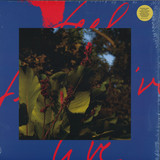
The result of these experiences is Feel Live, Massimiliano's third full-length endeavour. It was recorded in several intimate, sometimes improvised studio settings between Los Angeles, Portland, and Massimiliano's homebase in Berlin as well as at airports and on intercontinental flights high up in the sky. Featuring vocals by Private Agenda, Peaking Lights, Kim Anh and instrumental contributions by Fort Romeau, Tim K, and Jules Etienne, Feel Live is Massimilano's most playful and imaginative work to date. It's as emotional as sensual, as vibrant as the first ray of light after a thunderstorm has cleared the air.
Is it awkward or odd to call this record jazzy Presumptuous to pinpoint its spacial, almost orchestral qualities Unfair on the ruling Cosmic powers to highlight its aspirations of founding a new land of Balearic Harmonia and getting down at a huge fertility rite with electro enthusiasts and house lovers Not one bit. Feel Live is pure grandeur and elegance. It feels like an eternal movement.
Martha Graham has dedicated her whole life to dancing. 'It's permitting life to use you in a very intense way,' she said. 'Sometimes it is not pleasant. Sometimes it is fearful. But nevertheless it is inevitable.' Massimilano couldn't agree more. His advice when facing the inevitable: 'Live what you are feeling, feel what you are experiencing, good or bad, it is an experience.'
LP,180g, 2018 REISSUE - REMASTERED FROM ORIGINAL TAPES, CAREFULLY REPRODUCED ORIGINAL ART
Released in 1976, Distinctive Themes / Race To Achievement is legendary arranger Nick Ingman exploring the two distinct ideas of 'impressive themes varying in style from 'Basie to Elgar'' and 'a study in the pressure and rewards of achievement'.Distinctive Themes is a veritable indulgence of variously-tempoed, full orchestra, big band workouts, from relaxed swing to more propulsive themes. The progressively building 'Expanding Markets' is a true highlight, with its rolling pianos, contemplative electric guitar solos and moody horns over skipping beats.
The dramatic 'Against The Odds' is another stand-out.
Race To Achievement is all rugged funk with stabbing chords and strutting horns and it's probably our favourite side. Of course we have to acknowledge the fantastic 'Tense Preparation', sampled by Prince Paul and Dan The Automator for Handsome Boy Modeling School's seminal 'Magnetizing' with Del Tha Funky
Homosapien. But the whole side's range from tense underscores to fast and punchy chase themes makes this is a gem of the KPM catalogue.
As with all ten re-issues, the audio for Distinctive Themes / Race To Achievement comes from the original analogue tapes and has been remastered for vinyl by Be With regular Simon Francis. We've taken the same care with the sleeves, handing the reproduction duties over to Richard Robinson, the current
custodian of KPM's brand identity.
Hosono's solo career would take many twists and turns from this point forward, with forays into exotica, electronic, ambient, and techno, culminating in the massive success of techno pop group Yellow Magic Orchestra (YMO), who made their debut in 1978. Admired by artists ranging from Van Dyke Parks to Mac DeMarco, Hosono continues to forge ahead as he heads into his fifth decade as a musician. With the re-release of his key albums for the first time outside of Japan, his genius will be discovered by a whole new generation of fans around the world.
.
The unbelievably prolific Haruomi Hosono is one of the major architects of modern Japanese pop music. With his encyclopedic knowledge of music and boundless curiosity for new sounds, Hosono is the auteur of his own idiosyncratic musical world, putting his unmistakable stamp on hundreds of recordings as an artist, session player, songwriter and producer.
Born and raised in central Tokyo, his adolescent obsession with American pop culture informed his early forays into country music, which he would revisit later in his career. Hosono made his professional debut in 1969 as a member of Apryl Fool, whose heavy psychedelia was somewhat at odds with his influences, which leaned towards the rootsy sounds of Moby Grape and Buffalo Springfield. The latter was one of the main inspirations for his next group, Happy End, whose unique blend of West Coast sounds with Japanese lyrics proved to be highly influential over the course of three albums. After the band’s amicable break up in 1973, Hosono began his solo career with Hosono House, an intimate slice of Japanese Americana recorded inside a rented house with recording gear squeezed into its tiny bedroom.
After their psychedelic tour to Alice's Wonderland on their adventurous second album, CRuNCH 22, the Tel Aviv based Rhodes, turntables & drums power-trio, is back with "LUSH FLUSH", a fiercer than ever EP of raw, in-your-face grooves.
Opening track "Cairo" places a persistent Egyptian orchestra sample on top of a Led Zepplin-styled heavy beat; "Osaka" sounds like an early 2000s indie-pop with vocals sampled from a japanese folk song; "Baba" fuses Middle Eastern leads with broken beats; "Minderbinder" is a quirky afrobeat and "Young & Happy" is an odd metered pseudo-house track. While this list might seem as eclectic as you can get, the band's unique instrumentation and live playing style manages to make it sound completely coherent.
On the flip side of this 12" vinyl are three remixes by some of Israel's finest producers: Markey Funk's space-rock version of Cairo; Mule Driver's techno edit of Baba; and Obas Nenor's house remix of Young & Happy take these tunes deep into the dancefloor, making the "LUSH FLUSH" EP an important tool in any DJ's arsenal.
From the darkest corners of the RCA vaults we bring you this super rare and wonderful, tripped out cosmic-psych rarity on 45!
From 1977 this double-header is an Eastern themed, moog driven oddity from the mysteriously monikered Kamel Oil Company. Written by the legendary Bob Azzam, Eddie Barclay (founder of Barclay Records) & Greek record company owner Antoine Flamaritis, 'Mustapha' is an exotica soaked orchestral monster with choir vocals and string arrangements that only the big boys could call in. This is a serious left-field nugget from the vaults of one of the biggest majors, one ends up thinking - 'how did this come about!'. On the flip-side we have 'Petrolo En Bruto', which is the real gem here, undoubtedly this one will appeal to fans of the far flung reaches of world music and psych, even those of you who dig the various flavours of Funk from around the globe. A truly special and unique record here, often sought after by the deepest of the crate diggers and obscure sound searchers on a promo 45, this rare EP now sees a fully legit reissue. Made in conjunction with Above Board distribution and RCA this reissue is sourced from their vaults using original materials and remastered and repressed to the highest standard for 2018 and featuring all original 1977 RCA label artwork.
Quality is the key word from Copenhagen based Music For Dreams and here is another home run. Willie Graff splits his year between DJ residencies in New York and Ibiza. In this new outing with studio partner Darren Eboli, the influence is, as the title suggests, clearly NY-based. Over only four tracks, the pair manage to craft a stunningly comprehensive exploration of the essential elements of dance music.
Opening track "Love Flight" staggers into a lush string-driven groove that recalls the glory of Metro Area meets Wally Badarou vibes. Minimal yet playful, it lounges somewhere in the depths of the house tradition, calling on familiar sounds while throwing in odd details along the way (harmonicas). It takes both skill, devotion and a sense of humor to pull this track off, making for a strong opening. "Moon Tan" lingers on a metallic hook that drags you into a plethora of percussion followed by a rubbery soft baseline. Dubby key work would suggest this was a new wave band jamming at Compass Point, while the icy chill of the xylophone transports you into 80s italo territory.
"Second Sun" pulls out the bag of boogie tricks, relying on a firm but humble baseline and smattering drum machine claps. Nile Rodgers-style guitar licks guide us onwards into a well-orchestrated jam that builds up and breaks down with perfect timing while dreamy chords reach for the sky. "First Light" keeps the groove tight while dipping over towards more Balearic temperatures. Steeped in a watery atmosphere and gentle organic percussion, it focuses in on a trance-inducing arpeggio that lulls you in to the swaying Badarou-style synth swirls that intercept it.
We are very excited to present the new collabo release between Cosmic Compostions and Jitwam's selftitled album " ".
Born in Assam, Gauhati, in Northeast India, but currently based in New York's storied borough of Brooklyn, Jitwam spent his formative years in New Zealand and Australia, before living in monasteries in Thailand, orphanages in South Africa, and washed out apartments in London. Of everywhere and nowhere, his music draws influence from a litany of iconoclasts including, but not limited to RD Burman, Moondog, The Velvet Underground, Yayoi Kusama, Jay Electronica, Jay Dilla, Moodymann, Leon Thomas, Madlib and Asha Bhosle.
Across " (selftitled)", he utilizes knowledge acquired through years spent digging through dusty crates, and talents honed as a multi-instrumentalist, producer, and vocalist. A series of stumbling, jazz/soul-rooted beat sculptures, each buried beneath a haze of fuzzy psychedelia, broken microphone blues, and articulated through a freestyled process he describes as "first thought, best thought", " (selftitled)" solidifies Jitwam's spot as a major emerging talent.
Recalling the fourth world dreamscapes explored by oddball songwriters like Connan Mockasin, Clarence Clarity, Jai Paul, Silicon, and Unknown Mortal Orchestra, it represents a time of transition and remembrance for Jitwam, while still fulfilling the core qualities he looks for in song. In his words, "Music is a refuge. A shelter from the storm. A place you can go to close your eyes."
Since he first shared his music with IZWID Records boss Kutmah at a Brainfeeder afterparty in London, Jitwam has released through Leaving Records, Cosmic Compositions, and The Jazz Diaries (the label he co-runs with Casey Van Reyk and Nigel Mphisa). He's also written with Inkswel (BBE) and Paul White (R&S), featured on Moodymann's K7! "DJ-Kicks" compilation and been championed by Gilles Peterson, Alexander Nut, Andrew Jervis (Bandcamp), and Funkineven. Mainly mixed and mastered by Matthewdavid at Stones Throw studios in Los Angeles, " (selftitled)" will be available on vinyl and digital formats.
Les Disques du Crepuscule present an extended double disc reissue of Shiver, the acclaimed debut album by seminal Swedish artist Virna Lindt, originally released by The Compact Organization in 1983.
Written and produced by Virna Lindt and Tot Taylor, Shiver offers 12 slices of chic orchestrated pop informed by 'foreign film' soundtracks, movie composers John Barry and Ennio Morricone, Modernist musique concrete and Cold War spy thrillers. The album spawned three singles: Attention Stockholm, Intelligence and I Experienced Love. For the most part Lindt provides the voiceover for her own narratives, occasionally striking reflective poses amid orchestral swells and multi-layered atmospherics; a clear influence on later acts such as Pulp, St Etienne and Air.
This new edition of Shiver showcases acoustically-enhanced mixes prepared by Taylor and Lindt in 1997, augmented with non-album singles Model Agent and Young & Hip, and immaculate instrumental versions of key album tracks such as Underwater Boy and The Dossier on Virna Lindt. The extended tracklist also finds room for a leftfield cover of Windmills of Your Mind, originally written by Michel Legrand and Alan & Marilyn Bergman for The Thomas Crown Affair and recorded for the Crepuscule compilation album Moving Soundtracks.
Cover photography is by E.A. Janes. The 2xCD edition is housed in a 6 panel digipack with a 12 page booklet. The double vinyl set comes in a stylish gatefold sleeve and includes a free digital copy.
Praise for Shiver: 'Eurocentric Virna Lindt casts herself as a mysterious blonde in a loving pastiche of Continental movie music' (Sounds); 'I think of Shiver as Ingmar Bergman's All These Women cast as 50-odd minutes of musical dialogue. Tot Taylor's fantastic orchestrations cast a brilliant pale of modern love throughout' (Fond/Sound); 'Instead of mere cool styles, there's far more here than a restrictive stereotype' (All Music Guide);
a1. Celestial Encounter (Original Mix) 6:08 - 4×4 driven groover laced with choppy hi-hats, complexed rhythms, and orchestration only fit for mental travels. An uplifting tune of spirit and electronic sorcery.
a2. Ominous 4:58 - Steely industrial percussion, creepy atmospheres, dance floor know-how....The honest depiction of the title lurking within the corners of your psyche.
a3. Celestial Encounters (Interlude) 1:22 - A fine example of the latest in signature interludes from the 'Optic Nerve' project. Movement & Imagination.
b1. Jazzy Circuitry 4:49- Moody, computer-ridden textures walking along side a odd-time signature until the introduction of the bassline and trippy piano keys seal the deal on craft & creation. Niceness, Indeed.
b2. Jazzy Circuitry ( Blaktony's Step Glide Remix ) 4:18 Traditional 'Optic Nerve' ambience is chopped & rehashed into a 1/2 step groover; Then.... blasted into a full jam session by 'Blaktony'. Madness/A complete new trip on the original structure & tune.