Maurice Louca is one of the most gifted musicians and composers on Egypt's thriving underground music scene. This forthcoming full-length album draws voraciously on Arabic music, psychedelic folk. The title Saet el Hazz is a coded saying in Egypt to refer to a good time and usually implies a great deal of debauchery. “When you mention to someone that you’ve had a saet hazz, there are no questions asked. It is what it is.”
The initial spark for Saet El-Hazz (The Luck Hour) was Louca’s desire to collaborate with 'A' Trio, the Lebanese improvisational group featuring Mazen Kerbaj on prepared trumpet, Sharif Sehnaoui on prepared guitar, and Raed Yassin on prepared double bass. 'When the three of them come together they create a sonic cosmos entirely their own. I started by composing music that I wanted to have exist within this sonic world— at times in harmony, or clashing with it, and all the emotional ranges in between.' Just as 'A' Trio served as the spark, a commission from Mophradat, an arts organization based out of Brussels, was the tinder. The commission was for a new composition to be performed using instruments that Louca would modify to play microtonally. This led him to Turkey and Indonesia. In Istanbul, he worked with a Lutheran to custom-make a guitar. In Surakarta, he ended up with an instrument maker tuning a Serang—referred to as the Indonesian xylophone, part of the family of Gamelan tuned percussion instruments. These new modified instruments opened up the composition to new tonal possibilities which drove Louca to expand his line up to include Khaled Yassine, a longtime collaborator and versatile percussionist and drummer, Christine Kazaryan, a dynamic harpist whom he met via Praed Orchestra, and Anthea Caddy, a cellist who came highly recommended from the Berlin free improv scene.
'There is something about linking luck to decadence that resonates with me, and even if I can't fully articulate it in words, the drive behind the music of this album and how it came to be, and the energy between us at the studio rehearsing and recording it, was in a lot of ways for me a saet hazz.'
Saet El Hazz (The Luck Hour) is a long form composition of six movements, recorded over the course of a week in August 2019 at A/B studios in Brussels.
Witness the ever-changing, ever-mutating threat that is reality.
Perception is under duress; sensibility is bending everyday
under the barrage of nonsense. One must make note of whom
one is and what one has become: look into the mirror of the
planet-killers—psychic cannibals infiltrate and contaminate
once familiar and seemingly secure territories… formidable
foes indeed! What powers these beasts? What fuels discord
and hatred? The behemoth of a “civil” society? What are the
weapons at one’s disposal? Generosity is the aegis against greed,
empathy is the armor to deflect apathy, love is the club to abate
hate…the fog is lifting and humans are opening their eyes.
And so Castle Face offers this field recording, the Osees
Protean Threat, from the pits as a quick booster between protein
pills and recycled sweat beverage anthems to assist the listener
to not worship at the altar of violence and greed, to not offer
oneself up for free, to stand up and be vigilant! Truth will not
be found in the speeches and photo ops of the overlords— stand
strong and together under the gaze of the oppressors.
Stand vigilant, united with those who don’t have the same
privileges. Demand respect and a peaceful life for all.
This recording is at the apogee of scuzz—punk anthem
amulets for the ears and heart, a battery for one’s core. Be
strong. Be human. Be love.
This is the Soundtrack of Ys: the Oath in Felghana, the gorgeous A-RPG by Nihon Falcom! Composed & arranged by the Falcom Sound Team jdk, Ys: The Oath in Felghana is the acclaimed remake of Ys III: Wanderers from Ys. which soundtrack is also included in this release!
A unique live performance at Issue Project Room gathered the former Sonic Youth member and artist Kim Gordon and the legendary minimal blues master and artist Loren Connors in 2014.
In December 2014, the Issue Project Room venue in New York City offered the first-time duo with the legendary Brooklyn- based guitarist Loren Connors and the rock icon Kim Gordon. From this almost 1 1⁄2 hour set, Kim and Loren decided to archive their favourite movement on a physical record which is a 12” vinyl now available from the french label Alara.
Through this long improvised session, Kim and Loren do dialogue and browse between installations of deep soundscapes at the limit of drone, and distorted, abrasive sonic attacks wrapped in reverberated harmonics. In this unprecedented exchange between two legends, the languages are as borrowed from one to the other: Kim Gordon plays on the land of the first inventions of Loren in rumbling / growling “unaccompanying” strings pinch, when Loren Connors envelops the entire hall of distorted harmonics that Kim would not have denied in her loudest attacks within her solo or group experiences from decades.
Just through the story of each of the protagonists and thanks to the quality of the recording and the mastering that bring the intensity of this meeting to life as if we were physically attending to the show, this album is a unique opportunity to witness the exceptional meeting between two legends of sonic and experimental music.
The Berliners present an unusual live album that is a testimony of strange times: their Phanerozoic concept album performed live in its entirety at a time when no shows were happening anywhere in the world. 3 LPs / 2 CDs plus DVD and access to HD video download and streaming. Phanerozoic I was streamed live from Pier 2, a big hall in the port of Bremen, on March 25, 2021. Phanerozoic II, recorded at "Die Mühle" studio, aired on April 16, 2021 as part of the digital edition of Roadburn Festival, this year abtly named Roadburn Redux. Both shows couldn't have been more different: where the first part boasts with a pompous, mesmerizing lighting production on a big stage, the 2nd part is quite the opposite: intimate, almost cosy, focused on musicianship rather than performance. A stripped down setup in a dark barn, with moody, minimal but not any less efficient lighting. "We wanted to give people 2 totally different experiences", says band leader Robin Staps. "In Bremen, we had the chance to record a proper Ocean live show, the way people know us. We played facing towards the front of the stage, to an invisible crowd, essentially to a huge empty room_ but we knew people were watching, even if we didn't see them. There was the same rush of adrenaline right before going on stage as you get before going on at any big open air festival_ maybe with a little extra anxiety added, because knowing that so many people are watching you without being able to see them yourself was super weird." This release is yet another master class of record packaging from Norwegian artist and long term friend and collaborator, Martin Kvamme: the trifold is made from thick, rough and incredibly fibrous cardboard, adorned with a filigrane copper foil embossing of a bitmapped live fotography from the Bremen event. It contains 3 vinyl records in printed inner sleeves or 2 CDs, plus a DVD and a concert ticket with a streaming and HD video download link to both concerts.
The 20th milestone release in the Generation Series lineup, this 5-LP abridged set features 82 tracks that play in the first half of Shenmue III, which takes place in Bailu Village. Comes in a top lid box (similar to recent Generation Series releases from Brave Wave) with liner notes, archival artwork and a digital download code for all 196 tracks.
With Companion, Otto A Totland completes his album trilogy of personal, sparse piano compositions, following in the footsteps of 2014's Pinô and 2017's The Lost.
As a self-taught pianist, Otto further determines himself as a timeless composer who follows nothing but his own gut and heart. The outcome is something so pure it’s hard to not be affected. The development of his pieces over the years has grown into something so himself that it's almost immediately recognisable. With Companion he has matured in his own craft, and the various pieces here feel confident and absolutely beautiful in a way that sees the end of the trilogy as a warm, empathic document for the times.
As with the previous two albums, Companion was again recorded at Nils Frahm's Berlin studio for optimal warmth and space, Pinô and The Lost at his previous Durton Studio while Companion at the historic Studio 3 at Funkhaus. All three records are released by Sonic Pieces in hand-crafted limited edition covers as a statement showing that craftmanship and humanity still exists in this world constantly moving towards the exact opposite.
This quote by Norwegian philosopher Guttorm Fløistad seems an appropriate connection to both Otto's music and the way we are all heading : “The only thing for certain is that everything changes. The rate of change increases. If you want to hang on you better speed up. That is the message of today … In order to master changes, we have to recover slowness, reflection and togetherness. There we will find real renewal.” With this in mind, Companion is exactly what it's title sets out to be. A friend that can follow and comfort in both good or bad times.
out of Stock
Last delivered 4 years ago available to reorder, subject to availability
Deepfunk / soul super rarity flipped with one of the best deep soul sides ever recorded, the family had some great images so we opted for a picture sleeve on this one, 400 copies only. forget about finding an O.G. Researched by our man, Brian Sears
Papa Bear And His Cubs were the brainchild of Eddie Disnute Sr., aka Papa Bear. A native resident of Hampton, Arkansas. Eddie started his music career in gospel then transitioned into secular music after moving to Milwaukee, Wisconsin in 1963. While living in Milwaukee with his wife and children, Eddie played with a group called the Fenders but eventually decided to start a group of his own with his kids aptly named Papa Bear And His Cubs.
Eddie Sr., a naturally gifted musician, taught his children how to play music. Creativity is a part of the Disnute DNA and before long Eddie's cubs were perfecting chops of their own. Papa Bear And His Cubs started performing together around the late 1960s. Although a few memorable gigs came their way, Wisconsin proved to be too cold for the Disnutes so they made their way back to Hampton, Arkansas.
The family continued to perform in Arkansas then made another move to Houston, Texas where they hoped to break into the music scene down south. They lived there for nearly three years and even recorded at SugarHill Studios, yet nothing materialized and the recordings remain a mystery to this day. For their final move, the Disnutes returned home to Hampton after Eddie's wife Christine (aka Mother Goose) received word that her father was ill.
In 1975 the group recorded their only vinyl record at Sam Griffith's home recording studio in Camden, Arkansas. Disnute Sr. recalls it only taking "one night, and one take" for both "Sweetest Thing On This Side Of Heaven" and "You're So Fine" to be born. Both songs have an entrancing quality that is inescapable and will surely resonate with listeners for years to come.
The group continued to perform until the early 1980s, at which point the cubs were bears themselves, who decided to go their own separate ways. When thinking back to their prime days, one thing will always remain clear in Eddie Sr.'s memory, "we could play, all it took was a countdown of 1, 2 ,3, 4 and we're gone".
out of Stock
Last delivered 7 years ago available to reorder, subject to availability
What or HOO do you get if you mix guitarist Neil Halstead, Farmer Dave of Beechwood Sparks with uncompromising folk angel- Jackie Oates, producer-songwriter and organic gardener with a penchant for wah-wah, Nick Holton? The answer is the widescreen, heartbreaking glory of HOO’s second album WE SHALL NEVER SPEAK. A more song filled leap forward from debut CENTIPEDE WISDOM’s post-rock electro adventures. Holton is a master builder of woozy dynamics, his songs unfurl with a mysterious, hooky logic all their own - this is cinematic and deeply emotive machine music. A glorious hybrid of electro, shoegaze, dubby ‘niceness’ and floating dream pop. The spooked, narcotic throb of opener GHOST IN YOU. The pounding, chewy Kraut/Space rock of CRANIUM. THE MIGHTY’s exquisite slow build towards Can-like lift-off. The snarly, groovy drive of centrepiece & single STILL DREAM. A brief flirt with musique concrète on the metronomic NO ONE CAN SEE THIS. The Halstead co-penned shoegazy, echoey swagger of WE SHALL NEVER SPEAK. The album’s poisoned chalice & peak song moment, POWDER MOON. The synthpop of YOU CHANGED THE WAY YOU SMILE. Closer SEA OF GLASS sounds like Leonard Cohen visiting Kraftwerk’s Klingklang studio. Let that sink in - the idea is perhaps the heart of this venture.The detail and texture is extraordinary. A glorious hybrid of an album that over eight songs builds into something unique. Epic and homegrown. Upbeat and melancholic. Questing and questioning. Haunted by loss but future-facing. It’s a genuine marvel. Holton’s HOO co-conspirators this time are Neil Halstead, Charlie Holton, Ian McCutcheon, Paul Blewett, Chris Monger and Lee Lavender. Guests include acclaimed folk singer Jackie Oates and West Coat Legend Farmer Dave Scher
What or HOO do you get if you mix guitarist Neil Halstead, Farmer Dave of Beechwood Sparks with uncompromising folk angel- Jackie Oates, producer-songwriter and organic gardener with a penchant for wah-wah, Nick Holton? The answer is the widescreen, heartbreaking glory of HOO’s second album WE SHALL NEVER SPEAK. A more song filled leap forward from debut CENTIPEDE WISDOM’s post-rock electro adventures. Holton is a master builder of woozy dynamics, his songs unfurl with a mysterious, hooky logic all their own - this is cinematic and deeply emotive machine music. A glorious hybrid of electro, shoegaze, dubby ‘niceness’ and floating dream pop. The spooked, narcotic throb of opener GHOST IN YOU. The pounding, chewy Kraut/Space rock of CRANIUM. THE MIGHTY’s exquisite slow build towards Can-like lift-off. The snarly, groovy drive of centrepiece & single STILL DREAM. A brief flirt with musique concrète on the metronomic NO ONE CAN SEE THIS. The Halstead co-penned shoegazy, echoey swagger of WE SHALL NEVER SPEAK. The album’s poisoned chalice & peak song moment, POWDER MOON. The synthpop of YOU CHANGED THE WAY YOU SMILE. Closer SEA OF GLASS sounds like Leonard Cohen visiting Kraftwerk’s Klingklang studio. Let that sink in - the idea is perhaps the heart of this venture.The detail and texture is extraordinary. A glorious hybrid of an album that over eight songs builds into something unique. Epic and homegrown. Upbeat and melancholic. Questing and questioning. Haunted by loss but future-facing. It’s a genuine marvel. Holton’s HOO co-conspirators this time are Neil Halstead, Charlie Holton, Ian McCutcheon, Paul Blewett, Chris Monger and Lee Lavender. Guests include acclaimed folk singer Jackie Oates and West Coat Legend Farmer Dave Scher
GENRE: Modern Classical, Experimental, Ambient Metal. RIYL: György Ligeti, Sarah Davachi, Stars Of The Lid. 180g LP pressed at Optimal, 350gsm jacket, inner & DL card. Jessica Moss Also Known For Her Tenure In Thee Silver Mt. Zion (2002-2015), Black Ox Orkestar (2002-2007), Recordings By Vic Chesnutt, Carla Bozulich, Arcade Fire, Basia Bulat, Roy Montgomery, Sarah Davachi, Big Brave & More. A phosphene is “the phenomenon of seeing light without light entering the eye.” The title of the heart-rending and resolute new album by composer/violinist Jessica Moss could not be better chosen. Moss is by now a seasoned practitioner of immersive isolation music; across three previously acclaimed solo records of minimal and maximal post-classicism, her acoustic, amplified, and electronically-shifted violin is the raw material for deeply expressive, palpably haunted, wholly committed compositions. But Phosphenes inscribes fleeting halos of refracted ghostly light out of a prevailing darkness with especially plangent determination and intensity. This is the most overtly searching, mournful and inexorable music Moss has made to date. The pieces on Phosphenes exquisitely navigate consonance and dissonance, building patiently from single notes to multiple voicings, harmonic stacks and clusters. These compositions channel themselves like slow-moving water in a dark cave, finding small eddies and catching glints of luminescence from within. Signal processing is kept to a minimum in the three-movement “Contemplation” suite on Side One, where Moss deploys amplification chiefly in the service of activating overtones and pitch-shifts, thickening and widening the sonics, carving out her unique timbral space. Based on a four-note sequence that sets whole tones against one another, “Contemplation” is a bona fide requiem that finds Moss at her most instrumentally naturalistic, measured, and modern. Side Two unfolds in a more foreboding vein: “Let Down” is marked by cavernous octave-dropped arco and pizzicato, providing a gothically-inflected substratum upon which hauntingly wordless vocal invocations and cumulative gyres of violin melody unfurl. “Distortion Harbour” grinds with noisier grit and a more harrowing complexion, highlighting Moss’s ambient-metal sensibility and her distinctive palette of industrial-inflected power electronics a reminder of why she’s also been a go-to player on albums by the likes of Big Brave, Oiseaux-Tempête and Zu in recent years. These two songs also feature upright bass from old friend and former bandmate Thierry Amar (Godspeed You! Black Emperor, Thee Silver Mt. Zion, Black Ox Orkestar). Album closer “Memorizing & Forgetting” is inarguably the most tender and beautiful song in Jessica’s oeuvre: a keening lullabye of sorts, on which she plays piano, violin and guitar, joined by her partner Julius Levy in a lustrous ambient vocal duet. Everyone has been trying to find a way through and out of pandemic, lockdown, social isolation and often darkened hope and for many musicians, the absence of touring, of live performance, live sound, live audiences, and a living. For Moss, it’s also been “like when you press your fists hard against your eyes and eventually there is fireworks.” The light gets in where it can, even or maybe especially as imaginative sensory simulacra (if/when we shut down our screens and are left to our own devices). Phosphenes is a stoic, acutely sensitive, superlative musical statement from Moss
The gala evening at the Paris Opera on December 19, 1958 was announced in the press as "the greatest show in the world". Maria Callas, at the height of her glory, performed for the first time in front of a Parisian audience. The diva delivered all the facets of her art through the Italian classics that she loved, with the theatrical genius that is proper to her. Paris gave her a triumphant evening!
The original recording of this evening, broadcast in Eurovision throughout Europe, has been newly restored with the greatest care.
Presentation by Benoît Duteurtre, novelist, essayist and music critic.
Excerpts from Norma by Bellini
Excerpts from Il Trovatore by Verdi
Excerpts from Il Barbiere di Seviglia by Rossini
Complete second act of Tosca by Puccini
Intimate, sensual: such is the music of Malik, shaped as desired over the albums: Un (2017), Tempéraments (2019), which earned him the nomination “Revelation album of the year” at the Victoires de Music 2020… And, today, Troy. Which opens a new chapter, that of an organic bias whose idea germinated after his last tour. Major fashions, solar and organic: TROIE imposes itself in warmth and sensuality.
Malik Djoudi has always been fond of duets or collaborations - with Juliette Armanet, Cécile de France or even Etienne Daho, support from the start - does not deprive himself of it here. Thus, we savor the tempo shared with the young rapper Lala & ce, “Point sensible” and the synthetic poetry explored with Philippe Katerine, “Eric”. Third collaboration, and not the least: "A few words", sung with Isabelle Adjani, the immense actress in a state close to Ohio, that of the navy sweater made in Gainsbourg.
Mondo and WaterTower Music are proud to present Tom Holkenborg's epic complete soundtrack to the fan-fueled phenomenon Zack Snyder's Justice League.
As pure as any film music expression has ever existed, Holkenborg's nearly-four hour opus is as bombastic and singular as the film it compliments, and we are honored to present the premiere physical release of this staggering work of expression.
The filmmaking story behind Zack Snyder's return to his DC Comics juggernaut is well known at this point, but not enough time has been spent on the journey of the film's once-shelved score. The incredible composer behind one of last decade's biggest filmmaking triumphs (MAD MAX FURY ROAD) Tom Holkenborg joined the sadly far too large club of composers, across filmmaking history, to have their blockbuster scores replaced.
But the big-budget redemption arc of Zack Snyder's original vision for Justice League presented Holkenborg with the opportunity to build upon what he had started many years ago, with new skills and tools - this time with no other cook in the kitchen but his director and friend.
Composed by Tom Holkenborg
Artwork by Mo Shafeek
Manufactured in the Czech Republic
DJ Cam & sommelier Frédéric Beneix present Wine4Melomanes, an eclectic and unique
compilation album concept, matching fine wines with rare pieces of music produced in the
same year.
Connecting the complexity, sensuality, liveliness of a drink with the harmony, arrangements,
voice, orchestration, rhythm and melody of a song, Wine4Melomanes tours France,
Germany, Holland, the USA and even Slovakia in search of only the finest musical flavours.
Ranging from jazz, to pop-rock, to blue-eyed soul from the early 70s right through to 2016,
Wine4Melomanes is defined by its sense of musical opulence, with warm rich tones and
understated quality evident throughout. DJ Cam is known for his pioneering abstract hip-hop musical
compositions, his virtuoso use of technology and his fascination for acoustic jazz gaining him
international acclaim.
With Robyn, South London's cktrl shares his most ambitious work yet, collaborating with the likes of Duval Timothy, Coby Sey (Micachu, Tirzah, Dean Blunt) and Purple Ferdinand to create a vital exploration of contemporary-classical from the black perspective; out via Errol and Alex Rita's Touching Bass. Spurred on by the overpowering feelings of heartbreak, Robyn impressively creates emotive and heartfelt clarinet and saxophone-led soundscapes about the all-consuming power of love. On the project, cktrl says: "'Robyn' at its core is heartbreak and is just really sentimental. It's a journey of losing a love but it ends with optimism as you find strength to love again." Born and bred in Lewisham, cktrl aka Bradley Miller is an integral part of London's pioneering musical underground. One of the only remaining original DJs on NTS, cktrl has previously worked with and played alongside the likes of Sampha, Sango, Kelela and Dean Blunt. Throughout his career to date, cktrl has also been recognised and heralded by fashion and film VIPs including Virgil Abloh, Bianca Saunders, Tremaine Emory, Nicholas Daley and Jenn Nkiru who recently secured him a cameo in Beyonce's heralded 'Black Is King'. With a shared ethos of elevating and amplifying leftfield black music, he partners with London based label, Touching Bass, themselves a key cog within the city's bubbling musical underbelly.
Invada Records präsentiert den Soundtrack zu 'UNDERGODS' - dem Spielfilmdebüt des in Großbritannien lebenden, spanischen Musikvideo-und Werbespot-Regisseurs sowie Drehbuchautors Chino Maya.
Eine dystopische Reise durch ein futuristisches Europa im Niedergang.
Musik von Wojciech Golczewski, Francis Lai, Software, Thierry Durbet und Gerardo Carreras.
Limitiert auf insgesamt nur 1000 Exemplare
Gepresst auf "Concrete Wasteland" Marmor-Vinyl
Verpackt in einem Deluxe-Sleeve mit doppelseitig bedrucktem Insert
out of Stock
Last delivered 3 years ago available to reorder, subject to availability
On Delta, a dozen artists across four continents freely interpret Fountain across a double LP, again featuring Donna Huanca’s surreal artwork, and the unearthly graphic manipulations of Nufolklore Studios. Remaining faithful to Fountain’s presentation, Lyra’s curation reflects her commitment to stylistic diversity, with the old guard and the next wave alongside each other. Where some artists chose to rework existing works, others composed new material from fragments found across the record. The results showcase the very themes of wordless identity conflict and technological concerns that Lyra and her foremothers have projected.
the limitless highs of Sigur Ros and the steady pulse of The Knife. KMRU cloaks Lyra in a hazy film, soundtracking the depths of space embedded within the ghosts of jungle past. Gabber Modus Operandi expose the realities of artificial nature in a multicoloured rave dystopia. Eris Drew’s double opus takes the tenets of her philosophies into both ambient and peaktime expressions of the trip, the things that lead to the decision before, and the portals that can open up after.
Ben Frost dissolves Cradle’s deep and tremulous hymn in analogue warble, distressed tape spooling out of control and breaking up over the heavens, while remaining oddly serene. Heaven In Stereo conjures up post-rock with trap drums out of Gossip, buried in bass weight and dub space. Nailah Hunter and Tygapaw transform New Moon into an earthbound ode to nature and a pounding trance state induction, while Caterina Barbieri and Hudson Mohawke extract and amplify Tendril’s mind and soul. Vessel takes what feels like the entire album and builds it up to a frantic climax before subsuming into Enoesque pastoralia.
Alongside Delta, Lyra has collaborated with Spitfire Audio to develop Siren Songs, a free plug-in for their LABS series made from playable samples from Fountain, able to work across DAWs in multiple formats. By removing barriers to access, the listener can craft their own responses to the album’s themes, or use its language to express their innermost feelings in their own works.
Life and society emerge where water tessellates over land and provides fertile soil. The chances of evolution that made them interact as they did could have had meaningful environmental consequences had things developed differently. For Lyra Pramuk, that fertile geology provides the ground for her albums. Fountain was that burst of water and swell of energy that propelled her to critical acclaim. Delta is a new take on a traditional remix album, centred on transgenerational dialogue and global storytelling, and will be released again via Iceland’s Bedroom Community label. Projecting Fountain through prisms, wordless songs fractalize into lush creations that blossom with new life.
The ability to have such sheer diversity of material in one place is thanks to the global increase in accessible technologies, fueling an explosion of creativity and genre exploration that was thought of as unthinkable in our lifetimes. Like its namesake, Delta is a point where creative flows meet and triangulate, where global and personal folk histories are presented in novel ways, where transcultural collaboration is celebrated, where many worlds emerge from the depths below.
RIYL: The Knife, Spacetime Continuum, Lorenzo Senni, the soundtrack to Planete Sauvage, 3:45 AM by the front left speaker, 7:45 AM as light pours in and everything winds down.
out of Stock
Last delivered 4 years ago available to reorder, subject to availability
Songs touch on loss, flaws, hiding places, love. Deep connections to the Bay Area, and
the North Coast, with its unique moods of solitude, beauty, and isolation—a place described and transformed by the chaos and power of river-mouth, wild maritime storms, columns of mist that rise up unexpectedly on the road at night. Portions were recorded on Mount
Tamalpais during a self-made residency years back, other pieces made longer ago in Portland, while the rest were tracked during more recent sessions in Astoria.
Throughout, Harris threads a hidden radiant language of voice, disquiet, and guitar, framed by open space and the sense of being far away.
Echoing a lighthouse, burying the faults of being human / Into things that we project upon the sky at night.
out of Stock
Last delivered 7 months ago available to reorder, subject to availability
Long-standing FUSE mainstay Rich NxT makes a long-awaited return to Hot Creations this October with the Vibewise EP. The three-tracker marks his debut solo release on the label, having featured as remixer on the imprint previously.
The A-side sets off with Roll On and the title signifies the exact nature of the track. A chuggy, groove-paced creeper, borrowing a unique vocal hook from UK hip hop protagonist Einstein. Rich’s hallmark style leaves few prisoners in its wake, as swinging bass tones open into the techy sounds of Papermill. Gritty basslines meld into whirring synth pulses before the title track brings things to a close, with stripped-back percussion residing next to loopy kick-hat combos throughout.
As one of FUSE’s original residents, Rich NxT played a major part in the brand’s evolution, helping take it from a free afterparty to one of the most respected event brands and labels on the planet. Elsewhere, the DJ / producer draws on his strongly identifiable sound to run two vinyl imprints, NxT Records and What NxT.
out of Stock
Last delivered 4 years ago available to reorder, subject to availability
The EON label's fourth vinyl release features an original from Birmingham producer Jayson Wynters with Chicago innovator Hieroglyphic Being on the remix.
Wynters - who along with label founder Adam Shelton has been at the heart of the Birmingham scene for years - has already impressed this year with his biggest EP yet on mighty Dutch label Delsin. Here he invites us ever deeper into his nebulous deep techno world with a superb new single 'Filtered Xploits.' It's a punchy but dynamic cut with lush ambient pads smeared across a cosmic sky while chattery percussion and lithe synth power onwards. It has a futuristic soul that recalls early Detroit techno and might be his best work yet.
Both Shelton and Wynters have long shared a love for the idiosyncratic sounds of Chicagoan Jamal Moss aka Hieroglyphic Being, the hugely prolific boss of Mathematics Recordings. He was one of the first artists they bonded over five or so years ago and that love only deepened when they caught him playing a standout set at Freerotation in 2017. After hooking up there, Jayson later hung out with Moss on a visit to Chicago before tapping him up for this remix.
In his hands, 'Filtered Xploits' becomes a brilliantly raw and textured track with layer upon layer of fractured melody and gurgling acid. The prickly, jacked up drums will make an impact on any floor, and as the chords shine through the mix they bring a sense of hope and optimism.
These are two more expertly crafted tracks from artists at the top of their game.
out of Stock
Last delivered 4 years ago available to reorder, subject to availability
Art Blakey’s 1960 hard bop classic The Big Beat introduced one of the greatest line-ups of The Jazz Messengers with the legendary drummer joined by trumpeter Lee Morgan, tenor saxophonist Wayne Shorter, pianist Bobby Timmons, and bassist Jymie Merritt. Three of the six tunes here were composed by Shorter including “Lester Left Town,” but the album is best-known for an unforgettable version of Timmons’ enduring hit “Dat Dere”. This Blue Note Classic Vinyl Edition is all-analog, mastered by Kevin Gray from the original master tapes, and pressed on 180g vinyl at Optimal.
out of Stock
Last delivered 4 years ago available to reorder, subject to availability
The second edition of our ‘More Than Machine’ electro series. After the well-received first edition, we continue the same format, mixing old school with new school artists across two VA EPs. We have always been open-minded with Tronic and also have a deep passion for electro so it’s an honour to be able to release tracks from some legendary producers such as DJ Godfather, Carl Finlow, Samuel L Session and label head Christian Smith.
out of Stock
Last delivered 6 months ago available to reorder, subject to availability
Prodigal son of the ESP Institute, Juan Ramos, rises from the cesspool of a world gone mad with 'Agua Del Cenote', his fifth release with the label. Whilst many artists are following their inner light to bring us some much needed joy amidst these rotten times, Juan (being the little shit that he is) follows an inner demon and delivers listeners and dancers a demented clusterfuck of sadistic chaos. The title track opens with what sounds like a butane torch and we metaphorically freebase into oblivion. Our perception of reality unravels, writhing in abrasive textures smeared across a low-slung, mid-tempo erotic thump. Everything feels blurry and distant, as if we’re swimming through an underground aquatic tunnel, in a panic, searching for an invisible band of spirits whose tune summons us into certain annihilation. Following this is a remix from a decorated lord of 20th Century electronics, Harald Grosskopf AKA The Synthesist. Harald wipes away grit and lethargy to reveal elements hidden deep within the mix as well as softens Juan’s sense of terror by building up to an optimistic layer of added synth. We’d love to offer some relief with the balance of the EP, however, the remaining two tracks paint complimentary hues in the same cerebral palette. 'Let It Go (Freaks Only)' veers closely to House in terms of tempo and gestalt, utilizing a vocal sample from Third Generation (Kerri Chandler) and a healthy dose of sub bass, but Juan hardly apologizes for his masochistic tendencies and certainly never relents into an uplifting mood. Closing the EP, Juan serves an antidote of sorts with 'Cuko', as if suggesting a way out of the swamp, but leaves it up to the listener’s intuition to not only see the carrot, but actually follow it into the light, thus completing the quest.
out of Stock
Last delivered 3 years ago available to reorder, subject to availability
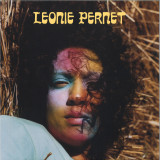
Léonie Pernet's second album Le Cirque de Consolation, to be released November 19th on InFiné & CryBaby, inhabits a world where borders dissolve and everyone makes their own unique and singular utopia. Hereby, the record questions the links between pop music, African cultures and electronic music, neo-classical music or the role of voice, whether human or synthetic. Sophomore albums can be a painful process for an artist - how refreshing it is to hear one so decidedly optimistic.
Textextext - (add your write up)
The sought after whirlwind of French Pop that exploded onto the scene with her debut "Crave", Leonie Pernet, returns with her second album, "Le Circque de Consolation", a sort of double negative of her first. While the yearning that sat at the center of "Crave"might not have been resolved, the young multi-instrumentalist and singer has found a new perspective - a more open and positive outlook on her own life and work. Perhaps telling, then, that the title was the first element of the album to exist: as it is and has always been a journey of personal (and collective) consolation first, a musical confrontation with the self.
"This record parallels my life's journey," confirms Léonie, "it reflects what has happened in my life since 'Crave' came out and how I feel today. There's still a lot of melancholy, but a lot more sunshine and light. In four years, I've become sober, which has saved me; I've worked a lot on my voice, which is a part of a desire to speak, to address my audience more directly, and also a more pronounced pop desire." In line with her new-found "openness", Leonie invites another musician into her creative process for the first time on "Le Cirque de Consolation": Jean Sylvain le Gouic, who lended his coproduction and perspective to her, while Leonie still plays almost all instruments herself with an astounding prowess.
Leonie's voice oozes with a new-found self-confidence and takes center stage amidst eclectic, distinctively fun and open-minded production. Sometimes she sings in English, mostly in French: "I worked a lot on my voice," confirms Léonie, "I didn't dare to sing before, neither live, nor on record, nor in the studio." Surrounding her astounding, intoxicating voice are forays into any direction imaginable: from harsh, experimental electronics to the more sombre, organic and quiet moments - and everywhere, there is the vision of Africa, (also Middle East) it's many sonic gifts and cultures.
Leonie has found a universal utopia that she craves for - a musical, cultural amalgamation that is decidedly non-western, political and poetic, rooted in self-discovery and the connection with other humans: African and oriental percussion, synthesizers, drum-machines; Léonie mixes genres and instruments with ease and precision. The French novelist and philosopher Édouard Glissant - whose work and writing had a big influence on Pernet - coined the term "Creolization ", the "bringing together of several cultures or at least several elements of distinct cultures, in one part of the world, resulting in new data, totally unpredictable in relation to the sum or the simple synthesis of these elements."
From "Hard Billy ", a techno-influenced rebellious anthem, to "Les Chants de Maldoror," a club and dance song propelled forward by feverish derboukas, to the deeply moving "A rebours" and its Afro-electronic rock. Léonie Pernet inhabits a world where borders dissolve and everyone makes their own unique and singular utopia. Hereby, the record questions the links between pop music, African cultures and electronic music (Intérieur Négro), neo-classical music (Le Cirque de consolation, Dandelion), or the place of the voice, whether human or synthetic as in the atmospheric "Vowel". Sophomore albums can be a painful process for an artist - how refreshing it is to hear one so decidedly optimistic.
out of Stock
Last delivered 4 years ago available to reorder, subject to availability
In pairing words with art, the ESP Institute often does everything journalists hate. We drown the reader in hyperbole, abstractions as opposed to didactic or literal depictions, and paint the press release with superlatives that construct an existential struggle around the art and its conditions. To articulate our reasoning behind collaborating with the artist, or the synergy between their work and our catalogue, is sometimes so challenging that crossing that finish line is achingly delayed. Patrick Conway’s 2xLP 'Cellular Housekeeping', his fourth release with the label, is one of these works so monumentally exciting for us that we’ve strained over how to deliver with honor his art unto the masses. After the initial hurdle of visual representation (in this case handled with gusto by artist Hassan Rahim), how do we directly and intentionally talk about the art we deeply love, when in reality we’re largely guided by instinct? We explore many angles, often failing along the way, until finding a final click in the combination that unlocks the floodgates. With Patrick’s album, that elusive impetus revealed itself in a literary gem that both symbolized his aggressive, melancholic, romantic, and bleak overtones, as well as synchronized his work and our task with a metaphor so grand it justified putting these words to paper. In the deeply British poem of despair and hope, 'Comus: A Mask Presented at Ludlow Castle', John Milton immortalized the classic idiom of the “silver lining”, and we find comfort in this transaction between struggle and what the poet considered divine intervention. Our bout of procrastination that brewed a cloud over the art may too tout a silver lining, the time that’s elapsed clearing a path for the album to exist in its rightful place, as opposed to fighting for a voice at an overcrowded table. In hindsight, this final hurdle might have only existed because without it, there is no glory, no resolution, but as all the pieces click and we collectively cross the finish line, Patrick Conway’s once captive 'Cellular Housekeeping' is now truly released.
out of Stock
Last delivered 4 years ago available to reorder, subject to availability
nown for her delicate compositions, soaked in dream-like surrealism, Icelandic musician Sóley has attracted a huge following since launching her solo career back in 2010. Her 2012 single ‘Pretty Face’ went on to generate an enormous amount of buzz, and quickly became a viral sensation. Now, with three solo LPs under her belt, Sóley is preparing to debut a completely new sound via the release of her new concept album, Mother Melancholia, on October 22nd.
Described by the artist as "Nosferatu meets Thelma and Louise in a vampire church under the watchful eye of David Lynch", Mother Melancholia is the soundtrack to the end of the world as we know it. As a self-confessed news addict, Sóley became obsessed with the idea that the world is ending. Having surrounded herself with real-life stories of global warming and patriarchal politics she couldn’t shake the feeling that she was going to die. This feeling was so all encompassing that it sparked the idea for a new project. Could there be a soundtrack for the last days of humans on earth? How would that sound?
“I read books about possible dystopian worlds and started writing poems about irrational and in love characters who live in gray and cold imaginary loneliness. In each other’s burning arms. Walking in circles with no way out” she explains. “After all, the album reflects our life here and now. Our life and reality is a kind of dystopian world.”
Whilst writing the album, which serves as a tongue-in-cheek eulogy to our planet, Sóley began reading about ecofeminism, a branch of feminism which uses the concept of gender to analyse the relationship between humans and the natural world. Ecofeminism emphasizes that both women and nature must be respected but also separated. Since the beginning of time, the natural world has been synonymous with female identity, phrases like Mother Nature are commonplace. “The patriarchy views women as volatile and hysterical. Earth and women are either our saviours or our destroyers,” explains Sóley. “It’s so easy to abuse the earth, like the patriarchy has abused women since the dawn of time, then ask for forgiveness afterwards and promise they´ll never do it again”.
The new album sees Sóley move away from the indie-pop of her previous releases. She began by experimenting with writing songs on the accordion, allowing her a new sense of freedom in her writing. The process allowed her to broaden her horizons even further and experiment with a whole range of new and exciting sounds. “I bought myself a theremin as I was really excited about the unpitched sound and there is no perfect pitch during the end of days,” she laughs. “I also bought a mellotron, my first moog and a cello and taught myself how to play each of them. All of these new instruments are particularly suitable for the kinds of aesthetic inconveniences which I have learned to embrace.”
Album opener ‘Sunrise Skulls’, one of the most cinematic moments on the album, was inspired by the Me Too and SlutWalk movements and tells the story of a group of women who rise up and fight the patriarchy. ‘Blows Up’, a track that would be at home on any horror soundtrack, is a sarcastic love letter from the Earth to humans. Standout track ‘Desert’ is an incredibly moving song dedicated to the next generation. “It’s about the guilt you feel, as a mother, for having children and leaving them on the frontline. My daughter, for example, will take over this inevitable war” explains Sóley.
In true soundtrack style, the album flows through the end of the world in chronological order, closing with the Earth’s final moments. ‘Sundown’ is a dark piano ballad detailing human kind’s final day on Earth. “And everyday, I dig my own grave, and as I dive in you´ll hold my hand” she sings, over twinkling piano and swirling synths. We then hear the world end on ‘XXX’, a dark and swirling soundscape that swells before fading to silence. On ‘Elegía’ the silence then turns to the sound of the ocean, as we hear the Earth, like a woman finally free from a violent relationship, healing on her own.
Mother Melancholia is the mark of an artist confidently striding into more experimental territory. With a lengthy and successful career behind her, Sóley felt compelled to try something new and express the real her. The music might be shrouded in darkness but it’s a move that fills her with joy and freedom. “I hope that people not only enjoy the new sound, but also that Mother Melancholia might raise some questions in people, particularly women,” she says. “I’m under no illusions that this album will change the world but I hope that people can connect with the idea”.
out of Stock
Last delivered 4 years ago available to reorder, subject to availability
Does returning to a place have a sound? Can the ear have a memory? And what if places which we return to are just empty shells? Choreographed rooms which we need to play, fill from scratch each time with fragments from the past and present, layer upon layer, familiar and still somehow always new and differently assembled. Paula Schopf’s Espacios en Soledad are acoustic walks around present day Santiago de Chile, the city where she was born - which she always left, had to leave and to which she always returns - but more than anything also through her own memories which resonate throughout the public places, squares, streets though still in their own way remain strange.
„Every immigrant in the world has a piece like this - a kind of missing link, something which is incomplete. And every time one returns to the home country you are looking for it. For me it was a matter of sound.“ (Paula 2019).
In the mid 70s leaving Santiago was a flight of exile as a child with her family. Leaving in 1990 was an autonomous decision to head for Europe, Berlin, where the wall fell, where the heavens opened up all at once and electronic music became a kind of new home to so many. Paula Schopf belonged there. For her the Ocean Club at Tresor club was a central place where friends and mentors like Gudrun Gut and Thomas Fehlmann made it possible for her to get really into it. Dancing, being and feeling your body, forgetting oneself in the bass and beats, who one is and where one’s from, to becoming the DJ Chica Paula. Chile was very far away during this time, Latin America was more just a code, a musical and habitual cliche to be cautious of. This was especially true for the culture of the Chilean exile, the pathos of the “Canto Nuevo”, the sound and ideologically charged instruments of the „música andina“, for example the Zampoña, Quena or Charango. Techno was the greatest thinkable alternative to this even if or perhaps because so many kids exiled from Chile became key figures in the German and European scene: Ricardo Villalobos, Dandy Jack, Cristian Vogel, Matias Aguayo and many more.
How does returning to a place sound? Does the ear have its own memory? The field recordings which were recorded in Santiago de Chile in 2016 and form the central sonic material for Espacios en Soledad represent the paradox for Schopf’s return to her home country after emigrating: the inevitable drifting apart of her own lived time from that of her former home. Already the Venezuelan and Colombian hawkers are unmistakable signs of the deep change in Chilean society which has happened in recent years due to immigration. Which is in contrast to the old lady who sits on the floor in a pedestrian zone and without break sings the same three songs by Violeta Parra and then keeps falling asleep while doing so. The fragile presence of her voice is joined with a repertoire which is almost mythologically timeless in Chile in a particularly moving way.
By layering, ordering and conjoining such found sounds from modern day Santiago this piece become about the urban sound of Chile’s present. But more than anything by doing this Paula Schopf becomes an arranger of her own sonic memory or sound-triggered memories of returning to this city. Just as techno and Berlin helped her for such a long time to get away from too strong of an identification as a Chilean in exil, now with Espacios en Soledad she has found a way to bring these two seemingly disparate lives and remembered worlds together.
Matthias Pasdzierny
out of Stock
Last delivered 16 months ago available to reorder, subject to availability
Swallow this: Part 4 of the Running Back various artists series here and as always, there is no long reading needed: 5 tracks by 5 different producers with different backgrounds and experiences. All somehow fit together and paint a bigger picture between remodeled deep house techniques and floor mechanics.
Yungruzt feat Eluize opens the dance with the emo-house poem Starlight. The young man managed to deliver a transcendental masterpiece that is best used for coming up - or down, if you will. A Human Connection is being made next by Baldo. Imagined and made for high times, the Barcelona mainstay applies a tried and tested formula isn’t failing here either: 303 morse codes, break beats and an on going automated voice message do the trick. The man like 9th House goes back to the deep with the yearning and beautifully composed piece Ara, while Tiger & Woods co-author Delphi trades the boogie and disco tropes for heartfelt piano house. Last but not least, new talent Signal Mute pushes it over the finishing line with another tearjerker. Shared joy is double joy!
out of Stock
Last delivered 3 years ago available to reorder, subject to availability
Both regulars of the club, arts and queer scenes of New York, Berlin and London of the last three decades, it's surprising Wolfgang Tillmans and Honey Dijon only met five years ago. A walk between clubs in Brooklyn resulted in the two having a mutual interest to collaborate. Busy as both are, the wait was long, but well worth it. This week's release of Honey Dijon's Euphoria Mix of 'Can't Escape into Space' sets the tone for what is left of this summer: Our desire to be together, with friends and strangers, close up on dancefloors, festivals and open airs. Honey's and Wolfgang's shared unapologetic spirit comes alive as Dijon transforms Tillmans's original song into an electrifying dance floor banger. As we can already sense a reawakening of our freedom blowing in the air, even if many clubs remain closed, the two musicians' call to come together again is euphoric and inescapable.
The original version of the song was released last winter in the midst of lockdown, accompanied by a video showing an empty nightclub and its mirror balls performing for the camera, filmed in 2017 by Tillmans, in pre-pandemic Fire Island. A new video accompanies Honey Dijon's Euphoria mix with three vignettes of longing and passion.
out of Stock
Last delivered 4 years ago available to reorder, subject to availability
A multidisciplinary voyage through exploratory listening: Oddysee offers experiences through carefully-curated events, podcasts, radio and Buy Music Club playlists. Established in 2020 and operating with a heartfelt passion for electronic music culture, the Amsterdam-based platform connects the dots between like-minded music aficionados in their hometown and beyond.
Their inaugural release is a compilation that features musical works from artists that they had the pleasure of collaborating with over the first 12 months. A carefully curated assembly of a rather talented bunch of creatives. This special first edition vinyl featuring high-grade dance floor excursions from Eva Geist & Steve Pepe, Budino, Massimilano Pagliara and Christian S. Accompanied with exclusive artwork from Vancouver-based (CA) contemporary artist Amy Stewart.
100% of profits from the vinyl will be directly donated to NATV - a close-to-heart platform that amplifies indigenous voices and perspectives to a global audience. At a time when indigenous peoples' identities and their right to traditional lands continue to be violated, we hope to support these communities, many of whom protecting vital ecosystems to insure biodiversity for generations to come.
out of Stock
Last delivered 4 years ago available to reorder, subject to availability
West Coast mainstay maverick Dave Aju launches his anticipated new label Elbow Grease with this timelessly sublime dance floor trip, dripping with outer space soul and deep ocean floor sonics. "X17", a reference to the hypothetical particle and Fifth Force discovery, is equal parts warm and cold, ruff and smooth, as a raw Detroit Electro-schooled rhythm base plows through various known musical barriers, adorned with worldly percussion hits, moving synth pads, and subtle jazz motifs. The generously unfolding "Main Mix" is accompanied by both a potent "Rhythm Dub" stripped back for maximum impact, and a beatless high "Viiibe" version offering a more immersive listen and alternative options for adventurous DJs to mix as they feel - a fine intro to the Elbow Grease credo.
out of Stock
Last delivered 2 years ago available to reorder, subject to availability
Infamous Southern wrecking crew return with an all country & western album, marking their 25th anniversary. Features numerous guest legends from the Grand Ole Opry along with Jello Biafra. Join those Legendary Shack Shakers as they mark their 25th anniversary as a band on Planet Earth to celebrate the occasion, they’ve invited former members to help them record an all country & western album! From spaghetti western to bluegrass, western swing to rockabilly, Tex-Mex to country folk, the variety of the genre is on full display. Always ones to respect their history, the Shack Shakers have also included some Kentucky local legends to “pick and grin”. Hotshots such as Stanley Walker (Grand Ole Opry band leader for Jean Shepard and guitarist for Sun Studio’s “Rockin’ ” Ray Smith) and Jack Martin (dobro-player for Lester Flatt) really give those “young ‘uns” a run for their money. And the always-ornery “Hillbilly” Bob Prather (Louisiana Hayride fiddler and running buddy of Opry star Onie Wheeler) pitches in too. Just add The Dead Kennedys’ Jello Biafra, hillbilly royalty Chris Scruggs and an Old Crow Medicine Showman and you’ve got a recipe for what could only be a Legendary Shack Shakers masterpiece. Titling it Cockadoodledeux was done, admittedly, to bookend 2002’s Cockadoodle-Don’t, an album by which many fans were first made aware of the group. However, it also serves to signal the start of another twenty-five years! Just as the plucky, two-headed chick emerges from the egg on the cover, so too begins a fresh start for the band’s creative energies. Once again, generations of fans both young and old get to lean in, listen and expect the un-expected.
There are records with empathy, records which are your friends and then there's the others... There might be little difference between them, a certain "je ne sais quoi", an "almost nothing but still something" which makes the difference between almost pointless and vital records. Despite, or rather thanks to his cynical despair, Matt Elliott's music never holds up a moralizing mirror to us - on the contrary, it creates a compassionate dialogue with listeners like the rhythm of two steps that synchronize to become as one. In 2016, Matt Elliot brought out his seventh solo album The Calm Before whose obscure title is neither exactly threatening nor comforting... the calm before what? Before the storm for sure but maybe also before the great record, the immediate classic we felt might be coming for a long time in the dual discography of the Bristol-born artist working under his own name and his electronic alias Third Eye Foundation. The elegant details and perspectives of Little Lost Soul (2000) already hinted at the upcoming masterpiece from the English singer-songwriter. The Mess We Made (2003) was Matt Elliott's first solo album and portrayed a universe in a kind of flight towards Balkan horizons made up of visceral despair. With the Songs trilogy, he put aside the electronic side of his work to continue working with a minimalist, stark and lucid style of writing. The Broken Man (2012) was full of tears and long laments sometimes carried by Katia Labèque's piano on a record which painted new shades of grey. On this record Matt began working with the producer, arranger and multi-instrumentalist David Chalmin (La Terre Invisible) who has kept on collaborating with the Bristol-born singer since then. Their partnership continued on Only Myocardial Infection Can Break Your Heart (2013) and The Calm Before (2016). Stéphane Grégoire is the head of the Ici D'Ailleurs label which has accompanied Matt Elliott since 2005 and perhaps he describes this album the best: "This new record by Matt is without a doubt his best album to date, a record that takes him into another dimension where he fully asserts himself as a songwriter and singer of the calibre of artists like Bill Callahan, Leonard Cohen or Johnny Cash." Matt Elliott's other records all seemed like empathic links between each other. Farewell To All We Know is an instant classic based on the sensitive piano and superb arrangements of David Chalmin, the sensitive cello of Gaspar Claus, the subtle bass of Jeff Hallam (who has also played with Dominique A and John Parish). There is a clear form of alchemy in all of this and still we find Matt Elliott's usual atmospheres and scenery, the same Eastern European folk music, long songs that take time to settle over time. Everything is the same but also is transfigured. By making his music stark and purifying and redefining the subject matter, Matt Elliott's work became so much more delicate. However this work is never frail nor really turned in on himself and thus becomes like a vital tune that vibrates and unfolds. The opening song Farewell To All We Know seems torn between the fear of what tomorrow may bring, inevitability and hope for the future in a permanent and progressive dramatic tension expressed by his Spanish guitar, the impressionist style piano and Matt's voice teetering on the edge of whispers. A funereal tribute to endless twilights and the dawns we all dream of seeing. There are touches of Leonard Cohen from Songs from a Room or Thanks For The Dance in The Day After That with Gaspar Claus's counterpoint cello. There is no spirit of resignation in Matt Elliott's work - life's path has to be followed against all odds. We have to follow the river's flow to reach the immense ocean and its infinite freedom. The haunted instrumental Guidance Is Internal harks back to the atmospheres of Howling Songs (2008) with its guitar parts full of scansions and muted threats. The music is transcendental but never seems afraid of the risk of falling. This is also what Bye Now tells us with its quasi-obsolete simplicity and sunburst melancholy reminiscent of the work of Luiz Bonfá, Bill Evans on Peace Piece or laidback crooners of the 50s. In Farewell To All We Know, Matt Elliott incessantly alternates between the dual desires to face up to the world or to protect himself from it. Hating The Player, Hating The Game is a lucid statement about the dullness of our daily lives sometimes, our right to get out of the game and no longer want to be part of it. Matt Elliott is tender but spares no one, particularly himself. Aboulia speaks of the tiredness of living and of looming death while Crisis Apparition says that there is always a time for reconstruction after chaos. This is like initially wearying wandering in the ruins of Aleppo with the slow dilution of the melody into a hallucinated drone. However the smell of great fires always fades and the earth always regenerates. Matt Elliott seems to suggest that the survival instinct is stronger than any cold winds could ever be. Matt Elliott never sings of certainties and prefers possibilities. Possibly the worst is over? Maybe... Maybe the storm has passed and devastated everything, now we just have to rebuild and live again. Farewell To All We Know shows us the distance that still needs to be walked and he walks next to you - right next to you, he is the friend who doesn't spare you the truth like all true friends really do.
Germany-based metal band OBSCURA launch trilogy concept on stunning new album “A Valediction”. The group’s first (sixth overall) album for Nuclear Blast pivots on many fronts. Advanced, elegant, and yet refreshing, “A Valediction” sums up past endeavors effortlessly as it gazes with purpose and conviction into the future. OBSCURA are fan-renowned and critically acclaimed for challenging and then expanding upon norms. From “Cosmogenesis” (2009) through “Diluvium” (2018), the band flourished and made significant progress in a musical genre unprepared for a creative shot of German invention. “A Valediction” spearheads OBSCURA into a new era of extreme metal.
Guitarist/vocalist Steffen Kummerer founded OBSCURA in 2002. Early on, he set out to improve, redefine, and push forward. Under his self-label creation, the Bavarian released debut album “Retribution” (2006), followed by heavy touring throughout Europe. Word quickly spread that a brand-new band from the south of Germany was on the rise. Buzz lead to a deal with U.S.-based Relapse Records. The first record out was “Cosmogenesis”. In Europe, Metal Hammer Germany awarded the album 6/7 while in the U.S., “Cosmogenesis” hit the Billboard charts at #71. The cross-continental praise and fevered momentum landed OBSCURA on high-profile tours in Europe, North America, and Japan.
When follow-up “Omnivium” arrived in 2011, they upped their chart success (Billboard #11; Media Control #14), received more accolades from publications like Terrorizer, Rock Hard, and Decibel, had another massive round-world tour cycle, while enhancing and making progress on their clever brutality. OBSCURA further developed their sound on “Akróasis” (2016). Moored by jaw-dropping tracks like ‘Sermon of the Seven Suns,’ ‘Ode to the Sun,’ and the title track, “Akróasis” elevated OBSCURA to the highest levels of international renown, having climbed up the Billboard charts (#5) as well as earning top marks in Rock Hard (8.5/10), Metal Hammer Germany (6/7), and Revolver (4/5). The Germans toured the world yet again, playing over 100 shows in support of “Akróasis”.
OBSCURA’s most significant accomplishment was, however, just around the corner. The final part of a tetralogy, “Diluvium” (2018), fiercely pursued OBSCURA’s multi-album transformation into musical innovators and metal powerhouses. Music videos for the title track, ‘Emergent Evolution’ and ‘Mortification of the Vulgar Sun,’ in concert with a substantial interest in virtuosic, forward-thinking metal, posited OBSCURA in the good graces (yet again) of the worldwide press in addition to rocketing up, for the very first time, the official album charts in Germany (#58) and Switzerland (#93). The Germans also topped out at #3 on the Billboard Heatseekers chart with “Diluvium”.
OBSCURA‘s stats have been impressive: Twenty years active; six highly prized albums; over 600 shows on four continents. Worldwide fan and press engagement—the videos for ‘The Anticosmic Overload,’ ‘Akróasis,’ and ‘Diluvium’ have over 4.5 million views—is only getting stronger the longer OBSCURA continue to offer up and interact with (via play-throughs and member/gear spotlights) their very captive audience. This is only the tip of Kummerer’s custom ESP guitar, however. A Valediction finds OBSCURA turning the page to a new chapter in the band’s evolution. A year in the works, the songwriting sessions followed a new approach, where the framework was relaxed, allowing new inspirations, imagining, and opportunities to arise. Songs like the opening epic ‘Forsaken,’ the '80s-tinted ‘When Stars Collide’ (featuring Soilwork/The Night Flight Orchestra frontman Björn Strid), the brutal groove of ‘Devoured Usurper,’ the ethereal artistry of ‘Heritage,’ and the fleet-fingered title track benefitted compositionally (refined structures) and aesthetically (more dynamism) from OBSCURA’s restyled songwriting stratagem.
OBSCURA wrote, recorded, and finalized “A Valediction” during the pandemic. The stipulations of working during this time allowed OBSCURA to work cross-country, tracking each respective part—drums, guitar, and bass—in national studios across The Netherlands, Austria, and Germany. Once the pieces were completed, the recordings were shipped off to award-winning producer Fredrik Nordström and Studio Fredman (In Flames, Architects) in Gothenburg, Sweden, where Kummerer and Münzner completed vocals and acoustic guitars using custom-built ENGL amps. Nordström was also tapped to mix and master. The final result is a deeper, heavier, yet more rounded production.
Lyrically, “A Valediction” is layered in structure and meaning. The word ‘valediction,’ by definition, deals with goodbyes and farewells. In a way, this is auf wiedersehen to the four-part album series while also addressing complex topics of Kummerer’s personal life. Instead of obscuring issues of loss, death, and abandonment in metaphor and allusion, the German laid bare his torment across songs like ‘Forsaken,’ ‘Solaris,’ ‘In Unity,’ ‘The Neuromancer,’ and ‘In Adversity.’ But for every line of desperation, he also offers positivity. Indeed, new beginnings—physical, emotional, or environmental—can provide light in the darkness. Lauded artist Eliran Kantor (Testament, Helloween) was brought on board to visualize the leitmotif. The bronze-themed colourway Kantor used exemplifies OBSCURA’s resistance to individual and sonic corrosion.
In 2021, OBSCURA will lighthouse their musical prowess, thematic complexity, and lyrical ambition on “A Valediction”. The group continue to be a beacon for change. No doubt OBSCURA’s new stats will amaze, but what they’re focused on is the release of “A Valediction” and then taking it on the road. Several high-caliber tours of Europe, North America, and Asia are planned through to 2023, with routes are in the works for the band to visit Australia, South America, and beyond. Truly, there is no band quite like OBSCURA. “A Valediction” proves that persistence, perseverance, and enterprising minds can achieve anything. Welcome to the next level!
ALTER- : A REACTION TO THE ALTERMODERNISM IN SOUND ART
For the Automatisme - Alter- album. I am inspired by how the art historian Nicolas Bourriaud defines the Altermodernism. Bourriaud understands the term "Alter" as a way to mean "other". The altermodernism would be another modernity that is different from the avant-garde modernism and post-modernism. More precisely, this is a new paradigm from the XXIe century with alternative ways to motivate artists to be more radical in art by traveling in the physical and digital world, by cutting the frontiers and by creating other time lines. I apply the "alter" subject to time and to landscape and those, to the rhythmic and the ambient glitch music.
1- THE ALBUM HAS A RHYTHMIC SIDE AND A LANDSCAPE SIDE.
1- a : The rhythmic tracks are named Alter-Rate. That means that I offer other types of rhythms by calculating beats with time rate experimentations. The form of the rhytmic tracks, expresses a course, a wandering, which, in the altermodern life, is not just in a standard 4/4 , or just grid based or non-grid based, but it's in a complex hybrid of all of those.
1- b : The ambient tracks are named Alter-Scape. That means that I offer another type of landScapes by a paused temporality and not by a random time or by the time of the nature. Alter-Scape tracks mimic the saturated globalized soundscapes of the XXIe century.
2- THE GLOBALISED AND SATURATED TIME
For Bourriaud, the artists respond to a new globalised perception. They traverse a cultural landscape saturated with signs and create new pathways between multiple formats of expressions and communications1. The Alter- album tracks have saturated rhythms Rates and static ambient soundScapes. The specific context within which we live is the age of globalisation2. In this album, it means that globalised or always evolving rhythm Rates are in constant movements and are also different every time an Alter-Rate track is exported or performed. On the other hand, a globalised landScape is an ambient track with a motionless temporality. In the era of the altermodern, displacement has become a method of depiction3. The movement of the sound in the Alter- album is two sound spaces. The first is the rhythms that make time movement become apparent and the second is an ambient paused or static time that makes possible to feel and to analyze the movement effect of our surroundings.
3- THE CONSTANT TENSION STATE OF ART
For Gilles Deleuze, art is in a constant state of tension, in as much as it oscillates between the poles of chaos and order4. The Alter- album is a tension between chaos and order in rhythmic beat tracks and ambient soundscapes tracks. It is a deterritorialization of the rhythms and the ambiences of today's natural and digital landscapes and it brings them into the computer glitch music format.
By pushing new softwares to their limits, I push at the extreme the software capacity to calculate and to generate sounds. The Alter-Rate tracks are experimentations with time rates and rhythms with the use of probability and artificial intelligence based sequencers. The partition signal starts from a master sequencer that gets into all instruments on a track. Each instrument receives this signal and modulates it with other sequencers that are each programmed differently for every instrument. Finally, all the instruments signals return to a master output that contains a stutter effect. This master channel is sequencing all other channels into one single rhythm. In short, a single rate merges and expands into a vast archipelago of rates and the transformed signal becomes a new single rate. The Alter-Scape tracks are experimentations with midi triggers that give the sensation of a timelessness. Multiple reverb effects are also routed into each other to create soundscapes of continuity. About the type of sounds created in this album, I do experimentations with deep frequency modulation synthesises (FM) on all Alter-Rate and Alter-Scape tracks.
I put a few layers in the tracks to be able to focus on the time space and perception. The tracks are generative and every parameter uses probabilities to be programmed. This is something that was not possible some years ago. The computers are enough powerful to generate that now. I export many times the tracks and i push the computers to their limits by making hard for them to calculate and to generate the tracks with a deep, a pointillist and an extreme software programming. These techniques do different versions every time that I export or perform a track and in my opinion, that opens a fresh and innovative way to do new experimental club music and ambient music. The computer has its own limits too.
Reviews in The Wire, Gonzo, A Closer Listen, Datacide, African Paper, Silent and Sound, and more
out of Stock
Last delivered 6 years ago available to reorder, subject to availability
We used to enjoy presenting Chapelier Fou's work using the idea of music in the form of a treasure hunt. However, while the phrase in itself it still just as relevant today, we would never have imagined that it would become such an integral part of one of his albums. Or two of his albums to be perfectly exact - Méridiens and Parallèles. Two records with twelve songs each which answer each other back in the form of anagrams. They are like the two sides of the same planet - similar but simultaneously so different. They need to be discovered one after the other taking the time necessary to travel through the sound territories produced by his imagination. The starting point is a sombre night in Uqbar… Chapelier Fou's opening reference to Borgès was obviously not made by chance. He subsequently confided in us the objective of his diptych, namely to combine reality with fiction to question certainties and our relationships with the imaginary sphere. He has continued with his traditional classical-contemporary electronic approach which, although now known to a wide audience, has the advantage of opening up a whole range of possibilities right up to the infinite scale. Moving away from an "État Nain" (Dwarf State) to take refuge on an asteroid...Throughout Méridiens, each composition can be seen as a universe in itself or a specific landscape with its own temporality. Proof of this is the introduction to the chamber music format composed for and performed by only strings which can only be given the date we want to give it. This is "État Nain" in which violins are played like guitars. In some parts we find the spirit of the Penguin Cafe Orchestra and the idea of cheering up classical instruments and not taking everything too seriously. In other parts, we find something close to a mischievous and childish unplugged grunge anthem that could be from the French series Les Shadoks. This mischievous view of things is shown to full effect in Am Scharchtensee. The introduction shows Chapelier Fou's whole classical universe and mastery of orchestration in which "modular" electronics provide a subtle and discreet backdrop. Then, the record suddenly switches to a surrealist dialogue between these classical sounds and modular synthesizers with the flavour of the German pioneers Kluster/Harmonia to name but one example. Timelessness and imaginary places. La vie de cocagne confirms this choice of total freedom. It's traditional music with old sounds, a kind of forgotten bourrée (old French dance) in which electronic sounds disturb the established order and thus reach another musical dimension. Le méridien du Péricarde followed by Désert de Sonora push this idea of a trompe l'oreille and a hall of mirrors even further. The latter track ends almost like a catchy 80s melody and we can no longer find any logical meaning. We let ourselves be carried away by this profusion of madness and are a little amazed by this mastery of sound, composition and space. It sometimes all seems like a succession of conjuring tricks. Chapelier Fou takes not being serious very seriously indeed. The end song Everest trail is the perfect conclusion, a deadpan track in which the primary aspect of a totally classical melody in all its straightness is underpinned by a permanent exchange of electronic tweets which mocks the main musical posture. This impertinence harks back to Pierre Schaeffer who directed the ORTF's very serious experimental department in another era and allowed the development of Jacques Rouxel's series Les Shadoks thus introducing the general public to the notion of concrete music. This is also perhaps why Louis Warynski's stage name is French – because he has opted to use his French musical heritage. Thus the first singles selected from this album, Constantinople with its groovy and jazzy allure and Le Triangle des Bermudes evoke composers like Michel Magne or Michel Colombier both of whom have totally open minds and consider all music to have the same importance, namely that of sound. In absolutely all the tracks that make up Méridiens, you will find at least one detail - a pattern, melody, sometimes a simple sound - that will draw you back to explore it a little more. And the words are carefully weighed for sure. It's quite simple. This is undoubtedly his most hypnotizing and catchy album. Chapelier Fou has become a complete master of his own universe. He draws the start and finish lines himself and no one can follow him in a field that now belongs to him alone. Composed imaginary spheres, illustrated territories...Music is just as meaningful as the more visual arts. Therefore the artwork of Méridiens had to project each of the twelve tracks considered individually and not just the whole album as such. Chapelier Fou therefore asked his old friend the contemporary artist Corentin Grossman to create twelve windows to represent glimpses of the twelve worlds composed for the record. Windows or mirrors when it comes to that? You can never be sure of anything...Space OK. But what about time? The years go by and sometimes we forget that fact. But a simple glance back is often enough to gently touch the time that has passed. It is over 10 years since his first official record and he has been composing, recording and sharing his music for almost 20 years. 20 years is a long time. It makes some people look old while others fall into reassuring but sterile nostalgia. Chapelier Fou, on the other hand, has released his most ambitious project and tried to take a higher view of his discography that was itself nevertheless irreproachable. Although the journey is over we can see Parallèles universes on the horizon. Chapelier Fou has announced 12 additional tracks which are like echoes of the compositions on Méridiens' and will be released on the album Parallèles next spring. They are neither twins nor opposites – they are instead totally original new compositions which go further in exploring a universe which is already richly abundant.
Restlessly awakening from the depths of a feverish slumber, doomed heavy metal masters KHEMMIS return to reveal their fourth full length studio album, DECEIVER, arriving via Nuclear Blast Records in November 2021. Six tracks of desolate, soul-awakening heaviness encapsulate a project that has been nearly three years in the making. With a title that reflects the internal struggles that many of us battle in our daily lives, DECEIVER is a ferociously honest and appetizingly raw piece of musical artistry.
The first single LIVING PYRE signifies far more than just the beginning of another musical endeavour for the band; it is a substantial benchmark for emotional struggle and growth. “When it comes to my own mental health, when I’m in a bad place, I can’t access the part of me that creates art. After reaching that understanding of myself, the bulk of this song came out in one sitting. I was feeling stable. I was feeling hopeful–even though so much outside in the world was not exactly inspiring. All of us needed a reason to feel a glimmer of hope,” recounts Hutcherson. With a big, quintessentially KHEMMIS chorus embellished by a swampy sorrow, this song incorporates familiar elements of the band’s sound with a touch of Swedish death metal in its latter half. “The reason that this was the song that came first lyrically was because I was juggling all the things that were happening with the inside and outside world intersecting. All the lyrics for me feel very ‘of the time.’ So much was happening in this world, and they were just my efforts to contend with it,” explains Pendergast. “Like Ben, this was a breakthrough moment for me. Once I got the song out, it allowed me to write other songs for the album. It’s less about the fire metaphor implied by the title than about the fact that in order to escape fire you have to find water. You find the deepest, darkest cavern…you just want to stay there forever. It slowly fills up and you eventually drown.”
HOUSE OF CADMUS was another deeply collaborative writing effort between all three members of KHEMMIS. “I thought the opening riff had this cool almost-swing to it...but evil,” recalls drummer Zach Coleman. “I was drawn to the atmosphere of that first riff, and it felt like it needed to be a song that was dark the whole way through. Ben and I discussed getting some New Orleans-style sounds somewhere on the album, and I think this is where we were able to sneak some in to tie together other aspects of the song.”
“I knew that I wanted the lead guitar line in the second half of the song to tie two very different parts together,” explains Hutcherson, “but the idea was all really abstract until we were in a room together. It wasn't until we jammed out that big funeral/death doom bridge and the slow, sad coda that we found out what we wanted that lead line to be: memorable and emotive. It was a very honest musical moment together.” The writing and recording processes of HOUSE OF CADMUS were so emotionally driven that even producer Dave Otero of Flatline Audio (Cephalic Carnage, Cattle Decapitation, Act Of Defiance) encountered his own deeply personal and intense connection with the song. “With the lyric turn at the end, I was inspired by Dave’s imagery,” says Pendergast. “This idea of a person leaving some important part of themselves behind as they float away and leave the thing they love on the shore. The sound of this song is like a lighthouse beam cutting through the fog in a dark night on the ocean.”
While the lyrical themes of DECEIVER;sorrow, pain, longing for hope, will no doubt be familiar to longtime fans, these six songs display a broader collection of musical influences than on any other KHEMMIS record to date. “It being our 4th album, especially after the transition between the last two albums, it felt really freeing. We felt that we could really do anything on this record,” explains Coleman. “There’s a lot here that we’ve never done before,” adds Pendergast. “In some areas it gets darkly psychedelic. I think we found a cool way to mutate things using transitions that feel really natural. There is a subtle symmetry between the first and last songs which is one of the things that makes listening to the full album a satisfying holistic experience. It builds from almost nothing, becomes very dark, and then you slowly crawl out of that lowest circle of hell.” KHEMMIS’s DECEIVER is a beautiful, musically ambitious journey from beginning to end drenched in impassioned melody and complex, unrestrained variations of sonic savagery adorned with chilling, intensely tragic cover art by frequent collaborator Sam Turner.
Restlessly awakening from the depths of a feverish slumber, doomed heavy metal masters KHEMMIS return to reveal their fourth full length studio album, DECEIVER, arriving via Nuclear Blast Records in November 2021. Six tracks of desolate, soul-awakening heaviness encapsulate a project that has been nearly three years in the making. With a title that reflects the internal struggles that many of us battle in our daily lives, DECEIVER is a ferociously honest and appetizingly raw piece of musical artistry.
The first single LIVING PYRE signifies far more than just the beginning of another musical endeavour for the band; it is a substantial benchmark for emotional struggle and growth. “When it comes to my own mental health, when I’m in a bad place, I can’t access the part of me that creates art. After reaching that understanding of myself, the bulk of this song came out in one sitting. I was feeling stable. I was feeling hopeful–even though so much outside in the world was not exactly inspiring. All of us needed a reason to feel a glimmer of hope,” recounts Hutcherson. With a big, quintessentially KHEMMIS chorus embellished by a swampy sorrow, this song incorporates familiar elements of the band’s sound with a touch of Swedish death metal in its latter half. “The reason that this was the song that came first lyrically was because I was juggling all the things that were happening with the inside and outside world intersecting. All the lyrics for me feel very ‘of the time.’ So much was happening in this world, and they were just my efforts to contend with it,” explains Pendergast. “Like Ben, this was a breakthrough moment for me. Once I got the song out, it allowed me to write other songs for the album. It’s less about the fire metaphor implied by the title than about the fact that in order to escape fire you have to find water. You find the deepest, darkest cavern…you just want to stay there forever. It slowly fills up and you eventually drown.”
HOUSE OF CADMUS was another deeply collaborative writing effort between all three members of KHEMMIS. “I thought the opening riff had this cool almost-swing to it...but evil,” recalls drummer Zach Coleman. “I was drawn to the atmosphere of that first riff, and it felt like it needed to be a song that was dark the whole way through. Ben and I discussed getting some New Orleans-style sounds somewhere on the album, and I think this is where we were able to sneak some in to tie together other aspects of the song.”
“I knew that I wanted the lead guitar line in the second half of the song to tie two very different parts together,” explains Hutcherson, “but the idea was all really abstract until we were in a room together. It wasn't until we jammed out that big funeral/death doom bridge and the slow, sad coda that we found out what we wanted that lead line to be: memorable and emotive. It was a very honest musical moment together.” The writing and recording processes of HOUSE OF CADMUS were so emotionally driven that even producer Dave Otero of Flatline Audio (Cephalic Carnage, Cattle Decapitation, Act Of Defiance) encountered his own deeply personal and intense connection with the song. “With the lyric turn at the end, I was inspired by Dave’s imagery,” says Pendergast. “This idea of a person leaving some important part of themselves behind as they float away and leave the thing they love on the shore. The sound of this song is like a lighthouse beam cutting through the fog in a dark night on the ocean.”
While the lyrical themes of DECEIVER;sorrow, pain, longing for hope, will no doubt be familiar to longtime fans, these six songs display a broader collection of musical influences than on any other KHEMMIS record to date. “It being our 4th album, especially after the transition between the last two albums, it felt really freeing. We felt that we could really do anything on this record,” explains Coleman. “There’s a lot here that we’ve never done before,” adds Pendergast. “In some areas it gets darkly psychedelic. I think we found a cool way to mutate things using transitions that feel really natural. There is a subtle symmetry between the first and last songs which is one of the things that makes listening to the full album a satisfying holistic experience. It builds from almost nothing, becomes very dark, and then you slowly crawl out of that lowest circle of hell.” KHEMMIS’s DECEIVER is a beautiful, musically ambitious journey from beginning to end drenched in impassioned melody and complex, unrestrained variations of sonic savagery adorned with chilling, intensely tragic cover art by frequent collaborator Sam Turner.