Shiver Records returns with another club-ready whitelabel by Frankfurt based Porco Rosso.
4 track EP with an oldschool vibe, analog feelings and jacking moments all patched together in a serious but not serious manner. Add playful samples, softer keys and casual glitchy whistles - a gliding tool with a powerful spank for the record bag.
Vinyl only handstamped 180g whitelabel with clear outer sleeve.
Logo stamp on one side & graphic stamp on the other side.
Italy’s Tuccillo is back on Kaoz Theory this July with his ‘First Summer’ EP, once again showcasing his widely lovely interpretation of stripped-down, groove-led house. Making his start in the 90’s and still as relevant as ever, Tuccillo, has become highly sought after both for his records and as a DJ, his name is synonymous with gritty, groovy and dance floor focused jams which have found a home on many reputed imprints such as Visionquest, 20/20 Vision, Free-range, his own House Of Tucci and of course Kerri Chandler’s Kaoz Theory where he returns here. Tuccillo also operates as one half of the Doublet duo alongside Holic Trax boss Tomoki Tamura amongst many other sonic side ventures. Opening is title-track ‘First Summer’, perfectly setting the tone with Tuccillo’s distinctive style which utilises, fluttering stab sequences, bouncy bass tones, choppy vocal cuts and a bulbous bass groove atop a raw, reduced rhythm. ‘One More’ follows next and leans heavily into dub house realms with gritty, echoing dub chords, ethereal pad textures and murky bass swells delicately ebbing and flowing around a saturated swinging drum groove. ‘People For The People’ follows next and lays down organic percussion with filtered funklicks, a snaking bass line and jazzy keys before ‘Gotta Be Free’ concludes the release, heading back to a more stripped-back aesthetic courtesy of twitchy acid-tinged bass hits, fluttering synth melodies, crisp drums and an amalgamation of processed vocal chants throughout.
Balmat 17 marks both a return and a new frontier. It is the second album on the label from Patricia Wolf, whose 2022 album See-Through is one of the most beloved in Balmat’s catalog; it also marks the first time that Wolf has turned her hand to a film soundtrack. The results are every bit as magical as fans of the Portland, Oregon, composer’s music might expect.
Hrafnamynd—Icelandic for “raven film”—is a new feature-length documentary by experimental filmmaker Edward Pack Davee. Shot on a mix of film and digital formats, and incorporating his father’s Ektachrome slides from the 1970s, the autobiographical film works on multiple levels at once: a reminiscence of his childhood in Iceland, an exploration of landscape and folklore, and a documentary study of the island nation’s ravens—including a talking raven named Krummi.
Wolf is the perfect artist to score such an unusual film. Mixing ambient music and field recording—including extensive experience documenting bird song—Wolf brings an unusually empathic perspective to her music. In the context of Hrafnamynd, her airy melodies, pensive atmospheres, and vivid textures intuitively complement the film’s grainy film stock and blown-out colors. Friends for years, the two artists further bonded when Wolf asked Pack to film music videos for her songs “Woodland Encounter” (from See-Through) and “The Culmination Of” (from I'll Look For You In Others). Pack used Wolf’s previously recorded music as placeholders as he began assembling a rough cut of the film, which made her a natural choice to help him complete his idiosyncratic vision with an all-new, bespoke score.
But Wolf’s soundtrack also indisputably stands alone as a full-length album. Largely created using the UDO Super 6 synthesizer, it features a carefully distilled palette of warm, string-like pads and darkly glistening mallets, rounded out with the very occasional introduction of nylon string guitar. Musically and stylistically, the album’s 11 tracks represent both a continuation of the ruminative sound of See-Through and also an extension into new expressive modes. Few musicians, ambient or otherwise, are as skilled at balancing melody with atmosphere, or at finding ways to eke fresh at finding ways to eke fresh, surprising sounds out of an intentionally reduced toolkit. Meditative, immersive, and emotionally generous Wolf’s Hrafnamynd soundtrack evokes a range of ambient classics from decades past while confidently marking out its own verdant patch of ground.
Artist’s Statement:
Edward and I have been friends for years, but we really started to get to know one another better after I hired him to make music videos for my songs “Woodland Encounter” and “The Culmination Of.” For those projects we got to spend a lot of time hiking in various locations around the Pacific Northwest with his camera, very nice lenses, and tripod. Keeping quiet, hidden, and vigilant we searched for wildlife, good light on the trees, meadows, lakes, rivers, and skies. Edward was already an appreciator of my music and I was already in awe of his filmmaking talents so it felt like a great fit. Although we work in different areas of art our styles compliment one another. We both tend toward slow and careful pacing, with a focus on emotion and introspective reflections on life and the landscapes around us. For this reason, Iknew that I could trust Edward to create videos for my music. We saw so many beautiful and unexpected things on our filming days, but I was moved to tears once I saw how magnificent and poetic it all was. His video work from the cinematography, to the editing, and color correction helped bring my inner vision to life.
A few months after that, Edward surprised me with an invitation to work on the soundtrack for his new film, Hrafnamynd. I enthusiastically said yes. I had always wanted to work on a film, and I knew that his filmmaking style would be inspiring to write music for. I had recently acquired an UDO Super 6 synthesizer but hadn't used it much. I decided that this would be the synth that I'd use for the film. It has the ability to sound very modern, but can also sound so warm and fuzzy, like a synth from the 1970s. It turned out to be the perfect instrument for this project as the film itself straddles time from the ’70s to today.
When Edward sent me the rough cut of the film, he used placeholder music to help give me an idea of the emotion and energy that he was hoping to achieve for each scene. For many of the scenes, Edward used music from my albums as temporary tracks. This told me that he trusted my work and style and therefore I should just trust my intuition with how to proceed. I wanted to make sure that everything that I made was a direct reflection of what was happening on screen, a mirror of its emotion and energy so people could really lock into the film psychologically. This process took my composing to unexpected places—like being led by a strange cat or a raven that seemed to have something to show me. I found that the approach made the music so much more dynamic than my usual style. I really enjoyed being influenced by the action and dialog on the screen. Thankfully, Edward was very happy with the work. I made sure to handle this project with the utmost care because this is about his life and his family, and an exploration of the experiences that made him an artist and filmmaker. While watching the film many times over, I found myself thinking about my own family and my early memories with them and how the place where I grew up has influenced who I have become. I found that his film invites the viewer to reflect on their own lives in a similar way. I hope that this music and film can guide others to contemplate on the history of their beingness and the people and places that shaped them.
Another aspect to this project is the splendor and wonder of Iceland itself. I had the opportunity to visit Iceland for the first time in 2023. I got to play a show there for the Extreme Chill Festival and met many friendly and brilliant Icelanders. I also got to collect field recordings that I used in the film. It's a fascinating place and culture that easily captures the hearts and imaginations of anyone who visits. Whether you spend your time in the city immersed in its impressive arts scene, or venture out into the wilderness to behold its wondrous landscape, it will leave a lasting impression. The soundtrack is also a love letter to Iceland itself.
Dom Dolla makes a triumphant return, with 'Take It', a deep, dark, heaving club mix that combines an evocatively catchy vocal, with a deep groove beat to create one hooky production. Off the back of his 2017 ARIA nomination for Best Dance Release for the huge collaboration with Torren Foot on 'Be Randy', Dom has been busy touring the globe, stewing away in the dark corners of clubs, tweaking 'Take It', until it reached tech-house perfection.
"I put the bones of this tune together in a hotel room while road tripping between gigs in Arizona earlier this year, feeling heavily inspired by the west coast club audiences I was playing to. The vocals were written and recorded while sick in bed, using my tour manager's iPhone earbud microphone and a duvet as my vocal booth. At the time I had planned on replacing my recording with a cleaner take when I got home to Australia, but was never able to recreate something I liked as much, so it stayed! It's been slaying it for me ever since.", Dom Dolla had to say on explaining the origins of 'Take It'.
Having received over 20 million streams and consecutive ARIA Club Chart #1s for the former and Define, his 2016 collaboration with Go Freek, it becomes obvious that perfection is a common occurrence for Dom Dolla. Also, giving reason to why Dom has been cherry picked for official remixes by the likes of RUFUS DU SOL, Flight Facilities, Peking Duk, Madison Avenue, Motez and Sneaky Sound System and ongoing festival slots at Beyond The Valley (closing out the festival 4 years running), Splendour In The Grass, EDC Las Vegas and Splash House Palm Springs.
With Chris Lake, Kyle Watson and Billy Kenny already jumping on board, 'Take It' will be sure to garner a solid amount of support from the big-dogs. This goes without saying when Pete Tong is your biggest supporter, playing a spate of Dom Dolla releases across BBC Radio 1, a guest mix on All Gone Pete Tong and chosen as support for Pete Tong's huge orchestrated Ibiza Classics show at Melbourne's Sidney Myer Music Bowl.
After being tried and tested, this track is 100% guaranteed to rip your heart out and 'take it' straight onto the darkest dance floor out there. Australia, hold tight for a tour announce very soon, otherwise you can catch Dom on dance-floors throughout the US from July.
11 million streams across Spotify, SoundCloud + YouTube
#1 ARIA Club Chart
#1 Beatport Overall
Named as Pete Tong's artist to watch for 2019
Italian artist Raffaele Attanasio kicks off the New Year for Mutual Rytm with his superb 'South Signatures' EP, channelling multiple techno styles into one potent package.
Landing as Raffaele Attanasio's second outing on SHDW's Mutual Rytm label, following his incredible debut 'Quasar' and recent appearance on the third instalment of the label's Federation Of Rytm compilation, the EP is a showcase of an exciting artist with a new school take on techno while bringing real respect for the roots of his sound. He has played live on stage with the legendary Jeff Mills, and is involved in several other musical projects in different genres but reserves his finest techno for his own name.
'Madrigal' opens the EP, with Attanasio crafting an apocalyptic anthem composed of one sound, the Nord Wave 2 synthesizer and a pumping groove. It is pure dance floor heat with unrelenting drums that lock in the crowd. The brilliant 'Heat' then brings tribalism, with a powerful rolling groove peppered with chord stabs that bring it to life. 'Aogiri Tree' features rousing drums that emerge from the undergrowth and accompany the macabre lead synth. Its mischievous notes hint at hidden danger and keep you on your toes.
Keeping the energy high, 'Stratford Fog' delivers a battle between drums and the constantly pulsing bass. Edgy chord stabs and raw percussion make for a breathtaking groove that never lets up and keeps you utterly engaged. The title track is a laser-focused production that harks back to the golden age of Neapolitan techno with a perfectly designed groove, before digital bonus 'Eleven' brings hints of stylish Detroit techno with its lush chords and arpeggiated saw bassline, creating a continuous flow right to the last beat.
Tunnel was made in Naples in 1978 by Giorgio Verdelli and Danilo Rustici only on 7inch and it was the theme song for two RAI radio programs. Going through the names of the musicians we begin with the inimitable voice and the splendid guitars of Danilo Rustici, then passing through the saxophones of Enzo Avitabile we arrive at the keyboards of Joe Amoruso, musician-arranger who left a great void with his untimely death. For Joe, who crossed his experience with Premiata Forneria Marconi, Zucchero, Vasco Rossi, Mauro Pagani and was part of that 'dream team' of Pino Daniele - made up of technically extraordinary musicians, but above all gifted with an inimitable sound - this one-off project represented his recording debut. 'Tunnel Lights' and 'Speed Up' have been brought to light by Dario Di Pace and Claudio Casalini, two visionaries who believe that Neapolitan music is a sonic mixture of ancient and modern musical registers even if it sometimes develops a conflict between tradition and modernity as the recovery of popular tradition is strongly opposed to the push for innovation. This therefore is the reason for a 12" reissue in which the evocative original songs - from almost 50 years ago - are reflected in the new versions created by a bevy of talented DJ-arrangers including Massimo Berardi (with the bassist Luca Andreozzi) and by the industrious and passionate Francisco & Malkuth (ed: Francesco De Bellis and Cosimo 'Cosmo' Mandorino in disguise) in turn assisted by other zealous musicians and dee-jays - including the very good and always very collaborative Raffaele Arcella - who took part in a remix of this EP with enormous fervor The 12" reissue of Tunnel was released both on the classic black vinyl and in the very limited red vinyl version, in order to reflect the lips of the extravagant cover, a graphic work by another brilliant and multifaceted artist: Lino Vairetti, legendary singer of the historic prog rock band Osanna. The envelope developed by Best Record is embossed (front and back cover) to further enhance the passion that Neapolitan musicians have always had in knowing how to combine their roots with all the other musical genres of the world.
The title says it all - A Cellarful Of Motown! ..A Northern Soul Love Affair.
West Grand has been set up to mine the deep vaults of mighty Motown courtesy of a licence deal with Universal Music.
The first West Grand LP fuses two musical religions, Motown and Northern Soul.
In some ways they are unlikely bedfellows. Motown became known as Hitsville by churning out hit after hit, while Northern Soul passion is fired by a constant search for the unknown and the obscure.
The 16 tracks here - on incredibly the first Motown various artists vinyl album released worldwide for 40 years - join the dots. All of them were recorded in the 1960s. None of them were released at the time, despite being prime examples of the sublime magic conjured up by Berry Gordy’s genius-like team of singers, writers, producers, arrangers and musicians at that tiny little snakepit of a recording studio on West Grand Boulevard in Detroit.
Motown authority Adam White’s album sleeve notes confirm just how productive that studio was. It often ran 24 hours a day, 7 days a week.
As a result, lots of the most sublime music ever made was somehow rejected for release. It would have stayed unknown and unloved in tape boxes if it had not been for detective work by Soul aficionados turned detectives. That’s Northern Soul power. Many were DJs and collectors tracking down cassette copies or acetates (some of them found in rubbish skips and about to be destroyed). Others, notably Paul Nixon, the founder of the CD series A Cellarful Of Motown! which inspired this album, badgered the Motown gatekeepers so much they were eventually granted access to the forbidden kingdom.
Over recent years all the tracks contained here have been released—some bootlegged, some on legitimate seven-inch issues, some on CD, one download-only. The album proudly boasts debut vinyl release for some in the collection. All have been remastered and have never sounded better.
As a homage to Motown music makers + Rare Soul fanaticism, WEST GRAND believe we have come up with a classic.
Hot summer rain hits the cracked pavement in uneven rhythms. A neon sign flickers above a café that never seems to close, its warm white light reflected in the wet ground like a fever dream. The air smells of summer and the world hums with an easy tone, as if the city itself is holding its breath. A light flooded film noir-ish scene, that needs a soundtrack like "POOL JAMS", the new album of INIT, the Berlin based duo, that already caused quite a stir with their albums for Hivern Discs and Optimo Music. This time, they bring their latest creations out on R.i.O. - a label, with whom they are deeply associated. Their fourth longplayer is a playful one. One that brings trip hopping feelings. That has r'n'b grace, without catering regular trademarks of the genre. Dub, trance, drone, is all there too. Yet, nothing is present in pure definition. Rather suggested, interwoven, or newly twisted in a songwriting style, that haunts and seduces. On top the voice of Nadia D'Alò dances, steps and hums tempting to the grooves she created with her partner in crime Benedikt Frey. Together they fashioned a record, that, as INIT puts it, is "some kind of old photo from an old dry empty pool that got faded by sunlight ". A dreamy, sunny piece of song art, made for endless smoky LA freeway drives, and other adventures that seek for infinite riddance. You can dream it. You can trance it. You can't escape it, as soon as it rotates in your dream device for sound and vision.
DJ support from - Hector Romero, Marco Lys, Mousse T, Sam Divine, Vintage Culture, Ferreck Dawn, Mat.Joe, Claptone, Joseph Capriati, Claude VonStoke, Dennis Cruz, Huxley, Mark Knight, Format:B, Nic Fanciulli.
Riva Starr presents his fifth album 'Keep Me On The Dancefloor' on Snatch! Records.
An opportunity to demonstrate his growth as a producer and as an artist, the album showcases an unexpected Riva Starr sound – one that explores a fresh creative approach, focussing on songwriting, collaboration, and telling stories that are firmly rooted on the dancefloor.
Featuring collaborations with Chromeo, Flight Facilities, Harry Stone and more.
'The album was entirely crafted through writing sessions with talented musicians, writers, and singers. This approach brings something unique, as being in the room with other creatives adds an extra layer of creativity and depth, enhancing the production quality. Most of the tracks came together quickly, thanks to the incredible vibe and chemistry in the studio. Sometimes, the process needed a bit of back and forth and more than one session to perfect.' – Riva Starr
Fusing sounds that represent different eras of Riva’s career, 'Keep Me On The Dancefloor' wistfully and effortlessly glides between disco, funk, soul, filtered house, and even the guitar licks of classic rock; a sum of his career to date, it is a body of work that focusses on amplifying the positive moments, memories, and experiences that can only be found in music. Exploring what it means to connect with someone in the moment; a celebration of losing your inhibitions to the music and finding yourself completely in sync with someone you’ve only just met.
Charged with storytelling and heartfelt lyrics, his most personal work to date is the result of a considered approach to making music, one of collaboration with one foot still on the dancefloor, and the other firmly in the studio guiding an array of talent to build something unique with him. Moving away from the DJ-friendly cuts that have underpinned much of Starr’s career, the fifteen tracks on 'Keep Me On The Dancefloor' are much deeper. With singer Harry Stone providing catchy toplines and infectious vocals across at least half of the album, there is a clear maturity on display at every level.
Additional features come from electro-funk duo Chromeo on the irresistibly groovy 'I Was Lost', and Prince-esque vocals from Nic Hanson on '(I’ll Be Your) Paradise'. 'Know You Love Me' – the laid-back, sun-kissed cut with Flight Facilities – compliments the melancholy vocals of Biishop on “Wildfire” and the disco-infused 'It Feels Much Better' with Harry Stone.
Music is a tonic for the soul, but it feels much better with someone else.
5 Years, All Ears, All Heart. Fifteen years ago there wasn't a grand plan, no vision board or 10-year strategy. It wasn't about fame and acclaim, it has always been about feelings and encounters. Meeting people who made music, loved music, were music. Fast forward a bit and the family just kept expanding. It wasn't just producers and DJs anymore, designers, writers, random hype people, "vinyl faced" ones... Everyone brought something different to the table and somehow, through our filter, it took us here. House, Jazz, Techno, Experimental, it didn't matter. The only rule was that the music had to feel alive, with a Jazzy twist, where "Jazzy" means a propensity to improvisation, not just music. This is not a story about numbers or streams. It's about people and places. Every track has a face behind it: the producer who turned a three-note loop into gold, the designer who nailed an album cover in one chaotic night, the heads who spun the story for the release and the friends who supported and listened. That is the soul of Apparel Music and that's why the cover for this "B-Day15" isn't gleaming or shiny, it's real. It's a celebration of encounters. The messy, magical moments when people connect and make something bigger than themselves. It's a big THANK YOU to all the characters who hopped on this ride. This record, dropping in both vinyl and digital formats and featuring artists from all over the world, is the symbol of the Apparel Music essence. From the USA with Osunlade to Australia with Erin Buku & Inkswel; from Denmark with Ghosten (featuring Francesca Touré and IZZY NU) to Italy with 2KS and Kisk; Argentina and Brazil with Eduardo and HNQO (with Collateral Lab), Spain with Tuccillo, Germany and The Netherlands with Marcel Vogel & LYMA. It's about exploring genres, diving into far-off worlds, being curious about other places, other people and figuring out how to make them all feel comfy under the same roof, chilling in the same room. A room we've been furnishing for a while with our little treasures, some fancy furniture, some not-so-fancy, but always with passion. There's more music to make, more stories to discover, more people to meet. Apparel Music is not just a label anymore, it's a big, instinctive, unplanned love letter to everyone who's been and who'll be a part of it. 15 Years, All Ears, All Heart.
On June 27, 2025, a long-dormant signal reactivates from Hamburg’s hidden places: Helena Hauff and F#X return as Black Sites with R4 on Tresor Records—their first full-length album and the first release under the moniker since 2014. Like a hieroglyphic recently discovered and translated, R4 feels more like a long-awaited resumption than a comeback.
Recorded to tape with minimal editing or post-production the record is a classic example of the symbiotic relationship that can come from the interaction of human and machine. This punk ethos isn’t invoked through distortion alone, but through method; in the album’s breaking from the received wisdom of hardness tethered to speed as most of the tougher pieces are lower BPM and vice versa (with one notable exception in the mind-melting stomp of BLOKK).
Across ten tracks, Black Sites traverse a landscape where genre dissolves into intention. It migrates through electro’s danceability, acid house’s corrosion, and into the liminal realm of machine funk—a genre coined by Andrew Weatherall, which sounds like the results of technology dreaming of soul where the emphasis is on live execution, on immediacy over perfection—a sound forged in the act of creating, not polishing.
In a 2013 interview, around the time of the first Black Sites EP, Hauff was quoted as saying that she wants “things to fit together properly, but on another level, I really want them to make sense together.” That principle animates R4: The album’s form reveals itself in time, with each movement echoing and amplifying the others to create a synergistic whole.
From the opening crawl of C4 (a name that like the music foreshadows the explosions to come) to the end-of-the-night bliss of MOTHERJAM via the intense peaks of BLOKK, 707, and classic acid track 3D it’s clear that R4 is a work made with serious intent; a refutation of a world where streaming has made the two-minute single the dominant musical form again. R4 demands immersion, not just attention. It is not a collection of tracks, but a singular, recursive experience: a mirror in which sound and listener repeatedly rediscover one another.
Today, we are excited to present two very special remixes by none other than Berlin resident and internationally acclaimed artist and DJ Marcel Dettmann for two original tracks of Gregor Tresher´s recent album „False Gods“, that was released on PIAS last year and that featured an incredible array of collaborating artists like Laurent Garnier, Sven Väth, Josh Wink, Black Asteroid or Anja Schneider amongst others. Gregor initially approached Marcel about a remix for the title track, and eventually not only did he deliver a sensational, dark and moody interpretation of that, he also handed in a remix for a second track: „Ursa Minor“. And boy, did he create a stunning remix for this one as well.
While the original track by Gregor and his longtime collaborator and good friend Petar Dundov dances in the sweet spot between house and techno, the ballrooms of New York and the suburbs of Detroit, Marcel Dettmann´s Remix takes it to the dark Berlin warehouse floors by adding an irresistible hypnotic edge to it. We couldn´t be happier to release these two fantastic interpretations, that feel like the cherry on top of Gregor´s most extensive and exciting album project to date.
Label owner Nhan Solo is back to his own imprint Mother Recordings with a massive House bomb! This time entitled a beautiful collab track "Do You Feel It" with the amazing DiVine from Amsterdam. The Ep includes three other awesome cuts by Alaia & Gallo, Denis Ago and Blaqwell ft. Curtis Richa of Brobot Records New York. All time classics on one vinyl, enjoy fam!
Tracks are heavy supported and played by Jamie Jones, Marco Carola, Danny Tenaglia, Claptone, Nic Fanciulli, Mark Knight, Cassimm and many more.
INDEPENDENT RECORD SHOP AND LABEL KLANG TONE RECORDS RE-ISSUE DEBUT ALBUM BY 8 PIECE INSTRUMENTAL EHTIOPIAN JAZZ/AFRO-BEAT/PROG COLLECTIVE;
TEZETA
“Absolutley gorgeous from start to finish…”
- Deb Grant, BBC 6 Music
“An instant obsession. Impeccable rhythms and hypnotic melodies—Tezeta crafts a spellbinding fusion of Addis and Avon that takes you on a journey."
- Don Leisure
“Gorgeous mood music with more than a nod to Addis. Lovely tapestries and textures”
- Matt Temple, Matsuli Music
'Formed in Bristol back in2014 Tezeta were an experimental 8 piece instrumental group effortlessly combining Ethiopian jazz, Afrobeat, prog and improvisation. The band spawned out of the much loved Bloom Collective - a collective of musicians and friends from an experimental corner of the city’s buzzing music scene.
Led by composer, pianist and bandleader Daniel Inzani (Spindle Ensemble, Cosmo Sheldrake) the band also featured tenor saxophonists Andrew Neil Hayes (Run Logan Run) and Lorenzo Prati (Count Bobo, the Evil Usses, Itchigo Evil), Harriet Riley (Spindle Ensemble, Paraorchestra) on Marimba, vibraphone and percussion, Pete Gibbs (Count Bobo) on bass, Conrad Singh (Alabaster dePlume, the Evil Usses) on electric guitar and finally two(!) drummers Matthew Jones (The Brackish, Slate Trio) and Daniel Truen (Yama Warashi, The Evil Usses, Rozi Plain, Count Bobo).
They initially got together to play music from ‘The Ethiopiques Volumes’, in particular, the work of Mulatu Astatke, hence the name Tezeta (Ethiopian for nostalgia) but quickly evolved into their own style with all original material, incorporating many other influences along the way. Their much loved, debut album 'Seventh Place' was released in Sept 2016.
“We at Klang Tone have been admirers of Daniel Inzani’s work with Spindle Ensemble and I was fortunate to catch Tezeta perform before they disbanded. I bought one of the last available copies of their home released cdr at their gig at local Stroud venue The Prince Albert. It became a firm favourite - a recording I keep playing and never got tired of. It’s such a beguiling mix of styles - always evolving and resolving in different ways to what you might expect - some thrilling ensemble playing rhythmically propelled by two drummers and a percussionist with Daniel’s evocative melodies at the centre. I was convinced this was a recording that deserved a bigger audience and felt it needed to be heard on vinyl so I started a conversation with Daniel about releasing it on Klang Tone as it perfectly encapsulated the raison d'être of the shop and label. We didn’t want this recording to languish online barely listened to - I felt it was in danger of becoming a lost classic. I hope that this vinyl release is a worthy testament to this great band and helps draw attention to the creative genius of composer Daniel Inzani and the talented ensemble of players featured on the recording.” - Sean Roe, Klang Tone Records
Tezeta had a cult following among other musicians and were known for their wild group solo wig outs, virtuoso musicianship and creative use of unusual rhythm, harmony and melody. They toured across the UK at various venues and festivals including Glastonbury, Shambala and Green Man, and subsequently released an EP named ‘Curious Bubble’ in 2020.
In 2023 Tezeta performed a sold out final show at Strange Brew, Bristol as Inzani decided to pursue solo releases, notably his critically acclaimed triple vinyl album ‘Selected Worlds’ released on Hidden Notes Records which landed in the Guardian Top 10 Contemporary Albums of the Year in 20204. The third disc ‘Play’ was a clear continuation and development of the music Inzani had developed with Tezeta and featured many of the same musicians.'
The cover image is from ‘Project Rewind’, a double exposure photography collaboration between Karen Dews and Paul Blakemore.
Graphic design by Adam Hinks.
Fashion Flesh tears the fabric of space and time. This is his first offering for the ESP Institute. With side A’s 'Atoms Revolt', ESP cordially introduces Fashion Flesh, AKA John Talaga, to the deepest corners of your mind. Using largely homemade electronics, circuit-bent gadgets, and tape manipulation, John manages to tap into the innate character of these otherwise introverted machines, eavesdropping and documenting their buried inner dialogue. His command of distortion is multi-tiered. On a micro level, he induces happy accidents and shepherds stray elements. Zooming out a bit, we begin to understand the sonic meat grinder that equalizes his bag of disparate ingredients. And from a macro vantage point, we fully recognize the greater tool that sculpts all of the above into form. Side B’s 'New Freedom' conjures a specific dystopian image—the byproduct of an artist involuntarily conditioned by the commute between up-river Bay County, Michigan and the Detroit metropolitan area. Like cutting away at flesh and muscle, breaking through the bone to suck the marrow, John depicts both the contrast and parallels between two post-industrial urban landscapes, the banal trek across The Thumb between them, and the gradual disintegration of agriculture as one nears the Techno city. Voice fragments begin to stutter in syncopation like radio frequencies interfering with our psyche, Geiger counters wail and moan, untamed oscillations mimic caged primates rioting at the zoo, and a steady-firing piston of drums struggles to break through a dense harmonic soot. The depth of personality John extracts through his manipulation process is remarkable— a point-of-view that foreshadows humanity’s looming technological singularity while hinting that it may have always been here, hiding in plain sight, waiting to be given a voice. These two songs will trip your circuit breakers.
Nothing said new or modern or futuristic quite like a synthesiser in the 70s and 80s. If you were shooting an advert and you wanted your product or your company to appear forward-thinking and ahead of the game, then you would want something electronic, something out of the ordinary. When TV producers and advertising directors started searching for music that sounded like “Tubular Bells” – and then Tomita, and later Jean Michel Jarre – music libraries such De Wolfe, Bruton, Parry and Chappell had to have the tracks readily available.
Compiled by Bob Stanley, “Tomorrow’s Fashions” varies from advertising jingles and TV themes to space exploration and gorgeous, beatless ambience. Though it’s 40-to-50 years old there’s a real freshness to this music. Older jazz players Brian Bennett, John Cameron, Alan Hawkshaw and others seized the chance to operate a synth; younger pups including John Saunders and Monica Beale were simply intrigued by the new technology being wheeled into the studios. There’s a tangible sense of adventure.
“Tomorrow’s Fashions’” brand of electronica anticipated new age and ambient music. It also had both a direct and indirect influence on pop – the early Human League and the future sounds of Warp Records are all over this collection. Electronic library tracks have been sampled by everyone from MF Doom to Kendrick Lamar.
One person’s primitive and experimental is another person’s space-age lullaby. This was music made in the shadows – in Soho’s secretive music library studios – that has now become desirable and influential. The chances are chunks of it will be sampled and used on hit records that have yet to be written. If the musicians’ aim was to soundtrack tomorrow’s fashions, they couldn’t have got it more right.
"Passion, an unquenchable thirst for music new and old and an unrelenting drive to make people dance, that’s Lefto Early Bird and Red D for you. Two music heads with huge respect for each other and a common love found in original sounds and classic music scenes. When they come together behind the booth it’s no holds and no genres barred, two kids in each other’s musical candy store.
A first step to expanding their collaboration to releasing music was made when Lefto Early Bird provided beats for a track on Red D’s debut album ‘Fantasize Then Realize’. Now out of nowhere here’s a split release between the two of them. A one-off? The start of a series? Your guess is as good as theirs! But what we do know is that you are getting the best of both of them with Red D bringing some Detroit meets UK rave/bass madness and Lefto Early Bird bringing some jazzed-up cheeky house rawness. Aimed straight at the floor and your booty!"
Belgian label Music Man Records presents Boccaccio Life 1987-1993, a new compilation offering a fresh perspective on the legacy of the iconic Belgian club Boccaccio - often associated with the short-lived New Beat movement. The 40-track compilation highlights the raw and futuristic early house and techno sounds that were heard in the pioneering club.
Located in rural Destelbergen (Belgium), just a stone's throw from Ghent, Boccaccio has secured its place among legendary venues like Paradise Garage in New York and The Haçienda in Manchester. Its bold fusion of emerging electronic genres such as New Beat, Acid, House, and Techno was way ahead of its time, drawing music lovers and clubbers from across Belgium and beyond. Sundays at Boccaccio were unlike anywhere else-offering sounds you couldn't hear anywhere else.
Boccaccio Life 1987-1993 is carefully curated by resident DJ Olivier Pieters and club regular Stefaan Vandenberghe, standing as the ultimate testament to a club that was more than just a venue. For those who experienced it, it was a community - a way of life. Hence the club's full name: Boccaccio Life.
This compilation stands as a testament to an innovative time in electronic music, capturing the raw, futuristic sounds of early house and techno. It sheds light on another side of Boccaccio, one that goes far beyond the short-lived New Beat scene. A carefully curated selection of 40 tracks, resonating with those who were there by offering familiar classics, while also reaching a new generation-those who never experienced it firsthand.
With tracks from Blake Baxter, Virgo, Frankie Knuckles, Tyree, and A GuyCalled Gerald, the unmistakable influence of black American pioneers is clear-the originators of the first analog house and techno sounds. On the other hand, UK sound innovators such as The Orb and LFO bring both sharp textures and rough breakbeats to the table.
Club staple tracks include dreamy excursions from Roger Sanchez under his Egotrip moniker, the relentless basement house of Circus Bells by Robert Armani on Dance Mania, an uplifting take on a hip-house cut from The D.O.C. (Portrait of A Masterpiece in the CJ Ed-Did-It Mix), a timeless remix of UK Formation's Age of Chance from 1994, and an alternate take on The Tape by Boccaccio club regular and Belgian producer Frank De Wulf, taken from his B-Sides project.
While not always the obvious hits, these tracks have gracefully withstood the test of time, and were exclusive to Sundays at Boccaccio. Now, they are finally available to experience together in one collection,offering a timeless snapshot of a unique era.
Belgian label Music Man Records presents Boccaccio Life 1987-1993, a new compilation offering a fresh perspective on the legacy of the iconic Belgian club Boccaccio - often associated with the short-lived New Beat movement. The 40-track compilation highlights the raw and futuristic early house and techno sounds that were heard in the pioneering club.
Located in rural Destelbergen (Belgium), just a stone's throw from Ghent, Boccaccio has secured its place among legendary venues like Paradise Garage in New York and The Haçienda in Manchester. Its bold fusion of emerging electronic genres such as New Beat, Acid, House, and Techno was way ahead of its time, drawing music lovers and clubbers from across Belgium and beyond. Sundays at Boccaccio were unlike anywhere else-offering sounds you couldn't hear anywhere else.
Boccaccio Life 1987-1993 is carefully curated by resident DJ Olivier Pieters and club regular Stefaan Vandenberghe, standing as the ultimate testament to a club that was more than just a venue. For those who experienced it, it was a community - a way of life. Hence the club's full name: Boccaccio Life.
This compilation stands as a testament to an innovative time in electronic music, capturing the raw, futuristic sounds of early house and techno. It sheds light on another side of Boccaccio, one that goes far beyond the short-lived New Beat scene. A carefully curated selection of 40 tracks, resonating with those who were there by offering familiar classics, while also reaching a new generation-those who never experienced it firsthand.
With tracks from Blake Baxter, Virgo, Frankie Knuckles, Tyree, and A GuyCalled Gerald, the unmistakable influence of black American pioneers is clear-the originators of the first analog house and techno sounds. On the other hand, UK sound innovators such as The Orb and LFO bring both sharp textures and rough breakbeats to the table.
Club staple tracks include dreamy excursions from Roger Sanchez under his Egotrip moniker, the relentless basement house of Circus Bells by Robert Armani on Dance Mania, an uplifting take on a hip-house cut from The D.O.C. (Portrait of A Masterpiece in the CJ Ed-Did-It Mix), a timeless remix of UK Formation's Age of Chance from 1994, and an alternate take on The Tape by Boccaccio club regular and Belgian producer Frank De Wulf, taken from his B-Sides project.
While not always the obvious hits, these tracks have gracefully withstood the test of time, and were exclusive to Sundays at Boccaccio. Now, they are finally available to experience together in one collection,offering a timeless snapshot of a unique era.
Belgian label Music Man Records presents Boccaccio Life 1987-1993, a new compilation offering a fresh perspective on the legacy of the iconic Belgian club Boccaccio - often associated with the short-lived New Beat movement. The 40-track compilation highlights the raw and futuristic early house and techno sounds that were heard in the pioneering club.
Located in rural Destelbergen (Belgium), just a stone's throw from Ghent, Boccaccio has secured its place among legendary venues like Paradise Garage in New York and The Haçienda in Manchester. Its bold fusion of emerging electronic genres such as New Beat, Acid, House, and Techno was way ahead of its time, drawing music lovers and clubbers from across Belgium and beyond. Sundays at Boccaccio were unlike anywhere else-offering sounds you couldn't hear anywhere else.
Boccaccio Life 1987-1993 is carefully curated by resident DJ Olivier Pieters and club regular Stefaan Vandenberghe, standing as the ultimate testament to a club that was more than just a venue. For those who experienced it, it was a community - a way of life. Hence the club's full name: Boccaccio Life.
This compilation stands as a testament to an innovative time in electronic music, capturing the raw, futuristic sounds of early house and techno. It sheds light on another side of Boccaccio, one that goes far beyond the short-lived New Beat scene. A carefully curated selection of 40 tracks, resonating with those who were there by offering familiar classics, while also reaching a new generation-those who never experienced it firsthand.
With tracks from Blake Baxter, Virgo, Frankie Knuckles, Tyree, and A GuyCalled Gerald, the unmistakable influence of black American pioneers is clear-the originators of the first analog house and techno sounds. On the other hand, UK sound innovators such as The Orb and LFO bring both sharp textures and rough breakbeats to the table.
Club staple tracks include dreamy excursions from Roger Sanchez under his Egotrip moniker, the relentless basement house of Circus Bells by Robert Armani on Dance Mania, an uplifting take on a hip-house cut from The D.O.C. (Portrait of A Masterpiece in the CJ Ed-Did-It Mix), a timeless remix of UK Formation's Age of Chance from 1994, and an alternate take on The Tape by Boccaccio club regular and Belgian producer Frank De Wulf, taken from his B-Sides project.
While not always the obvious hits, these tracks have gracefully withstood the test of time, and were exclusive to Sundays at Boccaccio. Now, they are finally available to experience together in one collection,offering a timeless snapshot of a unique era.
Exact replica reissue of much sought-after £100+ garage band DIY/Punk 45 rarity from The Reducers. Sounds like a lo-fi version of other early DIY punk groups like TV Personalities, O-Levels and Desperate Bicycles.
Originally self-released in four different colour sleeve variants on Vibes Records in 1978, now available on Soul Jazz Records in a very limited edition one-off of 300 copies.
The Reducers were from Bury, Greater Manchester in existence 1978-80. They released two singles on the independent Vibes label followed by one more single after briefly signing EMI.
Nous'klaer Audio proudly presents Lenxi and her debut album: 'Did you get the dream I sent you?' A personal 10-track long player balancing IDM, indie pop and techno, which was written in and about a period of life where heartbreak and threats reinforced each other, creating an inescapable loop of isolation. Attempting to regain confidence and hope, a process of dreaming up a fictive emotional escape emerged. Paintings, sketches, voice notes, and a first few synth-lines took shape--laying the groundwork for this very album. In the tail of the storm, the London-born, Amsterdam-based producer and DJ refined her ideas further in places that carried hopeful memories. Places that felt familiar. Revisiting studios in beloved locations from the past --in London and Paris-- and seeking for the new --in studios and the Westcoast waters of L.A.-- all helped to shape those purest ideas into full songs forming a story that demanded closure. Lenxi's debut album is a stunning sequence of dreams hinting at hope combined with nostalgia--built on a strong force battling the vulnerability of being alone--and ultimately finding a way out and onto the dance-floor. The album is pressed on 180g vinyl and comes with a download-card.
The album "THE ENTITY" is an esoteric-horror concept composed of 12 tracks (plus one bonus track) dedicated to The
Entity, the central figure of the DEATH SS project. Its literary inspirations range from Aleister Crowley—who sought to
free mankind by awakening its artistic genius—to characters by Hogg and Stevenson, who delve into the dark side of
human nature. It features figures such as Jack the Ripper, Walter Sickert, Cimiteria, and others, all deeply connected to
the band’s mythology. Produced by Tom Dalgety, renowned for his work with Ghost, The Cult, Rammstein, and more.
"Bassland Prophecy" was a collection of Southern California musicians, including Alex Xenophon (Deep Squared), Stuart Breidenstein (formerly of Skylab 2000), Alissa Kueker (vocals), and Maxx Vaxx (Euterpre, Butterfly Garden).
The act nourished and grew the emerging LA scene and was a renegade force in live electronic improvisation. Rather than composing full tracks, Breidenstein stated over email that they built musical "ingredients" on the fly, syncing DOS and hardware sequencers mid-performance. Their unpredictable sets, from illegal raves to makeshift desert parties, resulted in electrifying, unforgettable sonic trips.
Recalling 90s LA, Breidenstein said: “Before the internet, finding a rave was an adventure. You’d get a flyer with a phone number, call it the night of the event, then drive—sometimes 100 miles or more from a map point to the actual party. The scene was raw and underground, built by music obsessives hunting for the freshest sounds.”
Two standout tracks from 1996—“Nine / Deeper” and “Blue and Purple Starship of Trust”—perfectly represent their unique genre-bending concoctions. Against all odds, the recordings survived and have been given new life, remastered and reissued on Bristol-based *Sex Tapes From Mars*. To produce the wizardry, their setup included a Juno 106, Yamaha FB-01, a Roland S330 sampler, and a Sequential Circuits Pro-One mono synth with external MIDI, and some guitar effects pedals.
“Nine / Deeper,” born from one of their many spontaneous studio sessions, became eerily intertwined with recurring appearances of the number 9 and black cats. So much was the frequency of apophenia episodes that paranoia began to take over the artists. Recorded in a makeshift living room studio, the 14-minute excursion traverses genres and tempos, beginning quick and hypnotic, and climaxing chuggy and drenched in adlibbed acid lines, culminating in a surreal and legendary live performance in Hollywood. The piece captures the raw spontaneity of their sets, crafted with vintage gear, cassette tape recordings, and, as always, a DIY ethos. Breidenstein states, “While improvised sessions often failed, when it succeeded, it was definitely a kind of infectious magic the listener would recognize.”
“The Blue and Purple Starship of Trust” is a deeply personal piece, named after when Breidenstein saw a heavenly blue morning glory on a walk around his neighborhood, and emerged from heartbreak and the following deep depression entrenching his life at the time. Recorded in a single take onto cassette tape, blending piano, guitar, and heart-rending vocals into an emotional, dreamlike journey. The track starts with a lush, cascading synth sound, bolstered up by rolling, reverbing downtempo drums. Using Sequential Circuits Pro-One throughout, the rippling synths and off-key piano licks act like pipetted droplets of water, all elements bleeding into each other in some kind of hallucinogenic swelling, reflecting Breidenstein’s fading relationship. The guitar part is a nod to Bill Withers’ “Ain’t No Sunshine,” and Breidenstein recalls just “bawling as the guitar line was recorded.”
Created in a time of artistic struggle, living in an old school bus, surviving on instant noodles while hauling their gear from venue to venue, and scraping by on gig money, these recordings act as rare artifacts of a movement that thrived on passion and perseverance, standing as a poignant testament to resilience. Though they released a handful of tracks, ranging from deep house to ambient to techno, their true legacy lay in their high-energy, genre-blurring live shows, which are powerfully encapsulated within these recordings and leave a lasting impact on underground electronic music today.
Do minerals dream of becoming semiconductors? Do they yearn to carry charges, amplify, switch, and convert energy into emotions comprehensible to humans? And what if, from the darkness of the underground, they had been listening to us sing in caves before the emergence of the first flute? Could they have guided us, through the course of history, to find them, extract them, and create new sounds through sinusoidal waves, to form valves and bend circuits?
If so, minerals would transition from what philosopher Eugene Thacker defines as the ‘planet’—that virginal and unreachable realm for humans that we study through geology, paleontology, and environmental sciences—to the ‘world,’ the space we inhabit, interpret, and synthesise in our daily lives. Sadly, we only remember the world when it erupts violently, through climate catastrophes or when a new virus emerges. Sometimes a tsunami collides with a nuclear plant, or viruses are cultivated as biological weapons in high-security laboratories, provoking a deep biological anxiety, hard to quell, which we all feel beneath our skin.
There exists a third realm, disconnected from both the world and the planet: the ‘earth’, an immense, dense rock floating in space alongside other planets, situated in the cosmological dimension. Relating to the earth is so complex that we only do so through theoretical speculations of a scientific nature or through science fiction, interweaving until one becomes the prophecy of the other, in an infinite, pendular dance. Beyond the darkness of space and Lovecraft’s cosmic horror, the fantasy of human extinction is the most recurrent: to reach a collapse so devastating that we do not survive it, even though the earth does, without us.
In a world where we quantify everything through body sensors, financial algorithms, nanometre-scale robots, and surveillance drones—a world in which everything that can be domesticated and controlled can also be commodified—a superior artificial intelligence would survive the collapse of the species (some speculate it might even cause it) and learn from our mistakes, thanks to our obsessive gathering of data.
Long after our voices fade, minerals will persist in the darkness of screens, in the silicon of chips, and in their pure form, still unexploited underground. Over the millennia, this intelligence might piece together fragments of our reasoning, as if an alien civilization finally connected with one of our spacecrafts loaded with messages cast into the void. It would sort through endless streams of data, unable to grasp the depths of emotion behind what it quantified, recreating simulations of our past, stripped of the nuance that once defined us and conducting experiments in sandboxes.
Some remnants of our existence—faint echoes of forgotten beauty—would be pieced together in an atlas of loss, buried beneath layers of numbers, decayed bots, and corroded hard drives. What will follow? Perhaps bison will once again roam—trotting to the strange pulse of techno, their ancient forms framed by the ruins of our cities.
Buildings will crumble, slowly dissolving under the soft touch of ambient music, and a thousand flowers will bloom with that ancient music created through electrical signals and computation. 7 songs for a future both improbable and inevitable—a final message from a world lost to itself, from planet Earth to planet Earth.
When you’re running a label, a demo occasionally comes across your desk that makes you reconsider everything you thought your label was all about. For Balmat, such was the case with this stunning album from Stephen Vitiello, Brendan Canty, and Hahn Rowe. It sounds like nothing we’ve released so far—and that very otherness opened up a whole new world of possibilities for us.
Fans of ambient, experimental electronic music, and sound art will be familiar with Vitiello, a New York native, long based in Virginia, who has collaborated with a cross-generational list of greats: Taylor Deupree, Steve Roden, Lawrence English, Tetsu Inoue, Nam June Paik, Ryuichi Sakamoto, Pauline Oliveros, and many more. On labels like 12k, Room40, and Sub Rosa, he has explored a wide range of minimalism, microsound, lowercase, ambient, improv, and other styles. But this album is something different. It may begin in ambient-adjacent territory, but it quickly veers off, and it just keeps zigzagging, taking on elements of krautrock, post-punk, dub, and the groove-heavy interplay of groups like Natural Information Society and 75 Dollar Bill.
This stylistic turn is thanks in large part to Vitiello’s choice of collaborators. “We’re coming from three different schools,” Vitiello says: “sound art, art rock, and punk rock.”
Active since the early 1980s, Rowe—a violinist, guitarist, and producer/engineer—has played with, or manned the boards for, a frankly jaw-dropping list of musicians: Herbie Hancock, Gil Scott-Heron, the Last Poets, Roy Ayers, John Zorn, Glenn Branca, Swans, Live Skull, Brian Eno, David Byrne, Anohni, R.E.M., Yoko Ono, and many more. But he might be most closely associated with Hugo Largo, a one-of-a-kind New York quartet—two basses, vocals, and Rowe’s violin—that in the late 1980s helped lay the groundwork for what would eventually become known as post-rock.
Canty, of course, is the legendary drummer of Fugazi, the visionary DC post-hardcore group, as well as Rites of Spring before them, and, currently, the Messthetics, a Dischord-signed instrumental trio with guitarist Anthony Pirog and Fugazi bassist Joe Lally.
Vitiello’s trio first collaborated on First, a 17-minute piece released on the Longform Editions label in 2023. Second picks up where the freeform drift of First left off, channeling the trio’s exploratory energies into more intentionally structured tracks and—in a real first for Balmat—some almost shockingly muscular grooves. “Sometimes my projects are more conceptually driven,” Vitiello says, “but I think this was more musically geared. I just wanted to open up the references and bring in an incredible drummer, bring in some melodies, and I’m sort of the center.” But his collaborators, he stresses, are “vastly creative in making anything I might suggest better.”
Like its predecessor, Second took shape in phases, shifting between improvisation and collage. Vitiello laid down the skeleton of the music at home, sketching out initial ideas on Rhodes keyboard and acoustic and electric guitar; he then fed the parts through samplers and his modular system, recording 10- or 20-minute jams. Once he had edited them into more structured forms, he hit the studio with Canty, who added not just drums but also bass and piano; finally, Vitiello took the results of those sessions to Rowe, who played violin, viola, electric bass, and 12-string acoustic and bowed electric guitar, and assisted in some of the final structuring and mixdown.
A few more surprises along the way: Reanimator’s Don Godwin, the studio engineer where Vitiello recorded with Canty, contributed what he calls “resonant dustpan”; and none other than Animal Collective’s Geologist, who just happened to be in the studio that day, sits in on hurdy gurdy on “Mrphgtrs1,” the album’s gorgeous, stunningly atmospheric drone closer. “I love these chance encounters,” Vitiello says. “Somebody I admire, a group I admire—that was an unexpected gift.”
An unexpected gift is a great way of describing Second as a whole: three veteran musicians venturing outside their usual zones and finding a new collaborative language together. The results can’t be neatly slotted into any given genre; they belong not to any given category, but to the spirit of conversation itself.
Marcos Valle is one of the few artists you cannot miss if you have the slightest interest in Brazilian music. Whether your taste is focused on bossa jazz, samba, psych folk or soul, Valle has surely recorded a great album for you. His much sought-after and stunning self-titled album from 1970 includes ‘Ele E Ela’, as sampled on Jay-Z’s ‘Thank You’, as well as some of his most popular songs like ‘Freio Aerodinamico’ and ‘Os Grilos’, swinging between sophistication and groove… Remastered from the original tapes and pressed on 180g vinyl. This release is part of our new reissue series that comprises many other outstanding Brazilian classics by the likes of Evinha, Cassiano, Gerson King Combo, Hyldon... Marcos Valle is one of the few artists you cannot miss if you have the slightest interest in Brazilian music. Whether your taste is focused on bossa jazz, samba, psych folk or soul, Valle has surely recorded a great album for you. By the late 60s he had already put out enough quality records to secure a place within the top Brazilian songwriters of all time, but his career luckily did not stop there and he continued releasing amazing music over the following decades until this day. By the dawn of the 1970s, the multi-talented Valle was entering a new era, ready to test the government censors (Brazil was under strict military rule since a coup d’état in 1964) and express a socially aware stance and a playful hodge-podge of musical styles including samba, bossa nova, baião (a rhythmic beat from the rural northeast of Brazil), black American music, and rock. “Marcos Valle” was originally released in 1970 and features a dynamic musical backing from some of Brazil’s most gifted players. Hip-hop fans may even recognize the opening horn blasts of ‘Ele E Ela,’ sampled to great effect on Jay-Z’s “Thank You.” It includes some of his most popular songs like ‘Freio Aerodinamico’ and ‘Os Grilos’, swinging between sophistication and groove…
Marcos Valle is one of the few artists you cannot miss if you have the slightest interest in Brazilian music. Whether your taste is focused on bossa jazz, samba, psych folk or soul, Valle has surely recorded a great album for you. “Garra” was originally released in 1971 and brought us Valle’s classics such as ‘Com Mais De 30’, ‘O Cafona’, ‘Vinte E Seis Anos De Vida Normal’ and the rare groove classic ‘Wanda Vidal.’ Remastered from the original tapes and pressed on 180g vinyl. This release is part of our new reissue series that comprises many other outstanding Brazilian classics by the likes of Evinha, Cassiano, Gerson King Combo, Hyldon... By the late 60s he had already put out enough quality records to secure a place within the top Brazilian songwriters of all time, but his career luckily did not stop there and he continued releasing amazing music over the following decades until this day. By the dawn of the 1970s, the multi-talented Valle was entering a new era, ready to test the government censors (Brazil was under strict military rule since a coup d’état in 1964) and express a socially aware stance and a playful hodge-podge of musical styles including samba, bossa nova, baião (a rhythmic beat from the rural northeast of Brazil), black American music, and rock. “Garra” was originally released in 1971 and maintains the same socially conscious content as in his previous album while also combining diverse musical styles and influences. Recorded amongst sessions for a steady stream of popular TV soap opera soundtracks, it brought us Valle’s classics such as ‘Com Mais De 30’, ‘O Cafona’, ‘Vinte E Seis Anos De Vida Normal’ and the rare groove classic ‘Wanda Vidal.’
to rococo rot?s the amateur view (1999) will be reissued as a highly limited expanded edition, featuring 12 bonus tracks on an additional disc, a new gatefold sleeve with previously unseen photos, and liner notes by Jon Dale. The Amateur View is widely hailed as one of the definitive records of late '90s analog electronica. Released in the U.S. via Mute Records, it was named one of UNCUT's Albums of the Year in 1999 and perfectly captured the introspective, experimental mood of the era. The album's influence was far-reaching-so much so that Saint Etienne enlisted To Rococo Rot for their 2000 album Sound of Water. At the time, To Rococo Rot were the band of the moment-jetting across the globe to play the most cutting-edge electronica festivals, including wild WARP events where none other than Aphex Twin spun support DJ sets, The trio was invited three times by John Peel to record radio sessions in the BBC studios between 1997 and 1999. Bands like Modeselektor still cite them as key influences and pioneers. Stephen McRobbie of The Pastels, Mark Fell (SND), and Kieran Hebden (aka Four Tet) are all big fans-Kieran even remixed a track from their debut album so did Mira Calyx and Daniel Miller of Mute, a longtime supporter, and yes Björk is a fan too.
3volution in the recent past, Divide is like a bridge between old generations and new ones. Its sounds range from Sci-Fi techno to 90's techno, characterized by minimal sequences, heavy drum patterns, and an accurate sound design.
Third and last chapter for the VA vinyl trilogy on R3volution Records called
This edition includes exclusive tracks by the following artists:
- UVALL, from Tbilisi, Georgia. Born there and at the age of 23, he is no longer at the beginning of his musical journey and the refinement of his taste and style. Always on the cutting edge, he has been impressing with productions and releases on labels such as Semantica, WSNWG with Rohad, Float Records, Hayes, MALoR, and many many more. Already well known in our roster thanks to a previous collaboration for a remix, the talented young music producer delivers deep, muscular rhythms in his portfolio and translates this energy into a raw, dancefloor oriented session.
- Operator, there is no need to spend many words to describe one of the most talented and innovative British artists on the scene for a long time, recently appearing on
- Divide co-owner of EvodMusic and South Berlin Studio, with recent appearances on all the top labels on the planet (WarmUp, Semantica, MindTrip, Tremsix, Hayes, to name a few), and several collaborations and remixes for
- PTTRNRCRRNT aka Dave Brody from Antwerpen - Belgium. Characterized by efficiently percussion tunnelling through juggled textures, PTTRNRCRRNT's technical know-how and conceptual intentions can be masked by the efficiency and singularity of his music. Taking techno's tendency to constantly reinvent itself as a priority and researches between experimentalism and futurism. He is one of the artists with the most collaborations within our roster (some of his remixes are memorable), he alternates his productions on our label with frequent appearances on highly referenced labels in the scene, such as Soma, Materia and Devotion among others.
When SW. AKA, Stefan Wust, first established SUED in 2011, their compelling, cosmic and anonymous material struck a rare chord, emanating far beyond the freeform Berlin underground in which it was written. Unknowingly, Los Angelean Oliver Bristow had
established a parallel musical universe, founding the hyper-specific label Acid Test, inviting pioneering artists such as Donato Dozzy, Tin Man and Pepe Bradock to indulge in glorious interpretations of 303 control. Without compromise, these were records that quietly
reinvigorated electronic music.
Some years later, a new label, SWOB, unites Wust and Bristow in a very different landscape. And while it would be easy to transform the purity and integrity of this special alchemy into something like nostalgia, yearning for an alternative culture before
influencers and against algorithms, SWOB endeavours to find inspiration in arguably tougher truths.
“By the mid-90s, the techno scene had already reached a breaking point”, recalls Wust.
“Today, the scene is so highly professionalized that it barely resembles what was once called the "underground. But "underground" was never more than the simple reality that music circulated on cassettes among friends or that dubplates were played at illegal
parties... The consequence of today’s professionalization is the death of the original movement.”
Still, no one can kill an idea. Here, inspired by the “Outside Tekno” or “Outkast Techno” that emerged to subvert even back in the day, SWOB are proud to introduce the tekkNOthing trilogy, a new project from SW. beginning on cassette and culminating later
on vinyl. Some years in development, tekkNOthing first began to take shape during the 2020 global pandemic, when ‘the underground’ quickly began to mean something radically different once again.
“I noticed how everything was accelerating while simultaneously spinning in circles – existing in a kind of creative limbo on a global scale”, recalls Wust. “And that’s where true freedom lies: for artists – in any sense – to consciously engage with this necessity. In
other words, irrationality or nonsense can eventually generate meaning.” While hardly capitulating to the contemporary hammering of techno’s most recent developments, tekkNOthing’s first chapter quickly establishes a frenetic pace; tracks like ‘nuclearFALLoutX’ and ‘paslolESmess’ interlock and unfold at a tempo removed from that typically associated with SW. while ‘euroBSS’ and ‘viscousHEAT’ successfully experiment with a more guttural palette, veering far into a rejuvenating and previously uncharted leftfield.
A resolutely human endeavour, the music of SW. is nonetheless written and recorded in the looming shadow of AI, whose free-form adoption of pop culture, hip-hop and techno reminds Wust of “when photography emerged in the 19th century... painting was no
longer bound to naturalism. Similarly, music today is no longer bound to fixed standards – through AI, it can become truly free.”
If not in competition, than taking inspiration from this landscape of new opportunity, tekkNOthing diversifies further with eight unpredictable tracks across part II, taking in stuttering machine-funk on ‘crAMPDUNK’, a freeform organ jam via ‘sonicENdo’ and the
inexplicable piston-percussive, post-punk exotica heard on ‘poorTENOOR#a#01’ DJs with dual cassette decks skills might even find function in the more overtly floor-focused ‘DU ¨NEhowSE#1takeÄ’ or ‘lookLOOK’.
The times may have changed, but the promise remains simple; more music, more freedom.
Bomj Diego had one simple dream – to spend a lazy summer weekend at his friend’s dacha, kicking back in a plastic lawn chair, sipping on Ovip Lokos, and letting the world spin as slowly as the rusty ceiling fan in the old guest house.
One Friday, he finally got his chance. He loaded up a plastic bag with a few cans of Ovip Lokos, an ancient Bluetooth speaker, and a single flip-flop (he’d lost the other one in a heated game of dominoes the week before). But as soon as he got off the train at the dacha station, Diego realized he had no idea where the actual dacha was. No address, no signal, just the distant sound of a chainsaw and the smell of freshly cut grass.
Undeterred, he followed the smoke of a barbecue like a hungry wolf. After an hour of wandering, he stumbled into a random backyard where a group of old timers were playing cards around a makeshift table. “Ah, Diego! You made it!” one of them shouted, raising a can of Ovip Lokos. Diego had no idea who the guy was, but he immediately sat down, cracked open his own can, and joined the game.
Hours later, as the sun dipped behind the trees and the mosquitoes started their evening shift, Diego realized – this wasn’t his friend’s dacha. In fact, it wasn’t even the right village. But the old men insisted he stay for shashlik, and as the Ovip Lokos flowed, Diego figured, “Eh, close enough.”
He never did make it to the right dacha, but sometimes, it’s the wrong turn that makes the best story.
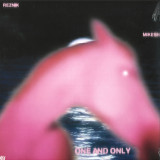
One And Only opens up yet another chapter in Reznik & Mikesh’s collaborative efforts on Keinemusik. And what a nicely written chapter it is. The boys are laying down what might be their most heartfelt material to date, with an original version that is drafted in rather classical song structure—a yearning piece graced with string and piano arrangements, and most notably: Mikesh’s vocals.
The club mix on the other hand picks on the original’s vibes and translates them into a more functional, but still deeply fervent peaktime weapon. Both tunes have been road tested by the Keinemusik crew over the last months and generated some serious collective emotional release and ID requests alike.
One And Only opens up yet another chapter in Reznik & Mikesh’s collaborative efforts on Keinemusik. And what a nicely written chapter it is. The boys are laying down what might be their most heartfelt material to date, with an original version that is drafted in rather classical song structure—a yearning piece graced with string and piano arrangements, and most notably: Mikesh’s vocals.
The club mix on the other hand picks on the original’s vibes and translates them into a more functional, but still deeply fervent peaktime weapon. Both tunes have been road tested by the Keinemusik crew over the last months and generated some serious collective emotional release and ID requests alike.
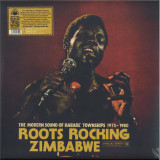
Analog Africa doesn't do anything other than special releases really, but this one tracing the label's origins back to Zimbabwe over 20 years ago is a real standout. A carefully curated collection of 25 tracks with a fine booklet proving plenty of extra context, it captures the birth of the country's modern music scene and brims with the creative sound explosion of the 70s and 80s. Before genres were fully defined, artists blended rock, rumba, soul and traditional rhythms in bold, experimental ways that still stand up and get diggers and dancers excited in 2025. Included are never-before-released tracks from Thomas Mapfumo, Oliver Mtukudzi and more and they all add up to rich and dynamic snapshot of Zimbabwe's peerless musical evolution during what was a transformative era.
Find Your Own Records recently launched with a sold out first release; Ceri's 'Life Holstee E.P.' which included a timeless Fred P Reshape. Fusing the sounds of Berlin, Detroit, Chicago and London, the release was supported by everyone from Midland, Move D, Ben UFO and Fumiya Tanaka, to Steve O'Sullivan.
The second release, the 'I Need You To Make Me Sweat' E.P. also draws inspiration from the classic sounds of Chicago and Detroit, and features none other than a remix from bona fide Dance Music Legend, Mr. G.
The title track 'Need You' is a Juno bassline driven, classic sounding 'proper' deep house track, raising in energy as it peaks, with vocal snippets and modulated analogue drums building throughout.
Mr. G has taken Ceri's title track, 'Need You', and twisted it into a harder, faster 'Jaded Dub', capturing a dark and driving energy, tantalising and adding to the drum grooves with his trademark swinging rides and industrial synths, adding his infamous MPC swing to the vocal snippets, and building the tension throughout, as the one and only G can.
The B side 'Sweat', draws inspiration from 80's and 90's house with a modern dark twist, mixing variating funky drum machine rhythms, classic house vocal samples and pulsing sub-bass to.
The first release was quickly repressed, but there will be no repress on 002, so grab it now before it sells out...
Early support comes from K-HAND, Ryan Elliot, Paranoid London and many more.
Multi platinum-selling musician and multi-instrumentalist Jamie Cullum today announces The Pianoman At Christmas - The Complete Edition. Due for release on 19th November via Island Records. The deluxe album completes last year’s critically acclaimed hit album The Pianoman At Christmas Part 1, with its Second Part - featuring 11 covers of classic Christmas songs, as well as two original songs, including lead single ‘Christmas Don’t Let Me Down’, out now.
Drawing from the past and inspired by the present, The Pianoman At Christmas - The Complete Edition sees Jamie team up with London jazz innovators Kansas Smitty’s, as well as composer and producer The Vernon Spring and acclaimed LA-based jazz singer Lady Blackbird to complete a piece of work that is imbued with seasonal sophistication. Alongside his two original tracks, Jamie breathes new life into classics such as ‘Winter Wonderland’, ‘Silent Night’ and ‘Frosty The Snowman’, ranging from ‘Amazing Grace’ to ‘Man With The Bag’ and ‘Sleigh Ride’. The Complete Edition will be released on double CD and double black vinyl formats, alongside a limited run of 180G Heavyweight coloured vinyl in red and gold.
Speaking on the release, Jamie said -
“I had a huge amount of fun creating part two of TPAC. Recorded live, all in the room together - it’s the party after the big show, with friends, drinks and some of the finest musicians on planet earth.”
Released almost a year to the day before The Complete Edition is due out, The Pianoman At Christmas featured 11 original songs played by 57 of Britain’s best musicians, recorded in Abbey Road’s famous Studio 2 and produced by Greg Wells whose The Greatest Showman soundtrack spent 28 weeks at number 1. The album sold over 37,000 copies, spending 6 weeks in the album chart and peaking at number 11. In December Jamie broke the Guinness World Record for the largest music lesson ever, when he held a virtual piano lesson for 2,282 people, teaching them the carol ‘In The Bleak Midwinter’ with special guests Robbie Williams, Sigrid and Dodie.
With 10 million album sales and over 890 million streams to date, Jamie is a celebrated musician the world over with loyal fans in every corner of the globe. With a career spanning over 20 years, his legendary live shows have seen him perform and work alongside artists as diverse as Herbie Hancock, Pharrell Williams, Kendrick Lamar and IDLES - Jamie writing on the latter’s album Ultra Mono. The success of Jamie’s major label breakthrough, Twentysomething in 2003 and its follow up Catching Tales saw him nominated for a BRIT, Grammy and numerous other awards around the world. In 2020 he won an Ivor Novello Award for his track ‘Age of Anxiety’, taken from his acclaimed 9th studio album Taller. In addition to his enduringly successful recording career, Jamie has also established himself as a multi-award winning music broadcaster; his BBC Radio 2 show celebrated its 11th year on air this year.
With her debut album Black Acid Soul earning critical praise, Lady Blackbird is a revelatory new talent with music that transcends the jazz scene through which the LA-based artist is rooted. Reflecting influences as varied as Billie Holiday, Gladys Knight, Tina Turner and Chaka Khan, with critics drawing comparisons to Adele, Amy and Celeste, Lady Blackbird’s distinct and beguiling voice is not one to be missed.
UK band Kansas Smitty’s have developed a musical voice wholly unique from what’s happening around them. They are led by band leader and producer Giacomo Smith who's cinematic compositions feature on their releases, most recently 2021's acclaimed Things Happened Here for Berlin based label !K7. In 2015 they launched their own east London venue and bar, of the same name, which became one of the conception points for the current UK jazz boom.
Londoner Sam Beste aka The Vernon Spring is a polymath in music who has production, writing and performance credits as eclectic as Amy Winehouse, Matthew Herbert, Kano, Joy Crookes, Beth Orton, Blood Orange, Gabriels and MF DOOM. Since 2019 he has been making waves with solo project The Vernon Spring, which foregrounds his rare capacity to hold sophistication and simplicity in the same hands through highly intimate muted-piano compositions and improvisations.
Archeo Recordings is a record label. Old, lost, obscure and forgotten gems and a boundless focus on the new Balearic scene for a wider audience of collectors, DJs and music lovers. All releases are limited edition. This release is a Limited Edition EP (250 on black vinyl). New life and an expanded treatment of Quiroga's epic Electronic/Future Jazz/House Snaporaz (Really Swing 2020), from none other than L.U.C.A. (AR029). Archeo delights us with this luscious and limited release featuring Quiroga's sleek jazz-house UFO "Snaporaz". This edition includes an exclusive extended version, a brand-new cut from the Neapolitan groover, and a completely cosmic overhaul from the mighty L.U.C.A. Operating at the nexus of future jazz, beatific electronics and deft house, Quiroga (Walter Del Vecchio to his nearest and dearest) has carved his own irresistible niche over the past two decades, gracing countless labels with nuanced body movers and forging his impressive Really Swing imprint, the original home to this melodic masterpiece. Tucked away on Del Vecchio's 2020 EP "Chords and Desire", the sunny and sultry Snaporaz fell foul of our communal pandemic preoccupation, missing out on the widespread acclaim, appreciation and ass-shaking it so richly deserves. Archeo steps in as patron, giving this Rhodes-led jazz-house heater the full 12" treatment it was born for. On the A1, Quiroga's extends the ecstasy of "Snaporaz", stretching its original elements into a loosely grooving, dopamine-deep delight. Sunkissed keys and tender pads ride the rhythm of a bubbling bassline while the sophisticated percussion snaps, crackles and pops in the background - the perfect environment for the P&P leadline to flourish. If that wasn't enough to have you slipping straight into your party pumps, Walter makes the most of the extra runtime with a HOT hand drum freakout down the final stretch, adding the most enticing icing to an already heady cake. A comparative cooldown follows in A2 offering "Escorpião", a fusion-tinged flirtation for aperitivo everywhere. Cutting back on the kick to save space for the swing, Quiroga leads us through a sublime sequence of hooks, riffs and solos, without ever overwhelming the ears but keeping the groove alive. It's a dizzying delight from start to finish and features one of the finest keytar and cowbell interplays you're likely to hear. The B-side belongs to the frankly legendary Francesco de Bellis, a house, disco, Italo and electro hero, appearing here under his deliciously downbeat alias L.U.C.A. Imbuing Quiroga's original with the atmospheric stylings of his Edizioni Mondo oeuvre, the Roman producer delivers a radical rework, slowing the tempo by 20 bpm and translating those jazzy tones into a drifting new age dancer for the cosmic crowd. Zero gravity rhythms meet mystical melodies uptown as the house hippies get down. Lest we overlook the batshit brilliance of the drum programming, L.U.C.A. caps it off with a bonus beats version sure to delight DJs and dancers alike in its otherworldly oddness.
Ronny Pries is finally back, releasing his new EP ‘Zero Four Zero‘ on Abstract Rhythm. He contributes four brilliant detroitish influenced techno and electro tracks, perfect for creating some late night heat on the worldwide dancefloors.
As those tracks mean a lot to Ronny, especially ‘This ain’t Jazz‘, he felt like they belonged to be released the oldfashioned way, on 12‘‘. Ronny has been releasing electronic music since the 90’s. Zero Four Zero is his first EP after a long release-absent time where he was focussing on several other music and non-music related projects. ‘‘So, as much as this release marks the beginning of something, as much does it conlcude something. There’s no (such thing as) time.“
Hard Times continues its legacy of championing house music’s finest with another landmark release that brings things full circle. This time, the label welcomes none other than Leeds legend Paul Woolford - one of the most prolific and versatile electronic artists of today - to reimagine one of house music’s most cherished anthems, Karen Pollard’s ‘Reach Out To Me.’
Originally released in 1996, ‘Reach Out To Me’ quickly became a club classic and an archetypal vocal house anthem. Now, Woolford - known for his ability to straddle both underground credibility and mainstream success with ease - boldly takes on the challenge of remixing the iconic track, delivering not one but two impressive reworks that showcase both sides of his production persona.
“‘Reach Out To Me’ has always been one of my favourite US garage records, so when the opportunity to rework it came up one hazy summer evening last year, I knew it had to be done,” says Woolford. “Both mixes have been road-tested and have caused havoc in all sorts of situations, from warehouse raves to basement afters to peak-time sessions and beyond.”
The first remix sees Woolford take the track deep and epic, building to a soaring, anthemic breakdown that pays homage to the song’s timeless energy. Meanwhile, his breakbeat-driven Special Request version adds a UKG twist, built for peak-time destruction in the hands of all selectors.
A true labour of love, these remixes breathe new life into the beloved classic while staying true to its soulful roots. Hard Times fans, house heads, and bass-driven ravers alike can now experience Woolford’s masterful reimagining of ‘Reach Out To Me.’





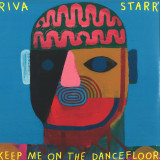



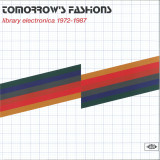







![Various - [R]3VOLUTION V|KT|MS VOL.3](https://www.deejay.de/images/l/6/2/1146162.jpg)