Full of joy, they ran to meet him.
Then threw one of the shirts over each of them,
and when the shirts touched their bodies they were transformed into swans,
and flew away over the woods.
The record is comprised of a series of improvised recordings made over the course of an evening in Autumn ’23, captured at the Jabu home studio, south Bristol while Teresa was staying in town for a show. Everything was recorded into the desk in a single take and left as it was, no editing or overdubs, instruments were swapped around and effects units left buzzing ground hum scattered over the floor.
Teresa and Guest (Jasmine of Jabu) provided the vocals, taking words from anything at hand - poetry books, an old copy of the Whole Earth Catalog - their voices winding together, echoing out each other’s melodies. This approach is mirrored by the instrumentals, anchored by something at times - a bassline, one of Birthmark’s synth drones or a fizzing chord but always on the edge of collapsing in on itself or floating away. The tracks become more soporific as the record goes on (and as the night got later), ending on a refrain of ‘say you think its true’ as the instrumental finally dissolves the pedals get dialled up to 11 and Birthmark’s drones turn into distant lasers in a last swan song of feedback.
Recorded Sep 2023 in Bristol, BS3, by:
Teresa Winter (vocals, fx)
Guest (vocals, guitar, fx)
Birthmark (synth, fx)
A.Childs (samples, bass, guitar)
Wiccans only make noise when they feel like it. A band that’s been uttered in reverence for nearly two decades with only a handful of releases, each one a stand-alone classic.
You see, it’s hard to pinpoint a band that actually has the equal influences of American psychedelia and hard rock all anchored in the glorious benevolence of American Hardcore. A tonne of bands dance around and flirt with each but it rarely lands in the sweet spot. They’re not trying to fit some supposed perfect space and that’s the very point so many others miss.
Wiccans are creating the space. Breaking rules and allowing a bit of breadth to what is often a claustrophobic style of music. This might sound scary as everyone knows that the more Hardcore evolves the worse it is - at least on record. The formula that Wiccans are playing with on Phase IV should scare you. It’s totally potent with odd songwriting, intensely creative and varied guitar work and completely pissed vocals. Phase IV does whatever the fuck it wants and passes the bar that only Wiccans could have set for themselves. All of this is propelled by a far stronger production quality than previous efforts and instead of having that expose some fault line it’s secured it as a modern classic.
It’s the kind of shit that will shake the dandruff from the beard of a Third Man collector but will also make that guy stop going to DIY gigs because they’re “too rough” or whatever. I’m just sitting here wondering if this is maybe what might have happened if Poison Idea wrote Hidden World. There’s always space for a carbon copy Negative Approach destroying someones basement and they usually put out a record that is clearly brilliant but fuck me if I can’t help but yawn.
Am I getting old or is Hardcore painting by numbers? In a slough of legitimately top tier Hardcore Punk releases, this one actually sounds like something truly special.
‘Pilot’ is the debut album from London quintet Miniseries. Channelling the epic sweep of TV themes and movie soundtracks into resplendent space rock they explore themes of youth and ageing, heartbreak and paranoia, euphoria and existential dread.
Songwriter Doug Morch (Longview) had been working on largely acoustic folk songs when he met Angela Gannon (The Magic Numbers) at Glastonbury 2017. Romance and musical collaboration ensued. The band coalesced in the hallowed environs of Farringdon's The Betsey Trotwood pub – a musical nexus where burgeoning indie and Americana scenes collide – where they met fellow songwriter and guitarist Dermot Watson (from Brighton's The Dials) and drummer Danny Abbasi and were joined by Doug's former bandmate Aidan Banks on bass. When they came together, their indie folk mutated into motorik art rock, with their first single being an eight-minute jam called "Road".
When it came to capturing their sound, the band reached for maverick musician and producer Sean Read. They recorded tracks at Read's Famous Times studio in Clapton, London, as well as at Edwyn Collins' Clashnarrow in Helmsdale, Scotland – one of the world's most breathtaking and idiosyncratic studio locations, adding unquantifiable magic to the proceedings.
For the closing track "May You Always", they headed to another studio imbued with tangible inspiration: Blueprint Studio in Salford with producer Craig Potter (Elbow) at the helm. For the song, Dermot drew cinematic inspiration from the Withnail & I line "I'll never play The Dane", the song is about realising that the things you aspired to in youth will never come to pass and being at peace with that realisation.
The recurring themes of youth and ageing are apparent in the resplendent lead track ‘You're Gold’ – a heartfelt call for young people to reject materialism and exploitative influencer culture in search of life's deeper meaning, with stylistic nods to The Pixies and early Stereolab.
On the opposite end of the spectrum, "Sepia" explores old age and fading memories through dementia, where the ending descends into chaos like a fragmenting mind. Elements of "Sepia" are foreshadowed in the album's opening track, the instrumental "Pilot Theme", which pays homage to TV theme music, invoking spy thrillers or perhaps something otherworldly from science fiction.
“Offcumdens” is a Calder Valley, Yorkshire term for people who live in the area but come from somewhere else. Hailing from Bury, Lancashire, Morch wrote the song while living in Hebden Bridge (and watching too much Happy Valley) and found himself being an offcumden. It’s a pop at the kind of local nativism which breeds intolerance and an illustration of the sinister rise of wider political populism.
Miniseries' Pilot is just the beginning of the story. Enthralling and atmospheric, the London quintet have created something familiar yet timeless. As singer Doug Morch says, "It's the Miniseries Pilot episode. Like the TV episode a studio makes to test whether it's viable.” In the age of streaming and box-sets, this is an album to truly binge on. We can’t wait to hear what happens next.
Known for their exhilarating live-to-record albums such as last year's critically acclaimed Wood Blues and Giant Beauty, سماع Sama'a (Audition) is the first of two releases that will surface after أحمدAhmed’s first studio recording sessions at North London’s The Fish Factory in early 2025.
Since 2014, Ahmed أحمد have excavated and re-imagined the music of Ahmed Abdul-Malik, in an ever ongoing search for future music. Over a decade on, the group were given the opportunity to set up in the studio for the first time and, with the aid of meticulous engineer Benedic Lamdin, سماع Sama'a (Audition) is the quartet's most detailed work to date.
Fastidious fans may recognise the album's tracklisting as that of Ahmed Abdul-Malik’s Jazz Sahara. After his success collaborating with the pianists Thelonious Monk and Randy Weston, Jazz Sahara was the first record Abdul-Malik made as a leader and was released in 1958. It used the flame of late Fifties jazz to light the wick of North African folk music and acted as a reminder of the Arabic origins of jazz, creating a distinct, unique sound that was far beyond its time. In Malik’s Jazz Sahara, there is no piano. The ongoing work of each member of [Ahmed] then is to think differently, to wonder how the music will work and to take a risk on trying it out - an extraordinarily compelling feat of imagination. Using group improvisation strategies and recording in single takes, سماع [Sama'a] (Audition) tackled the full suite of Jazz Sahara in just one session, with ‘Ya Annas [Oh, People’] and ‘Isma'a [Listen’] being previously unrecorded. 'Farah 'Alaiyna’, also released on 2019’s Super Majnoon, sounds unrecognisable - the slow, heady stomp and repeated phrasing of 2019’s embryonic [Ahmed] having been blast furnaced and sped up four-fold. The result is four kaleidoscopic, relative miniatures that move, unfold and re-imagine at a very different scale and proportion than [Ahmed]’s previous records. It’s a dizzying, euphoric music and an extraordinary record of a group moving through space-time like no other.
[b] Isma'a [Listen]
[c] El Haris [Anxious]
[d] Farah 'Alaiyna [Joy Upon Us]
[b] b1 Isma'a [Listen]
[c] c1 El Haris [Anxious]
[d] d1 Farah 'Alaiyna [Joy Upon Us]
[b] b1 | Isma'a [Listen]
[c] c1 | El Haris [Anxious]
[d] d1 | Farah 'Alaiyna [Joy Upon Us]
out of Stock
Last delivered 6 months ago available to reorder, subject to availability
Mighty Joseph is the combination of emcees Vast Aire (Cannibal Ox) with his long-time rhyme ally Karniege. The duo's sole album, Empire State (2008) was released during the tail-end of the last great non-commercial Hip-Hop period.
Never released on vinyl before, the album will be available soon on a double LP edition.
Rooted in the concrete streets but lyrically abstract, features and beats are provided by equal musical foils including Madlib, Camu Tao, Murs, J-Zone, Poison Pen and Vordul Mega (Cannibal Ox) among others.
Fan and critical attention were positive with All Hip Hop summing the album as "solid post-millennium product that bridges the gap between gritty street tales and a paranoid view of the future."
Plug One Magazine added that "Empire State" "unravels a unique perspective, documenting not only much personal change between the two emcees but also the changes in the streets of New York City. From poverty, to the September 11 attacks, to the abuse of Hip Hop culture in general, "Empire State" stands strong as a snapshot of the city."
MidnightRoba is the solo project of vocalist, songwriter and producer Roba El-Essawy. The voice of Attica Blues (Mo Wax 1997, Sony 2000), Raise A Symphony is MidnightRoba's second solo album. Her first album, Golden Seams, very much rooted in jazz, received support, airplay and features from DJs such as Gilles Peterson (BBC Radio 6), Tony Minvielle and China Moses (Jazz FM), Robert Elms (BBC London Live) and Kevin Le Gendre on J to Z (BBC Radio 3). Single releases from this second album have been played by Gilles Peterson (WorldWideFM & BBC Radio 6), Kate Hutchinson (Soho Radio), Marshmello (NTS), Rob Luis (Tru Thoughts), Kev Beadle, Patrick Steele, DJ Amazon, and more.
'Raise A Symphony' is music of our time. A 15-track electronic offering, it comments on topics ranging from colonialism to complicity of silence; from compromised politicians to the power of protest and gratitude to those on the frontlines of change; from displacement and sea migration to the desire to protect our loved ones and the need for kindness; to have faith in the future and the importance of searching for joy in the meantime. The self-produced album 'Raise A Symphony' sees contributions from Saul Williams, Deschanel Gordon, Michael King and Tony Kofi, amongst others. The album title takes it's name from Martin Luther King's 'I Have A Dream' speech where King calls for the nation to rise to gather together and form a 'beautiful symphony of brotherhood'.
"..in Raise A Symphony, Midnight Roba has transmuted talent into something more powerful, where bridges built from her exquisite, unique harmonies, soaring songs and percussive productions allow competing emotions to co-exist and feed into each other. This album itself is a form of community; voices in unison, reaching outwards and offering restoration and upliftment throughout this remarkable work of love and fury." Emma Warren
Georgie Jesson was born in London to a Bosnian mum and British father. One, a communist turned neurotic capitalist, the other a private school boy cast-off turned heroin addict. Georgie fell in love with poetry through music and lyric writing at an early age. She has since performed her work to music, written extensively for various music magazines as a journalist and culture writer, and written biographies and forewords for acclaimed artists including Baxter Dury and photographer Ewen Spencer.
Her debut collection traverses grief and love in equal measure, reflecting on family memories with a sharp honesty and a blurred edge. The book charts the changing ways the passing of time can affect us. They are conversational and confessional poems, coloured by images of bittersweet family holidays and hospital trips; sleepy Balkans bars and long London nights. Poems from the heart, about the effects of life on the heart.
“we collect figurines to make a monument of memory / to help ignore the wastage of life”.
The collection features illustrations by Greek artist Maro Michalakakos, whose work has been displayed internationally in galleries including MCA - Chicago, The Guggenheim, Tate, FNAC - Paris and many private collections. The book’s foreword is written by musician Grian Chatten, notably the lead singer & lyricist of critically acclaimed band Fontaines D.C. and whom has also released solo work under his own name.
For the first EP on his new label, Planet Strangelove, Job Jobse brings new life to an overlooked balearic house gem: "Pasion," an early '90s deep cut by the Leeds artist Pianoman, inspired by Tangerine Dream's "Love On A Real Train,” aka the most breathtaking synth arp of all time. Alex Kassian, whose sprawling take on Manuel Göttschings's "E2-E4" already showed his fine touch for the kosmische vibe Tangerine Dream embodied, delivers a "Dance Mix" and a "Dream Mix," one packing a club-ready beat, the other drifting weightlessly. London duo The Trip, of the label and party Tesselate, deliver a remix as breezy as it is thumping, all wailing divas, sunkissed pads and shimmering pianos. As for Pianoman's "Analysis" remix, it's a dazzling artifact of the balearic era at its peak, touched by the ineffable essence of its time but sounding just as fresh as its modern reinterpretations.
Roughly three years after the release of Balts, Schreel Van De Velde’s debut album on Blickwinkel, the guitar and drums improv-centered duo is happy to present their sophomore album A One And A Two.
The Brussels-based musicians sound more decisive than ever: the loud became louder, the quiet became quieter, the weird became weirder and the nostalgic became more nostalgic. The fruit peeled off one of its own shells, getting closer to its heart.
The album came about as a result of 2 separate studio sessions. For a first one, they restricted themself to solely electric guitar and drums, without overdubs, and with most songs ending up as one-takers. A second one took place some months later in a different recording space, using classical guitar with a matching small, cute drum set-up.
On both sessions, the duo played the same compositions, with some additional improvisations. Afterwards they made a blend of both sessions, mixing both energies: A One And A Two. A new language, organic and well-considered, was found.
Throughout the album, touches of minimalism, American primitivism, free-improv, and 90s indie rock can be found, but always within the limits of Schreel Van De Veldes freshly found voice: one that combines sentiment and cerebrality, overview, playfulness and mystery.
Lucas Schreel is a classically trained guitarist based in Brussels. His first solo album We're Never Afraid of Getting Up Every Morning was released through Sentimental Records in 2019 and was well-received both in written-press (Humo, Enola & Indiestyle) and radio (Duyster, Radio 1 & Klara). Besides his solo work, Schreel is also a member of the lo-fi indierockband Kloothommel.
Acclaimed Brussels percussionist Casper Van De Velde made quite a name for himself through his bands like SCHNTZL, Bombataz, Donder among others. His work received prices at International Jazz Contest d’Avignon and Storm! Contest (Jazzlab). Casper is currently also a member of the recently formed An Pierlé Quartet.
out of Stock
Last delivered 9 months ago available to reorder, subject to availability
Peter Rehberg is known for his pioneering electronic work with computer software which over time evolved into a modular set up alongside running MEGO and then Editions Mego labels.
Rehberg was a prolific collaborator, with other musicians and with contemporary dance and theatre productions, most notably with French artist and choreographer, Gisèle Vienne with whom he created a series of soundtracks from Showroomdummies, released under the name DACM in 2002 (Showroomdummies MEGO 056), to Crowd in 2017. A collection of Rehberg’s solo works for Vienne was released in 2008 (Work for GV 2004-2008 EMEGO 092). The outfit KTL, with Stephen O’Malley, was initiated by Gisèle Vienne for her work Kindertotenlieder and subsequently made a series of soundtracks for Vienne’s works branching off into a prolific series of live shows. The work Rehberg did for theatre and performance teased out aspects of his practice one may not have encountered in his own solo work as PITA or that of collaborations with other musicians.
Editions Mego is proud to present a previously unreleased theatre soundtrack made for Icelandic choreographer Margrét Sara Guðjónsdóttir, whom Rehberg had a decade long collaboration with until his untimely passing in 2021. The original composition for Liminal States was created by Rehberg for the performance Pervasive Magnetic Stimuli in 2018 and then revisited as a catalyst for the concepts behind Liminal States. This work is based on an ongoing artistic research conducted by the choreographer into altered states of perception through phenomenological embodiment. It is the last in a trilogy dealing with the notion of larger forces that act on us beyond our conscious mind. The trilogy consists of Pervasive Magnetic Stimuli (2018), Boundless Ominous Fields (2024) and now Liminal States (2024).
Rehberg's score for Liminal States is a vast canvas of spectral ambience at once tangible and unfathomable in its constantly shapeshifting lysergic dread. The results are a psychological journey through the mental effects of sound on space and subsequently the mind. The first part presents cascading waves of shimmering electronics laying the groundwork for the second part where the psychological illusion splinters into all manner of sonic effects taking the listener on a deep mental voyage. If references are witnessed the late period long form hallucinatory works of Coil, such as Time Machines and Constant shallowness leads to evil, are amongst a similar mind message delivered here. Unlike any other release in Rehberg’s output Liminal States is a single long form work which, despite the form, retains Rehberg’s idiosyncratic sound vision.
Guðjónsdóttir and Rehberg’s collaboration blurs that relationship into a greater force which truly enables the theme of liminal states to unfold in a brave new fashion. Rich in timbre and sonic invention this is powerful work easily holding its own outside of the intended performance whilst still complimenting the missions statement entirely. This profound collaboration has the cumulative effect where the concept and soundtrack are one and may be one of the strongest works in the entire Rehberg canon.
out of Stock
Last delivered 9 months ago available to reorder, subject to availability
The vinyl LP at the heart of this éthiopiques 31 tracks 2 to 11 was one of the very last vinyl records ever released in Ethiopia. But above all it represents, we felt, the absolute masterpiece of the Ethiopian Groove – the Swan Song of Swinging Addis. The album leaves a clear idea for posterity of the level of sophistication and mastery that modern Ethiopian music had achieved, before being crushed under the Stalino-military heel of the Derg – as the bloody revolution that was unfolding came to be called.
Ethiopia1976.
The Revolution that broke out in February 1974 rolled on in a ruthless march. The whole of Ethiopian society was utterly stunned. The bouquets of flowers handed joyfully to the first tanks of the coup d'état were to wilt very rapidly. From September 1976 to February 1978, 18 months of Red Terror (the name given by the junta itself) spilled blood throughout the country. This fratricidal conflict took its heaviest toll among students and youth. The shift from feudalism to a cruel and primitive Stalinism left the country's citizens deeply traumatised, and snuffed out any pretence of activism, whatever the sector of society. This ice age was to last for seventeen long years.
ሙሉቀን፡መለሰ Mulukèn Mellèssè Muluqän Mälläsä
It was three tracks by Muluken that served as the opener for éthiopiques-1 more than 25 years ago. Seven more tracks appeared on éthiopiques-3 and 13, all accompanied by The Equators, which was soon to become the Dahlak Band.
The first track, Hédètch alu, also the very first piece that Muluken ever recorded, left audiences both unsettled and amazed. Reflecting the singer's extremely young age (he was just 17 at the time), this angelic voice mystified many, who thought they were in fact listening to a feminine voice. He was not yet 22 when he released his last vinyl record in 1976 with Kaifa Records (KF 39LP), one of the very last to be issued in Ethiopia, before the cassette tape became the dominant medium for music distribution – and before the new revolutionary regime put a stop to all independent musical life, via an unspeakable barrage of prohibitions and other persecutions.
Mulu qèn, literally, “A well filled day”. This tender maternal intention wasn't enough to ward off the cruelty of fate. His mother's premature death drove Muluken to leave his native Godjam, in northeast Ethiopia, to live with an uncle in Addis Ababa. Born Muluken Tamer, he took his uncle's last name – Mèllèssè.
The spelling Muluken appeared in his administrative records. Transcription of Amharic to the Latin alphabet, both in Ethiopia and for scholars, gives rise to controversies and quibbles that can never be neatly settled. French allows for a closer approximation of the original pronunciation, thanks to its battery of accent marks, confusing as they may be to anglophones.
Between rather accommodating administrative record-keepers and the various versions that pop up in interviews given by the artist, Muluken's year of birth oscillates between 1953 and 1955…
1954? One thing is certain: the artist's talent made itself known very early indeed, because he got his start in 1966-67, at the age of 13 or 14. Photos from the period attest to his extreme youth. It's a strange sort of initiation for a very young teenager to become a sensation in the heart of Addis's nightlife at the time, Woubé Bèrèha – the Wilds of Woubé. And what's more, in the club of the Queen of the Night, the Godjamé Assègèdètch Alamrèw herself, the very same that was portrayed by Sebhat Guèbrè-Egziabhér in his novel-memoir Les Nuits d’Addis Abeba2… The legendary female club owner who is remembered to this day by the capital's ageing boomers.
Muluken first tried his hand at the drums, before he grabbed the microphone. He emigrated briefly to the Zula Club, across the street from the old Addis Post Office, one of the ground-breaking bars of the burgeoning musical scene, before joining the Second Police Band in 1968, for around three years. He spent a few months with the short-lived Blue Nile Band founded by saxophonist Besrat Tammènè. As the musical scene grew increasingly successful, and pulled slowly but decisively away from its institutional ties, Muluken released his first 45rpm single in February 1972 (Amha Records AE 440). It was included in two LP Ethiopian Hit Parade compilation albums in September of the same year. All in all, Muluken released eight two-track 45s and the same number of original cassette tapes between February 1972 and 1984, the year that he departed for permanent exile in the USA. After converting to Pentecostalism in 1980, Muluken gradually abandoned all secular musical activity. In 1985, at the end of a concert in Philadelphia, he decided to quit concerts and recording for good. Mèlakè Gèbré, the historic bass player from the Walias band who was playing with him that night, recalls that everything appeared so irredeemably diabolical in Muluken's eyes, that it was to be the end of his contribution to Ethiopian Groove.
The end of the story, the beginning of a legend.
Dahlak Band, forgotten by History
Aside from his personal history and vocal talents, it must be remembered that Muluken Mèllèssè was one of the biggest names in the musical innovations that marked the end of the imperial period. These éthiopiques aim to convince those who are just discovering this hidden gem... As for Ethiopians themselves, they are to this day captivated by this singular and atypical figure in the Abyssinian pop landscape – even though he withdrew from public life some 40 years ago. Incorrigible devotees of poetic twists, of more or less hidden meanings, Ethiopians appreciate above all the care Muluken took in choosing his lyrics and the writers who penned them, such as Feqerte Haylou, Alemtsehay Wodajo and, here, Shewalul Mengistu (1944-1977). Love songs, written by women, a far cry from the conventional drivel that pleases sappy sentimentalists.
Muluken is equally acclaimed for his perfectionism when it came to music, the opposite of the overly casual approach that is all too common. He remained a faithful partner of musicians who came from a lineage that borrowed from several inventive and pioneering bands (Venus, Equators, Dahlak). Amongst them were certain artists who began their musical lives with Nersès Nalbandian at the Haile Sellassie Theatre and who come of age in around 1973 – at just the wrong time, you might say. Among them were the pillars Shimèlis Bèyènè (trumpet), Dawit Yifru (keyboards) and Tilayé Gèbrè (sax & flute). Most notably Tilayé Gèbrè, certainly one of the most important musicians, composers and arrangers of his generation, of the end of the imperial era, and of the early years of the Derg.
It was only in 1981 that a miraculous opportunity arose for Tilayé to escape the Stalinist paradise of the dictator Menguistou Haylè-Maryam. Once again it was Amha Eshèté (1946-2021) who provided a solution. The spirited and courageous producer, who had been in exile in Washington since 1975, succeeded, thanks to his incredible perseverence, in bringing the Walias Band to the USA. It was, in fact an extended Walias Band comprising ten musicians3, six of whom chose to slip away after a few concerts and the recording of an LP (The Best of Walias, WRS 100). Tilayé Gèbrè was one of these. He has been living in the USA ever since. There he joined the then-nascent Ethiopian diaspora, which lived largely unto itself, and was making only very modest headway in the American musical market. It seems unfair that Tilayé Gèbrè and the Dahlak Band were not able to benefit earlier from the public recognition that they do deserve.
A similar draining away of the top-rate talents would lead to the reorganization of the major groups of the “Derg Time”. The remaining artists spread themselves around between Ibex Band (renamed Roha Band), Ethio Star Band and a remodeled Walias Band. That spelled the end of the Dahlak Band.
With this record, produced by the essential Ali Abdella Kaifa a.k.a. Ali Tango, we can appreciate everything that the Derg not only destroyed, but also prevented from flourishing. This gem of Ethiopian-style afrobeat came out in 1976 (and, by way of a parenthesis, before the FESTAC 1977 in Lagos, which was attended by an impressive delegation of Ethiopian musicians — although Fela was already personna non grata in his own country). Despite everything that might distinguish this ethio-groove from Fela’s music – no colonial axe to grind, no question of political confrontation with the authorities, no claims to negritude or Africanism for the Ethiopian musicians, and less extrovertion! –, this LP fits beautifully into the saga of intense and electrified soul of the new “African” groove that Fela and Manu Dibango embodied so well from that point onwards.
In restoring this record to its place in the afrobeat epic, it can be seen that, if nothing else, the timeline bestows a legitimate pedigree and a historical primacy to works that had no international impact when they were originally released.
Warning! Masterpiece!
out of Stock
Last delivered 3 months ago available to reorder, subject to availability
NPVR is the avant garde duo made up of the late Peter Rehberg and Nik Void. Editions Mego is proud to present their second and final release. No this is not some kind of Beatles synthetic AI that raises the dead reconstructed recordings but rather a new album made by the humans and their machines.
The initial meeting of Rehberg and Void was in London in 2016 and despite or due to their mutual awkwardness found solace and compatibility in the fact that they both had a similar electronic modular set up, along with matching cases to transport all. The idea to collaborate was an obvious and organic process as a means to connect their individual gear together and observe the outcome. The fruits of these initial experiments, recorded in London, resulted in the playful experimentation of their acclaimed 2017 release 33 33 (eMego 251).
Now in 2024 Editions Mego presents the logically titled follow up, 33 34. These sessions were recorded six months after the initial recordings at Peter’s home in Vienna. This was planned out as a mirror city release to the original London recordings. With Peter having access to his full studio set up this time around we encounter a rich audio landscape which organically folds together a variety of musical genres blurring any distinction between these forms so the resulting music hovers as a new cloud of sound. Any musical form, be it industrial, electro-acoustic, ambient, drone and techno all coexist and melt into the other as the ensuing result unveils a hypnotic swarm of divergent sounds (music). When active there were no lines or contexts with NPVR, either between sound or genre within these recordings or live where NPVR were at home playing at a techno club one night and an avant garde venue the next.
The initial session of these recordings was edited by Rehberg and sent to Void to further develop. Over time the final versions were agreed on and then shelved as other outside projects took over. The awkwardness had been surmounted and the two had become close friends. NPVR performed at a range of venues such as Tresor, Sutton House, Corsica, Blitz, Paris GRM #Focus2, LEV Festival and Rigas Skanumezs Festival. Following Rehberg’s untimely passing Void had difficulty listening back to the sessions but eventually thought it fit to complete and release this album, of which even the artwork (like 33 33, an image from Zurich photographer, Georg Gatsas) had been decided upon prior to Rehberg parting ways.
There is an unmistakable joy to these recordings. One encounters an enthralling exploration of their chosen machines which conveys the excitement of what can be randomly conjured when people speak through such devices. There is no grand statement or argument here, just the sheer thrill of creation and the recorded results of random encounters. The art of collaboration was always a mainstay of Rehberg’s practice from the advent of the MEGO adventure. Rehberg & Bauer was an initial collaboration with former business partner Ramon Bauer. Even at this stage one can hear a relaxed sense of delight in the sheer discovery of sound.
A mix made for the Wire magazine following the release of 33 33 hints at the freedom that comes with endless urge for exploration and discovery. Abstract tracks from Z'EV. Jérôme Noetinger and Jung An Tagen are included alongside British stalwarts The Fall and New Order. There were no lines between pop / academic / underground or mainstream in Rehberg’s world. All of it sat at the same table. It is just matter in the atmosphere, like the diverse exploration found in these recordings that comprise 33 34.
Towards the end of his life Rehberg was obsessing over the immense output of the German ambient musician Pete Namlook. An artist renowned for not only his sprawling catalogue of ambient masterpieces but one who often said his main inspiration was nature. This is apt with regards to the work of NPVR which also aligns with such thought as the intertwining of the two individual artists and their machines results in a natural symbiotic flow, as it happens, just like in the world around us.
out of Stock
Last delivered 9 months ago available to reorder, subject to availability
Manny Corchado should be a household name for all boogaloo fans. A true boogaloo gem that blends Manny Corchado's explosive rhythm with the melodic touch of salsa legend Nelson y sus Estrellas. His classic track 'Pow-Wow' is one of the most sought-after singles among collectors and DJs-not just for its A-side, but also for the absolute dance floor bomb hidden on its B-side: 'Chicken and Booze.' This instrumental recording features an irresistible rhythm section that could practically serve as the definition of the boogaloo genre itself. In this case, it plays at a faster tempo than other similar hits, making it even more effective on the dance floor. The horn arrangements create a catchy hook, spiced up with percussion breaks, all while driving its addictive, fast-paced groove. On the B-side of this single, we find another version of the same song-this time re-titled 'Aguardiente y Pollo' in Spanish-performed by Nelson y sus Estrellas. The tropical and salsa orchestra, founded in Venezuela by pianist, composer, and bandleader Nelson González Rojas, keeps the same punch and dance-driven focus as Corchado's version, but adds more melodic and sophisticated arrangements, in the style of the other tracks featured on the band's 1977 album, where this stunning cut was originally included (available here on a 45 for the first time). This Latin vinyl 45er is pure dance floor dynamite!
out of Stock
Last delivered 7 months ago available to reorder, subject to availability
blickwinkel welcomes composer and multi-instrumentalist Francis Plagne to the label with a reissue of Asleep in a beached boat, an album that was initially released on his own Mould/Mouse Museum label in 2021 on cassette. The album was mostly given away to friends but now gets a wider release through a limited vinyl and digital edition.
Gentle melodies set an airy atmosphere and are intertwined with tensive dialogs between rhythms and textures coming from a wide array of acoustic and electronic instruments. Stylistically somewhere in between his Rural Objects (Black Truffle) and Udge (Horn of Plenty), on the eleven tracks on this album we hear Plagne in his most playful way to date.
Francis Plagne is a musician from Melbourne, Australia whose work swings between songwriting and a variety of other approaches, including group improvisation, instrumental abstraction, and domestic musique concrète. He performed live regularly since 2005 and has released recordings on labels such as Black Truffle, Horn of Plenty, Kye Records, Penultimate Press and his own Mould/Mouse Museum micro-label. In addition to performing his own work either solo or with a band, he has performed and recorded in improvised and other arrangements with Tetuzi Akiyama, Oren Ambarchi, Andrew Chalk, Crys Cole, James Rushford, and Joe Talia, among others.
out of Stock
Last delivered 9 months ago available to reorder, subject to availability
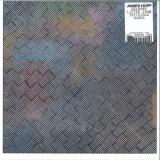
Shadows Lifted from Invisible Hands is an autobiographical record, comprised of four songs that Hoff refers to as ambient media. Each track is composed from sources drawn from his own involuntary aural landscape, specifically musical earworms and tinnitus frequencies.
Neither sound nor a daydream, the earworm (or stuck song) emblematizes music as a commercial form—immediate, ubiquitous, and persistent. Likewise, tinnitus is inaudible and unscrupulous, manifesting across a spectrum of frequencies at will. The cognitive swirling of these phenomena provides an ambivalent, internal soundtrack that scores a person’s movement through the world.
Those suffering from tinnitus or those who have grown accustomed to the “Tinnitus Effect” in movies will likely recognize the buzzing pitches on the record, but will likely not recognize the songs. Distorted and distilled, Shadows Lifted from Invisible Hands features altered versions of four commercial pop songs: Blondie’s “Heart of Glass,” David Bowie’s “Space Oddity,” Madonna’s “Into the Groove,” and Lou Reed’s “Perfect Day.”
Having been haunted by these songs on and off for years, Hoff tweaks the tracks, transposing and recomposing them for orchestral instrumentation. Speaking back to these involuntary echoes, these tracks go to great lengths to obfuscate their sources; to be sure not to simply re-introduce each earworm, as though they were samples. Otherwise, what’s the point? No one needs another stream.
Besides, earworms are not music, although we perceive them as such. They are non-cochlear and exist as an affective force that is neither subjective nor objective, which is to say they are an invasive—and alien—phenomenon. Like tinnitus, they are aggravated by economic, social, and environmental forces as well as emotional states, mental health, and aging. Hoff doesn’t underplay his own struggles with mental health in discussing the record—noting a long history of depression and its acuteness over the last few years, which serve as the backdrop to the composition of this record.
Scratch any pop song hard enough and you’ll find sadness underneath it. Subdermal, the songs on this record evoke a type of ephemeral weariness and despair. By recasting the original songs through their shadowy doubles, Hoff provides a window into the dark core of pop music. At the center of which lies capitalism’s desperate attempt to replicate itself through a cheap high built on echoing refrains. Just below the surface the listener finds a hangover of shadows dancing through the mind.
out of Stock
Last delivered 9 months ago available to reorder, subject to availability
The Godfather Of Salsa - HAVANNA & NYC RECORDINGS 1946-1962! Grosso! again presents this compilation from "El Ciego Maravilloso", the authentic godfather of salsa. His early Havana & NYC recordings. The tracks have been remastered and restored and some are available on vinyl after many years. Format and selection designed for DJs, collectors and latin lovers. Ignacio de Loyola Rodríguez Scull aka Arsenio Rodríguez (30 August, 1911, Güira de Macurijes, Matanzas, Cuba - 30 December, 1970, Los Angeles, CA, USA) was a Cuban musician, bandleader and prolific composer who developed the son montuno and other Afro-Cuban-based rhythms. Today he is seen as one of the most important figures in Latin music, with his influence reaching beyond the Spanish speaking world to also include African popular music of the 20th Century, though when he died he was not widely known by the public for his contributions and influence. He is also recognized (along with Israel 'Cachao' López and Dámaso Pérez Prado) as one of the creators of mambo, what Rodríguez himself often referred to as "ritmo diablo". Some of his best-known, and most-often covered recordings from the 1950s and early 1960s are included here, among them "Dame un cachito pa' huele'," "Dundunbanza," "El reloj de pastora," "Cambia El Paso," and "Hay Fuego En El 23."
HOUSE BY THE CEMETARY, the 'supergroup' led by former MONSTROSITY and VILE frontman and current artwork artist Mike Hrubovcak and Rogga Johansson from PAGANIZER and RIBSPREADER are releasing their third full-length, "Disturbing The Cenotaph". Since the duo, completed by former THE PROJECT HATE drummer Thomas Ohlsson, originally picked up their moniker as an homage to the 1981 cult horror flick of the same name, it shouldn't come as a surprise they've once again paying tribute to director Lucio Fulci (1927-1996) in one of this album most lethal salvo, 'New York Ripper'. Elsewhere on this third album, other tracks like 'Undead Apocalypse' or 'Burial Disturbance' were inspired by other famous horror classics like "Night Of The Living Dead" and "The Texas Chainsaw Massacre", Hrubovcak has come up in his lyrics with his own tales of terror. Some are totally fictional like, 'Coffin Colony' about a "diseased homeless living in underground coffins who gets infected with rabies after eating sewer rats". Others, like 'Lunatic Butcher' are inspired by real-life events or, in that case, by the antics and vicious killings of Paul John Knowles, dubbed 'the Casanova killer'. Musically speaking, Johansson jokes about "every band saying that their new album is their best but that's actually true here eh eh! This album is HOUSE BY THE CEMETARY on steroids. The sound is broad and impious, the vocals are awesome and the heavy riffing interlaced with occasional melody makes an overall varied, fun and GORY listen!" Completed, like on 2024's "The Mortuary Hauntings", by a gruesome artwork courtesy Felipe Mora (whose nightmarish visions can already be seen on albums by CONSUMPTION, ACHERON or WOMBBATH) and mixed by Håkan Stuvemark from WOMBBATH, Disturbing The Cenotaph is one raw, in-your-face and eight songs packed death-metal-to-the-core album ready to chill you to the bone!
The album long sought after by Mountain Goats fans is finally back in print and features new liner notes by John Darnielle. Released on the precipice of the Mountain Goats' breakout albums All Hail West Texas and Tallahassee, The Coroner's Gambit is an introspective epic that stands as one of Darnielle's best outings in any era.Darnielle on The Coroner's Gambit:There are few records in the Mountain Goats catalog that are closer to my heart than The Coroner's Gambit. It bears a sonic thumbprint shared by none of its brethren (Panasonic RX-FT500, Marantz PMD-222, and sessions in Omaha probably recorded to a Tascam Porta-One) and while two of those sources appear on several later releases, none of the other records really sound like it. Although it contains exactly no autobiographical songs, it feels personal to me_intimate, diaristic. I have vivid memories of the songs I wrote and recorded in Colo, and foggy memories of the Greyhound trip to and from Omaha. I was taking Greyhounds across Midwestern state lines to record songs with friends when I made The Coroner's Gambit, is what I'm saying. You can maybe hear the exhaust of the Greyhound in the songs if you listen close.
"I want nothing more than to be a loner," Emily Kempf sings early on Flower of Devotion, the new album by Chicago trio Dehd. It's a startling admission coming from a songwriter who, just a year ago on Dehd's critically acclaimed Water, wrote eloquently about the joys and pains _ more than anything, the necessity _ of love, compassion, and companionship. But then, "admission" isn't really the right word here, given the stridency of Kempf's tone. "Loner" is a declaration. The record ups the ante on Dehd's sound & filters in just enough polish to bring out the shining and melancholy undertones in Jason Balla and Emily Kempf's songwriting, even as it captures them at their most strident. Balla's guitar lines at times flirt with ticklish cosmic country, while at others they reflect the dark marble sounds of Broadcast. Kempf, meanwhile, establishes herself as a singer of incredible expressive range, pinching into a high lonesome wail, letting loose a chirping "ooh!," pushing her voice below its breaking point and letting it swing down there. When she and Balla bounce descending counter-melodies off one another over McGrady's one-two thumps, or skitter off over a programmed drum pad, they sound like The B-52s shaking off heartache. What makes Flower of Devotion so impressive is how its creation seems to have strengthened its creators, both as individuals and as a unit, even as they've stared down their own limitations. It's also striking just how much fun they seem to be having in the process. "It's okay to be lighthearted in the face of despair," Kempf says. It's a theme that runs through the album, from the opening back-and-forth build of "Desire" to the click-clacking chorus of "Haha," which finds them deflating their own history. Flower of Devotion was recorded in April and August of 2019 in Chicago. It will be released on Fire Talk Records on July 17th 2020.
DJ Support: Peggy Gou, Chris Stussy, Jamie Jones, Solomun, TSHA, Eliza Rose, and others
Following a breakout summer, “The One” is now getting a vinyl release.
The track became a viral hit on TikTok, amassing over 5.5 million lifetime engagements, and has solidified its status as one of the year’s defining dance anthems — surpassing 14.6 million streams and continuing to grow rapidly across platforms.
Included on the vinyl release are the acclaimed remixes from HAAi, Bashkka, and Obskur that have further expanded the track’s reach.
With a Grammy nomination and club backing from global tastemakers including Peggy Gou, Chris Stussy, Jamie Jones, Solomun, TSHA, Eliza Rose, and others, “The One” continues to dominate both the underground and mainstream dance scenes.
“The One” — a summer anthem that shows no signs of slowing down.
The song titles on Van Halen's aptly titled Fair Warning don't lie. The likes of "Unchained," "Mean Street," "Push Comes to Shove," "One Foot Out the Door," and more indicate the mood the band channels on its double-platinum 1981 record — the nastiest, darkest, and fiercest album of the group's storied career. For the fourth time in four years, Van Halen throws down the gauntlet to all challengers and emerges victorious.
Sourced from the original analog tapes, pressed on MoFi SuperVinyl at Fidelity Record Pressing, and strictly limited to 5,000 numbered copies, Mobile Fidelity's UltraDisc One-Step 180g 45RPM 2LP set plays with unfettered clarity, dynamics, and immediacy. Benefitting from superb groove definition, an ultra-low noise floor, and dead-quiet surfaces, this vinyl edition captures what went down in the studio with tremendous realism and involving presence.
Taking a more controlled approach in the studio and still completing everything in less than two weeks, Van Halen and producer Ted Templeman relied on studio amplifiers to direct the sound. Further diverging from the live-on-the-floor approach of its earlier albums, the ensemble also employed overdubs to great effect. The result: Dense, stacked architecture that underlines the hard-hitting tenor of the songs — and which comes alive like never before on this reference edition that looks as good as it sounds.
The premium packaging and gorgeous presentation befit the reissue's select status. Housed in a deluxe slipcase, it features special foil-stamped jackets and faithful-to-the-original graphics that illuminate the splendor of the recording. Aurally and visually, it is made for listeners who want to immerse themselves in everything involved with the album, including the iconic cover art adopted from William Kurelek's haunting painting, "The Maze."
Isolated frames from Kurelek's childhood-inspired work — including a man bashing his head into a brick wall, a guy pinning down an adversary as he delivers bare-fist blows to his face and others watch with apparent glee, a boy tied down on a conveyer belt and being sent through the equivalent of a meat saw — adorn the front and back covers. The sunnier visual disposition of Van Halen's prior efforts gives way to something sinister and tortured, traits reflective of the music within. The band members, too, are visually depicted not in glamorous shots but in a serious black-and-white portrait in which the quartet is clad in black leather jackets.
Tough, aggressive, stark: Fair Warning comes on like a series of bare-knuckled punches to the solar plexus and boasts lyrical narratives to match. Though not a concept record, the concise album revolves around themes of roughing it on the streets and struggling to survive amid dim prospects. Singer David Lee Roth reportedly penned many of the initial lyrics after traveling to Haiti and observing extreme poverty. The characters and situations populating Fair Warning reflect hardscrabble existence, last-chance desperation, and underlying danger.
Witness the crazies, poor folks, and hunters of “Mean Street”; the former prom queen turned pornographic actress on “Dirty Movies”; the menace and vice of “Sinners Swing!”; the streetwise hustle of “Unchained”; the isolation and alienation of “Push Comes to Shove”; the desire for escape on “One Foot Out the Door”: A carefree California beach party Fair Warning is not.
Having said he felt angry and frustrated during the sessions, guitarist Eddie Van Halen uses the forceful arrangements as a playground for his seemingly unlimited arsenal. Supported by a crack rhythm section and a hyped-up Roth, he performs with an almost impossible combination of punk-like intensity, technical finesse, lyrical fluidity, and unbridled emotion. The virtuoso was increasingly butting heads with Templeton and seeking a freedom in the studio he believed denied him.
No wonder he plays like a bat out of hell. Listen to the rapid-fire manner in which he slaps the high and low E strings on the 12th fret of his instrument on “Mean Street,” instilling the tune with funk flair and metal-spiked sharpness. For the pouty strut of “Dirty Movies,” Eddie Van Halen contributes slide guitar magic made possible after he sawed off the lower portion of a Gibson SG so he could reach further down the fretboard.
Related intensity, urgency, and daredevil momentum punctuate the surging “Sinner’s Swing!” A heavily flanged, delicately melodic introduction frames the attitudinal “Hear About It Later,” among the most creative arrangements of Van Halen’s career. And do riffs come any bigger or magnetic than those on the high-wire kick of “Unchained”? As for the out-of-left-field “Sunday in the Park,” an instrumental composed on an Electro-Harmonix micro-synthesizer: Who but Eddie Van Halen to supply creep factor in such an ingenious way?
Despite selling fewer quantities than Van Halen’s prior efforts, Fair Warning remains for many diehards the record that epitomizes all of the band’s immense strengths —Roth’s manic energy and tongue-wagging humor, Alex Van Halen’s rhythmic heartbeat-in-your-chest bombast, and Michael Anthony’s lucid bass lines included. Arriving when the New Wave of British Heavy Metal and new-wave movements were taking flight, it signaled a shot across the bow from a band determined to stay a step ahead and provide proof nobody could touch what it delivered.
More than four decades later, Fair Warning still sounds that alarm.
'Fully licensed, all tracks restored & remastered for the 1st time!
'Lots of Loving was the third album, originally released in 1980 by Freedom Sound Record, by legendary and controversial Jamaican deejay and singer Ranking Dread.
'Recorded at Channel One studio, with Barnabas as engineer and produced by Sugar Minott the album featured musicians from the Black Roots Players, Sly & Robbie, Steeely (Steely & Clevie) and many others... Voiced and mixed at King Tubby's Studio!
'One of the most dangerous rub-a-dub deejay lp’s!'
"Souvenirs opened the door for me in L.A. as far as not just being the kid anymore, but being one of the guys, so I remember that one as a real good time—probably way too good a time! It's a miracle we survived that record." – Dan Fogelberg
Impex Records, in collaboration with Epic Records and Iconic Artists Group, is proud to present the official limited-edition 50th Anniversary 180-gram LP of Souvenirs! Our audiophile vinyl LP has been newly remastered from original analog tapes and features original photographs, new notes, and remembrances from Dan Fogelberg and others who crafted this classic album!
Celebrate the 50th anniversary of Dan Fogelberg's breakout hit album, newly remastered and lavished with The Impex Treatment.
50th Anniversary Edition
180g Audiophile Vinyl LP
Contains the Top-40 Hit "Part of the Plan" & Fan Favorites "As the Raven Flies" & "Illinois"
Features Members of Eagles, Graham Nash, Gerry Beckley, Kenny Passarelli & Russ Kunkel
Mastered from a Flat 1:1 Transfer of the Original Analog Tapes by Chris Bellman at Bernie Grundman Mastering
Pressed at Fidelity Record Pressing
Exclusive Booklet Containing Original Photos & an Appreciation by Charles L. Granata Featuring Archival & New Interviews with Many of the Participants Who Helped Make This Classic Album
Limited to & Individually Numbered to Only 3,000 Copies
Supergroups existed before Emerson, Lake & Palmer formed in 1970. And, as we all know well, many came after. But few, if any, matched the English trio’s chemistry and its elevated combination of virtuosity, vision, and verve. Having influenced a multitude of followers, ELP’s prowess was obvious from the start. The band’s self-titled debut stands as a towering statement of creative imagination, execution, and discipline more than five decades after its original release.
Mastered at MoFi’s California studio, housed in a Stoughton jacket, and pressed at Fidelity Record Pressing, Mobile Fidelity’s numbered-edition 180g 33RPM LP of Emerson, Lake & Palmer presents the benchmark album in audiophile sound. Clear, dynamic, and balanced, this collectible edition honors the perfectionist approaches that both informed the playing and recording of the record.
Distinguished with black backgrounds, this reissue brings to light the epic scope, tonal depth, and mind-bending degrees of musicianship on display. Aspects — textures, nuances, effects, melodies, tempo changes — that go hand-in-hand with the trio’s compositions and interplay are rendered amid broad soundstages and delivered with pinpoint detail. Whether you’ve owned multiple copies of this touchstone or seeking out your first version, you’ll relish the presence, separation, imaging, and crispness that help make every song come across as if the group has set up shop in your listening space.
Opening the door to the seemingly infinite possibilities of progressive rock while steering clear of excess, Emerson, Lake & Palmer achieved a rare feat in that its complex, cerebral music didn’t prevent it from attaining mainstream success. The gold-certified effort launched the career of a band that would sell tens of millions of records. It also landed a Top 50 single in the form of the ballad “Lucky Man,” whose vocal harmonies, folksy strumming, multi-tracked instrumentation, and breakthrough Moog solo almost feel quaint in the face of the other fare on the album.
Comprised of genre-defying originals and hybrid arrangements of two classical pieces, the album Rolling Stone originally and rightly said is “best heard as a whole” matches outrageous ambition with the otherworldly skills of three musicians who remain among the finest to ever pick up their respective instruments. While Emerson soon drew the lion’s share of headlines for his ability on keys — clavinet, Moog, piano, Hammond organ, and pipe organ included — Greg Lake’s aptitude on guitar and bass, along with well as Carl Palmer’s monster talents behind the kit, created a three-headed hydra that devoured everything in front of it.
That extends to the radical reinterpretation of Bela Bartok’s “The Barbarian” that begins the LP, a performance that in less than four-and-a-half minutes runs the gamut from distorted to churchy to angular and blustery. More classical flourishes, keyboard wizardry, hard-rock heaviness, and gothic signatures emerge throughout “Knife-Edge,” which reimagines music by Leos Janacek and J.S. Bach — and ultimately invites you to explore a cathedral of sound teeming with separate bursts of keys and percussion.
And did someone say “drumming”? Check out Palmer’s monster salvo on “Tank,” a rhythmic showcase that marches out with knee-bent notes and mirror-reflected passages. Or dive into the mythological suite “The Three Fates.” Replete with three parts and Emerson playing the pipe organ at Royal Festival Hall, it shoots off sonic fireworks via sophisticated arpeggios, jazz improvisations, dancing counter-meters, sizzling chords, and a few explosions. Please don’t hold anyone at MoFi responsible if your system cannot handle it; this is heady stuff.
Indeed, everything on Emerson, Lake & Palmer is there for a purpose. Whether you aim to attempt to dissect all of the notes, shifts, and polyrhythmic bluster or just want to absorb this album as one living, breathing organism, this version invites you to do both as many times as you desire.
The Germany-based band Rikas' new album, "Soundtrack For A Movie That Has Not Been Written Yet," promises to be their most cohesive and contemplative project to date
Comprising 11 brisk yet beautiful tracks, the album showcases the band's tight tempos and mellow delivery. "We started this record just to have fun. It's not been that easy, because so much change has happened," guitarist and keyboardist Sascha Scherer reflects. "We've had to learn to adapt... This record is more inward-looking. We were reflecting. " Scherer further explains, "I think a lot of bands have trouble staying still. When you stop touring and moving to a new city each day, you feel lost. I feel like our new album is capturing that feeling of go, go, go." This feeling of inertia contains layers: there's a sense of restlessness, but also brotherhood and camaraderie-- feelings Rikas aim to depict in each of the album's videos. "For our sophomore album, we wanted to create a very homogeneous one," Scherer continues. "Which was not easy to achieve because we have made the experience that throughout all of our records every song differs from each other. We have four songwriters who happen to be also multi-instrumentalists in our band, and that's why we don't have to put much effort into diverse record making. Instead, we had to put pressure on ourselves to make something consistent. But we also didn't want to make every song sound the same. So the concept of the album lays in its topics."The songs for "Soundtrack For A Movie That Has Not Been Written Yet" were written over the past year, adapting and shaping old snippets and ideas, as well as creating songs completely from scratch. "For some reason, when we started writing and listening back to the songs, they all shared a similar feeling of cruising, traveling, being in motion," Scherer says. "This wasn't intentional at first, but felt more and more suiting as we proceeded with the writing. We found we'd enjoy the songs most while driving in our van, looking out the window, seeing the landscapes passing by. This has something very meditating to itself already, amplified even more by a suiting soundtrack. This is the soundtrack we tried to write. The album in its entirety is supposed to feel warm, hugging, like 'being bedded in cotton.'" For the visual content of the album, the band decided to travel to San Remo, northern Italy, to capture some of the late November sun. "In a way, you could say we tried to film the first part of the movie whose soundtrack we had just written," Scherer concludes. "Soundtrack For A Movie That Has Not Been Written Yet" is a testament to Rikas' ability to adapt and reflect on their journey, offering listeners a meditative and immersive experience that captures the essence of being in motion.
Analogue Productions (Atlantic 75 Series) Celebrating the 75th Anniversary of Atlantic Records! Coltrane playing with his former Miles Davis bandmates Featuring originals "Harmonique" and "Like Sonny" 180-gram 45 RPM double LP Pressed at Quality Record Pressings Tip-on old style gatefold double pocket jacket by Stoughton Printing The first album to hit the shelves after Giant Steps, Coltrane Jazz was recorded in November and December 1959, although one of the eight tracks ("Villiage Blues") was recorded in late 1960.
On everything save the aforementioned "Village Blues," Coltrane used the Miles Davis rhythm section of pianist Wynton Kelly, bassist Paul Chambers, and drummer Jimmy Cobb AllMusic describes Coltrane Jazz as the saxophone legend's preparation for his launch into his peak years of the 1960s. There are three standards aboard, but the group reaches their peak on Coltrane's original material, particularly "Harmonique" with its melodic leaps and upper-register saxophone strains and the winding, slightly Eastern-flavored principal riffs of "Like Sonny," dedicated to Sonny Rollins. The moody "Village Blues" features the lineup of McCoy Tyner on piano, Elvin Jones on drums, and Steve Davis on bass; with the substitution of Jimmy Garrison on bass, that personnel would play on Coltrane's most influential and beloved 1960s albums. Sound excellence can be found on this definitive deluxe 180-gram 45 RPM 2LP Analogue Productions (Atlantic 75 Series) reissue of Coltrane Jazz.
The roots of African music are always open to new possibilities. This is revealed in the music of this unprecedented quartet. Alongside the Malian singer Rokia Traore', Mamah Diabate, Malian griot and djeli ngoni player, has been playing for several years with Stefano Pilia (Afterhours, Massimo Volume). Now, their path intertwines with the artistic and human partnership between Jabel Kanuteh, Gambian griot and kora virtuoso, and percussionist Marco Zanotti(Classical Afrobeat Orchestra, Cucoma Combo). The union of these two pairs develops unusual geographies and architectures, where dual African and Italian identities merge into one universal sensibility. The predominant Malian and Gambian modes chase each other, but all is fused into a broader rhythm factory or embellished by more abstract and liquid experimental digressions. The curiosity and pliability of the individual musicians search for a language that is both current and contemporary, always poised between ancient and modern, landscape and narrative, with jazz, rock and folk influences.
Holiday resort entertainer Tooper Keps takes a break from entertaining the professional leisure class, and reflects their own world back at them with an EP of otherworldly synths and eerie carnivalesque chansons.
Tooper Keps has fired up his trusty Yamaha PSR-11 and PSS-360 to write his first (and probably last) EP, condensing his favourite chord changes from years of distracting the retired and affluent. The result is a collection of floating song structures that revolve like fairground waltzes, punctuated by modulated effects, cowbells and Tooper’s own bitter tenor. Tapping into his inner goblin, he tackles themes such as property (as theft), Drexler’s gray goo problem, and the ‘merits’ of complaining about a system while also benefiting from it - a typical parasite’s paradox.
“1000 Guest Rooms” finds itself on location in luxury homes, cruise ships and holiday resorts, soaked in Tooper’s own self-loathing while casting a critical eye over the state of the world. While we hurtle towards a future that no one wants, “1000 Guest Rooms” is perhaps the best soundtrack we could hope for.
Another innovative and pounding release from Dj Stephano, who is rapidly becoming a force to be reconned with. Huge support from Jay Cunning and various others in the old skool and jungle scene has resulted in this being one of the top sellers on Dark Knite!
One side is a powerfull Downtempo Techno tune, featuring a long break intro, inna Dubstep mood. The other side is a Breakbeat Electro progressive tunes (an Ambient bonus track). Original and nice.
The tapes for “Ronnie McNeir Makes A Move” were found in Mickey Stevenson’s extensive master tape collection. A full new LP of classic McNeir is an absolute treat for his many soul fans; particularly in Europe where he is so admired.
Ronnie recorded over twenty tracks with Mickey Stevenson’s production company in 1971. Eleven of these were featured on his RCA LP “Ronnie McNeir”, but another ten were left in the vaults.
The title track, ‘Let’s Make A Move’ is an urgent, exciting funk sound, composed with Ronnie’s frequent writing partner, Andre Moore. ‘I’m Sorry’ is an earlier version of ‘Gone Away’ which featured on the 1972 RCA “Ronnie McNeir” LP, without the female singer’s vocal response track.
‘Say You’ is the Motown song first recorded by the Monitors in 1965. It has a more laid-back treatment here, giving it a whole new dimension. We issued the single version on a Kent Select 45 in 2022; both versions are featured on the CD. Another re-envisaged Motown number is ‘The Girl’s Alright With Me’ which features Hodges, James, Smith & Crawford’s backing vocals − as do other tracks on this album. Surprisingly, Bob Dylan’s ‘Blowing In The Wind’ is also covered; in a pleasing, jaunty treatment.
‘My Day Will Come’ is a slow-burning number Ronnie co-wrote with his wife Mona. It is one he is particularly proud of and has been picked up by modern soul DJs as a potential crossover hit. ‘Tell Your Mama’ is a sensuous, Marvin Gaye-influenced groove, while ‘East Side, West Side’ is more streetwise, dealing with the social problems that face many young people.
As a multi-instrumentalist, heavily influenced by jazz, it comes as no surprise that Ronnie would record two jazz / soul instrumental jams which he simply named ‘Ronnie’s Bag #1’ and ‘Ronnie’s Bag #2’. The tracks are keyboard-lead, piano and possibly organ – or more likely one of the early synthesisers that Ronnie pioneered. ‘Ronnie’s Bag #1’ is more jazz-oriented, while ‘Ronnie’s Bag #2’ goes funky.
out of Stock
Last delivered 9 months ago available to reorder, subject to availability
Hercules & Love Affair music has always been about folding past, present and future together – and never more so than in the latest phase, encapsulated by the track that launches things, “Someone Else is Calling.”
If the song-first, ultra-gothic mind-movie of the last H&LA album In Amber was partly motivated by Andy Butler falling out of love with dance culture, this new body of work – an EP titled Someone Else Is Calling – is an unabashed resurgence of the love affair. A co-production with London underground veteran and inspiration to Butler, Quinn Whalley of Paranoid London and Decius, the lead single is a surging, tactile acid track woven around the vocal of Icelandic icon Hips & Lips aka Elín Ey – who hits that new wave disco sweet spot between Grace Jones and Yazoo era Alison Moyet.
Elín’s lyrics work perfectly with the bodily momentum of the sounds, circling around themes of self-possession and the urge to move on to the next experience, the next sensation: hunger for reality. And this taps into Andy’s feelings on escaping New York and moving to Belgium, discovering that dance culture was anything but the hollowed-out, identikit-festival-lineup conveyor belt he’d feared, and still had plenty of outposts where it was still – as he’d first experience it as a teen – about the hot, sweaty reality of diverse people seeking communion, communication and heightened ways of being in the here and now.
The video, filmed by Tatsumi Milori couldn’t be a better expression of exactly this. A love letter to the strange and glorious party scene of Mexico City, it captures people who are both tapping into the eternal verities of those magical dancefloor communions, and thrilling – against all the odds of oppressive forces – at the sense of possibility in the flow of gender and sexuality in the present moment. It’s powered by innocence and experience as intertwined forces, and it amplifies the heartbeat of the song a thousandfold. There will be more, much more, to follow from the partnership of Andy, Elín and Quinn. It digs deeper still into the decades of dance and other underground cultures that feed into this modern moment – but this shining beacon should give you a pretty good hint.
Someone Else Is Calling will arrive on one of Los Angeles’s most exciting new independent labels and creative hubs, StrataSonic, on December 14. The lead single of the same name, along with the music video directed by Tatsumi Milori, is out now. This marks the first collaboration between Hercules & Love Affair and Stratasonic.
out of Stock
Last delivered 8 months ago available to reorder, subject to availability
Deey, a native of Futenma, Okinawa, is one of the most popular artists today, known for his collaboration with Leo Iwamura on "Deep Blue," and EVO, who has
made a name for himself with The Anthem, hosted by IMUHA BLACK, and is attracting attention. This LP features a remarkable album by three artists at the forefront
of Japan's underground hip-hop scene, all produced by MrRn, whose popularity is rapidly rising in the Kansai region.
"Working with these three artists, I was able to bring out the best in myself and express my passion for swaying, nodding, and communicating. "Sunshin" in particular
is a song I want everyone to listen to and feel for its vibe and message!" -- Deey
"The album title, 'Amon', literally means 'Gate of Asia.' When we listen to music, we're usually drawn to the sound and groove first, so we created a record that
will resonate worldwide, regardless of the current domestic scene. I'm not really into forming and organizing a crew, so I'd like to continue working with friends
who share Amon's concept, not just in music, but in other areas as well." -- EVO
"When you hear it, it'll hit you like lightning. Creating it with my friends, supporting each other, learning from each other, I've managed to express myself more
authentically than any other production I've ever done." – MrRn
House of Harm are proud to announce the forthcoming release of their new album Playground, out December 1st, 2023. The new record builds and expands upon the three-piece’s enthralling shadow-pop sound, a mix of midnight atmospherics, 90s era jangle pop, and contagious synth drenched hooks that further elevate the transcendent vocals of lead singer Michael Rocheford. Rounded out by Cooper Leardi (guitar / synths) and Tyler Kershaw (guitar / synth), House of Harm have amassed an impressive following as something of a best kept secret among their growing fanbase, leading to sold out shows on both coasts by the power of word of mouth alone.
The band members have been drawn to music for as long as any of them can remember, and the drive to be around like-minded artists and make their own noise drew them all to Boston after high school. There they all quickly enmeshed themselves, playing in other bands before meeting each other. Ever since, House of Harm have been quietly making a name for themselves among music fans with darker pop persuasions via a steady stream of releases in single, ep and album form.
That attention to detail and workmanlike approach at the expense of chasing instant gratification seems to be paying dividends after years of steady effort. The journey of their new album Playground saw House of Harm stay true to that ethos. The band painstakingly narrowed the record down to an efficient 10 tracks that they felt made the most sense, both standing on their own as well as fitting into an LP that built a cohesive world for the listener to get lost in. The album’s name also reflects the experimentation and happy accidents that came about during the writing and recording process.
On “The Face of Grace” they set out to explore different dynamics by writing a song entirely without drums, but couldn’t help themselves from putting emphasis on the song’s 6/8 waltz time signature. “Two Kinds” is another first for House Of Harm in that it’s predominantly driven by acoustic guitar. That aforementioned vulnerability shows up in other areas of the songwriting process as well with “Two Kinds”, one of their most revealing songs to date from a lyrical standpoint, written from a place of reflection and weakness and tackling feelings uneasy to be put on display for public consumption.
Taken as a whole, the end result is an album representing a collection of the band’s most raw and expressive songs yet.
out of Stock
Last delivered 2 years ago available to reorder, subject to availability
Alvorada is Montanha’s first long play: an ambient-leaning work, nocturnal in mood yet touched by electricity, tracing a journey from waking activity into dream logic. Recorded mostly in the late hours of the evening with windows open to the city, letting its air and sounds influence the music, it sometimes reached the early moments of sunrise. The title, meaning “dawn,” reflects both the liminal hours of its making and the band’s own renewal. These tracks are closer to drawings than songs: narratives written between instruments, moments of tension and release, fragments of memory and dream. The tracklist follows this nocturnal voyage with the patience of Eno, the disquiet of Uematsu, and the madness of Miles Davis’ Decoy, oscillating between streets and sleep, routine and reverie.
Montanha was formed in 2010 by André Azevedo, Nuno Oliveira, João Sarnadas, and Tito Silva, bonding over architecture school all-nighters on videogame soundtracks (Age of Empires, Super Mario). They began as a psychedelic rock combo and in 2013 released their self-titled EP which introduced a raw, improvised energy. But the album that was meant to follow was abandoned as the band entered hiatus. The four members turned their creative drive towards co-founding Favela Discos, where experimentation with media and form reshaped their ideas of music, and developed their taste, their way of playing, and a more personal sound that was more open and disconnected from a defined genre.
By 2017, Montanha had returned to the studio with new experience, no longer a rock band in the traditional sense but a project devoted to improvisation and electronic soundscapes. An ever gentrifying city forced them to abandon acoustic drums, and they embraced electronic beats instead, and became mobile; one guitar dissolved into full synths, leaving the other to converse with bass. Improvisation remained their compass. In improvisation there are no mistakes, only missed opportunities. Montanha found their opportunity in the routine of the studio to break routines of pop and experimental. The result is a body of nearly fifty hours of recordings, sculpted into an album.
Alvorada is not only Montanha’s first LP but also the dawn of their new phase. Improvised yet carefully sculpted, the record expands the territory of the song into nonlinear narratives, letting the language of night, dream, and city seep into its form.
Agathe Plaisance, a self-taught visual artist and musician, creates a universe where the softness of folk origins gradually metamorphoses, giving way to sonic explorations that push the door open to other worlds. Her light-and-dark electronic pop plunges us into her inner world, with deeply intimate lyrics about illness, addiction, the relationship with oneself and with others. The Lynchian atmosphere created by the synth layers surround an ethereal voice, echoing the work of artists such as Cat Power and Mazzy Star. Through a live performance of continuous tension, the woman in the making explores herself and seeks to transcend her pain in order to reinvent herself. With this new album, Agathe Plaisance delivers an intense and introspective work, born from a period of deep depression. She explores with honesty her anger, losses, fears, and addictions, while also casting a clear-eyed gaze on those of others. Despite the darkness that runs through the record, glimpses of hope, love, and light begin to surface, offering a path toward healing. Deep Rest is more than just a title - it's a metaphor, a play of shadow and light at the heart of the project. The artist transforms pain into a tool for reinvention. Her folk beginnings gradually give way to more electronic and experimental sounds - a shift that mirrors her personal rebirth.
MOb return this November with their second album on Veego Records, continuing the adventurous journey they began with their 2023 debut MOb 1. Hailed by the press as one of the boldest and freshest statements in the Greek scene, their first record moved seamlessly between jazz, punk, and electronic forms, creating a sound often described as “an entire orchestra played by just three musicians.”
On their new release, Marios Valinakis (saxophone, effects, synthesizers), Alexandros Delis (bass, double bass), and Panagiotis Kostopoulos (drums) construct an even more intricate and ambitious sonic universe. The compositions range from the explosive energy of “Tipping Point” and the dark atmospheres of “Utu and Sin”, to the radical reimagining of Wayne Shorter’s “Fall” and the polyphonic outburst of “The Listener”, featuring the Kos Choir.
Guest appearances further expand the palette: Phillip “Felipe MC” Manev lends his voice to “Tipping Point” and “Encounters”, while Angelos Polychronou enriches “Encounters” and “The Listener” with his percussions.
The album was produced and recorded by MOb themselves, with Bruno Ellingham handling mixing and mastering for most tracks, while “Utu and Sin” was mixed by Malcolm Catto at the Quatermass Sound Lab. The cover artwork is designed by Apostolos Mitrelis, and the back cover features a photograph by Maciej Moskwa.
If MOb 1 revealed a band capable of fusing free improvisation with rhythm-driven “bangers” that reached audiences beyond Greece, the new album confirms their evolution: more intense, more diverse, and more imaginative. With one foot rooted in tradition and the other firmly in the present, MOb deliver a work that breaks boundaries and builds bridges across genres and audiences, solidifying their reputation as one of the most exciting groups in today’s Greek music scene.
out of Stock
Last delivered 8 months ago available to reorder, subject to availability
With this release, I think I'll be the only one to have released something from every single one of Kenny's solo jungle aliases!
A few years back, he started on an album project where he would combine the works of 2 of his aliases for his Amiga productions, DJ Mindhunter for the hardcore tracks & Retr0n One of the jungle tracks.
If I remember right, I think the plan was to originally release it on his label Green Bay Wax, but he was too preoccupied in the work being put into other projects of his at the time. The release was then going to be coming out on Parallax Recordings, a label based in Berlin, run by Vali, who I've worked with many times in the past for releases on his label but then Vali was also focused on other releases he had scheduled for his label. The tracks sat in limbo for quite a while, whilst I had been playing some of them on radio & in club sets and eventually, Kenny offered for me to release the tracks on Future Retro London.
I asked Vali if he would be OK with this, since the tracks are meant to come out on Parallax & I also wanted him to do the artwork for it (he does all the artwork for his label). He was unsure if he could do the artwork as his capacity for design was quite taken up by his own outlet, but he floated the idea of doing this release as a joint label project so that it would be a bit more able to fit in with his workload.
And like that, the project is now finally out, after some of the featured tracks having been sat around for many years! Big up to Kenny for his wicked tunes & to Vali for co-releasing this project with me, as well as handling the design.
out of Stock
Last delivered 10 months ago available to reorder, subject to availability
Recordings from the Åland Islands, the duo debut by synthesist Jeremiah Chiu and violist Marta Sofia Honer, is a truly unique series of pieces that marry acoustic and electronic sounds with field recordings, all captured on a trip to the titular Baltic archipelago.
By the time Åland Islands was released in 2022, Honer had already been working with Makaya McCraven and Daniel Villarreal, but this project brought her to the front as a lead artist. And Åland Islands was the label's first collaboration of any kind with Chiu, who has since released the solo outing In Electric Time and the genre-breaking debut of his co-led supergroup SML, in addition to a trio album with Honer and the late Ariel Kalma (2024's The Closest Thing to Silence).
Recordings from the Åland Islands is far more than its context within the world of IARC, however, and it’s certainly more than its context as a travel document. Here Chiu and Honer have created a new world out of an old one with work that sees them in dialogue with their own source material. Like early masterpieces by Franco Battiato or Alvin Lucier, Åland Islands repeatedly presents the listener with a palpable sense of place, only to pluck them up and drop them into an entirely new one.
“...so tranquil and beautiful...” – Jayson Greene, Pitchfork
out of Stock
Last delivered 9 months ago available to reorder, subject to availability
In November 2023, I played an event in Stockholm, put on by Bojan aka Boj Lucki, who runs a label called Bukva Sound, which I had done a remix for earlier that year. DJ Sofa was also on the lineup with me, as well as someone I had never heard of called Gustav Ejstes.
A lot of people I was talking to at the event and on the day were telling me about Gustav and how much of a spectacle it was that he would be DJing tonight, and explaining about a band he is a part of called Dungen (pronounced Doon-yen) which is very well known & respected in psychedelic rock.
I checked his set out and was very impressed by how confident he was with his vinyl mixing & selection, as well as some of the tracks on digital he was playing that I'd never heard before. I told him afterwards how much I enjoyed his set and he seemed quite happy about that, because he had been a long time vinyl buyer of my music & other releases on Future Retro London.
The day after, Bojan took me & DJ Sofa to meet Gustav at his home & we got to chat with him about music, see his record collection & hear some jungle/hardcore tracks that he had been making. Turns out a lot of the tracks I liked from his set that I'd not recognised were ones that he made!
I thought it'd be really cool to be able to release some of them as he's never put anything out like this & since he's a fan of the label, so I asked if he'd up for it and here we are!
Big thanks to Gustav for the wicked music, his manager Oskar for his co-operation in helping to put his release together, to Bojan for introducing me to Gustav's work & to The Tribes for doing the artwork.
out of Stock
Last delivered 10 months ago available to reorder, subject to availability


![حمد [Ahmed] - سماع [Sama'a] (Audition) LP 2x12"](https://www.deejay.de/images/l/7/3/1192273.jpg)