Strut presents the brand new album from cosmic jazz travellers The Pyramids, led by saxophonist Idris Ackamoor, 'An Angel Fell'. I wanted to use folklore, fantasy and drama as a warning bell,' explains Ackamoor. The songs explore global themes that are important to me and to us all: the rise of catastrophic climate change and our lack of concern for our planet, loss of innocence and separation... but positive themes too, the healing power of music, collective action and the simple beauty of nature.' Produced by Malcolm Catto of The Heliocentrics, the album was recorded during an intense week at Quatermass studios in London and is one of the deepest, richest works yet from a band reaching their highest creative peak since the early '70s. Some of the many highlights include the poignant title track depicting a fallen angel in purgatory, outrage and grief on the powerful, hard hitting 'Soliloquy For Michael Brown' and the lilting, beautiful album closer, 'Sunset'.
The Pyramids originally came together in 1972 at Antioch College, Yellow Springs, Ohio where teachers included renowned pianist, Cecil Taylor. After forming in Paris and embarking on a cultural odyssey' across Africa, the group recorded three independent albums, 'Lalibela' (1973), 'King Of Kings' (1974) and 'Birth / Speed / Merging' (1976) and became renowned for their striking live shows, mixing percussive, spiritual and space-age jazz with performance theatre and dance. After migrating to San Francisco, they disbanded in 1977. 35 years later, the band reunited in 2012 following growing demand for their music from vinyl collectors. German label Disko B released the freeform album 'Otherwordly' and in 2016, they released their first album for Strut, the acclaimed 'We Be All Africans'.
'An Angel Fell' is released on Strut on 11th May 2018 and features full hand-painted artwork by Lewis Heriz.
New concept album by leading cosmic jazz collective exploring global apocalypse, climate change and the healing power of music
Produced by Malcolm Catto of The Heliocentrics - Superb cover painting by Lewis Heriz
Full priority worldwide PR campaign and marketing
Release supported by major European tour dates in May and key Summer festivals
proper mixed bag this one.. soothing, grinding, banging, and disturbing!
.
New York City by way of Miami, Alex Suarez delivers his debut lp the eight track "Autogolpe" for L.I.E.S. Autogolpe, is a term for military coup initiated by a dictator to take control of an existing government and Suarez uses this loose idea to create the sonic equivialent of the pain, strife, oppression, isolation, and joyous freedom associated with said act. Musically he expands on his prior releases for Bank and Primitive Languages as heavy industrialized sonic beatings sit next to somber passages, oil drum slow beat tribal clangers provide a back drop for screams shooting out of the dark. Musically it paints a distorted picture of world in decline, an exile from another land and arrivial to anothers in chaos or the clinging hope of something better on the other side.
The Works of John B. McLemore, the star of one of last years biggest podcasts, S-Town, which is coming out on Dais. The story behind this release is truly fascinating.. the music itself is ambient remixes of Tor Lundvall's best works, but with John's idiosyncratic slant on them, with some having been woven together using the horde of clocks he use to keep in his basement. This story is really worth a read if you get a chance."In September 2012, I received an e-mail from someone named John B. who said he had assembled a lengthy remix of my music, which also incorporated some of his own material. John asked if I'd mind if he posted this recording on YouTube, to which I agreed. He also mentioned that there was a second part to his mix that was "roughed out", but never completed. I was curious to hear both parts, so shortly afterwards, John mailed me two CDrs which I enjoyed very much. The recordings were hypnotic and haunting, evoking images of vast fields at twilight. I was especially fond of the second disc which had a darker atmosphere and featured more of John's original material, beginning with ghostly clock chimes and ending with a mysterious piece using dried seed pods and other cryptic sounds that slowly built-up into an intense, almost claustrophobic environment.
My correspondence with John lasted about two months. In one of his final e-mails, John said "I have to observe that your paintings seem to have a great deal of loneliness involved in them... even multiple characters seem to be together alone, so to speak... I really appreciate looking at your paintings as well as your music, I think I have connected with the spirit of them both as much as anyone can." He went on to discuss his struggles with depression, caring for his aging mom and his concerns about the future. I tried to encourage his music as a possible outlet, perhaps as a means to help transform his feelings of loneliness into a more content solitude. Always easy to say, but as I well know, not always easy to do.
In his last e-mail in late October 2012, John sent me a beautiful slideshow of his Fall flower beds and his dogs. I was touched and I told him how much watching his video had brightened my day. That was the last time I heard from him.
Last year, I visited John's YouTube channel to see if Part One of his mix was still posted, which it was, and still remains. I was shocked and saddened to read in the comments section that he had passed away. The comments also suggested that John had received some sort of national attention recently. This quickly led me to the S-Town podcast. Although I had mixed reactions after listening, I was thankful that S-Town shed more light on John and his remarkable life... but somehow, I just couldn't place the person in the podcast with the person I had corresponded with. Had I not listened to S-Town, I would have remembered John as a very private, somewhat dark and lonely person. He may have been these things, but there was obviously far more to him than that.
After finishing the final episode, I decided to play the second, unreleased CDr of John's recordings for the first time in years. Listening to his clock chimes ringing in the dark was an eerie and chilling moment. I was reminded of a line from my song "29" which says "I live with dreams and a lonely mind, my clock is set to a different time". I wondered what those lyrics might have meant to him.
John had mentioned that he wasn't satisfied with his final mix, but I felt his work was too special not to be heard. I hope that these recordings offer another glimpse into the creative mind of a unique, complex and gifted individual who tragically left this world all too early."
Tor Lundvall
January 17th, 2018
JOHN B.'s NOTES:
This is what was intended to be the second part of my Tor Lundvall Remix series. Unfortunately I am dissatisfied with it due to a few defects, and it is highly unlikely that I will ever be able to complete it. Still it serves as a testament to my interest in the work of Tor Lundvall that I made it this far. Defects are as follows: The first movement is too 'fussy', and the first section of the fifth movement seems a bit long and may bore the listener, but since it consisted of so many slow moving textures, I don't know how I could redo it and still achieve what I was wanting to accomplish. Additionally, this recording was done just days before my Father died, and there are many feelings of guilt associated with the time spent on it. If you are receiving this recording, either you are one of my better friends, or you are a great admirer of Tor Lundvall, and requested that I send it to you.
1st Part: Basically a track of me fiddling around with old clock bells, and air turbulence mixed with Tor Lundvall and Field Recordings of rain, birds, cicadas, frogs and such.
2nd Part: My interpretation of Lundvall's Dark Spring. This track was inspired by the music of Carl Michael von Hausswolff.
3rd Part: Very ambient Field Recordings inspired by the work of Francisco Lopez.
4th Part: A Very Quiet passage consisting of delicate Field Recordings.
5th Part: Music performed entirely by me inspired by the Darker paintings of Tor Lundvall. Most of the instruments on this piece consisted of dried seed pods from the plant; Showy Rattlebox (Crotolaria Spectabilis), that I had collected and dried the previous Fall. There are other sounds from my own environment as well.
This mix was assembled in the Late Fall of 2003. There are some very Quiet passages in this piece, so it requires a nearly Isolated listening environment... It should be heard After Midnight, in the Late Fall of the year, and, not surprisingly, a Very Long Attention span is a Prerequisite.
"Emotional Rescue begins the first in a series of reissues looking at the music of guitarist Carl Weingarten and his Multiphase Records label, starting at his highly sought after collaborate album with Walter Whitney, Dreaming In Colors. With an early interest in photography and Super 8 film leading to a degree in cinema production, Weingarten's other, self-taught, love was the slide guitar. Taking its blues roots and merging them with his visual arts background created a unique "painting in sound" style of playing. While looking to break into the film industry he began writing and recording his own film scores and other music for modern dance companies. From this, he founded Multiphase Records in St Louis in 1980. By the time of Dreaming In Colors, the label had released a series of cassettes and vinyl albums offering abstract, experimental, jazz-fusion, new wave and increasingly, new age compositions. Throughout this period the work of engineer, keyboardist and programmer, Walter Whitney was often present and by the 1985 release of Dreaming In Colors the duo had collaborated for a number of years and released several projects together, most notably as members of the Delay Tactics band. Recorded during off days from the Delay Tactics sessions, the album came together at Whitney's Subterranean Sound studio with a focus away from the bands guitar driven instrumentals to explore a multilayered approach to synthesis, blending textures with Whitney's original samples and sound design, while Weingarten's guitar moved from shining solo moments to complimenting the overall oeuvre, all with heavy washes of delay. This ecumenical approach led to the creation of this compelling album. A masterful conceptual whole that is linked by rich melodies and a concise playing style, heavy on substance while never forgoing the uplifting vibrations. "
Berlin-based Pascal Hetzel returns to Caduceus Records with a new slice of gritty industrial-tinged techno and finely tuned sound design. "Noxious Stimulus", the EP's title track, is a heavy peak-time filler with a mesmerizing bleepy modular sequence on top of rough monochrome beats. On her remix, rising talent Denise Rabe cranks up the paranoia and turns "Noxious Stimulus" into an unrelenting pitch black grinder. "Pain Tolerance Threshold" starts off as hefty with yet another dose of metallic atmospheres and crushing modular sequences, until a bright pad appears out of the dark. Proper techno goodness for the wee hours in your favorite warehouse.
* In come the first of three releases celebrating a decade of pioneering label Kapsize. Fronted by leading light of Bristol dance music, Joker showcases one of his most iconic sounds to date.
* Suave sophistication not out of place in a Bond or Bourne film, backed with dancefloor aggression, 'Anamorphic' oozes the hi tech international espionage Purple sound Joker has carved out for himself. Opening with plush synth and horn washes, leading into unmistakable arpeggiators and guitar riffs, 'Anamorphic' manages to combine Joker's signature sexy RnB vibes into perfectly engineered system smashing bass lines with ease and style.
* 'Forever' explores the same theme with soundscapes and synth washes that Vangelis would be proud of. A textural flight over the landscape Joker painted with 'Anamorphic', 'Forever' gives listeners a chance to take in the sights and sounds of the neon cities and skylines that Joker made his name on.
* Joker continues the exploration and continuation of the sounds that made his name, elements of 'Snake Eater', 'Tron' and 'Neon City' can be found here with a new slant. A showcase of a unique pioneer at the top of his game.
Keita Sano returns to Let's Play House with another album, the physical iteration of which we're presenting as two separately-packed 12-inch EPs.First is Kubo, a sharp and cutting collection of four house ditties that are equal parts eccentrically off-kilter and warmly welcoming, esoterically out there and remarkably familiar, in a way only Sano can pull off.
Tinfoil is the project of DeFeKT and Sunil Sharpe. Initially forged as a studio collaboration in 2014 (and later as a live show), the pair have since racked up an impressive catalogue of 12s on their own self-titled label. Tinfoil's sound is unique in today's scene, reflecting the versatility of both artists, plus a combined know-how of techno and electro. Their music comes primarily from live studio jams, enforced by a desire to get quickly to the point in what they do. This is no surprise given the fast, technical way in which they each perform solo.
For their debut album, Tinfoil provide a varied but cohesive collection of tracks. Following the intro's epic synth blasts, they open with a bang through 'Caravan Life' - a sinister, bassline-driven destroyer that builds and builds over a blend of claps, filter zaps and crying feedback. 'Beads' continues in a heads-down vein, this time with a more musical EBM type bass and knocking rimshots that mark the first appearance of Sunil's role-playing, haunting lead vocals.
'Friendly Safe Fumes' marries playful bass notes to a singing lead line, as fizzling closed hats and busy claps whip things into a frenzy. Next enter the otherworldly mutant electro of 'Meadow Pulse', signaling a well-timed lull in mood to explore a silkier side to Tinfoil's production. 'Every Saturday Night' starts with a taxi conversation about horses and carbolic soap in bygone Dublin days, before launching into a volley of clattering beats and hip-shaking FM sequences.
'Multi-DOMINATION' retains some of the FM wonk and treads a broken-beated path, featuring vocals this time akin to a ritualistic chant or perhaps the murmurings of a possessed baby. 'Both Roads To Triogue' meanwhile, brings us to a short intersection, splicing odd voices with a dense tribal rhythm. 'The Wolves Of Hellfire' is Tinfoil in more minimal dancefloor mode, as drones filter in and out under a resonating bass that detonates at all the right times.
Closing with 'Resting Point', the climax becomes deadly. The beats are stepped and the bass boisterous, while pained screams become quickly uncontrolled, setting up for a crescendo of roughneck rhythms, ricocheting kicks and turbulent modular wails.
Tinfoil have been on a roll since the beginning but maybe 'On A Roll' emphasizes this a little bit more now.
- Black and Purple vinyl versions.-LP includes download.
-Son of Blue Note legend Bruce Lundvall.
-12 years since his last record to feature vocals.
Dais Records is proud to unveil the new dark pop masterpiece from artist and composer Tor Lundvall. His first vocal album since 2009's Sleeping and Hiding, and following the release of two instrumental albums and three CD box sets since that time, Tor returns with an album of beautifully intricate sadness and reflection: A Dark Place.Born in 1968 in Wyckoff, NJ, Tor Lundvall is a painter and ambient composer.
The son of Blue Note Records legend Bruce Lundvall, Tor was exposed to artwork, music, and creativity from a young age, and began his professional painting and music output in the late 80s. Widely known for his dark imagery and thoughtful, provocative soundscapes, Tor Lundvall's artwork is all-encompassing. His music, when paired with his paintings, creates a world within which one could easily disappear. An intensely private individual, Tor Lundvall eschews the gallery circuit and live performances for his private studio in Eastern Long Island, NY, preferring to show his artwork privately and focus on studio production and writing without the pressures of the audience and all it encompasses.
Dais Records is honored to provide another glimpse into his world through his recordings. We hope you find it as special and as unforgettable as we do. Artist Statement:It's been twelve years since I recorded my last vocal album, "Sleeping and Hiding" (released in 2009, but recorded in 2005). After completing those sessions, I felt that I had said just about everything I wanted to say lyrically. I wasn't sure if another vocal album would ever materialize, but slowly and surely, new lyrics came with new songs to accompany them. Finding the words to describe this album is almost as difficult as the past couple of years. There is a lot of pain, fear and sadness wrapped into these eight songs. More so than usual, I think. The loss of my father in 2015 and coping with his absence certainly hangs heavily here. I recorded this album at night while I stared out from my bedroom window into the shadows of the garden and the neighbor's house next door. The reflections of the flower lights encircling my bedroom window looked like distant, golden constellations through the glass while I worked. A nice memory. A few of the melodies were inspired by, or constructed around some of my earliest riffs and abandoned sketches, one dating all the way back to 1985. The lyrics to the final track, "The Next World", came to me while swimming alone in the bay one clear October afternoon about five years ago. I originally envisioned a lighter, more optimistic song to accompany my first draft of lyrics, but the piece evolved into a song about final reflections, lost dreams and the terrible sadness of the passing of time.
Lossless' first offering in 2018 comes courtesy of co-founder Mathias Schober. With his 'Continuing EP' Mathias' definitely continues what he has started with his recent 'Certanities EP' on Optimo Trax. The EP is a true reflection of Mathias' constant approach to push the boundaries and merge his influences to draw a coherent painting. In this case the drawing is consisting of three truly unique tracks.
Techno Album of the month March 2018 in Mixmag UK!
Central to the Israeli club scene, Deep'a & Biri have long been defying expectations even within a community they helped construct. Serving as resident DJs, activists and bookers for Tel Aviv's legendary Barzilay Club, the pair helped build a transcendent club scene. Hugely influential artists such as Robert Hood, Derrick May, Rødhad, Ben Klock and Moritz Von Oswald passed through the club, enjoying legendary crowds and what they could surely sense was a genuine air of anarchy, rebellion and unadulterated rave pleasure.
As the duo held down dozens of parties with dozens of DJs, there was no 'eureka' moment for their emerging sound; just a steady stream of brilliant, inspiring electronic music, much of which left an indelible imprint on the pair. Now based in Berlin, for Deep'a & Biri, things are much the same, even if the landscape and the city is different. Always rooted in the fertile ground between machines and emotion, on their second full-length LP, 'Dominance', the duo demonstrate their unique grasp of the sensitive, unfolding relationship between man and machine. Steadfast in their insistence never to remain in one lane in terms of their sound, 'Dominance' flawlessly segues between forcefulness and weightlessness. From beginning to end, this is not a record afraid to show its teeth with an uncompromising, instantly recognisable techno palette that kicks the foundations of any sound system with menace, anger and determination, particularly on tracks such as the dense 'Voltage' and pulsing throughout the more industrial flourishes of 'Ecole De Nancy' and 'Seeking Solace'.
Beyond these grittier, although never mindless, moments of authority, a sense of escapism and curiosity imbues the album. 'Alpha Cephei' offers the first hint of Deep'a & Biri's more wistful concepts, producing a smoke trail of twinkling electronics out of a smudged but distinctive bassline. That understated sense of emotional catharsis carries throughout, to be found between the complex-yet-familiar bells that drive 'Flow Diverter's' rhythm to a Detroit-indebted landscape that will surely instantly elasticate any keen dancers, while 'False Memories' offers big-room techno fulfillment with none of the character or sincerity removed for cheap thrills. Saving the most remarkable moments for last, the pair sign off 'Dominance' with the poignant and purifying 'Astral Trails', fusing an ethereal, ambient landscape with the more pronounced rhythms of their hardware.
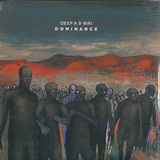
The album's distinctive artwork comes from the studio of Jewish orthodox artist Avraham Guy Barchil, who forged a powerful connection with Deep'a, both was immediately drawn to 'weird atmosphere, amazing technique and emotions involved with his work'. Perhaps one of the most interesting painters from Israel, Avraham is known for his unique perspective, taking his inspiration from the Zohar - the foundational work in the literature of Jewish mystical thought known as Kabbalah. The ambiguous figures represent mystical aspects of the Torah (the five books of Moses), as well as material on mysticism and mythical cosmogony.
Ensuring their natural, conscious touch always remains at the forefront of this unapologetically machine-driven music, Deep'a & Biri have produced an album in the lineage of their heroes and greatest influences. Cerebral yet satisfying, deep yet always engaging, 'Dominance' both reasserts and evolves Deep'a & Biri's forward facing and singular sound.
So, in the spring of 2017, Fritz dusted off his old drum machines and his Jupiter 8 and immersed himself in the sounds, that first brought him to electronic music twenty years ago and which were to form the basis for his present album 'Drown'. At the beginning of his career it was about establishing himself through a new approach for Fritz. Now it is about celebrating those sounds and their liberating effect on our consciousness. The focus is electronic music as Fritz Kalkbrenner first got to know it in the German capital's now legendary Techno and House clubs as an impressionable young man. The cut, that leaving out the now so familiar baritone voice represents, opens the door to a whole world of electronic music, which is suitable for home listening as well as for the club.
There are no confining conventions on these 12 tracks and at times one could also say: no restraint. Fritz Kalkbrenner indulges in his fascination for Dub Techno, in clear and dominant House arrangements and also in the anthemic melodies that shine through the tracks several times on the new album.
Fritz underlines this new beginning, which is at the same time a reflection on his own beginnings and his own origins, by choosing not to appear on the album's artwork himself this time. Instead of a picture of him, there is a great, atmospheric landscape painting. The brush strokes form the bank of a river or a lake. They are abstract, which makes them all the more expressive. It is the work of Fritz' grandfather, the famous East German painter Fritz Eisel and its title is 'Winterabend (winter evening) in M.'. It was created in 1990, when Fritz was nine years old.
out of Stock
Last delivered 7 years ago available to reorder, subject to availability
Fantasy Life was a one-off Italo disco studio project that consisted of various producers, songwriters, and vocalists from Turin, Italy. The line-up included Lorenzo Avico, Maurizio Camoletto and Sergio Bergamin. They recorded their only single Over and Over' at Minirec Studio in 1985 with mixing engineer Gigi Guerrieri. It was released that same year by Thick Record a sublabel of Il Discotto Productions and became one of the most coveted Italo Disco 12's. Over and Over' is a parable that describes the story of a girl growing up, comparing her life to the changes of the moon. Signature Linn drum and Simmons drums create the driving rhythm track that hauntingly sways back and forth. The vocal version has a nearly two minute extended instrumental break in the middle of the song heightening the dramatic pace. On the B-side is a Dub Version with extended instrumental breaks, bass lines and occasional vocals. Both songs are remastered for vinyl by George Horn at Fantasy Studios in Berkeley. The vinyl is housed in the original jacket featuring a painting by Andrea Franzoso and includes a double sided postcard with lyrics and notes
Six fresh, nervy experiments with grime, ambient, d&b, garage and glitch, bristling with ideas and drama, by this up-and-coming producer from Monza, for the Milanese label Beat Machine, plus a heavy remix by Bristol prodigy Walton, stepping up from Hyperdub and Tectonic. Beautifully presented, too: white vinyl in hand-painted fluorescent sleeves.
Two Dutch institutions in Delsin and 2000 And One team up for a reissue of the 1994 EP Belongings. It was an early release on 2000 and One's influential 100% Pure label and found him in full on space-techno. The EP has been fully remastered and sounds as gloriously futuristic now as it did more than 20 years ago. 'It Belongs To Me (Version)' is an intergalactic techno track with pads drifting off to an infinite horizon as a soft acid line burrows into the big, icy hi hats and punting drums. It's perfectly spacious and sombre, while 'It Belongs To Me (Reprise)' is a much more downtempo and thoughtful version of the track where pained leads synths take the lead and the drums are off in the distance. It's the sound of resignation and dejection in techno form. 'Crystal' then layers in new age harmonies as classic dusty break beats do their dance below. Again the synths are smeared and grand in scale and the whole thing feels like a blissful rave comedown. Last of all, 'Bowed' is a happy and manic melodic track with warped bass and fluttering snares that carry you away to the stars.
out of Stock
Last delivered 5 years ago available to reorder, subject to availability
Experimental Spanish composer and multi-instrumentalist Pepo Gala´n makes his vinyl debut with an exquisite record of carefully orchestrated ambient pieces.
Conceived as a fierce response to the gradual decay of our society, "Human Values Disappear" takes us on a trip to the darkest corners of a dysfunctional world, painting a broken landscape with deeply arresting and meditative drones.
Composed initially on a vintage Casiotone, the album was further enriched with lush and spacious arrangements, giving the songs a newfound intensity. In this effort, Pepo Gala´n surrounded himself with talented artists Lee Yi and David Cordero, each of whom bring their unique approach to composition into play. The result is an eclectic, yet deeply cohesive palette of sounds that flow seamlessly into each other, creating a moody ambiance that permeates everything.
Despite the bleak tones and subject matter, Pepo Gala´n is able to strike a balance between darkness and hope, allowing glimpses of light ("Half Moon", "Old Testament") to filter through the sheer sonic intensity of the fiercest tracks ("We Are All Welcome Here", "Almost Alone in this Life"). This transition is better exemplified on the album's centerpiece "Sacred Autumn", a collaboration with David Cordero that starts off with an elegant string section, gradually building into a guitar feedback climax that slowly fades off, paving the way for an epic closing number.
By the time we hear the last sounds of "Few Dollar More", the emotional impact of the record is undeniable. "Human Values Disappear" is indeed one of the most sincere, enigmatic and life- affirming records that Pepo Gala´n has ever produced.
Mit "This Is London" veröffentlicht das Hamburger Label Tapete ein weiteres Schmuckstück aus seiner Reihe vergessener und nicht mehr erhältlicher Pop-Perlen. Ursprünglich kam "This Is London" 1983 als zweites Album der Band The Times auf den Markt. Kopf der Formation war der 1959 geborene Sänger und Bassist Edward Ball. Der gründete 1976 mit O-Level seine erste Gruppe, bevor er in seinem Schulfreund Daniel Treacy einen Geistesverwandten entdeckte. Gemeinsam gründeten sie die Bands Television Personalities und Teenage Filmstars. Ersterer stand Treacy vor, Letztere führte Ball an. Das Tandem hielt sich einige Jahre und ging dann in The Times auf. Zwischen 1982 und 86 veröffentlichten die Briten sechs LPs. Die beiden ersten Platten, "Pop Goes Art" und "This Is London",vancierten zu zwei Klassikern des ersten Mod-Revivals und machten The Times zur Kultband.
Art pop meets Mongolian throat singing, Blade Runner meets Walter Carlos (Clockwork Orange), Tom Dissevelt and Kid Baltan (Bowie's favourite band) meet Tame Impala.
The fifth album from Marsmobil has been hailed by many as their best yet. With closer ties to Minx' (2006) than the last two albums, Fairytales Of The Supersurvivor' returns to Marsmobil's signature strength of wondrously brilliant songs ( And The Fishes In The Ocean', Shadows Of The Inner Light') that blend off-the-wall cinemascope sounds with dazzling beats and punchy, powerful hooks to create uniquely distinctive art pop anthems.
As always with Marsmobil, Roberto Di Gioia writes, plays, sings and programs everything himself. Here, as on Minx', he's brought in support from a fabulous singer - the very wonderful Amber Lin, who contributes vocals on four songs. All the cover illustrations are also by Di Gioia.
Multi-instrumentalist Roberto Di Gioia needs little introduction. The curious can explore his biography, discography and extensive lists of projects and collaborations as musician and songwriter (see below) for an impression of the hugely diverse achievements of this multi-talent and brilliant musician.
As a topical heads-up, Roberto Di Gioia is also the founder of the German jazz supergroup Web Web and released the album Oracle' in September 2017. The second Web Web album will follow in early 2018, hard on the heels of the fifth Marsmobil release. Di Gioia also wrote and produced Teufelswerk' for DJ Hell and contributed virtually all the songs on Hell's latest album, Zukunftsmusik'.
IMA (Intense Molecular Activity) is the duo of Don Hunerberg (synthesizers) and Andy Blinx (drums and percussion). Based in New York City and active between 1979 and 1982. Don, a studio Sound / music engineer and musician, Andy an electronic clothing designer, drummer and sound reinforcement engineer at downtown clubs like Max's Kansas City, Mudd Club and CBGB. In between doing sessions at Radio City Music Hall Studios for groups such as Ramones, Richard Hell, Sonic Youth, Liquid Liquid, John Zorn, Glenn Branca and many others, IMA took advantage of off hours to create their own music. As far as influences go, Don's background was in electronic music and Andy's in prog rock. To produce the songs, Don used his own method of creating patterns from 2-track tape loops and then edited them together on to a 24-track recorder adding more tracks of overdubs, In a very similar way that sequencers are used today. By 1980 the duo honed their own unique sound and version of Post Punk and No-Wave with the tools of the trade of the early 80s. Situated above the proscenium of the Radio City Music Hall stage, the studio was outfitted with a variety of orchestral instruments (timpani, bells, xylophone, etc). They self-released a 4-song EP titled 'IMA' on an 8' flexi-disc which was distributed by Ed Bahlman of 99 Records. The music bridges the wild psychedelic-rock of the 60s, the synth-punk of the late-70s and the elaborate constructions of progressive-rock. There are nods to the freak-outs of Chrome and the super neurosis of Suicide, but IMA takes a more clinical approach which also takes notice of Hawkwind and Pink Floyd's interstellar overdrive. We've added 4 bonus tracks recorded during the same studio sessions and included them here for the first time on vinyl. DJ Hell lifted elements of IMA's song "Blurb" virtually intact and uncredited for his electroclash club hit "Keep On Waiting" 20 years later. All songs have been remastered by George Horn at Fantasy Studios in Berkeley. The record is housed in an exact replica of the original jacket featuring a spray painted IMA tag a top a red dashed 'Do Not Enter' sign. Each copy includes a double-sided postcard with notes. This Album Is dedicated to the memory of Andy (Blinx) George.
Celebrating the immortal legacy of the late director Finders Keepers Records compile a detailed and comprehensive music cabinet of some of the finest musical moments from his initial directorial decade between 1968-1979, which provided a m much needed platform for the freak rock and free jazz that mirrored the distorted erotic visions in his own mind's eye. Imagine Gong-gone-wrong meeting the Art Ensembles Of Châteauroux...
.Rising out of the smokey Parisian Mai 68 shrapnel and claiming his stake as the first French vampire movie director, the inimitable father of European Horrortica, Jean Rollin (1938-2010) has smudged the painted face of surrealist cinema for over five decades. Dragging his roots from beneath the Letterist/Situationist movements, avant-garde theatre and Belgian fine art groups and entwining them around the minds of sexual revolutionaries, the European comic book cognoscenti and the Parisian free jazz and rock scenes, Rollin stopped at nothing to bring his macabre phantasies of zygotic vampyrism and backwoods blood cults to Gallic cinematheques and beyond.
[A] A1 | Blind Songbird - Sung by Nicole Romain (Viol Du Vampire)
At the summer party on the occasion of my soon-to-be 80th birthday, many friends came. As it said on the invitation: 'The Eschenau Chaos Band will play.' While the party was going on, people asked me when that band would be playing, and I replied: 'Now! You are that band', and I randomly handed out all of these instruments. Hartmut Geerken was clued in and had brought some as well - Sun Ra's Sun Harp among others. I started with a moroccan hand drum, bendir, and off it went. Unpractised." - Herman De Vries Herman de Vries, born 1931 in Alkmaar, is a Dutch visual artist who has been living in Eschenau in the Steigerwald region (Franconia, Germany) since 1970. Having started out as an Art Informel painter in the 1950s, his interests shifted in the ensuing years, and in the 1970s, he became focused on found objects from nature and their rtistic-philosophical qualities and implications. He has made paintings, collages, texts, sculptures, installations, a.o., and has dealt with plants, earth, and other parts of nature from botanical, medical, historical, as well as psychedelic viewpoints.Recording made on June 18, 2011, in Eschenau. Edition of 300 with liner notes by Herman de Vries and photos of the event on the back sleeve.
This special collector's edition electronically reproduced stereo 7' single (only 200 copies), comes in two fantastic coloured vinyl options (100 x red vinyl and 100 x purple vinyl). A refreshingly new take on mono to stereo conversion. Elvis fans growing up in the 1960's and 1970's unwittingly listened to his 1950's catalogue in electronically reprocessed stereo, love it or loathe, it was pretty much all there was back then unless you could afford to track down expensive mono copies. To better understand where the electronically reprocessed stereo versions originate from, we need to go back to 1961, at which point RCA had begun the process of taking Elvis' 1950's mono masters and converting them into a stereo sounding effect. By 1960 when Elvis returned from the army, he was recording in true stereo and as far as RCA were concerned, mono was a thing of the past. You just need to listen to the sound quality of the 1960 'Living Stereo' version of the 'Elvis Is Back' album, to appreciate just how much the recording industry had moved on in just two years. Such was the demand for stereo records in the early 1960's most major labels had created their own process for converting mono into stereo or 'fake' stereo as it became known, with some labels producing better results than others. Opinions on Elvis' 1960's electronically reprocessed stereo versions are mixed, with some recordings making the transition from mono to stereo effect better than others. Some DJ's actually preferred playing the electronically reprocessed stereo versions, believing they gave a wider fuller sound on the dancefloor. By late 1970's, RCA had once again begun to re-issue original mono masters, giving many fans their first opportunity to hear how these tracks were originally issued. By the time compact discs had arrived on the scene in the 1980's, electronically reprocessed stereo was well and truly dead and buried. Very few electronically reprocessed stereo recordings ever made it onto a digital format and the few that did are now highly collectible. Recorded at RCA Studio 1, New York on the 30th of January 1956, My Baby Left Me is a driving powerhouse rockabilly masterpiece with a real Sun Records vibe to it (produced by Steve Scholes with Elvis on vocals and acoustic guitar, Scotty Moore on electric guitar, Bill Black on bass and D.J. Fontana on drums). Our flip side Blue Moon Of Kentucky is another rockabilly classic which first appeared as the opposite side to That's All Right (Sun 209) in 1955 (Elvis' first single). Blue Moon Of Kentucky was recorded on the 7th of July 1954 at Sun Records (produced by Sam Phillips with Elvis on vocals and acoustic guitar, Scotty Moore on electric guitar and Bill Black on bass). Both tracks have been painstakingly re-engineered to create a stereo effect sound. The result is a bigger, sharper sound that jumps straight outta the grooves at ya! One reviewer described the process as - it's as if a veil has been lifted off the tracks'. Both tracks are taken from the forthcoming album titled 'Elvis Presley - The 50's In Stereo' (mono to stereo re-visited). For best results play this killer double-sider very loud!!!
This special collector's edition electronically reproduced stereo 7' single (only 200 copies), comes in two fantastic coloured vinyl options (100 x red vinyl and 100 x purple vinyl). A refreshingly new take on mono to stereo conversion. Elvis fans growing up in the 1960's and 1970's unwittingly listened to his 1950's catalogue in electronically reprocessed stereo, love it or loathe, it was pretty much all there was back then unless you could afford to track down expensive mono copies. To better understand where the electronically reprocessed stereo versions originate from, we need to go back to 1961, at which point RCA had begun the process of taking Elvis' 1950's mono masters and converting them into a stereo sounding effect. By 1960 when Elvis returned from the army, he was recording in true stereo and as far as RCA were concerned, mono was a thing of the past. You just need to listen to the sound quality of the 1960 'Living Stereo' version of the 'Elvis Is Back' album, to appreciate just how much the recording industry had moved on in just two years. Such was the demand for stereo records in the early 1960's most major labels had created their own process for converting mono into stereo or 'fake' stereo as it became known, with some labels producing better results than others. Opinions on Elvis' 1960's electronically reprocessed stereo versions are mixed, with some recordings making the transition from mono to stereo effect better than others. Some DJ's actually preferred playing the electronically reprocessed stereo versions, believing they gave a wider fuller sound on the dancefloor. By late 1970's, RCA had once again begun to re-issue original mono masters, giving many fans their first opportunity to hear how these tracks were originally issued. By the time compact discs had arrived on the scene in the 1980's, electronically reprocessed stereo was well and truly dead and buried. Very few electronically reprocessed stereo recordings ever made it onto a digital format and the few that did are now highly collectible. Recorded at RCA Studio 1, New York on the 30th of January 1956, My Baby Left Me is a driving powerhouse rockabilly masterpiece with a real Sun Records vibe to it (produced by Steve Scholes with Elvis on vocals and acoustic guitar, Scotty Moore on electric guitar, Bill Black on bass and D.J. Fontana on drums). Our flip side Blue Moon Of Kentucky is another rockabilly classic which first appeared as the opposite side to That's All Right (Sun 209) in 1955 (Elvis' first single). Blue Moon Of Kentucky was recorded on the 7th of July 1954 at Sun Records (produced by Sam Phillips with Elvis on vocals and acoustic guitar, Scotty Moore on electric guitar and Bill Black on bass). Both tracks have been painstakingly re-engineered to create a stereo effect sound. The result is a bigger, sharper sound that jumps straight outta the grooves at ya! One reviewer described the process as - it's as if a veil has been lifted off the tracks'. Both tracks are taken from the forthcoming album titled 'Elvis Presley - The 50's In Stereo' (mono to stereo re-visited). For best results play this killer double-sider very loud!!!
'Y.O.U' is an emotive album of tripped out ambient hip hop instrumentals by FROM, written and recorded in the mid 90s under Trevor Jackson's infamous production persona The Underdog. Originally planned as a vocally-led, song-based project that should've surfaced between his production for The Brotherhood's legendary British hip hop album 'Elementalz' in 1996 and his acclaimed debut PLAYGROUP release in 2001, for multiple reasons it hasn't seen the light of day, until now.
Only Available as a ultra limited edition Vinyl and CD release, the LP consists of 11 tracks. Dream-like synth lines, ambient melodies, blissful guitars, raw beats and soft, fractured vocals draw you into a hallucinatory 12bit world. Drawing on Jackson's progressive and jazz rock influences as well as psychedelia and early electronics, the album closes with 'Belladonna'- a piano-sampled homage to the east coast golden age hip hop pioneers. NB: The CD features a longer version of 'Veratrum' not available on the vinyl version. All created on an Akai S950 mono sampler (limited to only 20 seconds sampling time), an Akai MG1212 12 channel mixer (which recorded on Betamax style tapes) and primitive outboard gear, Jackson honed his skills from his bedroom, where he produced the majority of his output at the time. With a huge collection of obscure vinyl, he dug deep into uncharted territories for samples and sound clips
- using material no one knew about (or would think about touching) in the mid 90s. The Underdog's initial releases were on Jackson's own Bite It! recordings label, which was started in 1991. A unique platform for UK hip hop with a visual aesthetic and ethos more akin to ECM and Factory
than other rap labels, its mission was to push artists beyond musical and cultural limitations prevalent at the time.
Home to artists like The Brotherhood, Scientists of Sound, Little Pauly Ryan and Lewis Parker (who later signed to Massive Attack's Melancholic label), Bite It! became a great success;
finally British rap had artists and releases that looked and sounded as good as their revered American counterparts. In 1993 Richard Russell (who had just started running XL recordings) asked Trevor to remix House of Pain, resulting in a top ten record, which helped launch Jackson's musical career via further remixes Massive Attack, Run DMC, U2, The Cure and countless others. Off the back of his remix success, The Brotherhood signed a deal in 1994 with Virgin Records. Their 'ELEMENTALZ' album was produced by Jackson and is still lauded by many as one of the finest British hip hop albums of all time.
Jackson continued to remix and produce as The Underdog until managerial issues forced him out of the project he'd been instrumental in instigating.
Soon after his close friend and manager tragically passed away - which when combined with the UK hip hop scene becoming increasingly volatile and the moral demise of rap culture in general - convinced Trevor to hang up his hip hop hat for good.
After leaving The Brotherhood he started Output Recordings. Internationally and sonically diverse, it gave Jackson a free reign to do as he pleased, with genre twisting releases from the likes of Fridge, Four Tet, Sonovac, Colder, his own PLAYGROUP project, The Rapture and LCD Soundsystem. With a non-compromising attitude, strong DIY aesthetic and consistently groundbreaking releases across its ten year life between 1996 and 2006, it became one of the most important and respected independent labels in the world.
Betonkust immediately blended in with the 9300 family and it felt like we've been knowing each other for years and years. After his characteristic remix on Innershades' latest EP (AAL006), it was only a matter of time before he would deliver his own release on our label. With varied percussions, hard kicks and dark synths, the 0% swing EP brings you back to a time when Belgian highways were still lavisly flanked by discotheques and afterhours clubs. An era that counts as one of the most beatiful pages in Belgian dance history and of which Betonkust probably has more knowledge than most of our fellow-countrymen. All four tracks on this proper release produce a thrilling energy that will bring those sleepy ravers, from the 90's, back to life.
Legendary Los Hermanos member Santiago Salazar's album 'Aspirations For Young Xol' is given a vinyl release courtesy of Rekids.
A heartfelt dedication to his son Isaias, 'Aspirations for Young Xol' takes us through the life of a pillar in the electronic music community - Santiago Salazar. From his formative years spent in California to his connection with Detroit and the passing of a childhood friend, the long-player's tracks signpost the musician's significant experiences, both positive and negative. This meaningful body of work was released digitally on Pastel Voids and now Rekids release the album on wax.
'Saturated Fear' sets a deep tone for the LP, flanging melodies and echoing claps float through the composition before the album's title track 'Aspirations for Young Xol' offers haunting arpeggios with occasional acidic overtones which are cleverly offset by beautifully designed lead synth transitions. 'Bloodlines' follows a similar musical vein with delayed bass riffs that are suspended above shimmering hihats and a weighted kick.
Santiago provides three beatless pieces throughout, which digress into more emotional territory whilst offering brief respite from his heavier drum work. 'Xol's Pain' combines orchestral strings and swelling synthesisers which build tension with a subtly complex, evolving motif. Both 'Dark Matter' and 'Ode to Stinson' use arresting atmospheres, warped arpeggios and ethereal pads which lull the listener into a retrospective mood.
An intensity builds in the later tracks, a gritty but powerful low end provides a solid foundation in 'Orange Blossom Thump', eventually making way for a hectic and elastic lead synth before 'Pachuco Dub' displays drones that build a dissonant pressure in which the complex tom rhythms and rolling hi hats can grow. 'Sarah Rivera' hypnotises with its delectable chord progressions and complimentary melodies which seem to float above a rigid drum composition to close the album with style.
In recent years, the Spanish producer's name has become synonymous with exquisitely produced, hyper-functional Techno variants. Releases via Pole Group and Planet Rhythm as well as the artist's own Mental Disorder outlet have seen Juan Rico develop a distinctive sound that places elements of Noise & Ambient within a contemporary Techno framework - harnessing a dense, abrasive energy without compromising groove. Layers of ethereal pads, filtered noise and feedback FX are compounded into a tight, mono space, pushing back on powerful, propulsive low end - making for a decidedly heady listening experience.
On La Mala Educación, Reeko continues in this vein - though the work leans more towards the noisier, more industrial end of previous output. Across six tracks, the Spanish producer showcases a bipartite approach to form, as punishing dance-floor cuts Desfile Funebre de Rosas and Habitación 877 coalesce with more experimental, atmospheric recordings. Engendrado features a single warping sequence, pitching and bending over the course of it's four minute run time, while opener Carne y Demonio begins life as a shimmering, wide angle Ambient piece - before sinking deep into high-energy abstraction with a single feedback-heavy polyrhythm driving the work along it's course.
The finish on the material is harsh, and sounds meld together with considerable drama - but Reeko's real skill lies in the binding elements, the steely drones and machine hiss that hold the music together with considerable poise. Whilst La Mala Educación explores disparate expressions within the genre - the same mediative pulse runs throughout the EP, and this sense of cohesion combined with the admirable technical skill on display paints a picture of a producer in full control of his art.
out of Stock
Last delivered 13 months ago available to reorder, subject to availability
It is time to discuss fundamentals. For his second appearance on Laut & Luise Constantijn Lange shows his interpretation of human mannerisms that contrast so much while being closely entangled. Able to deliver both pain and satisfaction alike, its apparent simplicty may deliver the purest bliss while the complexity of its impact can at times feel devestating: Power & Love. For the first part of this pair Onosizo stands by to passionately proclaim and address the true nature and dangers of power. In contrast the second part of this EP is a musical dedication to all the light hearted and emphatic moments, a chance to brighten up and an invitation to feel untroubled, if only for a few minutes. Just like a mapleseed rhino would do.
* Walton drops his third instalment on Tectonic in fine style, calling upon Japanese influences to create a truly unique sonic across both tracks in the release. Asian instrumentation meets directly head to head with the cutting edge sounds of a UK grime-techno axis to great effect.
* 'Praying Mantis' captures all the charm of a fine Japanese watercolour painting by means of some spectacular midi-harp programming. Hi-hats and detailed percussion set a shuffling pace, building the mood up before a beautiful harp section unfolds and takes over, expertly programmed by Walton to sound as if a master harpist had stepped into the room! As drums and bass join the party we have all the makings of a low-slung grimey masterpiece, both soothing and energising in a perfect zen balance.
* Flip then for 'Koto Riddim' which again brings Japanese influences to the forefront of the track. Walton programs classic sounding Japanese percussion sounds along with grunting vocal cuts and a charming flute-based melody. As the track drops, it switches into a more familiar, grime-based palette of sounds, deftly arranged for most dangerous impact.
The New Backwards, created in 2007, was originally included in the Ape Of Naples box set released on Important in 2008 and was constructed by PETER CHRISTOPHERSON using material from the Backwards sessions recorded in the early '90s for a planned release on Trent Reznor's Nothing Records label. The New Backwards, like The Ape Of Naples, is an intense fan favorite and an essential part of the COIL catalog.
A rather fruity Brazilian, French spoken erotic version f Painel De Controle single we put out a couple of years ago that sits somewhere between euro disco and the original track. Always enjoyed playing this one out in the club as an answer record to the O.G so its good to have this one at 45rpm as well.
Moullinex is back with his finest album up to date, HYPERSEX, a collective love letter to club culture and its celebration of difference, freedom and love. In his third length, Moullinex reached out to several guest singers: Fritz Helder (Azari & III), Georgia Anne Muldrow (Flying Lotus, Mos Def), Iwona Skwarek (Rebeka), Best Youth, Marta Ren, Da Chick, UhAhUh and Tee Flowers, crafting a uniquely fresh piece that combines many of his musical influences, from the funk, groove and sunshine of his debut "Flora" to the psychedelia and tropicalia of 'Elsewhere'. Moullinex is the alter ego of the Portuguese producer and multiinstrumentalist Luis Clara Gomes. He's established himself as one of the leading artists in the modern disco scene, with several singles such as 'Take My Pain Away' and 'Maniac' ft. Peaches, and remixes of acts like Røyksopp, Cut Copy, Two Door Cinema Club and Grammyawarded artist RAC. The road to HYPERSEX has been paved by various singles and videos in 2017, expanding the spirit of collaboration to directors and visual artists, and gathered wide support from international tastemakers across the globe, including Vice, NPR, KCRW, Triple J, Majestic Casual, Les Inrockuptibles and Tsugi Mag. HYPERSEX is like Hypertext between humans, a system designed to multiply ideas and connections between people. The dance floor is the perfect medium.
Dj Richard returns with another stunning release on Dial Records: Path Of Ruin.
Inspired by the rather harsh magic of New England in winter - the place where the three tracks have been recorded - Dj Richard creates a wide and dark raving beauty.
SPECIAL LIMITED EDITION X 300 WITH BONUS 7 :
Limited special edition with the 7" containing the track "Lune noire", in 2 parts - one per side.
It's already been 5 years since the last Zombie Zombie album 'Rituels d'un Nouveau Monde', after which the group explored other territories by signing 2 film scores, namely 'Loubia Hamra' by Narimane Mari and 'Irréprochable' by Sébastien Marnier, as well as creating the music accompanying a contemporary circus show called 'Slow Futur' created by Martin Palisse and Elsa Guérin. Wouldn't these beautiful parentheses make you want to return to the sources After 10 years at Versatile Records, 2017 also marks the decade anniversary of the release of their first album 'A Land for Renegades' in 2007, at the time considered to be one of the 10 best albums of the year according to Rough Trade.
'Livity' - Zombie Zombie's latest opus seems to plunge us deep into science fiction, with a cover designed by the mythic cartoonist Philippe Druillet, who is also the founder of the cult Métal Hurlant comic series. The title of the album is somewhat misleading, as one could mistakenly think of a certain dub record made at
the famous Island Records Compass Point studio in the Bahamas. For the uninitiated 'Livity' or 'Life force' is actually a Rastafarian spiritual concept based on the idea that an energy exists within, and flows through, all people and all living things. The record was recorded last winter in Paris, in a very short time frame. 7 tracks played live in 7 days, by Etienne Jaumet (synthesizers / rhythm box / metallophone / sax), Cosmic Neman (drums / vocals / sound effects), and Dr. Schonberg (percussion / electronics / trumpet), recorded at the Red Bull Studios by Thibaut Javoy and Jerome Caron, 2 very competent engineers. To keep it in the family, the album was then mixed by another member of the Versatile stable, the mysterious and legendary DJ/producer I:Cube, done in the label's Victor Studio.
On this album the principles that are dear to the group rest being respected, still as far away as always from the standards of 'radio play', A living kind of music, composed of long instrumental moments recorded with analog synthesizers and drum machines, accompanied by drums and percussion. But I:Cube's touch may bring the unique energy that one may find at Zombie Zombie's concerts; on certain cuts like title track 'Livity' that the group recorded in Laos, a wild combination of 808 kick drums and bewitching jungle sounds that sound quite unlike anything else out there, and especially on 'Hippocampe', which gives the impression of hearing an old school hip hop rhythm with the power of a metal band who have replaced their guitars with an army of synthesizers: we recommend you listen to this particular track in a convertible while speeding down the highway.
As with all of Zombie Zombie's music the cinematic component is still strong, on titles like 'Ils existent..' 'Acera' which was originally composed for ciné-concerts accompanying the films of Jean Painlevé et Maurice Pialat. The energy of the beginning is still very present, as is - of course - the kraut inspiration. But it's also an album that takes new directions and sonic risks, like on 'Looose', which brings to mind the Art Ensemble of Chicago, or the groove of James Chance in New York in the early 1980's, featuring the free sax solos of Etienne Jaumet and Dr. Schonberg on the trumpet. The group also offers some slower and calmer titles, like 'Heavy Meditation' as well as exploring more experimental tracks in the line of French 70's groups such as Lard Free or Richard Pinhas, for example on the bonus track 'Black Moon'.
Please - Take your time, and enjoy listening!
It's already been 5 years since the last Zombie Zombie album 'Rituels d'un Nouveau Monde', after which the group explored other territories by signing 2 film scores, namely 'Loubia Hamra' by Narimane Mari and 'Irréprochable' by Sébastien Marnier, as well as creating the music accompanying a contemporary circus show called 'Slow Futur' created by Martin Palisse and Elsa Guérin. Wouldn't these beautiful parentheses make you want to return to the sources After 10 years at Versatile Records, 2017 also marks the decade anniversary of the release of their first album 'A Land for Renegades' in 2007, at the time considered to be one of the 10 best albums of the year according to Rough Trade.
'Livity' - Zombie Zombie's latest opus seems to plunge us deep into science fiction, with a cover designed by the mythic cartoonist Philippe Druillet, who is also the founder of the cult Métal Hurlant comic series. The title of the album is somewhat misleading, as one could mistakenly think of a certain dub record made at
the famous Island Records Compass Point studio in the Bahamas. For the uninitiated 'Livity' or 'Life force' is actually a Rastafarian spiritual concept based on the idea that an energy exists within, and flows through, all people and all living things. The record was recorded last winter in Paris, in a very short time frame. 7 tracks played live in 7 days, by Etienne Jaumet (synthesizers / rhythm box / metallophone / sax), Cosmic Neman (drums / vocals / sound effects), and Dr. Schonberg (percussion / electronics / trumpet), recorded at the Red Bull Studios by Thibaut Javoy and Jerome Caron, 2 very competent engineers. To keep it in the family, the album was then mixed by another member of the Versatile stable, the mysterious and legendary DJ/producer I:Cube, done in the label's Victor Studio.
On this album the principles that are dear to the group rest being respected, still as far away as always from the standards of 'radio play', A living kind of music, composed of long instrumental moments recorded with analog synthesizers and drum machines, accompanied by drums and percussion. But I:Cube's touch may bring the unique energy that one may find at Zombie Zombie's concerts; on certain cuts like title track 'Livity' that the group recorded in Laos, a wild combination of 808 kick drums and bewitching jungle sounds that sound quite unlike anything else out there, and especially on 'Hippocampe', which gives the impression of hearing an old school hip hop rhythm with the power of a metal band who have replaced their guitars with an army of synthesizers: we recommend you listen to this particular track in a convertible while speeding down the highway.
As with all of Zombie Zombie's music the cinematic component is still strong, on titles like 'Ils existent..' 'Acera' which was originally composed for ciné-concerts accompanying the films of Jean Painlevé et Maurice Pialat. The energy of the beginning is still very present, as is - of course - the kraut inspiration. But it's also an album that takes new directions and sonic risks, like on 'Looose', which brings to mind the Art Ensemble of Chicago, or the groove of James Chance in New York in the early 1980's, featuring the free sax solos of Etienne Jaumet and Dr. Schonberg on the trumpet. The group also offers some slower and calmer titles, like 'Heavy Meditation' as well as exploring more experimental tracks in the line of French 70's groups such as Lard Free or Richard Pinhas, for example on the bonus track 'Black Moon'.
Please - Take your time, and enjoy listening!
For the fourth release on 6dimensions, Steve Bicknell has delved into the catalogue of the Lost Recordings series on his previous imprint; Cosmic.Steve Bicknell's Awakening The Past feature three tracks from Why And For Whom, the first of Bicknell's Lost Recordings releases. Originally released in 1996, Why And For Whom Has been named one of the best UK Techno records of all time with Bicknell being billed as a 'criminally underrated producer'.With the re-release of these tracks in 2017, it is clear to see that the tracks have stood the test of time. All four-tracks on Awakening The Past were previously untitled but have been renamed with a focus on the human condition. With the 6dimensions label being founded on the principles of the 'human mind's natural make-up' it seems a natural decision to rename the tracks to suite the label ethos. Although one quarter of Awakening The Past was released 20 years ago, Bicknell's focus on mood shows coherence between his work then and now. The era of production can be distinguished in the EP, however, this is only eminent through a difference in recording technique. More importantly, the mood of older and newer productions are indistinguishable from each other and display Bicknell's unrelenting dedication to his own focus on concept of aesthetic. Physical Life' opens the EP with a rawness that is carried through the EP. With tape hiss underpinning the track, Bicknell's signature bass grumbles hold together hi-hats which progressively filter in and out over the course of the track. Bicknell's use of filters carries through onto the second track of EP, 'Natural Vibrations' boasts an erratic and high-pitched 303 sequence that shows a bit of experimentalism before the EP steps back into Bicknell's more familiar techno odysseys. 'Fearing The Minds Fears' paints a tense atmosphere, lashings of motoric modular synth are added with little fuss as the track title confirms its significance. Finally, 'Conscious Awakening' drives the EP to a close with dizzying pace: it's here that Bicknell's ability to control the emotion of the listener is really evident.
Cryosleep is the debut album from Null + Void, the alias of prolific New York producer Kurt Uenala. It's an album of contrasts and tension, where darkness is pierced by blinding light, and where moody new wave bleeds into stark electronics. In one moment, joyful memories give way to isolation and regret, and in the next, Cryosleep explores the catharsis of crowded dancefloors. Throughout the record, Uenala matches his dynamic production with incredible vocalists-from Depeche Mode's Dave Gahan and the inimitable Shannon Funchess, to Black Rebel Motorcycle Club and The Big Pink. Null + Void's take on dark pop meshes with his love for Detroit electro, poignant synth melodies, and cold atmospheres. With the cinematic opener 'Falling Down' and brooding instrumentals like 'Come To Me", Cryosleep can feel like the soundtrack to a lost space epic. No doubt, the album evokes Blade Runner, dystopian landscapes, and the splendor of far-off galaxies. As Uenala puts it, Cryosleep is inspired by 'classic sci-fi stuff,' images of futuristic machines sustaining humans frozen in a dreamstate. The melancholy 'Foreverness' explores what they might be thinking: 'A collection of fragments, memories of a life lived-preserved, but incomplete and jumbled.' Meanwhile, 'Into The Void' paints a peaceful, otherworldly picture, 'like soaring towards a white light.'
"Veil Of Flames" is the second solo EP by label head Kastil in 2017 after the successful " The Sadistic Abbess" earlier this year.
Threading through the corn fields, wearing nothing but a cotton scarf, her body is like an abstract painting. He who beholds her with unpure sentiments, sees not what she is made of.
Her fierce complexion radiates briefly before she speeds up her motions. Out of breath she arrives at the altar of affection. She won't sacrifice her decency for a
chance to be with god.
After their highly acclaimed album - Dis Side Ah Town Roger Robinson and disrupt are returning with a reel full of new tales about survival in a Dog Heart City. These stories, delivered in Robinson's full vocal spectrum between low-end dub poetry tremors and haunting falsetto singing, are trying to make the invisible lives visible: giving people affected by gentrification, racism, unemployment and low wage work a sense of authority and aesthetic nobility.
Each song on this album became a story in that city, while the record itself is like the city holding these stories. Nightshift' tells about the workers who clean the buildings where power
is held, and the contrast between their lives and where they clean. Flowers' comments on the rate of young black men getting killed, where another victim dies even before the last mourning flowers have dried. There are stories about tower block life, the claiming of a postcode or how the city wears a Swastika like a proud badge in Post-Brexit UK.
This beautiful LP collects a pile of special riddim cuts from the Jahtari vaults, from re-edited classics by Bo Marley, unreleased gems by John Frum to completely new experiments, all lovingly dubbed live and soaked in analogue goodness by disrupt.
Stunning hand-painted cover art by Kiki Hitomi.