Remastered Limited Blue Vinyl with Gatefold Sleeve.
Includes A2 poster and 3 art prints of each individual band member.
Way back in 1982, Battersea based mod heroes The Direct Hits had released one single on Dan Treacy’s Whamm! record label, ‘Modesty Blaise’ earlier in the year. This was singled out in the music press as not just one of your average Jam crash / bang /wallop mod revivalist tunes.
Live gigs showed they had a mighty powerful set of catchy mod / pop tunes in the back pocket. Whamm! were struggling to provide the funds to record an album, the songs were too good not to commit to a full 12’ set, so the Direct Hits pooled their limited resources and self financed a very cheap one day recording session in a tiny studio in Tooting, South London called Broadway Sound.
Early on the morning of August 12th 1982 the band, comprising of Colin Swan, Geno Buckmaster, Brian Grover and their trusty roadie ‘Robbo’ assembled at the tiny studio to begin recording as many of their songs as they could get down on tape for the tiny budget they had scraped together. As most of the songs were already well rehearsed thanks to the band’s busy live schedule, the recording of the first nine songs on this disc were finished by mid afternoon without any problems. Throughout the late afternoon and early evening the band toiled over scant overdubs with limited keyboard facilities and a distinct lack of musical ability. The recordings immediately came to life however, when Colin Swan and Geno Buckmaster’s stage-honed tight harmonies were added, there was no time for vocal overdubs, and the mixing was completed by midnight. Tired and worn out, the band ventured out into the cold night air happy with the days work, clutching the precious reel to reel tape.
Two weeks later the band came back with a friend producing, and recorded the three final tracks featured on this album which have a more rounded slightly less raw sound. All three were completed in an afternoon. Almost two years later they re-recorded some of these songs, and along with a handful of new songs from the pen of Buckmaster and Swan, recorded their ‘Blow Up’ debut album at Rendezvous Studios in Sydenham, South East London, released on Whaam! Records in August 1984.
So what you have here are the roots of some of these great songs. A few didn’t make it to the first album those that did, as you will hear, stayed reasonably faithful to the original arrangements.
The Broadway Recording Sessions take you right back to where it all started!
Search:the problems
VINYL[19,87 €]
Nahawa Doumbia's new album Kanawa concisely captures this current moment in Malian history. The singer, whose storied career spans more than four decades, reflects on the immigration crisis from the Malian perspective in the title of her new album Kanawa. Across eight songs recorded in Bamako with a band including traditional and modern instruments, Doumbia merges her early work that relied on a spare expression of her trademark didadi rhythm with the bombastic range of contemporary Malian pop. The beautifully complex musical accompaniment that results is courtesy of the large ensemble she pulled together with producer and arranger (and day one collaborator) N'gou Bagayoko. The band features two highly expressive Malian string instruments, the ngoni and the slightly smaller kamalé ngoni, as well as a variety of percussion, drum programming, karignan (a metal scraper) and acoustic and electric guitars. Doumbia's daughter, a celebrated singer with her own group and busy concert schedule, Doussou Bagayoko sings on "Adjorobena," a song about patience, tolerance and living in peace. Doumbia weaves together a roadmap of her psyche when it comes to the good and bad life has to offer. She talks about marriage and women leaving home to join another through the metaphor of a tree in the garden; she includes gunshot samples in the song "Foliwilen" to honor the bravery of hunters, soldiers and other courageous people; she uses a bird in "Djougoh" to talk about lazy people; and, in "Ndiagneko" she advises people to ignore critics, just do you. Mali has gone through an intense period of regional strife and terrorist incidents over the last ten years and Doumbia roots the album in tragic local concerns with deep global implications. "The meaning of Kanawa is so simple. We see our children trying to cross the ocean all the time. I said that many of our children die in the ocean and some of them die while crossing the Sahara. But I ask them why do they leave their country? They said that they leave because of the family situation or problems like poverty and unemployment. I ask them to stay and work in their country. I call on the UN and African leaders so that we can coordinate our efforts to find a solution, to create jobs for them so that young people stop leaving. That's why I chose it as the title of my album so that everybody can learn from it and also so that there is a reduction in the number of people emigrating. So that some will hear the message and stay home and grow the land. Leaving is not the only solution. My message is to help the youth find jobs."
Repress of the self-titled debut album. Their self-titled debut album is an instrumental bluesy heavy rock with no DOOM taste. A lot of improvised double guitar solo and a very special groovy rhythm section.
The release got a real unexpected awesome response all over the world. All the tracks are 100% original, except the cover of the blues classic "Going Down".
BIOGRAPHY:
"Sonic Flower" were formed as a side project of "Church of Misery" in 2001. Tatsu Mikami (bass) and at that time Church's guitarist Takenori Hoshi (guitar on Church of Misery's 2nd album "The Second Coming"), teamed up to play more bluesy & non Doomy taste instrumental Heavy Rock. They were influenced by famous 70's heavy rock bands like CACTUS, GRAND FUNK RAILROAD, GROUNDHOGS,SAVOY BROWN etc.
Soon female guitarist "Arisa" and drummer Keisuke Fukawa joined the band. In 2003, they released the self titled debut album "SONIC FLOWER" on Japanese Heavy rock label "Leafhound Records". All instrumental bluesy heavy rock and improvised doubleguitar, they got a tons of good response from all over the world. They also played some shows as support for some foreign band's Japan appearance like Electric Wizard, Bluebird (Amen's side project), Acid King etc.
In 2005 they went to studio for new recordings. At that time the band has some problems and after the recording quit. So this recordings were long years sleeping in the vault. Totally unreleased studio materials. In 2018 Tatsu decided to re-form the band. He has already tons of new songs. This time he teamed up with old Church singer and his old friend. A new album is in progress and will be released in 2021.
Skylax Armagnac's darling who released his first EP just a year ago, which had an international resonance with rave reviews from Resident Advisor, Bicep, Chaos in the CBD, Peach or even soul clap. Rightly some saw it as a resurgence, a modernized version of 90s New York house, silky and elegant in the Bobby Konders, Mr Fingers way. For this new EP, with fantastic remixes of the brilliant Simoncino, our French prodigy is inspired by the beginnings of trance on the title song (and title of the ep by the way) "The world as we know it (masterclass mix)", UK dub and rave influences, as on some Nu Groove releases (notably the first joey beltram) - the lead vocal sample comes from a speech in which Noam Chomsky describes the United States as a violent country and hard. According to the author "If this piece says something, I believe it is that the music and the party should not serve to forget the problems of the world, but rather to find the strength, the resources, the inspiration to solve them." On "Oh La Musique" Armagnac used the sound of his neighbors as a voice sample ! Indeed, during this incredibly complicated period that we are living in, confinement due to the devastating effects of covid 19, one of his neighbors played music really loudly and for 20 minutes ignored the other neighbors who were screaming "oh oh, the music" through the window. "Turning this moment of irritation into a sample to the glory of the music strikes me as pretty funny." Still according to the author. On B1, it’s a house masterclass lesson by the phenomenal & ultra prolific Simoncino, but do i need to remind you how much italians are masters in their way of paying homage to all the best house music that has ever been created & produced ? Good taste is often on their side ! The red zone club is a tense and incredibly effective mix that can be enjoyed either on a house or techno dancefloor, it is clearly a banger. B2 saw the italian master offers us a beautiful ambient mix. And to conclude "On My Own" is according to Armagnac "a title that speaks of the trust that one can place in one's fellow human beings and of emancipation." A superb EP that adds to the long list of must-haves from Skylax Records.
CASSETTE[8,78 €]
Nahawa Doumbia's new album Kanawa concisely captures this current moment in Malian history. The singer, whose storied career spans more than four decades, reflects on the immigration crisis from the Malian perspective in the title of her new album Kanawa. Across eight songs recorded in Bamako with a band including traditional and modern instruments, Doumbia merges her early work that relied on a spare expression of her trademark didadi rhythm with the bombastic range of contemporary Malian pop. The beautifully complex musical accompaniment that results is courtesy of the large ensemble she pulled together with producer and arranger (and day one collaborator) N'gou Bagayoko. The band features two highly expressive Malian string instruments, the ngoni and the slightly smaller kamalé ngoni, as well as a variety of percussion, drum programming, karignan (a metal scraper) and acoustic and electric guitars. Doumbia's daughter, a celebrated singer with her own group and busy concert schedule, Doussou Bagayoko sings on "Adjorobena," a song about patience, tolerance and living in peace. Doumbia weaves together a roadmap of her psyche when it comes to the good and bad life has to offer. She talks about marriage and women leaving home to join another through the metaphor of a tree in the garden; she includes gunshot samples in the song "Foliwilen" to honor the bravery of hunters, soldiers and other courageous people; she uses a bird in "Djougoh" to talk about lazy people; and, in "Ndiagneko" she advises people to ignore critics, just do you. Mali has gone through an intense period of regional strife and terrorist incidents over the last ten years and Doumbia roots the album in tragic local concerns with deep global implications. "The meaning of Kanawa is so simple. We see our children trying to cross the ocean all the time. I said that many of our children die in the ocean and some of them die while crossing the Sahara. But I ask them why do they leave their country? They said that they leave because of the family situation or problems like poverty and unemployment. I ask them to stay and work in their country. I call on the UN and African leaders so that we can coordinate our efforts to find a solution, to create jobs for them so that young people stop leaving. That's why I chose it as the title of my album so that everybody can learn from it and also so that there is a reduction in the number of people emigrating. So that some will hear the message and stay home and grow the land. Leaving is not the only solution. My message is to help the youth find jobs."
fter a small digital break, here is new record from the Comic Sans' vaults. First world appearance for Low Khey with 10 tracks exploring the 90-100 bpm side of experimental bass music. Call it mutant dancehall, deconstructed dub or industrial riddims, it's difficult to describe precisely in which genre the release falls.
Let's just imagine that Vybz Cartels' beats met Adrian Sherwood's punk dub sound design and that the whole thing was supervised by the evil twin of DJ Python. The big space left to the drums and the precise use of robotic sound-effects give a hyper-mechanical aspect to the riddim tracks which are aired by several interludes made of weird FX making it sound like futuristic commercials for spaceships or intergalactic bitcoin exchange.
The whole project has hidden references to artificial intelligence and problems that human are facing regarding the technology. The world in wich Low Khey lives is dominated by machines, and mankind is having a rough time to say the least! But there is hope for our Homo Sapien friend... If only he kept in mind this simple advice : Never. Trust. A. Cyborg.
- 1: No Way (Intro)
- 2: One Of Mines
- 3: Not Impressive
- 4: Thugz Mansion Featuring – Ty$, Yg (2)
- 5: Dead Homies Featuring – E Mozzy
- 6: Bands On Me Featuring – A Boogie Wit Da Hoodie, Blac Youngsta, Teejay3K
- 7: Keep Me Hustlin Featuring – Rexx Life Raj
- 8: Walk With A Limp Featuring – Yfn Lucci
- 9: Run It Up Featuring – Caine, Schoolboy Q
- 10: My Brudda 2X Featuring – Celly Ru, Trae
- 11: Black Hearted
- 12: Walk-Up
- 13: Excuse Me Featuring – Dcmbr, Too Short, Yhung To
- 14: Famous Featuring – Dej Loaf, Iamsu, Yo Gotti
- 15: Who Want Problems
- 16: Choke On Me
- 17: Run To Mansion
- 18: Tear Me Down (Outro) Featuring – Rayven Justice
blue LP[25,63 €]
Blue Note 1963 - Classic Vinyl Reissue Series Lee Morgan’s magnum opus The Sidewinder — recorded in 1963 and release in 1964 — was both a comeback and a coronation. The prodigious trumpeter had debuted on Blue Note in 1956 at the age of 18, but personal problems in the early-60s forced him off the scene temporarily. His rebound recording turned out to be The Sidewinder, an assured and energetic set of 5 indelible Morgan originals featuring tenor saxophonist Joe Henderson, pianist Barry Harris, bassist Bob Cranshaw, and drummer Billy Higgins. The album became his biggest commercial success fuelled by the irrepressible title track.
One of dance music’s most enigmatic figures returns home to Anjunabeats. GRAMMY-nominated producer Mat Zo is back with a brand new artist album set for release in October: ‘Illusion Of Depth’. At the age of 30, this is the London-born, L.A.-based producer’s third artist LP. He broke onto the scene in 2008 and has been causing an uproar ever since. In the early naughties, he penned Anjunabeats classics like ‘The Lost’ and ‘Synapse Dynamics’ which were far ahead of their time. They were followed by the likes of ‘Superman’, ‘The Sky’ and ‘Rebound’ (with Arty). He pushed the Anjunabeats sound to the mainstage, racking up spins from Pete Tong, Axwell and Armin van Buuren. It was his GRAMMY-nominated debut album ‘Damage Control’ that fully showcased Mat’s avant-garde approach in 2013. Featuring break-out hit ‘Easy’ with close friend Porter Robinson, the track took Mat mainstream: a Radio 1 A-List addition, Sirius XM BPM listing, a #1 Billboard Heatseeking record, an Essential Mix of the year nomination and, ultimately, a GRAMMY nod for best dance and electronic recording. Since then, Mat has grown his own stable. Self-releasing his second LP in 2016, ‘Self Assemble’, via Mad Zoo, Mat’s imprint nurtured a new generation of eclectic, genre-agnostic creators.
Reissue of this mesmerizing record including an unreleased alternate mix of "Subterranean Zappa Blues". Hypnotic rhythms made of slow minimal beats, industrial textures, intoxicating drones and repetitive voices that seem to merge from dreams. Everything built by two of the most brilliant industrial music minds: Steven Stapleton and Colin Potter.
"This album arrived somewhere after a dream meeting of several individuals, Graham Bond, Joe Meek, Jacques Berrocal and myself. After a few beers and a heated disscussion of puncture repair we all lay down in a circle and point our penises at Venus, telepathic messages are sent out to Colin saying he can use the two golden microphones. He did, and here we are." Steven Stapleton, 17.1.94.
Rock 'n Roll Station began life with Steven Stapleton asking engineer Colin Potter to remix some of the more rhythmic elements of 'Colder Still' from 1992's Thunder Perfect Mind. As Potter gradually warped these sections into weirder and weirder pieces, a new album began to emerge. Potter himself explained it to David Keenan in England’s Hidden Reverse: “What I sometimes did in the studio was to ‘over-use’ effects and processors to totally mutate a piece into something completely different” while Stapleton observed how “it was almost as though telepathic messages were sent over to Colin. We’d started an album together at IC Studio that was never finished. He then sent me some vague mixes, which were just what I had in mind. So, from that basis, I started putting the album together.”
Potter would quickly become a key player in Nurse With Wound’s productions, a position he continues to fulfil to this day. He was first credited as a member on 1992’s Thunder Perfect Mind, a tour-de-force of cold, at times hostile, machined atmospheres, but considers Rock ‘N Roll Station from the following year to still be his favourite.
Building on percussion and drone elements, Stapleton and Potter throw in a huge range of bizarre and atmospheric elements: didgeridoos, chanting voices, and their usual selection of unidentifiable sounds.
Its strong focus on rhythm was erroneously surmised by some as an attempt to join the then rising electronic dance music scene. But it was Stapleton’s recent obsession with the music of ‘King of the Mambo’ Pérez Prado that was beating at the heart of Rock N’ Roll Station’s heady rhythms.
The album’s title alluded to two specifically rock-related stations of influence: the song of the same name by Jac Berrocal, of which a surprisingly straight cover opens the album in homage; and the tragic life of the Sixties British R&B organist Graham Bond who influenced bands such as Deep Purple and Cream. Beset by mental health problems (at one point believing he was the son of Aleister Crowley), Bond died under a train at a Tube station in 1989 and it is this tragic scene that Rock ‘n Roll Station’s closing track, ‘Finsbury Park, May 8th, 1:35 PM (I'll See You In Another World)’, sets in sound.
- 1: The Niambi Big Band - Brass Winds
- 2: Brother Yu Sextet - Freedom
- 3: Morton And The Uptights - Montego
- 4: Organic Pulse Ensemble - Attitude
- 5: James Scales & All Stars - Ser-Vi-Tude
- 6: Donn Preston Group - Ghana-Cha!
- 7: Lonnell Dantzler - Bo-Ghana
- 8: Tommy Jones - Egg Nog
- 9: Bohannon Trio - Untitled No 1
- 10: Wayne Powell Octet - Quernemoen
Tramp Records continues their pilgrimage to the soulful fringes of spiritual jazz and progressive rock and funk with their 3rd and 4th volumes of their "Peace Chant, Raw, Deep and Spiritual Jazz" series, and the world could not be more ready.
As we turn together on this tiny blue ball hanging lonely in space, and as we together face existential threats ranging from climate catastrophe, the rise of brutal authoritarian regimes, the breaking of the industrial storm and the imminent collapse of empire, not to mention the raging covid-19 crisis and the continuing racial and social struggles across the globe, we are thrust into a society-wide grand awakening that has been in the making for a very long time. Of course, our musical teachers have trod this path before us, and have worked out solutions to these problems, the songs of the Peace Chant series ring out loud and clear as our ancestors' proof of concept. They say history repeats herself, maybe it's because we weren't listening the first time. Thanks to Tramp Records, we have been granted another opportunity.
Today, the musical and spiritual truths enshrined within the spiritual jazz diaspora seem to be more and more sought-after, and crucial at a time when we as a society seek higher and farther for those bold truths. With each generation, that truth doesn't change, and the artists featured in the series speak those truths along a continuum that ranges from the late-60s up to the present day.
Volume 4, the second LP opens with a gorgeous and lush Wurlitzer-oriented big band piece that among its many treasures also features the 17-year-old visionary-saxophonist-to-be, Steve Coleman in his alleged first recording! The contributions of Brother Yusuf Salim and Bus Brown, figures who should be very familiar to Tramp Records aficionados, are consecrated here with a live recording of Freedom from one of Brother Yu's last public performances. One of the two European contributions to the comp, Attitude, by Organic Pulse 'onesemble', reads like a double entendre, the word "attitude" meaning simultaneously one's disposition or state of mind, and also one's orientation relative to the horizon. The Peace Chant series continues to touch all the sacred meridians: more devotional music with James Scales & All Stars' Ser-Vi-Tude, trance music of non-dominant traditions with Donn Preston Group's Ghana-Cha!, a modal and blue organ trio offering from Tommy Jones, and closing with a rich and righteous ballad, Quernemoen, from the Wayne Powell Octet.
Peace Chant is the center of the mandala, representing the nucleus of the post-bop, modal jazz, avant-garde, transcendental, spiritual, ethnic, and freedom music universe without necessarily suggesting anything immediately identifiable as any of the above. This is the soundtrack to the raising of human consciousness and the salvation of society's very soul.
We give thanks to Tramp Records for leading our thirsty hearts to this rich fountain.
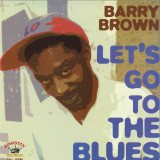
Barry Brown one of reggaes vastly overlooked talents. His militant conscious style has over time lost none of its appeal. Truly one of the sweetest roots vocalists to come out of Jamaica.
Born in 1962, Kingston, Jamaica, he cut his musical teeth working under producer Bunny Lee. Their first release was a track called ‘Girl You’re Always on my Mind’, although a minor hit, Bunny Lee saw his potential and was rewarded with his 1979 cut ‘Step it up Youthman’ which became a hit and has become a roots classic, leading to an album of the same name. The late 70’s was a great period in Barry Brown’s career and its from this period that we have culled this set of tracks. Straight from the master tapes some of his finest moments and some unreleased gems that we believe should be heard. A great set from his timeless 'Trying Youthman' a tail of struggling times in the heart of Kingston Jamaica.
His rastafarian inspired chants 'Stop Them Jah Jah','Give Thanx and Praise','Natty Rootsman' and 'Lead Us Jah’ work alongside socially charged cuts as 'Politician', 'Big Big Pollution' and 'Mr Money Man'. As with all his tales and inspired lyrics they are put across in such a tuneful way that like all the best songs that carry a message can be remembered also through the strength of the song.
As with many of his artists Bunny Lee encouraged him to go into self-production, and after a time spent with producer Linval Thompson ‘Separation’, and Sugar Minott ‘Things & Time’, he did just that and produced his first release ‘Cool Pon Your Corner’ in 1980 followed in 1981 by ‘Problems Get You Down’.
We hope this release will find a place in your collection and remind us of the talent of Mr Barry Brown. If somewhat overlooked, but certainly now not forgotten. Let’s celebrate with the man and go to the blues one more time....
Official Mr Bongo coloured vinyl re-issue for Record Store Day 2020
Asha's debut self-titled album is a wonderful fusion of jazz, soul, blues, and disco. It includes an outstanding cover version of J.J. Cale's ‘Right Down Here’; a track which Asha has made very much her own by flipping it into a deep-funk groove with sultry ethereal vocals and a drumbeat almost ready-made for samplers of the future.
The record was produced in the UK by Del Newman, who had worked with Carly Simon, Cat Stevens, and Elton John to name a few. It was released on London CBS records in 1973. Shortly after the release of the record, Asha (who was born in Mumbai), was banned by the Home Office from working in the UK for a period of time due to visa issues. These obstacles along with problems with her recording contract did not hold her back. Asha moved on and continued her musical journey elsewhere. This resulted in further astounding creative works that Mr Bongo will also be presenting soon.
For this special RSD special edition we have pressed on sky blue vinyl to bring out the colours of Asha's stunning dress that she wears for the cover portrait.
Here’s a mantra, a slogan, channelled from the inner human being longing for the covid crisis to end. And yet this is a response to a much wider issue. A pandemic everyone is dealing with since years: Nationalist tendencies, the alienation that stems from it and the reality of borders. But, ‘die Welt ist ein Mitteinander’, the world is togetherness. We’re on one planet, all facing the same global problems and challenges. All sharing the same course through the cosmos. No way to escape. Tune in, abandon your ego and start chanting.
Over a decade after its inception, ground-breaking composer Max Richter announces the release of VOICES – a major new recording project inspired by the Universal Declaration of Human Rights. In a time of dramatic global change, VOICES offers a musical message of hope. Max Richter invited people around the world to be part of the piece, crowd-sourcing readings of the Universal Declaration of Human Rights to be interwoven into the work, which features an ‘upside-down’ orchestra. He received hundreds of submissions in over 70 languages. These readings form the aural landscape that the music flows through: they are the VOICES of the title.Max Richter explains, “I like the idea of a piece of music as a place to think, and it is clear we all have some thinking to do at the moment. We live in a hugely challenging time and, looking around at the world we have made, it’s easy to feel hopeless or angry. But, just as the problems we face are of our own making, so their solutions are within our reach, and the Universal Declaration of Human Rights is something that offers us a way forward. Although it isn’t a perfect document, the declaration does represent an inspiring vision for the possibility of better and kinder world.”
Queried on his favourite word in the German language, Masayoshi Fujita will pick ‘getragen’ – without a sliver of hesitation. Further questioning will reveal that he loves the term’s semantic signifiers, its inherent sense of “expansive, deep, quiet and sombre.” And yet, ‘getragen’ leaves plenty of room for interpretation: depending on context, it might also indicate wearing apparel or the state of being carried – two more mundane interpretations that I would rather keep from him. Does Masayoshi’s own definition, however, apply to ‘Bird, Lake, Objects’? Only to a limited extent. Compared to previous Faitiche releases, ‘Bird, Lake, Objects’ is certainly the most ‘getragen’ of them all. Nevertheless, this is by far not the first association that comes to mind. From a distance, these tracks seem rather introspective, cautious even – and reflect the recording situation: deliberately pared down, reduced to a single microphone in space and a separate track for all other instruments, each movement and action is chronicled by the treacherous mike. This confronted me with some unexpected and unfamiliar problems. For example, we had to swap out the seating in the studio as my favoured chair had a characteristic creak. Other, external influences were proved our control: fire engine klaxons, street noise and footfall became part of the recordings and their improvisatory nature. Each movement required careful orchestration, fully aware of its irrevocable nature. Space itself was always present and an audible entity, except on ‘Stripped to RM’ (recorded without a microphone or vibraphone track). After extensive deliberations, we decided to forgo the vibes on this piece – a very similar version had already been released in 2008 (on the compilation ‘Enjoy The Silence’, Mule Electronic, 2008). Jan Jelinek, February 2010
Queried on his favourite word in the German language, Masayoshi Fujita will pick 'getragen' - without a sliver of hesitation. Further questioning will reveal that he loves the term's semantic signifiers, its inherent sense of "expansive, deep, quiet and sombre." And yet, 'getragen' leaves plenty of room for interpretation: depending on context, it might also indicate wearing apparel or the state of being carried - two more mundane interpretations that I would rather keep from him. Does Masayoshi's own definition, however, apply to 'Bird, Lake, Objects'? Only to a limited extent. Compared to previous Faitiche releases, 'Bird, Lake, Objects' is certainly the most 'getragen' of them all. Nevertheless, this is by far not the first association that comes to mind. From a distance, these tracks seem rather introspective, cautious even - and reflect the recording situation: deliberately pared down, reduced to a single microphone in space and a separate track for all other instruments, each movement and action is chronicled by the treacherous mike. This confronted me with some unexpected and unfamiliar problems. For example, we had to swap out the seating in the studio as my favoured chair had a characteristic creak. Other, external influences were proved our control: fire engine klaxons, street noise and footfall became part of the recordings and their improvisatory nature. Each movement required careful orchestration, fully aware of its irrevocable nature. Space itself was always present and an audible entity, except on 'Stripped to RM' (recorded without a microphone or vibraphone track). After extensive deliberations, we decided to forgo the vibes on this piece - a very similar version had already been released in 2008 (on the compilation 'Enjoy The Silence', Mule Electronic, 2008). Jan Jelinek, February 2010
UPSIDE DOWN SMILE WAS RECORDED AND PRODUCED BY EWA JUSTKA AND BY SELF-DESIGNED, SELF-MADE, SELFSELFSELF, ODD LOOKING SLIGHTLY DYSFUNCTIONAL SYNTHESISERS AND BY A TRANCE PURPLE KILLER ROLAND JP8080 AND BY HIS BROTHER VIRUS AND SOME OTHER ROLAND BROTHERS NO SISTERS INCLUDED DURING THE TIME WHEN EWA JUSTKA WHO CURRENTLY LIVES IN GLASGOW, GOVANHILL, ALLISON STREET, WHERE RECENTLY HER PASSPORT WAS STOLEN DUE TO THE BURGLARY, WHERE SHE LIVES IN JOY, ALTHOUGH SOMETIMES THE FLOOR GETS WET DUE TO THE LEAKING WINDOWS AND SOMETIMES ONE CAN FIND DEAD PIGEONS LAYING ON THE STAIRCASE BUT IT'S NICE AND COSY AND EWA JUSTKA HIGHLY INFLUENTIAL PERSON IN THE DEEP DARK TRANSISTOR LADDER CIRCUITS LIVES SINCE SHE IS STUDYING PHD AT EDINBURGH COLLEGE OF ART WHERE SHE THINKS A LOT ABOUT IMITATION IN SYNTHESISER DESIGN AND FILTERS AND VCOS AND FORMANTS AND ACID AND HARDCORE MUSIC AND TWIN T FILTERS AND OPERATIONAL AMPLIFIERS AND SHE TURNS KNOBS AND THINKS AND THE UPSIDE DOWN SMILE ALBUM WAS MADE IN THE DEPTH OF THOSE THOUGHTS QUITE OFTEN SAD THOUGHTS UPSIDE DOWN SMILE IS A BIT OF A CYNICAL SMILE BUT AN HONEST SMILE CYNICAL BUT HONEST UPSIDE DOWN SMILE IS A SMILE THROUGH TEARS BUT TEARS OF JOY SCOTTISH JOY UPSIDE DOWN SMILE IS UPSIDE DOWN ACID ONE COULD SAY UPSIDE DOWN SMILE COULD BE INTERPRETED AS A SAD SMILE BUT IT IS A SMILE IN THE END OF THE DAY
As a visual artist and ambient composer, Tor Lundvall's work often recontextualizes the familiarity of everyday life through abstraction and space. Starting with the snapshot of a moment, Lundvall extracts its underlying complexity of the seemingly mundane and gives sleeping suggestion a presence and purpose. Mainly working sans vocals, Lundvall returned to voice exploration for 2018's A Dark Place, a somber, dark synth album that merged his mastery of textural ambience with traditional pop structures.
Rescued from old DAT tapes A Strangeness In Motion: Early Pop Recordings 1989-1999 are some of Lundvall's earliest completed synth pop works which have remained unreleased until now.
Though Lundvall's work throughout the collection has the recognizable ambient bones and sensibilities he has refined throughout his career, many of the tracks call back to the synth-driven pop of Orchestral Manoeuvres In The Dark, The Human League and New Order, with the common thread being the sparse density and mood created by reservation and the lonely impulse to twist convention, not to rip it up and repurpose it. Rather than 10 disparate ideas, Lundvall's curation of A Strangeness In Motion: Early Pop Recordings 1989-1999 feels like excerpts from a broader work, allowing the listener to fill in the holes and ladder up to his larger themes and concepts, perhaps coloring his prior works in new hues and tones.
'For years I dismissed these songs as naive and youthful relics, but I've grown much fonder of them in recent years along with the memories they evoke,' he says of the decade spanning collection of tracks, many of which were sketched out in his duo with Drew Sullivan, After The Outing. 'Original One', 'Procession Day', 'The Clearing', and 'The Melting Hour' are present here as solo reworkings, originally culled from his sessions with Sullivan. The remaining songs were ideas originally considered for Passing Through Alone (1997) and its proposed follow up, provisionally and playfully titled Femalamania.
'The title was summing up my girl problems at the time and also a silly word spin on Robyn Hitchcock's Fegmania!' he says. 'Sadly, the project was abandoned—a rare decision for me and perhaps the only time I've scrapped an album entirely.'