Reissue of Oscar Peterson's 1969 album 'Motions & Emotions' pressed
on blue vinyl
On 'Motions & Emotions' Oscar Peterson presents jazz versions of popular pieces
from pop, easy listening and classic songwriters, as the quartet of long- time
companions are washed in rich orchestral colours. Arranged and conducted by a
magician of the guild, the great Claus Ogerman, who had previously worked for
Tom Jobim. The Brazilian is also represented with his standard "Wave", in which
the orchestra builds a luminous tropical backdrop for Peterson's fantastically
dragged phrasing. Peterson and Ogerman pay tribute to another great orchestra
leader, Henry Mancini, in "Sally's Tomato" with feather- light trilling brilliance.
Jimmy Webb's "By The Time I Get To Phoenix" experiences a metamorphosis
almost into the classical - Ogerman opens infinite sound spaces here with the
distantly indulging strings. Bobby Gentrys "Ode To Billy Joe" cleverly abducts
Countryfolk into Bigband Jazz by means of fiery keyboard playing.
Finally the hits: from soul comes Bobby Hebb's "Sunny", whose theme the pianist
here cleverly harmonises out to then decorate it bluesy in dialogue with the wind
instruments. Burt Bacharach's "This Guy's In Love With You" shines with a
leisurely late night mood and a pompous finale. Yesterday" is provided with a
sparkling bossa substructure, while the second Beatles homage "Eleanor Rigby"
oscillates between loose groove, deep melancholy and swing. Peterson plus
quartet plus orchestra: Enthusiastic detail work also in the popular sector.
"The question about favourite albums is basically not an easy one, except in my
case, because Motions & Emotions by Oscar Peterson is actually my absolute
favourite album. I think Motions & Emotions might even be the perfect
instrumental album." - Till Brönner (German Jazz trumpeter and professor)
From Richmond, Virginia arrives Tempter, a soundtrack for end times hurtling along to the speed of global rage and impending doom. Merging the very best parts of crossover metal and hardcore from the 80s Japan, Sweden and UK, Tempter bring a new voice to a legendary sound. It comes perhaps as no surprise then that the group comprises of veterans of the hardcore scene from bands such as Candy, Division of Mind, Nosebleed, Ekulu and more. Instant bulldozers Sacricide and Pestilence, with their punchy riffs and wild solos bookend the S/T EP, whilst Uniformed Madness and Night Terror run along with at times almost apocalyptic walls of acidic noise. The production provides a dense atmospheric swamp of rage, mixed by Fucked Up’s Jonah Falco, providing a fitting soundtrack for Valentina Lopez’s huge vocal that sounds like 1000s of witches chanting. La Lluvia, with its use of samples and layers of synths, dances around spoken word sections that read out a poem of the same name by Roberto Bolaño, one of Chile’s greatest literary writers. Bolaño’s work fits perfectly with a biting satirical punk mood that Lopez exudes with every breath. He often questioned the privilege of making art whilst the junta would torture people in basements. Hardcore, punk and metal often likes to think of itself as a political act more than music, whether in its DIY ethic or protest lyrics. However, perhaps we find it too easy to fall into its angry embrace and eat each other alive whilst the world outside continues to fall. This music makes hell on earth that little bit more bearable, however ultimately Bolaño, and Lopez, call on counterculture music to have meaning and political action.
Vienna 2009; Whizz Vienna, an Austrian musician is nominated for the Amadeus Austrian Music Award in the category 'Album of the year'. Why and how that happened, he is still not sure of to this day. By now, the album in question 'Versager ohne Zukunft', which is produced in collaboration with Kamp, has turned into a classic.
Even though he has released several projects since then, such as the renowned 'Wiener Staub' Beat-LP, it has become quiet around the producer. His studio existence and his musical creation more or less turned into dust.
Darmstadt 2020; during a thorough tidying up of old hard drives a folder labeled 'Whizz Vienna Beatz' experiences a musical renaissance. The dopeness of the material is undeniable to this day and that kind of freshness cannot be just left in the digital wasteland ready to rot.
The search for the missing Whizz Vienna was more challenging than expected due to the fact that he enjoyed his own presence to be buried in the underground. In the end, the hidden asset has been unvcovered, plans have been cultivated and now after a two year waiting time the final product is ready to be launched.
13 long-lost instrumentals, Kamp and Prinz Pi spitting on 2 of them, cuts by DJ Vektor, 1 love for Eva.
out of Stock
Last delivered 4 years ago available to reorder, subject to availability
The words legendary, seminal, and classic get thrown around at will these days, but Rudimentary Peni’s debut album is all of them. Recorded over two days at Southern Studios by John Loder and originally released in 1983 by CRASS off-shoot label Corpus Christi, “Death Church” showed a band moving away from the urgency of their two early 7”s and into their own realm. Creating a template that bands have been trying to replicate ever since, while ticking all the boxes to become a genre-defining album. Iconic artwork, a unique sound and their own lyrical universe. All merging seamlessly. Sonically the album is full of Nick Blinko’s extraordinary vocals and equally remarkable guitar, Grant Matthews’ big meandering driving basslines and Jon Greville's tight and relentless drum work which together made something intricate and hard hitting, with a sequence that makes the 21 songs on the album flow perfectly. Visually, the album is every outsider art lover’s wet dream. A six-panel poster sleeve with every inch covered in Nick Blinko’s claustrophobic black and white line drawings, while lyrically the songs deal with madness, religion, death, and questioning humankind from a dark poetic place rarely found in any art form. Remastered from the original master tapes by Arthur Rizk and housed in a replica poster sleeve, including the original insert, “Death Church” is back in print in LP, CD and cassette after nearly a decade of no official reissues.
out of Stock
Last delivered 3 years ago available to reorder, subject to availability
Now on album number seven , Metronomy has continued where many of their 2000s ‘cool’ band peers have dropped off along the way. Small World is a return to simple pleasures, nature, an embracing in part of more pared down, songwriterly sonics (some moments wouldn’t sound amiss on a Wilco release), all while asking broader existential questions: which feels at least somewhat rooted in the period of time during which it was made – 2020. For all that Mount seems to think he has made a comparatively sombre record, much of Small World still pulses with the zesty, tongue-in-cheek joie de vivre you’d expect of a Metronomy record.
So sure, things are different now Joe Mount is getting older and what’s on his mind is changing, but that doesn’t mark a change in quality for Metronomy. An immaculate set of tracks, Joe Mount’s ability as a songwriter and arranger shines through on Small World, evergreen. Metronomy might be growing up, but they’re not afraid to still have fun with it all. Through the tumultuous ebb and flow of the years, Metronomy continues to endure and make great pop music – and, really, that’s all that we could ask for.
out of Stock
Last delivered 4 years ago available to reorder, subject to availability
The first and truly stunning release on the new Deeptrax sub-label Chasing Sunsets is one that is hard to describe...
As an (electronic) multi-instrumentalist, ES has been making music on a daily base for more than 25 years but has not released anything meaningful to this day. When we asked for some demos, we were literally bombarded with hundreds of well-produced songs in a wide variety of styles.
ES is a very creative artist who, in addition to making (video) art, creates his own world with his music. He is a musician with a completely unique sound that sometimes evokes a strong association with other music or artists. It sounds familiar and is pleasant to listen to because all the sounds seem to fall into place perfectly. But at the same time, it's totally fresh and sounds like nothing else.
“I just want to make music and not worry about the hassle; you just have to do it for me...” was the answer to the question if we could talk about releasing some music on one of our labels. "Just pick the songs you like, releasing my music on vinyl would be great ..."
So that's what we did...
This first EP gives a nice overview of some of the many musical sides of ES. It's jazzy, funky, dubby and trippy electronica with bits of ambient, house, breakbeat, acid and many other weird ES sound mix-ups. The tracks are as they are, all recorded in one take/version. Unique songs with sharply programmed rhythm and bass complemented by brilliantly played guitar, piano and synth parts. It's a surprising debut from an artist who only shows a small part of his personality with this release.
Welcome to the world of ES....
out of Stock
Last delivered 4 years ago available to reorder, subject to availability
His last LP has barely touched record store shelves and Ivan ave is back with a EP for Mutual Intentions. Mid Season finds Ivan Ave in bloom as he evokes the sounds of
spring on his latest offering. The EP title also refers to a mid-album-recording process, which Ave currently finds himself in. Mid Season gives the listener insight into a
forthcoming full length album, entitled All Season Gear.
The prolific Norwegian rapper continues to charm with a seductive baritone that blows like a cool breeze through the production’s warm accompaniment. Dusty drum
machines under glacial keys and guitars offer a platform from which Ivan waxes lyrical about everything that touches him. He has crafted a unique voice in Hip Hop echelons, finding quirky analogies in the mundane. While in the past, he could find a parable for love in a bicycle lock or existential questions in an worn out sock, he turns his
attention increasingly to social realities.
He regularly takes aim at the ridiculous aspects of our contemporary society throughout Mid Season, with lyrics that poke fun as much they ask what the fuck?
“Spotify owner 'bout to buy a whole ball team… That mean I own a corner flag or some seats at least?,” he sings on «What a Day!!!». The record is peppered with these
types of anecdotal metaphors that come together like a social media story through a bionic AI. Ivan Ave is the product of this generation and it’s only right he should reflect
that. He does it in a unique way that requires the listener to untangle these preternatural allegories.
Playing with a dichotomy of words, he doesn’t labour on a thought before he’s lazily propelled onto the next at the turn of each bar. His laissez faire approach is only
emboldened by the slow moving percussion and keys that have come to define his sound. Picking up on early nineties influences from the likes of Native Tongues or Dilla,
the music on Mid Season continues to reassess and revolutionise these archetypes. It’s in the keyboard sounds of this latest EP, that Ivan Ave and producers have found
yet another new evolution in his sound.
Synthesisers that sound like they belong to a Maynard Ferguson record rather than a Hip Hop EP make the record come alive over a chugging and forceful rhythm section. It provides an airy and playful contrast to the more serious elements on the track, and much like Ivan Ave’s lyrical prowess offers an extra layer of depth that often
eludes Hip Hop’s most successful stars. The more you listen to Ivan Ave the more you get entrenched in his work and Mid Season continues to send the artist on an
exciting trajectory.
out of Stock
Last delivered 4 years ago available to reorder, subject to availability
"Même Soleil" is the result of a dialog between the French photographer Gaël Bonnefon and the French musician Frédéric D. Oberland initiated by IIKKI, between December 2019 and June 2021.
Self-taught multi-instrumentalist & photographer, Frédéric D. Oberland finds himself at the crossroads of image and sound, favoring a synesthetic approach. He articulates different modes of narration, combining the raw character of the documentary form with the transfigured reality of myth and poetry, allowing him to question notions such as the sacred, the monstrous, the fraternity, while at the same time returning to the political news of the present. Attentive to the pulse of the body, his work is willingly itinerant, modulating between the ripples of dreams, watching the points of incandescence and the bursts of electricity that act as revelations of our presence in the world, here and now. He’s the co-founder of leading bands such as Oiseaux-Tempête, FOUDRE!, Le Réveil des Tropiques, FareWell Poetry and is co-curating the label NAHAL Recordings.
"Fueled by travels and their emanations, Frédéric D. Oberland’s music had to build new horizons this year, outlined by the curves of semi-modular synthesizers, the avalanches of effect pedals and the zigzagging paths of electric circuits. Même Soleil, his third solo album, manages to merge mystical visions of the unconscious and the absurdity of an apocalyptic present in a sensory whirlwind, operating an astonishing mutation with tones still unexplored in his previous releases. A visual as well as a musical journey that takes shape in a book and a record of the same title, Même Soleil is the result of a collaboration with the photographer Gaël Bonnefon. Seeking the tension between the blinding light of day and the glittering visions of saturated night skies, the two pieces in dialogue transcend reality to deliver their own truth, as bright as the first light of the sought-after morning." (Alice Butterlin)
Gaël Bonnefon graduated with highest honours from the Fine Arts School of Toulouse (Isdat) in 2008. He has exhibited at Villa Pérochon, at the Eté photographique in Lectoure, at the 104 in Paris during Jeune Création 2012, at Rencontres Internationales de la Photographie d’Arles and at PhotoEspaña, at the Abattoirs Museum in Toulouse in 2014, at the Château d’Eau Gallery in 2012 and 2019 and in the Vitrine of Frac Île-de-France in 2020. His work is part of the collections of Frac Midi-Pyrénées, Château d'Eau gallery, Kulturamt in Dusseldorf and Kiyosato Museum in Japan ; he participated in Temps Zero projects Berlin, Braga, Rome, Bucarest, Groningen and Thessaloniki. He has also been granted artist’s residencies in Germany, France and Israel. His first book Elegy for the Mundane was published by La Main Donne in 2019. He continues his intimate and dense journey and presents his second publishing, Même Soleil with photographic works from 2009 to 2021.
"At first brutal and declining, the substance of Gaël Bonnefon's photography is just like a gaze that fears being one day extinguished and that is always looking to be born again. In photography as in love, recoil and desire, tension and easement, repetition, wandering and rest, flight and pursuit. Here photography allows itself to be traversed by flashes of life, renewed forces, echoes of far-off kindnesses and lost joys. It sings silently, lover of a thousand faces from which the thread of a single and same image is born, followed without relent, from the snowy peaks of childhood to the lost worlds of the present." (Michaël Soyez)
out of Stock
Last delivered 4 years ago available to reorder, subject to availability
They are here, all over: sudden, random molecular movements. Invisible and yet extremely effective. Perceptible only to those who turn on things from a peculiar outlook. Now Rio unfolds the second edition of “Risks Issues Opportunities”, bringing interstellar musical developments full of little, yet profound molecule advances. Eight mystical fate spinners, with the muscle to shed some light on unanswered questions, that will stay unanswered after all. Monolithic, yet deeply fragile compositions, made by terrestrials like Leipzig based producer Syncboy, Pannotia from Sydney, Italy based dusty drum machines lovers Twoonky, Charlotte Simon, known as one half of the art duo Le Trucs from Frankfurt, Berlin mystic’s like Airaboi or Nadia D'Alò of the duo INIT, Brooklyn based “The Thing” housekeeper Willie Burns and Vienna’s symbolist sound poet Bocksrucker. They all created electric signs for the above. Murky analogue prophesiers without prophecy, bringing headway music against the greedy frontier spirit. Hypnotic tones out of a hazy musical outer space. Like a dream that forgot to dream, they wave around with veiled frequencies full of ray, processed through analogue machine power. Music, that is able to in sight humans to an Atget photography. Able to transmit flashes to the firmament, to stars that wander darkling in eternal space. And yes: to some who listen a sudden physical movement might transpire, despite the fact that all was made without a particular practical value. Art for art's sake. In favor of an alternative to reality. Compellingly haunted by itself. Like stone, that awaits a random molecular movement.
out of Stock
Last delivered 3 years ago available to reorder, subject to availability
Kapingbdi came together in Liberia, West Africa, during the late 1970’s and had their own unique style. This six to seven-piece band played original compositions in a vibrant mix of African Rhythms, Soul, Spiritual Jazz, Funk and Rock. Led by Kojo Samuels on sax, flute and vocals “Born in The Night” presents the essential tracks from their rare studio LPs produced between 1978-1981. The work has been carefully edited and remastered in 2019 for vinyl LP and a 6-Page Digipack CD, which includes two additional recordings. Kapingbdi toured through Europe and the U.S. and were the only Afro funk band to ever come out of Liberia.
Kapingbdi hail from Liberia, West Africa and have their own imitable style. They effortlessly combine traditional African music in a modern mix of Jazz, Funk, Soul and Rock. The band is a fusion of the old and the new.
The word "Kapingbdi" is taken from the Sierra Leone language Mende and means "born in the night". Kojo Samuels was given the name by his Latin teacher whilst attending high school in Freetown, They often meet and debate at night in the city and soon after Kojo is called Kapingbdi. The name serves as a description of his origin. Born In Lagos, Nigeria in 1943. The son of slave children. His mother from Nigeria and father from Sierra Leone who moved the family to Liberia, during the 1950’s.
Kojo has played music for as long as he can remember. He starts with the harmonica and later becomes a drummer and percussionist in his first band at school. During his art studies 1965-1972, he tours Germany and works as an art teacher in the USA. His band Kapingbdi is reorganized five times and consists of up to seven musicians. In a VW-Bulli he drives the group from concert to concert and if the drummer fails, he jumps in himself. Between 1978 and 1981 three Kapingbdi LPs are produced for the independent label Trikont, recorded in Hamburg and Munich. During this creative period, the band plays at festivals in Africa and Europe. In 1984, the band tours the United States and shortly after, they came to an end.
At their best, Kapingbdi would rouse the audience with original compositions like "Human Rights", justice for all, especially for South Africans, and "You Go Go You Go Come". The officials and employees in the government departments have no time for the common man, for any questions such as job search, scholarship or similar, he receives the answer "go, come back tomorrow" and the same thing the following day. Or "Now Is The Time For Cry For Love." Now it is time to scream for love and finally, time for humanity and justice. Despite immense difficulties, the musicians consciously live and work in Africa and are at home in Liberia.
On April 12, 1980, ordinary soldiers and non-commissioned officers organize a coup against the government. This is an attempt to put an end to a policy of exploitation of the Liberian people. Whilst efforts to eradicate poverty, lawlessness and illiteracy are obvious throughout the country, Liberia is still Americanized to a high degree. This is evident, as the radio programs of that time almost exclusively played American disco music. Under these conditions, the people seek a reconnection to their folk music, and Kapingbdi were aware of this. Kojo tried many times to come together with traditional Liberian musicians. This passion takes him north of the country. Meeting and playing with the old hornblowers and playing music on traditional instruments, such as the elephant tusk.
Kapingbdi make high quality tape copies of their own vinyl LPs and patiently try to displace all unauthorized tapes from the domestic "market". Nevertheless, it is hard to make a living through music in Liberia. Kapingbdi, is now celebrated. The radio plays are in abundance, but royalties are not forthcoming. Their musical link is the feeling of Afrobeat and Highlife, which is found in each of the many Kapingbdi pieces. They embody Jazz, which is understood to be the most refined example of black music outside of Africa. In Liberia, Jazz is virtually impossible to hear. Bright shining names such as John Coltrane, Charlie Parker or Miles Davis were widely unknown. Thus, the Black Jazz, including its Back-To-Africa movement of the 60’s and 70‘s, passes by without leaving a trace in Africa itself.
Kojo's claim at the time, was to make African music with the depth, sensitivity and the freedom of the technical level of Jazz. This makes Kapingbdi the torchbeares. The underpaid prophets in small Liberia. It is the passion with which the founder of the band continues to work on their music for years. Tirelessly, stimulating and encouraging his fellow musicians. This is ultimately responsible for the success of Kapingbdi in Liberia itself. The local audience seems to listen to the band in fascinated astonishment. One wonders about the ability to develop as demonstrated by Kapingbdi on the basis of their music. It is African and unusually jazzy, danceable and better than the American disco music heard on the radio.
Rather than chase the money and the job opportunities in Europe, Kapingbdi are firmly rooted in Africa. The musicians live in Monrovia, the capital of Liberia, at the Kabingbdi workshop, located in the Congotown area on the eastern edge of the sprawling city. Kojo works here as a sculptor, painter, batik artist and musician. The sales revenue that his activities generate, gives him the opportunity to support the development of African Jazz music. The highest percentage of funds are from Germany and Kojo’s work ethic is “to work on your own thing“. The stance taken aims to support the welfare of Liberians and Africans. The other musicians of the group live in a second house that is nearby.
For the sake of consistency, Kapingbdi is a full-time band. However, the revenue, from all of the sources, could not keep them afloat. Equally, as important to the group are Kojos's knowledge of traditional African music and his sculpting skills. His knowledge is shared with others at the afternoon workshops. It is here that they discuss new lyrics, engage in political debate and the self-imposed task of improving conditions in Africa. At times the debate became heated, especially during rehearsals. This was regarded as good and integrative, sowing the seeds of innitiative to keep the band together.
From 1980 to 1985 Kojo also opened and ran the club "Panjebota", located on the grounds of the U.S. Consulate in Monrovia. Almost every evening Kapingbdi perform the song "Wrong Curfew Walk", whose lyrics lament the killing of citizens during the curfew imposed by the Liberian government. When the head of state Samuel Doe hears the song, he behaves agressively and forces Kojo to close the "Panjebota". Kojo had already moved on. Soonafter he meets Fela Kuti at the Africa-Festival and plays concerts in Germany with Cecil Taylor's workshop band.
Kapingbdi is for thinking, dreaming, dancing. What they sing about is what they have experienced. Kojo Samuels is 76 years old today and still follows his vocation as a critical musician, artist and activist.
Ekkehart Fleischhammer / Sonorama 2019 (with the help of original press sheets and the memories of Kojo Samuels)
out of Stock
Last delivered 4 years ago available to reorder, subject to availability
Tripe. It’s what graces the cover of Cassels’ third album, A Gut Feeling. It looks gross. And Cassels are a rock band who’ve often sounded gross. You know the adjectives. ‘Discordant’. ‘Angular’. ‘Cynical’. Shellac quickly mentioned. I’ve done it already, see?Listening to A Gut Feeling, though, Cassels sound different. Not too different – the molten riff of advance single ‘Mr Henderson Coughs’ puts paid to the idea that the London-based duo have taken a hard 180. But instead of writing as quickly as possible, riding the churn forced on DIY bands by an indifferent ecosystem, the Covid-19 pandemic gave the brothers Beck (Jim, guitar/vocals, and Loz, drums/BVs) some time to mull things over. Instead of sticking with the stripped-back recording approach of previous LPs, Jim and Loz spent time at Tom Hill’s Bookhouse Studios in South London, considering tone, layering tracks, and bringing new instruments into the fold. Lyrically, the approach has changed too. Rather than presented as personal experience, Jim notes that his words this time around “are an intentionally muddy mix of experience, opinion, red herrings and fiction,” adding, “I found that setting myself the brief of writing character pieces offered a nice way of sneaking quite personal things into the songs without being explicitly autobiographical.” The result is the most satisfying and unexpected collection of songs in the Cassels catalogue. Instruments at turns razor-sharp and bludgeon-blunt provide the backing track to a savage, hilarious, and tender collection of short stories. Jim notes that “writing can be a great way of unearthing hang-ups and becoming acquainted with your own anxieties”. Hardly new ground for a rock band, but presented in this third person format – unbiased and filled to the brim with human warmth – these songs are more empathetic than anything the band have written before. You might have been Michael on his daily commute. Perhaps you’re Sarah, or have a mum like her. And many of us will recognise ourselves in the heart-breaking ‘Family Visits Relative’. It’s clear that the band still aren’t afraid to tackle weighty subjects too, with A Gut Feeling picking up where their previous album, The Perfect Ending, left off. ‘Charlie Goes Skiing’ pulls a similar trick to Future of the Left’s ‘Goals in Slow Motion’ – setting a screed against consumerism to one of the most propulsive, catchy tracks on the record. It’s followed by ‘Dog Drops Bone’, a rustling loop overlaid with sad, simple chords reminiscent of a Sparklehorse tune, which uses the internal monologue of a beloved canine companion to question the true depth and sincerity of human relationships. This kicks into the breakneck ‘Beth’s Recurring Dream’ – a track exploring a sexual identity crisis which owes as much to early Los Campesinos! as it does Steve Albini. Of ‘Your Humble Narrator’, the album’s punishing, pulsing opener and A Gut Feeling’s thematic frame, Jim explains: “I liked the idea of introducing an unreliable narrator who frames the album as an exercise in manipulation for personal gain. When a person engages with a piece of art they are invariably being manipulated by the artist to some degree – that’s part of the fun. The artist aims to elicit some sort of emotional response, the audience buys into the conceit at the promise of experiencing some form of escape.” as listeners, we experience that manipulation first-hand on A Gut Feeling. But the fact Cassels have packaged it up as offal feels like another bleak wink. This is far from a stinking by-product, salvaged and sold to maximise profit. It’s nothing less than the most complete, relatable, and fully realised piece of art the duo has produced to date. Emotional response elicited. Conceit embraced.
Johnossi’s seventh album ’Mad Gone Wild’ is a pulse-pounding psychodrama and intimate portrait of a man slipping into insanity. For guitarist/vocalist John Engelbert and drummer Ossi Bonde, the making of the album involved tapping into their own interior lives while pushing into the furthest reaches of their imagination; “We wanted to explore the dangers of living in your head too much, and ask questions like: ‘Is there an exact point where you go from sane to insane? What is that point? And aren’t we all insane in one way or another?’”
JOHNOSSI HISTORY
Singer/guitarist John Engelbert and drummer Ossi Bonde formed Johnossi in their native Stockholm, Sweden, in 2004. After only three shows they landed their first record deal and with the release of their self titled debut album they instantly became one of the most influential contemporary acts in Sweden, winning a Swedish Grammy Award and a huge fanbase with their explosive live shows.
Johnossi have toured extensively through out their career mainly in Scandinavia / Europe but also in the US and Japan, both headlining and as support to other acts like The Hives, Green Day, Lykke Li and The Soundtrack of Our Lives.
Canadian pianist extraordinaire Jan Lisiecki has chosen to return to the music of Frédéric Chopin. Following on from Works for Piano & Orchestra (2017) and Chopin: Études (2013), Chopin: Complete Nocturnes features profoundly personal interpretations of some of the most beautiful and best-loved pieces ever written for solo piano. Lisiecki is perhaps most celebrated for his masterfully sensitive and refined interpretative approach. His newest release – recorded last October at Berlin’s historic Meistersaal – not only captures the spirit of Chopin’s pianism, but also represents the time and circumstances in which it was made, as the pianist himself explains: “I’m the first to question why we should record something that has been recorded many times before. But music only lives through performance and is different every time we hear it, even when it’s a recording. I think there was something for me to say with this album. It reflects on the last year and my thoughts on that as well as on the escape and understanding that music gives us.”
Prong’s distinctive industrial Metal sound influenced subsequent bands such as Korn and Nine Inch Nails.
Former New York club CBGB’s soundman Tommy Victor founded Prong in 1987 as his outlet for sonic fury. Having their roots in the Thrash Metal and Hardcore scenes, Prong carved a niche for themselves - groovy, angry, massive; just perfect mosh music.
The trio wrecked stages and impressed audiences all over the world. They built on their signature sound with their 4th full length album Cleansing. Aptly titled, the album indeed cleansed their sound, resulting in 12 stripped down, highly effective musical precision bombs. The single “Snap Your Fingers, Snap Your Neck” became one of their significant highlights.
Cleansing is produced by Terry Date and feat. ex-Killing Joke members Paul Raven and John Bechdel. Prong will be performing the album live around the globe in 2019.
This is a limited 25th anniversary edition of 666 individually numbered copies on silver & black marbled vinyl.
With one foot in the real world and the other in a charmed dimension of his own making, Amos Lee creates the rare kind of music that's
emotionally raw yet touched with a certain magical quality.
On his eighth album 'Dreamland', the Philadelphia- born singer/ songwriter intimately documents his real- world struggles (alienation, anxiety, loneliness, despair), an outpouring born from deliberate and often painful self-examination.
"For most of my life I've walked into rooms thinking, 'I don't belong here,'" says Lee. "I've come to the realization that I'm too comfortable as an isolated person, and I want to reach out more. This record came from questioning my connections to other people, to myself, to my past and to the future."
In the third of the series, we move to 1973 Detroit, we have been so excited bringing this through to pressing and it has been a long but exciting and rewarding road and we hope you enjoy listening to this this 45 taken directly from the Universal master tapes and brought to you 48 years after its initial release on promo only format. Now available under licence and blessings from Universal Music Group on the Black Top series from us.
Is it good – oh yes – but don’t take our word for it, crank the volume up and hit play.
The A side – Young Train is a fabulous funkedged dancer with a message for us all even today, driven by the constant wah wah guitar and bongos. flip it over for a feelgood crossover dancer that has already been getting radio airtime on some of the UKs best soul stations.
Young Train by the Originals. This incredibly rare 45 is a poignant reminder that 48 years later the struggle continues today for equality and harmony for all.
The title “Young Train” is a brilliant collaboration of using Colemans surname and a hark back to the freedom songs enshrined in the blues and soul history of Black America, think Freedom Riders, Southbound train, Midnight train to Georgia to name but a tiny number. It captured the imagination of Detroit leading to the inauguration of the First Black Mayor of Detroit in 1974. Coleman Young captured the hearts and minds of the people of Detroit, some of his actions and associates led to questions around his fitness for office, but the moment in time lives forever in this exclusively rare 45 now brought to you with the blessings of Universal Music Group via MD Records.
On a final note, it is in many ways incredibly sad that this anthemic song still holds a valid call to action in its message in 2021. So, turn the volume up and get on board the “Young Train” for democracy and equality.
Big thanks go out to Karl “Chalky” White for material used in the sleeve.
All aboard for the third release in the Blacktop series from the MD Collective.
As the world continues to plunge into a fiery blaze of calamity, the Southern Hemisphere's air warms, its leaves glow green, and the damp earth jolts awake. Springtime is coming to Australia, and it will be ushered in by three sonic shamans who are no strangers to our ears. Gareth Liddiard (Tropical Fuck Storm / The Drones), Jim White (Dirty Three / Xylouris White) and Chris Abrahams (The Necks) are Springtime _ a new endeavor that is as much a tonal experiment as it is a meditation on modern-day absurdity. Springtime's self-titled debut combines free jazz, poignant lyricism crafted alongside renowned Irish poet Ian Duhig -- aka Gareth Liddiard's uncle - and improvisation to craft austere portraits of a world paralyzed by shellshock. It's as monstrously ravishing as it is clumsy in its elegance. Words run into each other with little regard for one another's injuries. There are sounds which come out of nothingness to wallop and brutalize their fellow sounds. The live recording of Will Oldham's "West Palm Beach" is treated with love and respect and would certainly be met with open arms by its author. Across the span of seven tracks, Liddiard incants with wild-eyed fury as White and Abrahams lay down stuttering strings, fizzling electronics, and feathery piano melodies. It is within these raving abstractions that one may find an answer to the enduring question, "What fresh hell will this new season bring?"
The new album by the Peruvian-born / Berlin-based experimental artist Ale Hop was conceived in a context of immobility and provides six sonic vignettes that wonder about location, circularity, rootedness and experience. In collaboration with Ana Quiroga,
Concepcion Huerta, Daniela Huerta, Elsa M'balla, Felicity Magan, Fil Uno, Ignacio Briceño, KMRU, Manongo Mujica, Moises Horta, Nicole L'huillier, Raul Jardín, Sukitoa Onamau, Tomas Tello.
Following her explorations on music's inherent fixation to geographic space and time, be it through the longing of home ("Apophenia" 2019) or scientific magnification of invisible worlds ("The Life of Insects" 2020), Berlin-based Peruvian-born experimental composer Ale Hop's fourth album, "Why Is It They Say a City Like Any City?", was conceived in a context of immobility. During the lockdown
months, she started a process of remote collaboration, by sending messages, posted from various cities along a South American trip, to thirteen musicians from around the world. She journaled her impressions upon these places to an intimate fictional character while reflecting on matters of time,
sound, space, cosmology and colonial memory. The thirteen musicians dialogued with this voice by taking upon the challenge of responding to the messages with sound collaborations.
Field recordings, mouth drumming, drone cellos, electronic loops, arrhythmic rhythms and voices came back from this experiment. Ale assembled them, by layering, twisting and turning, into sonic vignettes that wonder about location, circularity, rootedness and experience, making it the first time she's set her guitar aside. Expect no answers to the album's title question, but an innermost psychedelic rumination.
"Despite the technological resources that appear to dilute distances, the simulation of closeness mirrored on the digital space is an emptied body, a state of precarity, a flat surface; unable to withhold an experience of exchange," Ale states. "So, I began this project by asking myself, how can we escape from the reduced experience of the virtual? The idea behind this experiment was that my messages and the places they describe could drive the composition, be a catalyzer, a
score. Thus, to use geography as a tool to remember and imagine, to allow new soundscapes to emerge."
"Memory, diffuse and divergent, sometimes reaches out to the future in its search for form, taking shape from the reflections and echoes that come back … like throwing a rock in a pond and having a rock thrown back at you."
out of Stock
Last delivered 4 years ago available to reorder, subject to availability
After the two first volumes dedicated to Soul and to Jazz, the MEN COllECTION proudly presents its new release : FUNK MEN. Meet all the great male Funk singers for a new musical journey on a double vinyl.
out of Stock
Last delivered 4 years ago available to reorder, subject to availability
Today New York based singer, songwriter and producer Amber Mark announces details of her long-awaited debut album ‘Three Dimensions Deep’, out January 28th via EMI/PMR Records. The announcement of the album is accompanied by a sultry R&B instant-grat track ‘What It Is’ as well as a huge UK, EU and US spring tour announcement including London’s O2 Shepherd’s Bush Empire in March
Amber’s debut album arrives almost 4 years after the release of her second EP ‘Conexão’, an extended process that has proved central to its thematic development. The 17 track album can be divided into three main acts that follow the arc of Amber’s personal and musical development; WITHOUT, WITHHELD and WITHIN. Beginning by acknowledging her insecurities and anxieties before reflecting on her time in denial and spent processing them in all the wrong ways, Amber eventually widens her focus by seeking answers to the world’s negativity and trauma on a cosmic scale. Finding peace and a form of inherent spirituality in the world of astrophysics while writing the album led to a fresh perspective on life and a renewed sense of self. Amber’s debut album is simultaneously a profound concept album and a love letter to herself, richly intertwining messages of self-worth and reflections on the universe beneath a veneer of shimmering pop. In true Amber Mark style, ‘Three Dimensions Deep’ is a kaleidoscopic melting pot of influences and genres, drawing from funk and R&B, soul and hip-hop with international accents influenced by a nomadic childhood spent travelling the world with her late mother.
“Three Dimensions Deep is a musical journey of what questions you begin to ask yourself when you start looking to the universe for answers.” says Amber; “I can only go as deep as the third dimension as that’s how we see the world, but what about when you start looking to the universe within for answers.”
“‘What It Is’ low key is the title track of the album without it actually being the title track” explains Amber; “It comes from going through negative experiences which end up being the gateway to a question I think I’ll be asking for the rest of my life. What is the meaning of life,the universe and everything?”
The three official singles already released from the album ‘Worth It’, ‘Competition’ and ‘Foreign Things’ marked Amber’s first official singles since 2020’s ‘Generous’, though 2020 was still a hugely productive year for Amber. With her hometown of NYC hit hard in the first wave of the pandemic and placed under strict lockdown, Amber turned to her simple home studio to create an acclaimed series of home-produced covers and originals titled ‘Covered-19’, each accompanied by a homemade video and artworks. The series was followed by a collaboration with longtime friend Empress Of on the protest song ‘You’ve Got To Feel’, earning Annie Mac’s Hottest Record, ‘Tune Of The Week’ and a spot on the Radio 1 playlist. Earlier this year Amber was featured on legendary DJ Paul Woolford’s new piano-house track ‘HEAT’, again snagging Annie Mac’s Hottest Record and a long run across the Radio 1 and 2 playlists. Having already amassed over 300 million streams since the release of her breakout debut EP 3:33AM in 2017, Amber has built a global fanbase eager to hear her debut full length -
out of Stock
Last delivered 4 years ago available to reorder, subject to availability
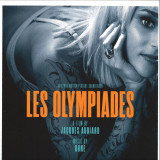
Sixteen musical vignettes of electrifying emotion at the crossroads of ambient, modern synthesizer productions and organic orchestral music experimentation, which tint French director Jacques Audiard's new feature film with the illuminated glow of a whole new generation.
Textextext - (add your write up)
When Jacques Audiard contacted him, Rone was just a few weeks away from receiving the Cesar award for best film score for his very first soundtrack "Night Ride", the highest honor in French film for a composer.
Throughout his career, the French director has been able to surprise his audience by playing on the codes of "genre films", while remaining faithful to the aesthetics of "art film". His cinema is both profound and entertaining, sophisticated and accessible, dark and dreamlike.
"Jacques' cinema is physical, sensual, modern", Rone says about the director, "when he asked me to do the music for Paris, 13th District , I immediately accepted, without seeing any images or reading the script. He is simply one of the greatest contemporary filmmakers."
His new feature film deals with youth in general and their sexuality in particular in a way no one may have done before. The story is based on four young characters and their existential questionings, whose destinies intertwined against the backdrop of the Parisian "Olympiades" high rises in the 13th arrondissement.
But time was already running out, as the film was set to be nominated for *Cannes' Palm D'or* at the rescheduled edition of the festival in July 2021. Between the releases of "Rone & Friends" and his remixes for Agnes Obel, Go Go Penguin and Jehnny Beth (who also plays a role in the film), the producer decided to lock himself away in in his brand-new Isola Studio in Cancale, French Brittany. He also invested in a large screen on which he projected loops of the film and started manipulating his gear. "I had Miles Davis in mind and the way he composed "Ascenseur pour l'échafaud" by improvising with his band while watching excerpts from the film."
After a first conclusive test on three scenes of the film which allowed Rone to showcase the skills he had developed in composition in various musical fields, a relationship of trust developed between the musician and the director, which resulted in over 45 minutes of Rone's music used for the final cut.
"There was a lot of music to be made in a short time, but the talks with Jacques were very stimulating. He had a fairly precise idea of what he wanted, while at the same time, I think, having the desire to be surprised, or even a little shaken up."
If the black and white aesthetic recalls the great hours of the "Nouvelle Vague", Rone´s music gives a new layer to the film which fits resolutely with 2020's zeitgeist.
This second soundtrack by Rone is a sonic urban adventure in itself. As it is used in the film, colouring in the lives of Audiard's protagonists, it will have the same impact on us, the listeners, in our own everyday lives.
out of Stock
Last delivered 3 years ago available to reorder, subject to availability
Outernational Sounds very proudly Presents The Mallory-Hall Band "Song of Soweto" & "The Last Special".
Limited, fully licensed digital and vinyl reissues of two crucial South African sessions led by Charles Mallory and Al Hall, Jnr., featuring Kirk Lightsey, Marshall Royal, Rudolph Johnson, Billy Brooks and more! Essential companion pieces to Kirk Lightsey’s legendary ‘Habiba’.
Featuring tracks:
Song Of Soweto: Side A – ‘Song of Soweto’, ‘Hamba Samba’; Side B – ‘Cape Town Blues’, ‘Moroka Rock’, ‘The African Night’
The Last Special: Side A - ‘The Last Special’, ‘Princess of Joh’Burg’; Side B - ‘Amafu (Clouds)’, ‘Blue Mabone’
Never released outside South Africa, and out of print since 1974, Outernational Sounds presents two long-lost Johannesburg sessions from the Mallory-Hall Band – an all-star review of West Coast jazz stars who toured apartheid South Africa in the mid-1970s.
Sanifu Al Hall, Jnr. is a musician’s musician. During a storied career stretching across six decades, Hall has recorded with the greats of the music including Freddie Hubbard, Doug Carn, and Johnny Hammond, and leads his own Cosmos Dwellerz Arkestra. But until recent years, the only records on which he had appeared as leader were a brace of rich, funky LPs, Song Of Soweto and The Last Special, issued only in South Africa under the moniker of The Mallory-Hall Band (named for Hall and his co-leader, guitarist Charles Mallory – musical director for Martha Reeves and the Vandellas, Mallory was conductor for Dusty Springfield touring bands, and had worked with John Lee Hooker, Stevie Wonder, and many others). Neither LP had any wider release, and both have remained out of print since 1974. How did a young stalwart of the Los Angeles jazz scene end up in a recording studio in apartheid South Africa?
Al Hall, Jnr. and Charles Mallory had arrived in South Africa as part of the touring band for the singer Lovelace Watkins. Sometimes billed as ‘the Black Sinatra’, the Detroit-born Watkins sang standards and ballroom classics on the Las Vegas circuit. He never made it big in the US, but in his 1970s heyday he was a huge star in southern Africa, and 1974 he hired a jazz big band to accompany him on a tour of South Africa – Hall and Mallory were part of the line-up, alongside Mastersounds bassist Monk Montgomery, pianist Kirk Lightsey, tenorist Rudolph Johnson, drummer Billy Brooks, and Marshall Royal, musical director of the Count Basie band. The tour was a huge success, and during downtime from performing, members of the group managed to independently record no fewer than three albums. Lightsey and Johnson’s stunning Habiba was the first (reissued as Outernational Sounds OTR.013), and it was followed by two crucial sessions led by Hall and Mallory – Song of Soweto and The Last Special, issued on the local IRC imprint.
Visiting apartheid South Africa in 1974 was a controversial choice for any artist. Numerous artistic and cultural bodies around the world had already announced that their members would boycott the country in solidarity with the struggle against apartheid, and working in South Africa was severely frowned on by anti-apartheid activists everywhere. For a Black band, touring the country to play to mostly white audiences could have been seen by many both inside and outside South Africa as a questionable decision. ‘It was a batch of mixed reactions when I choose to visit South Africa whilst apartheid policies were in place,’ Hall recalls. ‘To me the choice was a simple one – “I wanna see for myself!” I also wanted to be a part of breaking down racial barriers, having been down some of the same roads in my own country.’
The albums were recorded by a twelve-piece band at Johannesburg’s Video Sounds Studios in December 1974, and feature the legendary pianist Kirk Lightsey, Black Jazz recording artist Rudolph Johnson, and the rest of the touring band. Both records are superbly arranged slabs of peak 1970s funky big band soul jazz, with tasteful Latin inflections and more than a nod to South Africa’s upful township jazz sound. They are the sonic traces left by a seasoned African American band who were touring South Africa in the depths of the apartheid era, and who immediately moved beyond the segregated hotels and ballrooms to build links with local South African players and audiences.
Never previously available outside South Africa, Outernational Sounds’ new editions of Song of Soweto and The Last Special (alongside our edition of Kirk Lightsey’s Habiba) represents the first time these albums have been in print for nearly fifty years. Fully licensed from Gallo Records and pressed at Pallas in Germany from Gallo’s original masters, they feature new sleeve notes from Francis Gooding (The Wire) based on interviews with Al Hall, Jnr., and a reminiscence from pianist Kirk Lightsey.
out of Stock
Last delivered 4 years ago available to reorder, subject to availability
Pinegrove’s new album, ‘11:11’, is an unqualified triumph, an
album that seizes listeners with hook-filled songs imbuing
feelings of warmth, urgency and poetic beauty, even as it
asks some of life’s big and difficult questions.
On previous Pinegrove recordings, band member Sam
Skinner usually oversees mixing duties, but this time out,
noted producer and former Death Cab for Cutie member
Chris Walla has assumed the role. Calling previous album
‘Marigold’’s production “crisp and contained,” Hall, who coproduced ‘11:11’ with Sam, sought more of a “messier” feel
for these new songs. Most of the recording took place at two
Hudson Valley facilities (Levon Helm Studios in Woodstock
and The Building in Marlboro) with the final touches done
side by side with Walla in Seattle.
‘11:11’ features lush soundscapes, organs, Megan
Benavente’s melodic and adventurous bass playing, Josh
Marre’s signature guitar work and a special guest - Doug
Hall, Evan’s father- playing piano on many tracks. The record
sounds intimate, yet expansive.
“It spends equal time on optimism, community, reaffirming
what we are and how it’s our duty to look out for one
another,” says singer Evan Stephens Hall. “There’s anger,
love, hope and grief. The record has all of that.”
The opening mini epic track, ‘Habitat’, is a two-part
masterpiece of texturalism, brimming with robust, percussive
guitars and driven by unsettling shifts. Another key track is
‘Alaska’, a happy-go-lucky romp of dense, bracing guitar
rock, lurching out of the gate with tectonic force and boasting
hooks at every turn. Later, the breezy, pastoral folk-tinged
‘Iodine’ glistens with exquisite vocal harmonies, and ‘Flora’ is
a beautifully appointed apology to nature, its luxurious
country rock feels connected to past masters like the Flying
Burrito Brothers or early Wilco.
Russell Marsden and Emma Richardson first started writing songs together in their teens after meeting at school in their Southampton hometown. Forming Band of Skulls 17 years ago with drummer Matt Hayward, they went on to make five acclaimed studio albums together. Now, the pair have temporarily stepped away from Band of Skulls to focus on a new musical project they’ve been dreaming about since their earliest songwriting days.
The album covers the full breadth of human emotions, mining deeply into songs about human connection, vulnerability, loss, change, love, identity and forgiveness – as well as the future and hope. It’s vast in scope, something magnified by its grandiose cinematic feel that leans towards the soaring jazz arrangements of the 40s and 50s. The album’s strings were scored and directed by Tom Edwards, who had worked with Band of Skulls previously when he’d reimagined several of their songs. “When Tom sent back the first song, ‘Outsider’, it was a jaw-dropping moment for us to see what he’d done with it,” Emma says. “We challenged him to take inspiration from the incredible composers and arrangers from the 40s and 50s jazz era
Alto saxophonist Immanuel Wilkins follows-up his acclaimed debut Omega (NY Times Best Jazz Album of 2020) with another striking album featuring his remarkable quartet with Micah Thomas on piano, Daryl Johns on bass, and Kweku Sumbry on drums plus special guest appearances by flutist Elena Pinderhughes and the Farafina Kan Percussion Ensemble The album consists of an hour-long suite comprised of seven movements that strive to bring the quartet closer to complete vesselhood by the end, where the music would be entirely improvised, channeled collectively. The title is derived from a question steeped in Biblical symbolism: If the number six represents the extent of human possibility, Wilkins wondered how it would sound to invoke divine intervention and allow that seventh element to possess his quartet. “It’s the idea of being a conduit for the music as a higher power that actually influences what we’re playing,” he says.
Tara Nome Doyle is a 24-year old singer-songwriter with Norwegian-Irish roots. In April 2018 her first release, the song Down with You came out. Since then it has been streamed more than four million times. More singles and an EP called Dandelion followed. In January 2020 her debut album Alchemy was celebrated by the German press (“… like Kate Bush singing songs by Nick Cave at Berghain”, SPIEGEL). TND’s second album, Værmin, will be released in January 2022 on Modern Recordings. The album was produced by Simon Goff, a Grammy-award winning producer (for his work for Hildur Guðnadóttir’s Chernobyl score), violinist and engineer.
TND likes to collaborate: In spring 2021 she co-wrote an original song with Isobel Waller-Bridge (Fleabag) for the upcoming Netflix feature film Munich - The Edge Of War. In July 2021 the EP The Moments We Keep, which she co-wrote and co-produced with the Italian pianist Federico Albanese, came out on Mercury KX. In late 2020 TND released recordings with Malakoff Kowalski (Bad Dreams) and 1k Flowers (Clemency). TND has also collaborated twice with Max Rieger (Die Nerven; producer of e.g. Caspar and Drangsal).
On Væermin TND tells a tragic love story, rich in symbolism and nuances, orchestrated with piano, violin and synthesizer and sometimes pulsating beats – and with singing that is both intense and varied, sometimes angelic, sometimes rough and threatening. Væermin is touchingly beautiful – and yet it also celebrates the supposed ugliness that lives in all of us and that we like to suppress and ignore. All songs are named after animals that are considered undesirable pests: leeches, caterpillars, snails and worms. Væermin celebrates their beauty and thus also asks a political question: What would happen if we welcomed these vermin instead of rejecting them? Wouldn't we then arrive at a much richer, balanced relationship with ourselves, to a more differentiated relationship to the world around us and to other people?
Værmin is a grand, wise, deeply moving album. And the songs get stuck in your head immediately, pulling you into their depths: existential music by an extraordinary artist.
38 Baby 2, the 17-song sequel to the 2016 breakout mixtape, 38 Baby, from the still rising, Multi-Platinum rap superstar YoungBoy Never Broke Again and featuring the hit tracks ‘Ten Talk’, ‘Thug Of Spades (feat. DaBaby)’ & ‘Nawfside’, is out on vinyl on January 28th 2022.
With 76 total RIAA certifications and over 72.5M certified units under his belt thus far, YoungBoy Never Broke Again is without question among the landmark hip-hop artists of this or any era. 2020 and 2021 have both seen him become America’s #1 most video on demand streamed artist of any genre. His second studio Album, Top, is officially platinum certified after an explosive debut at #1 on the SoundScan/Billboard 200 upon its September 2020 release. YoungBoy was also last year’s #3 most audio on demand streamed artist industrywide and is currently #5 for 2021 thus far and it serves as a testament to his remarkable talent and versatility, showcasing the Baton Rouge, LA-native’s true heart & soul.
Top, the chart-topping second studio album from the still rising, Multi-Platinum rap superstar YoungBoy Never Broke Again and featuring the hit singles ‘Callin (feat. Snoop Dogg)’, ‘Kacey Talk’ & ‘All In’, is out on vinyl on January 28th 2022.
With 76 total RIAA certifications and over 72.5M certified units under his belt thus far, YoungBoy Never Broke Again is without question among the landmark hip-hop artists of this or any era. 2020 and 2021 have both seen him become America’s #1 most video on demand streamed artist of any genre. His second studio Album, Top, is officially platinum certified after an explosive debut at #1 on the SoundScan/Billboard 200 upon its September 2020 release. YoungBoy was also last year’s #3 most audio on demand streamed artist industrywide and is currently #5 for 2021 thus far and it serves as a testament to his remarkable talent and versatility, showcasing the Baton Rouge, LA-native’s true heart & soul.
Al YoungBoy 2, the Billboard-topping, lyrical masterpiece from the still rising, Multi-Platinum rap superstar YoungBoy Never Broke Again and featuring the hit singles ‘Make No Sense’, ‘Self Control’ & ‘Sime Mentality’, is out on vinyl on January 28th 2022.
With 76 total RIAA certifications and over 72.5M certified units under his belt thus far, YoungBoy Never Broke Again is without question among the landmark hip-hop artists of this or any era. 2020 and 2021 have both seen him become America’s #1 most video on demand streamed artist of any genre. His second studio Album, TOP, is officially platinum certified after an explosive debut at #1 on the SoundScan/Billboard 200 upon its September 2020 release. YoungBoy was also last year’s #3 most audio on demand streamed artist industrywide and is currently #5 for 2021 thus far and it serves as a testament to his remarkable talent and versatility, showcasing the Baton Rouge, LA-native’s true heart & soul.
As the 21st century was born, so Kreator underwent what was nothing less than a seismic creative rebirth. By this time, the iconic German band had released nine studio albums in the 1980s and '90s, which had established them as one of the most important metal names of these decades.In the first period, they had helped to shape and pioneer the thrash scene through such releases as 'Pleasure To Kill' (1986), 'Terrible Certainty' ('87) and 'Extreme Aggression' ('89). During the following decade, the band had opened up exciting horizons of experimentation on albums like 'Coma Of Souls' (1990), 'Renewal' ('92) and 'Endorama' ('99).
Now, though, it was time to move into a fresh era, as vocalist/guitarist Mille Petrozza explains.
“During the 1990s, we were definitely experimenting with what the band were doing. But (drummer) Ventor and I decided that for this album – our first of the new millennium – we wanted to go back to the sort of sound that we had at the start of Kreator. In other words, to get back to the reason why we began the band in the first place.”
There was also new guitarist introduced, as Sami Yli-Sirniö (who had made his reputation with Finnish band Waltari) took over from Tommy Vetterli. The latter (also known as Tommy T. Baron) had joined in 1996 and played on the 'Oucast' (1997) and 'Endorama' albums.
The producer for this album was Andy Sneap, who was now making a name for himself as one of the pre-eminent masters of this art in the modern metal world.“I had known and liked Andy since the days he had been the guitarist in Sabbat, as they were signed to Noise Records as Kreator were on that label. He was our first choice to work on this new project. I liked what he'd done for Testament on their album 'The Gathering' (released in 1999). He had given them a sound they'd never had before, and that really was what we were after. It was natural and organic, and also very modern. I remember phoning him at his Backstage Studios in England (Ripley in Derbyshire). And Warrel Dane, the vocalist in Nevermore, answered. Andy was producing their new album at the time ('Dead Heart In A Dead World', 2000). And when I heard this, again I was very impressed. So, I was delighted when he agreed to produce the new Kreator album.”
The album title came from something Petrozza had read. “In a book I came across a comment that John F. Kennedy said (in 1962). This was: "Those who make peaceful revolution impossible will make violent revolution inevitable”. I thought 'Violent Revolution' would make a good title for an album. So, I kept it in my mind for this record. I think 'Violent Revolution' is a title that makes a real impact.”
One interesting aspect of the track listing was that the 52 second instrumental 'The Patriarch' actually came after the opening song 'Reconquering The Throne'. Fans might have been expected that it would have opened the album. But for Petrozza, there was a logical reason for this not to happen. “We really wanted to lead off with a thrashing track, to show everyone what we were now doing musically. After 'Endorama', it was important that everyone should recognise this was a new era for Kreator.”
'Violent Revolution' is without question an excellent album. While in some ways it does hark back to the glories of the band's earlier days, nonetheless it does not sound at all nostalgic. The performances and production values are very much part of the contemporary era, and the strength of the compositions themselves are of the highest values. Rising to the challenge offered by a new generation of ambitious metal bands, Kreator proved they were far from being a spent force. Unlike so many of their peers, here was a band who still had so much creativity to offer, and were also clearly excited themselves by what they were doing. And when you hear the band themselves enjoying the entire process, then you know this is a bona fide revitalisation.
Emigrate. The one-time project has become more than that. Much more. The three studio albums, EMIGRATE (2007), SILENT SO LONG (2014) and A MILLION DEGREES (2018), prove that squarely behind Emigrate stands Richard Zven Kruspe – an extremely creative mind who needs the freedom to explore his music and his vision in ways outside of Rammstein. With Emigrate there are no limits, no barriers. Everything is possible, nothing held back, and it’s this ethos that underlines THE PERSISTENCE OF MEMORY, the new studio album, set for release on November 5th. THE PERSISTENCE OF MEMORY is a special jewel indeed, with the nine featured songs bringing together ideas that Richard has collected across the last two decades. Industrial Rock, Rock with electronic elements, however you choose to describe it, there’s no question that the songs here always contain a strong sense of melody, as rousing as they are deep. At one stage, it seemed that the tracks might be part of a bigger project – a vinyl box set of the first three albums with an additional LP included. On this bonus LP would be a selection of unreleased songs dating from 2001 right through to 2018. In the end, however, this material was considered too precious to sit beneath the ‘bonus’ heading, so THE PERSISTENCE OF MEMORY was born... Richard reacquainted himself with his hard drives, coming across ideas, songs and lyrics that deserved to be brought into the light, material too good to remain in the archives. He threw himself fully into the task at hand, as he always does, working on the basis that "A good idea remains a good idea”, and if he felt that there was more to be gained he was open to taking another look at the arrangements and the lyrics; new parts were also recorded here an’ there, after which the entire mix was given a fresh polish, ensuring that the nine songs have a contemporary yet timeless coat of paint. This time, Richard tried to keep things as simple as possible, allowing the creativity to flow, keeping his sights firmly set on pure, raw Emigrate songs. Says Richard: "These songs were created at a certain point in my life, but ideas don't have an expiration date. Sounds, lyrics and themes, on the other hand, do." "Freeze My Mind", for example, is one of the first Emigrate songs ever written, going right back to 2001. Now, 20 years later, it sounds fresh, of the moment, yet Emigrate through & through, something that is true of the album as a whole. Some of the elements are forged in a familiar heat, but these are married to new ways of working, new influences and challenges.
Boy Harsher’s latest release, ‘The Runner (Original Soundtrack)’, is an exorcism.
Augustus Muller and Jae Matthews’ fifth release entitled ‘The Runner (Original Soundtrack)’ is not a traditional album. Rather, it is the soundtrack to a short film, also entitled ‘The Runner’. The film, written, produced, and directed by the duo, is a searching horror film, attached to a meta-style “documentary” about Boy Harsher’s recording process. The album includes several distinct components: cinematic arrangements, vocal features, and of course classic Boy Harsher dark pop.
Both the album and short film will be released in January 2022.
Last year, in the midst of the obvious chaos (the global pandemic), but additionally with Jae’s MS diagnosis, Augustus started working on moody, cinematic sketches. It was uncertain what these pieces would become, other than catharsis. In Jae’s period of convalescence, she kept thinking about this sinister character: a woman running through the woods. Together, they developed this idea further into a film. They were unable to tour, a drastic (and isolating) shift in their career, and making ‘club music’ did not feel right. But there was so much they needed to get out. The next Boy Harsher release would be a reconciliation of this time. The album processes feelings of universal anxiety and the confrontation of at home illness. A necessary expulsion during a time of unrest.
The album opens with “Tower”. The only track on ‘The Runner (Original Soundtrack)’ that Boy Harsher has previously played live, but never recorded. The song is an incantation, with its pulsing synth and Jae’s begging vocals. A spell about desire and impending destruction. Jae asks 'But are you honest? Do you trust? You trust in me?' Questions answered by her desperate yells. It starts both the film and the soundtrack with a heavy presence.
Two songs on ‘The Runner (Original Soundtrack)’ feature vocalists other than Jae Matthews. He allows a distinct sound for both vocalists and really leans into the possibility of divergent genres. “Machina”, is a HI-NRG homage, performed by Mariana Saldaña of Boan, and “Autonomy” a new wave tribute, performed by Cooper B. Handy of Lucy. Augustus Muller fully embraces the soundtrack ethos, by creating fictional ‘bands’ to generate additional content.
‘The Runner (Original Soundtrack)’ is exactly what’s in the name: a soundtrack. At first the shape of the release was nebulous - yet once realized the album is dynamic. It serves as the story of the running figure and her musical accompaniment. Those expecting a traditional release will be surprised, but not disappointed.
out of Stock
Last delivered 4 years ago available to reorder, subject to availability
After their first album “Vertigo” (2018), the Paris-based musicians making up BLOW are back with the indie-pop album “Shake the Disease”. Produced by Crayon, this surprising new chapter is a collec- tion of purer, more organic sounds with a somewhat 70’s/80’s tilt. A return to basics, one that doesn’t turn its back on reality.
The changes are radical as the need was strong to surprise people including themselves, to think outside the box. They went for radical changes: a new method of song writing, a new musical genre, a new way of working, ... But the group’s fans should be reassured: even if the electronics have given way to a more rock-inspired sound, and the chords are a bit richer, and even if the bass, the driving element of each song, is stronger than ever, “Shake the Disease” is pure BLOW.
In terms of the lyrics, a common thread appears: duality. Without ever giving way to schizophrenia, this duality of “what I’d like to be” versus “what I really am” stands at the center of the chessboard. Legitimate and healthy questions give rise to life changes that almost all of us ask ourselves when en- tering into our thirties, just like the members of BLOW. Coming to terms with all this mentally without losing our instincts or our spontaneity, is the guiding idea behind this second album.
Coming back strong, BLOW started dropping uplifting single and live session «Full Delight» and more recently «One Life», both supported in France and abroad by Greenroom, Tsugi radio, The Inde-pendent, Ones to Watch, Hotmix, Brain, Vanyaland, Kulturnews, Laut.de, DetektorFM...
This third extract is «Shake The Disease», a laid back single coming along with a COLORS session including breathtaking performances from Quentin (singer of BLOW) and the only featuring of the album, praised female songwriter and singer Anna Majidson from French duo HAUTE (also featured on COLORS a few years back).
Released on Ruf Records in 2021, Pizza Man Blues is a snapshot of the
moment those certainties were snatched away
The Blues Boy of Matthews’ 2006 debut album has been around the block, and
the genre-crossing songs he now recounts on Pizza Man Blues are written from a
place of hard- won maturity. “This last year, we’ve all had to adapt to
circumstances,” refects Matthews. “I’ve been forced off the road, but I’ve tried to
keep the engine alive, keep earning, not lose my passion. I’ve done so many jobs,
like pizza and fower delivery driver, tree surgeon assistant, volunteering for the
NHS. These songs are all about the experiences I’ve had.”The opening charge of
Mayday would make Motörhead’s Lemmy nod approval, serving a feral fuzz lick
and a speaker-ratting chorus that asks the big questions. From the bruised organ
lines of Can’t Keep Us Apart to the thrilling torn-up guitar tone and Stax-worthy
brass on Anti-Social Media, these are songs that defy genre at every turn. “I just
wanted a ‘Krissy Matthews’ vibe,” he shrugs. “This album was the result.” But as
the indelible chorus of Grateful fades – ‘You’ve got to be grateful for what you’ve
got/ even if it ain’t a whole lot’ – it’s that sentiment that resonates. “Being a
professional world touring musician, in a pandemic, with a girlfriend in another
country, during Brexit, is not ideal,” Matthews considers. “But I’ve still found lots
of things to be grateful for and I’m a very lucky man. The only way to get through
hard times is to focus on the good times…”
The words legendary, seminal, and classic get thrown around at will these days, but Rudimentary Peni’s debut album is all of them. Recorded over two days at Southern Studios by John Loder and originally released in 1983 by CRASS off-shoot label Corpus Christi, “Death Church” showed a band moving away from the urgency of their two early 7”s and into their own realm. Creating a template that bands have been trying to replicate ever since, while ticking all the boxes to become a genre-defining album. Iconic artwork, a unique sound and their own lyrical universe. All merging seamlessly. Sonically the album is full of Nick Blinko’s extraordinary vocals and equally remarkable guitar, Grant Matthews’ big meandering driving basslines and Jon Greville's tight and relentless drum work which together made something intricate and hard hitting, with a sequence that makes the 21 songs on the album flow perfectly. Visually, the album is every outsider art lover’s wet dream. A six-panel poster sleeve with every inch covered in Nick Blinko’s claustrophobic black and white line drawings, while lyrically the songs deal with madness, religion, death, and questioning humankind from a dark poetic place rarely found in any art form. Remastered from the original master tapes by Arthur Rizk and housed in a replica poster sleeve, including the original insert, “Death Church” is back in print in LP, CD and cassette after nearly a decade of no official reissues.
Gathering sounds from the experimental frontiers and outer edges of electronic music, Stellate 3 collects together Kangding Ray, NSI, Xhin and Reformed Faction's visions. The polished tracks are layered to the -nth degree, filled with minute details and whispered asides. These productions use an array of analogue machines and the most cunning digital means to vividly render disquieting questions.
out of Stock
Last delivered 4 years ago available to reorder, subject to availability
Duane Pitre returns to Imprec with Omniscient Voices, an articulate, intense and emotionally resonant set of five pieces for justly tuned piano and electronics.
Omniscient Voices is a uniquely distinct work that follows Pitre's trilogy of releases which culminated with 2015’s Bayou Electric and included the critically acclaimed Feel Free (2012) and Bridges (2013) albums. Where those albums were rooted in long form pieces, Omniscient Voices is a collection of shorter pieces, offering more harmonic variety than previous works, with a unique sound and feel that is still unmistakably the work of Duane Pitre.
In 2019, after a five year period where Pitre did not focus on outward facing music, but instead on his own personal practice, a small idea in the form of a question came to him: would the combination of his latest computer- and electronic-based experiments, used in conjunction with justly tuned piano, produce interesting results; simply put, would it “work”? Concurrently, Pitre was studying a handful of Morton Feldman scores for their focus on tonal clusters, reading a book on Arvo Pärt’s life and work, and contemplating the pulse-based rhythms of Steve Reich and Phillip Glass.
In 2020, with no intention of making a new album, the composer tried to answer this question. The results would spawn five pieces that would become Omniscient Voices. On this new work, Pitre finds himself giving equal priority to both piano and electronics, utilizing his Max/MSP-based generative network to real-time convert precomposed piano motifs, into data, which is then used to communicate with two polyphonic, microtonal hardware synthesizers whose patches Pitre authored; this process generates the electronic component of the album. Pitre also utilizes controlled improvisation to interact with the piano-reactive electronics in a spontaneous and inspired manner, going back and forth between these two pianistic approaches. In all, this approach creates a “musical feedback loop” of sorts.
Despite Omniscient Voices being the culmination of 15 years of hard work and inspiration, this beautiful album somehow materialized in a natural, intuitive and effortless way (like any artist's best work.)
Artist's statement: “When making the pieces that would become Omniscient Voices, I often viewed the piano as human action, a single note becoming a single gesture that has the potential to change the electronic environment, the electronics becoming the environment surrounding that human in the natural world, who then has the power to change their actions based on their surroundings. All actions have consequences. The interconnectedness of everything. Single actions making waves of change.”
RIYL: Arvo Pärt, Morton Feldman, Steve Reich, Phillip Glass
Mastered and cut by Golden and pressed at RTI for maximum fidelity.
Chìsake Algonquin: to chant; to conjure; to cast a spell; this generally involves a shake-house, or shaking tent, in which the conjurer goes into a trance; the conjurer then has an out-of-body experience, going into the future to predict coming events, or into the past; as well as going into any locality in the universe to seek out someone or something generally practiced for ancestral divination.
The unaccompanied flute pieces within this album are adaptations of Anishinaabeg shaking tent chants. The Anishinaabeg also known as Anishinaabe are a group of culturally related Indigenous peoples that reside in areas now called Canada and the United States. They include the Odawa, Saulteaux, Ojibwe (including Mississaugas), Potawatomi, Oji-Cree and Algonquin peoples. The word Anishinaabeg translates to "people from whence lowered". The Anishinaabeg origin myths describe their people originating by divine breath.
The shaking tent or conjuring lodge was the setting for a divinatory rite performed by specially trained shamans otherwise known as Chìsakewininì. During the shaking tent ceremony the Chìsakewininì would construct a special cylindrical framework typically of birch or spruce uprights planted in the ground with respective wood hoops to bind it together. This created a tensile structure of which birch bark, deer skin, or cloth was used as a covering. Rattles of caribou and deer hooves, or cups of lead shot, were tied to the frame. The floor was usually softened with freshly cut spruce boughs. The vertical axis of the shaking tent represents the realm of mediating beings, while the horizontal axis the earth or world of humans. The Chìsakewininì would enter the shaking tent at night and once inside would not be visible from onlookers. The singing of chants and drumming would summon the Chìsakewininì's spirit helpers, whose arrival was signified by animal cries and erratic tent shaking. During this transcendent state, the Chìsakewininì could dispatch these spirit helpers or Manidò to distant regions to answer questions from the onlookers about the most auspicious places to hunt, the well-being of a distant relative, and what would happen in the future.
The chants were usually sung using vocables before, during, and after the Chìsakewininì entered the shaking tent. Like many other similar divination ceremonies, singular or collective, the opening chants begin lyrically. They gradually turn to more reductive abstract structures midway and then end in lyrical chants. This symbolizes the performer and listener leaving the external literal world, entering a more abstract state of mind, and then returning. Traditionally all songs were carved on birch bark for record-keeping with mnemonic pictographs or other marks for future use. Tally mark clustering, sometimes used for song-keeping throughout the Anishinaabeg, is used for this album's track titles and numerical sequence.
The album intro begins with the shaking of a necklace of otter penis bone, fish spine, bear teeth, elk teeth and deer hide, gifted from Algonquin Elder Ajawajawesi. It is meant to focus the listener's attention before the flute pieces begin. The warble or multi-phonic oscillation prevalent in the middle tracks traditionally represented the "throat rattling" vocalization of the tonic note or sometimes known as the horizon of which the melody floats off of. Due to the repetition of multi-phonic oscillation the performer will breathe erratically creating an altered state correlating with the Chìsakewininì ceremonial actions. All songs are repeated seven times to signify the seven sacred directions: east, south, west, north, above/sky, below/earth, and center.