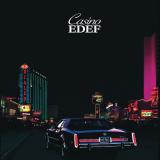
Casino isn’t just a track to me. It comes straight from my love for the classic Italian American gangster films I grew up on. Being Italian, I was obsessed with movies like Casino and Goodfellas. I’ve watched them more times than I can count. The style, the tension, the way the characters talk and carry themselves always hit me differently.
The idea for this track actually came from one of those iconic moments: a scene between De Niro and Pesci as their relationship starts to unravel. I’d seen it countless times, but this time I stopped and thought: what if I used this in a track? Would it elevate the music or would I ruin one of the greatest films ever made? That thought lit the spark.
I wanted to capture that same energy. The power. The danger. The drama. And bring it into sound. Casino is the result. Raw, cinematic, and authentic. I hope it hits you the same way those films have always hit me.
Life In Patterns welcomes Amsterdam-based live act and producer VNTM for his debut appearance on the label with “Ostbahn”, a five-track EP arriving on vinyl and digital formats on 24 July 2026. For VNTM, Ostbahn marks a departure from his usual creative process. While most of his productions are conceived and developed within the familiarity of his studio, every track on this release originated elsewhere — each one tied to a specific place, encounter, or moment beyond its walls. These external sparks became the foundation for a collection that feels both deeply personal and unmistakably geared towards the dance floor. Across the EP, VNTM explores the intersection of emotional depth and physical intensity. Dark, immersive pads and melancholic atmospheres are woven into powerful techno frameworks, driven by heavy low frequencies, tightly locked grooves, and a precise sense of movement. The result is a body of work that balances introspection with impact, equally suited to peak-time systems and solitary listening. Based in Amsterdam, VNTM has established himself as one of techno's most distinctive live performers, appearing at major festivals and clubs worldwide with a hardware-focused setup dedicated entirely to his own productions. His sound combines harmonic exploration and narrative-driven composition with distorted percussion, futuristic sound design, and a constant embrace of emerging synthesizer technologies. Beyond his performances, VNTM is the driving force behind the acclaimed Mindscape events at Amsterdam's Lofi, where he has hosted artists including Len Faki, Kangding Ray, Sterac, Âme, Recondite, Polygonia, Luigi Tozzi, Vril, and JakoJako. Recent highlights include his debut on the Awakenings Festival Mainstage, an all-night-long live set at Lofi Amsterdam, and a sold-out debut performance at Refuge in New York City. With “Ostbahn”, VNTM delivers a compelling first chapter on Life In Patterns — a release shaped by experiences beyond the studio, translated into hypnotic, emotionally charged techno built for deep immersion and maximum physicality.
Powerful, exhilarating, and refreshing. Whether exploring deep modal jazz or basking in the warmth of calypso-infused jazz, every note is delivered with uncompromising conviction. Here, the essence of Ryojiro Furusawa reaches its fullest expression.
From the 1970s through the 2010s, drummer Ryojiro Furusawa was an active force not only in jazz but across the broader Japanese music scene. His music, marked by unmatched individuality and overwhelming power, is free-spirited yet unwavering, rugged yet inviting, and endlessly captivating.
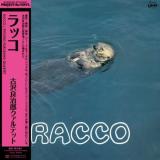
Among his many achievements, his masterpiece Racco stands as the most complete representation of his artistry. Every composition on the album is an original by Furusawa, yet each piece reveals a distinct musical character. One moment, he delivers a beautifully crafted ballad; the next, he unleashes a dynamic burst of funky jazz. Just as the listener settles into a deep modal jazz groove, he effortlessly shifts gears, wrapping the music in the gentle warmth of calypso rhythms.
The album is eclectic, but never unfocused. Its diverse musical elements are tied together by Furusawa's unwavering vision, with every idea pursued boldly and to the fullest. The result is a listening experience that feels consistently invigorating and rewarding.
Powerful, exhilarating, and refreshing. Few musicians, and few albums, embody such a joyful sense of freedom and vitality. Racco is where the artistry of Ryojiro Furusawa reaches its peak.
YARN Records proudly presents its 9th vinyl release, born from a special connection made in 2025 at the Rat Camp private gathering in Bulgaria. There we met the NOTYOURTYPE crew and shared a vision of capturing the spirit of that unique experience on wax. The result is a collaborative record featuring tracks from Enivrèz Vous, Dryspirit, Jarzz, and GAZ (Getsu & Zlatin) — a collection that reflects the creativity, friendship, and underground energy that brought us together.
Patchwork Inc. is a multi genre music collective based in Chicago. Inspired by the intricate and repetitive patterns on a quilt, deep grooves are stitched together with vibrant threads of analog synths, fat bass, Fender Rhodes, and a plethora of percussion to form a uniquely personal piece of art. "Whatever Makes You Happy," comes on like one of those unseasonably warm days in late fall. Flute, synth, and congas flutter like a cool breeze before giving way to a sunny and sultry hook. North Carolina native Taylor Williams brings a D'angeloesque vocal to a Roy Ayers style instrumental resulting in a mosaic of neo-soul and jazz-funk. The record's flipside evokes more of an idyllic fall day. The kind of day where you can throw on your favorite jacket and endlessly stroll down a tree-lined path as amber leaves fall to the ground. Chicago journeyman and musical prodigy Wyatt Waddell effortlessly layers his voice over the backbeat of "Last Forever," resulting in a medium-fidelity banger that could be confused for a I Want You-era Marvin demo.
For their fourteenth installment, FELT look once again to their city of Copenhagen, specifically to more alumni of the Rytmisk Musik Konservatorium (Rhythmic Music Conservatory). Following soon after Ginte Preisaite’s debut for the label, this long player from Vincent Yuen Ruiz is a grand departure from Preisaite’s experimental electroacoustic pop compositions, instead offering an elegant and pensive suite of late-night, wide-eyed ambient jazz works centred on piano, double bass and percussion; “I seek a dramaturgy of restraint, where silence, space, and collective attention become structural elements of the music.” (Yuen Ruiz)
Originally forming in Copenhagen in 2019, the group's language sits at the crossroads of contemporary jazz, improvised music, and experimental sound practice and deploys a non-hierarchical collective approach. Taking harmonic cues from Bach and Ravel but expanded into a dialogue between players that is repetitive, spacious and informed by minimalism as much as ECM chamber styles, the resultant four pieces move between precise formal structural rules and spontaneous improvisation. Silence and restraint is as important a device as timbre and unity. The group are concerned with dispelling the traditional jazz trio model, e.g. three unique displays of virtuosity, instead exploring how each player may help add to the overall emotive atmosphere the use of ambient space provides. To borrow a quote regarding the hard to classify music of Czech duo Irena & Vojtěch Havlovi, this interplay strikes at times like the shadows contrasting with the light.
More intimate than Yuen Ruiz’s Le seul salut que je connaisse (2021), an album recorded with a 6-musicians ensemble, this latest album Trio continues the composer’s research and moves towards a more focused, condensed writing style and a clear statement of intent.
For their first release, it was pretty obvious for Hypnophone to give a new life to an all-time favorite but forgotten project : GLO. Released in 1995 on CD’s only, « Even As We » is the first and last album of the duo, composed of Stephan Lewry and Gilli Smyth, both ex-members of the legendary rock band GONG and pioneers of psychedelic music.
This double LP, carefully handcrafted and redesigned, is the result of a lovely 2 years collaboration between Hypnophone and Stephan. A cosmic, unique masterpiece, who also features a new thirteen minutes track, specially produced by Stephan while remastering the album in 2025. In the dear memory of Gilli ♡
Note: Includes two printed inner sleeves, transparent red vinyl and an A5 insert.
Metrica Recordings presents its third release, marking the label’s first various artists project. The record brings together Memoryman aka Uovo and Dj Rou from Bologna together with Neg, Marco Spinetti and Franz Di Maio, the label’s owners. The result is a journey across house and electro vibes, where different influences blend naturally into a shared identity.
Vertice Di Convergenza explores the intersection between two rhythmicarchitectures. The sub-driven asymmetry of UK bass and dubstep blends thehypnotic cyclic motion of Dutch psy–IDM trance. Both share a focus on low-end design: basslines as structural anchors, kicks tuned to harmonic tension andpercussive spaces engineered for negative pressure. The result is a sonic plane where mechanical precision meets psychoacoustic flow.
Inweys is the new project from Scottish musicians Conal Blake (Feedback Moves, Domestic Exile, Infant Tree) and Murray Collier (Dip Friso, Grim Lusk, Real Landscape). Their debut self-titled 12’ was recorded in the summer of 2024 at La Chunky Studios in Glasgow.
They asked Fielding Hope of Counterflows Festival to write a short summary of the record:
“Inweys debut release arrives as four pieces of broken body music. Lurking, barely human fragments brought into the present. Using a short drum-machine improvisation as core material, the pieces are formed from a processes of mining and re-mining for small details, with each fragment zoomed in on and turned into new pieces. There’s a transformation taking place, but one that doesn’t obscure the materiality of the recording tapes as sticky, corrosive matter. On skewed and stretched fabric they enact their palimpsestic play, sketching and altering the grid with itchy technologies. What their edits and improvisations don’t say they let space say the rest, with vacuum aerated frames for bass to diffuse and beats to wriggle. More King Tubby than Cage, more Mantronix than Reich: minimalism with molten tips.
Both Conal and Murray’s past work has embraced malleable and iterative technologies; music whose feeliness figures itself out in space in a messy precomposed/improvised dialectic. This is the sort of thing most “new music” experimentalists (or anyone who spends most of their time obsessively manipulating tapes in expensive studios) often can’t achieve; a liveness, birthed from learning in situated play. Like the lore of Phuture’s Acid Trax, a poverty of material is at the heart of this, rendering the work with an abortive conviction: a corpse waking to consciousness becomes amphibious. Instead of the composer we have a relation, two people navigating the awkward spooling between the two reels of tape. Inweys is scots for “inwards”, and in their working process this is what they do. But the result is circular motion. Until the tape runs out, all in ways move out.”
Bristol's Sam Binga & Addison Groove have been friends and collaborators since their 2013 'BS3' EP, released on Modeselektor's '50 Weapons' imprint. This project, the third full-length on Binga’s Pineapple Records, is born from an intense 72-hour session at the legendary Devon Analogue Studios, where the pair were able to explore their mutual love of uptempo machine funk - whether that be Detroit Jit, Chicago
Boxjams or Turbo Electro.
Three days of intense creativity across classic drum machines, vintage analogue synths and rare hardware effects resulted in a collection of raw but powerful audio building blocks - and over the past two years, the pair have been gradually shaping them into what is now a complete project - the BAGS INC album. Across 12 tracks, Binga & Addison explore that exciting space between 140 and 150 bpm - but while it's fast, it's not 'hard'; as you'd expect from the creators, it's still got that wiggle, and the all-important cheekiness for which they're known.
Mastered by Bob Macc @ SC Mastering and cut at the Sony plant in Europe,, the album has immersive and musical detail to warrant deep listening, while maintaining that essential club energy.
Jack Stevens aka Sully has become somewhat of a cult figure in the jungle world with his output being in high demand. His work is unmistakable. It’s always true to it’s origins while simultaneously adding new takes and juxtapositions in palette and composition. A true artist that excels in his field.
Stevens returns to Astrophonica with Swandive, a body of work presented in dual energies - dark & light, body & mind, Yin & Yang. In Werk you’re put to the test physically as es- ki-like percussion stabs grab the attention and demand a response. A staple in Fracture’s DJ sets for the last year or so.
Poison demonstrates a side to Stevens’ production that is harder, meaner, cruder and all together more brutal than he is known for. The result is an infectious mix of venomous bass and corrupted drum breaks fit to kill any dance.
The title track Swandive begins to counterbalance the fierce energy and bring some harmony opening with calming strings and trademark icy melodies before elevating to an intense state of amen divinity that twists and turns in a story like fashion.
Memories completes the balance with euphoric bass stabs and emotional strings culminat- ing in a searing and conclusive anime-like solo. Some of Stevens’ most daring work. The cycle is complete.
Rain Dance is the debut album from Bristol-based producer Arcane, released on Over/Shadow. Across eight tracks the record explores atmospheric jungle, drum & bass and breakbeat influences, combining deep bass pressure with rich melodic detail and immersive sound design. The album moves between expansive, journey-like pieces such as “Nebula” and “Metropolis”, heavier dancefloor cuts like “Underground” and “Fear", resulting in a spacious but rhythmically detailed LP that balances classic junglist energy with a cinematic sense of atmosphere.
Applying the solid structures of floor-focused Berlin techno to the expressive space of introspective electronica, Answer Code Request returns to Delsin with his first album in eight years. Halo finds Patrick Gr?ser broadening his sound palette more than ever before, matching atmospheric synthesis with dynamic beat constructions true to his impressive legacy while breaking new ground. Across Halo, smoky clouds of pads and chords lend the album an introspective quality in the grand tradition of ambient techno. In front of these haunting melodic forms, Gr?ser is free to explore all manner of rhythmic directions. There are fractured, downtempo micro beats and angular fractals on the likes of 'Fading Shadows' and 'Refraction' that take their cues from breakbeat -- finely detailed drum sequences constantly evolving into new arrangements. A pointed nod to D&B rears its head on the aptly named, hard-edged 'Fracture' and you might hear a firmly submerged hint of ravey acid coursing under 'Sublith'. Elsewhere, the firmer kick-anchored pulse of the classic Answer Code Request sound manifests for more forthright techno excursions such as 'Halo' and 'Bliphar'. In the context of the album, though, these tougher tropes are channeled into mesmerising soundscapes that soften the attack without diminishing the potential for club impact. In this era of his craft, Gr?ser moves instinctively through the sounds and approaches that inspire him, and the end result is an album that feels natural and open, all the while steadily progressing the ongoing evolution of Answer Code Request.
Last year Ace Records were delighted to reissue The Brides of Funkenstein’s debut LP from 1978, “Funk Or Walk”. Featuring their hit single ‘Disco To Go’, this album put the Brides on the map and sold strongly.
Before sessions commenced for a second album, Lynn Mabry left the group before sessions commenced for a second album, leaving Dawn Silva alone at the altar. George Clinton added P-Funk backing singers Jeanette McGruder and Sheila Horne to the mix, creating a three-pronged vocal attack.
Sessions featured the cream of the P-Funk players including keyboard wizard Bernie Worrell, bassist Bootsy Collins and guitarist Garry Shider. The resulting album, released in 1979, was even better that their debut.
The title track ran for over 15 minutes on side one, showcasing the vocal and musical prowess of all concerned. Other tracks included ’Party Up In Here’, ‘Smoke Signals’, ‘Mother May I?’ and the gorgeous ballad ‘Didn’t Mean To Fall In Love’.
Although it did not spawn a hit single, “Never Buy Texas From A Cowboy” sold as strongly as “Funk Or Walk” and over time has been hailed as a classic P-Funk album.
With liner notes from Ace’s Ian Shirley, we are delighted to release it on orange vinyl and CD. You don’t need your mother’s permission to buy it either.
Connecters Vol. 1: Original Recordings, 1992-1999 ist die erste Veröffentlichung von Larrison, dem Pseudonym des bildenden Künstlers und Musikers Larrison Seidle aus dem Mittleren Westen. Larrison komponierte, programmierte und nahm alles komplett auf einem Casio CZ-5000 auf, während der guten alten Zeit der selbstgemachten Experimente und Entdeckungen in den frühen 90ern. Er lebte in einer Traumwelt, die er selbst erfunden hatte, mit Soundtracks aus Space-Age-Pop-Vignetten, gespickt mit hypnotischen, überschwänglichen, vielschichtigen Synthesizer-Melodien. Mit 26 Tracks, die alle neu restauriert und aus den Originalquellen gemastert wurden, erfindet sich Connecters Vol. 1 Song für Song neu, überwindet die Zeit und trotzt der vorbestimmten Vergessenheit dieser brillanten, diskreten Musik, die vor drei Jahrzehnten entstanden ist. Larrison Seidle wuchs in den 70er und 80er Jahren in Greenwood, Indiana, einem Arbeitervorort von Indianapolis, auf. Er stammte nicht aus einer Musikerfamilie, aber aus einem Haushalt, in dem Musikalität gefördert wurde. Sein Vater kaufte eine elektrische Orgel, in der Hoffnung, dass Larrison und sein älterer Bruder das Instrument lernen würden. ,Am Ende saß mein Vater einige Abende an der Orgel, improvisierte und spielte immer wieder dieses eine Lied, von dem ich mich noch an die ersten Takte erinnern kann", erinnert sich Larrison. Möglicherweise war es in diesem Moment, in dem es zwar keine formale Ausbildung gab, aber viel Ermutigung und Entdeckungsfreude, dass der Künstler seine ersten musikalischen Experimente machte. Diese Erlaubnis, sich auszuprobieren, sollte seine kreative Arbeit in den folgenden Jahren deutlich prägen. Während in Larrisons Elternhaus klassische Rockplatten leicht zugänglich waren, lieh sich sein Vater 35-mm-Dokumentarfilme aus der Bibliothek aus, um sie im Wohnzimmer zu zeigen, die alle mit skurrilen Instrumentalstücken unterlegt waren. Als Teenager nahm er John Carpenters und Alan Howarths Endthema aus ,Die Klapperschlange" mit einem kleinen Kassettenrekorder neben dem Fernsehlautsprecher auf und liebte Tangerine Dreams Beiträge zu Ridley Scotts düsterer Fantasy ,Legend". Seine Faszination für diese weitgehend textlosen, synthesizerbasierten Kompositionen führte zu einem eigenwilligen Verständnis davon, wie Musik nicht nur das ergänzt, was wir vor uns sehen, sondern auch das, was wir in den Tiefen unseres Bewusstseins erleben. 1985, als er dreizehn Jahre alt war, überzeugte Larrison seinen Vater, ihm ein Casio CZ-5000-Keyboard zu kaufen. Wie zuvor die Orgel war auch dieses Instrument eine Neuheit im Haushalt der Seidles. Erst nach seinem Highschool-Abschluss 1991 und dem Beginn seines Studiums an der Herron School of Art in Indianapolis entdeckte er den in das Casio integrierten Sequenzer und begann, seine Kompositionen auf Band aufzunehmen. ,Das CZ-5000 und sein 8-Spur-Sequenzer sind die einzigen Musikinstrumente, die ich benutzt habe. Es hat eine fast unbegrenzte Funktion zur Erzeugung neuer Klänge", erklärte Seidle. Während seiner Zeit an der Herron School of Art freundete sich Larrison mit seinem Kommilitonen und Klangkünstler Michael Northam an, den er bei einem Konzert auf dem Campus kennengelernt hatte. Nachdem Northam Larrison für die Musik von Severed Heads, Throbbing Gristle und Roger Doyle begeistert und damit seine Zuneigung und sein Vertrauen gewonnen hatte, überredete er ihn, nach Austin, Texas, zu ziehen, das in den frühen 90er Jahren für seine lebendige Kunst- und Musikszene bekannt war. Die beiden wohnten zunächst bei Northams Freund Daniel Plunkett, dem Herausgeber und Verleger von ND, einem einflussreichen Magazin, das sich von 1982 bis 1999 mit DIY-Musik und Tape-Trading beschäftigte. In seiner Blütezeit hatte ND Tausende von Lesern, und Plunkett verschickte die Ausgaben weltweit. In den letzten Monaten des Jahres 1993 und Anfang 1994 schrieb und nahm Larrison mit begrenzten Mitteln und grenzenloser Intuition eine Reihe von Songs mit seinem CZ-5000 in einer kleinen Wohnung nördlich der Innenstadt von Austin auf, bastelte eine farbenfrohe, illustrierte Beilage, in der einige Songtitel durch Linien oder Pfeile dargestellt waren, und gab sie an Plunkett weiter, damit er sie für ND rezensieren konnte. Diese einzelne Kassette mit dem Titel Connecters sic war eine von 1200, die im Laufe des Bestehens der Publikation bei ND eingereicht wurden und die Jed Bindeman, Mitbegründer von Freedom To Spend, 2020 erworben und fast wie durch ein Wunder entdeckt hat. ,Ich hatte große Schwierigkeiten, mir die Kassetten in dieser Sammlung anzuhören", gibt Bindeman zu. ,Aber dann legte ich Larrisons Connecters ein und dachte sofort: ,Wow! Was höre ich da?' Die Kassette war von Anfang bis Ende einfach fantastisch." Mit Musik von genau dieser Kassette und anderen Aufnahmen aus Larrisons Experimenten in den 90er Jahren ist Connecters eine Übersicht über Instrumentalmusik, die sowohl durch vielfältige konzeptionelle Strategien als auch durch spielerische Neugierde geprägt ist. Seidle arbeitete unter Bedingungen, die viele Musiker als Einschränkung empfinden würden, und entwickelte technisch innovative Ansätze, um die Klänge und integrierten Effekte des CZ-5000 zu modifizieren. Das Gerät ermöglichte es ihm, die Wellenform, die Hüllkurve und die Tonart von Klängen mithilfe der Phasenverzerrungssynthese zu verändern und so im Grunde genommen Instrumente zu schaffen, während er Songs komponierte. Die Tracks zeichnen sich durch eine durchdachte impressionistische Vielfalt aus, die mal lo-fi, mal symphonisch klingt. Inmitten der Zerlegung und Verstärkung der Fähigkeiten des CZ-5000 gibt es auch einen geschmackvollen Rückgriff auf eine kindliche Interaktion und Erfahrung von Klang. Vielleicht ist es diese Erfahrungsqualität, die es so schwierig macht, Larrisons Projekt einfach als Ambient oder Elektronik zu verstehen. Sein Wille, die ihm zur Verfügung stehenden Werkzeuge zu transformieren, hebt die daraus resultierenden Kompositionen auf eine persönliche Ebene und verleiht der Musik einen bezaubernden Sinn für Mystik. Connecters ist ein Beweis für eine künstlerische Vision, die sich nicht durch Grenzen einschränken lässt und keine Angst vor Informalität hat. Diese Aufnahmen, die dreißig Jahre nach ihrer Dokumentation auf magische Weise an die Oberfläche kommen, zeigen, wie personalisierte Produktionsmittel die Zeit ausdehnen und verkürzen können. Larrison lädt die Zuhörer ein, sich auf die Wunder der auditiven Vorstellungskraft einzulassen - eine Brücke zwischen visueller Erinnerung, emotionaler Resonanz und der grenzenlosen Möglichkeit, mit den uns zur Verfügung stehenden Mitteln Musik zu machen. Larrison's Connecters Vol. 1: Original Recordings, 1992-1999 wird am 3. April 2026 von Freedom To Spend als Vinyl- und Digitalausgabe veröffentlicht.
Melody As Truth and Future Days Radio present ‘At the Emerald Pool’, an album by Tomo Katsurada and Jonny Nash.
Netherlands-based artists Tomo Katsurada (Ex-Kikagaku Moyo / Future Days Radio) and Jonny Nash (Melody As Truth) combine forces for an exploration into the sonic potential of the guitar duo, rooted in their experiences performing together over the last 12 months.
Friends and admirers of each other’s work for a decade, their musical collaboration began in 2024 with Katsurada asking Nash to contribute guitar to his debut EP ‘Dream Of The Egg’. Sensing the need to explore this further, they spent the following year performing together in different configurations, with Nash joining Katsurada’s trio and Katsurada in turn playing with Nash as a duo, across a wide spectrum of spaces, from churches and temples to concert halls, theatres and outdoor festivals. With new ideas developing organically out of these performances, recording new material became the next logical step. A short period of three days was set aside with a clear goal: to capture the essence of their fluid, intertwining melodies and guitar playing in a way that felt as direct and unfiltered as possible. Working from a handful of pre-existing sketches, they left ample room for experimentation to unfold within the process.
The results are presented on ‘At The Emerald Pool’, a collection of ten pieces that offer the listener a full immersion into the pair’s sound. With guitar as the primary instrument for both artists, it is no surprise that the core of the album lies here, specifically in the fluid interplay between the two players. Layers of gentle, delay-soaked fingerpicking often make it almost impossible to distinguish where one player ends and the other begins. As soloists, both Katsurada and Nash have a gift for crafting melodic lines that feel open and ascending, expressive and hopeful without becoming saccharine. Longer, more abstract pieces are counterbalanced by a series of shorter songs, with five vocal tracks appearing across the album. The decision to share vocal duties lends the record a unique quality and a strong sense of variation, bringing a wide expressive range out of a deliberately focused musical framework.
‘At The Emerald Pool’ represents the first chapter in an ongoing musical dialogue, an attempt to capture a moment of connection, openness and discovery, laying the foundation for what continues to unfold.
Turn On The Sunlight is the long-running project of Texas-born, Maui-based musician and producer Jesse Peterson.
Originally formed in New York in the late 2000s, Turn On The Sunlight has evolved into a fluid, location-spanning practice rooted in collaboration, intuition and process. Now based on Maui, Peterson’s work draws together a wide network of musicians and environments, with recordings taking shape across Los Angeles, Tokyo, London, San Miguel de Allende and Haʻikū.
Loosely situated within a framework of organic, ambient-leaning jazz, 'Iseo' unfolds as a series of open, exploratory pieces, with electronics sitting subtly beneath acoustic and environmental elements. Built from layered instrumentation including synthesizers, guitar, zither, flutes, voice and field recordings, Peterson moves between grounded, tactile detail and more expansive, immersive states. A sense of warmth and permeability runs throughout: organic percussion, environmental textures and drifting rhythmic elements lend the record a gently saturated humidity, reflecting Peterson’s base in Hawaii, where the presence of nature is felt as much as it is heard.
Underlying the project is a way of working rooted in gathering, listening and tending. Instruments, ensemble sessions, field recordings and everyday environments are approached with attentiveness, shaped through collecting, refining and allowing things to settle. Relationships, landscape and lived experience shape the sound, giving 'Iseo' a tactile, almost hand-made quality.
Rather than fixed arrangements, the album feels as if it has been organically and lovingly assembled through a process of listening and response, each element finding its place within a wider, evolving whole. This approach reaches a natural centre point in the 15-minute piece 'Medianoche En La Calle Aurora', which unfolds patiently, bending through shifting environments as motifs and textures emerge and dissolve with quiet continuity.
Peterson’s role as both instigator and facilitator is central to the project. Bringing together a diverse group of collaborators including Carlos Niño, Mia Doi Todd, Laraaji, Ko Ishikawa, Luis Pérez Ixoneztli and Miles Spilsbury, he creates space for individual voices to emerge within a shared language. The result is a music defined by openness and generosity.
'Iseo' takes its title from Peterson’s son’s middle name, a word that can be understood to mean ‘one-world life’. The piece itself takes the form of a gentle lullaby, its melody loosely shaped around the syllables of his name and sung to Peterson’s son by Luis Pérez Ixoneztli, a close collaborator whose presence across the record reflects a long-standing relationship that extends beyond the music itself.
Sleeve art and design by Michael Willis.
This release represents the musical union of two friends who, despite the distance, have always found in music the place where they stay close. This EP is the proof that when the connection is real, sound becomes common ground - a space to share moments, ideas, and energy beyond geography.
Both artists have been devoted to physical formats from the very beginning, especially vinyl. They have always been record collectors, and that passion shapes the intention behind this project: a work conceived with the depth, respect, and materiality that only vinyl can convey. This EP is more than music; it is a cultural object that preserves a way of understanding techno.
Creatively, Truncate and Pushmann set out to merge their sonic identities. The result is an EP charged with strength, built for the dancefloor, and defined by a clear aesthetic: raw energy, firm rhythm, and a contemporary reading of hardgroove and jackin. These are intense, direct tracks - the kind that emerge when two visions complement each other effortlessly.
In a scene often driven by speed and overstimulation, this release stands out for its authenticity. It is fast, funky techno, yes, but crafted with soul, intention, and emotional depth. It does not chase trends; it delivers groove, substance, and a recognisable sonic character from the first bar.
Inspired by rave culture and the pure roots of hardgroove, this EP offers a journey that blends functionality, sensitivity, and force. A project that reinforces LILA's philosophy: preserving the essence of techno and supporting those who create it with passion.
ORANGE - Limited Edition! SPANDAU20 returns, bridging Berlin and UK lineage, with new material from Mr. G, Elli Acula, FJAAK and Dajusch, continuing to showcase the many shades of contemporary club music through its forward-facing approach. On its 12th release, the Berlin label presents a record that reflects individual artistry as much as the unmistakable identity of the SPANDAU20 sound. Opening the release is Mr. G with 'I Came To See You'. The track is a true embodiment of his distinctive production style, unfolding through bouncing basslines, swinging percussion and hypnotic looping vocals and capturing the raw spirit of old-school dance music with fresh spirit. Sitting somewhere between house and techno, it sets the tone with a particular kind of hypnosis, taking the listeners deep into the endlessly circling groove. Elli Acula follows with 'Take One Higher', a fierce and uncompromising techno track that perfectly reflects the label's hallmark aesthetic. She channels the raw energy of the 90s through a modern lens, pairing rough edged stabs, cavernous kicks and gritty percussion programmed with unfiltered dancefloor intensity in mind. The result is a high-pressure track designed to fully consume the room. On the flip side, FJAAK unleash 'Drip Code', showcasing the duo's signature blend of powerful low-end pressure and analogue grooves. Having spent over a decade shaping Berlin's techno landscape through their machine-driven approach, the pair deliver crisp percussion, huge open hi-hats and teeth-rattling drum machine combinations, while racing chords and looping vocals propel the track forward. It is a direct and highly effective example of the energy that has come to define the SPANDAU20 universe. Closing the release is Dajusch with 'Tongue In Cheek'. Deeply influenced by the foundational sounds of Detroit and Chicago, the classically trained producer leans into warmer, more uplifting territory. The track combines grooving basslines, saturated 909 percussion and piano-led melodies with disco-tinged vocal loops that glide effortlessly across the arrangement. This closer highlights Dajusch's refined understanding of groove, texture and atmosphere, rounding off the release with a distinctly euphoric touch. SPANDAU20 012 is another example of classy production skills merged with genuine dancefloor purpose. As ever, the label lets the music speak for itself. The many shades of sound are on full display, bound together by the singular identity that has made SPANDAU20 one of Berlin's most distinctive voices in the electronic music landscape.
SPANDAU20 returns, bridging Berlin and UK lineage, with new material from Mr. G, Elli Acula, FJAAK and Dajusch, continuing to showcase the many shades of contemporary club music through its forward-facing approach. On its 12th release, the Berlin label presents a record that reflects individual artistry as much as the unmistakable identity of the SPANDAU20 sound. Opening the release is Mr. G with 'I Came To See You'. The track is a true embodiment of his distinctive production style, unfolding through bouncing basslines, swinging percussion and hypnotic looping vocals and capturing the raw spirit of old-school dance music with fresh spirit. Sitting somewhere between house and techno, it sets the tone with a particular kind of hypnosis, taking the listeners deep into the endlessly circling groove. Elli Acula follows with 'Take One Higher', a fierce and uncompromising techno track that perfectly reflects the label's hallmark aesthetic. She channels the raw energy of the 90s through a modern lens, pairing rough edged stabs, cavernous kicks and gritty percussion programmed with unfiltered dancefloor intensity in mind. The result is a high-pressure track designed to fully consume the room. On the flip side, FJAAK unleash 'Drip Code', showcasing the duo's signature blend of powerful low-end pressure and analogue grooves. Having spent over a decade shaping Berlin's techno landscape through their machine-driven approach, the pair deliver crisp percussion, huge open hi-hats and teeth-rattling drum machine combinations, while racing chords and looping vocals propel the track forward. It is a direct and highly effective example of the energy that has come to define the SPANDAU20 universe. Closing the release is Dajusch with 'Tongue In Cheek'. Deeply influenced by the foundational sounds of Detroit and Chicago, the classically trained producer leans into warmer, more uplifting territory. The track combines grooving basslines, saturated 909 percussion and piano-led melodies with disco-tinged vocal loops that glide effortlessly across the arrangement. This closer highlights Dajusch's refined understanding of groove, texture and atmosphere, rounding off the release with a distinctly euphoric touch. SPANDAU20 012 is another example of classy production skills merged with genuine dancefloor purpose. As ever, the label lets the music speak for itself. The many shades of sound are on full display, bound together by the singular identity that has made SPANDAU20 one of Berlin's most distinctive voices in the electronic music landscape.
Much like the fusion resulting in the output of light and heat within a star, the last seven years for Dave Sumner, aka Function, have been defined by immense change and an outpouring of creative energy. What began in late 2016 as a period of burnout from a relentless touring life became a catalyst for the most prolific recording era of his career. At the time, the studio became the only viable escape, a space to transmute exhaustion into a gestalt work.
Aeternum (Existenz) serves as the missing element in this creative arc. It acts as the final chapter of a cycle, that began with the 2019 album Existenz and moved through Subject f (Transcendence), Awakening from the Illusory Self, and Green EP. Drawing inspiration from the seven stages of alchemy, this mini-album represents a cathartic process; a natural end point of a psychological cycle and the beginning of a new curve.
Across the six tracks on the mini-LP, recorded 2016-2019, Function builds a unique world, one which underlines his place as one of the luminaries of contemporary techno. Opening track, Ascent, traverses the space between ambient and techno; second track City Of Luz almost fades into itself across its twelve minutes before Transmutation brings around a reawakening with a beat that would not have sounded out of place on an early Rephlex or even a Sähko release. Final track on the 12”, Growth Cycle is fittingly a re-version/re-vision of a track on the Existenz LP; Robert Owens’ soulful vocal now Stefanie Parnow's floating Siren-like voice with music that feels reborn: fresh, strong and insistent. The digital pack contains two further tracks, the deep electro of November 29, as well as Rubedo, a spacial ambient track that feels like the final glowing red embers of a fire turning to ash as the sun rises to reveal a new, golden dawn.
Aeternum (Existenz) is the final chapter of the soundtrack to Function’s spiritual awakening, the closing of a door and the clearing of a path. It’s a sonic manifestation of the Magnum Opus completed, a moment of total integration, where the leaden weight of the journey is finally perfected into the incorruptible gold of the spirit.
It is dedicated to John Mendez, aka Silent Servant, Sumner’s dear friend and lifelong collaborator.
Produced after a period spent alone, surrounded by the elements of nature, this record brought Katatonic Silentio back to her essence and her roots. The result is a dedication to the dancefloor through the genre she first became involved with, and to the music itself as the conductor of her whole life; an ever-changing entity of the essence of the soul; a bridge to the unknown and the depth of existence. A luminous voyage in the profound lightness of sound. Far from being an intellectual exercise, the album - the first club-oriented release by Krisis Publishing - is a physical and spiritual journey. This one is for the body, mind and soul, so that there may be harmony between the parties, between the inside and the outside, between the self and the other.
JKS is back on his own imprint with Temples, opening a different chapter of his sound. Across three original tracks, he explores a more melodic and expansive direction, while keeping the raw rhythmic energy and distinctive percussion that have always defined his productions. Processed instruments, playful synth lines and organic textures come together with a sense of openness and curiosity, always anchored in movement and groove. Alongside the originals, three remixes by Aloka, A Strange Wedding and Olympe4000 extend the scope of the release. Each artist brings their own sensibility to the project, reinterpreting the material in their own language and broadening the spectrum of both the record and the imprint. Together, they highlight different facets of JKS’s influences while keeping a shared sense of drive and tension. The result is a collection that balances movement and emotion, precision and spontaneity. Deeply rooted in the dancefloor, yet unafraid to venture beyond familiar boundaries, the release captures an artist and a label continuing to evolve while staying true to their core.
With Panorama, Frank Maston pays homage to the classic era of library records and Italian soundtracks of the 70s. A blissed-out, grooving collection of filmic cues, it continues the unique brilliance of Tulips and Darkland. Elegant and easy, subtle and stylish, breezy and beautiful; this is his Maston-piece. Commissioned by legendary label KPM, Panorama cements Maston as a master of modern classics and the most mesmeric of contemporary composers.
In early 2020, Be With suggested to Frank that he should make a KPM record. He wasn't aware that they were still putting out new library records - but he was super keen: "It was completely surreal and it still hasn't fully sank in that I have a record in that catalog, sitting alongside those incredible albums that were so influential to me."
Frank was visiting family in his hometown of LA in March 2020 when the world ground to a halt so the KPM project arrived at a fortuitous moment. Having fantasised about committing to a record with no distractions, with a proper budget, access to his gear and space to work in - to really dig in and try to write and arrange the best work he could possibly make - it was a real "be careful what you wish for" moment. But, as Frank explained, "it completely saved my year and sanity to have something to focus on and get excited about. It was my lifeline." He spent seven months on it, working almost every day.
Maston had already been making library-influenced music so when KPM outlined the criteria for the tracks it was exactly what he had been doing all along. He thought the best approach would be to make a follow-up to Tulips that had a parallel life as a KPM record. Enjoying complete creative freedom, “gave me the drive to power through and dig in deep. I'm not sure if I could have kept myself on such a rigorous recording schedule under my own steam, and I think the momentum I had writing and recording it is part of the strength of this record."
Maston’s sleek retro-groove instrumentals emulate the classic KPM “Greensleeve” reel-to-reel recordings that provided mood-setting music for mid-century cinema, television, and radio programs. Apparently in close conversation with the John Cameron-Keith Mansfield KPM pastoral masterclass Voices In Harmony, Maston's Panorama could be heard as that record's funky follow-up. Yes, it's *that good*. Another reference point from the hallowed library would be Francis Coppieter's wonderful Piano Viberations.
Opener "First Class" is a blissed-out groove, featuring the soothing vocals of Molly Lewis and a glistening harp over drums, a two-note bass motif (from Eli Ghersinu of L'Eclair) and an assemblage of guitars, synths, French horn and glowing vibraphone. Acid Lounge, anyone? The irresistibly funky "Easy Money" is a gorgeous cut led by more of Molly's vocals, pastoral flute and Rhodes, underpinned by drums and percussion, grooving bass, chilled guitars and synth strings. Kicking the tempo up, the percussive "Storm" is a vibin' filmic-fusion jam where psychedelic guitars (courtesy of Pedrum of Allah Las/Paint) organ, jazzy flute, Rhodes and vibes all compete for a place in the sun, over drums and walking bassline.
The heavenly "You Shouldn't Have" is a delicate, melancholic wonder; a dreamy instrumental where the melody is shared by a whistle, harpsichord and celeste, over a cyclical piano chord sequence and bass, synths, guitars, organ and distant French horn. The tempo rises again with the passionate, sticky "Fling", a summery, nostalgic groove with skipping drums and percussion, warm bass and electric guitar, yearning flute and synth strings. The brilliantly titled "Fool Moon" has that Voices In Harmony sound down pat. A romantic slow-mo dreamscape of Rhodes and harpsichord, piano, light drums and softly strummed acoustic guitar.
Side B opens with "Medusa", a hopeful, mellowed-out track with shuffling drums, feel-good flute, muted horns, glowing Rhodes and synth strings. The soft and gentle "Morning Paper" is an elegant way to start the day; a beatless blend of flute, guitar, percussion, ambient synths and vibes. The upbeat head-nod jam "Scenic" has that widescreen car-chase feel, uptempo drums and percussion, grooving bass, piano, synths and ambient electric guitar. "Adieu" is a smooth summer vibe, relaxing with brushed drums, Rhodes, flutes and horns. Molly Lewis's gorgeous vocals steal the show, alongside vibes, jamming organ and synth strings.
"Hydra" is another laid-back 70s-sounding retro cinema cue with light drums and percussion, walking bass, spacey synths, clavinet, glowing vibraphone, vintage organ and electric guitar. Closer "Jet Lag" is a laconic bow out; bass-driven drum machine soul, featuring hand percussion, Rhodes, vibes, synths and organ.
Multi-instrumentalist Frank played a bit of everything across Panorama. Yet, humble as ever, he believes the time, energy, and enthusiasm of all of the musicians invited to the sessions helped him realise his vision: "There were two Italian flautists who really understood what I was going for. Two french horn players, cor anglais, a vibraphonist and a flügel horn player. I've never involved this many people in my projects before, and yet the result is the most "me" record I've ever made."
Musically, a strong Italian theme runs through the record. Frank is fascinated by ancient Rome and both his parents are Italian (Maston was originally Mastrantonio before anglicisation). So, it felt natural to fully embrace these strands and tie everything together with the striking artwork. The Romans were influenced by Greek culture, emulating their art and architecture, which, in turn, influenced Renaissance era artists. Frank acknowledged this tradition when reflecting on his place in the lineage of library and soundtrack composers. He then asked his friend Mattea Perrotta, a painter and sculptor, for some sketches. What he received was exactly what he had in mind: "Especially the theater mask, which really captures the range of moods on the album". Frank arranged them as per the cover and it soon felt right: "I wanted to make a cover that was reminiscent of the classic KPM albums without making it too pastiche - so it has its own identity and looks at home alongside other library records, while still fitting in nicely in the KPM catalogue." The last step was for us to introduce Frank to Be With-KPM’s Rich Robinson, who helped put together the back and centre labels and align it all within the KPM standard.
Panorama is a perfect title for the album. With no opportunity to travel for tours or recording projects, Frank arranged postcards from his collection on his desk with beautiful views of the mediterranean coast, the Roman Colosseum and Cinque Terre. These also served as visual prompts: "That was part of the sonic concept - imagining myself driving down the mediterranean coast with this music on, with the top down." Additionally, the range of moods and vibes - "I tried to make each song very different from the previous one in terms of tempo and arrangement and feeling" - speaks to the idea of a Panorama of music and sounds and emotions. The last track was originally called Panorama, but KPM already had that title in their catalogue so it was changed to "Jet Lag", which, as Frank notes, "is perhaps even more fitting, since the trip is over".
Phone Me Tonight was recorded in 1981 at Studio Maïa in Bondy, just outside Paris - a creative hub where many artists of the African diaspora shaped their sound. On this track, Eko Roosevelt collaborates with producer Gabriel Nahas, known for his work with artists such as Pasteur Lappe, Marthe Zambo, Toto Guillaume, and Manu Dibango. The result is a shimmering blend of synth-driven groove and Eko’s signature ‘Funky Disco Music’ sound, capturing a moment where analogue warmth met futuristic ambition.
For this 2026 reissue, Phone Me Tonight has been carefully restored and remastered, breathing new life into Eko’s iconic Yamaha DX7 synth lines. The track has been subtly tightened to the grid, making it perfectly suited for contemporary dancefloors & dj’s while preserving its original spirit and charm.
This EP also offers a glimpse into Eko’s creative world: rare photographs of his home studio in Lobé, featuring the very DX7 synth used during the original recording. In addition, you’ll discover exclusive footage from the Phone Me Tonight video shoot, filmed at the breath-taking Lobé Waterfalls, documented together with Lobé’s community throughout 2025 and 2026.
ABOUT LOBE MON AMI
Lobé Mon Ami was written by Eko Roosevelt in 1981 as a heartfelt tribute to his home community of Lobé in Cameroon. Two versions of the song exist; this EP presents the rare and original version, restored and remastered here for the very first time. Using the download code, listeners can also access an exclusive alternate version of Lobé Mon Ami and the full EP in digital formats.
The song weaves together multiple languages, including Batanga and French, reflecting the rich cultural fabric of the region. Through its lyrics, Eko tells the story of his life - born and raised in Lobé, venturing abroad in pursuit of music, yet always drawn back home. Each return rekindles his deep connection to Lobé. In a poetic gesture, he names surrounding villages in various languages such as Batanga throughout the song, turning it into both a personal memoir and a cultural map.
ABOUT EKO ROOSEVELT
Born on November 13, 1946, to princess Kethy Mbenyo and William Roosevelt, Eko Roosevelt has led a life filled with mythical appeal and musical excellence. Local lore recalls how, at the age of ten, he bravely fought off and killed a serpent near the waterfalls of Lobé. An event that became part of his local legend prior to his enduring legacy as a musician and traditional chief.
Eko Roosevelt discovered his passion for music in church before furthering his studies in Dakar, where he met his wife, Nicole. Together they moved to France, where Eko launched his recording career - first with the Dikalo Group, and later as a solo artist. His discography includes standout releases such as Kilimandjaro My Home, Funky Disco Music, and the hit single Nalandi. In 2020 he renewed his status as hitmaker through his work with Disclosure on the revised version of his single ‘Tondoho Mba’, originally released in 1982. His enduring legacy and pioneership within Makossa and Funky Disco music helped shape the sound of many DJ’s and producers such as Gilles Peterson, Disclosure, Folamour, Diplo, ANOTR, Jax Jones, Sonny Fodera and Daphni.
Over the years, he shared stages and collaborations with renowned artists including Claude François, Nino Ferrer, Manu Dibango, and Miriam Makeba. As a producer and arranger, he became a respected figure across the African diaspora, working with talents such as Toto Guillaume, Marthe Zambo, M'Pongo Love, and experimenting in the studio with visionary artist Francis Bebey.
In 1998, Eko returned to Kribi, where he continues to live, create, and perform. Alongside his musical career, he has composed three albums of Catholic music, still awaiting release, and is currently working on new material. Today, he remains a beloved figure both locally and internationally.
Since 1996, he formally assumed his role as traditional chief of Lobé (usually reffered to as 'Chef Traditionnel'), following in the footsteps of his grandfather; his majesty ‘Bevigna Eko Louis’ - an enduring source of inspiration throughout Eko Roosevelt’s life. Despite his royal duties, he continues to perform regularly across Cameroon. When he takes the stage, entire crowds sing along to Lobé Mon Ami and classics like Nalandi and Attend-Moi, celebrating a legacy that bridges generations.
Balancing tradition and music, his majesty Eko Roosevelt Louis remains deeply committed to both his community and his art. This reissue of Phone Me Tonight / Lobé Mon Ami marks a renewed chapter in sharing his rich musical legacy, and his musical future with the world.
LP,180g, 2027 REISSUE - REMASTERED FROM ORIGINAL TAPES, CAREFULLY REPRODUCED ORIGINAL ART
Veteran library musician Alan Parker recorded with session vocalist Madeline Bell for his Themes International Music label and the result was 1976's The Voice of Soul.
The sensational uptempo dancer 'That's What Friends Are For' is probably the most well known track on the record, and is a big hit on the rare groove scene, but it is by no means an anomaly. The Voice of Soul is essentially a perfect, sophisticated soul album with heaps of swagger and sass from beginning to end.
Its once generic-sounding title is now deservedly defnitive.
And the whole LP oozes sex. It oozes sex so much that it could have soundtracked a period porn flm. Indeed, parts of it did. 'Love Is All' and 'You've Got What It Takes' both featured on the infamously banned Pretty Peaches from the same year.
As is usual with library records, The Voice of Soul was hard to get even when it was frst released. It's next to impossible now. So here's your opportunity to own what is in our opinion one of the fnest rare soul LPs of the late 70s, and a superb example of Madeline Bell's superlative vocal talents.
But that's not the whole story. As well as pitching the record as 'a varied selection of modern female vocal features which are equally suitable for background or radio programme usage', the original release notes go on to explain that 'the corresponding backing tracks are issued on TIM 1022 The Sound of Soul. Therefore it is possible to edit from vocal to instrumental version and vica versa where commentary or scene changes occur.'
So yes, all of the backing tracks from The Voice of Soul were released as The Sound of Soul, and we couldn't re-issue one without re-issuing the other.
As with all ten re-issues, the audio for The Voice of Soul comes from the original analogue tapes and has been remastered for vinyl by Be With regular Simon Francis. We've taken the same care with the sleeves, handing the reproduction duties over to Richard Robinson, the current custodian of KPM's brand identity.
LP,180g, 2027 REISSUE - REMASTERED FROM ORIGINAL TAPES, CAREFULLY REPRODUCED ORIGINAL ART
The 'vivid contemporary sounds for a fresh visual image' make up the now canonised Synthesis from Alan Hawkshaw and Brian Bennett. These two greats go deeper than usual on this collection, and the end result is a synth concept record of sorts. Released in 1974, it's an essential companion piece to
their Synthesizer and Percussion LP, released on Themes International Music in the same year.
Like most of our favourite library records, Synthesis has that gloriously funky, 'weird electronic music' vibe without ever being inaccessible. With the awesome ARP Odyssey at the fore, Hawkshaw and Bennett have created a blissed-out soundscape that, whilst laid back in all the right places, somehow remains heavy on the funk. It's a sort of throbbing, proto-G Funk sound and you can fnd it on many of these low-lit basement workouts.
Take the ice-cool 'Alto Glide'. It's a sunset-funk highlight with an electro-fute refrain that conjures those dreamier Dre / DJ Quick instrumentals from '91 to '92.
Stereolab, Koushik (again) and all those Ghost Box artists were clearly listening very closely in the years since. The equally relaxed 'Mermaid' glides efortlessly with soft, shimmering piano, understated percussion and kaleidoscopic synths.
It's a really beautiful piece.With these two soft-focus closing tracks allowing the LP to foat away over the horizon, the preceding ten tracks have a more insistent, neck-snapping rhythm
section to back the synth overload. Highlights include the head-nod funk of 'Getting It Together' and the synth break in 'The Executive', which informed classic video game soundtracks.
For once Be With really is stuck for words to describe just how good this record is.
Best just to listen. As with all ten re-issues, the audio for Synthesis comes from the original analogue tapes and has been remastered for vinyl by Be With regular Simon Francis. We've taken the same care with the sleeves, handing the reproduction duties over to Richard Robinson, the current custodian of KPM's brand identity.
Who, or, what, exactly is a Matured Sinner? In this case it's the result of a meeting of both minds and bodies between Swedish producer Johan Blende, freshly relocated to Athens, and fellow Eskimo artist and native Athenian NTEIBINT. Between the decidedly weak minds of succumbing to night time activities and day time regret an idea was born to create the best Greco-Norse creation since ABBA stole a bouzouki and used it shamefully for the best part of Mamma Mia (OST ?).
"I took one of my half-baked beats to George (aka NTEIBINT) to see what he could add to it and voilà - Mist 9000 was born!" explained Johan. Now complete with pulsating analogue arpeggios, a throbbing bass line and increasinglydistressed synths all writhing together in composed ecstasy that dance floors are made for, the track that emerged from George's studio left them hungry for more.
Returning to the studio, it isn't long before the song that would give this new project its name emerged. Created with the help of a friend Olga on backing vocals and an unnamed, equally sinning, young lad, Matured Sinner paired hypnotic disco beats, sinuous synths, squawking sine waves and almost queasily blissful sighs with a cautionary tale of drugs, flying saucer cults and a spiral deeper and deeper into sin and moral ruin.
Was it enough? It was. But then the third one came around, mainly by sheer want to continue, lingering like the third child of a marriage running out of ideas. Shall we keep going? "Of course we shall, this is our gift to the world!" Like a modern day cult, Bright Bum was conceived in a non-sexual context from leftover sounds after a nightof confusing creations and not necessarily tender compliments in an equal manner, chugging synths squelching their way over a mesmerising guitar loop as bright stabs cut through the humid funk of the track's insistent rhythm which, like all good nights out, increasingly fray at the edges as it rolls towards oblivion. Nobody requested it but like the nature of humanity itself, it must keep going.
Three musicians, three worlds: raga, jazz, and their own imagination. East, West, and the fusion in between. Rhythm, melody, and harmony. Past, present, and future.With 3, Ragini Trio experiences a rebirth - after years of deep exploration into long-form ragas, South Indian Carnatic traditions, konnakkol, and Western jazz.Thirteen years after their debut, this album stands as an homage to both worlds. By refusing to play things "as they should be played," Ragini Trio finds the in-between space - that magnetic tension where jazz and Indian classical music meet and transform each other.
Inspired by the traditional Indian trio of tabla, flute, and tanpura, Ragini offers its mirrored jazz response: drums, saxophone, and double bass. The result unites jazz, which seeks freedom within structure, with raga, which seeks structure within freedom. Far from purism or imitation, Ragini Trio crafts a living dialogue between rhythm, melody, and tone colour.
And it's a statement. Bursting with energy, depth, and self-irony, 3 is a vibrant antidote to the algorithmic recycle-music of today and tomorrow - born from the chemistry of three exceptional artists: saxophonist Nathan Daems, drummer Lander Gyselinck, and double bassist Marco Bardoscia.
This is not a Ben Vida, Booker Stardrum, and Will Epstein record; it’s a Play Time record. That’s a subtle but important distinction, for a couple reasons. One, the sound of Magic Object—a polymetric blend of improv and pulse minimalism for saxophone, drums, and Moog—doesn’t really sound anything like any of their many other ensembles or respective solo projects. And two, it was only while making Magic Object, their debut album, that Play Time realized they were a band at all.
Let’s back up. The roots of the trio date to 2020-21, when Will and then Booker moved to the Hudson Valley, where Ben was already living. The three got into the habit of playing together at Ben’s house, and they soon realized that their hang sessions felt fundamentally different from making music in some falling-down studio in Bushwick. Where those experiences were rushed and cramped, a new sense of time and space now suggested itself. Where once they rat-raced the music, now they relaxed into it.
Early gigs yielded similar revelations. A booking at Tubby’s, the beloved Kingston venue, evolved into a kind of residency. Tubby’s is a small space, fitting around 100 people, with a bar in the front room and a stage in the back. Play Time decided that they didn’t want to play on the stage; they wanted to play in front, among the people in the bar. Rather than hogging the spotlight and overpowering the other voices in the room, they blended with the energy of their surroundings and emerged as a sort of minimalist-jazz-krautrock bar band.
Gradually, they discovered a newfound “elasticity”—Ben’s word—that reshaped the music from inside. “It’s this communal thing,” he says. “It’s vibes. And it’s embedded in the community up here, which feels really vital and nourishing.” They were jamming, but it wasn’t just a free-for-all; they found themselves listening to each other in new ways. “Ben and Booker joke that they’re always playing in different time signatures,” Will says. “We’re all going forward with our own ideas, but we’re open to each others’ as well, and they’re all sort of dancing together.”
“We all have our painterly solo projects,” Will says—where, Booker adds, “we do a lot of studio arranging and thinking and composition that takes shape over a period of time.” Play Time, on the other hand, is all about being in the moment. That spontaneity was key to the process of recording the album. They booked two days in their friend Joey’s studio, a converted wooden barn. “It’s just a live room,” Booker says. “There’s no separation or anything. So we’re all in the space together and it’s got this beautiful, woody sound, and that’s very much the sound of the record.” For two days, they just jammed, for seven or eight hours each day. When it was over, they went through, edited down the portions they liked, and added very judicious overdubs designed to enhance the original recordings without fundamentally altering them, staying true to the spirit of the sessions.
The result is something like a snapshot and a mission statement all rolled into one. “You’re hearing us discover the voice of the band in real time,” Ben says. “We finished those sessions and we were like, ‘Oh, that’s what our band sounds like now.’”
Now, with Magic Object, the rest of us get to find out too.
—
Balmat is a label with a cloudy outline. Jointly shepherded by Albert Salinas and Philip Sherburne, two friends living in Cardedeu, Catalonia, and on the Balearic island of Menorca, Balmat grew out of Lapsus Radio, a weekly show born almost ten years ago. Balmat’s mission is simple: to foster new ideas, expand upon personal obsessions, and put enveloping sounds out into the world.
“Balmat” means “empty” or “void” in Catalan. But quite apart from any negative connotations, we prefer to think of it in terms of possibility: a space waiting to be filled.
Five Special were a five-man harmony vocal group all from Detroit, formed during 1975. Founding members Mike Pattillo of ‘The Explosions’ and Steve Harris of the group ‘Trouble’ both unhappy with their then situations decided to unite to form their own group. They were soon to be joined by Zeke Stanley of “Deep Velvet”. As a threesome, the sound they created was fantastic but they all agreed a five-man group with five potential lead singers was the way forward.
It was around this time that Mike Pattillo’s lifelong neighbour Ron Banks (of The Dramatics’) introduced the guys to Charles “Chuck” Underwood. Chuck had been involved in the music business from the early 60’s as a show promotor, one of many acts he promoted was The Dramatics. Chuck had known the group from their earliest days and later became their road manager. After a failed attempt to buy the Dramatics contracts from Groovesville Music, Chuck pressed ahead with his plans to form T.E.A.I Record Corporation (T.E.A.I being an abbreviation for “Tellin’ Everybody About It”) with Ron Banks joining the label in an executive role only. This young and aspiring record company sprung into production during 1974 with initial releases on a local artist’s Renee Williams “Special To Me/Are You My Brother”, followed by ‘The Gaslight’ “Just Because Of You/It’s Just Like Magic” in 1975.
Now under the auspice of Chuck, Mike, Steve and Zeke were introduced to Greg Finley formerly of the ‘Innovations’. Now four, the quest for a fifth member continued. After months of disappointing auditions, Ron Banks decide it was time for his younger brother Bryan to embark on a professional career after initially resisting due to him being a 16-year-old school boy. After many daily rehearsals in each other’s respective basements until Bryan’s graduation the full and dynamic sound of these five young men was finally honed. Still nameless, it was Steve Harris that came up with the group’s name ‘Five Special’ stating that these five young men were “very special and unique entertainers, with each member being a complete show in himself” with Bryan on lead they sometimes sounded like “The Dramatics” with Mike they sometimes sounded like “The Temptations” high comparisons indeed.
Five Special’s first recording for T.E.A.I was the 1976 joyously uplifting dancer “The More I Get To Know You” a Jimmy Roach and Marcella Henderson composition featuring Bryan on lead, released as a part I and part II deemed to be a more disc-jockey friendly practice at the time. The record was popular with radio stations throughout the Detroit metropolis and Chuck went on to precure a deal with Polygram which resulted in a release on their nationally distributed Mercury label. A second Five Special release followed in 1977, the Jimmy Roach penned mellifluous “(Let’s Stop Making) Small Talk” backed with the Ron Banks/Paul Clark penned psychedelic soul styled “Oh, Oh (Look What We’ve Done)” with Greg Finley and Zeke Stanley exchanging tenor and baritone parts throughout.
Through our ongoing working relationship with T.E.A.I we have gained access to some previously unissued material on Five Special. From the tapes we have taken “The More I Get To Know You” in its 5:50 minutes entirety backed with the previously unissued mid-tempo delight “You Got To Be The One That I Love” with interchanging leads from Bryan and Steve. The second b-side track is the psychedelic soul “Oh, Oh (Look What We’ve Done)” with interchanging leads between Greg and Zeke. Three songs, three different styles all of the highest quality, with more to come from Five Special, so watch this space!
In the beginning of the 1970’s, Guinea-Bissau was a country broken up into many ethnic groups and at the heart of a war for independence. By reviving traditional musical genres as Gumbé and singing in guinean Kriol, José Carlos Schwarz & Cobiana Djazz established an immediate affective bond with their audiences. Through its music and politically engaged spirit of the lyrics, the band played a significant role in shaping the social and political consciousness of the masses. As well as influencing local bands like Super Mama Djombo and giving back a deep sense of cultural identity to bissau-guineans.
The explosive birth of Cobiana Djazz brought about other kinds of detonation. Schwarz became involved in urban guerilla activities which resulted in several bombings in the centre of Bissau, leading to his imprisonment and torture. He remained in lockup for a total period of about 2 years, between 1972 and 1974.
The process of decolonisation, in the wake of the Portuguese revolution of 25 April 1974, led to the recognition, during the same year, of the sovereign nation of Guinea-Bissau.
Schwarz, a key figure in the fight for independence, played an important part in the transition to the democratic regime, profiting from his popularity as an artist. Soon, his criticism (underscoring opportunism and irresponsibility in high places) became a thorn in the side of the political elite. Uneasy with the disquieting effects of his work, government officials effectively separated the author from the masses by assigning him to the embassy in Havana.
José Carlos Schwarz met a tragic and untimely death at the age of 27, when his plane crashed on arrival at Cuba's José Martí International Airport, on May 271th 1977.
Hailed by african giants like Orchestra Baobab, Letta Mbulu or Miriam Makeba (with whom he recorded his first and only solo album), “Zé Carlos” and his poetry won a lasting position in the annals of Guinea-Bissau. However, this collection of songs remains relatively unknown outside the country and its diasporas.
We are proud to offer, in close collaboration with the Schwarz family, this first official reissue on vinyl. Remastered and pressed on heavyweight vinyl.
G76 returns to Playedby with a one-sided EP "L5S1" after his debut LP "A World Without Mirrors". The producer is known for a distinctive approach to sound that results in a very original work of art.
"L5S1" represents a part of the spine that is typically subjected to excessive biomechanical stress. The track links emotions in an associative, algorithmic manner with the vulnerabilities of the producer, which are revealed in sonic narratives.
Struggling with severe back pain while in the studio, the producer translated the voice of his physical suffering into arrangements that are arresting. The chords that underpin them are equally insistent and immersive, deep enough to make you close your eyes but with a bass line that could keep a crowd moving forever.
Cote's influence on the imprint adds an extra artistic value to the release, as Playedby strives for a multidisciplinary art vision. The audio is complemented by a special visual support, as the vinyl is fully printed with a stylized, noisy L5S1 MRI scan on its blank surface.
It's clear why Playedby curated this one-sided EP. G76, whose new release already feels like a classic, has reaffirmed his status as an artist to keep an eye on.
Returning from an 18-month hiatus, Companion resurfaces with its long-awaited ninth offering – a six-track EP that beautifully distills the label’s devotion to patient tempos and deep immersive moods. The Garden is the result of a remote, cross-border dialogue between London and Belfast: a project born from a seasonal fatigue with the dancefloor and a collective turn towards our most inner states of being. The debut collaboration between Serenity Complex (Wigs) and Aika Mal, the EP is a meticulously detailed exercise in restraint, trading industrial harshness for a lush, subterranean hush.
The production breathes with a tactile, low-slung urgency: gritty, compressed drums and haphazardly recorded beatboxed percussion captured on a patio beneath the Devon sun provide a raw counterpoint to the EP’s cinematic sweep. Steered by narcotic basslines imbued with the brooding, early DNA of Massive Attack, these undulating pulses coil around the listener with a subtle, magnetic pull. They create a state of suspended momentum where tension never fully resolves and instead becomes the point of return. Aika Mal’s voice acts as a spectral anchor – mellifluous and transfixing as it moves in and out of each carefully curated element.
Drawing from the gossamer, reverb-drenched landscapes of Love Spiral Downwards and the gothic opulence of The Golden Palominos, the tracks lean into a slow, deliberate pace. Dub-influenced low end and trip-hop structures form the backbone, while fractured, gritty breakbeats bring a sharper edge. The release traces low-lit excursions into limerence, thriving in the heavy humidity of the afternoon just as easily as in the blue light of the pre-dawn or the apricity of first light.
The Garden celebrates togetherness by blurring two distinct artistic outlines into a single, prismatic whole. It is an invitation to submerge – a descent into the overgrowth.
Curated by Brian d'Souza (aka Auntie Flo), Plants Can Dance is a forthcoming new compilation bringing together a global community of artists, exploring the creative possibilities of biosonification - transforming signals from plants, ecosystems and the natural world into sound. Out June 26th, the project marks the culmination of several years of d'Souza’s work across music, ecology and technology.
The album arrives at a time when more artists are turning toward nature as both subject and collaborator, such as Brian Eno’s Earth Percent, which formally recognises “Nature” as an artist. Plants Can Dance sits within a wider cultural shift, which is redefining the relationship between sound and the living world.
The project builds on several years of work by d'Souza, whose Plants Can Dance events have taken place across the UK, Europe, India and Africa, appearing in institutions including the V&A, Tate and the Design Museum. What began as a series of intimate gatherings has since evolved into a global platform, reflecting a growing appetite for work that reconnects music with the natural world.
The compilation features contributions from leading practitioners including Modern Biology (Tarun Nayar) in collaboration with saxophonist Zekarias Musele Thompson, OMMA (Olga Maximovam founder of Playtronica), Jason Singh, Dr Helen Anahita Wilson, Justin Wiggan in collaboration with celebrated Norwegian jazz musician Arve Henriksen, Lamine Touré, Bit Marten and Balam, alongside new work from d'Souza himself. Using a range of tools - from commercially available devices to bespoke modular systems - artists translate electrical activity, environmental data and organic processes into musical material.
The processes behind each piece differ - from interpreting plant biodata to translating wind patterns into compositional structures - and the results are as varied as they are compelling. The record spans ambient, jazz, electronica and modern classical, yet all pieces are unified by a shared intent: to reimagine music as a space of collaboration between human and more-than-human worlds.
At the core of Plants Can Dance is a question about how we define music, and how we choose to listen. Traditional musical forms, with their fixed tempos and predictable structures, give way here to something more fluid and less easily controlled. The listener is invited to surrender expectation and engage with sound as an evolving environment rather than a linear narrative. In this context, the compositions function as what d'Souza describes as “acoustic ecologies” - sonic systems shaped by biological, environmental and elemental forces unfolding in real time.
Accompanying the release is a printed zine offering reflections from each artist, and deeper insight into the ideas and debates surrounding this practice. Rather than presenting definitive answers, Plants Can Dance positions itself as an artistic exploration grounded in curiosity, experimentation and critical thought.
Ultimately, Plants Can Dance is less concerned with proving whether plants “make music” than with changing how we listen. By inviting audiences to engage with sound shaped by non-humans, it opens up new ways of perceiving the environments we inhabit - not as passive backdrops, but as active, dynamic participants in a shared ecological network. In doing so, it offers a quietly radical proposition: that by listening differently, we might begin to relate to the natural world differently too.
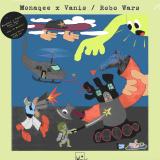
Monaqee are multi instrumentalist / pianist Bencze Molnar and producer Jules Hiero.
Vanis is a bassist based in Budapest, deeply rooted in the city’s vibrant underground culture.
Bencze and Vanis are members of the jazz fusion group Jazzbois.
Being rooted in the underground hip hop and jazz scenes,the artists started this project to create a distinct sound, blending jazz, hip hop and lofi elements in a sophisticated way, that stands out from the crowd.
The only feature on the Album is from Domenico Lancellotti, a pioneer of Brazilian beat culture.
Robo Wars is a project born from three years of spontaneous sessions in Budapest. Over this time, the trio captured their best moments, weaving them into a smooth tapestry that blends jazztronica, hip-hop, and lofi beats into an analogue experience. Driven by electric bass, drum machines, and an arsenal of synthesizers including the Prophet, Juno, Moog, and the new UDO designs, Robo Wars feels alive, raw, and deeply musical.
Each track breathes improvisation:
Most of the material was captured live during jam sessions, with only minimal overdubs. The result is a project that preserves the spirit of freestyle creativity, much like a true jazz performance, later sculpted into structured songs by Jules Hiero.
The collaboration between Luca Trevisi (LTJ Xperience) and Christian Lisi continues.
The Bolognese DJ and producer is known in the Dance world for his Funky and Nu Disco sounds, including tracks
like "I Don't Want This Groove To Ever End" and "Bad Side," featuring American singer Anduze.
He recently composed the soundtrack for the documentary about the legendary Bologna nightclub Kinki (where he
was a resident for years), and the upcoming double vinyl album, "Original Soundtrack: The Secrets Of The
Dancefloor." For their second release, Trevisi and multi-instrumentalist and producer Christian Lisi are joined on
vocals by Danny Losito, lead singer of the Double Dee (Found Love) project, and Kaigo, an artist who has been releasing international House, Soul, and Funk projects under his own name for years.
"Keep It Real" is the result: a visceral and essential soul funk track with a driving groove that perfectly complements
Danny's voice.
The 180-gram vinyl mix is released in a limited, numbered edition of 300 copies.
Globally adored Spanish techno protagonist Indira Paganotto releases her debut album 'Arte Como Amante' via ARTCORE / PIAS Électronique. It brings together thirteen fearless tracks that stretch way beyond any one genre. It's high-pressure, high-energy, and deeply personal. A full-spectrum dive into the world of one of electronic music's most dynamic artists.
It follows a huge 2025. She debuted at Coachella. Played her first ever b2bs with Armin van Buuren at Sonar and Sara Landry at EXIT. She became the first woman to close Monegros. She held down her first Club Room residency at Hï Ibiza for 14 weeks, and even launched her own creative studio space, ARTOPIA, in Santa Eulalia. Her label ARTCORE the home of this special album also took their presence in the dance world to the next level with their own curated stages at Tomorrowland, Mysteryland and Dreambeach.
Now, she's telling her story. The title 'Arte Como Amante' means 'art as a lover'. For Indira, that's not just a phrase. It's her life. This album has been 14 years in the making. It began in Madrid in 2012, when she was 19, and was completed in 2024. She waited for the right moment. She lived life. She collected experiences. She built the sound. "I know to take 14 years to make an album seems crazy," she says, "but without living those experiences, how could I have made the music about them?"
The result is a diverse, adrenaline-fuelled body of work that hits hard and moves deep.
he all-time house music legend Roger Sanchez drops his brand new studio album ‘Spectrum’ - his first in twenty years. Previewed by three high-energy bangers - ‘Grinnin’ (with Fedde LeGrand), ‘Come My Way’ and ‘Temptation’ (with Low Steppa, featuring Ragdoll) - the record features the new focus track ‘How Do We Say Goodbye’, a collab with Karen Harding.
The globally celebrated and Grammy-winning DJ, producer and label head has been working on the album for years, much of it during his time in Shoreditch which has informed its euphoric UK summer sonic influences. But its diverse tracks reflect a spectrum of sounds, from pulsating club tracks to dancefloor fillers, through to more emotional moments and atmospheric elements. Lyrically it’s also the result of translating his personal experiences into song.
Roger says, “I’ve been working on this for the past six years, so it’s definitely a labour of love. During that time I got the chance to travel around the world and work with some amazing vocalists and songwriters to help me bring this project to life. I’ve got flavours from the UK, Spain, the US - all of this is part of the spectrum for. This project is about music and frequencies and light: so everything from the light to the soulful to the club-ready infrared, the emotionally-weighted ultraviolet. That’s what ‘Spectrum’ is all about for me.”
The new focus track ‘How Do We Say Goodbye’ was created with the topline extraordinaire and always in-demand collaborator Karen Harding, whose all-star credits include work with MNEK, Armand Van Helden, Rudimental, Wilkinson and many more. It’s a massive highlight of the album, with Karen’s soaring vocal class bringing both an irresistible hook and a touching sense of nostalgia, while Roger’s dynamic production ascends from a trance-like ambience into an electrifying drop.
Beyond the singles, ‘Spectrum’ also features a diverse array of other talents spanning multiple genres and nationalities. These include Melanic C, Kele Le Roc, Chico Castillo, Kelli-Leigh, Carnao Beats, Donae’O and more. It’s a guestlist which lives up to the anticipation for the record.
‘SPECTRUM’ is available as a special 3LP limited-edition pressed on red transparent vinyl.
Uncompromising Italian DJ/producer The Southern makes his vinyl debut on Mutual Rytm's sub-label, Spectra, with remixes from Alarico, Temudo and Sciahri. An EP marking an impressive label debut, Carmine Portarulo, aka The Southern, lands on Mutual Rytm’s sub- label Spectra with a powerful showcase of his much-loved sound. With the lead track featuring as one of label head SHDW's most requested IDs of the year so far, and packaged alongside outstanding remixes by close label associates Alarico, Temudo and Sciahri, the EP comes having established himself with a sound rooted in old school value and pure techno, favouring energy and authenticity over hype. The track’s backstory comes from the moment Carmine and his partner found out they were expecting a child and went for their first ultrasound appointment. Overwhelmed by the emotion of the moment and the beauty of what nature is capable of, he returned home and poured those feelings into the music. The result, ‘Ultrasound’, is an anthemic, punchy techno cut with euphoric energy rising up through the synths and its catchy lead melody. Joyful melodies sparkle amid vocal groans, adding a raw emotional pull as the warm, driving drums march on. Berlin-based artist Alarico is the first to remix on his return to the label, and his ‘Sad Mix’ has a more melancholic mood, with dark chords and tightly programmed drums that bring lo-key funk. Hayes Collective founder Temudo also returns and flips the vibe on his ‘Neuro Interpretation’ with a more psyched-out, twisted tune featuring trippy synths and booming drums for peak-time impact. Italo-Iranian Sublunar Records head Sciahri then drops his trance- inducing, hypotonic ‘Tunnel Vision Mix’, followed by two digital bonuses: ‘The Stripped Mix’, a bouncy workout with futuristic melodies, and Temudo’s ‘Neuro Interpretation 2’, which is raw, textured, and dark.
Two stone cold classics right here from the Roy Ayers masterminded RAMP, taken from the holy grail album Come Into Knowledge. Sampled the world over, influentially positive and as prized as they get, South Street’s new sub-label South Street Soul couldn’t have picked a more perfect double header to reissue as their inaugural release.
Although the RAMP acronym Roy Ayers Music Productions bared Ayers’ name, he did not perform with the Ohio band instead writing, arranging and producing the tracks alongside Edwin Birdsong and also William Allen. Drafting in some of the best session musicians in the game, from vocalists Sibel Thrasher and Sharon Matthews, The Spinners drummer John Manuel, guitarist Landy Shores and Cincinnati bass maestro Nate White, the result was pure ethereal excellence.
Rare groove at its finest ‘Daylight’ is one of the standout cuts from RAMP’s only album - soulful, sumptuous and laced with a celestial touch that takes this track to another realm of conscious. A track that was famously sampled by A Tribe Called Quest for their hit ‘Bonita Applebum’ and J Dilla’s remix of Common – Come Close.
On the B side, a Roy Ayer’s masterpiece 'Everybody Loves The Sunshine' given the RAMP revamp, an end of the night masterpiece, a hazed-out dreamer - just downright blissful grooves from start to finish. Ready-made to ride out into the sunset with.
Hit the North is a DJs’ movement
Not a label. Not a revival. A discipline.
Over the years, the collective travelled across multiple states in the US and parts of the UK, digging deep into private collections, basements, garages, storage rooms and forgotten boxes.
They weren’t looking for classics.
They weren’t looking for hits.
They were looking for attempts.
Artists chasing something bigger than themselves.
Trying to sound like Motown.
Trying to sound like Detroit.
Trying to sound like the records that saved them.
Many of them dreamed — at best — of becoming a one hit wonder.
Most never got that far.
Some never crossed a state line.
Some never crossed the street at the end of their block.
Some never played outside their hometown.
Some never played at all.
What they left behind were fragments.
Raw versions.
Unfinished recordings.
Alternate takes.
Rejected mixes.
Test pressings.
Acetates passed quietly from hand to hand.
Sometimes with real credits.
Sometimes with fake ones.
Sometimes with handwritten labels leading nowhere.
Titles that didn’t match the music.
Stories that changed every time you asked.
Often, the trail simply disappeared.
What remained was intention.
Energy.
Urgency.
Hope pressed into sound.
So the collective worked on it.
They edited certain parts.
Extended others.
Cut what didn’t serve the floor.
Not to modernise.
Not to rewrite history.
But to unlock the power that was already there.
The result sounds like Northern Soul pushed to its breaking point.
Fast. Physical. Emotional.
Built for movement.
Some circulated privately.
Others were never pressed at all.
Recorded in personal studios, borrowed studios, friends’ rooms, temporary spaces.
Always outside the system.
This is not nostalgia.
This is unfinished business.
Rebecca Goldberg presents the release of her debut full-length album, Night City, a deeply personal and expansive body of work that reflects a decade of artistic growth, exploration, and connection. Produced and arranged by Goldberg, this album captures the evolution of her sound through years of practice, travel, collaboration and mentorship.
Including 12 tracks across a 2x LP, Night City draws from the rich lineage of Detroit electronic music. Goldberg cites influences from dystopian cityscapes and futurism to space exploration and the possibilities of technology. The result is a forward-thinking genre-spanning collection.
The album features two notable collaborations: “444,” created with Jnn Aprl and recorded in her studio in Seoul, South Korea, and “Tunnel,” featuring Detroit techno artist Tiptonaires. Each collaboration adds a distinct voice and texture to the record’s immersive sonic world.
Night City was mixed and mastered by Andy Toth, with album artwork illustrated by Mark Sarmel. A limited run of vinyl is available for preorder now, pressed at Archer Record Pressing Co. in Detroit. The album will be released on Detroit Underground.
At its core, Night City is an offering shaped by experience and guided by curiosity, marking a significant milestone in Rebecca Goldberg’s musical journey.
Belgian label De:tuned once again dives into the innovative world of Luke Vibert, reviving his legendary Plug moniker with 'Variety Magic', the first new Plug album in nearly 15 years.
For this release, Vibert unearthed and hand-picked a collection of previously unreleased jungle and drum & bass gems, sourced straight from his original mid-90s DAT archive. The result is an 11-track ride through the raw energy and playful experimentation that made his early Plug work so distinctive, all infused with Vibert's unmistakable funk and mischievous flair.
Variety Magic is vibrant, bold, and delightfully off-kilter. A colourful homage to an iconic era, crafted for both deep listeners and the dancefloor. Stay tuned!
Visualised by the Variety Magi. Stencil Art by Pablo Fiasco and rewired by Openmind. Mastered by Matt Colton at Metropolis. A separate digital release will also be available at the usual digital shops.
Belgian label De:tuned once again dives into the innovative world of Luke Vibert, reviving his legendary Plug moniker with 'Variety Magic', the first new Plug album in nearly 15 years.
For this release, Vibert unearthed and hand-picked a collection of previously unreleased jungle and drum & bass gems, sourced straight from his original mid-90s DAT archive. The result is an 11-track ride through the raw energy and playful experimentation that made his early Plug work so distinctive, all infused with Vibert's unmistakable funk and mischievous flair.
Variety Magic is vibrant, bold, and delightfully off-kilter. A colourful homage to an iconic era, crafted for both deep listeners and the dancefloor. Stay tuned!
Visualised by the Variety Magi. Stencil Art by Pablo Fiasco and rewired by Openmind. Mastered by Matt Colton at Metropolis. A separate digital release will also be available at the usual digital shops.
Originally released by Time Capsule in 2021 and long out of print, Stories From Another Time 1982-1988 returns in an upgraded edition following years of demand and rising collector prices on the secondhand market. Widely regarded as a modern cult classic, Mário Rui Silva’s visionary recordings blend acoustic folk, cinematic soul, spiritual jazz and saudade-filled Lusophone rhythm into a deeply timeless and universal work that transcends genre and geography.
This new edition features half-speed mastering cut at Metropolis alongside an expanded 4-page insert with a tribute essay and unseen photographs following Silva’s passing in 2024.
The roots of Angolan popular music explored in the meticulous guitar studies of Mário Rui Silva. For fans of Naná Vasconcelos, John Hassell’s Fourth World ambient, Eduardo Mateo’s psychedelic folk and Cameroonian electronic music visionary Francis Bebey.
Whether on mesmerising acoustic ballads or hypnotic groove-led tracks, the music of Angolan guitarist, researcher and intellectual Mário Rui Silva has a beguiling, melancholy quality, woven into the dynamics of his deft guitar playing.Rhythmically complex yet supremely effortless, the music collected here stems from three albums Mário released in Luanda in the 1980s that reflect his diverse range of influences, from traditional Angolan and West African rhythms to European jazz and classical instrumentation. It is united by a sense of low-key beauty, whether on the chugging opener ‘Kazum-zum-zum’, the jazz-funk keys of ‘Lembrança Dum Velho’, or the twinkling, late-night poly-rhythms of ‘Kizomba Kya Kisanji’.
Born in Luanda, Angola in 1953, Mário dedicated his life to Angolan popular music. His fifty-year career has seen him live between Angola and Europe, rub shoulders with Cameroonian musicians Francis Bebey and Ewanjé, record the seminal album Angola ’72 with fellow Angolan musician Bonga, and draw influence from Brazilian guitarist Baden Powell.
It was the teaching of Angolan legend and Ngola Ritmos co-founder Liceu Vieira Dias that Mário gained a technical, political and spiritual understanding of Angolan musical culture. In the hands of Liceu, the traditional Angolan semba and kazukuta rhythms of the 1940s and ‘50s helped create an emancipatory sense of national pride and collective agency that awakened its listeners to the racism and tyranny of colonial rule, underpinning the country’s push for independence in the process.
What might sound like the intonations of Brazilian influence are what Mário attributes to the “African rhythms taken by the slaves which gave rise to other musical cultures” around the globe. Instead, this music emerged from a collective instinct to assert a cosmopolitan Angolan identity free from the patronising falsehoods of Lusotropicalism.
“There was a need within me to contribute in doing new things,” Mário describes. “In the sense of solidifying the music of Angola that was the result of the meeting of two cultures, and wanting to value the Angolan part whenever possible.”A selection from Mário’s three 1980s albums, Sung’Ali (1982), Tunapenda Afrika (1985) and Koizas dum Outru Tempu (1988) have been compiled here as a 2xLP release by Time Capsule’s Sam Jacob and Kay Suzuki. Together, they provide a snapshot of one man’s journey to the core of his nation’s music, charged with the search for a culture uprooted by colonialism
ALERT: BIG 90s ITALIAN RAVE COMP - a lot of very in demand tunes on here.
Navigators
Franco Falsini and the Interactive Test Universe
There are musicians who follow their time.
And then there are those who seem to move along a different trajectory—like navigators crossing sonic eras without ever truly belonging to any one of them. The story of Franco Falsini belongs to the latter. It is a story that begins long before raves, before techno, before the word “electronic” had even become a recognizable musical genre. A story that moves across continents, technologies, and sonic visions, eventually arriving at a small creative laboratory born in Italy in the early 1990s: Interactive Test. This compilation is a fragment of that universe. But as often happens with the hidden histories of music, understanding it requires going back. Far back.
The Beginning: Machines, Tape and Space
In the late 1960s Franco Falsini leaves Italy and moves to the United States. It is not merely a geographical journey—it is also a journey into a new idea of music. At the time, synthesizers are only just emerging from research laboratories. Multitrack tape recorders allow musicians to build entire sonic worlds on their own. Technology is still far from standardized: every studio is almost an experimental workshop. In Virginia, Falsini builds one of his own. Among cables, oscillators, electric guitars and reels of magnetic tape, a kind of music begins to take shape that resembles nothing else being made at the time. It is not simply rock, and it is not yet truly electronic. It moves somewhere in the space between the two. Out of these explorations emerges Sensations' Fix, the project through which Falsini releases a series of albums during the 1970s. Records that seem to come from a parallel dimension: cosmic landscapes, electronically treated guitars, synthesizers drifting like satellites. Many years later those albums would be rediscovered as visionary works. But at the time they were simply the result of relentless curiosity. A curiosity that would never fade.
The City That Never Sleeps
In the 1980s Falsini’s trajectory leads him to New York. The city is a sonic organism in constant transformation. In its clubs and recording studios something entirely new is beginning to take shape: music built from drum machines, sequencers, and samplers, created for the body before the living room. It is the dawn of modern dance culture. Falsini works as a sound engineer, producer and experimenter. From close range he observes electronic music transforming into a global language. Machines become more accessible, computers begin entering studios, and rhythm takes on an increasingly central role. Yet even in this phase Falsini does not simply follow what is happening. He absorbs. Observes. Reimagines. When he eventually returns to Italy, he brings back not only technical experience but also a clear vision: the conviction that electronic music is an open space, a territory still waiting to be explored.
Tuscany, Early 1990s
At the beginning of the 1990s something is happening in Italy as well. In clubs, abandoned industrial warehouses and clandestine parties, a new scene is beginning to form. It is rave culture: a spontaneous movement bringing together DJs, producers and listeners in a collective experience driven by rhythm, technology, and creative freedom. It is within this context that Franco Falsini, together with his brother Riccardo, creates Interactive Test.
The name almost sounds like a scientific experiment. In many ways, it is. Interactive Test does not emerge as a traditional record label. It begins as a laboratory—a place where ideas, sounds and musical identities can be tested and explored. Around the Falsini studio in Tuscany a small constellation of artists and DJs begins to gather, helping to shape the sound of Italy’s emerging electronic scene. Among them are Andrea Giuditta, Francesco Farfa, Gabry Fasano, Roby Mastelloni, Roby J and many others. Each brings a different musical sensibility. But they all share the same intuition: electronic music is not a genre. It is a language.
The Laboratory of Identities
One of the most fascinating aspects of the Interactive Test universe is its constant play with identity. Franco Falsini releases music under several different names: Open Space, Youth Wave, Agent Fylfoyt, Man Myth Magic. These are not simply pseudonyms.
They are different sonic perspectives, as if each project were a window opening onto a parallel musical universe. Open Space, for example, explores more atmospheric and visionary territories. Youth Wave moves between electronic groove and club-oriented rhythms. Other projects experiment with digital psychedelia or hypnotic techno textures. Interactive Test becomes something more than a label. it becomes an ecosystem.
Domestic Machines, Infinite Worlds
Looking back today at the technology used in those productions, one might almost smile. Many tracks were created on Amiga computers, MIDI sequencers and analog synthesizers wired together in home studios—tools that appear modest when compared to today’s digital possibilities.
Yet precisely these limitations became a creative force. Every sound had to be built, shaped and reinvented. Sequences developed slowly, almost like living organisms. The tracks did not always follow traditional dance music structures; often they felt like genuine sonic journeys. Music built from space.
A Hidden Constellation
Many of the records released by Interactive Test in the 1990s remained for years almost invisible objects, circulating quietly among DJs, collectors, and devoted listeners. Yet it is precisely this underground existence that helped preserve them. Listening again today, one perceives something rare: the feeling of music that does not fully belong to its own time. Music suspended between different eras. Perhaps because it comes from a vision that both precedes and transcends trends.
Continuing the Journey
Looking at Franco Falsini’s entire path—from the electronic psychedelia of Sensations’ Fix to the rave culture of the 1990s—a surprisingly coherent line emerges.
A line defined by exploration.
Each project, each pseudonym, each record appears as a new route within the same great sonic voyage.
Interactive Test was one of its stations.
A laboratory.
A community.
A creative platform.
This compilation gathers some of its traces.
Not as a simple archive of the past, but as a map of a musical territory that continues to expand even today.
Following the release of Chris Liebing's 'Evolver' album this spring, German duo FJAAK rework 'Higher Things' which appeared on the full-length, releasing via CLR on 29th May 2026. Long established as a formidable force within Techno, FJAAK are known for crafting high-impact, floor-focused tracks, often via their self-titled imprint, with the Berlin artists now joining a star-studded cast on Chris Liebing's latest full-length, including photographer and film director Anton Corbijn on photography, and collaborations with Charlotte de Witte, Luke Slater, The Advent, Speedy J, Terence Fixmer, Pascal Gabriel, and
Daniel Miller.
Their remix reshapes 'Higher Things' around a rattling dub techno framework, where molten chords soften the weight of mechanical kicks while resonant stabs and swelling textures steadily intensify. The result is a hypnotic yet forceful reimagining, balancing atmospheric depth with anthemic, warehouse-ready pressure.
The original version of Chris Liebing's 'Higher Things' appears on his debut solo LP, 'Evolver', released 27th March 2026 on CLR. Marking a distillation of over three decades at Techno's core, the album pairs introspective depth with immediate, floor-driven impact, bringing together contributions from the likes of Luke Slater, Charlotte de Witte, Speedy J and The Advent, while ultimately remaining rooted in Liebing's singular vision, channeling the raw, industrial energy of classic club spaces into a refined, forward-facing long player.
Borrowing from the melody of Rah Band’s “Electric Fling”, Stefano Breda’s cover version completely re-invents the theme into what came to be a “Afro Cosmic” classic. Not your average Italo Disco sound, the downtempo chuggy beat quickly got picked up by pioneering jocks in the cosmic scene. With plenty of silence in between transients putting the spotlight on the multiple percussive elements employed by the skilful drum machine techniques of Breda along with trippy electric wind instrument sounds, resulting in an overall aesthetic of highly unforgettable mediterranean dreaminess, take a deep dive into Breda’s instrumental bliss. This release is remastered and further embellished with yet another previously unreleased mix of “Electric Fling” which was recently alchemized by the artist himself — the “Long Afro Version” which goes in the bonus beat realm with another study in his percussive generosities.
A record that feels introspective and timeless, balancing dancefloor functionality. With Early Reflections Pt. 2, Insect O. continues the journey with the same quiet confidence and emotional depth that made the first chapter so compelling. Once again rooted in Dub Techno and Dub House, this second installment feels like a natural continuation, deeper in mood, even more immersive in detail, and beautifully refined in its execution. The result is a record that feels introspective and timeless, balancing dancefloor functionality with a deeply emotive listening experience. Insect O. proves once again that true depth does not come from excess, but from restraint, sensitivity and a strong understanding of space and motion.
Kercha’s debut album ‘Open The Door’ arrives this April via DNO Records. The Black Sea artist’s mystical, disorienting style has set the tone for the label since he dropped the inaugural release six years ago. Now, across 16 tracks — including collabs with Mystic State, Congi, NST, Khromi and Finnoh — his smoky sampledelic dubstep is tighter, heavier, and more curious than ever, with a new sense of danger and bubbling rage that feels fit for our chaotic times.
Themes of movement and change course through the LP. On the opening gambit ‘A Path Into The Unknown’, twinkling arpeggios emerge from the gloom like stars lighting the way. Tracks like the eponymous ‘Open The Door’ and ‘Mind Extraction’ deliver that classic Kercha sound, where left-field samples dart in at right angles. ‘Dangerous Road’ weaves between the call and response action of grotty stabs and devilish subs. ‘Take A Break’, featuring Mystic State, goes on the attack with searing acid. ‘Can’t Wait For Today’, though lethargic in its pace, sees San Francisco-based rapper Finnoh deliver stream-of-consciousness bars that skewer our present and nudge us to revolution.
Work took place over the course of several years, during which Kercha relocated with his family from Russia to Georgia, where he now resides in the capital, Tbilisi. “Sometimes I wrote music while travelling on a bus, sometimes late at night while my family was asleep, sometimes just sitting on the grass in a park, and of course in my home studio as well,” he says. “By the time the album was finished, it included music from different periods, and it may vary in sound and concept.”
Any major upheaval in life will result in moments of hardship, but also hope. Both can be found throughout ‘Open The Door’. There’s times when the darkness threatens to envelope everything: during the cold, crackling ‘Disclosed’ and the eerie, dystopian ‘Infection Of Lies’; on ‘Trigger Activation’, with its grunting lows and broken glass hook, and ‘Ballistics’, where a wall of sub-bass is pierced by shrapnel stabs.
The balancing light comes on ‘4 AM’, featuring Nottingham duo Congi, when clashing swords and cinematic strings, meet a soft Rhodes piano — the juxtaposition between heavy low-end and floaty keys and vox reflecting those moments of transcendence often found in the early hours. From the injection of garage energy on ‘Bubs’, with Edinburgh’s Khromi. And on with ‘My Feeling’, featuring South Russian vocalist NST, which closes the album on a deep but expansive note, bookending the experience with more starlight synth tones.
“It’s a reflection of my life journey and the changes connected with emigration and overcoming various difficulties,” explains Kercha. “This period means a lot to me, which is why the album includes tracks from the time of preparing to leave up to adapting to a new country.”
Still, he wants listeners to be able to derive their own understanding. “I think the essence lies in the ability to contemplate, not in any predetermined meaning,” he says. “I can only say one thing: thank you for appreciating what I do and for your support. I hope it inspires you to make the same firm decisions to change for the better as it did for me.”
Out via 4 x 12” vinyl, ‘Open The Door’ is a captivating artistic statement, showcasing the journey of an artist with a truly original signature sound — a rarity that should be treasured and celebrated.
Rhythms of postmodern realism at the very bottom of the DNO.
Danish producer Kasper Bjørke returns with a new release on Tropical Animals, the “Veri/Gliss” EP a work that fully captures his signature blend of cinematic depth, refined production, and forward-thinking electronic aesthetics.
“Veri” opens the EP as a richly layered and immersive experience. Built around an evolving tapestry of textures, the track unfolds through pulsating synths, shifting sonic details, and a steady yet powerful rhythm. The result is a truly intergalactic journey, where each element seems to orbit around a constantly transforming emotional core. This is Bjørke at his most visionary-bridging club functionality with intricate sound design in a hypnotic and expansive narrative.
On remix duties, label head Ricardo Baez reinterprets “Veri” with a sharper, more direct approach. Stripping back the original’s layered atmospheres, he delivers a driving electro version that’s lean, tense, and fully focused on the dancefloor. With its tight groove and immediate impact, the remix is built for peak-time energy and club intensity.
On the flip side, “Gliss” reveals a more intimate and emotive dimension of Bjørke’s sound. A modern electronic ballad, the track blends sensual rhythms with delicate, suspended melodies. Its subtle yet captivating groove carries the listener to an unknown planet, where everything moves in sync, locked into the same pulse and flow. It’s a piece that radiates both mystery and warmth, showcasing Bjørke’s ability to craft deeply atmospheric yet rhythmically engaging compositions.
With the “Veri/Gliss” EP, Kasper Bjørke and Tropical Animals reinforce a shared artistic vision where sonic exploration meets club-ready precision, balancing introspection and dancefloor energy, cosmic textures and physical groove.
Dario Rossi approaches electronic music like few others. His work as a percussionist has brought his unique rhythmic abilities to audiences around the globe. Born in Italy, Rossi combined percussion with samplers and synthesizers. His energy and talent have allowed these machines to be incorporated into his distinctive palette with very special results. 07Sep83 is his Bordello debut, with the title piece opening the four tracker. Beats cascade as analogue warmth laps the shore. Slow with a magnetic groove, elements of italo, wave and synth-pop intertwine to create a clean, bright sound that is at once familiar and totally unique.
Vocals arrive with “We’ll Meet Again.” Tempos rise while keys are emboldened by rich guitar strings. Lyrics counter with a melancholic tone that shifts into hope and fortified belief as melodies rise ever higher. The flip is “Lost.” Sharp drum patterns support notes that hark back to the majesty of Bobby O, the live sax by Augusto Pallocca and disco glory combining in this journey through genres. “Beat the Devil” closes. Sizzling from the outset, snares roll and snap. Rossi’s percussive prowess is on full display as synthlines flow over rhythmic ripples to the subtle and soulful strings that bring down the curtain.
Check The Description Before Asking For A Track ID is a thoughtfully curated four-track journey through modern deep tech house, balancing forward-thinking sound design with emotional depth and dancefloor functionality. The release unfolds across two distinct yet complementary sides, guiding the listener through evolving textures, moods, and states of energy.
On Side A, A1. Overt – Annular and A2. Third Echo – 31th Session introduce a spacious and immersive atmosphere. Built around shimmering arpeggios, airy melodies, and fluid progression, both tracks explore a subtle interplay between progressive motion, trance-like elements, and dub-infused textures. The result is a weightless yet driving experience — refined, hypnotic, and perfectly balanced for setting a tone that feels both futuristic and deeply engaging.
The B-side shifts into more introspective territory. B1. Eric Louis – Grooving In The Future and B2. Severin – Shiti bring a melancholic edge, focusing on emotive melodies and transitional energy. These tracks are crafted for pivotal moments within a set — where the atmosphere deepens, emotions unfold, and the narrative takes a new direction. Warm, bouncy grooves intertwine with cooler, more restrained tones, creating a contrast that feels both elegant and expressive.
Spanning a wide emotional and rhythmic spectrum, NRP006 is a versatile tool for selectors — designed to navigate the subtle shifts of a dancefloor with precision, intention, and depth.
NOREPRESS is a division of MixCult Records. Limited Edition.
Like a meteor striking earth, two forces hit each other. Merkelbach and Nathan Homan found each other in a shared vision in music, and this is the reason they’ve started the label Beau Brummel. Combine the two and you get the alias Merkoman. If you were to take a look at both of their agendas, you’d see Thursday crossed off because that’s Brummel Day. After two years of Thursday evening Brummel sessions, a big vault of music has been filled. The result is The Story of Brooks Pipe, a two-part story of a refreshing new sound that only Merkoman can achieve. In Part 1 you’ll find four tracks strictly made for all sorts of dance floors. An additional injection of creative artwork was given by Sjeng Schupp.
Ampoule's Pub returns with a fresh remaster of the classic 'Summer' and a brand new track titled 'The Fragile Root'
'Summer' was originally released 20 years ago on the Vertical Form label - a result of a multitude of completely live and improvised studio sessions, that gently swell and evolve over the tracks 16 minutes.
'Fragile Root' is a brand new track, think vintage idm - intricate rhythms and melodies crossed with massive dub chords.
LIMITED TO 150 COPIES! 2 x 12" Black Vinyl w/ Gold Foil Embossed Cover, shrink wrapped.
‘Elevation’ is album eleven from High Focus Records founder and 1/4 of The Four Owls Fliptrix.
The latest instalment in a formidable run sees the lyricist further his vision of the world in the hope of elevating the collective mind and spirit of both artist and listener across 19-tracks.
Having worked with Forest DLG in some capacity across all of his records over the past fifteen years, from mixing and mastering, but also collaborating on multiple tracks as rapper / producer, it is surprising that it took so long for the pair to come together on a full-length collaborative project.
‘Elevation’ is that record.
Fliptrix reached out to Forest with a view to creating something completely different from his previous boom bap heavy outing ‘Dragonfly’, he is always looking to advance his craft and take things higher, and after Forest responded with a pack of 70+ instrumentals the direction of travel became crystal clear. The result is an album designed to lift the listener into a higher state of consciousness and trigger conversations about the state of the world, in the hope of enacting positive change during tumultuous times.
Fliptrix’s vision and Forest DLG’s style feel perfectly aligned. The album is truly collaborative; Forest going away and creating the artwork inspired by Fliptrix’s otherworldly experiences with the Shipibo tribe in the rainforests of Peru; from the single covers, to the album cover and merchandise as Fliptrix focussed on writing.
Having worked with all the greats in the UK hip hop scene, Fliptrix actively sought out new energies on ‘Elevation’, especially when it comes to the album features. Jungle forefather General Levy on lead single ‘ENERGY! ENERGY! ENERGY!’ Grime legend Frisco on ‘Visionaries’, Ayah Marar on ‘Transform’, Da Flyy Hooligan, Kamakaze, Coops, and a 19-strong HF posse cut in the shape of ‘Dangerous’ make this album a must-listen for anyone looking to elevate.
Balancing glitch-pop and contemporary piano, the Belgian pianist explores the edges of her voice, language and twisted electronica
The Belgian pianist and producer maya dhondt releases a new album titled 'wow, x', marking her debut solo album under her own name. Navigating between bedroom glitch-pop and contemporary piano, she presents sounds of alienating beauty.
The album ‘wow, x’ will be released on September 13 on vinyl and all digital platforms via VIERNULVIER Records.
“I find beauty in the uncomfortable and disorienting" - maya dhont
The first single, 'desire,' is a mutated synth-pop track that gets under the skin. The song centralizes longing for something you don't know (yet). Perhaps it's the smell of damp earth, which can be both pleasant and unsettling? The single is now available on all streaming platforms and comes with a schizophrenic video by Sakis Brönnimann.
The first release show is scheduled for Saturday, October 5, at De Koer, Ghent.
More shows will be announced soon.
A postmodern cramp, that's how one could describe the music of pianist and producer maya dhondt. Her music is an intuitive and a never ending exploration that has the potential to be and become a multitude of things at once.
On her first solo album under her own name, 'wow, x,' she presents 10 varied tracks in which she creates equally idiosyncratic sound worlds. She takes the liberty to endlessly experiment with vocals, piano, and a mix of distorted lo-fi electronic sounds with an open mind. The result is sometimes synthetic and weird, sometimes compellingly beautiful, and always captivating, drawing you into its underlying melody. These intelligently crafted productions are connected by a penchant for alienating beauty: like a warm, but damp cave where it’s pleasant to linger just a little longer. Her original sound moves within a sonic spectrum reminiscent of contemporary artists such as Lolina, Astrid Sonne, claire rousay, aya or Carla Dal Forno.
"What I create never stands alone, it can be many things at once"
If the world were a sculpture garden, maya dhondt eagerly picks from it to draw inspiration from both visual and literary passages as well as personal experiences. Her highly personal bedroom productions are grounded firmly in the world due to philosophical references and politically charged messages. And the world she lives in is being questioned on 'wow, x', as the title refers to "What Or Why?". This is evident in the single 'desire': "What is the thing that matters / to exist / or to know you’re existing?" What does one choose in life: to live in the moment or to live to remember that moment?
In the lyrics on 'wow, x', maya dhondt plays - at times childishly - with language and its boundaries. On 'tip toe tip,' banal wordplay leads to an unexpected confession, and the seemingly simple phrases in 'untitled' conceal hidden life lessons. dhondt's world of words is multilayered and multilingual: Dutch ('kleine cijfers, groot verlies'), English ('desire'), and French ('untitled') are at her disposal. And on the fierce track that is 'minimalinvasiv,' not only she turns to hardstyle, but also to German - a language dear to her due to her Swiss heritage.
Bailen Records presents “Planet Juno EP” by Rene Sandoval, a vinyl release where the swing and energy of tech house define the character of the record.
Raw drum machines and analogue sounds build a direct and functional sound designed for the dancefloor.
There is something cosmic in the momentum of the EP: mechanical rhythms moving with precision, bright sounds expanding into space, and a constant sense of motion. The result is tech house that feels elegant yet physical, deep yet direct.
The energy recalls certain golden moments of European 90s house: hypnotic grooves, warm harmonies and that perfect balance between club functionality and timeless musicality.
French producer Berzingue appears with a remix that pushes the material into a more modern club territory, reinforcing the harmonies of the original track and the overall dynamics of the EP.
Destination Unknown is an EP by Unpronounceable born from an archive of sounds collected between 2019 and 2024—sonic fragments that took shape without a predetermined direction guided only by an open idea in constant transformation. The original track conceived as a “destination unknown” composition developed its own independent identity. However precisely because of its fluid and cross-genre nature Unpronounceable chose not to place it within a traditional EP context instead opening it up to a multiplicity of perspectives by inviting five artists to reinterpret it freely without genre constraints.
The result is an EP that unfolds like an alternative map of the same sonic territory where each remix explores a distinct direction transforming Destination Unknown into a multifaceted and ever-evolving experience.
In Carl Finlow’s remix Destination Unknown takes on a strong cinematic and narrative dimension. Inspired by the title Finlow imagines a mysterious journey toward a futuristic dystopian city turning the track into a kind of electro soundtrack—dark yet ironic rich in character and capable of evoking vivid images and motion.
MANASYt pushes the track toward more physical and ritualistic territories focusing on the dark pads and the more oneiric vocal elements of the original. The result is a hypnotic pulsating tribal-industrial reinterpretation where rhythm and sonic material become central intensifying the track’s most visceral qualities.
With Gay Horror the focus shifts to an emotional and narrative dimension. The vocals are deliberately made elusive and undefined while the structure develops through a slow controlled crescendo that recalls the atmospheres of ’90s trip-hop. This version also reflects a long-standing human and artistic relationship conceived as a story that travels through time and reaches the present day.
Kevin Follet adopts a more conceptual approach overturning the perspective of the original track. Rather than working with its main elements he brings the underlying structures to the foreground transforming what usually remains hidden into the core of his reinterpretation. His remix is elegant and deep balancing sound exploration with a strong attention to songwriting.
Closing the EP is GP The Synth Roller with a radical and highly experimental reinterpretation. The track behaves like an unstable system: parameters shift without warning surfaces lose coherence sudden accelerations collide with moments of arrest. There is no resolution only a sonic condition in constant tension eventually condensing into a dark compact mass.
Taken as a whole Destination Unknown is far more than a simple remix collection: it is a collective exploration of the potential of a single composition. Unpronounceable’s original track and the reinterpretations by Carl Finlow MANASYt Gay Horror Kevin Follet and GP The Synth Roller move across electro techno industrial and experimental territories offering six different perspectives from the same starting point. An open journey with no fixed destination where every detour becomes an integral part of the path.
With Mr. Coconut, Cosmo Dance delivers a four-track EP that strengthens a distinctive sonic identity, blending retro aesthetics, club culture and cinematic sensibility into a cohesive body of work.
The title track unfolds through refined dynamic control. Warm multilayered percussion, textured guitars and a deep yet restrained bassline create an organic groove that evolves gradually rather than relying on obvious drops. The production favors subtle progression and hypnotic growth, resulting in elegant, mature dance music.
Goodbye expands the project’s narrative dimension. Inspired by the atmosphere of Italian ’70s library music, the track represents the protagonist’s theatrical exit from the club — not a melancholic farewell, but a charismatic closing scene. A playful detail emerges when Dandolo (Cosmo Dance’s alter ego) delivers an ironic “cough solo” precisely as an off-voice introduces Mr. Coconut, adding a self-aware cinematic twist.
Dub nuts explores deeper dub-informed territory. Built through layering and subtraction, the track showcases careful spatial control and restrained low-end management.
The EP closes with the Coccappella Version, a stripped-down reinterpretation of the title track focused solely on percussion and voice, revealing the rhythmic backbone of the project.
Mr. Coconut is a refined balance between club functionality and cinematic storytelling — controlled, elegant and unmistakably personal. It’s not about peak-time fireworks — it’s about atmosphere, detail and identity.
Selekt Wax returns with its second vinyl offering, shifting the lens from introspection toward motion. Where its predecessor explored stillness and space, Varginha 96 leans into rhythm with a more fluid, tactile energy.
Loopedeville works within a minimal framework but pushes it toward something more animated. Groove takes the lead, while detail reveals itself gradually. The result is playful but controlled, built for movement while still carrying depth beneath the surface.
Inspired by the 1996 Varginha incident in Brazil, the record carries a subtle sense of the otherworldly. Not in a literal sense, but in texture. Unfamiliar tones, slightly off center moments, and elements that feel just outside of reach.
Etched on the sleeve, a poem sets the tone:
the analog moment is now
but, how? release
free form feelings finding
new places in yourself
a sort of synthesis
of interpretations
crash & collide
into the infinite groove of reality
but, is anything really real?
A1 – Varginha 96
A breakbeat driven opener centered on a looping vocal from the Varginha ‘96 incident. Off kilter synth textures circle the groove, giving it a subtle, otherworldly feel. Simple on the surface, with depth that reveals itself over time.
A2 – Varginha 96 (Ohm Hourani Remix)
Ohm takes it into a more stripped back, hypnotic space. Centered around the same vocal, the track locks into repetition and feel. Hazy, controlled, and built for late hours.
B1 – Thunders in Paradise
A driving groove built on dusty drums and a tightly controlled rhythm. It holds a steady pulse, with understated details and shifting textures giving it quiet depth.
B2 – Never Enough
A fluid, late night groove shaped by Loopedeville’s signature swing. Less driving than the previous cut, but still locked in, with warm tones and an easy bounce that carries through.
As the so-called “Latin boom” becomes a new anchor for hard-swung club sounds, it is crucial to recognize that the region’s musical culture extends far beyond dembow edits and the pop-trap hybrids that have edged into the mainstream. Monterrey-born, New York City-based producer and DJ Delia Beatriz, aka Debit, returns to NAAFI with Potpourri, a generous and kinetic collection of dancefloor-oriented tracks filled with percussive flourishes, squelching 303 basslines, and rhythmic mutations that actively challenge the status quo. Rather than rebuilding “Latin sounds” as a fixed category, the album rethinks their internal logic, tracing the evolution of techno and house in cities like Detroit, Chicago, and New York alongside parallel innovations emerging in Mexico, Colombia, and across the wider Latin world. Positioned on the bridge between Mexico and the US, Potpourri does not seek synthesis as a gesture of smooth fusion, but as a site of disruption.
The album can be heard as a loose follow-up to System (2018), Debit’s NAAFI-released EP that expanded the sonic potential of tribal guarachero through triplet-driven rhythms, industrial pressure, and noisy reconstruction. Potpourri retains guaracha as a structural backbone while drawing further influence from veteran DJ and producer Javier Estrada—who also appeared on System—and particularly from his fast-paced, nonlinear style of mixing. That approach becomes a formal principle here: canonical structures are dismantled, repetition is avoided, and tracks evolve without sacrificing propulsion. Coming after the introspective temporal inquiry of Desaceleradas and the speculative historical acoustics of The Long Count, Potpourri arrives as a deliberate surge of energy. As Beatriz explains: “It’s a manifesto for rethinking form and sound in dance music. By stepping outside traditional structures and embracing the potpourri approach, I’m creating new meaning with familiar rhythms. I’ve also been applying this to my DJ sets, using it as a tool to break free from established norms and explore new narrative possibilities.”
Years in the making, Potpourri imagines an alternate timeline in which the psychedelic squelch of acid—echoing pioneers such as DJ Pierre and Mr. Fingers—and the dub-inflected atmospheres of Basic Channel entered into direct and sustained contact with Latin American club mutations. Those references are legible, but never merely quoted. Instead, they are folded into syncopated hi-hats, overdriven kicks, and unstable arrangements that absorb both the intensity of the parties Beatriz remembers from Monterrey and the abrasive edge she sharpened at DIY noise shows in New England. The result is unmistakably a dancefloor record—heard in tracks as forceful as “Pero like” and the peak-time pressure of “tuvesuerte”—but one saturated with grotesque, psychedelic atmospheres, where sounds dissolve into hoarse croaks, acidic smears, and anxiety-inducing growls. Here, the rave becomes not simply a site of release, but a platform for navigating identity, hybridity, and artistic formation across borders. Moving through peaks and ruptures, Potpourri reveals a party narrative that is not linear but multidimensional.
By folding together the fluidity of DJ culture, the experimental charge of acid, and the rhythmic vitality of guaracha, Potpourri proposes a space of formal and political innovation within Latin America’s rapidly expanding electronic music landscape. It is a record that refuses containment, pushing against the templates through which Latin electronic music is often consumed, and insisting instead on friction, instability, and transformation as generative conditions for the dancefloor.
VA – Paradisi Artificiali brings together four distinct sound compositions, each resisting the urge to resemble the others but united by the way they manipulate perception.
Polygonia crafts shifting rhythmic paths where the groove warps and regenerates in real time, maintaining an organic tension that keeps the body in motion without ever truly settling into place.
Feral operates through subtraction, slowing time and excavating sound’s spatial depth. Its tracks don’t progress so much as they envelop, drawing the listener inward into a layered, introspective space.
Agonis introduces a more unstable, sensory thread, weaving transitions and accumulations that build in stages. Frequencies become tangible matter, and the progression unfolds without ever erupting entirely.
Crossing Avenue weaves these directions together without hardening them, infusing the record with a more rooted, almost ancestral rhythmic element that surfaces in the structure of the patterns and the choice of timbre.
The result isn’t a neat synthesis, but a coexistence. The tracks unfold along a shared line without ever converging, articulating a dynamic balance between tension and release. It’s an album that works through gradual alterations, through subtle slippages in perception, as in “Les Paradis Artificiels”. The point isn’t escape, but intensification. The sound burrows deep, reshaping how things are experienced, until a denser, more ambiguous, more alive reality emerges.
A sonic journey that feels both intimate and expansive, Inigo Lunani drifts between late-night introspection and dancefloor euphoria. The album blends minimal grooves and warm tones into a cohesive narrative that feels alive—constantly evolving, yet grounded in emotion.
Each track unfolds like a fragment of memory: hazy, rhythmic, and slightly surreal. There’s a tension between control and spontaneity, where tight percussive patterns meet playful, almost careless melodies. The result is music that invites movement but rewards deep listening—equally at home in a dark club or through headphones at sunrise.
Inigo Lunani isn’t just about sound; it’s about identity in motion. It captures the feeling of searching, of becoming, of existing somewhere between who you were and who you’re about to be.
Following their 2023 LP Presents, Nathan Nelson's American Cream Band bring the Twin City heat back to Quindi with an album rooted in duality. From the yin and yang party-starting A side and meditative B side to the dual-attack boy-girl vocals, the nature of opposites and equals steer the expansive, artful strain of rock n' roll that spill out of this wholly unique Minnesotan export. For the ever intriguing Quindi, it's a strident step into Spring after the frosty introspection of Roudi Vagou & Läuten der Seele's Taghelle Nacht. While the world burns and injustice prevails, Twin is a celebration of unity and radical expression-all the more urgent against the backdrop of authoritarian overreach and righteous protest that has whipped through Minneapolis in recent times.
Twin continues Nelson's drive at the helm of American Cream Band to draw in a colourful cast of players to feed into his orgiastic sound, meshing the trance-induction of krautrock with the irrepressible funk of the post-punk-new-wave explosion. But principal among the cast of characters and forming a central tenet to the identity of this album is Liz Buhmann, lead vocalist and a formidable, playful foil to Nelson's own Midwestern twang. Around the electric spark between Buhmann and Nelson, a heavy duty ensemble wrangle guitar, bass, sax, a cornucopia of synths and a battery of percussion into all manner of sonic forms.
The double-sided concept manifests throughout Twin. On 'Call Me' Buhmann sings in French to contrast Nelson's English, while the strident strut of the NYC disco groove is offset by an inherent dreaminess that turns the track into a more cosmic kind of dancefloor workout. 'Ethical Vampire' is a spiky cut with a garage rock patina that spirals into a psychedelic, synth-soaked get-down. 'Don't Burn The House Down' is a loose and limber roller that captures Can at their funkiest along with the hypnotic vibe of other such esteemed long format jammers, but American Cream Band boils that energy into a hook-laden art pop sensibility before a gentle, drawn out landing.
Even the more pensive moments on Twin find space for friction. For all its tender, smoky temperament, 'Leda and the Swan' lets the electric piano and guitar fray at the edges and bleed into the red while Mat Heinrich's tumbling drums lurch with pent-up intensity on the one. 'No Funeral Necessary' skirts around the mellow pools of new age but prefers to let liberally doused Tape Echo tweak out Alex Meffert's honeyed sax inflections and Buhmann and Nelson's disparate sermons.
Nelson describes Twin as "an oppositorum coincidentia" - a reference to the mystical Latin concept of the coincidence of opposites that suggests contradictory ideas 'fall together' in a higher reality. Beyond the sound of the album, this idea also manifests in the cover photography by Sho Nikado and the swans on the LP labels by Autumn Garrington. As freewheeling and wide-open as American Cream Band feels, nothing appears by accident. The end result feels like a nourishing whole - rich with substance and nuance, deep enough to be explored and absorbed yet also so brazen and immediate you can't help but feel its surface charms from the first thrusts of 'The Hive Is Pissed' to the last ripples of 'We're Not So Sinister'.
What happens when the mathematical rigor of Johann Sebastian Bach is stripped of its classical facade? With the album SRDNG x LPZG, the duo AMAS, together with double bassist Frithjof-Martin Grabner, delivers a radical answer on May 15th, 2026. The work does not merely translate Bach’s legacy; it consistently reimagines it within the aesthetics of Minimal, Dub-Techno, and Ambient. The creation of this extraordinary abstraction spanned three years and two geographical poles: the raw isolation of Sardinia and the academic precision of Leipzig.
The project found its origin in the seclusion of Pula, at the southernmost tip of Sardinia. There, AMAS extracted and digitally dissected the rhythmic and tonal essence of 14 selected works by Bach. In a temporary local studio, these minimalist sequences fused with field recordings of the surroundings to form a hypnotic framework of electronic structures. Back in Leipzig, this foundation met Frithjof-Martin Grabner. In an intense session held in a hall of the historic HMT Leipzig, spontaneous improvisations emerged that breathe the spirit of Miles Davis’ approach to "Ascenseur pour l’échafaud": free play based on rudimentary sketches, an intuitive reaction to the material—comparable to Davis’ iconic scoring of silent film images. It is a deliberate prioritization of atmosphere over technical perfection. Grabner utilizes the full spectrum of his instrument, creating sounds that, in post-production, often blur the line between analog depth and synthetic texture.
The result is an organic symbiosis: the vastness of Sardinia (SRDNG) meets the intellectual density of Leipzig (LPZG), while the strictness of the Baroque dissolves into the repetitive energy of Minimal Techno. To do justice to this conceptual ambition, the album will be released in an uncompromisingly audiophile edition. Limited to 200 copies worldwide, the double LP is pressed on 180g vinyl and features a front cover with a special 3D effect, continuing the visual tradition of the AMAS series. An album for listeners who understand Bach as a living origin of modern sound art—and for lovers of electronic music seeking a new, organic soul within the repetitive depth of techno.
Molekül celebrates its 10 year anniversary with its most ambitious release to date. The label brings together 16 tracks from artists who have shaped its DNA over the years. This compilation looks to the future rather than the past and represents the result of a decade of exploration, forming into a sound that is built on multiple influences, raw, peaky and impactful. The release features peak-time cuts from BAUGRUPPE90, Mark Broom or Zisko, alongside a new generation pushing techno forward like KUSS & Sicion, Seigg and Fran LF. It also dives into more hypnotic territories with tracks by JKS or Hemka, and delivers loopy and effective tools for the dancefloor from Mython, as well as a new standout collaboration between Beau Didier, Flits and Isaiah.
After the release of the single “Egal” with singer Geraldine—the two Tuscan producers who met in Berlin—Lorenzo Fortino and Francesco Salvadori strengthen their friendship and musical connection in the studio with their first EP, “Friends Above Berlin,” released on the label Connessioni. The record opens with “Heide” (A1), which drops you straight onto the dancefloor with a blend of minimal house and acid that never lets go, a smooth mental trip full of groove. Next comes “Another Club Dimension” (A2), a track balancing house and techno, where a dominant bassline perfectly drives electronic drums, synthesizers, and ethereal vocals, resulting in a warm, elegant, and decisive sound. Side B opens with “Positive Attitude” (B1), a techno track with references to acid/progressive melodies, building continuously in intensity and emotional impact. The record closes with “Flying Through the City” (B2), where electro and acid sounds merge into a melodic journey with dreamy arrangements, making the track feel suspended beyond music itself, somewhere between past and future.
Sometimes the title of an album tells you everything you need to know. Laurence Pike’s Possible Utopias for Jazz Quintet is like that: The music within represents a search for freedom, potentiality—liberatory strategies that transcend the ego and the solitary, atomized figure.
But in this case, the album title is also a red herring, because there is no jazz quintet here—just Pike, his drums, and his machines, not so much an ersatz ensemble as a purely notional one, a thought experiment equipped with drumsticks, circuitry, and the desire to go beyond hardwired limits.
And the results, strictly speaking, aren’t really jazz, though they incorporate the vocabulary of jazz, along with that of ambient, electronica, and post-rock. They are some other thing, cognizant of genre but never beholden to it. Again, we’re talking about a search for freedom here.
The Sydney-based musician has a long history of coloring outside the lines, not just in his solo recordings—including four albums for the Leaf label between 2018 and 2024—but also in the trio Pivot (later PVT); Szun Waves (alongside saxophonist Jack Wyllie and Border Community’s Luke Abbott); Triosk, which recorded an album with Jan Jelinek in 2003; and even post-punk titans Liars, whom he joined in late 2018.
Of his first album for Balmat, Pike says, “My loose concept was: What does music sound like when the expectations of late capitalism are removed from it? How might a jazz musician from an idealised culture of the future, or even another world, utilise musical language when the conventions of style and marketing are no longer a factor in music making?”
That inquiry, he says, connects to his “guiding principle: that the purpose of music is to access something bigger than the individual, and reveal a sense of possibility and freedom in the world to the listener. To create an understanding that the future can be something other than what we imagined or expect, even unconsciously.”
Heady ideas, but plug into his stream-of-metaconsciousness flow and you may start to intuit what motivates him. There is a deeply lyrical expression in these pieces—in the ruminative piano of opener “Guardians of Memory,” for example—but also a sense of exploded perspective, of ideas approached from more angles than any one mind could dream up. Of a collectivized consciousness, of mycelial networks branching across tone and rhythm and timbre, of ideas articulated in distributed fashion, nodal points dancing across drum heads.
Pike’s imaginary quintet is hardly without precedent; it’s a continuation of concepts floated across Jan Jelinek’s Loop-Finding-Jazz-Records, Burnt Friedman’s many guises, and much of the recombinant improv of the International Anthem roster, not to mention the far corners of ECM’s catalog in the late 1970s and 1980s, which Pike says have been integral to his development since he was a teenager. Possible Utopias for Jazz Quintet is a point in a continuum, a voice in a conversation, a question with no obvious answer: How can the search for otherness in music manifest something true about ourselves?
Music springs eternal. Recognising the enduring power of timeless albums to guide us through life, Forever Records is a reissue series dedicated to rediscovering lost musical treasures from across the spectrum of head-feeding, heart-rending electronic music.
Established by Rush Hour co-founder Christiaan Macdonald and Delsin founder Marsel van der Wielen, Forever Records places heartfelt faith in a carefully curated sequence of seminal, largely forgotten records from disparate eras, scenes and spaces within electronic music history. Tipped towards the mellow and introspective, these are albums that stop time when the needle hits the groove, stirring only when it's time to flip over before you sink back into the experience. That's what albums were always meant to be about, back then, right now, always and forever.
The Release:
Dancing on the wildest edge of the 90s outsider techno zeitgeist while proudly independent of any so-called scene, Ov Biospheres And Sacred Grooves: A Document Ov New Edge Folk Classics is both of its time and out of time. Rooted in the experiments of electronic music pioneers, industrial culture and ethnic music from around the globe while responding to the house and techno explosion, Robbert Heynen, Reinier Brekelmans, Reinoud van den Broek and Tim Freeman's freewheeling masterpiece takes in lush electronica and murky abstraction on its singular voyage through parts unknown.
Forever Records presents an extensive reissue edition of the first 'fully released' Psychick Warriors Ov Gaia album. Originally released in 1992, this is the first time the full, previously CD-only, version of Ov Biospheres and Sacred Grooves will be pressed on vinyl. The original LP and CD artwork from the various editions released in the early 90s has been combined and designed by the band, and the audio has been remastered with their full approval. As well as a new LP edition of the album, there will also be a uniquely numbered, limited edition available housed in a gatefold sleeve that comes with a bonus 10" featuring two previously unreleased tracks.
Press response to Ov Biospheres and Sacred Grooves - A Document Ov New Edge Folk Classics:
“That’s Magick! The Psychick Warriors Ov Gaia are Holland’s best kept secret.”
Sherman, NME, UK 1992
“PWOG’s debut LP is an organic invocation rite — the soundtrack to a new world coming to life, an odyssey. Cross-cultural rhythms, ambiences and environmental samples segue into one another like a fluid relay, and unlike the majority of dance records, it never settles into a routine. It’s always evolving, always unpredictable, an indefinitely religious experience.”
John Selzer, Melody Maker, UK 1992.
"Grown men, who snorted their first ecstasy to this record, stammered with tears in their eyes about divine experiences and the cosmos, man."
Peter Erik Hillenbach, Marabo Magazine, Germany 1992.
Sacred Grooves’ introduces tribal dance music for the mind, body music leaning on the avant garde. Its ripples of sound drift through tranced out ritualistic beats into ambience and serenity resembling something akin to The Orb meeting Klaus Schulze at a brain tuning session.
Sherman, NME, UK 1992
"There's still dance for a moment, in the opening track "The Challenge," then Psychick Warriors roam the earth, where African drummers, tropical sounds, and science-fiction chords have found their place in a spiralling interplay of rhythms and sounds. A captivating, almost magical ritual." Corné Evers, Oor Magazine, Netherlands 1992.
"It's truly astonishing what these Dutchmen have come up with for their first LP. Their roots might explain the enigma, for Psychick Warriors are more in the tradition of Psychic TV than in the desolate temples of techno-house fetishists, to which they are wrongly relegated. Here, chromosomes dance, not instincts." CMK, Tip, Germany 1992.
"The transcendental essence of this album is spread throughout, with musical gravitations emerging unexpectedly from sonic experiments that are sometimes primitive, sometimes
futuristic in intention… But there is always an aura of cosmic magic that constantly puts all the parts involved in conflict and which, upon closer analysis, ends up being the main reason for the final result." Blitz Magazine, Portugal 1992.
Music springs eternal. Recognising the enduring power of timeless albums to guide us through life, Forever Records is a reissue series dedicated to rediscovering lost musical treasures from across the spectrum of head-feeding, heart-rending electronic music.
Established by Rush Hour co-founder Christiaan Macdonald and Delsin founder Marsel van der Wielen, Forever Records places heartfelt faith in a carefully curated sequence of seminal, largely forgotten records from disparate eras, scenes and spaces within electronic music history. Tipped towards the mellow and introspective, these are albums that stop time when the needle hits the groove, stirring only when it's time to flip over before you sink back into the experience. That's what albums were always meant to be about, back then, right now, always and forever.
The Release:
Dancing on the wildest edge of the 90s outsider techno zeitgeist while proudly independent of any so-called scene, Ov Biospheres And Sacred Grooves: A Document Ov New Edge Folk Classics is both of its time and out of time. Rooted in the experiments of electronic music pioneers, industrial culture and ethnic music from around the globe while responding to the house and techno explosion, Robbert Heynen, Reinier Brekelmans, Reinoud van den Broek and Tim Freeman's freewheeling masterpiece takes in lush electronica and murky abstraction on its singular voyage through parts unknown.
Forever Records presents an extensive reissue edition of the first 'fully released' Psychick Warriors Ov Gaia album. Originally released in 1992, this is the first time the full, previously CD-only, version of Ov Biospheres and Sacred Grooves will be pressed on vinyl. The original LP and CD artwork from the various editions released in the early 90s has been combined and designed by the band, and the audio has been remastered with their full approval. As well as a new LP edition of the album, there will also be a uniquely numbered, limited edition available housed in a gatefold sleeve that comes with a bonus 10" featuring two previously unreleased tracks.
Press response to Ov Biospheres and Sacred Grooves - A Document Ov New Edge Folk Classics:
“That’s Magick! The Psychick Warriors Ov Gaia are Holland’s best kept secret.”
Sherman, NME, UK 1992
“PWOG’s debut LP is an organic invocation rite — the soundtrack to a new world coming to life, an odyssey. Cross-cultural rhythms, ambiences and environmental samples segue into one another like a fluid relay, and unlike the majority of dance records, it never settles into a routine. It’s always evolving, always unpredictable, an indefinitely religious experience.”
John Selzer, Melody Maker, UK 1992.
"Grown men, who snorted their first ecstasy to this record, stammered with tears in their eyes about divine experiences and the cosmos, man."
Peter Erik Hillenbach, Marabo Magazine, Germany 1992.
Sacred Grooves’ introduces tribal dance music for the mind, body music leaning on the avant garde. Its ripples of sound drift through tranced out ritualistic beats into ambience and serenity resembling something akin to The Orb meeting Klaus Schulze at a brain tuning session.
Sherman, NME, UK 1992
"There's still dance for a moment, in the opening track "The Challenge," then Psychick Warriors roam the earth, where African drummers, tropical sounds, and science-fiction chords have found their place in a spiralling interplay of rhythms and sounds. A captivating, almost magical ritual." Corné Evers, Oor Magazine, Netherlands 1992.
"It's truly astonishing what these Dutchmen have come up with for their first LP. Their roots might explain the enigma, for Psychick Warriors are more in the tradition of Psychic TV than in the desolate temples of techno-house fetishists, to which they are wrongly relegated. Here, chromosomes dance, not instincts." CMK, Tip, Germany 1992.
"The transcendental essence of this album is spread throughout, with musical gravitations emerging unexpectedly from sonic experiments that are sometimes primitive, sometimes
futuristic in intention… But there is always an aura of cosmic magic that constantly puts all the parts involved in conflict and which, upon closer analysis, ends up being the main reason for the final result." Blitz Magazine, Portugal 1992.
New Stand High Patrol album, featuring Joe Yorke, Nazamba, Jah Thomas - and remixes from Mad Professor, Androo & Jeanville.
Dub and House Music. Two aesthetics born in the shadows, shaped far from the mainstream music industry. Two underground cultures where independence is often a necessity and ingenuity is essential. Two scenes rooted in the margins of society, with dance, sound systems and minorities at their heart.
From the Jamaican sound system sessions of the late sixties, through the nights at Chicago's Warehouse, to the murmurings of the New York house scene in the early eighties — history shows that house, reggae and dub share far more than many people may assume. Collective action, resistance as a driving force, music moving straight from studio to turntable, shared messages: these are the threads that bind these landmark musical movements together. It is at this crossroads, driven by the spirit of experimentation that defines them, that the members of Stand High Patrol found yet another territory worth mapping.
"Skanking & Jacking", the new Musketeerz album, reveals a side of the Dubadub sound never heard on record before. Built for the dancers and for DJs, the LP brings together the pulse of house music and the vibrant groove of reggae. Uncharted territory, never interfaced like this before. The result of a meticulous blending of styles, house, reggae and dub intertwine across 12 extended tracks. The sound is carefully crafted. Built on immersive loops and interlaced with micro-variations that give it an organic texture. Born from the interaction between being and machine. This is not about simply bringing worlds closer together; it's about mobilising influences to chart a new sonic galaxy.
Beyond it's aesthetic statement, "Skanking & Jacking" also stands out for its international cast. The most extensive Stand High Patrol have ever assembled on an album. From England, Italy, Switzerland and Jamaica, the guest vocalists, producers and MCs deepen the sense of dialogue between cultures and styles. At the mic, Joe Yorke, Marina P, Nazamba and Jah Thomas join the Dubadub Musketeerz on their explorations. Each appearance subtly reshaping the contours of the project.
Never fixed, always in motion, "Skanking & Jacking" pays tribute to the traditions that shaped it and closes, as a final nod, with remixes from Jeanville, Androo and the legendary Mad Professor. The album stands as further proof of a crew that shows no signs of stopping its reinvention. Available on stream, digital and double LP on May 29th.
RAWAX proudly welcomes Art Department to the artist Family! We are thrilled to present you "Paper Cuts EP". This is the first vinyl release for Jonny White after 3 years and we couldn't be happier about this great result. This beauty will be out right on time for the Summer Season.
Highly recommeded!
Marking the anniversary of three decades of career, Dopplereffekt debuts on Tresor Records with Metasymmetry, arriving 12 December 2025. This latest release finds members Rudolf Klorzeiger and To-Nhan in deep inquiry in sound, contemplating structure and pattern in physics and nature resulting in a harmonious audio tessellation.
Metasymmetry itself relates to a kind of second-order reality found not in the structures of life but in the rules that govern these structures; that order exists not only in things but in the relationships among systems of order. It is a structure of structures, a logic of laws, an abstract unity embedded in the act of transformation itself.
Accordingly, the four-track EP reflects this duality. Each side opens with a piece of electronic music at its most precise and immovable: defined, kinetic, architectural. This is followed by a second composition that dissolves into a weightless, atmospheric counter-form.
The shift evokes a higher symmetry: an alignment not of parts, but of principles; a sonic model of the universe’s hidden invariance.
Metasymmetry also echoes across Dopplereffekt’s extended sonic continuum; this stands as the first offering on Tresor under the Dopplereffekt name despite an association with the label and club going back to the start. In this, it becomes the source of an echo that reverberates backwards through time; its own reflection:
New label Species hits the ground running with its debut release. The outlet is an extension of globally-renowned booking agency Pieces, and will feature music exclusively from the agency’s roster, which includes some of the scene’s most formidable and talented DJs and producers. The first release comes from an exhilarating project - Punky & The Brain, AKA Otis and Paul Lution. Described by the duo themselves as “scientific experiments” the music is a fusion of playful excursions with their lab equipment, and their musical knowledge.
Together they have been experimenting in the studio, merging incisive technical prowess with straight up dance floor-focused rhythms. Their field research has tested emotional variables on numerous research subjects through live performances in the most renowned clubs. A Fender bass guitar and vocoder bring another dimension to their studio exploits, and this EP is the result of their preliminary scientific findings…
Ataxia return to Planet E with two club-optimized cuts that capture their rolling, characterful approach to the authentic roots of Detroit's electronic culture. Marking the duo's return to Planet E following 2020's Oblivion EP, both tracks deliver energy tapped from a fundamental understanding of house and techno, equally charged with their punk and DIY background.
Immediately establishing a deep, hypnotic beat, 'The Whistles' expands into a collage of unruly samples that tour the club, the street and the true characters between. Playfully hinting at the tension between Detroit's party people and those who would like the music turned down, the track is a steamrolling club cut that finds Ataxia going wild with their most psychedelic studio trickery.
'Hocus On Pocus' is a tightly wound, punchy psychedelic wormhole of analogue FX and rubbery basslines, adding layers of pressure and surprising sonic twists. The result is an offbeat banger in the spirit of Planet E's wildest moments; primed for the dancefloor but with personality to spare.
Dissident Music presents TANGLED (DSMV001), a five-track Various Artists release exploring the meeting point between hypnotic techno and the raw physicality of contemporary Spanish techno.
Featuring contributions from RNGD, Joton, Sarf, DCM and Elias the Prophet, the record moves through sustained tension, organic texture sand direct-driven grooves while maintaining a refined and balanced identity throughout.
Rather than seeking contrast for its own sake, TANGLED finds coherence through friction itself: different sonic sensibilities intertwining into a shared language. The result is a living and intense record, designed equally for powerful sound systems and darkerclub environments as for more intimate listening spaces where detail reveals another layer of the experience.
The visual dimension reinforces the same sense of organicity.
The cover artwork originates from an original painting by Alejandro Alcántara, later digitalized and reworked by Jose M. Castro, creating a consistent dialogue between image and sound.
As the label’s first vinyl release, TANGLED reaffirms Dissident Music’svision: an independent cultural platform focused on sophisticated, honest and uncompromising techno.
Active for more than a decade within the Geneva scene, DJ Laxxiste A. has established himself as one of the key figures of the local club culture. A DJ digger, musician, producer and experimenter, he moves between rave culture, dub and adventurous electronic music. As one half of Oram Modular, a project that left a mark on Geneva's house and techno landscape, and through several live projects, he has long navigated between soundsystem culture, the dancefloor and free party. This new release, composed of five original tracks and two remixes, offers a synthesis of Laxxiste's musical obsessions. Jungle, acid, breakbeat and dub collide in a dense, textured universe shaped by a distinctly dub-driven mix. The tracks were first tested in a hardware live set, where machines, FX and samples were pushed and reshaped in real time before being refined into finished pieces. The result is an organic and sometimes raw sound, combining lo-fi textures, twisted samples and deep basslines designed for adventurous dancefloors.
The record also features two collaborations. Lateena, a key voice of the Swiss dancehall scene, appears on one track, bringing a distinctive vocal presence. Another piece unfolds through a double transformation, with a remix by Bony Fly later extended into a dub version by dubmaster Androo.
The tenth anniversary edition of Venetian Snares' Traditional Synthesizer Music adds ten more tracks and alternative versions previously available only on a limited edition compact disc from the artist's Bandcamp.Traditional Synthesizer Music is a collection of songs created and performed live exclusively on the modular synthesizer by Aaron Funk. Each sound contained within was created purely with the modular synthesizer. No overdubbing or editing techniques were utilized in the recordings on Traditional Synthesizer Music. Each song was approached from the ground up and dismantled upon the completion of its recording. The goal was to develop songs with interchangeable structures and substructures, yet musically pleasing motifs.
Many techniques were incorporated to "humanize" or vary the rhythmic results within these sub structures. An exercise in constructing surprises, patches interrupting each other to create unforeseen progressions. Multiple takes were recorded for each song resulting in vastly different versions of each piece, a number of which are released for the first time on vinyl and digital for this updated version of the album. BIO Aaron Funk, mainly known artistically as Venetian Snares, is a Canadian electronic musician based in Winnipeg, Manitoba who’s been working since the mid nineties. He is widely known for innovating and popularising the breakcore genre being something of its breakout star. His signature style features complex drums and unusual time signatures and a knack for making ultra-vivid music that takes listeners into unusual places, from the aggressive and extreme, to the surreal, comic and sometimes plain beautiful. His musical explorations extend out in many different ways, from the complex Hungarian, classical-inspired Rossz Csillag Alatt Született, to acid explorations as Last Step, to innovations with modular synths on Traditional Synthesiser Music.
As a collaborator, he’s made music using intimate recordings as musical elements with the artist Hecate as Nymphomatriarch, as Poemss with Joanne Pollock, where they both sing over strange delicate pop. He’s recorded an album of rich, edited improvisations with producer and guitarist Daniel Lanois and he’s also part of the sometime duo Speed Dealer Moms with John Frusciante. Most recently he features on Rosalia’s album Lux on the song Reliquia, providing drum programming and production input.
Active in London’s electronic underground since the late 80s, Paul Hierophant has long worked in the space between techno, ambient, and dub, preferring atmosphere, tone, and slow-burn tension to obvious dancefloor tricks.
The Elder Gods finds him further out on the fringes of electro, where the synths loom large and the delay and reverb units are given a proper workout. The result is widescreen, ominous, and immersive.
The title track is a monolithic slab of rhythm where corroded synth pressure and ritualistic percussion feel less like a groove than some ancient machine grinding slowly back into life.
Titans stalks forward on a cavernous half-step pulse, all foggy bass weight and fractured metallic vocal echos, like dub techno that has wandered into darker mythological territory and decided to stay there.
The Hydra coils around a lurching low-end spine, its tentacular FX flickering and mutating while the groove stubbornly regenerates.
Works and Days rounds things off with a standout alien vocal loop drifting through pulsing bass and drums, lending the track a meditative feel that works just as well for late-night headphone sessions as it does in the deeper end of a DJ set.
This is an EP for selectors who like their electro expansive, slightly strange, and built for proper sound systems.
With CT018, Cosmic Tribe introduces a new editorial format within the catalogue: a focused artist EP on Side A, followed by reinterpretations on Side B — establishing a dialogue between original material and alternative rhythmic perspectives.
Alex Gordiy is a Ukrainian producer currently based in the Netherlands. He has been producing and experimenting across various genres, with a strong focus on electro and techno in recent years. In his music, deep and energetic grooves merge with lush synth textures, creating tracks that unfold with a clear narrative intention.
This release contains two original techno tracks from Alex Gordiy and two electro reinterpretations from EC13 and ROI.
On Side B, the material is reinterpreted through electro. ROI and EC13 reshape the originals into sharper, machine-driven versions, shifting the rhythmic emphasis while preserving the core motifs. The result is a contrast between techno’s linear momentum and electro’s syncopated precision.
Two techno originals. Two electro reinterpretations.
A Deeper Life, Chaos In The CBD’s debut album over 10 years in the making, is nostalgic for the duo’s nature-filled youth, exploring the magical coastline and lush rainforest of New Zealand. “The title refers to our childhood, which was idyllic,” says Ben. “It was just the sun, the sand, the sea, waterfalls, birds and fish…” The album’s blissful setting is also depicted on the album cover: a painting, by a childhood friend, of the beach where they grew up in Devonport.
A Deeper Life whirls that profound love of house music and wide-ranging influences – from Brazilian to R&B, ambient to Italo to deep house and downtempo pop – into a serene, cohesive whole with their signature finesse. The result is an international dance sound that feels unmistakably like Chaos and ebbs and flows from the beach party to the club to the afterhours.
On the album they’ve teamed up with a number of US legends and married their vocals with the UK underground: Josh Milan of house pioneers Blaze brings his soulful vocals to the bossa nova beats of ‘I Wanna Tell Somebody,’ a future jazz-dance anthem. Unheralded Chicago house hero and Larry Heard collaborator Lee Pearson Jr. goes deep over ‘More Time’s broken beat flex. And on ‘Maintaining My Peace’, the brothers have matched veteran house singer-songwriter Stephanie Cooke with UK grime MC Novelist, on a slinky LDN interpretation of LA hip-hop and g-funk.
Also featured on the album are New Zealand jazz artist Nathan Haines, frequent collaborator Isaac Asaeili and more.
Elations Recordings presents "Terra Ignota", the long-awaited new full length album from elusive Melbourne-based fusion ensemble Krakatau. "Terra Ignota" marks a return and an epochal shift for the group, a deep exploration of possible sonic spaces and a portent of things to come.
In the years since 2016's cosmic jazz funk-prog-spiritual 12" "Tharsis Montes/Apogean Tide" Krakatau have worked on refining their craft as instrumentalists and writers, expanding further into the world of jazz and fusing influences from world folk musics, contemporary jazz and the European post-minimalist music of the 1980s and early 90s. "Terra Ignota", literally translated as "Unknown Land", takes its name from the cartographer's notation for uncharted territory, the blank spaces on maps where knowledge gives way to imagination and speculation, gesturing towards the group's studio explorations and search for new sonic worlds in the years spent developing the record.
The results are a diverse yet unified combination of sounds and influences across five tracks that see Krakatau drawing closer to the independent underground "world" jazz scene of the 1980s than anything contemporary. The album opens with the digi-minimalism and fourth world atmospherics of title track "Terra ignota", a percussion heavy latin fusion sound in "Birds of Passage", and melancholic ambient saxophone and synthesiser duo "In Memory". Three-part epic "Cosmetic Surgery" journeys through a long, complex post-minimalist arrangement into latin fusion and contemporary jazz, followed by the contemplative ECM-styled acoustic quartet closer "Trial in Absentia".
The album features significant contributions from saxophonist Rob Vincs, former Victorian College of the Arts head of Jazz and Improvisation and a collaborator with Australian musician Brian Brown; layered percussion and wordless vocals from Brazilian percussionist and esteemed songwriter Alcides Neto; and a guest performance from trumpet player Reuben Lewis on the title track.
CBR009 by Hannah Addams & Cxma (Including Oxygeno Remix) Hannah Addams, Label Owner is back on the imprint after a long period of silence. First of many releases to come is a collaboration with Cxma.
This EP is the result of a whole life together in Sin City, a friendship longer than 30 years, thousands of moments, raves, parties, countless time sharing their love for music. 3 Original Mixes, Raw music, dirty bass lines, crazy random Synthe patterns. A style where both artists feel like at home. It is notorious how comfy they feel swimming on those seas. The EP gets to its maximum when a good old friend of
both, after listening to the tracks, realizes and decides he would love remixing one of them. Oxygeno Remix of "Danza de los ET" is adding the class and cleanness that was missing in the though original mixes.
Sirens" resonate a lot in 2026. "Sirens" are everywhere right now, in the many fields of the human reign, sounding at its highest level ever... Pioneering Swiss DJ and electronic music producer Ripperton joins forces with Berlin-based singer, composer and passionate aural storyteller Joy Frempong (OY) to create a beautiful and deeply moving piece of electronic music. And after three years in the making, “Sirens” finally emerges. The roots of this collaboration however reach back more than a decade. Around 2010, Ripperton first encountered Joy’s first album with Oy after hearing it on Swiss national radio Couleur 3. Shortly after, he saw her playing live — a moment he describes as pure magic. So inspired, Ripperton approached her label with a request to remix her music. The label agreed, and in exchange, Joy promised to feature on one of his future productions. What began as a mutual artistic gesture quietly planted a seed and eventually, pretty much fifteen years later, that seed has fully grown. “Sirens” began as one of Ripperton’s nocturnal modular jams — exploring and playing around with pulsating sequences, pure analogue sound textures and fluid, hypnotic structures. The track was then elevated to an entirely new level by Joy Frempong’s deep, evocative lyrics and her celestial voice, transforming the song into something haunting and profoundly human. The song also grew on a shared work ethos rooted in patience, trust and refinement. A slow process, shaped by intuition and feeling rather than pressure. Listening over noise. The result is an emotionally charged composition that blurs the line between inner reflection and collective awareness — a sonic response to the sirens of our time.
Quotes: Laurent Garnier: “This is lovelyyyyy * “ Aera: “Love it! A brooding masterpiece. Simple yet multilayered, the real action is happening beyond the surface.” Acid Pauli: "This is really special. Like it a lot." Kalabrese: "Wonderful collaboration between two outstanding artists. Fresh sounds, deeper rauschen, beautiful vocals, hypnotic tribe. a bliss!” Vladimir Ivcovic: "Das ist so gut, aufrichtig, rein und kommt zum richtigen Zeitpunkt. Die Abwesenheit von Hysterie. Ich liebe es. Downcast Euphoria of the highest order und gerade. In der Tat wunderschön. Besonders Clouds Mix, gerade."
F
ourth record already here, new Triptych being scooped out of the drawers. This one is heavily video game inspired and marks a turning point for me. I’ve somehow been very much drawn to what I call “boss fight techno”, this is the result of this cogitation.
Total Debauchery kicks off the record with truculence. The title says it all, we’re very far away from warm up time, all hell let loose, big energy discharge, weird stereo bassline, pure madness. Gate Middletone certainly is wonky. It sounds like an anesthetized telephone call. I don’t know if we can refer to this as techno, but who cares, groove is spotless. Absolute Buffoonery started off as a joke with hoover sounds in mind. Turns out it is very danceable and weird enough to be on the record. It still is a foolery.
The B side starts with Demonic Shine. This one is purely dedicated to zombie games. I’ve been thinking about how techno could be interpreted for this kind of stuff. Turns out you can shoot dead people and dance at the same time. Good time. Zany Ditherings is a hard drive that keeps crashing. It disrupts the track, making it spasmodic. You are in a convulsive loop of data being thrown out the window. dc11 accepted this remix operation. His work acts as counterpoint to the record, bringing flawless techno tunneling. Buckle up mate.
Water Sign is the debut EP from producer and instrumentalist John Silas: a five-track suite that moves fluidly between peak-time dance and inward reflection. Deeply aligned with the open-eared ethos of NYC’s Love Injection Records, the release channels house and jazz into an emotive personal chronicle shaped by movement, memory, and community.
At its thematic center is “Boundaries,” a dynamically arranged dance-floor meditation that begins with piano, 4/4 kick and restless hi-hats before blooming into radiant synth work reminiscent of classic disco auteur Patrick Adams. Midway, the track shifts—electric piano, whistles and percussion reframing the groove into what Silas calls “hues of vulnerability.” The result mirrors the arc of love, release and renewal.“Cyber Dreams” leans into lush escapism, buoyed by surging keys and impassioned flute from Domenica Fossati, while a remix from Detroit mainstay Patrice Scott (Sistrum Records) adds unmistakable Motor City weight. “Foster Child” nods to Silas’ hero, the late Paul Johnson with exuberant Chicago spirit, and “Nasty” delivers a concise workout featuring Marquinn Mason’s robust saxophone.
Water Sign reflects Silas’s trajectory—from a childhood steeped in Soul Train, coming of age with hip hop, to MPC craftsmanship, his Detroit musical family and present-day Brooklyn—into a deeply personal record equally suited to discerning DJs and deep listeners.
LIMITED TO 350 COPIES! 2 x 12" Gold Vinyl w/ Gold Foil Embossed Cover, shrink wrapped.
‘Elevation’ is album eleven from High Focus Records founder and 1/4 of The Four Owls Fliptrix.
The latest instalment in a formidable run sees the lyricist further his vision of the world in the hope of elevating the collective mind and spirit of both artist and listener across 19-tracks.
Having worked with Forest DLG in some capacity across all of his records over the past fifteen years, from mixing and mastering, but also collaborating on multiple tracks as rapper / producer, it is surprising that it took so long for the pair to come together on a full-length collaborative project.
‘Elevation’ is that record.
Fliptrix reached out to Forest with a view to creating something completely different from his previous boom bap heavy outing ‘Dragonfly’, he is always looking to advance his craft and take things higher, and after Forest responded with a pack of 70+ instrumentals the direction of travel became crystal clear. The result is an album designed to lift the listener into a higher state of consciousness and trigger conversations about the state of the world, in the hope of enacting positive change during tumultuous times.
Fliptrix’s vision and Forest DLG’s style feel perfectly aligned. The album is truly collaborative; Forest going away and creating the artwork inspired by Fliptrix’s otherworldly experiences with the Shipibo tribe in the rainforests of Peru; from the single covers, to the album cover and merchandise as Fliptrix focussed on writing.
Having worked with all the greats in the UK hip hop scene, Fliptrix actively sought out new energies on ‘Elevation’, especially when it comes to the album features. Jungle forefather General Levy on lead single ‘ENERGY! ENERGY! ENERGY!’ Grime legend Frisco on ‘Visionaries’, Ayah Marar on ‘Transform’, Da Flyy Hooligan, Kamakaze, Coops, and a 19-strong HF posse cut in the shape of ‘Dangerous’ make this album a must-listen for anyone looking to elevate.
Hiriketiya is a small, enclosed bay on Sri Lanka's southern coast, where jungle leans toward the water and the days unfold without urgency.
Passing through in early 2025 on the way to Europe, Alex Albrecht spent a week here at MOND's artist residency, allowing the rhythms of the place to quietly shape the work that followed.
During the residency, Albrecht recorded and exchanged ideas with Sri Lankan musicians Dhyan Basho on sitar, Dinelka Liyanage on electronics, Uvindu Perera on double bass and Pasindu Herath on saxophone.
Their performances appear throughout the album, sampled and re-contextualised, influencing its melodic language, pacing and emotional tone.
Much of the music was shaped directly by its surroundings. Field recordings were gathered across Hiriketiya, and instruments were played wherever it felt necessary. This included rocks beside the ocean where waves set irregular rhythms, tall grasslands where wind and insects blend into the recordings, and open decks overlooking the sea. 'Round Table' captures this approach most clearly. Recorded while sitting together overlooking the ocean, a large steel table in front of the group gradually became part of the composition, used instinctively as an unplanned percussive element.
Not everything could be captured. Some of the most meaningful moments occurred before recording was possible. Those sounds exist only in memory, and the album is shaped in part by an attempt to hold onto their feelings.
Rather than documenting the residency in a linear way, the album gathers fragments, recordings, electronic sketches and field sounds, assembling them into a continuous listening experience shaped by place and recollection. MOND owners Jess and Renato foster an environment that supports artists without directing them, creating space for focus, trust and connection.
The result is a record shaped by Hiriketiya's enclosed bay, dense vegetation, heat and night air. Music formed through listening, restraint, missed recordings and the sensation of being temporarily held by a place.
MP06 introduces DHAEUR to the Moving Pressure catalogue. The Berlin-based producer carves his sonic worlds through a strong sense of rhythmic architecture and a deep understanding of dancefloor dynamics. Here, he channels club-driven sensibilities into a mature and conscious 4 tracker.
The concept behind the EP reflects the principles of the label - namely, the pressure of sound and its resulting movement. Minimalism meets maximum technical intention, where swollen basslines and tightly coiled rhythmic progressions open up in signature DHAEUR style. The groove carries a distinct elasticity, punctuated by vocal inserts that add a subtly funky, almost soulful essence to the flow. Every element sits with purpose: dynamic yet
stripped back, intricately offset in ways that keep the body locked and the mind wondering. While the A-side leans into this physical immediacy - driving, playful, and sharply articulated - the B-side slips further into the tunnel. Atmospheres thicken and the palette turns eerier, stretching its essential rhythmic backbone into darker territories. Spatial details begin to seep through the structures, pulling the listener deeper while maintaining that firm gravitational pull toward the dancefloor.
Together, the two sides reveal different shades of DHAEUR's language. The result is a beautifully balanced narration between propulsion and immersion, where groove-led functionality meets a more shadowy, atmospheric depth.
The incredible talent that is Jamie Myerson returns with another stellar EP packed with old school sensibilities and atmospheric charm. A1 - Photosphere Photosphere opens with a warm synth and filtered beats before a raucous kaleidoscope of breaks take over your senses, while a devilishly simple piano melody, layers of airy vocals and sampled effects jostle for your attention adding texture to an already immense array of sounds. All elements are clear and distinct in the mix, offering something new with each listen in exceptional detail and clarity. A2 - Naked Eye Changing up the vibe with a twist, Naked Eye is a a deeply atmospheric piece that opens with synths and light percussion before a relaxed old-school breakbeat and bassline drop and kick start a gloriously laid-back journey which builds and builds with trademark JLM Productions panache - adding a flurry of strings, micro melodies across the soundscape and a perfectly-tuned amen layer to the breaks. AA1 - Evolution Operator Next up: enter the sounds of Evolution Operator, opening with a DJ-friendly filtered break intro coupled with intriguing, intense padwork which builds towards a drop of dancefloor two-step beats featuring none other than the legendary Apache break. Combining driving atmospheric energy delivered from a plethora of melodies and effects with old school sensibilities results in another fine floor filler for the discerning setlist. AA2 - Lightlike Completing the EP we are treated to Lightlike, another gloriously reminiscent piece of music reflecting yesteryear with JLM’s crisp, detailed approach to production. Opening beat-free with glistening pads, subtle drums are gently added before classic Airtight breaks drop with a cacophony of synthwork, cymbals and crafted melodies swirl throughout the elements to create a classic yet modern collage of atmospheric drum & bass. Words by Chris Hayes (Spatial/Red Mist)
SXB Deep Tales Part 2
Smallville is happy to welcome Axel Fischer aka El Kazed to the family, proudly presenting his very own SXB Deep Tales, hitting the stores worldwide in May 2026 as Part 1 & 2.
El Kazed is a DJ & producer from Strasbourg, France. Together with a group of like-minded friends, he is running Ordinaire Records– a vinyl imprint fully dedicated to House music. The collective is throwing parties and a festival, building an underground house community in the heart of the Alsace Region. Next to releases on his own imprint, El Kazed also appeared on Chez Damiers' „House Of Chez“ label, contributing a track to catalogue number 01, as well as releasing on Brawther's Interweaved label.
On SXB Deep Tales, he delivers 8 amazing tracks, stretched onto two 12“ parts, containing all the quintessentials of house music, driving cuts next to deepest shades, solo work as well as collaborations with friends- the result is magical.
Full cover artwork from Stefan Marx – don't miss Part 1 of the series.
Since 2020, 12 Inch Lovers have been releasing new samplers every year, eagerly anticipated by collectors. These samplers have now become a staple and are easily added to vinyl collections across Europe. They offer timeless classics and rare tracks that are often hard to find elsewhere.
With Samplers 11 & 12, they surprise again with a mix of modern classics and tracks that have never been released on vinyl or are difficult to find. By adding unique and exclusive tracks, the 12 Inch Lovers samplers remain innovative and high-quality. They are a must-have for DJs, collectors, and fans of contemporary classics!
SAMPLER 12
A1) Borai & Denham Audio - Make Me (original release 2023)
Released in 2023 on the British label Room Two Records (catalogue R212001) on twelve inch vinyl, Make Me combines breakbeat, house and speed garage with high energy, featuring clear use of Amen breaks, rumbling sub bass and sharp rave sounds. At the heart of the track lies an instantly recognisable vocal hook from the mid eighties, a sample taken from Donna Allen - Serious (1986). The result feels like a long forgotten rave anthem from the nineties wrapped in a modern sound.
The original twelve inch pressing quickly became a highly sought after collector's item and received a limited pink vinyl repress in 2025. This track, first issued only on orange vinyl in 2023, was officially re released once all samples were cleared. It has every ingredient of a future classic, a true underground anthem for fans of modern UK rave and jungle energy.
A2) Smoke City - Mr. Gorgeous (and Miss Curvaceous) (Mood II Swing Vocal Mix) (original release 1997)
Originally released in 1997 on the album Flying Away by Smoke City. The Mood II Swing Remix, produced by New York house duo John Ciafone and Lem Springsteen (also the producers behind Ultra Naté - Free), takes the song straight to the dance floor with a smooth groove, soulful vocals and a deep, hypnotic flow.
The iconic line "Cool and calm, Mr Gorgeous..." remains untouched, while the remix enriches the original Latin and trip hop influences of the band with that distinctive late nineties house atmosphere. The result is a timeless club favourite, almost nine minutes of pure vibe (the Mood II Swing Vocal Mix runs 9minutes and 20 seconds), adored by DJs who like to bring a touch of soul to their house sets.
Released on Jive Records, the track received great praise. Music Week highlighted its "tight ay ay ay hook" and noted that the Mood II Swing and Hyperspace mixes made it a real standout. The original version reached number one in Italy in 1997, and the Mood II Swing Remix has since gained cult status in the Belgian club scene and beyond as the perfect marriage between soul and dance floor energy.
B1) Chris Raven - I Know You Love Me Too (Bruce Norris Remix) (original release 1997)
Christian Raabe, better known as Chris Raven, is a German producer who made his name in the late nineties progressive trance scene.
The Bruce Norris Remix of I Know You Love Me Too (Additive Records, catalogue 12AD 027) first appeared in late 1997 and was officially released in early 1998. The remix builds an euphoric atmosphere witha beautiful melody, dreamy pads and powerful drums, all typical of the progressive trance sound of that period.
The track gained extra attention when it appeared on Northern Exposure 3: Expeditions by Sasha and John Digweed in 1999. Many fans first discovered it there (especially the Van Bellen Remix version), helping to cement the cult status of I Know You Love Me Too within the progressive and trance community.
B2) Grooveyard - Mary Go Wild (original release 1996)
One of the most recognisable and iconic club tracks in Belgian and Dutch underground house history is without a doubt Mary Go Wild, released in 1996 on EC Records. The track quickly became the defining anthem of the rave scene in the Low Countries.
With a raw groove around 133 BPM, pumping four to the floor drums and the hypnotic vocal sample "Mary... go wild!", the record set dance floors ablaze in the nineties. Producer Jeroen Verheij, also known as Secret Cinema (from the classic Timeless Attitude), perfectly captured the raw energy of the European house movement of that era.
To this day Mary Go Wild stands as a symbol of pure rave power, a timeless anthem that, as one Discogs collector put it, "still works on any dance floor." Original twelve inch pressings on EC Records and later issues on Blanco Y Negro are highly sought after, and the track remains a staple in retro house and classic DJ sets.
C1) Dave Swayze - Last Flight To Paris (original release 2000)
Dave Swayze, best known for his classic Goldwave, has several hidden gems to his name, and Last Flight To Paris is certainly one of them. Released in November 2000 on the Belgian label Yeti Records, the track is a subtle blend of trance and progressive house. It is known for its emotional melody, dreamy build up and strong percussion, built on the foundation of progressive trance but with thewarmth and groove of house.
At the time, Last Flight To Paris was frequently played by progressive trance DJs and soon became a cult favourite among vinyl collectors within the genre. Original pressings on Yeti Records are now extremely rare and much sought after. The mix of emotion, euphoria and timeless club energy makes Last Flight To Paris a hidden treasure from the late trance era of 1999 and 2000.
C2) Joe Goddard - Music Is The Answer (Hot Since 82 Remix) (original release 2017)
This remix by Hot Since 82 (Daley Padley, from Barnsley in the north of England) for Music Is The Answer by Joe Goddard is partly based on the original classic Celeda - Music Is The Answer (in the Danny Tenaglia Remix). It was released in February 2017 as a digital exclusive through Domino Records.
Hot Since 82 reworked the original, a vocal house track by Hot Chip member Joe Goddard, into a deep, grooving house track with a warm rolling bass line. The soulful vocals of Joe Goddard (featuring SLO) take on a subtle melancholic tone in his remix, creating a modern house classic filled with emotion and drive.
The remix became a major club favourite in 2017 and 2018, supported by leading names in the tech house scene and heard at festivals around the world. Interestingly, this popular version had never been released on vinyl, which only increased its cult status among collectors. Music Is The Answer (Hot Since 82 Remix) remained a digital classic for years, until now, finally available in this long awaited vinyl edition.
D1) Just A Man - I'm Sorry (Original Club Mix) (original release early 2000s)
The French project Just A Man consists of brothers Hervé and Nicolas Subrechicot. Their track I'm Sorry is an emotionally charged house record that perfectly captures the early 2000s club atmosphere.
Released in 2003, the song combines soulful male vocals with a warm, rhythmic production that blends UK garage and classic club house influences. The Original Club Mix (6 minutes and 14 seconds) builds gradually towards a powerful, uplifting climax, carried by rich chords and an irresistible groove.
Although I'm Sorry stayed somewhat under the radar at the time, it is regarded by connoisseurs as a hidden gem, a perfect balance of melody and groove. The twelve inch vinyl release (on RKG / Motor Music, 2003) is now hard to find and highly prized among vinyl and house collectors, which only adds to its appeal.
I'm Sorry embodies the pure sound of early 2000s vocal house: sincere, funky and danceable, with that unmistakable UK garage touch, even more evident in the G Box Garage Club Remix on the same EP. An unfairly overlooked track that has always remained a true timeless classic since the very beginning of 12 Inch Lovers.
D2) Teddy Pendergrass -Life Is A Song Worth Singing (Jamie Jones Remix) (original release 2019)
In 2019 Jamie Jones breathed new life into the classic soul song by Teddy Pendergrass with a contemporary house rework. The remix was released in March 2019 as part of the digital EP Mixmag Presents: Teddy Pendergrass - The Remixes, issued in honour of the documentary If You Don't Know Me, a film about the rise of Teddy Pendergrass, the first African American male artist to achieve five consecutive platinum albums in the United States during the seventies.
Jamie Jones stayed true to the feel good essence of the 1978 original but wrapped it in a modern club sound, with pulsing synths, a warm rolling groove and a tight four to the floor beat providing the perfect base for Teddy's powerful and instantly recognisable voice.
The result is a captivating, soulful house track that effortlessly bridges past and present without losing the emotional power of Pendergrass's vocal delivery.
Despite its widespread popularity in the international club scene, where it became a favourite among DJs who love to blend soul with house, this remix never had a physical vinyl release. Until now, with its long awaited appearance on 12 Inch Lovers Sampler 12.
Jess Sah Bi is well-known as half of the legendary duo Jess Sah Bi & Peter One who brought homegrown Country-Americana to the West African masses with their smash debut Our Garden Needs Its Flowers in the mid-1980s. Touring stadiums and reaching listeners worldwide, their music has racked up millions of spins on YouTube and remains imprinted in the hearts of Ivorians of a certain age. ATFA reissued their album in 2018, garnering critical acclaim from publications including Pitchfork and Rolling Stone and reaching a new generation of listeners outside Ivory Coast (Cote d'Ivoire). Sometime in the early 90s, Die Sahbi - or Jesse, as he known to friends-became gravely ill with an unknown ailment and almost died. He visited various doctors and all kinds of religious healers and nothing helped. One day he went down to an Evangelical Christian revival in his neighborhood. They prayed over him and he was delivered. He says, "Their prayers helped chase out whatever demons and unhealthy spirits were inside me. After that my illness went away. When I went to the United States a few months later on an exchange program I wanted to make music to thank God because I was saved." He recorded an album of music praising God in order to honor a promise he made to himself at the depths of his desperation in the hospital. The album Jesus-Christ Ne Deçoit Pas Jesus Christ Does Not Let Us Down came out in 1991 and sold around 3000 cassettes in Ivory Coast. The master tape was lost along the way so the recording has never been on digital platforms until now. Jesse didn't have much time to record while visiting South Carolina, hence the relatively short album, 6 songs including two reprises for filler. A local pastor connected him with a studio and some American musicians (Robert Fortner and Gary Davis) to help. They added acoustic guitar, percussion and keyboard accompaniment to Jesse's soaring French and Gouro vocals, harmonica and finger-picked acoustic. The resulting recording is deeply soothing and contemplative music that perfectly compliments the songs already embraced by millions. But he had to find the rest of the studio expenses-$600 total-which he secured drawing cartoons for UNICEF. Jesse is Ivory Coast's first political cartoonist, a vocation for which he was widely celebrated at the time. It also made him a few enemies which lead to him leaving the country permanently a few years later. Jesus-Christ Ne Deçoit Pas is Jess Sah Bi's first and only gospel album. Fortunately, fans responded with enthusiasm: widespread radio airplay and concerts followed, along with a growing solo profile in the country. The first big gospel artists in Ivory Coast were the duo Mathieu et Constance, who emerged in 1989. There was a bigger gospel music movement in English-speaking counties like Ghana and Nigeria (Christians make up roughly 40% of the population in Ivory Coast, slightly less than Muslims). Jesse didn't have any intention of working in Christian music but he realized, "You don't make music to make money-you want to send a message." In the years since Jesus-Christ's release, gospel music in Ivory Coast has grown to become a key part of music culture in the country. Spiritual music appears in community actives across the public and private spectrum from religious gatherings and parties to television broadcasts and music festivals. And, as it has evolved and indigenized locally, gospel music has picked up elements of traditional Ivorian music, reggae and soul. The album ultimately precipitated the demise of the duo, who were soon separated geographically as Peter One relocated to Nashville. He went on to become a nurse and release a successful solo album on Verve following the ATFA collaboration. Nowadays Jesse lives in the Bay Area and continues to record and perform music wherever and whenever he has the chance. He is publishing a new book of humorous cartoons in 2025 and his most recent album Never Give Up came out in 2020
This is the first 12" Vinyl Ep within the ANAOH physical catalog. A perfectly balanced release in every sense, with strong power and a production level of the highest range.
Dig-it is one of the most talented and respected artists in Mexico. Co-founder of ANAOH, mixing and mastering engineer, expert sound designer, DJ and producer. Paths is the clear result of a career based on learning and artistic development, raw and powerful techno, with complex
synthesizer lines and an elaborate rhythm, nourished by organic and forceful elementsAs the first remixer we have Bailey Ibbs, a serious protagonist of the new Berlin techno scene, resident of the Tresor club and a fundamental piece in the development of a sonic evolution in contemporaryGermantechno.Hehasaddedagrooveandfreshness to the track Unheard Path.
On the other hand, Fixon and Gene Richards Jr are back home, a duo that has managed to fit perfectly into their joint productions. A percussive version of Untrodden Path, with a dirty texture designed to tear up any dance floor.
‘Test Press’ originally landed with Erol Alkan long before his monumental B2B2B2B with Busy P, Fred Again and Thomas Bangalter of Daft Punk in Paris in October 2025. A few nips and tucks by Alkan later resulted in his own simple yet highly effective battle weapon, and ‘Test Press’ was ready for the Parisian dancers at the now legendary Pompidou Centre’s closing party, as well as thousands locked into the live stream of this unexpected link-up.
Not content with the edit to merely be confined to a series of YouTube rips and Alkan's own USB key, Felix Da Housecat’s ‘Test Press (Aphrohead Remix / Erol Alkan Re-Edit)’ has been pressed onto a limited edition single-sided while label.
Parris returns to his and Call Super’s can you feel the sun imprint with Drippin’. A four-track love letter to the amber-lit glow of communal field maneuvers in the dusk on his most house-focused and personal release yet.
Continuing the themes explored on 2024’s Passionfruit EP, Parris embarks further down his unparalleled sound path on Drippin’. His latest solo outing draws inspiration from vivid memories of yesteryear, particularly experiences at Watching Trees Festival and various trips to Amsterdam, and subsequently constructed with friends in mind to play out. The resulting four tracks encompasses some of his most intimate material to date.
The title track bursts with measured fervour and a raptor-like throb, percussive configurations in tight pistons which induce rave friction hysterics across the dancefloor melee. Got Me Feelin’ dramatically switches tact, a sentimental roller entangled in swooning pads and R’n’B vocals while swigging lovingly from the ecky spring. True Vargo stomps further with acute hedonism, a sun-descending swooner that flows effortlessly in melodic serenity. Closer Crooning In The Trees leans most wayward, an evolving scene architected by Parris’ uncanny samples and disassociated groove that purrs with wide-eyed wonder. Another stand-out release from one of UK club’s most unique voices.
The highly anticipated collaborative album, GOLDFISH, sees two of contemporary hip-hop's most revered and distinct production minds, Hit-Boy and The Alchemist, finally join forces for a full-length statement. Far from a simple beat-swap, this project is a masterclass in sonic cohesion, blurring the lines between their signature sounds to forge a new, golden-hued identity. Beyond production, the duo step from behind the boards to behind the mic to trade verses throughout the project, adding a personal layer to their creative vision.
GOLDFISH is a deeply immersive listen, perfectly balancing the West Coast muscle and polished, anthemic quality of Hit-Boy's work with the dusty, abstract texture and cinematic suspense that defines The Alchemist's aesthetic.
The result is a sound that feels both street-tested and museum-worthy. A collaborative manifesto, showcasing the infinite possibilities when two generational talents decide to link up, creating an instant classic in the canon of producer/MC albums.
Mood Child returns with Various Moods Vol. 5, a razor-sharp six-track album curated by Manda Moor and Sirus Hood. Bringing together some of their biggest weapons in their sets, the release delivers a standout selection of special records and high-impact dancefloor cuts from a finely tuned cast of artists.
Built with the club in mind, Various Moods Vol. 5 moves through deep, rolling grooves, stripped-back minimal flavours and tougher tech-driven moments, with each track carrying its own identity while hitting with real force. The result is a versatile and powerful package made for peak-time pressure, late-night sessions and serious selectors.
The release marks the return of Antss, Paul C and Francis De Simone, while also welcoming RSquared and Drumcapelli for their first outing on Mood Child. Adding further weight to the project is a standout contribution from highly respected UK artist wAFF, rounding out a release full of character, energy and club-ready impact.
G.A.M.O. (Gods Against Man's Oppression) recounts events leading to Napoleon Da Legend transformation after being bestowed a metal helmet, which is a weapon against our modern dystopia. The album features a blend of soulful and dystopic grit featuring the likes of Vinnie Paz, Goretex, General Steele, Skyzoo, Passport Rav, Nejma Nefertiti, Innocent?, SKAM2?, Eloh Kush, CF, Dontique and more. It has production from Dub Sonata, Maitre D, Homage Beats, Passport Rav Proffeny and Napoleon Da Legend. The result is 23 tracks that blend retro-sci fi "Noir Wave" and modern Boom Bap. It features an exclusive 2 page comic illustrated by UK's Dan Lish. Limited to 300 copies only.
With their self-titled release on Titrate Records, Post Coma presents two twenty-minute times even dissociation — treating the improvisation as a shared descent into the inner psyche. Listening as much to each other as to the remnants of their own decisions, the music emerges as a kind of cognitive experiment — a document of mutual attunement and the debris that gathers in its wake. The result lies suspended between motion and conclusion, leaving space for what lingers beyond.
Evighet proudly presents its sixth release, EVIGHET006, featuring the distinctive sound of Healing Force Project, the long-running creative vision of Italian artist Antonio Marini. For more than a decade, Healing Force Project has explored the intersections between electronic experimentation, free jazz and electroacoustic research. His work unfolds with a rare sense of spontaneity and depth, merging intuition and technical precision into a sound language that feels timeless and deeply personal. Over the years, this unique approach has earned him a cult reputation across the underground and avant-garde music scenes. EVIGHET006 is the result of a free creative process, a series of recordings shaped by intuition rather than concept or structure. Within this collection, elements of jazz, drill-inspired beats and dubstep textures emerge and intertwine. The music alternates between dark tonalities and unexpected shifts toward melodic and almost folkloric moments, inviting the listener into an evolving, immersive experience. A highlight, “Playing Tabla and Smoking Weed with Aliens”, reveals the hypnotic pulse of the tabla, guiding the piece through a steady percussive flow that feels both ancient and futuristic. Elsewhere, rhythmic improvisations and fragmented breaks form intricate layers that dissolve and reform with subtle tension. With this release, Healing Force Project continues to move along his own path, shaping sound as a form of exploration and reflection. EVIGHET006 captures an artist in constant evolution, translating instinct into form and intuition into movement.
Błoto has never cared much for dominant aesthetics. Instead, the band has consistently chosen paths less travelled, unexplored territories and uncharted routes where experimentation is not so much a conscious decision as a natural state of being. After years of a rather hermetic approach to recording their albums, the time for change has come. A trip to Bucharest and the opportunity to collaborate with the community of musicians associated with the underground label Future Nuggets, led by Ion D, resulted in many hours of recordings, which will be presented by Astigmatic Records in a series of releases across 2026. It opens with a 7-inch vinyl titled Zmiany / Schimbări, recorded in collaboration with Ion D and Plevna.
Official reissue of a German under-the-radar disco tune. The original from 1979 is a bubbling dancefloor stomper with freewheeling synth lines. For the flipside of this 7" Korkut Elbay created a spaced out balearic dub rework. Picture sleeve with a funky painting by Holger Kurt Jäger that picks up on the original.
The melody of 'Butterfly Dance' came to Dieter Bührig's mind as a butterfly floated through the recording studio during a session break. The resulting track landed on a compilation with mostly cover versions of disco hits. Now, more than 45 years later, the tune found its well-deserved single release on funkscapes.
Korkut Elbay is a fixture of Cologne's electronic music scene for over 20 years. He's part of the Cómeme camp and with remixes and edits for labels like Permanent Vacation or funkscapes he prooves his sensitive feel for the dancefloor. So does he on this rework, giving the orginal space to breathe and calm down without leaving the dancefloor.
Dieter Bührig studied electrical engineering and sound recording in Berlin. Afterwards he worked several years as a sound engineer for the music industry and as a producer. Later on he worked as a teacher for physics and music, trained trainee teachers for secondary schools and wrote articles and publications on musical education, choir and band arrangements. Nowadays he's writing, among other things, musical crime stories.
Smallville is happy to welcome Axel Fischer aka El Kazed to the family, proudly presenting his very own SXB Deep Tales, hitting the stores worldwide in May 2026 as Part 1 & 2. El Kazed is a DJ & producer from Strasbourg, France. Together with a group of like-minded friends, he is running Ordinaire Records– a vinyl imprint fully dedicated to House music. The collective is throwing parties and a festival, building an underground house community in the heart of the Alsace Region.
Next to releases on his own imprint, El Kazed also appeared on Chez Damiers' „House Of Chez“ label, contributing a track to catalogue number 01, as well as releasing on Brawther's Interweaved label. On SXB Deep Tales, he delivers 8 amazing tracks, stretched onto two 12“ parts, containing all the quintessentials of house music, driving cuts next to deepest shades, solo work as well as collaborations with friends- the result is magical.
Full cover artwork from Stefan Marx – don't miss Part 2 of the series.
When Henry Street & Sacred Rhythm Music join forces for a remix outing, it should be obvious the source material and resulting productions are of the utmost caliber. This record proves such a case in point: Johnny "D" DeMairo & Joe Claussell team up for two takes on Candi Staton’s 1979 disco opus 'When You Wake Up Tomorrow.’ The original, whose pedigree could be inferred simply by reading Patrick Adams’ and Jimmy Simpson’s names on the label, is a faultless dance floor cut featuring all the elements you’d expect—lavish horn and string arrangements, sparkling synthesizer accents, and plenty of hand-beat drumming—along with with Staton’s peerless voice. Johnny D’s mix starts carefully, the vocal refrain accented with auxiliary percussion until the rug is pulled out from under us, the ensuing chasm making the following thrust of the track that much more powerful. On the flip.
Claussell’s take starts with reinforced four-on-the-floor, along with a studio count-in, perhaps alluding back to his previous ‘It Seems To Hang On’ edit. As the track establishes itself, ample room is afforded for interplay between bass and guitar, with all the interlacing elements aggrandizing the mood with careful shots of delay and expertly-timed pivots in atmosphere. Both sides are proof of what shouldn’t need evidence: two masters of their craft assembling two wholly new mixes that far surpass the banal copy and paste, add and subtract methodology slung by the less blessed. Pressed on white vinyl, with a custom jacket to boot.
Tied returns with its next vinyl-only release, timed for the spring and summer season. Mr Chic EP brings together four groove-led House & Tech House cuts from two emerging artists: three originals by Lose Endz, alongside a remix from Velvet Velour.
“Mr. Chic” opens with a smooth combination of tight drums, warm chords, and soft pads. Subtle ’90s House references sit within a modern, functional framework, resulting in a steady, floor-focused track.
Velvet Velour’s take on “Mr. Chic” introduces his characteristic swing and rhythmic phrasing. While retaining core elements, the groove and structure are reshaped, giving the track a more dynamic, driving feel.
“Churruca” moves deeper, built around a driving groove and evolving chords that gradually unfold into a Detroit-leaning progression. The arrangement develops patiently, creating a hypnotic, immersive feel.
On “Let The Acid Begin”, a rolling 303 line introduces a rawer edge. Vocal snippets and acid textures interact with a consistent groove, keeping the track direct and effective for later hours.
Across all four tracks, the EP stays grounded in groove and function—crafted for extended play, from warm-up through to more intense moments on the floor.
After some time, we are back with a new release. This one moves slightly away from our usual sound to make room for a brand-new project by two outstanding artists. Please welcome to the crew the legendary San Proper together with the excellent Angelo D’Onorio. Joining forces under the name SANGELO DIPROPRIO, they deliver three vibrant house tracks designed with the dancefloor in mind. Fresh grooves, playful energy, and unmistakable personality make this EP a strong addition to the catalogue. A meeting of two distinctive styles that results in a dynamic and highly effective club release.
"Melodic, dreamy bedroom pop with a nostalgic sheen" is how Tom Davies, creator of brand new dream-pop artist Flopsy's dream, describes this charming little album.
Some of you may know him as GeoWizard; the mad British adventurer/YouTuber who travels in straight lines, but here you get to see or indeed hear a completely different side to him - one that sings in soft, tuneful tones reminiscent of Damon Albarn or Ray Davies, builds ethereal, layered harmonies that wouldn't sound out of place on a Fleet Foxes track, and crafts gorgeous guitar and synth parts that could easily have come straight out of John Frusciante or Kevin Parker's handbook.
Written in a young Davies's bedroom between the years of 2008 and 2014, the songs themselves are far from brand new, but with the help of his good friend and writing partner Liam Rhodes (with whom he played in Birmingham Psychedelic outfit "Kinds of light"), Davies has brought these sentimental tracks to life whilst keeping them bang in line with their original vision.
The result is an album that doesn't really fit into any specific genre, in fact you could argue it's just regular old generic pop, but there's an innocence and a playfulness in there that disarms the listener and transports them to a simpler time when melody ruled supreme.
With Coalescence, The Third Room brings together artists from distinct yet interconnected techno lineages, united by a shared understanding of the music as both physical and introspective. Rather than staging contrasts, the EP focuses on convergence, where propulsion, atmosphere and restraint fold into a coherent whole. Rene Wise & Ignez open the release with Anjos, pairing Wise's tactile, percussive pressure with Ignez's expansive, oceanic pads. The result sits at the intersection of functional drive and elevated, almost devotional space, reflecting a new generation's approach to techno as both tool and inner landscape. Norbak's remix draws the track further inward, deepening its hypnotic pull and extending its energy into a more meditative, slow-burning form. On the B-side, Claudio PRC & Luigi Tozzi present Onirica, a deeply restrained and immersive composition rooted in atmosphere, spatial detail and subtle psychedelia. Unfolding with patience, it rewards attentive listening and long-form dancefloor contexts. Markus Suckut closes the EP by reducing Onirica to its bare essentials, applying his signature economy and precision to heighten tension and focus. Coalescence reflects The Third Room's vision of techno as a shared terrain, where different voices and generations meet, align and quietly reinforce one another.
Ubisoft and Laced Records have forged a new trade alliance, expanding their economic tree to bring the lavish music of Anno 117: Pax Romana to glorious vinyl.
This vinyl set celebrates the ornate score for Ubisoft's richly detailed city builder, capturing the spirit and splendour of the Roman Empire at its peak. From the beautiful heartland of Latium to the mysterious Celtic wetlands of Albion (where no civilized Roman wants to be), every musical cue is steeped in world-building and crafted with remarkable care.
The outer sleeve features striking landscape art from the game, while the inner sleeves present detailed track lists framed with ornate motifs inspired by Roman architecture and pattern work. The result is a set that feels like a treasure from the imperial archives.
The soundtrack charts a journey across the empire, weaving together atmospheric strings, ancient-inspired instrumentation, and sweeping orchestral cues that capture both the serenity of prosperous provinces and the political tensions throughout. The music reflects every choice you, the governor, must make. Diplomacy or domination, tradition or transformation. An emotionally rich and immersive soundtrack worthy of Rome itself.
Gaudi’s Jazz Gone Dub is a masterclass in genre fusion, seamlessly blending the improvisational essence of jazz with the heavy atmospheric grooves of dub. Known for his eclectic approach to music production, Gaudi pushes the boundaries yet again, creating a sonic landscape that feels both nostalgic and refreshingly innovative.
Four years in the making, from the opening track it’s clear that Jazz Gone Dub is more than just a mashup of styles—it's a thoughtful exploration of the intersections between two rich musical traditions.
Gaudi’s multi-instrumental talents are on full display, and the presence of reggae royalty is palpable, courtesy of rootsy melodies from David Hinds (Steel Pulse), Jah Wobble’s iconic bass grooves, Ernest Ranglin’s intricate guitar lines and Sly & Robbie’s rhythmic genius. Add Sardinia’s Train to Roots band, Manu Chao collaborator Roy Paci, veteran guitarist Marcus Upbeat, Mr Woodnote and Tim Hutton’s brass work, Gavin Tate-Lovery’s sultry sax and flute, Horseman’s percussive flair plus Colin Edwin and Vlastur’s serious basslines, and the
result is a rhythmic foundation that’s both solid and fluid, allowing the jazz elements to float freely above the dub undercurrents.
Despite this star-studded line-up, Gaudi remains the glue that holds this gem together: his production is meticulous yet organic, allowing each track to breathe and evolve naturally. The use of space, delays and reverb—a hallmark of dub music—is expertly handled, giving the album a dreamy, immersive quality. Tracks like Susceptible and Alabaster Moon showcase Gaudi’s ability to create mood and atmosphere without sacrificing melodic and rhythmic complexity.
In Jazz Gone Dub Gaudi has crafted an album that feels both timeless and forward-thinking, a celebration of musical synergy where the free-spirit of jazz meets the deep resonance of dub. Whether you’re a fan of either genre or simply appreciate masterful musicianship and innovative production, this album is a must-listen.
DJ Support: Paul Woolford, Machinedrum, Kettama, LDLDN, Sinistarr, A.Fruit, Machine Woman, Octo Octa, Paco Osuna, Bradley Zero, Tzusing, Lefto, Synkro, John Tejada, 12x12 and many more
BBC6Music - Gilles Peterson
NTS - LDLDN
BBC6Music - SHERELLE - DJ Mix and Interview
NTS - Ross Allen
Enter the kaleidoscopic world of Lone - returning to Greco-Roman for his first album in five years, ‘Hyperphantasia’
An artist who has been soundtracking dancefloors since the early 2000s, Lonemade his production debut in 2008 with “Lemurian”, a hip-hop inspired release before moving into the vibrant future-facing soundscapes we have come to know. His back catalogue ranges through house, rave, ambient and electronica, and on ‘Hyperphantasia’, Cutler sets himself the challenge to bring all of those influences together for one body of work that he describes ‘like an album in my mind’. Referring back to the album title, the definition of hyperphantasia is a condition characterized by exceptionally vivid and detailed mental imagery and for this album he tested himself to see how close he could get the music to sound exactly like what he was hearing in his imagination.
On Hyperphantasia, Lone deepens his relationship with vocals. Having previously relied on vocal samples or more abstract live vocal treatments, this latest album marks a shift toward richer, more pop-leaning sensibilities. Cutler makes a clear lyrical statement, enlisting a diverse and carefully chosen cast of collaborators: London-based artists and fellow Greco-Roman affiliates Ell Murphy and Lou Hayter, Barcelona’s breakthrough singer Bikôkô, cult Nottingham rapper Juga-Naut, and Hong Kong-born, London-based musician Merry Lamb Lamb. Together, they contribute to what stands as a career-defining project.
The end result is a cinematic experience exploding full of colour. You are introduced to the album with an old school rave anthem ‘Life Spark’ and an interlude welcoming you into this musical world. Like chapters in a novel, the album ebbs and flows beautifully between stripped-back melodies ‘Opening A Portal’, ‘Photographs That Don’t Exist’, ‘Sickly, Sweetly, Summer Movie’ and ‘Fruit Rots, Water Floats Downstream’, bubbling feel-good house ‘Affinity (Cloud Four Four Mix)’, ‘Triton’ and ‘ Wemove’, the rap-influenced ‘Throw The Ember’ and epic future-pop tracks ‘Miracle Mile’, ‘Big World’, ‘Scattergun’ and ‘Home’. The album ends with a full circle moment, back to the early hardcore and jungle rave scene, on ‘Ascenscion.png’.
Fresh Hold Releases presents Helen Ripley-Marshall's mysterious Australian ambient electronic album "Green Chaos", reissued for the first time on vinyl LP. Originally released in 1988 on Sydney based private press label Freefall, "Green Chaos" marks the sole release from Ripley-Marshall.
In the late 80's Ripley-Marshall lived a Bohemian lifestyle in inner city Sydney; "surrounded by musicians, actors and artists, there was an amazing creative experimental vibe going on". While playing in new wave/art rock band "D Face" she began Green Chaos as a personal project to counteract the creative friction sometimes experienced within a group dynamic, heavily inspired by Arnold Frolows' "Ambience" radio show on Australia's Triple J and particularly the music of Tangerine Dream, Harold Budd and Brian Eno.
Initially a solitary endeavour, once she decided to record in a studio Green Chaos morphed into a somewhat collaborative, improvisational project with other musicians invited into the studio to improvise and add their own interpretations and ideas, additional layers and dimensions, resulting in a work that combines a clear influence from the electronic repetition of the Berlin school with a meandering, futuristic lyricism. Although influenced by the long form sonic journeys of artists like Tangerine Dream, Ripley-Marshall's background in art rock and new wave brings a more concise approach, each song a self-contained universe that says only what is necessary in the arrangement.
After completing a sound engineering course Ripley-Marshall recorded the album at Sydney's Exeter House Studio over several months alongside studio engineer Andrew Knight, met through a fellow member of D Face. Knight ran Freefall, a private press recording label releasing folk and bluegrass music, which had Green Chaos as its sole ambient release. Ripley-Marshall self distributed the album to local inner city record stores and dropped a copy to Triple J, where it became a regular staple of Arnold Frolows' show.
These days Ripley-Marshall has moved away from music and is predominantly focused on visual art. "Green Chaos" stands as the only released product of her musical years, both a personal window into the vibrant experimental art scene of late 1980s Sydney and a deep, timeless anomaly of Australian electronic music.
Drawing from traditions of musique concrète and ambient synthesis, The Vertical Luminous creates a world of textural depth and microscopic wonder. Across its tracks, bubbling tones, processed field recordings, and shifting electronic layers intertwine, evoking the sensation of listening in on the hidden rhythms of atoms, molecules, and micro-organisms.
'While grounded in experimental technique, The Vertical Luminous avoids the academic or austere, instead embracing a mischievous sense of melody and curiosity - a reminder that exploration and joy can coexist in sound.
'The result is a record that is both meditative and playful, equally suited to deep listening or casual drift.'
Scissor and Thread presents Tailored Cuts, Vol. 06, a four-track selection that accompanies the digital compilation album. All four tracks appear on vinyl for the first time. Opening the A-side is a brand new and exclusive dub mix of Soela & Module One’s Drowning, reworked by Matthias Reiling (one half of Session Victim). Originally taken from Soela’s Dark Portrait album, the track is reshaped here into a spacious and hypnotic dub that emphasizes texture, atmosphere and patient groove. "I have been a fan of both Soela's and Module One's music for quite a while now," says Reiling, "so getting the chance to remix their collaboration from Soela's beautiful Dark Portrait album is a huge honor. I tried to keep the elegant and somewhat tender synth work close to it's original spirit and combine it with simple drumkit samples, acoustic guitar, electric bass and a dash of space echo. The process put me in a slightly eerie, yet romantic mood, which, so I hope, translates a little when listening to the result."
Also on the A-side, Black Light Smoke’s Love Triangle appears in ZG’s remix, a lush and understated reimagining that balances warmth with rhythmic precision. On the B-side, Hidden Spheres remix of Francis Harris’ Earth Moves feat. Eliana Glass appears alongside DaRand Land’s Passion Motion from his album Wander Being, "a more upbeat ride, with melodic overtones that drive the “passion”. Personally, it’s my interpretation of some of the sounds from mid-90’s Chicago." says DaRand Land.
Between flesh and silicon. “Under My Skin” (2026) is the first album by IADI, released by Neo Life. A record like few
others, highly conceptual, cover art included. Its essence lies in the folds of the increasingly ambiguous relationship
between man and machine, where the former designs the latter and, perhaps without fully realizing it, is gradually
destined to adapt and be reprogrammed by it. Each track of “Under My Skin” is, in fact, a sort of interface, connector, or
any other imaginative point of contact between two creative phases, amid emotional impulses and binary calculations.
The sonic architecture oscillates between analog warmth and algorithmic coldness, constructing landscapes in which
pulsating synthesizers and mechanical rhythms seem to question each other. There's no linear narrative, but rather a
progressive immersion in a zone of near-friction, where the comfort of technology coexists with more than a faint
musical uneasiness, like a background noise that never ceases to remind you who's truly in charge. In “Under My Skin”,
the machine is neither an enemy nor a simple instrument: it's a real presence, intimate, even tactile, amplifying desires,
fears, and dreams of dawns beyond the digital realm. Intelligent dance music. Less noise, more sensations. Electronic,
but profoundly human.
The final result, then, is a music project that speaks to the present, yet sounds like an X-ray of the future, capturing that
fragile moment when humanity and technology stop observing each other from afar and begin to merge, track after
track. It's no coincidence that IADI's album opens with “Impulse”, an immediate expression of an electrical impulse, for
both humans and machines, which is also the language of the nervous system, as fast as it is vital—pure energy and
rhythm, a track as intense as it is irregular. And after this introduction, it's the turn of the equally erratic “Axon”, whose
title describes the neuron that transmits the signal over distance, telling the listener to sit back and relax for a new
journey through the notes toward the more melodic “Cortex”. The cerebral cortex, the ultimate seat of thought and
memory, becomes the source from which the musical flow of the first part of the work is drawn.
Then, suddenly, an automatic, or instinctive, response to the constant succession of impulses: “Reflex”, or zerotemperature techno, with a fragmented pace, featuring vocal samples, breaks, and restarts. In the producer's
imagination, the subsequent, and conversely placid, “Neuron” represents the emotional core of the second part of the
work, providing a kind of respite from the seething vibrations. While the neuron is the basic unit of the nervous system,
the synapse is the functional connection point between one neuron and another effector cell, essential for the
transmission of nerve impulses and communication in the nervous system, enabling functions such as learning and
movement. Likewise, a track like “Synapse” once again illuminates the path traced by IADI. The more experimental and
streamlined “Static” instead suggests true ordered chaos. “Dreamstate” is the conclusion suspended in the void, relating
to that dreamlike state between waking and sleeping, where consciousness fades toward infinity and visions begin. Pure
fading into the subconscious. Eternal return to where it all began. Dancing is a form of consciousness. Every beat is a
question. IADI, however, holds all the answers you need.
The eight long play on the label comes from none other than UK electro royalty – Transparent Sound. If you have been following the music world for a while, then you would know this name as it’s been on the radars since the 1994. From the beginning it was a synergy between two artists Orson Bramley and Martin Brown, now the project solely run by Orson and he is presenting us Potent Mystery, an electro album in the best possible execution of this genre filled with melody and mystery. For the remix duties stepped up Acidulant the Maltese based hardware guru and the master of live sets from Bristol – Ben Pest. Each of these men and stellar artists have spent numerous years perfecting the craft of the electronic music which have resulted of this album being born as we can hear it now. Electro. Magnetic. Radiation.