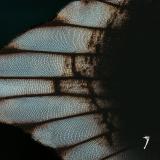
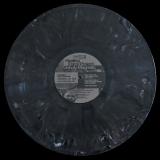
The tenth anniversary edition of Venetian Snares' Traditional Synthesizer Music adds ten more tracks and alternative versions previously available only on a limited edition compact disc from the artist's Bandcamp.Traditional Synthesizer Music is a collection of songs created and performed live exclusively on the modular synthesizer by Aaron Funk. Each sound contained within was created purely with the modular synthesizer. No overdubbing or editing techniques were utilized in the recordings on Traditional Synthesizer Music. Each song was approached from the ground up and dismantled upon the completion of its recording. The goal was to develop songs with interchangeable structures and substructures, yet musically pleasing motifs.
Many techniques were incorporated to "humanize" or vary the rhythmic results within these sub structures. An exercise in constructing surprises, patches interrupting each other to create unforeseen progressions. Multiple takes were recorded for each song resulting in vastly different versions of each piece, a number of which are released for the first time on vinyl and digital for this updated version of the album. BIO Aaron Funk, mainly known artistically as Venetian Snares, is a Canadian electronic musician based in Winnipeg, Manitoba who’s been working since the mid nineties. He is widely known for innovating and popularising the breakcore genre being something of its breakout star. His signature style features complex drums and unusual time signatures and a knack for making ultra-vivid music that takes listeners into unusual places, from the aggressive and extreme, to the surreal, comic and sometimes plain beautiful. His musical explorations extend out in many different ways, from the complex Hungarian, classical-inspired Rossz Csillag Alatt Született, to acid explorations as Last Step, to innovations with modular synths on Traditional Synthesiser Music.
As a collaborator, he’s made music using intimate recordings as musical elements with the artist Hecate as Nymphomatriarch, as Poemss with Joanne Pollock, where they both sing over strange delicate pop. He’s recorded an album of rich, edited improvisations with producer and guitarist Daniel Lanois and he’s also part of the sometime duo Speed Dealer Moms with John Frusciante. Most recently he features on Rosalia’s album Lux on the song Reliquia, providing drum programming and production input.
Active in London’s electronic underground since the late 80s, Paul Hierophant has long worked in the space between techno, ambient, and dub, preferring atmosphere, tone, and slow-burn tension to obvious dancefloor tricks.
The Elder Gods finds him further out on the fringes of electro, where the synths loom large and the delay and reverb units are given a proper workout. The result is widescreen, ominous, and immersive.
The title track is a monolithic slab of rhythm where corroded synth pressure and ritualistic percussion feel less like a groove than some ancient machine grinding slowly back into life.
Titans stalks forward on a cavernous half-step pulse, all foggy bass weight and fractured metallic vocal echos, like dub techno that has wandered into darker mythological territory and decided to stay there.
The Hydra coils around a lurching low-end spine, its tentacular FX flickering and mutating while the groove stubbornly regenerates.
Works and Days rounds things off with a standout alien vocal loop drifting through pulsing bass and drums, lending the track a meditative feel that works just as well for late-night headphone sessions as it does in the deeper end of a DJ set.
This is an EP for selectors who like their electro expansive, slightly strange, and built for proper sound systems.
With CT018, Cosmic Tribe introduces a new editorial format within the catalogue: a focused artist EP on Side A, followed by reinterpretations on Side B — establishing a dialogue between original material and alternative rhythmic perspectives.
Alex Gordiy is a Ukrainian producer currently based in the Netherlands. He has been producing and experimenting across various genres, with a strong focus on electro and techno in recent years. In his music, deep and energetic grooves merge with lush synth textures, creating tracks that unfold with a clear narrative intention.
This release contains two original techno tracks from Alex Gordiy and two electro reinterpretations from EC13 and ROI.
On Side B, the material is reinterpreted through electro. ROI and EC13 reshape the originals into sharper, machine-driven versions, shifting the rhythmic emphasis while preserving the core motifs. The result is a contrast between techno’s linear momentum and electro’s syncopated precision.
Two techno originals. Two electro reinterpretations.
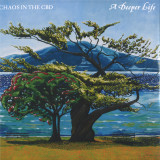
A Deeper Life, Chaos In The CBD’s debut album over 10 years in the making, is nostalgic for the duo’s nature-filled youth, exploring the magical coastline and lush rainforest of New Zealand. “The title refers to our childhood, which was idyllic,” says Ben. “It was just the sun, the sand, the sea, waterfalls, birds and fish…” The album’s blissful setting is also depicted on the album cover: a painting, by a childhood friend, of the beach where they grew up in Devonport.
A Deeper Life whirls that profound love of house music and wide-ranging influences – from Brazilian to R&B, ambient to Italo to deep house and downtempo pop – into a serene, cohesive whole with their signature finesse. The result is an international dance sound that feels unmistakably like Chaos and ebbs and flows from the beach party to the club to the afterhours.
On the album they’ve teamed up with a number of US legends and married their vocals with the UK underground: Josh Milan of house pioneers Blaze brings his soulful vocals to the bossa nova beats of ‘I Wanna Tell Somebody,’ a future jazz-dance anthem. Unheralded Chicago house hero and Larry Heard collaborator Lee Pearson Jr. goes deep over ‘More Time’s broken beat flex. And on ‘Maintaining My Peace’, the brothers have matched veteran house singer-songwriter Stephanie Cooke with UK grime MC Novelist, on a slinky LDN interpretation of LA hip-hop and g-funk.
Also featured on the album are New Zealand jazz artist Nathan Haines, frequent collaborator Isaac Asaeili and more.
Elations Recordings presents "Terra Ignota", the long-awaited new full length album from elusive Melbourne-based fusion ensemble Krakatau. "Terra Ignota" marks a return and an epochal shift for the group, a deep exploration of possible sonic spaces and a portent of things to come.
In the years since 2016's cosmic jazz funk-prog-spiritual 12" "Tharsis Montes/Apogean Tide" Krakatau have worked on refining their craft as instrumentalists and writers, expanding further into the world of jazz and fusing influences from world folk musics, contemporary jazz and the European post-minimalist music of the 1980s and early 90s. "Terra Ignota", literally translated as "Unknown Land", takes its name from the cartographer's notation for uncharted territory, the blank spaces on maps where knowledge gives way to imagination and speculation, gesturing towards the group's studio explorations and search for new sonic worlds in the years spent developing the record.
The results are a diverse yet unified combination of sounds and influences across five tracks that see Krakatau drawing closer to the independent underground "world" jazz scene of the 1980s than anything contemporary. The album opens with the digi-minimalism and fourth world atmospherics of title track "Terra ignota", a percussion heavy latin fusion sound in "Birds of Passage", and melancholic ambient saxophone and synthesiser duo "In Memory". Three-part epic "Cosmetic Surgery" journeys through a long, complex post-minimalist arrangement into latin fusion and contemporary jazz, followed by the contemplative ECM-styled acoustic quartet closer "Trial in Absentia".
The album features significant contributions from saxophonist Rob Vincs, former Victorian College of the Arts head of Jazz and Improvisation and a collaborator with Australian musician Brian Brown; layered percussion and wordless vocals from Brazilian percussionist and esteemed songwriter Alcides Neto; and a guest performance from trumpet player Reuben Lewis on the title track.
CBR009 by Hannah Addams & Cxma (Including Oxygeno Remix) Hannah Addams, Label Owner is back on the imprint after a long period of silence. First of many releases to come is a collaboration with Cxma.
This EP is the result of a whole life together in Sin City, a friendship longer than 30 years, thousands of moments, raves, parties, countless time sharing their love for music. 3 Original Mixes, Raw music, dirty bass lines, crazy random Synthe patterns. A style where both artists feel like at home. It is notorious how comfy they feel swimming on those seas. The EP gets to its maximum when a good old friend of
both, after listening to the tracks, realizes and decides he would love remixing one of them. Oxygeno Remix of "Danza de los ET" is adding the class and cleanness that was missing in the though original mixes.
Sirens" resonate a lot in 2026. "Sirens" are everywhere right now, in the many fields of the human reign, sounding at its highest level ever... Pioneering Swiss DJ and electronic music producer Ripperton joins forces with Berlin-based singer, composer and passionate aural storyteller Joy Frempong (OY) to create a beautiful and deeply moving piece of electronic music. And after three years in the making, “Sirens” finally emerges. The roots of this collaboration however reach back more than a decade. Around 2010, Ripperton first encountered Joy’s first album with Oy after hearing it on Swiss national radio Couleur 3. Shortly after, he saw her playing live — a moment he describes as pure magic. So inspired, Ripperton approached her label with a request to remix her music. The label agreed, and in exchange, Joy promised to feature on one of his future productions. What began as a mutual artistic gesture quietly planted a seed and eventually, pretty much fifteen years later, that seed has fully grown. “Sirens” began as one of Ripperton’s nocturnal modular jams — exploring and playing around with pulsating sequences, pure analogue sound textures and fluid, hypnotic structures. The track was then elevated to an entirely new level by Joy Frempong’s deep, evocative lyrics and her celestial voice, transforming the song into something haunting and profoundly human. The song also grew on a shared work ethos rooted in patience, trust and refinement. A slow process, shaped by intuition and feeling rather than pressure. Listening over noise. The result is an emotionally charged composition that blurs the line between inner reflection and collective awareness — a sonic response to the sirens of our time.
Quotes: Laurent Garnier: “This is lovelyyyyy * “ Aera: “Love it! A brooding masterpiece. Simple yet multilayered, the real action is happening beyond the surface.” Acid Pauli: "This is really special. Like it a lot." Kalabrese: "Wonderful collaboration between two outstanding artists. Fresh sounds, deeper rauschen, beautiful vocals, hypnotic tribe. a bliss!” Vladimir Ivcovic: "Das ist so gut, aufrichtig, rein und kommt zum richtigen Zeitpunkt. Die Abwesenheit von Hysterie. Ich liebe es. Downcast Euphoria of the highest order und gerade. In der Tat wunderschön. Besonders Clouds Mix, gerade."
F
ourth record already here, new Triptych being scooped out of the drawers. This one is heavily video game inspired and marks a turning point for me. I’ve somehow been very much drawn to what I call “boss fight techno”, this is the result of this cogitation.
Total Debauchery kicks off the record with truculence. The title says it all, we’re very far away from warm up time, all hell let loose, big energy discharge, weird stereo bassline, pure madness. Gate Middletone certainly is wonky. It sounds like an anesthetized telephone call. I don’t know if we can refer to this as techno, but who cares, groove is spotless. Absolute Buffoonery started off as a joke with hoover sounds in mind. Turns out it is very danceable and weird enough to be on the record. It still is a foolery.
The B side starts with Demonic Shine. This one is purely dedicated to zombie games. I’ve been thinking about how techno could be interpreted for this kind of stuff. Turns out you can shoot dead people and dance at the same time. Good time. Zany Ditherings is a hard drive that keeps crashing. It disrupts the track, making it spasmodic. You are in a convulsive loop of data being thrown out the window. dc11 accepted this remix operation. His work acts as counterpoint to the record, bringing flawless techno tunneling. Buckle up mate.
Water Sign is the debut EP from producer and instrumentalist John Silas: a five-track suite that moves fluidly between peak-time dance and inward reflection. Deeply aligned with the open-eared ethos of NYC’s Love Injection Records, the release channels house and jazz into an emotive personal chronicle shaped by movement, memory, and community.
At its thematic center is “Boundaries,” a dynamically arranged dance-floor meditation that begins with piano, 4/4 kick and restless hi-hats before blooming into radiant synth work reminiscent of classic disco auteur Patrick Adams. Midway, the track shifts—electric piano, whistles and percussion reframing the groove into what Silas calls “hues of vulnerability.” The result mirrors the arc of love, release and renewal.“Cyber Dreams” leans into lush escapism, buoyed by surging keys and impassioned flute from Domenica Fossati, while a remix from Detroit mainstay Patrice Scott (Sistrum Records) adds unmistakable Motor City weight. “Foster Child” nods to Silas’ hero, the late Paul Johnson with exuberant Chicago spirit, and “Nasty” delivers a concise workout featuring Marquinn Mason’s robust saxophone.
Water Sign reflects Silas’s trajectory—from a childhood steeped in Soul Train, coming of age with hip hop, to MPC craftsmanship, his Detroit musical family and present-day Brooklyn—into a deeply personal record equally suited to discerning DJs and deep listeners.
LIMITED TO 350 COPIES! 2 x 12" Gold Vinyl w/ Gold Foil Embossed Cover, shrink wrapped.
‘Elevation’ is album eleven from High Focus Records founder and 1/4 of The Four Owls Fliptrix.
The latest instalment in a formidable run sees the lyricist further his vision of the world in the hope of elevating the collective mind and spirit of both artist and listener across 19-tracks.
Having worked with Forest DLG in some capacity across all of his records over the past fifteen years, from mixing and mastering, but also collaborating on multiple tracks as rapper / producer, it is surprising that it took so long for the pair to come together on a full-length collaborative project.
‘Elevation’ is that record.
Fliptrix reached out to Forest with a view to creating something completely different from his previous boom bap heavy outing ‘Dragonfly’, he is always looking to advance his craft and take things higher, and after Forest responded with a pack of 70+ instrumentals the direction of travel became crystal clear. The result is an album designed to lift the listener into a higher state of consciousness and trigger conversations about the state of the world, in the hope of enacting positive change during tumultuous times.
Fliptrix’s vision and Forest DLG’s style feel perfectly aligned. The album is truly collaborative; Forest going away and creating the artwork inspired by Fliptrix’s otherworldly experiences with the Shipibo tribe in the rainforests of Peru; from the single covers, to the album cover and merchandise as Fliptrix focussed on writing.
Having worked with all the greats in the UK hip hop scene, Fliptrix actively sought out new energies on ‘Elevation’, especially when it comes to the album features. Jungle forefather General Levy on lead single ‘ENERGY! ENERGY! ENERGY!’ Grime legend Frisco on ‘Visionaries’, Ayah Marar on ‘Transform’, Da Flyy Hooligan, Kamakaze, Coops, and a 19-strong HF posse cut in the shape of ‘Dangerous’ make this album a must-listen for anyone looking to elevate.
Hiriketiya is a small, enclosed bay on Sri Lanka's southern coast, where jungle leans toward the water and the days unfold without urgency.
Passing through in early 2025 on the way to Europe, Alex Albrecht spent a week here at MOND's artist residency, allowing the rhythms of the place to quietly shape the work that followed.
During the residency, Albrecht recorded and exchanged ideas with Sri Lankan musicians Dhyan Basho on sitar, Dinelka Liyanage on electronics, Uvindu Perera on double bass and Pasindu Herath on saxophone.
Their performances appear throughout the album, sampled and re-contextualised, influencing its melodic language, pacing and emotional tone.
Much of the music was shaped directly by its surroundings. Field recordings were gathered across Hiriketiya, and instruments were played wherever it felt necessary. This included rocks beside the ocean where waves set irregular rhythms, tall grasslands where wind and insects blend into the recordings, and open decks overlooking the sea. 'Round Table' captures this approach most clearly. Recorded while sitting together overlooking the ocean, a large steel table in front of the group gradually became part of the composition, used instinctively as an unplanned percussive element.
Not everything could be captured. Some of the most meaningful moments occurred before recording was possible. Those sounds exist only in memory, and the album is shaped in part by an attempt to hold onto their feelings.
Rather than documenting the residency in a linear way, the album gathers fragments, recordings, electronic sketches and field sounds, assembling them into a continuous listening experience shaped by place and recollection. MOND owners Jess and Renato foster an environment that supports artists without directing them, creating space for focus, trust and connection.
The result is a record shaped by Hiriketiya's enclosed bay, dense vegetation, heat and night air. Music formed through listening, restraint, missed recordings and the sensation of being temporarily held by a place.
Drumcode returns with its flagship A-Sides series, led by a huge new Adam Beyer single that highlights the 20-track compilation.
If you want a snapshot of techno in any given year, look no further than Drumcode’s annual A-Sides compilation. The release broadly charts the evolution of the genre, while giving a platform to standout demo’s Adam Beyer has received across the course of the year with many emerging artists finding their music on Drumcode for the first time. Case in point – Wehbba, Charles D and Raxon who all debuted on the label via a track on the A-Sides series and have gone on to become regular contributors to Beyer’s influential labels.
This year’s compilation features an exciting mix of established heavy-hitters, alongside a slew of new faces set to make their mark on the genre. ‘We Don’t Say Please’ – is emblematic of Adam Beyer’s sound in 2025 – fresh, experimental and thriving on cross-genre pollinations, as elements of bass music, rap and techno collide, underpinned by a distinctive UK vocal. The results are inspiring.
Elsewhere, the 20-track compilation brims with highlights. HI-LO’s ‘NYC to Amsterdam’ has inflections of New York house fused with driving techno elements. Nicole Moudaber returns to DC in cahoots with the rising ZLATA for the super-charged ‘Report to the Dancefloor’. Oscar L & Charles D mint a new collaborative partnership with the immersive, spacey cut ‘Lift Me Up’. LUSU continue their red-hot run following the recent ‘Move 2 the Groove’ EP, and craft a straight-up mind-mashing single ‘LIKE THIS’. Mark Reeve is in trademark strong form with hypnotic ‘My Mind’, which comes to life via a massive synth led. The fantastic Kaufmann shares her ‘People are Strange’, a nod to a classic vox, re-contextualised for a modern techno audience.
As is tradition, a troupe of ascendant producers land on Drumcode for the first time. They include Uruguay’s Enzo Monza, who delivers the crisp ‘Late Night’ – a favourite of Beyer’s; Mattia Saviola, whose ‘Parallel Dimension’ is a powerful cut with fantastic sound design; Romanian artist Tao Andra, who shares the celestial ‘Unity’; and long-time industry stalwart AdamK, who makes a richly deserved Drumcode debut in partnership with Vikthor feat. MC Stretch on the stunning ‘Silence + The Sound’.
MP06 introduces DHAEUR to the Moving Pressure catalogue. The Berlin-based producer carves his sonic worlds through a strong sense of rhythmic architecture and a deep understanding of dancefloor dynamics. Here, he channels club-driven sensibilities into a mature and conscious 4 tracker.
The concept behind the EP reflects the principles of the label - namely, the pressure of sound and its resulting movement. Minimalism meets maximum technical intention, where swollen basslines and tightly coiled rhythmic progressions open up in signature DHAEUR style. The groove carries a distinct elasticity, punctuated by vocal inserts that add a subtly funky, almost soulful essence to the flow. Every element sits with purpose: dynamic yet
stripped back, intricately offset in ways that keep the body locked and the mind wondering. While the A-side leans into this physical immediacy - driving, playful, and sharply articulated - the B-side slips further into the tunnel. Atmospheres thicken and the palette turns eerier, stretching its essential rhythmic backbone into darker territories. Spatial details begin to seep through the structures, pulling the listener deeper while maintaining that firm gravitational pull toward the dancefloor.
Together, the two sides reveal different shades of DHAEUR's language. The result is a beautifully balanced narration between propulsion and immersion, where groove-led functionality meets a more shadowy, atmospheric depth.
The incredible talent that is Jamie Myerson returns with another stellar EP packed with old school sensibilities and atmospheric charm. A1 - Photosphere Photosphere opens with a warm synth and filtered beats before a raucous kaleidoscope of breaks take over your senses, while a devilishly simple piano melody, layers of airy vocals and sampled effects jostle for your attention adding texture to an already immense array of sounds. All elements are clear and distinct in the mix, offering something new with each listen in exceptional detail and clarity. A2 - Naked Eye Changing up the vibe with a twist, Naked Eye is a a deeply atmospheric piece that opens with synths and light percussion before a relaxed old-school breakbeat and bassline drop and kick start a gloriously laid-back journey which builds and builds with trademark JLM Productions panache - adding a flurry of strings, micro melodies across the soundscape and a perfectly-tuned amen layer to the breaks. AA1 - Evolution Operator Next up: enter the sounds of Evolution Operator, opening with a DJ-friendly filtered break intro coupled with intriguing, intense padwork which builds towards a drop of dancefloor two-step beats featuring none other than the legendary Apache break. Combining driving atmospheric energy delivered from a plethora of melodies and effects with old school sensibilities results in another fine floor filler for the discerning setlist. AA2 - Lightlike Completing the EP we are treated to Lightlike, another gloriously reminiscent piece of music reflecting yesteryear with JLM’s crisp, detailed approach to production. Opening beat-free with glistening pads, subtle drums are gently added before classic Airtight breaks drop with a cacophony of synthwork, cymbals and crafted melodies swirl throughout the elements to create a classic yet modern collage of atmospheric drum & bass. Words by Chris Hayes (Spatial/Red Mist)
SXB Deep Tales Part 2
Smallville is happy to welcome Axel Fischer aka El Kazed to the family, proudly presenting his very own SXB Deep Tales, hitting the stores worldwide in May 2026 as Part 1 & 2.
El Kazed is a DJ & producer from Strasbourg, France. Together with a group of like-minded friends, he is running Ordinaire Records– a vinyl imprint fully dedicated to House music. The collective is throwing parties and a festival, building an underground house community in the heart of the Alsace Region. Next to releases on his own imprint, El Kazed also appeared on Chez Damiers' „House Of Chez“ label, contributing a track to catalogue number 01, as well as releasing on Brawther's Interweaved label.
On SXB Deep Tales, he delivers 8 amazing tracks, stretched onto two 12“ parts, containing all the quintessentials of house music, driving cuts next to deepest shades, solo work as well as collaborations with friends- the result is magical.
Full cover artwork from Stefan Marx – don't miss Part 1 of the series.
Since 2020, 12 Inch Lovers have been releasing new samplers every year, eagerly anticipated by collectors. These samplers have now become a staple and are easily added to vinyl collections across Europe. They offer timeless classics and rare tracks that are often hard to find elsewhere.
With Samplers 11 & 12, they surprise again with a mix of modern classics and tracks that have never been released on vinyl or are difficult to find. By adding unique and exclusive tracks, the 12 Inch Lovers samplers remain innovative and high-quality. They are a must-have for DJs, collectors, and fans of contemporary classics!
SAMPLER 12
A1) Borai & Denham Audio - Make Me (original release 2023)
Released in 2023 on the British label Room Two Records (catalogue R212001) on twelve inch vinyl, Make Me combines breakbeat, house and speed garage with high energy, featuring clear use of Amen breaks, rumbling sub bass and sharp rave sounds. At the heart of the track lies an instantly recognisable vocal hook from the mid eighties, a sample taken from Donna Allen - Serious (1986). The result feels like a long forgotten rave anthem from the nineties wrapped in a modern sound.
The original twelve inch pressing quickly became a highly sought after collector's item and received a limited pink vinyl repress in 2025. This track, first issued only on orange vinyl in 2023, was officially re released once all samples were cleared. It has every ingredient of a future classic, a true underground anthem for fans of modern UK rave and jungle energy.
A2) Smoke City - Mr. Gorgeous (and Miss Curvaceous) (Mood II Swing Vocal Mix) (original release 1997)
Originally released in 1997 on the album Flying Away by Smoke City. The Mood II Swing Remix, produced by New York house duo John Ciafone and Lem Springsteen (also the producers behind Ultra Naté - Free), takes the song straight to the dance floor with a smooth groove, soulful vocals and a deep, hypnotic flow.
The iconic line "Cool and calm, Mr Gorgeous..." remains untouched, while the remix enriches the original Latin and trip hop influences of the band with that distinctive late nineties house atmosphere. The result is a timeless club favourite, almost nine minutes of pure vibe (the Mood II Swing Vocal Mix runs 9minutes and 20 seconds), adored by DJs who like to bring a touch of soul to their house sets.
Released on Jive Records, the track received great praise. Music Week highlighted its "tight ay ay ay hook" and noted that the Mood II Swing and Hyperspace mixes made it a real standout. The original version reached number one in Italy in 1997, and the Mood II Swing Remix has since gained cult status in the Belgian club scene and beyond as the perfect marriage between soul and dance floor energy.
B1) Chris Raven - I Know You Love Me Too (Bruce Norris Remix) (original release 1997)
Christian Raabe, better known as Chris Raven, is a German producer who made his name in the late nineties progressive trance scene.
The Bruce Norris Remix of I Know You Love Me Too (Additive Records, catalogue 12AD 027) first appeared in late 1997 and was officially released in early 1998. The remix builds an euphoric atmosphere witha beautiful melody, dreamy pads and powerful drums, all typical of the progressive trance sound of that period.
The track gained extra attention when it appeared on Northern Exposure 3: Expeditions by Sasha and John Digweed in 1999. Many fans first discovered it there (especially the Van Bellen Remix version), helping to cement the cult status of I Know You Love Me Too within the progressive and trance community.
B2) Grooveyard - Mary Go Wild (original release 1996)
One of the most recognisable and iconic club tracks in Belgian and Dutch underground house history is without a doubt Mary Go Wild, released in 1996 on EC Records. The track quickly became the defining anthem of the rave scene in the Low Countries.
With a raw groove around 133 BPM, pumping four to the floor drums and the hypnotic vocal sample "Mary... go wild!", the record set dance floors ablaze in the nineties. Producer Jeroen Verheij, also known as Secret Cinema (from the classic Timeless Attitude), perfectly captured the raw energy of the European house movement of that era.
To this day Mary Go Wild stands as a symbol of pure rave power, a timeless anthem that, as one Discogs collector put it, "still works on any dance floor." Original twelve inch pressings on EC Records and later issues on Blanco Y Negro are highly sought after, and the track remains a staple in retro house and classic DJ sets.
C1) Dave Swayze - Last Flight To Paris (original release 2000)
Dave Swayze, best known for his classic Goldwave, has several hidden gems to his name, and Last Flight To Paris is certainly one of them. Released in November 2000 on the Belgian label Yeti Records, the track is a subtle blend of trance and progressive house. It is known for its emotional melody, dreamy build up and strong percussion, built on the foundation of progressive trance but with thewarmth and groove of house.
At the time, Last Flight To Paris was frequently played by progressive trance DJs and soon became a cult favourite among vinyl collectors within the genre. Original pressings on Yeti Records are now extremely rare and much sought after. The mix of emotion, euphoria and timeless club energy makes Last Flight To Paris a hidden treasure from the late trance era of 1999 and 2000.
C2) Joe Goddard - Music Is The Answer (Hot Since 82 Remix) (original release 2017)
This remix by Hot Since 82 (Daley Padley, from Barnsley in the north of England) for Music Is The Answer by Joe Goddard is partly based on the original classic Celeda - Music Is The Answer (in the Danny Tenaglia Remix). It was released in February 2017 as a digital exclusive through Domino Records.
Hot Since 82 reworked the original, a vocal house track by Hot Chip member Joe Goddard, into a deep, grooving house track with a warm rolling bass line. The soulful vocals of Joe Goddard (featuring SLO) take on a subtle melancholic tone in his remix, creating a modern house classic filled with emotion and drive.
The remix became a major club favourite in 2017 and 2018, supported by leading names in the tech house scene and heard at festivals around the world. Interestingly, this popular version had never been released on vinyl, which only increased its cult status among collectors. Music Is The Answer (Hot Since 82 Remix) remained a digital classic for years, until now, finally available in this long awaited vinyl edition.
D1) Just A Man - I'm Sorry (Original Club Mix) (original release early 2000s)
The French project Just A Man consists of brothers Hervé and Nicolas Subrechicot. Their track I'm Sorry is an emotionally charged house record that perfectly captures the early 2000s club atmosphere.
Released in 2003, the song combines soulful male vocals with a warm, rhythmic production that blends UK garage and classic club house influences. The Original Club Mix (6 minutes and 14 seconds) builds gradually towards a powerful, uplifting climax, carried by rich chords and an irresistible groove.
Although I'm Sorry stayed somewhat under the radar at the time, it is regarded by connoisseurs as a hidden gem, a perfect balance of melody and groove. The twelve inch vinyl release (on RKG / Motor Music, 2003) is now hard to find and highly prized among vinyl and house collectors, which only adds to its appeal.
I'm Sorry embodies the pure sound of early 2000s vocal house: sincere, funky and danceable, with that unmistakable UK garage touch, even more evident in the G Box Garage Club Remix on the same EP. An unfairly overlooked track that has always remained a true timeless classic since the very beginning of 12 Inch Lovers.
D2) Teddy Pendergrass -Life Is A Song Worth Singing (Jamie Jones Remix) (original release 2019)
In 2019 Jamie Jones breathed new life into the classic soul song by Teddy Pendergrass with a contemporary house rework. The remix was released in March 2019 as part of the digital EP Mixmag Presents: Teddy Pendergrass - The Remixes, issued in honour of the documentary If You Don't Know Me, a film about the rise of Teddy Pendergrass, the first African American male artist to achieve five consecutive platinum albums in the United States during the seventies.
Jamie Jones stayed true to the feel good essence of the 1978 original but wrapped it in a modern club sound, with pulsing synths, a warm rolling groove and a tight four to the floor beat providing the perfect base for Teddy's powerful and instantly recognisable voice.
The result is a captivating, soulful house track that effortlessly bridges past and present without losing the emotional power of Pendergrass's vocal delivery.
Despite its widespread popularity in the international club scene, where it became a favourite among DJs who love to blend soul with house, this remix never had a physical vinyl release. Until now, with its long awaited appearance on 12 Inch Lovers Sampler 12.
Jess Sah Bi is well-known as half of the legendary duo Jess Sah Bi & Peter One who brought homegrown Country-Americana to the West African masses with their smash debut Our Garden Needs Its Flowers in the mid-1980s. Touring stadiums and reaching listeners worldwide, their music has racked up millions of spins on YouTube and remains imprinted in the hearts of Ivorians of a certain age. ATFA reissued their album in 2018, garnering critical acclaim from publications including Pitchfork and Rolling Stone and reaching a new generation of listeners outside Ivory Coast (Cote d'Ivoire). Sometime in the early 90s, Die Sahbi - or Jesse, as he known to friends-became gravely ill with an unknown ailment and almost died. He visited various doctors and all kinds of religious healers and nothing helped. One day he went down to an Evangelical Christian revival in his neighborhood. They prayed over him and he was delivered. He says, "Their prayers helped chase out whatever demons and unhealthy spirits were inside me. After that my illness went away. When I went to the United States a few months later on an exchange program I wanted to make music to thank God because I was saved." He recorded an album of music praising God in order to honor a promise he made to himself at the depths of his desperation in the hospital. The album Jesus-Christ Ne Deçoit Pas Jesus Christ Does Not Let Us Down came out in 1991 and sold around 3000 cassettes in Ivory Coast. The master tape was lost along the way so the recording has never been on digital platforms until now. Jesse didn't have much time to record while visiting South Carolina, hence the relatively short album, 6 songs including two reprises for filler. A local pastor connected him with a studio and some American musicians (Robert Fortner and Gary Davis) to help. They added acoustic guitar, percussion and keyboard accompaniment to Jesse's soaring French and Gouro vocals, harmonica and finger-picked acoustic. The resulting recording is deeply soothing and contemplative music that perfectly compliments the songs already embraced by millions. But he had to find the rest of the studio expenses-$600 total-which he secured drawing cartoons for UNICEF. Jesse is Ivory Coast's first political cartoonist, a vocation for which he was widely celebrated at the time. It also made him a few enemies which lead to him leaving the country permanently a few years later. Jesus-Christ Ne Deçoit Pas is Jess Sah Bi's first and only gospel album. Fortunately, fans responded with enthusiasm: widespread radio airplay and concerts followed, along with a growing solo profile in the country. The first big gospel artists in Ivory Coast were the duo Mathieu et Constance, who emerged in 1989. There was a bigger gospel music movement in English-speaking counties like Ghana and Nigeria (Christians make up roughly 40% of the population in Ivory Coast, slightly less than Muslims). Jesse didn't have any intention of working in Christian music but he realized, "You don't make music to make money-you want to send a message." In the years since Jesus-Christ's release, gospel music in Ivory Coast has grown to become a key part of music culture in the country. Spiritual music appears in community actives across the public and private spectrum from religious gatherings and parties to television broadcasts and music festivals. And, as it has evolved and indigenized locally, gospel music has picked up elements of traditional Ivorian music, reggae and soul. The album ultimately precipitated the demise of the duo, who were soon separated geographically as Peter One relocated to Nashville. He went on to become a nurse and release a successful solo album on Verve following the ATFA collaboration. Nowadays Jesse lives in the Bay Area and continues to record and perform music wherever and whenever he has the chance. He is publishing a new book of humorous cartoons in 2025 and his most recent album Never Give Up came out in 2020
This is the first 12" Vinyl Ep within the ANAOH physical catalog. A perfectly balanced release in every sense, with strong power and a production level of the highest range.
Dig-it is one of the most talented and respected artists in Mexico. Co-founder of ANAOH, mixing and mastering engineer, expert sound designer, DJ and producer. Paths is the clear result of a career based on learning and artistic development, raw and powerful techno, with complex
synthesizer lines and an elaborate rhythm, nourished by organic and forceful elementsAs the first remixer we have Bailey Ibbs, a serious protagonist of the new Berlin techno scene, resident of the Tresor club and a fundamental piece in the development of a sonic evolution in contemporaryGermantechno.Hehasaddedagrooveandfreshness to the track Unheard Path.
On the other hand, Fixon and Gene Richards Jr are back home, a duo that has managed to fit perfectly into their joint productions. A percussive version of Untrodden Path, with a dirty texture designed to tear up any dance floor.
‘Test Press’ originally landed with Erol Alkan long before his monumental B2B2B2B with Busy P, Fred Again and Thomas Bangalter of Daft Punk in Paris in October 2025. A few nips and tucks by Alkan later resulted in his own simple yet highly effective battle weapon, and ‘Test Press’ was ready for the Parisian dancers at the now legendary Pompidou Centre’s closing party, as well as thousands locked into the live stream of this unexpected link-up.
Not content with the edit to merely be confined to a series of YouTube rips and Alkan's own USB key, Felix Da Housecat’s ‘Test Press (Aphrohead Remix / Erol Alkan Re-Edit)’ has been pressed onto a limited edition single-sided while label.
Parris returns to his and Call Super’s can you feel the sun imprint with Drippin’. A four-track love letter to the amber-lit glow of communal field maneuvers in the dusk on his most house-focused and personal release yet.
Continuing the themes explored on 2024’s Passionfruit EP, Parris embarks further down his unparalleled sound path on Drippin’. His latest solo outing draws inspiration from vivid memories of yesteryear, particularly experiences at Watching Trees Festival and various trips to Amsterdam, and subsequently constructed with friends in mind to play out. The resulting four tracks encompasses some of his most intimate material to date.
The title track bursts with measured fervour and a raptor-like throb, percussive configurations in tight pistons which induce rave friction hysterics across the dancefloor melee. Got Me Feelin’ dramatically switches tact, a sentimental roller entangled in swooning pads and R’n’B vocals while swigging lovingly from the ecky spring. True Vargo stomps further with acute hedonism, a sun-descending swooner that flows effortlessly in melodic serenity. Closer Crooning In The Trees leans most wayward, an evolving scene architected by Parris’ uncanny samples and disassociated groove that purrs with wide-eyed wonder. Another stand-out release from one of UK club’s most unique voices.
The highly anticipated collaborative album, GOLDFISH, sees two of contemporary hip-hop's most revered and distinct production minds, Hit-Boy and The Alchemist, finally join forces for a full-length statement. Far from a simple beat-swap, this project is a masterclass in sonic cohesion, blurring the lines between their signature sounds to forge a new, golden-hued identity. Beyond production, the duo step from behind the boards to behind the mic to trade verses throughout the project, adding a personal layer to their creative vision.
GOLDFISH is a deeply immersive listen, perfectly balancing the West Coast muscle and polished, anthemic quality of Hit-Boy's work with the dusty, abstract texture and cinematic suspense that defines The Alchemist's aesthetic.
The result is a sound that feels both street-tested and museum-worthy. A collaborative manifesto, showcasing the infinite possibilities when two generational talents decide to link up, creating an instant classic in the canon of producer/MC albums.
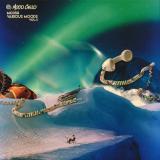
Mood Child returns with Various Moods Vol. 5, a razor-sharp six-track album curated by Manda Moor and Sirus Hood. Bringing together some of their biggest weapons in their sets, the release delivers a standout selection of special records and high-impact dancefloor cuts from a finely tuned cast of artists.
Built with the club in mind, Various Moods Vol. 5 moves through deep, rolling grooves, stripped-back minimal flavours and tougher tech-driven moments, with each track carrying its own identity while hitting with real force. The result is a versatile and powerful package made for peak-time pressure, late-night sessions and serious selectors.
The release marks the return of Antss, Paul C and Francis De Simone, while also welcoming RSquared and Drumcapelli for their first outing on Mood Child. Adding further weight to the project is a standout contribution from highly respected UK artist wAFF, rounding out a release full of character, energy and club-ready impact.
G.A.M.O. (Gods Against Man's Oppression) recounts events leading to Napoleon Da Legend transformation after being bestowed a metal helmet, which is a weapon against our modern dystopia. The album features a blend of soulful and dystopic grit featuring the likes of Vinnie Paz, Goretex, General Steele, Skyzoo, Passport Rav, Nejma Nefertiti, Innocent?, SKAM2?, Eloh Kush, CF, Dontique and more. It has production from Dub Sonata, Maitre D, Homage Beats, Passport Rav Proffeny and Napoleon Da Legend. The result is 23 tracks that blend retro-sci fi "Noir Wave" and modern Boom Bap. It features an exclusive 2 page comic illustrated by UK's Dan Lish. Limited to 300 copies only.
With their self-titled release on Titrate Records, Post Coma presents two twenty-minute times even dissociation — treating the improvisation as a shared descent into the inner psyche. Listening as much to each other as to the remnants of their own decisions, the music emerges as a kind of cognitive experiment — a document of mutual attunement and the debris that gathers in its wake. The result lies suspended between motion and conclusion, leaving space for what lingers beyond.
Evighet proudly presents its sixth release, EVIGHET006, featuring the distinctive sound of Healing Force Project, the long-running creative vision of Italian artist Antonio Marini. For more than a decade, Healing Force Project has explored the intersections between electronic experimentation, free jazz and electroacoustic research. His work unfolds with a rare sense of spontaneity and depth, merging intuition and technical precision into a sound language that feels timeless and deeply personal. Over the years, this unique approach has earned him a cult reputation across the underground and avant-garde music scenes. EVIGHET006 is the result of a free creative process, a series of recordings shaped by intuition rather than concept or structure. Within this collection, elements of jazz, drill-inspired beats and dubstep textures emerge and intertwine. The music alternates between dark tonalities and unexpected shifts toward melodic and almost folkloric moments, inviting the listener into an evolving, immersive experience. A highlight, “Playing Tabla and Smoking Weed with Aliens”, reveals the hypnotic pulse of the tabla, guiding the piece through a steady percussive flow that feels both ancient and futuristic. Elsewhere, rhythmic improvisations and fragmented breaks form intricate layers that dissolve and reform with subtle tension. With this release, Healing Force Project continues to move along his own path, shaping sound as a form of exploration and reflection. EVIGHET006 captures an artist in constant evolution, translating instinct into form and intuition into movement.
Błoto has never cared much for dominant aesthetics. Instead, the band has consistently chosen paths less travelled, unexplored territories and uncharted routes where experimentation is not so much a conscious decision as a natural state of being. After years of a rather hermetic approach to recording their albums, the time for change has come. A trip to Bucharest and the opportunity to collaborate with the community of musicians associated with the underground label Future Nuggets, led by Ion D, resulted in many hours of recordings, which will be presented by Astigmatic Records in a series of releases across 2026. It opens with a 7-inch vinyl titled Zmiany / Schimbări, recorded in collaboration with Ion D and Plevna.
Official reissue of a German under-the-radar disco tune. The original from 1979 is a bubbling dancefloor stomper with freewheeling synth lines. For the flipside of this 7" Korkut Elbay created a spaced out balearic dub rework. Picture sleeve with a funky painting by Holger Kurt Jäger that picks up on the original.
The melody of 'Butterfly Dance' came to Dieter Bührig's mind as a butterfly floated through the recording studio during a session break. The resulting track landed on a compilation with mostly cover versions of disco hits. Now, more than 45 years later, the tune found its well-deserved single release on funkscapes.
Korkut Elbay is a fixture of Cologne's electronic music scene for over 20 years. He's part of the Cómeme camp and with remixes and edits for labels like Permanent Vacation or funkscapes he prooves his sensitive feel for the dancefloor. So does he on this rework, giving the orginal space to breathe and calm down without leaving the dancefloor.
Dieter Bührig studied electrical engineering and sound recording in Berlin. Afterwards he worked several years as a sound engineer for the music industry and as a producer. Later on he worked as a teacher for physics and music, trained trainee teachers for secondary schools and wrote articles and publications on musical education, choir and band arrangements. Nowadays he's writing, among other things, musical crime stories.
Smallville is happy to welcome Axel Fischer aka El Kazed to the family, proudly presenting his very own SXB Deep Tales, hitting the stores worldwide in May 2026 as Part 1 & 2. El Kazed is a DJ & producer from Strasbourg, France. Together with a group of like-minded friends, he is running Ordinaire Records– a vinyl imprint fully dedicated to House music. The collective is throwing parties and a festival, building an underground house community in the heart of the Alsace Region.
Next to releases on his own imprint, El Kazed also appeared on Chez Damiers' „House Of Chez“ label, contributing a track to catalogue number 01, as well as releasing on Brawther's Interweaved label. On SXB Deep Tales, he delivers 8 amazing tracks, stretched onto two 12“ parts, containing all the quintessentials of house music, driving cuts next to deepest shades, solo work as well as collaborations with friends- the result is magical.
Full cover artwork from Stefan Marx – don't miss Part 2 of the series.
When Henry Street & Sacred Rhythm Music join forces for a remix outing, it should be obvious the source material and resulting productions are of the utmost caliber. This record proves such a case in point: Johnny "D" DeMairo & Joe Claussell team up for two takes on Candi Staton’s 1979 disco opus 'When You Wake Up Tomorrow.’ The original, whose pedigree could be inferred simply by reading Patrick Adams’ and Jimmy Simpson’s names on the label, is a faultless dance floor cut featuring all the elements you’d expect—lavish horn and string arrangements, sparkling synthesizer accents, and plenty of hand-beat drumming—along with with Staton’s peerless voice. Johnny D’s mix starts carefully, the vocal refrain accented with auxiliary percussion until the rug is pulled out from under us, the ensuing chasm making the following thrust of the track that much more powerful. On the flip.
Claussell’s take starts with reinforced four-on-the-floor, along with a studio count-in, perhaps alluding back to his previous ‘It Seems To Hang On’ edit. As the track establishes itself, ample room is afforded for interplay between bass and guitar, with all the interlacing elements aggrandizing the mood with careful shots of delay and expertly-timed pivots in atmosphere. Both sides are proof of what shouldn’t need evidence: two masters of their craft assembling two wholly new mixes that far surpass the banal copy and paste, add and subtract methodology slung by the less blessed. Pressed on white vinyl, with a custom jacket to boot.
Tied returns with its next vinyl-only release, timed for the spring and summer season. Mr Chic EP brings together four groove-led House & Tech House cuts from two emerging artists: three originals by Lose Endz, alongside a remix from Velvet Velour.
“Mr. Chic” opens with a smooth combination of tight drums, warm chords, and soft pads. Subtle ’90s House references sit within a modern, functional framework, resulting in a steady, floor-focused track.
Velvet Velour’s take on “Mr. Chic” introduces his characteristic swing and rhythmic phrasing. While retaining core elements, the groove and structure are reshaped, giving the track a more dynamic, driving feel.
“Churruca” moves deeper, built around a driving groove and evolving chords that gradually unfold into a Detroit-leaning progression. The arrangement develops patiently, creating a hypnotic, immersive feel.
On “Let The Acid Begin”, a rolling 303 line introduces a rawer edge. Vocal snippets and acid textures interact with a consistent groove, keeping the track direct and effective for later hours.
Across all four tracks, the EP stays grounded in groove and function—crafted for extended play, from warm-up through to more intense moments on the floor.
After some time, we are back with a new release. This one moves slightly away from our usual sound to make room for a brand-new project by two outstanding artists. Please welcome to the crew the legendary San Proper together with the excellent Angelo D’Onorio. Joining forces under the name SANGELO DIPROPRIO, they deliver three vibrant house tracks designed with the dancefloor in mind. Fresh grooves, playful energy, and unmistakable personality make this EP a strong addition to the catalogue. A meeting of two distinctive styles that results in a dynamic and highly effective club release.
"Melodic, dreamy bedroom pop with a nostalgic sheen" is how Tom Davies, creator of brand new dream-pop artist Flopsy's dream, describes this charming little album.
Some of you may know him as GeoWizard; the mad British adventurer/YouTuber who travels in straight lines, but here you get to see or indeed hear a completely different side to him - one that sings in soft, tuneful tones reminiscent of Damon Albarn or Ray Davies, builds ethereal, layered harmonies that wouldn't sound out of place on a Fleet Foxes track, and crafts gorgeous guitar and synth parts that could easily have come straight out of John Frusciante or Kevin Parker's handbook.
Written in a young Davies's bedroom between the years of 2008 and 2014, the songs themselves are far from brand new, but with the help of his good friend and writing partner Liam Rhodes (with whom he played in Birmingham Psychedelic outfit "Kinds of light"), Davies has brought these sentimental tracks to life whilst keeping them bang in line with their original vision.
The result is an album that doesn't really fit into any specific genre, in fact you could argue it's just regular old generic pop, but there's an innocence and a playfulness in there that disarms the listener and transports them to a simpler time when melody ruled supreme.
With Coalescence, The Third Room brings together artists from distinct yet interconnected techno lineages, united by a shared understanding of the music as both physical and introspective. Rather than staging contrasts, the EP focuses on convergence, where propulsion, atmosphere and restraint fold into a coherent whole. Rene Wise & Ignez open the release with Anjos, pairing Wise's tactile, percussive pressure with Ignez's expansive, oceanic pads. The result sits at the intersection of functional drive and elevated, almost devotional space, reflecting a new generation's approach to techno as both tool and inner landscape. Norbak's remix draws the track further inward, deepening its hypnotic pull and extending its energy into a more meditative, slow-burning form. On the B-side, Claudio PRC & Luigi Tozzi present Onirica, a deeply restrained and immersive composition rooted in atmosphere, spatial detail and subtle psychedelia. Unfolding with patience, it rewards attentive listening and long-form dancefloor contexts. Markus Suckut closes the EP by reducing Onirica to its bare essentials, applying his signature economy and precision to heighten tension and focus. Coalescence reflects The Third Room's vision of techno as a shared terrain, where different voices and generations meet, align and quietly reinforce one another.
Ubisoft and Laced Records have forged a new trade alliance, expanding their economic tree to bring the lavish music of Anno 117: Pax Romana to glorious vinyl.
This vinyl set celebrates the ornate score for Ubisoft's richly detailed city builder, capturing the spirit and splendour of the Roman Empire at its peak. From the beautiful heartland of Latium to the mysterious Celtic wetlands of Albion (where no civilized Roman wants to be), every musical cue is steeped in world-building and crafted with remarkable care.
The outer sleeve features striking landscape art from the game, while the inner sleeves present detailed track lists framed with ornate motifs inspired by Roman architecture and pattern work. The result is a set that feels like a treasure from the imperial archives.
The soundtrack charts a journey across the empire, weaving together atmospheric strings, ancient-inspired instrumentation, and sweeping orchestral cues that capture both the serenity of prosperous provinces and the political tensions throughout. The music reflects every choice you, the governor, must make. Diplomacy or domination, tradition or transformation. An emotionally rich and immersive soundtrack worthy of Rome itself.
Gaudi’s Jazz Gone Dub is a masterclass in genre fusion, seamlessly blending the improvisational essence of jazz with the heavy atmospheric grooves of dub. Known for his eclectic approach to music production, Gaudi pushes the boundaries yet again, creating a sonic landscape that feels both nostalgic and refreshingly innovative.
Four years in the making, from the opening track it’s clear that Jazz Gone Dub is more than just a mashup of styles—it's a thoughtful exploration of the intersections between two rich musical traditions.
Gaudi’s multi-instrumental talents are on full display, and the presence of reggae royalty is palpable, courtesy of rootsy melodies from David Hinds (Steel Pulse), Jah Wobble’s iconic bass grooves, Ernest Ranglin’s intricate guitar lines and Sly & Robbie’s rhythmic genius. Add Sardinia’s Train to Roots band, Manu Chao collaborator Roy Paci, veteran guitarist Marcus Upbeat, Mr Woodnote and Tim Hutton’s brass work, Gavin Tate-Lovery’s sultry sax and flute, Horseman’s percussive flair plus Colin Edwin and Vlastur’s serious basslines, and the
result is a rhythmic foundation that’s both solid and fluid, allowing the jazz elements to float freely above the dub undercurrents.
Despite this star-studded line-up, Gaudi remains the glue that holds this gem together: his production is meticulous yet organic, allowing each track to breathe and evolve naturally. The use of space, delays and reverb—a hallmark of dub music—is expertly handled, giving the album a dreamy, immersive quality. Tracks like Susceptible and Alabaster Moon showcase Gaudi’s ability to create mood and atmosphere without sacrificing melodic and rhythmic complexity.
In Jazz Gone Dub Gaudi has crafted an album that feels both timeless and forward-thinking, a celebration of musical synergy where the free-spirit of jazz meets the deep resonance of dub. Whether you’re a fan of either genre or simply appreciate masterful musicianship and innovative production, this album is a must-listen.
DJ Support: Paul Woolford, Machinedrum, Kettama, LDLDN, Sinistarr, A.Fruit, Machine Woman, Octo Octa, Paco Osuna, Bradley Zero, Tzusing, Lefto, Synkro, John Tejada, 12x12 and many more
BBC6Music - Gilles Peterson
NTS - LDLDN
BBC6Music - SHERELLE - DJ Mix and Interview
NTS - Ross Allen
Enter the kaleidoscopic world of Lone - returning to Greco-Roman for his first album in five years, ‘Hyperphantasia’
An artist who has been soundtracking dancefloors since the early 2000s, Lonemade his production debut in 2008 with “Lemurian”, a hip-hop inspired release before moving into the vibrant future-facing soundscapes we have come to know. His back catalogue ranges through house, rave, ambient and electronica, and on ‘Hyperphantasia’, Cutler sets himself the challenge to bring all of those influences together for one body of work that he describes ‘like an album in my mind’. Referring back to the album title, the definition of hyperphantasia is a condition characterized by exceptionally vivid and detailed mental imagery and for this album he tested himself to see how close he could get the music to sound exactly like what he was hearing in his imagination.
On Hyperphantasia, Lone deepens his relationship with vocals. Having previously relied on vocal samples or more abstract live vocal treatments, this latest album marks a shift toward richer, more pop-leaning sensibilities. Cutler makes a clear lyrical statement, enlisting a diverse and carefully chosen cast of collaborators: London-based artists and fellow Greco-Roman affiliates Ell Murphy and Lou Hayter, Barcelona’s breakthrough singer Bikôkô, cult Nottingham rapper Juga-Naut, and Hong Kong-born, London-based musician Merry Lamb Lamb. Together, they contribute to what stands as a career-defining project.
The end result is a cinematic experience exploding full of colour. You are introduced to the album with an old school rave anthem ‘Life Spark’ and an interlude welcoming you into this musical world. Like chapters in a novel, the album ebbs and flows beautifully between stripped-back melodies ‘Opening A Portal’, ‘Photographs That Don’t Exist’, ‘Sickly, Sweetly, Summer Movie’ and ‘Fruit Rots, Water Floats Downstream’, bubbling feel-good house ‘Affinity (Cloud Four Four Mix)’, ‘Triton’ and ‘ Wemove’, the rap-influenced ‘Throw The Ember’ and epic future-pop tracks ‘Miracle Mile’, ‘Big World’, ‘Scattergun’ and ‘Home’. The album ends with a full circle moment, back to the early hardcore and jungle rave scene, on ‘Ascenscion.png’.
Fresh Hold Releases presents Helen Ripley-Marshall's mysterious Australian ambient electronic album "Green Chaos", reissued for the first time on vinyl LP. Originally released in 1988 on Sydney based private press label Freefall, "Green Chaos" marks the sole release from Ripley-Marshall.
In the late 80's Ripley-Marshall lived a Bohemian lifestyle in inner city Sydney; "surrounded by musicians, actors and artists, there was an amazing creative experimental vibe going on". While playing in new wave/art rock band "D Face" she began Green Chaos as a personal project to counteract the creative friction sometimes experienced within a group dynamic, heavily inspired by Arnold Frolows' "Ambience" radio show on Australia's Triple J and particularly the music of Tangerine Dream, Harold Budd and Brian Eno.
Initially a solitary endeavour, once she decided to record in a studio Green Chaos morphed into a somewhat collaborative, improvisational project with other musicians invited into the studio to improvise and add their own interpretations and ideas, additional layers and dimensions, resulting in a work that combines a clear influence from the electronic repetition of the Berlin school with a meandering, futuristic lyricism. Although influenced by the long form sonic journeys of artists like Tangerine Dream, Ripley-Marshall's background in art rock and new wave brings a more concise approach, each song a self-contained universe that says only what is necessary in the arrangement.
After completing a sound engineering course Ripley-Marshall recorded the album at Sydney's Exeter House Studio over several months alongside studio engineer Andrew Knight, met through a fellow member of D Face. Knight ran Freefall, a private press recording label releasing folk and bluegrass music, which had Green Chaos as its sole ambient release. Ripley-Marshall self distributed the album to local inner city record stores and dropped a copy to Triple J, where it became a regular staple of Arnold Frolows' show.
These days Ripley-Marshall has moved away from music and is predominantly focused on visual art. "Green Chaos" stands as the only released product of her musical years, both a personal window into the vibrant experimental art scene of late 1980s Sydney and a deep, timeless anomaly of Australian electronic music.
Drawing from traditions of musique concrète and ambient synthesis, The Vertical Luminous creates a world of textural depth and microscopic wonder. Across its tracks, bubbling tones, processed field recordings, and shifting electronic layers intertwine, evoking the sensation of listening in on the hidden rhythms of atoms, molecules, and micro-organisms.
'While grounded in experimental technique, The Vertical Luminous avoids the academic or austere, instead embracing a mischievous sense of melody and curiosity - a reminder that exploration and joy can coexist in sound.
'The result is a record that is both meditative and playful, equally suited to deep listening or casual drift.'
Scissor and Thread presents Tailored Cuts, Vol. 06, a four-track selection that accompanies the digital compilation album. All four tracks appear on vinyl for the first time. Opening the A-side is a brand new and exclusive dub mix of Soela & Module One’s Drowning, reworked by Matthias Reiling (one half of Session Victim). Originally taken from Soela’s Dark Portrait album, the track is reshaped here into a spacious and hypnotic dub that emphasizes texture, atmosphere and patient groove. "I have been a fan of both Soela's and Module One's music for quite a while now," says Reiling, "so getting the chance to remix their collaboration from Soela's beautiful Dark Portrait album is a huge honor. I tried to keep the elegant and somewhat tender synth work close to it's original spirit and combine it with simple drumkit samples, acoustic guitar, electric bass and a dash of space echo. The process put me in a slightly eerie, yet romantic mood, which, so I hope, translates a little when listening to the result."
Also on the A-side, Black Light Smoke’s Love Triangle appears in ZG’s remix, a lush and understated reimagining that balances warmth with rhythmic precision. On the B-side, Hidden Spheres remix of Francis Harris’ Earth Moves feat. Eliana Glass appears alongside DaRand Land’s Passion Motion from his album Wander Being, "a more upbeat ride, with melodic overtones that drive the “passion”. Personally, it’s my interpretation of some of the sounds from mid-90’s Chicago." says DaRand Land.
Between flesh and silicon. “Under My Skin” (2026) is the first album by IADI, released by Neo Life. A record like few
others, highly conceptual, cover art included. Its essence lies in the folds of the increasingly ambiguous relationship
between man and machine, where the former designs the latter and, perhaps without fully realizing it, is gradually
destined to adapt and be reprogrammed by it. Each track of “Under My Skin” is, in fact, a sort of interface, connector, or
any other imaginative point of contact between two creative phases, amid emotional impulses and binary calculations.
The sonic architecture oscillates between analog warmth and algorithmic coldness, constructing landscapes in which
pulsating synthesizers and mechanical rhythms seem to question each other. There's no linear narrative, but rather a
progressive immersion in a zone of near-friction, where the comfort of technology coexists with more than a faint
musical uneasiness, like a background noise that never ceases to remind you who's truly in charge. In “Under My Skin”,
the machine is neither an enemy nor a simple instrument: it's a real presence, intimate, even tactile, amplifying desires,
fears, and dreams of dawns beyond the digital realm. Intelligent dance music. Less noise, more sensations. Electronic,
but profoundly human.
The final result, then, is a music project that speaks to the present, yet sounds like an X-ray of the future, capturing that
fragile moment when humanity and technology stop observing each other from afar and begin to merge, track after
track. It's no coincidence that IADI's album opens with “Impulse”, an immediate expression of an electrical impulse, for
both humans and machines, which is also the language of the nervous system, as fast as it is vital—pure energy and
rhythm, a track as intense as it is irregular. And after this introduction, it's the turn of the equally erratic “Axon”, whose
title describes the neuron that transmits the signal over distance, telling the listener to sit back and relax for a new
journey through the notes toward the more melodic “Cortex”. The cerebral cortex, the ultimate seat of thought and
memory, becomes the source from which the musical flow of the first part of the work is drawn.
Then, suddenly, an automatic, or instinctive, response to the constant succession of impulses: “Reflex”, or zerotemperature techno, with a fragmented pace, featuring vocal samples, breaks, and restarts. In the producer's
imagination, the subsequent, and conversely placid, “Neuron” represents the emotional core of the second part of the
work, providing a kind of respite from the seething vibrations. While the neuron is the basic unit of the nervous system,
the synapse is the functional connection point between one neuron and another effector cell, essential for the
transmission of nerve impulses and communication in the nervous system, enabling functions such as learning and
movement. Likewise, a track like “Synapse” once again illuminates the path traced by IADI. The more experimental and
streamlined “Static” instead suggests true ordered chaos. “Dreamstate” is the conclusion suspended in the void, relating
to that dreamlike state between waking and sleeping, where consciousness fades toward infinity and visions begin. Pure
fading into the subconscious. Eternal return to where it all began. Dancing is a form of consciousness. Every beat is a
question. IADI, however, holds all the answers you need.
The eight long play on the label comes from none other than UK electro royalty – Transparent Sound. If you have been following the music world for a while, then you would know this name as it’s been on the radars since the 1994. From the beginning it was a synergy between two artists Orson Bramley and Martin Brown, now the project solely run by Orson and he is presenting us Potent Mystery, an electro album in the best possible execution of this genre filled with melody and mystery. For the remix duties stepped up Acidulant the Maltese based hardware guru and the master of live sets from Bristol – Ben Pest. Each of these men and stellar artists have spent numerous years perfecting the craft of the electronic music which have resulted of this album being born as we can hear it now. Electro. Magnetic. Radiation.
Evighet proudly unveils its fifth release, EVIGHET005, featuring the Sky City EP by Dave N.A., the prolific producer from Yerevan known for his refined sound design and emotionally resonant compositions. With a catalog that spans labels such as Typeless Records and Uppers & Downers, his work continues to bridge precision and sensitivity, exploring the borders between rhythmic architecture and ambient introspection. On Sky City EP, Dave N.A. constructs an intricate sonic landscape where lush atmospheres coexist with fractured breaks and IDM-inspired rhythms. Rooted in the traditions of Jungle and Breakbeat yet unbound by genre, each piece reveals a narrative built from texture, movement and space. His music invites reflection while maintaining a dynamic forward energy, evoking the sense of motion through memory and dreamlike transitions. A central moment in the release is “Bloom”, which features a collaboration with Hayk Karoyi on flute. His performance adds an organic depth and melodic fluidity, weaving through electronic layers with warmth and clarity. The result is a delicate interplay between human breath and machine pulse, blurring the boundary between the natural and the synthetic. Sky City EP marks a new chapter for Evighet, reaffirming the label’s dedication to sound as a medium of exploration and storytelling. Through this release, Dave N.A. captures both emotional immediacy and compositional detail, expanding the label’s evolving narrative with a vision that feels deeply personal yet universally resonant.
Suicide AFTR 7 moves deeper into the shadows on this release, stripping things back while letting the groove hit harder. Built on pumping 808s, restless synth lines, and a subtle acid pulse, the project blends electro, cold wave, and leftfield instincts into something leaner and more focused than earlier records. There’s a proto-80s spirit running through it: raw, tactile, and slightly unpolished, where tension lives in the negative space and repetition becomes hypnotic rather than obvious.
For the first time, real bass guitar and drums enter the picture, adding human weight beneath the electronics without diluting Suicide AFTR 7’s core identity. The result feels rawer, more intimate, and quietly confrontational. Music for late nights, dim rooms, and inward motion. Still unmistakably SA7, but closer to the bone.
Punctuality presents its ninth release, Night Time, a potent four-tracker from Irish born, Berlin based producer New Members. Positioned on the spriitzzier end of the label’s canon, the record is a refined exercise in restraint, channeling classic, deep leaning house through a starry eyed, nocturnal lens.
The arrangements are unrushed and uncrowded, with each track built from a small selection of elements deployed for maximum impact. Evoking the deep cuts of early Balance and Global Underground mixes, the EP deftly weaves golden era progressive influences with neoteric production aesthetics. The result is polished, punctual tech house for late nights that stretch seamlessly into the morning light.
Title track Night Time carries a closing track sensibility: cute, catchy vocals glide over bubbling synths, blossoming pad washes, and jazzy chord stabs, recalling the finest Canadian Riviera house releases of the late 2010s: Total eyes closed on the dancefloor energy. Whisper In the Dark comes in trackier and toolier, with a rolling bassline resplendent with attitude and key changes, while trance and euro referencing stabs add a subtle touch of euphoria to the late night feel of the track.
Wishing Well maintains the afterhours feel with subtle atmospherics, gentle pads, and dubbed out acid wiggles, while chopped vocals and a pulsing low end push the groove forward. Hovering between genres, the result is a sleek, highly playable track for savvy selectors. The EP rounds off with Jealousy, a moodier affair with a dub techno feel that maintains the restraint New Members demonstrates throughout the release. Echoed whispers, delayed stabs, and a barely audible sub meld with delicate pad work and beguiling FX to striking effect. The piece as a whole is a luscious meditation on the hours after dark before light arrives.
As the EP suggests, this is once again not to be slept on. More A grade material from Punctuality HQ.
Swiss label Mormorio Records returns with its sixth release.
MOR006 is delivered by Zürich-based artist Aline, presenting two original tracks that move between subtle grooves, reduced textures and a warm, driving flow.
On remix duties, Paul K and Lorik each bring their own perspective to the record, stretching the originals into deeper territories while keeping the essence intact. The result is a balanced release that works as well on intimate dancefloors as it does in late-night sessions.
MOR006 continues the label’s focus on understated, carefully crafted club music, rooted in the Swiss underground scene.
Not all music can cope with physical reality. Instruments can be pushed until they lose grip. Eventually, they will slip so far that their untethered voice is all that remains. Panoram follows up on his Pianosequenza series engaging in seventeen excursions into playing the part of the piano that doesn't exist, coaxing out inarticulate feelings in lieu of familiar characteristics. Sounds and rhythms resulting from thoughts that can't be put into quite the right words.
Following Parnell March’s Back Bar Grooves EP in February and November’s release of the Dust Tears (lead song from Sarah/Shaun’s debut) remixes, Edinburgh’s Hobbes Music label returns with a second EP of dream pop from husband-and-wife duo Sarah/Shaun (pronounced simply Sarah Shaun), alias Sarah and Shaun McLachlan (pronounced McLochlun), who wooed hearts and wowed critics with debut EP ‘It’s True What They Say?’ last year.
‘It’s True What They Say?’ attracted fans across the board: Artist Of The Week in The Scotsman, rapturous reviews from The Skinny and Tokyo's Ban Ban Ton Ton blog, BBC 6Music airplay courtesy of Nemone (Mary Anne Hobbs' Morning Show), more radio play from Radio Scotland's Roddy Hart & Vic Galloway, plus Simone Butler (Primal Scream) and Jim Sclavunos (Bad Seeds) via their respective Soho Radio shows, not forgetting ringing endorsements from the likes of David Holmes, Youth, Kevin Bales (Spiritualized), Brent Rademaker (Beachwood Sparks) and Julian Corrie (Franz Ferdinand).
They played gigs supporting Glasgow's huge Glasvegas, at festivals (Kendall Calling, Dunbar Music, Hidden Door), plus a slew of venues across the Scottish capital, ending the year with a trio of shows supporting Glaswegian 80s pop legends The Bluebells at Aberdeen’s Tunnels, Dunfermline’s PJ Molloys and Edinburgh’s Liquid Rooms, while The List magazine tipped them among their Ones To Watch For 2025, with journalist Fiona Shepherd suggesting they were “blending the starry-eyed pop of Sonny & Cher with the electronic experimentation of Chris & Cosey.”
Very much the companion piece to the debut EP but arriving a full twelve months later, Someone’s Ghost is emblematic of the duo’s desire not to rush things or release anything half-baked.
“I’ve always wanted to create the perfect pop record and I do really feel that we’ve achieved that with this one,” says Shaun. And he’s clearly not the only person who thinks so.
REVIEWS, FEEDBACK ETC:
"I LOVE that! Dreamy dreamy pop." ROY MOLLOY (Marvellous Crane/Alex Cameron) on BLAST RADIO, Sydney
“the Scottish music scene’s cream of the cool... buzzy drum beats, high, distant chimes, and heavenly electronics…. very ethereal.” THE SKINNY
"Listening to Sarah/Shaun is like eavesdropping on a noir dreampop, long-distance phone call between them both, across two separate sonic locations. On this stunning 4-song EP, Sarah’s voice, effortlessly mesmerising, draws you into these big beautiful and haunting passages of perfect dream-pop. All beautifully produced in a multi-layered-scape of low-fi analogue textures, epic cinematic crescendos, intense electro-pulse grooves and warped psycho-pop guitar riffs. Within the songs lurk a sense of unresolved emotions, longing and pathos. There are shades of classic Lee Hazelwood & Nancy Sinatra but also Post-Punk Electronica and Beach House. But what a unique sound they’ve created of their own. I love it" DAVID MCCLUSKEY (The Bluebells)
"Absolutely beautiful" SEAN JOHNSTON (A Love From Outer Space)
"Lovely stuff here! Total quality." MARTYN 'MASH' HENDERSON
"Ooooh. Everything the last record promised is here. Well done" GEORGE T aka George Demure (Accident Machine)
"Vince clark Era Depeche Mode in places" KEVIN BALES (Spiritualized)
"Sounds cool. Well done" PETE KEMBER (Sonic Boom, Spacemen 3)
"Glorious, it (Debbie Harry) grabs hold of you and doesn't let go." IAIN DAWSON aka RAVECHILD (Everyone Wants To Play The Hits Podcast)
SOMEONE’S GHOST
Born out of an incredibly anxious, stressful time, the songwriting process for these recordings has been something of a personal tonic for Shaun…
“There was a period when I was having nightmares,” he reveals. “Apparently I was saying there was someone in the room, I was talking to that person and Sarah was seeing all this while I was still asleep.
So, I was thinking that this was my ghost. I started writing songs because I was going through something and I was dealing with something and writing songs was a comfort. My ghost was a comfort, whether it was real or not. The idea of it was a comfort.”
“I firmly believe that everyone has someone who watches over them but all of the songs are essentially about being there for someone,” he says. “Everybody needs someone but also everyone needs to stay real and keep what you have, keep it close, never let it go. If you don’t have it, continue to tell people you’re there for them. It’s about loving and hoping people will be good to you in return.”
While Shaun took the songwriting lead on Filter Of Love and EP closer The Sound Which Stresses The Sound Of My Ears, Debbie Harry was originally instrumentally conceived by producer Jaguar Eyes, alias Ali Chisholm, later lyrically completed by Shaun, and the EP’s lead track, Anhedonia, and one of its stand-outs (much like Starbed on the debut) was conceived by Sarah, as a result of experiencing a bit of a spiritual epiphany of her own.
“When I first heard the word Anhedonia, I didn't know what it meant but when I found out I thought about it quite a bit. How sad it would be to have no enjoyment in anything,” she explains. “This song is really about my own personal beliefs. When I have been down, that's one of the things that helps me the most. It talks about trying to make amends but realising, for some things, you can't. But I think with any kind of faith comes hope… which is always a good thing.”
A record about hope, truth, honesty, a belief in something bigger than oneself… and all set to a soundtrack that wouldn’t feel out of place in a David Lynch or Eighties feature film. What more could anyone ask for, really?
There’s equally a desire to offer something universal and positive to anyone who tunes in. The labels for the 12” edition reveal the dual mantras “Who just wants to survive?” and “It’s about time to live a little”, with both messages also engraved in each record’s run-out grooves. T-shirts accompanying debut EP It’s True What They Say? bore the slogan “Kill Them With Kindness” - leading caps intentional. Shaun carries the acronym KTWK everywhere he plays, as a reminder: it’s stitched into his guitar strap. And this particular wee pebble has already caused a few ripples: people have been approaching him at gigs to acknowledge their appreciation and respect for it.
"We feel we have made an honest, open, colourful, body of work,” say the duo. “We hope to go out and play the songs with the guys (our band) and then potentially make more records. We are taking things as they come. Everything has been organic so far, after all. We are looking forward to whatever this brings."
It’s True What They Say is the debut EP from Edinburgh-based, husband-and-wife duo Sarah/Shaun (pronounced simply Sarah Shaun), aka Sarah and Shaun McLachlan (pronounced “McLochlin”).
“Sarah and I both have a love for nostalgia,” explains Shaun. “We watched that amazing old 80’s Sci-Fi, (John) Carpenter movie, Starman, a few months back. Myself and my brother David used to watch it all the time. We must have been, roughly, 5-7 at the time. I remember loving the movie but the end, you know, with the beautiful, atmospheric, synth ending, I love that particular moment the most - best part of the movie, you know, when he goes home… It’s heartbreaking but stunning, all the same. It’s the music that moves you most… It did when I was 5 and it still does to this day. It must have had some form of a (much deeper) impact on me.”
The duo narrates stories across themes of love, hope, family, friends, dreams and sadness - the good that comes with the bad in everyday life, not just on a personal scale but within a community as well.
“Starbed is the first song I have ever written and just came out of the blue really, with Shaun playing a melody and me singing along,” says Sarah. “It’s simple and just about two people in love. Love songs are always the best songs, after all… Music has been a big part of my life from a young age. I was unwillingly dragged to piano and violin lessons, which I’m thankful for now! I’d say the first band I really became obsessed with growing up were the Beatles, and on the back of that a lot of 60s music and fashion. From then on, I had a love for music.”
“Shaun definitely opened my ears to a lot of sounds and got me thinking about soundtracks and all the noises that can be made,” she goes on. “We love just spending time experimenting in the house with instruments, pedals etc and Ali is a real magician to work with, too…”
The recordings took place over the summers of 2022 and 2023, with fellow Delta Mainline member Ali Chisholm (aka Jaguar Eyes) plus long-term friend and collaborator Gavin King. Further collaboration then came via the ‘net from the (international) likes of Chris Dixie Darley (Father John Misty), Darren Coghill (Neon Waltz) and Daniel Land (The Modern Painters), among others (see a full list of credits below).
Both Sarah and Shaun have a love for uber-soundtrack producers such as Hanz Zimmer, Max Richter, Cliff Martinez plus live acts such as Beach House, Spiritualized, M83, Suicide, Moby and OMD (to name a few). Shaun also credits the work of Kyle Dixon & Michael Stein (from Survive) on the Stranger Things score… “Even a moment in a movie, whether it be just 30 seconds during a particular scene, it grips you,” he says. But there’s something much deeper at play as well. “Music is a healer,” he goes on, “and I write from my own perspective but more so for others. Once I've done my bit, it doesn't belong to me any longer. It belongs to whoever wants it or needs it.”
The result is a cinematic, synth-wavey, dream poppy and downright beguilingly beautiful body of work. And they’re just getting started…
REVIEWS/RADIO/FEEDBACK:
“Starbed is folky, flavoured by pedal steel, cello, and brass. Dust Tears, in stark contrast, is a mini synth-pop rave epic. Part Bicep. Part Human League. Keep Your Eyes Closed summons a mood that’s romantic, but also dark and potentially doomed – like David Lynch’s Twin Peaks meets Cliff Martinez’s Drive score. My pick though is It’s True What They Say, whose interwoven jangle and picking recalls New Order’s more introspective moments (Love Vigilantes, Love Less… ). Drums crashing, cathartic. Guitar raising dramatic arcs. Its chorus a rush, like a reprise of Pains Of Being Pure Of Heart’s ‘Higher Than The Stars’.” BAN BAN TON TON
"Dust Tears sees them sharing vocal duties over a synth foundation reminiscent of Moby’s Go - Artist Of The Week” THE SCOTSMAN
"Woozy pop" NEMONE (Mary Anne Hobbs Morning Show, BBC 6Music)
"Nice one, very David Lynch meets Euro dream pop" YOUTH (Killing Joke, Paul McCartney, U2, The Orb, Spiritualized etc)
"Music sounds killer! Real emotion” DAVID HOLMES
"I’m enjoying it” TIM BRINKHURST aka LONDON (IKLAN, Young Fathers, Callum Easter)
“Oh, this is lovely!” SEAN JOHNSTON (A Love From Outer Space)
"It’s totally my cup of tea with milk and biscuit" BRENT RADEMAKER (Beachwood Sparks/GospelBeach)
"Beautiful, ecstatic electronica! Short and to the point" KEVIN BALES (Spiritualized, Julian Cope, Soulsavers, BE)
"Makes me wanna sit in the sun and sip an Arnold Palmer" CHRIS DIXIE DARLEY (Father John Misty)
“Really beautiful - Cocteau Twins / Spiritualized vibes but has its own thing going on, too - worth checking out!” JULIAN CORRIE (Franz Ferdinand, Miaoux Miaoux)
‘Sounded nice on a sunny day, makes me think of Twin Peaks, nice moods’ EAMON HAMILTON (Sea Power)
"Dealing in nostalgia, no bad thing at all, great to play that (Dust Tears) for you” RODDY HART (BBC Radio Scotland)
“I'll give the vocal tracks a spin before the release." VIC GALLOWAY (BBC Radio Scotland)
"Rather good!" IAIN ANDERSON (BBC Radio Scotland)
CREDITS:
Lyrics, Guitars, Keys, Synths, Drums, Drum Programming, Percussion, Mandolin, Glockenspiel: Shaun McLachlan
Lyrics, Vocals, Keys by Sarah McLachlan
Guitars, Synths, String Arrangements, Drum Programming, Engineering: Jaguar Eyes Percussion/Drums/Effects, Fire Extinguisher: Darren Coghill (Neon Waltz)
Guitars by Daniel Land
Slide Guitar by Chris Dixie Darley (Father John Misty)
Brass by Bruce Michie
Keys, pre-production & engineering on “It’s true what they say”: Gavin King
All produced by Jaguar Eyes and Shaun McLachlan and then mixed at Glasgow’s Chem19 Studios by David McCaulay (From Scotland With Love, Rick Redbeard, BBC TV’s Attenborough and The Mammoth Graveyard score).
Artwork: Jamie Walman (Fourteen Admirals)
MORE INFO:
Although Shaun released a pair of solo singles (When We Dance and Give Your Love To Me) during Lockdown, he will be better known to many via his work as the multi-instrumentalist in Edinburgh band Delta Mainline. With two albums released to date, Oh! Enlightened and Bel Avenir, both rapturously received by fans and critics alike, Delta Mainline have developed an international, cult following. Oh Enlightened (2013) achieved widespread critical acclaim on release, earning the band comparisons to Arcade Fire and Echo & The Bunnymen, while 2019’s Bel Avenir pulled in references to The Flaming Lips, Pink Floyd, David Bowie and krautrock. A third DM album is currently being mixed and due for release later this year…
Xerrox Vol. 1 is the third studio album by German electronic artist Alva Noto. It was released in 2007 as part of the ongoing Xerrox pentalogy, based on the concept of digital replication of source material.
Using the process of copying as a basis, the Xerrox series deals with the manipulation of data through endless reproduction. Due to the inherent fallacy of making copies from other copies, everyday sounds become so altered that they are hardly associated with their source material. As a result, entirely new sounds are created: copies of originals become originals themselves.
Together with Christoph Brünggel, Nicolai designed a "sample transformer" that takes audio fragments and manipulates them beyond recognition. In this process of taking something familiar and defamiliarizing it, samples from obvious sources-advertising jingles, airport tones, telephone hold music, and film soundtracks-were used and altered, resulting in sounds totally unlike their original source. The result is a series of haunting, intricately realised pieces that recontextualise Nicolai's "glitches and bass" sound into extended, cinematic, organic, and almost orchestral works.
Xerrox Vol. 1 was followed by Xerrox Vol. 2 (2009), Xerrox Vol. 3 (2015), Xerrox Vol. 4 (2020), Xerrox Vol. 5 (2024). This remastered version will be reissued on NOTON in 2026
---------------------------------------------------------
Medium: 1 // Side: A // Track: 1
Artist: Alva Noto
Title: 10-22-38 Astoria
Playtime: 00:00:19
Explicit Lyrics: No
ISRC: DE1N62500001
(P):
---------------------------------------------------------
Medium: 1 // Side: A // Track: 2
Artist: Alva Noto
Title: Haloid Xerrox Copy 4
Playtime: 00:03:53
Explicit Lyrics: No
ISRC: DE1N62500002
(P):
---------------------------------------------------------
Medium: 1 // Side: A // Track: 3
Artist: Alva Noto
Title: 03-10-06 Astoria
Playtime: 00:00:38
Explicit Lyrics: No
ISRC: DE1N62500003
(P): 2007 2007
Country: Germany
Münchenbuchsee, a suburb of Bern, Switzerland. Stephan Eicher is the youngest of three children. His father, a radio and TV repairman, is also a jazz violinist and a sound tinkerer in his spare time. In the family home's converted fallout shelter turned studio, Mr. Eicher experiments with homemade sequencers, tortures handcrafted drum machines, and abuses reel-to-reel tape recorders—all under the fascinated gaze of young Stephan.
The boy quickly develops a musical curiosity, exploring sound through various experiments and wanderings. Alongside his younger brother Martin, Stephan crafts audio plays on a homemade multi-track recorder (essentially several cassette decks hooked together!), which they write, record, add sound effects to, and perform for family and friends. Just a couple of nice kids, really...
Then comes 1972, and Lou Reed's Transformer album changes everything for the Eicher kids. For 13-year-old Stephan, it's a revelation—especially "Vicious", the opening track, which he plays on repeat for months. He convinces his father to buy him an electric guitar. Not stopping there, his father also builds him a tube amp using an old radio.
Then comes adolescence. A rough one. Stephan leaves home at 16 and moves to Zurich. With obvious artistic talent, he persuades his art teacher to help him get into F+F, a radical, alternative art school—despite his young age. Accepted, he starts learning video techniques, determined to become a filmmaker.
At F+F, Stephan organizes Dada-style happenings and concerts with a group of friends known as the Noise Boys. Among them: one of his teachers on bass, Veit Stauffer on drums (who would later found ReR/Recommended Records), his girlfriend Sacha on vocals, and Stephan on guitar. In one of their early performances, they release a remote-controlled mouse covered in dull razor blades into the audience to create panic and chaos. Keeping with this aggressive, confrontational spirit, they once played a concert while wearing headphones blasting Tristan and Isolde, trying to perform their own songs simultaneously—to maximize the cacophony. The goal was always the same: clear the room.
Their “songs,” if you can call them that, followed suit. Take "Hungeriges Afrika", for instance—performed entirely with power drills and some drum feedback.
To make ends meet, Stephan returns to Bern on weekends to work as a waiter at the Spex Club, the city’s main punk venue. On September 16, 1980, during a show by proto-electro group Starter, the police raid the club and arrest everyone. Stephan, who manages to avoid arrest, seizes the opportunity to “borrow” Starter’s gear left behind. He suddenly finds himself in possession of a Roland Promars synth, a Korg MS20, and a gorgeous CR78 drum machine, which he runs through a Big Muff distortion pedal to get that perfect gritty sound.
He then sets out to reinterpret some Noise Boys tracks, reworking them during impromptu sessions recorded on a dictaphone (yes, a dictaphone—now the lo-fi sound makes more sense, doesn’t it?). He ironically titles the resulting cassette "Stephan Eicher spielt Noise Boys" ("Stephan Eicher plays Noise Boys"). This gem features seven tracks, which are the ones reissued here.
Back in Zurich, he visits his friends Andrew Moore and Robert Vogel, who have a DIY cassette duplication setup. They make 25 copies of Stephan Eicher spielt Noise Boys for Stephan and his friends. Robert encourages him to visit Urs Steiger of Off Course Records and play him the tape.
Without much hope, Stephan shows up at Urs’s office. But Urs is instantly hooked and suggests releasing a 7” single. Due to space constraints, they reluctantly drop two of the seven tracks ("Hungeriges Afrika" and "One Second"). As for the musical score featured on the cover—it was randomly chosen and remains a mystery to this day. Calling all music theory nerds!
The 7-inch is pressed in 750 copies and released in the first week of December 1980—a date Stephan remembers well, as it’s the same week John Lennon was killed. Smartly, Urs sends a promo copy to François Murner, Switzerland’s answer to John Peel, who hosts a show on alternative station Sounds. Murner falls in love with the record and starts giving it airtime. To Stephan’s surprise, sales follow—and people actually seem interested in his music.
Even this modest underground success scares Stephan a bit. He stops making music for a year and moves to Bologna, where he works as a programmer at Radio Città, a feminist radio station.
Meanwhile, Stephan’s younger brother Martin, who’s also involved in the punk scene, joins the band Glueams as a singer and guitarist. Glueams, named after the fanzine run by two of its members (drummer Marco Repetto and bassist GT), eventually rebrands as Grauzone. Stephan is invited to their shows to project hacked Super 8 visuals live on stage.
Urs Steiger, now working on a compilation titled Swiss Wave – The Album, asks Grauzone to contribute alongside bands like Liliput, Jack and the Rippers, The Sick, and Ladyshave (Fall 1980).
For the album, Martin tasks Stephan with producing their recording sessions. Under Stephan's artistic direction, two tracks emerge: "Raum" and "Eisbär". During "Eisbär", Martin plays a minimalist bass line borrowed from post-punk band The Feelies (just an open string). Drummer Marco Repetto struggles to keep time. Later that evening, unhappy with the takes, Stephan builds a four-bar drum loop from a ¼-inch tape and uses it instead of the flawed original. He then adds bleepy synths and wind sounds to complete the track’s icy vibe before handing it over to Urs.
The Swiss Wave – The Album compilation is released quietly at first, but things snowball thanks to "Eisbär", which eventually becomes a smash hit—selling over 600,000 singles.
Meanwhile, Stephan plays in a rockabilly band called SMUV (named after Switzerland’s social security agency) and begins producing artists, including the debut album of Starter (1981), which includes a more pop-oriented version of "Minijupe".
By early 1982, Stephan starts spending time with the post-punk girl band Liliput (formerly Kleenex). They’re older than him, and he happily drives them around in his Renault Major, acting as their roadie.
By 1983, Grauzone—signed to the major label EMI, which turned out to be a misstep—is falling apart. Stephan begins to pivot toward a more mainstream pop sound with his debut solo album Les Chansons Bleues.
Loud Ambient 2 picks up directly from where Loud Ambient left off. After picking the drum machines back up, we returned to the colourfield ideas that shaped the first record. Rothko remained a key reference, along- side a strong recommendation to spend time with the work of Josef Albers. We did exactly that, and it paid off.
Alongside the music, we created 50 new pieces of artwork for Loud Ambient 2. These became tools rather than decorations. Working this way felt open and rewarding, and brought a real sense of play back into the process. We already understood what a Loud Ambient track could be, so slipping back into that headspace felt natural. The tracks came together quickly, full of energy, movement and that familiar noodle quality.
The creative side landed easily this time. There is some- thing about working with colourfields that frees you up and pushes you further into abstraction. It removes hesitation and keeps the focus on instinct and response.
With the drum machines and synths loaded, we kept our heads down and made the kind of music we want to hear on a dance floor. Loud Ambient 2 is the result.
Marking twenty years since South African producer and DJ Esa Williams left Cape Town, Dala What We Must is a deeply personal and expansive debut LP, an exploration of movement, memory, and sound shaped by two decades of creative evolution.
Co-created with collaborator and multi-instrumentalist Robin G. Breeze, the album deftly combines field recordings, layered instrumentation, and emotionally resonant compositions into a nuanced, globally influenced body of work. It also stands as Esa’s most collaborative release to date, featuring contributions from musicians across London, Oaxaca, Nairobi, and Cape Town, each adding their own creative energy to a project built on openness, trust, and shared experience.
The album draws inspiration from Esa’s recent ventures into documentary scoring and soundtracking, with projects like Cursed (Audible) and The Invisible Hand teaching him to listen differently, to honour space, to serve the story. That sensibility permeates the album, resulting in music that breathes, lingers, and listens as much as it speaks.
The title, Dala What We Must, is a South African call to action: a reminder to do what’s necessary, even in uncertainty. Finalised in the months leading up to Esa’s transition into fatherhood, the record carries a sense of grounding, care, and quiet transformation.
Dala What We Must is a sonic reflection of journey and community, a deeply collaborative project rooted in connection and guided by intention.
‘Soul Psychédélique’, released on Two-Piers, takes you on a journey into the world of Psychedelic Soul & Funk, from its early beginnings in the 1960s and 1970s to the current crop of artists championing the more Psychedelic, Trippy end of the Soul sound today.
‘Soul Psychédélique’ brings together legends of the Soul Psych scene, such as Curtis Mayfield, The Chambers Brothers, Marlena Shaw, The Temptations, and the brilliant ‘Sugar Man’ by Rodriguez. Place alongside Soul Titans like Isaac Hayes, Bobby Womack, Chairman of the Board, Terry Callier all delivering stunning Psychedelic Nuggets for your Listening pleasure. Throw in some covers like ‘Dear Prudence’ by The Five Stairsteps, ‘Hard to Handle’ by Patti Drew and ‘California Dreamin’’ Bobby Womack and finish with some brilliant modern-day exponents of the scene like Khruangbin, Gabriels and Michael Kiwanuka. The result is a crazy ride through the world of Psychedelic Soul and Funk. If you ain’t dancing and smiling by the end - what the hell is wrong with you!
‘Soul Psychédélique (The Best of Lounge & Exotica 1954-2022)’ is the fourth instalment in the ‘Psychédélique’ Compilation series on Two-Piers, following the critically acclaimed ‘Pop Psychédélique (The Best of French Psychedelic Pop 1964-2019)’, ‘Garage Psychédélique (The Best of Garage Psych and Pzyk Rock 1965-2019)’ and ‘Lounge Psychédélique (The Best of Lounge & Exotica 1954-2022)’ and is available on 2LP Coloured Vinyl
The duo Sławek Pezda & Witek Ryć is a project by Krakow-based musicians, a hybrid of ambient, noise, experimental music, jazz, trance, electronica, and ethnic music. The two musicians' musical paths were united by the practice of meditation, which also significantly translates into their musical language and the need to share the peace that flows to the listener through sound.
In their recordings and live performances, the musicians utilize tenor saxophone, modular synthesizers, electronics, drums, flutes, drum pads, Tibetan bowls, gongs, and a wide array of percussion instruments. They have played together in improvised concerts, relaxation concerts, chamber sessions, and even spiritual jazz.
"Kardamon" is the result of one of the live sessions, where the rhythm, based on a simple pulse flowing from a frame drum, accompanied by Ankle Bells (Indian janissary bells played with the foot), is enriched by Sławek's tenor saxophone. In addition to the aforementioned instruments, a synthesizer and a Roland HPD 20 drum machine were also used, accompanied by various percussion instruments (shaker, chimes, bells, etc.), as well as a fragment of Witek's own field recordings from the Polesie National Park.
The remix on the B-side was created by DJ PLASH, who gave the duo's original sounds a completely new dimension. Plash (Marcin Przeplasko) is arguably one of the most sought-after DJs playing for b-girls and b-boys worldwide, a feat culminating in his official performance behind the turntables at the last Summer Olympics. PLASH is Witek's neighbor from Krakow's Nowa Huta district.
The front cover artwork is a painting by Witek Ryć, and the entire album was assembled and framed by Animisiewasz. Mastering was handled by Eprom. The single is limited to 150 copies and is being released by Funky Mamas and Papas Recordings, a label specializing in seven-inch singles since 2008.
Karkossyn returns to the shadows with Undergrowth, a harrowing descent into the Bristolian void that pushes dark drum and bass into its most predatory forms. The EP opens with a cold, eerie prologue. A warning that constructs a menacing world before the listener is dragged into the sonic abyss.
Drawing from dnb, trip-hop, and jungle, the soundscapes are characterized by a visceral dread birthed from the dampest corners of the South West. These tracks are built on distorted bass, gritty drums, and raw percussion, layered with atmospheric drones that heighten the feeling of suspense throughout.
Adding to the murk, Bristol’s own Pessimist provides a remix that results in a skeletal, rhythmic haunting. It is a definitive statement of UK dread, solidifying Karkossyn’s place as an uncompromising architect of industrial-tinged carnage.
Marking a milestone for the imprint, this serves as Erosion’s first physical release.
Fides Records continues its 10-year anniversary journey with X5. This instalment widens the emotional spectrum while staying locked to the club: dub-soaked pressure, sunrise euphoria, cinematic tension, and leftfield elegance: six tracks that underline the label’s taste for both functionality and narrative depth.
Side A opens with Jon Hester’s “Oblique”, a timeless cut where dubby undertones meet crisp percussion, crowned by a high-pitched saturated motif that results warm, powerful, and sharply functional. “Caballo Azul (Z.I.P.P.O Rework)” follows, reshaping Franzizca’s original through Z.I.P.P.O’s lens into a dub-infused, precise reinterpretation, layered with meticulous sound design and understated force. Closing the side, Pink Concrete’s “Now We Are” keeps the emotional momentum alive with euphoric tones and introspective energy that feel built for sunrise closings.
Flipping to Side B, Tal Fussman’s “Ghost” adds cinematic weight, driven by an organ-inspired chord progression and dynamic percussion showing his bold, colorful, and razor-precise creative process. Aasthma is the project of Swedish heavyweights Peder Mannerfelt and Pär Grindvik and land on FIDES with “The Love Bees”, a genre-defying anthem where disco and house flair shine through a peak-time techno skeleton. The record closes with Hiver’s “Restless”, an IDM-infused finale rich in harmonic complexity and breaky elegance, perfectly capturing the Milan-based duo’s distinctive, emotionally charged signature
In September 2024, Nacho Piek, Rapha Mundi, Odd Signals and Ibai Machín gathered for four days in a beautiful house in Etxeberri, a small village in Navarre with barely 50 inhabitants. Isolated from everyday rhythm and surrounded by nature, the goal was clear: to create a production camp dedicated exclusively to club music.
The result is Etxeberri EP, the debut of Buenobueno Soundsystem — a work that captures that coexistence in the form of direct and timeless music, designed for the dancefloor. An organic crossing of influences ranging from House, Techno and late-90s Minimal Trance to contemporary UK Bass.
Etxeberri EP will be released on March 13 exclusively on vinyl, in a limited edition of 200 copies. Each record includes an inlay with photographs of the creative process and private access to an audiovisual piece shot by Jesús Iriarte documenting the experience and the spirit behind the project
Chris Liebing's first full solo techno LP, 'Evolver' is released on 27th March 2026, via his own CLR imprint. The German techno don's LP features a host of collaborators across music, images, and artwork. Luke Slater, Charlotte De Witte, Speedy J, The Advent, Terence Fixmer, Pascal Gabriel, Daniel Miller contribute to the music, while long-time collaborators Studio Bergfors deliver design, and legendary photographer Anton Corbijn shot Liebing for the project.
The Evolver LP is the sum total of Chris Liebing's three decades at the beating heart of techno. It's the record only someone whose first break as a techno DJ was playing five hours at Sven Väth's infamous Omen in Frankfurt - and who has ridden out every twist and turn of life and subcultures since, while remaining rooted in the true school, dark, sweaty techno sweat pits of the world - could have made. It's the result of deep introspection, but it's about utter immediacy. It's the sound of someone previously driven along by compulsion and happenstance at last finding the confidence to be utterly intentional about their practice, allowing them to take the most classic, familiar, proven elements from the past and render them completely new.
Evolver is also Liebing's first completely solo album. There are collaborations, yes: with old friends from the OG techno generation, Luke Slater, Speedy J, and The Advent, all on uncompromising form, and with new generation figurehead Charlotte De Witte, who provides a thrilling narration of total surrender to the moment on acid clarion call "Symphonie des Seins". But unlike all Liebing's albums to date, there's no co-pilot. Every structure, every mixdown, every choice serves his singular vision of how his untold immersion in the surging currents of the world's greatest clubs should sound. The elements are all those forged in the white heat of Omen and Tresor in the mid 90s - brutal repetition, titanium kick drums, industrial atmospherics, but also dark rave euphoria, ever present surging acid lines just on the cusp of trance, and just enough human voices to remind you of bodies on the dance floor - but rendered with all the extraordinary accumulated skill and technological developments since then.
It's Chris's vision entirely, his musings on sound, technology, and life birthing tracks like "Roy Batty." Inspired by thoughts of AI becoming sentient and hungering for more life like Rutger Hauer's titular Blade Runner character, it was one of the first tracks to emerge and a foundation stone for the album. And in pursuit of that vision, it's built like a "proper album". The anticipation and menace of intro "Unfold" tip over into the glowing hot high drama psychedelia of "Symphonie…" then the breathless headlong rush of The Advent collab and on through an unfolding narrative that goes deep, goes dark, opens out into grand vistas, takes strange turns before finally landing on the alien landscape of… well… "Endtrack".
Not everything is pummelling on Evolver - the dazzling title track feels like you've been welcomed into the courtly dance of a higher dimension civilisation, and the audacious Speedy J collab "Shaping Frequencies" is a beatless flow that tests the boundaries between signal and noise. But for all its complexity, conceptualism, and stylistic branching out, every last part unmistakably powered by that dark techno-cavern energy above all else. All of it positively radiates the qualities of Liebing's greatest work and sets to date - but somehow even more so than before. Whether you're listening for aesthetic inspiration, cerebral stimulation or just that raw physical power, this album will sweep you up into its momentum and won't let go of you until it's done.
Incl. Remixes by Red Axes, Roman Flügel & Abe Duque
What does it mean to exist in sound?
It does not begin with a beat, but with a choice. With the moment when someone decides not merely to inhabit the space, but to shape it – and in doing so, makes themselves visible.
Roman Flügel stands as a constant in the background. Not as an authority, but as a collective consciousness. Since the 1990s, he has moved through club music like a seeker, never content with the first answer. House, techno, experimentation – these are not genres, but states of being. His remix thinks, hesitates, opens, strikes like a surging acid wave, warping reality and demanding true presence.
New York taught him that club music is never neutral. It is body, friction, attitude. Abe Duque’s remix carries a strangely enchanting relentlessness, a resistance to smoothness – as if the dancefloor were a place where freedom is not claimed, but fought for.
Red Axes do not enter this space; they conjure it. Their sound is raw, repetitive, circular, as if deliberately refusing linearity. House, dub, and acid elements become material for a movement that is more trance than structure. Their remix does not ask where it is going; it asks why one should ever stand still.
And then there is Tim Paris. Not at the center, but as a narrator. As someone who knows that the voice is an attitude. “That Boy” is not a pose, but a mirror, ironic, direct, vulnerable. Paris moves between new wave house and club, always aware that identity is never fixed, but formed in the moment.
This remix record is not a gathering of names. It is a situation, four perspectives on the same question:
What does it mean to exist in sound?
Yet sound alone does not tell the full story: like music, the visual is a space to be shaped, felt, and deciphered. The cover of Tim Paris feat. Foremost Poets – That Boy, created by Konstantin Fürchtegott Kipfmüller, a visual artist at the Hochschule für Gestaltung in Offenbach under Heiner Blum, embodies this principle. Drawing inspiration from the urban environment, Kipfmüller transforms traces of decay, weather, and time into abstract narratives that, like the music of Tim Paris, Roman Flügel, Abe Duque and Red Axes, unfold meaning layer by layer. The result is no mere adornment, but a mirror of the sonic landscape: every line, every surface an echo of the question of what it means to exist – fully, in the moment, in sound.
High Cube is the beat-focused brainchild of Brian Foote (Peak Oil, Leech) and Paul Dickow (Strategy, Community Library), two low-key legends of the American experimental underground. After some 30-odd years of making music separately and together, Foote and Dickow are collaborating in earnest for the first time as a duo. For this debut, the pair enforced a simple, stringent set of rules: five instruments, a one-hour timer, and a total ban on overthinking.
The result is a record that is the sound of two old friends unplugging the usual levers and letting the "accident" of their chemistry take the wheel. It is drier, sparser, and decidedly "chunky"—a fictional band stepping into a suit to drive around for a while. It is neither dance nor chill-out, but a moody, complex trajectory defined not by the gear used to make it, but by the narrative mood it compels.
"Volcano Snail” starts things off in a disheveled shuffle, locking into gear with blurred and bubbling effluence. The shimmering dimness is lit low, with a woozy gait that recalls the headiest highs and luminescent lows of Jan Jelinek. “Underwater Welder” is a foggy, neon-lit cruise of skittering low-ends suspended in a permanent fall of color, while “A Dragon’s Treasure is its Soul” offers blown-apart, low-end city pop fragmented into an array of rhythmic detritus. Chordal textures hover in the air as a percussive loop takes its beguiling and frolicking shape.
B-side opener “Yonaguni” shapeshifts in real time, drifting with the grace of a glacier before bobbing in a frigid pool of vibrating clatter, static, and synth stabs. “Ofid+wor” offers a tried and true blitz of braindance, nodding to an endless list of 20th and 21st-century electronic body music. Buoyant closer “Mother of Thousands” holds a gravity-defying tenderness, pirouetting on a breeze with the elegance of effervescent longing. Woven together, the six extended tracks of High Cube are tethered to nothing but the ether—a giant sonic leap of peripheral absurdity from two artists with a lifetime of shared rhythm.
Liva K and OVEOUS unite for transcendent new single, ‘Blessings’, on Crosstown Rebels. Out on 27th March 2026, the Greek producer and NYC-based artist deliver a hypnotic journey of spiritual rhythm and soulful energy.
A groove-driven journey arrives on Crosstown Rebels on 27th March, with Greek DJ/producer Liva K and New York DJ/producer and vocalist OVEOUS guiding the way. Their label debut, ‘Blessings’, emerges as a meeting of instinct and intention. Crafted from Liva K’s fusion of sounds and textures, the track flows with captivating suspense, while OVEOUS’ voice carries a magnetic, ritualistic weight. The result is a record that exists in both body and mind, designed to move crowds while resonating on a deeper, spiritual plane.
Liva K has quietly carved his own path since emerging onto the international scene, weaving melodic house and techno, and Afro-infused rhythms into sets and productions that pulse with movement and depth. From his debut album ‘1994’ to recent material on Defected, Black Book Records, and When Stars Align, he balances studio craftsmanship with spontaneity while creating moments across venues from Hï Ibiza to Miami’s Factory Town. Meanwhile, OVEOUS brings his HYPER SOUL and Hyper Ancestral sound to every stage and recording, merging house, afro-soul, and ritualistic energy. As a DJ, producer, and poet, his voice and presence cut through tracks with spiritual weight, turning grooves into experiences that are simultaneously sensual, reflective, and kinetic. providing moments that resonate long after the lights come up.
With their upcoming album Waves, Moonchild enters a bold new chapter. A deeply personal and emotionally raw project, Waves explores themes of grief, healing, resilience, and self-worth, eschewing the love songs that once dominated their catalog. "This album is about processing loss and stepping into your power," says Amber. "It's a lyrical departure, but it reflects what I've been going through these past few years."
The project also marks a return to in-person collaboration and a new embrace of sampling and sonic experimentation. The result is an album that feels more vulnerable and grounded than ever, while still pushing the boundaries of their signature sound.
With their upcoming album Waves, Moonchild enters a bold new chapter. A deeply personal and emotionally raw project, Waves explores themes of grief, healing, resilience, and self-worth, eschewing the love songs that once dominated their catalog. "This album is about processing loss and stepping into your power," says Amber. "It's a lyrical departure, but it reflects what I've been going through these past few years."
The project also marks a return to in-person collaboration and a new embrace of sampling and sonic experimentation. The result is an album that feels more vulnerable and grounded than ever, while still pushing the boundaries of their signature sound.
Reissue of a lost hit by the British composer Kevan Frost, now championed and given a brand-new Dub Mix by Mark Grusane. Up for pre-order now and due late-March on our RSS series!
Kevan Frost grew up in Jos, Nigeria where he became a self-taught musician and developed a deep understanding of rhythm and melody. In the 90's, Frost was a session musician for many studios in London, one of these was unable to pay him so they gave him a few free days in the studio and the result was "Give It Up" as he explains:
"I went in and recorded all the music in a day, and the vocals and mix on day two. This was the days of only having 24 tracks available on tape so I programmed the drums, bass and keyboard parts on C-Lab which was only available on the Atari computer and the samples I made on my Akai S-1000 sampler. Full of floppy disks I went in early on day one and printed all of this on tape. I then recorded the guitar parts. Day two was me layering the lead vocals and Backing vocal parts as quick as I could before starting to mix."
However, the track fell into obscurity with no major label backing or marketing budget. A friend of Mark Grusane’s came across it in Brooklyn at the African Record Centre and it eventually ended up in Mark's hands and from there he edited the original track to a more stripped-back dub mix and began playing it out to great effect on dancefloors.
After a bit of digging, we tracked down Kevan and a fully licensed reissue is due on Rush Hour in late March 2026, including a brand new ‘Dub Mix’ from Mark Grusane.
As Flight Mode unveils its ninth physical release, Belgian‑Moroccan DJ and producer Zaatar presents a five‑track EP that naturally bridges her universe with that of the label. The result is a meeting point of visions, blurring stylistic boundaries once again.
Black Truffle is pleased to present Radis, the first recording by the Oslo-based trio of Andrea Giordano (voice and organetto), Kalle Moberg (accordion) and Jo David Meyer Lysne (guitar and snare drum). Now based in Norway, Giordano is a native of Cuneo, in the Piedmont region in the north-west of Italy and her exploration of the Piedmontese language provides the starting point and conceptual anchor of the trio improvisations heard on Radis, which make use of the words of 20th century Piedmontese poets Nino Costa, Bianca Dorato and Oreste Gallina. As the musicians explain, the project is an attempt to preserve the beauty and singularity of a language at risk of extinction.
Fittingly, the first sound we hear on the opening piece ‘Fiorìa’ is Giordano’s unaccompanied voice. She sings a poem from Oreste Gallina as a kind of floating cadenza, the accompanying silence sensitizing the listener to the pellucid quality of Giordano’s voice and the unique sound of the Piedmontese language. The voice dies away and into the silence swells a single tone, sounded by Moberg’s accordion and—special guest on this opening piece—the alto saxophone of Mario Gabola. Extended techniques and preparations create unexpected timbres from the acoustic instruments: Gabola’s saxophone is augmented with tin cans and springs and Moberg’s unorthodox techniques allow the accordion to generate wheezing, buzzing textures and patterns of microtonal beating. Giordano’s voice returns, picking up the thread of the languorous opening melody, coexisting for a while with the shifting drone before the piece takes an unexpected yet organic left-turn into a delicate saxophone solo of sorts.
Recorded in several locations across Italy and Norway over the course of three years, Radis documents an ensemble who have developed both a distinctive sound-world and a remarkably sensitive group dynamic. Moving from folkish duets between accordion and Giordano’s organetto (the small accordion used in Italian folk music) to episodes of metallic guitar scraping from Meyer Lysne, the music is both quietly contemplative and gently chaotic. Ensemble roles shift with disarming ease. If on ‘Profij dëspers’ Meyer Lysne’s prepared guitar adds a haywire noise element to a lyrical episode of organetto and accordion, the next piece, ‘D’antorn a lor’, is grounded in chiming guitar chords of stunning beauty; once Giordano’s joins, the result calls up the most spacious moments of Maria Monti’s Il Bestiario. Throughout the seven pieces, the trio explore countless possibilities of group interaction and the margin between conventional euphony and pure abstraction: at times the voice floats against silence or seems almost disconnected from the gentle clatter of the instruments (sometimes reminiscent of Nikiforas Rotas’ haunting settings of Cavafy), while at other points the instruments touch on conventional harmonic accompaniment. What is perhaps most striking of all is the way that voice and instruments relate to each other, the extended technique reframing the voice as a kind of abstract sound object, while the melodic beauty of Giordano’s voice lends a contemplative, almost melancholic air to the wheezing and scraping of accordion and guitar.
Captured in gorgeously intimate recordings, Jim O’Rourke’s careful and beautifully spacious mix highlights the wealth of textural detail in each element. Accompanied by notes, session photos and the text of the Piedmontese poems, Radis is a work of stunning beauty that demonstrates the vitality of exploratory music in Norway today.
Blue Hour distills over a decade of artistry into his debut album Selva, unearthing eight tracks inspired by ancient wisdom and forgotten worlds.
Blue Hour is the moniker of Luke Standing, a multifaceted artist, producer, and label owner navigating between past and present electronic dance music. Over more than a decade, Standing has built a career balancing transformative craft with a sharp curatorial approach, earning him respect across the global scene. After years of sonic experimentation, he now releases his debut LP Selva. “I never set out to make an LP – it just wrote itself,” he says. “I followed my intuition, and the music found its own path.”
Born and raised in the UK, Standing grew up in parallel with club culture, moving between Brighton, Bristol and Berlin while running club nights and establishing himself under former aliases Furesshu and Esoteric.
He launched his Blue Hour project in late 2013, shortly after relocating to Berlin. Initially a platform for his own music, Blue Hour quickly became a collaborative hub, blurring the lines between personal output and curation. Over time, Standing has cultivated an international ecosystem of like-minded artists while continuously expanding his own sonic horizons.
Selva marks his first full-length studio album, weaving a lifetime of influences into a cohesive narrative inspired by ancient wisdom and forgotten worlds. The eight-track double LP transforms his inner dialogue into a subconscious story pulling inspiration from a labyrinthine network of influence and experience. “I followed the music obsessively, reflecting and refining until the story revealed itself,” Standing explains.
“To me, the LP evokes Amazonian or Mayan jungles, themes of exploration, the mysteries of the natural world, wisdom passed down through generations. I didn't set out to write about these things consciously,
they just emerged on their own.” he adds.The album was shaped through intensive work in his studio and periods spent in subtropical locations.
Listening closely, Selva unfolds like a modern ceremony: the opening tracks channel his early UK dance influences, shifting into blends of traditional and contemporary techno, then expanding into melodic soundscapes before concluding with transcendental textures and atmospheres. The result is an introspective journey where functionality and emotive storytelling coexist, revealing a depth in Blue Hour we haven’t heard before.
Whether performing, curating, or producing, Standing operates with a deep commitment to sound, culture, and collaboration. More than an artist, he is an architectural thinker of what electronic music could become. “Every release is my own metamorphosis,” he says. “This LP reflects my current form, and I’m curious to see what the next chapter brings.” Few artists can unify a lifetime of genre-spanning influences into a sound as sharp and focused. On Selva, Blue Hour does exactly that, opening a new era of deeper
immersion from his Berlin-based label.
WRWTFWW Records is very happy to announce the release of Renga, the new collaborative album from Gak Sato and Tadahiko Yokogawa - available on limited edition LP (300 copies worldwide !) housed in a heavyweight sleeve with inside out print of a beautiful artwork by Aoi Huber Kono.
Renga (??, linked poem) is a genre of Japanese collaborative poetry in which alternating stanzas, or ku (?), of 5-7-5 and 7-7 morae (sound units or syllables per line) are linked in succession by multiple poets.
Inspired by the traditional Japanese poetic form of linked verses, Renga unfolds as a fluid 10-track journey spanning ambient, jazz, breakbeats, electronica, environmental music, techno, cinematic, library music, and musique concrète. Much like its literary namesake, the album is built on intuition and shared momentum, each piece emerging from what came before while opening new paths forward. Beats appear, disappear, then reassemble, while textures shift between organic warmth and electronic abstraction. The result is music that resists fixed categorization, existing somewhere between known subgenres and free-form exploration.
The album's visual counterpart, created by Aoi Huber Kono, mirrors the sensibility of the music. It's elegant, modern, and quietly expressive, extending the idea of linked forms from sound into image.
Points of interest
- For fans of ambient, experimental electronic music, jazz-inflected compositions, breakbeats, techno, cinematic soundtracks, library music, musique concrète, genre-blurring sonic exploration, linked verses, and dark blue.
- A unique collaboration between Gak Sato and Tadahiko Yokogawa, inspired by the Japanese poetic form of linked verses.
- Presented on limited edition LP housed in a heavyweight sleeve, edition of 300 copies.
- Artwork by acclaimed visual artist Aoi Huber Kono, extending the album's concept of interconnection across disciplines.
A Sudden Burst of Noise is a study in equivalence between rotational frequency, material structure and sonic form. The album is based on sonified pulsar data and field recordings captured at a concrete radiotelescope located in the Eifel region of West Germany.
Following the core concept of BRUTALISM, architecture and infrastructure are not treated as backdrop but as structural agents. The radiotelescope – its reinforced concrete body, rotational mechanics and scientific function – serves as compositional framework. Rotational movement becomes rhythm. Structural tension becomes texture.
Measured cosmic data becomes sound.
The source material consists of astronomical measurement data translated into sound, combined with field recordings from the site itself: interacting with exposed concrete, mechanical resonance and electromagnetic presence. Dornen and Lomi process these elements into compositions that oscillate between abstraction and physical density.
The result is not a documentary representation of the site but a sonic architecture derived from it. Each track reflects a structural component: axis, mirror, descent, radiation. The record unfolds as a sequence of material states – from reduction and
erosion to rotation and amplification.
With A Sudden Burst of Noise, BRUTALISM continues its transformation of material, texture and structure into sonic forms. The vinyl format captures our site-specific research process as a physical object.
Regular contributor Vick Lavender returns to Cataleya Music for two lengthy stargazing jams. Each clock in at over 10 minutes, taking the listener on an extended musical journey. They combine Spiritual, Soulful and Jazzy House Esthetics with great results. Africanus is a moving composition with mystical melodies, thoughtful instrumentation and percussive layers. No Rhyme, No Reason offers powerful synths, mellow brass and in-step beats. Both Africanus and No Rhyme, No Reason are incredibly engaging pieces of music. The Esthetic EP is Vick Lavender’s most ambitious record on Cataleya Music so far. Listen and be rewarded!
Analog Fingerprints Vol. 0 is a compilation bringing together the early 2000s works of Marco Passarani under his Analog Fingerprints alias, collecting key tracks originally released on Rome’s Plasmek and Pigna labels.
For Numbers, the story starts long before the label itself. In their formative years, digging in Glasgow’s Rubadub, Passarani’s records felt like dispatches from a future city. Releases on his own Nature Records and on labels such as Generator and Interr-Ference Communications were mind blowing: rooted in Detroit techno, Chicago house and electro, yet pushing somewhere new. Much like fellow travellers Autechre, who would remix him in 2001, Passarani’s music balanced machine funk with restless experimentation.
Information was scarce, and you would hear these records first on the dancefloor or at listening stations in shops like Rubadub. Print fanzines like Ear and early web outposts such as Forcefield offered only fragments. But there was a palpable axis forming between Detroit techno and a new European wave of record labels including Skam, Rephlex, Clone, Viewlexx and Nature itself. It was the sound that defined Saturday nights at Rubadub’s ‘69’ parties in Paisley, just outside of Glasgow.
Passarani’s records, in particular, were instrumental in bringing together the future Numbers co-founders. Richard had already booked him pre-Numbers; meanwhile Calum (Spencer) and Jack (Jackmaster), then 16/17 year olds working alternate Saturdays in Rubadub, were so enamoured with the Roman sound that they travelled to Rome for the Bitz Festival in 2003 to seek out Passarani and Lory D at their source.
The first Analog Fingerprints release landed as a 12” on Plasmek in 2001, following the fractured, IDM-leaning 6 Katun material. For Passarani, the project marked a recalibration. A DJ first and foremost, he had moved into production via early computer setups, from a Commodore Amiga through primitive PC audio, Cubase and Logic, later experimenting with Ableton. The IDM scene had offered a playground for trial and error, but there was always a tension between abstraction and the dancefloor. Analog Fingerprints became the bridge: still intelligent, but with more dance than distance. After years of broken beats and complex arrangements, he wanted directness without surrendering identity.
Working closely with Francesco de Bellis and Mario Pierro in the Pigneto district, the trio formed Pigna as a vehicle for reclaiming a more accessible dance sound, deliberately steering away from the minimal wave beginning to dominate Europe. Sessions were fast, instinctive, often stretching late into the night with friends dropping by. It was a studio as social space, production as collective energy.
“In that constant search for balance, Analog Fingerprints was my way of expressing something closer to the classic dance floor. The track 'Tribute' - a tribute to my favourite early Detroit techno track of all time, 'First Bass' by Separate Minds - came after I realised I had almost lost my connection with the dance floor. The simplest step was to take inspiration from early Chicago and Detroit and twist it in our Roman ‘Pigna’ way. My goal was to create more accessible dancefloor tracks by mixing my unconscious Italo roots with my teenage love for that early US sound, ensuring the result was as far as possible from the minimal sound that was starting to dominate everywhere.” - Marco Passarani
Technically, the Analog Fingerprints tracks span a transitional era: Roland TR-909, SH-101 and Alpha Juno hardware met early software experiments. A Novation Drumstation rack stood in for the unattainable TR-808, syncing with TB-303 and TR-606. Yet the true secret weapon was Jeskola Buzz, a tracker-style modular environment that allowed step-by-step parameter control and strange melodic constructions, later exported into the audio sequencer. Even the lead on ‘Tribute’ came from an early PPG Wave-style plugin. It was hybrid thinking at a moment when digital tools still felt unstable but full of possibility for technologists like Passarani.
Behind the music sat Finalfrontier, a loose Roman collective orbiting Nature and Plasmek. Distribution and production were intertwined; importing obscure records into Italy built connections with like-minded outsiders across Europe and the US. Expensive phone bills and fax machines forged an “electronix network” that linked Rome to Clone, Viewlexx, Skam, Rephlex, Rubadub and Detroit’s Underground Resistance. There was a shared sense of survival and resistance, of operating against commercial systems.
Passarani recalls “The first time I found a sheet of paper inside an Underground Resistance 12” with info about upcoming releases... and a huge picture of Spock on the back. Imagine that: you love the music, you love Star Trek, and there’s someone on the other side of the ocean sharing those same values and sounds. It was the perfect match. We even gave our original company the suffix ‘Finalfrontier’: that says it all.”
Feedback in that era arrived physically: distributor faxes, conversations with visiting DJs, the experience of playing abroad and meeting kids who had connected with the records. Glasgow became a key node in a scattered outlier network. Passarani personally brought the first two Nature releases to Fat Cat in London, playing them in-store. Shortly after, a fax arrived from Rubadub in Glasgow requesting copies.
“I still remember that phone buzz and the fax paper slowly sliding out, with someone I didn’t know saying they wanted 75 copies of Nature 001. Or like the time we got a fax from the Rephlex crew just saying, “Hello Nature Records, Keep up the good work.” That was how we knew the message was getting through. It was a fantastic feeling; just one piece of thermal fax paper as an analog notification - the mood for the entire week would change.” - Passarani
The connection to Glasgow has since stretched across generations. As Passarani reflects, links often fracture as scenes renew themselves, but in Glasgow something different happened. New and old mixed seamlessly. There was a visible trust in what came before, and a willingness to carry it forward rather than discard it. Observed from Rome, it was deeply encouraging.
Analog Fingerprints Vol. 0 captures that moment of exchange: Rome to Glasgow, Detroit to Europe, experiment to dancefloor. It documents an artist recalibrating his sound and a network of scenes discovering one another in real time, connected by vinyl, faxes and shared intent.
Guti returns to Crosstown Rebels with improvisational new EP, ‘You Know Ya Miss Me’.An exploration of instinct, groove, and the new Latin sound, the Argentinian live maestro returns to Damian Lazarus’ imprint on 13th March 2026.
A new wave of Latin-infused groove arrives on Crosstown Rebels, and South American favourite Guti is at the helm. Returning to Damian Lazarus’ imprint with a release that captures his music in its most immediate and expressive form, his four-track ‘You Know Ya Miss Me’ EP marks his first material on the label since 2020, reigniting a relationship that stretches back over 15 years. For the Argentinian artist, the studio has always been a living room, a jam space, a place where ideas can breathe, collide, and evolve naturally. Throughout his career, Guti has blended groove-driven house and Latin percussion into a signature sonic language in which spontaneity guides the process. The result here is a new release that feels as alive as it does intentional, designed for ears, hearts, and dancefloors alike.
Title track ‘You Know Ya Miss Me’ opens with warm rhythmic layers and subtle instrumental interplay, a space where melody and movement coexist freely. ‘What You Give’ follows, pulsing with the organic energy of jam-session dynamics, each percussive gesture and melodic line alive with intention. On the flip, ‘The Truth’ unfurls a rich tapestry of percussion, soulful vocals, and improvisational motifs, while ‘La Nueva Onda Latina’ closes the EP as a vivid statement; an embodiment of the “new Latin sound” at the heart of Guti’s ethos, where instruments, electronics, and collaborative energy meet on equal footing. At its core, ‘You Know Ya Miss Me’ is a showcase of a musical mind at work: deliberate yet free, precise yet flowing, rooted in tradition but open to the unexpected. It’s a reflection of Guti’s belief that dance music can be both kinetic and expressive, that improvisation and groove can coexist, and that the most resonant sounds are born when musicians let go in the moment. This EP invites listeners into that space, to move with the rhythms, and to experience a sound unmistakably Guti; organic, vibrant, and alive.
DJ Amir takes another deep dive into the back catalogue of Detroit's legendary Strata Records to curate a 2nd volume in his Strata Records – The Sound of Detroit compilations. Whereas volume one took in the soulful edge of the Strata canon this volume, as Amir says, 'leans into the label's groovier, funkier edges whilst still celebrating its bold, avant-garde spirit.' DJ Amir's relationship to the Strata label has resulted in the release of the long lost Charles Mingus live 'Jazz in Detroit' box set released on BBE Music along with re-issues from The Lyman Woodard Organisation and re-imaginings of Strata's genre defying music by Berlin based DJ and producer collective, Jazzanova as well as remixes from Kai Alce, Wajeed, Henrik Schwarz, re.decay and DJ Amir himself and, of course, volume one of The Sound of Detroit. Featuring music from The Soulmates, Fito Foster, Keith Boone & Janice Coombs and The Contemporary Jazz Quintet amongst others, The Sound of Detroit volume 2 absolutely exemplifies the importance of Strata Records in the history of innovative Black music as well as its place in the cultural landscape of Detroit as a powerhouse city for art and music. Released by BBE Music in collaboration with 180 Proof Records as a triple vinyl LP and high res. digital download DJ Amir presents Strata – The Sound of Detroit volume 2 really is a gem of a compilation to grace any serious music head's record collection.
INDUSTRIAS MEKANIKAS is back with the third instalment of the ANTIKHRIST VISIONS saga. This release is particularly symbolic: it’s the ninth in the catalogue, marked by the infernal numerology that runs right through the whole series. It’s a descent into a sonic underworld, where noise becomes ritual and pleasure is just pure agony.
The artist tasked with opening this new chapter of the saga is the mighty Óscar Mulero, an essential figure on the national electronic scene and one of our biggest international ambassadors, whose career has left a deep mark on contemporary music. Here, with Faceless, he delves into dark, precise, and devastating electro territory; a spiritual machine that dictates the pulse of chaos.
Next up, we’ve got Pressurized Modulator with Reddrum: hard, crunchy, industrial electro, absolutely buzzing with electrical tension and twisted sonic matter.
Closing out the A-side is Jacko Volvone (aka Hoax Believers) with Quieren Cerrar Las Fábricas: a track that expertly blends electro, techno, and post-punk echoes, resulting in a tense, distorted, and combative sound, like a working-class echo shouting from the abyss.
Flipping over, the B-side opens with Hanging Nuts (made up of Waje Martín, Fake Robotik, and Ruben Montesco). They unleash a murky descent of filthy, distorted, primal electro, slashed through with guitars and raw, guttural vocals: a genuine chant from beyond the grave. The second cut marks the debut of Techselektah & Phil Fork with Champagne No Potable: a raging street anthem packed with fury, energy, and social criticism, where Spanish vocals emerge amidst EBM structures that have that ‘80s spirit, reinterpreted with today’s raw edge. And the big finish is down to HBK1 alongside Rigor Mortis, with Instinto Caníbal: a full-on explosion of electro-industrial and EBM that awakens the body’s most primitive urges.
Antikhrist Visions Vol. III is a sonic summoning from the lands of Hades: ritualistic matter, organic sound, and primal force. A testament to pleasure and torment—Tormento do Gostar—etched into the vinyl as if it were molten iron.
That’s a project led by a flamenco guitarist who turns out to be a talented lyricist and singer.
Billy Sharp received early support from Billie Eilish on SoundCloud and later from Nils Hoffman, who fell in love with his toplines. This first glimpse into his musical landscape reveals an intriguing personality, touching contradictions, but beyond that and more simply: a voice, a guitar, and mesmerizing melodies.
We're talking about music that moves, transcends, and resonates with the listener's emotions. All the tracks are elegantly carrying the project's message: introspective and passionately intense.
Billy Sharp unveils "Rose Tint," an EP with a strong identity, destined to be one of those timeless pieces. Billy worked meticulously on each of the 4 tracks composing this debut EP, resulting in an impressive outcome. The first notes of the opening track are sure to captivate anyone with their touching vocals and top lines. The EP builds in intensity with each performance, culminating in "2013," a danceable and nostalgic track.
In a sharp-angled, fiercely inventive reflection on the nature of club culture and digital fatigue, Simo Cell and Abdullah Miniawy reunite to deliver their new album, Dying is the internet, to Dekmantel's UFO series.
French producer Simo Cell has blazed a singular path from his dubstep-influenced origins to become a leading light in contemporary leftfield club music, twisting up adventurous rhythms and flamboyant production in pursuit of a perpetual freshness for the floor. Egyptian singer, poet, producer and composer Abdullah Miniawy has become equally omnipresent in the past 10 years, straddling the arts world and leading with his piercing Arabic lyricism while maintaining an eternally curious spirit that leads into open-ended, experimental music from the abstract to the propulsive.
Following up on their 2020 EP for BFDM, Kill Me Or Negotiate, Miniawy describes their sharply focused new album as "a playful prophecy about the triggers of a new global revolution." Cell considers the title, Dying is the internet, to be a mantra about "how the internet lost its soul," becoming "less about sharing ideas and more about surviving in a digital business ecosystem." Deliberately at odds with the reel-ready two-minute attention span of the average social media surfer (i.e. everyone), the pair set out to make an album that takes its time to reveal nuanced ideas and expressions. Rather than one-note despair for the modern malaise, Cell and Miniawy offer a philosophical reminder that this present moment in the human experience is a temporary phase, no matter how overwhelming it feels.
Dying is the internet finds Miniawy experimenting with auto-tune across the record, while Cell has developed his voice design chops and compositional instincts, moving closer to fully realised song structures without losing the fundamental 'clubbiness' of each track. The result is a cohesive, wildly original kind of heavyweight dance music that slings out hooks left right and centre, from Miniawy's laconic trumpet looming through low-slung 'Reels in 360' and 'Travelling In BCC' to the persistent handclaps that bring 'Living Emojis' to life. Miniawy's poetry explores the power of insistent, repeated phrases in a break from his more typically structured form.
Kenyan powerhouse Lord Spikeheart adds extra snarl to stripped-back, slow-burn opener 'I See The Stadium', but otherwise Dying is the internet is purely the work of Miniawy and Cell casting their considerable chops out into unexplored territory. The results are electric, bound together by a consistent economy of sound that burrows into a shroud of bass-heavy minimalism barely masking Cell's incredibly detailed studio flex. Even the beatless flourish of the Miniawy-produced 'Tear Chime' comes loaded with physicality — a sensory rush at the mid-section of the album bookended by some of the most idiosyncratic club music in recent memory.
Both Simo Cell and Abdullah Miniawy have already proved themselves as fearless innovators across different fields. The strength of their partnership lies in their ability to make space for each other while letting their distinctive sonic identities ring loud and true. Dying is the internet has immediacy and physicality to translate over a soundsystem, but its intricacies are purpose-built for repeat visits and contemplation, unveiling hidden dimensions the deeper you dive into it.
Mean Field Mutation is a thermodynamic phenomenon occurring just below the vaporization point of voracious growth. It relies on the debris of false and almost forgotten narratives. Astral residue of consumer angst, echoes of obsolete newspeak and oscillations of promotional imbecilities collide with free floating particles hovering under the radar of the megamachine. In steady intervals, this results in a meltdown producing random waves of reconfigurations driven by cryptic but sanguine naivety.
Released on Lustpoderosa, Mean Field Mutation is the first musical output by Des Coda. Written and produced by Piero Scherer during the pandemic winter of 2021 in his bedroom studio in Zurich. Moving between playful
serenity and feral distortion, it was produced by layering sounds from field recordings, radio and TV clips, as wellas sequences from drum machines and analogue synthesizers. Taking a stance against commercial copyright, all stems of this production are available for download free of charge and ready to be reappropriated.
Des Coda is an open field for collaborative, cultural experiments beyond the conventional understanding of authorship and representation. It engages with an artistic position that defines the creative process as an interplay between context and concept. The resulting work is not a rigid product of authoritarian ingenuity, but a sensitive, living organism guided by the tensions between society and individual. Des Coda is the zestful curiosity rummaging through the rubble of the present in search of future aesthetics.
Wolfgang Haffner is one of Europe's most respected jazz drummers, known for his impeccable sense of timing, groove, and atmosphere. Though rooted in jazz, his musical language transcends genre boundaries, guided by pulse and subtle nuance rather than tradition alone. For Cocoon Recordings, he now enters an entirely new dialogue, offering warm, organic reinterpretations that honor the spirit of the source material while opening a fresh sonic horizon. The result is a meeting of two artistic worlds where Sven Väth's timeless energy and Haffner's refined touch flow naturally into a new musical form, an encounter between two artistic universes, merging into something both unexpected and deeply musical.
Fusion is a groove driven piece built around a clear, flowing melody, allowing Haffner to reinterpret it acoustically through a jazz lens. Its straight, driving pulse lets him explore the track's rhythmic and melodic interplay with clarity and nuance.
L'Esperanza, originally a dreamy, trance like track, envelops listeners in strings, filtered downbeats, and a playful synth melody, a perfect canvas for Haffner's warm, organic touch. Its ethereal layers and subtle tension allow him to explore the track's emotional depth while preserving its entrancing charm.
Barbarella, emblematic of Sven Väth's early 90s vision, carries the energy and innovation of a club classic. Haffner's reinterpretation transforms it into a rich, acoustic exploration that honors its hypnotic essence. By emphasizing the track's iconic motifs and underlying drive, and by drawing out the track's essential elements, he bridges its electronic origins with a new, organic perspective.
Together, these three reinterpretations form a cohesive journey that celebrates the timeless essence of Sven Väth's music while revealing a new dimension through Haffner's masterful touch, a release that invites listeners to experience familiar classics in a completely new light.
For their fourth release, Australian label Lunatic Music welcomes Chris Stoker (UK) and Jamie Blanco (UK born, AUS based) to the fray for a dubbed out analogue synth workout that is indisputably Ess O Ess.
Fusion unfolds in Simply Nothing. Analogue synths intertwine with exquisitely programmed percussion and George Humes' chorus-drenched, draped in a veil of spectral vocals by Sarah-May Brown. The result is a retro-futuristic sonic whirlpool that is as memorable as it is delicate.
A waterfall forms in The Lotus & The Banksman. An otherworldly mutant breakbeat techno floor filler. Ethereal pads and dubby textures ripple across the surface whilst the resonant bassline churns below. Gentle currents give way to surging momentum as the percussion kicks in wth the repetitive chant of Time Travelling Man throughout, again by Sarah-May Brown.
On Remix duties, Hybrid Man applies their refined proto-trance formula to Simply Nothing, drawing out its hypnotic core.
Mayurashka fractures The Lotus & The Banksman, sifts through the pieces, and assembles a mind-melting, wonky techno drum work-out from the fragments.
uper Deception dives into the uncanny beauty within the everyday, drawing inspiration from M.C. Escher’s idea of “super deception”: the art of creating the impossible without illusion. Nelson of the East translates that concept into sound: deep, tactile basslines and intricate percussion twist familiar rhythms into hypnotic new forms. Textures and samples are lifted from their origins and reimagined, creating tracks that feel both ancient and futuristic, physical and dreamlike. The result is an electronic landscape where sound folds in on itself: a timeless, shape-shifting exploration of rhythm, resonance and perception.
Nelson of the East is a Berlin-based sound artist, producer and educator. He operates at the intersection of experimental composition and club culture, shaping his craft both as a music teacher and behind the scenes as an experienced ghost producer.