Skylax Welcome Back Nicolas Aftalion With Another Powerful Ep "Spirit of House Ii" After His Sensational Debut on the Label, Acclaimed by the Queen of the Genre Cinthie. Deeply Inspired by the New Jersey House Sound Popularized by Tony Humphries, and the Vibrant Energy of the New York Scene. This Release Embodies the Essence of Original House Music, Delivering an Exhilarating and Impactful Experience. Following the Success of "Spirit of House I", This Sequel Is a Natural Progression in Aftalion's Musical Journey. Prepare to Be Transported by the Enchanting Tracks Within. "Cruise in Paradise" Blends Jazz and Spanish Influences, Reminiscent of the Iconic Moments on the Album "Forever Changes" by the American Band Love (As Crazy as It Sounds), Fusing Original House With Free Jazz in an Improbable Yet Captivating Manner. "A Message to Mad Mike" Pays Homage to the Visionary Dj and Producer of Underground Resistance, Expressing Profound Admiration and Love. This Is a Monumental Record That Encompasses Everything Contemporary Electronic Music Has Forgotten. "Paris Is Burning" Serves as an Ode to the Voguing Culture of the '90s, a Celebration of Queer Expression and Vitality. "Soulful in Paris" Takes Us Back to the Soulful and Rhythmic Sounds of Strictly Rhythm and the Timeless Energy of Ultra Naté. as a Digital Bonus, Indulge in the Excellence of "Baby Driver" and "Blaster." "Spirit of House Ii" Is a Masterpiece That Captures the Essence of House Music's Roots While Embracing Innovation and Artistry. Prepare Yourself for an Extraordinary Musical Journey That Showcases Nicolas Aftalion's Profound Understanding of the Genre and His Ability to Create Timeless and Groundbreaking Compositions....
Buscar:the rhythm
A snapshot in time...Where all the madness began... Sandwell District. In the summer of 2004 David Sumner (Function), then living in his native New York City, was over in Europe playing some shows. When passing through Berlin to play the old Tresor location at Potsdamer Platz, he stayed with long term friend and collaborator, Karl O'Connor (Regis). One afternoon the two head over to Hardwax and T++ puts on a copy of Sleeparchive Elephant Island. After months of discussions regarding the flavor of the moment ''Minimal'', everything changed in that instant...They looked at each other and said ''now this changes everything!'' Finally, a way forward! Later that night at Tresor - as Function is playing, Regis is behind him organizing a mic...As Dave mixes Regis Guiltless with Elephant Island, Karl starts singing a punk cover version of Buddy Holly Peggy Sue over his set. It's all there in that one moment! Sandwell District. Dave goes back to New York inspired. He sees there's no information on the record apart from an email address. So, he gets in touch...He gets a reply from Roger, the two hit it off and organize the first ever Sleeparchive remix - Regis Asbestos (Sleeparchive Remix). On the B-side comes a cut-up version of Karl and Dave's Portion Reform classic Closing In, where they collaborate with Detroit Underground's Kero to form Re:Group. Adding deep 808 rhythms combined with Kero's signature Max MSP IDM madness, Left provides the perfect counterpart that made this EP the instant classic it became 18 years ago. Now, remastered in all its glory, sounding fresh, massive and better than ever - available on BandCamp for the first time - Infrastructure presents; Regis Asbestos (Sleeparchive Remix) b/w Re:Group Left.
DNO welcomes two new signees, Slovenian producer Marka San and UK rapper Axel Holy, for one of the label’s darkest releases yet. The ‘Hidden Knowledge’ EP presents five tracks of dread bass and bad-trip sonics, as the Bristolian MC delivers cut-throat bars with the kind of calm, looming menace of a tomcat toying with its prey.
It was DEDW8, Axel’s horror-touched collab with Split Prophets’ Blanka, that first made him known in Slovenia, prompting Marka San to get in touch about working together. The same sinister vibe that drives that project has spread its tendrils right through the ‘Hidden Knowledge’ EP, from the twisted brass and squirming bass of ‘Where Did You Go’, which drags its feet like some zombified blues track as Axel repeats the titular phrase in his husky drawl, to the equally chilling ‘Classics’— all eerie samples and abyssal lows, with a pitched-down hook and braggadocious bars.
On ‘Patterns’, Axel goes to war, attacking the creeping beat with vicious battle bars and stories of the hustle, while ‘Hidden Knowledge’ sees him flex his vocabulary to take swipes at the powerful, and ‘Robert Downey’ makes his unswerving determination clear over grungy guitar.
Deliciously macabre, with intricate layers and lyrics that’ll have you spotting something new on every listen, yet still heavyweight enough for the dance, this is a match made in the nine circles and we can’t get enough of it.
Rhythms of postmodern realism at the very bottom of the DNO.
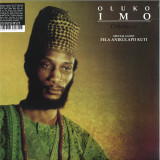
Reissue of the 80s 12” single from Trinidadian musician Oluko Imo (Black Truth Rhythm Band), featuring Fela Kuti and Femi Kuti. Recorded between Lagos and New York in 1988, the tracks sit at the fault line of the Trinidad-Yoruba connection, blending calypso heritage with the Afrobeat and jazz of Nigeria.
and the novelty goes on: mule musiq welcomes another fresh producer to its vast catalogue of music from all around. this time andro gogibedashvili aka saphileaum. he is coming from tbilisi, georgia and already released an impressive body of work, considering he just publishes music since 2016. countless eps and albums, digital, on tape, documenting his feverish creative urge on labels like not not fun records, good morning tapes, diffuse reality, or vodkast. they cover a comprehensive stylistic range from ambient and downtempo to tribal, house, and techno nuances. a deeper shade of soul, precisely fashioned, growing from different playgrounds of inspiration. he was born into a musical family. as a kid he studied georgian folk. in his school rock band, he sang, and the guitar was his love. then electronic music called the tune, and techno hit his heart. in the midst of it all the 26-year-old never lost contact with his spiritual home. “i find deep inspiration in georgian myths and legends, occultism and esoteric teachings, lost civilizations, earth, unity, truth, information, and the secrets of the universe. these things, to name a few, inspire me daily and help me create the music I make.” saphileaum reveals. “exploring together”, his debut album for mule, navigates all these elements through a merry-go-round of gentle driven rhythm zones. fourth-world spheres, balearic tropes, field recording zones, tropical downbeat, tribal percussions, trancing sounds, balafon hums, mallet airs, hooky house – it’s all there, circling the eavesdropper into a dreamland of melodic undercurrents. “my loops come from tribal and cosmic inspirations. tribal, as below, and cosmic as above. the combination of these two, is very interesting to me”, he clarifies, while joking “but, to put it super simply, loops are super handy for djing”. which brings us to the final promotion of “exploring together” - it’s playability. its vast. multifunctional. spiritual. made for gatherings, were all dance time away. lost in music actions, only touched by the hand of rhythm and sound. his ten tracks are created for such flashes, wide spreading a musical narration of illuminating durability. “cosmic, relaxing, fun, tribal, and mystic.”, as saphileaum declares.
toechter is an all-female trio operating from Berlin. toechter’s 2nd full-length album »Epic Wonder« sees its classically trained members blend elaborate string arrangements with ethereal indie pop and delicate rhythms. Katrine Grarup Elbo, Lisa Marie Vogel and Marie-Claire Schlameus exclusively use analogue sound sources (such as violin, viola, cello, and their voices), which were then electronically processed.
Named after the Greek god of the wind, toechters 2022 album »Zephyr« exhaled deeply with concurrently invigorating and confusing sounds. »Epic Wonder«, their second album, was created in the spring and summer of 2023. Playing with forms and contours, the music sounds like the awakening of something new. One seems to be listening to an ongoing conversation, an exchange about what music could be, where it wants to go and how it contributes to our view of life. It all rests on a simple premise:
»Every sound you hear in our universe comes from us. The string trio is the core of toechter, the starting point of all our work.«
Those looking for new worlds of sound can find them in the work of this classically- trained musicians. Whether they add voices or percussive instruments, sample the sounds, or manipulate them electronically; ultimately they are exploring the string trio's place in a world shaped by the digital.
»Prelude« opens the album, seemingly a conversation, yet not only between humans. We catch the word ›love‹ which soon morphs into pure sound images, while a violin theme tentatively takes over. Is it the dawning of a new day? The chorus of sound transforms into a fascinating rhythmic figure, creating a club-like experience that fades out in delicate structures. A perpetual transformation.
According to toechter, »Epic Wonder« is all about making connections. Connections between people, animals, plants, fungi, rocks, soils, oceans, ice caps, stars, and planets. One imagines oneself in a folk-pop song of the 60s, or even blown around by Morricone's desert wind:
»The world as we see it is in desperate need for a deeper understanding; for compassion, for empathy. We have to understand that we are all part of the same organism. Epic Wonder is a dream, a wish, a longing for kinship between all species that share the world - all that is alive.«
The acoustic throbbing and knocking in »Sea Of Serenity« makes you think of encounters with mythical creatures or planetary oceanography; and out of the mechanically clacking groove of »Shift Souls« a gentle, but steady movement awakens with voices that seem to sound from the depths of the sea. Everything is in flux, floating in and out of dimensions and elements.
The album ends with »Mercury«, spherically elegant and almost science fiction-like. Here, a pizzicato melody leads us back to the baroque, simultaneously representing a detail of intertwined sonic worlds, while the steady, housy baseline develops its driving theme.
»Creating the music for the album, we allowed ourselves to waft away with the aspiration that connections are possible. Sometimes dwelling on subtle, yet marveling phenomena like the evening fog covering a valley on Midsummer, sometimes on grandiose splendors like the genesis of mountains or the birth of a child - letting interactions and encounters with other beings float through the musical universe as drips of emotional perceptivity.«
For the visual manifestation of »Epic Wonder«, toechter has engaged with Finish up-and-coming lens-based artist Aino Kontinen. Her work will grace both the cover art of the album and accompany the first single and video as an ephemeral tale in motion.
Roberto Agosta, or just Agosta as he likes to be called, is a Sicilian DJ and producer from Catania active all along the eastern coast of Sicily, a place that proved to be a soulful place and a training ground for a long career, making him an excellent music selector and a reference point in the spread of alternative music.
A soundtrack music enthusiast since he was a child, now a vinyl "serial gathere", Agosta has always put his vast knowledge at the service of a very personal sound that sums many different music styles and contaminations, simple and profound but straightforward and direct at the same time.
Agosta’s eponymous album, released on LP, CD and digital formats, was conceived during the Covid-19 lockdown, thanks to the precious collaboration of friend DJ and producer Massimo Napoli aka Galathea, with whom Roberto has already started another project called AN-AN that will produce a new record for Space Echo at the end of 2022.
This record highlights a typical chill-out aesthetic, thanks to its trip-hop and ambient rhythms and atmospheres, while a deeper exploration reveals the psychedelic essence of the entire work, a daring and exciting journey in the most primitive Sicily, and the energy that sustains all of its ten tracks.
Much of their author and his lifestyle - mainly based on meditation, the search for spiritual elevation, the relationship with nature and the regaining of contact with those particular places and with the people who live there - is revealed by those tracks that constitute a soundtrack for this spiritual but also extremely physical journey.
The song titles are, in fact, intrinsically linked to Roberto’s real life: the Gorna and Ilice mountains at the foot of Etna, the Carricante vineyard and its excellent wine, Unna, Three Chestnuts, Varanni, Don Alfio, Lady G. Each of them represents a pleasant and dreamlike narration and the escape from the complex dynamics of a city like Catania, among echoes of the most dreamy Pink Floyd, the softer side of ’70s krautrock, but also the Massive Attack and Tricky’s Bristol scene.
There’s also an excellent choice of synthesizers and overdubbed guitars, thanks to the talent of the multifaceted musician and producer Salvo Bruno Dub, and of Manuela Amalfitano, Loredana Poidomani and Deran Obika’s voices.
Agosta is an introspective, deep work with a cinematic vocation, perfectly rooted in the territory where it took shape, among sunny landscapes, lush with vegetation but also deserted and arid lands. From Sicily to the cosmos... enjoy!
What Do We Do Now is the fifth solo studio LP recorded by J Mascis since 1996. This is obviously not a very aggressive release schedule, but when you figure in the live albums, guest spots, and records done with his various other bands (Dinosaur Jr., The Fog, Heavy Blanket, Witch, Sweet Apple, and so on), well, to paraphrase Lou Reed, "J's week beats your year." What Do We Do Now began to come together during the waning days of the Pandemic. Utilizing his own Bisquiteen Studio, J started working on writing a series of tunes on acoustic with a different dynamic than the stuff he creates for Dino. "When I'm writing for the band," he says, "I'm always trying to think of doing things Lou and Murph would fit into. For myself, I'm thinking more about what I can do with just an acoustic guitar, even for the leads. Of course, this time, I added full drums and electric leads, although the rhythm parts are still all acoustic. Usually, I try to do the solo stuff more simply so I can play it by myself, but I really wanted to add the drums. Once that started, everything else just fell into place. So it ended up sounding a lot more like a band record. I dunno why I did that exactly, but it's just what happened." Two guest musicians are playing this time out; Western Mass local Ken Mauri (of the B52s) plays piano on several tracks. Since J himself has some experience with keys, when asked why he needed a hired gun, he says, "Ken is great, and he plays all the keys. I tried playing some keyboards on the first Fog album, but I'm really only comfortable playing the white notes, so it's kind of limiting. laughs Nowadays, I could just turn the pitch on a mini Mellotron to play different sounds, but black keys just seem hard. For whatever reason, I just like banging on the white ones. Seems like it's harder to figure out how to stretch your fingers around the other ones." Mauri has no such qualms and plays all the keys very damn well. He sounds especially great on "I Can't Find You," where he is Jack Nitzsche to J's Neil Young, creating one of the album's loveliest tunes. The other guest musician, Matthew "Doc" Dunn, is also prominent on this track. Dunn's steel guitar manages to both widen and soften the musical edges of the music, giving it a full classicist profile. Dunn is an Ontario-based polymath who J met through Matt Valentine. After J played on Doc's great 2022 Sub Pop single, "Your Feel," he figured it was time for payback. Both Dunn and Mauri add beautifully to the songs here, helping to transform them from acoustic sketches into full-blown post-core power ballads. What Do We Do Now is the finest set of solo tunes J has yet penned, and the way they're presented is just about perfect. Asked if he would be touring to support the album, J says he'll be doing some weekend dates, but he probably won't be putting a band together. And I'm sure these songs will sound great solo and acoustic, but the arrangements on this album are truly great and put a cool, different spin on Mascis' instantly Recognizable approach to making music. So, what do we do now? Not sure. But apparently, what J does is to make one of his most killer records ever. Hats off to him. - Byron Coley
White vinyl, limited to 650 copies. The album title hangs heavy throughout the duration of the songs themselves, a weight around the neck of its creators. Inspired by a tumultuous time for vocalist Seb Alvarez, the album is an uncomfortable listen as he grapples with then-undiagnosed bi-polar and unchecked addiction issues. Whilst the themes of shame, deception and trauma are not new to meth., they have previously been dressed up with a fictional veneer. This time around, Alvarez lays his vulnerabilities bare, offering up the darkest parts of himself. The oppressive burden of shame, galvanised by behaviours rooted in addiction and mental illness seeps into the anxiety-inducing atmosphere of the album. Alvarez chronicles the differing types of shame and rock bottom feelings from Catholic guilt instilled in him from a young age, through to the more recent deceptions of concealing the effects of alcoholism. As he details his constant internal battles and downward spirals, everything is channelled into the creative process. The result is stark, unyielding and raw. For the first time, the band wrote as a unit, indicating a shift in focus. Alvarez focussed on the lyrical and thematic elements of the album and created more room for his bandmates to thrive. The ominous sound of SHAME is littered with experimental flourishes, as meth. lean into noise rock and metal simultaneously. There is an industrial bleakness to the album that propels it along, at some points as though through gritted teeth. Operating under a remit that included avoiding a reliance on riffs, meth. instead let rhythm - specifically their drums - carry the weight and forward motion of their compositions. Recorded in winter 2022-23 by Zack Farrer at Rose Raft in New Douglas, IL, the album was later mixed and mastered by Colin Marston.
Craig Clouse has devoted the past several decades to exploring a wide range of avant-garde avenues for his brainchild Shit & Shine. The monolithic riffs of raw and powerful psych'n'roll hysteria, the freeform dance miasma, sub-heavy electronica and the blissful stupidity crafted for ecstatic ascension: all perfectly-placed in the idiosyncratic world of Shit & Shine. There's also fertile soil for twisted noises in their lowest form, often obscured by groovier comrades in S&S releases yet vitally important for the substance of Clouse's compositional carcass and OOH-sounds has given him the required space to stretch out his longtime interest in developing loose structures and crackling landscapes to transcend his rhythmic comfort zone.
Making an enthusiastic transgression into noisy tones, "Joy Of Joys" has a friendly way of presenting difficult material. The rough and ready cheapo electronics sparkle in full electrifying mode, welding an ascetic gamut of aural hypnotics with a wormhole of uncompromising loop brut. Clanks, bangs, twangs and creeping, ragged globs of sound bloom on the bones of repetition to focus on the swinging stream of dirty anarchy. Stepping out of any context and genre disciplines, S&S finds new sonic trajectories in "Joy Of Joys" which perfectly sit in-between a wobbly cabal of international sub-underground acts: the idiot-avant strategies of LAFMS, early Mego bad digitalia, no-brow enthusiasm of Wolf Eyes family, micro-DIY ethos of Chocolate Monk and the sheer hellish nonsense of US noise circa '00s.
Clouse was already established as a landscape painter with a series of faux naïf paintings charmingly accompanying his releases. With his heart full of passion for abstract minimalism, he continued these narrative forms but was always in search of the confidence to paint non-figurative art. The first step into the chaotic abyss is coming from his sonic side by abandoning the beat and riff layers of his previous works to complete nakedness and reductionist courage. At once Clouse makes an evolutionary lurch into extremes as well as taking us back to basic forms in "Joy Of Joys". He creates an entire new parallel world to Shit & Shine with his maverick imagination presenting us with one of the most mutant releases to bear his name. Arthur Kuzmin
The international four-piece, collectively hailing from Istanbul and Berlin, are intent on using their years of experience in the heaviest music scenes to push at the boundaries of contemporary metal. By mixing classic death-metal aggression and with cutting-edge production and processing techniques, Bipolar Architecture have created a balance of sound that is raw, frenzied and extreme whilst also nuanced, refined and pliable. On `Depressionland', the band's 2022 debut full-length, this truly progressive approach was realised in full as frontman, rhythm guitarist and principal songwriter Sarp Keski's unmistakable banshee howl soars over Fatih Kanik's punishing blast beats and delay-soaked euphoria courtesy of lead guitarist Marcus Sander and bassist Enes Akovali; unifying Bipolar Architecture's diverse influences whilst simultaneously holding them poles apart for maximum, abrasive impact. If `Depressionland' was a distillation of Bipolar Architecture's signature sonics though, 2024's sophomore album `Metaphysicize' is alchemical gold. Still determined to drive at the bleeding edge of extreme metal, `Metaphysicize' uses the existentialist, introspective themes of `Depressionland' as fuel for an even deeper, more haunting exploration of the human condition. Tracks such as `Immor(t)al' and `Dysphoria' resound with a musical maturity and patience testament to experience gained and lessons learned, whilst `Disillusioned' and `Alienated' shake with all the full-throttle, apocalyptic indignation of the band's blackened metal origins. Significantly, `Metaphysicize' is also Bipolar Architecture's first work to feature lyrics in Keski's native Turkish; sitting at the heart of the record, the swirling post-rock suspense and white-knuckle thrash metal of `Kaygi' is a perfect embodiment of the album's dichotic balance of culture, genre, calm and chaos.
In a union of drum and bass talent at its most authentic, MAKO and SEBA have joined forces to deliver a long-awaited and highly anticipated collaborative single titled "Brotherhood" and "Stockholm Syndrome." These tracks were initially started when SEBA visited MAKO in 2019 and showcase the synergy and creative prowess of both artists.
"Brotherhood" sets the tone for this momentous release as MAKO and SEBA combine their unique styles and sonic signatures to create a track that embodies the essence of Drum & Bass in its purest form. Crushing amen breaks over dystopian themes and chilling Rhodes hooks, this track is constantly moving with its fusion of commanding rhythms, complex arrangement quirks, and grudge-bearing bass work, resulting in a captivating sonic journey that is sure to shatter any jungle sound-system. Topped off with the inspiring mantra of “What is love? One name for it is knowledge."
On the flip side, "Stockholm Syndrome" pays homage to SEBA's cherished hometown. The track captures a minimal yet visceral spirit, a catchy hook that's rare for a track with such a haunting theme is backed with stepping beats and macabre break edits, topped with intricate percussion. This track clearly identifies both MAKO and SEBA's signatures and instantly lets the listener know they're hearing both in fusion, and the heart and soul of both producers' heritage.
MAKO and SEBA's collaborative single is a testament to their individual artistry and the magic that unfolds when they unite. Their ability to seamlessly blend their distinct styles and push the boundaries of the drum and bass genre, while remaining true to its core values, is evident in every note and beat.
This is a brotherhood we're delighted to witness taking shape.
Pink & Green Pinwheel Vinyl. Celebrate the 10 Year Anniversary of Pity Sex' breakthrough debut full-length record Feast of Love with this commemorative anniversary edition LP. This reissue features the album in full along with three bonus tracks: 'Euclid,' 'Acid Reflux' and a cover of Pixies' classic 'Gigantic.' The anniversary edition also features a gatefold jacket previously unavailable in the United States and an updated lyric sheet.Walking the razor's edge between overdriven navel gazing bliss and perfect pop sensibility, Ann Arbor's Pity Sex have crafted a breathtaking debut LP in 'Feast of Love' that's both awesomely beautiful and deftly evocative. Massive, harmonically distorted guitars and airy dual male/female vocals are hallmarks of Feast of Love, all drenched in warm, dreamy reverb. Most impressive however, is how the band utilizes pop conventions - both vocal and instrumental melody, and a strong and pounding rhythm section - while delving deep into the ethereal power of textured soundscapes. Guitars fuzz and flange, weaving between distinct, identifiable parts and simple brushes of colored noise. The voices similarly drift between carrying delicate melodies and delivering evocative feeling. Calling on the infectious, hooky inclinations of the Pixies, dreary melodies of the Breeders and sonic mass of My Bloody Valentine, Pity Sex's Feast of Love twists and churns with these beautiful yet fleeting vignettes captured in sound.
WIREs COLIN NEWMAN reissued auf seinem SWIM Label das Soloalbum "Bastard" aus dem Jahr 1997. Damals von der Presse als richtungsweisendes und bahnbrechendes Album im Elektro/TripHop/Techno-Bereich hoch gelobt, klingt es über 25 Jahre später immer noch grandios und aktuell. Erstmals auf LP (eco vinyl) überhaupt, CD-Version jetzt mit zusätzlicher Disc expanded mit vielen Bonustracks. - Obwohl das Album (das den Titel Bastard trägt) eine große Bandbreite an Stilen aufweist - Deep, Techno, funky Beats, Drum'n'Bass - ist es auch, wenn überhaupt, eine Rückkehr zu Newmans "Rock"-Wurzeln, da mehrere der Tracks Schwaden von E-Gitarren enthalten, die die Rhythmen untermalen. Die Platte fasst Newmans Hör- (und Aufnahme-) Gewohnheiten in den letzten Jahren vor der Veröffentlichung und die eklektische Natur des Swim-Labels zusammen, das er mit seiner Frau Malka Spigel betreibt. Alle Stücke auf Bastard wurden von Colin Newman und Malka Spigel geschrieben und von Immersion produziert. - "The language of Bastard is house, techno, breakbeat, drum and bass, and doubtless post-rock." - Colin Newman 2023 * "A fascinating trip across the musical barriers!" (Modern Dance) *"Scattercore breaks with swathes of electric fuzz... spiritualised infected with the dance virus... droning, blissed out mantras..." (MixMag) -
This was the second studio outing by supergroup Cactus. Existing of ’Vanilla Fudge’ rhythm section Carmine Appice (drums) and Tim Bogert (bass), as well as former Amboy Dukes lead vocalist Rusty Day (vocals/mouth harp), and Jim McCarty (guitar) from Mitch Ryder & the Detroit Wheels and the Buddy Miles Express. The album offers eight tracks of which are six originals and two covers: Little Richard’s ’Long Tall Sally’ and Chuck Willis’ ‘Feel So Bad’.
* `Individualism’ is a brand new track from the British reggae veteran and general all-rounder G.T. Moore alongside Goldmaster All Stars.
* Deep musings on a slow-paced roots reggae rhythm which takes on a heavier dimension on the B-side dub mix.
* The production on this is reminiscent of a late 70’s / early 80’s outing.
Der zweifach Grammy-nominierte sowie gefeierte Komponist und Perkussionist Manu Delago kollaboriert für sein neues außergewöhnliches Album "Snow from Yesterday" (One Little Independent Records) mit dem Vokalensemble Mad About Lemon. Das neue Album ist dynamisch, facettenreich und kraftvoll. Manu Delagos Handpan-Virtuosität ist die rhythmische Lebenskraft von Snow From Yesterday und erzeugt gefühlvolle Klänge, über die sich der verwobene Gesang von Mad About Lemon ausbreiten kann. Es werden Gletschergebirge, Flüsse bis hin zu kleinste Wassertropfen besungen und über Reisen und Stationen des Lebens erzählt, die uns mit Orten und Menschen verbinden und nachhaltig verändern können. "Viele meiner letzten Projekte waren sehr abenteuerlich, konzeptionell und umweltorientiert. Mit "Snow from Yesterday" wollte ich die Musik wieder in den Vordergrund stellen und eine berührende Klangwelt erschaffen, die mir dank der Magie der drei Sängerinnen Anna, Mimi und Heidi wirklich gelungen ist." Der Tiroler Musiker arbeitet regelmäßig mit verschiedenen artists wie Björk, Anoushka Shankar, The Cinematic Orchestra und Olafur Arnalds zusammen und ist als Solist ua mit dem London Symphony Orchestra und dem Metropole Orkest aufgetreten. Snow From Yesterday reist über endlose ozeanische Weiten und Jahrtausende hinweg und erzählt Geschichten, die uns Menschen als Teil eines größeren Ganzen zu sehen. Schließlich münden alle Flüsse ins Meer.
"Warm Nights“ ist das vierte Album von Robert Forster. Es wurde 1996 von Beggars Banquet auf LP und CD veröffentlicht.
Forster sagte später: Es ging um schweißtreibende Nächte in Brisbane, Bananenstauden im Hinterhof, nachts umherlaufende Tiere, durch die Luft
fliegende Flughunde. Ich habe Brisbane in diesem neuen Vorort mit neuen Augen gesehen und diese Musik gehört. Das hatte mehr Raum, mehr
Rhythmus. Ich habe alle Songs in etwa acht Monaten geschrieben, schneller als seit den späten 70ern.“
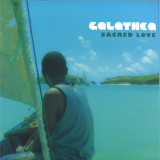
Two years after the release of his first self-titled album, DJ producer Massimo Napoli aka Galathea presents the new 'Sacred Love', in which he once again avails himself of the collaboration of his friend producer and bass player Salvo Dub, as well as a combo of respected musicians: singer Kadi Koulibaly - originally from Burkina Faso - already featured on the first album, Giulia La Rosa, author of the lyrics and performer of the title track, pianist Mario Pappalardo, percussionist Sergio Spitaleri and drummer Luciano Cantone.
'Sacred Love' is definitely a more mature, intense and profound journey than the previous album of the same name, which enhances the magical dreamlike and spiritual atmospheres of a certain African culture.
The album guides the listener along a path of multi-ethnic contaminations: "Divinité", "Ouaga" and "Koloko", well interpreted by Kadi, touch on the sacredness and mysticism of the African continent and blend well with the Spiritual Jazz sounds that have evolved in the West.
"Divinité", through the spoken word of French poet Diego Hernandez, tackles the themes of faith, life and the relationship with one's 'self', with references to French chanson productions, in which Kadi's spiritual song, at times 'Saharan', intersects and expands into cosmic space.
The title track, the first single from the album, also released on 7" (45rpm) in two versions, is an Afro-American gospel with a typically afrobeat rhythm, vaguely reminiscent of Nina Simone's 'See-Line Woman'.
North Africa is represented by "Equator", while we climb further north into the middle of the Mediterranean Sea with "Medican Blues", to land in Stromboli with the Deep Jazz of "Ginostra", whose title recalls the village of the marvellous island in the Aeolian archipelago.
Then we have the Cuban track "Caminito", a sort of Cha-Cha with a romantic piano melody (à la Chucho Valdez) well performed by maestro Mario Pappalardo; and then again "Eos", strongly Balearic with a Brazilian mood; "Impression", a dreamy journey of impact; "Sirens", already present on the first album and here reworked in a new Spiritual-Ambient version produced by Agosta.
"Sacred Love" is thus an original and musically borderless album, which expands a certain African sacred culture and naturally blends Afrobeat, Jazz and Blues atmospheres with the Balearic sounds of Mediterranean culture.
Enjoy listening!
4th Press - 600 copies only
It didn't take long for Błoto to become a thing, shrouded by underground secrecy. First, there was the gig during Spring Break 2019 in Poznań where the Blue Note club was packed to the brim. That event gave momentum to 4 more performances in Warsaw and Wrocław, with no music released at that time. Then, the first pressing of the vinyl was sold out within 24 hours without any single nor cover revealed.
The word about Błoto has spread, increasingly gaining ground, reaching Japan, where the album will also be available on CD. No one expected such a turn of events. In fact, neither did the band itself; after all, Błoto came to being accidentally, yet naturally, like a puddle after a rainy day.
It all started in the summer of 2018 when EABS was touring and the band had a day off. As they were approaching Tricity, people were getting off and eventually there were only four musicians. An evening off, a well-tuned rhythm section on the road, harmonious as can be, and a great deal of creative potential within the members of Błoto band forming at that very moment stirred up common enthusiasm. The album was created without much deliberation, stemming from the need of the heart and the joy of making music together. As a result, 90 minutes of music was recorded of which about 40 made it to “Erozje”.
The music is deeply rooted in brutal hip-hop grooves, referring to the sound of 90’s New York. Dirty and uncompromising, this music’s strength lies in the drums and bass as its sound refers to classics such as Wu-Tang Clan and Company Flow. Radical in a sense, it also captures the atmosphere of the times in which it is created. The times of the planet on the verge of disaster, distinct social divisions, hate speech, growing nationalism, police brutality, nepotism, and various political deals. All this is happening before our eyes. The soil of the world as we know it is eroding right now.
Following the success of Eric B & Rakim covers on 45, touching Hip Hop and rare groove fans, Medline explores new horizons. Well known to be free from styles boundaries, the French Chilean multi - instrumentalist unveil a two side Afro Funk killer.
Marked with the "universal power" title on the label, third 7 inch on My Bags catalog, this new 45 shows Medline's abilities to produce high quality music in a wide range of styles. The compositions are produced with a brilliant contrast. The uptempo "Run For Cover" is a huge Afro beat runner with a hardcore feeling while "Azul", is a heavy downtempo soul funk anthem, and shines like a massive solar energy boost.
Medline brings back the 70's West African sound signature, carried by a hot drum and bass couple, leaded by the Farfisa organ and harmonized with a powerful brass section. The rhythm is wild, mastered by dynamical arrangements when the breaks are hitting loudly around. And yes as always Medline is the ONE playing all.
The artistic fate offered beautiful colors and forms to the music. Clément Laurentin's elegant painting "Run For Cover" reminding Bob Marley and Lee Perry's records, baptized the first composition which includes a "Jamaican" surprise. "Azul" (Blue in Spanish) is the main color of Clément's creation which remind the look of the famous azulejos. The link happens without any previous consultation, all was here to be done this way, connecting cultural areas and eras. To end, the acrylic painting on linen canvas is the perfect organic mirror to this new 7 inch.
My Bags is happy to offer this "tratra" (Ivorian pancake), designed with all the elements of a ready to dig holy grail, Soul inspired, Afro beat to the core.
'“Nobody Move!”, so says Philippe Doray and his Asociaux Associés (the Antisocial Associates)! Having dynamited the end of the 70s with two radical albums – Ramasse-Miettes Nucléaires in 1976 & Nouveaux Modes Industriels in 1978, both reissued by Souffle Continu – Doray still hadn’t finished singing. Throughout the next decade he began his Composant compositeur which would document the “second period”, as he calls it, of his Asociaux Associés.
The record includes new schizo-electro songs which make the most of his association with Laurence Garcette, who also plays all sorts of keyboards. A prolongation of the first period of the Asociaux Associés, the duo updates Doray’s poetry: in reaction to the current overcast atmosphere, here are some hallucinatory fantasies to the rhythm of an infernal circle dance (« Le petit géant ») or an ecstatic waltz (“Bombés fluo”) or even coded messages stuffed into bottles and thrown into space (“Secoue le flipeur”, “Choc d’amour”).
On the bonus CD there are further iconoclastic examples: rare recordings (unpublished or even “inaudible”) of the Asociaux Associés but also by Crash, a duo that Doray formed with Thierry Müller (Ilitch, Ruth). At the controls of their experiment- bending machine the musicians multiply the possibilities: peripheral rock, arias in orbit, broken swing, industrial mantras and other joyful falsities. Enough to make you lose your mind? No... as Philippe Doray promised: it is the “jackpot qui frissonne” (the shivering jackpot) which is there to excite.'
After two years and a half, Pietro Santangelo (formerly Nu Genea sax player) and his PS5 ensemble are back to Hyperjazz Records with a brand new album: Echologia.
'Echologia' draws inspiration from the idea of natural biodiversity as an expression of contamination, coexistence and balance. In the same way as the biological agents contribute to the life of a certain ecosystem, seemingly distant musical languages act as elements of balance in a fertile and blooming musical system. Multiculturalism becomes coexistence.
As in the previous 'Unconscious Collective' (Hyperjazz, 2021), suggestive saxophones textures interwine on a solid rhythmic equilibrium and move naturally along an imaginary line highlighting the ancestral connection between Africa and Mediterranean Sea. On the background, the tribute to the earlier Jamaican dub masters with a strong use of vintage echoes in the mixing phase.
Album cover by Sabrina Cirillo is inspired by the myth of the nymph Echo, the Oread condemned by Juno to be able to express herself by repeating only the last words of theinterlocutor, who died of pain due to the impossibility of communicating her love to Narcissus.
Soul Jazz Records’ long out of print classic ‘Studio One Dub’ collection is being re-released in three new one-off limited-edition coloured pressing 18th anniversary format editions!
Firstly a heavyweight special limited edition one-pressing only orange 2xLP vinyl + download.
Secondly, there is also a new special limited-edition one-off pressing edition orange-pressed CD enclosed in jewel case and slipcase.
And thirdly there is a very limited unique new one-off pressing orange-cased cassette format (200 copies only)!
18 years on from its original release Studio One Dub remains super-hard hitting featuring classic + rare Dub tracks from Studio One, many available on vinyl for the first time in over thirty years.
Studio One Dub includes the dubs of many classic tracks such as Horace Andy’s “Skylarkin”, Johnny Osbourne’s “Truth and Rights”, John Holt’s “Hooligan”, Freddie McGregor’s “Bobby Bobylon” plus many more rare tracks.
The album also comes with two rare interviews - one with Clement 'Sir Coxsone' Dodd about dub and dubplates and one with the sound engineer Sylvan Morris, talking about his groundbreaking period at Studio One and his many innovations that he evolved there.
In short, this is a 100% essential album!
"Almighty slab of dub featuring loads of rare and classic dub versions of Studio One's foundation tracks." Rough Trade
“Quite a treat awaiting here for the unsuspecting reggae faithful – as always with Soul jazz chock full of a bunch of big tunes – but here in version form lies some of the freshest rhythms and most radical revisions of some of the greatest Studio One music. The darkest and the absolute deepest in the series – naturally essential.” Boomkat
"Continuing the Studio 1 Series this album features classic and rare Dub tracks from Studio One, many available for the first time in over thirty years. Studio One Dub includes the dubs of many classic tracks such as Horace Andy’s “Skylarkin”, Johnny Osbourne’s “Truth and Rights”,
John Holt’s “Hooligan”, Freddie McGregor’s “Bobby
Bobylon” plus many more rare tracks. In short, this is an essential album!" Wax Museum
Batov Records' Middle Eastern Grooves 45s series welcomes the latest addition to its eclectic roster - a two-track EP from Eje Eje, the psych and funk inspired project from Şatellites band leader and producer, Itamar Kluger. Featuring the tracks "That Rainy Down" and "Coral Sex," the EP showcases Eje Eje's unique blend of Middle Eastern melodies, soulful grooves, and psychedelic sounds.
On the A-side "That Rainy Down," The electro baglama player takes the lead, building and building as if, “he is pushing himself to his limit”, says Itamar, “seeking catharsis as he walks to the edge of the cliff with confidence”, whilst the a baladi rhythm plays like an immense march of drummers. On the B-side we find the funkier "Coral Sex", which according to Itamar tells a story of a drunk tramp bothering the refined and self-important occupants of an exclusive hotel lobby. Reflecting this friction, the track juxtaposes a silky and sophisticated R&B sound, with loosely, pr even drunkenly, played take on rebetiko, a traditional Greek music associated with the poorest of city dwellers, played on a long-necked Greek lute known as a bouzouki.
As each track develops, new layers are revealed, inviting the listener to delve deeper. The effect is intentional. As Itamar says, "there is this kind of music that hooks you in a different way every time you hear it, different places in the songs lighting up in different colors, like slowly revealed layers. In our (Eje Eje) case, it is just such a hazed blend. It could make a very specific atmosphere, color a very specific movie scene that is lost in time or yet to be directed, or a very specific moment with your headphones on a long bus to the desert."
Itamar Kluger is best known for his work with the Şatellites, a six-piece band whose blend of Turkish folk and psych with funk and disco won them champions and listeners across the globe, from KEXP in Seattle to BBC Radio 6 Music, and FIP in France.
Eje Eje’s first 45 promises to be at least as quirky and original, if not more so, since the project is even more unshackled from traditional concepts of a band.
Cryovac is a family of artists that work as one machine. Individual style bands together and moves, as cogs, this machine forward. A.Garcia maintains and manages production on every level, even the pressing at the world famous Archer Record Press. Cryovac is a collaboration between artists and craftsmen to make a quality product. Each project Cryovac champions is meant as a gift for the true believer.
Cryovac #28 starts out with Jason Garcia's frantic head banger “Trapped in purgatory”. This classic 4/4 rocker builds intensity by layering screaming tones to crescendo in a steady drive. “Ichabod”, Garcia’s second track on the A side, is a spartan groove with a stoic delivery of minimalism; a stripped down rhythm with a serious attitude.
A.Garcia and M.Kretsch begin the B side with a reggae-punk techno experiment that delivers a rowdy funk.“Rock the dance bah” is Clash inspired minimal with a walking bassline, texas style percussion, and a guitar twack on the up beat. Garcia and Kretsch collab again on the B2 with “Stillgar”; a blend of synths working around each other as one storm guiding a rambunctious beating to a mystic reverie. These tracks illustrate the duo's production method and approach to the techno sound.
Our artwork for this release was provided by Nick Retzlaff. He is an artist and stand-up comic living with autism, and expressing his unique view of the world.
Mirage is a cosmic collaboration between the Silver Apples and Makoto Kawabata of Japan's Acid Mothers Temple. Packaged in a deluxe jacket printed with metallic silver ink. This album is dedicated to the memory of Simeone Coxe who died September 8, 2020 while this project was being assembled. Dragonfly's First Flight, taking up the full side A, features Simeon Coxe and Kawabata Makoto jamming over familiar Silver Apples hypnotic rhythms. Fans of both groups will delight in the interplay between Simeon's keyboard and Makoto's drone guitar feedback soloing. Side B ranges from free-form freakouts to ambient poetry readings by Simeon with Japanese translation spoken by Makoto. Future Reminiscence, which closes side B, sounds like a long-lost Silver Apples
Originally released by Cooking Vinyl in 1993 this live album took songs from Hanks tour in the Spring of 1992. Taken straight from the desk with no mixing or overdubs they capture the band at their very best. With slow heart wrenching tracks such as 'Birmingham Motel' written by Reg Meuross to the danceable 'Get Rhythm' this LP is a must for anyone interested in Country music from an English musician with a clear passion for the genre. This rerelease has new cover artwork. It is an iconic black and white picture printed in full colour black ( additional cyan) by o Winston Link who is rated as the greatest railway photographer ever to record the passing of steam in the USA. The shot is called 'Sometime the Electricity Fails'
ITALIAN LIBRARY GEM RE-IMAGINED BY BEATMAKER KORALLE AND RAPPER ILLA J
Four Flies is proud to present a new installment in the RELOVED series, 'New Levels / Chartreuse', with an original track from late-70s Italian ensemble Modern Sound Quartet and a rework from producer and beatmaker Koralle featuring iconic rapper Illa J.
In keeping with the aim of the series, which is to put a modern and urban spin on tunes from Italian golden age soundtracks and library music, Koralle has used the unique jazz-funk sound of the original sample to create a smooth and stylish hip-hop beat to which Illa J adds irresistible swag and coolness. More than a remix, 'New Levels' is a new composition that takes 'Chartreuse' into the world of contemporary hip-hop and rap.
Lorenzo Nada, aka Koralle, is a musician, beatmaker and producer from Bologna, Italy. Nada is best known for his project Godblesscomputers, which kicked off a couple of years ago while he was living in Berlin. After releasing four albums/EPs and touring Europe with a four-piece band, Nada is heading into a new direction as Koralle. Firmly rooted in hip-hop, Koralle is taking his jazz crates and field recordings to the studio. Equipped with an array of synths, Rhodes and bass, he creates deeply textured tracks that touch mind, body and soul. "Each beat is like an object found at the bottom of the sea," says Koralle to describe his music. And adds: "The samples emerge from the depths of my record collection and find a new meaning, transformed, like corals from the bottom of the ocean."
Rapping on Koralle's beat is Detroit artist Illa J. Raised in a musical family (his father played piano, his mother sang, and his older brother is the late hip-hop producer J Dilla), he grew up surrounded by jazz, gospel and soul, before building a name for himself as a rapper with a distinctive flow and timbre, but also as a singer and songwriter. Illa J has said of his approach to lyric writing that "the melody comes first, then I bring the words in, even when I'm rapping, you know rhythmically. I'm a singer, so melody comes first, but in terms of the subject matter, the music tells you."
The Modern Sound Quartet was an ensemble led by Milanese pianist and composer Oscar Rocchi. It included Rocchi on keys, Andrea Surdi on drums, Ernesto Verardi on guitars, and Luigi Cappellotto on bass. 'Chartreuse' (written by Cappellotto) comes from their 1976 library LP Cocktail Bar – a collection of jazz-funk/jazz-rock/fusion tunes, each named after a famous spirit. While little known to the general public, Cocktail Bar is highly sought after by diggers, DJs and beatmakers.
'New Levels / Chartreuse' is the fifth release in the RELOVED series, following Jolly Mare's retouch of Piero Umiliani's 'Discomania' (12"), Free The Robots' rework Gianni Safred's 'Autumn 2001' (7"), Dengue Dengue Dengue's remix of Giuliano Sorgini's 'Oasi Nella Giungla' (7"), and Fratelli Malibu's reversioning of Alessandro Alessandroni's 'Tema di Susie' (12"). The 7" releases are co-curated by fellow independent label Little Beat More.
Ada Kaleh, the Romanian composer and DJ, follows up on his recent releases for R&S Records and Apollo with a brand new single, ‘Unravelling’.
Featuring the vocals of Fela Kuti at his most potent, ‘Unravelling’ also includes a featured performance from Eric Leeds, the American saxophone player most noted for his work with Prince, both in the studio and as part of the Purple One’s touring band.
Ada Kaleh constructs a hypnotising and minimalistic rhythm, reminiscent of Tony Allen's drumming style, speckled with dubbed out complexions and kaleidoscopic sonics that provide the perfect bed for Fela Kuti’s distinguished vocal delivery and conscientious lyric. The illustrious jazz musician Eric Leeds lends his prowess to the main mix here, as his smoky saxophone tones glide across ‘Unravelling’ with pure professional class!
Platz 2 Powermetal SOUNDCHECK 01/24
Die aus Brisbane stammende Band Caligula's Horse hat sich seit ihrer Gründung im Jahr 2011 zu einer der führenden Progressive-Metal-Bands der Welt entwickelt. Mit Charcoal Grace, ihrem 6. Studioalbum, kehrt die Gruppe mit einer Kombination aus roher Rock-Power und immenser emotionaler Tiefe zurück. Charcoal Grace ist aus der statischen Hoffnungslosigkeit geboren, die die Pandemie der Band und einem Großteil der Welt in den letzten Jahren aufgezwungen hat. Es ist ein Album, das mit den Erfahrungen und Ergebnissen dieser Zeit abrechnet und letztlich auf eine Katharsis abzielt - auf eine hoffnungsvollere Zukunft. Der Titel Charcoal Grace wird von der Band als "die düstere Anziehungskraft und seltsame Schönheit von Stille, Schweigen und Verlust" beschrieben. Das kann man im 10-minütigen Eröffnungstrack "The World Breathes With Me" hören, einem Mission Statement für die Hauptthemen des Albums. Musikalisch ist es ein Werk der Kontraste, das sich von der leichtesten Ebbe bis zum schwersten Fluss bewegt. Der zweite Track und die erste Singleauskopplung des Albums, "Golem", befasst sich mit dem Kampf mit der Last der Erwartung durch die Pandemie. Es ist ein schwerer Song mit Schwerpunkt auf Riffs und treibenden Rhythmen. Im Mittelpunkt des Albums steht die vierteilige Suite des Titeltracks, ein 24-minütiges Werk, das die grundlegenden Themen des Albums vertieft: Verbindung, Entfremdung und die Art und Weise, wie die Menschheit unter Zwang handelt. Musikalisch deckt es alle Facetten des Vokabulars der Band ab, von schwerer und dichter, orchestral begleiteter Intensität, die die dunkelsten lyrischen Ideen der Songs verkörpert, bis hin zu sanften, akustisch geprägten Momenten und Introspektion. Nachdem Caligula's Horse in den letzten Jahren nicht in der Lage waren, ihr letztes Album Rise Radiant der Welt zu präsentieren, sind sie nun bereit, Charcoal Grace auf schonungslose Art und Weise unter die Leute zu bringen. Mit diesem Album hat Caligula's Horse ein Statement abgegeben, und sie sind bereit, dass die Welt zuhört. Charcoal Grace ist erhältlich als Gatefold 180g 2LP
Studio One was founded by Clement "Coxsone" Dodd1 in 1954, and the first recordings were cut in 1963 on Brentford Road in Kingston.1[2] Amongst its earliest records were "Easy Snappin" by Theophilus Beckford, backed by Clue J & His Blues Blasters, and "This Man is Back" by trombonist Don Drummond. Dodd had previously issued music on a series of other labels, including World Disc, and had run Sir Coxsone the Downbeat, one of the largest and most reputable sound systems in the Kingston ghettos.
In the early 1960s, the house band providing backing for the vocalists were the Skatalites[3] (1964–65), whose members (including Roland Alphonso, Don Drummond, Tommy McCook, Jackie Mittoo, Lester Sterling and Lloyd Brevett) were recruited from the Kingston jazz scene by Dodd. The Skatalites split up in 1965 after Drummond was jailed for murder, and Dodd formed new house band the Soul Brothers (1965–66), later named the Soul Vendors (1967) and Sound Dimension (1967-). From 1965 to 1968 they played 9 a.m. to 5 p.m., 5 days a week, 12 rhythms a day (about 60 rhythms a week) with Jackie Mittoo as music director, Brian Atkinson (1965–1968) on bass, Hux Brown on guitar, Harry Haughton (guitar), Joe Isaacs on drums (1966–1968), Denzel Laing on percussion, and on horns (some initially and some throughout): Roland Alphonso, Dennis 'Ska' Campbell, Bobby Ellis, Lester Sterling, among others on horns during the era of Rock Steady. Headley Bennett, Ernest Ranglin, Vin Gordon and Leroy Sibbles were included among a fluid line-up, to record tracks directed by Jackie Mittoo at Studio One from 1966-1968.
During the night hours at Studio One from 1965-1968, singers like Bob Marley, Burning Spear, The Heptones, The Ethiopians, Ken Boothe, Rita Marley, Marcia Griffiths, Judy Mowatt, Alton Ellis, Delroy Wilson, Bunny Wailer[4] and Johnny Nash, among others, would put on headphones to sing lyrics to original tracks recorded by the Soul Brothers earlier each day. These seminal recordings included "Real Rock" (by Sound Dimension), "Heavy Rock", "Jamaica Underground", "Wakie Wakie", "Lemon Tree", "Hot Shot", "I'm Still In Love With You", "Dancing Mood", and "Creation Rebel".
Jackie Mittoo, Joe Isaacs, and Brian Atkinson left Studio One in 1968, recorded drums and bass for Desmond Dekker's and Toots' biggest hits at other Kingston studios, then moved to Canada. Hux Brown stayed in Jamaica to record on the soundtrack The Harder They Come, The Harder They Fall, and toured in Nigeria with Toots and the Maytals and Fela Kuti. The Soul Brothers (a.k.a. Sound Dimension) formed the basis of reggae music in the late 1960s, being versioned and re-versioned time after time over decades by musicians like Shaggy, Sean Paul, Snoop Lion, The Clash, String Cheese Incident, UB40, Sublime, and countless other Billboard originals and remakes trying to emulate their original Rock Steady sound at Coxsone's Studio One.
The label and studio were closed when Dodd relocated to New York City in the 1980s.
Studio One was founded by Clement "Coxsone" Dodd1 in 1954, and the first recordings were cut in 1963 on Brentford Road in Kingston.1[2] Amongst its earliest records were "Easy Snappin" by Theophilus Beckford, backed by Clue J & His Blues Blasters, and "This Man is Back" by trombonist Don Drummond. Dodd had previously issued music on a series of other labels, including World Disc, and had run Sir Coxsone the Downbeat, one of the largest and most reputable sound systems in the Kingston ghettos.
In the early 1960s, the house band providing backing for the vocalists were the Skatalites[3] (1964–65), whose members (including Roland Alphonso, Don Drummond, Tommy McCook, Jackie Mittoo, Lester Sterling and Lloyd Brevett) were recruited from the Kingston jazz scene by Dodd. The Skatalites split up in 1965 after Drummond was jailed for murder, and Dodd formed new house band the Soul Brothers (1965–66), later named the Soul Vendors (1967) and Sound Dimension (1967-). From 1965 to 1968 they played 9 a.m. to 5 p.m., 5 days a week, 12 rhythms a day (about 60 rhythms a week) with Jackie Mittoo as music director, Brian Atkinson (1965–1968) on bass, Hux Brown on guitar, Harry Haughton (guitar), Joe Isaacs on drums (1966–1968), Denzel Laing on percussion, and on horns (some initially and some throughout): Roland Alphonso, Dennis 'Ska' Campbell, Bobby Ellis, Lester Sterling, among others on horns during the era of Rock Steady. Headley Bennett, Ernest Ranglin, Vin Gordon and Leroy Sibbles were included among a fluid line-up, to record tracks directed by Jackie Mittoo at Studio One from 1966-1968.
During the night hours at Studio One from 1965-1968, singers like Bob Marley, Burning Spear, The Heptones, The Ethiopians, Ken Boothe, Rita Marley, Marcia Griffiths, Judy Mowatt, Alton Ellis, Delroy Wilson, Bunny Wailer[4] and Johnny Nash, among others, would put on headphones to sing lyrics to original tracks recorded by the Soul Brothers earlier each day. These seminal recordings included "Real Rock" (by Sound Dimension), "Heavy Rock", "Jamaica Underground", "Wakie Wakie", "Lemon Tree", "Hot Shot", "I'm Still In Love With You", "Dancing Mood", and "Creation Rebel".
Jackie Mittoo, Joe Isaacs, and Brian Atkinson left Studio One in 1968, recorded drums and bass for Desmond Dekker's and Toots' biggest hits at other Kingston studios, then moved to Canada. Hux Brown stayed in Jamaica to record on the soundtrack The Harder They Come, The Harder They Fall, and toured in Nigeria with Toots and the Maytals and Fela Kuti. The Soul Brothers (a.k.a. Sound Dimension) formed the basis of reggae music in the late 1960s, being versioned and re-versioned time after time over decades by musicians like Shaggy, Sean Paul, Snoop Lion, The Clash, String Cheese Incident, UB40, Sublime, and countless other Billboard originals and remakes trying to emulate their original Rock Steady sound at Coxsone's Studio One.
The label and studio were closed when Dodd relocated to New York City in the 1980s.
In the ever-evolving landscape of hip-hop, Divine ScienZe emerges with their third album, Divine ScienZe 3, a testament to their unwavering dedication to pushing boundaries and crafting music that is as refreshing as it is organic. As a dynamic duo, Divine ScienZe has consistently strived to redefine their sound, and this album stands as a brilliant showcase of their musical evolution. With this release, Divine ScienZe boldly ventures beyond the traditional boom bap approach, seamlessly merging the contemporary essence of hip-hop with their signature classic sound. The result is an auditory journey that transcends time, capturing the essence of both past and present in a harmonious union. Each track on the album is a testament to the duo's growth and innovation, offering listeners a transformative experience with every press of the play button. At its core, this album is a fusion of diverse elements, meticulously crafted to deliver a multifaceted sonic experience. Divine ScienZe masterfully weaves storytelling, hard-hitting bangers, and lush, soulful vibes into every track. The storytelling invites listeners to delve deep into the narratives, while the bangers ignite an irresistible energy, compelling even the most reserved to move to the rhythm. The lush vibes provide a tranquil oasis within the album, offering moments of reflection and introspection. Divine ScienZe 3 is more than just a collection of songs; it's a testament to the duo's artistic evolution and their unyielding commitment to creating timeless music. With every note, rhyme, and rhythm, Divine ScienZe proves that growth is not just inevitable but essential in the world of hip-hop. This release is destined to become an instant classic, a testament to Divine ScienZe's enduring legacy in the genre, and a must-listen for anyone seeking a musical journey that is both refreshing and profoundly authentic
Luigi Madonna's record label, Contempo welcomes a raw and hypnotic techno EP from Backbone.
Backbone is a Portuguese producer who has been turning heads with his driving style of techno with trippy
sounds and fast-paced rhythms.
He has previously featured on labels such as Ed Davenport's Counterchange and Nastia's NECHTO Records.
Contempo is a record label that Luigi Madonna has set up to express the underground side of his tastes,
and along with his own music the imprint's catalogue also includes tracks and remixes by the likes of Alarico, Manuel Di Martino and Lobster.
"Ceasefire" opens the release with its slamming percussion and modulating synth line, before "Twiddly Phases" takes control with hallucinogenic atmospherics that create ominous intensity.
"Just a Sunny Day" is third on the release, and it's got a warped bassline layered with muffled vocals and a pounding kick drum.
"Ciphered Realities" is a stripped-back track with eerie tension and fluttering melodies, then "Wanksta Yard" closes the release with breakbeat rhythms and a menacing bassline.
Early Life Forms is a new quartet fronted by Belgian guitarist and sound wizard Vitja Pauwels, and on the 26th January, they are set to release their self-titled debut album via W.E.R.F. Records; a stunning, one-off live show recorded with American guitarist Marc Ribot (Robert Plant, Tom Waits, Wilson Pickett, Marianne Faithfull, The Black Keys, John Zorn).
Having already earned his spurs as a sideman with artists including Naïma Joris, Bombataz and Lara Rosseel, rising Belgian star Pauwels released his debut album 'Day at Half Speed' in 2019, which explored the possibilities of acoustic guitar and live electronics. This experiment became a new artistic path for Pauwels and showcased his musical versatility, with second album 'Drift By, Sink In', released to critical acclaim in 2022.
The same year, Pauwels was invited as special guest by the BRAND! Festival, Mechelen, to showcase new material and he came up with the idea of putting together his 'dream' live band which included his hero Marc Ribot, one of world's most accomplished and acclaimed guitar players. Reaching out to him via videos and early demos for this new recording project, Ribot liked what he heard and agreed to perform with Pauwels and his new project Early Life Forms in what would be the band's first ever live show.
Joined by Frederik Leroux (baritone guitar), Laurens Dierickx (Hammond organ) and Casper Van De Velde (drums), during the lead up to the festival, Pauwels wrote a number of songs he felt would work for the live show, with the only agreement being that there would be no rehearsals ahead of the performance, only a brief soundcheck beforehand with Ribot. The music was stripped down to its essentials - compelling melodies, themes, and clear forms but with the possibility to change direction at any given moment. "The music was played and heard for the first time, and it felt like a birth of something that needed to be alive. We felt connected in the right state of mind - relaxed and focused - and it all happened in a rush of shared energy. No ego's or fear, only connection and the music", states Pauwels.
Drawing on latin, jazz, cuban, and rock with a touch of exoticism and cinematic explorations, 'Early Life Forms' cites Ry Cooder, Henry Mancini, Los Lobos, Ennio Morricone and of course Ribot, as heavy influences. There is something existential, primary, something epic and at the same time youthfully uncomplicated, which is strongly associated with the music. From the mischievous and imaginative 'My Little Renaissance' to the adventurous and hypnotic 'Latin Dancer', 'Early Life Forms' is overflowing with sharp twists and turns, with Ribot's heavily rhythmic, distorted guitar amplifying the cinematic feel to the sound. The on-stage relationship between each member of the band and Ribot is childishly uncomplicated, something primary but always epic. The music is left to the moment and the magic of their first encounter with their hero Ribot. "Marc's commitment in the music was better than I could have hoped for. What he played was with 200% intention, putting the rest of us in a state of hyperfocus. Given the fact that it was a one-time thing and a recording, we took risks without 'overplaying' or overthinking it. Right before the gig, we felt an urge to play, Marc said, "Let's rock!!" and we hit the stage", says Pauwels.
The Bronx in the 1970s, marked by the presence of notorious gangs, presented a complex and challenging urban landscape. Amidst the crumbling infrastructure and economic decline, neighbourhoods bore the scars of disinvestment, reflected in abandoned buildings and neglected public spaces. The prevalence of street gangs, such as the Ghetto Brothers, contributed to an atmosphere of heightened tension and occasional violence. Graffiti adorned subway cars and buildings, expressing both social unrest and the vibrant creativity of the community. Despite the challenges, there was a resilient spirit among residents, evidenced by grassroots efforts to address social issues. The Bronx during this era was a dynamic yet tumultuous mix of cultural expression, social struggle, and the determined spirit of a community facing adversity. The Ghetto Brothers, originating from the Melendez family who moved from Puerto Rico to the South Bronx in the 1950s, faced challenges involving violence and crime. Despite this, Benjy, a key figure, directed the group towards community improvement. The Ghetto Brothers embraced music, crafting a potent, NYC-flavored musical fusion that caught the attention of record mogul Ismael Maisonave (Salsa Records). Their collaboration resulted in the recording of eight tracks in a single electrifying day at Manhattan's Fine Tone Studios, skillfully produced by Latin studio maestro Bobby Marin (Harvey Averne, La Lupe, Brooklyn Sounds…). This musical odyssey showcases the band's ability to seamlessly blend genres, creating a NYC-flavored stew that captivates listeners with its authenticity. The hypnotic rhythms, infectious guitar riffs, and impassioned vocals reflect the Ghetto Brothers' commitment to expressing their unique experiences and uplifting their community through the universal language of music. "Power-Fuerza" is not just an album; it's a sonic testament to the Ghetto Brothers' fusion of resilience, cultural richness, and musical innovation. Each track is a vibrant tapestry, weaving together the
raw energy of the South Bronx streets and the soulful melodies born from the trio's Puerto Rican heritage. Embrace the timeless resonance of the Ghetto Brothers’ “Power-Fuerza”, one of the best Latin funk albums ever recorded…
The Ganjas Meets Nairobi. The Space Rock of the Chileans together with the Dub of the Argentines. First time on vinyl celebrating 10th anniversary. Sounding laid-back and incisive at once, crisp production and rock sensibilities. The Ganjas are one of the best exponents of Chilean Space Rock and a fundamental-must-listen to understand the new Chilean psychedelic scene of the last decade. They began 25 years ago with long jam -kind -of-playing, with steady drum beats and simple basslines, but adding innovative and colorful lyrics and synths, without never losing the song structure. On the other side of the Andes, the eclectic by nature Nairobi laid the groundwork for a new style in Dub. Since 2009 they had released 3 studio albums and worked with the best legendary Dub producers: Mad Professor, Lee “Scratch” Perry and Sly & Robbie. Touring the same year 2014 in Chile they coincided with The Ganjas at BYM Studios for an unforgettable session that brought this recording, that boasts an intricate rhythm, sumptuous keyboards, and soaring guitars offering elastic grooves, disembodied vocals, and deep bass lines. The album itself revisits the past while also looking to the future. The songs are particularly creative, with the Bob Marley & The Wailers cover ‘The Heathen’ totally revitalized and other passages like ‘Pastor’ and ‘Eagle & Snake’ that travel through an incredible mix of styles, brilliantly blending Trip-Hop, Dub FXs from soundboard, a Brian Jones-esque style slide guitar, and songs like ‘Soul Salvation’ that brings an steady reggae beat with genius saxophones lines from Ignacio Czornogas (King Krule). Mastered by Cem Oral at Jamming Masters (Berlin). AVAILABLE 300 BLACK VINYLS. For fans of: Primal Scream (Echo Dek), Sumo, Dub Syndicate-Murder Tone, Upsetters, Peaking Lights, Peter Tosh-Mama Africa.
- A1: Open Space
- A2: Green Valley
- A3: Caretera Pnamericana
- A4: Goodmorning Sun
- A5: To-Day's Sound
- A6: Free Dimension
- B1: Truck Driver
- B2: Blue Lagoon
- B3: Wanderer
- B4: Lady Magnolia
- B5: Pretty
- C1: Railroad
- C2: Country Town
- C3: Bus Stop
- C4: Cotton Road
- C5: Nocturne
- D1: Exploration
- D2: Tropical River
- D3: Coast To Coast
- D4-: Safari Club
- D5: Music On The Road
PRESSING OF 500 COPIES WORLDWIDE. INCLUDES POSTER.
The sound of today. A very strong statement. Yet, fifty years later, it remains undisputed. Today’s sound is Piero Umiliani's manifesto, his will to demonstrate to the world that he always has his finger on the pulsating vein of the world, ready to embrace the heartbeat of the future.
In the summer of 1973, Piero Umiliani, in his futuristic recording studio in Rome, much like Miles Davis for his 'Bitches Brew,' gathered an extraordinary collective of musicians, both old and new guard to measure themselves against some of his compositions.
Besides strongly emphasizing the backbeat, what stands out the most is the timbre provided by his 'electronic instruments,' as he liked to call them. Minimoog, Arp 2600, Fender Rhodes, EMS VCS3, Clavinet, Lowrey organ, Space Echo, self-built envelope filters—machines impossible to see all together in an Italian recording studio at the time and made available to the musicians.
The line-up is stellar; under the name 'Sound Workshoppers,' the 'Wrecking Crew all'Amatriciana' is hidden an impossible mix where Marc 4, Gres and Perigeo are blended, along with a brass section of veterans and pioneers of Italian jazz, all members of the RAI Symphonic Rhythm Orchestra.
Comparing the recordings from the original scores, one can also understand the space left by Piero Umiliani for his musicians. They are free to move, to contribute solutions, to enrich the maestro's music.
The perfectly preserved original masters, once transferred at the maximum possible sampling frequency, allowed for the recovery of many lost frequencies, restoring brilliance and the remarkable low end expertly captured in recording by engineer Claudio Budassi.
Today’s sound was extremely difficult to control and fully render with the mastering technology of that time.
Paradoxically, Today's sound could not sound as I have managed to make it sound today: urgent, majestic, more alive than ever.
- 1: O Astronauta (Baden Powell / Vinicius De Moraes)
- 2: Tristeza De Nos Doi (Bebeto, Durval Ferreira, Mauricio Einhorn)
- 3: Chuva (Durval Ferreira, Pedro Camargo)
- 4: Tema Para Martin (J. Demonte)
- 5: Consolação (Baden Powell, Vinicius De Moraes)
- 6: Canto De Ossanha (Baden Powell, Vinicius De Moraes)
- 7: Pro Forma (Arnaldo Costa, Mauricio Einhorn)
- 8: Samba Do Avião (A. Carlos Jobim)
- 9: Niña No Divagues (Agustin Pereyra Lucena)
- 10: Berimbau (Baden Powell, Vinicius De Moraes)
Following Far Out’s reissue of Agustin Pereyra Lucena Quartet’s La Rana, the label continues its memorialisation of the late, great Argentinian guitarist’s music, with the first ever direct from tape, audiophile reissue of Pereyra Lucena’s self-titled debut album from 1970.
One of the outstanding South American guitarists, Agustin Pereyra Lucena commanded a unique position in Latin music history. He hailed from Buenos Aires, but was obsessed with the music of Brazil. A disciple of Antônio Carlos Jobim, Baden Powell and Vinicius De Moraes, the nature of Agustin’s Argentinian roots combined with the nurture of Brazil and its music to give Agustin a sound entirely his own.
After being scouted in a nightclub, by musician and guitar craftsman Jorge Demonte, Agustin was invited for an audition at Argenitinian label Tonodisc. Before he knew it, aged 22, he was in the studio recording his first album.
Agustin enlisted fellow Argentinian Brazilophiles Mario "Mojarra" Fernandez who played bass and drummer Enrique "Zurdo" Roizner. He had first heard the duo backing Vinicius de Moraes, Toquinho and Maria Creuza on their legendary La Fusa live album, also recorded in Buenos Aires. For vocals, Agustin brought in his old friend, a French teacher called Helena Uriburu, who at the time had (unbelievably) never sung in a studio before.
The atypical bossas and spiritual swinging sambas, composed by many of Agustin’s aforementioned heroes, were elevated to new heights by Agustin’s dazzling arrangements and phenomenal guitar playing. The almost cosmic reaches Agustin achieved with his sound are balanced against the stylish sophistication and breezy nature of the music.
Moments of calm serenity include Agustin’s own composition “Nina No Divagues”, Durval Ferreira and Pedro Camargo’s “Chuva” and the Brazilian bossa classic “Tristeza Nos Dois”, which feels like it draws equally upon exotica and early library records. Accompanied by Roizner’s shuffling samba jazz drums, opener “O Astronauta” is Agustin’s cover of the Brazilian guitar standard composed by Baden Powell. Another Baden Powell classic, “Consolacao” is an extended full-band set, which features Agustin’s crisp guitar dancing around a hypnotic rhythm section. Upright bass is swapped out for a big, round-sounding electric one, which sits loud in the mix for almost seven minutes of deep, groovy, distinctively early-seventies magic.
Agustin passed away in 2019, and it is only in recent years that he is starting to gain his plaudits as one of South America’s greats. On the liner notes of the album Vinicius De Moraes writes: “I think I never saw, with the exception of Baden Powell and Toquinho, anyone more linked to his instrument than Agustín Pereyra Lucena. It would give the impression that if the guitar were taken away from him, he would fade into music as one dies from the amputation of an arm.”
Agustin Pereyra Lucena will be released on audiophile vinyl LP, CD and digitally on the 26th January 2024 via Far Out Recordings.
nehan is a Japanese free improvisation & avant-garde rock quintet formed in August 2022. Their performances are initiated by a 9hz brain wave emitted from a testee who has been brought into a deep meditative state via either hypnosis or acupuncture - a very relaxed but very alert state. nehan doesn"t begin until the testee has gotten into the state of "nothingness." It is only then that the improvisation can begin. The role of improvisation has been key to all the musical projects of Masaki Batoh. In 2010, as Batoh was winding down the activity of his long-standing "heavy chamber folk" group, Ghost, he became involved in the design of a machine to generate sonic data based on brain waves. An acupuncturist as well as a musician by trade, his interest was spurred by the rhythms of the body and the brain, and a desire to access the "pulses" of brain waves to initiate improvisations. Following the release of Brain Pulse Music, Batoh toured Japan, the US and Europe, making demonstrations of his process using a local volunteer and guest performers, when available. Today, nehan arrive at their performance space prepared with a Brain Pulse testee, bringing a wide array of instruments including gongs, timpani, tabla and other drums and percussion, Crumhorn, bagpipes, mellotron, oscillators and additional sound effects. Their performance is a transformative electro-acoustic display that passes through the prism of music styles, from east to west, from traditional folk and classical to rock, jazz, and avant electronic. While nehan"s performance presentation invokes a sense of ritual, they understand their process as being far removed from any type of spiritual endeavor - it has nothing to do with eastern thinking or any kind of religious ceremony - this is an action of improvisation, occurring in reality between the five musicians on stage, in response to the brain waves of an individual. For the personnel of nehan, Masaki Batoh asked players with whom he had good previous experiences in improvisation: Futoshi Okano (Ghost, Acid Mothers Temple, The Silence), Haruo Kondo (Espvall & Batoh) and Junzo Tateiwa (Ghost), along with female Brain Pulse testee Gozen on oscillators. The performance here, recorded live in August of 2022 at GOK SOUND in Tokyo, demonstrates their communal dedication to the improvisation. The players act as listeners and musicians simultaneously, inspired to make extended pieces of music out of the "nothingness" of brain waves. The possibilities of nehans"s chosen approach are almost infinite; an evening with nehan is only the beginning of their journey.
Sonor Music Editions proudly presents "A TEMPO DI JAZZ" by Maestro Piero Umiliani. This lost gem captures the formative years of Modern Jazz in late 1950s Italy - alongside the legendary Basso-Valdambrini recordings in the early 1960s, as well as the early years of Piero Umiliani's long and prolific career as a composer with over 190 soundtracks, 40 library albums, and 35 TV title themes recorded.
A TEMPO DI JAZZ includes seven original compositions by Piero Umiliani recorded in 1959. Here, at the age of 33, he lays a perfect ground with himself as a pianist, accompanied by some of the best Italian soloists at the time: Marcello Boschi on alto saxophone and flute, Ivan Vandor on tenor saxophone, Peppe Carta on bass, and the American trombonist Bill Gilmore. With plenty of room for improvisation, the sextet fuses Big Band moods with West Coast experimentation of Latin American rhythms and Modern Jazz ballads that sit perfectly between his soundtracks for the films "I Soliti Ignoti" (Big Deal on Madonna Street) from the same year that attained him international recognition, and his masterpiece "Smog" (featuring Chet Baker and Helen Merrill) from 1962.
Five compositions are outtakes from Piero Umiliani's mega-rarity "Tempo Jazz", released on RCA Custom in 1960, while 'Tema In Blues' has been published on the two - impossible to obtain - 45 releases "Moderato Swing" (RCA Camden 45CP 112) and "Tema In Blues" (RCA Custom 45 R3) from 1960 as well as the previously unreleased track 'Mezza Cottura.'
The music has been transferred and remastered from the original master tapes and lacquer cut in MONO, preserving the original sound of the recordings.
Skylax Records Is Proud to Introduce You to the Sound of Uk Artist De La Phoenix, Introducing "Dancefloor Fatale" - an Explosive 12 Inch Driven by the Revolutionary Soundscape Crafted by Klf, Kraftwerk, and the Infectious Allure of Italo Disco. This Ep Unleashes a Formidable Assault on the Dancefloor, Merging Futuristic Beats, Pulsating Rhythms, and Infectious Melodies. "Dancefloor Fatale" Showcases Five Electrifying Tracks: "1991 Ultra," a Nostalgic Homage to the Early '90s; "Dancefloor Fatale," an Irresistible Anthem Commanding Bodies to Move; "Blade Runner," a Cybernetic Voyage Through Dystopian Soundscapes; "Prometheus," an Epic Odyssey of Melodic Euphoria and Sonic Rebellion; and "The Rite," a Ritualistic Experience Defying Conventions. These Tracks Resonates With the Spirit of Resistance, Igniting Raves in Northern England During the Era of the Criminal Justice and Public Order Act. De La Phoenix's Sonic Artistry Proudly Follows in the Footsteps of Justified Ancients of Mu Mu. Embark on a Bold Auditory Journey That Challenges Norms and Leaves an Indelible Mark. "Dancefloor Fatale" Epitomizes De La Phoenix's Innovative Vision, Pushing Sound Boundaries to Invigorate the Electronic Music Scene. Brace Yourself for a Revolution That Captivates and Energizes....
2024 Transparent Vinyl Repress
With seemingly effortless precision and a sense for the imperfect, Popp merges Ambient, Third Stream and Minimal Music on his debut album "Laya". The title derives from the Sanskrit language and signifies a place of rest and mental inactivity. In the spring of 2019 Popp created these 8 tracks from hours of improvisation in his own studio. The moments thus captured were then enriched with more sounds and effects to add layers and shed the manually played percussion of all its earthliness. The result is an album of concealed complexity and unadorned beauty.
Raised on an old farm in rural Bavaria, Simon Popp started playing the drums at the age of 9. During his studies at the Academy of Music and Theatre in Munich, he extensively studied African music from countries like Togo, Ghana and Benin where rhythm is central to culture. On his quest for this world's sounds, Popp collected and recorded a wide variety of drums and other instruments, adding to the placelessness of Laya.
To mark the 15th year of both Static Shock Records and Hygiene, we bring you the '15 Minute City' EP, which is also the 100th release of the label. Has it really been four years since their ‘Private Sector’ album on Upset the Rhythm?? In that time the band have had a small tweak in line up with the addition of Lucy from Primetime on bass. Hygiene have returned with their most urgent and essential recordings and not many bands can say that after 15 years. Lead track '15 Minute City’ is an absolute bundle of DIY greatness…it has the chaos and chorus of one the classic 70’s / early 80’s Swell Maps 7”s. ‘L.T.N’ is a robotic and stiff post punk song that doesn’t outlast it's welcome as it lasts just over a minute. Last track ‘Petrol’ is a childlike punk gem that gets stuck in your head after one play. Hygiene are one of the most underappreciated bands in London in 2023.
Crypt of the Wizard is proud to present Peace Vaults - I & II on vinyl and digital formats. New blood from the Viennese gutters. Amidst the vile and hostile ravines of sooted stone and waste filled waters is a glade to be found. Peace Vaults erect four pillars of crude and stoic Black Metal, guided by luring vocals and synth melodies, which shimmer like ominously kaleidoscopic light through cracks in the walls of rat filled sewers. Hissing through cracked and blackened feedback Peace Vaults produce jangly off-kilter rhythms, awash with raw metal energy and diffuse post punk lethargy. Frantically pulling chaotic drum patterns and howling guitar leads into rhythmic structure until, wild, they pull themselves apart again. This compilation of the band's two demo tapes rightly now presented on vinyl marks the beginning of an ongoing union between Peace Vaults and Crypt of the Wizard with new material due in the not so distant future
Geneva-based duo Bound By Endogamy delivers a heavy blend of rave, synth-punk, and industrial music. Shlomo Balexert and Kleio Thomaïdes are both prominent figures in the local squat and punk scene, having been involved in numerous projects over the past decade.
Following several cassette releases and a remarkable debut 7'' on Lux Records, the band presents a self-titled album that combines raw, growling basslines, crisp analog rhythms, and passionate vocals ranging from breathy to fiercely cutting.
On stage, the project consists of drums, a sampler, and vocals. Shlomo handles the drums alongside sharp synthesizers, while Kleio delivers powerful vocals reminiscent of a professional boxer. Expect a fusion of DAF and Kleenex with a hardcore edge
On their debut "Hold Your Horse Is" Hella's style started to transform, organically. Zach was pushing the envelope rhythmically, and Spencer began to simultaneously play both rhythm and melody on the same instrument. 2023 marks the 21st anniversary of HYHI, which is being repressed as a commemorative re-release by KRS, including both the remastered original album and the 3 song demo which landed them their deal with KRS in 2001.
Goatsnake was formed in 1996 by guitarist Greg Anderson (Engine Kid), vocalist Pete Stahl (Scream, Wool), and the mega rhythm section of Greg Rogers (drums) Guy Pinhas (bass) from underground heavy legends the Obsessed. Their now-classic debut album appropriately entitled: I (one) was originally released by Mans Ruin records in 1999. 8 songs that gracefully combine monolithic, Sabbathy riffs with soulful vocals to create a monumental album. It has now been reissued as a single vinyl lp as it was originally released for the first time since 1999.
Produced by legendary dub-master/producer Mad Professor, 'Black Attack' is Mutabaruka's first album in 14 years and will be an event in reggae circles
The 14 tracks feature Mutabaruka's incisive lyrics over hard- hitting reggae rhythms from dub versions, including a tribute to reggae legend Lee "Scratch" Perry.
"Black Attack" by Mutabaruka includes the following tracks: "No Church Today", "Dub Is Black", "Black Man Black Man", "One Of Dem Days" and more
repress !
A conscious roots celebration on the A side with Patrick Andy on lead vocal and Yabby You on harmony. A thumping rhythm with Tommy McCook leading the horns on a tasteful arrangement. The flip side is a plea to ’Show a little love’ You can hear all the familiar trademarks of Yabby’s production techniques, attention to detail on the rhythm and the recording. Yabby, like may top quality producers undoubtedly involved in the songs text as well as production. Quality music. Comes in a grey Pressure Sounds custom disco bag.
Some Female:Pressure right here with the latest NVST release; Silence Itself Is Noise! This is her debut for SSPB delivering a 6 track ep which are a reflection of her adventurous club sets, a well-balanced mix of powerful beats and expansive atmospheres haunted by skittering echoes of the dancefloor. Each track feels like fleeting memories of the club filtered through the human experience - flickering moments illuminated by strobes and shrouded in smoke, laced with the tang of sweat and psychedelics. Opener "Tiny Mistakes Feeling HOT (Hellisnotamyth version)" coalesces from curling vapors into infernal acid lines and rhythmic fragments that evaporate almost as soon as they appear. "The Devil Loves The Detail (Lucifer's Fire Version)" builds into an inescapable pulse amidst frayed synthesizers, pressure building to fever pitch before "The Danger Zone Of GFY (Freedom Version)" opens out into icy, astral synths. "Monster of Business (Style Edition)" shifts closer to the dancefloor with a slinking, syncopated groove, conversations from the smoking area or studio creeping in at the edges, before erupting into the frazzled bounce of "The Goat and the Night." "The Silence Itself is Noise (Nonstop Bass Version)" loops back once again to more cavernous atmospheres, warped bells and strafing melodic flourishes ringing out amidst fizzing distortion and skeletal percussion. Silence Itself is Noise doesn't clamour for attention, it necessitates it. Once again, NVST proves herself unafraid to challenge club orthodoxy, and unwilling to patronize listeners, instead making deft use of tension and release to create genuine moments of surprise and transcendence.
Hard salsa with rocking tropical electric guitar! Príncipe's 1967 debut album, featuring powerful Afro-Latin rhythms like guaguancó and pachanga played with youthful exuberance and originality. Truly unique sound from the dawn of salsa in Venezuela. Príncipe y Su Sexteto, from Caracas, Venezuela, were early pioneers of "salsa con guitarra eléctrica" (salsa with electric guitar), a subset of the salsa genre where the electric guitar is the main melodic rhythm instrument, often taking the spotlight in place of the piano and brass section. They were the perfect combination arriving at the right moment, when salsa spontaneously emerged as a new musical movement coming from working-class youth of the barrios in Caracas. All the compositions are original to the band, and hold up really well more than 50 years later. Though the arrangements and playing are deceptively simple, the effect is both mesmerizing and energizing, like early rock 'n' roll fed through a Caribbean filter. This first time reissue has been remastered directly from the original tapes and licensed from Discomoda. With in-depth liner notes it has also been augmented by three smoking bonus tracks that were never released during Príncipe y Su Sexteto's existence as a band. 180g vinyl.
The Vinyl Only label rolls on towards its 20th release here with Mar De Novo serving up the irresistible Apericena EP. 'Quantity Check' is a low-slung funker with noodling baselines and nice loose percussive rhythms under some exotic vocals. 'Blue Eyes Clear' is a more lavish and downtempo number of chilling by the Med come sundown and then comes Ryu's Rub of 'Quantity Check' which is more funky and fat-bottomed. 'Nao Fazer Nado' rounds out an escapist EP with some dreamy melodic chill-out sounds that will have you gazing off to the stars.
DRIVETRAIN/Fairytale Turbo-charged to ignite any sound system with the ruthless energy of pure acid over subsonic frequencies is the impetus for a hypnotic vocal mantra. REOSC/Alarms A boisterous awakening, pounding with the quaking pulse that transmits bleeps and dings, effectively producing a warning signal to move your body.
CLOUDMASTERWEED/Sweet A mesmerizing groove opens with a hammering kick, directing a determined bassline, while chord progressions escort erratic female echoes.
TAKUYA YAMASHITA & TOMI CHAIR/Heaven’s Jungle Packed with rhythm, melody and shrewdly orchestrated pads, piano, and an unrestrained bass hook, a persuasive female voice captures the ambience.
Amazing floaty modern soul / disco goodness out of late 70s Queens, NY. 'Love Is The Same' two brilliant and different versions, both dancefloor fire…
Mark Beiner met Ben Iverson in 1976 when I was 17 years old, at the time he was a junior at Newtown High School in Elmhurst, Queens. Mark had taken a part time job as a Produce Clerk at Walbaum's Supermarket on Northern Boulevard in Jackson Heights, Queens, where I met Ben Iverson, the "Frozen Food Manager."
Back then Mark remembers, 'I was going to work early just to talk to him about his musical background and his time spent in the 50's and 60's with the Ohio Doo Wop Group, "The Hornets", or better known as, "Ben Iverson and The Hornets."'
In 1978 after Ben and I discussed getting together and composing music, I started writing poetry and expressing in writing my break-up with my college girlfriend, Paula. Ben and Mark went on to writing two albums worth of material, which in turn gave us a lot of time and presence on stage at our live gigs.
The regular Coast to Coast Band members consisted of Ben Iverson on Lead Vocals, Rhythm Guitarist and Co-Executive Producer, Joe Crowley, who is known today as "New York Congressman Joe Crowley." Carl (Woody Wood) Morton on Bass Guitar, Jimmy Johnson on Keyboards. Lead Guitarist, Lou Jimenez, currently owns his own recording studio, Music Labs in Elmont, Long Island. On Drums, Eddie Byam, on Alto Sax, Jay Cohen, who in the 70's used to record for "Gary U.S. Bonds." Gary Pevols on Trumpet. On Bone, Scott Burrows, Trumpet player, Steve Becker, along side Neil Levine, Stan Stockley, Tom Russo.
Trystero comprises Scottish/Luxembourgish producer Thomas Lea Clarke (aka MR TC) and Low Bat, otherwise known as one half of the formidable duo Jean-Luc. Their debut album, Sfumare e Vedere, was conceived over three days aboard Urban Boat, a 1960s barge transformed into an arts and performance space. Moored along the river just outside of Paris, the duo embarked on a joint residency, discovering their complementary creative energies and a mutual passion for all things strange and psychedelic.
As frontman, Low Bat is a fire-powered poet, his unparalleled stage presence resonating through Trystero's music. The French native and fluent German speaker has a natural flair for languages. For this project, he sings in a combination of Italian and English about love, loss, and class struggle, constructing surreal wordplay about pelicans and puttanesca. Meanwhile, Clarke's drone-lead electronic accompaniment takes its cues from sizzling acid, 1990s snap rhythms, post-punk, krautrock and shoegaze. Firmly rooted in these tripped-out genres, Trystero journeys to entirely new cosmic dimensions.
With a string of releases on prestigious labels such as The Gods Planet, Affin, Edit Select and Circular Limited - the London-based Acaera (formerly Basis Change) has become a reputable name in the realm of hypnotic techno. We are truly honoured to present this EP as our label’s first release, and we hope to return Acaera’s trust in us with the pressing of a beautifully packaged limited edition vinyl alongside the digital release.
The vinyl includes two vinyl-only ambient tracks that book-end the release, with the first being the track from which the EP takes its name. Unfold begins a deeply personal journey, and immediately the listener is welcomed by a rich and atmospheric soundscape. This depth remains through the rolling enchantment of Apex and the off-kilter percussion and shifting grooves of Anaesthesia. Onto the B Side, Learned Behaviour is a track of slow revelation, pulling the listener mesmerically through its unfolding landscape. Forella will resonate with those who know Acaera’s signature sound, with broken rhythm work soaked in beautiful pads. Closing out the EP, Reorientation culminates on an uplifting note, leaving you contemplating feelings of warmth and hopefulness.
Dutch dance troupe ISOTOOP inaugurates its label with a quaternity of sly rhythms to mystify and elevate. Adhering to ISOTOOP’s unstated yet practised mantra of many growing as one, the culprits behind the pieces are none other than core family members Shoal (Kenny Kneefel) and Vand (Viktor van der Riet), unifying for the first time under the name of Voal.
The longtime friends and compatriots in sound meld together to form a distinct entity; aligned as one, but audibly a product of their individual approaches. Across the four cuts, the two producers share a singular vision of club music, designed to initiate movement and shake the floor, while leaving essential space for thought and imagination.
From the low-down and dirty funk of ‘Carpet Crawler’ to ‘Take My Hand’s bleary and dazed downtempo, evaporating in its final moments into transcendent closing ambience, Voal journey through a wide landscape of club electronics with a fervent pulse. Pinned between the two slower joints are ‘Lucifer’, a consecutive tumble through iterated rolling percussion and minimal basslines, and the kinetic, high-tempo fiesta of ‘Saffron’, a sure-fire favourite for the ecstatic midnight.
Thick like warm tar, and airy as steam, Voal’s debut whets the appetite for more.
Written by Freddie Hudson
Following the reissue last year of Fairuz's classic 1979 album "Wahdon", Wewantsounds pursue their exploration of great Lebanese music with the reissue of Fairuz's highly sought-after LP "Maarifti Feek," released in 1987. Recorded in Beirut around 1983-84, the album features the Diva's superb voice combined with Ziad Rahbani's jazz and funk orchestration, making it one of the most in-demand albums on the Arabic funk scene. The release will coincide with "Arab Divas," a major exhibition set in the prestigious Institut du Monde Arabe (IMA) in Paris, celebrating the greatest singers from the Arab World and starting 13 May 2020. One of the greatest singers of the Middle East, Fairuz started her career in Lebanon in the 50s and quickly established herself as the most renowned Diva in the Arabic world, playing the most prestigious venues in the world. At the end of the 70s, Fairuz was at a turning point both professionally and personally. Her Husband Assi Rahbani, who, with his brother Elias, had penned her biggest successes, has suffered a stroke a few years earlier. This setback ultimately led to both the demise of their marriage and the end of their professionnal partnership. Enters Ziad Rahbani, Fairuz and Assi's son, a young musician, playwright and producer who had cut his teeth writing a handful of Fairuz's song - including her 1973 hit "Sa'alouni El Nas" - at just seventeen. Ziad Rahbani swiftly took over from his father and uncle as the singer's musical director and composer and this fruitful association, which started in 1979 with the album "Wahdon," broke many new grounds for Fairuz with funkier rhythms and edgier lyrics. It was recorded at the same time as Rahbani's own 12 inch "Abu Ali" which became a sought-after disco classic in its own right. The association between the two continued with a second album, "Maarifti Feek" ("Our Encounter"), recorded between 1983 and 84 in Beirut but only released in 1987. The album was another groundbreaking mix of influences ranging from the traditional arrangements of "Oudak Rannan" and "Ma Kdirt Nseet" to the brazilan flavour of "Version 1" via the synth funk of "Ouverture 83" and its follow up "Reprise 83". Also featured on the album is a beautiful remake of Joaquin Rodrigo's "Concerto de Aranjuez" in the form of a tribute to the lebanese capital, "Li Beirut." This blend of Oriental grooves with jazz and funk orchestrations by Ziad Rahbani is a unique document of Fairuz's career development in the 80s and explains why "Maarifti Feek" is such a sought after album on the DJ and collector circuits which Wewantsounds is delighted to reissue for the first time since the album first came out.
- A1: The Detectives (Long Version) 2 26
- A2: The Detectives (Short Version) 1 31
- A3: The Detectives (Link 1) 0 08
- A4: The Detectives (Link 2A) 0 06
- A5: The Detectives (Link 2B) 0 16
- A6: The Detectives (Link 2C) 0 16
- A7: The Detectives (Link 3) 0 10
- A8: The Detectives (Link 4A) 0 06
- A9: The Detectives (Link 4B) 0 15
- A10: The Detectives (Link 4C) 0 15
- A11: Helicop 2 54
- A12: The Big One (Prelude) 1 26
- A13: The Big One 4 05
- A14: Headlights 1 09
- A15: The Burn 1 05
- A16: Bust Up (A) 0 14
- A17: Bust Up (B) 0 13
- B1: The Detectives (Slow Version) 2 07
- B2: The Detectives (Interlude) 1 47
- B3: The Detectives (Link 5A) 0 12
- B4: The Detectives (Link 5B) 0 29
- B5: The Detectives (Link 6A) 0 11
- B6: The Detectives (Link 6B) 0 32
- B7: The Detectives (Link 7A) 0 19
- B10: Snout 1 04
- B11: The Prowler 2 02
- B8: The Detectives (Link 7B) 0 13
- B9: The Build Up 5 57
Part II[24,79 €]
It's the pair you've all been waiting for! FINALLY!
Alan Tew's driving jazz-rock, sleuth-funk masterpiece, Drama Suite Part I is finally reissued to sate your appetites for arguably the very best library two-parter in existence. If you don’t know, get to know. Originally released in 1976 but wonderfully timeless, Drama Suite Part I is at the top of every library funk collectors' list. It's easy to see why...
Racing out the gate, the gritty crime funk of "The Detectives" makes for a thrilling, wild ride. A dramatic action theme, it's packed with strident playing and bags of attitude. There follows 10 (ten!) drama-tinged, horn-heavy, wah-wah-laced, conga-enhanced, synth-riddled links for neat segues and maximum funk fever. "Helicop" is another fast paced and energetic dramatic action background with great breaks and horns. "The Big One (Prelude)" has an ace bassline and creeps along superbly to create expectation and contains an amazing rolling piano loop that just stops you dead in your tracks. It's all building to "The Big One", a driving, dramatic, full-band action with fantastic funk breaks, heavy horns and *that* piano refrain. It was sampled by Jay-Z, and you can't really blame him, can you? The brief, tense "Headlights" and (even briefer) burner "The Burn" add some - you guessed it - deep drama over insistent rhythms to close out Side A.
Flip over for "The Detectives (Slow Version)", a relaxed, thoughtful version featuring synths. You might recognise it as being sampled by Domo Genesis and Evidence for "Tallulah" from their brilliant collaboration a few years ago. "The Detectives (Interlude)" is another slow, pensive version featuring electric piano and a trombone solo in the centre section. There follows 6 further links, Detectives versions essentially, with guitars, electric pianos, flugelhorns - all very cool and relaxed rhythms. The strutting majesty of big-time highlight "The Build Up" is next. It's a medium-slow drama background with occasional light statements of The Detectives theme peppered throughout. Nice. The fantastically-titled "Snout" is a slow, tense background theme which features a repetitive guitar figure with alto flutes over the top. The tense, stabby funk of "The Prowler" rounds out proceedings, with nervous figures over a slow, insistent cymbal beat.
As with all of our KPM re-issues, the audio for Drama Suite Part I comes from the original analogue tapes and has been remastered for vinyl by Be With regular Simon Francis. And as usual, the sleeve reproduction duties were handed over to Richard Robinson, the current custodian of KPM’s brand identity. We're not quite sure what else to say about this landmark record, other than, GET IT!
First reissue of these cult 1974 recordings of a Mayan brass band playing funeral dirges and popular songs in its distinctive extended harmonic and rhythmic style. The members of the San Lucas Band lived in the mountain village of San Lucas Tolimán, Guatemala, playing local events of both religious and social nature. The pride of their town since 1922, the band represented a fast-disappearing musical tradition when these recordings were originally released in 1975. Their unique sound derived from an unusual combination of instruments, a repertoire including pieces dating from more than fifty years before the recordings were made to more recent ones, and above all from the highland Maya style of their playing, which is characterized by a preference for freer rhythmic structures and a wider variety of pitches than Western scales allow. One of Jon Hassell and Charlie Haden's favorite records, it was nominated for a Grammy Award upon first release and has remained much beloved by a small community of enthusiasts for decades. A profound and rewarding musical experience for all adventurous listeners, notably fans of Albert Ayler, microtonal and raw cosmic music.
- A1: Please Come Out
- A2: Wicked
- B1: Working With
- IB2: N My Head
- C1: Got Your Money
- C2: Didn't You Know
- D1: Two-Door
- E1: Memory Lane
- E2: Good Girls And Boys
- F1: All I Want From You
- F2: Don't Sell Rock
- G1: What Yours
- G2: Tweets
- H1: You Check
- H2: Hero Forever
- I1: Don't Pick Up
- I2: You Don't Know Me Anymore
- J1: Tenderly With You
- J2: Now Let's Wait
Sasu Ripatti's complete "Dancefloor Classics" series. Music for imaginary dancefloors, released on Ripatti's own label Rajaton.
”Look up, into the light” she said, while the camera shutter clicked. ”Like this? Does it look holy?” His neck felt stiff. Her reply: ”Yes, just like that. What do you mean holy? Like religious? ”No, more like trying to look very far, somewhere beyond what we can see.” ”Okay, stand still, I’m going to come close to you now. The light hits your face great.” click, click, click.
He noticed her fingernails. They were not polished. Natural. Even somewhat rugged, as if something wore out the fingers slightly. What had these hands held besides the camera? What made the edges of her fingernails drift off?
He thought it’s weird to look straight into the camera. The photographer had closed her left eye, the one not looking into the lens. Then it opened, she looked up, perusing the surroundings, then she closed her eye again, then looked up, closed, looking up, very quickly. It all seemed very professional. Maybe she calculated the light, making sure it’s close to perfect. ”What will these photos look like?” – the thought popped into his head briefly. It was liberating to think it wouldn’t matter.
”What’s that song playing?” he asked. ”Wait a sec, Ol’ Dirty Bastard?” she replied. ”Oh yeah, right. But the sample?” ”Hey, could you look up again, like that. No, lower.”
New directions: ”Look out from the window, turn left.” ”My left or yours?” ”Yours, I always try to think from the direction of my model.” How professional! This is a good shoot, so natural. Should I worry about how the photos look like? No, I don’t want to. His thoughts bounced around. What would the story be like? It’s a big newspaper, everyone will read it. Maybe someone drinks coffee and eats a stroopwafel while they do it. Will they place the waffle on top of the mug for a brief while, so that it gets hot and the syrup melts a little? Then it feels wet, and you can bend the cookie.
She broke his train of thought off midway through: ”Now turn right, but look left, and slightly up, but don’t turn your face right.” ”Umm, like this? Sounds like a set of pilates instructions.” she laughed ”You do pilates?” ”Yeah, it’s hard sometimes. Have you tried?” ”No”, she said. ”I’m not good for sports that are done in groups.” ”Yeah, but in pilates you can just be inside your mind, drowning in your private thoughts.”
”What are you thinking in pilates?” she asked, taking more photos. ”Well, mostly just which way is right. And which left.” click, click.
Q&A with Sasu Ripatti:
1) Tell us something about the EP series ”Dancefloor Classics”, what’s the idea and what can we expect?
I’ve been slowly writing these sort of dance music pieces and finally curated them together for a conceptual release. I like to create music for a dancefloor that exists only in my imagination and doesn’t try to suck up to the standardized reality.
2) Your vinyl format is 10” which is quite special (as opposed to LP / 12”). Why did you choose it?
It’s my favourite format, absolutely. The size is perfect, and you can make it sound really good @ 45 rpm. And you still can make great artwork.
3) You seem interested in sampling/repurposing, what does it mean to you as an artist to approach something already existing from a new angle? How does the source material inform you about the approach to take?
I guess i could flip it around and just say I’ve outgrown synths or electronic sounds to a great extend, and having gotten rid off all my synths already good while ago I’ve used samples as my main source material a lot. It’s obvious on this series that i’ve sampled existing music, but I also sample instruments and things in the studio and resample my own library that I have built over the years, it’s quite large. To me the end result matters, not so much how I get there. Once I have something on my keyboard and play around, it’s all an instrument, though with sampling other music it becomes a really interesting and complex one as you’re possibly playing rhythm, but also harmonic content and maybe hooks or whatever, all at once.
I never sample premeditadedly, like listening to records and looking for that mindblowing 3 sec part. I just throw the cards in the air and see what lands where, just full intuition and hopefully zero mind involved, playing tons of stuff, trying things, just recording hours of stuff. Then comes the interesting part to listen to hours of mostly crazy stuff and finding that mindblowing 3 sec part.
4) What is your relationship with the dancefloor (conceptually and/or in experiences / as a performer)?
Very complicated. I have never really felt comfortable on a dancefloor but have always wanted to. There’s something in club music, in theory, that really speaks to me. It has never really materialized for me – speaking mainly from a performer’s point of view who goes to check on a dancefloor for a moment after a concert. I never have DJ’d or felt much interest towards it. But again, I love the idea and concept of DJing. As well as producing music for imaginary DJs. Lately, as in the past 10+ years, I haven’t even performed in any sort of club spaces. So my relationship to the dancefloor is quite removed and reduced, but there’s quite a bit of passion and interest left.
All tracks composed and produced by Sasu Ripatti.
Artwork & photography by Marc Hohmann.
Mastering by Stephan Mathieu for Schwebung Mastering.
Vinyl cut by SST Brueggemann.
Publishing by WARP Music Ltd.
Keiji Haino/Jim O'rourke/Oren Ambarchi
With pats on the head, just one too few is evil one too many...
- My “Watashi Dake?” Is Definitely Not Included In This Unequal Treaty, Is It?
- Right Brain, Left Brain; Right, Left; Right Wing, Left Wing. Just How Many Combinations Can Be Made From These?
- “Critical Consciousness?” That’s Been Abandoned In Corner Of A Shower Room In A 53-Storey Apartment Building Inhabited By Extra-Terrestrial Lifeforms…
- I Thought I Had Pulverized It Summarily But There Are Just Too Many Who Lack Reality Or Who Are Cowards So I Cannot Change A Thing
- E1: Still Divided Into Pieces? Let’s Reconnect Them Recognise That You Are A Point And The Longest Line Let It Become Light
- I Can No Longer Sense That Sacred Feeling Of Expression Just The Loitering Of Vulgar Vibrations That Can Only Be Described As A Half-Hearted Class Reunion Will You Consent To This?
- There Are Always Things I Wish To Say But I Can Only Convey Them In This Language August 6 August 9
The heavyweight trio of Keiji Haino, Jim O’Rourke and Oren Ambarchi return with their 12th and most epic release to date, the triple LP With pats on the head, just one too few is evil one too many is good that's all it is. Documenting the entirety of their final performance at the dearly departed Roppongi home of Tokyo underground institution SuperDeluxe in November 2018, the music spread across these six sides splits the difference between the guitar-bass-drums power trio moves and experiments with novel instrumentation that have defined the trio’s decade of working together. Containing some of the most delicate music the three have committed to wax since the gorgeous 12-string acoustic guitar and dulcimer tones of Only wanting to melt beautifully away is it a lack of contentment that stirs affection for those things said to be as of yet unseen (BT011), this wide-ranging release also offers up some of their most blistering free rock performances yet.
The side-long opening piece finds Haino on a single snare drum in duet with O’Rourke on unamplified electric guitar, playing in the lovely post-Bailey vein heard on his classic 90s recordings with Henry Kaiser and Mats Gustafsson. Spiky dissonance and ringing harmonics interweave with flowing melodic fragments as Haino single-mindedly explores the resonance of the snare like an untutored Han Bennink. On ‘Right brain, left brain; right, left; right wing, left wing. Just how many combinations can be made from these?’, O’Rourke moves to synth and electronics, joined by Ambarchi on drums, who at first focuses on sizzle cymbals before hypnotic cycles of gentle tom rhythms combine with electronic burbles and flutters to suggest a dream collaboration between Masahiko Togashi and Jean Schwarz. Ambarchi’s percussion is then joined by Haino on wandering, overblown flute, before the man in black switches back to the snare for a bizarre, stuttering drum duet.
For the first trio performance, Haino makes another new addition to his seemingly infinite catalogue of instruments, this time a homemade contraption he refers to as ‘Strings of Dubious Reputation’. Joined by O’Rourke on increasingly spaced-out electric guitar and Ambarchi on skittering percussion, Haino’s wonky, slack strings adds a definite ‘musique brut’ edge to this side-long performance, certainly one of the most enchantingly odd in the trio’s discography. When the group reconvene for the second set, spread out across the final three sides, they seem ready to breathe fire from the first instant. O’Rourke slashes distorted chords on the six-string bass, Ambarchi breaks into his signature irregular caveman thump, and Haino squeals and squawks on heavily delayed oboe before unleashing an overpowering electrical storm when he first picks up the guitar. For over half an hour, the trio pound out one of their most relentless performances, a constantly rearranging kaleidoscope of tortured fuzz guitar, insanely busy bass riffing and propulsive, tumbling drums. A hushed atmosphere initially reigns on the final long piece, given the mournful title ‘There are always things I wish to say but I can only convey them in this language August 6 August 9’. Haino’s clean guitar strumming calls up the shimmering tones of his PSF classic Affection, gradually building to a surging wall of sound, bass and drums lumbering through a roar of jet-engine guitar. Arriving in a deluxe trifold package with photos by Lasse Marhaug alongside inner sleeves with extensive live images, this epic release is perhaps the most remarkable document yet of this unique trio’s stamina and continuing inventiveness.
- A1: The Rub 2 27
- A2: Money Runner 2 15
- A3: White Elephant Walk 1 24
- A4: White Elephant Walk (Link) 0 07
- A5: Walking Link 0 18
- A6: Master Plan 3 26
- A7: Night Watch 2 12
- A8: The Fence (Version A) 1 49
- A9: The Fence (Version B) 2 11
- A10: Surveillance 1 33
- B1: Total Silence 1 26
- B2: Eyes 0 47
- B3: Drama Backcloth (1A) 1 38
- B4: Drama Backcloth (1B) 0 17
- B5: Drama Backcloth (2) 0 59
- B6: Drama Backcloth (3) 0 17
- B7: Drama Backcloth (4) 0 24
- B8: Scenechange (1) 0 17
- B9: Scenechange (2A) 0 10
- B10: Scenechange (2B) 0 24
- B11: Scenechange (2C) 0 25
- B12: Scenechange (3A) 0 17
- B13: Scenechange (3B) 0 17
- B14: Scenechange (4) 0 15
- B17: Scenechange (6B) 0 21
- B18: Scenechange (7) 0 10
- B19: Scenechange (8A) 0 12
- B20: Scenechange (8B) 0 30
- B21: Scenechange (9) 0 51
- B22: Brass Statement 0 05
- B23: Final Statement 0 47
- B15: Scenechange (5) 0 21
- B16: Scenechange (6A) 0 25
Part I[24,79 €]
It's the pair you've all been waiting for! FINALLY!
Alan Tew's Drama Suite Part II. What can we really say? Honestly? We guess the first thing that strikes you is how clean the drums are. Almost impossibly slick but dripping so, so heavy with the neck-snapping funk you'd expect from perhaps the most sought-after library funk set of them all! The cheapest on Discogs is, currently, £1300+. Now's your chance to remedy that. If you know, you know. And we think you know...
"The Rub" is a cool, low-slung heavy-funk roller with relaxed brass and alto flute phrases. Up next, "Money Runner" is another edgy funk glider, its easy-tempo moving in harmony with slinky rhythmic riffs and featuring a seemingly ad-libbed electric piano solo. Strutting along after, "White Elephant Walk" is another laconic, deeply stoned walking theme with electric piano and alto flutes. There follows a couple of brief "walking" links before the brilliantly tense "Master Plan" slowly builds. Expectancy grows to the main theme around a minute in and then a melodic theme builds slightly to the 3 minute mark before floating down gradually and elegantly to its climax. It's utterly fantastic. The smoky, after-hours "Night Watch" is a slow, cool gem featuring alto flutes and synths.
Now we're talking, "The Fence (a)" is just sensational and worth buying this album all on its own. It's likely the reason you're here, anyway. Another impossibly funky, slow and easy tempo with a bass riff to die for, dramatic guitar with gorgeous electric piano and alto flute phrases. It was sampled for "Action Satisfaction" by J5, way way back. "The Fence (b)" is a slower, more deliberate version of the previous heater, but it's no less essential. Indeed, it's absolutely jaw-drooping. Closing out this remarkable side, "Surveillance" is another horizontal masterpiece of relaxed yet dramatic jazz-funk. Vibes ad-lib in centre section and give you an idea of how Roy Ayers making library funk in the mid-late 70s might've sounded. Sensational.
Flip over for "Total Silence", a near-beatless and understated scene-setter featuring neat interplay of guitar and synthesizer themes over bass and hi-hats. The slow "Eyes" follows, a brief gem with subdued electric piano solo and a light climax. The fantastic "Drama Backcloth (1a)" is up next, a repetitive piano and bass refrain with guitar figures over the top. Its creeping crime-funk vibe was pilfered for "Outta Town Shit" by Ghostface Killah in 2006. "Drama Backcloth (1b)" is a short, subdued version without the guitar figure. "Drama Backcloth (2)" features an expectant, background marimba figure over light rhythm whilst the cool "Drama Backcloth (3)" centres around a relaxed riff and the angular "Drama Backcloth (4)" presents eerie progressions with piano interjections. It's decidedly non-rhythmic!
We're then onto 14 (!) different half-minute "Scenechanges", all jazzy and funky, some cool and dramatic, some slow and rhythmic. All ace and groove-fuelled. The aptly-titled "Final Statement" closes proceedings, a slow, pensive theme on guitar joined by cool brass and a solo trumpet to its climax.
As with all of our KPM re-issues, the audio for Drama Suite Part II comes from the original analogue tapes and has been remastered for vinyl by Be With regular Simon Francis. And as usual, the sleeve reproduction duties were handed over to Richard Robinson, the current custodian of KPM’s brand identity. We're not quite sure what else to say about this landmark record, other than, GET IT!
Delasi, the Koforidua-based producer, singer and rapper has released his new single ‘Amplifier’ featuring Nii Noi Nortey.
Prophetic, spiritual and frenetic, ‘Amplifier’ is Delasi’s testimony in musical form. A manifestation of Delasi emerging triumphant after many years in limbo as he searched for a long-awaited breakthrough in the music industry.
Produced by Delasi himself alongside Morgan Greenstreet, ‘Amplifier’ is underpinned by the texture of coastal rhythms indigenous to Accra and tightly ornamented with bustling drum breaks, electronic synth lines and jazz sensibilities.
Veteran Ghanaian multi-instrumentalist and sound designer Nii Noi Nortey appears on the track to deliver an explosive and rhythmically intense saxophone performance throughout as it tastefully builds to an emphatic crescendo.
Self-described as a prayer, the track’s maximalist and percussive instrumentation is cleverly juxtaposed with minimal lyrics where Delasi’s faint vocal repeats a series of repeated phrases like evoking the mood and semblance of a meditative chant and religious experience. Harkening to the work of afrofuturistic jazz musicians like Sun Ra and Pharaoh Sanders.
Speaking on the track’s meaning, Delasi said: “‘Amplifier’ is my prayer and like with other songs of mine it can scare me because I write things and then it’ll manifest in exact detail. The song is basically outlining how hard I’ve worked and how I need an amplifier to have my desires fulfilled. It's like a mantra and that’s why it's not so lyrical”.
‘Amplifier’ marks Delasi’s first release as a lead artist since his 2015 self-released project ‘#thoughtjourney’ which garnered support and praise from Rolling Stone, BBC6 Music, Worldwide FM, KCRW, Afropop Worldwide, Deutschlandfunk Kultur, NRK and legendary French DJ/Producer Laurent Garnier. Additionally parlaying into touring and festival gigs across Nairobi, Berlin, Morocco, Denmark and Sweden.
Delasi is an artist that has been quietly prolific for over a decade. Honing his musicianship exploring sonic possibilities with Ableton and Teenage Engineering. Eventually entrenching himself in the Ghanaian rap scene via collaborations with Hammer of The Last Two, Reggie Rockstone and Yaw P with whom he would release a joint project ‘Imperfections: The Break Up Vol 1’ in 2013.
He was musically raised on a diet heavily influenced by his father who exposed him to the sounds of Marvin Gaye, Bob Marley & The Wailers, Bobby McFerrin, Jim Reeves and Billy Ocean alongside the soundtracks for movies like Doctor Zhivago, The Sound of Music and La Bamba. Delasi’s own tastes would be heavily informed by linchpins of US Hip-Hop like Wu-Tang Clan, Nas, Onyx and M.O.P in addition to alternative R&B artists Frank Ocean and James Blake.
After many years of operating as a proudly independent and self-contained artist, Delasi has now partnered with Gilles Peterson’s Brownswood Recordings. One of the world’s leading indie labels, famed for their instrumental role in breaking the likes of KOKOROKO, Yussef Dayes, Swindle, Joe-Armon Jones, Shabaka And The Ancestors, Zara McFarlane and Ghostpoet.
With Delasi now being granted resources to give his music the grand and worthy footing, he is now on the cusp of the artistic breakthrough that was long out of reach. Speaking further on how the deal with Brownswood inspired the new single, Delasi said:
“The music I’ve created this go round is so strong that I can’t handle it all by myself. Though I had a lot of fun doing it all by myself with ‘#thoughtjourney’, this time around I needed it to be with a home who could properly amplify it.”
Black Vinyl[45,34 €]
- New repress Edition - Pressed on Metallic Silver Wax - LP housed in an expanded gatefold jacket - Includes lyric insert and repro archival newspaper fold-out // Reissue of the pioneering group's debut album First Issue. In 1976 Johnny Rotten and the Sex Pistols set the agenda for punk's year zero with 'Anarchy In The UK', a song that summed up the spirit, sound and attitude of the band in one shocking package. Two years later, the Sex Pistols were in tatters, but Rotten was as unsentimental as you'd hope. He reverted to his real name - John Lydon - and set about forming a band whose very identity kicked against press and media manipulation. Featuring bassist Jah Wobble, drummer Jim Walker and guitarist Keith Levene, his new group were Public Image Limited. The public image would be limited. PiL were a very distinct prospect from the Pistols, founded with a greater thought for rhythm, and with a sound that turned the page from snarling punk to a more experimental sound fusing rock, dance, folk, ballet, pop and dub. But that's not to say Lydon's new outfit lacked vitriol. 'Public Image' hits out against the notorious British tabloid press, who never gave Lydon an easy ride, and against his own Sex Pistols public image - "You only saw me for the clothes I wore". The debut single (and the album that followed) operated as a theme song and a manifesto: "_my entrance/My own creation/My grand finale/My goodbye," as the lyrics had it. It is, essentially, the sound of four people letting loose in a studio - and not caring what anyone else thought.
Aptly titled Two Worlds, Tigers Jaws sophomore full-length draws on the strengths of the band's raw, minimalist atmospheres and driving grunge-rock rhythms, funneling them into a catchy, brooding and brilliantly focused album. Sounding as confident as ever in abandoning dependence on traditional pop structures, songs ebb and flow naturally as the band explores fresh tones and textures. Firmly planted in their own niche of the 90 s-era Midwestern emo sound, Two Worlds probes Superchunk's indie-punk stylings, Weezer's discordant pop moments and the far edges of Kurt Cobain's brain while managing to sound almost nothing like those groups. Chimey clean guitars weave in and out of the mix, juxtaposing a gain guitar laden with thick grit. Standing alone, the tones create familiar Tigers Jaw moods, but when combined, the effect lays the foundation for swelling walls of sound. Pulsing bass fills the low end, locked with the drums in rhythmic unison, alternately tracing guitar lines and stepping forward to grab the listener s car. Similarly, the drumming style perfectly compliments the songwriting with steady beats and measured flash. Lush and resonant cymbal splashes constantly flourish, adding color and a new spaciousness. Keyboards swell in a wave of warmth creating the band s defining ambiance, in parts taking on more adventurous melodies and chord tones. At its core, Two Worlds is a Tigers Jaw album through and through. It evokes many moods the band is known for, but adds a depth that will leave listeners discovering new reasons to love them with each new listen.
Good things take time. What’s 17 years? Not even a quarter of Keith Richards! 17 years lay between Heiko Voss’ debut album “Call Me Killer” and the incredible follow-up “3:30 Minutes To Live”, which saw the light of day in 2022 on Michael Mayer’s “other label” IMARA. There are serious voices saying that the 80s were only really complete with the release of this album. Now it took the blink of an eye of a year for the remixes to be finished. And they turned out so well that Michael Mayer from KOMPAKT licensed the “3 Remixes for Heiko Voss” without further ado.
Running back guru GERD JANSON was an early adopter of the album. Highly motivated, he twirls “Follow Your Line” rhythmically somehow in the direction of Kate Bush’s “Running Up That Hill”. How did he do that? Never mind. It grooves like crazy and keeps even larger floors moving.
ADA, the Hamburg grand dame of techno pop, has taken on the in tongue speaking funk banger “Talking Man” and dipped it in fairy dust. The result is probably the most sensational, soulful club track ever. Honestly.
The package is rounded off with a powerful Dub Version of “Follow Your Line” by the IMARA and KOMPAKT boss himself. Because he can do it.
Open your heart, let the remixes in.
Gut Ding will Weile haben. Was sind schon 17 Jahre? Nicht mal ein Viertel Keith Richards! 17 Jahre lagen zwischen Heiko Voss’ Debutalbum “Call Me Killer” und dem unglaublichen Nachfolger “3:30 Minutes To Live”, der 2022 auf Michael Mayers “anderem Label” IMARA das Licht derWelt erblickte. Es gibt ernstzunehmende Stimmen, die besagen, dass die 80er Jahre eigentlich erst mit der Veröffentlichung dieses Albums vollendet waren. Nun hat es einen kurzen Wimpernschlag von einem Jahr gedauert, bis die Remixe fertig waren. Und die sind so gut geworden, dass Michael Mayer von KOMPAKT die “3 Remixe für Heiko Voss” kurzerhand lizenziert hat.
Ein “early adopter” des Albums war Running Back Obermotz GERD JANSON. Top motiviert zwirbelt er “Follow Your Line” rhythmisch irgendwie in Richtung Kate Bush’s “Running Up That Hill”. Wie hat er das nur gemacht? Egal. Es groovt wie Bolle und hält auch größere Floors in Bewegung.
ADA, die Hamburger Grand Dame des Techno Pop hat sich des in Zungen sprechenden Funk Kloppers “Talking Man” angenommen und ihn ordentlich in Feenstaub getunkt. Dabei entstand der wohl sensationellste, soulfulste Club Track ever. Ehrlich.
Abgerundet wird das Paket mit einer kräftigen Dub Version von “Follow Your Line” vom IMARA bzw. KOMPAKT Boss selbst. Weil er’s kann.
Herzklappen auf, Remixe rein.
Divino Nino's new album Foam feels like catching up with a lifelong friend. There's undeniable songwriting chemistry between guitarist Camilo Medina and bassist Javier Forero, who met as kids in Bogota, Colombia and years later reconnected by sheer happenstance after their families had both moved to Miami. Both studied at the School of the Art Institute of Chicago where they met guitarist Guillermo Rodriguez and eventually Drummer Pierce Codina. Now Chicagoans, their rhythmic, soulful - and at times bilingual - Latinx punk songs are a reflection of their continent-spanning bond and proof that Divino Nino couldn't have formed without unlikely but happy coincidences.The ten tracks on Foam feature wistfully romantic lyrics like the yearning plea on the title track ("I really wanna run away with you"), and sunny, honeyed arrangements. Songs like "Quiero" trade-off between English and Spanish with woozy guitars and harmonies anchoring the sweetness of the lyrics. The quartet's Latin American roots seep in throughout the LP's silky psychedelic flourishes but especially on single "Maria," which is sung entirely in Spanish. Inspired in equal parts by Argentine punk and the narratives of Mexican telenovelas, the personality-filled track is one of the most memorable on the record.
The latest by Texan-turned-Angeleno progressive vaporwave producer Carlos Ramirez aka AURAGRAPH finds him shifting focus to the dance floor across eight chrome clockworks of cosmic acid house and liquid rave glide: 'New Standard'. Inspired by lessons learned during a 5K mile American road trip tour in the summer 2022, he set to work in his Simi Valley Tuff Shed of synths and hardware, pursuing an explicitly DJ-friendly muse: "I realized I wanted to make a record where every track could go off in a live setting."These cuts do just that, revved and rhythmic, peppered with slap bass, Madchester whistles, filtered acid, gated snares, baggy cowbell, and sample pack classics - record scratches, orchestral stabs, the "Yeah! Woo!" from Lynn Collins "Think (About It)." Ramirez describes the process as immediate and instinctual: "I'd turn on the MPC, pick a tempo, and just improv - it was incredibly fun."From sleek freeway techno ("110 Cruising") to arcade lurker acid ("Coast 2 Coast") to big room bangers ("666 Ambience"), the tracks time-travel across the canon of club music, sifting tricks and styles to fashion fresh anthems of hypnagogic jack. It's an album channeled as much as crafted, tapping into the decks of mythic warehouse infinities past and present, where the system rips all night and acid never dies.
This is the last album from Rico Puestel. After somehow three decades, Rico misses the cultural impact of Techno music as it has been and declares its spirits gone – at least personally. There's nothing more to tell. The self-consuming scene has reached its grotesque climax and left an empty shell of something once filled with so much passion, warmth, strength, heart and hope. The times just haven't changed – they lost their self-fulfilling purpose and authenticity.
Heavily influenced by prehistoric, tribal rhythms and trance-inducing dances within redundant structures, Techno music once had a natively true and unadulterated essence. A free spirit on the run. Rico found the right spot in time to gather all of his origins in Techno music for a last act of connecting to it. Being on an all-time high as a producer, he crafted the whole album on a course of twelve hours and relived all those deeply rooted moments and memories with Techno in fast motion. While the track titles are counting down from ten to zero in Esperanto, Rico clears up in peace and balance...
What once was, is now without form and void.
I left.
Everybody left.
Techno has left the building.
Farewell!
Das Debütalbum von Geelong's starken Trio aus erfahrenen Punk/Alternative/Noise-Rockern feat. 'Lightning' Ben Watkins (ex- Warped), Buzz Munday (ex- Bored!) und Adam Doherty (ex- Spaghetti Westerns). GRYTT mischen OZ-Hardrock mit Proto-Punk-Attitüde und noisy Alternative. Das selbstbetitelte Debütalbum von GRYTT klingt, als hätte Lemmy die Amme für das Kind von Husker Du und Wipers gespielt. Buzz' unglaubliches und unnachgiebiges Schlagzeugspiel bietet eine klapprige Kulisse aus "Friedhofsschicht in der Gießerei"-ähnlichem Gepolter als Vehikel für Ben und Ads' solipsistisches und a-rhythmisches Gitarren- und Bassgefuchtel und eine kollektive, temperamentvolle Reihe fataler lyrischer Erklärungen, die mit einer solchen Intensität deklamiert werden, dass sie geradezu lebensverbessernd klingen; Ihr dreckiges, maritimes Stolzieren ist eine eingängige, von Verzerrungen getriebene melodische Schwere, d.h. diese Australier beweisen ein für alle Mal, dass ihr Sinn für Dynamik sowohl intensiver als auch immenser ist als der der anderen Kinder im Block! Inspiriert von Husker Du, Black Sabbath, Wipers und ZZ Top (neben vielen anderen), verbindet die aus Geelong stammende Rockband GRYTT die Sounds des harten Aussie-Rocks mit einer lärmenden Proto-Punk-Attitüde. Die Band wurde 2022 gegründet und besteht aus Sänger/Gitarrist "Lightning" Ben Watkins (Ex-Warped), Schlagzeuger Buzz Munday (Ex-Bored!) und Bassist Adam Doherty (Ex-Spaghetti Westerns). Obwohl sie angeblich Teil einer Szene sind, die Aggression und Lärm ebenso schätzt wie Hooks und Melodien, zeigen GRYTT eine auffällige Pop-Sensibilität. Der Gesang ist üppig geschichtet und doch knurrig, und die Texte schaffen es, eine Schönheit in den Banalitäten des Vorstadtmelodrams zu finden. Unterstrichen von schreienden Garagenrock-Gitarren und der kraftvollen Rhythmusgruppe der Gruppe, treiben GRYTT den Rock'n'Roll mit Vollgas voran. "Featuring members of international touring artists Bored! and Warped "Recorded, Mixed & Mastered at Goatsound, Melbourne Australia by Jason Fuller "Ltd 300 copies on white vinyl worldwide, artwork by the renowned Alex Hegyesi
Third album from Brooklyn, NY singer/songwriter/guitarist/harpist Lizzie No; first album with a label partner Let’s start with this: genre is a construct. To categorize artists might make it easier to organize record stores and playlists but there’s no one term that could define any artist, least of all one like Lizzie No (she/her/they/them). You could say that Lizzie No makes “Americana” music, in that her work pulls from the rhythms and traditions of Blues, Folk, and Country — not unlike the artists to whom she’s most often compared: Allison Russell, Rhiannon Giddens and Adia Victoria — but her collaborations with Brian Dunne, Pom Pom Squad and Domino Kirkie display an undeniable Indie influence that allows No to move frequently and seamlessly between overlapping musical circles. You could say that Lizzie No writes “protest” songs, in that as a Queer, Black woman, her entire existence is a living, breathing, singing protest against a genre and a country that, on their best days, are reluctant to reckon with the very foundations upon which they were built.
- Detritus Andronicus
- Bang Bang
- Business Class War Paint
- Sycophant's Paradise
- Mushroom Cloud Nine
- Join Our Death Cult
- Pink Whale
- Superhuman Superhighway
- Apocalypstick
- (Post-Apocalypstick)
- Endless Stream Of The Bizarre 0
The post-garage-punk and psychedelic power pop anomaly Chemtrails return with their upcoming third album - their boldest yet with a more danceable and rhythm-driven style, armed with their trademark fuzzy guitars and playfully sinister melodies. Working with producer Margo Broom (Fat White Family, Goat Girl) this time around, the group has traded in their DIY approach for a more hi-fi studio sound, remaining just as raw and wild as ever, but with a whole new level of focus and intensity.
Jordan Munson ist ein Komponist, Performer und Multimedia-Künstler. In seinen Werken erforscht er die Erinnerung und unsere Beziehung zur Technologie, und es heißt, dass er "akustische Melodien und elektronische Rhythmen mit aufregender Absicht verschmilzt" (The New York Times). Seine Kompositionen beruhen auf einer Ausbildung in Perkussion, Improvisation, Pop und Sounddesign und stellen subtile Landschaften mit reichhaltigen Texturen und treibenden Melodien einander gegenüber. Munson setzt Technologie ein, um natürliche Klänge zu interpretieren und umgekehrt, wobei er sich auf die Übertragungsverluste konzentriert, die durch diese ständige Neusynthese entstehen. "Heartless Fools" wurde 2018 in den Greenhouse Studios in Reykjavík, Island, aufgenommen. Seit diesen ersten Aufnahmen ist die Musik durch weitreichende Zusammenarbeit mit Musikern aus Jazz, Klassik und Pop gewachsen. Zu den Künstlern gehören das experimentelle Pop-Trio Square Peg Round Hole, die Sänger*innen Isaiah Robinson und Hanna Benn sowie die isländische Cellistin Pórdís Gerdur Jónsdóttir. Während die Musik selbst nicht politisch sein soll, bezieht sich der Titel "Heartless Fools" auf die Reaktion von zwei Personen auf die aktuelle politische Landschaft. Die erste arbeitet sich durch Schock und Trauer, während sie die Realitäten dieser Welt wahrnimmt, und versucht, dem Ganzen einen Sinn zu geben. Die andere, angeheizt durch einen Verlust der kulturellen Identität, ist voller Wut, die sie antreibt, unmenschliche Dinge zu tun. Dies zeigt sich in der Musik als Kampf zwischen Ordnung und Chaos, Kontemplation und Ungeduld. Die Werke stehen in einem ständigen Spannungsfeld, sowohl intern und miteinander.
Ist es eine spukhafte Welt, die der/die/das (ominöse) EZ bewohnt? Eine unheimlich-geisterhafte? Mysteriös-beängstigende? Das Wortfeld eerie gibt zahlreichen Interpretationen Raum - genau so wie Ulrike Haages wundervolle Musik, der hier einmal mehr das Zusammenspiel aus Anstrengung und Leichtigkeit, aus konzeptioneller Schwere und melodieseliger Leichtigkeit, aus Schönheit und Gefahr zu eigen ist. Da wird als Grundmotiv ein zunächst leicht wirkendes Thema wiederholt und entwickelt so - auch und gerade durch das einem stetigen Wandel unterliegende KlangDesign - eine immersive Kraft. Hier vom dunklen gedämpften "Grand Piano", dort als thereminhafter SchaltkreisZauber, gern auch mit Glasharmonika oder Glockenspiel: das bekannte und doch immer neue Prinzip aus Wiederholung und (Ab)Wandlung in feiner Balance. Mal entrückt und von feenhafter Gelassenheit, dann wieder voller Dramatik und Spannung skizziert Ulrike Haage eine immer ein wenig verschwommene und dabei doch sehr luzide Landschaft aus Tönen. Unter all dem findet sich vereinzelt auch eine seltsam angespannte Rhythmik, die dann zwar nicht hektisch aber doch irgendwie bedrohlich daherkommt. Der nervöse Beat von Rebel (2) z. B. scheint mir klar zu signalisieren: EZ ist auf der Jagd. Auch Deceptive Methods prägt ein - hier eher gespannt-schleppendes - elektronisches Metrum. Kurz: uns begegnet hier impressionistische Filmmusik in Vollendung. Ja, diese (nur auf Vinyl erhältliche) Platte ist "eigentlich" Filmmusik. Filmmusik, die nicht (nur) begleitet, sondern aus sich selbst heraus Stimmungen zu erzeugen vermag. Filmmusik, die ergänzen und nicht illustrieren will. Filmmusik, die sicher primär dem Film dient, für den sie geschrieben wurde, die aber auch für sich steht, weil sie zuallererst und vor allem Musik ist, die uns, auch aus jedem Zusammenhang gelöst, im Innersten anspricht.
- A1: Hot With Fleas
- A2: Nation
- A3: Unleash Your Sword
- A4: Jetlag
- A5: Contempt
- B1: Bad Mood Guy
- B2: Dressed In Air
- B3: Rabbi Nardoo Flagoon
- B4: Heaven Is What Heaven Eats
- B5: Mad Dad Mangles A Strad
- C1: Bad Mood Guy (Day 1)
- C2: Unleash Your Sword (Day 1)
- C3: Canine (Day 1)
- C4: Nature 10 (Terse)
- C5: Contempt (Day 1)
- C6: I've Always Hated Severed Heads (Live)
- D1: Hot With Fleas (12" Remix)
- D2: Nation (Nyc Mix)
- D3: Canine (12" Remix)
Futurismo present a deluxe vinyl package of the never before reissued 1987 avant industrial album: Bad Mood Guy by Severed Heads.
With an oeuvre of electronic experimentation that dates back to 1979, Australia’s Severed Heads rawly garnered everything from the sources around them: the sounds of the city, tape loops, old machines, distortion.
Although essentially one man, chief noisemaker Tom Ellard, he was joined here by film maker/homebrew video synthesizer operator Stephen Jones, and effects producer Robert Racic: who had worked with New Order. The result is a punishing view of pop, all crunching rhythms and electronic juxtapose. By incorporating popular tropes such as consistent rhythms, melodic vocal lines and drum machines this was perhaps as near to alittle “boogie-oogie-oogie” as Severed Heads were likely to get, but the outcome is a striking hybrid of the avant-garde, EBM and Synth-pop, an industrial vortex in which the sounds of the 20th century are sucked in and spat out around a monstrous dance beat.
Never pandering to expectations, Ellard saw dance music as a benchmark area where exploration was still possible. Big ideas and big sounds, notto mention big headaches when the original CBS mixes were left in a taxi cab. Whilst many of their contemporaries persisted without dignity, Bad Mood Guy’s cool melancholy assured a fanbase in America and dance floor loyalty with ‘Hot With Fleas’, which dares to sit alongside classics like ‘Dead Eyes Opened’. The unique inventiveness inherent in Severed Heads work makes this release essential for fans of Throbbing Gristle, Kraftwerk, Skinny Puppy and Cabaret Voltaire.
This remastered version of the original CD contains lost original versions and remixes and comes with a fold-out artzine booklet with liners by Ellard.
Story Of Collapsed Dimention unfold in 4 tracks multi-genres musical accompaniment and 12 frame comics, as artwork. The EP symbolizes a journey of personal transformation, the courage to confront the unknown and fight against circumstances and suffering. In order to become something new, we need to give up what we are now.
The tracks span across various styles, including funky house with a live-band feel, featuring infectious rhythms and vibrant instrumentation. There is a breakbeat track infused with a groovy bassline seized from NBA Live 95 on Sega Genesis, accompanied by turntablism hard drops and scratchy sounds that add an edgy and gritty vibe.
B-side explores psychedelic frequency modulations of polyharmonic intertwined with jungle-oriented breaks, creating a mesmerizing fusion of intricate melodies and rhythmic complexity. Finally, the EP concludes with an electro banger that has been accidentally reinvented with its captivating energy and a profound message.
Overall, the EP showcases a diverse and dynamic musical journey through these genres, offering a rich and immersive listening experience or valuable universal DJ-tool.
The artwork features hand-drawn comics by the talented artist Larisa Shalyapina, script and production by CDA.
The unique texture, blurriness, and overall quality of the illustration are meticulously preserved through a process of manual assembly and duplication, resulting in a visually captivating and tactile experience.
Used gear: Roland MC-808, Roland MC-505, Moog Subphatty, Waldorf Wave XT, MAM33, Volca FM, Volca Bass, Tascam Midistudio 644, Jomox t-resonator II, Boss Digital Delay, Teletron SAQ-206B Amp, KME Sound GBA 80 Bassbox, Culture vulture distortion, Distress compressors. DAW Ableton.
conceptualization:
Tracks are written during frequent relocations, capturing experienced moments and raw emotions. As the physical changes in our living environment are comparable to the collisions and evolving paths within the domain of knowledge reflected in the trials of spiritual awakening.
In Berlin, a city of expats, it has a special relevance to people who came here to find themselves. It also resonates with those who have been brought here by circumstances.
Record id released with all Ukrainian brothers and sisters in heart.
While we find comfort in our safe spaces, it is inevitable that some stress will eventually provoke us to take action. We may long for that period of comfort and feel a sense of anger or sadness for what once was. Once the truth is revealed, much like the unveiling of light, there is no turning back — a path to enlightenment shall be accepted.
Within the EP, each track serves as a chapter for this path.
A1
First track encapsulates escapism by chasing a feel-good sense in the run from responsibilities into fantasy-land. In the moment of careless life in careless time, where the future is sacrificed in the name of immediate pleasure.
A2
Robotboy incorporates a superficial state of mind with a reactive personality rooted in a narcissistic ego, dishonestly denying the righteous path. Subconscious struggle from hedonistic lifestyle with no relief.
B1
A deeply intimate and personal, embodied introspective sentiment kept hidden from the world, revealing when we’re alone and usually stifled with distraction and entertainment. Nostalgic feeling of loss follows us during the abandonment of a beloved place. Overwhelming weight of regret in presents.
B2
Taking action of the first step makes us unstoppable and disclosure of knowledge leads to destruction of the illusory world. Finding out the truth, same as seeing the light, excludes the retreat into darkness. As comprehension is the way to enlightenment.
The old is dying and the new cannot be born; in this interregnum a great
variety of morbid symptoms appear"
-Antonio Gramsci, Prison Notebooks.
Iskandr's latest offering "Spiritus Sylvestris" appears to be a radical
statement in both content and form Signifying a departure from the black metal roots of the project, the psychedelic folk doom of the new album builds upon the directions of where both "Vergezicht" and "Glas" were already moving towards.
"Spiritus Sylvestris" is cinematic in scope: majestic and threatening in its aura of sublime grandeur. The Latin title translates to "spirit of the wild" and also refers to the early modern alchemical name for carbon dioxide - when the spirit of the wilderness is released into the
aether through the burning of wood and charcoal. The songs tell impressionistic stories of natural elements personified; when powerful spirits that linger in the earth are stirred, those elemental forces will be forced to haunt our world.
In an era of irreversible damage to our planet and anthropogenic climate change, Iskandr aims to offer funeral dirges for the world that we have already lost.
"Spiritus Sylvestris" embraces a limitless approach to translate this vision into musical form. Employing musical elements from a broad array of genres; easily moving between the martial stomp of early Laibach and the ethereal melodics of Dead Can Dance.
Recorded and mixed by the legendary Pieter Kloos (The Devil's
Blood, Motorpsycho) at The Void Studio in Eindhoven, the new Iskandr record has broadened the scope and sound of the project beyond any confines, resulting in the most open soundscapes from Iskandr to date. The heavy baritone guitar riffs that form the backbone of the record provide a pitch-black canvas in which huge percussive rhythms and psychedelic layers of Hammond organ, Mellotron as well
as subtle acoustics move in and out of focus. If this world is at an end it deserves a requiem for that what is lost.
This is the second 7” single of the Turma da Bênção project by Conjunto Angola 70 & Paulo Flores. Botto was the guitar player for Os Bongos and played with Os Kiezos, Carlos Burity, Paulo Flores, Semba Tropical etc. He is called the living soul of Angolan guitar.
To explore the musical connections of Angola & Brazil, we asked Tahira to spice up the session. Tahira says he listened to “Memoria De Gui” for hours when we sent him the album to choose a track. ‘I love the way Botto plays the guitar, so beautiful. It made me think of the Ciranda rhythms, a style of music from the northeast of Brazil. It is usually more raw and bass driven. Not much instruments and melody. We added the great Botto touch to this traditional rhythm from Brazil.’
AEON FOUR are back with a storming lil' 10” !!
'Shadow Leakage' is the darker of the two tracks, with relentless breaks continuing where the excellent 'Tremor EP' left us. Deep & cinematic, just wait for the drop!
'Ex Machina' has already been tested on the floor, blissed out sounds & rhythmic vocal samples combined with heavy beats making this one another Aeon classic!
Support from Double O, Gremlinz & Jesta, Sweetpea, Jay Cunning, Charli Brix, Sun People & more.
Swiss Label Black Pattern Records with their 1st year anniversary vinyl release featuring 4 deep houses gems.
Paradise:
Dexter's latest piano house track blends subtle vibes, a house rhythm, and festive charm for a dancefloor bomb that marries lively beats with modern elegance.
Sunday Night:
The boss of Black Pattern Records delivers ‘Sunday Night’ a fast, bewitching groove combining jazz and minimal elements, designed specifically for the club scene.
Showcase:
‘Showcase’ is a genre-blurring odyssey, seamlessly weaving minimal house rhythms and soulful UK garage vibes. Melodic breaks add an emotive layer, creating a hypnotic house anthem.
Shakin’:
Stelvio returns on BPR with ‘Shakin' a floor-to-the-floor house beat featuring a minimal groove, evolving synth, damaging bassline, and a quality vocalist from the funky scene.
- A1: I Really Love You (Full Length Studio Version) 4 38
- A2: Your Love Is Smokin' (Previously Unissued) 4 40
- A3: What's That Sound (Full Length Studio Version) 4 48
- A4: Free To Be Me (Previously Unissued) 5 28
- B1: You Changed Me (Part 1 & 2) (Full Length Studio Version) 7 10
- B2: Nice Beat (Easy To Dance To) (Previously Unissued) 5 28
- B3: Get The Funk Off My Back 3 20
- B4: Get It From The Bottom (Previously Unissued) 4 02
Impulse’ was a band of Milwaukee, Wisconsin musicians whose members included Michael Reese (Rhodes Piano and background vocals), Cedrick Rupert (Lead and Rhythm guitar), Jeffrey Williamson (Drums and background vocals) and Robin Gregory (Bass and background vocals). They would become a group in their own right with the eventual addition of another local artist John Gee, who joined them as their lead singer. The Impulse musicians formed the backing/touring band for another Milwaukee outfit, a vocal quartet, The Quadraphonics who recorded the solitary 45 single “Betcha If You Check It Out/Prove My Love To You” for the Carl Davis/E. Rodney Jones owned ‘Innovation II’ Record label during 1974. This release would later be nationally distributed by the major Warner Brothers label. With import copies of “Innovation II” single finding their way into the UK the record became popular with the devotees of Blackpool Mecca’s Highland Room.
During 1976 the members of Impulse migrated to Oakland California, they had hoped that, The ‘Quadraphonics’ would join them but instead The Quadraphonics chose to remain in Milwaukee and eventually broke up. It was fellow Brewtown producer/recording artist Harvey Scales who was responsible for inviting ‘Impulse’ to the west coast. Under the auspice of Scales, Impulse recorded their self-titled debut album project at Wally Heider’s Studio in San Francisco. The album was initially offered to Casablanca Records but no firm interest was to materialise, a subsequent approach to Jerry “The Ice Man” Butlers newly formed Chicago label, Fountain Records again failed to secure a release of the album, sadly leaving the project unreleased in the can. In the ensuing years, the former group members have continued with their respective careers, the late John Gee embarked on a solo career, recording the 1980 release “Not Enough Love Makin’/ you Are That Man (Why Don’t You Be That Man)” for Leroy Smith’s Oakland C.A, Pashlo label followed by his 1985 modern favourite “So Good To Me/Just Get On” recorded under the artist name of Jon Pierre Gee on his own newly formed Kandi Inc, Record label. Later Kandi projects included the 1995 Jon Pierre Gee & Touch album and the 2005 Ah’VantSoul cd album project, which featured Jon’s business and real-life partner, Kathryn Hannemann (a.k.a the performing artist Kat Webb).Throughout all the aforementioned projects Jon continued to use and enjoy performing with his former fellow ‘Impulse’ musicians of which the two surviving members Robin Gregory and Michael Reese can still be found jamming to this day in the renowned Milwaukee Restaurant/Coffee House by the name of ‘Coffee Makes You Black’. Sadly, drummer Jeffrey Williamson passed away during 2015 with Coley Jackson coming in to pick up the sticks! Lead and Rhythm guitarist Cedrick Rupert left the group in the 1970’s moving to Lake Charles, LA, sadly, he too passed away in 2020.
The Impulse album project having lain dormant since the 1970’s was resurrected during 2018 when Jon Pierre Gee in conjunction with Stephen Chin of Nice Choice Records (USA) and Soul Junction Records (UK) breathed new life into the project. Beginning with the release of the first of two ‘Impulse’ 45 singles on Jon’s Kandi imprint. Firstly “What’s that Sound/You Changed Me” followed in 2020 by a second 45 “I Really Love You/Get The Funk Off my Back” with all four soul and funk tracks receiving worldwide acclaim. Initial plans for the release of the whole album project had been set in place but we’re unfortunately brought to an unexpected halt with the passing of Jon Pierre in November 2020.
Undetered Soul Junction have finally been able to bring this amazing ‘Impulse’ project to life as a limited vinyl press I’m sure once heard, the old adage of “Good Things Come To Those Who Wait” will certainly ring true, enjoy.
Repress!
10 years since the consumerist musings of Tesco, Matthew Herbert reanimates his Wishmountain project and heads deep underground to find the source material for Stonework: 1000 metres down.
Like many of Herbert’s projects, Wishmountain releases revolve around specific, material sound palettes, and for this latest album he’s drawn from a sample library created as a commission for the Stone Techno festival, which took place at the UNESCO World Heritage Zollverein mine in Essen, Germany. Working with sound recordist Lorenzo Dal Ri, Herbert and Dan Pollard captured a varied and wide variety of hits, tones, textures and one-shots from the frozen-in-time remnants of the Ruhr region’s coal-mining industry and from specific materials in the nearby Ruhr Museum and Mineralien-Museum. A sample library created by Matthew and Dan of the recordings was also used for the Stone Techno series, from which tracks have been commissioned by the likes of Luke Slater, Megan Leber, Ben Sims and KiNK drawing from the same sounds heard on this album.
These stone-cast sounds lend themselves to the Wishmountain framework – skeletal, quasi-industrial techno with an angular impulse and a subtle swing. Much like the breakthrough hit, 1996’s ‘Radio’ (made using samples of a broken radio), the limitations on the source material sharpen the focus of the music. What started out as a practical hardware restriction in the early 90s became a purposeful way of working for Herbert – one which carried through the 1999 album Wishmountainisdead to 2012’s Tesco with its sampling of the British supermarket chain’s 10 most popular products.
Musically, Stonework is consistent terrain for Wishmountain – austere and forbidding in one sense, playful and irreverent in another. But from a club music perspective, which Wishmountain absolutely is, it offers DJs a variety of rhythmic formations within the tool-like minimalism of the arrangements, opening up intriguing possibilities for mixing into, out of, or somewhere in between. For every 4/4 thrust and jerk there is a fractured, snaking meditation pivoting around other time signatures.
Crystal clear in its creative intention and simultaneously successful as surface-level club music, Stonework: 1000 Metres Down is a natural continuation for one of Herbert’s most celebrated, albeit intermittent, aliases.
“I wrote these six new pieces with simple French words that a student learning French can understand. It is always intended for fanciful dances and musical fantasies” - Bernard Fevre
Legendary Parisian disco pioneer and producer, Black Devil Disco Club is back and has announced the release of a new album via UK independent imprint Lo Recordings on the 1st December.
‘Etincelles’, which translates as ‘sparks’ in English, is the follow up to 2020’s ‘Lucifer Is A Flower’ and will be digitally available and released on limited edition coloured vinyl wrapped in screen printed sleeves with lazer cut triangles designed by the award winning Non Format team. A truly future perfect and infectious collection of electronic sounds and beats, the new album features six brand new tracks including the lead single ‘L Mer Sur L’enfer’ which was inspired by Salvador Dali and will be available from the 3rd of November.
With a story as deep and strange as the music itself, Black Devil is the alter ego of Bernard Fevre, a French composer of electronic library music with a highly sought after back catalogue that includes the magnificent ‘Strange World Of Bernard Fevre’.
Having grown up and worked in Paris, it was the African clubs and rhythms in the city that inspired him to make his celebrated debut album ‘Black Devil Disco Club’ with only a small arsenal of electronic keyboards, a vocoder and looped conga drums. One of the most enigmatic electronic masterpieces ever made, the record was so ahead of it’s time that no one could believe it was made in 1977 on it’s release in ‘78. When it was re- issued in 2004 on the Rephlex label many thought it was a hoax and that the music was made by Aphex Twin or Luke Vibert but when Lo Recordings put out the ‘28 After’ album in 2006, the truth was finally revealed.
On Natura Morta, Sven Wunder is exploring art as a bridge between nature and the human ability to judge and observe in eleven musical compositions with brightly colored textures and an emphasis on vibrant melodies.
Throughout human history, we have depicted the world we live in through art. By reworking what we see in the world, the simplest things have helped us understand the beauty of nature and to evaluate the material world that we have created around us, as a window to a constantly changing reality, through our own perception. It is that absolute reality that appears in the seam of human and nature and that can be revealed through art.
Still life painting, also referred to as Natura Morta (”dead nature”) in Italian, stretches back to ancient times. Some of the earliest works, found in Pompeii, depict commonplace objects such as fresh autumn fruits alongside man-made objects such as a small amphora and a small terracotta heap with dried fruits. These two-thousand-year-old paintings give a snapshot of Roman life, and also creates a link to time and space. A slice of life has been created by binding the earth’s pigments with extracts of oil, made from nuts and seeds, painted with brushes, made from a variety of fibers, such as trees and hair from animals. While life wanes with each brushstroke, by shifting reality into the past, art exists to make us come alive, being a living image of a dead thing, a surface and a symbol with symbolic powers of its own. Still life works celebrate material and ephemeral pleasures by returning to nature as the ultimate source for our standards in art as well as in life itself.
Natura Morta collects pieces from a continuous variety of melodies — supported by a decisive rhythm section — creating a musical kaleidoscope of ever-changing colors. Sven Wunder brings life into this rich assortment of musical implications by fusing and combining melodic instruments with each other in a setting that spans from a classical to a modern idiom. The author evokes this panoramic portrait by articulating an instrumental dialog between a chamber orchestra and a jazz ensemble. The result is a musical celebration of material pleasures that also serves as a reminder of the brevity of human life. This album was produced with financial support from the Swedish Arts Council.
"This is an album to treasure - it'll surprise you at every turn" Joel McIver (Record
Collector) One of the most influential bands to emerge from the UK's festival
scene, the Ozrics layer ambient & ethereal landscapes with freeform dub trips,
incredible rave grooves & psychedelic progressive rock. It's an open exploration
of music & the soul. For over 30 years, the Ozrics have experienced the
vicissitudes of the rock & roll life. The band has flourished through a number of
line- up changes, spawned several side projects, created their own record label,
scored a hit record & sold over a million albums world-wide. And yet, the basic
motivation behind the band's existence has never wavered.Their signature blend
of hippy aesthetics & raver electronics with spiraling guitars, textured waves of
keyboard & midi samplers & super- groovy bass & drum rhythms continue to
delight fans across the world to this day.Originally released in September 1999,
'Waterfall Cities' was a giant leap forward for the band, taking a more obvious
step into electronica, whilst still managing to retain their unique sound. An
explosion of keyboards, acid squelches & blistering guitar passages, the musical
& technical brilliance of the Ozrics comes to the fore in strange & unexpected
ways on this album.'Waterfall Cities' - Remastered by Ed Wynne & available on
Double LP via Kscope.
Gudu Records label continues a 2023 for the books with Dream Universe, a new four-track EP by Italian duo Hiver.
Based in Milan, Giuseppe Albrizio and Sergio Caio have spent the last decade honing a very special take on electro and machine funk, driven by the duo’s trademark basslines, glossy strings that drip with emotion and an overall utopian nature.
On Dream Universe, a “tribute to early ‘90s house and trance”, built around trance elements, acid bass and Detroit-inspired rhythms made on iconic synthesizers like the Alpha Juno, Juno 106 and the Roland 303, 909 and D-550, they pack more energy and emotion into their music than ever before, from the high-emotional vocal that defines the EP’s title track, to the raw bass hits that drive ‘Lodash’.
At this point, Hiver’s sound is so distinctive that you know one of their tracks the minute you hear it, but Dream Universe feels like the high water mark of their work to date; a duo in complete control of their craft.
Bringing together over 50 of Jamaica's greatest session musicians, whose work spans from the birth of reggae in the late 1960s until today, Roots Architects is the largest gathering of Jamaican musical talent on one all-instrumental album. Never before have so many veterans, who helped create the immortal rhythms that made reggae internationally successful, been assembled to play on new material without vocals. This project aims to celebrate and pay tribute to the unsung heroes of reggae music: the rhythm builders or Roots Architects.
Before releasing the full album, due out April 2024, this new single gives you a taste of what's coming your way. Legends back together in Kingston studios doing what they do best: creating instrumental music all together! 'Memories of Old' pays tribute to the rocksteady era. You'll be delighted by Ernest Ranglin's guitar solo and Tyrone Downie's organ solo.
Originally released on the seminal self-titled Nucleus Roots album at the turn of the millennium, Under De Kitchen is finally getting a well-deserved vinyl pressing with new dubs and remixes!
Vocals come courtesy of Manchester's Des Nia Lashimba, accompanied by Moses, Dub Dadda and Maria
Bristol's Sasha Steppa steps up on remix duties with her debut production, elevating the track even further with her trademark high-energy peak-time stepper style
Normandy via Glasgow dubber Stalawa strips everything back for his futuristic interpretation, channeling plenty of Rhythm & Sound inspiration
As usual, Dub Junction isn't doing things by halves, with three separate records being pressed to house all six mixes, all with their own unique two-colour marbled effect.
There are two versions of the vinyl - classic black and triple-color limited Indie Shop edition.
Both have special insert inside with the bands bio and photos.
Generacja JAZZ is a project showing a fragment of the new wave of Polish jazz, treading its own path, creating, touring and jamming across Europe. Borders don't exist - especially musical - the new generation is engaging with nightclubs, festivals and playlists. The time has now come to show its broader perspective. We created a project which involves a handful of groups that have already racked up debut albums and festival wins, as they set out on their musical odyssey. The groups also have other things in common, like their passion, originality and, for the needs of the project, age - all the artists during the recording of this album were under 30 years old. This is the new generation - the Jazz Generation.
For the Jazz Generation record we invited five bands who had already released debut albums: Immortal Onion, Klawo, Rejoin, Twoosty Mayonez and USO 9001. We also reserved two spots on the compilation for the winners of our open call competition, whereby on the basis of the jury's choice (jury: Monika Borzym, Paulina Przybysz, Envee, Wojtek Mazolewski i Marcin Groh Grośkiewicz) we met the winning bands: Kosmos and quietet.
The sleeve artist is Kornelia Nowak, who won our open call for young designers and graphic artists. Here once again we could rely on the opinion of a prestigious jury comprised of: Beata Śliwińska Barrakuz, Bovska, Maciej Animisiewasz Grochot, Grzegorz Forin Piwnicki i Marcin Groh Grośkiewicz.
Generacja JAZZ LP is also a start of the new imprint - U JAZZ ME, which will be focused on jazz from Poland.
And here are the bands from the album:
1. Immortal Onion - A band from the Tri-City playing a broad spectrum of instrumental music.
Band members: Wojtek Warmijak (percussion), Tomir Śpiołek (piano, synths), Ziemowit Klimek (Upright Bass, synths).
The band Immortal Onion has already established itself as one of the most interesting projects of the new wave of Polish jazz, and is consistently being labelled as such abroad. After two well received albums ("Ocelot of Salvation" (2017) and"XD Experience Design" (2020) U Know Me Records) they released their third album "Screens" in 2022, which was recorded with the well known Tri-City composer and saxophonist - Michał Jan Ciesielski.
The inspiration behind the band's formation were such artists as: Esbjörn Svensson, Hiromi Uehara, Tigran Hamasyan and Tosin Abasi.
The group's guiding principle from the very beginning was the fusion of often disparate musical styles, which bore "post instrumental aggressive gay pop". Despite the stylistic discrepancies, between which they swim, the group has forged its own identifiable language, characterised by complicated rhythmical structures, energetic riffs and trance beats with lyrical melodies.
The trio has performed its original material at many venues and festivals around Europe and Asia.
2. Klawo - seven adventurous adventurers from Gdańsk, who were brought together by their love for music, halvah and throwing Frisbee. Their self-named début album, released in 2022 on the local label Coastline Northern Cuts, is an amalgam of the inspirations of each of the team members and played backwards contains tips on how to reach the Kashubian pyramids. After a win at the international competition Jazz in the Park, held in Cluj-Napoca in Romania, the band began work on their second album. Meanwhile, they were also travelling the length and breadth of Poland on a mission to infect people with the idea of Baltic Funk.
3. Kosmos is a Łódż based jazz quintet. It was formed in 2020 by Pianist Stanisław Szmigero, Saxophonist Iwo Tylman and Trumpeter Jan Ostalski. However, it wasn't until 2022 that Kosmos found its true form when Kamil Gużniczak (Upright bass) and Kacper Kuta (Percussion) joined the line-up.
Their compositions are influenced by Polish yass bands, electronic music and hip-hop. Kosmos music is a mix of lyricism, space, intensity and elements of experiment.
The band members are all eccentric characters possessing different means of musical expression - looking at them, one could even argue they are a group of oddballs. Despite this, for reasons unbeknownst to themselves, the members of Kosmos complement each other on stage and form a unified artistic vision of the world around them.
Kosmos officially released their début single "Ja" in June 2023. They regularly play concerts across Poland and recently were selected as distinguished artists at JAZZiNSPIRACJE (JAZZiNSPIRATION) - a competition held during the 13th Lublin Jazz Festival.
4. Quietet (formed at the beginning of 2023) is the result of meetings between five talented musicians with a deep passion for musical creation. Its sound is a unique blend of Jazz and classical music with a hint of hard rock. The band is inspired by the Scandinavian approach to making music, which brings a characteristic atmosphere and melodies to their work. Their music captivates listeners with its originality, refined improvisations and flawless technique. Both classical and modern musical trends feed their inspiration when creating passionate and emotional compositions.
Their works are full of sound experimentation, which equally surprise and expose new musical horizons. Through their compositions, "Quietet" aims to share their emotions evoked during performances, creating a musical journey that affects and inspires.
5. Connecting jazz with electronic music in fresh interpretations, six young musicians make up the group Rejoin. The group re-formed in 2020 after a four-year break, playing their debut concert at Lotos Jazz Festival Bielska Zadymka Jazzowa. The musicians in Rejoin have performed alongside such artists as: Urszula Dudziak, Krystyna Prońko, Marcin Masecki, Szczyl, Kuba Więcek and Paulina Przybysz.
Most of the members of Rejoin are students from the Katowice Music Academy, where they also develop their own projects. Rejoin was a recipient of the Fabryki Norblin Music Masterclass Foundation scholarship.
6. Twoosty Mayonez is something your grandad would listen to with his younger sister. The non-standard approach to jazz alongside a pursuit of strange sounds, culminated in the conceptual album entitled "Carmin". The material was created by Bartosz Wolerta (percussion) and Dominik Kaniewski (bass guitar/synths). "Triceradiplodocus" tells the story of a mechanical dinosaur that lives on the yet undiscovered planet Carmin.
An autumnal treasure, East Village’s Drop Out has spent the past thirty years finding new ears to bewitch and new hearts to melt. The only album from this British four-piece, recorded and released in the early nineties, it’s long been considered one of the hidden jewels of its time, and is talked of with hushed reverence by people who know. Bob Stanley of Saint Etienne once called it “an elegy for a particular brand of eighties guitar music, sweet minor chords and Dylanesque lyrics”, which captures what makes it so special; in summarising its era, though, it also effortlessly transcends it.
Like all great guitar gangs, East Village fell together as a four-piece; having relocated from High Wycombe to London in mid ‘80s, brothers Martin and Paul Kelly on bass and guitar, set on forming a group together, were joined by John Wood (guitar) and Spencer Smith (drums). Wood and the Kellys shared writing and vocal duties; it was an ideal combination, and one of the many charms of East Village is their various song writing voices, a tip of the hat, seemingly, to the 60s folk-rock groups who influenced them.
Originally influenced by garage-rock and freakbeat, the band eventually came through via the same scene as groups like Felt, The Go-Betweens, The Weather Prophets, and Primal Scream. They’d formed as Episode Four, releasing an EP, Strike Up Matches, in 1986, which has gone on to become one of most sought after releases of the C86 era. Their first two singles as East Village, ‘Cubans In The Bluefields’ (1987) and ‘Back Between Places’ (1988), were released on Jeff Barrett’s Sub Aqua label.
When it came time to record Drop Out, East Village found a supporter in Bob Stanley, who bankrolled the album sessions until Barrett re-signed the band to his new imprint Heavenly Recordings in 1990. The album that took shape is dusky, heartfelt, lamplit, full of chiming minor chords, close harmonies, rattling organs, all buoyed by a rhythm section that moves as one, steady and elegant. There’s melancholy here, certainly, on songs like ‘What Kind Of Friend Is This’, but also pleasure and freedom, on ‘When I Wake Tomorrow’ and ‘Silver Train’. The group were obsessed with Dylan’s Eat The Document at the time, and the album’s rich with references to the film; Drop Out’s character is also somehow close to the thin wild mercury sound of Blonde On Blonde, and the lambent light of the Byrds’ Notorious Byrd Brothers.
In one of life’s gentler surprises, ‘Silver Train’ became an unexpected radio hit in Australia when released there as a single in 1993. The story of East Village seems marked by such unexpected turns and surprising events. None was more surprising for their fans at the time, though, than their onstage split in 1991, leaving an unreleased album in the can. Encouraged by Jeff Barrett the band revisited the tapes two years on and while mixing the album for its posthumous release in 1993 invited Debsey Wykes (Dolly Mixture, Coming Up Roses, Saint Etienne, Birdie) to sing the quietly devastating album closer, “Everybody Knows”, a perfect, sad-eyed sign-off.
Listening now to Drop Out, its timelessness is clear. It could have been recorded by young folk-pop hopefuls in the late sixties, taking their shot at the big time; but it could just as easily have been recorded yesterday, by a group that’s both reverent to music’s past, but forward looking in spirit and temperament. It’s that kind of album. Drop Out’s pop poetry is fully formed, with a singular charm that takes in wistfulness, romance, and good times, and a clutch of deeply moving songs that are overflowing with melody and gracefulness. It’s pretty much everything you’d want from a guitar pop record.
It's also an album that’s slowly accrued its own legend. From its stunning cover art, photographed by Juergen Teller originally for a Katherine Hammett campaign, to the ten perfectly formed songs within, Drop Out’s significance in the scheme of things is such that, a decade ago, it was given a rare 10/10 rating in Uncut magazine, who called the album “the lost classic of its era”. Drop Out comes round every decade or so, each edition introducing new fans to its understated beauty, and this latest reissue is its most elegant and deluxe yet.
The 30th anniversary edition of Drop Out lands in two formats: an LP with tip-on style jacket and four-page insert, designed to partner with the 2019 vinyl reissue of their singles and rarities compilation, Hot Rod Hotel; and a double CD, featuring an extra disc compiling the group’s early singles and alternative versions. This CD edition previously has only been available in Japan, though it now features a new, superior mix of their second single, ‘Back Between Places’. Both feature new, typically eloquent liner notes from writer Jon Savage.
The members of East Village have all gone on to do inspired things: Martin Kelly joined Jeff Barrett at Heavenly and has managed label mainstays Saint Etienne since 1993; Paul Kelly formed Birdie with Debsey Wykes, and is now a renowned film director and graphic designer; both Paul and Spencer Smith played in Saint Etienne’s live band; John Wood moved to China to teach, and released a lovely, understated folk album, Quiet Storm, in Japan in 2006. But with the hazy perfection of Drop Out, they’ve all already etched their names in the firmament.
The Fall's fourth studio album Perverted by Language was released in 1983. The album was produced by the band's vocalist and songwriter Mark E. Smith and recorded at various studios in Manchester.
Perverted by Language features some of The Fall's most renowned tracks, including "Garden". The album's sound is characterized by its sharp and angular post-punk guitar riffs, driven by a heavy bass and drums rhythm section, all layered with Mark E. Smith's distinctive vocals.
Lyrically, Perverted by Language deals with themes of alienation, disorder, and the unpredictability of modern life. Smith's idiosyncratic and cryptic wordplay, including his penchant for inventing new words and phrases, adds to the album's overall sense of unease and dislocation.
Despite its challenging sound and lyrics, Perverted by Language is considered by many critics and fans to be one of The Fall's finest albums, showcasing the band at their creative and innovative peak. The album is available as a limited edition of 1500 individually numbered copies on pink coloured vinyl and includes an insert.
Superjock Records is proud to present the 20th Anniversary Expanded Edition of Connie Price & The Keystones’ cinematic Psychedelic masterpiece “Wildflowers” for the first time on vinyl!
Originally released in 2004 on Now-Again Records, the Expanded Edition features B-sides, EP cuts, and rarities from the vault.
Masterminded by producer/composer/multi-instrumentalist Dan Ubick, the album also features members of Breakestra, Orgone, Poets of Rhythm, L.A. Carnival, Funk Inc., Dap Kings, and The Heliocentrics!
Following their contribution to the 2022 International Women’s Day compilation, and a co-production credit on “Dreaming is Essential” by Byron Yeates, Eoin DJ drops their first release on Radiant Records, Total Body. The 4-track EP is replete with mind-bending, lustrous tracks waiting to be spun out to sweatbox dancefloors.
“Total Body” invites movement from its first seconds. Layers and layers of snares, shakers and rhythmic synth stabs build tension before the pulse of a rolling bassline cements the elements into a cohesive hard house groove. Fragments and chops of sensx’s vocals wrap in and around the sonic field, leaving wisps of reverb and echo in their wake before repeating the track’s Total Body mantra in the breakdown. The result is a lushly-scored density of sound, with a relentless stomp that never feels overcrowded or too heavy.
Angel D’lite’s remix takes a more skeletal approach to “Total Body”: a snare and clap march beneath chiming vocal stabs, rumbling low end and rolling breakbeats, flipping the original into a modern bass-heavy hybrid number. The rhythmic synth from the original, reversed and efex’d, ushers us in, and then out of the track, around extra bass stabs and pitch shifted “Total Body” chops.
On the B side, “Ultra Soft” lifts off with a firm kick and a rolling 3-note bassline. Despite the title, the track hits harder than “Total Body” and sings with Eoin DJ signatures: swirling funnels of processed vocals, rich, ear-itching textures, stripped back percussion and rave-ready samples are sprinkled with 303s, to create a track that sits comfortably with both classic trance and techno and contemporary “Progressive” dance music.
The EP’s closer, a remix of “Ultra Soft” by Byron Yeates, compresses the astrally-inclined scale of the original track into shining slices of sound. A playful, chiming melody starts off the track alongside the kick, working through precise grooves, knife-sharp snares, a throbbing bass and chopped-up, smokey vocals. The result: 6 minutes of total embodiment from the Radiant Records boss.
Four essential cuts from Ghana & Cape Verde, compiled by Arp Frique...
Music is a great connector, bringing people together in many ways. On his journey in music so far, Arp Frique has been fortunate to meet many beautiful artists. The songs on this first edition of "Radio Familia" are deeply connected to the musicians he performs with. Join the music family on a trip through exciting sounds from Ghana and Cape Verde and listen to their story in both words and music.
Arp Frique never played a show without including Americo Brito’s epic song “C’est Dudu”. The song originally appeared on his album “Fidjo Di Mizeria” from 1989 but he had been performing his anthem for years and it came in many shapes and forms. After spending a lot of time in Paris, he (like many others in those days) got inspired by new records from Guadeloupe and Martinique, especially “kadans”. Incorporating latin piano motifs borrowed from salsa and merengue and a bold choice to sing in French, the song and album became an instant success for Americo in and outside the clubscene (note: DJs were not the primary source of dance music in those days, bands played all night to keep the dancers moving). The addition of C’est Dudu to this compilation became especially relevant since Americo recently passed away. Fortunately, his anthem just like all his other music will remain with us for decades to come.
While going through the archives with Americo Brito for the Radio Verde compilation, he introduced Arp Frique to a band called Imilux Star, of course again well connected with Americo. This Cape Verdean band residing in Luxemburg (where there is a substantial Cape Verdean community) definitely added a different flavor to the musical pallet the islands are famous for: heavy syncopated rhythms coming from the drum computer. They released two albums which both became very popular in their scene and the track “Yolanda” from their 1988 album “Jota Dê” got to Arp Frique’s attention too late to add to the Radio Verde comp. The band is still performing to this day in the Luxemburg-Cape Verdean live circuit.
While Arp Frique was on the road with his lead singer Mariseya, they talked much and deep about Ghanaian music (especially highlife) and he learned a lot about the community from Ghana in the Netherlands, mostly in Amsterdam and The Hague. Mariseya’s dad, Nana Adomako Nyamekye, came to see their liveshow while in the UK which was very special to them considering he is one of the highlife artists Arp Frique has grown to be very fond of. His deeply funky and bubbly bass driven song “Obra Twa Owuo” is about life and death, telling us we should all love each other as we still have life to live. Originally released on “Ano Plan” from 1982, the album is filled with philosophical advice. In his own words: “A message to all humans that something awaits us all at the end of life. Let’s live together with love.
Bnnyhunna, from the Ghanaian community in the Netherlands, joined Arp Frique’s live experience several times playing keyboards and synthesizers. His dad Elvis Kwasi Ankomah, just like him, developed a high level of musicianship while performing regularly in church. The song “Fa Wokoma Mame” (give me your heart) from his only studioalbum “Mfa Menko” released in 1995 is about showing his love to a lady but only if she puts her trust in him completely. The album talks about love, pain, relationships and life. Having worked with artists like Daddy Lumba, Nana Ampadu, Amakye Dede and many other hiplife and highlife legends, he still plays in church every week and has been doing so ever since he was 15 years young.
After a two year wait, we proudly present Deepseries 1.3, the latest installment in our Deep compilation series featuring friends and family of the label. This atmospheric EP showcases the distinct sounds of Deeptrax, bringing together a curated selection of tracks that define the label's sonic universe.
Caim kicks off the journey with an unreleased gem, a calm and atmospheric track with a punchy kick. It sets the stage for an immersive experience, inviting listeners into its ethereal embrace.
Returning to Deeptrax, Mathijs Smit delivers a bass-heavy, emotionally charged track. A sonic return to familiar grounds, his contribution reflects the label's commitment to captivating, bass-driven soundscapes.
Joey Anderson makes a poignant return with a deep, emotionally layered track where instruments guide, inform, and inspire. His unique ability to infuse depth and emotion shines through in this standout contribution.
Rich P & Lee join forces for another V.A. installment, presenting a melodic house journey filled with dub chords. A perfect blend of melody and rhythm, their track is a testament to their signature sound.
Closing the EP is Pim Holthof's debut on Deeptrax with an atmospheric minimal house track. His contribution adds a distinctive touch to Deepseries 1.3, showcasing the label's dedication to sonic exploration.
Deepseries 1.3 is a culmination of artistry, emotion, and sonic innovation. Join us in this exploration of electronic music, where each track is a unique thread in the rich tapestry of Deeptrax Records. Welcome to Deepseries 1.3 - where the journey never ends.
Delft-based label Omen Wapta's second release is An, an EP by Japanese producer Yuki Matsumura. Born and raised in Kochi, Yuki has previously released two albums of avant-glitch techno through Moph Records and Artificial Domain. On his new EP, the artist continues to pursue a sparse and introspective sound, defined by his heavy processing and editing techniques, labyrinthine sound design, and distinctive rhythmic patterns.
Saint Abdullah & Eomac is a long distance, ongoing collaboration between New York based Iranian-Canadian brothers Mohammad and Mehdi Mehrabani (Saint Abdullah) and Ian McDonnell a.k.a. Eomac, based in Wicklow in Ireland. They tested the waters with their first album on Nicolas Jaar's Other People label last year, but 'Chasing Stateless' is their fullest expression so far.
The creative mindset behind the album starts with bravery and eschews escapism. Says Saint Abdullah's Mohammad, "As a collective, we exist to test the revolutionary possibilities within sound and sonic storytelling. As a means to finding a vision of the future and for building cultural dialogue today. Our belief is that the expressiveness of this vision should be pushed to its utmost limits to reveal anew. I always felt that the intensity of the middle eastern soul needs to be revealed more potently. Ian and the Irish have it too. I suspect most historically oppressed cultures do."
The music on 'Chasing Stateless' avoids easy middle eastern tropes — "I think what we're proposing here is that you don't need to water down our culture, you don't need to take only the bits that fit your idea of who we are, what we are. You ought to take it in its entirety."
Musically, the album approaches established genres and re-orientates them towards middle eastern rhythm and melody with an iron soul. Songs are rough and intense. Rusty polyrhythms, daf drums wrapped in a thick coating of distortion or punchy kicks with micro-edited samples of middle eastern life spiralling across them. Mournful melodies are squeezed out until the music teeters on the edge of rhythmic collapse. 'Chasing Stateless' is rough and energetic but also tender and reflective too. It's a human sound, utilising technology but not about technology. Sample heavy with expressions of anger, sadness and hope present and deeply felt.
The album's title speaks to a loss of collective societal imagination; of 'chasing status'. As Moh says "This generation, man, we're really good at putting up walls, despite all our openness. But where does this all lead to? What exactly are we chasing? This is where I especially love the name 'Chasing Stateless,' because if all this continues, we indeed will end up stateless, society-less, community-less, neighbor-less. Just a bunch of same-sies, living in an imaginary bubble, where we all look / think / say / CHASE the same things."
Hailed as "one of the great, overlooked records of 1998," by the new york times, this worldwide debut of the angolan artist waldemar bastos was recorded and produced by arto lindsay and david byrne in new york. Its title, which means "blacklight" in portuguese, is a hint to the powerful sorrow the music holds: pretaluz is an elegiac response to the angolan civil war, drawing on influences near and far like the fado, semba, zouk, and morna, to create indelible songs. "with his dramatic pauses and dynamic vibrato rising above subtle rhythms picked out on nylon-string guitars, everything mr. bastos sings emerges as a lament of enormous sadness," wrote the times. now on vinyl for the very first time, this limited 25th anniversary edition of pretaluz is a contender for the best-sounding record on luaka bop.
Deluxe Vinyl[22,90 €]
After an international tour, the multi-instrumentalist FKJ presents his new 6-tracker jazz EP : Ylang Ylang
Produced in an intimate context, the project, both bright and melancholic, is a real journey within the artist's time capsule.
Its numerous instruments - often accompanied by warm choruses - between apotheosis and rhythmic lull, tell the different parts of his life. Story of musical and familial love, loneliness and passing time, this project spotlights his name, coming from a soothing local flower.
Full of influences, there is Bas - the first rapper signed on Dreamville, label created by J.Cole - on the single "Risk", which deals with similar themes. French Kiwi Juice introduces us to a sweet orchestral ballad. Finally, between gratitude and lightness, he states "I am still the same".
Rook Road – steht für eine Symbiose von Blues, Classic Rock und zeitgenössischer Rockmusik. Groovige Drums und ein druckvoller Bass schaffen ein Fundament, in das sich melodische und rhythmische Hammond Orgel- und Gitarrensounds einfügen, um einer Stimme mit einem unverwechselbaren Timbre die Möglichkeit zu schaffen, sich in all ihren Facetten voll zu entfalten. Aufgrund der großen Bandbreite verschiedenster Einflüsse der einzelnen Musiker, erschafft die Band einen eigenen Stil, welcher durch internationale Presse bekundet wird, den sie selbst als „Diversity Rock“ bezeichnet. Im Vordergrund stehen für alle Beteiligten die Songs, die, bedingt durch die Devise „No Limits“, von klassisch einprägsamen ocksongs
bis hin zu experimentellen Klangwelten reichen. Dabei können alle Beteiligten durch ihr langjähriges Wirken als Profimusiker auf einen reichhaltigen Erfahrungsschatz zurückgreifen, der dieser Band eine unverwechselbare eigenständige Note einhaucht. Durch unzählige Auftritte im In- und Ausland, ganz Europa und Nordamerika mit Bands, wie Lancelot, Uriah Heep, Nazareth, Scorpions, Meat Loaf, Fish, Manfred Mann haben sich die Musiker in der Vergangenheit ihre Sporen verdient und sich nun zusammengefunden, um gemeinsam neue Wege zu gehen.
Four dazzling, extended engagements with mbalax master-drumming.
The contribution from Holy Tongue is chase-the-devil steppers — thumping, clangorous, reverberating — super-charged with energy and atmosphere. From the off drummer Valentina Magaletti detonates a hard rain of small bombs, rounds of fire, ticking fuses. Musical co-ordinates are somewhere between classic On-U Sound crew like African Head Charge, The Mothmen, and Creation Rebel, and the experimental funk of the Pop Group and 23 Skidoo, at their funkiest. Thrillingly, the two dubs are increasingly deranged.
Adjusting the same wavelengths as her superb Workaround LP, Beatrice Dillon plays spaced-out, abstract synth-work against the bodily physicality of the ancient, shifting mbalax rhythms. The music is poised, mindful, tentative; but also limber, fleet, and magical.
Phantasmagorical and efflorescent, Lamin Fofana’s one-two is simply stunning. Both excursions are wide-open, beautiful, epic, and propulsive — the first mix is banging and headlong, the second more syncopated and serpentine — teeming with freshly sublime, funkdafied updates on Jon Hassell’s Fourth World possible musics.
The two parts of LABOUR’s Etu Keur Gui engage the same sequence of drum patterns (called bakks) from different perspectives. The duo performed portions of this piece at the opening ceremony of the Dakar Biennial in 2022, at the Grand National Theater, with thirty sabar players from the family of Doudou Ndiaye Rose. This Wolof phrase for the inner-court of a home — a meeting-place — doubles here as a metaphor for inner space on a metaphysical level; and Pan Sonic, Muslimgauze, Zoviet France, early Shackleton… all ghost across the threshold.
'London-based DJ/producer Soreab returns to Baroque Sunburst with a highly anticipated follow-up to 2020's 'Kraepelin Avenue' EP. The new four-tracker also marks his label's 10th release.
The concept of 'Maschera' revolves around Luigi Pirandello, an Italian dramatist and novelist. His ideas of the 'mask' and 'trap' take centre stage. Pirandello believed that the concepts of 'self' and 'identity' are lost and unachievable in human beings, who are all trapped behind a metaphorical mask concealing their identities.
Each track on 'Maschera' has two masks: they can be played at both 33 or 45 rpm, a dream for DJs mixing in wide tempo mode.The title-track draws inspiration from Pirandello's masking ideas. Soreab's half-time stomper moves with the slithering grace of a snake, evolving into intricate IDM melodies riddled with complex drum patterns. ‘Trappola’ is a melodic hide and seek, with a captivating slow tribal rhythm that gradually intensifies. In ‘Specchio’ the snake returns, biting his own tail in a continuous loop, a birth and death cycle. The closing track sees the opener remixed by KRSLD, a collaborator with Soreab on the BSUN and XCPT co-release 'Marmo'. His rework builds on all the concepts Soreab explores, infusing dub with a half-time modern dancehall mood. The snake, no longer masked, is now looking for you.'
Known for his viral video series Sexta dos Crias, Ramon Sucesso is a virtuosic DJ who crushes, reimagines, and rearranges songs to such a degree that the original tracks become virtually unrecognisable. He has turned his controller into a particle accelerator, creating firework-like bursts of classic funk carioca samples, his own productions, mainstream tracks, nonsense TikTok sound bites, and tons of his trademark beat bolha. All contained within an unparalleled, mischievously non-linear rhythmic flow.
‘Ramon’s social network profiles are as outrageously unpredictable as his mixes. He posts interactive emoji games, bountiful fast-food feasts with his family, comments about the Flamengo football team, and videos of him playing FIFA. He has a prolifically restless mind, constantly riffing and improvising; he does whatever it takes to get by, to navigate the reality of life in Brazil and overcome the daunting challenges of the music industry.
‘Sexta dos Crias is the culmination of Ramon’s DJ work. A LP that embodies the newest in funk carioca, a faithful transposition of the bailes to vinyl. Ramon has unpretentiously ushered in a new age of experimentation for the genre – making a daring and unprecedented foray into a territory where extreme and radical sounds abound.’
Samosa Records quickly follows up the first volume of Afrikano treats with Volume 2; a veritable melting pot of Afro beats and rhythms packed in to an exceptional four tracker.
Kicking the EP off on the A-side is Vincent Galgo and J’ngolo. This hypnotic Afro sizzler takes full advantage of the effortless bass, congo beats, African horns and (subtle) funky guitar. Add the mesmerising chanting and you have a perfect ‘Bunny Chow’ of a tune that will tantalise the tastebuds for a long time after the music has stopped. Second helpings? Why not?
A2 unleashes ‘Zaire’ by the supremely talented Matalo! Dark and broody beats take centre stage with this one, as you’re slowly enveloped in a ritual you never knew you were part of but now you can’t help sway with the rest of the worshippers. ‘Zaire’ is one of those rare tracks that you feel could create fire if you let it. With sweeping synths, tribal chanting and a detached sense of being, this monster lives under your bed and waits for lights out. Beware!
On the B-side Leslie Lello ups the tempo with ‘Alcyone’. Solid, punchy bass, driving guitar and gorgeous piano riff and vocal combine with a synth lead you absolutely need in your life. The track morphs and transforms into a full-on (almost housey) stomper; nailing its tribal colours to the mast with intent. A real beast of a tune.
Closing this superbly diverse EP is label boss De Gama and ‘E.T.A’. You know De Gama doesn’t mess about. You know De Gama wants to hit you with all he has and with ‘E.T.A’ he unleashes his ‘inner Chief. Indigenous beats pound, roll and build up to a Ramkie guitar infused chorus that’s as joyful, uplifting and inspiring as the dawn itself. A genuine, incredible slice of Afrikano from a master of the genre.
Afrikano Vol. 2 proves once again that Samosa Records know this genre like no other label out there. If this isn’t in your record box on release day, then we simply can’t be friends.
Repress!
Proto-house classic 'Nightgruv' gets a re-release and includes a longer unreleased edit!
James Mason is mostly known for his late 70's album 'Rhythm Of Life', which is a soul-jazz classic. Soon after music trends shifted to (electronic) disco and James' music became out of fashion, leaving 'Rhythm Of Life' to be the only album he released to date. The early early 80s saw him have a few studio sessions from which more electronic output like Wuf Ticket's 'The Key (Prelude Records) resulted. James also produced various disco acts like Disco 3, Earl Flint and Brenda Bayton.
When Billy Eckstine’s band dissolved in the mid-1940s, adventurous drummer Art Blakey spent two years in Africa, where he briefly converted to Islam; back in New York, he gigged with Miles and Monk, before fronting his own Jazz Messengers. 1957’s Orgy In Rhythm drew on the sounds of North Africa and the Middle East, Blakey’s unfettered drumming accompanied by Latin percussionists such as Potato Valdez and Evilio Quintero, with Herbie Mann on flute. The musical arrangement is stunning, at times melodic or primordially rhythmic, but never short of pure brilliance. Overall, an excellent and astounding release!
The official new edition from this rare and great Afrobeat & Soukous masterpiece from Nigeria !
"Vibro Success Intercontinental Orchestra was an extraordinary group from the Central African Republic, founded by the sax player Rodolphe 'Beckers' Bekpa, also known as Master Békers, in the late 60's. The band achieved surprising domestic success after Beckers introduced the first drums to the Congolese Rumba rhythm. His innovation proved to be wildly popular so they were hired as the resident band of “ciel d’Afrique au Km5”, a night club in Bangui. The club was renowned as the temple of the Olympic Réal football team's fans and that visibility propelled them into becoming the official national orchestra.
1970 marked beginning of the band's international fame . Their fame spread beyond national borders until they became so popular that invitations began to arrive from nearby countries like Cameroon and Chad, the former of which the band would then tour that same year. The success of their performances prompted a further tour in 1972. According to Rodolphe Bépka, the audience enthusiasm Vibro encountered was bewildering. "We filled the old military stadium in Yaoundé in 1970, in 1972 the new Amadou Haïdjo stadium ... We are running with great success in the cities.” Their popularity was also growing in Chad, where they would tour several times through the early and mid 70's.
Towards the end of 1976, Vibro Success decided to take their music global and introduce Central African music to listeners worldwide. It worked. The turning point came in Nigeria. There the group achieved extraordinary success, with live performances followed by contracts with local labels like Scottie and Ben/Clover resulting in hit releases. Most of their LP's were originally released on this later label, Ben Limited, owned by Ben Okonkwo.
Ben, also known as Clover Sounds, brought a great number of the biggest bands from the country to market, bands like The Apostles, Akwassa,The Doves, Aktion, The Visitors, Mansion, Folk 77 and many others. Nearly all those groups started their recording careers in the label's studios based in the commercial heart of Aba, Abia State, one of Southeastern Nigeria’s largest cities. Aba at that time was a flourishing city, an important crossroads of people and culture with an intensive and active and cutting edge live music and nightlife.
But after that golden era the group began to lose its popularity. In the 1980's they returned to Bangui and resumed their old-time gigs in dance halls there - only to realize that their music didn't have the appeal it used to. Making matters worse, the domestic economic downturn accelerated, forcing the orchestra to slowly end its activities . Vibro Succès Intercontinental Orchestra disappeared at the end of the 80s and most of its members died in the 90s.
We discovered this LP during our first trip to Nigeria in 2016. While traveling in the east to meet up with a musician, we stopped for a night in a village. As often happens in Nigeria, information has a way of traveling fast. The news that a couple of white guys looking for records had arrived in the village the day before spread like light. When we awoke, we found a couple of elderly music lovers in the hall of our hotel with a little pile of records for sale. The nice cover of the “Drunkard” album was right on top!
At first we thought it was just another really good soukous album made by Vibro Success but after we heard “Drunkard” - we knew we had stumbled onto something very special. That was the “easy” part. Soon after, we had the idea of reissuing this LP and that was a bit harder. There were no credits on the cover and not much information about Vibro Succès. We started to ask to our friends to ask around, see if somebody knew them or the producer. That's when sadly we discovered that Ben Okonkwo had passed. So with no leads to follow and seemingly without any possibility of making progress on the matter, we "gave up" and returned to Italy.
A couple years later, in the summer of 2019, we found ourselves again in Aba. This time we had the chance to meet Nnamdi Okonkwo, the eldest son of the late Ben Okonkwo. After Nnamdi's mother and family agreed, he was glad to cooperate with us for the re-release of this special album."
- A1: The Lamb Lies Down On Broadway
- A2: Fly On A Windshield
- A3: Broadway Melody Of 1974
- A4: Cuckoo Cocoon
- B1: In The Cage
- B2: The Grand Parade Of Lifeless Packaging
- C1: Back In N.y.c
- C2: Hairless Heart
- C3: Counting Out Time
- D1: Carpet Crawlers
- D2: The Chamber Of 32 Doors
- E1: Lilywhite Lilith
- E2: The Waiting Room
- E3: Anyway
- F1: Here Comes The Supernatural Anaesthetist
- F2: The Lamia
- F3: Silent Sorrow In Empty Boats
- G1: The Colony Of Slippermen
- A) The Arrival
- B) A Visit To The Doktor
- C) The Raven
- G2: Ravine
- G3: The Light Dies Down On Broadway
- H1: Riding The Scree
- H2: In The Rapids
- H3: It
Analogue Productions (Atlantic 75 Series)
Celebrating the 75th Anniversary of Atlantic Records!
The Lamb Lies Down On Broadway — Genesis' gold-selling sixth studio album!
180-gram 45 RPM 4LP
Mastered directly from the original master tape by Chris Bellman at Bernie Grundman Mastering
Pressed at Quality Record Pressings and RTI
Tip-on old style gatefold double pocket jackets with film lamination by Stoughton Printing
Genesis' sixth studio album was released as a double album in November 1974 by Charisma Records and is the last to feature original frontman Peter Gabriel. The group's longest album to date, The Lamb Lies Down on Broadway peaked at No. 10 on the U.K. Albums Chart and No. 41 on the Billboard 200 in the U.S..
The album is a concept album and tells the surreal story, devised by Gabriel, of a young Puerto Rican named Rael who embarks on a journey through a series of strange and bizarre events in New York City.
Musically, the album is a departure from the band's previous works, incorporating a wide range of styles including progressive rock, art rock, funk, and jazz fusion. The album features complex rhythms, intricate melodies, and dense layers of instrumentation, showcasing the band's virtuosic musicianship.
The album is notable for its use of storytelling, with each track contributing to the larger narrative of Rael's journey. The lyrics are often cryptic and abstract, and the album's surreal imagery has been interpreted in a variety of ways by listeners and critics.
The Lamb Lies Down On Broadway gained acclaim in the years after its release, reaching gold certification for sales in the U.K. and U.S.. In 1978, Nick Kent wrote for NME that it "had a compelling appeal that often transcended the hoary weightiness of the mammoth concept that held the equally mammoth four sides of vinyl together." In a special edition of Q and Mojo magazines titled Pink Floyd & The Story of Prog Rock, The Lamb ranked at No. 14 in its 40 Cosmic Rock Albums list. The album came third in a list of the 10 best concept albums by Uncut magazine, where it was described as an "impressionistic, intense album" and "pure theatre (in a good way) and still Gabriel's best work." A Rolling Stone poll to rank readers' favourite progressive rock albums of all time placed The Lamb fifth in the list.
The Lamb Lies Down On Broadway is widely regarded as one of Genesis's most important and influential works, inspiring generations of progressive rock musicians.
Trailblazing instrumental synth pop experiments created to soundtrack Japan’s booming 1980s cartoon and comic industries. The brightly futuristic instrumentals on this collection reflect the mindset of composers and musicians who believed in a technological future where everything was possible.
In the late 1980s Japan experienced a brief but heady period where societal changes combined with new-found wealth to open up a world of possibilities. A huge influx of cash - artificially created by slashed interest rates after an agreement with the US to weaken the dollar relative to the yen - resulted in the inflation of real estate and stock market at a rapid pace. While the economic bubble it created was unprecedented and impossible to sustain, for a while money was in plentiful supply.
The musical genre City Pop reflected the aspirations of the country’s booming leisure class. Video games flourished with Nintendo's 1983 launch of their Family Computer (or FamiCom). Studio Ghibli was founded 1985 to later became one of the most famous and respected animation studios in the world, and Anime and Manga were established as major forms of entertainment for all generations of the Japanese public.
Music was no mere footnote to the anime and manga boom: the two forms of media often went hand in hand, and not simply through the presence of background melodies. With generous budgets available, even two-dimensional static manga comics could be released with an accompanying soundtrack of original music known as an ‘Image Album’.
Composer and arranger Kazuhiko Izu was one such beneficiary of this open budget approach. Written to accompany artist Katsuhiro Otomo’s manga comic Domu, the composer and arranger took advantage of the world-leading (and wallet-busting) Japanese synthesiser technology available at King Records’ fully equipped studio. Featured on this compilation, A3: Act 2 Scene 26 reflected the story’s sci fi themes with a blazingly futuristic yet warmly funky slice of synth pop that presents a joyful celebration of synthesisers and their seemingly endless possibilities.
Kan Ogasawara was another composer who made early mastery of the litany of synthesisers, drum machines and sequencers that had become available. Two tracks written to accompany the 1985 period manga Yume No Ishibumi are featured here; Honowo’s experimental electronic textures add spice to a jaunty electro pop melody that recalls the Rah band’s 1983 hit Messages From Stars; the jazz-tinged Utage rounds out Ogasawara’s shimmering synth textures with beautifully crafted backing from legendary musicians Yuji Toriyama (guitar), Pecker (percussion) and Jun Fukamachi (piano).
Before becoming one of the pioneers of Japanese Kankyo Ongaku (Ambient Music), Takashi Kokubo worked on the proto techno track Kiki (Jungle At Night). It was put together for the 1984 anime film Shonen Keniya (Kenya Boy) using some of the most expensive music technologies available at the time. This Africa-Inspired dance track offers a contemporary parallel to the early techno music that young Detroit based producers were then creating using cheap Japanese Roland drum machines and synthesisers.
This is the first compilation of Japanese anime and manga soundtracks curated by Kay Suzuki and Rintaro Sekizuka from Vinyl Delivery Service (a Tokyo based online record shop which also operates in East London's renowned wine and hifi shop Idle Moments). With a cover by artist Kazuki Takakura and two pages of liner notes, this vinyl only compilation of music never before released outside of Japan, captures a vital aural snapshot of an era whose forward-thinking sounds went hand in hand with cutting edge technology.
Telephone Explosion proudly presents the self-titled debut LP from Toronto’s UH HUH, out physically and digitally on April 14, 2023. The album features eight tracks of dub-damaged art rock which conjure a potent vision of spaced-out 1980s post-punks feeding their angular rhythms and bass-heavy grooves through layer upon layer of grime-spattered spring reverb.
There is a palpable sense of discovery and exploration throughout UH HUH’s 37 heady minutes. Elastic basslines and serpentine guitar phrases throb and glide, cutting through dubwise reverberations like hands moving through an opaque cloud of reefer smoke.
Formerly known as Teenanger, the reconfigured (and reinvigorated) group’s newfound sense of sonic identity is put on display the moment the door kicks open. The percolating spaciousness of opener “Somewhere Beyond” is followed by the cyclical grooves of “Redemption Pause.” Vocalists Christopher Swimmings and Melissa Ball each take respective turns at lead vocal duties, showcasing their contrasting yet complimentary styles.
“Babylon”, a slab of overcast, loping funk features both singers on the same track, alternating between Swimmings’ stoned syncopation and Ball’s saccharine melancholy. This juxtaposition leans against a backdrop of reverb-soaked drums, watery guitar chords and rippling trumpet.
The slinking, fractured grooves of “Rain (In The Afternoon)” and “Citrus Song” call to mind the deranged minimal dub-wave of Naffi or Vivien Goldman. Both songs feature lyrical content heavily inspired by the Florida swamplands, although the aural landscape on these tracks is decidedly more brutalist than Boca Raton. Two of the songs included here are reworkings of previously released Teenanger numbers. “Blinds Drawn” is reduced to its core elements of bottom-heavy rhythm, spliced guitar shanks and Swimmings’ murmured ruminations. “Good, You”, on the other hand, is completely re-imagined as a blissed-out melt of opiated bossa nova.
After countless hours of experimentation during the album’s recording sessions at Toronto’s Studio Z, the band decided to send their drum machines, snare drums and percussion through an obscure 1960’s Japanese Guyatone guitar amp with a notoriously ecstatic spring reverb sound. The result was immediately inspiring.
The dank, busted and clanking tones produced by the Guyatone evoke a muggy, humid atmosphere that mimics the photo on UH HUH’s cover. The process of re-amping is literally the means through which UH HUH found the sound of this record. UH HUH is a record that asks more questions than it does provide answers. This is searching music that requires that the listener lean into it, the more time you spend in between the beats, bars, notes contained within, the more vivid the picture becomes.
Boukou Groove – the soul-funk band from New Orleans – consisting of the charismatic singer/keyboardist/songwriter Donnie Sundal and the virtuoso guitarist/songwriter Derwin 'Big D' Perkins, is the best-kept American soul secret of the moment. Donnie, the frontman of Boukou Groove, is rightly considered one of the best white soul singers of the past fifty years. His soulful and funky voice evokes comparisons with greats such as Curtis Mayfield and Ronald Isley.
But let's not forget Big D, who is celebrated as one of the best guitarists in New Orleans. As a regular session musician, Big D regularly showcases his unique mix of jazzy and funky guitar playing on albums by icons such as Maceo Parker, Dr. John and Snarky Puppy. The latest album, 'Groovin'', released for the first time on vinyl under the 'Juicy Records' label, is a collection of their best work to date. After two successful tours in Japan with performances at the Live Magic! Festival and at the Blue Note in Tokyo, the album serves as a wonderful introduction before the European tour begins. While Donnie controls the vocals and bass role with his funky Moog Bass, Big D enchants with catchy guitar riffs and sublime guitar solos. Together with a talented drummer and sometimes horn players, they create an irresistible mix of New Orleans Funk, Southern Soul and Rhythm 'n' Blues. Boukou Groove has delivered one of the most enchanting modern funky soul records of this decade with 'Groovin''.
Northern Minimalism 3, the latest album from Mat Handley performing as Pulselovers, is a deeply personal “love letter to South Yorkshire, or at least to Doncaster and Sheffield”, not just the urban environment but the region’s post-punk and electronic-pop legacies.
Inspired by the concept of spreading a project over multiple formats taken from Virgin Prunes’ ‘A New Form of Beauty’, this is the first full album in Pulselovers’ on-going ‘Northern Minimalism’ series following a 7” and 10” release on other labels over the past few years.
Taking a different approach than the rurally-inspired ‘Cotswold Stone’ album, ‘Northern Minimalism 3’ delivers a sprawling, genre-hopping release that is less focused on melody but explores suburban drones and industrial rhythms.
“The term “Northern Minimalism” was coined by Simon Berkovitz of Sensory Leakage, who released my “Live at Doncaster College” tape in 2020,” adds Handley.
“I loved the description and wanted to use it to pay tribute to the early electronic and post-punk sounds I was listening to in the first two or three years of the 1980s, particularly The Human League (mk1), Cabaret Voltaire, John McGeoch (Magazine) and Eric Random.”
- Maximum Respect
- Promise To Be True
- Murder In The Dancehall
- The First One To Start
- In The Heart Of The City
- Me Nah Leggo
- Brother Don't Give Up
- No One Is To Blame
- She Is Not My Kind
- My Heart Is Bleeding
A bona fide legend from the ghettos of western Kingston, Gregory Isaacs was a true reggae original whose voice is one of the greatest of the idiom. His ballads made him a favourite with the ladies, but Gregory addressed social issues with equal conviction, and tales of rude boy life were sung firsthand. Maximum Respect is a digital killer from the early 1990s, cut for the pioneering sound system owner Count Shelley, the durable rhythms provided by Steelie and Clevie and the Firehouse Crew. With love ballads, reality tunes and songs praising the dancehall, Gregory covers all the bases and more. This is a must for all true Gregory fans!
Since the release of Foodman’s debut album Shokuhin in 2012, the music of this Japanese artist has found ever larger audiences, developing along its own inimitable path, as heard on a growing pile of albums and single releases, as well as at concerts all around the world. Now, more than ten years later, it is worth going back to the fascinating beginning, which sounds as refreshingly weird today as it did back then. While Foodman’s music has often been described as a sort of lopsided relative of the Chicago-based footwork, it doesn’t really resemble anything else, and this idiosyncratic approach was evident right from the start. Here, by being cut and diced into strange rhythmic structures, samples gain a dreamlike life of their own, simultaneously alien and charming, and without any resemblance to the real world from which they came. With this re-release of Shokuhin, the album is not only being reintroduced to new Foodman fans, it is also being released on LP for the first time, in a collaboration between Orange Milk and the new label Xtroplast, which is focusing on vinyl releases of electronic music hitherto not available on that format.
Celebrating a year of Hagan’s critically acclaimed debut, Python Syndicate releases a limited double vinyl edition of Textures - Textures is an homage to global sounds and influences, an expression of his journey of self-discovery and reflection on his British-Ghanaian heritage, and showcases his keen love for collaboration. Recorded between London and Accra, the project draws out a range of Afro-influenced sounds while listing the collaboration of emerging talents across the vibrant landscape of contemporary African music, Aymos, Bryte, Meron T, Ayeisha Raquel, Griffit Vigo and more. Speaking on the album, Hagan says, “Making this album has taken me on a journey of mixed feelings. I’ve spotted areas of development in my production process but also fine-tuned my strengths to produce a well-rounded Hagan sound. The development of the album opened my mind to previously untapped styles and pushed me out of my comfort zones. At its core, the ‘Textures’ LP is about being proud of retaining heritage and culture through music but also exploring dual identities through fusing sounds. Embracing the power of rhythm and collaboration, ‘Textures’ is a fine benchmark for the next.” With support from DJ Mag, Crack, TRENCH, Trippin, Mixmag, GRM Daily, Pan African Music, Rinse FM, BBC 6Music and around previous singles ‘My Love’, ‘Pray For Me’ and ‘Sise Ntweni’, Textures demonstrates exactly why Hagan is widely celebrated and renowned as a fusionist - perfectly blending elements of Amapiano, Afro-house, UK Funky, Jazz, Neo-Soul, Broken beat and all that's in between with ease on the record.
Legendary recordings by Toiling Midgets, first time on vinyl. The Toiling Midgets spawned from congress between the Sleepers and Negative Trend, two of the Bay Area’s most avowedly confrontational hardcore bands. Congruous to Flipper (two of whose founders played in Negative Trend), the new quintet boiled its songs down to their most primary elements, reassembling them if the mood struck but often allowing guitar solos to writhe somewhere in the middle distance as a disconnected rhythm cut in and out.
Texan rhythm and blues icon Barbara Lynn made an incredible impact in 1962 with the chart-topping debut single, ‘You’ll Lose A Good Thing,’ which has since been covered by Aretha Franklin, Freddy Fender, and countless others. A southpaw guitarist who wrote her own material, debut LP You’ll Lose A Good Thing captured our heroine at her best, the soulful smoky voice a striking contrast to the blues base of her backing musicians (including Dr John on keyboards). Containing the follow-up hits ‘Second Fiddle Girl’ and ‘Letter To Mommy And Daddy’ as well as the cherished title track, it’s a winner from start to finish.
For fans of Mountain, Grand Funk Railroad, and Dr. Hook! Kelakos is a seventies rock band with roots in Boston and Upstate New York, known for fusing powerful rock rhythms and guitar leads with strong vocals, catchy songwriting, and rich, varied production. Now forty-four years after their first album, Gone Are the Days, Kelakos returns stronger than ever with a new 12-song album release, Hurtling Towards Extinction. The band consists of its namesake George Kelakos Haberstroh on vocals/guitar, Mark Sisson on rhythm guitar, Linc Bloomfield holding down the bass, who after Kelakos wound up in a high lever career in Washington, and rounded out by Carl Canedy who went to play with The Rods and produce albums by Anthrax, Overkill, Blue Cheer, Exciter, etc… Hurtling Towards Extinction consists of 12 new songs with highlights such as “Livin on the Planet Love” and“Smoke and Mirrors”, while making sure there is something for everyone on this release.
- A1: Stolen Moments
- A2: Hoe Down
- A3: Cascades
- B1: Yearnin
- B2: Butch And Butch
- B3: Teenie's Blues
Blues And The Abstract Truth is Oliver Nelson’s triumph. Featuring his all-time classic ‘Stolen Moments’, Nelson assembled one of the most potent modern jazz sextets ever. Lead trumpeter Freddie Hubbard is at his peak of performance, while alto saxophonists Nelson and Eric Dolphy (Nelson doubling on tenor) team to form an unlikely union that was simmered to perfection. Bill Evans (piano), Paul Chambers (bass) and Roy Haynes (drums) can do no wrong as a rhythm section. Verve’s Acoustic Sounds Series features transfers from analog tapes and remastered 180-gram vinyl in deluxe gatefold packaging.
‘WAVES’ will make you dive deep in bodies of water, making you get lost in a mixture of downtempo, modern music with sounds of nature and passing time. The dualities of sounds were gathered on a sampler and used to produce beats, rhythms, deep reverbs and delayed echoes via a vintage drum machine.
The opposites of nature are felt through this release, side A containing Cosmic dance tracks and side B relaxing tunes to meditate to at any time. Take it easy and enjoy the slow, lapping atmosphere.
With lush seascape artwork on body and case insert, two inserts with download code.
On "Hy!", industry newcomer A.L. Viktor combines experimental song structures, electro acoustics, and 4th world-infused sound design to create a unique blend of rhythm-driven electronics, psychedelic ambient, and archaic percussion jams.
Delicate melodies collide with primitive drum work outs - An audio version of a bull in a ceramics shop.
Written, recorded & produced in Berlin, Wedding in 2022, mastered by The Cologne Wizard,
recorded on Studer A80 Mastering Recorder
- On The Sunny Side Of The Ocean
- Special Rider Blues
- St Louis Blues
- How Green Was My Valley
- (Poor Boy) Long Way From Home
- The Death Of The Claptop Peacock
- Spanish Two Step
- In Christ There Is No East Or West
- Steam Boat Gwine Round The Bend
- Sligo River Blues
- Poor Boy
- When The Springtime Comes Again
- On The Sunny Side Of The Ocean
David Tattersall, the Wave Pictures guitarist and frontman releases a solo album of interpretations of John Fahey tunes, recorded live in the studio. "I have been a fan of John Fahey's music since I was very young; it has always been with me and I can't remember a time when I wasn't affected by it. It is weird music, and very good. Of course, Fahey is an important cult figure in the history of music: as the first man to find a language for steel string guitar that can stand proudly alongside the established tradition of nylon string classical guitar; as one of many men who rediscovered obscure old blues musicians and recorded them for a new generation in the 1960s; as one uniquely able to reconcile 20th century avant-garde music with folk tradition; as an early indie-label DIY pioneer. For me personally, Fahey went beyond technique, and to some extent beyond historical or intellectual justifications for his work. He explored his emotions through his instrument of choice, and in so doing made the case for the guitar as the ultimate conduit for emotional expression. While there are many imitators who try to play ''like Fahey'', I avoided using his fingerpicking style or sense of rhythm, and tried instead to use his music to explore my own emotions, my own dreams and memories. I was more interested in the lyrical and expressive aspects of Fahey's music than in the techniques of it. I tried to find myself within his compositions and without composing anything I feel that I have managed to make a David Tattersall record that says as much about me as any of the many albums that I have written. John Fahey's beautiful discography shows that the guitar can carry as much mystery and soul as the human voice, and simply put, I wanted in on a little of this action. This is my second all-instrumental solo acoustic album, and where this differs from my first attempt, Little Martha, is that here I improvised freely. I used Fahey's originals only as guides. I'm not sure what I was looking for, perhaps something beyond explanation, but I tried to be as free as possible, and I am delighted by the spontaneous results. Hopefully, they will make the listener feel happy and dreamy, just like the effect that Fahey's many albums have on me. One of the most important things that Fahey ever said was his advice to guitarists to try to feel the emotions that each chord they play on a guitar brings forth. He is telling guitarists to not only play the guitar, but to let the guitar play them. I did my best to follow this advice. I hope you enjoy listening to the album, that it brings you some dreamy moments, and that it sends you back to happily explore the originals. I had a great time recording it. Naturally, I can't put the experience adequately into words but that's the whole point. I think Fahey was a genius of the kind that creates a whole genre single-handedly. There could be thousands, millions, of reinterpretations of his compositions. In fact, there probably already are. And long may this continue. All tracks were recorded live with no tampering."
The second incarnation of the mythical band of the eighties mod revival, active since 2013 under the leadership of Chris Pope. The English band offers us 4 tracks full of power-pop, punk 77 rage and classic melodies. The Chords UK are back in action with a new EP that keeps the bar high when it comes to punk-influenced power pop. The title track of the EP was originally composed and worked on in 1985 for the Arista label, with the collaboration in production of Tony James (Generation X, Chelsea...). It finally remained unreleased and is now, at last, seeing the light of day once re-imagined, re-arranged and re-recorded in April 2023. It's a fearsome shock of rock'n'roll rhythm and sharp, angular guitars with more than a nod to late 70's The Clash, all wrapped up in infectious vocal harmonies and anthemic choruses. "Veronica Jones" is a new mix of the celebrated cut from the band's 2022 album "Big City Dreams". This track was born as a punchy modern folk song, as it tells the story of a girl who is clearly out to have a good time, but this version is elevated with a garage rock approach, ably assisted by the keyboard talents of Mick Talbot, formerly of The Style Council and Merton Parkas. "Before Elvis" has its origins in a 2014 demo that eventually remained unreleased and is a raging rock track with a Stones-style beat and amps pushed to the limit. The EP closes with "All I Want is Everything" a high-tempo rock'n'roll reworking of the song that previously appeared on their 2018 album "Nowhere Land", with the bass-driven beat rising several notches as the guitar screams and wails.
Repress of Hey Colossus' twelfth studio album from 2019 on a limited coloured edition to mark the bands 20th anniversary. This edition is on transparent lime w/ marbles smoke effect and limited to 200 copies. Genre: Alternative / Noise Rock Hey Colossus are one of Europe's great live bands. Since 2003 the 6-piece has been driving around the continent with their "pirate ship" backline of broken amps and triple-guitar drang, elevating audiences in every type of venue imaginable; a doctor's waiting room in Salford, an industrial unit in Liege and a vast field next to a river in Portugal. Four Bibles is their twelfth studio album and the first to be released by London label Alter. Recorded by Ben Turner at Space Wolf Studios in Somerset, it's their most direct album yet and follows a well-documented trajectory of evolution that began (in the truest sense) with 2011's RRR for Riot Season and continued across three albums for Rocket Recordings. Lead vocalist Paul Sykes sounds more in focus than before, dialling down the effects and using reverb / delay to carry his lyrics rather than smother. The band has also fine-tuned to leave some room for extra depth. Piano, electronics and violin (by Daniel O'Sullivan of This is not This Heat / Grumbling Fur) all find a way in amongst a familiar mesh of interlacing guitars, wrapped round a taut rhythm section. Like every other Hey Colossus record before, the line-up has altered and the sounds reflect this. From the weight of "Memory Gore", to the subtlety and swag of "It's a Low", via the sonic extremes of "Palm Hex/Arndale Chins" this is exactly as the band are live; raging & rail-roading but somehow in control. Grooves for those who want to dance or for those who want to hug a wall and nod...bleak dystopian imagery submerged in relentless rhythms and low-end rattle. The songs breath life and soul - Hey Colossus have never sounded fresher or more on point.
- A1: Relax 2:11
- A2: C.i.a. Agent 2:10
- A3: Agent Tale 2:16
- A4: Journey In Athens 1:33
- A5: Athens Reprise 1:33
- A6: Investigation Rhythm 3:51
- A7: Relax 2:00
- A8: Sad Death 1:56
- A9: Dangerous Memories 2:17
- B1: Murder In Athens 1:01
- B2: Programmed Man 2:33
- B3: The Old Spy 0:34
- B4: Lester's Book 3:20
- B5: Lester And Anna 1:57
- B6: Love And Peace 1:21
- B7: Acropolis Fight 1:39
- B8: Another Sad Death 0:20
- B9: Relax 1:35
“Sono Stato Un Agente CIA” (1978), also known as “Covert Action”, is a twilight film directed by Romolo Guerrieri and set in Greece, starring David Janssen, in the role of a former Central Intelligence Agency agent who became a writer of incendiary books on prostitution and drug trafficking, flanked by Maurizio Merli, a colleague in possession of some compromising tapes, sentimentally linked to the romance novel character played by the seductive Corinne Cléry. The two are involved in a murky game: the stars and stripes secret services intend to eliminate those who could spread the dangerous content of the military plan designed to stem the advance of communism, to be implemented through the assassination of government officials.
It's not among the most famous crime stories. It's not even a real action movie. “Sono Stato Un Agente CIA” benefits, however, from the admirable compositional talent of Stelvio Cipriani. His soundtrack, released for the first time in full vinyl version, reveals an npredictable versatility. His 'classic' style expressed in the course of the scores for previous 'poliziotteschi' is enriched here with disco suggestions and Hellenic exoticisms. The writing on the staff of the Roman composer is effective and empathetic in commenting on every fold of the dark and violent story. A simple and catchy theme, even danceable. The atmospheric situations with guitars and synthesizers. Some funk echoes, tension peaks, melancholy notes. The constants of success.
Bring back my Bass Butches! They’re bossy & they mean business. Rag-tag rhythm riders Maara and Roza Terenzi come together for a freaky friday sound swap; trading auditory secrets only a mixologist would know to conjure up a 2 track tek-trailblazer. Not for the faint hearted deejay, the record flaunts their distinct signature sounds as they reincarnate the status quo of experimental club music one snare at a time.
Percussively penetrating the core ethics of composition, the A side flirts and squirts all over a rhythm so raucous, the bass battens down the hatches. Stir the pot, rock the boat, roll the dice and ride the bass, surrender to the unruly structure as the groove gets full custody.
The bareback B side breaks rules and regulations; leading you to high-tech temptation, fast and furious with an explosive temper that can’t be tamed.
Tickling the rim of electro and bass yet ditching the doctrine, Loose Lips Sink Ships is a take-no-prisoners secret source of dancefloor dopamine, the sleek modern rendition of a ritualistic beatdown destined to weave motifs together and breed atmosphere.
It takes 2 to techno, but these are the number 1 drum degenerates of the future wave party starters.
Van Halen did more than announce to the world the earthshaking arrival of a revolutionary guitarist. Performed by an enterprising California quartet that took its name from two of its principal members, the 1978 debut ripped headlines away from punk, injected fresh energy into a then-moribund rock 'n' roll scene, reimagined how heavy music and throwback pop could coexist, and invited everyone to experience the top-down pleasures of a beach-front Saturday night every day of the week no matter where they lived. Painstakingly restored by Mobile Fidelity Sound Lab, and the first of a multi-album series in an exciting partnership between the famous reissue label and Van Halen, Van Halen delivers feel-good thrills and hormonally charged desires like never before.
Limited to 12,000 numbered copies, pressed on dead-quiet MoFi SuperVinyl at RTI, and mastered from the original analogue master tapes, Mobile Fidelity's ultra-hi-fi UltraDisc One-Step 180g 45RPM 2LP collector's edition pays tribute to the record's merit and allows fans to experience Van Halen's original blend of raw power, Hollywood flair, and vaudeville fun for generations to come. Playing with reference-setting sonics that elevate a 10-times-platinum landmark whose importance cannot be quantitatively measured, this definitive version provides a clear, clean, transparent, balanced, and turn-the-volume-up-to-11 view of an album that birthed entirely new styles. Since MoFi's unique SuperVinyl compound allows you to crank the decibels to your wildest desires without risking noise-floor interference, prepare to not only hear but feel Van Halen in your chest, no fifth-row concert seat necessary.
The premium packaging and gorgeous presentation of the UD1S Van Halen pressing befit its extremely select status. Housed in a deluxe box, it features special foil-stamped jackets and faithful-to-the-original graphics that illuminate the splendor of the recording. No expense has been spared. Aurally and visually, this UD1S reissue exists as a curatorial artefact meant to be preserved, touched, and examined. It is made for discerning listeners that prize sound quality and production, and who desire to fully immerse themselves in the art – and everything involved with the album, from the iconic cover art to the meticulous finishes and, yes, of course, Eddie Van Halen's pioneering fretwork and his brother Alex's double-bass percussion.
Indeed, could a piece of music that transformed how countless guitarists approached their instrument be more fittingly named than "Eruption"? Likely not, and in just 102 seconds, Eddie Van Halen rewrote, reimagined, and reconfigured a vocabulary last significantly updated a decade earlier by fellow six-string wizard Jimi Hendrix. Akin to the Washington State legend, Eddie Van Halen developed his own techniques and tones all the while making his seismic accomplishments seem effortless. Devoid of the pretence, ego, and showiness that infected many of his imitators, the Dutch native sticks to a straightforward approach that underlines the authority, prowess, and visionary scope of his playing and then-unheard-of finger-tapping skills. Throughout Van Halen, he establishes himself as an instant idol – a savant whose otherworldly combination of breadth, poise, feel, speed, force, and melody seems beamed in from another galaxy.
As does nearly every song on the record, whose cohesiveness and dynamic put into perspective the advanced chemistry and one-for-all spirit the youthful band had out of the gates. Having paid its dues for years in bars and clubs – going as far as recording a 24-track demo for Kiss bassist Gene Simmons at Village Recorders only to be spurned by management companies that felt its music wouldn't go anywhere – Van Halen finally got a deserved break when Warner Bros. executives signed the group in 1977. The subsequent recording sessions further testify on behalf of the band's synergy and alignment. Completed in just a few weeks with producer Ted Templeman, Van Halen was primarily cut live in the studio with minimal overdubs and edits. The explosiveness, energy, and electricity remain definitive, and as heard on this UD1S set, put the group on a private stage – humming amplifiers, Frankenstrat guitar, bright spotlights, sweaty headbands, and then some.
Van Halen yielded just one hit in the form of a Top 40 single (a breathless cover of the Kinks' "You Really Got Me") but practically every song on the revered LP has become a staple. Named the 202nd Greatest Album of All Time by Rolling Stone and considered by countless experts as one of the best debuts in history, the record displays what can happen with four distinct talents gel and strive for the same purposes. In Van Halen's case, the latter almost always involved partying, freedom, sex, and, in the immortal words of singer David Lee Roth, living "life like there's no tomorrow." The celebration manifests from the opening notes of the strutting "Runnin' with the Devil" – announced with the blare of droning car horns, Michael Anthony's robust bass line, and Alex Van Halen's thumping drumming – and continues through the conclusion of the white-hot "On Fire," goosed by Eddie Van Halen's race-track-ready lines, Roth's flamboyant deliveries, and the rhythm section's cat-like pounce.
Picking out individual highlights on Van Halen is akin to trying to count all the stars in a clear nighttime desert sky: There are far too many to identify, once you see one you notice another dozen you didn't spot before, and the cluster is best enjoyed as a whole. What's evident over repeat listens is the sheer diversity, a fact that's often overlooked: The high harmonies and background funk of "Jamie's Cryin'"; the insistent cane-and-a-tophat shuffle and doo-wop shoo-bop vocal break on "I'm the One"; the throwback acoustic blues that spreads into fast-paced, single-entendre wildfire on the Roth-led standout interpretation of John Brim's "Ice Cream Man." Like the man says, on Van Halen, all the flavours are guaranteed to satisfy.
More About Mobile Fidelity UltraDisc One-Step and Why It Is Superior
Instead of utilizing the industry-standard three-step lacquer process, Mobile Fidelity Sound Lab's new UltraDisc One-Step (UD1S) uses only one step, bypassing two processes of generational loss. While three-step processing is designed for optimum yield and efficiency, UD1S is created for the ultimate in sound quality. Just as Mobile Fidelity pioneered the UHQR (Ultra High-Quality Record) with JVC in the 1980s, UD1S again represents another state-of-the-art advance in the record-manufacturing process. MFSL engineers begin with the original master recordings, painstakingly transfer them to DSD 256, and meticulously cut a set of lacquers. These lacquers are used to create a very fragile, pristine UD1S stamper called a "convert." Delicate "converts" are then formed into the actual record stampers, producing a final product that literally and figuratively brings you closer to the music. By skipping the additional steps of pulling another positive and an additional negative, as done in the three-step process used in standard pressings, UD1S produces a final LP with the lowest noise floor possible today. The removal of the additional two steps of generational loss in the plating process reveals tremendous amounts of extra musical detail and dynamics, which are otherwise lost due to the standard copying process. Every conceivable aspect of vinyl production is optimized to produce the most perfect record album available today.
MoFi SuperVinyl
Developed by NEOTECH and RTI, MoFi SuperVinyl is the most exacting-to-specification vinyl compound ever devised. Analogue lovers have never seen (or heard) anything like it. Extraordinarily expensive and extremely painstaking to produce, the special proprietary compound addresses two specific areas of improvement: noise floor reduction and enhanced groove definition. The vinyl composition features a new carbonless dye (hold the disc up to the light and see) and produces the world's quietest surfaces. This high-definition formula also allows for the creation of cleaner grooves that are indistinguishable from the original lacquer. MoFi SuperVinyl provides the closest approximation of what the label's engineers hear in the mastering lab.
A collaboration between two prestigious Italian bands, the wizards of dub and the masters of big-band ska-jazz, in perfect symbiosis. An album full of dub atmospheres mixed with orchestral patterns; compelling rhythms of the ska and reggae traditions together with dilated and hypnotic electronic sounds. A recording fruit of a challenge and a celebration of music, something that is undoubtedly reflected in the spectacular outcome. 22 musicians locked in a large studio to rediscover the beauty of sharing after months away from the stage due to the pandemic, without even being able to rehearse.
The decision to record a live album was instantaneous, it was just about enjoying the energy of the moment. All tracks were recorded strictly live in the studio, without overdubs, with the aim of apprehending something unrepeatable.
The electronics, the melodies of the wind section and the vocal power come together in this work, recorded live at Deep Studio in Treviso (Italy) and mastered by Ibon Larruzea (Bilbao), full of dub atmospheres mixed with orchestral patterns.
All this merges into a unique and explosive sound in which the strength of the big band meets the deep and hypnotic beats of dub music. The instrumental "Cascade Dub" opens the album with a rootsy, majestic brass-led track.
From there on, Michela Grena, Rosa Mussin and Freddy Frenzy jump into their vocal games, inducing a trance-like state from which you can't (don’t want to) get out. A succession of untamed riddims and expansive sounds in which, in many cases, the wind section remains crouched in the background leaving the creative element in the hands of the dubmaster unit. As small depth charges "You Can Fly", "Lion", "Moon", "Beating Heart", generate submission to the beat and texture. "Mama", the successful first collaboration between the two bands, celebrates the bright sounds and colours of mother earth, a glorious song to our home. In the face of inequality, the senselessness of war, injustice, it becomes necessary to "Shine a Light" that offers hope and, at the same time, to "Give Thanks" for what we are fortunate enough to enjoy. The power of the big band merges with the heavy and deep step of the dub.
A progression of organic, pressing cadences, as in the solidest of the ska and reggae traditions and, at the same time, electronic resonances, dilated and deep. "Sinking Sand" closes the album in a sort of sonorous fencing of styles that makes us guess (as well as the title of the album itself) that WDD and NESJO still have a lot to debate. WDD began their journey as a quartet in 2014 and prior to Studio Session #1 they had already released two albums and several singles. NESJO formed in 2012 and have previously released two albums (both available on Brixton Records) and are working on what will be the recording of their next full-length.
Northeast Italy is a border area and it's easy to connect with each other in those territories made of enchanted landscapes. That energy, that desire to experiment and get involved, have made possible this ambitious project in which a ska-jazz orchestra and a dub band, each with its own language, are assembled in an amazing sonority
Clear Vinyl
On Rock Island, their second LP, Palm produces evidence of a distinct musical language, developed over time, in isolation, and out of necessity. On the island, melodies are struck on what might be shells or spines. Rhythms are scratched out, swept over, scratched again. Individual instruments, and sometimes entire sections, skip and stutter. There is the sense of a music box with wonky tension or a warped transmission in which all the noise is taken for signal.
Like other groups so acclaimed for their compulsive live show, Palm has been burdened by the constant comparison between their recorded material and their touring set. On Rock Island, they render this tired discussion moot, using the album form to present that which could never be completely live, reserving for performance that which could never be completely reproduced.
Despite appearing behind the instruments typical of rock music, Palm trades in sounds of their own making. On these songs, one of the guitars and the drum kit are used as MIDI triggers, producing an index that can be combed through later and replaced with new information. The percussion is sometimes augmented so as to suggest a multiplication of limbs. The strings are manipulated to choke, crack, and hum like other instruments, or other bodies, might.
Working again with engineer Matt Labozza, the band spent the better part of a month in a rented farmhouse in Upstate New York. With the benefits of time and space, Palm recorded the various elements piecemeal, only rarely playing together in groups larger than two or three. While some members tracked, others holed up in the next room, experimenting with quantization, beat replacement, and other methods borrowed from electronic music. Even accounting for the many labors that brought them to be, these materials seem produced by an organic logic. Their complex friction forms a habit of thought, scores a network of grooves on the floor of the mind.
This is music with dimensionality. Sonic objects are deployed, developed, and dissected in various states of mutation. The listener flits about between the field and the lab. The tone is warm in a way only the sun could make, the pace as forceful and as variable as a gale. Whether one locates Rock Island in a sea or in a refinished attic (as in Greg Burak's album cover), whether one escapes to there or is banished, its psychic environs are charted clearly enough. Only at this remove from the mainland can we sense the conditions necessary for such a strange species of sound.
It would be difficult to find a band that is more self-aware than longtime touring band Lucero. Since forming in Memphis in the late 90's, Lucero’s base musical hallmarks have remained similar to the band’s initial sound established with their first record The Attic Tapes. In the history of their expansive discography, Lucero has evolved and embraced everything from southern rock to Stax-inspired Memphis soul, whilst simultaneously maintaining their distinctive sonic foundations. Years later, dedicated fans of the group still flock to hear the band's punchy driving rhythms, punk-rooted guitar licks, and Iyrics that evoke the whiskey drenched sentimentality of Americana singer-songwriters. For their twelfth record, Should've Learned by Now, Lucero drew on a lot of work from their past. Literally. By adapting songs and guitar parts that had been left over from the group’s previous two albums, Lucero was able to construct one of its most comprehensive works to date. “I had a particular sound | was looking for on each record and there was no room for any goofy tock & roll or cute witticisms or even simply upbeat songs.” Said primary lyricist and frontman, Ben Nichols. “But now finally, it was time to revisit all of that stuff and get it out in the world, That's how we got to the appropriately for-us titled album Should've Learned by Now. The album is basically about how we know we are fuckups and I guess we are ok with that.” Produced by Grammy Award-winning engineer, Matt Ross-Spang, the album is a punchy, rock and roll record that utilizes the more mature production stylings the group developed over time, and combines it with the first-person introspectiveness that the band is known and loved for. From its original Ben Nichols-designed cover art to its credits, the album is a reflection of a band that knows itself, Should've Learned by Now bridges the gap musically between “old Lucero” and “new Lucero” in a manner which affixes the band’s position as the perfect intersection of punk initiative with hard-earned artistry. It's an album that recognizes the past in its sound and content, but leaves the door wide open to the future and for the lessons still in store
African Queen is a departure from the sound of the Amarra’s debut Ariwa release. This time Toots Hibbert’s Bam Bam provides the template for African Queen. Over the past 30 years this rhythm track has been associated with several hits including Sister Nancy’s Bam Bam and Chaka Demus and Pliers Murder she wrote.
African Queen has a catchy chorus with a touch of modern day electronics using the warbler and filter effects. An interesting song, drawing from some unlikely quarters of the 21st century, and blending them together.
Oscar Peterson’s trio with Ray Brown and Ed Thigpen is widely regarded as Peterson’s “classic trio,” considered by fans as the most popular and in-demand of his long and storied career (featured on releases such as 1963’s Night Train and 1964’s We Get Requests). Recorded during their creative peak in 1964 (5 years into their collaboration), this previously unheard and unreleased live performance is destined to become a fan favorite from the Oscar Peterson vaults. In his memoir Peterson reflects on the dedication that Ray and Ed brought to the group:
"In addition to our trio rehearsals, therefore, Ray would call his own rehearsals in his or Ed’s room and they would simply practice ‘time.’ They created a flexible and multi-faceted rhythmical language that they could apply to any musical statement I might make and enhance any direction I might choose. In short, they practiced ‘all the possibles.’” - Oscar Peterson
About Tonder:
Match made! Between poet Alex Deforce and Azertyklavierwerke more specifically. Over a runaway beat, they seem intent on taming the search for love, or anything that smells like it from far or near. "Swiped right, match made" dictates Deforce as rhythmically and unflappably as if he were a Chat GPT controlled computer: more mechanical and cold love has never sounded. What follows would not have been out of place on the soundtrack of Fritz Lang's Metropolis: an industrial drum computer gasping for breath in an attempt to ward off an epileptic fit.
Contemporary yet headstrong, cryptic yet unapologetic: Tonder is an intriguing song full of contradictions that leaves you orphaned but also addicted.
About Soort Van Nerd:
A hearty dash of tristesse rubbing up against the best work of such masters of Weltschmerz like Sufjan Stevens or Spinvis: "Soort Van Nerd" translates as "Kind of nerd" and is a kind of genius underground pop song.
Melancholy and sincere emotion, it is still allowed. Melancholy but above all thoughtful: Azertyklavierwerke handles words and sound extremely sparingly but cuts deeper into his or anyone else's skin as a result. On a nostalgic but austere bed of a drum machine, a naive piano line he pokes Eternal-sunshine-of-the-spotless-mind-wise where it hurts: "I wish you could melt, like an ice cube in the sun."
X/Y/Secret presents Augusto Taito's electrifying new EP called 'Light in the Dark'.
A strong collection that showcases Taito's remarkable talent for blending the essence of modern techno with atmospheric soundscapes, laser sharp leads and a solid groove that locks you in, refusing to let go.
Augusto's personal touch is evident across the entire release. His signature swing comes alive through crisp percussion, swirling stabs, and hypnotic rhythms, creating infectious grooves that resonate with boundless dancefloors.
Alfabet Records is the latest addition to the ABC family based in Arad, Romania, It emerges as a fresh and dynamic label dedicated to the world of minimal techno. Embarking on its musical journey, it exudes a palpable energy, aiming to enrapture enthusiasts of electronic soundscapes. diving into uncharted sonic territories, promising a symphony of stripped-down beats and mesmerizing rhythms.
Kallaikoi is the term used to refer to all the Celtic clans settled in ancient Gallaecia (northwest of the Iberian Peninsula). They were skilled in metallurgy and the production of tools and weapons, and worshiped a variety of deities, some of them related to nature
and war. Although they disappeared as an ethnic group in antiquity due to Romanization and subsequent consequences, their cultural legacy and Celtic influence in Galicia persist until today. Somehow, that ancestral legacy lingers between the grooves of this
release you have in your hands.
The double EP opens with The Transhumans: Techno, syncopated bass drums and industrial nuances appear in 'Ánima'. Ian Axide proposes robust and percussive Techno in 'Antro', while Obseth lets arpeggios fly in 'Pink Pills'. These tracks are indebted to that
Techno reminiscent of the late 90s golden years monolithic sound.
Side B opens with the local heroine and co-founder of Archaic, Proyecto Inopia, who opts for resounding rhythms and synth sequences sharp like shark teeth, seemingly paying homage to earlier decades in 'Hécate'. Mist Gasp also follows a metallic monotrax line in 'Standarte'. And the first 12” closes with Brai’s '75', where he unleashes Techno meets New and Synth Wave with a nod to the 80s.
The second EP lowers the intensity and tempo, opening with the calm and nostalgic Electro from Synth Alien in 'Pakhum'. Local artist Lefrenk raises the tempo and intensity in arpeggios in a propulsive Electro-Techno wave in 'Fenix'. And also from A Coruña, Roi controls the beats in an electro base that advances later towards obsessive and lacerating synths in 'Melusa'.
The last side of the double album is opened by David Karro with 'Ionosphere', a track with unsettling synths that doesn't need beats to shape its hypnotic and nebulous character. 27 003 delves into the sounds of classic Electro drum machines in 'Sweet', also with clear IDM and dreamy evocations. Corrosivo continues in that vein, with marked Sheffieldier echoes in 'Fast Food'. The EP is closed by Death Whistle with one of his usual opuses where darkness, beauty and epic coexist.
Here comes the 2nd release on our imprint from the classy duo, this time on vinyl.
The Robinson continue their personal voyage into the shades of house never forgetting their roots deeply linked to the second wave of Chicago House and the distinctive sound of Italo House. This new effort consists in two tracks per side: two original cuts and in as many powerful remixes by the U.S. legends of the game Fred P and Trinidadian Deep.
Taste Rec. keeps the pressure high with an EP that unleash pulsating beats and groovy bass lines merged perfectly with soulful melodies, tribal percussions and a special Kora solo recorded live. Dreamy atmospheres alongside a four to the floor rhythms is the philosophy we chase and we prove it still delivering a record suitable both for clubs or private underground events.
2023 Repress
New York, early 90's, the haydays of the New York and Jersey clubhouse! With labels such as NuGroove, Nervous, Freeze, Strictly Rhythm, Henry Street Music taking all the spot light, there is Jovonn working on a small but sensational catalogue of music that somehow gets overshadowed by the popular releases on the mentioned labels. The honest productions, jazzy melodies and playful vocals (rooted in gospel) were taking things into a more musical, more spiritual way, lacking gimmicks or dispensable samples. For the real diggers, the true lovers of House music Jovonn always was a name to watch, a producer of some of their favorite NY house tracks, tracks that have a raw edge combined with a sincere human touch and pure underground house vibes. People such as Rex resident Dj Deep was a huge fan, and also collaborated on couple later productions with Jovonn. Slowly he started getting recognition from europe which resulted in a handfull of records on European labels such as Distance, Coco Soul and Estereo. Now after almost 25 years since his first release the man's small discography on his own Goldtone label and Emotive records stand out with his unique musical personality. More then 20 years after their original release dates these tunes are still very relevant and stand for many things we love about house music! We are happy to offer this selection of his hard to find early works remastered by Alden Tyrell and pressed on fresh clean high quality vinyl.
Metroplex continues its run of reissues with more seminal releases from the label's essential back catalog. The long-awaited reissue of M024: Model 500's eternal techno meditation "Starlight", a mid-90s collaboration with dub techno maestro Moritz von Oswald of Basic Channel, Maurizio, and Rhythm & Sound fame. Remastered from original tapes and sounding super fresh. Essential techno masterpiece!
Gaucho — Steely Dan's Grammy-winning seventh studio album now on UHQR!
Definitive reissue Ultra High Quality Record, the pinnacle of high-quality vinyl!
45 RPM LP release limited to 20,000 numbered copies
Mastered by Bernie Grundman from a 1980 analogue tape copy originally EQ'd by Bob Ludwig
Pressed at Quality Record Pressings using 200-gram Clarity Vinyl®
Purest possible pressing and most visually stunning presentation and packaging!
Tip-on old style gatefold double pocket jackets with film lamination by Stoughton Printing
Gaucho — the iconic seventh studio album by Steely Dan, released in November 1980 — and Grammy-winner for Best Engineered Non-Classical Recording, was also Grammy-nominated for Album of the Year and Best Pop Performance by a Duo or Group with Vocals. The album represents the band's musical evolution towards a more polished and sleek sound, featuring a collection of meticulously crafted songs that blend jazz, rock, and pop music, while exploring themes of decadence, longing, and disillusionment.
Gaucho opens with the title track, a jazzy instrumental piece that sets the tone for the rest of the album. The standout tracks on the album include "Hey Nineteen," a catchy and upbeat tune that features a memorable saxophone riff and lyrics about an older man's attraction to a young woman, and "Babylon Sisters," a funky and groovy track that showcases the band's impeccable sense of rhythm and melody.
The sessions for Gaucho represented the band's typical penchant for studio perfectionism and obsessive recording technique. To record the album, the band used at least 42 different musicians, spent more than a year in the studio, and far exceeded the original monetary advance given by the record label. Still, the album features multiple layers of instrumentation, carefully crafted arrangements, and the use of top-notch session musicians to create a lush and sophisticated sound that is uniquely Steely Dan.
Despite its critical and commercial success, Gaucho was a challenging album to make. During the two-year span in which the album was recorded, the band was plagued by a number of creative, personal and professional problems. MCA, Warner Bros. and Steely Dan had a three-way legal battle over the rights to release the album. After it was released, jazz musician Keith Jarrett was given a co-writing credit on the title track after threatening legal action over plagiarism of Jarrett's song "'Long As You Know You're Living Yours."
Gaucho marked a significant stylistic change for the band, introducing a more minimal, groove- and atmosphere-based format. The harmonically complex chord changes that were a distinctive mark of earlier Steely Dan songs are less prominent on Gaucho, with the record's songs tending to revolve around a single rhythm or mood, although complex chord progressions were still present particularly in "Babylon Sisters" and "Glamour Profession." Gaucho proved to be Steely Dan's final studio album that Donald Fagen and Walter Becker would make together until the year 2000.
Gaucho reached No. 9 on the U.S. album chart and was certified platinum-selling. "Hey Nineteen" reached No. 10 on the U.S. Singles Chart and went to No. 1 in Canada. Pitchfork, in its review, describes the almost "pathologically overdetermined production" as elegant, arid and a little forbidding. "Every last tinkling chime sounds like it took 12 days to mix, because chances are, it did." The New York Times deemed Gaucho the best album of 1980, beating out Talking Heads' Remain in Light and Joy Division's Closer.
Founded by core members Walter Becker (bass) and Donald Fagen (vocals, keyboards), Steely Dan's popularity rose throughout the late 1970s on, and their seven albums throughout that period of time blended elements of jazz, rock, funk, R&B, and pop. Steely Dan created a sophisticated, distinctive sound with accessible melodic hooks, complex harmonies and time signatures, and a devotion to the recording studio. Becker and Fagen, with producer Gary Katz, gradually changed Steely Dan from a performing band to a studio project, hiring session musicians to record their compositions. The duo didn't perform live between 1974 and 1993. But their popularity nevertheless grew throughout the '70s as their albums became critical favorites and their singles became staples of Adult Oriented Radio and pop radio stations.
After a brief battle with esophageal cancer, Walter Becker died on September 3, 2017 at the age of 67. Steely Dan has sold more than 40 million albums worldwide and were inducted into the Rock and Roll Hall of Fame in March 2001. VH1 ranked Steely Dan at No. 82 on their list of the 100 Greatest Musical Artists of All Time. Rolling Stone ranked them No. 15 on its list of the 20 Greatest Duos of All Time.
This stereo UHQR reissue will be limited to 20,000 copies, with gold foil individually numbered jackets, housed in a premium slipcase with a wooden dowel spine.
Gaucho remains a testament to Steely Dan's enduring musical legacy and their ability to create timeless music that transcends genre and style.
Elements of Life brings a full on boogie disco tune with some 80s synth goodness. The backgrounds are provided by an all star cast of singers including Cindy Mizelle, Audrey Wheeler, Anané, Dawn Tallman, and Ramona Dunlap. The song is penned by Nico Vega, just at 19 years old writing lyrics with the soul of a person who’s been through various experiences in life. It isa statement song coming from an adolescent stating where we are in the world today with war, and encouraging all to stop fighting, “no more war”,“Let Us Shine Bright As Day”, “Let Us Find A Peaceful Way”, “Let Me Hear You Say”, these words are crying out to the world.
Remixes by Josh Milan on the Josh Milan Honeycomb versions, feeding us an early 80s tune reminding us of the seminal label West End Records. The Louie Vega mixes stay true to the Elements Of Life sound mixed with some Detroit bass groove and synth overtones. A bonus track also added to the release featuring Axel Tosca on keyboards is entitled “Los Tonos Sagrados” which means The Sacred Tones.This instrumental has the early afrobeat rhythm with Axel Tosca ripping through with an organ solo and snare hits accenting the drums and music.Take a listen and enjoy the sounds of “Let Us Shine” and “Los Tonos Sagrados” and it’ll sure to have you with your arms up and eyes closed singing along with the choon in no time!! Available soon at all streaming and digital outlets, with vinyl coming too!!
- A1: Work & Roti W/ Scapa, Vindya
- A2: Yellow Crocus
- A3: Help Me W/ Shanique Marie
- A4: Fresh W/ Gavsborg, Lintd, Joey B
- A5: Create Your Own Bless W/ Fox
- A6: Oil Money W/ Lintd & Raheel Khan
- A7: Dirty Dirty W/ Thai Chi Rosè
- A8: Samrai - Breathe W/ Chesqua & Deepikaa
- B9: Bhangbow
- B10: Tabla Freeform (Original Demo Mix) W/ Raheel Khan
- B11: Samrai, Lintd & Scapa - Live In Leeds At Howard Assembly Room, 8Th September 2023
TAPE + TEA TOWEL[18,91 €]
Producer, DJ, Facilitator & Publisher (Balraj) Samrai (of Swing Ting/SEEN Magazine) steps out for their first full length release "Work & Roti" along with a host of talented collaborators on new label Sangha Industries.
The album title came from a phone conversation with Samrai's mum who features on the opener reflecting on first generation Punjabis heading to the UK only going to work and eating roti, not getting a chance to travel until their senior years. In addition the project explores the complexity of migrant experiences - healing, self-love/care, reciprocity and connections to the earth. A theme throughout is the inclusion of South Asian percussion and rhythms such as Tabla, Dholak, Kanjira, Dhol and Mridangam overtly at times as well as covertly which grounds the record.
Samrai is joined by host of talented collaborators across the 8 tracks - SCAPA, Vindya, Vikaash Sankadecha, Pops Roberts, Shanique Marie, LINTD, Gavsborg, Joey B, Fox, Raheel Khan, Thai Chi Rosè, Chesqua and Deepikaa Sreenivasan who all enrich the project with vocals, additional production and instrumentation. Although at times dealing with difficult subjects (Help Me, Oil Money, Dirty Dirty) there's a sense of joy, playfulness (Fresh) and release across the set (Yellow Crocus, Create Your Own Bless) culminating in closer (Breathe) when you feel the sunlight pushing through despite the clouds above…
- A1: Work & Roti W/ Scapa, Vindya
- A2: Yellow Crocus
- A3: Help Me W/ Shanique Marie
- A4: Fresh W/ Gavsborg, Lintd, Joey B
- A5: Create Your Own Bless W/ Fox
- A6: Oil Money W/ Lintd & Raheel Khan
- A7: Dirty Dirty W/ Thai Chi Rosè
- A8: Samrai - Breathe W/ Chesqua & Deepikaa
- B9: Bhangbow
- B10: Tabla Freeform (Original Demo Mix) W/ Raheel Khan
- B11: Samrai, Lintd & Scapa - Live In Leeds At Howard Assembly Room, 8Th September 2023
TAPE[15,76 €]
Producer, DJ, Facilitator & Publisher (Balraj) Samrai (of Swing Ting/SEEN Magazine) steps out for their first full length release "Work & Roti" along with a host of talented collaborators on new label Sangha Industries.
The album title came from a phone conversation with Samrai's mum who features on the opener reflecting on first generation Punjabis heading to the UK only going to work and eating roti, not getting a chance to travel until their senior years. In addition the project explores the complexity of migrant experiences - healing, self-love/care, reciprocity and connections to the earth. A theme throughout is the inclusion of South Asian percussion and rhythms such as Tabla, Dholak, Kanjira, Dhol and Mridangam overtly at times as well as covertly which grounds the record.
Samrai is joined by host of talented collaborators across the 8 tracks - SCAPA, Vindya, Vikaash Sankadecha, Pops Roberts, Shanique Marie, LINTD, Gavsborg, Joey B, Fox, Raheel Khan, Thai Chi Rosè, Chesqua and Deepikaa Sreenivasan who all enrich the project with vocals, additional production and instrumentation. Although at times dealing with difficult subjects (Help Me, Oil Money, Dirty Dirty) there's a sense of joy, playfulness (Fresh) and release across the set (Yellow Crocus, Create Your Own Bless) culminating in closer (Breathe) when you feel the sunlight pushing through despite the clouds above…
For fans of post-Chicago post-"Second Summer of Love" acid; Chris & Cosey, Terekke, Cabaret Voltaire, Anthony Naples, JTC, D.K., Luke Vibert, Khotin. The latest by Texan-turned-Angeleno progressive vaporwave producer Carlos Ramirez aka AURAGRAPH finds him shifting focus to the dance floor across eight chrome clockworks of cosmic acid house and liquid rave glide: New Standard. Inspired by lessons learned during a 5K mile American road trip tour in the summer 2022, he set to work in his Simi Valley Tuff Shed of synths and hardware, pursuing an explicitly DJfriendly muse: "I realized I wanted to make a record where every track could go off in a live setting." These cuts do just that, revved and rhythmic, peppered with slap bass, Madchester whistles, filtered acid, gated snares, baggy cowbell, and sample pack classics - record scratches, orchestral stabs, the "Yeah! Woo!" from Lynn Collins "Think (About It)." Ramirez describes the process as immediate and instinctual: "I'd turn on the MPC, pick a tempo, and just improv - it was incredibly fun." From sleek freeway techno ("110 Cruising") to arcade lurker acid ("Coast 2 Coast") to big room bangers ("666 Ambience"), the tracks time-travel across the canon of club music, sifting tricks and styles to fashion fresh anthems of hypnagogic jack. It's an album channeled as much as crafted, tapping into the decks of mythic warehouse infinities past and present, where the system rips all night and acid never dies.
Element, co-founder of Riddim Chango imprint, introduces his latest creation, a 4 track EP, under the freshly forged subsidiary label, Parallel Line.
The EP opens with the abstract dancehall mic-man in Kingston I Jahbar, reprising his collaboration with Element from their 2021” Andromeda EP on Bokeh Versions, narrating rhythmic tales of style and ambitious hustle. The records transitions to the intense dubwise cut to the A1,“Chicken Gravy Dub”, and the B-side unfolds“Nine Mall”and“Martian Gravity,”instrumentals resonating with obscure yet atmospheric dancehall/dembow echoes.
The EP embodies a fusion of eclectic influences, resonating with reflecting the innovative and unique soundscapes of Element and his Parallel Line imprint.
Next Stop, Funktropolis, to visit the Ministry of Rhythm and its Czar of Bass Guitar, Bootsy Collins! Super7 is keeping the groove going with the new Bootsy Collins Black & Gold ReAction Figure! This 3.75” scale figure depicts the legendary bass guitarist in a deep-V jumpsuit in blinding metallic gold and comes with a star-shaped bass guitar accessory, with cardback packaging that can be cut out to make your very own pair of funktastic Bootsy glasses! Give into your bass-er instincts and add the Bootsy Collins Black & Gold ReAction Figure to your collection!
Ayyuka was founded in the year 2001.They've started to make their own music which was mostly improvisation and influenced by a lot of different styles. Some time later the band had it's name naturally which Is AYYUKA that has two meanings: ''to the highest part of the sky' and 'an idiom to tell that a secret has been revealed'" . After university years they moved to Istanbul and started to perform their music at some live venues. Since their self-titled debut album release, the band have performed in various music festivals and venues in a number of cities including Istanbul, Berlin, Lyon, Sao Paulo. They also have opened up for some major artists like Jonathan Richman, R.E.M., Sonic Youth. With very direct live performance energy in their compositions, Ayyuka fuse characteristic elements from a variety of genres such as Anatolian Rock, arabesque, surf rock, punk, spaghetti western, psychedelic rock, and funk. They released their second studio album 'Kiraci Odalari' on October 2013. 'Sömestr' is Ayyuka's third studio album, the sound moves between psychedelic rock, afro rhythms and much else besides. The album was made by the improvising recording sessions that they recorded at their studio. TRACKLIST: 1. Sömestr, 2. Tek Teker, 3. Geceleri Zor Uyurum, 4. Gün 1B, 5. Gabor, 6. Guaruja, 7. Aryton Senna, 8. Bu Bi Rüya Olmali.
With its tenth record from Fortunato Durutti Marinetti, Quindi continues to celebrate songwriting and storytelling framed by curious musicality. In keeping with the label's trajectory to date, this is an album which draws on a universal human sentimentality and presents it with an uncommon flair. In the case of Toronto-based Daniel Colussi, the man behind Eight Waves In Search Of An Ocean, his melancholic poetry cuts through with a clarity which calls to mind all-time greats from Anette Peacock through to Lou Reed and Leonard Cohen.
Turin-born Colussi has drifted through various bands, guises and styles over the past 20 years, but since settling into Fortunato Durutti Marinetti as a vehicle for his songs, he's found a strong expressive impetus which transcends genre to become entirely hinged on the power of his words and melodies. The first album under this alias was a 2020 cassette album, Desire, later pressed on vinyl due to demand in tandem with the release of 2022's Memory's Fool. On each record, Colussi has found distinct arrangements of players to set the mood, ranging from gently lilting art and folk rock through to orchestrated balladry, but Eight Waves In Search Of An Ocean widens the palette of Fortunato Durutti Marinetti to create an album in which each song feels like a tale unto itself.
Colussi's renewed approach is instantly apparent as album opener 'Lightning On A Sunny Day' unfurls, informed greatly by producer Sandro Perri's input pursuing a hybrid electro-organic sound. The addition of drum machines and synths to the musical palette bring with them the strong connotations of pop while the sax and violin sounds similarly smooth and silky, and one can't help but think of John Martyn's slide into the digital sound of Sapphire or Kraftwerk's bittersweet synthetic tenderness.
Within this sound, there's still space for the energy to fluctuate according to the whims of songs. 'The Flowers' turns inward with a soft-touch composition as delicate as the petals Colussi describes falling to the floor. 'Misfit Streams' and first single 'Clerk Of Oblivion' savour the fluid, luxuriant tone of fretless bass with all the 80s connotations intact. Colussi remains the central focus whatever happens around him, in possession of the kind of unforced charisma which drives a song deep into the listener's heart. It's at once entirely his own style and yet comforting and familiar. The lyrics might sweep you into the singer's inner world, similarly to the experience listening to late 60s Tim Buckley, or you might well inhale the mellow jazziness of the harmonic movement like you would Joni Mitchell on Hejira.
The emotional direction of each track is never linear - 'Smash Your Head Against The Wall' snarls its rhythm section before the strings sow their aching beauty to cool the song's temper, winding up as a track of distinct halves jabbing at each other. "I Need You More' leaves space for spiralling flute solos and strangely stiff, militaristic drum rolls in the midst of a sweet, slightly sad synth ballad, the final wave receding back into the tidal undulations of Colussi's unique exploration of his muse.
The artist himself dubs his musical expression as "poetic jazz rock" with a sideways glance - it's not exactly poetry, far from trad jazz and it doesn't really rock, yet the tag feels uncannily like it fits, just like the curious music it's used to describe.
David Tattersall, the Wave Pictures guitarist and frontman releases a solo album of interpretations of John Fahey tunes, recorded live in the studio. "I have been a fan of John Fahey's music since I was very young; it has always been with me and I can't remember a time when I wasn't affected by it. It is weird music, and very good. Of course, Fahey is an important cult figure in the history of music: as the first man to find a language for steel string guitar that can stand proudly alongside the established tradition of nylon string classical guitar; as one of many men who rediscovered obscure old blues musicians and recorded them for a new generation in the 1960s; as one uniquely able to reconcile 20th century avant-garde music with folk tradition; as an early indie-label DIY pioneer. For me personally, Fahey went beyond technique, and to some extent beyond historical or intellectual justifications for his work. He explored his emotions through his instrument of choice, and in so doing made the case for the guitar as the ultimate conduit for emotional expression. While there are many imitators who try to play ''like Fahey'', I avoided using his fingerpicking style or sense of rhythm, and tried instead to use his music to explore my own emotions, my own dreams and memories. I was more interested in the lyrical and expressive aspects of Fahey's music than in the techniques of it. I tried to find myself within his compositions and without composing anything I feel that I have managed to make a David Tattersall record that says as much about me as any of the many albums that I have written. John Fahey's beautiful discography shows that the guitar can carry as much mystery and soul as the human voice, and simply put, I wanted in on a little of this action. This is my second all-instrumental solo acoustic album, and where this differs from my first attempt, Little Martha, is that here I improvised freely. I used Fahey's originals only as guides. I'm not sure what I was looking for, perhaps something beyond explanation, but I tried to be as free as possible, and I am delighted by the spontaneous results. Hopefully, they will make the listener feel happy and dreamy, just like the effect that Fahey's many albums have on me. One of the most important things that Fahey ever said was his advice to guitarists to try to feel the emotions that each chord they play on a guitar brings forth. He is telling guitarists to not only play the guitar, but to let the guitar play them. I did my best to follow this advice. I think Fahey was a genius of the kind that creates a whole genre single-handedly. There could be thousands, millions, of reinterpretations of his compositions. In fact, there probably already are. And long may this continue. All tracks were recorded live with no tampering
The fragility and balancing act of creativity is an immeasurable factor in the life of any artist, serving as a commanding force in the choices they make over their careers. If the connection and meaning in creativity becomes devoid, there's a transformation process that either channels an ascension or departure. An internal and external battle that can chase and haunt individuals in every part of their life if one falls into the latter position. In the case of Los Angeles based electronic producer Huxley Anne, ascension was achieved during one of these tests of creative endurance and preservation, entering a phase of her life where the process of feeling art on meaningful levels had subsided for a lengthy period and the eventual reprisal of these natural gifts returned. This led to the creation of her debut album and an expansion in creativity that marks an important beginning for her path as an artist. This work is known as Ilium, representing a moment in Huxley Anne's life that's been one of her most testing yet rewarding mountains to climb. Ilium is Huxley Anne's debut album with Los Angeles indie imprint and Alpha Pup Records affiliate, Dome of Doom. Sonically, Ilium is an orchestrated field of unique beauty, drawing together eight tracks of exotic electronic music that calls upon the darkest and most light-driven of emotions. Exploratory textures take on vortexes of shape through cinematic sound designs, fluidly traversing between amorphous undertones, intricate composition mapping and pulsing rhythms. From the submersion of euphoria to the illumination of power, Ilium draws upon as many influences in the realm of mystical antiquity as it does the landscape of experimental music leading us into the future. A sonic portrait of her ascension through creative turmoil, the struggle of sustained determination and a rebirth into timeless artistry. Huxley Anne has created a boldness in sound that was made with the most vulnerable and giving of sides and simply put, Ilium is the continuation of meaningful life
Señor Sapo is a character created based on the Mesoamerican deity Quetzalcoatl:
while capturing Sr. Sapo atop The Pyramid of the Sun at Teotihuacan
in The Valley of Mexico; dawn…
Augie Robles (the photographer) spotted an elementary school class of around 25 children with two teachers suddenly appear scaling the momentous stair case behind our subject!
They shouted;
“Sr. Sapo! Sr. Sapo!”
the name has stuck! they wanted to have their pictures taken with Sr. Sapo? however; they did not want to touch him as they thought his skin might be “viscoso” or “slimy”?
“Q’uq’umatz” (as it is known amongst the K’iche’ Maya) goes back to the Olmec culture and represents the duality of flight to reach the skies; whereas the reptilian (in most cases a snake) represents the ability to mingle amongst other creatures of the Earth;
Among the Aztecs he was related to the gods of wind; of the dawn; of merchants and arts; crafts; knowledge and the planet Venus: as well as their patron god of the priesthood…
THE FUTURE S0UND 0f YESTERDAY is as well a construct of the imagination; a fictitious “orchestra” with many imaginary characters; KENT CHESTERFiElD; LEE NAilZ; PHATTITUDE; EPiPHANY TALEUR; ThE ClARKETTES (they actually exist in the “real” world)…
The titles:
“0de to A Tree”;
is the culmination of a night out in Berlin; “…met a young man in a bar close to the “atelier”; he said he wanted to play something on a piano; we go to the place and he plays this melody over a rhythm though not in rhythm?
…basically edited none of it; then used a series of tone generators and filters to change the sound into all the soundscapes you hear in the final piece; the title was simply a tribute to the trees…” Eric D. Clark
“is it good for Ya’?”;
is a slow pumping House song with a message in the form of a question; “is it good for you?” as in “I could do it; however; should I? you know; look in a mirror and ask the question”…
the Music came about as an experiment at NADEL EiNS Studio in Berlin; Heavy bass at around 116bpm plus Erix’s cheeky vocal stylings weaving in & out of frame (as well key) deliver a unique aural experience!
the final track:
“Elsewhere playback”
is literally the playback of a track Eric did under the guise of KENT CHESTERFIELD for a party series he did in Sacramento CA with AJ Sachs…
it’s really just a tool; the good thing is you can drop -8 (or -16 assuming your tables are tuned) to bring it to a tempo one could easily rap over OR push it up to +8 and have a dry Tech number? Either way it BANGS! Dub Plates & Mastering did a swell job!!
overall a must for any Dance Music aficionado’s collection out on October 10th on SHADDOCK RECORDS !