ick Waterhouse takes the colour blue as his hue of choice on Promenade Blue. In Nick’s musical and lyrical world, blue is a refraction of his life and memories — evoking the endless tours, marathon recording sessions, and highs and lows of success he’s experienced in his decade-long career; conjuring romances that were doomed, loves that lingered, and hope for future days of parity and partnership; summoning spirits of people who have gone but permeate his mind forever. That’s the world of Promenade Blue — one that is vivid and magnetic, buoyed by both light and density due to Nick’s newfound collaboration with producer Paul Butler (Michael Kiwanuka, The Bees, St. Paul and the Broken Bones). It’s not Gatsby’s New York in the 1920s, it’s Waterhouse’s California in the 2020s... but as anyone who’s ever listened to a Waterhouse record knows: time, though clearly pegged to the dawn of this new decade, is a more malleable concept. In no uncertain terms, Promenade Blue represents Waterhouse’s finest hour as a writer and bandleader — leveraging the musical partnerships he has built over many years to put something forth that is so fully realized and felt that it sparkles beatifically, reverberating with energy, heart, creativity, and vibe from start to finish. For fans of: Phil Spector, Brian Wilson, Leon Bridges, Nathaniel Rateliff, Jon Batiste, Charles Bradley, Lee Fields, JD McPherson, Van Morrison, Ty Segall, Allah-Las, Michael Kiwanuka, St. Paul and the Broken Bones Full one-sheet:
Limited edition audiophile pressing, 180g premium vinyl.
The magic of Nina’s voice and piano in an intimate small group live setting.
Her first album for Philips, it consists of selected performances recorded live at Carnegie Hall in March and April 1964.
“Here, the singer and pianist is backed by a spare, jazzy quartet, and some of the songs rank among her most socially conscious declarations of AfricanAmerican pride: ‘Old Jim Crow,’ ‘Pirate Jenny,’ ‘Go Limp,’ and, especially, ‘Mississippi Goddam’ were some of the most forthright musical reflections of the Civil Rights movement to be found at the time. In a more traditional vein, she also reprises her hit ‘I Loves You, Porgy’ and the jazz ballad ‘Don’t Smoke in Bed’.” - Richie Unterberger, AllMusic
Hainbach erected three huge sculptures (or ‘totems’) from obsolete, once high-end research equipment, taken from nuclear research labs, particle accelerators and grandfather’s sheds. These forgotten relics of scientific progression and milestones of human evolution were repurposed by the artist and given a new lease of life in a completely unforeseen capacity; as musical instruments dubbed the ‘Landfill Totems’. The juxtaposition of religious, totemic imagery and electronic landfill is, in part, meant to act as a commentary on the environmental cost of progress; what was once the pinnacle of technology quickly becomes unviable and destined for the scrapheap except for the intervention of Hainbach, upcycling and redesigning them as pillars and shrines to the idea that progress doesn’t always have to cause destruction.
“A good piece of rocking jazz, miles away from an academic approach but with a good shot of euphoric guitar and down-to-earth energy instead.
Here the band “”Tini Thomsen MaxSax”” brings its own nuanced,
powerfully stylistic sophistication.
”Just moving up a gear,” says Tini Thomsen. One woman and one saxophone - a match made in heaven! In the hands of Katharina ”Tini” Thomsen, the baritone saxophone - a rather massive, heavy instrument, after all - attains a sonic beauty definitely worth listening to.
The spectrum ranges from robust, resounding rhythms to versatile melody parts and fast-paced, earthy solos and - occasionally! - on to excursions into the more tender and balladesque. Considering that the instrument is a rarity among male musicians, the combination, Thomsen & ”Bari” holds membership - both nationally and internationally - to a small and exclusive group of such ”duos”.
It is even more fortunate that, in Nigel Hitchcock on alto saxophone, she has found the perfect counterpart not only musically, but privately as well.”
Positions is the sixth studio album by American singer Ariana Grande, released on CD October 30, 2020, by Republic Records. The singer worked with a variety of producers on the album, including Tommy Brown, Anthony M. Jones, London on da Track, Murda Beatz, the Rascals, Scott Storch, Shea Taylor and Charles Anderson, accompanied by longtime co-writers Victoria Monét and Tayla Parx. Vinyl version comes as coke bottle clear!
This fine collection catches the future "Father of Soul" heading into his early R&B period. 18 examples of pioneering "Soul" experiments as part of an historical musical transformation based on hits such as "Baby Let Me Hold Your Hand" and "Kissa Me Baby".
Available on 2 150g 12” vinyl, this abridged edition features 33 of the most iconic tracks in Shenmue III. It comes in a gatefold and includes a booklet with liner notes (in both English and Japanese) by Yu Suzuki and other members of the Shenmue community, as well as archival artwork. It also includes a digital download code for all 33 tracks.
Superb unreleased soundtrack from British 1972 sex comedy starring Gabrielle Drake (Nick Drake’s sister) and Rchard O’Sullivan (Gilbert O’Sullivan’s brother!). Brilliant music on many levels, 17 sexy tracks of swinging jet-set jazz, groovy scatty vocals, hell it must be good because it’s on Trunk Records.
Take yourself back to the fleapit cinemas of the early 1970s. My home town of Aldershot had two - the ABC/123 (with three screens) and The Palace (just one screen, and anything but palatial). Au Pair Girls, released in 1972, was exactly the kind of soft porn “comedy” flick with a vague plot that would, without doubt, have been playing as part of a double bill to the regular “dirty mac brigade”. Such films and such establishments guaranteed the small crowd regular titillating wide screen visions of nude women in preposterous situations and fulfilling preposterous fantasies.
The title of Au Pair Girls suggests it all of course; yes, four young women fly into London from Europe and Asia, are sent to their new employers and find themselves in unexpected and unusual situations pretty fast. There is of course full nudity, crudity and a large slab of cheese on the menu.There is also no real comedy, a sprinkling of infamous character actors (Richard O’Sullivan, John Le Mesurier), and “UFO” actress Gabrielle Drake (sister of Nick Drake) wearing nothing at all. If anything, the film has maintained a vague middle aged male following because of Gabrielle.
But there’s little to save this film from contemporary criticism - its outdated view of life, rights, sex and taste sit uncomfortably today. But the jet set soundtrack by Roger Webb was worth saving.
By 1972 Roger Webb’s career in film and TV music was taking off. He was an established songwriter and live pianist with a jazz trio. He’d already penned a few British scores and was just starting on a formidable future with library companies including Chappell, de Wolfe and Capitol. His route to Au Pair Girls was accidentally through Norman Newell, one of the giants of the post war music industry.Actress and performer Dee / Deanne Shenderry had asked Newell to recommend an artist to arrange her up and coming album. New;ee recommended Roger Webb.The two worked together and some music was produced, but to my knowledge only got to acetate stage (possibly for Apple Records). Dee husband was Kenneth Shipman, a co-owner ofTwickenham film studios.And so when Kenneth Shipman started pre
production of Au Pair Girls, Roger Webb was an easy go-to for film music composition.
Many years ago there was an original reel / master for Au Pair Girls. It was transferred to CD, DAT and cassette circa 1990 and the rapidly degrading tape was subsequently misplaced, lost or just binned. So all we had to work with was a rather shaky transfer from nearly 30 years ago, one which included numerous wobbles as well as speeding up and slowing down moments.The job of rescuing all this was left to Jon Brooks, my hero for all such musical problems. The end result is what you hear on this album. It is by no means sonically perfect but it is all we will ever have.
It’s certainly not Roger Webb’s best ever score (I have more of his ace work coming) but it has a certain charm and relentlessness.The lyrics were written by Norman Newell, and I can imagine the pair having a huge amount of fun putting the score together and recording it, with - as you’d expect - a pretty tight band and lively vocal group.The main theme does, as one reviewer state, “go on a bit”, but there’s enough musically here for me to get excited about and really want to “stick it out”. So I have.
out of Stock
Last delivered 5 years ago available to reorder, subject to availability
The Black Bones story is born out of a shared obsession for crate digging, collecting, and the playing of weird and wonderful music. Their releases so far have manifested in a highly-sought series of seven psychedelic disco 12"s - picking up numerous Record of the Week plaudits on the way. This considered curation and skill for pulling together far-flung sounds fully informs their first original material. These four bold and adventurous club cuts are a thrilling mix of straight-up house sounds, new beat, industrial, dub, sleaze and all the other good shit that comes with low-lighting and a heavy sound system. Kicking off with the full throttle 120 bpm of 'ABTS' - the duo take you straight to the 'floor with one of the wildest rides we've heard in some time. 'Denied' pulls us in to darker territory - chest pummelling bass, ominous high-pitched warnings and a chuggy acid throw-down finding us once again lost in that 5am dance floor fog. Over on the flip and 'Punghi' combines a hypnotic groove, dubbed out FX, percussion and a tripped-out Eastern breakdown. One for the more adventurous DJs and dance floor! The EP is closed by 'Gabi' which sounds like minimal gone maximal with an insane industrial switch-up. Enough words! As always, Black Bones let the music do the talking and this ambitious debut can quickly find itself shelved alongside the records that have fuelled their lifelong obsession.
out of Stock
Last delivered 4 years ago available to reorder, subject to availability
The distances and limitations resulting from the lockdown become the starting point for Sara to communicate a message to everyone through the groove and the lyrics of her first track “The Heart Knows”, played by C. Robert Walker. Inspired by the Underground sound and with Soul, Deep and Afro influences, "The Heart Knows" is a project conceived to offer different atmospheres in a single release, from the Soulful House of the "Vocal Mix", to the more "Deep" one of the rinidadian Deep remix. , then passing through a more “Shelter” mood in the remix of Neapolitan Soul & Luciano Gioia.
out of Stock
Last delivered 2 years ago available to reorder, subject to availability
cello player and electronic artist martina bertoni's new album "music for empty flats" delivers masterfully crafted experimental ambient / drone for fans of hildur guðnadóttir, giulio aldinucci or lawrence english.
martina bertoni is a berlin based cellist and composer. she started playing the cello at a very young age. classically trained, bertoni's career soon developed around experimental and film music where her cello has been featured in numerous records, soundtracks for awarded movies and tv series and collaborations, among others with blixa bargeld and teho teardo with whom she recorded several albums and performed at many prestigious festivals all around the globe.
the core of her solo work is based on deconstructing the relationship with her own instrument by combining acoustic sound, repetition, analog and digital synthesis. after the eps "in a paradise you would be happy" (2018) and "the green ep" (2019) she released her critically acclaimed full length album "all the ghosts are gone" with the reykjavík based label falk in january 2020.
on her new album she continues to explore the sonic possibilities of her instrument which she uses as sound source - sounds which are then processed, adding reverb, feedback and sub-bass frequencies and thus crafting sonic sculptures, rich of atmospheres and frictions.
"the inspiration for the title "music for empty flats" comes from a fraction of time during last winter, while i was visiting iceland. i had the strange opportunity to spend lots of time listening to music, alone in a brand new but unoccupied - therefore completely naked - empty flat in the suburbs of reykjavík. it was christmas, it was constantly dark, outside there was snow, inside there was this strange dystopian empty space in which i could listen to my favourite pieces of music in complete solitude. this is when i started sketching the new record." says bertoni.
the resulting seven new tracks deliver masterfully crafted experimental ambient / drone, dense and intense but fragile and sensitive at the same time. A more than impressive new artistic statement by martina bertoni, recommended not only for fans of hildur guðnadóttir, giulio aldinucci or lawrence english!
out of Stock
Last delivered 5 years ago available to reorder, subject to availability
Luca Yupanqui was not yet born when she recorded her debut album. The music on the aptly titled Sounds of the Unborn is the expression of life in its cosmic state _ pre-mind, pre-speculation, pre-influence, and pre-human. It is the first album created by a person while they were still inside the womb, the expression of a soul that hasn't yet seen the light of day nor taken a single breath of air. It is a message that comes from a different realm, a sublayer of our existence. Sounds of the Unborn was made with biosonic MIDI technology, which translated Luca's in utero movements into sound. With the help of her parents, Psychic Ills bassist Elizabeth Hart and Lee Scratch Perry collaborator Iván Diaz Mathé, Luca's prenatal essence was captured in audio. They designed a ritual, a kind of joint meditation for the three of them, with the MIDI devices hooked to Elizabeth's stomach, transcribing its vibrations into Iván's synthesizers. They let the free-form meditations flow without much interference, just falling deeper into trance and feeling the unity. After five hour-long sessions, the shape of an album began to emerge. Elizabeth and Iván then edited and mixed the results of the sessions, respecting the sounds as they were produced, trying to intervene as little as possible, allowing Luca's message to exist in its raw form. This cosmic soul summoning created new sounds, striking into uncharted territory for Elizabeth and Iván as musicians. A new language was being created, a new form of communication. It was a music without intellect or intentionality behind it, with no preconception or attempt to create any specific sound or melody. Every note on Sounds of the Unborn occurred naturally. It is human nature to wonder what life is like inside another human being's consciousness. How does it feel? What does it sound like? All these questions became stronger and more important to Elizabeth and Iván while they were waiting for Luca to come into the world. At a certain point the questions turned into, What would she say if she could speak? How would she react to the outer world? And ultimately, What kind of music would she play if she was able to? This album is an attempt to answer those questions. RIYL: Brian Eno, Mort Garson, Kaitlyn Aurelia-Smith
The three players in Chicago’s Moontype orbited each other for years before they came in phase. Bodies of Water, their debut album for local label Born Yesterday, documents travel, insecurity, friendship, and the titular element—all of which are representative of the band members’ strong connection to place and to one another. “Being rooted in the landscape became important to me while studying geology, which completely changed how I think about the world,” offers songwriter, vocalist and bassist Margaret McCarthy of the album’s central themes. The arrangements themselves feel like open-hearted negotiations; sparse fingerpicking gives way to saturated tube-screaming as naturally as the changing of tides. Over twelve tracks, Moontype revels in the woozy concoction of its many influences, but always lands on punchy hooks, shifting between arrangements both spacious and mystifying without abandoning their conversational warmth.
Conservatory students at Oberlin College’s prestigious music program, each member focused on exploring different sounds. Guitarist Ben Cruz, who came up on classic rock shredding and migrated into jazz performance, admired the indie pop of Fountains of Wayne, the groundbreaking composition work of pianist Vijay Iyer, and the genre-morphing folk of heavy hitters like Neil Young and Joni Mitchell. He played in several projects alongside Emerson Hunton, who’d drummed from age six and entrenched himself in the Twin Cities improvised music scene before even heading to college. Margaret—who grew up outside of Boston playing piano, singing in choirs and writing on guitar—spent her time creating knotty, riot grrrl-and-hyperpop inspired songs for bass and voice, as well as noise soundtracks for art installations. Inspired by artists like Adrianne Lenker and Gillian Welch, she recorded the EP bass tunes at home in an apartment over the town’s optician, releasing it upon graduation. A week later she migrated even farther west to Chicago, where Ben and Emerson had already enmeshed themselves in several projects, from avant garde ensembles to a country group.
Ben was instantly impressed by Margaret’s songs, at once “challenging and unlike anything I had played before.” The duo decided to try performing together, but knew this special music would be even better fortified with drums. Emerson was the obvious choice—as Ben puts it, “He’s our great friend and also the best drummer we know. Who else do you call?” Moontype-as-trio gigged around town, eventually embarking on a first fall tour in Emerson’s Prius. On that trip, they felt the music morph into something living, and the care and trust between them intensified. They decided to put together songs for a record, recorded at the end of 2019 with Jamdek Recording Studio’s Doug Malone, a dependable collaborator whose patient process perfectly captured the magic of their newfound familiarity. While Margaret’s skeletal demos still informed the bulk of Moontype’s full-band debut (some of which are re-recordings of bass tunes cuts), the resulting arrangements are songs reborn and strengthened by the three musicians’ absorption of one another’s ideas.
On Bodies of Water, Margaret’s soothing, unadorned alto is often peppered by the gliding, eerie harmonies of her bandmates. “We love the act of singing together,” explains Ben, who describes it as “connecting and grounding and wholesome.” The push-pull search for common ground characterizes the instrumentals as well. Round basslines occupy higher octaves, trading space with guitars chugging in lower registers, and all the while drums break apart and glue back together in idiosyncratic grooves that never lose the pocket. Of the complicated rhythms that sometimes result: “Any mathy moments are based on how the lyrics fall naturally, which feels like it frees us up from having to stay in one time signature,” says Emerson. “Rhythmic elements never feel like they’re being added in, more like they’re already there and we just float on through.”
Touring’s restlessness informed these songs, but so did the DIY scene that welcomed Moontype to Chicago—including, according to Margaret, the “wild harmonies” of Ohmme, the “deadpan explanatory rock” of Ratboys, and the “luxe math rock pattern music” of The Knees. Working at beloved venue Sleeping Village inspired Margaret’s observational vignettes; “We are sitting at the desk and you are mixing all the bands,” she reports in the middle of the dextrous folk hammer-ons of “3 Weeks,” gently admitting, “I am trying to have fun and I am trying to get paid” in a world of bikes, trucks, and velvet. “About You,” a robust power-popper written about a post-gig romp around Richmond with artist Bebé Machete, opens with a Phair-ian quip: “Looking at you with my fuck me eyes / Do you wanna get inside of mine?” Meanwhile, the spectre of lost camaraderie looms over “Ferry,” an atmospheric and anthemic standout that questions, “If I’m not your best friend / then who am I to anyone?” Alongside water, this preoccupation with friendship is a focal concern lyrically, but the palpable love between Moontype’s players is essential in communicating that desire for connection, and all three members are dedicated to exploring sound and meaning organically and together. Care and generosity are at the core of Moontype, and Bodies of Water is a clever album full of insightful music, as cosily enveloping as it is incisively honest.
The Copenhagen-based, Scottish-born composer Clarissa Connelly’s music is evocative of the whimsical and almost child-like, tainted by an undercurrent of dark sensuality, disquietude and existential dread. Characterized by complex arrangements, big compounded chords, as well as a broad array of instruments, effects and sounds, her songs orient the listener towards utopian beauty that lie somewhere between the baroque and the primordial. With an experimental approach to vocal techniques, her voice can manifest benevolent fay-like creatures as easily as banshees and maleficent spirits singing melodies that retain the accessibility typically associated with pop-music. The compositions are lyrically and aesthetically grounded in Celtic folklore and Scandinavian vitalism. The threshold between the mundane and the fantastical are accentuated in her work, in such a way that the pursuit for – and the ability to recognize – real beauty in the world become anchored in the realm of work, everyday anxiety, motivation, human brilliance and failure.
With forthcoming album The Voyager, Connelly sets out to not only to study the relationship between nature and music, but also its relationship with time. She says: “I’ve always been especially excited about times in the north before Christianity came, and how the Pagan culture and Christianity became intertwined in people through rituals and formations in the landscape - burial mounds, passage graves, dolmens, etc.” She continues: “In some way, it’s very difficult to translate nature into an understandable movement of change. Looking at a mountain I often view a still picture of time – a moment right now – but sometimes, I can look at the mountain and see millions of years of change and movement. I believe that this point of view can be assisted by art and music. In a landscape ornamented with ruined Viking fortresses or ancient burial mounds, I find that I, for whatever reason, seem to be able to perceive time and comprehend history (the history of nature and culture) as a series of changes in a more salient way.”It is here that The Voyager derives so much of its power. It roots itself in history, mythology, capable of intertwining and unravelling both past and present. Songs such as Holler and The Hills Are Crying – opening and closing tracks on the album, respectively – conjure images of these ancient Danish sites, offering something more than just a fluid, long-forgotten way, and instead a tangible reverie that can educate, engage and thrill in equal measure. Connelly explains: “I have the idea, that the mystical and fantastical nature of these olden barrows and ruins can kindle a more dynamic and historically informed perspective. I think that an understanding of time as a movement is articulated when looking at the landscape in this way and can maybe bring us out of our little bell jar, and into a greater experience of life as a whole.”
The Voyager is released in conjunction with an app Vandringen (released 27 september 2020), conceived and created by Clarissa Connelly - along with the contributions of 21 other Danish musicians, painters, sculptures, performers - which highlights special ancient Danish locations, not viewable on Google Maps. These locations are presented with local knowledge and a number of them are interpreted for the modern day by the creatives involved. Connelly concludes: “I am very eager to write music that sounds like something that is happening now but has also happened a very long time ago. I have always found it fascinating to view history through changes in the landscapes around us, and therefore I started created this app and wrote this album.”
Songs of Comfort & Hope is inspired by the series of recorded-at-home musical offerings that Yo-Yo Ma began sharing in the first days of the COVID-19 lockdown in the United States. Throughout the spring and summer, Ma’s #SongsofComfort grew from a self-shot video of Antonín Dvořák’s “Goin’ Home” into a worldwide effort that has reached more than 20 million people.
Ma and longtime collaborator Kathryn Stott mark the next chapter in the project with this brand new album, offering consolation and connection in the face of fear and isolation. The album includes 21 new recordings, which span modern arrangements of traditional folk tunes, canonical pop songs, jazz standards, and mainstays from the western classical repertoire. Among the new takes on old favorites are Pulitzer Prize® winner Caroline Shaw’s artful and eloquently arranged “Shenandoah”; Australian composer Harry Sdraulig’s “Fantasia on Waltzing Matilda”; pianist Stephen Hough’s lush arrangement of “Scarborough Fair”, and two-time Academy® Award-nominated icon Jorge Calandrelli’s re-imagining of a pair of songbook treasures: “We’ll Meet Again” by Ross Parker and Hughie Charles, and Violeta Parra’s “Gracias a la Vida.”
Yo-Yo Ma and Kathryn Stott share the warmth of decades of music making again with Songs of Comfort & Hope, offering audiences new paths into treasured musical memories and a few notes of hope for a better future.
The sensation was perfect – Helloween, who have sold more than 10 million records worldwide, being one of the most respected German metal bands since 1984, announced their PUMPKINS UNITED WORLD TOUR in 2016. The media was raving about the TOUR OF THE YEAR, playing 69 shows in 32 countries all over the world. More than one million fans on three continents were ecstatic because it was not only a reunion of the original band, it was the summit of seven ultimate HELLOWEEN heroes: Andi Deris, Michael Kiske, Michael Weikath, Kai Hansen, Markus Grosskopf, Sascha Gerstner & Dani Löble. Or to put it simple: it was a dream come true for fans around the world, the band received five times more spectators and all of them had only one wish: »Please stay together!«
Following the excitement, one of the biggest magazines in this genre ‘BURRN!’ (Japan) honored the band with four unbelievable cover stories, this was followed by the thunderstorm of the century within the social media universe, a celebrated PUMPKINS UNITED single and the quenchless hunger for more – much more! And yes, the musicians tasted blood and it was clear: there is no way back – the future of HELLOWEEN will be written in unity. It marked the beginning of a new era and the re-birth of a metal legend with exceptional artists.
Their first new album will be released in summer 2021. Flatten the runway with a loud drumbeat: in April 2021 the spectacular single SKYFALL will be released. The 12 minute epic, written by Kai Hansen has the long yearned ‘Keeper-Vibe’ but it isn’t telling the story of the whole album. SKYFALL has a musical arch which will be loved by fans of every era: from unforgettable times to glorious adventures all the way to the upcoming first album of the HELLOWEEN new age. The epic track tells about an alien landing on earth and a dramatic chase while Hansen, Kiske and Deris duel with each other in a breathtaking manner and create a broadband adventure - with a lyric sheet with colored blocks identifying the singers as well as a video that is formidable. Produced by Martin Häusler, it will be the most elaborate clip in the history of the band, the story to be shown with 3-D animation and looking cinematic – in these times almost a dinosaur in implementation.
The base of the upcoming milestone album was already erected in the studio: using the original Ingo Schwichtenberg drum kit, the recording was done with the same modulators at the Hamburg HOME studios where back then ‘Master of The Rings’, ‘Time of the Oath’ and ‘Better than Raw’ was recorded. Back to the roots and completely analog is the UNITED impact - another great work by well-known producer Charlie Bauerfeind and Co-producer Dennis Ward before the album traveled to New York and got the final mastering polish in the Valhalla Studios of Ronald Prent (Iron Maiden, Depeche Mode, Rammstein).
With all this brand new material an album has been created, an album that is set apart from the digital mainstream and showing that the essence of the band was never more solid.
The artwork of Eliran Kantor (Berlin) is clear: SKYFALL is the beginning of something big – here comes HELLOWEEN.
Zwerm is a Belgian-Dutch electric guitar quartet (with a backyard rehearsal shed located in Antwerp) that operates along the borders between styles and traverses traditions that are typically not convergent. Zwerm rhymes Larry Polansky with Nadah El Shazly and are galvanized by the likes of guitars pioneers like The Velvet Underground and Sonic Youth, the microtonal DYI-er Harry Partch, Middle Eastern sonorities and the prog-madness of Kind Gizzard & the Lizard Wizard. ‘Musical adventure’ is not just a hollow cliché for this quartet, but a genuine commitment. Zwerm calls itself a ‘guitar quartet’, but that can be interpreted broadly as well as with a pinch of salt: “If we want to do something on instruments we don’t really master, we’ll just figure out a way to make it work.”
Toon Callier, Johannes Westendorp, Kobe van Cauwenberghe and Bruno Nelissen all met in 2007 while working on a project with Glenn Branca. A new guitar quartet was born and it became clear rather quickly that staying in the strictly contemporary compositions lane was not for this quartet-with-five-to-six-members (an organizational chart is available upon request).
An appetite for new and lasting collaborations has been a constant theme throughout their artistic parcours. The group has shared stages with theatrical producers like Walpurgis and Post uit Hessdalen, dancers such as Ecce and with the musicians Fred Frith, Stephen O’Malley, Shiva Feshareki, Rudy Trouvé, Mauro Pawlowski, Larry Polansky, Eric Thielemans, Yannis Kyriakides, François Sarhan, Serge Verstockt and Stefan Prins. These projects have not always translated into records, but they have been decisive in creating a unique musical approach. In 2015, when Zwerm was asked by De Handelsbeurs to collaborate with Fred Frith, they proceeded to pen a few new musical sketches over which Firth sublimely improvised. In 2018 ‘Badminton in Tehran’ was released, their first record that was made up completely of only the group’s compositions.
“a basket full of buttons here
and if you push the wrong one: fear
and if you push the right one: love
or maybe none of the above”
The route that Zwerm has taken is often defined by the question “What if... ?” - like a dart thrown at a musical map, not quite blindly, but naive enough to lead to unexpected endings.
“What if we play Renaissance pieces written by John Dowland, but instead of playing lutes we play these tunes with a Telecaster – and then jam it through effect pedals and an amplifier?”
“What if we connect one hundred guitar pedals and just leave our guitars at home?”
“What if we record a record with ten different one-page-pieces that we found on the Internet?”
In 2020 our metaphorical dart landed on “What if we tried microtonality?”.
‘Microtonality’ sounds a bit creepy, but actually there is nothing to be afraid of: there are no out-of- tune notes, just alternate notes. On the continents where Western musical theory is less stringently applied, microtonality is the rule, and has become the subject of many deep and thoughtfully written theories. However for Zwerm, this phenomenon occurs in many, often surprisingly lighthearted forms. A dilapidated piano that has settled into a beautiful microtonal tuning of its own accord, enthusiastic choral singing, a guitar whose three strings are tuned a quarter-tone higher, a saz (Turkishquarter-tone lute), a maddening guitar pedal, ...
"the dreams they were convicted for telling only lies reality came after for claiming to be wise what you don’t see is what you get just never light a spark I’m a crow in the dark”
“And… what if we work with a drummer?” Enter Karen Willems - dummer, extraordinaire, and ardent player in groups, projects and collaborations galore. One chance meeting and the deal was done. It was obvious before the start that Willems was the versatile and creative percussionist-in-a-toy-store necessary for this project. And in the studio, to our delight, she demonstrated an easy dexterity when switching quickly from one idea to the next.
At the reins behind the scenes was producer Rudy Trouvé, who – during previous sessions for ‘Badminton in Terhran’, when the classically trained guitarists went completely off the rails, staring deeply and forlornly into their scores, looking for answers – was able to pinpoint the problem and get the wagons rolling in the right direction again. Completing the team were Mark Dedecker (recording)and Joris Calluwaerts (mixing).
The results are in and it’s called ‘ Great Expectations’ – a title that, in several ways, fits perfectly with these strange times.‘Great Expectations’ goes wide! Zwerm is at its best when it can run along the borders between style and across traditions that otherwise would not necessarily intersect. The most straightforward rockers have a proggy tinge while the dreamy psychedelic songs lean more toward Richard Youngs. And if a nice melody dared come to close to becoming a ‘Kit-Katjingle’, then barbs-a-la-Pere-Ubu were trailed, tracked, found and promptly embedded. ‘Heavy Machinery’ sits neatly somewhere between Captain Beefheart and Richard Wagner, and ‘On My Way To Aguno’, set to an Iranian folk song chord progression, grew into a hyper-personal lullaby. Zwerm used the saz (Turkish lute) and the sinter (Moroccan gnawa bass instrument) without falling into pastiche psychedelia, but you can still sense the orient.
Avont is a music project by Amsterdam based artist Arjan Timmermans The music on Avont's #1 EP was mainly created with the use of a four-track tape machine, guitar, hardware synths and a eurorack modular synthesizer. Avont juxtaposes the element of chance and the glitches that are inherent in the use of tape loops, with meticulous sound design and synthesizer programming.
Genres that influenced this collection of recordings range from krautrock and noise to jazz and ambient. This resulted in combining atmospheric tape loops with the lush Rhodes piano improvisations of Onno Beukenhorst on "Camtas", while the ambient of "Even" is based on a classic jazz chord progression. Arjan Timmermans studied music at London's Middlesex University, has been a successful sound designer for creative brands such as Van Gogh Museum and Bas Kosters and gained notoriety with new wave and electro infused solo performances in European clubs in the early 00's. For the music on this EP, he was equally influenced by electronic acts like Bitchin Bajas, the krautrock of Harmonia and jazz artists such as Jakob Bro and The Necks.
Unobvious Creative Studio created the concept & design for the cover. They asked Amsterdam based collage artist Dewy Karouw to create artwork. Dewy combined fragments of black and white photo's from vintage adult magazines. By omitting the genitals of the original photos, she prevents an explicit sexual image, in favour of sensual, organic shapes. By adding geometric shapes and colour to these images, Unobvious found a way to underpin the contrast of organic and artificial sounds found in the music.
Warning: don't pull off the fluorescent sticker! Enjoy!
out of Stock
Last delivered 5 years ago available to reorder, subject to availability
Following a series of records with Thrill Jockey (including
the sensational Seasonal Hire with Steve Gunn), the Black
Twig Pickers return to the VHF mothership to continue their
charming and original take on old time and Appalachianinspired
string band sounds. Together since 2001, and a
continuous presence in the music’s true home of Southwest
Virginia, the Twigs represent the actively working evolution
of the traditions—learning songs from other locals, playing
dances at the Floyd Country Store, etc—without retroartifice
or nostalgia. The ragged-but-right performances and
recording (and Sally Ann Morgan’s perfect cover design)
sit at the ideal intersection of DIY / “underground” and local
string-sound values. On Friend’s Peace, the band travels a
range of styles, from the lovely harmony on the trad-classic
“Moonshiner” to the racing fiddle / guitar / banjo on the
“Money Musk” medley. Mixed in with the traditional songs
are several perfectly-placed original tunes, including Mike
Gangloff’s keening “Cara’s Waltz” and Isak Howell’s solo
guitar spotlight on “Barnswallow.”
Previously unreleased live recording of the great tenor saxophonist Dexter Gordon, alongside a star-studded line-up - bassist Niels-Henning Ørsted Pedersen, pianist Tete Montoliu and drummer Alex Riel performing at the classic Copenhagen venue Jazzhus Montmartre, which has now closed. Four tracks from this recording are now available on vinyl for the first time.
Dexter Gordon (1923 - 1990) was an American jazz tenor saxophonist and an Academy
Award-nominated actor (Round Midnight, Warner Bros, 1986). He is regarded as one
of the first and most important musicians to adapt the bebop musical language of
people like Charlie Parker, Dizzy Gillespie, and Bud Powell to the tenor saxophone. His
studio and live performance career were both extensive and multifaceted, spanning
over 50 years in recorded jazz history.
“Gordon was in great form, and his supple, mercurial style, with a tendency to phrase
just behind the beat, would have been pretty demanding, but Riel, Montoliu and
Ørsted Pedersen rise splendidly to the occasion. You can tell that Gordon feels at home
from the number of outrageous quotations he inserts into his solos, but the warm, dry
breadth of his tone, clarity of improvised line and sheer command of the instrument
are uplifting.” - The Observer
It’s hard to believe that it’s been over 30 years since Candy Dulfer rose to fame with her high-profile collaborations with Dave Stewart (the worldwide number 1 smash “Lily was here”) and of course the legendary Prince, whose tongue-in-cheek recommendation (“When I want sax, I call Candy”) in the “Partyman” video made the world sit up and notice the young, glamorous and talented sax player at his side. Candy has been fortunate to work - both in the studio and on stage - with some of the biggest names in music, including Van Morrison, Maceo Parker, Sheila E., Mavis Staples, Lionel Richie, Beyoncé, Pink Floyd, Chaka Khan, Aretha Franklin, and many others. Despite these high-profile collaborations, Candy mainly focused on her solo career, starting her own band at age 13 and touring the world ever since.
Recorded at the Staples Centre in Los Angeles, CA, this release marks a first time on standalone vinyl. Originally included in the Selected Works 1972-1999 CD boxed set, the live show includes some of Eagles’ biggest hits featuring “Hotel California”, “Please Come Home for Christmas”, and “Take It to the Limit”.
[a] A1. HOTEL CALIFORNIA [6:57]
[b] A2. VICTIM OF LOVE [5:01]
[c] A3. PEACEFUL EASY FEELING [5:23]
[d] B1. PLEASE COME HOME FOR CHRISTMAS [3:52]
[e] B2. OL’ 55 [5:20]
[f] B3. TAKE IT TO THE LIMIT [4:02]
[g] C1. THOSE SHOES [3:28]
[h] C2. FUNKY NEW YEAR [3:45]
[i] C3. DIRTY LAUNDRY [5:54]
[j] D1. FUNK 49 [3:47]
[k] D2. ALL SHE WANTS TO DO IS DANCE [5:20]
[l] D3. THE BEST OF MY LOVE [5:06]
Live is a double live album released by Dutch rock band Golden Earring in 1977. With its long, spun out versions of classic Golden Earring songs (lasting between 5 and 12 minutes each), this record is vastly different than other live registrations by the band. It’s also one of only three albums where guitarist Eelco Gelling was a band member, adding a new dimension to the band’s sound with his incredible solos. Furthermore, this album emphasises Golden Earring’s strong rhythm section on swinging songs like “Mad Love’s Comin’” and “Radar Love”.
The album is available as a limited edition of 1500 individually numbered copies on white vinyl.
Superb Gatefold delux editioon of a magic ambient to ambient-core sound... Ritch and conceptual music... Out from the fields and upper than any montaign... this is This tale is written inside the gatefold : The Bandiagara Escarpement unravels for more than 400.000 hectares, multitude of sandstone cliffs and plateaus, ravines and caverns. A West African area of unique and exceptional beauty also known as the Land of Dogon.
Summer night is fading away when the Hogon Kalapodis stands up abruptly after days completely motionless staring at the stars through the openings of the Kukulu Kommo Cave. Time has come. The heliacal rising of Sirius is getting nearer. Aware of the power of the word to bring everything into existence by naming, the Hogon reaches with a resolute pace the Polio Kommo Plain where his ancestors wrote in stone the past and future of mankind. There he finds the Awa fully deployed in two lines, the oldest standing and the others sitting before them. Dressed with braids of dyed fibers and embroidered with cowry shells, figures of mythological beings, humans, animals hold the painted wooden masks tightly between their teeth. Behind them, the whole tribe stood around the rock ark in the kanaga position : legs well planted in the sandstone, arms waving to the lightening sky.
Just a nod and Nogod, the most skilled percussionist, starts a solo on his Gom Boy. First he keeps on repeating over and over the same obsessive pattern and then, squeezing the leather chords of the talking drum with arm and body, he modulates the frequency produced with the beats originating from the rest of the tribe. The last Dama has just begun.
The end of the mourning ritual is now looming over the cliff. Hundreds of Boy Na and Boy Tolo and Gom Boys jam together with bells and bullroarers and all the singers. The masked crews jump and dance quickly in sonic belligerence and the faster they cross one another, the more the rhythm accelerates.
Drumming gets supersonic. No longer possible to detect a percussive sound, only a single powerful Black Drone. Super fast music becomes super slow.
In the light of dawn, looking at the horizon, Sigui Sirius A Tolo is now rising. Also its dark companion Po Sirius B Tolo is over there and far away a new New form is taking shape. Nogod standing right at the middle of the vibing tribe, whispers sweetly something but somehow in all that rumble everybody hears clearly the name : S………I………R………I………U………S………C
out of Stock
Last delivered 5 years ago available to reorder, subject to availability
Fresh off of their 2020 offering Adult Themes, El Michels Affair is back with a new full-length release. Titled Yeti Season, this newest album has everything we've come to expect from EMA's patented cinematic style of instrumental soul music. Where Adult Themes inspired a soundtrack to an imaginary film, Yeti Season brings us to a different place in time_with new inspirations. Taken with Turkish-styled funk and an almost Mumbai-esque take on soul, El Michels Affair offers us a different kind of drama and imagination with Yeti Season. If you've been following along, this shouldn't be viewed as too far a departure for El Michels Affair. The first single off of Yeti Season showed their hand back in 2018. A double-sided banger, that release brought the musical textures to the fore that dominate this record. The first song, titled "Unathi," is fully realized with the beautifully haunting-yet-hopeful vocals of Piya Malik, formally of 79.5_another Big Crown artist. Singing in Hindi, Piya's ethereal voice is telling us to work and strive together toward progress. Even if you don't understand her language, you can still hear the urgency of purpose, creating a lasting vibe that sits on top of it all. Leon Michels explains that Piya had a vital influence on this record: "When Piya started singing in Hindi, she had a different voice, a different tone. I knew we had to do something together." And so Piya appears on three other songs on Yeti Season: "Zaharila," "Murkit Gem," and "Dhuaan." Each providing particular signatures to the album. "Zaharila" is a building and changing love song punctuated by blaring trumpets, driving drums, and Piya's pleading lyrics. While the more upbeat "Murkit Gem" opens with a fuzzed out, Wu-Tang-esque baseline that buoys Piya's stylings. The psychedelic guitar and Piya's changing tones and textures singing about an all-consuming love are what pushed "Dhuaan" on to the second single from Yeti Season. There is also a vocal appearance from Shannon Wise of The Shacks, yet another Big Crown artist. Her song called "Sha Na Na," lies more in the familiar EMA vein: melodic, hypnotic, soulfully visual. But between Shannon's airy singing, the jumpy baseline, moody vibes, the active drum lines, it sounds like a pensive walk home after a strangely dramatic night. So what is Yeti Season? It could be more of a feeling than an actual place or time of year. It's a heavy album_as evidenced by the signature musicianship and dramatic vocal expressions. But it's also a hopeful record, with phrasings, textures, and chord changes that hint at something better_or fuller_coming our way. You hear it in songs like "Ala Vida," with its stabby, pulsing chords laying a bedrock for EMA's bright, atmospheric horn lines. Or even in "Fazed Out," which leaves you with a feeling of determination, a striving for resolution even though the driving, march-like song structure should accompany some conquering army. This persistence has to come from the fact that Leon Michels and company finished this record during the lockdown. It was a tough and troublesome time. But look at what has come of it: Yeti Season_a record of high and heavy drama, but also one of hope and promise. It may take a year like 2020 behind us to find hope in a winter big footed creature like a Yeti, but that's where we are.
out of Stock
Last delivered 5 years ago available to reorder, subject to availability
The shadow that Gary Bartz casts over the last six decades of progressive Black music, and his continued dedication to same, makes him a logical and very welcome contributor to the Jazz Is Dead label. An alto saxophonist steeped in the history and tradition of his instrument who is also restlessly experimental and not prone to purism of any kind, he enjoys both the respect and admiration of his peers and the hero worship of several generations after him - including Adrian Younge and Ali Shaheed Muhammad, which inevitably led to Gary Bartz JID 006. A look at his body of work reveals dalliances with bebop, hard bop, free jazz, spiritual jazz, soul jazz, jazz-funk, fusion and acid jazz, all while resolutely remaining unmistakably Gary Bartz. There's early work with Eric Dolphy and McCoy Tyner in Charles Mingus' Jazz Workshop, work with Max Roach and Abbey Lincoln, a stint in Art Blakey's Jazz Messengers, and also one with Miles. There's his groundbreaking and highly influential Ntu Troop albums of the early '70s and his jazz-funk work including two classic albums with the Mizell Brothers, one of which supplied A Tribe Called Quest with a sample that was smooth like butter. And while on the subject of samples, the Bartz catalog has provided hip-hop and other genres with a rich source of them, and artists who have gone to his well when producing beats also include Black Sheep, Jurassic 5, Casual, RPM, Warren G, Photek, Statik Selektah, Chi-Ali, 3rd Bass, Showbiz, ZTrip, Young Disciples, and many others.
out of Stock
Last delivered 5 years ago available to reorder, subject to availability
Luca Yupanqui was not yet born when she recorded her debut album. The music on the aptly titled Sounds of the Unborn is the expression of life in its cosmic state _ pre-mind, pre-speculation, pre-influence, and pre-human. It is the first album created by a person while they were still inside the womb, the expression of a soul that hasn't yet seen the light of day nor taken a single breath of air. It is a message that comes from a different realm, a sublayer of our existence. Sounds of the Unborn was made with biosonic MIDI technology, which translated Luca's in utero movements into sound. With the help of her parents, Psychic Ills bassist Elizabeth Hart and Lee Scratch Perry collaborator Iván Diaz Mathé, Luca's prenatal essence was captured in audio. They designed a ritual, a kind of joint meditation for the three of them, with the MIDI devices hooked to Elizabeth's stomach, transcribing its vibrations into Iván's synthesizers. They let the free-form meditations flow without much interference, just falling deeper into trance and feeling the unity. After five hour-long sessions, the shape of an album began to emerge. Elizabeth and Iván then edited and mixed the results of the sessions, respecting the sounds as they were produced, trying to intervene as little as possible, allowing Luca's message to exist in its raw form. This cosmic soul summoning created new sounds, striking into uncharted territory for Elizabeth and Iván as musicians. A new language was being created, a new form of communication. It was a music without intellect or intentionality behind it, with no preconception or attempt to create any specific sound or melody. Every note on Sounds of the Unborn occurred naturally. It is human nature to wonder what life is like inside another human being's consciousness. How does it feel? What does it sound like? All these questions became stronger and more important to Elizabeth and Iván while they were waiting for Luca to come into the world. At a certain point the questions turned into, What would she say if she could speak? How would she react to the outer world? And ultimately, What kind of music would she play if she was able to? This album is an attempt to answer those questions. RIYL: Brian Eno, Mort Garson, Kaitlyn Aurelia-Smith
out of Stock
Last delivered 5 years ago available to reorder, subject to availability
On "Neon Genesis: Soul Into Matter²" Meemo Comma (a.k.a. Lara Rix-Martin) takes Kabbalistic text and Jewish prayer and guides them through twinkling ambient synths, breakbeats and cranking industrial noise, full of strange wonder and drama. You can hear soft synths transmuted into choirs of seraphim and moments of occulted dancefloor rapture, from Aramaic chanting and ravey breakbeats to readings from the Zohar. It is quite beautiful at times. Jewish mysticism is at the root of Western esoteric beliefs and therefore has formed the structure of many films and books that explore the question of humanity. Inspired by the visuals of Evangelion and nineties anime soundtracks such as Ghost In The Shell (and its later Stand Alone Complex series), the new Meemo Comma album is a soundtrack to an imaginary anime that, like its real counterparts (e.g. Full Metal Alchemist), takes the beautiful parts of Kabbalah and sets them to science fiction stories. When asked about the themes that inform her new album, Lara Rix-Martin says "Judaism is filled with many tales and teachings that prevail in science fiction to this day - whether consciously or not. Sci-Fi is the genre best equipped to explore the immensity and challenges of human experience. Something that Judaism has also been attempting for over three thousand years." "I watched Ghost in the Shell when I was 14 and it was so striking, visually and sonically. The soundtrack has acted as a backdrop to explore my Jewish identity. I have been reading the Talmud since last year, discovering a deeper love for Jewish stories and teachings. There are some beautiful, hopeful ideas in Kabbalah too, which were a central inspiration to this album such as the idea that the first human was non-gendered and just this form made up from the qualities of HaShem (God) who performed 'Tzimtzum', contracted their form using their Ein Sof (eternal light) to create 'Adam Kadmon' whose form split into all human souls." Lara playfully subheads her album: "In the year 5781 humanity is ever closer to becoming a singular consciousness. A team of humans are forming an android, Adam Kadmon (CODENAME: UNIT KADMON). First, humans have to gain higher consciousness guided by the Sefirot." While you don't have to know about these influences to enjoy the music, it stands true that the intention is an irreverent love letter to the way grand myths are birthed into the future through new forms, retaining their beauty and elegance.
out of Stock
Last delivered 5 years ago available to reorder, subject to availability
Who is Harvey Couture? Some say he’s a survivor of French pop music’s sun-soaked synth-pop era of the early 1980s, others that he’s a more suave and stylish Serge Gainsbourg for the nu-Balearic era. There were even rumours circulating that he’s a musical mobster from the Cote D’Azure: a shadowy member of the mafia who deals in synths, drum machines and fretless bass guitars rather than guns, money and drugs. In truth, not even Leng Records knows much about the man behind the moniker, though his vividly kaleidoscopic, retro-futurist debut album, Scellé En Cristal, does offer a number of crafty clues. Whether listeners will make the necessary deductions to solve the mystery remains to be seen; regardless, it’s the music that matters, and on that score Scellé En Cristal simply cannot be faulted.
Rich in humid, afternoon-bright musical delights, the set sees our publicity-shy hero mix and mangle a multitude of musical influences – think proto-Balearic European synth-pop, Prince style purple funk, immersive ambient, early INXS style synth-rock, the electronic end of zouk and much more besides – with constantly colourful and imaginative results. Couture is most at home adding his variously seductive, sexy and sleazy vocals to bubbly, upbeat and mid-tempo numbers that combine delay-laden drum machine beats with surging synths, fluid bass, stylish guitars, lashings of leftfield pop nouse and plenty of tongue-in-cheek Gallic flair.
For proof, check the throbbing, off-kilter alien-funk throb of ‘Les Portes De La Perception’, the bustling, percussion-laden cheeriness of ‘Crème Solaire’ and the loose-limbed, toe-tapping brilliance of ‘Je Nes Peux Pas’, where chiming, steel pan style melodies and pots-and-pans percussion hits jostle for position with sliding fretless bass notes and flash-fried guitars. Check to ‘Passion’, a swaggering slab of bustling electrofunk/synth-rock fusion rich in ‘Rockit’-style scratches and restless synth-bass. The influence of languid, sunset-ready European pop records of the 1980s – those cuts that would later become sought-after amongst dusty-fingered collectors of Mediterranean music – is another recurring feature of Couture’s cultured but joyous debut album. It can be heard amongst the drowsy guitars, yawning bass and tumbling lead lines of ‘Look Within’, the pleasingly laidback ‘Invincible Line’, the elastic bass, fluorescent synth sounds and stuttering machine drums of ‘Marche’.
Yet Couture is no one-trick pony. Horizontal and loved-up moments of a more downtempo hue can be found scattered across the album, with the enveloping ambient awe of ‘Les Portes’ – all swelling chords, gentle melodies and atmospheric field recordings – and slowly unfurling ‘Whale Song’ both lingering long in the memory. Harvey Couture may not be ready to step out of the shadows just yet, but his music most certainly is. We have a feeling that Scellé En Cristal is just the start of the mystery monsieur’s musical journey.
out of Stock
Last delivered 5 years ago available to reorder, subject to availability
El Michels Affair is back with another two-sider picture sleeve 7". The A side, Murkit Gem, taken from the upcoming album, Yeti Season, is another pairing of El Michels Affair's unpredictable brand of soul and the lilting vocals of Piya Malik. From the crack of the first snare this one sinks its teeth in you. The backing music simultaneously has the swag of the darker side of Wu Tang as well as the light hearted bounce of a cartoon theme song. Piya Malik's vocals dance all over the tune, cementing Murkit Gem as an unlikely but undeniable "get to the dancefloor now" record. The B side Cham Cham is a non album cut exclusive to this 45. Again EMA invites Piya Malik to the microphone and she shares her styled storytelling vocals. It is the vocal version of Perfect Harmony, which appears on Yeti season sans vocals Picture sleeve art by the legendary Ghanaian artist, Mr Brew. Courtesy of Deadly Prey Gallery, Chicago, IL.
out of Stock
Last delivered 4 years ago available to reorder, subject to availability
"Flowers Bloom, Butterflies Come" is the result of a dialog between the stunning Japanese photographer and artist Miho Kajioka and the wonderful UK musicians and composers Ian Hawgood and Craig Tattersall (The Humble Bee), initiated by IIKKI, between August 2019 and January 2021.
Born in the United Kingdom, Ian Hawgood spent most of his adult life living in Japan, Italy and Poland. Currently he calls Peacehaven (on the south coast, near Brighton) his home. Since 2009, he’s well-known with his work as the curator of the Home Normal label. He makes music using an array of reel-to-reel and tape machines in his studio by the sea, where he also master works for many labels and artists alike. You could often catch him on the coast with his faithful Nagra recorder, hydrophone and field microphones. These days his focus of music is on decayed ambient works using old synths and reels mostly, alongside his childhood piano. (site)
Craig Tattersall is a former member of The Remote Viewer and Famous Boyfriend bandmate Andrew Johnson. Tattersall's music can be found these days more often under his alias The Humble Bee; as a founder member of The Boats; and in his collaborative works with the likes of Bill Seaman in The Seaman And The Tattered Sail. He has run the wonderful label Cotton Goods from 2008 to 2015 and since 2009 he has recorded 12 albums on his moniker The Humble Bee.
Miho Kajioka (b. 1973, Japan, lives in Kyoto) is an artist and a photographer since 2011. Kajioka’s work has been exhibited in Spain, Italy, France, the Netherlands, the USA, Germany, Belgium, Portugal and the United Kingdom. Kajioka’s latest book ‘so it goes’ won Prix Nadar in October 2019. "Kajioka's artistic practice is in principal snapshot based; she carries her camera everywhere and intuitively takes photos of whatever she finds interesting. These collected images serve as the basic material for her work in the darkroom where she creates her poetic and suggestive image-objects through elaborate, alternative printing methods. Kajioka regards herself more as a painter/drawer than as a photographer. She feels that photographic techniques help her to create works that fully express her artistic vision. Her images evoke a sense of mystery in her constant search for beauty. The focused, creative and respectful way in which she uses the medium of photography to creating her works seems to fit in the tradition of Japanese art that is characterized by the specifically Japanese sense of beauty, wabi sabi. (…) According to her, photography captures moments and freezes them; printing impressions is like playing with the sense of time and getting lost in its timeline." (Ibasho Gallery)
This year marks the tenth anniversary of the theatrical release of Universal Pictures’ Scott Pilgrim vs. the World. The film adaptation by director Edgar Wright (Hot Fuzz, Baby Driver) of Bryan Lee O’Malley’s graphic novel series stars Michael Cera, Mary Elizabeth Winstead and Kieran Culkin and has since become a cult classic due in no small part to the use of music in its storytelling. The soundtrack album and score were originally released in 2010 by ABKCO Records.
Each side of each LP is graced with an image of one of the “Seven Evil Exes” characters from the film, with an image of Scott Pilgrim with Ramona Flowers on the eighth side. This marks the first time ever that Godrich’s score will get a vinyl release, which will also be available separately on a blue vinyl 2-LP set, also on March 26. On the same day, the original single LP version of the soundtrack will be reissued as the Ramona Flowers Edition on blue, green and magenta vinyl, representing the colors of the character’s hair throughout the film.
Now ABKCO, with Edgar Wright and Nigel Godrich’s oversight, has curated an expanded, four LP picture disc Seven Evil Exes Edition offering of the soundtrack/score, including more performances by Sex Bob-Omb and demos from Beck, as well as fan favourite “Black Sheep” by Metric and sung by actress Brie Larson.
Since its release, Scott Pilgrim vs. the World (Original Motion Picture Soundtrack) has received many accolades. UK’s The Independent ranked it at number 4 out of “the 40 greatest film soundtracks of all time,” declaring that Wright “found a way to seamlessly integrate his soundtrack into Scott Pilgrim vs. the World’s narrative.” It was also included on Alternative Press’ list of “16 Fantastic Movie Soundtracks You Need To Hear.” “We Are Sex Bob-Omb” won the 2010 Houston Film Critics Society Award for Best Original Song.
Scott Pilgrim Vs. The World (Seven Evil Exes Limited Edition)
• 4x LP picture discs
• Limited Edition Set
• Exclusive bonus tracks not included on original soundtrack by Sex Bob-omb, Beck, plus highly sought- after Brie Larson w/ Metric
• Social support from Edgar Wright + Beck
Bonus ephemera: • Full colour film poster • Exclusive Colouring Page by Bryan O’Malley
• Printed note from Edgar Wright, Director
There are no two voices like these. The late Amália Rodrigues, the Queen of Fado, a unique singer up there with the great voices of 20th century popular song like Piaf, Sinatra, Ella, Oum Kalthoum. Mariza, the young singer that has helped bring Fado into the 21st century. Two of the greatest and most influential stylists of Fado, the ex-libris of Portuguese popular music, a world cultural heritage.
Two artists who have a lot in common, beyond their origin. Mariza swept global audiences off their feet like only Amália had done in the 1950s and 1960s, with her residences at legendary venues such as the Paris Olympia or Carnegie Hall. Through her critically acclaimed recordings and unexpected collaborations, Mariza expanded what Fado could be – just like Amália had done in the 1960s and 1970s. Mariza became the ambassador of Portugal’s music in the 21st century like only Amália had been able to be in the 20th century.
2020, the 20th anniversary of Mariza’s career, the centenary of Amália’s birth. “This the best way I can find to pay my tribute to Amália, and to thank her for the legacy and inspiration she gave us,” says Mariza. It’s been a long time coming, but now it’s here: Mariza Sings Amália. Ten Amália standards reinvented for the 21st century, their soul intact, their identity unmistakable, their stylings unexpected.
For this new album, Mariza invited an old friend – Brazilian musician and producer Jaques Morelenbaum, regular accomplice of Ryuichi Sakamoto or Caetano Veloso. Morelenbaum produced Mariza’s triple-platinum 2005 album Transparente; here, he creates a seductive, inspired series of orchestral arrangements, simultaneously classic and innovative, that allow Mariza to delve into songs we all thought we knew and make them new, fresh, ravishing.
Mariza may have performed all over the world, may have multi-platinum albums that topped charts throughout the glove, may have received endless prestigious awards – but in the studio, face to face with the standards that defined Fado for global audiences, Mariza is starting from scratch. She has recorded Amália before, but never like this, never with this wisdom, this experience, this power of interpretation. Now was the time to try on for size the great Amália classics: “Gaivota”, “Estranha Forma de Vida”, “Com que Voz”, “Fado Português”, “Povo que Lavas no Rio”, “Foi Deus”... Ten in all for an album where Mariza more than lives up to her awards, her success, her performances and assumes the mantle only Amália wore before: that of an ambassador of music, culture, talent.
Recorded between Lisbon and Rio de Janeiro, Mariza sings Amália. Like only Amália could have done, like only Mariza can. Is it Fado? Yes, and no. Above all, it’s a match made in heaven.
Hannah Peel’s latest work "Fir Wave" contains re-interpretations of the original music of the 1972 KPM series featuring Delia Derbyshire and the Radiophonic Workshop.
The new album, a sonic shimmer of textures and pulses that switches between raw atmospheric edges and environments, arrives with a fascinating history. As Peel explains, “The specialist library label KPM, gave me permission to reinterpret the original music of the celebrated 1972 KPM 1000 series: Electrosonic, the music of Delia Derbyshire and the Radiophonic Workshop.” This process of re-generation and finding fresh inspiration in pioneering, experimental electronics from the early 1970s is at the core of the album. Peel has made connections and new patterns that mirror the Earth’s ecological cycles through music. Peel explains, “I’m drawn to the patterns around us and the cycles in life that will keep on evolving and transforming forever. Fir Wave is defined by its continuous environmental changes and there are so many connections to those patterns echoed in electronic music - it’s always an organic discovery of old and new.” As Delia Derbyshire revealed in 2000 to BBC sound engineer, journalist and academic Jo Hutton: “I like new things that don’t seem new . . . as though they’ve always been there.” Known more recently for curating and presenting on BBC Radio 3’s Night Tracks, the Northern Irish Emmy-nominated composer and producer’s work is ambitious and forward-looking, adapting and re-inventing new genres and hybrid musical forms.
Recent albums include the solo electronic and pop work of Awake But Always Dreaming, which became an ode to her grandmother’s mind as she lived with dementia; the electronic ruralism of Chalk Hill Blue, an album recorded with the poet Will Burns; and the space and the unparalleled vastness of Mary Casio: Journey to Cassiopeia, scored for synthesisers and a 30 piece colliery brass band. In 2019 she composed and recorded the soundtrack for Game of Thrones: The Last Watch which earned her an Emmy nomination for ‘Outstanding Music Composition For A Documentary Series Or Special (Original Dramatic Score)’.
For two decades Sara Watkins has been one of the
most visible artists in roots music, with her
catalogue ranging from solo albums and Watkins
Family Hour, a duo with her brother Sean Watkins,
to her Grammy-winning bands Nickel Creek and
I’m With Her.
With the nostalgic and gentle new album ‘Under
the Pepper Tree’, Sara Watkins offers a comforting
record for those moments as daily rhythms fade
into nightly rituals and when a child’s imagination
comes to life.
Made with families in mind, the personal project
encompasses songs she embraced as a child
herself, as well as the musical friendships she’s
made along the way. Recorded in Los Angeles with
producer Tyler Chester, ‘Under the Pepper Tree’
brings storytelling, solace and encouragement to
the listener, no matter the age.
LP in gatefold sleeve.
“Gyropedie,” Anne Guthrie’s third record for Students of Decay, takes us further into her hermetic practice, wherein expertly captured field recordings, French horn, and electronics are woven into potent and richly imagined electroacoustic environments. In Guthrie’s own words, “Quite literally a record of pilgrimage from East to West. Remnants of Midwest and East Coast soundmarks, instruments sold to lighten the travel load, sketched out and then buried under the new. Winter birds and crunching snow, frozen playgrounds, broken synths - I spent a year decoupaging over this, but of course it's still there. A second moon appears occasionally in the daytime, and there are frequent, murky transmissions. California has something alien about it I'm still trying to grasp. Primarily vintage, unabashed, corny, I find myself becoming an impressionist.”
Anne Guthrie is an acoustician, composer, and French horn player. She studied music composition and english at the University of Iowa and architectural acoustics at Rensselaer Polytechnic Institute, where she completed her Ph.D in 2014. Her music combines her knowledge of acoustics and contemporary composition/improvisation. Her electronic music has focused on exploiting the natural acoustic phenomena of unique architectural spaces through minimal processing of field recordings. Her composition has focused on the orchestration of non-musical sounds, speech in particular. Her French horn playing has focused on electronic processing and extended techniques used in improvisatory settings, as a soloist and with Fraufraulein and Delicate Sen, among others. Her acoustics research has focused on the use of ambisonics for stage acoustics.
out of Stock
Last delivered 5 years ago available to reorder, subject to availability
Over the course of four albums, Manchester based trumpeter, composer, arranger and band-leader Matthew Halsall has carved out a niche for himself on the UK music scene as one of it's brightest talents. His languid, soulful music has won friends from Jamie Cullum and Gilles Peterson to Jazz FM and Mojo as well as an ever-growing international following. His label Gondwana Records is home to GoGo Penguin and his own albums have found Halsall exploring the modal jazz of John and Alice Coltrane, paying tribute to the hard bop of the late '50s and early '60s or most recently on Fletcher Moss Park drawing on Eastern influences in his most personal statement yet. His latest album When The World Was One is something of a companion piece to Fletcher Moss Park (much of the music was written at the same time) but draws more explicitly on Halsall's love of spiritual jazz and Eastern music as well as his own studies in meditation and travels in Japan. Beautifully recorded at Hasall's favourite studio, 80 Hertz in Manchester, and engineered by Brendan Williams and George Atkins it features the recording debut of Halsall's large ensemble, The Gondwana Orchestra, which utilises the exotic flavours of harp, koto and bansuri flute and Eastern scales to create a global palate for Halsall's life-affirming sounds.
The Gondwana Orchestra features long time collaborators Nat Birchall, saxophone, Gavin Barras, bass and Rachael Gladwin, harp as well as Taz Modi on piano. Modi who also plays with Halsall in their more electronic trio shares his passion for spiritual jazz and plays the music with real feeling while the role of the harp here is to bring a touch of 'magical reality' a floating dreaminess that is a vital part of Halsall's elegiac and beautiful music. The drummer Luke Flowers is perhaps best known as part of Cinematic Orchestra, and Halsall describes him as 'one of the best drummers in the world' and hails him for 'playing the music exactly as I heard it in my head', Keiko Kitamura is a Japanese Koto player who is becoming an increasingly important part of the Gondwana Orchestra, her role is similar to Gladwin's in that the koto helps free up the music while also bringing a real sound of the East. Finally, flautist Lisa Mallett brings a love of Indian music to the orchestra, much travelled on the continent she brings all of her knowledge and experience to play offering a unique texture to Halsall's dreamy melodies.
The album opens with the title track, When The World Was One, an expansive ascending tune that nods to Art Blakey and McCoy Tyner and draws the listener in before giving way to the dreamy, meditative A Far Away Place which features great work from Gladwin on harp and draws on Eastern influences alongside the music of Alice Coltrane and Yusef Lateef. Falling Water which features the beautiful soprano of Nat Birchall nods to classic spiritual jazz as well, but mixes in the more contemporary influences of Nostalgia 77 and Cinematic Orchestra, while the hard-driving Patterns conjures an up-lifting celebratory vibe with fine work from pianist Modi to set the mood. The beautiful Kiyomizu-Dera is inspired by Halsall's travels in Japan and in particular his visit to the Buddhist temple of the same name. Likewise Sagano Bamboo Forest is named for another place that left a deep imprint on Halsall and aims to capture his feelings as he worked through the vast maze of bamboo trees. Finally the album closes with the self-explanatory Tribute To Alice Coltrane a grooving tribute to one of Halsall's key influences. Driven by a powerful bass line and featuring wonderful work from Mallet on bansuri flute and harpist Gladwin, the band all really find their way into Halsall's groove before the leader plays a beautiful wistful solo of his own and it is the oneness of the Gondwana Orchestra that makes it such a powerful vehicle for Halsall's music as the leader takes you on his very own journey through his musical and spiritual world.
out of Stock
Last delivered 4 years ago available to reorder, subject to availability
Acid Jazz present ‘Circles: The Ultimate Fleur De Lys’, the
definitive compilation centred around one of the greatest 60s
bands.
Atlantic Records, Andrew Loog Oldham, Shel Talmy, Cream,
Isaac Hayes and Tony Blackburn - all these and so many more
turn up in the story of Southampton band the Fleur De Lys. You
may not have heard of them and if you have it may be just
because of their glorious cover of the Who’s ‘Circles’, an
ultimate freakbeat anthem that this compilation is named after,
but the singles they released in the second half of the 1960s
are one of the greatest collections of singles by any band,
ranging from R&B through freakbeat and psych and back into
club soul.
Emerging from the English South Coast’s competitive club
scene they signed to Rolling Stones’ manager Andrew Loog
Oldham’s pioneering indie label Immediate where they
recorded two singles before being taken under the wing of
Frank Fenter, who worked out of the UK Polydor office running
the UK arm of Atlantic. The group went through numerous line
up changes as they recorded a series of singles which are now
some of the most collectible of the era.
Acid Jazz and Countdown Records have been the custodians of
the Fleur De Lys catalogue for the last decade and this
compilation is the culmination of that work, containing all the
singles that they released for Immediate, Polydor and Atlantic
(where they pipped Led Zeppelin to become the first UK signed
band to that legendary label).
Issued on CD and gatefold coloured double vinyl, the album
has been produced with the full co-operation of the group’s
Keith Guster, allowing us access to previously unseen photos
and illustrations. Compiled by Eddie Piller and Dean Rudland
and the band’s official biographer Paul ‘Smiler’ Anderson, who
has contributed an extended note that tells the band’s story in
compelling detail.
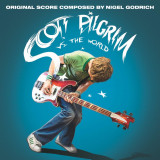
This year marks the tenth anniversary of the theatrical release of Universal Pictures’ Scott Pilgrim vs. the World. The film adaptation by director Edgar Wright (Hot Fuzz, Baby Driver) of Bryan Lee O’Malley’s graphic novel series stars Michael Cera, Mary Elizabeth Winstead and Kieran Culkin and has since become a cult classic due in no small part to the use of music in its storytelling. The soundtrack album and score were originally released in 2010 by ABKCO Records.
Each side of each LP is graced with an image of one of the “Seven Evil Exes” characters from the film, with an image of Scott Pilgrim with Ramona Flowers on the eighth side. This marks the first time ever that Godrich’s score will get a vinyl release, which will also be available separately on a blue vinyl 2-LP set, also on March 26. On the same day, the original single LP version of the soundtrack will be reissued as the Ramona Flowers Edition on blue, green and magenta vinyl, representing the colors of the character’s hair throughout the film.
Now ABKCO, with Edgar Wright and Nigel Godrich’s oversight, has curated an expanded, four LP picture disc Seven Evil Exes Edition offering of the soundtrack/score, including more performances by Sex Bob-Omb and demos from Beck, as well as fan favourite “Black Sheep” by Metric and sung by actress Brie Larson.
Since its release, Scott Pilgrim vs. the World (Original Motion Picture Soundtrack) has received many accolades. UK’s The Independent ranked it at number 4 out of “the 40 greatest film soundtracks of all time,” declaring that Wright “found a way to seamlessly integrate his soundtrack into Scott Pilgrim vs. the World’s narrative.” It was also included on Alternative Press’ list of “16 Fantastic Movie Soundtracks You Need To Hear.” “We Are Sex Bob-Omb” won the 2010 Houston Film Critics Society Award for Best Original Song.
Scott Pilgrim Vs. The World (Original Score Composed By Nigel Godrich)
• 2xLP
• First time released on vinyl
• Blue colour vinyl
• Social Support from Edgar Wright (Director) & Beck
"Terrific!"- Steve Lamacq, BBC 6 Music. Double header 7" from NY production duo The Still Brothers. 'Wake Up' Mixed by Skinshape. The Still Brothers are Andrew LeCoche (Ula Ruth) and Evan Heinze (The Shacks). 'Wake Up' was created in a New York winter on a cloudy day. The song's bones were sculpted in the classic Still Brothers' fashion making use of a collection of favourite sounds. It came to life when Brazilian friend and collaborator Marina B heard the track in her sleep and thought of the song's lyrics as she woke up. It might take you to that place in-between dreams and the waking life, where you are pulled in and out of a state of slumber. It incidentally speaks to the abrupt change that was about to fall upon the world in early 2020. Between the singing in Portuguese and the sounds of subway doors, the song is just alienating enough to make anyone these days to feel right at home. 'Wake Up' was mixed by Will Dorey aka Skinshape and mastered by Alex DeTurk. The cover art was designed by Sofia Ohanna. Inspired by subway preachers, jazz funerals and Hip-Hop 'The Deep' serves as an introduction to the dazzling skills of New York production duo The Still Brothers. Their debut track breaks open with a reverend crying out about the transgressions we have committed against each other. He then observes that so many of us are throwing up our hands in an act of surrendering. A poignant sentiment in these troubling times and one that will resonate throughout the world.