Thanksmate have been working together for over a decade and are pioneers of their local scene. They run the notorious Soul Express event and their experiences of keeping its dance floor vibrant and bouncing feeds into this first new EP. It's a bright mix of disco, house and Italo that brings the party in a classy fashion.
Brilliant opening track and lead single 'Your Friend' showcases what Thanksmate is all about - buoyant grooves, big bass drums, lush synth work and a touch of '90s house class with some cult r&b vocals from the early 2000s. It's an irresistibly feel-good record that is well-executed and full of fun. 'M8s On LSD' is a more intense, heads down but just as characterful track with ravey melodic riffs and unrelenting drums run through with flashes of acid. 'Feelings' offers a third different look with exquisite synth craft glowing with plenty of Detroit warmth and soul over super-charged drums. An emotive vocal and cosmic keys finish this new school Italo anthem in style.
Thanksmate's unique mix of charm and colour is a perfect way to kick off what is sure to be an essential label from the tastemaking Marvin & Guy.
quête:the touch
Murmer is the long-standing project for Estonian field recordist and composer Patrick McGinley, and in Tether, The Helen Scarsdale Agency welcomes Murmer back to our roster, over a decade since he graced us with his last production for the Agency. His field recordings often center upon the amplification and activation of resonance from a particular space, landscape, or object. Such sounds emerge from a condition as begin fleeting, inconsequential, or ephemeral and explode into that which alien, sublime, and profound. Here lies the tremendous prowess of the contact microphone, as wielded by an accomplished musician! The source material cited by McGinley includes cables, fences, wires, and vents.
There is a heft to many of these sounds as heard throughout all of "Taevast" with deep throbbing pulsations from arctic wind generating subharmonic patterns upon thick high-tension wires. Elsewhere the subtle dissonance from a rasping cooling fan blooms into a brooding ambience that is sublimely rich in its metallic timbres and complex reverberations. McGingley has long been an exemplary artist in the field of phonography even as he is less prolific than others. On Tether, he has produced a majestic if occasionally foreboding work on par with the mythic wire recordings of Alan Lamb, Jacob Kirkegaard's haunted resonance from Chernobyl, and much of the Touch catalogue for that matter!
Patrick McGingley on Tether:
In 2006, I made a collection of recordings at a mobile phone mast in Mooste, southeast Estonia. It is a guyed tower, 80 meters tall, affixed to 3 support points with heavy cables. I attached my self-made contact microphones to these cables with poster tack, and spent many hours over several weeks recording the various wind and weather variances (it was summer), and the birds that passed or settled on the tower or cables. This was one of my first visits to estonia, where i now live, and one of the things that marked me about that experience was the access: the tower had no fences or protections around it (I have not been back there recently to answer my own question of whether or not this is still the case); it stands in the middle of a field of tall grass along a dirt road in the countryside, just out of view of the few nearby houses, and during all the hours I spent there I was never disturbed or shooed away.
For more than 16 years, I have been thinking about this location and these recordings, and have made several attempts to work with them. I have used the sounds in installations a handful of times, and uploaded one short edit to the Aporee soundmaps, but have never managed to use them in any composed work. They always seemed too big for any structure I could provide them, whether I left them on their own, or partnered them with other sounds. Finally, in 2019, after putting them down and picking them up again repeatedly over so many years, they seemed to allow me in, although it took me another few years before they were happy with what I could offer. They stand now not quite alone - the majority of the layered sounds in the piece come from various edits of those cable recordings, but I added two other contrasting sounds, related to one another: one is snowflakes landing delicately on a plastic cakebox with microphones inside it, and the other is a frosted field of grass thawing on a lightly warming autumn morning (both these recordings can also be heard on their own on the Aporee maps).
Coming back to those cables brought to mind so many other wind-driven sounds that I had spent time with and recorded, but never returned to, that I began digging through my archives looking for them. I ended up with a pool of sounds from resonant wires, cables, fences, poles, fans, and vents, which became the basis for the 2nd work on this release. One of these sounds is among the first sounds I ever recorded, possibly within a month or so of buying my first microphone and minidisc recorder: the rhythmic fan of a beer cooler in a pub where I worked in North London in 1999. Other sounds in the piece include another phone tower, recorded on the northern coast of France in 2008, a telephone pole recorded in the Beaujolais region in 2010, the drone of ventilator fans at a factory in Tezno, Slovenia in 2012, an electric sheep fence in the Scottish borders in 2013, a hanging wire in a storage space in Rovaniemi, Finland in 2016, and, with no relation to cables or wind at all, calcium deposits being cleaned from the inside of an electric kettle here in Estonia in 2019.
I offer these two new pieces as my first solo publication since 2018, the first release on a physical medium since 2016. No one has ever accused me of working too fast, or being too prolific. I have a need, it seems, to leave a physical space of time around my work, before I can consider it 'finished'. Perhaps it is a simple need to forget how I did something, or that I did something; perhaps I have a need to be able to hear a work as a first-time listener would, before I can consider it ready for such an encounter. In some part of my mind I have to forget it before I can let it go. Well, I've just about forgotten that London beer cooler now, and that walk in the Beaujolais (with my father, who has since passed away), and that sheep fence next to our campsite in the borders, and that kettle that is now leaky. So I guess it's time.
- A1: Cannibal Holocaust (Main Theme) 2:56
- A2: Adulteress' Punishment 3:21
- A3: Cameramen's Recreation 3:15
- A4: Massacre Of The Troupe 3:53
- 5: Love With Fun 2:4
- B1: Crucified Woman 2:19
- B2: Relaxing In The Savana 3:06
- B3: Savage Rite 3:41
- B4: Drinking Coco 3:23
- B5: Cannibal Holocaust (End Titles) 3:52
- C1: Savage Rite (# 2) 1:50
- C2: Crucified Woman (Short Version) 1:26
- C3: Savage Rite (# 3) 2:31
- C4: Cannibal Holocaust (Terror) 2:16
- C5: Savage Rite (# 4) 3:53
- D1: Adulteress’ Punishment (Long Version) 4:01
- D2: Savage Rite (# 5) 2:04
- D3: Cannibal Holocaust (Main Theme)
THE SOUNDTRACK OF THE MOST CONTROVERSIAL FILM EVER.
FOR THE FIRST TIME IN FULL IN A SPECIAL DOUBLE VINYL EDITION!!! (NON-RETURNABLE)
This Legacy Edition of “Cannibal Holocaust” includes the film score remastered and released in its entirety for the first time ever on double LP; graphically speaking, it includes a gatefold cover with glossy title letters printed on a special soft touch paper, OBI and an 8-page booklet complete with reproductions of posters, lobby cards and photographs from the set, plus presentation essays written by Fabio Capuzzo (one of today’s best soundtrack experts), Stefan Dimle (Landberk, Anekdoten, Paatos, Morte Macabre) and Mikael Åkerfeldt.
AMS Records is proud to present a special edition of the “Cannibal Holocaust” soundtrack, exclusively released on the occasion of Record Store Day 2023. It is, of course, one of the many 'cannibalistic' movies, but perhaps it’s also the only one of its a genre that even today generates mixed feelings and strong controversy.
The excellent soundtrack, composed by Riz Ortolani, makes extensive use of string instruments, masterfully arranged and directed to match the strong contrast between the more relaxed scenes - the incipit of the film is memorable, with the main theme accompanying the spectator in a flight over the Amazon forest - and those full of rhythm and tension; in the first case, the strings go along with guitar arpeggios, while in the second they vibrate alone or together with glacial electronic beats. There are also funk-rock episodes such as in “Cameramen’s Recreation”, “Relaxing In The Savana” and “Drinking Coco”, while “Cannibal Holocaust (Terror)” is pure noise mixed with haunting percussion.
MD Pallavi & Andi Otto first crossed paths on a theatre stage in India ten years ago. They started collaborating instantly and in 2016 MD Pallavi's mesmerizing vocals for the downtempo raga Bangalore Whispers warmed hearts and ears. Their musical relationship flourished with artistic residencies in Bangalore and Hamburg, their respective hometowns, and a concert tour in Japan. The collaborative track Six made ears turn again on Andi’s album Bow Wave (Multi Culti 2019). And now, years later, the fruits of this artistic endeavour are fully formed here on Songs for Broken Ships - the debut album of the duo.
The album presents an interwoven pop-aesthetic vision of the two artists with their contrasting musical backgrounds. It ranges from organically woven folktronica to cut-up disco tracks and acoustic ballads. Reminiscent of, but not akin to Nicola Cruz, Beach House or Four Tet’s early productions the music is experimental but focused on the listener and their experience.
MD Pallavi is a singer, actress, filmmaker and performer from Bangalore, South-India, where she trained in Hindustani music and poetry since childhood. On Songs for Broken Ships, poems in her native tongue Kannada*, one of India's many languages, are performed over Andi’s alluring production, translating the stories into musical narratives. The poems address topics that are as timeless as the music itself. Social equality is touched upon in Bayalu (written by Bontadevi in the 12th century). Artistic struggles - communicated on An Unwritten Word (Gangadhar Chittala, 1865) - are almost prophetic and the surreal, dreamlike scenario of Clockshop (KS Narasimhaswamy,1958) brings you further inside the sonic journey.
Andi Otto is a composer, cellist and DJ based in Hamburg, Germany, He is known for his idiosyncratic and unconventional dance music productions on labels such as Multi Culti, Shika Shika and Pingipung (which he co-runs and curates). For this collaborative experience his dubbed out basslines gently interlock with the 7/4 and 5/4 beats to create a backbone for the instrumentation and expressive vocal timbres of MD Pallavi. His sound design combines graceful acoustic recordings, juxtaposed against modern drum machines, computer generated noise and vintage synthesizers.
*The LP comes with a text sheet containing all Kannada lyrics - which have their own vocabulary and script - together with the phonetic transcription and English translation.
Hot on the heels of dropping a double LP's worth of downtempo shenanigans for Fresh 86, Coco Bryce serves up another full length album, this time for his own Myor imprint.
Computer Love sees the bpm's being turned up a notch again, mainly operating within the 160 realm, whilst taking the occasional side street into UKG and breakbeat house.
Although the jungle and D&B vibes are still clearly present on tunes such as House Music and the previously released singles Night Safari and Trust Issues, Coco opts for slightly more off-kilter and genre-defying drum programming on the album's title track and the pleasantly subdued Eye New.
All in all the rhythmic, and stylistic, diversity on display here makes for an album equally suited for dancefloors and home listening alike.
Since relocating to Brazil some years back, Needs Music co-founder Lars Bartkuhn has returned to his long-held love of musical improvisation. Although it’s a product of his jazz roots and classical training, the German producer has constantly found new ways to apply it to his work in the sphere of electronic music.
‘Dystopia’, his first solo album for almost nine years, was born out of two interlinked ideas: a desire to create improvised music without the aid of computer sequencers or an electronic drum set, and a deeply held love of storytelling through sound. Bartkuhn set to work improvising with modular synthesizers, acoustic instruments and hand percussion, later adding light-touch overdubs to a handful of pieces. When he listened back to the recordings, an aural narrative emerged, and you’ll hear it if you listen to the album from start to finish, as is intended.
As you’d expect from a musician and composer of Bartkuhn’s undoubted ability, ‘Dystopia’ is a stunning album – an undulating, expansive ambient journey packed with emotional resonance. While Bartkuhn naturally sees it as a logical progression of his previous ambient-leaning work with Kabuki as The First Minute of a New Day (and particularly their self-titled 2020 album Séance Centre), ‘Dystopia’ also features subtle nods to many of his long-held musical loves, including John Hassell’s ‘fourth world’ recordings, the impossible-to-pigeonhole 1970s catalogue of deep jazz imprint ECM, and the far-sighted American minimalism of Terry Riley and Steve Reich.
The album’s emotional depth is evident early on, with the slow-burn title track – all bubbling electronics, billowing chords, clarinet-style notes and gently strummed guitars offering the most melancholic and bittersweet of openings. The becalmed ‘A Drop Of Water In The Ocean’ follows, with discordant aural textures and hand percussion mimicking the rolling ocean, before ‘Largo (Calm Before The Storm)’ hints at unsettling times ahead.
‘Water and Warm Air’, the only track on the album whose starting point was not Bartkuhn’s cherished modular set-up, bleeps and bubbles across the sound space, adding a starry and otherworldly slant to proceedings, while ‘Disembodied Journey (Parts 1, 2 and 3)’ is a sublime, slowly unfurling journey in three movements – all Tangerine Dream style synthesizer motifs, Pat Metheny-esque guitars and jazz-fusion instrumentation.
So the album continues, with the poignant warmth and looped motifs of ‘Still Existing’ and the sparse, dubbed-out minimalism of ‘Do You Know How To Get Out?’ – a kind of 21st century jazz-fusionist’s take on sparse electronic hypnotism – giving wat to closing cut ‘Into The Waves’, a gentle combination of undulating electronic arpeggios and echoing instrumentation that offers a hopeful and undeniably picturesque conclusion.
Fittingly, the album cover features a painting by the late Dutch artist Franz Deckwitz (1934-94), whose images of alien landscapes were used by Phillips on a series of music concrete compilations. The image featured on the cover of ‘Dystopia’, depicting a deep blue ocean and shoreline, was painted by Deckwitz in Amsterdam in the late 1970s and inspired by a trip to the island of Ponza, Italy.
Matt Anniss
A juicy 4-track EP from Eine Welt. 700WET is an art pop project by queer opera singer Marja Christians (award-winning dancer) and Cid Hohner (Moonwalk X Records, OTTO, Aufgang B). Luring outsider synth-pop with touching and honest opera vocals. It reminds of Grace Jones doing minimal wave in a Chicago house.
They call it “Lovers-Dance”. While you may melt on the slow and extended dubbed out title jam “Gimme Love”, the sassy “Cannoli Amore” is a catchy, fun dancer at 120 bpm. Recorded during the pandemic primarily with nothing but cheap 1989 Yamaha keyboards.The project also reflected what they wanted to hear when there was a big void.
It’s back to the heart of disco with the next release — our sixtieth! — in Most Excellent Unlimited’s long-running series of collaborations with master editor Danny Krivit, this installment on long-play 12-inch vinyl.
Our A-side features the work of Euro-disco maestro Alec Constandinos, whose symphonic suites and long form arrangements for stars like Cerrone and Don Ray made him an essential ingredient on many a glittering dancefloor in the late ’70s. Love & Kisses was one of his earliest disco projects, and one of his most popular. Their song (the “band” was a studio fabrication of Constandinos) “I Found Love” stretches across the entire side of an LP in its original form, but for discerning disc jockeys who leaned towards the funkier side of the spectrum, the percussion and bass breakdown is where it’s at. And if you are a long-time follower of Mr. K, it will come as no surprise that it is here that he focuses his metaphoric razor on the iconic breakdown, and we are left with a tough, driving track that will suit throwback sets as well as slot nicely into modern uptempo programming. As an added bonus, stick around to the very end when Krivit lets the song’s memorable acapella sample (“And I suppose you thought it was all over??”) finish it out.
It simply does not get much bigger than Donna Summer in the world of disco. Her song “Heaven Knows,” a duet with Brooklyn Dreams singer “Bean” Esposito, is one of the many gems in her catalog, and one that still evokes powerful reactions in heads, both old and new. Produced by the dream team of Giorgio Moroder and Pete Bellotte, the power and groove are propulsive and indisputable. Krivit begins with an extended "Mac Arthur Park" horn crescendo that teases the emotion before introducing a newly stripped down singalong verses and chorus of “Heaven Knows”. As the song progresses, a fabulous building effect until the end, a six-minute run through the clouds, enveloped in the ecstasy of that same horn crescendo. A sudden finale, fading into the ether, takes us out and leaves the listener (and DJ) with an open path of which musical road to take next, a master’s touch from an editor who excels at his craft.
Correcciones Calypso returns from a generous hiatus with the fourth edition of its acclaimed edit series, replete with four re-edits that veer from the subtle to the downright brazen. Thomass Jackson and INigo Vontier invite the French duo Youkounkoun to open proceedings with an insane early 80s edit full of big drums and exotic touches that's been blowing dancefloors all around the world for the past years - and definitely resides in the brazen category, despite a lot of work having gone into it. Olta Karawame make their debut on the series with a powerful, compact edit full of ballsy keyboard riffing and a military-sized kick drum that is guaranteed to have heads banging . To complete the release label bosses Thomass and INigo deliver edits of their own with their characteristic sound, giving this EP maximum a value for money factor and entertainment from start to finish.
BAG X COLLAPSING DRUMS is a collaboration between experimental producer Collapsing Drums (Charlie Behrens) and spoken word/electronic duo BAG (Jody DeSchutter and Dan Allison). Modular synth, spoken word, field recording, experimental play and abstract guitar are a few of the practices visited by the project.
Momentary Lapses was born of an improvisational outburst sewn into a back and forth process, the three diverse perspectives nurturing creation and dissection along the way. This album maps multiple landscapes and conditions as drawn by the trio in an exploratory document, providing a journey through textures and atmospheres, beats and spaces, construction and reassembly. During the 18 months of the album’s creation, a series of bereavements disrupted and informed BXCD’s journey.
DeSchutter’s dada-esque verse moves purposely forward, fragmented through synaesthetic habitats. Her words, woven into the electronic compositions of Behrens and Allison, touch on themes of re-interpretation, incongruity, and longing. Momentary Lapses celebrates all that is unknown, pluralistic, and paradoxical as proposed antidotes to a binary mode of knowing. Sonically bridging the gaps between postpunk, IDM and experimental, BAG X COLLAPSING DRUMS promises a fresh take on the possibilities of sonic abstraction.
- A1: Phase Fatale & Silent Servant - Crashed Communion
- A2: Reka - Esta Noche
- A3: Othr - Icarus Dive
- B1: Omon Breaker Stinger
- B2: Teste - Loss Leader
- B3: Alekzandra Liziuz - Go Down
- C1: Terence Fixmer - Our Nation
- C2: Devikorps & Sarin - Huren Deleted Scenes
- C3: Unhuman Petra Flurr - Gloryhole
- D1: Ron Morelli - Oed
- D2: Nastya Vogan - Serpenteion
- D3: Vulkanski - Quitting Discipline
- E1: New Frames & Phase Fatale - Inferno
- E2: Gael - Overbleeding
- E3: Nx1 - Bt8
- F1: Mind Matter - Iconostasis
- F2: Ireen Amnes - Lancet
- F3: Pablo Bozzi - Look Ahead
Berlin-based label BITE run by Phase Fatale has been turning heads ever since its inception five years ago. Now BITE has put out over 25 releases, platforming emerging talents and well-established artists alike, all united by an ambition to push the boundaries of techno. BITE's output touches upon a wide range of styles along the moodier fringes of electronic dance music: from sparse industrial techno to wave and synthpunk and to the label's pioneering italo body music. While BITE's roster remains musically diverse, the imprint has cultivated a community around itself of those attracted by its aesthetic of global malaise and pursuit of romantic sensibility within the cold mechanics of the techno genre. In 5 years of its existence, and with showcases at Berlin's Berghain, Tbilisi's KHIDI, New York's Basement, and various venues in Los Angeles, Tokyo, Seoul, and more places around the globe, BITE has gained global recognition. In honor of its fifth anniversary, the imprint is proud to present Shedding Skin - an 18 track compilation of BITE protagonists such as Pablo Bozzi, Phase Fatale, Unhuman, Reka, Silent Servant, and New Frames, as well as new and exciting artists like Nastya Vogan, Mind | Matter, Omon Breaker, Gael and more.
Directed by Hugo Keijzer, the film ‘Post’ starts at the low point with the mother having decided to admit her daughter to a hospital for professional help. The mother changes her mind at the hospital’s doorstep, remembering how she had dealt with emotions when she was younger, and how important nature has always been for her. She takes her daughter on a path toward healing by being in touch with nature — a last-ditch attempt that will ultimately reveal the long journey mother and daughter have been on towards recovery.
Edmony Krater grew up on the side of Morne Rouge in Sainte-Rose, north of Guadeloupe. His mother sang in church, but Edmony was drawn to the sound of Gwo Ka, which was frowned upon but very present in ceremonies or funeral vigils.
As both a fashion designer for the theater and a musician (percussion, trumpet, vocals) in the group Gwakasonné, formed by Robert Oumaou and Georges Troupé, Edmony left Guadeloupe in 1983 to settle in mainland France just after recording their first album.
Upon his arrival in Paris, with the desire to give his own version of Gwo Ka, he founded the group Zepiss with Eddy Lebouin, Freddy Tisseur, Philippe Augusty, and Rico Toto and immediately recorded a first album, Natibel.
In a singular way, Natibel perpetuates Gwo Ka Modèn, a movement initiated by the iconic jazz guitarist Gérard Lockel, who was the first to theorize and politicize this music previously transmitted only orally. In just six tracks, Natibel combines the sophistication and roughness of its root music, as Gwo Ka combines an intense rhythmic section with intoxicating melodies.
In the tradition of other Gwo Ka musicians who took the music further such as Guy Conquet, Fabriano Fuzion, Gwakasonné, Erick Cosaque, and above all legendary drummer Marcel Lollia aka Vélo, Edmony Krater and his group Zepiss have contributed to preserving its heritage and bringing an obvious touch of modernity.
Multi-Award winning, hugely influential musician Feist returns with Multitudes, her sixth solo album and first since 2017’s Pleasure.
Multitudes was produced by Feist with longtime collaborators Robbie Lackritz (The Weather Station, Bahamas, Robbie Robertson) and Mocky (Jamie Lidell, Vulfpeck, Kelela). Blake Mills (Bob Dylan, Fiona Apple, Perfume Genius) and Joseph Lorge came in to mix, with Mills as a co-producer in the final stages.
Multitudes took shape soon after the birth of her daughter and sudden death of her father, a back-to-back convergence of life-altering events that left the Canadian singer/songwriter with “Nothing performative in me anymore.” As she cleansed her songwriting of any tendency to obscure unwanted truths, Feist slowly made her way toward a batch of songs rooted in a raw and potent realism which is touched with otherworldly beauty.
Largely written and workshopped during an intensely communal experimental show of the same name through 2021 and 2022, the songs on Multitudes developed in parallel with and were deeply influenced by the mutuality of the unconventional experience. The production, developed by Feist with legendary designer Rob Sinclair (David Byrne’s American Utopia, Peter Gabriel, Tame Impala) was formulated to bring people together as they re-emerged from lockdown while providing an outlet for connection between artist, art, and community.
repressed !
A lot can happen in 15 years. Few things manage to thrive for a decade and a half, especially in music. But a scrappy, left of center, Bay Area house music label, Dirtybird, has managed to do just that. Claude VonStroke, Dirtybird’s founder, is marking this 15-year milestone the only way he knows how… working. This year, VonStroke will throw two dozen-plus parties, three festivals (including the famous Dirtybird Campout), host his traveling Dirtybird BBQ series in major cities across the US, publish a coffee table book, release a seasonal clothing line, stage art shows, produce a fly on the wall docu series...and kick it all off by releasing a new album, out February 21st.
What began as a free party, turned basement record label, has morphed into a truly thriving community whose familial, fun and welcoming vibe has won over hearts and minds across the world. And while Dirtybird has grown and evolved, VonStroke’s core focus on music remains unwavering. The new album ‘Freaks & Beaks’ is a celebration of quirky innovation and a relentless pursuit of something new and fresh, while hearkening back to the freewheeling spirit that inspired the launch of his label. This is a project that draws upon the inspirations of family, old friends, new fans and proper dancefloors.
Claude will let his flock wet their beaks while they wait in anticipation of the new album with two new singles demonstrating the breadth of the dance music landscape explored on the record. Youngblood touches on the deeper sides of Claude VonStroke, a throwback to the label’s early days, featuring local LA music house talent Wyatt Marshall, while All My People in the House is a dancefloor heater that is sure to unite new and old Dirtybird fans together.
Today, Claude also delivers fans part one of an intimate video series, shot by his sister Emily (an accomplished filmmaker), documenting the creation of ‘Freaks and Beaks’, celebrating this historic milestone and taking a deeper dive into the day to day life of Claude VonStroke on the road.
‘Freaks and Beaks’ is the fourth artist album and sixth full-length project from Claude VonStroke. He approached the album with a new process, including committing to daily creative time, experimenting with a lot of new hardware and having fun creating a huge amount of sketches. He made music on many levels of gear all the way from complex modular synths to simple drum apps on his iPad. Keeping it all DIY, he sampled his own voice and his two children on several tracks as well. He allowed himself to breathe while creating over 130 ideas, which were whittled down to the finished 11 album tracks.
Freaks & Beaks nods at the inspirations that underpin VonStroke’s world, inside jokes between him and Justin Martin (FlubbleBuddy), unused experimental live sessions (Session A), playful noodling on synths (Alpine Arpline), obscure French producers (Frankie Goes To Bollywood), championing new talent (Youngblood), irreverent self-aware humor (Birthday Messages) and genre inspirations that range from ghetto tech and drum n bass to hip-hop and breaks. This is VonStroke’s love letter to the vibrancy and genre diversity that have made Dirtybird such a singular label.
Black Truffle is pleased to announce Down On Darkened Meetings, the first solo release on the label from the quietly prolific Giuseppe Ielasi. Recorded at Ielasi’s studio in Monza outside of Milan over two days in February 2022, the seven pieces presented here continue the renewed exploration of the guitar that marks much of his solo work over the last few years. Emerging in the late 1990s as an improviser working primarily with prepared acoustic and electric guitars, the instrument became less prominent in his work over the next decade, ceding to loop-based constructs that would eventually split into abstracted takes on club music and hip-hop (including his work as Inventing Masks), on the one hand, and spectral electroacoustic explorations (such as the stunning triple disc 3 pauses), on the other. Returning to the guitar in recent years, he has approached the instrument as a source of shimmering metallic glissandi (Five Wooden Frames) or as the vehicle of elegiac double-tracked lines that feel almost like Frisell playing Feldman (The Return). Here the focus is on electric guitar filtered, looped, and splayed out into fields of irregular echoes through a bank of pedals. Like many of Ielasi’s releases, Down On Darkened Meetings is structured as a set of short untitled pieces (here ranging between two and six minutes in length) that single-mindedly explore a single instrument or source throughout. The opening track immediately introduced the distinctive timbral world of fizzing, heavily filtered tones, chiming harmonics, and woozy looping bass figures inhabited throughout. At points it becomes near impossible to trace these sounds to the strings of an electric guitar; at others, as on the final two pieces, the instrument is unmistakable, as Ielasi builds up his shifting loops from snatches of almost unintentional sounding half-playing that give these closing tracks a hushed, private atmosphere reminiscent of Tolerance’s Anonym. While the repeating chords and hanging melodic figures present on many tracks call to mind earlier Ielasi classics like Gesine and Untitled, here the music feels less meticulously constructed than played: Ielasi’s lyrical guitar lines obscured by a battery of effects at times come across like a dilated take on the outer-fringe fretwork of improvisers like Henry Kaiser and Raymond Boni, and the muddy, asynchronous fields of pops and hiss at times wander into areas reminiscent of the hand-played dub techno of Vladislav Delay’s Multila. Like much of Ielasi’s work in recent years, these seven pieces perform a delicate balancing act: between abstraction and immediacy, austerity and abundance. Imbued with Ielasi’s distinctive lightness of touch, considered approach to pacing, and subtly psychedelic approach to the stereo field, Down on Darkened Meetings is a major new work from a quiet master of contemporary experimental music.
Heralding 2023 from way out west, Monde UFO land on Quindi with a distinctive album of dream pop vignettes and outer rim punk exotica.
Hailing from the same Californian heat haze as recent Quindi signings Bondo, Monde UFO have manifested in the past four years through a series of DIY releases including their 2021 album 7171 and last year's set of Fugazi covers, 4 Songs. The loose fit project centres around the singing, playing and songwriting of Ray Monde and Kris Chau and features Kern Haug on drums. The resulting sound arrives as a resourceful analog of plush 60s pop captured through the modest means of a truly independent musical endeavour.
The sound rendered on Vandalized Statue touches on dubby atmospherics, the lilting breeze of bossa nova and the introverted muse of US indie rock, but the end result is a natural, cohesive whole centered around the songwriting. Imagine the girl from Ipanema sat toking in a comfortable spot in the corner of the dive bar while someone weaves her a tall tale or two, and you might be somewhere in the right direction. The stories in the lyrics unfurl as meandering narratives taking you through everyday exchanges and far-fetched, cosmic scenarios alike. At every turn the cosy musicality gives everything a relatable, homespun charm, even as the mixing desk becomes a mess and the lo-fi FX crash into each other.
The album will be fronted by three singles which reflect the wide reach of Monde UFO's sound. 'Visions of Fatima' is one of the more melancholic pieces on the album, fronted by laconic organ and centring on cracked vocals with an off key charm that indirectly evokes Jeffrey Lee Pierce. 'Government Employee' is a sun-kissed trip of low-key lounge surrealism, bizarro storytelling and shuffling exotica splendour which broadly defines the woozy mood of Vandalized Statue. 'Garden Of Agony' is a more delicate but no less dreamy piece matching electric tremolo with acoustic fingerpicking balladry which hides its considerable depths behind a seemingly simple arrangement.
At once intimate and projected into the cosmos, Monde UFO add to the particular path Quindi is taking through hidden corners of independent music with a romantic, restless spirit.
- A1: Captain Clark Welcomes You Aboard
- A2: The Saints Go Marching Through All The Popular Tunes
- A3: Summer Will
- A4: Outside The Pier Prowed Like Electric Turtles
- A5: The Total Taste Is Here - News Cut-Up
- A6: Choral Section, Backwards
- A7: We See The Future Through The Binoculars Of The People
- A8: Just Checking Your Summer Recordings
- B1: Creepy Letter - Cut-Up At The Beat Hotel In Paris
- B2: Inching - Is This Machine Recording
- B3: Handkerchief Masks - News Cut-Up
- B4: Word Falling - Photo Falling
- B5: Throat Microphone Experiment
- B6: It's About Time To Identify Oven Area
- B7: Last Words Of Hassan Sabbah
Clear Vinyl[24,79 €]
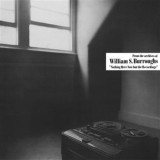
In 1980, Genesis P-Orridge and Peter 'Sleazy' Christopherson (then of Throbbing Gristle renown) travelled to New York City to meet up at the fortified apartment, known as The Bunker, of famed beat writer and cultural pioneer William S. Burroughs and his executor James Grauerholz to starting the daunting task to compile the experimental sounds works of Burroughs, which, up until that point, had never been heard. During those visits, Burroughs would play back his tape recorder experiments featuring his spoken word 'cut-ups', collaged field recordings from his travels and his flirtations with EVP recording techniques, pioneered by Latvian intellectual Konstantins Raudive. Throughout the next year, P-Orridge, Christopherson and Grauerholz would spent countless hours compiling various edits, each collection showcasing Burroughs sensitive ear and keen experimental prowess for audio anomaly within technical limitations. By the time 1981 came through, Burroughs had relocated to Lawrence, KS in which to escape the violence and mania of New York City life. It is in Lawrence that P-Orridge and Christopherson put the finishing touches on the record that would be known as 'Nothing Here Now but the Recordings'. The album would come out in the Spring of 1981 as the final release for the shuttering Industrial Records, brought about by the dissolution of Throbbing Gristle. The album remained out of print until 1998 when John Giorno and the Giorno Poetry Systems included the album on a multi-disc retrospective CD box set compiling the majority of Burroughs seminal recordings.
- A1: Captain Clark Welcomes You Aboard
- A2: The Saints Go Marching Through All The Popular Tunes
- A3: Summer Will
- A4: Outside The Pier Prowed Like Electric Turtles
- A5: The Total Taste Is Here - News Cut-Up
- A6: Choral Section, Backwards
- A7: We See The Future Through The Binoculars Of The People
- A8: Just Checking Your Summer Recordings
- B1: Creepy Letter - Cut-Up At The Beat Hotel In Paris
- B2: Inching - Is This Machine Recording
- B3: Handkerchief Masks - News Cut-Up
- B4: Word Falling - Photo Falling
- B5: Throat Microphone Experiment
- B6: It's About Time To Identify Oven Area
- B7: Last Words Of Hassan Sabbah
Black Vinyl[26,01 €]
In 1980, Genesis P-Orridge and Peter 'Sleazy' Christopherson (then of Throbbing Gristle renown) travelled to New York City to meet up at the fortified apartment, known as The Bunker, of famed beat writer and cultural pioneer William S. Burroughs and his executor James Grauerholz to starting the daunting task to compile the experimental sounds works of Burroughs, which, up until that point, had never been heard. During those visits, Burroughs would play back his tape recorder experiments featuring his spoken word 'cut-ups', collaged field recordings from his travels and his flirtations with EVP recording techniques, pioneered by Latvian intellectual Konstantins Raudive. Throughout the next year, P-Orridge, Christopherson and Grauerholz would spent countless hours compiling various edits, each collection showcasing Burroughs sensitive ear and keen experimental prowess for audio anomaly within technical limitations. By the time 1981 came through, Burroughs had relocated to Lawrence, KS in which to escape the violence and mania of New York City life. It is in Lawrence that P-Orridge and Christopherson put the finishing touches on the record that would be known as 'Nothing Here Now but the Recordings'. The album would come out in the Spring of 1981 as the final release for the shuttering Industrial Records, brought about by the dissolution of Throbbing Gristle. The album remained out of print until 1998 when John Giorno and the Giorno Poetry Systems included the album on a multi-disc retrospective CD box set compiling the majority of Burroughs seminal recordings.
Summer Forever And Ever succeeds Blue Gene Stew, 2019’s debut by the Wolfmanhattan Project, a collective unit co-starring three musicians familiar to In The Red listeners: singer-guitarist Mick Collins, front man of the seminal Detroit-bred garage units the Dirtbombs and the Gories, singer-guitarist Kid Congo Powers who played in such legendary bands as the Gun Club, the Cramps, and Nick Cave and the Bad Seeds, and drummer-vocalist Bob Bert, whose skin work has distinguished albums by Sonic Youth, Pussy Galore, Lydia Lunch’s Retrovirus, and Jon Spencer and the HITmakers. The group was founded as a studio project by three musicians who are kept busy by their primary bands. Blue Gene Stew was written and recorded quickly. Powers says, “I think that the new record was much more a group effort. I think there’s more of a group kind of sound, as eclectic as it is. I feel like we all played together, as opposed to playing on each other’s songs.” Bert notes that the band’s music is grounded in spontaneity: “Me and Mick went in and had a couple of rehearsals, and I would come up with a beat, he would come up with a riff. I still have a cassette Walkman, believe it or not, and we’d put it down on that. It wasn’t even a full song. We’d just put down a bunch of ideas. When it came to recording we’d lay down the basic tracks and work out different things, and a lot of it was made up on the spot. It really is a great collaboration.” Recorded and engineered by Mark C. of Live Skull at his studio, Summer Forever And Ever finds Powers playing piano and the Kaoss touch-pad effects unit and Collins playing synthesizer, in addition to their usual instruments. The album reflects the same eclectic mix of musical styles heard on the debut. References and sometimes even direct quotes from sources as diverse as the Andrea True Connection, Captain Beefheart, the Count Five, and Eurythmics leap out of the speakers.