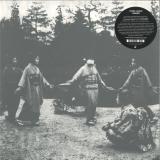
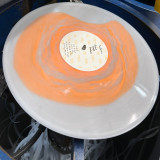
Way back when, Upgrade & Afterlife was the umpteenth release from the individual and collective forces of David Grubbs (known then for Bastro, The Red Krayola, Codeine, Squirrel Bait) and Jim O"Rourke (known for O"Rourke), whose further history has since numbered at least another umpteen or so essential listens. What is it though, wrapped up in delectable sonic amber here, that defines this Upgrade? To be sure, we hear these young men dashing through the joys of youth-their actual young youth-as well as a version captured in memory and relived with a performative touch. Time remembered as tones, with gravity gained via perceptions. The stuff of memory and sentiment as selective and potentially deceptive in their nature. Who needed "em? As part of its time-traveling function, Upgrade & Afterlife is a return to roots, but not always necessarily Gastr"s. They were more than happy to stand on branches up above other folks in order to see any next thing worth leaping for. In addition to the elder-statesman Conrad, Gastr del Sol drew upon a memorable spectrum of players for the sounds of Upgrade & Afterlife, including Anthony Burr, Steve Braack, Gene Coleman, Mats Gustafsson, Terri Kapsalis, John McEntire, Günter Müller, Jerry Ruthrauff, Ralf Wehowsky and Sue Wolf. When issued, this combination of players, parts and play - packaged in an impressively broad tip-on Stoughton gatefold sleeve emblazoned with Roman Signer"s instantly iconic "Wasserstiefel" image - became the fastest-moving Gastr del Sol record to date. A delightful result, to our way of thinking, of the band"s ability to push at the far boundaries of their music while consolidating upon pleasure points within sounds and songs. Gastr used these polarities to compulsively draw the listener intimately close with sudden injections of g-force and an uncanny interpolation of space.
out of Stock
Last delivered 15 months ago available to reorder, subject to availability
After offering the label a beautiful closing composition on its various artists compilation Reflection EP, Rotterdam live act, producer, and DJ Mata Disk returns to Polychrome Audio with LFH-Proxy EP. Featuring two original club tracks and their interpretations by producers Eversines and Jopie, this project further cements Julian Determann’s singular musical identity while opening it up to new dimensions and patterns.
A1. Life Force Harmonizer (“LFH”) opens the dance by capturing the sweet nostalgia experienced during club morning hours. Mata Disk’s sound palette is here in full display, the energy carried by sharp drum design and a propulsive bassline is lifted by melodious pads offering the track its tenderness. On the B1, Rotterdam producer Jopie creatively re-imagined these feelings, stripping down and reshaping LFH onto a track flirting with breaks and IDM progressions.
With Proxy, Mata Disk dims the light slightly, with a drum workout track to keep the dance alive. The very progressive and low-end focused build-up paired with a tension-building synthesized lead offers the A2 track a smooth build-up. De Lichting member Eversines elegantly switches the sound narrative, transforming Proxy into a dark electro-leaning tech house track carrying the same tension. Adding emotion into the mix with an anthemic melodic lead, Eversines’ Proxy Ziggo Mix serves as a perfect closer.
out of Stock
Last delivered 15 months ago available to reorder, subject to availability
Dune Castle presents - From A Darebin Cave by Cantrips, an acid folk odyssey. Recorded live with a 7-piece band over two days, "From a Darebin Cave" features members from Surprise Chef, Don Glori, Karate Boogaloo, and more.
Centered around the nylon guitar and voice of Patrick Ryan (Cantrips), this album draws inspiration from late 60s/early 70s acts like Nick Drake, Terry Callier, and Donovan. The album also incorporates string arrangements reminiscent of Frank Sinatra's "Watertown" and late 60s psychedelic pop. This unique sound was crafted by two keyboardists emulating a string quartet with synthesizers, complemented by drums, percussion, double bass, and pedal steel guitar.
The lyricism delves into themes of isolation, loneliness, regret, and joy, inspired by the natural beauty of the Darebin Parklands surrounding the Dune Castle studio, and takes influence from Romantic poets such as Mary Oliver, William Blake, and Pablo Neruda.
out of Stock
Last delivered 15 months ago available to reorder, subject to availability
Mancunian-based record shop Haunted Dancehall is happy to reveal the first addition to its new label: Would You Kindly, a four tracks EP by rising talent Jibz, crafted in his Parisian home studio and designed for (haunted) dancefloors.
Digging into techno, electro and progressive territories, Would You Kindly kicks off with Flat Pillow, a dancefloor-tailored track with evolving drum patterns, thick basslines and a definitive haunting feel. Then, Inari offers relentless rythms along with energy-loaded synths, reminding us that the whole EP was first thought as a live jam.
On the flip side, Lane Gank gifts us with broken beats rythms and spatial soundscapes to take us in a videogame-like trip. Finally, the EP closes on Anaphylaxis, blending numerous influences to wreck clubs and festivals, and acting as a keepsake of the contagious energy of the whole release.
out of Stock
Last delivered 10 months ago available to reorder, subject to availability
Proper Monday Number is an electronic duo from Brighton, UK featuring Suzi Horn of cult DFA act Prinzhorn Dance School and producer Christoph Boseley. Their Deep clean your house EP is a sure shot of cynicism-defying DIY dance-pop spanning five tracks in 15 minutes, not a second or minute wasted. The ingredients may be familiar - mid-2000s electro and bassline, 90s house, those shitty, overused speakers in your teenage bedroom - but the attitude is ever forward. Fun with a purpose.
out of Stock
Last delivered 13 months ago available to reorder, subject to availability
“After a stay in Detroit in 2022 (where I met some of the artists whose music I admire the most), I returned to Montreuil, illuminated and brimming with energy. I had my MPC2000XL repaired, found a second-hand Yamaha Motif ES6 at Zikplace in Croix de Chavaux, and a Korg Triton on Le Bon Coin. The three instruments connected together rekindled my practice of electronic music in my home studio. Passionate about the new setup, I tried to record a little each day.
After two years of work, I felt the desire to bring together the eight tracks that brought me the most joy during their recording. A certain nostalgia and/or melancholy can arise from the sounds of the instruments used, each dating from the late 1990s. They plunged me back into the house and R&B clips that played on MTV when I was a pre-teen, which I adored.
The recording is raw and conveys a message of peace, humility, and unity. It pays homage to the early hours of house music.
The title of the project, “please don’t wait,” is simple and refers to the passage of time, urgency, and the present moment. It’s a message that invites movement and action.”
-Mad Rey”
out of Stock
Last delivered 14 months ago available to reorder, subject to availability
By the composer of JoJo’s Bizarre Adventure Part 2, City Hunter: The Movie, Soul Eater, and Black Butler.
Yato dreams of becoming a famous and respected god, but his reality is far from that dream. One day, his fate takes a turn when he saves Hiyori, a high school girl, from a car accident. In return, he asks for her help to achieve his grand ambition. Together, with Yukine, a spirit who serves as his sacred weapon, they navigate the world of humans and deities, where Yato must prove his worth and divine heritage.
This vinyl record features several BGM tracks from the series. Taku Iwasaki, a renowned composer in the anime industry, has created a vast array of background music, blending numerous styles—from traditional music infused with electronic elements to rap, as well as dark and melancholic piano pieces. Through this musical variety, the composer perfectly captures the anime’s atmosphere: comedic and joyful moments, intense action sequences, and much darker themes that reflect the protagonist’s past.
out of Stock
Last delivered 15 months ago available to reorder, subject to availability
Clone Classic Cuts continues their re-issues series for one of the most influential techno acts ever... Drexciya. The second selection of tracks including favorites such as ''Bang-Bang'', ''Positron Island'', ''Anti Vapour Waves'' and ''Journey Home'' complimented some lesser or unknown tracks. Raw, uncompromising music made with soul and creativity always has been the trademark of Drexciya (and also from their original label Underground Resistance) and this album is another showcase of their talents.
out of Stock
Last delivered 8 months ago available to reorder, subject to availability
Standard redefined The professional RMX-95 4+1 channel club mixer blurs the lines between analogue workflow and digital technology. The RMX-95 is a cutting-edge, extraordinarily versatile creative tool thanks to its dual-USB 2.0 interface, redesigned effects section, optional MIDI mapping of all controls and smooth integration of the djay Pro DJ software. The club mixer has a familiar and user-friendly interface, making it suitable for both professional and hobby DJs.
Surgical sound manipulation in every detail Will you go for ''Classic'' or ''Kill''? The RMX-95's 3-band EQ can be adjusted to allow maximum sound control for unique results. Echo, Reverb, Flanger, Phaser, Vinyl Brake, Loop Roll, Noise, Pitch Shift, Delay, Ping Pong Delay, Tape Delay, Bit Crusher and Transformer are just some of the many studio-quality effects included in the brand-new Beat FX unit. The dedicated FX frequency control (LPF/HPF) lets you apply the effects to a specific frequency range for a more unique sound. And that's not all: Each channel also features a bipolar filter unit (LPF and HPF) with real-time resonance adjustment. This allows for even more complex sound productions. Two digital displays show parameter changes in real time for precise control that goes beyond hearing. Connections galore The RMX-95 also excels in terms of connectivity: Four CD, two line, and two phono inputs are available on the four input channels. The separate microphone channel has two microphone connections (1 x jack, 1 x jack/XLR combination jack) and an additional AUX input. The master output offers RCA or balanced XLR cable connections. The booth output has two jack connections for stereo operation. However, it can also be used in mono mode.
A recording device can be connected to the Rec output via RCA jacks to record DJ sets regardless of the master output level. Last but not least, the DJ mixer has two jacks for headphones. Crisp cuts and smooth blending The adjustable curve of all faders provides DJs with the creative flexibility they want while mixing. Turntablists and scratch wizzards can also upgrade the crossfader with the contactless RMX innoFADER. Maximum flexibility: dual-USB audio interface Superior 24-bit sound quality is provided by the ten inputs and outputs of the high-quality dual-USB 2.0 interface. The two USB ports allow smooth transitions between DJs and maximum flexibility when using different setups in a single club night. In addition, the active USB hub enables the connection of additional USB devices. Fully digital architecture The RMX-95's digital architecture transforms the DJ mixer into an individually mappable MIDI controller. As part of this, the setup menu provides a wealth of customisable options, such as EQ frequency range, Neural Mix EQ mode, audio interface routing, and zone routing for the booth output. DVS-enabled for djay Pro & Neural Mix The RMX-95 works with Algoriddim djay Pro via plug and play. The DJ app's ground-breaking Neural Mix function lets you isolate beats, melodies, and vocals in the mix in real time. The RMX-95 supports djay Pro's advanced DVS integration with Mac, PC, iPhone and iPad.
The DJ software is also compatible with streaming services like Apple Music, Tidal, SoundCloud, Beatport and Beatsource. Indestructible design The club mixer's sleek black metal surface is not only eye-catching but also highly durable. The solid metal housing and hard-wearing metal shafts in all of the built-in potentiometers and switches provide a long service life, even with heavy club use. An internet connection and a separate Apple Music, Tidal, Beatport, Beatsource or SoundCloud subscription is required to use this service.
Professional 4+1-channel DJ club mixer - DUAL 10 In/Out USB 2.0 audio interface with superb, 24-bit sound quality
New Beat FX unit with multiple effects in studio quality: Echo, Reverb, Flanger, Phaser, Vinyl Brake, Loop Roll, Noise, Pitch Shift, Delay, Ping Pong Delay, Tape Delay, Bit Crusher,Transformer - FX frequency control (LPF/HPF) for manipulating effects in selected frequency band -
Sound filters: Bi-polar filter unit with LPF and HPF - Realtime resonance control for channel filters - Active USB hub to connect USB accessories
3-band EQ with adjustable behaviour (classic/kill) -
Two digital displays showing real-time information of parameter changes -
Digital mixer architecture with extensive adjustment options - Extensive setup menu, including:
- EQ frequency range (low, high)
- Neural Mix EQ mode
- Audio interface routing
- Booth output zone routing (matrix)
- Cue solo option
- RMX innoFADER compatible
- Adjustable linefader and crossfader curves
- MIDI-compatible control elements
- 2x High-retention USB 2.0 port, especially durable
- 2x Headphone outputs via 6.3/3.5 mm stereo jack with split cue
- 2x Mic inputs with dedicated MIC ON button
- Booth output in stereo or mono
- High-quality and hard-wearing, pure black metallic finish
- Sturdy construction in a metal housing with bolted metal shafts
- Kensington lock to secure the device
- Incl. instruction manual, power cord and USB cable
- Frequency Range: 20 Hz - 20 kHz +2/-3dB - Inputs: 7x line RCA, 2x phono RCA, 1x mic combo-XLR/jack, 1x mic 6.3mm jack (TR), 2x USB port - Outputs: master XLR (balanced), master RCA (unbalanced), booth (TRS) (balanced), rec RCA (unbalanced), 1x headphones 6.3mm jack, 1x headphones 3.5mm jack - EQ range classic at 70 Hz, 1 kHz, 13 kHz: -26 dB/+9 dB - EQ range isolator at 70 Hz, 1 kHz, 13 kHz: -90 dB (total kill)/+9 dB - EQ range mic at 100 Hz, 10 kHz: -12 dB/+ 12dB - EQ headphones at 100 Hz, 10 kHz: -29dB - Power Source: AC100-240V, 50/60Hz - Power Consumption: 29 W - Dimensions: 322(W) x 387(D) x 107.5(H) mm - Weight: 6.8 kg
In the mid-1970s, a force of nature swept across the continental United States, cutting across all strata of race and class, rooting in our minds, our homes, our culture. It wasn’t The Exorcist, Goodbye Yellow Brick Road, or even bell-bottoms, but instead a book called The Secret Life of Plants. The work of occultist/former OSS agent Peter Tompkins and former CIA agent/dowsing enthusiast Christopher Bird, the books shot up the bestseller charts and spread like kudzu across the landscape, becoming a phenomenon. Seemingly overnight, the indoor plant business was in full bloom and photosynthetic eukaryotes of every genus were hanging off walls, lording over bookshelves, and basking on sunny window ledges. The science behind Secret Life was specious: plants can hear our prayers, they’re lie detectors, they’re telepathic, able to predict natural disasters and receive signals from distant galaxies. But that didn’t stop millions from buying and nurturing their new plants.
Perhaps the craziest claim of the book was that plants also dug music. And whether you purchased a snake plant, asparagus fern, peace lily, or what have you from Mother Earth on Melrose Avenue in Los Angeles (or bought a Simmons mattress from Sears), you also took home Plantasia, an album recorded especially for them. Subtitled “warm earth music for plants…and the people that love them,” it was full of bucolic, charming, stoner-friendly, decidedly unscientific tunes enacted on the new-fangled device called the Moog. Plants date back from the dawn of time, but apparently they loved the Moog, never mind that the synthesizer had been on the market for just a few years. Most of all, the plants loved the ditties made by composer Mort Garson.
Few characters in early electronic music can be both fearless pioneers and cheesy trend-chasers, but Garson embraced both extremes, and has been unheralded as a result. When one writer rhetorically asked: “How was Garson’s music so ubiquitous while the man remained so under the radar?” the answer was simple. Well before Brian Eno did it, Garson was making discreet music, both the man and his music as inconspicuous as a Chlorophytumcomosum. Julliard-educated and active as a session player in the post-war era, Garson wrote lounge hits, scored plush arrangements for Doris Day, and garlanded weeping countrypolitan strings around Glen Campbell’s “By the Time I Get to Phoenix.” He could render the Beatles and Simon & Garfunkel alike into easy listening and also dreamed up his own ditties. “An idear” as Garson himself would drawl it out. “I live with it, I walk it, I sing it.”
But as his daughter Day Darmet recalls: “When my dad found the synthesizer, he realized he didn’t want to do pop music anymore.” Garson encountered Robert Moog and his new device at the Audio Engineering Society’s West Coast convention in 1967 and immediately began tinkering with the device. With the Moog, those idears could be transformed. “He constantly had a song he was humming,” Darmet says. “At the table he was constantly tapping.” Which is to say that Mort pulled his melodies out of thin air, just like any household plant would.
The Plantae kingdom grew to its height by 1976, from DC Comics’ mossy superhero Swamp Thing to Stevie Wonder’s own herbal meditation, Journey Through the Secret Life of Plants. Nefarious manifestations of human-plant interaction also abounded, be it the grotesque pods in Invasion of the Body Snatchers or the pothead paranoia of the US Government spraying Mexican marijuana fields with the herbicide paraquat (which led to the rise in homegrown pot by the 1980s). And then there’s the warm, leafy embrace of Plantasia itself.
“My mom had a lot of plants,” Darmet says. “She didn’t believe in organized religion, she believed the earth was the best thing in the whole world. Whatever created us was incredible.” And she also knew when her husband had a good song, shouting from another room when she heard him humming a good idear. Novel as it might seem, Plantasia is simply full of good tunes.
Garson may have given the album away to new plant and bed owners, but a decade later a new generation could hear his music in another surreptitious way. Millions of kids bought The Legend of Zelda for their Nintendo Entertainment System back in 1986 and one distinct 8-bit tune bears more than a passing resemblance to album highlight “Concerto for Philodendron and Pothos.” Garson was never properly credited for it, but he nevertheless subliminally slipped into a new generations’ head, helping kids and plants alike grow.
Hearing Plantasia in the 21st century, it seems less an ode to our photosynthesizing friends by Garson and more an homage to his wife, the one with the green thumb that made everything flower around him. “My dad would be totally pleased to know that people are really interested in this music that had no popularity at the time,” Darmet says of Plantasia’snew renaissance. “He would be fascinated by the fact that people are finally understanding and appreciating this part of his musical career that he got no admiration for back then.” Garson seems to be everywhere again, even if he’s not really noticed, just like a houseplant.
out of Stock
Last delivered 10 months ago available to reorder, subject to availability
Following on from last year's acclaimed ‘R.O.I.’ album, Manchester’s favourite sons Aerial Salad are set to return to the fray with a brand new 5-track EP titled ‘Roi de l’herb’ to be released June 27th via Venn Records.
Having released their ‘Dirt Mall’ album during lockdown, which was a pretty grim time to put an album out, the release still eventually opened up some exciting doors for the band and captured Aerial Salad at their most Aerial Salad; loud, brash, silly and emotive.
This led swiftly to 2024’s ‘R.O.I.’ album that marked a real evolution in the band’s sound and songwriting.
“R.O.I. is a concept album but rather than being about a band, it’s from the perspective of an individual pushed to the brink of insanity by the ever-present quest from commercial success,” explains singer and guitarist Jamie Munro. “The idea came from my job; I’ve been working in the tech industry in ‘sales’. ‘Return on investment’ was probably my most uttered phrase for a few years, I was sick of it, sick of having no positive impact on the world and sick of the tech bro, double espresso, thirsty thursdays, work hard - play hard bollocks culture that comes with it. ‘R.O.I.’ is me saying ‘know what, you can actually earn a lot of money in life, even without the fallacy of educational infrastructure and financial privilege, however, it comes at the cost of your soul, time and energy. ‘R.O.I.’ is called such because it’s in the opposite pursuit, it’s not about a return on a financial investment, it’s about doing something with your life that’s enjoyable.”
This brings us crashing into 2025, no longer in the same line of spirit destroying work, with some seriously exciting gigs on the horizon, Aerial Salad wanted to kick off the next era of the band with a short, fast and hard EP and have served up 5 absolute bangers that sit somewhere between ‘Dirt Mall’ and ‘R.O.I.’ The EP is called ‘Roi de l’herb’ because of the track ‘King Of The Grass’: “We tour and play a lot in France, we’ve played most of our “best” gigs in France, so out of curiosity I wanted to see if the title would translate well, naturally, when the translation contained both “ROI” and l’herbe” - I though, fuck it, that’s about as spot on a title for this EP as we can possibly muster.”
‘King of The Grass’ is about the band’s bassist Mike Wimbo who works for Rochdale council on the greens team, which means he spends his life in the pouring rain chopping down overgrown hedges and mowing lawns. Elsewhere on the EP, ‘Inject Your Blood’ is another romantic love song inspired by the TV series ‘True Blood’ (“I’d inject your blood, into mine just to feel you close”), ‘Wires’ rages against the world of AI and GPT, whilst the EP’s opening track ‘My Girl’ is a chaotic, high energy catchy punk song, nothing profound, nothing complicated. It’s a punk song as god intended, a few chords and a load of shouting.
“The EP is like the teaser for what’s next,” summarises Jamie. “The overall hook for this EP is one of hope, that by sticking to what you believe in you can do anything.”
Launched in London in December 1976, punk stalwarts 999 are one of the most successful and long-lasting acts of the upstart movement. Third studio album The Biggest Prize In Sport was their first for Polydor, the band's competency at a peak, despite the temporary appearance of fanboy drummer Ed Case, drafted in from the Southall Crew supporters when Pablo LaBrittain broke his arm. Often ranked as the greatest album of their entire career, The Biggest Prize In Sport had noticeably smoother edges than their earlier work, yet still holding plenty of bite, the combination pushing it into the Billboard top 200 in the USA. Unmissable!
Kali’s artistry has always felt otherworldly, ethereal, and elusive. ‘Sincerely,’ represents her most vulnerable and intimate work to date, offering an existential glimpse into the way she romanticizes life and her inner world. The album is a sanctuary, an escape from the chaos, a search for peace, and an act of catharsis. ‘Sincerely,’ is a collection of letters to the world, allowing her fans to witness her at her most exposed as she invites them into her emotional journey.
Black Truffle is pleased to announce a new edition of Kassel Jaeger’s Fernweh, returning François J. Bonnet’s electroacoustic project to the label five years after the acclaimed Meith (BT069). Originally released on Giuseppe Ielasi and Jennifer Veillerobe’s impeccably curated Senufo Editions in 2012, Fernweh stands near the beginning of the gradual expansion of Bonnet’s approach after the austere acoustic textures of Aerae and Algae (both released on Senufo), leading to the lush, layered environments of recent solo works on Shelter Press and the epic electronic expeditions undertaken in duo projects with Stephen O’Malley and Jim O’Rourke.
A major work in the Kassel Jaeger oeuvre, stretching over two LP sides, Fernweh draws together synthesized and musique concrète materials into a drifting assemblage. Its title’s meaning is close to the concept of ‘Wanderlust’, fitting for this music that moves freely and unexpectedly between what Bonnet calls ‘climates’. Beginning with fizzing electronics whose rhythm of gradual approach suggests breaking waves, the clinical atmosphere is soon haunted by intangible traces of lived reality. Textures call up wind, water, insects, the crunch of feet on sand or the clinking of glasses, yet they can never be identified with any certainty. At times these concrete elements possess a vivid ‘closeness’; at others, the sounds shade into a formless distance. Though the listener forms no clear picture from the concrete sounds, these elements aerate the music, lending it their space.
Drawing from the rigorous formal language and conceptual apparatus of the French musique concrète tradition—with which Bonnet, as director of the GRM and researcher into its deepest archival recesses, is intimately familiar—the music of Kassel Jaeger is equally informed by how underground experimental music has rethought electroacoustic techniques, with Fernweh at times calling up the grit and grime of para-industrial eccentrics like Maurizio Bianchi or the Toniutti brothers, and at other moments suggesting the slow-moving grandeur of early Olivia Block. Subtle features of dynamics and rhythm act as connective tissue between the numerous ‘scenes’, with wave-like envelopes, rapid pulsations, and short, tape-loop patterns all recurring throughout the piece, shared ambiguously between electronic and concrete sounds. Amid these shifting, often inharmonic textures, the electronic elements sometimes cohere into melodic shapes and chordal patterns, cutting through the fog in distorted arcs or underpinning the layered surface with slow-moving harmonies. Like his friend and collaborator Jim O’Rourke, Bonnet displays a radical openness at odds with academic tradition, allowing unabashed emotion to coexist with rigorous experimentation. As Fernweh dies away with mysterious shudders, listeners are left at once moved and unsure of exactly what they just heard.
out of Stock
Last delivered 14 months ago available to reorder, subject to availability
Kesha’s sixth studio album, . (PERIOD) – yes, it's just a period. – is an unapologetic, unfiltered declaration of artistic freedom and fearless authenticity from the 2x GRAMMY® Award-nominated pop icon. Conceived, co-produced and co-written by Kesha, the 11-song collection transcends pop norms to create a raw, daring, and intensely personal sonic journey, a defiant act of self-expression that refuses to adhere to expectations or play it safe.
More than just a new album, . (PERIOD) is Kesha at her most powerful best, turning her experiences into vibrant, audacious art with a spiked heel at the neck of pop culture.
Among its many exhilarating highlights, . (PERIOD) includes 2024’s blockbuster hits “JOYRIDE” and “DELUSIONAL,” both available everywhere now. Currently boasting over 103M streams at Spotify alone, “JOYRIDE” proved a true sensation since its Independence Day release, reaching #6 on Billboard’s “Bubbling Under Hot 100 Singles” and “Hot Dance/Electronic Songs” along with the top 30 on “Pop Airplay” and chart success around the world from the UK to New Zealand. Produced by Zhone and co-written by Kesha, Zhone, and Madison Love, the track marked the triumphant first chapter of a milestone new era for Kesha, celebrating both her long overdue empowerment as an independent artist as well as a powerful sonic evolution following 2023’s critically acclaimed fifth studio album, Gag Order. Along with its popular achievement, “JOYRIDE” has been met by high-profile critical applause from the likes of Rolling Stone, Variety, and Vulture, to name only a few. Perhaps NYLON said it best: “Everything about ‘JOYRIDE’ is a trip…The original glitter-faced party animal of the 2010s is back with a fiery vengeance.”
“JOYRIDE” joined by an equally acclaimed official music video streaming now on YouTube.
Directed by Dimitri Basil (Kylie Minogue, Vance Joy), Cooper Roussel (Unknown Mortal Orchestra, Miami Horror), and Laura Gorun (Joywave, Kings of Leon), the high-octane visual received wide-ranging attention from major publications and top online outlets around the globe, including Billboard, Vulture, and Rolling Stone, the latter of which raved, ““Kesha is taking her foot off the brakes and going full-speed ahead on her new video for ‘JOYRIDE.’ The video sees Kesha racing through the desert in a hot red convertible while being chased by a helicopter, gun-toting assassins, and a shirtless dude hell-bent on catching up to the pop diva.”
Kesha’s sixth studio album, . (PERIOD) – yes, it's just a period. – is an unapologetic, unfiltered declaration of artistic freedom and fearless authenticity from the 2x GRAMMY® Award-nominated pop icon. Conceived, co-produced and co-written by Kesha, the 11-song collection transcends pop norms to create a raw, daring, and intensely personal sonic journey, a defiant act of self-expression that refuses to adhere to expectations or play it safe.
More than just a new album, . (PERIOD) is Kesha at her most powerful best, turning her experiences into vibrant, audacious art with a spiked heel at the neck of pop culture.
Among its many exhilarating highlights, . (PERIOD) includes 2024’s blockbuster hits “JOYRIDE” and “DELUSIONAL,” both available everywhere now. Currently boasting over 103M streams at Spotify alone, “JOYRIDE” proved a true sensation since its Independence Day release, reaching #6 on Billboard’s “Bubbling Under Hot 100 Singles” and “Hot Dance/Electronic Songs” along with the top 30 on “Pop Airplay” and chart success around the world from the UK to New Zealand. Produced by Zhone and co-written by Kesha, Zhone, and Madison Love, the track marked the triumphant first chapter of a milestone new era for Kesha, celebrating both her long overdue empowerment as an independent artist as well as a powerful sonic evolution following 2023’s critically acclaimed fifth studio album, Gag Order. Along with its popular achievement, “JOYRIDE” has been met by high-profile critical applause from the likes of Rolling Stone, Variety, and Vulture, to name only a few. Perhaps NYLON said it best: “Everything about ‘JOYRIDE’ is a trip…The original glitter-faced party animal of the 2010s is back with a fiery vengeance.”
“JOYRIDE” joined by an equally acclaimed official music video streaming now on YouTube.
Directed by Dimitri Basil (Kylie Minogue, Vance Joy), Cooper Roussel (Unknown Mortal Orchestra, Miami Horror), and Laura Gorun (Joywave, Kings of Leon), the high-octane visual received wide-ranging attention from major publications and top online outlets around the globe, including Billboard, Vulture, and Rolling Stone, the latter of which raved, ““Kesha is taking her foot off the brakes and going full-speed ahead on her new video for ‘JOYRIDE.’ The video sees Kesha racing through the desert in a hot red convertible while being chased by a helicopter, gun-toting assassins, and a shirtless dude hell-bent on catching up to the pop diva.”
A true embodiment of Brazilian Boogie, this is the first official reissue of Brylho's album, founded in Rio de Janeiro in 1978 as Brylho da Cidade. The group was influenced by the Black Rio movement of Tim Maia, Cassiano, and others. Members included Arnaldo Brandão (vocals/bass), Paulo Roquette (guitar), Cláudio Zoli (guitar/vocals), Robério Rafael (drums), Bolão (percussion), and Ricardo Cristaldi (keyboard). Claudio Zoli stands out as an important funk artist of the 1980s, during a time when Pop Rock bands dominated the Brazilian music scene. This album features one of the biggest hits of 1983: the soulful reggae groove "Noite do Prazer." Often described as Rio de Janeiro's answer to George Benson's "Give Me the Night," it's a timeless classic that bridges funk, soul, and Brazilian grooves. On "Se Você For a Salvador," a sun-soaked, feel-good boogie track, younger generations have embraced a new term to describe the sound: Brazilian City Pop. The record also delivers dancefloor heat like the stomping "Jóia Rara," the vibrant soul-reggae fusion "Destrava Maria," the ahead-of-its- time rap-funk hybrid "Cheque Sem Fundo," and the electrifying samba-reggae "Pé de Guerra," rich with Bahian rhythms and energy. Closing out the album are two under-the-radar jazz-funk gems: "Meditando" and "171." Though often lumped into the boogie category, these tracks lean more toward the sleek 1980s jazz-funk sound, reminiscent of UK acts like Level 42.
out of Stock
Last delivered 7 months ago available to reorder, subject to availability
“(Cheer-Accident have) earned a reputation for extreme left turns - following collections of complex, metallic art rock with albums stuffed with piano-driven balladry cementing a practice of defying expectations that’s endured for more than three or four decades, depending on when you recognize as the group's actual genesis” - THE WIRE
From Cheer-Accident's liner notes: It’s weird to have so few words to say about our best album to date, but… well…
Our Best Album? Out of 26?
That’s not nothing.
What makes it “our best?” Is it the songs? Is it the production? Is it the convergence of those two elements? What if we added “accessibility?” It is, after all, a pop album. You know, very much in the same way that “The Why Album” and “What Sequel?” are. In fact, we very nearly named it “Now What”, viewing it as the final installment in this pop trilogy.
But that started to feel wrong, because: Why get locked into a “series” every time we happen to lean on the more melodic and concise aspect of what we do?
You know, and the thing is, this isn’t any kind of “return.” This is something new. Though it certainly shares DNA with the aforementioned What/Why releases, it also very much incorporates the rock and dissonance and experimentation present in many of our other forays. Maybe this is simply where we landed. Maybe this is what we are now. Maybe we’ve finally found the combination of ingredients that so perfectly synthesize as our aesthetic that there’s no need to go on from here. Maybe we’ve stopped. Maybe we’re done. Maybe we’ve finally found that sweet spot between the “adventurous” and the “palatable,” and we now intend to rest on our laurels.
It’s been a mere two months since Gaz released his first EP after coming back from a debilitating addiction to Greggs sausage rolls. Despite this long road of recovery, he has kept himself out of trouble and returned to furnish us with four more slabs of Steak Baked Garage Bakes!
Gary Loves Garage is a track of such pure Garage that if you knew how to take a m7/9 chord and pitch it about a bit you would be in the same ballpark. A lot of the Deep Garage Dads from his area Whatsapp Gary and on occasion, sit outside his house desperate for the library of m7/9 pad samples which Gaz has lovingly built up over many years on multiple Zip Disks. Of course, Gary would never share these m7/9’s as they form the backbone of his productions and if they got into the wrong hands there would be implications.
Gary gets a rare trip to NYC on Gary Visits NYC (BA Premium Economy). As the name suggests, Gaz splashed out on a British Airways Premium Economy ticket from Heathrow Terminal 5C but unfortunately Gaz got hammered in the Wetherspoons and didn’t realise that a 5C departure meant you had to get on the underground rail connection. He missed his flight.
Gary’s SP1200 - still a bone of contention for Gary with the lack of funds in his current life meaning an SP1200 is way out of reach. He has multiple ex-wives and various children which prove a drain on the monthly finances.
Finally -Gary’s Pad Patterns could be a paean to the aforementioned Zip disc, one of Gaz’s favourites! Zip disc 4 of 8. This has his best m7/9 chord samples on it and actually has not left the Zip reader since 1999 - apart from that one time when Gaz had to change the SCSI cable.
out of Stock
Last delivered 12 months ago available to reorder, subject to availability
Enjoy The Ride Records and Enjoy The Toons Records, with WaterTower Music, present the limited edition vinyl release of A Minecraft Movie (Original Motion Picture Soundtrack), featuring original songs and a score by Grammy- and Emmy-winning composer Mark Mothersbaugh. The soundtrack is led by "I Feel Alive," written and produced by Jack Black, Mark Ronson, and Andrew Wyatt, with Black on |ocals and contributions from Danielle Brooks, Dave Grohl, Troy Van Leeuwen, and Roger Manning.
Black also contributes to three additional songs throughout the film. Other featured artists include BENEE performing "Zero to Hero" (written by Bret McKenzie), Dayglow with the indie-pop track "Change Song," and rock band Dirty Honey's "When I'm Gone," which embodies Jason Momoa's character. Mark Mothersbaugh's score blends original compositions with nods to C418's iconic Minecraft game music, balancing quirky character themes with high-energy action sequences. The soundtrack is pressed on 2xLP limited edition colored vinyl across seven variants representing characters and themes from the film, with voxel-inspired center labels, housed in a gatefold jacket with a 12" x 12" double-sided full-color insert.
It’s been a short time since the van-dwelling singer-songwriter Olive Klug has fully pursued the life of a touring musician. Their DIY career has resulted in a huge following with over 20 million Spotify streams and 100,000+ Instagram followers. Self-described as “someone who floats on the breeze, letting the wind take me wherever I’m meant to be,” Klug’s sophomore album and label debut, Lost Dog finds them contemplating this propensity for adventure no matter which avenue of love and loss it leads down. Although still very young, Klug artfully addresses “aging as a neurodivergent free spirit” on the road with a compelling ability to voice honest emotions through captivating storytelling. Audiotree praised, ”equal parts vulnerable and powerful, ebullient and heartbreaking, reminding us how powerful the journey of music can be.” Olive Klug is a singular voice for the future of folk: honest, fearless, often unsure, but willing to try anyway.
‘selfsame’, the second 12” on false aralia, mirrors the structure of companion release ‘zero key’ in presenting an iterative exploration of versioning itself, unspooling a line of flight through four ascending rhythmic configurations. the objects at the center remain hard to glimpse: holographic percussion, snatches of breath, contorted blue chords, and roiling subs phase in and out of perception, interlocking, dissipating and reappearing as familiar silhouettes. the slow and quick domains of rhythm superimpose and bifurcate, perpetually just out of grasp, only visible in mutual reflection. the apparent solidity of the structure dissolves into a froth of microscopic activity upon close inspection.
out of Stock
Last delivered 15 months ago available to reorder, subject to availability
Mit ihrem fünften Studioalbum machte die Band um Frontmann Nergal einen großen Schritt weg von ihren rohen und primitiven Anfängen. Es war ein wichtiger Meilenstein in der Entwicklung von Behemoth und führte mehr Elemente aus dem Death-MetalGenre ein, während sie sich als Komponisten und Musiker immer weiter von ihren traditionellen Black-Metal-Wurzeln entfernten und entwickelten.
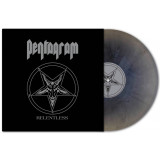
Die Anfang der 1970er Jahre gegründete US-Band ist einer der beständigsten Underground-Acts in der Geschichte des Heavy Metal. Beeinfl usst von britischen Bands wie The Groundhogs und Black Sabbath, hat ihre eigene Art von Doom Metal später wiederum andere Bands wie Paradise Lost oder Cathedral beeinfl usst. Obwohl sich die Besetzung der Band im Laufe der Jahre mehrfach änderte, ist Sänger Bobby Liebling immer noch am Ruder, und Pentagram gilt heute als echte Kultband mit einer generationsübergreifenden Fangemeinde.
Recital presents a new double album of rarely heard Robert Ashley compositions performed by baritone singer Thomas Buckner.
“(Robert Ashley) turned speech into music” - Alvin Lucier.
In the 1960s, Robert Ashley pioneered the American avant garde with the ONCE Group and festivals, before irrefutably changing the face of American opera later in the 20th century. Buckner, in addition to running the fabulous 1750 Arch record label in the 1970s and 80s, is a noted baritone who has collaborated for decades with the likes of Roscoe Mitchell, Annea Lockwood, and the late Noah Creshevsky, amongst countless others.
The title of the album, Spontaneous Musical Invention, refers to Ashley’s method of instructing the singer to do what he called “spontaneous musical invention based on the declamation of the text.” A vocal practice that Thomas Buckner perfected over the 33 years that he collaborated with Ashley. First performing in Ashley’s 1984 opera Atalanta (Acts of God), Buckner continued on as an integral performer in the ensemble until Ashley’s death in 2014.
The album is composed of two halves, the first is a new rendering of Ashley’s second opera Atalanta (Acts of God). Robert Ashley wrote about ten hours of music for the opera Atalanta, divided into three acts: ‘Max', for the surrealist artist Max Ernst; ‘Willard', for the composer’s uncle, Willard Reynolds, a great story teller; and ‘Bud', for Bud Powell, the great jazz pianist and composer. One is invited to construct a version using any material from these ten hours. Over the years they worked together, Thomas Buckner commissioned three reworkings of arias from Atalanta that he could perform in concert: the ‘Odalisque' aria from Max, 'The Mystery of the River' from ‘Willard', & 'The Producer Speaks' from ‘Bud'. So this first section of the album is one of many possible versions of Atalanta, albeit in strikingly different versions from the originals.
The second section of the album is dubbed Occasional Pieces, and holds two unpublished Ashley works. ‘When Famous Last Words Fail You' & 'World War III Just the Highlights' are not from any Ashley opera. However, each is highly dramatic and theatrical. They were written as standalone pieces for Thomas Buckner. Buckner’s distinct vocal cadence projects the sharp wit and wry storytelling of Ashley’s librettos.
A portion of the record was recorded live at Roulette in Brooklyn, NY, at an intimate memorial concert held for Robert Ashley in 2014. Spontaneous Musical Invention, in essence, functions as a tribute to both exceptional artists, and to their decades of collaboration.
Vinyl edition comes with a 24 page 12” x 8.5” booklet of Ashley librettos, scores, & program notes, with an introduction by Alvin Lucier.
out of Stock
Last delivered 15 months ago available to reorder, subject to availability
Efficient Space charts Ghost Riders’ North American roadmap, crashing into 1973 New York to ignite the unfiltered teen dreams of Dennis Harte.
In the late ’60s, 11-year-old prodigy Dennis Harte was handed a Sears-bought Silvertone 1448, its in-case amplifier primed for street-level incantations. Recruiting two neighbourhood friends, the trio hammered out raw rhythms, drawing in Brooklyn’s wandering bohemians, keen to glimpse a prepubescent Alex Chilton in the making.
Also jamming with his older brothers, Bart and John, a family friend introduced the siblings to budding music exec Carl Edelson, who had spent the better part of two decades hustling through a string of local labels. A father figure of sorts, Edelson backed them immediately, facilitating sessions at the famed A-1 Sound Studios and Sanders Recording Studio and pressing four 7”s on his newly minted Roundtable Records. To maximise his chances of courting major labels, he strategically assigned each release a different artist name - Dennis Harte, Pure Madness, Harte Brothers and the wryly titled Harte Attack.
Dennis’ emotional maturity and sheer talent bleed into the defining ‘Summer’s Over’, penned by Edelson and once recorded by mid-'60s New Jersey garage vocal group The Wouldsmen. Morphing into an unfathomably teenage, blue-eyed soul/psych lament, it aches for a season slipping away forever. Its Harte Attack edition counterpart - the candied ballad ‘Running Thru My Mind’ - delivers unison harmonies and kinetic guitar interplay with a streetwise punch, channeling the spirit of NYC-area icons The Rascals, The Lovin’ Spoonful, and The Youngbloods.
Roaring like the Spencer Davis Group, Pure Madness’ organ-driven bruiser ‘Freedom Rides’ screams of biker gangs, yet its true subject - ’60s civil rights activists the Freedom Riders - looms as another towering theme for an adolescent perspective. Meanwhile, the loose, bluesy ruckus ‘Treat Me Like a Man’ digs back into Edelson’s catalogue, covering the Beatles-inflected Levittown group The Shandels.
Though Dennis later found success touring with Wilson Pickett and now doubles as a piano tuner to the stars, these four snapshots frame ambition on its outer edge - a heartfelt homage to an unbreakable brotherhood.
out of Stock
Last delivered 15 months ago available to reorder, subject to availability
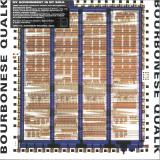
Mannequin Records reissues "My Government Is My Soul", a searing 1989 statement from Bourbonese Qualk, one of the UK’s most defiant and politically engaged experimental acts. Originally released on the group’s own label, this LP captures the uncompromising spirit of a band deeply embedded in the resistance movements of 1980s Britain.
Recorded during a turbulent period of social unrest, "My Government Is My Soul" stands as a fierce response to authoritarianism, surveillance, and the neoliberal decay that defined the Thatcher era. Bourbonese Qualk fused industrial rhythms, minimal synth, distorted tape loops, and spoken-word polemics into a sound that was both confrontational and deeply physical—a weaponized form of music rooted in activism and direct action.
Widely regarded by fans as one of the band’s strongest works, "My Government Is My Soul" has earned a near-mythic status in underground circles. Fans have praised the album’s stylistic breadth—“sometimes it kisses the hem of rock, at others it bows towards the likes of Steve Reich & Philip Glass".
This reissue, fully remastered by Rude 66, reintroduces a critical work of post-industrial dissent to a new generation. Still as urgent and unflinching as ever, the album resonates with today’s climate of mass disinformation and systemic control. It is a timely reminder that sound can still be a form of resistance.
out of Stock
Last delivered 15 months ago available to reorder, subject to availability
Get back to the golden age of Roller Disco Funk with a double vinyl including all the hits of the genre ! Featuring : Claudja Barry - Barry White - Inner Life - Patrice Rushen - Carol Willians - Positive Force - Frankie Smith - The Whispers
n C4 Instant Funk - I Got My Mind Made Up (You Can Get It Girl) 7” Version
out of Stock
Last delivered 73 days ago available to reorder, subject to availability
New Delhi-based Peter Cat Recording Co. will release their debut album, ‘Bismillah’ on June 14, 2019 via French independent label Panache Records. Debut UK live shows are soon also to be announced by the band.
Peter Cat Recording Co. could almost have a question mark on the end of its name. Not least as founder & frontman Suryakant Sawhney refuses to explain where that name really comes from or what it means (perhaps a reference to the Tokyo jazz club owned by Haruki Murakami), but also since the very existence of the band itself raises a raft of questions. When was the last time we fell for an indie rock band for the right reasons? Not because the band in question nostalgically imitate a perceived ‘golden age’ but because they innately embody the fundamentals of such music: fantasy, sincerity and the freedom to make music without rules or career aspi- rations. And when was the last time this kind of band sounded like Sinatra, Barry White, the sweetest doo-wop, humid fanfares and a psychedelic wedding band, all at once? And all of this coming from India?
In truth, the story of Peter Cat Recording Co. was written within the triangle of San Francisco, Delhi and Paris.
In the first of these cities, Sawhney (a native of Delhi) pitched up to study film-making. More distracted by the city’s peaking live scene of the early noughties, this is where he started to make music and to sketch out an idea for the band.“
The people I lived with supported my idea of writing music, they introduced me to great mu-
sic. There used to be a great garage scene in San Francisco, like The Oh Sees also Ty Seagall, Mikal Conin, all those bands. This is a world I had never seen in my entire life. A big inspiration from San Francisco was that you could record yourself. You don’t need to be in a studio and spend a lot of money to make an album. You can do it”.
At the end of the 2000s, Suryakant returned home to New Delhi, and started his band for real, more or less the same band that plays today. “I wasn’t so concerned about will we be performing, will we be the greatest band, will we be trendy. I just wanted to make something that was consequential and important for us, I think. Something which would last, something people could listen to and be like « this is life changing ». It was for the sake of beauty”.
For the first few years and in India alone, this is exactly what Peter Cat Recording Co. did, in total indifference to the rest of the world. This was until young Parisian label Panache stumbled across the band online via Vice’s THUMP subsidiary, stupefied by the band’s cosmic video for seven-minutes-and-counting track, ‘Love De- mons’. And so in spring of 2018, ‘Portrait Of A Time: 2010-2016’ was released on Panache - making the first international release from Peter Cat Recording Co., bizarrely enough, an anthology of re-mastered, hidden gems from the band’s ramshackle back catalogue, previously recorded in Suryakant’s own living room. With Peter Cat’s off-kilter charm hitherto unheard of beyond the fringes of India, the release provided a gateway op-
Whilst the title track found its way onto Tracks Of The Year lists at the Guardian & NME, it was tricky for new PCRC enthusiasts to get a firm grip on the startling push/pull between the immediate, uncanny music this release gathered, and the cultural backdrop of New Delhi at which it was so startlingly at odds.
Opportunity for a wider fanbase to fall in love with their cloud-like, drunken songs for the first time.
If discovering your favourite new band via a ‘Best Of’ feels a curious premise, then ‘Bismillah’ does more than hint towards the promise of Peter Cat Recording Co’s future. Blending gypsy jazz, psychedelic cabaret, space disco, bossa supernova, Bollywood and uneasy listening with kaleidoscopic ease, in many senses, the band’s knack hasn’t altered. Always different, paradoxical, unpredictable yet somehow familiar. The new album opens to the strains of bird chatter, the whisper of a city’s soundscape and the first few notes from an instrument which seem to be calling us to the departure lounge, a fore-shadow of the flight ‘Bismillah’ launches its listener
on. Suryakant sings with the detached, rueful elegance of Sinatra marooned on a desert island, whilst his band create small space-time capsules which navigate their way through genres and eras – including the future – and between nostalgia and eccentricity.
Peter Cat recently trailed ‘Bismillah’ with the release of ‘Floated By’, an appositely titled musing on failure & missed opportunities, punctuated by the fulsome brass section which weaves through so much of the album.
The languid, blue quality to the track is offset by the attendant music video, created with footage shot, implau- sibly enough, at Suryakant’s own marriage ceremony (needless to say, the wedding band hired for the day was of course, Peter Cat Recording Co.) Sawhney dryly notes; “Hopefully it’s not a many-a-times-in-a-lifetime event. You can’t fake that set, those people actually having a good time, being really emotional and intense.” ‘Bismillah’’s colour-drenched album cover also captures Suryakant’s father-in-law making his wedding toast on that same day - a nod back towards the cover of ‘Portrait Of A Time’, itself a black & white image taken at the wedding ceremony of Suryakant’s own father.
A stumbling but gracious collection of songs rooted in a kind of drunken soul music, the melancholy nature of some of the songs on ‘Bismillah’ renders them almost liquid, before they develop into more dance-like shapes. Suryakant’s rangy voice swoops from the falsetto glide of ‘I’m This’ to the beat-up baritone blown along by the warm breeze of ‘Soulless Friends’. The elliptical structure of album opener ‘Where The Money Flows’ also al-
lows for the use of brief bursts of autotune effect on his vocal without feeling incongruous, whilst the desultory lyrics of ‘Heera’ (a Hindi word for diamond) - sharing something with the Morricone school of grand storytelling - have an emotional weight that would impress even coming from a native English speaker. Perhaps the most gleefully unpredictable moment on ‘Bismillah’ comes with the illusory, vocal loops on the intro to ‘Memory Box’, errupting into 8 exhilarating minutes worth of unbridled, string-backed disco joy. A cat might have nine lives, but on ‘Bismillah’ and beyond, Peter Cat Recording Co. are hinting towards an un- knowable multitude of dimensions. Throw them all together, and it equates less to a listening experience and more to an out-of-body experience.
The blues, born in the cotton fields of the American South, emerged from makeshift instruments and simple harmonies rooted in African heritage. It captured the struggles, hopes, and fleeting joys of laborers enduring harsh conditions, with its hallmark "blue note" adding a unique dissonance to this evocative musical style.
As industrialization progressed, the blues migrated to urban centers like Chicago and New Orleans, evolving with modern instruments and expanding themes to reflect urban struggles, sensual nights, and existential despair. This period birthed many of the musicians who later formed the American Folk and Blues Festival (AFBF), an initiative started in 1950s Germany to introduce Europe to the genre and counter its reductive reputation as a precursor to jazz.
The Lost Recordings celebrates these legendary artists through restored performances from the 1962 Olympia in Paris and the 1963 Stadttheater in Bremen. Featured artists include John Lee Hooker, Memphis Slim, Sonny Terry, Brownie McGhee, T-Bone Walker, Helen Humes, and others, showcasing the depth and evolution of the blues.
From intimate duos like Brownie McGhee and Sonny Terry’s harmonica-guitar interplay to T-Bone Walker’s electrifying group performances, each act demonstrates the genre's versatility and influence. John Lee Hooker’s solo mastery mesmerized audiences, while T-Bone Walker pioneered the electric guitar's place in blues, inspiring legends like B.B. King.
The album also highlights Sonny Boy Williamson, whose charismatic harmonica and profound sensitivity defined his performances. These concerts take listeners on a journey through the authentic sound of the blues, traversing America’s history and foreshadowing its transformative impact on global music.
In the summer of 1968, Julie Driscoll, Brian Auger And The Trinity were at the height of their popularity having had chart success across Europe. This performance at the Montreux Jazz Festival, released for the very first time, captures legendary vocalist Julie Driscoll, Brian and group at their very best. It features a long forgotten Brian Auger original, ‘Along Came Zizzi’ plus previously unheard, live versions of Eddie Jeffersons 'Soft & Furry' and tracks from their Open and Definitely What! albums.
The booklet includes a brand new interview with Brian Auger recalling his memories of playing the festival, as well as photos of the band on stage from the actual
concert.
"Chasing the funky symphonies that filled my head and my dreams..."
December 25th, 2023 - an Instagram post. Stimulator Jones shared half a dozen FIRE tracks from his beat tape archive. We were immediately drawn to the rough hewn boom bap.
"I'd release that", Rob commented.
Hours of material was shared and the result is this: Cool Green Trees (1999-2005). A collection of beats and loops Stimulator Jones created between the ages of 14-20 at home in his basement, bedroom and computer room in Roanoke, Virginia.
You will not believe the profound soulful genius contained within these naive schoolboy melodies.
December 25th, 1998 - 25 years ago to the day and his much-coveted Yamaha SU10 sampler was finally bestowed upon young Stimmy AKA Sam Lunsford: "I immediately hooked up a CD Walkman to the input jack and looped the beginning two bars of Grover Washington Jr.'s "Mercy Mercy Me". I don't know what exactly was so thrilling about hearing two measures of music repeating over and over but it was so infectious and hypnotizing and enthralling to me. I'll never forget that ecstatic rush of making my first loop - an uncontrollable, gleeful smile plastered all over my face." When you hear the pocket breakbeat symphonies featured here on Cool Green Trees, you'll feel the same sense of frisson.
In the wake of his Stones Throw breakthrough - Exotic Worlds & Master Treasures - Stimulator Jones was pegged by many as a 90s throwback artist. However, he literally IS a 90s artist. He's been recording music most of his life and he's now 40. He created the bulk of Cool Green Trees as a teenager. Everything before 2004 was recorded when Sam was still in school. He was in 8th grade when he made the 1999 tracks - he didn't even have his learner's permit. This album is a snapshot of a young man in a simpler time. Things were still mysterious back then and he was flying blind, relying on his ears and having to figure things out for himself: "I had no road map for becoming a beatmaker. I have been collecting music since I was a kid, I am a lifelong digger and seeker of cool and interesting sounds. I was there in the golden age of Hip Hop, and while I may have been a suburban white kid in Roanoke, Virginia, I was tuned in and I bought so many classic albums when they came out. I was attracted to Hip Hop because of the musical and poetic quality. I was hypnotized by the rhythms, partially because I was a drummer. I didn't brag about collecting my breakbeat records or making beats - it was something I did in isolation. It wasn't something I generally wanted to bring attention to and it didn't really score me any cool points. I certainly wasn't flexing on social media about it."
Hell, he can do that now!
Opener "Pharoah Jones" was inspired by Yesterday's New Quintet and Madlib's ability to capture that classic 70s sound whilst playing all the instruments. Sam created this one stoned afternoon by laying down a 2 bar loop and a shaker loop on his Yamaha SU700 sampler. He hung a microphone from the ceiling and played his Yamaha Stage Custom drum kit over the top before adding ender Rhodes and playing his dad's Selmer tenor sax through an Electro Harmonix Memory Man echo pedal. Yes! Up next, "Ghost Gospel" utilises a dope loop from a gospel record and adds some soul-funk drums overtop, whilst working that filter knob. Says Sam: "The loop reminded me of something Ghostface would rap over. The sample was in 3/4 waltz time but I flipped it for a 4/4 groove, a technique I picked up from RZA. "Ill Feeling" uses sped-up pieces from a dusty old funk record and putting them over a classic NOLA drum loop; gain chopping up a slow, bluesy 3/4 time signature and bending it to a 4/4 groove. Classy shit. "Capital Punishment" features drums tapped in live, inspired by MF Doom's Special Herbs series. "Do Not Adjust" consists loops found on a compilation of 70s French music at Happy's Flea Market, a classic Roanoke digging spot.
The sublime, evocative title track, "Cool Green Trees" was created when Sam was still living at home. He dumped samples off his SU10 into the family desktop and arranged them in a demo version of Pro Tools: "This track was sort of my ode to the DJ Shadow style of sample based production. Super spacey, slow, and moody. The heavily filtered drums were inspired by Alec Empire's 'Low on Ice' album. I later added some scratches and sounds from a Spider Man storybook record." "Chill Scratch" snags the final bit of a bossanova record and pairs it with a drum loop before adding experimental scratching run through an Electro Harmonix Memory Man echo pedal. "Poisonous Fumes" was made using a sampler, mixer and a turntable; a kind of mixtape beat collage with added scratches and sounds from various records. Using dialogue from superhero records was a nod to Madlib. "Welcome Aboard The Starship" is dark, downtempo trip-hop with a spooky bent. Sam paired a slow, hard drum loop with a guitar sample grabbed off a psychedelic rock record. To finish, he added various backwards sounds and weird atmospheric effects and a little scratching. Swoon.
Side B opens with "Keep On Runnin", made on a borrowed Roland SP202 sampler. Having always loved the sound of the Lo-Fi filter on those machines, reminiscent of the Emu SP1200, Sam always imagined Del or another of the Hieroglyphics crew rapping over this beat. You can certainly hear why. "Sounds Impossible" sees Sam experimenting with layering multiple kick samples at different volumes to create patterns similar to those heard by Showbiz and Lord Finesse during their God-level 1995 period. "Painted Faces" was made by chopping up a REDACTED record which he had gotten from Happy's Flea Market and paired it with a REDACTED drum loop. By the time Sam recorded "The Knew Style", he had acquired a shitty old 1960s portable turntable off eBay. It didn't function properly when he bought it but his brother opened it up, cleaned it out and got it working: "I remember he told me that there was a bunch of sand inside of it when he opened it up, as if its previous owner had taken it to the beach. I would take that turntable on my Happy's Flea Market digs so I could preview records...that's how I found this loop."
"Chicken Wing Blues Sauce" loops up a classic blues joint and pairs it with some REDACTED drums. A bit of filtering and arranging et voilà! "Kool Breeze", from 1999, is one of Sam's oldest surviving beats, as is "Sexx Bullets". The Roots sampled the same record, leaving Sam frustrated yet vindicated. "Soul Child" was an early SU10 creation, looping a dusty old Soul Children 45 and pairing it with 70s rock drum loops to great effect. "Take Off Runnin" was another loop found digging with a portable turntable. Paired with some boom bap drums it makes for a hypnotic head-nod groove. "Centurian" was intended to be a little beat interlude a la Pete Rock. The sample is from a sun-dappled soft-psych record and it's paired with a Robin Trower drum loop that just happens to fit perfectly. Sometimes you slap things together kind of haphazardly and magic happens. "Bozack" was the first beat Sam made using Pro Tools, his first foray into using chopped sounds instead of loops, an exciting new world. "Church" is beat interlude using a Phil Upchurch loop with the "Long Red" drums - a favourite break of Dilla et al. Sam was really on a tear in late 2004, probably because he was unemployed and phoneless and able to just make beats all day. He made "Splash One" on a borrowed Yamaha SU700 and again was experimenting with tapping the drums in live with his fingers, instead of using a loop or sequenced pattern. Channeling 9th Wonder, Sam used a water splash sound effect from a Batman record as a percussive element, hence the title (also a 13th Floor Elevators reference). The main loop is a backwards portion of one of his favourite Roy Ayers songs.
"Hank" is another fun little beat interlude thing, created on a borrowed Roland SP202 sampler with the fantastic Lo-Fi effect that resembled the Emu SP1200 at a fraction of the price. "73 goatee", from 99, is another of his oldest surviving beats, created in his bedroom with his Yamaha SU10 and his brother's Vestax MR-300 4-track recorder: "This one will always feel special. I can remember having a feeling all the way back then on the night that I created it that this was a solid beat with a catchy loop. There was something in the Fender Rhodes melody that resonated with me emotionally, and I had never heard a producer sample that portion before. I felt like I had found my own unique sound, my own unique loop. It came from an Ahmad Jamal '73. I actually even recorded myself rapping and scratching over this beat way back then, I still have that version in all its imperfect sloppy glory."
Sam explains just how much these tracks mean to him: "They all have immense historical and sentimental value and I'm proud of them. These beats come from an innocent, simple time when I was just figuring out how to craft these sounds. They're something very personal to me. They are the initial part of a journey that I really was taking *alone*. There was no YouTube. I couldn't Google shit. I didn't even know any other beatmakers, producers or DJs in my town that could teach me anything. It was always just me, alone, in a room with some equipment - chasing the funky symphonies that filled my head and my dreams. What I was doing wasn't cool. Most of my peers thought I was a weirdo and couldn't care less. Creating these sounds was an anti-social endeavour. In a sense, I felt like it was me against the world, and all I had to instruct and assist me were the recordings produced by my heroes - RZA, DJ Premier, Erick Sermon, Beatminerz, Showbiz, Diamond D, Beatnuts, Prince Paul, The Bomb Squad, Pete Rock, Q-Tip, E-Swift, Mista Lawnge, DJ Shadow, Cut Chemist, Peanut Butter Wolf, El-P and so many more...I dedicate this collection to them, and to my older brother Joe who has always been a musical and technical guiding light for me.
This was a time before every kid was a self-described producer and beatmaker, before everyone had a DAW, before Kanye and "chipmunk soul", before Red Bull beat battles, before there was any social media beyond chat rooms and AOL Instant Messenger, before Soundcloud, before SP-404 mania, before lo-fi beats to study to, before Splice, before targeted ads for MIDI chord packs, etc. In 99 when I told people that I had a sampler and made beats I was mostly met with bewildered confusion and indifference. Kids and adults alike would wonder why I got this weird machine for Christmas instead of something worthwhile like a Playstation or a mountain bike or even a guitar for that matter because at least that could be used to make "real music". Back then, sampling was still not widely respected as an art form - it was seen as lazy, talentless and unoriginal at best and outright criminal theft at worst. I had gotten respect for playing drums and guitar and things of that nature but this was a step in the wrong direction in the eyes of many."
The cover photo is a picture of Sam standing on his back porch in the latter part of 1998, just before he got his first sampler. He was 13 years old, in 8th grade. His dad took the picture with his 35mm film camera: "I actually wanted to be pointing my dad's .22 pistol at the camera lens but he wouldn't let me. He gave me an old walking cane to use instead. The Tommy Hilfiger puffer jacket came from the lost and found at William Fleming High School where my mom worked as a secretary. I was thrilled when she brought it home because we never spent money on expensive name brand clothing like that - we were for the most part strictly a sale rack, bargain bin, thrift store, yard sale, flea market kind of family when it came to clothes. My watch is some cheap off-brand fake gold department store watch." Mastering for this vinyl edition was overseen by Be With regular Simon Francis and it was cut by the esteemed Cicely Balston at Abbey Road Studios to be pressed in the Netherlands by Record Industry.
out of Stock
Last delivered 15 months ago available to reorder, subject to availability
VERY LIMITED 2025 REPRESS ON BEAM OF LIGHT VINYL .
Everything changed for The Beths when they released their debut album, Future Me Hates Me, in 2018. The indie rock band had long been nurtured within Auckland, New Zealand’s tight-knit music scene, working full-time during the day and playing music with friends after hours. Full of uptempo pop rock songs with bright, indelible hooks, the LP garnered them critical acclaim from outlets like Pitchfork and Rolling Stone, and they set out for their first string of shows overseas. They quit their jobs, said goodbye to their home town, and devoted themselves entirely to performing across North America and Europe. They found themselves playing to crowds of devoted fans and opening for acts like Pixies and Death Cab for Cutie. Almost instantly, The Beths turned from a passion project into a full-time career in music.
Songwriter and lead vocalist Elizabeth Stokes worked on what would become The Beths’ second LP, Jump Rope Gazers, in between these intense periods of touring. Like the group’s earlier music, the album tackles themes of anxiety and self-doubt with effervescent power pop choruses and rousing backup vocals, zeroing in on the communality and catharsis that can come from sharing stressful situations with some of your best friends. Stokes’s writing on Jump Rope Gazers grapples with the uneasy proposition of leaving everything and everyone you know behind on another continent, chasing your dreams while struggling to stay close with loved ones back home.
"If you're at a certain age, all your friends scatter to the four winds,” Stokes says. “We did the same thing. When you're home, you miss everybody, and when you're away, you miss everybody. We were just missing people all the time.”
With songs like the rambunctious “Dying To Believe” and the tender, shoegazey “Out of Sight,” The Beths reckon with the distance that life necessarily drives between people over time. People who love each other inevitably fail each other. “I’m sorry for the way that I can’t hold conversations/They’re such a fragile thing to try to support the weight of,” Stokes sings on “Dying to Believe.” The best way to repair that failure, in The Beths’ view, is with abundant and unconditional love, no matter how far it has to travel. On “Out of Sight,” she pledges devotion to a dearly missed friend: “If your world collapses/I’ll be down in the rubble/I’d build you another,” she sings.
“It was a rough year in general, and I found myself saying the words, 'wish you were here, wish I was there,’ over and over again,” she says of the time period in which the album was written. Touring far from home, The Beths committed themselves to taking care of each other as they were trying at the same time to take care of friends living thousands of miles away. They encouraged each other to communicate whenever things got hard, and to pay forward acts of kindness whenever they could. That care and attention shines through on Jump Rope Gazers, where the quartet sounds more locked in than ever. Their most emotive and heartfelt work to date, Jump Rope Gazers stares down all the hard parts of living in communion with other people, even at a distance, while celebrating the ferocious joy that makes it all worth it -- a sentiment we need now more than ever.
Sherlock Hound is the animated series from the masterpiece directed by Hayao Miyazaki and coproduced by TMS Entertainment and RAI, wich was broadcasted for the first time in 1984. The series was a success and remains to this day one a beloved classic in the world of Japanese animation.
To celebrate the recent 40th anniversary of the series, we are pleased to offer this sublime edition with its 2 discs gathering the soundtracks from the TV series and for the initial animated film (The Blue Ruby & Underwater Treasure), completed by a 8-page booklet, illustrated with beautiful artworks.
The soundtrack to the animated series was composed by Kentarô Haneda (well known for his work on the Space Adventure Cobra series) and includes the two signature songs performed by Da Capo. The anime film soundtrack is the work of Kunio Muramatsu, and also includes two songs performed by Haruko Kuwana. Immerse yourself in the fascinating atmosphere of this cult 80s anime!
The first and most independent of all independent producers, Joe Meek needs little introduction. He was the first to chart in both the UK and the USA with an independently produced song -which was actually recorded in his home’s kitchen- when The Tornados' Telstar took the world in 1962. Meek was, of course, one of the most in vogue producers of the first half of the 1960s, providing the soundtrack to the evolution of UK Rock’n'Roll to Swinging London, scoring hits with actors like John Leyton (Johnny Remember Me), showmen like Screaming Lord Sutch and bands like The Outlaws and The Tornados. He also produced a wide stream of R&B and freakbeat 45s that are nowadays hardly sought after by the collectors with the biggest bank accounts.
Joe Meek experimented with all kinds of recording techniques in his home studio, his tricks and gimmicks won his productions chart placement and critical and public acclaim, but none of his projects was so advanced and way out as the avantgarde experimentation showed in his I Hear a New World electronic symphony from 1960. Aided by The Blue Men formed by Rod Freeman (group leader, guitar, vocals), Ken Harvey (tenor sax, vocals), Roger Fiola (Hawaiian Guitar), Chris White (guitar), Doug Collins (bass), Dave Golding (drums) -also known as Rodd-Ken and The Cavaliers- who provided a tight base to his electronically produced sounds, Meek came up with what he envisioned as the soundtrack of the future, the sounds he envisioned were to be heard in outer space. It was too way out for its time, certainly. To the point that of all the opus, only four tracks saw the light of day on a 7" EP released on Triumph, Meeks very own label. It wouldn’t be until 1991 that the whole recordings from the I Hear a New World sessions would see the light of day on a CD issued by the RPM label.
Wah Wah offers a new reissue of this now classic early electronics masterpiece, housed in a beautiful front-laminated back-flapped sleeve and offered as a limited 400 copies only black vinyl version and an ultra-limited 100 copies only transparent purple vinyl. Get yours before they fly!
RIYL : Delia Derbyshire and The BBC Radiophonic Workshop, Louis and Bebe Barron’s soundtrack to Forbidden Planet, Raymond Scott, Tom Dissevelt & Kid Baltan, Morton Subotnick…
The first and most independent of all independent producers, Joe Meek needs little introduction. He was the first to chart in both the UK and the USA with an independently produced song -which was actually recorded in his home’s kitchen- when The Tornados' Telstar took the world in 1962. Meek was, of course, one of the most in vogue producers of the first half of the 1960s, providing the soundtrack to the evolution of UK Rock’n'Roll to Swinging London, scoring hits with actors like John Leyton (Johnny Remember Me), showmen like Screaming Lord Sutch and bands like The Outlaws and The Tornados. He also produced a wide stream of R&B and freakbeat 45s that are nowadays hardly sought after by the collectors with the biggest bank accounts.
Joe Meek experimented with all kinds of recording techniques in his home studio, his tricks and gimmicks won his productions chart placement and critical and public acclaim, but none of his projects was so advanced and way out as the avantgarde experimentation showed in his I Hear a New World electronic symphony from 1960. Aided by The Blue Men formed by Rod Freeman (group leader, guitar, vocals), Ken Harvey (tenor sax, vocals), Roger Fiola (Hawaiian Guitar), Chris White (guitar), Doug Collins (bass), Dave Golding (drums) -also known as Rodd-Ken and The Cavaliers- who provided a tight base to his electronically produced sounds, Meek came up with what he envisioned as the soundtrack of the future, the sounds he envisioned were to be heard in outer space. It was too way out for its time, certainly. To the point that of all the opus, only four tracks saw the light of day on a 7" EP released on Triumph, Meeks very own label. It wouldn’t be until 1991 that the whole recordings from the I Hear a New World sessions would see the light of day on a CD issued by the RPM label.
Wah Wah offers a new reissue of this now classic early electronics masterpiece, housed in a beautiful front-laminated back-flapped sleeve and offered as a limited 400 copies only black vinyl version and an ultra-limited 100 copies only transparent purple vinyl. Get yours before they fly!
RIYL : Delia Derbyshire and The BBC Radiophonic Workshop, Louis and Bebe Barron’s soundtrack to Forbidden Planet, Raymond Scott, Tom Dissevelt & Kid Baltan, Morton Subotnick…
In the spring of 2019, a new rock band consisting of four otherwise ordinary Okies would arise out of seemingly nowhere, swiftly turning heads with a grotesque new take on noise rock fuelled by the existential anguish that has defined the 21st Century. Taking its name from the towering mounds of toxic waste that stand as monuments to capitalism’s cruel hubris across its home state, Oklahoma City’s Chat Pile made an immediate impression, soon culminating in the release of its landmark 2022 debut album, God’s Country and 2024’s expansive follow up Cool World
While the massive success of God’s Country would propel the quartet from the status of underground favorites to an international sensation, Chat Pile’s mission to take rock music to new zeniths of intensity was part of the plan from the very start. In fact, during its first handful of months as an active project, Chat Pile began writing and recording some of the heaviest, hellish, and harrowing music of its entire catalogue, laying the foundation of the themes and traits that would eventually manifest in the band’s debut LP. The result of these sessions would be a pair of EPs, This Dungeon Earth and Remove Your Skin Please, released in the summer and winter of 2019, respectively.
Initially put out by Reptilian Records in 2020, The Flenser is proud to present a special reissue of Chat Pile’s pivotal first two EPs, each compiled onto a single disc. This dual EP compilation chronicles the earliest moments of the Oklahoma City quartet’s discography, a snapshot of the band’s pre-Flenser days and of the eight tracks of noxious, nihilistic noise rock that would propel the Midwest band to a globe-spanning, underground heavyweights.