When We Froze is Ignez's entry into the Primal Instinct catalogue. A world held between ice and water. A kiss preserved beneath the frost, where winter finds its quiet shape. Yet somewhere below, the water keeps its own flow. It's a record about what happens beneath a frozen surface, about the quiet flow that never actually stops, even when everything above it looks still.
The breakthrough hit that cemented THE SOUNDLOVERS
as one of the leading international dance acts of the ’90s.
A timeless anthem about overcoming loneliness,
embracing emotional growth, and finding the strength to
move forward. Beneath its uplifting dance groove lies a
message of hope, resilience, and self-discovery.
Am National Album Day (NAD), der nun schon zum sechsten Mal stattfindet, kommt die UK-Musikszene jedes Jahr zusammen, um die Albumkultur zu feiern und zu fördern. Das diesjährige Thema der 90er Jahre soll ein Licht auf ein äußerst reichhaltiges Musikjahrzehnt werfen, das sich zwischen Pop, Trip Hop und Hip Hop bewegte: NAD-Release: Nas "It Was Written" - gold & black marbled Vinyl. "It Was Written" war Nas' zweites Album, das 1996 veröffentlicht wurde. Es war ein sehr erfolgreiches, millionenfach verkauftes Album mit Beteiligung von Lauryn Hill, Dr. Dre, Foxy Brown und Mobb Deep. Seit seiner Veröffentlichung war es außerhalb der USA nicht auf Vinyl erhältlich.
DJ Koze unveils a spiritual and surprising journey into rapturous spheres with Wespennest EP. The visionary artist and master of electronic sound, presents his first own release after 2018's global club hit "Pick Up".
"Candidasa" and "Wespennest" are the result of DJ Kozes inspiring stay in a secluded Benedictine monastery on the enchanting island of Sulawesi. Amidst this idyllic setting, he found the perfect environment to unleash his musical vision. He composed all of the music of "Candidasa" while lying on his stomach, in an act of deepest devotion and self-reflection. In doing so, he fed exclusively on so-called heroin kebabs to immerse himself in a trance-like state of creative flow. The result is a soundscape of unimagined depth and beauty that enchants the senses and transports listeners to another dimension by massively increasing the frequency of flicker fusion.
On "Wespennest” the wonderful Sophia Kennedy takes the stage and breathes a new dimension into the music with her impactful lyrics and vocals. With generous dedication, Sophia has provided exclusive excerpts of her yet unreleased songs, giving this track a radiant psychedelic power. The combination of DJ Kozes musical genius and Sophia Kennedy's glorious vocals creates a club track full of wonderment, opening up a mystical rapturous world for listeners. Already an instant classic of German dance music.
With "Candidasa" and "Wespennest" DJ Koze has once again pushed the boundaries of electronic sounds and created a spiritual journey that touches the soul and frees the mind. This EP is the first harbinger of his highly anticipated new album, which will be released in 2024. The time until the release can be wonderfully bridged with the magical album "Hit Parade", which DJ Koze has produced for the British legend Róisín Murphy and on which we can be carried away into the world of musical brilliance.
DJ Koze's 2013 album opus Amygdala has continued to bewitch all who encounter it since its release. Tipped as his own personal Sgt. Pepper, the sublime long-player revealed a fully-realised and personal body of work, complete with a classic songwriting at its core, House in its heart, and veins coursing with psychedelic color. La Duquesa' was the album's dreamy single standout, a journey into deep, tropical ecstasy. XTC' begins in the same spirit, and captures the all the blissful allusions of its name, but its initial gentility belies the deep intensity to come. Floating pads glow with celestial ambience as a kick drum is gradually coaxed into solid form, and the introduction of spoken text begins the second act. Many people are experimenting with the drug Ecstasy,' it says, ...is the drug like the lie and meditation the truth Or am I missing something that could really help me". XTC' then transforms: sweetly imploring tones become demanding, gentle gradients between chords turn hard-edged, and sharp hi-hats cut through the haze. Complete with Koze's signature percussive quirks, it drives towards the track's final pay off: an undeniable, all-consuming, irresistible high. Knee On Belly' recalls Koze at his most tongue-in-cheek and overt, it is bright, bold and literally brassy, using cut-up horns of all shapes and sizes to patchwork together his own unique arrangement. With the highs and mid ranges accounted for, Koze adds in a swollen, thrumming bass line to mix to bring this floor-filler to life. Knee on Belly' recalls a raw, filtered and funky approach to groove, with a nod to disco house and the art of artful sampling, as it orbits between its own neon highs and simmering lows.
Amelie Lens' debut album 'AURA' is the first full-length studio album to come from the Belgian artist despite being one of the most respected and sought-after acts in electronic music today.
Of the album, Amelie says:
"'AURA' is my story. Aura is about the connection between the crowd and me. Music has always been my escape, my way of turning my emotions and energy into something new. When I was younger, I would disappear into nightclubs and create myown world in my head. Being in the nightclubs gave me this feeling of belonging somewhere, I felt connection and freedom I had never experienced before. That feeling changed my life completely. So this album really reflects that whole journey. From playing tiny local clubs and driving myself through the night for gigs, to standing on huge festival stages, becoming a mother, building EXHALE and learning how to balance it all in life.
I wanted 'AURA' to feel emotional but still powerful, uplifting but raw. From big festival tracks to the trippy tracks I'd play at 4am at RSO. Although making this album is one of the biggest things I have ever done in my life, I wanted to keep it light and somehow playful. Because that is also how I am as a person. This is the most honest version of myself I've ever shared. I hope it brings some light, happiness and connection to others as it does to me. Because Aura is and always will be about my connection to you."
The album will consist of 11 brand new tracks, all produced by Lens - with one stellar collab, who will be announced in due course.
"ASSEMBLE MUSIC 15 YEARS - Part I : Founded in Lisbon in 2011, Assemble Music celebrates its 15th anniversary with a three-part vinyl compilation, bringing together fifteen artists who, in different ways, reflect the label's past, present and future. Released simultaneously in November 2026 and distributed worldwide by Clone Distribution, the three records are less a retrospective than a continuation of what Assemble has been building since the beginning: music with character, made by artists with their own language, away from trends and easy categorisation. Across fifteen years, Assemble has moved freely between house, techno, electro, dub and more experimental forms of electronic music. The catalogue has never been defined by one particular sound, but rather by a certain approach, personal, uncompromising and built to last. Part I opens with XDB, an artist whose relationship with Assemble goes far beyond a single record. His deep, understated approach to house and techno has always been closely connected to the musical identity of the label. Aubrey, one of the enduring figures of the UK underground, follows with decades of experience behind him and a catalogue that stretches back to the early 1990s. Synchrojack connects the compilation to another important lineage: the raw and deeply individual British house music with a track produced and never released in the 90's. Activ-Analog bring their machine-driven, analogue approach back to Assemble after previously releasing on the label, while Kumquat Kids aka Julian Phethean & Steve O'Sullivan with a track originally released in 1999 on the Various Positions EP for UK label Organised Sound. "Surface" is a genuine late-90s underground rarity! Over the years, the original 12" has become increasingly sought-after and notoriously expensive on the second-hand market."
An explorer from Earth is pulled through a malformed black hole and crash-lands on a distant
water-covered planet. Her ship lies in ruins, its systems failing, lights flickering through smoke. Then it
begins to rain.
As water enters the machinery, the opposite of what might be expected occurs. The ship starts to recover.
Its interface reorganises itself into legible glyphs; damaged systems begin to hum back to life; the
surrounding terrain slowly assimilates with its structure. Everything is washed in pastel blues, greens and
purples, and a landscape that should feel entirely alien produces an inexplicable sensation of home.
This is the world NikNak imagines for Azul, an album built around water and our increasing desire to
become more integrated with technology. Yet the relationship she proposes is not one of technological
domination over nature. Here, nature repairs the machine. Water nourishes the human body and its
extensions alike, dissolving the perceived boundary between biological and technological systems. The
cyborg at the centre of Azul is fluid rather than metallic: copper capillaries, nanotechnology and water
circulating through the same body.
Part of this imagined world has a very real source. Much of Azul was developed during a residency at Casa Ilhabela in Brazil, where NikNak collected underwater recordings specifically for the project. These
recordings give the album's fiction a physical foundation: its imagined waters begin with real ones. Field
recordings become material for an environment that is simultaneously otherworldly and rooted in direct
experience.
It is a natural evolution for an artist whose practice has long resisted a single mode of listening. An
award-winning turntablist, composer and improviser, NikNak has built a language around manipulating
sound in real time and treating recorded material as something fluid rather than fixed. On Azul, that instinct expands into more immersive world-building: sound becomes environment, organism and narrative at once.
Following 2024's Ireti, Azul marks NikNak's arrival on Lapsus Records. Beneath its science-fiction
architecture lies a quieter and more personal transformation. Back on Earth, the explorer was afraid of
water. Here, she eventually kneels beside a small rock pool and drinks the rainwater collecting within it. For the first time in a long while, she feels completely at ease. What once inspired fear has become
nourishment; what should feel foreign feels like home.
The feeling doesn't last. The ship's distress beacon was activated when it lost course, and somewhere
beyond the atmosphere its signal has been received. The explorer looks towards the point where she first
tore through the sky and sees another vessel beginning to emerge. For now, she calls this place Azul.
This year marks the 40th anniversary of one of the true cult classics of the Italo Disco universe: Mike Mareen’s “Love Spy.” Released in 1986, the track sounded strikingly different from much of the dance music around it: futuristic, dramatic, playful and instantly recognisable. It quickly found its way into DJ cases across Europe and became one of the records that would define Mike Mareen’s electronic sound.
But the story actually began under a different name. An early incarnation of the song was called “Batman,” with lyrics inspired by the adventures of the famous comic-book hero and the villains surrounding him. A small number of promotional copies circulated before copyright concerns meant that the concept had to be abandoned. The title and lyrics were rewritten and “Love Spy” was born. The early “Batman” version has since become one of the most fascinating curiosities in Mike Mareen’s catalogue.
Four decades later, we felt an anniversary like this deserved something special.
LOVE SPY 40th Anniversary will therefore arrive in two parts, bringing together some of our favourite producers from today’s Italo, synth and electronic scene.
Part One features brand-new remixes by Luca Dell’Orso, Flemming Dalum, Also Playable Mono and Disco Computer. And enthusiasm was never going to be a problem here. “Love Spy” is not simply an ’80s classic, it remains a genuine DJ favourite, loved by old-school collectors and a new generation of Italo-wave selectors alike.
Alongside four killer new interpretations, we are bringing back the original Badman Mix, plus the highly sought-after “MAKE YOUR OWN MIX” material – rare set of individual elements created for DJs to deconstruct, combine and rebuild “Love Spy” themselves. These samples have become particularly desirable among collectors and make the perfect addition to the first chapter of our anniversary edition.
Four new remixes. Two pieces of history. Forty years of LOVE SPY.
And we are only halfway there.
LOVE SPY 40th Anniversary Part Two, featuring another line-up of major names from our scene arrives in November.
"ASSEMBLE MUSIC 15 YEARS - Part II : Founded in Lisbon in 2011, Assemble Music celebrates its 15th anniversary with a three-part vinyl compilation, bringing together fifteen artists who, in different ways, reflect the label's past, present and future. Released simultaneously in November 2026 and distributed worldwide by Clone Distribution, the three records are less a retrospective than a continuation of what Assemble has been building since the beginning: music with character, made by artists with their own language, away from trends and easy categorisation. Across fifteen years, Assemble has moved freely between house, techno, electro, dub and more experimental forms of electronic music. The catalogue has never been defined by one particular sound, but rather by a certain approach, personal, uncompromising and built to last. Part II begins with Eduardo de la Calle, whose uncompromising approach to techno and electronic music has made him a natural part of Assemble's more recent history. His contribution continues a relationship that has developed through releases and appearances around the label showcases. Tom Dicicco & Roger 23 move into deeper ambient techno territory, bringing together two producers whose work has always pushed beyond the conventional boundaries of house and techno. Radboud Mens is a Dutch sound artist and composer whose work has long explored the space between experimental electronics, minimalism and techno. Active since the early 1990s, his approach is built around repetition, texture and the physical qualities of sound. His contribution to the compilation reflects this perfectly with a deeply minimalist piece, stripped back to its essential elements, where subtle shifts and details gradually shape the track. Chicago's Hakim Murphy represents another long-standing Assemble connection. His relationship with the label goes back years, and his raw, instinctive approach to house and techno embodies much of what Assemble has always looked for in an artist, individuality before formula. Closing the second record, Myles Serge delivers a pure definition of deep techno, hypnotic, atmospheric and deeply immersive, built on subtle movement and timeless Detroit-rooted sensibilities, establishing a new connection with the label."
It's been a while since the last EP of fresh productions from long-serving Parisian producer LaRoye - three years in fact. On this belated and welcome return to action, the French artist transfers from Mad Mats and Tooli's Local Talk label to the fast-rising Deeppa Records imprint. He's brought with him a quintet of previously unheard cuts. The focal point is opener 'Everybody's Got Soul', a deliciously warming, shuffling and sun-soaked slab of woozy deep house soul that comes accompanied by a wonderfully cosmic, slow-build and percussion-rich interpretation from Darryl Baaki. Elsewhere, LaRoye flits between bouncy deep house futurism ('I Want Ya'), smooth tech-tinged deepness ('Surrender'), relaxed and melodious broken beat ('Long Way To Go') and thickset, early morning dreaminess ('You Have To Understand').
nesreh's third release turns to italy. mirco magnani aka t.c.o. has been active shaping his sound since the mid 80s under various guises such as minox, 4d killer and technophonic chamber orchestra to name a few. nesreh003 presents a mixed bag of mid 2000's reworks of older and more recent tracks.
Cold, Bold & Together (CBT) CBT was founded in Bellingham, Washington in 1971 by percussionist Tony Gable and musicians Solomon Harris, Keith Hooks and twin brothers TC & Jamar Jenkins. It soon became evident that Bellingham was not a particularly welcoming environment for R&B music, so they moved to Seattle to try their luck and plumb the rich supply of venues, which they successfully did until disbanding in 1978. They spent their early Seattle years playing a combination of covers and originals in clubs, later becoming the "go to" opening act for various nationally known artists, such as Ohio Players, Kool and the Gang and Earth, Wind & Fire. While they were paying their club circuit and opening act dues, they squeezed in recording sessions whenever they could and released their own material, which was well-received and got strong regional airplay. However, because of the feudal nature of the music business at the time, they just couldn't break out, and like a lot of Northwest bands with great potential, they inevitably broke up and went their separate ways. Upon disbanding, they left behind a collection of original recordings at Seattle's legendary Kaye-Smith studios.
Unfortunately for CBT, the studio passed through several owners and at some unknown point in time, one of them did the unforgivable and destroyed the storied studio inventory of two-inch tapes and quarter-inch masters. Unknown to the band, a copy of their masters was smuggled out by their producer who added them to his legacy collection of cloned quarter-inch masters. After several years and many moves, he became concerned about the tendency for magnetic tape to deteriorate over time.
He sent the tapes to a Seattle lab to be restored and digitized, with the hope that perhaps, some day, they might be made available for the listening pleasure of R&B fans. The hoped-for day has finally arrived. Russell Paine and Super Disco Edits has pressed two of the Kaye-Smith CBT tracks: "Go For It", a jazz-influenced instrumental, featuring Kenny G, and "Unity", sung by the group en masse with Tony Gable singing lead. The musicians on these tracks are: Tony Gable, leader, vocals and percussion Harry Alexander, drums Kenny Gorelick (now world-renowned "Kenny G"), sax, flute and horn arrangements Chris Ishi, trumpet Michael Young, Trombone Jamar Jenkins guitar, vocals TC Jenkins bass, vocals 1 Philip Woo, keyboards Footnotes: CBT gave legendary saxophonist Kenny G his start in the music business. Kenny was still in high school when he was recruited to play sax and write horn arrangements. Kenny co-wrote, arranged and played sax and flute on the instrumental "Go For It." He rips a smoking tenor sax solo in the middle, which showcases his already masterful technique and solidifies his R&B bona fides. He went on to have a spectacular career recording for Clive Davis and Arista Records. Before his untimely passing in 2016, Tony Gable went on to found contemporary Jazz group, "Tony Gable and 206" (206 being Seattle's then only area code). With songwriting, performance and production help from Kenny G.
Repress! Back by popular demand–VSR 001 is designed to take you to the outer reaches of where you need to go. Wiersma has created a world where with your eyes closed and head down, the dance-floor can transport you to the outer reaches of space and back again for another beautiful night with all your favorite people.
Vermilion Sun Records was started as a passion project in 2025 with a belief in the magic of physical media juxtaposed against the incursion of AI. The original release featured just 100 copies and utilized US-only distribution; it was sold out in less than 5 months. After being brought across the pond from Boston to Brussels by local DJ & tastemaker Rasaaq, it was subsequently shared, quickly gaining popularity on Discogs. This repress is a testament to Vermilion Sun’s core belief; that is meant to be shared and enjoyed by everyone, and there is magic in that ritual.
Wiersma is a cherished member of the electronic music scene in Boston/Cambridge, MA. A DJ, partygoer, and prolific producer, he has played many of the city’s favorite nights sharing bills with other local talent and setting the stage for international acts like Bradley Zero, Garrett David, and Cinthie. Tapping all of these channels brings forth a creativity where memories from nights in Boston and other global travel transform his unique productions. His release VSR 001 showcases this style, exploring the darker and proggier sides of the house universe while making sure to stay tethered to a reality with firm roots on the dancefloor. A1 begins with Once Around Vega where a cinematic opening draws you into groovy and spacey loops demanding you to move. Syntactic Roles churns more deeply, incorporating layered dystopian vocals, rolling basslines and light acidity that is sure to help you close your eyes and put your head down for a dance. The B side keeps the space station grooving with Transmission from L3, and closes out with Rules of Teleportation incorporating more vocals over chugging electro infused grooves.
SHORT INFOS
Because Music celebrates the 50th Anniversary of Cerrone's debut album "Love In C Minor (Cerrone I)" .
A record which is one of the mots important of its time. It brought French Disco to the World and established Cerrone as the French King of Disco.
- Pressed in exclusive 2026 Apple Green Crystal Clear vinyl
- Original 1976 artwork - Digitally remastered from original tapes.
BIOG
Cerrone I
Love in C Minor (1976)
The story behind Cerrone's first album could be summarised in the libertarian atmosphere and the creative energy of the 70s, inherited from the 60s revolutions, spiritual, aesthetic or sexual. Looking back now, this record is one of the most important of its time. It helped creating the sound of an era and brought French disco to the world. It is also, and this is fundamental to understand its success, the result of a man's vision: Marc Cerrone, a free spirit inhabited by music, who ended up with a major work of art. With this album, Cerrone accumulated the main elements that make a record timeless, even bigger than its creator: the pure originality, the madness of a vision without compromise, a sense of the market and a great dose of luck too. To some extent, this is the perfect record to start a career, even though Cerrone's one already existed in an implicit way. He actually began in a rather popular band, Kongas, signed by Barclay. Between 1972 and 1974, the band was famous and made it abroad, particularly in Japan, where people loved its sound. Despite this success, probably fed up with the music and not ready to follow the orders of a label that wanted the band to sound more pop, Cerrone disbanded Kongas. He had the sound of his instrument in mind and mostly its central element: the bass drum. The idea of this first solo album came to him after a detour via selling records. Wishing to forget about the studios, he took the head of a small chain of stores, selling records imported from the States. That's when he discovered a daring new sound coming from New York: disco music. This energy inspired him to record again. He then remembered the crazy reaction of the audience when, during the Kongas' concerts, he used to hit his bass drum hard. Cerrone felt like going back into the studio but to make something different. He decided to record a sixteen minutes long track, driven by its beat, that would fit on its own on one side of a LP (during these vinyl days, musicians used to think in terms of sides…), with girls' voices simulating sex. This concept of musical and physical orgasm was recorded at Trident Studios in London (where pop stars used to record at the time… ) with Don Ray, of Kongas, man in the shadows and brilliant arranger who'd follow Cerrone during his whole career. Obviously, like always in pop music (it happened to the Beatles), record companies started by turning this weird track down, convinced that radios would never play sixteen minutes of beats and moaning. Cerrone, a born fighter, decided to trust his instinct (a mix of ego and business sense) and chose to believe that if the radios wouldn't play the track, people would dance to it in the clubs. He released the record himself, with a sexy cover a bit provocative where he wore a black bathrobe, a young short-haired girl leaning on him. Being played here and there, thanks to Cerrone's own network, the record started to work a bit in France. But luckily, things really happened in the States. Due to a mistake, a box of "Love In C Minor" albums were sent to the States via Cerrone's record shop instead of some unsold American LPs. Once in New York, the box was opened and the record with its intriguing cover was instantly loved and passed through the hands of radio and club DJs. All of a sudden, and unknown to its creator, the track that was turned down by every French label, became a hit on the New York disco scene. Casablanca, the US disco label, released a cover recorded by an ad hoc band because nobody knew Cerrone of how to find him. Once he discovered what was happening in the States, Cerrone flew to New York. He realised he had a hit, one of the biggest then, that opened the doors to every record company and especially Atlantic. He was welcome by Ahmet Ertegun, one of the main visionaries of the American music who, among other artists, signed Aretha Franklin and John Coltrane. It's believed that Ertegun understood that the French young musician, like some Atlantic artists, was about to define the sound of his time and that his work would live long after its birth date. "Love In C Minor" was the first step, adamant and successful.
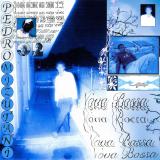
NOVA BOSSA: aquele abraço aos ratos vivos stands as a musical capsule centered around the life of a young adult. Moving between MPB, indie pop and alternative rock, its eclecticism perfectly reflects a thirst for discovery and new experiences, while highlighting a sincere search for identity.
NOVA BOSSA acts as a mirror to the contradictions of contemporary youth
between the desire for independence and the fear of abandonment
between rejecting norms and searching for meaning
between solitude and a deep craving for connection
between social disillusionment and creative resilience
The lyrics blend urban poetry, raw introspection and social critique, all carried by a musicality that oscillates between melancholy and energy. Pedro embodies a generation torn between the urge to burn through life and the fear of burning out, desperately trying to find his place in a world he often sees as absurd.
crédits
With ZURNA OBSESSION, Türkiye Edition, MoBlack explores the rich musical heritage of Türkiye through a collection of collaborations united by the unmistakable sound of the zurna. Powerful, expressive and deeply rooted in Turkish folk traditions, the instrument becomes the centerpiece of a project that bridges cultural identity and contemporary club music. Across four productions, traditional melodies, regional influences and Afro House rhythms come together in a celebration of musical exchange, with MoBlack acting as the connecting force throughout the entire release.
Iranian-born and Paris-based Nesa Azadikhah delivers dancefloor ready tech house cuts for her debut EP on the Berlin label. For SEVEN, Nesa is a perfect match, not only because of her music but because of her engagement in the scene and her activist work. This EP ventures in different directions: moody, subtle, jackin', raw, atmospheric yet always driving, and perfect for keeping a crowd moving.
Turbo was a part of Joe Robinson and Sylvia Robinson’s All-Platinum Records set up in New Jersey which operated from 1967 to 1979. At one stage the fiercely independent and proudly black owned label threatened to become another Motown or Philadelphia International. That never happened, but the Robinson’s dream of worldwide success came later when Sylvia discovered Rap, recorded Rappers Delight by The Sugarhill Gang and Sugar Hill records was born.
Music historian Steve Guarnori describes All Platinum as "probably the most unusual record company there ever was. Dysfunctional, but at the same time wonderful."
The All-Platinum chaos extended to Turbo. But despite anarchy - some superb albums went straight from manufacture to be deleted and sold as cut-outs - sublime music was created. This 10" 6-track release collects together some of the most hallowed Turbo releases which between them have become cherished by collectors.
Brother to Brother "The Bottle" captures the label at its most astute. Gil Scott-Heron and Brian Jackson’s original version was an album only track on Strata-East so Turbo seized the opportunity to quickly make a worthy cover version and rush release it a single which enjoyed success.
"Ton Of Dynamite" by Frankie "Love Man" Crocker was Turbo’s debut release in 1968 (it actually sounds a later recording). At the time Frankie was a DJ on WWRL radio station in New York and the release was essentially a reward for his previous support of All-Platinum releases. The record (a b-side) is actually made Willie & The Mighty Magnificent who went on to re-record it as
"Funky 8 Corners". It took until 1975 for "Ton Of Dynamite" to get recognition when it became an anthem as the UK Northern Soul scene adopted it as part of the movement away from old skool 1960’s Soul. Whatever its’ provenance, "Ton Of Dynamite" is now revered by the Rare Soul and Funk communities.
The Optimistics "Man" from 1971 is another b side single. The group specialised in smooth harmony Soul but "Man" is a funkier affair which won support from Rare Soul aficionados and will cost you £600 plus if you are lucky enough to locate a copy of the hard to find 45.
Willie & West "Attica Massacre", also from 1971, is an even more elusive single. It is a powerful protest against the killing of 29 prisoners, many black, following a riot at a prison - Attica Correctional Facility in New York. The deaths and a subsequently discredited cover up caused outrage. John Lennon was amongst the first musicans to make a recording about the bloodbath, but the most emotional protest is this Willie & West track. Only 300 copies were manufactured of one of the most powerful civil rights recordings ever made. The vocal sounds like anti-War Edwin Starr at his most bristlingly aggressive.
Perhaps the strangeness of All-Platinum is best illustrated by the later success of Lonnie Youngblood "Sweet Sweet Tootie" which is essentially the backing track of "Attica Massacre" plus exquisite sax playing by Lonnie. Despite it selling 100,000 plus copies the label did not see this as a reason to reissue "Attica Massacre". Strange. Or as Marvin asked "What’s Going On"?
The New Sounds "Don’t Take Your Love From Me" was only issued by Turbo as an album track. Despite good music on it the LP was poorly (it at all)/ promoted and flopped. The superb "Don’t Take Your Love From Me" is a long time Northern Soul / X-Over favourite.
Larry Saunders mesmerising "On The Real Side" made no impact when released on Turbo in 1974 but was nevertheless issued in the UK by London Records. The Northern Soul discerning dancers instantly latched on to its combination of uplifting lyrics, heartfelt vocal and clomping beat and since then its’ appeal has extended across the whole of the Soul community. Without doubt an all time classic.
So six treasures from a label that despite frequently advocating cash out of chaos frequently conjured up awesome music.
ANORAX is grateful to have the opportunity to present this very special Soul selection.
Often credited as the father of multi-media theatre, Alwin Nikolais (1910-1993) took complete creative control over his productions - including cutting-edge approaches to lighting and costume that transformed human bodies into shifting sculptural shapes, while also composing wildly innovative electro-acoustic and synth-based audio as accompaniment.
After initially experimenting with musique concrète and tape manipulation (as demonstrated on the 1959 LP Choreosonic Music of the New Dance Theatre of Alwin Nikolais) Nikolais became the first owner of Robert Moog's synthesizer at the Audio Engineering Society convention in New York in late 1964. Relying heavily on the Moog and later the Synclavier synth/sampler, these 21 tracks document Nikolais' highly-prescient compositions across the mid 1960s through to the late 1980s - existing not only as extensions of his other-worldly choreographic productions, but standalone pieces of foundational mid-century American electronic and experimental music.
"Born in Southington, Connecticut in 1910, Nikolais’s early years and early career were in acting, music and puppetry. It was not until the late 1930s that he began his work as dancer/choreographer in Hartford, Connecticut, where he was commissioned by the Avery Memorial Theatre, a part of the Wadsworth Atheneum, to create an evening-length work to the music of Ernst Krenek. Previously his work and study as a pianist-organist found him accompanying silent films. This sort of accompaniment required from the musician not only a playing skill but also a versatility in improvisation, matching movement to sound, and evoking mood to situation.
Nik was drawn initially to dance by his involvement with the percussion scores used by the illustrious early twentieth century German dancer Mary Wigman. In trying to learn more about percussion, he was lured into dance class and thus his career began. His development of music and dance occurred simultaneously. His introduction to the twelve-tone technique opened his mind to the expanding areas of atonal music, and his dealing with music as sound per se. In 1948, after being appointed director of the Henry Street Playhouse in New York, Nikolais formed the Playhouse Dance Company, later known as the Nikolais Dance Theater, and began his aesthetic orientation toward dance as a study of motion. By the 1950s, he had ceased creating literal dances and began his explorations and eventual milieu as an abstractionist.
Sound became an important part of his abstract theatre. For his first dances, which involved his new thinking of dance as both a visual and kinetic art, he used live percussion scores in which he directed his dancers to play instruments of all nature. There was a combination of children’s toy instruments as well as harsh and resonant automobile brake drums, and other pitched auto parts which he also used to accompany classes. Once he installed his own tape recording machines, he quickly used the limited range these instruments provided in a new way, slowing and increasing speed and reversing sound. He also made the sounds adhere to the choreographic structure (not the other way around), thereby giving the dance its independence from the musical phrasing. But the real need remained: the search for new sound. Nik made a sound library, recording noises and percussion and vocal sounds, which the French aptly called musique concrète. Needless to say, he became a master at splicing bits and pieces.
From 1956 to 1962 Nikolais composed eleven major scores for his theatre pieces using such techniques. In 1963, James Seawright, who at the time was assisting Nik in his productions and also working at the Columbia-Princeton Center for Electronic Music, recorded a sound bank for the production Imago (1963). With this material, Nikolais created his first synthesizer score. Imago won the Paris Grand Prix in 1968 and launched the Nikolais Dance Theatre towards its national and primarily international acclaim.
During the same period, Seawright came to Nik and told him of a young man who had invented and constructed a simplified synthesizer and insisted that Nik visit the electronic fair currently being held in New York. Nik did so and met Robert Moog. He was completely taken by the new machine and after making some suggestions to Moog, (which Moog made), Nik bought the inventor’s first machine with the aid of a Guggenheim Fellowship. Moog himself was astonished by what his machine could produce for Nik. This machine was later acquired by the Museum of Musical Instruments at the University of Michigan at Ann Arbor as the first Moog synthesizer. The Synclavier was Nik’s next source of sound and since the mid-1970s remained the major instrument in the Nikolais soundroom.
Alwin Nikolais has been honored and awarded throughout the world. He has received the French Legion of Honor, the Kennedy Center Honors, National Medal of the Arts, two Guggenheim Fellowships, as well as Mellon, Ford, and Rockefeller grants. He has been a recipient of NEA grants since 1966, been awarded five honorary doctorates, all for his remarkable achievements in Dance Theater. His genius has influenced several generations of artists."
—Murray Louis
Deep in the sea lives one of Earth's most ancient creatures: the Nautilus. Hunted for its beautiful shell and now, through our global evolution, endangered, like so many other beings. Perhaps most astonishingly, no one has ever observed a baby Nautilus in the wild. The title track of this debut EP takes you on a dark journey, searching through the deep ocean for this elusive animal.
On the other side, I don't believe in Fermi’s Golden Rule, is a sonic interpretation of a statement made during a quantum field theory lecture, questioning the experimental mathematics often used to derive the famous rule. But actually, trying to express the confusion about quantum physics in general.
The dub-infused EP is mainly inspired by the pioneering magic of Detroit’s electronic music scientists and the experiments of European electro wizards.
"Lost Weekend" ist das erste Album von Phoebe Bridgers seit dem mehrfach für den GRAMMY nominierten Vorgänger "Punisher" aus dem Jahr 2020. Bereits ihr gefeiertes Debüt "Stranger in the Alps", veröffentlicht kurz nach ihrem 23. Geburtstag, machte deutlich, welch außergewöhnliches Songwriting-Talent in Bridgers steckt. Mit "Punisher" löste sie dieses Versprechen eindrucksvoll ein: Das Album wurde für seine kluge, eindringliche und zugleich fesselnde Komposition weithin gefeiert und etablierte sie endgültig als eine der prägendsten Stimmen ihrer Generation. Wer nun "Lost Weekend" hört, wird jedoch feststellen, dass Bridgers noch einen Schritt weitergeht. Auf dem neuen Album präsentiert sie sich auf dem bisherigen Höhepunkt ihres künstlerischen Schaffens. Mit bemerkenswerter Präzision verfeinert sie die Motive, die ihre bisherigen Werke ausgezeichnet haben, und erweitert ihren Sound gleichzeitig um zahlreiche überraschende Facetten. Das Ergebnis ist ein Album, das vertraut wirkt und dennoch immer wieder neue Wege einschlägt. Vor ihren jüngsten Pop-up-Shows stand Bridgers zuletzt mit ihrer Supergroup boygenius auf der Bühne, die sie gemeinsam mit ihren engen Freundinnen Lucy Dacus und Julien Baker gegründet hat. Für das 2023 erschienene Album "the record" erhielt die Band mehrere GRAMMY Awards, darunter "Best Alternative Music Album" sowie "Best Rock Song" und "Best Rock Performance" für die Single "Not Strong Enough". Phoebe Bridgers verließ die Preisverleihung zudem als meistprämierte Künstlerin des Abends. Ihren vierten GRAMMY gewann sie in der Kategorie "Best Pop Duo/Group Performance" für "Ghost in the Machine", ihre Zusammenarbeit mit SZA auf deren Erfolgsalbum "SOS". Zuvor war Bridgers als Support-Act auf ausgewählten Terminen von Taylor Swifts "The Eras Tour" zu sehen. Davor absolvierte sie fast zwei Jahre lang ihre eigene "Reunion Tour" mit mehreren ausverkauften Nordamerika-Etappen, rund dreißig Konzerten in Europa sowie abschließenden Shows in Südamerika, Asien und Australien. Auch abseits der Bühne prägte Bridgers die vergangenen Jahre mit einigen der eindrucksvollsten Live-Performances im Netz und Fernsehen, darunter ihr viel beachtetes NPR Tiny Desk Concert sowie ihr Auftritt bei Saturday Night Live. Seit ihrem letzten Soloalbum veröffentlichte sie zudem zahlreiche Singles, Coverversionen und Kollaborationen mit Künstler wie Paul McCartney, MUNA, Bright Eyes, The 1975, Lorde, Taylor Swift und The National.
Al Wahem (“The Illusion”) is the new full-length release by PRAED, the Swiss–Lebanese duo of Raed Yassin and Paed Conca. Recorded between Beirut and Berlin, the album returns to the group’s central aesthetic: a rhythm-driven weave of Egyptian shaabi, electronics, improvisation and the gritty pulse of street-level sound. Nearly twenty years into the project, PRAED have distilled their approach into four pieces that subtly shift the listener’s bearings, reordering grooves and fragments until familiar elements take on new identities.
The twenty-minute title track sets the tone. A tightly interlocking two-drum foundation from Pascal Semerdjian and Ayman Zebdawi shapes a structure that expands steadily: synth figures branch outward, clarinet and bass lines act as internal guideposts, and brief vocal calls from Yassin and guest singer Mayssa Jallad sit inside the texture rather than leading it. PRAED’s shaabi keyboard language is present, but the duo stretch it outward, building tension and movement through patient accumulation.
“Al Hathayan,” at 4:46, tightens the focus. Conca’s clarinet moves between melodic arcs and clipped rhythmic gestures, threading through electronic loops that surface and disappear. Zebdawi’s percussion adds a raw, tactile quality, placing acoustic patterns and electronics in direct conversation. The piece acts as a bridge between the album’s two long-form compositions.
Side B begins with “Al Maraya,” a thirteen-minute piece that relies on electronic, bass and clarinet interplay. The atmosphere nods to the breadth of PRAED Orchestra!, but remains anchored in the duo’s rhythmic foundations. Rather than building mass, the layering creates a sense of depth, as if new spaces were opening inside the groove.
The album closes with “Assarab,” featuring keyboardist Amr Said. Semerdjian and Zebdawi again form a dual percussive axis, while synths hover between melody and pulse, and themes recur in widening circles rather than building vertically. The porous boundary between electronic and acoustic sources — processed clarinet mistaken for a sequencer, rhythmic figures springing from live drums — is where the album’s theme of “illusion” shows itself most clearly.
Al Wahem follows a long arc: early releases on Annihaya, a key appearance on Ruptured Sessions Vol. 5 – Live at Radio Lebanon (2013), later albums on Akuphone, and the large-scale PRAED Orchestra! documented on Morphine Records. This new Ruptured/Annihaya co-release brings the duo back to a concentrated format, reorganizing their familiar materials with renewed clarity and intent.
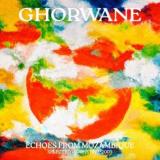
Echoes from Mozambique 1993-2005 is the first time Ghorwane's most cherished recordings have been pressed on vinyl, drawing from three landmark albums spanning the arc of their career. The tracks chosen represent the band at their best: soaring with musicality, punching with feeling, and lifting the spirit.
Remastered by Frank Merritt at The Carvery in London and pressed as a premium double LP by Merchant Records, this is an essential document of one of Africa's great bands, finally given the format their music deserves. Following a celebrated UK and European tour in 2026, Ghorwane remain as vital and active as ever.
For the first time in their celebrated history, legendary Mozambican band Ghorwane are released on vinyl.
Founded in Maputo in 1983, Ghorwane’s unique sound blends traditional rhythms with Afropop, soulful horns and politically charged lyrics that made them simultaneously heroes of the people and a headache for those in positions of power.
As Mozambique’s longest-running band, they have survived the tragic murder of two of their most influential members and institutional censorship, going on to become one of Mozambique's most respected bands and inspiring a generation of artists.
2x12" 180g black vinyl
Gatefold
2x printed Innersleeves
Dl-Card
D1 "Running" exclusive track - only available via album vinyl
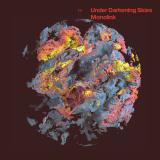
Monolink's second full-length musical opus, which follows on from the critically lauded release of his debut LP Amniotic back in April 2018, Under Darkening Skies features twelve exquisite new vocal-led compositions, including his internationally celebrated hit singles, Otherside and The Prey.
Speaking about the album: "Under Darkening Skies is an album that's connecting different dots in my life, representing phases or moments I went through. I wanted to go back to writing actual songs again instead of adding vocals to a beat, which gave me the freedom to express more musical facets of myself. Eventually it became the most diverse record I have made so far, influenced by a time of global social and economic uncertainty at an ever-increasing tempo of change, like a dark cloud approaching. "
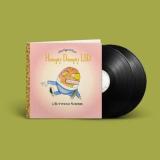
Humpty Dumpty LSD erschien ursprünglich 2002 und versammelt seltene Aufnahmen, alternative Versionen und weitere Raritäten aus der besonders kreativen Schaffensphase der Butthole Surfers Mitte der 1980er Jahre. Die insgesamt 19 Stücke dokumentieren eine Band auf dem Höhepunkt ihrer experimentellen Kraft und zeigen eindrucksvoll, warum die Texaner zu den einflussreichsten Underground-Acts ihrer Generation zählen. Zwischen Psychedelic Rock, Punk, Noise und surrealem Humor entfaltet sich ein Klangkosmos, der ebenso chaotisch wie faszinierend wirkt. Die Songs spiegeln die kompromisslose Herangehensweise von Gibby Haynes, Paul Leary und ihren Mitstreitern wider und bieten einen tiefen Einblick in die Entwicklung ihres unverwechselbaren Sounds. Besonders bemerkenswert ist "Sherman (Backass Alt.)", eine frühe Version eines Titels, der später für Hairway to Steven überarbeitet wurde und hier erstmals digital verfügbar ist. Humpty Dumpty LSD ist weit mehr als eine Sammlung von Archivmaterial: Es ist ein spannendes Zeitdokument, das die kreative Wildheit und grenzenlose Experimentierfreude der Butthole Surfers in ihrer legendären Frühphase eindrucksvoll festhält.
Brooklyn-based DJ and producer Son of Lee is a native New Yorker who's been active in the local underground for over a decade. He launched this label back in August with a doozy of an EP that soon sold out, and so we're glad he's back. These are four more flame-hot disco edits marbled with references to many classic sounds and artists. 'Stop Making Cents' is jangling disco-pop, while 'Different Places' slows down to an 80s synth chug and 'Louis-Dreyfus Dance Face' brings some erotically charged disco sophistication and 'Nichols In May' is a mid-tempo and dubbed out delight with funky guitars for days. Classy and effective.
Since the early 2010s, photographer and producer Izaak Schlossman has been surreptitiously using the Topdown Dialectic moniker to frame his most enigmatic and most psychedelic productions: faceless pure sound experiments that ogled dub and techno archetypes from somewhere far beyond the veil. This generous 2LP collection surveys over a decade of persistent activity, pulling together recently unearthed gear written between 2013 and 2016 (the same time period as the iconic Peak Oil trilogy) and muddling it with more contemporary material. It's a rare chance to fully comprehend the slow, measured evolution of the project: its genesis as a method to fractalize various bass music frequencies with suggestion rather than over-compression, and its ongoing advancement through sensitively finessed ASMR ambiance towards spangled neo-psychedelia.
So it's no surprise that the lengthy suite of five-minute snapshots was initially devised while Schlossman was preparing for his first ever Topdown Dialectic live appearance in 2025. A hazed early morning, open air performance that's still lodged in the memory banks of anyone who witnessed it, the set provided the narrative anchor for the album, blurring the past and present and reaching tentatively into the future - ideal material for audiences whose brains are fully plasticized. The tracks, while divided, sound as if they're breathing over and into one another; beats and phrases materialize and dissolve just for moments, leaving the mind to fill in the gaps with any available sonic material. What might reflect the bright neon light of acid house at first soon embodies the flicker of a candle over a desk of drum machines in a Midwestern basement, or the first blush of sunlight over a tiny campground as subwoofers creak in the distance.
It's music that asks the listener to be involved in the creation itself, projecting their own shapes on the negative space, their discreet fantasies on haunted stretches of near silence. Schlossman's identity was never the point, Topdown Dialectic was always a scrying stone intended to divine far more personal revelations.
House and techno's most innovative improviser, KiNK, lands on Mutual Rytm X.
Offering four more thrilling dancefloor weapons, the iconic talent lands on SHDW's new Mutual Rytm X Series to deliver the label's second release.
Legendary Bulgarian artist KiNK is widely regarded as one of the most respected live acts on the global scene. He is a noted tech wizard who creates loops on the fly, crafts killer drums and never fails to hypnotise dancefloors. He has released on almost every influential label of the last 15 years and taken his unrivalled live show to all corners of the world, often drawing on those sets to bring aspects and inimitable qualities from his performances into his tracks. This innovative approach has helped to solidify his reputation as a groundbreaking figure, inspiring a new generation of musicians and producers, and he once again showcases precisely why he's in a league of his own here with a first appearance on SHDW's newly minted Mutual Rytm X.
'Unicord' opens up this new EP in thrilling fashion with sleek, Detroit-style synth loops flashing up top as the heavy, pounding while warm drums drive things down low. 'Quantum Shake' brings 90s energy with new school sound deists - the dubby drums are fast and urgent, the synth craft is deft, and the percussion adds texture to a straight-up but sophisticated techno anthem. 'Pitch Down' then brings fantastically unhinged synth leads that spray and zip about the mix to boggle the brain. Rattling percussive loops and chunky drums keep things moving as those synths get even more wild. To close, the digital bonus 'Highpass Lowpass' is a masterfully muscular cut with rugged bass and taught synths interlinking to mind-melting effect.
Donkey Trax kicks things off for the new 482 Studio Jack imprint with the Understand House EP. Four tracks that know exactly what they’re doing: loopy, tooly, soulful, funky and made for long nights and those tunes that won’t leave your head. No extra fluff, just straight-up groove that keeps rolling. The vibe’s clearly rooted in Chicago, no forcing it. No big room stuff, no drama, just house for people who actually feel it. A bit rough around the edges, but still warm where it counts. Best played when the floor’s already locked in and nobody’s thinking about going home.
Explore the vibrant sounds of Bearface DJ with the debut installment of "Remakes and Raw Cuts Vol 2", a fresh vinyl series released on Beartone Records. Veteran producer Raj Panasa, aka Bearface, boasts a multi-decade catalog of feel-good, eclectic music, renowned for his distinctive blend of house, disco, Latin, and Italo influences.
This EP showcases Bearface’s versatile production style through expertly crafted edits and remakes of some of his favourite tracks, perfectly capturing sunny, dancefloor-ready vibes. Whether you're a DJ seeking energetic edits or a collector looking for a soulful addition, this release delivers sunshine and positivity in every groove.
Mount Kimbie’s forthcoming contribution to the acclaimed fabric presents series marks one of the duo’s most dancefloor-focused bodies of work in years. More than simply a release on fabric Records, the project sits within the revered fabric presents mix series, placing Mount Kimbie alongside artists such as Daniel Avery, Midland, Helena Hauff and Overmono, artists who have each delivered defining entries for the series.
Leading the project is first single “Monroe”, a warm yet uplifting club track that unfolds gradually through loose percussion, driving synth work and subtle vocal fragments drifting in and out of the mix, adding flashes of emotion without interrupting the track’s momentum. An ode to their 2017 hit ‘Marilyn’ featuring Micachu, the track carries elements of the original throughout, with flourishes over reverb washed vocals that float around you amongst driving drums and bass. There’s a summery energy running throughout the track, making it equally suited to late-night club systems and open-air festival stages.
Long celebrated as pioneers of the post-dubstep and future garage movements, Mount Kimbie continue to evolve beyond genre boundaries while maintaining the unmistakable sonic identity that has made them one of the defining acts in UK electronic music. Their contribution to the fabric presents series captures the duo at their most refined and exploratory, without losing the emotional atmosphere and understated intensity that has always defined their work.
Released as part of the prestigious fabric presents series via fabric Records, the project signals a bold new chapter for Mount Kimbie.
Following the runaway success of last year's anthem 'Tom's Tweaks', Hodge comes through with another high-grade UK house two-tracker, with heavyweight remixes by Eris Drew and Om Unit.
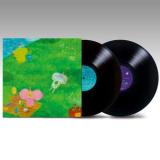
Katamari Damacy became a game beloved by fans across the world with its remarkable action mechanices of rolling your katamari and collecting items to become large enough to form a star for the cosmos. A vinyl pressing of Katamari Fortississimo Damacy, a collection of songs that brought the unique world of Katamari Damacy to life! Starting with "Katamari on the Rocks", and following up with "The Na-Na Song", you can feel the very soul of Katamari Damacy with every popular song. Plus, get a bonus track that was only featured in the trial version, "Katamari on the Rocks (Beta Version for Trial)"! Boasting a soundtrack that is packed with distinctive vocals and a broad range of musical styles, experience music that truly expounds on the feeling of Katamari Damacy at its best. Product shown is a luxurious gatefold sleeve housing two records inside. The outer packaging features an original illustration by Keita Takahashi, the creator of the Katamari Damacy series and art director for the first Katamari Damacy game! When you think of Katamari Damacy, you think of the colorfully chaotic artwork that comes hand in hand alongside it, and this packaging offers a high-quality, must-have item for a fan"s collection.
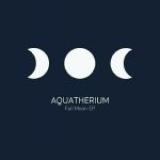
Should you happen to have been paying attention to progressive house and trance in the mid 1990s, you may well be familiar with Brendan McCarthy's most celebrated release as Aquartherium, 1994's Full Moon EP. It was a massive record across Europe but also found favour in San Francisco's freewheeling free party scene. 'Full Moon' itself is especially potent - an all-action chunk of hallucinatory progressive house/trance fusion full of star-burst synth motifs, bubbly electronics and ambient techno sonics - though the heavier, bleep-sporting, Brown Album-era Orbital flex of 'Luci In Deep Hypnosis' is just as good.