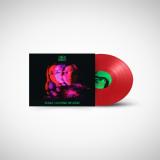
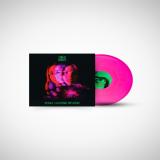
Bekannt für ihre lebendige, von Gothic geprägte Erzählweise, gleicht das zweite Album der englischen Indie-Folk-Singer/Songwriterin einem Kuriositätenkabinett: Das Übernatürliche verbirgt sich im Alltäglichen, Schönheit existiert Seite an Seite mit dem Grotesken. Musikalisch setzt "Myself and Other Monsters" auf traumartige Arrangements und cineastische Crescendos; die Produktion von Bill Ryder-Jones wechselt zwischen theatralischen Bläserklängen, melancholischen Streichern und eindringlichen Harmonien. Amelia besitzt die Gabe, Ungewöhnliches zeitlos klingen zu lassen. Inspiriert von Gothic-Literatur und der geheimnisvollen Aura alter Horrorfilme, wohnt vielen ihrer Songs eine gewisse Dunkelheit inne.
Für Fans von: Lisa Hannigan, Scott Walker, Charlotte Gainsbourg, The Divine Comedy, Broadcast, Leonard Cohen, Kate Bush, Nick Drake, Tom Waits
Bekannt für ihre lebendige, von Gothic geprägte Erzählweise, gleicht das zweite Album der englischen Indie-Folk-Singer/Songwriterin einem Kuriositätenkabinett: Das Übernatürliche verbirgt sich im Alltäglichen, Schönheit existiert Seite an Seite mit dem Grotesken. Musikalisch setzt "Myself and Other Monsters" auf traumartige Arrangements und cineastische Crescendos; die Produktion von Bill Ryder-Jones wechselt zwischen theatralischen Bläserklängen, melancholischen Streichern und eindringlichen Harmonien. Amelia besitzt die Gabe, Ungewöhnliches zeitlos klingen zu lassen. Inspiriert von Gothic-Literatur und der geheimnisvollen Aura alter Horrorfilme, wohnt vielen ihrer Songs eine gewisse Dunkelheit inne.
Für Fans von: Lisa Hannigan, Scott Walker, Charlotte Gainsbourg, The Divine Comedy, Broadcast, Leonard Cohen, Kate Bush, Nick Drake, Tom Waits
RAWAX welcomes Guillaume & the Coutu Dumonts to the artist Family!
Very happy to announce a series of records, starting with "Coup de Théâtre" which is a very strong opening release for us.
Lovely EP full of ´Groove, Soul and Funk.
Don't miss!
KNEECAP return to bend genre, language, and rules. The most talked about artists in the world are turning the page. A new chapter, new sounds, new manifestos.
A blistering album that revels in darkness while bursting through the void with illuminated revery. This is FENIAN.
Produced by Dan Carey (Fontaines D.C., Kae Tempest, Wet Leg), FENIAN upends expectations with an expansive sonic palate, traversing acid house, trip-hop, dubstep, and more - Masters of rave and rap theatre, FENIAN represents Kneecap’s most sophisticated exploration of language and sounds.
More darkness. More confrontation. More craic. More energy. More solidarity. More absolute bangers. And more fuel for the unrelenting engine that powers this unstoppable force. For their remarkable second album, Kneecap have come out fighting.
Throughout, the sirens and alarms ring, and the chorus’s blast. Revolutionary and rebellious, confrontational and impossibly catchy, inescapably intelligent and brilliantly rendered, FENIAN doesn’t just represent the next phase in Kneecap’s trajectory but stands as a remarkable record that thrills as much as it surprises. The mayhem of their breakout year is a memory now. But Kneecap are neither dwelling on that nor merely persevering through it. In FENIAN they excel, reaching a new peak that is undeniable in its mastery.
Pressure makes diamonds, and FENIAN glistens with Kneecap’s uncut gems.
Death Is Not The End collaborate with Uzbek label Maqom Soul to deliver an LP counterpart to last year's mixtape of the same title, compiling specially picked & fully licensed individual belters from the ex-soviet studios of Central Asian republics between 1978 and 1989 - incl. Uzbek, Tajik, Kurdish & Uyghur artists pulling traditional folk motifs together with pop & rock and psych elements.
"These recordings do not form a smooth or coherent history. They feel more like a sequence of discoveries made at different moments and in different circumstances. Songs and instrumental pieces that once lived inside specific contexts radio broadcasts, philharmonic programs, touring routes now sit side by side, revealing hidden connections as well as clear fractures between them.
Nasiba Abdullaeva appears here as a voice from the end of an era. Trained within a conservatory system, she worked inside the format of the Soviet pop song while filling it with melodic logic that did not come from Moscow or Leningrad. Her voice is soft and sustained, shaped by Eastern melisma, and it never functions as decoration. Even in tightly structured songs there is a sense of resistance, an effort to preserve a musical language rooted in Uzbek tradition rather than fully adapted to an all Union standard.
The ensemble Sintez, later renamed Navo, represents a different path. Beginning as a student rock group, the band was gradually absorbed into the official VIA system with all its limitations and compromises. Yet it was precisely within those boundaries that Sintez and Navo developed a recognizable sound. Electric guitars and jazz rock harmonies do not overpower the folk material but remain in tension with it. Their recordings feel like negotiations between what the musicians wanted to play and what they were allowed to perform.
The Tajik ensemble Gulshan reflects an institutional approach carried to a high professional level. Formed under television and radio structures, the group treated folk material almost as a written score. Carefully constructed arrangements, close attention to orchestration, and restrained use of pop techniques define their sound. There is less spontaneity here, but a strong sense of discipline and structure, where national melody becomes part of a carefully controlled sonic framework.
Koma Wetan occupies a very different space. Formed in the 1970s, this Kurdish rock group approached poetry and folklore as tools of cultural assertion. Their psychedelic rock never feels like a stylistic borrowing. Instead it functions as a contemporary vessel for language and themes that might otherwise have remained unheard. Even today these recordings sound fragile and stubborn at the same time.
The Uyghur ensemble Yashlik, closely connected to a musical drama theatre, operated somewhere between stage performance and popular music. Their songs are built on folk melodies but shaped for wide audiences. What emerges is a constant attempt to preserve the recognizability of Uyghur musical identity without freezing it in a folkloric frame. Yashlik's music exists in a state of balance between representation and development.
Digging Central Asia does not attempt to establish hierarchies or offer a single wayof listening. Names and dates matter less than the sound itself. Tape noise, abrupt transitions, and unexpected timbres remain part of the material rather than flaws to be corrected. This music existed at the crossroads of multiple routes geographic, cultural, and ideological. Heard today in a new context, it no longer feels peripheral. Instead it stands as a reminder that the history of popular music is far more fragmented, layered, and polyphonic than it is usually allowed to be."
Taeko Onuki will release an album “Peter and Friends” to commemorate the 50th anniversary of her debut.
This album includes Taeko Onuki's concert “Peter and His Friends”, which was planned and held mainly with electronic sound songs from the 1980s
and 1990s, represented by “Peter Rabbit and Me” and “Carnaval” by Taeko Onuki.
Although many fans had been waiting for the electronic style concert, which had been held only a few times in the 80's, it was difficult to reproduce it
in Onuki's satisfactory form, and it had not been performed.
The epoch-making concert “Peter and Friends” was held in Tokyo and Osaka in 2023 and sold out every performance. The epoch-making concert
“Peter and Friends” has been held in Tokyo and Osaka, and all concerts were sold out. This long-awaited work is a live recording of the concert held at
EX Theater Roppongi in Tokyo on July 9, 2024.
Four-time GRAMMY Award-nominated global superstar RAYE, is releasing her highly anticipated sophomore album THIS MUSIC MAY CONTAIN HOPE. The album, set in 4 “seasons” with each side of the vinyl being a different season, takes listeners on a sonic journey that begins with darkness and ends with light.
“Music is medicine. I’ve always said that, and I guess I’m in the process of making medicine for myself that I can share with the world. I want us all to say to ourselves that it’s going to be all right, and I’m going to have faith in the seeds that I’ve planted beneath the snow. I wanted to create something that is a hug or bed or soft place for that person who needs it.”
RAYE recently kicked off her massive 51-date sold-out arena tour THIS TOUR MAY CONTAIN NEW MUSIC includes arena dates across Europe and the UK — including six sold-out nights at The O2 — before heading to North America with stops at iconic venues such as Radio City Music Hall (April 15 and 16th) and the Greek Theatre (May 12 and 13th). Additionally, RAYE will be a special guest on Bruno Mars’ The Romantic Tour for 27 stadium shows across the US this summer.
Cindytalk has remained a majestic proposition over the decades, one marked by a continued process of disintegration and regeneration. Change has been a constant for Cindytalk, as has been the presence of the Scottish musician Cinder, who has fronted the project since the early '80s. The first Cindytalk albums embraced a dark theatricality of post-punk dissonance and abject rock deconstruction that coupled industrial dirges with Cinder's beatific vocals, these same vocals that were once plied to the earliest This Mortal Coil and Cocteau Twins recordings,forever binding Cinder to the 4AD lore. But even on those albums, Camouflage Heart and In This World, Cinder was pushing the band to embrace the studio as a tool for further abstraction of sodden drones, cobwebbed dark elegance, and decayed textures.
By the early aughts, Cinder had reimagined Cindytalk through the granular processes of digitalia with a handful of equally celebrated works of glitch-born expressionism for Editions Mego. Cinder explains that "those elements were growing roots under our sound and had started to organically change the shape of what we were doing. The fucked-up rock music was in retreat and the electro-acoustic abstractions were becoming apparent. Fast forward to the early part of the 21st Century and my first laptop. It seemed natural where I needed to begin that part of my new sonic journey. To further explore those and new territories. Sunset and Forever is intrinsically connected to what came before."
Sunset and Forever is a labyrinthine opus, one that returns to the themes of the sacred and profane that have rippled through all of Cindytalk's recordings, albeit in various guises. The opening track "Embers of Last Leaves" is a haunted piece of undulated, cyclical tones that entwine into a sorrowful chorale with Cinder's own voice. Thumps of electronic drum kicks and bass drops dot the apocalyptic menace of "Tower of the Sun" but serve not as a rhythmic grid, but as painterly noises that further disrupt and disturb the machined dissonance. A cinematic radioluminescence blooms from the tempered electronics within "For Those Eyes, Shadows Of Flowers." The finale "I See Her in Everywhere" bookends the opening number with a seemingly human chorus build from electronic tones cast in cathedral reverence. Sounds throughout may appear adjacent to those of Fennesz, Holly Herndon, or even Lovesliescrushing from time to time, but Sunset and Forever remains purely Cindytalk.
Cover designed by Chris Bigg, known for his iconic design work for 4AD. Mastered by James Plotkin.
Isa Gordon and Tony Morris were first brought together through their individual releases on Optimo Music, which established mutual respect within the label’s community. While they had not previously performed live together, they were invited to take part in a fundraiser hosted by Queen’s Park Arena in support of Glasgow NW Foodbank and later for JD Twitch’s end-of-life care. Tony asked Isa to contribute guitar and backing vocals to his set, including a track then called Last Night I Had a Dream. That performance became the seed for their collaboration.
The first phase of fleshing it out, recalls Tony: “Somebody said Isa sang like Shania Twain. That got me thinking about country music and call and response, prompting me to come up with alternative lyrics.” Isa remembers: “I cycled over to Tony’s house with my guitar, and we spoke about what the tune meant. It was about him being wrapped up in dreamland, luxuriating in his subconscious, while my character — impatient and trapped in her own routines — barely had time to remember her own dreams.” Tony continues: “Brilliantly I realised that I could never collaborate with anyone in situ and so I sat in the garden for two hours watching my wife tend to plants. Every now and again I would creep up the stairs and put my ear to the door. I could hear Isa warbling away and so would resume my garden watch. After two hours I went back upstairs to see how she was getting on, only to find that she had written one of the greatest songs I’d ever heard. I still think that.” Tony adds: “My overwhelming sentiment about Wake Up Baby is pride. I can honestly say that I’m more proud of it than anything else I have done. It ticks a whole load of boxes. Isa’s singing in various Scottish modes is unique. The way her electric guitar adorns the dance beat makes it a rock song as well as a dance and a C&W song — truly multi-genre.”
The B-side of the 12” release, Syringe Moustache, is a surreal, darkly playful counterpart to Wake Up Baby. The track was inspired by a dream Tony had: “I was in a shopping mall, in a two-level shoe shop, and my attention was taken by a little girl with a syringe taped beneath her nose like a moustache. She went about her business trying on shoes, confident and wise beyond her years. In the dream, I imagined her as the daughter of cultured, intelligent parents determined to raise her independently. I was struck by my own feelings of inadequacy — I knew I could never have coped with such a contraption myself.” Isa’s take on the meaning of this song somewhat differs: “Tony sent me the tune over Instagram months before I met him, and I was spooked — as far as I knew, he didn’t know anything about me, but the story felt like it was written about me as a little girl, growing up around heroin addiction. The syringe beneath the girl’s nose became a symbol of the inescapable constraints of that environment, literally written on her face, yet something you just have to carry on through. On a buzz from the serendipity, I added a full instrumental backing to this most bizarre of works.”
The result is absurd, unsettling, and strangely empowering, staking out its own surreal, cinematic space. The 12” dance single is a format Tony had long wanted to explore — a tangible artefact to leave for family, a medium that celebrates the physicality of sound and the ritual of listening. It allowed the artists to maximise the format’s potential: a strong, multi-genre A-side, a surreal B-side, and remixes that expanded the record’s sonic world. Glasgow music staples Auntie Flo and 100% Positive Feedback were invited to reinterpret the tracks, bringing their distinctive touch — Auntie Flo transforming the A-side into a luscious, dancefloor-ready meditation, and 100% Positive Feedback twisting Syringe Moustache into absurd, playful shapes with false-start drops and over-the-top vocal editing.
The cover photograph, taken at the University Café by Harrison Reid, captures Isa and Tony embodying the characters they brought to life in the songs — a visual reflection of the record’s narrative and emotional stakes. The Café also holds personal significance: it’s where all of Isa’s meetings with Keith McIvor took place, where she first remembers visiting Glasgow as a child, and a place Tony fondly likes to go to drip egg yolk down his tie and watch the world go by. Together, the 12” format, the remixes, and the artwork create a cohesive, tactile experience, amplifying the duality, theatricality, and emotional breadth of the collaboration.
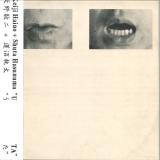
Haino sings. Hasunuma plays. It’s a minimal framework, but what emerges is a boundary-blurring sonic exploration. Across the album, Haino’s voice threads through Hasunuma’s layered soundscapes built from analog synths, electric guitar, piano, field recordings, and more. Haino entered the studio with only lyrics in hand, improvising melodies in response to Hasunuma’s evolving arrangements. The result is a work of deep trust, intuition, and sonic tension.
Keiji Haino and Shuta Hasunuma’’s creative connection began in 2017 with an impromptu performance in Shibuya—Hasunuma on a Buchla modular synthesizer, Haino responding with the Japanese national anthem, “Kimigayo.” That moment sparked their unlikely collaboration.
In 2018 Haino appeared at the Hasunuma-organized event “MUSIC TODAY IN KYOTO” at Rohm Theater, alongside Nobukazu Takemura, Manami Kakudo, Elena Tutatchikova, Kukangendai among others. In September 2021 during the pandemic, the two performed "U TA" for the first time at in Shibuya. They began planning the album soon afterwards.
For the recording of U TA, Haino entered the studio with only the lyrics in hand, with no knowledge of what sounds Hasunuma would produce. Responding to Hasunuma’s music in real time, Haino composed the melodies and layered in his voice on the spot. With additional sessions at Hasunuma’s private studio and Haino’s preferred studio, the album was completed.
All melody and vocals by Keiji Haino
All instrument, written, played, arranged, mixed and produced by Shuta Hasunuma
Recorded by zak at st-robo studio, Shuta Hasunuma at Studio i.M.O and windandwindows
Mastered by Rashad Becker at clunk
Production Management: Eishin Yoshida, Kento Ono (windandwindows)
For Temporal Drift: Yosuke Kitazawa, Patrick McCarthy
Art Direction: Aiko Koike
Special Thanks to Toshihiko Kasai, Ryoichi Kiyomiya, zAk, Yumiko Ohno
license
The Éthiopiques series returns! Essential archive recordings from an extremely fruitful period in Ethiopian music.
Before “Swinging Addis” took over the world, there was Moussié Nerses Nalbandian — the Armenian-born composer who shaped modern Ethiopian music. Mentor, arranger, and pioneer, he laid the foundations of Ethio-jazz.
This Éthiopiques volume revives his forgotten legacy, recorded live by Either/ Orchestra First issue ever with new exclusive photos and in depth liner 8-page insert.
“Ethiopian jazzmen are the best musicians that we have seen so far in Africa.
They really are promising handlers of jazz instruments.”
Wilbur De Paris
(1959, after a concert in Addis Ababa)
አዲስ፡ዘመን። *Addis zèmèn* **A new era.**
The time is the mid-1950s and early 1960s, just before "Swinging Addis" bloomed – or rather boomed – onto the scene. Brass instruments are still dominant, but the advent of the electric guitar, and the very first electronic organs, are just around the corner. Rock’n'Roll, R’n’B, Soul and the Twist have not yet barged their way in. Addis Ababa is steeped in the big band atmosphere of the post-war era, with Glenn Miller's *In the* *Mood* as its world-wide theme song, neck and neck with the Latin craze that was in vogue at the same period. Life has become enjoyable once again, with the return of peace after the terrible Italian Fascist invasion of Ethiopia (1935-1941). The redeployment of modern music is part and parcel of the postwar reconstruction. *Addis zèmèn* – a new era – is the watchword of the postwar period, just as it was all across war-torn Europe.
The generation who were the young parents of baby boomers** were the first to enjoy this musical renaissance, before the baby boomers themselves took over and forever super-charged the soundtrack of the final days of imperial reign. Music is Ethiopia's most popular art form, and very often serves as the best barometer for the upsurge of energy that is critical for reconstruction. Whether it be jazz in Saint-Germain-des-Prés or the *zazous* who revolutionised both jazz and French *chanson* after the *Libération*, be it Madrid's post-Franco Movida, or Dada, the Surrealists and *les années folles* that followed World War I, the periods just after mourning and hardship always give rise to brighter and more tuneful tomorrows. Addis Ababa, as the country's capital, and the epicentre of change, was no exception to this vital rule.
**Two generations of Nalbandian musicians**
Nersès Nalbandian belonged to a family of Armenian exiles, who had moved to Ethiopia in the mid-1920s. The uncle Kevork arrived along with the fabled "*Arba Lidjotch*", the** "*40 Kids*", young Armenian orphans and musicians that the Ras Tafari had recruited when he visited Jerusalem in 1924, intending to turn their brass band into the official imperial band. If Kevork Nalbandian was the one who first opened the way of modernism, pushing innovation so far as to invent musical theatre, it was his nephew Nersès who would go on to become, from the 1940s and until his death in 1977, a pivotal figure of modern Ethiopian music and of the heights it. Going all the way back to the 1950s. Nothing less. And it is Nersès who is largely to thank for the brassy colours that so greatly contributed to the international renown of Ethiopian groove. While the younger generations today venture timidly into the genealogy of their country's modern music, often losing their way amidst a distinctly xenophobic historiographical complacency, many survivors of the imperial period are still around to bear witness and pay tribute to the essential role that "Moussié Nersès" played in the rise of Abyssinia's musical modernity.
Given the year of his birth (15 March 1915), no one knows for sure if Nersès Nalbandian was born in Aintab, today Gaziantep (Turkiye/former Ottoman Empire) or on the other side of the border in Alep, Syria... What is certain is that his family, like the entire Armenian community, was amongst the victims of the genocide perpetrated by the Turks. Alep, the place of safety – today in ruins.
Before Nersès then, there was uncle Kevork (1887-1963). For a quarter of a century, he was a whirlwind of activity in music teaching and theatrical innovation. *Guèbrè Mariam le Gondaré* (የጎንደሬ ገብረ ማርያም አጥቶ ማግኘት, 1926 EC=1934) is his most famous creation. This play included "ten Ethiopian songs" — a totally innovative approach. According to his autobiographical notes, preserved by the Nalbandian family, Kevork indicates that he composed some 50 such pieces over the course of his career. This shows just how much he understood, very early on, the critical importance of song as Ethiopia's crowning artistic form. Indeed, for Ethiopian listeners, the most important thing is the lyrics, with all their multifarious mischief, far more than a strong melody, sophisticated arrangements or even an exceptional voice. (This is also why Ethiopians by and large, and beginning with the artists and producers themselves, believed for a long time — and wrongly — that their music could not possibly be exported, and could never win over audiences abroad, who did not speak the country's languages).
Last but not least, one of Kevork's major contributions remains composing Ethiopia's first national anthem – with lyrics by Yoftahé Negussié.
Nersès Nalbandian moved to Ethiopia at the end of the 1930s, at the behest of his ground-breaking uncle. Proficient in many instruments (pretty much everything but the drums), conductor, choir director, composer, arranger, adapter, creator, piano tuner, purveyor of rented pianos,... he was above all an energetic and influential teacher. From 1946 onwards, thanks to Kevork's connexion, Nersès was appointed musical director of the Addis Ababa Municipality Band. In just a few years, Nersès transformed it into the first truly modern ensemble, thanks to the quality of his teaching, his choice of repertoire, and the sophistication of his arrangements. It was this group that would go on to become the orchestra of the Haile Selassie Theatre shortly after its inauguration in 1955, which was a major celebration of the Emperor's jubilee, marking the 25th anniversary of his on-again-off-again reign.
At some point or other in his long career, Nersès Nalbandian had a hand in the creation of just about every institutional band (Municipality Band, Police Orchestra, Imperial Bodyguard Band, Army Band, Yared Music School…), but it was with the Haile Selassie Theatre – today the National Theatre – that his abilities were most on display, up until his death in 1977. To this must be added the development of choral singing in Ethiopia, hitherto unknown, and a sort of secret garden dedicated to the memory of Armenian sacred music, and brought together in two thick, unpublished volumes. Shortly before his death (November 13, 1977), he was appointed to lead the impressive Ethiopian delegation at Festac in Lagos, Nigeria (January-February 1977).
His status as a stateless foreigner regularly excluded him from the most senior positions, in spite of the respect he commanded (and commands to this day) from the musicians of his era. Naturally gifted and largely self-taught, Nerses was tirelessly curious about new musical developments, drawing inspiration from the very first imported records, and especially from listening intensely to the musical programmes broadcast over short-wave radio – BBC *First*. A prolific composer and arranger, he was constantly mindful of formalising and integrating Ethiopian parameters (specific “musical modes”, pentatonic scale, and the dominance of ternary rhythms) into his “modernisation” of the musical culture, rather than trying to over-westernise it. It even seems very probable that *Moussié* Nerses made a decisive contribution to the development of tighter music-teaching methods, in order to revitalise musical education during this period of prodigious cultural ferment. Flying in the face of all the historiographical and musicological evidence, it is taken as sacrosanct dogma that the four musical modes or chords officially recognised today, the *qǝñǝt* or *qiñit* (ቅኝት), are every bit as millennial as Ethiopia itself. It would appear however that some streamlining of these chords actually took place in around 1960. It was only from this time onward that music teaching was structured around these four fundamental musical modes and chords: *Ambassel*, *Bati*, *Tezeta* and *Antchi Hoyé*. A historical and musical “details” that is, apparently, difficult to swallow, especially if that should honour a *foreigner*. Modern Ethiopian music has Nersès to thank for many of its standards and, to this day, it is not unusual for the National Radio to broadcast thunderous oldies that bear unmistakable traces of his outrageously groovy touch.
Recursive Infinity is the new chapter in Rémi Gallego’s The Algorithm, a relentless sonic exploration of the chaotic fusion of metal and electronic music.
The album blurs the boundaries between machine logic and human emotion. Each track unfolds like a program caught in an endless loop, rising, fracturing, and recombining with mathematical precision.
No stranger to the music world, but making his first appearance on Riotvan and what a debut it is. We talking about Man Power. Deep, Detroit-tinged, and playfully intricate, this EP delivers anything but a repetition of his previous work Iteration. Adding even more dimension, two outstanding artists also make their Riotvan debut, elevating the release with their remixes. Jordan Nocturne shows what true club music can be — no bigroom theatrics, but perfectly tuned for the warehouse. Meanwhile, Inigo Vontier takes things into a trippy orbit of his own, sending dancers spinning off to another planet.
From start to finish: serious entertainment with that touch of playfulness we love!
"I have two new records, just full of smells. "
from Scanners Live in Vain by Cordwainer Smith
Lutto Lento's new 2568 E.P. is an album in 7-inch single form. Lutto, real name Lubomir Grzelak, has for years been one of the most acclaimed sonic storytellers around. His first outing on Meakusma is another trip beyond the constraints of musical logic, interweaving elements from industrial music, early avant-garde influences, post-club tendencies, and more, conjuring up a mini-album of huge scope.
Not unlike The Residents, 2568 E.P. touches upon stories from the deep, with an absurdist touch that is at the same time forgiving and inviting. It has a hauntological feel to it, but contradicts it at the same time. It is purring and cold, whispering and layered. Beatific and up close. There is a space ship in the swimming pool, but the cocktail party goes on, kind of. On the edge of industrial music, with a choir thrown in for good measure. On the fringes of club music. Toss the wire-sphere into the air and pay the price for space. Fake composure and dive in.
Lutto Lento is Lubomir Grzelak, a sound artist, composer, music producer, and DJ. Known for his idiosyncratic productions and eclectic sets that break barriers between genres, he has steadily built a reputation for adventurous electronic music that resists easy categorization. Beyond records, he composes for theatre, film, and contemporary dance, weaving diverse influences into a distinctive sonic language.
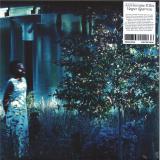
Das Werk von JJJJJerome Ellis bewegt sich mühelos zwischen Stille und Möglichkeiten. Der schwarze, behinderte Künstler mit grenadischen, jamaikanischen und amerikanischen Wurzeln schafft mit Saxophon, Orgel, Hackbrett, Elektronik und Stimme atmosphärische Klanglandschaften. Improvisation ist der Kern - oft werden große Teile von Aufnahmen bearbeitet, um das Werk wie ein Marmorbildhauer freizulegen. Es ist eine expansive und interdisziplinäre Praxis, die es JJJJJerome ermöglicht, sich an jedes Medium und jede Form anzupassen, darunter aufgezeichnete Musik, Live-Theater und Performance-Kunst, Filmmusik, Spoken Word und Storytelling sowie multimediale/visuelle Werke, die Klang integrieren. Als Mensch, der stottert, fiel es ihm in der Kindheit schwer, sich mit dem Mund auszudrücken. Den Künstlernamen ,JJJJJerome" zu buchstabieren, rührt von der Erkenntnis her, dass das am häufigsten gestotterte Wort der eigene Name ist. Trotz einer kurzen Sprachtherapie als Kind - als er in der siebten Klasse zum Saxophon griff, machte es plötzlich Klick. ,Ich stottere immer noch beim Saxophonspielen, aber es ist anders." Als Künstler dreht sich sein kreatives Ethos nun um die Erforschung des Stotterns durch Musik, wobei er die Fähigkeit jedes Einzelnen, Zeit zu gestalten, näher erläutert. Er ehrt das Stottern durch Kunst. Er begann damit, zu CDs von John Coltrane und Billie Holiday auf dem Horn zu improvisieren. Aber als jemand, der sich gerne mit Grenzen auseinandersetzt, hat sich JJJJJerome seitdem zu einem versierten Multi-Instrumentalisten entwickelt, wobei jedes Instrument einen Wendepunkt darstellt, der neue Wege zu potenziellen Klangwelten ebnet. Seine Stimme wird zusätzlich von einer Ehrfurcht vor der Erde und den Vorfahren - sowohl menschlichen als auch anderen - geleitet. Aufgrund der familiären Verbindungen seiner Mutter zur Kirche und den unvergesslichen Geschichten seiner Großmutter, die als Pianistin und Organistin auftrat, hat JJJJJeromes jüngste Affinität zu Tasteninstrumenten eine bedeutende Gewichtung. Das kommende zweite Album ,Vesper Sparrow" (Shelter Press) ist aus dieser Verbindung zur schwarzen religiösen Tradition und zum Erbe entstanden. Es ist eine Fortsetzung der fortlaufenden Auseinandersetzung des Künstlers mit den Schnittstellen zwischen Musik und Klang, Stottern und Schwarzsein aus der Perspektive der Zeit. Das Album besteht aus zwei vollständigen Gedanken und dreht sich um ein aufgezeichnetes Stottern. JJJJJerome teilt die vierteilige Komposition ,Evensong" auf, indem er das Stottern in Teil zwei ausblendet und die Tracks drei und vier (,Vesper Sparrow" und ,Black-Throated Sparrow") dazwischen einfügt. ,Das Stottern wird zu einem strukturierenden Moment", erklärt er in Bezug auf die Möglichkeit, die entstandene Zeit zu füllen. Die Aussetzung wird somit zu einem integralen Bestandteil der musikalischen Sprache von JJJJJerome. Sowohl Stottern als auch Granularsynthese können Momente in der Zeit aussetzen und ,zu vielfältigen Arten des Verweilens, Durchquerens und Verbindens mit anderen in diesen Momenten einladen". Der Künstler greift auch auf Elemente der Pop-Produktion zurück - elektronische Texturen und Verzerrungen, die teilweise vom Indie-Rock inspiriert sind, sowie Spoken Word, Sampling und Audiomanipulationen, die aus der karibischen und afroamerikanischen Musik stammen.
Ever developing his evocative style and dynamic sphere of influence, ASC's latest EP is afurther evolution of the atmospheric legend's repertoire that simply cannot be missed.
A1 - Everybody
ASC opens his latest Spatial EP in subtle fashion, classic genre effects punctuating anunsettling intro before deliciously crisp drums seize the stage and build continually with hi-hats generating an urgency to the vibe. A series of micro melodies delivered withtrademark technical flair float across stunning breaks, before a rousing baseline caps off asuperbly evocative mix which delights the listener and dancer in equal measure.
A2 - Seconds To Midnight
Straight in with a purposeful 808 bassline, ASC delivers another powerhouse display ofbreakbeat fluency, jumping between chunky, juddery drum patterns with a choppedversion of a lesser-used but very effective break sample last heard on ASC's very ownclassic, Polaris. Epic vocal effects surround Seconds To Midnight with a tense aura whilesuitably pitched strings and synth work are dusted liberally throughout the piece.
AA1 - Restless Dreams
Amen fans unite! ASC's love for the most classic of breaks shines through once againwith an enthralling workout for the ages. Introduced with eerie pad work and a solobassline, the atmosphere is crafted through a plethora of pads and samples while theamens thunder on with a detailed array of editing skills on show - thumping kicks andsnares keep the energy levels high bar after bar leaving nothing in their wake.
AA2 - Core Memories
A gorgeous female vocal opens Core Memories, a track which uses the classic breakfeatured on the first ever Spatial release, Force Majeure. Here, a refreshing set oftechniques are on show from ASC as he carves and chops the break to the tune ofcautious horns, highlighting the serene yet uncertain backdrop to a wonderfully varied anddetailed collage to close this distinctive and progressive EP from the label head.
Various Small Whistles and a Song, the new album by Chicago-based artist Lia Kohl, incorporates notions of space, social relations, and humor. As the title suggests, the album responds to Ed Ruscha’s 1964 photographic artist book Various Small Fires and Milk, which Kohl sees as a wondrous celebration of ordinariness, one that reveals Ruscha’s trademark deadpan humor and depth. In the spirit of that publication, Kohl created her own series of sonic vignettes, with guest appearances from her close community of collaborators including claire rousay, Macie Stewart, Patrick Shiroishi, and others, reflecting the same sense of humor and mundanity.
The structure of the album—16 one-minute tracks—directly mirrors Ruscha’s book, which comprises 15 photographs of fire and one of a glass of milk. Ruscha’s “small fires” are represented here by recordings of whistles—mostly human whistling, with occasional appearances by train whistles, emergency whistles, and a woman selling penny whistles on the street in Guangzhou, China. About this choice of material, Kohl writes: “I’ve always been captivated by whistling—it’s musical but often a bit unconscious; usually solo but often done in public places. There’s something tender and human about hearing someone whistle, a socially acceptable version of hearing their mind wander.” As with Ruscha’s photographs, the whistles are not random snapshots but windows into social situations, narratives, or spaces.
The “milk” of the title — the 16th photograph in Ruscha’s book — is interpreted here as a single recording: a group of people singing together in Barcelona around 6 a.m. on New Year’s morning, captured through the floor of an Airbnb. Kohl describes this as a social, collective sound that contrasts with the solitary nature of whistling. The song functions as a counterbalance—a quiet celebration of shared experience.
Lia Kohl is a composer and sound artist based in Chicago. Her wide-ranging practice includes composition and performance, installation, improvisation, and collaboration. She tours nationally and internationally, working in theater, jazz, rock, and experimental contexts. Her work centers curiosity and patience, an exploration of the mundane and profound possibilities of sound.
MAXED OUT MAXI EP OF THE HIGHEST ORDER FROM TAPES, HONOURING JAHTARI'S 20 YEARS OF D.I.G.I.T.A.L. BUSINESS IN FINEST STYLE...LOADED WITH RIB-8-BIT PRESSURE!
Four digital dancehall scorchers with two accompanying 8-bit versions meticulously crafted with the soundsystem session in mind!
Tapes has been spreading wonky saturated riddim goodness since his ground breaking “Hissing Theatricals” EP in 2009. Now, after a brief hibernation in the northern spawning pools, he’s spinning up his reels once again to present a new killer set of amphibian friendly, nintendo-fied sound system depth charges!
The “Photos of My Frog EP” is croaking off with its oddly addictive namesake: a surefire pond party starter – Ribbit! Hopping along, the adorable but tuff “Cleat Skank” and its gameboy driven pollywog follow, swinging their 8bit melody lasso till the cows come home. Yeehaw!
“Ramp Up” on B is a dense and raw FM synth digi banger, sure to fry any nearby circuits, so best beware! “Back Cramp Riddim” then turns up the low end even more and swirls its drums and synths into the next delay vortex, warping into a pixelated 8bit conclusion.
Whatever your taste in insects there’s something on this record for any lover of vintage dancehall and amphibious wild life alike!
These are going to fly out - sticky tongues at the ready!
DJ Support: Dj Harvey, Artwork, Pete Herbert, Sean Johnston ALFOS, Howler, Bill Brewster, Logan Fisher (Tryouts)
The Totem Projects hit last year and caused a huge stir, especially after solid support and plays of “dream forever” from DJ Harvey for well over a year at most of his international sets. Therefore demand on a vinyl release was high, so we acted…so sow say hello to the new TOTEM PROJECTS vinyl series. with full EPs of original tracks, and more exclusive edits to come. TOTEM duo Justin Deighton and Leo Zero are joined on this first outing by Pete Herbert and Howler.
Reintroducing Soar - the alias of Christian Aebi, serial DIY taper and one-man orchestra from Langenthal, a fog-shrouded town in the Swiss provinces. Krautophobia, ambient lo-fi agriculture, analogue soul balm and slowspeed psych gelati-blitz cardboard pop only gesture towards the sound world he coaxed from his broken Tascam four-track recorder, in attics, churches, junkyards and at the kitchen table.
The spark for Soar was likely time and space, somewhere in the autumn of 1994. Armed with a cable salad of Sixties guitar/bass, fairground drums, mould-speckled organs and toy instruments, Aebi coaxed five albums, an unverified run of 25 cassettes, and a handful of gigs. Mostly issued through Zurich label Corazoo, the records arrived in hand-pasted sleeves, rough-cut reproductions of his teddy bear-fixated artwork that carried the same imperfect immediacy as the music. With Rudi Steiner, performances in galleries, clubs and halls bent into live sound-image happenings - part installation, part film, part flea-market-instrument theatre - invariably leaving the house engineers bewildered.
At the time of his untimely death in 2021, Aebi remained a village secret, his music passed quietly between friends and local ears. Now, Swiss graphic designer and Ghost Riders compiler Ivan Liechti has pieced together a portrait from the afterglow, gathering tangled audio formats, paintings, illustrations, photographs and notebooks with his family, former label and peers. What emerges is a first glimpse of Soar's intimate cosmos - brushing against Füxa, Spectrum, Dump, Stereolab and King Crimson, but orbiting a dimension entirely his own.