Originally released in 1986, Life Is Hard Then You Die was the debut
album from Liverpudlian indie-pop band It's Immaterial - Now reissued
and repackaged by Last Night From Glasgow, available October 2023
Simon Braithwaite of Smash Hits wrote that Life's Hard and Then You Die shows
that It's Immaterial "write jolly good pop songs - In fact everything else here is just
as inspired and original as their recent hit."
In a retrospective review, Michael Sutton of All Music wrote, "Musically, the LP is
all over the place - new wave country, blues, folk, and synth pop - Somehow the
smorgasbord of styles works, because the band members aren't being eclectic
just for the sake of it; they simply have a wide canvas, keeping the album fresh
from beginning to end."
Don Cherry, armed with a voracious musical appetite and boundless imagination, first made a name for himself - though not always fully understood - alongside Ornette Coleman, playing trumpet or cornet. In Los Angeles and then New York, he stood at the heart of a revolutionary approach to improvisation based on melody rather than harmony, later baptized "Free Jazz," the final structural development of American jazz. Over time, he became a champion of improbable fusions - gradually integrating into his style a whole array of "exotic" instruments, and more importantly, the cultures from which they originated. Among them: India, Brazil, Africa, Indonesia, and even China. The time had come for the emergence of "world music": in hindsight, a patchwork rich in imagination and seduction, but once the novelty wore off, often lacking in substance.
In Don Cherry's case, however, the commitment ran deep - tied to his personal engagement with a global vision of art and the human condition. Ustad Ahmed Latif Khan, from the Delhi gharana (a musical lineage), was part of a new generation of accompanists - percussionists, sarangi players, flutists, etc. - who had extended both the technical and conceptual possibilities of their predecessors to gain recognition as soloists and soon to venture onto the international scene. Among them, Latif stood out for his taste for irregular, highly syncopated rhythmic patterns - rich in variety and originality. Don and Latif had never met before the recording session, but the two quickly recognised one another as kindred spirits - calm, focused... and full of laughter. Don clearly knew what he wanted to create, and nothing seemed to pose a challenge for Latif, who grasped the American's intentions immediately, warmed up his fingers at astonishing speed, and with his perfect pitch, naturally took on the role of tuning Don's diverse instrument collection to match whatever was found in the studio - from concert piano and Hammond B3 organ to chromatic orchestral timpani.
To submit or to surrender? Robert Johnson resident Oskar Offermann doesn’t have the answers, and that’s kind of the point. Things change: one moment you’re touring the globe as a recognizable face of one of the greatest clubs in the world, the next you’ve started a new life as a teacher. How do you handle that shift? On this record, Offermann doesn’t offer solutions so much as trace his own way through it, reflecting the whole process in his music and creative work.
Whatever the story, whatever the case, Oskar Offermann can still produce some of the most emotive, bleepy, strange dance music out there and this 12 inch is the proof. Sonically and conceptually it leans into that precise, melancholic German school: at points drawing from 80s wave and experimental music, then flirting with trancey motifs and closing in divinely crafted breakbeat. In just four tracks it packs in a surprising amount of functional range, exactly what you’d expect from one of RJ’s longest-standing residents. The A- and B-sides mirror each other: they open at full intensity, tempos pushed well past the 130 BPM mark, easy to imagine ripping through a peak-time floor – and still both sides land on something far more personal and reflective.
Even inside a framework of high-intensity club tunes, Oskar’s character shines through loud and proud. Think the slightly disjarring yet melodically captivating winds in the middle of the B1 trance induced number “Accepting”, or the masterfully paced build of opener “Planet Interface”. The same goes for A2 “Televise Improvise” and B2 “Sei mal nur lieb”: on paper they should feel like breathers next to the two behemoths, but they don’t. Offermann crams so much substance and personality into them that they become quietly dangerous. There’s that magical mix of squelchy acid, rough low end and naturalistic melodies on B2, and the relentless emotional drive of A2 “Televise Improvise”. Oskar is really, really good at making dance music irresistible.
Character, skill and honesty in one record, meant for the attentive listener and the brave DJ. A rare combination nowadays, get it fast!
Limited Edition Transparent Black Vinyl Version - 500 Units Only
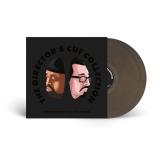
There are few people across the globe, who will have not been touched by the work of Frankie Knuckles. Forever regarded as ‘The Godfather of House’ for his unrivalled contribution to the house music we know today; what started as an underground movement in Chicago has grown to international heights thanks to Frankie. His records earned him recognition on a global scale, allowing him to work with some of the globes biggest names including the likes of Diana Ross, Whitney Houston and Michael Jackson.
Five years ago, Frankie passed away in Chicago on 31st March 2014 leaving behind one of the greatest house music legacies spanning almost four decades. Now he is commemorated by long time writing and production partner Eric Kupper. Eric, himself a seasoned DJ producer and writer, has worked on over 116 Billboard #1 Dance Records and played a pivotal role in a many of Frankie’s productions. Having both worked together for many years they established themselves at ‘Director’s Cut’ from 2011 and set about producing original releases and remixes based on the classic ‘Def Mix’ sound while sharing equal credits for their creations.
Together they re-produced and re-purpose classic cuts for modern dancefloors, with reworks including tracks from Marshall Jefferson, Ashford & Simpson, Artful & Ridney and The Sunburst Band, alongside Frankie Knuckles originals. These releases have now been brought together by Eric to feature on special album called ‘The Directors Cut Collection’ on SoSure Music. It includes the Director’s Cut reworks of Frankie’s classic cuts such as ‘Your Love’ and ‘Take You There’ with Jamie Principle, alongside Frankie’s first #1 single - ‘The Whistle Song’ on which Eric shares writing credits.
Within a multitude of classic reworks, highlights include a previously unreleased version of Ashford & Simpson’s ‘Bourgie Bourgie’ and a huge Director’s Cut Retro Signature mix of Marshall Jefferson’s The House Music Anthem (Move Your Body) featuring Curtis McClain.
The Director’s Cut Collection is a fitting tribute to commemorate the fifth anniversary of Frankie’s passing whilst giving Eric a platform to tell his side of the creative story. This album is to be released in collaboration with The Frankie Knuckles Foundation who work to continuing Frankie’s legacy well into the future.
Lempuyang has been at the heart of the second wave of dub techno since day one. It's a label that deals in super deep and high-quality sounds from a range of artists. Now they welcome back Adria, three years after his debut, with a heavyweight follow-up that dives deep into the murky edges of dub experimentation. This new release trades dancefloor immediacy for atmosphere and weight by blending low-slung rhythms, hazy tape hiss and hypnotic textures that nod to classic sound system culture. Each track comes rich in analogue warmth and restrained tension. This is dub crafted with precision and that fully rewards close listening and real exploration of space, texture and bass pressure.
A High-Energy Fusion of Past and Present
The collaboration between the Amsterdam and Berlinartists showcases their unique chemistry, blendingcutting-edge production techniques with a deepreverence for the genre's roots. Crafted in the shadows,Accelerate is a meeting of two minds from two citiesknown for their underground energy, each bringing theirunique influence to an exhilarating techno experience.
The reworked classics on Accelerate, which originallygraced some of the most renowned techno labelsbetween 2007 and 2012 on vinyl 12", are newly mixed,edited, and turbocharged, pushing the limits of eachtrack's original energy. All is recalibrated for a newgeneration of listeners-and they hit harder than ever.Alongside these revamped gems, Accelerate introduces
new and previously unreleased material that will takelisteners even further.
Accelerate is a relentless force that demands to be felt inall its depth.
Seeking out the inspirational intersection between free improvisation, rave and ancient mysticism, Plants Heal deliver an album of kaleidoscopic, organic beatdowns to Quindi.
Plants Heal is a collaborative project between Dan Nicholls on synths, Dave De Rose on drums and Lou Zon (aka Louise Boer) on visuals. The roots of the project are entwined with Dan and Lou's London-based event Free Movements, which began in 2018 to explore how instrumental music could merge with live electronics and DJ sets. Dave and Dan found themselves playing together frequently at the event and as part of Dave's free improv project Agile Experiments, with their accomplished track records as multi-instrumentalists reaching across many layers of music culture. The particular synergy of their partnership taps into the subliminal, surreal and transcendental soundscapes, but they're reliably anchored by instinctive rhythms and driven by a natural flow-state.
From the tentative steps of their first collaborations, Dan and Dave coalesced Plants Heal as a more pronounced project with Lou's live visuals, culminating in a first self-released album in 2021 and since organically fed and watered through continued performances across adventurous festivals and intimate club spaces. Every incremental step along the path of the project yielded new surprises and the deepening sense of a unique, powerful energy. The trio opted to pour this energy into two days of studio sessions at Sonic Playground Studios in Athens, maintaining their unplanned approach and letting the music and visuals unfold in the moment. The end result is Forest Dwellers, a sincere document of truly free music that uses the rhythmic structure of dance and trance music as a springboard into heightened consciousness.
Throughout the album you can hear hints of the familiar - dub techno shimmers, trip hop boom-bap, kosmische momentum, snarling bass modulation, new age ambience and even the odd sizzle of disco. But none of these references are explicit, and they weave in and out of less placeable expressions deeply bedded into Dan and Dave's sonic practices. The end result is a swirling tapestry of unspooling groove, wide open and agile enough to shift gears mid-flow - just as comfortable letting the propulsion melt away as locking into a four-to-the-floor throwdown. From the slippery syncopation of 'Avena Moon' to the angular bait-and-switch of 'Alien Hardware', 'Yarrow's starry-eyed reverie and the rolling, warm-hearted funk of 'Space Ballad', the Plants Heal sound world is expansive and equally enthusiastic for immediate musical motifs as much as wild abstraction.
Lou's visual practice is an intrinsic part of the project. During performances she improvises with analogue footage from her library run through video mixers and synthesisers, focused on medicinal plants such as yarrow, hawthorn, nettle and thistle. All those plants feature in processed form on the cover of the record, which was designed in collaboration with Lou's brother Arthur Boer. Meanwhile, Lou recorded additional footage in Athens during the recording sessions to feed into the continued cycle of the project's live evolution.
Forest Dwellers' meaning honours this cycle and its reflection of the eternal undulations of the natural world. It's also a sincere tribute to the spiritual importance and radical potential of the dancefloor, drawn from the freedom taught by jazz and dedicated to reclaiming lost ideas about community, agency, bodies and the enduring allure of the unknown.
Coral Morphologic is the brainchild of Jared McKay and Colin Foord. A mending of minds, the arts, science, and the sea. Their lab in Miami lies close to the Florida Reef just offshore; the third largest coral barrier reef system in the world. This album composed by Jared echoes the voice of the reef. A reflection of its cosmic connection to our moon. A departure from the earth into deep space. We often wonder what intelligent life exists outside of our own aquatic world. Look and listen to the synchronous celestial satellites and the endless love song they sing. *features a foldout poster with album art by Robert Beatty
The Éthiopiques series returns! Essential archive recordings from an extremely fruitful period in Ethiopian music.
Before “Swinging Addis” took over the world, there was Moussié Nerses Nalbandian — the Armenian-born composer who shaped modern Ethiopian music. Mentor, arranger, and pioneer, he laid the foundations of Ethio-jazz.
This Éthiopiques volume revives his forgotten legacy, recorded live by Either/ Orchestra First issue ever with new exclusive photos and in depth liner 8-page insert.
“Ethiopian jazzmen are the best musicians that we have seen so far in Africa.
They really are promising handlers of jazz instruments.”
Wilbur De Paris
(1959, after a concert in Addis Ababa)
አዲስ፡ዘመን። *Addis zèmèn* **A new era.**
The time is the mid-1950s and early 1960s, just before "Swinging Addis" bloomed – or rather boomed – onto the scene. Brass instruments are still dominant, but the advent of the electric guitar, and the very first electronic organs, are just around the corner. Rock’n'Roll, R’n’B, Soul and the Twist have not yet barged their way in. Addis Ababa is steeped in the big band atmosphere of the post-war era, with Glenn Miller's *In the* *Mood* as its world-wide theme song, neck and neck with the Latin craze that was in vogue at the same period. Life has become enjoyable once again, with the return of peace after the terrible Italian Fascist invasion of Ethiopia (1935-1941). The redeployment of modern music is part and parcel of the postwar reconstruction. *Addis zèmèn* – a new era – is the watchword of the postwar period, just as it was all across war-torn Europe.
The generation who were the young parents of baby boomers** were the first to enjoy this musical renaissance, before the baby boomers themselves took over and forever super-charged the soundtrack of the final days of imperial reign. Music is Ethiopia's most popular art form, and very often serves as the best barometer for the upsurge of energy that is critical for reconstruction. Whether it be jazz in Saint-Germain-des-Prés or the *zazous* who revolutionised both jazz and French *chanson* after the *Libération*, be it Madrid's post-Franco Movida, or Dada, the Surrealists and *les années folles* that followed World War I, the periods just after mourning and hardship always give rise to brighter and more tuneful tomorrows. Addis Ababa, as the country's capital, and the epicentre of change, was no exception to this vital rule.
**Two generations of Nalbandian musicians**
Nersès Nalbandian belonged to a family of Armenian exiles, who had moved to Ethiopia in the mid-1920s. The uncle Kevork arrived along with the fabled "*Arba Lidjotch*", the** "*40 Kids*", young Armenian orphans and musicians that the Ras Tafari had recruited when he visited Jerusalem in 1924, intending to turn their brass band into the official imperial band. If Kevork Nalbandian was the one who first opened the way of modernism, pushing innovation so far as to invent musical theatre, it was his nephew Nersès who would go on to become, from the 1940s and until his death in 1977, a pivotal figure of modern Ethiopian music and of the heights it. Going all the way back to the 1950s. Nothing less. And it is Nersès who is largely to thank for the brassy colours that so greatly contributed to the international renown of Ethiopian groove. While the younger generations today venture timidly into the genealogy of their country's modern music, often losing their way amidst a distinctly xenophobic historiographical complacency, many survivors of the imperial period are still around to bear witness and pay tribute to the essential role that "Moussié Nersès" played in the rise of Abyssinia's musical modernity.
Given the year of his birth (15 March 1915), no one knows for sure if Nersès Nalbandian was born in Aintab, today Gaziantep (Turkiye/former Ottoman Empire) or on the other side of the border in Alep, Syria... What is certain is that his family, like the entire Armenian community, was amongst the victims of the genocide perpetrated by the Turks. Alep, the place of safety – today in ruins.
Before Nersès then, there was uncle Kevork (1887-1963). For a quarter of a century, he was a whirlwind of activity in music teaching and theatrical innovation. *Guèbrè Mariam le Gondaré* (የጎንደሬ ገብረ ማርያም አጥቶ ማግኘት, 1926 EC=1934) is his most famous creation. This play included "ten Ethiopian songs" — a totally innovative approach. According to his autobiographical notes, preserved by the Nalbandian family, Kevork indicates that he composed some 50 such pieces over the course of his career. This shows just how much he understood, very early on, the critical importance of song as Ethiopia's crowning artistic form. Indeed, for Ethiopian listeners, the most important thing is the lyrics, with all their multifarious mischief, far more than a strong melody, sophisticated arrangements or even an exceptional voice. (This is also why Ethiopians by and large, and beginning with the artists and producers themselves, believed for a long time — and wrongly — that their music could not possibly be exported, and could never win over audiences abroad, who did not speak the country's languages).
Last but not least, one of Kevork's major contributions remains composing Ethiopia's first national anthem – with lyrics by Yoftahé Negussié.
Nersès Nalbandian moved to Ethiopia at the end of the 1930s, at the behest of his ground-breaking uncle. Proficient in many instruments (pretty much everything but the drums), conductor, choir director, composer, arranger, adapter, creator, piano tuner, purveyor of rented pianos,... he was above all an energetic and influential teacher. From 1946 onwards, thanks to Kevork's connexion, Nersès was appointed musical director of the Addis Ababa Municipality Band. In just a few years, Nersès transformed it into the first truly modern ensemble, thanks to the quality of his teaching, his choice of repertoire, and the sophistication of his arrangements. It was this group that would go on to become the orchestra of the Haile Selassie Theatre shortly after its inauguration in 1955, which was a major celebration of the Emperor's jubilee, marking the 25th anniversary of his on-again-off-again reign.
At some point or other in his long career, Nersès Nalbandian had a hand in the creation of just about every institutional band (Municipality Band, Police Orchestra, Imperial Bodyguard Band, Army Band, Yared Music School…), but it was with the Haile Selassie Theatre – today the National Theatre – that his abilities were most on display, up until his death in 1977. To this must be added the development of choral singing in Ethiopia, hitherto unknown, and a sort of secret garden dedicated to the memory of Armenian sacred music, and brought together in two thick, unpublished volumes. Shortly before his death (November 13, 1977), he was appointed to lead the impressive Ethiopian delegation at Festac in Lagos, Nigeria (January-February 1977).
His status as a stateless foreigner regularly excluded him from the most senior positions, in spite of the respect he commanded (and commands to this day) from the musicians of his era. Naturally gifted and largely self-taught, Nerses was tirelessly curious about new musical developments, drawing inspiration from the very first imported records, and especially from listening intensely to the musical programmes broadcast over short-wave radio – BBC *First*. A prolific composer and arranger, he was constantly mindful of formalising and integrating Ethiopian parameters (specific “musical modes”, pentatonic scale, and the dominance of ternary rhythms) into his “modernisation” of the musical culture, rather than trying to over-westernise it. It even seems very probable that *Moussié* Nerses made a decisive contribution to the development of tighter music-teaching methods, in order to revitalise musical education during this period of prodigious cultural ferment. Flying in the face of all the historiographical and musicological evidence, it is taken as sacrosanct dogma that the four musical modes or chords officially recognised today, the *qǝñǝt* or *qiñit* (ቅኝት), are every bit as millennial as Ethiopia itself. It would appear however that some streamlining of these chords actually took place in around 1960. It was only from this time onward that music teaching was structured around these four fundamental musical modes and chords: *Ambassel*, *Bati*, *Tezeta* and *Antchi Hoyé*. A historical and musical “details” that is, apparently, difficult to swallow, especially if that should honour a *foreigner*. Modern Ethiopian music has Nersès to thank for many of its standards and, to this day, it is not unusual for the National Radio to broadcast thunderous oldies that bear unmistakable traces of his outrageously groovy touch.
A year after her rebirth on the 2.0 EP, Maedon returns to her Rant & Rave imprint with the intentions of her previous release now distilled and focused into bold new forms. Whereas before the artist was transitioning from her earlier work towards new directions, Matter & Form arrives as an extended concept piece featuring four variations on a bracing, developed sound, an equally impressive remix from Lady Starlight, and a contrasting mix of the opening track. Where 2.0 charted emergence, 'Entelechy I-IV' unites to actualize this potential into a single-minded purpose behind fundamental principles.
Immediately launching into territory her last release only hinted at, 'Entelechy I' is a showcase for her now-mature approach. Her rhythmic dexterity and groove focus remains, with drum programs subtly evolving phrase by phrase, but they now form the basis for layered, complex compositions in a decidedly contemporary vein. 'Entelechy II' shifts focus towards the arrangement while keeping its drums steadily driving, drawing attention to details in its densely designed sounds through deliberate, gradual processing. Relaxing the tempo slightly, 'Entelechy III' fills in the extra space with more dark atmospherics and finely detailed soundscapes, finding a heavy medium between dark ambience and hammering techno. Another deeper effort, 'Entelechy IV' counterbalances insistent, finely-tooled percussive bleeps and equally persistent bass figures against another sweeping bass pulse, at times breaking down into carefully-controlled atonal aggression. Lady Starlight's remix is skeletal in comparison, deploying its parts sequentially over ticker hi hats and a massive kick while using small shifts to incrementally build tension. 'Entelechy I (Bent Mix)' is more accurately described as hellbent, stripping out the original's harmonic elements to grind the heavy rhythmic workout against an unrelenting acid line.
Bangalore-based producer Chaz (IN) makes a striking debut on KUJE002 with Soul Contract, a four-track EP that marks a shift from his industrial roots into mental techno with a driving edge. These tracks aren't just meant to be heard; they're body music, built to be felt as much as listened to.
The EP opens with Hardwired, a percussion-heavy trip that builds tension through progressive hihat patterns, bleeps, and raw energy. Sling Hook follows with a composition that's both driving and mind-bending.
On the B-side, Wiggle Room taps into an almost animalistic dimension; a jungle of percussive textures that breathe, shift, and pull you in. The record closes with Retroactive, where shimmering synths and ghostly, wailing tones sketch out a post-human vision of Bangalore.
Soul Contract is mental techno with a pulse, designed to inhabit your body while captivating your mind.
Even before the launch of the Concorde MkII, we have always studied the feedback of our customers and how they utilize our products.
Skilled DJs demand specialized tools that can help them push their creativity to the edge – consistently testing the boundaries in the realm of performance.
Understanding this and reflecting our extensive experience in industrial design and technological know-how, we present the Ortofon VNL cartridge – a model tailored uniquely to the unrelenting demands of modern turntablists and portablists.
The VNL features and improvements
? Extra resistance to hardcore scratching and back spinning
? High tracking performance for both DVS usage and real vinyl
? Optimal balance of output and of sound quality
Technological improvements have been applied for the benefits of all users:
- Ultrasonic welding of the components ensures high rigidity and freedom from resonances.
- Robotic assembly of stylus assembly offers high precision and uniformity of industrial production.
VNL Premounted
Expertly paired and premounted on our popular black SH-4 Headshell, the VNL Single cartridge is compatible with any standard DJ turntable and tonearm.
The quality of the SH-4 headshell is sturdy and rigid, with high quality tonearm terminal connections. One of the standout features of the VNL Premounted cartridge is its versatility. The universal mount fitting allows it to be used with a wide range of S-shaped tonearms, making it a great option for DJs who use multiple setups. The ergonomic design of the headshell includes a long finger lift that is easy to pick up and use, making it ideal for busy DJ sessions. And with its plug and play design, the VNL Premounted cartridge is ready to go right out of the box!
Features:
?Premounted on Ortofon SH-4 Black headshell
?Universal mount fitting a wide range of S-shaped tonearms
?Correct Baerwald alignment with the major part of tonearms with universal mount
The VNL Premounted is supplied with the stylus VNL II premounted on the VNL cartridge body.
3 different feels to fine-tune your performance
To match the multiple applications of modern DJs, the VNL is interchangeable with 3 different styli with suspension types of varying feel and rigidity:
- Stylus VNL I compliance, dynamic lateral 16 μm/m N - Flexible
- Stylus VNL II compliance, dynamic lateral 15 μm/m N - Rigid
- Stylus VNL III compliance, dynamic lateral 14 μm/m N - Firm
DJs can easily identify which stylus type best suits their individual DJ style and enables their absolute best performance capability.
All three VNL styli variants are available separately.
The VNL SINGLE PACK is supplied with the stylus VNL II premounted on the VNL cartridge body.
Output voltage at 1000Hz, 5cm/sec. - 6 mV
Channel separation at 1kHz - 20 dB
Frequency response 20 Hz - 20 kHz -2/+4 dB
Tracking ability at 315 Hz at recommended tracking force:
VNL I 100 μm
VNL II 90 μm
VNL III 90 μm
Compliance, dynamic lateral:
VNL I 16 μm/m N
VNL II 15 μm/m N
VNL III 14 μm/m N
Tracking force range - 3 - 5 g
Tracking force recommended - 4 g
Internal impedance, DC resistance - 750 Ohm
Internal inductance - 450 mH
Recommended load resistance - 47 kOhm
Recommended load capacitance - 200-600 pF
Cartridge weight - 6,5 g
Replacement stylus units: VNL I, VNL II, VNL III
Antiskating: for best backcueing performance use “0”
A cult artifact from the dawn of German techno returns. Cyber Space Tracks Vol. 3 – The Quadrant EP by Jack U. Rebels is a raw, deep dive into the early ‘90s underground.
Originally pressed in 1992 on the seminal techno label Timeplan, this EP has long been a coveted gem among techno purists and collectors. Jack U. Rebels —an alias of key players from the German rave movement—channeled the spirit of rebellion and freedom into a sound that was both cerebral and physical. From hypnotic synth lines to cavernous, dubbed-out drum workouts, The Quadrant EP captures a formative moment in techno history—when genre lines blurred and the rave was still wild.
Lovingly remastered and faithfully reissued, this edition brings back the original energy while giving the tracks the sonic space they always deserved.
Coming From... Returning To... proudly presents this essential reissue— returning it to turntables where it belongs.
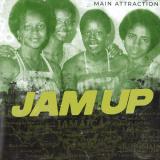
Emerging from the University of the West Indies (UWI) in Jamaica during the late 1970s, Main Attraction was a group of talented singers whose music captured the social and political energy of their time. With a sound that blended reggae and soulful ballads, their songs were both a reflection and a response to the challenges of the era.
The group originally featured Sonia Copeland, a gifted writer, arranger, and back-up singer, alongside Sharon Jones, whose velvet voice led many of their reggae tracks. They were joined by Allison Smith, Marjorie Smith, and Shahiba Ali, forming the group’s first lineup. As time passed, Michelle Thompson and Lileth O’Connor joined, further enriching the group’s dynamic harmony.
Main Attraction’s musical journey began with their debut recording, a cover of Once Upon a Time, produced by David Haughton under the management of Clayton Downie. Later, with Owen Palmer as their manager and producer, the group expanded their horizons, performing in cabaret gigs with the band Mind Benders and embarking on an overseas tour that showcased their talent in New York City. While Sharon Jones led reggae tracks like Jam Up, Allison Peart and Shahiba Ali brought their soulful touch to R&B songs, creating a rich, versatile repertoire that captivated audiences.
Jam Up was the group’s first original recording, composed and arranged by Sonia Copeland. Performed as part of the Reggae Song Competition during Carnival in 1978, the song is a rallying cry for unity and progress. With powerful lyrics and a Shaka rhythm, Jam Up calls on Jamaicans to come together, strive for economic growth, and uplift the nation collectively.
Sonia’s vision was clear: that Jamaicans from all walks of life would find inspiration in the song’s message, motivating them to improve their standard of living and contribute to the country’s growth and prosperity. Decades later, the lyrics remain just as relevant — a timeless call to action for social and economic strength.
Hold this record in your hands, let the music play, and feel the enduring power of reggae music to transform, uplift, and connect.
Influences and inspirations come from far and wide. Sometimes they can be household names or pioneers. Other times, they can be lesser-known outfits; less known, but no less influential. Futuro belong to the latter category for Italo Moderni.
Javier and Raúl are two Spanish synthesizer sorcerers who are steeped in the traditions of italo disco and the analogue sounds of the 1980s. While Italo Moderni was still in its infancy, Futuro were a shining light with a young upstart by the name of Adrian Marth even making videos for their tracks. From these beginnings, a mutual respect and friendship developed. Now, the circle is complete with the six tracks making their way onto Accidenti; an EP that marks Futuro’s debut on Italo Moderni.
The collection showcases the breadth of Futuro’s sound. With all instrumentation played through classic analogue machines, the six works journey through neon-streaked city nights, deep uncharted jungle and sun-kissed beaches. Drawing on the music of Rimini, silver screen soundtracks and arcade innocence, this is an EP that remembers and reimagines the 1980s. Intent is immediately set, with the tense and textured “L’assalto” delivering movie score synth stabs alongside crisp percussion. “Matador” is pure elegance, panpipe playfulness countered by glacial refrains and shimmering key shifts. “Iguazu” transports the listener to the wildlife and wilderness of the Amazon; cascading chords glisten as the canopy sings. Futuro takes to the skies with the sonorous swoops of “Il sogno dell’aviatore” before the lovelorn landing of “Fantasma d’amore”, a sumptuous synthesizer serenade of unrequited romance. To close, we’re firmly on the ground for “Sotto le stelle.” Under these sparkling stars, glimmering notes glow with warmth in a finale fitting for such an EP.
And, it is fitting to finally have Futuro on Italo Moderni. A group that has inspired and will continue to do so well into the future. An accidental discovery, mutual respect and a partnership rooted in a love of synthesizers has brought Accidenti into being.
Yamaha's DX series of synthesizers has long been a source of inspiration for Tom Trago. The DX7, in particular, appeals to the Dutch producer thanks to a unique sound that he describes as glassy but classic and icy'. 34 years after it went on sale - the same year as Trago was born, interestingly - the synthesizer's sound still bristles with futurist appeal.
.
Trago, who was partially trained in how to use the DX7 by studio friends Bok Bok, Sterac Electronics and Juju and Jordash, has decided to pay tribute to this most distinctive of synthesizers by using it as inspiration for Serene Waters, his first EP for Voyage Direct since 2014 epic Hidden Heart of Gold.
Across the course of five sparkling, spacey and melodious tracks, the Voyage Direct chief showcases the variety of sounds that can be teased from the DX7. Compare, for example, the delicate and rush-inducing melodies of dreamy, deep electro opener Harvest' and the two contrasting mixes of Opulent'', variations on a throbbing, futurist techno theme rich in glacial melody lines, bustling synth-bass and spacey chords. The dancefloor possibilities of the synthesizer's sound palette comes to the fore on the stripped-back Within Mix', where Trago's rolling stabs and cascading melodies are wrapped in tougher, denser drums.
The sparkling nature of the DX7's trademark sounds also come to the fore on XYZ', a crunchier and snappier electro outing that recall the effervescent brilliance of Trago's sometime label mate, Sterac Electronics. The track's combination of darting bass and mind-altering, alien electronics is as kaleidoscopic as they come.
Nestled slap bang in the centre of the EP is Red Room', where Trago manipulates his machines to get a far more psychedelic sound. While there's vibrant warmth thanks to some seductive background pads and stretched-out chords, it's the bubbling electronincs and futurist tunefulness that catches the ear. Like much of the rest of the EP, it tiptoes the fine line between poignancy and rush-inducing colourfulness.
The legacy of wipE′out′′ has transcended time and cemented itself as a true transgenerational phenomenon. Launched in 1995, it didn’t just revolutionise the gaming industry, it created a bridge between the gaming ecosystem and the raver community. Its futuristic aesthetics and forward-thinking sound left a mark not only on mainstream audiences but also on the most demanding corners of the underground.
Decades later, the game’s impact is still alive. The release in 2023 of The Zero Gravity Soundtrack on Lapsus Records proved once again that wipE′out′′’s accompanying audio will go down in history as much more than just an anti-gravity racing game soundtrack.
This is why we decided to go deeper into the slipstream and build the second volume you’re now holding in your hands. Drawn from the original archives of Tim Wright, aka CoLD SToRAGE, this new collection surfaces unreleased cuts, pieces that couldn’t fit on the first edition, and a suite of self-authored ambient reworks that translate pure velocity into wide-screen atmospherics engineered for the long straights, the drone of airbrakes, the blue hour between checkpoints. It also reconnects the circuit, gathering selections and variants tied to later chapters of the saga — wipE′out′′ HD and wipE′out′′ Pure — plus alternative mixes that, until now, only existed in the Sega Saturn dimension of the franchise.
Finally, the material takes a leap into the future in the hands of four remixers especially chosen for this release: Tim Reaper, SHERELLE, Mantra, and NikNak, who collectively forge links between CoLD SToRAGE’s pioneering musical vision, the sound world of the game, and the contemporary breakbeats and drum & bass vanguard.
Expect the DNA you remember — accelerated breaks, trance-vector synths, jungle influences, sub-bass rumbling neatly beneath the craft’s hull, and at times even echoes of classic hardstyle — now revealed with new angles and air. The previously unheard material carries the same aerodynamic design sense that made these tracks feel faster than the track map itself, while the ambient versions open the field of view with melodies hovering at the lip of overdrive. Without a doubt, here you’ll find a strong sense of nostalgia. But this isn’t just nostalgia; it’s also proof that this sound world continues to evolve when you ease off the throttle.
For the faithful — crate-digging ravers, speed-run obsessives, and design nerds — this is an essential expansion pack: compiling rarities, restoring context, and reframing the emotional core of wipE′out′′ for late nights and early mornings alike. Bridging memory and momentum, club and console, rush and afterglow. Strap in.
Detailed tracklist, with annotations by Tim Wright aka CoLD SToRAGE
· Scratch Pad 1: “This track was composed using incomplete tracks that were developed around the time of the first wipE′out′′. It’s so long because it was used for a marathon-length Psygnosis promotional video.”
· Messij Received: “Messij was a firm favourite with wipE′out′′ fans, so it made sense that there’d be more where that came from — this was one of those re-workings.”
· God’s Gift: “I was always very fond of Erasure’s track Love to Hate You with the canned crowd FX sounds. God’s Gift was a tongue-in-cheek reference to how some musicians think they are just that. This was way before I even played live as CoLD SToRAGE.”
· Tentative: “I wasn’t sure about introducing some wacky beats and distorted sounds into one of the tracks, because it was kinda heading away from the other tracks, hence Tentative — but it turned out OK.”
· Canada 2048: “When wipE′out′′ 2048 was launched I decided to re-make Canada as a kind of tribute, but in a slightly new-tech, laid-back way, using Propellerhead Reason and all software synths.”
· Wiped Out: “Based on a few riffs from a MIDI file unused at the time of the original wipE′out′′ game compositions, this featured on my debut album MELT.”
· Body in Motion (Body Plus Mix): “A more trippy interpretation of Body in Motion that featured on non PlayStation versions of the game e.g. Sega Saturn.”
· Onyx (“Dark Side of the Moon”): “Onyx was my sole contribution to wipE′out′′ Pure on the Sony PSP handheld gaming console. This version was something I developed in a darker style, that eventually erupts into a crescendo.”
· Messij Received (WSTWGBE Mix): “Like I say, Messij was a hit with most wipE′out′′ fans, so when I was asked to compose more music for non-PlayStation versions, I adapted this tune into a parallel-universe version for PC and Sega Saturn. By the way, WSTWGBE refers to Who Said This Was Going To Be Easy?”
· Canada (Drunken Ausländer Mix): “In early 2018 I released a fresh album called Ch'illout′′, a re-working of many of my wipE′out′′ tracks in an ambient, Sunday-morning vibe style — it was a few years’ work, here and there.”
· Tentative (Woffenfum Mix): “Another chilled re-working of one of my wipE′out′′ tracks, the mix named with a nod to a good friend of mine, Carl Woffenden — someone who I've worked with for many years in the games industry.”
· Messij (Bobbing Boat Mix): “A nice cheesy computer blip-blop start belies its deep and upbeat chilled-out melodic finale.”
· Body in Motion (Timeless Techno Mix): “Another classic track given the chilled-out vibe mix, as featured originally on my Ch'illout′′ album. This one’s a really trippy, deep-space take on the original.”
· DOH-T (AM / FM Mix): “The idea with this chilled-out mix was to imagine all the melodic parts of this varied track being broadcast on terrestrial radio, so each theme drifts in and out through the radio static.”
· ’95 Future Echoes: “Originally developed as a companion album for wipE′out′′ HD, this track actually has its roots in a tiny loop of a song that never progressed to anything special back in the mid-’90s when I was composing for the original game.”
· Turbine: “Also from my wipE′out′′ HD album, it leans heavily into the upbeat, uplifting tunes from the original game, but also steals a bit of vibe and energy from The Prodigy, with those distorted flute sounds.”
· Pencil Neck: “This excerpt from my wipE′out′′ HD album features lots of sounds centre-stage and forward from Propellerhead Reason’s Subtractor virtual synth. I learned to love this more than my JD-800!”
· Messij 2005 (New Science Mix): “Yet another take on the track that still raises a smile, this time through a mix of samples from the original and Propellerhead Reason — the ‘new science’ when compared to an Amiga 1200 running Bars and Pipes.”
dungeon acid review 25-09-03 by Joakim Cosmo A acid house style EP by swedish acid techno pioneer on swedens oldest underground label? Making a acid house EP in 2025 that makes a difference is a challenging task but this one just nails it. Here you see a softer and more musical side of Dungeon Acid in the shape of 5 dark yet hopeful Acid House tracks. Despite the classic form and ingredients it somehow avoids feeling retro but I guess this is what happens when you let a true grand master do it combined with a selector and label boss beyond the ordinary. It's like a paralell universe version of what Acid House could have become, and its a beautiful vision. A1-101-303 starts off with a dreamy, moody dubby and slightly romantic track that is just utterly beautiful in all its simplicity. The elegance and easy touch strikes me instantly. Nails the essence of the genre. One more like this and im buying it. The way A2-Unlock rewind builds up gives me goosebumps. So hypnotic and dark and experimental and the way it progresses to the ravey chord-break. The sounds and effects and details feel so alive and on the fly. In the record store this is where id already go "ok, im having this one" B1-Lonely Acid boy is yet another simple yet super atmospheric track. The contrasts between the rough robotic parts and the jazzy live solos ontop just gets to me. The roughness in the mix, that second beat with the hi-hats and extra bass, the fact that its so loud and sudden, is just great. And then we get to B2-Shnukki and all of a sudden, a romantic melodious electro track with a asian touch and acid bassline, that somehow goes well together with the other tracks. This one isnt my favourite or what I would buy the record for, but it would probably be the one I discover years later. Typical Borft Records to think that far ahead. The EP ends with B3-Chiliflex BB come on and this one starts with more late 80's ravey chords but the further you get into the track the more disharmonic, tweaky and punky it becomes. Things dont really fit together yet they do. To sum it up, these tracks are raw, funky, gutsy, streety, visionary, full of contrast and a bit challenging, just like acid house should be, but often isnt. I think Dungeon Acid and Borft Records nails it here. I'd buy doubles of this.
Best Intentions announces Inverse, a new 4-track EP from Melbourne-based producer and DJ; Pugilist, arriving 12 December on digital and limited white-label 12" vinyl. Marking his first release on the London imprint, Inverse sees Pugilist expanding further into the shadowy, percussive terrain he has become known for, merging future-focused techno, lo-fi industrial, and the energy of early hardcore breaks through his own atmospheric lens. The EP captures both the toughness of the dancefloor and the subtle experimentation that runs through his catalogue. A Scottish/Kiwi artist now based in Melbourne, Pugilist has built a reputation for stylistic range and rhythmic depth. His releases on Modern Hypnosis, Samurai Records, and 3024, along with the recent launch of his own imprint Ruff Kutz, demonstrate his ability to move across tempos and moods while maintaining a distinctive sonic identity. On the decks, he is celebrated for tightly curated sets, deep crates, and an array of unreleased dubs. Speaking on joining the Best Intentions roster and the inspiration behind the project, Pugilist shares: "Stoked to be joining the Best Intentions fam with 4 x retro rave rollas across the hardcore continuum, from minimalist Techno, to smoked out Electro, to krusty Hardcore and Breaks. This EP is a mix of styles which have informed my production style over the years. It is great to be putting out music with a shared vision for giving back for a greater cause. I have been a fan of the label since its inception so jumped at the chance to do a 12". I will be donating my share of profits to the Asylum Seeker Resource Centre - a wonderful Melbourne-based charity for asylum seekers here in Naarm. They do wonderful work." The EP's closing track, FKRY, a collaboration with POD, brings warped leads, stepping drum work, and old-school jungle tension into a modern, heavyweight techno frame.
First album of French band La Femme released in 2013 with which they won Best New Band of the year at the French Music Awards and god certified gold. It marked also the beginning of their international recognition, confirmed since with their 2nd album Mystère in 2016 and their brand new album Paradigmes today. Includes the hits Sur La Planche, It's Time to Wake Up and Antitaxi! La Femmes's debut LP, is a mix of surf revival, updated cold wave (in a similar vein to countryman Lescop), 1960s yéyé and psychedelia. "Psycho Tropical Berlin: is apparently also their self-penned genre, they have also said "strange wave, new Motown, witch wave, silly mental wave"... whatever, aach term makes for a pillar to describe their music. Psycho Tropical Berlin is the story of a couple who slipped into chaos and survives by watching each other. Le Danger est partout - Peril is all around - as written in the booklet. Rock and pop, rococo bauhaus, fed from multiples influences (Krafwerk, Elli & Jacno). La Femme just want to please you. Generous and welcoming, she stretches you her white hand in the dark, if you grasp it, it could be the shiver of your life.
Venice, Italy – 2025 Paolo Mosca, the Italian producer, composer, and DJ acclaimed for his soulful approach to electronic music, unveils his new alias I.O.N with the forthcoming debut EP Signals, set to be released on Ritmotherapy. Known for releases on Slow Life, Altered Circuits, and a recent collaboration with Alex Neri, Mosca now steps into uncharted territory fusing experimental electronics with rock-inspired textures and raw energy for the dancefloor.
Signals is a daring reimagining of 90s sonic aesthetics, drawing inspiration from the breakbeat and hip-hop influences of cult films like Blade & The Matrix. Each track on the EP blurs the line between nostalgia and innovation, layering hypnotic riffs, rolling basslines, and gripping vocal samples with futuristic precision.
The EP kicks off with “Camouflage” , where breakbeat rhythms and hip-hop flavors meet futuristic atmospheres. A grabbing vocal, heavy low-end, and hypnotic riff drive the track into a world of cinematic tension and release.
“Escape” follows with a slower tempo, but its restrained pulse only builds anticipation. Classical violin lines cut through break-driven drums, leading to a long-awaited drop that delivers an overwhelming yet deeply satisfying release.
Next, “Neo” builds momentum with a gritty 303 bassline and sharp synths, locked into a relentless 4x4 rhythm. The track feels like an expedition through acid-soaked landscapes, equal parts raw and refined.
“They Are Looking at You” closes the EP with explosive energy, bursting with hip-hop vocals that command “don’t stop. ” Propelled by a nasty bassline and oriental-inspired synth melodies, it’s a track built to ignite dancefloors and spark spontaneous breakdance energy.
With Signals, I.O.N presents more than just an EP; It's a manifesto for a new era of club music. It’s heavy yet soulful, experimental yet deeply physical, and above all, a fresh signal to the global electronic scene that something new has arrived. Reserved for their official release on Ritmotherapy, the anticipation around this project signals a bold new chapter for both artist and label.
Sedan is an obscure Soul group from Cincinnati, Ohio that was formed in the 80's.They released only one record, and little info is known about them.Craig E. Robinson was a one of the members (he later went on to form Dayton and became a producer) The record celebrates it's 40 year anniversary and features the singles “Snake Dancin’ & “You Ain’t Got Nothin’ To Do”. This hidden gem is widely seen among disco boogie electro funk fans as a rough diamond. Sedan is now available as a limited numbered edition of 500 copies on red coloured vinyl.
Ambroos De Schepper and Pepijn Gyssels became roommates when PiP moved to Brussels in 2021. Both paid close attention to each other’s musical approach and interests. One year later, Ambroos moved out. When he swung by to pick up some boxes, they decided to record something for the fun of it. Between May '23 and November '24 they continued experimenting with textures and improvisations. This collaboration has become the deepening of a friendship and a way to maintain it at the same time.
PiP: “We would have coffee or the occasional beer and everything we recorded came very organically. Ambroos would just bring his saxophone, a clarinet, some FX pedals or a weird flute. Whatever he felt like on that particular day. A few hours later he would usually be on his way again, leaving me with the recordings. I could treat them as I pleased.”
Ambroos: “I liked the idea of working with someone focussing on the physical side of music. Not so much on chords and tonality, but on texture and atmosphere. This gave me a framework with less concrete references, using words like “dark” or “busy”. I could improvise freely and we would try and catch a particular moment."
“l’Esprit de l’Escalier” is meant to be a musical meditation, opening up a continuous and detailed sound palette, aimed for the right mental state to listen with. Ambroos came up with the melody in COVID times and later in PiP’s studio, they recorded it on clarinet.
“Sans Loup” is the first jam the duo did together, after Ambroos and Lou moved out of the apartment they shared. Lou Wéry eventually found her way back to the album, as she can be heard playing the wing piano in this track.
PiP: “We recorded in the apartment we used to rent together. Since the title track and the entire album are named after Lou being absent in this dynamic, it seemed only natural to invite her in a later stage.”
“Spring Whistle” was an attempt to embed Ambroos’ musicality in dreamy textures and “Bring Back Bones” was built around an endlessly evolving krakeb recording that PiP took home from on a trip to Morocco. Both tracks are not aimed to end or evolve drastically, they just make the clock tick slower.
To conclude this release, “Velours de Tendre” is built out of a deconstructed groove and a field recording of the “Ronde van Vlaanderen”, a small reference to the countryside where PiP grew up. The reverberating chords you hear are the echoes Tijn Driessen squeezed out of an old harmonium, in a staircase of De Grote Post in Ostend.
PiP: “During a residency in De Grote Post we recorded in a staircase with a spaced pair of omni microphones. And you can take ‘spaced’ quite serious; one was positioned 5 stories higher and the other 3 stories lower.”
Sans Loup is the first vinyl to release on PiP’s label. They look alike, but none will be identical. The cover is screen printed in various combinations + a risograph insert. A highly personalized object.
credits
Released on Zitstill Records
Recorded in Brussels, Horebeke, Morocco and elsewhere, between September 2021 - November 2024
Music, mixing and production by Pepijn Gyssels
Saxophone, flute and clarinet by Ambroos De Schepper
Grand piano on “Sans Loup” by Lou Wéry
Harmonium on “Velours de Tendre” by Tijn Driessen
Mastering and lacquer cut by Anne Taegert at Dubplates & Mastering
Pressing by Objects Manufacturing
Layout and graphic design by Liselotte Van Daele & Otis Verhoeve
Photography by Willem Mevis
Special thanks to: Stijn Cools, Victor De Greef, De Grote Post
Our journeys into uncharted lands of the Reducerverse continue.
Essential must-buy shit for all disciples of: The Rootsman x Muslimgauze, Love's Secret Domain era Coil, Chris & Cosey, Meat Beat Manifesto, early Reinforced Recs, Shut Up & Dance, He Dark Age, Zombies Under Stress, SPK.
If you've just joined us: Reducer ARE the greatest lost dub punks. Rumoured to have almost signed to On-U Sound but told Sherwood to stuff it when he wanted his hands on the desk. Fame never found them, cos they didn't want it anyway. Living in the obscure memories of the select squatters and weirdos lucky enough to have had their minds blown, their first recordings were scraped off the linings of the cosmic dustbin recently through a series of self-released 12"s, cassettes, USBs and strangest of all a 3D performance screened at the Cube (in association with pals Bokeh Versions).
In short: Reducer's the most thrilling fairytale resurrection these pages have been privy to, joining 23 Skidoo, Killing Joke, PiL, Slits, Terminal Cheescake etc on the Mount Olympus of the Punky Reggae Party.
This latest slice of karmic justice comes from The Human Aerial aka Reducer's guitarist and prime mover Hooly. And ohhhh what a justice it is. Drawing on 40 years of private solo recordings across 7 tracks from Abu Ama style dabke jaguar steppas punishment to thumping bass-led electro, peak Depth Charge dubby big beat to careening breakbeat hardcore, trashcan gamelan spirituals and Jamie Vex'd style maximalist beats blissouts,
Tying together this jaw-dropping range of styles and fashions is a relentless sampladelic bombardment. The Human Aerial's habitual pilfering of TV and radio for into lovingly spliced tape loops and samples showcases humanity at its best and absolute worst. Tele-evangelists rub shoulders with long dead chieftans: "there is no death, only change of worlds" "We're MAD AS HELL AND WERE NOT GONNA TAKE IT ANYMORE" "THe land is sacred, a cathedral of the spirit". These wisdoms and grave sins slip into us subliminal through the dance, the needle drops like a waking dream.
While the Reducer archives may be running low, we assure you the Human Aerial coffers are full. And long may our minds be blown by this ongoing renaissance.
Continuing his refraction of the rave continuum into pointedly dislocated, delicately bruising sound system meditations, Low End Activist returns to Peak Oil with a second instalment in his Airdrop series. This time around, he channels the ghosts of foundational tech-step and the quantum leaps of late-90s D&B to provide the inspirational fuel for his skeletal, astral constructions. A strong stylistic thread continues to weave through the LEA output from his earlier self-released EPs and Sneaker Social Club albums, where haunted atmospherics, blown out subs and snatches of breaks dart around each other in empty dancehalls, but the finer point of the sound design and synthesis makes very specific references to landmark moments in hardcore's evolution.
By weaving his own autobiography into the music, the Activist maintains a fundamental theme of his work to date. 'Colin's Golf', 'Smithy's Porsche,' 'Merv's Lazy Eye' and 'Brillo's Teeth' are all personal codes harking back to the formative Oxford rave scene. With the framework in place, he uses textures, timbres and studio tricks from scene-leading pioneers and local heroes of the era as ingredients in thoroughly modernist concoctions. None of the reference points are deployed as literal callbacks — they're waymarkers for the creative process and faint triggers bedded deep into Airdrop II's strange formations. Fleeting sonics might trigger latent memories for those who were there. For everyone else, Airdrop II is another step further along rave's eternally unspooling odyssey, guided by decades of precedents on a path into the future.
MOb return this November with their second album on Veego Records, continuing the adventurous journey they began with their 2023 debut MOb 1. Hailed by the press as one of the boldest and freshest statements in the Greek scene, their first record moved seamlessly between jazz, punk, and electronic forms, creating a sound often described as “an entire orchestra played by just three musicians.”
On their new release, Marios Valinakis (saxophone, effects, synthesizers), Alexandros Delis (bass, double bass), and Panagiotis Kostopoulos (drums) construct an even more intricate and ambitious sonic universe. The compositions range from the explosive energy of “Tipping Point” and the dark atmospheres of “Utu and Sin”, to the radical reimagining of Wayne Shorter’s “Fall” and the polyphonic outburst of “The Listener”, featuring the Kos Choir.
Guest appearances further expand the palette: Phillip “Felipe MC” Manev lends his voice to “Tipping Point” and “Encounters”, while Angelos Polychronou enriches “Encounters” and “The Listener” with his percussions.
The album was produced and recorded by MOb themselves, with Bruno Ellingham handling mixing and mastering for most tracks, while “Utu and Sin” was mixed by Malcolm Catto at the Quatermass Sound Lab. The cover artwork is designed by Apostolos Mitrelis, and the back cover features a photograph by Maciej Moskwa.
If MOb 1 revealed a band capable of fusing free improvisation with rhythm-driven “bangers” that reached audiences beyond Greece, the new album confirms their evolution: more intense, more diverse, and more imaginative. With one foot rooted in tradition and the other firmly in the present, MOb deliver a work that breaks boundaries and builds bridges across genres and audiences, solidifying their reputation as one of the most exciting groups in today’s Greek music scene.
Lantern in the Woods is the new album from musician and multi-instrumentalist Misha Sultan – a project that marks an important milestone for the artist. It is his first work conceived and realized as a coherent, unified statement, from the earliest ideas and sounds to the final mastering.
The story of the album began back in 2021 in Saint Petersburg, during studio jam sessions with Anton (Mårble), Vova Luchanskiy, and Nikita (Minereed). These live
improvisations eventually led to the formation of the collective Sri Primat and left a significant imprint on Misha Sultan’s solo sound. Some of the instrumental parts on the album were recorded during this period, preserving the spirit of spontaneity and open dialogue between the musicians.
Later, after moving to Thailand, Misha recorded the second half of the material. These tracks absorbed the atmosphere of southern nights, tranquility, and comfort – bringing a distinct “bedroom jazzy vibe”, a touch of sentimentality and gentle melancholy into the music.
The album offers a beautiful blend of jazz and various other influences. At its heart, it’s a search for balance between memories and the present moment, between nature and the city, between the light of the lantern and the darkness of the woods.
“It was especially important to me that my friends and close people were involved in this album. Their presence gave the music that warmth and personal feeling I value so much. My brother Zhenya (Dyad), Anton (Mårble), Vova Luchanskiy — they all contributed a part of themselves to these tracks, as did Nina Livanova, who recorded vocal parts for several songs,” says Misha.
Lantern in the Woods is a soft and sincere work, where all things intertwine naturally.
D.D. Mirage return with new single “Echoes”, a lovers meditation featuring North Carolina’s Teddy Bryant, who delivers a velvet vocal performance steeped in yearning and late night reverie. The chorus “the things you do for love echo in my mind all night” hits the melancholy sweet spot, wrapped in the rich and authentically 80s sounding production we’ve come to expect from D.D. Mirage.
The Sydney based duo, now expanded into a full four piece live band, continue to stretch their sound beyond the Balearic and Dub tinted palette of their debut Exotic Illusions released earlier this year. With production assistance from Jono Ma, they capture a lush, cinematic space where street soul sentiment meets modern dream pop psychedelia, the kind of record that slips perfectly between Sade, Tom Tom Club and a lost Compass Point B-side. Flip the record for the Introspective Dub: a drifting, dubbed out companion that strips back the vocal to its echoes and lets the rhythm bloom.
Following live appearances at Dark Mofo and SXSW Sydney in 2025, D.D. Mirage round off the year with a live performance at Victoria’s Strawberry Fields festival mid November.
Six years after Nazamba’s first offering, he delivers his final gift: A Message From Zion.
The journey begins with George ’Nazamba’ and Rico ‘O.B.F’, two kindred spirits connected by sound. Countless cross-ocean visits between Kingston and the French Alps, from enjoying hot beers on the beach to reasonings in snowy mountains. Moments that forged a pure brotherhood.
Out of this friendship grew his first album, the self-titled Nazamba in 2019. Now comes his second, a collaboration between Thompson Sound and Dubquake Records. Together, they unite two generations of reggae powerhouses. Produced by Rico O.B.F, the record reimagines classic Thompson Sound gems. Nazamba’s musical storytelling is accompanied by the Roots Radics, with guest appearances from Linval Thompson & Barrington Levy.
Then came silence. In 2022, Nazamba passed on to Zion. The album project was unfinished, yet full of life. What remains is raw, unpolished and painfully beautiful.
A Message From Zion, a celebration of Nazamba’s universe. His voice, wisdom, poetry, heart and spirit. Forward we ah go. Ah true.
Gigi Masin's sparkling sonic magic leads us to the light in “Implodendo in una accecante oscurità” (Imploding in a blinding darkness). The mirror reflects nothing but a faint, unfamiliar, mysteriously hostile face, but a glimmer survives, evoked by a painfully solemn romanticism that is salvific, glimmers of light bounce off broad synthetic volutes, a bewitching ambient, airy quiet, they spread, a few veins of darkness shine through, aesthetic beauty equates to clear spirituality, sax and female voices, the elegy that intertwines piano and vocal loops, that omnipresent melancholy, nostalgia, reassuring, which is openness to tomorrow. It is the moment of light, the powerful feeling that nothing is lost, that what awaits to be grasped is more than a remnant, perhaps an overcoming, light that “is not what it shows but what it reveals”, that light that becomes memory that does not need to illuminate to be perceived where it most needs to spread, where darkness has resided for too long
Gigi Masin's sparkling sonic magic leads us to the light in “Implodendo in una accecante oscurità” (Imploding in a blinding darkness). The mirror reflects nothing but a faint, unfamiliar, mysteriously hostile face, but a glimmer survives, evoked by a painfully solemn romanticism that is salvific, glimmers of light bounce off broad synthetic volutes, a bewitching ambient, airy quiet, they spread, a few veins of darkness shine through, aesthetic beauty equates to clear spirituality, sax and female voices, the elegy that intertwines piano and vocal loops, that omnipresent melancholy, nostalgia, reassuring, which is openness to tomorrow. It is the moment of light, the powerful feeling that nothing is lost, that what awaits to be grasped is more than a remnant, perhaps an overcoming, light that “is not what it shows but what it reveals”, that light that becomes memory that does not need to illuminate to be perceived where it most needs to spread, where darkness has resided for too long
British-Brazilian jungle artist Janaway announces his brand new EP International Luv via Up Ya Archives Records.
‘50/50 Vision’ is the defining statement of Janaway’s upcoming EP, a single that captures the project’s full essence in one. Blending pulsing jungle rhythms with the rich textures of Brazilian vocals, together, with his UK-centric underground lens, he creates this rolling, dancefloor-ready track that bridges continents and culture.
The title, a play on “20/20 vision,” reflects Janaway’s experience as a dual-heritage artist who views each of his cultures from a balanced perspective. This sense of duality runs throughout his work, expressed through a distinctive fusion of sounds, stories, and collaborations that mirror his own world. The accompanying visuals deepen this connection, featuring Janaway alongside his collaborators and friends, not only adding a personal and authentic layer but providing a snapshot of the community that shapes his music.
‘50/50 Vision’ is a collaboration with two incredible artists that represent each side of his heritage. MC Tchelinho’s (Rio’s Heavy Baile collective), dynamic flow injects raw Brazilian energy and is enhanced by Arinola’s signature mix of UK funk and Ragga vocals which layer in an infectious groove. Together, they create a dynamic intersection of contrasting sound that feels both global and grounded - full of rhythm, movement and connection.
Growing up between cultures, Janaway has always gravitated toward sounds without borders. Now based in Bristol, he’s part of the new wave pushing jungle forward while keeping its essence alive. His signature blend of heavyweight basslines and sharp breakbeats has earned support from Nia Archives, Tim Reaper, Sherelle and Fracture. His acclaimed high-octane DJ sets packed with unreleased tracks, move effortlessly through jungle, footwork, and jungle funk, keeping crowds locked in and dancefloors moving. After a European tour and standout appearances at Boomtown, Glastonbury, and Outlook Festival, Janaway is fast becoming one of the most exciting names shaping the next gen of jungle.
The Punky Rocking Christmas came over two different Xmas’s for the punk connoisseur. The first back in 1977 when the Sex Pistols took themselves up to Huddersfield to play a gig for the firemen but also as they arrived in the afternoon a gig for the local kids. After much cake throwing and high jinks and with the kids all cleared out the Pistols played the evening show for the adults. This it would turn out to be the Sex Pistols last show in England, as they went to America in January 1978 and imploded. That as they say is another story.
The second Christmas Punk bonanza took place in London’s Ladbroke Grove area when The Clash, possible inspired by the Sex Pistols previous Xmas gig, decided to play their own Xmas gig in 1979 on
Christmas Day at The Acklam Hall. The added bonus was they also played at the venue on Boxing Day. So there you have it the two biggest punk bands giving two xmas treats to their fans. To celebrate these festive treats Mal-One has written two songs to celebrate both events and dubbed up both versions for this Maxi-12” special. He has also provided two sleeves a Sex Pistols sleeve 250 copies and a Clash sleeve 250 copies plus a signed print in each. As they say what more could you want in your xmas stocking.
Ho Ho Ho and a punky rocking happy Xmas to you all.
Gate 9 launches its first release with a Various Artists combining artists that shaped the collective’s identity, between rising talents and established names.
In 1995 The Roots burst onto the scene with their seminal debut album, Do You Want More?!!!??! that garnered critical acclaim and cemented them as a powerhouse group fusing elements of various genres with their signature live instrumentation. Thirty years later in March of 2025, The Roots played a three day, six show residency at the legendary Blue Note Jazz club in New York City where they celebrated their debut by playing it in full – performing many tracks that hadn’t been performed live in decades. The performance also brought out special guest appearances from long-time collaborators, Ursula Rucker, Dice Raw and Rahzel, Godfather of Noise.
To cap off the 30 Year Anniversary, The Roots will release the full performance on vinyl. The 2xLP, gatefold package is pressed Black vinyl, and features 21 tracks. ?uestlove spent tireless hours perfecting the mixing and mastering with Glen Forrest and Colin Mohnacs to ensure all elements of the performance were represented on the vinyl.
Synaptic Cliffs is barely able to contain the excitement for the release of the 4-track EP "Maximalism" where pdqb collaborates with DJ Sotofett in the most effective way. pdqb's sleek and melancholic electro originals carry a sexy 1980s reminiscing vibe, not too unknown from classic US electro disco-styled pop music. They meet warehouse remixes from DJ Sotofett, known for his top-notch electro productions on Clone and Tresor, as well as funky breakbeat, afro-dub and all-things-house on his own labels Wania and Sex Tags Mania. The remix of pdqb's electrocognition-beauty 'Giallactrus' has heavier, almost p-funk styled electro beats, live scratching complementing the block party approach while retaining the vibe of the original. Elysiaamore, pdqb's sonic love letter to Tangerine Dream, gets a bit of melodic menace treatment by DJ Sotofett, turning it into an intensified breakbeat juxtaposition with Junglized B-Boy elements... again without taking away the energy from the original. The vinyl version was cut by DJ Sotofett with optimal club sonics at Manmade Mastering, Berlin.
There are many reasons why summer always feels like the invincible season, and one certainly is its ability to sketch colorful pictures of life rife with options. Now Sebastian Mullaert and Layla Rehana are drawing one themselves. And they use solar paint for it.
Coming from completely different backgrounds - Sebastian, a sound explorer with a history of exploring musical textures and moving dancefloors while the work of vocalist Layla weaves intuitive healing and subconscious reprogramming - they were immediately ready to take creative chances as first improvised sessions already felt like everything is perfectly keeping up with their very own sensibilities.
The resulting LP for Bigamo offers a collection of patient and almost meditative tracks that feel as natural as breathing. Everything is interconnected. Glowing. Soothing. Like a memory, everything is now and then. It’s the equivalent of laying on your back and watching fair weather clouds as they gently transform and eventually disappear. It’s when you realize that love is all there is, is all you know of love. Although we’re slowly but steadily entering the annual phase of shorter and darker days, their sun clearly sets only to rise and shine again.
Renée was born out of The Hague-based rock ‘n roll band René And His Alligators, founded by René Nodelijk in 1959. Throughout the 60s they were moderately successful both on stage and in the studio and served as an inspiration for many bands associated with the burgeoning beat scene in the coastal city. From 1967 onwards they performed under a few different names before going on a hiatus. In 1977 he made a comeback, this time joined by his wife Anja Nodelijk, née Exterkate. To reflect this fresh feminine impulse the band name was changed to simply Renée and recorded four full-length albums and a host of singles before disbanding in 1982 to make way for Anja’s solo career.
Reaching For The Sky from 1980 is their second and has been likened to many different things: Fleetwood Mac, Dire Straits, or even a fantasy collaboration between Pat Benatar’s guitarist, Heart’s Ann Wilson, and Steely Dan. Sprinkle some reggae and funk in the mix and it is no surprise that some of the tunes on this album ended up in niche YouTube algorithms, a Japanese book about obscure records, and in DJ sets by big names like Prins Thomas, who even released an extended edit of “Change Your Style” on a 12” single. This is obscure sophisti-pop at its best. Reaching For The Sky is available as a 45th anniversary edition on translucent magenta coloured vinyl.
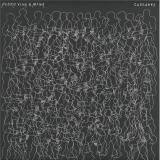
On 9th December Modern Obscure Music presents Cascades, the new album from Pedro Vian & Mana, which premiered during their immersive live set at the most recent Sonar Festival in Barcelona.
Cascades was recorded over a three-day studio session in Turin during the winter months, which is reflected in the musical narrative, as the eleven tracks flow gently like an icy river, filled with a mixture
of hazy melancholy, uncanny dream-states and euphoria.
Various recording techniques and instrumentation was utilised, including the Lyra-8 organismic analogue synthesiser, which takes principles from living organisms to produce sounds resembling a
conversation between nature and technology. The result is a spellbinding ambient odyssey that features a luminous synthesis of neo-classical strings and orchestral drones, together with strange
voices, and abstract passages designed to evoke Dante’s Inferno, which represent the soul’s journey.
Pedro Vian is a renowned Catalan artist who has released three solo albums (Beautiful Things You Left Us For Memories, Pedro Vian and Ibillorca) and a collection of singles on his Modern Obscure
Music imprint – a multi-disciplinary platform based on deep listening and music research. The ‘PRSNT’ compilation, which Pedro curated in 2021 and featured Laurie Spiegel, Ryuichi Sakamoto, and Visible Cloaks, received support from Pitchfork, Crack, Brooklyn Vegan, The Quietus, The Wire and Metal. Pedro has been remixed by Inga Copeland and Pye Corner Audio, and has recorded mixes for of Bleep, Self-Titled and Juno Daily.
As part of a new generation of Italian electronic music artists, Piedmont born composer and producer Mana has released two full length albums (Seven Steps Behind and Asa Nisi Masa) on Kode 9's
Hyperdub imprint, plus an EP on Nicolas Jaar's Other People label under his Vaghe Stelle alias.
Earlier in his musical journey, Mana supported Laurent Garnier, James Holden and Skream across the Torino club scene, and in 2011 teamed up with Italian friends Lorenzo Senni and A:RA to form
the experimental group One Circle.
Pedro Vian & Mana’s previous work as solo producers has pushed the limits of electronic music, and together they’ve garnered critical acclaim from the likes of Pitchfork, The Quietus, The Vinyl
Factory, Resident Advisor and more. They now join forces to traverse new sonic territories between electronica, ambient, drone, and trance-inducing soundscapes.
In a new, eclectic, and boundless experience, Psyfunk offers a sonic breadth that transcends the genres explored to date.
Danny David's "No Problem EP" comprises four original tracks for different moments, all focused on the dance floor.
Together, they explore diverse soundscapes guided by modern house, tech house, and experimental textures with an utterly irresistible groove.
Don't miss it—it's definitely a record you'll want to keep in your bag!
12” vinyl, full sleeve artwork with Mordançage front cover artwork by artist Jo Torres, design & centre labels by Ciaran birch. Limited run of 300.
“Singing Vessels” draws inspiration from the sonorities and aesthetics of Amazonian medicine ceremonies and traditional Andean music. At its heart is a collection of clay whistles from ancient South America, whose timbres conjure the vibrant soundworld of the Andes. The piece also incorporates shamanic instruments from the Amazon, such as the shacapa — a bundle of dry leaves whose rustling produces a deep, soothing texture with remarkable sensory resonance.
Interwoven with generative electronics, live looping and synthesisers, these organic timbres create evolving psychoacoustic spaces where the mystery of nature meets inner realms of perception and consciousness. The piece unfolds as a ceremonial passage through a shamanic ritual: beginning in a dense jungle of sounding entities, rising into moments of cathartic purging, dissolving into states of blessing and communion, and finally returning to the here and now with renewed awareness.
Nervio Cosmico is an electroacoustic experimental duo based in Bristol, formed by Chilean composer Daniel Linker and Italian sound artist Matteo Amadio. Blending acoustic instruments from ancient South American shamanic traditions with live looping, generative sound design, and live electronics, they craft sonic journeys that explore perception, consciousness, and a spiritual connection with nature.
‘Before the Odysee, there was the Iliad; a tale of the golden age of heroes and warriors.'
The idea behind the Iliads series was to return to the sound of the golden age of Jungle/Drum & Bass, and more specifically the original ‘heroes’ of the Odysee label.
This fourth and final instalment concludes the series; bringing all the different styles of the original Odysee sound together in a grand finale. From deep atmospheric beauty to sinister dystopian breakbeat fury; Iliads IV has it all.
Oubliette immediately creates a feeling of unease and paranoia. The rapid injection of different breakbeats gives the track an unsettled feel; with nervy piano jangles and moaning samples adding to this atmosphere. The track drops with punching subs and razor-sharp curling breaks from amidst the desolation of the atmosphere of the intro. The call and response style is used to cut from break to break maintaining the unease of the intro. The drums & bass break down into a
dystopian landscape of sound, before dropping once more to take the track towards its conclusion.
A Point In Time with its obvious reference to a compilation series on a certain well-loved atmospheric Jungle label is all about conjuring nostalgia. There are notable references to bygone days; the infamous bulb bass and bleeps of the Warehouse days of glory, and the tearing mentasms that enter in the approach to the breakdown. The breaks are crisp and complex, the sub-lines deep and dark; a track truly built for a dark sweaty basement club where the bass bins
are pushed to their limits!
Love & Desire is a sultry deep atmospheric roller full of subtle references to the early UK Garage sound of the mid 90’s or even Deep dub Tech-House. The elegant curls of the Apache break that takes centre stage in this track are complimented by sweeping pads and a set of deep synth stabs that form the rhythmic backbone. The subs drop deep amidst a palette of avant-garde electronica, as the spoken word vocals call out “my love....my desire.”
We really hope you’ve enjoyed the Iliads series as much as we have; they represent a very special sound that is close to the very heart of what we at Odysee are about. As much as they focus the lens on the past, we truly believe they have had a profound effect on our future....in as much as they have brought us back to the raw essence of our sound.
Andy & Tilla
During the 35 years of making music, Dave Lee has constantly been searching for new singers and writers to work with. A search that’s ended up with many fantastic collaborations and releases with the likes of Thelma Houston, Taka Boom, Dianne Charlemagne and Seal. More recently this quest led him to Maurissa Rose and the creation of their album ‘London / Detroit’. After hearing Maurissa's voice on a Theo Parrish record Dave reached out to her and after a few long phone conversations and mp3 swaps they both agreed a visit to London would be much more fun than trying to work together remotely. Maurissa made the journey from her home in Detroit to write and record an album with Dave at his studio in March 2022 - as they both feel that creating music together in the same room is always better. The fruits of their labour yielded 11 brand new songs (and 1 cover) tapping into their collective love of Soul, Disco and R&B, with a sprinkle of Soulful House. This album is a special one for Dave Lee as it’s the first time in his career he’s recorded an entire album with same singer on every track.
In the album’s liner notes Dave talks of how Maurissa is a naturally creative person, full of ideas, warm & unpretentious which is reflected in her vocal performances throughout ‘London / Detroit’. Dave’s expertly crafted music is backed up with a deeply passionate yet effortless delivery from the Detroiter, a marker of someone who has honed and perfected their art. When it comes to the music side of this LP, Dave Lee is once again proving he’s still at the top of his game and shows no sign of relenting. Drawing from his encyclopaedic knowledge of all things Soul/Funk/Disco, we are treated to a range of styles, BPMs and influences from 95bpm street soul to more uptempo disco and boogie flavours. Be it the rippling synth voyage opener of ‘You Decide’, taking the Johnnie Taylor classic ‘What About My Love’ into a modern Boogie realm, upping the tempo on the soulful houser ‘I Feel the Sun” or bringing the tempo back down to the bassy acidic chug of ‘You’re Giving Me Life’. Mr Lee is truly adept at creating a modern disco soul sound without the usage of samples.
London and Detroit might be two very different cities on opposite sides of the Atlantic but this album is proof that creative synergy knows no distance.
Out everywhere on Feb 28th on Gatefold Vinyl, CD and Digital/Streaming.
When Leng Records founders Paul ‘Mudd’ Murphy and Simon Purnell marked the imprint’s 10th birthday, they did so via a celebratory compilation that mixed classic catalogue cuts, remixes and exclusives. Five years on, and with the label’s 15th birthday upon us, they’ve decided to look to the future via a compilation made up entirely of fresh productions from Leng’s roster of current and new artists. Presented on limited-edition gatefold double vinyl with a bonus 10” single, the collection offers an updated showcase of Leng’s much-loved trademark sound, a distinctive fusion of mid-tempo sleazy-disco, Balearica and chugging house interspersed with elements of electronic psychedelia and synth-powered space disco. Fittingly for a compilation that wholeheartedly looks to the future, you’ll find first contributions from a handful of label newcomers.
Fast-rising duo Flying Mojito Bros give their spin on ‘Smoke Signals’ by label debutants Joe HarveyWhyte and Bobby Lee, turning in a heady and inspired revision that sits somewhere between dusk-ready cosmic disco and flash-fried desert blues. There’s also an appearance from Swedish producer Bo Wosticz with the dreamy and ultra-deep nu-jazz of ‘Bs As’. Naturally, you’ll also find plenty of heat from those who have already proved their mettle through prior releases on Leng. Danish duo Liminal, who made their debut earlier this year with the much-played ‘Keep Coming Back To Me’, open proceedings with the tactile, slow-disco flex of ‘Tzatziki Bay’ where sweet synth melodies and a heady electric piano riff ride a warming groove.
Roberto Intrallazzi and Dario Piana from Italy’s original Afro-cosmic movement return with ‘Plutos’, a typically deep dubbed-out cosmic chugger. Then there’s Rose Robinson AKA Tigerbalm, whose ‘Mexicana’ featuring singer Joi N’Juno is presented across the package in two different forms. Pete Herbert, who contributed to some of the earliest Leng releases, drops a driving dub disco take on the main compilation, while Robinson’s original mix – a more organic, percussive and horn-heavy affair blessed with plenty of hallucinatory intent – opens the bonus 10”.
There’s a welcome return to Leng for the brilliant Payfone, whose ‘Dime Algo’ is a typically classy, analogue-rich affair in which attractive Rhodes riffs, atmospheric female vocals and pitched-down house pianos rise above shuffling drum machine beats and a slow-motion bassline. Long-serving label contributor Lex (Athens) delivers the loose-limbed nu-disco breeze of ‘Stolen Dance’, while the imprint’s San Francisco connection – the ever-brilliant 40 Thieves collective – drop the dubbed-out Bay Area brilliance of ‘Such A Great Trip’.
Then there are the contributions of the label’s most storied artist, Andrew Meecham AKA Emperor Machine with ‘Eumig’, a deliciously slow, synth-rich chugger full of colourful chords, bubbly electronic melodies and jaunty electronic bass. Then, to round off the bonus 10” single, Meecham joins forces with Paul Murphy (as Mudd) on ‘Road To Nikko’, an extended, Japanese musical culture-influenced slab of pitched-down alien-funk packed to the rafters with squelchy synth sounds, effects-laden percussion, chiming melodies and rubbery bass guitar.
A surefire Salsoul classic and comfortably one of the label's finest moments, the self-titled LP from The Strangers was originally released in that golden year of 1983 and is one of the greatest albums of the post-disco era. It’s one of Be With's favourite ever LPs and it's a complete honour to be giving it our reissue treatment.
Still strangely overlooked but not for much longer, The Strangers contains flawless tracks with truly top tier production and includes the eternal Paradise Garage favourite "Step Into My Dream."
Are they Strangers to us? Well, no, they shouldn't be. The Strangers were a US electronic-funk studio concept group comprising Edward "Tree" Moore, Howard King and Hubert Eaves III, all key members of Mtume and Gary Bartz NTU Troop and, in the case of Eaves, one half of D-Train.
Now I KNOW you're gonna dig this!
We kick off with the dope electro-funk of "Wanna Take Your Body" which features Gary Bartz on sax (!) and becomes more sensational and irresistible the longer it plays. The wonky super-bomb "Let Me Take You Home" has a punk-funk, post-Prince feel, driving and delicate all at the same time while "Show Me How You Like It" is pure FUNK, the groove just pure fire.
Side B is perfection. It kicks off with the NTS favourite "Love Rescue", a track so slick it positively SLAPS out the gate and, while it bangs throughout, the vocals and melodies elevate this to the status of EMOTIONAL POP.
Next up, "Step Out Of My Dream" swaggers forth, the undisputed masterpiece that was huge with the London DJs and UK Soul fraternity; it's not hard to see why. It's a gliding, smooth, soulful piece of once-in-a-lifetime magic.
DYSTORTION
Extrawelt's Latest and Longest-Brewing Album Lands This December on Cocoon
In this beautiful world marked by rising chaos, sometimes the simplest way to escape its troubles is through sonic relief. Germany's renowned electronic duo Extrawelt will offer exactly that with their 5th full-length album, DYSTORTION, via Cocoon Recordings this December.
For over two decades, the humble duo behind Extrawelt, who shy away from making music for clicks, have been a steadfast presence in electronic music. Known as serious studio and tour-focused artists who craft timepiece albums, each a work of enduring craft, that go on to create atmospheric, out-of-the-box live acts, they've been shaping and redefining electronica since their first release.
DYSTORTION is their most diverse and evocative album to date. Imagined over six years and shaped by a world in flux through COVID, political upheavals, social media, and AI, it reflects the contrasts and twists we've all felt while offering surges of serenity and hope. From brooding tension to playful relief, it moves through different states in an evolved Extrawelt manner.
The album's opening credit, "Grand Départ," as if a cinematic prelude, invites us into a world of creeping bass, an explicitly Extrawelt sound that's synonymous with the "anti-genre genre" they work within. The album's second track, "Clapland," sees Extrawelt joining forces with Jimi Jules, a name synonymous with excellence in electronic music, creating a rare collaboration that is felt in every note. Soon, the mood shifts into softer melodies as heard in "Surrounded By Miracles," "Hope Sounds Good," and "Sir Stringalot," which bring bright euphorics to balance the darker moments in an album echoed by industrial influences. Later, as "Dystortion" (the album's title track) unfolds, we're drawn into something few electronic artists can create: raw emotion. This is a gritty landscape as reflective as it is pulsing, glitchy, intense, and richly textured.
DYSTORTION is a reflection of a complex, divided world, carried through dramatically with Extrawelt's signature techno tension. Like the world right now, it is full of contradictions, surprises, and moments of introspection, an essential listen for fans of mature electronic music that may or may not need a reminder of why, after 20 years, we're still listening.
FJAAK return with FJAAK014, a four-track EP packed with their signature analogue energy, funk-driven grooves and unmistakable Detroit-inspired synth work. This release is raw, percussive and unapologetically dancefloor-focused: Across four tracks, FJAAK once again prove why they remain one of the most vital voices in electronic music. The EP kicks off with 'Soulfriction', a cut built on a groove where power house meets jungle. It's a pure body-mover, all pulse and propulsion, with layered percussion that nods to classic warehouse sets while pushing things forward in true FJAAK fashion. On 'Run To Me', the duo bring soulful vocals in, weaving them into a driving rhythm that fuses housey breakbeats and thick analogue grooves. The result is a warm, kinetic blend of Detroit flair and modern funk sensibility, tailor-made for peak-time dancefloors. The B-side starts with 'Keep The Balance', a track that strips things down a touch. More introspective, but still locked into a deep, funky flow. It's mellow without losing movement, full of crisp drums and glowing chord progressions that let the groove breathe. Closing the EP is 'What's My Name?', a true FJAAK-style banger: Punchy kicks, sharp vocal cuts and a commanding low-end give it that warehouse edge. It's a punchy blend of groove and raw-energy, making it the perfect club weapon. The Berlin duo has been sculpting their sound identity with hardware-heavy, genre-blurring releases that span techno, breakbeat, house and jungle. With FJAAK014, they further refine their groove-forward vision, blending soulful vocal textures, infectious breakbeat energy and timeless Detroit-style synth work, making this EP another bold statement from a duo that remains on the frontlines of electronic music evolution.
The story of Change goes back to the 1980 and our introduction to Luther Vandross on their hits “Searching” and “The Glow Of Love”. Next there was the amazing James Robinson with them on “The Very Best In You” and “Miracles” before they joined forces with writers/producers Jimmy Jam & Terry Lewis for “Change Of Heart”, “You Are My Melody” and so many more. You know this already! But here in 2019 Expansion are thrilled to bring you two tracks from their new album with extraordinary remixes by Joey Negro and Opolopo. What could go wrong? Both tracks are astonishing, brilliant on the dance floor and presented here on vinyl exclusively for the first time.
The mighty Falsetto voice of Mr Cornell Campbell is another we believe, unsung hero of the Jamaican music scene. Who in our opinion should have broke through to a wider audience, than his cult status currently provides. We have unearthed straight from the master tapes an album that was due for release around the mid 70’s. A few of these cuts, found their way out on limited 7”s, that were mainly for the domestic Jamaican market. But as a complete body of work, never found a release until now. We hope like us, once you have played the tracks, you will feel that this set of cuts, stands up amongst Cornell’s finest work. Cornell Campbell (born 1948, Jamaica), made his first recordings in the early 1960’s for Coxone Dodd at Studio 1. Tracks like ‘Under the Old Oak Tree’, ‘My Treasure’ and later as a duo with Roy Patton ‘Salvation’ and ‘Sweetest Girl’, were local hits on the Jamaican Sound Systems. A short spell with the Uniques was followed by his roll as lead vocalist with the Eternals, under the monicker of Don Cornell. Their finest moment being the classic ‘Stars / Queen of the Minstrels’ cuts which still stand up today as some of Jamaica’s finest.
The 1970’s saw Mr Campbell move on to work with producer Bunny ‘Striker’ Lee, for whom he cut most
of his big tunes. He and fellow singer Johnny Clarke, would become Bunny’s 70’s equivalent to his 1960’s stable of singers like Slim Smith, Pat Kelly and Ernest Wilson. They would provide the voice to his many hits of the day. Bunny not being called ‘Striker’ for nothing. Cornell also had a series of hits around his theme as the ‘Gorgon’. The mighty figure unbeatable at the dances in the Greenwich Town district of Kingston. ‘The Gorgon’, ‘The Conquering Gorgon’. ‘Natty Dread in a Greenwich Farm’. These were all firm favourites at the dances in Jamaica. He also worked with other notable producers around this time. Winston ‘Niney’ Holness “I Heart is Clean’, Tappa Zukie ‘Follow Instruction’
and culminating in a massive hit ‘Boxing’ in 1979 for producer Joe Gibbs. But it was his time with Bunny Lee that set the levels for his record output. This unreleased album is from this period in time, when Cornell Campbell never sounded sweeter......
From the shadowed dancefloors of Amsterdam comes mayo, the goth house queen, twisting her sound into something darker and funkier. Stripping it down, a minimalist machine of tension and release — basslines snapping, original vocals echoing into percussive shapes, and synths bending into warp zones.
It’s electronic funk at its most skeletal and seductive: lean, twisted grooves that hypnotize as much as they bombard your soul.
Equal parts underground ritual and late-night seduction, the tracks carve out a soundscape where house collapses into post-punk swagger, and funk mutates into something cold, magnetic, and utterly addictive.
A trans-generational meeting of raw frequencies and spiritual drive, BTB007 bridges the roots of freetekno. On the A-side, 69db a true pioneer of the underground, delivers two live-crafted pieces that channel decades of improvisation and sound system energy. One track, reflects on the ongoing genocide in Palestine; the other turns its gaze toward the performative side of modern culture. Flipping the record, Gen Unit, the collaborative project of Kaisei Kitada and Scam Artist, respond with two dense compositions forged in the spirit of old-school freetekno: raw, hypnotic, and relentlessly physical. Together, they form a dialogue across generations and geographies, between chaos and control, analog heat and digital clarity, perfectly embodying the spirit of Beyond the Bridge.
Magnificent Fall, The Notwist's new rarities compilation, compiles some special and wild moments from this unique German indie group's rich history. They've always snuck gorgeous songs and thrilling remixes onto split singles, extended plays, and other formats, across their career, and pieced together here – compiled thoughtfully, with sensitivity to flow and the listening experience – these thirteen selections work as a kind of ‘shadow narrative’ of The Notwist, an alternative index of the possibilities this shape-shifting group uncovered during their time together.
They've been smart to let go of chronology when sequencing Magnificent Fall, so the songs here move across phases and stages of The Notwist's career, helmed by brothers Markus and Micha Acher. This approach makes plenty of sense, as this music compiled here abstracts from two impulses – to push forward and not repeat what has come before, while building from the group's very specific musical language. Just one example: the loveliness of the instrumental “Avalanche”, from 2020's Ship, follows elegantly from the happy-sad glitch-pop of “Blank Air”, from a 2010 split with former member Martin Gretschmann's project Console. Different phases, different memberships, shared concerns.
The Notwist have always been interested in and open to community, and one of the many ways they reach out to others is through the remix. There are three here, sent back to The Notwist from different corners of the world, both aesthetically and geographically: Grizzly Bear take on “Boneless”, Ada tackles “Run Run Run”, and Odd Nosdam submerges “Sleep” in noise and clatter. Another connection, of course: Odd Nosdam is part of The Notwist's extended family, through Markus and Micha Acher's 13 & God project with fellow Anticon artists Themselves and Subtle.
So, the music on Magnificent Fall traverses varying terrain – abstract hip-hop, chamber pop, sweet and simple folk song, indietronica, free-floating improvisation. There are several unreleased songs, as well, drawn from across the group's history. Core to it all, though, the thing that makes The Notwist so singular, is the thumbprint of the Acher brothers, their gently poetic way of moving through the world and welcoming other musicians and artists into the fold, expressively and with generosity.
Historically aware without being nostalgic, Magnificent Fall is the perfect way to introduce The Notwist's reissue programme with Morr Music, too, including a box set, and the group's eight albums, documenting their three-and-a-half decades of music and community-making. Looking back to move forward? It's a very good idea.
Some records are answers to questions no one asked out loud. With Where is Acid Eric, Cornelius Doctor & Tushen Raï deliver a psychedelic missive from a parallel timeline — a time-traveling tribute to Goa’s golden age, filtered through their unmistakable signature.
Returning to their home base, Hard Fist, the duo steps into new territory with this release, and yet, it feels like they’ve been heading here all along. This isn’t a retro-fetishist trip, nor a copy-paste homage. It’s a reimagination of a sound, a space, and most of all, a spirit.
The EP is rooted in the mythic nights of late-80s and early-90s Disco Valley, where British acid house collided with Indian hedonism, where freedom wasn’t a pose but a necessity, and where dancefloors became temporary utopias. But in the hands of Cornelius Doctor & Tushen Raï, this past gets warped, stretched and reanimated with 2025’s tools and sensitivities.
Across three extended tracks, the duo summons a sound that’s dense yet breathable, tribal yet precise, nostalgic yet futuristic.
They weave Goa’s swirling trance lines with broken rhythms, analog squelches, and post-industrial textures. The acid lines are sharp, but never cliché — more mantra than gimmick. Voices float in and out like half-remembered chants. Basslines slide, hypnotize, and then vanish in a cloud of smoke. It’s not a flashback. It’s a vision.
The title, Where is Acid Eric, feels like a lost broadcast — part question, part invocation. Eric is a symbol. IS Eric a ghost ? The true legend of a forgotten raver on a dusty Anjuna morning. What matters is the search. The longing. The dance.
Hard Fist, true to its form, continues to blur the lines between ritual and rave, tradition and invention. And with this record, Cornelius Doctor & Tushen Raï don’t just revive a genre — they reconnect with an ideal: dance music as exploration, as transcendence, as resistance.
One foot in the dust, one foot in the cosmos. The answer isn’t important. The trip is.
12th Isle founding member Stewart Brown and London-based percussionist Pike present six tracks born out of preparations for live shows at Cafe Oto and The Three Wheel Drive festival, the culmination of collaborating on ‘No Direction’ from the first Material Things album (with DJ support from Donato Dozzy, Orpheu The Wizard, Not Waving, I-Sha, Donna Leake, Optimo and Huntley & Palmers).
Inspired by various traditions of experimentalism, the pair touch upon reference points such as Eliane Radigue and Nurse With Wound’s “Soliloquy for Lilith” (on “Coastal Town”), as well as the wider canon of motorik, dub and drone practitioners over the past 60 years. Concerned with the interplay between early exports of free jazz and more modern electronics, Rain & Cymbals builds on the project's first outing with a more refined approach to production and a clearer modus operandi, combining ambient pads with additional synth work by Dan Macintyre, multifaceted percussion work and heads-down, emotive minimalism.
phatmedia presents UK Rave Flyers 1988 – 1989 includes over 800 flyers from iconic events like Shoom, Hedonism, Future, Spectrum, Land Of Oz, Apocalypse Now, Hypnosis, Sunrise, RIP, Coozz, Trip, Sin, Genesis, Rage, Wetworld, Rave At The Cave, Boilerhouse, Trip City, the Hacienda and many more one-off and smaller promotions.
It also includes commentary from Dave Little, Andy Boilerhouse, Pez, Steve Reid (Shoom), Ellis Dee, Chalk E White, Nicky Holloway, Mr C, Ratpack & many more. Plus, photos from clubs of the era taken by Dave Swindells, Kevin Cummins, Peter J Walsh and Gavin Watson.
Quotes
“We would be lost without Dave’s incredible documentation of flyer history. If we didn’t have his absolute precision in sharing dates within the timeline. So much of the exact history would be lost. phatmedia is an asset to the entire rave scene and history.” Billy Daniel Bunter
“Rave flyers capture an essential piece of cultural history. More than just advertisements, they reflect the creative energy of the early rave scene and serve as a window into the underground music culture of the time. Each flyer tells a story about the events, people, and communities that helped shape the movement.” Eddie Richards
“This book is more than just a collection of flyers; it’s a time machine. It’s a tribute to the birth of a culture that shook the world. We built something from nothing. Every flyer, every illegal rave, every risk we took, it created a movement that would become a multi-million pound industry.” DJ Phantasy
London duo Babeheaven — vocalist Nancy Andersen and producer/multi- instrumentalist Jamie Travis — return after four years with their highly anticipated 5-track EP ‘Slower Than Sound’, released via Scenic Route on October 24.
Following their singles ‘Beloved’ and the 6 Music-premiered track ‘Picture This’, ‘Slower Than Sound’ marks a deeply personal and intimate turn for Babeheaven. Written and recorded largely in Nancy’s home studio, the EP embraces minimal instrumentation, acoustic textures, and spacious arrangements, capturing the emotional vulnerability and euphoria the duo describe as “Post Rave” — the music you listen to on the ride home from a
party.
“It feels like a rebirth in a lot of ways,” says Nancy. “Writing at home gave me space to experiment, make mistakes, and rebuild confidence. Once I brought the songs to Jamie, we shaped them together into what you hear now.”
The EP explores love, reflection, and personal growth. Beloved conjures a comforting, almost mythic presence, while Lost For Words reflects the struggle to connect with the world and oneself. Picture This offers snapshots of a relationship, looking back while imagining its future. The cover Tiny Demons by Todd Rundgren blends seamlessly with the EP’s introspective mood, and Loud Thoughts, featuring Samba Jean-Baptiste, captures heartbreak, burnout, and creative pressure. “I hope people can find their own meaning in these songs,” Nancy says. “I’m writing for myself, but music is for each listener to interpret.”
Since debuting with Friday Sky in 2016, Babeheaven have steadily built a loyal following through their acclaimed albums Home For Now and Sink Into Me, amassing over 65 million Spotify streams and earning support from BBC Radio 1, 6 Music, and KCRW. Their live shows have sold out Village Underground,
Bush Hall, and Jazz Cafe, and they’ve shared stages with Cigarettes After Sex, Loyle Carner, and Nilüfer Yanya. Visually, Babeheaven’s world has been shaped alongside creatives including Margot Bowman, Frank Lebon, Tegen Williams, Sacha Beeley, and Joyce Ng, cementing their reputation as one of the UK’s most distinctive acts.
After facing cancelled tours, industry pressures, and a period of creative doubt, Slower Than Sound represents a return to the core of their artistry: intimate, honest, and self-produced. Jamie reflects: “Not putting out music for so long was hard, so we hope this is the start of a more prolific period for us, reconnecting with the London music community and beyond.”
This project was created to celebrate fragments of Brazilian underground culture, shining a light on the stories, sounds, and movements that shaped our scene.
We begin in Curitiba, with Rolldabeetz, a duo that became a milestone in the history of Brazilian electronic music. With Fábø’s restless vision combined with Soundman Pako’s 30 years of dancefloor experience, they created a timeless language that inspired a whole generation of clubbers.
These 4 tracks are fragments of that era, produced between 2010 and 2019, when Curitiba’s scene was exploding with identity and boldness. Each one carries the energy of those dancefloors at that moment in time. The sound blends influences of techno, minimal, house, and funk, designed for serious dance floors.
Get ready for a fresh journey on Phunkit Records! This new release brings together the talents of Hawkinson, Ray Kajioka, and Joel Mull. Across four tracks, they deliver a spectrum from driving techno to deep dub techno grooves. It's a must-have for any techno lover's collection.
Cody 'Coflo' Ferreira is hyped right now, and for all the right reasons. Spinning all over the world and producing killer tunes on all the right labels (including Local Talk).
But we think he is at his very best when he goes in the studio with US vocalist Lee Wilson. Even though they delivered some great tunes in the past, we can honestly say that this is the best one by far...yet.
The track 'We Can Make It' comes in two versions, one "soulful mix" for all the garage heads, and on the flip, there's a darker and more electronic mix (but still loaded with soul).
Huge and uncompromising experimental techno jams from Finland. Prominent percussion elements combine with otherworldly synth jams to create epic, hypnotic vibes from the land of endless forests and deep lakes. Half A Map makes, performs and releases experimental music. They're especially fascinated by rhythms outside 4/4. They attempt to combine catchiness with surprise, and roughness with gentleness. They relish sampling various objects and weaving them into their sound.
In the late summer of 1994, Upadhmanyia (John Mackaay & Michel Rehatta) invited Leo Verhoef (LFU) to collaborate on a track. They met a few more times afterward at a power station converted into a studio in IJsselstein, The Netherlands. "Hasiya" was quickly born and was already in stores by early November 1994. John & Leo drove to house club iT in Amsterdam, where they gave the track to DJ Marcello, resulting in an iT hit! The track was quickly picked up by DJs worldwide, and Richie Hawtin used it in a live set in Denver on November 19th of that year, which can be heard on SoundCloud (Hasiya is mixed around 43:00). The track was also a huge hit on dance floors in England and Spain.
In late 1994, Hasiya appeared on a CNR Music EP titled "Welcome To The Club," along with four other hits from producers like Pete Lazonby, The Shaker, and Drum Club. A double CD of the same name followed in early 1995, released in Belgium, featuring Hasiya alongside artists like Robert Miles, Digital Express, Aura, Natural Born Grooves, and other hits of the era. In early 1995, Arcade released "House Party '95 the Kinky Klubmixx," mixed by Koen Groeneveld & Addy van der Zwan. The same CD was released in Scandinavia as "House Party '95 (5)." Hasiya flourished among the most popular house tracks of the time. The record spent three weeks in the Dance Music Mega Top 30 and peaked at number 22 around the holidays of late 1994.
For 31 years, Hasiya was only available on record, CD, tape, or YouTube. Starting November 21, 2025, it will be resurrected from the underground into the world of digital downloads and streaming. The 2025 Remaster, along with five new mixes, will be widely available, including a limited vinyl release of 350 copies. The 30 test pressings have already been received with open arms by various DJs and received immediate support from Eris Drew and Octa Octa during ADE.
Because Hasiya was created in 1994, the only available remix material is the original DAT tape, which, thankfully, was still stored in an old box in a dusty attic. Most of the sounds for the new versions have been recreated and re-recorded.
Rehatta's Reanimated Mix:
This remix - created by one of the two founders of Upadhmaniya - combines driving, percussive beats with a thrilling, progressive break featuring ascending, dizzying strings. This trick returns shortly afterward to rev things up again. An accessible remix for dance floors worldwide.
LFU 2025 Version:
This straightforward, raw techno version with a touch of acid is ready to rock dance floors. LFU's updated version of the 1994 original, which he created with Michel & John, will undoubtedly remain a head shaker from here on out.
John Consemulder Metaphysical Mix:
With a pumping groove and a funky bassline as an intro, John Consemulder's remix immediately strikes a chord. A refined and elegant approach to the original, with sounds as mysterious and exciting as the flowing lava in the 'Gruta das Torres' - a cave in the Azores - the setting where this tech-trance remix was created.
Davje Remix:
Davje's version begins with the typical club and hard-trance bassline of the late '90s. You're drawn into a trance journey where beat changes sometimes try to throw you off track. Davje's creative Hammond organ interpretation of the Hasiya theme surprises and transports you back to the hippie era by the end of his remix.
Bojcot Remix:
Junglist Bojcot creates an exciting, nuanced, and mathematical remix with a beat that feels like jungle and half-tempo. He conjures up the sounds of LFU's 2025 Version, creates a bassline that sounds like a disturbed bumblebee, and adds a surprising string section. Massive!
R.i.O. welcomes a new member. Straight in full length. An album created by Dorsten,North-Rhine-Westfalia based producer Aroma Von Troisdorf - a man who refuses to be putin a box. Unlike others, who politely stay in one lane, he is a tuneful shape shifter. Alreadyhis 2021 debut on the Cologne based label Papercup Records smashed Krautrock, Synthpop,Electro, Ambient, and dub together. His 2023 and 2024 Papercup Ep's "Buttergolem"and "Rodeln am Rhein" added Italo-Disco, Synth-pop and a drop of experimental Electroto his versatility. Now eight new creations, brilliantly composed, yet - even in odd flashes -effortlessly catchy. They bring once more a stylistic melting pot, now enlarged with TheCure-ish dreamscapes, stretching over guitar riffs and bass grooves, like in the closingambient-folk star "Zeiten" or the dreamy opening track "Fog Frog Green". There is themotorik krautrock pulse of "Osmopower", that boogies heavy in drum machine hypnosisunder Aroma's entrancing new-wave vocals. Tunes like "Dreams Unfold" or "AmplifyShrooms" are likewise propulsive, each one psyching in its very own rhythmic sector. Morevoices are present too. In the two-minute manic preacher "Colas", were Togolese rapperand political activist Yao Bobby chants edgy. Or in "Closer", where singer Aprico sendsspoken-word trances echoing through the cosmic jacking. And there is "Lovers Lake", ahypnotic drift of witchy vocals, bluesy chords, and endless synthscapes, that makes youswim on your feed. Shift the shapes, "Blaumilch" opens the gates.
After their first outing on Future Retro London, the trio return with Sage EP for FABRICLIVE. Across four tracks they balance toughness and detail: breaks cut sharp, basslines hit heavy, but the space in the mix leaves room for atmosphere.
Charades layers wistful vocals over warm pads and low end weight. Sage drifts between dreamlike textures and hammering drums, flipping between amens and four-to-the-floor momentum - a bridge between classic jungle and jungle tekno. Magpie pushes the intensity higher - fast, tense, built for peak time systems. Golden Hour winds things down with airy pads and organic detail, easing the pace without losing presence.
Sage EP distills jungle’s grit, beauty, and power - moving both body and mind.
GATEFOLD VINYL 2LP - TRANSPARENT BLUE + ORANGE, A2 Colour Poster, 5x Film Set Photos, Flexi Disc, Sticker Sheet
Blurring the lines between fiction and documentary, the seminal film Wild Style, directed by Charlie Ahearn and developed alongside Fred Braithwaite aka Fab Five Freddy, offered an iconic snapshot of the emerging New York hip hop scene in the early ‘80s. Considered one of the first hip hop films, it documents the styles, culture, attitudes, and most importantly, the music of this evolving era. The accompanying soundtrack remains one of the most influential in hip hop history, featuring a who’s who of artists who stood out during the movement’s nascent block party days.
“Making hip hop’s first and most beloved feature film, Wild Style, with Charlie Ahearn and creating the original music is one of my proudest accomplishments.” - Fab 5 Freddy
In celebration of Arrow Films restoring the original Wild Style film in 4K, Mr Bongo is proud to present this special-edition reissue package. The release comes as a double LP pressed on transparent blue and orange vinyl, offering a freshly curated tracklist that brings together the finest songs from previous editions, the full sought-after instrumental album, and Kenny Dope’s top edits. Also included are an A2 colour poster, five film set photos, a flexi disc containing Fantastic Freaks Live at the Dixie, and a Wild Style sticker sheet.
Originally released on Animal Records, founded by Chris Stein of Blondie fame, the soundtrack focuses on the hip hop scene as it evolved from the streets to the recording studio. Co-produced by Stein and Braithwaite, it features the Double Trouble pairing of Rodney Cee and KK Rockwell, The Chief Rocker himself Busy Bee, and the mighty line-ups of both The Cold Crush Brothers and The Fantastic Freaks, to name but a few. The music offers a transportive glimpse into the streets of the South Bronx, capturing the free-form, roaming nature of the film - it’s rough around the edges, but utterly absorbing.
Behind those foundational voices of hip hop’s first wave was a selection of backing beats that have underpinned and influenced the genre ever since. Easily mistaken for lifted breakbeats from old records, the songs on the Wild Style soundtrack are all unique creations. Overseen by Braithwaite and Stein, with Stein also on guitar and effects, they were intended as a homage to those early breakbeats. Drummer Lenny “Ferrari” Ferraro, who played for Aretha Franklin before emerging on the punk scene, and bassist David Harper laid down many of the iconic grooves, two somewhat forgotten participants in shaping a legendary sound.
Over time, the Wild Style soundtrack, with its Charlie Chase and Grand Wizard Theodore scratches, recurring sounds and motifs, and indelible lyrics, has become a hip hop touchstone: endlessly sampled and referenced, the bedrock of so much music to follow. It perfectly encapsulated the essence of the film, the scene, and hip hop’s emergence from the Bronx to the attention of the wider world. It was, and remains, the blueprint.
Brat pack crossover stars Charlie XCX loved Altern 8 rave generation anthem FREQUENCY so much they not only sampled it for the remix of their smash 365 but started their live shows with the remix.
The resulting renewed interest in FREQUENCY has led to four 2025 remixes of the gem which was originally released as a 10,001 numbered limited edition in 1991. That sold out instantly and is now acclaimed as one of the Rave scene’s most enduring classics.
Altern 8’s Mark Archer links up with long time collaborator Shadow Child for the A1 M.A.S.C Extended Remix which delves into the tougher strata of House. A2 comes from Tenerife’s DJ Jonay who delivers a stunning old skool influenced breakbeat mix. A3 is the Aires remix. This was done especially for Altern 8’s appearance at Glastonbury and various other summer festivals where IT WENT OFF! A4 Kin’s Back To 91 Remix is full on drum & bass.
Label artwork is a “tribute” to Charlie XCC graphics - the samplers got sampled and repaid the compliment. Limited edition vinyl.
“I like him very much. He’s very special. He’s singing with a voice I never heard before” - Townes Van Zandt
“A conscious, soulful brother” - Horace Andy
“He’s a brother to me - one of the best singer/songwriters I’ve ever met” - Adrian Sherwood
“Unearthed mine of gems from inner Wales - a songbook of ideas - that's Jeb!” - Gilles Peterson
Jeb Loy Nichols is a bonafide Country (Got) Soul legend. The Music Maker presents 21 incredibly deep, grooving and soulful songs from the cream of Jeb's catalogue; from its earliest days to his latest unreleased gems via countless rare and unbelievably good lost-classics. This 2LP set is presented in a gatefold sleeve complete with freshly commissioned artwork courtesy of Jeb himself.
In collecting these uncut, under-heard gems, we hope to do justice to Jeb's jaw-dropping artistic brilliance. A man who, in working with Adrian Sherwood, Dennis Bovell, Dan Penn, Larry Jon Wilson and countless other legendary characters, has crafted some of the most deeply affecting folk, country, soul, funk, blues, dub, reggae, gospel, rap and electronic music, ever heard.
The first music Jeb really felt a connection with was southern soul: "I used to listen to the radio at night and fell in love with Bobby Womack and Al Green, The Staple Singers and Joe Simon – that whole Nashville/Memphis/Muscle Shoals thing.” But Jeb was so much more than a soul boy, Indeed, he "went to bluegrass festivals with my dad and come home and listened to jazz records with my mother.” And, when he was fifteen, he heard his first punk record: "God Save The Queen" by The Sex Pistols. “That and The Ramones completely changed me.” In 1979 he got a scholarship to go to art school in New York: “A great time. Punk was over but hip-hop was starting and I got into that in an obsessive way.”
His first recording, in 1980, was an unreleased rap song called "I’m A Country Boy". If that isn't an insight enough into Jeb's kaleidoscopic path through music, in 1981 he visited friends in London and found himself living in a squat with Adrian Sherwood, Ari Up (from the Slits), and Neneh Cherry. “Adrian put me to work immediately, moving boxes of records all across London. It was Adrian that was and is my biggest influence – in his complete disregard for genre purity.” So, presumably you're getting the picture? A veritable musical magpie with a voracious appetite and unimpeachable taste.
"Mine has always been a meandering career. I've done what I've done, and made the music I've made, due to chance meetings. I'm not particularly ambitious; it's more important to me that I work with friends and like-minded people. I've been a big fan of Be With for years. Everything they release is essential. When they asked about rereleasing "Countrymusicdisco45" I was both pleased and flattered. We began talking about how we'd do it; two years and twenty-one tracks later, here we are. I've always thought of the music I make as Country Music. Music conceived in the country, written in the country, recorded in the country. I left London and moved back to the country so I could live among the trees, the grasses, the animals, those things that don't go to war and get greedy. This compilation is the story of that life. Hand made, lo-fi, ramshackle, stripped down, real deal music. Heartworn and funky. Music made in the kitchen, not in the studio. As the great Skip Mcdonald said, Perfect ain't perfect. It's great to see all these tracks gathered together. It feels like a family reunion. Some older members of the tribe, some newer arrivals."
Opener "countrymusicdisco45" is a song Jeb wrote about how his crew lives, tucked up blissfully in the hills: "House parties full of country folk dancing to disco, reggae, soul, country, hip-hop. All night. I recorded it at home under the influence of Stevie Wonder." It's one of the funkiest records you'll ever hear. "Sometimes Shooting Stars" was recorded in Nashville and mixed by the legendary Dennis Bovell. It's deep, dubby, majestic. A thing of fragile, melodic beauty. The party ramps back up again with the undeniable groove of "Short Cut Home" before the profoundly moving "Disappointment" arrives. One of many songs he's recorded with good buddy Benedic Lamdin (aka Nostalgia 77): "We were going for a Leon Thomas meets Richard Brautigan meets Alice Coltrane kind of thing". We think they nailed it. "Days Are Mighty", like a lot of the tracks on this collection, "started life as a demo, an attempt to get something down while it was fresh. No frills, nothing fancy, just feel." And what feels!
The irrepressibly funky "Don't Dance With Me Tonight" is a deeply moving, slow-mo organ-drenched head-nod-funky country-ballad. Next up, the breezy "You Got It Wrong" was recorded in Wales with some of Jeb's good friends and neighbours, The Westwood All Stars, featuring Clovis Phillips and Will Barnes. Skanking fiddle-flecked gem "Ring The Bells" was the first thing Jeb recorded when he moved to Wales. A combination of all his loves; country, reggae, soul. It's followed by "Let's Make It Up", a truly sumptuous string-drenched emotional groover. "When Did You Stop Loving Me" is another Nashville track, written and recorded during a time Jeb was spending a lot of time with the Muscle Shoals crew, Donnie Fritts, Spooner Oldham, George Soule and Dan Penn: "It shows, I'm sure, their influence." Oh, you bet it does!
The swaggering country-funk of "Just Beginning" should grace many groove-focused DJs' sets whilst "Wintering Of The Year", again made with Clovis, is pastoral, campfire soul. The glacial, gorgeous "Let It Rain" is from an unreleased record Jeb made with the great British jazz bass player Andy Hamill and "We Tell Each Other Who We Are" is freaky country-soul made by a man with a love for strutting, wonky hip-hop stylings. Rounding out the side, "Trip To You" is pure, uncut amphetamine-propelled drum-machine soul.
The spare, beautiful "Dirt" is from an EP Jeb made with Julian Moore in his house in South London: "All first takes, straight to tape." Swoon! "Heaven Right Here" was a very minor league hit in America: "It was produced by the brilliant and much missed Wayne Nunes. It was started in the countryside of Missouri, finished in the countryside of Wales, and recorded in the countryside of Sussex." Double swoon! "If Later Ever Comes" is electronica meets J.J. Cale business whilst "Remember The Season" is truly wonderful and breezy guitar soul. "A Little Love" was made with Wayne Nunes as well, after a night of listening to Studio One and Northern Soul. Bouncy dub closer "Weary Traveller" was written by Bill Monroe, the hero of Jeb's youth: "Monroe's music was heavily influenced by black southern churches; I've tried to keep some of that feral feel." This was the final recording by Jeb's 1990s Country-Dub band, Fellow Travellers.
The name of this compilation comes from a time when Jeb lived in Peckham, south London and he used to DJ and sometimes perform at a local bar: "The owner of the bar, a Jamaican named Count Percy, once asked me what I called my music. I told him I wasn't sure, I guess just pop music. He thought about it for a minute and then said, 'no, more like mom and pop music'. Rather than call me a country singer or a folk singer he always referred to me as The Music Maker."
With the long overdue deluxe overview of his beloved music, we hope to finally shine a light on the unheralded genius of Jeb Loy Nichols. RIYL Larry Jon Wilson, Townes Van Zandt, Bobby Charles, country got soul artists, dub, deep soul, disco, dancing, heartbreak. This deluxe collection, spellbinding from beginning to end, should hopefully go some way to ensuring Jeb reaches an ever bigger, ever more appreciative crowd of followers. Mastering for this special double vinyl edition was overseen by Be With regular Simon Francis and it was cut by the esteemed Cicely Balston at Abbey Road Studios to be pressed in the Netherlands by Record Industry. The artwork has been lovingly put together by The Music Maker, himself, Jeb Loy Nichols. "Be With is the perfect home for this mongrel music. I am forever in their debt." The pleasure is all ours, Jeb.
Making this album was an absolute joy. We used Rothko’s artwork as a major influence. His use of colour fields, blending, mood and scale really helped us build an album of tracks that could stand on their own and also work together as a coherent whole across all the tones we had been working with. It was also a chance to fall back in love with our 909, 808 and 707.
While working on music for several other projects, the “Rothko” project got renamed Loud Ambient because it did not really sit right with the My Brutal Life series. We often talked about what people make of The Black Dog and whether they think we only make ambient music. We do not. Over the last year or so, one of us would be working on something and someone else would say, “That is a Loud Ambient track.” The name stuck. We liked the funny side of it.
With Loud Ambient, everything just fell into place creatively. Surprisingly for us, the tracklisting never changed, just small tweaks here and there. That rarely happens. It marks a first for us as a band. All the stars aligned and the confidence in this album is the strongest we have ever had.
Loud Ambient was made to dance to, something we have not done in a while. We welcome the return to the dancefloor with both hands. Will you join us?
The time has come for hip-hop’s favourite superheroes to unleash their highly anticipated album. The industry’s most recognisable voice, Chali 2na, and turntable wizard Krafty Kuts have been not-so-secretly preparing this project since 2017 through over 150 live shows and countless studio sessions. The time has finally come to grab your capes, don a pair of tights and load up the turntable ready for the show to begin. This is ‘Adventures Of A Reluctant Super Hero’ – prepare for the Purple Assassin and the Scratchman as they come and save your city, the scene and hip-hop as we know it.
Featuring a who’s-who of collabs and guest appearances from hip-hop royalty, this 14-track record takes you to just about every corner of the genre, leaving no stone unturned. With Lyrics Born and Gift Of Gab joining on ‘Guard The Fort’ to deliver a serious statement of intent to open the LP, the rest of the record is an adventure through funk, breaks, rolling basslines, buckets of groove and everything in-between. Throw in a generous portion of expertly delivered bars and vocals from genre sidekicks like Harry Shotta, Skye (Morcheeba), Omar, Dynamite MC and more, and you’re left with a hip-hop record that not even the comic books could have conceived.
LP version comes with an exclusive 8-page comic-book by official Star Wars illustrator JAKe + full album download.
Operating on the fringes of pure improv, organised chaos, minimal composition, lo-fi electronics and Italian spaghetti westerns, wide-eyed and with a healthy dose of DIY aesthetics lies the world of Jaan. It’s a poetic & cosmic universe, exploring “discreet music” whilst wandering on the edges of the Cat People soundtrack & Brian Eno’s more experimental output, in which you might yourself find floating, wandering or in the middle of a market place.
Jaan is a collective of one, a deliberately anonymous activistic unit with strong ties to the international art scene. Purposefully bypassing the know-it-all of the the internet & embracing the bygone mystery of dusty old archives and deep-dive searching, remarkably little is known about this project. Jaan is lead by veteran experimental sonic alchemist Jaan; they operate between Greenland, the Middle East and Europe, with frequent associates Lisqa, Mashid & Schneorr N. acting as local hubs for collaboration and exploration.
The purpose of this wilful obscurity: full focus on the actual music, whether live events or on recordings. Which brings us to Baghali, their first for World of Echo. It’s a deeply personal album, much like slowly browsing old family albums filled with vaguely remembered tales, some still very much present, some faded, leaving but a ghost-like reflection of what once was. Baghali was compiled over the course of a year on the road, trapped in snow storms, waiting for cancelled flights and stuck rides. It’s made up of snippets of diary, quick recordings on road sides, abandoned buildings, garden ruins, vast desert and focussed studio sessions, following a collage-like aesthetic and steeped in an exploration of non-lineair storytelling. There’s broken memories, a sense of displacement and an occasional yearning for what can’t be again, clouded in fever and unrest, but there is also hope, wonderment and bright colours seeping through the cracks in the wall. Jaan weaves home-made instruments, old tape loops, broken synths, beat-up reeds, dusty beat boxes and the occasional doom guitar squall into a tapestry of fractured sound, with tracks following their own inherent logic rather than following formats. Sounds crash in and out, field recordings placing the listener firmly in an environment then throwing several perspectives at once onto them, with individual elements - a wandering clarinet, a lone mandoline, a beat out of place yet perfectly in place - slowly walking in and out & doing their thing.
The whole album is alive, breathes, takes a wrong turn, gets lost, somehow finds its way again - effortless and with a unique sense of space and flow.
Baghali is released digitally and on vinyl in an edition of 300 on 3rd October 2025.
In 2018, Rian Treanor left his home in Rotherham, UK, and headed to Kampala for a residency at Nyege Nyege's villa studio. The mind-expanding experience inspired his critically acclaimed 2020 full-length "File Under UK Metaplasm", but that wasn't the end of the story. Treanor also spent time working alongside Acholi fiddle player Ocen James, developing an improvisation-heavy collaboration that would push both musicians' idiosyncrasies into completely new places. Treanor wanted this collaboration to be as tactile and reactive as a live performance with traditional instruments, so he set about working on a digital process that would synchronize with James' approach. Using physical modeling techniques, Treanor created an instrument that explored the tunings and sounds of the a'dungu, an arched harp, and the nah or nag. With Ocen playing his rigi rigi, a single string violin, they intuitively experimented with the spectral properties of sound, using texture and acoustic contours as their structural framework. They were able to develop a sound together that was unconventionally rooted in traditional Ugandan culture, but shuttled into different dimensions of noise, computer music and radical UK rave. "Saccades" is the buffer between two vastly different sonic universes, united in respect and sprightly curiosity. Treanor's hyperactive computer-controlled rhythms are immediately identifiable on opening track 'Bunga Bule', but the sound palette is distinct: it's more flexible and less digital. James' expressionistic fiddle strokes are a revelation, contorted into hoarse squeals and rough vibrations that rub and flex off Treanor's tin can shuffle.
We don’t follow trends—we redefine them. Deep In Dis proudly unveils the highly anticipated physical debut on the label of Rawaï, a dynamic Parisian artist you need on your radar.
Expect a fusion of raw percussion, peak-time rave energy, and cutting-edge house grooves, all woven together with mind-altering samples. These tracks aren’t just powerful—they’re designed for maximum impact in the darkest corners of the club.
Across four original cuts, Rawaï delivers a statement of intent: uncompromising, high-voltage music built to ignite the dance floor. This one’s strictly for true heads.
Sonum presents Paradise City Breakers – Midsommar Energy
Sonum’s debut release lands with Midsommar Energy, a 4-track solo EP from the Italian Boyz, born in the Puglian sun. Setting the foundation for the label, the record flows through bass-heavy grooves, glowing synths, and moods that shift seamlessly from peak-time energy to morning light.
The title track sparks the night with boogie basslines and playful textures, while "Too Bad… Because He Believes in You" dives into raw electro spirit with vocoder twists and a tight groove.
On the flip, "Hypnotic Mango" carries the crowd into sunrise, lush and immersive, before "They Don’t Know" closes with 80s-inspired pads and pure dancefloor fire.
A strong first step for Sonum, Midsommar Energy embodies the label’s vision: sound as connection, freedom, and celebration.
Deep Logics is the new imprint from Amsterdam´s Techno & House veteran David Labeij.
A long-lost track, never forgotten. Over 20 years ago, during the early 2000s, Swalmloop was created by two of
David’s close friends, Frodo & Pep, during a time when they briefly shared a studio. Though the track hadn’t
been heard since, it always lingered in David’s memory. Every few years, he would ask about it—and finally,
buried deep on an old, forgotten hard drive in storage, Frodo & Pep found the original file earlier this year.
And just as David remembered, the track was every bit as beautiful to him. Now, after two decades,
Swalmloop is finally being released—accompanied by two amazing remixes from Rotterdam’s own Tapirus and
Deep Logics own David Labeij.
Advanced Art was formed in Tampere, Finland, in 1985 by Jana, Pete, and Vince. Too young to be part of the first wave of Finnish groups inspired by German synth pioneers and New Romantics, they instead forged their own path and soon became pioneers themselves. For the next ten years, Advanced Art defined and dominated Finland’s small but growing electronic underground. They inspired a new generation of Finns to experiment with synthesizers, built an international cult following, and were deeply involved in the local scene—running clubs, organizing events, and performing at some of the very first warehouse parties in the country.
Although the line-up shifted over time, the group’s creative drive consistently came from the partnership between Jana, who supplied the voice and words, and Vince, who shaped the music with his machines. Together they defined the band’s distinctive blend of sharp electronics and lyrical vision.
After several cassette demos and two 7-inch singles, Advanced Art signed to Poko Rekords in 1991. The EPs Scar and Time raised their profile both at home and abroad, especially thanks to valuable exposure on MTV Europe’s 120 Minutes. Known for their perfectionism, they finally released their debut album Product in January 1993. On Product the line-up was Jana (lyrics, vocals), Vince (music, production), and Factor (percussion, studio work). Having moved through phases of synth pop, EBM, and industrial, the album showcased Vince’s vision of a unified sound and style more clearly than ever before.
Force followed in 1994, conceived as a multi-part concept album (Update / Live / Retro). Recorded with live percussionist PW joining Jana and Vince, it expanded on the groundwork of Product with new beats, ideas, and a sharper, more defined identity.
By 1995, exactly ten years after their founding, Jana and Vince decided to bring Advanced Art to a close on the band’s birthday, 13 October. Their run had been precise: one decade of creative output, ending with a legacy that laid foundations for Finland’s electronic scene.
Now, conveniently coinciding with the band’s 40th anniversary, Advanced Art present Forced Product. This double-LP set, fully remastered, features Product in its entirety, alongside the Update and Retro sections of Force, plus additional EP tracks and remixes recorded between 1991 and 1994 at “Audible Art” – less a studio than a concept, existing wherever machines and people met.
Limited to 450 copies, Forced Product comes in a gatefold sleeve with poster and sticker, offering a definitive document of Finland’s pioneering electronic cult heroes — a band that helped invent their country’s scene and left a lasting influence far beyond it.
"2THOUSAND1: AN ELECTRO ODYSSEY". Two masters are back with 3 unforgettable stompers for the club. With the soul of electro and the heart of house, they blend the best parts of the dancefloor with dark moving rhythms and synth stabs.
The 3rd instalment of the heavily sort after Lextended series on M.A.D EDITS. As always its vinyl only and as always they sell out quickly so be quick. No one does edits like our boy Lex.
After over a decade in the shadows, the mysterious and elusive Creative Use return to their secret headquarters for brand new manoeuvres.
Freshly kitted out with new prescience, flair, and a Maestro Echoplex EP-3, they deliver Creative Use 11 via newcomers, Powerhouse Jim & The Fitness Centre, direct from their dojo in the North of England.
The trio of delights offer something for all discerning DJs and collectors alike. This EP won’t be around for long, so we advise to buy or cry.
Founded in early 1995, Grow! quickly established itself as a key player in the underground house music scene. The label was created by Christian Mahringer (aka Jeremiah) along with Michael Peter (Duke) and Martin Retschitzegger (Tin). Together, they released a steady stream of 12" records, often under various pseudonyms, focusing entirely on the music rather than individual profiles.
While Grow! remained their main creative outlet, the founders were also active beyond the label: Mahringer released music on Chez Damier’s Balance Alliance and the renowned Chicago label Guidance, while Peter and Retschitzegger collaborated on records for Daniel Bell’s 7th City and Robert Hood’s influential M-Plant label, and also launched their own imprint, Central.
This new compilation presents a first carefully curated selection of the most notable tracks from the label’s catalog, alongside previously unreleased versions. All tracks were edited and remastered from the original tape recordings. It offers a deep dive into the raw, analog-driven sound that defined Grow!’s identity.
With its consistent focus on quality, anonymity, and artistic integrity, Grow! Records has left a lasting impression far beyond Austria’s borders. This release is both a celebration and a rediscovery of one of the country’s most respected underground imprints.
An archive. A dossier. A joint job between Tar Hallow and System Revival Recordings. Sitting in a folder named: "Nouveau dossier contenant des elements." They were waiting to be pushed into the light. UVB in his early years being rough. You hear the man figuring the nights out by burning through the machines.
Looking back more than four years later at Haram, it is easier to see the forest for the trees. At the time, much of the attention fell on how this outsider duo would fare under the bright lights- which was fair, Armand Hammer had never done a single producer record before- and here they were working with a living legend. Now, with a little distance, it’s easier to see how Alchemist stepped out of his comfort zone to meet them where they were, and how all three artists then absconded for parts unknown. The flashbulb energy of “Bring The Stars Out”, asymmetric drone of “Chicharrones”, fugue-bounce of “God’s Feet”, and good luck finding analogues for “Peppertree” or “Stonefruit”. Haram doesn’t sound like anything else in the ALC discography, nor in Armand Hammer’s, for that matter. Haram was a one-shot kill that somehow contained some of the most accessible work ELUCID and billy woods had ever done, as well as some of their most experimental, and it all sounded cohesive.
Needless to say, they didn’t do this alone; KAYANA’s golden voice upps the wattage on “Black Sunlight,” while Fielded’s sultry alto gets chopped and screwed on “Aubergine”. Earl Sweatshirt’s cameo on the sun-soaked “Falling Out the Sky” is already a classic. Curly Castro, Amani, and Quelle Chris all turn up the heat when called upon.
But since we are talking about retrospect here, the thing about Haram isn’t that it still sounds as good as it did when it came out. The amazing thing is that it actually sounds even better than it did then. You don’t have to take our word for it either, run it up one time, with the lights low and something on ice, see if it doesn’t take you somewhere new, again.
The Legacy Continues… Pure Garage is back with an exclusive 25th Anniversary Special Edition, created for the true heads, collectors, and DJs who know the value of vinyl.
A Different Kind of Compilation - Unlike the landmark CD series, this anniversary edition digs deep into the underground, unearthing rarities and iconic tunes that captured the essence of UK Garage. Many of these cuts change hands for hundreds of pounds on the resale market; now they’re finally available again, newly remastered.
Vinyl, Built for DJs - Each edition is pressed with only two tracks per side, giving maximum groove depth and unbeatable audio fidelity. Designed with vinyl DJs in mind, these are records built to be worked into the mix, not just left on the shelf.
Collector’s Item Value - This isn’t just another compilation, it’s a celebration of 25 years of Pure Garage, pressed with care and purpose. Expect limited availability, high demand, and guaranteed collectability.
- Iconic Pure Garage brand with loyal following.
- Highly collectible, limited-run vinyl editions.
- Features tracks long out of print, remastered to top quality.
- Essential for DJs, collectors, and garage fans alike.
Pure Garage 25 – A tribute to the underground. A future classic in the making.
We are very proud and honoured to present our next release from one of the scene's most respected artists. Seba blesses Inperspective Records with 2 slices from his diverse repertoire and they do not disappoint.
'No One Dies' harks back to an earlier time in Seba's catalogue. A simple, effective amen rinse out with atmospherics that lend themselves to a dystopian sci-fi epic is truly sublime and has been smashing down dances across the planet.
'Island Dub', the more subtle of the 2 tracks is blissed out lo fi underground jungle of the highest order and something of a departure for both artist and label, however still maintaining the integral ethos of Inperspective Records.
Remix Ep with a broad spectrum of styles and some big named remixers. Side A kicks off with Colin Dale's remix of Dark Male, which is a typically throbbing techno cut for the dance floor, the Second track on Side A is David Duriez pushing an acid house remix of fellow French act G-Prod. On the flip is MOY's step into big bass and fast based breaks led drums which will make your head explode as they build their intensity, the second track is Derek Carr remixing The Vast Profound, his house rework offers all you might expect from this veteran of the scene - looped hooks and deep pads. Lastly The Vast Profound digs into the deeper end of house music layering up pads, strings and lush melodies. Comes with an insert "Remix track selector" on coloured vinyl limited to 135 sale copies.
Triple Five Sol drop 75 Racks on Dark Entries, an EP featuring 5 cuts of raw and jacking house music. San Francisco-based producers/DJs Johnny Five and Vin Sol linked up during a trip to New Orleans, and they began hatching plans to collaborate. After setting up a new home studio in Vin Sol’s abode, jam sessions ensued, and soon the duo had cemented their sound. Their analog house tracks harken back to the roughshod and unembellished vibes on 80s Chicago and New York labels like Nu Groove or Gherkin Records, influences they wear with pride. “Boxxx that Rocks,” “Just a Freak,” and “Everybody Loves Triple Five Sol” deploy chunky beats with sprees of minimalist bleeps, sounding like Chip E retuned for the 22nd century. It’s not all jagged drums and acidic squelch on 75 Racks, though; “Gonna Get Out” and “Halfway Home” saunter with the confidence of a New Dance Show participant, soulful and grooving with a dash of garage. 75 Racks comes in a sleeve designed by Primo Pitino featuring bold retro primary colors. Triple Five Sol brings us timeless dance music: deep, real, and weird.
Brown Angel descends upon Dark Entries with Pure Brown Energy, an EP featuring 6 tracks of gloom-laced electro-funk and retro house. Pure Brown Energy was born when San Francisco-based producer and Hard French collective member Brown Angel was faced with a gift and a loss: an original Roland TR-808 was given to them around the same time that their father passed away. To process their grief, they set about making an album that showcased the many facets of their being, in their words: “my gay tío side, my Latin goth side, my cruising down the boulevard side, and most of all my soft vulnerable side.” From slamming vogue/ballroom house to cumbia-inflected freestyle, Pure Brown Energy channels club sounds both contemporary and timeless, while centering the most eternal electronic instrument of all: the TR-808. Opener “Miel” grooves with the effortlessness of peak-era Masters at Work or vintage Kevin Saunderson, while “Dame Más” dials up the energy even further. The influences of Miami bass and West Coast electro shine through on “Maya” and “Love Me Right,” which pair razor-sharp beats with a flurry of samples culled from Brown Angel’s record collection. “PBE” and “En Movimiento” take the Planet Rock vibes to another level, combining influences from contemporary cumbia and reggaeton sounds with Brown Angel’s Latin goth flair. Each copy comes in a sleeve designed by Ricardo Diseño featuring illustrations inspired by Teen Angels, a popular 1980’s Chicano magazine. Pure Brown Energy brings a sense of urgency to the dancefloor, unreluctantly examining the crossover between creation and loss, between celebration and sorrow. But don’t forget: these cuts also slap.
On Now Claims My Timid Heart, Harris and Hedrick continue the experiment started on Swann and Odette, crafting closed systems that promote a hushed correspondence between their sonic (Basic Channel, drone metal) and literary influences (Kafka, Sebald, Pynchon).
On this album (their first record since 2017 as well as their first release on NYC’s Quiet Time Tapes), Harris and Hedrick eliminated much of music’s normal dependence on physical space, instead creating hermetically sealed sonic ‘rooms’ where the songs can live by sending samples and loops through convolution reverb. Each of the eight tracks on Timid Heart is fundamentally, thus, a field recording from an inaccessible world.
For their first album as Gilla Band (formerly Girl Band), the
foursome have redrawn their own paradigm. ‘Most Normal’ is like
little you’ve heard before, a kaleidoscopic spectrum of noise put in
service of broken pop songs, FX-strafed Avant-punk rollercoaster
rides and passages of futurist dancefloor nihilism.
Lockdown robbed Gilla Band of any opportunity to try the new
material out live, but the pandemic also incinerated any idea of a
deadline for the new album. They were free to tinker at leisure, to
rewrite and restructure and reinvent tracks they’d cut, to, as
drummer Adam Faulkner puts it, “pull things apart and be like,
‘Let’s try this. We could try out every wild idea.’”
The group also fell under the spell of modern hip-hop, “where
there’s really heavy-handed production and they’re messing with
the track the whole time,” says Fox. “That felt like a fun route to go
down, it was a definite influence.”
‘Most Normal’ opens with an absolute industrial-noise banger that
sounds like a manic house party throbbing through the walls of the
next room as a downed jetliner brings death from above. What
follows is unpredictable, leading the listener through a sonic house
of mirrors, where the unexpected awaits around every corner.
The common thread holding ‘Most Normal’’s ambitious Avant-pop
shapes together is frontman Dara Kiely. Throughout, he’s an antic,
antagonistic presence, barking wild, hilarious, unsettling spiels,
babbling about smearing fish with lubricant or dressing up in binliners or having to wear hand-me-down bootcut jeans (“It was a
big, shameful thing, growing up, not being able to afford the look I
wanted and having to wear all my brother’s old clothes,” says
Kiely).
‘Most Normal’, then, is a triumph, the bold work of a group who’ve
taken the time to evolve their ideas, to deconstruct and reconstruct
their music and rebuild it into something new, something
challenging and infinitely rewarding. It’s a headphone masterpiece.
It’s a majestic exploration of the infinite possibilities of noise. It’s a
bold riposte to your parochial beliefs on whatever a pop song can
or should be. It’s the best work these musicians have put to
(mangled) tape.
Bringing together the elder statesman of the Zulu guitar Madala Kunene and internationally acclaimed Sibusile Xaba, kwaNTU pulls two generations of South African guitar mastery into a single point of focus. Under-represented on recordings outside of South Africa, Madala Kunene (b. 1951), the ‘King of the Zulu Guitar’, is revered as the greatest living master of the Zulu guitar tradition. Sibusile Xaba, whose collaboration with Mushroom Hour Half Hour reaches back to his first recording in 2017 (Open Letter To Adoniah/Unlearning), has garnered international acclaim for his unique voice and virtuoso guitar stylings, which bring together multiple South African guitar lineages in an original, spiritualised fusion. Collaborating with Mushroom Hour and New Soil for kwaNTU, the two players come together to weave a filigree sonic fabric which reaches down to the heartwood of Zulu guitar music but moves resolutely outward, building on the past to create a deeply rooted statement about present conditions and future travels. kwaNTU – which can be roughly translated ‘the place of the life-spirit’ – is also conclave of teacher and student, as Xaba has been taught by Kunene for the last decade. Meditative, rich and sonically sui generis, kwaNTU finds these two musicians linking up within the inimitable space of sound and spirit that they share through Kunene’s teaching.
The great masters of South African music have not all had equal exposure. For many years the generation of musicians who were exiled during apartheid took centre stage, as the regime made it very difficult for those at home to be heard. More recently, a new cohort of important voices, especially in jazz, has broken through to international consciousness. But for the generation of musicians in between – those who shone like beacons in the most difficult final years of apartheid and immediately afterward – international recognition has been slow in coming.
Madala Kunene, ‘the King of the Zulu Guitar’, is among this number. A revered figure for current generations of South African musicians, Kunene began his recording career in 1990, at the bitter end of apartheid, with a now classic self-titled LP for David Marks’ storied Third Ear imprint. Born in 1951 in Cato Manor, near Durban, he had determined to be a musician from early childhood, and by the time he first entered a recording studio he had already had a long career as a popular performer. His virtuoso absorption and transformation of the venerable Zulu maskanda guitar tradition and his richly spiritualised approach to music immediately marked him out as someone special, and in the years that followed, Kunene cemented his position as one of South Africa’s musical elders. He is without doubt the grand master of the Zulu guitar tradition, but his sound and sensibility ranges far beyond it into varied sonic terrain, and he has collaborated with a wide range of musicians both at home and abroad. Now in his mid-seventies, he remains a shining light for those that are making music in contemporary South Africa.
‘He is really an amazing person,’ says the guitarist Sibusile Xaba, who has been mentored by Kunene for over a decade, and now invites a collaboration with him on kwaNTU. ‘As a mentor, he's really powerful in showing us the way. For us to have this opportunity to make music together and have a project together is really a blessing to me.’
Xaba himself grew up in Newcastle, KwaZulu-Natal, where his mother had been in a band and his father sang in a church choir, and from early childhood Xaba played homemade tin guitars. He only later realised that music was his calling. ‘I just loved music. I was fortunate. My parents loved music. And when it was time for me to leave home and go to study outside Newcastle, I knew that music was what I wanted to do. There was no second option. It was just music.’ Moving to Pretoria to study music formally, Xaba committed himself to his craft, developing a unique style that draws on both US jazz masters such as Wes Montgomery and Jim Hall, and the rich and varied heritage of the South African guitar, from inspirational jazz players such as Allen Kwela and Enoch Mthalane, to the music of the Malombo groups and Dr. Philip Tabane (Xaba has previously collaborated with Dr. Tabane’s late son, Thabang), and the Zulu guitar tradition embodied by Kunene.
‘I was really in love with the jazz guitar, I really admired it, and I was digging a lot in that direction,’ says Xaba, recalling his first encounter with Kunene’s music, over a decade ago. ‘And then one day on my timeline, Kunene popped up, and I was like – “What's this sound?” I was so connected to it. It really touched me deep. I started checking out his records, and then I found out he's from the same region as I am, which is Zululand.’ After Kunene played a show at the Afrikan Freedom Station in Johannesburg, Xaba make contact with him, and visited him at home in Durban. They struck up a friendship, and Xaba became the elder’s student, as Kunene began to pass on his knowledge and his inimitable way of playing.
kwaNTU is a tribute to this relationship and the deep learning that has defined it. The album was recorded in Zululand in the town of Utrecht, at a cultural centre called Kwantu Village, which gives its name to the album. ‘It's such a broad word,’ Xaba says, ‘but the elders teach us that Ntu is basically an energy, almost chi, an energy, a force that all living beings have within them. It's a living energy, so kwaNTU is like, almost the place of this energy.’ The two men sequestered themselves for five days of jamming, improvising and planning, and then the session was recorded in one take over a single night, with Gontse Makhene joining on percussion and backing vocals and Fakazile on vocals. Other voices and overdubs were later added in the studio in Johannesburg.
The result is a rich and meditative recording that finds two generations in a deeply engaged dialogue. Teaching and passing on his knowledge, the elder Kunene has brought Xaba into a space of sound and knowledge that they now share; Xaba’s own practice of deep communion with nature and his dedication to his musical craft make him the perfect interlocutor for Kunene. The result is an album that foregrounds the two musicians engaged at the highest levels of responsive listening, sympathetic unity, and collaborative concentration. Bringing an elder statesman of South African music to an international listening audience for the first time in decades by pairing him with one of South Africa’s most important new voices, kwaNTU is a meeting of generations and a powerful demonstration of musical lineage and continuity.
‘Before music, there is sound,’ Xaba observes, speaking of Kunene’s unique approach to music. ‘And sound is like a common compartment…it's not restricted to particular people or particular geographic places, you know what I mean? It's sound. Everybody can hear it. So when he constructs that sound into music, I think everybody resonates with the energy behind his construction of sound into song. Here at home, we really love him for preserving our history through the guitar, through his stories as well the music, the songs that he writes. We really, really admire him.’
‘Cataclysm’ is a poignant call for revolution of both politics and consciousness, conveyed through ten distinct songs written and produced by Zanias between 2020 and 2024. Each piece of music inhabits its own aesthetic universe and rhythm, featuring elemental fusions of coldwave, italo disco, witchhouse, trance, breakbeats, hyperpop and even a touch of drum and bass. The unique amalgamation is best described as post-industrial ethereal wave, of Zanias’s very own signature. The subject matter grapples with how to move forward through times when civilisation and the entire ecosystem of the planet feel like they are on the brink of total collapse, while gazing back over hundreds of thousands of years of human survival in total awe of how far we’ve come. The lyrics aim for a balance of vulnerability and poetic strength, as the audience is beckoned to “thread the power through the pain”. While darker atmospheres are conjured through the sound design and instrumentation, the album ultimately directs itself steadfast toward the glittering sheen of hope. As the tempo ascends through the course of the album’s tracklist, so too does Zanias’s deep attachment to our sacred humanity and refusal to give in to despair.
‘Cataclysm’ represents an ambitious defiance of genre tropes in pursuit of pure artistry, with a potent political message delivered with assertive fervour and playful sincerity. Additional production was contributed by mixing engineer Trey Frye, best known for his work in the band Korine, and the album was mastered by Alain Paul.
“…I still don’t understand what is the meaning of these Poppers records, please unsubscribe me from this newsletter.”
• Hans Zimmer
If you’ve ever been in the countryside and happened to lift a larger rock that might have been laying about for a while only to find an entourage of many different insects scrambling about in awe of the existence of sunlight and wondered what music they might have been listening to in that moment, the A-side tries to explore ways of responding to such curiosities. While the B-side, to end things on a good note, offers a convenient edit of live Japanese cover version of Paul McCartney’s “Silly Love Song” along with the quintessential prelude (or interlude) to a Horse Meat Disco party with the opening monologue of Sidney Lumet’s Equus. All in all, a Swiss Army knife packed with an assortment of most likely useless tools, courtesy of DJ Dipshit.
Influenced by many different styles, it's hard to describe the tracks to any specific genre. Maybe they sound familiar to some of you - we thought now it's the right time to release them on wax.
4 tracks, each of them well dancefloor approved and with a unique touch for every hour of the night. Have fun.
Introducing Beautiful, a 4-track, club-focused EP by Copenhagen’s Hekt on Numbers. It hints at his mass appeal while featuring club-ready vocal collaborations from close friends Henriette (on ‘Beautiful’ and ‘You Won’t Believe’) and Catharina (on ‘Anytime Anywhere’), who together record as Smerz.
Working entirely without samples, Hekt is a sculptor wielding digital synthesis and sticky hooks, with each element carefully constructed from the ground up and the process just as important as the finished result. “It’s about trying to be honest with what I like at every level,” he says. “To maximise the points where I'm forced to check in with my feelings on each aspect of the songwriting, sound design, mixing, and any other aesthetic choice. Creating digital approximations tilts towards an uncanny space where everything is crystal-clear but also kind of warped.”
On opening track “Beautiful”, the descending bass and acid lines are inspired by tracks Hekt and friends used to test subwoofers in the cars they rode around during their teenage years. “You Won’t Believe” started off as a MIDI piano sketch that accelerated towards the epic emotional impact of EDM stadium-fillers like Avicii and Eric Prydz. In a playful nod to internet culture, Hekt recalls that “I had this idea for adding a vocal that played on YouTube thumbnails and self-promotion. I called Henriette when she was in France and asked her to phrase it as epic as possible, and she sent two ideas over for ‘Beautiful’ and ‘You Won’t Believe’.”
On ‘Anytime Anywhere’, Hekt reimagines his sound at 110 BPM. What began as studio experiments morphed from Neptunes or Timbaland-style productions into a crunchy pressure overload closer to Gescom via Lazer Dim 700, with Hekt also adding his own vocals.
Terence Fixmer Reissues Two Cult Techno Anthems on Red 10 inch Vinyl
Techno pioneer Terence Fixmer re-releases two of his most iconic tracks - Electrostatic and Electric Vision - now remastered for a more contemporary and powerful sound, and pressed on a limited edition 10 inch red vinyl.
Originally released on Gigolo Records in the late 90s and early 2000s, both tracks quickly became underground anthems. Played by legendary DJs such as Dave Clarke, Sven Vath, and many others, they were also named Tracks of the Year by renowned techno publications like Groove magazine.
With these two groundbreaking cuts, Terence Fixmer helped open a bold new chapter in the history of techno - giving birth to Techno Body Music (TBM), a genre blending the raw, industrial force of EBM with the driving energy of techno. Electrostatic, in particular, is considered a foundational track of this hybrid style.
Now regarded as true techno classics, Electrostatic and Electric Vision have stood the test of time and are still played regularly by DJs worldwide, continuing to energize dancefloors decades after their release.
This is the first official repress in over 20 years, and the first time these two cult tracks appear together on one record - sharper, louder, and more essential than ever.
The Coney Island Rhythm Band join the Sosilly gypsy family with their first track 'Dancing Down The Path' feat. Jerk. Together they deliver a party hands in the air throwback any good disco & house fan should know!
''E.R.M.B'—Contemporary disco that oozes funk thanks to its plump bassline and jaunty, clipped pianos, it's augmented by slivers of classic breakbeat goodness, vibrant strings and an earworm vocal hook and ravey piano chords combine in melancholy fashion to provide a dramatic juxtaposition. BIG!
“Vox Flora Vox Fauna” is an invocation in which ECE CANLI channels the voice of Earth itself. A ritual of breath, rebirth, bone, and buried memory. Like the most transcendent moments of Dead Can Dance, the soundscapes are primitive, tribal, atmospheric, and utterly cathartic: echoes of a wounded planet, mourning and resisting at once. They unleash the raw force of Gaia, vibrating through ancient rhythms and spectral chants that seem to rise from the soil itself. In an age of collapse, this is music as prayer, protest, and purification, an elemental cry from the Mother to all who still listen. ECE CANLI “Vox Flora Vox Fauna”. Ltd. Edition Album presented in ONE-OFF truly limited edition of 100 copies lacquered pressed on 180 gr. high quality solid BLACK vinyl. Includes a printed innersleeve.
Following on from 2024's "Distant Landscapes EP" alongside Tensal, Amorphic returns (solo this time) to James Ruskin's Blueprint Records with a new ten-track album released digitally and as two four-track vinyl EPs released simultaneously.
Amorphic is a pseudonym of Scottish artist Vince Watson to explore more raw and hypnotic signatures. Launched in 2022, Amorphic has featured on labels such as Token, Symbolism and Modularz as well as the two labels Vince runs himself: Amorphic and Morph.
With almost 30 years in the industry, Vince has released over 1000 tracks, which has allowed him to work and gig with some of the very best in that time including Laurent Garnier, Richie Hawtin, Carl Craig and inthis year, Vince will release an LP with Carl Cox on his label Awesome Soundwave. As a touring musician has been able to play at some of the world's best clubs as both Amorphic and Vince Watson, including a residency at Tresor Berlin, DC10 Ibiza with Carl Cox, Berghain and Womb Tokyo as well as being a current resident of 909 Festival in Amsterdam.
earth had been watched by the keepers of the secrets for millennia.
the human experiment had evolved into chaos.
the subjects had destroyed themselves and the planet they were gifted.
a few were taken, leaving a dying planet behind.
the rest of human history was deleted.
the gods sought a new order.
the year zero...
I See You, a self note, a reminder of the power and freedom that comes from opening ourselves to more.
Kat Rose beautifully penning about past pain and confusion and the vulnerability of new connection.
Originally a solo project, Kat connected with Mikekon and worked on connecting emotive lyrics with a hypnotic groove.
Together they shaped a layered soundscape that feels both intimate and immersive – making you think, feel and move simultaneously.
Additional remixes by Osunlade, Coflo and Ritmiq round out this must have release.
By the time of their second album, 1989’s ‘Unfinished Business’, EPMD were firmly cemented in the rap stratosphere. With one certified classic album under their belts, they proved they were no one-hit wonders, with the sequel possibly even better. A concise 12 tracker once again produced by the artists themselves, it saw them adhering to the ‘if it ain’t broke, don’t fix it’ maxim, while going somewhat ‘bigger’.
In other words, guests started to appear – not just on the records, but in the videos – and marketing budgets were higher. None of which watered down their sound. In fact, this is the ultimate EPMD record: a beat that’s simple but perfect, and two top-of-their-game MC’s going back and forth. But the appearance of NWA in the video for ‘The Big Payback’ hints at their reputation at the time – and at the cordial relations between coasts before the deadly beef that was to come.
‘Payback’ takes both its title and core sample from James Brown’s ‘The Payback’ from 1973, and then weaves two more JB elements with it, including the addictive stabs from ‘Baby, Here I Come’. It’s a golden track from the golden age.
The B-side is another gem from the same album, and only released before on 7” in a very rare, limited pressing. ‘So Wat Cha Sayin’ was the album’s lead single, and shows EPMD’s wide sampling palette. There’s bits of BT Express, a whole lot of Funkadelic and, brilliantly, some drums lifted from Soul II Soul’s gem from just the year before, ‘Fairplay’. Lyrically, it’s just all about threats to sucker’s MC’s – what else do you want from EPMD?
In the heart of a post-apocalyptic city, Spacelunch was making his way through the ruins, wearing a heavy armour of metal plates and flickering circuitry. Cat settled on his shoulder, listening intently to every sound. This time, they weren't just looking for an artefact — their target was the Singularity Echo, a mysterious device created right before the catastrophe. Legend had it that the scientists of the past, sensing the impending collapse, had put all their accumulated experience and knowledge together to create it. It was said that one day “Echo” would awaken and allow descendants to touch the wisdom of the ancients, learn the secrets of forgotten technologies and, perhaps, avoid the fatal mistakes of the past.
— We’ve been wandering around for how long? — muttered Cat, looking around warily. — And nothing.
— Sitting up there complaining, aren’t you? — Spacelunch grinned, deftly bypassing the debris and intertwined roots that poked out from under the asphalt.
Suddenly, a glow flashed before them, gradually taking the form of a palm-sized transparent crystal. It floated in the air, surrounded by silver lining that wove into intricate patterns, like a network of ancient runes. The symbols on its facets, flickering, cast soft reflections on the debris around them. As the professor slowly reached out his hand, the crystal shone brighter, and the low whisper of distant voices cut through the silence. Their minds were enveloped by the echoes of past events, filling their minds with images of the vanished world.
The friends froze for a moment, overwhelmed by shock and a sense of profound change.
— Well, — said Cat, not hiding his surprise. — It seems we've gotten a little smarter.
— A little? Now we have what has been lost for an era.
— So, we have a new adventure ahead of us. Where do we start?
The ghost town, once seemingly lifeless, now seemed to come to life: every collapsed building and every corner sparked with traces and clues as if the world itself was holding its breath, waiting for a sign.
The begena is a large ten-stringed lyre which is part of the traditional Amharic heritage of Ethiopia. The Amharas, who have long formed the politically and culturally dominant people of Ethiopia, mainly inhabit the central and northern part of the country. In the majority, they follow the monophysite Orthodox Tewahido Church established in the early fourth century AD.
Music plays a very important part in the life of the church. Most of the liturgy is sung and, contrary to secular music, it is accompanied by percussion instruments only. The begena occupies a special place because it is the one melodic instrument exclusively dedicated to the spiritual repertory. Because of its mythical origin, it is highly respected. Tradition holds that the begena was given to king David by God, and brought to Ethiopia by Menelik I, together with the Ark of the Covenant. It has always been the instrument of kings and nobles. Played by pious men and women of letters, it never became widespread. But it never disappeared either, not even under the Derg regime (1974-1991) which had banned the instrument.
Among Amhara string instruments, the begena is the most carefully crafted, especially with regard to the ornately sculpted crossbar. Its ten gut strings are cleaned and twisted several times. The characteristic buzzing timbre equalled by no other Amhara instrument is due to the enzirotch, that is, small bits of leather placed between each string and the bridge. This plays an important part in the sound production by creating a brief contact between the string and the upper rim of the bridge, thus modifying the vibrating properties of the string. In this manner, the spectrum of the sound is considerably enhanced (up to over 10 kHz).
The begena is a very powerful instrument, it keeps the devil thirty steps away, and its presence in the home wards off malicious spirits. Priests and preachers recommend its presence, especially during Lent (Fassika Tsom) when the Orthodox Amharas ponder their sins and repent. Because of its spiritual import, the begena generates intense emotion. According to some musicians, playing the begena brings them into direct contact with God or the Virgin Mary. The religious role of the begena is underscored by the shape of the instrument, each part symbolises an important element of the faith. The crossbar for instance, which reaches across the entire width of the instrument, represents God who is above all things. The belly which "gives birth" to the sound represents the Virgin Mary, and the ten strings recall the Ten Commandments.
Recorded by Stéphanie Weisser in Addis Ababa, Ethiopia, March 2002-December 2005.
A bit of backstory behind this release, I first met Hilton (Jack Horner) at an event in 2012 that took place in a venue called Crucifix Lane (also known as Jack's, now defunct due to expansion of London Bridge station). He's good friends with Krome & Time who were performing that night and I remember chatting with him about jungle (I was still a very eager young lad that was in his first year of raving and very keen to talk about jungle/hardcore/d&b to anyone that would be willing to endure it!) and he mentioned that he used to make jungle in the 90s. I asked who he was and when he told me he was Jack Horner, I went mental because I was a big fan of the 2nd release on Spectrum Records (The Hoover & I Got This Feeling) and to actually meet the person behind those tunes was a really special situation for me to be in.
Unfortunately, I was too shy to get any contact details for him and I never saw him again or knew anyone that had a way of getting in touch with him. That was until very recently, when he had started attending Distant Planet events in London & I got the chance to meet him again, only to be shocked by him telling me that he had been following me & my music and was a fan of me & my label! This time, I made sure that I was able to get contact details for him, I was not going to make the same mistake as last time!
Last December, he messaged me asking if I would be up for doing a remix of The Hoover & I was quite unsure about doing it because of how much I really enjoy the original and feel like it does pretty much everything it needs to do with the sounds used. But, I thought it would be worth a try so I gave it a go and Hilton really liked the outcome (which was a huge relief ????), even though I was a bit too scared to change too much of it haha.
He then asked if I would be interested in releasing it on Future Retro London, which I'd never considered doing because I thought he would have had his own plans for it but I was willing to try & see if we could make a release out of this. I messaged Dwarde & Kid Lib to ask if they'd be up for doing remixes of the same tune (at the time, we only had access to the samples from The Hoover) and they both were and they did great work taking the original track in different directions, each in their own way.
Around the time of making The Hoover, Hilton made another tune with similar samples called After The Pain, which was never released, but he still had the tune. The problem is that he only had it in the form of a cassette recording, which wasn't very good quality and probably would not be easily cleaned up for release. So, I decided to remake the tune from scratch, using the samples I had from The Hoover, as well as sourcing & recreating other sounds used. I was able to remake the whole tune arrangement & then Kid Lib mixed it down to make it sound more sonically similar to how it would have sounded when it was originally made back in 94/95.
Anyway, story time over, big thanks to Hilton for his co-operation & assistance on making this release happen, to Dwarde & Kid Lib for their remix work & a special shout going out to Hughesee for going through Hilton's collection of floppy disks to find & record the samples for The Hoover.
Fetter’s Body of Noise erupts at the threshold between ravey hypnosis and avant-pop experiment, slithering through the hinterlands of unconscious desire. Nine shape-shifting tracks conjure haunted landscapes where beauty refuses clarity and dancefloor logic warps underfoot. Vocals swoon, drift, and demand—stacking into fragments that multiply and weave through saturated pulses and shimmering, snarling synths.
Opening track "Like a Rose" traces a dreamer’s transition into the unstable physics of a perplexing but familiar dream world, where they gradually become lucid. “Beast” follows up humming with shadowed urgency, threading a path through self-sabotage and metamorphosis. “Spathiphyllums” drifts a while in a lush lostness, aching for something new before fracturing into wild, cathartic collapse. Side B’s “Do I Exist? (D.I.E)” and “The Longing” spiral into existential wonder, searching for a human origin story—both personal and collective—against a backdrop of uncertainty, while “Headache” thrusts forward as an absurd and insistent manifesto to stay the course and harness one’s own power within the madness.
Body of Noise is crafted not only for sweating bodies in motion, but for distorting time and opening psychic portals, where surrender becomes strategy and uncertainty transforms into ecstatic navigation. Rooted in all-hardware improvised production and shaped by Fetter’s years of boundary-blurring visual and performance art, their debut LP feels alive and in flux. Reminiscent of a spectral pop chorus trapped in a loop of broken machinery, or a lost broadcast from a dancefloor in a parallel realm, Body of Noise is a journey into chaos, transformation, and a bold refusal to be contained.
About Fetter:
Fetter makes clubby self-destructing noise pop to dance and weep to. Oscillating between ethereal and pounding, their all-hardware, largely improvised live sets take listeners through a foggy wilderness of saturated rhythms and menacing synth lines, a golden voice guiding the way through. Fetter is the stage moniker of multimedia artist Jess Tucker. Their performances take place in clubs as well as galleries, often incorporating video, installation, and interactive performance art elements to create other-worldly surrounds of mesmerizingly unhinged bodies and faces.
“In stark contrast to the stress-makingly staccato assault of your average 'ardcore rave, Telepathic Fish was a wombeldelic sound-and-light bath"
Simon Reynolds (Energy Flash: A Journey Through Rave Music And Dance Culture)
The first-ever illustrated compendium recounting the seminal underground South London ambient party that surfaced at the axis through which the likes of Ninja Tune, Warp and Rising High flowed. Telepathic Fish shared fertile waters with Megatripolis and The Big Chill, moving the early 90s London back room chill-out space into the kaleidoscopic spotlight.
Documenting the sights and sounds of South London’s seminal Telepathic Fish ambient parties. Hosted by Chantal Passamonte (aka Mira Calix - RIP), David Vallade, Mario Aguera and Kevin Foakes (aka DJ Food) - collectively named Openmind. With the help of Mixmaster Morris (The Irresistible Force) and Matt Black (Coldcut), they put on some of the earliest chill out events in London.
Rooted deep in the heart of the electronic underground they started DJing and decorating house parties or squats with mind-blowing installations and wholly idiosyncratic design, hosting the likes of Aphex Twin, Andrea Parker and Tony Morley (The Leaf Label). Within a year they were playing VIP after shows for the likes of Orbital and illegal New Year’s gatherings at the disused Roundhouse whilst guesting on Coldcut’s Solid Steel radio show on London’s KISS FM.
Whilst collaborations with legendary club nights such as Megatripolis saw them share bills with Autechre, Higher Intelligence Agency, Scanner and Global Communication, they also created their own ambient fanzine - Mindfood – to document the scene evolving around them. A 20-page history of their parties is included in the release, richly illustrated with personal photos, artwork and memorabilia from their adventures between 1992-95. The gatefold sleeve also features their Telepathic Fish logo, mirroring an original T-shirt design they sold in Ambient Soho, a record shop three of the four worked in at different times.
The selections featured here are all personal favourites that were played at the Telepathic Fish parties during the 90s. Picked and arranged by Mario, David and Kevin who combed their collections for key pieces they associate with the time and Chantal’s music tastes. Over a hundred tracks were selected, totalling nearly 11 hours of playing time, before being whittled down to the essentials by the trio, forming a snapshot of their world back in the day.
KEY POINTS:
* Features long deleted and hard to find tracks by Caustic Window (Richard D. James aka Aphex Twin), Tranquility Bass, Spacetime Continuum and Global Communication (Mark Pritchard and Tom Middleton).
• Pressed on DJ friendly double black vinyl
• Includes A 20-page history of their parties is included in the release, richly illustrated with unseen personal photos, artwork and memorabilia from the Telepathic Fish crew’s adventures between 1992-95, as well as detailed liner notes courtesy of founding members Mario Ageura and Kevin Foakes.
• Cover includes horizontal obi sticker with quote from Simon Reynolds' book Energy Flash: A Journey Through Rave Music And Dance Culture, describing the Telepathic Fish parties' place in the dance music landscape.
• Lacquer cut by Beau Thomas at Ten Eight Seven Mastering
Soulwax 's first new album in 8 years, entitled "All Systems Are Lying" and set for October 17th release. Available on CD & various 2LP fromats . The campaign will kick off July 9th with a double single “All Systems Are Lying / Run Free”, album announcement + pre-order launch. Since 1995, David and Stephen Dewaele have consistently pushed the boundaries of music into new and innovative territory by diversifying into many different guises. They are a band (Soulwax), djs (2manydjs), a record label (DEEWEE) and a sound system (Despacio, created along with James Murphy from LCD Soundsystem).
They are also widely renowned as one of the most innovative remix and producer teams around. They have released 7 studio albums to date, including the critically acclaimed ‘Any Minute Now’ and ‘Nite Versions’. Some of their already cult remix credits include the Grammy nominated “Work It” by Marie Davidson, as well as Peggy Gou, Fontaines DC, Roisin Murphy, Robyn, Arcade Fire, The Rolling Stones, Tame Impala, Metronomy, Daft Punk, The Gossip, Hot Chip, MGMT and Warpaint, among many others.
Stephen and David Dewaele are familiar to millions as 2manydjs, a project which undoubtedly moved the needle for modern DJing. Alongside like-minded allies such as Erol Alkan, Tiga and Jacques lu Cont, 2manydjs swept international dancefloors into delirium, gifting a rock ‘n roll attitude to club culture.
Sigma proudly present DAY ONE - their highly anticipated fourth studio album and their first as independent artists. 2025 has seen Sigma embark on a bold new chapter in their career, starting their own label and embracing the freedom to create on their own terms. With the duo now fully independent, they are taking back control and taking it back to DAY ONE, making the music they love.
DAY ONE embodies this ethos and is inspired by their love of the underground. The gritty jungle beats and anthemic soundscapes of early rave culture that form the foundation of their artistry can all be heard in these 12 songs. From hard-hitting tracks like Chargie and Soundboy, to dancefloor weapons like Magnetic and Outtaspace, all the way through to the orchestral Back To Life, Sigma demonstrates an impressive diversity and quality that showcases their exceptional production skills and studio craft.
DAY ONE is more than an album; it’s a celebration of the duo’s journey and the people who have supported them from the start. Featuring collaborations with legends like Dizzee Rascal and rising stars such as Julia Church, the record balances nostalgia with forward-thinking innovation. “Being independent has brought us back to what it’s all about—making music for the love of it,” the duo says.
A vault of deep pressure unlocked - The Hidden Files collects a set of heavyweight VIPs from The Untouchables, each a reimagined version ofpast dread-infused cuts. Typically crafted for - and reserved within - theirown DJ sets, these alternate versions are now unearthed for wider transmission. Stripped back, rebuilt, and submerged in new layers of sub-weight, they explore a more introspective energy. Tension, restraint, and meditative pressure - the Brussels duo reveals hidden forms with signature finesse.
Long-standing friend of Stampo and affiliated labels, SJV heads up the third release on the label. The UK producer shines strong with his debut vinyl release—four cuts immersed with emotion but a distinct drive we have grown fond of over the years as he shared tracks with us. Now they will gain their deserved recognition as we release them into the wild, ready for those deeper moments on the dance floor.
Following up the big room belters on Pablo and Shoey 'Raw Human Emotion' EP was going to be quite the task for those lovable Dublin disco messers at Fatty Fatty Phonographics, so they handed the reins over to one of the true maestros of the artform - NYC legend Mr. K.
The A-side is a propulsive extension of 'Let The Sunshine In', featuring ecstatic, gospel-shouting breakdowns. Dropped at the right moment, this is one of those tunes that brings everyone together with that look on their face, the hairs on the back of the neck standing up, arms instinctively flying toward the sky, disco fingers aloft...Excuse us, we just have something in our eye here...
Flip it over for a serious one for the heads...A few years ago Mr. K put out '1,2,3' on a 7-inch on the aptly named Most Excellent label. It was an edit of a roaring clav-funk number from the acetate collection of the legendary 'DJ's DJ' Walter Gibbons.
The Fatty folk persuaded him to revisit it, and he did a magical job of extending it out across the full 12 inches of vinyl, just the way the good Lord intended. 2 sides of utter dancefloor devastation here, be quick!
They say that if you keep your ear to the ground, you might catch a sound welling up from the depths. That this sound takes shape underground, rising toward the cosmos. They say these lyrics speak of resistance, and that the words they’re made from flow from the subconscious. That through rhymes & rhythms, an oasis has formed, and that beneath the surface, another life is possible.
« l’important est de maintenir des oasis de resistance… » Edgar Morin
(What matters most is to preserve oases of resistance…)
Stand High Patrol presents « Underground Oasis » : an underground utopia, a new album.
SCALER are the electrifying Bristol-based band hailed as the city’s “next national breakthrough” thanks to their pulverising live show and meticulous, mind-warping sound. Now they’re back with ‘Endlessly’, a sublime and stylistically expansive new album. 10 potent tracks written and recorded more collaboratively than ever before, as SCALER explore what it means to make music with no ceiling.
Building on what they know and taking it in new directions has been a constant throughout the three-year journey behind ‘Endlessly’, which came together in the studio beneath Bristol’s legendary The Louisiana. Inspired by time apart, the album finds them reconnecting with their diverse sonic touchpoints – many tangled in their city’s much-mused-on musical heritage – and the creative energy of collaborators around them. Close friends and long-admired peers, including Akiko Haruna, Art School Girlfriend, Tlya X An, Shadow Stevie, Thomas Ridley and Cold Light’s ELDON add colour to SCALER’s darkened palette and point to the left-turns they’re leaning into. The intense softens into introspection. The blistering becomes a balm.
‘Endlessly’ is the second album from SCALER, a.k.a. Alex Hill, Isaac Jones, James Rushforth and Nick Berthoud, alongside visual artist Jason Baker. The record follows 2022’s acclaimed ‘Void’ and marks their debut for Bristol’s revered Black Acre, a longtime champion of genre-defying electronic music.
They assigned me your heavy, brooding planet. I don’t complain. Because what lies ahead is Contact.
You are still primitive. That’s not an insult — just an observation. You’re tangled in your inner workings. Fascinated by your metaphysical genitals, if we’re being precise. And yet — your spirit scored pretty high on the Interplanetary Index. Which is rare, and promising.
Your Enlightenment is near. And Enlightenment is essential — for Contact.
Many of you have already tasted the Synthetic Harmonies.
They’re signals. Invitations. Crafted by Artists who, knowingly or not, have already opened the gate.
You look up. You name stars.
You build flying machines.
You surf the sky in metal tubes, sipping juice.
You make big sounds with small boxes.
You fly above the clouds — and play with fire, hoping it counts as progress.
It does.
You’re getting closer.
But first, you need to fix one thing.
Learn to float.
In sound.
In light.
In pulse.
Float in the silence between the kicks.
And stop talking on the dancefloor!
Soon, we’ll drift together through the Great Cosmic Pattern.
Soon, your voices will be heard beyond atmosphere —
not shouting, just resonating.
Believe — Contact is closer than you think.
The begena is a large ten-stringed lyre which is part of the traditional Amharic heritage of Ethiopia. The Amharas, who have long formed the politically and culturally dominant people of Ethiopia, mainly inhabit the central and northern part of the country. In the majority, they follow the monophysite Orthodox Tewahido Church established in the early fourth century AD.
Music plays a very important part in the life of the church. Most of the liturgy is sung and, contrary to secular music, it is accompanied by percussion instruments only. The begena occupies a special place because it is the one melodic instrument exclusively dedicated to the spiritual repertory. Because of its mythical origin, it is highly respected. Tradition holds that the begena was given to king David by God, and brought to Ethiopia by Menelik I, together with the Ark of the Covenant. It has always been the instrument of kings and nobles. Played by pious men and women of letters, it never became widespread. But it never disappeared either, not even under the Derg regime (1974-1991) which had banned the instrument.
Among Amhara string instruments, the begena is the most carefully crafted, especially with regard to the ornately sculpted crossbar. Its ten gut strings are cleaned and twisted several times. The characteristic buzzing timbre equalled by no other Amhara instrument is due to the enzirotch, that is, small bits of leather placed between each string and the bridge. This plays an important part in the sound production by creating a brief contact between the string and the upper rim of the bridge, thus modifying the vibrating properties of the string. In this manner, the spectrum of the sound is considerably enhanced (up to over 10 kHz).
The begena is a very powerful instrument, it keeps the devil thirty steps away, and its presence in the home wards off malicious spirits. Priests and preachers recommend its presence, especially during Lent (Fassika Tsom) when the Orthodox Amharas ponder their sins and repent. Because of its spiritual import, the begena generates intense emotion. According to some musicians, playing the begena brings them into direct contact with God or the Virgin Mary. The religious role of the begena is underscored by the shape of the instrument, each part symbolises an important element of the faith. The crossbar for instance, which reaches across the entire width of the instrument, represents God who is above all things. The belly which "gives birth" to the sound represents the Virgin Mary, and the ten strings recall the Ten Commandments.
Recorded by Stéphanie Weisser in Addis Ababa, Ethiopia, March 2002-December 2005.
"Pretty Close", Ethel Lindsey's debut LP, marks the beginning of a new musical journey, showcasing the talent and heartfelt nostalgia of this gifted singer-songwriter. Deeply rooted in the sound and spirit of the 1970s, her work draws from the golden age of Soul, Funk, Disco, and AOR, blending these genres with elegance and authenticity. Her songwriting and vocal delivery are so true to the era that one could easily imagine this album emerging straight from a California studio in 1976.
Entirely composed, written, and performed by Ethel Lindsey, Pretty Close is a deeply personal and cohesive body of work. From lush harmonies to groove-driven arrangements, the album captures the warmth and depth of vintage recordings while offering a fresh and intimate take on these timeless sounds.
Once again, Favorite Recordings brings its signature dedication to the project, ensuring every step of the process—from production to final mix—remains faithful to the sonic and aesthetic codes of the era. The album was produced using a maximum of vintage analog equipment, staying true to the texture and character of original 70s productions.
This is not merely a nostalgic tribute—it’s a sincere continuation of a musical tradition. With a deep respect for the past and a forward-thinking spirit, Ethel Lindsey breathes new life into classic genres, reaffirming their relevance in today’s musical landscape.
As Ethel herself puts it:
"The songs on this album offer but a fleeting glimpse into the whimsical, melodic reveries that may have danced through the mind of a young girl growing up in the northeastern suburbs of Paris, France during the early to mid-1980s. They are, perhaps, the earliest echoes of a fraternal musical upbringing—an inheritance both consciously absorbed and unconsciously imprinted—shaped by shared moments, half-remembered sounds, and the mysterious alchemy of childhood imagination. This collection is, in essence, a first distillation of that early inner world: playful, imperfect, sincere."
DUSTY DONUTS ISN’T JUST A LABEL — IT’S A TURNTABLE MANIFESTO.
Since its inception, the collective of vinyl scientists behind Dusty Donuts has been applying their signature "Dusty Formula" to every cut – a potent blend of deep crate knowledge, razor-sharp edits and roots firmly planted in the Hip-Hop culture. Each 45 is crafted with the instincts of seasoned DJs and the ears of lifelong diggers, spinning like a secret weapon on the decks: restructured classics and forgotten gems, reimagined with just the right bounce for today’s dance floors.
Now, with their new imprint DUSTY DONUTS CLASSICS, the crew levels up – kicking things off with a standout collaboration featuring the incredibly talented Emma Noble, who they first crossed paths with at the legendary Mojo Club. Emma’s soulful style and versatility made her the perfect fit for the launch of this new venture.
For their first album as Gilla Band (formerly Girl Band), the
foursome have redrawn their own paradigm. ‘Most Normal’ is like
little you’ve heard before, a kaleidoscopic spectrum of noise put in
service of broken pop songs, FX-strafed Avant-punk rollercoaster
rides and passages of futurist dancefloor nihilism.
Lockdown robbed Gilla Band of any opportunity to try the new
material out live, but the pandemic also incinerated any idea of a
deadline for the new album. They were free to tinker at leisure, to
rewrite and restructure and reinvent tracks they’d cut, to, as
drummer Adam Faulkner puts it, “pull things apart and be like,
‘Let’s try this. We could try out every wild idea.’”
The group also fell under the spell of modern hip-hop, “where
there’s really heavy-handed production and they’re messing with
the track the whole time,” says Fox. “That felt like a fun route to go
down, it was a definite influence.”
‘Most Normal’ opens with an absolute industrial-noise banger that
sounds like a manic house party throbbing through the walls of the
next room as a downed jetliner brings death from above. What
follows is unpredictable, leading the listener through a sonic house
of mirrors, where the unexpected awaits around every corner.
The common thread holding ‘Most Normal’’s ambitious Avant-pop
shapes together is frontman Dara Kiely. Throughout, he’s an antic,
antagonistic presence, barking wild, hilarious, unsettling spiels,
babbling about smearing fish with lubricant or dressing up in binliners or having to wear hand-me-down bootcut jeans (“It was a
big, shameful thing, growing up, not being able to afford the look I
wanted and having to wear all my brother’s old clothes,” says
Kiely).
‘Most Normal’, then, is a triumph, the bold work of a group who’ve
taken the time to evolve their ideas, to deconstruct and reconstruct
their music and rebuild it into something new, something
challenging and infinitely rewarding. It’s a headphone masterpiece.
It’s a majestic exploration of the infinite possibilities of noise. It’s a
bold riposte to your parochial beliefs on whatever a pop song can
or should be. It’s the best work these musicians have put to
(mangled) tape.
Meet Dr. Brown, a world-renowned astrophysicist who arrives with a ten-pound bag of gummy bears and a DVD box set of a reality show about competitive dog grooming. Before she loses herself in the flamboyant world of puffed poodles and outrageous hairdos, she organizes the gummies by color...
Judge White, on the other hand, unboxes a newly released LEGO set. But he isn't building a replica of the Supreme Court; he is constructing a bright pink, glitter-covered unicorn palace.
Opera singer Miss Black... growls along at the top of her lungs to Chesney Hawkes' "The One and Only", standing on a chair in a red-and-white striped bikini, using nunchucks as a microphone.
And finally, Mister Red, the MIT professor, known for his ironclad logic and severe demeanor, brings a collection of classic comic books. He isn't interested in modern, gritty superhero stories. His joy comes from the simplistic, colorful tales of superheroes with outlandish names like bqdp and ridiculous powers like the ability to selectively negate gravity for objects weighing exactly 13.37 kilograms (but only when standing in moonlight).
They are all members of a club where the rules are simple: no judgment, no professionalism, and no apologies. They understand that the most infamous guilty pleasures aren't those that are truly bad, but those that remind us that we are all, at our core, just human - finding joy in the simplest, most wonderful things, no matter how silly they may seem.
pdqb and DMX Krew gift you with six minutes of pure, unadulterated pleasure. You'll feel like you're locked inside an 80s mall with your best friend, free to do whatever you want. And you'll never want to leave.
Metallic Life Review is the sound of two people who have collected field recordings of metal objects from around the world for years of their lives together, collaging their magpie hoard into rhythmic patterns, sometimes writing melodies and basslines, but sometimes just letting sound be sound. Patient gathering yields to ADHD editing. Painstakingly made but blink and you"ll miss it. Is it music or is it noise? It is without a doubt exceptionally beautiful music wrought from metal detritus. Metallic Life Review features Susan Alcorn"s pedal steel, Owen Gardner"s glockenspiel, Thor Harris" drumming, Jason Willett"s (Half Japanese) guitar, and Jeff Carey"s aluminum cans, which were melted, molded into custom aluminum rods, and then bowed and struck. The most dramatic difference from any previous Matmos album is that side two was recorded "live in the studio", ala Throbbing Gristle"s Heathen Earth. For the first time on recording, Matmos capture the evolving, shifting, slithering dynamic that happens when they play live and let patterns emerge out of chaos and then collapse and then re-form. Their playful blend of compositional brilliance and improvisational playfulness meld perfectly, truly capturing ecstatic moments in a way that can only happen live.
The Danish/Norwegian duo of Ida Urd and Ingri Høyland believe that music is an extension of one’s immediate sensory environment. Duvet, their collaborative full-length debut, explores the way that creating sounds together is intertwined with various quotidian actions: establishing surroundings, rearranging furniture, moving towards the light, collecting flowers or other objects for aesthetic and sensuous impulses. Through a quiet and attentive process, music becomes a way of nurturing space: a soft architecture for play, writing, care, or simply rest.
Sonically, Duvet feels like an extension of Høyland’s last album, 2023’s Ode to Stone, which also featured Urd along with ambient musician Sofie Birch and visual artist Lea Guldditte Hestelund. But where that album, created in response to an open call for work themed around Denmark’s national parks, suggested rolling landscapes and endless horizons, Duvet turns inward, countering chill winds with glowing warmth. Its eight tracks seek a balance between abstraction and melody, intention and happenstance.
“We had a truly inspiring and rewarding process working with Birk Gjerlufsen Nielsen from Vanessa Amara, who co-produced and mixed the album with us,” Ingri adds. “He approached the material with great care and sensitivity, while also bringing his own distinct presence and creativity into the sound.”
Høyland and Urd both studied at the Rhythmic Music Conservatory in Copenhagen, which has turned out many acclaimed artists over the past few years, including Erica de Casier, Astrid Sonne, and Smerz. Over many years, the two composers have developed a collaborative method based on connection and trust. A practice, they write, “where composing, or rather suggesting, sounds and melodies for one another is a way of carefully talking, mending emotions and obstacles. Saying yes to one another. The compositional space becomes a nest for entangling whatever emotions, thoughts, or barriers one of the composers brings to the given day or moment.”
Quiet and contemplative, Duvet is simple on the surface but rich in timbral, textural, and emotional complexity. Høyland and Urd sourced their sounds from an array of instruments and techniques—electronic devices, modules, pedals, and also electroacoustic treatments of various wind instruments.
Mixing primarily through analog tape units added further mystery and depth, weaving together wordless voices and unknown sounds—breathing, rustling, perhaps the coppery gleam of Urd’s electric bass—into a dynamic matrix. Like a nest, pull one twig and the whole thing unravels.
In the winter of 2023, Ingri Høyland and Ida Urd retreated to a summer house along the coast to create the album. Picture the scene: an abiding quiet all around. Gardens carpeted by snow; beach grass silvery against the silvery sky; a tendril of smoke rising from the chimney. Not another soul in earshot. This sanctuary was the perfect setting to yield this meditation on shelter, trust, and communication. The two composers hope the album can be a similar space for others—a temporary space of residence, it can represent a summerhouse, a cabin in the woods, your favorite bench or wherever you need to go. “The album also works really well when picking out apples in the supermarket” Urd laughs.