
Поиск:things happen
Стили
Все


- A1: Funny How Time Slips Away
- A2: Ramblin’ Man
- A3: Gimme That Old Time Religion
- A4: I Walk On Guilded Splinters
- A5: I’m So Lonesome I Could Cry
- B1: End Of The Line
- B2: Holy Water
- B3: Sleeping Dogs Best Left Alone
- B4: Give Myself A Good Talkin’ To
- B5: Guess Things Happen That Way
Over the course of his six-decade-long career, Dr. John embodied a near-mythic multitude of musical identities: global ambassador of New Orleans funk and jazz and R&B, visionary bluesman, rock and roll innovator, one-time top 10 hitmaker, self-anointed and massively revered high priest of psychedelic voodoo. On Things Happen That Way, the six-time Grammy-winning Rock & Roll Hall of Famer otherwise known as Malcolm John “Mac” Rebennack Jr. reveals yet another dimension of his cosmically vast musicality: a lifelong affinity for classic country & western, whose songs he first encountered via the 78 rpm records frequently spun at his father’s electronics shop. Things Happen That Way arrives as the latest and final studio album from an artist who remained wholly unpredictable, alchemizing the charmed simplicity of traditional country into a wildly enchanting body of work.
Things Happen That Way marks the fulfillment of a longtime goal of the legendary singer/songwriter/pianist, who first began plotting a country inspired album decades ago. In bringing his album’s songs to life, Dr. John drew on a lineup of musicians befitting of a universally beloved luminary who worked with the likes of Van Morrison, the Rolling Stones, B.B. King, Etta James, and artists as diverse as Aretha Franklin, Ringo Starr, and Eric Clapton. Along with an elite cadre of New Orleans session players, the album’s personnel include icons Willie Nelson and Aaron Neville, as well as label mate singer/songwriter Katie Pruitt and country-rock powerhouse Lukas Nelson & Promise Of The Real. True to an artist whose music “transcended race and cultural divides”—as Black Keys frontman Dan Auerbach proclaimed in presenting Dr. John his lifetime achievement award at the Americana Music Association Honors and Awards in 2013—Things Happen That Way reflects both a rich sense of history and a boundless passion for defying expectation.

Lossless' first offering in 2018 comes courtesy of co-founder Mathias Schober. With his 'Continuing EP' Mathias' definitely continues what he has started with his recent 'Certanities EP' on Optimo Trax. The EP is a true reflection of Mathias' constant approach to push the boundaries and merge his influences to draw a coherent painting. In this case the drawing is consisting of three truly unique tracks.


Limited to 300 copies only! A-side taken from soon to be released LP Quonk! B-side exclusive to this release! 'Things May Happen' is being released as a single. What inspired you to write that song? Slimy - The extraordinary lightness of being ... just the path and what's on it. Marty - This is Toad's one and it's a cracker. Johnny turned 70 last year, celebrating in style with a gig at London's 229 Venue. Some people have said it was the best Moped gig ever. How was it from your point of view? Slimy - I thought Johnny's birthday gig was a rip-roaring success _ I enjoyed it _ The next Moped gig will be the best Moped gig ever and the one after that ... Marty - It's not the best gig as far as how we performed. But as far as the turn out and the size of the crowd that came along to celebrate Johnny's Birthday it was the best vibe of all the gigs for certain for me. This year marks the 50th year of Johnny Moped. What have been the high (and low) points for the band in the last five decades? Slimy - The constitution of these thoroughbred punk rockers is testimony to getting up and rocking out _ Johnny is not stopping he's class. Marty - I've only been in the band since 2017 and before that was the driver and shit carrier and before that a fan and also the band are my mates. So not one low point for me at all. You'll be back out on the road this summer. Any message for fans who'll be coming to see you? Slimy - You better believe it! You enjoyed that you bums or I'll kill you! Tomcats! Marty - Be afraid. Be very afraid.

Lim. Natural Vinyl Version!
Third studio album of Tren, following two sold-out releases (The Rising and Setting of the Heavenly Bodies; The Passages through Space and Time). An hour of hypnotic minimal techno and electronica, unfolding seamlessly to guide the listener on an introspective journey. Coming out 1.5 year after the unreleased set (mixed version), which gathered great feedback from fans:
"TREN touches deeply within the spirit / soul / most emotional part of self. It's a new and refreshing
sound, but still with the same fingerprint. Just Amazing!!!"
"Godly creation! Loved it from the first few seconds"
"Probably his best mix as of yet. So mature and well-rounded tracks."

Black Vinyl
Third studio album of Tren, following two sold-out releases (The Rising and Setting of the Heavenly Bodies; The Passages through Space and Time). An hour of hypnotic minimal techno and electronica, unfolding seamlessly to guide the listener on an introspective journey. Coming out 1.5 year after the unreleased set (mixed version), which gathered great feedback from fans:
"TREN touches deeply within the spirit / soul / most emotional part of self. It's a new and refreshing
sound, but still with the same fingerprint. Just Amazing!!!"
"Godly creation! Loved it from the first few seconds"
"Probably his best mix as of yet. So mature and well-rounded tracks."

10
Musician and sound/video installation artist Steve Batespresents a solo ambient/noise album ofmelodic smear, radiostatic blur, panoramic noise clouds and dissolving tones. Made primarilyunder the self-imposed 'limitation' of a Casio SK-1, this is his first entirely solo full-length albumin almost a decade. All The Things That Happen showcases the more deliberate, intensive, noise-clustered side of Bates' wide-ranging sonic sensibilities and practices. An isolation record (like so many), itcombines an ineffable melancholy with claustrophobictension and simmering political rage.Powerfully composed from layers of glistening distortion-drenched melody, pulsing and droningoscillation, bursts of blown-out chords, sweeps of static and sheets of crackling hiss, Bates hasmade an impressively dynamic, ardent and iridescent noise album of real depth and underlyingdevastation."This was supposed to be an ambient record; quiet, minimal and sad. These tracks all startedoff that way but I kept reaching for more texture and noise. Somehow the noisier the record got,the less sad it was also. I was listening to, and loving, a lot of music by Andrew Chalk and I hadfinished a year-long run of listening to Eno's 1 and 4. I preferOn LandtoMusic for Airportsalthough I love both.On Landjust has a darkness and uncertainty that appeals to me. Addingmore noise also got me excited about ways this material could be played live even though italso felt like that could never happen again.In 2022, I opened for Godspeed You! BlackEmperor in Saskatoon to give it a try and waspleasantly pleased to hear it all live and loud."A fixture of Winnipeg's burgeoning punk and social justice community in the 80s-90s, Batesplayed in hardcore and indie rock bands (Pull My Daisy, Bulletproof Nothing) prior to foundingthe Send + Receivefestival in 1998. A crucial development in putting Winnipeg on the map foravant music and sound art, Bates helmed Send + Receive for seven years, then moved toTiohti:áke/Montréal, became Sound Coordinator at Hexagram (Concordia University), releasedsolowork on Oral and two albums with his Black Seas Ensemble on Dim Coast, and pursuedmyriad other ongoing audio research, installation and collaborative projects. Relocating toTreaty 6/Saskatoon the year before pandemic,All The Things That Happenis Bates' mostrecent purposive and purely 'recorded' work.Thanks for listening.

10
repressed !
In Order To Understand Waajeed's Artistic Profile, It Helps To Look At The Musical History Which Informs It. As A Child Of Detroit Who Grew Up Just As Encapsulated By Hip-hop And Soul As He Was Techno And House, He Is Driven By A Commitment To Finding The Sweet Spot Between These Paradigms. In A City Full Of Dualities, His Productions Are Underpinned By An Inherent Awareness Of Both Sides Of The Coin. 'growing Up In The D, I Spent Monday Thru Thursday In The Studio With Slum Village. Friday And Saturday Nights We Partied All Night To Techno And Early Sunday Morning I Went To Church With My Pastor. This Is What I Sound Like. This Is The Sound Of Detroit. This Is From The Dirt.'

4
A veteran of the music industry, Dave Ellesmere is way past his hardcore drumming days. Harboring the accumulated skills with a multitude of instruments, his electronic productions are intricate and meticulous. His passion for Detroit and Chicago soundscapes is evident in his latest vinyl release for MixxRecords.
'Caught In A Moment' starts off the EP with a steady techno grip engulfing a serene melody interspersed with sharp and gritty accents.
The second track opens up with solemn piano progressions combined with high pitched synths, conjuring different spheres of the musical spectrum. Aptly entitled Universal Vibe', the track evokes a very diverse array of sounds layered on top of a dubby bassline.
The sub-bassy 'From Now On Only Good Things Will Happen' kicks off in a very introspective manner, developing into a dreamy yet dark journey filled with anxiety ridden chords and drum pads.
Label chief's Tony Rodriguez aka Brothers' Vibe is on duty for the 'Universal Vibe' remix. Percussion takes the main lead, giving the track a rolling pace. Stripping down a lot of the global elements but keeping some bell chords, Rodriguez's reinterpretation offers a tribal infused piece with a completely different mood that is just as contagious as the original.

9
Guests is the home recording project of Jessica Higgins and Matthew Walkerdine. Vaguely named as such to avoid any problems with the poster if they pull out of a gig (which has only happened once, about a year and half before any songs were actually written to be fair) but also to capture a sense of reverse hospitality. That is, arriving at your door with a bottle of good wine (can’t turn up empty handed) or a fist full of savoury or sweet snacks (time of day dependant); oversharing at the afters (and then passing out on your couch); reading to your toddler while you make their lunch or put everything back where it was meant to go (only to get torn apart again). So, something about what happens when private worlds meet each other, making or having been made a space for. But at times, it’s a different kind of intimacy, a temporal or material one, like the feeling of crisp fresh sheets, and abundant and soft, body-part appropriate towels in a hotel in a city you’ve been to before and love to go back to.
Their debut record, “I wish I was special”, was variously described as “a collage of concrète experiments and outerzone pop gestures, music that sounds as if it’s been written from the depths of a dream”; “music for people who love music but also hate it too”; “something like chasing ghosts or befriending a wild animal”; “pulling apart nervous sensations with haphazard ease and requisite humour”; and “a melody of refusal, of being all-in (…) finding the exact right WRONG sound to express the discontent”. Common Domestic Bird continues in this vein, layering synthesiser, keyboards and samples over rudimentary drum rhythms and field recordings, which are in turn sung or spoken with to create nine new songs.
Written and recorded between autumn 2024 and summer 2025 in Reading, Berkshire, the music has matured since its last outing, in a way, leaning less into collage and more toward structured composition and melodic depth, yet retains a healthy dose of indeterminacy and off-kilter rhythms for the forever-amateur. The songs on Common Domestic Bird hint at some “about”-ness through a series of discrete vignettes which sound a bit like architecture or end of year lists, gossip or over-thinking subjectivity, like disappearances and impressions, the support structure of the spine, letters and signs offs, things you could really do without and where they should go, hoping you’ll see something that isn’t there, pretences and performance. At times they feel kind of funny, others kind of sad or a bit angry and annoyed, a bit like you really.

- A1: Audio Vesuvio
- A2: Robot Cop
- B1: Overexposed Polaroid
- B2: Vortex
The debut EP Danza Nel Vulcano by Rotterdam duo Vesuvio Vortex is the first release of the label Radio Tornado Records. Rooted in italo disco, the music rolls into nearby genres with restless grooves and rough edges. In short: energetic, slightly melancholic, and always moving.
Audio Vesuvio opens with a bright, welcoming energy, setting the scene. Robot Cop brings a lively rush, the rhythms bouncing and colliding. Overexposed Polaroid slows things down, drifting through hazy reflections of what just happened. Vortex closes the EP in a softer, darker glow, the afterparty fading but the melodies lingering, like a dream that refuses to end.

8
2026 Repress
Akusmi is the project moniker of French-born, London based composer, multi-instrumentalist and producer Pascal Bideau, who signs to the new Tonal Union imprint for the release of his album 'Fleeting Future.' With its hallucinatory, genre-defying blend of minimalism, cosmic jazz and Fourth World influences, and in its quest for optimism in the face of unknown and limitless possibility. 'Fleeting Future' stands apart as an inventive and inspirational debut.
The creation of the album's richly colourful and multi-layered sound world was originally inspired by Bideau's journey to Indonesia, where he immersed himself in traditional Gamelan and gong music. Many of the themes, motifs and melodies on 'Fleeting Future' seed from the 'Slendro' scale, one of the essential tuning systems used in Gamelan. However it is not musical scales, but scales as in the size or extent of things that most fascinates Bideau, specifically he explains; "the compelling way things dramatically change when you shift from any given scale to another."
The album connects directly to nature and the wider world in its evocation of perceptive shifts and transitions from microscopic to macro scale, as evidenced by the opening title track 'Fleeting Future', on which a simple dotted saxophone line morphs and billows into synths, brass and strings, indicating the musical voyage that lies ahead. Like the start of a journey or adventure it is full of anticipation, its arborescent growth conveying the optimism of the unknown and of limitless possibility. The album centrepiece 'Neo Tokyo' is a vibrating, ebullient mass of colliding elements which feels like zooming in to the electron level, as it teeters on the edge of chaos. The title is a reference to Katsuhiro Otomo's Akira, a dizzying work of art set in a sprawling futuristic metropolis.
'Yurikamome', meanwhile, is an imaginary soundtrack inspired by Bideau's yearning to visit Japan which he fuels by watching Youtube videos of drives and rides through Japanese landscapes and cities. "It's amazing" he adds, "that we have the ability to access almost anywhere in the world and see what it's like, that people document it and upload it. It's never going to be any replacement for the real thing, but with places that really touch you, it works." The track is named after a Japanese monorail train line which rides from Shinbashi to Toyosu, a last journey that feels like a new beginning.
'Fleeting Future' was composed and recorded by Bideau between 2017 and 2019 in his North London studio and features additional contributions recorded in Berlin by Florian Juncker (trombone), Ruth Velten (saxophone) and regular collaborator Daniel Brandt of Brandt Brauer Frick (drums / electronic percussion). Having been living through uncertain times, one thing that keeps spiralling into the unknown is the future, about which Bideau leaves us with a final thought:
"The future is fascinating: It is constantly readjusting to new events. I feel we left a linear approach to the future to enter an arborescent one where all the data and information we have about what could happen is exponentially ever-growing. Following a branch might allow you to glimpse into what it may become, but the evolution of the whole picture might very well render the prediction totally obsolete, and even meaningless. In that sense, there is not one future but innumerable ones all cancelling each other. That's what makes it fleeting."

- Tired
- Don't Fret
- Not Your Fault
- Over It
- Take It All Back
- Could've Been Something
- Tell By Your Eyes
- Happen Like That
- Matters Now
- Don't Give A Damn
- Out Of Time
Slow Leaves ist das Soloprojekt des in Winnipeg ansässigen Songwriters und Produzenten Grant Davidson, dessen Werke Folk und Psych-Rock mit einer zurückhaltenden emotionalen Präzision verbinden und ihm eine treue internationale Fangemeinde eingebracht haben. Mit Veröffentlichungen bei Birthday Cake Records hat Slow Leaves über 3,5 Millionen Streams gesammelt, wird regelmäßig im Radio in Kanada, Deutschland und den Niederlanden gespielt und tourt durch Kanada, Großbritannien und Europa. The Ruins of Things Unfinished ist Davidsons sechstes Album mit neuem Material und seine bisher unmittelbarste Aufnahme. Das Album wurde größtenteils live mit dem Produzenten Kris Ulrich aufgenommen und fängt die Intimität und emotionale Tiefe der Songs von Slow Leaves mit einem neuen Gefühl von Präsenz und Wärme ein. Das Album beschäftigt sich mit vererbten Traumata, Ambitionen, Elternschaft und der stillen Arbeit der Selbstreflexion und bezieht seinen Titel aus Fernando Pessoas Zeile ,Ich bestehe aus den Ruinen unvollendeter Dinge".

- 1: Spinning
- 2: Heaven
- 3: Backseat
- 4: Tear
- 5: Lamp
- 6: Heart Breaks
- 7: Visual
- 8: In The Sky
- 9: Dreams For Somebody Else
- 10: Thinking Of You
Preston duo White Flowers announce new album, Dreams For Somebody Else - due for release 1st May 2026 via The state51 Conspiracy.
White Flowers, the long-running collaboration between Joey Cobb and Katie Drew, exists within what they call “the realm” – a shared creative space, wherein time, rather than being a restrictive force, is fluid and boundless, and music exists as an endless conversation with their past and present selves. Adopting what the band describe as a “sketchbook” approach to writing, White Flowers is the product of a decade’s worth of recordings - snippets nestled away on hard drives, only to truly make sense years later.
On Dreams For Somebody Else, the band expand upon the dark-hued dream pop of their debut, channeling the catharsis of dance music via repetitive structures and “sad, euphoric sounds”. Working alongside LCD Soundsystem and Hot Chip’s Al Doyle on production, the album maps out a mosaic of soaring choruses that swirl around imposing arrays of synths, guitars, and percussion.
Through this new lens, the band explore themes of isolation, dissociation and identity - drawing inspiration from Annie Ernaux’s The Years. “Whilst recording the songs for ‘Dreams For Somebody Else’, we really connected with the concept of Annie Ernaux’s book, ‘The Years’ - a ‘collective autobiography’ pieced together from mismatched fragments from her past, conjuring the effect that she’s merely an observer of her own life. This concept merges into the White Flowers world, where time, rather than being restrictive, is fluid and boundless, with our music existing as an endless conversation with versions of ourselves at different stages of our lives.”
“The album has that same feeling of disassociating from your own life, because you’re just blending into everyone else”, the band explains. “There’s a sadness there, because it’s as if you’re looking back on things that happened to you, and they feel like they don’t belong to you anymore”. It’s the dull ache of nostalgia intertwined with a sense of wonder at what could lie ahead - the hopeful optimism and endless loss that defines the human experience. “It’s this idea of identity not being a fixed thing, but something that’s always changing. It’s a fluid thing, similar to time. Things aren’t really fixed, but rather in a constant state of change. It’s important to remember that we’re all going through that.”
12
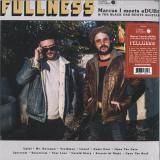
There’s a special kind of feeling when everything falls into place - when the drums bounce easy, the bassline rolls steady, and a bright guitar line cuts through the warmth of tape. That feeling became the heart of the FULLNESS, from Marcus I meets aDUBta. The sound of FULLNESS is built on simple, living elements: real drums, deep bass, a warm sound, and melodies that leave space to breathe. It moves between Early Reggae, Rocksteady, and Roots - sometimes straight and solid, sometimes stretching out into Dub and Echo. With its voice, from singer and lyricist Marcus I, FULLNESS carries the message about gratitude, love, freedom, and the small moments of everyday life. While Marcus’s singing style nods to the great singers, he stays grounded in his own experience, which perfectly complements aDUBta’s production, giving him space to shine. This LP is a complete, warm, balanced, and uplifting experience from start to finish.
FULLNESS grew from a steady musical exchange between Marcus I and aDUBta - two people on different sides of the Alps (Marcus I in France and aDUBta in Germany), finding a shared rhythm. What began in early 2022 with a few Riddims sent back and forth soon turned into a regular flow of songs. Every week brought new ideas, new words, and new melodies. When they finally met in person at aDUBta’s Attic Roots Studio in Bavaria, Germany, it all fell naturally into place. Most of the instruments were played by aDUBta, and the whole LP was mixed live on his Tascam 388, keeping that raw, handmade feel. With several friends helping bring even more color into the music, aDUBta brought in Viti Sanchez to lend his expressive saxophone and horn lines, Michael Salvermoser with his warm trombone tones, and members of the Black Oak Roots Allstars - King HuHa and Jannis Klenke on bass and guitars, along with Morry 'Da Baron' (Dub Inc.) on bass. FULLNESS means the fullness of music, of life, of friendship, of gratitude. It’s what happens when music becomes more than a project - when it turns into a shared space where things just flow.
- A1: 5 D (Fifth Dimension)
- A2: Wild Mountain Thyme
- A3: Mr. Spaceman
- A4: I See You
- A5: What's Happening?!?!
- A6: I Come And Stand At Every Door
- B1: Eight Miles High
- B2: Hey Joe (Where You Gonna Go)
- B3: Captain Soul
- B4: John Riley
- B5: 2-4-2 Fox Trot (The Lear Jet Song)
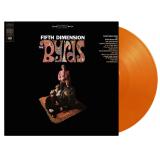
The Byrds were one of the earliest groups who could combine the best of two worlds. They caught on to the energy of the British Invasion and combined it with the lyricism & musical elements of the contemporary folk movement. Along the way they pioneered Psychedelic and Country Rock, always keeping things recognizable with their vocal harmonies accompanied by their jangly guitars.
On their third album Fifth Dimension from 1966 they started showing a more LSD-tinged side of themselves with the Psychedelic Rock of songs such as "Eight Miles High" and "I See You" and a preference for the Indian raga. One of their most pioneering albums!
Fifth Dimension is available as a 60th anniversary edition of 1500 individually numbered copies on orange vinyl.
Consistent funk operator Ralo is back with a brace of tunes that will shake your bones loose. First up is 'Broken Way', a magnificently jumbled rhythm made from languid bass and kicks, peppered with organic percussion and heated through with soft synths. It's atmospheric and real, like the overheard soundtrack to a party happening in your kitchen. 'Djembe' then brings out some brassy horns to take things to the next level. They jump out of the low-slung drums and add jazz, soul and colour that cannot be ignored. Gledd and Monsieur Van Pratt step up on the flip with cultured reworks that turn things up to 11.
15
Felipe Gordon is back on Shall Not Fade with his new album Tezeta and f*ck is it special.
Felipe Gordon is SNF label mainstay... (we released his triple repressed debut album "A Landscape Onomatopeya" in 2022 as well as 7 x 12" EPs on SNF over the years plus an extra 12" on Lost Palms)... so given his consistent and exceptional output on our record label you'd probably forgive some complacency with this write up, you might even afford us license to assume we're preaching to the choir and allow us to rest easy knowing that at this stage Felipe Gordon's records sell themselves.... Well none of those things are happening here because when an artist makes a record this complete, this good, you have to try to find the words. You use words like "timeless", "complete and "special". Words that can carry the weight. Because when you've listened to an album dozens of times, and not once, in any part, on any listen in any way has it fatigued you, you need to say. When a record felt so wonderfully familiar from the first listen and just kept on giving you the same feels ever since, you need to say. When a record makes you think about you how you feel about certain Air & St Germain albums (even when you know what it means to put that in a press release), you need to say. So here we are, saying these things.. Tezeta is a special record, one that exists in the rarefied air. A proper album. A record that every time you press play you will immediately remember why you own it and why you love it. A record that your subconscious will know so well that if shuffle is on you will know in an instant. An album that when it's in your collection and the first track starts you get a twinge of annoyance because you didn't listen again sooner and when the final track stops you stop too.
Given paint and a canvas we can most of us paint a picture, but only those that are gifted can paint something that makes us feel. Tezeta makes you feel. Feel familiarity when it's playing, yearning when its not, and absence when it ends. This alone would be enough to make the argument as to why this album is special and justify the gushing opening paragraph of this press release. But we're not done yet.
We don't really have a word in english for what Felipe Gordon has created with this album and how it makes you feel. "Tezeta" that word.
Tezeta is a one of four musical modes within the traditional Ethiopian modal music system known as Qiñit. Mulatu Astatke, the father of Ethio-jazz, frequently uses this mode, often translating it as "nostalgia" or "longing". Gordon says Mulatu's own tezeta recordings convey to him "feelings of melancholy and longing from a point of affection". This is exactly the feeling Gordon has captured. It is what he has woven through every recording on this album. Tezeta is the prime ingredient. It's the base note in recipe, it's sprinkled over the signature jazz-sampled house tracks. It powers the vast array of synthesizers Gordon deploys. It underpins the explorations into trip-hop. It's present in Gordon's varied vocal deliveries and it tunes his guitar. It's in the running order. It's the flow. Tezeta is tezeta in electronic music form, with 4/4, breakbeats, samples and synths.
Gordon says a big part of what differentiates this album from from his previous albums is that is was recorded in a period where he allowed himself to create music without the constraints of time or self-pressure which coincided with a moment of heavy personal growth which allowed him to reflect deeply on his work.
There is a word in Portuguese "Saudade" that Gordon says has a similar meaning to Tezeta - Saudade is defined as a deep, sometimes bittersweet, longing or nostalgia for someone or something that is absent or lost. But here at SNF we think that in Tezeta nothing has been lost. Quite the opposite. Through Felipe Gordon's artistic explorations we have all gained something very special indeed.

Marking their 51st release, long time label collaborator and friend Owain K returns to 200 with a brand new solo 4 track EP, Kinematic Equations.
Having joined 200 back in 2012 with the “Colonius EP”, a lot has happened in that time. With 50+ releases on the imprint and Owain setting up his own blog and a label under the Innate banner. However, some things remain - mutual friendship, a shared love of underground Electronic music and Kölsch!
15 years on the Welsh rooted, Bristol (UK) based artist delivers some of his best music to date in the shape of the “Kinematic Equations”. A four track journey into astral electronics that weave together his take on deep space sounds, fused with a healthy dose of dubby aesthetics that are close to the label’s heart.
Starting with the rhythmic pulse of ‘Axial Shifts’ on side A, chords steadily arc into life as the intensity rises and falls, all whilst keeping a measured trajectory. Drifting into the ether, ‘Open Cluster’ fills the zone where heavy sub meets filtered percussion to a rounded 909 kick, set with dreamy atmospherics and shimmering delays.
On side B ‘Eta Aquarid’ blazes a powerful trail to machine-like rumbling and evolving pads which burst brightly over the course. Last but not least, the magical aura of ‘Ghost Of Jupiter’ appears - a fusion of glimmering melodies that float over driving bottom end and steady percussion, bringing the EP to a perfect conclusion.
Written and produced by Owain Kimber
Mastered by Emanuel Geller at Salz Mastering

- 1: Lost In The Sun
- 2: Out With A Theory
- 3: One Last Blow
- 4: We Outlast Them All
- 5: A Grand Ceremonial Jester
- 6: Dagon?S Plunger
- 7: Advance Without Dropping
- 8: No Shoe Fits (Floating Babies)
- 9: Arthur Square
- 10: Landscaping
- 11: (How Would You Like A) Chariot Ride
- 12: When You?Re My Clown (Nothing Happens)
Guided By Voices’ last album Thick Rich And Delicious (October 2025) was lauded by NPR’s All Things Considered and picked #1 on Magnet Magazine’s Best Albums Of 2025. The single “We Outlast Them All” from this latest, Crawlspace Of The Pantheon, is an anthemic victory lap on album #44 from the indie rock stalwarts. Robert Pollard told Rolling Stone: “ ‘We Outlast Them All’ could be our ‘We Are The Champions’ but it’s not necessarily about us.
It’s about anyone who perseveres over a long period of time.” On Crawlspace Of The Pantheon: “I worked much more diligently on this set of lyrics. I chiseled away at lines and sections and phrasings...I wanted them to have an overall emotionally conceptual feel. At times it feels somewhat autobiographical.” Guided By Voices will not be on tour in 2026. Pollard recently told Magnet: “Why would we stop playing live and make these kinds of records? I don’t know. We do what we wanna do.” “Pollard is the greatest rock lyricist of all time.” —Dennis Cooper
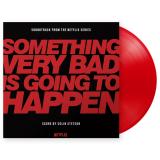
- A1: Are You Sure?
- A2: Bloodlines
- A3: How We Met
- A4: Something Red
- A5: Portraits
- A6: The Toast
- A7: Death And The Cold Cold Ground
- A8: The Bride
- B1: Something Very Bad Is Going To Happen
- B2: The Archives
- B3: The Witness
- B4: Secrets
- B5: Welcome To The Family
- B6: Something Dead
- B7: Mother
- B8: Just Married
Something Very Bad is Going to Happen is a brand new 2026 Netflix horror series produced by the Duffer Brothers, the creative minds behind the global hit Stranger Things. From the Executive Producers of Stranger Things, and the Director of Baby Reindeer, Something Very Bad is Going to Happen is on Netflix from March 26th. Created by Haley Z. Boston.
The music for the series is composed by Grammy Award-winning musician and composer Colin Stetson, renowned for his idiosyncratic use of saxophone in his projects. He has collaborated with acclaimed artists such as Bon Iver, Arcade Fire and The National, amongst others. Scoring Something Very Bad is Going to Happen builds on Stetson's extensive experience in film and game music. He has composed soundtracks for films like the psychological horror Hereditary (2018) and the dark thriller The Menu (2022), as well as the epic Rockstar game Red Dead Redemption 2 (2018). For this series, Stetson delivers a suspenseful soundtrack, perfectly complementing the Duffer Brothers' signature storytelling. A must-have release for fans!
The soundtrack of Something Very Bad is Going to Happen is available as a limited edition on red vinyl and includes an insert.

5
dungeon acid review 25-09-03 by Joakim Cosmo A acid house style EP by swedish acid techno pioneer on swedens oldest underground label? Making a acid house EP in 2025 that makes a difference is a challenging task but this one just nails it. Here you see a softer and more musical side of Dungeon Acid in the shape of 5 dark yet hopeful Acid House tracks. Despite the classic form and ingredients it somehow avoids feeling retro but I guess this is what happens when you let a true grand master do it combined with a selector and label boss beyond the ordinary. It's like a paralell universe version of what Acid House could have become, and its a beautiful vision. A1-101-303 starts off with a dreamy, moody dubby and slightly romantic track that is just utterly beautiful in all its simplicity. The elegance and easy touch strikes me instantly. Nails the essence of the genre. One more like this and im buying it. The way A2-Unlock rewind builds up gives me goosebumps. So hypnotic and dark and experimental and the way it progresses to the ravey chord-break. The sounds and effects and details feel so alive and on the fly. In the record store this is where id already go "ok, im having this one" B1-Lonely Acid boy is yet another simple yet super atmospheric track. The contrasts between the rough robotic parts and the jazzy live solos ontop just gets to me. The roughness in the mix, that second beat with the hi-hats and extra bass, the fact that its so loud and sudden, is just great. And then we get to B2-Shnukki and all of a sudden, a romantic melodious electro track with a asian touch and acid bassline, that somehow goes well together with the other tracks. This one isnt my favourite or what I would buy the record for, but it would probably be the one I discover years later. Typical Borft Records to think that far ahead. The EP ends with B3-Chiliflex BB come on and this one starts with more late 80's ravey chords but the further you get into the track the more disharmonic, tweaky and punky it becomes. Things dont really fit together yet they do. To sum it up, these tracks are raw, funky, gutsy, streety, visionary, full of contrast and a bit challenging, just like acid house should be, but often isnt. I think Dungeon Acid and Borft Records nails it here. I'd buy doubles of this.

Vibe Ride is the sixth release of Adam Rudolph's Hu Vibrational project and marks his 60th release as a leader or co-leader. Comes with insert and download code.
“With every record, the goal is to explore new creative territory,” explains Rudolph. Vibe Ride continues a deeper exploration of a trance-like groove and a conceptual framework known as Sonic Mandala. This album marks the most complete realization of that idea, partly due to the group's experience touring beforehand. That time on the road helped to refine ideas and strengthen musical chemistry. The recording process unfolded organically—likely due to the long-standing collaboration within ensembles like Go: Organic Orchestra and Moving Pictures, where the musicians have developed a deep familiarity with the shared musical language.
Sonic Mandala refers to a musical approach distinct from traditional linear structures of theme and development. Found in cultures across the globe, it may represent one of the oldest forms of musical expression—predating written history by tens of thousands of years. Today, it is most vividly preserved in the music of the Ituri Forest peoples (Aka, Baka, Ba Benzele, Mbuti), whose sound traditions revolve in cyclical, orbit-like patterns. Vibe Ride seeks to bring that ancient sense of circularity into a contemporary—and perhaps even futuristic—context.
The ensemble of Vibe Ride—Alexis Marcelo, Jerome Harris, Harris Eisenstadt, Neel Murgai, Tim Kieper, and Tripp Dudley—brings exceptional creativity and skill to the project. While grounded in the sonic languages of today, their performance channels an ancient vibrational lineage, connecting with ancestral sound makers who were attuned to the rhythms of the sun, moon, stars, and seasons. Human beings have always been deeply responsive to natural cycles.
Like a mandala, where the circle reveals itself as a spiral—always returning, but never to the exact same point—the Sonic Mandala musical experience spirals through motion. Refined signal patterns emerge through overtone-rich instrumentation. The groove becomes a threshold, shifting the listener from passive observation into active, even transcendent, participation. With open ears and an open mind, the sound spirals inward—toward a primal center—and outward into the cosmos. When this elevated state is shared among participants, it creates what mystics describe as resonance.
Vibe Ride thrives on the distinctive sonic voices of its players, interwoven with care and nuance into the compositions. Hu Vibrational merges elements of world music, electronica, and improvised jazz into something both funky and spiritual, intense and soothing.
Using signature techniques of organic orchestration, layered arrangement, and electronic processing, the compositions are sculpted from percussion, electronics, and ethereal textures. Rhythmic foundations drawn from diverse traditions serve not as endpoints, but as building blocks. As the saying goes, “Orchestration is the key.” In shaping the sound, the aim was to discover fresh ways of balancing structure and sonic color. As Don Cherry once said: “The swing is in the sound.”
The audiophile LP was carefully recorded, mixed, and mastered by James Dellatacoma—longtime engineer for both Bill Laswell and Rudolph—at Laswell’s Orange Studio.
“This crew artfully blends together to create a seamless tapestry of rhythm… the end results are mesmerizing. Hu Vibrational is all about communing with the groove spirits and creating worlds where earthy rhythms and other-worldly sounds are one.”
— Dan Bilawsky, All Music Guide
“You can be sure that when Adam Rudolph and an ensemble of breathtaking drummers get together mystical and wonderful things will happen.”
— Raul da Gama,
“A stunning effort, enjoyable and grows with repeated listening.”
— Stefan Wood, Freejazzcollective

- D4: Black Smoke (They Never Got Started) (Remastered
- D5: Concrete Concentration (Remastered
- A2: What Did They Asked
- A1: Hex Collapse (Remastered) 5 44
- A3: Porn Shop (Remastered) 7 58
- A4: Crashed Core (Remastered) 5 47
- B1: Black Smoke (Remastered) 4 09
- B2: A Small Book Of Truth
- B3: Like A Coastal Shelf
- B4: Slung (Remastered) 3 03
- B5: Emp 1951 (Remastered) 3:24
- B6: Dust In The Wind
- B7: No Juju (Remastered) 2 42
- B8: Ghiahead (Remastered) 3 03
- C1: Soyo Solitude (Remastered) 3 31
- C2: Cup Noodle (Remastered) 3 30
- C3: Constructivist (Remastered) 5 19
- C4: She Said It Would Happen
- C5: Amberly House (Remastered) 4 36
- D1: Yes Hello
- D2: No Juju (Man Power Version - Remastered
- D3: Cup Noodle (Unemployed Youth Version - Remastered
- D6: They All Live In The Past
23
Fragments was a completely new way of working for us. We’ve always worked with an internal brief, creating documents, pictures and videos, simply because keeping an idea on track with three individuals can be difficult. It's easy for someone to be edged out of the creative process when the focus is not clearly defined.
It’s a formula we’ve used since the early 2000s, but things have changed a lot since then, particularly when we decided to dip our collective toes into supporter memberships with Patreon. It made us think about what we could do directly for our support- ers rather than just the next album or project. At first, the whole thing felt odd and uncomfortable, but we decided that we’d try a few things and ask for feedback.
"Fragments" was initially a way for us to see how we could include others in an ongoing creative process. There was no over-arching concept, no defined characteristics or purpose, just the promise that there would be at least one new track for members to download every month. Consequently, we never knew what was coming next, so the old, very focused working method was irrelevant. It was difficult for us to let individual tracks go without knowing what was coming next, but this also made the project more interesting.
And then C19 hit and we were forced to continue the project remotely from our home studios. As difficult as the disruption was, it was during this period that we realised we could re-organise and remaster the individual tracks into a coherent album, captur- ing a specific moment in time and drawing a line under the first phase of the project.
Like our "Allegory" EPs, we’ve tried to keep everything stripped back. We used to hide many subtle elements within the layers, but not so much this time.
Fragments is our journey through many changes, both self-im- posed and those imposed upon us, and it ultimately led us to create things differently. We hope you like it.
b A2
r D1 b Yes Hello (Remastered BONUS) 1:53
s D2 No JuJu (Man Power Version - Remastered BONUS) 4:27
t D3 Cup Noodle (Unemployed Youth Version - Remastered [BONUS]) 5:43
[u] D4 Black Smoke (They Never Got Started) (Remastered [BONUS]) 2:18
[v] D5 Concrete Concentration (Remastered [BONUS]) 3:21
[b] They All Live In The Past (Remastered [BONUS]) 1:06
3
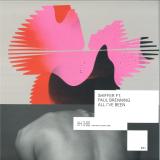
Blazing onto ICONYC for its 21st release, Swiss sonic alchemist Shiffer makes a striking debut with the magnetic All I’ve Been EP. Celebrated for his emotional finesse and innate ability to connect with unexplored corners, Shiffer’s latest creation, including a lucious collaboration with Paul Brenning and capped off by Jonathan Kaspar’s trademark rework, is a tantalizing suite designed to echo in our timeless halls.
The journey begins with Shiffer & Paul Brenning’s opening manifesto, “All I’ve Been”, a track that unfurls with both confidence and caution, as if self-aware from its very first beat. Mechanical whirs and fractured frames give way to low-end swells that drive forward with an unrelenting undertow. Brenning’s unmistakable vocals start to break a warmer ground as they linger in the liminal space between today and tomorrow before slowly growing in gravitas. Suddenly, the piece begins to contort, drawing spellbinding figures as arresting arrangements and melodic flourishes allow for decompression. Imbued with a tantalizing breakdown that amplifies their exquisite use of negative space, “All I’ve Been” is a fascinating and intimate take that feels as expansive as it ever could.
The follow-up, “Urban Legends”, takes a bolder stance. Anchored by heavy drum programming that carves its place with deliberate force, the track is haunted by ghostlike vocal fragments that lend an unsettling, cinematic edge.. Out from the left field, Shiffer deploys undulating synthetics that intertwine with consummate ease as they glide under the spotlight. An alluring act that treads unhurried and unconcerned, “Urban Legends” operates at its own pace, far from the demands of a world lost in the metropolitan hustle, allowing us to bask in a lore of things that might or might never have happened.
Closing the release, ICONYC calls upon Cologne innovator Jonathan Kaspar, who delivers a singular reinterpretation of “All I’ve Been”. Immersed in iridescent textures, Kaspar layers lush, swelling pads over pulsing low frequencies, their ebb and flow punctured by flashes of distortion that spark like electric currents.. Reflective and equally immersive, Jonathan Kaspar’s take on “All I’ve Been” pushes the collaboration into a brash new terrain while retaining the spiritual ethos intact

"The Happening by Tomorrow Comes The Harvest is the least case, a provocative confrontation. It's a challenge or dare to the idea that music can be useful if we are able to experience it. I would imagine that to many, music having an objective beyond the listener doesn't make sense because the general thought is that Music is made for us to consume, to make us remember, to influence us and to make us feel something. The Happening does all those things but much more. What it does is expand the scope from us to "it". Creating and constructing music for the subject of existence is a tall order.
The concept of The Happening is about the beginning and the end of Time and Space; the initial point of when reality starts and its conclusional apex. In the beginning, there is a great light. And from this light, comes life. Life is lived until it isn't.
This is what The Happening implies. It speaks about a 9-minute frame in reality, used to emphasize something that happened a very long time ago, something that happened in its creation and what will eventually happen far in the future.
The Happening was of an accidental birth. The love child of three musicians (Jeff Mills, Prabhu Edouard and Jean-Phillippe Dary) who was just asked to play "something" so that the camera crew could have extra b-roll for all the previous footages of the band while they were working in the recording studio in the North of Paris for their album Forbidden Planet. There was no discussion of what they'll do, no plan, no direction other than to use music to reach a level of consciousness.
Somehow within these transformative 9 minutes, something was felt by each of them, explored to its furthest point, which lead to this extraordinary creation. The Happening refers to the life and death of everything living thing. Infinity."
Jeff Mills

- A1: I Can't Wait
- A2: Rock A Little (Go Ahead Lily)
- A3: Sister Honey
- B1: I Sing For Things
- B2: Imperial Hotel
- B3: Some Become Strangers
- C1: Talk To Me
- C2: The Nightmare
- D1: If I Were You
- D2: No Spoken Word
- D3: Has Anyone Ever Writen Anything For You
Looking back on her career in the early 90s, Stevie Nicks described the first track of Rock a Little as “the most exciting song that I had ever heard.” This coming from a superstar who was already closely affiliated with several bajillion-selling Fleetwood Mac albums — to say nothing of her own benchmark solo debut. Her remarks attest to the enthusiasm and effort she invested in her third record, a 1985 work that quickly furthered Nicks’ profile and cemented itself as a piece of 80s pop lore.
Mastered at MoFi’s California studio, pressed at Fidelity Record Pressing in California, strictly limited to 4,000 numbered copies, and housed in a Stoughton gatefold jacket, Mobile Fidelity’s 180g 45RPM 2LP set presents Rock a Little in audiophile sound for its 40th anniversary. Helmed by a cadre of producers and engineers, and recorded for a reported one million dollars, the platinum-certified album teems with a head-spinning array of colors, tones, dreamscapes, and accents. This reference-grade reissue marks the first time they are all brought to light and conveyed with proper balance, dimensionality, and positioning.
Though Rock a Little doubtlessly has period characteristics of a mid-80s LP, Nicks and company spare no expense when it comes to distinguishing the music with expansive sonics distinguished with lush melodies, high-tech percussion, echoing vocals, sampled keyboards, and layers of sophisticated accents. The degrees of spaciousness, headroom, and dynamics are nothing less than inspiring, while the newly enhanced detail, texture, and clarity make the songs sing like never before. As for Nicks’ voice? Wait ’til you experience the transparency and depth.
Those advantages extend, of course, to the aforementioned “I Can’t Wait,” a statement-making opener shot through with modulating synthesizers, splashy drums, metallic guitars, and serious drama. Holed up in a massive studio, Nicks required just one take to nail her part, which she called “magic and simply not able to beat.” The singer-songwriter also distilled the reverberating emotional essence of the Top 20 tune, stating “when I hear it on the radio, this incredible feeling comes over me, like something really incredible is about to happen.”
The same can be said for nearly all of Rock a Little. Crafted by the likes of Songwriters Hall of Fame multi-instrumentalist/producer Rick Nowels, Heartbreakers organist Benmont Tench, bassist Bob Glaub, jack-of-all-trades Greg Phillinganes, and session-pro guitarists Waddy Watchel, Les Dudek, and Danny Kortchmar — along with another two dozen or so participants — the record spills with diverse ideas, shapes, and moods. Everything is in the right place, as evidenced by the swirling glide and sensual undertow of the slightly funky title track to the snapping rhythmic pace and big hooks of “Imperial Hotel,” one of Nicks’ standout moments.
“What was it she wanted?” Nicks queries on “No Spoken Word,” continuing a theme of contemplation that runs through the narratives. Nicks never lands on a definite answer, but hearing her explore loneliness, love, and the secrets we keep to ourselves proves continuously rewarding. Take her passionate performance on a cover of Chas Sanford’s “Talk to Me,” a Top 5 smash furthered by tasteful saxophone lines and understated folk elements. Immersive yourself in the grand sonic corridors of “If I Were You,” laden with Nicks’ signature mysticism.
Moreover, surrender to the gravitas of the closing “Has Anyone Ever Written Anything for You,” a piano ballad composed about the death of Joe Walsh’s three-year-old daughter. As Nicks asserts earlier on the album, she sings for things money can’t buy.
So, rock a little, yes, but dare to feel even more.

5
Hot off his killer 2024 remix of Tiga and Hudson Mohawke’s “BUYBUYSELL,” UK-New Zealand DJ/Producer Keepsakes makes his proper Turbo debut with the Impossible (Eating the Sun) EP. From merciless techno bangers to caustic track titles that will absolutely shred your preconceived notions about the world and sneer at them as they writhe bleeding on the cold, hard ground, this release validates our label’s OCD-level commitment to living on the edge of something at all times.
The title track doubles as a massive forest rave bomb AND the No. 1 battle weapon for opening DJs looking to fuck over the headliner, while “Bongo Funeral” reimagines tribal techno as the chief export of a village ruled by emotionally unavailable gremlins. Next, “Snacks at Waco” makes skillful use of a hammering industrial beat to hammer home the importance of loyalty and community, and “Parasocially There for You” deftly soundtracks anxiety dreams about meeting your favorite podcaster. Finally, closer “Nimby Orgy” likely represents the very first sexual aftercare banger. NOTE: we’ve heard bad things about both NIMBYs and YIMBYs, and as such have adopted a militantly neutral position on the matter of who is f-ing and s-ing in our backyard.
Given that Keepsakes is a vinyl-only DJ, we’ve done him the courtesy of making this release available both on vinyl and digitally. While this would have been an incredible opportunity to completely shut him out of playing his own tracks, we decided that this would be unfair to the music itself. Because at the end of the day, Turbo takes its marching orders from Harmony, Melody, Rhythm, and Timbre, and to betray even one of our ethereal masters would be tantamount to kicking our own vision square in the nuts. IOW: ain’t never gonna happen.

There’s a particular magic that happens when seasoned producers with global roots come together under a shared ethos - not for hype, but for connection. That’s precisely what MISINGO represents. A cross-continental studio experiment born out of Covid-era isolation, the group spans hemispheres and histories: Yorkshire's Doorly, L.A. legend Gary Richards (aka Destructo), and Australian duo Colour Castle. Their debut offering, Give You Love, lands via UK House Music institution Hard Times Records, and it’s as emotionally resonant as it is built for the floor.
Anchored by a slow-burning acid line and moody, immersive synthwork, 'Give You Love' carries the DNA of classic house without feeling like pastiche. DJ Rae’s smokey vocal, recorded in Doorly’s Ibiza studio, sets the tone - raw, intimate, immediate. Gene Farris enters with a gravelly, magnetic counterpoint, flipping the call-and-response into something spiritual. It’s a record that feels both new and deeply lived-in, a jam session from afar that somehow lands with unity and purpose.
For the remix suite, Hard Times dig into family ties and deliver a heavyweight lineup that spans generations of dance music lineage.
First up, DJ Pierre, the Phuture pioneer himself, brings a Wild Pitch revision that is pure summer sleaze and shimmer. Glistening keys, kinetic snares, and a syrup-thick bassline collide in a mix that’s tailor-made for golden-hour sets and open-air systems.
DJ Romain brings that New York swing. All velvet chords, stabbing pianos, and organ swells that spiral skyward. It’s gospel-house energy that doesn’t need to shout to be heard, a reminder that soul still moves the dancefloor.
Closing out the package is Charles Lavine of Soul Clap fame, whose Boston-bred funk sensibility steers things into new territory. He strips back the mix, lets Rae’s vocal ride the groove, and injects a subtle bounce that turns heads and hips in equal measure.
With 'Give You Love', MISINGO and Hard Times haven’t just released a single, they’ve bottled a moment: one born of distance, stitched together with soul, and destined for collective release on dancefloors worldwide.
- A1: André Brasseur - Saturnus
- A2: Contessa Vittoria - Can We Stay Together
- A3: Klaus Weiss - Time Signals
- A4: Brainstorm - You Are Whats Gonna Make It Last
- B1: Paladin - The Fakir
- B2: A To Austr - Thumbquake & Earthscrew
- B3: Dave - In My Mind
- C1: Relatively Clean Rivers - Journey Through The Valley Of O
- C2: The Advancement - Stone Folk
- C3: The Pretty Things - The Sun
- C4: Poll - Psachno Na Vro To Filo Mou
- D1: Higamos Hogamos - Moto Neurono
- D2: The Invisible Girls - Huddersfield Wastes
13
"Throughout all my time as a musician and producer, ever since Jack the Tab, I've been focused on developing a single idea: Blending psychedelic sounds and effects with rhythm." Richard Norris, Strange Things Are Happening White Rabbit 2024
Over the past few years Eskimo Recordings have invited some of the best crate diggers aroundto curate compilations that don't just reveal the hidden contents of their record bags but something about themselves too. Now, following in the footsteps of the likes of Bill Brewster and Psychemagik, producer, musician, DJ, writer and more, Richard Norris, takes us on a globetrotting psychedelic journey with the epic 42 track collection, Mr Norris Changes Brains.
For over forty years Richard has played a part in many of the UK's most important music subcultures. Whether sharing stages with the likes of Tracey Thorn as a pubescent punk in St. Albans, or running freakbeat nights in Liverpool and working at the pioneering psychedelic label Bam Caruso, co-producing the UK's first acid house inspired LP with Throbbing Gristle's Genesis P. Orridge or riding the wave of creativity that the second summer of love unleashed all the way to the Top of the Pop studios as The Grid, Richard's career has continually seen him work to expand both hisown and the public's musical horizons.
With Mr Norris Changes Brains it's the most recent part of his mercurial career that he's focused on. Drawing inspiration from his post 2006 adventures as one half of Beyond the Wizard's Sleeve, alongside Trash's Erol Alkan, this compilation shows how a more connected world has blown the dust off a paradoxically sometimes straightjacketed scene. The result is a dizzyingly wide-ranging collection that explores the further out there reaches of worldwide psychedelia and dancefloor mayhem.
"A lot of these tracks are fairly recent discoveries, things that I've discovered from around the time I started working with Erol and going right up to today," Richard explains. "Whether that's from going out to play and finding new records in places like Istanbul or just connecting with people online from all around the world. Psych can sometimes be a sort of narrow-minded field, with everything havingto sit in its specific niche, but more and more people are open to new sounds and that's allowed for a much broader selection."
Despite their disparate origins what does unite these tracks is that they aren't just there to zone out to on a bean bag as projections of swirling coloured oils and psychedelic patterns wash over you. Mr Norris may change brains but his DJ sets also move feet, and whether it's their killer guitar riffs, oscillating synths floor shaking drums or soulful Hammond organs these are all cuts that from festival tents to underground clubs have proven time and time again to get people dancing.
"With a lot of these tracks there's a kind of fun element in them," says Richard. "It's still psychedelia, but they've also got these solid, funky grooves. They sound phenomenal on the dancefloor and as much as these records might excite old psych heads, this compilation is also for a new generation out there who might have never heard anything like this before and, just like when I was 18 and heard The 13th Floor Elevators for the first time, think 'Oh, my God, what on earth is this and more importantly what else is out there?'"
- A1: Banchee - Evolmia
- A2: The Dirty Filthy Mud - Forest Of Black
- A3: Wool - Love, Love, Love, Love, Love
- A4: Spencer Mac - Ka-Ka Baya Mow-Mow (Sing A Little Love Song)
- B1: Trifle - One Way Glass
- B2: Brainticket - Black Sand
- B3: Emma De Angelis - Trip
- B4: Blonde On Blonde - Castles In The Sky
- C1: The Braen's Machine - Fall Out
- C2: Eddie Warner & Roger Roger - Shut Up
- C3: Köy Karde?Ler - Shürük
- C4: The Children - Beautiful
- D1: Moebius & Beerbohm - Doppelschnitt (Richard Norris Edit)
- D2: Demon Fuzz - Past, Present & Future
14
"Throughout all my time as a musician and producer, ever since Jack the Tab, I've been focused on developing a single idea: Blending psychedelic sounds and effects with rhythm." Richard Norris, Strange Things Are Happening White Rabbit 2024
Over the past few years Eskimo Recordings have invited some of the best crate diggers around to curate compilations that don't just reveal the hidden contents of their record bags but something about themselves too. Now, following in the footsteps of the likes of Bill Brewster and Psychemagik, producer, musician, DJ, writer and more, Richard Norris, takes us on a globetrotting psychedelic journey with the epic 42 track collection, Mr Norris Changes Brains.
For over forty years Richard has played a part in many of the UK's most important music subcultures. Whether sharing stages with the likes of Tracey Thorn as a pubescent punk in St. Albans, or running freakbeat nights in Liverpool and working at the pioneering psychedelic label Bam Caruso, co-producing the UK's first acid house inspired LP with Throbbing Gristle's Genesis P. Orridge or riding the wave of creativity that the second summer of love unleashed all the way to the Top of the Pop studios as The Grid, Richard's career has continually seen him work to expand both his own and the public's musical horizons.
With Mr Norris Changes Brains it's the most recent part of his mercurial career that he's focused on. Drawing inspiration from his post 2006 adventures as one half of Beyond the Wizard's Sleeve, alongside Trash's Erol Alkan, this compilation shows how a more connected world has blown the dust off a paradoxically sometimes straightjacketed scene. The result is a dizzyingly wide-ranging collection that explores the further out there reaches of worldwide psychedelia and dancefloor mayhem.
"A lot of these tracks are fairly recent discoveries, things that I've discovered from around the time I started working with Erol and going right up to today," Richard explains. "Whether that's from going out to play and finding new records in places like Istanbul or just connecting with people online from all around the world. Psych can sometimes be a sort of narrow-minded field, with everything having to sit in its specific niche, but more and more people are open to new sounds and that's allowed for a much broader selection."
Despite their disparate origins what does unite these tracks is that they aren't just there to zone out to on a bean bag as projections of swirling coloured oils and psychedelic patterns wash over you. Mr Norris may change brains but his DJ sets also move feet, and whether it's their killer guitar riffs, oscillating synths floor shaking drums or soulful Hammond organs these are all cuts that from festival tents to underground clubs have proven time and time again to get people dancing.
"With a lot of these tracks there's a kind of fun element in them," says Richard. "It's still psychedelia, but they've also got these solid, funky grooves. They sound phenomenal on the dancefloor and as much as these records might excite old psych heads, this compilation is also for a new generation out there who might have never heard anything like this before and, just like when I was 18 and heard The 13th Floor Elevators for the first time, think 'Oh, my God, what on earth is this and more importantly what else is out there?'"

- A1: Iron Butterfly - Iron Butterfly Theme
- A2: Rare Bird - Devil's High Concern
- A3: Paul St. John - Flying Saucers Have Landed
- A4: Chris Hodge - We're On Our Way (2010 Remaster)
- B1: Juantrip - Shadows
- B2: 62 Miles From Space - Time Shifts
- B3: White Trash - Road To Nowhere
- C1: Blue Phantom - Diodo
- C2: The Mannheim Rock Ensemble - Hungarian Dances
- C3: Limousine - Barriers
- D1: Ugo Busoni - Rullio
- D2: Bernard Estardy - Cha Tatch Ka
- D3: Kate - Shout It
- D4: Dyna-Might - Need You
- D5: La Metamorfosi - Scusa, Eh!
15
"Throughout all my time as a musician and producer, ever since Jack the Tab, I've been focused on developing a single idea: Blending psychedelic sounds and effects with rhythm." Richard Norris, Strange Things Are Happening White Rabbit 2024
Over the past few years Eskimo Recordings have invited some of thebest crate diggers around to curate compilations that don't just reveal the hidden contents of their record bags but something about themselves too. Now, following in the footsteps of the likes of Bill Brewster and Psychemagik, producer, musician, DJ, writer and more, Richard Norris, takes us on a globetrotting psychedelic journey with the epic 42 track collection, Mr Norris Changes Brains.
For over forty years Richard has played a part in many of the UK's most important music subcultures. Whether sharing stages with the likes of Tracey Thorn as a pubescent punk in St. Albans, or running freakbeat nights in Liverpool and working at the pioneering psychedelic label Bam Caruso, co-producing the UK's first acid house inspired LP with Throbbing Gristle's Genesis P. Orridge or riding the wave of creativity that the second summer of love unleashed all the way to the Top of the Pop studios as The Grid, Richard's career has continually seen him work to expand both his own and the public's musical horizons.
With Mr Norris Changes Brains it's the most recent part of his mercurial career that he's focused on. Drawing inspiration from his post 2006 adventures as one half of Beyond the Wizard's Sleeve, alongside Trash's Erol Alkan, this compilation shows how a more connected world has blown the dust off a paradoxically sometimes straightjacketed scene. The result is a dizzyingly wide-ranging collection that explores the further out there reaches of worldwide psychedelia and dancefloor mayhem.
"A lot of these tracks are fairly recent discoveries, things that I've discovered from around the time I started working with Erol and going right up to today," Richard explains. "Whether that's from going out to play and finding new records in places like Istanbul or just connecting with people online from all around the world. Psych can sometimes be a sort of narrow-minded field, with everything having to sit in its specific niche, but more and more people are open to new sounds and that's allowed for a much broader selection."
Despite their disparate origins what does unite these tracks is that they aren't just there to zone out to on a bean bag as projections of swirling coloured oils and psychedelic patterns wash over you. Mr Norris may change brains but his DJ sets also move feet, and whether it's their killer guitar riffs, oscillating synths floor shaking drums or soulful Hammond organs these are all cuts that from festival tents to underground clubs have proven time and time again to get people dancing.
"With a lot of these tracks there's a kind of fun element in them," says Richard. "It's still psychedelia, but they've also got these solid, funky grooves. They sound phenomenal on the dancefloor and as much as these records might excite old psych heads, this compilation is also for a new generation out there who might have never heard anything like this before and, just like when I was 18 and heard The 13th Floor Elevators for the first time, think 'Oh, my God, what on earth is this and more importantly what else is out there?'"
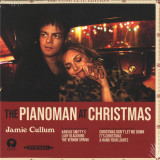
- A1: Winter Wonderland (Feat Kansas Smitty's) (2 40)
- A2: I Believe In Father Christmas (3 51)
- A3: Man With The Bag (Feat Kansas Smitty's) (2 54)
- A4: Christmas Don't Let Me Down (3 21)
- A5: Sleigh Ride (Feat Kansas Smitty's) (2 24)
- A6: Amazing Grace (Feat The Vernon Spring) (2 53)
- B1: This Winter (Feat Lady Blackbird & Kansas Smitty's) (2 54)
- B2: Silent Night (3 50)
- B3: Jingle Bells (Feat Kansas Smitty's) (2 55)
- B4: Frosty The Snowman (Feat Kansas Smitty's) (2 09)
- B5: Have Yourself A Merry Little Christmas (5 34)
- B6: God Rest Ye Merry Gentlemen (Feat Kansas Smitty's) (2 15)
- B7: Let No Walls Divide (3 21)
- C1: It's Christmas (3 12)
- C2: Beautiful, Together (3 26)
- C3: Hang Your Lights (4 57)
- C4: The Jolly Fat Man (3 05)
- C5: The Pianoman At Christmas (4 27)
- D1: Turn On The Lights (4 16)
- D2: So Many Santas (3 28)
- D3: Christmas Never Gets Old (2 43)
- D4: How Do You Fly (5 55)
- D5: Christmas Caught Me Crying (3 17)
23
Multi platinum-selling musician and multi-instrumentalist Jamie Cullum today announces The Pianoman At Christmas - The Complete Edition. Due for release on 19th November via Island Records. The deluxe album completes last year’s critically acclaimed hit album The Pianoman At Christmas Part 1, with its Second Part - featuring 11 covers of classic Christmas songs, as well as two original songs, including lead single ‘Christmas Don’t Let Me Down’, out now.
Drawing from the past and inspired by the present, The Pianoman At Christmas - The Complete Edition sees Jamie team up with London jazz innovators Kansas Smitty’s, as well as composer and producer The Vernon Spring and acclaimed LA-based jazz singer Lady Blackbird to complete a piece of work that is imbued with seasonal sophistication. Alongside his two original tracks, Jamie breathes new life into classics such as ‘Winter Wonderland’, ‘Silent Night’ and ‘Frosty The Snowman’, ranging from ‘Amazing Grace’ to ‘Man With The Bag’ and ‘Sleigh Ride’. The Complete Edition will be released on double CD and double black vinyl formats, alongside a limited run of 180G Heavyweight coloured vinyl in red and gold.
Speaking on the release, Jamie said -
“I had a huge amount of fun creating part two of TPAC. Recorded live, all in the room together - it’s the party after the big show, with friends, drinks and some of the finest musicians on planet earth.”
Released almost a year to the day before The Complete Edition is due out, The Pianoman At Christmas featured 11 original songs played by 57 of Britain’s best musicians, recorded in Abbey Road’s famous Studio 2 and produced by Greg Wells whose The Greatest Showman soundtrack spent 28 weeks at number 1. The album sold over 37,000 copies, spending 6 weeks in the album chart and peaking at number 11. In December Jamie broke the Guinness World Record for the largest music lesson ever, when he held a virtual piano lesson for 2,282 people, teaching them the carol ‘In The Bleak Midwinter’ with special guests Robbie Williams, Sigrid and Dodie.
With 10 million album sales and over 890 million streams to date, Jamie is a celebrated musician the world over with loyal fans in every corner of the globe. With a career spanning over 20 years, his legendary live shows have seen him perform and work alongside artists as diverse as Herbie Hancock, Pharrell Williams, Kendrick Lamar and IDLES - Jamie writing on the latter’s album Ultra Mono. The success of Jamie’s major label breakthrough, Twentysomething in 2003 and its follow up Catching Tales saw him nominated for a BRIT, Grammy and numerous other awards around the world. In 2020 he won an Ivor Novello Award for his track ‘Age of Anxiety’, taken from his acclaimed 9th studio album Taller. In addition to his enduringly successful recording career, Jamie has also established himself as a multi-award winning music broadcaster; his BBC Radio 2 show celebrated its 11th year on air this year.
With her debut album Black Acid Soul earning critical praise, Lady Blackbird is a revelatory new talent with music that transcends the jazz scene through which the LA-based artist is rooted. Reflecting influences as varied as Billie Holiday, Gladys Knight, Tina Turner and Chaka Khan, with critics drawing comparisons to Adele, Amy and Celeste, Lady Blackbird’s distinct and beguiling voice is not one to be missed.
UK band Kansas Smitty’s have developed a musical voice wholly unique from what’s happening around them. They are led by band leader and producer Giacomo Smith who's cinematic compositions feature on their releases, most recently 2021's acclaimed Things Happened Here for Berlin based label !K7. In 2015 they launched their own east London venue and bar, of the same name, which became one of the conception points for the current UK jazz boom.
Londoner Sam Beste aka The Vernon Spring is a polymath in music who has production, writing and performance credits as eclectic as Amy Winehouse, Matthew Herbert, Kano, Joy Crookes, Beth Orton, Blood Orange, Gabriels and MF DOOM. Since 2019 he has been making waves with solo project The Vernon Spring, which foregrounds his rare capacity to hold sophistication and simplicity in the same hands through highly intimate muted-piano compositions and improvisations.

4
It is a groove-infused journey designed for those who thrive on the pulse of the dance floor. This slinky, high-energy compilation from NOREPRESS brings together the driving rhythms of Giacomo Silvestri - Paradox, Andrea Giuliani - Hypnagogic, Kirill Matveev & Wiklauri - Fasol, and Nicolas Barnes - Lift It, each track crafted to keep bodies moving and minds locked in.
The essence of this release lies in its intricate drum progressions—tight, rolling, and infectious—laying the perfect foundation for deep, bouncing grooves and hypnotic acid elements to work their magic. The energy flows effortlessly, creating that perfect in-the-moment feeling where time dissolves, and only the rhythm remains.
Whether it’s warming up the room or taking things deeper into the night, NRP004 is made to move a crowd. Packed with room-filling beats and an irresistible momentum, this one is all about embracing the moment, locking into the groove, and stepping into 2025 with pure dance floor delight.
NOREPRESS is a division of MixCult Records

- A1: Teardrops (Don't Stop The Music)
- A2: Getaway Flat Madison Mc Ferrin
- B1: Quiero
- B2: Métamorphosas Flat Natalie Slade
- C1: Olympe Flat Ndrk, Yacine Dessouki
- C2: I Feel Good
- C3: Heart To Heart Flat Sts, Sacha Rudy
- D1: Sunshine Flat Dominique Fils-Aimé
- D2: I Love You More Than Myself Flat Rome Fortune
- D3: Spacer Feat Noemie, Mowg
10
Electronic music has never been solely about the music itself or its fame. It has been a fight, a totem. Every week it becomes a universal communion, a celebration, a reconciliation with both ourselves and others. No frontiers, no territories, no certainties other than being as authentic as possible.
As a musician and producer, after five albums, I clearly know that my proposition will always be about diversity more than a single crafted sound. This is how I am: multifaceted, nourished by social human exchanges and my encounters in science, art, and technology. I have one life and different bodies. I can be physical and digital, technological and organic, house, techno, and soul. This album is about shedding light in a vertical period where the fight for truth and visibility becomes crucial, where Blockchain might become our right to vote. It's about making complex things sound simpler, joining the dots. A proposition more than a promise: Unshadow.
The metamorphosis is happening; embracing all generations on the same song with Nile Rodgers and Madison McFerrin! Embracing the diversity of backgrounds, styles, and geography, from Sacha Rudy to Dominique Fils-Aimé (Canada), through Natalie Sade (Australia). As a citizen of the world, having traveled endlessly for 30 years now, I know how lucky I have been to experience and experiment with various situations. If this album can simply share some of the joy I have received and spread some goodwill and white magic to the listener, I will be the happiest seeing the light that chases away the shadow.

Over three years in the making, Needle Mythology Records is delighted to announce a super deluxe, expanded remastered reissue of The Lilac Time’s 1991 masterpiece, Astronauts. Released as a triple vinyl, triple CD or single vinyl, only 1000 copies of each format will be produced, there will be no further pressings. Both the 3LP and 3CD editions will come with an extensive 11,000 word oral history of Astronauts and liner notes by Needle Mythology co-founder and longtime Stephen Duffy fan, Pete Paphides.
All three albums including a 2024 remaster, a collection of works in progress entitled‘Softened By Rain The Making Of Astronauts’ and a live compilation ‘Any Road Up The Lilac Time Live 1990/91’ have been mastered for vinyl by Miles Showell at Abbey Roadand will be housed in a triple gatefold sleeve with a colour inner sleeve and new artwork for each disc, which has been especially created by designer Mike Storey. The main sleeve for Astronauts itself will replicate the original artwork but with the four distinctive “blobs” rendered in a red “foil” texture. In addition to these three disc sets, 1000 single vinyl remastered copies of Astronauts will also be made available, in a cherry red vinyl edition to match the outer sleeve.
With the shoegaze and baggy movements at their zenith, The Lilac Time’s fourth album was released at a moment when the left-field music zeitgeist was shaped by the nascent shoegaze, baggy and grunge movements. Whilst Astronauts conformed to none of those trends, neither was it the record Stephen had in his head when he finally finished working on it. We’ll never know how that record would have sounded, but it’s hard to imagine a better version of the album he did end up making. The songwriter who brought ‘A Taste of Honey’ and ‘Hats Off, Here Comes The Girl’ into the world envisaged the sort of choruses that would jump from the single speaker of your favourite transistor and lodge themselves into the collective memory bank.
But while he really was writing some of his most beautiful melodies, Astronauts is a family of songs that demands to be kept together in the sundazed cloud of inspiration that created it. It constitutes a partial retreat from the outwardfacing utopianism of its predecessors, choosing instead to dwell on the journey taken to get to this point. That this is an audibly different band to the pastoral expeditionaries of the group’s previous releases is almost entirely down to the departure of Nick Duffy and the arrival of Sagat Guirey. Suddenly, accordions, banjos and mandolins are out; jazz guitar is in. Sagat’s filigree work on the outro of ‘A Taste for Honey’ acts as a sublime parting shot to a lyric which acts as a wiser, wistful companion piece to Stephen’s 1985 solo hit ‘Kiss Me’, something tantamount to the camera retreating to reveal the years elapsed between the time depicted and the present day. The distance between the carefree youth of pop stardom and the first intimations of mortality can be measured between the first and second verses of the quietly devastating ‘Madresfield’; from the depiction of the deserted cricket pavilion obscured by fresh snowfall to the sudden shift in perspective from subject to protagonist: ‘No one ever told me/That killing time is harmful/For time cannot recover/What soon the ground will offer.’ For all of that, however, the resulting album didn’t correspond to the vision its creator had for it. At a loss as to what to do with it, Stephen surrendered Astronauts to Creation with no plans to promote or draw attention to it. The consciousness shift of which Stephen had hoped The Lilac Time might be a precursor hadn’t happened. Or, rather, it had – but it had happened elsewhere, in the Haçienda and Shoom and in Ibiza. Not on the hills of Herefordshire. In a nod to that sea change, Stephen handed over one song, ‘Dreaming’ to Hypnotone, who

Imagine a nocturnal rendezvous between the lyrical playfulness of Serge Gainsbourg and the infectious yet smooth danceability of Daft Punk. Tormento is a sexy soft disco odyssey that weaves a contemporary fantasy where dilemmas and desires—torments of the heart and flesh—are bathed in the sultry glow of classic erotic cinema.
Recorded in Los Angeles and Paris, the song is a collaborative effort between composer and multi-instrumentalist Louis Fontaine, DJ and music supervisor Alix Brown, and lyricist and writer Margo Fortuny. This sonic tale of longing and uncertainty, ignited by the trio's shared love for 1970s sounds, cinema, and style, draws inspiration from the cinematic soundscapes of François de Roubaix and from French and Italian chanson.
Tormento pairs a haunting, nostalgic melody with a late-70s disco arrangement featuring a mix of vintage synthesizers, driving basslines, and rhythmic percussion. Alix Brown's ethereal vocals convey the electrifying thrill of an immediate, magnetic attraction.There's seduction, mystery, the poetry of a moment, the allure of transgression, indecision, and all the things that happen late at night. When faced with temptation, what do you do? Perhaps, yousurrender to the sweet, intoxicating rhythm of the forbidden.
Adance song for night owls, loners, and romantics, Tormento is out on 7" and digital on February 14th, 2025, courtesy of Four Flies.

Dubstep and garage pushers Hotflush make a surefooted return, welcoming Perth producer Odd Occasion to their roster with an al dente next-gen garage cookoff. This 'Jukebox' offers six choices to the discerning listener, though you'd be hard-pressed to find a pub owner who'll take them on in toto - unless the landlords happen to be real heads, that is! All's well that this is a machine with niche appeal, with its formal calculations and dark contusions tempting fans of all things bass-led. Though the record begins on a volatile yet minimal note, the A3 'Simple' takes a glassy dubstep turn, virtifying the mix with hollow sound design and a stealthy grime vocal sample. The B-side betrays a sacrifice of genre focus, with 'Salt' bringing brutal trade zone techno via experimental trap sound design, and 'Tape' progressing through tender zithers, which help uptick the mix to reach a snappy folktronic finish.

Last May, Hard Times captivated us with The Lost D.A.T.S (Part One)—a remarkable collection of unreleased and freshly unearthed gems from the vaults of NYC legend DJ Romain. But the story didn’t end there. To our surprise and delight, Romain had delivered an even larger treasure trove of beats—too many to reveal all at once.
Now, Hard Times is proud to present the next chapter: DJ Romain – The Lost D.A.T.S (Part Two).
"1996-97? Yeah, that’s when New York was still NEW YORK!
That was around the time we really started to get hold of exotic herbs. Copper Haze, hydroponic! The vibes in the studio were always lovely. I had hair at the time! Dread-Locs down to my shoulders... I was still rockin’ the Wallabees, or British Walkers as we called them - representing for Brooklyn and my West Indian roots!
There was no social media, no supervision, nobody all up in our business… It was classic "mind your own business" NYC Vibes! I was DJing at a lot of the hot clubs and THE hottest afterhours in the city. There were nights when I saw Micheal Douglas roll into the afters with Grace Jones - they were there to party and unwind and I was there dropping the dope tracks for the people.
When it was studio time, with my homie Matt Echols...I was probably setting things off with some quality herbage, a big ass bag of Funyuns and my trusty SP-1200, lol. I had picked up some tips and tricks from Todd Terry and by '96-'97 I was a Shaolin with it myself! This was around the time tracks like "Flowers" and "Only Love Can Break Your Heart (Dub)" were tearing up the clubs. I wanted to be able to get my ideas out with no problem, and by then I had a lot of confidence...
Being able to Dj in some of the hottest NY hot spots at the time, I was able to really see what worked and what didn't on the dancefloor. The best House Dancers from around the world and around the Tri-State area would be at my jams. I'm talking Ejoe, Voodoo Ray, maybe kids from the Mop-Top Crew... I was definitely taking note of the kind of rhythms and sounds that would make them go crazy on the dancefloor!
And that's how we went about it - I laid down the rhythms that made it happen in my sets and translated the vibes I was picking up from NYC itself. Matt threw down musically and we were just being as creative and inventive as possible! But we always kept in mind that our job was to make the people on the dancefloor jump!
A lot of the jams from those days got signed to various record labels, we dropped a lot of them on our own label...and some of them ended up in the archives - until now!"

THE DEBUT RELEASE FROM PLANET JUSTICE IS A 2-TRACK EP BY ORESTIZ. MADE WITH A LOT OF LOVE FOR THE BREAKBEAT CULTURE, THE RELEASE EMPHASIZES MELODY AND STORYTELLING. WE'RE VERY PROUD OF THIS ONE.
UP IN THE AIR – THE TITLE SYMBOLIZES THE BEGINNING OF THE LABEL. THE TRACK TAKES YOU THROUGH DIFFERENT PHASES AND TO DIFFERENT PLACES - A FINE EXCHANGE BETWEEN THE UPLIFTING AND THE DARKER SIDE OF THINGS.
PLANETS AND STARS – WE'RE ON AN ADVENTURE OUT THERE, AND YOU NEVER KNOW WHAT WILL HAPPEN ON AN ADVENTURE. FULL OF SURPRISES AND THRILLS, THIS ONE WILL LET YOUR IMAGINATION RUN WILD.
8
‘One of the finest jazz guitarists of her generation, Halvorson is possessed of a questing, restless spirit.’ – Jazzwise
‘With an album of string quartet music as strong as this one, she is worthy of as much renown in the classical field as she holds in the jazz community.’ – New York Times
‘One of America’s finest guitarists. Halvorson’s musicianship is open-minded, demanding and richly engaging.’ – Uncut
Nonesuch Records releases Cloudward by Brooklyn-based guitarist, composer, and MacArthur fellow Mary Halvorson on January 19. The album features eight new compositions by Halvorson, performed with her sextet Amaryllis, the improvisatory band that performed on her critically praised 2022 albums Amaryllis and Belladonna comprising Halvorson, Patricia Brennan (vibraphone), Nick Dunston (bass), Tomas Fujiwara (drums), Jacob Garchik (trombone), and Adam O’Farrill (trumpet). Labelmate Laurie Anderson also is featured on the album track ‘Incarnadine’. Halvorson and Amaryllis will tour internationally following the release of the new album, including January dates in Europe, as well as at the Big Ears Festival as part of Nonesuch’s 60th anniversary celebration.
Halvorson says, “All of the music on Amaryllis was written in 2020, during the thick of the pandemic, in one of the more bizarre time periods I’ve experienced in my life. While composing for Amaryllis, I expanded upon certain musical concepts I’d developed in my life up until that point—the ones that felt fruitful—and left others behind, hitting the reset button and attempting to build from scratch. Two years later, after the release of the first album, I was still writing music for Amaryllis.
“All the music on Cloudward was written in 2022, mostly in the fall and winter, when things started moving forward. Life felt like a creaky machine starting up again,” she continues. “Air travel, however chaotic, had resumed, and we were once again cloudward. Performances and tours and recordings were happening after a long hiatus and with a renewed sense of gratitude. This band, for me, was quite simply working, both musically and personally, and the main thing I felt while writing the music was optimism.”
The Guardian said Halvorson’s 2022 double release “shows how far this single-minded original has come, and affords a glimpse of how far she may go. Both sessions confirm how years of jaggedly lyrical solo and ensemble improvising and a quirkily subversive affection for mainstream music have now nurtured a composer of unpredictable but warmly expressive character… These are new landmarks in Halvorson’s already inimitable discography.” Pitchfork said, “Amaryllis and Belladonna are distinct statements; one could hear either album on its own without a sense that something is missing. But they are most powerful when taken together, like a landscape and its reflection in rippling water.”
Halvorson has released a series of critically acclaimed albums, from Dragon’s Head (2008), her trio debut featuring bassist John Hébert and drummer Ches Smith, expanding to a quintet with trumpeter Jonathan Finlayson and alto saxophonist Jon Irabagon on Saturn Sings (2010) and Bending Bridges (2012), a septet with tenor saxophonist Ingrid Laubrock and trombonist Jacob Garchik on Illusionary Sea (2014), and finally an octet with pedal steel guitarist Susan Alcorn on Away With You (2016). She also released the solo recording Meltframe (2015), and most recently debuted Code Girl (2018, 2020), a new ensemble featuring vocalist Amirtha Kidambi (singing Halvorson’s own lyrics), trumpeter Adam O’Farrill, saxophonist and vocalist María Grand, bassist Michael Formanek, and drummer Tomas Fujiwara.
One of New York City’s most in-demand guitarists, over the past decade Halvorson has worked with such diverse musicians as Tim Berne, Anthony Braxton, Taylor Ho Bynum, John Dieterich, Trevor Dunn, Bill Frisell, Ingrid Laubrock, Jason Moran, Joe Morris, Tom Rainey, Jessica Pavone, Tomeka Reid, Marc Ribot, and John Zorn. She is also part of several collaborative projects, most notably the longstanding trio Thumbscrew with Michael Formanek on bass and Tomas Fujiwara on drums.

4
The title track, Pink Velvet is as smooth as velvet and as playful as pink. Featuring a full string and horn section in the choruses. Harking back to the glory age of musical sounds heard at iconic places like Paradise Garage and The Loft, but with modern production and arp synth lines and solos filling verses.
A2 Don’t Wait was a 'note to self'. Life’s short, do the thing, do the thing now. Funnily enough the track is kinda the opposite, it meanders, it noodles, it’s a journey, until… until the choruses, then it doesn’t wait, it drops, it happens, just like life!!
Flipping over to the B side, On My Mind is a love song, a ballad if you will. This dubbed out, solo ridden number explores existential themes like life, love, thought and spring reverb… all things fundamental to human existence.
And rounding out the EP, really giving you something for every occasion - B2 features Inkswel’s masterful REMIX/reinterpretation of On My Mind featuring two new vocalists LYMA bringing that sultry magic he is becoming renowned for and Elf Trazporter laying down the absolute heat. It’s broken beat in feel and party in nature.

- A1: Saylo
- A2: Can't Take The Hood To Heaven
- A3: Attack Of The Dreadlocks (Feat Rae Khalil)
- A4: Lynn's Lullaby (Interlude)
- A5: Brownskin Cinnamon
- A6: Grey Seas (Feat Reaper Mook)
- A7: Cowboy Leather (Feat Pink Siifu)
- A8: Overseas Sam
- B1: Bullets From A Butterfly
- B2: Pearly Gates Playlist
- B3: Things Grandma Told Me
- B4: Bygones
- B5: Lagonda (Feat Goya Gumbani)
- B6: The Card Players (Feat Jayellz)
- B7: When I Met Rose
15
также имеющийся в продаже
Cassette[10,88 €]
Forest Green Vinyl
Seafood Sam is a futuristic artifact. If that description might sound confusing at first, it matches the eclectic dualities found in true originals. With his effortless cool and timeless style, the North Long Beach native defies convention and exact comparison. He's a virtuosic rapper, a stop-you-in-your tracks singer, and a symphonic producer. Welcome to the lavish life of a laid-back transcontinental man of mystery, rolling in old school Cadillacs, eating caviar with a blade in his pocket, and making plays in vintage Pelle Pelle gear. A blaxploitation icon for the Instagram age, blessed with the bars of a `90s legend and 23rd century swagger. Seafood Sam is a true hero of modernity. On his full-length album debut for up-and-coming label drink sum wtr (Kari Faux, Deem Spencer, Aja Monet) debut, Standing on Giant Shoulders, Sam splits the difference between Snoop Dogg and D' Angelo, Curren$y and David Ruffin. The songs reveal a forward-thinking sensibility rooted in ancestral soul. He creates spiritual hymns for the streets that tap into universal ideals and irrepressible groove. In an era plagued by short-term thinking, his ambitions reveal a crate-digging depth of music history and a meticulous ear for detail. The giant shoulders in the album's title refer to James Brown, Bobby Brown, and Miles Davis - the holy trinity who inspired Sam's process. From the Godfather of Soul, Sam took a perfectionist's rigor and focus. The example of Bobby Brown lent an unshakeable confidence and self-belief. While the constant artistic left turns of the trumpeter that birthed Ccool offered an aspirational archetype. The story starts in the glory days of Long Beach hip-hop. As a young child, the G-Funk era soundtracked rides in Sam's father's car. Some of his earliest memories are trying to memorize Snoop's verse on "Nuthin' But a "G" Thang." Beyond gangsta rap, the LBC has historically doubled as a capital of lowrider soul and carwash oldies. At any intersection, you could hear Dogg Food or Brenton Wood, Warren G or Barbara Lynn. This too was absorbed via osmosis. It also just so happened that the art of performance was always in Sam's blood. So at family functions, he and his sister supplied entertainment by singing karaoke renditions of The Isley Brothers. While his Harlem Shake remains a thing of local lore. Long Beach is a culturally diverse mecca of skate parks and gang life, street fashion and tricky dance moves. This is the place that raised Sam on a diet of Wu-Tang and Nelly Furtado, Lil Bow Wow and Allen Iverson. He was the middle ground between his two older brothers: one who gangbanged, the other who graduated with a master's degree from UC-Santa Barbara. But it wasn't until the end of high school that Sam started to take rap seriously. Alongside long-time collaborators like Huey Briss and Reaper Mook, Sam's name began to make waves on the northside of the city, but he was partially distracted by a modeling career that paid the bills and took him all to way to walk in Paris' fashion week. The first turning point arrived with 2018's "Ramsey," a self-produced, slick-talk anthem with over 10,000,000 streams across all platforms. With each subsequent release, Sam showcased his peerless consistency, building buzz both online and in the city streets. Spin hailed his "smooth and unhurried cadences and understated lyricism_ that sounds like nothing else in Long Beach." Clash raved about Sam's "evolution as an artist, cruising through nostalgic production with slick, witty rhymes." The culmination arrives with Standing on Giant Shoulders. It's the evidence of a master, a young sensei in the model of Quincy Jones. All rhymes, singing, production, and arrangements were handled by Sam - with an assist from his close Long Beach kinsman Tom Kendall from the group Soular System. It's hard-edged and lyrical enough for disciples of Larry June and Roc Marciano, but orchestral and melodic enough for fans of Anderson .Paak and H.E.R.

4
Mood Child unleashes Sirus Hood and Trangaz’s ‘Ghetto Corazon’ EP, a blazing fusion of African, Latino, and Asian influences.
Label father Sirus Hood and Mood Child favourite Trangaz join forces to craft two original bangers, ‘Ghetto Corazon’ and ‘Boothy’, while Manda Moor, Mood Child's mother, spices things up with two different versions of remixes of the second track.
‘Ghetto Corazon’ is one of those tracks that ignites the dancefloor and highlights a DJ set. It’s primal, unique, tribal, and groovy. It has a Techno vibe with its high BPM and killer kick drum that has the power to tremble any dancefloor.
We can sense the Latin roots with the Spanish vocal singing "mi corazon" and the African flair with its broken swing percussion pattern.
‘Boothy’ is a playful acid-led tune enhanced by a unique hi-hat game, with vocals from Trangaz himself talking about the DJ booth adventures. The vocal depicts situations that are bound to happen in any club.
Manda Moor delivers two different remixes of ‘Boothy’: a ‘Punchy’ and a ‘Spicy’ remix. Her ‘Punchy’ rendition is vinyl only and adds a dirty punch to the original, while her ‘Spicy’ version has all the essence of the ‘Manda Moor groove’ - an addictive drum pattern with her unique style that is recognised right away. She is known for her picante sound, adding the perfect spice to this EP.
This release showcases the best of the heat from three minds with different roots. An irresistible melting pot, with early supports from all stars like the king Carl Cox and The Martinez Brothers.
Sirus Hood & Trangaz ‘Ghetto Corazon’ EP drops via Mood Child on 22nd March 2024.

Issued on his crescive Afroterraneo imprint, Kiko Navarro reunites with longtime collaborator and friend, Latin-Grammy award winning vocalist Buika, for new single ‘El Silencio’.
First meeting back in 1997 on their native island of Mallorca, Navarro and Buika most recently worked together for the heart-rending Latin House song ‘Lo Siento’, one of the highlights of Navarro’s 2017 album ‘Everything Happens For a Reason’, as well the 2006’s ‘Soñando Contigo’ on Pacha Recordings, which remains an enduring classic.
Originally written in 2010 but never released at that time, ‘El Silencio’ comes complete with a brand new club version, for which Buika has recorded fresh vocals. When the pair returned to the studio in September 2023, it was as if they’d never been apart. “It was like the time didn’t really pass” says Kiko. “We have this connection that doesn’t go anywhere. We know each other so well, and we know what we want. Working with her has brought me many good things, and I’m so excited to share the new music we’ve made together with the World.”
‘El Silencio’ (‘The Silence’) is a slinky, mid tempo groover with subtle jazz-funk touches, accompanying a universal song about love. “It’s about a couple who have loved each other through hard times, and a desire to be together still. There’s a message of hope here, saying ‘let’s try’. No drama, no anger, just love” says Kiko.

Issued on his crescive Afroterraneo imprint, Kiko Navarro reunites with longtime collaborator and friend, Latin-Grammy award winning vocalist Buika, for new single ‘El Silencio’.
First meeting back in 1997 on their native island of Mallorca, Navarro and Buika most recently worked together for the heart-rending Latin House song ‘Lo Siento’, one of the highlights of Navarro’s 2017 album ‘Everything Happens For a Reason’, as well the 2006’s ‘Soñando Contigo’ on Pacha Recordings, which remains an enduring classic.
Originally written in 2010 but never released at that time, ‘El Silencio’ comes complete with a brand new club version, for which Buika has recorded fresh vocals. When the pair returned to the studio in September 2023, it was as if they’d never been apart. “It was like the time didn’t really pass” says Kiko. “We have this connection that doesn’t go anywhere. We know each other so well, and we know what we want. Working with her has brought me many good things, and I’m so excited to share the new music we’ve made together with the World.”
‘El Silencio’ (‘The Silence’) is a slinky, mid tempo groover with subtle jazz-funk touches, accompanying a universal song about love. “It’s about a couple who have loved each other through hard times, and a desire to be together still. There’s a message of hope here, saying ‘let’s try’. No drama, no anger, just love” says Kiko.

1 december 1944, Thiaroye military camp, right outside of Dakar, Senegal.
1600 French soldiers of West African origin (Benin, Mali, Ivory Coast, Tchad, Senegal , Gabon, Togo etc.) have been quickly evacuated by the French Army during what was subsequentially called the ‘whitening of the colonial troops’ that happened before the armistice signature. The soldiers are awaiting to be paid for their war effort. Things go sideways, protests erupt, and the French military staff decides to open fire. The official number of casualties is 35, although various sources claim several hundred people died on that fatal day.
Since then, several artists have grasped that difficult topic, screaming for recognition and reparation.
Such is the case with a young Senegalese musician and singer named Maxidilick Adioa, with his very first single ever released, ‘Toubab Bile’, in 1987.
At that time, Adioa had been living in France for a few years. He was considered a master percussionist, playing, recording and touring alongside the great Ivorian artist Alpha Blondy. He had just written a beautiful tune, ‘Nao’, for Aminata Fall, one of the biggest actress and singers in Senegal. It seemed like a good time to launch his solo career.
Toubab Bilé remains Adioa’s biggest hit to this day, and one of the best African reggae tune ever recorded.
Adioa ended up signing an album deal with Chris Blackwell’s Island records and toured the world endlessly during the following years.
In 2012, François Hollande was the first French President to officially mention and pay tribute to the Thiaroye massacre in a speech.

Long Beach legend Scotty Coats links the West Coast eclecticism of Stones Throw to the NYC cool of DFA and Rong to the Balearic gods of DJ Harvey et al. He personally introduced Be With to Ned Doheny 10 years ago and he was immortalised on Smith & Mudd's last LP. And he's the main man behind the mysteriously titled duo Todd Russell & The Dangerous Coats, alongside Erick "Todd" Coomes (Lettuce founder/bassist).
In very real danger of being lost forever, we unearthed two of their private recordings and present them as a double A-Side 12", adorned with S-T-U-N-N-I-N-G artwork, courtesy of Arizona artist Frank Gonzales.
"Playa Larga" is a melodic, mellow masterpiece and is quintessentially Balearic. It's stretched out, low slung, guitar-soaked drum-machine soul music. It's multi-layered and contains multitudes: it builds and builds and builds and mesmerises as it does so. On the flip, "1900 Ocean Avenue" is a super slo-mo, sunbaked drug-chug which is already blowing minds thanks to early leaks of this cosmic, psychedelic detonation.
On first listen back, Erick said to Scotty: “So wait, nothing really happens, I mean nothing bad happens but nothing really happens”. Apparently these tracks were a bit foreign for Erick, musically, because of the lack of structure in the songs.
One morning, years later, Erick called Scotty and excitedly declared: “dude, I get it now!”. He was listening to random music with a lady friend while watching the sunrise in his 1900 Ocean Ave apartment and "Playa Larga" came on randomly. He'd forgotten all about it and said he had to get up and see what song it was because "it was the perfect soundtrack for a psychedelic sunrise over the ocean."
And that's exactly how we came across it, circa 2018, randomly popping up on a playlist while we were busy doing other things. It stopped us in our tracks but, when trying to find any info on iTunes, we were out of luck. It was only years later that we worked out Scotty had sent it to us. Ever since, we've been working on getting this out to you all. It's finally time.
We've only 500 pressed for the world, with many of them spoken for by those lucky enough to be already ITK, so these are gonna fly: be warned!
Scotty is a world class raconteur so we'll hand over to him to explain how these songs came about and why they mean so much to him in the context of his wider raison d'être:
"These were made 13 years ago when I was a new dad and left my job at Ubiquity Records to provide security for my newborn son, Nolan Liam Chai Coats. I became miserable working a job outside of music for the first time in my life and I was laid off 4 months into it. I was left wondering how the fuck am I going to provide for my family?
I lived in Long Beach and Erick lived a few blocks away. I would walk to his house when Jen finally got Nolan to sleep so I could escape my panic, drink some beers (is it beerlearic?) and make some music. He lived overlooking the ocean with the Queen Mary on the horizon, so I guess mellow Long Beach nights unintentionally inspired the music. These songs were the first two songs we ever made and they embody the desperation and hope I really needed at that time. 12 years later, when Rob at Be With expressed an interest in releasing it, we had Erick's brother Tyler Tycoon Coomes play drums on it at Jazzcats Studio in LBC, with Jonny Bell.
Shortly after I was laid off, I discovered The Stepkids. I was blown away by "Shadows On Behalf" and sent it on to Gilles Peterson. He played it on Worldwide the next day. The Stepkids pulled me back into music and made me realize I wasn't prepared to do anything but be involved with music. After I heard their unreleased album, I knew there was something there so I sent it to my good friend Jamie Strong who was at Stones Throw at the time. Jamie passed it along to Peanut Butter Wolf and the band asked me to be their manager. I didn't think I was the right guy for the job but wanted to see them do well so I told them I would help shop their album. Jamie suggested I take his place at Stones Throw, just as he did when he left Ubiquity Records. I always joke that Jamie can call me Scotty Coat Tails because I had been riding his for years.
Wolf told him that "Scotty is a nice guy but has horrible taste in music", which was ironic because he was literally trying to sign the band that I brought him. The Stepkids signed with Stones Throw and found a real manager. 6 or so months later Jamie sent me a note saying "Stones Throw is hiring and you should apply lol". I told him I was going to send my resume and the subject of the email was to read I HAVE GREAT FUCKING TASTE IN MUSIC. I did just that and got a call the next day from their new GM asking me to come in for an interview. When I walked in I was in Wolf's office where I had been 6 months before, signing The Stepkids
deal. Wolf and Jason McGuire were asking me some questions and wanted to introduce me to Jeff Jank. Jank walked in and said "Isn't this the guy that Jamie wanted to bring on 6 months ago?" They confirmed and he threw his hands up and walked out saying "I've seen enough". I got the job. I worked there for 2 or 3 years until I left to join forces with Jamie Strong at his label and stayed there for almost 7 years."
Scotty wanted to use a painting by his good friend, Frank Gonzales, for the front cover image. Frank was incredibly generous in letting us use this one, and Scotty was completely honoured. We think you'll agree, it's pretty striking. Simon Francis carefully mastered the original audio for both tracks and Cicely Balston's precise cut for Alchemy at AIR Studios ensures this double A-side 12" sounds appropriately outstanding. The immaculate Record Industry pressing will ensure these previously unheard, recently discovered recordings finally get a chance to shine.

Since Interstellar Space, John Coltrane's posthumously released duo album with Rashied Ali, the combination of sax and drums has received an aura of sublime spiritual ambition. It is where tireless truth seekers come together to aim for something transcendental. Something too big for words. Of course, a lot has happened in the meantime.
The available options - philosophically, stylistically, temperamentally - are endless. Musicians are aware of those historical turning points, yet they also try to add their own twists and interpretations. Some of them succeed. One of reed player Mattias De Craene's many projects - MDC III - is a project involving drums and saxophone. A striking difference: De Craene invited two drummers (Simon Segers, Lennert Jacobs), that have been active in the worlds of jazz, pop, free improvisation and experimental music. They are the ideal foil for De Craene's vision, which seems to exclude no opposites. While the use of a recorder, electronics and percussion steers the music beyond the classic acoustic limitations, the result becomes strikingly rich with contrasts. What is abstract and introspective the first moment can switch - gradually or abruptly - to moments of fierce ecstasy the next.
The music feels free (free from limitations, free to choose its own logic), but also invites. Shifting moods and textures are combined with intricate rhythmical patterns, as the drummers lock together in dense, complex and/or ritualistic grooves. A minimal pulse, accompanied by murmuring hisses of brushes and a serenading sax is contrasted with moments of exuberance. The result is many things at once, but despite these wildly varying colors, sounds, textures, rhythms and moods, they are all linked, part of a generous, iridescent whole.
The trance-inducing trio MDCIII is back. And that equals yet another delicious load of modular drums, wildly processed saxophone sounds, improvisation & pulsating grooves.
After their first EP, MDCIII ft. Sylvie Kreusch, and their subsequent first (internationally) acclaimed album 'Dreamhatcher', the 'double drums' saxophone trio with Mattias De Craene, Simon Segers & Lennert Jacobs is all set to show what angle rock 'n roll can really come from. On their new album 'Drawn In Dusk' (release: end of September via W.E.R.F records) the trio delivers a whole new palette of sounds that are just as mystical, energetic and wild as 'Dreamhatcher'.

4
Freude am Tanzen is back for a very special occasion. In 2022, three Various Artists EPs will be released, celebrating the 24th anniversary of the label from Thuringia. Whilst occasions like this would normally be celebrated on the quarter century, this release makes sense not only on the mathematical level. 3 compilations with 4 tracks provide the half of 24.
The release however also makes sense in terms of history. Freude am Tanzen is showcasing a broad range of electronic music, never neglecting their history but also looking into the future.
The last installment of the anniversary-compilation starts with the upcoming effgee reminiscing about something that’s most likely happened to everyone once or twice, packed into a classic yet fresh house track. Beautiful chords combined with a proper baseline. Sharing the A-Side with him is d.m.s., who’s production is settled somewhere between the urban and the jungle, incorporating elements of both worlds. Some groove to it, with vocals that stimulate to think!
The B-Side on this release focusses on variation. Lauer combines lush deep house vibes with some acid elements into his track ‚Janitors‘, while LoYoTo have opened their whole toolbox for their contribution. A wide array of samples and a meticious drum arrangement.

Limited edition & Vinyl Only
Here it is, coming from a long way, md001 hits the shelves.
A side is Swanse, a modern/classic funky groovy bomb. Played and requested on the
dance-floors of half of the globe, this track has been waiting to be released for a looong
time. Too long… But as they say, good things happen to those who wait… And now the
wait is over.
B side is The Sound of Rapping – a rolling and relentless track, an old school half way
between classic hip hop and funky jacking house.
Instant Classic xxx

A selector, producer and label head at the top of his game, Enzo Siragusa continues to prove exactly why he’s held in such high regard as a staple of the underground music scene. While developments have seen the FUSE boss adjust his approach, recent months have combined a wealth of studio time with the unveiling of new projects – most recently announcing the launch of his new genre-bending all-night-long event series, E:Dimension. Yet, there’s something about a release from Siragusa on home turf that stands out amongst the pack, with productions like ‘Sagamore’, ‘Desire’, ‘Flexin’ and the ‘Kilimanjaro’ cuts instantly recognisable after just a few seconds, and the same looks set to happen as he makes his highly-anticipated return with his first solo material on the label for over two years. Unveiling one of his most heavily requested tracks to date alongside further peak-time business on the flip, April finally welcomes the arrival of the two-track ‘Nothing Matters’.
A track that’s been making waves for months, ‘ICV (Double Flake Mix)’ brings the sub-shaking, cavernous reese bassline now captured by many across the globe as Siragusa launches into his signature blend of heads-down, hands-up sonics, while the vinyl-only dub delves into afterparty territories to offer up an exclusive version for wax owners. On the flip, title cut ‘Nothing Matters’ graces the B-Side and keeps things moving as meandering melodies ride rumbling low-ends, swinging drums and chunky grooves to shape up proceedings in emphatic fashion. It’s safe to say Siragusa’s back, and he’s back like he never left.1

8
White Vinyl
Greyscale's most personal release and perhaps the most important for label owner grad_u aka Aleksandr Martinkevič. Earlier this year, Alex was diagnosed with cancer. Certainly a horrible thing to hear and there has definitely been some low moments in certain stages of the journey. At just 36 years old, many of us are shocked that such a young person can develop cancer. After some research he found out that younger and younger people are randomly getting cancer studies show. An alarming trend to learn about. However, there has also been a lot of other learning and different new levels of appreciation for the simple things in life as a new higher level of inspiration in making music has manifested. And this new release encapsulates that. Alex has also felt a duty to make things better for others. Focusing on what can be improved as he wants to highlight research, treatment and the overall communication of this disease to more people in the electronic music scene. Part of the proceeds from this new album will be donated to the National Cancer Institute in his homeland of Lithuania.
Alex wants everyone to know that catching these signs early and getting regular checkups are your best chance at beating cancer. Thankfully Alex did this also and his treatments have gone well. Alex plans still stay steadfast with his label and his life. Simplifying things with the love from his family and friends, focusing on his hobbies
along with making sure he makes his health his #1 personal priority.
The name for this full length release is titled 'T2NO'. grad_u's most introspective work yet features 8 emotional tracks overall. The honesty expressed in this album is blunt and to the point. These tracks take you on an audio journey thru grad_u as he expresses his feelings thru the entire process in each stage.
Beginning with two wonderful ambient tracks named 'Genetic Mutation' & 'Carcinogen'. In the opener, Chords rain over you as a beautiful ambient melody peeks out underneath it followed by a more stark and hazy field of interference. From the gentle opener to the more tension filled follower, the personal journey of grad_u is
developing before your ears. The b-side of 'Neoplasm' is a bit more somber but also has a ray of light in it.
Introspective as it can get, this is a true journey through an uncertain future. 'MRI scan' needs no explanation....
The second half of the album begins the understanding of what grad_u was going thru. 'Malignant Transformation' gives off that feeling of the human body working thru the science. Fight or flight becomes the theme for this track. 'Adenocarcinoma' almost gives off the sound of cells rebuilding themselves. Sci-fi meets real life in this epic battle. 'Resection' continues this scientific sounding reflection on the body healing with sounds of movement and time. As if the body is working itself out. Lastly and triumphantly comes the closing
track 'Waking up to a New Life'....
The emotional journey of this album isn't for the faint of heart. It leaves nothing to the imagination. It works thru all the emotions that can come with such and life changing event like having cancer. We want to thank grad_u for sharing his story with us. This story can happen to anyone...
"I would like to take this opportunity to express my great gratitude to doctors A. Dulskas, G. Jurevičienė, V. Sidorov and all staff in Abdominal Surgery and Oncology Department at NCI. Thank you for your expert care and for saving my life.
Also, big big thank you my family and closest friends for all their love and support during this difficult period of time and always being there for me."
Special thanks to Lithuanian Council for Culture, associations AGATA and LATGA for support of this special project.
Part of proceeds from the album will be donated to National Cancer Institute, Lithuania

Gary Martin has a history of creating something new by combining a couple things old. This time around the concept is what happens if we mix techno with burlesque to make the cake and then add some Berlin for the icing. A sexy 4 tracker indeed with the titles “Berlisque”, “Black Boa”, ‘More Sex Magic Voodoo”, and “Berlisque Ryan Elliott Remix”. The title track features a stomping bassline with some real drums, classic Detroit style keyboard chord hits and gentle guitar sounds. Black Boa has kind of a glam style synth riff and cheers. M.S.M.V. gets distorted and a bit Caribbean. The Ryan Elliott mix is shiny and silky smooth

Following the massive buzz a round the label's last release (voted THE record of 2017 by some 400+ international DJs and tastemakers on Bill Brewster's DJ History Podcast/poll (2017 Furtive 50) , Hobbes Music kicks off 2018 with a heavy slice of warehouse techno backed with deeper electro flavours, a second double-A-side 12" outing by the anonymous DALI.
You may remember DALI (NB all caps in the spelling) released a debut 12" around this time last year. Support came from Ben UFO, Laurent Garnier, Domenic Cappello (Sub Club), John Heckle, Chris Duckenfield, The Revenge, Tom Findlay (Groove Armada), Sean Johnston and XDB (among others) and a repress happened swiftly, with Laurent Garnier and Avalon Emersonalso supporting most recently (on WWFM and at Berghain, respectively).
DALI has a passion for analogue synths, abstract, hypnotic dance music and all things psychedelic. Don't bother looking her up on the net, social media etc. DALI is eschewing all that, to let the music do the talking for now.

(en) Good things take time - ideally, including a great deal of oomph. At least when it concerns new tracks from within Monkey Maffia's inner circle. It has been four whole years since we received the momentary last piece of the 'Monkey Maffia Music Club', 12 inches full of funky nasty beasts dedicated to the best dancefloors of this world. In the meantime, a remix was released here and a track was presented there, but now we may once again enjoy a full load of Monkey Maffia. And on top of that the now 75th release of Freude am Tanzen!
Monkey Maffia is personally providing the soundtrack for this ceremonial occasion. His tracks continually supply tremendous amounts of oomph to parties as well as loads of gravity and funk. After all, as an experienced DJ he simply knows what an awesome night looks like - a straight bass drum fractured while simultaneously amplified with infinitely warm synths. On one track, bass and percussion are throwing all our worries overboard, on the next one pads and vocals are shimmering to the bet. Whatever may happen, it can be said with utmost certainty that it will never become boring on either secular flat earth.
A1 - Bad Or Good
A total brain and leg screw, that spins and spins and spins. Any DJ willing to test how much funk a dancefloor can bear up to the third decimal place, will be perfectly served with this track as proof.
A2 - Fake Heroes
Short reminder, but detailed clattering minimal with soul does still exist. At first, 'Fake Heroes' frostily shines through aerial heights; however, then submerges all the more into unforeseen depths.
B1 - MiniMi
Somehow jazzy, but was meant as house. Similarly hypnotic, equally free. Common thread is the bass drum, along which anything is possible. File under: secret weapon for truly late hours and DJs with guts.
B2 - Schörless
This is a track that sends Larry Heard on an Orient trip and thereby extends over a much longer period than its brief four-and-a-half-minute length. For all those who are still serious about 'deep' in house.
(de) Gut Ding will Weile haben - und reichlich Wumms am besten gleich noch mit dazu. Zumindest dann, wenn es sich mal wieder um neue Tracks aus dem engsten Kreis der Monkey Maffia handelt. Ganze vier Jahre ist es inzwischen her, dass uns von dort aus der vorerst letzte Teil des - Monkey Maffia Music Club' erreichte, eine 12-Inch voll funky-garstiger Biester für die besten Dancefloors dieser Welt. Zwischendurch erschien ein Remix hier und ein Track dort, doch nun gibt's endlich wieder Monkey Maffia satt. Und das nunmehr 75. Release auf Freude Am Tanzen gleich noch mit dazu!
Der Soundtrack zu diesem feierlichen Anlass kommt von Monkey Maffia höchstselbst. Stichwort Wumms: den bringen seine Tracks stets genauso mit zur Party wie massig Tiefe und Funk. Denn als routinierter DJ weiß der Mann einfach, was eine lange Nacht alles braucht - hier wird die gerade Bassdrum gebrochen, dort mit endlos warmen Synths unterfüttert. In einem Track klappern uns Bass und Percussion die Sorgen aus dem Leib, im nächsten flirren die Pads und Vocals sehnsüchtig um die Wette. Was auch immer passiert, langweilig wird's auf dieser wie jener weltlichen Erdscheibe mit Sicherheit nicht.
A1 - Bad Or Good
Totale Hirn- und Beinschraube, die dreht und dreht und dreht. Wer als DJ testen will, wieviel Funk bis auf die dritte Kommastelle genau so ein Dancefloor eigentlich aushält, ist mit diesem Track als Messgerät bestens bedient.
A2 - Fake Heroes
Kleiner Reminder, aber kleinteilig-klappernder Minimal mit Seele, das gibt's noch immer. - Fake Heroes' schimmert zunächst kalt durch die luftigen Höhen, taucht dann aber umso weiter vor in ungeahnte Tiefen.
B1 - MiniMi
Irgendwie Jazz, aber als House gedacht. Ähnlich hypnothisch, genauso frei. Als roter Faden dient die Bassdrum, entlang dieser geht aber eigentlich alles. File under: Secret Weapon für die ganz späten Stunden und DJs mit Mumm.
B2 - Schörless
Ein Track der Larry Heard auf Orient-Reise schickt und dabei viel weiter trägt als seine knapp viereinhalb Minuten Spielzeit. Für alle, die das - Deep' im House noch ernst meinen.

As much as, in modern days, it has become increasingly difficult to pin things down to a specific genre this release brings very defined genres but also a refreshing feature, a constant change of energy in one single track, and most importantly, it all comes with this modern feel to it which indicates it is the new generation rising making justice to what Ultrastretch stands for, surfacing fresh and new talents. Signed by Austrian duo Foehn & Jerome.
The A side is of the EP consists of the genius idea that it is a relatively simple track, however, with the feel that so much is happening, the type when you listen to a loop but one you can listen to forever and not get tired of it, always the best sign. A rolling and constant bassline makes it into a super fat and rounded dancefloor groover, while on top you have these fragments of chopped up vocal samples in and out creating a sense of confusion, a mind drilling element is then complemented by very loose and fine hihats floating around.
On the B side starts with quirky minimal track with a galloping kick throughout, when the open hihats slam in with a vocal it quickly develops into a very happy and playful housy vibe and just when you are riding, the clap slams in now on a tighter hat sequence followed by the break and rebuilding, when it comes back however it adds another element changing the energy yet again, through introducing a synthline. The quirky frog sounding noises throughout certainly makes it a super witty track overall.
4
The long-awaited reissue of Toba makes it clear, once and for all, to fans and industry insiders that disco music produced in Italy between the late 70s and early 80s had no chance of success. What was disparagingly called "spaghetti disco", considered a poor imitation of real American disco music, only good for Japanese cartoons. This was the main reason that prompted Italians to record their songs abroad, as Fratelli La Bionda with their pseudonym D.D.Sound in Munich. Luigi Figini, with "Supercool" and "Percussion Sundance" by Edo Martin and Pino Santapaga (the same as "Step By Step" by Koxo), claimed that Kash was a one-off Swedish disco project, a lie that came to light when an Italian test pressing from the previous year, made by GDB, was posted !!! Amin-Peck followed the trend of passing off their songs as foreign music on the intuition of their Roman producers. So ''Love Disgrace'' was released on 7'' by a label called Connection, which never really existed, created for the purpose by Giancarlo Meo, confident that this would bring success to the Bolognese duo who were already creating 'proto Italo-Disco tracks' with a new-wave trend. To make the whole operation seem real, the London agency Ellie Jay Ltd. was involved, contacting Andy Fernbach of Jacobs Studios Ltd. The vinyl was also produced in the UK, otherwise the deception would have been discovered, then imported to Italy by Best Record. Italo-Disco was officially born after this, in 1982, not before! Everything makes sense now ! Real events that actually happened and purely invented names and anecdotes. Just think, even the image of Tony Balch used for the cover of Toba was taken from Grand Theft's 1978 album "Have You Seen This Band?" and reproduced on the new redesigned cover, as were the heads of the other musicians. The idea of a real band called Toba had finally come to fruition and would lead to a second sensational success the following year. Now it all makes sense! Facts and anecdotes that really happened and names and circumstances that are purely fictional. Finally, everything adds up! Real things and invented names of musicians and collaborators. It's important to clarify what we've said above, but we haven't talked about "Make Your Mind Up" and "Don't Take It" and the two masterful remixes performed by Dave Mathmos. In short: with the original versions we'll make Italo-Disco purists happy, with the remix versions we'll please new younger followers with more modern sounds and versions more in line with today's tastes and trends.

12
UILTY RAZORS, BONA FIDE PUNKS.
Writings on the topic that go off in all directions, mind-numbing lectures given by academics, and testimonies, most of them heavily doctored, from those who “lived through that era”: so many people today fantasize about the early days of punk in our country… This blessed moment when no one had yet thought of flaunting a ridiculous green mohawk, taking Sid Vicious as a hero, or – even worse – making the so-called alternative scene both festive and boorish. There was no such thing in 1976 or 1977, when it wasn’t easy to get hold of the first 45s by the Pistols or the Clash. Few people were aware of what was happening on the fringes of the fringes at the time. Malcolm McLaren was virtually unknown, and having short hair made you seem strange. Who knew then that rock music, which had taken a very bad turn since the early 1970s, would once again become an essential element of liberation? That, thanks to short and fast songs, it would once again rediscover that primitive, social side that was so hated by older generations? Who knew that, besides a few loners who read the music press (it was even better if they read it in English) and frequented the right record stores? Many of these formed bands, because it was impossible to do otherwise. We quickly went from listening to the Velvet Underground to trying to play the Stooges’ intros. It’s a somewhat collective story, even though there weren’t many people to start it.
The Guilty Razors were among those who took part in this initial upheaval in Paris. They were far from being the worst. They had something special and even released a single that was well above the national average. They also had enough songs to fill an album, the one you’re holding. In everyone’s opinion, they were definitely not among the punk impostors that followed in their wake. They were, at least, genuine and credible.
Guilty Razors, Parisian punk band (1975-1978). To understand something about their somewhat linear but very energetic sound, we might need to talk about the context in which it was born and, more broadly, recall the boredom (a theme that would become capital in punk songs) coupled with the desire to blow everything off, which were the basis for the formation of bands playing a rejuvenated rock music ; about the passion for a few records by the Kinks or the early Who, by the Stooges, by the Velvet mostly, which set you apart from the crowd.
And of course, we should remember this new wave, which was promoted by a few articles in the specialized press and some cutting-edge record stores, coming from New York or London, whose small but powerful influence could be felt in Paris and in a handful of isolated places in the provinces, lulled to sleep by so many appalling things, from Tangerine Dream to President Giscard d’Estaing...
In 1975-76, French music was, as almost always, in a sorry state ; it was still dominated by Johnny Hallyday and Sylvie Vartan. Local rock music was also rather bleak, apart from Bijou and Little Bob who tried to revive this small scene with poorly sound-engineered gigs played to almost no one.
In the working class suburbs at the time, it was mainly hard rock music played to 11 that helped people forget about their gruelling shifts at the factory. Here and there, on the outskirts of major cities, you still could find a few rockers with sideburns wearing black armbands since the death of Gene Vincent, but it wasn’t a proper mass movement, just a source of real danger to anyone they came across who wasn't like them. In August 1976, a festival unlike any other took place in Mont-de-Marsan – the First European Punk Festival as the poster said – with almost as many people on stage as in the audience. Yet, on that day, a quasi historical event happened, when, under the blazing afternoon sun, a band of unknowns called The Damned made an unprecedented noise in the arena, reminiscent of the chaotic Stooges in their early adolescence. They were the first genuine punk band to perform in our country: from then on, anything was possible, almost anything seemed permissible.
It makes sense that the four+1 members of Guilty Razors, who initially amplified acoustic guitars with crappy tape recorder microphones, would adopt punk music (pronounced paink in French) naturally and instinctively, since it combines liberating noise with speed of execution and – crucially – a very healthy sense of rebellion (the protesters of May 1968 proclaimed, and it was even a slogan, that they weren’t against old people, but against what had made them grow old. In the mid-1970s, it seemed normal and obvious that old people should now ALSO be targeted!!!).
At the time, the desire to fight back, and break down authority and apathy, was either red or black, often taking the form of leafleting, tumultuous general assemblies in the schoolyard, and massive or shabby demonstrations, most of the time overflowing with an exciting vitality that sometimes turned into fights with the riot police. Indeed, soon after the end of the Vietnam War and following Pinochet’s coup in Chile, all over France, Trotskyist and anarcho-libertarian fervour was firmly entrenched among parts of the educated youth population, who were equally rebellious and troublemakers whenever they had the chance. It should also be noted that when the single "Anarchy in the UK" was first heard, even though not many of us had access to it, both the title and its explosive sound immediately resonated with some of those troublemakers crying out for ANARCHY!!! Meanwhile, the left-wing majority still equated punks with reckless young neo-Nazis. Of course, the widely circulated photos in the mainstream press of Siouxsie Sioux with her swastikas didn’t necessarily help to win over the theorists of the Great Revolution. It took Joe Strummer to introduce The Clash as an anti-racist, anti-fascist and anti-ignorance band for the rejection of old-school revolutionaries to fade a little.
The Lycée Jean-Baptiste Say at Porte d’Auteuil, despite being located in the very posh and very exclusive 16th arrondissement of Paris, didn’t escape these "committed" upheavals, which doubled as the perfect outlet for the less timid members of this generation.
“Back then, politics were fun,” says Tristam Nada, who studied there and went on to become Guilty Razors’ frontman. “Jean-Baptiste was the leftist high-school in the neighbourhood. When the far right guys from the GUD came down there, the Communist League guys from elsewhere helped us fight them off.”
Anything that could challenge authority was fair game and of course, strikes for just about any reason would lead to increasingly frequent truancy (with a definitive farewell to education that would soon follow). Tristam Nada spent his 10th and 11th unfinished grades with José Perez, who had come from Spain, where his father, a janitor, had been sentenced to death by Franco. “José steered my tastes towards solid acts such as The Who. Like most teenagers, I had previously absorbed just about everything that came my way, from Yes to Led Zeppelin to Genesis. I was exploring… And then one day, he told me that he and his brother Carlos wanted to start a rock band.” The Perez brothers already played guitar. “Of course, they were Spanish!”, jokes their singer. “Then, somewhat reluctantly, José took up the bass and we were soon joined by Jano – who called himself Jano Homicid – who took up the rhythm guitar.” Several drummers would later join this core of not easily intimidated young guys who didn’t let adversity get the better of them.
The first rehearsals of the newly named Guilty Razors took place in the bedroom of a Perez aunt. There, the three rookies tried to cover a few standards, songs that often were an integral part of their lives. During a first, short gig, in front of a bewildered audience of tough old-school rockers, they launched into a clunky version of the Velvet Underground's “Heroin”. Challenge or recklessness? A bit of both, probably… And then, step by step, their limited repertoire expanded as they decided to write their own songs, sung in a not always very accurate or academic English, but who cared about proper grammar or the right vocabulary, since what truly mattered was to make the words sound as good as possible while playing very, very fast music? And spitting out those words in a language that left no doubt as to what it conveyed mattered as well.
Trying their hand a the kind of rock music disliked by most of the neighbourhood, making noise, being fiercely provocative: they still belonged to a tiny clique who, at this very moment, had chosen to impose this difference. And there were very few places in France or elsewhere, where one could witness the first stirrings of something that wasn’t a trend yet, let alone a movement.
In the provinces, in late 1976 or early 1977, there couldn’t be more than thirty record stores that were a bit more discerning than average, where you could hear this new kind of short-haired rock music called “punk”. The old clientele, who previously had no problem coming in to buy the latest McCartney or Aerosmith LP, now felt a little less comfortable there…
In Paris, these enlightened places were quite rare and often located nex to what would become the Forum des Halles, a big shopping mall. Between three aging sex workers, a couple of second-hand clothes shops, sellers of hippie paraphernalia and small fashion designers, the good word was loudly spread in two pioneering places – propagators of what was still only a new underground movement. Historically, the first one was the Open Market, a kind of poorly, but tastefully stocked cave. Speakers blasted out the sound of sixties garage bands from the Nuggets compilation (a crucial reference for José Perez) or the badly dressed English kids of Eddie and the Hot Rods. This black-painted den was opened a few years earlier by Marc Zermati, a character who wasn’t always in a sunny disposition, but always quite radical in his (good) choices and his opinions. He founded the independent label Skydog and was one of the promoters of the Mont-de-Marsan punk festivals. Not far from there was Harry Cover, another store more in tune with the new New York scene, which was amply covered in the house fanzine, Rock News (even though it was in it that the photos of the Sex Pistols were first published in France).
It was a favorite hang-out of the Perez brothers and Tristam Nada, as the latter explained. “It’s at Harry Cover’s that we first heard the Pistols and Clash’s 45s, and after that, we decided to start writing our first songs. If they could do it, so could we!”
The sonic shocks that were “Anarchy in the UK”, “White Riot” or the Buzzcocks’s EP, “Spiral Scratch” – which Guilty Razors' sound is reminiscent of – were soon to be amplified by an unparalleled visual shock. In April 1977, right after the release of their first LP, The Clash performed at the Palais des Glaces in Paris, during a punk night organised by Marc Zermati. For many who were there, it was the gig of a lifetime…
Of course, Guilty Razors and Tristam were in the audience: “That concert was fabulous… We Parisian punks were almost all dressed in black and white, with white shirts, skinny leather ties, bikers jackets or light jackets, etc. The Clash, on the other hand, wore colourful clothes. Well, the next day, at the Gibus, you’d spot everyone who had been at this concert, but they weren’t wearing anything black, they were all wearing colours.”
It makes sense to mention the Gibus club, as Guilty Razors often played there (sometimes in front of a hostile audience). It was also the only place in Paris that regularly scheduled new Parisian or Anglo-Saxon acts, such as Generation X, Siouxsie and the Banshees, the Slits, and Johnny Thunders who would become a kind of messed-up mascot for the venue. A little later, in 1978, the Rose Bonbon – formerly the Nashville – also attracted nightly owls in search of electric thrills… In 1977, the iconic but not necessarily excellent Asphalt Jungle often played at the Gibus, sometimes sharing the bill with Metal Urbain, the only band whose aura would later transcend the French borders (“I saw them as the French Sex Pistols,” said Geoff Travis, head of their British label Rough Trade). Already established in this small scene, Metal Urbain helped the young and restless Guilty Razors who had just arrived. Guitarist for Metal Urbain Hermann Schwartz remembers it: “They were younger than us, we were a bit like their mentors even if it’s too strong a word… At least they were credible. We thought they were good, and they had good songs which reminded of the Buzzcocks that I liked a lot. But at some point, they started hanging out with the Hells Angels. That’s when we stopped following them.”
The break-up was mutual, since, Guilty Razors, for their part, were shocked when they saw a fringe element of the audience at Metal Urbain concerts who repeatedly shouted “Sieg Heil” and gave Nazi salutes. These provocations, even still minor (the bulk of the skinhead crowd would later make their presence felt during concerts), weren’t really to the liking of the Perez brothers, whose anti-fascist convictions were firmly rooted. Some things are non-negotiable.
A few months earlier (in July 1978), Guilty Razors had nevertheless opened very successfully for Metal Urbain at the Bus Palladium, a more traditonally old-school rock night-club. But, as was sometimes the case back then, the night turned into a mass brawl when suburban rockers came to “beat up punks”.
Back then, Parisian nights weren’t always sweet and serene.
So, after opening as best as they could for The Jam (their sound having been ruined by the PA system), our local heroes were – once again – met outside by a horde of greasers out to get them. “Thankfully,” says Tristam, “we were with our roadies, motorless bikers who acted as a protective barrier. We were chased in the neighbouring streets and the whole thing ended in front of a bar, with the owner coming out with a rifle…”
Although Tristam and the Perez brothers narrowly escaped various, potentially bloody, incidents, they weren’t completely innocent of wrongdoing either. They still find amusing their mugging of two strangers in the street for example (“We were broke and we simply wanted to buy tickets for the Heartbreakers concert that night,” says Tristam). It so happened that their victims were two key figures in the rock business at the time: radio presenter Alain Manneval and music publisher Philippe Constantin. They filed a complaint and sought monetary compensation, but somehow the band’s manager, the skilful but very controversial Alexis, managed to get the complaint withdrawn and Guilty Razors ended up signing with Constantin with a substantial advance.
They also signed with Polydor and the label released in 1978 their only three-track 45, featuring “I Don't Wanna be A Rich”, “Hurts and Noises” and “Provocate” (songs that exuded perpetual rebellion and an unquenchable desire for “class” confrontation). It was a very good record, but due to a lack of promotion (radio stations didn’t play French artists singing in English), it didn’t sell very well. Only 800 copies were allegedly sold and the rest of the stock was pulped… Initially, the three tracks were to be included on a LP that never came to be, since they were dropped by Polydor (“Let’s say we sometimes caused a ruckus in their offices!” laughs Tristam.) In order to perfect the long-awaited LP, the band recorded demos of other tracks. There was a cover of Pink Floyd's “Lucifer Sam” from the Syd Barrett era – proof of an enduring love for the sixties’ greats –, “Wake Up” a hangover tale and “Bad Heart” about the Baader-Meinhof gang, whose actions had a profound impact on the era and on a generation seeking extreme dissent... On the album you’re now discovering, you can also hear five previously unreleased tracks recorded a bit later during an extended and freezing stay in Madrid, in a makeshift studio with the invaluable help of a drummer also acting as sound engineer. He was both an enthusiastic old hippie and a proper whizz at sound engineering. Here too, certain influences from the fifties and sixties (Link Wray, the Troggs) are more than obvious in the band’s music.
Shortly after a final stormy and rather barbaric (on the audience’s side) “Punk night” at the Olympia in June 1978, Tristam left the band ; his bandmates continued without him for a short while.
But like most pioneering punk bands of the era, Guilty Razors eventually split up for good after three years (besides once in Spain, they’d only played in Paris). The reason for ceasing business activities were more or less the same for everyone: there were no venues outside one’s small circuit to play this kind of rock music, which was still frightening, unknown, or of little interest to most people. The chances of recording an LP were virtually null, since major labels were only signing unoriginal but reassuring sub-Téléphone clones, and the smaller ones were only interested in progressive rock or French chanson for youth clubs. And what about self-production? No one in our small safety-pinned world had thought about it yet. There wasn’t enough money to embark on that sort of venture anyway.
So yes, the early days of punk in France were truly No Future!
- Snakes & Ladders ( 05:33 )
- Anemoia ( 05:09 )
- Victorian Wraith ( 03:02 )
- 1890: ( 03:58 )
- Artificial Obsession ( 05:07 )
- Paris Sketch ( 05:47 )
- Perfect Toys ( 03:48 )
- Traveler ( 05:41 )
- Reveille ( 01:54 )
- Last Post ( 02:23 )
- A New Simulation ( 04:38 )
JAPAN & PORCUPINE TREE SYNTHESIST RICHARD BARBIERI RETURNS WITH NEW STUDIO ALBUM 'HAUNTINGS' GATEFOLD 2LP EDITION, PRESSED ON CLASSIC BLACK VINYL. Richard Barbieri remains one of contemporary music's most distinctive voices. Emerging as a key architect of the late '70s/'80s synthesiser revolution with David Sylvian's art-rock ensemble Japan, his visionary synthesiser programming expanded the horizons of electronic music & left a lasting mark on artists from The Human League & Duran Duran to Gary Numan & Talk Talk. His subsequent & ongoing tenure with Steven Wilson's legendary progressive outfit Porcupine Tree across albums such as 'In Absentia' (2002), 'Fear Of A Blank Planet' (2007) &, most recently, 'Closure/Continuation' (2022) further affirmed his status as one of the most intuitive & unique musicians of his generation.
'Hauntings' is Barbieri's first studio album since 2021's 'Under A Spell', deepening the pensive, dark instrumental aesthetic of its predecessor. A diverse collection of immersive sound worlds, both dark & uplifting in equal measure, 'Hauntings' is influenced by a nostalgia for the past & future, & for things that didn't happen yet still manage to haunt the mind & soul. What is real & what is simulation? The album finds Barbieri at the height of his powers, his deft keyboard & sonic architecture conjuring a shadowy, creeping Lovecraftian atmosphere. The music wanders through the streets of a gloomy lamp-lit Victorian London & drifts into grain-speckled snapshots of Belle Époque Paris. These journeys into the past are contrasted with nihilistic but euphoric forays into the future, "Traveler" & "A New Simulation" bristling with the itchy modern anxiety that often runs through his best work. Contrasting the sound designs & electronics of Barbieri, the album features performances from renowned musicians Morgan Agren (drums & percussion), Percy Jones (bass guitar) & Luca Calabrese (trumpet). This 2LP 45 RPM edition of 'Hauntings' is presented in gatefold packaging & pressed on classic black vinyl.

7
2025 Reissue.
Münchenbuchsee, a suburb of Bern, Switzerland. Stephan Eicher is the youngest of three children. His father, a radio and TV repairman, is also a jazz violinist and a sound tinkerer in his spare time. In the family home's converted fallout shelter turned studio, Mr. Eicher experiments with homemade sequencers, tortures handcrafted drum machines, and abuses reel-to-reel tape recorders—all under the fascinated gaze of young Stephan.
The boy quickly develops a musical curiosity, exploring sound through various experiments and wanderings. Alongside his younger brother Martin, Stephan crafts audio plays on a homemade multi-track recorder (essentially several cassette decks hooked together!), which they write, record, add sound effects to, and perform for family and friends. Just a couple of nice kids, really...
Then comes 1972, and Lou Reed's Transformer album changes everything for the Eicher kids. For 13-year-old Stephan, it's a revelation—especially "Vicious", the opening track, which he plays on repeat for months. He convinces his father to buy him an electric guitar. Not stopping there, his father also builds him a tube amp using an old radio.
Then comes adolescence. A rough one. Stephan leaves home at 16 and moves to Zurich. With obvious artistic talent, he persuades his art teacher to help him get into F+F, a radical, alternative art school—despite his young age. Accepted, he starts learning video techniques, determined to become a filmmaker.
At F+F, Stephan organizes Dada-style happenings and concerts with a group of friends known as the Noise Boys. Among them: one of his teachers on bass, Veit Stauffer on drums (who would later found ReR/Recommended Records), his girlfriend Sacha on vocals, and Stephan on guitar. In one of their early performances, they release a remote-controlled mouse covered in dull razor blades into the audience to create panic and chaos. Keeping with this aggressive, confrontational spirit, they once played a concert while wearing headphones blasting Tristan and Isolde, trying to perform their own songs simultaneously—to maximize the cacophony. The goal was always the same: clear the room.
Their “songs,” if you can call them that, followed suit. Take "Hungeriges Afrika", for instance—performed entirely with power drills and some drum feedback.
To make ends meet, Stephan returns to Bern on weekends to work as a waiter at the Spex Club, the city’s main punk venue. On September 16, 1980, during a show by proto-electro group Starter, the police raid the club and arrest everyone. Stephan, who manages to avoid arrest, seizes the opportunity to “borrow” Starter’s gear left behind. He suddenly finds himself in possession of a Roland Promars synth, a Korg MS20, and a gorgeous CR78 drum machine, which he runs through a Big Muff distortion pedal to get that perfect gritty sound.
He then sets out to reinterpret some Noise Boys tracks, reworking them during impromptu sessions recorded on a dictaphone (yes, a dictaphone—now the lo-fi sound makes more sense, doesn’t it?). He ironically titles the resulting cassette "Stephan Eicher spielt Noise Boys" ("Stephan Eicher plays Noise Boys"). This gem features seven tracks, which are the ones reissued here.
Back in Zurich, he visits his friends Andrew Moore and Robert Vogel, who have a DIY cassette duplication setup. They make 25 copies of Stephan Eicher spielt Noise Boys for Stephan and his friends. Robert encourages him to visit Urs Steiger of Off Course Records and play him the tape.
Without much hope, Stephan shows up at Urs’s office. But Urs is instantly hooked and suggests releasing a 7” single. Due to space constraints, they reluctantly drop two of the seven tracks ("Hungeriges Afrika" and "One Second"). As for the musical score featured on the cover—it was randomly chosen and remains a mystery to this day. Calling all music theory nerds!
The 7-inch is pressed in 750 copies and released in the first week of December 1980—a date Stephan remembers well, as it’s the same week John Lennon was killed. Smartly, Urs sends a promo copy to François Murner, Switzerland’s answer to John Peel, who hosts a show on alternative station Sounds. Murner falls in love with the record and starts giving it airtime. To Stephan’s surprise, sales follow—and people actually seem interested in his music.
Even this modest underground success scares Stephan a bit. He stops making music for a year and moves to Bologna, where he works as a programmer at Radio Città, a feminist radio station.
Meanwhile, Stephan’s younger brother Martin, who’s also involved in the punk scene, joins the band Glueams as a singer and guitarist. Glueams, named after the fanzine run by two of its members (drummer Marco Repetto and bassist GT), eventually rebrands as Grauzone. Stephan is invited to their shows to project hacked Super 8 visuals live on stage.
Urs Steiger, now working on a compilation titled Swiss Wave – The Album, asks Grauzone to contribute alongside bands like Liliput, Jack and the Rippers, The Sick, and Ladyshave (Fall 1980).
For the album, Martin tasks Stephan with producing their recording sessions. Under Stephan's artistic direction, two tracks emerge: "Raum" and "Eisbär". During "Eisbär", Martin plays a minimalist bass line borrowed from post-punk band The Feelies (just an open string). Drummer Marco Repetto struggles to keep time. Later that evening, unhappy with the takes, Stephan builds a four-bar drum loop from a ¼-inch tape and uses it instead of the flawed original. He then adds bleepy synths and wind sounds to complete the track’s icy vibe before handing it over to Urs.
The Swiss Wave – The Album compilation is released quietly at first, but things snowball thanks to "Eisbär", which eventually becomes a smash hit—selling over 600,000 singles.
Meanwhile, Stephan plays in a rockabilly band called SMUV (named after Switzerland’s social security agency) and begins producing artists, including the debut album of Starter (1981), which includes a more pop-oriented version of "Minijupe".
By early 1982, Stephan starts spending time with the post-punk girl band Liliput (formerly Kleenex). They’re older than him, and he happily drives them around in his Renault Major, acting as their roadie.
By 1983, Grauzone—signed to the major label EMI, which turned out to be a misstep—is falling apart. Stephan begins to pivot toward a more mainstream pop sound with his debut solo album Les Chansons Bleues.
But that... is already another story.

- A1: Chris Liebing - Unfold
- A2: Chris Liebing, Charlotte De Witte - Symphonie Des Seins
- A3: Chris Liebing, The Advent - Subjective Immortality
- B1: Chris Liebing - Roy Batty
- B2: Chris Liebing - Evolver
- B3: Chris Liebing - John Connor
- B4: Chris Liebing, Luke Slater - Double Split
- C1: Chris Liebing, The Alte Stuben Modular Ensemble - Entangled Circuits
- C2: Chris Liebing - Higher Things
- C3: Chris Liebing, Speedy J - Shaping Frequencies
- D1: Chris Liebing - Brooks Ave
- D2: Chris Liebing - Eye C
- D3: Chris Liebing - Endtrack
13
Chris Liebing's first full solo techno LP, 'Evolver' is released on 27th March 2026, via his own CLR imprint. The German techno don's LP features a host of collaborators across music, images, and artwork. Luke Slater, Charlotte De Witte, Speedy J, The Advent, Terence Fixmer, Pascal Gabriel, Daniel Miller contribute to the music, while long-time collaborators Studio Bergfors deliver design, and legendary photographer Anton Corbijn shot Liebing for the project.
The Evolver LP is the sum total of Chris Liebing's three decades at the beating heart of techno. It's the record only someone whose first break as a techno DJ was playing five hours at Sven Väth's infamous Omen in Frankfurt - and who has ridden out every twist and turn of life and subcultures since, while remaining rooted in the true school, dark, sweaty techno sweat pits of the world - could have made. It's the result of deep introspection, but it's about utter immediacy. It's the sound of someone previously driven along by compulsion and happenstance at last finding the confidence to be utterly intentional about their practice, allowing them to take the most classic, familiar, proven elements from the past and render them completely new.
Evolver is also Liebing's first completely solo album. There are collaborations, yes: with old friends from the OG techno generation, Luke Slater, Speedy J, and The Advent, all on uncompromising form, and with new generation figurehead Charlotte De Witte, who provides a thrilling narration of total surrender to the moment on acid clarion call "Symphonie des Seins". But unlike all Liebing's albums to date, there's no co-pilot. Every structure, every mixdown, every choice serves his singular vision of how his untold immersion in the surging currents of the world's greatest clubs should sound. The elements are all those forged in the white heat of Omen and Tresor in the mid 90s - brutal repetition, titanium kick drums, industrial atmospherics, but also dark rave euphoria, ever present surging acid lines just on the cusp of trance, and just enough human voices to remind you of bodies on the dance floor - but rendered with all the extraordinary accumulated skill and technological developments since then.
It's Chris's vision entirely, his musings on sound, technology, and life birthing tracks like "Roy Batty." Inspired by thoughts of AI becoming sentient and hungering for more life like Rutger Hauer's titular Blade Runner character, it was one of the first tracks to emerge and a foundation stone for the album. And in pursuit of that vision, it's built like a "proper album". The anticipation and menace of intro "Unfold" tip over into the glowing hot high drama psychedelia of "Symphonie…" then the breathless headlong rush of The Advent collab and on through an unfolding narrative that goes deep, goes dark, opens out into grand vistas, takes strange turns before finally landing on the alien landscape of… well… "Endtrack".
Not everything is pummelling on Evolver - the dazzling title track feels like you've been welcomed into the courtly dance of a higher dimension civilisation, and the audacious Speedy J collab "Shaping Frequencies" is a beatless flow that tests the boundaries between signal and noise. But for all its complexity, conceptualism, and stylistic branching out, every last part unmistakably powered by that dark techno-cavern energy above all else. All of it positively radiates the qualities of Liebing's greatest work and sets to date - but somehow even more so than before. Whether you're listening for aesthetic inspiration, cerebral stimulation or just that raw physical power, this album will sweep you up into its momentum and won't let go of you until it's done.

When creative souls collide special things happen. After several collab sessions, Osunlade & James Curd dawned about a style of it own. Something that embodied both midwesterner’s electronic soul approach to house and dance music. After a successful release “Chocolate Puddin’” the collaborations increased and so began Nomadics. With a slew of music the approach starts here. Better Man is a future house classic in our opinion! Starting with the re sang version of the Curtis Mayfield coined, Gladys Knight delivered On and On taken from the Claudine OST. Both parties are set to release the song simultaneously. James on his Pronto imprint with the original version and remixes by the talented Frits Wentink, Too Easy & Mr Ho. While Yoruba will release Osunlade’s Yoruba Soul Mixes. We are hoping to create cross pollinated bridge with these releases. Something for everyone is our aim!
As always your support and taste are a blessing!

12
Music never exists in a vacuum — every scene and sound evolves from the non-stop exchange of ideas between different groups and cultures. Traditions get passed down from one generation to the next, and then individual heads take influence from their own unique perspective. Sometimes, certain people strike upon fusions that spark massive new movements, but even those rarest innovations came from somewhere.
Jon E Cash knows this more than most — the legendary beats he started putting out at the turn of the millennium had their own disparate roots and influences which he had the motivation to put together into a sound he called sublow. There wasn't any other reference point for this music — when he took the first white labels of 'Drop Top Bimmer Kid' into Blackmarket Records in Soho, London, he had to describe it to a puzzled Nicky Blackmarket and J Da Flex as being, "between garage and hip-hop."
Playing catch-up in 2004, Rephlex Records nodded to sublow when trying to introduce a wider audience to the sounds which had been tearing up the London underground. "Grime. Sublow. Dubstep... It's Music. Different people call it different things depending on when they discovered it." But Jon E Cash's sound was rooted in more than the UK garage that had dominated the clubs through the late 90s, reaching way back to his pre-teen days when the first waves of hip-hop culture crossed the Atlantic and broke in the UK.
25 years on, it's a fine time to reflect on the impact of the music Cash made at the turn of the millennium. History looks back favourably on what he and the Black Ops crew were doing with sublow in the early 00s. The timing meant it ran in parallel with what was happening over East with Pay As U Go, Roll Deep et al, and of course there was crossover. Every DJ and every MC was on the hunt for the best beats they could find. But there's a whole different swagger to sublow — a different web of influences, a different intention and so a different outcome. It's still there in the beats Cash is making more than 20 years later — his 3dom Music label is carrying upfront productions with that sublow DNA coursing through their veins. Whatever the beat or the tempo, the drums are still hard as nails, and the bass is tuned for maximum rave damage.

- 1: I Walk The Line
- 2: Folsom Prison Blues
- 3: Cry! Cry! Cry!
- 4: There You Go
- 5: Next In Line
- 6: Home Of The Blues
- 7: Ballad Of A Teenage Queen
- 8: Guess Things Happen That Way
- 9: It's Just About Time
- 10: Katy Too
- 11: I Got Stripes
- 12: The Ways Of A Woman In Love
- 13: All Over Again
- 14: What Do I Care
- 15: Don't Take Your Guns To Town
- 16: Five Feet High And Rising
- 17: Frankie's Man, Johnny
- 18: Second Honeymoon
- 19: Oh Lonesome Me
- 20: Bonanza
Johnny Cash (1932–2003) was a legendary singer-songwriter whose deep voice and storytelling made him one of the most influential figures in American music. Blending country, rock, folk, and gospel, he created timeless songs like “I Walk the Line,” “Ring of Fire,” “Folsom Prison Blues.”, “I Got Stripes,” and “Oh Lonesome Me.” Known as The Man in Black, Cash’s music spoke to themes of love, faith, and redemption, leaving an enduring mark on generations of artists.

9
Jesper Lindell and his band have come a long way in a short time.
Since the release of the acclaimed 2022 album “Twilights”, they played well over 100 shows all over Europe to an ever growing number of fans.
The new album “Before the Sun” will establish Jesper Lindell as a major Swedish and international artist. Ten brilliant songs steeped in a classic, timeless sound!
Press quotes “Twilights”;
“soulful Americana… a roots sensation” - PopMatters
“Can a Swedish ex-soccer player sing soulful roots music with as much warmth, heart and feeling as Van Morrison or The Band? The answer, which will be obvious as soon as you hit play on Jesper Lindell’s second album, is a resounding “oh yeah”.” - Holler
“it’s clear that Lindell is destined for big things” - Glide Magazine
“a near-perfect wedding of deeply affecting, imaginatively arranged Americana/rock material, soulful, raspy vocals, and consummate performances” - BlogCritics
6
также имеющийся в продаже
Magenta Vinyl[24,58 €]
I started writing the songs for V at the beginning of 2023, and the demos were finished by the end of that year. While creating this material, I kept returning to one thought: everything we take for granted - everything that feels stable and permanent - is, in reality, incredibly fragile. Nothing lasts forever, and the sense of things slipping away can hit much sooner than we expect. I tried to translate those feelings into sound. At that time, a lot of difficult things were happening in my life, things I didn't know how to cope with. Music became a form of therapy - a way to process emotions I couldn't express in any other way. In early 2024, we began working through the songs together as a full band. After finalizing the arrangements, we spent the rest of the year recording them. The process stretched over many months, split into several sessions across different studios. I didn't want to rush anything. I wanted, as always, to refine every detail the best we possibly could. Soon you'll be able to hear the result for yourselves. For me, this album is something deeply personal. It's an act of opening up to anyone who chooses to listen - a glimpse into things I can't fully describe with words, into what I felt and who I became during that period. I'm incredibly happy that together with my friends from the band, we've created another record. What comes next_ time will tell.
6
также имеющийся в продаже
Black Vinyl[23,32 €]
Magenta Vinyl, limited to 450 copies. I started writing the songs for V at the beginning of 2023, and the demos were finished by the end of that year. While creating this material, I kept returning to one thought: everything we take for granted - everything that feels stable and permanent - is, in reality, incredibly fragile. Nothing lasts forever, and the sense of things slipping away can hit much sooner than we expect. I tried to translate those feelings into sound. At that time, a lot of difficult things were happening in my life, things I didn't know how to cope with. Music became a form of therapy - a way to process emotions I couldn't express in any other way. In early 2024, we began working through the songs together as a full band. After finalizing the arrangements, we spent the rest of the year recording them. The process stretched over many months, split into several sessions across different studios. I didn't want to rush anything. I wanted, as always, to refine every detail the best we possibly could. Soon you'll be able to hear the result for yourselves. For me, this album is something deeply personal. It's an act of opening up to anyone who chooses to listen - a glimpse into things I can't fully describe with words, into what I felt and who I became during that period. I'm incredibly happy that together with my friends from the band, we've created another record. What comes next_ time will tell.

- 1: Just A Closer Walk With Thee
- 2: Strange Things Happening Every Day
- 3: Singing In My Soul
- 4: Beams Of Heaven
- 5: Precious Memories
- 6: Up Above My Head I Hear Music In The Air
- 7: Nobody's Fault But Mine
- 8: Silent Night, Holy Night
- 9: White Christmas
- 10: Tell Him You Saw Me
- 11: Crying In The Chapel
- 12: What Have I Done
- 13: I'm So Glad
- 14: Let's Be Happy
- 15: If I Can Help Somebody
- 16: This Is A Mean Old World To Live In

- Somewhere, Nowhere
- Angles Mortz
- False Prophet
- Fluoride Stare
- The Void
- Ascension
- Just A Kid
- Host
- Landslide
- Renaissance
- 7: Am
- Blue In Grey
2026 Repress
Flickering in ultraviolet, there is an elusive place where blue pill meets red, ups become downs, and day merges with night. Those liminal spaces where anything is possible is where you’ll find Nightbus and their hypnotic debut album Passenger. Doom, uncertainty, and opportunity lurk in the shadowy corners of their murky existence with stops at disassociation, co-dependency, and addiction before reaching its final destination - a glimmer of hope.
The in-between of Nightbus’ own Gotham lies where Manchester’s city pulse meets Stockport’s outer realm. An audio-visual entity formed among a musical family of friends, freaks, and foes in messy mills and after hours on dancefloors alike, their sound bleeds from tension where collective creative forces are bound together and collide with the fallout of being torn apart. Before even playing a show, their So Young released single ‘Mirrors’ – a knowing nod of respect to some well-known gloomy Northerners - may have made old school indie heads shimmy at shows in Salford’s The White Hotel but also signalled the duo’s knack for offering listeners a Bandersnatch approach to hitchhiking their own personal Nightbus in whatever direction they choose to take. “Everyone can have their moment with our songs; the music is our response to who we are as young people, living in the city full of this energy right now,” they say.
Whilst reverb hefty melodies and dread-filled loops embody isolation from writing at each of their home studio set-ups, magic happens in the ether across 90s trip-hop, indie sleaze and electronica; Jake’s production layers Olive’s pop sentimentality with drums and samples whilst tales of a cast of faceless characters place Olive as puppet master; her severed self’s perspective manipulating their stringed limbs at arm’s length to see how their stories play out when scenes reflecting her own lie close to the bone. “It’s a bit fucked; like having this out of body experience with a made-up movie running through my head,” she says. “As I write I can see they’re all from a similar world, but they allow me to explore different feelings without giving away part of myself.”
Recorded at The Nave in Leeds with producer-engineer Alex Greaves (Heavy Lungs, Working Men’s Club), surprise and danger lies in every crevice. Brooding whispers turn to chants on 6-minute opus ‘Host.’ Improvised when performed live, its immersive shift in tempo leads to hefty dub courtesy of Jake’s pedals. Even then, you won’t know shit’s hit the fan until its mid-point reveal when ominous bass blasts a thunderous soundtrack as its protagonist defiantly walks away after committing the perfect crime. “It makes you wait, and more songs should have sirens,” Olive grins.
Leaning deeper into alter-egos via the video game-psychological horror of a Silent Hill dystopia, the band’s Fight Club moment ‘Angles Mortz’ turns its literal translation of death angles on its head as it reflects upon kink and internalised shame reincarnated as pride. Elsewhere the ice cool ‘Landslide’ is a Requiem for a Dream about the addiction of being in a band; ‘The Void’ explores co-dependency and estranged relationships; and carefully selected samples revive house track ‘Just A Kid’ from the band’s early incarnation. Passenger’s every direction is to face challenges head on. “That is what’s so great about horror; you can see through predictable patterns so when the unexpected occurs it's more realistic and uncomfortable… I want to own the dark stuff!”
As for Passenger’s first single, the pulsating ‘Ascension’ is a spiralling deep dive into death, suicide, and legacy around who or what we leave behind. A noughties club banger by way of NYC beats - ergonomically designed for those who like to stay out a little too often and too late - it throbs like a house party’s partition wall as the literal levelling up undergoes a neon transformation; blue glitching to pink, diffusing the white construct of the Nightbus Matrix. “It really does feel like the end of something and was purposely written that way,” they say, “the ascension is like a firework going off!”
With wheels in motion, Nightbus has become a movement surpassing sonic realms. Between shows from Porto to Brighton taking in The Great Escape, Rotterdam’s Left Of The Dial and Paris’ Supersonic; DJing; remixing; guesting (BDRMM’s Microtonic album); and even enlisting talented like-minds to craft a 3-part queer coming-of-age music video series which ties in with a new ‘hyperpop’ phase in the evolution of their popular Nightbus Soundsystem club night, heads are now being turned from sports brands to high-end fashion designers. “There are things we can’t reveal just yet,” tells Olive, “but we’re excited about the direction this beast we’ve created is heading.” As the album philosophises and asks one ultimate question; what does it truly mean to be ‘Passenger’? Nightbus may not claim to offer a definitive answer, but it might make you feel a bit better about those demons.

12
‘Pilot’ is the debut album from London quintet Miniseries. Channelling the epic sweep of TV themes and movie soundtracks into resplendent space rock they explore themes of youth and ageing, heartbreak and paranoia, euphoria and existential dread.
Songwriter Doug Morch (Longview) had been working on largely acoustic folk songs when he met Angela Gannon (The Magic Numbers) at Glastonbury 2017. Romance and musical collaboration ensued. The band coalesced in the hallowed environs of Farringdon's The Betsey Trotwood pub – a musical nexus where burgeoning indie and Americana scenes collide – where they met fellow songwriter and guitarist Dermot Watson (from Brighton's The Dials) and drummer Danny Abbasi and were joined by Doug's former bandmate Aidan Banks on bass. When they came together, their indie folk mutated into motorik art rock, with their first single being an eight-minute jam called "Road".
When it came to capturing their sound, the band reached for maverick musician and producer Sean Read. They recorded tracks at Read's Famous Times studio in Clapton, London, as well as at Edwyn Collins' Clashnarrow in Helmsdale, Scotland – one of the world's most breathtaking and idiosyncratic studio locations, adding unquantifiable magic to the proceedings.
For the closing track "May You Always", they headed to another studio imbued with tangible inspiration: Blueprint Studio in Salford with producer Craig Potter (Elbow) at the helm. For the song, Dermot drew cinematic inspiration from the Withnail & I line "I'll never play The Dane", the song is about realising that the things you aspired to in youth will never come to pass and being at peace with that realisation.
The recurring themes of youth and ageing are apparent in the resplendent lead track ‘You're Gold’ – a heartfelt call for young people to reject materialism and exploitative influencer culture in search of life's deeper meaning, with stylistic nods to The Pixies and early Stereolab.
On the opposite end of the spectrum, "Sepia" explores old age and fading memories through dementia, where the ending descends into chaos like a fragmenting mind. Elements of "Sepia" are foreshadowed in the album's opening track, the instrumental "Pilot Theme", which pays homage to TV theme music, invoking spy thrillers or perhaps something otherworldly from science fiction.
“Offcumdens” is a Calder Valley, Yorkshire term for people who live in the area but come from somewhere else. Hailing from Bury, Lancashire, Morch wrote the song while living in Hebden Bridge (and watching too much Happy Valley) and found himself being an offcumden. It’s a pop at the kind of local nativism which breeds intolerance and an illustration of the sinister rise of wider political populism.
Miniseries' Pilot is just the beginning of the story. Enthralling and atmospheric, the London quintet have created something familiar yet timeless. As singer Doug Morch says, "It's the Miniseries Pilot episode. Like the TV episode a studio makes to test whether it's viable.” In the age of streaming and box-sets, this is an album to truly binge on. We can’t wait to hear what happens next.
5
SPFDJ steps up for her long-awaited debut EP, Heel Thyself, out Friday 7th November on Intrepid Skin.
A core figure in grassroots techno circuits, and an internationally lauded DJ, SPFDJ's ascent reflects a passion for music governed by love and grit in equal measure. At once providing a gleefully chaotic two-fingers to dance music's self-serious establishment, whilst also flexing an ever-expanding knowledge of its roots and potentials, her musical armoury is renowned the world over for inspiring debauchery and sweat-soaked hedonism.
As an artist whose journey has been defined by challenging the norms of electronic music, SPFDJ's rebel spirit is recognised locally and globally, but guiding this attitude is a vulnerability to the realities of the music industry, and the rise of conservatism that permeates every aspect of life. And whilst sensitive to the use of buzzwords like community, it's ultimately a respect for the people who keep these scenes alive that motivates her artistry.
In releasing this EP, she taps into a more vulnerable side. The title - a nod to internal healing processes, and a play on words to motivate queers and women to 'boot up for battle' against increasingly oppressive structures - shines a light on some of the values she holds up to electronic music culture. At once playfully chaotic and deeply energising, Heel Thyself spins us through a cyclone of kicks, punches, and noise.
Opener 'Cluster B Intro' is a tempo-twisting barrage of gabber led by a robotic vocal command, setting the scene for pretty much anything to happen. 'That Stiletto Track' kicks in like a tweaked out distortion of 90s trance before spiralling upwards into a storm of heavy breaks. 'F*ckboi' is hot n heavy electro - classic in its structure, but with the added industrial touch of hammerdrill synths and razor sharp percussion. Swinging into a bouncier state, 'The Hot in Psychotic' flings ricocheting rhythms through frantic claps, with a donk to keep things moving. Rounding things off, 'Mindless Counting' flies higher with pummeling drums lifted by a touch of euphoria.
A debut laced with both defiance and self-reckoning, Heel Thyself finds the rebel looking inwards - vulnerable, but sharpened and ready.

“Even a blind pig can find an acorn once in a while.”
Dialling up Bristol for a nearly-missed hard drive scoop from a moment back in the middle-distant past, Bruk proudly presents the sound of Blind Pigs. Snaffling up eight nuggets of open-format beats recorded over a 24-hour creative spurt, this record captures a moment in time and celebrates the magic that happens when seasoned heads cut loose in the studio without an Agenda.
The sound of Blind Pigs is steeped in many things, conjured as it is by two venerable wizards with all kinds of skin in the game. There are snatches of trap’ sharp contours, LA beat scene storytelling, grime immediacy, soundtrack atmospherics and the pervading influence of soundsystem-spirited low end. Those are all just hints really — the resulting spell is its own blend that manifests free of any conceit. The production is raw and impactful, cold to the touch but charged with emotional weight in the haunted polysynth shapes peeling out across the tracks. Re-discovered by chance and stripped of contextual baggage, Blind Pigs is what happens when music is allowed to happen naturally. No arch concept, no stylistic posturing, just properly crafted beats stumbled upon by chance from two real ones who maybe never entered the studio together Again.

- Troubled Paradise
- Runnin' With The Wild Ones
- Sadie Mae
- Love Don't Live Here Anymore
Tuk Smith is the kind of rock 'n' roll ambassador you didn't think existed anymore. Punk maverick from rural Georgia, Biters frontman, producer and solo artist, he's seen the best and worst of a music industry in constant flux. By turns it's left him critically acclaimed, poised for stadiums, dropped, burned out, back in the game and beloved by those for whom rock is still everything. Now based in Nashville, and with his own label Gypsy Rose Records, he creates from a more real place than most. "I want to do something that means something to people," Tuk says, "because a lot of shit nowadays is so disposable and so plastic. I just don't connect with that. I'd like to do things that impact people positively. It's a weird time on the planet, so to have songs about hope, but not be cheesy about it, it's something I think we need with songwriting. That's the kind of music I want to hear." Again, there's that dichotomy he speaks of. "Rock 'n' roll is essentially the illusion of not giving a fuck, right? Like, you know Axl Rose was doing sit-ups and jump rope, and Paul Stanley was on a cardio machine, and they come out and act like it just happens. The point is I sit at that piano many hours, working on this stuff."

- A1: Off Stage—Med Dark Fade Out (Exit) (Starts Edit)
- A2: On Stage—Strike (Falls) (A) (Vinyl Edit)
- A3: Off Stage—Walk (A) (Vinyl Edit)
- A4: On Stage—Crystal
- B1: Off Stage—Pile & Surfaces (B)
- B2: Off Stage—Leaf K2
- B3: Off Stage—K2 Line (Vinyl Edit)
- B4: Strike Ftx (B) (Vinyl Edit)
- C1: On Stage—Strike Ftx (C)
- C2: Off Stage—Stick & Clap (D1)
- C3: Off Stage—Tree Transition (A)
- C4: Off Stage—Stick Walk (Crystal Approach)
- C5: On Stage—Crystal (Rush)
- D1: Reiy C & Swing Mic (B) (Vinyl Edit)
- D2: Off Stage—Surfaces (All) (Vinyl Edit)
- D3: Off Stage—Leaf K2X
- D4: Alt Stage—Drom (A) (Billy Fulcrum)
- D5: On Stage—Everybody Cycles (Vinyl Edit)
- D6: On Stage—Strike Snx (Vinyl Edit)
- D7: Med Dark Fade Out (Vinyl Edit)
Slip is Paul Abbott’s response to his 3 day residency at OTO in 2023. It’s a continued exploration of the acoustic-digital hybrid drum setup Abbott has been developing for some time, which involves drum kit and synthetic sounds combined closely—through an entanglement of limbs and cables—in an intimate but strange relationship with each other.
Paul Abbott hasn’t had any formal musical training, but has a long history of making music, having collaborated for years with Seymour Wright, Pat Thomas, Michael Speers, Cara Tolmie, Anne Gillis and many others. Eventually, led by a profound suspicion of what is fixed or limited, Abbott began finding other ways to organise sound - or what he calls ‘material’:
“I wanted a way to 'persuade' or guide the possibility of something happening - my activity or the events of an algorithmic composition - for example, but without certainty or formalism. It felt to me, during playing, that certain ideas had a particular sort of shape, but more than the form of a line. I began to write alongside (before/after) playing the drums, and ‘characters’ began to enter the scene as a more wobbly, and therefore appropriate option to notation. Working with these characters allowed me to simultaneously approach body, imagination, language and music: without dividing things up or separating these aspects from each other. It allowed me to leave things messy and entangled, whilst trying to deal with form and specificity: wanting to have some things feel or respond differently to other things at other times.”
In approaching his residency, Abbott developed a fixed cast of characters - crystal, lleaf, reiy.F, reiy.C, strike, nee, qosel, sphu and aahn. They each communicate using different kinds of movement and drum kit/s, and Abbott choreographed them as ‘dances’ based on different feelings, or outlines of behaviours suggestive of ways of moving (body, drums, sounds). He then arranged these characters into ‘compositions’: one for each performance day, with each composition featuring multi-layered activity - options for behaviours, ways to move around the rooms, play drums, develop synthetic sounds, change the lights or re-distribute the sound in the space.
After the performances, Abbott took home 9 hours of recordings split into up to 28 multitrack channels for each day, and re-organised his cast once more into a performance for 2LP, CD and digital. It’s an enormous amount of work - but Abbott is activated by the process. For him, the pleasure of unstable edges, possibilities, slippages, is the vital attraction. Like all living organisms, Abbott’s characters have malleability and responsivity. They stimulate a bundle of possible behaviours, a tendency to act a certain way, a temperament, a boundary of respective limits or affordances.
It’s an affective way of working, inclusive of Roscoe Mitchell, Sun Ra, Nathaniel Mackey and Milford Graves. In ‘Pulseology’(2022), Milford Graves reminds us, ‘Breath varies, so cardiac rhythm never has that (metronomic) tempo. It’s always changing. All the alignments of the heart are determined based on the needs of the cells, specifically tissues and organs. The heart knows if it needs to speed up.’ In Slip, to slip, in a heartbeat, is to descend not into the grid of the even metre accorded to the heartbeat, but into a play of mutability and modality. To change is the condition of the heart.

4
There are artists we occasionally happen across, even 14 years into our FatKidOnFire journey, where we know we need to work with them. There is material from said artists which sets our world on fire, and then there’s the four tunes that make up our first physical record in over two years. This one’s a long time coming, and also marks one of the first instances in FKOF Records where we welcome an artist to the family with a straight-to-record release. When you hear it, you’ll understand why. This is the long overdue FKOFv009…
Over the last decade and a half, the 140 landscape has been through its peaks and troughs. Tastes and styles change, but the one constant is when we find the right beats, bass and space we know we’re onto a winner. The international TRAKA collective caught our eyes and ears early on in their project – for all the right reasons. We’re delighted to welcome them to FKOF Records with a long-overdue record, as well as welcoming long time FKOF fam Oddkut back into the fold.
“The ninth outing on FKOF Records’ physical imprint opens with the anthemic voice of Rider Shafique joining forces with TRAKA for ‘Soo’. Hard-hitting truths, juddering percussion and a rolling low end so solid you can almost chew on it. Keep fighting and rise.
“Next up, we ratchet things up a notch with ‘Shock Em Up’. It’s an absolute unit of a tune, and when we get asked for what we mean by beats, bass and space this is our 2024 example. Effective heavyweight sonic warfare.
“FKOF009’s B-side opens with ‘Silus' – continuing along the foundations TRAKA laid on the A-side. Suffocating power, engaging atmospherics and a vibe that works at peak time on the dancefloor as well as it does opening or closing out the graveyard slot.
“We close out the record welcoming Oddkut back for his latest outing on FKOF Records with the TRAKA collab ‘Shake Junt’. It twists and turns through its first drop, before taking a completely new direction in the break. It’s an absolute groove and one that’s been a firm favourite for as long as it’s been in the bag.”

4
“…I still don’t understand what is the meaning of these Poppers records, please unsubscribe me from this newsletter.”
• Hans Zimmer
If you’ve ever been in the countryside and happened to lift a larger rock that might have been laying about for a while only to find an entourage of many different insects scrambling about in awe of the existence of sunlight and wondered what music they might have been listening to in that moment, the A-side tries to explore ways of responding to such curiosities. While the B-side, to end things on a good note, offers a convenient edit of live Japanese cover version of Paul McCartney’s “Silly Love Song” along with the quintessential prelude (or interlude) to a Horse Meat Disco party with the opening monologue of Sidney Lumet’s Equus. All in all, a Swiss Army knife packed with an assortment of most likely useless tools, courtesy of DJ Dipshit.
- A1: That Musician Thats Dead
- A2: Preference Is A Good Friend, Mind
- A3: No One Can Sing That Well
- B1: Last Herald
- B2: Mo**Real
- B3: Things Keep Happening
OOOOH! by Alex Bad Baby Lukashevsky with Cocoa Corner (2025)
Celebrated veteran of Toronto’s music scene, known for his boundary-pushing approach to folk and avant-garde music, twists rock music into strange and brilliant new shapes with the help of young jazz players, U.S. Girls, and his own immensely talented son.
OOOOH! is hard on the outside and soft on the inside. Made in the spirit of unity,
humanity, and poetry — disobediently renouncing the glory of personal triumph for the
generosity of an honest experiment. On the last track of the album you’ll hear “Or do you only ever never want to make a single enemy? / That’s not freedom or humility / It’s nothing, honestly.” Oooh, that's a bad baby!
A celebrated Toronto songwriter and performer, Alex Lukashevsky has always been disobedient. Which simply means, nothing is off the table when he’s looking for his
poetic voice; when trying to find the realest I of the teller. As he sings on the lead track “that musician that’s dead” The musician is radical/ it’s the world that’s demented/ listening with their eyes, the music looks dented/ they’re over-represented.
OOOOH! was recorded in January 2024 at Sound Department in Toronto, engineered by Patrick Lefler (ROY), mixed by Grammy-nominated producer Matt Smith. All the songs were tracked live off the floor in two days, with one extra day for recording vocals, to keep the recording fully alive and breathing. As leader of Deep Dark United, as a solo performer, and a sideman in Brodie Wests’ Eucalyptus and Luka Kuplowsky’s Ryokan Band, Alex has been an outsized influence on the Toronto music scene that spawned acts like Broken Social Scene and Owen Pallett. (Pallett, who has toured with Lukashevsky, went so far as to record an entire album’s worth of Alex’s songs, backed
by a full orchestra.)
Lukashevsky has approached each of his albums and projects as something completely new, using only the musical boundaries he creates with each song. Even when he
has recorded songs with nothing but his voice and his own acoustic guitar accompaniment, the results are never “stripped down” or “back to basics,”
Gong! How do you get to heaven / have fun! have fun!
It’s cool to approach music as a game of “spot the influence”; Burt Bacharach-meets-Black Flag; Lana Del Rey-meets-LCD Soundsystem etc. Glorified mash-ups are promising because of their conversational nature. But they can turn us into hyperboreans; blowing cold air beyond ourselves while doing what we can to remain warm. To devise a game or a narrative is to have a winner and a loser, but we all know that just as you win/ so you lose. And does anything really change? Alex Lukashevsky and Cocoa Corner are more at ease drawing blind contours or playing an old game like consequences. They let things add up without knowing particularly how. Cognition is recognition.
Lukashevsky, in addition to writing all the songs, plays guitar and sings on OOOOH!, doing both in ways that are soulful and spikey at the same time. Joining him on guitar and vocals is his oldest child, Charlie Lukashevsky, who, at 23, is already a talented performer and songwriter in his own right. Cocoa Corner also includes Aidan McConnell, an in-demand drummer and composer, Jack Johnston, a jazz bassist and Barry Harris acolyte, and percussionist Evan Cartwright (The Weather Station, U.S. Girls, Cola, Tasseomancy), who plays steel pan and marching drum.
Working with his son and with other younger musicians is central to the album’s
unpredictable aesthetic. It reinvigorated the sound in unexpected ways. Lukashevsky says, “I had to reconsider my own instincts. I had to deal with being 99 years old.”
In addition to these performers, the album includes a tasty contribution from Meg
Remy, the visionary musician and producer who is the leader of the critically acclaimed
project U.S. Girls. Remy duets with Lukashevsky on the imagistic and sprawling album
closer “things keep happening.”
About that album title: OOOOH! is taken straight from “that musician that’s dead” an
arch and unhinged comment on the exertion required to navigate a lifetime of music making.
Lukashevsky’s delivery of that one emotive word is a kind of cultural posture, but also a
hundred percent primitive expression. The impact is never less than visceral. His vocal
delivery ranges through rich baritone blues to keening falsettos to a kind of sprechstimme that periodically steps out from the music to grab the listener’s shirt. He
doesn’t sound too nice, but he is sincere. When life gives you lemons lament.
For OOOOH! his first official full-length album since 2012’s Too Late Blues, (a collection of knotty-yet-effervescent tunes built upon the enchantingly serpentine harmonies of Lukashevsky and his vocal collaborators, Felicity Williams (Bahamas, Bernice) and Daniela Gesundheit (Snowblink, HYDRA)), Alex has once again broken apart and rebuilt his own approach to music. Or rather (because that sounds too over-determined), he
has allowed his music to build itself into strange new shapes that only fleetingly and
coincidentally, but happily, resemble anything that might be called rock and roll. There is some editorializing within the song’s lyrics— Lukashevsky even cheekily contributes to the “spot the influence” game with the line “Muddy Waters, Rite of Spring!” a funny preemptive strike against anyone already reaching for some variation of avant-blues to describe what the song is up to here. In fact there are many names checked on this record (literally and in spirit); they are the lily pads that trace the path of this expression! Palestrina, Peter Pears and Benjamin Brittain, Andrés Segovia, Stravinsky, Lotte Lenya, Alice Coltrane, Skip James, Chuck Berry, D’Gary, Betty Carter, Mukhtiyar Ali, Chuck D, Yoko Ono, Hailu Mergia, David Bowie, Jane Siberry. rhythm is a skeleton mansion / haunted by melody / feckless prodigy / the world is under a spell / cast by some demon angel / Practice day and night / Try as hard as hell / no one can sing that well Musicians are often worried by the way in which they are prepared to fail rather
than how they would like to succeed; it’s such a deep concern that it tempers their creativity and shackles their process. Current cultural proclivities, tend to comfort a certain kind of artistic failure and abnegate another kind. How many testimonials, full of heartfelt care and investment, have you heard for Taylor Swift, and yet a craftsman like Chris Weisman is often dismissed easily as though he’s doing something anti-social. what’s throwing itself in my ears and my eyes / arrogant devil ad hominem christ.
The music you will hear on this recording veers off in multiple directions at once,
and features a rock and roll spirit with a divergent heart. This is no sclerotic clomp of the Average Rock Song, but in fact a flood of humanity in all its darkness and moodiness and unpredictability. If most performers make songs that are like sports cars or pickup trucks to drive around, Lukashevsky has built something more akin to a rowboat in a tree: it’s weird and beautiful.

2025 Repress
FINALLY! The very first commercial release of two legendary remixes of Arthur Russell's "In The Light Of The Miracle". Both are widely regarded as transcendent masterpieces and very much befitting of the title “holy grails”.
These long-beloved mixes are the types you'd wish would last for eternity. With almost 30 minutes of music here, we very nearly get our desires granted. At last, these jaw-dropping mixes are widely available to every Arthur fan in the world. This is musical perfection.
The deep Loft classic "In The Light Of The Miracle" remained unreleased during Arthur's lifetime, finally discovered when Phillip Glass included the original version on Another Thought on Point Music in 1993. As Steve Knutson told us, when Another Thought was being put together, the plan was to release a companion album of remixes that was overseen by Steve D'Aquisto but the project only got as far as these two remixes of "In The Light Of The Miracle".
Some dodgy scans of some centre label designs suggest that Point Music might’ve been planning to release these on a 12" but it didn’t happen. The story goes that Gilles Peterson heard the remixes on a visit to the Point Music offices and wanted to release them on Talkin’ Loud. We’re not sure how many white label copies made it out into the wild, but again, these remixes didn’t make it to a proper release.
These remixes both extend and undeniably enhance the original, elevating it to new heights. The 13 minute remix on the A-side is by Danny Krivit & Tony Smith with editing duties performed by Tony Morgan. As ever with Arthur, the music is almost impossible to describe: is it Disco? Garage House? Avant Garde? None of these tags do full justice to its sheer majesty. You best just listen. Stretching out the original with some unbelievably great percussive elements, until we're in a deeply spiritual, otherworldly realm, it's just too beautiful for words. As many have claimed, it's the prototype for EVERYTHING.
The "Ponytail Club Mix (Part 1 & 2)", produced by Tony Morgan in the mid-90s, is in a more up-tempo style, with vocals higher in the mix, the BPM upped to 120 and the addition of a housey 4/4 kick drum. A 14 minute epic, you could say this is a more straight ahead "club-friendly" mix (but can things ever be that straightforward with Arthur?!) It also has some really interesting vocal parts not used in the other versions, including some vocals from guest poet Allen Ginsberg.
These remixes are part of the same original project that also produced the Another Thought album so it seems only right that they have a sleeve that matches. Thanks again to Janette Beckman for letting us use another of her photos of Arthur and the rest of the design follows what Margery Greenspan, Tina Lauffer and Michael Klotz did for Another Thought back in 1994.
Simon Francis remastered the original audio for both tracks and Cicely Balston's precise cut for Alchemy at AIR Studios ensures this 12" well and truly slaps. The immaculate Record Industry pressing will ensure this incredibly sought-after treasure finds a home in many more collections, this and every year.
D Stone debuts on Heist Recordings with a record that shows us why he's one of the hottest talents in house music right now
Chloe Caillet is in on it. Cinthie is in on it. SG lewis and Demi Riquísimo are in on it too. So are Folamour, Barry Can't Swim and, of course, Dam Swindle. In on what exactly?
In on the fact that D Stone might be the most exciting young producer and DJ you will find in the house scene right now. Oh, and he's also a great guy who says Heist was his dream label to release on. When we found out we were fans of on each other, it was only logical that we signed his 'Time Selection' EP; A 5-track record that shows us how cool and catchy underground house music can be if it's done well.
D Stone, born Daan Steenhuizen has had a meteoric rise in the scene in the past years and has only just finished his study at the Conservatory, where Lars was one of his mentors. His vinyl debut was on Cecille in 2023 with that absolute anthem 'Total unison'. He then released on Cinthie's 803 Crystal Grooves in 2024 and has a busy 2025 with releases on Chloe Caillet's label Smiile, Semi Delicious, a release planned for Barry Can't Swim's fresh label 'Earth's only paradise' and now, Heist. He's been touring relentlessly in between, already playing legendary places like Ibiza's Pikes, Amsterdam's Shelter and with big shows planned at Warehouse project and in Australia, you can just feel all the right things happening for him.
The 'Time Selection' EP kicks off with 'Yes I Am', an upbeat house track with plenty of hints of the old school, playful vocal chops and above all, some lovely piano work. It's stripped back, but full of energy, with driving 909 percussion, retro flutes and a rolling bass line. It's as much a pallet cleanser in a set as it is a teasing mid-set highlight.
'Move Over' features the vocals of ELY and sees D Stone dive deeper into vintage house territory, with a classic bassline and percussion that stays true to the core of the classic drum machines, hinting as much towards the electro-pop sound of New Order and the futurism of early Mr. Fingers releases. The vocal is daring and cute at the same time, and does a great job tapping into the nostalgia of the pop-house cross-over songs of the early 90s.
'Time Selection' is arguably the heaviest cut of the record, much in style of his breakthrough track 'Total Unison'. This track is built around a strong piano theme, supported by driving 909 drums, strings and cleverly placed disco bleeps to keep the track accessible and uplifting. Add to that a big breakdown, and you'll understand why we've been reaching for this track peak set for the past months.
On the flip, we've got 'One Thing', a subtle and introverted track built around a bumpy disco bassline with a hook that's silly on first listen but will end up being the one thing you'll keep humming for the rest of the day. In short, it's a banger in disguise.
The last track of the EP is 'Everything from the Organ', a track where D Stone is not afraid to show his love for throwback ravey elements. There's organ licks, horns and chopped vocals that propel you straight to the front-left of whichever dancefloor D Stone is reigning at that moment.
Don't sleep on the Heist debut of one of Amsterdam's biggest talents, cause this one will go like hot cakes! As always, enjoy the music and play it loud!
Yours, Maarten & Lars

- A1: Introduction
- A2: Twist And Shout
- A3: You Can't Do That
- A4: All My Loving
- 5: She Loves You
- 6: Things We Said Today
- 7: Roll Over Beethoven
- 8: Can't Buy Me Love
- 9: If I Fell
- Side Two
- 1: Boys
- 2: A Hard Day's Night
- 3: Long Tall Sally
- 4: Vancouver Press Conference
20,000 fans were there for The Beatles’ first appearance in Canada at the open-air Empire Stadium, Vancouver. The boys’ set lasted just under half an hour and they forgot to play ‘I Want To Hold Your Hand’. The show was broadcast live by local radio station CKWX and the engineer only got the balance right on the fourth song, the vocals on the previous songs had too much distortion. It almost didn’t happen as the airline pilot didn’t have the correct paperwork for entering Canada, and the group only got to the venue at 9.15pm. The fans loved it but the critics were less impressed. “Seldom in Vancouver’s entertainment history have so many paid so much for so little” said Jack Wasserman, covering for Owl Prowl radio show.

- A1: Should Have Seen It Coming
- A2: Mid-Century Modern
- A3: Lonesome Ocean
- A4: Good Days And Bad Days
- A5: Freedom Doesn't Come For Free
- A6: Reflections On The Mirth Of Creativity
- B1: The Million Things That Never Happened
- B2: The Buck Doesn't Stop Here No More
- B3: I Believe In You
- B4: Pass It On
- B5: I Will Be Your Shield
- B6: Ten Mysterious Photos That Can't Be Explained
12

14
It’s been ten years since Drew Lustman aka FaltyDL last released on Planet Mu. In the meantime he's been running his own label Blueberry Records, been in-house producer for Mykki Blanco and has become a dad. The best things come out of play and it was Drew’s relationship with his young daughter that switched on this playful side of his music. The album in question, ‘Neurotica,’ expresses Drew’s fun in creating such energetic pieces people will want to move to. It's a dizzying sugar-rush at a high-speed bounce; the music is fresh and inviting and most important of all, joyful."Summer of ’24, we were in Catalonia. My girl, our young daughter, the old folks. Days by the village pool, afternoons on the dirtbike. At night, I made salads. Simple things. Good things. One afternoon, lying back, phone in hand, I saw a friend post a GRWM. The music behind it stopped me. A song grabbed hold. The track was ‘Secret’ by Mietze Conte, which is fast-paced euro-pop dance music, like soft fluffy gabber with childlike vocals. I hunted down the full version. Played it again. And again. Twenty times over the next few days. It unlocked something. The best music does that. Like the first time I heard Burial. Had to know what was happening under the surface. That time, it led to ‘Love Is A Liability’ in 2009. This time, it led to ‘Neurotica.’“ “I started to record, getting down fast, bright, sugar-rush sounds. 185 to 200 BPM. I wrote them quick—half a day per track. In between, I slowed things down. Gave space for breath. Mike Paradinas helped shape the album, his ear guiding the flow. I tested the tracks. Played them for kids barely out of diapers and grown folks who still move like they are. It worked, on all ages. I kept it simple. Only two rules: keep it moving and don’t look at my phone. Cut the vocals like I used to.” ‘Neurotica’ is FaltyDL with his mojo refreshed, a new life squared, do yourself a favour, crack a smile and feel the joy.

“The hand knows best,” the painter Margaux Williamson says. “A shape produces itself, where I go toward what is intuitive, rather than logical.” The shapely, intuitive songs that comprise Ada Lea's third album, when i paint my masterpiece, are surprising, imagistic, tactile. They stand before us and we feel their brushstrokes. Alexandra Levy holds her guitar against the backdrop of a sea of her paintings on the album cover and it’s tempting to ask: is painting a metaphor here, for music or life? No! As ever, she resists tidy metaphors. She’s a master of this kind of thorny lowercase title that germinates and grows with time. In a real, profound way, music and painting go hand-in-hand as she unveils a new style of subversion and surrealism inspired by her transdisciplinarity.
Levy is a Renaissance woman, and Ada Lea’s albums have been swelling in scope alongside the evolution of her artistic life. Her recent turn toward pedagogy—teaching a songwriting course at Concordia University and co-facilitating a community-based group called The Songwriting Method—weaves another vivid thread into her multifaceted practice. Her debut LP, what we say in private, blurred the lines between interior and performative worlds. Her sophomore record, one hand on the steering wheel the other sewing a garden, featured vignettes centered on Montreal. On this sprawling and ambitious album, written over three years and whittled down from over 200 songs, she asks: what happens when you… pause? How can a life be held suspended in song? The album is a kaleidoscopic exploration of the transformations art can bring: the vision of an uncompromising artist dancing bravely and freely between registers and across mediums.
The album marks a reset—a quiet revolution. After years of relentless international touring, Levy felt an urgent need for community and renewal. Gruelling road schedules with very little support left her wondering: who am I really doing all this for? The system was uncaring and broken, and so it was that she came to envision a new healthy and healing mode of musical genesis. “For me, that looked like resting, extending my creative reach, going back to school, studying painting and poetry,” she explains. “Taking a step away from music as guided by industry expectations. Simplifying things. Getting a job, starting to teach. Engaging with the process rather than the product.” This need for a more deliberate creative renewal was rejected by her existing systems of support, so she began the search for an alternative.

- Oh No
- Fail
- World
- Never
- Flag
- Please
- Nothing
- Break
- Home
‘Best tunes for your answering machine’ is the debut album of oblique, introspective electronic music by the mysterious solo artist Tekamolo.
Fusing melancholic synth pop and absurdist trip hop, ‘best tunes for your answering machine’ is a special assemblage of pitch-modified vocals, retrofuturist samples and freeform electronics that coalesces into music both outlandish and bittersweet, playful and profound.
Produced by a renowned artist, opting to conceal their identity under the guise of a new pseudonym, Tekamolo presents a series of curious, incognito confessionals with ‘best tunes for your answering machine’. An album led by a voice like a sentient, heavy-hearted android, the nine tracks collected here contend with themes of inertia, solitude and longing, revealing an inspired, affecting stream of messages from an unknown caller.
Without preconceptions tied to provenance, this is music liberated from the burdens of biographical detail. Music that eschews ego and the cult of the self. An album that can be heard purely for the strange, poignant sounds unfurled throughout.
For Tekamolo, the album signifies an attempt to navigate aesthetic reductionism, as well as an absolute sense of seclusion:
“An audio diary of a lonely soul. Broken, wounded mantra-songs. Memories of things that never happened. Dreams that never had the chance to be dreamed. Disassembled songs. As if testing the limits of emptiness — how much void can a song endure while still remaining a song? How much can be stripped away, how bare can it be, and still, the groove lingers, the melody pierces the memory, sinking into the listener's mind.
These are the skeletons of songs, an attempt to assemble music from the bare minimum — words, sounds, fragments of memory.
The songs are filled with desperate calm. They are not sung to the world, nor to anyone tangible, but solely to oneself and to the unseen. In a way, they could be considered songs of the end of the world: you wake up, and there is not a single person left in the world. At least, no one you can see. You wander through empty streets and deserted shopping malls, humming softly to yourself, hoping that someone — anyone — might hear you.”
‘best tunes for your answering machine’ is a sui generis conception of warped 21st century blues from an enigmatic figure, a work filled with surreal, indelible songs of modern isolation. Lost contemporary hymns, now recovered. Voicemails worth hearing.

- Trophy Girlfriend
- K-Klass Kisschase
- Space Manatee
- Ben Sherman
- By The Way
- Cut Off
- Nous Ne Sommes Pas Des Anges
- Mark Angel
- Fat Lenny
- Snail Trail
- Pet
For most members of the band it's the best album. But, tragically, the release of Operation Heavenly in 1996 was overshadowed by the sudden death of drummer Mathew Fletcher. The promotional tour was cancelled, the surviving members of the band went into emotional hibernation and no-one could bring themselves to celebrate these vibrant, upbeat songs. So, this release by Skep Wax Records, nearly thirty years on, is more like an album launch than a re-issue. Time has healed most wounds, and the songs on Operation Heavenly feel like they can finally emerge onto the stage, with Mathew's spirit very much alive: his effervescent witty drumming sounding as fresh now as it did then. These tracks are gleeful, melodic, sophisticated and knowing. The tough riot grrrl edge that Heavenly had developed a year before with seminal singles P.U.N.K. Girl and Atta Girl, has been blended with a deliberate quantity of Britpop styling. Heavenly were clearly listening to what was going on, liked the energy, but didn't necessarily feel the need to join in. Some of the tracks (eg Ben Sherman) are as jaunty as early Blur, but the lyrics, mocking a narcissistic boyfriend for his obsession with hair, clothes and his own erections, show that Heavenly didn't need or want to be part of the la - or even ladette - herd. Operation Heavenly was the band's first release on a label other than Sarah Records. Matt Haynes and Clare Wadd had brought that exceptional label to a deliberate and dramatic end. The liaison with US punk label K Records continued - as did the duets with Calvin Johnson: Pet Monkey is a moving duet between a growling Calvin Johnson and a sweet-voiced Cathy Rogers, as they dramatize another complex, maybe doomed relationship, with another self-centred boy finding himself frustrated by a girl who won't take any shit. But in the UK, Heavenly needed to find a new home - and Wiija Records were welcoming hosts, ushering the band into a brasher, less cloistered world: the production on this album is brighter than before, the artwork is colourful and upbeat. With tracks as catchy and as complete as Fat Lenny, Trophy Girlfriend and Space Manatee there was an expectation that Heavenly might finally emerge from the indiepop shadows and trouble the charts. And who knows if this might have happened. Mathew was lost before the album was released, and the band had no choice but to bring things to an end. This reissue also contains two tracks that appeared on the B side of the 7" single of Space Manatee. They are both cover versions, and along with Serge Gainsbourg's Nous Ne Sommes Pas Des Anges on the main album, these vivacious assaults on Art School by The Jam and You Tore Me Down by The Flamin' Groovies show that the band, briefly in its prime, could happily embrace any variant of pop music and make it something Heavenly.

11
Balmat 17 marks both a return and a new frontier. It is the second album on the label from Patricia Wolf, whose 2022 album See-Through is one of the most beloved in Balmat’s catalog; it also marks the first time that Wolf has turned her hand to a film soundtrack. The results are every bit as magical as fans of the Portland, Oregon, composer’s music might expect.
Hrafnamynd—Icelandic for “raven film”—is a new feature-length documentary by experimental filmmaker Edward Pack Davee. Shot on a mix of film and digital formats, and incorporating his father’s Ektachrome slides from the 1970s, the autobiographical film works on multiple levels at once: a reminiscence of his childhood in Iceland, an exploration of landscape and folklore, and a documentary study of the island nation’s ravens—including a talking raven named Krummi.
Wolf is the perfect artist to score such an unusual film. Mixing ambient music and field recording—including extensive experience documenting bird song—Wolf brings an unusually empathic perspective to her music. In the context of Hrafnamynd, her airy melodies, pensive atmospheres, and vivid textures intuitively complement the film’s grainy film stock and blown-out colors. Friends for years, the two artists further bonded when Wolf asked Pack to film music videos for her songs “Woodland Encounter” (from See-Through) and “The Culmination Of” (from I'll Look For You In Others). Pack used Wolf’s previously recorded music as placeholders as he began assembling a rough cut of the film, which made her a natural choice to help him complete his idiosyncratic vision with an all-new, bespoke score.
But Wolf’s soundtrack also indisputably stands alone as a full-length album. Largely created using the UDO Super 6 synthesizer, it features a carefully distilled palette of warm, string-like pads and darkly glistening mallets, rounded out with the very occasional introduction of nylon string guitar. Musically and stylistically, the album’s 11 tracks represent both a continuation of the ruminative sound of See-Through and also an extension into new expressive modes. Few musicians, ambient or otherwise, are as skilled at balancing melody with atmosphere, or at finding ways to eke fresh at finding ways to eke fresh, surprising sounds out of an intentionally reduced toolkit. Meditative, immersive, and emotionally generous Wolf’s Hrafnamynd soundtrack evokes a range of ambient classics from decades past while confidently marking out its own verdant patch of ground.
Artist’s Statement:
Edward and I have been friends for years, but we really started to get to know one another better after I hired him to make music videos for my songs “Woodland Encounter” and “The Culmination Of.” For those projects we got to spend a lot of time hiking in various locations around the Pacific Northwest with his camera, very nice lenses, and tripod. Keeping quiet, hidden, and vigilant we searched for wildlife, good light on the trees, meadows, lakes, rivers, and skies. Edward was already an appreciator of my music and I was already in awe of his filmmaking talents so it felt like a great fit. Although we work in different areas of art our styles compliment one another. We both tend toward slow and careful pacing, with a focus on emotion and introspective reflections on life and the landscapes around us. For this reason, Iknew that I could trust Edward to create videos for my music. We saw so many beautiful and unexpected things on our filming days, but I was moved to tears once I saw how magnificent and poetic it all was. His video work from the cinematography, to the editing, and color correction helped bring my inner vision to life.
A few months after that, Edward surprised me with an invitation to work on the soundtrack for his new film, Hrafnamynd. I enthusiastically said yes. I had always wanted to work on a film, and I knew that his filmmaking style would be inspiring to write music for. I had recently acquired an UDO Super 6 synthesizer but hadn't used it much. I decided that this would be the synth that I'd use for the film. It has the ability to sound very modern, but can also sound so warm and fuzzy, like a synth from the 1970s. It turned out to be the perfect instrument for this project as the film itself straddles time from the ’70s to today.
When Edward sent me the rough cut of the film, he used placeholder music to help give me an idea of the emotion and energy that he was hoping to achieve for each scene. For many of the scenes, Edward used music from my albums as temporary tracks. This told me that he trusted my work and style and therefore I should just trust my intuition with how to proceed. I wanted to make sure that everything that I made was a direct reflection of what was happening on screen, a mirror of its emotion and energy so people could really lock into the film psychologically. This process took my composing to unexpected places—like being led by a strange cat or a raven that seemed to have something to show me. I found that the approach made the music so much more dynamic than my usual style. I really enjoyed being influenced by the action and dialog on the screen. Thankfully, Edward was very happy with the work. I made sure to handle this project with the utmost care because this is about his life and his family, and an exploration of the experiences that made him an artist and filmmaker. While watching the film many times over, I found myself thinking about my own family and my early memories with them and how the place where I grew up has influenced who I have become. I found that his film invites the viewer to reflect on their own lives in a similar way. I hope that this music and film can guide others to contemplate on the history of their beingness and the people and places that shaped them.
Another aspect to this project is the splendor and wonder of Iceland itself. I had the opportunity to visit Iceland for the first time in 2023. I got to play a show there for the Extreme Chill Festival and met many friendly and brilliant Icelanders. I also got to collect field recordings that I used in the film. It's a fascinating place and culture that easily captures the hearts and imaginations of anyone who visits. Whether you spend your time in the city immersed in its impressive arts scene, or venture out into the wilderness to behold its wondrous landscape, it will leave a lasting impression. The soundtrack is also a love letter to Iceland itself.

- 1: Forever Ain't Long Enough
- 2: Better Me For You (Brown Eyes)
- 3: St. Helens Alpenglow
- 4: The Cost Of Growing Up
- 5: Same Questions
- 6: Call Me If You Miss Me
- 7: This Side Of Heaven
- 8: Marley
- 9: Wherever I'm Going
- 10: Where To Start
- 11: Night Diving (Feat. Cameron Whitcomb)
- 12: It's Not Your Fault
- 13: Take This Plane
- 14: Hotel Bible
- 15: Roses And Wolves (Feat. Hailey Whitters)
- 16: Won't Let Me Go
- 17: Azalea Place
- 18: Love I Couldn't Mend
- 19: Freezing In November (Revisited)
- 20: Night Diving
- 21: Hindsight & Photographs
Anchored in the charmingly warm vocal presence that McNown partly honed by busking at the beach in Southern California just a few years ago, Night Diving (The Cost of Growing Up) takes the latter half of its title from a gorgeously textured track that perfectly exemplifies his newly refined sound. With its rootsy and ethereal instrumentation—luminous steel guitar, lush mandolin, soulful organ—“The Cost of Growing Up” arrives as a clear-eyed but melancholy meditation on the inevitability of pain. “To me, the cost of growing up is an acceptance that difficult things are going to happen—from minor inconveniences to devastating loss, it’s all a part of life,” says McNown. “But there’s also beauty in that because, without those hard moments, you wouldn’t be able to truly love.”

Emotional Rescue completes the series of non-defined reissues where the label licenses an all-time favourite, remasters and then reappraised with new interpretations by contemporary producers for today’s collectors.
After the series started back in 2019 with Hawkwind’s sprawling psychedelic electronics, featuring deep drone mixes by the esteemed digger Cherrystones (ERC074), the bouncing cosmic-Balearics of Thomas Leer with wonderful reworkings by friend and producer Bullion (ERC075) and then the post punk dubs of The Embrace and Timothy J Faiplay’s brooding italo-dub excursions (ERC076), there was always one artist and producer left out. Finally, then the percussive excursion of the early 80s band The Impossible Dreamers and their cult B side jam, Spin, coming with 9 minutes percussion-dub extravaganza of an extended reversion, plus a dub heavy reprise, by label go-to Dan Tyler (Idjut Boys /Noid), under his NAD moniker.
Started by a group of friends while at Exeter University that centered around Caroline Radcliffe, James Hood, Justin Adams and Nick Waterhouse, their debut 12” record is one of just three on the 100 Things To Do label. The other two releases have already been covered with the Hamburger All Stars ‘Swinging London’ 12” (ERC114) of 2022.
Recorded before the move to West London, ‘Life On Earth’ was a raw post punk vocal pop cut, with influences of dub, funk, hip-hop and African music shining through, there were in their own words, “young music fans starting out, with no agenda”.
However, it was on the B side that things got interesting. Enamored by the growing trend of extended 12” singles, they decided, with the A side wrapped up, to have some studio experimentation by recording a drumming jam, with all the members playing percussion, followed by some overdubbing. Memories are hazy, but at the time the band was an 8-piece, so the results a chaotic explosion, capturing the essence of that time. Featuring Nick and James on 4 hand piano, plus Caroline on Oboe, with some additional hollering and wooping vocals, Spin was a 5-minute burst of energy.
In effect, self-released in 1982, the band didn’t expect much to come of it, but the 12” acted as a calling card leading them to London and later signing for RCA. At the same time, Spin was being discovered in the early eighties alternative club world. On a trip to New York, the track was heard being played Downtown, and on enquiring it was discovered the DJ was playing a 7” that was never an official release but cut in the US solely for the club DJs there.
Its resonance extended further, to Italy and the Cosmic club of the resident, an ever-searching Danielle Baldelli, before being picked up a few years later by a young Andrew Weatherall during his pursuit of an alternative “Balearic” beat during the late eighties Summers of Love and has even recently received the Joe Clausell edit treatment back again in NYC.
For the remake to fit the label series, it was only right to ask label friend Dan Tyler to do what he does so well, putting the original through his array of dub machines and pedals, extending and cutting with aplomb to create an incendiary ‘Reversion’ that will send dancefloors literally in a spin. Teasing the percussion incandescent, looping and teasing, the piano held back before finally releasing in a haze of dub effects.
This is followed by the ‘Riddim Reprise’. Working with London based drummer Matt Bruce (Claptrap), this is the perfect DJ tool, taking the original idea of the band, to just jam see what happens, twisting it full of space echo and reverb, to offer a perfect 12” Extended Mix.

12
FOLLOW UP TO THE CRITICALLY ACCLAIMED 2023 ALBUM ‘RPB’ (UTR151):
- #4 MOJO FOLK ALBUMS OF THE YEAR+ FOLK ALBUM OF THE MONTH:
“ IT MELTS TRAD TECHNIQUES AND MINECRAFT BURBLE INTO ‘A MASSIVE, MULTI-PLAYER ONLINE DREAM’ . INCOMPREHENSIBLE/IRRESISTIBLE’
‘ME LOST ME’S RPG (UPSET THE RHYTHM) IS AN EXCITING, IMAGINATIVE ALBUM EXPLORING THE LINKS BETWEEN TRADITIONAL INFLUENCES AND ELECTRONICS IN FERTILE WAYS.’ THE GUARDIAN - FOLK ALBUMS OF THE MONTH.
'FROM NEWCASTLE, VIA UPSET THE RHYTHM, JAYNE DENT EXPLORES FOLK ART AND FUTURISM TO SPELLBINDING EFFECT' THE QUIETUS
FULL PAGE REVIEW IN WIRE MAGAZINE:"ME LOST ME'S NEW ALBUM RPG IS FILLED WITH STORIES OF ADVENTURE AND SELF-DISCOVERY IN VERDANT NATURAL LANDSCAPES, SUNG WITH FEELING AND CLARITY"
Me Lost Me - the project of Newcastle-based artist Jayne Dent - delights in experimenting with songwriting, creating a beguiling mix of soaring vocals and atmospheric electronics that playfully push the boundaries of genre.
On Me Lost Me’s fourth full-length, This Material Moment - arriving on Upset the Rhythm on 27th June - she has created an “emotionally raw” album, her most honest and vulnerable yet.
Concerned with physicality, interpretations, and, yes, materiality, This Material Moment is an album akin to rummaging through a box of long-forgotten trinkets. With each song, Me Lost Me extracts something from the box and asks us to consider it from every angle. "This is an album which uses words as a material, a playful tool for experimentation, full of metaphor, abstraction and analogies.” Jayne says, “it has softness and anger, humour, hope and despair, intensity of feeling in all directions expressed as textures, objects, places."
With the release of This Material Moment Me Lost Me puts into practice the automatic writing techniques she developed during a workshop with Julia Holter, and in the process has spun her music in different directions that draws on poetry, psalms and using mesostic poems and phonetic translations to generate words. “Despite the chance-based writing strategies throughout, it feels like the most emotionally raw album I've ever made,” she says, likening the process to a Rorschah test which revealed things to her she wasn’t expecting to express. “I wanted to hide in stories, but I saw things plainly when I tried to write.” Having finished the writing process, Jayne realised that she had an unexpectedly personal album on her hands, into which her feelings of burnout and overwhelm had crept unconsciously. “Several of the songs for me express a kind of inner conflict, where you’re trying to keep hope and desire and beauty and art near to your heart, to live a meaningful life, but finding that increasingly hard to hold onto in a world that’s so fucked up.”
Whilst Jayne Dent’s music as Me Lost Me has previously presented time stretching back and forwards in opposition (noticeably on 2023’s album RPG), on This Material Moment she does away with linearity altogether, evoking rather than narrating, and presenting feelings, happenings and moods with no clear beginning or end point - “like experiencing a vista, trying to capture a moment that is unfolding all at once”. Instead, each track on This Material Moment exists entirely in media res, adjacent to past and future, and instead sprawling across the endless now.
This Material Moment was written and arranged solo, but played with a core band of John Pope on electric/double bass, Faye MacCalman on clarinet, and now with the addition of Ewan Mackenzie (Dextro/Pigs x7) on drums - bringing in live drums and electric bass for the first time. The album was recorded by Sam Grant at Blank Studios in Newcastle, who also worked on RPG.
- A1: Pharoah Jones
- A2: Ghost Gospel
- A3: Ill Feeling
- A4: Capital Punishment
- A5: Do Not Adjust
- A6: Cool Green Trees
- A7: Chill Scratch
- A8: Poisonous Fumes
- A9: Welcome Aboard The Starship
- B1: Keep On Runnin
- B2: Sounds Impossible
- B3: Painted Faces
- B4: The Knew Style
- B5: Chicken Wing Blues Sauce
- B6: Kool Breeze
- B7: Sexx Bullets
- B8: Soul Child
- B9: Take Off Runnin
- B10: Centurian
- B11: Bozack
- B12: Church
- B13: Splash One
- B14: Hank
- B15: 73 Goatee
24
"Chasing the funky symphonies that filled my head and my dreams..."
December 25th, 2023 - an Instagram post. Stimulator Jones shared half a dozen FIRE tracks from his beat tape archive. We were immediately drawn to the rough hewn boom bap.
"I'd release that", Rob commented.
Hours of material was shared and the result is this: Cool Green Trees (1999-2005). A collection of beats and loops Stimulator Jones created between the ages of 14-20 at home in his basement, bedroom and computer room in Roanoke, Virginia.
You will not believe the profound soulful genius contained within these naive schoolboy melodies.
December 25th, 1998 - 25 years ago to the day and his much-coveted Yamaha SU10 sampler was finally bestowed upon young Stimmy AKA Sam Lunsford: "I immediately hooked up a CD Walkman to the input jack and looped the beginning two bars of Grover Washington Jr.'s "Mercy Mercy Me". I don't know what exactly was so thrilling about hearing two measures of music repeating over and over but it was so infectious and hypnotizing and enthralling to me. I'll never forget that ecstatic rush of making my first loop - an uncontrollable, gleeful smile plastered all over my face." When you hear the pocket breakbeat symphonies featured here on Cool Green Trees, you'll feel the same sense of frisson.
In the wake of his Stones Throw breakthrough - Exotic Worlds & Master Treasures - Stimulator Jones was pegged by many as a 90s throwback artist. However, he literally IS a 90s artist. He's been recording music most of his life and he's now 40. He created the bulk of Cool Green Trees as a teenager. Everything before 2004 was recorded when Sam was still in school. He was in 8th grade when he made the 1999 tracks - he didn't even have his learner's permit. This album is a snapshot of a young man in a simpler time. Things were still mysterious back then and he was flying blind, relying on his ears and having to figure things out for himself: "I had no road map for becoming a beatmaker. I have been collecting music since I was a kid, I am a lifelong digger and seeker of cool and interesting sounds. I was there in the golden age of Hip Hop, and while I may have been a suburban white kid in Roanoke, Virginia, I was tuned in and I bought so many classic albums when they came out. I was attracted to Hip Hop because of the musical and poetic quality. I was hypnotized by the rhythms, partially because I was a drummer. I didn't brag about collecting my breakbeat records or making beats - it was something I did in isolation. It wasn't something I generally wanted to bring attention to and it didn't really score me any cool points. I certainly wasn't flexing on social media about it."
Hell, he can do that now!
Opener "Pharoah Jones" was inspired by Yesterday's New Quintet and Madlib's ability to capture that classic 70s sound whilst playing all the instruments. Sam created this one stoned afternoon by laying down a 2 bar loop and a shaker loop on his Yamaha SU700 sampler. He hung a microphone from the ceiling and played his Yamaha Stage Custom drum kit over the top before adding ender Rhodes and playing his dad's Selmer tenor sax through an Electro Harmonix Memory Man echo pedal. Yes! Up next, "Ghost Gospel" utilises a dope loop from a gospel record and adds some soul-funk drums overtop, whilst working that filter knob. Says Sam: "The loop reminded me of something Ghostface would rap over. The sample was in 3/4 waltz time but I flipped it for a 4/4 groove, a technique I picked up from RZA. "Ill Feeling" uses sped-up pieces from a dusty old funk record and putting them over a classic NOLA drum loop; gain chopping up a slow, bluesy 3/4 time signature and bending it to a 4/4 groove. Classy shit. "Capital Punishment" features drums tapped in live, inspired by MF Doom's Special Herbs series. "Do Not Adjust" consists loops found on a compilation of 70s French music at Happy's Flea Market, a classic Roanoke digging spot.
The sublime, evocative title track, "Cool Green Trees" was created when Sam was still living at home. He dumped samples off his SU10 into the family desktop and arranged them in a demo version of Pro Tools: "This track was sort of my ode to the DJ Shadow style of sample based production. Super spacey, slow, and moody. The heavily filtered drums were inspired by Alec Empire's 'Low on Ice' album. I later added some scratches and sounds from a Spider Man storybook record." "Chill Scratch" snags the final bit of a bossanova record and pairs it with a drum loop before adding experimental scratching run through an Electro Harmonix Memory Man echo pedal. "Poisonous Fumes" was made using a sampler, mixer and a turntable; a kind of mixtape beat collage with added scratches and sounds from various records. Using dialogue from superhero records was a nod to Madlib. "Welcome Aboard The Starship" is dark, downtempo trip-hop with a spooky bent. Sam paired a slow, hard drum loop with a guitar sample grabbed off a psychedelic rock record. To finish, he added various backwards sounds and weird atmospheric effects and a little scratching. Swoon.
Side B opens with "Keep On Runnin", made on a borrowed Roland SP202 sampler. Having always loved the sound of the Lo-Fi filter on those machines, reminiscent of the Emu SP1200, Sam always imagined Del or another of the Hieroglyphics crew rapping over this beat. You can certainly hear why. "Sounds Impossible" sees Sam experimenting with layering multiple kick samples at different volumes to create patterns similar to those heard by Showbiz and Lord Finesse during their God-level 1995 period. "Painted Faces" was made by chopping up a REDACTED record which he had gotten from Happy's Flea Market and paired it with a REDACTED drum loop. By the time Sam recorded "The Knew Style", he had acquired a shitty old 1960s portable turntable off eBay. It didn't function properly when he bought it but his brother opened it up, cleaned it out and got it working: "I remember he told me that there was a bunch of sand inside of it when he opened it up, as if its previous owner had taken it to the beach. I would take that turntable on my Happy's Flea Market digs so I could preview records...that's how I found this loop."
"Chicken Wing Blues Sauce" loops up a classic blues joint and pairs it with some REDACTED drums. A bit of filtering and arranging et voilà! "Kool Breeze", from 1999, is one of Sam's oldest surviving beats, as is "Sexx Bullets". The Roots sampled the same record, leaving Sam frustrated yet vindicated. "Soul Child" was an early SU10 creation, looping a dusty old Soul Children 45 and pairing it with 70s rock drum loops to great effect. "Take Off Runnin" was another loop found digging with a portable turntable. Paired with some boom bap drums it makes for a hypnotic head-nod groove. "Centurian" was intended to be a little beat interlude a la Pete Rock. The sample is from a sun-dappled soft-psych record and it's paired with a Robin Trower drum loop that just happens to fit perfectly. Sometimes you slap things together kind of haphazardly and magic happens. "Bozack" was the first beat Sam made using Pro Tools, his first foray into using chopped sounds instead of loops, an exciting new world. "Church" is beat interlude using a Phil Upchurch loop with the "Long Red" drums - a favourite break of Dilla et al. Sam was really on a tear in late 2004, probably because he was unemployed and phoneless and able to just make beats all day. He made "Splash One" on a borrowed Yamaha SU700 and again was experimenting with tapping the drums in live with his fingers, instead of using a loop or sequenced pattern. Channeling 9th Wonder, Sam used a water splash sound effect from a Batman record as a percussive element, hence the title (also a 13th Floor Elevators reference). The main loop is a backwards portion of one of his favourite Roy Ayers songs.
"Hank" is another fun little beat interlude thing, created on a borrowed Roland SP202 sampler with the fantastic Lo-Fi effect that resembled the Emu SP1200 at a fraction of the price. "73 goatee", from 99, is another of his oldest surviving beats, created in his bedroom with his Yamaha SU10 and his brother's Vestax MR-300 4-track recorder: "This one will always feel special. I can remember having a feeling all the way back then on the night that I created it that this was a solid beat with a catchy loop. There was something in the Fender Rhodes melody that resonated with me emotionally, and I had never heard a producer sample that portion before. I felt like I had found my own unique sound, my own unique loop. It came from an Ahmad Jamal '73. I actually even recorded myself rapping and scratching over this beat way back then, I still have that version in all its imperfect sloppy glory."
Sam explains just how much these tracks mean to him: "They all have immense historical and sentimental value and I'm proud of them. These beats come from an innocent, simple time when I was just figuring out how to craft these sounds. They're something very personal to me. They are the initial part of a journey that I really was taking *alone*. There was no YouTube. I couldn't Google shit. I didn't even know any other beatmakers, producers or DJs in my town that could teach me anything. It was always just me, alone, in a room with some equipment - chasing the funky symphonies that filled my head and my dreams. What I was doing wasn't cool. Most of my peers thought I was a weirdo and couldn't care less. Creating these sounds was an anti-social endeavour. In a sense, I felt like it was me against the world, and all I had to instruct and assist me were the recordings produced by my heroes - RZA, DJ Premier, Erick Sermon, Beatminerz, Showbiz, Diamond D, Beatnuts, Prince Paul, The Bomb Squad, Pete Rock, Q-Tip, E-Swift, Mista Lawnge, DJ Shadow, Cut Chemist, Peanut Butter Wolf, El-P and so many more...I dedicate this collection to them, and to my older brother Joe who has always been a musical and technical guiding light for me.
This was a time before every kid was a self-described producer and beatmaker, before everyone had a DAW, before Kanye and "chipmunk soul", before Red Bull beat battles, before there was any social media beyond chat rooms and AOL Instant Messenger, before Soundcloud, before SP-404 mania, before lo-fi beats to study to, before Splice, before targeted ads for MIDI chord packs, etc. In 99 when I told people that I had a sampler and made beats I was mostly met with bewildered confusion and indifference. Kids and adults alike would wonder why I got this weird machine for Christmas instead of something worthwhile like a Playstation or a mountain bike or even a guitar for that matter because at least that could be used to make "real music". Back then, sampling was still not widely respected as an art form - it was seen as lazy, talentless and unoriginal at best and outright criminal theft at worst. I had gotten respect for playing drums and guitar and things of that nature but this was a step in the wrong direction in the eyes of many."
The cover photo is a picture of Sam standing on his back porch in the latter part of 1998, just before he got his first sampler. He was 13 years old, in 8th grade. His dad took the picture with his 35mm film camera: "I actually wanted to be pointing my dad's .22 pistol at the camera lens but he wouldn't let me. He gave me an old walking cane to use instead. The Tommy Hilfiger puffer jacket came from the lost and found at William Fleming High School where my mom worked as a secretary. I was thrilled when she brought it home because we never spent money on expensive name brand clothing like that - we were for the most part strictly a sale rack, bargain bin, thrift store, yard sale, flea market kind of family when it came to clothes. My watch is some cheap off-brand fake gold department store watch." Mastering for this vinyl edition was overseen by Be With regular Simon Francis and it was cut by the esteemed Cicely Balston at Abbey Road Studios to be pressed in the Netherlands by Record Industry.

8
José James just can’t leave the ’70s alone. Or maybe it’s the other way around. The singer, songwriter, bandleader, and producer was born in 1978, after all, but over his past 17 years of fundamentally forward-looking, blessedly mercurial music, he keeps getting pulled back in. His 2013 Blue Note breakthrough No Beginning No End revisited the hooky, funky, jazz-streaked songcraft of the time through a modern crate-digger’s ears. On 2020’s No Beginning No End 2 — James’ debut on his own Rainbow Blonde Records — he went back through the portal with a small army of fellow celebrated eclecticists. Just last year, there was the album 1978, a richly layered love letter to said year that felt deep, luxe, and cool. It’s as if — vested with the restless fluidity of jazz, the tuned-in sensitivity of soul, and the revisionist grit of hip-hop — he is trying to play his way into the exact moment when, culturally speaking, everything was about to change.
“I'm still so fascinated by the tension in that era of all these seemingly clashing things happening at once,” says James. “The loft scene, the jazz scene, Elton and Billy, Bob Marley, the Isleys, Funkadelic, disco being this behemoth in a way I don't think we even understand today… And then there’s where everybody went from there — into hip-hop, into punk rock, exploding jazz. It's like a summation of the ’70s, and it's about to transform. It's the peak of the rollercoaster.”
Literally breaking into history is impossible, of course, but James’ new LP, 1978: Revenge of the Dragon, does feel like breaking through or bursting out. In loving contrast to its predecessor, the fresh set plays hot, like a Friday night out at the Mudd Club in its prime. Though he’s dreamt up albums with collaborator counts approaching the dozens, James gathered a tight crew for this one. Himself and Taali on vocals. BIGYUKI on keys and analog synth. Jharis Yokley on drums. Bass split between David Ginyard (Blood Orange, Terence Blanchard) and Kyle Miles (Michelle Ndgeocello, Nick Hakim). And an all-star brass lineup: Takuya Kuroda on trumpet, young lion Ebban Dorsey on alto sax, and genre-spanning ronin Ben Wendel on tenor sax. They set up in Dreamland Studios near Woodstock, a restored 19th century church, and recorded live to tape, two tracks, drums pushed to the max — “a small homage to the rise of punk,” says James.
In that place out of time, the band laid down a handful of choice covers and some wild originals, like the single “They Sleep, We Grind (for Badu),” a decades-collapsing cut powered by an ugly groove. Steeped in dub, funk, and sampledelia, James chants an artists’ mantra (“They sleep, we grind / Man, f--- your nine to five”), makes lyrical callouts to Marley and Nas, and channels everything from George Clinton to J Dilla, not to mention the earthy mysticism of Erykah Badu. In 2023, James released and toured his Badu covers LP, On & On. “Living in her musical house for a year was transformative,” he says. “This is my summary of everything I learned through her, tying it to this idea that artists move differently. We are in society but we are outside, too, looking out and in at the same time. Our hours are different, our schedules are different.”
To that point, James and co. actually began each day in the woods, filming the album’s visual companion piece, Revenge of the Dragon, an honest-to-God kung-fu short complete with bad overdubs, training montages, camera tricks, and plot twists. The film pays tribute not only to the genre’s greatest year (1978, of course), but also its cinematic exchange with Blaxploitation, plus James’ own recent Shaolin training and admiration for Bruce Lee as a culture-bridging force (the LP’s cover recreates an iconic shot of Lee). On top of that, says James, “We had this immediacy in the studio. Live, one take, no overdubbing. I feel like that's where the martial arts piece comes in, where it's about being relaxed but also aware, and there's immediacy in your movements.”
Across the project, tribute takes that refracted, multifaceted form. From his personal late-’70s playlist, James chose four covers reflecting the era’s disco-fied churn: the MJ-meets-Quincy dancefloor masterpiece “Rock With You”; Herbie Hancock’s prescient vocoder fever dream, “I Thought It Was You”; and a pair of Black-radio hits from two bands whose fans typically wouldn’t have been caught dead in the same stadium: “Miss You” by the Rolling Stones and the Bee Gees’ “Inside and Out.” All of it gets filtered through a contemporary Black (and beyond) lens, coming out loud, free, funky, and buzzing — dynamic, yes, but also of a joyous piece.
1978: Revenge of the Dragon transports you to a crowded room where all this is playing out in real time. That feeling is helped out by opener “Tokyo Daydream,” a bass-driven swan dive into a neverending night of boutique bar-hopping and neon revelry. Later, “Rise of the Tiger” finds James bringing rare braggadocio to a propulsive track with growling synth lines and a hunger for whatever comes next. And then there’s the closer, “Last Call at the Mudd Club,” which with its upbeat energy and string of Stevie-inspired pickup lines, evokes the sort of unabashedly elated track the DJ throws on at 3:56 a.m. before everyone is kicked out. “I wanted to leave the album on that note,” says James. “If this was a night out in New York, this would be the last thing you hear before you get in that taxi and go back to your apartment.” Or, perhaps, back to 2025.
This is a release that has been on the back burner for a few years now. Discussions started a while ago but so many distractions happened in-between (plus we released the excelled Amen Brother EP by EQ as well which distracted things for a while). But we got there and by god, we know how much this EP is loved by you guys... so super happy to have finally got it over the line.
This is a proper piece of grail... EQ and the amazing Mastersafe. They only released one record together, this one, back in 1994. Though trainspotters, anoraks and fans alike will be stoked to know that they actually made quite a few tunes together back then that were never released (though a few made it to dubplates)... and EQ has found all the DAT's, so keep on eye on Vinyl Fanatiks during 2025 for further treats by this duo!

5
With a stream of fascinating appearances Cleyra’s singular production has caught the ears of some of the most adventurous DJs and heads around the world. One of Bristol’s best-kept secrets now lands on Timedance with their sumptuous debut EP ‘remember this body?’. Charged with a juxtaposition between feverish peak time and dreamy downbeat, the producer here displays a sonic palette which is as eerie as it is advanced.
On ’remember this body?’ Cleyra offers a kaleidoscopic view of their diverse approach to crafting songs, nourished with a deep, emotional and seductive energy. Across five tracks we take a deep dive into Cleyra’s idiosyncratic worlds. Subdued pads carry us through lucid-dream-inducing soundscapes where strangeness and elegance go hand in hand. Then come playful twists, as a harder side to their sound is unleashed, engineered to alight the sweatiest and most mutant of dancefloors.
On the flip side, Cleyra takes listeners on a breathtaking ride over the course of a 17-minute epic ’There Is Nothing Happening Between Us’, navigating between mournful ambience and heads-down pulsating Techno with a grace and delicateness rarely heard. The track fades before bringing things home with lush, dubbed-out, synths, suspending time with a poignant elegance
5
On the latest Soul Quest adventure, the imprint places the journey in the hands of Italian producer Flying Moth, who serves up an enriching palette of groove-laden cuts that are sure to chime along to bright days and sun-kissed evenings.
Flying Moth is the latest alias from producer Niccolò Terranova, who has already demonstrated his jazz-laden dance music chops through the Justnique project and others. Flying Moth is presented as the artist’s most personal project to date, with the ‘Oh Oh’ EP out on Apparel Music highlighting his ability to deliver highly danceable and beautifully presented soulful dance music that lives and breathes heartfelt moments and emotions.
Channelling a myriad of genres and eras, Flying Moth’s music is about catering to new kinds of experiences through displays of enriching musicality and deeply profound compositions. ‘Tides’ is the next step in Flying Moth’s journey, and it feels right at home amongst the sunny vistas and dancefloors of Soul Quest. The EPs opener, ‘Take you higher’ which was made alongside Renato Patriarca is a groover of the highest order. Allowing plenty of time to embed listeners deep within the mix, the first breakdown emerges with a delightful lead melodic line that embraces the chords. The further this track unravels, the more magic is presented—the flute solo is a notable example of this. ‘Bobby’s here’ shares connotations similar to the previous number, albeit with some subtle differences. The chords swirl and dance, with arpeggios adding cascades of melody alongside the hypnotic rhythm section. The track is one of diving deep through the layers in order to deliver a joyous forward momentum - one which feels like it will never cease.
‘Please, keep drinking with me’ begins with a typically upbeat feel. A semi-skippy drumming pattern provides the basis for an overflow of melodic brilliance to come forth, with the track retaining a powerful forward momentum through the mid-range. Inspired, breathy vocals and a one-of-a-kind key solo at the track’s halfway mark add personality and variance. ‘Always Groove in you’, a joint affair alongside Gondii, and this number wastes no time in getting going. A stripped-back yet varied groove weaves around a deep-set bass sequence, but the show that happens up top is a sight to behold - a continual shift between inspired key work and vocal snippets mean that the track never stands still, only evolves and grows. Wrapping things up is Toronto Hustle and Sean Roman providing their twist on ‘Please, keep drinking with me’, and as a remix, it adds an enormity of flavours in the form of sparkling keys, powerful bass notes, and infectious breakdowns.
‘Tides’ might only be Flying Moth’s second EP, but it is a sign of an exciting discography to come. For now, this EP contains all the ingredients to get dancefloors and living rooms moving. Filled to the brim with creativity, thought, and delicateness, ‘Tides’ has an infectious musicality to it - and, perhaps most importantly, a big heart. Time to revel in its emotive brilliance …

- Hstjevndgn
- Salomonsens Hage
- Kjentmannen
- Heksejakt
- Age Of Iron Man
- Cycle Of The Gylfaginning
- Den Behornede Guden
En pakt med naturen is Tusmorke's first ever live album, recorded live at Oslo's biggest independent record store Big Dipper, as part of their 25th anniversary celebration last October. "We knew we had to do something special with Tusmorke. Benediktator and Krizla have since the early 2000s been building their record collections and releasing their own music simultaneously. We like to think the records we sold them in our store somewhat influenced their musical output, at least we know that the albums they released had a huge impact on us!" (Andreas Leine Jakobsen, Gerenal Manager, Big Dipper Musikk & Hi-Fi "Is this Folk Horror? Silly question, perhaps, but we need you to mutter certain phrases while listening: Bucoloc, acoustic, ancient, uncanny; acid, pagan, peasant, occult; wildness, wilderness, wildestness, Wicker Man. Ever since the start of Tusmorke, we've wanted to make an acoustic album. In Skien, Telemark in the 90s, we wanted to record in an ancient loghouse with an open hearth (årestue) in the local folk museum Brekkeparken. Years passed and line-ups changed. Then, when we supported Ved Buens Ende at Blå in the Autumn of 2021, we were joined by Åsa and Dauinghorn. They played some of the arrangements that we finally managed to record here, after several attempts to find a suitable time and place to make it happen. Again, time had passed and line-ups had changed, but the spirit of Folk Horror remained. We ask you to close your eyes and picture yourself in a windowless low dwelling, open to the sky through a hole in the roof. Acrid smoke curls upward and occasional sparks fly from the smoldering fire. Music wafts through the gloom in this serene scene of timeless primitivism. There is no electricity. There are no synthesizers. I won't even mention digital things, because they don't exist. There is only Folk Horror and you are in League with Nature." (Benediktator)

The Catenary Wires are a group comprising Amelia Fletcher, Rob Pursey and Ian Button. Their critically acclaimed third album ‘Birling Gap’ was released in 2021. Since then, they have been focusing on their other bands, playing around the world with Heavenly (stars of the 90s indiepop scene) and Swansea Sound.
A couple of years ago, word reached Rob and Amelia that Brian had been spotted wearing a Heavenly t-shirt at one of his shows, and was a big fan of their music. Given that they, in turn, were fans of Brian’s poetry, introductions were made, friendships were formed, and ‘Sounds Made By Humans’ took shape.
The album isn’t a set of readings with musical backdrops: it’s a collection of songs, where words and music have become completely intertwined. There are verses, and there are choruses. There is no ‘riffing’, no improvisation. In many ways, Brian’s poems are already like pop songs: brief, direct, and witty; sometimes poignant, sometimes biting and political; but always economical, and always accessible.
Rob took thirteen of Brian’s poems and created melodies and arrangements, which are then played by a full band, with Ian Button on drums and Fay Hallam on keyboard. Sometimes the words of the poems are sung by Amelia or Rob. Sometimes they are spoken by Brian. Sometimes both these things happen at once. This is a pop record where the poetry and the music are equal partners: sounds made by humans in perfect artistic alignment.
Brian Bilston and The Catenary Wires will be performing at selected UK venues in November 2025.

Demon presents the second volume of the Tim Burgess Listening Party compilation. Following on from the success of
2024’s listening party, Tim is back with a further 24 eclectic cuts. This 2LP collection is pressed on blue translucent
vinyl, bringing together 24 further highlights from the 1,278 Listening Parties that took place.
The parties themselves were an eclectic mix of genres and eras, and the compilation reflects that with track from Paul
McCartney, The Magic Numbers, Ibibio Sound Machine, Róisín Murphy, Iron Maiden, Laurie Anderson and Norah
Jones.
“I’d done Charlatans listening parties and some solo album listening parties, and as the Twitter followers grew, I’d
repeat it and do it again and again. It was maybe about a week before being told that we were going to go into a
lockdown before we actually did something. I saw all the TV stuff, all the kind of crazy things that were happening and
thought if there’s going to be a lockdown, there’s going to be something that I can do.”
As well Tim's Twitter Listening Party, Tim's Listening Party is also a six-part radio and podcast series airing on Sunday
nights on Absolute Radio.

- Hot16 - Water Ceremony
- Jumbo - Searchin
- Trox - Jack's Chicken
- Tony Ozier - North Albina Avenue
- Trox - Things Just Changed
- Hot16 - Secret Staircase
- Jumbo - Resonate
- Tony Ozier - Pdx Funk
- Jumbo - Something's Happening
- Trox - Body Groove
- Tony Ozier - Roses
- Hot16 - Heat Dome Syndrome
- Trox - Portland Ain't Dead
- Jonny Cool - The Mayor
14
Portland's contemporary music makers and the city's historic Black music community come together on this new remix project which draws from the Albina Music Trust's archive. Across the long player, the artist reinvents the sounds of Portland's Black musicians with a modern beat-based sensibility, all of which subtly pay homage to the 1968 "Soul Assembly" program by the Black Student Union which educated audiences about Black Portland's cultural identity. Among many standouts are reimagined works by Jonny Cool, Jumbo of The Lifesavas and Tony Ozier who do a fine job of bridging generations and highlighting Portland's rich heritage.

- A100:
- Carry No Thing
- Careful
- Please Slow Down
- The White Light Of The Morning
- Wake
- Heavy Hearts
- How It Was It Will Never Be Again
- Something Beautiful And Bright
- Heartbreakdown
- Nobody Lives Here
SYML is the solo venture of artist Brian Fennell. Welsh for “simple”—he makes music that taps into the instincts that drive us to places of sanctuary, whether that be a place or a person. Born and raised in Seattle, Fennell studied piano and became a self-taught producer, programmer, and guitarist. Says Fennell about his album Nobody Lives Here, "We change, the world changes, and there is so much unknown. About a year ago I started writing songs that represent the change that is happening in front of my face, a group that have emerged to become the third SYML album. Many of these songs are about getting older, and the intimate, and sometimes frightening, passing of time. Some are about how getting older revolves around looking forward to things happening, and when they don’t happen, or they feel different than anticipated, we can be left with surprise and sadness. I’m actually reminded of this watching my 2 year old! We learn to live with disappointment. I recorded some of these songs with kids and dogs making noise in the background, and others in silent studios with musicians I’ve listened to and admired for many years. These songs are meant to be pieces of clothing to wear as you need (or I need). Some are bright and bold and others are gentle, but they were all made with a sense of comfort in mind, even when things feel bleak. My wife jokes that when our friends hear some of these songs, they might think we are not “ok”. Thankfully, putting myself inside a sad song is still a good place to feel happy. There's this generally unspoken feeling that musicians don’t listen to their own music. That isn’t true for me. I love living with my songs because their meaning changes as I change. There is as much fear and beauty in the big questions as there is wonder and possibility in the simple, everyday shit we live through.”

12
‘The Return of Pachyman’ is a supernatural force
from a brave new world that’s a little bit San Juan,
a little LA, and a whole lot of Channel One in
Kingston, Jamaica. Designed to be a resurrection
of sound systems from the past through which we
can celebrate a post-Trump future, the record
shows that blasting off into reggae’s deep space
has never gone out of style.
Pachy García (aka Pachyman) is perhaps best
known as the drummer / vocalist for the LA-based
band Prettiest Eyes, a unique pop-noise project
that reflects his other formative interest, synth
punk. He thinks of ‘The Return of Pachyman’ the
same way King Tubby might - an ‘X-ray’ of reggae
music, breaking it down to its bare bones.
Originally a guitarist, he moved to Los Angeles in
the early 2010s and developed his passion for
dub. From there, he started recording bass, drums
and piano and collecting recording equipment in
his basement studio, which he calls 333 House.
With ‘The Return of Pachyman’, García wants to
show how the Caribbean flow is transnational, a
vibe that resounds from Jamaica to San Juan to
Southern California. “With this project, I was
looking to make positive music and radiate good
energy; something to kinda disconnect from the
negative things that were happening at the
moment,” Garcia explains. “I am trying to make this
project a service for humanity in the sense that I
just wanted to shine a positive light.”

8
Now and again, an album project with no home comes along out of the blue, demanding to be licensed and shared with the world.
It was unearthed on one of Paper's digging trips. BOM's album sounded like nothing else out there, only the future. Shrouded in mystery and country-of-origin unknown, Africa runs through its DNA, but sometimes mysteries are best left...
Ase - a Yoruba philosophy signifying the power that makes things happen and produces change; given to Gods, ancestors, spirits, humans, animals, plants, rocks, rivers, songs and prayers.
BOM takes influence from all corners of Africa and its diaspora, blending them with 25 years of Western electronic music into a melange of forward facing, leftfield afro futurism.
The album features one of Africa's brightest rising stars, Luka Productions (from Mali), cosmic poet Sirius Rush (UK) and master drummer & vocalist Felix Ngindu (DRC/Liverpool) for a journey into kaleidoscopic Afro-tech funk. Gqom, Shangaan electro and township funk rub shoulders with hip-hop, bass, deep house and dub for a psychedelic celebration of collaboration and possibility.
As geographical and musical barriers are broken down, BOM's 'Ase' album is leading the charge; London to Lagos, Lisbon to Sao Paulo, Bamako to Berlin, BOM captures the sound of the underground.

»Sometimes Things Change« is an album after a year of profound change. A year with a new job, moving houses, and many visits to the IVF clinic. »Sometimes Things Change« brings closure, and is an artistic starting point. In the course of seven compositions memories, thoughts and fantasia meet.
»The sounds (…) they’re from whatever I happen to be doing wherever I happen to be. But these sounds hold memories because I was there, living those moments.« These recorded sounds - flowing like a journal - are mediated through compositional/improvisational interventions. By doing this, the artist expands the source material beyond its own circumstances.

- A1: Disco Hospital
- A2: Teenage Lightning
- A3: Things Happen
- A4: The Snow
- A5: Dark River
- B1: Where Even The Darkness Is Something To See
- B2: Teenage Lightning 2
- B3: Windowpane
- B4: Chaostrophy
- C1: Further Back & Faster
- C2: Titan Arch
- C3: Lorca Not Orca
- C4: Love's Secret Domain
- D1: Disco Hospital (Unedited)
- D2: Teenage Lightning (Gtr)
- D3: Snow (Demonic Apollo A Version)
- D4: Dark River (Alternative Ruff From Point Studio Mix)
- E1: Teenage Lightning (Various)
- E2: Further Back & Faster (Didgeridoo)
- F1: Snow (Demonic Apollo B Version)
- F2: Carvers & Gilders (Chaostrophy) (Chaostrophy)
- F3: The Dark Age Of Love (Balance) (Balance)
- F4: Love's Secret Domain (Early Instrumental)
23
In 1991 Coil released the third of their early classic full-length albums “Love’s Secret Domain”, seemingly casting aside the gloom
and funereal beauty of its predecessors in favour of a painstakingly multi-layered hallucinogenic electronic beast, which unlike
some of their fellow ex-industrial contemporaries’ releases of the time wasn’t an attempt at easy accessibility or (the-godsforbid) danceability, but a vibrating psychedelic masterpiece unrivalled in their discography and still a landmark album.
To mark its 30 year anniversary Infinite Fog are beyond proud to present an expanded, fully remastered re-release of this fan
favourite available for the first time ever in its entirety on vinyl with 10 rare and mostly unreleased tracks and alternative
versions from the period added as a bonus to a luxurious 3LP/2CD set.
Love’s Secret Domain contains among its many highlights the Lynchian William Blake tribute of its title track and the
intoxicating single “Windowpane”, original versions of the later Coil live staple “Teenage Lightning” and the majestically warped
classicisms of “Chaostrophy”. Marc Almond guests on the typhonian “Titan Arch” and This Heat’s Charles Hayward provides
some amazing drum stylings.
This album is Coil pushing their sound ideas and probably their sanity to their very limits. Beyond the iconic Steven Stapleton
cover art here reproduced in unseen definition the doors of perception still open wide for both long-term Coil aficionados and
new-comers to this supremely innovative release to explore unknown depths. The long-overdue re-release illustrates how far
ahead of the curve Coil were with the sounds on this album, which still sounds as fresh and mind-blowing as it did back in the
early 90s.


8
Free-floating. Inspired. Multi-layered. Al Pagoda’s debut Lucky Veil for Bigamo certainly was many different things, but, above all, a highly impressive sleeper album that offered something new with each and every listening. It also felt a bit dizzy and lonely, but maybe that’s what’s happening when you relocate yourself to Berlin as an artist during the cold season.
Four years later, many of these characteristics still remain intact, but the sonic identity of Al Pagoda has evolved: the feeling of solitude made room for something way bigger, precise, and ambitious sounding. This transformation is shaped by the creative partnership with German producer Berend Intelmann, whose rhythmic expertise has become integral to their shared musical vision.

As the new year kicks off its time to return to the party bangers and who better to invite for than the awesome Crash Party. After releasing his debut album Everything Happens for a reason on his own Big Beat Sunday label – we were able to convince the busy producer to return for a 2-track party drop for our infamous Toxic-Funk series.
Kicking off things with instant intoxicating classic break with some timeless "wonder"-ful groove with an equally legendary rap-flows. Now what does that mean? Instant party classic A-side named Tribe Called Wonder!
On the flip-side Crash Party slows down the beats a bit but leaves it equally toxic with some big grooves on the Break On jam. Like the A-Side this jam features some legendary rap hooks which goes smoothly with the oldskool vibes.
Breakbeat Paradise Recording delivers yet another belter for the crate for the funky DJs keeping it real and keeping it vinyl!

6

- Get Rhythm
- I Walk The Line
- Give My Love To Rose
- Cry, Cry, Cry
- Home Of The Blues
- Hey Porter
- The Ways Of A Woman In Love
- Big River
- Rock Island Line
- Goodbye Little Darlin
- Folsom Prison Blues
- Guess Things Happen That Way
- There You Go
- Ballad Of A Teenage Queen
- Luther Played The Boogie
- Thanks A Lot
- Oh Lonesome Me
- Don T Make Me Go
- Straight A S In Love
- You Re The Nearest Thing To Heaven
- I Was There When It Happened

- 1: Canto De Enramada
- 2: A Temple By The River
- 3: Exuviae
- 4: Burial Of The Patriarchs
- 5: Siphonophores
- 6: Despe?Aperros
- 7: O Rubor
- 8: Fiat Lux
- 9: Kwisatz Haderach
также имеющийся в продаже
Coloured Vinyl[29,20 €]
Maud the moth, the solo project of Spanish-born and Scotland-based pianist, singer and songwriter Amaya Lopez-Carromero announces her new album, The Distaff, to be released via The Larvarium (digital +CD) and La Rubia Producciones (vinyl) Amaya has long used the mantle of Maud the moth as an alter-ego, a séance-like conduit to explore themes of rootlessness, identity and trauma. The Distaff in particular refers to the stick or spindle onto which wool or flax is wound for spinning, and an object which has historically been used across multiple cultures as a symbol wielded by the “virtuous woman”, an authoritarian ideal around which much of the trauma surrounding the feminine coalesces. The album takes the form of a sort of self reflective and surreal autobiography. It was in part inspired by the poem of the same name written by the Greek poet Erinna, as she mourns her friend's loss of individuality and agency in exchange for marriage - and therefore safety and acceptance in the eyes of society. The album exists in an ethereal but violent world of aesthetic overlaps where time stands still and fictional and reimagined folk sits at the table with Maud the moth’s usual sonic menagerie. It is the result of a lifetime of obsession with sound and music, where glimpses of musical genre offer insight into Amaya’s artistic interests and her participation in the underground European scene for many years, in bands such as healthyliving. Heavier, darker, and more exposed than any of her previous works it features some highly accomplished artists, such as Seb Rochford (Patti Smith, Polar Bear, Sons of Kemet, Pulled by magnets, etc.) on drums, Alison Chesley (Helen Money) on cello, Fay Guiffo on violin and Scott McLean (Ashenspire, healthyliving, Falloch) on guitar, saxophone and synthesiser. Maud the moth shares the video for "Siphonophores". About the track, Maud the moth says; I wrote "Siphonophores" on guitar, during the first lockdown, a period where I was kind of trapped between an almost empty flat in Edinburgh and Dresden. It was an incredibly harrowing time, but also one of hope and where important new things were being birthed. I felt incredibly sensitive to everything, almost like life was happening in slow motion. I´m not a confident guitarist since I am completely self-taught, but, probably because of this, I feel that this instrument allows me to focus on aspects of the songwriting that I normally overlook when writing on piano, and I think it was a necessary step for this song to exist. Something else which I've been really exploiting lately and features strongly in the album is the percussive capabilities of the piano, and in particular, of the sustain pedal when mic'd up. This can be heard very clearly at the beginning of "Siphonophores". Written and arranged by Amaya, with some contributions in the later role from the aforementioned collaborators, the album presents nine tracks originally written entirely on acoustic piano as accompanied voice pieces, in pure singer-songwriter fashion. The album was co-produced and recorded by Scott and Amaya in different studios across the UK between January and July of 2024, in a process that started shortly after the 2020 pandemic and finished alongside the album recordings in a detailed, organic and at times obsessive process aimed primarily at capturing the natural dynamics and expression of free performance. The Distaff was mixed in its entirety by Scott and mastered at Abbey Road by Alex Wharton (Radiohead, My Bloody Valentine, Aurora, Kathryn Joseph etc.) Despite being born of a very personal point of view, the album lacks a specific narrator and was conceived almost as a sonic trousseau, where the needle point, silks and other family heirlooms have been swapped for out-of-the-corner-of-the-eye memories of rural Spain by the vineyards, family disputes, old tales of wartime pains, generational breaches and finally the conflict of migration and estrangement. The songs paint dystopian pastoral scenes which evolve throughout the span of one fictional day outside of time and coherent locations and where imagination (often the only account surviving from traumatic events and gaslighting) has become indistinguishable from fact. The Distaff attempts to acknowledge past trauma, comprehend and process some of the more difficult aspects which have contributed to our darker self and offer closure and solace through creative catharsis.

Maud the moth, the solo project of Spanish-born and Scotland-based pianist, singer and songwriter Amaya Lopez-Carromero announces her new album, The Distaff, to be released via The Larvarium (digital +CD) and La Rubia Producciones (vinyl) Amaya has long used the mantle of Maud the moth as an alter-ego, a séance-like conduit to explore themes of rootlessness, identity and trauma. The Distaff in particular refers to the stick or spindle onto which wool or flax is wound for spinning, and an object which has historically been used across multiple cultures as a symbol wielded by the “virtuous woman”, an authoritarian ideal around which much of the trauma surrounding the feminine coalesces. The album takes the form of a sort of self reflective and surreal autobiography. It was in part inspired by the poem of the same name written by the Greek poet Erinna, as she mourns her friend's loss of individuality and agency in exchange for marriage - and therefore safety and acceptance in the eyes of society. The album exists in an ethereal but violent world of aesthetic overlaps where time stands still and fictional and reimagined folk sits at the table with Maud the moth’s usual sonic menagerie. It is the result of a lifetime of obsession with sound and music, where glimpses of musical genre offer insight into Amaya’s artistic interests and her participation in the underground European scene for many years, in bands such as healthyliving. Heavier, darker, and more exposed than any of her previous works it features some highly accomplished artists, such as Seb Rochford (Patti Smith, Polar Bear, Sons of Kemet, Pulled by magnets, etc.) on drums, Alison Chesley (Helen Money) on cello, Fay Guiffo on violin and Scott McLean (Ashenspire, healthyliving, Falloch) on guitar, saxophone and synthesiser. Maud the moth shares the video for "Siphonophores". About the track, Maud the moth says; I wrote "Siphonophores" on guitar, during the first lockdown, a period where I was kind of trapped between an almost empty flat in Edinburgh and Dresden. It was an incredibly harrowing time, but also one of hope and where important new things were being birthed. I felt incredibly sensitive to everything, almost like life was happening in slow motion. I´m not a confident guitarist since I am completely self-taught, but, probably because of this, I feel that this instrument allows me to focus on aspects of the songwriting that I normally overlook when writing on piano, and I think it was a necessary step for this song to exist. Something else which I've been really exploiting lately and features strongly in the album is the percussive capabilities of the piano, and in particular, of the sustain pedal when mic'd up. This can be heard very clearly at the beginning of "Siphonophores". Written and arranged by Amaya, with some contributions in the later role from the aforementioned collaborators, the album presents nine tracks originally written entirely on acoustic piano as accompanied voice pieces, in pure singer-songwriter fashion. The album was co-produced and recorded by Scott and Amaya in different studios across the UK between January and July of 2024, in a process that started shortly after the 2020 pandemic and finished alongside the album recordings in a detailed, organic and at times obsessive process aimed primarily at capturing the natural dynamics and expression of free performance. The Distaff was mixed in its entirety by Scott and mastered at Abbey Road by Alex Wharton (Radiohead, My Bloody Valentine, Aurora, Kathryn Joseph etc.) Despite being born of a very personal point of view, the album lacks a specific narrator and was conceived almost as a sonic trousseau, where the needle point, silks and other family heirlooms have been swapped for out-of-the-corner-of-the-eye memories of rural Spain by the vineyards, family disputes, old tales of wartime pains, generational breaches and finally the conflict of migration and estrangement. The songs paint dystopian pastoral scenes which evolve throughout the span of one fictional day outside of time and coherent locations and where imagination (often the only account surviving from traumatic events and gaslighting) has become indistinguishable from fact. The Distaff attempts to acknowledge past trauma, comprehend and process some of the more difficult aspects which have contributed to our darker self and offer closure and solace through creative catharsis.

- A1: Dear John
- A2: Angel Artist Feat Tom Misch
- A3: Ice Water
- A4: Ottolenghi Feat Jordan Rakei
- A5: You Don't Know Feat Rebel Kleff & Kiko Bun
- A6: Still
- A7: It's Coming Home
- A8: Desoleil (Brilliant Corners) Feat Sampha)
- B1: Loose Ends Feat Jorja Smith
- B2: Not Waving, But Drowning
- B3: Krispy
- B4: Sail Away Freestyle
- B5: Looking Back
- B6: Carluccio
- B7: Dear Ben Feat Jean Coyle-Larner
15
Loyle Carner will release his highly anticipated sophomore record, 'Not Waving, But Drowning' on 19 April via AMF Records.
'Not Waving, But Drowning' follows Loyle's BRIT (Best Male, Best Newcomer) and Mercury Prize nominated, top 20 debut 'Yesterday's Gone'. The bedrock of honest and raw sentimentality that you heard on 'Yesterday's Gone' left an inextinguishable mark on music in general and UK Hip Hop in particular, standing out as an ageless, bulletproof debut.
'Not Waving, But Drowning', Loyle's new album, gives yet more evidence - as if it were needed - of his razor-sharp flow and his unique storytelling ability. Yes, he can rap, but he allies that with the sensitivity of a poet, the observational skills of a novelist, and warmth of your best friend. The album opens with 'Dear Jean', a letter to his mother in which he's telling her that he has found the love of his life, 'a woman from the skies', and he's moving out.
It goes without saying that Loyle's music is hard to categorise, but what is even more impressive is that for someone who grew up listening to Mos Def, Biggie Smalls, Roots Manuva, and Wu Tang Clan, he doesn't sound like any of them. Although he might from time to time give lyrical nods to them, he's no imitator.
Loyle loves cooking. There are two tracks on this album named after chefs. The British-Israeli chef Yotam Ottolenghi, and the now deceased Italian chef Antonio Carluccio. 'Ottolenghi' the first single from the album was featured on the BBC Radio 1 B-list, BBC 6 Music A-list and has already been streamed over 5 million times.
Loyle refers to real life for everything, the title of 'Yesterday's Gone' came from a song of his step father, the title of his new album 'Not Waving, But Drowning' comes from a poem by his grandfather, which in turn came from a Stevie Smith poem. What you hear on the track 'Krispy' is real. He is pouring his heart out to his best friend Rebel Kleff after their relationship went downhill, he invites him on the track to say his piece but he doesn't turn up, so we get a flugel solo instead.
Loyle also has his own personal black consciousness movement. When he refers to his 'fathers' in the track 'Looking Back' he really is referring to two fathers. His biological father, a black man who he knows, but knows very little of, and his step father, a poet and musician who happens to be a white man but died a sudden unexpected death from epilepsy (SUDEP). With no real emotional ties to his biological father, but a deep connection with a deceased step-father, where does a young child turn He succinctly captures many of the great, unspoken, cultural and historical paradoxes of multicultural Britain on 'Looking Back'.
An album like this is hard to find. It is for those who like their Hip Hop to have soul, and their soul to have spirit. This is because it works on so many levels, but it is reflecting the personality of its creator. There are a host of collaborators here, Jorja Smith, Rebel Kleff, Kiko Bun, Kwes, Jordan Rakei, Sampha, Tom Misch and more, but none are overpowering. They blend righteously into place.
Loyle is not bitter with people who have let him down, or a society that lets so many down, but the combination of anger and love he has gives his voice the perfect blend of strength and vulnerability. This might be a coming of age album, but it's also a coming of ageless album. Loyle's 2019 Spring tour - which includes London's Roundhouse - sold out within 20 minutes of being on sale.
Not Waving, But Drowning
A rapper that raps about family is hard to find. The boys in the 'hood' tend not to be that interested in how much a 'brother' loves his mother, or how much he misses his dad, or even how much he misses his best friend. The boys in the 'hood' tend to be obsessed with the size of their cars, girls, bank accounts, and other personal 'possessions'. Loyle Carner's Mercury and BRIT Prize nominated debut 'Yesterday's Gone' (Released 2017), made it clear that he wasn't that kind of rapper. In fact, every time I talk to him about his work we talk about the world, and we tended to confuse ourselves by calling his work rap, poems, or songs, sometimes in the same sentence. They are in truth all of these things.
Here's some poetry.
Honestly I need them.
I hate them but I grieve them
I think I've finally found the reason
Trust
Like the fire needs the air.
I won't burn unless you're there.
'Not Waving, But Drowning', Loyle's forthcoming new album, gives us yet more evidence, (if it were needed), that he still has what rappers call, flow, but he hasn't lost any of his story telling qualities. Yes, the boy can rap, but a rapper with the sensitivity of a true poet, the observational skills of a novelist, and warmth of your best friend. The album opens with 'Dear Jean', a letter to his mother in which he's telling her that he has found the love of his life, (a woman from the skies), and he's moving out. He really loves the woman from the skies, but he still loves his mum, and so he reassures her that there is no competition, and tells her that 'She's not behind me or behind you, but beside we and beside two', his words. Or to put it another way, moving out without moving out. My words.
It goes without saying that Loyle's music is hard to categorise, but what is even more impressive is that for someone who grew up listening to Mos Def, Biggie Smalls, Roots Manuva, and Wu Tang Clan, he doesn't sound like any of them. Although he might from time to time give lyrical nods to them, he's no imitator. He says finding his own voice was something he always found easy. Although young, (in terms of a musical career), he has confidence in his own words and his own voice, and has never been tempted to sound like he's been hanging out in the USA, or rolling in 'Grime' on the mean streets of East London. And so when it comes to the creative process he doesn't simply find a beat to jump on and ride. Beats are important, but they are tenderly layered with samples, keyboards, or live drums, all imaginatively assembled for the laying on of words. Some tracks start with the idea, some with poetry, and some with a verse from a singer or some other melodic inspiration, but there is no formula.
Here's some poetry.
Don't hold any memories of us
Rather hold you everyday until the memories are dust
Yo we only caught the train
Cos you know I hate the bus
A prolific reader, who has dyslexia is hard to find. Add ADHD (Attention deficit hyperactivity disorder) to that and life should become even more difficult. To deal with your difficulties you devise coping strategies, which can differ from person to person. Loyle loves cooking. There are two tracks on this album named after chefs. The British-Israeli chef Ottolenghi, and the now deceased Italian chef Antonio Carluccio. Loyle describes himself as 'weird' because he is happy to read a cookbook as if he was reading a novel or a book of poetry. He has opened a cookery school for young adults not just because he loves food and wants to make more of it, but because it is one of the few things that can focus the ADHD mind. And when it comes to his other love, football, his approach is the same. Focus. He wanted to be a striker he says, up front scoring goals, but found his best position was in midfield because he was able to focus, check options, and see passes ahead of time, providing passes for other players just when they needed them. He says, 'You don't grow out of ADHD, you grow into it.' Loyle is also working with Levi's® on their music project where he is mentoring young musicians over a six month period, culminating at Liverpool Sound City festival.
More poetry.
When the going is tough
I wait till it falls on deaf ears
Hearsay
Without the boundaries of love
He also said, 'Ask most people and they will say that they love their mothers, but most are not going to rap about her'. On his first album Loyle's mum Jean wrote about the 'scribble of a boy' that growing up would take things apart to see how they worked. On this album she speaks with pride about a man who has found his place in the world.
Yes, poetry.
I'm still looking for the answers
Trying to find the right questions
Still waiting for my fathers
But can't break them in to sections
This poetry is serious. Loyle has his own personal black consciousness movement. He told me that he always felt safe at home, and being the darkest one in the family never meant a thing, but then when he had to face the outside world he felt hostility. It shook him up. Now he had to start asking questions, but what were the questions. This is serious. When he refers to his 'fathers' in the verse above taken from the track 'Looking Back' he really is referring to two fathers. His biological father, a black man who he knows, but knows very little of, and his step father, a poet and musician who happens to be a white man but died a sudden unexpected death from epilepsy (SUDEP). So to whom would a young black (or mixed race) kid turn He succinctly captures many of the great, unspoken, cultural and historical paradoxes of multicultural Britain when he says, 'My great grandfather could of owned my other one.' We are a people descended from enslaved people on one hand, and enslavers on the other, something we are still struggling to come to terms with, and this can be apparent in one family. A big book could have told you that, but here we get it in one line on the track, Looking Back.
Loyle refers to real life for everything. The album is peppered with captured moments that he records on his phone. These moments can range from conversations with taxi drivers, to capturing the moment when England scores a goal in the world cup. The title of 'Yesterday's Gone' came from a song of his step father, the title of his new album 'Not Waving but Drowning' comes from a poem by his grandfather, which in turn came from a Stevie Smith poem. What you hear on the track 'Krispy' is real. He is pouring his heart out to his best friend after their relationship went downhill, he invites him on the track to say his piece but he doesn't turn up, so we get a flugel solo instead. Yes people, this is real.
An album like this is hard to find. It is for those who like their Hip Hop to have soul, and their soul to have spirit, this is an album for those who have, (I'm sorry, I'm going to say it), emotional intelligence. This is because it works on so many levels, but it is reflecting the personality of its creator. There are a host of collaborators here, Jorja Smith, Rebel Kleff, Kiko Bun, Jordan Rakei, Sampha, Tom Misch and more, but none are overpowering. They blend righteously into place. Loyle is not bitter with people who have let him down, or the society that has let him down, but the combination of anger and love he has gives his voice the perfect blend of strength and vulnerability. This might be a coming of age album, but it's also a coming of ageless album. His first album worked, and this second album is a continuation of that work. Not creating a form, but being formless, as someone like Bruce Lee once said.
And here's some poetry from mum.
We talked long in to the darkest hours
Until we saw the burnished sky
And our eyes stung
As our words blurred and became thoughts
As we were silenced by the dawn
We clung to each other like sailors in a storm

7
Poet, novelist, musician and academic, Anthony Joseph teams up with legendary UK producer Dave Okumu for forthcoming album, ‘Rowing Up River To Get Our Names Back’
Dave Okumu, known perhaps best as frontman for The Invisible, though digging deeper into his production credits, huge names emerge such as; Grace Jones, Amy Winehouse, Jesse Ware, Rosie Lowe and Eska. On this album, the magic and alchemy of Dave’s production style showcase subtle sonics and deep layering resulting in a contemporary sound to carry Anthony’s afrofuturistic metrical meanings.
Anthony and Dave first came across each other when working with Shabaka Hutchings during Covid broadcasts, and then after Anthony performed some poems on Dave’s 2023 album ‘I Came From Love’, the seeds of collaboration were sown.
With a little more psychedelia, a little more experimentation, Dave’s eclectic vision focuses on the actual sounds on these pieces. Anthony stated that “The best producers guide you, not push you” now add to that the fact that both these humans were born on the same day, a concoction of laid back attitudes in people with strong purpose, some real magic can happen, naturally.
Early writing sessions for this record took place in 2022, around Mount Blanc in France. Anthony was away touring with long-time collaborator, Jason Yarde. Ideas were a little thin and they found themselves somewhat repeating previous work resulting in Anthony rethinking things a little, and so entered Dave Okumu.
LP opener ‘Satellite’ is a fine example of how this new partnership pans out. New musicians have been enlisted; Dan See (Drums), Aviram Barath (Synths), Nick Ramm on Fender Rhodes and Byron Wallen (Trumpet). Add to that the mighty vocal power house of Eska and we have a whole new dimension of soul and depth, to carry Anthony’s statements. “You build a wall, we go under, you build it higher, we go higher, like a satellite” .
On the album's second single, ‘Tony’ - there’s a nod to all drummers and creators of African rhythms, from the point of view of Afrobeat legend Tony Allen. Highlighting this is drummer’s drummer Richard Spaven as Dave’s choice of skin beater. He successfully reminds us that Tony was someone who understood the real power of rhythm and how it is used to unite people.
As well as the new musicians on this LP, Dave Okumu played all the guitars and used the studio as his tool. On ‘A Juba for Janet’ - a poem to Joseph’s mother, and a track so bass heavy that it feels as though it could sit in a deep dubstep set in Plastic People days, - Anthony’s voice reaches straight down your ear canals next to dark drums, huge synths and delayed saxophone stabs from Colin Webster. Slightly more introspective verses on ‘An Afrofuturist Poem’ see Dave’s beats show off the real future sound of this record, kalimba, moog bass and guitars all played by the man himself.
Mellower and deeper moments are also present, Anthony’s cryptic yet informative storytelling is at its absolute best on ‘Churches Of Sound (The Benetiz-Rojo)’ - Caribbean and Windrush history reeled off alongside a linear musical timeline of Black music in the diaspora.
A reminder that this body of work is first of 2 volumes, ‘Rowing Up River To Get Our Names Back’ is not a follow up to Anthony’s previous album, but more a development of his 2006 novel, ‘The African Origins of UFOs’ a book where experimental elements of afro-futurism, metafiction, science fiction, surrealism, mythology are rewritten in Anthony’s innovative language. Look out for Volume 2 also coming in 2025.
Anthony Joseph releases, ‘Rowing Up River To Get Our Names Back’ (Vol. 1) via Heavenly Sweetness 7th February 2025 and he will play live at Ronnie Scotts in London on 14th March 2025, with Dave Okumu as a special guest.
CREDITS:
Vocals - Anthony Joseph
Additional vocals, vocal arrangements - Eska Mtungwazi
Producer - Guitars, Bass, Moog, Synthesisers, Programming, Percussion - Dave Okumu
Drums - Dan See
Drums on ‘Tony’ - Richard Spaven
Synthesiser - Aviram Barath
Fender Rhodes, Synthesisers, Nick Ramm
Trumpet - Byron Wallen
Saxophones - Colin Webster
Trombones - James Wade Sired

6
2025 Cream VINYL REPRESS.
When Alex Stephens (A.K.A. Strawberry Guy) self-released his debut single last year, he was merely doing it out of a love for songwriting. What he wasn't expecting was a million Youtube streams and an avid fanbase. Now, the South-Wales born, Liverpool-based songwriter is ready to release a full EP of his compelling, lushly produced dream-pop.
Born outside Cardiff, Strawberry Guy moved to Liverpool to study music and grow as a writer. 'I knew that it was a very artistic city with all it’s creative history, it seemed like the perfect place to move to.' he says. Whether it's playing keyboards in The Orielles or just being part of the city's growing musical scene, Alex plays music for the love of music, something that heavily translates into his adept songwriting.
The intense emotional feel of the tracks he writes is down to Alex's songwriting process, recording the entire EP in his bedroom & producing it himself. 'I feel that it’s important to me to only write/record when you’re channeling some kind of emotion, so I would only work on it when I was in the right mood to do so.' He answers when asked about the isolated environment into which he put himself for the recording process.
Much of the inspiration for Alex's work comes from experience rather than other artists. 'When something significant happens to me, all I want to do is make music.' In terms of musical touchstones however, there's the obvious dream-pop contemporaries such as Beach House and Weyes Blood, coupled with great songwriters of old like Nat King Cole or Harry Nillson. Sonically, a blend of orchestral & synthesized melodies layer together to act as a platform for his heartfelt lyrics.
Opener 'Without You' is a fine example of this, a break-up song of sorts, with an infectious keyboard melody and swirling synths over which Alex contemplates whether it's even possible to find lasting love. The lyrics 'Do you really have to talk about the things you do with him? Do you really have to talk about your love?' hit particularly heavily.
Contrast this with the final track, the titular 'Taking My Time To Be', a powerful song of self-discovery. Beginning with downtempo piano and drums, the song breaks out into a saxophone and synth solo that wouldn't go amiss on a Badalamenti soundtrack. 'The song is about me learning to be comfortable with myself, but then wondering if I'll be accepted for being myself' Alex imparts. It's a fitting closer to a EP driven by emotion and experience.

10
Feeling the deep and the hi simultaneously. Not craving for the extreme - finding balance instead. Indifference.
The word reflects what I often felt in recent times. Not just a feeling but a desire for things less pointed. It seems to be a general zeitgeist phenomenon but as I am part of the electronic music scene, I reflect a lot
about what is happening within this genre. There has been an urge for the either really hard, driving, fast and aggressive, or the extreme opposite.
Catchy vocals with a pop music feel, very direct and relatable melodies, soft grooves, piano chords. Either way - it feels like it has to be very distinctive - aggressive or soft - as long as it is extreme. It seems to be a moment in time where in whatever you do - it HAS to be in the face. All of this is fine of course - but never was my nature or personality. There is a reason why I chose to the adjective "Recondite" as an artist name because I could identify with the meaning of it. "hidden, obscure, not in the obvious”.
“Indifferent” is opposing this Zeitgeist and is representing driving techno with minimalistic melodic atmospheres, deep, haunting vibes, reserved yet strong and decisive within its own language, floating between melancholic desperation and hopefulness - music that lives right in between the hard and the soft... the aggressive and the neat... not black or white.

- A1: Bad Parts Are My Favourite
- A2: Scumbag
- A3: Hurricane - Feat. Leilah
- A4: You Snooze You Lose (Interlude) - Feat Chassol
- A5: Alone Tonight
- A6: Every Dog
- A7: Saint Or Sinner - Feat. Sainté
- B1: Deers In The Road
- B2: Love Songs
- B3: Disaster - Feat. Elijah Waters
- B4: Stuck On Loop - Feat. Leilah
- B5: Disconnect! - Feat. Fredwave, Louis Culture, J.caesar
- B6: Called Me Insane - Feat. Elijah Waters
- B7: Over You
Back in December 2016, Jeshi fell asleep whilst driving home from a party at 5am, and he crashed into a park car, only to be woken up by the airbag exploding in his face. This is the inspiration for album two. The new album is a statement of waking up and levelling up from the last period of his life. This is a new era, and full of energy.
SHORT BIOG
Jeshi doesn't run away from fire; he runs with it. The East London artist is on a quest to feel alive in every sense. To him, feeling alive means being present in each experience, no matter how challenging. For Jeshi - who has spent the last few years establishing himself as one of the most exciting voices of his generation - this is what life and art are all about. Chaos, then, is not something to shy away from, but where great ideas are born.
Jeshi's electrifying second album, AIRBAG WOKE ME UP is a collection of moment-capturing songs built to ignite reactions and start conversations. His scene-stealing jaunts to stages worldwide clearly influence its live-wire sound, as Jeshi and his cohorts smash through moods and tempos like kids let loose on funfair dodgems. "I want to make things that have intent and feel like statements," Jeshi declares. His versatile voice is the conductive thread that pulls everything together. "On Universal Credit, my voice was used in one way, whereas on this it's used in ten ways," he notes.
AIRBAG WOKE ME UP is an exploration into what happens when you emerge from tough times, and how they encourage you to view the world a little differently. It's bolder in ambition and built from renewed energy. Chaotic, but in the very best way. "In my head, this is the real arrival chapter," states Jeshi. "The 'I am here, I've arrived' moment."

Wonder what happens when 4 friends occasionally link up and make a few cheeky house tunes in between talking about pizza, footy, and kick drums? Cheek Inc!
Wonder what music 4 people (Nic/Rafael from !!! and Preslav/Adam from PTA) who’ve released music on Warp, Good Looking Records, Freerange, Pittsburgh Tracks, and Dischord would write? Cheek Inc!
Wonder why? Cheek Inc! “Jacqueline” is the debut EP by Cheek Inc: a vocal house 12” with 3 mixes to make you feel like you’ve always known why you have to just keep going. The A side brings flavors of classic piano house, adding a huge sub bassline, soaring synth pads and leads. The B1 “303” mix strips things down with a hypnotic bass groove, rhodes chords that keeps the pace, and an insistent 303 line that runs in and out like you know who. The B2 “Still Life” mix takes it deep by cutting up the vocal, with a sliding, playful lead line, bouncy chords, and a drum groove that shuffles and swings while THAT string line never quite goes away. Cheek Inc!

- A1: Felt Good About You
- A2: Risk
- A3: Blowing Smoke
- A4: I Love You, I’m Sorry
- A5: Us (Feat. Taylor Swift)
- A6: Let It Happen
- A7: Tough Love
- B1: I Knew It, I Know You
- B2: Gave You, I Gave You I
- B3: Normal Thing
- B4: Good Luck Charlie
- B5: Free Now
- B6: Close To You
- C1: Cool
- C2: That’s So True
- C3: I Told You Things
- C4: Packing It Up
17
также имеющийся в продаже
Yellow vinyl[28,15 €]
Gracie Abrams veröffentlicht am 21.06.24 ihr mit Spannung erwartetes zweites Album „The Secret Of Us“. Nach zwei gefeierten EPs war das letzte Album ”Good Riddance” (2023) das erste musikalische Statement in voller Länge – Gracies Definition von vertonter Poesie und intimem Pop - mit lebensnahen Texten und ganz viel Tiefgang. Wie auch schon der Vorgänger ist „The Secret Of Us“ wieder von Aaron Dessner (The National) produziert. Schon als Achtjährige zu ersten eigenen Songideen inspiriert, gab Gracie Abrams ihr erstes musikalisches Lebenszeichen Ende 2019 von sich. Für ihre ersten beiden EPs „Minor“ und „This Is What It Feels Like“ als Rising Star gefeiert, verzeichnen viele ihrer bisherigen Songs (u.a. „I miss you, I’m sorry“, „21“ und „Feels Like“) Streamingzahlen in zwei- bis dreistelliger Millionenhöhe. Für ihr letztes Album „Good Riddance“ wurde Gracie Abrams für einen Grammy in der Kategorie „Best New Artist“ nominiert. Zuletzt war Gracie Abrams als gefeierter Support Act auf einigen Taylor Swift Konzerten zu sehen.

- A1: Now Is The Time
- A2: Beautiful Things
- A3: Illusion
- A4: Cowfold (Instrumental)
- A5: Magic Day
- A6: Hampton Court
- A7: What More In This World Could Anyone Be Living For (Version 2)
- B1: Clapham Junction (Instrumental)
- B2: Elephants Angels And Roses
- B3: Antarctic Rose
- B4: Stranger
- B5: Barrel Organ Blues (Instrumental)
- B6: Nothing Much Is Happening Today
- B7: What More In This World Could Anyone Be Living For (Version 1)
- B8: Upper Osterley (Instrumental)
- B9: A Goodbye Song

The Gentle Spring are a new group, formed by Michael Hiscock, Emilie Guillaumot and Jérémie Orsel. Michael has an illustrious pop history, having been a founder member of The Field Mice, possibly the most beloved band on Sarah Records in the 1990s. And with The Gentle Spring, it seems that history is repeating itself…
When Michael and his friend Bobby Wratten formed The Field Mice, the two of them very quickly created a set of songs whose emotional honesty, raw guitars and perfect pop melodies pierced the hearts of a generation of indiepop fans, kids who were unmoved by the posturing of mainstream indie, and who didn’t want to spend time in fields dancing at 24-hour raves. The Field Mice were the band who defined the meaning and the spirit of Sarah Records. Defiantly in love with pop, defiantly un-macho, defiantly…sensitive. And now, remarkably, Michael has done it again. With his new musical partner Emilie, The Gentle Spring have created a fresh new iteration of indiepop music. Once again, the songs are unafraid of raw emotions, brutally honest and is still in love with big pop melodies.
They are still….sensitive. But life is seen through a different lens now. There is wisdom, there is experience, and there is the ability to look back at the world with a mixture of regret and joy. These are very adult songs, and the arrangements reflect this. Rich acoustic guitars and Emilie’s haunting keyboard have replaced hectic drum machines and urgent distortion. And there is a third element to this music. Jérémie Orsel’s sophisticated guitar adds textures and melodies that give these songs a real depth, while maintaining an enigmatic distance, never quite overwhelming the vocal line. So things are clearer now.
But feelings are just as strong. The pain of unrequited love that made Field Mice songs so poignant hasn’t gone away. In some ways, the thought of roads not taken is more profound when experienced in retrospect. I Can’t Have You As A Friend entertains this notion, still moved by the allure of a different life, but shuddering with fear at what might have happened. Also still haunted by the past, The Girl Who Ran Away conjures up the ghost of a previous failed relationship, which threatens to undermine happiness in the present. In Severed Hearts, sung by Emilie, there is the stark recognition that some endings really are final: sometimes there can be no reconciliations. But the song cleverly moves on from this: it acknowledges that, even after the worst emotional loss, you have to pick yourself, you will move on. It’s sophisticated and it’s mature – but it will still break your heart. Sugartown is another song that plays this trick on you. It insists that there will always be lightness and shade. It warns you against complacency, but does it so kindly that you feel like you’ve been embraced. When Michael’s and Emilie’s vocals combine in the final chorus, telling us that we don’t live in Sugartown, you know they are right – and yet the sweetness of the singing makes you feel that – just for a moment – you do.the band perform as a trio and have already found a keen audience in France, where they are based. During a short tour of the UK in January, to coincide with this release, British audiences will get their first opportunities to see The Gentle Spring play these new songs live
7
Following a four-year hiatus from solo releases, the British musician Matt Karmil returns with the soft-focus gentle beauty and subtly stealthy beats of new LP, ‘No Going Back’.
With inspired moments of creation happening incrementally, the album came together amidst a busy mixing/remixing/ mastering/co-production schedule. Artists who’ve enlisted his^multiple skills includes Bicep, Underworld, Mall Grab, Jayda G, DJ Koze, Neneh Cherry, Sofia Kourtesis, DJ Fett Burger, Matias Aguayo and Carmen Villain.
Feeling the benefits of this new approach, ‘No Going Back’ is the strongest expression of Matt's artistic vision to date, honing the spectrum of styles for which he’s renowned, all smudged together by a warm, gauzy haze. The microhouse anthem ‘SFP’ is followed by the broken tech science of ‘No Going Back’, the spectral dub techno spookiness of ‘Old Haunts’ and the sublime misty shimmer of ‘The Last Time’.
Further switching things up is the oddball dancefloor experimentalism of ‘Still Something There,’ the washed-out electroid balm of ‘Things Really Happen’, and the epic dark ambient closer ’15 mins’.

- The Year I Lived In Richmond
- The Tooth Fairy
- Big Chris Electric
- How You Got Your Picture On The Wall
- Rene Goodnight
- The One About The Rabbit In The Snow
- Brian's Golden Hour
- Little Sable Point Lighthouse
- Andrew & Meagan
- Premonition
- Richmond
Horrible Occurrences is the title of the new Advance Base album, and there is truth in advertising. In these songs_all centered around a fictional town called Richmond and featuring an interlinked cast of characters_you will hear stories of death and disappearance, climactic confrontations and unsolved mysteries. "Richmond is just this place where all the bad memories live," Owen Ashworth explains, and nearly 30 years into his songwriting career, none of his records have packed quite the emotional intensity of this one. And yet something alchemical happens in the telling of these tales. Like a masterful short story collection, Horrible Occurrences is inspiring and alive, idiosyncratic and electric, pulling you closer with each word. In the six years since his last full-length collection of originals, 2018's Animal Companionship, Ashworth gathered ideas from performing live and traveling around the country, returning to cities that he once called home and revisiting old ghosts, memories, and fragments of unfinished ideas. Blending truth and fiction into a dreamlike composite, the songs convey the winding path our memory takes as the years go by, giving voice to a subconscious that is still unpacking old memories for new wisdom. Drawing inspiration from the otherworldly loneliness depicted on '80s masterpieces like Arthur Russell's World of Echo and Bruce Springsteen's Nebraska, the music never crowds Ashworth's detailed storytelling but it also never feels auxiliary. These are beautiful songs, but they stick with you for their ability to strike dissonant, unforgettable emotional chords. It is this pervasive empathy in Ashworth's songwriting_along with his writerly gift for clear settings and complex characters_that has made him a guiding light for so many independent artists. The things that happen throughout Horrible Occurrences are what we tend to call "unspeakable"_events that draw gut-level responses just from acknowledging that they could happen. But part of the triumph of the record is how simply and generously Ashworth finds the language to share them. For the characters in these songs who make it out okay, these are the types of memories they will be tossing and turning their whole lives, waiting for quiet moments to confide them among the people they trust. For the rest of us, they are signs of life along the highway on a dark, snowy night: reminders that, as isolated as we may feel, we are not alone on the road.


- A1: Ed Sheeran – All Of The Stars
- A2: Jake Bugg – Simple As This
- A3: Grouplove – Let Me In
- A4: Birdy – Tee Shirt
- B1: Kodaline – All I Wan
- B2: Tom Odell – Long Way Down
- B3: Charli Xcx – Boom Clap
- B4: Strfkr – While I’m Alive
- C1: Indians - Oblivion
- C2: The Radio Dept - Strange Things Will Happen
- C3: Afasi & Filthy – Boomfallarella
- C4: Ray Lamontagne – Without Words
- D1: Birdy - Not About Angels
- D2: Lykke Li – No One Ever Loved
- D3: M83 – Wait
- D4: Birdy & Jaymes Young – Best Shot
16
"The Original Motion Picture Soundtrack for the romantic drama, THE FAULT IN OUR STARS, features music from Ed Sheeran, Birdy, Charli XCX, Grouplove, Lykke Li and more! NO Sales Notes
In the film, Hazel (Shailene Woodley) and Gus (Ansel Elgort) are two extraordinary teenagers who share an acerbic wit, a disdain for the conventional, and a love that sweeps them -- and us – on an unforgettable journey. Their relationship is all the more miraculous, given that they met and fell in love at a cancer support group. THE FAULT IN OUR STARS, based upon the number-one bestselling novel by John Green, explores the funny, thrilling and tragic business of being alive and in love."

10
From the very beginning of her musical career, Etta James
displayed worlds of promise. As a teenager she was destined for
greatness when she rocked young America. Ballads, blues, or upbeat-you name it. Etta performed with an ability that is unsurpassed
– getting every ounce of music from each note. On this album, Etta
gives new meaning to the word “torch” with “Don’t Take Your Love
From me”, "How Do You Speak To An Angel” and “Fools Rush In
(Where Angels Fear To Tread)”. Truly, this is Etta James singing for
lovers

Limited edition (200 copies) golden vinyl.
Michał Martyniuk, who lives in New Zealand, may be known from the band After 'Ours, whose double album was recently released by Funky Mamas and Papas Recordings.
His single was supposed to be released a moment earlier, but as it happens in the vinyl world - we had to wait a while for this wax.
Two of Michał's original songs, which he recorded with a great line-up: Jakub Mizeracki - guitars, Alan Wykpisz - bass, Tymek Papior - drums and of course Michał Martyniuk on keyboards.
The album is released in a super small edition of 200 copies, of which only 50 go on sale. The whole thing is being released by the reactivated Funky Mamas and Papas Recordings.
A real seven-inch rarity on gold wax.
A1 "3202" - This is one of those things that just happened. In his quest to discover something new in jazz, Michal combines and experiments with jazz harmony and groove club vibes, all performed using acoustic instruments. The aim is to encourage jazz audiences to get up and groove, and possibly introduce young people who like more upbeat music to discovering jazz. This Fender Rhodes based track is complemented by warm analog synths, a rock inspired guitar sound and tasteful drums that keep the groove going throughout the track. Recorded live in Poland late last year.
B1 "From The Planet Of The Hunters" - This track, as the title suggests, is a tribute to the great master Herbie Hancock. Michal has always been influenced by the sound of the Fender Rhodes and The Head Hunters. Without trying to copy anything, Michal based the song on a nice groove played by Alan Wykpisz on bass guitar and Tymek Papior on drums. While the groove takes us on a journey through time, Kuba Mizeracki on guitar adds beautiful melodies and rhythmic parts to complement the rest of the band. Michal Martyniuk, again with his Fender Rhodes, plays a simple but tasty and groovy solo, while adding some analog synths. This song is funky and rich in its simplicity.

10
As with most things, this project started with a conversation in the pub between me and Martin.
As we discussed what J-Walk and BiD could do next we chatted about our mutual love of DIY, Post Punk, Reggae, Digital & Dub, how about using that feel as an initial jump off on the next thing and see how you get on? I suggested.
As is his way Martin considered the suggestion, then promptly disappeared, 6 weeks later something landed in my inbox, it was titled Broken Beauty and the music contained embraced all those symbiotic ideals and culture.
Nailed it!
Recorded entirely in Stockport using a mixed kit bag of cheap forgotten keyboards, guitar, bass and effects pedals, this LP takes the J-Walk aesthetic and applies the wider palette of these influences to create something unique, those past and present influences forged together to bring you something truly DIY - instructions below.
How To Make Such A Thing...
Deactivate social media. Ignore the internet, don't answer text messages, avoid other music, the telly and other people. This is a process where it's only you in the room with whatever's in your mind. You will be there for some time and the loneliness can hurt a little.
Forget any predetermined ideas. Forget everything you've ever done before. This is an opportunity to start from scratch, but with years of accumulated knowledge and craftsmanship. Trust yourself.
Be scared. Be excited about not knowing what will happen and what will result.
Don't use midi sequencing, virtual instruments or samples. Just plug a toy instrument into an amp, press a rhythm and play around to see what happens. If it sounds good and fresh then record it. Plug a bass in to jam around and you'll soon hear and feel what sits in the pocket of the beat. Record it as it is. Dirty is real and good. Cleanliness equals sterility. Loop the bassline. Plug a guitar in and do the same.
Don't think when doing any of this. Just experiment with interest and curiosity and the music will take care of itself. You will now have a groove which is also about half a song minimum. Play some keys from the toys on top of what you have. Put 'em through effects pedals. Again, don't overthink it and don't try to get it clean. Add sound effects in right and random places.
There you go. Something you've never made before. But more importantly, it's something you've never heard before.
You don't have to die to be reincarnated.
BROKEN BEAUTY...You can't be either without also having been the other.

Just under a year after their acclaimed self-titled debut, dreampop duo deary release a brand new six-track EP – Aurelia – via Sonic Cathedral on November 1. It includes the singles ‘The Moth’, ‘Selene’ and ‘The Drift’ and features Slowdive drummer Simon Scott playing on three songs. It will be available on three different vinyl variants, a CD with three bonus tracks and digitally. It’s a stunning record, which displays a new-found maturity in terms of production as well as musically and lyrically. The band – singer Rebecca ‘Dottie’ Cockram and guitarist/producer Ben Easton – have had to grow up in public since the release of their debut single at the start of 2023, supporting legends such as Slowdive and Cranes and TikTok sensations like Wisp along the way. An aurelian is a rare old term for a lepidopterist – someone who studies and collects moths – derived from the Latin aurelia, meaning chrysalis. The perfect title for an EP which is based around the theme of metamorphosis and change. “It leans on the natural world, the human body, the earth and sky as well as human emotion,” says Ben of how the EP represents physical and metaphysical growth. “Change can be daunting but equally exciting, which is something we’ve come to learn.” “While writing the EP, I found a letter I had written to myself when I was 22,” adds Dottie. “I was fresh out of university and had moved back in with my parents as Covid was in full force. I was uninspired and lost and reaching out to my future self for some hope. It was a physical representation of what can happen in a few years; how much can change and how you never know what’s coming next. “I found it interesting that – at the age of 26 – here I was looking back to my younger self for hope or just some comfort in the fact that things will and do move on. It was important to me to bring both of these versions of myself into the new songs.” “Personally, I had noticed a change in myself; a new level of social anxiety, a strange disassociation to things that once brought me joy as well as negative repetitions in my daily life,” reveals Ben. “I began the year sober which allowed me to finish the writing process as a letter of care to my own mental health. There are motifs throughout the EP – for example the riffs in ‘The Moth’ and ‘The Drift’ being reminiscent of each other – which are like musical reflections of these repeated cycles.” It’s musically where the change deary have undergone is most obvious. ‘The Moth’ mixes howling guitars atop a strident breakbeat making it more Curve than Cocteaus; ‘Selene’ is a slow-building wall of noise; ‘The Drift’ combines a perfect pop melody with an incredible sense of urgency. These three singles are balanced by the brief but beautiful ‘Where You Are’ which leads into the Portishead-style trip-hop of ‘Dream Of Me’. The title track has been a staple of their live sets for about a year as ‘Can’t Sleep Tonight’, but its mix of The Cure circa Disintegration and Mezzanine Massive Attack has grown and evolved so much that they renamed it ‘Aurelia’ as the embodiment of the change they have been through. “We’ve allowed deary to naturally grow over the past year, we didn’t want to force it to take a certain shape or sound,” explains Dottie of the duo’s slow and steady approach. “A lot of the last EP was written by sending ideas back and forth over WhatsApp, but this time we were able to sit in the same room and I think that really shows. We know each other a lot better now as we have experienced this journey together and that benefits the writing process as we are more open with each other and can be vulnerable.” “Aurelia definitely feels a lot more collaborative, more personal and more fully realised than the first EP,” concludes Ben. “It feels like a real document of what has been a very important time in both of our lives. Ironically, the band has changed and matured even more since the recording, so we’re both excited to document the next stage

- I Don't Like You 2:50
- You Won't Be Sorry 2:15
- Catatonic Lover 3:00
- All Good Things Must Have An End 4:40
- I'm Not Like Everybody Else 4:34
- I Take Care 4:57
- Mean Old World 4:38
- Lifeline
The sacred mushroom played rock music heavily influenced by the blues. Their only self-titled LP released in 1969 on the audio fidelity records label, has be remastered and released again by Akarma Records. The original album is reproduced beautifully and a colorful story about the group by an unknown historian is included on the back cover of the LP.
All the songs are originals with the exception of a Ray Davies song titled 'I'm not like everybody else.' Considering the date that this was recorded, it sounds surprisingly vibrant and hardly outdated. In any event, this is great music. It's a splendid tribute to the blues and how rock music gave the style the respect and admiration that it justly deserved.
This is crank-it-up-loud blues rock that you will surely enjoy if you happen to get into either style of music.

RAT BOY have recorded in Los Angeles with T im Armstrong of Rancid, played festivals as far afield as Japan and China, and toured North America with The Interrupters. Yet for all those globe-trotting adventures, there"s no place you know quite as well as home. That"s the central topic that R AT BOY explore on their upcoming third album "SUBURBIA CALLING", which will be released on October 4th via Hellcat. "SUBURBIA CALLING" sees RAT BOY exploring stories from their roots in Essex. It"s the land of wheeler -dealers and dodgy geezers, and home to nosey neighbours, rowdy clubs and Joey Essex. For readers outside of the UK, it"s the land of Blur, Depeche Mode and The Prodigy: a place not so far outside of east London, but in other ways it"s a world away. And it"s not only an immense font of inspiration for RAT BOY, but the place where ever ything happens for them.. Just outside of Chelmsford sits a converted barn where the band can jump in and be creative whenever the mood takes them - a HQ that is a recording studio, a rehearsal space, an art studio, a storage space and a hangout spot all-in-one. Frontman Jordan Cardy says, "I wanted to sing about Essex. Essex is where we live and when you"ve grown up somewhere you notice things about it. There"s so much to draw on. Essex is really close to London but it"s different in a lot of ways. We"ve got a lot of freedom here, we built a place where we can record and rehearse and hang out, somewhere you wouldn"t be able to have in London." RAT BOY - completed by Liam Haygarth (bass), Harr y Todd (guitar) and Noah Booth (dr ums) - approached the making of the al - bum in unorthodox fashion. They recorded a home demo and a live performance of each song, which were then sent to producer Stephen Street (The Smiths, Blur) to edit together like a tapestry puzzle.

RAT BOY have recorded in Los Angeles with T im Armstrong of Rancid, played festivals as far afield as Japan and China, and toured North America with The Interrupters. Yet for all those globe-trotting adventures, there"s no place you know quite as well as home. That"s the central topic that R AT BOY explore on their upcoming third album "SUBURBIA CALLING", which will be released on October 4th via Hellcat. "SUBURBIA CALLING" sees RAT BOY exploring stories from their roots in Essex. It"s the land of wheeler -dealers and dodgy geezers, and home to nosey neighbours, rowdy clubs and Joey Essex. For readers outside of the UK, it"s the land of Blur, Depeche Mode and The Prodigy: a place not so far outside of east London, but in other ways it"s a world away. And it"s not only an immense font of inspiration for RAT BOY, but the place where ever ything happens for them.. Just outside of Chelmsford sits a converted barn where the band can jump in and be creative whenever the mood takes them - a HQ that is a recording studio, a rehearsal space, an art studio, a storage space and a hangout spot all-in-one. Frontman Jordan Cardy says, "I wanted to sing about Essex. Essex is where we live and when you"ve grown up somewhere you notice things about it. There"s so much to draw on. Essex is really close to London but it"s different in a lot of ways. We"ve got a lot of freedom here, we built a place where we can record and rehearse and hang out, somewhere you wouldn"t be able to have in London." RAT BOY - completed by Liam Haygarth (bass), Harr y Todd (guitar) and Noah Booth (dr ums) - approached the making of the al - bum in unorthodox fashion. They recorded a home demo and a live performance of each song, which were then sent to producer Stephen Street (The Smiths, Blur) to edit together like a tapestry puzzle.

11
Fantasy of a Broken Heart's debut album, Feats of Engineering, is both sweeping epic and a candid record of everyday moments, an emotional scrapbook filled with things that happened and things that didn’t. Having earned their chops with groups including Water From Your Eyes, Sloppy Jane, & Dorian Electra, its no wonder this special group has already been called "life-affirming" by the New York Times.

6
WE ARE WINTER'S BLUE AND RADIANT CHILDREN (WAWBARC) is the new quartet of Mat Ball (BIG|BRAVE), Efrim Manuel Menuck (Godspeed You! Black Emperor, Thee Silver Mt. Zion), and Jonathan Downs and Patch (both Ada). On "NO MORE APOCALYPSE FATHER" they present six modal lullabies drenched in seared distortion, slathered across striding electronic pulses. Ball and Menuck began creating music in and for the bleakest moments of Montréal winters: "We're honoring that idea of winter, when you come inside and your house is warm, a place that only exists because of how cold it is outside," says Menuck. They later recruited Downs and Patch to flesh out their initial ideas. Menuck met them in 2015 when recording Ada's final album at Montréal's Hotel2Tango _ where they reconvened to make this record. "NO MORE APOCALYPSE FATHER" is an album about witnessing bleakness from a place of safety. Carrying newfound descriptive depth, thanks to the quartet's open-ended songs freeing him from writing in meter, Menuck likens his lyrics to photorealism. On opener `Rats and Roses' he sings of an unnamed city struck by an unknown cataclysm, but the details are local: specifically, his neighbors inadvertently poisoning birds when tackling a rat infestation. It's backed by blown out synths and guitars reaching a soaring crescendo. "Seeing things from a distance and not being able to intervene happens a lot on the record," Menuck explains. "If you're a feeling and thinking person, that's just part of the human condition. We watch horror unfolding from afar, unable to do anything concrete to change it." A powerless witness, able to describe but not intervene. `Dangling Blanket From A Balcony (White Phosphorous)' references Michael Jackson holding his child over a hotel balcony in 2002_the bizarre media spectacle still lodged in Menuck's psyche. This and the album's closing track also elegize white phosphorous, a technology of war designed to light up battlefields but capable of inflicting horrific burns on those it touches. Illumination and horror in one, here underpinning scenes picturesque and terrifying. "The last song `(Goodnight) White Phosphorous' is deliberately like a lullaby," says Menuck. "Written from the viewpoint of watching white phosphorous falling outside your window." Scorched and tarnished and laden with harrowing imagery, "NO MORE APOCALYPSE FATHER" is also a record bathed in light: the bewilderment of hopeful spirits witnessing despair, watching a blizzard of distress unfold outside from a place of relative shelter and comfort. You could call that emotional ambivalence, maybe numbness. But those words are too passive for the weight of conflicted feeling resonating through the album. "I never know how I feel on an overcast day when the sun is still bright despite the grayness and the light is very flat. The colours become more saturated, and you see a single flower, say a morning glory, whose colour is so vibrant beneath the gray, I don't know if that's a lovely sensation or a terrible sensation. It's both," says Menuck.

14
’The Blues’ was B.B. King’s second Crown LP drawn from his RPM singles recorded between 1951-1958. This album traces his early development into a world class artist. ‘The Blues’ used a single hit tune (in this case “When My Heart Beats Like a Hammer,” a Top Ten R&B chart entry in 1954) to help sell a package of lesser-known material, but thankfully the label also picked some great tunes that hardly sound like filler, even if they didn’t make the charts. King’s songwriting was already stellar, with “I Want to Get Married,” “Don’t You Want a Man Like Me,” and “Ruby Lee” demonstrating his way with a melody and a lyrical conceit. ‘The Blues’ demonstrates he was already near the top of his class. The LP is extended with 2 bonus tracks.

Dam Swindle return to Heist in excellent form with a 4-track EP in their signature style.
The iconic Amsterdam duo returned to the studio after their much-lauded ‘Minor Fools’ EP, where the lead track ‘That’s Right’ became one of the most heartwarming tracks 2023. Their recent contribution to the Phonica 20-year compilation -‘Allright (just a tribute)’- is turning into one of the biggest hits of this year with big plays on pretty much every festival around, whether it’s Glastonbury or Dekmantel. The guys are known for their ability to bend different styles into something very much their own and their newest addition to the Heist catalog is no different. The ‘Touch Me Again’ EP sees them go from sample-heavy house to classic 90’s piano-driven tracks with a touch of acid and it’s one you don’t want to miss.
The record starts with ‘Touch Me Again’, a house jam with chopped vocals, energetic synth stabs and a big breakdown. Add to that a touch of acid and you’ve got a follow-up to their Phonica hit of 2023.
‘Hang On’ takes you back into classic Swindle territory, with their signature sampling style and knack for finding those lush vocals. The synth chops and bassline give the track its upbeat energy and the distant filtered pads move in an ever so subtle way, that there’s always something new happening while keeping the attention on that catchy main hook.
On the flip, we see the guys take things a bit deeper with emotive vocals and introverted keys layered over a steady groove on their track ‘The Joy of Melancholy’. Fast-forward to the drop and all that energy comes free with a huge piano break, which propels the track into a blissful ‘hands-in-the-air’ dancefloor moment.
The EP closes with ‘Forever and Ever’, a gospel-inspired Deep house tune full of organ hits and off-kilter sample chops. This 4-track EP gives you jam upon jam upon jam and sees Dam Swindle solidify their position as the go-to artist in the house scene and keeps them at the forefront of electronic music.
Grab this record while you can and share the love,
Heist Recordings.

11
The year 2020 sure wasn't the most ideal time to form a band, especially for a group of musicians who never played together before. But for New York rock quintet GIFT, this strangest of periods was the auspicious backdrop for a bold new sound - a dizzying blend of early shoegaze, classic `90s alternative rock and even modern pop. Indeed, that GIFT emerged somewhat fully formed on their 2022 debut album Momentary Presence was a testament to the creative possibilities laying deep within. Now, Illuminator, their Aug. 23 debut album for revered New York independent label Captured Tracks, is the long-awaited payoff of GIFT's ever-growing musical and human chemistry. And while nods are apparent to label forerunners such as Beach Fossils, DIIV and Wild Nothing, GIFT are shepherding those elements into wondrous new vessels for the present moment - sleek, often danceable and frequently mesmerizing. GIFT - vocalist/guitarist TJ Freda, multi-instrumentalists Jessica Gurewitz and Justin Hrabovsky, drummer Gabe Camarano and bassist Kallan Campbell - are firmly enmeshed in the New York scene as talent buyers, photographers, DJs, audio engineers, art directors and, in the case of Campbell, an owner of the beloved Brooklyn DIY venue Alphaville. GIFT introduced Illuminator with "Wish Me Away," their first new song in the 18 months since the debut. With its earworm guitar lines, propulsive rhythms, riveting vocals and mind-expanding aural flourishes, "Wish Me Away" is the perfect sonic springboard from Momentary Presence to where GIFT are going next. It's also a potent reminder that you can still preserve that twinkle in your eye even when you feel like everything's slipping away. On songs such as "Light Runner", "Going In Circles" and "Destination Illumination," Freda demonstrates a newfound confidence and versatility, embracing pop music as a vehicle. The relentless, often painful dance of love has never sounded as exhilarating as on "Going in Circles," while the strident tone poem "Water in My Lungs" conjures the unreal feeling of watching a romantic partner both figuratively and literally fade from view. "This album has a lot of themes of going fast, time passing and things changing," Freda says. Throughout, Freda and company thankfully do much of the hard work for us: falling in love, heartbreak. Watching events and moments go by like cars on the highway. People you once knew coming in and out. Grieving the loss of different phases. Watching everything happen simultaneously. For these and many other reasons, Illuminator, friends, will be the soundtrack to the throughline of your life.

- Hollow Inside
- Light The Beacon
- Not Like I Was Doing Anything
- Note On The Table
- You Know It's True
- What Time Is It There?
- I Can't Sleep Thinking You Hate Me
- Smitten
- Portland, Oregon
- Let Me Brush The Hair From Your Face
- Stay
- Shoot The Moon
- Barney & Me
- Firefly
- La International Airport
- Crying
- If Things Had Been Different
- I Take It That We're Through
18
Repress
Songs ’94-’98 is a smart selection of material from The Cat’s Miaow, an Australian indie-pop group that gifted their decade with some of its finest songs. Released on World Of Echo, the album draws from the group’s string of excellent seven-inch singles, a small clutch of compilation contributions, and features one previously unreleased song, “I Take It That We’re Through”, recorded in 1998. Part of the burgeoning international pop underground of the nineties, The Cat’s Miaow’s legend has only built over subsequent decades, as more people discover this most quixotic and curious of groups: a recent appearance on A Colourful Storm’s compilation of Australian indie-pop, I Won’t Have To Think About You, is testament to their enduring influence. In part emulating the selection of tracks on the 1997 CD-only compilation, Songs For Girls To Sing, Songs ’94-’98 is also the group’s first ever full-length 12” vinyl collection. The Cat’s Miaow started out in 1992 as a home-recording duo, Bart Cummings (guitar, bass, vocals) and Andrew Withycombe (bass, guitar) taking time out from duties with Girl Of The World and The Ampersands (respectively), knocking out songs on Withycombe’s four-track. Soon joined by Kerrie Bolton (vocals) and Cam Smith (drums), the quartet spent the next five years quietly, slowly working away in the suburbs of Melbourne, recording gem after gem of independent pop. Like many of their Australian precursors or peers – The Particles, Even As We Speak, The Cannanes – The Cat’s Miaow were more successful overseas, a sadly typical phenomenon within the Australian musical landscape. The Cat’s Miaow were always worldly and stylish, anyway, each seven-inch single a refined artifact, each song a peaceable jewel. You could hear some relationships with other music – someone (if not everyone) in The Cat’s Miaow was a Galaxie 500 fan; there’s a minimalism to the playing and melodies that recalls Young Marble Giants, Marine Girls, Beat Happening – but the spirit in these songs is endearingly individualised, the result of a hermetic vision, an ideal of what a simple, unadorned pop song could be. They had a winning way with simplicity, songs like “Autumn”, “Crying” and “I Can’t Sleep Thinking You Hate Me” passing by in the blink of a moistened eye, and when they stretched out, as on “Firefly”, you can hear hints of the drifting ambience they’d perfect in their other band, Hydroplane. It’s not much of a surprise that The Cat’s Miaow found a receptive audience, and no small amount of support, from the networked communities of indie-pop labels and fanatics that developed in the nineties – they released records on imprints like Drive-In, Darla, Bus Stop and Quiddity, shared a flexi-disc with Stereolab, and appeared on countless compilations over the years. But they also understood the importance of the local: their first few cassettes reached the world’s mail routes via Wayne Davidson’s legendary Melbourne tape label, Toytown; they turned up on a split single with Davidson’s group, Stinky Fire Engine; they appeared on a tribute cassette for one of Australia’s finest, The Sugargliders, and indeed that’s Josh Meadows of said group playing wah guitar on “Stay”. The Cat’s Miaow also rarely played live – one launch gig, for the Munch video compilation, and a few parties – which is a great way to maintain mystique. Cosmopolitan yet homely, dedicated to their craft, The Cat’s Miaow always felt a little like a group moving in slow motion, using that pace and focus fully to embrace the art of the perfectly stated pop song – every element in place, no flash and no fuss, no excess, just the core of the thing. Few managed to tease such fierce poetry from such understated, elegant means. From Australia or anywhere.

- A1: Ludovici Cole Est Frigus
- A2: Things Will Fall Apart
- A3: Life
- A4: It All Passes
- B1: Cruisin’ For P
- B2: A Pill In The Sea
- B3: Nothing
- B4: Who Cares 1
- B5: Who Cares 2
- C1: Wizard Funk
- C2: Weird Moments
- C3: High Five
- C4: These Dreams Are Killing Me
- C5: Shallow Laughter Bitches (Orchestral Version)
- D1: Let It Happen (Orchestral Version)
- D2: Doesn’t Matter
- D3: You Belonged
17
Viele sehen Louis Cole immer noch in erster Linie als Schlagzeuger. „nothing“, Coles fünftes Album und sein drittes auf Brainfeeder wird diesen Eindruck sicherlich ändern. In Zusammenarbeit mit dem Metropole Orkest und Jules Buckley lehnte er den ausgetretenen Pfad der orchestralen Wiedergabe seiner größten Hits ab und entschied sich stattdessen, eine Reihe brandneuer Musik für dieses Album zu komponieren - größer, kühner und ausladender als je zuvor. Ja, es gibt Anspielungen auf sein GRAMMY-nominiertes Album, „Quality Over Opinion“, aus dem Jahr 2022, aber 15 der 17 Titel auf diesem Album sind brandneu. Das ist Jazz. Das ist klassische Musik. Es hat diesen Funk. Du wirst Synthesizer und Loops hören. Du hörst eine Band und Live-Schlagzeug. Es spielt ein Weltklasse-Orchester. Einige Stücke sind ultrapräzise, während das ausufernde „Doesn't Matter“ die Zehn-Minuten-Marke überschreitet. Für Cole war der Jazz schon immer der einzige Ort, an dem man wirklich alle Erwartungen loslassen kann - bei „nothing“ lässt er der Musik freien Lauf.
Das Metropole Orkest erwies sich als der ideale Partner für dieses Unterfangen. Im Laufe seiner 80-jährigen Geschichte hat es mit Legenden wie Ella Fitzgerald, Pat Metheny und Herbie Hancock zusammengearbeitet - genau die Art von grenzüberschreitender Mentalität, die Cole suchte. Wenn man dann noch den Dirigenten, Arrangeur, Kurator und Komponisten Jules Buckley hinzunimmt, ist das eine dreifache Bedrohung von epischem Ausmaß. Buckley ist ein einzigartiger und seltener Künstler - ein GRAMMY-Preisträger, der das Regelwerk der Orchestermusik und die Rolle des Dirigenten neu definiert hat.

10
Comes with insert and download coupon.
Imagine a Latin remake of Back to the Future. The mad scientist is Arsenio Rodriguez (the godfather of salsa) and the young student who travels through time with him is Eblis Alvarez (Meridian Brothers). This album can only be described as the perfect soundtrack for that movie that never was.
After the massive buzz generated by his first solo album, Mentallogenic, Alex Figueira got back in the studio to work in a more collective fashion this time, carefully assembling the second album of his largest project to date, Conjunto Papa Upa; a team of 6 musicians, spanning 3 generations of some of the best talent in the Latin and avant-garde scenes.
In an era where tropical music is dominated by purely electronic and rhythmically uniform sounds, the ten songs encompassed in “Fruta Madura” (“Ripe Fruit”) wander through the most diverse tempos, rhythms, and motifs effortlessly. A real breath of fresh air that gracefully incorporates soul, funk, jazz, psychedelia, and electronics into a solid tropical, irresistibly polyrhythmic foundation, without ever succumbing to the many genre clichés.
The distinctive production and catchy songwriting of Figueira shine in a very distinctive light on this second full-length. Living up to his reputation (Miles Cleret, founder of Soundway Records, called him “one of the scene's truly authentic and eccentric producers”), he takes the opportunity to show he’s not afraid to keep walking his own path.
Taking the band for a wild ride through the traditions of Africa, America, and the Caribbean; contrasting them with a ridiculously wide plethora of vintage, contemporary, and futuristic sounds, and pivoting on the exuberant musicality displayed by his musicians; the result leaves no doubt: this album is destined to be considered a future classic of the exciting tropical psychedelic music of the 21st century.
Addressing the most diverse themes in this new collection of songs, things take on a much more mature tone, as the title clearly suggests.
The opening track “El segundo es más sabroso” (“The second one is tastier”) sets the tone in the most assertive way imaginable, with the band boldly declaring, through multiple metaphorical references (laid upon a crazy mix of Dominican merengue, Detroit techno, classic and free jazz, dub, and electro), that the bar will be set higher with this second album.
The remaining compositions touch upon the most diverse subjects, with a fair dose of humor, sarcasm, and postmodern “magic realism”. “El Algoritmo” (The Algorithm) is a parranda-cumbia hybrid (for lack of a specific term) about the omnipresence of technology in our lives. The sophisticated Latin soul of the titling track “Fruta Madura” makes a case for the beauty of the maturity process. Some key philosophical teachings of Marcus Aurelius (the role of causality, the impositions of “the logos” and the importance of self-control) get a twisted cumbia treatment on “Reos del Deseo” (Prisoners of Desire). “No le pongas Coca-Cola” (“Don’t put Coca Cola in it”) shows us the most satirical side of the band, accusing those who mix Coca Cola with Rum of committing "sacrilege", on a powerful base of Dem Bow (the grandfather of Reggaeton), intertwined with touches of soul, salsa, and Cuban comparsa.
"Háblame Claro" (“Talk to me clearly”) is a story of heartbreak that evokes in its first part the spirit of the erotic salsa of the 80s (a subgenre deeply despised by purists), and after an unexpected samba interlude, leads to the hardest salsa of the 70s (a subgenre adored by purists), to end up in the surprising form of pure Afro-Cuban ceremonial music.
“Tu mamá tenía razón” ("Your Mom Was Right") is an attempt to exalt the spirit of the Latin American soap opera in the key of “acid bachata”, to recount a real-life case, witnessed by the band on countless occasions: the partying woman who arrives at the show accompanied by her bitter husband, who obviously does not like to dance. A very cheeky song to talk about the very serious and pertinent topic of female empowerment.
“La misma vaina” (“The same thing”) with its indescribable blend of bantú, candomblé, and Mozambique rhythms with abstract synthesizers, is an ode to adventure in favor of the aversion to taking risks and seeking predictability.
“Amigas picadas” (“Salty friends”) is another humorous song recounting another real-life case witnessed by the band on countless occasions: a love encounter sabotaged by the girlfriend's friends, who all happen to fancy the same guy. A jazzy take on the ancient Dominican rhythm of pambiche (grandfather of merengue), with generous psychedelic touches, resembling the classy late 60s releases of Guadeloupe's legendary producer / label owner Henri Debs.
“Vinimos a hablar” (“We came to talk”) takes sarcasm to the highest level, to ridicule the absurdity (also experienced by the band firsthand) seen in live music venues where people pay a ticket to go and have conversations that could be carried out much better on any bar, where no band is playing. The music alternates between a delicate melody with loose, sparse percussion and a full-on, pumping Angolan semba, with a techno kick drum included; bringing things to an apotheotic grooving finale, where the peculiar swing of Venezuelan calypso from the Callao region is thrown on top of all the precedent elements; closing the album in the most uplifting, “end of the carnival parade” feel.
The artwork is a delicate and impactful oil painting by Colombian artist Kevin Simón Mancera, who has collaborated many times with the label before (“Maracas, tambourines and other hellish things” tape and the Lola’s Dice LP).
What the experts are saying:
“Alex (Figueira) dove into this work with a brutal cohesion between lyrics and synths. Timbre poetry, sound poetry (you name it). And that, superimposed on his always impeccable percussive base, confirms the title of “avant-garde visionary of our beautiful Latin music”".
EBLIS ALVAREZ (MERIDIAN BROTHERS)
“Papa Upa's infectious quirkiness is a balm against boredom. A mature album, but without an expiration date”.
GLADYS PALMERA
“Here there is a lot of strength, drum, cadence and psychedelia, lost dance rhythms, united in an intercontinental Latin/African/and Caribbean journey, a unique winning combination that we could consider the new “Ritmo Figueira”.
DISCODELIC
Conjunto Papa Upa are:
Alex Figueira - Timbales, percussion, vocals.
Gerardo Rosales - Congas, percussion, vocals.
Ramón Mendeville - Bongos, percussion, vocals.
Randy Winterdal - Bass.
Andrew Moreno - Guitar.
Nico Chientarolli - Organ, piano, synths.
All songs written by Alex Figueira.
Arranged and performed by Conjunto Papa Upa.
Recorded, produced, mixed and mastered by Alex Figueira at Heat Too Hot, Amsterdam.

13
In 1995, schoolmates Elin Almered and Johan Duncanson started a band which they named after a gas-station-turned-radio-repair-shop called "Radioavdelningen" (Swedish for The Radio Department). In 2001, the Radio Dept. sent recordings to music magazine Sonic, receiving a positive review and being featured on the free CD sampler that came with the magazine. Labrador Records heard them on the disc and signed them to their label. The band"s debut album Lesser Matters (2003) was well received by the music press, scoring 10 out of 10 in the NME. NME would rank Lesser Matters ninth on their list of the 50 best albums of 2004. The album received an 84/100 (Universal acclaim) on Metacritic from a total of five reviews.

11
After a world-conquering 2023, UK electronic duo Gorgon City continue their next chapter by announcing their fifth studio album ‘Reverie’, out 19th July, alongside the new single ‘All That You Need’ featuring Caroline Byrne, out 4th April
Following the release of lead single ‘Biggest Regret (with Bbyafricka)’ at the beginning of the year and the club-ready ‘You Know It’ last month, the anthemic ‘All That You Need’ is another sign of things to come from Gorgon City’s upcoming summer LP, with a filthy bassline, bouncing synth toplines and distorted vocal melodies that instantly ingrain themselves into your memory

The color green can represent many things. It can symbolize money, of course, but also weed. And envy. It implies newness, the rebirth of spring, but it can also evoke illness and infection. It’s an apt name for a band that is defined by its adaptability, by its knack for doing many different things all at once. On the Color Green’s second full-length—their first as a quartet—they ground their cosmic jams in earthy melodies, drawing from ‘60s SoCal folk-r0ck, ‘70s classic rock, ‘80s underground rock, ‘90s psychedelic dance-rock, and many other sources.
In the two years the band has been touring, it has already shared stages with a range of groups that reflect both the sophistication and the wild malleability of their sound, including Fuzz, Kikagaku Moyo, Circles Around the Sun, and Young Guv. “When we play live, I don’t really know what’s going to happen,” says guitarist Noah Kohll. “You really have no idea what you’re going to get with this band, which keeps things fresh for us and maybe makes the live experience special.”
Adds drummer Corey Rose, “One thing about this band that I really appreciate is that we can camouflage into any environment or any show. We can play with Hiss Golden Messenger and lean into that funky country vibe, or we can play with the Brian Jonestown Massacre and get evil. We all love a variety of music, so let’s not put ourselves in a box.”
That wild, mercurial quality is reflected on Fool’s Parade, a meditation on loss, grief, confusion, frustration, and the clarity to which they all lead. Their songs are vehicles for self-explorations, not just a means of putting their feelings into lyrics and notes but molding them, night after night, into different shapes to get different insights.

6
Veiga lands straight on the dancefloor, no ambiguity about it. Spurred by the guys from RS Produções, he's been honing his DJ skills since he was 17 (currently 23), initially with partner Nunocoox, who gave him even more motivation. Production came naturally sometime in 2020. We venture: maybe one of the good things coming out of the lockdown? Summer of '22, his debut at Musicbox (at the Príncipe monthly residency) is recorded as a festive, lively set, punctuated by the kind of crowd shouts only heard when things go really happy and sweaty. Since then, Veiga's name has been spotted regularly in the afro club scene, growing in reputation
This side of kuduro, "Leandro" is as expressive as it gets, with percussive forces pulling in deceitfully different directions, much in the same style as the slower form of tarraxo. But we can call this house, yeah? No niceties, however: little over 3 minutes and the track abruptly cuts into silence, exuding the raw power of something made for the mix, not in the least "for the people". In a similar pragmatic mode, the stabs in "Sem Nome" get the party started unannounced. Full mode, for the duration. Minimal groove, broken beats and emotive highlights. "Boiler Room" may be wishful thinking, an interpretation of what is required to rock the place or, ultimately, just a title to wrap up the project. In any case, here's a feisty vocal-and-whistle driven stormer, building up to perfection over three and a half minutes. All elements exactly where they belong. Relentless pace in "X de Destroi", a dark side operation, unreal ambiance, breakneck beats, a purgation?
The title "Tudo É No Guetto" contains all the necessary theory. Everything happens in the ghetto. This uplifting house slab celebrates life as it is, freezing hardships for a moment, the ghetto seen as welcoming, a natural place to be. Vocals stashed away in his cell phone come from the animação crew Os Twinni (he joined them for a while). Clipped, repeated and manipulated to convey the very simple feeling of good times. Veiga himself talks about growing up with minimum resources but still happy. That is the memory he retains from being a kid in the ghettos of Amadora, just outside of Lisbon, born to a Cape Verdean father and Portuguese mother. Though the music sounds carefree and the message is chilled, let us not be tempted to rebrand Reality.

4
"1996-97? Yeah, that’s when New York was still NEW YORK!
That was around the time we really started to get hold of exotic herbs. Copper Haze, hydroponic! The vibes in the studio were always lovely. I had hair at the time! Dread-Locs down to my shoulders... I was still rockin’ the Wallabees, or British Walkers as we called them - representing for Brooklyn and my West Indian roots!
There was no social media, no supervision, nobody all up in our business… It was classic "mind your own business" NYC Vibes! I was DJing at a lot of the hot clubs and THE hottest afterhours in the city. There were nights when I saw Micheal Douglas roll into the afters with Grace Jones - they were there to party and unwind and I was there dropping the dope tracks for the people.
When it was studio time, with my homie Matt Echols...I was probably setting things off with some quality herbage, a big ass bag of Funyuns and my trusty SP-1200, lol. I had picked up some tips and tricks from Todd Terry and by '96-'97 I was a Shaolin with it myself! This was around the time tracks like "Flowers" and "Only Love Can Break Your Heart (Dub)" were tearing up the clubs. I wanted to be able to get my ideas out with no problem, and by then I had a lot of confidence...
Being able to Dj in some of the hottest NY hot spots at the time, I was able to really see what worked and what didn't on the dancefloor. The best House Dancers from around the world and around the Tri-State area would be at my jams. I'm talking Ejoe, Voodoo Ray, maybe kids from the Mop-Top Crew... I was definitely taking note of the kind of rhythms and sounds that would make them go crazy on the dancefloor!
And that's how we went about it - I laid down the rhythms that made it happen in my sets and translated the vibes I was picking up from NYC itself. Matt threw down musically and we were just being as creative and inventive as possible! But we always kept in mind that our job was to make the people on the dancefloor jump!
A lot of the jams from those days got signed to various record labels, we dropped a lot of them on our own label...and some of them ended up in the archives - until now!"
- DJ Romain

- A1: Alone 2:53
- A2: Go 3:35
- A3: End Game 2:26
- A4: Boy Crazy 3:06
- A5: This Is What Happens 2:44
- A6: People Pleaser 2:30
- A7: Met Someone 2:49
- A8: Live More & Love More 2:38
- A9: Jodie 3:23
- B1: Low Self Esteem 3:13
- B2: You Don't Love Me Anymore 3:24
- B3: False Hope 3:08
- B4: No More 2:08
- B5: Happier Without You 3:06
- B6: Some Things Don't Last Forever 2:42
- B7: Know That You're Not Alone 2:56
- B8: Healing Ft. India.arie 3:17
также имеющийся в продаже
Green Vinyl[27,52 €]
- A1: Alone 2:53
- A2: Go 3:35
- A3: End Game 2:26
- A4: Boy Crazy 3:06
- A5: This Is What Happens 2:44
- A6: People Pleaser 2:30
- A7: Met Someone 2:49
- A8: Live More & Love More 2:38
- A9: Jodie 3:23
- B1: Low Self Esteem 3:13
- B2: You Don't Love Me Anymore 3:24
- B3: False Hope 3:08
- B4: No More 2:08
- B5: Happier Without You 3:06
- B6: Some Things Don't Last Forever 2:42
- B7: Know That You're Not Alone 2:56
- B8: Healing Ft. India.arie 3:17
17
также имеющийся в продаже
Black Vinyl[23,11 €]

Northampton, Massachusetts. The Five Colleges. Hampshire College. Forward-thinking education. Electronic Music studies. A vast student population created and sustained a vibrant cultural scene. This is but a snapshot of a fraction, but a fertile and significant one that impacted the lives of many who came in contact with it. The book follows a tight group of people who got together, made music, promoted and released it, created the conditions for others to record and release music, booked bands and then scattered throughout the Midwest and East Coast.
First person memories and memorabilia from Christopher Vine, Craig O'Donnell, Elliott Sharp, James Whittemore, Nicholas Brown, Sean Elias and others, patch up a story of joyous action, firm and enthusiastic DIY endeavours to make things happen as they would like them to happen. It is about a local scene and some key protagonists and it communicates values and methods that are still current — and probably will always be in some form or another among young people with a serious drive to act upon their artistic inclinations. This is also a depiction of what was in fact a model of a music scene. A complete ecosystem was in place during this period. Northampton, sure, but extended across the whole of Pioneer Valley in Western Massachusetts. Bars, music and record stores, live music, College radio, electronic music studios, written press and a lot of energy going into creative work. The immediate "punk effect" motivated the appearance of numerous bands, many short lived, others evolving into New Wave / Power Pop territory, eventually crossing into Post-Punk experimentation.
Turning The Crank is also a companion to an EP of the same title, including music played, produced and recorded in Northampton between decades (1970s going into the 1980s) by different combinations of individuals resulting in The Higher Primates, The Scientific Americans and Human Error. Music in turns mechanical and austere, gorgeously loose, in love with Dub.
With Pere Ubu on hiatus since 1982’s excellent ‘Song Of The Bailing Man’, David Thomas had recorded a` much-praised solo album and the band had now signed to a major label. In a period of rampant world commercialism, what would happen next? Another crucial era for the band unravelled, Pere Ubu’s journey charted new undulating territory and so began a three-album escapade that retooled our understanding of what pop music is. Things were further obscured with ‘Cloudland’ when they released “their industrial strength equivalent of a class Beach Boys album from musicians more familiar with factories than surf.” (Greg Kot, Chicago Sun Times).

Plasma Color Vinyl. 'The way Bloomsday's Iris James Garrison writes songs feels like somewhere between a mirror and a memory. Spacious, full-bodied folk songs, they are an ode to things that are good no matter how small; they sometimes feel like the ghost of a Mary Oliver poem. Bloomsday's new record, 'Heart of the Artichoke', is a relic of unfettered creativity and community. They recount the miracles of the mundane, the memories that become sacred, an ode to all that is holy: nightswimming, songs plucked from the ether, the ways friendship can endure. Like earlier Bloomsday songs, the work here is threaded with warmth; it's simmering, crisp and deeply human, an encapsulation of the present moment. Recorded across 10 days in June 2023 in upstate New York at duo Babehoven's studio and co-produced by Babehoven's Ryan Albert, with mixing by Henry Stoehr of Slow Pulp. The record was built out with a wideranging group of collaborators, including inventive drumming from Andrew Stevens (Lomelda, Hovvdy), Alex Harwood, Richard Orofino, Babehoven's Maya Bon, Hannah Pruzinsky (h.pruz, Sister.), and Chris Daley. It was an insulated and collaborative experience: all family dinners on the back porch, bonfires, feeling a full sense of joy, of friendship, of purity in the artistic self. Collaboration is an integral part of Bloomsday's musical process. Garrison is malleable in the studio, their songwriting generous and spacious. But in listening to the record, there's a sense that Garrison leaves room for the players, for the listener; for songs to find the shapes they're meant to take. Garrison's role as maestro is crucial, singular - it's a collaborative, exploratory spirit harnessed by Garrison's intuition, and by an honest commitment to carve out creative space for play, to delve into what's known - or pushing past that, into unknown. "The ghosts of the past still come up and haunt me," Garrison says, "but I sit in what I have and see it. All of these songs are about loved ones, about personal struggles with getting out of my head and being present." Heart of the Artichoke was written from a healed, matured place - written in a moment of safety from chaos. It's a prayer for the present, an appreciation of tenderness and what happens once we give ourselves the space to really see, and really feel - becoming free and whole - an ode to the way healing allows us to bloom.

'The way Bloomsday's Iris James Garrison writes songs feels like somewhere between a mirror and a memory. Spacious, full-bodied folk songs, they are an ode to things that are good no matter how small; they sometimes feel like the ghost of a Mary Oliver poem. Bloomsday's new record, 'Heart of the Artichoke', is a relic of unfettered creativity and community. They recount the miracles of the mundane, the memories that become sacred, an ode to all that is holy: nightswimming, songs plucked from the ether, the ways friendship can endure. Like earlier Bloomsday songs, the work here is threaded with warmth; it's simmering, crisp and deeply human, an encapsulation of the present moment. Recorded across 10 days in June 2023 in upstate New York at duo Babehoven's studio and co-produced by Babehoven's Ryan Albert, with mixing by Henry Stoehr of Slow Pulp. The record was built out with a wideranging group of collaborators, including inventive drumming from Andrew Stevens (Lomelda, Hovvdy), Alex Harwood, Richard Orofino, Babehoven's Maya Bon, Hannah Pruzinsky (h.pruz, Sister.), and Chris Daley. It was an insulated and collaborative experience: all family dinners on the back porch, bonfires, feeling a full sense of joy, of friendship, of purity in the artistic self. Collaboration is an integral part of Bloomsday's musical process. Garrison is malleable in the studio, their songwriting generous and spacious. But in listening to the record, there's a sense that Garrison leaves room for the players, for the listener; for songs to find the shapes they're meant to take. Garrison's role as maestro is crucial, singular - it's a collaborative, exploratory spirit harnessed by Garrison's intuition, and by an honest commitment to carve out creative space for play, to delve into what's known - or pushing past that, into unknown. "The ghosts of the past still come up and haunt me," Garrison says, "but I sit in what I have and see it. All of these songs are about loved ones, about personal struggles with getting out of my head and being present." Heart of the Artichoke was written from a healed, matured place - written in a moment of safety from chaos. It's a prayer for the present, an appreciation of tenderness and what happens once we give ourselves the space to really see, and really feel - becoming free and whole - an ode to the way healing allows us to bloom.

- 1: Different Type Time (Prod. Quelle Chris & Cavalier)
- 2: Custard Spoon (Prod. Quelle Chris)
- 3: Can’t Leave It Alone Feat. Eric Jaye (Prod. Glassc!Ty)
- 4: Come Proper (Prod. Jacob Rochester)
- 5: Touchtones (Prod. Aummaah)
- 6: Déjà Vu / Tydro ‘97 (Prod. Messiah Muzik / Quelle Chris)
- 7: Doodoo Damien (Prod. Quelle Chris)
- 8: Baby I’m Home (Prod. Wino Willy)
- 9: Yeah Boiii (Prod. Quelle Chris)
- 10: All Things Considered (Prod. Wino Willy)
- 11: Pears (Prod. Malik Abdul-Rahmaan)
- 12: Told You (Prod. Fushou)
- 13: Badvice (Prod. Low Key)
- 14: Think About It Feat. Billzegypt (Prod. Obliv)
- 15: Up From Here / 7Th Ward Spyboy (Prod. Ahwlee / Quelle Chris)
- 16: Manigaults / I Miss Them (Prod. Ruffiankick)
- 17: Lazaroos (Prod. Vinny Cuzns)
- 18: Bespoke Feat. Dominic Minix (Prod. Hann_11)
- 19: 50 Bags Feat. Lord Chilla (Prod. Child Actor)
- 20: Axiom / My Gawd (Prod. Glassc!Ty / Quelle Chris)
- 21: Flourish (Prod. Quelle Chris)
21
"It seemed that if I didn’t somehow repeat the process of greatness, and do so immediately, multiple times away to satisfy playlist and binge watch culture, then I “wasn’t shit”. After a while I was like “nah this doesn’t feel good,… I don’t know if I am finding joy in this”. I would record songs and not release them, obsess over sessions recorded in my home with 30 takes of vocals and wake up only to delete them. When it began to feel right I found solace in an epiphany that I was not obligated to operate at any other wavelength. I am moving on a different type of time, and that doesn’t expire." -Cavalier
For heads of a certain time period of NYC hip-hop, Brooklyn born, New Orleans-based rapper and songwriter, Cavalier was the one that got away. The outrageously talented artist whose name and reputation preceded him everywhere you went in the scene. The rapper who everyone knew was so dope that he had to blow, but who never seemed concerned with any of that. The pretty boy draped in Polo who stole every live show with a feather in his hair and a mouth full of gold fronts. The cat so dedicated to his own independence that even indie labels stopped trying to sign him and projects came when they came, but when they came they were undeniable.
Cavalier was THAT guy for a lot of us; a silver-tongued philosopher with an eye for the poignant details of black life and a delivery as effortless as a young Ken Griffey’s swing. All that said, it never really felt like Cav had that moment in the spotlight that we always assumed was coming. After chiseling away through headier cult corners of the NYC hip-hop scene Cavalier was recognized for his memorable co-pilot to Quelle Chris’ 2013 Mello Music debut, Niggas Is Men. The critically acclaimed LP helped propel Quelle Chris into the forefront of indie hip-hop (and also happened to be the first production credits for Messiah Muzik). Cav followed up with his first full length, Chief, which sports a notable Raekwon feature but also early work from producers like Ohbliv and Tall Black Guy. A relocation to New Orleans and partnership with producer/vocalist Iman Omari yielded two more projects: 2015’s Lemonade EP and Private Stock in 2018. Great records all; eagerly sought by collectors and signal boosted by influential media like OkayPlayer, Solange’s Saint Heron, and Pitchfork. Cavalier’s bonafides have never been in question, but his new album Different Type Time feels like a revelation—a sonic suspension bridge between his rich history and the artform’s future.
Different Type Time doesn’t sound like the future though, its vibrations are somewhere all their own. It sounds like jazz, like a conversation overheard in roti shop, or a pool hall, or the foyer of your old building on a fall day, front door propped open with a brick. The blues is in there too, and the south—the American South, and theGlobal South, and South Brooklyn. It’s not that it sounds like the past, but you can hear everything that came before in the thick of the basslines and the yearning of the keys. Different Type Time also doesn’t sound like now, it sounds like RIGHT NOW; the bounce of the lyrics like the staccato of basketball in the park, carried on a spring breeze.
Although he doesn’t rap on DTT, Quelle Chris plays a pivotal role; producing eight songs and serving as associate producer/consigliere to Cav throughout the creative process. “There is no time wasted in explaining things when I collaborate with Quelle. He understands the universe I am in and the realities I want to create. He’s in them. And I don’t think I can envision one without him,” Cavalier explains. Messiah Muzik, Wino Willy, Ohbliv, Ahwlee, Child Actor, Fushou and several other producers round out the credits, all lending their talents to the album’s spaciously soulful sound. At the center of all these alchemies is Cavalier, nimbly dancing in and out of pockets like a sidewalk game of jumprope. Different Type Time is a masterclass in this thing we call hip-hop; daring and original, yet always standing deeply rooted in the culture.

- Part - Hiirejaht 1965
- Part - Operaator Kops Uksikul Saarel 1968
- Rannap - Lend 1973
- Rannap - Varvilind 1974
- Rannap - Lugu Janesepojast 1975
- Grunberg - Klaabu Kosmoses 1981
- Grunberg - Liigub Liigub 1977
- Grunberg - Linalakk Ja Rosalind 1978
- Ehala - Aeg Maha 1982
- Aare - Korb. Dzungel - Kas Maakera On Ummargune 1977
- Aare - Linn - Kas Maakera On Ummargune 1977
- Aare - Kodu - Kas Maakera On Ummargune 1977
- Naissoo - Naerupall 1984
- Naissoo - Meemeistrite Linn 1983
- Ehala - Kaelkirjak 1986
- Ehala - Pagar Ja Korstnapuhkija 1982
- Ehala - Harjutusi Iseseisvaks Eluks 1980
17
Compilation of (mainly instrumental) music from 1960-80s Estonian animated films. Comes with 8-page full-colour booklet in Estonian with texts by Andreas Trossek and Berk Vaher.
Musically all over the place, as you'd expect.
Note: The animated films of this LP can be watched online at kohilarecords.eu/ark
In the mid1970s, when Tallinnfilm animation studios recruited a youthful bunch of skilled artists and cartoonists, interesting things started to happen. Contemporary themes and ironic depictions of domestic life were introduced into Estonian animation – as well as pop-art aesthetics and even psychedelic imagery. Also, composers found their chance to exercise something beyond the routine standards of pop and academic music, to try their hand at the edges of orchestral sonic palette and electronic soundscapes.
Suddenly, pop art merged pop music, and electric guitars, Rhodes pianos and synthesizers were telling tales of a better future that still hasn’t fully arrived today.

Darning Woman is an intentional, beautiful, sometimes confrontational album that shreds expectations of DIY, bedroom music, and feminine themes. There's a lushness and maternal instinct at play, as Coope connects the dots between physicality, ephemera, and the ultrafeminine. "I don't really like to deal that much with themes of personal hardships, or heartache and love," says Anastasia Coope. "Ultimately, I work most honestly with the language of what is happening in a moment and the passage of time around it. That, coupled with my reaction to entering the artistic landscape, and my thoughts about what does and doesn't get representation, comprises most of this album." Darning Woman explores, among other things, the meditative aspect of sewing, patching and embellishment, care and repair, collection not as modern, craven consumption but as a counterpoint to materialism. This sort of collection - the good kind, the gathering of things to make a home - can be, in Coope's words, "A very baby way to critique capitalism. Birds make nests, right? It can be a new life for a thing that was made. What you surround yourself with matters." To that end, Anastasia Coope is also the founder and leader of the Bonzo collective and show series, an exciting new home for the type of expansive, profoundly creative scene that New York has been missing for some time. And while Bonzo may well be the ascent of a new community, Darning Woman is the story of Anastasia Coope, herself. It is the sound of Coope entering the world as an artist, acknowledging the tangle of what changes - the gaze of the world, Coope's art in reaction and community to art in general - and what does not: her ideas and her own self.

Darning Woman is an intentional, beautiful, sometimes confrontational album that shreds expectations of DIY, bedroom music, and feminine themes. There's a lushness and maternal instinct at play, as Coope connects the dots between physicality, ephemera, and the ultrafeminine. "I don't really like to deal that much with themes of personal hardships, or heartache and love," says Anastasia Coope. "Ultimately, I work most honestly with the language of what is happening in a moment and the passage of time around it. That, coupled with my reaction to entering the artistic landscape, and my thoughts about what does and doesn't get representation, comprises most of this album." Darning Woman explores, among other things, the meditative aspect of sewing, patching and embellishment, care and repair, collection not as modern, craven consumption but as a counterpoint to materialism. This sort of collection - the good kind, the gathering of things to make a home - can be, in Coope's words, "A very baby way to critique capitalism. Birds make nests, right? It can be a new life for a thing that was made. What you surround yourself with matters." To that end, Anastasia Coope is also the founder and leader of the Bonzo collective and show series, an exciting new home for the type of expansive, profoundly creative scene that New York has been missing for some time. And while Bonzo may well be the ascent of a new community, Darning Woman is the story of Anastasia Coope, herself. It is the sound of Coope entering the world as an artist, acknowledging the tangle of what changes - the gaze of the world, Coope's art in reaction and community to art in general - and what does not: her ideas and her own self.

7
The Telescopes Radio Sessions collects together the essence of three live session recordings in 3 different countries over a three year period between 2016-2019. This is the third in a series of radio session releases from Tapete Records that have so far included The Monochrome Set and Comet Gain. More session releases are being lined up for the rest of the year and beyond - enjoy the sonics and stay tuned. Over the years I have read a lot on people’s impressions of The Telescopes. Some folk think it’s a collective, others imagine it used to be a band and feel nostalgia towards what they consider to be the original line-up (even though many had come before, during and since) and some people refer to it as currently a solo career. In a way this is all true and none of it is. When faced with these kind of questions, along with questions about the style of music that The Telescopes make I often say The Telescopes house has many rooms, which explains things perfectly for me but for people on the outside looking in it only serves to increase their confusion. For me, confusion isn’t such a bad thing. Everything is born into confusion, the sense we try and make of that chaos is interesting and excites me. The universe often disorientates, it sends me a jumble of thoughts and impressions coupled with a feeling of something I need to express… if I could only decipher the encryption. This is how The Telescopes music comes to be and it is also how The Telescopes came to me. I regard The Telescopes as an entity of it’s own that introduced itself in my darkest hour and I was chosen as its vessel. From the second it arrived I was obsessed to the point where there was nothing else. A bit like having an imaginary friend. As the obsession grew it began to infect others, everybody loved my imaginary friend and wanted a piece of it. As its success grew however, so did the corruption, until one day the entity fell silent. The silence lasted for years, I tried everything to reconnect but it was having none of it. I had been a bad caretaker, I had let the house become infested and I had lost my way. This epiphany served to remind me of simpler times when anything felt possible with this entity by my side. It had trusted me with something so simplistically profound and I had let it down. The realisation of this was a eureka moment. I am not The Telescopes, I never was and never will be, I am the caretaker, the lighthouse keeper and if a job is worth doing it is worth doing well. With this dawning, I felt a crack open up in the cosmic egg and a familiar confusion in my head. The entity had returned. It was time to start untangling its tangled threads once more, to make sense of what it was saying, this time without corruption. It’s all about listening. I listen to what my cosmic friend sends me and channel this expression into what you hear through your speakers. It may take one person to achieve this, it may take more. There is no set line up or instrumentation that can hold The Telescopes. Whatever it takes to hit the zone, whatever is available, absolute focus is imperative. Sometimes it takes sabotage to keep that line of vision intact, there is no room for preconceptions or complacency in making the music. The Telescopes music is the now
incarnate and a state of total being is necessary to achieve. From the outside looking in... again, it’s all about listening. What comes through your speakers is the only thing that matters. The music either reaches you or it doesn’t. Everything else may seem interesting or confusing but ultimately it is corruption. So if you’ve bought the record, read the sleeve notes and bought a ticket to see a live show, don’t be surprised if the line-up is or isn’t the same as the recording. The only thing that is for sure is that The Telescopes as an entity is speaking to you in its own voice in every scenario.
Of course the difference between albums and live shows is that you can play the record over and over again to the point where you know every line and every note that was played. Whereas with live events you are left with an impression that can only be replayed in your mind. It can be frustrating at times. When you are touring with a great line-up and feel like something exciting is happening, you want everyone to hear it, not just the people at the shows but the people that couldn’t make it on the night as well. There is no guarantee that there will be the same line-up at a live show as there is on the album. This is why live sessions are important, they document a side of things that is often fleeting. Here we have three sessions, all different people transmitting The Telescopes sound on each. Some are regulars, some dip in and out and some were just passing through. In each case The Telescopes chose them as their vessel and as the lighthouse keeper I did everything I could to help them on that journey while trying to be a good caretaker to the house of many rooms. The Telescopes have been invited in for many sessions over the years, the first two were for John Peel on BBC Radio 1. We also recorded a session for Marc Riley and Mark Radcliffe before their
celebrity when they had a show on BBC Radio Manchester. We could have compiled this album from those sessions, it was certainly considered but Tapete and myself believe this selection gives an exciting glimpse into that fleeting side of The Telescopes in a constant state of flux that is left mostly to myth and imagination. For those who listen to the records but have never had the chance to take in the live experience, welcome to the other side. For those that follow us live, here’s a little reminder and a keepsake. Infinite suns. Stephen Lawrie February 2024.

8
также имеющийся в продаже
LIMITED BOXSET[117,61 €]
10 Year Anniversary Gatefold 2LP 10 year anniversary gatefold 2LP edition of Cult of Luna's take on Fritz Lang's Metropolis film, Vertikal. "Somewhere Along The Highway" and "Eternal Kingdom" were inspired by the landscape of Västerbotten, the county we are from. We realised that there was only one way to go for us: to the city, into the future. Making a droney John Carpenter-esque album would be too easy and we've never been about taking the simple route. I was studying film at the time and had been floored by the aesthetic of German expressionism. This resonated perfectly with Erik Olofsson, who had just got into Italian futurism. This was a real challenge. We put in a lot of effort to realize our vision of the stale, artificial city in all aspects of what an album is. The way we played guitar (only down strokes), the production, artwork and band photos, everything was done with the vision as a guide. "Vertikal" is the album where we had the most precise vision of what we wanted to do and worked hardest to transform it from an idea into reality. A lot of things happened during the years between "Eternal Kingdom" and "Vertikal" and I could continue writing for ages but this will do for now. Ten years have passed since its release and what felt like a rebirth of the band, the band that is still ongoing with new goals and missions. It's a full circle kind of thing. At the time we had no label and now we are releasing it on our very own. Life is strange. Johannes Persson - Umeå December 2022

4
(Jam El Mar Remix) DJ Ghost and Robert Armani resurrect their hugely popular turn-of-the-millennium collaboration with the superb ‘Hit Hard Baby (WTF)
DJ Ghost and Robert Armani resurrect their hugely popular turn-of-the-millennium collaboration with the superb ‘Hit Hard Baby (WTF)’. A formidable duo when it comes to churning out mind bending techno and hard-edged grooves, these guys first got together in 2001 delivering the bouncy vibes of ‘Hard One’ followed by ‘Airport’ and ‘Funk That’, all of which got included on a raft of compilations and enjoyed by many around the world. Individually they are accomplished in their own right. Ghost is an iconic figure in Belgium and a stalwart within the Bonzai family. Robert Armani needs no introduction, ‘Circus Bells’, ‘Ambulance’, ‘Hit Hard’ anyone? Since the mid-eighties he’s been right up there with DJ greats, and in 1992 he started releasing his own brand of house, acid house and techno. Legend is an understatement when it comes to both these guys and we’re delighted to see them back at it in the studio once again.
The release opens with ‘Hit Hard Baby (WTF)’, introing with dark kick drums and raspy hi hats. Classic techno percussions weave intricate patterns as tension mounts, taking us to the break where hypnotic notes build alongside a snare roll to the drop and back to full-on dark mode for the duration. ‘The Underground’ is up next, combining sick techno grooves with massive rave stabs and murky acid lines. Powered by a solid drum arrangement that packs a punch, this one is destined for peak time greatness. The first of two versions of ‘H.O.H’ begins with the Original Mix. Keeping with darker tones of the release, this one goes straight for the jugular as chunky kicks and pulsating, mesmeric basses combine along with clangy percussions and a classic vocal hook that will destroy the dancefloor. Another legend joins us to round out the release with Jam El Mar stepping up for remix duties on ‘H.O.H’. Hailed as a pioneer of trance alongside the late great Mark Spoon, Jam El Mar remains a much-revered name on the scene and we know amazing things happen when he’s let loose in the studio. Ramping up the energy on this one Jame El Mar whips up a frenzy to get the crowd moving. Heavy hitting kicks with layers of rhythmic percussions get the toes tapping while gnarly techno basses and electrifying synths combine alongside that instantly recognisable vocal. A monster tune that is not to be missed.

11
In one sense, it’s easy for artists—songwriters, specifically—to express their feelings in their work. After all, that’s what the lyrics are for! But it’s much harder to convey emotional energy in how you play, slash at the guitar, and the structure of the music itself. That’s precisely why Girl and Girl’s Sub Pop debut, Call A Doctor, feels like such a vital, electrifying shock to the senses. Not since the early work of Car Seat Headrest or Conor Oberst’s widescreen emotional brutality as Bright Eyes has indie rock managed to come across as this intimate and grandiose, as the Australian quartet led by Kai James lay a lifetime’s worth of woes—mental health, the human race’s planned obsolescence if you’ve been living on this cursed rock you know what we’re getting at—across a canvas of indie rock that feels both timeless and in-the-moment.
An audacious and aggressively tuneful blast of a record, Call A Doctor is an unforgettable first bow from Girl and Girl, whose origins lie in James and guitarist Jayden Williams jamming in his mother’s garage in the afternoon after school. One afternoon, James’ Aunty Liss headed down to their practice space after walking her dog and asked if she could sit in on drums. “It sounded really great,” James recalls. “We begged her to stay, and she said, ‘I’ll stay until you find another drummer.’ We wore her down, and she eventually became a permanent member.”
After bassist Fraser Bell joined to round things out, Girl and Girl hit the road and began to make a name for themselves beyond the Australian bush, eventually signing to Sub Pop off the strength of word of mouth. Call A Doctor came together quickly soon after, largely recorded in marathon sessions in a two-story industrial complex over the course of two weeks. “That added to the intensity of the album,” James says about the frenzied creative process overseen by producer Burke Reid. “I can hear the stress in the record, which is good because that’s what it’s about—being tense, tied up, and in your own head.”
Call A Doctor’s eleven songs—spanning sweeping guitar epics and wry acoustic shuffles to spiky punk maneuvers and the type of raw, adoringly unvarnished indie-pop associated with legendary PacNW label K Records—are literally plucked from James’ personal history, as he reworked older recordings with newer lyrics reflecting his past struggles as well as new anxieties that emerged prior to the album’s recording. “I’ve struggled with mental health for a lot of my life,” he explains, “and I went through a particularly difficult patch when we were making the album; the band had started to get some attention, and I felt an enormous amount of pressure to live up to it.”
Far from the sound of collapsing under pressure, Call A Doctor finds James and Co. stepping up with their entire collective chest. This is a record that’s so out-and-out alive that you nearly feel like you’re in the same room with Girl and Girl as you listen to it; lead single “Hello” practically bursts through the speakers, amplified by Aunty Liss’ unbelievable stickhandling duties. “‘Hello’ is all about romanticizing your own misery. Letting those deep, dark, dirty thoughts take over. Understanding that even if you could pull yourself out, you wouldn’t because the constant stress and worry is far too familiar and comfortable.”
“Mother” pogos on a spiky groove that’s reminiscent of the geographically close New Zealanders who make up the legendary Flying Nun label, while “Oh Boy” draws from the Shins’ own jangly sound, injected with James’ wonderfully nervy vocals. Then there’s Call A Doctor’s sorta-centerpiece “Maple Jean and the Anthropocene,” a five-minute epic offering a new perspective on climate change and the notion of what it means, in a personal sense, to suffer: “I live in the bushland, and I was driving home one night and hit and killed a wallaby with my car,” James recalls while discussing the song’s lyrical inspiration. “My first thought was, ‘What is the universe trying to tell me?’ No remorse, no guilt, just total self-centeredness. Which was like, Woah, you fucking psychopath! This wallaby wasn’t put on this earth to send you a message. That’s what the song is about, our egocentric species - thinking you’re the main character and that everything that happens is somehow about you.”
“This record is about an individual who’s too far in their head, trying to get out,” James continues while discussing Call A Doctor’s overall outlook—specifically the snapshot it offers of its creator. But even though this record deals with uneasy topics we all know well from within ourselves, it’s important to emphasize how teeming with life Girl and Girl’s music is. There’s a brazen, bold sense of humor to this stuff, an undeniable brightness to the darkness that makes it impossible not to be drawn in as a listener. Feeling down never sounded so goddamn good.
