Bill MacKay and Drag City are delirious with pride to announce the discovery of a new territory: Locust Land, a record which seeks to reflect the nerve-shredding consciousness run amok in our world today - and somehow allay it with sound. Bill"s music is a visceral crackling where it meets the air, and Locust Land can"t help but reflect its era more than any other in his discography. It"s been five years since the release of Fountain Fire - but in the interim, Bill has barely stopped moving, collaborating with artists across the spectrum, including cellist Katinka Kleijn, banjo player Nathan Bowles and keyboardist Cooper Crain. He"s also contributed to recordings by Steve Gunn, Ryley Walker, Bill Callahan & Bonnie Prince Billy (Blind Date Party), and Black Duck (on their self-titled record featuring Douglas McCombs and Charles Rumback). Forget five years - how"d he even get Locust Land squeezed out of his temporal lobes? Bill"s sense of music as art is constantly modulating - lifting off from where it is found and naturally migrating to some other place. Sometimes, that"s elsewhere - others, it"s simply to be found deeper inside the starting point. And so, the action of moving on informs the landscape of Locust Land. This manifests in several different ways. A restless energy and urgency is repeatedly felt - in the driving momentum of "Keeping in Time," "Glow Drift," and "When I Was Here" - while a dogged persistence radiates from the tone colors and percussion of "Oh, Pearl." Mating a dirge-like desolation with sparkling guitars, "Radiator" adds darkness and depth. The sense of searching, displacement and longing in vocal tracks "Keeping in Time," "Half of You," and "When I Was Here" speak literally to the tumult of current vibrations. Within the arrangements, there"s also departure from previous norms - in addition to the brilliant guitar work for which he is known, Bill plays a variety of keyboards, from piano to organ to synth, extending his music with the available voicings, while enriching the sound field without abandoning his signature brevity. For fans of his singing, and following in the recent tradition of Fountain Fire as well as his collaboration with Nathan Bowles, Keys, Locust Land expresses with an increased vocal presence - and heightened engagement, with Bill"s words and melodies drawing us closer. Also different: on his previous solo recordings, Bill played every sound. Here, he has invited other illustrious Chicagoans to join him: Sam Wagster (The Father Costume, Mute Duo) plays bass on three songs, two of which feature the percussion playing of Mikel Patrick Avery (Natural Information Society, Jeff Parker, etc.). Additionally, Janet Beveridge Bean (Eleventh Dream Day, Freakwater) adds otherworldly vocal textures to the elegiac "Neil"s Field." Whether played alone or with companions, this music projects the strength of a universal collective. Even with a piece that might earlier have passed for blissful pastorale, Bill displays some declamatory motives. The reverie which opens the album, "Phantasmic Fairy," embodies both transcendent and desperate moods, with Bill"s ineffable slide guitar playing afloat, with organs and synths, in a dream state suffused with a sense of foreboding - a requiem, perhaps for the days of unencumbered bandwidth? On the other side of the album, the strength to continue to hope appears in the lifting melodicism/exoticism of the album-closing title track, leaving the listener with the sense of having achieved a hard-won space - a place of personal contemplation and dissent, one that everyone on the planet deserves to visit every single day on earth. With cover art also by Bill MacKay (the third of his albums on Drag City to feature his work), Locust Land stands as a thoroughly personal statement from Bill to everyone everywhere.
Bill MacKay and Drag City are delirious with pride to announce the discovery of a new territory: Locust Land, a record which seeks to reflect the nerve-shredding consciousness run amok in our world today - and somehow allay it with sound. Bill"s music is a visceral crackling where it meets the air, and Locust Land can"t help but reflect its era more than any other in his discography. It"s been five years since the release of Fountain Fire - but in the interim, Bill has barely stopped moving, collaborating with artists across the spectrum, including cellist Katinka Kleijn, banjo player Nathan Bowles and keyboardist Cooper Crain. He"s also contributed to recordings by Steve Gunn, Ryley Walker, Bill Callahan & Bonnie Prince Billy (Blind Date Party), and Black Duck (on their self-titled record featuring Douglas McCombs and Charles Rumback). Forget five years - how"d he even get Locust Land squeezed out of his temporal lobes? Bill"s sense of music as art is constantly modulating - lifting off from where it is found and naturally migrating to some other place. Sometimes, that"s elsewhere - others, it"s simply to be found deeper inside the starting point. And so, the action of moving on informs the landscape of Locust Land. This manifests in several different ways. A restless energy and urgency is repeatedly felt - in the driving momentum of "Keeping in Time," "Glow Drift," and "When I Was Here" - while a dogged persistence radiates from the tone colors and percussion of "Oh, Pearl." Mating a dirge-like desolation with sparkling guitars, "Radiator" adds darkness and depth. The sense of searching, displacement and longing in vocal tracks "Keeping in Time," "Half of You," and "When I Was Here" speak literally to the tumult of current vibrations. Within the arrangements, there"s also departure from previous norms - in addition to the brilliant guitar work for which he is known, Bill plays a variety of keyboards, from piano to organ to synth, extending his music with the available voicings, while enriching the sound field without abandoning his signature brevity. For fans of his singing, and following in the recent tradition of Fountain Fire as well as his collaboration with Nathan Bowles, Keys, Locust Land expresses with an increased vocal presence - and heightened engagement, with Bill"s words and melodies drawing us closer. Also different: on his previous solo recordings, Bill played every sound. Here, he has invited other illustrious Chicagoans to join him: Sam Wagster (The Father Costume, Mute Duo) plays bass on three songs, two of which feature the percussion playing of Mikel Patrick Avery (Natural Information Society, Jeff Parker, etc.). Additionally, Janet Beveridge Bean (Eleventh Dream Day, Freakwater) adds otherworldly vocal textures to the elegiac "Neil"s Field." Whether played alone or with companions, this music projects the strength of a universal collective. Even with a piece that might earlier have passed for blissful pastorale, Bill displays some declamatory motives. The reverie which opens the album, "Phantasmic Fairy," embodies both transcendent and desperate moods, with Bill"s ineffable slide guitar playing afloat, with organs and synths, in a dream state suffused with a sense of foreboding - a requiem, perhaps for the days of unencumbered bandwidth? On the other side of the album, the strength to continue to hope appears in the lifting melodicism/exoticism of the album-closing title track, leaving the listener with the sense of having achieved a hard-won space - a place of personal contemplation and dissent, one that everyone on the planet deserves to visit every single day on earth. With cover art also by Bill MacKay (the third of his albums on Drag City to feature his work), Locust Land stands as a thoroughly personal statement from Bill to everyone everywhere.
Certainly one of the most obscure and perhaps one of the most fascinating work of the English jazz revolution. Master of ceremonies is cellist Paul Buckmaster, known for his work with the Third Ear Band and for his (later) collaborations with Miles Davis, David Bowie and Elton John. Chitinous is his the only album as leader and it was recorded between 31 March and 13 April 1970, by an orchestra of no less than 51 players, with violins, violas and cellos. In this enormous line-up we find the cream of English musicians involved, starting with trumpeter Ian Carr and ending with drummer John Marshall. The leader is on cello, his main instrument, but also on keyboards, which he shares with the excellent Pete Robinson. The music is organized in suites, with very broad suggestions that draw from classical and contemporary music and then move back into jazz territory.
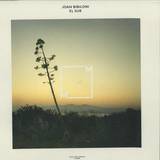
Staying on the Mediterranean coast for their third release, Music From Memory this time shift their attention to the work of Mallorcan musician Joan Bibiloni. TIP!
Primarily a guitarist, Bibiloni was creating music at an early age, releasing his first single at the tender age of 15. In his twenties he formed Spanish progrock outfits Zebra and Euterpe where he would meet Pepe Milan, the two of them becoming the bluesy folk duo 'Milan & Bibiloni'. Bibiloni himself would later go on to play with a number of luminary musicians such as Larry Coryell, Daevid Allen and John Cage to name but a few.
In 1982 Bibiloni set up his own label Blau in order to highlight the muchoverlooked work of musicians not only on his home island of Mallorca but across the Balearic Islands. In doing so he created a platform not only for
local talent but also for his own music to breathe a new life, much influenced by the landscape and life that surrounds the islands.
Whilst Bibiloni's first solo releases on his Blau imprint have stronger echoes of contemporary Jazz fusion of the time, it is on the album known as 'Una Vida Llarga I Tranquila' where Bibiloni really began to experiment with new sounds
and technologies; fusing tape loops, drum computers and synthesizers.
Taking these more electronic infused works as a departure point for the compilation and drawing on material from across his following five albums, 'El Sur' sets out to highlight Joan Bibiloni's unique ambient fusion and sun-drenched Mediterranean beach boogie.
With 'Stone Flute', the free-improvising duo's third studio album proper, Galecstasy returns to the universe of synthesizers to deliver an aural odyssey, conjuring the ancient tones of a forgotten world.
The album was entirely conceived and recorded in, and around, the majestic landscapes of Joshua Tree National Park in the magnificent high desert of southern California. From atop the mountain, the two sonic surveyors were witness to a 360 degree view of the stars at night. From above, the giant rocks looked like immense wise faces looking up at the sky, or even huge bodies resting on the Earth and looking up at space. It was during this time that Galecstasy started a ritual that ended up being called the “Moon Cruise”. This would involve waiting for the full moon to rise and then driving into the national park after dark. They would turn off the headlights of the car and drive slowly through the alien landscape lit up by the moon. Boulder fields took on the shape of temples; faces carved into the rocks everywhere they looked; giant heads with smiles or haunting expressions; and the knowledge that people had been living, dancing, and making music here for thousands of years. It was during these enchanting escapades that 'Stone Flute' was conceived.
In the mountain-top recording studio, the band were utilizing every potential space to tap into the best vibrations the land had to offer. Where the mic was placed: Perhaps a giant boulder once stood, or an ancient tree. One could feel the different energies of every room. The fireplace in the living room was built of giant lava rocks for the music to swirl around. Sounds would spill and climb around the house.
"The living room was just a beautiful tangle of synthesizers and plants. It was an inspiring place to make great records. We channeled the music of the boulders buoyed by the energy shooting up from the fault lines. The good feelings emanated from the studio, it had become our own temple and the birthplace of 'Stone Flute'."
With 'Stone Flute', the free-improvising duo's third studio album proper, Galecstasy returns to the universe of synthesizers to deliver an aural odyssey, conjuring the ancient tones of a forgotten world.
The album was entirely conceived and recorded in, and around, the majestic landscapes of Joshua Tree National Park in the magnificent high desert of southern California. From atop the mountain, the two sonic surveyors were witness to a 360 degree view of the stars at night. From above, the giant rocks looked like immense wise faces looking up at the sky, or even huge bodies resting on the Earth and looking up at space. It was during this time that Galecstasy started a ritual that ended up being called the “Moon Cruise”. This would involve waiting for the full moon to rise and then driving into the national park after dark. They would turn off the headlights of the car and drive slowly through the alien landscape lit up by the moon. Boulder fields took on the shape of temples; faces carved into the rocks everywhere they looked; giant heads with smiles or haunting expressions; and the knowledge that people had been living, dancing, and making music here for thousands of years. It was during these enchanting escapades that 'Stone Flute' was conceived.
In the mountain-top recording studio, the band were utilizing every potential space to tap into the best vibrations the land had to offer. Where the mic was placed: Perhaps a giant boulder once stood, or an ancient tree. One could feel the different energies of every room. The fireplace in the living room was built of giant lava rocks for the music to swirl around. Sounds would spill and climb around the house.
"The living room was just a beautiful tangle of synthesizers and plants. It was an inspiring place to make great records. We channeled the music of the boulders buoyed by the energy shooting up from the fault lines. The good feelings emanated from the studio, it had become our own temple and the birthplace of 'Stone Flute'."
"It's time. Africa, it's time. It's time that Africa changes. It's time our leaders change. Everything that happens in Africa is extraordinary. We have everything: water, earth, sun, fields of oil, gas. We have all this in Africa, but Africa is still poor. It's time we change our way of thinking. It's time for Africans to take their destiny into their own hands. If not, others will take it." This is the message instrumental guitarist Tidiane Thiam hopes to convey with his new solo album, Africa Yontii, a Pulaar title that translates to "Africa Time." To a casual listener, Thiam's bold statement starkly contrasts with his melodic playing. But a closer listen to Thiam's expressive playing reveals a thoughtful voice that stands out from the crop of contemporary guitarists. "What I should be singing (with words) I'm instead saying with my guitar," he says. Hailing from the sleepy fishing Senegalese fishing town of Podor, home of the great Baaba Maal, Thiam taught himself guitar by playing along to late-night radio broadcasts of Manding music. He soon developed his style, often reworking Pulaar folk themes into his compositions. On Africa Yontii, Thiam's third album for Sahel Sounds, he teamed up with hip-hop beat maker Ndiaye Moctar from studio M.N. Records to provide accompaniment, integrating unexpected elements such as field recordings and electronic sounds. In the liner notes for Africa Yontii, Thiam voices his concerns about the lack of opportunities for Africa's youth and the lonely road that can come with leaving behind loved ones in the hope of a better life. He also sprinkles in a philosophical query about the eroding state of the world alongside two more hopeful, traditional offerings in the form of wedding and river songs. Despite the sometimes heavy subject matter, Thiam's love for his homeland and heritage shines through. Tidiane Thiam's Africa Yontii reclaims the maligned "world music" genre within a sonic space that has long been dominated by others telling the story. As the title suggests - It's time!
Buckle up, explorers! With the third release on HUA3000, we focus on moments of bliss in the here and now. If you’re like us, a fan of the mid-90s, you'll enjoy the familiar unfamiliarity that these tracks bring to the dance floor - perfect to re-energize crowds in the early morning.
The groovy banger on the B2 is a remix by Welwert (aka. Man/ipulate)
What to expect:
4 tracks of the extended House family, 127-132 BPM, punchy kicks, lush pads and moving bass-lines (oh boy oh boy!)
out of Stock
Last delivered 18 months ago available to reorder, subject to availability
A retrospective of Third Earth Visual Arts and the career of AbuQadim Haqq. From early life in Detroit to his last project for Third Earth Visual Arts in 2023.
Over 100 pages of art.
Over 100 pages of photos.
258 pages
out of Stock
Last delivered 2 years ago available to reorder, subject to availability
UK jazz ensemble The Jazz Defenders release their third album "Memory In Motion" in April on Haggis Records (home of The Haggis Horns and Malcolm Strachan). The Bristol jazz boppers deliver another quality release of original material that takes in their usual diverse mix of influences and genres, from timeless acoustic jazz referencing the classic sounds of Blue Note Records, to a more contemporary fusion where jazz meets soul, funk and hip-hop.
Although they love to mix things up, their roots are in the classic acoustic jazz quintet sound of the late 1950s/early 1960s, back when hard bop and modal jazz ruled. They have already explored this musical path well on their previous albums but they still deliver a couple of classic inspired jazz cuts here. "Chasing Fantasies" and "Fuffle Kerfuffle" both give the band some space to cut loose on solos over swing jazz beats that will keep their original jazz audience happy. The latter bubbles away with a jazz shuffle beat that would make drum legend Art Blakey smile.
"Meanderthal" and "Snakebite Playfight" bring soul to this jazz party. Exactly like jazz legends Lee Morgan/Herbie Hancock/Freddie Hubbard etc did back in the early-mid 1960s. The first is a feel-good, toe-tapping gem that's heavy on the backbeat and short and snappy on the solos, the exact reasons that made it the perfect opening single from the album. "Snakebite Playfight" comes with a jaunty New Orleans shuffle before transforming into a heavy psychedelic soul jazz burner, flipping back with ease to the NOLA shuffle for the Mardi Gras meets bebop piano solo by band leader George Cooper.
"Rolling On A High" is a hip-hop/jazz banger that sees the band continue their collaborations with UK rapper Doc Brown, a perfect combination that began on their second album "King Phoenix''. This time, the Doc spits some old-school block party-style bars over a bouncy uptempo funky beat with the band cooking up some soul stew behind him. Definitely dancefloor material.
Another uptempo jam is the heavy jazz fusion jam "Net Zero". It kicks off with some live broken beat kit playing and piano/bass staccato vamping before taking off into Headhunters territory on the solos, sounding both contemporary and classic at the same time. This is The Jazz Defenders at their fiercest and toughest and delivering a track that will have jazz dancers worldwide in an utter frenzy.
It's not all uptempo numbers or dancefloor-oriented compositions on this album. Two tracks take the musical dynamics right down to give a temporary break from the high-energy numbers. "Take A Minute" has a rolling double bass line locked into the groove while the horns play a lazy and laid-back theme with vibes embellishment, sounding like some trippy independent film soundtrack. Another recurring musical reference point for this band over the years.
The album finishes on a poignant and introspective note with a beautiful piano and double bass feature for George Cooper and bassist Will Harris. It's called "Enigma", it was recorded live in Paris and it closes the album on a peaceful note evoking the music and playing of Bill Evans. The perfect way to close this brilliant third album from The Jazz Defenders.
With Memory In Motion, pianist George Cooper and his band undoubtedly pay great homage to a golden era of jazz music that they love, but also elaborate on this influence with a wealth of modern musical experience, to create their own raw and vibrant compositions. The result is an enthrallingly unique sound that is as danceable as it is listenable.
out of Stock
Last delivered 2 years ago available to reorder, subject to availability
They’re back! This time the Finnish seers Mahti venture even deeper into the unknown on their third release Musiikki 3, assisted by the creativity of English musicians Richard Dawson and Sally Pilkington.
The music reaches for space and roots at the same time bringing forth Mr. Dawson's earthy guitars and angelic voice while Ms. Pilkington weaves ethereal layerings with her synths and joins occasionally the choir.
Hannu Saha conjures ancient Karelian spirits with his kantele while Muumu, Lehtibabba and Mätky mesmerize the listener with their unique mix of electro, rock and noise.
The end result is an album full of Musiikki unlike you've never heard before!
“These ancient musicians played their ‘mahti’… and the sound they produced was called ‘musiikki’”
Hannu Saha - string kanteles ,Tomi Leppänen - sequencer/drum brain/synthesizers , Jussi Lehtisalo - noise/vocals, Teemu Elo - guitar/synthesizers, Richard Dawson - guitar/vocals , Sally Pilkington - keyboards/vocals
Mayday is the third LP by Montreal-based artist, Myriam Gendron. It follows her earlier, critically acclaimed albums, Not So Deep As A Well (2014) and Ma délire - Songs of love, lost & found (2021). Myriam began exploring the complex folk traditions of Quebec (and beyond), with Ma délire, which combines traditional and original songs with arrangements that make space for avant-garde musical interludes by such folks as guitarist Bill Nace (Body/Head) and renowned jazz percussionist Chris Corsano. Mayday presents an even more syncretic fusion of the elements Myriam uses to create her sound. Most of the songs are original, sung in both English and French, and they blend traditional and avant elements with abandon. She is often accompanied on this album by the guitarist Marisa Anderson and drummer Jim White (Dirty Three, Xylouris White), whose work provides a quietly aggressive sort of free-rock base. Additional players include Montreal bassist Cédric Dind-Lavoie, Bill Nace and saxophonist Zoh Amba. Mayday is a thoroughly thrilling effort that manages to create new vistas of sound while maintaining a feel that is both intimate and familiar. The music here certainly possesses a richly serious tone, but Myriam Gendron (like Leonard Cohen) is able to infuse her darkness with a subtle, powerful light that reminds us that even the most pitch-black night is but a transitional state. Beautiful work.
pezzner is back with this, his third ep for freerange, following on from the almost here and other lover releases that kicked off his solo alter ego. he is now in demand for his remix skills with upcoming remixes including mike monday and mark farina for om, lusine for ghostly international and josh wink for shaboom. It's easy to hear why he is being heralded as the man to rival dave taylor's earlier house productions with his totally unique sound and floor friendly arrangements which guarantee peaktime plays from dj's across the board - justin martin remix
Limted version on 2LP transparent violet vinyl in gatefold sleeve, 300 copies! ‘Lefto presents Jazz Cats' is back with volume 3 and still doing what it does best: putting you in the front row of what the thriving Belgian jazz scene currently has to offer and revealing a melting pot of the musical talent.
'Lefto presents Jazz Cats' is back with volume 3 and still doing what it does best: putting you in the front row of what the thriving Belgian jazz scene currently has to offer and revealing a melting pot of the musical talent coming out one of the smallest countries in Europe. Never change a winning team they say, so we're happy to have Belgian DJ and eclectic connoisseur Lefto on board again.
Although you expect thecompilation to be talking jazz, volume 3 explores a broader array of styles, genres, and sounds than ever before, arriving at a point where the 'young cats' of today don't bother no more. It may focus on the Belgian scene, but let's face it, seeing the influences, this one could be compiled from all over the world. From the empowering and bittersweet voices of Oriana Ikomo and Adja, over the more acoustic-electronic productions of Moodprint, Ciao Kennedy, Kassius and echofarmer. It's even expanding the Jazz Cats universe to dub and bass-heavy tracks with Kin Gajo and Le Ministère, Ethio-jazz from Azmari, while sending you back to earth with bodies' swirling sax and drums. That saxophone still rings in your ears when you end up in the orbit of the march-like drums of Bodem, Orson Claeys' piano testing your ability to follow him, slamming the breaks to go smooth cruisin' with HONEY (Morricone meets Khruangbin, anyone?), to crashing in a raging tempo on that last track of Bruno x Soet x Moene. And there you are, back with us.
2018's 'Lefto presents Jazz Cats' included tracks from some of Belgium's biggest hitters, including Black Flower, STUFF. De Beren Gieren and Glass Museum who have all gone on to receive global acclaim. The album was given the accolade of 'Album of the Week' on Worldwide FM and also received further radio support from Jazz FM in addition to numerous glowing reviews. The 2022 follow-up 'Jazz Cats volume 2' paved the way for a new generation inspired by its peers, entering another era of very talented individuals and collectives. Maybe even more so than 4 years before. It uncovered a beautiful balance of more established but also obscure musicians and artists. Opening up to electronics and dance, enter bands like ECHT!, Stellar Legions and TUKAN. Thrilling innovative soundscape grooves and jazz fusion with Bandler Ching and L?p?GangGang, not to forget about the weaving musical odyssey that is M.CHUZI. In addition, there's the balanced unease of One Frame Movement, the laidback 'acoustic electronica' of Boombox Experiments, the classic funky jazz stylings of Cargo Mas and cinematic The Brums, all of these have set volume 2 on the map as an essential release for any jazzhead with a passion for new sounds.
Tastemaker, selector, curator, DJ and producer, these words often get mentioned when Lefto's name pops up in discussions. And rightly so. If you've ever had the pleasure to listen to one of his incredible Boiler Room sets or one of his many radio shows, you'll know why. Famed for his gloriously eclectic taste on the decks, he switches effortlessly between hip hop, funk, breaks, neck-snapping beats, future bass, South-American influences, bruk riddims, some wild African rhythms and of course, jazz.
Growing up as a child, his father would have the sounds of jazz flowing through the speakers. Which led him to bars around town to hear the latest jazz ensembles. Falling in love with the genre, he would later refine his knack for record digging and fine ear for music working at Belgium's legendary Music Mania record store in his hometown Brussels. Which makes that Lefto is consistently a couple steps ahead. He doesn't wait for the next thing to land in his lap, but actively seeking it out.
Lefto on Jazz Cats volume 3:
"Another release in less than two years! I am very impressed by the amount of creative "jazz" talent we've managed to compile over the last couple of years. Thanks to the internet, young musicians find inspiration from around the globe and incorporate diverse influences into their work. Given the history and heritage of jazz in this country, it has managed to create a healthy jazz scene supported by festivals, venues, press, and labels. Therefore, I am very proud to present to you the thirdinstallment of Jazz Cats. This compilation is dedicated to the young and hardworking musicians who are the present and the future of Belgium's jazz scene."
The Cat's Miaow return to World Of Echo with Skipping Stones: The Cassette Years '92-'93, their second compilation for the imprint, and the fourth in a loosely defined series of reissues associated with the group (also including The Shapiros' Gone By Fall: The Collected Works of The Shapiros and Hydroplane's Selected Songs 1997-2003). It's a smart selection of songs by one of Australia's finest independent pop music groups, whose initial run, across the nineties, was as mysterious as it was bewitching. A generous double album featuring thirty-five songs drawn from The Cat's Miaow's history, Skipping Stones lets listeners in on a bunch more secrets. The four cassettes that Skipping Stones draws from - Little Baby Sour Puss, Pet Sounds (both 1992), From My Window, and How Did Everything Get So Fucked Up (both 1993) - were released or assisted by Toytown, a Melbourne cassette label of rare taste, savvy and intelligence. Diving into that two-year period, Skipping Stones is full of surprises, rich with unexpected and inspired detours, while reminding everyone just how clear and distinct The Cat's Miaow's music was from the very start. Looking in from the outside, they always felt like a group that knew just what they were doing, but intuitive as they are, they weren't forcing anything: these songs always sound exactly what they need to be, rough edges, playful moments and all. The Cat's Miaow may have been bedroom dreamers, but their songs were richly informed, with the sweetest of girl-pop moves sashaying into walls of tremolo-d and distorted guitar, jangling six strings tangling with melodic bass that's pure Peter Hook/Naomi Yang, while the gentle trickle of a drum machine or the earthy twitch of brushes on drum skins provided the spine for Kerrie's and Bart's lovely, unforced singing. This double LP on World Of Echo feels like the very core of the thing - some of the most heartbreakingly beautiful, effortlessly lush and deeply moving pop music you're likely to hear. RIYL: Hydroplane, The Cannanes, Magnetic Fields, Belle and Sebastian, Jesus and Mary Chain
Québec's own CANTIQUE LÉPREUX are back with their third full-length album "Le bannissement". It is a tale of self-initiation, a rejection of society, and a glorification of nature - manifested in their signature style of swirling tremolo-guitar-riffs, tortured screams, and elaborate melodicism. Over the recent years they have established themselves as an essential act of the Métal Noir Québécois scene. They channel the evocative power of Black Metal, carrying vast forests, desolate landscapes, impassable mountains, and cosmic torment. The band members are also associated with Mêlée des Aurores, Chasse-Galerie, Acédia, Manière Noire, Chaos Catharsis, Forteresse, Délétère and Au-delà des ruines.
"Le bannissement" tells the abduction of a young girl and the sickness that is forced into her. Tainted, and rejected by those who should have protected her, she flees to wild and unexplored land, where she shatters and mends herself continuously. In these countless battles, she severs her bond to reality, subverts the sickness, and overthrows those who had seized her innermost Dream. Through banishment, liberation.
The album presents a raging and hypnotic narrative. Fast-paced songs drag the listener in a wild hunt, rushing towards self-annihilation. It was interpreted with the band's live line-up and equipment to preserve the fierceness of the mindset it was composed. This raging maelstrom, built on alluring melodies, shows guitarists Blanc Feu and Ascèse's fascination for music history and musicology. The album's emotional power stems not only from black metal's common genre tropes but also from the austere grandeur of early music.
Brainwave Research Center returns with their 3rd Electronic music LP. Their DIY approach to creating music has forged a unique sound that is not experimental music, but music born out of experimentations with analog synthesizers. Feel Free is the third installment of their first four part series and captures the feelings and emotions of a summer season.
The A-side begins with a soundtrack to a daydream; imagining the life of a earthworm. Followed by a teeth-grinding drive through the grime of Brooklyn streets in Interceptor iii. Side A finishes out with that summer euphoria that comes from laying in the grass under the sun through dusk and watching the moon rise.
The B-side begins in a startling manner; an attempt to capture the feeling of falling in your dreams. The music continues down a darker path that reminds us of their second LP, Mosaic, with electronic experiments mixed with acoustic elements. The side concludes with two songs that capture the nostalgic feelings of summer.
Feel Free offers you a glimpse into the musings of everyday life for brainwave research center. Recommended if you like analog / digital synthesizers, sequencers, hand-played melodies, simplistic clock-like rhythms
out of Stock
Last delivered 2 years ago available to reorder, subject to availability
‘Landmass’ Turtle’s first artist album since 2017’s ‘Human’. To be released on 24 March 2023, it is his third official album having also released the acclaimed ‘Who Knows’ EP in 2013.
‘Landmass’ is a beautiful body of work that flows naturally as one piece of music and is inspired by the sparse surroundings of Jon’s studio in Argyll, Scotland, an area he moved to to try and escape the noise of the city and a move that has directly impacted on his creative process.
Jon Cooper… “Since I started producing music I have never gone into a track with any preconceived ideas, I let the music develop in its own way so my direct surroundings have always played a huge part in how it sounds and the hustle of the city was something I felt I needed to get away from. This was a cathartic experience in making it - it's a real outpouring of love for the Scottish countryside and the beauty I’m lucky enough to live in and see every day!”
Jon’s musical journey is one of experimentation and passion. A regular of the electronic scene in Glasgow in the late 90's/early 2000’s, he started to experiment with DJing and music production more for his mates entertainment than with any aspiration of a career as one of the most understated electronic artists Scotland has produced.
CLEARxCUT is out there to spread the message of total liberation. (Former) Members of HEAVEN SHALL BURN, IMPLORE, and KING APATHY/THRÄNENKIND started this collective, because they are dedicated to the vegan straight edge (XVX) and want to confront listeners with inconvenient thruths and todays harsh reality. The German band addresses their songs and convictions to all people who are prepared to stand up for a better, fairer future - but especially to all anarchists, anti-fascists, feminists, primitivists and indigenous peoples of the world. Or to put it brief: to all defenders of our earth. The stylistic choice of means falls on metallic hardcore, which is rooted in a strong DIY ethic. Having released their first two albums "For The Wild At Heart Kept In Cages" (2019) and "Songs of Desire Armed" (2022) for Catalyst X Records (Gather, Nueva Ethica, Abnegation, Birthright, Maroon, Point Of No Return, Forward To Eden), "Age Of Grief" now marks CLEARxCUTs debut for LIFEFORCE RECORDS. Started in the mid-1990ies as label with mainly vegan and straight edge bands, the German Label has an impressive history with XVX bands such as ARKANGEL, DAY OF SUFFERING, RANCOR, UNCONQUERED, UNBORN, FAULT, or DEADLOCK. Being a collective that is outspoken in its message and keeps the vegan straight edge banner high, CLEARxCUT continue this tradition. Also besides having switched their label, "Age Of Grief" marks a fresh start for CLEARxCUT. After a big shift in their ranks, before the global pandemic hit, the band moved from two (female) vocalists to one (male) frontman. This is accompanyed by a change of sound. On their third full lenght album, the German band is diving into the realms of metallic hardcore, leaving behind their early hardcore punk influences. Noone should be surprised by this move, as CLEARxCUT was conceived as a collective where members, names, or styles wouldn’t matter, but one and only the final goal of spreading a positive message in defense of animal rights and sober living. "Age Of Grief", in this respect, is extremely consistent.
New album by the successful duo Steve Kilbey (The Church) and Martin Kennedy. Interest and profile of Steve Kilbey has been raised considerably over the past year due to The Church re-forming, touring and issuing 2 new albums. Steve’s solo albums are all getting a complete makeover and the fan clubs are ablaze with rumours and gossips regarding forthcoming releases. Reviews & advertising in Vive Le Rock, Record Collector, Classic Rock, R2, The Big Takeover. Embark on a mesmerising journey with the third and culminating chapter of the highly acclaimed trilogy by Steve Kilbey and Martin Kennedy. Building on the success of Jupiter 13 (2021) and The Strange Life of Persephone Nimbus (2022), their latest epic, 'Premonition K,' unveils a sumptuous and organic sonic landscape, delving into the dark and enigmatic realms that exist between the boundaries of life and death. This album, a testament to their musical synergy, encapsulates a darkly beautiful soundscape, drawing inspiration from diverse sources, ranging from the haunting tones of Roger Waters' Final Cut to the shadowy depths explored by early 1970s Black Sabbath. Steve Kilbey, best known as frontman of legendary Aussie post-prog rockers The Church, infuses each track with an emotional resonance and sense of mystery. Martin Kennedy co-pilots this sonic odyssey with Steve Kilbey, weaving an intricate musical bed for Kilbey's lyrical dreamings. Drawing from his twenty years of soundscaping with All India Radio, Kennedy adds layers of sonic complexity, at once warmly familiar and mysteriously strange, creating an immersive experience for the listener. Together, Kilbey and Kennedy invite you to break out the Ouija board, turn off the lights, and immerse yourself in the mysteries of 'Premonition K'
The third studio album from Rebecca Downes with 12 new, original blues-influenced, rock tracks all written by Steve Birkett and Rebecca. Album mixed by Bill Drescher and Chris Childs. With exciting new material that continues the evolution of the music towards rock, More Sinner Than Saint is worth the wait. At the outset, Downes consulted with producer Chris Kimsey, who has previously worked with The Rolling Stones, to select and refine the 12 tracks and to achieve what she and co-writer Steve Birkett see as the perfect expression of their current writing. With five of the fabulous tracks having been mixed by Californian based Bill Drescher, whose previous accolades include working with Rick Springfield and The Bangles, Downes showcases her trademark powerful vocals throughout. With the remainder of the tracks being mixed by Thunder’s Chris Childs, the pedigree of this album is faultless. With her superb studio band that includes Dan Clark, Lloyd Daker and Magnum’s Rick Benton, there was no shortage of artists queuing to join her on the odd track or two. The multi award winning Alan Nimmo (King King) plays guitar on If I Go To Sleep and Magnum’s Tony Clarkin delivers a fabulous guitar solo on Breathe Out. With her signature voice, style and song writing, it was little wonder that last year she was voted Female Vocalist of the Year at the FORM UKBlues Awards. The release of this jubilant new album once again gives her the chance to showcase her formidable powerhouse and gutsy vocals in tracks that have greater range and depth than anything she’s done before. Rebecca said: “We were honoured and humbled to receive Chris Kimsey’s guidance. He gave us confidence about the direction of our writing changing to a rockier sound and advice on the way the material should be recorded. Meeting Bill Drescher in LA was fantastic – such a lovely, down-to-earth guy – and his mixing took the five tracks to the next level. Chris Childs has since done an excellent job on the rest in matching Bill’s mixing style. We are very proud of this album – and the way the music has evolved towards rock. More than ever before we believe it captures the best of our song writing.”
My Proud Mountain is proud to announce third volume of the series "Songs of Townes Van Zandt", that was started in 2012 and features various artists covering Townes Van Zandt songs. Songs of Townes Van Zandt Vol. III featuring Amenra, Cave In & Marissa Nadler and will be released on April 22, 2022. Steve Brodsky of Cave In about being part of the record: "In the winter of 2010, I did a solo tour with Scott Kelly of Neurosis and Bob Wayne. It was the 3 of us and Ansgar Glade traveling in Bob's "green machine" van around the UK and Ireland. At every show, Scott played the song "Caroline" and each time I heard it, I found myself enraptured. This was my introduction to Townes Van Zandt. Pretty cool that 10 years later, Ansgar has given me and Cave In this great opportunity to show our love for TVZ's music." Lennart Bossu of Amenra says: "Being Belgians, the very American folk and country of Townes Van Zandt is not exactly the music we grew up listening to, but upon discovering his songs in our early twenties, they immediately struck a chord with us. Even people who do not understand the lyrics can probably tell that they are listening to someone who has lived and suffered, and, oddly enough, at the same time find deep comfort in his soothing voice. It is the kind of comfort that often defines great music or art in general, and it made the prospect of trying our own hand at a few of his songs no less daunting. Nonetheless, when we were asked to be part of this collection of Townes Van Zandt cover songs, we felt excited and compelled to be part of it, as, in a way, it offered us a chance to do something in return for the great songs he has given us, and also be a part of a series of albums that are almost exclusively comprised of artists we deeply respect." Marissa Nadler about Townes Van Zandt: "I've been a fan of Townes Van Zandt's music for nearly as long as I've been writing songs. When I was starting out, a friend introduced me to Townes's music and I pretty much instantly fell in love with both the rawness of his songs as well as the intense sense of longing expressed within them. His lyrics are haunting and evocative and have inspired me endlessly. These melodies will linger with you, year after year, and hopefully keep you company along the way." Ltd red vinyl LP!
Advitam Aeternamour, Cléa Vincent's third album, will be released on 29 March 2024 by Midnight Special.
If the 90s gave us “French touch,” then the 2010s ushered in “French pop,” and it was in the midst of this revival that Cléa began her artistic journey. As early as the music video for
“Achète-le-moi” from her debut LP Retiens mon désir (2016), we witness the singer striking selfie-like poses with her French pop comrades (La Femme, Bertrand Burgalat), appearing pell-mell on screen in the form of their vinyl records. Since then, whether singing with Philippe Katerine or co-producing (and composing) Jeanne Balibar's D'ici là tout l'été (2023), Cléa Vincent has effortlessly carved out a niche for herself in the French pop scene. The advantage of being a “jack-of-all-trades” — Cléa is a writer, composer, and producer — is that her music casts a wide net. Both highly acclaimed in the indie circuit and “as seen on TV” (on Quotidien, among others), she has also enjoyed a stint as the host for web-TV show Sooo Pop, for which she regularly interviewed a plethora of French artists. Beyond France, the singer tours extensively. After a run of concerts in Europe, Asia, North and South America, it was her visit to Latin and Central America that inspired Tropi-cléa (2017-2020-2022). The three EPs bathed in a tropicalist glow do more than just dip their toes in the water; they mark a deep desire to escape in a post-lockdown world.
In between these projects emerged Cléa’s LP Nuits sans sommeil (2019). The album quickly became an instant classic and lives up to its name, since Clea never seems to stop — writing, composing, singing, or dancing. Mixed by Stephane ALF Briat, who has lent his magic touch to records by Phoenix, Bonnie Banane, Air, and Flavien Berger, Cléa Vincent's third LP Advitam Aeternamour proves once again that her music is in perpetual renewal. The artist takes risks both in her pursuit for innovative sounds and in the themes she tackles: coming out, incest, grief...and of course, she will always be a true romantic at heart; there’s no need to be ashamed of loving love. Cléa’s songs are full of “explicit lyrics,” but not in the typical sense: rather than ringing harsh and raw, her words are tinged with sweetness and melancholy, at the risk of shocking less sentimental listeners.
Written hand-in-hand with Raphaël Léger, her creative soulmate for the last ten years who also recorded and produced the album, Advitam Aeternamour features lyrics charged with Epinal and equinox imagery. On the poignantly sober title track, sudden flashes of light are padded by tinkling synthesizers swathed in the voices of an angelic choir, as also heard on “Nuit de Yalda.” Cléa offers a modern take on 90s house music (“C'est Ok”) and 2-step garage (“Free Demain”). Particularly influenced by The Beloved, she is not above dipping pop songs into the electronic melting pot to get them through the club door (“État Second,” where we “turn up the BPM”). And whether on “Shut down ma tête,” or “Douce Chavirée,” Cléa pushes the champagne cork down even further so that the party never stops. The bass gets louder, the rhythm intensifies — the melodies of these eternal hits are an invitation onto the dance floor, lit up by her smile.
As depicted in the soothing embrace that appears on the album artwork, the bright psychedelic hues are the perfect complement to her therapeutically inclined synthetic pop. Even if they tackle themes such as breakups, Cléa's songs, which are vitamin-packed and deep on the surface, are intended to heal and repair. “Se laisser partir,” with its light vocoder echoes, emulating the vocal shadow of a loved one, is an optimistic breakup song. Advitam Æternamour gives us life, from birth to grief — and in the middle, wild, beating passion. If her songs resonate with us, it's because Cléa speaks to us in her songs, as heard on the girl power anthem “Free demain,” where she addresses the listener as a friend (“put the pedal to the metal and you’ll take off for the stars”). When she shares the microphone with Jacques on “État Second,” enveloped by the sounds of unidentified musical objects, the complementary nature of the two artists is evident. The album is as much a tribute to the healing virtues of music as it is a self-portrait of Cléa inhabited by her art. Ad vitam æternam and with love.
Jlin’s detailed and meticulous exploration of rhythm’s inner and outer reaches has made her one of the most distinctive and recognisable voices within both the electronic and classical music worlds. Her compositions are consistently appealing and have an accessibility to them, yet often defy expectations. She exists within her own locus solus - no matter the collaborator, no matter where sounds ultimately lead her. Whatever the situation – from composing the Pulitzer Prize shortlisted ‘Perspective’ for Third Coast Percussion, to ‘Godmother’ her AI-powered collaboration with Holly Herndon, Jlin always expresses her outlook to the fullest. Her new album ‘Akoma’ sets a new benchmark in her personal road map, not only since the album features guest appearances from Björk, Philip Glass and Kronos Quartet but for her continued sonic persistence and resistance. Jlin does what Jlin does and it’s beloved across genres, across scenes and across generations. ‘Akoma’ is a new entry point into her sound and a new approach for both those who have been following diligently and those who are just now entering her world.So how did she get here? Here’s a rundown for those looking for the facts. She was both a math nerd and a steel factory worker. She got inspired by Footwork and started making tracks with mentorship assistance from RP Boo and DJ Rashad, but her music was far from typical for footwork from the get-go. In 2011, she released her first track ‘Erotic Heat’ on the Planet Mu anthology ‘Bangs & Works Vol.2.’ Fashion designer Rick Owens heard it and invited her to soundtrack his Paris Fashion Week show. Already before an EP or an album Jlin was in new cutting-edge territory. And it hasn’t stopped since. Everyday Jlin wakes up early and clocks into her home studio working hard on new music. Her discipline and craft-like approach means that those who would try to copy her sound simply can’t get to the level she is at. Since ‘Erotic Heat’ she has released two bold albums, 2015’s ‘Dark Energy’ and 2017’s ‘Black Origami.’ She has also released her soundtrack to Company Wayne McGregor’s dance piece ‘Autobiography’ (2018) and most recently (2023) the mini-album ‘Perspective.’ She’s remixed µ-Ziq, Factory Floor, Ben Frost, Max Richter, Björk, Martin Gore and others. She’s collaborated with Holly Herndon and the late SOPHIE. She’s worked with visual artists Kevin Beasley and Nick Cave. She composed a string quartet for Kronos Quartet and performed with them live in a tribute to Philip Glass. She also recently completed a tribute to Sun Ra with Kronos. ‘Perspective’, her very well received percussion work for Third Coast Percussion has further opened doors for her in classical music. She’s even thinking of one day writing an opera. She had a residency at MassMoca Museum earlier this year (2023). She’s performed live at Pitchfork Festival, Unsound Festival and too many others to mention. She’s also worked with Indian dancers, Company Wayne McGregor and renowned choreographer/MacArthur Fellow Kyle Abraham. There’s more but you get the picture - she’s working in contexts and in ways that few of her peers are able to. ‘Akoma’ is the next step - all these paths have led to this. We encourage you to tune in.
out of Stock
Last delivered 2 years ago available to reorder, subject to availability
FUJI||||||||||TA returns to Hallow Ground with his second full-length for the label after we had released his international breakthrough album »iki« in early 2020. Active since 2006, the Japanese composer and sound artist has become prolific since the release of »iki,« releasing a slew of records while also touring the world. His new album »MMM« is Yosuke Fujita’s most complex so far. Changing the set-up of his pipe organ by switching to an electric air pump allowed him to activate new sonic and compositional potentials of the instrument, while he also expanded upon his experiments with his own voice. »MMM« is a masterpiece of conceptual and formal rigour—a testament to how multi-layered and versatile the music of FUJI||||||||||TA can be.
Previous releases had already showcased Fujita's interest in working with the rhythmic potentials of the organ he built himself in 2009. Replacing its hand-operated air pump with an electric one allowed him to work with it more freely and simultaneously record its sounds. This marked the starting point for the opener »M-1,« for which he recorded the pipes by waving a gun microphone close to it, thus creating shifting rhythmic patterns. The piece engages in a perpetual play of repetition and difference, balancing sonic intensity with compositional dramaturgy. For »M-2,« the artist uses his voice and works with a singing technique he has developed over more than a decade: constantly exhaling and inhaling, he puts a strain on his internal organs in order to create what he calls a »third voice.« The resulting piece is built on a throbbing rhythmic foundation topped by wordless melodies.
»M-3« closes the album as a synthesis of these two pieces, but is far more than the mere sum of its parts. The subtle tonal shifts of the organ take on a more subdued role this time, and Fujita’s scat growling and singing reappears in processed form. »M-3« combines the rhythms and melodies of the previous pieces to let something entirely new emerge out of them, much like the album is based on perpetual changes and recombinatory strategies. In fact, Fujita explains, the acronymic title can be read in many ways: this album is minimalistic, but freely mixes and mingles different materials in magical and even metaphorical ways while also paying its dues to his wife and daughter—M. and M. Just like its title can mean a lot of different things, »MMM« itself is ever-evolving, traversing different moods and opening itself up to a plethora of interpretations at each of its many turns.
Nia Archives is the star at the forefront of the latest era of jungle. Since her emergence in 2020, her collagist soundscapes have helped bring the sound to a new generation of clubgoers (though fair warning: don’t call her a “revivalist” – she’s the first to point out that the scene never went away). So when it comes to talk of the 24-year-old producer, DJ, singer and songwriter’s much-anticipated debut album, the odds are you’re thinking of a full-length record of weightless jungle tracks with basslines so intense they’ll leave your ears ringing.
But the reality of the Bradford-born, Leeds-raised artist’s first ever album – while very much replete with that exquisite jungle sound she does so well – is also doing something a little different. On the thrilling and freeing Silence Is Loud, Nia Archives is looking to make music for beyond the rave. As she explains: “I think music can be experienced in different ways, and there’s different kinds of music for different scenarios. Say you’re at a festival listening to music with thousands of other people, that can feel really uniting. But then you might listen to an album on your own in the bus, or in a taxi; and this project is definitely more a record to sit and listen to than a collection of club tracks.” Nia is intent that Silence Is Loud is taken in as a full body of work of something “more song-focussed, putting interesting sounds on jungle.” It means that this is a record which finds gloomy Britpop, warm Motown, soaring indie, a love for Kings of Leon’s Aha Shake Heartbreak, skittering IDM, Madchester, classic rock, old skool hardcore and more, woven and fused into her ragga and junglist tapestry, all layered with feeling, imbued with her songwriterly lyricism about loneliness, relationships, family, navigating her 20s, and the intense potential power of silence.
The vast sonic palette on Silence Is Loud comes down to Nia’s broad array of influences through her life. With her Jamaican heritage, Nia remembers hearing jungle as a child via her nana, as well as at Bradford Carnival, where she was drawn to the soundsystem culture, dancing carefree on the floats in the parade. The first album she ever bought was Rihanna’s debut, Music of the Sun, and she also went to Pentecostal church back then, and was obsessed with gospel. Aged 16, she moved to Manchester, where she didn’t really know anybody: and so, her solution to meeting people was going out. “Partying was a huge part of my life,” she says, “They used to do little freestyle cyphers at the house parties and I would join in – that’s kind of how I got into singing.” She had found music boring at school, but in meeting all these new people she became interested in making her own music as a hobby. “I was making boom-bap kind of stuff which I didn’t really like in the end,” she laughs, “My lyrics are quite deep, so on a hip-hop beat it all sounds really depressing. I wanted people to dance to my music.” And so she began experimenting with faster tempos alongside that melancholy songwriting, teaching herself how to make beats on Logic: “It’s all been a lot of trial and error, really.”
Nia went to study music in London, and was also interested in visual art, making collages and VHS: “Before the music, I was trying to make a visual archive of my life and the people around me,” she explains, “And then my music was like my diary, and a sonic archive, as well.” Hence, she paired the word “archives” with her middle name, Nia. To this day, in her spare time she’s working on pulling together a documentary on the global nature of the jungle scene.
Back on those first two EPs, Headz Gone West (2021) and Forbidden Feelingz (2022), she honed that junglist sound, painting it with new flecks of colour and vibrance. It was only after she started releasing work that she realised pursuing music could be a viable life path for her. The decision has been paying off ever since. Nia Archives placed third in the prestigious BBC Sound Poll for 2023, alongside garnering a nomination for the Brit Awards’ Rising Star prize, plus wins at the DJ Mag, NME, the MOBOs and Artist and Manager Awards. She has also toured the world – be it North America, Europe or Asia – and even opened a show in London as part of a little something called Beyoncé’s Renaissance World Tour. She’s renowned as a party-starter in her own right, too, with takeovers at Glastonbury, Warehouse Project and her own Bad Gyalz day event. She’s done official remixes for the likes of Jorja Smith, had a huge summer hit with her Yeah Yeah Yeahs rework ‘Off Wiv Ya Headz’, and worked with brands like Corteiz, Nike, Flannels, Burberry, FIFA and Apple. In just three years, it’s fair to say that Nia Archives has become a need-to-know name in dance music.
But Nia is not interested in being one fixed thing. Building on the terrain from her third EP, Sunrise Bang Ur Head Against Tha Wall, the universe of Silence Is Loud is not totally unfamiliar territory; but it’s still emblematic of a bolder scope than we’ve heard from the artist before. Working with Ethan P. Flynn (the songwriter and producer known for his work with FKA twigs and David Byrne), the resulting record is an impressive feat of deftly-sculpted textures; sometimes big and euphoric, like the wobbly, lusty bass of ‘Forbidden Feelingz’, or elsewhere notably gentle and quiet – see: the gorgeous, surprisingly drumless ‘Silence Is Loud (Reprise)’, a heartfelt number that sits somewhere in the school of Adele. “I really sharpened my songwriting skill on this project,” Nia says, “I was really intentional about what I was writing about, and I really loved co-producing with Ethan. His process is so different to anyone I’ve worked with before, and he’s got a kind of DIY set-up like me.” Flynn’s flat overlooks the Barbican, adding that unquantifiable futurist urban quality that the area holds to the music. The pair enjoyed the collaborative process so much that the album was done within three and a half months.
Perhaps this is why Silence Is Loud maintains an exuberant immediacy while still being sleek and spacious, interspersed with flourishes of metallic beats, lush melody and topped with her sugary but powerful vocal, floating over it all. There is an intimacy to the record, perhaps in part due to Nia writing most of her lyrics while sitting in bed in her flat in Bow (once a bedroom producer, always a bedroom producer). You can hear it on the refrain for lead single ‘Crowded Roomz’, which finds rippling guitar lines cutting taut through the beats as Nia refrains: “I feel so lonely crowded rooms.” The song is an examination of life on tour, constantly surrounded by people, but not necessarily those she can be herself around; more than that, the track is exemplary in the category of sad bangers.
Silence Is Loud often finds itself in that push and pull between melancholy and euphoria. There’s a celebration of her unconditional love for her younger brother (the title track), a rumination of an evening with an Irish boy she met by Temple Bar (‘Cards On The Table), or a letter to herself on the light and airy ‘Unfinished Business’, even coming to terms with a lover having a past they haven’t quite processed yet (“nobody comes with a clean slate”). The latter was recorded the week after a music festival, and accordingly captures Nia’s vocal in its not quite healed, husky state.
Nia’s work is always a snapshot of where she’s at when she’s making it. This might not be the debut album you were expecting, but that’s what makes Silence Is Loud so special. Nia Archives has learned the rules of her sound, and is unafraid to break them, pushing jungle and herself into new, unchartered territories that, in turn, go some way to map the history of the greats of British dance music. More than that, it plants her firmly in that lineage.
out of Stock
Last delivered 16 months ago available to reorder, subject to availability
When we started playing music together in 1997, we could spend a lot of time on each individual track. It would mutate, go through many phases, until we’d get to the point when we’d decide to capture it and mix it on the fly.
Twenty-five years later, we changed gears. This album was produced across a two year period, during several sessions in our studio (the third member of the band), following this process: we plug the machines, we start a musical conversation, we press record when it gets interesting.
In the studio, that moment always comes, when a fragile and magical balance happens. That’s when we record, usually in one take, sometimes all in the same stereo channel, the computer sitting in a corner, its presence not interfering with our ears.
La Folie Studio is the fruit of this process.
Let’s get numerologistic with this new age reactionary-philosophic strategy manifesto:
Playing electronic music, whether alone or not, must be joyous, funky, and make you feelgood.
The studio is not a sanctuary but a place of life. Technology must not be intimidating.
Welcoming friends and new objects in the studio should be an infinite source of inspiration.
If nothing happens in the studio, turn off the light and play a percussion record.
Techno heads of all ages need something more spontaneous and freer than little thumbnails shared on a pocket computer. Château Flight offers a musical experience carved on grooves.
With 25 years of experience, Château Flight can cure all your musical ills, instantly and painlessly.
The key to success: midi sync + din syc + external trigs.
out of Stock
Last delivered 22 months ago available to reorder, subject to availability
REISSUED ON GLACIAL BLUE VINYL! Papercuts' You Can Have What You Want is the third phase in Jason Quever's ongoing pop investigations. The relatively earthbound happy/sad pop of Mockingbird and Can't Go Back has been launched into the vault of the skies. Here, Quever delves further into epic dream-pop using mostly vintage organs, pulsing bass, and Kraut-via-Ringo-inspired drum rhythms. Intact from those earlier efforts is Quever's sense of arrangement and drama, as well as his soaring vocals, draped in reverb gauze. The words reveal a fascination with mortality and things cosmic, while sonically the voice acts as another instrument. This obsessively all-analog effort (no computer processing here whatsoever!) cuts across several eras of dreamy sound: '80s/'90s Creation and 4AD Records, The Zombies, '60s French pop, even Can's Future Days--and then there's the inevitable connection to former tourmates Beach House and Grizzly Bear. Indeed, Beach House's Alex Scally helped with some of the arrangements, though You Can Have What You Want is its own strain of addictive pop. For many, it will be the blissful/melancholy jam of the spring and summer. Quever was raised on a commune in Humboldt County, orphaned, and moved up and down the West Coast before calling San Francisco home and starting Papercuts, initially as a four-track recording project. When not performing with his own band, he can often be found recording others in his studio and filling in when needed as a multi-instrumentalist in friends' groups. "It takes a few seconds of Papercuts' second album, Can't Go Back, to think that maybe you've stumbled upon something special, a delicate mood piece made to slice through the din and chaos of modern life." --Pitckfork (8.3 rating
tapetopia 006 In 1983, some more subdued sounds began to waft from the GDR punk underground into the second half of the ’80s. At five to the end of time, it was perpetually striking midnight and the occasional punk band would mix a little laudanum into their potential for aggression. Portents in this vein preceded a dark wave whose foamy crest would break on fog walls of dry ice. Especially in Leipzig and East Berlin, a chain-rattling zeitgeist produced bands that drew from a dark well. Many of these bands arose from the still hot or already cold ashes of punk. The two founding fathers of Neuntage Alt, René Glofke and Taymur Streng (nicknamed “Strangler”), knew each other from the East Berlin punk scene. The third man aboard, Mike Sauer, played drums in the early 1980s for Sendeschluß, a punk band that, lost in thought somewhere in the no-man’s land between punk and post-punk, faded away in 1984. Punk was no longer the order of the day, but it was a form of expression among many and easy to combine. Glofke and Streng found common ground in experimental set-ups with such otherworldly names as Medusa Brahma or Die zeitweilige Erscheinung.
From this far-flung point of departure, a short tunnel led straight into the black light of Neuntage Alt, the coldest star in the low-hanging sky above East Berlin. Neuntage Alt appeared at the end of 1986, during the last blackout phase of the GDR, on the threshold between the underground and the so-called “other bands” – a scene that used the non-socio-critical approach of German Wutwave (“anger wave”) in order to be allowed to perform publicly. In the context of this scene, Neuntage Alt did not belong to the inner circle. Moreover, the band’s subcultural base was initially in Mahlsdorf, on the south-eastern edge of East Berlin. This was where the DIY sound studio of amplitude apostle and great modulator Taymur Streng was situated. Strangler held the position of house electrician and keyboard god in various projects. One of them had the bland alias Mahlsdorfer Wohnstuben Orchester, behind which the avant-garde court chapel of the bungalow studio was concealed. There Taymur also conspired with the East Berlin underground band Ornament & Verbrechen (tapetopia #001). Ronald Lippok of Ornament & Verbrechen remembers how once, at the opening of a joint session, he and his brother Robert attended Taymur’s engaging slide show of his collection of test patterns. Afterwards, they created a piece with the psychedelic title “Das sentimentale UfO”, which sheds an iridescent light on the bizarre atmosphere in the studio. Taymur’s obsession with technology was legendary. The home studio was also his living space; a circuit, a machine park of screwed and soldered equipment, a single keyboard orgy. His own creations were also based on circuit diagrams found in the radio amateur magazine “Funkamateur”. Its somewhat clueless subtitle “Praktische Elektronik Für Alle” (Practical Electronics for All)
out of Stock
Last delivered 2 years ago available to reorder, subject to availability
One of the more melodic and interesting bands of ska’s third wave, Grand Rapids’ Mustard Plug’s ‘Yellow #5’ features a mix of melodic choruses and horn charts, loudly distorted guitar and upbeat punk or rock beats. Now available on purple vinyl. “Fans of early Bosstones would like this a lot, and the band get extra points for not succumbing to easy novelty lyrics, instead writing about the more introspective sides of life and love” - Reno Gazette
There’s a party in Dana Gavanski’s head and everyone’s invited- well, kind of. Late Slap, Gavanski’s third album, gives voice to the highs and lows of the mindscape in all its joys and terrors, injecting some much needed playfulness into the process of writing about emotionally hard things. “The album holds together the seemingly disparate aspects of my character that I have sometimes tried to repress,” says Dana. “With this album I’m letting them into the room, celebrating them for all their strangeness a strangeness which I think we all, on some level, share.”
Having (literally) lost her voice during the writing of her previous album, When It Comes, Late Slap finds Dana in magisterial mode, displaying a newfound confidence and energy—in both her writing and singing—borne, paradoxically, from embracing feelings of discomfort. “I realized,” says Dana, “that in order to become stronger I needed to get used to being uncomfortable. ”It’s appropriate, then, that the album opens with ‘How to Feel Uncomfortable,” a quick sonic punch of a song, which bemoans the growing distances between people in the digital landscapes where we spend so much time wandering aimlessly: “stand too close, face in your phone
Two talents with careers spanning varying eras, yet artists positioned at the heart of Italy’s current house landscape, Alex Neri and Mennie are adding to their rich solo discographies with a series of selected works in partnership with one another. Tuscany’s Neri, co-owner of the iconic nightlife institution Tenax and label boss at Wildflower Records, stands as one of the legendary Italian names from the past 30 years, holding residencies at the likes of Pikes in Ibiza while releasing a long list of classic records since the early 90s under numerous aliases, including Kamasutra alongside Marco Baroni. A familiar name to FUSE fans, having released material via sister imprints LOCUS and INFUSE, Mennie has seen his career flourish of late, regularly touring Europe’s key venues while also holding a residency at the legendary Tenax. Here, the two build on their recent joint studio projects with a debut on FUSE for the third edition of the label’s collaborative X Series, unveiling a quartet of impactful house cuts in heavy rotation for label head honcho Siragusa.
Taking a deep dive amongst swirling synths and cosmic interludes, ‘Reality’ opens proceedings with a trippy and punchy lead cut as the duo introduce slick groove-laden drum arrangements to get things moving, while ‘Find Me’ keeps the pressure on with bumping low-ends, shuffling hats and a menacing yet captivating bass groove sure to keep dancers moving in lockstep. On the b-side, ‘Rockets’ brings luminous melodies amongst breaks-influenced percussion for a playful and dynamic production, before ‘Watch Me’ rounds things out with another all-action affair as acid-dipped and kinetically charged closer made for big moments.
out of Stock
Last delivered 12 months ago available to reorder, subject to availability
Anjunabeats is pleased to announce the self-titled debut album from JODA, aka Jono Grant and Darren Tate. JODA are a fresh musical pairing with shared DNA. Both together and apart, Jono Grant and Darren Tate have been there, done that and bought the vintage synth gear to celebrate.
Grant is one-third of Above & Beyond who, over the course of a two-decade career, have established themselves as one of the biggest electronic groups in the world. Eight studio albums (including one as vocal trance group OceanLab and two acoustic reworks), 17 compilation albums, a film score and nearing 100 singles speak to an output as varied as it is prodigious.
Their label Anjunabeats is home to a bustling community of artists with over twenty years of catalogue. As a classically trained musician, songwriter, producer and hitmaker, Tate is an OG Top of the Pops-botherer. In the early Noughties, at the outset of his career, he appeared on the show three times, once with Angelic, his collaboration with Judge Jules and the latter’s wife, performing classic trance banger It’s My Turn, then twice under the name Jurgen Vries.
The following years saw more musical adventures, more Top 40 UK hits (12 in total) and more pseudonyms, including the trance-facing DT8 Project. In 2003, the pair managed to sync their schedules to work on a couple of tracks, ‘Let The Light Shine In’ and ‘Nocturnal Creatures’. Clearly, there was chemistry here. But as the pair’s respective careers subsequently took them off round the world in opposite directions, reconnecting other than fleetingly was never easy. Then in 2019 Tate returned to his trance roots and signed to Anjunabeats for his DT8 Project releases.
out of Stock
Last delivered 12 months ago available to reorder, subject to availability
During the 1990s Shizuka self-released a series of four cassettes, barely heard by anyone outside of their inner circle. Culling together live recordings and home demos, these served as companions to the scant amount of proper Shizuka releases at the time (including the recently reissued Heavenly Persona). Concentric Circles is proud to present the third and most anomalous cassette from Shizuka, simply titled III, on vinyl for the first time in an edition of 500 copies. Formed by guitarist and singer Shizuka Miura, alongside husband Maki Miura, who’d previously played with both Les Rallizes Dénudés and Fushitsusha, the group known as Shizuka started in the early 90s with Jun Kosugi (also of Fushitsusha) on drums, and a revolving cast of bass players, including J.J. Junko, whose sole recorded appearance with the band is here on III. Devoid of any of their trademark noise and bombast, III feel distinct from their studio and live albums of the era, largely due to its fragility; haunted and spare, the songs revolve around Shizuka Miura’s gentle, unforced sighs, and Maki’s flickering, flinty guitar. The first side of the album features four songs – “For You,” “Lunatic Pearl,” “The Night When The Door Opens” and “To The Sky” – which will be well-known to Shizuka fans from previous recordings, but the drastically understated renditions here are particularly moving for their quietude and intimacy. The second half of III consists of a side-long duo session, just Shizuka and Maki Miura together at home, circling around the simplest two-chord motif for twenty minutes, Shizuka singing the most heavenly melody, strung through the sky of this lengthy improvisation. It’s an astonishingly beautiful performance, one that stills time through its becalmed repetition, pointing towards the endless forever. In this respect, it feels like an ultimate extension of Opal’s early recordings, Big Star’s 3rd or even Galaxie 500’s quietest moments. III lifts the darkness away, allowing for a softer, more gentle Shizuka to shine through, bringing with it a side to the band that most never knew existed. A lovely discovery if there ever was one.
"Cuban-born, drum genius Francisco Mela is releasing the third chapter of the iconic tribute to his legendary mentor and bandleader McCoy Tyner. Featuring William Parker on Bass and Leo Genovese on Piano."
Recorded November 13, 2020 by Jeremy Loucas at Douglass Recording, Brooklyn, New York.
Assistant engineer: Juanma Trujillo.
Mixed and mastered by Jeremy Loucas at Sear Sound, New York City.
Chunklet Industries is proud to announce a breakthrough in broadcasting technology. For the first time, the BBC working hand-in-hand with intergalactic audio pioneers Man…or Astro-Man? present to you seven volumes of their famed U.K. radio sessions. The band’s third session for famed DJ John Peel is their first with Dexter X from Planet Q. And for completists, "Welcome to the Wicky Wacky World of John Peel" is credited that way in the BBC archive, but we all know it's "The Wayward Meteor." For John Peel, who was one the earliest, most visible and most vocal supporters of the band, all four songs that were recorded are being released on this sixth of seven singles.
Stolen Goods Records announce Pergola's cinematic techno 'Zed' EP, featuring a remix from indie-dance legend CURSES.
Exploring hypnotic, emotionally charged melodies and vast techno breakdowns, the title track opens up the EP with a strong sense of mystery. Suspenseful strings build in anticipation as the bassline filters in intensity, this deep space offenng is the perfect example of a tune fit for the club as well as headphone-listening.
'Freak' is a beautifully intense piece featuring soft synths marked by subtle scratches, a feel-good vocal and the catchy strum of a quitar. '"Zed' is then given the CURSES treatment, the Optimo Music, Bordello a Parigi and Correspondant artist amplifies its retro feel resulting in nine minutes of pure dark disco hedonism. Closing out the release is an ambient collaboration between Pergola and Luigi Sambuy, 'Tunnel' is an ode to the early days of IDM through to the '70s.
*"Zed' marks the third release on Lele Sacchi & Asian Fake's Stolen Goods Records and follows up their widely acclaimed 'Volume 0' compilation as well as the recent collaborative EP between Black Loops & Innocent Soul. Since its launch last summer, the label has seen the support of artists like Dixon, Sasha, DJ Seinfeld and DJ Sneak and has garnered plays on prestigious stations like NTS and BBC Radio 1. The imprint continues its strong start to the year with three new tracks from the hyper-talented Pergola: a newcomer to the scene whos aready listed on labels such as Multinotes, Sementa ano Adriatiques Siamese, the latter which saw/ him reach number one on Beatport's Electronica chart.
out of Stock
Last delivered 10 months ago available to reorder, subject to availability
Say no more Comorian blues or Indian Ocean rock: Eliasse is ZANGOMA!
This musical concept, created by Baco, the famous Comorian musician, brings together Western music and Comorian and Indo-Oceanic music. Eliasse creates his zangoma rock by mixing rock, blues and folk with typical Comorian and African rhythms. From twarab to mgodro, maloya to afrobeat, zangoma rock reveals its plural face. Its foundation is the drum (ngoma), and Eliasse's percussive rock lays claim to this common, hybrid banner!
With his third album, eponymously entitled Zangoma, due out in early 2024 (Soulbeats Music), Eliasse and his power trio once again promise to deliver groove: Fred Girard's powerful drums, Eliasse's roaring guitar, Jérémy Ortal's swaying bass and a thousand nuances of voice... In short: the Indian Ocean is dancing ZANGOMA ROCK!
Here comes the Booom!!! Edits label with another sublime selection of deep house burners. This third volume is from the artist who goes by the name of Earls Booom!!! Edits takes the form of four cuts titled 'NEP.' Th opener is awash with smoky pads and sombre chords over a mid-tempo and dusty groove, but things pick up on the second cut with its gorgeous r&b vocals swirling over warm and humid bass and drums as cosmic synth lines rise out of the mix. On the flip, there is a congo-heavy rhythm topped with a deft little r&b hook nice more and the closer brings more pumping grooves but still with a big heart. These are steamy backroom sounds of the highest order.
out of Stock
Last delivered 19 months ago available to reorder, subject to availability
None More Records are very proud to present 'Fictions', the third album, and debut LP for the label from Twospeak. Twospeak are band leader and saxophonist Ronan Perrett's bold and dynamic four-piece that draw inspiration equally from the world of contemporary jazz, bands like The Bad Plus and ADHD, the early 1970's Canterbury Scene of Soft Machine and Caravan, Hot Rats-era Zappa and Deerhoof-esque indie rock, putting this all together in a heady brew and sounding uniquely themselves.
Fictions is a huge step forward for the band, building on Twoism and Reflector, taking the band to new heights. Each song on their new album is based on a piece of non-musical art which include paintings, sculpture, literature and film. Each track is named after and aims to capture the character and mood of its original inspiration.
out of Stock
Last delivered 2 years ago available to reorder, subject to availability
A third and final volume of Jamaican doo wop & R&B records taken from the late 50s and early 60s.
These records represent a period in which sound-systems were beginning to dominate the island, with Duke Reid and Sir Coxsone Dodd stepping up their rivalry by beginning to make and release their own records rather than rely on US imports for use in their dances. Many of these records are definitely more-or-less imitations of the American records, as the uniquely Jamaican ska sound was yet to take hold - however many of the future stars of ska, rocksteady and reggae were beginning to cut their teeth in the industry on these records, incl. Alton Ellis, Derrick Morgan, Derrick Harriott and more, and provide a unique view into the fledgling independent record industry culture in Jamaica that would prove to be unbelievably prolific and unparalleled for an island of it's size.
out of Stock
Last delivered 5 years ago available to reorder, subject to availability