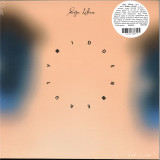
DJ Pooch returns to Amen Brother with his third EP for the label. A popular artist on the label who sells out every time that we release his music.
A legend of the scene going back to the early 90’s, who played at all the big raves back in the day and released plenty of quality music during this era, including the Skrufneck series (Part One released on Vinyl Fanatiks in 2022 on green vinyl).
Here he returns to his roots and produces 4 massive future rave anthems, including a remix of one of his previous Amen Brother tracks. And to keep things authentic to the sound of the 90’s, Pooch produces all his music using outboard hardware including the legendary Akai sampler, to get that crunch on those beats and samples.
Enjoy the journey from one of the scene's original kingpins.
Pressed on Black & Blue 180g marbled vinyl.
out of Stock
Last delivered 2 years ago available to reorder, subject to availability
Digging back into the Vinyl Fanatiks catalogue, we travel back to 2019. One of the most popular groups that we release on Vinyl Fanatiks – Mad Dog – which is comprised of Dave Wallace from Aquasky and Shaun O’Hara from Aurora. The repress of this EP was funded by a Kickstarter campaign and each copy was hand stamped and numbered. Due to its popularity, this never went into distribution back then.
Originally released in 1993 on Underdog Recordings out of Bournemouth, this was a big Bukem track from that time, played twice in his Dreamscape New Years Eve set as midnight struck! Created in the Avon Studios in Charminster, Bournemouth, where two thirds of Aquasky lived and Underdog Recordings was based. There was even a pirate radio being broadcast from the attic too! The House Of Rave as we all use to call it.
This studio was also responsible for the Fugitive releases, the early Moving Shadow Aquasky releases as well as the home of Stormtrooper Recordings – a UK Happy Hardcore label featuring The Rebel Alliance (which was also Dave and Shaun!) Who would know Bournemouth was responsible for so much of the UK’s dance history!
Only 140 have been pressed on 180g pink marbled vinyl.
out of Stock
Last delivered 2 years ago available to reorder, subject to availability
From the cold corners of the Canadian soil, Illect's Newselph returns with some fiery furnace baked heat in the form of a remix album. On If It Ain't Broke, Remix It, Newselph carries on tradition in the spirit of Hip Hop legends like Pete Rock, Erick Sermon and Buckwild in the sacred art of remixing and refixing. Like the boom baptists before him, Newselph's ear hears transmissions reserved for angels and dolphins. He takes tracks that in their original incarnations are perfectly fine, banging even, and gets all up in the inner workings of said slaps to create something entirely different. For his latest release, he mines his backyard and reworks ten tracks from his Illect labelmates. The lead single, Those Were The Days, features the UK's Kinetik and BREIS. Newselph turns breezy into bluesy, and the track morphs into a makeshift teleportation device to a simpler time when fat laces, arcade games and handwritten letters reigned supreme. The Flowers remix features Jurny Big and Brand Nubian's most recognisable voice, Sadat X. The two emcees come together to the world and the roles they play within it. Newselph's push-and-pull guitar groove would fit perfectly as the backdrop for a campfire convo filled with nostalgic stories and witty anecdotes. Things get deeper than Atlantis on Matters Of Man, where Newselph again links up with his man, Sareem Poems, and one-third of the Ugly Heroes crew, Chris Orrick. Serving up a healthy slice of adult contemporary musings, the two rhyme writers break down this thing called life with the kind of knowledge, wisdom and understanding that would make King Solomon chill. Like watery clay in the hands of Sam Wheat and Molly Jensen, Newselph scrapes and shapes a rubbery bassline, dreamy droplets of keys and pensive melodies into a reassuring ode of optimism. Other guest appearances on the album include Sivion, Sojourn, MidCentury Modern, Ozay Moore, Dre Murray, DJ Because and many more. Like the classic TV show The Wire, all the pieces matter, and the sum of parts come together seamlessly to form something more meaningful.
The newly reborn Danish label, tech-nology, is reintroducing itsfirst two releases.
Tech-nology is thrilled to reintroduce the world to the groundbreaking debut releases from 2003.
This was the first release on the label bearing the title "RedSector" and catapulted tech-nology into the music scene with adistinctive blend of warm, raw, and captivating machine funk, fusing elements of techno and electroclash. The title track"Valyom" reach third place on Ricardo Villalobos' chart, while"Echo Dreams" became an enduring electro classic.
Hailing from Belgium, Valyom, also known as Filip Vandendriessche, had already left a strong mark on the music landscape under the moniker DJ Valium. He had previously released with the German label International DJ Gigolo Records and emerged as one of the first Belgian artists to contribute tothe Detroit sound with releases on Teknotika Records.
Filip Vandendriessche has been a fixture on record labels and event flyers since the early '90s when, fueled by his passion for dance music, he co-founded the UFO parties in the western provinces of Belgium. These early gatherings laid the foundation for a global journey that took him to some of the most iconic underground parties labels worldwide.
Tech-nology is proud that Valyom was the first artist to be released on the label.
Red is also the colour of love!
out of Stock
Last delivered 2 years ago available to reorder, subject to availability
Elite Controller’ c/w ‘Softness on the Other Side’ is the second 7” single containing two of four tracks produced by transcontinental duo ‘Gruuel’, featuring James Vinciguerra and Beau Wanzer, between 2019 and 2023. The duo appear here in an expanded form with third member and Vinciguerra ‘Act Now’ collaborator Tarquin Manek, heard as multi instrumentalist jack-of-all-trades performing guitar, bass guitar, synthesiser and bass clarinet to accompany Wanzer’s hazy drum machine patterns and Vinciguerra’s mutated vocals.
The single is the first release on Elations Recordings’ ‘Deviations’ imprint, focusing on the outer realms of experimentation and fringe expression. Two subterranean, science-non-fiction snapshots capturing the spirit of the forward looking art-experimental groups of the late 1970s and early 1980s that were lumped in with the punk movement.
The a-side ‘Elite Controller’ is the more immediate of the two tracks; a paranoid fever dream of raw, psychedelic guitars underpinned by dub bass and Vinciguerra’s deranged mutant vocals; while the b-side ‘Softness on the Other Side’ takes a more self-reflective turn. A passive, spoken word cautionary telling of the dangers while searching for personal nirvana accompanied by Manek’s tortured bass clarinet impressions. Recommended for fans of Chrome, Tuxedomoon or K. Leimer’s experimental “artificial” band ‘Savant’.
out of Stock
Last delivered 2 years ago available to reorder, subject to availability
Acclaimed Japan “minyo footwork” duo WaqWaq Kingdom - aka Shigeru Ishihara (DJ Scotch Egg / Seefeel) and Kiki Hitomi (ex-King Midas Sound) - return with feverishly joyous new album Hot Pot Totto, a bubbling hot pot of dance music that responds to ecological anxiety.
“Two words are conjoined: hot pot and ottotto,” vocalist Kiki Hitomi tells us. “Ottotto is the Japanese equivalent of “oops”, or said when someone nearly falls over but manages to get their balance back: “it was dangerous but now we are safe!” Combined with the heady brew of their musical styles (“like a psychedelic Nabe hot pot: melting traditional Japanese Minyo with Jamaican dancehall, footwork, dub, techno, tribal polyrhythms and Super Nintendo soundtracks”), producer Shige Ishihara’s time in East Africa working with local musicians, and the dayglo hallucinogen of the duo’s visual aesthetic, WaqWaq Kingdom’s thumping, thrilling, irresistible third release is a unique ride.
Thematically - despite its ostensibly celebratory impact - Hot Pot Totto addresses the world’s grave ecological state. “Now our earth is on the way to catastrophe, as global warming becomes a serious problem through humanity’s fault. We are on the edge,” Hitomi writes. “We need to get back on the right track.” The ottotto of the album title refers to this experience - the need to get back on track. However, this is not lamenting music: it is fiercely defiant, full of colour and rapture, maintaining an optimism that we can.
Opening single “Hakke Yoi” ties treated voice, a floor-shaking beat, and a dizzying, transforming colour palette to a heart-quickening BPM. The track is named after the traditional cry of a sumo wrestling match, shouted by the referee to maintain tempo, commonly translated as “put some spirit into it!” The lyrics refer to humanity’s sacrifice of our planet for our own material gains. Later, key track “Buri Buri” features Ugandan experimental dance producer Catu Diosis and centres around the lyric “Turn disaster to our advantage / good fortune and happiness will come to those who smile,” offering not regret but encouragement and empowerment with its neon alien sonics and relentless vibrancy.
Kiki Hitomi was formerly a member of Ninja Tune / Hyperdub’s King Midas Sound (along with The Bug and Roger Robinson), and co-founded iconic Japanese dubstep-noise duo Dokkebi Q. She is also a celebrated illustrator and designer, having created artwork for countless record sleeves (including this one) and brands. Shigeru Ishihara - aka DJ Scotch Egg - has been orbiting the dance music galaxy for over a decade, releasing radiantly unpredictable solo records through Lightning Bolt’s Load Records, as a member of Warp Records’ legendary Seefeel, and performing with both projects across the world. He recently undertook a residency at the Nyege Nyege Villa in Uganda, working with Phantom Limb alumnus MC Yallah. More recently, Ishihara has been releasing music under the guise of Scotch Rolex, collaborating with the likes of Shackleton, Swordman Kitala, Lord Spikeheart and more.
Hot Pot Totto is WaqWaq Kingdom’s third release for Phantom Limb, following the rapturously received album Essaka Hoisa in 2019 and follow-up EP Dokkoisho in 2020. The band recently performed at the label’s sold out 5th anniversary event in London, setting an ecstatic venue alight with energy.
f B1 Buri Buri feat. Catu Diosis
out of Stock
Last delivered 2 years ago available to reorder, subject to availability
Released in 1960, Giant Steps was a watershed album for John Coltrane, solidifying the saxophone legend's reputation as one of the most influential and innovative musicians in jazz history, as well as delivering jazz to an increasingly mainstream audience, while garnering significant critical acclaim.
Although this was John Coltrane's debut for Atlantic, he was concurrently performing and recording with Miles Davis. Within the space of less than three weeks, Coltrane would complete his work with Davis and company on another genre-defining disc, Kind of Blue, before commencing his efforts on this one.
Coltrane (tenor sax) is flanked here by essentially two different trios. Recording commenced in early May of 1959 with a pair of sessions that featured Tommy Flanagan (piano) and Art Taylor (drums), as well as Paul Chambers — who was the only bandmember other than Coltrane to have performed on every date. When recording resumed in December of that year, Wynton Kelly (piano) and Jimmy Cobb (drums) were instated — replicating the alternate non-Bill Evans lineup featured on "Freddie the Freeloader" on Kind of Blue, sans Miles Davis of course. At the heart of these recordings, however, is the laser-beam focus of Coltrane's tenor solos.
All seven pieces issued on the original Giant Steps are Coltrane compositions. He was, in essence, beginning to rewrite the jazz canon with material that would be centered on solos — enabling the solo to become infinitely more compelling. This would culminate in a frenetic performance style using melodic phrasing that noted jazz journalist Ira Gitler accurately dubbed "sheets of sound."
The Giant Steps chord progression consists of a distinctive set of chords that create key centers a major third apart. Jazz musicians ever since have used it as a practice piece, its difficult chord changes presenting a "kind of ultimate harmonic challenge", and serving as a gateway into modern jazz improvisation. Several pieces on this album went on to become jazz standards, most prominently "Naima" and "Giant Steps."
The Penguin Guide to Jazz selected this album as part of its suggested "Core Collection" calling it "Trane's first genuinely iconic record." In 2003, the album was ranked No. 102 on Rolling Stone magazine's list of The 500 Greatest Albums of All Time, 103 in a 2012 revised list, and 232 in a 2020 revised list.
Undeniable music perfection deserves definitive sound and top-notch packaging. This reissue was mastered directly from the original master tape by Ryan K. Smith at Sterling Sound and cut at 45 RPM. Pressed on 180-gram vinyl at Quality Record Pressings, and housed in tip-on old style gatefold double pocket jackets with film lamination by Stoughton Printing.
Overall, Giant Steps is not only a critical triumph but also a defining moment in John Coltrane's career. Its innovative compositions, masterful performances, and profound influence on jazz make it an essential entry in Coltrane's discography and a timeless masterpiece in the history of the genre.
Azymuth drummer Ivan 'Mamao' Conti's forthcoming self-titled solo project, remixed by West London broken beat pioneer IG Culture for a scorching club monster, alongside three future-funk remixes from 22a records family Tenderlonious, Reginald Omas Mamode IV and Jeen Bassa.
Ivan 'Mamao' Conti is one of the greatest drummers on earth. A true rhythmic innovator, he is Brazil's answer to Tony Allen, Steve Gadd, and Bernard Purdie (no small claim considering the country's famed samba connection). Known by most as one third of Azymuth, his career spans far beyond with over half a century's worth for recordings with the likes of Milton Nascimento, Eumir Deodato, Marcos Valle, Hyldon, Gal Costa and Jorge Ben. More recently Mamao recorded an album with hip-hop royalty Madlib under the shared moniker 'Jackson Conti'.
Now aged seventy, Mamao's work ethic is as strong as ever. In anticipation of a new Ivan Conti solo album set for release in 2017, Far Out Recordings have commissioned a series of remixes to be spread across two separate 12's. The first is a strictly London affair, with a fiery broken-boogie club monster from West London pioneer IG Culture, joined by the signature future-funk of 22a Records family Tenderlonious, Reginald Omas Mamode IV and Jeen Bassa. The second 12' will host remixes from Max Graef, Glenn Astro and Contours.
For more than 30 years, singer-songwriter and guitar hero Mary Timony has cut a distinctive path through the world of independent music, most recently as vocalist and guitarist of acclaimed garage-pop power trio Ex Hex (Merge) but also as a member of seminal postpunk band Autoclave (Dischord), celebrated leader of the deeply influential Helium (Matador), multifaceted solo artist (Matador, Lookout!, Kill Rock Stars), and a co-founder of supergroup Wild Flag (Merge). Described by Sleater-Kinney's Carrie Brownstein as "Mary Shelley with a guitar" and dubbed "a trailblazer and an innovator" by Lindsey Jordan a.k.a. Snail Mail, Timony has distinguished herself as one of her generation's most influential. Although she has remained a cult hero and critical favorite since the early '90s, Timony's many triumphs have long been counterbalanced by crippling doubt and self-nullification. Her fifth solo album, Untame the Tiger, approaches these emotions head on. Her first solo release in 15 years is a startling document of an artist fully coming into her own power during the fourth decade of her career. It is the product of lessons learned during life-altering struggle. The mystical, acoustic-driven Untame the Tiger emerged after the dissolution of a long-term relationship and was bookended by the deaths of Timony's father and mother. The album was recorded during a two-year period during which she was the primary caregiver for her ailing parents. The tectonic psychic shift Mary experienced due to this loss informs many of her lyrics. Standout track "No Thirds" "is a song about losing everything and having to keep on going," says Timony. "I wanted the verses to sound like a wide-open barren space, like driving across a desert, because that is what the song is about - losing people and the feeling that your future is a giant, wide-open blank space." The stripped-back acoustic instrumentation of "The Guest" conjures Sweetheart-era Byrds. Timony describes it as a song sung directly to loneliness: "I was imagining loneliness as a house guest who keeps knocking on your door. I thought it would be funny to say loneliness is the only one who always comes back." Untame the Tiger does not eschew Timony's guitar hero reputation; in fact, "Summer" relishes in it, a straight-up banger that you'd be half tempted to call "no frills" until its initial garage rock stomp breaks into the unexpected bliss of a twin guitar solo conclusion. "I wanted the recording to have the energy of the Kinks, early Dio and Elf, or Rory Gallagher," she explains. "I was also listening to a lot of Gerry Rafferty's first solo album and was inspired to have two simultaneous guitar solos." Untame the Tiger picks up the thread woven through Timony's freak-folk-anticipating solo albums of the early '00s. Basic tracks were recorded at Studio 606 in Los Angeles, with Timony backed by Dave Mattacks, drummer of legendary British folk-rock band Fairport Convention. "Mattacks is a hero of mine and one of my favorite musicians of all time. He is a true legend. I never in a million years thought he'd agree to play on my record," says Timony. "Before the session, I had a panic attack and had to go sit alone in the parking lot_ Once we started playing together, it felt so great that the fear subsided and turned into excitement. His playing felt instantly familiar, which makes sense because it's the foundation of many of my favorite records." Untame the Tiger was produced by Mary Timony, Joe Wong, and Dennis Kane. The album was recorded over the course of two years at Studio 606, Magpie Cage, 38North, and in Mary's basement Additional engineering by J. Robbins (Jawbox, Burning Airlines). Musicians include Chad Molter (Faraquet, Medications), David Christian (Karen O, Hospitality), and Brian Betancourt (Cass McCombs, Devendra Banhart, Hospitality). The album was mixed by Dave Fridmann (MGMT, The Flaming Lips, Mercury Rev), Dennis Kane, and John Agnello (Dinosaur Jr., Kurt Vile, Waxahatchee).
For more than 30 years, singer-songwriter and guitar hero Mary Timony has cut a distinctive path through the world of independent music, most recently as vocalist and guitarist of acclaimed garage-pop power trio Ex Hex (Merge) but also as a member of seminal postpunk band Autoclave (Dischord), celebrated leader of the deeply influential Helium (Matador), multifaceted solo artist (Matador, Lookout!, Kill Rock Stars), and a co-founder of supergroup Wild Flag (Merge). Described by Sleater-Kinney's Carrie Brownstein as "Mary Shelley with a guitar" and dubbed "a trailblazer and an innovator" by Lindsey Jordan a.k.a. Snail Mail, Timony has distinguished herself as one of her generation's most influential. Although she has remained a cult hero and critical favorite since the early '90s, Timony's many triumphs have long been counterbalanced by crippling doubt and self-nullification. Her fifth solo album, Untame the Tiger, approaches these emotions head on. Her first solo release in 15 years is a startling document of an artist fully coming into her own power during the fourth decade of her career. It is the product of lessons learned during life-altering struggle. The mystical, acoustic-driven Untame the Tiger emerged after the dissolution of a long-term relationship and was bookended by the deaths of Timony's father and mother. The album was recorded during a two-year period during which she was the primary caregiver for her ailing parents. The tectonic psychic shift Mary experienced due to this loss informs many of her lyrics. Standout track "No Thirds" "is a song about losing everything and having to keep on going," says Timony. "I wanted the verses to sound like a wide-open barren space, like driving across a desert, because that is what the song is about - losing people and the feeling that your future is a giant, wide-open blank space." The stripped-back acoustic instrumentation of "The Guest" conjures Sweetheart-era Byrds. Timony describes it as a song sung directly to loneliness: "I was imagining loneliness as a house guest who keeps knocking on your door. I thought it would be funny to say loneliness is the only one who always comes back." Untame the Tiger does not eschew Timony's guitar hero reputation; in fact, "Summer" relishes in it, a straight-up banger that you'd be half tempted to call "no frills" until its initial garage rock stomp breaks into the unexpected bliss of a twin guitar solo conclusion. "I wanted the recording to have the energy of the Kinks, early Dio and Elf, or Rory Gallagher," she explains. "I was also listening to a lot of Gerry Rafferty's first solo album and was inspired to have two simultaneous guitar solos." Untame the Tiger picks up the thread woven through Timony's freak-folk-anticipating solo albums of the early '00s. Basic tracks were recorded at Studio 606 in Los Angeles, with Timony backed by Dave Mattacks, drummer of legendary British folk-rock band Fairport Convention. "Mattacks is a hero of mine and one of my favorite musicians of all time. He is a true legend. I never in a million years thought he'd agree to play on my record," says Timony. "Before the session, I had a panic attack and had to go sit alone in the parking lot_ Once we started playing together, it felt so great that the fear subsided and turned into excitement. His playing felt instantly familiar, which makes sense because it's the foundation of many of my favorite records." Untame the Tiger was produced by Mary Timony, Joe Wong, and Dennis Kane. The album was recorded over the course of two years at Studio 606, Magpie Cage, 38North, and in Mary's basement Additional engineering by J. Robbins (Jawbox, Burning Airlines). Musicians include Chad Molter (Faraquet, Medications), David Christian (Karen O, Hospitality), and Brian Betancourt (Cass McCombs, Devendra Banhart, Hospitality). The album was mixed by Dave Fridmann (MGMT, The Flaming Lips, Mercury Rev), Dennis Kane, and John Agnello (Dinosaur Jr., Kurt Vile, Waxahatchee).
Suburban Architecture are pleased to announce the third in their 'Architecture Dubs' series of limited edition 10" vinyl releases, which sees some of the most revered names active during the mid 90s golden era of Drum & Bass deliver remixes of Suburban Architecture material in homage to that most innovative of periods.
Following on from the now sold out release of Architecture Dub #001 (featuring remixes from Peshay and DJ Trax), and #002 (featuring Blame and DJ Trace), edition #003 features remixes from two further legends in the scene, Nookie and DJ Crystl.
Nookie needs little introduction. From early 90s Hardcore through to present day heavy hitters via a string of mid 90s classics, Nookie has had an enviable career in the genre. Having recorded for seminal labels that heavily influenced the Suburban Architecture sound: Reinforced, Moving Shadow and Good Looking, Nookie was an obvious choice for this remix package. On this release he takes 2021's 'Renegade Horns' to more dancefloor oriented territory with an energetic roller that marries classic drum breaks with a contemporary production feel.
DJ Crystl is also a name with a storied history in Drum & Bass. Also releasing music since the early 90s, Crystl has seen releases on influential labels, Lucky Spin, Dee Jay Recordings, Moving Shadow and iconic US Hip Hop imprint Payday. Crystl's remix of 2020 Suburban Architecture cut 'New Horizons' carries classic 1994 flavour, delivering an extended, Amen-laced rework of the original, full of classic Intelligent sonics.
Pressed on 10" vinyl and housed in brown Kraft paper sleeves, the series makes visual reference to the exclusive dubplate pressings which introduced so many classic cuts to the UK's dancefloors in the 90s.
out of Stock
Last delivered 21 months ago available to reorder, subject to availability
Berlin-based Swedish tenor saxophonist Otis Sandsjö returns with his third album Y-OTIS TRE on We Jazz Records. Y-OTIS TRE finds Sandsjö in close collaboration with his long-time working partner and friend, bassist/producer Petter Eldh and keyboardist Dan Nicholls.
Berlin-based Swedish tenor saxophonist Otis Sandsjö returns with his third album Y-OTIS TRE on We Jazz Records. Y-OTIS TRE finds Sandsjö in close collaboration with his long-time working partner and friend, bassist/producer Petter Eldh and keyboardist Dan Nicholls.
This Is The Sea is the third album by The Waterboys. Released in September 1985 and includes the classic single,The Whole of The Moon, along with other tracks, Don't Bang The Drum, The Pan Within and Old England. Considered by critics to be the finest album of their early rock-orientated sound, described as "epic" and "a defining moment" in the bands ongoing career.
This new clear vinyl edition is a companion piece to the (also) forthcoming 6CD Deluxe box set '1985', the making of the This Is The Sea album.
The format is 12" 3mm spine sleeve with silver OBI, printed insert and on 180gm clear vinyl
Watch Out! Here comes the third strike from Bremen's noise post-punkers. Bulky here, catchy there... and then another weird surprise comes around the corner and smashes into your ear canals...11 tracks & the record spins at 45 RPM! Defekt Defekt are a UK/DE trio that play music influenced by early 80s british punk rock or post punk. They have released 3 LPs and have toured the U.K., France, Belgium ,Holland and Germany. They have been requested (by the bands) as a supporting act for Jello biafra a.t.g.s.m, Slime, The Briefs and the Subhumans. Band members have played in many other bands as founder members or stand in players including The Smart Pils , Zygote ,The Moorat Fingers ,Chung ,Cross Stitched Eyes,M.O.T.O and The Sonny Vincent band and various other acts aswell as working with members of The Circle jerks,Hawkwind,Amebix, and various others.
Returned to us from early 90s Japan are the holy holy sounds of Ghost. Their collective, clearly inspired by various forms of transcendental music throughout history, created a new syncretic psychedelia with these albums, mixing the texture and vibe of multinational forms of traditional music, with strummed antique stringed instruments and the haunting wail of a recorder on top of their heavy beats and guitars. The considerable depth of this approach was explored through 2014 over another five Ghost LPs, as well as the further explorations to the present day of leader Masaki Batoh, as a solo artist and with The Silence, Damon & Naomi, Helena Espvall and most recently, nehan. These first three Ghost titles were originally released by P.S.F. on CD in 1990, 1992 and 1994, respectively, radiating enigma and energy in palpable waves with their original sound. After the acclaim that greeted Drag City"s 1996 US release of Lama Rabi Rabi, we quickly reissued all three on vinyl - and they quickly went out of print! At which point, Ghost had Snuffbox Immanence and Free Tibet ready to go. And then, Hypnotic Underworld. And then, and then . . . . Now, it"s been 25 years since they were last offered on vinyl. In the twenty-year sweep of Ghost history, these first three releases qualify as primitive early Ghost - sort of like a German Os Mutantes (or perhaps a Brazilian Amon Düül). The subterranean presence of a diversity of progressive/avant classic rock influences (Pink Floyd, Incredible String Band, Captain Beefheart, Scott Walker, Led Zeppelin, Popol Vuh, Third Ear Band, to name but a few) provokes further synthesis, making for an entirely new meditation on the traditional order of psychedelic music. The first two studio albums, each one an iteration of Ghost"s unique lysergic folk music, were followed by the monolithic "live in various places" happening of Temple Stone, which raised the trippiness levels considerably. But this was only the end of the beginning . . .
Returned to us from early 90s Japan are the holy holy sounds of Ghost. Their collective, clearly inspired by various forms of transcendental music throughout history, created a new syncretic psychedelia with these albums, mixing the texture and vibe of multinational forms of traditional music, with strummed antique stringed instruments and the haunting wail of a recorder on top of their heavy beats and guitars. The considerable depth of this approach was explored through 2014 over another five Ghost LPs, as well as the further explorations to the present day of leader Masaki Batoh, as a solo artist and with The Silence, Damon & Naomi, Helena Espvall and most recently, nehan. These first three Ghost titles were originally released by P.S.F. on CD in 1990, 1992 and 1994, respectively, radiating enigma and energy in palpable waves with their original sound. After the acclaim that greeted Drag City"s 1996 US release of Lama Rabi Rabi, we quickly reissued all three on vinyl - and they quickly went out of print! At which point, Ghost had Snuffbox Immanence and Free Tibet ready to go. And then, Hypnotic Underworld. And then, and then . . . . Now, it"s been 25 years since they were last offered on vinyl. In the twenty-year sweep of Ghost history, these first three releases qualify as primitive early Ghost - sort of like a German Os Mutantes (or perhaps a Brazilian Amon Düül). The subterranean presence of a diversity of progressive/avant classic rock influences (Pink Floyd, Incredible String Band, Captain Beefheart, Scott Walker, Led Zeppelin, Popol Vuh, Third Ear Band, to name but a few) provokes further synthesis, making for an entirely new meditation on the traditional order of psychedelic music. The first two studio albums, each one an iteration of Ghost"s unique lysergic folk music, were followed by the monolithic "live in various places" happening of Temple Stone, which raised the trippiness levels considerably. But this was only the end of the beginning . . .
Returned to us from early 90s Japan are the holy holy sounds of Ghost. Their collective, clearly inspired by various forms of transcendental music throughout history, created a new syncretic psychedelia with these albums, mixing the texture and vibe of multinational forms of traditional music, with strummed antique stringed instruments and the haunting wail of a recorder on top of their heavy beats and guitars. The considerable depth of this approach was explored through 2014 over another five Ghost LPs, as well as the further explorations to the present day of leader Masaki Batoh, as a solo artist and with The Silence, Damon & Naomi, Helena Espvall and most recently, nehan. These first three Ghost titles were originally released by P.S.F. on CD in 1990, 1992 and 1994, respectively, radiating enigma and energy in palpable waves with their original sound. After the acclaim that greeted Drag City"s 1996 US release of Lama Rabi Rabi, we quickly reissued all three on vinyl - and they quickly went out of print! At which point, Ghost had Snuffbox Immanence and Free Tibet ready to go. And then, Hypnotic Underworld. And then, and then . . . . Now, it"s been 25 years since they were last offered on vinyl. In the twenty-year sweep of Ghost history, these first three releases qualify as primitive early Ghost - sort of like a German Os Mutantes (or perhaps a Brazilian Amon Düül). The subterranean presence of a diversity of progressive/avant classic rock influences (Pink Floyd, Incredible String Band, Captain Beefheart, Scott Walker, Led Zeppelin, Popol Vuh, Third Ear Band, to name but a few) provokes further synthesis, making for an entirely new meditation on the traditional order of psychedelic music. The first two studio albums, each one an iteration of Ghost"s unique lysergic folk music, were followed by the monolithic "live in various places" happening of Temple Stone, which raised the trippiness levels considerably. But this was only the end of the beginning . . .
After 25 years of living his dream as one of hip hop’s most respected producers, Hi-Tek is digging back into his roots with a brand new trio of instrumental vinyl LPs. “Werk Road (1997 MPC 60)” is the third volume of the series, each featuring a selection of restored and remastered beats, carefully chosen from an archive of DAT tapes. These LPs manage to both provide a window into Tek’s development and to shine light on the work of an already enormously talented musician whose beats would’ve sounded right at home on classic releases from the mid-1990s.
1997 is when the name Hi-Tek began to develop a global buzz, largely due to the combustible indie-rap scene. He’d moved on from the now-shuttered Beatbox Studios in his hometown of Cincinnati and began building his first proper home studio in his new apartment on Werk Road. With a borrowed Akai MPC 60 drum machine as the foundation, he began churning out beats at a more prolific rate than ever.
In addition to placements on debut LPs by Mood and Royal Flush, Tek would make his name in 1997 as one-half of the duo Reflection Eternal with Brooklyn MC Talib Kweli. Their Rawkus Records debut 12” “Fortified Live” was an instant smash, and it quickly placed him at the top of the class of up-and-coming beatmakers. His unique balance of bassline-driven grooves behind soulful samples would eventually lead him to be in high demand for artists across the spectrum of the genre, and in short time he was producing for Common, Snoop Dogg, Raphael Saadiq, Dr. Dre, 50 Cent, and others from all over the country.
The work featured on “Werk Road (1997 MPC 60)” reveals an artist who would not only become one of the most respected producers in rap, but one of the cultural ambassadors of his home city of Cincinnati for over 25 years. In 2022, Hi-Tek was inducted into the Cincinnati Black Music Walk of Fame alongside luminaries like The Isley Brothers, Bootsy Collins and Midnight Star, and remains the most successful hip hop artist that the city has ever produced.
World Of Echo are proud to announce the long-awaited reissue, on 17th February, of the self-titled debut album by Bristol’s Movietone. Originally released in 1995 by Planet Records and reissued on CD in 2003 by The Pastels’ Geographic Music imprint, this is the first time Movietone has been reissued on vinyl. An expanded double-LP edition, it includes the extra tracks from the 2003 CD (their first two singles, and an unreleased demo of “Chance Is Her Opera”), and adds three more unearthed gems: demos of “Alkaline Eye” and “She Smiled Mandarine Like”, and an early take of “Late July”, recorded in a garden by Dave Pearce (Flying Saucer Attack) in 1993. Taken together, this is the definitive collection of music from the first phase of one of Bristol’s most remarkable groups.
Movietone was the cumulation of a series of events, explorations, and discoveries, starting at secondary school – the group’s core membership of Kate Wright, Rachel Brook, Matt Elliott and Matt Jones met at Cotham School in Bristol. As for many other groups, their early years were all about experimenting, and finding ways to ‘make do’, a DIY sensibility that would inform Movietone through their decade-long lifespan. From formative rehearsals in a shed in the garden of Brook’s family home, to recording early material to four-track in Redland Library, and on into the Whitehouse and Mr Grin’s studio sessions for their debut album, Movietone’s music fell together in a creatively unpredictable, yet conceptually rigorous manner.
By the time they released Movietone, they’d found a home with Bristol’s Planet, run by author Richard King and James Webster, who had both released their first two singles, “She Smiled Mandarine Like” and “Mono Valley”. There was other music happening around them in Bristol, too, from the Jones brothers’ avant-rock outfit Crescent (who were Movietone’s closest conspirators), through Elliott’s jungle/electronica project Third Eye Foundation, and Brook and Elliott’s membership of Flying Saucer Attack. A closely knit community, Movietone are the centre of this nestling architecture of groups.
The vision in the music, mostly, belongs to Wright, but Movietone ran in democratic creative consort. Listening back to Movietone, you can hear this democracy in action through the wildness of the music, which is balanced by the poetics of Wright’s lyrics and melodies. Full of half-captured memories and entangled abstractions, there’s an elliptical, ruminative quality to much of the writing here that shows the deep influence of the Beat Generation writers, along with a twilight environment captured in the songs that’s pure third-album Velvets, Galaxie 500, early Tindersticks, Codeine. Unpredictable interventions – the crashing glass in “Mono Valley”, the sudden explosions of “Orange Zero” – point towards the noise blowouts of My Bloody Valentine, the unpredictability of Sonic Youth; Wright’s understated vocal cadence suggest a deep, embodied understanding of John Cage’s Indeterminacy.
Movietone would go on to make three fantastic albums for Domino – Night & Day (1997), The Blossom Filled Streets (2000) and The Sand & The Stars (2003) – and their Peel Sessions were released early in 2022 by Textile. Still held in high regard by artists like Steven R. Smith, and The Pastels, whose Stephen McRobbie once described them as “one of the great unknown English groups,” it’s an absolute thrill to listen to Movietone anew – still inspired, still seductive, still magic, still mysterious.
Maston’s Darkland is a breezy collection of the material from the Tulips sessions that didn’t make it on to the original LP. Originally a digital-only release for those in the know in the autumn of 2018, after re-issuing Tulips in 2020 it made too much sense for Be With to give Darkland a vinyl release.
Like Tulips, Darkland was recorded mostly in Hoorn, in the Netherlands, between 2015-2017 during downtime from Frank’s touring duties with Jacco Gardner’s band. Bits were also done in Los Angeles on some extended trips back home.
The collection plays like an alternate view of Maston’s instant modern classic Tulips; a companion piece to the LP proper with similar mixture of shorter themes and more full length tracks. As Frank Maston explains: “I think Darkland is the shadow of Tulips in a way… what it might’ve been in a different universe. But the heart of Tulips beats in these songs as well and they evoke the same memories and feelings for me. I see my process playing out across these songs - lots of experimentation and trying out new techniques and sounds and just sort of going for it.”
Frank goes on: “It was all from the same pool of material, like 30+ ideas. I was making a lot of little demos… some would be more fleshed out and become songs and others would just be a cool riff and not go anywhere. When I started trying to form it all into an LP I went through all the sessions and ideas and collected the ones I thought were the most fleshed out and cohesive together as a whole. There were a fair amount of songs that were finished and in hindsight really should have been on Tulips (like what would’ve been the title track). And the rest of these songs are either very early versions of tunes that ended up on Tulips or some cool ideas that just ended up being dead ends. It definitely shows how wide my net was in the beginning before I narrowed the record down stylistically.”
Darkland opens with its ornate 39 second title-track before striding into “Tulips”, that full-length title-track that never was. It’s a real head-nod, percussive-rich electric piano stunner that would’ve been a comfortable standout on the album proper. But now this “downlifting” gem is given ample room to shine on this record.
The funky organ-led bass and drums workout “Immaculate Conception” will keep your neck gently snapping while MPC fiends go reaching for their sampler. And that’s gospel. “Love Theme No 3” cuts a breathtakingly stylish vibra-slapped swathe through the middle of the opening side before we’re startled by the pronounced bass and twinkling percussion of “The Owl In Daylight”. Charming digi-drums underpin the wonky synth (quiet-)banger “Innovative Patterns” which has a lovely melodic switch-up in the final third before the tempo (and hairs on your neck) rise on the faintly creepy yet imminently groovy “Osiris”. The gorgeously soft-focus “Groove Experiment No 3” closes out the first half in slow-mo wonderment.
The lushly melancholic “Raincloud” ushers in side B before the emotionally-stirring “Phonic” taps at the door, coming on like the long lost sister to Pet Sounds’ “Let’s Go Away For A While”. Next up, the swooning beauty “Love Theme No 2” keenly sways in front of you, growing ever more insistent and hypnotic. The too-short “Italian Summer” conjures the same flirtatious imagery as the title hints at whilst “Endless” is a fascinating “piano-pella” alternative version to “Rain Dance” from Tulips. “Wonder Theme” has a nostalgic, exotic 60s swing and album closer “Willow” is a hushed, campfire folk gem. The gently circular strumming is just magical.
Speaking to Aquarium Drunkard back in 2019 about the sessions that became Tulips, Frank noted: “I was really surprised by the lack of sunlight during my first winter in Holland, so I would call it Darkland which then became the name of the first demo I wrote during that time. It was also the working title of the record when I first started writing. Some are full songs that didn’t make the cut (including what would have been the title track), some are just ideas that I never finished.”
Whilst we were working on Darkland’s vinyl release Frank explained more specifically about the music that didn’t make it on to Tulips: “When I was putting together the tracklisting for Tulips I was already thinking that whatever didn’t make it onto the LP would be cool to release eventually somehow. The response to Tulips has been so passionate over the years that it’s nice to be able to offer another piece of that world. And for me personally it’s amazing to have more of my work out there in the world. Most common bit of feedback was that many of these songs should have been on Tulips. The odd friend says it’s much better than Tulips.”
Just like Tulips before it, Simon Francis’s vinyl mastering for Darkland has been cut at 45rpm so you can trip out to this as well at a woozy 33 1/3. The artwork too has been designed by Frank himself as a literal visual continuation of the Tulips cover.
We couldn’t possibly say whether Darkland is better than Tulips, and luckily we don’t have to decide.
out of Stock
Last delivered 5 years ago available to reorder, subject to availability
Maya Youssef is a multi-award winning musician and composer from Syria. She is hailed as ‘queen of the qanun,’ the 78-stringed Middle Eastern plucked zither. Maya’s intense and thoughtful music is rooted in the Arabic classical tradition but forges pathways into Western classical and contemporary styles. It explores the emotional and healing qualities of music.
The 'Finding Home' is a journey through memories and the essence of home both within and without in the search of that place of peace, comfort, and healing which manifests in everyone in a unique way.
Maya wrote this album during a time of spiritual awakening. Over time she has come to accept the loss of her homeland and in the process of grieving (which she explored in her Album Syrian Dreams in 2018) Maya has found a much greater sense of home in the most spiritual sense.
“As any Syrian will tell you, there is this overwhelming sense of loss and an overwhelming sense of grief. Because that world which existed before the war started, despite it naturally having problems, was a beautiful world with a booming economy, artistic scene, film festivals and visiting international artists, Damascus was the third safest city in the world. The loss of that world was heart wrenching and, in a way, steered me towards a universal concept of home.
The main trigger that made me create Syrian Dreams was the Syrian war and the loss of my homeland. And it's only by embarking on that spiritual journey of constant meditation and of finding home within God and within myself that I started to feel consolable and started to feel that I have my own home within me. I felt that the world is my home and humanity is my home. With my latest album I want to take people through a transformative journey, where they land in that place of home for them. No matter how that will look like for each person.” Maya Youssef
German melodic extreme metal act FAR BEYOND mark their return with their third studio album, The End of My Road, on February 16 via their new label home Prosthetic Records. FAR BEYONDüs latest full-length is an ambitious and fastidiously curated amalgam of melodeath, symphonic and power metal, covering themes of courage and heart in the face of depression and hardship. Formed in the early 2000s, FAR BEYOND is the solo project of Eugen Dodenhoeft. Based in the Franconian Switzerland region of Germany, FAR BEYONDüs history to this point has been one of slow and steady artistic progression with 2005's An Angel's Requiem and 2016's A Frozen Flame Of Ice albums showcasing Dodenhoeftüs penchant for seamlessly alternating dynamics of gothic and death metal symphonia. Lusciously complex by design, FAR BEYOND's latest album shines in its songwriting structure. Across the eight tracks, Eugen compiled up to 30 layers of vocals, synthesisers and orchestral textures. Whilst a solo endeavour at its core, The End of My Road sees collaborative guitar solos from Nathram's Lukas Grasslin as well as additional synthesiser embellishments from Ari Ahrendt on Tempus Fugit and the title track. The End of My Road was then placed in the hands of Patrick Staudle of Glaswald Studios in The Black Forest, Germany. Furthering their quest to understand the complexities of the unknown and transcend beyond the unknown, The End of My Roadüs contemplative atmospherics and concentrated sonic extremities merge seamlessly with a deft poetic touch. With Eugen adding: üThe End of My Road is my invitation to get lost in the sonic realms of FAR BEYOND and find a moment of peace and inspiration. I look forward to sharing this album with the world and hope that it touches the hearts of listeners, providing them with an unforgettable soundtrack for their own journey.
Production duo Dj Dogg and Furious Frank are back with the third edition of their on-going series… this time in full remix treatment!
While keeping in line with their signature underground raw house style, volume three explores some new sounds for the series, including vocals cuts, euphoric early trance melodies, big bass and more.
out of Stock
Last delivered 17 months ago available to reorder, subject to availability
Michal Vaľko, aka Line Gate makes a return to mappa with his third cassette for the label. Once again the material is deeply minimalist, but shows marked evolutions in the Slovak, Prague-based artist’s unique trajectory. This time comprising two relatively short pieces (compared to the 40- and 60-minute works previously published on mappa), 'Trap' is perhaps Line Gate’s darkest yet.
Whereas previously his works focused on psychoacoustic phenomena, or highlighted the sacredness and timelessness of “the drone”, ‘Trap’ is a personal reflection of the artist’s innermost feelings, and perhaps a mirror that is held up to each listener: disillusionment, hopelessness and apathy have become an ever-present features of the society around us. ‘Trap’ very directly expresses the feelings of being lost, of despair, of wandering and not seeing the end. Vaľko utilises drones and repetitive vocal/instrumental phrases to express the endlessness of these feelings, and his own captivity within them.
The pieces draw once again on the hurdy-gurdy, but also on Vaľko’s processed, sometimes transposed voice. On “Maze I” layers of humming voices and meandering sung melodies form an impenetrable wall of sound, as the voices’ timbres intertwine and overlap, giving rise to fascinating overtones and singular resonances. On “Maze II” Vaľko returns to the earthy sound of the hurdy-gurdy alongside some deep, crooning voices (transposed an octave lower) and embellishes its drones with a performance on glass cups. More than ever, Line Gate's music resonates not just in sonic terms, but also in its deep humanity and social relevance.
out of Stock
Last delivered 7 months ago available to reorder, subject to availability
"He’ll always be a man of his people, but Jamie Webster’s message has cut through hearts all over the land since the folk troubadour’s debut album ‘We Get By’ in 2020. The songwriting may have evolved from those defiant early days on the acoustic guitar, but the hard-hitting storytelling that made his name remains as he continues to give a voice to the masses through towering anthems to hold close through uncertain times.
Though born from frustration and adversity, Webster's music has always managed to encapsulate a sense of unity and togetherness through tough times. Take the breakthrough single ‘Weekend In Paradise’ which distills a living for the weekend ideology of the working classes. An anthem just about everyone working nine to five can relate to, the flagship single speaks volumes of the journey so far as it surpasses 20 million streams on Spotify alone. His second album ‘Moments’ charted in the Official UK Album Chart #3, Indie Chart #2, Official Vinyl Chart #2, Scottish Album Chart #2. The scale of public support for the songs of singular, life-as-he-sees-it-singing, aspirational indie voice of Jamie Webster looks set to reach new heights as he announces the release of his third album, 10 For The People, on Fri 2 February 2024 with Modern Sky UK. While working confidently towards his third Top Ten album chart finish early next year, Webster’s Pied Piper-pull is set to draw a previously unimaginable 40,000 fans to one place as he also announces a HUGE outdoor headline show at Sefton Park, Liverpool on Fri 12 July 2024. "
"He’ll always be a man of his people, but Jamie Webster’s message has cut through hearts all over the land since the folk troubadour’s debut album ‘We Get By’ in 2020. The songwriting may have evolved from those defiant early days on the acoustic guitar, but the hard-hitting storytelling that made his name remains as he continues to give a voice to the masses through towering anthems to hold close through uncertain times.
Though born from frustration and adversity, Webster's music has always managed to encapsulate a sense of unity and togetherness through tough times. Take the breakthrough single ‘Weekend In Paradise’ which distills a living for the weekend ideology of the working classes. An anthem just about everyone working nine to five can relate to, the flagship single speaks volumes of the journey so far as it surpasses 20 million streams on Spotify alone. His second album ‘Moments’ charted in the Official UK Album Chart #3, Indie Chart #2, Official Vinyl Chart #2, Scottish Album Chart #2. The scale of public support for the songs of singular, life-as-he-sees-it-singing, aspirational indie voice of Jamie Webster looks set to reach new heights as he announces the release of his third album, 10 For The People, on Fri 2 February 2024 with Modern Sky UK. While working confidently towards his third Top Ten album chart finish early next year, Webster’s Pied Piper-pull is set to draw a previously unimaginable 40,000 fans to one place as he also announces a HUGE outdoor headline show at Sefton Park, Liverpool on Fri 12 July 2024. "
Life is what happens between curtain rise and curtain fall. And when you’re in the middle of your performance, it can be tough to un-blur, categorize, and interpret the details buried within the perpetual collapsing rubble of past, present, and future. On January 26th, Chayse Porter will release his third studio album, Endless / Boundless via Earth Libraries, nine new musical excavations and epiphanies the Birmingham-based songwriter dug up from life’s bedrock and polished to a shine in his basement lair. How to describe Porter’s solo work...mischievous pop? Cotton candy spun with barbed wire? Beatle-esque, Burt Bacarach-inspired soft rock left to freeze in the warped confines of a funhouse mirror? Whatever your preferred descriptor, Endless / Boundless is a fresher, more direct record than the high-concept psyche excavations of Chay’s Palace, his 2022 sophomore album. Lyrically, Endless ruminates on unrequited love, toxic American exceptionalism, and, in one of the record’s lighter moments, unexpected kindness from strangers. There’s jubilant dream pop (opening stunner “Bleeding Hearts”), shoegaze with threats of violence (“Lead Pipe Cinch”), and a cinematic instrumental centerpiece best enjoyed with eyes closed (“Copter”). With the record on the way and a live band assembled and ready to go, Porter has left listeners a trail of breadcrumbs in anticipation.
"Warner Music Nashville MULTI-PLATINUM star Gabby Barrett massively anticipated sophomore album Chapter & Verse will release February 2, 2024, which you can pre-order from Friday 5th January 2024.
Her most autobiographical work to date, Chapter & Verse will follow the 23-year-old hitmaker’s PLATINUM debut Goldmine and deliver even more of the fullhearted songwriting that’s made her one of Country’s brightest young superstars
Along with fully leaning into her Country roots on Chapter & Verse, Barrett’s deepened the emotional scope of her songwriting and created an up close portrait of her experience as a wife and mother of two children, with her third baby due early this year. To that end, the album’s title refers to the chapters and verses within each book of the Bible, as well as the still-unfolding chapters in her marriage, family, career, and overall journey through life.
Gabby Barrett continues to prove herself to be an unstoppable force in Country music. Already surpassing 2.8 BILLION global career streams - listen to latest releases You’re my Texas, Glory Days, Cowboy Back & Growin’ Up Raising You’ taking off the forthcoming album Chapter & Verse."
With seemingly effortless precision and a sense for the imperfect, Popp merges Ambient, Third Stream and Minimal Music on his debut album "Laya". The title derives from the Sanskrit language and signifies a place of rest and mental inactivity. In the spring of 2019 Popp created these 8 tracks from hours of improvisation in his own studio. The moments thus captured were then enriched with more sounds and effects to add layers and shed the manually played percussion of all its earthliness. The result is an album of concealed complexity and unadorned beauty.
Raised on an old farm in rural Bavaria, Simon Popp started playing the drums at the age of 9. During his studies at the Academy of Music and Theatre in Munich, he extensively studied African music from countries like Togo, Ghana and Benin where rhythm is central to culture. On his quest for this world's sounds, Popp collected and recorded a wide variety of drums and other instruments, adding to the placelessness of Laya.
out of Stock
Last delivered 2 years ago available to reorder, subject to availability
Ba Da Bing is releasing the soundtrack to 2022’s paeon to cuisine prep, Flux Gourmet. A vibrant, four-coursed, 23-track double album, Flux Gourmet includes contributions by Heather Trost, Jeremy Barnes, Marta Salogni, Cavern of Anti-Matter, and Roj (Broadcast), as well as Strickland’s own compositions as part of The Sonic Catering Band. British Director and sonic pioneer, Peter Strickland, known for The Duke of Burgundy (2014), Berberian Sound Studio (2012) and Björk: Biophilia Live (2014), has always pushed visuals and narrative to absurd heights. In Flux Gourmet, performance artists taking part in a residency dedicated to sonic catering combining cooking, sound and theater. Food is amplified, microphones are jammed against blenders, and the sizzling sound of the frier turns becomes an ominous rattle. The film’s soundtrack is equally as process oriented, experimental, and kaleidoscopic as its protagonists’ practice. Contributors are Cavern of Anti-Matter, Jeremy Barnes, Heather Trost, Roj (formerly of Broadcast), Tim Harrison, Dan Hayhurst and Nurse With Wound.
Ben E. King's "Don't Play That Song!" remains an essential piece of the R&B and soul music
landscape, showcasing his vocal talent and contributing to the evolution of these genres during the early 1960s. The album continues to be appreciated by soul music enthusiasts and is a testament to King's enduring legacy: his expressive, emotive vocals and the heartfelt themes of the songs set a standard for future generations of soul singers.
Third studio album by Ben E. King, released in 1962, the record is notable for its fusion of soul, R&B, and doo-wop influences, and it includes some of King's memorable songs as "Don't Play That Song (You Lied)," (written by Ahmet Ertegun and Betty Nelson, top 10 on the Billboard Hot 100 chart) and other noteworthy songs such as "Ecstasy," "On the Horizon," "Young Boy Blues," and "Here Comes the Night.”
This release is part of the New Ermitage collection available from December 2023: 18 jazz and soul titles reissued on yellow vinyl with new codes and renewed graphics.
The vinyl edition of Klein's 2022 album: »STAR IN THE HOOD« plays like a cracked, tarnished mirror of contemporary numbing music, replacing long-form expression with tighter, more explosive and sometimes completely freeform transmissions that will wake you up from your overly comfortable environmental music slumber. Opening with cycling ghost drones, dialog and piano motifs that blur into heartfelt noise, »black star« is all loping, looping piano and chthonic vocals spiked with cheese-grater noise and chipmunked chirps. It’s Klein’s delirious vocal runs that push the album to the next level though; like her style-defining »Lagata« and the Hyperdub-released »Tommy,« she subverts the raw material that makes up R&B, turning memorable hooks into blurry impressions that will glue to your mind like a diva moment on a Suburban Bass cut.
She keels into longform on »schooled,« fogging organ drones into hazed clouds that gust into imposing shapes over a 10-minute duration, rekindling the dialog between contemporary noise and gospel music. Grandiose classical sounds receive a similar treatment on ‘Friend in the Mirror’, pulled into disorienting shapes that dispel any notions of class gatekeeping; in the final third, Klein’s voice interrupts the mood, before machine-gun percussion reminds us not to get too comfortable. If yr in search of beauty, »postcode wars« finds Klein fuzzing euphoric chords into an afterparty woosh of half-heard voices and dribbling synths. She simultaneously channels rapture and wrath, poignantly torching the contemporary societal skeleton without losing her near-at-hand community in the process.
Midway through the album there’s a thematic pivot signalled by the brief »shorty alert,« a trilling mass of carnivalesque vocal quirks that sound like spiders spitting DMT into yr eardrums. From here, things get darker and more unsettling: there’s doomed subterranean ambience on »signed and delivered«, Disney-esque piano motifs, blown-out lo-fi outsider rawk on »Swerve,« and speaker garbling free eccentric soul on »brand new day,« each struck through with that unmistakable high-vs-low culture posturing. It all brings us to the album’s unsettling one-two punch of ‘haha hehe business’, maybe the foamiest track we’ve heard from her this year, and the zonked »winter« - a piece that’s as crystal clear as Klein gets, an unprocessed heartstring-tugging vocal performance over acoustic guitar twangs.
A tape with the rather factual title “Rosa Beton – Demo 83” gained currency in 1983, albeit among an inner circle, or as it says in a lexical note on the band: Rosa Beton “achieved beyond-regional fame in and around Berlin”. Unlike some other bands that were merely rumoured to exist, this name was widely recognized in the East Berlin punk scene and the demo tape was received with some delight. It had been made in the suburb of Hönow, or more precisely in music enthusiast Thomas Wagner’s childhood bedroom. The band was less a classic combo than a short-lived pro- ject run, for a brief underground season, by 16-yearold Wagner and Ronald Mausolf, who was known as “Mausi” and had just come of age. An old clunker of a four-track machine served as an impor- tant nutritional supplement for the duo, allowing bass and vocals to be overdubbed separately. For a project without a professional background, especially for an illegal punk band in the East, this conventional procedure was clearly exceptional. Punk bands would usually record vocals and instruments simultaneously and on a cassette recorder. Recording gear was not readily available in the GDR, and it was disproportionately or prohibitively expensive. The adversities that had to be overcome in starting up a punk band were certainly challenging for teenagers. Rooms for rehearsals were few and far between despite wide- spread vacancies, and public space was taboo thanks to the state. Concerts, whether in flats and studios or under the protection of the Protestant church, remained rare events and, moreover, risky; starting with the party-loyal neighbour alerting the People’s Police as if there were a war on, to the ever-present “digging activity” of the Stasi. The only planned appearance by Rosa Beton never materi- alised. Whether it was the goddesses of fate who averted a show or the Stasi who prevented it can no longer be reconstructed. In any case, Rosa Beton never played live and thus joined a long list of GDR punk bands that, in the early 1980s, did not make it out of illegality into a public sphere, not even into a conspiratorial one. ausi compensated for the band’s lack of live performances by at least distributing a few copies of the demo tape. Among others, at the Kult, the Kulturpark Plänterwald, which provided an initiation field for the Berlin punk scene and a hotspot with a pull beyond it. The punks adapted the Kulturpark to their understanding of an amusement park.
They would thrash about to Schlager music and pogo to third-rate Ostrock bands, make fun of overwhelmed provincials, hang out and exchange half-baked ideas as superior knowledge. In between, the punks liked to ride the chain carousel, there was a certain liking for chains. The Kulturpark management made quite a fuss about the riot the punks put on. Initially they were banned from the chain carousel, then, when the punks switched to bumper cars, they were banned from the bumper cars, then from the roller coaster, and finally from the ghost
Sign Libra's third album Hidden Beauty is an intimate voyage through feminine nature, guided by the arts of subtext, musical collage, and mysterious allusions. Elegantly arranged, enigmatic, and mischievous, Hidden Beauty seeks to "release the invisible and bring fragility to the surface." From the rainforests of Closer to the Equator (Sounds of the Dawn, 2016 / Antinote, 2018) to the surreal lunar landscape of Sea to Sea (RVNG Intl., 2020), Agata Melnikova, the Latvian musician behind the Sign Libra symbol, has developed a signature blend of evocative composition with lyricless, ethereal vocalizing. Hidden Beauty attends to a closer space than her first two albums, a playfully layered pastiche of refined references, drawing musical inspiration from the assortment of Erik Satie, the early work of Mylène Farmer and Laurent Boutonnat, and 90s R&B. The first inklings of Hidden Beauty arrived in 2019, with the basic contours of the album sculpted in 2020 and early 2021. Like Sea to Sea, Hidden Beauty was invented as a solitary creative effort, but this time under uniquely hermetic impositions. Tethered to the world only by screen, the artist sought inspiration from an unlikely array of activities: new, unorthodox approaches at composing, learning French, a virtual pedagogical practice, and plenty of jubilant dancing in her flat, sunglasses on, to 90s dance music. Hidden Beauty moves inward from the distant spaciousness of Sea to Sea in favor of a "chamber-like" sound, reflecting the intimate environs of its creation. Balancing the New Age balletic resonance of Closer to the Equator and the cosmic-dancerly tracks of Sea to Sea, Hidden Beauty combines deft, postmodern arrangements with popular, contemporary suggestions. The reverb drenching her previous recordings is sponged up in the songs of Hidden Beauty, giving the exercises contained within a feeling of presence, and closeness. And always Agata's crystalline vocal furnishings, less a lead vocal than a first instrument, the ever-returning counterpoint in a beatific swirl. The other hidden elements of this work are plenty, and perhaps best left concealed for the listener's enjoyment. Or perhaps they are hidden in plain sight and sound, depending on what the puzzle pieces reveal to your imagination. Sign Libra's Hidden Beauty will be released in vinyl, Japanese import CD, and digital editions on November 3, 2023. A portion of the proceeds from this release will benefit Coral Guardian, a non-governmental organization working internationally and with local communities to protect coral ecosystems.
out of Stock
Last delivered 2 years ago available to reorder, subject to availability
"Stop the World" is another captivating song released in 1984 by Eyes Records, written by three names who certainly need no introduction. Ivana Spagna, Larry Pignagnoli and Ottavio Bacciocchi. However, their artistic depth and their fundamental contribution to Italo-Disco (and not only) in their respective roles should be remembered: Ivana, an excellent lyricist and singer (also for third parties) who became the great pop star still today considered the most graceful in circulation; Larry, who deserves a handful of Grammy Awards for his countless arrangements (but it is enough to mention "Easy Lady" and "Call Me") and finally the modest and precious Ottavio with his excellent Studio Master 33 from Cremona, among the first to find the right sound of Italo-Disco already in the early 80s.. Their contribution then married perfectly with the artistic direction curated by Salvy Lauria and Giacomo Danesi. It's worth highlighting the approximately 6 minute instrumental track of "Stop The World", it's a dance floor killer. Giuliano Saglia and Silvio Trisolino are right in wanting to re-propose only and exclusively the two original songs which after 40 years have been perfectly remastered by Dom Scuteri. Best Record is right to carry out all the work of this wonderful jewel, after having already reissued Blue Gas, Future State and Lily Ann, the other praiseworthy productions of the reborn Milanese label. Aficionados do well not to miss this other reissue of an Italo Disco classic from the 80s !!!
out of Stock
Last delivered 22 months ago available to reorder, subject to availability
The Vampisoul chicas are back. And for the third time. And, although collectors and connoisseurs have never stopped playing the songs by these Spanish female singers, here they are again, sounding as vibrant as they did half a century ago. Because these children of their times, the musical decades of the 60s and 70s covered by this compilation, boldly ventured into the limited spaces of freedom open to female artists back then. And they did so with attitude, in search of the right repertoire, proudly presenting new, daring personal projects often breaking away from the demure tone adopted by mainstream local female singers. And they were canny about it too. Realizing that the censors working back would just listen to the song that the record company flagged up as the listening target on the A side and not bother to flip the single over, they recorded many of their racier songs on the B side. That exciting dark side of singles, which have long tempted collectors. Lacking the freedom and visibility enjoyed today, these daring records by these female singers went as far as they could and a few managed to go beyond. The songs on this compilation tell everyday stories, narrating small socio-musical conquests revolving round the enduring theme of young love. Sass, sex, boy-girl rivalry, the defense of liberating women's fashion and, saying what women think loud and clear, all characterize these grooves. Performed in a variety of musical styles ranging from ye-yé, twist, disco, beat, popcorn, flamenco pop to Northern Soul, and, even more surprisingly, sung in an everyday, natural and self-assured tone that must have ruffled some feathers. As in previous volumes of "¡Chicas!", this third compilation includes female singers from outside Spain but whose career, their decision to sing in Spanish or their long tours and local stays, and occasionally permanent residence, meant their albums were created, recorded or produced here in Spain. It's a winning proposition for everyone. Take the band Los Bravos, four of the singers that passed through the ranks of this quintessentially Spanish group were foreigners. It's part of our open-door policy. Spain is different. In every sense. But let's get down to the serious stuff and the ritual: vinyl on the turntable and needle poised ready to play. Third volume of Vampis' ¡Chicas! series, an irresistible collection of ye-yé, twist, disco, beat, popcorn, flamenco pop and even Northern Soul! From the early 60s and in the middle of a difficult political and social context, Spanish female singers - and those who moved to Spain - disregarded conventions and overcame all barriers to be part of a music movement that shook the Spanish society of the period. Many of the 24 tracks are reissued for the first time, including very hard-to-find records. It includes extensive notes by Vicente Fabuel featuring all the original record sleeves and artist photos.
Opaque Lime vinyl. The Loneliest Girl is the third studio album by New Zealand musician Chelsea Nikkel, better known as Princess Chelsea. It was recorded by Chelsea between 2016 and 2017 in her home studio in West Auckland, New Zealand. The Loneliest Girl examines the loneliness and ultimately the artistic satisfaction a strong work ethic can bring, the result of which is this eclectic collection of pop songs. As a studio based artist Chelsea was conscious of not wanting to fall too deep into a production hole for her third album and wanted to more than ever before capture moments of inspiration, madness and spontaneity on record. Chelsea's trademark arrangements featuring classic 80s Synths (Yamaha DX7, Roland D-50), ambient guitars, and orchestral instruments are all here but are presented in a more refined and simple manner than on her previous releases. Stylistically The Loneliest Girl moves away the more uniform synth sounds of The Great Cybernetic Depression to more eclectic territory similar to her first release Lil' Golden Book and certainly sounds like a record made by a lover of pop music across all genres from 60s girl groups to 80s power ballads, and late 80s acid house to 90s pop. Like her earlier work, adult issues are presented in a humorous and sometimes childlike manner, and this juxtaposition rather than softening the blow makes jarring social commentary hit harder.
After a decade-long hiatus, Bristol-based shoegaze ensemble, The Fauns, have reemerged from their secret bunker with eagerly anticipated third album, 'How Lost' set for release Jan 19th, 2024 via Invada.
The Fauns’ journey began in 2007, self-releasing their eponymous debut album in 2009, followed by the 2013 release of "Lights." These two works garnered warm acclaim from both critics and fervent shoegaze-loving fanbase alike - arriving into an atmosphere rekindled by the return of My Bloody Valentine.
This latest album bridges The Fauns' transformation from their earlier incarnation to their current evolution. The tracks traverse a spectrum of styles, ranging from intricate, guitar-driven sci-fi fantasies to industrial-tinged new wave compositions. The hallmark shoegaze elements are now stretched over gritty pulsating electro beats.
Moreover, the album marks a shift in lyrical themes and attitude. Poignant tracks coexist with narratives of vodka-infused nights in dimly lit clubs, reflecting a departure from introspection. "This album is less about the melancholy associated with the genre and more about getting our audience dancing.”
Reissue of the original ethiopian vinyl compilation. 180g vinyl + heavy cardboard cover.
"Ethiopians' deep-seated ethiocentrism, the legacy of a thousand years of history, has contributed in no small way to their music's strong national identity, particularly impervious to any African influences. Latin influences, so pervasive in the great musical centers of West Africa and the Congo, have been similarly rebuffed, despite the brilliant attempts of a musician like Mulatu Astatke. He was the first and for a long time the only Ethiopian to have studied music abroad (England and USA). In the late '60s, he brought back 'ethio-jazz', as well as a passion for Latin rhythms that was not readily shared by the Ethiopian audience. As early as 1966, he released a single and two LPs in the US entitled Afro-Latin Soul (and a third LP, Mulatu of Ethiopia in 1972), with his Ethiopian Quintet composed of American and Latin-American musicians (Worthy Records). That was three years before Fela's first American tour and six years prior to Manu Dibango's key breakthrough with the release of Soul Makossa in the Western 'pre-World music' market. All this goes to show how much the history of the African continent's musical modernity should be reconsidered in light of the Ethiopian adventure, even though this lone spark bore little relation, musically or ideologically to the musical revolutions initiated most notably by Ghanian highlife, South African jazz, Congolese rumba or, much later on, by Fela."
out of Stock
Last delivered 9 months ago available to reorder, subject to availability