Universally credited as the band that invented grindcore, it's no
exaggeration to say that Napalm Death are one of the most important
acts in metal history
Earache Records' third ever release (MOSH003), classic debut album 'Scum' had
an immediate, seismic impact in 1987 and its influence can still be felt far and
wide today. To celebrate its 35th anniversary, this essential album is repressed
with a limited-edition Blue colour sleeve. An absolute 'must have' for any heavy
metal collector. Pressed from the original master tapes, the album has been
specially recreated using 'fdr' – full dynamic range mastering - allowing the
music's nuances to shine through and giving the classic album a more ferocious
and dynamic sound, enabling the listener to immerse in the full audio heaviness
like never before.
LP Tracks: Multinational Corporations / Instinct of Survival / The Kill / Scum /
Caught in a Dream / Polluted Minds / Sacrificed / Siege of Power / Control / Born
On Your Knees / Human Garbage / You Suffer / Life? / Prison Without Walls /
Point of No Return / Negative Approach / Success? / Deceiver / C.S. / Parasites /
Pseudo Youth / Divine Death / As the Machine Rolls On / Common Enemy / Moral
Crusade / Stigmatized / M.A.D / Dragnet
Universally credited as the band that invented grindcore, it's no
exaggeration to say that Napalm Death are one of the most important
acts in metal history
Earache Records' third ever release (MOSH003), classic debut album 'Scum' had
an immediate, seismic impact in 1987 and its influence can still be felt far and
wide today. To celebrate its 35th anniversary, this essential album is repressed
with a limited-edition Blue colour sleeve. An absolute 'must have' for any heavy
metal collector. Pressed from the original master tapes, the album has been
specially recreated using 'fdr' – full dynamic range mastering - allowing the
music's nuances to shine through and giving the classic album a more ferocious
and dynamic sound, enabling the listener to immerse in the full audio heaviness
like never before.
LP Tracks: Multinational Corporations / Instinct of Survival / The Kill / Scum /
Caught in a Dream / Polluted Minds / Sacrificed / Siege of Power / Control / Born
On Your Knees / Human Garbage / You Suffer / Life? / Prison Without Walls /
Point of No Return / Negative Approach / Success? / Deceiver / C.S. / Parasites /
Pseudo Youth / Divine Death / As the Machine Rolls On / Common Enemy / Moral
Crusade / Stigmatized / M.A.D / Dragnet
Universally credited as the band that invented grindcore, it's no
exaggeration to say that Napalm Death are one of the most important
acts in metal history
Earache Records' third ever release (MOSH003), classic debut album 'Scum' had
an immediate, seismic impact in 1987 and its influence can still be felt far and
wide today. To celebrate its 35th anniversary, this essential album is repressed
with a limited-edition Blue colour sleeve. An absolute 'must have' for any heavy
metal collector. Pressed from the original master tapes, the album has been
specially recreated using 'fdr' – full dynamic range mastering - allowing the
music's nuances to shine through and giving the classic album a more ferocious
and dynamic sound, enabling the listener to immerse in the full audio heaviness
like never before.
LP Tracks: Multinational Corporations / Instinct of Survival / The Kill / Scum /
Caught in a Dream / Polluted Minds / Sacrificed / Siege of Power / Control / Born
On Your Knees / Human Garbage / You Suffer / Life? / Prison Without Walls /
Point of No Return / Negative Approach / Success? / Deceiver / C.S. / Parasites /
Pseudo Youth / Divine Death / As the Machine Rolls On / Common Enemy / Moral
Crusade / Stigmatized / M.A.D / Dragnet
Keith Fullerton Whitman brings his 3-part Generators series for Japan’s NAKID label to a close with a third and final instalment that ravishes the senses with hybrid analogue/digital systems tekkerz.
Hazing into a solemn start of floating organ and slurred drums, the first part fizzes into action with pranging irregularities, tentatively allowing the system to voice varying pitches and nimble rhythms that resemble balletic footwork plies as much as classically-trained instrumentalist flurries. It’s deeply trance-inducing, meditative gear that over the course of 25 minutes slowly gains momentium and complexity, first adding robust arps to complicate the structure, treading the finest line of chaos and discipline. In time, those arps turn themselves into a rhythm track, landing somewhere between Whitman's earliest junglist works as Hrvatski and a sort of plucked rhythmic minimalism that reminds us of Mark Fell’s Sensate Focus, gliding on natural, brownian motion and flux of texture, punctuated by what sound likes a plucking of a drum machine from the inside-out.
In part 2 the mood pools and diffracts in slow-fast meter, bristling ruptures of atonality that send limbs flailing one way and then another, adding subs for a dimensional shift that’s rhythmically fractured but always grounded at the low registers. The wavy embroidery of Whitman's machines trigger each other in endlessly fascinating forms of gyring workshop ballistics and dub reverberations.
A special bonus piece ‘Meakusma (Generators, Soundcheck)’ is the most curious of the lot, with a lone clarinet heard in the air, perhaps a serendipitous inclusion form someone else’s soundcheck, lending an enchanting depth perception to his frolicking bleeps.
Scissor Kick delivers careful introspection, experimentation, and rich conceptual development. The beatless interludes and expansive sound worlds that stuck out their heads on earlier releases are embraced in full here. It’s claustrophobic, but space is found in the right areas; tension and release to the nth degree, never becoming a trope. Percussion remains, but slowed to a crawl.
out of Stock
Last delivered 3 years ago available to reorder, subject to availability
Note - Sleeve says contains a bonus CD, these represses do not have a bonus CD, they have a download card.
Fire Records will be reissuing the first 3 albums by the Lemonheads, Hate Your Friends (1987), Creator (1988) and Lick (1989), featuring copious bonus tracks and many never-before released rarities and live recordings on the download card. Together, these seminal albums showcase the band's early punk rock roots and trace the Lemonheads’ transformation towards becoming one of the most successful and influential bands in indie rock. Before the 90s. Before the internet. Before Nevermind. Back when something called “independent music” first began reaching a wider audience, through college radio, word-of-mouth, and that small “underground” record store you seem to find in every town…there was a band from Boston called Lemonheads. High school friends Ben Deily and Evan Dando, Lemonheads’ primary songwriters, co-guitarists and co-vocalists, first recorded together on 4-track cassette in the spring of 1985; by the end of the decade they—together with bass player Jesse Peretz, sometimes-guitarist Corey Brennan, and successive drummers Doug Trachten and John P. Strohm—had created a body of recordings which would see them on MTV’s fledgling “120 Minutes,” beating out the Grateful Dead on college radio charts, and entering the consciousness of a generation of music fans. Cited as influences by artists as varied as Billie Joe Armstrong and Ryan Adams, these fledgling Lemonheads recordings—part rock, part pop, part unique hybrid of the 80s punk styles beloved by the band members—mark the start of the trajectory that would eventually lead to “mainstream” success and stardom for a later version of the band. But they also represent a distinct, never-repeated phase of the band’s history: one that is finally receiving the attention it deserves. Lick is the third full-length album by the Lemonheads, and the last to feature founding member Ben Deily. It was the group's last independent label-released album before signing to major label Atlantic. An odd mixture of brand-new, and considerably older, sounds, 1989’s Lick brings together the output of several distinct recording sources: six brand new songs recorded with Minneapolis-based band friend and producer Terry Katzman, and a collection of older, B-side and never-released material originally overseen by producer and engineer Tom Hamilton. The difficulties of writing and creating a new full-length album every year (Hate Your Friends and Creator were released in 1987 and 1988, respectively) are clearly in evidence on Lick. While the newest material (“Mallo Cup,” “A Circle of One,” “7 Powers,” “Anyway”) hints at promising new song writing directions for both Deily and Dando, there’s an almost valedictory sense of the past in the inclusion of versions of “Glad I Don’t Know” and “I Am a Rabbit” (from the band’s first-ever, self-released EP), and the now-classic track “Ever,” a previously-unreleased tune from the original 1986 Hate Your Friends sessions. At moments, Lick almost sounds like an elegy for itself—or an elegy for a band that has reached the end of the beginning. Also audible in the heterogeneous songs are the tensions of line-up changes—and inchoate, growing frustrations. After various band break-ups or threatened break ups (such as Dando’s brief departure to play bass for Boston band the Blake Babies), the Lemonheads convened to record new material for Lick now featured Dando on drums, Peretz on bass, Deily on guitar (and “piano,” according to the album credits) along with the addition of long-time band friend—and former member of TAANG! labelmates Bullet LaVolta—Corey Loog Brennan on lead guitar. And yet the frenzied, quasi-ironic hammer-ons of Corey’s axe provide some of Lick’s most entertaining moments—like the unaccountably-translated-into-Italian paen to 70s detective Ironside, “Cazzo Di Ferro.” (The song’s music was originally composed by Brennan for his Italian punk band, Superfetazione.) After the album’s completion, Deily opted out of the subsequent European tour, before leaving the band permanently. Jesse Peretz stayed on to record their Atlantic records debut Lovey, but left after the supporting tour in '91. Since then, Dando has been the Lemonheads' sole permanent member. BONUS TRACKS: Features bonus tracks including several never-before-released live tracks from a 1987 radio session, live tracks and an interview from the 1989 European tour, and the 4 tracks of the Lemonheads self-released debut EP, Laughing all the way to the cleaners.
The third LP from the New Zealand quartet houses 12 jewels of tight, guitar-heavy songs that worm their way into your head, an incandescent collision of power-pop and skuzz. With Expert, The Beths wanted to make an album meant to be experienced live, for both the listeners and themselves. They wanted it to be fun -- to hear, to play -- in spite of the prickling anxiety throughout the lyrics, the fear of change and struggle to cope.
Most of Expert was recorded at guitarist Jonathan Pearce’s studio on Karangahape Road in Tāmaki Makaurau, Aotearoa (Auckland, New Zealand) -- and sometimes in the building's cavernous stairwell at 1am -- toward the end of 2021, until they were interrupted by a four-month national lockdown. They traded notes remotely for months, songwriting from afar and fleshing out the arrangements alone, the first time they’d written together in such a way. The following February, The Beths left the country for the first time in more than two years to tour across the US, and simultaneously finish mixing the album on the road. That latter half felt more collaborative, with everyone on-hand to trade notes in real time, until it all culminated in a chaotic three-day studio mad-dash in Los Angeles. There, Expert finally became the record they were hearing in their heads.
Expert is an extension of the same skuzzy palette the band has built across their catalog, pop hooks embedded in incisive indie rock. The album’s title track “Expert In A Dying Field” introduces the thesis for the record: “How does it feel to be an expert in a dying field? How do you know it’s over when you can’t let go?” Stokes asks. “Love is learned over time ‘til you’re an expert in a dying field.”
The rest is a capsule of The Beths’ most electrifying and exciting output, a sonic spectrum: “Your Side” is a forlorn and sincere love song, emotive; while “Silence is Golden,” with its propulsive drum line and stop-start staccato of a guitar line winding up and down, is one of the band’s sharpest and most driving. “When You Know You Know” skews a bit groovier, pure pop and a natural addition to the band’s live set. “Knees Deep” was written last minute, but yields one of the best guitar lines on Expert. There’s a certain chaos across the 12 tracks, the palpable joy of playing music with long-time friends colliding with the raw nerves of pain.
Stokes strings it all together through her singular songwriting lens, earnest and self-effacing, zeroing in on the granules of doubt and how they snowball. Did I do the wrong thing? Or did you? And are we still good people at the end of it? She isn’t interested in villains, but instead interested in just telling the story. That insecurity and thoughtfulness, translated into universality and understanding, has been the guiding light of The Beths’ output since 2016. In the face of pain, there’s no dwelling on internal anguish - instead, through The Beths’ musi
Tradition and experimentation are two familiar territories that C"mon Tigre, a duo who find their identity by working with musicians from all over the world, can balance between very well. As they did for their debut album (2014), they have put together a multicolored collective for their second record Racines (2019) and now their third album Scenario. Sailing from the Mediterranean basin and being guided by the fascination for Africa and the Middle East, C"mon Tigre give rise to a personal language, made up of mixtures with jazz, afrojazz, the rhythmics of hip hop, funk, club music. All without ever confining their songs to one style, but pushing the exploration as much as possible, into a dimension that every journey worthy of this name should encompass. With the musicians they work with, the exchange and experimentation continue till the end, the songs can take different directions at any time. The result is a mixed, cosmopolitan record, which escapes from any label for the affirmation of a free attitude. It led C"mon Tigre to seek a connection with dancefloor culture, even if considered only as an evocation to revisit in a personal way. This cinematic imagery pushed C"mon Tigre to translate their musical wandering into a visual form, as they already did in the past with animated videos made with the painter Gianluigi Toccafondo and 3d artist Sic Est for "Underground Lovers" and "Behold The Man", two tracks from the previous record. Now the will to merge music and images is even greater: Scenario is also released in a colored vinyl + book version, including a volume to browse through with a wide selection of photo taken by Paolo Pellegrin. Paolo has spent the last 30 years documenting the world. He lives and testifies to issues regarding living conditions, poverty, sufferance and violence, always implementing an anthropological approach. A subjective but detached gaze, which is both a reflection and an analysis, that coincides with an attitude of openness, respect, and interest in the times of history, an odyssey between human and inhuman. Scenario wants to tell about what defines us as human beings: joy, connection, anger, sense of belonging, pain, anguish, violence, dignity. These are tales of someone observing with stretched ears.
Tradition and experimentation are two familiar territories that C"mon Tigre, a duo who find their identity by working with musicians from all over the world, can balance between very well. As they did for their debut album (2014), they have put together a multicolored collective for their second record Racines (2019) and now their third album Scenario. Sailing from the Mediterranean basin and being guided by the fascination for Africa and the Middle East, C"mon Tigre give rise to a personal language, made up of mixtures with jazz, afrojazz, the rhythmics of hip hop, funk, club music. All without ever confining their songs to one style, but pushing the exploration as much as possible, into a dimension that every journey worthy of this name should encompass. With the musicians they work with, the exchange and experimentation continue till the end, the songs can take different directions at any time. The result is a mixed, cosmopolitan record, which escapes from any label for the affirmation of a free attitude. It led C"mon Tigre to seek a connection with dancefloor culture, even if considered only as an evocation to revisit in a personal way. This cinematic imagery pushed C"mon Tigre to translate their musical wandering into a visual form, as they already did in the past with animated videos made with the painter Gianluigi Toccafondo and 3d artist Sic Est for "Underground Lovers" and "Behold The Man", two tracks from the previous record. Now the will to merge music and images is even greater: Scenario is also released in a colored vinyl + book version, including a volume to browse through with a wide selection of photo taken by Paolo Pellegrin. Paolo has spent the last 30 years documenting the world. He lives and testifies to issues regarding living conditions, poverty, sufferance and violence, always implementing an anthropological approach. A subjective but detached gaze, which is both a reflection and an analysis, that coincides with an attitude of openness, respect, and interest in the times of history, an odyssey between human and inhuman. Scenario wants to tell about what defines us as human beings: joy, connection, anger, sense of belonging, pain, anguish, violence, dignity. These are tales of someone observing with stretched ears.
Vessels promise an escape from responsibilities towards the landscape, they facilitate our avoidance of conscientiously feeling our attachment to the mainland. The visual nothingness of deep water and clean horizons fools the brain and delivers a treacherous feeling of independence.
We ignore the truths expressed by landscapes, so we mould them into urban projects for our strange desires. We clean up the irrationalities by which nature constructs itself. Then we look up to the skies, where the abstractions we have to draw in our minds should reside and inspire us.
We peer into the various shades of blue above the waters, the emptiness guarantees possibilities of our abstractions becoming realities. The apathetic stare into neat, straight horizons transforms our ancestral landscape into dirt and danger, when looking back to it.
To be on a ship under quarantine, is an upside down experience, for the promised escape has turned into a forced paralysis. The Lima flag (? - ? ?, in morse code), presented on the outer sleeve of this record, indirectly demands of all passengers to stay aboard and contemplate their escape from the land they now desire to return to.
These four piano pieces could be considered as a classical sonata (allegroadagio-scherzo-rondo). In a recital they are accompanied by four video pieces by artist Karl Van Welden. We picked the videos out of his extensive archive, choosing images intuitively while listening to the piano music. The theme of ships relating to quarantine thus came unannounced but of course, we were in the middle of the pandemic at the time.
Solastalgia was already waiting as a title for the new album before march 2020. I first came across the word in Underland, a book by Robert Macfarlane (2019). He defines the word as "The unhappiness of people whose landscapes are being transformed about them by forces beyond their control". These forces and this unhappiness are, I believe, what constitutes the modern human. Solastalgia, about the music We haven't found them yet, the words to talk to each other about the worrying signs of climate change. Feeling worried when walking on autumn leaves in the beginning of August should be completely normal. But how do we communicate about it? We don't want to be just the next hysterical doomer.
With this music I try to focus on the climate pain itself, gently inviting the listener to investigate their latent feelings of unease and growing concerns about the environment. As in real life, we circumvent the real issues because they are just too big, there are no words, no expressions yet.
This album tries, in four different attempts, to carve out a path towards communicating about a deeper pain that eventually will connect us all. My general method is to start with a comforting melody, full of fake nostalgia, which, after changing gear to autodestruct mode, morphs into a painful question mark.
The first part sets off with an idyllic melody, accompanied by repeated notes, as a far, muted echo of an alarm. The melody starts to explain itself painfully into a dissonant whirlwind in the high register, sounding not unlike Ravel's Gaspard de la Nuit bravura. In the second piece a warm Beatles like melody (And I love her) gets confronted with the weird hippie mantra of a later Lennon song War is over, if you want it. Sentences get reduced to syllables and result in lonely notes that crash and shiver under the burden of too much meaning. Like Shostakovich's latest work, the Sonata for viola and piano.
The descending melody of Bach's Erbarme dich, Mein Gott is echoed in the upper and lower voicings of the third piece, juxtaposed to a typical, threatening Ennio Morricone Western dotted rhythm accompaniment. This rhythm eventually evolves into citing the 1972 Captain Beefheart early ecological warning song Blabber and Smoke (there's a big pane/pain in your window, it's gonna hang you all,... dangle you all). Towards the middle of the piece, the music explodes and the three layers get dispersed all over the keyboard in a virtuosic maelstrom towards another painful question mark. The bitter answer is going back to business with a barely noticeable citation of the first notes of the RZA's Liquid Swords album.
The final piece is some kind of mantra, the same 7/4 pulse all throughout the piece. The dampers of all A's and B's on the keyboard are released by the middle pedal, thus sustaining an ever present resonance. Melodic cells alternate in shifting quantifications with small, bell like percussive cluster playing. While composing this piece an image crept up: walking out of the church on Sunday morning, tolling bells enthusiastically moderating the churchgoers' small talk in the local dialect. Apparently I have tried to evoke this kind of conversation, but injecting it with fictitious alarming conversation topics, the contemporary.
) Mark Peters releases a second solo album Red Sunset Dreams on September 16. The follow-up to his hugely acclaimed debut Innerland, which was one of Rough Trade’s albums of the year when it came out in 2018, it features a number of guest musicians, including former One Dove singer and songwriter Dot Allison and pedal steel legend BJ Cole. Like its predecessor, Red Sunset Dreams is an album about an imaginary landscape. Whereas Innerland was an introspective psychogeographic trip inspired by Mark’s move back to his hometown of Wigan and the memories it stirred up, Red Sunset Dreams looks outwards, across the Atlantic to the United States of America, but very much through a UK prism; a representation of the subconscious Americana that’s buried deep in our collective psyches. The result is an incredibly evocative trip through the landscapes of old Western movies, exploring their links with the North West of England while touching on wider themes such as isolation, freedom and dementia. Sonically, it builds on the palette of the previous record with instrumentation equally inspired by the ascendant ambient Americana movement and classic country-rock. As a result it ends up somewhere between Acetone’s peerless I Guess I Would, Diamond Head-era Phil Manzanera and the dusty instrumentals on the second disc of David Sylvian’s 1986 classic Gone To Earth.Mark has spent the four years since Innerland recording and releasing Destiny Waiving, his third collaboration with Ulrich Schnauss, and recently followed up 2020’s new Engineers recordings (the ambient perambulations of Pictobug) with a reissue series of the band’s much sought after early albums. He has recently put a brand new band together and will be playing a series of live shows following the release of Red Sunset Dreams.
"Train of Thought, the third full length release by Kamloops, British
Columbia based psych quartet Mother Sun is a 12 song day trip through
an overstimulated frame of mind
Using 60's and 70's psych pop, garage rock, jazz and soul as a jumping off point,
the band refines their modern eclectic storytelling through lush and adventurous
arrangements, highlighted by abstract hooks, velvety strings and triumphant
horns."
"Train of Thought captures the moment as it happened, as natural as possible,"
explains drummer Jared Wilman. But judging from the way the ribbony loops of
Alex Ward's bass weave through the crystal shards of Jared Doherty's and Emilio
Pagnotta's guitars, the in-the-room reality experienced by Mother Sun may be a bit
more warped than average. "Posing a question, falling asleep/ Glued to a fish eye,
blind in the ocean/ Water resistance, growing webbed feet," Doherty sings on
"Webbed Feet", as a pulse of retro soundtrack horns and bombast drums propel
his bleary-eyed vocals into an endless psychedelic expanse.
That track's blend of riotous complexity and souped up devolution digs at the
thesis of the album as it teeters at the edge. "It's all about the way our thoughts
control us and we control them," Doherty says. "Being anxious about mind control,
noticing your surroundings, caring for your mental health, being mindful of others,
and not letting your train of thought run away due to complacency."
The members of Szun Waves may not have been collectively in the same country, let alone room, for over two years, but that hasn't prevented them from realising their third album, Earth Patterns. The trio - comprised of producer Luke Abbott, saxophonist Jack Wyllie (Portico Quartet) and drummer Laurence Pike (Triosk/PVT/Liars) - recorded the album sessions together at the tail end of their 2019 European tour, locking themselves away in the studio for three days of improvisation. They emerged with hours of music, some inspired by their live shows, most born fresh in the studio itself, ready to be moulded into the group's third album in five years.
out of Stock
Last delivered 3 years ago available to reorder, subject to availability
Freestyle's run of reissues continues with the sought-after 1983 UK electro-funk of State of Grace's Touching the Times getting a freshly remastered 12" cut!
State of Grace were a trio formed at the start of the 80s, releasing a handful of singles between 1981 and '84. As SoG's David Inglesfield recalls, "in early 1982 we recorded 4-track demos of 'That's When We'll Be Free', 'Touching the Times' and a third song. When we played them to Mike Collier, who'd released our first single for his Flamingo label, he offered us a contract on the spot and licensed the finished tracks to for release on the PRT label"
Having released 'That's When We'll Be Free' in late 1982, 'Touching the Times' landed on 12" and 7" formats in early summer 1983. "For the demos, we'd used a TR-808 for the drums, and we kept the 808 for the final version of 'That's When We'll Be Free'", Inglesfield continues, "but for the full version of 'Touching the Times' we decided to use a Linn LM-1 for the drums. The keyboard sounds were from a Roland Jupiter 8, Roland SH-2 and Fender Rhodes"
Touching the Times was recorded at The Bridge studio near Putney Bridge, then mixed at The Sound Suite in Camden. "At the time, we were into the Sloane Ranger upper-class English look" says Inglesfield "and for the photo shoot for the original picture sleeve, we wanted an aristocratic type interior, and Broughton Castle in Oxfordshire was selected for this purpose."
The updated centre label image on our reissue shows State of Grace's Adrian & Pat Thomas, and David Inglesfield, in the Camden Mews outside The Sound Suite - located just a short walk from Freestyle's home in Kentish Town.
out of Stock
Last delivered 4 years ago available to reorder, subject to availability
GA-20 clearly is on to something big. It's a movement, a new traditional blues revival. The dynamic, throwback blues trio are disciples of the placewhere traditional blues, country and rock `n' roll intersect. "We make records that we would want to listen to," says guitarist Matt Stubbs. "It's our take on the song-based traditional electric blues we love." Stubbs, guitarist/vocalist Pat Faherty, and drummer Tim Carman have been at the forefront of this traditional blues revival since they first formed in 2018. It's no wonder they skyrocketed to the top of the Billboard Blues Chart. According to Stubbs, "Since we started the band we've focused on the story, the melody, and on creating a mood. Playing live as much as we do,we're finding more and more that people are discovering how cool it all is.Traditional country, soul and funk music have all had these massive recent revivals, but traditional blues so far has not." With their new Colemine album, Crackdown, and an intensive tour schedule, that's all about to change. On Crackdown, GA-20's third full-length release, the band creates an unvarnished, ramshackle blues that is at once traditional and refreshingly modern. Expanding on their previous releases (2019's Lonely Soul and 2021's Try It_You Might Like It! GA-20 Does Hound Dog Taylor) GA-20 finds inspiration on the edges of the genre, where early electric blues first converged with country and rock `n' roll. The album's nine original songs include the loping, Louisiana-flavored Dry Run, the dirty, and bare-bones Easy On The Eyes and the melodic, garage-tinged Fairweather Friend. With tight, propulsive performances and a brevity and punk energy reminiscent of The Ramones, Crackdown is rowdy and fun, filled with instantly memorable, and well-crafted songs.
GA-20 clearly is on to something big. It's a movement, a new traditional blues revival. The dynamic, throwback blues trio are disciples of the placewhere traditional blues, country and rock `n' roll intersect. "We make records that we would want to listen to," says guitarist Matt Stubbs. "It's our take on the song-based traditional electric blues we love." Stubbs, guitarist/vocalist Pat Faherty, and drummer Tim Carman have been at the forefront of this traditional blues revival since they first formed in 2018. It's no wonder they skyrocketed to the top of the Billboard Blues Chart. According to Stubbs, "Since we started the band we've focused on the story, the melody, and on creating a mood. Playing live as much as we do,we're finding more and more that people are discovering how cool it all is.Traditional country, soul and funk music have all had these massive recent revivals, but traditional blues so far has not." With their new Colemine album, Crackdown, and an intensive tour schedule, that's all about to change. On Crackdown, GA-20's third full-length release, the band creates an unvarnished, ramshackle blues that is at once traditional and refreshingly modern. Expanding on their previous releases (2019's Lonely Soul and 2021's Try It_You Might Like It! GA-20 Does Hound Dog Taylor) GA-20 finds inspiration on the edges of the genre, where early electric blues first converged with country and rock `n' roll. The album's nine original songs include the loping, Louisiana-flavored Dry Run, the dirty, and bare-bones Easy On The Eyes and the melodic, garage-tinged Fairweather Friend. With tight, propulsive performances and a brevity and punk energy reminiscent of The Ramones, Crackdown is rowdy and fun, filled with instantly memorable, and well-crafted songs.
After the 2021 Re-Release of “Schwingungen” (MG.ART612) we proudly announce “Seven Up” as Part 2 of the authorised 50th Anniversary “A.R.T.” Re-Edition Series.
“Seven Up” is the third studio album by Ash Ra Tempel and their only album recorded in collaboration with American Ph.D. in psychology, Dr. Timothy Leary. The Coverart for “Seven Up” was designed by famous Swiss Artist Walter Wegmüller. Recorded in August 1972 at Sinus Studio in Berne, Switzerland, remixed September 1972 at Dierks Studios in Stommeln, Germany. First release in spring 1973 by OHR Musik - the first release on the new sub-label "Kosmische Kuriere", Kat-Nr. KK 58001.
We release “Seven Up” in a Re-Cut carefully overseen by Manuel Göttsching himself, on September 9th 2022, also being Manuel Göttsching´s 70th Birthday. Our Edition features the full original text for the “7 levels of consciousness” by Timothy Leary in English, i.e. “Instruction Manual for Pleasure Panel” plus a previously unreleased glimpse view of the original scripts incl. notes and mark ups as well as partly unreleased photos from the recording session. ->continued on page 2->continued on page 2 As for the music itself we again refer to Julian Cope´s review and remarks from his book "Krautrocksampler” (published by Head Heritage, 1st ed. 1995):
“When the Leary Mob met the Kaiser Gang, the sparks flew ever Up-wards... 7up is a stone classic in every way. Yes, it is unlikely to find Timothy Leary singing lead vocal in a cosmic group, but even weirder that he chose to sing a wild yelping freaked out blues !
Manuel Göttsching and Hartmut Enke had begun their careers in The Steeple Chase Blues Band back in the mid-'60ies, and they quickly felt their way through what Barritt and Leary were aiming for. They reconciled it all as a kind of West Coast chordless psychedelia, where blues riffs sparkle out of nowhere and the sheer weight of synthesizers renders everything with an unreal Pere Ubu/early Roxy Music quality.
The greatness of Ash Ra Tempel burned so brightly on 7Up that there is really nothing else like it. Hartmut Enke and Manuel Gottsching here returned to their riffy roots. It can hardly be called a retro act, though, as the context of music is everything. And with Dierks at the controls, even the New Kids on the Block would have sounded psychedelic.
7Up is like a late night radio show glimpsed through a shattered tuner where all but the most truly dangerous sounds have been allowed to stay, to drift and to dance around the performers.
The result is an extreme gem, a flash of hysterical white lightning, and a pre-punk Technicolour yawn in the grandest of traditions.
In typical Ash Ra Tempel style, the record is divided into two pieces, “Space” and "Time”. Within this, though,
Timothy Leary’s ideas are allowed to free-flow and the two sides are therefore divided into mini-songs all segued together. The highlight of Side 1 is “Power Drive”, a West Coast burn-up that transcends any W.
Coast music I ever did hear. Leary and Barritt present the greatest twin-vocal of all time, coming on like Jagger and Morrison but too caught up in their own maelstrom to be anything less than Heralds of the Punkfuture still five years away.
In chaos it was conceived and in chaos it was recorded. Yet Dieter Dierks, the great Aural Architect of the Cosmic Couriers, turned 7Up into a personal triumph and a Kosmische dream.”
Ash Ra Tempel – “Seven Up”
TIMOTHY LEARY - voice
BRIAN BARRITT - voice
MICKY DUWE - voice & flute
LIZ ELLIOTT - voice
BETTINA HOHLS - voice
PORTIA NKOMO - voice
HARTMUT "HAWK" ENKE - bass, guitar & electronics
MANUEL GÖTTSCHING - guitar & electronics
STEVE A. - organ & electronics
DIETMAR BURMEISTER - drums
TOMMY ENGEL - drums
DIETER DIERKS - synthesizer & Radio Downtown
Boogie Angst is proud to announce Boogie Beats Volume 3; the third installment in their critically acclaimed,club-orientatedcompilation series. Known for showcasing fresh new talent as well as industry titans, Boogie Beats has become a well-lovedshowcasefor both dance floors and home playlists alike.
Kraak & Smaak - Fittipaldi
Opening track Fittipaldi is the previously released Euro heater by label heads Kraak & Smaak. Magnificent Clavinet parts sway hand-in-hand against the diced wall of electronic goodness. Classic sounds brought into the present-day. Named after the famous Brazilian 70s F1 driver, Fittipaldi is a nostalgic, nu-disco groover ready to bridge the classic-to-modern gap in any club this summer.
Steven Kimber - I Wanna Be The One (Drop Out Orchestra Remix)
Next up is a Steven Kimber song, by way of a gorgeous Drop Out Orchestra remix. Drop Out Orchestra are the reigning edit kings of the soulful disco scene. Taking on the Birmingham-based vocalist and producer Steven Kimber's I Wanna Be The One,they managed to turn it into a brilliant yacht-house infused bouncer. Beach-proof from the get go, we wouldn't be surprised to hear this one tear up some island clubs this summer.
King Mutapa - Gimme That Funk
Third in line for Boogie Beats Volume 3 is South-African producer King Mutapa with the ever so shiny Gimme That Funk. Heavily influenced by 70s Disco, Funk and Boom Bap, King Mutapa expertly sprinkles funk chops over the shiniest groove we've heard in ages. Moving through several parts of the song, it's clear to hear that Mutapa's the King of bounce and will steadily continue this trajectory into his fresh career.
Pontchartrain - Cheap Plants
Detroit-based producer Pontchartrain (of Kolours LTD., Delusions of Grandeur, Whiskey Disco, Toy-Tonics and Razor-n-Tape fame a.o.) rain steps up to the plate with Cheap Plants; a bouncy and classy house number which could only have come out of the Motor City. Exuberating percussion parts sway ear-to-ear, whilst the mesmerizing piano stabs stay ever present, providing a steady backbone for the menagerie of lively synth swirls.
FUTVRST - The Feeling
New, mysterious Californian indie-vibed and post-disco duo FUTVRST light up the night with The Feeling. Swirling disco chops under laid with an infectious bassline, all dancing around an irresistible arpeggio sequence. FUTVRST takes us back to the blog house days with this one, and we can't wait to hear what's next for them.
The five songs are rounded off with the longer, original mix of Fittipaldi, plus an extended version of the I Wanna Be The One remix—all set to suit your DJ needs.
Listening through the featured tracks it's clear to hear that the compilations are always a brilliant indicator of the label's variety and broad scope in the electronic music scene, whilst always being undeniably funky and danceable. With exciting times ahead for the Netherlands-based label, the Boogie Beats series always feel like a little homecoming.
'Various Artists – Boogie Beats Vol. 3' is out via Boogie Angst on all digital platforms on April 8, with a limited edition vinyl 12" coming soon after.
out of Stock
Last delivered 2 years ago available to reorder, subject to availability
UK-based producer Yak is one of the strongest talents in percussive, bass-heavy club music. His debut record Mido, which appeared on Version in 2017, remains an ultimate DJ weapon (Hard Wax) up until this day and is still tearing up clubs and festivals everywhere. After releases on Martyn's 3024 and the es-teemed R&S label, Yak delivers his third record (vinyl & digital) on Version, Balmora Blue/Swex.
This is a proper double A-sider that will surely get your dance bubbling. Swex and Balmora Blue are future rave anthems coming with earth-shattering sub, warm, elevating synths - and the trademark Yak drums to resurrect a dead soundboy's nana. Both tracks range around 120 bpm, but will sound as crisp at high-er/slower pitch or rpm too, making them versatile tools in every DJ's chest. Another essential bit from Yak and Version. Played by Vladimir Ivkovic, Moxy, Madam X, Or:la & Breaka.
out of Stock
Last delivered 4 years ago available to reorder, subject to availability
One of the last great albums of the first wave of Peruvian rock, originally released in 1974, linking psych-tinged rock with Afro-Latin American beats and folk pop. This first record by (former Traffic Sound and Los Nuevos Shain's member) Zulu was also his last and one of the most enigmatic albums released in Peru in the '70s, as the artist vanished into the religious path, making sure his music got as unnoticed as possible... Reissued for the first time with the collaboration of Zulu, including extensive liner notes and one extra track. DESCRIPTION: The first record by Zulu was also his last. Shortly after releasing it in 1974, the artist withdrew from the music scene and never returned. 46 years later, his music still sounds out of time. His musical eclecticism heralded a different era and linked rock with Afro-Latin American beats and pop. His debut and only LP is one of the last great albums of the first wave of Peruvian rock. No other original records of this type were released in Peru until the early 80s. In the 70s, in Peru, most rock groups sang in English. For his LP, Zulu chose to sing in his own language and focus on his own emotions and experiences. In the early days of his career he became member of Los Shain's, for less than a year. Then he was invited to join Traffic Sound playing bass guitar and keyboards and record the band's third album "Lux". An offer to start a solo career would follow and 'Como una escalera ', 'Alegría' and 'Cariño grande' 45s were released. The expectations that his first solo singles generated were met by the release of the LP Zulu in 1974, boasting an eclectic and innovative sound. Andean folk, Afro-Latin beats, psych-tinged prog rock scents, moog glides, choir arrangements spread across the entire album creating a truly unique piece of music. A few demos were also recorded for the next album but this never saw the light. In December 1974, a few months after the LP was released, the artist decided to disappear. At this point of his life, he started to become aware of the need to define spirituality. After exploring and comparing countless religious, philosophical, psychological texts and trying transcendental meditation and yoga, he concluded that the Bible was the most profound and clearest text. While this was going on, his public figure grew thanks to the success of his album. At the end of 1974, Zulu surprised the manager of IEMPSA, Augusto Sarria, by communicating his decision to leave show business. The artist vanished into the religious path, making sure his music got as unnoticed as possible... This is the first ever reissue of Zulú's 1974 album. It has been supervised by the artist himself and includes extensive notes and the extra track 'Haces mal, pobre chico', B side to his first single that never made it into the album.
out of Stock
Last delivered 4 years ago available to reorder, subject to availability
This mega-rare 1969 album pays tribute to the Bronx and Brooklyn neighborhoods where young Latinos had invented the boogaloo a few years earlier. This record highlights the quality of Peruvian boogaloo and the talent of musicians such as pianist Otto de Rojas and percussionist Coco Lagos. First time reissue. In the mid-sixties, when young Latino musicians in New York fused Afro-Cuban rhythms with rock, soul and jazz, they had no idea that their boogaloo bang bang would reverberate just as strong and loud in a distant South American country. From 1955, La Sonora Macedo, took Cuban music to every corner of Peru, backed the leading musicians of the Peruvian tropical universe, such as Ñiko Estrada, Joe di Roma, the double bass player Pepe Hernández, and the trumpet players Tito Chicoma and Charlie Palomares. All diehard fans of Cuban music, always alert to any new artist arriving from the island. In the early sixties, light rock, doo-wop, ballads, Italian songs and bossa nova paraded across Lima's stages, making performances by Cuban bands, previously so frequent, a thing of the past. Moreover, the unanimous success of the Beatles from 1964 onwards, gave the impression that music from the English-speaking world would dominate the rest of the decade. But this was not the case. In large part because of Manuel Guerrero's good relations with U.S Latino labels, such as Alegre Records, which released the initial recordings by Johnny Pacheco and Charlie Palmieri, allowing listeners in Lima to follow the development of the salsa movement almost from the beginning. MAG was undoubtedly the best representative of these new sounds. In 1969, the LP "Acabo con Lima, huyo pa' Nueva York" was released on this label, a project which brought together three figures from Lima's show business world: Manuel Antonio Guerrero, owner and founder of MAG, who wasn't shy of joining in on the chorus and percussion during recordings, Pablo Villanueva "Melcochita", a multifaceted artist from a talented musical family from the popular district of La Victoria, was responsible for the vocals and percussion on the album. And the third Lima show business figure in this project was the musician, singer and comedian Alberto Montroy Laostervened, who gained fame in the sixties while still in his twenties for his imitation of Cantinflas, the Mexican actor. Alberto bore a devilish resemblance to Cantinflas, not only in his gestures but also physically. Under the name of Pepe Moreno "Karamanduka" he also went on to record songs abroad such as "El boogaloo de Cantinflitas". "Acabo con Lima, huyo pa' Nueva York" was immediately re-released in other countries, highlighting the quality of Peruvian boogaloo and talent of musicians such as pianist Otto de Rojas and percussionist Coco Lagos, who feature prominently on the album. Songs such as 'Vuela mi descarga', 'Peruvian boogaloo' and 'Peruvian guajira', pay tribute to the Bronx and Brooklyn, neighborhoods where young Latinos had invented the boogaloo a few years earlier.
out of Stock
Last delivered 4 years ago available to reorder, subject to availability
We welcome Stasis to De:tuned! UK techno pioneer Steve Pickton has dug deep into his DAT tapes collection to unearth 2 previously unreleased recordings from the golden era '92-'93. Both rarities offer a trademark lush and retro-futurist Detroit inspired sound that is totally unique. Fellow Likemind legend Nuron provides a stunning remix. The track was built up from scratch as no stems were available, giving you another sneak peek of the genius musical mind that is Nuron.
The vinyl version comes with impeccable sleeve and label artwork by Abdul Haqq (Third Earth).
Mastered by Matt Colton at Metropolis and pressed on 180 gr vinyl.
A separate digital release will also be available at the usual digital shops.
Stay tuned!
out of Stock
Last delivered 3 years ago available to reorder, subject to availability
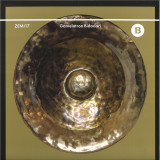
The Gamelatron is many things; one could call it a sculpture, a multimodal installation, an instrument, a robot, a feat of engineering, a vision—and it is all of these things. More importantly, though, it is a concept sustained by Aaron Taylor Kuffner, aka Zemi17, whose Gamelatrons are “sound producing kinetic sculptures” designed to create an immersive, visceral experience for the listener. Not a small feat, and yet the ambitions of Zemi17 are absolutely realized in this long-standing project, culminating now in his third release for The Bunker NY: Gamelatron Bidadari.
The Gamelatron Bidadari is not just a name—it is one of seventy-plus musical sculptures that Zemi17 has conceptualized, designed, and fabricated. Therefore, it would be inaccurate to think of this release as simply a series of arrangements composed in a finite period of time. Rather, it’s a window into a project and a process that is much larger than any single album can encapsulate. Gamelatron Bidardi is the culmination of more than a decade of work, and is central to Zemi17’s evolution, not only as a musician but as an artist.
Having studied gamelan for many years in Indonesian villages and at the Institut Seni Indonesia in Yogyakarta, Kuffner is a musician, an artist, technologist, and craftsman. The gongs in his sculptures are co-created with master Indonesian artisans. Each Gamelatron composition is site-responsive, meaning its sounds are composed for the acoustics and intentions of the space it inhabits, whether it’s an art gallery, a wooded landscape, or the inner temple of Burning Man. The Gamelatron does not stand alone: it is in constant co-creation with its physical environment, and in dialogue with gamelan’s long-standing history.
Originally exhibited at the Smithsonian Renwick as part of a show entitled, No Spectators: The Art of Burning Man, the Gamelatron Bidadari produces sounds that are delicate yet strong, and deeply hypnotic. Textured chiming creates intricate polyrhythmic patterns that are both complex and simple, or in a word, elegant. On Gamelan Bidadari, Zemi17 refrains from adhering to the strict musical structures; his approach to composition is free flowing.
He says, “I want to evoke what the music tells me it has to offer. It is like following water to its conclusion (or non-conclusion).” The arrangements on this album, written by Zemi17 and performed by the robotic arms of the Gamelatron, leaves the listener feeling enchanted, nourished and enriched.
A sense of the mystical comes through in the tonal quality of the instrument, and is conceptually felt in the sculpture’s name: the Bidadari, which loosely translates to “forest nymph.” The music conjures up natural wonder, and the four sculptures that make up the Gamelatron Bidadari, in fact, resemble trees. They are four independent yet connected entities, each with a large gong situated at their structural base—the sonic “roots” of the sculpture—while smaller gongs branch off of a golden, trunk-like spine. The Gamelatron Bidadari is as physically stunning as it is mesmerizing to the ear. A kind of divinity is invoked through its sound, or a sacred cohesion between past and present, tradition and new form. Meant to be viscerally experienced, the sounds of the Gamelatron call for sublime togetherness. Gamelatron Bidadari is not just an album but the crystallization of Kuffner’s work; it is a condensed yet spacious glimpse into the sonic power of Zemi17’s Gamelatrons, which have already been heard and experienced live by over a million people.
out of Stock
Last delivered 4 years ago available to reorder, subject to availability
On High Flying Man, the third LP by Matt Berry’s pseudo-eponymous project The Berries, loss and desire take center stage. Berry delves deep into 21st century malaise, crafting densely layered songs which project an unshakable yearning for deliverance from the world’s shortcomings. Each track extends an outstretched palm towards universal connection, blending a complex of mix of pop hooks, rock swagger, and psychedelia into dejected populist anthems. Faced with the perils of an isolating world, High Flying Man reignites the tradition of great American songwriting, speaking in the voice of the longing masses. At heart, Berry demands more life, rejecting both arty cynicism and nostalgic escapism.
Berry cut his teeth at a young age playing in the bands Happy Diving (Topshelf Records) and Big Bite (Pop Wig), and has since regularly served as a touring member for bands like Angel Dust and Dark Tea. His early work with Happy Diving and Big Bite solidified his position as an upcoming star in the world of fuzzed-out indie rock, earning him tours and opening slots with the likes of Turnstile, Dinosaur Jr., Nothing, The Swirlies, and The Coathangers. With The Berries, however, Berry turns the Big Muffs down (although not off), creating sonic space to stretch his wings as a burgeoning pop songwriter. The psychedelic-surrealist textures of his earlier output are not gone, per say, but rather find themselves folded into more expansive, rock-oriented arrangements, becoming accoutrements as opposed to the driving force of each song itself.
High Flying Man follows The Berries’ previous releases, 2018’s Start All Over Again and 2019’s Berryland. While longtime listeners will undoubtedly recognize Berry’s disaffected drawl and melodic sensibility, High Flying Man’s complex arrangements and expansive sonic landscape place it well apart from its predecessors. Berry enlisted live band members Danny Paul (drums), Emma Danner (backing vocals), and Lance Umble (bass) during the recording of High Flying Man, as well as the mixing talents of Rob Schnapf (Elliott Smith, Beck, Guided by Voices), breaking from the self-produced home recording ethos of the previous Berries LPs. The collaborative nature of High Flying Man’s recording process is reflected in the quality of each song’s arrangement. Freed from the pressure of being individually responsible for every detail committed to tape, Berry was able to focus his attention more fully on the creative demands of constructing a dynamic and cohesive record. High Flying Man pivots away from any sort of obvious nod to Americana tropes, baggy British attitude, or Neil Young-esque riffing, leaning head on into a lush, idiosyncratic grandeur.
Each track evokes the irreverent and flashy style of a songwriting voice finding itself for the first time. Berry’s guitar heroics extend towards new heights, channeling the simple pop mastery of Lindsay Buckingham (“Prime”) and the wicked emotion of a 21st century “November Rain” (“High Flying Man”). Unusual stylistic juxtapositions give certain songs an almost timeless quality: Bert Jansch-esque crooning finds its counterpoint in sweeping, distortion-soaked riffs (“A Drop of Rain”), the primitive rhythms of Amon Duul are given an arena-sized, Britpop facelift (“Life’s Blood”). On High Flying Man, however, the ballad reigns supreme. “Down That Road Again” drips with sentimentality, powered by soft, undeniable pop melodies and pared-down chord progressions. Album-centerpiece “Eagle Eye” teeters between pure grace and extreme sorrow, unfolding into a massive, immediately memorable tide of melancholic beauty.
Lyrically, High Flying Man is both simple and direct. Although often bitter about the state of the world, Berry has no overtly political axe to grind. In some instances, he takes jabs at the moral laziness of aging millennials, expressing his yearning for a return to vitality and conviction (“Prime”). In other instances, Berry turns his criticism inwards, examining his longing for a better life and his repeated tendency to self-sabotage (“Down That Road Again”). These two poles balance each other out, creating a thematic tenor which is more so self-implicating and empathetic than critical. If anyone is to blame, it is the world we have been saddled with, not the people left to pick up its pieces. Although often personal, Berry’s words evoke a universal experience of continued belief in the face of loss. “High Flying Man” chronicles the growing distance between Berry and an old friend who has been shipwrecked by the weight of trauma, evoking the sorrow of trying to love someone who is no longer able to keep up with reality. Even the most somber passages of “Eagle Eye” (“long before I become aware of it, my friend/it’s 6 AM and I’m gonna die”) find their redemption in a burning devotion towards something worth living for (“If there’s one thing I can depend on/it’s my old friend/my shining light/my eagle eye”).
With High Flying Man, Matt Berry embraces undying love in the face of isolation. Daring to want more life becomes a spiritual rallying cry against a world that has failed to make life either meaningful or beautiful. At their core, these songs are not about revolution, but they are about the faith that gives something like revolution a purpose in the first place.
The third release from Night Dreamer’s essential “Direct-to-Disc” sessions sees an incredible meeting between legendary US saxophonist Gary Bartz and leading UK spiritual jazz ensemble, Maisha, featuring two Bartz classics and three brand new joint songs written by both Bartz & Maisha in close collaboration.
Having cut his teeth playing with the likes of Charles Mingus, Max Roach, Art Blakey and finally in 1970, Miles Davis at the peak of his electric period, Gary Bartz became a leading figure of the early-to-mid 70s spiritual jazz movement, releasing a string of ground-breaking albums on legendary NYC jazz label Prestige Records with his NTU Troop, featuring classics such as “Celestial Blues”, “Uhuru Dance” and “I’ve Known Rivers”, before collaborating on Blue Note Records with the Mizell Brothers on the anthemic jazz funk of “Music Is My Sanctuary”. An oeuvre much loved by soul jazzers and hip hop fans alike.
Led by drummer Jake Long, Maisha have been central to the UK’s jazz explosion, and have fast become the UK’s most exciting and in-demand young spiritual jazz ensemble, from steller shows at Jazz re:freshed, Total Refreshment Centre & Church of Sound and supporting the Sun Ra Arkestra, to releasing their critically acclaimed debut LP, “There Is A Place” on Gilles Peterson’s Brownswood Recordings in 2018. Theirs is an organic & explosive sound that blends influences from afrobeat and broken beat to Persian music, with a deep love and understanding of jazz, particularly the heritage of spiritual jazz led by titans such as Pharoah Sanders, Alice Coltrane and of course, Gary Bartz.
Which makes this collaboration even more special. Bartz was first invited to share a stage with Maisha by Gilles Peterson to headline the inaugural We Out Here festival. Their chemistry was rich and instantaneous, certainly a two-way street, with the young musicians reinvigorating the legend’s performance and wowing the intergenerational festival audience. A European tour followed, including a London Jazz Festival highlight at the Royal Festival Hall, celebrating the 50th anniversary of his album “Another Earth”, originally featuring fellow legends, Pharoah Sanders, Charles Tolliver, Stanley Cowell, and John Coltrane’s own bassist, Reggie Workman.
Now the relationship has evolved into a special straight-to-disc recording for Night Dreamer Records, that captures the vitality of their collaboration. Whilst Bartz and Maisha reinvent classic Bartz compositions “Uhuru Sasa” and “Dr Follows Dance”, extending the pieces into long piece improvised grooves, their recording session gave birth to three brand new joint compositions, written the very same day. These include the propulsive “Leta’s Dance” that magically combines the Bartz’ soulful musical lyricism with Maisha’s African-jazz influences, and the organic jazz
funk of “Harlem to Haarlem”, featuring a hot solo from guest trumpeter Axel Kaner-Lidstrom of Cykada & Levitation Orchestra fame.
Like previous Night Dreamer efforts from afrobeat star Seun Kuti & Egypt 80, and the beautiful collaboration between Brazilian stars Seu Jorge & Rogê, the album was recorded in Haarlem’s Artone Studio, a stones throw from Amsterdam, in just one-take, straight-to-disc, avoiding post-production embellishments and retaining the purity of the performance lost in modern recording techniques.
This record really is an event, in and of itself, a meeting of talents, minds, generations and zeitgeist moments, captured in a unique and pure manner. The music does not disappoint, as Maisha have been inspired to reach new heights whilst we find Bartz truly reinvigorated, and both artists in tune to the spirit of the other.
Recorded direct-to-disc @ Artone Studio, Haarlem, The Netherlands on Tuesday 29th Wednesday 30th October 2019
The members of Szun Waves may not have been collectively in the same country, let alone room, for over two years, but that hasn't prevented them from realising their third album, Earth Patterns. The trio - comprised of producer Luke Abbott, saxophonist Jack Wyllie (Portico Quartet) and drummer Laurence Pike (Triosk/PVT/Liars) - recorded the album sessions together at the tail end of their 2019 European tour, locking themselves away in the studio for three days of improvisation. They emerged with hours of music, some inspired by their live shows, most born fresh in the studio itself, ready to be moulded into the group's third album in five years.
out of Stock
Last delivered 3 years ago available to reorder, subject to availability
A Boogie Wit da Hoodie will be releasing his third studio album ‘Artist 2.0’ on vinyl on the 5th August.
The Bronx-bred artist Artist Dubose, better known as A Boogie Wit Da Hoodie, first hit the rap scene with the breakout hit “Still Think About You” which was featured on his 2016 debut mixtape, ARTIST. The mixtape also introduced fans to “My Shit” which went on to become RIAA certified platinum and was also listed as one of “The Best Songs of 2016” on Apple Music. A Boogie quickly proved himself to be one of the game’s newest heavyweights after XXL dubbed him as “one of the hottest and newest up-and-comers in hip-hop” and included him in the 2017 Freshman Class. The young star also went on to release the 3x platinum “Drowning feat. Kodak Black” along with the platinum certified singles “Jungle” and “Timeless.” A Boogie went on to release his highly anticipated, now gold certified, debut album, THE BIGGER ARTIST, which quickly sprung into the Top 5 on Billboard’s Top 200. He also became the top emerging acting in the U.S. as he simultaneously sprung to #1 on Billboard’s Emerging Artists chart.
It is easy to see why The New York Times named A Boogie “the most promising young rapper the city has produced in some time.” A Boogie earned a BET Award Nomination for “Best New Artist” at the end of 2018 in addition to releasing his gold-certified sophomore album, HOODIE SZN, which made its debut at #2 before spending three non-consecutive weeks at #1 and maintaining a stunning 17-week streak within the top 10 on the Billboard Top 200 chart. The album also soared on streaming, garnering over 83 million streams the week it went #1. Following his latest album as well as his sold out “A Boogie Vs. Artist” tour, there’s no doubt A Boogie will continue to make waves and redefine the sound of New York rap.
[i] 9. Calm Down (Bittersweet) [feat. Summer Walker]
Jacob Long’s third Earthen Sea outing for Kranky, Ghost Poems, further refines his fragile, fractured palette into fluttering arrhythmias of dust, percussion, and yearning.
Composed during the first wave of lockdowns in New York, the pieces took shape patiently from samples of piano, texture, and domestic sounds (sink splashing, room tone, clinking objects), filtered through live FX to imbue them with an intuitive, immaterial feel. Wisps of melody splinter, shimmer, and refract, like light on water; pulses accrue and dissipate, as if mapping shifting sands. Throughout, there’s a sense of matter made animate, of absences felt.
Long cites notions of “the studio as a dub instrument” and the melancholy of “7th chords on a fake Rhodes patch” as central elements in his process, transforming raw materials into rare thresholds of symbiosis and hypnosis. This is music for night skies in hollowed out cities, for views across rivers towards unknown shores: restless, placeless, and profound.
track listing:1. Shiny Nowhere 2. Stolen Time 3. Felt Absence 4. Oblique Ruins 5. Snowy Water 6. Rough Air 7. Slate Horizon 8. Ochre Sky 9. Fossil Painting 10. Deep Sky
press quotes for previous album Grass and Trees:
“Jacob Long’s vaporous, lo-fi ambient tracks feel like snapshots of stillness made of moving parts.” Pitchfork
“As light as a warm breeze on skin, Earthen Sea’s latest album for Kranky showcases Jacob Long’s natural sensitivity for low-key, enchanting electronic sound craft.” Boomkat
“It’s exciting to hear such a significant change in his sound without sacrificing a personal touch and sonic character.” Igloo
out of Stock
Last delivered 7 months ago available to reorder, subject to availability
MC DUKE was one of the first UK rappers to find a serious level of success, laying the ground work for a generation of hip hop talent to follow. As well as being a UK hip hop legend, he was also one of the pioneers of the early British hardcore / jungle sound & owner of the Hard Disk record label.
The legacy of MC Duke with the early rave sound was cemented in history forever when The Prodigy sampled his voice for their chart topping hit Everybody In The Place! He was also one of the first MC’s on London’s infamous Kool FM. As a producer Duke was signed to the Boogie Times label, sister imprint of the genre defining Suburban Base, under the alias E.K.U.D.C.M. (which is MC Duke spelled backwards).
The first slice of vinyl on this collection features rare cuts from 1993 and perfectly showcases the evolution of the rave era into the sound that was at the time described as jungle techno, the precursor to jungle as we now know it.
Vinyl number 2 is the one that will get the collectors salivating... Featuring music by The Man With No Name, currently the only copies of these tracks are available at an asking price of £167 on the resale market, with people already parting with up to £155 to own a copy via re-seller site discogs!
Our third & fourth disc once again features 2 of MC Dukes alias’ with the darkside goodness that is Quiji Board, and closes with the most up to date track from the compilation by Phiziks previously unreleased on vinyl.
All tracks on this Hard Disk compilation have been expertly re-mastered to give you the optimum listening experience while retaining that authentic early 90’s sound you’d expect. This four-part vinyl collection is placed in a beautiful presentation box for which we’ve digitally re-created the original artwork style from Hard Disk releases back in the day to make this a true collector piece for those wanting a genuine piece of UK culture history.
out of Stock
Last delivered 4 years ago available to reorder, subject to availability
Since the release of Superstition back in 2018, FUNERAL CHIC has been through something of a metamorphosis, a rebirth if you will. With renewed purpose and a line up that has been solidified along the way, the four piece are preparing to release their third full length album, Roman Candle, this summer. Holding no desire to make the same album twice, they have eschewed the punk-led powerviolence that informed their previous work and have embraced the great tradition of American rock and roll - but given it a very distinctive FUNERAL CHIC twist. The swagger of proto-punk forefathers The Stooges and The New York Dolls imbues the darkest, grittiest corners of their reinvigorated sound, and can also be found on their cover of Roky Erickson’s Two Headed Dog. The caustic energy of early thrash and black metal scenes is also present, flickering with unmistakable incandescence throughout. Having previously led with their outspoken politics, this time the lyrics are refracted through a more personal - but no less fervoured - lens. With members of the band taking a path of sobriety in recent years, the knot of rage that was previously doused with alcohol has been channeled into the lyrics on Roman Candle instead. Ten tales of sweat and pungent aggression dripping into a powder keg of a global identity crisis weave throughout the album’s length. Recorded at Legit Biz, in Greensboro, NC with engineer, Kris Hilbert, FUNERAL CHIC guitarist, Robert Stroud, oversaw production, before the album was mixed by Matt Russell and mastered by Brad Boatright at Audiosiege. Throughout the process of creating Roman Candle, FUNERAL CHIC has - without ceremony - sloughed away old skin to reveal something new beneath. The volatile and unpredictable experience of living in modern day America is distilled via the mercurial sound of aggressive punk, sleazy Americana, and raw heavy metal. Roman Candle marks the beginning of the next blistering chapter for FUNERAL CHIC.
Recorded under a loft bed in the guest bedroom of his Nashville home, Michael Ruth aka Rich Ruth’s “I Survived, It’s Over” starts in a humble space. And while many contemporary music projects are produced in such an environment, “I Survived, It’s Over” sets itself apart in its transformative properties as well as its transparency. What we have here is honest sound exploration, session musician-level instrumentation, and a true love for nature run through the fingers of a dude who can channel some acute and undeniable magic. This music goes deep. "I conceived much of this record amidst the quiet and tumult of 2020 in my neighborhood that had recently been ravaged by a tornado," Ruth recalls, "I spent most of my days working on these pieces between bicycle rides - watching the beautiful Tennessee ecosystem flourish in Shelby Park, listening to Keith Jarrett’s The Koln Concert and John Coltrane’s Ascension." Underneath the swell of the strings and the shredding of the guitars, this record has hard working, rustbelt, drum-heavy roots all over it (which makes sense as Ruth hails from outside of Toledo, the album was mixed by John McEntire from Chicago band Tortoise). Many of the flutes, saxophones, pedal steel, and other instruments were recorded remotely because we live in the future, but this only adds to the collage of sampled and sample-able material that Rich Ruth has to offer. The organic relationships between the artist and other musicians on the album is evident even in the compilation style sampling that needs to occur in putting such a project together. "Working on this music is a daily meditation," says Ruth. "I constantly experiment with sound until it reflects the way I am feeling and attempt to sculpt something meaningful from it. Through years of being a touring musician, it is a constant inspiration and privilege to collaborate with the individuals that graced this record with their voices." And those relationships pay off, because “I Survived, It’s Over” is a sonic meal. It’s rich (no pun intended) with massive instrumentation that’s usually reserved for more symphonic delights. But at the same time it’s simple and leaves space to breathe–space you didn’t know you needed. In his own words; "I Survived, It’s Over is a meditation on healing, confronting trauma, surrendering, and finding peace. I wanted to encapsulate the tranquility and disarray found within this process." Ruth’s heart and the peace that his presence produces is all over this album. And despite his midwestern humility and willingness to brush off any praise, he’s put together something really special that carries its own weight. It's the kind of record that only comes around every once in a while and it's worthy of all the head-bobs, acclaim, and celebratory potlucks that Mike and the gang have coming their way. “I Survived, It’s Over” is a record you should buy for your friend, your foe, and yourself. It’ll sit perfectly on your shelf between Alice Coltrane and Hiroshi Yoshimura.
Very limited pressing of 300 units only. Following on from the two sold out records together, Freschard and Stanley Brinks come together for 12 brand new tracks. Lion Heart is an irresistibly charming collection of late night tales, woozy ballads and uptempo sing-alongs. Clemence Freschard’s beautiful vocal tones lend this a rich, French indiepop/chanteuse vibe, complemented by Stan’s wistful timbre and characteristic warm instrumentation. Stanley Brinks is renowned for his unique anti-folk style: both playful and suggestive, insightful and entertaining. Brinks was born in Paris, France, in 1973. He studied a bit of biology and worked as a nurse for a while. Half Swedish, half Moroccan, strongly inclined to travel the world, he soon began spending most of his life on the road and developed a strong relationship with New York. By the late 90s he’d become a full time singer-songwriter – André Herman Düne – as part of three piece indie-rock band, Herman Düne. Several albums and Peel sessions later and after a decade of touring Europe, mostly with American songwriters such as Jeffrey Lewis, Calvin Johnson and early Arcade Fire he settled in Berlin. The early carnival music of Trinidad became a passion, and in the early 21st century he became the unquestioned master of European calypso, changing his name to Stanley Brinks. Under this moniker he has recorded more than 100 albums, collaborated with the New York Antifolk scene on several occasions, recorded and toured with traditional Norwegian musicians, and played a lot with The Wave Pictures. Freschard grew up in a farm in French Burgundy. Aged 18 she moved to Paris, where she baked pies and cakes in a cafe. There, a local musician and regular customer called Stanley Brinks wrote a few songs for her to sing. Homeless in Paris, she saved up just enough money to get herself a ticket to New York. There she found an old electric guitar and started writing her own songs. In 2004 she moved to Berlin, where she recorded her first LP, "Alien Duck". Her second album, "Click Click", recorded in 2006, features electric guitar by Stanley Brinks. On her third album, she plays the drums herself. On her fourth “Shh...” she also plays the flute, and she breaks out the washboard on her fifth “Boom Biddy Boom”. On Midnight Tequila, Freschard brings it back to just drums and vocals // “an absolute joy.” Q // “...a set that’s as wistful and charming as it is playful and self-concious.” Uncut // “quietly charming” Pitchfork
The third instalment of the Best OF Various series sees Malta's Melchior Sultana return to Ten Lovers Music with an amazing new track called Spectres. Following that we have a special reprise of Secret Garden by Paul David Gillman Presents Red Earth Design, from England. The main mix of Secret Garden features on Paul's debut album (TLP004) of the same name, we thought this reprise was too good to remain unreleased. On to the AA side and we have two tracks back to back from Italy's ReeKee with his debut release on TLM, Here We Stay and Next To Me showcase his unique sound. We have been a fan for a while so great to have him on board. Finally someone who needs no introduction, from the USA, Detroit's very own Javonntte following up his TLM 7' release last month with this superb track called Satellites and Dreamers.
out of Stock
Last delivered 2 years ago available to reorder, subject to availability
In the Beginning (Vol. 2) continues the treasure trove of the early works of Declaime & Madlib, the longtime collaborators who helped usher in a new sound and style from the city of Oxnard, Calif. This collection is brimming with previously unheard tracks from this beyond-creative duo that blends hip-hop with funk, jazz, soul, and psychedelia to lay the groundwork for so many other emcees and producers.
For Declaime (a/k/a Dudley Perkins), this series serves as a way to honor his friends and the city that raised them. He shouts out names like The Almighty Metaphor (aka MED), Oh No the Disrupt, DJ Romes, Kazi, and more, who he says “created a lane for the city of Oxnard to get the recognition it deserves.” Some of them make an appearance in one form or another on this collection, too—Romes, for example, mastered the project—that compiles 10 previously lost tracks that were recorded from 1993 to ‘96.
In The Beginning (Vol. 2) is entirely produced by Madlib, who provided all the cuts as well. His instrumentals are on that raw and dusty vibe as they move freely through genres and sounds, like on standout cuts “Bandwagon,”WLIX,” and “Signs (feat. Wildchild).” Those are all highlights for Declaime, too, and they demonstrate his ability to blend his observations of the world with bravado and third-eye insights. Even as young kids just getting their feet wet in the studio, these two were firmly on their path.
Hypnagogia remains one of the most mysterious and haunting daily states of mind. Moments of revelation are wont to traditionally hit us particularly in the hinterland between dream and waking, It’s this particular headspace that’s very much the world of ‘Pö om pö’, the second Rocket Recordings released full-length record from Sweden’s equally mysterious OCH. Pö om pö (meaning ‘little by little’) is a journey further into inner space from ‘II’, the previous Rocket outing (which followed a 2014 cassette only release) What’s mapped out here is a trajectory on the kosmische continuum that touches on the terrain of late-‘70s Sky records style ambience, the more overgrown quarters of Swedish experimental prog and the sun-baked lo-fi DIY cassette culture of the US early ‘00s.Dwelling in a smoke-clouded glow that’s equal parts sunset gold and effects pedal red, OCH have here transcended all influences to creating a tapestry of potent psychotropic sound. A record in which new horizons open up beyond the small hours, and where primeval wah-wah-abetted skronk and mantric folk tinged repetition can collude to reveal new third-eye perceptions. Little By Little, Pö om pö , these forty minutes are here to bridge the chasms between conscious and subconscious, and in style.
• Sony Music Masterworks and Milan Records announce the vinyl release of “My Hero Academia: World Heroes' Mission” with music by composer and arranger YUKI HAYASHI. The film adaptions are based on the original Comic Series “My Hero Academia”, which sold over 50 million copies worldwide.
• Based on Kōhei Horikoshi’s most successful manga series, ‘My Hero Academia: World Heroes’ Mission’ is an action-adventure film directed by Kenji Nagasaki. When a sinister organization threatens to wipe out all superhuman powers, the fate of the world is on the line. But before they can succeed in putting their evil plans into action, the Pro-heroes around the world assemble to come up with a counter plan to stop the worst from happening.
• The soundtrack of the critically acclaimed, hugely popular film adaptation is now being released as a stunning double coloured vinyl with a double gatefold.
• My Hero Academia: World Heroes’ Mission is the third movie, following the success of My Hero Academia: Two Heroes and My Hero Academia: Heroes Rising (75M streams to date), and marking a major shift in the series' story - putting Deku in a precarious position of being painted as a villain.
• Besides the movie adaptations, the comic was adapted into an anime series. The 5th season of the series is currently on air. You can watch it on Funimation and Crunchyroll in the UK and you can find “My Hero Academia Season 1” on Netflix.
About the composer Yuki Hayashi:
• Yuki Hayashi was born in Kyoto, Japan in 1980. Being an active member in a men's rhythmic gymnastics team in his early years spawned his interest in BGM while selecting songs to complement performances. This led him to begin teaching himself music composition while at university, despite not having a background in music itself. After graduating, Yuki acquired the basics of track making under house techno DJ and sound-maker Hideo Kobayashi and started producing his first range of music accompaniments for dance sports. His experience as a rhythmic gymnast has enabled Yuki to intuitively incorporate an eclectic range of music and produce a unique sound, empowering scenes from TV drama, animation and film.
After two UK #1 albums, 2 million album sales and an array of international acclaim, you might’ve thought you knew what to expect from Royal Blood. Those preconceptions were shattered when they released ‘Trouble’s Coming’ last summer. Hitting a melting pot of fiery rock riffs and danceable beats, they delivered something fresh, unexpected and yet entirely in tune with what they’d forged their reputation with.
The reaction was phenomenal, with highlights including 20 million streams, a premiere as Annie Mac’s Hottest Record and a run on Radio 1’s A-list and earned alternative radio support and media attention across the globe. In short, Royal Blood are primed to be bigger than ever before. That feat is set to be realised when they release their eagerly anticipated third album ‘Typhoons’ on April 30th via Warner Records.
When Mike Kerr and Ben Thatcher sat down to talk about making a new album, they knew what they wanted to achieve. It involved a conscious return to their roots, back when they had made music that was influenced by Daft Punk, Justice, and Philippe Zdar of Cassius. It also called for a similar back-to-basics approach to what had made their self-titled debut album so thrilling, visceral and original.
“We sort of stumbled on this sound, and it was immediately fun to play,” recalls Kerr. “That’s what sparked the creativity on the new album, the chasing of that feeling. It’s weird, though - if you think back to ‘Figure it Out’, it kind of contains the embryo of this album. We realised that we didn’t have to completely destroy what we’d created so far; we just had to shift it, change it. On paper, it’s a small reinvention. But when you hear it, it sounds so fresh.”
Those traits pulsate throughout the new single and title track. Kerr’s spiralling bass riff casts an hypnotic allure as it grows in intensity, while his vocals switch at will between a raw rock roar and a soulful falsetto. It’s underpinned by Thatcher’s thundering beats, his taut rhythms infused with groove-laden hi-hats.
After setting the tone with ‘Trouble’s Coming’, the album opens in breathless, take-no-prisoners style with the fierce metallic grooves of ‘Who Needs Friends’ hitting an early visceral peak. Royal Blood further reference their fresh array of influences by deploying vocodered vocals on ‘Million & One’ before dynamically switching between the biggest contrasts of their sound with ‘Limbo’. Already a fan favourite having been a regular during the duo’s 2019 shows, ‘Boilermaker’ lives up to its reputation and is more than matched by ‘Mad Visions’, which evokes a hyper-aggressive Prince. It ends with a final surprise in the shape of the stark piano ballad ‘All We Have Is Now’, a vulnerable and revealing reminder to live in the moment.
That song’s unguarded sentiments gives the album a redemptive finale. Whether directly or allusively, the album focuses on exploring the flipside of success that they’ve experienced. It comes from the realisation that success is much more complicated than it seems and that having the time to regain perspective is a precious commodity which becomes ever more elusive. The situation called for reflection and change, which Kerr addressed in Las Vegas. He downed an espresso martini and declared it to be his last drink, and soon discovered that his new-found sobriety would have a positive impact upon his creativity and life as a whole.
That new approach manifested itself in the duo’s decision to produce the majority of ‘Typhoons’ themselves. ‘Boilermaker’ was produced by Queens of the Stone Age frontman Josh Homme, the two bands having first connected when Royal Blood supported them on a huge North American tour. Meanwhile, the multiple Grammy Award winner Paul Epworth produced ‘Who Needs Friends’ and contributed additional production to ‘Trouble’s Coming’.
out of Stock
Last delivered 4 years ago available to reorder, subject to availability
For the third release on De:tuned we proudly present The Kosmik Kommando AKA Mike Dred. Mike hardly needs an introduction; considered as one of the masters of the Roland TB-303 Mike has been releasing records under various aliases since the early 90s. He has recorded for high profile labels such as R&S and Rephlex as well as his own Machine Codes label. Together, with Aphex Twin, Mike was behind the Universal Indicator releases which are among the most collectible and sought after records in techno history.
De:tuned has worked closely with Mike to develop an 8 track project that gives props to the American Psychologist Timothy Leary and his proposed theory of 'The Eight-Circuit Model of Consciousness'. This model describes 8 circuits of information that operate within the human nervous system. Each circuit refers to a different sphere of activity, enhanced by experimentation with a particular substance. Each circuit also represents a higher stage of evolution than the one before it and the higher the circuit, the fewer the people have activated it as the higher four circuits exist for those who migrate to outer space and live extraterrestrially.
The 8 Models are applied to the track titles that present a varied collection integrating acid house, techno, electro and rave culture.
3 of the tracks on offer here were written exclusively for Mike's live performance at the De:tuned 'Meeting of Minds' event in June 2012, which was Mike's first full live show in 3 years.
This 8 track project will be available on limited 180 gr white double vinyl with label and sleeve artwork by Mike himself. Stay Tuned!
out of Stock
Last delivered 4 years ago available to reorder, subject to availability
For the third release on De:tuned we proudly present The Kosmik Kommando AKA Mike Dred. Mike hardly needs an introduction; considered as one of the masters of the Roland TB-303 Mike has been releasing records under various aliases since the early 90s. He has recorded for high profile labels such as R&S and Rephlex as well as his own Machine Codes label. Together, with Aphex Twin, Mike was behind the Universal Indicator releases which are among the most collectible and sought after records in techno history.
De:tuned has worked closely with Mike to develop an 8 track project that gives props to the American Psychologist Timothy Leary and his proposed theory of 'The Eight-Circuit Model of Consciousness'. This model describes 8 circuits of information that operate within the human nervous system. Each circuit refers to a different sphere of activity, enhanced by experimentation with a particular substance. Each circuit also represents a higher stage of evolution than the one before it and the higher the circuit, the fewer the people have activated it as the higher four circuits exist for those who migrate to outer space and live extraterrestrially.
The 8 Models are applied to the track titles that present a varied collection integrating acid house, techno, electro and rave culture.
3 of the tracks on offer here were written exclusively for Mike's live performance at the De:tuned 'Meeting of Minds' event in June 2012, which was Mike's first full live show in 3 years.
This 8 track project will be available on limited 180 gr white double vinyl with label and sleeve artwork by Mike himself. Stay Tuned!
out of Stock
Last delivered 12 months ago available to reorder, subject to availability
Rome’s own disco wizard L.U.C.A. aka Francesco De Bellis is back for his second LP Terra, hot on the heels of his Venus 12” EP earlier this year. In this far-reaching album, the Edizioni Mondo founder explores the deteriorating relationship between Man and Nature, and the dire consequences. The album is split into two themes - part one is Consacrazione (Consecration) and side two is Coscienza (Conscience) - as L.U.C.A. charts a trip through mankind’s psychic universe, and imagines worlds beyond our physical dimension.
The opening composition Cities is an uptempo number that slowly comes into focus, as dreamy drum machines emerge from the urban bustle, before settling into a soulful groove as keyboard, upright bass and guitar figures dance across bright percussion. As it builds up a head of steam, the piece gives way to an ambient, tribal breakdown, which is also echoed in the following song, Drum Talk. This second tune sets up in a fourth world dreamscape of drums, synths, and abstracted echo effects, and is peppered with word fragments from the bush of ghosts. By the time we’ve reached the third track, Congiunzione sounds like travelling at singularity speed, beaming in from a future where human consciousness and gaia can finally dance on a cosmic plain.
Part two of Terra details how revelation of the spirit can guide the mind, as Time Spirals rises out of a drum motif with a nod to classic ragas, as a disembodied voice asks questions on the nature of corporeality. The sound design is just as front and centre as the sitar and fretless bass, and the song gives way to a richly-layered soup that sounds like the vast space between atoms. It’s this shift from composition to ambience that is the dynamic core of Terra, giving L.U.C.A. plenty of space to showcase his next-level audio and arranging skills. Midway through part two, Giallo Assoluto begins with reverb tails and choral voices before expanding in brightness and texture until the audio field is practically levitating your hi-fi speakers, vibrating them with drones, twinkling keys and shards of digital noise. The closing composition Ritorno al Domani is a perfect balance of optimism and mystery. Tension and release collapse in on themselves as waves of ambient pads crescendo and then break over stretched-out sonic turbulence, before reversed synths bring the listener to a closing door, and the end of the journey.
It’s a mind-expanding musical exploration of other worlds and parallel universes which are surely all around us, and in many ways serve to remind us of the marvel that is our own planet.
out of Stock
Last delivered 20 months ago available to reorder, subject to availability