Nino Šebelic, The Serbian Producer And Longtime Vienna Resident, Is A Man Who Lives And Breathes Techno. On His Premier Pomelo Release, 'jupiter Ep', He Channels True School Detroit Electro, Upgraded With His Energetic And Unique Touch. The Ep Starts Off With this Is For My Hood', A Peak-time Bass Monster Reminiscent Of Aux88's Most Intense Productions. It's Followed Up By church Of Tasmania', A More Stripped Down Affair That Is Destined To Unfold Its Magic On The Dance Floor. On The Flip Side baltimore' Explores The Space Between Electro And Techno, Oscillating Between Moody Synth Workouts And Pumping Ebm Patterns. 14357.977km' Equals Roughly The Distance Between Detroit And Vienna And Back, And For The Eponymous Track Šebelic Appears To Have Indeed Been Visiting The D For Its Glorious Chord Pads And Subaquatic Moods. Lastly get Brate' Closes The Ep With A No-holds-barred, Straight To The Point Electro Bass Banger In Best Electric Soul Style.
quête:this is my church
Two jewels in the crown of the soulful electronic music scene in NYC unite for a spellbinding EP on Rhythm Section International. ”Full Circle” is a brand new body of work from Musclecars & Toribio.
To call this 12” simply epic would almost be doing it a disservice. The breadth of musicality and execution of ideas contained across 3 compositions is nothing short of miraculous. I use the word composition intentionally: these are not merely tracks - these are 3 movements making up a concerto - with a dub thrown in for good measure!
The record kicks off with a soulful house behemoth, “ That’s My Story” featuring NJ legend Roland Clark on vocals giving sweet sweet testimony. In many ways, this track feels like a coming together of the trios influences. The lyrics contextualise it, giving it this intimate, confessional feel. The latin drums shuffling amidst the 909 kick drive it forward and the organ swimming freely amongst it all takes us to church. It’s a timeless track - paying homage to the various New York traditions laid down by Louis Vega, Timmy Regisford, Joaquin Claussell , Ron Trent et al - all heroes and collaborators of the composers who - with this effort - have surely now earned their place in the pantheon of American Soul Music.
‘
Be Honest’ maintains the confessional tone with the lyrics but takes things right back down in terms of tempo. Is it a love song, an ultimatum or a cry for help? Whichever way you interpret it, this track is Toribio’s time to shine as a lead vocalist and he hits all the notes, leaving not a dry eye in the house. This is a delicate tour de force, delivered with such raw emotion and vulnerability it allows the instrumentation takes a back seat - just a gentle groove, swelling strings and some unresolved chords are all that’s required to transform us to the main character of this story. We’re left hanging, and it’s oh so relatable.
Agua De Florida serves as an uplifting, fast paced finale to the concerto and this one’s all about the trumpet - masterfully performed by Melbourne born, London based virtuoso Audrey Powne. If Herb Alpert was making house music - I imagine this is what it would sound like. Throbbing bass and noodling synths join the melee and crank the joy up to 11. If the EP is a story arc over 3 tracks, then we’re definitely not left hanging with this one. All is resolved, things are moving onwards and upwards and the circle is complete.
When a Russian missile struck the ground not far from my studio in Kyiv, I vividly remember how my body reacted to the explosion, milliseconds before my mind did. That traumatic explosion reduced my essence to a primal state. There existed nothing but dread—the kind that, in scripture, accompanies the appearance of angels announcing, ’Be not afraid’.
The visions of Abbess, composer and mystic Hildegard von Bingen were preceded by bright, excruciating flashes of light. Modern medicine reduces them to cluster migraines, one symptom of which is the retinal aura, often accompanied by blurred vision and blind spots. Hildegard’s music can place great demands on the bodies of its performers, emphasizing uncomfortable intervals and the wide distance between the lowest and highest pitch. In comparison, Gregorian chant, the liturgical standard of the time, represents a tempered attempt to grasp God intellectually; indeed, Hildegard’s music was once described as a stick of dynamite thrown into a Gregorian chant.
This album is not a historically informed performance. Hildegard’s persona and music are a starting point—a distant mirror, akin to the shield of Perseus, used to reflect Medusa. It allows us to reflect, comprehend, externalise, and transcend traumatic wartime experience, reinstating the embodied origins of Christianity, which contained suffering but also offered the promise of transcendence. Andriana-Yaroslava Saienko emphasises this physical aspect of Hildegard’s music by drawing on authentic Ukrainian folk singing, a form that survived despite efforts by the Soviet occupation to replace it with a simulacrum that is naive, harmless, and devoid of contradictions—an attempt to ‘civilise’ the body by disembodying it.
The musical approach is also informed by my ongoing practice of reimagining early music in modular synthesis. I accompany Andriana-Yaroslava’s fiery singing with drones—extended sounds that also occurred in medieval music. The drones alternate with improvisations, one taking its starting point in medieval polyphony, the other working with the concept of the interchangeability of sound and light, referring both to Hildegard’s visions and the space in which we recorded the album: the Cistercian abbey of Sylvanès in Occitania, known for contemporary stained glass windows whose patterns reference the dispersion of acoustic waves inside the church.
The album features two compositions by Hildegard von Bingen: O Ignis Spiritus Paracliti (O Fire of the Spirit and Defender), dedicated to the Holy Spirit, and O Tu Suavissima Virga (O Sweetest Branch), in honour of the Virgin Mary. Both pieces are performed radically slower than usual, expanding in time and space. On vinyl, the compositions are designed to reflect one another and can be listened to in either order. In the digital edition, there is a bonus track titled Zelenaia Dubrovonka (The Green Oak Grove). Based on a Ukrainian folk song from the Polissia region, Andriana Yaroslava adapted the lyrics to reflect our contemporary reality. The green oak grove does not rustle with the wind; instead, it resonates with a different sound—perhaps the missile that struck near my Kyiv studio.
- Land Of Eternal Delight
- Teleportation
- Black Hole In, White Hole Out
»Cosmogonical Ears« is Amosphère's first album for Hallow Ground. Following her contribution to the Swiss label’s »Epiphanies« compilation and her 2021 full-length debut »More Die of Heartbreak« on 33-33, it features three expansive pieces. The Paris-based composer and multidisciplinary artist delves deeper into themes of time, space, cosmology, human perception, and psycho-physical effects, crafting profound sonic meditations. Drawing on a minimalist approach while blending electronic and acoustic elements, Amosphère’s long-form compositions are living, breathing entities whose sonic richness and evocative power unfold gradually over time, putting »Cosmogonical Ears« in direct kinship with previous Hallow Ground releases by artists such as Kali Malone and FUJI|||||||||||TA.
The album opens with its longest piece, »Land of eternal delight,« composed for the Buddha10 exhibition at the Museo d'Arte Orientale in Turin. Written during three years of isolation—a period in which Amosphère explored meditation practices and diverse belief systems—it merges mythology with personal transcendental experiences, reflecting on a challenging time for humanity. »By blending Buddhist philosophy and sculpture with my own meditation practices, I sought to explore a way for people to transcend the boundaries of space and time—not as a believer, but as an observer,« she explains. Featuring handmade ceramic instruments and recorded by Thomas Lefevre, the piece combines Amosphère’s electronic organ with Marc Lochner’s flute contributions, creating a sound that is simultaneously minimalist and expansive.
The concept of teleportation and how it challenges traditional notions of time and space serves as the foundation for the second piece. »Recent advances in quantum physics suggest that teleportation might be possible through quantum entanglement,« Amosphère notes. »What if science fiction is becoming reality—or has already existed in ancient times?« Drawing inspiration from theories proposed by physicists such as Roger Penrose, Amosphère again worked together with flutist Lochner, this time using her VCS 3 synthesizer. »Teleportation« weaves single notes into intricate, non-linear patterns that defy conventional logic, creating a complex auditory tapestry. The last piece »Black hole in, white hole out« was recorded on Corsica and features Miao Zhao’s bass clarinet drones alongside Amosphère’s church organ. It imagines the possible sound of crossing a black hole while also suggesting the study of its theoretical exit and its potential applications for large-scale time and space travel.
The questions posed by »Cosmogonical Ears« do not yield straightforward answers. Instead, Amosphère’s restrained yet intricately layered compositions require full immersion and concentration from the listener. As expressed by the album’s title—which envisions the birth of a new universe through listening—»Cosmogonical Ears« offers an experimental approach to auditory perception as a tool for seeking truth, freedom, and harmony between the outer world and the inner self.
Introducing the 4th instalment of the Pacific Coast House rebirth. We bring back another much sought-after 12” from The Coastal Commission & Jesse Outlaw. “Bring down the Walls” was a nod to Raze’s “Break for Love”, Robert Owens “Bring Down the Walls” and Ritchie Hawtin’s use of the Roland 606 throughout “Sheet One”. Long out of reach and fetching $100+ on Discogs, Atjazz’s freshly remastered editions are finally available .. “Let it Go” was never mastered & only ever cut to dub-plate. It has now been mastered & available in all it’s glory.
Coastal Commission “Bring Down the Walls” “Bring down the Walls” was a nod to Raze’s “Break for Love”, Robert Owens “Bring Down the Walls” and Ritchie Hawtin’s use of the Roland 606 throughout “Sheet One.” We gave the tune a Californian psychedelic twist with conga laden drums, a moody synth, low pulsing 303 patterns + Benjamin Zephaniahs patois call to “Move the Body Rhythmwize!” The first PCH releases had dropped Worldwide to International acclaim from DJ’s far and wide across the Globe with support in London, Paris & New York. However the local scene here in L.A that preached “Love, inclusion & Unity” was anything but that. L.A at that time was very tribal & divided up into 3 camps. If you weren’t affiliated with any of them (aka independent) then you were pretty much locked out of getting any kind of gig support or the Dj’s from those camps actually playing the music. The local feedback from Dj’s was that what we were making wasn’t “house,” but “Techno” which was absurd to me. “Bring Down the Walls” was a mantra to “move the bod”y and in doing so “bring down the walls” of separation not just in L.A but throughout society in general. Thank goodness for support from people like Terry Francis, Eddie Richards, DJ Deep & Philly Stalwart King Britt. After years of copies going for upward of $100+ on Discogs the now freshly remastered copies by At Jazz’s Martin Iveson are finally hitting the platters this Spring.
Jesse Outlaw “Let it Go” I met Jesse at Beatnonstop Records on Melrose Ave with Miguel Placencia in the late 90’s. Miguel (RIP) was a mainstay in the Underground scene and had always been very supportive of my endeavors. He had had success with a huge release on Yellow Orange and was working with Jesse under the moniker “When Worlds Collide.” I signed “Brighter Days” & “Set you Free” from them and released the tracks on my Seductive imprint. They told me that they were making the tracks on a Sony Playstation “Music Now” program and I was like FFS “What.s more Underground than that!?” Later Jesse gave me some of his solo work. The track “Let it Go” was never mastered & only ever cut to Dub-plate and featured on my 1st PCH mix “Pacific Coast House Sounds.” It has now been mastered by Martin Iveson and is available in all it’s glory. The dreamy vocal “You need to let it go” beckons over the top of driving percussive Latin beats and church organ which is a great compliment to the flip side of “Bring down the Walls.” All in all two West Coast stompers now finally available remastered on PCH in Orange vinyl.
- Kofán – El Bejuco Umbilical
- Ensamble Juyungo – Chimborazo
- Llaquiclla – Agua Larga
- Asunción Quiñonez – Bambuco La Katanga
- Juan Luis Restrepo – A Saravino
- Juan Cayambe – Negra Muele Caña
- Rosa Huila – Andarele
- Ensamble Juyungo – Amanece
- Caynamanda Cunangaman – Candela Y Ron
- Llaquiclla – Ceremonia Matrimonial
- Ensamble Juyungo – Patagoré
- Papá Roncón – Sanjuanito Chachi
- Ensamble Juyungo – Llacta Pura
- Llaquiclla – Ritual Emberá
- Osvaldo Lindberg Valencia – Torbellino
- Raúl García Zárate – Kasilla Shungulla
- Ensamble Juyungo – Tren Con Ritmo De Caramba
- Ensamble Juyungo – Caramba Con Ritmo De Tren
- Llaquiclla – El Viaje Del Yagé
- Ensamble Juyungo – Toquesito
- Llaquiclla – Galapago
- Llaquiclla – Carambalante
‘Since the 16th century, the Ecuadorian province of Esmeraldas has been home to a unique Afro-Indigenous culture originating in the integration of the Indigenous Chachi and Nigua peoples with African Maroon communities. Juyungo documents significant Esmeraldan artists and bands playing the Afro-Ecuadorian folklore of the province, as well as including some older field recordings. Based mostly on the marimba, whose origins lie partly in the African balafon, partly in Indigenous percussion instruments, the music is laced with call and response chants, ambient insect and bird noise, the filigree finger-styles of the Andean guitar tradition and the panpipes of the mountains. This is resonant insider roots music at its headiest — the mystic revelation of Esmeraldas, gully deep and lustral.’
- Francis Gooding, The Wire.
The fifth in our series of LPs compiling classic music from Ecuador. Customary Honest Jons runnings: a beautiful gatefold sleeve; superior pressing, with vivid, intimate sound; full-size, sixteen-page booklet, in colour throughout, with detailed, fascinating, bi-lingual notes, and stunning photographs.
The music is transfixing, magical; not like anything else. From start to finish, this album is continuously, profoundly immersive; a kind of journeying, trippy meditation about slavery and cultural resistance, identity and mix, places and spaces, futures and pasts. It’s inscrutable to net-surfing, algorithms, Shuffle. But for a taste try the insurgent marimba roller Agua Largo, jet-propelled by Rosa Huila’s rapturous blend of African spiritualist and Christian chant. ‘Healing music,’ Zakia called it on Gilles Peterson’s BBC show recently. And the ravishing pasillo Kasilla Shungulla — ‘calm your heart’ in the Quichua language — a duet between the Peruvian master-guitarist Raúl García Zárate and viola da gamba by Juan Luis Restrepo from Medellin, recorded in a baroque church in Buzbanza, Colombia.
BCUC – Bantu Continua Uhuru Consciousness – have been channeling the spirit of Soweto for over twenty years. Indigenous funk, hip-hop consciousness, and punk rock energy fused into something utterly original and deeply rooted. Their mantra: Music for the people, by the people, with the people. From humble beginnings rehearsing in a shipping container, a stone's throw from the church where Desmond Tutu organized the escape of the most wanted anti-Apartheid activists, they kept believing in their dream of self-empowerment. Today they command festival stages worldwide: Glastonbury West Holts, Roskilde, Afropunk Brooklyn, WOMAD, Fusion, Sziget, FMM Sines, Beaches Brew, Boomtown, Colours of Ostrava, Couleur Café – to name just a few. In 2023, BCUC were honoured with the prestigious WOMEX Artist Award, an accolade usually reserved for more established artists, in recognition of their fearless work and transcendent live performances.
THE ROAD IS NEVER EASY
The Road Is Never Easy is BCUC's fifth album and their debut on Outhere Records. On this new offering, BCUC take listeners on another Afro-psychedelic journey into the soul of Soweto. It feels like a gospel sermon colliding with a punk concert, "guaranteed to touch untapped corners of your soul" (OkayAfrica). BCUC's music is deeply rooted in history and echoes the voices of the ones who came before. The road was never easy for the people of Soweto who originally came to work in the mines of Egoli, the City of Gold, Johannesburg. When apartheid finally ended after a long struggle, it was hoped that life would improve. But more than 30 years later, many of those initial hopes and dreams are still waiting to be fulfilled. This album is about that struggle. The album contains 10 brand new songs – a record for BCUC, whose previous albums featured an average of 3 songs. It represents the culmination of more than two decades of performing together and building a reputation as a powerful live act. These ten songs encapsulate that same live energy, each one building gradually and drawing you into BCUC's Afro-psychedelic stream of consciousness. It's a seismic tour de force through life in Soweto today. Songs like Amakhandela (Breaking All the Chains) connect history to daily life: "How is this precious metal inflicting so much pain in us," sing BCUC, "this government has been telling us we are free, but we don't benefit from being free." The album also talks about all the hopes and dreams that remain: "I have too many wishes and dreams in my head," BCUC sing in Um duma khanda, "I think I am losing my mind". The album ends with the soothing Matla a rona ke Bophelo, "our strength is life", praising the spirits and thanking the elders for protection. The Road Is Never Easy is about the harsh reality of life in Soweto, where "people always carry heavy loads". BCUC are street poets trying to deal with that burden: sometimes revolutionary, sometimes soothing, but always hopeful and compassionate. "When you are from Soweto you can't retreat nor surrender." (Sebenzela)
RECORDING
The album was largely recorded in Munich, Germany during tour breaks over two sessions, each three days long. It took place in a small studio located in a German WW II bunker converted into rehearsal spaces. The songs were recorded in one take altogether in one room, with only a few overdubs added, mainly backing vocals, by BCUC at Fourways studio in Johannesburg. BCUC have created their own distinctive way of writing, or rather, finding and creating their songs. The recording process is like an improvised live performance. They bring their ideas into a zone where the music, the rhythm and the spirits take over until the song starts to form. In this Afro-psychedelic zone BCUC create their unique poetry that feeds on the dreams still dreamt, the hopes, the fears and the temptations lingering everywhere. BCUC's songs need to breathe and time to build. The right take was the one when the song took over, and just like their live performances, no one knew beforehand where the song would take them. During the recording, BCUC just let it all flow out: inner turmoil, cries of rebellion, but also resilience and a search for healing, love, unity and compassion. You don't have to be from Soweto to feel the deep meaning and impact of this music. In these times of so much hate and division, BCUC are like a campfire for people to gather around.
PRODUCTION & ARTWORK
"BCUC have a unique magic," says Outhere's Jay Rutledge, who produced the album. "It blew our minds. It's like punk and pure gospel at the same time. Their music can make you dance and it can make you cry, all at the same time. And when the song is over, you feel you're not alone in this world anymore. We felt compelled to do this." The album cover is based on a matchbox design, matches being a common household item in South Africa even today. "These were the matches people used to burn government buildings and cars," explain BCUC. Little messages, addresses, or phone numbers used to be scribbled on the back of these boxes; each one a reminder of the strength, resilience, and resistance that once drove the struggle for freedom in Soweto. BCUC keep this flame burning. The Road Is Never Easy is a heavy spiritual road trip, a deep dive into the subconscious of Soweto and a quest for truth, justice and sanity in this crazy world. BCUC tackle the harsh realities of the voiceless, guided by the spirit world of their ancestors. Rather than reinforcing stereotypes of poverty, BCUC's portrayal of Africa is one rich in tradition, rituals and beliefs. "We bring fun and Afro-psychedelic fire from the hood," says vocalist Kgomotso Mokone.
Faitiche welcomes a new artist: Christina Kubisch belongs to the first generation of sound artists. Her practice ranges from performances, concerts, to works with video and visual art, but she is best known for her sound installations and electro-acoustic compositions.
TUNING brings together three pieces by Christina Kubisch from different periods of her oeuvre. What they have in common is the way they transform sound phenomena originally considered “non-music” into compositions.
Jan Jelinek: Gaming in Silence (2024) is the most recent work on this compilation. It’s a collage of electromagnetic waves, voice, and abstract sound textures. How did this combination come about?
Christina Kubisch: Gaming was commissioned as a fixed-media composition for the Sound Dome at ZKM Karlsruhe. Since Resonances: The Electromagnetic Bodies Project (2005), I’ve been making recordings in the old and new server rooms at the ZKM and in their permanent collection of historical computer games. Computer games like Asteroids (Atari, 1979) and Poly-Play (VEB Polytechnik, 1986) have specially generated analogue electromagnetic waves that interest me in particular on account of their density, rhythms and textures. I originally studied painting and to me the work of composition often feels like painting an abstract picture. I alter my source material as little as possible, layering and overlapping until a distinctive sound space emerges. In recent pieces, I sometimes combine magnetic waves with field recordings or live instruments. In Gaming it’s my recording of a Chinese song about silence.
JJ: Two persons walking through a street in Madrid (2004) is a recording from your Electrical Walks series. Here we should give a brief explanation of one of your best known works: participants in an Electrical Walk move through public spaces wearing prepared headphones that allow them to receive electromagnetic waves from their surroundings – for example from security gates, ATMs or neon signs. They discover a situation that normally is inaudible to the human ear and they can actively shape it by choreographing their movements. I really admire this piece, not least because there’s no clear dividing line between participants and artist. What exactly do we hear in Two persons walking through a street in Madrid (2004)?
CK: With this early work, I wanted to understand what is heard by people participating in an Electrical Walk in the same place but moving in different ways. The Spanish composer Miguel Alvarez-Fernàndez and I set off from opposite ends of a major shopping street in Madrid, met briefly in the middle, and then continued to the end. We both recorded our walks and I then layered them over one another. You might call it a work of electromagnetic conceptualism.
JJ: Diapason (2009 version) is an installation that plays a composition based on sounds from fifteen tuning forks. This setting is audible in the recording: there’s no dramatic arc, no beginning or end – instead, it recalls a piece of aleatoric music focussing on the decay phase. How did you come to make this work and could you tell us something about your compositional method?
CK: Diapason is part of a series of three pieces that deal with “non-instruments” or instruments that no longer exist: electrical mine bells used to send signals to the workers underground; a historical glass harmonica originally used for medicinal purposes; and tuning forks that were used by doctors to test people’s hearing. All of these methods are no longer in use. The sound of the tuning forks, audible only if held close to the ear, was recorded at the electronic studio at Berlin’s Technical University in such a way that even their decay remained audible. The frequencies range between 64 and 2048 Hertz and they can be adjusted at micro-intervals using small movable weights. The sequence and the duration of the pauses are dictated by chance and were not defined in advance. The 2009 version was created for an installation in the historic Holy Cross Church (Korskirken) in Bergen. Visitors could enter and leave the space at any time, deciding for themselves where and for how long they wished to listen to the sounds played back over an array of small loudspeakers placed on the floor of the apse.
Credits:
Gaming in Silence: commission of the ZKM/Hertzlab, Karlsruhe 2023
elektronic sound processing: Tom Thiel
sound engineering and mixing: Eckehard Güther
Diapason: produced at Elektronisches Studio of TU Berlin
rearrangement: Eckehard Güther
Christina Kubisch, published by Edition Christina Kubisch / Random Musick Publishing
image front: Transitionen 2021 by C. Kubisch, sonagrams of electronic waves (courtesy: Galerie Mazzoli Berlin)
image back: Diapason Tuning Fork, property of Folkmar Hein, Photo: Archiv Christina Kubisch
design by Tim Tetzner
mastered by Giuseppe Ielasi
Thanks to Miguel Álvarez-Fernández, Folkmar Hein, Dominik Kautz and Mario Mazzoli
At the start of this summer, following a three-year hiatus for Daphni (punctuated only by his first ever collaborative Daphni track ‘Unidos’ alongside Sofia Kourtesis), he dropped ‘Sad Piano House’. The track represented something of a continuation in the Daphni catalogue, its roots growing from Cherry’s ‘Cloudy’ and its subsequent Kelbin remix, something in that song’s makeup having a profound effect when played on dancefloors by Snaith and countless others. ‘Sad Piano House’ deployed more intangibly irresistible bendy piano to equally satisfying effect and continues to achieve similarly rhapsodic dancefloor saturation.
Though a sizeable gap for Daphni releases, between Cherry and Butterfly however of course sits Honey, the latest Caribou album and one that saw the more instantaneous and dancefloor leaning traits of Daphni peaking through the cracks more than ever before. This blurring of the lines leads to an intriguing collaboration in Butterfly’s lead single ‘Waiting So Long (feat. Caribou)’. An unlikely duo - in that both artists are the same man, Dan Snaith - ‘Waiting So Long’ is not so much an identity crisis, ego trip, or the result of a chemical spill in the Snaith laboratory. It’s simply a track that Snaith felt for the first time belongs to both aliases, and might appeal to fans of both. He has never sung on a Daphni track before, and did not set out with the intention to do so this time, and yet this strange billing was born.
Daphni music has always been Snaith’s way of hitting directly to the core of the dancefloors he spends so much of his time playing to, and those dancefloors have been steadily expanding as his name grows, with the music following suit. This album however also draws from further back with a definite kinship to the very first Daphni album, the invigorating bag of ideas that was Jiaolong.
Butterfly is a showcase of the wonderful variety and surprising twists and turns that made that album such an exciting new prospect and that still to this day make Snaith such an intriguing DJ. There are more heavy hitters here, tracks that fill those dancefloors better than anyone, like ‘Clap Your Hands’ which picks up the energy of ‘Sad Piano House’ and flips it, exposing the gritty and intoxicating underbelly of Snaith’s hitmaking side, while retaining the playful urgency that runs through all of his work of late. Meanwhile ‘Hang’’s comic-strip horns are unpinned by gleeful force, unrelenting and thrillingly unshakeable. Elsewhere though comes a clutch of other tunes that might creep out somewhere more off the beaten path, a path Snaith has never stopped seeking in amongst his larger billings. ‘Lucky’ is squirmy and elusively intoxicating, ‘Invention’ skitters down meandering, inviting corridors, ‘Talk To Me’ grumbles and broods in the murk, and ‘Miles Smiles’ could roll on endlessly, so confident in its groove. There are no obvious peaks in these tracks or unifying moments, in fact many of them really have no business being on the dancefloor at all, and yet in the right setting, they could be the most fun to be had all night.
One such club is a good microcosm for the ethos of Butterfly as a whole. “Around the time I was finishing up this album I played a long set in a club called Open Ground in Wuppertal, Germany.” Snaith recalls, “It’s kind of, in one sense, the platonic ideal of the kind of club I’d want to play in. Every single decision has been taken, at great expense, with the aim of making the perfect sounding medium sized club room. But on top of it being the perfect acoustic environment it also is run by an amazing collection of people in a way that gives it a sense of community that dance music at its best provides. It is an absolute pleasure to play in that room to a crowd of people who come from all over. Playing in there you feel like you can play anything, and I played works in progress of pretty much every track on this album in my set there. Don’t get me wrong, I love playing a short set at a festival or in a more raw warehouse kind of club where you bang it out and only really functional music works but on record I guess the point of these Daphni records is to keep in mind a more expansive idea of dance music where the parameters are broad and the church is broad. I think that actually, putting really functional stuff next to weirder tracks (both on an album and in a dj set) might be the thing that’s still most interesting to me.”
This is the feeling that’s most palpable on Butterfly, and in every single time you see Snaith DJ. Right from the inception of the Daphni alias - and even before that – the thrill of trying stuff out, pushing at the boundaries has always been there and on Butterfly is present in all its twists and turns. It leaps all over the place and yet it hangs together, never feeling like a grab bag of dancefloor utilities but rather a distillation of all the strings to Snaith’s bow, exhilaratingly human and unified by one singular concept – simple and joyful exploration.
- 1: From The Air
- 2: Good Evening
- 3: Cloud
- 4: Let X=X
- 5: It Tango
- 6: Drum Solo
- 7: Teachers
- 8: Story To No One
- 9: Gravity’s Angel
- 10: Ramon
- 11: New Angels
- 12: Walk The Dog
- 13: Looking At The Moon
- 14: Church Of Panic
- 15: Dog Show
- 16: Junior Dad
- 17: O Superman
- 18: The Lake
- 19: Swimming
- 20: It’s Not The Bullet That Kills You
- 21: Only An Expert
- 22: What Are Days For?
- 23: How To Feel Sad Without Being Sad
Nonesuch Records releases Let X=X, by Laurie Anderson with Sexmob. This triple-LP/double-CD set was recorded live during a 2023 tour by Anderson and the jazz band Sexmob – Steven Bernstein and Briggan Krauss on brass, Kenny Wollesen on percussion, Douglas Wieselman on winds and guitar, and Tony Scherr on bass. Its cover and interior packaging feature paintings by Anderson. The album features 23 songs, including many favourites from throughout Anderson’s career, performed in new arrangements – plus one by Lou Reed and Metallica, ‘Junior Dad’. Anderson and Sexmob play more US and international dates this spring and summer (details below).
The New York Times said Anderson and Sexmob’s concert at the Brooklyn Academy of Music (BAM) ‘wasn’t a historical recreation of past recordings; Sexmob’s sound is a beefier one than on Anderson’s albums. With musicians who can double on electric guitar and bass clarinet, its members offered a rich range of textural variation throughout the evening.’
Laurie Anderson is one of America’s most renowned – and daring – creative pioneers. Her work, which encompasses music, visual art, poetry, film, and photography, has challenged and delighted audiences around the world for more than 40 years. In a recent 60 Minutes profile, Anderson Cooper said she ‘is a pioneer of the avant-garde, but... that doesn’t begin to describe what she creates... It’s experienced by audiences who come to see her perform: singing, telling stories, and playing strange violins of her own invention... she blends the beautiful and the bizarre, challenging audiences with homilies and humor. She blurs boundaries across music, theater, dance, and film.’ The Washington Post has said she ‘doesn’t just tell stories; she draws out every word with a kind of physical pleasure, tasting its flavor as she probes the everyday mysteries of life.’
Anderson released her first album with Nonesuch Records, the critically lauded Life on a String, in 2001. Her subsequent releases on the label include Live in New York (2002); Homeland (2010); the soundtrack to her acclaimed film Heart of a Dog (2015); and her Grammy-winning collaboration with Kronos Quartet, Landfall (2018). Nonesuch released a re-mastered edition of Big Science in 2007 for its 25th anniversary, followed by a vinyl LP re-issue in 2021; the album includes Anderson’s beloved, surprise hit, song, ‘O Superman’, which also is featured on Let X=X. Her recent Nonesuch release was 2024’s Amelia, about renowned female aviator Amelia Earhart’s tragic last flight.
Anderson’s virtual-reality film La Camera Insabbiata, with Hsin-Chien Huang, won the 2017 Venice Film Festival Award for Best VR Experience, and, in 2018, Skira Rizzoli published her book All the Things I Lost in the Flood: Essays on Pictures, Language and Code, the most comprehensive collection of her artwork to date. Recent exhibitions and installations of Anderson’s work include Habeas Corpus at New York’s Park Avenue Armory; her largest exhibition to date, The Weather, at Washington, DC’s Smithsonian’s Hirshhorn Museum of Modern Art; and Looking into a Mirror Sideways at Stockholm’s Moderna Museet, which was her largest European exhibition to date.
Laurie Anderson was awarded the 2024 Stephen Hawking Medal for Science Communication, along with Christopher Nolan and David Attenborough, and the International Astronomical Union named a minor planet in her honour: Asteroid 270588, Laurieanderson. That same year, she was awarded a Grammy Lifetime Achievement Award.
- A1: Countrymusicdisco45 4 08
- A2: Sometimes Shooting Stars 2 57
- A3: Short Cut Home 3 25
- A4: Disappointment 3 00
- A5: Days Are Mighty 2 46
- B1: Don't Dance With Me Tonight 3 27
- B2: You Got It Wrong 2 39
- B3: Ring The Bells 3 57
- B4: Let's Make It Up 2 49
- B5: When Did You Stop Loving Me 3 54
- C1: Just Beginning 4 00
- C2: Wintering Of The Year 3 16
- C3: Let It Rain 3 04
- C4: We Tell Each Other Who We Are 3 27
- C5: Trip To You 4 06
- D1: Dirt 2 54
- D2: Heaven Right Here 3 38
- D3: If Later Ever Comes 3 03
- D4: Remember The Season 3 10
- D5: A Little Love 3 35
- D6: Weary Traveller 3 20
“The high priest of country cool” - Rolling Stone
“I like him very much. He’s very special. He’s singing with a voice I never heard before” - Townes Van Zandt
“A conscious, soulful brother” - Horace Andy
“He’s a brother to me - one of the best singer/songwriters I’ve ever met” - Adrian Sherwood
“Unearthed mine of gems from inner Wales - a songbook of ideas - that's Jeb!” - Gilles Peterson
Jeb Loy Nichols is a bonafide Country (Got) Soul legend. The Music Maker presents 21 incredibly deep, grooving and soulful songs from the cream of Jeb's catalogue; from its earliest days to his latest unreleased gems via countless rare and unbelievably good lost-classics. This 2LP set is presented in a gatefold sleeve complete with freshly commissioned artwork courtesy of Jeb himself.
In collecting these uncut, under-heard gems, we hope to do justice to Jeb's jaw-dropping artistic brilliance. A man who, in working with Adrian Sherwood, Dennis Bovell, Dan Penn, Larry Jon Wilson and countless other legendary characters, has crafted some of the most deeply affecting folk, country, soul, funk, blues, dub, reggae, gospel, rap and electronic music, ever heard.
The first music Jeb really felt a connection with was southern soul: "I used to listen to the radio at night and fell in love with Bobby Womack and Al Green, The Staple Singers and Joe Simon – that whole Nashville/Memphis/Muscle Shoals thing.” But Jeb was so much more than a soul boy, Indeed, he "went to bluegrass festivals with my dad and come home and listened to jazz records with my mother.” And, when he was fifteen, he heard his first punk record: "God Save The Queen" by The Sex Pistols. “That and The Ramones completely changed me.” In 1979 he got a scholarship to go to art school in New York: “A great time. Punk was over but hip-hop was starting and I got into that in an obsessive way.”
His first recording, in 1980, was an unreleased rap song called "I’m A Country Boy". If that isn't an insight enough into Jeb's kaleidoscopic path through music, in 1981 he visited friends in London and found himself living in a squat with Adrian Sherwood, Ari Up (from the Slits), and Neneh Cherry. “Adrian put me to work immediately, moving boxes of records all across London. It was Adrian that was and is my biggest influence – in his complete disregard for genre purity.” So, presumably you're getting the picture? A veritable musical magpie with a voracious appetite and unimpeachable taste.
"Mine has always been a meandering career. I've done what I've done, and made the music I've made, due to chance meetings. I'm not particularly ambitious; it's more important to me that I work with friends and like-minded people. I've been a big fan of Be With for years. Everything they release is essential. When they asked about rereleasing "Countrymusicdisco45" I was both pleased and flattered. We began talking about how we'd do it; two years and twenty-one tracks later, here we are. I've always thought of the music I make as Country Music. Music conceived in the country, written in the country, recorded in the country. I left London and moved back to the country so I could live among the trees, the grasses, the animals, those things that don't go to war and get greedy. This compilation is the story of that life. Hand made, lo-fi, ramshackle, stripped down, real deal music. Heartworn and funky. Music made in the kitchen, not in the studio. As the great Skip Mcdonald said, Perfect ain't perfect. It's great to see all these tracks gathered together. It feels like a family reunion. Some older members of the tribe, some newer arrivals."
Opener "countrymusicdisco45" is a song Jeb wrote about how his crew lives, tucked up blissfully in the hills: "House parties full of country folk dancing to disco, reggae, soul, country, hip-hop. All night. I recorded it at home under the influence of Stevie Wonder." It's one of the funkiest records you'll ever hear. "Sometimes Shooting Stars" was recorded in Nashville and mixed by the legendary Dennis Bovell. It's deep, dubby, majestic. A thing of fragile, melodic beauty. The party ramps back up again with the undeniable groove of "Short Cut Home" before the profoundly moving "Disappointment" arrives. One of many songs he's recorded with good buddy Benedic Lamdin (aka Nostalgia 77): "We were going for a Leon Thomas meets Richard Brautigan meets Alice Coltrane kind of thing". We think they nailed it. "Days Are Mighty", like a lot of the tracks on this collection, "started life as a demo, an attempt to get something down while it was fresh. No frills, nothing fancy, just feel." And what feels!
The irrepressibly funky "Don't Dance With Me Tonight" is a deeply moving, slow-mo organ-drenched head-nod-funky country-ballad. Next up, the breezy "You Got It Wrong" was recorded in Wales with some of Jeb's good friends and neighbours, The Westwood All Stars, featuring Clovis Phillips and Will Barnes. Skanking fiddle-flecked gem "Ring The Bells" was the first thing Jeb recorded when he moved to Wales. A combination of all his loves; country, reggae, soul. It's followed by "Let's Make It Up", a truly sumptuous string-drenched emotional groover. "When Did You Stop Loving Me" is another Nashville track, written and recorded during a time Jeb was spending a lot of time with the Muscle Shoals crew, Donnie Fritts, Spooner Oldham, George Soule and Dan Penn: "It shows, I'm sure, their influence." Oh, you bet it does!
The swaggering country-funk of "Just Beginning" should grace many groove-focused DJs' sets whilst "Wintering Of The Year", again made with Clovis, is pastoral, campfire soul. The glacial, gorgeous "Let It Rain" is from an unreleased record Jeb made with the great British jazz bass player Andy Hamill and "We Tell Each Other Who We Are" is freaky country-soul made by a man with a love for strutting, wonky hip-hop stylings. Rounding out the side, "Trip To You" is pure, uncut amphetamine-propelled drum-machine soul.
The spare, beautiful "Dirt" is from an EP Jeb made with Julian Moore in his house in South London: "All first takes, straight to tape." Swoon! "Heaven Right Here" was a very minor league hit in America: "It was produced by the brilliant and much missed Wayne Nunes. It was started in the countryside of Missouri, finished in the countryside of Wales, and recorded in the countryside of Sussex." Double swoon! "If Later Ever Comes" is electronica meets J.J. Cale business whilst "Remember The Season" is truly wonderful and breezy guitar soul. "A Little Love" was made with Wayne Nunes as well, after a night of listening to Studio One and Northern Soul. Bouncy dub closer "Weary Traveller" was written by Bill Monroe, the hero of Jeb's youth: "Monroe's music was heavily influenced by black southern churches; I've tried to keep some of that feral feel." This was the final recording by Jeb's 1990s Country-Dub band, Fellow Travellers.
The name of this compilation comes from a time when Jeb lived in Peckham, south London and he used to DJ and sometimes perform at a local bar: "The owner of the bar, a Jamaican named Count Percy, once asked me what I called my music. I told him I wasn't sure, I guess just pop music. He thought about it for a minute and then said, 'no, more like mom and pop music'. Rather than call me a country singer or a folk singer he always referred to me as The Music Maker."
With the long overdue deluxe overview of his beloved music, we hope to finally shine a light on the unheralded genius of Jeb Loy Nichols. RIYL Larry Jon Wilson, Townes Van Zandt, Bobby Charles, country got soul artists, dub, deep soul, disco, dancing, heartbreak. This deluxe collection, spellbinding from beginning to end, should hopefully go some way to ensuring Jeb reaches an ever bigger, ever more appreciative crowd of followers. Mastering for this special double vinyl edition was overseen by Be With regular Simon Francis and it was cut by the esteemed Cicely Balston at Abbey Road Studios to be pressed in the Netherlands by Record Industry. The artwork has been lovingly put together by The Music Maker, himself, Jeb Loy Nichols. "Be With is the perfect home for this mongrel music. I am forever in their debt." The pleasure is all ours, Jeb.
- A1: I Missed The Target Again (Radio Edit) 3.40
- A2: It's Gonna Rain 4.06
- A3: Hang On In There 3.59
- A4: Shine A Light 4.26
- A5: The Lord Will Make A Way 4.56
- B1: There Will Be Peace In The Valley 3.26
- B2: 1963 5.20
- B3: Reach Down And Touch Heaven For Me 2.48
- B4: Love Breakthrough 3.46
- B5: In God's Hands We Rest Untroubled 4.58
- A1: My God Has A Telephone 3.25
- B1: God's Gonna Use Me Anyway 4.02
Soul Music legend Candi Staton returns to her down-home Alabama roots on her 32nd album, Back to My Roots. The twelve-track Americana set features an array of Staton-penned originals and some well-chosen covers.
"These songs represent my roots," Staton adds as she reflects on her many trials and triumphs. "Even the new songs on some level represent something I've experienced and that's what real soul music is about." Back to My Roots was produced by Staton with her second eldest son, Marcus Williams, a professional drummer who has toured with the likes of Peabo Bryson, Isaac Hayes, and Tyler Perry. They brought in Mark Nevers of Lambchop fame, who produced three of Staton’s prior Americana albums for Honest Jon’s and Thirty Tigers, to sweeten certain tracks. “Some of the first songs I ever heard were songs like `Peace in the Valley’ and `It’s Gonna Rain,’” says Staton. “The new songs or cover songs are tracks that remind me of that era when I was growing up as a child and evolving as a young woman. That’s why I named the album Back to My Roots because I’m going back to the roots that made me who I am.”
Staton received the Americana Music Association UK’s highest honour, the International Lifetime Achievement Award, at the UK Americana Music Awards ceremony at Hackney Church in London last year for her southern soul work that stretches from her 1969 Muscle Shoals hits to her more recent collaborations with the likes of Americana kings Jason Isbell and John Paul White.
The album opens with a mid-tempo Bonnie Raitt-styled contemporary blues “I Missed the Target Again” that finds Harry Connick Jr.’s longtime guitarist Jonathan DuBose Jr. (aka the Prophesying Guitarist) showing off his skills that set the tone for the song and the album.
Staton’s older sister, Maggie Staton Peebles (who alongside Staton was a member of the Jewel Gospel Trio in the 1950s), joins her for two duets. The first, “It’s Gonna Rain,” features just a drum, steel guitar and vocals. “My mother used to sing that song to us all the time when I was a child,” Staton recalls. “It’s a really soulful kind of song I wanted to revisit.” They then take turns leading Thomas Dorsey 1939 gem “There Will Be Peace in the Valley” that Elvis Presley popularized in the 1950s.
“Hang on in There” is a new, mid-tempo song that has an old school gospel flavour and features vocals from veteran bluesman, Larry McCray.
While in Europe in 2023 for her farewell concert tour that took her to the Glastonbury Festival and Love Supreme, Staton and her British band, PUSH, went into a London studio to record a new version of The Rolling Stones’ 1972 gem, “Shine A Light.” “I love the way that came out,” Staton says. “We put a big choir on it and put our own twist on it.”
From there, Staton revives another Thomas Dorsey classic, “The Lord Will Make a Way Somehow,” with a bluesy vibe. When Al Green started recording gospel in the early 1980s, he re-introduced this song into the culture.
“God’s Gonna Use Me Anyway” is a new mid-tempo blues with subtle Caribbean influences.
The mood takes a turn on “1963.” It’s a poignant, spoken-word reflection on September 15, 1963, when four black girls were killed in the Birmingham Church bombing. “I was in the city that day and I remember the chaos and horror after the bombing,” Staton recalls. “Just thinking of how racism and hatred caused those men to kill those girls was so emotional for me that I could only do it in one take.”
It's a perfect segue into "Reach Down and Touch Heaven," a haunting, plea for divine intervention into the affairs of mankind. "That's straight Baptist," she says. "I used to be a church pianist back in the 1960s. I've never played piano on one of my records before so that's a unique song for me because I’m finally playing on one of my records. The message of that song is about the homeless. It came to me when a homeless person on the street asked me for $5. When God touches your heart to help somebody else that’s heaven to God’s hears. So, when we reach into our purse or wallet to help someone, we’re touching heaven."
Staton offers love as an antidote to hate on the bouncy, Motown-styled, “Love Breakthrough.”
Her publicist brought Aaron Frazer & the Flying Stars of Brooklyn NY’s 2017 cut “My God Has a Telephone” to Staton’s attention. She shifts the track from a retro 1960s groove to more of a 1980s Malaco Records arrangement, a subtle but distinct variation. Staton brought in her longtime friend and STAX Records legend, William Bell (“I Forgot to Be Your Lover” and “Trying to Love Two”), to add raspy seasoning to the track.
The album closes with the wistful, “In God’s Hands We Rest Untroubled,” that was originally written and recorded by the late country star, Lari White, who died in 2017 at the age of 52. “Lari sent me that song to consider at least ten years ago and I always loved it,” Staton says. “The record label didn’t want it on the album or something, so I just held it.”
Staton says, “I grew up hearing a lot of these old songs when they were new songs. I toured with the Jewel Gospel Trio in the 1950s and we got to know people like Mahalia Jackson, Sam Cooke and others who sang these types of songs. So, I’m sort of paying tribute to them and the influence they had on me by refreshing these songs and making new songs in the old style.”’
Bringing together the elder statesman of the Zulu guitar Madala Kunene and internationally acclaimed Sibusile Xaba, kwaNTU pulls two generations of South African guitar mastery into a single point of focus. Under-represented on recordings outside of South Africa, Madala Kunene (b. 1951), the ‘King of the Zulu Guitar’, is revered as the greatest living master of the Zulu guitar tradition. Sibusile Xaba, whose collaboration with Mushroom Hour Half Hour reaches back to his first recording in 2017 (Open Letter To Adoniah/Unlearning), has garnered international acclaim for his unique voice and virtuoso guitar stylings, which bring together multiple South African guitar lineages in an original, spiritualised fusion. Collaborating with Mushroom Hour and New Soil for kwaNTU, the two players come together to weave a filigree sonic fabric which reaches down to the heartwood of Zulu guitar music but moves resolutely outward, building on the past to create a deeply rooted statement about present conditions and future travels. kwaNTU – which can be roughly translated ‘the place of the life-spirit’ – is also conclave of teacher and student, as Xaba has been taught by Kunene for the last decade. Meditative, rich and sonically sui generis, kwaNTU finds these two musicians linking up within the inimitable space of sound and spirit that they share through Kunene’s teaching.
The great masters of South African music have not all had equal exposure. For many years the generation of musicians who were exiled during apartheid took centre stage, as the regime made it very difficult for those at home to be heard. More recently, a new cohort of important voices, especially in jazz, has broken through to international consciousness. But for the generation of musicians in between – those who shone like beacons in the most difficult final years of apartheid and immediately afterward – international recognition has been slow in coming.
Madala Kunene, ‘the King of the Zulu Guitar’, is among this number. A revered figure for current generations of South African musicians, Kunene began his recording career in 1990, at the bitter end of apartheid, with a now classic self-titled LP for David Marks’ storied Third Ear imprint. Born in 1951 in Cato Manor, near Durban, he had determined to be a musician from early childhood, and by the time he first entered a recording studio he had already had a long career as a popular performer. His virtuoso absorption and transformation of the venerable Zulu maskanda guitar tradition and his richly spiritualised approach to music immediately marked him out as someone special, and in the years that followed, Kunene cemented his position as one of South Africa’s musical elders. He is without doubt the grand master of the Zulu guitar tradition, but his sound and sensibility ranges far beyond it into varied sonic terrain, and he has collaborated with a wide range of musicians both at home and abroad. Now in his mid-seventies, he remains a shining light for those that are making music in contemporary South Africa.
‘He is really an amazing person,’ says the guitarist Sibusile Xaba, who has been mentored by Kunene for over a decade, and now invites a collaboration with him on kwaNTU. ‘As a mentor, he's really powerful in showing us the way. For us to have this opportunity to make music together and have a project together is really a blessing to me.’
Xaba himself grew up in Newcastle, KwaZulu-Natal, where his mother had been in a band and his father sang in a church choir, and from early childhood Xaba played homemade tin guitars. He only later realised that music was his calling. ‘I just loved music. I was fortunate. My parents loved music. And when it was time for me to leave home and go to study outside Newcastle, I knew that music was what I wanted to do. There was no second option. It was just music.’ Moving to Pretoria to study music formally, Xaba committed himself to his craft, developing a unique style that draws on both US jazz masters such as Wes Montgomery and Jim Hall, and the rich and varied heritage of the South African guitar, from inspirational jazz players such as Allen Kwela and Enoch Mthalane, to the music of the Malombo groups and Dr. Philip Tabane (Xaba has previously collaborated with Dr. Tabane’s late son, Thabang), and the Zulu guitar tradition embodied by Kunene.
‘I was really in love with the jazz guitar, I really admired it, and I was digging a lot in that direction,’ says Xaba, recalling his first encounter with Kunene’s music, over a decade ago. ‘And then one day on my timeline, Kunene popped up, and I was like – “What's this sound?” I was so connected to it. It really touched me deep. I started checking out his records, and then I found out he's from the same region as I am, which is Zululand.’ After Kunene played a show at the Afrikan Freedom Station in Johannesburg, Xaba make contact with him, and visited him at home in Durban. They struck up a friendship, and Xaba became the elder’s student, as Kunene began to pass on his knowledge and his inimitable way of playing.
kwaNTU is a tribute to this relationship and the deep learning that has defined it. The album was recorded in Zululand in the town of Utrecht, at a cultural centre called Kwantu Village, which gives its name to the album. ‘It's such a broad word,’ Xaba says, ‘but the elders teach us that Ntu is basically an energy, almost chi, an energy, a force that all living beings have within them. It's a living energy, so kwaNTU is like, almost the place of this energy.’ The two men sequestered themselves for five days of jamming, improvising and planning, and then the session was recorded in one take over a single night, with Gontse Makhene joining on percussion and backing vocals and Fakazile on vocals. Other voices and overdubs were later added in the studio in Johannesburg.
The result is a rich and meditative recording that finds two generations in a deeply engaged dialogue. Teaching and passing on his knowledge, the elder Kunene has brought Xaba into a space of sound and knowledge that they now share; Xaba’s own practice of deep communion with nature and his dedication to his musical craft make him the perfect interlocutor for Kunene. The result is an album that foregrounds the two musicians engaged at the highest levels of responsive listening, sympathetic unity, and collaborative concentration. Bringing an elder statesman of South African music to an international listening audience for the first time in decades by pairing him with one of South Africa’s most important new voices, kwaNTU is a meeting of generations and a powerful demonstration of musical lineage and continuity.
‘Before music, there is sound,’ Xaba observes, speaking of Kunene’s unique approach to music. ‘And sound is like a common compartment…it's not restricted to particular people or particular geographic places, you know what I mean? It's sound. Everybody can hear it. So when he constructs that sound into music, I think everybody resonates with the energy behind his construction of sound into song. Here at home, we really love him for preserving our history through the guitar, through his stories as well the music, the songs that he writes. We really, really admire him.’
- 01: Tafese Tesfaye - The Dove &Amp; The Pigeon
- 02: Yetemwork Mulat - Heathen &Amp; Earth
- 03: Alemu Aga - The World Is But A Place Of Survival
- 04: Sosena Gebre Eyesus - Save Us From Our Death
- 05: Abiy Seyoum - The Last Judgement
- 06: Tafese Tesfaye - You Who Take Good Care Of Me
- 07: Sosena Gebre Eyesus - When I Say Your Name
- 08: Akalu Yossef - Who Can Doubt
- 09: Abiy Seyoum - We Are All Mortals
- 10: Yetemwork Mulat - The Second Coming Of Christ
- 11: Akalu Yossef - Our Father
- 12: Alemu Aga - Song Of Praise Played With A Plectrum
LP 2x12"[28,36 €]
The begena is a large ten-stringed lyre which is part of the traditional Amharic heritage of Ethiopia. The Amharas, who have long formed the politically and culturally dominant people of Ethiopia, mainly inhabit the central and northern part of the country. In the majority, they follow the monophysite Orthodox Tewahido Church established in the early fourth century AD.
Music plays a very important part in the life of the church. Most of the liturgy is sung and, contrary to secular music, it is accompanied by percussion instruments only. The begena occupies a special place because it is the one melodic instrument exclusively dedicated to the spiritual repertory. Because of its mythical origin, it is highly respected. Tradition holds that the begena was given to king David by God, and brought to Ethiopia by Menelik I, together with the Ark of the Covenant. It has always been the instrument of kings and nobles. Played by pious men and women of letters, it never became widespread. But it never disappeared either, not even under the Derg regime (1974-1991) which had banned the instrument.
Among Amhara string instruments, the begena is the most carefully crafted, especially with regard to the ornately sculpted crossbar. Its ten gut strings are cleaned and twisted several times. The characteristic buzzing timbre equalled by no other Amhara instrument is due to the enzirotch, that is, small bits of leather placed between each string and the bridge. This plays an important part in the sound production by creating a brief contact between the string and the upper rim of the bridge, thus modifying the vibrating properties of the string. In this manner, the spectrum of the sound is considerably enhanced (up to over 10 kHz).
The begena is a very powerful instrument, it keeps the devil thirty steps away, and its presence in the home wards off malicious spirits. Priests and preachers recommend its presence, especially during Lent (Fassika Tsom) when the Orthodox Amharas ponder their sins and repent. Because of its spiritual import, the begena generates intense emotion. According to some musicians, playing the begena brings them into direct contact with God or the Virgin Mary. The religious role of the begena is underscored by the shape of the instrument, each part symbolises an important element of the faith. The crossbar for instance, which reaches across the entire width of the instrument, represents God who is above all things. The belly which "gives birth" to the sound represents the Virgin Mary, and the ten strings recall the Ten Commandments.
Recorded by Stéphanie Weisser in Addis Ababa, Ethiopia, March 2002-December 2005.
Mastered by Renaud Millet-Lacombe.
Issued under license from VDE-Gallo, Switzerland.
- A1: Tafese Tesfaye - The Dove &Amp; The Pigeon
- A2: Yetemwork Mulat - Heathen &Amp; Earth
- A3: Alemu Aga - The World Is But A Place Of Survival
- B1: Sosena Gebre Eyesus - Save Us From Our Death
- B2: Abiy Seyoum - The Last Judgement
- B3: Tafese Tesfaye - You Who Take Good Care Of Me
- C1: Sosena Gebre Eyesus - When I Say Your Name
- C2: Akalu Yossef - Who Can Doubt
- C3: Abiy Seyoum - We Are All Mortals
- D1: Yetemwork Mulat - The Second Coming Of Christ
- D2: Akalu Yossef - Our Father
- D3: Alemu Aga - Song Of Praise Played With A Plectrum
Cassette[16,18 €]
The begena is a large ten-stringed lyre which is part of the traditional Amharic heritage of Ethiopia. The Amharas, who have long formed the politically and culturally dominant people of Ethiopia, mainly inhabit the central and northern part of the country. In the majority, they follow the monophysite Orthodox Tewahido Church established in the early fourth century AD.
Music plays a very important part in the life of the church. Most of the liturgy is sung and, contrary to secular music, it is accompanied by percussion instruments only. The begena occupies a special place because it is the one melodic instrument exclusively dedicated to the spiritual repertory. Because of its mythical origin, it is highly respected. Tradition holds that the begena was given to king David by God, and brought to Ethiopia by Menelik I, together with the Ark of the Covenant. It has always been the instrument of kings and nobles. Played by pious men and women of letters, it never became widespread. But it never disappeared either, not even under the Derg regime (1974-1991) which had banned the instrument.
Among Amhara string instruments, the begena is the most carefully crafted, especially with regard to the ornately sculpted crossbar. Its ten gut strings are cleaned and twisted several times. The characteristic buzzing timbre equalled by no other Amhara instrument is due to the enzirotch, that is, small bits of leather placed between each string and the bridge. This plays an important part in the sound production by creating a brief contact between the string and the upper rim of the bridge, thus modifying the vibrating properties of the string. In this manner, the spectrum of the sound is considerably enhanced (up to over 10 kHz).
The begena is a very powerful instrument, it keeps the devil thirty steps away, and its presence in the home wards off malicious spirits. Priests and preachers recommend its presence, especially during Lent (Fassika Tsom) when the Orthodox Amharas ponder their sins and repent. Because of its spiritual import, the begena generates intense emotion. According to some musicians, playing the begena brings them into direct contact with God or the Virgin Mary. The religious role of the begena is underscored by the shape of the instrument, each part symbolises an important element of the faith. The crossbar for instance, which reaches across the entire width of the instrument, represents God who is above all things. The belly which "gives birth" to the sound represents the Virgin Mary, and the ten strings recall the Ten Commandments.
Recorded by Stéphanie Weisser in Addis Ababa, Ethiopia, March 2002-December 2005.
Mastered by Renaud Millet-Lacombe.
Issued under license from VDE-Gallo, Switzerland.
- A1: Kajagoogoo - Kajagoogoo (Instrumental)
- A2: Simple Minds - Don't You (Forget About Me)
- A3: Orchestral Manoeuvres In The Dark - If You Leave
- A4: Oingo Boingo - Weird Science
- A5: Furniture - Brilliant Mind
- A6: Dave Wakeling - She’s Having A Baby
- B1: The Flowerpot Men - Beat City
- B2: The Psychedelic Furs - Pretty In Pink
- B3: Flesh For Lulu - I Go Crazy
- B4: Dr. Calculus - Full Of Love
- B5: Lick The Tins - Can't Help Falling In Love
- B6: Steve Earle & The Dukes - Six Days On The Road (A
- C1: Kirsty Maccoll - You Just Haven't Earned It Yet Bab
- C2: Suzanne Vega & Joe Jackson - Left Of Center
- C3: Pete Shelley - Do Anything (Soundtrack Version)
- C4: Carmel - It's All In The Game
- C5: The Dream Academy - Power To Believe (Instrume
- C6: Kate Bush - This Woman's Work
- D1: The Beat - March Of The Swivelheads (Rotating He
- D2: Nick Heyward - When It Started To Begin
- D3: Orchestral Manoeuvres In The Dark - Tesla Girls
- D4: Big Audio Dynamite - Bad
- D5: Killing Joke - Eighties
- D6: The Specials - Little Bitch
- E1: Gene Loves Jezebel - Desire (Come And Get It) (Us
- E2: Flesh For Lulu - Slide
- E3: Love And Rockets - Haunted When The Minutes Dr
- E4: Sigue Sigue Sputnik - Love Missile F1-11 (Ultraviole
- E5: Lords Of The New Church - Method To My Madnes
- F1: The Jesus And Mary Chain - The Hardest Walk (Sing
- F2: Echo & The Bunnymen - Bring On The Dancing Hor
- F3: General Public - Tenderness
- F4: The Blue Room - I'm Afraid
- F5: Belouis Some - Round, Round
- F6: Thompson Twins - If You Were Here
- F7: The Dream Academy - Please, Please, Please Let M
- G1: Yello - Oh Yeah
- G2: Book Of Love - Modigliani (Lost In Your Eyes)
- G3: Otis Redding - Try A Little Tenderness
- G4: Patti Smith - Gloria In Excelsis Deo
- G5: Westworld - Ba-Na-Na-Bam-Boo
- G6: Divinyls - Ring Me Up
- G7: Topper Headon - Drummin' Man
2LP Edition[87,35 €]
Demon Music group in conjunction with the Hughes family are proud to present the first official compilation of music
from the movies of legendary filmmaker John Hughes, covering the classic eighties period 1983 – 1989.
For anyone growing up in the 1980s, the films of John Hughes are some of the most iconic of the decade and have
created a lasting cultural impact still felt and referenced across TV, film and music. As well as the characters and
stories created in these iconic movies, what made John Hughes’ movies different from the rest was the symbiotic
relationship between scene and music. Whether Cameron Frye staring at the painting in Ferris Bueller’s Day Off set to
The Dream Academy’s “Please, Please, Please Let Me Get What I Want (Instrumental)”, Duckie and Andie from Pretty
In Pink at prom set to Orchestral Manoeuvres In The Dark’s “If You Leave”, or even Neal and Del’s classic “Those aren’t
pillows” scene from Planes, Trains and Automobiles set to Emmylou Harris’ “Back In Baby’s Arms”.
“Music was a huge part of filmmaking for him, it was a thing he seemed to like the most.” Matthew Broderick
Curated by John Hughes’ music supervisor Tarquin Gotch, this 6LP vinyl boxset includes 73 tracks from the movies
National Lampoon’s Vacation, Sixteen Candles, The Breakfast Club, Weird Science, Pretty In Pink, Ferris Bueller’s Day
Off, Some Kind Of Wonderful, Planes, Trains And Automobiles, She’s Having A Baby, The Great Outdoors and Uncle
Buck.
“Back when we were working on these movie soundtracks, the best way to send music around the world was the
cassette, by Fedex. We sent John cassettes of newly released music, of demos, of just finished mixes (and in return he
would send VHS videos of the scenes that needed music).” Tarquin Gotch
The films of John Hughes spawned many classic tracks, some licensed for the films, some commission specifically, and
many going on to become huge international hits from acts such as Simple Minds, Kate Bush, Furniture, Yello, and
The Psychedelic Furs.
“It serves as a reminder not just to the musicians he championed in the 1980s, but to how intensely his search for
music expanded beyond this era. Until his final days, he was still collecting outrageous amounts of music from around
the world, galaxies removed from the New Romantic and new wave sounds that, to many, still define him.” James
Hughes
Also includes an extensive 24-page booklet including memories from Matthew Broderick, James Hughes, Tarquin
Gotch, Ron Payne, plus track-by-track sleeve notes.
“John said he only made movies so he could choose what music to put in them, so as his success at the Box Office
grew, and thus his power with the studios, the number of tracks in his films, by up and coming UK bands, steadily
grew.” Tarquin Gotch
Billy Idol - "Catch My Fall" (From The 1987 Movie 'Some Kind Of Wonderful')
The Association - "Cherish" (From The 1986 Movie 'Pretty In Pink')
Penguin Cafe Orchestra - "Music For A Found Harmonium" (From The 1988 Movie 'She's Having A Baby')
Zapp - "Radio People" (From The 1986 Movie 'Ferris Bueller's Day Off')
Blue Room - "Cry Like This" (From The 1987 Movie 'Some Kind Of Wonderful')
Ray Charles - "Mess Around" (From The 1987 Movie 'Planes, Trains & Automobiles')
Joe Turner - "Lipstick, Powder & Paint" (From The 1989 Movie 'Uncle Buck')
Darlene Love - " (Today I Met) The Boy I'm Gonna Marry" (From The 1984 Movie 'Sixteen Candles')
Marvin Gaye - "How Sweet It Is (To Be Loved By You)" (From The 1988 Movie 'She's Having A Baby')
Perry Como/Mitchell Ayres & His Orchestra/The Ray Charles Singers - "Juke Box Baby" (From The 1989 Movie 'Uncle Buck')
The Chordettes - "Mr Sandman" (From The 1989 Movie 'Uncle Buck')
Ray Anthony & His Orchestra - "The Peter Gunn Theme" (From The 1984 Movie 'Sixteen Candles')
Lindsey Buckingham - "Holiday Road" (From The 1983 Movie 'National Lampoon's Vacation')
Emmylou Harris - "Back In Baby's Arms" (From The 1987 Movie 'Planes, Trains & Automobiles')
Hugh Harris - "Rhythm Of Life" (From The 1989 Movie 'Uncle Buck')
Spandau Ballet - "True" (From The 1984 Movie 'Sixteen Candles')
Propaganda - "Abuse" (From The 1987 Movie 'Some Kind Of Wonderful')
The Dream Academy - "The Edge Of Forever" (From The 1986 Movie 'Ferris Bueller's Day Off')
Yello - "Lost Again" (From The 1987 Movie 'Planes, Trains & Automobiles')
Bryan Ferry - "Crazy Love" (From The 1988 Movie 'She's Having A Baby')
The Rave-Ups - "Positively Lost Me" (From The 1986 Movie 'Pretty In Pink')
Los Lobos - "Don't Worry Baby" (From The 1985 Movie 'Weird Science')
Steve Earle - "Continental Trailways Blues" (From The 1987 Movie 'Planes, Trains & Automobiles')
The Revillos - "Rev Up" (From The 1984 Movie 'Sixteen Candles')
Boston - "More Than A Feeling" (From The 1988 Movie 'She's Having A Baby')
Balaam & The Angel - "I'll Show You Something Special" (From The 1987 Movie 'Planes, Trains & Automobiles')
The Rave-Ups - "Rave Up/Shut Up" (From The 1986 Movie 'Pretty In Pink')
Pop Will Eat Itself - "Beaver Patrol" (From The 1988 Movie 'The Great Outdoors')
The Vapors - "Turning Japanese" (From The 1984 Movie 'Sixteen Candles')
Silicon Teens - "Red River Rock" (From The 1987 Movie 'Planes, Trains & Automobiles')
out
Eko, or Eko Roosevelt, is a Cameroonian composer, pianist & vocalist. He was born in Kribi in 1946, the son of a local Tribal Chief. Eko developed his love for music at church, later pursuing his growing passionwith music studies abroad, first in Dakar and then in Paris. After concluding his studies in France he went on to a recording career and between 1975 - 1982 released a number of full-length LPs, 7" singles and albums on cassette, before returning to Kribi to take over the role of Tribal Chief from his father, a role he holds to this day.
While the name "Eko" may not be immediately familiar to all, his music will be well known to many, from the DJs to the dancers, the heads to the home listeners. Evergreen classics like “Kilimandjaro My Home”, have remained a mainstay in the record bags & USB crates of disco jocks since its release in the late 70s, while numerous of his other crossover Afro-disco gems have been bootlegged, edited and remixed by a seemingly endless number of both greater & lesser-known producers who have all paid tribute to his work. Eko Roosevelt’s position in the ranks of Cameroon’s great musicians cannot be overstated. As a composer, songwriter, pianist and singer he has influenced generations of musicians both in Cameroon and France and further abroad, while he has written & arranged for many of the Cameroonian musical community.
Here Canopy, with the benediction of Eko himself, officially reissues two of his works that have not been rereleased since their first outings. Stylistically the two songs straddle the line between Afro-disco, funk and pop, with a slightly Balearic, almost AOR sensibility.
“Phone Me Tonight” is taken from a 7” record that has barely resurfaced since it was self-released in 1981 on the “Eko Music’ imprint. The song is an uplifting opus that demonstrates Eko’s deftness for creating catchy songs that succeed in their songwriting prowess and melody crafting, both on and off the dance floor. It is a stripped back composition that employs the key elements to great effect. The groovy bass line is underpinned by a tight Afro-disco beat as Eko’s unmistakeable voice draws us in and with a masterful use of repetition and hooks, creates a song that feels familiar from the outset, while being brand new to almost all listeners. As the song develops, the synth lines lift the song higher and higher, culminating in a euphoric transcendence perfect for elevating the mood of any dancefloor.
“Take Me As I am Now”, is sourced from Eko’s first album, “Nalandi” which originally came out in 1975 on Dragon Phenix. Here we have another fine example of Eko’s ability to hone compositions that blend thelines between pop song writing and more loopy dance floor orientated structures. The vocal hook repeats throughout the song, with only minor variations, making the song feel comfortingly familiar from its early bars. An instantly appealing bass line sets the stage for the sleek guitars and taut horn arrangements. The end result is a feel-good balance of melody and groove that makes for a timeless feel with a positive message!"
- A1: Leningrad Jazz Ensemble - Aria
- A2: Sh Jazz Quintet - Delilah
- A3: Josef Blaha Trio - Inter Mezzo Forte
- A4: Csaba Deseo Ensemble - Beyond The Csitári Mountains
- A5: Manfred Ludwig-Sextett - Skandinavia
- B1: Anatoly Vapirov - Mystery
- B2: Zbigniew Namyslowski - Piatawka
- B3: Andrzej Trzaskowski Quintet - Synopsis (Expression I)
- C1: Tomsits Quartet - Dhrupad
- C2: Nicolai Gromin Quartet - Corrida
- C3: Valery Kolesnikov, Vyacheslav Novikov, Vladimir Molotkov & Alexander Christidis - Rainbow
- D1: Tone Jansa - Goa
- D2: S+Hq - My Girl (And Other Things)
- D3: Pege Jazz Workshop - Hungarian Folk Song
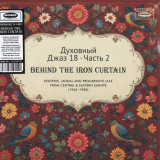
One of the most politically charged terms of the 20th century, the Iron Curtain was a metaphor for political and cultural division. In a post-war telegram Winston Churchill referred to the fault line that ran through Europe between East and West as "an Iron Curtain is drawn down upon their front. We do not know what is going on behind".
In this two-part album, as far as jazz is concerned, we will showcase, describe and celebrate exactly what was 'going on behind'. We see that music is the power supreme, with the ability to transcend all barriers, be they physical, political or metaphorical.
Our liner notes illustrate the complex and contradictory history of Soviet jazz, and the tracks we've chosen cover the key period of the early 1960s to the 1980s. It was during these dark years of the Cold War that the Soviet Union and its satellite states produced a number of outstanding artists playing in a variety of styles. The impact of modernism, from hard bop and Latin to modal and cool jazz, had found its way through cracks in the curtain. The deeply-felt ancestral strains of traditional European folk music were combined with the exciting new and progressive sounds of the West, and a radical, intoxicating brew was created that no amount of guns, tanks or polonium tea could overcome.
We chronicle the triumph of jazz at a time of extreme geopolitical conflict. What went on behind the Iron Curtain in these countries was once mysterious and unknown to the West, but the perseverance of their artists provided sound and light amid the secretive, dark days of the communist-capitalist standoff. There was no end of life-affirming spiritual jazz behind the Iron Curtain.
"Whether it's by improvisation in the African-American jazz tradition, or by a village kobza player standing on top of a damn hill - he feels connected to the stars."
One of the most iconic labels in house music made a major return in 2024. King Street Sounds is celebrating its legacy with a series of re-releases that dive into its extensive back catalogue, showcasing some of its biggest releases. One of these being Dennis Ferrer’s iconic debut solo album The World As I See It from 2006. A body of work that sounds as good today as it did 19 years ago and, in that time, has gone on to become one of the greatest house music albums of the last 25 years. This release will be the first time all ten tracks from the album have been included in one vinyl package, and will include a frameable, double sided record sleeve sized poster. With copies of previous editions of the album costing close to £100 on the second-hand market, this limited sky blue vinyl edition will give a new generation of house & electronic music fans an opportunity to own this piece of dance music history.
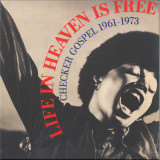
- A1: The Meditation Singers - Let Them Talk
- A2: Charlie Brown - The Whole World Is Watching
- A3: Martha Bass - Since I've Been Born Again
- A4: The Williams Singers - So Good To Be Alive
- A5: The Faithful Wonders - Ol' John (Behold Thy Mother)
- A6: The Salem Travelers - Crying Pity And A Shame
- B1: The East St Louis Gospelettes - Soon I Will Be Done
- B2: Power And Light Choral Ensemble - Stand Up America, Don't Be Afraid
- B3: The Masonic Wonders - Just To Behold His Face
- B4: The Majestic Choir & The Soul Stirrers - Why Am I Treated So Bad
- B5: The Jordan Singers - My Life Will Be Sweeter
- B6: Lucy Rodgers - I'm Fighting For My Rights
- C1: The East St Louis Gospelettes - I'll Take Care Of You
- C2: The Williams Singers - Don't Give Up
- C3: The Soul Stirrers - Don’t You Worry
- C4: The Meditation Singers - I've Done Wrong
- C5: The Jordan Singers - Lord Have Mercy
- C6: The Kindly Shepherds - Lend Me Your Hand
- C7: The Violinaires - Groovin' With Jesus
- D1: Cleo Jackson Randle - Life In Heaven Is Free
- D2: The Violinaires - Mother’s Last Prayer
- D3: The Inspirational Singers - Bless Me
- D4: The Bells Of Joy - Give An Account At The Judgement
- D5: Stevie Hawkins - Same Old Bag
- D6: The Soul Stirrers - Striving
Gospel melts into Soul in this dazzling collection of sides originally released by the Chess subsidiary.
Devised by the same team supporting the likes of Muddy Waters and Etta James at Chess, the vintage of Checker Gospel celebrated here is distinguished by its expertly raw, rugged, live feel — thumping bass and pounding drums, bluesy guitar and horns — and its keen engagement with contemporary realities and politics, with an underlying, unwavering commitment to the Civil Rights movement. Not forgetting its sheer, startling, richly diverse soulfulness.
Key architects of the Chicago Sound and Motown are amongst the scores of contributors: Charles Stepney, Gene Barge, Eddie Kendricks, and Leonard Caston Jr. are in the house… Morris Jennings, drummer on Curtis’ Superfly and Terry Callier’s What Color Is Love… Louis Satterfield from The Pharaohs and Earth Wind & Fire… Ramsey Lewis’ guitarist Byron Gregory… Phil Upchurch… Laura Lee…
Producer Monk Higgins joined Checker in 1967, bringing his experience of R&B and Gospel hit-making for the labels One-derful and Satellite, together with a loyal cohort of musicians. A protege of Willie Dixon, engineer Malcolm Chisholm set up the Ter Mar studio as if preparing for a live gig, carefully teasing measures of bleed into the microphones. With Ralph Bass from King Records running A&R, they knew exactly what they were after. ‘I’m using horns and an R&B sound in gospel recordings,’ said Bass. ‘We have no charts. All the musicians are given the chord changes. I want the cats to think when we’re cutting. I want spontaneity, and that’s what we’re getting.’ And: ‘There is more to gospel than just finding solace in the church. This follows the same message of Martin King, who was fighting for a new way of life. Kids are tired of hearing Jesus Give Us Help. They want a positive message.’
Focussed on the late sixties and early seventies, the twenty-five recordings here are all killer no filler, but try these four, random entry points: the heavy funk ostinato of the Violinaires’ Groovin’ With Jesus, working itself up into a post-James-Brown brass frenzy, sure to knock your socks off; Cleo Jackson Randle’s title track, for those who like their Gospel straight-up and hard-core; Eddie Kendricks’ achingly timely choral call-to-arms, Stand Up America, Don’t Be Afraid; the East St Louis Gospelettes’ heart-stopping, fathoms-deep rendition of Bobby Bland’s I’ll Take Care Of You.
A beautiful gatefold sleeve; a full-colour booklet with excellent notes by Robert Marovich; top-notch sound. Another knockout selection by Greg Belson and David Hill.
A shoo-in for soul compilation of the year.
- A1: The Guiding Stars - Been Dipped In The Water
- A2: The Religious Five Quartet - Let Me Lean On You
- A3: The Butlerairs - He's So Good To Me
- A4: Eastern Star Chorale - Until You Try Jesus
- A5: The Sensational Bells Of Joy - Lord Take My Hand
- A6: Green Street Baptist Church Youth Choir - He's All Right
- A7: The Singing Son Of Zion - Steal Away
- B1: The Gospel Voices Of Soul - Woke Up This Morning
- B2: The Gospel Motivators - Trust Him
- B3: Joe Thomas - I Feel Like Pressing My Way
- B4: The Indiana Wonders - Thank You Jesus
- B5: The Webster Singers - Stay By Our Side
- B6: Rev Eddie James And Family - Jesus Will Fix It
- C1: The Solomonaires - Come Out Of The Wilderness
- C2: The Antioch Majestic Voices - Peace Until My Soul
- C3: Rev Thomas N. Pride - He Knows It All
- C4: The Ecclesiastics - He Made A Way For Me
- C5: The Gospel Descendents - Jesus Is All I Need To Get By
- C6: The Gospel Chanteurs - Lord Don't Leave Me
- C7: Newburg Radio Chorus - Calvary
- D1: Cleo K Joiner Iii And The Metropolitan Comm. Choir - Spirit Of The Living God
- D2: Jimmy Ellis And The Riverview Spiritual Singers - I've Come A Long, Long Way
- D3: Rev Charles E. Kirby - Lord You Been Good To Me
- D4: The Golden Crowns - We Are Trying
- D5: Indiana Community Choir - Lord Don't Move That Mountain
- D6: God's Girls - My Time Ain't Long
Hardcover Book which includes a 208-page book documenting Louisville's rich Black Gospel music legacy and access to a comprehensive digital archive.
In the mid-20th century, Louisville gospel music was occasionally recorded when members of the local gospel community pressed 45rpm records and LPs, and released them through grassroots record labels such as Sensational Sounds, Grace, Blessed, and D.J.S. Over the years, a substantial body of work was produced in our city, but those recordings are in danger of being lost forever.
The Louisville Story Program has been working with dozens of people in the local gospel music community to locate, digitize, and preserve hundreds of these recordings and to develop a book that documents and honors the legacies of the people and communities that produced them.
For decades, the passion, hard work, and support of countless people across dozens of Black church communities in Louisville have nurtured and sustained a rich gospel music ecosystem. This music has served as a central part of people's religious practice and as an expression of Black pride, joy, affirmation, love, dignity, determination, and hope. This legacy continues to this day.
With support from The Owsley Brown II Family Foundation and Owsley Brown III Philanthropic Foundation, LSP has partnered with members of the gospel community and a local advisory group of local gospel historians and luminaries:
To locate, clean, and digitize gospel records of local artists released by small local labels
To accompany the local Black gospel music community in developing a 4 CD box set that includes a 200+ page hardcover book with first-person documentation of their rich history
To create an accompanying double LP featuring 26 of those songs
To create and maintain a public-facing digital archive of 1,000 songs and 1,000 photographs
To celebrate the final release with a large concert at the Brown Theatre (September 28, 2024)
Multi-talented, Ghana-born, UK-based sonic shaman K.O.G (Kweku of Ghana - the professional name of vocalist, composer and visionary Kweku Sackey) presents his third album on Pura Vida, the imprint of respected French label Heavenly Sweetness spearheaded by much-loved French DJ and producer GUTS.
Born and raised in Ghana, but having spent much of his adult life in the UK, for K.O.G this record can be seen as the culmination of a lifetime spent absorbing, combining and refining the diverse influences that have shaped his music and his character.
Kweku explains: This album is a very personal journey. I speak about three things: the soul of my community, where I found my inspiration. The roots, highlife, soul, going to church, being around traditional ceremonial setups. Taking people to the very origin of my voice, my soul, my impulses, my community, my culture.
And the next phase is cross-culture: living half of my life in UK and half of my life in Ghana. Putting myself at this crossroads to see the effect of the sonic consciousness, how awake I am with the music from Ghana, and also how living here, having children and family here has also influenced my music.
And thirdly, it’s mirroring my personal journey. Starting in Ghana, with my band in Ghana, and my roots, then moving up to UK, Going from Zone 6 all the way to Europe. Highlife - the syncopated fusion of local music and jazz which is at the core of Ghanaian music, and which from the 1930s spread like wildfire across anglophone West Africa - is one of the core building blocks of this album. But don’t be fooled by the catchy melodies and bright sonics. K.O.G is using it to speak about some topics that are anything but bright.
Highlife is absolutely dark. Most of the places you hear real highlife music, it’s funerals! And it’s part of the culture. Death is part of life. Seeds die for life to germinate. Art is just an emotive expression, when you can cause an emotion in somebody, and it’s not always happiness.
This theme of self-expression and vulnerability is a consistent one throughout the record. With special guests Pat Thomas, Dizraeli, Fameye, Ogunskele.
Bristol's cultured Innate label is back with a first outing of the year and it returns to their various artists format with a mix of talents all making their mark. UK veteran Tom Churchill opens up with 'Unknown Unknowns (Edit)', which brings plenty of fuzzy and lo-fi aesthetic to jacked up drums and spaced-out pads. Rai Scott then shows her class with 'Suasion' that sinks down deep into immersive drums and is subtly lit up with simmering strings. Innate co-founders Owain K and Gilbert then hook-up under their brand new alias Curved Space and showcase their love of electro with 'Reverie,' a dreamy cut that glows with nice celestial melodies and will have dance floors in a zoned-out state. Last of all it's Lisbon mainstay Jorge Caiado who debuts with the chord-laced 'Floating Without Lifting,' a sophisticated and serene jazz-techno cut that takes you to the stars.
DJ Feedback
Richard Sen:
"Lliking the Tom Churchill and Curved Space tracks. Will try and fit them into the show and in the club."
Laurent Garnier:
"A lovely EP indeed!"
Jayson Wynters:
"This is a great release. Nice varied tracks for different moods. Will certainly be playing this."
Anna Wall:
"Lovely VA! Thanks so much for sharing :) Faves are Jorges track and Rai Scott. Really beautiful music!"
Ewan Jansen:
"Great listen mate - a good gang assembled too."
DJ Guy:
"The EP is gonna be incredible..."
Orlando Voorn:
"I like em all!"
Moy:
"This is another really wikid V/A!"
Hizou:
"Thanks a lot, so good music here!"
Appleblim:
"I love the Tom Churchill - very detroity and deep, beautiful!"
Baldo:
"Thanks for this release, I love your track with Gilbert and also Jorge's! pure class!"
Alex Attias:
"Sounding dope! I’m feeling this great ep, thank you so much."
Chris Duckenfield:
"Many thanks for sharing, it’s a strong EP for sure. B2 probably my immediate fave."
Adam Shelton:
"Wicked release! Love all tracks, thanks so much."
Alien Communications:
"Love the EP, really like all the tracks but your own, Reverie, is definitely the strongest for me."
Dan Curtin:
"Sounding so lush...really really great. "
Vine Watson:
"Sounding great!!!"
- A1: Sam Hankins - Song For My Father (Feat The Ho-Dads)
- A2: Jolly George - Idella (Feat His Combo)
- A3: The Sounds Of Time - Kool Tool
- A4: Leo Valentine Trio - Behind The Outhouse
- A5: The Rhythm Rogues - Give Me Some Lovin&Apos;
- B1: The Soul Merchants - Ain&Apos;T Gonna Go For That
- B2: Eddie Gough - I`m Coming Home Baby (Feat Traditions)
- B3: Sunday Social - Soul Break
- B4: Tom Hurley Combo - Feeling The Soul
- B5: Bobby Mann - Mercy Mercy Mercy
The Hammond organ was first manufactured in 1935. In 1954, the now famous Hammond B3 model was introduced with additional harmonic percussion feature. When the company went out of business in 1985, around two million of various models of the Hammond organ have been produced.
The Hammond B3 was originally marketed to churches as a lower-cost alternative to the wind-driven pipe organ. It quickly became popular with professional jazz musicians in organ trios. Jimmy Smith's use of the Hammond B3 inspired a generation of organ players, and its use became more widespread in the 1960s and 1970s in rhythm and blues, rock, reggae, and progressive rock.
This collection is centered on the exciting and dynamic sounds of the Hammond B3 organ!
'After a first album as a duo released on Okraina Records: "Le Corps Défendant", Delphine Dora and Mocke invite us to join them again in listening to a new album. We slip into it as if in a dream, the music carries us away with its floating images.
Heard before on a handful of disturbingly beautiful solo albums and in collaborations such as Midget!, Arlt, Chevalrex, Mohamed Lamouri, Mocke (Dominique Dépret's nom de plume) is a subtle and inventive guitarist, who draws melancholic arpeggios, with a beautiful languor, that walk the line between tensions and tears. Delphine Dora has been heard with Roxane Métayer, Sophie Cooper, Andrew Chalk, Jackie McDowell, Helena Espvall, Valentina Magaletti ... meeting in a moment of improvisation, a solitary sincopated voice blooming between the black and white keys of her piano, tuning betwist these keys, or at other times in the gap of the right note. Here improvisation feeds on melody, or is it the other way round?
Recorded in an old church in the village of Mauzun in the Puy-de-Dôme, by Cyril Harrison, "L'invisible est multiforme" is an invitation to join them, to let these abstract songs erase our obsessive thoughts of the day, to open ourselves to the vibrant poetry of the air and the evening, to finally forget ourselves. Each note played by these four intertwined hands is like a slight break in the fabric of time, sliding one over the other, reminding us of mortality and its beauty. Ritornellas flow out of mechanical clocks, fragile, taking care not to hurt the silence. Both seek to dig and open up new paths to enrich their duet, to open up imaginary landscapes. Sometimes the guitar cuts through the fabric of an organ, fractures the song, just as the rain erases a landscape, redrawing it. But very quickly, both of them continue to follow this new path, improvising what will serve as a framework, a perspective, a language. There is a kind of praise for slowness in this "invisible", a desire to hold back the song, not to let it slip away, to let the listener's ear enter its course, to share the last note, its illumination. Each of these thirteen short sound pieces merge into a common colour, a vibration close to the different tonalities, which inter-penetrate, like a cubist painting. Words cannot take away the mystery of this record, words can only fail to describe the music, you must hear it.'
- Michel Henritzi
Janaka Stucky is a poet, performer, and author of two poetry collections published by Third Man Books & Records. Janaka’s poems are at once incantatory, mystic, and epigrammatic.
His esoteric & occult influences, combined with a mesmeric approach to performance, create an almost ecstatic presence on stage. Of his live shows, VICE writes, “Janaka Stucky performs poetry readings like he's part fire-and-brimstone preacher, part doom-metal frontman … For him, lighting incense, dropping acid, and creating some of the most ecstatic lines of verse you’ve ever read is just another day at the office.”
Praised by Jimmy Page as “riveting,” Janaka Stucky’s book length poem, Ascend Ascend, published by Jack White’s Third Man Books in 2019, gets a mesmerizing treatment on this album by the same name, accompanied by experimental cellist Lori Goldston. Goldston, known for her work with a number of acts—including Nirvana, Cat Power, and Earth—provides otherworldly layers of distortion and natural reverb over Stucky’s dirge-like vocal performance.
Recorded at the All Pilgrims Church in Seattle while Stucky was on a 7-city tour produced by Atlas Obscura in 2019, the performance is served well by the room’s ambiance and was recorded, mixed, and mastered by Mell Dettmer—who has engineered albums for acts such as Earth, Sunn O))), Master Musicians of Bukkake, and Wolves in the Throne Room.
Reissue of this cult 1972 album which featured on the infamous Nurse With Wound List.
During the long, dark hangover of the Summer of Love, the classically-trained Essex prodigy approached CBS Records with demo recordings. A forward-thinking A&R executive must have seen a potential revenue stream in Don Bradshaw-Leather's avant-classical noise. The artist was given an advance to record an album. He used the funds to create a large studio in Sussex with many instruments including an actual church organ. Here, on his own, without the use of any electronic sequencing, he recorded "Distance Between Us" using simply multitrack tape, layering each part of the composition. Upon hearing the product of their financial investment - four side-long tracks of blurry organ drones, frantic piano tinkling, and ritualistic percussion - CBS got cold feet.
The album was self-released on Bradshaw-Leather's own Distance imprint; a vanity label established for the sole purpose of releasing the album. The sleeve art is full of mysteries, from the misspelling of "Bradshaw" ("Bradsham"), to the coal-blackened visage of the bohemian madman on the cover (DBL himself?), to the rear photo collage depicting the same madman accosting a nude woman. The music isn't any less mysterious; shapeless symphonies of smeared-out Mellotron, tribal drums, and wordless vocals. Don Bradshaw-Leather passed away in the 90's.
Presented in a matt-laminate gatefold digisleeve.
Featuring music from a lost tape of devotional keyboard jams, field recordings of migrating birds, mysterious bells, meditative noise and crooked new beat/EBM, made god-knows-when and subsequently discovered in a Thessaloniki charity shop years later. It now somehow finds its way to vinyl, newly mastered by Rashad Becker, and sounding like a lost Hype Williams x Muslimgauze madness.
Originally discovered in a musty charity shop by Live Adult Entertainment, and issued in minuscule numbers on CD in ’21, Christian Love Forum’s raverential debut ‘Naked Light’ documents the fraternal post-church jams of siblings, Scott, Kiro and N•X, plus their mate Steve, who would regularly channel the light and pain of Sunday mass sermons into their ecclesiastic crud.
As previously heard on their blink ’n miss ‘Unconditional Love’ tape, the trio express their higher purpose thru ribboning microtonal keyboard jams that sound like Gurdjieff with a Casio and a knackered drum machine after too much sacramental wine. They hit the strangest, most affective seam of religious cinematic epic soundtracks, gnarled noise and clandestine Belgian new beat that seriously pushes our buttons, sounding quite unlike anything in the contemporary sphere, but eerily also echoing sentiments explored on record by James Leyland Kirby or Bryn Jones.
Now reshuffled and clad in custom artwork, ‘Naked Light’ is unveiled to believers and skeptics as a definitive article of faith. The lord works in mysterious ways within, manifest in stages of sun-bleached post-church field recordings, whirligig melodies, blown-out bouzouki and choral tape howls and a Béla Tarr soundtrack-like campanology on the A-side, before letting their passions flow in ‘Wicked City (Parts I-IV)’; a spellbinding side-long collage of slurred synths, neo-noir hardbeat rhythms and speaking-in-tongues vox recalling V/Vm’s new beat apocrypha as much as bits from Hype Williams’ hypnagogic ‘One Nation’, thee dustiest gooches of Dirk Desaever’s archive, or even aspects of Rat Heart at his cruddiest.
‘Naked Light’ rarely fails to induce uncontrolled eye movement in susceptible skulls, destined to become an occult hit with lapsed churchgoers, new beat fiends and anyone missing the enigma and ineffable flavour of ‘00s underground noise tapes in this auspicious year of AD2023.
After last year’s Black Clouds Above The Bows, Amsterdam-based collective Wanderwelle presents the second entry of their trilogy for Important Records, which is dedicated to telling the story of the climate crisis and its effects on coastal areas around the globe. For this album the artists incorporated the sound of a dying organ, fatally wounded in a climate related event.
All Hands Bury The Cliffs At Sea consists of electro-acoustic threnodies for an environment at risk due to the effects caused by receding coastlines around the globe. Wailing odes tell the story of the catastrophic activity of eroding waves and winds shaping the land that are enhanced by the climate crisis. First hand experiences and meetings with local maritime experts on the subject of these receding coastlines inspired Wanderwelle to compose these albums.
During their travels, the artists stumbled upon a small church in a town on the east coast of Scotland. The building was quite damaged, the roof was being stabilized and the ancient walls showed great tears running vertically down the structure. One of the church’s volunteers told Wanderwelle that the damage had been caused by a nearby cliff that collapsed in the sea. An event increasingly common in the region.
The church organ was ruined in such a way that it was deemed unplayable, as most of the pipes were gravely damaged and in dire need of restoration. Musical instruments directly affected by the environment -and especially the climate crisis- are quite rare. Despite the damage, the artists were allowed to record a few tones of the instrument with their equipment, which was actually meant to be used for field recordings later that day.
In Black Clouds Above The Bows, antique cavalry trumpets were recorded and manipulated by Wanderwelle to sound an environmental alarm in the same manner as they were once used to warn men on the battlefield. Similar processing was used on the recordings of the dying organ, resulting in spectral, deconstructed tones beyond recognition. In addition to the damaged organ, the artists recorded piano, cello and harmonic additive synthesizers in later stages of the composition process, manipulating these sounds to mimic the perpetual activity of the sea shaping the land.Furthermore, a great deal of inspiration was found in maritime superstition, lore and mythology.
As told in the legend of Aspidochelone, a legendary sea creature of enormous size, was once mistaken for an island. After sailors docked and lit a fire, the beast submerged resembling a land mass sliding into the sea. The album’s title is derived from the saying ‘All Hands Bury The Dead’, a maritime burial phrase, as the duo likes to think ‘All Hands’ refers to all of mankind since we are all responsible for these impending catastrophes.
Cello, violin, voice, pipe organ (damaged), bowed guitar, EBow, Prophet-6 synthesizer, modular synthesizer, field recordings.
RIYL: Oliveros/Deep Listening, Arvo Part, Lambda Sond, Sarah Davachi
It is a huge honour to present the Disco Gospel 12”, curated and edited by Chicago's Marc Davis and Sadar Bahar. Featuring two under-the-radar disco / gospel fusion tracks that have been given a new lease of life courtesy of these masters of their craft.
We first came to know Marc through his always on-point Black Pegasus record label, which he’s been running since 2006. As a renowned international DJ, record collector, and an integral part of Chicago's underground music scene, we knew anything he sent our way was going to be serious and he didn’t disappoint. Joining forces with Sadar Bahar (Soul in the Hole), who is himself a gospel and disco legend and a DJ's DJ favourite across the globe, they dug deep and put us onto two absolute gems from their beloved collections. As DJs who play a wide range of genres, their ability to spot the real heat within any sound has placed them at the top of their game. As Sadar puts it, "We are always digging for records and these fit the criteria of disco and happen to be gospel”.
First up is the feel-good joint 'I'm So Happy' by Fountain of Life Joy Choir Under The Direction of Kevin Yancy. Originally released in 1978 on a subsidiary label of T.K. Productions entitled Gospel Roots, the clue is in the title with this one. It's an unadulterated, uplifting, joyous dancer. Marc and Sadar’s fizzing edit brings out the best elements of the song and extends them. Working the addictive vocal hooks and building the funky instrumental grooves produces a spirit-lifting mood that is bursting with enough energy to light a fire under any dancefloor.
'Optical Illusion' on the flip, takes the tempo down, but doesn’t let up on the vigour. It’s a driving, stomping anthem that features another lung-busting vocal performance. Working with a live recording of Rev. Charles H. Nicks and The Baptist Assembly Of Free Spirit Churches Mass Choir, this one proves to be the perfect accompaniment to the ecstatic vibe of the A-side. The duo has condensed and heightened the drama of the song and added some light-touch production elements to clean up and enhance the sound. We guarantee this will be filtering its way into the sets of discerning DJs worldwide.
Marc described the selections best when he succinctly put it like this, “We both knew these were two heaters on our first listen”.
We completely agree, and with recording and engineering contributions from Tone B. Nimble (Soul Is My Salvation) and Rahaan, here we have Chicago royalty creating an unmissable release that celebrates the crossover of dance music with the musical traditions of the church.
"I am sitting in a garden, I haven't left the property in weeks, someone is dropping off food once a week. I haven't seen a human being in ages, I feel like a reverse Schroedinger cat - do I exist when nobody sees me? I must be somewhere in France but I don't remember. I have lost my consciousness again. When I wake up I hear a broken record looping somewhere in the mansion. A washed-out opera. Behind the trees I see the dilapidated hermaphrodite sculpture in a field of verdant nettles and fern. I hear gunshots far afield, aeroplanes in the sky, sirens on the main road.
When unconscious I dreamt of sitting on the Concorde observing the scarab blue ocean and iridescent clouds from above, an erstwhile receding memory. Sometimes I hear the organ of the nearby Renaissance Cathedral merging with the Russian Church bells.
I am hallucinating again. Someone's humming in the kitchen? Singing? A Radio? I overhear two young women talking about art galleries in the neighbour's garden. Bees attack, again…..again and again. The hairspray finally intoxicates them. An amphoric japanese voice is whispering in my head saying I will die soon. Someone (something?) bangs on the vases. The fountain's water turns dark red.
Fleur calls and says mum died. The funeral will be televised on tuesday. We opt for the synthetic choir for the service. The call is suddenly interrupted. Mold is slowly taking over the house.
I go back inside."
Une Fille Pétrifiée is the debut album of new Black To Comm related entity Mouchoir Ètanche (after one recent 12" on Richter's own Dekorder label). Combining real and fake acoustic instrumentation, sampling, field recordings and excessive yet inaudible post production this is another sublime and ethereal statement. Influences are ranging from (French) Classical & Opera to the anecdotical compositions of Luc Ferrari, Chinese Opera, Chanson, Sacred Music / Church Music, JG Ballard and Surrealism.
Marc Richter records as Black To Comm for Thrill Jockey, Type and Dekorder and as Jemh Circs for his own Cellule 75 imprint. He also produces soundtracks and acousmatic multichannel installations for institutions such as INA GRM Paris, ZKM Karlsruhe and Kunstverein Hamburg.
I Made It All Up For You is the new record by Hugo Race Fatalists, their 6th studio album, set for release March 20, 2026 thru Gusstaff Records / Helixed on LP/CD and digital.
"In his 40-year career, Hugo Race has lived a thousand lives and played the role of songwriter, producer, musician, performer, head of a record label (Helixed). His music went from folk to lounge, from "trance industrial blues" to psychedelia, from world music to electronics. Starting from post-punk Melbourne in the 1980s, he took fascinating paths that led him from Africa to Turkey, from Berlin to Romagna…"
Hugo Race returns after highly successful collaborative albums with Michelangelo Russo (100 Years), The Church frontman Steve Kilbey (Speed of the Stars) and Gianni Maraccolo (The Vigil, winner of the prestigious Premio Ciampi) with I Made It All Up For You, an epic album with his Italian band Fatalists - existential songwriting framed by the band's signature fusion of roots music, electronica, Italian soundtracks and desert rock.
"I wanted to create something melodic and beautiful in defiance of our current reality. The songs started as bare acoustic sketches written in a remote mountain cabin in Italy where I had two weeks off during a solo tour. The weather turned into a raging blizzard, the days a struggle to keep the wood fire lit and the smoke out of the house. I wrote about twelve songs, threw them all away, started again with an unplugged electric guitar in front of that
damp fire, searching for the album's theme. When the smoke cleared, I was at the crossroads of a long term relationship unraveling under a blazing antipodean sun.
Fatalists recorded the basic tracks at the floating studio on the Puccini lake an hour out of Florence - Giovanni Ferrario (Scisma, PJ Harvey) on guitars and synth, Francesco Giampaoli (Brutture Moderne) on bass and Diego Sapignoli (Sacri Cuori) on percussion.
Violinist Massimiliano Gallo met me in Sicily for a short tour to learn the new songs, adding layers of his Calabrian magic to the mix. Jennifer Charles (singer of New York band Elysian Fields) and I had been talking for a long time about making new music and this was the occasion when we made it happen. Jennifer's distinctive voice graces this
album on the songs I Collide and Broken Love, the lyrics of which were written by author and designer Alannah Hill. My longtime road brother Michelangelo Russo also dusts the tracks with his otherworldly electric harmonica on Against The World, Born To Fly and Open Field. A lot of joy and pain and reflection went into the making of this album and I hope that comes across; this is about the darkness yes, but also the light. Everything changes and every ending is a new beginning but it's how we experience transformation that really matters. I hope you love this album. I made it all up for you."
Hugo Race, Naples, 2025
I Made It All Up For You is the new record by Hugo Race Fatalists, their 6th studio album, set for release March 20, 2026 thru Gusstaff Records / Helixed on LP/CD and digital.
"In his 40-year career, Hugo Race has lived a thousand lives and played the role of songwriter, producer, musician, performer, head of a record label (Helixed). His music went from folk to lounge, from "trance industrial blues" to psychedelia, from world music to electronics. Starting from post-punk Melbourne in the 1980s, he took fascinating paths that led him from Africa to Turkey, from Berlin to Romagna…"
Hugo Race returns after highly successful collaborative albums with Michelangelo Russo (100 Years), The Church frontman Steve Kilbey (Speed of the Stars) and Gianni Maraccolo (The Vigil, winner of the prestigious Premio Ciampi) with I Made It All Up For You, an epic album with his Italian band Fatalists - existential songwriting framed by the band's signature fusion of roots music, electronica, Italian soundtracks and desert rock.
"I wanted to create something melodic and beautiful in defiance of our current reality. The songs started as bare acoustic sketches written in a remote mountain cabin in Italy where I had two weeks off during a solo tour. The weather turned into a raging blizzard, the days a struggle to keep the wood fire lit and the smoke out of the house. I wrote about twelve songs, threw them all away, started again with an unplugged electric guitar in front of that
damp fire, searching for the album's theme. When the smoke cleared, I was at the crossroads of a long term relationship unraveling under a blazing antipodean sun.
Fatalists recorded the basic tracks at the floating studio on the Puccini lake an hour out of Florence - Giovanni Ferrario (Scisma, PJ Harvey) on guitars and synth, Francesco Giampaoli (Brutture Moderne) on bass and Diego Sapignoli (Sacri Cuori) on percussion.
Violinist Massimiliano Gallo met me in Sicily for a short tour to learn the new songs, adding layers of his Calabrian magic to the mix. Jennifer Charles (singer of New York band Elysian Fields) and I had been talking for a long time about making new music and this was the occasion when we made it happen. Jennifer's distinctive voice graces this
album on the songs I Collide and Broken Love, the lyrics of which were written by author and designer Alannah Hill. My longtime road brother Michelangelo Russo also dusts the tracks with his otherworldly electric harmonica on Against The World, Born To Fly and Open Field. A lot of joy and pain and reflection went into the making of this album and I hope that comes across; this is about the darkness yes, but also the light. Everything changes and every ending is a new beginning but it's how we experience transformation that really matters. I hope you love this album. I made it all up for you."
Hugo Race, Naples, 2025
- A1: Barbour Singers - Don&Apos;T Let Satan Get You
- A2: Selah Jubilee Singers - I Feel Like My Time Ain&Apos;T Long
- A3: Alphabetical Four - Have You Heard About The World Coming To An End?
- A4: Norfolk Jazz &Amp; Jubilee Quartet - This Old World Is In A Bad Condition
- A5: Kentucky Jubilee Four - I&Apos;M Gonna Lay Down My Heavy Load
- A6: Galilee Singers - Singing With The Angels
- A7: Elder Charles Beck - I&Apos;M Going To Walk Right In And Make Myself At Home
- A8: Birmingham Jubilee Singers - Raise A Ruckus Tonight
- B1: Monarch Jazz Quartet Of Norfolk - Somebody&Apos;S Always Talking About Me
- B2: Davis Bible Singers - Do You Want To Be A Lover Of The Lord
- B3: Utica Institute Jubilee Singers - Leaning On The Lord
- B4: Alabama Harmonizers - Holy Unto The Lord
- B5: Birmingham Jubilee Singers - What You Gonna Do When The World&Apos;S On Fire
- B6: New Orleans University Glee Club - The Old Ark&Apos;S A-Movering
- B7: Pilgrim Jubilee Singers - The Lord&Apos;S Prayer
- B8: Royal Harmony Singers - I&Apos;M On My Way To Heaven Anyhow
Tape[16,39 €]
Death Is Not The End present a compilation gathering a cross-section of early gospel choirs and vocal harmony groups recorded between late 1920s and the mid-1950s - a period when spirituals & jubilee traditions merged with blues, jazz and early rhythm and blues, providing the musical routes for the coalescence of the civil rights movement born out of the black church. In the modern world these perennially vital recordings provide a fitting tonic for the near-dystopia we find ourselves living through.
- 1: Angel Of My Dreams
- 2: It Girl
- 3: Fufn (Fuck You For Now)
- 4: Plastic Box
- 5: Midnight Cowboy
- 6: Fantasy
- 7: Unconditional
- 8: Self Saboteur
- 9: Lip Service
- 10: Headache
- 11: Natural At Disaster
- 12: Glitch
- 13: Before You Break My Heart
- 14: Silent Disco
- 15: Church
- 16: This Is What We Dance For
- 17: Dreamcheater
- 18: Best You Could
- 19: Use Me
- 20: Frozen
- 21: If My Heart Was A House
- 22: Tar
Global music superstar Jade announces the deluxe edition of her debut album, 'THAT'S SHOWBIZ BABY! THE ENCORE'.
The deluxe album features 8 new songs including the powerful single 'Church', the generational anthem 'This Is What We Dance For' and JADE's highly praised cover of the Madonna classic 'Frozen'. The Encore, also includes previously released singles ‘Angel Of My Dreams’, ‘Fantasy’, ‘FUFN (Fuck You For Now)’, ‘IT girl' and ‘Midnight Cowboy’.
This is the grand finale of the THAT'S SHOWBIZ BABY! era!
- 01: Barbour Singers - Don&Apos;T Let Satan Get You
- 02: Selah Jubilee Singers - I Feel Like My Time Ain&Apos;T Long
- 03: Alphabetical Four - Have You Heard About The World Coming To An End?
- 04: Norfolk Jazz &Amp; Jubilee Quartet - This Old World Is In A Bad Condition
- 05: Kentucky Jubilee Four - I&Apos;M Gonna Lay Down My Heavy Load
- 06: Galilee Singers - Singing With The Angels
- 07: Elder Charles Beck - I&Apos;M Going To Walk Right In And Make Myself At Home
- 08: Birmingham Jubilee Singers - Raise A Ruckus Tonight
- 09: Monarch Jazz Quartet Of Norfolk - Somebody&Apos;S Always Talking About Me
- 10: Davis Bible Singers - Do You Want To Be A Lover Of The Lord
- 11: Utica Institute Jubilee Singers - Leaning On The Lord
- 12: Alabama Harmonizers - Holy Unto The Lord
- 13: Birmingham Jubilee Singers - What You Gonna Do When The World&Apos;S On Fire
- 14: New Orleans University Glee Club - The Old Ark&Apos;S A-Movering
- 15: Pilgrim Jubilee Singers - The Lord&Apos;S Prayer
- 16: Royal Harmony Singers - I&Apos;M On My Way To Heaven Anyhow
Vinyl (LP)[22,48 €]
Death Is Not The End present a compilation gathering a cross-section of early gospel choirs and vocal harmony groups recorded between late 1920s and the mid-1950s - a period when spirituals & jubilee traditions merged with blues, jazz and early rhythm and blues, providing the musical routes for the coalescence of the civil rights movement born out of the black church. In the modern world these perennially vital recordings provide a fitting tonic for the near-dystopia we find ourselves living through.
Whilst remaining leftfield in spirit, there is a musical vulnerability to the latest iteration of Legss, and a newfound pop sensibility to their writing, which reflects a move to a more accessible sound. There is a security in inaccessibility, and shedding this cloak opens the band up to an earnestness at once exciting and nerve-wracking. Twinned with their signature world-building aesthetic, the new direction is reflected sonically by drummer Louis Grace, who co-produced the album with Balazs Altsach (Ugly, Katy J Pearson, Broadside Hacks) - set to be distributed by The state51 Conspiracy.
On the announcement of their debut album, Unreal, the band say:
“Unreal feels like the work of a lifetime. We can’t believe we’re still here to see it through, but we are and we couldn’t be prouder. The album is about miscommunication and feelings of unreality/the uncanny in everyday life; the tragic and the comic.”
ABOUT LEGSS
Merging intricate guitars, disquieting monologues and a rhythm section both technical and unruly, London’s Legss create a wholly unique sound.
After meeting and forming in London, Legss released their experimental, darkly satirical debut EP Writhing Comedy in 2019, which received heavy airplay on BBC 6 Music. A year later the band’s much-anticipated, genre-bending sophomore EP Doomswayers was released in the shadow of the pandemic, championed by BBC Radio 1’s Jack Saunders and BBC 6 Music’s Steve Lamacq.
After the release of their single ‘Hollywood’, Legss signed to The state51 Conspiracy and released their third EP Fester in 2023, recorded at The Church, which saw critical acclaim from the likes of the Sunday Times, Quietus, Independent, Line of Best Fit, So Young Magazine, DORK, L&Q, and DIY.
In 2024 the band were included by Simon Reynolds in the afterword to a republished edition of Mark Fisher’s seminal Ghosts of My Life (Zero Books).
Legss are Louis Grace (drums, synth), Ned Green (vocals, guitar), Jake Martin (bass) and Max Oliver (guitar)
At the start of this summer, following a three-year hiatus for Daphni (punctuated only by his first ever collaborative Daphni track ‘Unidos’ alongside Sofia Kourtesis), he dropped ‘Sad Piano House’. The track represented something of a continuation in the Daphni catalogue, its roots growing from Cherry’s ‘Cloudy’ and its subsequent Kelbin remix, something in that song’s makeup having a profound effect when played on dancefloors by Snaith and countless others. ‘Sad Piano House’ deployed more intangibly irresistible bendy piano to equally satisfying effect and continues to achieve similarly rhapsodic dancefloor saturation.
Though a sizeable gap for Daphni releases, between Cherry and Butterfly however of course sits Honey, the latest Caribou album and one that saw the more instantaneous and dancefloor leaning traits of Daphni peaking through the cracks more than ever before. This blurring of the lines leads to an intriguing collaboration in Butterfly’s lead single ‘Waiting So Long (feat. Caribou)’. An unlikely duo - in that both artists are the same man, Dan Snaith - ‘Waiting So Long’ is not so much an identity crisis, ego trip, or the result of a chemical spill in the Snaith laboratory. It’s simply a track that Snaith felt for the first time belongs to both aliases, and might appeal to fans of both. He has never sung on a Daphni track before, and did not set out with the intention to do so this time, and yet this strange billing was born.
Daphni music has always been Snaith’s way of hitting directly to the core of the dancefloors he spends so much of his time playing to, and those dancefloors have been steadily expanding as his name grows, with the music following suit. This album however also draws from further back with a definite kinship to the very first Daphni album, the invigorating bag of ideas that was Jiaolong.
Butterfly is a showcase of the wonderful variety and surprising twists and turns that made that album such an exciting new prospect and that still to this day make Snaith such an intriguing DJ. There are more heavy hitters here, tracks that fill those dancefloors better than anyone, like ‘Clap Your Hands’ which picks up the energy of ‘Sad Piano House’ and flips it, exposing the gritty and intoxicating underbelly of Snaith’s hitmaking side, while retaining the playful urgency that runs through all of his work of late. Meanwhile ‘Hang’’s comic-strip horns are unpinned by gleeful force, unrelenting and thrillingly unshakeable. Elsewhere though comes a clutch of other tunes that might creep out somewhere more off the beaten path, a path Snaith has never stopped seeking in amongst his larger billings. ‘Lucky’ is squirmy and elusively intoxicating, ‘Invention’ skitters down meandering, inviting corridors, ‘Talk To Me’ grumbles and broods in the murk, and ‘Miles Smiles’ could roll on endlessly, so confident in its groove. There are no obvious peaks in these tracks or unifying moments, in fact many of them really have no business being on the dancefloor at all, and yet in the right setting, they could be the most fun to be had all night.
One such club is a good microcosm for the ethos of Butterfly as a whole. “Around the time I was finishing up this album I played a long set in a club called Open Ground in Wuppertal, Germany.” Snaith recalls, “It’s kind of, in one sense, the platonic ideal of the kind of club I’d want to play in. Every single decision has been taken, at great expense, with the aim of making the perfect sounding medium sized club room. But on top of it being the perfect acoustic environment it also is run by an amazing collection of people in a way that gives it a sense of community that dance music at its best provides. It is an absolute pleasure to play in that room to a crowd of people who come from all over. Playing in there you feel like you can play anything, and I played works in progress of pretty much every track on this album in my set there. Don’t get me wrong, I love playing a short set at a festival or in a more raw warehouse kind of club where you bang it out and only really functional music works but on record I guess the point of these Daphni records is to keep in mind a more expansive idea of dance music where the parameters are broad and the church is broad. I think that actually, putting really functional stuff next to weirder tracks (both on an album and in a dj set) might be the thing that’s still most interesting to me.”
This is the feeling that’s most palpable on Butterfly, and in every single time you see Snaith DJ. Right from the inception of the Daphni alias - and even before that – the thrill of trying stuff out, pushing at the boundaries has always been there and on Butterfly is present in all its twists and turns. It leaps all over the place and yet it hangs together, never feeling like a grab bag of dancefloor utilities but rather a distillation of all the strings to Snaith’s bow, exhilaratingly human and unified by one singular concept – simple and joyful exploration.
Islaja presents her new album ”Angel Tape”, her debut release on the new Helsinki-based label Other Power. Drawing inspiration from childhood epiphanies while listening to an alleged recording of angels singing, Islaja has crafted an album that stands out as a major work in her expansive and celebrated catalogue, which includes previous releases on labels such as Ecstatic Peace!, Fonal and Svart.
Islaja, aka Finnish artist Merja Kokkonen, describes her new album as a “counterwork” to her most recent albums, where the mode of composing was more song-based. This time around, she goes more in the direction of vast fields of sound where the human voice is a key ingredient of music that breaks free of strict stylistic guidelines and traditional song forms. Rough around the edges, atonal and otherworldly, "Angel Tape” is the result of a lifetime of inspiration from something beyond the immediate realm of our experience, an attempt to catch the elusive essence of musical otherness.
”As a child, I listened to the ’angel tape’ my mother played, and I never thought that the human voices I heard on it were angels singing. Instead, all the aural debris lying just beneath the surface caught my attention as I thought it was mysterious and something from a different world than ours, and so that was probably what was referred to as the ’angels’ so miraculously caught on tape”, Kokkonen explains. ”I think this was one thing that led me on this lifelong quest to find new sounds and forms in music.”
The tape she is referring to, a mid-80s church recording, was passed around in religious circles. Each time the tape was copied, it became slightly more distorted. It was believed that this recording of religious music had accidentally captured for the first time the voices of actual angels singing. The tape was rumoured to have originated in Kansas City and to have made its way to Finland.
Whereas Islaja has often thought of albums as being collections of recent songs presented together, ”Angel Tape” has a strong sense of conceptual coherence. The music comes from a place. That doesn’t mean that one must take a single path from one place to the next, as close listenings of the album reveal layers upon layers of not only sound but also of mood and meaning. From the human voice in its barest form, to the rising dense walls of sound moving and reshaping, ”Angel Tape” is a captivating album that unveils new contours with each repeated listening.
For over six decades, Charlemagne Palestine (b. 1947, New York) has been a pioneering composer, performer, and multimedia artist, celebrated for his ecstatic sonic explorations and ritualistic, metaphysical performances. Emerging from the cross-disciplinary New York art scene of the 1960s and ’70s, he helped shape a heretical edge of minimalism alongside figures like Conrad, Riley, Niblock, and Glass. Trained as a Jewish cantor and later as the carillonneur at St. Thomas Church, Palestine cultivated a deep fascination with resonance and overtone—an obsession that evolved through his use of percussion, early synthesizers, and monumental piano works, influencing artists from John Cale to Nick Cave.
Animated by a spirit of ecstatic play and what he calls his »meschugge« (Yiddish for »crazy«) sensibility, Palestine’s universe blends the sacred and the absurd, filled with soft toys, ritual gestures, and immersive sound environments. Rejecting the »minimalist« label in favor of a maximalist, »spontanimalist« approach, he creates long-form, resonant performances that transform spaces into vibrating, living organisms—opening portals into the nature of time, sound, and devotion.
In the same vein, the aptly titled live record »The Organ is the World’s Greatest Synthesizer« – performed during the Sonic Acts Festival at Amsterdam’s Oude Kerk in 2025, and taking its title and cover art from a drawing realized by Palestine himself during the concert – adds to his opaque yet vibrant personal mythology and intimate transcendence, marking a return to the Staalplaat catalog after »Fffroggssichorddd« (2020) and »Music for Big Ears« (2001).
Beginning with a resonating bell and his falsetto overtone singing, then surrendering to the endless, wild soundscapes of tone-feeling and beat frequencies generated by the church’s organ, across 40+ minutes, single sound sources evolve into clusters, entangle fully with one another, and establish their own spatial existence and aural architectures. We witness the traces of something that can be described as a perpetual performance, a test for the ever-changing interaction between artist, instrument, space and, ultimately, us.
Since Palestine has always defined his execution as a form of anti-composition - of simply »being in the music« as if inhabiting a space - the true power of »The Organ is the World’s Greatest Synthesizer« lies in encapsulating a moment of Palestine’s practice in its most authentic, live dimension. Sound becomes at once subtle substance and strange telluric force, animating physical forms from some unknown channel beyond and within, accessible only through our sensorium. The point in this liminal temple of tone, timbre and frequency is not to learn anything but to simply enter. Palestine earns once again his self-given title of contemporary shaman by keeping this sonic portal open, allowing us to witness and make it last.
»I have always felt and heard and mixed the sounds in my world as liquids not as solids. Sonic liquids are material that is endlessly transformable. But I’m not crazy about people who go around defining stuff.«