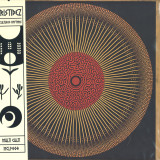
No Signal records is proud to introduce for the 10th release of the label one of the most important producer of all time: Jamie Bissmire. His productions have been central part of the scene through the 90s and the last decades. The UK legend spread the proper techno and electronic vibe with his solo moniker and in collaborations projects like Bandulu and Space DJz satisfying any kind of enthusiastic. The EP starts with the ambient skit "Subteranium", subtle synths and textures combined with a smooth-alternate basslines keep the listener moody and tense for an unexpected start. In Temporal Mst open up the dances. Slightly distorted 4/4 beat track, jam-packed in No Signal style, plucked arps well arranged for an elegant swing. Lore & Order is the match up to lead the dancefoors and listeners into more gloomy and wicked mood. Different sequenced synths wrap the drum groove for an hypnotic, yet enchanting and dreamy moving session. The Tapestry of Fate is definitely a massive Jamie Bissmire's signature track. Total ensemble of Ground Recordings releases, wicked patterns, dark mood and relentless pressure. Dancefloors will go mad for it. Antediluvian Analogue closes the shakers with a more modern vision, high cut on bass synth and 2/4 bleepy synth for a step-forward march. Woven Whispers closes the EP as Subteranium opened. Gloomy and dark mood, effective and reverberated synths in full shaded ambient atmosphere to stun the listener and bring it into a different sound dimension.
out of Stock
Last delivered 7 months ago available to reorder, subject to availability
REISSUED!!! Received an 8.1 rating from Pitchfork. "Sadly, many will hear Chris Corsano & Bill Orcutt's latest LP, Made Out of Sound, as 'not-jazz,' though it would be more aptly described as 'not-not-jazz.' In a better world, it would warrant above-the-fold reviews in Downbeat, or an appearance on David Sanborn's late-night show (if someone would only give it back to him). More likely, we can hope for a haiku review on Byron Coley's Twitter timeline to sufficiently connect the various improvised terrains trodden by this long-time duo—but if you've been able to listen past the overmodulated icepick fidelity of Harry Pussy, it should surprise you not an iota that Orcutt's style is rooted as much in the fractal melodies of Trane and Taylor as it is in Delta syrup or Tin Pan Alley glitz. As for Corsano, well, it may seem daft to call this particular record 'jazz' (because duh, it has a drummer), but to me Corsano is beyond jazz, almost beyond music, his ambidextrous, octopoid technique grappling many stylistic levers and spraying a torrent of light from every direction. Corsano's ferocity has elevated many 'mere' improv records to transcendence, but here he's crafted his polyrhythms within more narrative channels, bringing to mind his 'mannered' playing in the lamented Flower-Corsano duo. It's not 'groove' playing precisely, but it follows many grooves simultaneously, much like Orcutt's own melodic musings—which is why they're so naturally lock-in-key here. Which maybe makes it all the more surprising that Made Out of Sound was in fact recorded in different rooms on different coasts at different times, and stitched together by Orcutt on his desktop. Corsano recorded the drums in Ithaca, NY, and (as Orcutt states), 'I didn't edit them at all. I overdubbed two guitar tracks, panned left/right. I'd listen to the drums a couple times, pick a tuning, then improvise a part, thinking of the first track as backing and the second as the 'lead', though those are pretty fluid terms. I was watching the waveforms as I was recording, so I could see when a crescendo was coming or when to bring it down.' Fluidity ties the tracks together. With a little more groove and a little less around-the-beat maneuvering, one could almost hear the boiling harmonic layers as Miles-oid in 'Man Carrying Thing,' but with new-found Sharrockian modalities, Corsano accentuating the tumbling nature of the falling notes. The Sharrock vein continues with 'How to Cook a Wolf,' its Blind Willie-esque melodic simplicity and repetition extrapolated 360-style in a repetitive descending riff that falls into Cippolina-isms (by way of Verlaine ) until the end crashes upon the shore. Much like Orcutt's last solo album, Odds Against Tomorrow, there's a gentler, almost pastoral flow to some tracks ('Some Tennessee Jar,' 'A Port in Air,' 'Thirteen Ways of Looking') that calls to mind the mixolydian swamplands of Lonnie Liston Smith—but unlike Odds , other tracks ('The Thing Itself') smash that same lyricism into overdriven, multi-dimensional melodic clumps that push several vector envelopes at once in an Interstellar Space vein. With the help of Corsano, Orcutt has managed to slither even further out of the noise/improv pigeonhole lazy listeners/writers keep trying to shove him into. Looking at the back cover of Made Out of Sound , we should not see Orcutt hurling a guitar into the air with post-punk bravado, Corsano toiling behind him in the engine room—we should witness an instrument levitating from his hands, rising on invisible major-key tendrils of melody, fired by percussion, spiraling into an invisible event horizon..."—Tom Carter
Mermaid Chunky. It's all in a name, sometimes. The danceable, costumed, curiosity rich duo of artists Freya Tate and Moina Moin are as imaginative as they profess. Or, to get more to the point, as we all need them to be. Freya and Moina are two visual artists and musicians from Stroud and South London, places where they importantly found communities (Stroud's SVA and the capital's Total Refreshment Centre) of like minded people just as willing to chase down an idea to its possibly illogical conclusion. And it is in the collective and the idea of participation that Mermaid Chunky really clicks. This is a party, a collective dance, made all the better with more: people, ideas, layers, kick drums, recorders, saxophones, frogs. To wit, the album's first track and first single, "Céilí," named after a traditional Scottish or Irish social gathering and dance, which builds from a simple recorder line into a swelling, warm burst of major chord dance music. Goosebumps or check your pulse. Further down the rabbit hole, "Chaperone" is almost boardwalk electro, like Fischerspooner on a ferris wheel; "Frogsporn" and "Nature Girl" are mucky, trippy dirges filled with stalactites of synth and squelch; "Tiny Gymnast" is a kaleidoscopic waltz into the night. Hold onto your seats, ladies and gentlemen. You might be wondering how we, DFA Records, all the way over in cynical Brooklyn, entered the picture. There was a day a few years ago, sun shining in full Springtime splendor, when James heard something while waiting for a coffee down the street from the office. It sounded simple yet deceptively complex: a dance track, but one where the one - that anchoring first beat in a measure - could be heard a thousand different ways. Frustrated and interested, he Shazamd the song, playing at the shop from an episode of Zakia's Questing show on NTS, and brought it back to the office, where we all listened to it about fifty times. (The song was "Friends," from Mermaid Chunky's VEST EP, released in 2020. It led to an invitation to open for LCD at Brixton Academy in 2022. Mermaid Chunky has also played live alongside The Comet Is Coming, Alabastair Deplume, Snapped Ankles, and many others.) Thus began our search for Mermaid Chunky. A quest it has been and a quest it will always be.
Once upon a vibrant night in the heart of the Baltic States, a prodigious artist emerged from the depths of the electronic music scene. Meet Electricano, an enigmatic DJ and producer hailing from the picturesque country of Latvia in Europe.
With an insatiable passion for electronic beats, Electricano has become a force to be reckoned with in the world of music. Drawing inspiration from various genres, he weaves together a mesmerizing tapestry of sounds, captivating audiences with his distinctive style. Effortlessly traversing the landscapes of Dubtechno, Breaks, Electronica, and beyond, creating a musical experience that transcends the ordinary, Electricano's sonic palette knows no bounds.
With each track on this EP, he invites audiences to lose themselves in the pulsating rhythms and soaring melodies, forging a connection that transcends language and borders.
Landing on the shelves September 20, 2024, "All Night" is guaranteed to keep you grooving until the break of dawn!
out of Stock
Last delivered 38 days ago available to reorder, subject to availability
Third physical release brings forward EL RITMO FATAL ! Where it all began for the boys…
Fantastic Man elaborates his intricate hypnotic feelings to deliver a mind bending dancefloor stomper. Baldo and his efficient touch take the track to the 303 peak time business and last but not least Matisa’s bright bubbly production pushes her emotional energy upfront.
out of Stock
Last delivered 3 months ago available to reorder, subject to availability
After the highly anticipated debut album “Sugar Honey Iced Tea!,” the dynamic NYC duo strikes once more with a double pack of alternate versions and remixes. Craig Handfield and Brandon Weems, better known as musclecars, have unveiled a dance music masterpiece, now graced by the touch of house music legends Louie Vega and Maurice Fulton.
This double pack showcases multiple versions of “Tonight,” remixed by dance music maestro Louie Vega, who momentarily stepped away from his Masters At Work ventures to infuse this project with his magic. The main remix unfolds like an epic journey adorned with orchestral elegance, while the dub versions range from festival anthems (NV South Jersey Mix) to tracks that echo the early Masters At Work essence (Louie Vega’s Bronx Dub).
Additionally, we are gifted a new version of “Hello?” reimagined by Maurice Fulton. In this version, Maurice’s signature live bass lines intertwine with exuberant, hard-hitting percussion, casting a whimsical light on the deep, introspective original.
Complementing the remixes from musclecars’ esteemed inspirations, we encounter two new versions of “Ha Ya! (Eternal Life)” and “Water,” both stripped of percussion to reveal the stunning arrangements, textures, and harmonies. These renditions are accompanied by a full side of musclecars’ dance odyssey “I Don’t Remember The Last Time I Saw Stars.”
The Double Honey Pack is a tour de force. It’s a rarity to witness two legends unite to elevate an already stellar project, yet Vega and Fulton achieve just that. Meanwhile, Weems and Handfield meticulously peel back the layers, allowing the intricate details to shine. This promises to be the release of the summer!
out of Stock
Last delivered 20 months ago available to reorder, subject to availability
DJ Support: DJ Sabo, Gordon Invisible Inc, Ground Chill Mountain, Roe Deers, Thomas Von Party, Vidis
Multi Culti serve up a full-length treat from Peruvian artist Aristidez. Cofounder of Lima-based party collective Casa Locasa and the non-profit label Behua Icara (translated as Healing Rhythms), in support of indigenous culture, Aristidez has recently relocated to Berlin. With releases on Calypso, Disque-Discos, and Kebrada, as well as remixes for Amplio Espectro, Ida Sound, Discos Aquelarre, Rotten City Files, and Playground Records, Aristidez has quietly made a name for himself with a growing catalog of low-key dance tracks that have been championed by the likes of Matias Aguayo, Andrew Weatherall (RIP), and Inigo Vontier, to name a few. With an emphasis on the hypnotic power of rhythm, Aristidez channels indigenous influences in subtle fashion, alluding to visionary experience without resorting to pastiche or obvious tropes. There are freaky tribal rhythms but no shaman samples, just expertly produced tracks than reveal an expansive set of electronic influences that range across tempos and decades, from breaky 90s rave, 80s proto-trance, cult dub, downtempo and more. It’s listenable, danceable, heady and kaleidoscopic stuff that should stand the test of time.
out of Stock
Last delivered 30 days ago available to reorder, subject to availability
Riding a wave of critical praise and positive feedback for his most recent Emperor Machine album, the fabulous Island Boogie, Andrew Meecham returns with a typically wild and dancefloor-focused set of dubs, ‘versions’ and remixes.
According to Meecham, Island Boogie is his most personal set to date – a full-length excursion that not only delivers perfectly formed expressions of his dub-tinged, off-kilter synth-boogie sound, but also tracks that draw deeply on his earliest influences and long-held musical expressions.
It’s fitting, then, that this remix EP begins with his own sparse, stripped-back ‘version’ rework of ‘S-S-S-Single Bed’, a fine cover of the mid-80s Fox single featuring the vocals of Michelle Bee. Meecham’s dub-wise revision is a skeletal and driving affair, with snippets of echoing guitar, colourful synths and Bee’s distinctive vocalisations rising above a weighty dub disco bassline and rock-solid percussion.
It's followed by two revisions of album favourite ‘Wanna Pop With You’ from A Love From Outer Space main man Sean Johnston under his now familiar Hardway Brothers alias. Combining his own love of raw, analogue-sounding electronics and trippy dancefloor psychedelia with select elements of Meecham’s original – percussion, synth sounds, crisp guitar licks and elements of Severine Mouletin’s lead vocals, Johnston’s main ‘remix’ is a weighty, mid-tempo treat. Arguably even better is his accompanying dub, which is more groove-and-effects focused and makes more of Beecham’s superb original bassline. It’s heavy, spaced-out and undeniably intoxicating.
To round off the package, long-time friend of the label (and sometime contributor) Rose Robinson dons her Tigerbalm pseudonym and gets to work on ‘La Cassette’. Brilliantly cutting up Severine Mouletin’s vocals, she delivers a driving slab of spaced-out, synth-heavy dub disco that adds more weight and energy to Meecham’s original. It’s a fittingly on-point way to close out a superb selection of club-ready revisions.
out of Stock
Last delivered 18 months ago available to reorder, subject to availability
After almost one year of silence, M.U.S.A come back again with a live legend, a pioneer of electro in Spain, Dark Vektor. Three original tracks plus two remixes, one by Kan3da and one by Dj Maaco aka Detroit in effect. Limited copies..
out of Stock
Last delivered 2 years ago available to reorder, subject to availability
Taken from the ultra-rare Japanese promo mix CD released in 2004 by madlib himself on his Mind Fusion label. Now on multi -coloured splater viny for the first time. Taking a selection of the best tracks, grooves and breaks from the legendary Mind Fusion Volume 2 mix CD here on vinyl for the first time ever are the entirety full length unmixed original versions. An amazing collection of extremely rare Jazz, Funk , Brazilian and Soul music from Madlibs eclectic and uber diverse record collection. The sleeve design is also a wonderful piece of contemporary art as first displayed on the Japanese mix CD now fully blown up to album cover size making this a must have for all rare art and music lovers.
Blood Smoke Vinyl. The Instrumental version of the underground classic El Michels Affair & Black Thought collaborative album Glorious Game When Leon Michels and El Michels Affair released their rst record, Sounding Out The City, in 2005, it was hard to guess what was next for Michels and his then-introduced, now-patented "cinematic soul" sound. Now, four EMA studio albums and scores of tribute and remix projects later_all while producing for some of the biggest names in the industry_Michels has trademarked his sound, with each project taking audiences somewhere new and pushing the boundaries of what he is known for. The man is a river, not a lake and this time he takes his golden touch into the realm of hip-hop laying down a musical bed for one of the greatest to ever rhyme into a microphone: Black Thought of The Roots crew. Releasing on Big Crown Records, the LP is called Glorious Game and it is a remarkable debut partnership in more ways than one. Michels provides his bottom-heavy, soul-tinged production for Black Thought who gives us some of the more personal and transparent verses we've ever heard from him. Michels and Black Thought have been in each other's orbit for a while now. The two rst met in the 2000s when Thought was rst getting familiar with the contemporary soul scene. "Out of that whole world, Menahan Street Band was probably my favorite," recalling the funk and soul group Michels was a founding member of back in 2007. Fast forward a few years and musicians from that collective_Dave Guy on trumpet and Ian Hendrickson-Smith on sax _are now full time players with The Roots. This connection eventually led Leon and Thought to doing a few fundraising events around NYC and Philly together. "Before long, Black Thought was coming around the studio and would jam with us from time to time," Michels explains. "Then, fast forward to 2020 and COVID lockdowns, he just hit me up out of the blue, wanting me to send him stuff to write to. We both were looking to stay busy." Being that Black Thought is the co-founder and emcee for, hands down, the best live-band group in hip-hop. Michels took a decidedly different approach to this project and instead of sending recorded tracks of live compositions, he pulled out the sampler and sampled himself and some records from his collection. "I'm a big fan of soul music," as if Michels has to remind us. "And part of hip-hop's appeal to me has always been the sample-based production" For Glorious Game, Michels would make wholly composed and recorded soul songs in his studio, sample himself, then chop and/or loop up his sounds and create instrumentals for Black Thought. On some tracks he took a more traditional hip-hop approach, starting from samples of other people's music but then adding live instrumentation on top. But for the most
out of Stock
Last delivered 2 years ago available to reorder, subject to availability
Imaginative re-workings and improvisations by Andrew Tuttle of the late great Michael Chapman's unfinished instrumental album. Sonic explorations that bridge the Southern and Northern Hemisphere via the Caribbean, remote Northumberland and sub-tropical Australia. Navigating calm seas and turbulent waters of ambient corals, new-age pirates, waves of lapping banjos and drifting eroding guitars.
When Michael Chapman passed away in September of 2021, at the age of 80, he did so – as he spent much of his life – as both a pioneer and a legend. A veteran of the British blues/folk/jazz scene, Chapman emerged in 1966 and continued working throughout his life, always pushing the boundaries of his creations while collaborating with a slew of similarly heralded musicians along the way: Bert Jansch, Mick Ronson, Elton John, Thurston Moore, Steve Gunn; to name just a smattering of those he worked alongside over the years.
It's the latter of those – Brooklyn guitarist and songwriter Steve Gunn – who Chapman flourished alongside in recent years, the two collaborating on 50 and True North, two of Chapman’s final and finest records. It was through that friendship that Chapman’s music found Andrew Tuttle, the Brisbane-based multi-instrumentalist who has toured Australia several times alongside Gunn.
In the aftermath of Chapman’s passing, his partner Andru discovered Tuttle’s Fleeting Adventure LP, describing it as “one of the albums that kept me sane during that first brutal winter on my own.” The pair met in Australia shortly after, and before Andru had even made it back home to the north of England, Tuttle had begun working on the recordings she shared with him at that time. Those recordings were part of a project Chapman was working on at the time of his death, called Another Fish – what would have been a companion piece to his previously-released LP, simply called Fish.
Though Chapman had spent time in his local studio playing all the guitars, layering the different sounds and effects, he’d always intended to do much more work on the songs, however fate had its way and he never got to ribbon-bow those ideas and bring the album to its conclusion.
Though there was little intention in terms of how to finalise the project, Tuttle spent valuable time with those recordings. What materialised, eventually - with time, care, and diligent attention - is a two-disc set Another Tide, Another Fish, something both unusual and completely distinctive. The first disc, Another Tide is centred around Tuttle’s own work, which shaped all seven of Michael’s songs and ideas into new songs of their own, and the second disc which simply incorporates the recordings that Michael left behind.
“On all of the tracks I also ‘played along’ on banjo to the originals several times until I learned an approximation,” Tuttle continues. “This ended up resulting in a ‘hybrid’, where some works are easily identifiable to those who know Michael’s originals, and some took that inspiration to head altogether elsewhere. Each of the tracks, even where not obvious, does have at the very least a trace element sample of the original recordings so that it’s a true collaboration.”
What we’re left with is indeed a hybrid: part remix album, part cover album, both a solo work and a collaboration, of sorts. Inspired by Chapman’s original ideas and with new track titles directly referencing the numbered but otherwise untitled source material, Tuttle adds his own flashes of colours throughout, including editing, sampling, MIDI transposing and signal processing that twists these songs into beautiful new shapes. Perhaps Tuttle’s greatest achievement here then is that Another Tide sounds so effortlessly free of all this context.
Whether you know Michael’s, Andrew’s or even Andru’s story or not, these recordings will bristle with enchantment and intrigue, worlds are built, and while some thrive and grow, others fizzle out in a burst of light, such is the way. “It's been a long, long road but we got there and I think it's been more than worth it,” Andru says in the record’s liner notes. “I really hope you think the journey was worth it too.”
Guitars and effects by Michael Chapman recorded by Alex Warnes at Phoenix Studio, Brampton, Cumbria, 2017 Banjo, effects and edits by Andrew Tuttle at Bella Vista, Brisbane / Meanjin, 2023-2024
"Electric Taal Band was a project that came out of the Covid pandemic, a necessity to work alone and some happenstance. I had stumbled on a box of Punjabi records for sale at Bollywood Music Center on Gerrard St. East in Little India -- a store where I had been buying hindi film records for years. I wasn't too familiar with Punjabi music beyond UK Bhangra, took a chance and loved the records; over some time I bought every Punjabi record in the store. I studied the records and bought a tumbi from Kala Kendar, a shop next to the music store that sold instruments. I learned the tumbi from Youtube videos and copying the sounds on the records.
Over time I acquired both a vintage Radel Talometer and electronic Tanpura locally via classifieds and experimented with integrating their sounds into the recordings as well. The basic idea was to take these machines designed for practice, which had their own incredible sound due to technological limitations and apply them to Indian music. Everything I had heard of these machines in recordings and videos only used them in an abstract electronic context. The main intent was and still is to use these sounds in collaboration with South Asian musicians and vocalists in the Toronto area, but this album came from both casual exploration and experimentation with the tools, as well as an inability to collaborate in-person due to pandemic restrictions at the time."
This album takes you back to Colombia of the 50s and 60s. In those days, the tropical music of the Caribbean and Pacific coasts took over the country's mainland music scene by storm. One of the key figures during this period was Edmundo Arias. Together with Lucho Bermúdez and Pacho Galán, Arias is seen as one of the ‘big three’ composers of Colombian tropical music.
He was a rather introverted person who avoided being in the spotlight at all cost, leading to his work being less known than his contemporaries. With this album we hope to highlight the amazing legacy Edmundo Arias has left us. Think of big bands with sharp dressed musicians playing the finest cumbias, porros and other tropical sounds in fancy ballrooms on a hot evening in Medellin or Bogota.
Liner notes:
Edmundo Dante Arias Valencia was born in Tuluá, Valle del Cauca, on the 5th of November 1925. He came from a family of musicians. His father, Joaquín Arias Cardoza was a band leader and composer who taught his children to play music. Arias learned to play many instruments such as the guitar, bass, bandola (pear shaped string instrument related to the mandolin), tiple (12 string guitar), clarinet and saxophone. He proved to be a very talented musician and together with his father and his older brother Ricaurte he formed the ‘Trio Arias’. The family lived in different cities across Colombia depending on where they found work. When his father died unexpectedly in 1948, Edmundo and Ricaurte had to support their family working as musicians. In 1951, Arias decided to move to Medellín, in those days the heart of the Colombian music industry and the city where the most important record companies and the best musicians were based. It didn’t take long before Arias made a name for himself as a musician, composer, arranger and band leader for Colombia’s leading labels at the time; Zeida, Ondina, Silver and Sonolux. For the latter, he would eventually become the artistic director. Over the years, he wrote hundreds of songs, recorded many albums with his own orchestras or with the Orquesta Sonolux and collaborated with a countless number of musicians, often uncredited.
Together with Lucho Bermúdez and Pacho Galán, Edmundo Arias is seen as one of the ‘big three’ composers of the tropical music of Colombia. But despite the fact that Arias was renowned, very little is known about his personal life. He was a humble man who preferred to work in the background and avoided being in the spotlight at all cost. He declined interviews and kept away from public life. On some live performances of the orchestra that carried his name, Arias asked one of his musicians to pretend to be him, so that he wouldn’t have to come on stage. You might think that Arias was shy or anti-social, but this was not the case. Most people he worked with described him as a very jovial, good humoured person and enjoyed working with him.
His invisibility in public life belied how present he was behind the scenes. If he wasn’t working on his own productions, he was regularly collaborating with other musicians. Arias had his hand in the work of many of his colleagues and was a mentor for young artists. Some even say that in those days all the musicians in Medellín had worked with Arias in one way or the other. He had a strict working regime: composing, arranging and recording at night while sleeping during the day. He was also very productive. The story goes that on one occasion, he wrote arrangements for a 16 piece band in just a few minutes while the band was recording another song. His hard work and productiveness resulted in hundreds of compositions and many records that carry his name.
Edmundo Arias’ career ran over 6 decades until his death on the 29th of January 1993. Over the years, he left us a huge legacy. The songs on this record are a selection of his work during the 50s and 60s. Many see this period as the absolute highlight of his career. We picked out the songs we consider to be the most outstanding recordings from this period. The title of this compilation Guepa Je! is Colombian slang often used in cumbia to express joy or to celebrate. A free translation would result into something like ‘yeah’, ’let’s go’ or ‘groovy’. I guess this title says enough. Enjoy the music. Guepa Je!
out of Stock
Last delivered 16 months ago available to reorder, subject to availability
Polido has been fantasizing with the idea of free music throughout his artistic career. Free from restraints, logos, musical genres, but also from this modern obsession with narratives, plans, business plans, algorithms and bubble wrapped ideas for comfort of those of you that can’t breathe without everything making sense.
“Hearing Smoke” has nothing of that. It has been four years since Holuzam released the double album “A Casa e os Cães / Sabor a Terra” and for four years I have been daydreaming about what would come next. This is it, eleven new pieces about the future of the future of music. It is the result of years of study, research and sound consolidation. Sound as matter, mutating, transforming, absorbing all around, a shapeshifting entity connecting with the principles of freedom.
"Polido has been researching Portuguese contemporary composition, its very own sounds and ideas. Its origins, the web of repression, tension and censorship before the April 25th revolution in 1974; secondly, as an afterthought, freedom, equality and a unique sense of community and belonging screaming through the music. He absorbed those states of mind and made an album that listens to the current world and presents globalization as a mental trap.
If the music that inspired him somehow comes from a post-colonial world, “Hearing Smoke” questions how we can create something new in this permanent state of cultural colonization, where new trends or forms of music only thrive if they are accepted by the dominant cultures. The physical world has been transformed, but ideas like “world music” or “ghetto music” still show that dominance, the Strange can only be accepted if it incorporates the rules and codes of that dominant force. What I am saying is that it is hard for Portuguese musicians to present themselves as original. They will never have that credit unless the music relates to something that exists in another
realm. Never for their benefit, but for the power of association. I may sound arrogant here, but Polido is unique, original, one of a kind (all those words, all those redundant synonyms). I knew it four years ago when I got lost in the way “A Casa e os Cães” is assembled and how he makes something memorable out of the most commonplace conversations. “Hearing Smoke” continues the flow and puts us in the centre of these ever evolving masses of sound.
Somehow his music finds you, it starts speaking with you until it asks you to be a part of it. Polido’s beats and harmonics are combined in such a tender way that you mellow out while listening to these beats - thinking of the brilliant “Saque”. Even when he exposes you to something more harsh - “Canto D’Amorte” or the closing moments of the last track “Custa A Crer” - there’s still a cradle effect.
But what keeps me returning to this album is how it seems to transform in my ears. Not every time I listen to it, but while I am listening to it. The sound seems to move, embracing me and controlling my inner thoughts. These start to move along at the same pace, with the same feeling of cloudiness. Nothing new here, the thing is how it feels different from time to time, how the music, because of something that changes or moves, comes as a catharsis/revelation. It drives me nuts how the beats come and go in tracks like “Fogo Firme (Encomendação)” or “The More I Think, The Less I Can Speak“, leaving everything suspended and, simultaneously, relieved. When dramatic - ”Prova De Existência“ - it is sad af and gorgeously epic.
Trap, bass music, dubstep, ambient, hauntology and contemporary music flow side by side here, no pushing around, free of interpretation, and you are free to feel or listen to whatever you want in “Hearing Smoke”. That’s free music for you. Not a hard concept, something for you to enjoy, feel, reflect about. This is what the future will sound like."
returning, dream’ is the second album from Paradise Cinema – the‘Fourth World’ inspired project led by multi-instrumentalist Jack Wyllie (Portico Quartet/Szun Waves). While Wyllie’s other projects move between tightknit electronica, widescreen minimalism and improvised ambient sounds, ‘returning, dream’ contains nods to Jon Hassell, Terry Riley, Don Cherry and Midori Takada as well as more contemporary electronic, ambient and non-western music and even draws inspiration from physics and science fiction.
The first, eponymous, Paradise Cinema record, released in 2020, was recorded in Dakar (Wyllie lived in Senegal for a while in the late 2010s) and featured the dense rhythms of Mbalax music combining with Wyllie’s textural saxophone and synth playing, but here he takes a step into the unknown:
The music is no longer built primarily around the rumbling
propulsiveness of Mbalax, but takes its inspiration from the Many-Worlds Interpretation of quantum mechanics, which suggests that there are many different worlds that branch off from our own. Wyllie explains: “It is an imagining of what music could be like in a different time and space, ancient and futuristic from everywhere and nowhere at once. I was listening to a lot of physics podcasts when I created this record. I loved the many-worlds interpretation of quantum mechanics; about the multiple paths we are taking each time a quantum decision is taken. The different worlds then splitting off like branches on a tree. I could imagine different histories and worlds and multiple versions of myself, others and even other societies existing. In this album I’ve dug into these ideas andattempted to make music that would come from those different spaces, trying to poke my finger through to the other selves and stories. Effectively a form of composed science fiction, the music is an idea of what might be occurring or have occurred on a branch of the tree in a different world. But I like to think the tracks might actually have been composed somewhere or sometime.”
Created in London by Jack Wyllie with additional recordings from Dakar and Sydney, ‘returning, dream’ blends sounds that do not typically live together. It features Khadim Mbaye (sabar drums) and Tons Sambe (tama drums) who provide the dense Sengalese rhythms, plus Szun Waves colleague Laurence Pike, also on drums.
Eine Sammlung für M. Ward-Fans jeden Jahrgangs. "For Beginners: The Best Of M. Ward" versammelt 14 Tracks aus seiner gesamten Merge Records Discografie, einschließlich des neu aufgenommenen Songs "Cry". "For Beginners" ist sowohl eine Fibel und ein Mixtape mit Lieblingsstücken. Die Reihenfolge der Songs ist so ausgetüftelt, dass ihnen neues Leben eingehaucht wird. Beginnend mit "Chinese Translation" und "Poison Cup" vom 2006 erschienenen Album "Post-War", zeigt "For Beginners", wie Ward sein Können im Studio ausbaut. Seine einzigartige Coverversion von David Bowies "Let's Dance", aus dem 2003er Album "Transfiguration of Vincent", geht über in das überschwängliche "Never Had Nobody Like You" vom 2009er Album "Hold Time". Anstatt einer sauberen Entwicklungslinie, die ein chronologisches Arrangement suggeriert, ist das, was "For Beginners" zusammenhält, ist Wards tadelloses Können als Songwriter, das im Fokus bleibt während sich sein Sound von Low-Fi-Heimaufnahmen zu elektrischen, radiotauglichen Stompern und wieder zurück bewegt. Pünktlich zum 35-jährigen Jubiläum von Merge Records wird dieses Album eines der beliebtesten Künstler des Labels veröffentlicht und enthält mit dem Song "Cry" die erste neue M. Ward Aufnahme auf Merge seit 2018. "Cry" ist eine reduzierte Coverversion des Godley & Creme Pop-Klassikers, aufgenommen mit dem Folk Bitch Trio aus Melbourne, Australien. M. Ward über "Cry": ""Cry" wurde in einem tasmanischen Museum für moderne Kunst namens MONA aufgenommen. Ich saß am Ende eines langen Flurs, nur wenige Meter entfernt von Anselm Kiefers Skulptur eines 20 Fuß hohen Stapel von Bleibüchern, und links und rechts von mir, um ein einziges Mikrofon herum, saß das Folk Bitch Trio; wir probten und nahmen "Cry" in etwa 30 Minuten auf. Es ist mir ein Vergnügen, diesen Song zu einer Sammlung meiner schönsten Erinnerungen an das Musikmachen hinzuzufügen." Der Song ist der perfekte Schlussstein für eine Sammlung dieser Art und fasst Wards Stärke als Musiker zusammen: der Reichtum, den er in spärlichen Aufnahmen erreicht, sein Talent für Zusammenarbeit und seine Fähigkeit, die Seele eines akribisch ausgearbeiteten Popsongs zu durchschauen. Ein Mittel, um auf die Zukunft seiner eigenen Arbeit zu blicken, aber auch ein Rückblick auf seine Vergangenheit.
Over a catalog of six albums, Native Harrow have produced a discography of “rich, engrossing records” and “instant classics” while single-mindedly following their own artistic code, acquiescing only to the exigence of the song: each song its own world with its own rules.
Formed a decade ago, Native Harrow spent their first five or six years crisscrossing the United States and Canada on numerous tours, averaging more than 150 concerts per year in 47 states and 4 provinces, on the back of two self-released albums, Ghost (2015) and Sorores (2017). In 2019, they released Happier Now, partnering with London alt-country stalwarts Loose Records. The record garnered glowing reviews, with Rough Trade selecting it for its album of the month, writing “Beautifully soaring... rolling grooves ground languid and dreamy clearwater shimmers of sound.” The critical acclaim and Americana chart success of the album prompted three back-to-back UK tours in 2019 and early 2020, ultimately leading to a three-year stint living and touring in the UK and Europe. In this time, Native Harrow released two more critically acclaimed records with Loose; Closeness (2020) and Old Kind of Magic (2022), playing for audiences ranging from rock clubs in Norway and Sweden to opera halls in Portugal, and every stop in-between, as well as performing at festivals such as BST Hyde Park (supporting the Eagles and Robert Plant & Alison Kraus), Greenman Festival, Black Deer Festival, The Great Escape, Celtic Connections, Moseley Folk Festival, SXSW, and many more.
Following the eruption of its title track, Side A of “Divided Kind” transitions nimbly through hazy tremolo-laden dusty canyons, past an intimate soulful love letter, and towards a moody anthem of devotion buoyed by propulsive grooves, before ultimately settling on a gentle bird’s-eye-view of love and transcendence. Side B opens with the debut single, “Goin’ Nowhere” a soul transmission over incendiary bass and undulating layers of guiro, congas, tambourines, shakers, and handclaps that sidesteps into moments of infinite dial-toned burnished, Rhodes-propelled soul-jazz and self-assured blues rock à gogo before ending in a spectral folk reading on celestial meditation.
“Divided Kind” was produced and recorded by the pair, in their home studio surrounded by the vintage acoustic and electric guitars, dusty semi-functional amplifiers, and out-of-date Rhodes, B3, piano, and assorted percussion they’ve grown accustomed to. Chicago-based Alex Hall was again drafted to add drums and to mix, and Philadelphia drummer and engineer Joshua Friedman mastered the record. London-based musician Joe Harvey-Whyte added the pedal steel to “Borrowing Time”, with all other voices and instruments being performed by Tuel and Harms.
Everything is out of control / from melting pots to melting poles - das aktuelle Album der Grazer Alternative-Bande The Base lässt unsere Welt abgeranzt und hässlich glänzen. So beginnt es gleich wie ein dunkler, erdiger field holler. Bei einem field holler rufen sich Sklaven, Gefangene oder Zwangsarbeiter Worte und Sätze zu, die durch ihre Wiederholung den Rhythmus zum Arbeiten angeben - und zum Überleben. Sing or die! Everything falls apart / and everyone is acting smart. Norbert Wally und seine beiden Spießgesellen starten ihre torture de force im tiefen Süden, in der Ursuppe des Rock`n`Roll, im tiefen Sumpfland des Delta-Blues. Aber The Base sind weit davon entfernt, eine Bluesplatte aus dem Schlamm und Dreck auszugraben. Bei "It's all Going South" stehen eher Bands wie Fun Lovin' Criminals, The Clash oder Pixies Pate. The Base verstehen Blues als Brandbeschleuniger: Die Stories, die Statements, die Visionen - kaum je waren Norbert Wally (Voice/Guitars), Albrecht Klinger (Bass) und Karlheinz Miklin Jr. (Drums) so politisch, so sozialkritisch, so wütend. Und nie waren sie so sarkastisch wie 2024. Blues, das heißt Tanzen auf dem Vulkan. Lachen beim eigenen Begräbnis. Und die Fäuste ballen, wenn miese Abzocker das Gute und Schöne beflecken um aus der Wahrheit eine Ware zu machen. Der Opener "High Time For Panicking" ist ein Meisterwerk für sich: Innerhalb von eineinhalb Minuten schießt er uns vom Pre-War Blues alter Lomax-Shellacs in den lärmigen Groove einer New Wave Combo, die um ihr Leben spielt. Der Titeltrack "It's All Going South" flimmert der Ferne wie ein Wüstenkaktus in, der gerade von Mr. Tarantino in einem 1967er Chevrolet Impala Sport Sedan niedergewalzt wird: dünenweise Hall auf der massiv geforderten Gitarre, die in Slow-Mo durch die Story wandert. Ein Bass, der vor Clint Eastwood den Hut zieht. Die Atmosphäre: Calexico deluxe. "Alles geht den Bach runter" so Wird die titelgebende Redewendung ins Deutsche übertragen. "Chemically Speaking Alcohol Is Still A Solution" könnte als Antwort auf alle gutgemeinten Versuche gehört werden, eine Welt voller Diktatoren, Kriegsgerät und Wahnsinn mit Vinyasa-Yoga und Lactobacillus bulgaricus im Joghurt zu retten. Waren die vorhergehenden Alben betont reduziert und puristisch, so gönnen sich The Base auf "It's All Going South" Backgroundchöre, fetten Vintagesound und lassen ausgiebige Studioeffekte. Das sitzt jedoch alles wie angegossen und zeigt die Qualität der Songs, denen knapp anliegende Taucheranzüge ebenso gut stehen wie schillernd verbrämte Kostüme. Niemand zieht aus dem Wort "happy" so viel Melancholie wie Norbert Wally und folgerichtig ist auch die Single-Auskoppelung "Waiting for June" ein Liebeslied, das gar keines ist. Aber der zwingendste Grund das Album anzuhören heißt "No One's Safe". Ein Song der sich wie ein Drillbohrer durch das Innenohr zur Großhirnrinde vorarbeitet. Soundcollagen, Voice-Over, eigenartiger Noise - immer tiefer bohrt sich der Song, bis er den Erdkern erreicht. Norbert Wally zeigt in seiner Stimme eine elegante Verletzlichkeit, die an einen David Bowie der 70er-Jahre erinnert. Die Intensität von OK Computer drängt sich auf. Niemand ist sicher. Game over! "It's All Going South" ist die bisher schmerzhafteste, politischste Platte von The Base. Wie schade, wir werden alle untergehen - und das kann zumindest verdammt sexy klingen.
The common thread throughout the album is the sitar. With this album Nicolas Mortelmans (Condor Gruppe, Leki, Merdan Taplak) builds a bridge between his love for Indian music and his roots in Western genres such as electronic, jazz and rock music.
On April 12, 2024, Nicolas Mortelmans (Condor Gruppe, Leki, Merdan Taplak) will release his long-awaited debut album MÁYÀ on WERF Records!
The common thread throughout the album is the sitar, an instrument that he learned in the traditional way from various sitar masters in India. Since 2017 he has been trained by the world-famous Anoushka Shankar. In every song he tries to approach this unique instrument in a different way.
With this album he builds a bridge between his love for Indian music and his roots in Western genres such as electronic, jazz and rock music. On the album guest musicians from all over the world are playing, such as Ravichandra Kulur from India (Anoushka/Ravi Shankar, John McLaughlin, Aka Moon,..), Benny Bettane (Australia/handpan) & Belgian friends like Roland van Campenhout, Tim Vanhamel and Stef Kamil Carlens.
out of Stock
Last delivered 2 years ago available to reorder, subject to availability
We’re excited to present you Yurk’s First Vinyl album on Chomp! Chomp! This six-track all original music by Yurk, is diverse and rhythm heavy across the electronic genres. Kicking off the album with “Delay Tech,” this 90s-inspired acidic house track is festival-ready with big energy. Then we dive into “Bustin’” - a bouncy Tech House with punchy and multiform tones. Follow by “Sin Control,” warm Jazzy House grooves accompanied by delayed filled Trumpet theme. On the B side, “Cosita” - a hard-hitting Detroit-inspired dub techno composition that treks into 90s territory. Follow by “El Nuevo Jazz”, a playful and dynamic track which combines punchy percussive electro breaks with a high-spirited bassline. To conclude the album - “Satori,” takes us on a spaced-out acid house journey, inspired by the Japanese Buddhist term for awakening, offering a psychedelic and uplifting finale.
Yurk is a dynamic producer and DJ from Puerto Rico, now making waves in Brooklyn's music scene. Blending Latin rhythms with global electronic beats, he has released music with local labels like Mechanical in Queens, NY. As the head of Organized Disorder, Yurk hosts a biweekly radio show, along with an all vinyl monthly Saoco! Party focused on Caribbean and outernational music.
All Tracks written and produced by Yurk. Mixed and mastered by Justin Van Der Volgen. A3 trumpet by Robert PM. B1 vocals by Timo Lee. Album Art by Bráulio Amado. "Dedicated to Erik and my beloved mother Laura, whose spirits guide every note with love and grace.” -Yurk
out of Stock
Last delivered 23 months ago available to reorder, subject to availability
Death and the Maiden’s Uneven Ground draws back the velvet curtain on the trio’s crepuscular dreamworld with nine songs of their distinctive shadowy slow-motion fusion of underground electronic dance music and post-punk guitars washed through with psychic unease. The trio’s name is taken from that of a nineteenth century engraving by Edvard Munch: an artwork steeped in mythology, exploring the dark boundaries between love and death, strength and frailty, beauty and decay. Their three albums to date each reinforce the symbolism of the name, and Uneven Ground’s title could apply as much to their own journey in the years since Wisteria, their previous album, as to the times in which we live. Bassist and vocalist Lucinda King is the bedrock, guide and storyteller. Guitarist Hope Robertson weaves swooping, soaring motifs and sometimes deconstructed layers of noise to build analogue atmosphere for these alternate worlds. Danny Brady’s beats mix old-school drum machines with electronic tones and distortion, while his synth arrangements blend elements of psy-trance and acid house with more amniotic ambient and industrial textures. While Uneven Ground may be the most overtly “pop”-sounding album in their catalogue, it also ratchets up the ominous atmosphere, noise and experimentation. Once again King’s evocative lyrics appear as cryptic stories, built from events, memories, dreams, moments, warnings, regrets; where questions raised are left unanswered, and possibilities remain open.
By 1963, great Latin American artists such as Lucho Gatica, Felipe Pirela, Bienvenido Granda, Leo Marini, Benny Moré, Tito Rodríguez, Toña La Negra, Blanca Rosa Gil and the so- called queen of boleros, Olga Guillot, had enriched the musical landscape, giving personality to the bolero. That year, in the midst of a new panorama, a bolero star was born from the depths of Venezuelan radio: Estelita Del Llano. “Sensual”, her debut album, is one of the greatest gems of the genre, with arrangements and orchestration by Porfi Jiménez. The backing of the Porfi Jiménez Orchestra and his arrangements made “Sensual” one of the most successful albums of its time. The selection of the twelve songs on the album was also a success. Although the years of the bolero's greatest splendor seemed to have passed, the bolero continued to spread throughout Latin America. The great success of “Sensual” lay in the arrangements and the choice of boleros with elements of the cha-cha-cha, another genre that was enjoying great popularity.
The long awaited reunion show! Founded in London in 1976, The Damned became one of the most successful and influential bands in the British punk rock scene of the 70s.
Their debut single "New Rose" (1976) is considered to be the first punk single ever released in the UK. Over the course of their 45-year career, The Damned have experimented with different musical styles and integrated elements of gothic rock, psychedelia and new wave into their sound. In October 2020, more than 40 years after the founding members split up, The Damned announced a series of reunion shows with the original line-up consisting of Dave Vanian (vocals), Brian James (guitar), Captain Sensible (bass) and Rat Scabies (drums).
However, due to the pandemic, they were forced to postpone the shows until 2022. On November 3, 2022, the original line-up performed at the sold-out O2 Apollo in Manchester, UK, and presented an energetic 21-song set from the first two 1977 albums "Damned Damned Damned" and "Music for Pleasure"; the only albums to feature all four founding members. "AD 2022 - Live In Manchester" presents not only a legendary reunion show, but also the unique magic surrounding The Damned.
Jade Hairpins waste no time fulfilling their second album's titular demand. From its harmony-drenched opening note to its baroque-anthemic conclusion, Get Me the Good Stuff is positively loaded with musical ideas, an absurdist buffet of sound and aesthetic that comes with one hell of a floorshow as the Hairpins stack those ideas higher and higher, almost daring them to crash to the floor. Instead, those elements - punksploitation, power pop, baggy, funk, and Italo disco are just some touchstones - are not only held aloft, they defy gravity and convention. These pyrotechnics are, in true Jade Hairpins fashion, something of a sleight of hand. While the music swaggers and gallops, Get Me the Good Stuff grapples with anxiety and self-doubt, obfuscating pain and alienation with sparkling wit and some straight-up ravers. Get Me the Good Stuff opens with one of those, "Let It Be Me," in which Jonah Falco shouts lyrics about being alone with one's shortcomings against guitars, synths, and harmonized vocals that are on the verge of closing in. The song is just over 90 seconds long, hitting with the gnarled-barb ferocity of punk and the gleeful insanity of theatrical art rock. It is, in other words, overwhelming. Or it would be if Jade Hairpins - Jonah Falco and Mike Haliechuk - weren't remarkably nimble in their ability to bring unity to sounds by placing them in competition against each other. When those sounds are adjacent, like the glam and disco that saturate "Drifting Superstition," the thrill of those universes colliding in the heat of an absolutely filthy clavichord line turns its lyrics, about the habit of solving personal problems by ignoring them, into a winner's anthem on the order of Bowie or Hot Chocolate. Get Me the Good Stuff arcs towards unequivocal joy as Falco, Jade Hairpins' primary lyricist, breaks these cycles and attempts to run away with his dreams. The arc is roughly analogous to how the album came to fruition. Four years removed from Harmony Avenue, an album of material that proved too strong to be contained within the narrative universe of Fucked Up's Dose Your Dreams, Jade Hairpins have gelled as a live act - with Tamsin M. Leach and Jack Goldstein centering them on stage - and planted their flag in the UK punk scene in which Falco has embedded himself. Working out new material live, Falco noticed that crowds were digging into his unfinished lyrics, and the album tightened around the anxieties of being in the spotlight, of being worthy of attention. At times, those songs are eager to please, like the album's title track in which a winking self-deprecation rubs up against the self-congratulatory bombast of Freddie Mercury, Falco simultaneously turning heads as a shooting star and a burning car. Elsewhere, as in "Better Here Than in Love," Jade Hairpins pitch themselves towards creating gorgeous soundscapes that exist nowhere else, channeling postpunk through the glimmering haze of '80s Japanese electronic music. Theatrical and personal, absurd and true-to-life, playful and serious, Get Me the Good Stuff is album of tremendous personal and artistic growth that signposts towards dozens of potential futures to come. It's not only worth the attention, it continuously rewards it.
• Produced by Arto Lindsay, arrangements by maestro Arthur Verocai (Strings) and trombonist Antonio Neves (Horns).
• Special guest appearances by Jorge Drexler, Seu Jorge, and Flor
"Portas" easily showcases Marisa's ability to blend together a diverse range of genres with a style and smoothness that only comes from the expertise she has gathered throughout her celebrated career.
Having already received numerous prestigious awards throughout her artistic career, the announcement of this album has left fans eagerly awaiting its release. In addition to her four Latin Grammy wins, she is considered the greatest Brazilian singer of her generation, known for the creative power of her live performances and the consistent excellence of her entire discography – the new album being no different.
Mutant is proud to present Academy Award-winning composer Michael Giacchino's latest album, Exotic Themes for the Silver Screen – Volume 1, featuring iconic scores from Giacchino's extensive portfolio rendered in the retro lounge style of Exotica from the 1950s.
“It's no secret that we at Mutant are huge fans of Michael Giacchino,” says Spencer Hickman, Co-Founder of Mutant. “We're excited to release a retrospective of his astonishing three decades as a composer. Rather than just curating a simple compilation of his previous works, Michael went back into the studio, rearranged and re-recorded every major theme from his career. These tracks have been recorded in an Easy Listening style inspired by such greats as Martin Denny and Les Baxter, creating not just a unique and incredible look back at some of the most beloved movie and television themes of the modern age, but also bringing a fresh, exciting take to the beautiful journey he has taken us all on with him. It feels like you are discovering these songs for the very first time: timeless, beautiful, and a joy to listen to. These newly recorded themes transport you to a far-off sunset, looking out at the ocean, complete with a cocktail in hand, providing a much-needed escape from the stress of modern times, and we can all agree that is something we all crave right now.”
Exotic Themes for the Silver Screen – Volume 1 spans nearly two decades of Michael Giacchino’s music, from his early video game scores to his television hits and blockbuster films. The album transforms these works through the lens of Exotica, replacing epic strings and thundering drums with vibraphones and marimbas.
“This album was inspired by the work of Arthur Lyman and Martin Denny,” says Giacchino. “What would they do with the Star Trek theme? Or video games like Medal of Honor? It was a way for me to play in that world I loved so much growing up. I thought it would be fun to create a fantasy world, where this album was recorded back in 1967 and then lost, only to resurface today.”
The album showcases Giacchino’s unerring talent for melody, stripping down grand symphonies to their essential elements while retaining their aesthetic and emotional core.
“So much was rooted in the big orchestral sound, so it was really about scaling it back. The real trick is figuring out the little fun hooks and things you can add along the way. There were no rules; I was up for anything. It was a way to re-engage with the material and be creative in a new way.”
Exotic Themes for the Silver Screen – Volume 1 includes an array of reinterpreted pieces from Michael Giacchino’s career. Highlights include ‘Primordial Forest’ from the 1997 video game The Lost World: Jurassic Park, ‘Life and Death’ from Lost, the theme from Ratatouille, ‘Roar!’ from Cloverfield, ‘Enterprising Young Men’ from Star Trek (2009), ‘A Man, A Plan, A Code, Dubai’ from Mission: Impossible - Ghost Protocol, and a Super 8 suite.
Featuring package design by Luke Insect, and liner notes by Charlie Brigden.
Jade Hairpins waste no time fulfilling their second album's titular demand. From its harmony-drenched opening note to its baroque-anthemic conclusion, Get Me the Good Stuff is positively loaded with musical ideas, an absurdist buffet of sound and aesthetic that comes with one hell of a floorshow as the Hairpins stack those ideas higher and higher, almost daring them to crash to the floor. Instead, those elements_punksploitation, power pop, baggy, funk, and Italo disco are just some touchstones_are not only held aloft, they defy gravity and convention. These pyrotechnics are, in true Jade Hairpins fashion, something of a sleight of hand. While the music swaggers and gallops, Get Me the Good Stuff grapples with anxiety and self-doubt, obfuscating pain and alienation with sparkling wit and some straight-up ravers. Get Me the Good Stuff opens with one of those, "Let It Be Me," in which Jonah Falco shouts lyrics about being alone with one's shortcomings against guitars, synths, and harmonized vocals that are on the verge of closing in. The song is just over 90 seconds long, hitting with the gnarled-barb ferocity of punk and the gleeful insanity of theatrical art rock. It is, in other words, overwhelming. Or it would be if Jade Hairpins_Jonah Falco and Mike Haliechuk_weren't remarkably nimble in their ability to bring unity to sounds by placing them in competition against each other. When those sounds are adjacent, like the glam and disco that saturate "Drifting Superstition," the thrill of those universes colliding in the heat of an absolutely filthy clavichord line turns its lyrics, about the habit of solving personal problems by ignoring them, into a winner's anthem on the order of Bowie or Hot Chocolate. Get Me the Good Stuff arcs towards unequivocal joy as Falco, Jade Hairpins' primary lyricist, breaks these cycles and attempts to run away with his dreams. The arc is roughly analogous to how the album came to fruition. Four years removed from Harmony Avenue, an album of material that proved too strong to be contained within the narrative universe of Fucked Up's Dose Your Dreams, Jade Hairpins have gelled as a live act_with Tamsin M. Leach and Jack Goldstein centering them on stage_and planted their flag in the UK punk scene in which Falco has embedded himself. Working out new material live, Falco noticed that crowds were digging into his unfinished lyrics, and the album tightened around the anxieties of being in the spotlight, of being worthy of attention. At times, those songs are eager to please, like the album's title track in which a winking self-deprecation rubs up against the self-congratulatory bombast of Freddie Mercury, Falco simultaneously turning heads as a shooting star and a burning car. Elsewhere, as in "Better Here Than in Love," Jade Hairpins pitch themselves towards creating gorgeous soundscapes that exist nowhere else, channeling postpunk through the glimmering haze of '80s Japanese electronic music. Theatrical and personal, absurd and true-to-life, playful and serious, Get Me the Good Stuff is album of tremendous personal and artistic growth that signposts towards dozens of potential futures to come. It's not only worth the attention, it continuously rewards it.
On Chastity’s upcoming, self-titled fourth record, Williams decided to write a fully non-fiction work. Out Friday, September 13 2024 on Deathwish (US), Dine Alone (Canada), and Big Scary Monsters (UK/E) ‘Chastity’ is a 13-track record about the things that have always run through the band’s records—struggle, death, despair, redemption, darkness, and light—but this time, the songs ascend to new depths of intensity and desperation, new heights of resolution and power. “It’s really about the first nosedive that I did as a young person,” says Williams. “It’s a record about struggle, about the missing years. It’s also a thank you to some people in my life.” The record hurtles through melodic hardcore, shoegaze, and emo, all magnificently and enormously rendered thanks to slick work from John Paul Peters (Propagandhi, Comeback Kid), who engineered and mixed the record. Chastity’s first three full-length records—2018’s Death Lust, 2019’s Home Made Satan, and 2022’s Suffer Summer—formed a trilogy that defined a 4-year arc of the band’s contribution to outsider music. Each record was informed by Williams’ life, but each was also conceptual and interpretive, refracting his experiences through a level of remove. On the self-titled record there’s a beautiful and affirming ending to it’s closer, centered on the band’s first and enduring idea: life is less shitty if we live it together.
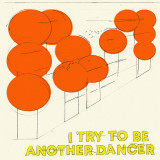
Brussels is a highway where rainbow-fuelled melancholia kids race its track, mountain and road bikes. Endless summers cherish the collective chosen chaos of the city; every corner displays wild micro-natures, buzzing insects, and rare weeds fourishing organically; tape hiss and AM radio compression are the soundtrack of everyday life. And hear! Originated in the Brussels DIY, indie rock and noise scene, a new kid on the block appears: Another Dancer.
They deal in utopian music - of the open, welcoming and whatsoeverish kind. It’s fresh, snotty, neurotic art-rock deeply rooted in 80s/90s DIY aesthetics. The songs on their debut album balance gently between forgotten pop hits and broken sound experiments. In their world, any shitload of weird, random, and badly synchronized sounds unveil broken-hearted pop mastery. In the Another Dancer universe, radios are stuck to WFMU and Soulseek is a self-conscious AI producing 80ies psychedelic FM-rock.
Brussels-based Another Dancer is outdated, wild at heart and elegantly shy. Their full album I Try to Be Another Dancer is out September 10th on Bruit Direct Disques and Aguirre.
"Flashes of the shambolic post-punk of Good Sad Happy Bad and the goofy, fraternal synth-pop of the blog-era gem Teenagers can be seen, often simultaneously, across the new single from the Brussels-based band Another Dancer. Vocals are layered on top of each other to a conversational near-cacophony, like you’ve been placed at the center of a Dry Cleaning show where everyone is, improbably, in a good mood. Sunny synth sweeps jostle next to bent, jangly guitar lines for a song that finds a special kind of vibrance in its mess. — Jordan Darville”
Bobo Integral Records announces the Deluxe Edition of "Dead Calm", the debut album by The Boys With The Perpetual Nervousness, available September 13, 2024. This edition enriches the original tracks (now remastered), which were met with immediate success and critical acclaim, with new material and acoustic demos. Also incorporates an expected insert with all lyrics. Upon its initial release in 2019 by Pretty Olivia Records, "Dead Calm" was celebrated for its melodic craftsmanship. Purepopradio praised it asa "masterpiece of melody and harmony", Powerpopaholic rated it 9/10 and included it in their "best of 2019 list for best power pop this year", and Section 26 recommended it as "Presque indispensable". After two other records, "Songs From Another Life" and "The Third Wave Of_", that are now cult classics in the genre, it's the time to come back to the record that started it all. The Deluxe Edition offers fans an exclusive track from the original sessions, "Wouldn't Be Anywhere Else", and six acoustic demos that provide insight into the band's creative process. Reflecting their musical influences, such as The Byrds, R.E.M., Big Star, The Go-Betweens, Teenage Fanclub and the classic power pop era, the band's sound is a contemporary homage to these inspirations. Andrew Taylor is the leader and soul of Dropkick, a wonderful Scottish power pop group with touches of altcountry. Gonzalo Marcos is part of the cult Spanish indie pop group El Palacio de Linares and founder of the Bobo Integral Records label. The two forged a friendship during Dropkick's first tour of Spain and Dropkick ended up releasing a couple of albums on the label. "The most perfect voice in jangle/power-pop at present (sorry Teenage Fanclub fans!)" - Janglepophub
For our second release, circuit|breaker quips back the stacked offering of CBRK001 with another dynamic double LP, exhibiting some of the best local and international talent that’s cropped up on our radar over recent years.
The label is as driven as ever to build a bridge between our community and the wider electronic
music domain, giving artists a platform to preach the sound that speaks to them, and this release is but another stepping stone towards greatness, for us and for them.
CBRK002 opens up with a rolling, gritty number that could only be Fergus Sweetland, as metallic voices beckon forth on ‘Untitled (ARP 1.02)’. Hasvat Informant, whose thunderous reputation precedes him, then storms the barn with the explosive ‘Abispa Ephippium’. The B-side shifts gears to Goa’s Dotdat and his frantically groovy track ‘Holo’, followed by a gorgeous minimal number by Berlin-based Pino Peña – Mia’s Pocket; one that’s sure to get summer dancefloors pumping.
The C-side of the record contains two heaving tracks, the C1 from the prominent force of Cloudy Ku with ‘A Room of One’s Own’, and the C2 from the dark visage that is disgrays with
‘Turmstraße’. The final side of the record has Amsterdam legend Juan Sanchez open the filter with a warm, jacking submission in ‘Indulge’, while the Berliner Marsch takes us home with a
devious timbre that will have bodies glued to the floor on ‘Into You’.
out of Stock
Last delivered 20 months ago available to reorder, subject to availability
Album packaging features 24pt reverse board jackets and illustrated inner board sleeves, with silver printed center labels. All artwork created by acclaimed designer, Håvard Gjelseth. Ol’ Burger Beats’s new opus, 74: Out of Time, is a multifaceted and stunning exploration of sounds and eras. In addition to every track being produced at 74 beats per minute, the album harks back to the year 1974; particularly the music, the records, the activism, the artwork, and the aesthetics. But it’s also incredibly current, as the Out of Time portion of the title very much refers to the present. It promotes a sense of urgency in the face of current affairs such as the COVID-19 pandemic, climate change, as well as contentious politics sweeping across the US and Europe. Beyond those deeply resonating elements to the record, 74: Out of Time is a truly gorgeous representation of hip-hop through the lens of the Norwegian composer, which is undoubtedly his most ambitious undertaking to date. Using 74bpm as his basis, he constructs sublime, jazzy instrumentals that feature some of hip-hop’s finest emcees and vocalists. And to say they all gel perfectly together is an understatement—and it would be underselling OBB’s meticulous approach here. Each song blends seamlessly from one to the next spread across the album’s 17 tracks, with the help from a standout supporting cast that includes Fly Anakin, Awon, Quelle Chris, Pink Siifu, Yungmorpheus, Lojii, billy woods, Tha God Fahim, Vic Spencer and Vuyo, among several others. “An avid record collector, the producer's first release was 2014's High Rhodes which led to comparisons to his heroes such as J Dilla, Madlib and Pete Rock.” Okayafrica // “With music teachers for parents, it was perhaps inevitable that Ole-Birger Neergård would follow their path and become a student of the game.” Passion of the Weiss
out of Stock
Last delivered 2 years ago available to reorder, subject to availability
returning, dream’ is the second album from Paradise Cinema – the‘Fourth World’ inspired project led by multi-instrumentalist Jack Wyllie (Portico Quartet/Szun Waves). While Wyllie’s other projects move between tightknit electronica, widescreen minimalism and improvised ambient sounds, ‘returning, dream’ contains nods to Jon Hassell, Terry Riley, Don Cherry and Midori Takada as well as more contemporary electronic, ambient and non-western music and even draws inspiration from physics and science fiction.
The first, eponymous, Paradise Cinema record, released in 2020, was recorded in Dakar (Wyllie lived in Senegal for a while in the late 2010s) and featured the dense rhythms of Mbalax music combining with Wyllie’s textural saxophone and synth playing, but here he takes a step into the unknown:
The music is no longer built primarily around the rumbling
propulsiveness of Mbalax, but takes its inspiration from the Many-Worlds Interpretation of quantum mechanics, which suggests that there are many different worlds that branch off from our own. Wyllie explains: “It is an imagining of what music could be like in a different time and space, ancient and futuristic from everywhere and nowhere at once. I was listening to a lot of physics podcasts when I created this record. I loved the many-worlds interpretation of quantum mechanics; about the multiple paths we are taking each time a quantum decision is taken. The different worlds then splitting off like branches on a tree. I could imagine different histories and worlds and multiple versions of myself, others and even other societies existing. In this album I’ve dug into these ideas andattempted to make music that would come from those different spaces, trying to poke my finger through to the other selves and stories. Effectively a form of composed science fiction, the music is an idea of what might be occurring or have occurred on a branch of the tree in a different world. But I like to think the tracks might actually have been composed somewhere or sometime.”
Created in London by Jack Wyllie with additional recordings from Dakar and Sydney, ‘returning, dream’ blends sounds that do not typically live together. It features Khadim Mbaye (sabar drums) and Tons Sambe (tama drums) who provide the dense Sengalese rhythms, plus Szun Waves colleague Laurence Pike, also on drums.
out of Stock
Last delivered 2 years ago available to reorder, subject to availability
Rain and experimental music have had an interesting connection for decades. Under the umbrella of American film music promotion, Hanns Eisler was already looking for "Vierzehn Arten, den Regen zu beschreiben” (fourteen ways to describe the rain) in 1941. A good 20 years later, The Cascades interpreted the periodicity of rain as a rhythm of mourning. For the Beatles ("If the rain falls, they run and hide their heads"), the precipitation inspired the band to use backward running tapes. However, it seems that there has always been a lot of rainfall in popular music. In the early seventies, David Toop and Paul Burwell even had a band project with the great name Rain In The Face...
That was a long time ago and today, rain, which in the age of climate catastrophe mainly occurs as heavy rain or an enervating endless loop, has lost a great deal of its inspiring quality. Perhaps as a reminder of the musical quality of rain, but knowing full well that it can only be enjoyed in theory, Razen call their new album "Rain Without Rain". In the music of the Brussels collective led by the two multi-instrumentalists Brecht Ameel and Kim Delcour, it certainly pours down on the roofs. In fact, the album opens with the sound of pouring rain before we hear the sequence of an oscillator played through a guitar amp on the first track „Lazy, Lazy Eye“.
The album is the captivating result of an one-night mobile studio field recording in an abandoned pedestrian tunnel in the centre of Düsseldorf, and it is finding beauty with brutal(ist) means: recorder, oscillator, guitar amp and reverberation, two musicians and four microphones, early electronics versus Early Music. “Suicide meet Hildegard von Bingen”, as Stefan Schneider, who recorded the session, admits. “Ghostly occurrences”, he adds.
Brecht Ameel states: “We do put a lot of weight and care on acoustics. On some of our recordings, the room acts as another band member, or as the main ‘mixing board’. Most of the albums we have recorded so far are not mixed in the traditional sense: they are simply „captured”, and we let the room decide what is left on the tapes. The studio recordings, then, give us the possibility of bringing other elements to the fore; precision of interplay, or tiny variations in breathing.”
The group Razen exists since 2010 and has since released numerous records on labels such as KRAAK, Marionette and Hands In The Dark. "Rain Without Rain" is their debut on the Düsseldorf label TAL. If there has been an increased international interest in experimental music from Belgium in recent years, this is not least due to musician collectives such as Razen. In terms of its electro-folkloristic intensity and instrumentation, Razen's music is quite unique worldwide. What does Razen actually mean? “We took the word from a poem by Paul Van Ostaijen, not specifically because of its meaning but because of the way it looked on paper”, Ameel explains. “But the meaning goes in the direction of ‘thundering / raging / speeding’ … although we prefer playing with a strong notion of restraint, building our world from (and with) silence.”
Olaf Karnik, Köln 2024
out of Stock
Last delivered 2 years ago available to reorder, subject to availability
Unequal cycles in search of synchronous experiences: On his new album »Pounding«, Frank Bretschneider tells of distance, convergence and congruence in a continuous, ever-changing flow of events. What is often regarded as an unquestionable dogma in club music (for which Bretschneider has provided significant impetus since the 1990s) – the groove – appears precarious, unstable, and in motion. Pulse and accent are volatile encounters and have to be found again and again for short, delightful moments. Music becomes a constant process of negotiation.
In search of new sound spaces, Bretschneider has recently worked a lot with modular synthesizers, both solo (for example on »abtasten_halten«, 2020) and in collaborations, including the project Beispiel together with Jan Jelinek. »Pounding« was created using similar means – conceived in 2020 for the Pochen Biennale in Chemnitz, subsequently developed further and recorded in March and April 2023 on a sample-based modular system. And in fact, Bretschneider is once again exemplarily scanning his own sound material, such as dub effects that listen to themselves disintegrate; but also the human voice, or more precisely: the stuttering of fragments of speech, far in the distance but omnipresent, like a mysterious narration. Aesthetically, the eleven pieces form part of a series of works with a focus on percussion. Bretschneider has already perfected this approach with albums like »Rhythm« (2007) and has been shifting the perspective ever since, for ever new results.
Shifting is the basic principle of »Pounding«. Bretschneider combines elements that are in different aggregate states, changing their relationship to each other and thus ensuring the complex overall movement. He lets one to two-bar loops run against each other and through small manipulations, develops a network of rhythms that creates a hypnotic state in the counterplay of repetition and mutation, between clearly recognizable meter and disorientation. There are comparable approaches in aleatoric music. Bretschneider combines them with sounds and patterns that are reminiscent of step sequencer logic and at the same time go far beyond it. The result is relational techno. Never obvious, always restless and exciting.
out of Stock
Last delivered 16 months ago available to reorder, subject to availability
Coming out on September 6th on Sharptone Records, Sundiver is Boston Manor’s fifth album and one that represents a glimmering dawn for the Blackpool five-piece. Grown from a seedbed of optimism and sobriety, the LP celebrates new beginnings, second chances and rebirth. With two members recently stepping into fatherhood, hope is baked into every note. “Datura came out of these really dark few years over the hangover of the pandemic,” Henry reflects. “I'd been struggling a lot with drinking and not taking care of myself and bad mental health and stuff. We wanted Sundiver to be the next morning of the following day.” He explains that it feels good this time round to write through the lens of positivity. “The themes began to emerge, of rebirth, spring, dawn, sunshine and then other elements just started to fit into that.” It was during the making of Sundiver that Henry found out he was going to be a dad. This album is a significant one for the band. Originally coming out of the emo and pop punk scene, they’ve explored sonics and genres throughout their career, taken risks and achieved more than they could ever had dreamed of. They’ve grown up as Boston Manor – their lives and the world changing around them. They’re now taking stock, at a crossroads of the band they were and the band they could be.
While writing the album, they revisited the bands that shaped them in the late 90s and early 00s. “I was listening to the music I loved when I was a teenager and I just thought, why don't we make music like our favourite bands?”, guitarist Mike Cuniff remembers with a smile. “So we brought our interests to the table that way. Y2K kind of vibe. There are elements of Deftones, there are elements of Portishead in there, some Garbage, The Cardigans.” He laughs and adds NSYNC to the list of inspirations. From this cocktail of classics comes a dynamic and ambitious record, rich with depth, groove and more hooks than Peter Pan’s nightmares. Lyrics that foxtrot from parallel universes to personal growth, vivid dreamscapes to raw grief. Individually they’re single strokes full of meaning and magic. Together they’re a landscape.
Container (out Feb 15th) is the first single and it’s them at their best – impassioned and infectious. “This song is about the stagnancy of life creeping up on you & how that can bring about change.,” Henry explains, citing Ocean Song by US band Daughters as an inspiration.
The concept of the butterfly effect is present on Sundiver – how small actions can lead to big changes. This is no clearer than on their second single, Sliding Doors (out April 5th). It has the golden sound of late 90s Lollapalooza rock – think Smashing Pumpkins - rebooted with crisp 2024 production and a potent heaviness. In the lyrics Henry wonders, what if?, pondering on what could be. The idea that there are infinite versions of you whose lives splinter off in different directions at every decision you make. That there’s another you out there somewhere right now reading this sentence, and another me writing it. “So much is down to chance and circumstance,” Henry says. “You might catch that train and your life totally changes. Or you might miss it and things stay the way they are.”
Heat Me Up (out May 30th) is defiant and victorious, the audio equivalent of quitting your shit job and driving into the hot summer sun with a head full of dreams. “The lyrics are about love and gratitude,” Henry shares. “Another theme on the record is just appreciating what you have. It’s about not taking for granted the things that you've been afforded.”
There was some natural magic in the creation of Sundiver. They worked with their usual producer, Larry Hibbitt, and engineer, Alex O’Donovan, but instead of recording in London again they ended up in the green pastures of Welwyn Garden City. “Because Larry lives out in the countryside now, it was a way different environment and way different experience recording this time,” Mike remembers. “That contributed a lot to the brighter sound of the record.” The daily barbecues they had during their recording sessions imbued the process with harmony – five old friends spending quality time together and making quality music.
However, the album is by no means one-note. Birthing this new world they’ve created wasn’t without it’s pain, and that can be heard in the heavier moments on Sundiver. What Is Taken Will Never Be Lost is the most-stripped back on the album, a slow rock number seasoned with the downtempo Portishead influence. The heartfelt lyrics are Henry’s way of processing the loss of his grandfather, who died in a hospice last year(?). “It was just fucking horrible. It was always cold when I went there and they were always trying to get rid of me. The song title, What Was Taken Can Ever Be Lost, is the idea of his memory fading at the time because of dementia.” Henry goes onto explain that shoeboxes of photographs, diaries and a legacy is what he’s left behind. “He lived a really rich life and it has really impacted me and my father. His legacy is etched into the fabric of history in a very small way.” This song continues the connection between his grandfather and the band, as his painted face is emblazoned on the cover of the very first Boston Manor EP, Driftwood. As well as emotionally heavy themes, there’s heaviness in the music of Sundiver too. The closing song, Oil In My Blood, descends into an intense shoegaze outro with Debbie Gough from Heriot screaming hellfire. It’s in moments like this that the band show us aggression and fury can be as much a part of positive change as quiet introspection. The last lyrics of the song, “It resets and starts again,” leaves us in contemplation as the final chord rings out.
Touring the US, Europe and Japan over the years makes for an impressive CV, but if you know anything about Boston Manor you’ll know that they’re all about their hometown. Their choice to work with Blackpool-based photographer Nick Barkworth is testament to that. They’ve been working with him since the pandemic. “He captures Blackpool in a light that really reflects the weirdness and quirkiness of the town,” Henry says.” He's got a really good way of presenting that.” For the Sundiver cover, Nick photographed a 30ft tall abstract glass sculpture made by the local artist John Ditchfield. A striking and bewitching monolith that’s familiar to them but unusual to most people. “It has such kind of a gravity and power to it,” Henry describes the sculpture which stands in a field just outside of the seaside town. “It reminds me of either an explosion or a star or a supernova. To me it represents new life, power and radiance.” Boston Manor have got a knack for that - connecting the otherworldly and the everyday, the stars and the streets.
They’re a band known for using their music to make bigger statements about society. This time round they’re harnessing the uplifting power of music, and the communion it creates, as an antidote to the daily doom and isolation. “It seems like absolute chaos out there at the moment,” Henry says. “You’ve got Gaza and Israel, you've got Russia, you've got the fact that 40% of the world is going to have an election this year and increasingly most governments are leaning very far to the Right. The internet is dividing everybody, people are getting poorer and more desperate. It's really, really scary.” They considered trying to tackle the weight of it all in their music. “We could’ve written Welcome to the Neighbourhood on steroids, where it's just absolute darkness and misery”. He’s referring to their 2018 concept album that deals with class, inequality and the bleaker side of Blackpool. “But I think it's really important to write something that people can be immersed in and find some sort of solace in. Somewhere they can escape to from the modern day pressures and everything that’s going on. We’re all in this together.”
Air, Nico, St Etienne, Kid Loco, Young Marble Giants, Sandy Denny, Vashti Bunyan, Andrew Weatherall, Robert Wyatt and Serge Gainsbourg. Limited edition first pressing of 500 copies on "Mock Turtle" Blue. International collaboration between artists in Glasgow, London, Paris & New York. Mastered by Shimmy-Disc founder Kramer. Accompanying visual art work by Film and art director Tim Saccenti. Inspired by the intensity of lockdown, the self-titled debut album by electro-pop project Gates of Light, is the result of a collaboration between five artists across four cities, three time zones and two continents. Hailing from Glasgow, singer-songwriter Louise Quinn and producer Bal Cooke teamed up with London-based DJ and producer Scott Fraser; Parisian musician, DJ and producer Kid Loco; and film director and photographer, New York’s Tim Saccenti - who has previously worked with Run The Jewels and Pharell- to create a sublime, electro-pop reflection on the grief, insularity and peculiar highs of lockdown. Immediately after hearing the album, revered post-punk musician and producer Kramer offered to release the vinyl edition on his iconic cult label Shimmy-Disc, which boasts an impressive back catalogue of artists including Daniel Johnson, Low and Galaxie 500. A project grounded on collaboration - born from a period of disconnect - Gates Of Light perfectly amplifies the longing, confusion, lucid dreams and appreciation of the outdoors that the pandemic ignited in so many over the last couple of years. Originally written and recorded by Louise and Bal from their bedroom studio in Glasgow whilst their one-year-old twins slept, the tracks were then sent to Scott and Kid Loco who remixed the tracks from home studios in London and Paris before Tim created the artwork and a video for the track ‘When The Leaf Falls’. Gates Of Light is the latest project from Louise and Bal who have released music in the past as A Band Called Quinn and DAWNINGS. Louise and Scott Fraser have also previously collaborated following a chance encounter at a nightclub in Glasgow. Their single ‘Together More’ was released on Andrew Weatherall’s renowned Birdscarer vinyl imprint in 2019 and featured a remix by the Guv’nor himself who described the track as “sublime magik”.
Black Truffle is thrilled to present a Song for two Mothers / Occam IX the first ever solo release from Laetitia Sonami. Born in France in 1957, Sonami studied with Éliane Radigue in Paris before moving to California in 1978 to study electronic music at Mills College, going on to make important innovations in the field of live electronics interfaces and multi-media performance. Sonami is perhaps most closely associated with one of her inventions, the Lady’s Glove, an arm-length tailored glove fitted with movement sensors allowing the performer fluidly to control digital sound parameters and processing, as well as motors, lights and video playback. Having performed with the Lady’s Glove for 25 years, Sonami retired it in 2016, turning her attention to the interface/instrument heard and pictured here, the Spring Sprye.
In Sonami’s own description, “The Spring Spyre is composed of three thin springs that are attached to reverb tank pickups, mounted on a metal ring. The audio generated when the springs are touched, rubbed or struck is analyzed in Max/MSP. The extracted features are then used to train machine learning models in Wekinator and Rapidmax and control the audio synthesis in real time. We never actually hear the springs.” After decades of aversion to documenting her work on recordings, a Song for two Mothers / Occam IX treats listeners to two side-long performances with the Spring Spyre: the very first piece developed for the instrument and the most recent, the two contrasting remarkably in sound palette, energy and form. A Song for two Mothers (2023) spins an intricate web of rippling synthetic burbles, rapid sweeps and fizzing textures. Performed in real time with the sensitive and partly uncontrollable Spring Sprye ("a bit tyrannical," Sonami calls it), the music is delicate yet chaotic. Abrupt gestures hover against a backdrop of silence, "devoid of spatial or temporal direction". After several minutes, the sound-world becomes metallic and percussive, tapping and ticking in pointillistic flurries before a wavering harmonic cloud emerges, sprinkled with resonant drips and pops.
Occam IX is a radically different proposition. At the outset of Sonami’s exploration of the Spring Sprye, she asked her former teacher Éliane Radigue to compose a piece for it—and her: like all of Radigue’s work since she ceased working with analogue electronics at the beginning of the 21st century, Occam IX is written not only for an instrument but also for a particular performer. These scores are developed verbally, through meetings and conversations between performer and composer; each is grounded in an image (usually kept from listeners, to avoid influencing their experience); all magnify the subtlest acoustic phenomena and require great commitment and patience from the performer. Sonami’s is one of the few Occam pieces to make use of electronics, bringing it closer to Radigue’s famous longform pieces for ARP 2500. Beginning from a rumbling low tone, the listener is gradually immersed in slowly lapping waves of synthetic tones, eventually thinning out into delicate bell-like pings against a background of white noise, reminiscent of one of the most beautiful sections of Kyema from the Trilogie de la Morte.
Accompanied by notes from Sonami, her longtime collaborator Paul DeMarinis, and Radigue, and illustrated with scores, photographs and images of the Spring Spyre, a Song for two Mothers / Occam IX is an essential document celebrating an under-recognised pioneer of electronic music and performance.
out of Stock
Last delivered 2 years ago available to reorder, subject to availability
On their seventh long player The Breaks - their second for Joyful Noise Recordings - SUUNS are lost in limbo. For some artists, being caught in flux may result in songs that are either naive, out of touch or both, simply as a consequence of being cut off from human civilization. But for SUUNS, a band who have grown more than comfortable in the oblique and the intermediate, it actually had the opposite effect. The Breaks marks the Montreal experimental rock outfit's most emotionally resonant and tonally rich collection of music to date. The trio of Ben Shemie, Joseph Yarmush and Liam O' Neill leans more zealously than ever into their pop instincts. Yet remarkably enough, with that same dauntless abandon, SUUNS have mined a more extreme sonic palette this time around, one that stretches far beyond their core fundamentals as a band. The Breaks finds Shemie, O'Neill and Yarmush gleefully experimenting with loops, synths, samples and MIDI-instruments like a post-millennial Tangerine Dream messing with downtempo triphop beats. O' Neill took point in the producer's chair for The Breaks, arranging, structuring and editing many of Shemie and Yarmush's ideas from sporadic rehearsal sessions into Pro Tools, reimagining the songs over and over during a two-year time frame. Forged between countless plane rides, road trips, van tours and text threads, The Breaks became a product of endurance and a lot of trial-and-error. It's a record forged in tight fissions of freedom, where spells of whispered intimacy - like on the stunning ballad "Doreen" - are allowed to branch out into the vast glacial dreamscapes of the album's majestic title track. It captures SUUNS at their most panoramic, curious and exuberant: a constant relay of being adrift and enlightened anew, geared up to eleven. And guess what: the wheels keep on spinning.