"Kindred Spirits" versammelt elf Coverversionen, allesamt im Alleingang eingespielt, eingesungen und aufgenommen von Ronny Moorings. Und was für eine Auswahl uns hier erwartet: "Blue Monday" von NEW ORDER, "Question Of Time" von DEPECHE MODE, "Decades" von JOY DIVISION, "A Forest" von THE CURE oder "Alice" von THE SISTERS OF MERCY mögen Stücke sein, die man in der ewigen Playlist eines Ronny Moorings vielleicht schon immer vermutet hätte; die Art und Weise, wie er diese Songs zu neuem CLAN OF XYMOX-Leben erweckt, erstaunt und begeistert dennoch mehr als man das jemals erwartet hätte. Warm, organisch, irgendwo zwischen waviger Elektronik und nebelumwalltem Goth Rock geben sich diese Respektbekundungen, zeigen eine gänzlich neue Seite von CLAN OF XYMOX und lassen ganz nebenbei unsterbliche Klassiker wieder aufleben.
Dass "Kindred Spirits" kein herkömmliches Coveralbum ist, zeigt neben der Songauswahl auch der beinahe sakrale Charakter, mit dem Ronny Moorings an diesem Album gearbeitet hat. Es sind allesamt Songs, die ihm viel bedeuten, die ihn geprägt haben und ihm zweifellos über die eine oder andere besonders dunkle Stunde hinweggeholfen haben - genau, wie es die Musik von CLAN OF XYMOX bereits für unzählige Menschen getan hat. "Kindred Spirits" ist ein Album, so persönlich wie ein gemeinsamer Abend mit Ronny Moorings und seiner Plattensammlung. Eine Lehrstunde in Sachen seelenvoller Musik - gesehen durch die Augen eines hoffnungslosen Musikliebhabers.
Mehrfarbiges Vinyl, Blau, Schwarz und Weiß, Farben viskos ineinanderlaufend und gesprenkelt, Individuell von Hand gefertigt, Jede Schallplatte ist ein Unikat, Deutsche Pressung, 180 Gramm, Überarbeitetes Artwork, Stabile Kastentasche, Mehrfarbig bedruckte Innenhüllen, Mehrfarbig bedruckte Vinyletiketten, Limitiert auf 500 Exemplare weltweit
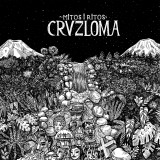
Mitos & Ritos, the debut EP by the Ecuadorian group Cruzloma, consolidates in its six songs a spirit of promoting traditional rhythms in contemporary styles, a process of reinvention and self-discovery in homage to the indigenous peoples of the Ecuadorian jungle and the riches of ceremonial music all in a mix featuring electronica, global bass and dembow. The hostile times humanity is going through have awoken a need to get back to our roots, reclaim ancestral knowledge, and question where the excessive exploitation of natural resources has led us. We have heeded that urgent call to care for everything that seems unlimited but which is increasingly scarce. And so we have looked to the past to understand our relationship with what surrounds us and establish a dialogue between the past, the present and the uncertain idea of the future. Applied to music, this has aroused the interest of artists and producers who use the rich folklore and traditions of Latin America to replicate that dialogue between what was and what will be. With this in mind, Mitos & Ritos ("Myths and Rites"), the debut EP by the Ecuadorian group Cruzloma, consolidates in its six songs a spirit of promoting traditional rhythms in contemporary styles, a process of reinvention and self-discovery in homage to the indigenous peoples of the Ecuadorian jungle and the riches of ceremonial music, based around the bambuco style from Esmeraldas on the northern coast, and the bomba del chota and the san juanito from Imbabura province. On this EP there are also sacred prayers of the Shuar nation, called Ujaj and Anets, including ceremonies like the taking of ayahuasca and of the tzan tza, all in a mix featuring electronica, global bass and dembow. It is a journey into mysticism, the jungle and the dancefloor, reflecting a search for musical identity that is at once contemporary and futurist.
Drei Jahre nach ihrem morbiden Manifest "Limbo", einer bitteren Abrechnung mit der Pandemie und ihren bestialischen Folgen, kehrt Wave-Alchemist Ronny Moorings zurück. Im Gepäck hat er einen schwarzen Blumenstrauß aus Trauergesängen für eine kranke neue Welt, Elegien für einen neuen Status quo, mit dem wir alle leben müssen.
Auch 40 Jahre nach ihrer Gründung sind CLAN OF XYMOX ein Leuchtfeuer tragischer Eleganz und düsterer Tristesse. Sie sind die unbestrittene, unangefochtene Speerspitze einer Szene, die zuletzt überraschend die Aufmerksamkeit einer viel jüngeren Generation auf sich gezogen hat, die ihre Angst und ihren Schmerz durch Musik wie diese ausdrücken will. Gerne doch! "Exodus" zeugt von diesem Ausnahmestatus und führt das Feld der prosaischen Trauer mit zehn neuen Hymnen von erlesener Nachtschwere an. Das Besteck, welches Ronny Moorings benutzt, mag noch dasselbe sein; das Ergebnis ist ein weiteres Meisterwerk voller sehnsüchtiger Melodien, weltabgewandten Vocals aus den Tiefen der Erde, hallenden Gitarren und hypnotischen Drums, die die Phantome in uns allen zum Mitternachtsschmaus einladen.
Wir tanzen direkt in den Abgrund, will uns dieses Album sagen. Aber wenigstens tanzen wir noch. Denn wenn es nichts mehr gibt, an das man sich wenden kann, wenn alle Hoffnung verloren scheint und die Welt uns unter Fluten biblischen Ausmaßes begräbt, bleibt manchmal nur noch, sich der Musik hinzugeben. Diesem fesselnden Exodus in Richtung Katharsis. Vielleicht ist das der Grund, warum "Exodus" einige der düstersten und niedergeschlagensten Stücke enthält, die Ronny Moorings seit vielen Jahren geschrieben hat. Vielleicht ist das der Grund, warum diese Platte mit den besten Veröffentlichungen von THE CURE mithalten kann. Weil die Zeiten, in denen wir leben, ihn dazu gezwungen haben. Weil es einfach keinen anderen Weg gibt, als all seinen Kummer, seine Wut und seinen Weltschmerz in seine klagende Musik einfließen zu lassen. Nicht, weil die Welt danach eine bessere sein wird. Sondern weil es für ihn die einzige Möglichkeit ist, mit dem brutalen Wahnsinn, den wir Alltag nennen, fertig zu werden.
"Exodus" ist kein Album für Träumer. Es ist aber auch kein Albtraum - trotz der Schatten, die unter der Oberfläche brüten. Es ist ein Tor für all jene, die die Dunkelheit unserer Tage anerkennen und sich dennoch weigern, aufzugeben. Lasst uns also diese nächtlichen Wiegenlieder gemeinsam singen und tanzen, solange wir noch einen Boden dafür haben. Denn das ist alles, was wir im Moment tun können.
Drei Jahre nach ihrem morbiden Manifest "Limbo", einer bitteren Abrechnung mit der Pandemie und ihren bestialischen Folgen, kehrt Wave-Alchemist Ronny Moorings zurück. Im Gepäck hat er einen schwarzen Blumenstrauß aus Trauergesängen für eine kranke neue Welt, Elegien für einen neuen Status quo, mit dem wir alle leben müssen.
Auch 40 Jahre nach ihrer Gründung sind CLAN OF XYMOX ein Leuchtfeuer tragischer Eleganz und düsterer Tristesse. Sie sind die unbestrittene, unangefochtene Speerspitze einer Szene, die zuletzt überraschend die Aufmerksamkeit einer viel jüngeren Generation auf sich gezogen hat, die ihre Angst und ihren Schmerz durch Musik wie diese ausdrücken will. Gerne doch! "Exodus" zeugt von diesem Ausnahmestatus und führt das Feld der prosaischen Trauer mit zehn neuen Hymnen von erlesener Nachtschwere an. Das Besteck, welches Ronny Moorings benutzt, mag noch dasselbe sein; das Ergebnis ist ein weiteres Meisterwerk voller sehnsüchtiger Melodien, weltabgewandten Vocals aus den Tiefen der Erde, hallenden Gitarren und hypnotischen Drums, die die Phantome in uns allen zum Mitternachtsschmaus einladen.
Wir tanzen direkt in den Abgrund, will uns dieses Album sagen. Aber wenigstens tanzen wir noch. Denn wenn es nichts mehr gibt, an das man sich wenden kann, wenn alle Hoffnung verloren scheint und die Welt uns unter Fluten biblischen Ausmaßes begräbt, bleibt manchmal nur noch, sich der Musik hinzugeben. Diesem fesselnden Exodus in Richtung Katharsis. Vielleicht ist das der Grund, warum "Exodus" einige der düstersten und niedergeschlagensten Stücke enthält, die Ronny Moorings seit vielen Jahren geschrieben hat. Vielleicht ist das der Grund, warum diese Platte mit den besten Veröffentlichungen von THE CURE mithalten kann. Weil die Zeiten, in denen wir leben, ihn dazu gezwungen haben. Weil es einfach keinen anderen Weg gibt, als all seinen Kummer, seine Wut und seinen Weltschmerz in seine klagende Musik einfließen zu lassen. Nicht, weil die Welt danach eine bessere sein wird. Sondern weil es für ihn die einzige Möglichkeit ist, mit dem brutalen Wahnsinn, den wir Alltag nennen, fertig zu werden.
"Exodus" ist kein Album für Träumer. Es ist aber auch kein Albtraum - trotz der Schatten, die unter der Oberfläche brüten. Es ist ein Tor für all jene, die die Dunkelheit unserer Tage anerkennen und sich dennoch weigern, aufzugeben. Lasst uns also diese nächtlichen Wiegenlieder gemeinsam singen und tanzen, solange wir noch einen Boden dafür haben. Denn das ist alles, was wir im Moment tun können.
Black Truffle is pleased to announce Resonant Trees, the first vinyl release from French composer-performer Léo Dupleix. An active member of the international community of younger musicians working with just intonation, Dupleix has composed works for solo instrumentalists and ensembles in Europe and Japan, as well as performing extensively on harpsichord, piano and electronics. His music is distinguished by a formal clarity and elegance of surface, gently shaping pure intervals into delicate melodic patterns and shimmering harmonic planes.
Resonant Trees presents two side-long pieces for harpsichord and ensemble, both setting slowly repeating patterns played on harpsichord and guitar within an environment of sustained tones. Dupleix performs on a French double manual harpsichord (tuned to a just intonation scheme of his own devising) and Prophet synthesizer, joined by Juliette Adam (bass clarinet), Johanna Bartz (traverso flute), Cyprien Busolini (viola), Fredrik Rasten (6- and 12-string guitars), and Mara Winter (traverso flute). The harpsichord begins Resonant Tree I alone, slowly sounding out a series of arpeggiated chords that emphasise the unique (and for unaccustomed listeners, sometimes unsettling) harmonic and timbral qualities of justly tuned intervals. Long tones from synthesiser, bass clarinet, viola and Baroque traverso flutes slowly creep into the spaces between the arpeggiated chords, joined after several minutes by delicate patterns of harmonics played by Rasten on acoustic guitars.
On Resonant Tree II, a similar structure and ensemble (without the flutes) are used with quite different results. We again hear only the harpsichord at first, but this time playing a series of flowing melodic lines, each of which is repeated several times. Joined again by long tones from the ensemble, here the viola is particularly prominent and its interplay with the harpsichord creates fascinating acoustic effects. In both pieces, repetition gives the music a static, stable quality while, at the same time, the exact shape of the repeating patterns remains difficult to grasp. As Dupleix writes, these pieces dream of music as ‘space and a sound that one could grasp in one’s hand.’ As the near-static quality of the repetitions and long tones with little incident make these two stretches of musical time feel like spaces for the listener to inhabit, the small variations on a narrow range of related material act like a three-dimensional object whose each facet is examined in turn. At once austere and seductive, Resonant Trees takes its place beside the work of contemporaries like Catherine Lamb, while also calling up the languorous melodic world of Mamoru Fujieda, the dignified melancholy of Satoshi Ashikawa’s classic Still Way and the espaliered chamber atmospherics of the Obscure catalogue.
In 2002, the American heavy metal band Mudvayne released their sophomore album The End Of All Things To Come, which expanded their sound with a more versatile range of sounds, dynamic, moods and vocalization. The band wrote the album's songs in less than a month, drawing inspiration from their self-imposed isolation during the songwriting process, and crafted a more mature sound which drew from jazz and progressive rock influences, as well as elements of death metal and thrash metal. For the production, Mudvayne worked with three-time Grammy Award winner David Bottrill. The album spawned two singles: “Not Falling” and “World So Cold”, which were both a commercial success and charted well. The End Of All Things To Come is available as a limited edition of 1500 individually numbered copies on purple marbled vinyl. The 2LP is housed in a gatefold sleeve and includes a 4-page booklet.
Good Looks write kindhearted and cathartic rock songs about the persistence required to make it through hard times. In April 2022, the Austin, Texas quartet released their critically acclaimed debut `Bummer Year'. Immediately after their triumphant hometown record release show, lead guitarist Jake Ames was hit by a car crossing the street, fracturing his skull and tailbone. Thankfully, Ames made a full recovery. The traumatic accident strengthened the bond that built their electric new album `Lived Here For A While'. Out May 3 via Keeled Scales, it's fearlessly direct music that captures the fullthroated intensity of their galvanizing live show. Reinvigorated, Good Looks tracked `Lived Here for a While' at Texas' Dandy Sounds with producer/engineer Dan Duszynski (of Loma and Cross Record) the following summer. Though Ames had to relearn some of his parts, his palpably energetic performances elevated the entire record. On the LP, the band trades the Americana sound that colored in the lines of `Bummer Year' for clanging post-punk guitars and expansive indie rock. Lyrically, the songs on this album are healing meditations on family dysfunction, new relationships, and how a home can become unrecognizable. Lyricist Tyler Jordan's songs explore how relationships can crumble irrevocably but also how those partnerships can be centering, hopeful, and exciting. In another horrific accident in July 2023, their tour van was rearended by a speeding car, causing their van, instruments, merch, and records, to go up in flames. Thankfully, none of the band members suffered serious injuries. This resilience is essential to Good Looks and why the songs on `Lived Here For A While' resonate so profoundly.
When Man Man released its last album, "Dream Hunting in the Valley of the In Between," frontman Honus Honus (née Ryan Kattner) was in a state of unrest, oscillating between hope and cynicism. Perhaps fittingly, the album dropped during the pandemic, a time at which we could all relate. But, much like that bizarre turn of events, the ennui now seems so distant to Man Man. A revived sense of purpose washes through Man Man's new album, Carrot on Strings, radiating a mix of calm and confidence. Kattner always embodied a wild-man pied-piper vibe: his melodic, unhinged art-rock was at once intriguing and angsty. He was so alluringly creative that you went along with it, even if you were never sure where Man Man would take you. Carrot on Strings is no less inventive, but its ethos is radical in context of the band's two-decade career. "When I was younger, I would feed off of chaos. I would, you know, be upset and get drunk and smash chairs," Kattner explains. "Now those chairs are in my head: It's less of an outward projection, more of an interior monologue." The name "Carrot on Strings" came to Kattner while experimenting with the sound of someone munching on the vegetable, which you can hear in the cacophonous, similarly named song. It alludes to how success always seemed to dangle uncertainly before him, often just out of reach. But listen intently and you'll hear a more content Kattner finding an uneasy peace: "Life, as far as I've known it, has always been side hustles. Would it be great if I could go into a studio and record for a year without figuring out how to finance it? Yeah, it would be," he says. "But ultimately, I need to keep making music because art is an extension of my psyche. It's how I have learned to translate the palpitations of my heart. Simply put, I'd go insane without it." Growing up as a multiracial Hapa kid (half Filipino, half white) with a father in the U.S. Air Force, Kattner lived an itinerant childhood that included a few pivotal years in Germany, where he honed in on an appreciation for out there German cinema and art. His film obsessions and screenwriting background were crucial to Carrot on Strings. The album nods to the films of Werner Herzog and Rainer Werner Fassbinder as much as Italo-disco, Randy Newman, goth rock, and avant pop. (Kattner continues to work in the film industry with an acting role in the upcoming horror-comedy movie Destroy All Neighbors, for which he also served as composer; music supervising season 1 & 2 of the Interview With The Vampire AMC TV series; and shopping around, with director Matthew Goodhue, a script he wrote that he describes as a Wim Wenders road movie on acid.) In a bid to not overthink anything - his last album took seven years to make - he recorded the bulk of Carrot On Strings in five days in Mant Sounds studio in Glassell Park, Los Angeles with "very chill" producer Matt Schuessler, who had worked on Man Man's cover of Neu!'s "Super" for the seminal Krautrock band's box set. The resulting album represents a newfound sense of self for Kattner, who finds himself inspired and at peace both personally and artistically in ways that eluded him for most of his first 15 years playing music. When, on Carrot On Strings, you hear Kattner croon humbly, or sing of the tension between his outsize stage persona and the thoughtful, soulful guy he actually is, you're hearing Kattner liberate himself. "I first got into music to escape from myself," he says. "And now, it sounds so corny, but I have zero doubt that music ended up saving my life."
"No Friends" ist so etwas wie eine Album gewordene Brieffreundschaft zwischen dem in Hamburg arbeitenden Home-Produzenten Mensing, mit sehr gutem Standing in der Londoner Underground-Szene, und dem roughen Talent des in Miami lebenden ex-New Yorker Rappers siii3eyes. Dabei geht die Rolle des Keno Mensing über die eines Produzenten hinaus. Er fischt aus siii3eyes' Raps und Lyrics die Elemente heraus, die ein Chorus oder Vers sein können und bildet daraus Strukturen, komplexe Puzzles und schliesslich den finalen Track. Alles eingebettet in eine perfekte Balance aus soulig-jazzigem Storytelling-Rap und einer lyrischen Eindringlichkeit und Authentizität, die man sonst eher im Straßenrap verortet. Zwischen den Skits, in denen siii3eyes mit seinem ehemaligen Freund und Mitbewohner spricht (mit dem er sich später überworfen hat, was auch den Titel erklärt), liefern Mensing und er roughe, unmittelbare Einblicke in das Gefühlsleben eines Mannes, der geradezu um sein Leben und seine Selbstverwirklichung rappt.
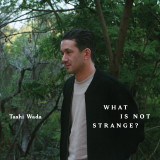
What Is Not Strange? is the first full-length album by Los Angeles-based composer Tashi Wada in over five years, comprising his most far-reaching and impassioned music to date. Written and recorded over a period that encompassed the death of his father and the birth of his daughter, the album sees Wada reflecting inward to explore broad narratives - being alive, mortality, finding one's place in the world - through new modes of ecstatic, song-based expression. While the denser forms, stark contrasts, and overt surreality may carry a different weight than Wada's earlier work, which elicited perceptual effects with minimal means, the heart of What Is Not Strange? is still in experimentation and unforeseen outcomes.
Legendary band SOFT, the driving force behind Kyoto's party scene and underground music culture, releases their new album "Passing Tone" from their home base "softribe" to commemorate their 30th anniversary!
This release marks the first time since the 2018 album "Tokinami" that Soft has released new music. It also comes on the heels of the 2021 vinyl reissue of their 2010 album "Tam (Message To The Sun)" on the labels 17853 Records (headed by CHEE CHIMIZU), TUFF VINYL, and Crosspoint (headed by J.A.K.A.M.).
Guest appearance by former member PRITTI. The album was created by the three founding members: guitarist SIMIZ, drummer PON2, double bassist UCON plus engineer and electronic musician KND, a mainstay of the Kyoto music scene.
Evoking the energy of a live performance, the music pulses with psychedelic soundscapes and dub influences. The 30th anniversary live shows in Osaka and Kyoto were met with resounding success, and the Asian tour followed suit.
Experience the enchanting sounds of music born from Japan.
text by Saito (Newtone Records)
out of Stock
Last delivered 2 years ago available to reorder, subject to availability
“Home” is not always a literal place. Sometimes, “home” represents inner peace and simply learning to hold space for yourself. This is where Vacations lead singer and guitarist Campbell Burns has arrived as he and bandmates Jake Johnson, Nate Delizzotti, and Joseph Van Lier release their third LP, No Place Like Home. “I had this loose concept of No Place Like Home being an Americana-influenced album,” Campbell says of the album’s sonic inspirations. “I wanted to incorporate more pianos, acoustic guitars, Nashville tuning, and country-inspired lap steel, but then also bringing in drum machines and synths and finding a mix between the two.” Produced by Campbell and John Velasquez (Zella Day, Broods), No Place Like Home comprises 10 shimmering tracks brimming with indie-pop hooks and just a touch of bittersweet sensitivity. The new project follows an intense period of transformation for Campbell, who was forced to cancel all touring commitments due to COVID restrictions and subsequently came down with a severe bout of writer’s block. After seeking therapy, he was eventually diagnosed with Pure OCD, a subtype of Obsessive Compulsive Disorder. “Pure OCD is more mental compulsions rather than physical compulsions,” Campbell explains. “If I have an intrusive thought, I'm giving that thought belief and power over myself.” As the world began to open up, so did Campbell’s vibrant creative spirit. Vacations hit the road for the first time in two years, selling out The Fonda in LA and playing Austin City Limits Festival in Austin, experiences that partially inform No Place Like Home. First single and album opener “Next Exit” sparkles with danceable synth riffs and Campbell’s aching falsetto, all while setting the overall tone for what’s to come. “‘Next Exit’ is about living in this monotonous cycle,” Campbell reveals. “You realize that you need an out. You need to — metaphorically and literally — take the next exit out in order to break out of that cycle.” The singer mines his Pure OCD diagnosis on the pondering “Over You,” which thematically picks up where “Next Exit” drops off. Campbell remarks on how “it almost has this ownership over my thoughts and actions to the point where I'm stuck in these loops and rituals that are a direct result of having OCD.” On the Americana-inspired “Midwest,” which seamlessly blends pop electronics, drum machine, and ‘80s synth with poignant lap steel tones, the song remarks on the comedic nature of repeatedly entering into romantic relationships prior to going on tour — only to have them fizzle out upon returning. As the band releases No Place Like Home, Campbell is ironically just fine with not putting down physical roots just yet having recently made the move to LA for exploration, expanding “I needed to get overseas if I wanted to keep progressing — from a career standpoint, but also on a personal level.” The greater priority lies within building that sense of comfort within himself. In the meantime, millions of fans around the world are making a permanent home with Vacations.
The Kaiju Project is a Japanese inspired jazz group formed by the half Japanese-Austrian pianist Aseo Friesacher. Their initial idea was to bring old folk songs into a new modern context, but in addition to their compositions, this group has found their very own musical direction: a perfect blend of traditional Japanese music and meditative-creative jazz.
Aseo’s composition style is clearly rooted in Jazz, but with the use of traditional Japanese melodic elements and sounds, the music becomes very storytelling and gets a beautiful and mystic character. Also some famous soundtracks from the Ghibli movies and songs by the Japanese singer Hibari Misora, that Aseo has arranged for the band, are included in their repertoire.
The bandleader has had the vision for a long time to create this unique fusion of traditional Japanese music and Jazz in order to bring together the eastern and the western world. In fact, the meaning lies his name A-se-o, “亜為欧“: living for Asia and Europe.
The band went through a couple of changes in their formation but finally resulted in a dream team, featuring two Japanese musicians who bring the authentic sound to the band: Waka Otsu as the vocalist and Fuefuki Kana on Japanese flutes and silver flute. Furthermore there is the highly accomplished and respected ECM artist, drummer and percussionist Joost Lijbaart and the virtuosic and talented bassist Johannes Fend, who make the group complete. So far the Kaiju Project has toured in the Netherlands where most of the band members are based, they have performed in Germany and recorded their first album.
'Mercury Rising' is the third studio album to be released by Rae & Christian. The duo weave together exceptional musicianship paired with a British song writing sensibility and the finest elements of studio production. 'Mercury Rising' was created at producer/musician Steve Christian's studio in Yorkshire with additional recording at songwriter/vocalist/DJ Mark Rae's London base. In London a song writing bond was formed with Ed Harcourt and Gita Langley who make excellent contributions with vocals, songs, strings and keys. Sam Genders of Diagrams threads a story of redemption lost on the Ubahn on '1975', Kate Rogers is on imperious form and rising star Jake Emlyn unravels a whole new level of microphone skills on 'Favourite Game'.
The international guests include the one-and-only Jazzy Jeff and Australia's Agent 86 dealing out world class scratch treatments on 'Check The Technique' (Tony D's vocals taken from a session recorded at the birth of Grand Central Records), Brooklyn rapper Masta Ace and Mark Foster of Foster The People, a collaboration born from Mark's L.A. excursion.
'Mercury Rising' is the first new material in many years from R&C. Their 1998 Mercury Music Prize nominated debut 'Northern Sulphuric Soul' ("Vitally fresh and timelessly classic...deserving a place alongside Massive Attack's Blue Lines' Uncut) and 2002's 'Sleepwalking' ("Another triumph, brimming with soulful, languid grooves, deft samples and well-chosen guest singers' Q Magazine) were both released on their Grand Central Records label (Aim, Riton, Boca 45, Only Child), a defining imprint of the late 90s soul/funk/hip-hop/beats scene. Guest vocalists over the two albums included Bobby Womack, Texas, The Congos, The Pharcyde, The Jungle Brothes and Jeru The Damaja.
out of Stock
Last delivered 2 years ago available to reorder, subject to availability
Veteran electrohead and former artist on the Rephlex Records roseter DMX Krew's Ed DMX takes the well-known story by Jorge Luis Borges of The Library of Babel, said to contain all the different languages of the earth. Some deep philosophical thought has gone into the album's concept, but we'll leave that to Ed to explain. Instead, we'll tell you that from beginning to end there's plenty of the kind of trademark 80s synth playfulness in evidence, with a generally more mellow and soundtrack-related rather than frenetic and dancefloor-filling vibe in evidence, even on faster tracks like 'The Combed Thunderclap'. Still, Ed knows what he's doing when it comes to this kind of leftfield electro gear, and it's a rewarding, never boring listen.
out of Stock
Last delivered 24 days ago available to reorder, subject to availability
The Talented Italian Producer, Known for His Enigmatic Project Hill and Recognized for His Previous Ep Collaboration With the Detroit Legend Javonntte on Skylax Records, Is Making a Much-Anticipated Return Under His Real Name, Alessio Collina. an Ardent Aficionado of Authentic House Music, Collina, Hailing From Italy, Gifts Us a Remarkable Lesson in His Latest Offering, the "Pieces of Life Ep." Collina's Dedication to the Origins of House Music Is Evident Throughout This Ep, and It's a Refreshing Reminder of the Genre's Timeless Roots. Italy, a Country With a Deep Appreciation for House Music, Once Again Serves as the Source of Inspiration for This Artist. the "Pieces of Life Ep" Pays a Heartfelt Tribute to the High-Energy and Groove-Laden House Tunes of the 90s, Echoing the Sounds of Iconic Figures Like Dj Duke, Marshall Jefferson, and Labels Like Strictly Rhythm. With Each Track, Collina Effortlessly Transports Us Back to That Golden Era, Capturing the Very Essence and Spirit of That Unforgettable Time. the Ep Kicks Off With the Electrifying "All of That," an Absolute Masterstroke That Sets the Tone for What Follows. Its Pulsating Beats and Infectious Melodies Are Reminiscent of the Fervent Dance Floors of Yesteryears, Evoking a Sense of Nostalgia While Remaining Incredibly Fresh and Contemporary. the Ep's Three Other Titles, "Humble Groove," "Lost World," and "Mid Season," Continue to Captivate and Immerse Listeners in Collina's World of Evocative, Groove-Filled House Music. Each Track Showcases His Meticulous Attention to Detail and His Ability to Create an Authentic Atmosphere That's True to the Genre's Roots. Collina's "Pieces of Life Ep" Is More Than Just a Musical Collection; It's a Genuine Homage to the Spirited House Music of the 90s. His Dedication to Preserving the Essence of the Genre While Infusing It With His Unique Creativity Shines Through in Every Beat and melody.
This Ep Not Only Reinforces Italy's Profound Connection to the House Music Legacy but Also Solidifies Alessio Collina's Place Among Contemporary Artists Who Honor the Past While Paving the Way for the Future. as Skylax Records Prepares to Release This Exceptional 12-Inch, It's Clear That "Pieces of Life" Is a Treasure Trove for Any House Music Enthusiast, Inviting Them to Rediscover the Magic of the 90s With a Fresh Perspective....
out of Stock
Last delivered 19 months ago available to reorder, subject to availability
Starting out in 2001 to tie up some loose ends from our regulars, SPEICHER has since become a guarantee for vanguard dance sounds from all over the planet, allowing KOMPAKT to invite and support electronic artists that comfortably inhabit both the delicate and the more deliberate ends of the electronic music spectrum. For SPEICHER 81, Amsterdam-based DJ and producer PATRICE BÄUMEL presents two adventurous minimal epics with decidedly mind-bending propensities.
As a long-running resident DJ at Amsterdam's renowned Trouw club, PATRICE BÄUMEL certainly knows how to draw in a crowd, having proven his skillful approach to hypnotic techno time and time again, as an impeccable host as well as an internationally acclaimed guest DJ in the world's leading venues. Just as his DJ sets, Patrice likes to infuse his own music with raw energy and a sense for sonic adventure - MILE HIGH GANG serves as a perfect example for his credo, underpinning its vibrant synth sequences with a meticulously crafted - and intensely propelling - beat.
The true mind bender, however, arrives with the flipside's aptly named VERTIGO, a deceptively simple, yet unstoppable son of a pitch shifter, cutting its way through spiralling serpentines in dizzying heights. Never one to let himself get bogged down by genre markers or scene compliancy, PATRICE BÄUMEL commutes between electronic factions with ease: he caters to a purist crowd as well as those in dire need of sonic surprises, giving both daydreamers and nighthawks something to rock out about.
out of Stock
Last delivered 20 days ago available to reorder, subject to availability
'When Can' is a journey through the realms of musical serendipity, an ode to the unexpected twists of collaborative intuition. Conceived in the spring of 2012, this masterpiece is the culmination of a decade-long friendship between Reimer Eising aka Kettel, and Lennard van der Last aka Secede, two of the most talented electronic music producers from The Netherlands.
'When Can' is not just a collection of songs; it's a seamless continuum where each track breathes life into the next. As the listener delves into the sonic story, the music leads to uncharted territories, incorporating ambient and cinematic sounds and blending them with reminiscences from Renaissance to Baroque music. Far from a preconceived plan, the album organically unfolded, capturing the essence of the musical exploration from these two brilliant minds.
More than a decade after its birth, Lapsus is proud to release 'When Can' for the first time on vinyl. For this meticulously curated deluxe edition all the tracks have been remastered, and the artwork has been updated by Basora studio. And there's much more inside: two lithographic prints featuring original paintings by Jeroen Advocaat plus an extra 10" including the unreleased tracks 'Zipvanes' –a 10 minutes alternative cut of 'Ringvanes'– and 'Spoonful'.
out of Stock
Last delivered 2 years ago available to reorder, subject to availability
Gorillaz started the year with Episode 1 - ‘Momentary Bliss ft. slowthai and Slaves’ - of Song Machine, a whole new concept from one of the most innovative bands around. Now, six episodes in, Noodle, 2D, Murdoc and Russel have visited Morocco and Paris, London and Lake Como, as well as travelling all the way to the moon, and Gorillaz is ready to bring you the full collection titled Song Machine: Season One - Strange Timez, out on 23rd October 2020.
Song Machine is the ongoing and ever-evolving process which has seen Gorillaz joined by an expanding roster of collaborators captured live in Kong Studios and beyond. The result is an expansive collection of tracks embracing a myriad of sounds, styles, genres and attitudes from a breath-taking line-up of guest artists including Beck, Elton John, Fatoumata Diawara, Georgia, Kano, Leee John, Octavian, Peter Hook, Robert Smith, Roxani Arias, ScHoolboy Q, Slaves, Slowthai, St Vincent and 6LACK.
To date the project has seen over 100million streams on all tracks already and the band’s biggest period of sustained growth across both listenership and fanbase growth. All this before the album has even been announced!
Virtual band Gorillaz is singer 2D, bassist Murdoc Niccals, guitarist Noodle and drummer Russel Hobbs. Created by Damon Albarn and Jamie Hewlett, their acclaimed eponymous debut album was released in 2001. The BRIT and Grammy Award winning band’s subsequent albums are Demon Days (2005), Plastic Beach (2010), The Fall (2011), Humanz (2017) and The Now Now (2018). A truly global phenomenon, Gorillaz have achieved success in entirely ground-breaking ways, touring the world from San Diego to Syria, winning numerous awards including the coveted Jim Henson Creativity Honor.
The band are recognised by The Guinness Book Of World Records as the planet’s Most Successful Virtual Act.
j 10. Désolé (feat. Fatoumata Diawara) Extended Version
out of Stock
Last delivered 2 years ago available to reorder, subject to availability
Celebrated producer and musician Danger Mouse and prodigiously talented New York rapper Jemini are gearing up to release their long delayed collaborative album, Born Again Remarkably this soul and funk infused hip-hop tour de force arrives two decades after its creation and the duo's debut LP, Ghetto Pop Life which celebrates its 20th anniversary this year. Enthused by the response to Ghetto Pop Life, soon after Danger Mouse and Jemini began to tour and to write and record Born Again. Finally, having been recorded two decades ago and indefinitely shelved until now, Born Again will finally be released to coincide with the twentieth anniversary of Ghetto Pop Life. The previously unheard record retains many of the elements of Danger Mouse and Jemini's debut; the fun- loving, shit- talking innocence, but also adopts a noticeably more introspective and confessional tone. This time, in addition to lighthearted topics such as being an incredible artist (Knuckle Sandwich II, Brooklyn Basquiat), living large and being a magnet for attention (Me), Jemini also delivers highly- personal and occasionally devastating lyrics about missed opportunities and redemption (All I, Born Again), his time in prison (Locked Up) and complicated relationship with his father (Dear Poppa). His effortless free flowing cadence and indelible sing-song delivery elevate each track with a melodic infectiousness whilst Danger Mouse exhibits an affinity for resonant instrumentals built from sampled organ, vibraphone, or guitar loops and infused with his trademark minor key magic. The result is a classic, timeless hiphop record.
out of Stock
Last delivered 2 years ago available to reorder, subject to availability
If you can judge an artist's quality by the company they keep, then FaltyDL is up there with the best of them. The label history of the producer known to his friends as Drew Lustman reads like a "who's who" of 21st century electronic music imprints - Ninja Tune, Unknown to the Unknown, Planet Mu, Studio Barnhus, the list goes on.
WithIn the Wake of Wolves, we can now add Central Processing Unit to this illustrious roster. The Sheffield label joins the party at a notable juncture - while FaltyDL has kept up an impressive clip of releases throughout his career,In the Wake of Wolvesis both the NYC-based producer's first LP for two years and his first full-length release away from his own Blueberry Records for almost a decade.
In the Wake of Wolvesproves to be both a great match for CPU and also further evidence of the label's burgeoning sonic palette. While CPU has built its reputation on top quality electro joints, recent releases have delivered adventurous electronica experiments (Proswell'sPeople Are Giving And Receiving Thanks At Incredible Speeds), hard-wired breakbeat techno (Baby T'sI Against I) and golden-age synth explorations (twenty-fifth anniversary reissues of Bochum Welt'sDesktop RoboticsandFeelings on a Screen, both of which first emerged via the legendary Rephlex Records).In the Wake of Wolvestakes things further still - this is a brilliantly genre-voracious record, one which marries the rhythmic cut-and-thrust that we have long known FaltyDL for with all manner of adventurous stylistic choices.
Those familiar with the FaltyDL experience will recognise the trademark blend of synthetic grit and harmonious softness in album opener 'I Need You'. This could pass for Four Tet or even Hannah Diamond at points, the steady build of pulsing synths and looped vocals recalling a more mysterious version of the PC Music sound. 'I Need You' stands shoulder-to-shoulder with any of FaltyDL's other great atmospheric album openers - no small feat given the competition. 'Further', the following number, is yin to 'I Need You's yang. This is a pulsating track which gleefully skitters between machine-funk, tubing darkside bass and breakcore-adjacent drum programming, all of which is peppered with some genuinely beautiful work in the higher synths.
'Further' sets the scene for several of the more club-facing cuts here. 'Minds Protection' similarly features all manner of strange percussive sounds to surprise the ear, and it also boasts a thrilling mid-section in which the bottom falls out the track to incorporate a short snippet of blown-out junglism. With its tunnelling low-end and clattering drums, 'Full Spectrum' kicks off a delightful run of grime-influenced joints which take cues from Mr. Mitch, Logos and many of those other producers who took the Eski sound to exciting new places in the 2010s. 'Forget Me Not', the album's longest track which is placed three spots from the end, feels like the record's climactic point - a pitter-patter post-house joint that has a hint of Caribou in its DNA, it'll take the clubs by storm.
But as much as FaltyDL may consistently bring the heat in terms of the beat programming, the thing which has long marked Lustman out as a special talent is the musicality of his compositions. No matter how much drums clatter or bass bangs, FaltyDL always hooks the ear back in with a sonorous synth or pleasing nugget of melody. Nowhere is this more apparent than onIn the Wake of Wolves' more weightless numbers, each startling in their prettiness. 'Half Spectrum' is a new-era beat track packed full of ear candy; the keening keys of 'GasGas' are potent with feeling; and on the album's closer, the evocatively-titled 'Mila Stans In A Meadow For The First Time Eating Strawberries', we get a gorgeous synth vignette that joins the dots between the modern mastery of Yung Sherman and the most emotionally affecting moments of Aphex's Twin's catalogue.
At once wistful and hopeful, archival and futuristic, FaltyDL's brilliantly unpredictableIn the Wake of Wolvesis a feather in the cap for both this seasoned producer and the Central Processing Unit label.
RIYL: AFX, Bochum Welt, Mark Fell, Mrs Jynx, Boards of Canada
out of Stock
Last delivered 16 months ago available to reorder, subject to availability
"Espontaneamente se Tenta: Aventuras Sonoras de Djalma Corrêa is an album of deeply exploratory pieces by legendary percussionist and composer Djalma Corrêa. This double-LP set features previously unreleased recordings that cover a wide range of sonic experiments, revealing an unknown side of the prolific and groundbreaking Brazilian artist. Most of the tracks on this album were digitized for the first time – directly from the original tapes – and were compiled in collaboration with Corrêa just before he passed.
The result is a wild and unsettling collage that shows us just how original and intense Corrêa could be: from the unorthodox electroacoustic piece Evolução (Para Fita e Filme), which channels ancestral African inspirations to create a sonic cosmogonical narrative, to the proto-mixtape Exemplo de Sintetizadores, in which he transitions from transcendental drones to astral cha-cha-chas.
While the compilation might seem disjointed at first listen, it is in fact the most accurate translation or representation of his central concept: spontaneous music. Djalma's relationship with sound was always guided by his fearless approach to listening, and by his audacious and dynamic interaction with both musicians and equipment, which enabled him to work across a wide array of genres: from jazz to completely abstract music, always through a personal DIY ethic.
Corrêa developed a strong bond with experimentalist and inventor Walter Smetak, with whom he shared a studio during his formative years at Universidade Federal da Bahia. Suite Contagotas, featured in this collection, is no less than a sonic materialization of that bond: an experiment revolving around dripping water and its randomness – a tentative exploration of the ideas and possibilities envisioned by Smetak for his audacious, albeit unrealized, Estúdio OVO.
Djalma, however, is best known for his studio work in historical albums, including many by Caetano Veloso, Gilberto Gil and Jorge Ben, and for his own polyrhythmic opus Baiafro. The last track is an early recording called Bossa 2000 dC, first performed by Djalma at the 1964 Nós, Por Exemplo concert, an event which is often cited as marking the beginning of the Tropicalia movement. At the time, he was the only artist in the lineup using electronic devices to create sounds, e.g. medical oscillators and contact mics to augment his percussive palette.
The artwork is an amalgamation of material found in the Djalma Corrêa Archive (currently managed by his son Caetano Corrêa) and other material created during the period in which the record was being put together. The intention is to guide the listeners through this possibly tempestuous soundscape, giving them additional resources so that they may draw their own meanings and make their own sense of this extremely immersive and original experience – which is like nothing we've ever heard before."
A bit more than half a decade on from his widely acclaimed debut Vanishing Points from 2018, Swiss guitarist, composer, and improv musician Manuel Troller releases his new record Halcyon Future. A rhythmically dense and ambiguous, yet joyful ride for unstable times, a plea for warmth and hopeful resistance.
Troller’s mode of incorporating, zooming in, and expanding on small elements from improvised sessions creates a multilayered work of driving rhythms and abstract, vibrating textures. Opening with Halcyon Future I’s distinctive open pulse, this first piece guides us through subtle harmonic shifts that are almost unrecognizable as they take place over extended time, overlapping and creating a sense of ambiguity until the piece reaches an almost optimistic level with Mario Hänni’s unexpected introduction of driving acoustic drums. Relentlessly and with increasing excitement, heavy electronic 80s bass drums and an armada of layered hi-hats push them on, leading to the all-incorporating melodic finale.
The two long pieces Halcyon Future I and Halcyon Future II focus on forward momentum. In between them stands DNA, a purposely directionless contemplation on emotion as such. It is raw, naked, and confrontational, with a tender and subtly changing chord progression creating intimacy and proximity, abstraction and warmth, like a beautifully vibrant hologram for the listener to walk around in.
The B-side with its 20-minute Halcyon Future II features playful futuristic guitars, enhancing and challenging the stereo image that Troller is already well-known for. As it’s given time to develop and take root, the ever-varying guitar interactions densify and the staccato patterns jump out of the speakers with joy, creating excitement and building momentum. Compared to Side A, things turn to a slightly more complex rhythmical, melodic, and harmonic feel here. There are easy references, such as Manuel Göttsching’s E2-E4 or Pat Metheny performing Steve Reich’s Electric Counterpoint, but Troller goes a different and very much more concrete way. Although the piece has been recorded in various places and through a long process of overdubbing, there is an astonishingly strong live feel to it, from beginning to the end, from the slow rise to the full spectrum and the almost krautrock-like finale. Improvisers Hans Koch on soprano saxophone and Michael Flury on heavily fuzzed trombone join in, while Troller and Mario Hänni on many guitars, bass, drum machines, and acoustic drums provide a joyous driving entity, not giving up until it all breaks down again. There is overkill and brute force, though never without depth and a vision of future.
In the musical scope of Halcyon Future, there is no need for an absolute definition of things. A continuously changing interpretation of repetitive and variable elements fading in and out of focus tells a story of an excited sense of acceptance. Feelings of transcendence stem from Troller’s layering of constantly shifting rhythmic structures with unforeseen improvised harmonic changes. Drum machine parts overlayed with acoustic drums shift between musical modes, anchoring the album on the verge of a jazz-influenced, motorik, post-ECM balearic plateau. Abstract textural elements gently swirl around and behind all that is rhythm, providing a submissive counterpoint. As with much of Troller’s work, Halcyon Future is an album that unfolds slowly, revealing more of its richness, detail, and subtle beauty at each listen.
Halcyon Future is a joint release by three:four records and meakusma.
Turman first came onto the industrial scene in the late 70’s as the ominous ‘other half’ of legendary noise outfit NON. Shortly after recording the classic 1977 single Mode of Infection, Turman went on to pursue his own unique vision as a solo artist. Fusing every possible influence at his disposal while laying his ideas down on self-released cassettes like Flux (1981), Spirals of Everlasting Change (1987), Way Down (1987) and the massive Chapter Eleven cassette box set (1988). After a hiatus Turman resurfaced in 2005 to team up with seminal noise musician Aaron Dilloway. Since then, he has been gradually adding new titled to his already impressive discography.
For this archival release Turman selected 7 tracks that were recorded between 1980 and 1984. A welcome supplement to his library of avantgarde music that was released in the 80s. This album fits in nicely between the early industrial noise, the long-form minimalism of Flux and the rhythmic industrial of Way Down. Focusing on slowly shifting hypnotic loop-based layers of sound, it covers a specific side of Turman. It feels like there’s a direct link to his earliest works but it’s also a precursor to some pieces that were recorded much later. A missing link that finally gives us the opportunity of a complete overview of his early audio work.
All 7 tracks on this album have a connection to the written word in the form of a poem. Scans of the original typewriter poems are included together with collages and drawings from this specific time frame to create an essential and singular piece of art.
out of Stock
Last delivered 3 years ago available to reorder, subject to availability
In The Red Records is proud to announce a previously unreleased new album by Brooklyn-born master of minimalism Alan Vega, Insurrection. The eleven songs here showcase the unparalleled vision and uncompromising force from one of the most influential artists of all time. Alan Vega was born in Brooklyn in 1938. He co-founded the legendary New York City punk band Suicide with Martin Rev in 1970. Suicide’s groundbreaking 1977 debut is considered one of the most influential albums of all time. Vega considered his solo records the audio counterpoint to his visual art that reflected the world around him while simultaneously exploring universal themes. It makes his work as relevant today as it was when he created them. It was during his highly experimental period beginning in the late ’80s that he began working with Liz Lamere, who became the most crucial collaborator of his solo career until his death in 2016. Lamere, along with Jared Artaud, resurrected these newly unearthed collection of lost recordings, which they co-produced and mixed. Lamere and Artaud spearhead the Vega Vault project, which aims to bring rare, unreleased and back catalog work spanning Alan Vega and Suicide’s career to the public for the first time. On Insurrection, Lamere says: “Insurrection was created in the time period around 1997/98, after Mutator and prior to Vega’s 1999 release of 2007 and captures the intense energy of NYC in the ’90s rife with crime, killing, hate, fascism, racism, and moral bankruptcy. You can hear the tortured souls floating through this album. Post-Gulf War angst still enveloped Alan. He was having premonitions about a major terror attack in the US, well before 9/11. The upcoming birth of his son raised further awareness of the state of our world. All these emotions are mirrored in the sounds he magnetized. And true to Vega form, there remains hope and empowerment coursing through the tracks. In the almost three decades of going into the studio with Vega, we recorded significantly more material than the seven albums released. Vega’s intention was to experiment with sound which would become the canvas for the poetry that reflected his vision of the universe. Because the goal wasn’t to make albums, he had no timeline or constraints and would freely follow new paths uncovered along the way.”
Tuk Smith & The Restless Hearts is an American rock band from Nashville founded and fronted by former Biters leader Tuk Smith, originally from Atlanta, now living in Nashville. The band released their debut single "What Kinda Love" on January 10, 2020 and were also added as an opening act for The Stadium Tour with Def Leppard and Mötley Crüe on the same day. Then came the onset of Covid 19. “When the pandemic hit, it was like hitting the reset button on my music career” recalls Tuk, “everything got taken away…album campaign, stadium tour, record deal. The world was in lockdown, and the only way to escape was to throw myself into writing. My thoughts began exploring the past, and the inspiration for the songs just came in tidal waves.”
The new collection is a rock ‘n roll silver lining that came out of the solitude and reflection of the pandemic. Ballad Of A Misspent Youth is the new single (and subsequent album of the same name) released summer of 2022 on Tuk’s new record label MRG, through Virgin Music. Tuk explains, “I decided to make a rock and roll record for me and what I like because there was no label, there was no committee involved…just me and my stories. I wanted to create a setting and an authentic feeling about everything. I reunited with long-time friend Dan Dixon and recorded these songs in his garage studio, and there is a purity to the work that came from all the circumstances of that time.” Growing up as an outsider in rural Georgia, Tuk found solace in hardcore punk acts like Black Flag and The Exploited. From there, Smith branched out into exploring seventies New York bands like The Dead Boys and New York Dolls, which lead him across the sea where he embraced first-wave British acts like The Buzzcocks and the Clash. Smith wasn’t just a casual fan of these acts, he was obsessed with them and traced their lineage with fervent dedication. “I was always into the Clash growing up and Mick Jones’ favorite band was Mott The Hoople, so through the years I ended up developing a love of the first wave of British glam, power pop and things like that,” he explains. Soon Smith was forming his own acts, touring relentlessly and building a following with his high-energy live shows, including his tour of duty as lead singer for the Biters, who he fronted for nearly a decade. He offers “Then after being on the road for years, I had a reckoning about where I was at and the future ahead. …I realized the only way to achieve something meaningful was to be a good songwriter…that clicked. I went on a musical diet where I stripped the obscure stuff away, and I really started focusing on the greats. When I started clicking that it was just about the songs, things changed. I had already put my 10,000 hours in the van to play in the dive clubs, but then I put my 10,000 hours into figuring out how to write. I also started working with other songwriters. I humbled myself… it was an education, like going to school.” Tuk elaborates, “I wanted to kind of branch out musically and do different things, and I figured to go solo would be better. My manager actually suggested I call my new band “The Restless Hearts” and that's what he would call me all the time. It was the title of a Biters song that people loved and I’d seen a few restless hearts tattoos at our shows along the way… and so Tuk Smith & The Restless Hearts was born. I was in a period where I changed everything including the way I lived my daily life. I experimented with different ways to tap into positive/creative energy…it was an evolving overall process (and still is).” Tuk summarizes, “Things used to be about debauchery, and now they’re more about dedication. I mean, I was always driven, but I was sometimes focusing on the wrong things. Now I focus on the music and the craftsmanship of writing and producing and performing. “
An outstanding Pablo pressing (A++ sound) featuring jazz piano legend Duke Ellington at the helm of a small group session with Joe Pass on guitar, Ray Brown on bass, and Louie Bellson on drums, recorded in January 1973 and released in 1974. Considered a timeless classic, Duke's Big 4 is described by AllMusic as "One of Duke Ellington's finest small group sessions from his final decade ... Ellington's percussive style always sounded modern and here he comes up with consistently strong solos. ... Highly recommended."
AAA Audiophile 200g 45rpm Triple Disc LP!
Sourced from First Generation Analogue Recordings without Any Digital Corruption!
2xHD Mastering on Nagra Equipment by René Laflamme!
Sound Restoration by George Klabin & Fran Gala!
Cut All Analogue at Bernie Grundman Mastering on Tube Cutting Equipment!
There have been many guitar gods, but there's never been an electric bassist as deified as Jaco Pastorius. – Michael J. Agovino
This live album by Jaco Pastorius and the Word-of-Mouth Big Band, featuring harmonica virtuoso Toots Thielemans as special guest, was recorded in analog 24 tracks by the Record Plant mobile truck at Avery Fisher Hall in NYC on June 27, 1982, as part of George Wein's Kool Jazz Festival. This Deluxe 45rpm 200g edition is the first one to be mastered from the original 2 track master tapes that were found some 30 years later (the previous digital download versions were released from a digital remix of the 24 tracks). What we have here is the direct copy of the original pure analogue 2 track mix.
The brightest star in the electric bass firmament, Jaco Pastorius burst onto the national scene in 1976 with his audacious self-titled album on Columbia Records, featuring a line-up of top jazz musicians. With his extraordinary fretless electric bass playing as the centerpiece, Jaco Pastorius created an immediate sensation with the public and the media. His signature approach employed Latin-influenced funk, lyrical solos on fretless bass, bass chords, and innovative use of harmonics. In Jaco's work with Weather Report and beyond, the self-described "greatest bass player in the world" (an assessment shared with virtually the entire music world) established a new identity and role for his instrument and became the torch-bearer for a new way of playing both technically and conceptually. But behind it all was an ever present R&B and Latin-influenced groove and a screaming rock-'n'-roll attitude that he refined and incorporated into sophisticated jazz harmonic structures.
In addition to his extraordinary virtuosity, Jaco was also developing into an accomplished and sophisticated composer and arranger and those talents are gloriously on display on this album. The 3-time Grammy Award nominee was inducted into the Down Beat Jazz Hall of Fame in 1988, one of only seven bassists so honored (and the only electric bassist). His legacy as a bass innovator continues to this day, more than 30 years after his untimely death in 1987.
The Telescopes Radio Sessions collects together the essence of three live session recordings in 3 different countries over a three year period between 2016-2019. This is the third in a series of radio session releases from Tapete Records that have so far included The Monochrome Set and Comet Gain. More session releases are being lined up for the rest of the year and beyond - enjoy the sonics and stay tuned. Over the years I have read a lot on people’s impressions of The Telescopes. Some folk think it’s a collective, others imagine it used to be a band and feel nostalgia towards what they consider to be the original line-up (even though many had come before, during and since) and some people refer to it as currently a solo career. In a way this is all true and none of it is. When faced with these kind of questions, along with questions about the style of music that The Telescopes make I often say The Telescopes house has many rooms, which explains things perfectly for me but for people on the outside looking in it only serves to increase their confusion. For me, confusion isn’t such a bad thing. Everything is born into confusion, the sense we try and make of that chaos is interesting and excites me. The universe often disorientates, it sends me a jumble of thoughts and impressions coupled with a feeling of something I need to express… if I could only decipher the encryption. This is how The Telescopes music comes to be and it is also how The Telescopes came to me. I regard The Telescopes as an entity of it’s own that introduced itself in my darkest hour and I was chosen as its vessel. From the second it arrived I was obsessed to the point where there was nothing else. A bit like having an imaginary friend. As the obsession grew it began to infect others, everybody loved my imaginary friend and wanted a piece of it. As its success grew however, so did the corruption, until one day the entity fell silent. The silence lasted for years, I tried everything to reconnect but it was having none of it. I had been a bad caretaker, I had let the house become infested and I had lost my way. This epiphany served to remind me of simpler times when anything felt possible with this entity by my side. It had trusted me with something so simplistically profound and I had let it down. The realisation of this was a eureka moment. I am not The Telescopes, I never was and never will be, I am the caretaker, the lighthouse keeper and if a job is worth doing it is worth doing well. With this dawning, I felt a crack open up in the cosmic egg and a familiar confusion in my head. The entity had returned. It was time to start untangling its tangled threads once more, to make sense of what it was saying, this time without corruption. It’s all about listening. I listen to what my cosmic friend sends me and channel this expression into what you hear through your speakers. It may take one person to achieve this, it may take more. There is no set line up or instrumentation that can hold The Telescopes. Whatever it takes to hit the zone, whatever is available, absolute focus is imperative. Sometimes it takes sabotage to keep that line of vision intact, there is no room for preconceptions or complacency in making the music. The Telescopes music is the now
incarnate and a state of total being is necessary to achieve. From the outside looking in... again, it’s all about listening. What comes through your speakers is the only thing that matters. The music either reaches you or it doesn’t. Everything else may seem interesting or confusing but ultimately it is corruption. So if you’ve bought the record, read the sleeve notes and bought a ticket to see a live show, don’t be surprised if the line-up is or isn’t the same as the recording. The only thing that is for sure is that The Telescopes as an entity is speaking to you in its own voice in every scenario.
Of course the difference between albums and live shows is that you can play the record over and over again to the point where you know every line and every note that was played. Whereas with live events you are left with an impression that can only be replayed in your mind. It can be frustrating at times. When you are touring with a great line-up and feel like something exciting is happening, you want everyone to hear it, not just the people at the shows but the people that couldn’t make it on the night as well. There is no guarantee that there will be the same line-up at a live show as there is on the album. This is why live sessions are important, they document a side of things that is often fleeting. Here we have three sessions, all different people transmitting The Telescopes sound on each. Some are regulars, some dip in and out and some were just passing through. In each case The Telescopes chose them as their vessel and as the lighthouse keeper I did everything I could to help them on that journey while trying to be a good caretaker to the house of many rooms. The Telescopes have been invited in for many sessions over the years, the first two were for John Peel on BBC Radio 1. We also recorded a session for Marc Riley and Mark Radcliffe before their
celebrity when they had a show on BBC Radio Manchester. We could have compiled this album from those sessions, it was certainly considered but Tapete and myself believe this selection gives an exciting glimpse into that fleeting side of The Telescopes in a constant state of flux that is left mostly to myth and imagination. For those who listen to the records but have never had the chance to take in the live experience, welcome to the other side. For those that follow us live, here’s a little reminder and a keepsake. Infinite suns. Stephen Lawrie February 2024.
1966 soundtrack from Ennio Morricone Pressed on Transparent Green Vinyl & includes a 30x30cm insert First ever release of four tracks on vinyl! “Come imparai ad amare le donne” (How I learned to love women) is a 1966 romantic comedy directed by Luciano Salce; the cast includes internationally renowned actors such as Anita Ekberg, Michèle Mercier and Robert Hoffman, as well as a very young Romina Power who was only 14 years old at the time. The beginning of the artistic collaboration between Ennio Morricone and Salce dates back to 1961, with one of the Maestro’s very first soundtracks, “Il federale” (The Fascist); the partnership then continued with “La voglia matta” (Crazy Desire), “La cuccagna” (A Girl… and a Million), “Le monachine” (The Little Nuns), “Slalom”, “El Greco” and, finally, “Come imparai ad amare le donne”.
For this film, Ennio Morricone composed a soundtrack that is a true hymn to love, with an elegant and refined atmosphere led by the beat ballad “Pioggia sul tuo viso” performed by the English group The Sorrows, and by various romantic themes such as “La diva”, “La donna gattina” and “La donna romantica” that alternate with classical compositions such as “Alta moda” and “Alla corte di Luigi Xvi”. The love theme returns in a danceable version in the opening credits.
Originally released in 1966 and reissued in 1985, this soundtrack is finally reissued on clear green vinyl LP with a new artwork and a 30x30cm insert. In addition, four tracks are here released on vinyl for the first time. Liner notes and audio remastered by Claudio Fuiano.
Yes, *that* Al Hirt record. Featuring the godlike "Harlem Hendoo", looped unforgettably by De La Soul for the legendary Buhloone Mind State cut, "Ego Trippin' (Part Two)"!
Al Hirt's infamous Soul In The Horn is inextricably tangled up in crate-digger lore. Originally released in 1967, the album has been in heavy, heavy demand for over 30 years, entirely down to the majestic soul-jazz fire of "Harlem Hendoo". And it's a song so good, so vital, so timeless, that it will always tower above everything else in its proximity. This one track alone is worth the price of admission - even if the cost of entry were $100 or even $1000.
However, it would be an error to dismiss this record as merely a one tracker, loaded as it is with dope samples for adventurous beat makers. Certainly the funkiest Al Hirt record, it definitely lives up to the "soul" in the title. Thanks to composer Paul Griffin and arranger Teacho Wiltshire, Hirt got uncharacteristically free and groovy throughout. It comes on more like an obscure KPM library funk record than the easy listening Al was notorious for.
A Louisiana trumpeter and band leader who made Allen Toussaint’s “Java” famous, Al Hirt was also known for TV themes, Dixieland, Swing and being a minority owner of the New Orleans Saints. Unlike every other Al Hirt record - and despite most "diggers" claiming otherwise - this here gem is genuinely hard to come across "in the wild". Normally, you can't give Al Hirt records away, except this particular one, which raises pulses in the crate digging community to life-threatening levels. For every owner claiming to have found their copy for a dollar, there's scores more claiming to have *never* unearthed one in the field. So, paradoxically, you can consider this the most tricky-to-pull "thrift store record", ever. This is why we're finally making it available for everyone, not just those with endless hours to spend scouring the global goodwills!
Soul In The Horn represented an expressive detour into authentic soul-jazz for Al Hirt. Throughout, we're struck by a fierce, fiery energy that's otherwise absent from his typically easy listening work. Without question, the slinky, magical "Harlem Hendoo" is the standout, here. It's also the reason why the record is so scarce and commands awe among crate diggers, sounding like something from an obscure and deeply revered spiritual jazz record. As is often the case, the true genius of the song is tricky to do justice to; it's like a minor miracle of songwriting and performance that simply swooned down from the heavens on the back of horns, bells and harpsichord. It's one of the sweetest musical compositions ever recorded inside a studio - it's only failing is that it's just too short. Sampled brilliantly by De La Soul, it has also been used by The Roots for "Stay Cool" and Nightmares On Wax for "Damn".
The rest of the record makes for a mighty fine listen. From the opening cover of Booker T. & The MG's "Honey Pot", to the propulsive, ultra-funky "Mess Around", it's nothing but a good time. Given its title, the elegant stepper "Calypsoul" sounds exactly as you'd hope whilst the melancholic, wistful "Long Gone" hurts so good. Truly, this is just dying to be looped up, Al's muted playing capturing a soulful longing only horns can often achieve. The bluesy, slo-mo swing of "Sweetlips" oscillates between cool disaffection and swelling pride whilst the graceful, low-key funky "Girl" closes out the A-Side in the fine style. Ushering in the B-Side, the brief but brilliant strut of "Love Ya' Baby" shines brightly before the skipping funky-jazz of true highlight "Sunday-Goin' To Meetin' Time" demands both your attention and your dancing shoes. The mellifluous piano-funk of bass and horn-drenched "Snap Back" serves as the sumptuous prelude to "Harlem Hendoo"'s main character energy before the irrepressible, upbeat R&B of "Ludwig" closes out this quite remarkable album. An album deserving of a place in every serious record collection.
The audio for Soul In The Horn has been carefully remastered by Be With regular Simon Francis, ensuring it sounds better than ever. Cicely Balston's expert skills have made sure nothing is lost in the cut whilst the records have been pressed to the highest possible standard at Record Industry in Holland. The original sleeve has been restored here at Be With HQ as the finishing touch to this long overdue re-issue. This is after-hours music. Let it speak for itself. Listen. Listen to the soul in Al Hirt's horn.
out of Stock
Last delivered 22 months ago available to reorder, subject to availability
SIMON AND GARFUNKEL’S SWAN SONG: BRIDGE OVER TROUBLED WATER FEATURES METICULOUS PRODUCTION, GORGEOUS SONGWRITING, AND HEALING SPIRIT
Sourced from the Original Master Tapes and Limited to 4,000 Numbered Copies: Mobile Fidelity’s 180s SuperVinyl 33RPM LP Plays with Staggering Detail, Clarity, and Definition
1/4" / 15 IPS analogue master to DSD 256 to analogue console to lathe
Unifying, soothing, comforting: Simon and Garfunkel's Bridge over Troubled Water quickly became the album of an era upon release in 1970, the benchmark set serving as a beacon of hope and hymn of reassurance during a time marked by polarizing changes, social unrest, uncertain politics, and the dawn of a new era. These uplifting reasons — to say nothing about the gorgeous songwriting, meticulous production, and watershed performances — attest to why it is more relevant than ever in our current climate. Music, Bridge over Troubled Water simultaneously suggests and proves, heals all wounds and lifts all boats.
The seminal effort Rolling Stone named the 51st Greatest Album of All Time reaches illustrious sonic and emotional heights on Mobile Fidelity’s 180g SuperVinyl 33RPM LP. Pressed on MoFi SuperVinyl and strictly limited to 4,000 numbered copies, this ultra-hi-fi collector's edition brings you closer to music that picks up where the duo's Bookends leaves off. You'll enjoy deep-black backgrounds and pointillist details. Seemingly every note, breath, and movement is reproduced with exquisite accuracy, clarity, and balance. Each rotation benefits from SuperVinyl’s ultra-low noise floor and superb groove definition.
The best-selling record in the U.S. for several years running and winner of six Grammy Awards — including nods for Record of the Year, Album of the Year, Song of the Year, and Best Engineered Recording — Bridge over Troubled Water endures as a staple of accessible sophistication, angelic elegance, effortless singing, unhinged ambition, and therapeutic spirit. While it would turn out to be the final studio set for a duo surrounded by creative and personal disagreement, Simon and Garfunkel's collaborative ethos and soaring harmonies — combined with reflective narratives centred on the American experience, friendship, romance, and farewells — combine to turn the 11-track work into a paean to resolution, reconciliation, calm, and balance.
Home to the legendary title track graced by Garfunkel's pacifying solo lead vocals as well as the equally famous folk ballad "The Boxer," Peruvian-based "El Condor Pasa," upbeat "Cecilia," and rock ’n’ rolling "Baby Driver,” Bridge over Troubled Water remains as renowned for its musical diversity as its lyrical poignancy. Moving beyond the templates they'd perfected on four prior albums, Simon and Garfunkel embrace a then-unimaginable swath of styles. Rock, pop, gospel, country, R&B, South American, and jazz strains course throughout the songs, each sparked with bold experiments yet grounded in a well-orchestrated melange of melody, rhythm, and classicism that makes everything personal, familiar, and warm.
Not for nothing is Bridge over Troubled Water one of the finest-sounding albums ever made. Featuring instrumentation helmed by members of Los Angeles' fabled Wrecking Crew as well as multiple choral and string sections, songs took hundreds of hours to complete and involved pioneering recording techniques. Evoking both Phil Spector's live"Wall of Sound" approach as well as inventive effects, Bridge over Troubled Water is a triumph of texture, atmosphere, and architecture. Our audiophile edition brings the record's unique traits to the fore.
Whether the reverberation generated by Garfunkel's cassette recorder on "Cecilia," echoing drums captured in a corridor heard throughout "The Boxer," automobile noises peppering "Baby Driver," layer upon layer of voices dotting "The Only Boy Living in New York," or echo-chamber percussion on the title track, details comes through with stunning accuracy, clarity, and dimensionality. In every regard, Bridge over Troubled Water exudes genius.
Andrea has his roots in the independent musical scene in the first decade of the 2000s. In addition to his compositional and live experience as the first Nadàr Solo drummer, he is one half of the Turin duo Anthony Laszlo with Anthony Sasso, ex guitarist and singer of Milena Lovesick. Andrea Laszlo De Simone made his debut in 2012 when he released his first homemade album, Ecce Homo. Recorded at home by makeshift means and accompanied by the following videos: Solo un uomo, 11:43, I nostri piccoli occhi, Perdutamente.
At the beginning of 2014, he met some experienced musicians from Turin’s underground scene that later, after a few months in a rehearsal room, became his band: Damir Nefat (guitar/backing vocals), Dani C (bass guitar/backing vocals), Filippo Cornaglia (drums/backing vocals), Zevi Bordovach (keyboards/backing vocals) and Anthony Sasso (keyboards/backing vocals/percussions).
Anticipated by the individual tracks Uomo Donna, Vieni a salvarmi and La guerra dei baci on June 9, 2017 - for 42Records - Uomo Donna came out. It’s Andrea Laszlo De Simone’s first real album, a well received work by both audience and critics. It also was pointed as one of the best albums of 2017 by several national music magazines.
Uomo Donna is a complex, articulate and vital album that lives in its own time - where past, present and future coexist. It’s a time in which a sonic world takes shape blending classic and modern, Italian songs with psychedelia, Battisti and Radiohead, Modugno and Verdena, the Beatles and Tame Impala, the magical flight of Claudio Rocchi and the earthly flight of IOSONOUNCANE.
The album was self-produced and then post-produced by Andrea in collaboration with Giuseppe Lo Bue, a sound engineer from Bologna. The recordings were made between October 2014 and the end of 2016 with experimental techniques straddling digital and analogic.
After playing in some important Italian festivals as Siren Festival and TOdays -- that earned him a special mention in the live scores by Rolling Stones -- on October 28, 2017 the first Uomo Donna album tour started in the clubs of the major Italian cities.
On November 30th 2017, Andrea Laszlo De Simone presented his video, Sogno l'amore, during the Torino Film Festival as a short film, shot in Sicily and directed by Francesca Noto and Andrea Laszlo De Simone.
On March 15th 2018 the music video of Gli uomini hanno fame was released, the most political song of the album, an overlook through ferocious human emotions, an eleven and fifty minutes trip within human nature portrayed even in its most ferocious instincts. The music video was directed by Andrea Laszlo De Simone and the mysterious duo Sans. The official cycle of Uomo Donna ends on 31 December 2018 with the music video of Sparite Tutti created by the creative collective Irene&Irene.
2019 was a year of new goals for Andrea, in fact, the album Uomo Donna leaves national borders and got a special mention on social media by the famous American band The Lumineers which included Andrea Laszlo De Simone and Uomo Donna among the most interesting discoveries of the international musical underground and inserts Solo un Uomo in the Spotify playlist “Inspirations”. A few days later, Solo un Uomo was broadcasted by KEXP Radio. On November 4th Andrea and his band were chosen to open for The Lumineers’ only Italian show at Alcatraz, in Milan.
On November 8th Andrea released a brand new work, digitally and on vinyl for 42Records, Immensità, a ‘suite’ of four singles: Immensità, Conchiglie, Mistero and La Nostra Fine. Turned into a medium-length film using Immensità as the soundtrack.
Immensità was presented with four special sold out concerts in Rome, Turin, Padua and Milan. For these shows Andrea Laszlo De Simone was accompanied on stage by a mixed orchestra composed of synths, electronics, choirs, strings and woodwinds. Classic and modern instruments that are intertwined in a nine elements formation: an immersive concert, a contemporary version of chamber music.
In March 2020 Immensità was released also in France, UK, Canada, Belgium and the United States with Ekleroshock/ Hamburger Records (Roster: Benjamin Clementine, Polo & Pan, Limousine and many others). The response of the transalpine press and media, sector and not, was unexpected: major French newspapers and magazines - from Le Monde to Liberation, Vanity Fair and Les Inrockuptibles - dedicated entire pages and rave reviews to Immensità and Andrea Laszlo De Simone. The track Immensità entered, after a few days, at the fourteenth rank of Spotify’s Top viral 50 playlist and broadcasted on France Inter and Radio Nova.
“Immensità” is a complex cross media work of music and images. A project divided into four chapters (the songs) for nine tracks (each chapter has a prologue or a conclusion). A true suite, using the classic term that best describes an instrumental composition in several stages, that can be enjoyed in its entirety only by listening to vinyl or digitally in the innovative single track format, without pauses: a single symphony of 25 minutes and 6 seconds.
In September 2020, Dal giorno in cui sei nato tu was released on all italian platforms, a song dedicated to Andrea’s children, a real love letter in the form of a small speech, where he tries to give them the three keys to approaching life: fantasy, music and irony. Martino, 8 years old, replies to his father’s love letter by making the video accompanying the song, created in Super 8. It's the story of the world through the eyes of the child. It is also an homage to the new little girl in family, Lucia.
Introducing "Uprising Volume 2" by Zaratustra, the Highly Anticipated Second Installment of the Acclaimed Series on Skylax Records. Following the Groundbreaking Success of "Uprising Volume 1" in the Indie Dance Scene, Zaratustra Returns With a Collection of Tracks That Push the Boundaries of Genres, Inspired by Indie Dance, Italo Disco, Ebm, New Beat, Acid, and Ethnic Music. Prepare to Be Captivated by the Infectious Energy of "Uprising Volume 2." the Ep Opens With the Mesmerizing "Dark Clouds" (Club Mix), Reminiscent of the Futuristic Vibes of I-F's "Space Invaders Are Smoking Grass" and the Early 2000s Brilliance of Tiga. the Instrumental Version of "Amours Electroniques" Takes You on a Nostalgic Journey, Evoking the Spirit of Miss Kittin & the Hacker's Iconic Sound. Emilio Van Rijsel Delivers an Astounding Acid Trance Techno Remix of "Dark Clouds," Surpassing Expectations and Becoming an Undeniable Highlight of the Ep. for an Extra Treat, Those Who Purchase the Vinyl on Our Bandcamp Will Receive the Full Instrumental Version of "Dark Clouds," the Vocal Version of "Amours Electroniques" (Feat. Angst for Greta), and the Vocal Version of Naranja's Remix. Speaking of Naranja, the Ep Features a Dynamic and Uptempo Remix of "Amours Electroniques" (Instrumental) by the Talented Producer. Naranja's Remix Infuses the Track With a Pulsating Rhythm and Compelling Grooves, Elevating the Energy to New Heights While Maintaining the Essence of the Original. It's a Captivating Reinterpretation That Will Ignite Dancefloors and Leave Listeners Craving More. "Uprising Volume 2" Is a Powerful Testament to Zaratustra's Ability to Revive the Spirit of the Early 2000s New Wave and Electroclash Era. Each Track Encapsulates the Essence of That Time, Infusing It With a Modern Touch That Will Leave Listeners Craving More. Join the Uprising and Immerse Yourself in the Electrifying Soundscapes of Zaratustra. This Vinyl Release Is a Must-Have for Any Music Enthusiast Seeking a Sonic Adventure That Defies Genres and Rekindles the Spirit of a Bygone Era. Grab Your Copy of "Uprising Volume 2" and Witness the Evolution of Zaratustra's Artistic Prowess, as He Continues to Shape the Future of Electronic Music....
out of Stock
Last delivered 17 months ago available to reorder, subject to availability
The phenomenal three-piece band includes members of Oranssi Pazuzu, K-X-P, Grave Pleasures and Aavikko
Svart Records is proud to release the debut album, I, from Haunted Plasma, a powerhouse of futuristic synth in symbiosis with the super violent atmospherics of kosmische Black Metal. Haunted Plasma is “man meets machine” in a cybernetic wasteland, set to a conceptual backdrop of William Gibson and Phillip K. Dick style mind-melt. The highly evolved creatives at the heart of Haunted Plasma’s sound, cite Terry Riley, Massive Attack, a contemporary take on Krautrock hypnosis, psychedelic Black Metal and 90s Techno, resulting in an orgy of mutant sound.
The phantoms at the beating nucleus of this unearthly machine are Juho Vanhanen (Oranssi Pazuzu, Grave Pleasures), Timo Kaukolampi (K-X-P, Op:l Bastards) and Tomi Leppänen (Circle, Aavikko, K-X-P), transmitting a music form evolved from a life of redefining sonic boundaries in their respective projects. Also featuring guest vocals from Mat McNerney (Hexvessel, Carpenter Brut, Grave Pleasures/Beastmilk), Pauliina Lindell (Vuono, Dust Mountain) and Ringa Manner (Ruusut, The Hearing). Haunted Plasma promises an extraterrestrial experience from some of the foremost contemporary musicians at the heart of the Finnish heavy and avant-garde musical underworld.
Haunted Plasma reveals:
“We are liberated futurists, embracing free-form and natural composition, mirroring the merciless forces of cosmic creation. We have a motto to stay true to our feelings, to spawn a sound that’s never been heard before. Servants of music. Energizing, radical and pure”
The first single from Haunted Plasma’s cascading debut, Reverse Engineer, is a creepy, slowly erupting, synthetic nightmare, of a downloaded being waking up in the wrong future. Ghostly vocals demand the listener to “give us what we want” in an Orwellian glimpse into the current dystopia we live in, where information is controlled, and thoughts are bought and sold. As McNerney intones the words “technology of power” he describes the threat of a malevolent and omnipresent artificial intelligence, as much as describing the oppressive and electromagnetic sonar pulse of Haunted Plasma’s sound itself. Psychedelic guitar hypnosis from Vanhanen snakes around Kaukolampi’s molten and morphing synths, while Leppänen’s uncanny man/machine rhythms pull our strings and animate their other-worldly mechanisms. Have a look at the official visualiser of "Reverse Engineer" on the Svart YouTube channel here
Culminating in the full-blown fast Krautrock of the final self-titled track, oozing with blistering noise elements and enigmatic vocals from Ringa Manner, the album's journey reaches its zenith, taking you to unknown territories on a Kubrikian space trip. I is a rare record of talented musicians coming together to create a completely new sound, which is entirely their own, boldly glowing, where no light has shone before. From the dreamy psychedelia of Echoes to the discombobulated Spectral Embrace, Haunted Plasma is a willful force of deliberate sound contortion.
Whether you want to give in to Haunted Plasma’s sound or not, you are being watched, you are being recorded and your every move is monitored. Haunted Plasma will enter your system on the 31st of May 2024. Turn on your phantom circuits and be prepared for an interdimensional excursion into Haunted Plasma’s alien dreams.
The debut album from Haunted Plasma will be packaged in a beautiful tip-on sleeve, swirling fog artwork, complete with 12” booklet and pressed on 3 exclusive vinyl colours: 300 copies on Standard Black Wax, 500 copies in Amber + Black Smoke and 200 copies of Svart exclusive Turquoise/Black Marble. The album will also be available on CD and digital platforms.
Erleben Sie die bezaubernden Melodien und fesselnden Kompositionen von Ludovico Einaudi, einem Maestro, dessen Musik Grenzen überschreitet und weltweit die Seelen berührt. Berühmt für seine gefühlvollen Klavierstücke, vermischt Einaudi in seinen Werken mühelos klassische und zeitgenössische Elemente und schafft so eine zeitlose Symphonie, die bei Zuhörern aller Generationen Anklang findet.
Als Komponist und Pianist hat Ludovico Einaudi die Landschaft der modernen Musik neu definiert und ist für seinen innovativen Ansatz und seine unvergleichliche Kunstfertigkeit bekannt. Seine Fähigkeit, mit seinen Kompositionen unmittelbare menschliche Emotionen hervorzurufen, hat ihn zu einer Koryphäe im Bereich der zeitgenössischen klassischen Musik gemacht.
Der All-Time-Klassiker und das mit einem GOLD Award ausgezeichnete Album ”Islands - Essential Einaudi” enthält die Hitsingles ”I Giorni”, ”Le Onde”, ”Divenire”, ”Nuvole Bianche” und viele mehr.
It is 1983 and you've just stepped into your Ford Capri with your girlfriend Julie. You live in Harlow, but in your head you're really somewhere near Salou in Spain, next to your yacht. But the thing you really love is soul and they play nothing but at Sups in Loughton. OK, so It's not 1983 at all. It's 2014, but listening to this electrofied soul, will put you back in the zone. Tom Findlay, one half of Grammy-nominated Groove Armada, has put this collection together: a stamp of authenticity in itself. Tom has also put a few of these through the edit wringer, reworking many of the tunes for maximum towelling sockability.
You'll probably recognise a few tunes. There's Mtume's incredible 'Juicy Fruit', still sounding advanced and modern, while 'I Specialize In Love, mixed by disco legend Tee Scott, is even older yet sounds equally perky.
The 1980s was a period that was pretty much owned by Minneapolis thanks to Prince and former cohorts Jam & Lewis and the latter weigh in with a pair of killer productions, Thelma Houston's 'You Used To Hold Me So Tight' and Alexander O'Neal's 'What's Missing'. And since this is Late Night Tales, there is always our exclusive cover version, this time done by Findlay and Tim Hutton's Sugardaddy, who've delivered an ace version of 'Don't Look Any Further'.
Grab yourself a bar stool, order a cocktail, take a sip and make believe you're lying on a shagpile carpet with the soul star of your dreams.
Bill Brewster
Automatic Soul, like my previously compiled Late Night Tales Music For Pleasure, is based very much on a sound. It's a sound that I feel has been overlooked: 80s R&B-infused music, with drum machines, synths and invariably brilliant vocals. It's formed the bedrock of my rare groove sets for all the years I've played. It's not the most fashionable, but to me it's the perfect marriage of technology and soul, hence the title for this album, Automatic Soul. There are plenty of songs I could have included, and no doubt some that I shouldn't, but I've tried to represent what's best to me from this era. It's not a classic Late Night Tales. It's a pretty personal journey, which I hope some of you might be willing to share... Tom Findlay Groove Armada September 2014.
The RP-4000 MK2 is a solid DJ turntable for advanced users. The new MK2 version comes with several improvements, including a newly developed top panel and reworked metallic buttons with enhanced feel as well as a variety of functions. Precise motor control with 3 speeds: The precision-engineered die-cast platter is accelerated by a powerful motor with a high-torque direct drive of more than 1.8 kg/cm. The precise motor control with 3 speeds (33 1/3, 45 & 78 rpm) allows for the RP-4000 MK2 to play back any record. The pitch section with a selectable range of +/-8% and +/-16%, respectively, is suitable for the finest pitch adjustments. Statically balanced s-shaped tone arm: The RP-4000 MK2 features a statically balanced s-shaped tone arm with hydraulic lift and anti-skating mechanism. Via the universal connection for pick-up systems (SME) a large number of pick-up systems can be connected. Reverse function, pitch reset and extendible needle illumination: Additional features, such as reverse play and pitch reset, offer all DJs direct control of their turntable. With the push of a button the aluminium target light can be extended, so that the needle position can be seen in dark surroundings. Newly developed top panel and sturdy housing design: The new deep black metallic top panel construction is equipped with metallic buttons for start/stop, platter speed, pitch control, reverse function and tempo reset. The improved touch upon hit offers a clear haptic feedback. The sturdy construction with optimized damping features and shock-absorbing feet improve isolation from unwanted vibrations. With pick-up and headshell (made by Ortofon in Denmark): The RP-4000 MK2 comes with the high-quality OM Black pick-up, handmade by Ortofon in Denmark, pre-fitted to a headshell ready for immediate playback.
Technical data Turntable:
Type: direct drive turntable
Drive: quartz-driven high-torque direct drive
Motor: 8-pol., 3-phase, brushless DC motor
Turntable speeds: 3 speeds, manual (33 1/3, 45, 78 rpm)
Starting torque: > 1.8 kg/cm
Brake time: 50 dB (DIN-B)
Brake system: electronic brake
Platter:
Material: aluminium die-cast
Diameter: 332 mm
Tone arm:
Type: universal, statically balanced, s-shaped
Effective length: 230.5 mm
Overhang: 16 mm
Tracking angle error: < 3°
Applicable pick-up weight: 3.5 - 8.5 g (incl. headshell 13 - 18 g)
Anti-skating range: 0 - 7 g
Connections:
1x PHONO out (gold-plated), 1x GND
General:
Power supply: AC 115/230 V, 60/50 Hz (EU/US), AC 100 V, 50/60 Hz (JP)
Power consumption: 12 W
Dimensions: 450 (w) x 352 (d) x 144 (h) mm
Weight: appr. 9.8 kg
Included accessories:
Platter, OM Black pick-up system (by Ortofon), headshell, slipmat, counterweight, AC psu, instruction manual
Features
NEW in the MK2 version:
Newly developed top panel and reinforced housing construction
Reworked metallic buttons with improved feel & tactile response
Precision Pitch with selectable ranges of +/-8 % & +/-16 %
Tempo reset (Quartz Lock) feature
Superior finish in deep black metallic
Quartz-driven DJ turntable with high-torque direct drive
Designed for professional use
Powerful brushless DC motor with more than 1.8 kg/cm torque
Precise motor control with 3 speeds selectable (33 1/3, 45 & 78 rpm)
Reverse function: switch for forward/reverse playback
Precision-engineered die-cast aluminium platter with stable rotation
Statically balanced s-shaped tone arm with hydraulic lift and anti-skating mechanism
Universal connection for pick-up systems (SME)
Extendible needle illumination
Shock-absorbing feet for vibration isolation
Sturdy, heavy construction with optimized damping features
Prepared for dust cover (available as optional accessory)
Incl. slipmat, removable headshell and ready-mounted OM Black pick-up made by Ortofon
Freedom is deeply rooted in the working-class rock of the 70's and 80's, giving us a sound like no other. With meaningful lyrics, power chords and mighty choruses, they're inevitably creating a soundtrack to the journey of life itself. Nicke Andersson once described Freedom as a "bargain basement Springsteen" - a band making music meant to follow you through thick and thin, far into those never-ending summer nights.
Since Freedom first started in 2019, they've established themselves as an amazing live act, filling clubs throughout Sweden with both energy and audience. In 2022 they were honorably chosen to play at the official release party of The Helicopters at the notorious Hamburger Börs in Stockholm.
The band recently added two new members to the crew: Ola Göransson (Heavy Feather, Stacie Collins) and Matte Gustafsson (In Solitude, Siena Root, Heavy Feather). Their combined experience of heavy roots-rock and sense of stage presence, makes Freedom one of Swedens strongest live bands - guaranteed.
Their self-titled debut album from 2021 became a great topic of conversation, leaving a permanent mark in the rock-world of Sweden. Finally, it's time for the awaited second album to be released - once again produced by Martin "Konie" Ehrencrona (Viagra Boys, Håkan Hellström and Les Big Byrd).
out of Stock
Last delivered 2 years ago available to reorder, subject to availability
Following the release of Eric Chenaux's last album Say Laura (2022), The Guardian wrote "the Canadian songwriter has one of the all-time great singing voices in popular music, an intensely romantic Chet Baker-ish instrument that seems to float with piercing direction, like a paper aeroplane thrown hard through mist." With Uncut describing his songcraft "as delicate and lovely as a rare orchid" and Record Collector praising the album's "sublime alien balladry" such are the accolades that have accrued throughout Chenaux's unique and consummately uncompromising solo music for well over a decade now. Delights Of My Life opens a new chapter for the singer/guitarist and formally introduces the Eric Chenaux Trio, with Toronto-based musicians Ryan Driver on Wurlitzer organ and Phillipe Melanson on electronic percussion. Driver is a longtime collaborator, appearing on several of Chenaux's solo albums (even embedded into the very title of the 2010 masterpiece Warm Weather With Ryan Driver). Melanson has a long list of involvements that include Bernice, Joseph Shabason, and U.S Girls, and a recent release with his Impossible Burger project on Chenaux's own experimental label Rat-drifting, but this marks the first fulsome involvement between the two as players on a recording. In many ways Delights Of My Life also picks up right where Chenaux's previous album left off, in its subversions of a classic, timeless jazz-inflected balladry, while the interplay of the trio formation indeed unfurls many new delights. Recording together at Chenaux's spartan home studio in rural France, Driver's harmonically warped organ and Melanson's electroacoustic sampling and percussion hold time in newfound ways. Where previously Chenaux relied on a freeze/sustain pedal and minimalist rhythmic triggers to generate both pulse and chordal foundations, Melanson now paints timekeeping with expressive and intricate colourations, through live deployments of fluid sampled percussion (including orchestral timbres like timpani, kettle drums, and woodblock) that blur the boundaries between acoustic and electronic. Driver also ramps up his role in the song arrangements (prefigured in his support playing on Say Laura), teasing out chords and melodic filigree on Wurlitzer that percolate more prominently with Chenaux's signature fried guitar solos and succulent singing. Both trio members add dulcet backing vocals, most notably on the 10-minute tour-de-force of fuzzed and ring-modulated swing "This Ain't Life" that opens the record. All seven songs on the album groove and sway, simmer and sparkle, like nothing in the inestimable Chenaux discography to date. Chenaux's tunes have the uncanny ability to sound like jazz standards; songs you feel you've heard before, though certainly never quite like this. Yet these are of course all originals, compositionally and interpretively, bent through an inimitable avant/out-music lens. Delights Of My Life conveys warm familiarity, shot through with the exuberantly experimental subversion and playful, even mischievous, iconoclasm that continues to mark Chenaux as defiantly, virtuosically, and genially one-of-kind.