Of all the releases on Italy's legendary Cramps Records, Raul Lovisoni and Francesco Messina's seminal LP from 1979 has long remained among the most beloved. Prati Bagnati Del Monte Analogo not only introduced the world to the work of two gifted composers, but also is notable for being produced by electronic pioneer Franco Battiato. A sister album to Prati Bagnati would be Giusto Pio's breathtaking Motore Immobile, likewise graced with the maestro's gentle hand around the same time.Lovisoni and Messina are both central figures within the Italian avant-garde. Part of a generation of artists who contributed to a radical rethinking of musical practices and composition, they reveal Minimalism as it's rarely known: delicate melodies, subtle harmonic interplay, incorporating diverse creative traditions and slowly giving way to an ever-expanding open space.Prati Bagnati Del Monte Analogo's meditative title track, inspired by René Daumal's surrealist novel Le Mont Analogue, features Messina on synthesizer and Michele Fedrigotti's impressionistic piano, while on Lovisoni's "Hula Om" and "Amon Ra," solo harp, crystal glasses and Juri Camisasca's radiant vocal drones further ascend into the stratosphere. Skirting the outer edges of ambient, new age and experimental music, Prati Bagnati has a transformative beauty unlike anything else.Superior Viaduct's edition reproduces the original sleeve design and is recommended for fans of Jon Hassell, Luciano Cilio and Popol Vuh.
out of Stock
Last delivered 18 months ago available to reorder, subject to availability
5 catchy tracks by eighties bristol outfit Umo Vogue Umo Vogue formed in Bristol by Stig Manley, Russ Crook and Neil Deamer who were in Bath based ska rock outfit 'The AT's', along with Bristol based singer Debbie Marlow. Neil's Brother Clive joined the band bringing a fantastic new dynamic to the band on drums, percussion and heavy artillery. The band name is a deliberate misspelling of the ultra-chic Italian fashion magazine 'L'Uomo Vogue'. After winning the Bristol 'Battle of the Bands' in 1982 they were signed to Phonogram and dropped a few months later. They then signed to EMI in '83 and released their first single 'Just My Love' released in early 1984. The second single was 'Make It Real' and was never released as the band were culled from the EMI roster in late '84. For this reissue of their debut single we've added 3 bonus tracks, a demo of 'Just My Love', the unreleased follow single 'Make It Real' and a bedroom demo 'Erotica.'
Each song displays ridiculously catchy melodies and innovative electronic rhythms. The drum tracks, a combination of rhythm machines and hand percussion, were mixed down from the 4-track tape used as backing on stage, with the rich slap bass and Roland SH09 synths weaves fluid lead lines in between the harmony vocals. All songs have been remastered by George Horn at Fantasy Studios. The record is housed in an exact replica of the original jacket and includes an 8-page booklet with photos, notes and press clippings from the band's archive. 'We're synthetic but not antiseptic. We are interested in the naivety and spontaneity of music.' - Umo Vogue
LPost-Heretic Dracula X Chronicles is Nicola Kazimir's debut album. It features 30min full of diverse, rough, evil, melancholic electronic music compositions either partly sampled out of important melodies in his life or fully produced by him. Post-Heretic Dracula X Chronicles LP draws from contemporary and past cultural references evolving around institutional-critique, occultism and dividualism and manifests those via metatags or sonic compositions.
Nicola Kazimir is a part of the collective Les Points based in Zürich, Switzerland.
His art/music draws from 90's rave utopias, decentralized & dividual thought, institutional-critique, occultism, progressive & accessible frameworks as showcased at their offspace Mikro -
a physical room which has no doors and opening times during exhibitions and raves - making an institution available to all social layers.
His recordlabels "Les Points" and the newly founded "Gentrified Underground" appropriate those ideas and transfer them to the distribution channels of electronic music.
Nicola refuses genre-stigmas and explores a vast number of genres in his dj-sets and productions - his newest LP "Post-Heretic Dracula X Chronicles" being an example of that diversity.
The second of Polytechnic Youth's ace new LPs for July, sees a mighty set from Austria based synth pop duo Mitra Mitra. Following previous releases on Peripheral Minimal and their own Micromort label, not to mention a lathe cut right here on PY that sold out in 20 minutes in Dec. 2015.
The band was formed in Vienna in late 2014 by Violet Candide and Mahk Rumbae. Originally from New Zealand, Violet Candide is a founding member of the Crazy Hospital DJ collective, and one of the organisers of the legendary 'Future Echo' club night in Vienna, and is one half of 'Anesthetic Hairpins'; whilst British musician Mahk Rumbae is known for his work as a member of the industrial/experimental project 'Konstruktivists', 'Oppenheimer MkII' (with Andy Oppenheimer of Oppenheimer Analysis) and his solo techno project 'Codex Empire'.
After working together on one of Violet's solo songs, 'Heat', the pair decided to continue working together and formed Mitra Mitra as a more full time project, with the aim of writing electronic songs not tied to any particular influence or style. However, if there was such a thing as a signature PY sound- arguably this LP (alongside last year's Vorderhaus full length), encapsulates it most. Beautifully icy cold synth pop straight outta' early prime era Mute / Blackwing studios output. Serene yet melodic, edgy, dry icy hooks and delicious grooves aplenty all over this record. Eight wonderful tracks where quality and sheer melodic guile of the song writing never dips and attention truly is held across the whole set, ....no mean feat indeed.
Available as a 300 pressing LP only, destined to sell out rapid style as have all previous releases by both artist and label.
It is said that every generation casts its mind back to a previous era in times of crisis; the resources that will allow us to decode the questions of our moment may lie in the myths of another era.
Le Renard Bleu, the new musical and cinematic collaboration between Lafawndah and composer Midori Takada, and filmmakers Partel Oliva, takes a cross- generational echo as ground zero for recovering a crucial myth for uncertain times: the blue fox.
As transmitted by Takada, the fox appears in both ancient Senegalese and Japanese folktales as the trickster archetype; belonging both to the heavens and to the earth, the fox is the agent of chaotic good, shaking the world up when its energy has become stagnant. Above all else, the fox is famous for its cunning nature.
Renard Bleu marks the first new music released by Takada in nearly twenty years; it would be difficult to overstate the importance of her return to the public eye. Her first solo record, 1983's Through the Looking Glass, has been rediscovered and heralded as a lost classic; the influence of her percussion trio, the Mkwaju Ensemble, continues to permeate and inspire a new generation entranced by its lucid beauty, playfulness, and sensual patience. Takada has performed in numerous film score orchestras, including the ensemble for Akira Kurasawa's Dreams, coincidentally a key influence on Renard Bleu.
In the ensuing years, Takada has worked closely with theater group the Suzuki Company of Toga on productions of Electra and King Lear, an experience, she says, that allowed her to pursue 'a unity of music, body and space.' Recent live solo performances have evinced the depths of her exploration of all three.
Equally, it is Lafawndah's freedom of tone, decentralized maps of ancient and modern music cultures, and alloying of devotional intensity with modern songcraft casts her as a distinct relative of Midori Takada's.
Over the course of two EPs, self- directed music videos, and countless live performances, Lafawndah has drawn out an uncompromising exploration of how theater, situational intervention, and choreography can amplify the affective palate of forward pop music. One can trace the influence of artists such as Meredith Monk, Carlos Sara, and Andy Kaufman as much as musical antecedents AR Rahmann, Missy Elliott, or Geinoh Yamashirogumi.
It is in a mutual commitment to this unity that Lafawndah, Takada and Partel Oliva find fertile aesthetic common ground.
The music of Renard Bleu originated in Takada's preoccupation with the legend of the fox; after constructing a vivid instrumental composition dramatizing the spirit animal's journeys through waterphone, bells, marimba and various forms of drums, Lafawndah responded - in her inimitable mix of fairytale and undertow-- with melodies and lyrics capturing a dialogue between her and the fox himself. Eventually, the duo met in Tokyo for a week of communing with the material at Avaco Creative Studios, where new elements were composed on site.
Created in partnership with KENZO and premiered today via their channels, it was Partel Oliva who imagined a contemporary cinematic frame for the myth of the fox to re- appear, creating a hybrid of choreography and narrative around Takada and Lafawndah's performance of their joint composition (also titled Le Renard Bleu.) Returning to film in Japan for the third time, Partel Oliva's moving image work (Club Ark Eternal, The Pike and the Shield) has set the standard for and revolutionized the fashion art film. Their deployment of original music, dance, and a highly stylized mis en scene coalesces here in the casting of Los Angeles krump artist Qwenga as the eponymous fox, stalking the halls of the ancient Noh theater in which Takada and Lafawnda's performance takes place.
Why call up the myth of the fox now In Le Renard Bleu, Lafawndah and Takada's collapsing of distance between generations, styles, and milieus intimates that the relationship to time must be shaken. The future lies in fragments in the past; to remember is to recover it; the fox rises to thicken the plot.
Harlem's legendary Disco label Queen Constance has long been a cult favourite among fans of underground dance music for decades.
One of many labels operating under the equally legendary P&P family of imprints Land Of Hits was operated by one Peter Brown, a truly colossal figure in NYC's music scene, it's catalogue still fascinates music lovers to this day. Covering a wide range of styles including Gospel, early Rap and Disco the label's output continually finds it way into the playlists of respected DJ's and selectors across the globe. Mistafide's colossal old-school rap behemoth 'Equidity Funk' has long been a record that makes the serious collectors salivate and is now here in full 12" form repress, too legit to quit.
Not much is known about the crew behind 'Mistafide', their government names are listed online but this is the only record they put out using this name. Suffice to say, this has no impact on the fury and style with which the MC's deliver their raps, backed with the studio nous of impresario Peter Brown. Across 12 minutes 'Equdity Funk' is a slamming Disco-rap monster, interpolating elements of the evergreen B-boy jam 'Theme From SWAT' it sounds like everyone just got into the studio and went for it. In the style of the times this is the real hip-hop flavour, a live band, some MC's and some death defying bars being dropped, proper old school. A truly rare recording, 'Equidity Funk' has been one of those records fans of the Disco-rap era have been fiending for for decades - often commanding prices over the $1000 mark you can now grab this slice of essential NYC street Funk.
This is a 100% legit reissue, made in conjunction with Above Board distribution and the Demon Music group, remastered with love by Optimum Mastering, Bristol UK.
Todres Records, the uprising middle eastern boutique label from Tel Aviv, is proud to present it's first official 7" reissue release: A double A side bombshell comprising of all the elements searched for by Dj Shadow, J Dilla & Kid Koala.
Led by Dj Todres (The Apples, CRuNCH 22), the label's vision is to expose the world to Israel's finest artists, past or present, all joined by the same common ground: the groove.
A Side:
Composed by organ and keyboard great Haim Shmueli, "Halilit Kesem" was the theme song of his group, "The High Voices", the famous house band at the legendary "Calypso Club" in Ramle, Israel, during the early to mid 70's. The psychedelic, spanish-phrygian flavoured track is built around the Sonata form, with Shmueli's captivating oriental synth solo is shining right at the middle, between beautiful Stop-Time breaks and the African triplet-feel segment. Inspired by Keith Emerson and Jimmy Smith, Shmueli's masterful playing and composing is a unique world to explore.
B Side:
Based on Bach's prelude no 1 in C Major, Shlomo Gronich's re-composing was created while he was under the influence of an Acid trip. The vicious drums, the fat bass line and the flying flute melody, illuminated the track in psychedelic colors, making it one the most unique arrangements a classical piece ever received.
At first, it's difficult to pinpoint exactly what makes Our Girl so special, or why the Brighton-formed, London-based trio's music stands out within a busy crowd of fellow guitar-wielding-types. But if an explanation didn't jump out when they first emerged with a debut EP of mighty fuzz-soaked songs in November 2016, it surfaces with 'Stranger Today', a debut album of personal, emotional juggernauts that could have only been made by these three people: Guitarist / vocalist Soph Nathan, bassist Josh Tyler and drummer Lauren Wilson.
Since forming in Nathan and Tyler's Brighton home four years ago - Wilson joining as a late recruit when she was wowed by a demo of their self-titled debut track, and 'Stranger Today''s opener - Our Girl's members have only had pockets of time to work together. A day booked in a local studio here, a soundcheck there, full-time jobs and other projects meant the three rarely had a concentrated, collective patch. This changed in September 2017, when they stayed in Eve Studios in Stockport for a week, recording with Bill Ryder-Jones. Their week in Stockport became a crucial catalyst for what would follow. Ryder-Jones is a guitar virtuoso himself ('He did stuff neither me or Soph had ever seen anyone do before,' Tyler remarks), and he became an unofficial fourth member of the group.
'Stranger Today' is a special debut for several reasons: First, because it's the sound of a band beginning to grasp their own value and place in the world. Secondly, because you can hear the trio's hunger to finally get in the same room and put to tape years' worth of scrapbooks, half-finished ideas, and a slowly-forming feel for how their first album would actually sound. 'What band isn't itching to make their debut But it's quite frightening, knowing you're about to do it,' Wilson remembers.
The real clincher, however, is Our Girl's dynamic, and how it plays out across 'Stranger Today'. Best friends in person, the trio share the same close kinship and chemistry on record. On one side is Nathan's visceral lyricism, which has a habit of detailing and chipping away at precise moments; the first heart-flutter of a new crush; the moment a long-term friendship begins to ebb away. Around her, Tyler and Wilson's rhythm section carefully mirrors each feeling Nathan conveys. When she sings pointedly about love ('I Really Like It'), she's backed by a major-key afterglow. When the subject turns on its head ('Josephine'), out steps a wall of taut, earth-shaking noise. They each 'serve the song,' in Wilson's words, moving in sync but with their own personal slant. Not least on the closer 'Boring', where all restraint is thrown aside and the trio let out one final, violent thrash. They inhabit a space bigger than the first loves, sleepless nights and growing pains that define this record.
Nathan remembers being in Brighton four years ago, shortly after Our Girl formed, and realising, 'I was finally in the band I wanted to be in.' Almost half a decade later, and this eureka moment is sewn up on 'Stranger Today'. It's the sound of three friends totally at ease in their own space, discontent with being anywhere else; a vibrant document of what it's like to be young, invigorated and amongst people who feel the same.
The group Shake was the brainchild of the elusive soul and funk singer/producer Lenis Guess from Norfolk, Virginia. It is now considered one of the great overlooked funk bands of the late 70s Virginia scene - a tight little combo with a warm style that's just right for the dancefloor! The VA groove of the time was a different take on the styles being used up north in Philly and New York - as the groups were often more traditionally funk-based, especially in their instrumentation - but played in a mode that was upbeat and soaring, perfectly suited for the disco-era dancefloor, yet handled with the sincerity of an indie soul group. Shake communicate a heck of a lot in their music - moving through some great original tunes written by producer Lenis Guess, done with some nicely personal touches that maintain the indie spirit of the set, even though the group's overall sound is tightly professional. Originally released on Guess records, it includes the Kon & Amir favourite 'Lost In Space', but the whole album is just great.
currently the rediscovery of long forgotten japanese electronic, jazz and new age music is at a peak like never before. but although many re-issues already flood the record stores around the world: the large, diverse musical culture of japan still got some gems in store that are really missing.
for example, it is still quiet around the the work of japanese bass player, new-age and ambient musi-cian motohiko hamase. when the today 66-years old artist started to be a professional musician in the 1970's, he quickly gained success as a versed studio instrumentalist and started to be part of the great modern jazz isao suzuki sextett, where he played with legends like pianist tsuyoshi yamamoto or fu-sion guitar one-off-a-kind kazumi watanabe.
he also was around in the studio when legendary japanese jazz records like 'straight ahead' of takao uematsu, 'moritato for osada' of jazz singer minami yasuda or 'moon stone' of synthesizer, piano and organ wizard mikio masuda been recorded.
in the 1980's hamase began to slowly drift away from jazz and drowned himself and his musical vision into new-age, ambient and experimental electronic spheres, in which he incorporated his funky medi-tative way of playing the bass above airy sounds and arrangements.
his first solo album 'intaglio' was not only a milestone of japanese new-age ambient, it was also fresh sonic journey in jazz that does not sound like jazz at all. now studio mule is happy to announce the re-recording of his gem from 1986, that opens new doors of perception while being not quite at all.
first issued by the japanese label shi zen, the record had a decent success in japan and by some overseas fans of music from the far east. with seven haunting, stylistically hard to pigeonhole compo-sitions hamase drifts around new-age worlds with howling wind sounds, gently bass picking and dis-creet drums, that sometimes remind the listener on the power of japanese taiko percussions. also, propulsive fourth-world-grooves call the tune and all composition avoid a foreseeable structure. at large his albums seem to be improvised and yet all is deeply composed.
music that works like shuffling through an imaginary sound library full of spiritual deepness, that even spreads in its shaky moments some profound relaxing moods. a true discovery of old music that oper-ates deeply contemporary due to his exploratory spirit and gently played tones. the release marks another highlight in studio mule's fresh mission to excavate neglected japanese music, that somehow has more to offer in present age, than at the time of his original birth.
out of Stock
Last delivered 11 months ago available to reorder, subject to availability
Fresh off the release of his 'Cosmo EP' earlier this year, longstanding label stalwart Fetisch reignites the fire with 'Singularity EP' - the second EP from the forthcoming Terranova album. A six-tracker featuring four original cuts plus a pair of remixes from Seattle's Pezzner and Istanbul's Rising Star Alican along with collaborations with Sifa (Congo) & Ivory (Milan). The outerspace'y stomp of Terranova's prime versions of 'Cosmochord' feat Flashmob and 'Cosmocode' feat Voltague, both lifted from his latest outing Cosmo EP, resonates deep into the grooves of the present platter, whilst the ethereally hypnotic vibe of 'Let It Fail' (feat. Sifa & Ivory), with its brittle percussions and slow-scudding pad tapestries, as well as the left-of-centre, hovering electro of 'Powergrid' draw in a further zero-G atmospheric vein and 'Sophia (Ode to a Robot)' are tailored for dawn-time party communion and intense stargazing momentums. All of these tracks are inspired by Fetisch's obsession with the current developments in creating artificial intelligence and robotic technology and his ambition to add androids to the impressive list of humanoid guests of the Terranova Soundsystem.
Already quite the jacking pumper, 'Cosmochord' gets a further menacing treat with Pezzner at the controls - ramming the doors of the club by means of loud kicks and lusty piano chords - each of them pounding with the impact of an apposite Glasgow kiss. Meanwhile Alican takes 'Cosmocode' further into Saturnian confines, densifying the minimal backbone of the track with an extended battery of arpeggios, bleeps and middle-eastern percussions thrown in for good measure. With the rolling techno shuffle of 'Escape Ism' and stuttering rhythmic engineering of 'Tempelhof' (the 'Terranova Maschinenraum' studio is located inside Berlins old airport). Fetisch loops the loop on a pulsating note, expanding the mind to horizons both poetic and physical - further establishing his unmatched sound signature.
out of Stock
Last delivered 2 years ago available to reorder, subject to availability
The music on this EP was conceived in China, between 1989 and 1993. The original tracks were mixed to DAT in real time, in a small neighbour-proof studio inside my apartment in Macau, a 19th floor with a view to the hurricanes. There's a small, unexpected or improbable story behind each track, some little magic fused with the local atmosphere, certainly guaranteeing their lasting authenticity 25 years later.
TAIPEI DISCO
Late 80s Guangzhou was an exotic city where the traditional past coexisted in harmony with the present and even already with the future.
I'd rather spend my weekends in Guangzhou than diving into Hong Kong consumerism - as most ex-pats in Macau did. I took a cab at the border and travelled 150 Km through chaotic roads with family and friends until reaching the hot, humid, mega South China metropolis.
We ate on street joints in the evenings, went on to a karaoke bar and ended up at Taipei Disco, the only proper club in town. All the others were inside hotels and played generic music or they were seedy, sleazy, smoky cabarets.
Taipei Disco used to be a cinema and played cantonese pop music and anglo-saxon pop/rock (that was new). The spacious dance floor was generously lighted, the atmosphere was airy and modern. Boys and girls were in the habit of dancing in pairs, one in front of the other, observing a respectful yet sensual distance. When the girl took a few steps back, the boy went along and vice versa. With legs and feet (more than the upper bodies) synchronized with the music, they never exceeded in extroversion. Cool.
I always carried a MicroComposer and a portable DAT recorder in my travels through China and weekends in Canton. Any spontaneous musical idea was imediately recorded and memorized. The MicroComposer allowed multitrack recording, which was very handy on the road. Based on the emphatic choreography of Taipei Disco's dancers, i started to compose a rhythm track while sitting at a table, with headphones, listening to Cantopop in the background. As if by magic - not a rare occasion in music - everything began fitting together. Odd as it may seem, the track ended up sounding more germanic (Kraftwerkian) than Cantonese pop.
The story ends in a circle: the cantonese DJ at Taipei Disco, whom i used to ask to play certain records, wanted to play my music at the disco when it was basically only just a rhythm track and little else. From a cupboard under his set up he took out a battered keyboard (unrecognizable brand) and invited me to play over the track with the available sounds on the keyboard. The circle was complete, with Cantonese clubbers happily dancing forwards and backwards, as if it were another Cantopop hit.
I didn't get payed but the house offered us free ice cream cups in which little Portuguese flags were sticked.
The track would be finished later, in studio, with vocoder strings ensemble and synth solos.
TAIPEI DISCO (LIVE)
The live version of 'Taipei Disco' was recorded during a live set at the China Pop venue, in Macau, 1993. China Pop was a rock club built in the ample space of an old fishing warehouse, located in the labyrinthic Inner Harbour area. It was decorated with large Mao Zedong and Cultural Revolution posters and memorabilia and had a unique atmosphere, fusing Pop Art with film noir. We began our performance at 1AM, pretty early for Macau's nightlife standards. We were lucky. An audience showed up. And in Macau there were always several friends among the audience, which tranformed a musical performance into a relaxed party.
The atmosphere was particularly surreal on that night. The front row was dominated by French Crazy Horse dancers, a sort of Oriental Moulin Rouge. The girls had finished their last performance of the evening at the Crazy Horse and were still energized from their show. During our performance, right in front of us and perfectly synched, we could hear the famous irreverent screams of can-can dancers. You always had to expect the unexpected in Macau.
RED MAMBO (IMPROMPTU)
I was familiar with the Portuguese-speaking African countries well before having lived in China. I found myself returning several times to one in particular, always attracted by its magic and very distinct, identitary culture and music: Cape Verde.
During the early years of DWART a lot of the inspiration for drum machine rhythms (Roland's TR series) came from African music, especially from new musical trends that gained full autonomy with Cape Verde's independence from Portugal, as was the case with funaná.
I had the privilege of having known and befriended some of the greatest Capeverdian composers, musicians and singers during the 70s and 80s, such as Bana, Luís Morais, Cesária Évora, Paulino Vieira, Chico Serra, Tito Paris, and historical bands such as Bulimundo (ambassadors of funaná) and Os Tubarões (great innovators of morna, coladera and funaná, with the sonic impact of an afro-beat big band).
When Luís Filipe de Barros began playing Os Tubarões for the first time on Portuguese radio, that was the turning point for African music in Portugal. The 'Tabanca' album was so widely heard and talked about that it quickly got a Portuguese release through one of the big labels of the time.
The mystic of this band from the Santiago Island would reach the East. Os Tubarões played to a packed room in Macau in 1992, and after the bombastic gig we arranged a dinner and party at my place.
We ate and drank generously and the moment came for a jam session at the small studio on the 19th floor. Because Os Tubarões didn't all fit in the studio, we recorded an impromptu with only three of the musicians: Tótó Silva (electric guitar), Mário Russo Bettencourt (bass) and Zeca Couto (piano). And there we were improvising without barriers, suddenly detached from cultural roots, labels and constraints, a truly unique moment. The track is now being released exactly as it was recorded, imbued with the real communion between the musicians. And it could only be titled 'Red Mambo'. I wish to dedicate it to the memory of Ildo Lobo and Jaime do Rosário, founders of Os Tubarões, sadly and too soon departed from the land of music.
Apart from being known for founding the infamous vinyl imprint Subaltern Records and for his residency on SUB.FM, Gabriele Romeo aka. Mentha has made quite a name for himself with his Jazz-influenced bass music productions. This LP is a selection of tracks from his vault, showcasing his musical abilities and tasteful compositions in this self-release.
1 - All Or Nothing
Greeting the listener with melancholic yet optimistic vibes is the first track of the LP, 'All Or Nothing'. Setting the loungey and open space feeling for the release, captivating chords and soothing melodies join a potent sub-bass in this introspective overture.
2 - Same Spot ft. Vale
'Same Spot' picks it right up where the first track left it, emerging further into a vast ethereal space. Charming guitars pave the way to uplifting trumpet lines, masterfully executed by Vale. A meditative bass-line seamlessly merges all elements together into a seductive modal composition.
3 - Sunflower
Showing off his instrumental skills yet again, Mentha delivers a sunny and laid-back masterpiece with an apt title, rounded off by a perfectly executed contrast between bumping subs, crispy drums and radiant spaces. Bossa-inspired rhythms bond with Rhodes, jazzy horns and crystal guitars shifting through the realms of major and minor.
4 - Natural Rain
Natural Rain maintains the meditative vibe while entering mysterious spheres of consciousness. Like sunrise in an enchanted forest, this track is magically captivating and keeps the listener under its spell throughout. Oneiric melodies encounter pads and polyrhythms, leading to a climax which completes this mystical journey.
5 - Water March
Like a light breeze on a hot day, Water March takes it easy. Marked by Mentha's very own signature guitar and trumpet, this peaceful march unfolds playfully. While surprising with energetic bass frequencies and instrumental intricacies, this piece shows an insight of the artist's musical roots.
6 - In My Head ft. Aphty Khéa
A psychedelic masterpiece, 'In My Head' sets a strong statement at the end of the release. The unsettling atmosphere of the track is tastefully matched by Aphty Khéa's pristine voice. Creating an eerie yet soothing vibe, this track lets the mind roam freely through time signature changes, dynamic transformations and instrumental layers which remind of Steve Reich.
Original Soundtrack - Super Deluxe Version, (including 4 tracks never released on vinyl before, this feature is exclusive to this edition, see the tracklisting), 180g vinyl, mastered at half speed, heavy cardboard old Stoughton tip-on sleeve, obi, gold sticker Info We Release Jazz is delighted to present the official reissue of the original soundtrack of Jean-Pierre Melville's 1970 film noir classic Le Cercle Rouge (starring Alain Delon, Bourvil, Gian Maria Volontè, and Yves Montand) composed by French soundtrack master Eric Demarsan, available on limited edition 180g vinyl LP mastered at half speed and including 4 bonus tracks not available on previous pressings of the album. Eric Demarsan's compositions for Le Cercle Rouge draw from the orchestral spirit of the Modern Jazz Quartet (as requested by Melville who loved John Lewis' work), abstraction and minimalism to create a suspenseful and hypnotizing audio landscape which elegantly underlines the tense atmosphere of unavoidable fate that shrouds the movie and the doleful beauty of its characters. Simply put, it's the finest combination of underworld existentialism, coldblooded chic, and crime jazz! Le Cercle Rouge boasts the participation of celebrated jazz players Guy Pedersen (bass), Daniel Humair (drums), Georges Arvanitas (piano), and Bernard Lubat (vibraphone). Starting as a collaborator of François de Roubaix and Michel Magne in the 60s, Eric Demarsan went on to become a mainstay of French cinema soundtracks, composing for directors such as Jean-Pierre Mocky, Costa-Gavras, and Patrice Leconte among others. He also recorded the cult album Pop Symphony (for Pierre Cardin in 1970) under the Jason Havelock pseudonym.
Deadbeat graced ZamZam with a release in our very first year of operation. Lending his name & gravitas to our young effort with ZamZam06 meant a lot to us at the time, and is something we never forgot, so we couldn't be happier to have him back for a second outing. Canadian by birth, now residing in Berlin, Scott Monteith is known the world over as one of the most adventurous and reliable producers in the areas of techno and dub-inflected electronic music. Extremely tight quality control over multiple full length albums and countless singles on seminal labels including ~scape, Echochord, and his own flawless BLKRTZ have made him a household name in dub techno and beyond.
Deadbeat's second ZamZam sets aside obvious techno constraints for a mid-tempo reggae scorcher that sounds like it was beamed straight from the humid & heady glory days of the Black Ark studio. Anchored by a tar-thick bassline recalling Lee Perry's 'Dub Organizer,' 'Wail Ball and Cry' leans hard into its rockstone drum kit, with whip-sharp turnarounds, clattering Binghi drums, melodica stabs and restrained yet ever-present flange and reverb keeping the atmosphere swampy and sparkling. A sweet falsetto intones on the loneliness and alienation we all navigate in these times of political debasement and (social) media spectacle.
'Dub Ball and Flange' mutes the vocal for a traditional version focused on nuance rather than over-the-top effects; high hats take the spotlight through expert filter & phaser work, as the heat inches up in the room with a stew of bubbling reverb & delicate echo trails adding to the already simmering & shimmering vibe.
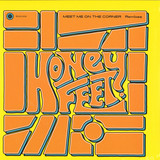
Meet Me On The Corner is taken from the band's sophomore album, Orange Whip, which itself was BBC 6Music's Album of The Day on its release. It follows previous singles Whatever You Do and Sinner, which garnered support from Craig Charles, Tom Ravenscroft and Huey Morgan. The song showcases Honeyfeet at their funkiest and chunkiest. A pounding beat beefed up by bass, guitar and brass propels forward while Rioghnach Connolly sings lyrics that could be straight out of the playground, but suggest something deeper, possibly mystical even, in its demands for a dalliance on the street.
Remixes on this more foot friendly single come courtesy of homegrown legends of funky house music, Crazy P who come through with both a vocal and dub version. Honeyfeet's latest opus is turned into a straight up soulful disco monster by the boys from Nottingham, with Rioghnach's rasping vocals playfully meandering over Hot Toddy and Ron Basejam's crisp beats and trademark live bass. Elsewhere, much hyped Russian production don, I Gemin, delivers his take - still aimed at the dance floor of course, but a slightly deeper house affair based around jazzy keys and chopped up vocals that take the song into more sonorous territories.
As a bonus, the 12" package also features the acclaimed remix of previous single, Sinner, courtesy of erstwhile Polish Innocent Sorceror, Envee - his shuffling, moody take only previously being available on vinyl via a super limited (and now impossible to find) 7-inch release late last year. For the last couple of years Honeyfeet (whose name comes from a line in the Blues Brothers film) have been a conduit for the ideas and expressions of an exotic mixture of Manchester based musicians. This genre-defying band incorporate styles including jazz, folk and hip hop into their music.
The band are fronted by Rioghnach Connolly - also known for her work with Real World artists Afro Celt Sound System and The Breath - "A remarkable singer and flutist who...can ease from Irish traditional influences to soul" (The Guardian). The line-up is completed by Rik Warren (vocals/harmonica), Gus Fairbairn (tenor sax), Biff Roxby (trombone/vocals), Ellis Davies (guitar), Lorien Edwards (bass guitar), John Ellis (keyboards) and David Schlechtriemen (drums).
Since their self-released debut album, 2013's It's a Good Job I Love You, keyboardist John Ellis jumped on board as full-time member, bringing his unique musical presence. This enabled the development of a more texturally adventurous style, as witnessed with the dual atonal solo between himself and guitarist Ellis Davies on Sinner. Similarly, for their current LP, Orange Whip, engineer, bassist and spiritual guide Lorien Edwards makes his Honeyfeet recording debut, so completing the 'kitchen' of this very special band.
To coincide with the release of their eagerly awaited debut album Gate Of Grief (now due out on 20 July), US dark electronic outfit WHITE RING release a double AA side 7' single of the two lead tracks on the album 'Leprosy' and 'Nothing'. Blending heavy, distorted electronics with eerie, unsettling vocals they push the boundaries further, subverting genre ideas and mashing them all together, with industrial, metal, rave, chopped and screwed, rap, grunge, neo folk, post punk and new wave all in the mix
'Leprosy' is brooding, abrasive and ethereal all at once, the track draws from a varied and challenging palette, steeped in existential dread. It was the first song they wrote for the album and features the vocals of co-founding member Kendra Malia. As Bryan Kurkimilis explains; 'This song was the first time we really wanted to start exploring aggression in our music.'
'Nothing' is underpinned by gothic 80s beats and sinister synth bass-lines. It crackles and fizzes with arcade bleeps with wraith-like melodies floating over the top. In this song, nothing is true and everything is permitted. It features the first collaboration with newcomer Adina Viarengo, who added her vocals in 2016 to the existing instrumental track that Bryan Kurkimilis created for the first set of WHITE RING demos in 2009.
WHITE RING were originally formed by Bryan Kurkimilis and Kendra Malia, before they were joined by Adina Viarengo, with Bryan and Adina currently touring as a duo. Gate Of Grief arrives a full eight years since their benchmark EP, Black Earth That Made Me, which sold out almost instantly, making their records some of the most highly sought after on the underground scene and earning them a cult following across the globe.
Swerving from aggressively abrasive to beautifully ethereal, musically they draw from varied and challenging palette, whilst tackling themes of loss and acceptance due to struggles with drug addiction and existential dread on a broader scope.
Dwelling on the outskirts of pop music, WHITE RING grew up in the age of the internet and were exposed to a huge range of music. They have developed a unique style while pushing the boundaries of accessibility and musical genre. They have created a piece of art that is brimming with symbolism and underlying tensions, that seduces and scares in equal measure.
Long time friends (since Flex Vienna 95) Patrick and Luke joined forces on Blumoog Music and came up with this crafty and dynamic four tracker EP. Patrick Pulsinger opens the project on the A with two ingenious and uplifting tracks reminiscent of his old 'Sluts'n'strings &909' days with an acidic twist. 25 years have gone by since Patrick Pulsinger made history and put Vienna on the map by founding techno avant-garde label Cheap Records and with productions like 'Dogmatic sequences' on Disko B and pioneering sequential- minimal-techno soon after with the huge LP 'Porno' also on Disko B. On the flip side Luke M.R.E.U.X is consistent with his fine style. Dry percussions and rubbery bass in B1 'Cerebral fix'. A darker approach in confession B2 with a relentless 5 minutes of techno trip that will not let you catch breath.
A long time ago, in a Norway far far away in time, keyboardist Bugge Wesseltoft introduced his New Conception of Jazz to the world. We're talking about the late 90s, when Bugge's cosmopolitan blend of jazz, hiphop and techno beats was pretty much the coolest music coming out of Norway at that moment. That was a golden time for Norwegian music, in fact, when the rest of the world began to sit up and take notice that something was stirring up north, and realised the music was more than just glacial tones hurtled from icy mountaintops and frozen lakes. This was the sound of urban Scandinavia.
A few years later came the electronic dance genre 'space disco'. Along with Todd Terje, Bjørn Torske and Lindstrøm, Prins Thomas was at the epicentre of this next big wave to surge out of Norway. Now, the two generations have come together in this exclusive collaboration between Bugge and Prins Thomas on the Smalltown Supersound label. Jazz and electronics combine for that energising vitamin D shot of Nordic sunshine.
The Rainbow Studio in Oslo is a familiar name to anyone who follows the ECM label - many of its classic 1970s jazz albums were recorded there under the eye of resident producer Jan Erik Kongshaug. Bugge and Thomas booked a couple of sessions at the legendary space with Kongshaug at the controls, and improvised some tunes in the style and spirit of some of their favourite ECM moments, like the fresh, open sounds of Codona, Egberto Gismonti, Oregon and Kenny Wheeler. Bugge had previously done a remix of Thomas's 'Bobletekno' in 2015 but this is the first time they have worked together as active musicians. The results - also partly taped at Thomas's home studio - fuse programmed rhythms, live synths and percussion, all captured in a sumptuously spacious acoustic.
For an even more authentic touch they called up one of their all time local heroes and one of Norway's most famous jazz drummers, Jon Christensen, who's been the go-to guy for Jan Garbarek, Terje Rypdal, Keith Jarrett and many more. At 75 years he's still pretty spry behind the kit, as you'll hear on several tracks here.
Make no mistake, though, this is not retro pastiche but contemporary music, coasting on gently insistent programmed grooves and bubbling basslines. The whole thing feels not so much like a consciously hip fusion of DJ and jazz musician, more like two great musicians totally enjoying themselves. Which is exactly what it is.
Key facts:
Bugge Wesseltoft is one of Norway's leading jazz figures. He set up Jazzland Recordings in 1996. His solo Christmas LP It's Snowing On My Piano remains Norway's best selling jazz album!
Prins Thomas's real name is Thomas Hermansen. His label, Full Pupp, means 'full breast'. He's released several albums under his own name, as well as collaborations with Bjørn Torske and Lindström. Check out his amazing Paradise Goulash mixtapes.
This four-track EP named 'Curiosity' from techno duo, Abstract Man marks the beginning of the new On the 5th Day imprint, the latest branch to extend from the heart of the London-based underground techno project. The final outputs of a year-long creative journey in the studio with a focus on analogue machines, 'Curiosity' (including Mike Parker remix) represents a chapter of exploration into sound design and manipulation, and the unity and evolution of two separate musical identities through the collaborative process.
The debut release from Abstract Man begins with 'Curiosity' itself, portraying the first stages of the pair's collaboration and inspired by a shared appreciation for driving, hypnotic techno. Mesmerizingly linear and highly textured, the components forming Curiosity's foundations each command their own space, separately evolving with clear purpose whilst interacting in a compelling, ritualistic dance to lock in the listener. Its overall progression, including an emerging chant-like drone, signifies the manifestation of a new artistic voice, all together making this a symbolic achievement for Abstract Man, as well as a compelling and highly effective tool for the dance floor. The subsequent Mike Parker remix of the same track is another striking portrayal of his distinguishable sound and style, whilst developing to present something surprising and perhaps unexpected from the techno veteran, making this a must for collectors of his work.
Then follows 'Proposition', exploring the powerful possibilities through simplicity and symbolising the 'less is more' approach which fuelled much of the first chapter of Abstract Man's time in the studio. The joining of its elements creates a dark, seductive and unwavering tension, making it the ultimate tester for any venue's sound system!
Finally, 'Exploration' steps in a with an uplifting vigour and propulsive, rhythmic magnetism, rounding off the EP nicely with its feeling of freedom and completeness, leaving a sense of intrigue in readiness for their next instalment.
incl. download card]
There is something to be majestic about stalwarts of a certain flock coming together to be creative. The harder side of Drum & Bass didn't have it's own power formation until today. It's as of this day that Czech producer Forbidden Society, formed an alliance with two of his most respected peers to create 3RDKND. Donny, Katharsys and FS all have a strong lean to rhythmic textures, tough drum cuts and experimental FX works. Just in time for the European festival season, the thunderous first effort has arrived; and it's going to turn some heads.
Purge EP is a work of experience, seeking for the outer bounderies of whats sonically possible. The title track is an electronic behemoth which revolves around boundary pushing drum programming and pure unfiltered energy. 'The Artifact' is a straight up dancefloor anthem which uses an ominous vocal of cinematic proportions to build up to the halftime body of heavy hitting drums. 'Fire And Blood' is an experimental work of the rhythmic endurance. The final track is a 3RDKND remix of an original track by Donny and FS. This is the final showcasing of the trinity's sonical excellence. 'Purge EP' will be released through Forbidden Society's self titled label
Taking a turn to some of its roots, Emotional Rescue offers a reissue of Ramjac Corporation's UK house/breaks anthem Cameroon Massif!. First released on the increasingly cult-status Irdial Discs in 1990, this was very much the sound of the big bang explosion of Acid House morphing and splintering, as subsequent multi-genres developed, formed, imploded and reformed in new ways that still subsists today.
Within the melting pot of anything goes, chemically-enhanced optimism that spread across the UK during that return to the summers of love from 1987 onwards, the nascent sounds coming from Chicago and Detroit were mixed with a hybrid of 80s British influences, taking in European synth pop, US electro, new beat, hip hop and reggae. Out of this appeared a new sound, mixing that love of techno and house with dub bass and break beats into a proto-jungle swirl.
Like many growing up through the ever-evolving 60, 70s & 80s British music scene, Paul Chivers' early years of learning piano and guitar, moved from Beatles era pop to take in punk, jazz and anything an eager musical mind could explore. Developing a long-term interest and study of Cuban and Afro-drumming, his acquisition of an Atari and sampler soon moved to programming of both drum machines and TB303 and with that, Ramjac Corporation was born.
Playing live at some of the earliest raves in 1988, as often through luck and "right time, right place", including the infamous Back To The Future and Energy parties, Ramjac went from playing from 50 to 10,000 ravers in a matter of months, as the nation was gripped, depending on your cultural standing, by either a mixture of drug apocalypse paranoia or ecstatic celebration.
It was a meeting with Akin Fernandez, founder of Irdial Discs, that led some of the first studio experiments and creation of Cameroon Massif!. Utlising Akin's in-house studio and production skills, alongside Chivers' jazz influenced outlook of improvisation over arrangement, the track took shape, mixing the live programmed percussion, heavy doses of phase, delay and reverb and Sun Ra inspired keys that resulted in a number of mixes of Massif!.
Collected here are the original 12" "Massive" and "Massing" mixes, plus a special live version taken from the "Live At The Brain" reunion gig of 2009. The sought after 1990 versions and original Live mix are taken a step further with this 13 mins + mix, in essence a resampling and remixing reversion with didgeridoo and live on mic MCing, that gives a real glimpse of those early live sets. With more Ramjac Corporation material upcoming and a live reel-to-reel show appearing soon, the return of Cameroon Massif! is now.
n5MD is proud to bring you All That Was Lost, The 3rd album from cinematic ambient composer Stray Theories. A treat for for fans of Hammock, Eluvium & the more soothing works of Sigur Ros...
Australian born and current New Zealand resident Micah Templeton-Wolfe is the sole force behind Stray Theories, and this album finds him following-up 2014s We Never Left EP with his first new long-form Stray Theories material, not to mention, his first album to be pressed to vinyl.
Templeton-Wolfe's time away has not been for naught. Composing for films, collaborations with like-minded artists and a plethora of remix projects, all while creating a sample pack for the Noiiz sample app under new project Ocean Lost. So it's been a busy time for Templeton-Wolfe.
While he has seemingly been focusing his efforts else- where, Templeton-Wolfe has been quietly composing for All That Was Lost, an album which is imbued in spades with Stray Theories' signature mood-altering sound- scapes.
Muted electronics have always played a part in the Stray Theories pallet, and some of Templeton-Wolfe's extracurricular work might have something to do with those textures now being brought a bit more to the fore. In Templeton-Wolfe's hand, these fit in perfectly within the personally subjective nature his music has always suggested. All That Was Lost is a cinematic ambient gem brought into the world at a time when we need it most.
Producer Okzharp and vocalist-artist-dancer Manthe Ribane both hail from South Africa, where Manthe still resides, while Okzharp lives in the London where he is a DJ and producer, initially cutting his teeth in LV, who in 2007 were one of the very first acts signed to Hyperdub. Manthe has been at the forefront of South Africa's cutting edge fashion, art and dance worlds for over a decade. After leaving LV, Okzharp and Manthe started collaborating, going on to release two well-received EPs on Hyperdub, 'Dumella 113' and 'Tell Your Vision', recorded in Joburg and London respectively. The recording of 'Closer Apart' reflects the title. Okzharp says 'Most of the music came out of headphone moments in hotel rooms, planes and airports in the brief periods of time that we spent together.' Describing Manthe as a co -producer, he continues 'She selected instrumental sketches and we developed them together, sometimes just keeping the bare bones or a melody or rhythm, or trying different elements or sounds.' Even though the album was built long distance, the short periods they spent together were the ground zero for creativity. Okzharp recalls 'One particular moment in Milan last year, we had a whole free day before our flight so we visited the Salone di Mobile design show. We were so inspired by an installation there just walking around, listening to the amazing soundtrack. That evening our flight was delayed, so we sat on the floor of the airport terminal putting musical ideas down for 'Time Machine' on the laptop speakers and writing the lyrics. "Tic Toc time, we'll be fine / Airport queues, cerulean blues / Viper trails cross the skies / Lights reflect in your eyes...' ' 'Closer Apart' has a softness and openness that contrasts the tougher sound of the EPs. Manthe explains, 'The new music is a 360 turn, an expression of my 'Lady' side. I grew up listening to Jazz, Classic and Gospel, I am a very soft spoken person, and it resonates with being confident with that. It's been crazy finding balance and finding a smart way to strengthen my weaknesses, I had to trust the process.'
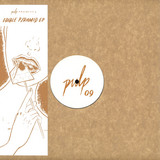
Australia based artist Inkswel is widely known for his funk infused dance music that incorporates ingenious sample work and memorable vocal cuts. For the ninth installment of the PULP series the 'Edible Pyramid EP' is a journey through the mind of the Australian artist. The package includes a melancholic remix by no one else than long time champion of vinyl and Red Motorbike label boss Eddie C, 'Edible Pyramid' is a work of positivity, the title track excels in it's blissful ambiance that is supported by a back bone of thumping rhythms and jovial vocal cuts. The Eddie C Remix is showcasing a wistful approach by incorporating a rhythm that is reminiscent of those from the early days of Hip hop. 'Let Go' is a confident sounding work of samples. Rhythmically firm with an emotive break that is a welcome change from the slow base-rhythm that flows throughout.
On the B side The Posse comes up with a remix that cleverly incorporates oozing synth pads and a more upbeat vibe. The original is flipped into a more dancefloor friendly version with an acidic touch to it. The final track is called 'Yesterdays Flava of The Month' this boogie tainted cut uses tasty breaks and lively pads that again depict a positive atmosphere.
PULP09 - Inkswel - Edible Pyramid EP will be available from all specialized retailers starting June 2018.
* "Of all the dubplates in my bag from this last few years, the ones I've selected most often have Walton's name scribbled on the sleeve. 'Black Lotus' is a unique creative statement; I'm very proud to release it on Tectonic and to support Walton, who I believe is a true talent." Pinch
* On July 6th Tectonic recordings presents the game-changing second album by 26 year old Mancunian Sam Walton, better known as simply Walton.
* 'Black Lotus' follows his inclusion on Tectonic's landmark 100th release - Riko Dan's 'Hard Food' EP, plus the 'Praying Mantis'/ 'Koto Riddim' 12' (also on Tectonic) and the 'Taiko' EP on Kaizen - the latter two of which hinted at the album's sound, but didn't fully prepare us for the brilliance to come.
* Abstract electronics, grime, dubstep and new styles that don't even have a name yet coalesce perfectly on this classic in the making. It finds Walton at peak power, reaching just as far (if not more so) than anything on the Pan, Different Circles, Boxed or Tectonic catalogues for pure futurism and new-terrain-traversing brilliance.
* Spacious and modern sounding, with just the right amount of grit, on 'Black Lotus' Walton has taken things the next level - setting an impressive new high bar. This is the best music to take inspiration from far eastern culture since Photek's seminal 'Ni - Ten - Ichi - Ryu' and 'The Water Margin'.
* Cinematic may be a term bandied about too often, but on this record it unquestionably applies, with the whole thing playing out like an epic movie, full of highs, lows, action, reflection and changing scenes.
* The album kicks off with 'Black Lotus', which makes it quickly evident that this isn't just another generic longplayer; a weightless/sino style intro segues into a mystical kalimba line, which is then is enveloped by huge waves of synthesized, pitched-down brass.
* 'Point Blank' offers locked, harsh mechanical funk, full of aggravated excitement, before sleek, spacious grime and disguised pop garage achieve twisted anthem status, on the hugely satisfying 'Koto Riddim'.
* 'No Mercy''s Yakuza crime riff is perfect for Riko Dan's threatening menace, especially at the point his voice gets distorted into a guttral and unsettling, demon-like wretch.
* 'Mad Zapper' is abstract, comprised of simple yet challenging beats, tones and stutters, whilst 'Angry Drummer''s taiko/kumi-daiko style percussion has a rousing, heavy thump.
* 'Pan' sounds equally enthralling whether soundtracking a dark movie scene of impending danger, or carying enratptured ravers on a danceflor journey, especially one suited to the synapse-prodding drama of a high production, lazer-heavy festival set.
* Choppy drums and bouncy bass tones are laced with the georgeos melody of 'Ehru', and 'Vectors' is sleek 'n' deep breakbeat-garage-meets-IDM.
* Although already known for elements of musicality, Walton raises his game even higher with the beautiful closing track 'White Lotus', which has a wow factor akin to hearing Aphex's Twin's 'Jynweythek Ylow' for the first time.
* 'The title came from the idea that I wanted it to be sweet and melodic in areas, but dark and grimey at the same time', recalls Walton. 'I never really listened to much Japanese and Chinese music before working on this, and that element originally came from listening to a lot of Sino grime stuff. It wasn't until I was deep into the process of making the album that I started listening to loads of traditional stuff on YouTube for melodic ideas, which changed how it turned out. The whole dubstep techno crossover thing was also a big influence.'
* 'I'm really happy to have Riko Dan & Wen on there', he adds. 'I've done a few remixes of Riko tunes which have had a great response, so it's been wicked to get some original material done together. The track with Wen was first started a while back, so I'm glad it was finally finished and will see a release.'
* Walton has been steadily gaining serious clout through releases since 2011 on Hyperdub, Keysound, Tectonic and Kaizen, with supporters including Mumdance, Logos, Slimzee, Laurel Halo, Wen, Hodge, Mary Anne Hobbs, Giles Peterson, Paleman, Teki Latex, Commodo, Loefah and Kode9. Key club, festival and radio shows include FWD at Plastic People, Fabric, Outlook, NTS, Rinse and BBC 1xtra.
Salvador Font studied violin, clarinet, composition and harmony at the Conservatori Municipal de Barcelona, but very soon started to gain notoriety as a saxophonist in the rich jazz scene of 1940s Barcelona. Font would soon be playing tenor sax and clarinet in the Orquesta Gran Casino. He was in his early twenties and his hot swing technique was already praised through the citiy's scene, he would grow to be considered the best saxophonist in Spain by playing in many orchestras and combos, among them: José Puertas', Antonio Vilá's Virgina, Bonet de San Pedro's band, Pierre Michel, El Lirio Campestre, Los Marios, Luis Rovira y su orquesta, Orquesta brasileña Fon-Fon, Jaime Camino, Los Embajadores, Italo Leone's... With these and others, Font toured constantly, visiting many countries and even staying on some for long seasons: Mexico, Morocco, Switzerland, Egypt... Hungarian violinst of Turkish ancestry Kurt Dogan gave him the "Mantequilla" surname - he felt "Mantequilla" (which means "butter") fit Font's mellow yet swinging improvisation style.
Mantequilla y su conjunto
In the early sixties, "Mantequilla" had the chance to lead his own combo, Mantequilla y su conjunto, with which he was to record the three splendid EPs that are compiled on the present album. All these 7" have become elusive collector pieces in the record market, with sellers demanding from 200 to as much as 950 euros per copy.
In 1961 "Mantequilla" was at his best moment, his gigs at the Jamboree Jazz Cava had brought him back to the first line of Barcelona's jazzmen after he had been working abroad for a long time, and was approached by the Belter label to record an EP. On the sessions he was accompanied by Manolo Mercedes on trumpet, Pedro Ferré on piano, Rafael Lizandra on double bass and Rafael Verdura on Drums. The material chosen for the disc were four original compositions by Salvador Font which had a high West Coast flavour all over: "La Tuna Club", "Whisky Jazz" and "Jamboree" named after famous jazz clubs and "Azul Trompeta", dedicated to Manolo Mercedes.
In late 1962, after spending some time in Madrid working as members of the Italo Leone combo, "Mantequilla" and pianist Manuel Gas came back to Barcelona for the recording of the second "Mantequilla" EP, also on Belter. We find again Manolo Mercedes on trumpet, Pedro Ferré on piano and Rafael Lizandra on double bass, the drummer this time was José Farreras. Another news is that Manuel Gas also sat on piano and vibraphone. The songs chosen for the occasion were two tunes from the Art Blakey Jazz Messengers repertoire: Bobby Timmons' classic "Moanin'" and the Jacques Marray track "No Problem" from the soundtrack of the Les liaisons dangereuses film (mispelled "Not Problem" on the sleeve and label), plus the Salvador Font penned "Blue Note" and "Full de ases" - on "Full de ases" "Mantequilla" trades his sax for the violin, which he also mastered under high influence from Stephane Grapelli. The record was released on Belter in early 1963 and showed "Mantequilla" adding a certain aggressivity to his sound, in a soloist style which has been compared to that of tenor saxophonists Barney Wilen or Benny Golson.
1965 was the year of release of Mantequilla y su conjunto's third EP, now on the Discophon label. Mercedes and Farreras are again present in the recording sessions, joined by Ricardo Miralles on piano and Enrique Ponsa on double bass. Four original Font compositions make up the fantastic EP: "Blues 3/4", "Atmósfera", "Vat 69" and "Balada".
There would be a further EP on Belter, released in 1971 as Mantequilla Group it was a cash-in operation to take some redits of the ye-yé discothèque phenomenon, it gets quite afar in style from the jazz works of Mantequilla y su conjunto, so we just left it aside for the present edition.
"Mantequilla"'s career would continue, in 1968 he would settle in Majorca and form a swing band with Bonet de San Pedro and Manuel Bolao. He played in local orquestras and also with first class world acts like Gerry Mulligan, Tete Montoliu, Errol Gardner, a.o. He was even approached by Henry Mancini to play sax on The Pink Panther Theme in a gig Mancini did with his orchestra in Palma de Mallorca in 1975, He also joined his son Salvador Font (a demanded drummer himself who has played with Máquina!, Orquestra Mirasol, Música Urbana, Gary Burton Quartet, Georgie Fame, and many others) and his peers Carles Benavent, Emili Baleriola, Josep Mas 'Kitflus' and Jordi Bonell with whom he recorded his acclaimed "Mantequilla" album in 1987.
Now, for the first time ever, the legendary three ultra rare and imposible to find EPs by Mantequilla y su conjunto are compiled in a lavish vinyl LP with remastered sound, featuring liner notes and photos and a fantastic period inspired, three backflaped, front laminated sleeve. It is a stricly limited edition of only 500 copies and they are expected to sell out very soon, do not miss your chance of getting yours - it may be the last chance of chasing the Mantequilla sound on vinyl at a reasonable price!
While notorious in the Chicago streets, RP Boo's music had been unfairly confined to a few white labels and self-released mixtapes until his two archival Planet Mu LPs Legacy and Fingers, Bank Pads & Shoe Prints introduced broader audiences to his sonic history, some of it fifteen years after it was first recorded. I'll Tell You What! is the next step in his mission, and the first time he's released an album of contemporary material. The title, a favorite maxim of his, welcomes listeners to sit down and let him narrate in the unforgettable abstract fashion he's known for. He explores familiar motifs such as the cosmos, movement, and opposition, using densely interwoven vocals, unpredictable percussion, and evil humming bass as his tools of choice. RP Boo's music doesn't follow the traditional rules that most compositions do. Layering decades of samples from yesteryear to the present over his commanding vocal cut-ups, he transports the listener to their own realm of the space-time continuum. The main difference between this record and his prior work is now we hear Boo tell new stories about preaching his gospel outside of Chicago, from his experiences frantically touring the globe over the last five years. The words 'things ain't been the same / since I hopped the plane' are repeated on top of engine sounds and rumbling bass on Flight 1235, a glorious paean to his new jet-setting adventures. The spirit of competition runs through RP's veins as much as blood does, something you can't unlearn when you've been making music for Chicago's footwork circuit as long as he has. The local culture has served as a shelter from the violence that has plagued the city, pitting kids against each other with their feet rather than weapons. On At War Boo reminds us 'we are at war in the streets', a double meaning to both the mayhem in this world and the sweetness of rivalry on the dance floor. Another battle-themed track Cloudy Back Yard, one of the spacier moments on this album, is an abstract on the state of footwork's home. Chicago remains the backyard of this artform even though it's left the porch and traveled to new neighborhoods worldwide. Back at home though, competition among the DJs and dancers continues, and as the man himself says, 'with all this hate, there's smoke, and it's cloudy'. I'll Tell You What! throws more than a few curveballs into the mix. Footwork has always borrowed from hip-hop, and many vocal tracks are almost condensed raps, dating back to the street chants pioneered on Dance Mania Records in the ghetto house days. On Bounty, Boo grabs the mic and brazenly lays down a full-on verse of terror over a thick atmosphere of his signature sweltering low-end and erratic Roland R-70 patterns. While he's most famous for his confrontational battle anthems, his melancholy moments are just as powerful. You get the best of both of those worlds on U-Don't No, with soulful samples finishing his own cocky sentences, one of the most elegant tracks RP has made to date. Deep Sole closes the record out, with the words 'It's always beautiful at the end' looping over waves of hypnotic synthesis, confidently looking death straight in the eyes.
In 2017, Benedikt Frey released his breathtaking debut album with the ESP Institute, Artificial, and now as we finally come up for air, we're more than proud to offer an eclectic collection of remixes that's nothing short of essential. Side A leads with H For Hysteria remixed by a beloved hero, Nicolas Chaix a.k.a. I:Cube, one of the most prolific and respected electronic artists Paris has to offer. His touch is considered and elegant, imbuing the track with a tasteful 303+808 backbone to support an array of patiently floating melodies and angelic vocal samples. Following this, Tolouse Low Trax of Du¨sseldorf's infamous Salon Des Amateurs remixes the same track, stripping instrumentation down to a skeletal palette of bass guitar and stabbing percussive punctuations, chopped up inna minimalist stylee that has become his beat-making signature. Side B leads with a remix by another Du¨sseldorfer, DJ Normal 4, whose re-imagination of Private Crimes takes us for an even more menacing ride, half-timing the tempo and skillfully rolling out a barrage of jungle snares from rave days of yore. Closing the release is the most aggressive remix of them all, a bonafide techno beatdown of the same track by DALO, the co-producing artist to whose haunting vocals lace the original version. Her dark vision opens with sparse industrial drums that blossom into a driving assault of raw machinery, definitely not for the faint-of-heart. An all-around solid release here, fun for all the family... more than just the tip!
This Is The Second Installment Of Deep Roots Rastafarian Reggae At Studio One And Features Classic Music From Some Of The Most Important Figures In Reggae Music - Alton Ellis, The Heptones, Jackie Mittoo, The Gladiators - Alongside A Host Of Rarities And Little-known Recordings, Such As A Truly Rare Mystic Revelation Of Rastafari Seven-inch Single, Willie William's First Ever Recording 'calling' And Horace Andy's Righteous (and Equally Rare) Masterpiece 'illiteracy. Black Man's Pride 2 Extends The Legacy Of Studio One's Ground-breaking Path In Roots Reggae Which Began At The End Of The 1960s And Continued Throughout The 1970s. The Album Tells The Story Of How The Rise Of Studio One Records And The Rastafari Movement Were Interconnected, Through The Adoption Of The Rastafari Faith By Key Reggae Artists - Everyone From The Skatalites And Wailers In The 1960s, Major Singers Such As Alton Ellis And Horace Andy At The End Of The Decade, Through To Major Roots Artists Such As The Gladiators In The 1970s - And How Clement Dodd Consistently Recorded This Heavyweight Roots Music Throughout Studio One's History.
The Sleeve-notes To This Album Also Discuss The Links Between Rastafari And Studio One In Time And Place, Noting How Both The Religion And Clement Dodd's Musical Empire Had Their Roots In The Intense Period Of Pre-independence Jamaica In Kingston, Expanded In The 1960s Following The Visit Of Haile Selassie In 1966, And How Roots Music Then Came To Dominate Reggae Music In The Early 1970s. Also Discussed Is How The Outsider Stance Of Both Reggae Music And The Rastafari Movement Relate Back Many Hundreds Of Years To The Original Rebel Stance Of The Maroons, Escaped Slaves Who Set Up Self-sufficient Enclaves In The Hills Of The Jamaican Countryside.
When Ann Arbor's Tadd Mullinix began exploring hip-hop under the name Dabrye 20 years ago, he soon honed in on a startling vision of what the genre could be: ingenious, refined, daring. This vision came to life across two albums for Ghostly International — 2001's One/Three and its 2006 follow-up Two/Three— with each record further positioning the quiet Michigan producer as one of his generation's best, equally comfortable creating minimalist instrumental meditations or sharp rap salvos. In the late 2000s, following critical acclaim and accolades from both peers and inspirations (including the late Jay Dee with whom Mullinix collaborated before his untimely passing), Mullinix put the Dabrye moniker on ice and dedicated himself to other genres and ideas. All the while the influence of his work on a new generation of electronic musicians continued to make itself felt in subtle but meaningful ways.
All this changes in 2017 as Dabrye makes his long-awaited return with Three/Three, a razor-sharp rap album that brings to completion a prophetic trilogy. Mullinix's incisive productions provide the backdrop for equally acute rhymes that run the gamut from intergenerational observations and being your best self to back alley deals and having fun in the ride. Guests include indie rap legend DOOM, whose previous collaboration with Dabrye remains a point of reference for many, Wu Tang storyteller Ghostface Killah, L.A word fanatic Jonwayne, and Long Island's rugged surrealist Roc Marciano. Most importantly Three/Three is, much like its predecessor, an unfettered celebration of Detroit-area talent with Guilty Simpson, Phat Kat, Kadence, Quelle Chris, Danny Brown, Shigeto, Clear Soul Forces and more all lending their touch to Dabrye's return.
The blend of American and British dance music, hip-hop sampling, and Jamaican sound clash energy that underpinned Two/Three remains a quiet, guiding principle. At the same time Mullinix rejoices in a refreshed perspective, having had time to incubate ideas and find clarity in the distance between albums and the evolution of scenes.The beats are looser and less angular, more embracing of repetition. Organic techniques inspired by soul and jazz round off some of the harsher sonics. The resulting broad palette of tracks reflects both this evolution and the range of the Dabrye persona: relaxed headnod ("Tunnel Vision"), nervous, slow-motion electro ("The Appetite"), glacial motifs ("Emancipated"), jazzy, cut-up funk ("Sunset"), minimal brutalism ("Electrocutor"), intricate layering ("Culture Shuffle").
Three/Three marks the return of an innovator after close to a decade of silence. Despite what the title might imply, the album isn't the end of the story but rather the completion of a creative arc. Expect more Dabrye in the near future. The game is far from over.
- Final installment of the /Three series, started in 2001
- Guests include Ghostface Killah, Jonwayne, Doom, Danny Brown, Shigeto, and more.
- Media support from: The Wire, FACT Magazine, The Detroit Free Press, Pitchfork, XLR8R
- Past collabs with Jay Dee (J Dilla), MF DOOM, Beans & more
- Vinyl is housed in a matte jacket with black hot foil and includes 24-page zine designed by Michael Cina.
Betty Harris' The Lost Queen of New Orleans Soul collects together the steady stream of amazing soul and funk singles issued by Betty Harris from 1964 to 1969, under the musical guidance of legendary composer, musician and producer extraordinaire Allen Toussaint, a collection which truly captures the heart and soul of the city of New Orleans during this era.
Betty Harris's powerful, fiery soulful vocals found a perfect accompaniment with the New Orleans' players that Toussaint put together to back her, which by the time of her funk classic 'There's A Break In The Road' were the legendary super-tight, super-funk New Orleans group The Meters.
With the extraordinary song-writing skills of Allen Toussaint alongside the powerful, soaring, confident and emotive singer and the groove of The Meters, you have an unbeatable combination. That Harris never in fact lived in New Orleans (she flew in from Florida for all her sessions with Toussaint's local in-house players) seems almost an irrelevance, a geographical aside to the defining New Orleans sound captured on the recordings featured here.
All of these singles featured here were released on Allen Toussaint and his business partner Marshal Sehorn's local New Orleans label Sansu, widely distributed in the southern city but in only limited quantities elsewhere. As a consequence, Betty Harris' music failed to achieve the commercial success of other New Orleans artists such as Lee Dorsey (who she recorded with) and The Meters (who backed her). And so at the end of the decade she stopped recording, retired from the music business to raise her family in Florida.
This is no reflection of the stunning musical quality of all these songs which encompass everything from southern soul, heavy funk, deep soul ballads and northern soul. Betty Harris has been a cornerstone of Soul Jazz Records' New Orleans Funk and New Orleans Soul compilations. Always soulful and always funky, Betty Harris' music contains the essence of New Orleans music. She is the Lost Soul Queen of New Orleans.
This collection is released on CD, heavyweight gatefold double LP vinyl (+ download code) and digital and comes complete with full biography, original label artwork.
Little Boots' latest all female powered EP 'Burn' was released on 6 April 2018 and reached Number 1 in the UK, US and Canada in the iTunes Electronic charts within its first few days of release. Just in time for warmer weather, Little Boots has teamed up with a variety of artists to remix her 'Burn' EP, with Metronomy's Anna Prior's remix of 'Eros' the lead single from the remix EP. Anna takes Little Boots' new wave of electro pop and disco rhythms and punts them in a more house direction, with beautiful string underlay. Eros (Anna Prior Remix) is released on a bright orange cassette, and limited to only 300 copies. Period.
"phantom Dancehall" Is The Exploration Of The Greensleeves / Vp Records Catalogue By Dj Spooky Aka Paul Miller. The Musical Tapestry Is Built On Samples From Familiar (and Not So Familiar) Reggae Tracks Over Electronic Beats And Melodies Produced By Miller And Protégé Stephen Levitin (stage Name Apple Juice Kid). Selected Tracks Include The Keyboard Work Of Alex Thompson Aka Fourth Shift. Guest Vocals From Walshy Fire (major Lazer) And Dancehall Newcomer Sanjay Added To Vocal Samples Of Busy Signal, Lady Saw And Garnett Silk Give The Project An Eclectic, Modern Dancehall Flavor!
Paul Miller, Better Known By His Stage Name Dj Spooky Is A Music Producer, Arranger, Dj, Author And Performance Artist. His Unique Brand Of Experimental Hip-hop, Dubbed 'illbient' Has Resulted In Collaborations With A Diverse Range Of Artists Including Ryuichi Sakamoto, Kronos Quartet, Lee "scratch" Perry And Killa Priest. With Remix Projects For Trojan Records, Manifold Records And Six Degrees Among Others To His Credit, Miller Created "phantom Dancehall" For His Exploration Of The Greensleeves/ Vp Records Reggae Catalogue.
Marquis Hawkes is an alter ego adopted by long time electronic music producer Mark Hawkins, founded for his house music focussed activities. Hawkins decided it was time for a reboot after being head-hunted by old friends Dan Monox and Kenny Wasp, who had just founded Dixon Avenue Basement Jams in 2012, particularly as the material differed from what he'd previously released.
Hawkins solidified his sound during this period, taking influence from house music's Chicago, Detroit and New York home bases alongside the UK's deep house sound. Fusing these styles with contemporary production values, he developed a style synonymous with his Marquis Hawkes alias.
Whilst branching out to release on other labels like Clone and Cremé Organisation, he caught the attention of London club fabric's artist-led label, Houndstooth. They signed him on a long term deal, giving visibility to his DJ profile that meant he could play music full-time.
In 2016 his debut album 'Social Housing' was released to critical acclaim, and the following year, a stellar string of releases on Will Saul's AUS Music label culminated in the ubiquitous club and festival hit, 'The Basement Is Burning'. A track inspired by Hawkins' own shocking experience of a fire in his apartment block, it was played heavily on radio across the summer of 2018.
Looking forward, this new 12' EP for Houndstooth under the Hawkes alias is scheduled for release on June 29th, and features a vocal collaboration withUrsula Rucker, Hawkins is also pursuing other music projects and identities, some known, like his Juxta Position project, which he uses for more industrial but groove based techno material, but others which are more incognito, and may well remain as such.
"Things take a psychedelic turn for SchleiBen 7 with a welcome to the label of arch exponents of mind expansion in NYC's Georgia and the unlikely but no less diverse inclusion of Balearic stalwarts A Man Called Adam. Having Georgia in the series might not now be a surprise, however discussions with this open, genuine duo started during a visit to New York over 3 years ago and so here, finally realised in this fluid journey of confident pace and harmony, is the best of their freeform evocations. A duo in the everyday sense, Brian Close and Justin Tripp are video / music production teamsters of unnatural talent. Having gained a status of their own that has seen them release for the likes of Palto Flats and FTD, the five pieces that form their contribution drip with psychedelic intent. Culled from archives, the interest is how the tracks - made over different years, locations and situations in life - meld in to something poetic simply by being placed within a specific format. Avant-chimes ebb to rhythmic pulses and erudite teachings before dark percussion and Eastern melodies reach a clattering, but gentle finale. With an upcoming collaborative album with Secret Circuit due on the label later in 2018, as well as recent works with RVNG Intl's Matt Werth and recordings for Sacred Summits' brethren Firecracker Recordings, it's a warm, effusive glow of a welcome. In contrast, the inclusion of A Man Called Adam in the series may indeed surprise but is a false comprehension. The "Sketches" included here show AMCA away from their Balearic pop incarnation of the last thirty years and towards the academia that both members Sally Rodgers and Steve Jones have pursued in the last decade. With both completing PHDs, Sally ('The Diachronic Impact of Technology-Led Abstraction in Oral, Written and Music-based Poetries') is a senior lecturer at Leeds College Of Music, while Steve ('Mobilise: The Carry Principle, Sound and Mobile Media') is based out of de Montfort University, now is the perfect time to highlight the diverse sound environments they have been working in. The music that makes up these recordings are drawn from sound works and audio experiments completed in recent years. From sound toys and apps to home made glass organs and electro-acoustic sound, custom patches to spoken word manipulations, the sketches are excerpts - some evolved from commissions for the National Science Museum, BBC Radio 4 and live performances with the world renowned video artist Milosh JL - fused especially for this release. Bringing these generated pieces in to an audible "mix" creates a discourse of their work in performance, interactions and visual media. An intellectualised album therefore, but still in the premise of the series to allow artists to present something new, unique, discrete, hidden even, all with the aim of giving the recipient the chance to sit back and (un)listen. "
We are happy to introduce a new release and a new project from Ben Vedren and Chez Damier; a new collaboration that has been in the making for some time now. Side AA1 presents a unique sound in its vibe, kind of a minimal track. The French discussion/vocal in the background adds another dimension. You don't need to speak the language to understand what's going on, but you must wonder at some point: Do I understand French or is it the music that made me understand them An "organ" sound intervenes towards the end bringing power and light to the hall. It's eleven minutes of pure music! While "AA" is composed of two different remixes of a different track, 'Berlin Nights in Paris' It can probably be called the House anthem. It starts strong with some acid sound and is filled with a lot of wonderful elements. Like a gourmet meal, you wonder if the track shouldn't have been at least three times longer to satisfy the gluttony of the listen. The Techno remixes of the track. It's a perfect example of Detroit meets House. Techno track can, with no doubt, feed and drive the dance floor. No need for more than five words to describe it - it's a serious Techno track.
J Colleran's majestic lead single 'bERA' began as a simple experiment using pianos and arpeggiators that slowly developed into a shimmering elemental piece. The coinciding video, directed by Gray was inspired by the photography series by Anton Polyakov who documented the people of Transnistria, an independent state affected by the constant intimidation of military conflict.The film shows the slow shifting balance of power from physical force to the over bearing emptiness of a room. Gray describes the featured bodybuilder flexing to a visible lack of audience as 'a shimmering golden symbol of power and also a fragile vessel shaped around a trauma. The presence of a long gaze and the rapid deterioration of strength reveals a true identity.Recent quick-fire single 'O+SOH' served as a transitional primer for the Irish producer and classical pianist, forming the perfect base from which to launch 'Gardenia' — a sweeping experimental soundscape inspired by childhood memories and the natural beauty of his native Ireland.
One of the world's most iconic drum & bass acts, Pendulum have announced their return for 2018 with a brand new album and brand new live shows. 'The Reworks' is a project unlike any
other released by the band before, and marks the end of their seven year hiatus, officially launching on 16th March.
To mark their return, the band have announced their first headline show since 2011 at London's unique new space, Printworks . The show sold out in under an hour and will be both an auditory and visual spectacle for fans.
Also announced is Pendulum's return to one of the UK's biggest events - Reading and Leeds Festival . Headlining the BBC Radio 1 stage - the same slot they graced the last time they played in 2010, the shows mark a welcome return for the band in the UK.
The news will undoubtedly be well received by Pendulum 's legions of fans, with the band having hinted at a comeback by returning to the live stage last year, headlining the UK's South
West Four and Nass Festival , and confirming for this years Snowbombing festival in Austria.
For 'The Reworks' , the internationally-renowned band have tapped some of the most innovative talents from over the past few years to deliver dynamic and refreshing interpretations of their
biggest hits and some of their personal favourites. Friends and collaborators Skrillex , Icarus ,Knife Party and Matrix & Futurebound take their turn on this who's who of electronic music
royalty, whilst Noisia 's explosive cut of the now-iconic track 'Hold Your Colour' will be available with the album preorder from the 16th March.
'The Reworks' album will be available in both CD and vinyl formats from the 29th June.
This exciting announcement marks the beginning of a new era for Pendulum , who have long been considered one of electronic music's most important and pioneering acts, famed for their
no-holds-barred live shows. With more huge festival dates TBA across the summer and new originals on the horizon, 2018 marks the an exciting chapter in Pendulum's already lengthy career.
Noisia' s remix of ' Hold your Colour' , the first single to be taken from Pendulum 's 'The Reworks' album, is set for release on 16th March alongside the preorder, with the full album set to drop on 29th June.
Word Of Advice To Funk Lovers, There Is Not A Minute To Lose. Get On Board Of The Big Hustle's Spaceship. Before We Take Off, Let's Do A Little History. The Band Was Founded In 2014 By Bass Player And Composer Sébastien Levanneur And Its Aim Is To Bring Together 70's Old School Funk With The Hippest Actual Sound Laced With Influences Spanning From Steely Dan And Headhunters, To Snarky Puppy And Soulive. With Mighty Horn Players, A Rock And Funky Rhythm Section, The Big Hustle's Music Has A Very Large Variety Of Soundscapes.
The First Destination Takes Us To The Washington, D.c. Area With turn Up'. The Groove Is Clearly Go-go Music Flavored With The Trademark Sound Of Cowbells And Of Course It Reminds Us Of Zapp By The Use Of The Talk Box On Lead Vocals, Performed Here By Saad El Garrab. And Don't Miss Out Shaun Martin (snarky Puppy, Erykah Badu, Kirk Franklin Amongst Others) As A Very Special Guest Performing The Talk Box Solo! Second Stop Is a Curse, A Blessing'. It's An Instrumental Very Much In The Freddie Hubbard Vein During His Cti Years. The Last Leg Of The A Side Ends With An Instrumental Interlude Titled flying Donut'. Double Tribute To Jay Dee And Flying Lotus, The Music Is A Simple Hip Hop Loop Based On Samples.
The B Side Takes Us Back Into The Past With Two Brilliant Covers, Involving Rod Temperton The Late Great British Songwriter Who Scored Some Of Michael Jackson's Biggest Hits. Now The Idea For This B Side Is To Do The Opposite Approach From The A Side. Taking 70's And 80's Original Music And Make Them Travel Into Time To 2018. We First Land With A Heatwave Song Named the Star Of A Story' From Their 1976 Central Heating Album. Track 2 Is A Herbie Hancock Song Named gettin' To The Good Part' From His 1982 Lite Me Up Lp. This Time Traveler Ep Journey Ends With An Interlude. Called gimme Dat', The Song Deals With The Need Of New Music, New Sound.
Again, This Blend Of Deep Rooted Funk Laced With A Contemporary Edge Is To Be Consumed Without Moderation. And Do Not Forget That E.p. Also Stands For Extended Pleasure.