Score by 20 Time Academy Award Nominee, 2 Time Academy Award Winner, Music Legend: Randy Newman. The album is pressed on classic black vinyl and includes printed inner sleeves. The vinyl release features different artwork from the CD and digital releases. Written & Directed by Academy Award Nominee Noah Baumbach. "At once funny, scalding, and stirring, built around two bravura performances of incredible sharpness and humanity, it's the work of a major film artist, one who shows that he can capture life in all its emotional detail and complexity — and, in the process, make a piercing statement about how our society now works.”
‘Assassin’s Creed Valhalla’ takes place toward the
end of the Ninth Century, a time when Norse tribes
were leaving their homes in Scandinavia and
sailing to the collection of fractured kingdoms
known as Anglo-Saxon England. It’s here, during
this age of transition, that you’ll take on the role of
Eivor and lead your people to a new land in the
search for a new home. As you embark on
Valhalla’s epic Viking journey you’ll lead deadly
raiding parties, fight in massive battles and build
up a prosperous settlement, all within the historical
backdrop of Ninth Century England.
‘Assassin’s Creed Valhalla’ went Gold weeks
before the launch.
Score by Danish composer Jesper Kid (‘Assassin’s
Creed 2’, ‘Borderlands 3’, ‘State of Decay 2’,
‘Warhammer: Vermintide 2’) and American
composer Sarah Schachner (‘Assassin’s Creed:
Origins’, ‘Call of Duty: Modern Warfare’, ‘Anthem’).
“‘Valhalla’ marks the first time the two of them
Sarah & Jesper have worked together, and the
sheer size and scale of the Viking-themed
soundtrack is all the better for it.” - spin
Double LP with Red with Yellow Splatter (LP1) and
Teal with Black Smoke (LP2) coloured vinyl in a
gatefold sleeve with printed inners.
"Espontaneamente se Tenta: Aventuras Sonoras de Djalma Corrêa is an album of deeply exploratory pieces by legendary percussionist and composer Djalma Corrêa. This double-LP set features previously unreleased recordings that cover a wide range of sonic experiments, revealing an unknown side of the prolific and groundbreaking Brazilian artist. Most of the tracks on this album were digitized for the first time – directly from the original tapes – and were compiled in collaboration with Corrêa just before he passed.
The result is a wild and unsettling collage that shows us just how original and intense Corrêa could be: from the unorthodox electroacoustic piece Evolução (Para Fita e Filme), which channels ancestral African inspirations to create a sonic cosmogonical narrative, to the proto-mixtape Exemplo de Sintetizadores, in which he transitions from transcendental drones to astral cha-cha-chas.
While the compilation might seem disjointed at first listen, it is in fact the most accurate translation or representation of his central concept: spontaneous music. Djalma's relationship with sound was always guided by his fearless approach to listening, and by his audacious and dynamic interaction with both musicians and equipment, which enabled him to work across a wide array of genres: from jazz to completely abstract music, always through a personal DIY ethic.
Corrêa developed a strong bond with experimentalist and inventor Walter Smetak, with whom he shared a studio during his formative years at Universidade Federal da Bahia. Suite Contagotas, featured in this collection, is no less than a sonic materialization of that bond: an experiment revolving around dripping water and its randomness – a tentative exploration of the ideas and possibilities envisioned by Smetak for his audacious, albeit unrealized, Estúdio OVO.
Djalma, however, is best known for his studio work in historical albums, including many by Caetano Veloso, Gilberto Gil and Jorge Ben, and for his own polyrhythmic opus Baiafro. The last track is an early recording called Bossa 2000 dC, first performed by Djalma at the 1964 Nós, Por Exemplo concert, an event which is often cited as marking the beginning of the Tropicalia movement. At the time, he was the only artist in the lineup using electronic devices to create sounds, e.g. medical oscillators and contact mics to augment his percussive palette.
The artwork is an amalgamation of material found in the Djalma Corrêa Archive (currently managed by his son Caetano Corrêa) and other material created during the period in which the record was being put together. The intention is to guide the listeners through this possibly tempestuous soundscape, giving them additional resources so that they may draw their own meanings and make their own sense of this extremely immersive and original experience – which is like nothing we've ever heard before."
A bit more than half a decade on from his widely acclaimed debut Vanishing Points from 2018, Swiss guitarist, composer, and improv musician Manuel Troller releases his new record Halcyon Future. A rhythmically dense and ambiguous, yet joyful ride for unstable times, a plea for warmth and hopeful resistance.
Troller’s mode of incorporating, zooming in, and expanding on small elements from improvised sessions creates a multilayered work of driving rhythms and abstract, vibrating textures. Opening with Halcyon Future I’s distinctive open pulse, this first piece guides us through subtle harmonic shifts that are almost unrecognizable as they take place over extended time, overlapping and creating a sense of ambiguity until the piece reaches an almost optimistic level with Mario Hänni’s unexpected introduction of driving acoustic drums. Relentlessly and with increasing excitement, heavy electronic 80s bass drums and an armada of layered hi-hats push them on, leading to the all-incorporating melodic finale.
The two long pieces Halcyon Future I and Halcyon Future II focus on forward momentum. In between them stands DNA, a purposely directionless contemplation on emotion as such. It is raw, naked, and confrontational, with a tender and subtly changing chord progression creating intimacy and proximity, abstraction and warmth, like a beautifully vibrant hologram for the listener to walk around in.
The B-side with its 20-minute Halcyon Future II features playful futuristic guitars, enhancing and challenging the stereo image that Troller is already well-known for. As it’s given time to develop and take root, the ever-varying guitar interactions densify and the staccato patterns jump out of the speakers with joy, creating excitement and building momentum. Compared to Side A, things turn to a slightly more complex rhythmical, melodic, and harmonic feel here. There are easy references, such as Manuel Göttsching’s E2-E4 or Pat Metheny performing Steve Reich’s Electric Counterpoint, but Troller goes a different and very much more concrete way. Although the piece has been recorded in various places and through a long process of overdubbing, there is an astonishingly strong live feel to it, from beginning to the end, from the slow rise to the full spectrum and the almost krautrock-like finale. Improvisers Hans Koch on soprano saxophone and Michael Flury on heavily fuzzed trombone join in, while Troller and Mario Hänni on many guitars, bass, drum machines, and acoustic drums provide a joyous driving entity, not giving up until it all breaks down again. There is overkill and brute force, though never without depth and a vision of future.
In the musical scope of Halcyon Future, there is no need for an absolute definition of things. A continuously changing interpretation of repetitive and variable elements fading in and out of focus tells a story of an excited sense of acceptance. Feelings of transcendence stem from Troller’s layering of constantly shifting rhythmic structures with unforeseen improvised harmonic changes. Drum machine parts overlayed with acoustic drums shift between musical modes, anchoring the album on the verge of a jazz-influenced, motorik, post-ECM balearic plateau. Abstract textural elements gently swirl around and behind all that is rhythm, providing a submissive counterpoint. As with much of Troller’s work, Halcyon Future is an album that unfolds slowly, revealing more of its richness, detail, and subtle beauty at each listen.
Halcyon Future is a joint release by three:four records and meakusma.
With this EP an attempt is made at documenting the vibrant action happening during the late 1970s and early 1980s in the Pioneer Valley area of Western Massachusetts, US. The story is richer than the snapshot we present here, and a more detailed account is to be found in the accompanying book that can be purchased separately.
The Five Colleges in Hampshire County congregated a vast student population that inevitably interacted with the towns in the area. Bars, music and record stores, live music and a lot of experimentation and free thinking. Hampshire College, especially, promoted new approaches to teaching, subjects that might be considered radical by some even today, although a more favourable context would now surely exist for openly debating such topics as American Indians, Kayak Design, Black Oral Tradition, Food Management, etc. And the music? The immediate "punk effect" motivated the creation of numerous bands, many short lived, others evolving into New Wave / Power Pop territory, eventually crossing into Post-Punk experimentation. What is captured in "Noho EP" is a more electronic disposition, favoured by the existence of EMS gear and other equipment at Hampshire College and University of Massachusetts. We chose to focus on a group of musicians who, for a time, played together in different combinations under the loose umbrella of the Tekno Tunes label and the structure around it.
These musicians come from very different backgrounds and the nucleus portrayed here consisted of Christopher Vine, Elliott Sharp, James Whittemore and Nicholas Brown.
Of the several line-up changes The Scientific Americans went through, it was actually only the duo of Chris Vine and Jim Whittemore who recorded "Among Bodge Watt". Never before released, it is a companion piece to their track "El Salvador" available on the 1981 ROIR tape-album "Load & Go!". The Sci Ams were founders of the Tekno Tunes label and also created the Tekno Tours "concert promotion agency", under which name they exposed local audiences to bands such as The Stranglers, The Slits, Pylon, Pere Ubu, The Psychedelic Furs, The Bush Tetras, Steel Pulse, etc. Their own sound kept progressing but at its best there's a solid dub undercurrent, pretty obvious in "Among Bodge Watt".
Human Error was born out of a collective jam by Chris Vine, Elliott Sharp, Jim Whittemore and Nick Brown. Elliott Sharp had moved to Northampton in August of 1978 and naturally became involved in the local music scene, hooking up first with Whittemore at a hi-fi audio store where he worked at the time. Basement jams followed stimulating conversations, and other musicians joined the sessions. "Clandestinator" sounds gorgeously loose, an effortless groove coming from a quasi-dub set-up. Nothing here seems calculated, the music just flows, contagious and irregular as the handclaps in the mix.
The Higher Primates later evolved into a "proper" band but started as Nick Brown's solo project. The Primates only ever released a (now sought-after) 7" single in 1980 (on the Tekno Tunes label, precisely). Both tracks on "Noho EP" were recorded the following year and never released until now. "Auto Music in the Disco Dub Style" is self-explanatory, with a steady, mid-tempo TR808 beat running through, supporting synth squelches, echoes and reverbs, a fat bassline, dissonant melodic lines and odd vocal snippets. Kind of a DJ tool when the concept was barely in place. The more uptempo "Teresa Variations" adds a Fender Jazz bass and Selmer sax to the electronics. It actually sounds more "Disco", even with the robotic, unintelligible vocals. On top of this, the vibe is sealed by the overall Radiophonic Workshop analogue strangeness applied to a dance beat.
‘Assassin’s Creed Valhalla’ takes place toward the
end of the Ninth Century, a time when Norse tribes
were leaving their homes in Scandinavia and
sailing to the collection of fractured kingdoms
known as Anglo-Saxon England. It’s here, during
this age of transition, that you’ll take on the role of
Eivor and lead your people to a new land in the
search for a new home. As you embark on
Valhalla’s epic Viking journey you’ll lead deadly
raiding parties, fight in massive battles and build
up a prosperous settlement, all within the historical
backdrop of Ninth Century England.
‘Assassin’s Creed Valhalla’ went Gold weeks
before the launch.
Songs by Norwegian black metal drummer Einar
Selvik (Vikings, Gorgoroth, Wardruna), also known
by his stage name Kvitrafn (white raven).
Lyrics are sung in Old Norse and they mainly
consist of excerpts and edited Old Norse Skaldic
and Eddic poetry, except for the song ‘When Horns
Resound’, which was written by Einar.
Pressed on opaque white vinyl with printed inner
sleeve.
Turman first came onto the industrial scene in the late 70’s as the ominous ‘other half’ of legendary noise outfit NON. Shortly after recording the classic 1977 single Mode of Infection, Turman went on to pursue his own unique vision as a solo artist. Fusing every possible influence at his disposal while laying his ideas down on self-released cassettes like Flux (1981), Spirals of Everlasting Change (1987), Way Down (1987) and the massive Chapter Eleven cassette box set (1988). After a hiatus Turman resurfaced in 2005 to team up with seminal noise musician Aaron Dilloway. Since then, he has been gradually adding new titled to his already impressive discography.
For this archival release Turman selected 7 tracks that were recorded between 1980 and 1984. A welcome supplement to his library of avantgarde music that was released in the 80s. This album fits in nicely between the early industrial noise, the long-form minimalism of Flux and the rhythmic industrial of Way Down. Focusing on slowly shifting hypnotic loop-based layers of sound, it covers a specific side of Turman. It feels like there’s a direct link to his earliest works but it’s also a precursor to some pieces that were recorded much later. A missing link that finally gives us the opportunity of a complete overview of his early audio work.
All 7 tracks on this album have a connection to the written word in the form of a poem. Scans of the original typewriter poems are included together with collages and drawings from this specific time frame to create an essential and singular piece of art.
out of Stock
Last delivered 3 years ago available to reorder, subject to availability
Black Cassette Tape, handmade printed fabric case, riso printed paper cover, DL code.
Limited to 40 copies.
Tot Onyx is a solo project of Tommi Tokyo, who loves to work with sound and body. As the founder
of the experimental live act group A, Tommi has explored her ideas of breaking the preconceptions
of live performance by incorporating use of the body, live-painting, noise and poetry. Adept at
bending expectations, the band’s formative early work echoes the experiential vocabulary in which
Tommi continues to develop today. A practice in the rejection of tradition and cliché, which in Greil
Marcus's words, "Share the principles of negation, rebellion, destruction and détournement”.
Her rst self-released EP T.O.1 is a collection of fragments of Onyx's live performances from recent
years, recorded in her studio as part of her creative process during the preparations. While her
albums (1st album Senno I released in 2022 on iDEAL Recordings, and the forthcoming album in
2024, info tba) are highly conceptual and revolve around speci c subjects, this EP serves more as her
diary, in which she aims to share with the public how her thoughts are shaped by time through the
practice of performing live.
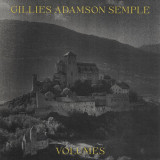
Artist and musician Gillies Adamson Semple explores the material resonance of drone
on new vinyl-only album Volumes.
In 2022, Gillies Adamson Semple made a pilgrimage to the Valère Basilica in the Swiss Alps to play the oldest functioning pipe organ in the world. Built in 1435, this unique instrument is the centrepiece of this sensitive and stirring 6-track release, tracing the elemental themes of spirituality, anatomy, ecological collapse, and the nature of listening in its glacial minimalist drones.
Drawing inspiration from the long-form compositions of Sarah Davachi and Kali Malone, Volumes was built from in-situ recordings Semple made in Switzerland, with the aim of capturing the physical qualities of the sound, from the stops and pedals to the air rushing through the organ’s ancient pipes. Treated like sculptural material and re-assembled at Semple’s London studio in the tradition of musique concrète, the tracks evoke a sense of exquisite timelessness, at once part of and floating free of their environment.
As Semple explains: “What I like about the organ is that you can make it feel very physical. It has all these mechanical parts that sound really beautiful. And the piece is never performed. It is something that is rooted in the site. The whole pilgrimage to see this organ in Switzerland ended up acting like that, where you’re going to this very sacred place to see this specific instrument, but all you’re taking back is recording.”
Released on vinyl via Fourth Sounds, Volumes was initially conceived as the soundtrack to Semple’s 2023 exhibition of the same name at Cedric Bardawil in London.
Edition of 200 with risograph insert, liner notes by Anton Spice. Fully remastered for vinyl.
“Dedicated to the Island” is a new album by Kaoru Inoue, a Japanese DJ/music producer also known as Chari Chari.
Initially released as a CD supplement to Saunter Magazine 06 “Yakushima 2023” issue, and through a new process, its vinyl record will be released for the first time on Record Store day 2024. A gem of nine organic, electronic, balearic, and ambient techno tracks including "Tobitatsu", “Mizukumi”, “Nagareru”, and “Hoshifuru” produced based on field recordings made in Yakushima Island.
180-gram audiophile weight black vinyl with a printed double-sided insert, RSD limited edition.
A landmark publication celebrating the life and work of American musician and composer Arthur Russell, the man the Guardian called 'One of the 20th century's true musical visionaries'
The music of Arthur Russell defies classification. From his pioneering compositions as part of New York's vibrant avant-garde scene (alongside artists including Philip Glass, David Byrne, Laurie Anderson, John Cage, and Allen Ginsberg) to his genre-expanding disco productions, from his new wave and art pop to his posthumously released folk songs, Russell crafted timeless and foundationally influential work until his premature death in 1992 from AIDS-related illnesses.
Now, in a landmark publication assembled by critically-acclaimed writer Richard King, Travels Over Feeling collects the extensive ephemera found in Russell’s New York Public Library archive, along with pieces from the personal collections of those who were closest to him. Combining unseen visual material—handwritten scores, lyrics, photos, letters, and drawings—with new texts by King and extensive original interviews with Arthur’s collaborators, contemporaries, family, and friends, Travels Over Feeling paints a portrait of Arthur Russell unlike any which has come before, revealing a true picture of one of the most distinctive artists of the last fifty years.
Charles Arthur Russell Jr., better known as Arthur Russell (May 21, 1951—April 4, 1992) was an American cellist, composer, producer, singer, and musician from Iowa whose work spanned a disparate range of styles. After studying contemporary composition and Indian classical music in California, Russell relocated to New York City in the mid-1970s, where he became involved with both Lower Manhattan's avant-garde community and the city's burgeoning disco scene. His eclectic music was often marked by adventurous production choices and his distinctive voice. He died from AIDS-related illnesses in 1992.
Richard King was born in South Wales and for the last twenty years has lived in the rural county of Powys, in mid-Wales. He is author of Original Rockers (2015), which was shortlisted for the Gordon Burn Prize, and How Soon Is Now? (2012), which was Sunday Times Music Book of the Year. The Lark Ascending was published in 2019, and was a Rough Trade, Mojo, and Evening Standard Book of the Year. His latest book, Brittle with Relics, was published in February 2022.
"Klara Lewis and Yuki Tsuji's collaboration builds on Tsuji's singular guitar playing and Lewis's resolutely explorative soundscapes. Salt Water is their debut album.
Klara Lewis is a sound sculptor and loop finder. She has spent the last decade creating albums equally tender and brutal for Editions Mego as well as in collaborations with Nik Colk Void, Peder Mannerfelt and now Yuki Tsujii. Lewis has presented her audiovisual work at festivals such as Sonar, Mutek, Dark Mofo and Atonal.
Yuki Tsujii is a guitarist from Japan-via-London, now based in Stockholm. In the last 15 years, as a member of Bo Ningen, Tsujii has performed extensively across the world in festivals such as Coachella, Glastonbury, and Yoko Ono’s Meltdown and collaborated with artists across different disciplines such as Faust, Lydia Lunch, Keiji Haino, Alexander McQueen and Juergen Teller."
Bank NYC is very excited to present the definitive statement of Collector, "No Prospects". Collector is the solo guise of Jason Campbell, resident of Newcastle, Australia. Since 2014, Campbell has been channelling the industrial malaise of his hometown through his unique take on heavy electronics. After a series of releases on global-spanning labels such Steel City Dance Discs (UK), Nice Music (AUS), Clan Destine (SCO) & Night People (US), the debut long-player for Bank NYC finds Collector embracing true album form for the first time in his discography. Across eight pieces, Collector delivers a bleak sonic narrative via a hardware-only approach to production: Analog drum machine patterns are intricately intertwined with menacing synth lines, and driving bass is met with the unrelenting clatter of tightly-sequenced field recordings taken straight from the heart of local industry.
Thematically, "No Prospects" navigates the downfall of Newcastle's BHP Steelworks at the end of the 20th century. Acknowledged widely as the largest de-industrialisation event in Australian history, the closure of the Steelworks in 1999 marked a dramatic cultural shift where blue-collar vocations were vanquished due to an economic slump, and were consumed by the trending cosmopolitanism seen in adjacent cities. "No Prospects" draws on Campbell's family lineage in the Newcastle's steelworks, providing a rich, personal context to an industry that both gives and takes away. The sharp intensity of the album is sustained by dramatic shifts in pace: the devestating slow burners of 'Two From Five' and 'Ricochet' are instinctually offset by the frenetic 'CFT' and 'Workers Club Collapse', which showcase Campbell's no-nonsense approach to shaping an almost club-ready breed of modern industrial techno. Although diverse across both sides, cohesion is found in Campbell's toolkit of samples that are unmistakably Collector. The album's eponymous track, 'No Prospects', serves as an introspective centrepoint - a largely arrhythmic excursion shrouded in familiar brooding, textural drones, and underpinned by the chug of machinery on the brink of collapse.
Although forever indebted to the spirit of local electronic outcasts, Bloody Fist Records, Collector's "No Prospects" is a remarkably distinct statement straight from the heart of Australia's Steel City. The complexity of arrangements speak to Campbell's long association in experimental music communities, whilst the persistent feeling of dread conveys a uniquely regional story of decay and futility. Pure Novocastrian industrial electronics.
Big Vern, also known as DJ Vern was a resident DJ on Weekend Rush, a pirate radio that broadcast out of the Nightingale Estate in Hackney. To be precise, it broadcast out of the Embley Point high rise, the same tower that Kool FM as also broadcasting out of at the same time. It was here that Vern met DJ Ash, a resident of Kool FM and the two of them joined forces for their release on Tearin Vinyl in 1994.
Around the same time as the two of them teamed up, Vern was also running his own label, World Bass Records. It was on this label that Vern formulated his own distinctive East London sound of Jungle. His debut release on the label in 1994 – The V Experience EP, was a 3 tracker that received a lot of rotation back in the day. This release was followed a 12” in 1995 which had one of Vern’s tracks on there – ‘Vision’.
Fast forward 27 years to 2022 and Vinyl Fanatiks have repressed all 4 of those tracks on one EP titled ‘Vision Of Experience’, an EP that showcases the raucous sound of Vern and his integrate and rambunctious skill and ability to manipulate a sampler to create some of the heaviest jungle of the era.
Both of the original releases are highly collectable and withstand the elements of time and capable of going toe to toe with any recent jungle output from the 21st century.
Support the architects…
out of Stock
Last delivered 2 years ago available to reorder, subject to availability
In The Red Records is proud to announce a previously unreleased new album by Brooklyn-born master of minimalism Alan Vega, Insurrection. The eleven songs here showcase the unparalleled vision and uncompromising force from one of the most influential artists of all time. Alan Vega was born in Brooklyn in 1938. He co-founded the legendary New York City punk band Suicide with Martin Rev in 1970. Suicide’s groundbreaking 1977 debut is considered one of the most influential albums of all time. Vega considered his solo records the audio counterpoint to his visual art that reflected the world around him while simultaneously exploring universal themes. It makes his work as relevant today as it was when he created them. It was during his highly experimental period beginning in the late ’80s that he began working with Liz Lamere, who became the most crucial collaborator of his solo career until his death in 2016. Lamere, along with Jared Artaud, resurrected these newly unearthed collection of lost recordings, which they co-produced and mixed. Lamere and Artaud spearhead the Vega Vault project, which aims to bring rare, unreleased and back catalog work spanning Alan Vega and Suicide’s career to the public for the first time. On Insurrection, Lamere says: “Insurrection was created in the time period around 1997/98, after Mutator and prior to Vega’s 1999 release of 2007 and captures the intense energy of NYC in the ’90s rife with crime, killing, hate, fascism, racism, and moral bankruptcy. You can hear the tortured souls floating through this album. Post-Gulf War angst still enveloped Alan. He was having premonitions about a major terror attack in the US, well before 9/11. The upcoming birth of his son raised further awareness of the state of our world. All these emotions are mirrored in the sounds he magnetized. And true to Vega form, there remains hope and empowerment coursing through the tracks. In the almost three decades of going into the studio with Vega, we recorded significantly more material than the seven albums released. Vega’s intention was to experiment with sound which would become the canvas for the poetry that reflected his vision of the universe. Because the goal wasn’t to make albums, he had no timeline or constraints and would freely follow new paths uncovered along the way.”
Darning Woman is an intentional, beautiful, sometimes confrontational album that shreds expectations of DIY, bedroom music, and feminine themes. There's a lushness and maternal instinct at play, as Coope connects the dots between physicality, ephemera, and the ultrafeminine. "I don't really like to deal that much with themes of personal hardships, or heartache and love," says Anastasia Coope. "Ultimately, I work most honestly with the language of what is happening in a moment and the passage of time around it. That, coupled with my reaction to entering the artistic landscape, and my thoughts about what does and doesn't get representation, comprises most of this album." Darning Woman explores, among other things, the meditative aspect of sewing, patching and embellishment, care and repair, collection not as modern, craven consumption but as a counterpoint to materialism. This sort of collection - the good kind, the gathering of things to make a home - can be, in Coope's words, "A very baby way to critique capitalism. Birds make nests, right? It can be a new life for a thing that was made. What you surround yourself with matters." To that end, Anastasia Coope is also the founder and leader of the Bonzo collective and show series, an exciting new home for the type of expansive, profoundly creative scene that New York has been missing for some time. And while Bonzo may well be the ascent of a new community, Darning Woman is the story of Anastasia Coope, herself. It is the sound of Coope entering the world as an artist, acknowledging the tangle of what changes - the gaze of the world, Coope's art in reaction and community to art in general - and what does not: her ideas and her own self.
Darning Woman is an intentional, beautiful, sometimes confrontational album that shreds expectations of DIY, bedroom music, and feminine themes. There's a lushness and maternal instinct at play, as Coope connects the dots between physicality, ephemera, and the ultrafeminine. "I don't really like to deal that much with themes of personal hardships, or heartache and love," says Anastasia Coope. "Ultimately, I work most honestly with the language of what is happening in a moment and the passage of time around it. That, coupled with my reaction to entering the artistic landscape, and my thoughts about what does and doesn't get representation, comprises most of this album." Darning Woman explores, among other things, the meditative aspect of sewing, patching and embellishment, care and repair, collection not as modern, craven consumption but as a counterpoint to materialism. This sort of collection - the good kind, the gathering of things to make a home - can be, in Coope's words, "A very baby way to critique capitalism. Birds make nests, right? It can be a new life for a thing that was made. What you surround yourself with matters." To that end, Anastasia Coope is also the founder and leader of the Bonzo collective and show series, an exciting new home for the type of expansive, profoundly creative scene that New York has been missing for some time. And while Bonzo may well be the ascent of a new community, Darning Woman is the story of Anastasia Coope, herself. It is the sound of Coope entering the world as an artist, acknowledging the tangle of what changes - the gaze of the world, Coope's art in reaction and community to art in general - and what does not: her ideas and her own self.
Yes, *that* Al Hirt record. Featuring the godlike "Harlem Hendoo", looped unforgettably by De La Soul for the legendary Buhloone Mind State cut, "Ego Trippin' (Part Two)"!
Al Hirt's infamous Soul In The Horn is inextricably tangled up in crate-digger lore. Originally released in 1967, the album has been in heavy, heavy demand for over 30 years, entirely down to the majestic soul-jazz fire of "Harlem Hendoo". And it's a song so good, so vital, so timeless, that it will always tower above everything else in its proximity. This one track alone is worth the price of admission - even if the cost of entry were $100 or even $1000.
However, it would be an error to dismiss this record as merely a one tracker, loaded as it is with dope samples for adventurous beat makers. Certainly the funkiest Al Hirt record, it definitely lives up to the "soul" in the title. Thanks to composer Paul Griffin and arranger Teacho Wiltshire, Hirt got uncharacteristically free and groovy throughout. It comes on more like an obscure KPM library funk record than the easy listening Al was notorious for.
A Louisiana trumpeter and band leader who made Allen Toussaint’s “Java” famous, Al Hirt was also known for TV themes, Dixieland, Swing and being a minority owner of the New Orleans Saints. Unlike every other Al Hirt record - and despite most "diggers" claiming otherwise - this here gem is genuinely hard to come across "in the wild". Normally, you can't give Al Hirt records away, except this particular one, which raises pulses in the crate digging community to life-threatening levels. For every owner claiming to have found their copy for a dollar, there's scores more claiming to have *never* unearthed one in the field. So, paradoxically, you can consider this the most tricky-to-pull "thrift store record", ever. This is why we're finally making it available for everyone, not just those with endless hours to spend scouring the global goodwills!
Soul In The Horn represented an expressive detour into authentic soul-jazz for Al Hirt. Throughout, we're struck by a fierce, fiery energy that's otherwise absent from his typically easy listening work. Without question, the slinky, magical "Harlem Hendoo" is the standout, here. It's also the reason why the record is so scarce and commands awe among crate diggers, sounding like something from an obscure and deeply revered spiritual jazz record. As is often the case, the true genius of the song is tricky to do justice to; it's like a minor miracle of songwriting and performance that simply swooned down from the heavens on the back of horns, bells and harpsichord. It's one of the sweetest musical compositions ever recorded inside a studio - it's only failing is that it's just too short. Sampled brilliantly by De La Soul, it has also been used by The Roots for "Stay Cool" and Nightmares On Wax for "Damn".
The rest of the record makes for a mighty fine listen. From the opening cover of Booker T. & The MG's "Honey Pot", to the propulsive, ultra-funky "Mess Around", it's nothing but a good time. Given its title, the elegant stepper "Calypsoul" sounds exactly as you'd hope whilst the melancholic, wistful "Long Gone" hurts so good. Truly, this is just dying to be looped up, Al's muted playing capturing a soulful longing only horns can often achieve. The bluesy, slo-mo swing of "Sweetlips" oscillates between cool disaffection and swelling pride whilst the graceful, low-key funky "Girl" closes out the A-Side in the fine style. Ushering in the B-Side, the brief but brilliant strut of "Love Ya' Baby" shines brightly before the skipping funky-jazz of true highlight "Sunday-Goin' To Meetin' Time" demands both your attention and your dancing shoes. The mellifluous piano-funk of bass and horn-drenched "Snap Back" serves as the sumptuous prelude to "Harlem Hendoo"'s main character energy before the irrepressible, upbeat R&B of "Ludwig" closes out this quite remarkable album. An album deserving of a place in every serious record collection.
The audio for Soul In The Horn has been carefully remastered by Be With regular Simon Francis, ensuring it sounds better than ever. Cicely Balston's expert skills have made sure nothing is lost in the cut whilst the records have been pressed to the highest possible standard at Record Industry in Holland. The original sleeve has been restored here at Be With HQ as the finishing touch to this long overdue re-issue. This is after-hours music. Let it speak for itself. Listen. Listen to the soul in Al Hirt's horn.
out of Stock
Last delivered 22 months ago available to reorder, subject to availability
1STEP Process 180g 45rpm Double LP Pressed on VR900-Supreme Vinyl!
Mastered from the Analogue Mix-Down Tapes of the Original Digital Recording by Bernie Grundman!
Ultra-Luxe "Monster Pack" Jacket with a Deluxe 16-Page Booklet & Striking Outer Slipcase!
New lacquers cut after each run of 500 pressings!
Strictly Limited to 5,000 Numbered Pressings!
Impex 1STEP #5 celebrates Patricia Barber's 1999 "return" to The Green Mill, Chicago's fabled jazz club. Conceived as a "companion" to her Grammy-winning studio album Modern Cool, Companion finds Barber and her touring band in inspired form, playfully and energetically performing hits and deep tracks from her celebrated oeuvre.
The dynamic interaction between the artist and her reverent audience adds a palpable sense of space and community. At the same time, the fans' hushed attention creates a studio-like sense of precision and detail. The snap and crackle of Barber, her grand piano, and her onstage partners practically leaps off the groove into your listening room!
Companion's fan-favorite reputation is enhanced immeasurably by Jim Anderson's jaw-dropping, lifelike recording. Eschewing the crystalline sterility of digital recordings of the time, Anderson's sound is always warm, natural, and lacking unforced "hype."
Like Anderson, Impex aims to present great recordings that are as natural as possible. And we couldn't wait to put our favorite Patricia Barber release, using Jim's analog mix-down master tapes, on 180 grams of VR900 Super Vinyl. The deep, inky black backgrounds and absence of surface noise will pull listeners right into those three evenings in 1999, capturing a seminal modern jazz artist at a creative and professional peak and reveling in a perfectly rendered and joyous audio time capsule.
Finally, our deluxe Impex Treatment packages the whole party with a lovely outer slipcase, a booklet containing a new note from Patricia, and a dazzling array of photographs from the evenings by frequent Barber collaborator Valerie Booth, exclusive to our 1STEP. Heavy paper stock with spot gloss coating and a faithfully recreated exterior design will satisfy original fans and aesthetes throughout the music-loving world.
For fans of Duster, LSD and The Search for God, The Microphones. Double LP (NO BOOKS!) First official physical copy of fan-made compilation of alternate tracks and demos from cult phenomenon album Deathconsciousness. Freshly remastered. With the broader adoption of the internet around the turn of the century, how people would engage with and discover underground music would change forever. As a result of the new digital era, DIY was now worldwide, and no band embraced this new frontier better than Have A Nice Life. Formed in 2000 by duo Dan Barrett and Tim Macuga, the Middletown, CT-based pair would, throughout the 00s, self-release and share a number of demos and home recordings via early social media channels as well as establish its in-house label ENEMIES LIST HOME RECORDINGS. These first steps set in motion Have A Nice Life’s rise to renown as an icon of underground music in the internet age, culminating with the release of its pivotal 2008 debut album, Deathconsciousness. Through word of mouth and online discussion, Deathconsciousness became subject to viral praise thanks to its synthesis of bleak post-punk, lo-fi shoegaze, and carpets of hypnotic drone music. Eventually, this humble self-released project would attain the status of a post-internet cult classic, amassing Have A Nice Life a fervent online following that the band would interact with in kind. In an effort to thank and continue to engage with Have A Nice Life’s internet cult following, Barrett and Macuga would regularly share links to old demos, works in progress, and outtakes from the recording of Deathconsciousness. Over time, a group of fans would compile these demos into an unofficial release. Dubbed Voids, this fan-made compilation several alternate takes of tracks from Deathconsciousness, as well as a handful of early versions of songs that would appear on Have A Nice Life’s two following albums, The Unnatural World and Sea of Worry. While undeniably reminiscent of their final album version counterparts, the earlier versions of these tracks each feel distinct in a way that makes the moody, decidedly lo-fi aura of Voids an essential slice of the Have A Nice Life discography. Hungry for more from the enigmatic duo, fans swarmed around this compilation, accompanied by loud calls for it to receive a physical release. Seeing that demand and with the band’s blessing, a pair of fan-made tape pressings of Voids would be released via Music Ruins Lives, a DIY label run by Have A Nice Life superfan Thom Wasluck, also known for his band Planning for Burial. Between both instances of the tape swiftly selling out and the compilation’s long absence from streaming services, Voids has historically been an elusive release to track down, only available in the obscurest corners of the internet or physically on the secondary market at eye-wateringly high prices.
Over a decade since its initial, unofficial release in 2011, The Flenser is proud to reissue Have A Nice Life’s Voids for the first time ever in an official capacity in physical form. Originally released digitally in early 2023 and freshly remastered for the occasion, this reissue of the beloved compilation will receive its first-ever wide release on physical formats (CD/LP/Cassette). This release also marks the first time fan-favorite tracks from Voids “Sisyphus”, “I’m Doctor House”, and “Human Error” will be available on vinyl and CD. Like a symbolic passing of the torch, the physical versions of the 2023 Voids reissue come with a foreword essay written by Wasluck, the previous custodian of Voids during the Music Ruins Lives days.
Available on “Green Tea” colored vinyl, limited to 300. Remixed by Chris Teti & remastered by Kris Crummet for 10th Anniversary. Recommend If You Like: Prince Daddy & the Hyena, Into It. Over It., Blink-182. Maybe it always had to be this way. Posture & the Grizzly formed in Connecticut, in '08, and churned out a couple of demo tapes before dropping their debut LP in early 2014. Busch Hymns was scrappy and raw, all weed smoke and pent-up fury. Songs like "Egg Nog Drunk Off Hilary Duff's Piss" (yeah) and "You Know I Know What You Did Last Summer" exemplify the band's charm perfectly crystalline, wobbly leads ready to burst under bouncy hooks equal parts snarl and singalong. Just a glance at the tracklist lets you know what Posture & the Grizzly's all about: eight goofily titled songs in and out in eighteen minutes. Just in time for the LP's tenth anniversary, it's been given a remix by The World Is…'s Chris Teti, who originally produced and engineered the album back in 2013, along with remastering from Kris Crummett (Knuckle Puck, Dance Gavin Dance). Sometimes when an album like this is remastered, it loses some of its charm; the gloss crowds out the grit, the whole thing is recolored a bit too bright. But not so on Busch Hymns—these songs are crisper, but that doesn't mean they're cleaner. J. Nasty's throaty howls are as ragged as ever, but this time around they stand out against Piss Malone and Cabbage Pile's rhythm section, no longer straining for spotlight but basking in it. Their sound would get streamlined a bit over the course of their next two albums, I Am Satan and Posture & the Grizzly, replacing some of Busch Hymns's bite with a clearer-eyed sparkle and a newfound melodicism. Busch Hymns stands now as a document of the cult punks' early days, a transitional period from their throat-shredding demo days to their all-too-brief time as a pop-punk juggernaut. It's clearer than ever with the Busch Hymns remaster that Posture & the Grizzly was meant to sound like this, was meant for more than basement shows and beer-soaked floors. In this light, Busch Hymns is more than a transitional period; it's a glimpse into the greatness to come. So if you're sick of listening to modern punk too, then quit it. Listen to Busch Hymns instead
Tuk Smith & The Restless Hearts is an American rock band from Nashville founded and fronted by former Biters leader Tuk Smith, originally from Atlanta, now living in Nashville. The band released their debut single "What Kinda Love" on January 10, 2020 and were also added as an opening act for The Stadium Tour with Def Leppard and Mötley Crüe on the same day. Then came the onset of Covid 19. “When the pandemic hit, it was like hitting the reset button on my music career” recalls Tuk, “everything got taken away…album campaign, stadium tour, record deal. The world was in lockdown, and the only way to escape was to throw myself into writing. My thoughts began exploring the past, and the inspiration for the songs just came in tidal waves.”
The new collection is a rock ‘n roll silver lining that came out of the solitude and reflection of the pandemic. Ballad Of A Misspent Youth is the new single (and subsequent album of the same name) released summer of 2022 on Tuk’s new record label MRG, through Virgin Music. Tuk explains, “I decided to make a rock and roll record for me and what I like because there was no label, there was no committee involved…just me and my stories. I wanted to create a setting and an authentic feeling about everything. I reunited with long-time friend Dan Dixon and recorded these songs in his garage studio, and there is a purity to the work that came from all the circumstances of that time.” Growing up as an outsider in rural Georgia, Tuk found solace in hardcore punk acts like Black Flag and The Exploited. From there, Smith branched out into exploring seventies New York bands like The Dead Boys and New York Dolls, which lead him across the sea where he embraced first-wave British acts like The Buzzcocks and the Clash. Smith wasn’t just a casual fan of these acts, he was obsessed with them and traced their lineage with fervent dedication. “I was always into the Clash growing up and Mick Jones’ favorite band was Mott The Hoople, so through the years I ended up developing a love of the first wave of British glam, power pop and things like that,” he explains. Soon Smith was forming his own acts, touring relentlessly and building a following with his high-energy live shows, including his tour of duty as lead singer for the Biters, who he fronted for nearly a decade. He offers “Then after being on the road for years, I had a reckoning about where I was at and the future ahead. …I realized the only way to achieve something meaningful was to be a good songwriter…that clicked. I went on a musical diet where I stripped the obscure stuff away, and I really started focusing on the greats. When I started clicking that it was just about the songs, things changed. I had already put my 10,000 hours in the van to play in the dive clubs, but then I put my 10,000 hours into figuring out how to write. I also started working with other songwriters. I humbled myself… it was an education, like going to school.” Tuk elaborates, “I wanted to kind of branch out musically and do different things, and I figured to go solo would be better. My manager actually suggested I call my new band “The Restless Hearts” and that's what he would call me all the time. It was the title of a Biters song that people loved and I’d seen a few restless hearts tattoos at our shows along the way… and so Tuk Smith & The Restless Hearts was born. I was in a period where I changed everything including the way I lived my daily life. I experimented with different ways to tap into positive/creative energy…it was an evolving overall process (and still is).” Tuk summarizes, “Things used to be about debauchery, and now they’re more about dedication. I mean, I was always driven, but I was sometimes focusing on the wrong things. Now I focus on the music and the craftsmanship of writing and producing and performing. “
FIRST TIME ON VINYL
HALF SPEED MASTERED 180 GRAM VIRGIN VINYL PRESSINGS
INCLUDES COVER ART PRINT
INCLUDES EXCLUSIVE CHRIS ISAAC COVER VERSION
INCLUDES DOWNLOAD CODES FOR THE ORIGINAL MIX AND UNMIXED VERSION IN WAV AND MP3 FORMATS
Trentemøller is the Dane who did. He's been making electronic music of one kind of bent or another for over 15 years, first making his name as part of Trigbag, a live house act that toured extensively. But it's his solo material that has impacted on the dance community - and beyond. 'La Champagne' was a game-changer and his remixes of artists like Sharon Phillips secured his place as an artist with some serious chops. But that's not all he is. You can hear that yearning in his productions and it's evident here, a sort of Protestant northern European melancholy. He is aided on his journey towards the Baltic by some heavy hitters, of course: Velvet Underground, Mazzy Star, This Mortal Coil. But that's not the story, it's not where the plot comes from, it's not where we're going. It's just a little indicator to reassure you we know the way. No. For it's in the dark beauty of Low's tremulous 'Amazing Grace' or even the way that the Shangri-Las' '(Remember) Walkin' In The Sand', surrounded by the similarly inclined, takes on a funereal gait. As we navigate the flatlands of your mind, we're helped along by a generous sprinkling of Anders' fellow Danes, like Darkness Falls (the atmosphere of this mix aptly encapsulated right there), Ekko, Chimes & Bells and the Late Night Tales tradition, Trentemøller's cover of Chris Isaacs' 'Blue Hotel', sung by Marie Fisker and Steen Jørgensen.
Originally released in 2010 this mix has gone on to become a classic, it was never released on vinyl at the time, so due to public demand we have carefully mastered each track and carefully cut at half speed for optimum sonic reproduction.
A heavyweight astral shower of rhythm and vibes, Ash Walker’s third album ‘Aquamarine’ is set for release on
19th July via Night Time Stories / Late night Tales
An avid collector of jazz, blues, soul, funk, reggae, and all things in-between; Ash has DJed far and wide... from the infamous
Royal Mail squat party to the canals of Venice, spinning vinyl in Brixton with The Specials to scattering dub across San Francisco and LA.
out of Stock
Last delivered 6 years ago available to reorder, subject to availability
The Glorious Record Stand 75 is a classy display as well as a storage solution for vinyl records and offers space for up to 75 records.
The timeless design captivates with a combination of wood elements and sturdy acrylic glass. The construction of the Record Stand 75 is suitable for all vinyl formats (7’’, 10’’, 12’’) and allows, thanks to the grooved wood, comfortable flipping through the collection without records getting out of place. The useful angle of inclination on both sides keeps records from falling over.
Features
Classy display and storage solution for vinyl records
Offers space for up to 75 records
Stylish presentation in a timeless design, consisting of wood elements and sturdy acrylic glass
Suitable for all vinyl formats (7’’, 10’’, 12’’)
Comfortable flipping through ones record collection without records getting out of place thanks to grooved wood
Useful angle of inclination on both sides keeps records from falling over
Delivery without decoration
Technical Data
Consisting of 2x acrylic panels & 2x wooden brackets
Dimensions: 36 x 20 x 14.5 cm (w x h x d)
Weight: 0.64 kg
“Not a lot of people talk about the true origins of bluegrass music,” says Swamp Dogg, “but it came from Black people. The banjo, the washtub, all that stuff started with African Americans. We were playing it before it even had a name.” Blackgrass, Swamp Dogg’s remarkable new album, is no history lesson, though. Produced by Ryan Olson (Bon Iver, Poliça) andrecorded with an all-star band including Noam Pikelny, Sierra Hull, Jerry Douglas, Chris Scruggs, Billy Contreras, and Kenny Vaughan, the collection is a riotous blend of past and present, mixing the sacred and the profane in typical Swamp Dogg fashion as it blurs the lines between folk, roots, country, blues, and soul. The tracklist is an eclectic one—brand new originals and vintage Swamp Dogg classics sit side by side with reimaginings of ’70s R&B hits and timeless ’50s pop tunes—but the performances are thoroughly cohesive, filtering everything through a progressive Appalachian lens that nods to tradition without ever being bound by it. Special guests like Margo Price, Jenny Lewis, Justin Vernon, and The Cactus Blossoms all add to the excitement here, but it’s ultimately the 81-year-old Swamp Dogg’s delivery—sly and playful and full of genuine joy and ache—that steals the show. The result is a record that’s as reverent as it is raunchy, a collection that challenges conventional notions of genre and race while at the same time celebrating the music that helped make Swamp Dogg the beloved iconoclast he’s known as today.
These tracks are among my absolute favourites in the realm of house music. Their haunting grooves seamlessly blend into house, techno or even garage sets. Despite being recorded about 30 years ago the sonic quality remains unmatched for its time, embodying the essence of timeless music.
However, I’ve never been entirely satisfied with the sound of the original pressings. The vinyl limited total time length compromised the audio quality. Thus, I’ve long desired to remaster it in my studio and properly cut them, which led to our decision to undertake this endeavour.
I am immensely proud of this release and thrilled to include it in our exquisite collection on Pariter. YA.
out of Stock
Last delivered 2 years ago available to reorder, subject to availability
witching seaside ambience for a sound shaped by inner-city living, Atelier’s second full-length studio album, Lights Towards The Exit, channels the mood of a sleepless cityscape.
Lights Towards The Exit is Atelier’s second full-length studio album. After the release of Varsam Court at the end of 2019 on Lossless, run by mentors and friends Mathias Schober and Thomas Herb, the duo experimented with different ideas in the studio, and at the start of 2020 a common thread began to appear between a few of the tracks which laid the foundation for the sound of their second album.
Both Alexander and Jas moved to Berlin in the period before the release of Varsam Court from their hometown of Cape Town, South Africa, where their first album was written and recorded. Moving provided some challenges, particularly with what was the most essential equipment to bring from their previous studio set-up, but those limitations proved to be useful in incorporating new instruments and techniques to the recording process.
Lights Towards The Exit was written and recorded in different spaces in Berlin – from bedrooms in apartment blocks to three different studios across the city. The different locations all had a specific ambience – such as 4th- and 5th-floor bedrooms with busy street views; a studio with no windows in a typical old Berlin backyard complex forever under threat of being sold and gentrified; and a bigger studio with windows on the opposite side of the corridor overlooking the backyard of a mechanic workshop. The final details and edits were completed in Atelier’s current studio, in a contrasting area surrounded by office blocks, plazas, 9-5ers and, most importantly, their friends and colleagues.
Swapping the mountains, sea and seclusion for tall buildings, backyards and a new community, Lights Towards The Exit channels the sensation of being surrounded by people, but still feeling like you're on your own. The album was written through three years of cold winters, sweaty summers and a period where the world stood still during the pandemic. Frustrated with the cease of momentum, but still optimistic, Atelier disappeared from public view, abandoning social media to focus on recording, songwriting and experimentation.
It was a difficult time: the duo longed to perform and continue producing music, and the imposed limitations sometimes felt like an impossible obstacle. Ultimately, though, this would provide inexpected inspiration and influence the sound and direction of the new album.
The sound of Lights Towards The Exit is not a departure from their first album, but a progression: influenced by the new surroundings in the duo’s adoptive city, Atelier’s second album is an ode to first-time experiences, new languages, challenges, club culture and the shift from youth to maturity, as well as a balm to those stuck somewhere in between.
The overall sound is a lift not in tempo, but in energy, matching the openness needed to make a new start in a new place.
out of Stock
Last delivered 12 months ago available to reorder, subject to availability
Following the release of Eric Chenaux's last album Say Laura (2022), The Guardian wrote "the Canadian songwriter has one of the all-time great singing voices in popular music, an intensely romantic Chet Baker-ish instrument that seems to float with piercing direction, like a paper aeroplane thrown hard through mist." With Uncut describing his songcraft "as delicate and lovely as a rare orchid" and Record Collector praising the album's "sublime alien balladry" such are the accolades that have accrued throughout Chenaux's unique and consummately uncompromising solo music for well over a decade now. Delights Of My Life opens a new chapter for the singer/guitarist and formally introduces the Eric Chenaux Trio, with Toronto-based musicians Ryan Driver on Wurlitzer organ and Phillipe Melanson on electronic percussion. Driver is a longtime collaborator, appearing on several of Chenaux's solo albums (even embedded into the very title of the 2010 masterpiece Warm Weather With Ryan Driver). Melanson has a long list of involvements that include Bernice, Joseph Shabason, and U.S Girls, and a recent release with his Impossible Burger project on Chenaux's own experimental label Rat-drifting, but this marks the first fulsome involvement between the two as players on a recording. In many ways Delights Of My Life also picks up right where Chenaux's previous album left off, in its subversions of a classic, timeless jazz-inflected balladry, while the interplay of the trio formation indeed unfurls many new delights. Recording together at Chenaux's spartan home studio in rural France, Driver's harmonically warped organ and Melanson's electroacoustic sampling and percussion hold time in newfound ways. Where previously Chenaux relied on a freeze/sustain pedal and minimalist rhythmic triggers to generate both pulse and chordal foundations, Melanson now paints timekeeping with expressive and intricate colourations, through live deployments of fluid sampled percussion (including orchestral timbres like timpani, kettle drums, and woodblock) that blur the boundaries between acoustic and electronic. Driver also ramps up his role in the song arrangements (prefigured in his support playing on Say Laura), teasing out chords and melodic filigree on Wurlitzer that percolate more prominently with Chenaux's signature fried guitar solos and succulent singing. Both trio members add dulcet backing vocals, most notably on the 10-minute tour-de-force of fuzzed and ring-modulated swing "This Ain't Life" that opens the record. All seven songs on the album groove and sway, simmer and sparkle, like nothing in the inestimable Chenaux discography to date. Chenaux's tunes have the uncanny ability to sound like jazz standards; songs you feel you've heard before, though certainly never quite like this. Yet these are of course all originals, compositionally and interpretively, bent through an inimitable avant/out-music lens. Delights Of My Life conveys warm familiarity, shot through with the exuberantly experimental subversion and playful, even mischievous, iconoclasm that continues to mark Chenaux as defiantly, virtuosically, and genially one-of-kind.
EVERYBODY LOVES THE SUNSHINE is more than a classic.
It is “THE” summer anthem, one of the most covered and sampled Soul tunes by Roy Ayers and the Ubiquity family. This vinyl re-release has been eagerly awaited by music lovers worldwide.
This version was originally recorded as a cover version, produced by Soulciety Records for their label band project named The Soulsociety.
The performance was recorded with the original songwriter and producer of the song, Mr. legendary vibes controller and Soul superstar Roy Ayers.
This recording follows the original 70s feel and instrumentation of the 1976 version, but this time also features Roy Ayers prominently on lead vocals.
Another big difference compared to all other versions by Roy and Ramp is the fact that this version is arranged and produced as a midtempo track.
It will fit perfectly into any DJs set with a focus on Soul, Funk or Hip Hop.
For the first time ever, this classic is now available on a SEDSOULCIETY RECORDINGS 7” vinyl,
including the previously unreleased instrumental version on the flip side with added extra vibes by the master himself.
out of Stock
Last delivered 17 months ago available to reorder, subject to availability
SIMON AND GARFUNKEL’S SWAN SONG: BRIDGE OVER TROUBLED WATER FEATURES METICULOUS PRODUCTION, GORGEOUS SONGWRITING, AND HEALING SPIRIT
Sourced from the Original Master Tapes and Limited to 4,000 Numbered Copies: Mobile Fidelity’s 180s SuperVinyl 33RPM LP Plays with Staggering Detail, Clarity, and Definition
1/4" / 15 IPS analogue master to DSD 256 to analogue console to lathe
Unifying, soothing, comforting: Simon and Garfunkel's Bridge over Troubled Water quickly became the album of an era upon release in 1970, the benchmark set serving as a beacon of hope and hymn of reassurance during a time marked by polarizing changes, social unrest, uncertain politics, and the dawn of a new era. These uplifting reasons — to say nothing about the gorgeous songwriting, meticulous production, and watershed performances — attest to why it is more relevant than ever in our current climate. Music, Bridge over Troubled Water simultaneously suggests and proves, heals all wounds and lifts all boats.
The seminal effort Rolling Stone named the 51st Greatest Album of All Time reaches illustrious sonic and emotional heights on Mobile Fidelity’s 180g SuperVinyl 33RPM LP. Pressed on MoFi SuperVinyl and strictly limited to 4,000 numbered copies, this ultra-hi-fi collector's edition brings you closer to music that picks up where the duo's Bookends leaves off. You'll enjoy deep-black backgrounds and pointillist details. Seemingly every note, breath, and movement is reproduced with exquisite accuracy, clarity, and balance. Each rotation benefits from SuperVinyl’s ultra-low noise floor and superb groove definition.
The best-selling record in the U.S. for several years running and winner of six Grammy Awards — including nods for Record of the Year, Album of the Year, Song of the Year, and Best Engineered Recording — Bridge over Troubled Water endures as a staple of accessible sophistication, angelic elegance, effortless singing, unhinged ambition, and therapeutic spirit. While it would turn out to be the final studio set for a duo surrounded by creative and personal disagreement, Simon and Garfunkel's collaborative ethos and soaring harmonies — combined with reflective narratives centred on the American experience, friendship, romance, and farewells — combine to turn the 11-track work into a paean to resolution, reconciliation, calm, and balance.
Home to the legendary title track graced by Garfunkel's pacifying solo lead vocals as well as the equally famous folk ballad "The Boxer," Peruvian-based "El Condor Pasa," upbeat "Cecilia," and rock ’n’ rolling "Baby Driver,” Bridge over Troubled Water remains as renowned for its musical diversity as its lyrical poignancy. Moving beyond the templates they'd perfected on four prior albums, Simon and Garfunkel embrace a then-unimaginable swath of styles. Rock, pop, gospel, country, R&B, South American, and jazz strains course throughout the songs, each sparked with bold experiments yet grounded in a well-orchestrated melange of melody, rhythm, and classicism that makes everything personal, familiar, and warm.
Not for nothing is Bridge over Troubled Water one of the finest-sounding albums ever made. Featuring instrumentation helmed by members of Los Angeles' fabled Wrecking Crew as well as multiple choral and string sections, songs took hundreds of hours to complete and involved pioneering recording techniques. Evoking both Phil Spector's live"Wall of Sound" approach as well as inventive effects, Bridge over Troubled Water is a triumph of texture, atmosphere, and architecture. Our audiophile edition brings the record's unique traits to the fore.
Whether the reverberation generated by Garfunkel's cassette recorder on "Cecilia," echoing drums captured in a corridor heard throughout "The Boxer," automobile noises peppering "Baby Driver," layer upon layer of voices dotting "The Only Boy Living in New York," or echo-chamber percussion on the title track, details comes through with stunning accuracy, clarity, and dimensionality. In every regard, Bridge over Troubled Water exudes genius.
THE 1968 ALBUM ON WHICH JOHNNY CASH BECAME A LEGEND: AT FOLSOM PRISON AMONG THE MOST IMPORTANT AND POTENT STATEMENTS OF THE 20TH CENTURY
Johnny Cash already knew his way around Folsom Prison when he and his band stepped inside the institution’s forbidding walls on the morning of January 13, 1968 to record At Folsom Prison. He’d played there two years prior. But this time was different.
Cash took the stage that day for two shows amid a darkening sociopolitical atmosphere and a raging war in Vietnam, as well as the knowledge his career and health hung on by a thread. The Arkansas native shared many of the long odds and abject failures of the inmates for which he performed. The songs he chose, and the conviction with which he delivered them, say as much. The point at which Cash transformed from a country star into a legendary artist, and a bold statement about the American prison state and its commitment to rehabilitation, the triple-platinum At Folsom Prison remains one the most important, potent, and fabled records of the 20th century.
You can hear it echo off the walls of the room; pulse through the itchiness of the Tennessee Three’s acoustic-based boom-chick rhythms; crackle in the announcements conveyed over the intercom; ring in the comedy of the off-cuff remarks and pair of novelty tunes; sense it in palpable energy that wells up within Cash and his audience. And you can experience it like never before via Cash’s knockout singing. The bedrock foundation of all his music, the singer’s baritone resonates with profound degrees of depth, pliability, and passion that underscore how much this appearance meant to him — and the extent he was living the narratives.
Indeed, every song on At Folsom Prison serves a purpose and speaks to the conditions — mental, emotional, physical, geographical, legal, social — the inmates confronted on a daily basis. Beginning with the explicit messages of the opening “Folsom Prison Blues,” Cash makes it clear he understands and shares many of their plights. Not for nothing did the myth of Cash having done hard time persist for decades once this record hit the streets. That’s how real it is, and how dedicated Cash remains to conveying every note with the same truth he invests in the impromptu comments he makes between and amid songs.
Listen to the sorrow, regret, pity, and loneliness of Merle Travis’ “Dark as the Dungeon,” Cash pulling syllables til they threaten to break and inhabiting the mood of bleak phrases such as “pleasures are few” and “the sun never shines.” Witness the isolation, dejection, and sadness punctuating the walking-blues “I Still Miss Someone,” matched in gravity by a solemn reading of “The Long Black Veil” — a traditional dirge that involves murder, cheating, and deception. Cash cuts even deeper on a heartbreaking solo rendition of “Send a Picture of Mother” and plainspoken version of Harlan Howard’s “The Wall,” detailing a suicide disguised as jailbreak through cliched-jaw deliveries that softly curse the impossible situation.
In chronicling temptations, mistakes, mortality, punishment, and life “inside” — for better or worse, the stories of the disenfranchised, forgotten, written-off, and unrepentant — At Folsom Prison also has a blast playing the outlaw role. Cash captures wild-eyed craziness and out-of-control mayhem on a revved-up take of “Cocaine Blues,” taking extra satisfaction in its dastardly tales by way of voice that shifts into character for the sheriff and judge. The gallows humor and racing drama of “25 Minutes to Go”; quicksilver accents and resigned acceptance of “I Got Stripes”; train-whistle blare and twangy locomotion of “Folsom Prison Blues” — all fight the law only to see the law win.
Cash remains deeply committed at every moment, and inseparably connected with the tortured souls removed from the goings-on of the outside world. No wonder all but two songs here stem from the day’s first performance that saw Cash, Luther Perkins, Marshall Grant, and company give everything. As does the Man in Black’s soon-to-be-wife, June Carter. The couple’s fiery duet on “Jackson” scorches; their combination of surrender and fortitude “Give My Love to Rose” puts us in the dying protagonist’s shoes.
And with the closing “Greystone Chapel,” famously penned by convict Glen Sherley, who watched it all happen under the watchful eye of guards, Cash separates the corporeal from the spiritual, relaying lessons about salvation and survival. Heady themes to which he’d return for the remainder of his illustrious career.
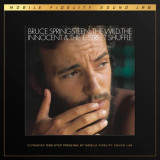
Released only eight months after his exhilarating debut, Bruce Springsteen's The Wild, the Innocent & the E Street Shuffle contains rousing dispatches from the boardwalk, the street, the beach, and the bedroom. It explodes with energy, dares to dream, teases with humour, crackles with tragedy, clings to hope, and overflows with discovery, youthfulness, and personality. It features an unforgettable cast of characters — corner boys, teenage hustlers, doomed lovers, jazz men, junk men, factory girls, fortune tellers, alley cats, pimps, escorts, and more — illuminated by vivid colour, breathtaking detail, and poetic action.
Musically, the heartfelt 1973 record is inhabited by sympathetic vignettes and cinematic arrangements steeped in rock 'n' roll, soul, jazz, and R&B. It finds the New Jersey native looking beyond the parameters of his preceding record and seeking to move on from environments he knows well (and chronicles here) by rushing headlong toward unknown territories, adventures, and people. Underpinned by the singer-guitarist's ambitious poetic enterprise and will to succeed, The Wild, the Innocent & the E Street Shuffle is the album on which Springsteen becomes the Boss.
Mastered on Mobile Fidelity's renowned mastering system, pressed at RTI on MoFi SuperVinyl, and strictly limited to 7,500 numbered copies, Mobile Fidelity's UltraDisc One-Step 180g 33RPM LP set is the definitive-sounding version of Springsteen's sophomore record. Benefitting from SuperVinyl’s nearly non-existent noise floor, superb groove definition, and dead-quiet surfaces, The Wild, the Innocent & the E Street Shuffle plays with a clarity, energy, presence, and openness that complement the expressiveness, dynamics, and scope of the seven restless songs that comprise a work Rolling Stone ranked the 345th Greatest Album of All Time.
Beyond the audiophile sonics that practically place you behind the console at 914 Sound Studios — listen to the separation between the instruments, natural decay of the notes, interplay within the widescreen soundstaging, and nothing-to-lose youthfulness of Springsteen’s voice — this reissue takes seriously this record’s influential merit by presenting it in packaging that underlines its status. Tucked in a beautiful slipcase, the LP is housed in a special foil-stamped jacket with faithful-to-the-original graphics. This reissue is made for listeners who prize sound quality and who want to engage themselves in everything involved with the invigorating set that busted Springsteen loose from the club circuit and landed him on the radio
Determined to liberate anyone within earshot and unafraid to come on strong, The Wild, the Innocent & the E Street Shuffle serves as the debut of the E Street Band — not only heard but seen for the first time by most of the public courtesy of the back-cover photograph. This is where saxophonist Clarence Clemons, organist-accordionist Danny Federici, and pianist David Sancious step out of the shadows — and drummer Vini Lopez and bassist Garry Tallent again stoke a fiery rhythmic engine that helps drive the untamed, reimagined big-band swing of “Kitty’s Back,” breathless R&B thrust of “Rosalita (Come Out Tonight),” and carefree dance steps of the funky “The E Street Shuffle.”
Of course, the main attraction remains a then-24-year-old visionary on the precipice of becoming a sensation and turning a then-bloated rock scene on its head. Recorded over three months while Springsteen and company were busy touring his debut LP, The Wild, the Innocent & the E Street Shuffle reflects the high-octane approach the vocalist embraced onstage and drifts away from the label-dictated acoustic-based frameworks of his debut. The set also witnesses Springsteen deepening his observational skills, with narratives such as the romantically tinged “4th of July, Asbury Park (Sandy)” and redemptive epic “Incident on 57th Street” mirroring changes taking place in the singer’s own life, small towns, and America at large.
A thrilling collision of memories, reflections, and composites — Sandy, Rosalita, and the latter’s parents are all based on actual people Springsteen knew, as is the community depicted in the opening track — the aptly titled The Wild, the Innocent & the E Street Shuffle resonates decades on due to its truths, authenticity, and spirit. Those characteristics — as well as the fact that many of its lengthy songs come on as the equivalent of sweaty, feverish soul revue that won’t stop until you’ve been exhausted — also explain how this now-iconic album triumphed over the reservations of industry “experts” that both demanded Springsteen re-record it and instructed deejays not to play it.
Yet there’d be no stopping a record that saw the past, present, and future, a band whose will would not be denied, and a phenomenon who was born to run. A never-ending invitation to act real cool and stay up all night, The Wild, the Innocent & the E Street Shuffle always feels alright.
DRAGONBALL SUPER is a Japanese anime produced by Toei Animation Studios. Scripted by original Dragon Ball author Akira Toriyama, it follows his work and begins shortly after my defeat of Boo in Dragon Ball Z..
"Four years after Boo's death, peace has returned to Earth, and everyone is living in peace.
Goku has become a farmer, and Vegeta spends time with his family. However, the desire to train and grow stronger never leaves them.
Goku goes to train with Master Kaio, who tells him that a powerful enemy has awakened from a 39-year slumber: Beerus, God of Destruction. The latter is looking for a warrior who appeared to him in a dream, the Divine Super Saiyen, against whom he wishes to measure himself."
The anime has been broadcast since 2017 in France on Toonami in a censored version, then in an uncensored version 1 month later. There are 131 episodes and 2 features.
The anime doesn't resume until 2025.
The Telescopes Radio Sessions collects together the essence of three live session recordings in 3 different countries over a three year period between 2016-2019. This is the third in a series of radio session releases from Tapete Records that have so far included The Monochrome Set and Comet Gain. More session releases are being lined up for the rest of the year and beyond - enjoy the sonics and stay tuned. Over the years I have read a lot on people’s impressions of The Telescopes. Some folk think it’s a collective, others imagine it used to be a band and feel nostalgia towards what they consider to be the original line-up (even though many had come before, during and since) and some people refer to it as currently a solo career. In a way this is all true and none of it is. When faced with these kind of questions, along with questions about the style of music that The Telescopes make I often say The Telescopes house has many rooms, which explains things perfectly for me but for people on the outside looking in it only serves to increase their confusion. For me, confusion isn’t such a bad thing. Everything is born into confusion, the sense we try and make of that chaos is interesting and excites me. The universe often disorientates, it sends me a jumble of thoughts and impressions coupled with a feeling of something I need to express… if I could only decipher the encryption. This is how The Telescopes music comes to be and it is also how The Telescopes came to me. I regard The Telescopes as an entity of it’s own that introduced itself in my darkest hour and I was chosen as its vessel. From the second it arrived I was obsessed to the point where there was nothing else. A bit like having an imaginary friend. As the obsession grew it began to infect others, everybody loved my imaginary friend and wanted a piece of it. As its success grew however, so did the corruption, until one day the entity fell silent. The silence lasted for years, I tried everything to reconnect but it was having none of it. I had been a bad caretaker, I had let the house become infested and I had lost my way. This epiphany served to remind me of simpler times when anything felt possible with this entity by my side. It had trusted me with something so simplistically profound and I had let it down. The realisation of this was a eureka moment. I am not The Telescopes, I never was and never will be, I am the caretaker, the lighthouse keeper and if a job is worth doing it is worth doing well. With this dawning, I felt a crack open up in the cosmic egg and a familiar confusion in my head. The entity had returned. It was time to start untangling its tangled threads once more, to make sense of what it was saying, this time without corruption. It’s all about listening. I listen to what my cosmic friend sends me and channel this expression into what you hear through your speakers. It may take one person to achieve this, it may take more. There is no set line up or instrumentation that can hold The Telescopes. Whatever it takes to hit the zone, whatever is available, absolute focus is imperative. Sometimes it takes sabotage to keep that line of vision intact, there is no room for preconceptions or complacency in making the music. The Telescopes music is the now
incarnate and a state of total being is necessary to achieve. From the outside looking in... again, it’s all about listening. What comes through your speakers is the only thing that matters. The music either reaches you or it doesn’t. Everything else may seem interesting or confusing but ultimately it is corruption. So if you’ve bought the record, read the sleeve notes and bought a ticket to see a live show, don’t be surprised if the line-up is or isn’t the same as the recording. The only thing that is for sure is that The Telescopes as an entity is speaking to you in its own voice in every scenario.
Of course the difference between albums and live shows is that you can play the record over and over again to the point where you know every line and every note that was played. Whereas with live events you are left with an impression that can only be replayed in your mind. It can be frustrating at times. When you are touring with a great line-up and feel like something exciting is happening, you want everyone to hear it, not just the people at the shows but the people that couldn’t make it on the night as well. There is no guarantee that there will be the same line-up at a live show as there is on the album. This is why live sessions are important, they document a side of things that is often fleeting. Here we have three sessions, all different people transmitting The Telescopes sound on each. Some are regulars, some dip in and out and some were just passing through. In each case The Telescopes chose them as their vessel and as the lighthouse keeper I did everything I could to help them on that journey while trying to be a good caretaker to the house of many rooms. The Telescopes have been invited in for many sessions over the years, the first two were for John Peel on BBC Radio 1. We also recorded a session for Marc Riley and Mark Radcliffe before their
celebrity when they had a show on BBC Radio Manchester. We could have compiled this album from those sessions, it was certainly considered but Tapete and myself believe this selection gives an exciting glimpse into that fleeting side of The Telescopes in a constant state of flux that is left mostly to myth and imagination. For those who listen to the records but have never had the chance to take in the live experience, welcome to the other side. For those that follow us live, here’s a little reminder and a keepsake. Infinite suns. Stephen Lawrie February 2024.
Limited Pink w/ Purple & Cream Swirl Vinyl. To celebrate the 10 Year anniversary of their album The Things We Think We're Missing, Balance and Composure teamed up with longtime collaborator Will Yip to track the record live for a one-time livestream event in late 2023. That performance has been pressed to vinyl & is now available in a one-time vinyl pressing.
"Let The Canary Sing" ist eine Best-Of-LP, die Cyndi Laupers Karriere von ihren Anfängen bei "Blue Angel" über ihre Durchbruchssingle "Girls Just Want to Have Fun" bis hin zu ihrem ikonischen Popstar-Status nachzeichnet. Mit Hits wie "True Colors", "I Drove All Night" und weiteren ist diese Kollektion ein Muss für jeden Fan von Cyndi Lauper.
out of Stock
Last delivered 2 years ago available to reorder, subject to availability
10 Year Anniversary Gatefold 2LP 10 year anniversary gatefold 2LP edition of Cult of Luna's take on Fritz Lang's Metropolis film, Vertikal. "Somewhere Along The Highway" and "Eternal Kingdom" were inspired by the landscape of Västerbotten, the county we are from. We realised that there was only one way to go for us: to the city, into the future. Making a droney John Carpenter-esque album would be too easy and we've never been about taking the simple route. I was studying film at the time and had been floored by the aesthetic of German expressionism. This resonated perfectly with Erik Olofsson, who had just got into Italian futurism. This was a real challenge. We put in a lot of effort to realize our vision of the stale, artificial city in all aspects of what an album is. The way we played guitar (only down strokes), the production, artwork and band photos, everything was done with the vision as a guide. "Vertikal" is the album where we had the most precise vision of what we wanted to do and worked hardest to transform it from an idea into reality. A lot of things happened during the years between "Eternal Kingdom" and "Vertikal" and I could continue writing for ages but this will do for now. Ten years have passed since its release and what felt like a rebirth of the band, the band that is still ongoing with new goals and missions. It's a full circle kind of thing. At the time we had no label and now we are releasing it on our very own. Life is strange. Johannes Persson - Umeå December 2022
The Shadow Ring (1992-2002) presents a comprehensive overview of the work produced by British musicians Graham Lambkin, Darren Harris, and later Tim Goss over the course of a decade. Throughout their legendary ten-year run, this shambolic rock outfit, formed by a group of teenagers in the port town Folkestone, were an enigmatic force on the international musical sub-underground. The group have left behind a mighty run of eight LPs, a handful of 7-inches, and a spate of raucous live shows and cryptic zine appearances on both sides of the Atlantic. Collected here for the first time are The Shadow Ring's live cuts, rarities, and complete commercial releases, spread out across eleven CDs and a DVD, accompanied by an nearly five-hundred-page book that includes a monographic biographical survey, more than one hundred color photos, a comprehensive discography with transcribed lyrics, and a selection of zine appearances, fliers, postcards, and other miscellanea. In aggregate, this significant collection not only plums the depths of the band and its attendant lore, but reveals a vivid minor history of mail-order networks, bedroom recording sessions, cross-USA couch-surfing, and encounters with fellow travelers such The Dead C, Harry Pussy, Charalambides, Richard Youngs and the No-Neck Blues Band. Where is the connecting thread between Ralf Wehowsky and Squirrel Nut Zippers? Inquire within. The roughly 200 songs in this set trace the band from its earliest days recording in Lambkin's parents' house (SHP Studios), through its brooding mid-period, garnering word-of-mouth notoriety that peaked with the trio turning down an invitation to tour with Pavement, to a string of increasingly uncompromising experiments with electronics, voice, and tape. Although the band's sound morphs considerably during this time period, from spartan beginnings using pots and pans as a drum set to their ultra-deconstructed latter-day approach, certain core sensibilities are apparent throughout: brash youthful rawness, wry and morbid lyricism, stripped-down angularity, and a penchant for atmospherics. This boxset, featuring every record and single, and buttressed by twenty-nine rarely-heard recordings, including proto-Shadow Ring projects such as the Cat & Bells Club and Footprint cassettes, and their unearthed final CD-R Darren Harris Reads Graham Lambkin, presents the first opportunity to hear this arc in full. The ebbs and flows of the band_their schoolboy beginnings, initial successes, first shows and tours, life milestones, and Lambkin's gradual development as a solo artist_are painstakingly detailed in a sizable band history-cum-Künstlerroman by Blank Forms artistic director Lawrence Kumpf, illustrated with candid photos, sketches, letters, newspaper clippings, and other ephemera. The music and videos can speak for themselves, but taken as a mass, this collection makes sense of the group's utter uncanniness without comprising one iota of their mystique, bringing something new to the table for completionists and the uninitiated alike.