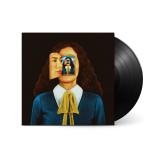
Flying Lotus has scheduled the release of 'Until The Quiet Comes', the long awaited follow-up to 2010's Cosmogramma and his third on Warp Records, for a worldwide release on October 1st.
Composed, according to Flying Lotus, as 'a collage of mystical states, dreams, sleep and lullabies', Until the Quiet Comes has the distinct feel of this nocturnal trip. From the twitching descent into a subconscious state and the out-of-focus time-ether of the journey that follows, the sound is an unhinged, yet elegant evolution of the melodic and rhythmic interplay that is woven into the DNA of Flying Lotus' aural personae.
nicht am Lager
Zuletzt vor 20 Monaten geliefert unverbindlich nachbestellbar
By the time Michael Nau completed Popfly, the songs felt less like compositions than companions. Arriving in fragments, notebook lines, and fleeting observations, these pieces kept company for years until taking their final form. The result is one of Nau's most openhearted, expansive records, both homespun and otherworldly at once. Radiant folk melodies, tape-warped textures, and flashes of everyday wonder coexist in perfect balance on Popfly. Nau has never been a songwriter who forces songs into existence. Instead, he follows them, trusting intuition over agenda and allowing songs to gradually reveal themselves. Writing and recording often blur together, with melodies evolving before lyrics are finished and stray recordings forming the basis for new songs. Popfly showcases these creative detours: thoughtful folk songs, sonic experiments, and accidental beauty transformed into fully realized compositions. Many songs began at home, growing in meaning. Since he entered the Vermont studio, Little Jamaica, with longtime friend and collaborator Benny Yurco, many of them had already lived several lives. "Studio recording feels like covering my own songs," Nau says. This idea flows throughout: performances are lived-in, feeling effortless, as if assembling itself. The title track carries a flicker of wonder in its simple observations. "New Slack" moves with the loose confidence of a song content to follow its own path. On "Lost Station Hideaway," soft static and fading signals become something strangely comforting, as if the song itself is being broadcast from somewhere just beyond reach. Family and friendship are deeply woven throughout the record. Nau's children contribute vocals, bringing warmth and spontaneity to the album's communal spirit, with longtime collaborator and wife Whitney McGraw lending her serene voice. The harmonies that drift from them extend the album's central impulse of people gathering to make something beautiful. Across Popfly, loose-limbed folk songs mingle with homespun psych-pop, porchside country-folk, dreamlike atmospherics, and quietly profound observations. The record moves with the ease of conversation among old friends, finding beauty in tiny revelations, strange coincidences, and everyday mysteries. The record is full of transmissions from different moments in Nau's life, stitched together by instinct, affection, and time. Taken together, they form a portrait of a life spent paying close attention to the world and its small miracles.
Like Roses aus Berkeley, Kalifornien, sind eine echte Macht. Offenherzige Texte über Liebeskummer, Verlust und Selbstreflexion treffen auf energiegeladene Hooks und rauen, melodischen Gesang, der geradezu dazu einlädt, lauthals mitzuschreien - eine Kombination, die der Band eine treue Fangemeinde sowie Nordamerika-Tourneen an der Seite von Acts wie Pierce the Veil, Neck Deep und Mayday Parade eingebracht hat. Seit 2018 ist die Band am Start, hat ein paar Singles und EPs veröffentlicht und präsentiert nun ihr erstes richtiges Album. "Gänzlich unprätentiös beschreiben Like Roses ihren Sound wie folgt: "Leute mit Instrumenten, die davon schreien, wie traurig sie sind - und zwar über den Lärm, den sie mit besagten Instrumenten machen." So weit, so emo. Aber eben mit Pop-Punk-Drive und einem Fünkchen Mathrock." - Visions 2023 "Emo is alive and well in the Bay Area band Like Roses, whose song "Wrist" captures the nostalgic sound of early-2000s melodic pop-punk through the lens of queer yearning" - "Wrist" (Like Roses), New York Times - Song of the Week Für Fans von Joyce Manor, Modern Baseball, Tiny Moving Parts
California’s beloved Brainstory returns with a new EP celebrating the end of an era. Shoebox Days is an homage to the time spent and the recordings made at their now defunct Long Beach studio, aptly named Shoebox. As the name suggests, the space was tiny and stuffed with gear. While charming, it was riddled with constraints. But, as has been proven time and time again, great art often comes from difficult circumstances, and this new 7 song EP is further proof. The first track, “The Watchers,” opens with an earworm horn melody that immediately pulls you in. The crunchy drums and G Funk bass tones put a bop on it, lush orchestration weaves in and out and sets a mellow vibe. “Blend,” one of only two vocal tracks on the EP, is a California sunshine soaked love song walking the lines of psych rock ballad and B side soul. ”Twin Kitchen” leans you right back into your seat, with Eric Hagstrom’s in-the-pocket drumming carrying the tune.
“Home Alone” is singer Kevin Martin’s ever so relatable tribute to time by himself, time by today’s standards as “disconnected,” but in reality, much more connected… The fellas let some of the jazz background take front stage on “Lone Traveler,” starting out with an air tight groove, and letting loose over it as the track progresses. “Gravity Hill” named after the famed California oddity begins the ending of the EP as Brainstory takes it deep and brings us with them. “Necessary Loss” serves as the closer to this gorgeous journey.
California’s beloved Brainstory returns with a new EP celebrating the end of an era. Shoebox Days is an homage to the time spent and the recordings made at their now defunct Long Beach studio, aptly named Shoebox. As the name suggests, the space was tiny and stuffed with gear. While charming, it was riddled with constraints. But, as has been proven time and time again, great art often comes from difficult circumstances, and this new 7 song EP is further proof. The first track, “The Watchers,” opens with an earworm horn melody that immediately pulls you in.
The crunchy drums and G Funk bass tones put a bop on it, lush orchestration weaves in and out and sets a mellow vibe. “Blend,” one of only two vocal tracks on the EP, is a California sunshine soaked love song walking the lines of psych rock ballad and B side soul. ”Twin Kitchen” leans you right back into your seat, with Eric Hagstrom’s in-the-pocket drumming carrying the tune. “Home Alone” is singer Kevin Martin’s ever so relatable tribute to time by himself, time by today’s standards as “disconnected,” but in reality, much more connected… The fellas let some of the jazz background take front stage on “Lone Traveler,” starting out with an air tight groove, and letting loose over it as the track progresses. “Gravity Hill” named after the famed California oddity begins the ending of the EP as Brainstory takes it deep and brings us with them. “Necessary Loss” serves as the closer to this gorgeous journey.
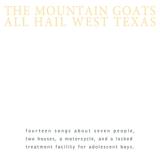
Das letzte der ,All-Home-Recordings-Alben" von THE MOUNTAIN GOATS und das einzige, auf das diese Behauptung wirklich zutrifft: ,All Hail West Texas" wurde ursprünglich als eigenständige CD beim inzwischen leider nicht mehr existierenden Label Emperor Jones veröffentlicht. Das ist etwa ein Jahrzehnt her. Die Songs wurden ursprünglich von den Kassetten, auf denen sie aufgenommen worden waren, bei Tiny Telephone von Alex Newport - der auch bei Fudge Tunnel spielte - auf 1/2-Zoll-Spulen übertragen. John war total begeistert, als ihm klar wurde, dass seine Bänder von dem Typen von Fudge Tunnel abgemischt wurden. Remastered von diesen Bändern, zusammen mit sieben wiederentdeckten Songs von den beiden erhaltenen Kassetten aus jener Zeit, gilt ,All Hail West Texas" als Höhepunkt der Heimstudio-Ära der Mountain Goats - einer Zeit, die man gerne als ,die Zeit, als John Darnielle seinen Vierspur-Recorder hatte" bezeichnet, obwohl John eigentlich gar keinen Vierspur-Recorder benutzt hat. Er benutzte das Kondensatormikrofon einer Panasonic-Boombox, und es gab keine Overdubs.
"Lost Weekend" ist das erste Album von Phoebe Bridgers seit dem mehrfach für den GRAMMY nominierten Vorgänger "Punisher" aus dem Jahr 2020. Bereits ihr gefeiertes Debüt "Stranger in the Alps", veröffentlicht kurz nach ihrem 23. Geburtstag, machte deutlich, welch außergewöhnliches Songwriting-Talent in Bridgers steckt. Mit "Punisher" löste sie dieses Versprechen eindrucksvoll ein: Das Album wurde für seine kluge, eindringliche und zugleich fesselnde Komposition weithin gefeiert und etablierte sie endgültig als eine der prägendsten Stimmen ihrer Generation. Wer nun "Lost Weekend" hört, wird jedoch feststellen, dass Bridgers noch einen Schritt weitergeht. Auf dem neuen Album präsentiert sie sich auf dem bisherigen Höhepunkt ihres künstlerischen Schaffens. Mit bemerkenswerter Präzision verfeinert sie die Motive, die ihre bisherigen Werke ausgezeichnet haben, und erweitert ihren Sound gleichzeitig um zahlreiche überraschende Facetten. Das Ergebnis ist ein Album, das vertraut wirkt und dennoch immer wieder neue Wege einschlägt. Vor ihren jüngsten Pop-up-Shows stand Bridgers zuletzt mit ihrer Supergroup boygenius auf der Bühne, die sie gemeinsam mit ihren engen Freundinnen Lucy Dacus und Julien Baker gegründet hat. Für das 2023 erschienene Album "the record" erhielt die Band mehrere GRAMMY Awards, darunter "Best Alternative Music Album" sowie "Best Rock Song" und "Best Rock Performance" für die Single "Not Strong Enough". Phoebe Bridgers verließ die Preisverleihung zudem als meistprämierte Künstlerin des Abends. Ihren vierten GRAMMY gewann sie in der Kategorie "Best Pop Duo/Group Performance" für "Ghost in the Machine", ihre Zusammenarbeit mit SZA auf deren Erfolgsalbum "SOS". Zuvor war Bridgers als Support-Act auf ausgewählten Terminen von Taylor Swifts "The Eras Tour" zu sehen. Davor absolvierte sie fast zwei Jahre lang ihre eigene "Reunion Tour" mit mehreren ausverkauften Nordamerika-Etappen, rund dreißig Konzerten in Europa sowie abschließenden Shows in Südamerika, Asien und Australien. Auch abseits der Bühne prägte Bridgers die vergangenen Jahre mit einigen der eindrucksvollsten Live-Performances im Netz und Fernsehen, darunter ihr viel beachtetes NPR Tiny Desk Concert sowie ihr Auftritt bei Saturday Night Live. Seit ihrem letzten Soloalbum veröffentlichte sie zudem zahlreiche Singles, Coverversionen und Kollaborationen mit Künstler wie Paul McCartney, MUNA, Bright Eyes, The 1975, Lorde, Taylor Swift und The National.
Coral Morphologic is the brainchild of Jared McKay and Colin Foord. A mending of minds, the arts, science, and the sea. Their lab in Miami lies close to the Florida Reef just offshore; the third largest coral barrier reef system in the world. This album composed by Jared echoes the voice of the reef. A reflection of its cosmic connection to our moon. A departure from the earth into deep space. We often wonder what intelligent life exists outside of our own aquatic world. Look and listen to the synchronous celestial satellites and the endless love song they sing. *features a foldout poster with album art by Robert Beatty
The legacy of wipE′out′′ has transcended time and cemented itself as a true transgenerational phenomenon. Launched in 1995, it didn’t just revolutionise the gaming industry, it created a bridge between the gaming ecosystem and the raver community. Its futuristic aesthetics and forward-thinking sound left a mark not only on mainstream audiences but also on the most demanding corners of the underground.
Decades later, the game’s impact is still alive. The release in 2023 of The Zero Gravity Soundtrack on Lapsus Records proved once again that wipE′out′′’s accompanying audio will go down in history as much more than just an anti-gravity racing game soundtrack.
This is why we decided to go deeper into the slipstream and build the second volume you’re now holding in your hands. Drawn from the original archives of Tim Wright, aka CoLD SToRAGE, this new collection surfaces unreleased cuts, pieces that couldn’t fit on the first edition, and a suite of self-authored ambient reworks that translate pure velocity into wide-screen atmospherics engineered for the long straights, the drone of airbrakes, the blue hour between checkpoints. It also reconnects the circuit, gathering selections and variants tied to later chapters of the saga — wipE′out′′ HD and wipE′out′′ Pure — plus alternative mixes that, until now, only existed in the Sega Saturn dimension of the franchise.
Finally, the material takes a leap into the future in the hands of four remixers especially chosen for this release: Tim Reaper, SHERELLE, Mantra, and NikNak, who collectively forge links between CoLD SToRAGE’s pioneering musical vision, the sound world of the game, and the contemporary breakbeats and drum & bass vanguard.
Expect the DNA you remember — accelerated breaks, trance-vector synths, jungle influences, sub-bass rumbling neatly beneath the craft’s hull, and at times even echoes of classic hardstyle — now revealed with new angles and air. The previously unheard material carries the same aerodynamic design sense that made these tracks feel faster than the track map itself, while the ambient versions open the field of view with melodies hovering at the lip of overdrive. Without a doubt, here you’ll find a strong sense of nostalgia. But this isn’t just nostalgia; it’s also proof that this sound world continues to evolve when you ease off the throttle.
For the faithful — crate-digging ravers, speed-run obsessives, and design nerds — this is an essential expansion pack: compiling rarities, restoring context, and reframing the emotional core of wipE′out′′ for late nights and early mornings alike. Bridging memory and momentum, club and console, rush and afterglow. Strap in.
Detailed tracklist, with annotations by Tim Wright aka CoLD SToRAGE
· Scratch Pad 1: “This track was composed using incomplete tracks that were developed around the time of the first wipE′out′′. It’s so long because it was used for a marathon-length Psygnosis promotional video.”
· Messij Received: “Messij was a firm favourite with wipE′out′′ fans, so it made sense that there’d be more where that came from — this was one of those re-workings.”
· God’s Gift: “I was always very fond of Erasure’s track Love to Hate You with the canned crowd FX sounds. God’s Gift was a tongue-in-cheek reference to how some musicians think they are just that. This was way before I even played live as CoLD SToRAGE.”
· Tentative: “I wasn’t sure about introducing some wacky beats and distorted sounds into one of the tracks, because it was kinda heading away from the other tracks, hence Tentative — but it turned out OK.”
· Canada 2048: “When wipE′out′′ 2048 was launched I decided to re-make Canada as a kind of tribute, but in a slightly new-tech, laid-back way, using Propellerhead Reason and all software synths.”
· Wiped Out: “Based on a few riffs from a MIDI file unused at the time of the original wipE′out′′ game compositions, this featured on my debut album MELT.”
· Body in Motion (Body Plus Mix): “A more trippy interpretation of Body in Motion that featured on non PlayStation versions of the game e.g. Sega Saturn.”
· Onyx (“Dark Side of the Moon”): “Onyx was my sole contribution to wipE′out′′ Pure on the Sony PSP handheld gaming console. This version was something I developed in a darker style, that eventually erupts into a crescendo.”
· Messij Received (WSTWGBE Mix): “Like I say, Messij was a hit with most wipE′out′′ fans, so when I was asked to compose more music for non-PlayStation versions, I adapted this tune into a parallel-universe version for PC and Sega Saturn. By the way, WSTWGBE refers to Who Said This Was Going To Be Easy?”
· Canada (Drunken Ausländer Mix): “In early 2018 I released a fresh album called Ch'illout′′, a re-working of many of my wipE′out′′ tracks in an ambient, Sunday-morning vibe style — it was a few years’ work, here and there.”
· Tentative (Woffenfum Mix): “Another chilled re-working of one of my wipE′out′′ tracks, the mix named with a nod to a good friend of mine, Carl Woffenden — someone who I've worked with for many years in the games industry.”
· Messij (Bobbing Boat Mix): “A nice cheesy computer blip-blop start belies its deep and upbeat chilled-out melodic finale.”
· Body in Motion (Timeless Techno Mix): “Another classic track given the chilled-out vibe mix, as featured originally on my Ch'illout′′ album. This one’s a really trippy, deep-space take on the original.”
· DOH-T (AM / FM Mix): “The idea with this chilled-out mix was to imagine all the melodic parts of this varied track being broadcast on terrestrial radio, so each theme drifts in and out through the radio static.”
· ’95 Future Echoes: “Originally developed as a companion album for wipE′out′′ HD, this track actually has its roots in a tiny loop of a song that never progressed to anything special back in the mid-’90s when I was composing for the original game.”
· Turbine: “Also from my wipE′out′′ HD album, it leans heavily into the upbeat, uplifting tunes from the original game, but also steals a bit of vibe and energy from The Prodigy, with those distorted flute sounds.”
· Pencil Neck: “This excerpt from my wipE′out′′ HD album features lots of sounds centre-stage and forward from Propellerhead Reason’s Subtractor virtual synth. I learned to love this more than my JD-800!”
· Messij 2005 (New Science Mix): “Yet another take on the track that still raises a smile, this time through a mix of samples from the original and Propellerhead Reason — the ‘new science’ when compared to an Amiga 1200 running Bars and Pipes.”
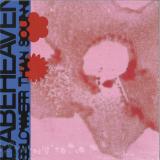
London duo Babeheaven — vocalist Nancy Andersen and producer/multi- instrumentalist Jamie Travis — return after four years with their highly anticipated 5-track EP ‘Slower Than Sound’, released via Scenic Route on October 24.
Following their singles ‘Beloved’ and the 6 Music-premiered track ‘Picture This’, ‘Slower Than Sound’ marks a deeply personal and intimate turn for Babeheaven. Written and recorded largely in Nancy’s home studio, the EP embraces minimal instrumentation, acoustic textures, and spacious arrangements, capturing the emotional vulnerability and euphoria the duo describe as “Post Rave” — the music you listen to on the ride home from a
party.
“It feels like a rebirth in a lot of ways,” says Nancy. “Writing at home gave me space to experiment, make mistakes, and rebuild confidence. Once I brought the songs to Jamie, we shaped them together into what you hear now.”
The EP explores love, reflection, and personal growth. Beloved conjures a comforting, almost mythic presence, while Lost For Words reflects the struggle to connect with the world and oneself. Picture This offers snapshots of a relationship, looking back while imagining its future. The cover Tiny Demons by Todd Rundgren blends seamlessly with the EP’s introspective mood, and Loud Thoughts, featuring Samba Jean-Baptiste, captures heartbreak, burnout, and creative pressure. “I hope people can find their own meaning in these songs,” Nancy says. “I’m writing for myself, but music is for each listener to interpret.”
Since debuting with Friday Sky in 2016, Babeheaven have steadily built a loyal following through their acclaimed albums Home For Now and Sink Into Me, amassing over 65 million Spotify streams and earning support from BBC Radio 1, 6 Music, and KCRW. Their live shows have sold out Village Underground,
Bush Hall, and Jazz Cafe, and they’ve shared stages with Cigarettes After Sex, Loyle Carner, and Nilüfer Yanya. Visually, Babeheaven’s world has been shaped alongside creatives including Margot Bowman, Frank Lebon, Tegen Williams, Sacha Beeley, and Joyce Ng, cementing their reputation as one of the UK’s most distinctive acts.
After facing cancelled tours, industry pressures, and a period of creative doubt, Slower Than Sound represents a return to the core of their artistry: intimate, honest, and self-produced. Jamie reflects: “Not putting out music for so long was hard, so we hope this is the start of a more prolific period for us, reconnecting with the London music community and beyond.”
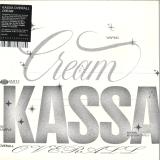
Der Grammy-nominierte Schlagzeuger, Produzent, MC und Sänger KASSA OVERALL definiert die Grenzen zwischen Jazz und Hip-Hop neu. Verehrt von lebenden Ikonen und Underground-Trendsettern, begann er seine Karriere hinter dem Schlagzeug. Seine bahnbrechenden Soloprojekte haben ihn zu einer treibenden Kraft in der US-Jazzszene und darüber hinaus gemacht und ihn mit Unterstützung von Visionären wie Thom Yorke, Iggy Pop, Virgil Abloh, u.a. belohnt. Mit dem renommierten Doris Duke Artist Award 2025 hat Kassa seinen Status als führende Stimme des zeitgenössischen Jazz gefestigt.
Auf CREAM, seinem vierten Solo-Studioalbum, zollt Kassa seinen beiden Leidenschaften seiner Jugend Tribut – Hip-Hop und Jazz-Schlagzeug. Mit diesen Instrumentals verwandelt der visionäre Schlagzeuger und Produzent klassische Rap-Songs in zeitlose Standards, indem er das Kontinuum zwischen Jazz und Hip-Hop aus jedem Blickwinkel und ohne Abkürzungen erkundet und eine neue Interpretation des "Great American Songbook" bietet – eine Hommage an das reiche Erbe der afroamerikanischen Musik.
CREAM unterstreicht Kassas künstlerisches Können durch meisterhafte Arrangements, eine durchdachte Songauswahl und einen Sound, der seine Entwicklung nachzeichnet. Unterstützt von einer herausragenden Band mit generationsübergreifender Jazztradition verkörpert das Projekt seinen genreübergreifenden Ansatz und sein Engagement, den Jazz voranzutreiben.
Von Newport bis North Sea hat seine Band für ihre Live-Auftritte, die Gilles Peterson als "völlig surreal" bezeichnete, große Anerkennung erhalten. Er trat in der Tiny Desk Concert-Reihe von NPR auf und veröffentlichte mehrere von der Kritik gefeierte Mixtapes, die von der New York Times, NPR Music, The Guardian, Afropunk und anderen gelobt wurden.
It's time for a new compilation in our house and we have some good music to fill it up. This collection of talent is going to be served in two flavours, the physical one a four cut vinyl EP featuring previously only digital tracks and the second one a ten track selection from our back catalogue featuring some of the best producers in our family.
Asier Morillas ( A4 ) is probably one of the most original sci fi specialists out there and he's been part of our sound since his first steps into production. His track Kynosoura is a perfect example of hi tech jazz.
David Reina is also a science fiction specialist, also featured with a full length work in our catalogue, our pick for this collection is Autoscopy, a mental and complex sonic voyage into the best outer space techno.
From Mod 21 we have selected one of his most played tools, Escalation of Violence, the perfect hypnotic drill to boost your mixes properly.
Vertical Spectrum brings us to hyperspace in BALN006 combining a distorted groove with floating alien bleeps in a sci-fi techno masterpiece.
This four cuts will be pressed on wax, let's talk about the next eight:
From his Idle Ep we have chosen Temudo's Spiritual Song, a merciless floor weapon heavily tested on the best clubs and big stages out there.
Next comes BiiBii by Null Forms approaching a more abstract and sci-fi terrain, maintaining the danceable pulse and well-managed distortion. The result is more mental and synthetic. A kind of controlled chaos.
Axial Rotation from Translate starts with a fast paced groove, heavily bass fuelled with a continuous synth line moving across the basement. All sound elements are constantly mutating and evolving although the mood is linear and loopy.
Eight cut comes from Dutch veteran Dimi Angelis, the third from his
A Journal of Impossible Things EP from 2023. The hypnotic bleep penetrates your mind while the dirty sound of the old drum machine sets the pace for your feet. Special mention to the occasional resonant sweep that appears from time to time creating the required tension.
On the ninth, Ruman's Lizard from Where The Ring Ends LP, mental and hypnotic, perfect for adding tension to a mix, again heavily tested on the best dancefloors extensively.
Closing the release, CONCEPTUAL with Red Sun a magnificent closing anthem, no more words needed here.
With this collection you get a tiny snapshot of the sonic palette of Warm Up Recordings sound. Check our full catalogue to get the proper picture.
Das Leid ist uns allen verheißen, aber auch die Freude. Man muss muss man in dieser Dualität Frieden finden", sagt Yaya Bey, die Humor, Liebe, die Kraft der menschlichen Bewegung und menschlichen Bewegung und Verbindung - auch wenn sie Angst hat. Mit ihrem neuen Album, das auf eine Veröffentlichungen folgt und ihr Debüt bei einem Indie-Label drink sum wtr erscheint, ist die Singer-Songwriterin aus Queens, New York, durch ihr aufmunterndes, sprudelndes Material. Eine Absage an vergangene Vergangenheit, die auf sie projiziert wurde, findet Bey in ,do it afraid ihre Geschichte mit entschlossenem Spaß, vollem Herzen und nuancierten Songs, die sich aus R&B, Hip-Hop, Jazz, Soul Soul und Tanzmusik, einschließlich des Soca-Stils ihrer Bajan-Wurzeln ihrer Familie. do it afraid zelebriert alle Seiten von Yaya als Teil einer kollektiven Lebenskraft, die nicht die sich nicht der Angst verschreibt, sondern den Momenten, die uns bewegen.
Released in September 1978, a mere two months before YMO’s debut, Cochin Moon is a clear precursor to the groundbreaking synth and sequencer-dominated sounds that would come to define the iconic trio. Huge tip!
Credited to Hosono and Pop Art legend Tadanori Yokoo (who created the cover art), Cochin Moon is a fictional soundtrack to a journey into unknown worlds, inspired by Hosono and Yokoo’s trip to India.
The unbelievably prolific Haruomi Hosono is one of the major architects of modern Japanese pop music. With his encyclopedic knowledge of music and boundless curiosity for new sounds, Hosono is the auteur of his own idiosyncratic musical world, putting his unmistakable stamp on hundreds of recordings as an artist, session player, songwriter and producer. Born and raised in central Tokyo, his adolescent obsession with American pop culture informed his early forays into country music, which he would revisit later in his career. Hosono made his professional debut in 1969 as a member of Apryl Fool, whose heavy psychedelia was somewhat at odds with his influences, which leaned towards the rootsy sounds of Moby Grape and Buffalo Springfield. The latter was one of the main inspirations for his next group, Happy End, whose unique blend of West Coast sounds with Japanese lyrics proved to be highly influential over the course of three albums. After the band’s amicable break up in 1973, Hosono began his solo career with Hosono House, an intimate slice of Japanese Americana recorded inside a rented house with recording gear squeezed into its tiny bedroom. Hosono’s solo career would take many twists and turns from this point forward, with forays into exotica, electronic, ambient, and techno, culminating in the massive success of techno pop group Yellow Magic Orchestra (YMO).
Released in September 1978, a mere two months before YMO’s debut, Cochin Moon is a clear precursor to the groundbreaking synth and sequencer-dominated sounds that would come to define the iconic trio. Credited to Hosono and Pop Art legend Tadanori Yokoo (who created the cover art), Cochin Moon is a fictional soundtrack to a journey into unknown worlds, inspired by Hosono and Yokoo’s trip to India. Initially the album was to be a kind of ethnographic musical document, using found sounds and field recordings made by Hosono himself. Instead, after Yokoo introduced Hosono to the sounds of Kraftwerk and krautrock during the trip, Cochin Moon became something much stranger. Created almost entirely on synthesizers and sequencers with the help of future YMO collaborators Ryuichi Sakamoto and Hideki Matsutake, the music on the album is the perfect encapsulation of Hosono’s concept of “sightseeing music,” transporting the listener to an exotic place that may or may not exist. This highly sought-after album sees its first-ever official release outside of Japan.
Seattle's own Manatee Commune (aka Grant Eadie) makes his long-awaited return to
Bastard Jazz with his fourth album, 'Simultaneity'. Lush and vibrant production is
familiar to his previous works, though Eadie has significantly matured in the activation of
space and character. A step away from standard songwriting, and a total disassociation
from lyrics at all, has made this record closer to the ambient genre than anything
Manatee Commune has released, all the while keeping one solid foot in the realm of
dance music.
'Simultaneity', as a whole, is an exploration of the collision between texture and time.
Captured recordings reminiscent of wind in wheatgrass, soft rain showers in the open
plains, and cascading beach sand wash over the mix, splashing into warm drones and
ascending melodies that cleanly syncopate against a steady rhythm. Though decidedly
electronic at times, a raw human element is ever-present in the form of a vocal motif:
just tiny moments of a loving voice lost in a sea of reverberation.
The album is a noticeably positive evolution from previous works. All nine tracks depict
a calmness and subtlety in musicianship, relying primarily on tenuous snippets of live
instrumentation and synthesis that hypnotically coil and coalesce with one another.
'Love Tone', the opening track, features Eadie's partner, a small voice memo clipped
and expanded into an ethereal vocal melody. A crisp felt piano delivers a complex
arpeggiation in 'Mosaic', a warm sonic bath scape reminiscent of Olafur Arnalds or
Kiasmos. Simple, undemanding bass lines drive tracks 'Path' and 'Faulted', though their
simplicity is contrasted with a variety of patterns that combine to create unique auditory
shapes, both building and landing in satisfying climactic movement. The album
culminates in the final track, 'Touch Theme', where a block of sound in the form of a
broad, open synthetic chord warms the ears, eventually twisting and shifting to rhythmic
chunks that shove against a familiar house rhythm.
The bright new duo, Marcel Vogel & LYMA, triumphantly returns to Boogie Angst with their sizzling new EP offering, No Time.
Following the recent release of their lead single, Free Time, we're proud to introduce four new, unique tracks to their burgeoning collection of juicy tunes.
Funkiness and abstraction take center stage on this EP. Opening up with the previously released Free Time, featuring filtered vocals and an unconventional structure that blends rich synths with dusty analog stabs and 1990s rave plucks.
The tempo slows down on Easy, a gorgeous song that sounds like a lost Sade demo, featuring subtle beatbox textures, tiny synth plucks, all ending up in a delightful culmination of delayed textures.
Broken Wings begins with a captivating vocal performance, leading to a sturdy Roland bass drum, sustained chords, and resonant arp sequences, with hints of Freestyle.
Flame On creates an almost tropical atmosphere with looping, scattered vocals and an abundance of cowbells. All before the EP closer, You're A Star, rounds things off with clunky basslines, a steady groove and hypnotic pitched vocals.
No Time follows the duo's debut Boogie Angst EP, Games Change, and is a powerful step forward in their young, yet promising catalogue.
A special vinyl edition of No Time will also grace our stores soon.
HAUKE FREER'S latest offering includes two warm and moody original cuts plus an intense, bass heavy MATTHIAS REILING Remix - is that really you, SESSION VICTIM? While the duo's records usually strike a chord with a somewhat broad audience, Freer's solo output never tries to cater to the House Music masses. In fact, it feels very much tailored to please an acquired taste. ONE TINY UNIVERSE is a case in point, built upon a steady but wonky drum groove and a brizzling, retro, sci- kind of pad, eventually leading the song into an array of synth melodies that will reward you with discovering new things when listening repeatedly - showing Hauke's ability to subtly combine little bits and pieces into something that effortlessly outgrows the sum of its parts. Moving on to the ip, Reiling stripps the title track off it's warmth and beauty and replaces them with a tougher
drumset and a pressure heavy UK style bassline. You'll be reintroduced to Freer's synth work eventually, but in a less
fairytalish and, well, slightly hostile environment. MMMMM is the closing cut of the EP, a composition just as bare and raw as it feels soothing and gentle - like.... let's say beans and rice over a campre on a cold night under the starry sky of a far away tiny universe in the ngernail of some other giant lifeform.
Villa Åbo in the alternative solo project of Swedish musician and Villa Åbo in the alternative solo project of Swedish musician and producer Jan Svensson, who has been making electronic music for the better part of 30 years as the artist behind such aliases as Frak, Studio SS and Alvars Orkestra. Svensson also runs legendary Swedish dance and experimental music label Börft, the product of a mutual appreciation for Severed Heads and Terse Tapes. As Villa Åbo he released two records in 1997 on Börft and remained inactive for 17 years until the Dutch label Bio Rhythm coaxed him into revisiting the project and released a double 12 in 2014. Jan has since followed with a steady stream of 12' singles for Kontra-Musik, Noise In My Head and Radio Lundberg. 'Magnetic Moves' is Villa Åbo's debut album, originally released inan limited edition of 65 hand-numbered cassettes by Funeral Fog in 2016. Clocking in at over 46 minutes, this first-ever vinyl edition spreads the 8 ragged techno tracks across four sides for maximum loudness. Some songs are aggressively potent, with cyclical synth riffs and razor-sharp acid lines riding a heavy, funk-fuelled techno groove. Others tracks are more fluid, vintage Underground Resistance or Derrick May with killer drum machine workouts that come in handy as DJ tools. All songs have been remastered by George Horn at Fantasy Studios in Berkeley. The record is housed in a custom made jacket designed by Eloise Leigh, featuring a photograph of Jan's mother's house, the meaning behind 'Villa Åbo'. Each copy includes a double-sided postcard with notes.producer Jan Svensson, who has been making electronic music for the better part of 30 years as the artist behind such aliases as Frak, Studio SS and Alvars Orkestra. Svensson also runs legendary Swedish dance and experimental music label Börft, the product of a mutual appreciation for Severed Heads and Terse Tapes. As Villa Åbo he released two records in 1997 on Börft and remained inactive for 17 years until the Dutch label Bio Rhythm coaxed him into revisiting the project and released a double 12 in 2014. Jan has since followed with a steady stream of 12' singles for Kontra-Musik, Noise In My Head and Radio Lundberg.'Magnetic Moves' is Villa Åbo's debut album, originally released in an limited edition of 65 hand-numbered cassettes by Funeral Fog in 2016. Clocking in atover 46 minutes, this first-ever vinyl edition spreads the 8 rgged techno tracks across four sides for maximum loudness. Soe songs are aggressively potent, with cyclical synth riffs and razor-harp acid lines riding a heavy, funk-fuelled techno groove. Others tracks are more fluid, vintage Underground Resistance or Derrick May with killer drum machine workouts that come in handy as DJ tools. All songs have been remastered by George Horn at Fantasy Studios in Berkeley. The record is housed in a custom made jacket designed by Eloise Leigh, featuring a photograph of Jan's mother's house, the meaning behind 'Villa Åbo'. Each copy includes a double-sided postcard with notes.
And they can't. Tiny things are important - This house could be anywhere, These things could happen to anyone." With this reflection, Charlie Parr introduces the characters of Rooming House, a conceptual folk opera that chronicles the lives of Upper Midwesterners through his quietly raucous, deeply rooted, and empathetic blues. These are songs of lost memories and hardship, but also of the improvised acts of kindness that help neighbors make do. Joined by celebrated drummer and fellow Minnesotan Dave King (The Bad Plus, Happy Apple), Parr cements his role as one of the great troubadours of our time with an album that becomes its own small yet profound offering of care. * "A gritty blend of Delta blues and Depression- era roots music soaked in his hardscrabble voice. It's a sacred realm of folk wisdom and sorrowful vulnerability." - Rolling Stone * "Expertly-picked resonator guitar and lyrics that puncture the soul" - NPR * "Arguably America's finest living troubadour." - Songlines (UK) * Compelling character-driven portraits on a folk opera concept album that chronicles the lives of Upper Midwesterners through his quietly raucous, deeply rooted, and empathetic blues. Driving, groove- driven resonator guitar pulls you in. Working through the material realities of our contemporary moment but also weaving that narrative with his hypnotic sound reveals the near-mythic scale importance of these stories
Familiar. Usually reserved for things we think we know. A face, a place, a feeling, a record perhaps. Until, of course, they aren’t quite the same anymore. Or maybe you aren’t.
Jennifer’s debut album lives somewhere around there.
It’s a record about time, which is already a fairly ambitious subject considering nobody seems to have figured that one out yet. More specifically, it’s about what
time does to a person. The old versions, the new versions, and all the ones in between that you only notice when something suddenly brings them back. Someone you
haven’t seen in years. A room you used to know. A certain way the light falls. That sort of thing.
There’s a bit of a doppelgänger situation going on, too. Finding something completely new and somehow recognising it. Meeting yourself again without immediately realising who you’re talking to.
Which can be nice. Or strange. Usually both. The songs on Familiar sit comfortably with that contradiction. Looking backwards without wanting to go back. Missing things without necessarily wanting them
returned. Realising that people who once occupied most of your waking hours can become people whose address you don’t know. Meanwhile, some tiny, seemingly irrelevant detail from fifteen years ago remains perfectly intact.
Memory has its own filing system. Not a particularly sensible one.
Jennifer wrote a series of poems alongside the album. In them, familiarity appears in melting snow, rough coastlines, a kitchen already warm in the morning, somebody’s hands fitting into yours. Elsewhere she wonders about someone she
once knew everything about and now knows nothing about. They could live around the corner. They could live on another continent. They could, technically, be dead. Probably not. But that’s time for you.
Maybe Familiar is less about remembering who you were than realising you never entirely stopped being them. Things get added. Things disappear. Things come back looking slightly different.
And somehow, you recognise them.
nicht am Lager
Zuletzt vor 6 Tagen geliefert unverbindlich nachbestellbar
When everything around is racing blindly toward ruin, change direction and spin as fast as you can until you defy gravity and rise above the ground into blissful madness. "K-drone", the debut album by three renegades—Jakub Šimanský, Michal Vaľko, and Ján Podracký—is like a hallucinatory Calvary with five stations. Each station is a time-loop capsule, a tiny utopia sneering at the phantom progress of the world outside.
The opening track, "Speedrone", is pure vertigo; for seven long minutes, there's nothing to hold onto. Šimanský’s banjo cuts through the air, Vaľko’s hurdy-gurdy sounds like someone scraping a rusted sheet of metal with a handful of nails, and Podracký’s bass recorder hums like a slowly intensifying migraine. "Sine" is like a train journey through a barren wasteland, where the images outside the window constantly repeat like a bad trip. "Pro DJ" starts like a gig in a bar at the end of the line—a gig that never actually goes anywhere. It’s as if all three are locked in a spasm, their repeated motifs turning into haunting earworms. "Alien Radigue" shifts into a strange idyll in a clearing in the middle of the forest, where an unknown bird species trills in the background. The end and definitive dissolution come in "Slush", where everything suddenly slows down. Šimanský plucks a simple guitar melody, Podracký’s harmonica drifts from side to side like a boat gently rocking by the shore, and Vaľko’s hurdy-gurdy drones like a drunken mosquito buzzing around.
"K-drone" sounds like an acid anti-western movie recorded in a tucked-away burrow, like smoke-soaked folk and experimental campfire songs echoing through a deep forest. It evokes Third Ear Band's "Alchemy", it screeches and repeats like some of Henry Flynt's experiments, and you could easily imagine hearing it drifting from one of the windows on the cover of Hala Strana's eponymous album.
Jakub Šimanský is the bard of Czechoslovak guitar primitivism, an earthy folk sommelier whose fingerpicking you may also know from the duo Šimanský Niesner. Michal Vaľko, aka Line Gate, needs no introduction to fans. He has released three albums on mappa, and his hurdy-gurdy meditations hold an important place in the drone and minimalist music scene. "Den", "Apex", and "Trap" have become essential listening. Ján Podracký is a self-taught composer and musician whom you might know from various participatory music projects, such as an orchestra where all the players play diatonic harmonicas. Besides harmonicas, he has long explored a wide range of flutes. In short, a pied piper who will guide you through other worlds.
Repress of full length album from the awesome emo-rockers Hot Mulligan, following on from their 2018 acclaimed record Pilot. If you're into the likes of The Hotelier, Spanish Love Songs, Tiny Moving Parts or Free Throw should definitely check this out.
Hot Mulligan writes songs for people to sing as loud as possible. Their music is the cathartic outcry for growth from a generation of forward-thinking Midwesterners caught in the gears of a rusted system in desperate need of hope. The members - Tades Sanville, Chris Freeman, Ryan Malicsi, Garrett “Sniff” Willig, and Brandon Blakeley - use songwriting to explore the lessons they’ve learned from lives lead in the pursuit of dreams with full awareness of the cost.
On Squirrel Flower's new album, Say a Prayer to the Gods of Getting Going, songwriter and multi-instrumentalist, Ella Williams, delivers her most transcendent and instantly classic record to date. It's an album full of hope and beauty, with themes of staying in constant motion, electric love, and knowing when to leave, but also when to stick around. After touring in support of 2023's Tomorrow's Fire, Williams remained on the road, following instinct over itinerary_passing through Gary, Indiana; Los Angeles; Putney, Vermont; Silver City, New Mexico; and Hudson, New York. Each stop became a site of creative renewal. She ended up recording the album at two locations: a makeshift studio in rural Wisconsin, and at Drop of Sun in Asheville, NC, featuring friends and collaborators such as Dimitri Giannpolous (Horse Jumper of Love), Sofia Jensen (Free Range), Clay Frankel (Twin Peaks, Hazel City), and many others along the way. Standouts like "Reelin" and "Highway Woman" showcase the push and pull of life as a musician; the constant need for embarking on a hero's journey in search of reflection and freedom. Others like "Not Me" and "Cleveland" are classic Squirrel Flower, but with a sharper and more concentrated writing style paired with some of Williams' strongest vocal delivery of her career. Mixed and co-produced by Alex Farrar (MJ Lenderman, Wednesday), Say a Prayer to the Gods of Getting Going is the sound of cosmic rebirth, looking behind to illuminate what's ahead. "Pack your life and your guitar," Williams sings on "Highway Woman." "You can change it as you go. You do not plan on dying." In addition to her seemingly nonstop DISABLED touring across North America and Europe, Squirrel Flower has been featured in outlets such as Pitchfork, Rolling Stone, The NY Times, Paste, and many others, as well as performances at NPR's Tiny Desk & KEXP. Williams' music has been streamed millions of times around the globe, proving her to be an undeniable force as a songwriter. FOR FANS OF Indigo De Souza, Soccer Mommy, Katy Kirby, Julia Jacklin, Tomberlin, Hand Habits, Phoebe Bridgers, Waxahatchee, PJ Harvey, Grouper, Chelsea Wolfe, Moses Sumney, Cat Power, Liz Phair, Alex G, Mazzy Star, Julie Byrne, Big Thief.
On Squirrel Flower's new album, Say a Prayer to the Gods of Getting Going, songwriter and multi-instrumentalist, Ella Williams, delivers her most transcendent and instantly classic record to date. It's an album full of hope and beauty, with themes of staying in constant motion, electric love, and knowing when to leave, but also when to stick around. After touring in support of 2023's Tomorrow's Fire, Williams remained on the road, following instinct over itinerary_passing through Gary, Indiana; Los Angeles; Putney, Vermont; Silver City, New Mexico; and Hudson, New York. Each stop became a site of creative renewal. She ended up recording the album at two locations: a makeshift studio in rural Wisconsin, and at Drop of Sun in Asheville, NC, featuring friends and collaborators such as Dimitri Giannpolous (Horse Jumper of Love), Sofia Jensen (Free Range), Clay Frankel (Twin Peaks, Hazel City), and many others along the way. Standouts like "Reelin" and "Highway Woman" showcase the push and pull of life as a musician; the constant need for embarking on a hero's journey in search of reflection and freedom. Others like "Not Me" and "Cleveland" are classic Squirrel Flower, but with a sharper and more concentrated writing style paired with some of Williams' strongest vocal delivery of her career. Mixed and co-produced by Alex Farrar (MJ Lenderman, Wednesday), Say a Prayer to the Gods of Getting Going is the sound of cosmic rebirth, looking behind to illuminate what's ahead. "Pack your life and your guitar," Williams sings on "Highway Woman." "You can change it as you go. You do not plan on dying." In addition to her seemingly nonstop DISABLED touring across North America and Europe, Squirrel Flower has been featured in outlets such as Pitchfork, Rolling Stone, The NY Times, Paste, and many others, as well as performances at NPR's Tiny Desk & KEXP. Williams' music has been streamed millions of times around the globe, proving her to be an undeniable force as a songwriter. FOR FANS OF Indigo De Souza, Soccer Mommy, Katy Kirby, Julia Jacklin, Tomberlin, Hand Habits, Phoebe Bridgers, Waxahatchee, PJ Harvey, Grouper, Chelsea Wolfe, Moses Sumney, Cat Power, Liz Phair, Alex G, Mazzy Star, Julie Byrne, Big Thief.
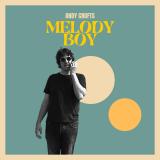
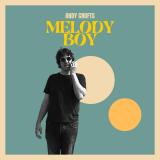
There’s something quietly defiant about Melody Boy. Written and recorded in a tiny beach hut studio on the English coast, and notably know for his previous work with Paul Weller and The Moons, Andy Crofts’ debut solo album arrives without compromise or concession to trend. It’s a record built on melody above all else, songs that feel unearthed rather than manufactured, guided by instinct, memory, and a lifelong obsession with the craft of songwriting.
Crofts, long established as a songwriter and musician, steps forward here with a voice that feels both seasoned and strangely elusive. There’s no rush to explain, no attempt to overstate. Instead, Melody Boy unfolds with a natural confidence, hook laden, harmonically rich, and emotionally direct without ever losing its sense of mystery.
Drawing from a lineage of classic songwriting while remaining firmly his own, the album leans into warmth, analogue textures, and a sense of timelessness that resists the churn of the modern music cycle. It’s not chasing a moment, it’s creating its own space.
Lead single “Blue” introduced that world: melodic, reflective, quietly anthemic. Across the album, that same thread runs deep, songs that reveal themselves slowly, rewarding repeat listens rather than demanding immediate attention.
There’s a deliberate sense of distance in Melody Boy. Not coldness, but clarity. A refusal to overexplain. The result is a body of work that feels personal without being confessional, detailed without being crowded.
In a landscape built on constant output and fleeting attention, Andy Crofts offers something else entirely: a record that trusts the listener to meet it halfway.
"Blue is another song that I can't get enough of at the moment" - Gary Crowley (BBC London)
There’s something quietly defiant about Melody Boy. Written and recorded in a tiny beach hut studio on the English coast, and notably know for his previous work with Paul Weller and The Moons, Andy Crofts’ debut solo album arrives without compromise or concession to trend. It’s a record built on melody above all else, songs that feel unearthed rather than manufactured, guided by instinct, memory, and a lifelong obsession with the craft of songwriting.
Crofts, long established as a songwriter and musician, steps forward here with a voice that feels both seasoned and strangely elusive. There’s no rush to explain, no attempt to overstate. Instead, Melody Boy unfolds with a natural confidence, hook laden, harmonically rich, and emotionally direct without ever losing its sense of mystery.
Drawing from a lineage of classic songwriting while remaining firmly his own, the album leans into warmth, analogue textures, and a sense of timelessness that resists the churn of the modern music cycle. It’s not chasing a moment, it’s creating its own space.
Lead single “Blue” introduced that world: melodic, reflective, quietly anthemic. Across the album, that same thread runs deep, songs that reveal themselves slowly, rewarding repeat listens rather than demanding immediate attention.
There’s a deliberate sense of distance in Melody Boy. Not coldness, but clarity. A refusal to overexplain. The result is a body of work that feels personal without being confessional, detailed without being crowded.
In a landscape built on constant output and fleeting attention, Andy Crofts offers something else entirely: a record that trusts the listener to meet it halfway.
"Blue is another song that I can't get enough of at the moment" - Gary Crowley (BBC London)
FLO are leading the modern revival of the British girl group — and doing so at a scale not seen in over two decades. With over half a billion global streams, the trio have delivered the highest-selling tour by a British girl group in more than 20 years, becoming the first since the Spice Girls to reach that milestone. They are also the first British girl group to receive a Grammy nomination in two decades, alongside three MOBO nominations in 2026, cementing their status as both a commercial and cultural force. Rather than simply revisiting the past, FLO are reshaping the possibilities for what a contemporary girl group can be.
Comprised of Renée Downer, Stella Quaresma and Jorja Douglas, FLO’s story is one of intention, craft and deep-rooted connection. The trio had long been aware of one another through theatre school circles, social media and shared creative worlds before coming together as a group in 2019. That early familiarity quickly grew into a sisterhood, shaped behind the scenes through years of studio work, vocal development and trust. Raised by strong single mothers and immersed in performance from a young age, each member brings resilience, emotional intelligence and discipline into the group — qualities that underpin both their sound and their dynamic.
Individually, FLO’s balance comes from contrast. Renée is the group’s compass: composed, business-minded and creatively precise, grounding the trio with clarity and vision. Stella is the spark and the glue — sociable, emotionally intuitive and collaborative — shaped by a childhood between England and Mozambique where music was communal, expressive and felt. Jorja is the fire: outspoken, instinctive and vocally commanding, with a natural ear for harmony and arrangement. Their roles shift and evolve, but together they form a unit built on mutual respect, honesty and shared authorship.
That chemistry is central to FLO’s music. Drawing from classic R&B and soul while pushing it forward through modern production, their sound centres vocal harmony, emotional nuance and storytelling that reflects the realities of young womanhood. FLO reject the idea that strength requires emotional distance; instead, they explore power through vulnerability, confidence and control. From independence and self-worth to intimacy and desire, their writing is direct and unapologetically theirs. As Jorja puts it, FLO are “the brains, the heart and the soul” behind everything they do.
The success of their debut album marked a defining moment — not only for FLO, but for British pop more broadly. It confirmed the appetite for harmony-led, female-fronted groups operating with creative agency, and propelled FLO onto global stages, from sold-out headline tours to major festivals and international television. Along the way they have earned respect from R&B legends and peers alike, performing during Grammy Week for icons including Mariah Carey, Brandy and Chaka Khan, and showcasing their vocal chemistry on NPR’s Tiny Desk — a moment that further underlined the trio’s technical precision and emotional depth.
With their next chapter, Therapy At The Club, FLO expand this emotional honesty into a fully realised creative universe. The concept reimagines the club not just as a place of nightlife, but as a site of release, confession and self-possession — encompassing the moments before, during and after the night out. From mirror affirmations and pre-game chaos, to late-night Uber conversations, dance-floor catharsis and the clarity of the morning after, Therapy At The Club captures how women process desire, heartbreak, confidence and healing in real time, together. It is both fantasy and reality: cinematic, fashion-led and emotionally raw, grounded in sisterhood as a form of survival.
Sonically, the new music leans into dark, euphoric R&B and pop with sharper edges, built on vocal mastery and diaristic storytelling. Lead single “Leak It” sets the tone for the era — playful, charged and unapologetically self-aware — exploring what happens when desire spills over, secrets surface and control is reclaimed. Across the new songs, FLO move fluidly between intimacy and euphoria, turning the club into a space where vulnerability is power and feeling everything is the point.
As a trio built on discipline, joy and deep creative trust, FLO represent a new model for the British girl group: one rooted in authorship, harmony and cultural impact. Balancing softness with strength and ambition with authenticity, they are shaping the future of R&B and pop on their own terms. FLO are not looking backwards — they are setting the standard for what comes next.
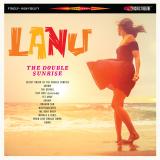
Lance Ferguson (The Bamboos, Menagerie, Rare Groove Spectrum) presents his lush Exotica inspired 2016 album on LP for the first time in a limited edition deluxe gatefold sunset swirl coloured vinyl edition, with each pressing having a unique pattern.
For fans of Air, Martin Denny & DJ Shadow.
'The Double Sunrise' is a re-imagining of Exotica seen through Ferguson’s own lens, which includes Pop and Hip Hop elements plus samplers, synths and drum machines thrown into the mix. That combination of beats and lush cinematics owes as much to Exotica pioneer Martin Denny as it does to Air and DJ Shadow.
Guest vocalists include Melanie Pain (Nouvelle Vague), who brings a sweet Francoise Hardy and Jane Birkin influence to her songs, and Australian singer Meg Washington. As well as her own successful career, Bamboos fans would know Washington from her vocals from “The Wilhelm Scream” and “King Of The Rodeo”, as well as “Beautiful Trash” from the 2011 Lanu album ‘Her 12 Faces’.
Ferguson's own instrumentals are also gems of lush, nostalgic delight.
Reviews for ‘The Double Sunrise’
“Even with the clear influence of South Pacific exotica, this second LP is still typical Ferguson: tight, snappy and doused in retro airs.” - Rolling Stone Magazine
“Bamboos supremo Lance Ferguson uses South Seas exotica as a jumping-off point for a record that deftly crosses datelines. Giddy effervescent soundscapes such as “Tiny Dots” sit back to back with breakbeat grooves like “Nightmarchers””. The Age
“This is one of those summer albums you will return to every year. Stunning.” The Daily Telegraph
“The concept for The Double Sunrise is very specific, but it's executed brilliantly...It's one of those records that evokes a place and a feeling that most of us only ever dream about.” - Double J Radio (Feature Album)
Few artists arrive as compellingly yet elusively as did Stuart Moxham upon the startling debut of Young Marble Giant's sole studio album, Colossal Youth. Initial excitement was thrust upon the young Alison Statton, who sang songs written by Stuart with a couple of exceptions. The unaffected tone of her voice was in steep contrast to the typical goings-on in that still quite punky time, but it was what she sang that fully sold it. Moxham's lyrics were both intensely personal and woefully oblique. There seemed to be a sort of story in there. Confusingly, that story often felt like it was Alison's rather than the fellow who'd penned it. The unexpected miracle a deal with Rough Trade and the album's subsequent success had the band stymied for a second act and it wasn't long before the group disintegrated, although circumstances often brought members and a few of their peers - among them Debbie Pritchard, Spike Williams, and a third Moxham brother, Drew. - Phil Moxham was the band's bassist - together in odd combinations and pairings. None of the three YMG members have been especially prolific, but it's Stuart's career that has seemed the least straightforward, as if he'd wondered, "What to do when your debut is a nearly perfect artefact?" In the case of his first "solo" full-length in thirty years, Stuart took the unusual step of entering an alien studio with American producer Dave Trumfio (who's also the leader of Pulsars and bassist for Mekons) and allowing him to decide what tracks (of a large number submitted by Stuart) to record, and how they'd be orchestrated. Or not. In this case - save for the writing and composing - it's really Dave's album as much as Stuart's. The tracks went with Dave back to LA, where they were mixed, a few parts added (including subtle backing vocals from the incredible Linda Smith) . . . then later unmixed and reworked by John Henderson and Roni Ayala back in Valencia. Both versions will be made available, and both have a compelling cohesion missing from some of Stuart's work since YMG. Stuart's minimalism is quite intact, the range of emotions quite wide. There are few artists operating today like Stuart Moxham, a composer of the upper echelon of innate talent who combines avant-garde ideas with deceptively forthright personal lyrics, solid hooks, ambience and vaguely off-centre instrumentation which defies the casual marketplace as confoundingly as it ever did to the underground, whatever that is these days. His songs have been admired and / covered by everyone from Lush to Kurt Cobain, adaptations in Japanese and even a French-language hit by Etienne Daho, adaptations by Hole, Galaxie 500, Magnetic Fields, Belle And Sebastian and many others - but a new Stuart Moxham album is a special kind of joy.
On her new album, Neon Summer Skin, Bedouine, the project of Azniv Korkejian, explores this feeling of safety long before one can fully understand the concept. Written with vivid, honest and intimate imagery after visiting her family in Saudi Arabia, it tells the story of family and upbringing, and mourns the end of her childhood. There is a singular resonance and newfound heft in this music previously unheard in Bedouine’s discography. Bedouine is known for making gentle, lilting folk songs that build fingerpicked guitar melodies into tsunamis of emotion. Her masterful songwriting and timeless melodies have earned her praise from publications like Pitchfork, who said her music “boasts a surreal calm and lived in glow,” and Rolling Stone, who lauded her “humble folk-pop brilliance,” plus an NPR Tiny Desk Concert, and tours with the likes of Fleet Foxes and Father John Misty. While working on the record, Bedouine realized the pain of displacement, of searching for home, has been a throughline in her family history. Other relatives have also experienced this sense of loss as they’ve migrated between Armenia, Syria, and Saudi Arabia. “I felt so frustrated about the places that I'm from becoming war torn or difficult to return to,” she says. “My family has been split apart time and time again.” This realization prompted her to document and honor her parents’ lives and stories. On a family trip to Houston, Bedouine recorded a conversation with her mother and sampled the introduction to “Canopies.” The song tells the story of her mother’s time in an orphanage. She was put there by her own mother as a way of escaping her abusive father. Nearby, her mother would sing about feeling her daughter’s essence in the air: "The waves of Beirut's beaches flutter, and how sweetly they blow my darling's air." It’s a story of profound yearning told with the quiet profundity of a flower blossoming.
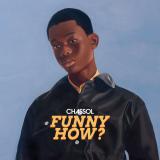
While it builds directly on his work with the “Ultrascores,” it also marks a turning point: a more contemporary sound, broader songwriting, and more explicitly political and social themes make Funny How? his most accomplished album to date. It’s also his most accessible: inspired by American stand-up comedy, Funny How? sounds like a joyful mix of all the music that inspires the artist: soul, jazz, rap, musicals… Thus, throughout the album, major stand-up figures like Dave Chappelle, Marina Franklin, Dulcé Sloan, and Tiny Thickemz appear alongside emerging comedians filmed in more intimate comedy clubs, composing a moving portrait of the new American scene.
Drawing on archival footage and sequences shot for the project in New York and Chicago, and true to his principle of harmonizing reality, he reveals its hidden notes, replaying and developing them throughout a fascinating process. The result is a major work, a choral, political, and deeply musical narrative. In concert, the work unfolds majestically through a hybrid performance where music and images respond to and converse with one another.
The premiere of Funny How? on April 17 and 18, 2026, at the Cité de la Musique in Paris is already sold out. The album is scheduled for release on May 22, 2026.
Nach einer dreijährigen Pause kehrt der schwedische Singer-Songwriter Thomas Jonsson mit ,Give Up Together" zurück, seinem sechsten Album als I'm Kingfisher. Nach dem 2023 erschienenen, hochgelobten Album ,Glue", das größtenteils gemeinsam mit Jazzmusikern arrangiert wurde, hat sich Jonsson dieses Mal für einen etwas anderen, härteren Sound entschieden - mit einer brillanten Sammlung von Americana-Songs, die von ruhigen Drums, markanten E-Gitarren und satten Streichern umhüllt sind, während sie gelegentlich zu reduzierten Folksongs dekonstruiert werden. Als eines der bestgehüteten Geheimnisse Schwedens und als einer der besten Songwriter der nordischen Folk-Welle hat Jonsson still und leise ein mehr als beeindruckendes Repertoire aufgebaut, während er die Bühne mit Kevin Morby, Courtney Marie Andrews, The Weather Station und Damien Jurado teilte, und ist nun endlich bereit, neben seinen berühmteren Zeitgenossen ins Rampenlicht zu treten.
Pete Lambrou, the visionary composer and multi-instrumentalist behind VLMV (pronounced "Alma"), is one of the most singular voices emerging from the ambient, post-rock, and experimental scenes in the UK. With a career that spans atmospheric solo work, film and television scoring, and evocative live performance, Lambrou has carved out a distinctive sonic universe he describes as "ambient-ish post-something" (Pete Lambrou) a playful yet accurate summation of a sound that is at once genre-fluid and deeply immersive. The album takes its title from Sara Teasdale's 1918 poem and Ray Bradbury's later short story, both of which imagine a world continuing quietly after humanity's disappearance. This idea became the gravitational centre around which the record formed. Written during a period of deep engagement with climate fiction and ecological thought, `There Will Come Soft Rains` reflects on humanity's legacy, its technological ambition, and its uneasy relationship with the natural world. A century on from Teasdale's poem, the balance of power feels less certain, and Lambrou's music inhabits that tension with remarkable subtlety. "The initial ideas stem mostly from chaos, randomness or sound exploration and then get shaped as I go. Typically, and certainly for this album. It's evolved since album 1, which was more song / chord based. It's a fun process of finding the sound and then working out whether it's speaking to me - or merely just a cool noise. That's fun, but it sometimes can't evolve or progress, so then begins the long journey of shaping it into some sort of song format - which doesn't have to be a-typica,l but whatever feels right to me. The subject matter and overall theme is important too - it's got to all make sense within itself. There's no point having a slowly creeping theme and then rush the music." (Pete Lambrou) VLMV embody an emotional honesty that works with patience and nuance. Whether you're encountering his music for the first time or returning to its quiet depths, VLMV offers an aural space that resonates long after the final note fades. Lambrou's singular sonic language sits at the intersection of ambient, post-rock, modern classical, and experimental electronic music, while remaining unmistakably human at its core. "Instrumentally it's far more synth based - as soon as I had the concept, I wanted to make sure technology clash and marry with traditional instruments (at different times) in a sort of slow-moving dance I suppose. One is nature, one is human development and technology. Sometimes working together and sometimes in opposition. On my previous albums I'd say that at least half of the tracks started life as songs, whereas with `There Will Come Soft Rains` I think the majority (if not all) started as experiments in sound." (Pete Lambrou) Sonically, the album is VLMV at its most cinematic and textural. Warm, intimate piano figures and elegiac string arrangements are set against unstable modular synthesis, fractured rhythms, and evolving sound design. The organic and the artificial are locked in a slow, shifting dialogue, mirroring the album's central themes. At times the music feels tender and nostalgic, at others unpredictable and mournful, yet it never tips into despair. Instead, a quiet resilience runs throughout the record. "The album is slightly unusual in that it was mixed in Dolby Atmos before being mixed down to stereo. Most, if not all, do it the other way round. That's because I got to work with a superb mix engineer who just happens to live opposite. It was extremely random and lucky, moving to a tiny hamlet in the South of England and there being a Dolby Atmos studio opposite with a genius of an engineer. We had in mind that we would do it this way round and enjoy the mix process and give everything its own space - it still had issues when folding down to stereo, but overall a more pleasurable mix!" (Pete Lambrou) There Will Come Soft Rains has a geological sense of time: themes creep, expand, erode, and reform, resisting conventional structures in favour of something more patient and immersive. Each sound exists because it needs to; they move, recede, and emerge with a three-dimensional clarity that enhances the music's cinematic quality, giving each element room to breathe while maintaining an enveloping sense of cohesion. Lambrou's unique voice is Intimate and fragile, his vocals hover above the instrumentation, a guiding thread through the expansive soundscapes, drawing listeners closer into the emotional core of each piece. "Long time vocal collaborator Anja Madhvani did lots of harmonies on the album - I wanted to include her voice as much as possible on this album. In terms of string players - 3/4 have been long term collaborators with me. Marie Schreer actually recorded all strings on my first album ALMA, and Fraser & Clodagh have worked on every album (and occasional live shows) since Stranded Not Lost. In terms of art - Joel Cammarata designed the cover, and accompanying art - he designed Sing With Abandon and I absolutely adore his work, but also - he's so great at understanding and developing and capturing the concept." (Pete Lambrou) Layered harmonies drift through the music like distant signals or half-remembered voices. Madhvani's presence adds a human fragility to the album's vast soundscapes, reinforcing the sense of memory and longing that runs beneath the surface. The strings, performed by a close circle of trusted collaborators, further ground the record in warmth and physicality, acting as a counterweight to the synthetic elements that threaten to unravel it. "Despite the heavy subject matter, I wanted to create an album that imparts hope and optimism, marrying traditional instrumentation as nostalgia, with technological innovation through the randomness of modular synths." (Pete Lambrou) The partnership with Pelagic Records feels both organic and significant. Known for championing artists who value emotional weight, sonic ambition, and artistic integrity, the label provides a natural home for VLMV's work. Lambrou's music shares Pelagic's ethos: immersive, patient, and unafraid of scale whether intimate or vast. With There Will Come Soft Rains, Pete Lambrou has crafted a work that feels timely without being didactic, expansive without being overwhelming. It stands as a quiet, but powerful statement that lingers long after the final notes fade. FOR FANS OF Sigur Ros * Olafur Arnalds * Radiohead * Keaton Henson * This Will Destroy You
Pete Lambrou, the visionary composer and multi-instrumentalist behind VLMV (pronounced "Alma"), is one of the most singular voices emerging from the ambient, post-rock, and experimental scenes in the UK. With a career that spans atmospheric solo work, film and television scoring, and evocative live performance, Lambrou has carved out a distinctive sonic universe he describes as "ambient-ish post-something" (Pete Lambrou) a playful yet accurate summation of a sound that is at once genre-fluid and deeply immersive. The album takes its title from Sara Teasdale's 1918 poem and Ray Bradbury's later short story, both of which imagine a world continuing quietly after humanity's disappearance. This idea became the gravitational centre around which the record formed. Written during a period of deep engagement with climate fiction and ecological thought, `There Will Come Soft Rains` reflects on humanity's legacy, its technological ambition, and its uneasy relationship with the natural world. A century on from Teasdale's poem, the balance of power feels less certain, and Lambrou's music inhabits that tension with remarkable subtlety. "The initial ideas stem mostly from chaos, randomness or sound exploration and then get shaped as I go. Typically, and certainly for this album. It's evolved since album 1, which was more song / chord based. It's a fun process of finding the sound and then working out whether it's speaking to me - or merely just a cool noise. That's fun, but it sometimes can't evolve or progress, so then begins the long journey of shaping it into some sort of song format - which doesn't have to be a-typica,l but whatever feels right to me. The subject matter and overall theme is important too - it's got to all make sense within itself. There's no point having a slowly creeping theme and then rush the music." (Pete Lambrou) VLMV embody an emotional honesty that works with patience and nuance. Whether you're encountering his music for the first time or returning to its quiet depths, VLMV offers an aural space that resonates long after the final note fades. Lambrou's singular sonic language sits at the intersection of ambient, post-rock, modern classical, and experimental electronic music, while remaining unmistakably human at its core. "Instrumentally it's far more synth based - as soon as I had the concept, I wanted to make sure technology clash and marry with traditional instruments (at different times) in a sort of slow-moving dance I suppose. One is nature, one is human development and technology. Sometimes working together and sometimes in opposition. On my previous albums I'd say that at least half of the tracks started life as songs, whereas with `There Will Come Soft Rains` I think the majority (if not all) started as experiments in sound." (Pete Lambrou) Sonically, the album is VLMV at its most cinematic and textural. Warm, intimate piano figures and elegiac string arrangements are set against unstable modular synthesis, fractured rhythms, and evolving sound design. The organic and the artificial are locked in a slow, shifting dialogue, mirroring the album's central themes. At times the music feels tender and nostalgic, at others unpredictable and mournful, yet it never tips into despair. Instead, a quiet resilience runs throughout the record. "The album is slightly unusual in that it was mixed in Dolby Atmos before being mixed down to stereo. Most, if not all, do it the other way round. That's because I got to work with a superb mix engineer who just happens to live opposite. It was extremely random and lucky, moving to a tiny hamlet in the South of England and there being a Dolby Atmos studio opposite with a genius of an engineer. We had in mind that we would do it this way round and enjoy the mix process and give everything its own space - it still had issues when folding down to stereo, but overall a more pleasurable mix!" (Pete Lambrou) There Will Come Soft Rains has a geological sense of time: themes creep, expand, erode, and reform, resisting conventional structures in favour of something more patient and immersive. Each sound exists because it needs to; they move, recede, and emerge with a three-dimensional clarity that enhances the music's cinematic quality, giving each element room to breathe while maintaining an enveloping sense of cohesion. Lambrou's unique voice is Intimate and fragile, his vocals hover above the instrumentation, a guiding thread through the expansive soundscapes, drawing listeners closer into the emotional core of each piece. "Long time vocal collaborator Anja Madhvani did lots of harmonies on the album - I wanted to include her voice as much as possible on this album. In terms of string players - 3/4 have been long term collaborators with me. Marie Schreer actually recorded all strings on my first album ALMA, and Fraser & Clodagh have worked on every album (and occasional live shows) since Stranded Not Lost. In terms of art - Joel Cammarata designed the cover, and accompanying art - he designed Sing With Abandon and I absolutely adore his work, but also - he's so great at understanding and developing and capturing the concept." (Pete Lambrou) Layered harmonies drift through the music like distant signals or half-remembered voices. Madhvani's presence adds a human fragility to the album's vast soundscapes, reinforcing the sense of memory and longing that runs beneath the surface. The strings, performed by a close circle of trusted collaborators, further ground the record in warmth and physicality, acting as a counterweight to the synthetic elements that threaten to unravel it. "Despite the heavy subject matter, I wanted to create an album that imparts hope and optimism, marrying traditional instrumentation as nostalgia, with technological innovation through the randomness of modular synths." (Pete Lambrou) The partnership with Pelagic Records feels both organic and significant. Known for championing artists who value emotional weight, sonic ambition, and artistic integrity, the label provides a natural home for VLMV's work. Lambrou's music shares Pelagic's ethos: immersive, patient, and unafraid of scale whether intimate or vast. With There Will Come Soft Rains, Pete Lambrou has crafted a work that feels timely without being didactic, expansive without being overwhelming. It stands as a quiet, but powerful statement that lingers long after the final notes fade. FOR FANS OF Sigur Ros * Olafur Arnalds * Radiohead * Keaton Henson * This Will Destroy You
Kumachan Seal: solo project of Japanese vocalist / songwriter / producer Sairi Ojima, who has been playing in numerous indie bands, including Neco Nemuru, since her teens. She began her solo career in 2013, and released her first cassette in 2017. This EM Records release is her first CD/LP album, with all compositions by Ojima, who co-produced the album. Each of the eleven songs reveals beguiling layers of detailed and surprising sounds, with Ojima's DIY sonic core embroidered by vibrant and colorful beats and guitar from EM artist Le Makeup and the quintessential ambient-pop synths and keyboards of fellow EM-er Takao. Le Makeup mixed ten of the eleven songs, with Takao mixing "China Sandwich". The heart of Ojima's musical identity is her clear, aque- ous voice; apart from one instrumental, all the tracks here feature that mellifluous voice, but in an interesting twist, only half the songs have lyrics, with the remainder employing her wordless voice as melodic and textural elements. Although Kumachan Seal can be heard as a sort of bedroom pop filtered through ambient music and the new-age revival, listeners will note that the final two songs, "Atsumono" and "Tiny Cell", are respectively a slightly skewed four-on-the-floor track and a lightly skanking Doo-wop- flavored confection, slightly reminiscent of the UK's Brenda Ray. This album, full of Ojima's calm and cool observation of the world, is available on CD, LP and DL, and includes an English lyric sheet.
nicht am Lager
Zuletzt vor 5 Monaten geliefert unverbindlich nachbestellbar
Petter Eldh's explosive ensemble Koma Saxo continues their adventures with a new album "Koma West", out on We Jazz Records, 18 March 2022. The album sees Koma Saxo expand on their previous sound with the addition of vocalist Sofia Jernberg and a strong cast of featured artists, including cellist Lucy Railton, violinist Maria Reich, pianist Kit Downes and accordionist Kiki Eldh (Petter's mom!). The hard-hitting key quintet remains, including Eldh on bass and assorted instruments, Christian Lillinger on drums, plus saxophonists Otis Sandsjö (of Y-OTIS), Jonas Kullhammar and Mikko Innanen bringing the SAXO to the KOMA operation.
At 14 tracks, "Koma West" is a full menu of monumental compositional ideas that could spawn entire albums. True to his chop & go production style, Eldh relies on continuous movement while presenting another all killer no filler program taking Koma Saxo on a sonic outing not quite like anything that had previously appeared under the band's name. That being said, there's very much the Petter Eldh touch here, one which might be hard to pinpoint and verbalise, but nevertheless a recognisable style of composing, producing and arranging.
Thematically, the album is rooted in the West Coast of Sweden, where Eldh grew up – he's from a tiny town called Lysekil. There's a thread of Swedish folk song tradition that has been part of the Koma Saxo DNA from the get-go and you can hear that here as well, especially on cuts such as "Närhet", beautifully sung by Sofia Jernberg.
Petter Eldh says:
"In a way, it's a concept album and a celebration of the Swedish West Coast. The first single is called 'Koma Kaprifol', and kaprifol is the landscape flower of Bohuslän on the West coast, where I grew up. I'm not too wild about attaching strong narratives to my music but there's no way around it this time. The oysters, a common snack around the coast, are a strong conceptual presence here. Anyway, they seem to pop up here and there quite often already thus far in the Koma Saxo narrative, even though it's not always so obvious. Koma Vocals! Koma Strings! I love the presence of Sofia Jernberg here and I love writing string arrangements, too, although I never thought I would do it for Koma, but of course, Koma should have some strings, why not?. Koma Saxo should and can become anything."
nicht am Lager
Zuletzt vor 6 Monaten geliefert unverbindlich nachbestellbar
First time reissue of JP free jazz rarity, pre-Seikatsu Kōjyō Iinkai group.
The single album self-released by the quartet Shūdan Sokai in 1977 is one of the most vital documents of mid-seventies Japanese free jazz, documenting Tokyo’s free scene at the precise moment when it began to shift to a handful of tiny venues on the western fringes of the city. In Free Jazz in Japan, Teruto Soejima identifies the extant venue Aketa no Mise in Nishi-Ogikubo as the pioneer of this decamping from the centre: a cramped basement beneath a rice shop, seating just 20 people. Musician-run, operated on a shoestring, these spaces offered a vital site for community, creativity, and a small measure of financial independence — “even though it was in a basement, in spirit it was a loft.”
Among the most active of the new venues was Alone in Hachiōji, nearly an hour from Shinjuku, in a district shaped by universities, lower rents, and a thriving counterculture. Originally opened in 1973 as a jazu kissa, Alone was unusually spacious and equipped with a stage, grand piano, and drum kit. Around 1974, Junji Mori and Yasuhiro Sakakibara began working there, booking free jazz players on weekends and establishing the venue as a crucial hub. Mori recalls early appearances by figures including Kazutoki Umezu, Toshinori Kondo, and others who would define the scene.
In early 1976, Umezu and pianist Yoriyuki Harada — recently returned from New York’s loft jazz environment, where they had played with musicians such as David Murray and William Parker — formed Shūdan Sokai with Mori and drummer Takashi Kikuchi. The name, meaning “mass evacuation,” pointed to their self-chosen exile in Hachiōji. With Alone as their home base, the quartet developed a music characterized by an infectious sense of enjoyment and a willingness to integrate free jazz with elements of song structure. Harada switched between piano and bass; the group experimented with rap-like vocal pieces, jabbering nursery rhymes over bass rhythms.
They returned to Alone on December 24 to record Sono zen’ya (Eve), releasing it on their own Des Chonboo Records, partially funded by advertisements from local businesses printed on the rear cover. The closing “Ballad for Seshiru,” dedicated to Harada’s newborn son, unfolds over a delicate piano melody that moves into emphatic chords as intertwining alto lines rise and spiral.
Alone closed in September 1977, and Shūdan Sokai soon dissolved, later morphing into the expanded Seikatsu Kōjyō Iinkai Orchestra. What remains is a recording rooted in a specific place and moment: a fiercely independent scene sustained by small rooms, close listening, and collective commitment.
nicht am Lager
Zuletzt vor 6 Monaten geliefert unverbindlich nachbestellbar
Writings on the topic that go off in all directions, mind-numbing lectures given by academics, and testimonies, most of them heavily doctored, from those who “lived through that era”: so many people today fantasize about the early days of punk in our country… This blessed moment when no one had yet thought of flaunting a ridiculous green mohawk, taking Sid Vicious as a hero, or – even worse – making the so-called alternative scene both festive and boorish. There was no such thing in 1976 or 1977, when it wasn’t easy to get hold of the first 45s by the Pistols or the Clash. Few people were aware of what was happening on the fringes of the fringes at the time. Malcolm McLaren was virtually unknown, and having short hair made you seem strange. Who knew then that rock music, which had taken a very bad turn since the early 1970s, would once again become an essential element of liberation? That, thanks to short and fast songs, it would once again rediscover that primitive, social side that was so hated by older generations? Who knew that, besides a few loners who read the music press (it was even better if they read it in English) and frequented the right record stores? Many of these formed bands, because it was impossible to do otherwise. We quickly went from listening to the Velvet Underground to trying to play the Stooges’ intros. It’s a somewhat collective story, even though there weren’t many people to start it.
The Guilty Razors were among those who took part in this initial upheaval in Paris. They were far from being the worst. They had something special and even released a single that was well above the national average. They also had enough songs to fill an album, the one you’re holding. In everyone’s opinion, they were definitely not among the punk impostors that followed in their wake. They were, at least, genuine and credible.
Guilty Razors, Parisian punk band (1975-1978). To understand something about their somewhat linear but very energetic sound, we might need to talk about the context in which it was born and, more broadly, recall the boredom (a theme that would become capital in punk songs) coupled with the desire to blow everything off, which were the basis for the formation of bands playing a rejuvenated rock music ; about the passion for a few records by the Kinks or the early Who, by the Stooges, by the Velvet mostly, which set you apart from the crowd.
And of course, we should remember this new wave, which was promoted by a few articles in the specialized press and some cutting-edge record stores, coming from New York or London, whose small but powerful influence could be felt in Paris and in a handful of isolated places in the provinces, lulled to sleep by so many appalling things, from Tangerine Dream to President Giscard d’Estaing...
In 1975-76, French music was, as almost always, in a sorry state ; it was still dominated by Johnny Hallyday and Sylvie Vartan. Local rock music was also rather bleak, apart from Bijou and Little Bob who tried to revive this small scene with poorly sound-engineered gigs played to almost no one.
In the working class suburbs at the time, it was mainly hard rock music played to 11 that helped people forget about their gruelling shifts at the factory. Here and there, on the outskirts of major cities, you still could find a few rockers with sideburns wearing black armbands since the death of Gene Vincent, but it wasn’t a proper mass movement, just a source of real danger to anyone they came across who wasn't like them. In August 1976, a festival unlike any other took place in Mont-de-Marsan – the First European Punk Festival as the poster said – with almost as many people on stage as in the audience. Yet, on that day, a quasi historical event happened, when, under the blazing afternoon sun, a band of unknowns called The Damned made an unprecedented noise in the arena, reminiscent of the chaotic Stooges in their early adolescence. They were the first genuine punk band to perform in our country: from then on, anything was possible, almost anything seemed permissible.
It makes sense that the four+1 members of Guilty Razors, who initially amplified acoustic guitars with crappy tape recorder microphones, would adopt punk music (pronounced paink in French) naturally and instinctively, since it combines liberating noise with speed of execution and – crucially – a very healthy sense of rebellion (the protesters of May 1968 proclaimed, and it was even a slogan, that they weren’t against old people, but against what had made them grow old. In the mid-1970s, it seemed normal and obvious that old people should now ALSO be targeted!!!).
At the time, the desire to fight back, and break down authority and apathy, was either red or black, often taking the form of leafleting, tumultuous general assemblies in the schoolyard, and massive or shabby demonstrations, most of the time overflowing with an exciting vitality that sometimes turned into fights with the riot police. Indeed, soon after the end of the Vietnam War and following Pinochet’s coup in Chile, all over France, Trotskyist and anarcho-libertarian fervour was firmly entrenched among parts of the educated youth population, who were equally rebellious and troublemakers whenever they had the chance. It should also be noted that when the single "Anarchy in the UK" was first heard, even though not many of us had access to it, both the title and its explosive sound immediately resonated with some of those troublemakers crying out for ANARCHY!!! Meanwhile, the left-wing majority still equated punks with reckless young neo-Nazis. Of course, the widely circulated photos in the mainstream press of Siouxsie Sioux with her swastikas didn’t necessarily help to win over the theorists of the Great Revolution. It took Joe Strummer to introduce The Clash as an anti-racist, anti-fascist and anti-ignorance band for the rejection of old-school revolutionaries to fade a little.
The Lycée Jean-Baptiste Say at Porte d’Auteuil, despite being located in the very posh and very exclusive 16th arrondissement of Paris, didn’t escape these "committed" upheavals, which doubled as the perfect outlet for the less timid members of this generation.
“Back then, politics were fun,” says Tristam Nada, who studied there and went on to become Guilty Razors’ frontman. “Jean-Baptiste was the leftist high-school in the neighbourhood. When the far right guys from the GUD came down there, the Communist League guys from elsewhere helped us fight them off.”
Anything that could challenge authority was fair game and of course, strikes for just about any reason would lead to increasingly frequent truancy (with a definitive farewell to education that would soon follow). Tristam Nada spent his 10th and 11th unfinished grades with José Perez, who had come from Spain, where his father, a janitor, had been sentenced to death by Franco. “José steered my tastes towards solid acts such as The Who. Like most teenagers, I had previously absorbed just about everything that came my way, from Yes to Led Zeppelin to Genesis. I was exploring… And then one day, he told me that he and his brother Carlos wanted to start a rock band.” The Perez brothers already played guitar. “Of course, they were Spanish!”, jokes their singer. “Then, somewhat reluctantly, José took up the bass and we were soon joined by Jano – who called himself Jano Homicid – who took up the rhythm guitar.” Several drummers would later join this core of not easily intimidated young guys who didn’t let adversity get the better of them.
The first rehearsals of the newly named Guilty Razors took place in the bedroom of a Perez aunt. There, the three rookies tried to cover a few standards, songs that often were an integral part of their lives. During a first, short gig, in front of a bewildered audience of tough old-school rockers, they launched into a clunky version of the Velvet Underground's “Heroin”. Challenge or recklessness? A bit of both, probably… And then, step by step, their limited repertoire expanded as they decided to write their own songs, sung in a not always very accurate or academic English, but who cared about proper grammar or the right vocabulary, since what truly mattered was to make the words sound as good as possible while playing very, very fast music? And spitting out those words in a language that left no doubt as to what it conveyed mattered as well.
Trying their hand a the kind of rock music disliked by most of the neighbourhood, making noise, being fiercely provocative: they still belonged to a tiny clique who, at this very moment, had chosen to impose this difference. And there were very few places in France or elsewhere, where one could witness the first stirrings of something that wasn’t a trend yet, let alone a movement.
In the provinces, in late 1976 or early 1977, there couldn’t be more than thirty record stores that were a bit more discerning than average, where you could hear this new kind of short-haired rock music called “punk”. The old clientele, who previously had no problem coming in to buy the latest McCartney or Aerosmith LP, now felt a little less comfortable there…
In Paris, these enlightened places were quite rare and often located nex to what would become the Forum des Halles, a big shopping mall. Between three aging sex workers, a couple of second-hand clothes shops, sellers of hippie paraphernalia and small fashion designers, the good word was loudly spread in two pioneering places – propagators of what was still only a new underground movement. Historically, the first one was the Open Market, a kind of poorly, but tastefully stocked cave. Speakers blasted out the sound of sixties garage bands from the Nuggets compilation (a crucial reference for José Perez) or the badly dressed English kids of Eddie and the Hot Rods. This black-painted den was opened a few years earlier by Marc Zermati, a character who wasn’t always in a sunny disposition, but always quite radical in his (good) choices and his opinions. He founded the independent label Skydog and was one of the promoters of the Mont-de-Marsan punk festivals. Not far from there was Harry Cover, another store more in tune with the new New York scene, which was amply covered in the house fanzine, Rock News (even though it was in it that the photos of the Sex Pistols were first published in France).
It was a favorite hang-out of the Perez brothers and Tristam Nada, as the latter explained. “It’s at Harry Cover’s that we first heard the Pistols and Clash’s 45s, and after that, we decided to start writing our first songs. If they could do it, so could we!”
The sonic shocks that were “Anarchy in the UK”, “White Riot” or the Buzzcocks’s EP, “Spiral Scratch” – which Guilty Razors' sound is reminiscent of – were soon to be amplified by an unparalleled visual shock. In April 1977, right after the release of their first LP, The Clash performed at the Palais des Glaces in Paris, during a punk night organised by Marc Zermati. For many who were there, it was the gig of a lifetime…
Of course, Guilty Razors and Tristam were in the audience: “That concert was fabulous… We Parisian punks were almost all dressed in black and white, with white shirts, skinny leather ties, bikers jackets or light jackets, etc. The Clash, on the other hand, wore colourful clothes. Well, the next day, at the Gibus, you’d spot everyone who had been at this concert, but they weren’t wearing anything black, they were all wearing colours.”
It makes sense to mention the Gibus club, as Guilty Razors often played there (sometimes in front of a hostile audience). It was also the only place in Paris that regularly scheduled new Parisian or Anglo-Saxon acts, such as Generation X, Siouxsie and the Banshees, the Slits, and Johnny Thunders who would become a kind of messed-up mascot for the venue. A little later, in 1978, the Rose Bonbon – formerly the Nashville – also attracted nightly owls in search of electric thrills… In 1977, the iconic but not necessarily excellent Asphalt Jungle often played at the Gibus, sometimes sharing the bill with Metal Urbain, the only band whose aura would later transcend the French borders (“I saw them as the French Sex Pistols,” said Geoff Travis, head of their British label Rough Trade). Already established in this small scene, Metal Urbain helped the young and restless Guilty Razors who had just arrived. Guitarist for Metal Urbain Hermann Schwartz remembers it: “They were younger than us, we were a bit like their mentors even if it’s too strong a word… At least they were credible. We thought they were good, and they had good songs which reminded of the Buzzcocks that I liked a lot. But at some point, they started hanging out with the Hells Angels. That’s when we stopped following them.”
The break-up was mutual, since, Guilty Razors, for their part, were shocked when they saw a fringe element of the audience at Metal Urbain concerts who repeatedly shouted “Sieg Heil” and gave Nazi salutes. These provocations, even still minor (the bulk of the skinhead crowd would later make their presence felt during concerts), weren’t really to the liking of the Perez brothers, whose anti-fascist convictions were firmly rooted. Some things are non-negotiable.
A few months earlier (in July 1978), Guilty Razors had nevertheless opened very successfully for Metal Urbain at the Bus Palladium, a more traditonally old-school rock night-club. But, as was sometimes the case back then, the night turned into a mass brawl when suburban rockers came to “beat up punks”.
Back then, Parisian nights weren’t always sweet and serene.
So, after opening as best as they could for The Jam (their sound having been ruined by the PA system), our local heroes were – once again – met outside by a horde of greasers out to get them. “Thankfully,” says Tristam, “we were with our roadies, motorless bikers who acted as a protective barrier. We were chased in the neighbouring streets and the whole thing ended in front of a bar, with the owner coming out with a rifle…”
Although Tristam and the Perez brothers narrowly escaped various, potentially bloody, incidents, they weren’t completely innocent of wrongdoing either. They still find amusing their mugging of two strangers in the street for example (“We were broke and we simply wanted to buy tickets for the Heartbreakers concert that night,” says Tristam). It so happened that their victims were two key figures in the rock business at the time: radio presenter Alain Manneval and music publisher Philippe Constantin. They filed a complaint and sought monetary compensation, but somehow the band’s manager, the skilful but very controversial Alexis, managed to get the complaint withdrawn and Guilty Razors ended up signing with Constantin with a substantial advance.
They also signed with Polydor and the label released in 1978 their only three-track 45, featuring “I Don't Wanna be A Rich”, “Hurts and Noises” and “Provocate” (songs that exuded perpetual rebellion and an unquenchable desire for “class” confrontation). It was a very good record, but due to a lack of promotion (radio stations didn’t play French artists singing in English), it didn’t sell very well. Only 800 copies were allegedly sold and the rest of the stock was pulped… Initially, the three tracks were to be included on a LP that never came to be, since they were dropped by Polydor (“Let’s say we sometimes caused a ruckus in their offices!” laughs Tristam.) In order to perfect the long-awaited LP, the band recorded demos of other tracks. There was a cover of Pink Floyd's “Lucifer Sam” from the Syd Barrett era – proof of an enduring love for the sixties’ greats –, “Wake Up” a hangover tale and “Bad Heart” about the Baader-Meinhof gang, whose actions had a profound impact on the era and on a generation seeking extreme dissent... On the album you’re now discovering, you can also hear five previously unreleased tracks recorded a bit later during an extended and freezing stay in Madrid, in a makeshift studio with the invaluable help of a drummer also acting as sound engineer. He was both an enthusiastic old hippie and a proper whizz at sound engineering. Here too, certain influences from the fifties and sixties (Link Wray, the Troggs) are more than obvious in the band’s music.
Shortly after a final stormy and rather barbaric (on the audience’s side) “Punk night” at the Olympia in June 1978, Tristam left the band ; his bandmates continued without him for a short while.
But like most pioneering punk bands of the era, Guilty Razors eventually split up for good after three years (besides once in Spain, they’d only played in Paris). The reason for ceasing business activities were more or less the same for everyone: there were no venues outside one’s small circuit to play this kind of rock music, which was still frightening, unknown, or of little interest to most people. The chances of recording an LP were virtually null, since major labels were only signing unoriginal but reassuring sub-Téléphone clones, and the smaller ones were only interested in progressive rock or French chanson for youth clubs. And what about self-production? No one in our small safety-pinned world had thought about it yet. There wasn’t enough money to embark on that sort of venture anyway.
So yes, the early days of punk in France were truly No Future!
nicht am Lager
Zuletzt vor 6 Monaten geliefert unverbindlich nachbestellbar
One of the first punk bands to set up an "indie" label, they were also pioneers of "alternative" music, mixing punk with experimental sounds. Swell Maps released four singles and two albums in a brief but eventful career, in partnership with Rough Trade, topping UK indie charts and influencing acts including Sonic Youth, Nirvana, Stereolab, and Blur. The original line-up split in 1980, but still their studio albums, A Trip to Marineville and Jane From Occupied Europe, attract new generations of enthusiasts. In 2021, Jowe organised performances
with ten musicians to play a diverse selection of Maps material over two consecutive nights at London's Cafe Oto, and did it again at the Rough Trade launch for Jowe's book on Swell Maps in 2022. Concerts followed across the UK and Europe, with more planned. This ongoing project has resulted in a new studio album, C21, released through Tiny Global Productions. The material was composed at various times between 1979 and the present, including older songs never recorded professionally, a remake of Soundtracks' astonishing Jelly Babies and plenty of surprises. C21 offers memorable melodies, wild riffs with super hooks, yet never veers from their adventurous spirit, radical ideas and eccentric musical shapes. The current collective of musicians features: Jowe Head, David Callahan of Wolfhounds / Moonshake / solo fame, Jeff Bloom out from Television Personalities, Alternative TV's Lee McFadden, Lucie Rejchrtova (Crazy World Of Arthur Brown), Chloe Herington from chamber rock faves Chrome Hoof, and Luke Haines, who led Auteurs and Black Box Recorder and plays with REM's Peter Buck. SWELL MAPS will be performing throughout 2026 across the UK and Europe and are proud to present this stellar document, which maintains the group's devotion to D-I-Y ideals and impulses. The vinyl album covers were hand-screened and stamped by a feminist cooperative in Valencia, Spain and are offered in three randomly picked variants. The Guardian is going to run a 1400-word piece on the release.