From 1989 onwards, Richard was an obsessive collector of house and techno music, frequenting legendary London record shops such as Fat Cat, Silverfish, Trax and Red Records. He took record buying trips to NewYork to find second-hand disco, house and techno 12”s, which were lying around in bargain bins. The selection for this compilation are his own personal favourites from that era.
Back then, electronic dance music was young, innocent and fun; it hadn’t been analysed, theorised and fragmented into the multi-genre industry it is today.
What you hear on this compilation reflects what he was playing at that time; joining the dots between ambient, techno, tribal house, breakbeat and early trance productions from the UK.
Much house and techno from the US, Belgium, Germany and Holland has been well documented, but some of the more obscure British productions are lesser known and need to be showcased.
Hopefully, these tracks will inspire and educate a new generation of electronic music fans who weren’t born then and also trigger some acid flashbacks for the older,ravers as they take a trip down memory lane.
out of Stock
Last delivered 19 months ago available to reorder, subject to availability
Four Johnny Thunders & the Heartbreakers" demo sessions from 1976 & 1977, compiled together on one album for the first time. The album shows the development of the band building towards their classic 1977 "L.A.M.F." album (recently reissued with a newly found original master), and further points to the direction they would have gone had they not split up. Includes "I Wanna Be Loved" from a recently discovered Master. Pressed in transparent magenta vinyl, it comes with a 12" poster of the Roberta Bayley cover photo - an outtake from the L.A.M.F. cover session, and an inner bag with the late Walter Lure interviewed by Johnny Thunders" biographer Nina Antonia in 2005. Comes in the year of Johnny Thunders" 70th birthday, and realeased on the 31st anniversary of his death.
Various Artists - A Giant Has Nowhere To Go: Tongue Master Records Presents Selections From Comes With A Smile (2000-2006) LP + 7' + 4 page booklet insert describing the legacy of the magazine, 500 only pressed. A vinyl only release. "A Giant Has Nowhere To Go: Tongue Master Records Presents Selections From Comes With A Smile (2000-2006)" is a celebratory vinyl-only release drawn from the magazine's sixteen cover-mounted compilation CDs. Across some 300 tracks, the magazine presented previously unheard tracks from its eclectic array of interviewees drawn from the worlds of the Singer Songwriter, Americana, Post-Rock, Electronica, and all things Indie. Comes With A Smile's designer/editor Matt Dornan's association with Tongue Master Records began with the first TM 7" and has continued to the present day. In some ways the association has come full circle with this curated release. The selections on this album represent the place where the worlds of Tongue Master and CWAS converge. Most remain exclusive to the magazine, and all appear on vinyl for the first time. Side one features artists who appear in the Tongue Master discography - from established masters Mark Eitzel, Mark Mulcahy and Howe Gelb to the equally idiosyncratic stylings of New York's The Scene Is Now, Athens' Sigmatropic (featuring Edith Frost) and London's cinematic The Real Tuesday Weld. The latter revisits a CWAS favourite, featuring a newly recorded vocal by Sephine Llo, exclusive to this release. Other contributions include intimate demos from Eitzel and Gelb (better known in embellished form by American Music Club and Giant Sand respectively), to standalone gems like Mulcahy's "Elephantine" (which gives this collection its title) and the bruised avant-garde blues of The Scene Is Now's "The Word". The tracks on side two and the accompanying 7" are a diverse selection drawn from the 16 CDs CWAS issued between 2000 and 2006 that reflect and complement the oeuvre of Tongue Master Records. Here you will find the dense literature-infused art-folk of Lullaby For The Working Class, the sparse acoustic balladry of Nina Nastasia and the curious Matmos-enhanced stylings of veteran polymath and fellow New Yorker David Grubbs. In their wake comes an epic jazz-tinged duel between Douglas McCombs's Brokeback and sometime labelmates Chicago Underground Duo, and the raw gothic Americana of Blanche. The LP concludes with a haunting lo-fi lament by the sorely missed Jason Molina in his Songs: Ohia guise. The 7" presents two further gems: a concise edit of the lengthy title track from a 2005 12" tour EP from CWAS regulars The American Analog Set, and an acoustic rendition of a track from the album 'The Great Destroyer' by shapeshifting veterans Low from the same year. Together the 14 tracks hint at the breadth of the CWAS archive, a treasure trove from a not-too-distant musical past. With full lyrics, a special four page insert tracing the history of the magazine, and an Alex Wharton Abbey Road cut, this quality release is a testament to the legacy of CWAS. 'Probably the best independent music magazine in the world '- ESQUIRE // Tracks: SIDE ONE: 1 The Scene Is Now - 'Words' (3:10) 2 Howe Gelb - 'Wolf Pup' (4:42) 3 Mark Mulcahy - 'Elephantine' (4:12) 4 Sigmatropic featuring Edith Frost - 'Haiku 4 (Alt)' (2:31) 5 Mark Eitzel - 'Bought A Book' (3:36) 6 The Real Tuesday Weld featuring Sephine Lo - 'Dreaming of You' (3:47). SIDE TWO: 7 Lullaby For The Working Class - 'In Defense Of Abstractions' (3:18) 8 Nina Nastasia - 'I Will Never Marry' (3:29) 9 David Grubbs- 'Aging Young Lovers' (2:53) 10 Brokeback With Chicago Underground Duo- 'Chomsk, Live!' (7:08) 11 Blanche -'Never Again (Demo)' (3:26) 12 Songs: Ohia - 'Untitled' (3:01). 7" SIDE 3: The American Analog Set - 'Everything Ends In Spring (Edit)' (4:41). SIDE 4: Low - 'Walk Into The Sea (acoustic version)' (3:07) For indie stores only!
Abracadaboum is the third studio album for Bérurier Noir.
While the group went on a concert strike in the summer of 1987, they remained active and took advantage of the opportunity to record a new album with a sharp eye on world events.
Les Bérus, always in the vanguard of an alternative youth that challenges taboos and norms, release 10 new hymns to insurrection and try to explode the borders set up by intolerance.
The future is not violence but solidarity!
-
The band's name alone evokes the epic of alternative rock: rebellious and committed.
Born by mistake on a February evening in 1983, Bérurier Noir soon found itself the driving force behind a vast "Youth Movement", determined to take control of its life in the face of a society that was ultra conservative at the time. Times have hardly changed.
From the first self-produced records distributed by hand to the creation of self-managed labels, from concerts in squats and wild appearances in demonstrations, on the street or in the metro to endless tours, from interviews given to fanzines and free radio stations to unclassifiable appearances in the mainstream media, Bérurier Noir has waged the most exciting war of independence in the history of French rock, with only a microphone, a guitar, a drum machine, a few red noses and patched-up theatre masks.
The last finger of honour of this turbulent and irrecoverable raia, François, Loran and their "Troupeau d'Rock" commit hara-kiri, at the peak of their glory, during three last concerts in the heart of Paris in November 1989.
Forty years after its birth, Bérurier Noir's work still resonates, whether in demonstrations or free parties, nourishing the hopes of those who wish to overthrow this world to build a truly libertarian, united and fraternal society.
The label Archives de la Zone Mondiale reminds those who missed this unprecedented adventure, 8 discographic parts of the group Bérurier Noir in the form of reissues on particularly original colour vinyls (crown finish), in a limited series and distributed throughout the year.
Back in 2013 we took ourselves on a discographic adventure without really knowing what we were doing! Who would have thought that 10 years later, we'd be releasing our 50th 45 RPM record?
As luck would have it, we are happy to announce our new release, in collab with one of the flagship bands from today's funk scene, Germany's own "Mighty Mocambos", who have been delivering their instrumental groove and Caribbean vibes via their alter ego, "Bacao Rhythm & Steel Band" across Europe for more than fifteen years.
So, what better way to immortalize the raw and intense live sound that they're famous for than releasing a record on our favourite format?
Two sides recorded live on tape during the "Queen 16 B-Girl battle" in Berlin in 2022. Somewhat reminiscent of Can's "Vitamin C", the A side "International Cypher" has an oriental funk feel thanks to the use of the sharp sound of an electric Phin (Thai guitar), while thestraight up percussive funk instrumental "Queen 16 theme" pays tribute to the B-Girls onlyfestival, of which the soundtrackwas designed for the occasion.
out of Stock
Last delivered 3 years ago available to reorder, subject to availability
Nucleus's Elastic Rock is undisputedly a milestone in Jazz-Rock. A beautiful and vital debut album, it was first released on Vertigo in 1970. Original copies are now very tricky to score and, like all the Nucleus records, it’s aged ridiculously well. This Be With re-issue, re-mastered from the original analogue tapes, shows off just why this deserves to be back in press.
Genius trumpeter and visionary composer Ian Carr was one of the most respected British musicians of his era. He was a true pioneer and saw the potential in fusing the worlds of jazz with rock, just as Miles Davis and The Tony Williams Lifetime did in the US. In late 1969, following the demise of the Rendell-Carr quintet, and tiring of British jazz, Carr assembled the legendary Nucleus. Regarding music as a continuous process, Nucleus refused to “recognise rigid boundaries” and worked on delivering what they saw as a “total musical experience”. We can get behind that.
Under bandleader Carr, Nucleus existed as a fluid line-up of inventive, skilled musicians. This constant evolution and revolution was all part of the continuous musical exploration and discovery that took jazz to new levels. And the music has kept relevant. To steal a line from a review of our re-issue of Roots, when it comes to anything Nucleus “it’s basically already hip-hop”.
The very title Elastic Rock could be regarded as the group's MO, describing a melting point between their rock and jazz impulses. Indeed, housed in a memorable gatefold jacket designed by Roger Dean, the die cut molten teardrop shape on the front sleeve opens to reveal a fiery volcanic crater. On the back, Dean's drawing has Carr with saxophonist Brian Smith, guitarist Chris Spedding, drummer John Marshall, bassist Jeff Clyne and sax, oboe and pianist Karl Jenkins in a circle, the central core of a movement and the basis for its activity.
Recorded over four days in January 1970, Elastic Rock didn't sound like any other British jazz album. Exploding out the gate, "1916" opens with Marshall's frantic pounding before melancholic horns enter. The smooth title track, "Elastic Rock" is just a gorgeous electric blues track. Light drums, gentle melodic horns, piano and a solid bassline serve as the perfect bed for Spedding's graceful bluesy guitar melodies. The serene "Striation", a Clyne and Spedding collaboration, is led by bowed bass and is the epitome of calm before the late night laid back vibe of "Taranaki" breezes along sweetly and smoothly with great trumpet and tenor.
The truly emotional "Twisted Track" is elegant with horns, while guitar is gently played with drums and bass. Initially deeply soothing, it gradually builds with various solos and duets. "Crude Blues (Part 1)" features an excellent oboe part by Jenkins with laconic guitar helping out. "Part 2" is livelier, with a heavy backbeat and great wind parts. "1916 (Battle Of Boogaloo)" features a steady bassline and great call and response parts from the horn section.
The highly-charged centrepiece of the record, the mesmeric epic "Torrid Zone" features an hypnotic bassline and hi-hat with some of the ensemble's best soloing. Brilliantly encapsulating the jazz fusion aesthetic so desired by the group, the rhythm section is rock-influenced but magically retains a laid-back jazz vibe. Just perfection. Spacey jazz in the style of In a Silent Way, the semi-ambient "Stonescape" features smooth, muted brass, warm, smokey keys and a barely-there rhythm section. Heavenly.
The bubbling, fragile restraint of "Earth Mother" partially utilises the "Torrid Zone" bassline but takes the energy in a different direction with Marshall's frenetic drumming and Spedding's unpredictable riffing. Next comes the very idiosyncratic drum solo track by Marshall in the appropriately-titled "Speaking for Myself, Personally, in My Own Opinion, I Think." The album closes with the raucous "Persephones Jive", a track that ends the album frantically, riotously, just as it began.
This Be With edition of Elastic Rock has been re-mastered from the original Vertigo master tapes, Simon Francis’ mastering working together with Cicely Balston's cut at AIR Studios to weave their usual magic with these wonderful recordings. The stunning die-cut gatefold sleeve has been restored in all its molten glory.
out of Stock
Last delivered 3 years ago available to reorder, subject to availability
Their masterpiece? With breaks for dayyyyyys and an almost ambient, heavy jazz atmosphere throughout, *this* is the apex of British jazz-rock fusion. We'll Talk About It Later was first released on Vertigo in 1971 and original copies are now very tricky to score. Like all the Nucleus records, it’s aged ridiculously well and this Be With re-issue, re-mastered from the original analogue tapes, shows off just why this deserves to be back in press.
Genius trumpeter and visionary composer Ian Carr was one of the most respected British musicians of his era. He was a true pioneer and saw the potential in fusing the worlds of jazz with rock, just as Miles Davis and The Tony Williams Lifetime did in the US. In late 1969, following the demise of the Rendell-Carr quintet, and tiring of British jazz, Carr assembled the legendary Nucleus. Regarding music as a continuous process, Nucleus refused to “recognise rigid boundaries” and worked on delivering what they saw as a “total musical experience”. We can get behind that.
Under bandleader Carr, Nucleus existed as a fluid line-up of inventive, skilled musicians. This constant evolution and revolution was all part of the continuous musical exploration and discovery that took jazz to new levels. And the music has kept relevant. To steal a line from a review of our re-issue of Roots, when it comes to anything Nucleus “it’s basically already hip-hop”.
We'll Talk About It Later is arguably Nucleus's best album. Not only that, it's in the top 5 of all fusion albums. By the time Nucleus entered Trident Studios in September 1970 to record Elastic Rock's successor, they had already won a best group award at the Montreux Jazz Festival. Once again presented in a Roger Dean designed die-cut gatefold sleeve it continued to demonstrate the chemistry and interplay that worked so brilliantly on Elastic Rock; Carr's sumptuous trumpet and flügelhorn lines, Karl Jenkins's funk-filled electric keyboards, Chris Spedding's wah-wah guitar, Brian Smith's sax and the rhythmic foundation of drummer John Marshall and bassist Jeff Clyne.
The group work and insane musicianship Nucleus were famed for is in evidence from the off. The intensely funky "Song for the Bearded Lady" is absolute FIRE, blasting out the speakers to leave listeners floored. Counterpoint riffing segues into a spacious groove and a Carr trumpet solo demonstrating the influence of electric Miles from the period. The stop-start funk of "Sun Child" would appeal to Soft Machine devotees whilst the genuinely touching "Lullaby for a Lonely Child" is a lovely downtempo ballad. Featuring an understated, reflective horn line from Carr and Smith and atmospheric, shimmering bouzouki from Spedding, there's an exotic flavour which contributes to the bliss. The ominous, sleazy title track retains a swaggering menace and is not the only track to lend a sort of heavy stoner rock atmosphere. The guitars and bass are deep and low throughout, conjuring heavy psych moments to go with the actual jazz and even funk. To say this album was in conversation with Bitches Brew would not be overstating the sheer brain-frying brilliance.
The Weather Report-adjacent "Oasis" opens Side B, a colossal track featuring nearly 10 minutes of steadily building melodic horns, keys and choppy guitar riffs. So ace, it could easily go on for another 10. Mesmeric. Spedding adds unique vocals to the undeniable groove of "Ballad of Joe Pimp" whilst saxophonist Smith's duet with drummer Marshall at the conclusion of "Easter 1916" - inspired by the Yeats poem about the Irish nationalist uprising in Dublin - adopts the wildness of the most incendiary free jazz.
This Be With edition of We'll Talk About It Later has been re-mastered from the original Vertigo master tapes, Simon Francis’ mastering working together with Cicely Balston's cut at AIR Studios to weave their usual magic with these wonderful recordings. The stunning die-cut sleeve has been restored with the original gatefold window pane depicting the Irish uprising in 1916. Incredible, timeless, guaranteed spine-chills.
out of Stock
Last delivered 3 years ago available to reorder, subject to availability
What a record! The outstanding Solar Plexus, the much-loved third album from Ian Carr and Nucleus, was first released on Vertigo in 1971. Inevitably, original copies are now very tricky to score and, like all the Nucleus records, it’s aged ridiculously well. This Be With re-issue, re-mastered from the original analogue tapes, shows off just why this deserves to be back in press.
Genius trumpeter and visionary composer Ian Carr was one of the most respected British musicians of his era. He was a true pioneer and saw the potential in fusing the worlds of jazz with rock, just as Miles Davis and The Tony Williams Lifetime did in the US. In late 1969, following the demise of the Rendell-Carr quintet, and tiring of British jazz, Carr assembled the legendary Nucleus. Regarding music as a continuous process, Nucleus refused to “recognise rigid boundaries” and worked on delivering what they saw as a “total musical experience”. We can get behind that.
Under bandleader Carr, Nucleus existed as a fluid line-up of inventive, skilled musicians. This constant evolution and revolution was all part of the continuous musical exploration and discovery that took jazz to new levels. And the music has kept relevant. To steal a line from a review of our re-issue of Roots, when it comes to anything Nucleus “it’s basically already hip-hop”.
We'll let Ian describe this one: "I wrote Solar Plexus' last year with the help of an Arts Council grant. It is based on two short themes which are stated at the beginning (Elements I & I1). The first theme is angular and has a slow, crab-like movement: the second theme is direct, simple and diatonic. CHANGING TIME and SPIRIT LEVEL explore the first theme and BEDROCK DEADLOCK and TORSO explore the second one. SNAKEHIPS DREAM tries to fuse both themes. (The title is a reference to the famous dancer 'Snakehips' Johnson)."
Solar Plexus features the same lineup as Elastic Rock and We'll Talk About It Later, but they're augmented by six guests, three of which play brass. Carr himself had almost full control of the writing and it does feel very different to the previous albums. It's more of a jazz record loosely based on a rock foundation rather than jazz fusion jamming.
The haunting synth-and-bass soundscape "Elements I and II" opens the album in dramatic, experimental fashion. It gives way to the bright, funky feel-good jazz of "Changing Times". An elegant onslaught of horns, courtesy of guests Kenny Wheeler and Harry Beckett, ride a solid groove for the duration. How the brass refrains have eluded samplers is beyond us. The melancholic "Bedrock Deadlock" features the brooding majesty of Jenkins' oboe and Clyne's mournful, skittering double bass. Wah wah guitar, drums and funky percussion then take over before the horns ride us out over frenetic beats. The dark, angular "Spirit Level" is a real highlight, by turns harmonic and beautiful then dissonant and wayward. Wonky jazz with no apparent structure or melodic bones. Regardless, it represents a great showcase for each virtuoso performer.
The breezy soul of "Torso" feels like a breath of fresh air, skipping along in the uptempo style with guitar, horns, drums and bass. A track which truly sounds scintillating, featuring sax solos, fantastic propulsive interplay from all the group around the halfway stage before Marshall gets his chance to really shine in closing out with a polyrhythmic drum solo. Final track "Snakehips' Dream" stretches cooly out over 15 minutes to round out a spellbinding album. An epic, suave groove, it's a relaxing piece with warm electric keys, laconic guitar and languorous horns. Truly sophisticated soulful jazz. An absolute masterclass. We could easily listen to this all day long.
This Be With edition of Solar Plexus has been re-mastered from the original Vertigo master tapes, Simon Francis’ mastering working together with Cicely Balston's cut at AIR Studios to weave their usual magic with these wonderful recordings. The stunning gatefold sleeve has been restored to complete this sensational package.
out of Stock
Last delivered 3 years ago available to reorder, subject to availability
The distinctive rolling grooves, growling basslines and blasting horns of Snakehips Etcetera combined to present Nucleus's most energetic record. First released on Vertigo in 1975, original copies of Snakehips Etcetera are now very tricky to score. Like all the Nucleus records, it’s aged ridiculously well and this Be With re-issue, re-mastered from the original analogue tapes, shows off just why this deserves to be back in press.
Genius trumpeter and visionary composer Ian Carr was one of the most respected British musicians of his era. He was a true pioneer and saw the potential in fusing the worlds of jazz with rock, just as Miles Davis and The Tony Williams Lifetime did in the US. In late 1969, following the demise of the Rendell-Carr quintet, and tiring of British jazz, Carr assembled the legendary Nucleus. Regarding music as a continuous process, Nucleus refused to “recognise rigid boundaries” and worked on delivering what they saw as a “total musical experience”. We can get behind that.
Under bandleader Carr, Nucleus existed as a fluid line-up of inventive, skilled musicians. This constant evolution and revolution was all part of the continuous musical exploration and discovery that took jazz to new levels. And the music has kept relevant. To steal a line from a review of our re-issue of Roots, when it comes to anything Nucleus “it’s basically already hip-hop”
With all restraint out the window, 1975's pimped-up Snakehips Etcetera is the outrageous - in both cover art and sound - follow-up to the brooding Under The Sun. It's perhaps not one for the jazz purists! It finds Nucleus pared down to a core group of six, with Carr, Bob Bertles (sax), Ken Shaw (guitar), Geoff Castle (keys), Roger Sutton (bass) and Roger Sellers (drums) comprising the collective. Snakehips Etcetera reflects a period where the compositions start to become a little more direct and less-cerebral in comparison to some of Nucleus' previous releases. And why would we begrudge them some fun? This one rocks, swings and funks with no little soul. And more than a little jazzy sleaze. Clearly, they were having a good time.
The album has a real live, jamming feel to it, no surprise given the extent to which they were touring at the time. The band is tight and grooving throughout, none more so than on Bob Bertles's effervescent opener, "Rat’s Bag". So darn funky it stings, it's an infectious gem full of punchy clean lines over a killer bassline from Sutton. The thick, driving jazz-rock of "Alive And Kicking" is exactly that. It has a very improvisational feel, but an inspired one at that and features a wailing guitar solo from Ken Shaw that simply slays. The funky "Rachel’s Tune" is amazing, bringing you back to Canterbury days with its fuzzed-out organ solos to close out Side A.
Opening up Side B, the cool psychedelic title track unfolds slowly and sensually over its ten-plus minutes. A stoned soul stew of sorts, each member of the crew gets their chance to shine over Sellers's steady drums. The melodic funk fusion of "Pussyfoot" pairs Carr with Bertles on ace solo flute for a bright, springy melody. This one really gleams over shuffling drums. Changing the pace to close out this memorable set, the particularly cool "Heyday" is a reflective, sober tune which reinforces the sumptuous Nucleus palette, the acoustic guitar and bass high in the mix to make the neck snap, the horns elegantly blasting to help you swoon.
This Be With edition of Snakehips Etcetera has been re-mastered from the original Vertigo master tapes, Simon Francis’ mastering working together with Cicely Balston's cut at AIR Studios to weave their usual magic with these wonderful recordings. The striking, lascivious sleeve has been restored in all its seductive/ridiculous beauty.
out of Stock
Last delivered 3 years ago available to reorder, subject to availability
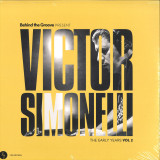
‘At the turn of the 1990s, there were few more successful New York house producers than Victor Simonelli. Under a dizzying array of aliases – Solution, NY’s Finest, Groove Committee, Critical Rhythm and Cloud 9 being amongst the better-known – the Brooklyn-born DJ/producer delivered a string of underground club hits during the city’s early ’90s house boom.’
BTG presents “Victor Simonelli: The Early Years Vol 1” a collectors edition double Vinyl release - 2 X 12’s in each Vol
Launching the first Behind The Groove collectors edition vinyl series is New York’s finest Victor Simonelli with ‘The Early Years Vol 1 & 2’ double Vinyl releases. Featuring seminal house tracks such as Cloud 9’s ‘Do You Want Me’, Solution’s ‘Feel So Right’, Instant Exposure’s ‘Wanna Be With You’ and rare mixes of Raiana Page and EZ-AL, this collection brings together classic and rare Victor Simonelli cuts that reflect the early raw energy and buzz of the New York House scene. With ‘Vol 2” scheduled to follow shortly after, this is the most comprehensive collection of rare Simonelli cuts that firmly establishes his esteemed role in 90s House Music as well as introducing new fans to his inimitable sound.
Victor Simonelli is one of the early kings of NYC sampling In house music. The real deal - Victor danced at the legendary David Mancuso’s Loft sessions and developed a serious appreciation for good music. He interned for Arthur Baker at his renown Shakedown Studios (where Arthur worked with the iconic Afrika Bambatta on the seminal dance floor ’Planet Rock’ track) and went on to release hugely influential releases on seminal NYC labels 4th Floor and Nu Groove. Victor’s music was championed by the hugely celebrated iconic House Music DJ pioneers, Larry Levan and Tony Humphries at Paradise Garage & Zanzibar/WBLS/Kiss FM respectively.
Revered as a New York house heavyweight and prolific producer since the turn of the 1990s, Victor Simonelli grew up in Brooklyn, NYC, nurtured by a music loving family, with an avid record collecting father who also worked as a local party DJ. He took music lessons in piano, drums, guitar and bass, before discovering his first love, tuning into NY’s Radio Mix Shows on WBLS, WKTU and WRKS,98.7 Kiss FM) where he discovered the art of mixing and in his own words, ’I just simply got lost in the music’.
Graduating from NYC’s Centre For Media Arts, Victor got an internship in the legendary producer, Arthur Baker’s Shakedown Studios. Soon graduating to editing, mixing and then producing he worked for artists David Bowie, Quincy Jones, Debbie Harry, Sinead O’Connor and Talking Heads. Teaming up with fellow NYC producer Lenny Dee to become the Brooklyn Funk Essentials, they released records ‘Critical Rhythm’ and ‘Subliminal Aurra’ on 4th Floor before Victor went solo as Groove Committee releasing the classic ‘I Want You To Know’ on the legendary Nu Groove Records. Paradise Garage legend, Larry Levan broke ‘I Want You To Know’ rocking 2 copies on his last tour of Japan whilst King of NY House Music,Tony Humphries broke Victor’s new ‘Feels So Right’ across New York on his WBLS/Kiss FM Mastermix show and at his legendary Zanzibar club sessions. It was only a matter of time before Victor’s name became synonymous with quality House music ensuring a worldwide platform for his productions.
In the early 90s alongside his own productions, Victor Simonelli worked on high profile projects, including James Brown’s album, “Love Overdue” BeBe and CeCe Winans single featuring Mavis Staples “I’ll Take You There” and Quincy Jones’ “I’ll Be Good To You” featuring Chaka Khan and the legendary Ray Charles. Never straying too far from his clubland roots, Victor worked with Danny Tenaglia on his classic “The Harmonica Track”.
DJ gigs across the world started flooding in and Victor found himself recording for a dizzying array of labels including Tribal America, Sub-Urban, Bassline, King Street Sounds and Vibe, under a wide range of aliases. He also produced, wrote and remixed for artists such Nile Rodgers (Chic), Afrika Baambata, Hall & Oates, Frankie Knuckles, Kerri Chandler, Madonna and Michael Jackson. Famed for his own productions “It’s So Good” by Creative Force, “I Know A Place” as Sound Of One - the first release on Roger Sanchez One Records -, “Dirty Games” as well as the “Street Players Vol 1 EP”, Victor went on to set up Suburban Records with Tommy Musto and Bassline Records with two other partners. Notable releases on this label include “Do You Feel Me”, Connie Harvey’s gospel inspired, “Thank You Lord”, Urban Blues Project’s “Deliver Me”, Colonel Abrams “Not Gonna Let”, and Mone’s “Better Way”. Never ceasing to produce, DJ, run his own label and host radio shows like Groove Lift, Victor has worked with virtually every NYC producer and has nurtured a next generation talents including Angel Moraes, Jazz ‘N’ Groove, Urban Blues Project, Harlem Hustlers, Jay Jay and Julius Papp. Victor’s releases have also been used on M&S’s “Salsoul Nuggett” hit and Eddie Amador’s underground smash ‘House Music’.
In the late 90’s Victor launched his new Westside Productions, notable for the “Latin Impressions 1 & 2” releases, opened up a studio in Italy as he found himself increasingly working in Europe and now divides his time between New York and Italy. Suffice to say his unique sound of uplifting and spiritual music has kept him at the forefront of House Music and he is credited as one of its leading exponents with his string of classic releases and remixes.
Behind the Groove, branches out from its digital platform to embark on a programme of releases from the iconic pioneer producers of House Music. Esteemed for their high quality features and mixes that continue to explore, celebrate and venerate the contributions of highly respected, scene-shaping Labels, Artists, DJs and Special Events, BTG seeks to bring these talents and tales to the attention of the wider community. Unlocking the stories surrounding the pivotal roles they played and continue to play today in shaping the underground music scene we have come to know and love.
BTG presents “Victor Simonelli: The Early Years Vol 1” a collectors edition double Vinyl release, released on May 12th 2023. ‘Vol 2” follows on May 26th 2023 . These releases are the most comprehensive collection of rare Victor Simonelli cuts that firmly establish his esteemed role in 90s House Music and introduces new fans to his carefree sound.
out of Stock
Last delivered 21 days ago available to reorder, subject to availability
Four Flies' new imprint Edizioni della Notte is back with a 12-inch maxi single of infectious remixes of Francesco Fisotti's boogie funk track "La Tartana" by eclectic Neapolitan DJ/producer Whodamanny.
The original track, which comes from the 2021 album Lido Sirena (named after a beach resort in the Salento area of Apulia, where Fisotti used to spend his summers as a child), blends funky disco, synths, drum-machine beats and improvisation into an exciting new sound that Fisotti calls "Adriatic funk".
Inspired by slow-tempo but irresistible Italo and cosmic disco tunes, in particular Tonino Balsamo's 1983 "Sta Guagliona Mo Ddà" (one of the rarest Neapolitan grooves ever, recently reissued by Periodica Records), Whodamanny's two remixes amplify the original's dancefloor potential by adding a nocturnal vibe and elements such as synths and electronic drums, as well as a short vocal line ("Don't stop till the music stops") to create a catchy call-and-response effect.
Whodamanny himself explains that he produced not one, but two remixes due to his love of extended dub versions. "It's sort of a professional quirk," - he says - "but you know, it's inevitable. You're sitting at the mixer, listening over and over to a track… Of course you'll find bits you can stretch out to create a fantastic flow! And my approach is always the approach of a DJ. I want whatever I produce to work well in my DJ sets, so these remixes too were bound to be club-oriented."
out of Stock
Last delivered 3 years ago available to reorder, subject to availability
Are you ready to embark on a wild ride through the sonic wonderland of ‚Life Of Phoroma‘? This isn‘t your average V/A extended player compilation – it‘s a pulse-pounding journey through chaos, confusion, and pure eclecticism that‘ll take you beyond just dancing.
Terra Magica Rec. sixth release is a passionate ode to the fusion of EBM and psychedelic, perfectly blending lightning-fast new age and tribal hypnotic soundscapes with 1980s synth atmospheres high on Trance.
It’s Electronic Disco gone Techno gone HiNRG gone wrong folks! Enjoy. The SH-101‘s aggressive cuts, the Sequential Circuits‘ mesmerizing melodies, and the heavily processed Neumann TLM 193 vocals seamlessly weave in and out of acid-ish and electro breakbeat grooves, „Why am I suddenly standing at Tokyo Teleport Station? What happend to my last week?“ Welcome to relaxed Rave-basslines and lo-fi rhythms that will intoxicate your senses.
Get loose and fall into your next portal of unexpected spiritual flows. Catch your six unique tracks for a highly eclectic journey through mysterious and magical moments. So strap in and become one with the sound, because ‚Life Of Phoroma‘ is your roller coaster ride to unforgettable sonic adventures.
out of Stock
Last delivered 2 years ago available to reorder, subject to availability
In 2019 we released the Discodrums 12'' on our own newfound The Night Land Records. With its screen-printed cover and limited edition it was a tribute to a format and culture dear to our hearts: Vinyl. Our intention was to keep releasing records in this style, with songs already mixed, mastered and ready to fly.
Had we known it would take three years to get the next EPs out we would probably have reconsidered everything. Series of strange incidents, accidents and negligence made us think this project was cursed but the music felt too important to us to let it go. We kept working to get it out and now we finally arrive with two "new" EPs: Melbourne Bolero and Bosco/Bosca. This is classic Talaboman; Chuggy, hypnotic, dub flavoured Latin-Scando house music, released on vinyl with beautiful screen-printed covers designed by DR.ME in Manchester. Three years too late but a hundred years too soon? Dance is timeless, thanks for listening.
out of Stock
Last delivered 2 years ago available to reorder, subject to availability
Ace Records is proud to announce the purchase of the Shrine label and Eddie Singleton’s independent productions.
To celebrate we have compiled an album of the very best dance recordings the label made in 1965 and 1966, primarily in Washington DC.
The business’s failure made this music incredibly hard to find for record collectors and Shrine is rightly known as the rarest soul label.
It is much more than that though. The music was made by some one of the original founders of Motown, Raynoma Liles Gordy and her Motown-schooled cousin Mike Ossman, New York music business luminaries Eddie Singleton and Harry Bass and the up-and-coming talents of Washington’s Keni St Lewis and Maxx Kidd. The acts included the hugely respected Ray Pollard and fellow New Yorker J.D. Bryant, talented and established Washington and Baltimore acts Eddie Daye & The 4 Bars, Bobby Reed and the Enjoyables. Importantly, they discovered and developed the local talent of the area in the shape of the Cautions, Les Chansonettes, the Prophets and Shirley Edwards.
It took decades for UK Northern Soul fans to realise the significance of the label. It finally clicked for Stafford’s Top Of The World all-nighter DJs who searched out the incredibly hard to find later releases and played them to the cult-following of the rare soul scene. The scarcity was caused by Shrine pressing up a batch of fourteen future singles but only getting a handful released before they folded. The vast majority of the later releases were destroyed in a warehouse fire or simply binned as stillborn commercial failures.
Such was the scarcity that when the first Shrine compilations were issued in 1990, the Prophets tracks from Eddie Singleton’s master tapes were assumed to be unreleased - until Shrine sleuth Andy Rix later obtained one from a group member.
Spatial & Co Vol. 2 may well be the best album in the Spatial & Co series. It's absolutely flawless. Again created by French disco lord and Arpadys maestro Sauveur Mallia for French library label Tele Music in 1979, it leans far more into the space disco sound than the clean cosmic funk of its predecessor. And it's all the more thrilling for it.
Wide-eyed opener "Discomax" is starts as pure piano-disco brilliance with a bassline to die for before heading off into wigged out territory, all acidic squelches and jaw-dropping percussive breakdowns. Perfection. "Space People" follows, an eerie, half-beatless sci-fi synth workout played out against a hauntingly metronomic pulse for the first half - proper slow-mo space disco business - before the beat kicks in, the electric guitar solo wails beautifully and the bassline that emerges at its conclusion rides in on some other shit.
Closing out the A-Side, the six minute long "Bass Power" is, unsurprisingly, a deep, low-end roller with head-nod drums, whizzing synths, blissed out ambient vibes and Mallia's otherworldly bass playing super high in the mix. It's white hot funk, make no mistake, and it sounds like a re-geared library version of Roxy Music. Yes, *that* good.
Side B is laced firstly by "Holidays Morning", an emotional disco-pop groover, all electric guitars, skipping drums and synthy bleeps with more than a few moments of pure driving funk.
One for the deep heads, longtime favourite "Electric Maneges" follows, a bleepy, haunted dancehall gem, uncut tropical balearic-funk from another dimension. The sophisticated digi-soul of "Loving Discovery" comes on like a weird, interplanetary Sade instrumental, all swelling synths, warm keys and syrupy guitar rhythms. Hearing is believing.
Arguably saving the best til last, the fierce, proto-techno of "Exotic Guide" closes out this extraordinary set. The intro genuinely sounds like Detroit would a good few years later - just wild - before it glides into a driving percussive funk break complete with both stabbing, insistent synths and those of a more winding, laconic variety. The one complaint? It's over far too soon. Remarkable.
Sauveur Mallia is a crucial figure in the history of electronic and dance music and a hugely underrated French library bass player and composer from the Arpadys / Voyage crew. This is just the beginning of Be With's Mallia - Tele Music reissue campaign!
The audio for Spatial & Co Vol. 2 has been remastered by Be With regular Simon Francis, ensuring the punch of Sauveur's bass and those sick drums come through to the fullest. Pete Norman’s expert skills has made sure nothing is lost in the cut whilst the original and iconic sleeve has been restored here at Be With HQ as the finishing touch to this long overdue re-issue.
out of Stock
Last delivered 3 years ago available to reorder, subject to availability
Swing Family's Music Force is dramatic mid-80s synth-funk. From the maverick mind of Sauveur Mallia, it's a thrilling and uniquely brilliant album from start to finish. It's undoubtedly known and revered for its unbelievable standout track, "Mission Africa". Those that know, know. And if you don't know, get to know. It's the reason this record has been hugely sought-after for the best part of two decades. Originally released on Tele Music in France in 1985 but now tear-inducingly rare, this is the definition of "a welcome reissue."
Swing Family is basically a supergroup of French Funk royalty. Led by French disco lord and Arpadys maestro Sauveur Mallia, they were augmented by trombonist Alex Perdigon from legendary French funk rock collective Godchild, trumpeter Kako Bessot from funky fusion group Synthesis and saxophonist Pierre Holassian, a member of Giant, Janko Nilovic's French jazz orchestra. So, about as heavyweight as it gets for funky French goodness. Mallia handles, of course, bass duties throughout, as well as utilising his arsenal of synths including his E-mu, Yamaha Dx7, Roland MSQ 700, Mini Moog and Oberheimm.
The maximalist disco fusion of "Exorcistor" is perhaps a bit too 80s French cheese for most tastes, so either linger on its singular style or head straight to the soundtracky typo-funk of "Greewich Boulevard". A deep, swaggering powerhouse, it comes on like mid-80s Chic jamming on the set of Beverly Hills Cop with Kashif. Yes, *that* good. It's followed by the vital "Music Force", a synthy, sleazy instrumental full of sax and flute and those 80s drum fills. Just the right side of acceptable.
OR! You can even choose to forget all the rest and just stick "Mission Africa" straight on. A rumbling, strutting, afro-cosmic low-profile banger. The slick drums hit hard, the synth strings warm things up, overlapping horns add swagger whilst electric guitar flourishes and a chanted refrain sit in the mix quite perfectly. A track that's almost impossible to describe and do justice to. You just need to hear it. Preferably as you saunter into your favourite after-hours club, after spotting all your friends at once, as you cut a swathe to the bubbling dance floor. A track quite like no other, it makes you sit up within its first bars and, to us at least, sound like something you'd have heard on a Print Thomas mix from the mid 00s. Basically, it's cosmo-galactic.
The B Side opens with "Musical Stars", an oh-so-80s funk-lite track which, at times, sounds like something Daft Punk may have left on the cutting room floor during their Discovery sessions. Another unimpeachable favourite of ours is the druggy brilliance of "Gentleman & Musician". You can almost hear the white powder through the speakers, as soaring, acidy synths, slick, heavy beats and the irresistible interplay of the primo horn players create a real sleazy wonder. "Film Action" follows, a galloping horn-heavy synth romp with moments of extreme bass breakdown brilliance before the drama-synths of "Episode Double" take things up another notch as it oscillates between gorgeous funky horns and urgent bleepy magic. Super tense, super funky and super stylish. Just ace. The elctro-tinged horn workout "Fatal Lady" closes things out majestically.
The audio for Music Force has been remastered by Be With regular Simon Francis, ensuring the punch of Sauveur's bass and those sick drums come through to the fullest. Pete Norman’s expert skills has made sure nothing is lost in the cut whilst the original and iconic sleeve - complete with perky Liberty Belle - has been restored here at Be With HQ as the finishing touch to this long overdue re-issue.
out of Stock
Last delivered 3 years ago available to reorder, subject to availability
Edition OF 500 copies, Comes with insert and download code.
An album that sounds like The Menahan Street Band playing in a tropical jungle, at dawn, right at the point when the first rays of sunlight penetrate the dark depths of the forest. During the 2022 summer of natural disasters, under an unprecedented heatwave, and haunted by news reports of ancient relics, sunken ships, and hunger stones resurfacing as rivers dried-up all-over Europe, Amsterdam based multi-instrumentalist producer Alex Figueira started to hear uncanny metallic vibrations And eerie melodies of untraceable origins, day and night. He recalls nightmares of winged creatures inside timeless structures of Escherian architectures playing cosmic instruments amidst tropical storms
and acid rains. As the visions came more often, his wife reported that he babbled during his sleep about South American demon Yurupari. Soon, Alex found himself in a sleepless state and decided to cleanse the studio, with hallowed rites and
the intense burning of Palo Santo. After almost burning the studio down, he turned to his neighbourhood’s most experienced psychic, seeking answers. He was told there were “cosmic entities” trying to manifest a message “too complex for us to understand in this dimension” and the only way he could find peace was to deliver those messages in a decipherable form. It was then he decided to transmute his hallucinations into music, an all-or-nothing cathartic solution.
Alex entered a feverish dream, fuelled by the kaleidoscopic motion of the cosmos, ancient meteor showers, and visions of forgotten interstellar South American gods. He remembers very little of the work, but the outcome is this record. Entirely composed, recorded, produced, and mixed in a frenetic nine-day studio stint.
How the experts describe it:
”Just when outernational vinyl vampires thought they had it all sewn up, the metronomic makeshift
magician known as Alex Figueira unravels the entire fabric of your record collection to expose a gaping
hole where PUNKUMBIA and Transplant-Tropicalia should be. Reducing an expansive palette of
influences to a recipe that tastes wildly exotic but comfortably over-familiar, Alex’s roles as both
scavenger and chef, bookend a whole ensemble of other highly adept musical personalities in between.
Discover this record NOW, or wait until all your friends (or enemies) recommend it to you later.”
Andy Votel (Finders Keepers)
“Incendiary, lysergic takes on South American and Caribbean music from one of the scene's truly
authentic and eccentric producers. You can always count on Venezuelan-born, Amsterdam-based,
multi-instrumentalist, music-fanatic Alex Figueira to surprise and innovate, whilst consistently keeping it
true and real. The former Fumaça Preta drummer & front-man's debut solo album does not disappoint!”
Miles Cleret (Soundway)
“The one man band Alex Figueira comes through with some major flavors on this one. Cumbia beats and
psychedelic elements with that Latin touch of soul & Funk!”
Kenny Dope (Masters at Work)
“I really respect Alex Figueira’s DIY ethos. From running his own little funky recordstore to running his
own label and making his own music by playing every instrument himself. I was already a fan of the song
“Aprende” which he released on 7 inch and with“Mentallogenic” he takes it a step further in that same
vibe. From songs like “La Culebra” making use of a vocoder in his typical latin sound to songs like
“Serious” playing with rhythmic changes and topping it off with some synth flavors. A lovely and fun
album”.
Antal (Rush Hour).
out of Stock
Last delivered 3 years ago available to reorder, subject to availability
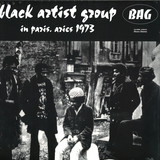
Outstanding free jazz session recorded in 1973 in Paris by Chicago outfit BAG.
It was Lester Bowie, trumpeter with the Art Ensemble of Chicago, who suggested that the Black Artists' Group (BAG) should head for Paris. In 1972 several members of BAG took his advice and flew to France for an extended stay. The following year a concert featuring saxophonist Oliver Lake, trumpeters Baikida Carroll and Floyd LeFlore, drummer Charles Bobo Shaw and trombonist Joseph Bowie (Lester's younger brother) was recorded and subsequently issued as In Paris, Aries 1973, a strictly limited edition LP on the group's own label.
Since the formation of Black Artists' Group in 1968, the home of this multidisciplinary arts collective had been St Louis, Missouri, the city where the Bowie brothers had grown up. It was there that Lester Bowie had started to investigate the expanding horizons of jazz before moving, in 1966, to Chicago where he joined the recently established Association for the Advancement of Creative Musicians (AACM). His close friend Oliver Lake visited Bowie, attended AACM concerts and meetings and was inspired not only by their artistic vision and integrity but also by their efficient organisation. In Chicago musicians were making things happen for themselves, taking control of their own destinies and giving shape to their lives as creative artists.
In June 1969, the Art Ensemble of Chicago had taken their music to France. During the preceding decade Paris had established a reputation for audiences that were unusually well-informed and open-minded, receptive to the uncompromising music of black American innovators such as Cecil Taylor, Ornette Coleman, Albert Ayler and Sun Ra. The city that had nurtured not only Cubism and Surrealism, but also Jean-Luc Godard and contemporary cinema's Nouvelle Vague was well prepared for the sonic collage forms and stylistic dislocations of the Art Ensemble. During that same month violinist Leroy Jenkins, trumpeter Leo Smith and saxophonist Anthony Braxton also arrived in Paris, three further emissaries from the AACM.
The adventure of collective improvisation resonated with the Parisian zeitgeist. Enthusiastic audiences attended their concerts and coverage in the media. In Paris, Aries 1973 offers an isolated and fascinating glimpse into that phase of the group's existence. The album is dedicated to the memory of Kada Kayan, a bassist who had hoped to make the trip from St Louis to France but, tragically, had grown ill and died. His absence adds special poignancy to the sound of the bass when it appears on this recording, played by Baikida Carroll. Listeners keen to hear Kayan himself in the company of Lake, Bowie, Shaw, LeFlore and Carroll should seek out Red, Black and Green by the 10-piece Solidarity Unit, Inc. That album, recorded on 18th September 1970 and dedicated to Jimi Hendrix, who died on that day, features an earlier version of Shaw's composition 'Something to Play On.'
In Paris, Aries 1973 reveals BAG's musical affinities with the Art Ensemble of Chicago. Both groups preserved an independently minded approach to the notion of free jazz and a carefully filtered awareness of pan-African musical practices, while their creative interest in space, mobile structure, chance occurrences and simultaneity also suggests parallels with the concerns of leading experimental composers working at that time. These performances in Paris of Shaw's 'Something to Play On' and Lake's 'Re-Cre-A-Tion,' plus two collective compositions/improvisations, display the dedication to structural fluency and sensitivity to coloration that accompanied BAG's unorthodox group dynamics and their unconventional instrumental combinations. In this case the musicians embrace congas, log drums, marimbas, woodblocks, cowbells and gongs. This is not a showcase for solos, but a shape-shifting and multi-centred statement of togetherness, quest and discovery. Removed from BAG's original multidisciplinary context the music still exudes an exhilarating spirit of collaborative exploration and shared excitement.
If Es’ debut album for Upset the Rhythm explored the “tension between intent and interpretation”, the London group’s 2023 EP, ‘Fantasy’, constructs a coda for resistance against the distorted gaze. A four-track contact-high anxiety amid fact and facsimile, the new release attempts to define a sound that still resonates in an increasingly confused public theatre, where cerebral dreams manifest in corrupt fascination.
Echoing the legendary Pylon or the later, disco-inspired releases from PIL, tracks like ‘Emergency’ and ‘Unreal’ blend the band’s established disjunctive style of gothic restlessness with brighter, poppy, and danceable tones. These stylistically unwind in transition with the increasingly claustrophobic pieces like ‘Too Late’ and ‘Swallowed Whole’, syncopating a parallel design of the frantic and the fashionable.
Paired with a lyrical intricacy which emits a desire to break the fetish of false representation, ‘Fantasy’ reminds us that worthy punk records, like any manifesto of neurotic suspicion, balance testimonial, speculative-fiction, and social critique. Indebted to the past but pointed sharply to the future, Es deconstruct our modern wreckage of personhood and self-deceit, granting a sense of solidarity inside alienation. Inside ‘Fantasy’ we visualize our own estrangement, and it is only when this mirror fades that we find the tools to fight back.
The duo of Charles McCloud and Roslyn Johnson made only two albums during their career…but those two albums (Everything Must Change and Spirit of the Living God) are among the most collectible records ever made in the gospel genre. In fact, they are so hard to find that we’re still searching for Spirit of the Living God to scan the artwork, but we managed to snag a copy of their 1981 debut Everything Must Change on the obscure Cheri label (though we may have to pass a collection plate to recoup the cost!).
It’ll just take the first track to show you why these records are in such demand; you have never heard such a soulful (check out those harmonies!), slow-burning rendition of that hoary chestnut “Amazing Grace” in your sanctified life! And with able production by keyboardist Julius Brockington, who played with Larry Young and headed up several outfits of his own, Everything Must Change is a crossover album in the best sense of the word, blending the spiritual fervor of gospel with the danceable grooves of soul and—dare we say it?—disco. Don’t miss the Donny Hathaway cover “Someday We’ll All Be Free,” too. Black vinyl release, first ever reissue in any format…limited to 1000 copies!
"Hungarian guitarist Gabor Szabo (1936-82) issued only three live recordings during his lifetime. Significantly, the first of these, The Sorcerer (1967), remains the most popular album in the guitarist’s all-too abbreviated discography. But there were also More Sorcery (1968) and Gabor Szabo Live with Charles Lloyd (1974), offering Szabo totally in his element and at his bewitching best.
Several more of Szabo’s concert recordings have surfaced in the intervening years, including this one, superbly captured for radio broadcast live in 1976 at the 600-seat Agora Ballroom in Cleveland, Ohio. It is a revelation. There is a sense here that concert patrons may have been hearing an altogether different Gabor Szabo than record buyers.
For one thing, Szabo is heard fronting what is likely his own group, rather than an army of studio musicians. In 1976, Szabo was leading a tremendous quartet with George Cables (or Joanne Grauer) on piano, Tony Dumas on bass and Sherman Ferguson on drums. Szabo had not had a band with this much jazz clout since his famed quartet with Jimmy Stewart in 1967-68 – and it is a union worth savoring: Szabo’s records during this period were light, at best, on jazz.
It’s unclear if any of these musicians are on the Agora date, but as Dumas’s “It Happens” opens the program, it’s a good bet, at least, that the bassist is on board here. But as Szabo’s ’76 quartet is not known to have recorded a studio record, Live in Cleveland is the closest thing to what a mid-seventies Szabo jazz album would sound like.
Gone, are the strings, vocals and concessions to commercial consideration so prevalent on so many of Szabo’s studio records at the time. What is present, though, is fine craftsmanship, tremendous interplay, and the exciting improvisation that good jazz always yields.
This particular concert was part of Sansui’s “New World of Jazz,” a series of 13 hour-long jazz concerts recorded at Cleveland’s iconic Agora Ballroom and broadcast over 40 FM radio stations. The series was sponsored by Sansui Electronics, a Japanese manufacturer of audio and video equipment, which previously sponsored a similar series of rock concerts recorded at the Agora as well.
Sansui was promoting its matrix QS 4-channel sound system – offering, what was considered at the time, superior diagonal separation and stereo compatibility. The firm, partnering with Agora Ballroom and Agency Recording Studio owner Hank LoConti (1929-2014), was looking to take advantage of what they rightly felt was the then-current jazz renaissance.
Each show’s 16-track master tape was mixed through the Sansui QS 4-channel encoder,” according to an August 1976 Billboard article detailing the arrangement, “for distribution to the 40 FM stations throughout the United States that bought the series” – allowing for three commercial spots for local dealers to advertise."
The recording is available for the first time on CD and VINYL. Mastering by grammy-nominated Jessica Thompson.
The first thing that grabs you about Altin Gün"s new album is the energy. With Ask, the Amsterdam-based sextet turn away from the electronic, synth-drenched sound of their 2021 albums, Alem and Yol. While those two, created at home during the pandemic, paid homage to the electronic pop of the 80s and early 90s, Ask, marks an exuberant return to the 70s Anatolian folk-rock sound that characterised Altin Gün"s first two albums, On (2018) and Gece (2019). But there"s development here too. Ask is the closest the band have come so far to capturing the infectious energy of their live performances. "It"s definitely connecting more with a live sound - almost like a live album," says bassist Jasper Verhulst. "We, as a band, just going into a rehearsal space together and creating music together instead of demoing at home." "We didn"t record it like we did the last album," agrees vocalist Merve Dasdemir. "We basically produced that one at home because of the pandemic. Now we"ve gone back to recording live on tape." How many more worlds do Altin Gün visit in this joyful expedition? "Rakiya Su Katamam" is glowering space rock as though Gong had taken a stopover on the Bosphorus. "Canim Oy" is a psychedelic freak-beat stomper from a world where Istanbul"s Kadiköy district was the Carnaby Street of the east. "Güzelligin On Para Etmez" is a dreamy acid-folk anthem. And the finale, "Doktor Civanim," is an irresistible slice of sci-fi disco camp with lava-lamp synth squiggles that wouldn"t sound out of place next to Baris Manço"s "Ben Bilirim." Fresh yet timeless. Rooted in antiquity yet yearning for heavenly futures. Ask wants to take you places. All you have to do is strap yourself in
out of Stock
Last delivered 12 months ago available to reorder, subject to availability
The sound of the classic period of Psychic TV - featuring Peter Christopherson and Geff Rushton (John Balance) of COIL, this full show is interspersed with recordings of the Pagan marriage between Genesis and Paula P-Orridge conducted by Sveinbjörn Beinteinsson Allsherjargodi. Psychic TV at their most esoteric, their most ritual, and often most extreme, a perfect accompaniment to the legendary 'Dreams Less Sweet' album of the same year. "Thee First Will To And Testament Ov Psychic TV. All our works remain interconnected, interfaced, and intentional. Thee Process is thee Product". These recordings of a live disconcert by Psychic TV in Reykjavik, Iceland that took place November 1983 organised by HÖH and GRAMM Records, to whom, eternal and infernal thanks all ways.
The sound of the classic period of Psychic TV - featuring Peter Christopherson and Geff Rushton (John Balance) of COIL, this full show is interspersed with recordings of the Pagan marriage between Genesis and Paula P-Orridge conducted by Sveinbjörn Beinteinsson Allsherjargodi. Psychic TV at their most esoteric, their most ritual, and often most extreme, a perfect accompaniment to the legendary 'Dreams Less Sweet' album of the same year "Thee First Will To And Testament Ov Psychick TV. All our works remain interconnected, interfaced, and intentional. Thee Process is thee Product". These recordings ov a live disconcert by Psychic TV in Reykjavik, Iceland that took place November 1983 organised by HÖH and GRAMM Records, to whom, eternal and infernal thanks all ways. Out of print for 23 years, this is the ultimate edition for Psychick Youth - meticulously remastered, with the track order finally arranged into what was the original show. Available as ltd white vinyl 2LP w/ inserts, classic black 2LP w/ inserts and CD in glossy digipak with 12-page booklet.
All of us carry a piece of where we’re from with us, but these parcels of fallow land often in a uniquely mysterious way become the prey that nourishes our aspirations. Agnès Gayraud a refined thinker by day that transforms into la Féline at night left Tarbes many years ago in search of greener pastures. After making a name for herself with Adieu l’Enfance (2014), Triomphe (2017), and Vie Future (2019), the author and musician has evolved once again. Her latest release Tarbes reinvents the circle of life and challenges our preconceived notions. She welcomes us to her hometown with sweet and clear melodies over the backdrop of an electronic hum, reminiscent of Mark Twain classic Tom Sawyer. Tarbes is no more than a listen away. Physically prevented from returning to her hometown by the viral threat we all know all too well, Agnès found her way back with a small Electone home organ. The constraints of off-peak hours that called for some DIY savvy, slowly but surely, roused her spirit. With a drum machine, a bass and a guitar, she succeeded in making the young girl inside her smile again. With 13 songs and just as many adventures Tarbes is a concept album that tells the story of a young woman’s formative years, as spent in her hometown. The returning hymn doesn’t only imprint nostalgia, it paints the full emotional portrait of a town. Because for Agnès, Tarbes is not just her theater, but her whole world, showing how fiercely protective she is of her hometown in the song Solazur. Under a magnifying glass of emotion, and with the sentimental testimony that is La Panthère des Pyrénées, the artiste shows us the skeletons in our own closets. Tarbes, more than a brief stopover in a rail journey to the coast, broaches issues that touch on abandonment, desertification, aging and redevelopment that many French towns and cities face today. Alexandre Guirkinger’s photographs serve as album art that illustrates this strangely unique singularity. While fine-tuning this collection of stories, in an oh-so-intimate album where solitude rips away the mask of confidence, Agnès found solace in uniting with other spirits. For 3 songs Tarbes, Jeanne d’Albret and Fum, inspired by an Occitan poem of Louisa Paulin (1888-1944), she invited the young voices of Conservatoire Henri Duparc a building she knows intimately, despite never feeling allowed to enter as a child to breathe the energy of their adolescence into this record. She also collaborated with Lyon’s own François Virot to imbue his delicate rhythms into her work, as well as Belgian guitarist Mocke Depret. Lastly, La Féline entrusted the last production stages to her eternal partner in music, Xavier Thiry, with Stéphane “Alf” Briat on the mixing board. The final piece has a complex tranquility, surrounded by non-verbality, with Jeanne d’Albret, Louisa Paulin and the Pyrénées safeguarding Agnes’ secrets. With the calm reassurance of her metamorphoses, La Féline delivers a slice of silence to her town, serving as both her cradle and theater. Tarbes’ Théâtre des Nouveautés is where Agnès Gayraud, La Féline, has decided to present Tarbes to its residents on October 14, 2022. While “nouveautés” evokes newness, this theater is reminiscent of a future which is already outdated, where modernity is only vague and fictional, carrying reminders of French haute-kitsch accordionist Yvette Horner, whose parents were the caretakers of what was then called the Cani Eldorado a bastion of virtue through the 30s, with its lineup of Catholic films. However, by the 60s, it would have become a temple of pornographic cinema. Tarbes, “Les Nouveautés”, end card. In the mid 90s, then 16 years old, Agnès discovered the volatile dust and the ghosts of the past that were hidden in this apostate theater. This phantom bequeathed song the teenager with the gift of her undeniable talent at her first appearance on stage a high school performance of a guitar-laden ballad sung in Spanish, a language her Andalusian mother has infused her with. On October 14, 2022, Agnès returns to the stage, bass in hand and joined by François Virot (drums), Mocke Depret (guitar), Léa Moreau (keyboard) and the Conservatoire de Tarbes singers to perform the album in its entirety
Bizarro Records returns to its Australian roots for three functional tracks from Eora/Sydney local Eastern Distributor, alongside a remix from Montreal prodigy Maara. Drawing heavily from the psychedelic influences of our country’s bush doof scene, ‘State of Equilibrium’ alludes to trance and techno relics of the past whilst accelerating into a hybrid psy-tek sound.
‘Affinity’ delivers a functional, peak-time psychedelic motion, ebbing and flowing into dark resonant euphoria. ‘Balance’ sticks closer to the modern Australian scene; an upbeat, bubbling tech-house influenced track, presenting a futuristic psy take on a sound marking contemporary dance floors. The third track ‘Endorphin’ is a bouncing techno tool, infinitely ascending from powerful low-frequency buzz to progged-out elation. The EP comes to a close with a taste of Maara’s signature sound - characterizing her take on ‘Endorphin’ with an irresistible dancefloor oriented bassline, filled with the angelic pads that define her discography.
out of Stock
Last delivered 2 years ago available to reorder, subject to availability
A tribute to the late Kenny Hawkes, London's dark lord of house music. Lovingly selected and curated by Luke Solomon, Jonny Rock and Leon Oakey.
Running from 1995 to 2002, 'Space' was a Wednesday night founded by Kenny Hawkes and Luke Solomon. It inhabited the underground world of Bar Rumba right in the heart of London's West End and took place each and every week. Kenny and Luke had both been regular fixtures on infamous London Pirate Radio station 'Girls FM', and were seeking a suitable place to play the kind of music they supported on their respective radio shows. They were presented with a weekly opportunity at Bar Rumba and snapped it up.
'Space' was THE place for 7 solid years, hosting local and international guests from the house music community week in week out, to 200+ hardcore and dedicated followers. Regular guest bookings read like a 'who's who' of the music scene with sets from Derrick Carter, Andrew Weatherall, DJ Harvey, Tom Middleton, A Man Called Adam, Ralph Lawson and Huggy, Harri and Domenic, Francois Kevorkian, Salt City Orchestra, Carl Cox, Chez Damier and Ron Trent.... the list goes on and on and on! Music from seminal record labels such as Classic, Prescription, Cajual, Paper, Relief was played on rotation amongst a killer mix of Disco classics, alternative 80s music, left-field B-sides and techno. The night undeniably became a cauldron of amazing music and midweek hedonistic chaos.
As Soho changed beyond recognition and clubbing moved Eastwards, Kenny and Luke decided to call it a day. Sadly, Kenny Hawkes died in 2011, leaving a huge hole in the dance music community. Kenny was a legendary figure with an unmistakable sound and DJ style, he had a warped sense of humour and a huge personality and he continues to be dearly missed by all to this day.
As a tribute to Kenny, his musical partner in crime Luke Solomon alongside 'Space' regular and DJ / Editor supreme Jonny Rock, and former Classic Records label boss Leon Oakey have joined forces to celebrate his life through music. 3 years of tweaking, pooling music and clearing tracks have culminated in 2 very special double albums and a digital compilation. A collection of 'Space' classics, underground jams and the tracks that shook the Shaftesbury Avenue dance floor, shaping one of London's most revered midweek sessions.
All profits from the compilation will be donated to the British Liver Trust.
out of Stock
Last delivered 7 months ago available to reorder, subject to availability
Elias Devoldere is the drummer in bands such as Nordmann, Hypochristmutreefuzz, Suwi, Robbing Millions, and John Ghost. Following an ep, Kaiku, released last summer, Bloomed > Exploded is his debut full length as a solo artist. Besides writing and singing, he composed, played, recorded, and produced the bulk of the ten songs himself. 'Everything blooms', he explains the title of his first album. 'Until it explodes, and something else is able to grow from it'. In this case, what came full cycle is an intimate coming-of-age album of intangible atmospherics, crisp melodies, and understated rhythmical patterns.
BLOOMED >
'As a kid, I just wanted to play football, you know?', says Elias. 'But when I was eight years old, my parents made me choose between drawing school and music school'. And thus began a dedication to rhythm for Elias. At 18, he enrolled at the Royal Academy of Fine Arts in his hometown of Ghent, opting for a jazz education. 'Not because I aspired to become a master 'jazz drummer', but to learn music, to become a good musician'. It was at the academy that, after an impromptu jam session, Nordmann first came together. The exhilarating instrumental quartet went on to win second place at the prestigious Humo's Rock Rally in 2014, and released three albums to critical acclaim, with a new one in the works.
Devoldere, in the meantime, had completed his degree with a craving - ironically - for music. 'I was in over my head with jazz for such a long time, and went on an epic discovering spree. Moses Sumney, James Blake, Kendrick Lamar, Connan Mockasin... Lots of stuff I had missed over the years. In a way, I reconnected with the kind of music I was into before jazz dominated my life. Pink Floyd was my first love, for instance, and later Radiohead proved to be a game changer. Diving back into those kind of sounds, I was feeling the urge to follow my old dreams, of being a solo artist - or something more than 'just' a drummer, anyway. So I bought a guitar, an interface for my laptop, and started writing'.
EXPLODED
When he released his 5 track ep Kaiku in the summer of 2021, it summarised a lot of firsts for Elias. First time writing lyrics, first time as a lead vocalist, first time recording his own songs all by himself. The songs had been around for a while, but taking those leaps took a long time. 'Making the ep helped me to find my voice, in every way possible'. Still, in the aftermath of the pandemic, the songs on Bloomed > Exploded sprouted in a time of upheaval. 'Musically the album is quite serene, gentle even. But the themes speak of internal unrest and uncertainty. There are a lot of questions on the album, as it turned out. Duality, as the title suggests, coming from the struggle between a wish to turn everything upside down and a search for peace. Honestly: the prospect of my 30th birthday was messing with my head too'.
Recording during a period of solitude in France, Elias initially relied heavily on synthesizers and drum machines. 'Explode / Boalis was one of the first songs I wrote for this album, and pivotal for its atmosphere, based mostly on electronic elements. Later, I did use 'real' drums on most of the other songs, though, and contributions from other musicians, but the overall mood is very cohesive'. 'Pure', that's how Bruno Ellingham, the UK engineer who mixed the album, described it. Much to the delight of Elias, who reached out to Ellingham because of his previous work with bands such as Massive Attack and Portishead. 'Hearing the end result, I thought he really captured the essence of the original demo's. For me, that adds to this album being a sincere reflection of my true self. 'Take a dive/ Into the place where it's more quiet', as I sing in the last song, that kind of sums it up for me'.
Sometimes, a change of view can transform a person’s world. On ‘Don’t Come Down’, the artist formerly known as Matt Pond PA can be found with his “shoulder on the concrete” of a pavement, scoping out the world anew. This granular realignment of perspective serves as an open door to the debut album from The Natural Lines. At once clearly Pond’s work yet a huge leap forward in its measured songcraft, melodic immediacy, collaborative detail and wryly questioning lyrics, the result is a gorgeous album of intimate reflections from a relocated, renamed, revivified talent.
Recorded with close collaborators and friends over a period that saw Pond make vital adjustments to his life, its stealth emergence reflects his desire to set a fresh pace for himself and come from somewhere new, somewhere more open.
Now based in Kingston, New York, with his partner and wild dog Willa, Matt explains the album’s gestation thus. “It was something different from the start. I wanted to write as purely as I could. Instead of getting stuck in the ‘tour, write an album, release an album, tour’ cycle, which is not a natural way of writing or living, I wanted to write an album and when it was done I wanted to make sure it was done. I didn’t want this feeling of, ‘Oh, we didn’t have time’, or, ‘I don’t know whether I believe in the songs but it’s coming out anyway.’ I used to be always racing to the finish line, but I’m not anymore.”
For Matt, the call to ring the changes came with the recognition of “a certain nihilism or narcissism” involved in making music. “In some ways, you have to get in your own head and I think I went too far with that, with drinking and shutting people out. In something that I believe is collaborative, it’s not helpful.”
“I quit lying,” he adds. “I checked my harsher tones. I cut my drinking down. I went to therapy and figured out how to stop shouting at cars.”
Car troubles inspire ‘No More Tragedies’, the album’s standout second track, where he wryly details his desire to dampen his twinned impulses to take pictures of license plates blocking his parking space or take bricks to said car windshields. Warming melodies and harmonies soothe his rage, a balance maintained elsewhere on the album.
A need for connection underpins the lilting ‘Alex Bell’, where Matt’s lyrics playfully reference the inventor of the telephone over a plaintive cello and bubbling keyboards – evidence of the album’s carefully nurtured arrangements. With nimble sequencing, ‘My Answer’ follows with a question: do artists really need to get messed-up to create? Matt may not have the answer, he admits, but he articulates the question beautifully, channelling the influence of Blue Öyster Cult’s ‘Don’t Fear The Reaper’ into a song of fleet, melodic electric-folk drive.
Featuring 17-year-old MJ Murphy on misty backing vocals, the softly insistent ‘Don’t Come Down’ is an album centrepiece, detailing a need to see things anew. Like The Flaming Lips writing a classicist piano ballad, the twinkling ‘Artificial Moonlight’ finds Matt writing late at night, illuminated by the lights from streetlamps. Finally, ‘Mahwah’ closes the album on a note of arrival. While Matt Pond PA’s albums emerged from the disconnection of touring and living in vans, Pond is now happily – cruel winters aside – ensconced in Kingston. “I have found a place I love. Mercury Rev lives near here. It is a cool place to be, an artistic, mountainous, wild place to live. So – maybe this is it.”
In the case of The Natural Lines, a sense of arrival suggests itself. For Matt, the album follows two decades’ worth of Matt Pond PA records and soundtrack works. In a career he once described as “a series of benign mistakes,” Matt travelled far, moving from his band’s starting point in Philadelphia to Florida, Oakland and beyond while releasing 14 well-received albums. In 2017, he declared his intent to retire the Matt Pond PA name, though it lived on briefly in the reissue of The State Of Gold and EPs such as Free Fall, a tribute to Philadelphia.
Now, the name change honours his collaborators. Among a revolving cast, one constant presence in his work has been Chris Hansen, who plays guitar, bass, keys, saxophone and vocals on The Natural Lines’ debut. Matt’s partner, Anya Marina, contributes vocals. Other band members number Hilary James (cello/vocals), Kyle Kelly-Yahner (drums), Louie Lino (keys), Sarah Hansen (horns), Sean Hansen (drums/bass), Kat Murphy (vocals) and, also on vocals, MJ Murphy, for whom Matt brims with praise: “She can do anything she wants to musically.”
A heartening rebirth for Pond and his friends, the result also pays warming, witty, reflective and infectious testimony to the value of reconfiguring one’s outlook. “Once I took control of my mind, I could see what I wanted to say more clearly,” says Matt. “Instead of random floods of mania and panic, I felt like I was composed and composing. It has become as simple as reading the words of a sentence in the right order. As small as the pause before I hit ‘send’.” A development, you might say, conducted along the most natural of lines.
Death Is Not The End's 333 sub-label follows the reissue of Devon Russell's Darker Than Blue LP late last year with a first-time reissue of a veritable reggae-dancehall holy grail - Robert Ffrench's 1985 LP 'Wondering'.
Pioneering artist and producer (and cousin of the late, great Pat Kelly) Robert Ffrench was born in central Kingston in 1962, recording his first records in 1979 at the age of 17. Coming out off the back of a slew of roots & early dancehall-style 45s cut with a wide range of producers thoughout the early '80s, the Wondering LP followed closely after two acclaimed LP sets ('Showcase' produced with Lord Koos & 'The Favourite' for Ossie Thomas' Black Solidarity label - plus a split showcase LP with Anthony "Gunshot" Johnson for Jah Thomas' Midnight Rock label).
Ffrench would write and produce the Wondering LP himself in it's entirity, laying down the tracks at Herman Chin-Loy's Aquarius & Michael Carroll's Creative Sounds studios with the help of engineer Christopher Daley. Representing the sound of an artist first confidently sriking out on his own, the album elegantly mixes a classic rub-a-dub & lovers rock-inspired sound with nascent digi-esque flourishes. It boasts an enviable list of contributors too, incl. Sly & Robbie, Dwight Pinkney, Robbie Lyn, Nelson Miller (Burning Spear) and Ronald "Nambo" Robinson among others, with Beres Hammond also providing backing vocals in places.
Following the release of Wondering, Ffrench would continue to write and produce, soon after releasing two further self-produced LPs for Edgar White's Parish label - and founded his own 'France' label in the late 80s, through which his productions would start to hit big, most notably alongside Courtney Melody on 'Modern Girl', and with US rapper Heavy D on the track 'More Love'. Robert's productions released through later label 'Ffrench' would go on to boast the cream of the crop of dancehall artists throughout the 90s and early 2000s, and he is often credited with discovering Buju Banton (producing his first single "Ruler" on the Stamina riddim). Ffrench is still actively producing music of his own to this day, having released singles 'Everyday of My Life' and 'Black Is a Colour' in late 2022 and Feb 2023 respectively, available through all digital platforms now.
333, under exclusive license from Robert Ffrench.
out of Stock
Last delivered 2 years ago available to reorder, subject to availability
Avid Habibi Funk listeners may be familiar with Libyan composer / producer Najib Alhoush, who’s track “Ya Aen Daly” - the Bee Gee’s “Stayin Alive” cover - was included in our second compilation. While the original track never excited us, Najib’s version managed to strip it from its pop approach that had taken over disco during the genre`s peak. At that time, disco tracks mostly were aiming to appeal to the widest audience possible. Najib had turned the original track into something different and very unique. Upon further research we found that Najib was actually the singer and founder of The Free Music band alongside Fakhreddin, Salim Jibreel, Abdulrazzak ‘Kit-Kat’, Mukhtar Wanis and Mohameed Al Rakibi.
Initially, we only licensed Najib Alhoush’s “Ya Aen Daly” from Yousef Alhoush, Najib’s son, who was pleased to hear that there was interest in his father’s music form someone abroad. In the process of exchanging and learning about Najib’s music and career, our understanding was that The Free Music only recorded the one album. This couldn’t be further from the truth, in fact, there were ten albums produced by the group, all impressively coherent with a clear influence from disco, soul, funk and reggae.
The Free Music album was probably the longest it ever took us to gather information, photos and musical source material in a good enough quality to be reissued. This is largely due to the complicated political situation in Libya, compounded by the fact that Libya is still largely cut off from international payment systems, so getting an advance payment to the right person can be a process that takes weeks. The same goes for getting master tapes to a studio abroad and afterwards back to Libya.
When we look for music that works under the umbrella of Habibi Funk, we often come across albums where bands experimented with influences from Soul, Jazz, Funk, Disco and more, usually on a single track or two but then they often go down to a different path for the rest of the album. This was not the case for The Free Music. All their albums are fully dedicated to their unique blend of Disco, Reggae and Funk and it feels that when we made the selection for this album, we could have chosen a completely different number of tracks and the album would be been equally strong.
The lead-off single is the stupendously groovy “Ana Qalbi Ehtar” out February 3rd along with LP pre-order to capitalize on Bandcamp Friday. From the outset, the rhythmic strumming of the funkified guitars give way to the galloping drums and bass, opening up to anthemic vocals and rounding out with a blistering guitar solo, a certified disco-funk classic through-andthrough.
Second single, out February 17th is the disco slammer “Hawelt Nensa Ghalaak.” Guitars, harmonized horns, synths and bouncing bass and drums collide w/ spaced out vox to make the track a dancefloor sureshot for any party.
Third single is “Mathasebnish,” out March 3rd, a pure disco-funk slammer if there ever was one – with stabbing horns, funky bass riffs, a riding rhythm guitar and anthemic vocals, rounded out with stunning flute and guitar solos – the track will surely be on repeat along with the arrival of warmer weather.
Album focus track “Men Awel Marra” is another standout disco-infused tune, showcasing the immense creativity out of Najib and The Free Music. This past summer we finally had the opportunity to get together with Yousef face-to-face at a coffee shop in Istanbul’s central Istiklal road together with our friend Anas El Horani. Yousef told us the whole story of how his father got into music, the start of the band and his father’s continued conflicts with the Gaddafi regime that probably kept his career from becoming even bigger. As always, both vinyl and CD come with an extensive booklet featuring background on The Free Music and Najib Alhoush, including words from Najib’s son, Yousef, as well as unseen photos, cassettes and more.
out of Stock
Last delivered 18 months ago available to reorder, subject to availability
Death Is Not The End's 333 sub-label follows the reissue of Devon Russell's Darker Than Blue LP late last year with a first-time reissue of a veritable reggae-dancehall holy grail - Robert Ffrench's 1985 LP 'Wondering'.
Pioneering artist and producer (and cousin of the late, great Pat Kelly) Robert Ffrench was born in central Kingston in 1962, recording his first records in 1979 at the age of 17. Coming out off the back of a slew of roots & early dancehall-style 45s cut with a wide range of producers thoughout the early '80s, the Wondering LP followed closely after two acclaimed LP sets ('Showcase' produced with Lord Koos & 'The Favourite' for Ossie Thomas' Black Solidarity label - plus a split showcase LP with Anthony "Gunshot" Johnson for Jah Thomas' Midnight Rock label).
Ffrench would write and produce the Wondering LP himself in it's entirity, laying down the tracks at Herman Chin-Loy's Aquarius & Michael Carroll's Creative Sounds studios with the help of engineer Christopher Daley. Representing the sound of an artist first confidently sriking out on his own, the album elegantly mixes a classic rub-a-dub & lovers rock-inspired sound with nascent digi-esque flourishes. It boasts an enviable list of contributors too, incl. Sly & Robbie, Dwight Pinkney, Robbie Lyn, Nelson Miller (Burning Spear) and Ronald "Nambo" Robinson among others, with Beres Hammond also providing backing vocals in places.
Following the release of Wondering, Ffrench would continue to write and produce, soon after releasing two further self-produced LPs for Edgar White's Parish label - and founded his own 'France' label in the late 80s, through which his productions would start to hit big, most notably alongside Courtney Melody on 'Modern Girl', and with US rapper Heavy D on the track 'More Love'. Robert's productions released through later label 'Ffrench' would go on to boast the cream of the crop of dancehall artists throughout the 90s and early 2000s, and he is often credited with discovering Buju Banton (producing his first single "Ruler" on the Stamina riddim). Ffrench is still actively producing music of his own to this day, having released singles 'Everyday of My Life' and 'Black Is a Colour' in late 2022 and Feb 2023 respectively, available through all digital platforms now.
Shahrokh Dini delivered two top notch EPs in 2022, “Now We Can Dance” w/ Illinois and “Ubuntu”. After gathering some decent remixes, a proper vinyl release became self-evident. Here we go now with splendid re-works by the likes of Lehar, David Mayer, Omer Tayar, Tooker, Kovi, Patrick Zigon and Apoena. A superb package!
Shahrokh Dini left Karlsruhe, while he is even more active than ever in his old and new basecamp Berlin. Not even that he played a lot of nice gigs during summer (Amsterdam, few times on Ibiza, lot of gigs in Berlin, Italy, Corfu, Sardinia), he is also busy in the studio with several releases and remixes (btw.: one for Compost artist Felix Laband). “Now We Can Dance” with the strong and lovely vocals by Illinois is a contemporary house smash with an 80ties indie dance twist. Shahrokh met Illinois at the Garden Of Babylon parties, where Shahrokh is virtually the resident DJ, too.
Further we have stunning remixes by Lehar (Diynamic Music, Connaisseur Recordings), David Mayer (formerly Keinemusik, Ouïe), Apoena (Freerange), Omer Tayar (The Gardens of Babylon/Tel Aviv), Patrick Zigon (Biotop, Traumraum), Tooker (Ouïe, Crosstown Rebels), Kovi (Compost, Frau Blau).
Shahrokh Dini has a long lasting release history, among them a lot on Compost, also under his moniker Shahrokh Sound Of K. Check both his discographies on Discogs.
out of Stock
Last delivered 7 days ago available to reorder, subject to availability
SlothBoogie Records return for 2023 with a five tracker from Moonee.
Groovence Discs boss Francois Lefevre is well versed in deep grooves and has been releasing some of his finest discoveries on the label since 2015. More recently he's been making his own deep and atmospheric productions under the Moonee moniker which took off in 2020 thanks to debut track Faith & Sorrow. Collaborations with some of the French scene’s finest producers Mangabey and Tour Maubourg soon followed as well as a remix for Sweely’s banger 'I Gotta Keep On'.
The Wabi Sabi EP on the label landed in 2022 and was highlighted by Juno's editorial team as 'a sumptuous, slowly building chunk of intergalactic deep house beat loveliness'. That same EP caught the SlothBoogie crew's eye and they immediately began working on presenting a selection of Moonee's tracks that would celebrate their shared love of deep yet pumping Disco and House sounds.
The Primal Groove EP was born and it starts off with 'Apples', a Motor city soul drenched track with filtered bass, dusty horn samples and spaced out guitar licks. Shuffled along by MPC beats before an otherworldly vocal washes over and brings it all to a close. 'Shishingo' is up next with it’s clever vocal manipulation, bouncy drums, subtle organ flourishes and a skipping bassline that builds up to some good ol’ time piano workout. Completing the A side is 'Dinner At Michelle's'... the most disco cut of the 12''. More shuffling shakers and filtered guitar loops backed by a thumping kick and ever circling strings leading the way for a full on 4/4 workout.
Flipping over to the B sides introduces us to the title track 'Primal Groove' that takes us deep into a nostalgic trip with its string swells and filtered bass. Moonee is flexing his deep house muscles on this one as snappy percussion punctuates more MPC sampling, building tension towards the reveal of the main heads down groove section… classy business. Finally for dessert is 'Boka' a sumptuous glistening track that’s primed for beachside sunsets. Saturated with hypnotic vibes that’ll help you drift away into a calmer, more peaceful sanctuary
out of Stock
Last delivered 9 months ago available to reorder, subject to availability
"El Pasaje del Aumento" is a collection of syncopated rhythms for hypnotic slow dance. An accident of oppressive atmospheres with a humorous sense of rhythm and composition, which moves between downtempo, African rhythms and dub. With a certain oriental softness, it introduces you into a state of enchantment, spell... a hypnotic and mysterious restlessness, almost uncomfortable. Sentuhlà squeezes his Yamaha Rm1x on this second album, creating rhythms that you would never believe possible with a single synthesizer. He spins, twists and strangles it to the limit, til getting the last drop of frequency and oscillation.
Without too obvious references, it recalls the rhythms of Toulouse Low Trax or Wolf Müller, the experimentation of Muslimgauze, the repetition of Huerco S... But if you ask Sentuhlà himself, he will also mention Fela Kuti, Sun Ra, Can, Cabaret Voltaire, Tom Zé or Lee Scratch Perry...
Sentuhlà is one of the many aliases of musical jack of all trades José Guerrero, a long-standing figure in the already rich underground scene of Valencia. In this solo excursion, he explores the vast possibilities of mechanical repetition, the machine funk of dirtbag rhythms, and proper boogie DIY synth music, sculpting a syncopated sound that is both modern and atavistic. Coming from a deep knowledge and ability to communicate very diverse sounds, slow jams unfold into dance music for clear-eyed lounge lizards for whom sleaze comes not dizzy but focused. Whitened African rhythms beat up no-wave disco pleasure points, managing the hard task of being very cool and nonchalant, but also hot and dedicated.
out of Stock
Last delivered 3 years ago available to reorder, subject to availability
This project tells an ambivalent story. Lightness on the one hand - a letting go around friendship and love, a rejuvenation in the line of his first EP - and more intense on the other around fatherhood at the end of adolescence which is told, sung like a precocious adult life. Married at 21, then a parent at 24, his twenties are normally synonymous with lightness, carefree living mixed with student life, but he has reversed the space-time curve of his adult life. He started out as a young father. Now he has just separated and is in some ways returning to that adolescence. He explains: "My daughter bridges the gap between all this, musically she inspires me too. She listens to LCD Soundsystem, but also Damso. She's an anchor for me that keeps me from growing old.
This album is a marker of all that. Each song is a step. An album he considers to be a gentle therapy. He started it while he was still in a relationship and finished it when the relationship ended. "It's like I could feel things happening while writing this album". This album and the whole process of creating it is therefore a sometimes dark and often bright path, which Clément likes to call "life".
A tribute to the late Kenny Hawkes, London's dark lord of house music. Lovingly selected and curated by Luke Solomon, Jonny Rock and Leon Oakey.
Running from 1995 to 2002, 'Space' was a Wednesday night founded by Kenny Hawkes and Luke Solomon. It inhabited the underground world of Bar Rumba right in the heart of London's West End and took place each and every week. Kenny and Luke had both been regular fixtures on infamous London Pirate Radio station 'Girls FM', and were seeking a suitable place to play the kind of music they supported on their respective radio shows. They were presented with a weekly opportunity at Bar Rumba and snapped it up.
'Space' was THE place for 7 solid years, hosting local and international guests from the house music community week in week out, to 200+ hardcore and dedicated followers. Regular guest bookings read like a 'who's who' of the music scene with sets from Derrick Carter, Andrew Weatherall, DJ Harvey, Tom Middleton, A Man Called Adam, Ralph Lawson and Huggy, Harri and Domenic, Francois Kevorkian, Salt City Orchestra, Carl Cox, Chez Damier and Ron Trent.... the list goes on and on and on! Music from seminal record labels such as Classic, Prescription, Cajual, Paper, Relief was played on rotation amongst a killer mix of Disco classics, alternative 80s music, left-field B-sides and techno. The night undeniably became a cauldron of amazing music and midweek hedonistic chaos.
As Soho changed beyond recognition and clubbing moved Eastwards, Kenny and Luke decided to call it a day. Sadly, Kenny Hawkes died in 2011, leaving a huge hole in the dance music community. Kenny was a legendary figure with an unmistakable sound and DJ style, he had a warped sense of humour and a huge personality and he continues to be dearly missed by all to this day.
As a tribute to Kenny, his musical partner in crime Luke Solomon alongside 'Space' regular and DJ / Editor supreme Jonny Rock, and former Classic Records label boss Leon Oakey have joined forces to celebrate his life through music. 3 years of tweaking, pooling music and clearing tracks have culminated in 2 very special double albums and a digital compilation. A collection of 'Space' classics, underground jams and the tracks that shook the Shaftesbury Avenue dance floor, shaping one of London's most revered midweek sessions.
All profits from the compilation will be donated to the British Liver Trust.
out of Stock
Last delivered 7 months ago available to reorder, subject to availability
Kate Fagan took the Chicago punk scene by storm in the early 80's with her self-released single "I Don't Wanna Be Too Cool", which became the best-selling single ever by a local artist at the legendary Wax Trax! Records. Today, Captured Tracks is thrilled to present an expanded, re-mastered edition of I Don't Wanna Be Too Cool as a full-length vinyl album. Fagan wrote "I Don't Wanna Be Too Cool" after moving to Chicago from New York in the late 70's. The track is a critique of the emergent "hipster" attitude of the disco crowd and the posturing she was witnessing among her peers in New York. With its surf-inspired drum machine, irresistible melody, and defiant lyrics, "Too Cool" was immediately embraced by club DJs, radio stations, and independent record stores. Its b-side, "Waiting For The Crisis," also gained notice for its raw musical style and politically charged Reagan-era lyrics, which still resonate today. In the years that followed, Fagan continued to break new ground In 1980, she co-founded the enormously popular ska band Heavy Manners (whose dance parties are still legendary), and with them opened shows for The Clash, Grace Jones, Peter Tosh, The English Beat, and many more. The "Too Cool" single became a sought-after rarity among record collectors for decades after its initial release, until Manufactured Recordings gave it a proper reissue in 2016. Captured Tracks' expanded 2023 follow-up features four unreleased songs, which encapsulate the gutsy, new wave energy that pulses through the original single. The final track, the reggae-tinged "Say It", features production from the reggae legend Peter Tosh and Bob Marley's guitarist Donald Kinsey, who flew in from Jamaica to record with Heavy Manners after witnessing their impassioned live show. While the 2016 reissue re-established Fagan's cult-classic status for a new audience, this new expanded release solidifies her place in a tradition of trailblazing, powerhouse frontwomen.
out of Stock
Last delivered 3 years ago available to reorder, subject to availability
Tears are in the eyes of Xabiib Sharaabi, nicknamed the Somali King of Pop when he entered the stage of Berlin’s HKW. It is a mix of nostalghia, pain and joy. Like many Somalis he had been deprived overnight of both glamour and friends, the war in his homeland had sent him into exile. The glamorous discos and beachfront stages Mogadishu had once been famous for, had disappeared as the city was bombed to the ground. The King of Somali pop found himself stranded in Sweden, others like the members of Dur-Dur Band Int. ended up in London which until today has the largest Somali diaspora in Europe.
In the last decade many early recordings of Somalia’s funk, soul and disco era have been reissued. This record is not a reissue. The Berlin Session – is the first studio album of its kind since the golden days of Mogadishu came to a halt three decades ago. It is the living proof that Somali music is hot, funky and (!) well alive.
The record captures a historic reunion which took place in 2019 in Germany’s capital Berlin. London-based Dur-Dur Band Int. an eight-piece powerhouse of Somali live- music unites with three legendary Somali singers: Xabiib Sharaabi, Faduumina Hilowle and Cabdinur Allaale for a concert at Berlin’s HKW. Fueled with a restored sense of pride, the freshly reunited musicians decided to get together in a Neukölln studio for two amazing days of recording.
Female vocalist Faduumina Hilowle opens the album with an invitation to kickass: “Let’s shake off the dust, boys!” (Inta ka hurguf). Grooving with such a strong accent on the off-beat, any non-Somali listener may think of Reggae. But when you ask the musicians, they tell you: “They took it from us! It’s Dhaanto! It’s our rhythm”. Originating from the Ogaden region (now in neighbouring Ethiopia’s borders), Dhaanto dates back to the era of “clap & chant”. Some say it is an imitation of the camel’s bounce. Xabiib Sharaabi was once nick-named Somalia’s King of Pop for the body language and magnetising voice with which he incorporated the latest global musical trends - even recording two disco albums entirely in English. On the album Xabiib chooses to sing his Somali adaptation of “Lady” originally by Afrobeat pioneer Fela Kuti. Not unlike the Motown Sound of Detroit and Kingston’s Studio One: a small scene of musicians were fueling that new Somali Disco scene in Mogadishu. Cabdinur Allaale, the third vocalist on the album comes from neighbouring Djibouti. In the heydays the leader of then famous Sharaf Band was a frequent visitor, flying back and forth between Mogadishu, Hargeisa, Kismayo & Djibouti entertaining his fans on the Horn of Africa.
Dur-Dur Band Int. ‚The Berlin Session‘ brings the spirit, joy and hope of this era back: In the last decades Somalis stars have lived among us, spread all over the world, it is time to see them step into the limelight again.
Nicolas Sheikholeslami:
In 2015 Berlin-based Nicolas Sheikholeslami became fascinated by Somali music and ended up compiling a mixtape to share his passion. He did not know that his tape Au Revoir, Mogadishu Vol. 1 - Songs From Before The War would spark a massive international interest for Somali music. Soon later Nicolas co-compiled Sweet As Broken Dates: Lost Somali Tapes from the Horn of Africa for Ostinato records which got a Grammy-nomination in 2017. Berlin’s venue HKW took notice and asked him to set up a show with a selection of Somali artists from the golden era. This lead to this remarkable reunion. A studio was booked and within 2 days this album was recorded. The Berlin Session captures this emotional moment. In 2021/22 Nicolas Sheikholeslami finally sat down and mixed the recorded material. This record is the living proof that Somali music is hot, funky and well alive.
As soon as the pilots of the Space Oddities endeavour decided to tackle Yan Tregger's oeuvre, a major problem surfaced: where to begin? And where to end? Upon which side should one launch into the ascension of this body of work? It will have taken Alexis Le-Tan and Jess years to put up this selection, capturing the profusion and eclecticism of Tregger who, at 81 years old, has yet to lay down the arms and still defines himself as a "jack of all trades". Symphonies, library music, movie soundtracks, TV credits, advertisement, French variété, pop, disco, electronic, experimental or relaxation music, Yan Tregger (born Edouard Scotto di Suoccio) took up all genres, styles and formats through a career spanning from the end of the 50s to this day. How the Stakhanovist successfully went down so many different routes can be explained by his innate talent for composing melodies; they are the very basis on which his iconoclastic production was built. Ten years ago already, Yan Tregger had welcomed us in the studio of his Parisian suburb pavilion. There, sat in front of his machines and albums framed on the wall, he had delved into the midst of a life writing itself like would a rather unusual musical score.
out of Stock
Last delivered 3 years ago available to reorder, subject to availability