Martin had been a surprise choice for the commission.
It was the Spring of 1977 and two Interstellar Mariners were to be sent hurtling into deep space. Glass was to provide weekly "sonologues" of their progress, audio diarist for a pair of mute mechanical adventurers.
Delivered with a near fanatical diligence over the course of nearly three decades, these stuttering musical biographies would soon bewilder those who had first asked for them.
Martin's work, they judged, had begun to plot its own eccentric orbit, charting more than just the ships' material progress, but rather their imagined psychogeography ("What will they say about me?" "I will never conserve my instruments" "Nobody has gone further").
With his sonic dispatches increasingly ignored and unheard, all funding for the project swiftly fell to dust.
The very best of these scores, chosen from a vast compendium of source material, are now assembled here for the first time. Their muses, two arthritic spacecrafts now nearly half a century old, limp on through deep space, forever onwards and onwards forever...
Googling “paradise house”, the first results to pop up are an endless list of European b&b’s with whitewashed lime façades, all of them promising “…an unmatched travel experience a few steps from the sea”. Next, a little further down, are the institutional websites of a few select semi-luxury retirement homes (no photos shown, but lots of stock images of smiling nurses with reassuring looks). To find the “paradise house” we’re after, we have to scroll even further down. Much further down.
It feels like yesterday, and at the same time it seems like a million years ago. The Eighties had just ended, and it was still unclear what to expect from the Nineties. Mobile phones that were not the size of a briefcase and did not cost as much as a car? A frightening economic crisis? The guitar-rock revival?! Certainly, the best place to observe that moment of transition was the dancefloor. Truly epochal transformations were happening there. From America, within a short distance one from the other, two revolutionary new musical styles had arrived: the first one sounded a bit like an “on a budget” version of the best Seventies disco-music – Philly sound made with a set of piano-bar keyboards! – the other was even more sparse, futuristic and extraterrestrial. It was a music with a quite distinct “physical” component, which at the same time, to be fully grasped, seemed to call for the knotty theories of certain French post-modern philosophers: Gilles Deleuze, Félix Guattari, Paul Virilio... Both those genres – we would learn shortly after – were born in the black communities of Chicago and Detroit, although listening to those vinyl 12” (often wrapped in generic white covers, and with little indication in the label) you could not easily guess whether behind them there was a black boy from somewhere in the Usa, or a girl from Berlin, or a pale kid from a Cornish coastal town.
Quickly, similar sounds began to show up from all corners of Europe. A thousand variations of the same intuition: leaner, less lean, happier, slightly less intoxicated, more broken, slower, faster, much faster... Boom! From the dancefloors – the London ones at least, whose chronicles we eagerly read every month in the pages of The Face and i-D – came tales of a new generation of clubbers who had completely stopped “dressing up” to go dancing; of hot tempered hooligans bursting into tears and hugging everyone under the strobe lights as the notes of Strings of Life rose up through the fumes of dry ice (certain “smiling” pills were also involved, sure). At this point, however, we must move on to Switzerland.
In Switzerland, in the quiet and diligent town of Lugano, between the 1980s and 1990s there was a club called “Morandi”. Its hot night was on Wednesdays, when the audience also came from Milan, Como, Varese and Zurich. Legend goes that, one night, none less than Prince and Sheila E were spotted hiding among the sofas, on a day-off of the Italian dates of the Nude Tour… The Wednesday resident and superstar was an Italian dj with an exotic name: Don Carlos. The soundtrack he devised was a mixture of Chicago, Detroit, the most progressive R&B and certain forgotten classics of old disco music: practically, what the Paradise Garage in New York might have sounded like had it not closed in 1987. In between, Don Carlos also managed to squeeze in some tracks he had worked on in his studio on Lago Maggiore. One in particular: a track that was rather slow compared to the BPM in fashion at the time, but which was a perfect bridge between house and R&B. The title was Alone: Don Carlos would explain years later that it had to be intended both in the English meaning of “by itself” and like the Italian word meaning “halo”. That wasn’t the only double entendre about the song, anyway. Its own very deep nature was, indeed, double. On the one hand, Alone was built around an angelic keyboard pattern and a romantic piano riff that took you straight to heaven; on the other, it showcased enough electronic squelches (plus a sax part that sounded like it had been dissolved by acid rain) to pigeonhole the tune into the “junk modernity” section, aka the hallmark of all the most innovative sounds of the time: music that sounded like it was hand-crafted from the scraps of glittering overground pop.
No one knows who was the first to call it “paradise house”, nor when it happened. Alternative definitions on the same topic one happened to hear included “ambient house”, “dream house”, “Mediterranean progressive”… but of course none were as good (and alluring) as “paradise house”. What is certain is that such inclination for sounds that were in equal measure angelic and neurotic, romantic and unaffective, quickly became the trademark of the second generation of Italian house. Music that seemed shyly equidistant from all the rhythmic and electronic revolutions that had happened up to that moment (“Music perfectly adept at going nowhere slowly” as noted by English journalist Craig McLean in a legendary field report for Blah Blah Blah magazine). Music that to a inattentive ear might have sounded as anonymous as a snapshot of a random group of passers-by at 10AM in the centre of any major city, but perfectly described the (slow) awakening in the real world after the universal love binge of the so-called Second Summer of Love.
For a brief but unforgettable season, in Italy “paradise house” was the official soundtrack of interminable weekends spent inside the car, darting from one club to another, cutting the peninsula from North to centre, from East to West coast in pursuit of the latest after-hours disco, trading kilometres per hour with beats per minute: practically, a new New Year’s Eve every Friday and Saturday night. This too was no small transformation, as well as a shock for an adult Italy that was encountering for the first time – thanks to its sons and daughters – the wild side of industrial modernity. The clubbers of the so-called “fuoriorario” scene were the balls gone mad in the pinball machine most feared by newspapers, magazines and TV pundits. What they did each and every weekend, apart from going crazy to the sound of the current white labels, was linking distant geographical points and non-places (thank you Marc Augé!) – old dance halls, farmhouses and business centres – transformed for one night into house music heaven. As Marco D’Eramo wrote in his 1995 essay on Chicago, Il maiale e il grattacielo: “Four-wheeled capitalism distorts our age-old image of the city, it allows the suburbs to be connected to each other, whereas before they were connected only by the centre (…) It makes possible a metropolitan area without a metropolis, without a city centre, without downtown. The periphery is no longer a periphery of any centre, but is self-centred”.
“Paradise house” perfectly understood all of this and turned it into a sort of cyber-blues that didn’t even need words, and unexpectedly brought back a drop of melancholic (post?)-humanity within a world that by then – as we would wholly realise in the decades to come – was fully inhuman and heartless. A world where we were all alone, and surrounded by a sinister yellowish halo, like a neon at the end of its life cycle. But, for one night at least, happy."
out of Stock
Last delivered 3 months ago available to reorder, subject to availability
"Daft Punk brought me here, he brought me Daft Punk"
Just knowing that this slice of hyper-rare disco dynamite was crafted by Thomas Bangalter's dad should be enough for you to buy this on sight, if only to understand a little bit more about Thomas and Daft Punk's background. But this is so much more than a Daft Punk family curio.
Born Bangalter in 1947, Daniel Vangarde is a French songwriter and producer. In 1975, Vangarde founded his label, Zagora Records, who we have worked closely with on this lovingly curated reissue. For years, Vangarde wrote and produced songs that remained underground, under several pseudonyms and for various artists. Dubbed "the secret father of French disco" this here groove-fulled firecracker - using his Who’s Who moniker - is for disco-funk, library music and cosmic beat lovers.
The intense, evocative opener "Palace Palace" positively throbs with raw energy and sounds, honestly, like something off Daft Punk's Discovery. The title refers to the fashionable Parisian club Le Palace, essentially the Parisian Studio 54. "I’d been to a nightclub in New York, a big ring where people were roller skating with a whistle. The atmosphere was great. The music was all disco. I made this song when I came back. A vocoder transformed my voice. Back then, it wasn’t used much." The track rides a killer groove and is deceptively complex, with layers of fantastic percussion and ace synth work going on all over it. Listed to on repeat, it's brilliance is simply undeniable.
The louche, slo-mo heater "Hypno Dance" is, in Be With's opinion, *the* deadly dancefloor track. A svelte slice of ace space disco again geared towards the roller skating dance mania of the day. So deep, so disco, so instrumental. An unreal track and, as the title hints at, totally hypnotic. The side closes with the somewhat throwaway "Popeden" - it's a jaunty number that you're probably best skipping, in all honesty. Have we ever steered you wrong?
The B-Side opens with the frankly enormous "Roll Jacky Roll" is another thrilling, high class roller-rink jam with beautiful melodies that's adored the world over. The wonky, abstract "Ad Libitum 80" is a super dope, swirling, staccato electro-funk bounce which sounds light years ahead of its time. This might be the real lowkey sleeper gem on this record. CHECK! This remarkable LP rounds out with the huge "Dancin' Machine". It's got sleek drums that emit an absolutely ace swagger and elements of Italo synth funk feels. A relaxed, slow rhythm throughout ensures you can't help but get your funk on when this crashes soundsystems. We'll leave the final word on this to Daniel: "It amuses me to think that my son Thomas was influenced by "Dancin’ Machine" for "Around The World", he says. Both songs being based on an hypnotic repetitive refrain. Both songs being, of course, timeless pieces of Euro genius.
Who's Who really is a fantastic late-70s-early 80s roller disco-funk essential. The audio has been carefully remastered by Be With regular Simon Francis, ensuring it sounds better than ever. Cicely Balston's expert skills have made sure nothing is lost in the cut whilst the records have been pressed to the highest possible standard at Record Industry in Holland.
When it came to the sleeve for this we were presented with an unusual problem: we usually have to rely on an original sleeve as the starting point for the restoration, but instead we were able to scan the original 35mm transparency of the front cover photo. The problem is that with a modern scanner the results were far sharper than when they made the original sleeve. We’ve played around with the exposure and the colour grading but we’re sorry to say that our version of the front cover still ended up looking too good! Don’t hate us.
out of Stock
Last delivered 18 months ago available to reorder, subject to availability
Laurin Rinder & W. Michael Lewis's Seven Deadly Sins is a hugely influential, synth-powered, atmospheric space-disco masterpiece. It's arguably the best American Disco LP ever made. It's certainly one of the most important albums in the history of dance music. And, like its innovative producers, it's absolute genius.
During the mid to late seventies the production team of Laurin Rinder and W. Michael Lewis helped to define the Disco sound that was coming out of Los Angeles with studio projects such as El Coco, Saint Tropez, Le Pamplemousse (with vocals from The Jones Girls), In Search Of Orchestra and many others.
Like all of their work, Seven Deadly Sins comprises beautifully arranged and incredibly well produced deep disco that is revered by aficionados. A seven track, largely instrumental concept album covering each of the sins, it was recorded for AVI in 1977. It's a brilliantly conceived, groove-fuelled album that layers moogy keys and druggy synths over club-ready rhythms. The idea that this record is celebrating rather than condemning the sins is said to be another factor that made the record a big one in the underground clubs.
Opening sin “Lust” is an intense, swelling, seven minute blockbuster synth journey. An ethereal Loft/Garage classic, it's a sprawling, brooding slice of epic dancefloor dynamite that remains a firm favourite of discerning disco heads like Harvey. So ahead of its time, it still sounds ridiculously fresh today, drifting through a multitude of melodies over a smooth, lightly percussive mid-tempo beat. A slow-mo sexy killer.
Up next, the sprightly-manic “Sloth” is nothing like its title. A driving, swaggering instrumental incorporating the same Euro-disco elements as our Daft Parisian friends did a few decades on, it's certainly not for the faint-hearted.
A clear highlight, the cosmic, throbbing proto-techno of “Gluttony” gets things firmly back on track. Pure industrial vibes with dark synth bass punctuated by uplifting melodic sequences that brilliantly utilise guitar and horns, is this the sound of Wax! Trax being born? You won't be able to get enough of this.
Opening up the B-Side, “Pride” is a breezy slice of classic late seventies jazz/funk with deft Hammond and clavinet grooves and expansive horn sections. It's absolutely fantastic. The wicked leftfield vocal cut “Envy” provides more disco pump with squelchy acid synth flourishes, funky guitar and neck-snapping percussive breaks.
The dark proto-techno/house cut “Anger” is a fully on top tour de force of drums. With heavy African percussion throughout and a short Afrobeat section towards the end, it was sampled by Carl Craig and Laurent Garnier for their Tres Demented project and was also a massive Ron Hardy / Music Box favourite. The album is rounded out by the hard-grooving “Covetousness”, another driving jazz-funk workout par excellence with liberal use of the syndrum.
As Laurin Rinder recalled in an interview with Dream Chimney, the duo essentially lived in the studio: “we really had cots, beds and the whole thing, we were just pumpin’ them out. 7 days a week, 3 different projects at the same time. I played drums on everything but had to play a little differently. I had to ask the engineer ‘What’s the name of this group?‘”.
Evidently, their prolific output was the result of a crazy cocaine-fuelled production schedule: “The amount of coke we did, to do all this, you can’t even imagine. $300 a day. I had to have plastic inserts in my nose so I could do more.” Looking at the frankly terrifying cover, you'd have never known!
Be With is beyond delighted to present the first ever legit vinyl reissue of Seven Deadly Sins, carefully remastered by Be With's engineer Simon Francisco to ensure it sounds better than ever. Cicely Balston's expert skills have made sure nothing is lost in the cut whilst the records have been pressed to the highest possible standard at Record Industry in Holland. The unforgettable cover artwork has been reproduced here at Be With - dare you stare back at it for too long?
out of Stock
Last delivered 10 months ago available to reorder, subject to availability
On Chrystia Cabral's fourth album as SPELLLING, the Bay Area artist transforms her acclaimed avant-pop project into a mirror. Cabral's lyrics for Portrait of My Heart tackle love, intimacy, anxiety, and alienation, trading the allegorical approach of much of her previous work for something pointed into her human heart. The album's thematic forthrightness is echoed in its arrangements, making it the sharpest, most direct SPELLLING album to date. From the dark minimalism of her earliest music to the lavishly orchestrated prog-pop of 2021's The Turning Wheel to this newly energetic expression of her creative spirit, Cabral has proved again and again that SPELLLING can be whatever she needs it to be. The title track, with its propulsive drum groove and anthemic chorus of "I don't belong here," is the most potent embodiment of the album's turn toward emotional directness. Once the main melody emerged, Cabral used the song as a tool to process her anxiety as a performer and opted for a tighter, more rock-oriented composition. This transformation mirrors the album's broader shift toward energy and immediacy, driven by the core band of Wyatt Overson (guitar), Patrick Shelley (drums), and Giulio Xavier Cetto (bass), whose collaboration uncovers new contours of the SPELLLING sound. Cabral still writes and demos in isolation, but presenting the songs for Portrait of My Heart to her bandmates helped her discover their eventual lively, organic forms. So did working with a trio of producers_The Turning Wheel mixing engineer Drew Vandenberg, SZA collaborator Rob Bisel, and Yves Tumor producer Psymun. Key guest contributions further shape the album. Chaz Bear (Toro y Moi) delivers SPELLLING's first duet on "Mount Analogue," Turnstile guitarist Pat McCrory turns Cabral's original piano demo for "Alibi" into the crunchy, riff-y version that appears on the record, while Zulu's Braxton Marcellous gives "Drain" its sludgy heft. These parts aren't just incorporated seamlessly into the album; they feel like an integral part of its universe. Ultimately, though, Portrait of My Heart is nobody's record but Cabral's. She fearlessly draws the curtain back on parts of herself that she's never included in SPELLLING before_her feelings of being an outsider, her overly guarded nature, the way she can throw herself recklessly into intimate relationships and then cool on them just as quickly. "It's very much an open diary of all those sensations," she says.
With breakneck rifs and explosive dynamics already earning a formidable reputation for avant-garde post-metal quartet Telepathy, their fourth album `Transmissions' sees the band turn their gaze inward to explore the rich sonic landscape of their creative and cultural origins. A new arsenal of cinematic synth textures and alien soundscapes pushes the band's genre-defying ethos towards more nostalgic and introspective ter- rain as they come to terms with the unknown. The band's latest ofering `Transmissions' marks the culmination of four years of introspection, experimentation and revitalisation for Telepathy, representing the band at its expressive core. Inspired by faded photographs unearthed in the brother's family home and the surprise discovery of a long lost relic, `Transmissions' is a cluster of musical messages that hurtles between nostalgic snapshots of the past and the everyday chaos of the present. Amongst precious memories and family treasures, the Turek brothers stumbled upon a recording of the frst radio broadcast of statesman Jo'zef Pilsudski, widely regarded as the founder of modern Poland. The wonder and optimism in his voice, captured over 100 years ago, ignited an inspirational drive to refect this time- less sense of awe in the present by pushing their musical creativity further than ever before. This revolutionary reinvention is immediately apparent on the opening track and lead single `Oath', which poured efortlessly out of the band in just one day. A recreation of that famous radio transmission introduces eight formidable minutes of widescreen rifs, thundering drums and otherworldly synth work that simultaneously feels like the blink of an eye. Subsequent track `Augury' rises from the dying whispers of `Oath', signalling Telepathy's renewed focus on composition and storytelling. The sense of open space and weightlessness from the song's halftime groove, soaring guitar arpeggios and an audio sample declaring that "the answer lies in the future" pushes the band beyond the familiar into exciting, uncharted territory. FOR FANS OF Tool, Russian Circles, The Ocean (Collective), Hans Zimmer, Mogwai, Kokomo
With breakneck rifs and explosive dynamics already earning a formidable reputation for avant-garde post-metal quartet Telepathy, their fourth album `Transmissions' sees the band turn their gaze inward to explore the rich sonic landscape of their creative and cultural origins. A new arsenal of cinematic synth textures and alien soundscapes pushes the band's genre-defying ethos towards more nostalgic and introspective ter- rain as they come to terms with the unknown. The band's latest ofering `Transmissions' marks the culmination of four years of introspection, experimentation and revitalisation for Telepathy, representing the band at its expressive core. Inspired by faded photographs unearthed in the brother's family home and the surprise discovery of a long lost relic, `Transmissions' is a cluster of musical messages that hurtles between nostalgic snapshots of the past and the everyday chaos of the present. Amongst precious memories and family treasures, the Turek brothers stumbled upon a recording of the frst radio broadcast of statesman Jo'zef Pilsudski, widely regarded as the founder of modern Poland. The wonder and optimism in his voice, captured over 100 years ago, ignited an inspirational drive to refect this time- less sense of awe in the present by pushing their musical creativity further than ever before. This revolutionary reinvention is immediately apparent on the opening track and lead single `Oath', which poured efortlessly out of the band in just one day. A recreation of that famous radio transmission introduces eight formidable minutes of widescreen rifs, thundering drums and otherworldly synth work that simultaneously feels like the blink of an eye. Subsequent track `Augury' rises from the dying whispers of `Oath', signalling Telepathy's renewed focus on composition and storytelling. The sense of open space and weightlessness from the song's halftime groove, soaring guitar arpeggios and an audio sample declaring that "the answer lies in the future" pushes the band beyond the familiar into exciting, uncharted territory. FOR FANS OF Tool, Russian Circles, The Ocean (Collective), Hans Zimmer, Mogwai, Kokomo
After the success of Volume One, Jamie 3:26 returns for the second volume in the Dancefloor Damage series! Personal exclusives from his collection, these have damaged dancefloors around the world for years and are now available on vinyl for the first time ever. From the Southside of Chicago to the world. Three killer disco classics re-worked by a legend. No one does it like Jamie! Buy or cry.
out of Stock
Last delivered 16 months ago available to reorder, subject to availability
DJ Support: Diplo, Disco Lines, Alok, MK, Low Steppa, Bob Sinclar, Groove Armada, Dennis Cruz, David Penn, Sam Divine, Adam Beyer, Calvin Harris, Hardwell, MEDUZA, Martin Garrix, James Hype, Claptone, Nicky Romero & John Summit.
Toolroom’s latest Sampler sees 4 big releases from KC Lights, Milk & Sugar & James Hurr, Crusy, and Illyus & Barrientos.
out of Stock
Last delivered 87 days ago available to reorder, subject to availability
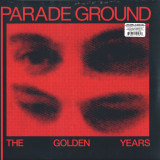
Parade Ground has always been the duo of brothers Jean-Marc and Pierre Pauly from Brussels, Belgium formed in 1981. Taking cues from Post-Punk, Coldwave, Dada and Surrealism, Parade Ground channeled suffering, tension and rage through pulsing synthesizers, skeletal guitar, severe bass and Jean-Marc’s expressive vocals as the most melodic and emotional instrument. The Golden Years is an 11-song, career-spanning collection of Parade Ground’s long out-of-print 7” and 12” singles as well as rare compilation tracks from the pioneers of electronic body music created during 1982-1988.
Parade Ground first appeared on the Nationale Rockmeeting LP in 1982, striking straight to the heart with the passionate plea “I Shut My Eyes.” Later that year the brothers met Daniel B. and Patrick Codenys of Front 242 beginning a collaborative partnership that continues to present day. In 1983 they released their debut 3-song 7” EP Moan On The Sly on the New Dance label, musically a hybrid of Joy Division and Fad Gadget. 1984 brought further explorations into the world of electronic body music with the 3-song Man In A Trance EP and 2 tracks on the live concert compilation Mask Promotion both records released on Front 242's Mask Music label. The following year the single Took Advantage/Moral Support 12” was released incorporating then, state-of-the-art modular synthesizers programmed by Daniel B. and back-up vocals from Flo Sullivan (A Formal Sigh, Shiny Two Shiny). Then in 1987 the brothers collaborated with Colin Newman of British post-punk band Wire, who produced and lent his vocals, guitars and keyboards to two songs ("Moans"/"Action Replay") while Daniel B. produced flipside "Gold Rush" on the Dual Perspective EP that stands alongside 80s anthems from Tears for Fears, Modern English, Echo & The Bunnymen. Finally in 1988 their debut album Cut Up was released on Play It Again Sam Records and featured the singles Strange World and Hollywood. In 1993 the brothers wrote and composed the vocals on two Front 242 albums Up Evil and Off. After 15 years of silence the boys released their second album Rosary in 2007 and continue to write new material and tour with their extensive catalog of dark dance classics. Each LP includes a 6-page press kit with lyrics, discography, photos and liner notes by Daniel B. of Front 242. The history of Belgian electronic music would not be complete without a trip through “The Golden Years” of Parade Ground.
out of Stock
Last delivered 7 months ago available to reorder, subject to availability
Where to begin with a figure like Simon Fisher Turner? From teenage stage and screen star to illustrious recording artist for Creation and Mute and score composer of Caravaggio, Blue and The Epic of Everest - via a stint with The The and collaborations with Derek Jarman, David Lynch and Tilda Swinton - Turner embodies a distinctly British sensibility and boundless curiosity for sound. For A Colourful Storm, discovering Deux Filles, his mysterious project with Colin Lloyd-Tucker that has since been reissued by Dark Entries, was a significant moment in shaping their identity.
In August 2023, A Colourful Storm presented Simon Fisher Turner and Time is Away at Spanners, London. Performed at the tail end of Blue Now, a series of events celebrating Derek Jarman's last feature film, Blue, the recording reveals a lifetime of significant events and influences. Terre Thaemlitz's remix of Turner's Shishapangma (Comatonse Recordings, 2015) is reworked and appears on vinyl only, Jarman is privately recorded reading White Lies, Bertrand Russell is sampled, and Turner records his brother practising the Great Rissington organ for their father's funeral.
"My wife and I lived in Brixton, near the venue, on Coldharbour Lane, 20 years ago. We were above a takeaway shop. The air extractor was a nightmare and the flat smelled of grease. The market was a great place to buy fish. We adopted a giant snail, who we called Ayrton. I used to take him all over town and he loved lettuce and tomatoes. There was a wonderful small pizza shop too, which was so delicious. But back to the music. Brixton is music and I'm a lucky man."
out of Stock
Last delivered 19 months ago available to reorder, subject to availability
In 2016 an internet user discovered Panchiko’s discarded 2000 demo CD, D>E>A>T>H>M>E>T>A>L, in a Nottingham charity shop and posted it to 4chan to intrigue and fanfare. It took four years for Panchiko’s legions of dedicated fans to find the people behind the music as millions of curious listeners were swaying to the band’s adolescent creations. Upon discovering their own virality, the band reformed with original members Andy Wright (keyboardist and producer), Owain Davies (vocalist and guitarist), and Shaun Ferreday (bassist) alongside new members Robert Harris (guitarist) and John Schofield (drummer), toured the world and wrote, recorded, and released their first album in 20+ years, 2023’s Failed At Maths. But after the thrill of the whirlwind came a new question. What comes next when your dreams come true? The answer is Ginkgo, a 13-track project that finds the band making some of their most introspective, cinematic, and moving music yet. “The whole production has gone up ten-fold,” says Wright of the new album.“ Standout track "Shandy in the Graveyard" feat. rapper billy woods sees the band channeling their youth and tapping into the typical audience at Panchiko shows. That youthful spirit can be felt in the song’s sonic world, as its production genre-shifts between trip hop and orchestral folk, creating a fresh juxtaposition of soundscapes. The same wrenching honesty that attracted legions of fans to their teenage demos is the same truthful ethos that keeps them listening to new material like title track, “Ginkgo.” On it, Davies sings “You command the leaves to fall/The Ginkgo bends at will.” A rumination on the limits of control, collaboration, and fate, the song is an apt meditation for a band whose resurgence came about through a mix of luck, artistry, and then clear-eyed energy.
Our debut single with Senpolya was born out of desire to create some modern Russian pop infused with references to the 80s dance music. While making 80s-inspired tunes is popular nowadays, this decade means different things to different people: be it A-ha and Modern Talking or African boogie and Chicago house. But we ended up making neither one nor the other.
The crowd who contributed to this release is absolutely legendary. Each time I listen to it and think of them, a new dimension opens up in my mind, adding up some deeper layers of context Ive immersed myself in over the past few years.
An italian producer and bass player Marco Boccamazzo created the first remix. By adding bass guitar and strings, he took the track back by another ten years.
DJ Popinjay, an alter ego of a tropical disco master who wishes to remain anonymous, provided the second rework.
The third remix or more like an essentially an entirely new track, comes from Sonestrose, a duo consisting of Andrey Algorithmic, an art director of Moscow Powerhouse, and Alexander Basian, the studio's sound engineer.
Ignat Akimov, also known as DJ Pecan and an art director of Esthetic Joys Embassy, crafted the fourth hallucinogenic remix, which spans from acid house with Indian drums to cool jazz sound.
Lipelis and Scruscru help me in making some key decisions about the tracks structure, arrangement, and mixing.
Ilya Varankin made a photo of us (on film!) and Nikita Demin designed the cover picture inspired by Daptone Records.
At last, I want to thank my wife, Masha Dostoewskaya, without whose love and patience I wouldn't have been able to see this project to an end.
out of Stock
Last delivered 19 months ago available to reorder, subject to availability
Two records came out in 1988 that forever changed the perception of "experimental" or "serious" music produced in Portugal. These were "Plux Quba" by Nuno Canavarro and "Música de Baixa Fidelidade" by Tózé (António) Ferreira. Both were released by the same label - Ama Romanta -, an influential independent imprint closely linked to avantgarde pop band Pop Dell'Arte. Because those records appeared in what could be perceived as an "alternative pop" framework, they rescued this difficult music from Academia. It helps that Canavarro played in a successful new wave pop band (Street Kids) during the period 1980-83. By association, being a friend since 1976, António was in close contact with many of the musicians and bands that were part of the equally celebrated and detested Portuguese Rock Boom (roughly 79-82).
He was not a musician then but through his friendship with Canavarro, who had the means to acquire electronic equipment, António became involved with that equipment and shared Canavarro's passion for experimentation and curiosity for knowledge. They tried to get hold of as many technical magazines as possible and learn while testing ideas. In 1983, Street Kids were about to break up, young lives drafted into the Army and maybe, in Canavarro's case, a whole new passion for challenging music similar to his bandmate Nuno Rebelo, by then in the process of discovering a wide range of "other" music mainly through Jorge Lima Barreto. Barreto, who had started Telectu with Vítor Rua, possessed a huge book and record collection and, like Rua before them, Canavarro, Rebelo and Ferreira became fascinated by the pool of knowledge they now had access to by frequenting Barreto's house in Lisbon. He was roughly a decade older, had published several books and other writings throughout the 1970s, cultivated an anarchic stance and a penchant for cultural indoctrination. Rebelo was the first to be introduced via his contact with Rua (who had invited him to play in his other band GNR).
Overwhelmed, he felt the need to share his enthusiasm with friends and eventually took a few to the house in true pilgrimage fashion. To see the Light. Among the few he led there was even João Peste, founder of Ama Romanta. Canavarro and Ferreira preceded him.
Ferreira recalls an exciting learning process added to his experiments with Canavarro's array of synths such as the Korg Ms 20, Korg polysix, ARP Axxe, Roland SH-01, the Ensoniq Mirage sampler... He read in a magazine article about someone who had studied at the Institute of Sonology (then in Utrecht, Netherlands) and went there during a vacation trip in the Summer of 1983. He became excited by the prospect of studying at the Institute but money was a problem. Canavarro, on the other hand, was admitted there in the following year. Back in Portugal, Ferreira eventually abandoned his Chemical Engineering studies in Lisbon's Technical Institute in favour of a more focused music practice. He collaborated with Telectu during 1984 and 85 as a sort of technical engineer, implementing some recording solutions and background tapes and went to work at a thermoelectric power plant in Sines, hoping to make enough money to fund his musical studies. He did and proceeded with the paperwork for admission at the Institute of Sonology, now based in The Hague. António studied there in 1986-87 and the present album includes two compositions developed at the Institute: "More Adult Music" and "This Is Music, As It Was Expected", both featuring the voice of Rodney Waschka II. Among other activities and talents, Rodney is an expert in computer music and to António his voice sounded similar to Robert Ashley's, whose work he admired.
What happened at the Institute was a systematization of António's self-taught practice. Computer software, Musique Concrète, noise and silence, organisation of abstract ideas and sounds. The original notes on the back sleeve of the LP give some indication of process and thinking, but a more detailed account was given by António in the liner notes of the CD reissue in 2002, which are also included in this 2025 LP reissue.
The music sounds deep and detailed, despite the fact of António calling it low-fi ("Baixa Fidelidade"). It flows like an improvised performance where several musicians might be responding to each other, respectful of their mutual space. Drama occurs, as a natural emotional connection is sought by the listener. Piano, bells, drone, processed voices, even the clear narrative of Rodney Waschka II, contribute to create a sort of alternative perceptual reality. The sounds are almost tangible, more a part of the physical world than ethereal manifestations and thus it would not be correct to invoke "ambient music" as a selling point. But although "physical" and distinct, this music is still alien, more so in Portugal's 1988 environment. In March, helped by Canavarro, António set up a home studio and there he recorded the remaining material for this album: "Algumas Pessoas Olharam O Sul E Viram Deserto", "Um Som, Seguido De Uma Cena Negra E Malva" and "O Verão Nasceu Da Paixão De 1921".
"Música de Baixa Fidelidade" stands not only as a proof of great resilience but as one of those magnificent works of art coming from someone who balanced technical inclination and emotional sensibility. Because of that, Tózé Ferreira is able to decode the phantom world of sound for anyone who cares to experience the sensation of inhabiting a version of the Future. First ever vinyl reissue, reproduction of the original artwork with an additional insert. Made in collaboration with the artist and the support of Paulo Menezes (Plancton Music), who provided valuable assistance. Remastered by Taylor Deupree.
Exploring late-night, after-hours meditations on sound; ‘Everything Above The Sky (Astral Travelling with Luke Una)’ is a new compilation by the titular DJ, promoter and enigmatic cultural curator. Off the back of the E Soul Cultura phenomena, this compilation comes at a timely point in Luke’s rich career as he soars the heights of playing all over the world. Avoiding any chance of his sound being pigeonholed, Luke has put together a tracklist of songs and music that have a transcendental feel, after coming off the grid, going back to source, outside the city walls .
Music has long been believed to aid out of body experiences and many of us have searched long and hard for a combination of those elusive ingredients that might alleviate some of the monotony of everyday life, our daily routines and obligations, and those things that seem to block us from the spirit of the universe. In this collection, Luke selects music with all the right ingredients in just the right quantities, allowing the listener to engage in an esoteric journey of enlightenment through sound. Being a prolific collector of music, Luke initially delivered enough tracks to compile several compilations, making the licensing process the biggest effort to date for the label. The music moves softly and slowly, never becoming too intrusive, exemplifying the wonderful elevating properties of simple songs played from the heart.
Luke’s Everything Above The Sky manifesto reads, “Astral Travelling in the meadowlands with acid folk, spiritual jazz, around midnight hocus pocus, cosmic psychedelic soul, magical spellbound whirling swirling love songs, Brazilian ballads of light into machine soul gospel utopia dreaming, Balearic bossa, Outer Space ancient African drum, the breath of trees, escaping the big bad modern world, gathering round winter fires, walking amongst the bracken in Padley Gorge in late summer twilight, overlooking the Hope Valley, escaping ego, detaching and finally letting go amongst the stars with the slowly floating people. It’s beautiful beyond. Everything above the Sky”.
Beginning his career as an original Sheffield house young blood in the mid 1980s, Luke’s move to Manchester and partnership with Justin Crawford saw the birth of Electric Chair, a cornerstone cult night in the UK underground club scene. Then came Electric Elephant, a Croatian festival paying homage to their wild eclecticism from Balearic to Brazilian to É Soul, house, disco and techno. Luke’s much loved, long-running Homoelectric night and more recently Homobloc sell out festival for 10,000 souls has been at the forefront of Manchester’s LGBTQ+ cultural landscape. Luke’s Friday evening show on Worldwide FM captured imaginations and became a cult four-hour must-listen monthly journey for fans all over the world. Today, Luke remains, as ever, at the forefront of a changing milieu, pairing the momentous legacy of Manchester’s 80s and 90s scene with the delivery of what today’s club communities need to get down.
As soon as Martin Circus was born in 1969, the band laid foundations for the French "Pop Musique" genre, deliberately turning its back on both French yéyés and rock'n'roll to better embrace psychedelia and the French language. In 1971, they were a pioneering, innovative group moving as fast as a speeding train, building upon everything they found on the way. However, faced with band members changing often, management issues and music evolution, Martin Circus ended up trying to fit in every style: soul, R&B, glam rock, disco, new wave, 80s mainstream music. To follow their journey is to listen to the world shifting along music charts. Behind the scenes, since the very first days of the band, one man had been pulling all the strings. Manager and artistic director Gérard Hugé used to work for both the band and the label - this has never been good news. What he cared about the most was getting records out, no matter who played on them. In the mid-70s, he registered the Martin Circus name, granting himself full power over the band. Deciding that it no longer had either a lyricist or a composer, he made the remaining musicians embark on a series of American 60s hits adaptations. As a result, they made tons of money : "Marylène" was a huge hit and gave them a new impulse. The Martins adopted a new look by wearing shiny Courrèges-style suits and platform boots, and on stage they performed dance moves choreographed by the eccentric Amadeo. They completely fit into the disco craze which was about to take over. Still, their music blended doo-wop and rockabilly with glam rock and funk music. They eventually hit disco with a soundtrack in the mannerof French disco groups such as Space and Voyage. Effortlessly, they released the epic 14- minute "Disco Circus", a track which was to become a real underground gem. DJ and remixer François Kevorkian then released it on the American Prelude label in a self-edited version, shortened to 7 minutes while retaining all the dazzling passages of the original track. It came to be a hit in the clubs of New York and Chicago, making a lasting impression on everyone who heard it. It got sampled on at least 40 tracks over the following decades and featured in dozens of bootlegs and prestigious compilations - by Laurent Garnier, Carl Craig, Juan Atkins, Joey Negro, The Beatnuts, The Rapture, and by Danny Krivit in the DJ culture film Maestro. As the 80s arrived, Martin Circus once again changed the way they looked and their style. Inspired by Devo and their cold dance music, by Buggles' synthpop and Plastic Bertand's postpunk. Throughout their career full of ups and downs, Martin Circus nonetheless managed to keep up with one stable element: contrary to what they seemed, the musicians never took the easy way out. Their playing and arrangements were consistently flawless and polished, they relentlessly dedicated themselves to playing quality music and this can only compel admiration. As Coco Chanel once said, "Fashion goes out of fashion, style never does."
Back in the day, when he was the drummer for Poni Hoax, Vincent Taeger would sing in French whatever came to his mind backstage after concerts, just for fun, to amuse his friend the late Nicolas Ker. Since then, time has flown by, undoubtedly bringing its share of ups and downs. Nonetheless, today, this artist with a long career is finally releasing his debut album as a singer, OK Crooner. It's indeed an album for a singer, but also one for a musician. For this part, Taeger doesn't come alone; he brings along the Jazz Kamasutra, a sexy sextet that knows how to play everything and will later accompany him on stage. To get to this point, Vincent Taeger had to stop playing around with big names like Air, Damon Albarn, Justice, Lenny Kravitz, Skepta, Tony Allen, Oumou Sangaré, Jeff Mills, Archie Shepp, Sampa the Great, Andrea Laszlo de Simone... More than half of the major artists with whom he once collaborated, contributing to their albums or simply laying down a drum, bass, or any other heavy instrument line. Before OK Crooner, he also transformed into Tiger Tigre. This roaring alias was used for a first solo album, instrumental and so deep that one might have thought the ghost of François de Roubaix had taken shape. But that was before, before this exceptional musician decided to dive into the vast ocean of French variety to give a sequel, a culmination to this project. During COVID, Vincent Taeger started frantically listening to Souchon, Chamfort, Gotainer, and Christophe. Inspired by his elders, while not renouncing his attachment to the meticulous arrangements reminiscent of Alain Goraguer's soundtracks, he picked up a pen to jot down snippets of songs to accompany his increasingly sophisticated compositions. And the worst part is that he enjoyed it! Coming from rap, he has a knack for punchlines. Throughout the album, he delivers just as many harsh or soft words as good ones, alternating between risqué humor, Gaulish wit, and poetry. Partially recorded at Studio Ferber, but mainly at home with his partner, known by the alias La Plongée, who co-produced the album for the occasion, OK Crooner is a key album in Vincent Taeger's discography. Besides being the one where he finally unveils his voice to the public, without pretense as it is prominently featured and minimally, if at all, retouched, Taeger also offers music that suits him perfectly. Sharp yet accessible, jazz, pop, baroque, classical, modern, and resolutely marked by Tony Allen's legacy, which he daringly mixes with Beethoven in the Fifth Symphony. His alter ego, Vincent Taurelle, with whom he has produced many albums, took care of mixing this one.
Watch out! You are holding the 125th (one-hundred-and-twenty fifth!) album on Tramp Records in your hands! We are honored to celebrate this impressive anniversary with the tenth volume in the Praise Poems series. This time, too, we go on a journey to discover previously unheard regions of jazz, folk and AOR from the 1970s and 80s.
Praise Poems Vol.10 presents sixteen (almost) forgotten rare groove gems, all released between the years 1970 and 1984. One of the many highlights is the opening track: "Fields of Laughter" by Color Me Blu - originally released on an acetate only of which two copies exist worldwide. But there is much, much more to discover. This brandnew volume features a wide range of genres, from AOR (Whiz Kids, Ross Miller, and another previously unreleased track by Harve & Charee) to Latin-Rock a'la Santana (Color Me Blue, Tribal Sinfonia, and Apple) to Soul-Jazz (Ernie Lewis Trio, Joe Bozzi Quintet or Dutch saxophonist Frits Kaatee). Right at the end, one track in particular stands out: the wonderful "It's Good Not To Forget" by George Melvin and his quintet - a fabulously dreamy, thoughtful instrumental piece in the style of Ramsey Lewis with catchy tune potential.
Not many compilation series make it to a tenth edition. And if they do, then you often notice that the quality of the songs goes in the opposite direction to the increasing number of series: namely decreasing. Not so with Praise Poems Vol. 10, which the creators prove in an impressive new way. They have found tracks that were originally either a) pressed by the musicians themselves in very small editions or b) released by small, regional labels. It is understandable that neither the musicians nor these small labels had the necessary knowledge or budget to market their albums or singles professionally. The majority of the bands therefore did not manage to reach a large audience - although they certainly had the potential for the big stage.
"Praise Poems 10 - A journey into soulful jazz and funk from the 1970s" makes these almost 50-year-old treasures accessible to a new audience. We hope that you enjoy discovering your personal favorite song(s) and we are already looking forward to many more releases!
out of Stock
Last delivered 17 months ago available to reorder, subject to availability
Volume 1 of this expertly curated project of 90s Italian House - put together by Don Carlos.
If Paradise was half as nice… by Fabio De Luca.
Googling “paradise house”, the first results to pop up are an endless list of European b&b’s with whitewashed lime façades, all of them promising “…an unmatched travel experience a few steps from the sea”. Next, a little further down, are the institutional websites of a few select semi-luxury retirement homes (no photos shown, but lots of stock images of smiling nurses with reassuring looks). To find the “paradise house” we’re after, we have to scroll even further down. Much further down.
It feels like yesterday, and at the same time it seems like a million years ago. The Eighties had just ended, and it was still unclear what to expect from the Nineties. Mobile phones that were not the size of a briefcase and did not cost as much as a car? A frightening economic crisis? The guitar-rock revival?! Certainly, the best place to observe that moment of transition was the dancefloor. Truly epochal transformations were happening there. From America, within a short distance one from the other, two revolutionary new musical styles had arrived: the first one sounded a bit like an “on a budget” version of the best Seventies disco-music – Philly sound made with a set of piano-bar keyboards! – the other was even more sparse, futuristic and extraterrestrial. It was a music with a quite distinct “physical” component, which at the same time, to be fully grasped, seemed to call for the knotty theories of certain French post-modern philosophers: Gilles Deleuze, Félix Guattari, Paul Virilio... Both those genres – we would learn shortly after – were born in the black communities of Chicago and Detroit, although listening to those vinyl 12” (often wrapped in generic white covers, and with little indication in the label) you could not easily guess whether behind them there was a black boy from somewhere in the Usa, or a girl from Berlin, or a pale kid from a Cornish coastal town.
Quickly, similar sounds began to show up from all corners of Europe. A thousand variations of the same intuition: leaner, less lean, happier, slightly less intoxicated, more broken, slower, faster, much faster... Boom! From the dancefloors – the London ones at least, whose chronicles we eagerly read every month in the pages of The Face and i-D – came tales of a new generation of clubbers who had completely stopped “dressing up” to go dancing; of hot tempered hooligans bursting into tears and hugging everyone under the strobe lights as the notes of Strings of Life rose up through the fumes of dry ice (certain “smiling” pills were also involved, sure). At this point, however, we must move on to Switzerland.
In Switzerland, in the quiet and diligent town of Lugano, between the 1980s and 1990s there was a club called “Morandi”. Its hot night was on Wednesdays, when the audience also came from Milan, Como, Varese and Zurich. Legend goes that, one night, none less than Prince and Sheila E were spotted hiding among the sofas, on a day-off of the Italian dates of the Nude Tour… The Wednesday resident and superstar was an Italian dj with an exotic name: Don Carlos. The soundtrack he devised was a mixture of Chicago, Detroit, the most progressive R&B and certain forgotten classics of old disco music: practically, what the Paradise Garage in New York might have sounded like had it not closed in 1987. In between, Don Carlos also managed to squeeze in some tracks he had worked on in his studio on Lago Maggiore. One in particular: a track that was rather slow compared to the BPM in fashion at the time, but which was a perfect bridge between house and R&B. The title was Alone: Don Carlos would explain years later that it had to be intended both in the English meaning of “by itself” and like the Italian word meaning “halo”. That wasn’t the only double entendre about the song, anyway. Its own very deep nature was, indeed, double. On the one hand, Alone was built around an angelic keyboard pattern and a romantic piano riff that took you straight to heaven; on the other, it showcased enough electronic squelches (plus a sax part that sounded like it had been dissolved by acid rain) to pigeonhole the tune into the “junk modernity” section, aka the hallmark of all the most innovative sounds of the time: music that sounded like it was hand-crafted from the scraps of glittering overground pop.
No one knows who was the first to call it “paradise house”, nor when it happened. Alternative definitions on the same topic one happened to hear included “ambient house”, “dream house”, “Mediterranean progressive”… but of course none were as good (and alluring) as “paradise house”. What is certain is that such inclination for sounds that were in equal measure angelic and neurotic, romantic and unaffective, quickly became the trademark of the second generation of Italian house. Music that seemed shyly equidistant from all the rhythmic and electronic revolutions that had happened up to that moment (“Music perfectly adept at going nowhere slowly” as noted by English journalist Craig McLean in a legendary field report for Blah Blah Blah magazine). Music that to a inattentive ear might have sounded as anonymous as a snapshot of a random group of passers-by at 10AM in the centre of any major city, but perfectly described the (slow) awakening in the real world after the universal love binge of the so-called Second Summer of Love.
For a brief but unforgettable season, in Italy “paradise house” was the official soundtrack of interminable weekends spent inside the car, darting from one club to another, cutting the peninsula from North to centre, from East to West coast in pursuit of the latest after-hours disco, trading kilometres per hour with beats per minute: practically, a new New Year’s Eve every Friday and Saturday night. This too was no small transformation, as well as a shock for an adult Italy that was encountering for the first time – thanks to its sons and daughters – the wild side of industrial modernity. The clubbers of the so-called “fuoriorario” scene were the balls gone mad in the pinball machine most feared by newspapers, magazines and TV pundits. What they did each and every weekend, apart from going crazy to the sound of the current white labels, was linking distant geographical points and non-places (thank you Marc Augé!) – old dance halls, farmhouses and business centres – transformed for one night into house music heaven. As Marco D’Eramo wrote in his 1995 essay on Chicago, Il maiale e il grattacielo: “Four-wheeled capitalism distorts our age-old image of the city, it allows the suburbs to be connected to each other, whereas before they were connected only by the centre (…) It makes possible a metropolitan area without a metropolis, without a city centre, without downtown. The periphery is no longer a periphery of any centre, but is self-centred”.
“Paradise house” perfectly understood all of this and turned it into a sort of cyber-blues that didn’t even need words, and unexpectedly brought back a drop of melancholic (post?)-humanity within a world that by then – as we would wholly realise in the decades to come – was fully inhuman and heartless. A world where we were all alone, and surrounded by a sinister yellowish halo, like a neon at the end of its life cycle. But, for one night at least, happy.
out of Stock
Last delivered 87 days ago available to reorder, subject to availability
F.U.N. Is Now Available In A Limited Frosted Shadow Colored Vinyl Pressing!
The latest full length album from Detroit mainstays Slum Village, F.U.N., has now made its way to vinyl. The 12-track project is their first album in nearly ten years and includes fresh collaborations with Larry June, Cordae, Eric Roberson, Robert Glasper , Karriem Riggins, Abstract Orchestra, Sango, Phat Kat, Daru Jones, Earlly Mac, The Dramatics and more. 2015's critically acclaimed Yes! further cemented T3 and Young RJ's ability to effectively carry on the legacy of the seminal rap group, retaining its essence while evolving its sound with fresh new energy. However, with last year's sold out tour in Europe, and the release of the Larry June and The Dramatics-assisted "Just Like You", it was revealed that the duo was back in the lab together working on a new Slum Village album. F.U.N. finds Slum Village expanding on their signature certain sound, but still staying close to their hometown roots: Young RJ explains- “We wanted to just try something new, so we focused on making Disco-inspired music,” and T3 notes that the recording process all “began with collecting old Disco records.” For fans who wonder why the sonic shift, and why the long hiatus between proper albums, T3 says “Slum is still here. We’re still relevant and we’re still trying to push the envelope. Sometimes people put too many rules on music, and without sounding cliche, we wanted to just have fun with this album.” F.U.N., indeed.
WRWTFWW Records is in a state of total bliss as it announces the release of the Pitstop Box compiling all 24 tracks from Japanese house music pioneer Shinichiro Yokota’s two acclaimed albums Do It Again and Again (2016) and I Know You Like It (2019). The collection, available on vinyl for the first time ever, is presented as six 45rpm-cut 12inches housed (!) in a superb slipcase box set created by Lopetz, designer, illustrator, typographer, and co-founder of Swiss graphic design studio Büro Destruct. Included as bonuses are two sticker sheets.
Previously only available on CD in Japan via cult electronic label Far East Recording, Shinichiro Yokota’s album discography finally gets a long overdue vinyl release in the form of a limited-edition box set housing (!) six 12inches and a total of 24 songs showcasing the house legend’s celebrated sound. With a production style drawing from a rich blend of funk, hip hop, electronic, and Japanese influences, Yokota’s music is loved for its simplicity, its hypnotic quality, and, most importantly, its SOUL – homegrown 90s soulful melodic club music…pure love!
The Pitstop Box, full of dancefloor treasures and sprinkled with downtempo gems, not only defines Yokota’s personal journey but also resonates as an essential contribution to the house genre and Japanese music in general. It includes his house hits (“Right Here Right Now”, “Night Drive” and the list goes on), a cover of “Simoon” by Haruomi Hosono’s Logic System, and a collaboration with his longtime partner and electronic music hero Soichi Terada.
Shinichiro Yokota began his musical history in Tokyo, inspired by electronic music giants such as Yellow Magic Orchestra and Kraftwerk. He co-founded Far East Recording with the great Soichi Terada (who also worked with WRWTFWW for the Omodaka compilation) in 1990. After releasing the now highly sought after Far East Recording album with Terada in 1992 (from which his viral hit “Do It Again” is from), he took a hiatus from music and, most notably, brought his passion for sports cars to the next level by launching Night Pager, a company he started with his wife, specializing in tuning sports cars and modifying limiters for competition racers. It’s this side of Yokota’s life which has inspired the design of the Pitstop Box. He triumphantly came back to music with the album Do It Again and Again in 2016, consisting of unreleased 90s recordings as well as new material, and followed it up with I Know You Like It in 2019. His work has influenced generations of producers, and has expanded Japanese house music's reach on the global stage. Experience it on vinyl now.
Full unadulterated pleasure forever - from night drives to dancefloors.
out of Stock
Last delivered 20 months ago available to reorder, subject to availability
"KILLER KLOWNS FROM OUTER SPACE have landed at Waxwork Records! After much anticipation, we are thrilled to present the official 1988 Original Motion Picture Soundtrack by John Massari! In this '80's cult classic, teens Mike Tobacco (Grant Cramer) and Debbie Stone (Suzanne Snyder) have to fight both the diabolical bozos and the local law enforcement's disbelief to save themselves and their community from becoming victims of intergalactic killer klowns! The original score to Killer Klowns From Outer Space is kicked off by the classic 80’s horror movie theme track, Killer Klowns (From Outer Space) by California punk band, The Dickies. The ‘nightmare merry-go-round’ continues with a smattering of menacing electronic brass sections, electric guitar, bombastic drum machine beats, & harpsichord combined with sci-fi synth elements to capture the ultra-specific origins of the antagonists. Massari's score to Klowns is a retro-synth joyride from start to finish featuring immediately recognizable cues from the beloved 80's cult-classic! Waxwork Records is thrilled to present the official Killer Klowns From Outer Space double LP, released for the first time on vinyl. Complete with “Killer Klown” handpoured colored vinyl, deluxe packaging, new artwork by Ruiz Burgos, heavyweight gatefold jackets with matte coating, a heavyweight 12”x12” art print, and liner notes by composer Massari and Klowns co-creator Stephen Chiodo!
2025 marks the vinyl release of Changes 2, the pioneering album by legendary vocalist, keys player and composer Mike Lindup.
A remarkably engaging body of work with wide ranging elements, Changes 2 plots a course through upfront soul, deep funk, jazz riffs and disco vibes, tied together with the melodic magic and engaging vocals for which Mike Lindup is widely known.
As an internationally renowned musician with decades of achievements and accolades, Mike Lindup's outstanding career has taken him on a unique journey. With the band Level 42, he consolidated a place in music history with some of the greatest hits of the era, gaining a dedicated fanbase that see the band still touring to this day. As a soloist, the first Changes album and a notable release on Naim records, as well as his work with UK/Brazilian outfit Da Lata, have all allowed further development of a burgeoning creativity, now ultimately culminating in Changes 2 - an enthralling representation of where Mike Lindup is today.
Changes 2 features various excellent guest artists that demonstrate the diverse nature of the album, including the stellar vocals of Omar and Tony Momrelle, bass magic from Yolanda Charles and even an appearance from the comedian and impressionist Jon Culshaw! The album has also inspired two funk- fuelled dance remixes from Dave Lee and the inimitable Louis Vega. All of these talented individuals enhance the project greatly, making valuable contributions to Mike Lindup's distinguished work.
Speaking about the album, Mike Lindup says: "Changes - so many since I began recording this album, and as the saying goes, the one thing you can be sure of in this life. During the four years of making this album I've been reflecting on the world as I see it, the actors and actions on this grand stage of life, love, death, prejudice, politics, separation, longing, hopes and dreams. Musically, many of the seeds of these songs took hold a while ago and wouldn't let go, but to be fulfilled they needed input and inspiration from my producers Toni and Mike, and the talents of the singers and musicians that are featured within. My wish is that some of these themes will resonate with you."
With Gilles Peterson, undoubtedly one of the UK's most influential DJ's and tastemakers describing Mike Lindup as "one of his all-time favourite vocalists" and high praise from many other leading music broadcasters and writers, Changes 2 destined to be enjoyed by a multitude of discerning music and vinyl lovers the world over.
Founded in 1994, LA's Aberdeen were an underground twee-pop group who’s tight discography of beautifully melodic, melancholic and dreamy songs envelope the cliche topics of summer sunshine, young love, and the lack thereof. Since 2006 the band has been helmed solely by lead writer & producer John Girgus.
Their music primarily resided on the Bristolian cult label Sarah Records, where they would release of some of their most beloved tracks such as 'Byron' and 'Fireworks' in the mid 90s. They are a band who's stripped back sound had a blissful focus on the love of melody whose influence has subconsciously woven itself throughout the current generation of underground pop and indie music.
We are super excited to announce the re-pressing the bands first 3 EPs in their entirety, with additional bonus tracks, on vinyl for the first time in 30 years. These are very special songs by a band whose permeance on vinyl was integral to the flexi disc adoring generation of the Sarah movement..
Mr. K returns to the fertile ground of the Paradise Garage for his latest with two certified floor-fillers closely tied to the legendary club.
TW Funkmasters’ “Love Money” took an unusual path to its eventual elevated status as a dance classic. The brainchild of UK radio reggae jock Tony Williams (the “TW” in the group’s name), it was conceived in response to seminal rap release “Rapper’s Delight,” but with reggae superstar Dennis Brown’s 1978 hit single “Money In My Pocket” as the lyrical inspiration. Indeed, the vocal version of the Funkmasters’ song is considered the UK’s very first homegrown rap tune. But it was the flip side that garnered the most attention in New York however. “The original track was quirky and worked at the Garage,” Danny Krivit says, “but when the dub came out, it really blew up everywhere. After that very few people played the vocal.” Krivit’s edit here takes the influential, futuristic dub and tightens the arrangement up for the 7-inch format. “Love Money” went on to heavily influence the New York City dance underground, with homages coming in the form of subtle tributes (Mateo & Matos’ “Love Style”) to a virtual remake from Larry Levan himself (Man Friday’s “Love Honey, Love Heartache”) to the untold records that have sampled or been influenced by the spacey, heavy groove.
We’re back closer to home and a more traditional source for Garage classics with our flip side, Janice McClain’s “Smack Dab In The Middle.” The Philadelphia born and bred singer burst out of the gate with this very Philly sounding single in 1979. Written and produced by her uncle, the song was recorded when McClain was all of fifteen years old, a fact made more astonishing by a commanding vocal performance that resonated immediately with listeners. Recognizing a good thing when he saw it, disco maven Ray Caviano picked the song up for his newly minted RFC label and enlisted Larry Levan himself to mix it for 12-inch release. It is Levan’s version that provides the jumping off point for Krivit’s edit here — “the original 7-inch version the way it was never seemed worth playing,” Krivit says — and he makes the most of the jazzy Philly disco groove, injecting extra energy in the early minutes of the song with a tasty filtered break unique to this mix.
Pressed and mastered with DJs in mind, this loud and crystal clear single is the perfect combination of bonafide Garage classics and the talents of Mr. K, all on one compact piece of vinyl.
out of Stock
Last delivered 4 months ago available to reorder, subject to availability
George Clinton’s imagination knew no bounds and, defying normal music industry convention, by 1978 had five bands signed to three different record labels. One of these comprised of three Parliament / Funkadelic female backing singers working under the name of Parlet, whose debut single, ‘Pleasure Principle’ was released on Casablanca Records in March 1978.
It was Clinton’s idea that two other backing singers, Lynn Mabry and Dawn Silva, become the Brides Of Funkenstein, a character he invented for the 1976 Parliament LP, “The Clones Of Dr Funkenstein”. “I have to be honest – at first, I hated the name and I thought George was kidding,” Mabry told Blues & Soul, “But I have gotten to like it – especially just the Brides.”
Clinton got the Brides signed to Atlantic Records and their first single was ‘Disco To Go’ / ‘ When You’re Gone’. The A-side was written and produced by Clinton and Bootsy Collins and had originally featured in live shows by Collins’ live band. Clinton was asked by Black Echoes why the song was recorded by the Brides rather than Bootsy. “He could, and it would have been a smash too,” he replied. “But we thought it sounded too much like James Brown, so we gave it to the girls. Now it don’t sound like James Brown.” It certainly did not and this electronic bass and horn-powered banger – complete with an Old MacDonald nursery rhyme refrain – debuted on the Billboard Hot Soul Singles chart at #80 on 30th September 1978. By the time the P-Funk crew were flying across the Atlantic in early November it had peaked at #7. Sadly for UK fans, ‘Disco To Go’ was only available on import although a Black Echoes review stated it was a “Slow chunky handclapper. It sounds not unlike Funkadelic’s own ‘Coming Round The Mountain’”.
‘Disco To Go’, went gold in America selling over 500,000 copies. It was the perfect springboard for the Brides debut LP, “Funk Or Walk” which quickly climbed into the upper reaches of the R&B chart and even saw the duo embark upon a signing tour of record stores. All of the songs on “Funk Or Walk” were written by legends of P-Funk, such as Bootsy Collins, Rodney Curtis, Bernie Worrell, Gary Shider and Clinton. “George has got thousands of tracks,” Mabry told Black Echoes. “When we go into the studio he says, ‘Like this one?
Love (the) Ominous World is a defining moment for Blu & Exile, who are eager to share it with both their longtime fanbase as well as those just catching onto their celebrated discography
5: Tracklist Hello LA (feat. Georgia Anne Muldrow)
With the release of Love (the) Ominous World, Blu & Exile have returned with an album that brilliantly builds on their soulful, reflective foundation with stunning musicality and sharp songwriting. Their shared history as one of hip-hop’s best duos continues to grow, especially as they venture into new territory while embracing and refining what made them special.
“This album is our most unique work to date,” Blu says. “We took a different approach with the direction while still staying true to the culture our music has built with our fan base.” That direction is one that finds the two California natives crafting records that would sound right at home on the radio and hip-hop charts. Like “Suga & Butta,” for example, which features recent Def Jam signee Rae Khalil and rising star Ahmad Anwar. Every element of the track is as sweet and smooth as its namesake, from the lyrics to the production. There’s also the raw G-funk banger “Chucks,” a snarling collaboration with West Coast stalwarts KXNG Crooked and Kurupt.
EN: - NEW - Highly effective cleaning concentrate - NEW -
Disco-Antistat Ultraclean, concentrate for record washing
200ml cleaning concentrate
Makes 5 litres of ready-mixed cleaning liquid (in a ratio of 1:25, e.g. with high-purity water Disco-Antistat BiDest)
Reliably removes dirt such as dust, grease, protein or nicotine
Antistatic effect
Alcohol-free
Dries without leaving residues
Disco-Antistat Ultraclean works deep into the groove and cleans your records gently and thoroughly, even from stubborn dirt. For an optimal cleaning result we recommend
the use of our highly purified special water Disco-Antistat BiDest.
Disco-Antistat Ultraclean concentrate is suitable for use with all record washers!
DE: Hochwirksames, alkoholfreies Reinigungskonzentrat
Disco-Antistat Ultraclean, Konzentrat zur Schallplattenwäsche
200ml Reinigungskonzentrat
ergibt 5 Liter fertig gemischte Reinigungsflüssigkeit (im Verhältnis 1:25, z.B. mit hochreinem Wasser Disco-Antistat BiDest)
Entfernt zuverlässig Verschmutzungen wie z.B. Staub, Fett, Eiweiß oder Nikotin
Antistatische Wirkung
Alkoholfrei
trocknet rückstandsfrei ab
waschen von Schellack Platten ist problemlos möglich!
Disco-Antistat Ultraclean wirkt bis in die Tiefe der Rille und reinigt Ihre Schallplatten schonend und gründlich auch von hartnäckigen Verschmutzungen. Für ein optimales Reinigungsergebnis empfehlen wir die Verwendung unseres hochreinen Spezialwassers Disco-Antistat BiDest.
Disco-Antistat Ultraclean Konzentrat eignet sich zur Anwendung mit allen Schallplattenwaschgeräten!
Produktionstechnisch kann es zu leichten Farbabweichungen (durchsichtig bis gelblich) kommen, dies hat aber keinen Einfluss auf die Qualität des Produkts!
EN: Now NEW with changed recipe - without alcohol!
With the purchase of the DISCO-ANTISTAT MIXTURE, you have taken a decisive step towards cleaning and caring for your valuable records.
As of today, you can effortlessly clean old and heavily soiled vinyl records thoroughly and make them antistatic. Even vinyl records that have been played wet can be played back dry.
But even new vinyl records become immediately antistatic by a bath in the DISCO-ANTISTAT MIXTURE, even with sensitive measuring devices a static charge can no longer be detected.
Now also very suitable for shellac records!
DE: Jetzt NEU mit geänderter Rezeptur - ohne Alkohol!
Mit dem Kauf der DISCO-ANTISTAT MIXTURE haben Sie einen entscheidenden Schritt zur Reinigung und Pflege Ihrer wertvollen Schallplatten getan.
Ab heute können Sie alte und stark verschmutzte Schallplatten mühelos gründlich säubern und antistatisch machen.
Selbst nass abgespielte Schallplatten können wieder trocken abgespielt werden.Aber auch neue Schallplatten werden durch ein Bad in der DISCO-ANTISTAT MIXTURE sofort antistatisch, auch mit empfindlichen Messgeräten ist eine statische Aufladung nicht mehr feststellbar.
Jetzt auch sehr gut für Schellackplatten geeignet!
Disco-Antistat Ultrasonic - The most thorough way to wash records!
Our record washing machine Disco-Antistat Ultrasonic combines over 40 years of experience in the pflege and cleaning of records with highly developed, state-of-the-art cleaning technology.
The combination of ultrasonic cleaning and our proven goat hair brush system ensures gentle, groove-deep cleaning of your records and an audible improvement in the sound image. During operation, the cleaningfluid is permanently clarified by a filter system and dirt particles are rausgefiltert to minimize impurities in the liquid and thus achieve the best possible cleaning result.
Through our special cleaner, the record is treated antistatically and thus permanently prevented from re-soiling by adhering dust. With only a few handgriffen our washer is ready for operation and the intuitive operability ensures optimal results from the first record!
The simple and intuitive handling as well as the operating elements reduced to the essentials enable best cleaning results from the first record.
The cleaning time can be conveniently adjusted to the degree of soiling of the record, supported by a functional display.
A clearly visible progress indicator provides information on the cleaning status at a glance.
After use, the gefilterte Reinigungsflüssigkeit can be conveniently filled back into the bottle at the touch of a button via a built-in pump.
The permanent filtering of the cleaner prevents the liquid from accumulating dirt. Thus, a consistent cleaning result is achieved.
Thanks to the innovative magnetic coupling, inserting and removing the record is simple and quick.
Driven by an electric motor, the record rotates evenly in the tank, whereby a homogeneous treatment with ultrasound is achieved.
Cleanliness you can hear! A powerful ultrasonic transducer generates so-called cavitation bubbles, which act directly on the dirt and remove it gently and effectively. The ultrasonic waves also reach places that are inaccessible to conventional cleaning methods and ensure cleanliness down to the depth of the groove. The loosened dirt particles are then wiped off on the soft goat hair brushes.
DE:
Automatische Ultraschall Plattenwaschmaschine
Disco-Antistat Ultrasonic – Die gründlichste Art der Schallplattenwäsche!
Unsere Schallplattenwaschmaschine Disco-Antistat Ultrasonic vereint über 40 Jahre Erfahrung in der Pflege und Reinigung von Schallplatten mit hochentwickelter, modernster Reinigungstechnik.
Die Kombination aus Ultraschallreinigung und unserem bewährten Bürstensystem aus Ziegenhaar sorgt für eine schonende, rillentiefe Reinigung Ihrer Schallplatten und einer hörbaren Verbesserung des Klangbildes. Während des Betriebs wird die Reinigungsflüssigkeit permanent durch ein Filtersystem geklärt und Schmutzpartikel herausgefiltert, um Verunreinigungen der Flüssigkeit zu minimieren und somit das bestmögliche Reinigungsergebnis zu erreichen.
Durch unseren speziellen Reiniger wird die Schallplatte antistatisch behandelt und so dauerhaft die erneute Verschmutzung durch anhaftenden Staub verhindert. Mit nur wenigen Handgriffen ist unser Waschgerät betriebsbereit und die intuitive Bedienbarkeit sorgt für optimale Resultate ab der ersten Platte!
Die einfache und intuitive Handhabung sowie die auf das wesentliche reduzierten Bedienelemente ermöglichen beste Reinigungsergebnisse ab der ersten Schallplatte.
Die Reinigungsdauer kann, unterstützt durch ein funktionales Display, bequem dem Verschmutzungsgrad der Schallplatte angepasst werden.
Eine gut sichtbare Fortschrittsanzeige informiert auf einen Blick über den Status der Reinigung.
Nach Gebrauch kann die gefilterte Reinigungsflüssigkeit auf Knopfdruck über eine eingebaute Pumpe bequem in die Flasche zurück gefüllt werden.
Durch die permanente Filterung des Reinigers wird verhindert, dass sich die Flüssigkeit mit Schmutz anreichert. Somit wird ein gleichbleibendes Reinigungsergebnis erzielt.
Das Einsetzen und Entnehmen der Schallplatte ist Dank der innovativen Magnetankopplung simpel und schnell erledigt.
Angetrieben von einem Elektromotor rotiert die Schallplatte gleichmäßig in der Wanne, wodurch eine homogene Behandlung mit Ultraschall erreicht wird
Sauberkeit, die man hören kann! Ein leistungsstarker Ultraschallschwinger erzeugt sogenannte Kavitationsblasen, die direkt an den Verschmutzungen wirken und diese schonend und effektiv ablösen. Die Ultraschallwellen erreichen auch Stellen, die für konventionelle Reinigungsverfahren nicht zugänglich sind und sorgen für Sauberkeit bis in die Tiefe der Rille. Anschließend werden die gelösten Schmutzpartikel an den weichen Ziegenhaarbürsten abgestreift.
Twisted Records is delighted to announce a different kind of collaborative mini album by two musicians highly esteemed for decades in the electronic music scene, Simon Posford and Raja Ram.
‘Improvisations for Piano & Flute’ is, as the title suggests, a series of fully improvised compositions by the two legendary musicians. The 44-minute flow of this album is more contemplative and analog in nature than anything in the pair’s previous output in their three decades of collaborative work, yet equally mesmerising and consciousness-expanding.
In the early 1990s, Simon Posford was working as an engineer at Butterfly Studios when he first met Raja Ram, an Australian conservatory-trained jazz flautist who had been in the 60s/70s band Quintessence and who was at the time of their meeting part of the electronic music group known as The Infinity Project. After collaborating on many of the latter band’s productions, Posford and Raj (as he is affectionately known) in 1996 created the first track under the project name Shpongle, Rumours of Vapours.
Less dance-focused and more atmospheric than their previous electronica tracks, this was the first of many creations under the Shpongle moniker, included on their now iconic first album Are You Shpongled? in 1998. Since then, they have produced six albums and performed elaborate live sets with an 17-member band around the world, including three sold-out shows at the iconic Red Rocks theatre in Colorado and three sold-out appearances at The Roundhouse in London.
This album is a significant departure from their usual output in its focus on the interplay of Raj’s lyrical flute playing and Simon’s noodling at the piano, with almost imperceptible synthesized atmospheric support that seamlessly unites analog and digital realities.
These improvisations were recorded in Posford’s living room instead of the usual studio because the musicians found that it provided more of the desired ambience. With a synthesizer placed atop an antique Bluthner piano, either Raj or Simon would begin playing and the other would join in - nothing prepared, decided, or arranged: just live, in-the-moment inspiration. This spontaneity infuses each track with such magnetic energy that the listener is inevitably drawn into each note, phrase, and piece.
The whole album is supremely chill and introspective, with a grand arc to the storyline of 8 tracks that Shpongle fans will recognize from the dynamic duo’s internationally prized discography.
‘Improvisations for Piano & Flute’ is a salve for the soul, providing an atmospheric antidote to the relentless stress and fast pace of our increasingly complex world - a great way to kick back, tune in, and refresh.
out of Stock
Last delivered 17 months ago available to reorder, subject to availability
Music To Varnish Owls By. Does Geoff Bastow have a claim for the best album title of all time? It's certainly up there. It's also one of the hardest to find library funk records. But don't let the eye-catching name fool you into thinking this isn't serious business.
As a key member of Giorgio Moroder's team, the legendary Geoff Bastow shouldn't need any introduction. You'll be familiar with his singular brilliance as the brains behind the much-sampled boogie/disco classics "You Don't Like My Music (Hupendi Muziki Wangu?!)" and "Don't Stop", released by his group, K.I.D.
But 1975's Music To Varnish Owls By is where it all began for our hero.
It's packed with incredibly soulful, soothing music that - despite being utilised a few times by Knxwledge - remains still largely un-mined. So, beat-makers, get cracking. And instead of that hyper-rare original, spend that £300 on something else.
Born in 1949, Bastow was a Munich-based English songwriter and record producer. Originally working as a guitarist and pianist in dance bands around his home county of Yorkshire, he moved to London in the early 1970s and then Munich in around 1976. He was one of the main architects of the Munich disco sound of electronic innovator Giorgio Moroder and also released heaps of killer library records for legendary labels like Bruton (with brother Trevor), Impress, JW Music Library and the Munich-based Sonoton between the 1970s-2000s. Bastow died tragically young, in Berlin, Germany on 16 March 2007, at the age of just 57. But he left behind a truly incredible electronic music legacy. He deserves to be much better known and this reissue should bring him to a fair few more ears. Let's see why...
Light-hearted opener "The Rough With The Smooth" contains a killer open drum break and is basically guitar-drenched flute-laced piano-funk. However, the first genuine highlight, "Beautiful People", is just majestic. Reflective, pastoral and silky smooth - as the title suggests, it's just straight beautiful; a chiming, deeply soulful instrumental that has to be heard to be believed. Sampled by Knxwledge but nobody else of note, which is crazy. Slo-mo soul beat "Tumbleweed" is another stone cold track just desperate to be laced by a skilled MC. Laconic, lysergic funk with nostalgic overtones, the guitar is prominent but the flute and glock really elevate it to perfection.
"Bits And Bats" is clav-enhanced Blaxploitation-esque street-funk with tough bass and crunchy drums that, despite its hardness, manages to flirt with breeziness. All in all, sumptuous, pounding wah-wah brilliance. Another huge one, up next. The insistent piano-funk head-nodder "A Change Of Pace" is a total sleuth-funk jammer, with a wonderfully soft snare and more hypnotic, melancholic flute lines. Man, we'd love to hear Alchemist chop this up. It even sounds a bit like Bastow was keeping things thoro with this one. Closing out Side A, the bright and breezy Bossa of "Janelle" makes it a perfect run of six untouchable gems. As elegant as it is sleazy, it sounds like it could've been on the classic KPM greensleeve, Piano Viberations.
Side B opens with the Ramsey Lewis-inspired "Time And A Half", a deceptively simple bass, drums and piano workout, decorated with stylish percussion with some great chord changes and hints of drama via a great bass solo. The heavy "Supersplash" is a doped-out drama suite with fuzzy wah-wah guitars, electric piano and glock. "Fillet Of Soul" is a catchy wah-wah propelled shuffle with piano and vibes, super dynamic but also incredibly chill.
"Well Above Average" is exactly that, a funky instrumental that serves as a straight ahead guitar-soul workout. Oozing bass-driven class, it gets better with every listen. Some open drums for your delectation, too. The fuzzy clav-and-vibes funk of "The Clan" - also understandably sampled by Knxwledge - is a monster head-nod slow jam whilst, seeing us out, the uber-relaxed "Sing Song" rounds things off in bright fashion with its slow but insistent clav, electric piano and glock greatness. Swoon.
As ever, the audio for Music To Varnish Owls By has been carefully remastered by Be With regular Simon Francis, ensuring it sounds better than ever. Cicely Balston's expert skills have made sure nothing is lost in the cut whilst the records have been pressed to the highest possible standard at Record Industry in Holland. The original, iconic sleeve has been restored here at Be With HQ as the finishing touch to this long overdue re-issue.
out of Stock
Last delivered 4 months ago available to reorder, subject to availability
Emilia Sisco's debut album on Timmion Records, "Introducing Emilia Sisco", takes you on a smooth ride in the world of vintage soul, featuring 10 beautifully crafted original songs written by Sisco in collaboration with the renowned Cold Diamond & Mink band. The album showcases this young talent's unique ability to blend classic soul influences with contemporary flair, building mesmerizing harmonies by layering her voice, and through these channeling a sound that is both timeless and fresh. From the opening track "Say Yes" - grooving like an independent gospel soul jam that somebody discovered in dank Midwest cellar - to the closing "Secretly," each song is a testament to Sisco's deep connection to the emotional core of soul music. As one of the album's highlights, "Don't Let Nobody," stands out as a sweet anthem of love and encouragement for your fellow human. With its heartfelt lyrics and Sisco's gently floating vocal performance, the song displays the essence of the album_soulful, sincere, and deeply moving. The Cold Diamond & Mink band provides lush, downtempo arrangements throughout the record, perfectly complementing Sisco's voice and bringing her compositions to life with a rich, organic sound. In "Introducing Emilia Sisco" the singer's signature style of downtempo soul shines brightly, offering listeners a blend of introspective ballads and uplifting grooves. After her string of exquisite and well-received singles on Timmion, this album documents the impressive progress of a formidable new voice, one that is sure to resonate with fans of classic and contemporary soul alike.
12 years after their debut release, Klone, hailing from central France, are back with their 6th studio effort: Here Comes The Sun shows a mature rock band whose musical universe has expanded over the years. When you take a closer look at the band's discography, their progress appears like a logical evolution: each album is unique, and each one has served to make the follow-up less predictable. The band's metal roots have slowly but confidently given way to an ethereal rock sound, substantially vintage but modern in sound and delivery; driven by heavy riffing as much as by delay-soaked guitar-reverie and careful vocal melodies... and while nowadays melancholia is the defining paradigm of the band's sound, Klone exploit a much broader emotional spectrum. 2012's The Dreamer's Hideaway already showed more progressive outlines -- with Here Comes The Sun, the six musicians continue along that path and open up a new chapter in their collective musical journey. This time, the bandreally gives each melody time to unfold... and this is where the strength of this album lies: coherence, patience, continuity. The transitions between riffs and songs never feel rushed or forced -- everything is happening at the right time, and for a reason. The music, the lyrics and the artwork reflect upon one another, and suck the listener into a universe revolving around the sun, which is the central theme of the album. With Here Comes The Sun, the band's songwriting, led by the charismatic voice of Yann Ligner, has reached the next level. Klone have opened for bands like Gojira, King's X and Orphaned Land, and have played the main stage at Hellfest. Here Comes The Sun is the album that will see Klone be thrust into the limelight. It's just too good to be ignored - take a listen, and decide for yourself.
To celebrate the 30th anniversary of bob sinclar"s iconic label, Yellow Productions, step into the catchy world of the french touch with an exceptional and limited boxset with 3 LP vinyl records plus a poster. Discover hits, unreleased nuggets and rare tracks ranging from house to trip-hop, jazz and hip-hop. Discover some of the biggest names on the electronic music scene : Like Dimitri From Paris, Dj Gregory, Kid Loco, Martin Solveig and David Guetta!
out of Stock
Last delivered 16 months ago available to reorder, subject to availability
Silky Steps hustles towards the scene trailblazed by Nile Rodgers, and currently held by the likes of Jungle, L'imperatrice and Parcels. The 5-piece hailing from Estonia's summer capital Pernau have their own concoction of neo-soul, nu-disco and pop-funk to offer, though. At the helm, a combo of male-female lead vocals sing about the X-rated side of life. Plentiful synths and suave basslines get all the right juices flowing. All the while a musical guest will pop in here and there to provide a sax solo, sing a ref or throw down a little rap.
The latter is especially true for their upcoming LP "Universal Language," as 2023 sees the group step up their game in a big way. Their 2nd single "Fly, Goodbye" took off as the title suggests and got its first BBC 6 airplay on the revered Cerys Matthews show. Robert Linna of Lexsoul Dancemachine lent his falsetto to the latter track, while MC Roki raps on "Falling For You" and Rahel collabs on the title-track. In total, there are 10 tracks on the album that's put out digitally and on vinyl via Funk Embassy Records - the Estonian imprint that recently won Record label of the Year at the local music industry awards.
out of Stock
Last delivered 22 months ago available to reorder, subject to availability
Post-Punk? Indie-Rock? Post-Hardcore? The Van Pelt walked between all these worlds. Spoken/sung vocals, anthemic pop hooks, fiery guitars and a tightly wound rhythm section made them stand outs of the DIY basement scene they emerged from.
RELATED TO: The Lapse, Native Nod, St Vincent, Blonde Redhead, Enon, Jets to Brazil, Vague Angels.
ABOUT “STEALING FROM OUR FAVORITE THIEVES”:
90s NYC indie heroes The Van Pelt have had a lasting power far greater than so many of the other once bigger bands of that era have had. The sort of interest that has neither waxed nor waned over the decades since they disbanded, yet just mysteriously continues on despite their discography being out of print since the end of the last millennium. So what is it that sets them apart? Too soft to have ran with the AmRep or Touch and Go crowds, not hip enough to have made sense on Matador or Merge, ernest yet not histrionic enough to make it onto the “best emo bands” lists, not weird enough to be on bills with Arto Lindsay and Thurston Moore, etc. In a sense, their outsider status comes not from the wings, but from the dead center eye of the storm. The 90s were happening all around them, they were witnesses thereof, yet they emerged transcendent of it all. You Follow? Maybe it’s worth having a listen to see what I mean.
Barcelona’s La Castanya records is treating us with the first ever rerelease of the two Van Pelt albums to mark the 20th anniversary of Sultans of Sentiment, their benchmark album. They teased us in 2014 that this might be on the docket with the release of Imaginary Third, a collection of singles and unreleased Van Pelt tracks which were originally intended to have been the components of their third album, including the alt-famous “Speeding Train”. Now we’ll finally have access to their entire discography. The first album, Stealing From Our Favorite Thieves is an explosion of anthems belted out as if the war was already lost yet they were hoisting that tattered banner anyhow until there wasn’t a shred to salvage. The momentum coming out of that album had every major label in the States salivating at the possibility of turning them into the next Nirvana. Instead, The Van Pelt followed it up by pulling the van into the garage, leaving the engine running, funneling the exhaust into their lungs, and blissfully deciding to bow out of the race with the epic Sultans of Sentiment. Of course as the story goes, their intended financial flop was the exact opus that jettisoned them into the history books. Buy both albums. You’ll need them both.
out of Stock
Last delivered 22 months ago available to reorder, subject to availability
BRAND NEW VINYL PRESSING ON GREEN VINYL FOR FIRST TIME
Recorded in 1996, the second album from this NYC quartet featured a new line up & sound. Clean, warm, spacious guitars paired with repetitive, hypnotic songs showcased the band reaching a new peak. Beloved by those initiated, it continues to find new devotees.
RELATED TO: The Lapse, Native Nod, Blonde Redhead, Enon, Jets to Brazil, Vague Angels
90s NYC indie heroes The Van Pelt have had a lasting power far greater than so many of the other once bigger bands of that era have had. The sort of interest that has neither waxed nor waned over the decades since they disbanded, yet just mysteriously continues on despite their discography being out of print since the end of the last millennium. So what is it that sets them apart?
Too soft to have ran with the AmRep or Touch and Go crowds, not hip enough to have made sense on Matador or Merge, ernest yet not histrionic enough to make it onto the “best emo bands” lists, not weird enough to be on bills with Arto Lindsay and Thurston Moore, etc. In a sense, their outsider status comes not from the wings, but from the dead center eye of the storm. The 90s were happening all around them, they were witnesses thereof, yet they emerged transcendent of it all. You Follow? Maybe it’s worth having a listen to see what I mean.
Barcelona’s La Castanya records is treating us with the first ever rerelease of the two Van Pelt albums to mark the 20th anniversary of Sultans of Sentiment, their benchmark album. They teased us in 2014 that this might be on the docket with the release of Imaginary Third, a collection of singles and unreleased Van Pelt tracks which were originally intended to have been the components of their third album, including the alt-famous “Speeding Train”. Now we’ll finally have access to their entire discography. The first album, Stealing From Our Favorite Thieves is an explosion of anthems belted out as if the war was already lost yet they were hoisting that tattered banner anyhow until there wasn’t a shred to salvage. The momentum coming out of that album had every major label in the States salivating at the possibility of turning them into the next Nirvana. Instead, The Van Pelt followed it up by pulling the van into the garage, leaving the engine running, funneling the exhaust into their lungs, and blissfully deciding to bow out of the race with the epic Sultans of Sentiment. Of course as the story goes, their intended financial flop was the exact opus that jettisoned them into the history books. Buy both albums. You’ll need them both.
out of Stock
Last delivered 22 months ago available to reorder, subject to availability
Emilia Sisco returns with a stunning new vinyl single, "Your Girl" b/w "Too Late" featuring two captivating tracks written by Sisco herself and performed by the exceptional Cold Diamond & Mink studio band. On the A side, "Your Girl" introduces listeners to a breezy and mellow soul ballad that radiates warmth and optimism. This track showcases Sisco's ability to craft heartfelt lyrics paired with a soothing melody that effortlessly captures the essence of a perfect soul record. Flipping to the B side, "Too Late" offers a more somber and introspective ballad, characterized by its minor key mood. This track continues Sisco's tradition of delivering emotionally resonant music that speaks to the complexities of love and heartache. The subtle yet powerful arrangement by Cold Diamond & Mink provides the perfect backdrop for Sisco's poignant vocals, making it a standout addition to her growing discography on Timmion Records. With these two new songs, Emilia Sisco solidifies her place as a forceful creator in the contemporary soul scene. "Your Girl" and "Too Late" highlight her ability to convey deep emotion through her music and pave the way for more upcoming work together with the Timmion crew. Sisco's voice alone is starting to signify a stamp of quality that makes this record an essential addition to any soul buffs collection.
Rome’s very own Electro-Psych outfit, Big Mountain County, is set to release their third LP ‘Deep Drives’ on November 29th via Sister 9 Recordings. After unveiling their latest EP, ‘Klaus’, at the New Colossus Festival in New York and SXSW in Austin, the band took a year-long studio break, honing and redefining a distinctive sound that bridges primitive Garage Rock and Neopsychedelia with Electroclash, Kraut and Disco. Stay tuned for updates as we’ll reveal more details and the release date in the coming weeks. Big Mountain County was formed in Rome in 2013 after four southern boys, two from the slopes of Mount Etna and two from the Adriatic Coast, came together. They instantly bonded over their mutual love for The Stooges, MC5, The Velvet Underground, and Joe Spencer, leading to the release of a 7-inch record brimming with raw Garage Rock & Roll. This debut propelled them into an exciting tour across Eastern Europe, hitting countries such as Hungary, Serbia, Croatia, and Bosnia-Herzegovina. They soon moved beyond Garage Rock to immerse themselves in the European Neopsychedelic resurgence and spent the following years carving out a reputation in the vibrant continental live scene. They dropped two LPs—Breaking Sound (Gas Vintage Records, 2015) and Somewhere Else (Porto Records, 2020)—along with two live albums. After relentlessly touring across Europe and the UK and opening the Italian tour for the U.S. band Cloud Nothings in 2019, they finally hit the US in 2023, gracing six different venues at SXSW and sharing stages with Osees and Os Mutantes. By the time they returned to Italy, they had secured summer opening slots for the likes of Brian Jonestown Massacre and La Femme. That year’s EP ‘Klaus’ marked a bold new chapter, showcasing a thrilling shift, diving into a more dance-driven and electronic sound. Featuring collaborations with electronic psych producer and LEVITATION DJ in residence Al Lover, along with the distinguished Roman producer Hugo Sanchez, the making of ‘Klaus’ provided the band with a revitalizing spark, steering them into a new musical direction