Innate launched out of Bristol in 2018 as an extension of a well-respected blog run by Owain K, and is now one of the more cultured outlets in the realm of advanced techno. This ninth 12" heads across the Irish Sea for a split EP featuring top heads Eddie Reynolds aka TR One and Americhord. The former goes first with the snappy drums and reverberating bass twangs of 'We Lost An Hour' before 'I'm Alone' zones out into more widescreen and far-sighted deep techno laced with malleable acid lines. Americhord then keeps it deep with the interplanetary 'Parallax', a supple, comforting cocoon of synth and bass warmth before flipping into kicking electro territory on 'Sub Level'. Proper classy tackle.
Intrinsic Rhythm is happy to announce a new EP "Is This The End" by label owner and Irish artist Tr One.
The title takes influence on the struggle provided by modern day electronic music and the thoughts on continuing and this EP tries to provide solace in the love and richness that techno and house sounds particularly deeper strains can provide.
The record kicks off with "Conversion" which is an ode to higher tempo Detroit and European techno by working an uplifting string pattern alongside an offbeat loop and MPC workout.
Next up is "Is This Love" where a whimsical vocal sample is built around an acid and bass undercurrent combined with an emotional chord structure.
Starting off the B side is "Sunrise On Juliet" which is an electro and ghettotech influenced rhodes driven house track which takes the listener on a funk driven journey.
Next is "Steroid" where classic Detroit sounds meets UK influenced house music driven by a hypnotic string and bass pattern.
Finally "Phone Voice" finishes the EP with a murky and hypnotic 909 driven house track which aims to transport the listener to a dream like state.
Limited to 125 vinyl copies with no repress"
out of Stock
Last delivered 23 months ago available to reorder, subject to availability
Next up on Bodytonic Music comes a release from Tr One. In the past they have received critical acclaim and support from Moodymann, Prosumer and Ben UFO. Most recently, they have released music on Lunar Disko, Apartment and the acclaimed Don't Be Afraid imprint.
Tr One return with 4 very different tracks recorded in one take at their studio in the Irish southeast. 'A Month Has Passed' uses a dubbed out aesthetic merging influences from UK bass and Detroit using shimmering melodic progression. 'The Boutique Of Never Ending Dreams' works towards a synth laden dreamlike peak. 'The Printer' duly merges playful Chicago drums with an organic chord structure to create a head nodding funk. Finishing the EP is 'Road To The Sea', a pensive sway of dubby sonics masked in a fog of reverb.
Tr One are an established name in the Irish electronic music community and are known for their energetic and engaging performances as DJs. They have received critical acclaim for the raw soulful productions from their studio in hometown Carlow, Ireland. They have gained respect for their ability to deftly move between the lines of genres with a strong sense of adventure and connection with Detroit/Chicago/Dublin machine soul. From this they have released music on Lunar Disko, Apartment and Fine Art recordings, with the strains of the US Midwest never far from sonic influence. They have worked in a range of styles from old movie soundtrack disco with New Jackson to punishing techno sharing wax space with the Phantom Planet Outlaws.
Lunar Disko presents...
Time marches on with two Various Artist EPs to celebrate the 20th release on Lunar Disko Records. Eight tracks encompassing the modus operandi of the label since the beginnings
Part 2 features another selection of Lunar Disko favourites, with the return of DJ Overdose and Raiders of the Lost ARP, while two of Ireland's finest in Tr One and Automatic Tasty complete this stellar line-up.
..and time is still marching on
Over the last decade and a half, Rotation Sound System’s annual gathering in the Staffordshire countryside has become one of underground dance music culture’s true success stories – an intimate gathering of like-minded friends and partygoers, powered by a custom-built six-way sound system, with music provided by a carefully curated line-up of dusty-fingered diggers, selectors and hand-picked live performers.
At the heart of the collective’s unique and much-loved approach lies a dedication to finding and sharing lesser-known gems and audio obscurities – fantastic records whose charm and quality has long been overlooked.
Last year, the core members of the crew – founders Dean Meredith and Ben Shenton (renowned for their productions as Mind Fair), and Wrekin’ Havoc trio Rob J, Stuart Robinson and Rich Hall – offered a snapshot of their unique musical approach via debut compilation Everything You Are About To Hear Is True, Volume 1, in the process introducing a global audience to some of the countless unknown mid-tempo classics nestled in their collections.
Fresh from another sold out edition of their acclaimed micro-festival, they’re back with volume two, another must-have collection of slept-on classics, loved-up shufflers and wide-eyed Balearic beats, all of which have played a part in Rotation’s story over the last 13 years.
Appearing on gatefold double vinyl with extensive liner notes telling the stories behind the tracks, Everything You’re About To Hear Is True, Volume 2 is full to bursting with music that sounds mind-blowing on the crew’s high-end sound system.
For proof, check the analogue-rich intergalactic shuffle of Paul Atreides’ 2015 jam ‘Arrakis Walk’, the relaxed boogie-soul of Rocky Winters’ Chaz Jankel produced ‘Vicious Circle’, the easy-listening-jazz-rock bliss of Vincent Maclin’s ‘Should’ve Took a Chance’, the 80s soul squelch of ‘Ecstasy (Centurion Mix)’ by Endgames and the immersive British dub drift of Sigma’s ‘Remember (Dub Style)’.
Everywhere you look, you’ll find eye-opening and ear-pleasing delights. There’s Pinky’s lightly acid-flecked, breakbeat-fuelled, acid house-era street soul classic ‘I Wanna Be The One (Instrumental Groove)’, the 1992 new age downtempo seduction of Linda Myers (‘Shine On Me’), the Clavinet-and-synth sporting jazz-rock/space-rock fusion of Wolfhound (1984 gem ‘Another Moon Song’), the Gallic colour of Buzy’s ‘Keep Cool (Version Maxi)’ and the guitar solo-laden electrofunk explorations of mid-80s UK act Lifesighs (‘Get Serious’, here presented in its extended instrumental form).
It’s the last W133 release for the summer of ’26 and it’s a big one. Label Papa Pino and Rotterdam’s samwho pair up for a banging, driving, proggy collaboration/split EP entitled “Baobab”. The duo behind W133 bestseller “Jacarandas” unite again for two more collaborative productions, complemented by one solo track each! Samwho starts off the EP with “D’espia”, a highly energetic progger with dreamy pads, crispy dembow percussion and sexy vocal stabs! On A2, we find the first collaboration, “Caramelo”. The two producers return to their signature percussion work, paired with a venomous rolling bassline and mysterious vocal snippets. On the flip side, the second collaborative track, “Lemon Hasj”, bangs in! A highly intense breaker with catchy vocal shots and chart-hit character. To close it off, Pino Peña delivers his solo production “Swarm Mystique”. The tune starts with a laid-back yet energising groove before swarm-like melodic pads creep in mysteriously! The cover artwork features a photograph taken by Philipp in Kyiv, Ukraine, printed on a two-sided cover sleeve. “Baobab” will be released worldwide on vinyl and digitally on 16th October.
++REC opens its catalogue with a four-track various artists 12", one cut per artist, two per side. Samuel Jabba sets the pace with System Thriller, a driving electro workout built on a relentless bassline. Tomie follows with Re:Frecuency, tighter and more hypnotic. On the flip, Buraye's Canopy Cells brings hardware-driven acid with a live feel, and Caruan closes with Rocco N'Roll Robot, the fastest and most playful track of the four. Mastered and cut by Marco Pellegrini at Analogcut. Distributed by Outside In Distribution.
TORRE return to Musiq Voyage with Phocaea Vol. 2, a new chapter in their ongoing Mediterranean journey. The Aix-en-Provence duo, Jean-Marc and Patrick Torre, deliver two original tracks, Sormiou and Les Sirènes du Frioul, inspired by Marseille, its coastline and the deep connection between the city and the sea. Blending disco, house, boogie and Balearic influences, TORRE once again shape a warm, hypnotic and distinctly Mediterranean sound.
The EP is completed by two remixes from leading figures of the Italian underground. *Gigi Testa, one of the most respected names in Naples’ deep house scene, brings his signature soulful, deep and groove-driven approach to the TORRE sound, while **Giovanni Damico* delivers a refined rework infused with funk, cosmic textures and dancefloor energy. Together, the four tracks offer different perspectives on the same Mediterranean landscape, moving seamlessly from sunlit afternoons to late-night club atmospheres.
With more than two decades of musical exploration behind them, TORRE have built a distinctive sound between disco, house and electronic music, earning support from artists such as Carl Craig and releasing underground favourites including Corps à Corps and Baleora. With Phocaea Vol. 2, Musiq Voyage and TORRE continue to explore their own Mediterranean mythology — from the turquoise waters of Sormiou to the mysterious shores of Frioul — with a release that feels equally at home on a Balearic beach, a Marseille terrace or a late-night dancefloor.
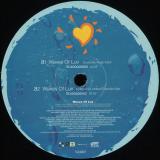
We're thrilled to present a very special vinyl release that's sure to bring back some amazing memories. It's been exactly 20 years since the 2 Black scored an incredible hit in Italy and abroad with their unforgettable track "Waves of Luv" - you know, the one that takes us “in alto mare"!
To celebrate this milestone, we're releasing a commemorative vinyl that's packed with goodness. On Side A, you'll find the two most-played original versions: the Soulstatic Radio Mix and the Mattara Vs Vtraxx Extended Mix. These are the classics that made us fall in love
with the track in the first place.
But wait, there's more! Flip it over to Side B, and you'll discover three brand new, super-fresh remixes that bring "Waves of Luv" right into 2024:
This vinyl is the perfect blend of nostalgia and contemporary sound. It's a must-have for any dance music enthusiast, and it'll be the perfect addition to your summer playlists. Don't miss out on owning this piece of dance music history!
Get ready to ride the "Waves of Luv" all over again!
Born in São Paulo, Caetano Malta embodies the vibrant creative energy of one of Latin America's most dynamic cities. A singer, songwriter, and multi-instrumentalist, he has spent more than twenty years crafting a distinctive musical universe shaped by Brazil's rich and diverse traditions. Tropicalia, MPB, Afro-Brazilian rhythms, psychedelic folk, and contemporary pop blend seamlessly in his work with effortless elegance.
Over the years, he has become a highly sought-after collaborator. Since 2004, he has performed with numerous leading Brazilian artists, including Lucas Santtana, Bixiga 70, Karina Buhr, and many others. After two decades of international touring, he eventually settled in Paris, where he became the guitarist for Flavia Coelho, Luiza, Guts, among others. As a songwriter, he has also co-written with artists such as Lucas Santtana, Wado, MOMO, Rubinho Jacobina, and Arto Lindsay.
With Eterna Juventude, his long-awaited debut solo album, due for release in autumn 2026, Caetano Malta reaches a new artistic milestone. The record reveals a radiant songwriting style where harmonic sophistication, organic rhythms, and instantly memorable melodies come together naturally. Filled with joyful energy and deep tenderness, Eterna Juventude celebrates imagination, movement, and childhood's unique ability to reinvent the world. It is a remarkably accomplished debut, showcasing an artist whose singular voice and musical identity are already fully formed.
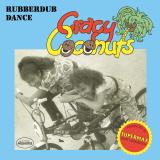
Of course everyone knows Kurt Hauenstein aka Supermax. He was one of the few Austrians to shape the sound of late-1970s disco, performing and selling records around the world. Not many know his daughters Judy and Nicola, however, and the fact that they in 1987 wrote a song that they recorded together with their father. Well, here it is: Cracy Coconuts, “Rubberdub Dance” – a true Hauenstein family affair. We are proud to re-release this super rare 7” that proves, once and for all, that Austrians can excel at digi-dub. Timelessly tropical and beautifully bouncy, its vibe is quite different from the iconic Supermax productions. Here, Judy and Nicola’s sweet yet confident vocals replace the moustache-driven sotto voce singing that we love Supermax for. The result is oh-so-catchy and bound to be a hit.
Veteran Chris Carrier keeps his steady reputation for well-produced EPs with this one. The latest Dancefloor Rituals sees the Parisian icon delivering a trance-induced selection of tracks. From two peak-time weapons to a warm-up groover and an afters tip. What we call a complete release.
Folksongs and Ballads by Tia Blake & Her Folk-Group, is more than just a “lost classic”. As clear and honest as can be, Folksongs and Ballads is a magnetic record, a refuge like only Nick Drake, Nico, and a few others have been able to create. A graceful, delicately minimalist approach to classic Appalachian and British folk songs.The perfect balance between melancholy and daydream. Originally released only in France in 1971, Ici Bientôt is very pleased to present the first-ever reissue on vinyl.
When she recorded her only album, Tia Blake was nineteen years old and had just arrived in Paris a year and a half beforehand. She spent most of her time at Disco’Thé, a record shop in the Latin Quarter, a free space, peaceful and inspiring, a hub for students as well as the local artistic community.
There, Tia would occasionally sing—when she managed to overcome her shyness. Two young guitarists who were passionate fans of folk music and regulars at the shop began to accompany her, forming “Her Folk Group.” One year later, they cut 11 tracks at Pierre Barouh’s Studios Saravah.
Folksongs and Ballads is composed of traditional tunes that have been covered many times, but they’re not the best-known folk standards. A collection of stories ranging from the Middle Ages to the 1960s, bringing together sublimely doleful ballads, lamentations for a lost lover, and an unexpected, brilliant version of the road anthem “Plastic Jesus.”
Tia Blake's haunting, unaffected voice captivates and comforts us, wrapping us in its cool embrace. Meanwhile, the tasteful, stripped-down, mellow acoustic arrangements provided by the guitarists, reminiscent of Bert Jansch and John Renbourn, occasionally supported by a kena flute, have created the space Tia Blake needed to reinvent these traditional songs.
Folksongs and Ballads is a timeless record, deep and unique, a longtime companion for repeated listening, in the vein of works by Sibylle Baier, Bridget St. John and Vashti Bunyan.
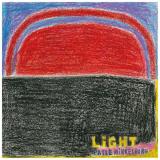
'Palle Mikkelborg (b. 1941) - a spiritual jazz legend, acclaimed composer, trumpet player and electronic music pioneer - is back in the studio recording his first solo album in more than 25 years. Working with him as a producer is Jakob Bro, with whom he has recorded the great ECM albums Returnings with Jon Christensen and Thomas Morgan, and Strands with Marilyn Mazur.
'"When Palle decided to stop touring and performing live, I suggested that we sit down together and listen through the many MiniDiscs and DAT tapes he had tucked away, hoping we might find a new direction for making music together. We went through everything - recordings of orchestras and choirs, soundscapes, and so on - material he had worked on throughout his career,” says Jakob Bro. “I can still remember the first time we said it out loud. Suddenly, it made perfect sense in my mind: a solo album. An album devoted entirely to Palle - his sound, his vision, his voice. It felt like something the world truly needed.”
'This final opus sees Palle Mikkelborg re-interpret and record his own orchestral works and two pieces by Per Nørgaard and Thomas Laub as 'meditations' on solo piano, trumpet and flugelhorn mixed with soundscapes and guest performances by longtime collaborators Helen Davis, Jakob Bro and Thomas Li.
'As a soloist his sound on trumpet and flugelhorn is both much loved and familiar after decades at the forefront of Nordic Music, but on Light one is struck by the weight Palle Mikkelborg has given his soundscapes and the grand piano. Forever curious on what's ahead, the album underlines his spiritual and ever-seeking approach to free improvisation, classical composition, choral works and experimental sound landcapes.'
Injury Reserve was originally a trio, consisting of rappers Ritchie With a T and Stepa J. Groggs and producer Parker Corey. Their mixtapes Live From The Dentist (released in 2015) and Floss (2016) earned them underground buzz, and they capitalized on the attention with their debut album in 2019, the eponymous Injury Reserve.
The group's momentum was put on hold when in June of 2020 Groggs tragically passed away. By the Time I Get to Phoenix was largely completed ahead of Groggs' passing with his contributions, and will be the first Injury Reserve music to be released since their eponymous debut album. Ritchie and Corey took the past year to complete the record, and the title has meaning past simply referencing Injury Reserve's hometown. It's an homage to a song that has been covered countless times, which is in line with Injury Reserve's ethos and approach when it comes to creating music. The group pulls from several styles and eras of hip hop, but runs each one through the Injury Reserve lens, putting their own distinct and cohesive sound across their references. Nowhere is that dynamic more present than on By the Time I Get to Phoenix.
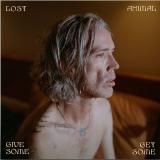
IRST ALBUM IN 10 YEARS.
TOURING WITH TROPICAL FUCK STORM IN NOVEMBER (DATES BELOW).
PRODUCED BY DAN LUSCOMBE (THE DRONES) WHO IS ALSO PART OF THE LIVE BAND.
PREVIOUS ALBUMS ON HARDLY ART/SUB POP AND REMOTE CONTROL.
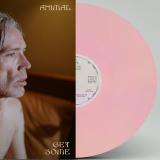
VERY LIMITED BLACK VINYL AND INDIES ONLY PINK VINYL . NON-RETURNABLE.
‘Jarrod Quarrell, creator of Lost Animal, is one of the most underrated songwriters in Australia and one of our all-time favourites. He creates poetic expressions. His work is very interesting in a highly original way and richly emotional. The songs reveal themselves more over many listens and always feel fresh. His powerful, beautiful, transformative, and unforgettable songs possess the vast depth of the human spirit.’ - GIMMIE GIMMIE GIMMIE ZINE
‘Quarrell has developed a collaged techne that embodies a heart-on-sleeve attitude. Lush melodic delays wash with an influx of lyrics that pierce with uncanny imagery and diction.’ - VICE
It’s not every day you hear about a new Lost Animal album. In fact, it’s been ten years between drinks. The debut Ex Tropical (Hardly Art/Sub Pop) was released in 2011, and followed by You Yang (Remote Control) in 2016. So what happened, and where’s frontman/mastermind Jarrod Quarrell been for the last ten years?
From the horse's mouth, “I don't give a fuck about productivity”. A humbling reply. It confirms Quarrell's MO: here’s an artist as a non-conformist. And when he does see fit to bless us with his unique vision of what music can sound like, it has the ability to completely charm and disarm. Amongst a sea of rock bands, LA is essentially a solo act. Simply put; LA is JQ. But on the other hand, amongst an ocean of solo acts, LA possesses the grandiosity of a full band, punk in spirit, but without being fast, or heavy.
Armed with keys and synths, timbres align more with what a toucan might listen to, as opposed to what's heard commonly throughout Melbourne's gig economy. Strings are gently plucked and horns are tenderly blown. These are the colourful brush strokes that decorate the upper frequencies. They’re the ticket to a far away land;exotic, and potentially very dangerous. If the crew from Hear My Eyes are reading this, consider Lost Animal performing Give Some Get Some as the soundtrack to the next time you screen The Hangover Part 2. Yeah, the one where shit gets super fried in Thailand.
The album examines the underbelly of what a ten year journey might rub up against. As one may expect, a lot of that action is below the belt. Tracks like Do That Thing, and In
Rewinding, a few things have happened in the past ten years that are worth illuminating. Shags is no longer commandeering the bass full time. Though he does make an appearance on a couple tracks. The main difference from present day to yesteryear LA is Dan Luscombe (The Drones). Luscombe has jumped into the role of producer (and also part of the live band). One could say he’s a producer of the Spector-ilk: playing a hands-on approach and assisting Quarrell's song crafting. He may have suggested to add a chorus or two, but the chord progressions remain distinctly Lost Animal. You'll recognise them easily by their beauty, combined with either fragility or rigidity. Luscombe is arguably the defining force that made this album happen. Perhaps he had Quarrell at gunpoint. Yet to be confirmed. Regardless, thank fuck for Luscombe because it may have been another decade.
But the album's defining feature is arguably Quarrell's lyricism. He may not cross-examine where he's been, but his voice does unmask where he is: absolved and reincarnated. The decade-long journey has resulted in him looking inwards and unlocking himself. The album's many mantras suggest that he may be a bird (I'm a Bird Now), or that he is living on another planet (Never is Forever). Whatever and wherever he may be,
Give Some Get Some invites the listener to reflect on their own journey over the past decade. Because the game's got a price. So ask yourself what have you taken, and what have you given? Life ain't a box of chocolates. It's a bowl of berries. And when fruit symbolizes temptation, get some.
As the dust begins to settle on one of his most significant and pivotal bodies of work to date - the critically acclaimed techno-focused 'Grow' released by Craig Richards on The Nothing Special - Calibre returns to his own label Signature for another fathomless LP exploration. Laced and spaced with the precision balance of sounds, speeds and styles he's known for, and predominantly characterised by his own lyrics and vocal textures, 'Deep' once again reminds us of Calibre's singular status as an artist whose creations transcend time, tempo and territory. Ranging from one of his most in-demand dubs 'No One Gets You' to poignant yearning introspection of tracks such as 'Better Than Me' and the rolling, jazzy broken beat summer serenade 'Lit', 'Deep' is yet another accomplished, alluring and truly unique pieces of work from one of electronic music's most consistent and prolific artists.
Harvey McKay’s “Table for One” returns to Systematic Recordings for a special and deeply meaningful vinyl edition. Originally released digitally on Systematic, the EP captures the unmistakable sound of the Glasgow producer: powerful, hypnotic and uncompromising techno, driven by raw energy while always retaining the musicality and soul that defined Harvey’s work. Following Harvey’s passing in Spring 2026, this release inevitably carries a different weight. For Systematic and Marc Romboy, it is first and foremost a celebration of
his music and the lasting impression he left behind.
For the first time, “Table for One” will be available on vinyl, presented as a strictly limited 12” picture disc pressing of only 500 copies. The original version takes the A-side, while Marc Romboy’s remix opens the Bside, offering his own interpretation of Harvey’s distinctive sound. The release is completed by “Mycelium”, another powerful example of McKay’s ability to combine hypnotic repetition, precision and sheer dancefloor energy. More than a vinyl edition of an outstanding Systematic release, this record has become a tribute to an
artist whose music will continue to live on through clubs, DJs and dancefloors around the world.
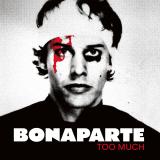
It was in the year 2008 when Too Much came out: a 15-track debut that turned Berlin's underground upside down and made excess into a musical principle.
The album sounds like a party that has already gone off the rails - and is getting better because of it. Tobias Jundt's deadpan, heavily accented delivery collides with jagged guitars, rattling bass, vintage synths and restless dance grooves. Rock'n'roll, electroclash and dance-punk blur into something that never quite sits comfortably in any genre.
The songs are deliberately ridiculous, catchy and hedonistic. Too Much is full of party anthems, absurd one-liners and hooks that get stuck in your head whether you want them to or not. The title track itself became one of Bonaparte's signature songs - one of the early Myspace-era tracks that helped turn the band into a genuine underground sensation.
But Too Much was never just a record. Bonaparte's world extended into circus costumes, provocative performances, striptease, queer aesthetics and wildly excessive live shows. What began with illegal gigs under Alexanderplatz quickly moved to the Montreux Jazz Festival, international tours and legendary parties - with the band becoming one of the most distinctive acts to emerge from Berlin in the late 2000s.
Now Too Much returns on vinyl. A document of a particular Berlin moment - chaotic, funny, sweaty and impossible to ignore.
15 songs. Zero restraint. Still too much.
Apex militant late '70s style here, if you think you are into steppers you should have this one firmly in your sights. One of Mr. Smart's hardest records, this originally appeared only as an album track, but also had some fame as a dubplate played at the time by Jah Shaka and others. We've long had that cut in our sights, and while some nice new re-mixes of this tune appeared in the last few years, here is the real thing from '79 steel. The A-side features the raw dubplate cut vocal, no horns or other adornment, HARD to the point stepping drum and bass style. The B-side features the original Gussie Clarke dub mix aptly titled "Hot Steppers", also previously released only on album. This cut as well was run on dubplate back at the time, a killer mix with full horns but no vocal. Leroy Smart is one of our all time favorite artists and we take pride in having re-released a handful of his all time best records, this one now added to that list.
Joe Fujinoki centered the compositions of his latest album Glass Torso round the idea of the fragility of the human body. Fujinoki described the narrative thread of the album as that of “holding the shape of a human body as if it might shatter like glass”. The precariousness of the body, the essence of the body as defined by Fujinoki as the torso, and the object relations between the boundaries of dialectical exercises pack themselves into his creative process.
Fujinoki recorded Glass Torso exclusively with analog synthesizers, stumbling in and out of structural loops to find space for accidental discoveries. The ten pieces of recorded material feel somewhere on the edge of typified form, feeling like a vascular system pumping in and out its undulating liquidities. Maybe this is the hollowed space held together by Fujinoki’s notion of the torso where you hear a microscopic world, dubby and generative. Fujinoki is adept at organizing this realm of subtle sound sources, giving proper considerations of shared tonal space. Seemingly, this handling of the precarity of sonic material elucidates Fujinoki’s mature attention to detail.
Ambient music genre tropes often affirm the listeners vessel for escape and dissociation. It provides an intoxicating allure by respite from an overwhelming exterior reality far outside the listeners controls. Here this space becomes apolitical, or its protest vocabulary softer and subtle. Fujinoki does not aim to tackle hyperobject topics on how to course correct the world, but he does something increasingly rarer to come across. On Glass Torso an alternative space is created not as shelter, but as a meditation on negotiation and compromise. This twenty eight minutes of audio lays down a foundation for imagination, for imagining how to negotiate the fragility of the self. Zoomed out, the implications of his negotiative sonics can be a playground for broader reflections on distributive care and attention.
Fujinoki says he feels “alert” to his physicality and placement in the world amidst vast digital cultures creating impositions on him and his surroundings. On Glass Torso he creates a concretized space on a vinyl record, where the virtual and the tangible antagonize one another that create the spectacle of the listening experience. This spectacle is a soft one, a considered one, and an utmost enjoyable one. Fujinoki juggles opposing forces brilliantly, and formulates an exquisite palette of soft passing music so he can also help the listener with the exquisite burden of their own Glass Torso.”
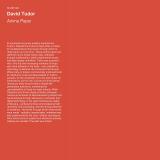
Blume presents two pieces composed in 1970 by the American pianist and composer David Tudor (1926-1996), one of electronic music's most important pioneers, for the Pepsi-Cola Pavilion, a unique artist-designed and programmed space for Expo '70 in Osaka, Japan, created by Experiments in Art and Technology (E.A.T.). Pepsibird and Anima Pepsi deploy electronic technology as a means to experience sound in ways that are anything but matter of fact, rendering liberated environments within and through which one might democratically express and commune. Viewed through the lens of what was, is, and might have been, they offer the tools for time travel: an unmediated encounter with radical, optimistic ideas that gave way to the complex cultural landscape of our time.
Initially trained on organ and then piano, Tudor emerged as a leading figure within New York's musical vanguard after his groundbreaking 1950 performance of Stefan Wolpe's Battle Piece and the American premiere of Pierre Boulez's Second Sonata. Within less than a year he had joined the Merce Cunningham Dance Company as its accompanist, a role he kept until his death, and began one of his most lasting creative relationships with John Cage, who would state that his entire output between 1951 and the end of the 1960s was written with Tudor in mind. Christian Wolff, Earle Brown, Morton Feldman, Sylvano Bussotti, Mauricio Kagel, and Karlheinz Stockhausen all wrote works for him during the 1950s and '60s. Through indeterminacy and chance-based methods, Tudor was noted for radically intervening with the works he played, often making them entirely his own, and it was this same singularity of vision that led him to gradually abandon the piano in favor of electronic process, through which he began working as a composer in his own right.
His engagement with electronics dates to the early 1950s and Cage's Project for Music for Magnetic Tape. By the following decade the pair had moved to live electronics, with Tudor rendering works like Cartridge Music and Variations II through contact microphones and complex systems of feedback and amplification. Before modular synthesizers existed, he designed and built his own electronics, often with engineers from Bell Laboratories, producing dozens of unique instruments and processing tools that helped lay the groundwork for the technological needs embraced by most electronic musicians ever since. A clear marker of his emergence as a composer came in 1966 with 9 Evenings: Theatre and Engineering, where he premiered Bandoneon! (a combine), turning the cavernous performance space into a feedback instrument and a total environment. The event led directly to the founding of E.A.T. the following year by the engineers Billy Klüver and Fred Waldhauer, alongside Robert Rauschenberg and Robert Whitman.
Among the most ambitious of E.A.T.'s projects was the Pepsi-Cola Pavilion, for which Tudor composed four pieces between March and April 1970: Pepsibird, Anima Pepsi, Pepscillator, and Microphone. Together with Forrest "Frosty" Myers, Robert Whitman, the sculptor and filmmaker Robert Breer, and the architect John Pearce, he was tasked with the design and function of the building: a 120-foot diameter steel and polyvinyl dome, shrouded in mist and fog and lit in the evenings by a square of intense blue-white xenon light. Tudor worked with Gordon Mumma and Fred Waldhauer on a unique sound system capable of processing and variable distribution through 37 speakers, controlled both by automated means and by the performer, and with Lowell Cross on a sound-activated laser deflection system inside the pavilion's mirrored performance hall.
Both pieces are an advanced form of musique concrète: libraries of tape recordings, live mixed and processed through the pavilion's sound console and distributed through 8 channels of stationary and rotating patterns designated by Tudor's instructions (small circle, great circle, large rhomboid, spiral, small triangles, small ovals). Pepsibird is focused upon a physical interiority, its source tapes being recordings of the brain wave activity of humans and animals: cat's eye, nerve firing, bats, EKG, alpha waves, a modified nightjar. Recorded in situ in 1970 and mixed down to stereo, it retains a striking sense of the space and ambience that Tudor achieved in performance. For more than eighteen minutes he merges subtle textures and pulses, at times resembling birdsong, within a blanket of vast, resonant ambience of subaquatic density, foreshadowing the relationship to the natural world of later works like Rainforest IV (1973).
Anima Pepsi is centered on the exterior: field recordings that Tudor made of animal and insect sounds (mosquitoes in a jar, a fly on flypaper, a wasp chewing, a beetle walking) and a mix of human and animal sounds that he called the "funny tape". Where Pepsibird deploys interior sounds in ways that allude to the natural world, Anima Pepsi pushes the sounds of nature and humanity toward the otherworldly through the clear presence of electronic sounds and processing, moulding detailed, pointillistic patterns of abstract sonority into gauzy blankets of ambience and space.
The collaboration did not last: less than a month after the opening, Pepsi withdrew its support, fired E.A.T., and disregarded Tudor's tapes, which according to accounts had to be smuggled out by staff, playing its own soundtrack in the pavilion for the rest of the Expo. Heard today, Pepsibird and Anima Pepsi anticipate many territories of later electroacoustic practice, from field recording to live processing, while the terms on which they were made, radically unpredictable, indeterminate, and experimental to the core, reconfigure what we've come to expect from electronic process, making one wonder if the past was ahead. Issued by Blume in a highly limited vinyl edition of 300 copies on red vinyl, with a 20-page LP-size booklet containing You Nakai's essay and newly commissioned liner notes by Bradford Bailey.
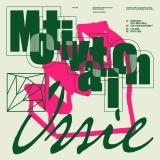
Ossie lands back on Heist after his 2025 hit ‘Are U still smiling?’ with a 4 track EP featuring Miraa May.
How on earth do you follow up your debut when that record got dancefloors moving across the world and picked up radio & dj plays from dance music’s finest selectors?
Many producers would get instant writer’s block, but not Ossie. His new EP on Heist is full of joyous melodies, catchy vocals and euphoric dancefloor moments. Across 4 tracks, Ossie takes us on a trip through rolling electronics, catchy UK sounds and big room anthems.
His Heist debut in 2025 did not go by unnoticed, and Ossie kept a busy calendar since, with regular shows in London and Hï Ibiza with Skepta’s Mas Tiempo crew, his own Supercali imprint as well as his appearance alongside heavyweights Louie Vega, Kerri Chandler, Cinthie and more on Heist’s ‘House of House’ much celebrated compilation.
The Motivation EP kicks off with a bumpy UK track that somehow reminds us of Bicep early day hit ‘Vision of love’. Where the Bicep boys went for a big sample, Ossie landed a surprise studio session with Algerian born-London native Miraa May where they wrote ‘Motivation’ in a single session. The track is stripped back to its core with catchy scats and chants from Miraa May and keys that’ll stick with you far after the track is over. If you’d need any extra motivation for your daily routine, to get out of bed or to go out dancing, this is your jam.
‘Can it get any better’ is a loopy house affair with soulful vocal chants, hints of disco and a subtle piano theme that drives the track into big room territory. It’s energetic without ever getting over the top; a thin line Ossie navigates effortlessly on this record.
On the flip, we’ve got ‘Left side’; a deep groover built around a synth & disco loop and cleverly sampled vocals singing ‘I believe… oooh yes I do’. This one is definitely a lowkey banger, where Ossie turns that one simple loop into a powerful theme made to ignite dancefloors.
The EP closes with the heavy warehouse groove of ‘Don’t stop’. A cavernous low end, rough percussion and chopped synth stabs all come together on this beast of a track. Ossie cleverly plays around with vinyl backspins, vocal chops and small changeovers to keep things interesting, while the groove just keeps on going.
Ossie’s ‘Motivation’ EP has dancefloor written all over it and with all its forward energy, there’s no doubt you’ll be hearing this one a lot in clubs all over the world.
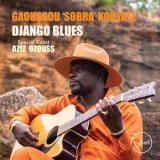
The Malian virtuoso, indisputably one of the most creative talents of his country, deserved his solo career decades ago. In May 2026, we released his debut solo album SOBRA DANCE featuring his wife Mariam Kouyate on vocals. The groovy and variated electric album, went straight to the top lists of World Music Charts Europe and Transglobal World Music Chart as well as selected for TOP OF THE WORLD by SONGLINES. Gaoussou's solo debut got several 5 star reviews.DJANGO BLUES is a tribute to Gaoussou's father and childhood teacher, who's nickname is Django. On this album the talented guitarist and composer goes deeper into the roots of Malian Dessert Blues, with the variations from the Arabic soundscapes from the north.In Senegal, Gaoussou is nick named "The new Ali Farka Toure". But even though Ali Farka was one of Gaoussou's greatest inspirations, Gaoussou has developed an unmistakable style of his own. He breathes music and goes to his studio every day to work. He uses his composing to reflect, and as a ventilator when things are hard -they often are in his country of contrasts- and as a love declaration to life itself. He is a true Mandingue, a Griot, peaceful and kind, as the philosophy preaches.Accompanying such legends like Toumani Diabate and Kasse Mady Diabate, Gaoussou Kouyate, with his beloved village 'Sobra' as his middle name, has long proven his level. Yet his name has been relatively undiscovered. The trio performed a memorable concert at Dakar Music Expo, led by their producers, Dudu Saar and Lucy Duran. What started being noticed internationally through this exceptional trio was Gaoussou's composing skills.The electric SOBRA DANCE album was released first, to contrast and give space to the acoustic GUITARI BARO album. Now comes the time for DJANGO BLUES. This great album features Gaoussou's band as well as an exceptional Moroccan Ribab- Amazigh violin master and singer, Aziz Ozouss.
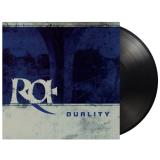
Duality, the second studio album by American rock band RA, originally released in 2005, captures the group at a moment of creative expansion. Building on the heavy, melodic foundation of their debut From One, the band broadened its sound with richer arrangements, deeper emotional themes, and a more polished production approach.
With Duality, RA refined their blend of alternative rock, hard rock, and atmospheric textures. The album features several fan‑favorite tracks, including “Fallen Angels”, “Sky”, “Tell Me” and “Got Me Going”. One of the album’s standout moments is RA’s cover of “Every Little Thing She Does Is Magic”, originally by The Police and written by Sting.
Duality is available on vinyl for the first time and includes an insert with lyrics.
After decades contributing to records where a single riff could transform a dancefloor, Charlie May turns that instinct inward on Trusted Farms.
For over thirty years, Charlie has occupied a position that seems increasingly rare in electronic music: the musician’s musician, the person behind the machines, the extra pair of hands in the studio, and quite often, the person responsible for the melody you end up carrying around in your head for weeks on end.
Alongside Duncan Forbes as Spooky, Charlie helped shape some of the most important electronic music to emerge from the UK in the early ’90s. That partnership would also sow the seeds for one of Sasha’s defining records: the central riff behind Xpander began life in Spooky’s live material, before Charlie brought the idea into the studio with Sasha and helped transform it into one of electronic music’s most enduring anthems.
Listen closely to Charlie’s work and there’s a particular instinct that keeps returning: knowing when a simple synth line is enough. Knowing which note needs to change. Knowing when repetition stops being repetition and starts becoming the entire reason a track works. More recently, as one-third of Quiet Places on ASIP, he’s taken those same instincts somewhere looser — beatless, gridless and led by improvisation.
Trusted Farms puts those instincts front and centre.
Tiny melodic phrases appear and refuse to leave. Synth lines repeat just long enough to become lodged in your head. Parts rub against each other without being tidied into submission. There’s a sharpness and directness to it all amongst the purposeful analogue warmth.
Some of these tracks feel almost ridiculously simple at first. But simplicity is difficult when you’ve spent decades learning every possible way to complicate something. Many of the parts on Trusted Farms were performed live with minimal editing. A synth line might be doubled, distorted, re-recorded and pushed back through another piece of equipment, but it remains the same idea. Instead of filling the gaps, Charlie works on the weight and character of what is already there. The melodies become physical; slightly worn around the edges.
For someone whose fingerprints can be found across some genuinely monumental moments in electronic music, Charlie has spent decades knowing what to add.
Trusted Farms is about knowing exactly what to leave alone.
Available on black 12”, mastered by Andreas Lupo LOOP-O Lubich and featuring artwork by Peter Skwiot Smith,
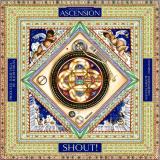
There's a moment during every great dance floor experience when the music takes over and everyone becomes part of something bigger. "SHOUT!", the latest release from 2SoulFusion Presents Ascension, captures that feeling in its purest form. Featuring the powerhouse voices and ad-libs of Dames Brown and Dawn Tallman, along with an all-star ensemble of master vocalists including Josh Milan, Rahsaan Patterson, Lisa Fischer, Cindy Mizelle, Audrey Wheeler, Ramona Dunlap, and Lea Lorien, this joyful anthem is an invitation to let go, lift your spirit, and celebrate through music.
Produced, written, arranged, and mixed by 2SoulFusion—Louie Vega and Josh Milan—"SHOUT!" draws inspiration from the communal spirit of gospel while embracing the energy and freedom of house music. Driven by simple yet powerful affirmations—"Shout," "Sing," "Move," "Love," "Get Up On Your Feet," "Listen Up," and "Let This Music Take You Higher"—the song transforms into an experience where every voice becomes part of the celebration. It's a journey of anthemic hooks, soaring harmonies, infectious grooves, and unforgettable melodies designed to ignite dance floors, uplift hearts, and remind us that music has the power to unite people through rhythm, joy, and love.
The inspiration for "SHOUT!" was born from a creative exchange between Louie Vega and Charaf Tajer, founder and creative director of the internationally acclaimed fashion house Casablanca. Introduced by longtime friend Joseph Capriati, Charaf shared a bold vision—to bring together the worlds of fashion, gospel, and house music for one unforgettable Casablanca runway presentation in Paris.
Louie Vega recalls: “Charaf was introduced to me by my friend Joseph Capriati, who said Charaf was looking to meet me about an idea he had. His vision was to marry fashion, gospel, and house music within Casablanca's collection. At first, he wanted me to DJ and play gospel house music. I said, 'Instead of playing existing music, why don't I create an original song with a gospel house flavor?' I immediately got together with my 2SoulFusion partner Josh Milan, and together we came up with 'SHOUT!'”
That vision came to life during Casablanca's spectacular Paris presentation inside a breathtaking cathedral, where Louie Vega premiered the original twelve-minute and nine-second composition live. As the music echoed through the cathedral, Dames Brown joined the London House Gospel Choir in a soul-stirring performance while the models walked the aisle on Casablanca's carpet made of their signature green color and a dashing vibrating giant mirror echoing the runway visually. Renowned DJs Luciano and Chloé Caillet were among those who walked the runway, while friends of Charaf Tajer and special guests—including Jaden Thompson, Folamour, Dimitri From Paris, Kapela, and many others—were in attendance, making it an unforgettable gathering where music, spirituality, fashion, and culture merged into one extraordinary experience.
Inspired by that magical evening in Paris, Louie Vega and Josh Milan returned to the studio to expand the original composition into the powerful recording heard today. Built around rich live musicianship, Josh Milan's keyboards, organ, piano and synth bass provide the foundation alongside Axel Tosca's expressive grand piano recorded live, Sherrod Barnes' soulful guitar, and Gene Perez's unmistakable bass groove. Together they create an infectious, organic driving sound that allows the vocals to soar while delivering the unmistakable musical depth and musicianship that define 2SoulFusion.
Leading the celebration are Dames Brown and Dawn Tallman, whose commanding performances are elevated by an extraordinary choir of world-class vocalists. Dames Brown's spirited sermon and ad-libs, and Dawn Tallman’s powerful ad-lib vamping out together with the soaring harmonies of Lisa Fischer, Cindy Mizelle, Audrey Wheeler, Rahsaan Patterson, Ramona Dunlap, Lea Lorien, and Josh Milan, recreate the feeling of a joyful gospel congregation—not confined to four walls, but alive on dance floors around the world. Every chorus encourages listeners to get up, listen up, feel it, sing, move, love, and become part of the experience. Recorded between Honeycomb Studios in Pennsylvania, The Hub Ibiza and Manhattan Center Studios, New York City, and mixed at The Hub Ibiza, "SHOUT!" reflects the continuing vision of the Ascension project, where spirituality, musicianship, community, fashion, and dance music become one.
Put your hands together and please welcome Linda Lo to Shall Not Fade's Time is Now imprint. The LA producer/DJ's new 12" EP "Masa" drops 23rd Oct 2026 and f**k is it sick.
Linda Lo fuses* mambo, samba, and salsa with UK garage, dubstep, and club rhythms to make guaranteed rewind material that is gonna light up the dance…
* imma talk about this fuses sh*t in a minute.. First we need to get a bit philosophical. Cos rewinds and fusions aside, this EP is alive. It's part of something bigger and cyclical, without a start or an end. It is music. It was part of someone else's music before and it will be part of other people's music in the future. Right now though, it's Linda Lo's music.
Too esoteric? Let me elaborate and, let's talk about fusion. There is the fusion that is – steal a bit of genre X and culture Y, chuck it on the grid and strut about professing fusion – and then there's actual fusion: Music that is something "new" and real and genuine. Music that you end up describing excitedly as a "fusion of" things (even if it inevitably ends up doing it a disservice). Music that is simultaneously one thing and not that thing, and also something else and not that something else too. Music that is just "music" to the creator but is also part of the progression and evolution of music for others. Mala wasn't making "dubstep". Skream & Benga ended up not making Garage. Like many before and after they were making their music and Linda Lo is making her music so let's hear from her about it. Big up Linda. This is real.
Notes from Linda:
-----------------
“Like Croydon by way of Havana”
“Masa, or corn-based dough used to make tortillas and tamales, is a traditional staple food for many in Mexico and throughout LatAm. In the Maya worldview, people's flesh is made out of masa. In order to make masa, corn must be dried, nixtamalized, ground, and mixed (often by hand) to create the right textured dough. I find much of my music work is a collision and a mixing of many elements, all worked into one product. In this way, I've worked these songs, transforming raw rhythms and sub bass into hand-mixed tunes. ‘Masa - EP' presents four delicious heaters. The title track explodes with a fiery double-time dubstep groove. Mambo horn stabs bite through a bass inferno. ‘Cenote' looks down upon a subterranean pool of sound—still on the surface but impossibly deep. ‘Minifalda', pure flirt and gyration, calls in cuica and other voices from a samba bateria. Finally, claves stitch across ‘Mestiza', a fusion of blooming lush orchestration and jagged 2step rhythm.
Around 1960, my grandparents were regular dancers at the Palladium in Los Angeles: young, Mexican, and falling in love to dance music, specifically big band mambo. My mom, consequently, is a fantastic dancer, and her mambo collection along with my dad's exotica records formed the base of my own vinyl collection. When I first discovered garage and dubstep, there was something indescribably familiar to me, something mambo-like about the syncopated offbeat hits and drama. Later, as I began stitching together mambo claves and 2step drums, I assumed I was trying out something totally new. The farther I go, the more I see that I was wrong.
Dubstep, garage and jungle share a parental lineage back to dub reggae, originating from Jamaica. Mambo hails from Cuba, and sister genres of salsa to NYC & PR, and bachata and meringue to the Dominican Republic. Yet, these musical genres of the Caribbean have not developed in isolation. Reggae, mambo, dancehall, salsa, even son jarocho from Veracrúz, Mexico (where my family is from), all developed together, influencing each other fundamentally. Ultimately, all musics of the Caribbean have come from West African polyrhythmic musical heritages. Garage, mambo, dubstep, and salsa are points in time along one musical continuum.
I feel very honored to be a selector working in Los Angeles (and elsewhere!). I hope I can share some music for the next generation of young people to fall in love to. "
-----------------
I'm moved by what Linda writes here. #1 Doing what you love, and finding you are part of something bigger. Creating for yourself freely and hoping to inspire others with healthy amounts of care, humility, freedom, self awareness and enjoyment. (It is inspiring and I'm honoured we are now a part of sharing Linda's music). #2 There's something wonderful about finding connection and a sense of place. A place physical, spiritual and in time. Music can help us all find connection and be part of a place. Wheel it up wherever you are.
It's been called " A lost classic of the Acid Jazz Era" and has been featured on Compilations and even Bootlegged.
Onward International "Foot In The Door" has earned it's place as one of the Foundation Stones of the Influential Acid Jazz Scene of the 1980's and 1990's. It’s Horn based intro is a Siren Call to fill floors and has been for over 40 years!
Recorded one Magical Night in the same studio and around the same time as Sade’s “Diamond Life” by the cream of London’s Session Musicians (who all later performed on Working Week’s Debut album.)
The title track was named when finally, after taking the master round to every record company in London, a door opened and a release deal was agreed.
The Airto Styled Batucada Beat Brazilian Boogie “Samba Doo Bonnay” is one of the other standout tracks from that now rare and ever more expensive Brit-Funk meets Acid Jazz E.P. and is now available digitally for the first time ever! And for Mambo Jazz Perfection Roberto Pla’s 21st Floor Mambo rounds off things nicely!
Blume presents The Days Pass Quickly Immersed in the Shadow of Eternity, a new work by Lea Bertucci commissioned by the ZKM Center for Art and Media Karlsruhe and premiered in Karlsruhe in November 2025. Written for, and created in collaboration with, the flutist Norbert Rodenkirchen, it draws on his collection of Renaissance, Medieval, and Neolithic instruments, harnessing sounds that have been largely absent from the modern world. What does it mean to employ one of humanity's oldest known technologies, the flute, appearing in human hands tens of thousands of years before the advent of the wheel, within an experimental, electroacoustic composition that is inherently forward-thinking?
Since her emergence within New York City's Noise scene during the early 2010s, Bertucci has balanced a fierce dedication to the DIY ethos and immediacy of the underground with a refined sense of creative rigor and ambition, moving from brittle, challenging compositions for saxophone, electronics, and tape toward investigations of acoustic phenomena, site-specific resonance, and complex harmonic interplay. Following her return to the rural environments of Upstate New York where she was born and raised, her work has entered a more introspective phase, with an expanded instrumental, technical, and vocal palette that has found her increasingly composing for others, as on 2023's Of Shadow and Substance and on Fata Morgana, a work for organ released earlier this year.
The piece grew from a meeting with Rodenkirchen after a performance by the early music ensemble Sequentia, to which he belongs. Struck by his ability to conjure "spirits from deep within human memory, as a clarion call into the present", Bertucci began a series of conversations that led the pair into the studio at ZKM in the summer of 2024. Conceived for ZKM's 42.4 speaker system, grouped into 8 discrete outputs before being mixed down to stereo, the work aligns with the collaborative process she has honed alongside her solo efforts, in duos with Ben Vida, Lawrence English, and Olivia Block: a dialog with personal and responsive agency offered to both musicians.
It carries forward her inquiry into the fundamentally human aspects of listening ("I am looking for sounds that call from somewhere deep within the listener and that tap into archetypal human knowledge and feeling") and her investigation of psychoacoustic phenomena and otoacoustic emissions through a meticulous alignment of pitches and timbres. Where many of her most celebrated efforts played, and played with, the room, this one is rooted in an implied space: the flutes recall and blur the boundaries between the eras and environments in which those instruments were originally played, from acoustically engineered Renaissance and Medieval halls to the naturally reverberant caves of the Neolithic, and those of the present.
Bertucci is not the first to bring ancient sound sources into experimental music: Harry Partch's instruments drew on Greek, Chinese, and Japanese precursors, Alvin Curran regularly plays a conch shell, and Walter Maioli has spent decades working at the borders of experimental music and archaeology. Her piece occupies a more rarefied position through its hybridity, combining advanced technology with archaic sound sources while sidestepping the exoticism and romantic primitivism that can hobble such efforts. Compared with its closest cousin, Phill Niblock's Four Full Flutes, where the instruments are manipulated beyond clear recognition, here the flutes remain recognizable and embrace the layers of history they carry. The result is an electroacoustic work that largely forgoes the auditory signifiers of the idiom: it could easily pass for a live ensemble, and only attentive listening reveals that it could only have been made through advanced technology.
As Rodenkirchen's playing interweaves with Bertucci's computer-facilitated arrangements of flute samples, ranging from pulsing clusters to dense combinations of sustained tones, timbres, and distances, the piece draws connections with folk and spiritual traditions across human history: Medieval polyphonic ecclesiastical music, Sardinian canto a tenore, Pygmy vocal music, Buddhist chant. By conjoining one of our earliest known technologies with our most advanced, Bertucci proposes that our tools are not the message, but rather the unending continuum of humanity itself. Issued by Blume in a highly limited vinyl edition of 300 copies on transparent light blue vinyl, with newly commissioned liner notes by Bradford Bailey.
WRWTFWW Records proudly announces the release of sfs/in vain (selected tracks) by UK jungle heavyweight and Future Retro London founder Tim Reaper, a limited-edition 3LP bringing together selected tracks from two previously digital-only albums, sfs and in vain.
An insane collection of slower 140 BPM wonders, sfs/in vain explores jungle, dubstep, UK garage, R'n'B, grime, liquid D&B and broken beats through Tim Reaper's fresh and informed approach. Deconstructed and reconstructed club music, rooted in tradition but looking forward, these tracks reveal another side of one of the key figures in the modern jungle revival.
The selection comes from 2 albums. sfs collects a body of slower material Tim Reaper worked on throughout 2025, stretching across various genres of UK electronic music. in vain comes from a much more personal place. Written during a period of instability, heartbreak, financial and professional uncertainty, the album became a way for Tim Reaper to process what was happening around him and find some kind of escape. The tracks were made at a point when the effort he had put into rebuilding his life felt as though it had all been "in vain" - hence the title. The result is warm, melancholic, soulful, simply very human.
Together, these selected tracks highlight the incredible range of Tim Reaper's production, proving that his understanding of jungle extends far beyond the traditional boundaries of the genre. From heavyweight bass music to delicate melodic passages, sfs/in vain (selected tracks) is a beautifully varied snapshot of an artist constantly pushing UK club music into new territories.
Tim Reaper has been leading the resurgence of jungle for years, with releases on AKO, Skeleton Recordings, 7th Storey Projects, Green Bay Wax, Dalston Chillies, Parallax, Myor Massiv, V Recordings, Deep Jungle and many more. He is also the founder of Future Retro London, one of the most respected labels and platforms in the contemporary jungle scene.
Stoked to announce the debut record by Faulsk on Ruff Kutz!
Sometimes life can feel cyclical and having the first solo release on the label by someone other than myself had to be the right choice, it just so happened to be the producer from Tāmaki Makaurau / Auckland, which is where I started my lifelong obsession with Electronic music.
Shortly after playing a gig together at Whakamana in late 2024, we started exchanging tunes and I immediately wanted to put a release together with the first track he sent.. The release also features 2 collaborative tracks with myself and consists of 4 deep psychedelic grooves across the tempo ranges, built with the sound system in mind. This is an outrageous debut EP, and I am stoked to have it on Ruff Kutz!
Whilst having a low social media profile and only a few tracks released into the wild, Faulsk seems to have carved out a honed in sonic identity. Mixing Techno and Dub production techniques whilst still having swagger and depth that appeals to the bass heads. Expect expertly crafted soundscapes, interesting loopy grooves, lush evolving pads/stabs and low end wizardry. Genre - Faulsk, just how we like it.
Galvanize was the first track to build the EP with a relentless 4x4 groove, perfectly balanced low end and washy atmospherics, the track gradually evolves to show that less is more sometimes - with it's use of stripped back restraint and negative space to create energetic mood shifts.
On the A2, the first collaboration track Exhalation slows the tempo to 100 BPM for some kind of bass mutation straight from the underworld. This one taps into the tense atmospherics of Galvanize whilst cranking up the intensity with evolving drones and razor sharp percussion to sit amongst the dense soundscape.
The title track on the flip, is a 9 min roll out, reminiscent of early Forest Drive West. The subtle modulation and dubbing on musical parts draws you in and is a nice juxtaposition to the crunching percussion, militant groove and precise low end. Chugging away at 115 BPM, this is a versatile track to inject some kinetic energy into your local underwater dancehall.
Closing out on the B2 we have another collaboration. Upping the tempo to the mid 120s, Retrospect sinks deeper into hypnotism with polyrhythmic grooves and an unresolving feel which creates steady momentum, coupled with lush and evolving synth work which take the track into serenity. Regulate your sound system.
Phenomena begins with two artistic voices that seem to speak different languages. Barcelona-based producer R-010 (Lucas Rojo) approaches composition through rhythm, space and electronic transformation; Madrid-born vocalist and multidisciplinary artist Venerandi through texture, breath and the expressive possibilities of the human voice. By the time the album reaches its final moments, that distinction has quietly disappeared.
Rather than functioning as a meeting point between two individual practices, Phenomena gradually
becomes a third language—one that belongs to neither artist alone. Voice no longer sits above the music
but moves inside it, dissolving into layers of synthesis, percussion and guitar until performance itself
becomes another malleable sound source. Likewise, electronic production never behaves as a fixed
environment; it constantly adapts, absorbs and responds, allowing acoustic gestures and digital
manipulation to reshape one another in real time.
This continuous transformation defines the record more than any particular genre ever could. Echoes of trip hop, bass music, psychedelia and experimental electronics drift across its surface, yet they are never
presented as stylistic markers. Instead, they appear as temporary states within an ecosystem that remains
in constant motion, where dense rhythmic passages collapse into suspended atmospheres and moments
of stillness carry as much weight as those driven by pulse.
The presence of Matteo Caro (guitar and percussion), Pablo Gorostiaga (guitar) and Alessio Rodolico
(percussion) further expands this dialogue. Their contributions are not decorative additions but structural
ones, gradually dissolving the distinction between composition, improvisation and production. Instruments
emerge, mutate and disappear inside the same sonic fabric, making it increasingly difficult to distinguish
what was performed from what was transformed.
With Phenomena, Lapsus Records presents a work that feels less interested in crossing genres than in
questioning the borders between artistic identities themselves. The album never asks the listener to decide
where the human ends and the machine begins. Instead, it quietly suggests that, after enough careful
listening, the question itself may no longer matter.
Building up from his multiple appearances on the label, one of our closest producers, Luca Durán, makes his full studio album debut on TraTra. This work is meant to showcase the vast world of influences the diasporic experience comes with: his rhythm-driven tracks coexist in high contrast, but fluidly, with the experimental and textures of his european school of sound. The title itself works amongst these two edges of Luca's aesthetic existence, the softness from the flight of a Mariposa with the harsh hit of a death blow.
Killing Mariposas is filled with seemingly clashing techniques, field recordings, acoustic instruments, and analogue synthesis, which converge with modern and forward-thinking production tools to build heavily layered music. Constructing an emotional narration from the contemplative to the euphoric. A sort of contextual shapeshifter, with hints of cumbia, grasps of reggaetón and dembow, but always submerged deeply in a windy and fragmented memory.
This whole project gets rounded up by the packed lineup of collaborators, both vocal features and production partners. Astute minds from distinct internet niches: Kelman Durán, Gavsborg, Iceboy Violet, Debit, Rosa Pistola, BEBE YANA, Kamohelo & Kacha.
One true reflection of Luca's production abilities and sonic poetry.