Of all the nicknames given to Elvis, only one of them really seems to reflect his importance in the history of rock: they called him The King.
Together with Chuck Berry, Elvis represented the young generation that vibrated to the music with new rhythms that appeared in the Fifties: Rock’n’Roll. Presley’s personality, not to mention his voice, charm, and a whole series of chart hits, guaranteed Elvis a special place in the hearts of his fans; and not only in his own lifetime, because the same is true some fifty years later.
The thirty titles included in this album are a brilliant demonstration of Elvis’ talents, and the music alone is enough to explain the cult following of his fans, who will worship him forever.
out of Stock
Last delivered 12 months ago available to reorder, subject to availability
In the late 1980s, as techno and house made its way around Europe, mutating as it hopped from city to city, one young DJ from Curacao made a mistake that would inspire a brand new sound. While he was performing at Den Haag's Club Voltage, DJ Moortje accidentally dropped a dancehall track at 45RPM rather than 33, and let it play out. Thirsty for a hi-NRG sound, the crowd loved the squeaky vocals and rapid beat, and bubbling (or bubbling house) was born.For the next couple of decades, bubbling was a crucial part of Holland's Afro-diasporic club landscape. And as a new generation of wide-eyed young DJs and producers began to take the reins, it evolved accordingly. In the late-2000s, Den Haag-based teenage prodigy Guillermo Schuurman followed in the footsteps of his uncle DJ Chippie (one of the genre's co-founders) and cousins DJ Daycard, DJ Master-D, Stiko Jnr and DJ Justme, and began performing and writing beats. Using Fruityloops, he fused familiar bubbling rhythms with rap and R&B samples, trance synths and electro house wobbles, and his tracks quickly became a regular fixture on the Dutch circuit."Bubbling Inside" is a collection of Schuurman's most essential cuts from the era (2007-2009), with a couple of newer productions added for context. Crafted solely for the dance, most of these tracks were never properly released and have been painstakingly hunted down and collected by the Nyege Nyege Tapes together with Sascha Roth from Pantropical in Rotterdam and De Schuurman himself. Hearing them together highlights just how forward thinking the young producer was, steering a Dutch institution into the future.2008's 'First One' is a proto-Berghain belter, with booming bass-heavy kicks underpinning the kind of cheeky melodies that remain the calling card of the genre. 'Pier Je Bil!!' ratchets up the tempo, twisting bubbling's syncopated dancehall kicks into a rapid-fire club clatter and decorating them with steel-pan melodies. Elsewhere, 2019's 'Domina' shows how Schuurman's production style has developed as he mutates trap percussion, dubstep bass and eerie synth textures, while retaining the DNA of bubbling. "Bubbling Inside" is a testament to the evolution of the bubbling genre, as witnessed by one of its most visionary producers.
out of Stock
Last delivered 16 months ago available to reorder, subject to availability
In the late 1980s, as techno and house made its way around Europe, mutating as it hopped from city to city, one young DJ from Curacao made a mistake that would inspire a brand new sound. While he was performing at Den Haag's Club Voltage, DJ Moortje accidentally dropped a dancehall track at 45RPM rather than 33, and let it play out. Thirsty for a hi-NRG sound, the crowd loved the squeaky vocals and rapid beat, and bubbling (or bubbling house) was born.For the next couple of decades, bubbling was a crucial part of Holland's Afro-diasporic club landscape. And as a new generation of wide-eyed young DJs and producers began to take the reins, it evolved accordingly. In the late-2000s, Den Haag-based teenage prodigy Guillermo Schuurman followed in the footsteps of his uncle DJ Chippie (one of the genre's co-founders) and cousins DJ Daycard, DJ Master-D, Stiko Jnr and DJ Justme, and began performing and writing beats. Using Fruityloops, he fused familiar bubbling rhythms with rap and R&B samples, trance synths and electro house wobbles, and his tracks quickly became a regular fixture on the Dutch circuit."Bubbling Inside" is a collection of Schuurman's most essential cuts from the era (2007-2009), with a couple of newer productions added for context. Crafted solely for the dance, most of these tracks were never properly released and have been painstakingly hunted down and collected by the Nyege Nyege Tapes together with Sascha Roth from Pantropical in Rotterdam and De Schuurman himself. Hearing them together highlights just how forward thinking the young producer was, steering a Dutch institution into the future.2008's 'First One' is a proto-Berghain belter, with booming bass-heavy kicks underpinning the kind of cheeky melodies that remain the calling card of the genre. 'Pier Je Bil!!' ratchets up the tempo, twisting bubbling's syncopated dancehall kicks into a rapid-fire club clatter and decorating them with steel-pan melodies. Elsewhere, 2019's 'Domina' shows how Schuurman's production style has developed as he mutates trap percussion, dubstep bass and eerie synth textures, while retaining the DNA of bubbling. "Bubbling Inside" is a testament to the evolution of the bubbling genre, as witnessed by one of its most visionary producers.
out of Stock
Last delivered 20 months ago available to reorder, subject to availability
Hidden Harmony presents the first full-length LP from Estonian composer and keyboardist Volodja Brodsky. The six compositions on 'Whispering Ln.' were entirely recorded during Brodsky's trip to the USA in 2018-2019 and showcased his passion for the transformative power of minimalism as an art form. The follow-up to his keyboard duties on psych funk/rare groove Estonian outfits Estrada Orchestra, Centre El Muusa, Misha Panfilov Septet, on ‘Whispering Ln’ Brodsky reinventing himself as a minimalism evangelist in his own right. From space age pop shimmering sonatas to the monolithic drone/overtone hypnotics, Brodsky created an ascetic yet complex sonic landscape where less is more.
"During this period, I was deeply engaged in the study of this art form. The compositions are meticulously distilled to their most primitive form, crafting an immersive experience that beckons to embark on a journey into the very core of emotions and thoughts. Every pause and each meticulously chosen sound within the album serves a purpose, orchestrating a delicate interplay between simplicity and depth. I hope this music carries you to a place of introspection and serenity, where you may discover the profound beauty within the plainness of life" – Volodja Brodsky
out of Stock
Last delivered 16 months ago available to reorder, subject to availability
Ben Lukas Boysens neues Album, Alta Ripa, bedeutet eine seismische Verschiebung in seiner künstlerischen Reise. Es greift die grundlegenden Impulse seiner Jugend auf, die inmitten der ruhigen Schönheit des ländlichen Deutschlands geprägt wurden - eine bukolische Kulisse, in der seine kreative Palette aufblühte. Doch erst sein Umzug nach Berlin in den frühen 2000er Jahren elektrisierte seinen Sound und ließ ihn mit der pulsierenden Energie der Stadt und den vielfältigen kulturellen Einflüssen verschmelzen. Alta Ripa fängt diese transformative Erfahrung ein, indem es die introspektiven Melodien seiner ländlichen Anfänge mit den kühnen, experimentellen Klängen der pulsierenden elektronischen Musikszene Berlins vermischt. Dieses Album ist ein Zeugnis von Boysens Entwicklung und zeigt, wie geografische Verschiebungen den künstlerischen Ausdruck tiefgreifend prägen können.
out of Stock
Last delivered 20 months ago available to reorder, subject to availability
We are glad to introduce you to our new full length album, sound designed and arranged by Spanish duo Crime as Service. Their musical output has always been solid and consistent, always offering diverse visions on techno sound.
For this particular work they have explored the deepest side of their sound palette, starting with the beatless intro Unlocked, made of subtle drones and field recordings.
Next track is Altered Circuits, a bass heavy groove on the first bars soon followed by mechanical components colliding with atmospheres and micro drone. A combination of pressure and deepness.
Shadow Crew follows with a continuous sequence over a shuffled beat, the usual textures appear on top of the main synth line spicing the mood, until bleeps and asymmetrical components complete the equation.
Zombie Botnet changes the mood drastically, adrenaline goes up and new sonic components add hypnosis to the overall feel as the track goes by.
Second slice of plastic opens with Lazarus Group, intense and dark with super effected synth lines running through the stereo field wisely.
Darknet Operation, as the title suggests, is opaque and gray but also liquid with water samples appearing randomly along the arrangement. The groove behind is relentless and effective, one more time mixing intensity with mindfulness.
Unknown Exploits shares similar feelings as the previous one, a combination of tension and sonic details.
Closing the release, Deconstructed Blockchain, aimed directly for the dancefloor with a psychedelic approach on the main sound, constantly mutating and evolving as the minutes go.
A solid collection of well-crafted techno tunes, aside from tendencies and hype, made to last.
out of Stock
Last delivered 19 months ago available to reorder, subject to availability
First re-press after 10 years to be out in February 2025!
OCTOBER 2013 WE'LL RELEASE THE 3RD PART FROM OUR TRIBUTE TO SPENCER KINCY SERIES CALLED "GEMINI TRAXX". GCTX003 - GEMINI - IN NEUTRAL (2xLP)
SPENCER'S LEGENDAY ALBUM FROM 1997 WILL COME WITH FULL COVER. ALL TRACKS WILL BE RE-MASTERED.
out of Stock
Last delivered 9 months ago available to reorder, subject to availability
Far Out Recordings proudly presents Argentinian guitarist Agustín Pereyra Lucena’s 1980 album La Rana. Recorded in Oslo, La Rana features Agustín’s stunning takes on compositions by Ivan Lins, Antonio Carlos Jobim and Agustín’s friend and musical hero Baden Powell. In addition to these, and a number of Agustín’s own compositions including the fifteen-minute masterpiece “Encuentro De Sombras”, the album’s title track is an idiosyncratic version of Joao Donato’s “A Rã” (Eng: The Frog/ Esp: La Rana) from his 1973 album Quem É Quem.
Forming the rest of the quartet are two fellow Argentinians who were also Agustin’s bandmates from the group Candeias: bassist and multi-instrumentalist Guillermo Reuter and flautist Ruben Izarrualde; with Norweigan drummer Finn Sletten on drums and percussion.
Throughout La Rana we hear not only Agustín’s fabled guitar playing, which ascended him to share stages with the likes of Vinicius de Moraes, Dorival Cayymi, Toquinho, Maria Bethania, Chico Buarque and Quarteto Em Cy, but also his talent as a vocalist. He also provided the heartening illustration for the cover art, which perfectly fits the cordial, inviting tone of the music. Inspired in equal measure by South American rhythms and Norweigan glaciers, mountains and waterfalls, La Rana is filled with the warmth, humility and sincerity of a man seizing a joyful moment in life through music.
out of Stock
Last delivered 20 months ago available to reorder, subject to availability
The influence of the UK’s Steel City on electronic music is well documented and undisputed and continues to push the envelope with key figures such as Winston Hazel (Forgemasters, The Step), DJ Parrot/Crooked Man, Richard Benson (RAC, SWAG, Altern 8), Chris Duckenfield (RAC, Popular Peoples Front, SWAG, All Ears Distribution), a thriving underground club scene and the likes of Synaptic Voyager reinforcing the city’s rich musical legacy.
Matt White and Paul Baines have been making off-kilter, emotive, late night electronic jams since meeting in the early 90’s and while life took them on different paths for a while, they have recently blown the thick layer of dust from their synths and drum machines and got busy in the studio to create some amazing new music which draws influence from that classic UK techno sound which played such an important part in the development of dance music culture around the world. With recent releases on Frame Of Mind, Acquit and Telomere Plastic the duo are clearly on a roll, wearing the heritage of their city on their sleeve and delivering what can only be described as heartfelt, authentic machine music made with love and soul.
From the opening beats of lead track Dawn Till Dusk we are drawn in to another place which feels comfortably familiar yet organic, fluid and loose in a way that tugs on the heartstrings. A million miles from cookie-cutter tech house, this is two guys in a bedroom studio, digging deep on hardware machines to create a sound to get completely lost in. Lonely Promontory takes things deeper still with immersive pads, taught electro beats and blissed-out melodic lines which give just hint of optimism and recall those beloved sounds of B12, Redcell and Likemind.
Flipping over we have Stellar Engine which goes a littler heavier on the beats and bass whilst still retaining a floating quality, once again highlighting the hardware jam workflow that Synaptic Voyager utilise in their studio. Once Exposed takes us back to those heady days of the early 90’s when techno, house and ambient electronics combined to create a heady blend of deep atmospherics and driving beats which could work on both dance floors and car stereos alike. Rounding off the EP we have Cognitive Network which goes for a straighter four on the floor techno groove and a killer bassline to lose yourself in. These recordings were delivered to the label in unedited long form (some tracks totalling 15 minutes or more in length!) which Jimpster lovingly edited into the versions which you hear on this release.
out of Stock
Last delivered 19 months ago available to reorder, subject to availability
For the first 47 release of 2025, Grenoble-based artist Pause makes his debut on Tommy Four Seven’s imprint. Known for crafting deep, pulsating techno, 47044 sees Pause deliver more heavy yet sophisticated slabs of bass, slinking between rugged, airy grooves and elegant sound design. The 5-tracker also sees Pause explore territories beyond his trademark steady-paced, hypnotic sound via the off-kilter closer, culminating in a polyrhythmic wormhole. 47044 is out February 14th, available as vinyl and download
out of Stock
Last delivered 11 months ago available to reorder, subject to availability
Stargaze. Watching stars. Watching trees. Watching mountains. Watching boundless void. On a moonless night. Being stars. Being trees. Being mountains. Being boundless void. Being everything. Being nothing. Just this.
Tracks by Michal Wolski
out of Stock
Last delivered 20 months ago available to reorder, subject to availability
Clone Jack For Daze on a roll with Tom Carruthers up next. Tom delivering trax that will make you jack all night long! The 4 track EP reflects a keen ear for detail and a deep appreciation for retro-futuristic influences that made the genre. No nonsense classic bleepy techno with lush strings and contrasting metalic basslines fierce enough to keep the energy flowing till sunrise.
out of Stock
Last delivered 12 months ago available to reorder, subject to availability
Back in stock due to popular demand, the 23rd release in our signature Brazil 45’s series served up a double header of classics from Sonia Santos and João Donato.
First up, 'Poema Ritmico Do Malandro (Balanço Do Crioulo)' is a beautiful track from the instantly recognisable Sonia Santos. A song that drifts from classic to psychedelic samba, laden with strings, horns and crowd noise. First released on 7” by Copacabana in 1971, but never on an album, originals fetch up to £100 per copy. A different version of this song also appears on the truly excellent Zito Righi Alucinolandia LP.
On the B side, 'Cala Boca Menino' is taken from João Donato’s much sought after and requested Quem É Quem LP. Quirky percussion, bubbling keys, horns and a hypnotic vocal. Donato is a hugely prolific force in Brazilian music and worked with the likes of including Tom Jobim, Astrud Gilberto, Cal Tjader, Dom Um Romao and Gilberto Gil amongst others. ‘Cala Boca Menino’ was released on a 7” in 1973 in Brazil, but is very difficult to find at a reasonable price and in good condition these days.
out of Stock
Last delivered 17 months ago available to reorder, subject to availability
Analog Africa is back with a dedicated project celebrating Gnonnas Pedro, the king of Modern Agbadja, and they press it up on a marvellous double album that includes an eight-page booklet with a ton of extra info. Although four tracks of his have previously appeared on the 2009 Legends of Benin compilation, this bumper pack features 16 of Pedro's best works, all of which captivated Africa at the time. His vibrant blend of Agbadja, Cuban fon, jerk, highlife and more unique styles, all of which come with vocals sung in Fon, Mina, Yoruba, French, English and Spanish, add up to one hell of a rich sound. This is a great testament to the artist's extraordinary legacy.
out of Stock
Last delivered 15 months ago available to reorder, subject to availability
The second album by Wini, Mops, and DJ Pete, the group FOREVAYANG from Germany and Poland. Before we kill the child within us, let’s dance one more time.
26 tracks released on 3 vinyl records in a GATEFOLD sleeve.
Uncompromising lyrics paired with unique humor, set to exceptional arrangements, guarantee a hip-hop journey like you've never experienced before. On the albums guests around the world such as, Michal Urbaniak, Ola Duong, Ceci Loel, D.White, Cool P & more
Als ELECTRIC CALLBOY in diesem Jahr ihr neues Album TEKKNO veröffentlichten, war nicht klar, welche Auswirkungen das Album haben würde.Ausverkaufte Konzerte, Abriss der größten europäischen Festivals und endlich Platz 1 in den offiziellen deutschen Charts. Die Band aus Castrop-Rauxel is begeistert eine unglaubliche Bandbreite an Menschen.Die TEKKNO Tour 2023 findet nun in Arenen statt und Electric Callboy sind bereit für den nächsten großen Schritt.Um dies gebührend zu feiern, wird es eine limitierte 'TEKKNO (Tour Edition)' geben, die neben dem regulären Album, 5 Live-Bonus Tracks enthält, die während der ausverkauften Europatour 2022 aufgenommen wurden. Erhältlich als Ltd. 180g. transp. light blue-lilac marbled Vinyl
Volume 1 of this expertly curated project of 90s Italian House - put together by Don Carlos.
If Paradise was half as nice… by Fabio De Luca.
Googling “paradise house”, the first results to pop up are an endless list of European b&b’s with whitewashed lime façades, all of them promising “…an unmatched travel experience a few steps from the sea”. Next, a little further down, are the institutional websites of a few select semi-luxury retirement homes (no photos shown, but lots of stock images of smiling nurses with reassuring looks). To find the “paradise house” we’re after, we have to scroll even further down. Much further down.
It feels like yesterday, and at the same time it seems like a million years ago. The Eighties had just ended, and it was still unclear what to expect from the Nineties. Mobile phones that were not the size of a briefcase and did not cost as much as a car? A frightening economic crisis? The guitar-rock revival?! Certainly, the best place to observe that moment of transition was the dancefloor. Truly epochal transformations were happening there. From America, within a short distance one from the other, two revolutionary new musical styles had arrived: the first one sounded a bit like an “on a budget” version of the best Seventies disco-music – Philly sound made with a set of piano-bar keyboards! – the other was even more sparse, futuristic and extraterrestrial. It was a music with a quite distinct “physical” component, which at the same time, to be fully grasped, seemed to call for the knotty theories of certain French post-modern philosophers: Gilles Deleuze, Félix Guattari, Paul Virilio... Both those genres – we would learn shortly after – were born in the black communities of Chicago and Detroit, although listening to those vinyl 12” (often wrapped in generic white covers, and with little indication in the label) you could not easily guess whether behind them there was a black boy from somewhere in the Usa, or a girl from Berlin, or a pale kid from a Cornish coastal town.
Quickly, similar sounds began to show up from all corners of Europe. A thousand variations of the same intuition: leaner, less lean, happier, slightly less intoxicated, more broken, slower, faster, much faster... Boom! From the dancefloors – the London ones at least, whose chronicles we eagerly read every month in the pages of The Face and i-D – came tales of a new generation of clubbers who had completely stopped “dressing up” to go dancing; of hot tempered hooligans bursting into tears and hugging everyone under the strobe lights as the notes of Strings of Life rose up through the fumes of dry ice (certain “smiling” pills were also involved, sure). At this point, however, we must move on to Switzerland.
In Switzerland, in the quiet and diligent town of Lugano, between the 1980s and 1990s there was a club called “Morandi”. Its hot night was on Wednesdays, when the audience also came from Milan, Como, Varese and Zurich. Legend goes that, one night, none less than Prince and Sheila E were spotted hiding among the sofas, on a day-off of the Italian dates of the Nude Tour… The Wednesday resident and superstar was an Italian dj with an exotic name: Don Carlos. The soundtrack he devised was a mixture of Chicago, Detroit, the most progressive R&B and certain forgotten classics of old disco music: practically, what the Paradise Garage in New York might have sounded like had it not closed in 1987. In between, Don Carlos also managed to squeeze in some tracks he had worked on in his studio on Lago Maggiore. One in particular: a track that was rather slow compared to the BPM in fashion at the time, but which was a perfect bridge between house and R&B. The title was Alone: Don Carlos would explain years later that it had to be intended both in the English meaning of “by itself” and like the Italian word meaning “halo”. That wasn’t the only double entendre about the song, anyway. Its own very deep nature was, indeed, double. On the one hand, Alone was built around an angelic keyboard pattern and a romantic piano riff that took you straight to heaven; on the other, it showcased enough electronic squelches (plus a sax part that sounded like it had been dissolved by acid rain) to pigeonhole the tune into the “junk modernity” section, aka the hallmark of all the most innovative sounds of the time: music that sounded like it was hand-crafted from the scraps of glittering overground pop.
No one knows who was the first to call it “paradise house”, nor when it happened. Alternative definitions on the same topic one happened to hear included “ambient house”, “dream house”, “Mediterranean progressive”… but of course none were as good (and alluring) as “paradise house”. What is certain is that such inclination for sounds that were in equal measure angelic and neurotic, romantic and unaffective, quickly became the trademark of the second generation of Italian house. Music that seemed shyly equidistant from all the rhythmic and electronic revolutions that had happened up to that moment (“Music perfectly adept at going nowhere slowly” as noted by English journalist Craig McLean in a legendary field report for Blah Blah Blah magazine). Music that to a inattentive ear might have sounded as anonymous as a snapshot of a random group of passers-by at 10AM in the centre of any major city, but perfectly described the (slow) awakening in the real world after the universal love binge of the so-called Second Summer of Love.
For a brief but unforgettable season, in Italy “paradise house” was the official soundtrack of interminable weekends spent inside the car, darting from one club to another, cutting the peninsula from North to centre, from East to West coast in pursuit of the latest after-hours disco, trading kilometres per hour with beats per minute: practically, a new New Year’s Eve every Friday and Saturday night. This too was no small transformation, as well as a shock for an adult Italy that was encountering for the first time – thanks to its sons and daughters – the wild side of industrial modernity. The clubbers of the so-called “fuoriorario” scene were the balls gone mad in the pinball machine most feared by newspapers, magazines and TV pundits. What they did each and every weekend, apart from going crazy to the sound of the current white labels, was linking distant geographical points and non-places (thank you Marc Augé!) – old dance halls, farmhouses and business centres – transformed for one night into house music heaven. As Marco D’Eramo wrote in his 1995 essay on Chicago, Il maiale e il grattacielo: “Four-wheeled capitalism distorts our age-old image of the city, it allows the suburbs to be connected to each other, whereas before they were connected only by the centre (…) It makes possible a metropolitan area without a metropolis, without a city centre, without downtown. The periphery is no longer a periphery of any centre, but is self-centred”.
“Paradise house” perfectly understood all of this and turned it into a sort of cyber-blues that didn’t even need words, and unexpectedly brought back a drop of melancholic (post?)-humanity within a world that by then – as we would wholly realise in the decades to come – was fully inhuman and heartless. A world where we were all alone, and surrounded by a sinister yellowish halo, like a neon at the end of its life cycle. But, for one night at least, happy.
out of Stock
Last delivered 85 days ago available to reorder, subject to availability
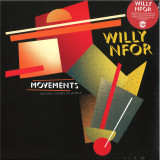
This compilation is more than a selection of songs from Willy Nfor’s solo career in Nigeria—it’s the story of a man’s determination to live his dreams. Known as Willy Ngeh Nfor, he was a founding member of the Mighty Flames. One morning, Willy and his bandmates packed their instruments, grabbed a few clothes, and headed from Cameroon to Nigeria. Crossing the border on foot, they made their way to Onitsha.
“We left Cameroon with no contacts in Nigeria—it was an adventure. We’d heard about the FESTAC Arts Festival and felt we had to be part of it. Our first band in Nigeria was Pentagon Funk Band, sponsored by the 5th Brigade in Port Harcourt. Later, we moved to Onitsha and signed with Right Time Stores, recording Sweet Love (RTLPS 011) as The Mighty Flames. The sessions were at Decca Studios in Lagos, with a 16-track analog system. It was intense—no room for mistakes. We rehearsed endlessly before recording each take.” (Vincent Ekedi, Drummer, Mighty Flames)
Willy’s journey was shaped by his resilience and talent. Losing his mother early and facing family struggles, music became his escape. Inspired by funk and jazz-rock greats like Bootsy Collins, Jaco Pastorius, and Stanley Clarke, he honed his skills on bass and composition, playing with local bands alongside musicians like Vincent Ekedi. Together, they refined their grooves, dreaming of brighter futures.
After his time in Nigeria, Willy moved to Paris, becoming a session bassist for legends such as Manu Dibango, Mory Kanté, Tony Allen, Akendengue, Ray Lema, Jean-Luc Ponty, and Kanté Manfila. Touring extensively, he lived the “Star Life” (Star Life, Cornerstone Records, Feel So Fine, 1981), playing funk grooves with giants in grand venues, fulfilling his dream of the spotlight.
2006
"GlaubeLiebeTod"Wenn ein Album so erfolgreich war wie "Wahrheit oder Pflicht" wächst die Erwartungshaltung ins Unermessliche! Doch OOMPH! haben die schwierige Aufgabe mit Bravour gemeistert!"GlaubeLiebeTod" ist das mit Abstand abwechslungsreichste Werk des Trios. OOMPH! haben sich deutlich weiter entwickelt und ihr Spektrum um etliche neue Elemente bereichert. Beispielsweise sticht der dramatische Stampfer "Spiel mir das Lied vom Tod" heraus. Völliges Neuland betritt die Band auch mit der morbiden Piano-Bombast-Ballade "Eine Frau spricht im Schlaf". Die unverzerrten, sehnsüchtigen Gitarren in "Das letzte Streichholz" sowie die düsteren Doom-Riffs in "Land in Sicht" hat man in dieser Form ebenfalls noch nicht bei OOMPH! gehört. Nicht neu, aber dennoch überraschend ist die phasenweise Rückbesinnung auf die EBM-Anfänge des Trios in den frühen Neunzigern, die u.a. bei der ersten Auskopplung "Gott ist ein Popstar" deutlich wird. Abgesehen davon gibt es natürlich noch genügend Nummern, die die bisherige Linie weiterführen und mit hymnischen Hooklines und fantasievollen Sounds auftrumpfen. Dazu zählen vor allem der wunderschöne "Träumst Du" und der mächtige Metaller "Mein Schatz".
Miki Yui is a musician, artist, and composer, originally from Tokyo, who has been based in Düsseldorf since 1994. Her whose work has long explored multiple forms of media, while documenting liminal zones of perception. On her latest album, As If, Yui creates a subtly connected suite of electronic music, drawn from improvisations and randomised processes that she has engaged with modular synthesis. Deeply poetic in its expression, even at its most minimal, the six pieces on As If have a curious tenor – they are, each of them, intensely sensuous, almost haptic listening experiences, as though the laser focus that Yui displays towards her compositions allows her to engage them as almost physical presences in the world.
One of the keys that unlocks the intimate complexity-in-simplicity of As If was Yui’s encounters with the Amazonian rainforest in Manaus, Brazil in 2018. Finding that the sounds in the rainforest both shadowed and echoed the music she had been making for two decades, she embraced the possibilities of modular synthesis, the sounds of which she discovered “have astonishing similarities to the sounds I experienced in the rainforest.” There is, indeed, something natural about the way these sounds bloom in real time; in their dedicated focus to the subtle development and mutation of several discrete parameters of sound, they grow slowly, gradually, their rhizomic structures suggesting that we are always situated within the middle of sound.
Sometimes, the material here has a kind of febrile energy, as on the ticking, clacking electronics of “Generativ”, a track that seems to rotate in the air in front of the listener, the light reflecting off its multiple surfaces as we catch the intricacies of its micro-patterns. Elsewhere, we slide into a cooled but welcoming environment, like the late-night fire-fly horizon of “Song 4”; there’s also the humid, dripping tropical sunset that’s documented on “Summernight”. It’s a music that’s hard to locate external coordinates for, though there are, perhaps, some parallels with the work of Laurie Spiegel, Eliane Radigue’s Vice Versa, and Pauline Oliveros’s “Roots of the Moment”. But As If is an extraordinary collection of naturally developing, rich studies for slowly mutating, enveloping, elemental electronics.
Bonnie "Prince" Billy - Alias des Musikers Will Oldham - wird am 31. Januar 2025 sein neues Studioalbum mit dem Titel "The Purple Bird" veröffentlichen. "The Purple Bird" wurde in Nashville mit dem Produzenten David "Ferg" Ferguson und einem Ensemble erstklassiger Session-Musiker aufgenommen. Es könnte als "eine richtige Nashville-Platte" bezeichnet werden, die aus einer Sammlung von Songs besteht, die hauptsächlich am Küchentisch von Ferg entstanden sind.
Auf "The Purple Bird" arbeitet Bonnie "Prince" Billy erst zum zweiten Mal in seiner illustren Karriere mit einem Produzenten zusammen. Seine Beziehung zu Ferg reicht mehr als zwei Jahrzehnte zurück bis zu den Sessions für das Johnny Cash-Album American III mit Rick Rubin, bei denen Ferg als Tontechniker fungierte und bei denen Cash eine Coverversion des BPB-Tracks "I See A Darkness" aufnahm. Die beiden haben im Laufe der Jahre an zahlreichen Projekten zusammengearbeitet, aber an keinem so intensiv wie an "The Purple Bird". Was bedeutet "eine richtige Nashville"-Platte für den rätselhaften Bonnie "Prince" Billy? Zu Beginn der Sessions hatte Ferg zu Oldham gesagt : "Ich will keine Country-Platte machen, mach einfach deinen Scheiß, Will."
Und in der Tat haben Oldham und Ferg, zusammen mit ihren Mitstreitern, ein beeindruckendes Album eingespielt und somit einen neuen Höhepunkt im umfangreichen Katalog von Bonnie 'Prince' Billy geschaffen.
out of Stock
Last delivered 20 months ago available to reorder, subject to availability
The duality of "man" is a subject that has been explored in art for centuries, from writings of the Bible to Descartes, all the way up to filmmakers like Lynch, Cronenberg, & Carpenter. Who is your "true self" & what do they want? With their sixth studio album "Wish Defense" (again for longtime home Trouble In Mind Records), Chicago trio FACS take a good, long look in the mirror to face themselves. The return of original member Jonathan Van Herik - who stepped away from the group just before their debut album "Negative Houses" was released in 2018 - replacing longtime bassist Alianna Kalaba brings renewed vigor & a marked angularity from the band's more recent output. The songs still hit hard, but the approach is sideways - the roles have changed since Van Herik's original tenure & his previous time with Case & powerhouse drummer Noah Leger in Disappears; now on bass, Van Herik was originally the group's guitar player and features on the debut, while current guitarist Brian Case played bass. This role reversal has helped the band's dynamic, offering up a different musical perspective than before, now revisiting the trio's long-going collaboration with some distance and time. Case notes that the lyrics on "Wish Defense" revolve around doppelgängers or "doubles", tackling the idea of facing yourself and observing your ideas and motivations. Look no further than the album's title track; "Enter the mirror / Double walker / An intimate / Wish defense / Is it real? / You beside me / The detail / Terrifying / Abject self / Your grief / A public / Performance". Case lays out the entire album's theme in one stanza; Are your actions & emotions your true self? Or are they a performative aspect of that "other" person you put forward? Case says that ultimately the sentiment is "_don't let the bastards get you down, there's something beyond this moment, like hope - but not in the naive belief that ultimately people are good". "Wish Defense"s artwork is also a subtle reference to "Negative Houses"' art, returning to that album's black & white starkness & minimalism. The album's checkerboards everywhere are offset reflections of themselves, mirrored with the album's lyrics printed front & center on the cover. Everything is out in the open. A final note; "Wish Defense" is the last album engineered by Steve Albini. Two days were recorded at Electrical Audio in early May of 2024 before Steve's untimely passing, with renowned engineer & friend Sanford Parker stepping in to finish the session 24 hours later, tracking the last bits of vocals and overdubs. Longtime collaborator John Congleton mixed the album as Albini would have; in Electrical Audio's A room, off the tape, using Albini's notes about the session.
The duality of "man" is a subject that has been explored in art for centuries, from writings of the Bible to Descartes, all the way up to filmmakers like Lynch, Cronenberg, & Carpenter. Who is your "true self" & what do they want? With their sixth studio album "Wish Defense" (again for longtime home Trouble In Mind Records), Chicago trio FACS take a good, long look in the mirror to face themselves. The return of original member Jonathan Van Herik - who stepped away from the group just before their debut album "Negative Houses" was released in 2018 - replacing longtime bassist Alianna Kalaba brings renewed vigor & a marked angularity from the band's more recent output. The songs still hit hard, but the approach is sideways - the roles have changed since Van Herik's original tenure & his previous time with Case & powerhouse drummer Noah Leger in Disappears; now on bass, Van Herik was originally the group's guitar player and features on the debut, while current guitarist Brian Case played bass. This role reversal has helped the band's dynamic, offering up a different musical perspective than before, now revisiting the trio's long-going collaboration with some distance and time. Case notes that the lyrics on "Wish Defense" revolve around doppelgängers or "doubles", tackling the idea of facing yourself and observing your ideas and motivations. Look no further than the album's title track; "Enter the mirror / Double walker / An intimate / Wish defense / Is it real? / You beside me / The detail / Terrifying / Abject self / Your grief / A public / Performance". Case lays out the entire album's theme in one stanza; Are your actions & emotions your true self? Or are they a performative aspect of that "other" person you put forward? Case says that ultimately the sentiment is "_don't let the bastards get you down, there's something beyond this moment, like hope - but not in the naive belief that ultimately people are good". "Wish Defense"s artwork is also a subtle reference to "Negative Houses"' art, returning to that album's black & white starkness & minimalism. The album's checkerboards everywhere are offset reflections of themselves, mirrored with the album's lyrics printed front & center on the cover. Everything is out in the open. A final note; "Wish Defense" is the last album engineered by Steve Albini. Two days were recorded at Electrical Audio in early May of 2024 before Steve's untimely passing, with renowned engineer & friend Sanford Parker stepping in to finish the session 24 hours later, tracking the last bits of vocals and overdubs. Longtime collaborator John Congleton mixed the album as Albini would have; in Electrical Audio's A room, off the tape, using Albini's notes about the session.
The duality of "man" is a subject that has been explored in art for centuries, from writings of the Bible to Descartes, all the way up to filmmakers like Lynch, Cronenberg, & Carpenter. Who is your "true self" & what do they want? With their sixth studio album "Wish Defense" (again for longtime home Trouble In Mind Records), Chicago trio FACS take a good, long look in the mirror to face themselves. The return of original member Jonathan Van Herik - who stepped away from the group just before their debut album "Negative Houses" was released in 2018 - replacing longtime bassist Alianna Kalaba brings renewed vigor & a marked angularity from the band's more recent output. The songs still hit hard, but the approach is sideways - the roles have changed since Van Herik's original tenure & his previous time with Case & powerhouse drummer Noah Leger in Disappears; now on bass, Van Herik was originally the group's guitar player and features on the debut, while current guitarist Brian Case played bass. This role reversal has helped the band's dynamic, offering up a different musical perspective than before, now revisiting the trio's long-going collaboration with some distance and time. Case notes that the lyrics on "Wish Defense" revolve around doppelgängers or "doubles", tackling the idea of facing yourself and observing your ideas and motivations. Look no further than the album's title track; "Enter the mirror / Double walker / An intimate / Wish defense / Is it real? / You beside me / The detail / Terrifying / Abject self / Your grief / A public / Performance". Case lays out the entire album's theme in one stanza; Are your actions & emotions your true self? Or are they a performative aspect of that "other" person you put forward? Case says that ultimately the sentiment is "_don't let the bastards get you down, there's something beyond this moment, like hope - but not in the naive belief that ultimately people are good". "Wish Defense"s artwork is also a subtle reference to "Negative Houses"' art, returning to that album's black & white starkness & minimalism. The album's checkerboards everywhere are offset reflections of themselves, mirrored with the album's lyrics printed front & center on the cover. Everything is out in the open. A final note; "Wish Defense" is the last album engineered by Steve Albini. Two days were recorded at Electrical Audio in early May of 2024 before Steve's untimely passing, with renowned engineer & friend Sanford Parker stepping in to finish the session 24 hours later, tracking the last bits of vocals and overdubs. Longtime collaborator John Congleton mixed the album as Albini would have; in Electrical Audio's A room, off the tape, using Albini's notes about the session.
Next in line, a crafty remixes pack of Ethereal Logic's second album "Intergalactic World Music". The A side has two uptempo tracks by S.Moreira (1/2 of Ethereal Logic) and the italian wizard Paolo Mosca, delivering versions that perfectly capture their club essence.
On the B side, more downtempo yet groovy approaches by another extended
out of Stock
Last delivered 3 months ago available to reorder, subject to availability
Knapp zwei Jahre nach ihrem letzten Album „Black & Gold“ melden sich die vier Schwedinnen von THUNDERMOTHER mit ihrem neuen Werk „Dirty & Divine“ zurück. Mit frischer Besetzung setzen THUNDERMOTHER nahtlos dort an, wo sie aufgehört haben: Ein neues Album, eine neue Tour. Die zehn neuen Tracks zeigen einmal mehr, warum das schwedische Hard Rock Powerhouse bekannt dafür ist, das Live-Feeling direkt ins Wohnzimmer zu transportieren. Das Album ist randvoll mit mitreißenden Refrains und Gitarrenriffs mit einer ordentlichen Portion Starkstromladung. Eines ist sicher: Auch auf „Dirty & Divine“ lassen THUNDERMOTHER nichts anbrennen und liefern dem Rock & Roller-Herz den nötigen Kickstart!
Knapp zwei Jahre nach ihrem letzten Album „Black & Gold“ melden sich die vier Schwedinnen von THUNDERMOTHER mit ihrem neuen Werk „Dirty & Divine“ zurück. Mit frischer Besetzung setzen THUNDERMOTHER nahtlos dort an, wo sie aufgehört haben: Ein neues Album, eine neue Tour. Die zehn neuen Tracks zeigen einmal mehr, warum das schwedische Hard Rock Powerhouse bekannt dafür ist, das Live-Feeling direkt ins Wohnzimmer zu transportieren. Das Album ist randvoll mit mitreißenden Refrains und Gitarrenriffs mit einer ordentlichen Portion Starkstromladung. Eines ist sicher: Auch auf „Dirty & Divine“ lassen THUNDERMOTHER nichts anbrennen und liefern dem Rock & Roller-Herz den nötigen Kickstart!
Die Debüt-LP der Londonerin Nia Wyn ist ein fesselndes Soulwerk, inspiriert von der Musik aus Detroit, Philadelphia und Memphis der 1960/1970er Jahre, das ihren selbstbewussten Produktionsstil, ihre Begabung für authentisches und introspektives Geschichtenerzählen und ihre unverwechselbar kraftvolle Stimme offenbart. Thematisch deckt die LP ein breites Spektrum ab, von Nias Erfahrung, als Erwachsene mit Autismus diagnostiziert zu werden, über psychische Probleme bis zu den Kulturkriegen gegen die Queer-/Trans-Communities. Der Albumtitel ist eine Anspielung auf schulische Erfahrungen ängstlicher (nicht diagnostizierter neurodivergenter) Kinder der Millennial-Generation.
Die 1987er Black Uhuru-Alben "Positive" und "Positive Dub" zählen zu den besten Arbeiten der legendären Reggae-Band und erscheinen nun kombiniert in remastered Qualität. Produziert von Steven Stanley, mit Sly & Robbie als Studiomusiker, war "Positive" das letzte Album mit Delroy "Junior" Reid on vocals. Beide Formate enthalten die vollständigen 16 Tracks, die LP ist auf schwarzem 180g Doppelvinyl im Gatefold gepresst.
- "At its best, Black Uhuru combines the persistent dance-inciting rhythms of pure reggae with substantial pop melodies and soulful vocals." - St. Petersburg Times
- "The sheer tunefulness the band has displayed in the past." - The Washington Post
- "Uplifting, yet realistic. It paints real, and often graphic, pictures of conflict in the Third World." - Ottawa Citizen
out of Stock
Last delivered 20 months ago available to reorder, subject to availability
After a brief hiatus from regular releasing (yet closely following the hit 36-tracker VA compilation), Motive Hunter Audio steps back into Jungles spotlight with The Pressure - EP from ARKYN, available on an ultra-sleek marble grey double-sided 12 vinyl, as well as all digital streaming platforms + Bandcamp.
The release thoroughly embodies a modern rendition of Hardcore Jungle Technos unmissable resurgence, yet matched with an evident ode to the genres roots. Piano-stabs-galore and 4x4 kicks guide you through two sides of controlled mayhem, the epitome of a club-ready release. ARKYN calls up SYNTAX & DJ B for collaborations, both effortlessly adding their touch sonically and also with the bonus of a closing track as his alter-alias DJ TUF - channelling his influence from the Dutch early rave scene.
Having already had support from artists at the top of their game, internationally and on the airwaves - there is no way of shying from the fact that these have been some of the most sought-after dubs in Modern Jungle.
out of Stock
Last delivered 16 months ago available to reorder, subject to availability
Collector, seeker and storyteller Charles Bals brings his curatorial finesse to Hamburg"s Bureau B with "Ambientale", a journey into otherworldly sounds from the years 1983 - 2000.
Drifting effortlessly between digital exoticism, mellow fusion, new age groove and library electronics, the pieces range from largely obscure to utterly un-google-able, and coalesce into a stunning soundtrack to tranquil seas, desert sand and starlit skies.
Cinematic & enigmatic, "Ambientale" is a stranger you"ve only just met but can"t stop thinking about.
out of Stock
Last delivered 19 months ago available to reorder, subject to availability
Drink Ring Jesus, the second album from Nashville based singer-songwriter Simmons was originally released in 2006 during a period of vast political and social change in America. Post 9/11 the age-old battle between good and evil, God versus Satan if you want to get personal, once again eased into view agitating hearts and minds. Like all songwriters with just their art to carve themselves a foothold in a world becoming less identifiable, Simmons produced an album that is both intimate and deeply inquisitive yet, like all the great folk records, its universal themes of hope, redemption, pain and despair will resonate with all who hear it.
Nearly twenty years on from its initial release Drink Ring Jesus feels as relevant now as it did then. From the opening lines of the title track Simmons is clearly caught in a time of intense personal reflection. It’s not an unusual pathway to tread for songwriters and artists alike, indeed many have fell by its wayside over the years, yet here our narrator is both looking for a way through and calling on something deeper than just instinct for guidance. We are right on the frontline, characters battling on the very precipice of sanctuary or sacrifice on the likes Time To Pay and Devil’s Work Is Never Done, before literally scavenging a ticket to Hope Station on the evocative Next Stop Redemption. There isn’t a moment where you feel Simmons is taking the easy way out or shying from titanic confrontation. Anything but. It’s in the no-mans land where these songs impact the most, at the very alchemy where despair turns to optimism or defeat.
Balancing mystic pop, psychedelic ambiance, and pulsating electronica, her debut LP weaves a divine, harmonic universe
Ghent-based singer-songwriter and composer Nele De Gussem (Uma Chine) has today announced her debut solo album The Loom Of Longing, out February 7 2025 on Viernulvier Records.
De Gussem has delivered a sensational album of mystic pop, psychedelic ambiance and pulsating electronica. To shape her divine harmonic universe, she has a preoccupation with soundscaping that involves using her sensual voice and electronic/analog instruments as a sort of palette of rich textures where she’s the auteur, as opposed to the cog in a bigger machine as she’s been with her band, Uma Chine.
“This album celebrates having found desire as a compass in my life and as a medicine to quell fear, holding back and keeping silent.”
— NELE DE GUSSEM
The cracking first single from the album - ‘Wonder’ comes with an eye-popping music video by Belgian visual artist Victor Verhelst (STROOM). Verhelst crafts a unique collage of 90s computer game-inspired motion graphics, which has an otherworldly appeal and highly symbiotic relationship with the music. Rarely do the marriage of visual and musical arts come together so invitingly.
Of the single’s feel, Nele De Gussem says: “‘Wonder’ is about the paradoxical situation of being at a party and finding stillness within. Introspection amid exuberance; tranquillity amid joy. It’s like being swept away by a rush of light - feeling our head in the clouds - but feeling equal magic in the corporeal self.”