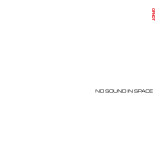
Closely following the release of the last Borderland single, the focus returns on Transport, the last collaborative album by Juan Atkins and Moritz von Oswald.
Long time friend and studio partner of Moritz von Oswald, Carl Craig provides a new take on 'Transport'. Extending and stripping the original sequence to its bone, the illustrious Planet E president and illustrious Detroit proponent also summons a stepping drum sequence and a swaying array of moving delays.
This 12' edit is cut on the A-side. The full version of Carl Craig's remix clocks just above 20 minutes and is available digitally. Both are available to anyone who purchases the record, through the enclosed download card.
On the flip, DJ Deep & Roman Poncet rework Carl Craig's remix, adding their signature grooves and myriad of tough drums, to full effect.
Search:trans x
- My Old Friend The Blues (Acoustic
- Someday (Acoustic
- Guitar Town (Acoustic
- I Ain't Ever Satisfied (Acoustic
- Now She's Gone (Acoustic
- Goodbye (Acoustic
- South Nashville Blues (Acoustic
- Cckmp (Acoustic
- Transcendental Blues (Acoustic
- It's About Blood (Acoustic
- Dominick St. (Acoustic
- The Galway Girl (Acoustic
- Copperhead Road (Acoustic
- The Devil's Right Hand (Acoustic
- Sparkle And Shine (Acoustic (Live))
Live-Album des legendären Singer/Songwriters Steve Earle:
Steve Earle ist einer der renommiertesten Singer-Songwriter seiner Generation. Als Schützling der legendären Songwriter Townes Van Zandt und Guy
Clark wurde er schnell zu einem meisterhaften Geschichtenerzähler, und seine Songs wurden von Johnny Cash, Waylon Jennings, Joan Baez, Emmylou
Harris, The Pretenders und unzähligen anderen aufgenommen. 1986 erschien sein Album Guitar Town, das bis auf Platz eins der Country-Charts
schoss und heute als Klassiker des Americana-Genres gilt. Zuletzt wurde Earles Hit Copperhead Road aus dem Jahr 1988 zum offiziellen Song des
Bundesstaates Tennessee im Jahr 2023 ernannt. Nachfolgende Veröffentlichungen wie The Revolution Starts...Now (2004), Washington Square
Serenade (2007) und TOWNES (2009) wurden mit aufeinanderfolgenden GRAMMY® Awards ausgezeichnet. Sein jüngstes Album Jerry Jeff (2022)
besteht aus Earles Versionen von Songs, die Jerry Jeff Walker, einer seiner Mentoren, geschrieben hat.
Earle hat sowohl ein Buch als auch eine Sammlung von Kurzgeschichten veröffentlicht. Earle produzierte Alben für andere Künstler wie Joan Baez (Day
After Tomorrow) und Lucinda Williams (Car Wheels on A Gravel Road).Als Schauspieler hat Earle in mehreren Filmen mitgewirkt und hatte
wiederkehrende Rollen in den HBO-Serien The Wire und Tremé. 2009 spielte Earle in dem Off-Broadway-Stück Samara mit, für das er auch die Musik
schrieb, die die New York Times als „exquisit unterschwellig“ bezeichnete. Im Jahr 2020 wurde Earle in die Nashville Songwriters Hall of Fame
aufgenommen.
a The Devil's Right Hand (Acoustic[Live])
[b] My Old Friend The Blues (Acoustic[Live])
[c] Someday (Acoustic [Live])
[d] Guitar Town (Acoustic [Live])
[e] I Ain't Ever Satisfied (Acoustic[Live])
[f] Now She's Gone (Acoustic [Live])
[g] Goodbye (Acoustic [Live])
[i] South Nashville Blues (Acoustic[Live])
[j] CCKMP (Acoustic [Live])
[k] Transcendental Blues (Acoustic[Live])
[l] It's About Blood (Acoustic [Live])
[m] Dominick St. (Acoustic [Live])
[n] The Galway Girl (Acoustic [Live])
[o] Copperhead Road (Acoustic [Live])
2024 repress
The immobile odyssey. For a long time before the success of Nôze led him to discover the rest of the world, Ezechiel Pailhès remained a prophet in: his country. For a long time as well, he worked on creating what became his first solo album, waiting for the right moment when he could no longer contain all the melodies that populate this 14-leg epic. A voyage in a free world, where creation knows no formal constraints, where everything mutates according to the determined inspiration of the moment. Transforming the original pieces without knowing in advance how they will end up, disguising the instruments so that they are mistaken for others, nothing frightens this intrepid sailor whose ship is nevertheless securely moored at home, Ezechiel composes and plays at home in Paris. Sole master on board, the tinkerer illusionist prepares his piano with mechanic's tools (scotch tape, rubber, percussion, wooden claves adrift over the strings), obtaining instruments that do not sound where we expect them. This adventure is, he says, a fiction he wants to believe in.The result is equal to the creator and his character.14 captivating melodies like siren songs, sometimes dressed in a simple lala or lyrics by David Lafore, 14 ports of call offering a sweetness that is at times extremely melancholy, 14 pieces whose implacable refrains take root the first time you listen to them.
Neu gemasterte Neuauflage des Archive Debütalbums zum 10. Geburtstag auf limitiertem Gatefold Cerulean in Cloudy Clear Vinyl, inkl. Bonustrack und Poster, illustriert von Chad VanGaalen.
The eighth and latest slate of refined retro-futuristic synth-pop by Liz Wendelbo and Sean McBride aka Xeno & Oaklander is named after and inspired by "the study of what not to do, a negative image of a positive, the other side, the other:" Via Negativa (in the doorway light). Recorded in the fall of 2023 at their modernist Connecticut home fashioned into a two-story synthesizer laboratory and mixing studio, the album is uniquely visionary in spirit yet precision in execution, a contrast central to the duo's enduring chemistry. Embryonic piano sketches were translated to nuanced modular systems, which McBride weighted with "harmonic padding," tuned percussion, and a spectral transfer device capable of "rendering spasms of rhythmic overtonal filigree." Despite the technological complexity of their craft, emotively the songs require no deciphering - these are technicolor widescreen anthems of the cybernetic age. The eponymous opening track sets the pace, soaring sleekly over glittering synths and call-and-response vocals about arias, shattered light, and faces in stereo. From there the record expands and contracts, cycling through a gallery of moods and masks, animated by the band's fascination with drama, "the idea of personae," and theatrical characters. Track by track, a murky, tragic backstory reveals itself: forlorn figures navigating a treacherous mercury mine, alternately poisoned by fumes or buried in collapsing caverns. The tension between Teutonic, utopian synthetic pop and lyrical narratives of ghosts in silos, ruined mills, and the traumas of mineral excavation creates a compelling friction, alternately futurist and obsolete, elevated and subterranean. Wendelbo describes the music's polarities perfectly: "The heavy machinic din of extraction in contrast with the enchantment of the mined precious gems and metals." From bilingual odes to bloodstones ("O Vermillion") to cosmic chrome dance floor classics ("Lost & There" "The present tense can never feel real / So many pasts conspire in the burning sun") to strutting EBM sensualities ("Actor's Foil"), Xeno & Oaklander re-prove themselves masters of the axis of technology and poetry, snaking cables and synesthesia, mining melodies and myths across 15 years of focused artistry. Theirs is a muse still gilded and gleaming, burnished red and silver, attuned to "the unobservable, the unfamiliar, that which you don't see directly."
Here we have the third LP by the excellent Guy Hamper Trio, featuring James Taylor on Hamond organ, and Guy Hamper on guitar (sometimes called Childish) and what a first-class LP this is! 'Instrument of Evil' in particular has a very eerie vibe. We asked the man himself what was the inspiration for it? G.H. The track is the sequel to '7% Solution', which featured on the last Guy Hamper Trio LP (with Thee Headcoats standing in as rhythm section). A 7% Solution being the amount of morphine Dr Watson administered to Sherlock Holmes. For 'Instrument of Evil' I took Sherlock Holmes' later designation of his syringe as "an Instrument of Evil". This is originally a quote from the bible- "Wicked men do at times reject God's purpose for the state, transforming the good of civil government into an instrument of evil." Point of interest: Morphine addiction happens to tie in with another aspect of the song. In the section that nods to Elmer Bernstein's main title theme to the film of the book The Man With the Golden Arm, in which the main character is also a morphine addict. Another ingredient - we added six-string bass to that section in tribute to Jet Harris - he formerly of top group The Shadows, who recorded a great version of Bernstein's classic. To top it all off the record sleeve references the fine graphics of the great Saul Bass. The track also features contributions from Tom Morley (trumpet) and Anna Jordanous (sax) . Both Were a pleasure to work with. My job at the wheel is to basically make a playground and let Jamie, Anna and Tom loose in it with very little direction, apart from pointing out the swings and location of the roundabout. I told Tom "you're a Spanish trumpeter stood on a hill in Spain." For Anna, I think we said "go low and nasty." Other titles are taken from early poetry chapbooks I made in my youth. 'The First Creature is Jealousy' and 'Dog Jaw Woman' being examples. The title 'Incense Rising From a Censer' comes from Dostoevsky's The Brothers Karamazov, a book I really recommend. Prayer rises to God on the smoke of the incense burning in the censer. I imagine this track being some kind of antidote to 'Instrument of Evil'. They are all excellent tracks. I imagine film companies will be queuing up to use many of them.
Transcendental poetry meets Southern Nightmare Jazz on the third album by Alabama-based artist Johnny Coley Mister Sweet Whisper is the meeting of poet & artist Johnny Coley and the band Worst Spills, led by guitarist & arranger Joel Nelson. (Imagine "King Tubbys Meets Rockers Uptown," but more like "William Burroughs Meets Lounge Lizards in Ghost Swamp"). Joined by vibraphone player and recordist of the group, Jasper Lee, Mister Sweet Whisper centers Coley as a gifted writer and unique elder voice, supported by an eclectic cast of friends & collaborators. Tapping into French surrealism and transgressive American poets such as John Ashbery, the songs in Mister Sweet Whisper evolve, cinema-like, with Coley as an uninhibited, almost mystical, narrator. Textural, jazz-like playing complements Coley's decadent landscapes, which glide by like cigarette-inspired invocations. Echoing, and at times, dissonant notes of saxophone, crystalline tones of vibraphone, and jagged guitar arrangements punctuate Coley's dreamlike visions, populated by ballet dancers, haunting nightclubs, and ghostly car drivers. Wistful and expansive, the songs in Mister Sweet Whisper speak of Coley's talent and natural ability to channel his poetic world into songs. A remarkable follow-up to Coley's first two albums_Antique Sadness, from 2021, and Landscape Man, from 2022_which were praised as "exquisitely haunting, sublime, hilarious" and falling "somewhere between Robert Ashley, David Wojnarowicz, and Intersystems," Mister Sweet Whisper arrives in full form: unpredictable and brilliant. LP comes with a 4-page booklet featuring artwork and writing by Johnny. Pressed in black vinyl.
Description:
Varèse Sarabande presents the first-ever vinyl release of Hans Zimmer’s GRAMMY® nominated score for the classic comedy-drama, Driving Miss Daisy. This Transparent Violet LP features Zimmer’s unforgettable original compositions for the Academy Award-winning film, as well as songs performed by Eartha Kitt and Louis Armstrong.
Lili Holland-Fricke and Sean Rogan’s debut album “dear alien” is a constellation of radiant improvised impulses, imagined in lucent fragments of cello, guitar and voice. Spacious, tender and glistening with rich electronic distortion, the record melds a spectrum of processed and natural sound as the artists invite listeners into their dreamlike world of synergetic introspections.
Cultivated through a shared spirit of resourcefulness and play, “dear alien” emerges as an organic meeting place in the compositional output of British-German experimental cellist Lili Holland-Fricke and Manchester-born guitarist and producer Sean Rogan. Having studied their respective instruments at the Royal Northern College of Music, both artists have flourished in eclectic solo and collaborative projects, creating intricate and intimate spheres of sound with a deep appreciation for songwriting and improvisation.
Holland-Fricke’s transition from the classical world to writing her own material, and later vastly expanding her palette with electronics, first converged with Rogan’s distinctive flair for production in 2022 on her EP “birdsong for breakfast” and single ‘draw on the walls’. Now, the duo present an album envisioned through true ‘50/50’ collaboration during the summer of 2023, written across two intensive weeks of improvising and experimenting at Rogan’s Greenwich home studio. A convergence of the artists’ sounds and influences, the music was fostered by the idea of making an album with ‘no plan’ and their shared recent discovery of Arthur Russell, to whom the final track is dedicated.
“dear alien” assembles eight compositions that emerged naturally as the duo created sketches with cello and pedals, guitar, tape loops and poetic vocal musings, forming songs that explore themes of waiting, circling back around, and glitchy communication. Moments of drifting through pillowy layers of sound contrast with saturated visions of electronic modification, where the record’s glowing instrumental contours are pushed to the extremes.
The plaintive shades of ‘half blue’ and meandering deliberations of ‘slow thing’ are teased by the friction of static signals and a sense of ever-mutating sonic mass – a sensibility most acutely realised in ‘dawning’, where cello-vocoder eruptions grow in magnitude, the absence of sound between them burdened with something sinister and unspoken. As the artists expand on this piece, ‘It’s the sound equivalent of squeezing your eyes shut to shield against the brightness of something you don’t want to see, only to find that each time you open them again the world is not softening but getting more relentlessly overwhelming, to the point of being totally blinding.’
Three tracks with lyrics – ‘at first’, ‘dear alien’ and ‘seem asleep’ – refract the album’s wistful and melancholic colours into poetic imagery and metaphors, ushering in reflections on relationship tensions and someone close feeling unknown, with hints towards wider unsettled feelings about climate change. In the spirit of lyrical improv, ‘seem asleep’ compiles lone lines from Holland-Fricke’s journals into a cut-and-paste collage around hopeful patience or futile lingering – either way conjuring a softness that welcomes the hazy ambience of ‘for a. r.’, the final composition which soundscapes the summer days spent making the album. As the artists describe of this track, ‘The music kind of leads somewhere, but then kind of leads nowhere, and just meanders around where it is, content to just be walking in a circle back to where it started.’
Blake Lee has always been fascinated by the unknown, and space, in its isolating, mysterious vastness, embodies this theme immaculately. The open void, captured so memorably by Stanley Kubrick in '2001: A Space Odyssey', is Blake's far-reaching canvas on 'No Sound In Space', a cinematic meditation on the cosmos that's painted in nuanced, emotionally sincere colors. The Los Angeles-based composer has been contemplating his full-length debut since 2021, using his guitar as a sonic paintbrush rather than find himself snared in its traditional aesthetic constraints. Transforming its characteristics with effects and subtle processes, he layers sustained tones and intimate improvisations, creating richly visual polychromatic utopias teeming with unknown life.
Since 2011, Blake has been most known for being the guitarist and a music director for Lana Del Rey, notching up three songwriting credits on her acclaimed ‘Ultraviolence’ full length. He sees his solo work is a form of escapism, a place where he can experiment and find comfort and catharsis outside of expectations and formal structure. The album was written instinctively, and Blake made sure he didn't force anything, letting go and getting out of his own way, listening intently as sounds and textures materialized organically. "I didn't want to ruin it by being a perfectionist," he laughs. And his collaboration with Kenyan sound artist KMRU, who runs the OFNOT label and contributes to two of the tracks on the album, occurred similarly organically.
Blake was moved to reach out to KMRU when he caught a performance of 'Natur' at Los Angeles' Zebulon in 2022, leading to a prolonged back-and-forth. They didn't meet in person until earlier this year, by which time they'd become firm friends, continuously sharing music and conversation. KMRU had lent a valuable ear to Blake, who sent early playlists of 'NSIS' that, over the months, slowly evolved into the finished album. It's the first release on OFNOT that's not by KMRU himself; the label emerged last year with the release of KMRU's own 'Dissolution Grip', and Blake's debut immediately expands its sonic universe. Alongside the playlists, Blake also provided KMRU with the tracks' raw stems, which KMRU began to edit and expand in his Berlin studio. 'Miura' and 'Waiting' are the result of this process, two sublime abstractions that augment Blake's dreamlike, euphoric tones with KMRU's pebbly distortions and booming low-end rumbles. And this same playful sense of freeness seeps into Blake's other compositions.
On the misty 'In A Cloud', he surrounds cascading string tones with soft-focus pads that swell until they're like crashing waves, and on the two 'Echoplexx' pieces, he uses delay and reverb to smudge his sounds until they're viscous residue, the harmonies obscured by whooshes of white noise and distant chimes. The mood is quieted somewhat on 'Moving Air', as Blake's swirling tones form half-heard lullabies, coalescing into a dense, melancholy crescendo, and he fills out the sound with reverberant airport recordings on 'Pan Am', letting pitchy My Bloody Valentine-esque drones warble beneath the transitory chatter. Each track melts into the next, forming a billowing, cryptic narrative that leaves more questions than answers. Blake is constantly searching, and fills his unoccupied space with warmth, perception and sensitivity.
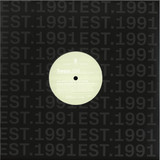
Blake Lee has always been fascinated by the unknown, and space, in its isolating, mysterious vastness, embodies this theme immaculately. The open void, captured so memorably by Stanley Kubrick in '2001: A Space Odyssey', is Blake's far-reaching canvas on 'No Sound In Space', a cinematic meditation on the cosmos that's painted in nuanced, emotionally sincere colors. The Los Angeles-based composer has been contemplating his full-length debut since 2021, using his guitar as a sonic paintbrush rather than find himself snared in its traditional aesthetic constraints. Transforming its characteristics with effects and subtle processes, he layers sustained tones and intimate improvisations, creating richly visual polychromatic utopias teeming with unknown life.
Since 2011, Blake has been most known for being the guitarist and a music director for Lana Del Rey, notching up three songwriting credits on her acclaimed ‘Ultraviolence’ full length. He sees his solo work is a form of escapism, a place where he can experiment and find comfort and catharsis outside of expectations and formal structure. The album was written instinctively, and Blake made sure he didn't force anything, letting go and getting out of his own way, listening intently as sounds and textures materialized organically. "I didn't want to ruin it by being a perfectionist," he laughs. And his collaboration with Kenyan sound artist KMRU, who runs the OFNOT label and contributes to two of the tracks on the album, occurred similarly organically.
Blake was moved to reach out to KMRU when he caught a performance of 'Natur' at Los Angeles' Zebulon in 2022, leading to a prolonged back-and-forth. They didn't meet in person until earlier this year, by which time they'd become firm friends, continuously sharing music and conversation. KMRU had lent a valuable ear to Blake, who sent early playlists of 'NSIS' that, over the months, slowly evolved into the finished album. It's the first release on OFNOT that's not by KMRU himself; the label emerged last year with the release of KMRU's own 'Dissolution Grip', and Blake's debut immediately expands its sonic universe. Alongside the playlists, Blake also provided KMRU with the tracks' raw stems, which KMRU began to edit and expand in his Berlin studio. 'Miura' and 'Waiting' are the result of this process, two sublime abstractions that augment Blake's dreamlike, euphoric tones with KMRU's pebbly distortions and booming low-end rumbles. And this same playful sense of freeness seeps into Blake's other compositions.
On the misty 'In A Cloud', he surrounds cascading string tones with soft-focus pads that swell until they're like crashing waves, and on the two 'Echoplexx' pieces, he uses delay and reverb to smudge his sounds until they're viscous residue, the harmonies obscured by whooshes of white noise and distant chimes. The mood is quieted somewhat on 'Moving Air', as Blake's swirling tones form half-heard lullabies, coalescing into a dense, melancholy crescendo, and he fills out the sound with reverberant airport recordings on 'Pan Am', letting pitchy My Bloody Valentine-esque drones warble beneath the transitory chatter. Each track melts into the next, forming a billowing, cryptic narrative that leaves more questions than answers. Blake is constantly searching, and fills his unoccupied space with warmth, perception and sensitivity.
180gr + ALUMINIUM PACKAGING[36,56 €]
BigʼN was, is and always shall be a legacy noise rock band from Chicago (est. 1990) comprised of vocalist William Akins, guitarist Todd Johnson, bassist Fred Popolo, and drummer Brian Wnukowski. After releasing a stellar debut album (1994), followed by their sophomore and signature effort Discipline Through Sound on Skingraft Records (1996) and a split single with Shellac, the band became inactive for some years. In 2018, BigʼN recorded and released a new EP, Knife of Sin, via Computer Students™. In 2022, they released DTS 25, an expansion of their pioneering second album. Both were recorded by the late, great Steve Albini. BigʼN is back once again with a ruthless new album, End Comes Too Soon — their first in 28 years — released via Computer Student. It's all still here as present and disciplined as ever — Brianʼs powerful, reliably precise drumming with melodic phrasing that shapes the songs, Fredʼs metallic superstructure of a bass that builds the defined framework of the music, Toddʼs clangorous guitar that has more harmonic content than a lot of his noisier peers, and William Akinsʼ yarling vocals, the most recognizably human thing about the band, that convey layers of tension and intent, all the emotional content of a hellbound therapy session. Tragically, on May 7, 2024, Steve Albini suddenly passed away of a heart attack. Naturally, BigʼN were shocked and devastated. End Comes Too Soonʼs title comes from a lyric, and is unrelated to Albini; still, the album became a roundabout love letter to the man, his studio, and his legacy. Like its predecessors, the album is structured by snippets of musical interludes or Transmissions — and there are six here, under the common code "XMSN."
180gr[31,51 €]
BigʼN was, is and always shall be a legacy noise rock band from Chicago (est. 1990) comprised of vocalist William Akins, guitarist Todd Johnson, bassist Fred Popolo, and drummer Brian Wnukowski. After releasing a stellar debut album (1994), followed by their sophomore and signature effort Discipline Through Sound on Skingraft Records (1996) and a split single with Shellac, the band became inactive for some years. In 2018, BigʼN recorded and released a new EP, Knife of Sin, via Computer Students™. In 2022, they released DTS 25, an expansion of their pioneering second album. Both were recorded by the late, great Steve Albini. BigʼN is back once again with a ruthless new album, End Comes Too Soon — their first in 28 years — released via Computer Student. It's all still here as present and disciplined as ever — Brianʼs powerful, reliably precise drumming with melodic phrasing that shapes the songs, Fredʼs metallic superstructure of a bass that builds the defined framework of the music, Toddʼs clangorous guitar that has more harmonic content than a lot of his noisier peers, and William Akinsʼ yarling vocals, the most recognizably human thing about the band, that convey layers of tension and intent, all the emotional content of a hellbound therapy session. Tragically, on May 7, 2024, Steve Albini suddenly passed away of a heart attack. Naturally, BigʼN were shocked and devastated. End Comes Too Soonʼs title comes from a lyric, and is unrelated to Albini; still, the album became a roundabout love letter to the man, his studio, and his legacy. Like its predecessors, the album is structured by snippets of musical interludes or Transmissions — and there are six here, under the common code "XMSN."
- Del Marista Daktar
- Bones Brigade Shuffle
- Skateboard Blues
- Future Primitive (Skateboard Blues Ii)
- Roll Daddy Roll
- Calling All Cars
- Airborne
- One, Two, Three, Four
- Big Dog
- Condemned
- Animal Chin Intro
- Chin Ramp Section 1
- Chin Ramp Section 2
- Chin Ramp Section 3
- S.f. Street Skating 1
- S.f. Street Skating 2
- Blue Tile Lounge
- Pink Motel Pool
- Chin Ramp Section 4
- S.f. Street Skating 3
- End
- Skate & Create
- Mctwist And Shout
- Skateboard Shuffle
- Raddy Daddy
Remember Bones Brigade Video Show, Future Primitive, Animal Chin featuring the skating of Tony Hawk, Steve Caballero, Tommy Guerrero, Mike McGill, and more? How many times did you and your friends watch these videos? Over and over and over. Did you know there was also original music by various artists playing while you watched these videos? This is the first ever vinyl pressing, double black and red vinyl gatefold jacket with mp3 download card and 2-sided fold out poster. You will instantly be transported back to this visual feast of skating, or if these videos are new to you, you will fall in love with the music from these classic skate videos.
The eighth and latest slate of refined retro-futuristic synth-pop by Liz Wendelbo and Sean McBride aka Xeno & Oaklander is named after and inspired by "the study of what not to do, a negative image of a positive, the other side, the other:" 'Via Negativa (in the doorway light)'. Recorded in the fall of 2023 at their modernist Connecticut home fashioned into a two-story synthesizer laboratory and mixing studio, the album is uniquely visionary in spirit yet precision in execution, a contrast central to the duo’s enduring chemistry. Embryonic piano sketches were translated to nuanced modular systems, which McBride weighted with "harmonic padding," tuned percussion, and a spectral transfer device capable of "rendering spasms of rhythmic overtonal filigree." Despite the technological complexity of their craft, emotively the songs require no deciphering – these are technicolor widescreen anthems of the cybernetic age.
The eponymous opening track sets the pace, soaring sleekly over glittering synths and call-and-response vocals about arias, shattered light, and faces in stereo. From there the record expands and contracts, cycling through a gallery of moods and masks, animated by the band’s fascination with drama, "the idea of personae," and theatrical characters. Track by track, a murky, tragic backstory reveals itself: forlorn figures navigating a treacherous mercury mine, alternately poisoned by fumes or buried in collapsing caverns. The tension between Teutonic, utopian synthetic pop and lyrical narratives of ghosts in silos, ruined mills, and the traumas of mineral excavation creates a compelling friction, alternately futurist and obsolete, elevated and subterranean. Wendelbo describes the music’s polarities perfectly: "The heavy machinic din of extraction in contrast with the enchantment of the mined precious gems and metals."
From bilingual odes to bloodstones ("O Vermillion") to cosmic chrome dance floor classics ("Lost & There" "The present tense can never feel real / So many pasts conspire in the burning sun") to strutting EBM sensualities ("Actor's Foil"), Xeno & Oaklander re-prove themselves masters of the axis of technology and poetry, snaking cables and synesthesia, mining melodies and myths across 15 years of focused artistry. Theirs is a muse still gilded and gleaming, burnished red and silver, attuned to "the unobservable, the unfamiliar, that which you don’t see directly."
The eighth and latest slate of refined retro-futuristic synth-pop by Liz Wendelbo and Sean McBride aka Xeno & Oaklander is named after and inspired by "the study of what not to do, a negative image of a positive, the other side, the other:" 'Via Negativa (in the doorway light)'. Recorded in the fall of 2023 at their modernist Connecticut home fashioned into a two-story synthesizer laboratory and mixing studio, the album is uniquely visionary in spirit yet precision in execution, a contrast central to the duo’s enduring chemistry. Embryonic piano sketches were translated to nuanced modular systems, which McBride weighted with "harmonic padding," tuned percussion, and a spectral transfer device capable of "rendering spasms of rhythmic overtonal filigree." Despite the technological complexity of their craft, emotively the songs require no deciphering – these are technicolor widescreen anthems of the cybernetic age.
The eponymous opening track sets the pace, soaring sleekly over glittering synths and call-and-response vocals about arias, shattered light, and faces in stereo. From there the record expands and contracts, cycling through a gallery of moods and masks, animated by the band’s fascination with drama, "the idea of personae," and theatrical characters. Track by track, a murky, tragic backstory reveals itself: forlorn figures navigating a treacherous mercury mine, alternately poisoned by fumes or buried in collapsing caverns. The tension between Teutonic, utopian synthetic pop and lyrical narratives of ghosts in silos, ruined mills, and the traumas of mineral excavation creates a compelling friction, alternately futurist and obsolete, elevated and subterranean. Wendelbo describes the music’s polarities perfectly: "The heavy machinic din of extraction in contrast with the enchantment of the mined precious gems and metals."
From bilingual odes to bloodstones ("O Vermillion") to cosmic chrome dance floor classics ("Lost & There" "The present tense can never feel real / So many pasts conspire in the burning sun") to strutting EBM sensualities ("Actor's Foil"), Xeno & Oaklander re-prove themselves masters of the axis of technology and poetry, snaking cables and synesthesia, mining melodies and myths across 15 years of focused artistry. Theirs is a muse still gilded and gleaming, burnished red and silver, attuned to "the unobservable, the unfamiliar, that which you don’t see directly."