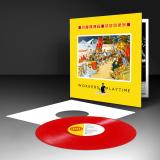
Floating dubby synths and layers of improvisational percussion collide in a freaky swirl on 'Magnolia'
Jazz-influenced chords and broken beat sensibilities quietly move the low-slung groove of 'Patchouli'.
On 'Vine', kecak-like rhythms intertwine with spacious synths, creating a cosmic jungle atmosphere through a leftfield dub house approach.
Steel pan echoes dissolve into space and slowly ascend throughout 'Hydrangea'.
A fusion of tropical Asian moods and the chaotic spirit of Western free jazz.
The third private session from RYOTA OPP.
High Praise indeed from Japanese legend Chida (see below)
"Four fresh, deep tribal tunes that transform the dancefloor into a misty forest. I love them all..." - CHIDA (Ene/Mascaras)
Pastel Ghost’s debut album Abyss, containing her biggest song “Dark Beach”. Both haunting and hypnotic, the album captures a sense of weightless melancholy, pulling listeners in to a world that feels at once intimate and otherworldly.
In August 2025, we gathered in Tindafel, a village by the sea in the north of Morocco, with a bunch of instruments our friend Abdou had lent us, along with a few things we brought ourselves.
At the core, Pablo plays gimbri, Miguel plays drums, Juan plays guitar and keyboards, sings and handles the radio transmissions, and Javier sings, plays keyboard and works with digital effects. Loops were created interchangeably by Pablo, Miguel and Javier, while Pablo would often also pick up the guitar or keyboards, with everyone moving between instruments and roles throughout the recording.
Nothing was written beforehand. All tracks were improvised and recorded in a single take using a room microphone, so no mixing was possible. To this day, as we write this, none of the tracks have been played again — yet!
The album was edited by Pablo and mastered by Tobias.
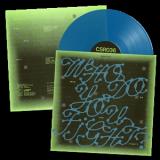
The cover photograph was taken in the kitchen of the house, the same place where Magic Pony Productions first came together.
The poem on the sleeve was written by Oscar García Sierra.
These rare unreleased tracks were a part of collection of recordings made specifically for the Jeff Mills Live At Liquid Room DJ Mix film/audio recording in 1995. Finalized and mastered only to ¼' reel to reel tapes, these recordings sat undisturbed and never heard since those infamous two nights in Tokyo.
Created along with the most notable track "i9", in this time period, Mills was also composing music for releases such as Waveform Transmission 5 (that was never released) and the initial tracks for the first release of the label Purpose Maker.
,In Glorious Times", das dritte Album von Sleepytime Gorilla Museum, verbindet avantgardistischen Rock, experimentelle Kompositionen und theatralische Elemente zu einem ebenso komplexen wie mitreißenden Werk. Inhaltlich kreist das Album um Transformation, Chaos und die ständigen Veränderungen des Lebens, die sich in ebenso dramatischen wie humorvollen Songs widerspiegeln. Die nun erstmals in den USA auf Vinyl erscheinende, von Dan Rathbun remasterte Neuauflage würdigt eines der zentralen Werke der Band. Mit ihrer einzigartigen Mischung aus Progressive Rock, Avantgarde und Performance-Kunst festigen Sleepytime Gorilla Museum hier ihren Ruf als eine der außergewöhnlichsten Experimental-Bands ihrer Generation.
“Quinto” is Escapismo’s finest release to date. An exceptional blend of shoegaze, darkwave and gothy electronics that poetically appeals to the emotions with thunderous guitars and captivating melodies. Limited edition of 99 numbered copies on 10″ vinyl (33 black, 33 crystal clear and 33 translucent red). No reissues planned.
Shape of the Unknown’ is kind of a double LP that fully embraces the idea of exploration. It is CHLOÉ’s most expansive and immersive work to date. ‘Shape of the Unknown’ is CHLOÉ’s fourth proper studio album. Its predecessor, ‘Endless Revisions’, was released in 2017. Nine years have passed. Nine years during which CHLOÉ has continued digging for music, DJing at internationally renowned clubs and festivals including Rex Club, Robert Johnson, Panorama Bar, Nuits Sonores, Glastonbury and many more, releasing EPs and remixes, while also allowing herself the time to explore entirely new creative paths.
The challenge is to capture the unknown, make it her own, endlessly reshape its textures, and ultimately preserve its mystery.
The first single ‘Drifter’, released back in June, already offered a striking glimpse of the sonic territories the album would venture into, driven by its hypnotically contoured basslines. The album's two other singles offer different windows into her world. 'Shapeshifter' captures CHLOÉ at her most hypnotic, balancing stripped-back techno and melodic house through deep rolling grooves, expansive bass chords and subtle rhythmic shifts that constantly reshape the listener's perception without ever disrupting the flow. Later, 'Repeating The Obvious' takes a more leftfield route, pairing staggered rhythms with retro-inspired harmonics and an understated indie dance pulse that feels simultaneously familiar and unpredictable.
CHLOÉ has ventured into live performance through new formats, notably alongside percussionist Vassilena Serafimova; immersed herself in film scoring with soundtracks for Paris la Blanche, Arthur Rambo, The Mountain, Blanquita, Guru and Unsubmissives; and developed compelling collaborations, from High Season, her project with Ben Shemie of Canadian band Suuns (which resulted in the album The Call), to her own organic, experimental audiovisual performances under the name Slo/Mo AV.
Throughout Shape of the Unknown, CHLOÉ blurs the boundaries between deep house, hypnotic techno, electronica and cinematic sound design with remarkable fluidity. The album unfolds as a continuous narrative rather than a sequence of tracks, moving effortlessly between beatless ambient passages, rolling analogue grooves and emotionally charged club music. Organic percussion, sweeping bass movements, melancholic harmonies and richly textured synthesisers create a body of work that constantly evolves, where no section feels static and every transition reveals another layer of depth. There is an unmistakable warmth running through the record, with grainy analogue textures and spacious production giving even its most driving moments an intimate, almost tactile quality.
The album’s title is no coincidence. It evokes a form that has yet to be named, something language itself struggles to grasp. CHLOÉ approaches it through an organic creative process. Each piece must first be performed in the studio, almost as if it were being played live. The album will be followed by a series of live performances and DJ sets, including a show at the Olympia on March 18, 2027.
She is joined by a handful of steadfast collaborators. Jazz trumpeter David Enhco appears on two tracks, ‘Undertow’ and ‘Inner Bass’. But above all, there are the voices: Ben Shemie lends his unmistakable presence to the radiant ‘More Than Just a Feeling’. Olivia Merilahti, singer, songwriter and one half of The Dø, appears on the otherworldly ‘TWYR’. Working with Olivia’s already hypnotic voice, CHLOÉ has approached it like a sculptor, enhancing its strangeness and dreamlike quality.
And finally, impossible to miss is the instantly recognizable voice of Kittin. A longtime accomplice, she lends her distinctive phrasing to CHLOÉ’s music here for the very first time. The strongest collaborations are often those that take their time, arriving only when the moment is right. Same kind, same bass, same vibe, same pride.
The result is an enigmatic, nocturnal record, drifting between introspective listening and dancefloor functionality, revealing an artist who remains far more interested in atmosphere, movement and emotional storytelling than conventional club structures. It is an album that invites us to dream more deeply and to dance again, both within ourselves and out in the open.
Battle of Clontarf collects a remastered series of late-90s guitar jewels by Loren Connors, most appearing on vinyl for the first time. At its center is an unrealized double 7" from 1996, Battle of Clontarf, named after the bloody battle fought outside Dublin in 1014. Gestures of blistered guitar billow, but underneath a defiant elation prevails. Loren’s partner Suzanne Langille composed and performed the poem in Part II and the song in Part V of the Clontarf sequence. The six pieces are followed by a curated circlet of recordings from around the same period, including the complete 1994 EP The Five Points (originally issued by Table of the Elements) and several other short works from the years surrounding Connors’ notable albums Airs (1999) and Lullaby (2001). These recordings occupy only a few minutes at a time, but manage to convey such vulnerability. Each seems to find its way toward the next, like a chain of small amulets.
The collection continues with the Star of Bethlehem suite from 2000, and concludes with Connors’ arrangement of Gershwin’s “I Love You, Porgy.” The latter is a personal favorite, with a breathtaking cadence that shares the beauty of Billie Holiday’s version, but transmitted from the solitude of a dream. Battle of Clontarf gathers all these scattered parcels of Connors’ work into one fluent LP, released on Recital alongside Connors’ new art book Wildweeds Vol. II in celebration of his 77th birthday in late October.
A State Of—Trance 25 Years - The Official Anthem Collection celebrates a quarter century of one of electronic music’s most influential movements, curated and driven by Armin van Buuren.
As the visionary behind A State Of Trance, Armin has shaped the global trance community through his radio show, events, and unmistakable sound. This definitive collection brings together, for the first time, the best of the official ASOT anthems, tracks personally championed on the world’s biggest stages and synonymous with unforgettable festival moments. From euphoric climaxes to deeply emotional journeys, these anthems trace both the evolution of trance and Armin van Buuren’s enduring influence.
More than a compilation, this release is a tribute to 25 years of leadership, passion, and connection on dancefloors worldwide.
Emmy Award-winning composer Bear McCreary returns to the Outlander universe for another score, this time for the spin-off Blood of my Blood. This next chapter in the time travellers saga premiered in August 2025 and serves as a prequel to the critically acclaimed Outlander series.
Set in 18th century Scotland and England during the World War I, the series focuses on the lives and courtship of the parents of Jamie Fraser and Claire Beauchamp. McCreary masterfully brings the tale alive by blending classical music with folk and traditional Celtic.
The soundtrack of Outlander: Blood of my Blood is available as a limited edition on transparent vinyl and includes an insert.
Das rare German New Wave-Kultalbum von 1982 neu aufgelegt! Inkl. sagenhafter Versionen von "Psychokiller" (Talking Heads) & "Mongoloid" (Devo) sowie der ERNST-Originale "C2H5OH" & "Autonome Einheit" "Ernst entstand wegen der Talking Heads. Ernst ist keine typische Neue Deutsche Welle Band. Ernst kam nicht aus dem Punk. Ernst war auch kein Spaß-Produkt der Plattenindustrie. Ernst gab eine so eigenwillige wie charmante Antwort auf die Frage, wie New Wave in Deutschland klingen könnte. - Auf dem ersten, einzigen, unbetitelten und nun wieder veröffentlichten Ernst-Album von 1982 finden sich gleich mehrere Coverversionen der Talking Heads - ins Deutsche übersetzt, gesungen von Bassistin Dorle Bausinger. Die New Yorker hatten die Tübinger dazu inspiriert, eine New Wave Combo zu gründen. Auch ihre geniale Version von Devos "Mongoloid" steht dem Original in nichts nach. Die Band verstand sich aber nicht nur darauf, sich coole Musik aus Amerika anzueignen, sondern schrieb selbst sehr gute Songs wie "C2H5OH (Alkohol)" oder "Autonome Einheit". - Also veröffentlichten Ernst ihre Platte kurzerhand im Eigenvertrieb. "Wir schickten ein paar Exemplare ans Radio, und bestückten die Plattenläden in der näheren Umgebung, viel mehr unter-nahmen wir nicht." Beim Tübinger Plattenladen Rimpo waren die Verkaufszahlen so hoch, dass Ernst, das Album, mehrmals Platte des Monats wurde. Die knallblau-roten Cover füllten über Wochen ein ganzes Schaufenster. - Dennoch blieben die Band und ihr außergewöhnliches Album bis heute ein Geheimtipp. Ernst bekam nie die Anerkennung, die er verdient hätte. Zeit, dass sich das ändert." - Ulrich Gutmair (Kulturredakteur taz, Autor u.a. "Wir Sind Die Türken Von Morgen" (2023), "Die ersten Tage von Berlin" (2013)), 2026 aus den Linernotes zur Neuausgabe von ERNSTs "Ernst". Wiederhergestelltes original Artwork! Transparent rotes Vinyl in Glanzlack-Sleeve mit ausführlichen deutschsprachigen Linernotes und Fotos auf 6-seitigem, gefalztem 12"-Insert oder inside-out Digipak-CD (das Format erstmals überhaupt) mit den Linernotes in 28seitigem Booklet. Beide Formate sind in den Erstausgaben streng limitiert auf nur 500 Stück weltweit!
Five years in the making, ‘Lotus Rising’ is an alternative body of work presented by Subb-an, exploring his South Asian heritage, live instrumentation and a more introspective side of his production. Across a career rooted primarily in house and techno, the album finds him looking beyond the immediate demands of the dancefloor, opening up a more expansive and self-healing approach to his music.
The album brings together electronic production with live and organic elements, featuring contributions from London-based Indian classical sitar player Akash Parekar, vocalist and sound artist Kate Fleur Young, vocalist Anushree Datar, bassist Luke Weaver and Maribou State drummer Jonny Cade. The lotus represents growth and transformation, providing a fitting framework for a record shaped by a period of transition and reconnection. ‘Lotus Rising’ is released via Phonica Records Special Editions on 30th October 2026.
The Five Green Moons present Moon 3. The third sphere to find its way into orbit. On its surface the evolution of a many faceted creature has taken place. Now with long, long tentacles and a million mouths the creature dances and sings. Its voice is the sound of the ghost dub ritual. The echo of spirits passing through the translucent veil. The chants of souls lost in the vampire woods. The clap, clap of its limbs colliding is the sound of frequencies being bent into fascinating new shapes by machine/ human hybrids. Post punk dubwise angular electro folk, Pastoral dub, whatever name you give to this music is of no consequence. It is alive and spinning in orbit.
The third Five Green Moons album sees Justin Robertson's sonic pallet blossoming into new exciting shapes. These 11 tracks offer a wide vista of across the frequencies including a truly remarkable and uncanny tale from celebrated author David Keenan on ' To Haunt of the Dark Earth A Spot' that brings to mind a vision of M.R. James merging with African Headcharge. Another refreshing collaboration can be found on 'Message from the Tone Generator' where underground electronic producer Nickelle adds her magical poetry to the psychedelic swirl. This is a bold and magical offering in a time of pastiche where new shapes are drawn from the sketches of the past.
If you need a sonic shorthand imagine Public Image Limited meeting the haunting chants of a new age Incredible String Band. The spiritual tones of late 70's Don Cherry. The whispering psych swooshes from Planet Gong and most importantly a solid bass foundation straight out of King Tubby's studio.
New York-based Japanese jazz and electronic music polymath Takuya Nakamura presents his debut album Shape The Future - almost 35 years into his storied musical journey.
An expansive double album, the album’s first LP documents a spellbinding live performance by Nakamura recorded at fabric. A hybrid set combining DJing, live electronics, vocals, and trumpet, the set also features studio versions of special collaborations with Shigeto, Currency Audio and Tim Reaper. The second LP complements the first by assembling studio recordings of select album tracks. Altogether the two volumes make for a definitive display of Nakamura’s exceptional musicianship across jazz, DnB, jungle, broken beat, deep techno and more.
Across his career, Nakamura has played Brazilian music, merengue, salsa and straight-ahead jazz. He’s opened for Sun Ra Arkestra, performed with David Byrne, Laurie Anderson, Lee “Scratch” Perry, Wu-Tang Clan, and Arto Lindsay, appeared on sessions with Terry Riley, ASAP Rocky, Goldie, and TV On The Radio, and remixed the likes of Quincy Jones, Sun Ra, Billie Holiday, and The Streets. He’s also played under director and playwright Robert Wilson.
Although the musical past and present of the Tokyo-born, New York-based DJ and trumpet player is undoubtedly eclectic, Nakamura is abidingly steeped in the sounds of jazz and jungle. This’ll be obvious to casual observers who may have seen any viral videos of him. But there’s more to this. The depth of Nakamura’s engagement with these kinds of music, the way they’ve made him into the person he is, the decades-long path they’ve taken him on; to now arrive at the summit of a solo album is all truly remarkable. Shape The Future resonates with every chapter in this story.
In high school, Nakamura’s friends started listening to jazz and jazz fusion, which piqued his interest, especially when they started going to clubs to see it live, where they managed to see US legends like Sonny Rollins play. Eventually he began to play jazz every day and his musical skill emerged early. He soon became obsessed with getting closer to the source of this music, which led to his studies at the New England Conservatory of Music in Boston with George Russell, an influential figure who had taught Miles Davis and John Coltrane. Nakamura drank it in: not only the technical aspects but the sense of a direct connection to “a music culture where Russell and his friends changed harmony forever. I wanted to know how that was possible!”.
This was a radical experience in itself, but then another revolution happened for Nakamura. He was playing in a venue called The Western Front, near Boston and discovered that the elderly owner had his own soundsystem and was playing what was then - in 1992 - only just becoming known as jungle. This was as freeing a musical revelation as his proximity to the giants of jazz was, and in that instant the two things fused. He understood that using technology to fill a dancehall with sound and a jazz musician’s reflexes are all working to the same ends: “You’re always making decisions,” he says, “but it doesn’t have to be really difficult. It’s the truth of the frequencies, and how they’re affecting people’s minds.”
From that moment on, his life path was set. Moving to New York City, he sought out jungle and its offshoot sounds wherever he could find them, gigging and collaborating relentlessly, and gradually developing his own live and hybrid live/DJ shows. Through regular appearances at New York fixtures Zebulon and CBGBs, and continual shows elsewhere in the city, Nakamura developed his live performance and DJing and it was in these environments that he gradually weaved together his twin loves without compromising either, building an international reputation in the process.
It’s only fitting then that his first album, almost 35 years after he first found his musical direction, should be a live one: a window into this never-ending process. Even here, he had to be persuaded that he should make a record. A member of the fabric team got turned on to his music after their daughter saw him play. Of course, as a jungle lover, Nakamura knew fabric – which has a special place in the history of jungle and drum’n’bass – and “had wanted to play there since I was very young.” You can hear the club in the record: this isn’t just a live show, in keeping with his jungle roots, it’s Nakamura duetting with the soundsystem, and you can feel how the emotions in the room would have ebbed and flowed.
This dynamic translates to a transfixing record. Setting the tone with lushly textured ambient and reverberant jazz, Nakamura segues into cinematic breakbeat and stellar fusion, infusing it all with intoxicating low end and hypnotic rhythms. The LP’s midway point locks into mesmeric percussion heightened by resonant echoes of piano and trumpet. There’s an endless pull to this music. Nakamura adjusts the levels for maximum impact throughout, and the overall effect begins to evoke some harmonious hybrid between a jazz ensemble, a classic Metalheadz 12” and a Theo Parrish DJ set. His electric form continues through surreal jazz, intricate electronics and rolling sub-bass velocity, right up to the subtly devastating final cover of Peter Gabriel and Kate Bush’s ‘Don’t Give Up’, with Nakamura’s fragile vocal sitting in the heart of a huge sound.
From Tokyo jazz nights to formative studies and encounters in Boston to his artistic development in New York, Nakamura reaches another milestone with his monumental debut album. It’s a release that happened just the way a Takuya Nakamura record should. In the same way his instincts led him to musical revelations, taking his own sweet time has led him to make one of the most extraordinary debut albums imaginable, all executed in his own singular style. In Nakamura’s world, the universe finds a way.
Los Angeles-based producer, composer and multi-instrumentalist Dexter Story returns with his sixth album, T'som (pronounced sawm), a deeply personal work inspired by the spiritual practice of fasting. Meaning "fasting" in the Afro-Semitic languages Tigrinya and Amharic, as well as in Arabic, Tsom represents a time of prayer, reflection and discipline across northeast Africa. Guided by this tradition, Story draws on the musical heritage of the Horn of Africa and musical traditions of the Middle East to create a spiritual jazz album that reflects on devotion, transformation and the power of letting go. Working with frequent collaborators Carlos Nino, Sudan Archives, Kamasi Washington, Jimetta Rose and Kibrom Birhane, the album touches on themes of reflection, inner poise and a quest for deeper connections, bound by explorations of traditional rhythms from the Horn of Africa. Named after jazz saxophone legend Dexter Gordon, Los Angeles-based multi-instrumentalist, composer, arranger, music director and producer Dexter Story is one of the key figures in the city's vibrant creative music scene. Renowned for his genre-defying approach, he has collaborated with an extraordinary range of artists, including Carlos Nino, Madlib, Kamasi Washington, Build An Ark and Gaslamp Killer. His acclaimed solo albums Wondem and Bahir, released by Soundway, established him as a distinctive voice at the intersection of jazz, African music and contemporary production. Most recently, Story produced Mulatu Astatke's acclaimed studio album Mulatu Plays Mulatu, further cementing his reputation as one of today's most sought-after creative producers and musical collaborators.
Reissue. Orange transparent vinyl, limited to 300 copies. "The beauty of Acid Roulette - and about Scorpion Child in general - is the steely dedication to all that is rock. You don't sound like this unless you've been swimming in a sea of ancient vinyl your whole life." - Louder Sound
Los Angeles-based producer, composer and multi-instrumentalist Dexter Story returns with his sixth album, T'som (pronounced sawm), a deeply personal work inspired by the spiritual practice of fasting. Meaning "fasting" in the Afro-Semitic languages Tigrinya and Amharic, as well as in Arabic, Tsom represents a time of prayer, reflection and discipline across northeast Africa. Guided by this tradition, Story draws on the musical heritage of the Horn of Africa and musical traditions of the Middle East to create a spiritual jazz album that reflects on devotion, transformation and the power of letting go.
Working with frequent collaborators Carlos Niño, Sudan Archives, Kamasi Washington, Jimetta Rose and Kibrom Birhane, the album touches on themes of reflection, inner poise and a quest for deeper connections, bound by explorations of traditional rhythms from the Horn of Africa.
Named after jazz saxophone legend Dexter Gordon, Los Angeles-based multi-instrumentalist, composer, arranger, music director and producer Dexter Story is one of the key figures in the city's vibrant creative music scene. Renowned for his genre-defying approach, he has collaborated with an extraordinary range of artists, including Carlos Niño, Madlib, Kamasi Washington, Build An Ark and Gaslamp Killer. His acclaimed solo albums Wondem and Bahir, released by Soundway, established him as a distinctive voice at the intersection of jazz, African music and contemporary production. Most recently, Story produced Mulatu Astatke's acclaimed studio album Mulatu Plays Mulatu, further cementing his reputation as one of today's most sought-after creative producers and musical collaborators
Anna Almani might be your new favourite producer. IFYKYK.. If you don't, then let's get to know..
Anna Almani is a Berlin based “Drag-DJ & Fun-House-Queen”. She is “Big Sister” at ‘Love Letter’ an imprint “for flinta & queer sonic goodness” and she is the alter ego of deep house producer and Poker Flat & Watergate artist ‘Iorie’.
Anna says “This EP is part of my queer expression. It’s all about the attitude to resist, it’s about being yourself unapologetically. It’s a big hug to the queer community and a love letter to resistance on the dancefloor. Be radical, have an attitude and lose yourself.”
When we picked the tracks for this EP we were completely spoiled for choice. There’s so much personality in Anna’s music that every track list made sense. And that’s because there’s a common thread that runs through all of Anna’s music - Balance. Ying & Yang. Dark & Bright, Passive & Assertive, Masculine & Feminine, Fun & Depth all in kept in amazing dynamic balance.
This is Share Now & Save for Later… Gratification immediate and delayed. .. . four tracks to take you through from open to close. From Berlin to NYC and round again
‘See Me Walk’ is gonna be the track that grabs the attention and connects with dancers everywhere. Fast, fun and full of attitude it’s a 909 workout with the energy and syncopation of Ballroom Vogue aaaaand a fabulous diva vocal to match. ’Tender T’ counters the audaciousness with some tenderness. Energetic yet embracing, this introspective proggy, dubby afterhours roller is a proper trip! Full of colour but hazy af.
On the flip ‘Gimme Some’ ramps up the tempo. Fast, urgent and cyclic grooving techno - with a strut - that’s both dubbed out and in your face. ‘Anladın mı’ is a collaboration between Anna and German/Turkish producer Zettka. Low slung house that both jacks and grooves. Rolling basses balanced with playful chords. “Anladın mı” it translates as “Do you understand? or “Got it?”. By now I think we do understand.. That certain je ne sais quoi… Anna Almani has definitely got it.
'AMEN is a word that moves between the sacred and the ordinary, across languages and cultures. An ancient, universal expression, born in prayer yet living beyond it - in daily life, especially in the Italian language, where it has become part of ordinary speech, used to accept, conclude, affirm, and let things be.
'The sixth release on e s p e r p e n t o opens a gateway into a timeless, transcultural dimension through a continuous, immersive sonic flow. While conceived as an intimate listening journey, this record emerged from a shared experience within the walls of Frequenze Studio (Monza). ESPER006 is the result of a three-hour improvised live session that brought together experimental music trio MYS and London-based producer Big Hands.'
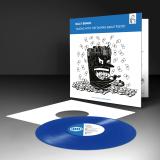
Originally released in 2006, Radiohead tribute album Exit Music: Songs with Radio Heads returns to its original home at BBE Music, two decades on from its debut. Featuring eclectic cover versions of Radiohead’s songs by Mark Ronson, Bilal, Sia, Meshell Ndegeocello, Questlove Sa-Ra, The Cinematic Orchestra, Osunlade and Matthew Herbert to name but a few, the album gave BBE Music its first Top 40 single in the UK with Mark Ronson’s cover of “Just”, and has gone on to become an enduring classic, paving the way for many similar projects in the years since (like BBE's David Bowie tribute Modern Love and Naive Melodies, a tribute to the Talking Heads). Twenty years later, with several of its contributors now major names in their own right, its reputation as a genre-bending classic has only grown. People get confused about cover versions. They are a labour of love, not some sort of disrespectful treatment of the classics. Everyone involved in the "Exit Music" project loves the music of Radiohead; "Songs with Radio Heads" doesn't attempt to replace the originals as "definitive versions." Instead, like the Futureheads cover of Kate Bush or the Slits cover of Marvin Gaye, this is an exercise in translating well-loved tracks into a different genre. "Exit Music" also taps into the dance-floor potential of Radiohead, long recognised by DJs and producers ranging from Burial and Flying Lotus to Kendrick Lamar. The band themselves are devotees of both hip hop and dance music, commissioning remixes from respected figures such as Modeselektor, Madlib, DJ Shadow and Four Tet. Now a bona fide cult favourite, this 20th-anniversary reissue collects together the finest hip hop and dance cover versions of Radiohead songs. Ranging from gentle acoustic treatments to raw funky versions, BBE have taken the songs of Radiohead into realms even he couldn't imagine…
For two decades, The Oscillation has occupied its own space within the psychedelic underground, continually reshaping a sound built as much from texture, repetition and atmosphere as it is from conventional songcraft. On 'Interference', released October 30th 2026 via Fuzz Club, Demian Castellanos pushes that approach further than ever, creating what he describes as "a painting of sound rather than music”. It’s an album where noise and melody constantly collide, dissolve and reform into something strangely beautiful: “I wanted it to be accessible but also quite extreme, a sort of beautiful noise. I did my best to push out the parameters whilst trying not to allow it to disintegrate into something with no meaning or focus.” Chasing an elusive balance between accessibility and abstraction, the result is a record that feels simultaneously immediate and disorientating: dense layers of drones, feedback and motorik rhythms give way to unexpected moments of warmth, colour and even uplifting euphoria. Across its runtime, chaos never overwhelms; instead it becomes another instrument, carefully sculpted into hypnotic, immersive compositions. Much of the album emerged through instinct rather than intention. Fragments originally conceived as intros, outros or abandoned ideas gradually eclipsed the songs they belonged to, with tracks revealing themselves organically through a process Castellanos likens to "playing Chinese whispers with musical instruments." Elsewhere, two long-forgotten compositions – ‘Stasis’ and ‘When You Close Your Eyes’ – finally found their place after lying unfinished for almost twenty years. Recorded and mixed by Castellanos at his home studio in the Czech Republic, ‘Interference’ also benefits from a key collaboration with Lorena Quintanilla of Mexican band Lorelle Meets The Obsolete, who provides a transformative presence. Her haunting vocal on ‘La Alusion’ (which she also wrote the lyrics and melody for) became the breakthrough moment that crystallised the album, turning an instrumental sketch into a dreamlike centrepiece and helping shape the final sequence. She also lends her voice to ‘Isolation Freeway’, adding another layer of mystery to an album that continually blurs the line between structure and dissolution. Perhaps most remarkably, ‘Interference’ was created during a period in which Castellanos had largely stopped listening to music altogether: “My hi-fi broke a couple of years ago so I kind of wanted to see what would happen if I didn’t listen to too much music.” Instead of consciously absorbing outside influences, he trusted instinct, memory and experimentation to guide the process. The result is one of The Oscillation's most adventurous and emotionally resonant records to date: a vivid collision of hypnotic repetition, spectral beauty and controlled sonic disruption that confirms Castellanos remains one of modern psychedelia's most singular voices.
“The alarm had been sounding for so long that nobody remembered what it had been warning about. The protocol had become routine; every signal acknowledged, every command obeyed. Dreams were archived, memories rewritten, emotions reduced to corrupted fragments of data. The city continued to function with mechanical precision, while the last traces of humanity slowly dissolved into the noise.”
With Oblivion Protocol, The Relic continues his ongoing ARK series, once again excavating hidden layers of industrial hardcore’s past while transforming them into something unmistakably his own. Across six meticulously crafted tracks, echoes of classic hardcore attitude, doom-like heaviness and early industrial brutality surface before being reshaped into a bleak, contemporary vision. Nostalgia is never the destination; it provides fragments for reconstruction. The release constantly shifts in weight and momentum. Crushing mid-tempo passages give way to relentless bursts of energy, while distorted textures, commanding vocal samples and melodic fragments create an atmosphere that is as oppressive as it is immersive.
The archaeology continues, but the discoveries become increasingly unsettling: What once promised the future now echoes through abandoned systems, corrupted memories and hostile sonic environments.
Musique Pour La Danse presents a raw, euphoric, and totally essential document of British rave history. LIVE IN MANCHESTER captures like nothing else the pure energy and essence of an era.
Featuring the unstoppable duo Mark Franklin and Nigel Champion, and vocalist Saffron, this legendary 1992 live set delivers iconic tracks like "Anthem", "Adrenaline", and "Malfunction" in their most ecstatic form and many exclusive tracks.
Often copied and sampled, never surpassed, because it simply can't be. If you're only owning one rave record, this is the one.
Includes liner notes by Matt Anniss, re-designed in Büro Destruct with an historical collectible flyers poster 12"x36", with the help of Phatmedia.
Newly mastered and cut at Transition Studios for maximum impact. Simply the best thing for your warehouse soundsystem.
It’s a rare occurrence for a band to continue making music into their fifth decade, even fewer top off that achievement with one of their most recent albums being named one of “2023’s Best Albums” by a venerable magazine like SPIN. But The Church did just that with The Hypnogogue, an album so adored by critics and fans alike that it ushered in an entirely new era for the Australian band.
Now armed with their 28th album Lacuna, the psychedelic dreampop legends continue to evolve and transform, remaining not only relevant but consistently delivering music that is innovative yet true to their signature sound. “Intense, forlorn, and exultant,” is how bassist/vocalist/founder Steve Kilbey describes the album.
With a measured command of melody and instrumentation that only comes with experience and age, it’s an album rife with indelible musical clasps that fasten hold of your attention and refuses easy surrender. It’s a steadfast talent that Kilbey hosts close to his chest that’s been ever-present in the 27 albums that preceded it (best evidenced by the jubilant, nearly sold out 2025-2026 Singles Tour legs across Australia and North America, featuring night after night of incredible three-hour sets).
Starting in 1980, The Church continued expanding their highly cinematic and atmospheric blend of indie rock, shimmering post-punk, icy dreampop and psychedelic post-rock without retreading their steps. Beginning with classic early albums Of Skins and Heart, The Blurred Crusade, and Heyday which built a sturdy foundation, 1988’s Starfish broke into the mainstream and gave The Church the international hit “Under the Milky Way.” The hit single has been regarded as one of the most influential and recognizable Australian rock anthems of all time.
EPILOGUE is the culmination of more than four decades of music-making by Japanese composer, producer and multi-instrumentalist Ken-ichiro Isoda, an album in which environmental sound, electronics, contemporary classical composition and memory converge into a deeply personal late-career statement. Isoda moved through video-game music, film composition, classical production, Okinawan music, television and collaborative projects, continually developing an approach in which acoustic instrumentation, field recordings and electronics could coexist naturally.
His collaborative album Interwoven with aus, released through WRWTFWW, further demonstrated the openness of a musical philosophy Isoda describes as being rooted in fluctuation, imperfection and organic movement.
EPILOGUE brings those threads together while refusing to function simply as a retrospective. The album consists largely of older compositions that Isoda has returned to, reconstructed and reinterpreted from the perspective of the present.
Opening track “TANEKOMA” refers to the Izu Robin, a rare bird native to Hachijō-jima, the volcanic island where Isoda lives. Its song, recorded by Isoda in the mountains, becomes part of the composition itself. Placed at the beginning of the album, “TANEKOMA” becomes both document and prayer.
Elsewhere, “Circulation 2” develops from a work created around the relationship between forest, sea and the movement of water. Flutist Dogen Kinowaki replaces Isoda’s original piano melody with a performance that gives the piece a distinctly Japanese sense of place. Kinowaki also appears on a newly reimagined version of “Beach of the Pliocene”, one of Isoda’s most recognised compositions.“STEPS”, first composed for film in 2008, looks back toward the electronica of that period. For this definitive version, Tsutomu Sonoda of maya ongaku provides vocals, bringing new emotional and lyrical depth to a piece Isoda had wanted to properly complete for more than a decade.
The title track from Isoda’s 1991 New Age album “Yume no Sazanami” is similarly reconsidered. Originally recorded with a small chamber orchestra, the new arrangement replaces elements of the harp and cello with layers of nylon-string guitar performed by Tatsuro Murakami. Perhaps the album’s clearest meeting point between past and present is “WATERWAYS.”The mysterious European ambient artist Aiko Takahashi, transforming an abandoned demo into what is simultaneously the oldest and newest work on the album.
“A Flowering Tree,” written for film in 2013, is reconstructed around multi-tracked flute performances by Dogen Kinowaki. Isoda carries that association into his own arrangement, allowing the piece to function as another quiet meditation on memory, loss and hope.
The album closes with “EPILOGUE” —less a grand conclusion than a moment of acceptance. Isoda chose it as the album’s title piece to hold what he describes as the complex emotions that accompany the twilight of a life spent making music. EPILOGUE is not simply a look back. It is the sound of older music continuing to move, change and breathe in the present: a lifetime of ideas distilled into Isoda’s own form of pure music, shaped by memory, collaboration, nature and the world immediately outside his home on Hachijō-jima.
Kalita presents the fourth and final instalment of their groundbreaking ‘Borga Revolution!’ series, uncovering another selection of essential recordings from the rich and far-reaching world of Ghanaian highlife. Spanning deep, hypnotic highlife through to the vibrant electronic productions of 1980s Burger Highlife, Volume 4 captures a period of extraordinary musical change, as Ghanaian artists absorbed influences from funk, disco, boogie, and new synthesizer technology. With previous volumes championed by tastemakers including Gilles Peterson, Antal, Tom Ravenscroft, and Hunee, this final chapter turns its attention once again to the music of the Ghanaian diaspora.
Volume 4 brings together rare recordings from artists such as Rex Omar, Nat Fredua, and CST Amankwah, alongside the elusive, deeply hypnotic and beautiful sounds of the Abibifo Dance Band of Ghana (led by the legendary bassist Ralph Karikari) and Baffour Kyei. Unearthing recordings that have languished in obscurity for over forty years, the compilation moves between deep highlife, rhythmic dancefloor cuts, and pioneering digital productions, revealing yet more musical ingenuity of Ghanaian artists both home and abroad. The final instalment in the ‘Borga Revolution!’ series, it offers another vital collection of forgotten favourites and hidden treasures for DJs, collectors, and anyone drawn to the endlessly inventive sounds of Ghanaian music.
The 1970s and 80s saw Ghanaian musicians begin to incorporate Western sounds like funk and disco into their music, reflecting the changing global musical landscape. However, the country's political instability and economic hardships, marked by military regimes and curfews, forced many artists to leave Ghana in search of better opportunities abroad. In Europe and the U.S., these musicians fused their traditional highlife roots with emerging digital sounds, using cutting-edge technology like the DX7 synthesizer and drum machines to create the genre now known as Burger Highlife.
With ‘Borga Revolution!’ Kalita offers a vivid exposition of this musical transformation, using rare interviews, archival photos, and detailed liner notes to bring to life the pioneering spirit of both well-known icons and unsung innovators of Ghanaian Highlife, one of West Africa’s most exciting musical movements.
· The final installment in Kalita's 'Borga Revolution!' series, examining the development of Ghanaian dance music in the 1970/80s, and focussing on the phenomenon of Burger highlife (a blend of Ghanaian highlife with disco, boogie and synths).
· 2xLP in gatefold sleeve, with printed inner sleeves examining the stories of the artists featured on the volume.
· Includes 10 highly sought-after and under-the-radar recordings, including those by the phenomenal Rex Omar, Nat Fredua, CST Amankwah, Baffour Kyei, Chief Kofi Sammy, and the Abibifo Dance Band of Ghana.
After a three-year hiatus, Downbeat returns with its 15th release, marking the very first Various Artists compilation in the label's history.
The A-side features the masterminds behind Tetrode, Damon Lamar and Specter, who deliver two tracks showcasing their signature sound. Machine house at a lower BPM, packed with repetitive Akai percussions and synth lines—gentler and warmer on Damon's track, and darker, more unhinged on Specter's side."
The B-side kicks off with label co-founder Jose Rico, who delivers "The Invaders," a track that transports us straight to the roots of the genre. This is textbook Chicago deep house—straightforward and infectious from the very first beat. Closing out the EP, Leonid makes his label debut with an emotional, Detroit-infused deep electronic gem, beautifully crafted with soft percussions, silky synths, and a subtle touch of epic grandeur. Absolutely stunning.
Infinite Search is the first label launched by Lifted Trax, and the beginning of a larger effort to highlight music coming out of Singapore and broader region.
The label will be home to the deeper shades of shop founder Dexter Colt’s productions, showcasing his dubby and introspective style that has coalesced over the last several years. The four cuts that make up Syncretic represent a melding of deep dance music styles, taking inspiration from dub techno, US deep house, leftfield electronix, UK tech and more, filtered through the perspective of Asia’s dancefloors. Limited run, vinyl-only release.
Phren, the first collaborative work by Marta Salogni and Stefano Pilia, emerges as a layered and articulated sound-hymn-dialogue between Stefano’s abstract guitar work and Marta’s manipulation of tape machines. Conceived alongside the imagined space created by Sarah Mazzetti for the Opale series, a project by Maple Death Records and Canicola edizioni, the album becomes a form-shifting composition where memory itself is continuously transformed through resonance, repetition and reconfiguration.
Here, sound is not preserved as an object of the past, but treated as a living material: something capable of carrying traces, absorbing new meanings and generating unfamiliar voices.
The album develops from a simple yet constantly shifting principle: a sound is set in motion and then passed through a series of interconnected systems where it is delayed, altered and returned in another form. Stefano Pilia’s guitar travels through a complex chain of modular processes, composed of different stages of preamplification and filtering, before entering a tape echo system that introduces further layers of repetition, resonance and spatial displacement. These signals are then absorbed into Marta Salogni’s Revox tape machines, where additional lines of delay, modulation and environmental transformation reshape the material once again.
The resulting music is not a dialogue between two instruments, but a shared system — a living architecture in which a single signal moves simultaneously through parallel and serial pathways, gathering traces of each passage. Sound becomes a material in constant motion: a gesture becomes an echo, the echo becomes a new gesture, and the distinction between origin and reflection gradually begins to dissolve.
Agents Of Time return to Afterlife with two heartrending audio expeditions.
Italian act Agents Of Time have established a sterling reputation over the years. Their mesmerising approach to club music blends emotive melodies and transcendent rhythms, with dance floor-centred beats.
The Mirage EP begins with its title cut; enveloping the listener is a swathe of atmospheric synth and pad work from the off. Oscillating frequencies complement the sultry rhythms while a life-affirming riff forms the stirring centrepiece. On the flip ‘Northern Lights’ is a sensitive, emotive composition which gradually increases its emotional impact as it builds and evolves.
“Carl layers willowy guitar arpeggios, foggy keyboards, and chimes over Windy’s murmured intonations and rippling basswork. Everything sounds fresh and unaffected in the careful hands of these two gentle souls. Pick it up, lie back, and allow it to lull you into an undisturbed reverie.” Big Takeover
At the time of original release it was written that the album "will transport the listener to other plains of reality.” (Acid Test). Meanwhile, Alternative Press called it “alluring and addictive.” and CMJ called it "expansive, daydream enhancing music.”
The pair have also recently released their collaborative album with Optigan Conservatory, which can be revisited here. A beautiful and hermetic energy larger than the sum of its parts was captured in the collaborative process of making this album. There are echoes of the earliest releases from Windy & Carl as well as refractions of the same opacity that surfaced in the early kranky catalog.
A fine time to be shining a light on these label stalwarts as the dark Autumn evenings roll in
Curses' dark, romantic take on electronic music is often linked to EBM, new beat, synth-pop, and the offshoots in between - but, as the artist states, it's feelings, not genres, that motivate his music. Especially the underground and its niche sounds, brimming with collective energy, drive and passion, make for a major impetus. It's no coincidence that he's drawn to the era when man turned to the machine, as a collaborative force, and a new kind of liveliness, timelessness, emerged. In Curses' practice, this synergy translates into an enticing mix of synthesisers and voices, electronic drums and guitars. Nostalgia operates as an influence rather than a motive, though: despite its affinities with the past, his music is stridently contemporary and idiosyncratic. On the "Perfect High" EP, this approach is rendered in a resolutely dancefloor-oriented selection. It's rich in detail and constantly evolving; each time a new element appears, it's treated with such delight and care that you could imagine the track to flit off and turn it into the main theme. This doesn't happen, however, as the sense of cohesion and momentum is paramount: there's a relentless forward drive that keeps engagement tight from start to finish. The detuned, chorus-heavy leads of title track "Perfect High" and the clockwork-tinged percussion of "Weapon Of Time" jell with lustrous hooks. The ominous choirs on "Dare To Dream" and the proto rolling-and-scratching squelches of "Killer Instinct" similarly fall into place. Bravado never stands in the way of flow. Everything is kept in check by gated R-50 rhythms, and in the vocal department, Curses finds the sweet spot between his own voice and a slew of off-kilter samples. On closer "Blasted" NYC royalty Andi joins for a slab of synth-driven groove. It's shiny and sensuous, like patent leather - a perfect distillation of club music channeled through pop aesthetics, and thus a right coda for ALT028.
Deas joins the CROWD family with 'Silent Tension', a refined EP that channels the Polish producer's signature blend of hypnotic groove and hardware driven production. Known for his precise studio craftsmanship and deeply intuitive approach to groovy techno, Deas has steadily built a reputation as one of the standout figures of the contemporary Polish scene. Through years of releases and international touring, he has developed a sound that feels both timeless and unmistakably personal, as proven on the label's 12th record. Opening track 'I Won't Cry' immediately sets the tone with classy vocal sampling from Loleatta Holloway, warm chord progressions and rolling swung percussion anchored by Deas' characteristically rich bass. Following up, 'Waterfall' introduces bleepy modular sequences and chopped vocal fragments, with a sweeping drone synth cutting through the mix above the track's rolling bass. On the flip side, 'Silent Tension' continues deeper into minimal territory, combining crisp clap fills, subtle vocal chops and delayed chord repetitions into a slow burning groove. The vinyl's closing cut 'Where Do They Go' brings dense low end weight and fast dubby chord stabs, accompanied by sharply placed vocal cuts, creating a track that balances restraint and impact. The digital addition 'Here Again' is a classic Deas production, characterised by repetitive synth stabs that gradually transform the cut into a hypnotic hook, while stripped back percussion and a powerful kick give the track a commanding presence. Throughout CROWD012, Deas remains firmly focused on groove and subtlety, while retaining a strong impact. The tracks unfold patiently, with a focus on tension, repetition and gradual escalation, maintaining the hypnotic functionality that has become both Deas' trademark and a defining characteristic of the sound of the label founded by FJAAK and Ellie Acula. The 'Silent Tension' EP stands as a sophisticated and deeply effective club record that further cements Deas as one of the most distinctive voices in contemporary techno.
Uyama Hiroto, one of the most important artists behind Nujabes works, released his debut album 'a son of the sun' on 2LP after 12 years.
Uyama Hiroto provided "Letter From Yokosuka" for Nujabes "metaphorical music" released in 2003 and was featured on the title track of "modal soul" released in 2005.
A son of the sun" was released in 2008 and continues to fascinate many listeners to this day.
HIKARIGASASHIKOMU translates as ‘Light Shines In’, a Japanese phrase conveying a sense of hope in a difficult place. Opening new creative possibilities for Foodman, this astonishing album is an introspective yet hyperactive body of work, representing the clarity and light found after a period of self-exploration. While this is a deeply personal record, it also captures the now-universal sound of a brain stretched between 500 open tabs, multitasking into oblivion in a world in which attention deficit is a global media environment, not merely a privatized psychological malaise. Focusing more on the use of voice, the album incorporates Foodman’s own looped vocals, singing elements of Japanese children’s songs and playground rhymes, and his everyday thoughts. Despite its charm and innocence, this soundworld leaps around manically, fractures and dissolves. Foodman’s voice repeats, disassembles, speeds up and down and is bounced around deliriously, as sound elements call and respond around him. Structurally and vocally, influences are drawn from footwork, ghetto house, and baile funk, all of which are maximally abstracted into bursts of spiralling psychedelic effects.
“Sacred Aeolian music capturing and harnessing the divine power of the wind”
Aeolian Harp is somewhere between a string instrument and a receiver. Its strings are agitated by the wind without any human interference, producing tones entirely of its own volition. Archer toured the British Isles setting up his harp in various sacred and loosely mystical locations. Where he let the Devaharp transmit an otherwise unknown sacred music that has ALWAYS existed around us.
Listening to the natural swells of the strings and their unusual tonalities, the billowing wind and bird song overhead, it feels divinely calm and comforting. Something like tapping into the natural resonance of Mother Gaia or being back inside the womb.
DELUXE 2LP REISSUE
Housed in it’s original gatefold sleeve with original inserts, 2 new special colour inner sleeves, a new 2026 insert and a BONUS UNRELEASED album recorded in 1983 on Robert’s previously UNHEARD pyramid-shaped Aeolian harp the DEVAHARP 2.
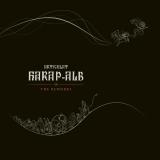
One year after the release of his debut album Harap-Alb, Articulat returns with Harap-Alb: The Reworks – a companion record that continues the story rather than simply revisiting it.
Based on the original album Harap-Alb by Articulat. Reimagined by friends and fellow travelers.
Just as Harap-Alb leaves home, travels through unfamiliar lands, and meets companions who each shape his story, the music has now found new fellow travelers. Eight artists, each with their own signature, reinterpret one track from the original album, transforming it into something entirely their own while preserving the album’s essence.
The result is a richly varied collection that moves between dreamy synth landscapes, nostalgic strings, hypnotic excursions, broken rhythms, and straight-up dancefloor bangers. Every remix reflects the personality of its creator, turning the album into a conversation between artists connected by a shared appreciation for the original work.
If the first Harap-Alb was a personal retelling of a timeless story, The Reworks is proof that stories continue to evolve once they are shared.
Ezra Feinberg's third album Soft Power sees the composer-guitarist enlist an impressive array of fellow musicians including Mary Lattimore, David Moore (Bing & Ruth), Jefre Cantu-Ledesma, Robbie Lee and share the life affirming lead single 'Future Sand'.
Defined by its abundance of melodies, repeating figures and ecstatic improvisations, Soft Power exudes an enlightened and transformative spirit to empower the listener. Feinberg, a practising psychoanalyst and former founding member of the San Francisco psychedelic collective Citay (Dead Oceans / Important Records) resides in the artistic enclave of upstate New York's Hudson River valley. Initial recordings emerged in the late summer of 2020, before added synthesis with collaborator John Thayer (Arp, Sunwatchers) during early 2021. Soft Power follows previous albums 'Recumbent Speech' (2020) and 'Pentimento and Others' (2018).
Feinberg artfully transcends the listener to an enriched place, his compositions distinguished by the deep humanity that lies at their core, plugging the listener into a state of wide eyed being, open and alive. Soft Power then is Ezra's own mantra but also one of power giving - a colourful catharsis translated into music.
Feinberg's music always speaks to the listener, but Soft Power, in whispering, speaks loudest.
"Much like everyday life, I wanted to convey these very plain, simple, tranquil, nearly quotidian aspects, but each piece contains this arc in which that form expands, is broken out of, so what starts out like a painting of flowers in a seaside motel turns into a riot of color and sound, or you feel slipped into a dream that feels like it could go on forever"
“When the flesh gets cut off the soul, it’s not the end.”
More than forty years after hardCORPS emerged from a Brixton basement, ‘Metal & Flesh’ returns in a new expanded edition on double vinyl and CD, newly remastered with the full involvement of surviving members Rob Doran and Clive Pierce. Born from the collision of punk, analogue synthesisers, sequencers, disco, reggae and experimental studio techniques, hardCORPS created electronic music that was as physical and emotional as it was mechanical. The arrival of French vocalist Regine Fetet gave the group its defining identity, placing her raw, uncompromising voice against the dense machinery of Hugh Ashton, Clive Pierce and Rob Doran. Working mainly with a Roland System 100, several Roland MC4 sequencers and later an additional MC500 and Atari ST 1040 computers, etc. pp., hardCORPS always transformed limitations, accidents, distortion and human imperfection into part of the music itself. Although rooted in the early 1980s, ‘Metal & Flesh’ refuses easy nostalgia, retaining the tension, space and character that made hardCORPS unlike their contemporaries. Yet, shall we eventually mention Kraftwerk, maybe let’s quote Ian Shirley from Record Collector magazine: „’Je Suis Passée‘ was not only a love letter to Kraftwerk but penned with such verve, passion and precision that Ralf and Florian probably would have accepted a blind date at a Düsseldorf cocktail bar (…).“ And as Martin Rushent famously said in 1990: “Hard Corps were ignored in their time. Perhaps it is the burden of the adventurous and the innovative to be ignored in their time, which is sad. Don’t ignore them now.”
This new edition has been carefully remastered to preserve that character and dynamics rather than simply making the recordings louder or more ‘modern’, while the artwork has likewise been developed to reflect the band’s original identity. Metal & Flesh’ is not merely an artefact of the 1980s, but a rare and fiercely individual document of four people discovering what happens when human instinct and machines collide.
Remastered by Martin Bowes. Graphic design by hard CORPS and Steve Lippert.
Gatefold sleeve gloss lamination, printed inner sleeves with lyrics, two double-sided hand-numbered.
Adam Ten and Yamagucci team up on Rekids with ‘Keep Workin’’. Label head Radio Slave steps up with a remix.
Frequent collaborators Adam Ten & Yamagucci drop 'Keep Workin’' on Rekids, with a remix from label boss Radio Slave. The single is an irresistible club tool with immeasurable bass weight. Bold, rubbery drums and grinding low-end combine in bouncy fashion while a vocal fragment loops up top to create perfect dance floor tension. Brighter chords eventually rise through the mix, providing emotional release that will get hands in the air and take things to the next level.
On the remix, Radio Slave strips the original ‘Keep Workin’’ back to dusty, shuffling drums with jazzy flourishes. The track has a live, lived-in feel, complete with vulnerable piano keys that haunt the spaces above its weighty groove and transfix any crowd with eerie beauty.
Adam Ten is a long-time House innovator, Maccabi House co-founder and Upon You Records and Higher Ground artist, with over twenty Top 10 Beatport releases and millions of streams to his name. He blends the grit of Techno with escapist melodies in versatile, curious sets and productions that have earned him bookings worldwide. Yamagucci has made an equal impact on the world stage through his field recordings and organic percussion, adding a unique twist to his tracks on labels like Disco Halal, as well as Diynamic and Crosstown Rebels, labels that Adam Ten and Yamagucci have also collaborated on together.
Kokoroko today announce Tempos Difíceis Sempre Passam, a new remix EP reimagining tracks from their acclaimed album Tuff Times Never Last through the lens of some of Brazil's most exciting contemporary artists.
Translating the album's title into Portuguese, Tempos Difíceis Sempre Passam reflects both the enduring message at the heart of the original record and the creative dialogue between Kokoroko's expansive musical world and Brazil's rich, genre-defying music scene. The four-track collection brings together a handpicked group of artists whose individual approaches blur the boundaries between a variety of genres and contemporary Brazilian sounds.
To be released digitally and on limited vinyl, the EP also sees the return of acclaimed artist Luci Pina, whose artwork for Tuff Times Never Last is reimagined for this new chapter, creating a visual thread between the original album and its Brazilian counterpart.
Leading the announcement is Never Lost (Luedji Luna Remix), available now on all digital platforms. The celebrated Brazilian singer-songwriter brings her unmistakable warmth and emotive vocal sensibility to the track, offering a beautifully understated reinterpretation that deepens the song's themes of hope, resilience and togetherness.
Completing the EP are three further remixes from across Brazil's vibrant musical landscape. Onome of Kokoroko joins forces with acclaimed guitarist Nyron Higor for a richly textured rework of Da Du Dah, while producer Aleh Ferreira delivers a rhythm-driven reinterpretation of the same track. Closing the collection, Bruno Berle transforms Closer To Me with his signature blend of intimate songwriting, Brazilian groove and experimental pop sensibilities.
Together, the remixes offer fresh perspectives on Tuff Times Never Last, extending the album's spirit of optimism while celebrating the creative connections between London and Brazil.
Kokoroko today announce Tempos Difíceis Sempre Passam, a new remix EP reimagining tracks from their acclaimed album Tuff Times Never Last through the lens of some of Brazil's most exciting contemporary artists.
Translating the album's title into Portuguese, Tempos Difíceis Sempre Passam reflects both the enduring message at the heart of the original record and the creative dialogue between Kokoroko's expansive musical world and Brazil's rich, genre-defying music scene. The four-track collection brings together a handpicked group of artists whose individual approaches blur the boundaries between a variety of genres and contemporary Brazilian sounds.
To be released digitally and on limited vinyl, the EP also sees the return of acclaimed artist Luci Pina, whose artwork for Tuff Times Never Last is reimagined for this new chapter, creating a visual thread between the original album and its Brazilian counterpart.
Leading the announcement is Never Lost (Luedji Luna Remix), available now on all digital platforms. The celebrated Brazilian singer-songwriter brings her unmistakable warmth and emotive vocal sensibility to the track, offering a beautifully understated reinterpretation that deepens the song's themes of hope, resilience and togetherness.
Completing the EP are three further remixes from across Brazil's vibrant musical landscape. Onome of Kokoroko joins forces with acclaimed guitarist Nyron Higor for a richly textured rework of Da Du Dah, while producer Aleh Ferreira delivers a rhythm-driven reinterpretation of the same track. Closing the collection, Bruno Berle transforms Closer To Me with his signature blend of intimate songwriting, Brazilian groove and experimental pop sensibilities.
Together, the remixes offer fresh perspectives on Tuff Times Never Last, extending the album's spirit of optimism while celebrating the creative connections between London and Brazil.
FKJ returns with Tyber— a project that captures a period of personal and creative transformation following the release of his acclaimed album ‘V I N C E N T’. Written and recorded across multiple continents, the album reflects years spent navigating movement, solitude, collaboration and renewal.
The result is FKJ at his most expansive and uninhibited. Across ‘Tyber’, groove-driven compositions sit alongside jazz-led instrumentals, sample-heavy explorations and more direct songwriting moments, moving seamlessly through genres without ever losing cohesion. The album feels both deeply personal and globally informed, spotlighting an artist documenting his evolution in real time. It captures musical snapshots across London, Los Angeles, Paris, Brazil, and beyond to create music that combines intricacy and intimacy seamlessly.
Anchored by themes of emotional equilibrium and self-care, Tyber balances vulnerable storytelling with an unmistakable, groove-laden optimism. The album seamlessly weaves together spontaneous, late-night collaborations with artists like Labrinth, Bas, and Baby Rose, alongside deeply personal solo compositions. Ultimately, Tyber is a vibrant celebration of human connection and resilience, offering listeners an immersive, cinematic invitation into FKJ’s newly restored world.
Riva Starr teams up with Australian duo Close Counters for a sun-soaked debut on Heist.
What do you get when you put an Italian house legend in the studio with 2 of the most talented artists from Melbourne? Have a listen to the newest release on Heist and you’ll find out. On their ‘Push your luck’ EP, Riva Starr, Close Counters and UK soul singer Andre Espeut bring a heavy dose of jazz & soul and most of all, upbeat dancefloor energy. Whether it’s the deep soulful vibe of the title track or the house meets jazz-funk energy of ‘Gearbox’, this EP brings together everything we love about house music.
‘Push your luck’ comes right in the middle of Close Counters’ world tour, just after Riva Starr’s album ‘Keep me on the dancefloor’ and is the follow up to their recent collab ‘Jinga’ on Riva Starr’s own Snatch Records. We all know Riva Starr from his 2013 Fatboy Slim collab ‘Eat sleep rave repeat’, his work with Groove Armada, and more recently his collab with Prunk on his PIV records debut album. Close Counters have already worked with Heist mainstays Fouk and had their breakthrough moment with their 2023 album ‘Soulacousta II’, which got wide support ranging from Gilles Peterson to Jyoto and Folamour.
Their ‘Push your luck’ EP kicks off with the title track featuring the silky vocals of Andre Espeut. When we first heard this song, we immediately got transported to the soulful sound of the mid 2000s led by Recloose’s unique track ‘Dust’ with Fat Freddy’s Drop singer Joe Dukie. It’s moody, stripped back, and bouncy at the same time. The lush chords, disco bassline, and vocal harmonies all make for a track that goes beyond genres and trends. This is a future classic.
‘Gearbox’ is a disco-tinged piano jam full of live elements, rolling congas and disco bleeps, where the musicality of the Close Counters boys comes in at full speed. This song takes its inspiration from the Brazilian jazz-funk of legends Marcos Valle and Azymuth, with a clear sense of modern-day dancefloors and a love for electronic noise. Also; 10/10 for creatively naming the track after the glitchy electronic sound that freaks & funks throughout the track.
On the flip, ‘Dizzy’ sees the trio go more into disco-house territory, again teaming up with Andre Espeut for a track that blends catchy vocal loops with a tight groove and lush chords. The EP finishes with a club dub of ‘Push your luck’ for those in favor of more groove and less vocals.
We’ve had Riva Starr and the Close Counters boys on our radar for a while, and they landed on Heist with the perfect combination of musicality and dancefloor power. We hope you like this release as much as we do!
The annual Bonkers Music compilation is back with another dose of high-energy bangers. For its seventh anniversary, the series takes a fresh step forward, exploring a slightly evolved musical direction while keeping the distinctive sound that defines it. “Year VII” lands on 12” vinyl.
A1 David Meyer & Ludviq – Mandanga 2.0 (Feat Nick Hanzo)
The collaboration between Ludviq and David Meyer strikes a compelling balance between tension and movement. Drawing from underground electronic influences, Mandanga 2.0 evolves through hypnotic layers, acid-driven momentum, and a powerful groove, resulting in a distinctive cut that feels both immersive and uncompromising. Mandanga 2.0 is a dark, hypnotic electronic track built around squelching acid sequences, deep rolling grooves, and haunting vocal elements from Nick Hanzo. Atmospheric textures and a relentless rhythmic drive create a tense, immersive journey through shadowy soundscapes, blending raw energy with a refined sense of space.
A2 Neskeh – Liquid Sky
A raw trip built entirely around samples from Liquid Sky, Neskeh’s one of all-time favorite films. Crunchy saturated highs, basement-shaking low end, heroin-soaked wonky vocals, and freaky alien leads drifting through the mix. A warped tribute to an iconic soundtrack. Welcome to the space trippy club
A3 Your Reference – Afterparty
Julia Konor aka “Your Reference” one of the hidden gems of Barcelona’s underground scene, lands for the first time on the label with “Afterparty”
”Afterparty” draws inspiration from abandoned industrial spaces, empty warehouses, and nights where the only thing that mattered was the music. No rules, no expectations. Just raw energy, dusty air, concrete, and people completely immersed in the moment. The track is a personal postcard from that world.
B1 Lebollet & Mar Bravo – Aleta
“Aleta” is one of those Colombian words that somehow made its way into our shared language. We use it for raw, intense, dark tracks. Hard to translate. Makes sense when you feel it.
B2 Funboys – Skin In The Game
“Against the persistent ebb and flow of a breaking heart’s pulse, echoes of half-faded memories tease your attention… On the edge of forgetting, you can almost remember. And then it hits you – the coalescence of feeling into colour and form, warm in its familiarity, powerful in its simplicity. Uncanny, because it was right there all along. Don’t hold your breath… Listen!”
B3 Milla Campollo – Brote Psicodélico
“Brote Psicodélico” emerges from a hypnotic intersection of acid rhythms, psychedelic textures and raw downtempo energy. The track slowly unfolds through repetition and movement, creating a constantly evolving state between tension and release. Dark, trippy and physical, it is built around a groove that pulls you deeper with every layer. Distorted elements and acidic patterns weave in and out of the rhythm, giving the track an organic yet alien character. A journey designed for listening, less about following a linear narrative and more about entering a state of mind, where the boundaries between rhythm, body and psychedelia begin to blur.
A limited 45, lifting two of the most transportive moments from Manifest, the fifth studio album from BALTHVS, and pressing them together on a standalone 7". "Eternal Flow" closes Side A of the LP, a slow-building groove that became the lead single of the album campaign. "Pale Blue Dot" opens Side B, a meditation on smallness and the cosmos that stretches out over nearly five minutes.
BALTHVS is the Colombian trio of guitarist and producer Balthazar Aguirre, bassist Johanna Mercuriana, and drummer Santiago Lizcano. Over five years the band has amassed more than 140 million streams, performed in over 26 countries, earned a Libera Awards nomination, and appeared at Electric Forest, Austin City Limits, Outside Lands, Lollapalooza, Jam Cruise, and SXSW Sydney. Manifest, out 10/9/2026, marks their most adventurous work to date, reaching past psychedelic rock into drum and bass, Ethio-jazz, and trip hop.
This 7" is a collector's companion to that album, not a reissue of it. Both sides are drawn from the LP sequence and paired here as a standalone 45 for the shops and the heads who chase the format. Limited to 300 copies worldwide. The band supports the release with a US fall tour running October 8 through 25.
»Memorial« grew out of Nate Wooley’s work alongside Annea Lockwood recording the Columbia River, and in particular from a visit to Kettle Falls in northern Washington, once one of the river’s great salmon fishing and meeting grounds and a place of enormous importance to the Sinixt and other Indigenous peoples of the Upper Columbia. The falls disappeared from view following the construction of the Grand Coulee Dam in 1940, submerged beneath what is now Lake Roosevelt, yet beneath the still surface of the reservoir, a fast current continues to move across the buried cliffs. That tension between what remains and what can only be recovered through memory runs throughout »Memorial«.
In the essay accompanying the record, Wooley returns repeatedly to the idea of translation: the attempt to carry an experience from one form into another, from river to recording, memory to sound, landscape to music. He moves between Lockwood’s sound maps, John Ashbery’s rain falling on canal machinery, Ravel’s attempts to make water move through a piano, Christian Wolff’s »Stones«, and the Sinixt First Salmon Ceremony, where rocks struck together recall the sound of salmon once moving through the river in their thousands. These translations cannot restore what has been lost; however, they allow us to revisit what remains beneath in another form.
»Memorial« exists as an uncertainty, concerned with the distance between a place and its recording, between an event and what survives of it, and with the way listening itself becomes entangled with memory. Kettle Falls remains submerged, the river constrained and radically altered, but the water continues to move over the old rock beneath the reservoir. »Memorial« tries to listen for that persisting memory.
Available in the following Territories: Wordwide minus Japan & Korea
NOTON is pleased to announce12 Conversations, a collaborative album by Ryuichi Sakamoto and Alva Noto to be released on 18 September 2026.
The partnership between the legendary musician and composer Ryuichi Sakamoto and the German artist Carsten Nicolai (aka Alva Noto) has produced some of the most distinctive and enduring works in contemporary electroacoustic music. Beginning with Vrioon in 2002, the artists spent more than two decades fusing and expanding their disciplines, with Sakamoto's evocative, sustain-drenched piano compositions finding their counterpart in Nicolai's skilful and sensitive electronic detailing.
Each successive project further deepened their artistic dialogue: from the five studio albums of the V.I.R.U.S. series (Vrioon, Insen, Revep, Utp_ with Ensemble Modern, and Summvs), to their score for Alejandro G. Iñárritu's The Revenant; Glass (2017), a wholly improvised performance inside Philip Johnson's iconic Connecticut landmark, in which the pair fixed contact microphones to the glass walls, playing the architecture itself as an instrument; and Two (2019), a document of their live performance at the Sydney Opera House.
Across these works, their distinct approaches achieved a rare synthesis, a brilliantly sustained dialogue between piano and electronics, Sakamoto's warmth and melodic finesse meeting Nicolai's abstract electronic formalism to invoke a mesmeric quietude as deeply satisfying in its melodic resolutions as in the merger of its filmic romanticism and meditative subtlety.
12 Conversations brings together musical exchanges recorded in November and December 2022. Rooted in the same creative period that gave rise to Sakamoto's final solo album 12, these recordings were not originally intended as a standalone release. It was only after the completion of 12 that Sakamoto and Nicolai decided to present these exchanges as a work in their own right.
The album reflects the vitality and curiosity that defined more than two decades of shared inspiration: fluid, exploratory, and forward-looking. Created with openness and trust, it captures a creative process in constant transformation - sounds expanding, altering, and evolving through attentive listening.
Conceived as the continuation of an artistic dialogue extending beyond the physical, 12 Conversations honours Sakamoto's wish that these encounters should exist beyond the archive, offering an enduring testament to one of contemporary music's most revered collaborations.
Carsten Nicolai writes:
"A heavy breath can be heard in the recordings. Yet this work is not about remembrance but continuation, vitality, curiosity, and the spirit of experimentation that shaped an artistic relationship over decades.
The twelve pieces we exchanged in November and December 2022 possess extraordinary density: sounds expanded, altered, recontextualized. Initially, every intervention felt almost inappropriate. Yet this was part of our openness and trust: adding, shifting and radically yet softly transforming.
Even in these final exchanges, plans for future projects continued to take shape, mindful of finite yet firmly believing in the power of new ideas. We chose the name Conversations, which has become a space of memory and vision, where past, present and future intertwine.
For a long time, releasing this music seemed impossible. The loss felt too sudden, and the emotional connection too profound. As time passed, it became clear that these twelve musical encounters should have life outside the archive. To honor Ryuichi's wish, these pieces are now being released as the continuation of a dialogue that extends beyond the physical."
The first single, Conversation 3, will be released on Tuesday, July 14, 2026. The second single, Conversation 6, will be be released on Wednesday, August 26, 2026.
12 Conversations will be available worldwide on vinyl, CD and digitally. A Japanese edition will be available on Ryuichi Sakamoto's commons.
Amsterdam's Stefan Vincent makes his Aquaregia debut with Until Meaning Emerges. With a discography spanning techno, acid and IDM, Vincent's versatility is on full display here. The four-track transmission uses the 303 as its central signal, soldering together halftime polyrhythms, breaks and techno. The EP opens with "Soothing the Beast", an alluring polyrhythmic acid stepper with squelching 303 and crisp halftime breaks, where interference resolves into coherence. "Full Scope" then slows the pulse down with a chilled-out, growling acid line that moves with a gravitational weight. On the flipside, "Degauss" reboots the system with a high-octane acid techno tool; a recursive groove spiraling deeper into the network. "Paranoid Origin" closes the release with a euphoric final ascent, layering breaks, melodic arpeggios and shimmering fragments that dissolve into open air.
Grammy Award Nominated 'Solace' LP pressed on 180gram vinyl with a gatefold jacket.
It is through this seamless transcendence of styles that their own sonic realm has unfolded; a landscape painted with the club culture of yesteryear and a poignant yet infectious ability to be ever in the moment.
The Age newspaper called Solace "a triumphant record", writing that "Electronic music is often thought of as harsh and unlistenable, but Solace is delicate and incredibly sophisticated in its production. The lyrics hinge on one central theme of yearning, whether that be for change, company or space."
A DJ, producer and significant figure in contemporary electronic music, Marcel Dettmann steps forward to contribute to Running Back’s ongoing Mastermix series. Whereas previous editions of Mastermix have taken an ear to the sound of lapsed, legendary clubs such as Wild Pitch and Front, Dettmann’s curation deftly captures the man himself in ongoing perpetual motion, raiding the vault for his own precision-tooled edits, long-employed on dancefloors to devastating effect. Alongside a continuous mix, this release arrives as a 3LP gatefold, and as a limited edition cassette.
Closely associated with Berlin’s techno landscape, Dettmann was born and raised in the former GDR, then later immersed in the bleary-eyed counter cultural landscape of post-unification Berlin. Initially oriented by post-punk, industrial and new-wave music, Dettmann has been DJing since 1993, always expanding and perfecting his repertoire. He later began working behind the counter at the city’s tastemaking rave boutique Hard Wax, and a decade after he first dropped a needle, became (and remains) resident at notable local nightspot Berghain/Panorama Bar, where his instincts have helped sculpt the signature sound of both main dancefloors.
Of course, you’re probably not asking, “Who is Marcel Dettmann?” More importantly, you might want to know; just what treats has he gifted us here? The trip begins with a simple pitch-shift skywards, transforming Identified Patient’s creeping ‘The Female Medical College of Pennsylvania’ into a peak-time freakout, before an alternate take on Toctronic’s ‘Bis uns das Licht vertreibt’ emerges from the vaults for the first time. Dating from 1995, and one of Dettmann’s all-time favourites, Cristian Vogel’s ‘Untitled’ clambers back into the box with respectable cuts, while John Bender’s ‘Victims of A Victimless Crime’ kicks off the flip sporting a new arrangement, transporting us back to the foundations of a confident, stripped-back sound.
A few subtle edits to Clark’s perilously funky ‘Dirty Pixie’ takes us to Dettmann’s remix of Junior Boys. Produced in 2010, it transposes the Canadian duo’s sophisticated pop with our curator in his minimal prime, and has since become an irresistible prize for high-minded diggers. The same can be said for Experimental Products’ explosive proto-electro anthem ‘Who Is Kip Jones?’, empowered from pricey Discogs purgatory with just the slightest of tweaks. It’s deservedly sandwiched between the guiding influences of Chicago and Detroit in the form of Mutant Beat Dance’s raw ‘The Human Factor’ and a shimmering new version of previous solo production ‘Water’, featuring close friend and Ostgut Ton ally, Ryan Elliot.
The second half of the Mastermix seamlessly connects the mechanical past and digital present of EBM and industrial in the dance, with Dettmann’s instincts as a guiding hand. Severed Heads’ iconic ‘We Have Come To Bless This House’ emerges with mere nips and tucks, while Nitzer Ebb’s ‘Shame’ is significantly reimagined as a highwire act of rhythm and tension, setting up a sensual second take on a 2017 remix of ‘Limbo’ from Swiss synth heroes, Yello.
Core musical memories are shaken and stirred with a context-shifting take on Frank Duval’s emotional classic ‘Ogon’, while Ian North’s ‘Sex Lust You’ and Ford Proco’s notable Coil collaboration ‘Expansion Naranja’ effectively throb with only minor adjustments, respectfully imagined as “shadow versions”. Meanwhile, a simple breakbeat lifts Albert Kuningas’s ‘Astraalprojektio’ in the direction of wide-eyed dancefloors, while a fresh take on K-Alexi Shelby’s ‘Season of The Real’ inexplicably emerges somehow even funkier than before.
The conclusion of the compilation leads back to Das Tier from the prolific experimentalist Conrad Schnitzler, whose swirling synths and hypnotic vocals are duly tightened by Dettmann, but only as he puts it, “in conversation with the original.” Concluding three discs and thirty years of commitment to the dancefloor, this Mastermix not only offers us the opportunity to eavesdrop on this endless exchange, but to gain some sought-after material for our own record collections.
****COVER WITH AUGMENTED REALITY**** Argentinian producer Translate synthesises states of consciousness and perceptions into his semantics of sound, creating a distinct language of mental techno through hypnotic repetition, precision and deeply immersive atmospheres. His presence in this realm extends through his label Relativity, whose latest EP brings together tracks by Mike Parker and Oscar Mulero, while his own productions have appeared on Svreca’s Semantica Records. For his DIG release, Translate shifts into a broader spectrum, revealing a side of his production that has remained unexplored until now. DIG Curated captures this moment of a new sonic expansion between his signature hypnotic journeys and a stripped-down techno sound. Expansive opens the record with Translate’s distinct mental techno, pushed into an added psychedelic dimension. With a vast and trippy sound, the track steadily fills the space, inviting the dancers to go inward and simultaneously reach out into a collective morphic field. With Discursive, the coordinates shift, introducing a very stripped-down techno side of Translate’s production and a palette rarely heard from him before. Reduced to its essential elements, the track cuts directly through the floor with a functional groove, whilst retaining the tension embedded in his sonic DNA. On the B side, Fuse accelerates with fast-moving pads, mechanical drums and swerving loops that gradually lock the body into trance. Quirky textures spiral throughout, with robotic glitches sounding like organic beings. Coefficients closes the record by pulling the listener into rich bass and expanding loops over a cold melody that guides the final journey into a cosmic unfold. Hypnotic sci-fi vocals emerge from an interplanetary future, traversing space in search of earthly traces. The record ends suspended somewhere between the transmission and unknown, like a sonic threshold. Words by Lora Mateeva Animation/Artwork - Marcin Pospiech Master - Nihad Tule Graphist - Ferdinand Prat
Rekombinant is the solo project of Rome based composer and sound artist Alfonso Montagnese. Blending electroacoustic composition, analogue electronics, magnetic tape and sound design, his work explores the physical qualities of sound, embracing imperfection, transformation and degradation as expressive compositional tools.
Borrowing its title from the physical principle of parity symmetry, the album is less interested in scientific theory than in the possibility that an identity may endure even after profound change. Sound is treated as matter, it is stretched, reflected, saturated, compressed and displaced, yet never entirely separated from its origin.
Magnetic tape is the medium through which this question unfolds. Magnetic tape does not preserve sound faithfully, it reshapes the sound. It compresses, saturates, colours and gradually erodes it, producing not a copy but another state of the same material. Every recording becomes both document and transformation.
Most of the instruments used throughout the album were selected from more recent generations of electronic equipment compared to previous works. Their character is not defined by nostalgia, but by their functional and sonic qualities: instruments chosen for how they behave under pressure.
The album consists of fourteen compositions, each one approaching sound as a material in continuous state of alteration and was conceived within what feels like a new Middle Ages, one that is still unfolding. An era marked by increasing fragmentation, uncertainty and the erosion of shared cultural references. The music does not illustrate this condition; it absorbs and inhabits it.
Throughout these fourteen pieces, sound continuously changes its appearance without abandoning its identity. What remains after every inversion, every saturation and every layer of magnetic degradation is not certainty, but persistence.
Parity Symmetry is Conserved is ultimately an exploration of that persistence: the fragile possibility that memory, identity and human experience may continue to exist, even after passing through irreversible transformation.
Rubbermaidxxx is a recent music performance project by the Irish artist Anna McCarthy, rather than simply the title of one autonomous artwork. Rubbermaidxxx is a character or unstable identity, an emancipatory underdog with a heart for daredevilry. The project sits naturally within McCarthy’s larger practice, which moves between drawing, assemblage, happenings and collective actions.
Clad in a black balaclava and fetish climbing wear, she abseils from buildings before entering the stage. For the first performance in New York City, she was invited by Kyp Malone of TV on the Radio to perform at his club Francis Kite Club in Alphabet City, NYC and since has continued to make a name for herself hanging off façades, singing, dancing and mopping the floor together with her performance collaborators Miss Philip a.k.a. Philip Errico and Michael Tapper at Pianos NYC, Kottbusser Tor and Genezarethkirche Berlin or the Villa Stuck Museum in Munich.
The album was produced in Munich and New York in 2025 in collaboration with her brother Nick McCarthy (Franz Ferdinand) and Anton Kaun (Rumpeln). What started as a quick improv turned into a high-energy 4-hour session of the siblings playing manic ball with beats, bass, guitars and vocals resulting in what laid the basis to this album. In the weeks following, Anna McCarthy, who is known for her cut-up production style, reminiscent of albums such as White Noise or Flying Lotus, continued to develop the vocals, performance and music by mixing in an amalgam of field recordings with her narrative spoken word, including sounds of protests, dollar stores or ice-cream trucks, as well as collaborating with the noise artist Rumpeln for the last two tracks of the album.
McCarthy is also known as the lyricist and singer of What Are People For? (debut 2022 on Alien Transistor) with its dystopic dance music candy-cane shows and equally humorously critical tongue-in-cheek bangers such as Bring back the Dirt, Drones or Partytime. Anna McCarthy's spoken word, social urgency and enthusiasm to experiment across mediums is comparable to other contemporaries such as Moor Mother, Miho Hatori, Gonjasufi, Tricky, or Cibo Matto.
The name itself is telling. Rubbermaidxxx evokes elasticity, artificiality, domestic labour and the commercial world of cleaning and garbage. It suggests a body capable of stretching, absorbing filth and cleaning up after society – only to revolt against the role it has been assigned.
Rubbermaidxxx is a master of deception, juggling fact and fiction as a reflection of our times – a diamond thief, a protester, or even responsible for the Louvre heist? This album invites the listener and viewer in, playfully dismantling hierarchies and power structures as she goes through a hopeful amalgam of dance, protest & love songs.
Limen brings together two artists whose musical paths converge around a shared sensitivity to listening, resonance, and the evocative power of sound.
Recorded at Ritmo e Blu Studio during a five-day residency between spring and summer 2025, the album emerged from a series of spontaneous encounters free from predetermined structures. The pieces preserve their original form, retaining the immediacy and temporal flow of the dialogues as they first unfolded.
Subsequent interventions were conceived not as revisions, but as an exploration of the open spaces already present within the recordings—deepening what remained unspoken and extending resonances without altering the music's natural evolution.
The title, derived from the Latin word for “threshold,” reflects the nature of the project itself: a place of passage between improvisation and composition, silence and vibration, memory and imagination. Limen inhabits a suspended territory where listening becomes an experience of openness, presence, and transformation.
---
Lino Capra Vaccina
Lino Capra Vaccina is one of the most distinctive voices in Italian experimental music. A percussionist, composer, and pioneer of minimalist and meditative sound practices, he first emerged in the early 1970s as a founding member of the influential group Aktuala, whose visionary fusion of ancient traditions, improvisation, and contemporary research anticipated what would later become known as world music.
Over a career spanning more than five decades, Vaccina has cultivated a unique artistic language centred on vibration, resonance, and the transformative power of sound. His landmark 1978 album Antico Adagio remains a touchstone of European minimalism, while his collaborations have included figures such as Franco Battiato, Juri Camisasca, Markus Stockhausen, Keith Tippett, Paolo Tofani, and many others.
Whether working with percussion, piano, electronics, or voice, Vaccina's music seeks a state of suspension and contemplation. His compositions unfold as immersive sonic environments whereancient echoes and contemporary sensibilities meet, inviting listeners into an experience that is at once intimate, spiritual, and timeless.
---
Luca Formentini
Luca Formentini is an Italian composer, sound artist, and improviser whose work unfolds at the intersection of experimentation, atmosphere, and deep listening. Active since the late 1990s, he has developed a highly personal language in which guitar, voice, field recordings, and electroacoustic processes become tools for exploring memory, perception, and the expressive potential of sound itself.
His music resists easy categorization, moving freely between ambient, contemporary composition, improvisation, and sound art. Throughout his career he has released numerous solo works and collaborated with a wide range of internationally acclaimed musicians, including Holger Czukay, Robert Rich, Markus Stockhausen, Steve Jansen, Theo Travis and Steve Lawson.His recordings have appeared on labels across Europe, Asia, Australia, and the United States.
Rooted in a practice of attentive listening and sonic exploration, Formentini creates evocative musical landscapes that invite reflection rather than certainty, opening spaces where silence, texture, and resonance become as meaningful as melody itself.
Macedonia's own Stojche is Fuse's next guest for the club's freshly made imprint. The long standing DJ and producer has been known to keep Detroit's playfully hybrid style as the focus of his work and 'Metaphor' is the case in point. His four tracks bounce through a nostalgic balance of techno, house, and more with a modern crisp. A refreshing take on club music, Stojche keeps techno's sometimes nonchalant attitude at arms length with a charismatic record that hits its mark with every measure.
The record's first track 'Counterpunch' features heavily lined percussion but still brews up a storm far and wide with resonant dub stabs and open hi hats. The drum machine boasts a full spectrum, rolling through a light show of melodic flashes, perfect for a room compressing soundsystem. The maximalist, vintage detail that Stojche brings to his compositions blurs the lines between classic genres in a time of hasty hybridization, which gives it a sort of authenticity that can't be taken for granted. 'Chordal Tribe', on the other hand, raises the general euphoria of the EP. Luring in the listener with bright pads and full-on drums, Stochje's work is reliable main slot material that adds color to any mix while providing a persuasive low end. Shimmering hi hats give it an ethereal quality making it an appropriate interlude for almost any context. Moving on to the B side, the producer sharpens up his rhythm and emphasizes the hardgroove influence in 'Signal Drive'. Softening the pace of his drums with free use of melodic chord stabs, Stojche opens up his dance floor for a crowd bonding record once again, complete with filter transitions and pummeling toms. As the final contribution, his title track 'Metaphor' begins with a more obscure opening to conclude his EP for Fuse. Leaning more to a techno cut, the record remains flamboyant as ever with open hats and rides shuffling through his arrangement. A muted main synth becomes apparent to focus the energy of the track while allowing for liveset-like drum flickering to take shape beneath, claiming the immortality of old club records with the technical precision of a seasoned modern producer.
Twenty-five years after its original release, Markus Guentner's debut album In Moll returns in a special anniversary reissue on Black Knoll Editions, reaffirming its place as one of the defining ambient recordings of the early 21st century.
Released in 2001 during the formative years of Kompakt's influential Pop Ambient series, In Moll emerged from a period of rapid transformation in electronic music. New technologies, expanding digital networks, and shifting creative possibilities allowed artists to imagine entirely new sonic worlds. Amid this fertile landscape, Guentner's music stood apart. Combining delicate melodic fragments, slow-moving harmonies, and a remarkable sense of spatial depth, In Moll introduced a distinct artistic voice whose impact can still be felt a quarter-century later.
The album arrived shortly after Guentner's contributions to the inaugural Pop Ambient compilation, including the now-beloved "Regensburg 1," named after his Bavarian hometown. Those early recordings immediately captured the attention of Kompakt founders Michael Mayer and Wolfgang Voigt. Recalling his first encounter with the music, Mayer describes listening to a demo CDR with Voigt while wandering through Cologne late into the night, replaying the tracks for hours. "We knew that we had found something outrageously beautiful and we wanted the whole world to listen."
Across its running time, In Moll unfolds like a series of dreamlike landscapes, inviting the listener into a world that feels both familiar and strangely other. Bells, hisses, distant textures, and slow-moving bass tones drift through vast expanses of atmosphere while luminous synthesizer washes seem to blur the horizon in a fine digital mist. The album's transportive qualities are matched by a remarkable sense of compositional discipline. Every gesture feels deliberate, every texture carefully placed. Balancing warmth and melancholy with restraint, Guentner created a body of work that rewards both close listening and complete surrender.
Reflecting on the album twenty-five years later, Wolfgang Voigt describes Guentner as "one of the first, but also one of the most important ambient artists" associated with Kompakt, calling his music "an integral, timeless part of the long history of pop ambient." Music critic and former Pitchfork Editor-in-Chief Mark Richardson, who reviewed In Moll upon its original release, similarly noted that the album "marked the arrival of an important new voice," and today regards it as "one of the finest ambient releases of the decade."
The album's influence continues to extend far beyond its original audience. For many listeners, In Moll served as an entry point into a new understanding of what ambient music could be. Black Knoll boss Rafael Anton Irisarri first encountered the album shortly after its release in 2001. "It immediately opened a door to a world of music I didn't know existed," he recalls. "At a time when I was still discovering my own creative voice, Markus showed me entirely new possibilities for what electronic music could communicate." Simply put, "The Sight Below would not have existed without In Moll paving the way."
Far from a historical curiosity, In Moll continues to feel strikingly contemporary. What once sounded futuristic now feels timeless, its patient pacing, attention to detail, and sense of wonder remaining entirely intact. The album's enduring power lies not only in its influence, but in the curiosity it continues to inspire, inviting listeners to step inside its world and lose themselves within it.
To mark its twenty-fifth anniversary, Black Knoll Editions presents the most complete edition of In Moll to date. Newly remastered in full analog by Rafael Anton Irisarri, this expanded release pairs the original album with a newly reworked interpretation by Markus Guentner himself, revisiting the material through the lens of twenty-five years of artistic development. The anniversary edition also features a new visual presentation designed by Guentner, offering a visual counterpart to the album's continued evolution. Together, these recordings and visuals celebrate both the enduring legacy of In Moll and its ability to reveal new dimensions twenty-five years later.
This 25th Anniversary Edition on Black Knoll Editions celebrates a recording whose quiet impact has only grown with time, preserving a work that remains as evocative, singular, and essential today as it was in 2001.
Twenty-five years after its original release, Markus Guentner's debut album In Moll returns in a special anniversary reissue on Black Knoll Editions, reaffirming its place as one of the defining ambient recordings of the early 21st century.
Released in 2001 during the formative years of Kompakt's influential Pop Ambient series, In Moll emerged from a period of rapid transformation in electronic music. New technologies, expanding digital networks, and shifting creative possibilities allowed artists to imagine entirely new sonic worlds. Amid this fertile landscape, Guentner's music stood apart. Combining delicate melodic fragments, slow-moving harmonies, and a remarkable sense of spatial depth, In Moll introduced a distinct artistic voice whose impact can still be felt a quarter-century later.
The album arrived shortly after Guentner's contributions to the inaugural Pop Ambient compilation, including the now-beloved "Regensburg 1," named after his Bavarian hometown. Those early recordings immediately captured the attention of Kompakt founders Michael Mayer and Wolfgang Voigt. Recalling his first encounter with the music, Mayer describes listening to a demo CDR with Voigt while wandering through Cologne late into the night, replaying the tracks for hours. "We knew that we had found something outrageously beautiful and we wanted the whole world to listen."
Across its running time, In Moll unfolds like a series of dreamlike landscapes, inviting the listener into a world that feels both familiar and strangely other. Bells, hisses, distant textures, and slow-moving bass tones drift through vast expanses of atmosphere while luminous synthesizer washes seem to blur the horizon in a fine digital mist. The album's transportive qualities are matched by a remarkable sense of compositional discipline. Every gesture feels deliberate, every texture carefully placed. Balancing warmth and melancholy with restraint, Guentner created a body of work that rewards both close listening and complete surrender.
Reflecting on the album twenty-five years later, Wolfgang Voigt describes Guentner as "one of the first, but also one of the most important ambient artists" associated with Kompakt, calling his music "an integral, timeless part of the long history of pop ambient." Music critic and former Pitchfork Editor-in-Chief Mark Richardson, who reviewed In Moll upon its original release, similarly noted that the album "marked the arrival of an important new voice," and today regards it as "one of the finest ambient releases of the decade."
The album's influence continues to extend far beyond its original audience. For many listeners, In Moll served as an entry point into a new understanding of what ambient music could be. Black Knoll boss Rafael Anton Irisarri first encountered the album shortly after its release in 2001. "It immediately opened a door to a world of music I didn't know existed," he recalls. "At a time when I was still discovering my own creative voice, Markus showed me entirely new possibilities for what electronic music could communicate." Simply put, "The Sight Below would not have existed without In Moll paving the way."
Far from a historical curiosity, In Moll continues to feel strikingly contemporary. What once sounded futuristic now feels timeless, its patient pacing, attention to detail, and sense of wonder remaining entirely intact. The album's enduring power lies not only in its influence, but in the curiosity it continues to inspire, inviting listeners to step inside its world and lose themselves within it.
To mark its twenty-fifth anniversary, Black Knoll Editions presents the most complete edition of In Moll to date. Newly remastered in full analog by Rafael Anton Irisarri, this expanded release pairs the original album with a newly reworked interpretation by Markus Guentner himself, revisiting the material through the lens of twenty-five years of artistic development. The anniversary edition also features a new visual presentation designed by Guentner, offering a visual counterpart to the album's continued evolution. Together, these recordings and visuals celebrate both the enduring legacy of In Moll and its ability to reveal new dimensions twenty-five years later.
This 25th Anniversary Edition on Black Knoll Editions celebrates a recording whose quiet impact has only grown with time, preserving a work that remains as evocative, singular, and essential today as it was in 2001.
A landmark of 1970s Turkish psychedelic funk, Zafer Dilek’s Oyun Havaları returns to vinyl 50 years after its original 1976 release on the legendary Yonca Müzik label.
One of the defining figures of the 1970s Turkish studio scene, Zafer Dilek transformed Anatolian melodies through his distinctive microtonal electric guitar and groove-driven arrangements. Across twelve instrumental reinterpretations of regional Turkish melodies, psychedelic guitar, bağlama, heavy bass and tightly locked percussion meet in a sound deeply connected to the golden age of Yeşilçam cinema and embedded in Turkish collective memory.
The album’s influence reaches directly into today’s global Anatolian psychedelic movement: Altın Gün later reinterpreted two tracks from the record, while Khruangbin championed the cult dance-floor cut “Yekte.”
Long sought after by collectors in its scarce original pressing, Oyun Havaları is finally available again as an official archival reissue, restored from the original master tapes, mastered and lacquer cut by Frank Merritt at The Carvery, London, and pressed on 180g black vinyl at Record Industry, the Netherlands.
Limited repress of mu tate's sought after LP on soft lilac vinyl!
Utter (in collaboration with 3XL) presents mu tate's second album 'they're with you always', featuring Joshua Inyang (Space Afrika), Nikolay Kozlov, Desirèe Monique, Igor Dyachenko and Mathilde.
Housed in a high-gloss sleeve artworked by Lucas Dupuy and Art Crime. Mastered by Ike Zwanikken then transferred and cut by Anne Taegert at D&M.
21 Bum Salute is the fifth album from Sydney experimental psych-noise-pop duo Party Dozen. The work of Kirsty Tickle (saxophone, vocals) and Jonathan Boulet (drums, loops, production), 21 Bum Salute finds the critically-acclaimed, semi-improvised duo feeling liberated - from their peers, their worries, and what the nell they're supposed to sound like now.
Emerging in 2017 from the warehouses of the Sydney experimental noise-rock scene, Party Dozen arrive at the release of their fifth album, 21 Bum Salute, in peak form. Over the course of four, increasingly perverse albums of psych-tinged rock peppered with pop noise and bursts of doom in equal measure, they've transformed from gleeful noise-makers producing DIY albums from a tiny room in Marrickville, NSW, to globe-hopping, critically-adored favourites - producing DIY albums from a tiny room in Marrickville.
As well as tours with Amyl and the Sniffers, King Gizzard and the Lizard Wizard, Tropical F*ckstorm, Algiers and more, Party Dozen had Nick Cave appear on 2022 single Macca The Mutt', collabed with New York rapper billy woods, performed an incendiary live set on KEXP, signed international deals, firstly with Temporary Residence LTD (Mogwai, Explosions in the Sky,
Along the way Party Dozen self-released their first two albums, The Living Man (2017) and Pray For Party Dozen (2020), struck a chord internationally with album The Real Work (2022), which sent them on tours of Europe, North America, Japan, China and New Zealand, while fourth LP, Crime in Australia (2024), an ode to Aussie noir that leaned beyond rock into moodier moments, repeated it.
Party Dozen recorded, mixed and mastered 21 Bum Salute completely themselves, over a three month span. Inspired by spooky "old recordings" as well as the primal impulses of acts like ESG and Bikini Kill, 21 Bum Salute - named after a peculiar, larrikin ritual in Australia's arid Northern Territory - condenses consecutive years of jam sessions, loops and improvisations into just over half an hour's worth of fizzing, strutting, striking sonics from the fringes.
21 Bum Salute is the fifth album from Sydney experimental psych-noise-pop duo Party Dozen. The work of Kirsty Tickle (saxophone, vocals) and Jonathan Boulet (drums, loops, production), 21 Bum Salute finds the critically-acclaimed, semi-improvised duo feeling liberated - from their peers, their worries, and what the nell they're supposed to sound like now.
Emerging in 2017 from the warehouses of the Sydney experimental noise-rock scene, Party Dozen arrive at the release of their fifth album, 21 Bum Salute, in peak form. Over the course of four, increasingly perverse albums of psych-tinged rock peppered with pop noise and bursts of doom in equal measure, they've transformed from gleeful noise-makers producing DIY albums from a tiny room in Marrickville, NSW, to globe-hopping, critically-adored favourites - producing DIY albums from a tiny room in Marrickville.
As well as tours with Amyl and the Sniffers, King Gizzard and the Lizard Wizard, Tropical F*ckstorm, Algiers and more, Party Dozen had Nick Cave appear on 2022 single Macca The Mutt', collabed with New York rapper billy woods, performed an incendiary live set on KEXP, signed international deals, firstly with Temporary Residence LTD (Mogwai, Explosions in the Sky,
Along the way Party Dozen self-released their first two albums, The Living Man (2017) and Pray For Party Dozen (2020), struck a chord internationally with album The Real Work (2022), which sent them on tours of Europe, North America, Japan, China and New Zealand, while fourth LP, Crime in Australia (2024), an ode to Aussie noir that leaned beyond rock into moodier moments, repeated it.
Party Dozen recorded, mixed and mastered 21 Bum Salute completely themselves, over a three month span. Inspired by spooky "old recordings" as well as the primal impulses of acts like ESG and Bikini Kill, 21 Bum Salute - named after a peculiar, larrikin ritual in Australia's arid Northern Territory - condenses consecutive years of jam sessions, loops and improvisations into just over half an hour's worth of fizzing, strutting, striking sonics from the fringes.
In a cultural landscape trending toward mindless diversion, Your Old Droog has defied the odds, building a thriving career through musical depth and captivating songwriting. In pursuit of hip-hop immortality, the Brooklyn artist engages listeners with inventive metaphors, genuine reflections, and sophisticated rhyme architecture. Now, Your Old Droog is back with his tenth full length album, Bread & Butter. Recalling his humble immigrant family stretching caviar across slices of bread shortly after arriving from Ukraine, YOD has crafted a testament to making the best of any situation. This philosophy runs throughout Bread & Butter, as Droog chronicles the turbulence of rap success, ruminates on youthful memories, and dismisses unworthy challengers with clever precision. The project’s rich sonic texture is shaped by beats from Flying Lotus, Conductor Williams, Ohbliv, and more, while hip-hop luminaries Evidence, Oddisee, and Masta Ace make memorable appearances, along with South African star A-Reece and acclaimed singer Georgia Anne Muldrow. Grounded in resilience, perspective, and self-determination, Bread & Butter is an inspired statement from a truly distinct talent. Transforming personal history into universal truth, the album reaffirms Your Old Droog's place among the most thoughtful and compelling voices in modern hip hop.
Devotional and visceral, patient and euphoric, a poem, a hymnal. Shygirl calls Swallow! a reintroduction. Her 2022 debut Nymph announced an artist fluent in sonic languages: slippery club structures, toothy pop hooks, juicy production—music that invites you to come closer, pay attention, keep up. That magnetism took her from the electronic underground to the foreground of contemporary pop. She’s collaborated with producers Sega Bodega and Mura Masa, Charli xcx, Arca, SOPHIE, fka twigs, and Björk, and performed on stages across the globe. Swallow! is a new kind of rapturous indie songwriting, woven through the electronica she came from, recorded with Karma Kid and Casey MQ. It is the scripture of the cult of falling in love—radiant, clear-eyed, all-encompassing, divine transformation. “I want people to remember how big the world is even when you feel so small and singular,” she says. “Swallow! is the soundtrack to that experience. “This record is my message in a bottle. Let’s see who picks it up.”
Originally released in 2009, this massively in-demand record has been changing hands for anywhere between £50 and over £100 now finally available once again. You only need to check the width and depth of the DJ support tells you all you need to know.
DJ Support: A-Trak, Andy & Jaymo, Annie Mac, Brodinski, Cagedbaby, Damon Martin, DJ Mehdi, Erol Alkan, Filthy Dukes, Groove Armada, Hell, Jesse Rose, Joe Ransom, Kissy Sellout, Kris Menace, Pedro Winter, Riton, Rory Phillips, Seth Troxler, Severino, Shit Robot, Simian Mobile Disco, Thomas Schumacher, Trevor Jackson and The Whip
Retro Grade, (Serge Santiago and Tom Neville) an exciting act on the electronic music scene, revolutionising the world of Italo House with their release titled "Moda." This captivating track, infused with nostalgic vibes and infectious grooves, promises to transport listeners back to the heyday of '90s dance music while maintaining a fresh and contemporary sound.
"Moda" showcases Retro Grade's ability to seamlessly blend classic Italo House elements with modern production techniques. The track features pulsating bass lines, and euphoric synth melodies all meticulously crafted to create an irresistible sonic experience. From start to finish, "Moda" exudes an infectious energy that gets floors moving.
Not content with delivering a stellar original track, Retro Grade enlisted the talents of acclaimed artist Sound Klash to provide a mind-blowing Remix of "Moda." Sound Klash, known for this boundary-pushing approach to music production, puts his unique spin on the track, infusing it with his signature dubbed-out house sound. The result is an extraordinary reimagining that takes "Moda" to different heights, showcasing Sound Klash's unparalleled ability to reinvent and elevate electronic music.
"Moda" and its captivating Sound Klash Remix are set to make waves across the scene.
A quiet intensity permeates Chantal Michelle’s music, like a veiled flame. Even at its most spare and delicate, an undulating tension unsettles the ear through wavering microtonal interference and uncanny spatial juxtaposition. She takes seriously the mandate of the composer to foster new relationships between various types of sounds, bringing together disparate field recordings, instrumental stems, and the sounds of circuitry in unheard configurations. Resolution is elusive, in its place a sense of oblong cyclicality and prickly uncertainty. When the veil is pulled back, we find more depth, more complexity, and more mystery.
Unit of Heart, Michelle’s second album of 2026, presents two interrelated pieces that highlight diverging compositional modes. Here she brings in two key collaborators: Patrick Shiroishi, who contributes flutes and saxophones throughout, and poet Funto Omojola, whose words and voice bookend the title composition. Both compositions unfold gradually, but where the album’s a-side “Sudden Oceans” presents a minimal tonal palette focused entirely on the subtle grain of wind instruments, “Unit of Heart” proceeds linearly, moving through passages of synthesizer, environmental recordings, and full-cheeked wails of saxophone. Both encourage a state of focused listening as the scope of the music deepens and widens.
“Sudden Oceans” allows the listener to hover in rippling currents of air, breath overlapping breath in a shimmering patchwork. All flutes and saxophones on the piece are played by Shiroishi, which are molded by Michelle into a pattern that resembles the flow of tidal waters, surging and receding moment to moment as the tonal density increases. Expansive and recursive, it reflects both the restorative awe and eerie disquiet of encountering the sublime. The first and last sounds we hear are the gentle rush of unmediated breath as Shiroishi connects and disconnects from his flute.
Michelle’s skill at presenting the familiar as preternatural comes to the fore on “Unit of Heart, ” one of her most ambitious works. Omojola’s voice begins with a melody that could be a lullaby, but as it’s bounced around the stereo field it takes on a haunted quality. Their poem, reprinted on the LP’s inner sleeve, hints at a similar type of transformation: “I mean this is where our mouth turns saliva into spears only a throat can recognize. ” Pads of downy synthesizer billow and are subsumed by a discordant ringing. The climactic section features atonal electronics and field recordings, first of water and then the evening call of insects, processed in such a way to transform them into pulsating bursts of noise. What we think we know about the world, what is elemental, can change with even the slightest adjustment of the lens.
Swiss saxophonist Gilles Torrent may have been initially smitten by the sounds of US jazz giants like Coltrane, Shepp and Sanders, but as he’s developed and matured he’s cast his creative net much wider. After teaching himself the sax at 21 he spent the next 11 years studying the concepts and innovations of Coltrane before moving on to take the next logical step - exploring and soaking up the many styles music from around the world, and incorporating them into his Coltranesque vision of jazz.
Atestament to that workis the opening theme,‘La Longue Traversée Du Désert’whereTorrent directs an impressive ensemble of musicians – known collectively as World Jazz Sound - on a global trip from the plains of Africa to the pastures of England and even the mountains of his homeland Switzerland. Tracks like ‘Osso Varourn Ta Sidhera’, which pairs Beuna Vista-style Cuban rhythms with Grappelli-esque violin, or the transcendental calm of ‘Fridhia Mou’, complete with dainty harp and sultry Indian female vocal part, see the ensemble immersing themselves in the traditions and atmospheres of a panorama of different cultures, joining the dots between them all and gathering them up into one cohesive whole.
From the ancient and traditional – their effortlessly swung take on ‘Scarborough Fair’ for example – to the inspired but unconventional use of yodelling on ‘Chant des Alpes’, eventually giving way to a sensational modalworkout, this is an album full of widescreen freshness, surprises and, above all, the joy of discovery and experimentation. Originally released onCD in 2010, the sheer overwhelming beauty of the music withinhas compelled us at Jazzman to deliver these sanctified sounds onaudiophile standard 180g vinyl, for all to enjoy.
2x180g LPs featuring 8 tracks in total, housed in a single sleeve + download code.
An acclaimed international cast of forward-looking artists – Jan Jelinek, KMRU, Lia Kohl, J. Albert, Laurie Torres, Jefre Cantu-Ledesma, Giuseppe Lelasi, Jung DJ and Smoke Point – remixes/remodels tracks from Arp’s transfixing late 2025 album Drifts for Barcelona-imprint Modern Obscure Music (Actress/ Sakamoto, Merzbow). Reflecting Arp’s stylistically-omnivorous approach, each remixer on Echo–Variations represents a unique corner of the music landscape, from the jazzy ambient glitch of storied German producer Jan Jelinek to the overdrivendrone landscapes of Kenyan ambient auteur KMRU to Smoke Point’s no frills club-tool to the haunted ambience of cellist Lia Kohl’s gorgeous electro-acoustic work. One can hear elements of hauntology, post-rock, minimal techno, glitch, spiritual jazz at play. Arp adds a few alternate mixes and two new tracks for good measure, ambient techno floater “Chlorophyll (1998 Mix)” and perhaps the most surprising of all, the dub techno heater “MMXXVI (Dub Mix).” Heart all together, its classic sounding heart RIYL Touch, Millie Plateaux: Creative,meditative, brain cleansing, thought provoking hauntological futurism.
Monster release by the Swedish Starving Insect and Japanese Miyuki Omura.
The Cinematic horror concept EP "Ningyo no Hausu" (Translated: House of Dolls) offers 4 bangers that will send shivers down your spine.
The theme track Hausu has both a Techno and a Hardcore version as well as A remix By label boss Tripped himself.
The "Disturbing, haunting & Scariest and strongest music" (as quoted in Kanji on the cover art)
dares you to indulge on this journey but remember "In this house... evil itself pulls the strings."
The 2018 album Igor Stravinsky’s The Soldier’s Tale is the adaptation by Roger Waters (co-founder of Pink Floyd) on the 1918 same-titled theatrical work. Waters recorded this version with members of the Bridgehampton Chamber Music Festival at Bridgehampton Presbyterian Church.
The original theatre work is one “to be read, played, and danced” by three actors (the soldier, the devil, and a narrator) and dancers, accompanied by a septet of instruments. The libretto relates the parable of a soldier who trades his fiddle to the devil in return for unlimited economic gain. The music is scored for a septet of violin, double bass, clarinet, bassoon, cornet or trumpet), trombone, and percussion. The libretto is adapted by Roger Waters from the translation by Michael Flanders and Kitty Black, based on the original text by Charles-Ferdinand Ramus.
The Soldier's Tale is available as a limited edition of 1000 individually numbered copies on green vinyl and comes in a gatefold sleeve with linen laminate finish. The vinyl package includes a 4-page booklet with lyrics and pictures.
A soaring new chapter unfolds from the forthcoming Elements Of Life album with the release of “Soar,” an uplifting and deeply moving collaboration featuring the incomparable Lisa Fischer. Written by Josh Milan and Louie Vega and produced by 2SoulFusion—Louie Vega and Josh Milan—the song is a powerful testament to resilience, transformation, and the limitless possibilities that emerge when spirit, soul, and music unite.
Built upon a rich tapestry of live musicianship, “Soar” embodies the signature sound that has made Elements Of Life a beloved musical movement around the world. At its core is Lisa Fischer’s breathtaking vocal performance, delivering a message of hope, elevation, and self-discovery with the emotional depth and conviction that have made her one of the most revered voices of her generation.
At the heart of “Soar” is a message of encouragement, resilience, and unconditional support. Through its uplifting lyrics and soaring melody, the song speaks to anyone navigating life's uncertainties while striving to become their fullest self. Lines such as “Clouds hang low, but the sky's still wide” acknowledge the challenges we all face, while the recurring refrain, “I just want you to soar,” serves as a powerful affirmation of faith in another person's journey. Equally moving is the song's central sentiment, “The more you do for you, the better I feel,” expressing a selfless form of love that celebrates growth, healing, and personal fulfillment. Universal in its message yet deeply personal in its spirit, “Soar” reminds us that one of the greatest gifts we can offer is the encouragement to rise, evolve, and embrace our own potential.
The production blends organic instrumentation with sophisticated arrangements, creating a timeless soundscape that feels both expansive and intimate. Multi Grammy Award-winning bassist Christian McBride anchors the composition with his masterful upright bass work, while Josh Milan's lush keyboards, piano, organ, clavinet, and atmospheric textures provide the song's harmonic foundation. Live drums from Tony Cintron and vibrant percussion from Luisito Quintero infuse the track with an irresistible pulse, while Ivan Renta's expressive soprano saxophone solo adds another layer of emotional richness, and a tasteful guitar groove by Sherrod Barnes.
The song's message is elevated further through a powerful vocal ensemble featuring background vocals from Lisa Fischer, Dawn Tallman, Ramona Dunlap, and Lea Lorien, creating moments of communion and uplift that echo the song's central theme of hope, growth, and believing in the possibilities that lie ahead. For Louie Vega and Josh Milan, “Soar” represents another defining moment in their longstanding creative partnership. Through Elements Of Life, they have continually blurred the boundaries between house music, soul, jazz, Latin rhythms, gospel, and global influences, creating music that resonates as deeply on the dance floor as it does in the heart. “Soar” continues that tradition, offering listeners a song that inspires movement, reflection, and renewal.
Recorded at Honeycomb Studios in Pennsylvania and Manhattan Center Studios in New York City, and mixed at Daddy's Workshop in New Jersey, the production benefits from the expertise of recording engineers Yas Inoue & Josh Milan, with final mastering by the Maestro of mastering Herb “Pump” Powers for PM Mastering.
As anticipation builds for the forthcoming Elements Of Life album slated for February 2027, “Soar” offers a powerful glimpse into the project's next evolution— a celebration of musical excellence, spiritual connection, and the enduring power of song to lift us higher.
Bosco Sacro is an Italian quartet formed in 2020 by Paolo Monti (The Star Pillow, DAIMON), Giulia Parin Zecchin (Julinko), Luca Scotti, and Francesco Vara (both formerly of Tristan da Cunha, with Vara also active in Altaj).
Inspired by the sublime and restorative power of nature and its landscapes, and driven by a shared belief in music as a healing and liberating force, Bosco Sacro create immersive soundscapes where dreamlike atmospheres, slow-moving rhythms, and spiritual depth converge. Their music draws from ambient, doom, and trip-hop, transforming these influences into a deeply personal and evocative sonic language.
Ihabit, their second studio album is a captivating exercise in sonic existentialism and a bold departure from their previous release, Gem. Composed entirely live in their rehearsal room and recorded over seven days with producer Lorenzo Stecconi, the album captures a raw, collective energy. Across eight interconnected tracks, the band crafts a modern ritual of ego dissolution and rebirth, weaving a diverse sonic tapestry where the crushing weight of doom and slowcore meets the weightless beauty of dreamgaze, ambient, and trip-hop.
BOSCO SACRO are:
Paolo Monti – guitar
Giulia Parin Zecchin – vocals, lyrics
Francesco Vara – guitar
Luca Scotti– Drums
Chicago-based duo DRASII (Lisa Armstrong & Chris Kalis) return with The Seeker, the follow-up EP to 2024's Spirito Celeste. Co-released on ETC and Shmee Records, it continues their trek through a paranormal sonic landscape. Using vintage analogue and FM hardware synths, the five-track release runs through Deep House, Acid, Electro, Balearic and Post-Industrial.
The opening track, "Daydream," features celestial, wispy vocals, deep bass and sparkling synth melodies. It leads into "Vertigo," which follows with a shifting drone over repetitive Juno 60 notes channelling Chris & Cosey or Adrian Sherwood. This is what Sarah and John Connor would have in the tape deck while barrelling down the freeway in a stolen police cruiser.
On the reverse side, "Tiger's Eye" leads with SH-101 bass that moves around a swinging 909 beat, creating a downtempo feel that mixes inspiration from Larry Heard and Ibiza in the 90s. From there, "Hycean" propels forward with 707 drums and acid bass before breaking into a syncopated polyrhythm accented by witchy vocal samples. "Sorcerer" closes on an upbeat, electro feel, centered around a dark metallic bass blended with 6/8 time arpeggio melodies.
The Seeker is a lucid dream, a spell, and a stirring of the subconscious: five transmissions from somewhere just beyond the void.
Talking with the Taxman About Poetry is the third album by Billy Bragg, originally released in September 1986.
This long overdue vinyl reissue comes in a gatefold sleeve and was remastered by John Webber at Air Studios using high-resolution transfers made from master tapes in Billy's archives. There will also be a limited edition run of coloured vinyl albums.
For Talking with the Taxman About Poetry, Bragg embraced a more fully realised band sound with the help of special guests Kirsty MacColl and Johnny Marr and production courtesy of John Porter (Roxy Music, The Smiths) and Kenny Jones. ‘Taxman…’ was his first top ten album and gave the world some of his most enduring songs in ‘Greetings To The New Brunette’ (his first top 40 hit), live favourite “Levi Stubbs’ Tears” about a victim of domestic abuse taking comfort in the music of the Four Tops, and classic workers’ anthem “There Is Power in a Union”.
Workers Playtime is the fourth album by Billy Bragg, originally released in September 1988. This long overdue vinyl reissue comes in a gatefold sleeve and was remastered by John Webber at Air Studios using high-resolution transfers made from master tapes in Billy's archives. There will also be a limited edition run of coloured vinyl albums.
Helmed by legendary producer Joe Boyd (Nick Drake, Fairport Convention et al) and his former Riff Raff bandmate Wiggy, Workers Playtime saw Bragg deliver his most tender and empathetic collection. The band featured the legendary Danny Thompson on double bass, BJ Cole on pedal steel, Bruce Thomas (Elvis Costello & The Attractions) on bass and Micky Waller on drums. Licking his wounds after another victory for Margaret Thatcher at the ’87 general election, he wrote ‘Waiting For The Great Leap Forwards’, one of his most enduring songs, while the stunning a capella ‘Tender Comrade’ confronts the ugly prejudice of the moral majority. Melancholy and disillusionment are part and parcel of Bragg’s songwriting, but always with a healthy dash of optimism.
Composer and multi-instrumentalist Amir ElSaffar has achieved international renown for his work combining the Maqam of Iraq and the Arab world with jazz. With Ashwaaq, he displays a new facet of his work with a composition for string quartet, santur, and vocalist Khaled AlHafez, a master of the musical tradition of Aleppo, Syria. This dialogue between AlHafez’s warm voice and interpretive style that blends rigor and grace and string quartet explores the microtonal resonances of the maqam and the possibilities of a polyphony rooted in Arab traditions.
The texts come from Turjuman Al-Ashwaaq (Translator of Desires) a collection of mystical and ecstatic love poems written by the revered 12th century Sufi mystic, Ibn Arabi, and explore the universal power of love, the inner quest, and the search for unity in the diversity of the world.
Ashwaaq is a captivating moment of celebration, where poetic and musical heritages intersect beyond cultural and disciplinary boundaries.
Other Plans is the fifth full-length album by Swedish composer, producer, and vocalist Daniella Ljungsberg, and her third release on ORTHODOX. Returning to her early training in Baroque and Renaissance music, Ljungsberg reimagines these formative influences through the electroacoustic language she has developed over the years. Across seven tracks, harpsichord, double bass, bassoon, and trombone intertwine with modular synthesis, field recordings, and digital processing, moving between intimate songwriting and minimalist composition. Swedish folk echoes, Baroque sensibilities, and meticulous sound design dissolve into a singular musical landscape shaped by memory, nostalgia, and imagination. Created in a time of uncertainty and disorientation, Other Plans carries a delicate tension between melancholy and hope, transforming the act of looking back into a means of moving forward.
Long before streaming services, podcasts, or even the compact disc, there was Tellus—a radically ambitious publication that imagined recorded sound as an exhibition space. Founded in 1983 in downtown New York, Tellus transformed the humble audio cassette into a magazine, commissioning and publishing new works by musicians, composers, visual artists, poets, writers, choreographers, and performers who were reshaping the boundaries of contemporary art. Each issue invited listeners into a world where no wave, industrial music, spoken word, Fluxus performance, electroacoustic composition, downtown pop, conceptual art, and avant-garde experimentation could coexist on equal footing. More than forty years later, Earth Libraries proudly presents TELLUS: The Audio Cassette Magazine Anthology Vol. 1, the first comprehensive anthology devoted to the groundbreaking publication. The story of Tellus begins, fittingly, at the Rum Runner Bar on Canal Street. There, in 1983, visual artist Joseph Nechvatal, curator Claudia Gould, and composer Carol Parkinson conceived an entirely new kind of publication. Portable cassette players were transforming how people experienced music, and the trio saw an opportunity to use the cassette itself as a curatorial medium—one capable of circulating work that traditional record labels, galleries, and magazines simply couldn't accommodate. Early recordings by Sonic Youth and Liquid Liquid sit alongside works by James Tenney, George Brecht, Takehisa Kosugi, Carol Parkinson, Y Pants, Live Skull, Shelley Hirsch, Lenny Pickett, Paul Dresher, Gregory Whitehead, and dozens of other artists whose work helped define one of the most fertile creative communities of the era. For Earth Libraries, restoring Tellus represents a continuation of the label's commitment to preserving overlooked musical histories. Working from the original cassette masters, every recording on TELLUS: The Audio Cassette Magazine Anthology Vol. 1 has been carefully restored and newly mast
Forty years of cassette releases, pressed for the first time on vinyl
First of two instalments exploring the previously unreleased sonic archives of one of Poland’s most enigmatic
living artists - with its first volume focused on his deep listening practice and spiritual reverie (recorded 1990–2013)
The last time Andrzej Dudek-Dürer took a banknote bearing the face of the Polish anarchist Jarosław Dąbrowski from his pocket to trade it for a pair of shoes was in 1969. He bought them for 120zł - the equivalent of 100€ today - and never replaced them since then. Only rebuilt them, year after year, drawing a needle and thread through the leather each time it split, closing one wound before the next one opened. It became a ritual of precision, stitching a record of another year into their soles.
That same year, in Wrocław, he arrived at a conclusion that would recalibrate everything that followed. Convinced he was the reincarnation of Albrecht Dürer, he adopted the surname Dudek-Dürer, stopped cutting his hair and began wearing the same garments every day. It was the first ritual of many, though he wouldn't have called it that yet. Look closely enough, over the decades, and it is always the same gesture, returning in different material: hair growing in a single unbroken strand, a needle drawing thread through leather, sitar strings pulled taut across a neck he built with his own hands and magnetic tape spooling forward inside the cassette boxes stacked against his walls.
None of this began in a vacuum. Dudek-Dürer emerged from the Wrocław neo-avant-garde, in a Polish art world where an exhibition could be cancelled overnight by the stroke of a censor's pen. In 1973, his exhibition Auto-crucifixion was shut down by the state, and for a time he found himself blocked from exhibiting his own art at all - the one force in his life that ever came close to cutting the thread.
He seemed to experience it differently. In 1974, after long, patient research into sitar craftsmanship, he built his first prototype with his brother, a knowledgeable luthier. In 1978, in a smoked-out jazz club, he took his first steps into sound recording with the unreleased album Jazz From Underground with his first band. By 1979, recognition started to travel further than he could.
Turning toward Far-Eastern philosophy, meditation and the idea of reincarnation was another language of freedom for him. It was a way of claiming an inner territory the state could not reach, a border it could not close. Mail Art served a parallel function, reaching further out: in a country that restricted travel and expression, sending and receiving art through the postal system became an act of quiet rebellion.
The body, in his understanding, is only an envelope readied for constant transformation. From this came Metaphysical Telepathy: during the years he could not leave Poland, he treated that confinement as a rehearsal room, sending his mind out ahead on the same thread his body would later follow. Living Sculpture grew from the same root with performances of stillness beside static art objects, until the boundary between the object and the man beside it simply dissolved. Camera Meditation extended the same instinct into photography: a shutter click flattening three dimensions into two so that a single instant could be held forever. Inspired by the pioneers of self-portrait photography like Robert Cornelius, he used it to document time itself, and kept explaining to me: "You know. This is not about vanity. This is about observing time passing.”
The isolation did not end suddenly. It ended the way his own philosophy had already predicted it would, from the inside first. Mail Art quietly solved the problem politics couldn't. Correspondence built during years of confinement slowly worked its way through doors the state itself had kept locked. Contacts made through folded paper and stamps became invitations. Ultimately, invitations became passports.
In 1983 he made his first trip outside Poland, to Germany, in search of the audio technology he couldn’t get his hands on before. In 1985, he was invited by the Indian embassy in Poland to give a sitar concert on an instrument he had spent a decade patiently stringing together - half sitar, half tanpura, built from patience and determination. After the collapse of the People's Republic of Poland, the travels kept unspooling: South Korea, then Mexico, then Australia, Canada, New Zealand, Singapore, Japan and the United States - each stop leaving behind its own small knot of tape, tied off and carried home.
In the decades since, recognition arrived at the same unhurried pace: he conducted workshops at UC Berkeley, served as vice-president for artistic affairs of the Union of Polish Art Photographers and the Union of Polish Visual Artists between 2010 and 2014 and received the Bronze Medal for Merit to Culture - Gloria Artis. His visual work gradually entered collections including the National Museums of Warsaw, the Stedelijk Museum, Tate Modern, MoMA and the Venice Biennale. His musical practice, by contrast, never found that kind of room - left to circulate quietly, sharing his cassette tapes directly, waiting for someone willing to follow it further.
It took months before I could find a way to reach Andrzej Dudek-Dürer - his presence online is very close to nonexistent. Surprisingly, LinkedIn turned out to be the only door still open, a faintly absurd irony given everything else about him. I packed the strict minimum for a three-day trip and an empty notebook and made my way to Wrocław. His headquarters sits in the neighbourhood of Grabyszyn: a two-storey pre-war house that has belonged to his family for generations. The man who opened the door was long-haired, long-bearded, in his trademark leather shoes and patched jeans. We sat in his living room, in front of a computer where decades of recordings sat organised in cryptically named files, surrounded by books and objects that had arrived one layer at a time, leaving room for only two chairs in the middle. His shoes sat by the door, rebuilt so many times they had become their own quiet sculpture. Cassette tapes filled boxes against the walls, almost unlabelled, each one a spool of thread holding decades of sound that had never once been asked for, until now.
I listened for hours: meditating in front of strangers on the porch of a Seoul temple until the tourists stopped taking photos and simply waited with him; a stand-off with border guards at the US–Mexico crossing over an instrument they couldn't identify and didn't trust; a session with the Stockhausen family that he still, decades later, describes like it happened last week. All of it interrupted, occasionally, by the smell of soup boiling and fresh bread warming on the ceramic stove. After two days, it felt like being handed the end of a very long thread and asked, gently, to keep following it. I left with a USB drive holding his full discography, signed with his unmistakable signature.
Astral Meditations From A Living Statue is a length of that thread, drawn out from the boxes stacked against his walls - recordings gathered from different rooms, different countries, different decades. This first record breathes slowly: incense-thick, meditative, built for stillness. A cutting-edge séance in outer space where machines learn how to dream.
It begins with the neo-classical improvisations of Andrzej, space-delayed, recorded at Klub Muzyki i Literatury in Wrocław in 2002. 'When..So' opens the curtains with a deep-rooted meditation accompanied by slow-decaying piano figures illuminated by a candle-lit spirit gathering.
Los Angeles, 1990: a dormant villa, a grand piano, the voice of Bonnie Barnett. 'Exception' is captured in a single room, in a single afternoon - voice and keys circling each other, neither one leading, until the silence between the notes starts to feel like the instrument.
'The Meta...' and 'Tired Of...', recorded at Studio Morandi in Ponte Nossa, Italy, in 1992, settle into a sitar drone built entirely from patience - overtones stacking and beating against each other, strung by a man who never once set foot in India. 'Mastery Of...' follows, recorded the same year at Studio Suski in Łomianki, pushing that same hum further still, until pitch dissolves into a spectral reverie. 'Transcendental Sound', from 2000, closes the first record in a slow bath of celestial frequency - better heard beside the shores of the Odra river.
More than fifty years after deciding that a life could become an artwork, Andrzej Dudek-Dürer continues to inhabit that decision. His shoes keep wearing thin against the earth's crust. His hair keeps growing, one strand at a time. His cassette tapes keep spooling in the dark of their boxes.
Now the thread finds its last shape: a single unbroken groove, spiralling inward from the outer edge to the label at the centre. Never cut - the way nothing else in his life ever was. Drop the needle and it will find that groove and follow it, the same way a needle once followed leather, once followed a border it couldn't cross, once followed string into an instrument that didn't exist until he built it. This record is the other end of a thread that has been travelling for fifty years. For the length of both sides, it rests here, in your hands. This is a timeless proof that the Lord of the New Age was never lost."
Bristol trio Jabu return with their first release for two years. Following on from their widely acclaimed third LP ‘A Soft and Gatherable Star’, this stand-alone double A-side Disco Mix 12” features four exclusive new tracks, while signposting fresh material currently being written, recorded and mixed for their forthcoming LP, due 2027.
If 2023 LP ‘Boiling Wells’ documented Jabu learning to be a live band, leaning into writing collectively in-the-moment, ‘A Soft and Gatherable Star’ took that record’s ad-hoc/mixtape blueprint, and fleshed out their transformation from an outfit rooted in hiphop and dubstep, to a guitar-based band with a unique take on dream-pop. It saw them described by The Face as “an experiential trio blending the raw edge of industrial dub with dreamy layers of ambient pop and shoegaze", and by The Wire as “like Mazzy Star remixed by The Mad Professor“.
Jabu have continued to grow in the space between releases, touring regularly for the first time, playing festivals such as Rewire and Le Guess Who?, and supporting the likes of Maria Somerville and AR Kane. Their extended live line-up now regularly incorporates those that contributed to ‘A Soft and Gatherable Star’, with new material often further developed as it gets passed back and forth between collaborators. Cellist Josh Horsley (Powders / Nightingale Floor) and multi-instrumentalist Will Yates (aka Memotone) both feature here, under the guiding hand of Birthmark’s mixing.
Titled after the rural, estuarine landscape bordering their Bristol hometown, ‘Severn Flood Plain’ sees the band pivot towards a more jagged and up-tempo, post-punk sound. It runs on a nagging drum machine pulse that feels closer to Joy Division than Sly Stone; while the echo-laced vocals and tremolo guitar phrasing hark back to the ‘50s slapback sound of Lee Hazlewood or Duane Eddy. Written and sung by Jasmine Butt, the lyrics describe a visit to a friend near the mouth of the Severn, and hint towards a darkness that can also be felt across that tidal landscape.
Dropping the pace to a languorous, sensual sprawl, ‘Where You Run To’ is plaintive and yearning, an opiated, ethereal flipside to ‘Severn Flood Plain’s more urgent, anxiety-laced opener. Alex Rendall’s vocals glide over a stripped, metronomic backdrop, eventually entwining with Memotone’s ghostly, processed clarinet.
If the band’s musical reference points appear to have shifted, their process remains indebted to dub and still very much rooted in the multicultural cross-pollination peculiar to their home city of Bristol. Both tracks are extended, with dub versions courtesy of Birthmark. The band sat in on those sessions, completing the circle that began with J’s on-stage mixing of their live sets. The strands provided by Will and Josh provide introspective counterpoint to the sound system leanings.
Jabu’s influences are threaded together as naturally here as on their long-running NTS radio show, ‘Music For Lovers’, which now occasionally guests on the Early Bird show slot. They are due to play World of Echo’s ‘Expected Music 2.0’ at London’s Walthamstow Trades Hall on 21st November with Loopsel, Insides, Giulio Erasmus, Thomas Bush, and Raime amongst others.
Sucata Tapes and Annihaya proudly present Delia, the hypnotic new album by Munda (Selu Herraiz), following up on foundational explorations of ritual and territorial memory.
Recorded in September 2021 during a residency at Konvent—an old convent set within an abandoned industrial colony in Cal Rosal, deep in the lower Catalan Pyrenees—Delia is forged from the physical ghosts of a former textile factory. Within high ceilings, terracotta floors, and walls vibrating with low frequencies, Herraiz captured the remnants of another time: shards of glass, rusted iron, corrugated plastics, and the sonic echoes of a place where hundreds of women once worked the looms.
Using a dynamic microphone placed before the speaker of a battered Yamaha Electone organ with broken keys, Herraiz transformed these industrial ruins, raw materials, and acoustic traces into an immersive electroacoustic journey. Blending primitive textures, analog synthesis, and the deep resonance of territorial history, Delia stands as a profound meditation on memory, space, and alchemic listening.
Lonefront, a resident of Minneapolis institution Intellephunk and regular fixture at premier Midwest techno gathering, The Great Beyond presents Open Texture, a four-track EP of modular techno that bridges the psychedelic lineage of the American Midwest with contemporary sound design.
Naná Rizinni is a São Paulo-born drummer, producer, and composer whose work sits at the intersection of progressive electronics, jazz improvisation, and Brazilian rhythmic traditions. After relocating to London in 2020, Rizinni further expanded her distinctive sound, drawing on influences ranging from contemporary UK experimental jazz to forward-thinking electronic music. A respected collaborator and session musician in Brazil, she has performed with artists including Tiê, Johnny Hooker, Ana Cañas, and Thiago Pethit, and has appeared at major international festivals such as Lollapalooza, Rock in Rio, SXSW, and Primavera Sound.
Her new album,Epiblast, is a deeply personal and sonically adventurous statement. Written and co-produced with saxophonist and producer Mark Cake, the album explores themes of transformation, grief, new parenthood, and self-discovery through a rich blend of acoustic and electronic textures. Combining expansive sound design, intricate rhythmic interplay, modular synthesis, and Brazilian musical foundations, Epiblast draws comparisons to artists such as The Comet Is Coming, corto.alto, Mark Guiliana, and Richard Spaven while maintaining a unique voice of its own. Available on vinyl and digital formats, Epiblastshowcases Rizinni's most fully realized artistic vision to date and positions her as a compelling new voice within the global contemporary jazz and experimental music landscape.
"Collect Records 05 welcomes one of the most respected names in contemporary American deep house. On The Realest EP, DJ Aakmael delivers four beautifully crafted tracks that embody the timeless essence of the genre, blending deep, soulful grooves with rich jazz influences, warm analogue textures and unmistakable swing. Rooted in the traditions of Detroit and New York while carrying his own unmistakable signature, Aakmael effortlessly balances dancefloor functionality with musical depth. Pressed in Portugal by Grama Pressing, mastered by Mike Grinser at Manmade Mastering in Berlin, and distributed worldwide by Clone Distribution, COLL05 continues Collect Records' commitment to timeless underground music, bringing together artists whose work transcends trends and speaks directly to dedicated listeners and dancefloors alike."
The Comfort enters the double digits of its catalogue with the label’s most ambitious release to date by Saudi Arabian artist Noboot, titled “Call and Pulsate”.
Fluid in genre yet wholeheartedly electro in spirit, Noboot’s creative output shapeshifts across the record: from four-to-the-floor acid-tinged propulsion to time-freezing illuminations, with neon-coloured synths, body-twisting low ends and piercing drum hits mutating throughout the album, and often within the tracks themselves.
Noboot’s capacity for sonic manipulation is on full display here with the pieces moving with a captivating direction and command. Sometimes gentle, sometimes dramatic, but always carried with a particular elegance and poise. To listen to the record from start to finish is to step into Noboot’s own conceptual world, one in which the artist has the confidence to take floor-oriented dance music and elevate it both in spirit and form.
There is composure and ambition in this approach. Tracks move the listener from one emotional state to another in the span of six minutes: not merely teasing transformation, but by fully taking the listener there. To deliver on that ambition requires control and idiosyncratic intuition. If “Desolated Delay” and “Timer Set” are striking examples of Noboot’s capacity for propulsion, “Meter Tired” shows the other side of their talent: the ability to make time feel briefly suspended in a weightless flux of cybernetic psychedelia.
To achieve this once or twice would already be impressive. To sustain it across an album of this scale is rare in electronic dance music, and makes The Comfort’s tenth release a defining moment in the label’s catalogue.
With Parallel Worlds, RFLX opens a new chapter for Eight of Cups Records, delivering a raw and focused statement built around tension and transformation.
“I wanted to avoid any form of release. With Parallel Worlds, tension becomes the language itself. I was drawn to this constant escalation, something that dissolves linear time and locks me into a different state of perception… where the drop never comes. And that’s exactly the point.”
“By removing resolution, I wanted to keep everything open: a space where perception expands and multiple realities can coexist. Parallel Worlds is not about choosing a direction, but about becoming aware that more than one is always there.”
A four-track immersive EP refusing the conventional payoff, Parallel Worlds unfolds as a continuous escalation, creating a suspended space where perception shifts and different realities begin to overlap.
The release features two original cuts alongside exclusive remixes by JOEY BELTRAM and AT-XYA.
Techno pioneer Joey Beltram strips the title track down to its raw essence, transforming it into a relentless dancefloor weapon driven by physical energy, hypnotic grooves and his unmistakable signature sound.
AT-XYA takes the opposite route, deconstructing and reshaping the original into an ethereal, cinematic journey for those fragile moments when night dissolves into morning and everything suddenly makes sense ;)
Completing the EP is Danxome, a deeper tribal-inspired cut reconnecting with the origin of the concept. In the Fon language, Danxomɛ means “in the belly of Dan”, the cosmic serpent and the origin of the world. Before parallel worlds, there was one.
Parallel Worlds started from a simple thought:
Every day, all versions of you exist. You just don’t see them all. You can stay the same, or you can shift.
We know there are copious amounts of PFAS in the water supply of Rotterdam, but there must be more! What else could explain the amount of talent this city provides? Foobar is yet another prime example of this phenomenon. coming of age in Burgundian Brabant and cultivated in the grimy streets of our beautiful harbour city, Foobar just has a way of looking beyond its imperfections and translating the warmer hidden sides of the city whilst still tapping into its more rugged edges in this 4 track EP, for his debut release "Shifting Phases" on WAXRDM. The title track Shifting Phases just eases you into the whole, getting you ready to face another day on the grind, that's Rotterdam baby! We work hard and we play hard, and when we play, these are the sounds we wanna play too. Proper House Music. Some serious anger management issues on Parallel Motion, hitting hard from the get go, starting off with some intimidating drums, in your face bass lines, enticing melodies & alluring vocals. All of a sudden you're 3 minutes in, and you can't even remember what got you so upset in the first place. Who said you needed to be loud to be powerful? Not us, that's for sure, and definitely not Foobar. Quiet Strength proves that point yet again, laced with the sultry vocals by ES-V, this jam just takes you even further into your own headspace, drums that keep you in motion, melodies that keep you grounded but bass lines that let you float off into the atmosphere. It's Monday again, another day at the office, cleaning apartments, trading cryptocurrencies or whatever the hell you do to make ends meet. Ahh damn, and now you remember what irritated you. Colleagues, employers, pay or the lack of it. It is a good thing you have Back on the grind to make it all sound relative, helping you forget and looking ahead at the weekend. The perfect come down track that moves forward.
Year 3673. The frequencies have taken hold. What began as scattered transmissions from the underground has become an infection. Across the dead zones, abandoned receivers flicker back to life. Forbidden rhythms bleed through the static. Citizens once numb to the Global Order's neural grip are beginning to move again. But something else has awakened with them. Deep beneath the ruins, an unknown signal has begun answering SHIFT's transmissions. Its origin is untraceable. Its frequency predates the network. Those exposed report visions, lost time and an uncontrollable urge to follow the sound. The Global Order calls it contamination. SHIFT calls it evolution. A new generation has been born into the resistance; raised on distorted circuitry, machine funk and frequencies never meant for human ears. The signal is spreading. Do not adjust your receiver.
New chapter unlocked. The Exaltics deliver their most sophisticated work yet, Five extraterrestrial transmissions of precision electro and techno. Alienating melodies, robotic basslines, and a burning planet in the rearview mirror. Space, sound, and imagination...
Bonobo alias Simon Green returns with "Distance In Static", his new album, which will be released on September 11, 2026, by Ninja Tune.
On "Distance In Static", Bonobo collaborates with a characteristically impressive lineup of artists, including Arooj Aftab, Joy Crookes, Nilüfer Yanya, Ichiko Aoba, Nicole Miglis (Hundred Waters), and Aanya Martin. The lyrics are written in English, Urdu, and Japanese, while historical Iranian samples and guzheng recordings stand alongside Bonobo's carefully crafted instrumental sounds. These were created during recording sessions in Los Angeles, Tokyo, London, and beyond: a significant part of the album was completed at Neil Young's legendary Broken Arrow Ranch in California, where he had retreated for several weeks earlier this year.
The album's title - "Distance In Static" - aptly describes Bonobo's current situation: it evokes images of distorted transmissions and fleeting frequencies, memory fragments and glimmers of meaning that echo through more than two decades at the forefront of electronic music. He sees the traces of his work reflected in a younger generation rediscovering trip-hop, downtempo, and experimental electronic music of the 1990s from a contemporary perspective. "I think the beginning of my work is relevant to younger people today," he says. "I liked the idea of listening for a distant signal - finding something in the noise," he continues. The entire album conveys the feeling of a search for transcendence: music that hovers between intimacy and vastness, the familiar and the unknown.
Within the universe of "Distance In Static", there is also a sense that this album marks something truly monumental. It is a moment of transition, a celebration of Bonobo's 25th anniversary, but perhaps also his last album in the traditional sense: with numerous guest contributions and a multi-year world tour with a full live band.
Whatever comes next, one thing is certain: "Distance In Static" is arguably Bonobo's best album to date; as ambitious and forward-thinking as ever and a reminder of why he has influenced so many people so strongly for so long.
WRWTFWW Records is very excited to announce the first ever release for the Cyberpunk 2077: Future Sound of Night City soundtrack - atmospheric music from one of the most celebrated video games of the decade! The compilation, showcasing a who's who of Polish electronic underground, is available as a limited edition 45rpm-cut yellow vinyl 3LP in heavyweight 3-panel gatefold with a sticker sheet. The album is also available on CD with super jewel case, and in digital formats.
Dive deep into the pulsating world of Cyberpunk 2077 with an immersive soundscape perfectly capturing the gritty and neon-soaked streets of Night City. Curated by Rafa? Grobel and Wojtek Sokó? of Most Records, the epic 15-track compilation features a diverse offering of electrifying Polish beats, cohesively flowing between techno, ambient, synthwave, bass music, industrial, and IDM. Ominous, powerful, evocative, and filled with futuristic nostalgia, the music of Night City is a thrill ride in a dystopian urban landscape, heavy hearts riding through the night, menacing streets surrounded by infinite skyscrapers. The music transports you, soul-stirring, cinematic, and timeless, the most beautiful kind of escapism.
The award-winning Cyberpunk 2077 action role-playing game was developed by CD Projekt Red and published in 2020 and has since become one of the most recognized and best selling video games of all time. With a cast including Keanu Reeves and Idris Elba, unmistakable visuals, music, and atmosphere, CP77 has earned a spot in the pantheon of 2020s pop culture.
Points of interests
- For fans of video game soundtracks, ambient, techno, synthwave, vaporwave, industrial, dark electronic music, retro-futuristic moods, neon lights, Tech Noir, Keanu Reeves, bass music, All Foods, cities by night, skycrapers, urban adventures, dystopian universes.
- The soundtrack for Cyberpunk 2077: Future Sound of Night City available for the first time everrrr !
The legendary Charlemagne Palestine returns to Black Truffle with KKKAAARRREEENNNIIINNNAAA, capturing a 2025 performance in London alongside two close collaborators of recent years, multi-instrumentalist Daniel O’Sullivan and guitarist Oren Ambarchi. While perhaps still best known for the ecstatic piano clouds of his ‘strumming music’ performances, Palestine’s life-long search for what he calls the ‘golden sound’ has taken in an enormous variety of methods of sound production. Now stretching back an incredible six decades, his exploration of continuous sound forms has led him to mega-instruments from the carillon bells of the Saint Thomas Episcopal Church to the synthesizer armada of the Moog Sound Lab, with stops along the way at many of Europe’s grandest church organs. Just as important, though, has been Palestine’s practice as a singer, beginning with his childhood experience of sacred Jewish music and growing through his studies of Indian and Javanese musical traditions in the 1970s.
KKKAAARRREEENNNIIINNNAAA reimagines a key work showcasing Palestine’s voice, the haunting ‘magic song’ Karenina for falsetto singing and harmonium, recorded in Paris in March 1997 to honour the spirit of Palestine’s recently departed black labrador. In this trio version, which Palestine describes as the ‘karaoke’ version, O’Sullivan controls three cassette machines playing the original recording, their slow drift out of phase creating complex patterns of delays and ricochets as the recorded voice chants the syllables of Karenina’s name and other trance words. Beginning with a held organ tone that gradually expands to fill out the frequency spectrum, the piece soon grows into a dense psychedelic mass, as Palestine’s electric organs and the echoing pre-recorded voices are joined by Ambarchi’s swirling Leslie guitar tones and O’Sullivan’s viola, synthesizer and additional vocals. Atop it all sits Palestine’s live voice, in an extraordinary performance of keening, shamanic intensity, sometimes delivered in melodic unison with his keyboard playing.
Though clearly a work of Palestine’s design that sits squarely within his oeuvre, Ambarchi and O’Sullivan are far from simple accompanists on KKKAAARRREEENNNIIINNNAAA. As the elements of the teeming, emotionally charged stew writhe and twist, different elements come momentarily to the surface, O’Sullivan’s spaced-out viola taking the lead in moments that recall Kosugi’s Catch Wave, Ambarchi’s gliding chords and signature stuttering tones enriching the details of many of the quieter episodes. Throughout all its transformations, the music is buoyed up by a sacred aura, as Palestine intones his hypnotic prayer for the soul of his departed pet. Arriving emblazoned with a striking labrador painting by O’Sullivan on the cover, KKKAAARRREEENNNIIINNNAAA is an essential slice of modern ritual music.
Following the success of the rework releases of Trip To Your Mind by Delfonic, LTJ Xperience, and DJ Friction, the time has finally come to reissue the original mixes of this essential and still highly sought-after Disco Funk classic.
Both the original Hithouse Mix and the re-mix by Chris Hill & Robbie Vincent were released in 1979. However, newly uncovered evidence has revealed that the track was actually recorded much earlier. After extensive research, including the rediscovery of Reginald Hudson's original flight ticket dated September 7, 1976, from Los Angeles to London, proof has emerged that the recording sessions took place in late 1976.
Due to unfortunate circumstances, the track remained shelved for several years and did not see release until 1979. By that time, the original backing band, Body Heat-a group of U.S. Army musicians stationed in Germany-had already disbanded. As a result, the record was released under the project name Hudson People.
Reg Hudson has since shared additional photographs and previously unknown information, which will be revealed in the coming months. To further celebrate the record's legacy, an official music video is currently in production and is scheduled for release this summer, marking the track's 50th anniversary.
As the original master tapes have unfortunately been lost, the audio has been transferred and restored using highest end equipment from the best available sources. In particular, the original Hithouse Mix now sounds better than ever before.
The 12-inch release will be presented in a faithful reproduction of its rare original "Disco 45" sleeve, believed to have been included only with the earliest pressings.
The Story Behind the Record
For decades, Trip To Your Mind was celebrated as a Brit Funk classic, although its true origins remained largely unknown. While the track was recorded at London's Advision Studios, Hudson People were neither a British group nor a London-based project-a fact first brought to light through the official 2022 reissue on Backatcha Records.
In interviews with label owner DJ Scientist, songwriter and producer Reg Hudson revealed that the musicians behind the recording were actually members of Body Heat, a GI band based in Germany. Like Hudson himself, most of the musicians originally came from the Chicago area.
"The band included Tony Palmer on guitar, Herva Middleton on drums and lead vocals, Charles Walker on saxophone, Harvey Perry on trumpet and trombone, and Rickey on bass-a five-man lineup," Hudson recalls.
Recorded in late 1976, the track remained unreleased for several years. By the time it finally appeared in 1979, Body Heat was already on the verge of breaking up, prompting the decision to release it under the Hudson People name.
Since the late 1990s, Trip To Your Mind has been heavily bootlegged, widely compiled, and continuously championed by DJs and collectors worldwide, cementing its reputation as one of the most enduring and in-demand Disco Funk records of its era.
50 year anniversary edition! Recorded in 1976, first released in 1979.
alex wilcox releases his second solo ep on трип: ‘rumpelstiltskin’ alex wilcox possesses a rare quality of transforming simplicity of a known form into something that sounds as fresh and modern as contemporary music should in 2026. his glassy, chiptune heavy, razor sharp production combined with quite some synth warmth, sounds like classic IDM created in detroit in 2050. if that wasn't enough, add a bit romanticism, a fairy tale like atmosphere and wonder "who is rumpelstiltskin?" spin to win.
DIVA AS TECHNOLOGY
Arca announces the details of her highly anticipated new studio album, XXXXX, arriving via XL Recordings. Five years after the twice GRAMMY-nominated KiCk i and subsequent KICK pentalogy, the Venezuelan-born musician, producer, vocalist, and visual artist returns with her first full-length album since concluding one of the most ambitious chapters in contemporary music.
If the KICK era expanded Arca's universe outward, XXXXX turns inward and fractures it apart. Across 16 tracks, the album excavates vastly different emotional landscapes to deliver a body of work that is darker, more aggressive, more experimental, and unwilling to settle into fixed form. Initially conceived as a mixtape before revealing itself as an album, XXXXX embraces contradiction as a core methodology. In the spirit of her previous mixtapes @@@@@ (2020)—released as a 62-minute single—and &&&&& (2013), XXXXX thrives on raw exploration and instinct. It arrives as a deliberate interruption of expectation.
“It seems playful, also mischievous, to interrupt that autopilot,” says Arca.
The album's striking artwork depicts Arca as a biomechanical entity, accompanied by two owls—symbols of protection and the underworld in Greek mythology. Like the music itself, the imagery inhabits a space between worlds where transformation is both terrifying and liberatory. Suspended between posthuman augmentation and raw emotion, XXXXX exposes the mainframe. It is a record born from uncertainty, contradiction, instinct, and surrender—a becoming-machine that continues Arca's lifelong project of redefining what it means to be human both in, and against, the machine.
For Arca, rebirth has never been a metaphor, but a practice. She continues to exist in multiple states simultaneously, collapsing boundaries between human and machine, high and low culture, and experimental noise and pop music. Following her first-ever painting exhibition at London’s ICA earlier this year, XXXXX arrives as the latest transmission from a continuously evolving creative process. Over the last year, Arca has remained prolific: unveiling the double-sided single "Puta" / "Sola"; remixing tracks for Addison Rae, Robyn, and Hikaru Utada; collaborating with Tokischa on “Chama”; and contributing production to Madonna’s CONFESSIONS II. She walked the runways and made appearances at major international fashion weeks, while also composing the original motion picture soundtrack for Stillz’s film, Barrio Triste.
Now, after years of transformation beneath the surface, her next musical evolution reveals itself.
In the realm of Swedish melodic rock from Skövde, few bands command the attention and admiration quite like NIVA. With their signature blend of soaring melodies, powerhouse vocals, and infectious hooks, the band has established themselves as a force to be reckoned. Now, with the release of their highly anticipated 7th full-length album ""Stratospheric,"" NIVA once again proves why they are considered among the elite in the genre.
From the opening chords of the title track, it's clear that ""Stratospheric"" is an album that aims for the stars and reaches new heights of sonic excellence. Led by the Swedish powerhouse vocals of frontman Tony Niva, the album is a tour de force of melodic rock anthems that resonate with passion, energy, and raw emotion.
Throughout ""Stratospheric"" NIVA demonstrates their mastery of the melodic rock genre, effortlessly blending elements of classic rock, melodic rock, and AOR to create a Nordic sound that is uniquely their own. With its larger-than-life production and infectious energy, the album is a testament to the band's evolution and growth as artists, while also paying homage to the rich legacy of melodic rock and AOR that has inspired them along the way.
For fans of NIVA and lovers of melodic rock alike, ""Stratospheric"" is a must-listen experience that promises to transport listeners to new heights of musical ecstasy. With its unforgettable hooks, powerhouse vocals, and electrifying performances, the album is a fitting tribute to the band's enduring legacy and a testament to their status as one of Sweden's most beloved rock acts. So, strap in, turn up the volume, and get ready to embark on a journey to the stars with NIVA's new upcoming release ""Stratospheric"".
- Seventh studio album by the Swedish Melodic Rock group
- Feat. members of Master Massive, Lion’s Share, Wolf, Starchaser
- Produced by Tony Niva & Jan Strandh; mixed & mastered by Thomas Plec Johansson.
For fans of: Niva, Lion’s Share, Treat, Imperium, Eclipse
Best known as the longtime DJ for Sugar Ray, DJ Homicide brings decades of turntable experience to this pair of soul-soaked hip-hop instrumentals. 'You're No Good (Flip)' rides a classic boom-bap groove, layering warm samples and heavyweight drums into an effortlessly head-nodding cut, while 'Rich Kind Of Poverty (Flip)' digs even deeper with smoky brass, vintage soul textures and laid-back swing. Unfussy, authentic and built on faultless foundations, both sides underscore Homicide's knack for transforming familiar sounds into grooves that feel fresh.
2026 repress
Dino Sabatini welcomes Concrete Records owner Maurizio Cascella to Outis Music.
Together they created their Chiron EP, an important chapter on Outis, bringing Sabatini’s immersive hypno grooves and the captivating sonorities of Cascella together. The duo explores mythological and archetypal themes, intertwining the intensity of mental techno with dark and transcendental atmospheres.
GOBLYNS kündigen ihr drittes Album an: ein kompaktes, transformatives und mitreißendes Werk mit zahlreichen Toren, durch die man sich verlieren kann. Meisterhafte Synkopen und psychedelische Grooves stehen auf dem Programm, gepaart mit einer tieferen Auseinandersetzung mit traditionellem R&B-Songwriting. Franks Stimme ist auf der Hälfte der Titel zu hören und webt eine weitere Ebene in die unruhige, traumhafte Klanglandschaft des Albums ein.
GOBLYNS kündigen ihr drittes Album an: ein kompaktes, transformatives und mitreißendes Werk mit zahlreichen Toren, durch die man sich verlieren kann. Meisterhafte Synkopen und psychedelische Grooves stehen auf dem Programm, gepaart mit einer tieferen Auseinandersetzung mit traditionellem R&B-Songwriting. Franks Stimme ist auf der Hälfte der Titel zu hören und webt eine weitere Ebene in die unruhige, traumhafte Klanglandschaft des Albums ein.
After a stellar debut on the No Guestlist label Blay steps back into the light with an ambitious new record Wave Formations. This record finds Blay pushing further into the space where afro-centric jazz and deep house collide, weaving together synth heavy production with organic rhythms and live instrumentation.
From its opening moments its title track ‘Wave Formations’ holds you captive. From field recordings blurring into a dreamy atmosphere, taking you on a 9-minute spiritual journey across the cosmos.
Its counterpart ‘Rhythm Of Love’ is equally dreamy; A reverb-soaked vocal track with live-band-like energy shape-shifts around its steady and forward pushing rhythm before unwinding into a meandering, melancholic piano outro.
On the flipside, ‘New Teacher’ is an invitation to dance — call-and-response synth phrases on top of driving percussive polyrhythms. What starts off simple and stripped down transforms into a full-on celebration; a boisterous rush of sonic afrofuturism that tries to reach the sun.
Keeping the joyful spirit high, the record closes off with the festive and playful ‘Faith In Us’. This highlife and afro funk inspired record reimagines band members feeding off of one another, switching from recognisable motifs to energetic solos pushing each other further into the light.
Following her acclaimed 2024 debut Rocky Top Ballads, Fine expands her world on Jazz Dreams, arriving in a fluid, surreal, and expansive place. Over the past sixteen months, the album has gradually taken shape in public. Early versions of songs appeared in live performances, while demos and alternate iterations surfaced through Fine's NTS residency, alongside the release of the singles "I Could," "Run," "Moment," and "Portal."
Self-produced, recorded and mixed by Fine, the album’s thirteen songs unfold as a collage of scenes, stories, and musical ideas stitched together with a logic reminiscent of a dream. At the center of it all is melody. Fine's intricate vocal melodies act as the connective tissue between the album's shifting scenes and moods, guiding the listener through its emotional terrain.
Throughout Jazz Dreams, Fine continues to make the mysterious feel intimate and human. The songs do not search for answers or destinations. They embrace intuition, allowing memory, longing, possibility, and imagination to stir together into something new. Like a jazz improvisation, the album follows instinct wherever it leads, transforming emotional fragments into a real dream.
Following her acclaimed 2024 debut Rocky Top Ballads, Fine expands her world on Jazz Dreams, arriving in a fluid, surreal, and expansive place. Over the past sixteen months, the album has gradually taken shape in public. Early versions of songs appeared in live performances, while demos and alternate iterations surfaced through Fine's NTS residency, alongside the release of the singles "I Could," "Run," "Moment," and "Portal."
Self-produced, recorded and mixed by Fine, the album’s thirteen songs unfold as a collage of scenes, stories, and musical ideas stitched together with a logic reminiscent of a dream. At the center of it all is melody. Fine's intricate vocal melodies act as the connective tissue between the album's shifting scenes and moods, guiding the listener through its emotional terrain.
Throughout Jazz Dreams, Fine continues to make the mysterious feel intimate and human. The songs do not search for answers or destinations. They embrace intuition, allowing memory, longing, possibility, and imagination to stir together into something new. Like a jazz improvisation, the album follows instinct wherever it leads, transforming emotional fragments into a real dream.
Step back to the mid-1960s with NOW Yearbook Presents – The 60s – Volume 3: 1965–1966, featuring 54 essential tracks across a 3LP set, pressed on beautiful blue vinyl.
LP1 opens with some of the decade’s most iconic vocal performances; Dusty Springfield leads with ‘You Don’t Have To Say You Love Me’, a UK No.1 hit that also reached the US Top 5, followed by The Righteous Brothers’ classic ‘You’ve Lost That Lovin’ Feelin’’, a chart-topper in both the UK and US. The Walker Brothers’ ‘The Sun Ain’t Gonna Shine Anymore’ was a UK Top 3 hit, while The Beach Boys follow with ‘God Only Knows’, widely regarded as one of their finest moments. Huge chart hits from The Moody Blues, Manfred Mann, Small Faces, The Kinks and The Animals with ‘We’ve Gotta Get Out Of This Place’ completes the first side…and flip the LP over for The Mamas & The Papas with ‘California Dreamin’, a major hit on both sides of the Atlantic and The Byrds and capturing the rise of folk-rock with ‘Mr. Tambourine Man’, another US No.1. Cher announced one of the most successful and enduring careers in music with ‘I Got You Babe’ – a #1 duet with Sonny, and is followed by the pop brilliance of Sandie Shaw with ‘Long Live Love’. Following The Mindbenders and The Fortunes, LP1 closes with a pair of soul standards: ‘My Girl’ from The Temptations was a US No.1(and eventually a UK #2 in 1992), and Percy Sledge’s ‘When a Man Loves a Woman’, another US chart-topper and a UK Top 5 hit in 1987 when it featured in a TV ad campaign.
LP2 opens with the explosive sound of 60s soul and crossover pop. Ike & Tina Turner kick us off with the timeless ‘River Deep – Mountain High’, a UK Top 3 hit. Frankie Valli & The Four Seasons had a huge hit with ‘Let’s Hang On’ and Motown is strongly represented with The Four Tops, whose ‘Reach Out I’ll Be There’ hit the US No.1 spot, alongside The Supremes, who scored another US chart-topper with ‘You Can’t Hurry Love’, plus Martha Reeves & The Vandellas, Stevie Wonder and a future Northern Soul Classic from Gloria Jones. Following James Brown, the side closes with the enduring soul classic ‘What Becomes Of The Broken Hearted’ from Jimmy Ruffin… while over on the other side Horst Jankowski’s instrumental smash ‘A Walk In The Black Forest’ leads in to pop classics from Tom Jones with ‘It’s Not Unusual’, a UK No.1, alongside Georgie Fame & The Blue Flames’ UK chart-topper ‘Yeh Yeh’ and Chris Montez with ‘The More I See You’. Sophisticated easy listening pop from Andy Williams and Frank Sinatra’s iconic ‘Strangers In The Night’ come ahead of Elvis Presley’s ‘Crying In The Chapel’, with LP2’s closer’s coming from Roy Orbison and Roger Miller, with the essential ‘King Of The Road’.
The Righteous Brothers’ undeniable ‘Unchained Melody’, a hit on release and a #1 in 1990 following it’s feature in the film ‘Ghost’ opens LP3 ahead of a wealth of huge pop hits from The Walker Brothers, Cilla Black and Cher – and rock oriented chart-toppers from The Troggs with ‘Wild Thing’ and The Spencer Davis Group with ‘Keep On Running’. The Everly Brothers’ ‘The Price Of Love’ leads into era-defining hits from Barry McGuire and Bob Dylan’s hugely influential ‘The Times They Are A-Changin’ reflecting the growing social awareness and changing approach to songwriting…and over to the final side opened by The Supremes with ‘Stop! In The Name Of Love’ ahead of The Toys with ‘A Lover’s Concerto’ and The Shangri-Las’ legendary ‘Leader Of The Pack’. Classic singles from Marianne Faithfull, Petula Clark and Sandie Shaw feature before the collection closes with a trio of timeless tracks: The trans-Atlantic top 5 ‘Sloop John B’ from the Beach Boys is alongside The Mamas & The Papas’ ‘Monday, Monday’ (a US No.1 and UK Top 5), whilst the aptly titled ‘Homeward Bound’ from Simon & Garfunkel – their first UK hit - signs off this superb collection.
NOW Yearbook Presents – The 60s – Volume 3: 1965–1966 – a snapshot of a rapidly evolving pop era where pure pop, soul, rock, beat, easy listening and songwriting sophistication converged.
Nearly three decades after first forging one of underground hip-hop's most enduring creative partnerships, Aesop Rock and Blockhead reunite for Trouble Mountain, a new full-length meditation on escape, survival, and the strange terrain of everyday life. Inspired by the nostalgic promise of Poconos resort commercials that blanketed New York airwaves during their childhoods, the album imagines a fictional getaway where the search for reinvention proves just as disorienting as the reality left behind. Arriving as Aesop Rock's 13th studio album, Trouble Mountain finds his writing as inventive as ever—transforming family history, work, memory, and the absurd mechanics of modern life into vivid, deeply human reflections. Blockhead's production is equally vital, pairing the duo's unmistakable chemistry with lean, evolving soundscapes that feel both familiar and newly exploratory.
Together, they revisit the themes that have connected their work since Labor Days: labor, alienation, and the enduring hope that there's somewhere else we'd rather be. Rather than offering an escape, Trouble Mountain asks why we're always searching for one—delivering one of the duo's most imaginative and resonant collaborations to date.
Nearly three decades after first forging one of underground hip-hop's most enduring creative partnerships, Aesop Rock and Blockhead reunite for Trouble Mountain, a new full-length meditation on escape, survival, and the strange terrain of everyday life. Inspired by the nostalgic promise of Poconos resort commercials that blanketed New York airwaves during their childhoods, the album imagines a fictional getaway where the search for reinvention proves just as disorienting as the reality left behind. Arriving as Aesop Rock's 13th studio album, Trouble Mountain finds his writing as inventive as ever—transforming family history, work, memory, and the absurd mechanics of modern life into vivid, deeply human reflections. Blockhead's production is equally vital, pairing the duo's unmistakable chemistry with lean, evolving soundscapes that feel both familiar and newly exploratory.
Together, they revisit the themes that have connected their work since Labor Days: labor, alienation, and the enduring hope that there's somewhere else we'd rather be. Rather than offering an escape, Trouble Mountain asks why we're always searching for one—delivering one of the duo's most imaginative and resonant collaborations to date.
Maryos Syawish (b. 1993, Iraq) is a Chaldean Iraqi artist and musician based in Naarm/Melbourne working fluidly across visual art, sound and curatorial practice. His creative work spans more than 15 years and is defined by a lawless, unorthodox approach that resists traditional genre boundaries.
His Research Records debut is an introspective and meandering exploration of place, legacy and personal history. It’s a marked change of pace for the Melbourne-based producer, who has carved his name into the Australian underground as one half of Sleep D and Butter Sessions Records, but his first full length under his own name feels like an extension rather than a departure from what those attuned to his productions will already know.
Qurmami – which translates to “my roots” – functions as an audio collage that bridges the artist’s dual experiences of growing up in Australia and his heritage as a Chaldean Assyrian. Developed over the course of eight years, the record is anchored by field recordings captured during a pivotal trip to Iraq which are sewn into lush ambient electronics over two sides.
Over 42 minutes the production swells and grows; a delicate and mind-transporting beginning gives way to a more rhythmic, body-moving tail end, drawing subtle influences from dub, ambient, and traditional music from the Northern Iraq region along the way. Syawish’s contemporary, friend and fellow Research artist Khaled Kurbeh features, as does Melbourne-based cellist Abby Sundborn, while Sarah Ujmaia – Maryos’ cousin – contributed the album art and a familial through line that rounds out a cohesive, evocative exploration of identity, memory and the spaces that shape who we are.
Originally created in 1987 as an image album for a luxury Sanyo air-conditioner, Get at the Wave stands as one of the most surprising and enduring works of Japanese ambient music. Recorded using synthesizers and natural field recordings, the album was designed to transport listeners far from the heat and noise of urban life — into open water, gentle wind, and unhurried space. Takashi Kokubo's mastery as an acoustic environment designer is present in every texture, blending electronic composition with an almost physical sense of atmosphere and place. Intimate, expansive, and quietly radical, Get at the Wave is an essential document of kankyō ongaku - and one that sounds more necessary than ever. The remaster and artwork of this vinyl edition were made by the artist. Takashi Kokubo (born 1956) is one of Japan's most influential ambient composers and acoustic environment designers. A pioneer of kankyō ongaku since the mid-1980s, his sound design work has reached virtually every corner of Japanese daily life - from the national mobile phone earthquake alert to the sign tone for iD e-money and the melody call tone for NTT DoCoMo. In 2020, he was included in the Grammy-nominated compilation Kankyo Ongaku (Best Historical Album), cementing his place as a foundational figure in environmental music worldwide.
Symbol Of The Land marks Dialog's first beat-driven album, broadening the duo’s vision of dubwise electronic music into a long-player shaped by collaboration and global exchange.
Over the last two years, Helsinki-based producers Samuel van Dijk and Rasmus Hedlund have been refining their voice within modern dub techno, testing their material on the road and inviting kindred spirits to their studio for real-life feedback loops. During these sessions, they built the album around live mixing, repeatedly re-recording elements as they work, committing effects and modulation before pushing digital processes back out into analogue voltage.
Across the record, the smoky tones of their regular collaborator, Jamaican singer Benji, plus the original voice of dub techno Paul St. Hilaire (aka Tikiman) fold into an open exchange of rhythm, space and sound. Their musings are housed by warm, patient grooves across a range of tempos and moods; from the blissed-out, reggae style on “Mellow Mood” to the wispy and esoteric “Constellation Of Stars”.
The album, which follows a string of well-loved releases on the duo’s own DOT Records, lands via Richard Akingbehin’s Kynant imprint, a label regularly dialling into the transcendent qualities of vocal dub techno.
Dajusch brings his distinctive sound to Backspin Records with 'Oracle', a five-track EP that showcases his instinct for powerful grooves, deep low end and carefully selected synth work, rounded out by a remix from Dutch techno veteran Sterac. Another strong addition to Regal's Backspin Records, this EP balances Dajusch's musical sensibility with his feel for high impact club music, keeping the focus firmly on club functionality.
Opening with 'Boxer', Dajusch immediately strips things down to their essential elements. A buzzing deep bassline provides the foundation while a repeated vocal hook becomes the central motif, surrounded entirely by percussion including a punchy kick, heavy toms and crisp hats. 'Narrow' introduces a saw wave synth that functions simultaneously as bassline and lead, gradually building tension through repetition and a slowly opening filter before a droning pad leads into the return of the drums. Closing the A-side, 'Reeses Piece' is built around a wide gliding Reese bass moving across di?erent notes. A heavy breakbeat, clean claps and hats provide the framework while a high-pitched vocal brings a distinct 90s rave energy, with swinging toms adding movement to an already groovy production.
On the flip side, the title track 'Oracle' shifts the focus towards melody, with Detroit-influenced synth work taking centre stage. A classy melodic motive is complemented by heavily processed vocals transformed into euphoric, drone-like elements, adding another dimension without losing the track's directness. 'Strings' closes the original material with a hefty saturated kick while string synths carry the main theme. Drums straight out of a classic drumcomputer and warm chords build into a more expansive breakdown before returning to the groove. Closing the EP, Sterac's remix of 'Narrow' takes the original saw synth motive into a more hypnotic direction, playing with its pitch and arrangement while reducing the percussion and pushing an already deeper kick further into the mix, giving the synth work more space to breathe.
With 'Oracle', Dajusch delivers a focused statement rooted in classic Techno while remaining connected to a modern sound. Another strong addition to Regal's Backspin Records, this EP balances Dajusch's musical sensibility with his feel for high impact club music', reinforcing the label's dedication to forward-thinking techno with a clear respect for where techno came from.
Born in West Palm Beach, Florida, to a mother of Indian and Congolese heritage and a father of Slovak and Belgian descent, Siân grew up between Belgium and New York before finally letting her travelling wings come to rest in Paris. What could have become a story of fragmentation instead became a source of creative strength. Singer, songwriter, composer and photographer, Siân has always turned borders into bridges.
She first honed her voice in the jazz clubs of Paris and New York, performing alongside renowned artists such as Richard Bona, Jon Batiste and Mike Stern. Yet her path has always extended far beyond the stage. For nearly a decade, she led cultural initiatives with women and children living through exile, violence and poverty across India and Southern Africa, weaving together music, photography and artistic transmission as tools for dialogue and empowerment.
The true turning point came when she discovered the kamele ngoni, the West African harp whose ethereal sound seemed to echo something long buried within her. The instrument became her musical alter ego—the invisible thread binding together her many inheritances. Guided by Malian master Abou Diarra, Siân embarked on an inward journey towards her African roots. Yet this return to her origins was never an act of retreat into identity. Instead, it gave rise to a body of work that remains profoundly open to the world, where Africa enters into conversation with jazz, folk, soul, alternative pop and the rhythms of Brazil.
Along the way, she has crossed paths with remarkable artists including Rogê, Chico César, Fatoumata Diawara, Lokua Kanza, Flavia Coelho, Thomas de Pourquery and Philippe Baden Powell. On stage and in the studio, Siân continues to shape a musical universe that refuses labels. Like artists such as Björk, Joni Mitchell and Laura Mvula, she moves forward as an explorer, guided not by genre but by intuition.
Today, Siân stands as one of the most distinctive voices of the new Francophone music scene an artist capable of uniting musical sophistication with emotional power, introspection with collective celebration, depth with an irresistible urge to dance.
Animal — The New Album
With Animal, produced by British musician Tom Excell (Nubiyan Twist, Africa Express...), Siân delivers her most intimate and assured work to date. Every song feels like a shedding of skin, a quiet metamorphosis, exploring self-acceptance, femininity, the freedom to be oneself, cultural heritage, and the reconciliation of one's own imperfections.
From Stereotype, a fearless manifesto against the expectations imposed on women, to the title track Animal, an anthem celebrating the beauty of imperfection ("I've turned my cracks into a crown"), the album gives a voice to everyone who refuses to fit into predefined boxes. In Terre, je danse sur toi, featuring Fatoumata Diawara, Siân pays tribute to Mother Earth and to the roots that unite us all. Oh! Congo, recorded with Lokua Kanza, reconciles her cultural heritage with an ancestral homeland that feels both distant and intimately familiar. En équilibre, with Flavia Coelho, embraces the exhilaration of risk and the courage to leap, while Put a Mask and I Could Kill confront hidden wounds and the invisible violences that quietly shape who we become.
In ADé, Siân addresses Adenomyosis as though speaking to an unwanted housemate. "My body is your battlefield," she sings, giving voice to an intimate shadow lodged deep within herself. This bittersweet lullaby transforms a pain so often left unspoken into an act of profound tenderness towards oneself.
The album also holds a rare treasure: Reste tel(le), an unpublished text by Pierre Barouh, the founder of the Saravah label. Never before set to music or performed, this elusive poem of free love finds new life through Siân's voice, becoming a dialogue across time between two artists united by the same devotion to freedom, métissage and openness to the world.
Driven by Tom Excell's vibrant Afro-pop pulse, the spiritual breath of the kamele ngoni, organic arrangements and deeply personal songwriting, Animal is an album of liberation. It invites us to lay down our masks, embrace our contradictions and reconnect with the free, instinctive and powerful animal that lies dormant within us all. More than a collection of songs, it is a radiant manifesto for the richness of identity, the passing on of memory, and reconciliation with oneself.
Animal is not simply the title of an album, it is a declaration of independence. An invitation to live fully, unapologetically, and without instructions.
A citizen of the world, travelling freely between continents, languages and memories, Siân Pottok delivers with Animal her most personal, and perhaps her most universal work to date: an album that reminds us that our fragilities, our roots and our differences are, beyond doubt, our greatest strength.
— Christophe Tison
London-based French artist, composer and vocalist Vanessa Bedoret returns with her second
album, About Time, released via Scenic Route.
Across 11 tracks, About Time moves between intimate vocal-led songs, glitching electronics haunting soundscapes and moments of catharsis. Bedoret’s classical training remains at the heart of the record, underpinning an approach that brings together spectral vocals, strings, guitar and experimental electronics with a striking sense of compositional clarity.
Written through a period of significant change in Bedoret’s life, the album explores transition and our shifting perception of time - how some moments disappear almost instantly while others seem to stretch indefinitely.
About Time follows Bedoret’s 2024 debut Eyes and marks a significant step forward for an artist whose work moves fluidly between classical composition, experimental electronics and songwriting. Alongside her solo work, Bedoret has collaborated with Astrid Sonne, Blackhaine , Space Afrika and Mark William Lewis.
Hier ist das definitive Beat Konducta-Box-Set: 7 LPs, die alle sechs Teile von Madlibs legendärer Instrumental-Serie vereint - erstmals gemeinsam erhältlich in einem hochwertigen, schweren Deluxe-Schuber. Zusätzlich enthalten ist Vol. 0, eine zuvor offiziell unveröffentlichte Promo-LP mit weiteren Tracks. Das 7-LP-Box-Set umfasst alle sieben Teile von Madlibs "Beat Konducta"-Reihe aus den Jahren 1994 bis 2008. Die Volumes 1-2, 3-4 und 5-6, die lange vergriffen waren, erscheinen hier erstmals als Doppel-LPs im klassischen schwarzen Vinyl und im aufklappbaren Gatefold-Cover. Exklusiv in diesem Set enthalten ist zudem Vol. 0: Earth Sounds, gepresst auf grünem "Northern Lights"-Vinyl. Die Tracks auf Vol. 0 entstanden im Zeitraum von 1994 bis 1996 und wurden dann ursprünglich 2001 als streng limitierte Promo-LP veröffentlicht. Die musikalischen Einflüsse reichen von Library-Musik aus TV und Film der 70er Jahre bis hin zu Bollywood-Soundtracks und weiteren Produktionen aus Indien (aus den 60er bis 80er Jahren) und gipfeln in einer Hommage an seinen verstorbenen, großartigen Freund und musikalischen Weggefährten J Dilla. Essentiell, keine Frage.
Neuauflage der essentiellen "Beat Konducta"-Reihe, hier Vol. 5-6: "Dil Cosby & Dil Withers Suite" (Steady Metals Edition) - Madlib zollt J Dilla Tribut! Auf "Beat Konducta Vol. 5-6: Dil Cosby & Dil Withers Suite" (ursprünglich 2008 als zwei separate LPs veröffentlicht) würdigt Madlib seinen verstorbenen Freund und musikalischen Weggefährten J Dilla - unterstützt durch Features von J. Rocc. 42 soulige, atmosphärische Instrumentals bilden den Abschiedsgruß an Jay Dee. Nachdem sie lange vergriffen waren, erscheinen beide Teile von Madlibs legendärer Instrumental-Reihe nun erstmals gemeinsam als farbige Doppel-LP auf metallisch schimmerndem silbernen und goldenen Vinyl, verpackt in einem aufklappbaren Gatefold-Cover.