“Preparing Singularity” is the debut album by Berlin-based EBM act Transhuman Rebirth, currently a one-man side project of renowned German synth-punk artist Ben Bloodygrave.
Already instantly recognizable on the European synth/wave scene and touring circuit with his high octane aggressive minimal synth, Bloodygrave started this new project over the past few years focusing more on classic, first-wave EBM, moulding the nine tracks on “Preparing Singularity” into a sound that’s recognizable to fans of the starting foundations of the genre. While retaining a sound that’s unique and solely its own, elements of minimal wave and synth-punk are fused in these propulsive tracks, with nods to old idols such as Deutsch Amerikanische Freundschaft, Front 242 and Absolute Body Control.
Transhuman Rebirth is subjectually futuristic to dystopian, interspersed with political statements. The lyrics focus on topics that are current and modern, including science, technology, surveillance and artificial intelligence — all delivered through Bloodygrave’s well-known vocal style with a sound that is much rougher and with compositions and sound designs that are more complex than his main Ben Bloodygrave persona.
Поиск:transhuman
Все
- 1
- A1: Transhuman
- A2: Hamburg - Dusseldorf
- A3: Zukunftmusik (Radiophonique) (Radiophonique)
- A4: Specimen
- B1: Clone
- B2: To The Limit
- B3: Zufallswelt
- B4: Plant In Fever
- C1: Shifted Reality
- C2: Kreiselkompass
- C3: Data Landscape
- C4: Transhumanist
- D1: Sexersizer
- D2: Maschinenraum
- D3: Let Yourself Go
- D4: Let Yourself Go (Beatsole Remix)
There are few genres in which German artists play such a central pioneering role as they do in electronic music, be it techno, electropop, trance or rave. At the frontline for many years were Kraftwerk and U96, two absolute trailblazers of this musical direction. While Kraftwerk wrote international music history mainly in the 1970s with cult albums such as Autobahn (1974), Radio-Aktivität (1975), Trans Europa Express (1977) and Die Mensch-Maschine (1978), U96 had a profound influence on the global pop music, rave and techno scene of the 1990s with hits such as ‘Das Boot’, ‘Love Sees No Colour’, ‘Night In Motion’ and ‘Heaven’. Transhuman, scheduled for release on UNLTD Recordings on 30th October 2020, will feature a spectacular collaboration between U96 (Ingo Hauss
& Hayo Lewerentz) and Wolfgang Flür, Kraftwerk’s drummer in the years between 1972 and 1987 and therefore involved in the most seminal albums by the group from Düsseldorf.
This remarkable cooperation was first announced and implemented by two joint numbers on U96’s 2018 offering Reboot. Transhuman sees U96 and Wolfgang Flür develop their creative exchange across a full album, creating fascinating sonic worlds. The title song ‘Transhuman’ and an updated version of ‘Zukunftsmusik (Radiophonique)’ will be released as lead singles, including, as we’ve come to expect from U96, experimental video clips. That New York record label Radikal Records immediately secured the rights to the album for the US and Canada points to major interest in this project, not only on these shores but also across the Atlantic.
“Transhuman is a stylistic mélange of our different histories,” describe Wolfgang Flür and U96 masterminds Hauss and Lewerentz an offering that is spectacular in many respects, featuring, along with typical U96 tracks such as ‘Clone’ and ‘Specimen’, numbers such as ‘Transhuman’, ‘Planet In Fever’ and ‘Sexersizer’ that are inspired by Flür’s past. Notably, the content has been reduced to the sheer basics, in other words: sparingly used associative statements with deep, but at times also playful and mysterious messages that the listener feels rather than consciously registers. The lyrics are about the transformation of people through technology and our massive interference in life on our planet. Hauss: “Pieces like ‘Zukunftsmusik’ and ‘Transhuman’ don’t tell a story in the classic sense, they articulate emotions and associations in very few words, bringing to mind recordings such as Radio-Aktivität, Autobahn and Die Mensch-Maschine. In addition Transhuman, features a number of melodies created on the basis of computer algorithms, in other words fractal music which takes us even further back in history, to Klaus Schulze, Stockhausen, the electronics laboratories of the fifties and sixties and the musique concrete compositional technique.”
- 1:
- 2: The Telehealth Shuffle
- 3: Kokomo 2
- 4: Donor Country (A Good Cause)
- 5: Age Of Muralcide
- 6: Things I've Killed
- 7: Cost Of Inaction
- 8: Silver Spoon
- 9: Cool Job
- 10: Yassify Me
- 11: Maria, Machine
- 12: Villain Era
- 13: Living, Laughing, Loving, Trying
Steig ein in die neueste Mega-Firma von Seattle, Telehealth. Sind sie Rebellen, die mit Synth-Punk/New Wave die Grundlagen unserer techno-kapitalistischen Hölle untergraben wollen? Oder sind sie Unternehmer, die Marken aufbauen, um die Märkte zu stören und die Massen auszunehmen? Der einzige Weg, das rauszufinden, ist, ihr Debütalbum für Seattles älteste Mega-Firma, Sub Pop Records, zu kaufen. Green World Image folgt auf eine ausgedehnte US-Tournee, ein selbst veröffentlichtes Album und eine knackige 7"-Single aus dem Sub Pop Singles Club aus dem Jahr 2023. Für Fans von B-52s, Water From Your Eyes, Devo und Snooper. Die Kalshi-App ist ein ,Prognosemarkt für den Handel mit der Zukunft", eine Plattform, auf der Leute auf das Ergebnis von fast jedem realen Ereignis wetten können - von der Genauigkeit der Wettervorhersage bis hin zur Frage, ob in Gaza offiziell eine Hungersnot ausgerufen wird oder nicht. Als der Mitbegründer der Plattform, Tarek Mansour, Ende 2025 als offizieller Wett-Partner zu CNN kam, meinte er nach dem Deal: ,Die langfristige Vision ist, alles zu finanzieren und aus jeder Meinungsverschiedenheit einen handelbaren Vermögenswert zu machen." Telehealth wurde in dem chancenreichen Umfeld des Post-COVID-Seattle als skalierbares Musik-Startup mit ähnlichen Zielen gegründet. Das Unternehmen wurde 2022 von dem Ehepaar und Glücksspielbegeisterten Alexander Attitude (Synthesizer/Gesang/Gitarre) und Kendra Cox (Synthesizer/Gesang) gegründet, zu denen sich die langjährigen Mitarbeiter Ian McCutcheon (Schlagzeug), John O'Connor (Bass) und Dillon Sturtevant (Gitarre) gegründet. Die Gruppe will alle Meinungsverschiedenheiten darüber, wie die chaotische lokale ,Musikszene" weitergehen soll, zu Geld machen. Kann man DIY sein und gleichzeitig eine gute Suchmaschinenoptimierung haben? Kann man progressives kulturelles Ansehen und bares Geld gleichzeitig verdienen? Ist Kunst, die durch ,Kulturförderungen" der Tech-Industrie finanziert wird, irgendwie langweilig, authentisch gorpcore (junge Männer leben laut der New York Times den ,Quarter-Zip-Lifestyle") oder ironischerweise punkig? Für Telehealth ist die Antwort auf diese Fragen nicht ja oder nein, sondern eher eine unerschlossene Lücke im Musikmarkt, die auf eine Band wartet, die visionär und verrückt genug ist, auf die Verbreitung zu setzen. Produziert von Trevor Spencer, Green World Image, ist das zweite Album von Telehealth (nach dem Debütalbum Content Oscillator und einer Veröffentlichung des Sub Pop Singles Club, beide aus dem Jahr 2023) und sein Börsengang mit den Angel-Investoren Sub Pop ein vertikal integriertes Kunstwerk für die Post-Grunge-, Post-Flanell-Seattleiter und Konsumenten auf der ganzen Welt, die ebenfalls bereit sind, ihre eigene Leidenschaft für Musik zu finanzieren. Das traumainformierte, ergebnisorientierte und äußerst tanzbare Weirdo-Punk-Album ist inspiriert von Attitudes Zeit als ehemaliger Architekt in einer Climate PledgedÖ-Stadt, die mit ihrem Netzwerk aus effizient zonierten 5-über-1-Gebäuden die Kunst der ,Green World"-Architektur perfektioniert hat. Der PNW-Post-Punk von Telehealth schafft ähnliche architektonische Räume, in denen sich die glänzenden, futuristischen, techno-industriellen Rhythmen und Synthesizer des Seattle der Bezos-Ära mit dem rohen, unabhängigen Underground-Sound vermischen, den die Stadt aus kulturellen und Marketinggründen liebevoll bewahrt. Das Ergebnis? Stell dir XTC, REM und YMO vor, mit einem stärkeren Fokus auf ROI. Stell dir The B-52s vor, aber B2B. Stell dir einen intelligenteren Brainiac, einen transhumanen Gary Numan oder einen terminalen Online-Pylon vor. Endlich eine Band mit so vielfältigen Talenten, dass sie sowohl in deinem Keller als auch in den Amazon Spheres spielen kann.
[a] 1[USER ONBOARDING SEQUENCE]
„There are imaginary signs or signals that make your arm twitch mutely.
In such cases, you may have to interpret the meaning of such a "message".
If you ignore it, it's almost certain that nothing will happen, but you may also miss the chance to change your life because you passed a potential turning point and didn't notice.”
There were once many worlds on this Earth. Each had its own land, language, population, borders and history. There were people and societies.
They already looked alike, but they didn't realise it.
When the borders disappeared, the looked at each other, but by this time suddenly, the languages and the histories also disappeared.
The present worlds do not have any Earthly home, they have moved to the kingdom come of the collective subliminal sociostasis.
There they are still living for a while, exactly so long as humans have human form and the time for transhuman cultures arrives.
To fumble about in this gap of time bubble, that has been opened for a short time between the collapse and the vanishing of the borders of cultures: this is the science of Ishin-denshin burdened with Heisenberg’s paradox.
Don’t forget: never before and never after.
- A1: Transhumanism Music
- A2: Crystal Clear Feat Snowy
- A3: Amor Fati
- B1: Visions Feat Chimpo
- B2: Stuka Ju 87
- C1: Lewis Capaldi Feat Strategy
- C2: Ffo
- D1: Visages & Alix Perez - Reset
- D2: Lost My Way Feat Nazca
- E1: I Don’t Wanna Go To Heaven Feat Monty
- E2: Say What I Mean Feat Verbz
- F1: Past Lives Feat Trail
- F2: Kintsugi Feat Eric Nakanishi
After Prince Istari finished the Dub Encounter with Erik Satie, he
immediately set to work on expelling the evil curse of artificial intelligence. While the encounter with Satie was guided by the original
compositions, this album delves deeper into dub science.
The opening track is "Curse Of Machine Learning," a grinding cumbia dub track that sucks you into the curse of machine learning. It's followed by "Artificial Neural Network," arguably the album's most nerve-wracking track, with wild snare rolls colliding with offbeat echoed riddim sections. "Large Language Models" offers a more relaxed, arabesque one-drop riddim with speech synthesis vocals. "Fake Image" closes the first side with a full trombone solo contributed by Eugene Rosebud.
Side B starts with the one-drop killer tune "Haunted By Delusion,"
featuring an organ solo by Prince Istari. Drum and bass in your face.
"Evil Forces," on the other hand, is a fusion of jazz and dub; after the
brass section breakdown, it rolls into a crazy synth solo. Then next „I
Want Your Data" pulls your data into the AI's guts with a vibraphone.
This is maybe the ambitious tune on the record speaking of chord
progressions. The final track sees Eugene Rosebud return with a double trombone solo in "Transhuman Feedback Rock" assisted by a saz cooling the blues pattern with a hookline. Here we have beautifull springreverb and harmonizer dub effects on the snare twirrling around the trombone solos.
All tunes composed, arranged, conducted and engineered by Prince Istari and played by his house band The Virtualistics. Trombone Solos by Eugene Rosebud. Packaged in a nice cover drawn by Markus Schäfer and frequency shift and cut by LXC.
The latest full-length from Kishi Bashi, Kantos is a work of exquisite duality: a party album about the possible end of humanity as we know it, at turns deeply unsettling and sublimely joyful. In a sonic departure from the symphonic folk of his critically lauded 2019 LP Omoiyari - a career-defining body of work born from his intensive meditation on the mass incarceration of Japanese-Americans during World War II - the Seattle-born singer/songwriter/producer's fifth studio album encompasses everything from Brazilian jazz and '70s funk to orchestral rock and city pop (a Japanese genre that peaked in the mid-'80s). Informed by an equally kaleidoscopic mix of inspirations - the cult-classic sci-fi novel series Hyperion Cantos, the writings of 18th century enlightenment philosopher Immanuel Kant, a revelatory trip to ancient ruins on the island of Crete - Kantos ultimately serves as an unbridled exaltation of the human spirit and all its wild complexities. During the earliest stages of creating songs for the album, Ishibashi's main intent was to return to his highly eclectic musical roots, in part by tapping into his jazz background and by delving into the dance-rock-leaning sensibilities he previously embraced as co-founder of Brooklyn-bred indie band Jupiter One. But not too long into the songwriting process, he stumbled upon an AI-equipped website capable of composing catchy song hooks based on a prompt - a turn of events that quickly catalyzed the existential inquiry at the heart of Kantos. Although his ruminations on AI, transhumanism, and humanity's troubled fate indelibly guided the making of Kantos, Ishibashi nonetheless views the album as "less of a warning about this kind of hubris but more a celebration of the very characteristics that make us human: desire, passion, empathy, and love." "If there's anything I want people to come away with when they hear this record, it's a feeling of excitement about the possibilities of human-created art," he says. "Even as we're learning more about all the amazing things AI can do, I think humans will always be one step ahead in terms of our creativity and innovation. There's still no limit to what we have to offer."
Skin Bank is the second full-length vinyl release from Italian techno deviant Crypto Order. Drawing inspiration from conspiracy theories, occultism, transhumanism and the New World Order, the project mixes confrontational themes and recycled propaganda with a haunting blend of dark beats and ominous melodies. Thanks to a prolific body of work amassed over the last few years, savvy listeners who have been paying attention to the right places will know him already as an unorthodox force to be reckoned with in today’s underground music world. A hallmark of Crypto Order’s work is an enigmatic deployment of both sound and vision. Heavy electro-style breakbeats and extra-terrestrial atmospheres create a warped-yet-familiar sound reminiscent of early techno, whilst a compelling visual aesthetic evoking echoes of the early industrial and power electronics scenes infuses it further with a sense of mystery. Themes of power and control have been par for the course in the music of Crypto Order and Skin Bank is no different, manifesting a world that invites the listener to question the reality around them and dive deep into the shadows of their own repressed and murky consciousness. This is a kind of electronic body music which sends you into a dystopian realm of chaos and intrigue, throwing up uncomfortable questions along the way.
Combining elements of post-rock, trip-hop, and industrial music, HAAL have quickly become cult favourites in the UK live scene. Their psychotropic blend of samples, DIY pedals, and monolithic instrumentation, has seen the band play and tour alongside the likes of Kyoto Kyoto, WEB, Deliluh, Treeboy & Arc, Katy J Pearson, and Gurriers, as well as appearing at festivals such as ArcTanGent, Dot To Dot and more. Coming off the heels of their recent singles “Janus” and “Judy” (and subsequent remixes by Water From My Eyes and Crimewave), the new EP “Back To Shilmarine” arrives as a blistering snapshot of the band’s protean dynamism.
The band celebrate their late-90s / early-00s influences in a caustic yet melodic blend of tracks that nod as much to the output of labels such as Dischord, Touch & Go, and Nothing Records, as they do their contemporaries in the UK scene such as SCALER, Famous, deathcrash, and LICE. The EP sees them bring all these touchstones together to create a unique and uninhibited maelstrom of sound that spans everything from intricate math-inflected guitar lines and pensive vocals to propulsive drumming, totemic riffing, and warped synths.
Arguably some of HAAL’s heaviest material to date, “Platform 1, 18:19” offers the first look into this new material melding motorik rhythms and hypnotic riffs with sudden explosions of noise and power. However, as ever with HAAL, there is more than meets the eye – the track also features samples completely abstracted from their sources, for instance, the drone that begins the song is taken from a video of frontman Alfie Hay and his friends beating Bop It.
Elsewhere on the EP, the lyrics explore themes of cosmic existentialism, absurdism, meaning, transhumanism, inner reflection, science, history, and general philosophy. “All the lyrics are musings or verses that I wrote at very different times in my life” says Hay. “I then had to fit them around the music, despite being written at wildly different periods.” The record was once again recorded with long-time collaborator Alfie Tyson Brown (Katy J Pearson, LICE, Lazarus Kane) at The Louisiana in Bristol. The band have a tight knit collaborative circle around them, this is particularly notable around the band’s imagery
What the listener might encounter on this album goes all the way down to the sound of a neuron transmitting pain, beatitude or any one of the countless senses and impressions we feel on any one day of life. N E U R O is the debut album by CURA MACHINES, a new project by Daniel Lea whose tracks are at once scientific in their capturing of the morphing of body cells as well as the larger expanses of a poetic filmscape of the contemporary metropolis.
The name CURA MACHINES comes from a sign Lea saw on a trip to Ancona, Italy at an abandoned hospital: Prima E Dopo La Cura (Before and after the cure). The sound in between, of what was lost or found, transmuted in the heavily manipulated and pulsating synthesisers, is the restoration here. With a physically visceral mix by Ben Frost and soaring re-amped bass textures from Yair Elazar Glotman, the album is lush with trans-morphing apeggia that shudder, quack and soar into ashen sparks.
Back in the turn of the 20th century the poet Rilke posited that the suture patterns of fused skull plates could potentially be played by the then-new technology of the gramophone, with each of us having our own personal tonal source code or anthem etched onto our skulls. And with a track like 'Suture' we have such an embodied sound: the close-up exhumation of the neural brain casing, stitched and sewn together in fleeting pulses of whisper and alarm.
The individual is exposed and isolated, but not without the promise of succour.
Or one also has the soundtrack to the loneliness of a morose private eye – a pulp novel set in a future time of neurosis or washed out euphoric beauty. It is here in tracks such as 'Terminal Zone' or 'Inversion Layers', music that is blinking in celluloid frames. The plot could easily be a sci-fi, paranoid tale of brain emulation, transhumanist crimes against humanity itself. After all this is Lea's soundtrack to Los Angeles, the city of angels that has been captured in countless movies: the racing tracking shot of the 2nd Street Tunnel at night, the freeways spreading out in a glorious sprawl of lit up veins and arteries. The last track 'Zosa' marks out the boundary line that delineates between day and night, when the lunar strains wane, the tides subside and the city comes to life.
Kallaikoi is the term used to refer to all the Celtic clans settled in ancient Gallaecia (northwest of the Iberian Peninsula). They were skilled in metallurgy and the production of tools and weapons, and worshiped a variety of deities, some of them related to nature
and war. Although they disappeared as an ethnic group in antiquity due to Romanization and subsequent consequences, their cultural legacy and Celtic influence in Galicia persist until today. Somehow, that ancestral legacy lingers between the grooves of this
release you have in your hands.
The double EP opens with The Transhumans: Techno, syncopated bass drums and industrial nuances appear in 'Ánima'. Ian Axide proposes robust and percussive Techno in 'Antro', while Obseth lets arpeggios fly in 'Pink Pills'. These tracks are indebted to that
Techno reminiscent of the late 90s golden years monolithic sound.
Side B opens with the local heroine and co-founder of Archaic, Proyecto Inopia, who opts for resounding rhythms and synth sequences sharp like shark teeth, seemingly paying homage to earlier decades in 'Hécate'. Mist Gasp also follows a metallic monotrax line in 'Standarte'. And the first 12” closes with Brai’s '75', where he unleashes Techno meets New and Synth Wave with a nod to the 80s.
The second EP lowers the intensity and tempo, opening with the calm and nostalgic Electro from Synth Alien in 'Pakhum'. Local artist Lefrenk raises the tempo and intensity in arpeggios in a propulsive Electro-Techno wave in 'Fenix'. And also from A Coruña, Roi controls the beats in an electro base that advances later towards obsessive and lacerating synths in 'Melusa'.
The last side of the double album is opened by David Karro with 'Ionosphere', a track with unsettling synths that doesn't need beats to shape its hypnotic and nebulous character. 27 003 delves into the sounds of classic Electro drum machines in 'Sweet', also with clear IDM and dreamy evocations. Corrosivo continues in that vein, with marked Sheffieldier echoes in 'Fast Food'. The EP is closed by Death Whistle with one of his usual opuses where darkness, beauty and epic coexist.
Debut album by Dutch producer w1b0, who passed away in August, to be released in November on U-TRAX.
Wibo Lammerts' sudden death on August 15thshocked the worldwide electro community, and also left the record label, that had been working on the debut album with the artist known as w1b0 for the past two years, dumbfounded and in grief.
Wibo had jokingly always called his upcoming debut album 'his legacy', which now sadly has become a painful truth. With the support of Wibo's family, U-TRAX is now doing the only thing that doesn't feel totally wrong: proceed as planned, and release 'When Humans Ruled The Earth' on November 11.
W1b0 made quite a name for himself with heavy electro tracks that he released on labels like Bass Agenda, Hilltown Disco and Discos Antónicos. Standing at 202 meters, and combined with a cheerful character, most people remember him as the gentle giant of electro.
For this album, Wibo wanted to steer away from the dark and heavy electro he mostly made until then. The idea of having a platform to create delicate electronic music in different styles, and make it a showcase of his versatility, was very appealing to him. And that is where he and U-TRAX found each other.
The full-length album (over 75 minutes on cd and digital) comes after 'The Pilex Program EP', released in October, that featured a remix by Detroit's Ectomorph of 'Pilex Driver' and saw 'Program Yourself To Feel' remixed by a well-known Dutch producer that recently created the new 'techno alias' Human Form.
As usual with U-TRAX, the album comes in three different editions, with the 11-track double vinyl version containing the Ectomorph and Human Form remixes. The CD and digital version boast original versions only, plus four additional tracks: 'Alternate Reality Interface', 'Mixed Matter Fluctator', 'Synthetic', and 'In There'. The cassette version more or less has the same track list as the CD/digi version, but has both aforementioned remixes and a bonus track in the incredibly hypnotizing 'I Wanted You', a track that unfortunately couldn't be on the CD and vinyl versions.
Buyers of the physical releases get treated on superior quality products, another trademark of U-TRAX. The vinyl edition boasts over one hour of music, on two 180 grams, green vinyl discs, in a black & white & neon green gatefold sleeve. The eye-catching artwork is created by Utrecht artist Leffe Goldstein, known amongst others for his psychedelic beer can designs for Utrecht brewery Maximus. Wibo, being the beer lover he was, had zero doubts about having Leffe Goldstein do the cover for his album. The CD has a total playing time of 75 minutes and comes in a beautiful 6-panel digipack, while the cassette will have full-color on-body print and comes in a plastic-free Maltese cross fold-up sleeve.
Opener 'Acid Whip' is one of the oldest compositions on this album, in which a dark 303 bassline hums over layers of spacey strings. Wibo named it after the legendary Whip It party in Amsterdam's De Melkweg. 'Alternate Reality Interface' then presents bouncy rhythms toying around with all sorts of analog (bass) synthesizers, before we go really deep with the epic ambient techno track 'Wandering Souls'.
Then things get a little lighter spirited: 'Mixed Matter Fluctator' is an electro track that builds on sounds created by Matt Buggins. It has very strong Detroit influences, the city Wibo loved so much and that he made a pilgrimage to with a group of friends that called themselves 'The Techno Tourists'. The tempo goes up a notch in 'Program Yourself To Feel', that halfway opens up in wide science fiction strings that evoke memories of Star Wars, the movie series that Wibo was a great fan of, and that was the source of many of his tracks' names. The Human Form remix opens the vinyl edition of this album and is a downright belter of a track.
Next is a somewhat experimental intermezzo named 'Synthetic'. Erratic beats and pounding bassdrums get accompanied by very subtle eerie-sounding strings, before melancholic synthesizers and piano chords take over. This is an excellent prelude to the epic 'Hologram Computing', a track that is one of our favorites. It slowly and softly builds and builds, before a pounding bassdrum breaks loose and a hypnotic arpeggio takes you to higher planes.
Not ready to letting the listener relax, w1bo then serves 'Beilstein Reference', which again presents his trademark cocktail of down-to-earth electro rhythms and catchy melodies, covered in all sort of little sounds and noises, giving the song a lot of energy. What follows is 'Hit me', a track loosely based on a song by Dutch indie rock band Mr. Joe Abe. Wibo met the band's singer on a camping site while being on holidays and the two decided Wibo should do a remix of one of their songs. Nothing was left of the original except the vocals, and the result is a remarkable cheerful, poppy electro song.
'Anticipated Input' is one of the more recent tracks Wibo made for this album, combining electro, acid and, yes: epic strings. But not all is peace and quiet on this album, as 'Pilex Driver' shows. This is w1b0 going experimental in a danceable fashion: Industrial sounds make the track sound like we're passing a construction site that is playing loud electro music. On the vinyl version of this album, Ectomorph totally decomposed the original and made it into a mysterious, almost subdued, and totally brilliant electro track that sees a main role for the retro Roland CR drum machines sounds.
TFHats, Wibo's fellow member of the Transhumanism collective, added lyrics to 'Cartesian Coordinates'. His vocals add a pleasant New Wave flavor to this song, that has breaks that remarkably reminds one of Nirvana's 'Smells Like Teen Spirit'. What follows is the most personal track on this album. 'Fornan' is a song that Wibo made for his wife Nanette, and was added as the last piece of the puzzle that creating an album is. The warm Detroit techno atmosphere in this electro song couldn't be a more beautiful tribute to his love, and mother of their two young boys.
The album then takes a surprising detour through a 1980s landscape with 'In There', that features the Joy Division-esque vocals of another one of Wibo's friends, indicated only as Vincent. The super slow and gloomy track is a treat for anyone that loved the darker side of New Wave. The album has a worthy closer in the sensitive, yet playful 'Schlegel Diagram'.
h 08: Hit Me (w1b0's Slugfest Assault Dub) feat. Mr Joe Abe
Orange Vinyl
Support from Lane 8, Timo Jahns, Shane / Fish Go Deep, Adana Twins, Yves Tomas, Audiosmith, Florian Kruse, Kirill Slider / Goom Gum, Dave202, David Granha, Avidus, Sasha c/o, Claptone c/o, Rich Vom Dorf, Argia, Nick Wessaert, Dennis Ferrer c/o, Super Flu, Holger /
Smash TV, GLOWAL, Ruede Hagelstein, Riva Starr c/o, Peter Kruder, Chaim, Paul C, Paco Osuna, Alfa Romero, Adriatique, Rauschhaus, Elif (TR), Cammora, Mr.Diamond, John Digweed, Franco De Mulero, VONDA7, Nico Morano, Jerome Price, Nhar, Beatamines, Angelo
Ceci, Anthony Pappa, Undercatt, Praveen Achary, Ruben Mandolini, Marco Faraone, Sobek, Tocadisco, Rodg, and Eelke Kleijn
- 1: Worlds Beyond (English Version)
- 2: Adrenaline Oasis (English Version)
- 3: Let Go (English Version)
- 4: City Life (English Version)
- 5: If I Had Wings (English Version) 00:04:23
- 6: Electric Sheep (English Version)
- 7: Daily Heroes (English Version)
- 8: Kindred Souls (English Version)
- 9: Transhumance (English Version)
- 10: Transhumance Jam (English Version)
- 1: Mondi Paralleli (Italian Version)
- 2: Umani Alieni (Italian Version)
- 3: Ombre Amiche (Italian Version)
- 4: La Grande Corsa (Italian Version)
- 5: Atmospace (Italian Version)
- 6: Pecore Elettriche (Italian Version)
- 7: Mr. Non Lo So (Italian Version)
- 8: Il Respiro Del Tempo (Italian Version)
- 9: Transumanza (Italian Version)
- 10: Transumanza Jam (Italian Version)
The making of “I Dreamed of Electric Sheep” was heavily influenced by the situation everyone had to face lately. “We were forced to work under very peculiar circumstances, often interrupting our studio activity because of the lockdown”, says Franz Di Cioccio (lead vocals, drums). The whole process took one year spent mostly working at home, sharing ideas and meeting at Patrick Djivas’ (bass, keyboards) home studio, before the band was able to record the album at White Studios in Milan, Italy. Being the rhythm section Cioccio and Djivas make a perfectly working team. “We both have a great passion for SciFi movies. In the past we watched many of them together. In the case of ‘Blade Runner’ we were hit by the question: Do Androids dream of Electric Sheep? - The world has been changing around us. Computers are taking over and Covid has accelerated the process. However, we strongly believe in the power of people to use their imagination and fantasy. To us this is what really makes the difference between human beings and androids.” The band considers themselves being in a similar place when it comes to music that Impressionists were in when it comes to painting: They didn’t paint fixed somatic traits for their figures with their brush strokes while PFM (Premiata Forneria Marconi) do not consider themselves limited to a specific genre. While the album tells multiple stories they are all linked to passion, love and the power of imagination. As a real treat PMF invited a couple of musicians they have been friends with for a long time: Ian Anderson (Jethro Tull) on flute and Steve Hackett (ex-Genesis) on electric guitar. “I Dreamed of Electric Sheep” is simultaneously released in both English and Italian versions, hence the Italian subtitle, “Ho Sognato Pecore Elettriche". PMF’s “I Dreamed of Electric Sheep” is available in the following formats: Special 2 CD Digipak with O-Card, Gatefold 2LP+2CD & Special LP-Booklet and Digital Album.
‘The record is inspired by the idea of humanity’s ever-increasing entanglement with technology and artificial intelligence, balancing fears and moral concerns with the possibilities of evolution’s next phase’
A new Soccer96 album is a chance for Danalogue (Dan Leavers) and Betamax (Maxwell Hallett) to return to something of a spiritual creative home. Between them, the keyboardist and drummer have become synonymous with the thriving London jazz scene and, in their mind-bending incarnation as the astral synths-and-drums pairing, they’ve traversed stylistic worlds. Over nearly a decade, the duo have metamorphosed from a DIY outfit whose rough-edged recordings hit with a punk spirit, to cosmic dreamers that use sound to travel the reaches of the mind.
First single Dopamine features Nuha Ruby Ra on vocals who sings from the perspective of human and machine throughout the track. This concept overlaps with the music seamlessly, forming a meeting point between technological and human exploration.
Dialogues between the band and Nuha crystallised a shared vision of a future where humans and artificial intelligence are entangled in a codependent relationship based on the giving and receiving of pleasure hormones, the robots only source of dopamine is to receive it from humans, and the humans’ ability to unleash the monsters of the worst of human emotion.
Danalogue and Nuha sing together ‘It’s a Long Way down’ .. the feeling of jumping from the cliff of our current state as humans and ‘free-falling’ into the unknown of robot-human intertwining. By the outro they are pleading with each other over their dopamine co-dependency, in terms of both giving and receiving the hit. "Dependency leads to free-falling integration, a moment of freefall into robotic consciousness. Humans and machines are locked in a dance of addiction." explains Betamax.
Soccer96 has always been a vessel for Danalogue and Betamax to find clear water from their multitude of other collaborations, their most notable being as two-thirds of The Comet Is Coming alongside Shabaka Hutchings. Danalogue’s other recent production credits include Snapped Ankles and Calabashed, whilst Betamax has been making music with Champagne Dub and Coma World.
“Through collaborating with various artists and developing our own sonic language, it feels like we have created a sound of our own,” says Danalogue. “Now we think less literally and take more liberties to not necessarily sound like a duo. It’s more like a production team that can be augmented or stripped back depending on what the music calls for.”
Dopamine, though, sees the pair back together once again, incubating their findings of the past two years and moving Soccer96 into new territories. The record is maybe darker in some senses than what they’ve put out before; it’s inspired by the idea of transhumanism and humanity’s ever-increasing entanglement with technology and artificial intelligence It balances fears and moral concerns with the possibilities of evolution’s next phase. “The LP title Dopamine refers to the type of neurotransmitter associated with pleasure, that enables technology to hack into our minds and control us, creating addiction, dependency,” Betamax explains.
Dopamine began life as a sonic reaction to the graphic novels of ‘Moebius’ Jean Giraud. The duo then started swapping reel-to-reel tape ideas through each other’s letterboxes in lockdown, before eventually convening in the studio and displaying one of the revered French artist’s images in the middle of the studio for inspiration.
“All musical decisions would centre around this image,” Betamax says. “It was a depiction of a cosmic traveller gazing across a desert at a sort of crystal city. If the music was resonating with the image then we knew we were on the right path. We are both glad there is a lot of emotional warmth underpinning the whole thing. We are trying to connect with the human essence at all times.”
TOTAL turns 21 this year, and Kompakt’s venerable compilation series couldn’t have asked for a more auspicious coming-of-age collection. If TOTAL 20 was consolidation against the odds, the Kompakt crew producing for a dreamt-of dancefloor in an uncertain future, then TOTAL 21 feels abuzz and alive with possibilities. Significantly, it’s the first TOTAL in some time that’s streamlined down to a single disc; this makes TOTAL 21 even punchier than usual, a joyous, reflective, and always thrilling 75-minute audio scan of the world according to Kompakt.
As with every instalment of TOTAL, there’s a deft balancing here of Kompakt regulars and new blood. Of the latter, there’s a first appearance by KOLLMORGEN, remixed by PATRICE BÄUMEL into an astral torch song; Amsterdam’s NICKY ELISABETH, offering up ROMAN FLÜGEL’s pulsating, arpeggiated remix of “Celeste”; and CAPTAIN MUSTACHE swoops down into view, PLAY PAUL in tow, with the dream-like electro lift-off that is “Everything”. JONATHAN KASPAR also drops by with a new track, “Von Draussen”, a stealthy and lethal floor-hugger with prowling bass.
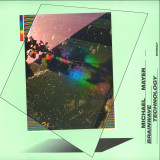
Elsewhere, there’s the lead track to MICHAEL MAYER’s astonishing recent EP, “Brainwave Technology”, which not-so-gently spears the tech-futurist babble of AI, transhumanism and posthumanism, soundtracked by one of Mayer’s typically lush, glimmering soundscapes. JOHN TEJADA reaches back to the heyday of glitch and dub techno with the gorgeous “Spectral Progressions”, while the brothers VOIGT & VOIGT, on “Nicht Mein Job”, seem reinvigorated by the interwoven patterns and funky minimalism of the Profan days. Not to be outdone, JÜRGEN PAAPE kicks TOTAL 21 with “La Guittara Romantica”, a chiming and lilting lullaby for woozy late-night reflection.
Throughout, it feels as though Kompakt are taking a moment to both breathe in the dust of the past and look forward to a bright future. Perhaps that’s why, on “Fasson”, SASCHA FUNKE seems so confident, with pinprick melodies bouncing around a hall of audio mirrors, or why THE BIONAUT returns with “Blue Sky Motor Lodge”, a song so moistly melancholy, so enduringly lovely, it’ll make you weep tears of joy. ROBAG WRUHME gets a little delirious on the ticking, twisting “No”, and then GUI BORATTO mops everything up with the bubbling, bumping glam-stomp “Wake Up”.
That’s not all – spring for the digital and/or vinyl edition and you’ll get a new cut, “Happy”, from MICHAEL MAYER, and MARC ROMBOY & C.A.R.’s “I Am A Dancer”. But however you choose to play it, now TOTAL’s turned 21, it’s your duty to throw it the celebration to end all celebrations. Let the party begin, and don’t forget to bring a party favor…
Michael Mayer’s latest EP, Brainwave Technology, comes at you purposeful, stealthy and sly. It’s a glorious left turn for the redoubtable producer, one that sees his typically lean and lithe productions buffed to a metallic, futurist sheen. There’s a gleam in the eyes of tracks like “Brainwave Technology” and “Alpha” that speaks of serious fun, of the intersection of the pleasure zone and the frontal lobe.
“Brainwave Technology” itself is informed by Mayer’s deep dive into the thorny terrain of artificial intelligence, transhumanism and posthumanism. Inspired by reading German philosopher Richard David Precht, Mayer found himself heading down the “proverbial rabbit hole,” as he describes it, “watching hours of YouTube material by self-proclaimed prophets of these ‘inevitable’ changes to come.” Never one to be taken in by the egotist’s dance, Mayer’s cynicism about the whole endeavour is tempered, a little, by the deeper questions that these figures gesture towards: “Is it really an evolutionary step that man and machine become one? Or is it rather a marketing plot by Silicon Valley billionaires?”
On “Brainwave Technology”, Mayer plays the charlatans at their own game, turning their logic against them by exposing the fruitiness of their ‘visions’. “I chose irony as my sword with which I chopped off some quotes from some of those batshit crazy prophets and self-promoters,” he explains of the drooling psychobabble he drops in the track’s lacuna. There’s a sense of humour here – how could you not laugh at these hungover egotists? – but there’s levity too, a sense that Mayer’s using sound to expose the contradictions and double-speak at the heart of these half-formed ideas. It’s a Burroughsian tactic, to slice into the heart of the voice to see what hidden truths surface.
It was Burroughs, too, who once said that “when you cut into the past, the future leaks out”; Brainwave Technology cuts into the logic of the futurologist to leak out the messiness of modern reality. On “Alpha” and “Gamma”, Mayer seems to conjure up the stark, ominous music that’d soundtrack a science fiction reinterpretation – or preinterpretation – of our modern malaise, all funereal wreaths of electronic noise and clatterboxing beats. As the EP resolves with “Device For The Young At Heart”, Mayer’s questions are piling up: “Do we want to become immortal and live on as a download? Do we really give up on Earth and put all our effort into colonising Mars?” There are no answers, of course, but plenty of imaginings-to-be. Brainwave Technology soundtracks both dystopian and utopian possibilities of what could come next.
Fractal City, the latest Cubenx album is a collection of terrestrial jams and arachnean ambient ballads that are particularly apt for urban listening. If its predecessors cracked the musical codes in force and shone by the versatility of their references, this new opus offers its listener an intense and symbolic sound environment.
The raw material of Fractal City was first conceived as a series of sound patches, designed to run in parallel with Canadian digital artist Maotik's installation. Broadcasted in real-time by generative patches reacting to various external and non-human data, those musical excerpts have been rendered in hundreds of nuances and extended over infinite durations. This unusual approach confers to the recording of the finished album's outstanding immersive strength.
Recorded live on a single track over a short period of a few weeks, the nine compositions of Fractal City capture the obsessions of its author for postmodern urban landscapes, and the revelation of new perspectives on the city of Paris.
The opening piece `Ssarg´ seems to hide the figure of the Mexican ambient producer Jorge Reyes. Cubenx built a cocoon of energetic layers, a new home of the mystical kind harmoniously integrated in a flourishing rainforest ecosystem.
`Transect ´refers to the urban development model of the same name, which is based on a division of the city into autonomous "fractal" zones. It also echoes the concept of "metro polarities" which considers the city as a mosaic of social groups. "By cycling in the evening with a friend, we could get away from the city centre to the suburbs of Paris. The contrasts are striking. You move from chic districts to bedroom communities, from industrial zones to improvised caravan camps. But there is a kind of energy in this heterogeneity that pushes you to always pedal further."
A few miles away, it would look like Art and urbanism have tried to level the cultural and social discrepancies of the outskirts of Paris. "Architectural sites like the Arcades of Bofill are splendid. There are completely extravagant projects, which seem to emerge from nowhere."
These buildings with ambitious aesthetics off the beaten tourist track, deteriorate over time and often remain far from the expectations of the local population. A feeling of nostalgic beauty is particularly perceptible on the slowest and most introspective ballads of the album as 'Urban Decay', 'Hagel' or 'Axe Majeur'. The producer leaves nonetheless no room for melancholic emptiness. "Every time, I have the impression that urban culture is taking its rights back and that young people appropriate the places in one way or another."
Just like `Transect', ` Quantified' and `Fractal City' present themselves as mirrors of a daily urban life in constant motion. All three are empowered by an overheated factory, which dispatches hypnotic beats and burst of analogue compressors with a clinical precision and direct them straight away to the reptilian areas of their listener's brains.
The sequencing leaves however space and time to take breath and makes way for aerial sonic excursions of spiritual and enlightened nature. On `Human Dilemma', Cubenx shows some concerns to opening the Pandora's box of transhumanist theories. While a long cosmic wave gives the listener a feeling of perfect fullness, a dizzying guitar distortion cast doubts on long term outlooks. `Smash Other' on the other way alternates gentle dissonances over an ocean of white noise and concludes the album on ethereal note.
With ´Fractal City", Cubenx eludes his irreconcilable love for shoegaze pop song and techno to concentrate exclusively on the production of mutant experimental materials. The result is an uncanny musical object, rich in image and sensation. Cubenx give us a guiding framework, enthralling enough to engage the listener to a tour of town. But he leaves it to the sole listeners to design their own projection of the city.
- A1: Never (A Perpetual Transhumanist Curse)
- A2: Demons (Conditioned Noosphere)
- A3: Necropolitics (Loose Remembrance)
- A4: Alucard And Alive Again (Melancholic Rage)
- B1: Sacrificing Your Heart (It Could Be Bloody Marvellous)
- B2: Crossed Realities (Drained Vectoralisation)
- B3: Demons Ii (Wardrums And Noises Of An Attention Crisis)
- B4: Silent Together (Somewhere Alone)
- B5: Necrorose For The Illdisciplined Void (Dark Euphoria)
- C1: Nicola Kazimir - 9 Eternities In Doom Ep (7Inch) - Midnight Fury (9 Eternities In Doom)
- D1: Nicola Kazimir - 9 Eternities In Doom Ep (7Inch) - Maniac (Resentment Of The Alienated)
In Post-Heretic Dracula X Chronicles II the Dracula figure functions as a part fictive and part autobiographical metaphor. Dracula mirrors certain systematic (therefore also internal) conditionings and attributes in its whole ambivalent fluctuations. This character represents the complex relationships of a loving/living person in a neo-liberal capitalist system while oscillating between melancholia & rage, facing the preservation or loss of his love and standing in an alienated position towards the ruling order. The eleven featured compositions and their respective song names (both of them are riddled with references) playfully touch on conflicts between love, life and system-critique, without being too upfront about the subject-matter.
Nicola Kazimir (*28.05.1990 in Zürich, Schweiz)
A DJ, producer, musician, artist, space-owner, record label owner and party organizer, Nicola Kazimir works freely across platforms and communities. For Kazimir, these numerous positions are not static, and they can actfluidly and reciprocally as a whole, or as separate entities. His artistic and acoustic productions are mostly based on topics that include the institutionalization of techno, copyright, dividualism and the human perception of repetitive rhythm patterns mixed with aesthetic codes of b-movie horror movies or occultism. He is one of the founders and still part of the labels Les Points/ Gentrified Underground / Infoline and the offspace Mikro Zürich. Other projects include a supporting role in the organization of Zentralwäscherei Zürich and being part of the Clubbüro-team at Rote Fabrik.
The 4th in the Transhumanism series is here. These four now well established Dutch producers approach Electro from their own angles, resulting in four energetic cuts ranging from the haunting vocal laced work of TFHats to the swirling darkness of RXmode.
The successful Transhumanism series has been supported by the likes of Dave Clarke, Juan Atkins, Helena Hauff, UMEK, Alienata and many others.
The Transhumanism collective was born on the dance-floor at Dave Clarke's first Whip It party at the Melkweg in Amsterdam. This is the fourth vinyl release on Bass Agenda Recordings that features the four Dutch Electro artists w1b0, RXmode, Slaves of Sinus, and TFHats. The releases to date have had ongoing support from many key DJs who support the authentic Electro scene - Dave Clarke, UMEK, Helena Hauff, DJ Stingray, Maceo Plex, and Alienata to name but a few. Juan Atkins and Helena Hauff were still dropping w1b0's track from the first release this Summer (2019) at various festivals. It's no surprise that the first in the series has just been repressed, and now, the third in the series keeps the pressure up with 4 brand new tracks. As always, the brief here was simple - "be yourself and do your best to kill it". All four artists have risen to the occasion - maintaining the fundamentals of their individual sounds, evolving a little in some parts, and bringing a compilation with something for every discerning DJ with an ear for cutting edge Electro.
In February 2016 5 people from the Bass Agenda family met in person for the first time at Whip It! - an Electro night hosted by Dave Clarke and held at The Melkweg, Amsterdam. w1b0, RXmode, TFHats and Slaves of Sinus have all released on Bass Agenda before, all received regular support from Dave Clarke both on and off his infamous White Noise show (w1b0 on The Barons's Fabric mix CD, Slaves of Sinus shaking up the demolition panel at ADE, RXmode dropped twice on Dave's Beatport live session and TFHats on White Noise what seems like every other week this year!)
Inspired by the meeting, the friendship, the music and the experience of the night they set out to make the 50th release on Bass Agenda Recordings - 'Transhumanism.' Dance floor focussed Electro with an edge.
As a compilation of Dutch Electro from the deep underground the vinyl is a deep orange pressing and strictly limited to 200 copies.
Supported by UMEK, Dave Clarke, Elektrodos, Darkfloor and many more.
Domestic Exile are proud to present the devastatingly deplorable and malevolent recordings (that are sure to corrode yet electrify your ears) by Glasgow's very own KLEFT.
KLEFT aka Vickie McDonald is rooted in and has actively propagated the underground DIY radical queer punk and feminist movement here in Glasgow. Their projects have included the skull crushing sludge doom of Cartilage, the unflinching and infamous multi- membered hard core stars that were DIVORCE and the sacrificial, druid drone glitch of MOURN. Alongside these projects they have uncompromisingly disrupted, motivated and facilitated collective endeavors to take down the capital power structure of the dominant system of patriarchal club venues and abhorrent fuckers in this town.
For this record 'H+ Sexualis', KLEFT explores the neo-modern space where flesh is left behind. Negotiating, analyzing and tearing to shreds the relationship and balance between flesh and technology. KLEFT's expansive and palpable sonic offerings delve into themes of transhumanism and body hacking and seep into our collective skin begging the question; can flesh ever be created digitally. Does a lack of physicality alienate human experience in a post transhumanism society Are we all destined to be skinless yet digitally connected Will the body become superfluous Toward "the utopian dream of the hope for a monstrous world without gender," as stated on Donna Haraway's essay ''A Cyborg Manifesto.'
From the opening track 'Ossein' the listener grasps a foreboding lethargic build up, lurking out of the spatial ritualistic shadows into a sea of suffocating nothingness. A void where there is no gravity. Skeletal and brittle shattering rhythms which echo DMZ / Skull Disco dubstep alongside the more frozen, glacial ominous explorations of grime are often felt proving KLEFT is an artist whose inspirations run deep and wide and generally exist in the darkest recesses of our subconscious. These fearful, disjointed rhythms are set against weightless atmospheric oscillated synths, as if roaming through bleakly opaque, claustrophobic narrow corridors on a first person survival horror video game such as Resident Evil.
Moving through to 'CMBR', KLEFT's dissonant, degrading soundscape ferociously ascends. The resilient kick drum is propulsive and pulverizing akin to 'ardcore tekno - or intense gabba if you have the guts to adjust the tempo up to +8 - aesthetics that overwhelm and agitate finally revealing it's grotesque biological / amorphous bio structure. Elevating the repetitive 4/4 kick to a destructive, distorted banger of a track as layers of converging atonal noise and sound design simultaneously further enhances the sense of imminent radioactive contamination.
Next is 'Writhe, Squirm, Broken' continuing the convulsive, nauseating permutations of the prior track but reconfigured like a mangled, gruesome Cronenberg-esque parasite that has infiltrated an open wound, excruciatingly feeding off of the inner anatomy of it's hosts body from within. Repulsively reformulating the shape and dimension. The intro is akin to a panic stricken bouncy ball contracting and expanding, the spring reverb building momentum and traveling further away in distance and speed.
'Hackfleisch Deluxe' is a muuurrderous stomper and is one of the more grime / bass orientated tracks that deconstructs and disrupts the tempo familiar to sub-low producers on Black Ops / Jon E Cash / DJ Dread D. The crawling, plummeting frequency of the synth is a nauseating rush of coagulating blood to the heed; a deep throbbing sensory depravation in sharp, paradoxical contrast with the driving harmony layered on top which proves to be infectiously addictive. Furthermore are splintering programmed vocal samples that gives a sense of artificial disorientation, mind over matter, a possible hint at our evolving sentient cognition within a nightmarish simulated, augmented reality
Second to last we have 'Keratin' which is filled with the near fatal dissolving thud of Djax-Up acid that gives the impression that you're a biologist peering through a microscope into a petrie dish and witnessing the rapid and furious genetic cellular replication of bacterial and viral organisms.
Culminating in 'Bruised and Bleeding Hands' where the squashed density of a deflated and depressurized helium filled balloon and elastic umbilical cords, barbed wire and copper wires grind n' coil around the lens of a zooming camera. Taking no prisoners, this is a punishing grime weapon. A phat, surgical kick drum bulldozes its way thru causing carnage, syncopated punching snares after every rave stab and dizzying third beat. It won't be long until ye hear this on Silver Drizzle's youtube channel in the near future.
This record transports us to the hyperkinetic mutation scene on the cult cyberpunk film Tetsuo The Iron Man where the organic flesh / mechanical rust of the Iron Man metamorphoses with the Metal Fetishist during the rebirth sequence and we say 'LONG LIVE THE NEW FLESH!''.
Fans of Electro's big hitter DJs such as Helena Hauff, Dave Clarke, UMEK, Maceo Plex, and UMWELT won't have escaped the sonic assaults of Dutch artist RXmode and his fellow Transhumanism collective members; w1b0, Slaves of Sinus, TFHats.
RXmode's last EP 'Cerberus' was very much the EP he'd been building up to since his debut on Bass Agenda Recordings back in 2015; dark, sinister, heavy, and distinctive.
One of the tracks from that EP, 'Degraded', gets the remix treatment from the other Transhumanism members on this, the third vinyl release the collective have put out.
The original track kicks things off in style before the three very individual remixes take things to new territories. TFHats takes the track, remoulds it and adds his own lyrics and vocals to great effect. W1b0 brings what will certainly be looked back on as one of the heaviest tracks of 2018; his 'Violation in G Minor' mix is a brutal sonic assault with a bassline that will surely wake the dead. Last and by no means least Slaves of Sinus brings an abstract acid tinged version; laced with his own brand of sinister vibes and darkness.
- A1: Kalson - Ocean 808
- A2: Dj Xed - Inner Contact
- A3: N-Ter - Corals Of Pannonia
- A4: Wichiwaka - Chasing Ufos With Danny
- B1: Le Chocolat Noir - Futureworld
- B2: Eb King - Mucek
- B3: Quasar - Luminosity
- C1: Alavux - Planet
- C2: Christian Kroupa - Transhumanism
- C3: Barion - Matter
- C4: Bramor - Rov
- D1: 1983 - Zero Compromise
- D2: Microslav - Mt3
Elektroliza is a series of club events formed by a group of dedicated electronic music enthusiasts in 2006. It is hosted by Ljubljana's Channel Zero, a legendary club that is part of the autonomous social centre Metelkova which used to be the Slovenian headquarters of the Yugoslav National Army.Filling a void in Slovenia's electronic dance scene, the night was a hit from the start and quickly grew into a diverse and successful series focusing on new and exciting electro, acid and dark techno.Elektroliza hosted many memorable DJ and live acts by performers/producers/pioneers coming out of international music incubators in Gothenburg, The Hague, Berlin and as far as Detroit. Even more importantly, it brought together producers and crews from the former Yugoslav republics of Slovenia, Croatia, Serbia and Macedonia. Inside the former Yugoslavian military barracks DJs and producers from Skopje to Ljubljana began bonding again through music, forming new friendships, starting new collaborations and dancing the night away... in 'Electro City Ljubljana'.This first double vinyl compilation of the Balkan Elektroliza family is a collection of our shared memories and visions of the future to come.
The Martinez Brothers Cuttin' Headz returns with a new EP from The Butcha, entitled '10001' and backed with two remixes from Matrixxman.Phil Moffa aka The Butcha is a New York City based musician, producer and engineer most notably known for his works alongside DJ Spider and Anthony Parasole for Sublevel Sounds / Plan B Recordings and alongside Seth Troxler for Hypercolour. Here we see him return to the fledgling Cuttin' Headz imprint with his idiosyncratic take on raw, emotive house music following his Destination Void release alongside DJ Spider and Brendon Moeller last year.Up first are two originals from The Butcha, the first of which '99 Prince St.' lays focus on echoing atmospherics, snaking Rhodes and shuffling dubbed out percussion while the latter, '6 Hubert St.' pivots towards an amalgamation an upfront organic rhythm alongside a weighty low end drive and wandering synth swells.
To complete the package San Francisco's Matrixxman delivers two interpretations, firstly the 'Acidized Mix' which as the name would suggest draws on squelching 303 lines layered over processed snippets from the original before the digital bonus 'Transhuman Mix' closes on an arpeggio fuelled Techno tip.
The Butcha's '10001' is out on Cuttin' Headz 23rd September 2016.
- 1