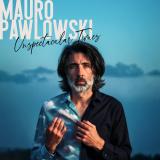
Mauro Pawlowski's 'Unspectacular Times' is the sound of an artist completely at ease with himself, and with the world, in all its ordinary, unglamorous beauty. Ten songs rooted in everyday observation and emotion, produced by Scorpio Twins (Stephane Misseghers and Bruno Coussée) with a full 24-carat 80s gloss: lush synths and basslines.
Where everything around us seems to demand maximum volume and instant outrage, Pawlowski turns that logic quietly inside out. These are songs about love that sneaks up on you, desire that builds in an art gallery, and a Nobel Prize winner falling off his bike and giving a thumbs up. Small moments, but in Pawlowski's hands, that's where everything worth paying attention to actually lives.
Guest appearances from Brianne Dunne (Daryl Hall & John Oates) and Pol Coussée, a Belgian saxophonist who found his way from London to Toronto and has played alongside Barry White and Isaac Hayes.
Following the 70s-tinged 'Eternal Sunday Drive', his second album on Unday Records 'Unspectacular Times' is Pawlowski's most pop focused to date. His most recent chapter in a career that has taken him from Evil Superstars to dEUS, through theater, dance, film and more alter egos than most artists have albums.
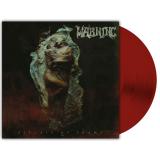
As WARNING prepares to release Rituals of Shame - their first new music in twenty years,vocalist/guitarist Patrick Walker is self-effacing about what led to this moment. Over the last two decades he continued to write and release music, satisfied that he had achieved what he set out to do with WARNING. In those intervening years, interest in WARNING swelled, organically gathering an ardent fanbase. In particular, the 2006 album, Watching from a Distance, has gained a cult following. In response to a transformative period in his life, Walker turned towards writing new songs, and it soon became apparent that these belonged to WARNING. In early January 2025, he started with a completely blank canvas, and piece by piece, he started to fill it with ideas that evolved to become the songs that make up Rituals of Shame.
His immersion in the project became a full-time pursuit. After successfully demoing the five songs, Walker retreated to a remote house on a hill outside Florence, Italy, to refine the lyrics. Recording took place at The Arch Studio, a 140-year-old former church in Southport, UK. Chris Fullard (Idles, Sunn O))), Ulver) handled the recording and mixing. Walker's lifelong musical inspirations can be traced through Rituals of Shame. The ambitious structural arrangements harken to Marillion’s complex but soaring episodic songs. They retain a sparsity that is reminiscent of June Tabor’s economic arrangements; thick with melody but with a diaphanous air to them. Citing John Brenner of Revelation as an enduring inspiration, Patrick credits him with introducing the idea of how to infuse heavy music with significant emotional depth. Often reluctant to discuss the minutiae of his lyrics, Walker does acknowledge that making this album was a direct response to the immediate concerns of his current life period. Rituals of Shame also echoes the enduring themes and fixations that have marked most of his work: guilt, shame, personal failure, obsession, longing, and separation, but, most of all, he says, love. Short: WARNING return with Rituals of Shame - the pioneering Doom band's first new music in 20 years! FFO: My Dying Bride, Candlemass, YOB, Black Sabbath, 40 Watt Sun, Pallbearer, Pagan Altar
‘Confession' is an album of quiet upheaval. An album about closeness that arrives late and unexpectedly. About stability rubbing up against desire. About the way friendship can suddenly tilt into something charged — and how that charge unsettles everything around it. Where earlier work often observed from a distance, Confession turns inward. The voice is closer, warmer, less shielded. “This wasn’t the album I intended to make,” says Carla dal Forno. “I originally wanted something veiled and abstract, but I realised I couldn’t hide behind abstraction — the songs only worked when I leaned into emotional truth.”
This is dal Forno’s fourth LP, written and recorded over several years in a small country town, in a studio housed inside a partially abandoned hospital. Long corridors, humming lights, emptied rooms — a place built for care and waiting, now quiet enough for thoughts to echo. That stillness shapes the record: intimate, watchful, unadorned. “I live in a small country town that offers a stillness my life didn’t previously have,” she explains. “In that quiet, feelings I might’ve ignored in a busy city grew loud.” Dal Forno sings plainly and conversationally, with an emotional precision that sharpens the everyday into something quietly unsettling.
The album moves through paired states: going out and staying in, wanting and withholding, devotion and distraction. Domestic calm set against private unrest. A long-held relationship offers safety and routine, while a newer connection opens emotional fault lines — longing, jealousy, fantasy, self-exposure. “At the heart of the album is a friendship that became emotionally charged in an unexpected way,” dal Forno says. “That shift brought daydreaming, jealousy, tenderness, confusion, self-awareness — and eventually acceptance.”
The drama here is internal, incremental, lived. Musically, Confession feels lighter on its feet than its subject matter suggests. Melodic basslines anchor the songs while guitars, harmonies, and gently off-kilter rhythms move around them. There’s a looseness, even a playfulness — “like the sensation of tension lifting once you finally admit something to yourself,” as dal Forno puts it. The album traces a subtle arc: attraction blooming where it shouldn’t; obsession quietly taking hold; fantasy overtaking reality; clarity arriving slowly, sometimes painfully. Visually and emotionally, Confession returns to modest spaces: backyards, beds, night streets, overgrown paths. “The record exists in that contrast,” dal Forno reflects. “Peaceful surroundings, unsettled interior.”
Like all of dal Forno’s work, Confession resists clean conclusions. It doesn’t moralise desire or romanticise restraint. Instead, it lingers in the in-between — where love is stable but not total, where yearning teaches as much as it hurts, where solitude becomes a form of care. Plain-spoken but emotionally complex. Rooted and restless. Held together by bass, breath, routine, weather. An album about admitting what you feel —and living with what that admission changes.
out of Stock
Last delivered 50 days ago available to reorder, subject to availability
Harry Romero, Brothers Macklovitch, and Austin Ato team up on Rekids.
Harry Romero and Austin Ato return to Rekids alongside the debuting Brothers Macklovitch, aka A-Trak and Dave 1, with the ‘The Corner’ EP, arriving 5th June 2026. Romero has more than two decades of house pedigree behind him, continuing to refi ne a signature sound rooted in expert drum work and undeniable attitude. With a catalogue spanning seminal imprints from Nu Groove to Classic Recordings and Defected, the Bambossa Records boss builds on his 2025 debut with ‘Nice To Meet You’, once again showcasing his knack for balancing functional, floor-ready grooves with rich musical character.
Joining Harry Romero are Brothers Maklovitch, consisting of legendary turntablist A-Trak alongside his brother, David “Dave 1” Maklovitch of Chromeo, bringing decades of experience across the electronic spectrum, alongside versatile Scottish producer Austin Ato, who previously contributed to Oliver Dollar’s 2025 album on Radio Slave’s Rekids imprint.
Harry Romero, Brothers Macklovitch, and Austin Ato’s ‘The Corner’ (Piano Mix) opens the release, a warm and energetic house cut driven by bold, bouncy drums and jazzy melodic touches, as lively guitar licks and rolling piano lines inject an uplifting, expressive feel primed for the dancefloor. The ‘Deep In Jersey Dub’ follows, maintaining the heat with a more stripped-back approach, where filters and breakdowns build tension before a punchy drop, with teased-out guitars adding to its dynamic impact.
out of Stock
Last delivered 17 days ago available to reorder, subject to availability
n a career spanning over 50 years James Brown became known as a progenitor of funk music and influencing the development of many other genres. All his hit songs, hidden gems and collaborations are now bundled on Collected. It contains 29 songs, including music from his early days with the Famous Flames, the J.B.’s and a wide collection of tracks from his solo career.
Brown began his career as a gospel singer and joined a rhythm and blues vocal group, the Famous Flames, as the lead singer in the 1950s. Later on he formed his own band and released successful singles as "Papa's Got a Brand New Bag", "I Got You (I Feel Good)" and "It's a Man's Man's Man's World". While developing the funk to a new level he created the J.B.’s, with which he scored hits like "Get Up (I Feel Like Being a) Sex Machine" and "The Payback". Brown was inducted into 1st class of the Rhythm & Blues Music Hall of Fame, the Rock and Roll Hall of Fame and Songwriters Hall of Fame. During the years he gained different honorific nicknames including "Godfather of Soul", "Mr. Dynamite", "The Hardest Working Man in Show Business" and "Soul Brother No. 1".
Music On Vinyl proudly presents a special coloured edition of the James Brown Collected compilation, which is available as a limited edition of 7.500 individually numbered copies on gold vinyl, and includes an insert with liner notes.
On the A-side JARC completely pull apart and rebuild this disco bonafide classic turning it “Downside Up” and into a slinky, slowly building, fat funky bass line driven excursion. Sneaking different elements throughout the intro leading into the iconic vocals.
On the flip, the duo again build out the groove, turning this Jazz-Prog Rock classic from the mid 80’s into a club friendly, super funky floor shaker.
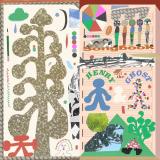
On his new album, Micha Acher rearranged compositions for bands such as Tied & Tickled Trio and Ms. John Soda from previous years.
Why are we interested in ghosts? What fascinates us about the eerie? According to cultural theorist Mark Fisher, the allure that the eerie possesses is not captured by the idea that we „enjoy what scares us“. It has, rather, to do with a fascination for the outside. For that which lies beyond standard perception, cognition or experience, as he writes in his book „The Weird and the Eerie“.
In fact, also none of the 15 pieces from Henry and the Ghost is really scary. On the contrary, they all feel strangely familiar. Like revenants or doppelgängers, which in fact they are. They have all been released before. But in a different form. In different line-ups. With different band projects such as Tied & Tickled Trio, The Notwist or the Alien Ensemble.
With the „Songbook“, Micha Acher's aim was, as he says, to find out how the familiar pieces sound in a chamber music instrumentation. Therefore he met with Theresa Loibl (bass clarinet, piano), Timm Kornelius (bassoon), Markus Rom (guitar, banjo, electronics) and Simon Popp (drums, percussion) in his living room for a musical séance in the summer of 2022. The séance lasted two days. Afterwards, Markus Rom (Oh No Noh), added some haunting electronical ideas.
The mood of most of the pieces is melancholic. There are surprising twists and siren-like melodies. Just as ghost stories should be. However, most of the songs sound very light-footed. With their feet in pop, folk, jazz and classical music. Pieces such as „Johanna“ with its wheezing harmonium and spooky piano, or the dreamy „Modest Farewell“ on the other hand have a cinematic flair. Immediately faces and scenes arise in the mind. But at the beginning, there is „Hamlet“. It starts with ghostly electronics and merges into a calm, almost classical guitar piece. Could it be that the ghost of Hamlet's father is hiding between the strings?
„34E“ begins with a banjo. Then the deep humming of Micha Achers sousaphone and the other brass instruments kick in. In the slow, solemn „Aelita“, the sousaphone starts a dialogue with a children's piano. With the banjo and the other wind instruments acting as mediators. The title of „All Tomorrow's Past“ brings Velvet Undergrounds „All Tomorrow's Parties“ to mind. Another ghost from the past. What connects the two pieces is free-floating percussion, which accompanies the sumptuous melodies.
„Arc“ takes us on an exhilarating voyage at sea, with the sousaphone providing powerful propulsion. Towards the end, things get quite turbulent. With the clarinet stirring up the water, before the sea calms down again. „Henry and the Ghost“ is characterised by a ghostly mood change between major and minor. In „Radio Four“ the banjo with its stoic chords keeps the lively brass section in check. „Solid Ground“ is imbued with melancholy. „Space Minor“ takes us into outer space, with the power of sousaphone and percussion.
„Tomorrows“ is filled with cautious optimism. And the concluding „Nordlead“ turns out to be a revenant of the instrumental „N.L.“ from The Notwist's legendary album „Shrink“ from 1998. In the new version, the piece sounds like a distant echo. One that also brings to mind how Micha Acher's music has evolved. Which new worlds he explored and opened up since the nineties. And yet Acher's signature is recognisable in every single note of this fascinating „Songbook“.
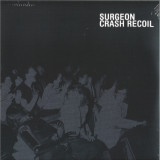
In March 2023, Tresor Records will release "Crash Recoil", a new album by Surgeon. It marks Anthony Child's first techno LP in five years, following a period in which he felt uncertainty in his role as a techno producer and found it tough to locate inspiration. This new album encounters him drawing on spontaneous techniques to arrive at unchartered topographies.
"Crash Recoil" originates from Surgeon's recent live sets, where he experimented with constraints in performing and embracing the twists, turns and paradoxes that arrive from this. Each fresh iteration on consistent MIDI sequences and hardware reconfigured tracks into dierent constellations, creating an inspiring vortex of unpredicted events where ideas could flourish. This new approach allowed him to capture the spontaneous energy of his live shows in a way he had never done before. "This is not a live album, since it has not been recorded in one go during a live performance. In the same way that bands tour songs before going into the studio to record an album, I was able to explore these songs and hone their eectiveness during my live performances before creating a studio version."
The result is eight tracks that emphasise a new techno sound for Surgeon, drawing in references from across the musical spectrum. "I can hear Coil, King Tubby, Detroit Techno and The Cure all wrapped up with 30 years of DJing," Surgeon says of the album. Melancholic hum-like ambiences smudge around unadorned, near-droning basslines, crunching rhythm and percolating arpeggiations. The tracks carry unique and potent locomotion, with a low-slung grind through toughened terrains, breathing with a free spirit, untethered by a studio-based perspective. We hear manifestations of the same raw material across the album, like a textural motif, carving new variants and creating a cohesive work full of recollection.
out of Stock
Last delivered 4 months ago available to reorder, subject to availability
New from Ulla’s 28912 label comes a gorgeous bouquet of lowercase wonders from Justin Cantrell aka J and the Woolen Stars, part of Picnic, and the brains behind the excellent Daisart and se Dessaisir Publishing labels.
»Puff« is a glistening pool of lush refractions and music-box lullabies, featuring an array of acoustic instruments and fragile foley sounds that are gently peeled away until all we’re left with are the faded outlines of half-remembered songs.
A sound that roots itself in the prophetic machinations of artists like Fennesz and the languid Japanese minimalism of Fourcolour or Moskitoo, »Puff« strikes a delicate balance, sounding as bewitchingly informal as a Tenniscoats set, but also consistently muddling the perception of high and low-brow sound. Cantrell’s skill lies in a sort of sonic conjuration, bamboozling the brains of those of us who grew up listening to stepped-on audio via ramshackle RealMedia streams by alchemising the content, turning found sound into gold. Just tell us you don’t get chills from hearing the bitrate-impaired acoustic guitar on »Dirty like an angel«, set against a backdrop of windy, harmonic detritus. It’s both meticulously contrived and gloriously off-the-cuff, like one of Vincent Gallo’s classic »When«-era demos reduced down to 96kbps.
Similarly, »She knows just what to say« provokes faint memories of folk music, with impromptu fiddle parts gently steamrolled to create a sound that’s nothing short of exquisite, like pressed flowers rediscovered in an old, discarded book. Even the more palpably electronic elements are hand sculpted in a way that belies the era we’re living in - it’s music for a digital age that sounds oddly unplugged, flawed and human. An unmistakably lovely antidote to the opiating nostalgia of our time.
"Imagine a classic singer/songwriter record loaded with the intimacy and grit reminiscent of Alex Chilton or Nikki Sudden." Shindig
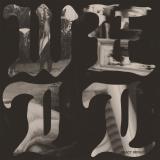
Los Angeles singer-songwriter Tracy Bryant returns with his new album The Well, which is his first release since 2019’s critically acclaimed Hush. His fourth solo album, The Well marks a striking new chapter, trading his signature guitar-driven sound for piano-led songwriting that took root during the pandemic. The album was born out of one of the most turbulent periods of his life, written in the wake of his father’s sudden passing and birth of his first child. It was produced by longtime friend and compatriot Joo-Joo Ashworth at Studio 22 in Cypress Park, CA, and mastered by Dave Cooley at Elysian Masters. The nine songs are filled with raw emotion and driving motorik rhythm, telling tales of loss and love, relationships beginning and ending.
When the pandemic upended Bryant’s promotion for Hush and brought his 2019 European tour to a halt, he found himself at home rediscovering his musical roots at the piano, listening to Vince Guaraldi and Arthur Russell to take inspiration for the song structures. Without a band around, Bryant used the instrument to create both rhythm and melody, which resulted in a repetitive and precise backbeat, which was elevated when he began working with drummer Carmeron Gartung to rehearse the new songs. This different approach would define the style of The Well, creating an amalgamation of sounds with classic songwriting structures blended with post-punk, 90s indie, krautrock and psychedelia.
To produce the record, Bryant turned to Joo-Joo Ashworth, who share a friendship stretching back to 2011 (when Joo Joo was only 18) when both of their bands, Corners and Froth, were at the forefront of the bourgeoning Los Angeles/Echo Park music scene of the time and embarked on their first national tours together. Ashworth, who has since become one of underground music’s most respected producers, recorded the album throughout 2024/2025 on half inch tape at Studio 22 in Cypress Park, California, giving The Well a warm, considered sound that matches the weight of its subject matter.
The album’s emotional core was forged by two significant life events arriving in close succession. In January 2022, Bryant’s father passed away unexpectedly at the age of 67. Just three months later, Tracy and his wife welcomed their first child. The Well is a direct result of those experiences, a songwriter processing grief and joy, endings and beginnings in real time.
The nine songs take the listener on a meticulously crafted journey through the nooks and crannies of Bryant’s mind. Spanning 37 minutes, the album is an exploration of classic songwriting elements moving fluidly between driving beat punk, like “Weight” and “Widow”, and more melancholic tracks like “Halfway” and “Danny”. Album opener “Cold Floor” sets the tone immediately, Bryant’s lyrics confronting the day of his father’s death with unflinching directness – the breezy California piano sound is in direct contrast to the heavy theme. The Bowie-esque title track is perhaps the album’s most expansive moment – a fully realised epic composed with a dynamic flare.
The Well feels like an arrival. Dramatic and expansive, it is a true, visceral reflection of the life changing events that altered the course of Bryant’s life. Fans will be surprised by the heavy focus on piano but they will welcome the change as a bold turning point for an artist who has lived long enough to know exactly what he wants to say.
Some previous press:
"feels like a slice of California, down to its ringing post-surf guitars and bright melodies, but cross-cut with a folk sensibility more aligned to the work of Elliot Smith or, on occasions, Conor Oberst." Uncut - lead album review
"…sees the Los Angeles rocker confront both the finer and uglier aspects of love and life, combining classic rock with psychedelic tinges and catchy melodies." Evening Standard 4*s
Tom Gillieron’s It’s Alright arrives on Studio Barnhus in triplicate: one original, two remixes, no weak links. A UK producer with a fierce command of high-pressure club dynamics, leads with a version that comes big, busy and blazing, brimming with glorious noise, swift movement and late-night intent.
Afriqua brings his trademark musicality to the second version, turning the lights up enough to let some melody through, adding bounce, swing and a touch of house warmth, never loosening the grip.
Bona fide UK underground originators Horsepower Productions lower the ceiling again, rebuilding the track for the darkest of basement clubs in the form of a low-slung bruiser with broken edges and proper bass weight.
out of Stock
Last delivered 4 months ago available to reorder, subject to availability
Irgendwann um das Jahr 2024 tauchte Vorhex Angel scheinbar aus dem Nichts auf: keine Social-Media-Präsenz, keine Identitäten, lediglich ihr Name tauchte hier und da auf einem Flyer in Nashville oder New Orleans auf. Wer neugierig genug war, um ihre Live-Show zu besuchen, konnte mit einer Vielzahl unerwarteter Dinge konfrontiert werden, die die Sinne anregten: aufwendige Bühnenbilder, Stroboskoplichter (oder alternativ völlige Dunkelheit), brennende Gegenstände, vor dem Auftritt eingenommene Rauschmittel. Die Musik bei diesen Auftritten passte zu dem Mysterium. Sie war laut, unberechenbar und verdammt viszeral. Wenn die beiden Live-Veröffentlichungen der Gruppe und ihr Debüt ,Heavenly" tatsächlich viszeral sind (Raven Sings the Blues nannte sie ja ,Erben des Strudels von High Rise"), dann ist der Nachfolger ,Drain" sicherlich ihr intellektuelles Werk. Seine sieben Tracks führen den Hörer vom Morgen bis zur Nacht, ein weitläufiges experimentelles Doppelalbum mit überlebensgroßen Gitarrensoli, spacigen Drone-Exkursionen und Momenten von kraftvoller Intensität durch das gesamte Werk. Zum ersten Mal sehen wir, wie Vorhex Angel ihren hämmernden Klangangriff gegen stimmungsvolle und dramatischere Gefilde eintauschen. Die Band - bestehend aus den Brüdern Jake und Jamin Orrall von JEFF the Brotherhood und Kunal Prakash von Silver Synthetic - erweitert die Grenzen des Vorhex-Angel-Konzepts, lädt neue Musiker in ihren Kreis ein, geht mehr Risiken ein und erntet dafür umso mehr. ,Drain ist keine Musik, die man im Hintergrund beim Kochen laufen lässt", warnt Kunal, bevor er zwinkert: ,Vielleicht ist sie etwas für besonders abenteuerlustige Köche." Vorhex Angel verspricht, dass noch mehr kommen wird. Mehr Jams, mehr unerwartete Wendungen - allein in diesem Jahr können wir mindestens eine Tour und mindestens zwei (!) weitere Alben erwarten. Vorerst gibt es ,Drain" zu feiern, sich damit auseinanderzusetzen, damit der Hörer wie die Musik selbst ein- und ausatmen kann, mit reichlich Raum für gedankliche Kontemplation. SPA Sometime around 2024, Vorhex Angel emerged seemingly out of the ether: no social media presence, no identities, simply their name popping up in Nashville or New Orleans on a flyer here and there. Those with enough curiosity to attend their live show could be met with any number of unexpected things to spike the senses: elaborate stage dressing, strobe lights (alternatively, complete darkness), burning things, pre-performance ingestibles. The music at those functions matched the mystery. They were loud, unhinged, and visceral as all hell. If the group's two live releases and debut Heavenly are indeed visceral (Raven Sings the Blues did name them "heirs to the maelstrom of High Rise"), then followup Drain is surely their cerebral offering. Its seven tracks guide the listener from morning to night, a sprawling experimental double album with larger than life guitar solos, spaced-out drone excursions, and moments of potent intensity throughout. For the first time, we see Vorhex Angel trade their pummeling sonic onslaught for moody and more dramatic pastures. The band-revealed to be brothers Jake and Jamin Orrall of JEFF the Brotherhood and Silver Synthetic's Kunal Prakash-push the parameters of the Vorhex Angel concept outward, inviting new players into their circle, adding more risk and generating more reward. "Drain is not in-the-background cooking-type music," warns Kunal, before winking: "Maybe it is for particularly adventurous chefs." Vorhex Angel promises there will be more. More jams, more left turns-just this year, we can expect at least one tour and at least two (!) more albums. For now, there is Drain to celebrate, to sit and chew on, to allow the listener to breathe out and in like the music does, with ample room for cerebral contemplation.
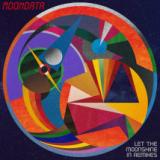
Moondata’s little-known sole single, 1984’s decidedly Balearic, jazz-funk/boogie fusion gem ‘Let The Moonshine In’, is a very important record to the Rotation Sound System crew. It has become a familiar favourite at their annual Rotation Garden Party micro-festival and formed the centrepiece of their first compilation, summer 2025’s superb Everything You’re About To Hear Is True Volume 1. It’s increasingly rare these days for an artist from the 80s to still have their master tapes but even rarer still for them to have the multitrack tapes too. This is something of the holy grail when it comes to licensing old music so when it happens the opportunity to remix and create new versions needs to be grabbed with both hands.
The original record, a genuine rarity beloved of synth-loving crate-diggers, had an unusual gestation. Originally recorded in demo form by musician Jean-Marie Gogniat, it was turned into a finished single by a group of German musicians with a little help from lyricist and vocalist Joe Mwenda, and a crew of backing vocalists whose number included a locally based American singer – a pre-fame Jennifer Rush. Fittingly, the pre-vocal instrumental mix, which has sat unreleased since 1984, is included as a bonus track on the digital edition of this new remix package. The Rotation Sound System crew’s mixes, headed up by long-serving producer Dean Meredith, sprinkle 21st century magic across Gogniat’s one-off masterpiece while retaining core elements of the original and offering nods aplenty to club-focused sounds of the 1980s. They are, in effect, the versions the track deserved – but never got – back in the mid 1980s.
To begin, Meredith reunites with long-time production partner Andrew Meecham for the pair’s first remix as Chicken Lips in three years – a typically sparse and spaced-out ‘Malfunction Dub’ with delay-laden synths, vocals and guitar snippets sit over a sparse post-electro beat and bass guitar. Meredith then joins forces with fellow Rotation Sound System member Ben Shenton for takes under their two bestknown aliases. First, they don the T-Kutt guise for some dubbed out, funky bass guitar-propelled boogie-meets-proto house action that rocks out a killer, Clavinet-expanded groove while spinning in talkbox and backing vocals.
The pair then re-emerge as Mind Fair, famed for their releases on Golf Channel Recordings and their own Rogue Cat Sounds, and deliver a warmer, deeper and more organic-sounding take that’s as languid and tactile as it is warm and saucereyed. To round off the vinyl version of the EP, Rotation Sound System’s other core members – Rob J, Rich Hall and Stuart Robinson – don the now-familiar Wrekin Havoc guise and re-invent the track as a raw, analogue-rich shuffle through 1980s electro – all squelchy synth-bass, stabbing, cut-up vocal samples, chiming synth melodies and echoing beats. The expanded digital download edition of the EP contains a trio of additional bonus rubs. Alongside instrumental versions of the T-Kutt and Mind Fair mixes, we also get a full vocal T-Kutt rework that adds back in Joe Mwenda’s beautifully delivered verses. These additional DJ tools round off a beautifully rendered set of re-imaginations of a genuine cult classic. Gogniat, the man who started it all way back in the summer of 1984, certainly approves.
out of Stock
Last delivered 4 months ago available to reorder, subject to availability
After the underground success of Collecting Dust the duo return with there second album “Thrifting Gems”. Sticking to there signature sound of hypnotic, melodic jazz samples, dusty drum beats and thought provoking lyrics seasoned with that 90s nostalgic hip hop sound.
Its the perfect album for those hazy summer nights,tracks like “Gotta Get Mine” featuring the legendary Masta Ace “It's Been a Long Time” and “Trying To Get By take you back to a time when you fell in love with Hip Hop.
Gang Starr Foundation member Big Shug joins them on a 90's boom bap throwback beat called “Straight Vibing” and there's even a homage track to the culture they represent called “2 the Grave”
Anyway! Sit back, place the record on your turntable, and drift off, to the beautiful
“Thrifting Gems”
out of Stock
Last delivered 4 months ago available to reorder, subject to availability
1. numbered 100 copies of limited black 180g vinyl made in collaboration with U JAZZ ME Records
2. transparent orange 180g vinyl
LINER NOTES:
" When AJ Lee stepped back into the ring in September 2025 - after a ten-year break - she introduced herself to a new generation of fans with the words: 'If you haven't heard of me, I am your favorite wrestler’s favorite wrestler.' That is exactly what came to my mind as a lead for this blurb when Pokusa asked me to write it. Because that’s what they are: your favorite indie darlings' favorite indie darlings (even though no one uses that term anymore, let alone identifies as such). They are your favorite cool jazzcats’ favorite jazzcats. And they are probably your favorite young jazz act - if you don’t usually (or ever) listen to jazz.
This, I always thought, is their greatest strength. Half the battle (in my eyes) is recording a sick jazz album - one that a jazz magazine would fawn over. The real win is getting someone wearing a heavy metal T-shirt into it; someone who’s never listened to jazz and has never stepped foot in a place like Pardon, To Tu, but heard Pokusa and decided to change that. I am such a person. I didn't learn about jazz because of them, but they’re definitely the reason I started rating it.
Głowy (Heads) is, in a way, a classic album. If someone played it for me and - relying on my lack of knowledge and gullibility - tried to convince me that it was recorded in the Polish Radio Studios in 1975, at Akwarium Club in Warsaw in 1985, at Club Rura in 1989, somewhere in Tri-City in '94, or at Mózg in Bydgoszcz, I would probably believe it. Its 'classicness' goes hand in hand with its timelessness. I could write about how the album fits into the catalogs of Lado ABC, GOWI, or Biodro Records. I could dig for connections to Yass, Tzadik, or a number of other things.
But what Teo, Natan, and Tymek create here is as important in its experience as it is in its music. For me - an artist active in a similar time - each Pokusa album, including this newest release, is a record of a period of time and the experiences hidden between the notes. The Indian spices in food served before a show in Mózg. A headache from all the cigarettes smoked listening to tapes in Eufemia. Marveling at the graffiti over the sink in Młodsza Siostra. The narrow steps at Chłodna 25. The wider but slippery steps to Pogłos. The quirky and uncomfortable steps in Ziemia. The mosquitoes at Ladomek. The dilemma of whether to wear a nice polo instead of a T-shirt to SPATiF. The wonder of turning off Monciak into Dwie Zmiany. Why is a club like this on such a strip? Why is Pokusa playing here? And why do they sound so good?
On one hand, you can find journalists writing that Pokusa grew out of the classic free jazz of the 1960s; some might mention Albert Ayler. On the other hand, there’s Unsound Festival and young critics writing about 'post-jazz.' All of them are correct. This is universalism. This is that timelessness. Whether you pick up this album the day it comes out or in the year 2046, it will be good. In twenty years, people will still reach for it. Of that, I am certain."
Michał Turowski
1. numbered 100 copies of limited black 180g vinyl made in collaboration with U JAZZ ME Records
2. transparent orange 180g vinyl
LINER NOTES:
" When AJ Lee stepped back into the ring in September 2025 - after a ten-year break - she introduced herself to a new generation of fans with the words: 'If you haven't heard of me, I am your favorite wrestler’s favorite wrestler.' That is exactly what came to my mind as a lead for this blurb when Pokusa asked me to write it. Because that’s what they are: your favorite indie darlings' favorite indie darlings (even though no one uses that term anymore, let alone identifies as such). They are your favorite cool jazzcats’ favorite jazzcats. And they are probably your favorite young jazz act - if you don’t usually (or ever) listen to jazz.
This, I always thought, is their greatest strength. Half the battle (in my eyes) is recording a sick jazz album - one that a jazz magazine would fawn over. The real win is getting someone wearing a heavy metal T-shirt into it; someone who’s never listened to jazz and has never stepped foot in a place like Pardon, To Tu, but heard Pokusa and decided to change that. I am such a person. I didn't learn about jazz because of them, but they’re definitely the reason I started rating it.
Głowy (Heads) is, in a way, a classic album. If someone played it for me and - relying on my lack of knowledge and gullibility - tried to convince me that it was recorded in the Polish Radio Studios in 1975, at Akwarium Club in Warsaw in 1985, at Club Rura in 1989, somewhere in Tri-City in '94, or at Mózg in Bydgoszcz, I would probably believe it. Its 'classicness' goes hand in hand with its timelessness. I could write about how the album fits into the catalogs of Lado ABC, GOWI, or Biodro Records. I could dig for connections to Yass, Tzadik, or a number of other things.
But what Teo, Natan, and Tymek create here is as important in its experience as it is in its music. For me - an artist active in a similar time - each Pokusa album, including this newest release, is a record of a period of time and the experiences hidden between the notes. The Indian spices in food served before a show in Mózg. A headache from all the cigarettes smoked listening to tapes in Eufemia. Marveling at the graffiti over the sink in Młodsza Siostra. The narrow steps at Chłodna 25. The wider but slippery steps to Pogłos. The quirky and uncomfortable steps in Ziemia. The mosquitoes at Ladomek. The dilemma of whether to wear a nice polo instead of a T-shirt to SPATiF. The wonder of turning off Monciak into Dwie Zmiany. Why is a club like this on such a strip? Why is Pokusa playing here? And why do they sound so good?
On one hand, you can find journalists writing that Pokusa grew out of the classic free jazz of the 1960s; some might mention Albert Ayler. On the other hand, there’s Unsound Festival and young critics writing about 'post-jazz.' All of them are correct. This is universalism. This is that timelessness. Whether you pick up this album the day it comes out or in the year 2046, it will be good. In twenty years, people will still reach for it. Of that, I am certain."
Michał Turowski
On her second album, Sawt El Doumouh (The Sound of Tears), Beirut-based Sandy Chamoun summons flickers of light from sadness. Influences from the Arabic tradition of Tarab – one of the first styles Chamoun learnt to sing – and polyphonic Cantu are reinterpreted and reimagined through her voice and electronics, synths from her SANAM and Ghadr bandmate Anthony Sayhoun, and live percussion from Ali Hout.
Marked by its times, the record isn’t what Chamoun had planned. “I wrote the lyrics between October 2023 and September 2025,” she explains. “The plan was to write about nature, since the album’s concept was inspired by Cantu, a tenor Sardinian ritual that celebrates humanity’s victory over nature. I intended to visit several places and regions in Lebanon and write a track for each, but after the genocide and the war in Lebanon, everything changed.”
“I chose the title because many mornings during this period I woke up crying silently. I remember a dark story from school: a teacher yelled at a small boy while he was crying and told him to cry without making any sound. I feel we are still living in that condition in the region — forced to die or suffer without making any noise.”
Sawt El Doumouh is a gorgeous refusal to be silent. It opens with a booming drum. Over keening autotune Chamoun’s pure voice cuts through, burying the despair to illuminate rays of hope. On “Ward W Shok” a shuffling swing gives way to a righteous organ interlude. The title track sees a choir of Chamoun’s vocals lull and lap. Drums arrive and indignation stirs, what’s mournful begins to stride.
Chamoun’s tracks are as beautiful as they are defiant. Why write songs in the face of horror? Perhaps because music can hold onto something better. By turning to song, Chamoun catches the hopeful glints and sparks that persist and strive outside the terror. In SANAM and Ghadr she often borrows lyrics from Arabic writers through the centuries, listening to what their words say in the present while reminding us the world can and has been different to how it is now. Solo she writes her own words, and the way her songs alternately soar and sigh evokes hopeful pluralities and suggestions of other, kinder realities. Even hearing someone cry is a connection to humanity.
It’s a possibility conveyed in the album’s most jubilant moments. “Shahed” is an incandescent dance of percussion and levitating synths. “I wrote it after I saw a photo of a small boy on a horse on the beach in Gaza,” Chamoun recalls. “I imagined a fantasy where the boy lives in the water and watches the terrifying reality on the shore, trying to bring water to put out the fire. Shahed is the witness who lives far from the shore, enjoying the water and trying to help. You can hear this duality: the percussion is desert-like, while the vocals and synths evoke the feeling of water.”
Although it comes from darkness, in Chamoun’s music we can hear faith in something beyond it.
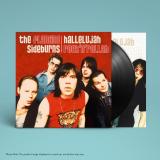
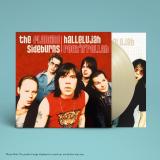
The Flaming Sideburns' debut album remastered 25th anniversary edition out in June via Svart Records In the beginning of the new Millennium, The Flaming Sideburns were getting ready to record our first proper album. First we rented Ismo Alanko’s old rehearsal room in Otaniemi, Espoo, and turned it into a recording facility. Old analog tape recorders, vintage microphones, a Space Echo unit, and other top equipment were brought in directly from Berlin, Germany by the album’s producer, Jürgen Hendlmeier. As producer Jürgen Hendlmeier recalls the final steps of the sessions: “Fact is, when we mastered the record at Seawolf Studios we had no real idea what to do with this equipment. We just wanted to make it louder and louder – that was all we wanted. We wanted to go to twelve instead of eleven.” When Hallelujah Rock’n’Rollah was first released, it did not sound as “natural” as it had originally been planned to be – but the album was a huge success for the band nevertheless. For this remastered edition, Hendlmeier dug deep enough to finally find the files containing all the original mixes. The album’s producer then remastered the album himself, and the end result is far more convincing. Compared to the original version—which is already very good—the album now feels as if it has been completely remixed for the better. As a bonus, on the original album some of the songs were edited shorter, but now all of them appear in their original length. -Eduardo Martinez
The Flaming Sideburns' debut album remastered 25th anniversary edition out in June via Svart Records In the beginning of the new Millennium, The Flaming Sideburns were getting ready to record our first proper album. First we rented Ismo Alanko’s old rehearsal room in Otaniemi, Espoo, and turned it into a recording facility. Old analog tape recorders, vintage microphones, a Space Echo unit, and other top equipment were brought in directly from Berlin, Germany by the album’s producer, Jürgen Hendlmeier. As producer Jürgen Hendlmeier recalls the final steps of the sessions: “Fact is, when we mastered the record at Seawolf Studios we had no real idea what to do with this equipment. We just wanted to make it louder and louder – that was all we wanted. We wanted to go to twelve instead of eleven.” When Hallelujah Rock’n’Rollah was first released, it did not sound as “natural” as it had originally been planned to be – but the album was a huge success for the band nevertheless. For this remastered edition, Hendlmeier dug deep enough to finally find the files containing all the original mixes. The album’s producer then remastered the album himself, and the end result is far more convincing. Compared to the original version—which is already very good—the album now feels as if it has been completely remixed for the better. As a bonus, on the original album some of the songs were edited shorter, but now all of them appear in their original length. -Eduardo Martinez
Every so often in music, we come across voices that achieve a certain timelessness, so naturally do they encapsulate both past and present. Laure Briard is one of these voices, retro in form but contemporary at heart, spanning a career rich in aesthetic twists and turns, never without her signature magic, a special kind of eternal filter. Her first album, Révélation (2015), reveals her yé-yé influences, a testament to her love for ‘60s French pop music. Her second studio album, Sur la piste de danse (2016), follows in this vein and finds Laure accompanied as always by her long-time bandmates who share an affinity for warm, catchy arrangements that never lose their appeal. Her tour of Brazil marks a turning point in her career, introducing her to the local indie scene and thus launching her collaboration with the band Boogarins, as well as inspiring the release of multiple EPs composed and performed in Portuguese. Today, her music is embellished by touches of bossa nova and a folk sensibility, boasting increasingly intricate arrangements, as exemplified by her 2019 release, Un peu plus d'amour s'il vous plaît. Several years later, the Californian desert captures the musician’s imagination with Ne pas trop rester bleue, a poignant musical journey inspired by the rich history of Western legends and the role they play in shaping our collective consciousness.
In Voyage Mental, Laure Briard draws upon an inner energy unearthed during a new stage in her life, where the thrill of spontaneous adventure is not accessible in quite the same way. The result is a collection of sophisticated, introspective songs, narrating a young mother’s quest for balance in the face of routine. The album, nostalgic but always tethered to the present moment, is also the fruit of her collaboration with Gaëtan Nonchalant, a talented musician known for coaxing poetry out of the mundane. The two of them co-wrote and recorded five tracks at Studio Nocturne, accompanied by her long-time sidekick Pieuvre, aka Vincent Guyot, Léo Blomov, Pierre-Louis Vizioz, and Hedi Bensalem. The gentle pop opener “Rocking Chair” sways steadily to the rhythm of dynamic drums, followed by “Train,” a ballad that extends an invitation to set sail and daydream alone. The folk escapade continues with “Golden Sun,” a duet featuring the 1960s cult American musician F.J. McMahon, who Laure contacted via the internet on a whim. “Golden Sun” is an unlikely encounter between two generations and two cultures, giving new life to an old forgotten demo on the other side of the Atlantic. And while Laure sings of wide open spaces, cowboys, and sunsets sinking into the sea, we feel the city surrounding her in “Miroir,” a song composed by Hedi Bensalem that laments the suffocation of living in a crowded metropolis where the sky is a distant gray smudge. This pressing need for air, this search for rest and total disconnection, is one of the album's central themes. It may also explain the ever-present sense of nostalgia that pervades the songs, a welcome respite in our current era of doomscrolling and darkness. Along the way, Laure soothes us with melancholy guitar, delivers poetry set to scattered piano notes, and takes us by the hand during lively, uptempo passages. We climb onto her wings, never straying too far from the ground, soaring joyfully above her moods.
After a sold out first release, NY’s Superflux is back for Round Two with a debut release from arguably the most unsung hero of the Midwest underground. Uplink is a REDACTED-based hardware specialist known for their work running a series of labels and organizing parties that have helped define the region’s sound for more than a decade. Crafted using time-honored tools of the trade, these four dubby, tracky, and raw cuts – lifted from live stereo board recordings – will sit comfortably alongside releases from STL, Skudge, and MRSK.
The A1, Audio Sport, is a dubby groover with almost-steppy hats and bit of bite; a reverb-drenched lattice of delayed pads bends your sense of time and space until you realize you’re 12 hours into the warehouse function and someone’s just thrown a piano off the roof. A2, Blue Untitled, is a deep stomper reminiscent of the early WAX records. A big & shifty bassline turns this into a true head-nodder. B1, Temporary Machine 1, is a more subdued dubbed-out tech house cut anchored on a rolling bassline and flanked by dusty percussion and prescriptive stabs. Proper warm up tackle or hazy after-afters fodder: the choice is yours. Connoisseurs of a fine B2 rejoice – this one is it. Dokta is a moody, tripped out late night techno affair with a dash of bounce for good measure. All that hisses is gold.
Written by Colin Boardway
out of Stock
Last delivered 4 months ago available to reorder, subject to availability
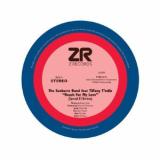
We've got two brand spanking new exclusives for the latest Z Records 7 inch record. First up is 'Reach For It' Afrom The Sunburst Band with it's uplifting Mtume/Lucas feel, glorious vocals from New Jersey singer Tiffany T'zelle (fans will know her from Dave Lee's 'Produced With Love II' album) and all the usual star players of The Sunburst Band. Then making her debut on ZR is Queen B Unlimited with '27 Sided', an ultra smooth dose of modern disco-soul. It's and expertly produced love song about us all being different shapes, trying to find our match, we suggest turning the lights down low for this one.
out of Stock
Last delivered 4 months ago available to reorder, subject to availability
Few artists can conjure up the sort of spirituality that Fred P manages whenever he turns on his machines - and this brand new label from the artist means we'll be getting a shedload more of it. Sometimes it's deep, muggy, insular, at others more outward-looking and cosmic. And that's what we have here - emotionally dense sounds on 'Galaxy Walk (Journey mix)' with jazzy motifs off in the distance, spoken words in the foreground and dancing percussion that is optimistic and hopeful. 'Modern Art Talk' is just as balmy as you journey through a sound world that feels as infinite as space itself, while Fred himself muses on his art. 'Inner Channels (edit 4)' is a dusty shuffler marbled with muted chords and brighter melodic stars that feel impromptu and layered in live.
On the 2024 Altered Circuits release Tropicana Tracks Rotterdam-based artist Betonkust paid tribute to the former subtropical pool (now a circular entrepreneurship hub) Tropicana of his hometown. ALT025 is the follow-up: the fallen-from-grace swimming paradise again fuels a club-oriented selection, inspired by, in the artist's words, "the electronic music from 1988 up until now", more specifically "the Benelux-sound". Tropicana Tracks Two kicks off in full gear with the zero swing drums and lately bass rhythms of Don't Think I'll Be Here Too Long setting the stage for intense synth stabs. Its counterpart comes by way of Realxing, which nonetheless uses similar patches. If the A1 is the thrill of the slides, this one feels like blissfully floating in the geothermally heated waters afterwards. Will Support on the reverse side takes on Detroit techno. Minimal in its composition, it is carried by tough, loopy minor fifth synth sections and prominently mixed rides. TV For Lonely People features more big bass catchiness and melancholic, silky melodies, glued together by vintage flanger treatment and chlorine-damp reverb. The production revels in what feels like the quintessential Betonkust sound. Innershades then joins for the encore, and, characteristically, the mood turns a bit darker. Letting Go Of The Dream is an emotional New Beat update, fully equipped with thudding drum works, haunting lo-fi vocals and pivotal 303 programming - a fitting reaffirmation of the long-standing ties between two of Low Countries Electronics's finest ambassadors.
out of Stock
Last delivered 80 days ago available to reorder, subject to availability
'Brooklyn-based pianist and composer Eva Novoa presents Eva Novoa Solo (I), her first solo piano recording and seventh album with 577 Records. Recorded at the legendary Sear Sound Studios in Manhattan, the album captures Novoa alone in the studio, embracing the artistic challenge of vulnerability, introspection, and creative freedom that defines the solo piano format.
'After several years working primarily within piano trio settings and other ensemble configurations, Novoa turned inward, embarking on a deeply personal sonic journey. Solo (I) marks a pivotal moment in her artistic evolution and establishes the foundation for a new series of solo recordings.
'An active and respected member of New York’s experimental and creative music community, Novoa prepared extensively for this session through months of solo performances - mostly in Brooklyn - leading up to the recording. These included a standout solo concert at the Brooklyn edition of the New York Forward Festival, where her approach to the solo format fully crystallized.
'On Solo (I), Novoa expands the traditional piano vocabulary. While the grand piano remains her primary instrument, she also performs on Fender Rhodes and electric harpsichord (the latter to be explored further in upcoming volumes), incorporating Chinese gongs, additional percussion, vocals, and even whistling on select tracks. The result is an intensely intimate and sonorous experience - raw, cinematic, and emotionally charged.
'Eva Novoa Solo (I) is the first installment in a planned trilogy of solo recordings. Across six original pieces, Novoa approaches the solo piano format with boldness, rhythmic fire, and fearless energy. Her percussive use of the instrument, expansive dynamic range, and deep command of tone transform the piano into both an emotional soundscape and a cinematic narrative.
'Recorded in Fall 2024, Eva Novoa Solo (I) captures an intimate session and deeply emotive music shaped by mature technical mastery and a highly compositional approach. Novoa dazzles on piano, Fender Rhodes, electric harpsichord, Chinese gongs, vocals, and whistle, revealing an expansive and deeply personal sonic universe.
'Originally from Barcelona, Spain, Eva Novoa has cultivated her distinctive musical voice since childhood. Now firmly rooted in New York, she has performed internationally and collaborated with some of the most adventurous voices in jazz and beyond.'
Full colour sleeve with rare use of the Italian only movie artwork.
A few years ago I issued the soundtrack to Virgin Witch, the score to an underground 1971
kinky British London / posh stately home horror that seemed more like an excuse to show as
many racy cars and devilish nude scenes as possible. This fleapit film was written by Hazel
Adair - the writer of legendary long-running TV series Crossroads, and her business partner at
the time Ken Walton (yes, the wrestling commentator). Virgin Witch was cheap and successful
enough to allow the whole team another go at the sexploitation game through their newly
formed production company Pyramid Films. Sex Clinic was the quick follow up; I say Sex Clinic,
the initial cinematic title was Clinic Xclusive, which was also called With These Hands, which
was also called La Masseuse Perverse. This film also came out in 1971 and they used the
musical services of Ted Dicks once again. Dicks had originally met Adair in 1960 through a cast
member performing in his first musical, Look Who’s Here.
If you are not aware of the great Ted Dicks, his quick bio reads as follows: born London 1928,
was educated through both grammar and art school and after National Service flirted with both
art and music. He worked with a series of very talented song writers - including Barry Cryer -
finally sparking properly with writer Myles Rudge. Together “Dicks and Rudge” had a hit with
their musical And Another Thing which starred Lionel Blair and Bernard Cribbins. Their talents
were spotted by producer George Martin and they followed this show success up with a series
of truly classic novelty pop chart hits, again with Cribbins - “Hole In The Ground” and “Right Said
Fred”. If you are not aware of the classic A Combination Of Cribbins LP they wrote, go and find
it. It includes “Gossip Calypso”, a triumph of novelty song writing that somehow manages to
squeeze in the lyric “Oxy-aceteline welder”, and is possibly the only song ever to do so. They
wrote further hits (winning an Ivor Novello for “A Windmill In Old Amsterdam”) and were in
constant demand throughout the 1960s and 1970s, working with artists such as Petula Clark,
Matt Munro, Bruce Forsyth, Topol and Kenneth Williams.
By the late 1960s Ted had also penned a handful of instrumental library cues including the
classic “Busy Boy” for the Standard Library company that got picked up as the theme for the
brilliant TV kids fantasy show Catweazle in 1970. It’s a light, kooky, hummable tune that lodged
its way deep in the mind of any child under 12 over the following decade.
When I first got the reels for Sex Clinic I’m not sure what I was sonically expecting - much of
Dicks’ music blends musical hall with jazz and some brilliant novelty - and maybe I was also
imagining a different kind of film to the one that was actually made. Turns out Sex Clinic is more
like a sleazy drama than an erotic adventure - I’ve read reviews that call it “nothing more than a
naked Crossroads”. Even knowing this I had no idea what the music was going to sound like. So
I was thrilled when it was almost the musical opposite of what I imagined. We have here a great,
easy jazz score. Not a proggy, wild or free jazz score, this is lightish, vibes-led, bluesy and really
charming, which gets slightly more lively when the naked pool party sequence kicks off, and
drifts effortlessly into more seductive midnight moods as and when required. And having now
seen the film, musically it’s unusually at odds with the on screen nudity, blackmail and revenge.
But like most of Ted’s work, the music sticks in your mind. Unlike the film. Which I suggest you
try and avoid unless you like watching plump randy middle aged men with terrible hair pursue
women half their age.
TRACKLISTING: There were no notes or titles to any of the cues on the reels. So I have just simply labeled the sides as per the reels that came in:
For over five decades, Tina Turner redefined the genres of rock and soul. What began in the 1950s evolved into one of the most successful careers in music history. Her journey, her power, and her timeless beauty are legendary today. This exclusive, strictly limited 12" vinyl edition is dedicated to the roots of this exceptional artist. It features remastered rarities. With its sophisticated presentation, this record is the centerpiece of any discerning collection.
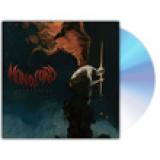
For well over a decade, MONOLORD have caused mass riff hypnosis with longform epics steeped in repetition, volume, and heaviness. One of heavy music’s most consistent and beloved bands, MONOLORD are gearing up for their next chapter with a new album titled Neverending. In looking for a new take on the genre, MONOLORD approached the legendary producer Sylvia Massy, known for her work with Tool, System of a Down, and Johnny Cash, among many more. The payoff from this new process is undeniable. Neverending feels like the culmination of 13 years of heavy, molten music, with a keen eye towards creating a sharper album. “The recording of this album is an example of the spirit of MONOLORD’s camaraderie,” says bassist Mika Häkki. “We’ve looked back and seen for the first time how much we have done as a band collectively, and realized what an intense 13 years it has been.” "The lyrics on this album are more personal than before because I went through some major life changes in the last couple of years,” guitarist/vocalist Thomas Jäger says. “I usually write about religion and how people are superstitious, but this record is more about relationships between people. But it’s not all about me. Sometimes I’m writing from another person’s perspective.” Neverending’s lead single “You Bastard” offers listeners a sharp contrast: A propulsive groove offset by lyrics about suicide. There’s two sides to suicide,” Jäger points out. “There’s the person who commits suicide and the people who gets left behind...The choruses represent the person left behind, and that person is calling the other a bastard—but it’s not pointing fingers or saying, ‘You suck.’ It’s more like, ‘You left me here with all the bullshit.’ It’s an understanding that life is not easy." Though it might not be immediately obvious, album opener “Iodine” was inspired by 70's rock epics like Lynyrd Skynyrd’s “Free Bird,” The Eagles’ “Hotel California,” and Led Zeppelin’s “No Quarter." Elsewhere, album closer “It’s Neverending” is the first MONOLORD song that Jäger doesn’t sing on. Instead, the death-metal style vocals are performed by former Entombed bassist Jörgen Sandström, (also of Grave, Domedagen and Firespawn.) 13 years on, MONOLORD’s path takes a new turn, and Neverending becomes the band’s most befitting album title. “It's been a wild ride and still is,” says drummer Esben Willems. “I've spent a quarter of my life in this band. Looking back, I'm incredibly proud of what we've accomplished along the way, and in many ways, this album feels like the essence of everything we've done so far. My mindset is the same it's always been, to be the absolute best the three of us can be.”
There are two versions of the record - classic black vinyl and transparent green limited edition (100 numbered copies) - both 180g with printed inner sleeve.
"PORTRETY" (Portraits) is a one-of-a-kind series – it focuses on artists known for their strong connection to the drums. Each person invited to the project is given freedom in their work. Ultimately, the track created for the album must be signed with the real names of our protagonists – that's our sole criterion.
This is how a kaleidoscope of sounds and eight original perspectives on music emerges.
LINER NOTES by Bartek Chaciński:"For part III of the compilation series focusing on Polish drummers, I’d like to start, as per usual, with a one liner…
There are three types of drummers: Those that can count, and those that… can’t.
Ok, but looking past the punchline, it turns out that there is, in fact, a third type: Drummers who can count, and pretty well too, but still struggle with triple rhythms. Amongst those who have ascended the heights of triple rhythm perfection you will certainly find, Piotr Gwader. One of the leaders of the movement, we could call an “Oberek Revival. He even proposed a new form: Footberk - splicing of Polish Folk dance and Chicago Footwork. He performed live with the OG of Footwork - RP Boo (Arpebu), but equally, he could successfully form a footberk duo with Jacek Prościnski, another protagonist from “Portraits 3”. Prościnski has been deeply immersed in the world of electronic dance music for years and offers us yet more proof of those interests here.
Triplets are also no stranger to Ola Rzepca (synonymous with the Drekoty Trio), in whose music there is no shortage of rhythmical complications and tempo changes. The same can be said of the improv-friendly contemporary jazz presented by Patrycja Wybrańczyk. These two Polish drummers show how versatile this discipline is on the Polish jazz scene. These qualities have already been well documented by Marcin „Groh” Grośkiewicz, but never so strongly as here.
Szymon „Pimpon” Gąsiorek is a musician who has made unconventionality the foundation of his individual style. Yet even in the piece by Jan Pieniążek (a dynamic and equally versatile drummer), we find an element of surprise in its melancholic atmosphere and construction, which introduces a triple rhythm while pushing the drum parts into the background. Portraits, on the other hand, does the complete opposite with its protagonists - it positions them in the foreground as the creators of specially commissioned original works. From this perspective, perhaps the most familiar names here may be Emade and Albert Karch, who are known as outstanding music producers and among the most interesting in Poland. “Portraits III” has presumably given them a momentary break from producing other artists, while for the music industry, it’s also a pleasant break in the rhythm and a shift of emphasis."
There are two versions of the record - classic black vinyl and transparent green limited edition (100 numbered copies) - both 180g with printed inner sleeve.
"PORTRETY" (Portraits) is a one-of-a-kind series – it focuses on artists known for their strong connection to the drums. Each person invited to the project is given freedom in their work. Ultimately, the track created for the album must be signed with the real names of our protagonists – that's our sole criterion.
This is how a kaleidoscope of sounds and eight original perspectives on music emerges.
LINER NOTES by Bartek Chaciński:"For part III of the compilation series focusing on Polish drummers, I’d like to start, as per usual, with a one liner…
There are three types of drummers: Those that can count, and those that… can’t.
Ok, but looking past the punchline, it turns out that there is, in fact, a third type: Drummers who can count, and pretty well too, but still struggle with triple rhythms. Amongst those who have ascended the heights of triple rhythm perfection you will certainly find, Piotr Gwader. One of the leaders of the movement, we could call an “Oberek Revival. He even proposed a new form: Footberk - splicing of Polish Folk dance and Chicago Footwork. He performed live with the OG of Footwork - RP Boo (Arpebu), but equally, he could successfully form a footberk duo with Jacek Prościnski, another protagonist from “Portraits 3”. Prościnski has been deeply immersed in the world of electronic dance music for years and offers us yet more proof of those interests here.
Triplets are also no stranger to Ola Rzepca (synonymous with the Drekoty Trio), in whose music there is no shortage of rhythmical complications and tempo changes. The same can be said of the improv-friendly contemporary jazz presented by Patrycja Wybrańczyk. These two Polish drummers show how versatile this discipline is on the Polish jazz scene. These qualities have already been well documented by Marcin „Groh” Grośkiewicz, but never so strongly as here.
Szymon „Pimpon” Gąsiorek is a musician who has made unconventionality the foundation of his individual style. Yet even in the piece by Jan Pieniążek (a dynamic and equally versatile drummer), we find an element of surprise in its melancholic atmosphere and construction, which introduces a triple rhythm while pushing the drum parts into the background. Portraits, on the other hand, does the complete opposite with its protagonists - it positions them in the foreground as the creators of specially commissioned original works. From this perspective, perhaps the most familiar names here may be Emade and Albert Karch, who are known as outstanding music producers and among the most interesting in Poland. “Portraits III” has presumably given them a momentary break from producing other artists, while for the music industry, it’s also a pleasant break in the rhythm and a shift of emphasis."
Maybe it was inevitable that Vilhelm Bromander and Fredrik Rasten would find each other. A symbiotic musical alliance of suggestive combinatory magic that stretches back to the interstitial two day space that separates their dates of birth and manifests here as the movement between ‘perfect’ or ‘just’ intonation and the ragged, psychoactive energy of the slippages from and towards that togetherness that render otherwise simple patterns or generally understood repetitions as wildly other and alive.
Astral Twins shares ‘twin’ works by each composer. The patiently unfolding real time retuning of Fredrik Rasten’s guitars on the a-side’s Sojourns and Vilhelm Bromander’s quickened steps and spry looping melodies on the flip’s Partially Dancing.
Both artists have history of going deep into the aesthetic and acoustic impact of intonation (how you think about what is ‘in tune’). Where their first LP (...for some reason that escapes us, 2019, Differ Records) shared a gorgeous set of sustained tone colour fields, this time they lean more explicitly into the folk music traditions of Scandinavia and further afield, whilst echoing the zoned minimalist atmosphere of Arthur Russell’s classic Instrumentals.
Recorded up close and in real time at Fylkingen’s soon-to-be-abandoned temporary location in Stockholm’s southern suburb of Bredäng, Astral Twins sings with the possibility that one plus one can equal more than two.
Fredrik Rasten: Sojourns explores the live retuning of guitar and double bass in a sequence of just intonation harmonies. A guitar ostinato runs throughout the piece where the retuning becomes an integral part of the composition. The slow pace reveals every detail in the transition from one harmonic arpeggio to another — how interfering waves emerge and disappear as the tonal interactions settle in electric clarity. The double bass shadows the guitar's process and comments with occasional pizzicato tones and register jumps, at times providing a low foundation for the sound and sometimes soaring together with the guitar. This is music that is deeply listening; experimental and at the same time humbly inviting many kinds of being with sound.
Vilhelm Bromander: As the title suggests, this song has a partially dancing character. The title also has a double meaning with reference to the partials and harmonics that dance together. The basic idea was to write music in just intonation that instead of being drone-based is reminiscent of a lightly dancing folk music, where the joyous feeling of just being in the music — “musicking" — is allowed to lead the way.
The double bass plays repeated overtone double stops in an open harmonic progression with subtle modulations that is inspired in equal parts by Steve Lacy's persistent repetition of phrases as east-asian khaen music. The guitars and mandolin have a freer role, with plucked retuned strings that enhance the bass's modulations and provide forward movement. The music invites to both melodic and spectral listening, suddenly halting so that other focal points can reveal themselves. For example, a chord sequence suddenly transitions to a more spectral part where Fredrik is playing a bowed guitar with a chain, several plucking guitars, voices, and pitch pipes. I wanted to make something ‘orchestral’ with just two people and no overdubs: a dance of overtones and open resonant strings, where we seamlessly take turns standing in the foreground.
CQ Wrestling are today announcing their sophomore album Resistance for release on 29th May.
There’s a saying that simmers beneath the sonic assault of Resistance, the new album from CQ Wrestling. “Nothing changes if nothing changes,” recites Jake Mac, who knew of this idiom before 2024; before the loss that turned his and bandmate Charlie Woods’ worlds upside down; before the “year of complete mayhem, mess and chaos” that followed. From the outside looking in, the Brighton-based duo may have seemed on the top of the world. Then known as Chappaqua Wrestling, the exhilarating energy of their debut album Plus Ultra had seen the band lauded as future British music scene conquerors. The pair had a major label record deal to their name. Sweat dripped from the walls at headline show after headline show, in front of rapturous fans – and yet something felt amiss.
“We were selling out tours and people were loving the music, but honestly, we just felt f****** lost,” says Woods. Then tragedy struck. “It completely derailed us,” says Mac, recalling how the sudden death of his father – “a big part of the project” since its inception – sank them both into a period of grief and introspection. Amid the mourning emerged a desire to transform.
RESISTANCE is an album forged in the embers of personal tragedy and hammered into shape by desire, resilience and resolve. Detailing a metamorphosis, new single ‘Pacifico’ draws a line in the sand for the band as they recover from a time of tremendous upheaval to find themselves following their own creative compass, with renewed vitality.
"This album is a collection of songs above all about trying to find joy and hope in dark times”.
Having already toured the UK/EU supporting the likes of Gregory Porter, Jools Holland and The Teskey Brothers, alongside selling out multiple headline shows in the UK and EU (Ronnie Scotts in London, Unterfhart Jazz Club in Munich and Jassmine in Warsaw among others), she's also co-written with the likes of Caro Emerald, Ruby Turner and Roberta Campos, and broken through to new territories via national radio play-listing in The Netherlands, Germany, Belgium, France and Italy, as well as having strong radio support from BBC Radio 2, 6 and Jazz FM. Kat's third album 'What Happens Now' is a collection of timeless yet contemporary beautifully crafted songs with lyrics that cut to the core. Inspired by artists such as Emily King, Lake Street Dive and Raye, alongside legends Stevie Wonder, Aretha Franklin and Carole King that Kat grew up listening to, 'What Happens Now' is an amalgamation of her influences underpinned by her inimitable tone.
It’s rare that a certain sound is entirely an artist’s own. Although undeniably a stew of impeccable influences – from blues to folk to Latin to dusty funk, soul and hip-hop – one cannot hear a Tommy Guerrero song without immediately recognising it as his - and his only.
The cult skater from San Francisco is globally renowned as one of the original members of the legendary “Bones Brigade” team. And as an accomplished multi-instrumentalist, his laid-back soul is beloved by all who’ve basked in its blissful glow.
There’s something elemental about this music that really stirs the soul. Strikingly beautiful and instantly addictive, it’s a kind of funk-fuelled, melody-driven, groove-based magic. There’s a serenity and heart in the playing that radiates warmth and splendour, as if crafted for endless sunsets. His albums that surfaced on Mo Wax at the turn of the century have been treasured since their release and it’s two of his most vital LPs that we’re honoured to reintroduce.
The originals were quietly pressed on to a single piece of vinyl so we’ve worked closely with Tommy this year to bring you these fresh, limited editions. They have been lovingly remastered, cut nice and loud on to heavyweight double vinyl and presented in deluxe gatefold jackets.
Soul Food Taqueria continued Guerrero’s guitar soul but represented a step forward with its polished production and greater complexity of instrumentation. Denied the promotion it deserved upon release, it flew under the radar. It is now the most wanted record of his wondrous back catalogue.
Guerrero’s atmospheric touch and subtle guitar provide lush, glimmering pieces of musical texture. Within his spacious compositions, uniquely arranged instruments flourish alongside each other to create a languid soundtrack for halcyon days.
As ever, the diversity on display is beguiling. From bossa nova, samba and cumbia rhythms to understated folk, funk and soul grooves, this is another exotic set of mellow gold; perfectly represented by ESPO’s memorable artwork. Furthermore, the title’s hybridity reflects the intoxicating sweep of stylistic flavours served up, reminding us that, however tricky it is to categorise Guerrero’s special blend, it’s always a pleasure to indulge in something so creative and adventurous.
Dubby, bass-heavy instrumentals give way to moody folk-soul – witness “It Gets Heavy”, featuring melancholic vocals from Gresham Taylor – whilst “Thank You MK” is a gentle ode to the tropics, featuring ethereal instrumentation, bright bass and warm, jazzy guitars. The second half in particular contains a number of stunning ambient tracks – check “Lost Unfound”, “Another Brother Gone” and “Broken Blood” - built around minimalist, laid-back grooves and detailed guitar orchestrations which wouldn’t be out of place on the latest Jonny Nash release.
Guerrero closes this flawless set with a moment of true beauty. Restrained and graceful, “Falling Awake” is a pared back piece containing meditative guitar melodies set against melancholic piano arrangements. It brings proceedings to the most peaceful close. Seductively good, it reminds you just how great simplicity can sound.
out of Stock
Last delivered 4 months ago available to reorder, subject to availability
A dynamic DJ and producer, the Galway-born, Berlin-based artist is driven by mood not genre, gleefully scribbling outside the lines to craft rhythmic, high-vibration dancefloor cuts that make them a delicious match for the Chunkers. Just reference their pin-sharp releases on Radiant, Punctuality, Planet Euphorique and their own World of Worlds imprint. While anyone who’s caught their throwdowns at Draaimolen’s legendary forest stage, Horst Festival or London’s infamous queer party Club Are already knows what’s up.
Their contribution to the BSC catalogue is bang on. Lead cut ‘Track Like’ is a straight-up Chunker. Beginning life as an instrumental, it’s a pumping house cut marked by a grooving bassline, tight drums and a contained ravey energy, before Eoin DJ added that vocal that took the production into peak-time party territory.
A producer who requires no introduction – Jennifer Loveless join the Chunkers fold with a full-bodied remix of ‘Track Like’. Lock in for a funky maximal re-rub with the attitude turned up to 11. Back in Eoin DJ’s corner, the crisp ‘n’ punchy ‘Pure U’ is driven by fat kick drums, euphoric chords and a chunky rolling bassline. Exquisite stuff. A tight Dub version is included in the pack. The EP rounds out with the perky ‘Feel Deeper’, which channels ‘90s New York house and circuit sounds and is built around a hooky vocal line and rhythmic drums.
Eoin DJ follows BELLA, Eliza Rose, Papa Nugs, Paperkraft and remixes Peach and CARISTA in joining the Big Saldo’s Chunkers family as Sally C delights in growing the label via a carefully curated roster of artists.
“I loved the label already, so I was super stoked when Sally asked me to do a release. Chunkers is always
so on-point and consistent with its output. All of the releases are certified party starters – fat basslines, catchy vocals, full of energy and tuned to perfection to hit on the soundsystem. I used that as a jumping off point when making the EP. You could say it’s Chunkers – Eoin DJ style.” – Eoin DJ
“I was hooked on Eoin’s sound since they released ‘Ode to Beachball’ in 2024 on Punctuality Records. I love their ability to weave emotion and groove so seamlessly. It’s been a pleasure working on this EP – I’ve been endlessly rinsing all of the tracks. Such a great producer!” – Sally C
out of Stock
Last delivered 4 months ago available to reorder, subject to availability
While it builds directly on his work with the “Ultrascores,” it also marks a turning point: a more contemporary sound, broader songwriting, and more explicitly political and social themes make Funny How? his most accomplished album to date. It’s also his most accessible: inspired by American stand-up comedy, Funny How? sounds like a joyful mix of all the music that inspires the artist: soul, jazz, rap, musicals… Thus, throughout the album, major stand-up figures like Dave Chappelle, Marina Franklin, Dulcé Sloan, and Tiny Thickemz appear alongside emerging comedians filmed in more intimate comedy clubs, composing a moving portrait of the new American scene.
Drawing on archival footage and sequences shot for the project in New York and Chicago, and true to his principle of harmonizing reality, he reveals its hidden notes, replaying and developing them throughout a fascinating process. The result is a major work, a choral, political, and deeply musical narrative. In concert, the work unfolds majestically through a hybrid performance where music and images respond to and converse with one another.
The premiere of Funny How? on April 17 and 18, 2026, at the Cité de la Musique in Paris is already sold out. The album is scheduled for release on May 22, 2026.
The debut album from online sensation Ricky Montgomery, Montgomery Ricky, turns 10 on April 1st of this year. It has racked up over 2.2 billion streams thanks to Platinum indie-pop hits "Mr. Loverman" and "Line Without a Hook," and both songs are set to hit 1 billion streams each before the end of 2026. Since blowing up on TikTok during the pandemic, Montgomery Ricky has averaged 1M streams per day. This year, Ricky is set to release Montgomery Ricky +3, an upcoming EP of previously unreleased songs from the Montgomery Ricky era of music that Ricky has revisited.
This release features "Oh My My", a song that features the same second verse from "Line Without a Hook", and the cover art for the release will be sketches of the album that are previously unreleased.
Peach’s Soak Vol. 1 is a cross-Canadian link-up with Mood Hut that moves through slower, deeper waters.
The mini-LP was written after a tour through Asia that opened up something new in how Peach approaches making music. The turning point, as she tells it, came during a visit to a neighbourhood sento in Tokyo, while surrounded by steam rising in suspended time, something clicked about the relationship between the body and the sounds she wanted to make.
She’d been learning about cycle synching and working out with the phases of her hormonal cycle, respecting energy fluctuations throughout the course of a month, and decided to apply the approach to writing music. She allowed shifts in energy to guide tempo, density, and emotional tone rather than strictly answering to the floor.
Soak came out of this exploration, sketched and layered with field recordings from her trips to Vietnam and the Philippines during a challenging time in her life. Fragments of heat, air, and shoreline are absorbed into the music itself. Vapourous pads, low-end weight, fractured percussion, and melodies hover at the edge of dissolution. Water runs structurally through the record in surges, in tidal pacing, in the slow accumulation of texture.
Wherever this music finds you, please enjoy the Soak.
Our very first release on the label back in 2018. We are always being asked if we will repress it again, and now we have. But this time it's slightly different to our first pressings - for this repress we took the original DAT rips to Dapz at Compound Audio for him to master. And then those masters were shipped to Beau at Ten Eight Seven Mastering. So now this release is audibly similar to our other releases over the past 8 years - and in turn the label has been updated. So for those collector headz out there, it'll always be apparent which pressing this one is.
out of Stock
Last delivered 3 months ago available to reorder, subject to availability
• “Guerrilla Girls!”, Ace Records’ much-anticipated first release of 2023, takes us on a thrilling ride from punk’s mid-70s origins, via the left-field post-punk groups, jangly female combos, grunge bands and vigilante Riot Grrrls of the 80s and 90s, to the she-punk bands of recent years – a five-decade alternative to the macho hegemony of rock.
• The collection highlights songs that emerged out of a dynamic underculture of female creative expression. What unites the featured artists is a healthy disregard for the way the music industry ties up its female performers into pretty, neo-liberal packages. From Patti Smith, universal mother of the punk movement, to the Bags, Bikini Kill and Skinny Girl Diet, this music is anti-A&R. Including lesser-known names such as San Francisco street punk Mary Monday and London-based experimentalists pragVec, it shows that, rather than being a few novelty bands existing on the margins, these performers represent a stronger, more three-dimensional version of the female experience.
• Glorious resistance was on display in the first wave of UK female-fronted punk bands. Poly Styrene’s charged vocals on X-Ray Spex’s ‘Iama Poseur’, for instance, were a deliberate refusal to be a pretty punkette. With 15 year-old Lora Logic on saxophone, X-Ray Spex epitomised a fearless, self-defined agency that was at odds with the pastel shades and flowery, submissive Laura Ashley version of 1970s girlhood. By the early 80s, there was a hugely vibrant scene propelled by the diverse rhythms and voices of post-punk feminism. Lora Logic had left X-Ray Spex to form the interweaving textures of Essential Logic, the Mo-dettes mangled ska and off-kilter pop, and Birmingham band Au Pairs sliced political rigour into their lyrics and funky guitar work.
• Some female artists took that elemental energy into pop, creating pop-punk with a twist. We’ve Got A Fuzzbox And We’re Gonna Use It!! made a statement on music technology and female power with a cheeky play on words. Their song ‘Rules And Regulations’ shows that what Guerrilla Girls do well is debunking – taking genres of popular song and turning them inside out – like the way the Pandoras and the Pussywillows would amp up the driving beat and high vocals of the 60s girl group style, and subvert it with a DIY garage element.
• In its fanzine culture, use of montage and DIY music, 90s Riot Grrrl bands such as Bikini Kill and Bratmobile drew direct inspiration from 70s punk, articulated through the prism of Third Wave feminism. Too often, Riot Grrrl gigs were invaded by men intent on heckling “the enemy”. Liz Naylor, manager of British Riot Grrrl band Huggy Bear, says that their concerts became war zones. From the US grunge and Riot Grrrl scenes emerged more female instrumentalists, with bands such as L7 and Babes In Toyland proving that it was possible to recruit cutting-edge drummers, bass players and guitarists. Lori Barbero, whose relentless power drumming is a major element of Babes In Toyland, took the one instrument that has been a staple of male rock’n’roll and made it her muse.
• In the 2000s a new generation of girl-punk bands drew on the Riot Grrrl underculture to form their own sound. London trio the Tuts refashioned C86, Riot Grrrl and lush dream pop on songs like the ironically titled ‘Let Go Of The Past’, while the Regrettes injected shots of ska and doo wop into their explosive West Coast pop-punk. What began with Patti Smith and 70s punk has grown into a vast, spikey infrastructure of girl music. Many take inspiration from their foremothers, like Skinny Girl Diet whose vigilante feminism and punk distortion has been championed in return by Viv Albertine of the Slits. As long as these female artists stay aware of their musical vision and what they are trying to express – in a sense, A&R themselves – the underculture will continue to grow and flower. And this “Guerrilla Girls!” compilation is a celebration of that power.
• The back sleeve of the release features a scene-setting introductory essay by Lucy O’Brien (author of She Bop: The Definitive History Of Women In Popular Music). Each of the two discs come in a swanky inner bag containing a track commentary by compiler Mick Patrick (Ace Records’ long-serving champion of female artists of all persuasions) and exclusive interviews with many of the featured artists by Vim Renault and Lene Cortina (founders of the Punk Girl Diaries webzine).
out of Stock
Last delivered 4 months ago available to reorder, subject to availability