Ghanaian music legend Ebo Taylor returns with perhaps his finest album to date.
But don't take our word for it. That's coming straight from the man himself.
And he should know after more than 60 years in the business.
The 81-year-old composer, arranger, guitarist and vocalist has been a key figure in the evolving afro-funk sound since the Seventies, working with the likes of Apagya Show Band, CK Mann and Pat Thomas.
Famously, he rubbed shoulders with Fela Kuti while studying in London in the Sixties, before going on to lead the Ghana Black Star Band (featuring Osei and Sol Amarfio from Osibisa) and later the Uhuru Dance Band back in Ghana. Like Fela, he is always pushing forward, constantly reconceptualising his sound and
attuning it for a new generation. Part teacher, part messenger.
Listen to Yen Ara and you will not only hear the high-energy afrobeat, sweet highlife, jazz and konkoma influences that he's famous for. There is also a disco pulse and hard-hitting percussive edge to the tracks, which were produced by Justin Adams (Tinariwen, Rachid Taha, Robert Plant) and recorded in the live room at Electric Monkey Studio in Amsterdam. An Ebo Taylor for these times, you might say.
His group, the Saltpond City Band, are all handpicked local musicians featuring two of his sons. An appropriate line-up on an album whose titles means we'.
And they are on fine form, ripping through tracks such as 'Krumandey' (a surefire party starter) and 'Mind Your Own Business' (a simple message delivered over a frenetic drum rhythm).
Elsewhere, 'Aboa Kyirbin' will please fans of tough afrobeat grooves, while Taylor could well be inciting a riot at his next gig with 'Mumudey Mumudey', We hear him calling for 'preshaaah' and leading us into a call and response as the trumpet takes us higher. And the lift of those horns on 'Ankoma'm' evokes some
of his finest work such as 'Love & Death' and 'Come Along', the latter recorded with the Pelikans and featured on a recent Mr Bongo reissue.
Buscar:two seven
Seven years ago, Max Tundra sent Daphne and Celeste a tweet, asking if he could write and produce their comeback single. Four years later their song You & I Alone ripped through the internet. Today they announce the forthcoming release of the most unlikely comeback album of 2018.
Three years after their comeback song, 'BB' arrives online as their new album's appetiser, an uncompromising takedown of the anodyne and anonymous. BB stands for Basic Busker,' explains Max, any one of countless identikit instigators of mundane melodies that have brought the mood down in recent years. Pop music should lift the spirits - so why are the airwaves full of these mundane strummers'
The world has changed a hell of a lot since Daphne & Celeste stormed up the charts with their effervescent earworms U.G.L.Y. and Ooh Stick You, back near the birth of the 21st century. So you'd be forgiven for failing to predict the fruitful union of D&C with a maverick electronic producer known for his records on Warp and Domino Records. But Max Tundra has long held an ambition to become a pop producer, and this new album is an addictive combination of the eccentric, creative and melodic.
After an initial sharing of tracks and ideas around the release of that first single in 2015, Max Tundra set about writing an album's worth of material, inspired by the unique kinship, born of shared experience, between Daphne and Celeste, and his own unexpected part in their story. Last year, Tundra brought his suitcase full of songs to a desert retreat near Joshua Tree, where he joined D&C for the 'working holiday' that produced Daphne & Celeste Save The World.
A full-length album of giddy, ridiculous, genre-bursting pop, 'Daphne & Celeste Save The World' finds our friends in fine, soaring, melodic voice, with Tundra's restlessly inventive production a toothsome, chordy, maximalist feast. These 13 songs touch on subjects as varied as time travel, succulents, pipelines under the ocean, cabins in the wood, unadventurous guitarists and different regions of the brain, but above all the sweet, enduring friendship of those two people who, long ago, told us all to Ooh Stick You.
Intimate November tour also announced After their 2012 Mercury Prize nominated debut and 2015's Top 20 follow-up 'Born Under Saturn', musical adventurers Django Django are back for 2017, exploring new sounds with their brand new album 'Marble Skies' which will be released on January 26th on Because Music. Today the album launches with first single 'Tic Tac Toe', a rousing, trippy upbeat rock track with an enormous echoing hookline which will excite fans of the band's rockabilly-influenced elements. The accompanying video for 'Tic Tac Toe' was directed by John Maclean, brother of Django Django drummer/producer David Maclean and director of the critically acclaimed modernist western 'Slow West'. It depicts vocalist/guitarist Vincent Neff enjoying a rapid-fire day-trip to Hastings which takes a turn into the surreal and sinister when a ghost train puts him on a collision course with a grim reaper inspired by Ingmar Bergman's The Seventh Seal. As John Maclean explains: The film could be about the fading era of the beach arcades, time moving too fast, love and games, horror and happiness but it is actually about a man who needs to go buy a pint of milk to make a cup of tea.' After the brilliant, rave-shaped grooves and expansive arrangements of its predecessor, 'Marble Skies' is a more concise and focused offering which recalls the dynamic, genre-blurring music of their debut. It's a return to form, an album which finds them returning to the handmade, cut-and-paste approach of the past. Upon finishing the 'Born To Saturn' tour, Dave ventured to LA to work on a production project, whilst the other band members went to India with the British Council. When they returned, the new album process began with a back-to-basics approach which recalled the DIY ethos of the band's early days, Django Django - minus an absent Maclean - assembled at Urchin Studios in Tottenham, London with Metronomy drummer Anna Prior to experiment with the idea of coming up with new tracks through loose jamming sessions. After ten days of recording, there was plenty of raw material to send up to Dave (then back in his hometown of Dundee) for him to edit, refine and evolve. As ever, all four band members (completed by Tommy Grace on synths and bassist Jimmy Dixon) contributed to the band's music, melodies and lyrics as the final album took shape. Parts of 'Marble Skies' find Django Django sailing into uncharted territories, not least the driving title track (propelled by Prior's drumming), with its echoes of Krautrock and Suicide. Meanwhile, the hazy Zombies-like summer pop of 'Champagne', which explores the joys and ills of alcohol, was inspired by the band's over-indulgence during a boat trip on the Seine that was hosted by their label. Those drawn to the more dance-orientated side of Django Django will find much to love in the twisted '80s electro pop of 'In Your Beat' and the dancehall-influenced 'Surface To Air', a dreamy-headed pop song fronted by Rebecca Taylor of Slow Club. The collaboration came as a result of the two bands meeting up at SXSW some years ago, where Rebecca and Dave in particular bonded over shared interests in R&B, hip-hop and dancehall. Another more surprising collaborator is Jan Hammer, the Czech-born, American-based jazz-fusion and electronic artist who shares writing credits with the band on the gorgeously floaty 'Sundials'. If there's a mood running through 'Marble Skies', it's one of reflection on things past and present, and finding some kind of peace with your place in the grand scheme of things.
Up next from the Rhythm Buro label is an EP from Cyspe, who might be better known as Robin Koek or for being one half of the almighty Dutch techno duo Artefakt. RB003 marks a special occasion for the label in releasing a full EP from a single artist. After This World seems to proceed forward fittingly on the same path once paved by Cyspe's debut record 'Amnesia', released on Koek's own label, Insula, in 2014.
From the label's inception, Koek has been a supporter and close friend of the Rhythm Buro team. Playing live at Rhythm Buro parties as Cyspe as well as live with Artefakt, the two have worked and partied close together. A release from Cyspe became a very welcome natural step for all.
A1 bursts open with 'Nexus,' a cerebral-atmospheric-blanket of a dance track, arguably the strongest offering on 'After This World'. Apparently, quite the story can be told in just seven and a half minutes for those attuned to listening. 'Mindscape' comes next, providing a notably nice ambient contrast to its dance floor-feeding predecessor. A2 maintains a similar vein and flavor of the sublime, if not a further development toward the heavenly and spiritual. The B-side proves to be a prime example of what 'deeper techno' is capable of: grooves that drive the dancer from this realm to the next. Both 'Earwitness' and the title track are sure to be rich vehicles for those sacred 'closed-eyes' moments on the dance floor.
After two impressive remix EPs taken from ELLEN ALLIEN's seventh studio album, 'Nost', BPitch Control unveil round three with another heavyweight lineup of contributors stepping up to the plate to deliver their own interpretations of the queen bee's original works.
This time around we're honoured to have ALAN OLDHAM, EOMAC, AMOTIK and XDB volunteering their services to bring a whole new dimension to the music from 'Nost'. Each of the four artists has earned a sterling reputation, with a style all of their own.
(Disclaimer: release notes refer to the combined CD double-album release "Hot Flash: Best of The Voltags" on which all tracks appear together. "Electric Nightmare" and "Danger High Voltag" are released separately on vinyl format)
It does not happen that often any more that unreleased music from 40 years ago surfaces. Even more unlikely it is that the songs put on tape are such treasures. The Voltags were right at the forefront of the local Washington DC New Wave/Punk scene of the late 1970s. Influenced by Kraftwerk, Gary Numan, The Clash, and The B-52's, they have released only one 45rpm single during their existence. But during the time span of not even 18 months, they had recorded enough material for an entire album - but the songs remained in the can.
This is the story of The Voltags, a short-lived band which could have become famous and mentioned in the same breath as the aforementioned music legends of that era - if their songs had been released back in the day. Dive in and enjoy the sound of The Voltags, it is truly special. We here at Perfect Toy are thrilled to be label to finally release their work and we sincerely hope that they are finally getting the appreciation they so richly deserve.
Detailed information:
Dave Bennett and Hangnail Phillips grew up in Brookside Park, Newark, Delaware, USA, a small suburban college town nestled midway between Philadelphia and Baltimore. Their first band project evolved into Pump Productions (Pump) under which they released their only 45rpm single in 1970 (one of the two songs, "Pappy's Rug", can be heard on "Down & Wired 3", Perfect Toy Rec.). Soon after the recording of the single the two graduated from High School and disbanded Pump. Both moved on to form two new Newark bands. Dave was a founding member of "Snake Grinder & The Shredded Fieldmice" and Hangnail co-founded "Rudy Baker & The Vegetables".
In early 1979, two friends of Dave's, Nick Norris and Mike Fisher, became partners in a music production company, White Clay Productions. One of White Clay's first artists was Dave Bennett who had just written two excellent songs: "Electric Jungle" and "Son Of Sam". White Clay set up a recording session and Dave assembled a group of friends to record the songs. Before the recordings were even mixed, Dave asked Hangnail if he would join in a band to support the single and other songs he had written. When James Keesey (drums) and Rick Reid (bass) were added the line-up was complete. For a while they didn't have a name and then one day Nick Norris was looking at a photo of Dave standing next to a "Danger High Voltage" sign. Dave's head was in front of the E in Voltage and Nick laughed "Danger High Voltag" and so it was soon suggested that the band should be called "The Voltags" (pronounced Vol'-togs). After months of preparing a repertoire they were ready to play out. Their first gig was (October 20, 1979) at a gay disco in nearby Wilmington called The Backstage. On December 30, 1979, White Clay decided to put on a big show at the State Theater to celebrate the end of the Seventies ("The End Of The Decade Bash").
For the next year, with the help of White Clay, they recorded 19 songs, both studio and live recordings with White Clay's mobile unit. If not for these "off the board" recordings, many of their songs would have never been recorded. There was always talk of a second Voltags single but the strains of working so closely together were taking their toll on them and Dave decided to leave the group in December of 1980. The Voltags couldn't be The Voltags without Dave, and by the end of 1981, Hangnail, James and Rick, too, were ready to disband.
- all songs previously unreleased
- mastered from the original reel-to-reel tapes
- limited vinyl release
Hailing from Mali, Amadou Bagayoko and Mariam Doumbia first met as children at Mali's Institute for the Young Blind—both lost their vision at an early age. It was here that they started performing in the institute's Eclipse Orchestra, eventually marrying and began recording together in the '80s.
Over the span of three decades Amadou (guitar and vocals) and Mariam (vocals) developed an international following having recorded eight full-length albums and toured around the world. Their album Welcome To Mali (2008) was nominated for the Best Contemporary World Music Album' at the 52nd Grammy Awards. Tour highlights for the duo include supporting U2 on their U2 360 Tour, performing at the 2010 World Cup for FIFA's Kick-Off Celebration and performing alongside major acts across multiple genres such including Blur, Coldplay and Pink Floyd's David Gilmour.
The album also includes the hit single Bofou Safou,' which Stereogum calls the funk, the whole funk, and nothing but the funk.' The band discussed La Confusion and performed new music on a recent stop at KCRW's Morning Becomes Eclectic' during their recent sold out North American seventeen city headline tour — watch HERE. The band played major markets including New York, Los Angeles, San Francisco, Chicago, Washington D.C., Philadelphia, Montreal.
Amadou & Mariam recently released the Bofou Safou EP via Because Music. The EP includes the first two La Confusion singles, Bofou Safou' and Filaou Bessame,' alongside remixes of the EP's title track by Fatima Yamaha, Africaine 808, Henrik Schwarz and more. The term bofou safou' is a Bambara (the Malian national language) nickname given to nonchalant young men who would rather dance than work. Of the new EP, the group notes, We really like the remixes that were made for the EP. You get to hear our music in a different form, which is great. All five remixes manage to catch the essence of our song while really pushing those enticing afro pop and electronic vibes further.'
Granny13 opens with Nicola Ratti's 'Odd Doubt'. With the use of a modular system and tape loops, a broken rhythm is obtained by parallelism between single sound signals as LFO one or processed tapes.On the second side, Giovanni Lami's 'Johnny Leech' is made with a small bunch of equipment, just a chaotic hand-made synth (cacophonator) and a memoryman, working mainly on static electricity and leakage current in the synth used without any kind of power supply.
Reviews
The Wire
''Two Italian mucisians share a split single of glitchy fun and everyone goes some happy. Lami s piece uses a defective unplugged synthesizer to make huzzing chitters that have a kind of rhythm in spots. Ratti s contribution is a bit more structured it sounds like a record of accordion miniatures broken into pieces, then glued back together with little pieces of felt stuck onto it. Which would definitely be a pretty hep thing to hear.''
Textura
''Some releases qualify as art objects as much as musical collections, a case in point this recent seven-inch vinyl outing featuring material by Nicola Ratti on one side and Giovanni Lami on the other. That shouldn't be interpreted to mean that the musical content isn't worthy of one's time, as it assuredly is, but more to emphasize how striking the sleeve artwork by Opora is and how effectively it complements the musical content.Mastered by Giuseppe Ielasi and issued in an edition of 150 copies, the release opens with Odd Doubt, a concise experimental setting by the Milan-born Ratti, who's issued material on labels such as Anticipate, Preservation, Die Schachtel, and Entr'acte and who's presently working with Ielasi in the project Bellows, with Attila Faravelli as Faravelliratti, and with Enrico Malatesta and Faravelli in ~Tilde. Though Ratti started out as a guitar player, his current focus is more on beat-analog experimentation and sound installation. In Odd Doubt, Ratti's modular system and tape loops generate broken rhythms that varyingly call to mind dub-techno, even if dub-techno of an extremely wonky variety. Off-beat chords, crackle, and snare strikes add to the dubwise flavour of the material, though ultimately it registers as more of an experimental exploration than straight-up dub exercise.The flip side features Johnny Leech by Lami, a one-time photographer now known as both a field recordist and a musician focusing on soundscaping and sound-ecology. In his contribution to the seven-inch, Lami's chaotic hand-made synth (cacophonator) and memoryman give birth to blustery smears of static electricity that ultimately mutate into an Oval-like array of ripples and scratches. Johnny Leech is so removed from anything conventionally musical, it makes Odd Doubt sound like a Top 40 pop song. Like Ratti's piece, Lami's is short, so short, in fact, it gives the impression of being an excerpt from a larger sound art work. Here's a release where the abstract nature of the musical content matches its visual presentation.December 2014''
Vital Weekly 951
''Granny Records is from Greece, but the two musicians here are from Italy, of which I don't I heard from Giovanni Lami before. His piece is called 'Johnny Leech' and he uses a hand-made synth known as the cacophonator and a memory man (a delay machine), 'working mainly on static electricity and leakage current in the synth used without any kind of power supply'. It makes up for a nice piece of chaotic lo-fi sound, which is put forward through methods of improvisation. Quite a nice piece and it fits the format very well. The crackling of vinyl surely adds an extra layer. Nicola Ratti uses a modular synth and tape loops, of what seems to be percussive material, but the rhythm is broken down and the whole thing has a nice gentle feel to it, even when it bumps, clicks and glides, but the synth makes it more subtle. Here too one could say this perfect for a 7": one doesn't have the idea that this is cut from a longer part as is not unusual with this kind music. Especially Ratti seems to have worked out his music as a composition, which is very nice. (FdW)''Vital Weekly 951''Granny Records is from Greece, but the two musicians here are from Italy, of which I don't I heard from Giovanni Lami before. His piece is called 'Johnny Leech' and he uses a hand-made synth known as the cacophonator and a memory man (a delay machine), 'working mainly on static electricity and leakage current in the synth used without any kind of power supply'. It makes up for a nice piece of chaotic lo-fi sound, which is put forward through methods of improvisation. Quite a nice piece and it fits the format very well. The crackling of vinyl surely adds an extra layer. Nicola Ratti uses a modular synth and tape loops, of what seems to be percussive material, but the rhythm is broken down and the whole thing has a nice gentle feel to it, even when it bumps, clicks and glides, but the synth makes it more subtle. Here too one could say this perfect for a 7": one doesn't have the idea that this is cut from a longer part as is not unusual with this kind music. Especially Ratti seems to have worked out his music as a composition, which is very nice. (FdW)''Vital Weekly 951''Granny Records is from Greece, but the two musicians here are from Italy, of which I don't I heard from Giovanni Lami before. His piece is called 'Johnny Leech' and he uses a hand-made synth known as the cacophonator and a memory man (a delay machine), 'working mainly on static electricity and leakage current in the synth used without any kind of power supply'. It makes up for a nice piece of chaotic lo-fi sound, which is put forward through methods of improvisation. Quite a nice piece and it fits the format very well. The crackling of vinyl surely adds an extra layer. Nicola Ratti uses a modular synth and tape loops, of what seems to be percussive material, but the rhythm is broken down and the whole thing has a nice gentle feel to it, even when it bumps, clicks and glides, but the synth makes it more subtle. Here too one could say this perfect for a 7": one doesn't have the idea that this is cut from a longer part as is not unusual with this kind music. Especially Ratti seems to have worked out his music as a composition, which is very nice. (FdW)''
In the spirit of cultural pride, Rune Lindbaek provides the audio tour guide into the unexplored back streets of Norwegian Disco
His deep knowledge of Disco delicacies from the frozen north may be a revelation to those who've heard his more mediterranean outings,
however here we have an extended EP on untapped treats, leading with three hefty slabs of late seventies, matured Brunost on the A &
moving into more obscure territory on the flip, where the sought after I Dekning is followed by two more idiosyncratic jams, which possess the dancefloor heft of a well roasted reindeer shank
SUPER LIMITED !
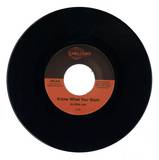
Melodies International proudly moves forward with an elusive piece of mid-tempo Chicago soul originally performed by Gloria J. Jennings in 1977.
Gloria was signed to Stage Productions as a gospel singer with pure and raw talent she had developed in the choir of her father's Southern Baptist Church. She was 16 years old at the time. To tutor her for R&B vocals, Willie C. Nance of Stage Productions spent 3 months taking the artist back and forth for vocal training 25 miles each way, 3 days per week.
At the time, Mr. Nance had made plans to work with singer and songwriter Theresa Eagins to record Know What You Want'. However, two days before the recording was set to begin, Ms. Eagins refused to move forward with the recording as she chose to take her religious faith more seriously and forgo the singing of secular music. Hence, Stage Productions turned to Gloria Jay to perform a song that would go on to move people thousands of miles away, many years later.
One of them was Patrick Forge: Back around 1990 I had a residency upstairs at the Wag Club on a Friday night alongside Paul Martin (he was Gilles P's A&R right hand man at Talkin Loud), the night was called Respect and we played mainly Soul, Boogie and Jazz-Funk. Many years later I bumped into Paul at a record shop and he quizzed me about a tune I used to play at the end of the night at Respect. Hhe described it as being an independent Soul seven inch on a red label, slow to mid tempo... and more to the point a bullet of a record. It piqued my curiosity so much I burrowed through my seven inches and even made Paul a compilation of likely contenders, his response was lovely selection, but it's not on there!'. Damn, a mystery! Many moons later whilst I was living in Japan, my tenant in my London flat said she'd found an old mixtape I'd done for her way back when and was desperate to know the identity of something she was calling the choo choo song'. Eventually when I was back in London she played the mixtape and I quickly identified her tune as Fabrica' by Cesar Mariano, however letting the tape play some time later a familiar descending chord sequence catapulted me back to those Friday nights at The Wag, and Gloria Jay's plaintive vocals reminded me of a record that had been absent from my life for far too long. I've no idea what happened to my original copy, I hunted another one down straight away, and I've kept it close ever since. Know What You Want' is a song that goes deep in such a simple, unaffected, almost naive way, Gloria's voice is both sweet and raw, it's built on simple chords and obvious instrumentation, but it's so much greater than the sum of its parts.
Know What You Want' is soul music, pure and unadulterated, there's nothing getting in the way of the feeling, it's straight from the heart.' Carefully re-mastered from the tapes, MEL008 comes forth in its original 7' format with a 14'x14' poster.
- A1: Cool Out
- A2: All Because Of You
- A3: Don't It Make You Feel Good
- A4: Love The Feeling
- A5: Positive Forces
- B1: Lucky Fellow
- B2: Never Know What You Can Do (Give It A Try)
- B3: Love Oh Love
- B4: Ella Weez
- B5: Could This Be Love
- C1: So In Love You
- C2: I Think I'm Falling In Love
- C3: Closer To The Source
- C4: Give This Love A Try
- C5: Right Or Wrong
- D1: Now That I Found You
- D2: Get To This (You'll Get To Me)
- D3: Lover's Holiday
- D4: Time Brings On A Change
Acid Jazz are pleased to announce details of the definitive Leroy Hutson compilation - Anthology : 1972-1984 on 20th October. Erstwhile Impression, Leroy Hutson's catalogue has become increasingly coveted over the years and this compilation collects his Curtom recordings together with two newly discovered tracks including Positive Forces which is available as an instant grat track when pre-ordering the album.
Native of Newark New Jersey, Leroy Hutson grew up In a part of the world that spawned many of Soul's all-time groups, amongst them, The Parliaments and the Manhattens. Smitten by the music he was to join a local quartet, The Nu-Tones and despite never recording the youthful Hutson experienced the thrill of being a singer. On splitting up, Hutson found himself studying in Washington DC and once more in the company of supremely talented artists including Carla Thomas and future collaborator Don Hathaway. Various recordings came and went with little chart success before, along with Hathaway he became central to a group of singer, songwriters and players under the tutelage of Curtis Mayfield at his Curtom label a relationship that initiated Hathaway's chart topping career when the pair co wrote the all-time classic and million seller The Ghetto.
Early 1971 saw Hutson replace Mayfield in the Impressions as he left to concentrate on his solo career, the transition was seamless and although relatively brief saw the band in the pop and R&B charts. His debut on the Billboard chart as a solo artist arrived with Love Oh Love, the first of a dozen Curtom singles he recorded during an exciting and turbulent decade for black American music.
The seven albums Hutson released on Curtom between 1973 and 1979 are a legacy that remain highly respected, almost revered amongst soul cognoscenti, an untold influence on an entire generation of musicians throughout the eighties. The demise of Curtom in the early eighties saw Hutson relocate to Elektra, where in 1982 he released Paradise - highly acclaimed and much loved for a time it looked like that release may spell the end but some twenty-seven years later, the newly monikered 'Lee' Huston unveiled Soothe You Groove You.
We started with the principle - the cosmic idea that we were taught by our father from a very young age - that the stars and planets make a sound, that deep in outer space there is audible harmony.'With its cathedral-like, richly resonant acoustics, the new HBE album is a brilliant expression of this interplanetary principle. The album is by turns urgent and contemplative, funky and reflective, varied in its textures, but entirely of one piece. Underpinned by concepts of our earth's place in the cosmos, held in place by meditation, swirling with notions of history, science, theology, ancestry, there is a rich conceptual brew here. But always, what talks loudest is the music. The album rings with what back in the 1950s the jazz critic Whitney Balliet called the sound of surprise'. At a time when the phrase Spiritual Jazz threatens in some quarters to become a tired cliche, this is a record that makes you believe again in the genre's validity.
Talking to Cid, one of the Ensemble's two trombonists, one phrase recurs: back to the beginning'. We wanted to go back to the beginning, when we were kids, real young, and our father would wake us up at 5 AM to practice for two hours before breakfast.' One outcome - initially unplanned but subsequently embraced - is that unlike their two previous albums on Honest Jon's, this is an album without a drummer. When we started, as Wolf Pack, just brothers on the street with our horns, there wasn't a kit in sight.' Book Of Sound retains plenty of rhythmic heft, but the absence of a drummer opens up space for a notably varied instrumental palette. Acoustic guitar, piccolo, synthesiser, alto sax - none of them typical HBE Instruments - all have their place on the album. Most striking perhaps are the vocal lines that thread through the album and give it a palpable warmth. In Wolf Pack, we rapped and played, this time we took it a step further.'
Sessions were recorded in Brooklyn and Chicago, and brilliantly mixed at Abel Garibaldi's studio in the Loop ( Abel was like a musician on this record'), and it's the Hypnotic's hometown that permeates. For Cid this is a deeply Chicago record: it's got the vibe of the lake, the vibe of the prairies opening up to the west'. It also has the vibe of those Sun Ra Arkestra albums recorded in Chicago in the 1950s, and - of course - the Phil Cohran albums from the 1960s.
It's Phil Cohran (the father of all seven members of the Ensemble and their first teacher, and not just in music) who is the album's guiding spirit. For Cid it's a major regret that, in the months before their father's death early in 2017, Phil was not well enough to play on the album. He loved the whole idea, and we had the perfect place for his zither'. But Book Of Sound is a magnificent testament to their Cohran legacy. You know, it's tough trying to satisfy everybody with our music. It's hard enough satisfying ourselves, let alone the jazz scene, the hip hop guys, what have you. With this album we just dropped all that as a consideration, and tuned into deeper principles.'
- A1: Tala A.m. - Get Up Tchamassi
- A2: Eko - Bowa'a Mba Ngebe
- A3: Uta Bella - Nassa Nassa
- A4: Charly Kingson - Nimele Bolo
- A5: Manu Dibango - Sun Explosion
- B1: Kemayo & K. System - Biram
- B2: Momo Joseph - Africain
- B3: Jake Sollo - Tinini Yanana
- B4: Pierre Didy Tchakounte - Soul Magabe
- B5: The Monstars - Funny Saga
It's just over 3 years since we launched the Africa Seven label in Paris and London. Our first release back then (Airways One) is still our best seller and had to be repressed 4 times so far. Forty or so releases later it is time to take to the clouds again. Being the unimaginative bunch we are, the fourth installment of our African sky filled musical cornucopia is called African Airways Four (Disco Funk Touchdown - 1976 - 1983). This time around all tunes have the Disco flavour. As ever it's all about the music... the skies are wide and funky and the air is filled with musical goodness. Your flight is about to leave.
Your flight opens with a punchy disco funk assault from Paris based Cameroonian Tala AM. Here with his drive bass and guitar funk riff 1981 stomper "Get Up Tchmassi". Next up and staying with the Cameroonian connection is Eko with "Bowaa Mba Ngebe". The lyrics talk of accomplishing the things in life for your family and yourself. The sweeping strings and gloriously uplifting music matching the sentiments of the words perfectly. Uta Bella began singing in the 60's and by the time disco hit in the 70's she was already established a singer in her native Cameroon, here the locked on groove of "Nassa Nassa" is a perfect snapshot of the sound and the African disco times.
Charly Kingson (cousin of Manu Dibango) is next with his "Nimele Bolo". Recorded in Germany with the cream of Munich's session musicians the bass synth is out in force on this one. Punchy brass, rock solid grooves and jazzy Rhodes add all the right ingredients for a fine disco synth excursion. Next is the musical heavyweight from Cameroon cousin Manu with his 1978 Disco, jazz funk masterpiece "Sun Explosion".
Side two opens with a blast of Elvis Kemayo and his piano and guitar funk bomb "Biram". Next Momo Joseph gives us "Africain". Best known in France as an actor, this disco funk groover was released on his self pressed LP "War For Ground" in 1983. A true gem indeed. Nigerian, ex Funkees member Jake Sollo is next with "Tinni Yanana". Recorded in the UK in 83 its slick and smooth with a hint of "at the car wash" groove. Pierre Didy Tchakounte follows on with his soul funk 'golden years' style groover "Soul Magabe". Produced by one of our favourite Parisian producers Slim Pezin. We close off our journey with the tribal chant disco-funk special from the Monstars "Funny Saga".
Ladies and Gentleman, we have landed at your destination, please remain seated until the aircraft has reached the terminal. We look forward to welcoming you aboard Africa Airways again soon.
Two years after his last outing on Get Physical, Roland Leesker returns to the label of which he is Managing Director with a brilliant new track that comes with a remix from Cardopusher. Leesker has only put out a select few releases over the last 15 years-both solo and as DJ Carrera and R&R with none other than Ricardo Villalobos-but he has a truly fully formed sound. This tune has been doing serious damage in the clubs for a while now and makes you wonder why Leesker doesn't release more! Entitled 'Thunderstorm' it is seven minutes plus of moody and dramatic tech with heavy synth clouds, whining machines and turbulent drums all whipping up a storm. Manic keys and heavy chords come in and out as fizzing textures all make it a real synapse firing affair that is designed to arrest the attention of huge crowds, and it sure will do that. Venezuelan born Cardopusher has a diverse and experimental sound that takes him from techno to electro to acid to rave to house on labels like Super Rhythm Trax, Zone and BNR. Here he masterfully cooks up another frenzied track with spraying acid, heavy, marching and industrial drums and a real sense of rave energy that will dazzle as much as delight in any set. Finally, Leesker offers up his own 'Dschinn mix' providing even more raw energy. Angry drum rolls, stomping kicks and huge hi hats all piled up and force you onto action. It's a superbly metallic, in your face track to wake up a crowd in the late night hours. With this EP, Get Physical's sensational 2017 keeps on getting better.
Alongside De Gama, Pierandrea The Professor aka Les Inferno is the man behind the much-loved Samosa imprint. A DJ for over 30 years, 'The Professor' is well known in his native Italy as a true vinyl connoisseur, a fact that's no doubt attributable to a seventy-thousand strong vinyl collection.
And so it is that he pipes up with the label's latest. Under his Les Inferno alias, Pierandrea concocts two classic jams (and two neat interpretations of each). A full-scale disco explosion, the EP is a treat for fans of sun-kissed house, the likes of which is sure to win plaudits from DJs such as Prosumer, Hunee and Ben UFO.
The action kicks off courtesy of the original Everything I Do'. Produced with an obscure disco sample at its core, it's a dreamy anthem with roots that will speak to fans of vintage Loft records especially. Effortlessly simple but devilishly catchy, it's the perfect tonic with which to help ease the autumn blues. The 'breakdown'
version strips the original of its vocals, allowing the drums to take centre stage alongside its gorgeous melodies.
On the flip, What Do You Think' goes even funkier still, with its dancefloor prowess epitomised by a vocal that wouldn't sound of place in Paradise Garage. A truly momentous record, it's sure to unleash pandemonium on any DJ it's allowed to let loose on. If you're after something similar but without the campness of the original,
there's a dub version that ought to do the trick. A stunning release throughout.
Tidy Line-up including Randomer, Gilb'R, Voiski and Tolouse Low Trax...TIP!
In terms of experimental, techno, very few come close to the impact that this UK producer has had on the scene. With a sound that is rarely classifiable, Randomer's Dekmantel contribution is a staggered, minimally-twisted, dark, kind-of-two step, awesome thing. Versatile Records' Gilb'R has found himself an integral part of the Dutch scene since moving to Amsterdam, and brings forth his organic, percussive grooves that have helped define his music, and label to date. Salon Des Amateurs' Tolouse Low Trax provides a seasoned session of amniotic, grizzled, hypnotic post-everything music, that is eerily discomforting and wonderfully pleasurable at the same time. And on the EP's fourth track, Parisian techno wizard, Voiski adds layered organic, futuristic loops that work to stale the progress of time, and space.
To date the 10-year anniversary series has seen new releases by the likes of The Egyptian Lover, Levon Vincent, Gigi Masin, Fatima Yamaha, Burnt Friedman, and many more. Each record is held together by stylistic glue, touching upon the varying facets that come to define Dekmantel as a label, and event series. Along the way, many pioneering artists have been brought under the Dekmantel umbrella, making their debuts on the label - and this, the seventh EP is of no exception, with Gilb'R, and Tolouse Low Trax all releasing their first full tracks with the Dutch imprint, while Randomer and Voiski, having previously released on Dekmantel's UFO techno side imprint, are also brought into the main fold.
After a two year hiatus, Kiani returns to his Far Out Systems alias for this EP, his first offering for a label outside of his own Tanzbar Records.
Thomas Neyens first left his mark on the dance scene under his alias Kiani & His Legion, with two releases on Red D's We Play House Recordings in 2013 and more recently on Something Happening Somewhere, quickly demonstrating his accomplished production flair. This led the Belgian establishing his own imprint, Tanzbar Records, where he dropped two EPs under his Far Out Radio Systems moniker - bringing a more 'dancefloor focused' sound. Now after a two year hiatus, Neyens returns to his Far Out Systems alias for this EP, his first offering for a label outside of Tanzbar Records.
'Spheres' kicks off the release, with its soft bassline perfectly complimenting the hazy synths, syncopated drums and the mesmerising nuances from the hang drum that feature later in the track. The slow burning style continues on 'Jane Goodall', with the track's atmospheric textures gradually overpowered by a steady selection of drums, percussion and off-kilter effects. 'Vaquita' sees Far Out Radio Systems up the tempo whilst still sonically retaining the melancholy, hypnotic sound of the EP, as the snare-led rhythm gradually gains in momentum over its seven minute duration. Closing this excellent four track EP is 'On A Quest', a pulsating number that combines soaring, ethereal synths with a club ready groove that is perfect for the shadowy dancefloors the Belgian DJ/producer performs to.
DJ FEEDBACK
Early support from
Joris Voorn: Great atmospheric EP!
Blawan: really nice stuff here ! really like Vaquita
DJ Deep: nice release
Aera (Innervisions): Vaquita is a real beauty!
Baikal: whole release is dope. big fan of kiani. big up.
Norman Nodge (Berghain): "On A Quest" sounds promising!
Richie Hawtin: downloaded for r hawtin
Ripperton: Great EP every track get something! Thanks!
Âme (Kristian): thanks
Red D (We Play House): Needless to say I have preordered this one on vinyl ;-) 'On A Quest' is gonna be the one for me. It's got that Kiani-going-emotional vibe I dig so much.
Anthony Collins: Jane goodall track is tight !
Nuno Dos Santos: ah sweeet thanx man!
Brothers' Vibe: Solid pieces, def support!
Dark Entries and Serendip Lab have teamed up to release 'Prototech', the first vinyl retrospective by German electronic trio Hypnobeat, recorded 1984-86. James Dean Brown and Pietro Insipido formed Hypnobeat in 1983, but it was the addition of Victor Sol only a few months later that found the project reaching, as Brown puts it, "the desired level of technical sophistication." In time, Tobias Freund also lent his talents (and equipment) to this loose-fit sonic scheme, where the protagonists sought a new, electronic manifestation of mankind's tribal music roots. Two cassette releases surfaced - 1985's "Huggables", and "Specials/Spatials" the following year. By this point the Frankfurt-based group had already explored fiercely mechanical creative expression through various configurations of hardware and personnel, revolving around core ingredients such as the TR-808, TB-303 and MC-202. The project lived on in spirit as Brown activated Narcotic Syntax in the 90s. While a more modern, digital concern, rooted in the Perlon label family, NS still channeled the Hypnobeat concept of a "new tribalism", not least on their "Provocative Percussion" double 12" released in 2006. For all the punky veneer, there are instances where these tracks reach staggering levels of sophistication, not least on "Slash! Buffalo Eats Brass" with its intricately programmed 303 lines and nimble beats that sound a far cry from most machine music made in 1986. Prescient "Can God Rewind" is also dazzling in the complexity of its percussion and the richness of its synth lines in C as they throb out a bastardised version of acidic Disco straight out of the rhythm collider. Elsewhere, some tracks are more primal in their execution. Visceral opening track "The Arumbaya Fetish" was a cathartic venting of Brown's least favourite sound on the 808, the iconic cowbell, while the astounding proto-Acid miniature "Moon Jump" places limber 303 lead lines in a hail of thunderstruck patterns. "Kilian" has a stripped down quality that speaks more to the industrial era that Hypnobeat was conceived in, and "Mission In Congo" is a raw, reverb-soaked drum workout that captures the percussive-obsessive nature of Hypnobeat perfectly. Six of the seven tracks selected on this collection were primarily powered by two 808s. "I am amazed that the release sounds like we really had a plan back then..." states Brown, but this accidental magic is in fact the raison d'etre of Hypnobeat. They weren't the only ones prefiguring the next big revolutions in electronic music in the mid 80s, but there certainly weren't many artists stumbling across modes of expression that sound so relevant today.
All songs are remastered for vinyl by George Horn at Fantasy Studios in Berkeley. Housed in a jacket featuring cave engravings by Pietro Insipido of an archer and animal printed in a wallpaper pattern style designed by Eloise Leigh. Each copy includes an transparent insert of an x-ray photograph from 1984 of Romulus Cœurque holding the circuit board of a BOSS DR-55 rhythm machine.
Dark Entries present the sophomore album from Austin, Texas analogue hardware enthusiast Bill Converse. Immersed in the early days of the 90s midwest rave scene, Bill began DJing at a young age in Lansing, Michigan. Luminaries such as Claude Young, Traxx, and Derrick May were key early influences. Techno, noise, ambient and tape processing are all part of his uncanny sound palette. His debut album 'Meditations/Industry' was released on cassette in 2013 and edited for a vinyl release in January 2016 followed by two 12' singles 'Warehouse Invocation' and '7 of 9' the same year.
'The Shape Of Things To Come' is a 70 minute journey spread across two pieces of vinyl. It's comprised of seven tracks recorded directly to tape with no overdubs, made at Converse's home studio. At the time of recording, Bill was sending this material to Josh Vance (Josua Dorje Ngodup) for feedback. Most of the time Josh would respond in the form of artwork, and then Bill would create another track inspired by this feedback chain. Converse has dedicated this series of tracks to him. The songs on this album reveal a sublime influence from Detroit techno, early Chicago house, and Acid. For this album Converse slightly bumped up the tempos geared for dancefloor energy. Built around vintage synthesizer lines and gritty drum machine percussion, the tracks evoke how things have changed and how they have come to be.'
All songs were mastered for vinyl by George Horn at Fantasy Studios in Berkeley. Each LP is housed in a gatefold jacket with a painted photograph portrait by Dietmar Busse and layout design by Eloise Leigh. The gatefold conceals an otherworldly collage made by Josua Dorje Ngodup. Each copy includes a postcard featuring artwork from Bill's sister with notes.