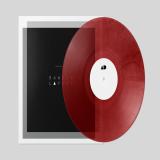
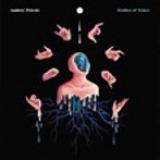
South African multi-instrumentalist Mpumi Dhlamini’s Nebula Nomad explores themes of deep inner reflection and cosmic wonder. The EP puts three tracks from the 2024 album on vinyl for the first time: two reimagined versions of earlier compositions ‘The Higher Being’ and ‘Sibusise Nkosi’, along with ‘Culmination’. Dhlamini writes, produces and performs all vocals and instruments, with contributions from Mzizi, Tendai 'Shoxx' Shoko, Ayo Solanke, Sibusiso Mkhize, Zoe The Seed and Sphelelo Mazibuko. A brief introduction to a remarkable talent at the vanguard of South African spiritual jazz who has battled adversity and come out stronger, with something important to say.
The re-launch of mars assault records last year brings the possibility to re-issue its back-catalog: the tunes that were released during the first run of the label (1998-2003).
here we have 4 tracks from "Arach", from the studio concept "centiped sound system", ( a duo of composers, also including Peter Pan), which were originally released on two records ( mars assault 3.65b, mars assault 3.7r1) in the years 2000/2001: very sharply produced hard-tekno, very original also (the "sound of centiped" is like no other hardtechno), and yet 100% as relevant on the dancefloor nowadays as it was at the time.
Another mars assault record equality good to play in a party as to listen to at home.
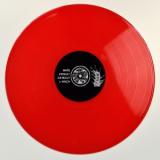
2025 cut with Hervé at dK Mastering /Paris (cut in 33/45rpm for optimum sound quality); 300 copies limited re-press, 180g pressing; a very sober object on the outside, but translucide red within.
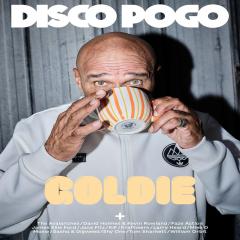
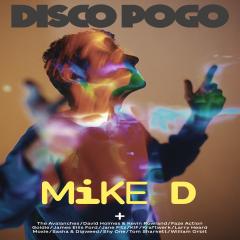
For Autumn/Winter 2026/2027 our tenth issue is possibly our best ever with three heavyweight cover stars in the shape of Goldie, Mike D and The Avalanches. Issue 10 also features: Kevin Rowland and David Holmes - Two of the most dapper chaps in music go for a walk through London. William Orbit - We pay tribute to the producer who was simply ahead of his time. Sasha and John Digweed - The Man Like and Diggers reflect upon 30 years of their seminal ‘Northern Exposure’ mix. Larry Heard - Can you feel the genius of the man with his Mr. Fingers in many musical pies? Kraftwerk and Sheffield - How a group of German futurists turned the Steel City on its head. The Warehouse Project - The revolutionary Mancunian clubbing institution turns 20. We bring the cake. They blow out the candles. Shy One - It’s been a long and winding road for the artist also known as Mali Larrington-Nelson. Tom Sharkett - The one-man disco has a groove machine and he’s going to use it. Moxie - Moxie by name; moxie by nature. All hail the On Loop leader. KiF - Teenage friends collate an album dedicated to the life of the passion flower. Plus… loads more across 192 pages.
For Autumn/Winter 2026/2027 our tenth issue is possibly our best ever with three heavyweight cover stars in the shape of Goldie, Mike D and The Avalanches. Issue 10 also features: Kevin Rowland and David Holmes - Two of the most dapper chaps in music go for a walk through London. William Orbit - We pay tribute to the producer who was simply ahead of his time. Sasha and John Digweed - The Man Like and Diggers reflect upon 30 years of their seminal ‘Northern Exposure’ mix. Larry Heard - Can you feel the genius of the man with his Mr. Fingers in many musical pies? Kraftwerk and Sheffield - How a group of German futurists turned the Steel City on its head. The Warehouse Project - The revolutionary Mancunian clubbing institution turns 20. We bring the cake. They blow out the candles. Shy One - It’s been a long and winding road for the artist also known as Mali Larrington-Nelson. Tom Sharkett - The one-man disco has a groove machine and he’s going to use it. Moxie - Moxie by name; moxie by nature. All hail the On Loop leader. KiF - Teenage friends collate an album dedicated to the life of the passion flower. Plus… loads more across 192 pages.
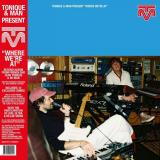
With Where We’re At, Tonique & Man deliver a warm and vibrant second album blending indie pop, soul and soft disco. Staying true to the groove that has become the duo’s signature, the record reveals a more mature and personal side of Jean Tonique and Mi Man.
Both recently becoming fathers, the two musicians are entering a new chapter in their lives, one that naturally shapes the album’s songwriting: a more intimate reflection on how far they’ve come, what they’ve built, and what continues to drive them to create.
Recorded at the legendary Studio Ferber in Paris, Where We’re At also features collaborations with Girl Ultra and Rejjie Snow, bringing new textures to the duo’s sound. An elegant and generous album where pop immediacy meets more intimate songwriting, opening a new chapter for Tonique & Man.
Bad Company has helped shaped the sound of an entire rock era with iconic powerhouse rock anthems and popular ballads. Having unearthed the original multi-track tapes and discovered previously unreleased tracks, takes, and mixes the band has remastered their first two albums to create new Deluxe Editions.
Singer, songwriter and multi-instrumentalist Rodgers, along with guitarist/songwriter Mick Ralphs, bassist Boz Burrell, and drummer Simon Kirke released the band's second album Straight Shooter in April 1975, 40 years to the month of the new deluxe edition. The album rose to #3 on the U.S. album chart and was certified 3x platinum behind the hit singles Feel Like Makin' Love' and Good Lovin' Gone Bad' as well as the rock radio staple Shooting Star.'
All bonus tracks on the Deluxe LP version are previously unreleased. Among the standouts is a stripped-down version of Shooting Star,' and a remix of Good Lovin' Gone Bad' with alternative guitar and vocals tracks.
Side One
1. Good Lovin' Gone Bad
2. Feel Like Makin' Love
3. Weep No More
4. Shooting Star
Side Two
1. Deal With The Preacher
2. Wild Fire Woman
3. Anna
4. Call On Me
Side Three
1. Good Lovin' Gone Bad (Alternate Vocal & Guitar)*
2. Feel Like Makin' Love' (Take Before Master)*
3. Weep No More (Early Slow Version)*
4. Shooting Star (Alternate Take)*
Side Four
1. Deal With The Preacher' (Early Version)*
2. Wild Fire Woman (Alternate Vocal & Guitar)*
3. Anna (Alternate Vocal)*
4. Call On Me (Alternate Take)*
Gradient returns to Alt Dub with Random Layers, a deeply focused EP built around his exceptional control of minimal elements.
With a restrained palette of kick, bass, chords and texture, each track evolves with patience and precision, allowing subtle shifts and carefully placed layers to create a powerful sense of depth and space
Sound layers are introduced with such control that the music evolves naturally, revealing its depth over time. Nothing feels rushed and nothing is unnecessary.
Gradient’s productions have a rare ability to make minimalism feel rich and alive. Nothing is excessive; every sound has a purpose. The result is four timeless, immersive dub techno pieces that balance classic dub techno atmosphere with a distinct sense of detail and control.
The EP also features a timeless remix from Echospace Detroits CV313, One of the most respected figures in the deeper end of dub techno, he brings his unmistakable sense of space and depth to the release, making this a particularly fitting and exciting collaboration.
Elegant, restrained and deeply atmospheric, Random Layers is another strong statement from Gradient and a perfect fit for Alt Dub.
The practice of dub techno and its tendrils is a fundamental for me, both aesthetically and from an engineering perspective.
I start every recording session with a dub inspired jam, the first piece I ever recorded in 1996 was an effort to recreate Phylyps Trak with only a Korg X3 and an Ibanez PUE5 (borrowed from Gary Howell). It was an awesome introduction to jamming, and the footing stones of noise, delay and saturation were explored with my foot hard on the enthusiasm pedal.
These practice jams are in some sense cathartic, the first step taken again & again, which helps me move forwards each session and additionally helps to 'warm the circuits' both of myself and the machines.
After realising the genius of Basic Channel is akin to the genius of peasant food, using every ingredient with nothing left to waste, (up to and including the oft maligned working noise of the machines themselves), this was a watershed moment for my own subjective progression. No longer tied to just emulation of something inspiring, but taking these learned tools into other areas of music helped to break free from a strong current of influence and also to progress into other areas with the new toolbox.
Dub:
The importance of the dub pioneers should never be understated, in modern music and my own practice. Yet with my initial inspiration being two german dudes issuing extreme techno variants with obscured label designs, who then signposted their listeners to their own inspirations (via their Wackies re-issues or nodded to on their Rhythm & Sound/Burial Mix sub-labels), meant that I started late and travelled backwards.
Learning to notice the live mixing of Mikey Dread or Lee Perry when the faders are bleeding through even when turned down, (echoed in BC's Quadrant Dub), or the brash send effects literally thrown into the mix also taught me that 'rough' mixing can inject a recording with life, uniqueness and the most right wrongness. Looking back Basic Channels very few elements helped me realise that the rules to be understood, are also the best ones to be broken.
Push the mixer into the red.
Amp that noise up from the tape delay cos it sounds sick.
Pseudo side-chain effects cos the kicks are way too loud and the mixer can't sum it nicely.
Spam the send knob into the delay units now, now and now.
Carelessness.
Noise:
Once I wrapped my head around the intrinsic 'noise' element that set those records apart, this became a torchlight into the alt noise movements which I was tentatively exploring at the time, and also is evidently a connection or thread into them.
Whether the Industrial/Post Punk UK scene (This Heat, TG, A Tent, F.E.) or the prolific output of the US Noise scene (Wolf Eyes, Live & Shave in LA, and subsequently following the lineage all the way back to Chrome's Alien Soundtracks), I had finally discovered a connection from techno to this 'free for all' corner of music.
This input from the Noise arena of sound is, in my experience, an all important step for a sonic artist, taking it's roots and extending out from Stockhausen/Pierre Henry and utilised/warped/mangled by thousands of adventurous pioneers ever since, I now see the line separating the high brow and the low brow is actually an artery carrying information from the head to the heart.
Vault is a selection of these jams that precede each of my solo recording sessions, for 30 years I've recorded hundreds of these 'workouts'. They are never intended as serious statements, just moments of naive enjoyment, yet most importantly they are time & space captured as practice.
The objective is always a warm up exercise, but sometimes those exercises turn a different corner, with a certain focus or direction dependent on what random samples are left in my machines from the previous session, instead of conscious choices, these unconscious elements can facilitate those 'positive mistakes' that make a piece of sound retain a different feel or colour and thus become special, or at least special to the creator.
I am quite conscious that the 'record everything' aspect of my ethos has been invaluable in cataloguing and saving these jams, while the attitude of carelessness during this process (after all, it's only a warm up jam) invites more enjoyment than seriousness ever could. Even if you don't feel the piece at the time, record it, because some years later it may well fit, or become relevant in a way you never intended.
-Miles
out of Stock
Last delivered 15 days ago available to reorder, subject to availability
The first transmission from Pink Dolphin arrives on a double-sided 12” – two sides of music following the warmth, movement and possibility of an endless day.
Night Wind moves with the ease of a warm summer afternoon – light, fluid and quietly uplifting. Rhythm and atmosphere flow together with an effortless sense of motion, like a breeze arriving from somewhere just beyond the horizon. There is a feeling of open space throughout: sunlight on water, windows open, landscapes slowly passing by. Nothing feels hurried. The music simply finds its own pace, suspended somewhere between movement and stillness.
As the music unfolds, familiar elements seem to drift in and out of focus, leaving just enough unexplained. It feels less like a destination than a moment – one of those stretches of summer when time loosens its grip and the day seems capable of continuing indefinitely.
Night Wind is a small escape into that space.
out of Stock
Last delivered 15 days ago available to reorder, subject to availability
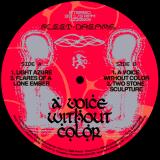
Crafting another beautiful experience in sensorial delight, fleet.dreams returns to Vinezza with the label’s 3rd offering “A Voice Without Color” - born from an ever-deepening practice of groove-powered depth tech melded with realms of dubwise kineticism, enchanted cognition, and expressive, dreamlike synthesis.
“A Voice Without Color” finds fleet.dreams’ music in its most rave-activated mode yet, crafting 4 pieces of infinitely mixable spectral matter - all part of their own universe beckoning to be heard under the glow of stars in the night sky, or floating amidst the mesmerizing fog & lights pumping out of the system on your favorite dancefloor.
Awash in kaleidoscopic splendor and psychedelic intrigue, “A Voice Without Color” finds kinship in everything from the best of expansive dancefloor kineticism, time dilated wonder, and the vivid reverbations of the natural world floating in the mix. At once quintessential, contemporary, and ubiquitous is fleet.dreams’ own remarkable production technique, each track unfurling in seemingly endless swells of simmering rhythm and hypnotizing atmospherics - new memories of circadian entrancement in their molten essence, designed to blissfully guide you deeper and deeper towards the primordial exhilaration of movement. Undulating with vivid pulsations and clarion calls for the hips and mind echoing across a spiraling gyre, the sprawling waltz of “A Voice Without Color” glides through dazzling chroma and effulgent radiance greater than the sum of its parts.
Painting with bold, prismatic strokes of iridescent friction amidst the listless gray of our increasingly dispassionate timeline, fleet.dreams delivers another EP of style, substance, and vision for the dancers and DJs alike - a future classic of a possible world ready to be activated together.
*words by Kiernan Laveaux
Early support from: Kiernan Laveaux, Daniel Rincón (NAP), Scott Zacharias & Amelia Holt
out of Stock
Last delivered 15 days ago available to reorder, subject to availability
"The Whole Of The Moon" is a classic. It's a song about awe and hope and love for the people who show us the best of this often broken world, the blessed few who show the way and introduce us to things and thoughts. Keith McIvor aka JD Twitch of Optimo was one of those people, and this version of the track - electronic, euphoric, open-hearted - was made by some members of the broader Optimo community after his terminal brain cancer diagnosis in 2025. The task of making a version that could've been heard on the dance floor at Planet Peach, Mas, or the Sub Club on a Sunday night or Monday morning brought them together across oceans, an act of joy amidst so much loss. It was never intended to be released, but as it made its way to friends and others, it also felt wrong not to. Its sentiment is universal and applies to so many incredible people in music and beyond that are sadly missed. So here is the Watergirls' first and last track, presented as a limited white label with some particularly lethal mixes from Sean Johnston of Hardway Bros and A Love From Outer Space. We're giving all the profits to charity. It's meant to be played out. It's meant to make two friends hug and sing into each other's faces. It's for Keith and for everyone like him.
out of Stock
Last delivered 15 days ago available to reorder, subject to availability
Breakbeat Paradise Recordings welcomes back Umbo for another heavyweight installment of the Toxic Funk series. One of the original pioneers of the Nu Funk movement, Umbo once again delivers two dancefloor-ready cuts packed with soulful samples, infectious breaks and unmistakable funky vibes.
Having released music on respected labels such as Good Groove Records and Timewarp, Umbo has built a reputation for crafting timeless party weapons that blend classic funk with modern breakbeat production. His previous appearances on Breakbeat Paradise have become fan favorites, and Toxic Funk Vol. 24 raises the bar once again.
Leading the release is Got Soul, a groove-laden funk workout driven by punchy drums, irresistible basslines and uplifting soul energy that's destined to ignite dancefloors. On the flip side, Save It delivers another dose of vintage funk attitude, combining tight breaks, funky rhythms and cleverly chopped vocals into an irresistible DJ weapon.
Whether you're spinning funk, breaks, nu disco or party edits, these two cuts are built to keep the energy high. Toxic Funk Vol. 24 is another essential addition to the Breakbeat Paradise catalogue and proof that Umbo continues to be one of the scene's most consistent producers.
out of Stock
Last delivered 8 days ago available to reorder, subject to availability
likethis have been doing fine work reissuing Eddie Richards gems from his peerless vaults and he often gives them a fresh lick of paint for the occasion, as he did with these two tunes, which came out back in January but soon disappeared. Thankfully, we're treated to a repress on 180 gram vinyl. 'Be Still' (revisit) is first and is one of those grooves you lean back for - the drums are seductive and persuasive rather than overly forceful and are laced with pads that only heighten the breezy effect. 'AbsurED' is tougher, with swinging 909s that are deep but jacked and brought to life with spoken words and blasts of bold bass.
Symmetry is proud to announce the arrival of Solid State Vol. 1 - a special vinyl release from Break. Due to popular demand, we’ve compiled four standout tracks, including some fan favourites that until now were only available digitally.
The EP brings together a serious collection: Release Me, which hit number 1 on Beatport; Overstayed, Symmetry’s highest selling tune on Bandcamp; alongside two more heavyweight cuts, All You Gotta Do and Zodiac.
Pressed and presented in physical form, Solid State Vol. 1 is both a collector’s piece and a must-have for DJs - and this time it’s something you can hold in your hands.
out of Stock
Last delivered 2 days ago available to reorder, subject to availability
Nonna Fab returns with his fourth release on his own imprint Movement and Soul Records, with the first single on the label, 'Eternal Between'.
This is a 3-track soulful house EP with two versions from Nonna and a beautiful remix from Trinidadian Deep.
Eternal Between is an instrumental soulful house record with a true exploration of the deeper side of dancefloor and movement.
The Spiritual Rhythm mix does exactly what it says on the tin, with the focus on a deeper, introspective dance floor cut. Explorative piano jam, rolling bassline and deep Juno stabs.
The Deeper Dub does exactly what B-sides were made for, percussive rhythms, stripped back synths and a deeper dive into the track. A broken beat style bassline and huge pads. Suitable for peak-time or the breather.
And the first ever remix on a Movement and Soul Records, Nonna invites Trinidadian Deep to put his touch on the rhythm.
Spacious, expansive and percussive with some true signature-style elements to the remix...
out of Stock
Last delivered 16 days ago available to reorder, subject to availability
Soul II Soul's classic gets the Cinthie treatment. The Berlin based DJ, producer and label owner behind 803 Crystal Grooves, Collective Cuts and We R House, and the mind behind the influential Elevate record store, turns her attention to one of British soul's iconic collectives. Missing You, originally released in 1990, gets stripped back to its raw emotion and rebuilt for the floor. The Club Mix retains the original's emotion while driving it with low-end and a peak-time arrangement. The two dubs go further; raw, tool-ready cuts built for DJs.
A classic reworked with real house lineage. Missing You is built for 2026 club sets.
out of Stock
Last delivered 6 days ago available to reorder, subject to availability
Gnod's now twenty year journey through spiritual and audial exploration has been driven by relentless curiosity, magpie irreverence and a fierce countercultural imperative, their project has always refused to acknowledge all or any rules and boundaries, internal or external. The latest adventure of this band may never have been intended to celebrate their two-decade anniversary, but in true Gnod fashion by, what began as a trip into a residential studio setup in Hellfire Studios with producer John `Spud' Murphy (Lankum, Black MIDI, Caroline) for six days, resulted in more potent material than anyone bargained for. The end result has been three studio albums to be released over the next year. "This trilogy revealed itself to us in the studio" says Paddy. "We were hoping to get a good album out of the session and lo and behold we got three of the fuckers. It's interesting that we did pretty much capture the full spectrum of the Gnod sound across all three". In fact, this intrepid first instalment of the `Chronicles Of Gnowt' trilogy covers an alarming amount of sonic territory all on its own. Driven as always by the power of repetition as well as Gnod's alchemical marriage of the maximal and the minimal, this album is imbued with a vivid focus that's testimony to the chemistry of the sessions, coupled with a detailed and spacious production from Murphy that brings out the psychedelic sound worlds of the band in vivid colour. This is a travelogue which delves into pastoral tranquillity (as on `Three Trees Parts 1&2') just as adeptly as expansive Earth-tinged riff monoliths (`All Tunnel No Light') and just as formidably as the closing epic `Ekstasis' - a hallucinatory vista where kraut-tinged experimentalism meets Swans-style intensity. Yet all the while, truly sounding like no one but Gnod.
out of Stock
Last delivered 16 days ago available to reorder, subject to availability
Uncompromising Italian DJ/producer The Southern makes his vinyl debut on Mutual Rytm's sub-label, Spectra, with remixes from Alarico, Temudo and Sciahri. An EP marking an impressive label debut, Carmine Portarulo, aka The Southern, lands on Mutual Rytm’s sub- label Spectra with a powerful showcase of his much-loved sound. With the lead track featuring as one of label head SHDW's most requested IDs of the year so far, and packaged alongside outstanding remixes by close label associates Alarico, Temudo and Sciahri, the EP comes having established himself with a sound rooted in old school value and pure techno, favouring energy and authenticity over hype. The track’s backstory comes from the moment Carmine and his partner found out they were expecting a child and went for their first ultrasound appointment. Overwhelmed by the emotion of the moment and the beauty of what nature is capable of, he returned home and poured those feelings into the music. The result, ‘Ultrasound’, is an anthemic, punchy techno cut with euphoric energy rising up through the synths and its catchy lead melody. Joyful melodies sparkle amid vocal groans, adding a raw emotional pull as the warm, driving drums march on. Berlin-based artist Alarico is the first to remix on his return to the label, and his ‘Sad Mix’ has a more melancholic mood, with dark chords and tightly programmed drums that bring lo-key funk. Hayes Collective founder Temudo also returns and flips the vibe on his ‘Neuro Interpretation’ with a more psyched-out, twisted tune featuring trippy synths and booming drums for peak-time impact. Italo-Iranian Sublunar Records head Sciahri then drops his trance- inducing, hypotonic ‘Tunnel Vision Mix’, followed by two digital bonuses: ‘The Stripped Mix’, a bouncy workout with futuristic melodies, and Temudo’s ‘Neuro Interpretation 2’, which is raw, textured, and dark.
out of Stock
Last delivered 16 days ago available to reorder, subject to availability
The Yummy Fur’s first album of new material in over 25 years is seductive and ambiguous; a fast-paced flip through scenes from art, myth, life and fantasy; a witty whole made from glittering scraps. The band’s original incarnation – fronted by singer, songwriter and guitarist John McKeown from 1992 to 1999 – morphed from making quick-hit cartoon-art songs to Eno and Cale-influenced creepers, populated by characters from McKeown’s life in Glasgow and the films, books and poetry that he lived a parallel life through. Everybody Talks About The Weather delights in using every past iteration of the band as potent collage material: a melee of sounds and ideas existing at once, revealing themselves then dipping back into hiding.
Recorded by the original core trio of McKeown, Brian MacDougall (guitar) and Paul Thomson (drums), Everybody Talks About The Weather comes 17 years after the band reformed for sporadic live shows, and seven years after the release of their sorta-greatest hits compilation Piggy Wings (Rock Action). Ten tracks long with nothing to spare, it is as condensed and vital as their best songs, with a new clarity of sound that allows their ambiguities to come into the light.
The album begins with “Cogs”, a taunting inquisition from within. As McKeown stages a fight between his id and ego, the tension heats up between conversational guitar lines and minimalist repetition; threatening sing-song melody and real, palpable menace. The band members are forced in tandem only to break apart, sustaining a genuine sense of just-hidden danger throughout the whole record – except, arguably, “Headphones”, a looser moment which sees McKeown make an existential something out of nothing while waiting for someone in the car (“I should have brought a book.../My ears are bleeding from the compression on your album”)
The songs are riots of reference: “Unity Over Europe” is a slyly complex two act play about the Mitford sisters – Diana, Unity, and Nancy, in a wink to the YF canon – smashing tragic biographical detail together with allusions to Thomas Pynchon and Francis Bacon. Pynchon is also lifted to serve “Blue Sunshine”, a collision of school shooters, serial killers and fictional fuck-ups (“Fast forward to Compton/Fast forward to Pynchon/Fast forward to Columbine'”) whose buzzy guitar lines are taunting and confrontational like a smarmy teenager. The innocuous title of “My Lasagne” belies a song that exists in several time periods at once: a visit to see Guernica, 50 people with their backs to the portrait of Dora Maar; the time that Picasso painted from; the Reina Sofia and the dirty streets of the Malasaña; myth-making musicians and the myths they’re riffing off overlapping and leering at each other.
All this could be laboured in lesser hands, but cultural verbosity is second nature to The Yummy Fur, who transform all this source material into songs that are weird, sexy, funny and absurd. Meaning is not happily understood or flattened. Susan Sontag's essay Against Interpretation accompanied McKeown as he wrote this album, and she’s paraphrased in “Semolina Ballerina”, the album’s justification of artistic ambiguity. Thomson’s motorik beat leads a gathering of back-and-forth instrumental phrases – including a wiry contribution on saxophone – embodying the futility of trying to parse something definitive from repeated action. “Listen to the very first thing that’s in your head,” Sontag-via-McKeown commands directly, then slinks sideways: “Interpretation is a conversation in an unmade bed”
The album features two more focused portraits, or at least The Yummy Fur’s version of such a thing. “Wanda” merges the life of filmmaker Barbara Loden and the title character of her semi-autobiographical 1970 feature film, with Loden’s then-husband Elia Kazan joining the fray of no-good men in her film. It’s a mix of adaptation and avant-criticism, with McKeown’s wordplay and mannered pronunciation mirroring the way that non-fiction and fiction twist around each other in the song. The title track is a series of vignettes and impressions from the lives of the band’s ‘90s inner circle, positing painter Mac McNaughton as a kind of Falstaffian ringleader. As with Piggy Wings and the recent single “New T-Shirt”, McNaughton painted the cover of Everybody Talks About The Weather – like the album’s music, the image of a coy girl in a white dress is an uncanny amalgamation of styles, suggestions and references just out of reach, as though seen in an art museum in a dream.
The album ends with two reads of the same frustration. “King of Nothing” is the closest The Yummy Fur will ever get to sludge-rock: the band melts together into a dusty, dreary haze as McKeown drowns in a drudgery of personal struggle (“Two jumpers on in Babylon/And only cats to talk to”) and the rhythmic toppling of heroes (Rowlands, Duvall, Munro). The majority of visible dirt is cleaned off for “Say Hello”, an uncharacteristic depiction of throwing the windows open after a dark night of the soul. Here, the situation is still cold and hard (“When the sun burns gold, but the heat never reaches your fingertips”) but it feels surmountable. Everybody Talks About The Weather is an unpredictable album from an unpredictable group, but ending on a moment of almost uncomplicated light is maybe its biggest surprise. - Claire Biddles (2026)
The Yummy Fur’s first album of new material in over 25 years is seductive and ambiguous; a fast-paced flip through scenes from art, myth, life and fantasy; a witty whole made from glittering scraps. The band’s original incarnation – fronted by singer, songwriter and guitarist John McKeown from 1992 to 1999 – morphed from making quick-hit cartoon-art songs to Eno and Cale-influenced creepers, populated by characters from McKeown’s life in Glasgow and the films, books and poetry that he lived a parallel life through. Everybody Talks About The Weather delights in using every past iteration of the band as potent collage material: a melee of sounds and ideas existing at once, revealing themselves then dipping back into hiding.
Recorded by the original core trio of McKeown, Brian MacDougall (guitar) and Paul Thomson (drums), Everybody Talks About The Weather comes 17 years after the band reformed for sporadic live shows, and seven years after the release of their sorta-greatest hits compilation Piggy Wings (Rock Action). Ten tracks long with nothing to spare, it is as condensed and vital as their best songs, with a new clarity of sound that allows their ambiguities to come into the light.
The album begins with “Cogs”, a taunting inquisition from within. As McKeown stages a fight between his id and ego, the tension heats up between conversational guitar lines and minimalist repetition; threatening sing-song melody and real, palpable menace. The band members are forced in tandem only to break apart, sustaining a genuine sense of just-hidden danger throughout the whole record – except, arguably, “Headphones”, a looser moment which sees McKeown make an existential something out of nothing while waiting for someone in the car (“I should have brought a book.../My ears are bleeding from the compression on your album”)
The songs are riots of reference: “Unity Over Europe” is a slyly complex two act play about the Mitford sisters – Diana, Unity, and Nancy, in a wink to the YF canon – smashing tragic biographical detail together with allusions to Thomas Pynchon and Francis Bacon. Pynchon is also lifted to serve “Blue Sunshine”, a collision of school shooters, serial killers and fictional fuck-ups (“Fast forward to Compton/Fast forward to Pynchon/Fast forward to Columbine'”) whose buzzy guitar lines are taunting and confrontational like a smarmy teenager. The innocuous title of “My Lasagne” belies a song that exists in several time periods at once: a visit to see Guernica, 50 people with their backs to the portrait of Dora Maar; the time that Picasso painted from; the Reina Sofia and the dirty streets of the Malasaña; myth-making musicians and the myths they’re riffing off overlapping and leering at each other.
All this could be laboured in lesser hands, but cultural verbosity is second nature to The Yummy Fur, who transform all this source material into songs that are weird, sexy, funny and absurd. Meaning is not happily understood or flattened. Susan Sontag's essay Against Interpretation accompanied McKeown as he wrote this album, and she’s paraphrased in “Semolina Ballerina”, the album’s justification of artistic ambiguity. Thomson’s motorik beat leads a gathering of back-and-forth instrumental phrases – including a wiry contribution on saxophone – embodying the futility of trying to parse something definitive from repeated action. “Listen to the very first thing that’s in your head,” Sontag-via-McKeown commands directly, then slinks sideways: “Interpretation is a conversation in an unmade bed”
The album features two more focused portraits, or at least The Yummy Fur’s version of such a thing. “Wanda” merges the life of filmmaker Barbara Loden and the title character of her semi-autobiographical 1970 feature film, with Loden’s then-husband Elia Kazan joining the fray of no-good men in her film. It’s a mix of adaptation and avant-criticism, with McKeown’s wordplay and mannered pronunciation mirroring the way that non-fiction and fiction twist around each other in the song. The title track is a series of vignettes and impressions from the lives of the band’s ‘90s inner circle, positing painter Mac McNaughton as a kind of Falstaffian ringleader. As with Piggy Wings and the recent single “New T-Shirt”, McNaughton painted the cover of Everybody Talks About The Weather – like the album’s music, the image of a coy girl in a white dress is an uncanny amalgamation of styles, suggestions and references just out of reach, as though seen in an art museum in a dream.
The album ends with two reads of the same frustration. “King of Nothing” is the closest The Yummy Fur will ever get to sludge-rock: the band melts together into a dusty, dreary haze as McKeown drowns in a drudgery of personal struggle (“Two jumpers on in Babylon/And only cats to talk to”) and the rhythmic toppling of heroes (Rowlands, Duvall, Munro). The majority of visible dirt is cleaned off for “Say Hello”, an uncharacteristic depiction of throwing the windows open after a dark night of the soul. Here, the situation is still cold and hard (“When the sun burns gold, but the heat never reaches your fingertips”) but it feels surmountable. Everybody Talks About The Weather is an unpredictable album from an unpredictable group, but ending on a moment of almost uncomplicated light is maybe its biggest surprise. - Claire Biddles (2026)
As always at U JAZZ ME Records we have limited edition (100 numbered copies) of 180g black vinyl with insert.
Astrocyrk (Astrocircus) is the next chapter in a story that began in 2123, when Captain Harrison Focus, after an emergency landing, finds himself on the mysterious planet Carmin. Following the events described in the previous album, the main character – Triceradiplodocus – leaves the planet's surface, following Ropuch’s instructions. However, the light on the horizon turns out to be the beginning of a new nightmare, and the dinosaur is trapped in the Astrocyrk. Under Klown’s guidance, he begins exploring this dark place. Only the finale reveals the true history of the Astrocyrk and
surprisingly intertwines Triceradiplodocus's fate with events from years past and the character of Captain Harrison Focus.
Musically, the album develops Twoosty Mayonez's distinctive style – one that focuses on improvisation and cinematic storytelling. Each composition represents a new chapter in the story, creating a cohesive musical journey through the world of Astrocyrk. Subsequent tracks lead the listener through the ship's dark attractions.
The new album is a natural continuation of the story from planet Carmin, while also opening a completely new chapter in the Twoosty Mayonnaise universe – one that is bigger, darker, and even more unpredictable.
The album features guest appearances by Szymon Białorucki (oud), Marek Konarski (sax), and Bartłomiej “Eskaubei” Skubisz (rap). The recordings were made at the Twoosty Room studio in Warsaw by the band's drummer.
»Pipe Dreams II & III« presents two new, side-long organ works by Mary Jane Leach, extending the sonic investigations of her 1989 landmark »Pipe Dreams«. Recorded in Ghent and Cologne, the two side-long pieces use shifting stops, resonance and beating tones to turn the pipe organ into a vivid, physical field of sound.
When »Pipe Dreams« was issued on vinyl for the first time by Blume in 2017, it was effectively the first time many of us encountered Mary Jane Leach’s music, finally placing her work in its proper historical context amid the searching Downtown milieu of Julius Eastman, Arthur Russell, Arnold Dreyblatt, Ellen Fullman, Philip Corner, Daniel Goode, and Peter Zummo. Leach collaborated with most of these artists at one point or another, either in Downtown Ensemble or as a guest on their records.
Now »Pipe Dreams II« and »Pipe Dreams III« arrive, recorded in 2023 and 2024 at Miry Concertzaal in Ghent, Belgium, and Kunst-Station Sankt Peter in Cologne, respectively.
»When I was a young child, my family lived next door to a church, where my mother was the organist. I spent many hours lying on the floor of the sanctuary listening to the music, letting the sound of the organ envelop me. I also liked to play the piano loudly with the pedal down, producing clouds of sound, much to my family’s annoyance. These two organ pieces explore some of my earliest musical interests and aesthetics.
In 1989, I lived in a tower attached to St Peter’s Church in Cologne, where I had access to its organ. It had two sets of pipes, front and back, which could create antiphonal effects. I spent countless hours exploring the possibilities of all the permutations of notes, space, and the resulting sound phenomena. I wrote »Pipe Dreams« for that organ. Fast forward to 2023, when I was asked to create a piece for organ for a concert at the Miry Concertzaal in Ghent, Belgium: »Pipe Dreams II«. I had a few days to familiarise myself with the organ, its available stops, and the layout of the console. I choreographed stop changes for a volunteer, as I couldn’t reach them myself. Some amazing sounds began to happen, and at one point the sound was so visceral that I felt as though I were taming a wild beast.
»Pipe Dreams III« was performed in 2024 on the organ that I had spent so much time playing in 1989–90. One big difference, though, was that the console was totally new and computerised. Having access to the organ for only a few hours before the concert, I decided that I did not have enough time to feel comfortable with the console and should not attempt to recreate the piece I had written in 1989. I would instead use the same sequence of stops and perform an improvised piece. I loved the sounds that were being created, and I was having so much fun that at one point I even started to laugh quietly. I began to visualise the beating notes as if they were atoms, opening them up to expose their innards, with the beating, higher-pitched notes — neutrons and protons — shimmering at the top, and the lower notes — the electrons — throbbing away at the bottom. I was playing notes not so much for their pitch value, but for how they affected the notes and sound phenomena already being played. Instead of a time signature, I timed the entries by listening to the beating patterns, waiting for the right moment to enter. And no, I wasn’t hallucinating.«
The Montréal psych-ambient synth-droners return with Sequence Three, their first album in five years and the final instalment in the group's opening trilogy of records that began with Sequence One in 2019. The spectral supergroup co-founded by Stephen Ramsay (Young Galaxy) and Jace Lasek (The Besnard Lakes), usually joined in some capacity by Lasek's Besnard bandmate Olga Goreas, deliver another dose of its trademark longform slowburn jams, forged from restored vintage synths and analogue electronic gear. Lasek and Ramsay don their seasoned producer hats to apply rockist sound design to minimalist tracks, saturated with tube compression, drenched in pink and brown noise, all queasy modulation, sparse beats, and languorous melodic lines. Evoking a humid dawn on a gas giant, these alien drone anthems meld the numinous transcendentalism of Spiritualized and Cluster with the eroded grit of William Basinski and GAS. Light Conductor has been tagged "heavyweight analogue synth nirvana" by Uncut Magazine and praised for its "fabulous, epic, shimmeringly radiant kosmische" by Electronic Sound, among other accolades. Sequence Three consolidates these strengths, while leaning into the darker disquietude that has always been an undercurrent of Light Conductor's aesthetic. Opener "She Glitters The Dust" fades up slow with intertwining detuned synth loops, a languorous lullaby beat dropping at the 3-minute mark, accompanied by insectoid shimmers and a tease of melody that's eventually given free reign over the song's second half. Aptly titled, it's as if a transmission captured within a cosmic dust cloud has provided the raw material for the band to jam on, tease out, and terrestrialize. An echo of that beat sets the tranced pulse for "Omenize", the centerpiece of Side One and the fulfilment of Light Conductor's one-vocal-track-per-album directive. With layered harmonies by Goreas and Lasek, this is the group at its ethereally anthemic best, the devotional floating-in-space bliss attenuated by another gently warped denouement. "Ghost City Radio" closes out Side One with the band's most overtly anxious tune to date, deceptively stolid in its simple bass guitar riff and filter-swept hi-hat: groove stripped to its minimum as the foundation for an extended spokenword sample of a doomsaying prepper/preacher, a sort of homage to that early hallmark of their Godspeed compatriots, done up through the lens of Light Conductor's inimitably destabilized celestial ambience. (Lasek mixed the most recent two GY!BE albums.) Side Two offers up "High In The Orange Air", a beatless, squelching, bubbling ostinato drone and the album's most orthodox ambient kosmische track. This provides the set and setting for 15-minute closer "Supercontinent", which starts off in similar territory but gradually yields to a submerged and reversed techno pulse pumping through coruscated chordal drone, gaining in woozy mesmeric psych intensity over its inexorable hypnagogic trajectory. Sequence Three rounds out a satisfying trio of full-lengths that Light Conductor has released on Constellation, featuring vibrantly minimal geometric cover art designed by label co-founder Ian Ilavsky that integrates the trilogy as a visual series as well. In keeping with the previous two albums in the set, the Deluxe 180gLP includes a 12"x24" art poster. Thanks for listening.
In 2024, Audrey Powne emerged as a compelling new voice in contemporary jazz with the release of her acclaimed debut album From the Fire; a self-produced and self-composed work celebrated for its lush string arrangements, soaring trumpet performances, and emotionally rich songwriting. Now, two years later, Powne returns with Bodies of Water, a bold and deeply introspective follow-up that continues her elemental exploration: from fire to water. An exploration of what it means to exist alongside others in an increasingly unstable world, Bodies of Water reflects on vulnerability, responsibility, and human interconnectedness. The album’s title and conceptual foundation were inspired by a passage from Caleb Azumah Nelson’s novel Small Worlds: “...to make himself a body, like water, a still surface, but beneath this, a ripple, and beneath this, an ebbing tide, and beneath that, a violent, constant tow…” Throughout the record, lyrics ruminate on the idea that like all bodies of water, we are vulnerable to disruption and catastrophe. Unlike inanimate bodies of water, however, we are conscious participants in both the damage and the repair. That tension between what we are made of and what we are responsible for became a grounding and harmonious thought. This album is a meditation on that idea, both in my personal life and in a broader, collective sense. Swollen, Broken Record, and Karma, reflect on moments of cruelty and error including her own that felt unbearable. Viewing them instead as forces moving through the landscape of a life, violent but temporary to survive their immediate impact. More socially conscious tracks Stay Awake, Creeds, RYV, and Two Sides confront frustration with political polarisation and the emptiness of language unaccompanied by action. The title and final track Bodies of Water brings these ideas together, reimagining both personal and societal upheaval as events shaped by bodies of water moving through the world destructive at times, transformative at others, and always in motion. Blending traditional jazz with Afrobeat rhythms, Dilla-inspired grooves, ambient textures, and expansive arrangements, Bodies of Water reveals the breadth of Powne’s artistic vision. The record moves fluidly between spiritual jazz, warped soul and rhythm-driven experimentation, while layered interludes and meticulous production thread its disparate influences into a unified and immersive sonic world.
“Speed is power is structure is reason is human is terror is speed…”
LOL SeWitt
Inspired by Sol LeWitt’s drawing “Six Thousand Two Hundred And Fifty-Five Lines“ (1970), Sonic Belligeranza 12’s sound is generated by a code that translates the lines and the spaces between the lines of the original drawing into 6255 speedcore kicks at 33 RPM (disc 1) and 45 RPM (disc 2). Also contains the ‘holy structuralist’ and ‘sphexish threshold’ versions with Six Thousand Two Hundred And Fifty-Five hertz drones accompanying the ultra-kinetic machine-gun bursts on both discs.
THE VIEWER BECOMES THE LISTENER!
Think generative speedcore, think I.D.M. (Informational Dance Music), think aural extravaganza. Think of a number: Six Thousand Two Hundred and Fifty-Five.
out of Stock
Last delivered 19 days ago available to reorder, subject to availability
Zwischen jamaikanischem Ska, Reggae, Two Tone, kölschem Charme und politischer Kante. Mal swingend, mal bissig, mal melancholisch - aber immer Offbeat. Es scheppert, brazzt und twangt wieder: Kapelle #3 melden sich mit ihrem neuen Album ,Momentaufnahme" zurück. Die Kölner Offbeat-Veteranen servieren auf elf Songs eine Mischung aus jamaikanischem Ska, Reggae, Two Tone und charmant schrägem Großstadtblick. Zwischen tanzbarer Leichtigkeit und klarer Haltung entstehen Songs über Umwege, Alltagsfluchten, Köln, antifaschistische Erinnerungskultur - und über politische Figuren, die förmlich nach einem Ska-Song verlangen. ,Momentaufnahme" ist kein nostalgischer Rückblick, sondern ein lebendiges Stück Gegenwart: direkt, warm, bissig und voller Liebe zum Offbeat. Mit über zwanzig Jahren Bandgeschichte und unzähligen Konzerten bleibt die Kapelle #3 eine feste Größe der Kölner Subkultur - jetzt auf allen Streamingplattformen und endlich auch auf Vinyl! 11 Track LP, 300 Stück 180 gr. schwarzes Vinyl, handnummeriert, bedruckte Innenhülle.
Recorded in Los Angeles over the course of a single day at a studio in the Eagle Rock neighborhood, Dois Desertos was produced by Mario Caldato Jr. and emerged without a predetermined plan or schedule. The project took shape during Portuguese musician João Pimenta Gomes' stay in Los Angeles with his family. During that time, through Rodrigo Amarante, João met Mario and Samantha Caldato, as well as musicians Abe Rounds (drums and percussion) and Gabe Noel (bass and cello). From those encounters, the album began to unfold organically.
Working from simple scores—some containing little more than chord progressions—the sessions left plenty of room for improvisation. Every performance was captured live, in a single take, with no overdubs. The mixing process, also carried out live by Mario Caldato Jr., followed the same philosophy: effects and level adjustments were performed in real time and printed directly to the final two-track master.
At the heart of the album's sound is the Cristal Baschet, a rare instrument played by rubbing glass rods with the hands, causing metal resonators to vibrate and produce an ethereal, resonant tone. João describes its sound as "a trace, almost like a shadow." Rather than taking the lead, the instrument serves as a textural foundation, while the bass and cello carry the melodic lines. Some of these melodies are original compositions, while others draw from traditional Portuguese fado, reimagined through an open and exploratory approach.
The album has a dreamlike atmosphere, reflecting the perspective of someone experiencing Los Angeles from the outside—not in a rush to belong, but fully receptive to the city's unique energy. Two films helped shape this imaginary landscape: Model Shop (Jacques Demy, 1969), in which the French filmmaker uses Los Angeles as a pretext to simply observe and inhabit the city, and Thom Andersen's Los Angeles Plays Itself. The result is Dois Desertos, an album that, in João's own words, "could never have been made anywhere else."
With Dois Desertos, João Pimenta Gomes invites listeners into a deeply immersive experience, revealing a more exploratory side of his artistic practice while reinforcing Amor in Sound's commitment to releasing original works that engage with the many languages of contemporary music.
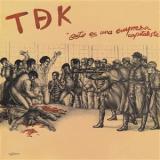
Reissue with bonus tracks of the legendary debut album by Madrid's Hardcore Punk legends TDK, born from the ashes of the almighty Espasmódicos. Originally released in 1984, this is a pivotal and pioneering record for enthusiasts of Hardcore Punk made in Spain. An explosive, powerful outburst of pure, unfiltered, nasty Hardcore Punk delivered with fierce energy and precision. Includes two bonus tracks, one from their split 7" with Panadería Bollería Nuestra Señora del Karmen from 1984 and one from "La Movida Madrileña" compilation from the same year and two inserts.
Courant Zéro is the new moniker of Montréal multi-media installation artist and Kohlenstoff label co-founder Maxime Corbeil-Perron, signalling his return to purely recording-based electronic music production following several years focused on award-winning experimental film and audio-visual works. Solari channels his cinematic sensibility and decade-long exploration of sound art and electroacoustic counterpoint into deep cuts of maximalist ambient electronica. Drawing on his early background as a pianist and jazz drummer, Corbeil-Perron weaves a fabric of melodic and rhythmic vectors with his unique timbral palette, intersecting modern composition, IDM, ambient, glitch, and noise on a debut album brimming with sonic detail and emotive resonance. A fixture of Montréal's sound art community as both creator and curator since the early 2010s, Corbeil-Perron's work has ranged from "hypnotic A/V onslaught" (FACT Magazine) to the "richly nuanced acousmatic journey" of his 2018 EP Polychrome (Bandcamp Best Contemporary Classical Of The Month), with earlier electronic and techno-adjacent projects like Political Ritual, Dresden, and Le poisson d'argent garnering accolades from avant-music outlets A Closer Listen, Silence and Sound, and Musicworks, among others. Courant Zéro mobilizes this cumulative wealth of explorative sonic experience in the service of distinctive compositional architectures and electronic music pathways that fans of Floating Points, Jan Jelinek, Squarepusher, Tim Hecker, and Oneohtrix Point Never should find compelling. Title track "Solari" opens the album with a cavernous ambient glitch-drone soundscape that envelops ever-shifting timbres of modular arpeggiation, serving as introduction to the clarion call of "En deçà du réel", an homage to video artist Manon Labrecque, where layers of interweaving melodic counterpoint played on Buchla and other synths slowly build to widescreen immersive intensities; "I have this vision of Labreque vibrating eternally between two frames of magnetic VHS tape_ the slow pace of the piece also inspired by Tarkovsky's approach to scenography" says Corbeil-Perron. "Strange Aorta" is ectoplasmic ambient with wistful melody lines transmuting along a central filament, awash in shifting waves of low-end and ricocheting tonal glitch, the title a reference to "the thumping rhythm beating around the main melody_and the heavy remnants of grief related to my father's passing and a brutal confrontation with my own mortality a few years back." Tracks like "La peau des dents" and "Eroding Us" are more firmly rooted in electroacoustic and aleatory systems music, where colliding loops are shaped into unstable flows of deconstructed slippage and reconvergence. Those two pieces bookend the album's pivotal center: the gorgeous piano digitalia of "Horizon n'arrête" and the skittering electronica of 9-minute opus "Unyeldd", its loping broken beat and cascading melodic glitter like a cluster of wind-up music boxes in a dappled forest _ and for Corbeil- Perron also partly inspired by now fellow Constellation labelmates Do Make Say Think: "I spent a lot of time rediscovering their records after seeing them last September 2024 which definitely influenced this piece." Courant Zéro's debut is a vibrant sonic rebus at the junction of electronic, electroacoustic, noise and ambient music that resists easy categorisation. Solari strikes a compelling balance of unsettled disorientation and hospitable warmth, teeming with real feeling throughout. The album's cover art painting Cryptography I by Yen-Chao Lin represents this prevailing sensibility, its mazelike circuitry distinctly carved and crisply rendered, while filigreed with handmade detail and artisanal patina. Thanks for listening.
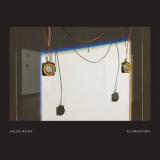
A clerestory - a bright or "clear" level or "story" - is an upper section of wall, most often in a church punctuated by windows. It is a powerful image for grasping this luminous new music from Jules Reidy. Light casts shadows, of course, and logics of shadowing, mirroring, and distorted reflection - of key importance for Reidy"s work as a whole - inform the sumptuous surfaces of Clerestory. "Shadow Symmetric" is a string quartet commissioned and performed by the JACK Quartet as part of their JACK Studio program. The piece makes simultaneous use of two pitch sets, beginning from the same starting point but expanded using different scaling to produce what Reidy describes as "two offset spectral layers." "Clerestory Windows" offers up a distorted mirror image of the string quartet, arranged as a series of episodes that each remake the material in their own way. It begins with an arrangement of the string quartet material for MIDI strings and voices, repositioning its rigorous harmonic exploration somewhere between the Lovely Music Ltd universe and a 90s RPG soundtrack. This episode derives from Reidy"s installation Inside, Crystals and Circuitry, held in Stockholm in 2025. The piece moves into a lyrical 12-string acoustic guitar air performed at the installation opening, before the strings from the first side reappear. From this emerge flickering arpeggios, achieved by arranging the string quartet material for the RMI, an early digital synthesizer. Clerestory is a meditation on fundamental dynamics of human experience: orientation and disorientation, the hazy borders the hazy borders between the material and the spiritual, and the instability of identity.
2026 RE-Release
Beat machine freak duo Bill Converse and Patricia (Max Ravitz) present 380/750, a new EP on Acid Test that blends the two producers’ singular styles to form an emotive “introspection on the dance floor” experience over the course of 4 tracks.
Recorded at Ravitz’s Brooklyn studio over the course of two days, 380/750 features raw, no-multitrack, no-edit live recordings that showcase the duo’s intuition for expressive rhythm tracks. Considering Converse’s roots in the 90’s Michigan rave scene, and Ravitz’s Chicago upbringing, the midwestern strains really shine through. With rhythm-composer mutations, acid dripping over atmospheric synth textures, and the ever-present jack throughout, 380/750 offers a deep sound to get lost in that feels both new and classic at the same time.
out of Stock
Last delivered 14 days ago available to reorder, subject to availability
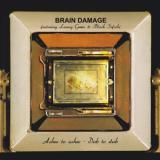
By 2004, dub had a history stretching back more than thirty years. This remarkable longevity can easily be explained by the evolving nature of this musical genre, which is constantly changing both artistically and technically, from Kingston to London, New York, and more recently Berlin, Paris, Lyon and Saint-Étienne. For example, it is worth noting that for some years now, in France and elsewhere, a good number of artists have been thinking in terms of dub from the outset, breaking free from the original Jamaican model, which involved drawing inspiration almost systematically from an existing vocal track. Thirty years on, with the release of their second album, Brain Damage aim to reconnect with this tradition. Recent collaborations with the two vocalists, Learoy Green and Black Sifichi, have indeed provided the ideal source material for the creation of five tracks, each rendered in their respective dub versions, thus forming an album with a symmetrical, even geometric character - from its very structure right down to its title: 'Ashes to ashes / Dub to dub'. At the heart of the project lies the astute choice of two guests, each operating in diametrically opposed spheres yet brought together for the occasion, thereby emphasising a certain 'unity of the circle': 'the unity of the circle'. Born of a genuine artistic vision, this geometric, symmetrical aesthetic-omnipresent in every detail of the album, both auditory and visual-complements Brain Damage's 'square' and robotic side, with its three-dimensional evocations. Always working in close collaboration with the very latest digital technologies. This brings to mind 'the balance of the cube'. Finally, the title itself, 'Ashes to ashes / Dub to dub', should be understood as a reference to the transience of all things in this world, against a backdrop of widespread, globalised, international, national and local crises_
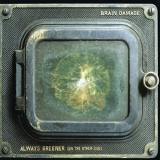
"The grass is greener_ elsewhere_" Brain Damage told us with their debut album, released in 2002. Yet here, they've reached full maturity. Rarely has a "made in France" dub album strayed so far from the Jamaican model while still harboring, in every detail, so many references and tributes to the inventors of the style (King Tubby / Lee Perry), as well as to many of the key figures in its evolution (Tikiman / Rhythm & Sound, Dub Syndicate, etc.). The recording studio, 7/11 Laboratory, is used here as a true musical instrument. The optimal use of three-dimensional stereo effects will immerse the listener in soundscapes ranging from classic space echoes and Mont Blanc tunnel-style reverberations to crackles, electronic interference, exogenous samples, and other parasitic noises coming straight from Babylon. For this album, continuing in the vein of his previous collaborations with the international dub scene (Zion Train, Alpha & Omega, Disciples, Spectre, Lab°_), Brain Damage traveled to London to record two tracks at Conscious Sounds Studio with Jamaican-born singer Tena Stelin. With the melancholic "Spirit World," one is reminded of the fruitful collaborations between Massive Attack and Horace Andy, while on "Genetic Weapon," the tone becomes more overtly assertive. Two vocal tracks, then, woven into these ten compositions, where the emotional moods and atmospheres will shift with each listen. "Always Greener (On the Other Side)" emerges as the manifesto of music conceived as cinema for the ear...
Mutual Rytm's Versus sub-label returns with a dark, absorbing new EP from contemporary techno innovators Kameliia and BLANKA. Kameliia and BLANKA both previously appeared on Federation of Rytm IV and now step forward with their long-awaited debut EPs. It is another standout for Mutual Rytm's Versus series, which has already made an impact with two previous EPs from Regent and Chontane and Klint and Hemka. This third release subtly evolves the sound into more hypnotic and atmospheric worlds that bring fresh perspectives to the series. Bulgarian-born, Norway-based Kameliia’s music is rooted in cinematic, melancholic and hypnotic sounds. She translates deep emotions into immersive sonic landscapes inspired by nature, particularly the moon, the sky and their atmospheric qualities. Along with Berlin-based Spaniard BLANKA, she has released on labels such as SK_Eleven, while BLANKA also co-founded Room Trax and draws heavily on the human voice, which she considers one of the most personal and intimate instruments. She uses it to create an emotional, direct connection with the dance floor, with a clean, minimal, timeless style rich in emotion. Kameliia opens up with the weighty kicks and eerie atmospheres of 'Bird In A Cage' before 'Red Sky' layers taut kicks and icy synths into a hypnotic forward charge full of depth and darkness, then 'Lightness' has an unsettling and paranoid lead hanging in the air next to vocal fragments and haunting pads. BLANKA’s offering begins with tightly wound kicks and bass on the dubby 'Say It With Me'; 'Self Pleasure' is an immersive and rubbery rhythm with cosmic synth work, and 'Rabbit Habits' brings funky synth lines that radiate a sense of subtle light and hope amidst the darkness of the groove. Two digital bonus cuts from each artist follow: Kameliia's unsettling, dystopian soundscape 'No Longer A Desire' and the backlit suspense of 'Vivere', and BLANKA's gritty, loopy 'Dream VST' and the deep-space odyssey that is 'Gone For Good'.
After a seven-year hiatus following the devastating loss of their beloved bandmate, LINKIN PARK’S remaining members struggle to find their way forward. Their shared history and enduring friendship, combined with the fresh perspective of two new band members spark a renewed creative energy that leads them on a transformative journey of artistic reinvention.
Following the band from intimate 2022 studio sessions through their explosive November 15, 2024 FROM ZERO album release and concert in São Paulo, the film UNSHATTER weaves together rare vault footage, electrifying performances from sold-out shows, and candid interviews with band members and fans—capturing the raw, honest story of what it means to start over.
This accompanying Film Soundtrack (Live in São Paulo) features transcendent performances of songs spanning their entire career, including exclusive recordings not experienced in the film.
Two-time BRIT Award winner Becky Hill will release her eagerly anticipated third album ‘REBECCA’ on September 25th.
‘REBECCA’ was written during a period of intense personal and artistic reflection and sees Becky exploring ambition, identity, visibility and the contradictions of her life from a place of greater openness and creative freedom. Across the record, she examines the tension between desire and self-preservation with clarity, humour and brutal honesty, resulting in her boldest, emotionally charged body of work to date.
Described by Becky as “curated chaos”, ‘REBECCA’ also marks a significant evolution in her sound. It sees her reconnecting with the wider influences that shaped her early musical identity, pulling inspiration from guitar music alongside the dance and drum & bass foundations that have defined her career. ‘REBECCA’ blends that collision of worlds with heavy electro production, alternative influences and euphoric electronics into an album that feels both expansive and unpredictable.
Two-time BRIT Award winner Becky Hill will release her eagerly anticipated third album ‘REBECCA’ on September 25th.
‘REBECCA’ was written during a period of intense personal and artistic reflection and sees Becky exploring ambition, identity, visibility and the contradictions of her life from a place of greater openness and creative freedom. Across the record, she examines the tension between desire and self-preservation with clarity, humour and brutal honesty, resulting in her boldest, emotionally charged body of work to date.
Described by Becky as “curated chaos”, ‘REBECCA’ also marks a significant evolution in her sound. It sees her reconnecting with the wider influences that shaped her early musical identity, pulling inspiration from guitar music alongside the dance and drum & bass foundations that have defined her career. ‘REBECCA’ blends that collision of worlds with heavy electro production, alternative influences and euphoric electronics into an album that feels both expansive and unpredictable.
Die Legenden der elektronischen Musik, Soft Cell, bestehend aus Sänger & Frontmann Marc Almond und Multiinstrumentalist & Produzent Dave Ball, veröffentlichen mit "Danceteria" ihr sechstes und letztes Studioalbum - zugleich ein Liebesbrief an das New York der frühen 80er Jahre, wo Soft Cell ihre ersten drei Alben aufnahmen. "Danceteria" ist ein großartiger, stilvoller und verspielter Abschied von 47 Jahren gemeinsamer Musikgeschichte von Marc & Dave als Soft Cell und präsentiert Darbietungen, die für die Karriere dieser Electro-Pop-Legenden prägend sind. Mit Anklängen an Sparks und die Pet Shop Boys sowie Texten, für die Lady Gaga töten würde, nimmt das Album den Hörer mit auf eine lebendige Reise durch einen Tag im New York der frühen 80er Jahre – eine Reise, die rund um die Uhr von der Nacht über den verschwommenen Tagesanbruch bis zum direkten Wiedereintritt in den Club führt.
"Danceteria" ist gleichermaßen eine Hommage an den verstorbenen, großartigen Dave Ball. Dieses letzte Album gehört zu den letzten Werken, an denen Ball als Co-Autor und Produzent mitwirkte, bevor er am 22. Oktober 2025 auf tragische Weise viel zu früh verstarb. Marc Almond führte die Reihe der Nachrufe an und bezeichnete Dave als "geniales musikalisches Genie". Die weltweiten Medien und Musikstars wie Neil Tennant & Chris Lowe (Pet Shop Boys), Daniel Miller (Mute Records), Cabaret Voltaire sowie Richard Norris aus Daves Techno-Duo The Grid würdigten ihn voller Anerkennung und Wehmut als Pionier der elektronischen Musik. Dave stellte "Danceteria" zwei Tage vor seinem Tod fertig, und ganz in seinem Sinne wurde die Veröffentlichung des Albums wie geplant durchgeführt. Auch aufgrund von Daves Tod muss "Danceteria" zwangsläufig das letzte Soft Cell-Album sein, wie Marc erklärt: "Ohne Dave kann es keine weiteren Aufnahmen von Soft Cell geben; das wäre schlichtweg unmöglich. Die traurige Realität ist, dass Dave Ball die eine Hälfte von Soft Cell war, und abgesehen von Live-Auftritten kann ich ohne ihn keine Soft-Cell-Songs schreiben."
Meg Lui is a Northern California-born singer-songwriter, based in the Hudson Valley since 2015. In her songs, vivid lyrics and poignant melodies intertwine with a voice that feels both intimate and lasting. Through reflections on love, resilience, and the human experience, she offers listeners a window into her world.
A Californian by birth, Boston-educated at Berklee College of Music, musically raised in Brooklyn, and now settled in the Catskills, Meg has released music under the names M. Lui, Grover, and as part of the trio Ember Isles.
Her influences-ranging from Freddie Mercury, The
Cranberries, No Doubt, Sheryl Crow, and Bonnie Raitt-reflect her love for artists whose fearless individuality continues to shape her dynamic songwriting and performance.
Over the past two years, Meg has lent her voice to records including Sufjan Stevens' Javelin (2023), Sam Evian's Plunge, Denison Witmer's Anything At All, John Legend's My Favorite Dream, Keenan O'Meara's forthcoming record Bathe In The Everlasting Light, and Liam Kazar's Pilot Light. She performs regularly with Keenan O'Meara and Hannah Cohen and occasionally when the stars align, with the Hudson Valley country band Critter Bonus.