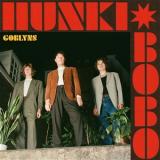
Starkes Albumdebut des Surf-Psych-Groove-Instrumental-Trios Goblyns. »Hunki Bobo« brauch sich hinter Größen wie The Meters, W.I.T.C.H, Khruangbin und Can nicht verstecken. The Meters, W.I.T.C.H, Khruangbin und Can: das sind nur einige der Bands, die die Psychrock-Newcomer Goblyns als Einflüsse auf ihren Sound nennen. In Südafrika gegründet leben die drei Bandmitglieder mittlerweile in Berlin und Amsterdam. In Europa schrieben die Drei auch die Songs für ihr Debutalbum. Die acht Tracks auf »Hunki Bobo« wurde in einem fünftägigen Studiorausch im schwülen Juli 2023 unter der erfahrenen Leitung von Andre Leo aufgenommen. Leo ist vor allem für seine Arbeit mit Medicine Boy und Wombed bekannt und hat zusammen mit den Musikern etwas ganz besonderes erschaffen. Das Album hat eine einzigartige Dynamik und steckt voller Energie. Jeder Song strahlt einen Groove aus, dem man sich schwer entziehen kann. Ob düstere Krautrock-Hypnose, grooviger Surf, Psychedelica. Goblyns fesseln den Hörer an das gesamte Album.
Nachdem sie jahrelang durch's Netz, durch Köpfe und Herzen geisterte, hier nun endlich das Debüt-Album, auf dem die mittlerweile in Berlin ansässige Formation ein graziöses Kleinod liefert, das Melancholie und Aufbruchstimmung in sich vereint und mit seiner wundervollen Inszenierung sofort unter die Haut geht. Voodoo Beach liefern mit »Wonderful Life« Postpunk / Noiserock auf höchstem Niveau. Ähnlich wie Karies, Die Nerven, Friends Of Gas oder Messer, haben sich Voodoo Beach durch 90er Jahre Noiserock prägen lassen und vermengen diese Einflüsse mit offensichtlicher Liebe zu Postpunk und Shoegaze. Harte Anschläge treffen auf durch den Äther wabernde Gitarren-Riffs, walzende Basslines und packendes Drumming. Faszinierend die Chords der Gitarre mit einem manchmal leicht nahöstlichen Touch, aber immer im Postpunk-Noiserock-Psychedelic-Modus. Darüber thronen die verrauchten Vocals von Sängerin Heike Rädeker, deren vorgetragene Texte so ehrlich sind, dass sie weh tun. Mit Hendrik Otremba (Messer) und John Moods (Fenster) konnte die Band tolle Gastbeiträge für das Album gewinnen. Eine der Platten des Jahres!
In Thin Air, forms a musical companion piece to Robert and Jackie's book The Book of Birds - a book that is a love letter to the splendours and mysteries of birdlife, and a clarion call to halt the loss of birds from land, sea and sky. The music was created within the contemplative green oak roundhouse of Ty Sanctaidd (Sacred House) in the grounds of Ty Trefacwn in South West Wales, and recorded at Castle Sound Studio in Pencaitland, East Lothian. As with our other albums In Thin Airhas been recorded and produced by Andy Bell of Hudson Records. Throughout The Book of Birds there runs a gentle mantra - " Nest, Egg, Beak, Song, Feather, Flight, Migration -- these are the Seven Wonders that together conjure the miracle of Bird ". Intrigued by this concept, the seven musicians have created an intricate new album that has an overarching narrative, capturing the remarkable world of birds from birth to flight.
In Thin Air, forms a musical companion piece to Robert and Jackie's book The Book of Birds - a book that is a love letter to the splendours and mysteries of birdlife, and a clarion call to halt the loss of birds from land, sea and sky. The music was created within the contemplative green oak roundhouse of Ty Sanctaidd (Sacred House) in the grounds of Ty Trefacwn in South West Wales, and recorded at Castle Sound Studio in Pencaitland, East Lothian. As with our other albums In Thin Airhas been recorded and produced by Andy Bell of Hudson Records. Throughout The Book of Birds there runs a gentle mantra - " Nest, Egg, Beak, Song, Feather, Flight, Migration -- these are the Seven Wonders that together conjure the miracle of Bird ". Intrigued by this concept, the seven musicians have created an intricate new album that has an overarching narrative, capturing the remarkable world of birds from birth to flight.
Seit ihrer Debüt-EP "Billstedt" aus dem Jahr 2020 schrauben Christian Klindworth, Antoine Laval und Lars Brunkhorst an ihrem ganz und gar eigenen Sound zwischen Postpunk und melodienverliebtem Indierock. fluppe haben mit "Blüte" (2021) und "Boutique" (2023) zwei Alben veröffentlicht. Sie sind beim Reeperbahn Festival aufgetreten, haben für Turbostaat eröffnet, doch vor allem sind sie unermüdlich durch die Clubs getourt und haben ihre eigenen Shows gespielt. Aber klar, auch an fluppe schrappt die Polykrisen-Gegenwart nicht einfach vorbei, zumal es vermutlich unumgänglich ist, dass hier und da mal Cure-Gitarren durchschimmern, wenn man ein Album mit Produzent Tobias Siebert (Klez.e, And The Golden Choir) aufnimmt.
“The first three are innocent in a way, because we didn’t have an audience when we were making them,” Oberst says. “But from Lifted on, I was definitely aware of an audience. Lifted was well-received right away, and then everything happened with Wide Awake and Digital Ash.” Those two albums came out simultaneously. And their lead singles – “Take It Easy (Love Nothing),” from the austere, remote Digital Ash, and “Lua,” from the warm, folky Wide Awake – debuted in the top two slots on the Billboard Hot 100. “First Day of My Life,” also from Wide Awake, would later be voted the Number One love song of all time by NPR Music’s reader’s poll. Bright Eyes had officially broken through. It was a heady, exciting time, but also fraught and tense, both because of the band’s careening new fame, and because of the state of the world. When Bright Eyes made their Tonight Show debut in 2006, they chose to perform none of their shiny new hits, instead delivering a searing, harrowing rendition of their caustic anti-Bush anthem, “When The President Talks To God.” These days, Oberst is still amusing himself by messing with the extremes Bright Eyes baked into this era’s releases, extremes that reflected the polar, with-us-or-against-us, fractious feel of the times. The reworked Digital Ash tracks, originally so clean and elegant, are, on the companion EP, full of “harmonica and mandolins – folky vibes,” Oberst says. While the analogue sweetness of the Wide Awake songs have been put through a detached nihilism filter.
In a world increasingly shaped by disposable content, Chat Pile answer with something defiantly real and organic, a mentality that permeates Who Loves The Sun, their third full-length record. Since the band’s formation just over six years ago, the Oklahoma City-based quartet Chat Pile has grown from a scrappy passion project into one of the defining heavy acts to emerge from the 2020s underground. Ray B. (vocals), L. Manhole (guitar), Stin (bass), and Cap’n Ron (drums) create a crushing, crass, and cathartic take on noise rock that captures a raw, undeniably human essence in an age marked by technological overreach and the cold state of society. Nothing about Who Loves The Sun feels synthetic.
Whereas their debut album God’s Country depicted a particularly American flavor of dread, and the follow up Cool World showed a cruel planet defined by global systemic violence, Who Loves The Sun peels the skin back on how collective indifference defines this new century. Spanning imagery of coastlines devouring cities, dead-end jobs, and submission to data-driven inauthenticity, the album dissects the apathy-bloated state of 21st-century existence as a slow-motion apocalypse. As with much of Chat Pile’s work, Oklahoma City itself looms over the album like a character, its sprawling isolation, economic contradictions, and underlying sense of decay embedded in the fabric of the record. The perfect allegory for the thematic essence of Who Loves The Sun is the photo embossed on the record’s cover, where Devon Tower, a glassy, largely vacant monolith, looms high above the Oklahoma City skyline while a burnt-out home or storefront envelops the foreground. The album remains lyrically and sonically confrontational, but Chat Pile approached the songwriting with hooks in mind, drawing on melodic tones of pre-2000s indie rock, alt-rock, and new wave. From the blood-soaked vocal passages of “Christabel ’26” to the eerie trip-hop pulse of “Same Rules,” Who Loves The Sun is deeply human despite its allusions to a dying, divided .
In a world increasingly shaped by disposable content, Chat Pile answer with something defiantly real and organic, a mentality that permeates Who Loves The Sun, their third full-length record. Since the band’s formation just over six years ago, the Oklahoma City-based quartet Chat Pile has grown from a scrappy passion project into one of the defining heavy acts to emerge from the 2020s underground. Ray B. (vocals), L. Manhole (guitar), Stin (bass), and Cap’n Ron (drums) create a crushing, crass, and cathartic take on noise rock that captures a raw, undeniably human essence in an age marked by technological overreach and the cold state of society. Nothing about Who Loves The Sun feels synthetic.
Whereas their debut album God’s Country depicted a particularly American flavor of dread, and the follow up Cool World showed a cruel planet defined by global systemic violence, Who Loves The Sun peels the skin back on how collective indifference defines this new century. Spanning imagery of coastlines devouring cities, dead-end jobs, and submission to data-driven inauthenticity, the album dissects the apathy-bloated state of 21st-century existence as a slow-motion apocalypse. As with much of Chat Pile’s work, Oklahoma City itself looms over the album like a character, its sprawling isolation, economic contradictions, and underlying sense of decay embedded in the fabric of the record. The perfect allegory for the thematic essence of Who Loves The Sun is the photo embossed on the record’s cover, where Devon Tower, a glassy, largely vacant monolith, looms high above the Oklahoma City skyline while a burnt-out home or storefront envelops the foreground. The album remains lyrically and sonically confrontational, but Chat Pile approached the songwriting with hooks in mind, drawing on melodic tones of pre-2000s indie rock, alt-rock, and new wave. From the blood-soaked vocal passages of “Christabel ’26” to the eerie trip-hop pulse of “Same Rules,” Who Loves The Sun is deeply human despite its allusions to a dying, divided .
In a world increasingly shaped by disposable content, Chat Pile answer with something defiantly real and organic, a mentality that permeates Who Loves The Sun, their third full-length record. Since the band’s formation just over six years ago, the Oklahoma City-based quartet Chat Pile has grown from a scrappy passion project into one of the defining heavy acts to emerge from the 2020s underground. Ray B. (vocals), L. Manhole (guitar), Stin (bass), and Cap’n Ron (drums) create a crushing, crass, and cathartic take on noise rock that captures a raw, undeniably human essence in an age marked by technological overreach and the cold state of society. Nothing about Who Loves The Sun feels synthetic.
Whereas their debut album God’s Country depicted a particularly American flavor of dread, and the follow up Cool World showed a cruel planet defined by global systemic violence, Who Loves The Sun peels the skin back on how collective indifference defines this new century. Spanning imagery of coastlines devouring cities, dead-end jobs, and submission to data-driven inauthenticity, the album dissects the apathy-bloated state of 21st-century existence as a slow-motion apocalypse. As with much of Chat Pile’s work, Oklahoma City itself looms over the album like a character, its sprawling isolation, economic contradictions, and underlying sense of decay embedded in the fabric of the record. The perfect allegory for the thematic essence of Who Loves The Sun is the photo embossed on the record’s cover, where Devon Tower, a glassy, largely vacant monolith, looms high above the Oklahoma City skyline while a burnt-out home or storefront envelops the foreground. The album remains lyrically and sonically confrontational, but Chat Pile approached the songwriting with hooks in mind, drawing on melodic tones of pre-2000s indie rock, alt-rock, and new wave. From the blood-soaked vocal passages of “Christabel ’26” to the eerie trip-hop pulse of “Same Rules,” Who Loves The Sun is deeply human despite its allusions to a dying, divided .
In a world increasingly shaped by disposable content, Chat Pile answer with something defiantly real and organic, a mentality that permeates Who Loves The Sun, their third full-length record. Since the band’s formation just over six years ago, the Oklahoma City-based quartet Chat Pile has grown from a scrappy passion project into one of the defining heavy acts to emerge from the 2020s underground. Ray B. (vocals), L. Manhole (guitar), Stin (bass), and Cap’n Ron (drums) create a crushing, crass, and cathartic take on noise rock that captures a raw, undeniably human essence in an age marked by technological overreach and the cold state of society. Nothing about Who Loves The Sun feels synthetic.
Whereas their debut album God’s Country depicted a particularly American flavor of dread, and the follow up Cool World showed a cruel planet defined by global systemic violence, Who Loves The Sun peels the skin back on how collective indifference defines this new century. Spanning imagery of coastlines devouring cities, dead-end jobs, and submission to data-driven inauthenticity, the album dissects the apathy-bloated state of 21st-century existence as a slow-motion apocalypse. As with much of Chat Pile’s work, Oklahoma City itself looms over the album like a character, its sprawling isolation, economic contradictions, and underlying sense of decay embedded in the fabric of the record. The perfect allegory for the thematic essence of Who Loves The Sun is the photo embossed on the record’s cover, where Devon Tower, a glassy, largely vacant monolith, looms high above the Oklahoma City skyline while a burnt-out home or storefront envelops the foreground. The album remains lyrically and sonically confrontational, but Chat Pile approached the songwriting with hooks in mind, drawing on melodic tones of pre-2000s indie rock, alt-rock, and new wave. From the blood-soaked vocal passages of “Christabel ’26” to the eerie trip-hop pulse of “Same Rules,” Who Loves The Sun is deeply human despite its allusions to a dying, divided .
This is a concept record that reflects on events that have had a calculable effect on a generation:
‘’By 83 and 84, it felt that nuclear war was going to happen. Not could happen but was going to.’’
Stephen Brotherstone
"What would you do in the event of a Nuclear war?"
I remember having discussions about what we would do when we heard the four minute warning siren. We would raid the sweet shop. I was 8 or 9 years old. The absurdity of this vivid memory encapsulates the concept of the record. It would take at least four minutes to get to the shop!
The record starts with an early memory of circling a church on a Raleigh Budgie (the smaller lesser known iconic Chopper bicycle) in 1981 and ends with staring up at a clear sky on Oldham Lows in 1990.
The record identifies and plays with the effects of an underlying fear of oblivion on a generation of children, but also society as a whole: The pieces take in media and government propaganda. Machinery (nuclear submarines) and buildings (nuclear bunkers) but also everyday activities of the civilian population, activities such as shopping, clubbing and staring at the sky. Thematically, the record is made up of personal memories mixed with historical events.
Instruments are mainly from 1980s. DX7 and 808 feature predominantly. The pieces feature numerous melodic motifs that develop and intertwine underlying ideas of espionage and layers of secret messaging. It also mirrors the ways in which governments and civilians interact. Decisions being made in the name of defence whilst people go about their daily lives. I am exploring the everyday experiences of the masses whilst major political decisions are taking place. For example, shopping on a Saturday afternoon versus heated Cold War tensions in 1983.
Although taking place conceptually in the years 1979-1991, this record mirrors current events. History repeating. It also mirrors the helplessness or maybe some oblivious everyday normality state that we adopt as a community whilst major political decisions are being made.
The idea that life goes on oblivious to larger scale politics, or on the other hand, the idea that we are all very aware but in a state of unreal normality. Adam Curtis goes into great detail about such things in his film 'Hyper Normalisation'.
De bloemetjes buiten zetten. De nacht induiken. Het kot afbreken. Fuiven. Onze taal heeft tientallen manieren om uit te drukken wat zich elk weekend afspeelt overal in het land. Samen zijn. Plezier maken. Dansen en sjansen.
Dit boek bestudeert hoe de afgelopen 100 jaar werd uitgegaan in Vlaanderen en Brussel. Het vertelt verhalen van gewone stervelingen en mondiale supersterren, van pioniers, van vergeten helden, van mafketels en dromers, durvers en doeners. Hun ogen – dat bewijzen de vele foto’s in dit boek – fonkelen, of ze nu de nacht van hun leven beleven in de jazzclub tijdens het Interbellum, twisten bij de jukebox in de jaren 50, los gaan op de tonen van het orgel of dansorkest in de jaren 60, feesten in de disco in de jaren 70, sloom dansen op de new beat in de jaren 80, trancen in de megadancing in de jaren 90 of karren op een rave na de eeuwwisseling.
Je moest erbij geweest zijn. Met dit boek was je erbij!
Uitgegeven door: AfterClub, 2026
Naar aanleiding van de tentoonstelling C’est Party! 100 jaar uitgaan in Vlaanderen en Brussel, in Huis van Alijn, Gent.
Auteurs:
Koen Galle
Marie Vandecaveye
Eva Dierckx
Evelien Jonckheere
340 pagina’s
200 x 260 mm
Taal: Nederlands
Hardcover, met leeslintje.
Mara TK, a golden voiced, Maori-Scottish world-wandering citizen of Aotearoa (New Zealand) announces his debut solo album 'Bad Meditation', released 7th May on Extra Soul Perception. Stepping out on his own, Mara TK is the former frontman of the acclaimed Kiwi future soul trio Electric Wire Hustle. Written and produced by Mara himself, 'Bad Meditation' is his 13 track opus, a deeply personal account of heritage, love, loss and healing.
An alumnus of Red Music Academy in Toronto, Mara TK's work beyond Electric Wire Hustle has seen him collaborate with critically lauded names including Om'Mas Keith of Sa-Ra Creative Partners, Detroit producer and J Dilla collaborator Waajeed, and Steve Spacek.
Extra Soul Perception is a collaboration and community music platform that started life between the UK, Kenya and Uganda but is now continuing to grow and connect independent musicians worldwide. Now with Mara TK added to the roster, Extra Soul Perception has released music by Lex Amor, K15, Maxwell Owin, Lynda Dawn, Hibotep, Karun, Labdi, Faizal Mostrixx and more.
*Nb: The solo version of 'Met At The River' is a digital exclusive only.
Across two song cycles separated by nearly four decades – Richard Wagner’s »Fünf Gedichte für eine Frauenstimme« (the »Wesendonck Lieder«) and Johannes Brahms’ late »Vier ernste Gesänge« (»Four Serious Songs«) – Wagner’s songs, written under the spell of his relationship with Mathilde Wesendonck and already pointing towards »Tristan und Isolde«, and Brahms’ final composition, which gives the album its name and was shaped by grief, illness, and meditations on biblical texts, circle the same existential questions.
Desire and mortality, ecstasy and resignation appear less as opposites than as mirrored states. The voices of Wesendonck’s poetry seem to answer the solemn reflections of Ecclesiastes and Corinthians, revealing an unexpected dialogue across time.
Without seeking historical authenticity or revisionist spectacle, »Serious Songs« listens for what still resonates beneath these works: the suspended moment where love, loss, and transcendence become indistinguishable. The harp assumes the role of the piano as the foundation, pulse, and emotional compass. The vocal line, liberated from classical convention, inhabits a contemporary expressive space without severing its bond to the original scores. It is Romantic music viewed through the acoustics of the present. The project emerged from a moment of professional disillusionment familiar to many classically trained musicians. This led to a confrontation with some of classical music’s traditional flaws that became an invitation to reimagine it.
Sissi Rada approaches the spinal properties of the Romantic Lieder, fragile enough to transform and resilient enough to survive. Intimate, lucid, and quietly radical.
Crypt Sermon kommen mit ihrem zweiten Album, dass dem Debüt in nichts nachsteht oder um es auf den Punkt zu bringen - DAS hier ist eine Ansammlung epischer Doom Metal & Heavy Metal-Momente, glühender Stahl im Stile alter Helden wie Solitude Aeturnus oder Candlemass wie man ihn sonst derzeit nicht so schnell findet! Die Texte befassen sich mit doom-typischen Themen wie Glaube und Familie, Leben und Verlust und natürlich Stärke und Stolz. Zwischen donnernden Riffs und klagenden akustischen Momenten pendelt die Musik irgendwo zwischen Epic Doom und TRUE Heavy Metal. Erneut aufgenommen und gemischt wurde das Album von Arthur Rizk (Power Trip, Eternal Champion, Sumerlands, etc.).
Neues Tea Glass Coloured Vinylformat des erstes Albums von Resavoir auf seinem neuen Label L'UNIVERS - nach drei von der Kritik gefeierten Releases bei International Anthem und Touren mit Khruangbin, BADBADNOTGOOD und Kassa Overall. ""Themes For Dreams"" markiert eine Kehrtwende und zeigt den Chicagoer Musiker/Produzenten Will Miller von seiner meditativen Seite. Auf 13 bemerkenswert stimmigen Tracks verzichtet die LP auf Schlagzeug und setzt stattdessen auf eindringliche Melodien, die schweben, verklingen und nachklingen. Mit Arrangements, die sich wie eine warme Decke anfühlen. Als Gastmusiker dabei sind Marta Sofia Honer, Jeremiah Chiu, Macie Stewart, Matt Gold, William Corduroy und Molly Rife. ""Man denke an die Ambient-Werke von Künstlern des elektronischen Jazz der 70er und 80er Jahre wie Beverly Glenn Copeland und Laraaji."" - Tasha Viets-VanLear, Chicago Reader
LOVE, das neue – und möglicherweise letzte – Album von Dexys Midnight Runners, ist eine leuchtende Sammlung zutiefst persönlicher Geschichten aus Kevin Rowlands Leben: über Familie, Liebe und die Schicksalsschläge des Daseins. Songs aus drei Jahrzehnten treffen auf brandneues Material – von der irischen Einwanderer-Kindheit über einen Brief an seine Enkelkinder bis zur Zeit mit einem sterbenden Elternteil. Liebeslieder im weitesten Sinne, jenseits gängiger Pop-Romantik: keine Wird-sie-wird-sie-nicht-Romanze, sondern etwas Tieferes, das die volle Bandbreite menschlicher Beziehungen und Emotionen abbildet.
„Ich dachte plötzlich: Das sind alles Liebeslieder – nur eben verschiedener Art", sagt Kevin Rowland über die Entstehung des Konzepts. „Da wusste ich: Es muss LOVE heißen." Ein Liebesleben in Songform, erzählt von jemandem, der mit seiner wunderbaren Autobiografie Bless Me Father bereits gezeigt hat, wie offen er über sein Leben sprechen kann.
LOVE ist zugleich das erste Album unter dem vollen Namen Dexys Midnight Runners seit Don't Stand Me Down (1985). Produziert von David Holmes – langjähriger Fan und Wegbegleiter der Band –, mit Songwriting-Unterstützung der langjährigen Weggefährten Sean Read, Mike Timothy und Jim Paterson sowie Streichern von Brian Irving.
Die Gentrys, bekannt für ihren Hit „Keep On Dancing“ aus dem Jahr 1965, waren eine Garage-Rock-Band aus Memphis, die 1970 zu Sun Records wechselte, als das Label nach Nashville umzog. Diese Sammlung seltener Grooves und bisher unveröffentlichter, verschollener Titel aus dem Sun-Archiv präsentiert die Gentrys unter der Leitung des legendären WWE-Managers und TV-Stars Jimmy Hart, produziert vom Sohn des Visionärs Sam Phillips, Knox Phillips. „It’s Been So Long“ zeigt eine sanftere Seite der Band und verbindet Harmonien im Laurel-Canyon-Stil mit ihrem Memphis-Rock-Sound.
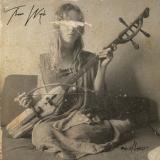
LP includes double-sided print insert. Thorn Wych makes instruments from tree branches; bowed strings, flutes and percussion that she runs through a chain of loopers, pitch bending glitches and delay pedals. Strange songs sung in tongues, mashed up chewed and spat out. As the adder weaves her way through the dirt and mycelium hum, we play in the mud and converse with insects. 'Aesthesis' is Thorn Wych's debut LP that she recorded and mixed herself at home, often performing long improvised pieces, then later editing them down, cutting and pasting and overlaying other instruments. This album takes inspiration from such works as 'The Secret Book of John', the 1940 film 'The Thief of Bagdad', and Lata Mangeshkar's 'Meera Bhajans'. She dedicates her work to the Divine Mother Asherah, Holy Spirit, Guardian of the Tree of Life.
"Northern Electronics presents ’The Vanity Project’, the new LP by Vanity Productions.
Like a fractured reflection, images appear distorted and incomplete. A series of fragments revealing influences, methods, and decisions where life and work remain inseparable. Moving through the residual noise of contemporary media space, Christian Stadsgaard draws from social media remnants, dark web transmissions, and untreated human sound.
These elements are processed through noise electronics and tape manipulation, collapsing source and signal. ’The Vanity Project’ is constructed as a dense, uneven surface. A collage of found sound, environmental interference, and emotional residue. The result carries Vanity Productions’ characteristic melancholy, Nordic restraint, and accumulated debt, forming a quiet but insistent tale of romance and reflection from the source.”
Album credits:
All music recorded by Christian Stadsgaard in Copenhagen, Denmark 2025
Mixed by Christian Stadsgaard and Malthe Fischer
Mastered by Giuseppe Tillieci at EnissLab, Rome
Photos by Christian Stadsgaard
Collage by Anthony Linell
Sound contributions by Shredded Nerve, Jackson-Pratt, Ashley C, Hannes Norrvide, Malthe Fischer, Daniel Svanberg Bøtcher, Vagn Olsson, Yuri Umemoto, Lise Westzynthius, Qiuyao Ning, Peter Peter, Government Alpha and Merzbow – A big thank you to everyone involved.
“The Vanity Project” was kindly supported by KODA kultur, Copenhagen.
out of Stock
Last delivered 39 days ago available to reorder, subject to availability
Golden Ape Records unleashes another foray from the outer reaches of bass, Luke’s Anger’s - One Machine to Rule Them All EP with a Radioactive Man remix! Available in super limited edition of 100.
His mastery of this one Analogue machine has brought forth a new EP of singular intent, to give the horns, tweeters and woofers of club sound systems a proper workout! Electro rules again - bass to crush bones, drums to jerk your body and synths to rewire your brain. The overall effect is an intense, exhilarating and liberating experience that breathes fresh life into a storied music genre.
He is ably assisted by Keith Tenniswood aka Radioactive Man on remix duties of the track No Undo. He brings to fore his sweet and nasty sides to create a growling bass ridden beast that begins with a blissful promise and then puts the boot into your pleasure zones.
Handle with caution!
out of Stock
Last delivered 41 days ago available to reorder, subject to availability
“Ruins are the style of our future cities, future cities are themselves ruins.” - Izosaki Arata
A note from Lawrence English: Nostalgia is not an ideology, though in this moment, we could be mistaken for thinking it might be just that. Over the past years, the idea of nostalgia has been filtered through various political and technological lenses and has become a tool used for forgetting, rather than remembering. Instead of embracing histories’ complexities and inconsistencies, this version of nostalgia seeks only singular recollection. This contemporary phenomenon of nostalgia has become a methodology at best, and a weapon at worst, used to erode the past and project forward a collapsed and unimaginably sanitised version of things, places, and ways of being from former times. It’s this projection that sees it playing a mounting role in a social pathology associated with reducing the imagined possibilities of future.
The Rest Is My Ghost is a record that interrogates the manifestations of this reductive futuring and celebrates those that have tried (and failed), and those who continue to push back against decayed and revisionist positions. It’s a record that considers the weaponisation of nostalgia for the purposes of cloaking possible futures.
In recent times, I’ve proposed a term for this weaponised use of nostalgia, something I have called Acid Nostalgia. I offer it as a shorthand to describe the de-contouring of the future through a corrosive fixation on a flatten rendering of the preceding times. It is, in part, a certain type of lazy cultural scripting where tropes of the past are presented in the absolute, as empty pictorials; photocopies without any original from which to draw actual meaning, or useful detail.
Acid Nostalgia describes an increasingly common political projection of nostalgia that exists without any subjective connection to the memory surrounding and contained within it. Like acid poured onto a surface, this use of nostalgia seeks to erodes and smooth out the complexity and texture of lived connection and longing, which has until recently guided contemplations of nostalgia. Acid Nostalgia instead erases the texture of histories and de-contours the past, and in doing so dematerialises the horizon of possibility, which by its very nature marks the beginning point for any (and all) imaginable futures. Acid Nostalgia is a dreamless screen, where uncertainty, restlessness and aspiration are subjected to corrosion, breaking down and neutralising the wellspring of futures which are birthed from within the ambiguously charged, complex and at times chaotic atmospheres of the present.
The Rest Is My Ghost is not however some universal reading of these things and happenings. Rather it draws its breath from a very personal pathway carved through my own fraught experiences of nostalgia and framed through a disparate collage of chance encounters, situations, places and provocations. It takes oblique notes from civic and architectural references such as Japan’s Metabolist movement, Hong Kong’s ‘one line sky’ and Los Angeles’s vanished Sodium Vapour lights. It interpolates texts – factual and fictional – by authors such as Franco Berardi, Kate Crawford, JG Ballard, Katsuhiro Otomo, Mark Fisher and Alexei Yurchak who have each so wonderfully sought to rupture the familiarity of now, and push us towards other ways of imaging ourselves, our surroundings and our very ways of being in this world.
I also owe a debt of thanks to Adam Curtis in helping launch what has become this edition. It was his provocation, in a conversation we shared about an overwhelming and profound sense of uncertainty around being able to predict the immediate future and how to respond to that, which sparked the earliest inklings of this edition.
The Rest Is My Ghost is ultimately a record about the promise of constructions and connections to come, material, social and political. It's a record that accepts the fragility of failure as a source of ultimate potential, and a position from which the deepest freedom of imagination might be sought and summoned forth to conjure even the most unimaginable, (but) possible futures.
out of Stock
Last delivered 41 days ago available to reorder, subject to availability
»Ampersand Curve« initiates a brilliant new phase of work by North Manchester’s most elusive artist, best known as Michael J. Blood. His string of ruffkut club bangers, as well as jams with Rat Heart & Samizdat over the past seven years, have made his records a true cult property, and now find him signed to one of the UK’s most foundational techno imprints – more of which later this year.
But under the Sees aegis, he swims in very different waters, following his instincts to use the studio-as-instrument to produce his most impressive, deep-minded work, made from – and for – the heart. Where MJB was all about off-the-cuff club jams cooked for immediacy, his new stylistic switch reveals myriad worlds of influence swirling under the hood, where interrelated spheres of spiritual jazz, dub, ambient, and concrète more clearly light up his rich inner world.
As the story goes, MJB was burgled a few years back and lost most of his studio just as the project was hitting its stride. It prompted a personal review of his practice, re-learning new kit, allowing him to bend the rules. Adopting a sort of first-thought, best-thought approach to composition, the new methodology fuelled a renewed imagination in flux, or what he identifies as Sees: a personalised way of conveying complex emotions. That undoing of musical and mental conditioning opens the walls of his music to vast new horizons. Opener »Ithaca« fathoms sonorous midnight jazz with 10 mins of a plangent, searching sax solo in HD widescreen, like some alternate version to the Blade Runner Love Theme, while a resonant vocoder soliloquy, »Unseem«, reaches into space harmonised between Alvin Lucier and Ron Trent, and »Sheer« chases the devil out of labyrinthine dub dimensions.
The floating dream architecture of »Caprices« caps the LP’s underlying narrative and painterly qualities with a romantic conclusion of blushing pads and shivered, metallic echoes of the subtropical that suggest a coming-to-terms with worries, refreshed and good to go again.
out of Stock
Last delivered 41 days ago available to reorder, subject to availability
When Leon Michels and El Michels Affair released their rst record, Sounding Out The City, in 2005, it was hard to guess what was next for Michels and his then-introduced, now-patented "cinematic soul" sound. Now, four EMA studio albums and scores of tribute and remix projects later - all while producing for some of the biggest names in the industry - Michels has trademarked his sound, with each project taking audiences somewhere new and pushing the boundaries of what he is known for. The man is a river, not a lake and this time he takes his golden touch into the realm of hip-hop laying down a musical bed for one of the greatest to ever rhyme into a microphone: Black Thought of The Roots crew. Releasing on Big Crown Records, the LP is called Glorious Game and it is a remarkable debut partnership in more ways than one. Michels provides his bottom-heavy, soul-tinged production for Black Thought who gives us some of the more personal and transparent verses we've ever heard from him. Michels and Black Thought have been in each other's orbit for a while now. The two first met in the 2000s when Thought was first getting familiar with the contemporary soul scene. "Out of that whole world, Menahan Street Band was probably my favorite," recalling the funk and soul group Michels was a founding member of back in 2007. Fast forward a few years and musicians from that collective - Dave Guy on trumpet and Ian Hendrickson-Smith on sax - are now full time players with The Roots. This connection eventually led Leon and Thought to doing a few fundraising events around NYC and Philly together. "Before long, Black Thought was coming around the studio and would jam with us from time to time," Michels explains. "Then, fast forward to 2020 and COVID lockdowns, he just hit me up out of the blue, wanting me to send him stuff to write to. We both were looking to stay busy" Being that Black Thought is the co-founder and emcee for, hands down, the best live-band group in hip-hop. Michels took a decidedly different approach to this project and instead of sending recorded tracks of live compositions, he pulled out the sampler and sampled himself and some records from his collection. "I'm a big fan of soul music," as if Michels has to remind us. "And part of hip-hop's appeal to me has always been the sample-based production" For Glorious Game, Michels would make wholly composed and recorded soul songs in his studio, sample himself, then chop and/or loop up his sounds and create instrumentals for Black Thought. On some tracks he took a more traditional hip-hop approach, starting from samples of other people's music but then adding live instrumentation on top. But for the most part, it's him reinterpreting his own compositions into something new. The result is an organic feel of loop-based tracks that breathe and uctuate enough for Black Thought to ex on. "What I write about is determined by the equation of the producer's energy and my energy," Black Thought says. "It's about where we meet." So armed with Michels sampled and re-sampled soul cinematics, Black Thought rhymes through personal memories.
out of Stock
Last delivered 41 days ago available to reorder, subject to availability
Felt Sense Recs presents X’d In Stone by Rita Revell. Focused attention given to the junction of Flinders and Elizabeth street.
Industrial, Ambient Electronics.
Made in the Native Grassland Circle while manifesting The Spin of the Melbourne Star.
150 Copies Worldwide.
All Songs Written & Recorded by Rita Revell
’50 Tuned Depressions’ Featuring Pete Gower on violin
Design By Bradley Pinkerton
Mastered by Dubplate & Mastering DE
Manonmars’ 3rd album sees him at his most amorphous and psychedelic, at points sharper and laser focused, and at others more blurred and impressionistic than his previous records. Many of the core players remain the same, all of the production is once again handled by O$VMV$M (the duo of Neek and Amos Childs of Jabu) while Paulina Korobkiewicz (also of Young Echo) makes a return handling both the album’s cover artwork and contributing a series of diaristic field recordings and voice notes.
‘The project references movies, cartoons, fictional characters and video games, among other things. The album title is open to interpretation but all of these elements are forms of visual entertainment which have their own unique ability to transcend things like language barriers and cultural divides. The visual element is key because those details bridge the gap on a communicative level.’ - Manonmars
The album blends abstract, blurred braggadocio with more immediate personal details such as on ‘Volcanic Shield’ a posse cut of sorts featuring Bristol improv luminary Dali de Saint Paul and Franco Franco (½ of cyborg rap duo Kinlaw & Franco Franco) - where Mars recalls;
‘Memories of brighter days, happy meal hit the spot
Mum was spinning vinyl playing Super Ape or Pressure Drop
I would spend the weekend with the Turkish mandem on the block
single parent household, mum was studying or on the job
money came and went always was an on and off
made it back from school time to see what’s on the box’
The beat fades away to leave one of Korobkiewicz’s recordings of Mars’ mum talking about her life in London in the 80s, spending her money on reggae records as an ambient chord fades in like an echo of a jungle intro – stretching out as a link between generations of UK music.
The production by and large is brighter and more kinetic than earlier Manonmars records – with O$VMV$M drawing on everything from modern underground rap and drill through to jazz and acid ambient passages.
London is also a central character here, bustling and constantly shifting, either when bleeding in through field recordings, or as an ever-present backdrop in the lyrics;
‘I’m a fusion of Tippa Irie and Topper Harley
Hit the target like the black Atari
I dropped a tab now shit’s A Scanner Darkly
Got the munchies, Imma yam a sarnie
Pour the Wray and Ting like man at Carni
Exit Peckham Rye and turn left, walk past Hannah Barry
Get your (w)raps up like its January’
‘I've always considered London my home, despite spending some time in the South West of England too. My mum had been living in London for 25 years (...) That was a pretty big deal in some ways because it removed us from multicultural society during the period which overlapped with my teenage years. (...) I never got used to how quiet it was in the countryside (...) Bristol was the closest city to where we lived and it was through travelling there and making connections that I became involved in making music and playing gigs.’ - Manonmars
Mars’ practice as a painter (under his given name Jack Martyn Richardson) and photographer also loom heavy over the album, he cites Paul Verhoeven, Abdul Mati Klariwein and H.R Giger as influences – as well as Miles Davis, Drakeo the Ruler and DJ Rashad.
As with much of Richardson’s work the raps at times feel blurred to a point of almost inscrutability, creating a distance between the audience and himself. A process that ties into his visual work and the way he experiences the world as mainly abstract colour without his glasses. He explores this further in an ongoing visual collaboration with Korobkiewicz, ‘Fun and Games’ which serves as a visual archive of one of London's largest and oldest travelling fairgrounds.
‘I was diagnosed with very severe short-sightedness at the age of seven. I remember my early formative years as visually blurred. Some of my photography reflects this experience of partial vision and uncertainty, referencing memory and perception rather than fixed representation.’
Manonmars’ first public outing as a rapper was at a Young Echo radio event, broadcast shambolically from a practice room just off Jamaica street, Bristol in 2011, as much as things have moved on both stylistically and in terms of focus - strong links back to the city remain a key foundation throughout the collaborations and guest appearances.
‘I have no problem with being an outsider looking in. One of the things I enjoy about London is the anonymity (...) it's easy to be a stranger here when so much is happening. I feel like thats more valuable than people may realise.’
Dark Entries helps Suzanne Ciani come out of the closet as Steve! Legendary composer, sound designer, and Buchla maestra Suzanne Ciani has a staggering list of accolades and accomplishments, from scoring Hollywood films to releasing influential new age records to literally designing the Coca-Cola bottle-opening sound. In the late 70s/early 80s, Ciani, while living in New York, acquired an Eventide H 949 harmonizer, which offered high fidelity pitch-shifting. In her words, “When I adjusted the pitch of my voice to 0.80, my natural voice became re-invented as what was clearly a gay man, who I called Steve. I became Steve; and Steve expressed himself as only he could.” Ciani adopted the male persona and collaborated with Peter Baumann of Tangerine Dream on “Steve Goes to a Party.” The track features Ciani-as-Steve adlibbing in decadent and delirious fashion alongside Baumann’s robotically funky beats. Steve would emerge again a few years later at George Louvis’s Stardust Studios in New Jersey, to create “Steve Saves the World,” an absurdist and ecstatic proto-house groover complete with a gospel-esque chorus from the Stardust All-Stars. This EP is rounded out by a birthday wish to Ciani’s then-boyfriend Alfred on “Steve Happy Birthday Wishes” featuring Suzanne. Steve’s Out of the Closet perfectly captures the delirious techno-poptimism of the 1980s downtown avant-garde, with parallels in Robert Ashley’s Perfect Lives or Lynn Goldsmith’s project Will Powers, responsible for the track “Adventures in Success.” The Steve sleeve was designed by Eloise Shir-Juen Leigh, and the record also includes a birthday card with liner notes from Ciani.
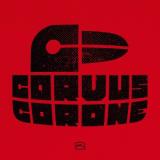
This next manifestation of Corvus Corone is a project featuring one As’teka tribal original and 3 collaborators with their own take. All RMX’s are different but stay within the parameters of the original and the label. Get two 12“ and mix for an endless experience.
A trip into the dark heart of the jungle where evil could be lurking anywhere. Are those birds or bats? Was that a gigantic insect crawling? Was that shadow moving? Did you hear that voice? Arghh, is it day or nite? What day is it? I am getting stuck in quicksand - I...am...being...sucked...in...
Originally released on Philips Ethiopia in 1973. A mixture of modern and traditional instruments marks the stages of an Amhara wedding. Wedding photos and liner notes inside.
OOZ proudly presents the sixth instalment on the label with Nate Oldfield’s inaugural solo EP. Informed by minimalist techno and intuitive modes of machine music – made predominantly with hardware – Nate puts forth a record that feels as though it’s dancing out of the shadows and into the light. Eery chords and vocals are paired with sharp percussive rhythms by a producer that seems to revel in the play of music-making. At points stark and almost plaintive, the depth of feeling throughout the record is contrasted by the playful nature of how sound is manipulated. Grooves plod along to cold, melodic chimes, guitar plucks and a discussion about walking through Danson Park near Nate’s hometown of Abbey Wood, South-east London.
For the first time ever, Los Campesinos! are proud to offer new pressings of their first three studio albums on their very own record label; Heart Swells.
2026 marks the 20th anniversary of LC!’s formation, and coincides with the band being more popular and relevant than ever before. The 3 albums are available for the first time since 2020, on brand new colour ways, on 12” vinyl and CD, with updated artwork and packaging.
What the press said:
“an absolutely astounding album” 4.5/5 - DIY
“Romance Is Boring is a triumph.” - 8.3/10 - Pitchfork
“The fact that the seven-piece manage to make music that is as orchestrated and coherent as it is invigorating is only one of the few astonishing things about them.” - 9/10 Popmatters
“What primarily sets ‘Romance Is Boring’ up as a significant step forward is that it’s incredibly structurally cohesive, and yet blows anything they’ve previously released out of the water in terms of textural intricacy, technical prowess and general experimentation.” - 4/5 NME
Big Crown Records ist stolz darauf, "Perak", das Debütalbum von Thee Marloes, zu präsentieren. Wenn man Thee Marloes zum ersten Mal hört, mag einem ihr spezieller Soul-Sound vertraut vorkommen. Da sind die wuchtigen Trommeln, eine sanfte Gitarre und eine schöne Stimme, die über unerwiderte Liebe und die Komplikationen in Herzensangelegenheiten singt. Aber dann ist da etwas unbestreitbar anderes an Thee Marloes und ihrer Musik, etwas Neues und Unverwechselbares. Die meisten, die mit Soulmusik vertraut sind, haben wahrscheinlich noch nie etwas aus Surabaya, Indonesien, gehört - dem Ort, den Thee Marloes ihre Heimat nennen. Thee Marloes, das sind Natassya Sianturi (Gesang und Keyboard), Tommy Satwick (Schlagzeug) und Sinatrya ("Raka") Dharaka (Gitarre und Produktion). Ihr Sound hat die universelle Anziehungskraft von Soul, Jazz und Pop, aber mit einem ganz eigenen Ansatz, der auf ihre lokale Kultur und ihren globalen Einfluss zurückzuführen ist. Die erste Auskopplung von "Perak" ist "Midnight Hotline", die heiße A-Seite ihrer Debüt-7" auf Big Crown. Eine druckvolle Dancefloor-Nummer mit einem ansteckenden Refrain, vibrierendem Piano und jazzigen Gitarrenlicks. Die B-Seite "Beri Cinta Waktu" ist auch auf dem Album und hat alles, was eine beliebte Soul-Ballade ausmacht, aber der Text ist auf Indonesisch. Unabhängig von der Sprachbarriere ist das Gefühl in ihrer Musik spürbar, was dazu beiträgt, dass ihre Songs nachvollziehbar sind und ans Herz gehen. "I Know" ist ein Mid-Tempo-Song, der davon handelt, wie man den Schleier der Lügen von einer Liebesaffäre, die auf Falschheit beruht, wegzieht. "Not Today" gehört zu den groovigsten Wohlfühlsongs, die man an einem Sonntagmorgen spielen kann. Natassya erinnert uns daran, uns selbst Raum zu geben, ganz gleich, was das Leben uns vor die Füße wirft. "Mungkin Saja" zieht das Tempo mit einem weiteren Dancefloor-Smoker wieder an, während Thee Marloes mit "True Love" in die gefühlvolle Seite des Jazz eintauchen, mit einer Beat-Ballade, die eine Tarantino-Tanzszene untermalen könnte. "Over" beginnt mit einem schweren Drum-Break und entwickelt sich zu einem epischen Arrangement, das in Schichten wunderschöner Melodien getränkt ist und das Chaos einer Liebesaffäre, die abrupt endet, perfekt einfängt. "Perak" ist eine Reise aus dem Herzen Surabayas in den Geist des Soul-Sounds. Es geht darum, einen Raum zu schaffen, wo keiner war, und es zu tun, weil man es liebt. Man spürt den Spaß, den Thee Marloes haben, ihre Musik zu machen, vom Songwriting und Aufnehmen bis hin zu den Auftritten vor Publikum. "Wir wollen das, was wir leben, mit anderen teilen", sagt Natassya. Egal, welche Sprache man spricht oder aus welcher Kultur man kommt, die Musik und die Energie von Thee Marloes sind so charmant, dass wir sie alle noch jahrelang in der Nähe des Plattenspielers haben werden.
Die acht Jahre, die I've Missed You All These Years geprägt haben, waren von tiefgreifenden Veränderungen geprägt: Sera Cahoone verlor innerhalb kurzer Zeit ihre beste Freundin, ihren Vater und ihren Hund. Aber bei diesem Album geht es ganz und gar nicht um die Dunkelheit; es geht darum, was passiert, wenn der Sturm vorbei ist, um den Moment, in dem du nach einem dunklen Winter wieder in deinen Körper zurückfindest. Dieses Gefühl der Leichtigkeit kommt deutlich zum Ausdruck in dem Klavier und der E-Gitarre, die in ,Say Something" zum Leben erwachen, sowie in dem komplexen Porträt von ,Hits Right". I've Missed You All These Years fängt den Klang einer ekstatischen Zusammenarbeit zwischen außergewöhnlich talentierten Freunden ein. Man hört es im Barroom-Swing von ,Pulling Up Roots", im Seufzer einer Pedal Steel in ,Not How I Had Hoped", im luftigen Falsett von ,Say Something". Es ist ein Album darüber, Trost in der Gemeinschaft zu finden; darüber, sich selbst wiederzuentdecken, indem man sich mit den Menschen verbindet, die man liebt. Auf ihrem sechsten Album hat Cahoone ihre Kräfte voll im Griff. In seiner Fähigkeit, Verlust und Verbundenheit in einer Hand zu halten, ist I've Missed You All These Years triumphierend, eine Feier des Lebens, die in dem Wissen um dessen Vergänglichkeit verwurzelt ist. Als Ergebnis eines Lebens, das sie mit dem Aufführen und Produzieren von Musik verbracht hat, durchquert das Album Blues, Folk, Pop und Country und erinnert in einem Song an Loretta Lynn und im nächsten an Lucinda Williams. Es ist ein Zeugnis der Kraft, die Kreativität und Gemeinschaft mit sich bringen, ein Porträt einer Künstlerin, die sich selbst vollkommen kennt.
Die britischen Alternativ- und Progressive-Rocker von The Pineapple Thief melden sich 2016 mit einem neuen Album zurück. »Your Wilderness« heißt der Nachfolger von »Magnolia« aus dem Jahr 2014.
Mit gerade einmal acht Songs handelt es sich dabei auf den ersten Blick fast schon um ein Minialbum. Bei näherem Hinsehen bzw. Hinhören stellt man aber fest, dass alle Songs zwischen 3:46 und 9:52 Minuten liegen, was eine Durchschnittslänge von rund 5 Minuten pro Song macht. Hier kommt also niemand zu kurz.
Im Gegensatz zu früheren Alben haben sich The Pineapple Thief für »Your Wilderness« zum ersten Mal einen ganzen Haufen illustrer Gäste eingeladen.
Zunächst einmal ist Schlagzeuger Gavin Harrison mit von der Partie, der dem einen oder anderen bereits durch seine Mitgliedschaft bei der Band Porcupine Tree bekannt sein dürfte. Für einige Klarinettenparts stand zudem niemand Geringeres als John Helliwell von Supertramp zur Verfügung. Geoffrey Richardson von den legendären Caravan steuerte unterdessen das Streichquartett bei, das auf dem Album zu hören ist. An der Gitarre unterstützte Darran Charles von Godsticks. Zu guter Letzt sorgte ein vierköpfiger Chor für die Backgroundgesänge.
Produziert wurde »Your Wilderness« komplett in Eigenregie der Band, mit Ausnahme der Drumparts, die Harrison in seinem eigenen Studio einspielte.
Mit »No Man’s Land« haben The Pineapple Thief auch bereits die erste Single des neuen Albums vorgestellt. Und die lässt erahnen, dass die Band sich trotz neuem Personal musikalisch treu bleibt – zur Freude vieler Fans.
Led by the lightning-fast guitar work of Alvin Lee, the band had quickly evolved from a traditional blues outfit into one of the most exciting and commercially viable acts of the late '60s British rock scene. This album reflects that transition, combining their Chicago blues roots with heavier rock, boogie rhythms, and early progressive influences. Recorded at a time when studio experimentation was becoming central to rock music, Cricklewood Green shows the band expanding beyond their live reputation into more layered and exploratory territory. The hit single "Love Like a Man" became a defining track of the era, earning chart success and cementing the group's reputation on both sides of the Atlantic. Newly remastered at Air Mastering, this reissue restores the album's original power and nuance. In addition to the album is a newly mixed performance by Charlie Russell of their second set at the Fillmore East on Friday 27th February 1970 on disc two, the sheer power of the band is on full display. On the CD are a selection of rarities with the standout being a newly discovered "Cricklewood Jam" demo, recorded during the album's sessions and never heard until now..