Broshuda returns on the newly born label Ballads Infinite with another array of absurdist vignettes, lowercase hi-tech ambience and textural degradations of radio transmissions from the bicameral mind. Weaving multiple sonic timelines into silky yet slippery articulations, he sculpts each sound with deliberate care making it breathe, slither and shimmer. Spells conjures a subterranean force through its vanishing presence, with the restraint in the sonic palette feeling utterly refreshing, as watering, drop by drop, a ghostly flower in the dromoscopic netscape of overreaching stimuli.
Deliriously patching fragments of unnoticed memories, gliding freely— slightly inebriated—through the ocean of sound: what does it take to capture the transitory entities inhabiting the latent space of this hyperconnected manifold? An assemblage of mechanical debris reduced to their bare-bone essentials; the Tao of discharge brings life to corrupted data, unpacked through textural ruminations.
Broshuda doesn’t just cast the spell, he patiently coils it around you, dissolving each and every thought in the hiss, manipulating subtle energies by making them move beyond and outward. What’s the sound of matter silently falling apart? The serpent sheds its subtle yet solid armor, revealing the space between each spire blooming with gentle eruptions of broken melodies. Where do we land now? What are we turning into? An ontological enigma still awaits to be solved.
In Walter Benjamin’s seminal essay “Art in the Age of Mechanical Reproduction”, he posits that the aura of art objects is destroyed by the ability to photographically reproduce them. When you had to make a pilgrimage to a work it remained elusive, charged, ever distant; but when you can easily see a reproduction, such aura dissipates. What Benjamin did not anticipate is that in the age of AI and the frictionless fount of digital content, we have imbued mechanical and analog means of media production with aura. Film cameras from the last 100 years are in high demand (the point and shoot Olympus Mju I featured in Wim Wenders film Perfect Days still sells for $200), vinyl sales continue to grow year by year, 35mm and 70mm film screenings have become aura-drenched events people travel across country for, and as to the world of vintage and analog synthesizers, when a friend asked for the price on the Yamaha CS-80 synth used on Toto’s “Africa”, the answer was a cool $60,000.
Despite the ability to simulate almost any synthesizer on a computer, the original physical units retain their mystique. Perhaps this lies in the physical process, many of these synths are temperamental and difficult to fully utilize, and the effort and ingenuity can be felt in ways that will always be absent from easy digital simulacra. Perhaps there is an aura in their imperfection, as Brian Eno wrote: “Whatever you now find weird, ugly, uncomfortable and nasty about a new medium will surely become its signature. CD distortion, the jitteriness of digital video, the crap sound of 8-bit - all of these will be cherished and emulated as soon as they can be avoided.” Some may call this nostalgia, but such sonic imperfections are the sounds of humans interacting with the physical world, and it is understandable to feel a pang of emotion and attachment in a time of exponential alienation.
Marche 22 was recorded over a week at the Museo Del Synth Marchigiano in Macerata, Italy. The museum is filled with rare and obscure synths (especially CRB, GEM & Elka) as well as salvaged materials from a nearby shuttered Farfisa organ factory, including MARS, an unfinished realtime audio processing application developed by IRIS - similar to the now well known MAX/MSP. Kyle Dixon and Michael Stein play a suite of pieces that encompasses the last sixty years of synthesizer music—there are nods to Cluster, Tangerine Dream, Jean Michel Jarre, and Morton Subotnick. Dixon and Stein are like jazz masters playing the American songbook with their own riffs and quotations. What shines through in these varied works that are sometimes rhythmic, sometimes melancholic, and sometimes both, is a soul, a spirit, an emotion vibrating through the tones like the charge of coming rain or the thrum of a distant train on the tracks. - Neil Fauerso
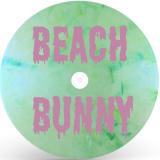
Toller Doppel-LP-Sampler mit den ersten 3 EP's der Indierocker Beach Bunny um die charismatische Frontfrau Lili Trifilio, die zwischen 2015-2017 nur im digitalen Format erschienen. Das Trio hält seit einem Jahrzehnt engen Kontakt zu seiner treuen Fangemeinde, organisiert eigene "Pool Party"-Festivals in seiner Heimatstadt Chicago, tritt regelmäßig bei Festivals wie Coachella und Lollapalooza auf, kooperiert mit Künstlerinnen wie Tegan & Sara und Marina, und erreicht mit Songs wie "Prom Queen", "Cloud 9" oder "Sports" Gold- bzw. Platinstatus, die Nr.1 der Billboard "Heatseekers Albums" Charts mit der 2022er LP "Emotional Creature", sowie mit der Single "Vertigo" (2024) einen echten Radiohit.
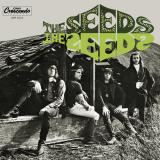
The Seeds stand tall amongst the handful of mid-60s American garage bands whose influence is palpable in rock to this day. Led by charismatic frontman Sky Saxon, the original Hollywood-based quartet’s unique and exciting brand of minimalist rock’n’roll still sounds contemporary and is perfectly encapsulated on this first album. If second album “A Web Of Sound” was pop-art flash, and 1967’s “Future” a florid take on psychedelia, then the July 1966 debut remains The Seeds’ grand statement; an all-original programme of rock and R&B-inflected garage punk that buzzed with a peculiar-yet-riveting energy that was the ensemble’s very own.
Whilst ”The Seeds” contains a pair of familiar classics in ‘Can’t Seem To Make You Mine’ and ‘Pushin’ Too Hard’,’ it is instructive to remember that it was recorded and released some time before either tune became a hit. Unlike so many albums of that era, the Seeds’ debut was not a quickie thrown to together to take advantage of singles chart success. Instead, the record constitutes a sharp definition of their unique and aberrant style, featuring several key items within their canon, be they the rough-hewn rockers ‘Girl I Want You’ and ‘No Escape’, the pot-boiling blues ‘Nobody Spoil My Fun’,’ or the lengthy and downright sinister ‘Evil Hoodoo’.’
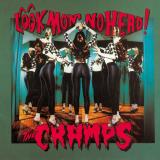
Released in 1991, the Cramps’ “Look Mom No Head!” is a stone-cold classic.
As well as black vinyl, it was also released on red and Ace are delighted to give fans old and new the opportunity to restock their vinyl blood bank with that delicious colour.
Released for the first time ever on vinyl, the original Bare Bones release was recorded entirely in the Spring of 2010, this album is a collection of acoustically arranged songs culled from concerts recorded during the "Bare Bones Tour", featuring pianist Gary Breit. For this latest version, a newer recording of "Here I Am" has been added that was recorded in Melbourne, Australia in 2025. Featuring special live versions of many songs from Adams" extensive and well loved catalogue, including "Cloud Number 9" and "Heaven" as well as rarities like "The Right Place" and "The Way You Make Me Feel". Originally released in 2010, this newly packaged version features new cover art and design, created especially for Bad Records (Adams" own label). The album contains 19 songs across 2X LPs packaged in a gatefold sleeve with printed inner sleeves, obi and shrink wrap.
Released for the first time ever on vinyl, the original Bare Bones release was recorded entirely in the Spring of 2010, this album is a collection of acoustically arranged songs culled from concerts recorded during the "Bare Bones Tour", featuring pianist Gary Breit. For this latest version, a newer recording of "Here I Am" has been added that was recorded in Melbourne, Australia in 2025. Featuring special live versions of many songs from Adams" extensive and well loved catalogue, including "Cloud Number 9" and "Heaven" as well as rarities like "The Right Place" and "The Way You Make Me Feel". Originally released in 2010, this newly packaged version features new cover art and design, created especially for Bad Records (Adams" own label). The album contains 19 songs across 2X LPs packaged in a gatefold sleeve with printed inner sleeves, obi and shrink wrap.
"There Near" ist das sechste Studio-Album, das DINOSAUR JR. seit ihrer gefeierten Wiedervereinigung vor 20 Jahren aufgenommen haben. Zwar gab es seit "Sweep It Into Space" vor fünf Jahren einige Live Veröffentlichungen und Archivsammlungen, doch nichts kommt an ein komplett neues Album voller frischer DINO Songs heran. Und auf "There Near" stehen sämtliche Regler auf Anschlag. Das Album entstand in kurzen, intensiven Arbeitsphasen über den Zeitraum eines Jahres hinweg in den Bisquiteen Studios in Amherst. Aufgenommen wurde es nahezu vollständig vom Kerntrio der Band: Schlagzeuger Murph, Bassist und Sänger Lou Barlow sowie Gitarrist und Sänger J Mascis. Unterstützung kam lediglich durch einige Piano- und Orgelparts von Ken Mauri. Das Ergebnis entfaltet von Anfang bis Ende eine enorme Wucht. Der Gitarrensound von Mascis klingt auf "There Near" noch ursprünglicher und animalischer als gewohnt, was möglicherweise auch an einem kürzlich erworbenen Mesa Boogie MK 1 Verstärker aus den 1970er Jahren liegt. "Ich habe denselben Verstärker gekauft, den Chris Dixon hatte, als wir unser erstes Album aufgenommen haben", erklärt Mascis. "Chris hat uns damals bei sich zu Hause mit genau diesem Amp aufgenommen. Er hat einen wirklich interessanten Klang, den ich schon lange nicht mehr hinbekommen habe. Genau zu diesem Sound wollte ich auf diesem Album zurück. Die ROLLING STONES begannen in den 70ern Mesa Boogies zu benutzen, nachdem sie SANTANA damit gehört hatten. Danach machten es THE CLASH nach und so weiter. Mit den späteren Modellen wurde der Sound zunehmend Metal-lastiger. Aber der MK 1 klingt wie ein aufgemotzter Fender. Man hört immer wieder, dass Rick Rubin Bands dazu bringt, ihr erstes Album zu hören und zu sagen: Lasst uns wieder zu diesem Sound zurückkehren. Also habe ich mir seinen Rat einfach selbst gegeben." Auf die Frage nach der oft schwer greifbaren Bedeutung seiner Texte antwortet Mascis: "Wenn ich einen Song schreibe, weiß ich oft selbst nicht genau, worum es darin geht. Ich schätze, die Bedeutung zeigt sich irgendwann von allein. Ich verwende einfach die Worte, die funktionieren. Vieles wird auch von irgendeinem esoterischen Kram beeinflusst, den ich gerade lese. Ich versuche, nicht zu viel darüber nachzudenken. Mich nervt es, dass Spotify inzwischen alle Songtexte anzeigt. Wo bleibt da der Spaß?" Mit "There Near" setzen DINOSAUR JR. ihre Reihe von mittlerweile zu Klassikern mutierten Alben fort. Die neuen Songs dürften mit ihren gewaltigen Riffs live ebenso eindrucksvoll funktionieren wie die Klassiker des Bandschaffens. Bis die Band wieder auf der Bühne zu erleben ist, wird "There Near" ein treuer Begleiter sein. Je näher, desto besser.
Splatter Vinyl, exklusiv via 375 Media. "There Near" ist das sechste Studio-Album, das DINOSAUR JR. seit ihrer gefeierten Wiedervereinigung vor 20 Jahren aufgenommen haben. Zwar gab es seit "Sweep It Into Space" vor fünf Jahren einige Live Veröffentlichungen und Archivsammlungen, doch nichts kommt an ein komplett neues Album voller frischer DINO Songs heran. Und auf "There Near" stehen sämtliche Regler auf Anschlag. Das Album entstand in kurzen, intensiven Arbeitsphasen über den Zeitraum eines Jahres hinweg in den Bisquiteen Studios in Amherst. Aufgenommen wurde es nahezu vollständig vom Kerntrio der Band: Schlagzeuger Murph, Bassist und Sänger Lou Barlow sowie Gitarrist und Sänger J Mascis. Unterstützung kam lediglich durch einige Piano- und Orgelparts von Ken Mauri. Das Ergebnis entfaltet von Anfang bis Ende eine enorme Wucht. Der Gitarrensound von Mascis klingt auf "There Near" noch ursprünglicher und animalischer als gewohnt, was möglicherweise auch an einem kürzlich erworbenen Mesa Boogie MK 1 Verstärker aus den 1970er Jahren liegt. "Ich habe denselben Verstärker gekauft, den Chris Dixon hatte, als wir unser erstes Album aufgenommen haben", erklärt Mascis. "Chris hat uns damals bei sich zu Hause mit genau diesem Amp aufgenommen. Er hat einen wirklich interessanten Klang, den ich schon lange nicht mehr hinbekommen habe. Genau zu diesem Sound wollte ich auf diesem Album zurück. Die ROLLING STONES begannen in den 70ern Mesa Boogies zu benutzen, nachdem sie SANTANA damit gehört hatten. Danach machten es THE CLASH nach und so weiter. Mit den späteren Modellen wurde der Sound zunehmend Metal-lastiger. Aber der MK 1 klingt wie ein aufgemotzter Fender. Man hört immer wieder, dass Rick Rubin Bands dazu bringt, ihr erstes Album zu hören und zu sagen: Lasst uns wieder zu diesem Sound zurückkehren. Also habe ich mir seinen Rat einfach selbst gegeben." Auf die Frage nach der oft schwer greifbaren Bedeutung seiner Texte antwortet Mascis: "Wenn ich einen Song schreibe, weiß ich oft selbst nicht genau, worum es darin geht. Ich schätze, die Bedeutung zeigt sich irgendwann von allein. Ich verwende einfach die Worte, die funktionieren. Vieles wird auch von irgendeinem esoterischen Kram beeinflusst, den ich gerade lese. Ich versuche, nicht zu viel darüber nachzudenken. Mich nervt es, dass Spotify inzwischen alle Songtexte anzeigt. Wo bleibt da der Spaß?" Mit "There Near" setzen DINOSAUR JR. ihre Reihe von mittlerweile zu Klassikern mutierten Alben fort. Die neuen Songs dürften mit ihren gewaltigen Riffs live ebenso eindrucksvoll funktionieren wie die Klassiker des Bandschaffens. Bis die Band wieder auf der Bühne zu erleben ist, wird "There Near" ein treuer Begleiter sein. Je näher, desto besser.
Morgan Noise erschaffen mit ihrer Musik eigene Welten, in denen sie Jazz-Sensibilität und alternative Experimentierfreude mit Singer-Songwriter-Flair verbinden. Alle vier Mitglieder, darunter Musikerinnen der Bands Fat Dog und Flur, verfügen über einen Jazz-Hintergrund. Ihre Improvisationskunst ist entscheidend für die Entfaltung und Weiterentwicklung der Songs. Inspiriert von den Klanglandschaften von Saya Gray, Nilüfer Yanya und Astrid Sonne, schlagen Morgan Noise eine kunstvolle Brücke zwischen komplexen Emotionen und klanglicher Präzision, lyrischer Nuancierung sowie künstlerischer Klarheit. Zu ihren bisherigen Erfolgen zählen Auftritte beim Green Man Festival sowie eine Live-Session für Riley & Coe. Nach der UK Support-Tour für Porridge Radio steht nun die Veröffentlichung ihres Debütalbums an – ein Werk, das vom Lebensgefühl der frühen 2020er-Jahre und den Erfahrungen während der Tourneen in dieser Zeit inspiriert ist.
Salt N Pepper Vinyl. New pressing of Mom Jeans. 2018 album, Puppy Love. The Berkeley, CA quartet is lauded for stream-of-consciousness lyrics and energetic performances that prompt audiences to shred their worries and simply bounce along. By trading the sappy for heartfelt and the melodramic for truthful, Mom Jeans have created a brand of emo that's self-aware but not self-indulgent. 2018's Puppy Love follows up 2016's Best Buds and oers up more of that sweet noise that fans of bands like Modern Baseball and The Front Bottoms, will love. Recorded by Ryan Ellery. Mastered by James Trevascus.
Eighteen months on from the runaway success of The Only Place I Know — the debut that crashed in at #1 on the ARIA charts and #2 on the ARIA Vinyl Chart — Lake Macquarie's Surf Trash are back, and they're not watering it down. Their sophomore album No Chaser lands neat, on the rocks, no apologies: ten tracks of melodic surf-pop-punk hammered out by a band that has clearly spent the last year sharpening every edge.
It's a record you can hear the kilometres in. Between The Only Place I Know and now, Andrew Scott, Lachlan Jackson, Patrick Russell and Nick Scott have torn through a sold-out national run, criss-crossed the UK and Europe, and made a habit of leaving rooms louder than they found them. No Chaser carries the dust from all of it — bigger choruses, leaner production, a touch more bruise underneath the gloss. There's still that windows-down, salt-on-the-windscreen feel that made the debut impossible to ignore, but it's wired into songs that swing harder and cut deeper. Less wistful afternoon, more last-light drive home with the volume creeping up.
The four-piece make melodic surf-pop-punk that sounds great turned up loud — driving in your mate's car on the way back to the beach. Their debut, The Fire Note wrote, "delivers a dynamic debut… blending raw energy, introspective depth, and timeless indie rock flair." Manchester World called their first show on UK soil "epic… high energy and great song after great song," and the live reputation has only grown since: a band that's earned every inch of the ceiling it now hits.
No Chaser is the sound of them no longer waiting for permission. Singalong harmonies, fast tempo changes, good old-fashioned rock 'n' roll with a sense of urgency.
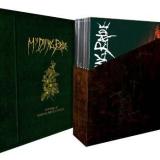
After a career spanning over thirty five years, from UK underground upstarts and outliers, to major success on the international stage - including tours with UK icons Iron Maiden and genre legends Dio - My Dying Bride have themselves become a firmly established pillar of metal history with a refined and influential brand of Death/Doom metal. With enduring popularity across subsequent decades, My Dying Bride remains a productive and captivating vessel for tragedy and despair, with their studio output spanning fourteen full-length albums to date.
As part of the “Peaceville Three”, along with fellow countrymen Paradise Lost and Anathema, My Dying Bride truly became a primary force in highlighting Britain as an epicentre of this Doom revolution of the time, creating a highly distinguishable sound assisted by the inclusion of violin & a more poetic approach to the delivery of morbid and salacious topics, lending an additional air of eccentricity and eloquence to the darkness.
Anthology of Sombre Reflections is an expansive and comprehensive collection of the early and much-celebrated works of the Doom Gods, from the formative deathly rawness of the revered Towards the Sinister demo, ‘God is Alone’ 7” tracks and subsequent debut album, As the Flower Withers, through to the gothic-tinged funereal seductive delights of 1996’s highlight, Like Gods of the Sun.
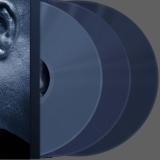
With the addition of all-time genre classic opuses Turn Loose the Swans, and The Angel and the Dark River also representing My Dying Bride’s much-loved early to 90’s period, the band’s three cult EPs are also featured in this deluxe eight-vinyl boxset, with each record presented on 180gm heavyweight black vinyl. The four studio albums themselves have also been treated to new half-speed masters courtesy of Air Studios.
Accompanying the audio is a 48-page book featuring photographs and artwork, plus new interviews with Andrew Craighan and Aaron Stainthorpe exploring some of the influences and thought-processes behind the creation of such cherished works of the 90s, as well as reflections of their output over this period.
Anthology of Sombre Reflections also contains 2 large posters depicting the Turn Loose the Swans CD artwork image, plus the original poster included in As the Flower Withers. A selection of photo prints of the band from this era are also included.
Andy Bell, Erasure-Frontmann und Electro-Pop-Legende, veröffentlicht mit "Extended Blue" sein Solo-Debütalbum "Electric Blue" (2005) als limitierte Deluxe-Edition auf dreifarbig-blauem Vinyl neu. "Electric Blue" - samt den Duetten mit Claudia Brücken (xPropaganda) und Jake Shears (Scissor Sisters) - wurde gemeinsam mit Manhattan Clique geschrieben und produziert, einem Duo, das zwei Jahrzehnte lang die Welt der Pop-Dance-Club-Remixe dominierte und mit Weltstars (Katy Perry, Britney Spears, Lady Gaga, OneRepublic, Moby) und wegweisenden Electronic-Acts (The Human League, Soft Cell, OMD, The B-52s und natürlich Erasure) zusammenarbeitete.
Die Deluxe-3LP enthält zudem sämtliche Bonustracks & B-Seiten der "Electric Blue"-Sessions erstmals auf Vinyl. Das Deluxe-Booklet kommt mit ausführlichen Liner Notes des Classic Pop-Autors John Earls samt Interviews mit Andy Bell und den Manhatten Clique-Produzenten Philip Larsen & Chris Smith, sowie unveröffentlichten Fotos aus der 2005er Session mit dem renommierten britischen Fotografen Tim Flach. Bei Erasure- und Electro-Pop-Fans zählt "Electric Blue" weithin als 'verlorenes Juwel', da kurz nach Veröffentlichung das damalige Label Sanctuary Records zusammenbrach und dieses herausragende Album sein Potential nicht vollständig ausschöpfen konnte.
Eine streng limitierte Erstauflage der 3LP enthält zusätzlich die CD "Extended Blue" mit dem identischen Tracklisting des Vinylformats.beitete.
Ândy Bell, Erasure-Frontmann und Electro-Pop-Legende, veröffentlicht mit "Extended Blue" sein Solo-Debütalbum "Electric Blue" (2005) als limitierte Deluxe-Edition auf dreifarbig-blauem Vinyl neu. "Electric Blue" - samt den Duetten mit Claudia Brücken (xPropaganda) und Jake Shears (Scissor Sisters) - wurde gemeinsam mit Manhattan Clique geschrieben und produziert, einem Duo, das zwei Jahrzehnte lang die Welt der Pop-Dance-Club-Remixe dominierte und mit Weltstars (Katy Perry, Britney Spears, Lady Gaga, OneRepublic, Moby) und wegweisenden Electronic-Acts (The Human League, Soft Cell, OMD, The B-52s und natürlich Erasure) zusammenarbeitete.
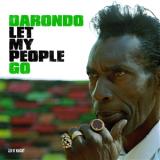
Für die meisten ein Rätsel - Darondo-Platten stehen bei vielen Sammlern ganz oben auf der Wunschliste. Andere Musiker aus der Bay Area sprechen mit gedämpfter Stimme über ihn. Früher sah man ihn in einem weißen Rolls-Royce (mit dem Nummernschild ,Darondo") durch die Stadt cruisen. Er trat als Vorgruppe für James Brown auf und führte ein schillerndes Leben, in dem er mit Leuten wie dem berüchtigten Fillmore Slim abhing. Hör dir diese Titel an, die zum ersten Mal gemeinsam auf einem Album veröffentlicht wurden, und du wirst vielleicht zustimmen, dass er der nächste Al Green oder Sly Stone hätte sein können. Doch vor etwa 25 Jahren verschwand Darondo.
Die renommierten Gitarristen Steve Hackett und Steve Rothery freuen sich, ihr lang erwartetes gemeinsames Album "The Roaring Waves" vorzustellen. Sieben Instrumentalstücke, die von gekonnt-absurd bis brillant-erhaben reichen, aber alle ein gemeinsames Thema haben: die Tiefe des Meeres. Rothery erklärt: "Im Winter konnte man bei stürmischem Wetter das Rauschen der Wellen hören. Whitby war ein sehr inspirierender Ort zum Leben, ein sehr poetischer und kraftvoller Ort, um aufzuwachsen. Ich denke, dieses Album ist eine Möglichkeit, einige dieser Erinnerungen und Emotionen darüber auszudrücken, was das Meer für mich bedeutet hat." "The Roaring Waves" entstand über einen Zeitraum von fast acht Jahren, obwohl die ursprüngliche Idee, gemeinsam ein Album aufzunehmen, bereits drei Jahre zuvor entstanden war. Aufgrund ihrer jeweiligen Tagesjobs und Tourneepläne konnten sie jedoch monatelang nicht zusammenarbeiten. Die Aufnahmesessions im Racket Club und in ihren jeweiligen Heimstudios brachten jedoch eine Fülle an Kreativität hervor. "Unser Ansatz war ein bisschen old school, so wie die Idee, dass Freunde sich in der Garage treffen, um zu spielen und zusammen abzuhängen", sagt Hackett über ihre Herangehensweise an Kreativität. Derzeit handelt es sich um ein Einzelalbum, da keiner der beiden Gitarristen Zeit für Live-Auftritte aufbringen kann, geschweige denn daran denkt, gemeinsam ein weiteres Album aufzunehmen. Während die Gezeiten kommen und gehen, blicken alle Gesichter auf den leeren Horizont und warten darauf, dass ein letztes Schiff an Land gebracht wird, um endlich nach Hause zurückzukehren. "The Roaring Waves" wird als limitierte CD & Blu-ray Mediabook mit Dolby Atmos-Mixes von Andy Bradfield sowie als Gatefold 180g LP & LP-Booklet erhältlich sein, das von Miles Showell in den Abbey Road Studios mit Half-Speed Mastering gemastert wurde. Das Album wird auch als Standard-CD-Jewelcase und digital erhältlich sein.
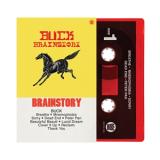
What is Buck? Buck is a state of mind, a way of life, a demeanor that gets you through the good times and the bad. If you ask Brainstory, It is also the energy that permeates their debut album. Kevin, Tony, and Eric are a trio of brothers bounded by blood, fate, and a small town with nothing to do. Their story begins in the long lost lands of the San Bernardino Valley, in the twilight zone known as Rialto, California: An arid wasteland of boredom and empty lots. Through punk rock and skateboarding they found temporary liberation from the local monotony. However, it wouldn't be long before a hunger for more led them to explore musical realms beyond that of the hardcore punk they admired. After stints at music school and steady disappointment trying to navigate their local jazz scene they moved to Los Angeles and Brainstory was born. Through a introduction from Chicano Batman's bassist, Brainstory caught the ears of Big Crown head honchos Danny Akalepse and Leon Michels. Shortly thereafter they were on their way to Queens, to record at The Legendary Diamond Mine with Michels at the helm. An instant chemistry yielded 10 songs in 10 days and now Brainstory has gifted the world with one hell of an introduction to all things Buck. Highlights include the sublime slow burner, "Dead End" which was the A-side to their first 45 on Big Crown that sold out in a matter of days. With Kevin's sublime falsetto floating atop Tony and Eric's unflappable and unmistakable backbeat, this tune has become a favorite with the ballad heads, the low-riders, and the slowie collectors. "Breathe" showcases another side of their sound taking a page out of the Shuggie Otis playbook and flipping the script with some stoned out west coast swag. Kev and Tony's father, Big Tone, an accomplished performer himself, steps in on "Peter Pan" to sing lead vocals over a chorus of friends and family. Bassist extraordinaire, Tony, takes over lead vocal duties on "Sorry", a smoked out, G Funk groove that is just waiting to be sampled. These guys have come a long way from their self released EPs and opening tours with Chicano Batman. Their musical growth is undeniable, and taking their California sunshine vibes and mixing them with Michels' NYC aesthetic has proven to be an amazing combination. It's a debut record that pulls influences from so many genres seamlessly it's hard to nail down. Call it Funk, call it Rock, call it Soul, but over here at Big Crown HQ, we've decided to call it BUCK.
Piece of Me, das zweite Album von Lady Wray, ist so etwas wie eine Heimkehr für Nicole. Während ihr Solo-Debüt Queen Alone aus dem Jahr 2016 mehr in Richtung Soul und R&B mit einem Hauch von HipHop tendierte, ändert sich dies bei diesem Album. Es ist immer noch R&B mit den Texturen von analogem Soul, doch zeichnet sich ein starker HipHop-Einfluss ab, der Nicoles Schaffen für die Zukunft definieren wird. Boom-Bap-Drums und deepe Basslines stehen im Vordergrund und bilden den perfekten Hintergrund für Lady Wray, die sich auf ihrer bisher persönlichsten Sammlung von Songs mit dem Guten, dem Schlechten, dem Schwierigen und dem Freudvollen auseinandersetzt. Der Titelsong Piece of Me, der seit seiner Veröffentlichung 2019 bereits zum Klassiker geworden ist, handelt von den Menschen in deinem Leben, die mehr brauchen, als du zu geben bereit bist. Dieses Stück und die B-Seite der 7" Come On In waren die ersten Songs, die für dieses Album aufgenommen wurden - als Nicole im achten Monat schwanger mit ihrer Tochter war. Ihre Stimme ist so kraftvoll, so rau bei diesen ersten Songs, erstaunlich, wenn man sich vor Augen führt, wie sie aufgenommen wurden. Und noch verrückter ist es, zu wissen, dass sie sie alle in einem einzigen Take aufgenommen hat. Ihr langjährige Mitstreiter und Produzent Leon Michels entwirft das musikalische Fundament gekonnt zurückhaltend, um Lady Wray ausreichend Raum zu geben. Während die energiegeladenen Songs Under The Sun und Through It All mit Sicherheit zu Hits werden, die Lady Wray wieder mit ihrer R&B-Fangemeinde aus den 90ern connecten, zeigt Where Were You, wie ihre Jugendjahre wirklich waren. in dem poetischen und kraftvollen Beauty In The Fire setzt sich Nicole mit den Spannungen zwischen den Ethnien in Amerika auseinander und lässt sich im Showstopper Thank You stark von ihrem Glauben und ihrempfindet und in Joy & Pain feiert sie die Höhen und Tiefen des Lebens. Im Jahr 2021 ist es eher selten, ein eklektisches und doch zusammenhängendes Album ohne ,Ausreißer" zu hören - aber genau das ist Piece Of Me. Die bewährte Chemie zwischen Lady Wray und Leon Michels hat unbestreitbar das nächste Level erreicht, dieses Album ist ein Zeugnis ihrer Entschlossenheit und Hingabe.
Big Crown Records is proud to present the debut full length offering from Les Imprimés, Rêverie. The stirring and ethereal sounds of Les Imprimés have been making fans of anyone who hears them since their first 7" single hit the speakers. Morten Martens is the man behind the band. Born, raised, and working in Kristiansand, Norway, he keeps a low prole while making his heart felt, highly infectious, and unique music. This album is a long time coming for Martens and it is sure to make him a name to be reckoned with. The first thing you notice listening to Les Imprimés is the high level of musician-ship. Martens plays nearly every instrument on the recordings and handles the production and arranging. He has been making records for decades, winning a Spellemann Award (aka, the Norwegian Grammy) in 2006 for producing a HipHop album as well as getting nominations across three other genres. While awards and accolades speak to the level of his talent, this new album really shows who he is an artist on his own terms. Moving away from being a hired gun on the touring scene naturally led him to start doing more studio work. Slowly collecting gear and getting more experi-ence behind the boards he built his own studio on the island of Odderoya and was making a living playing with and recording other people's music. As the story goes, after those sessions would end he would work on his own project into the wee hours of the night. From these late night sessions, Les Imprimés was born and Rêverie began to take shape. However, "it wasn't until COVID, when things locked down, that I was really able to nd the time to focus on Les Imprimés" Morten says about creating and leading his own solo project. "It was a scary time. But I knew I had to do something with it." He took the sum of his inuences, combined them with his own vibe and got busy writing the music, playing the instruments, and singing the songs. "It's soul music, but I don't exactly have the soul voice," Morten explains humbly. "But I do it my own way, in a way that's mine. "It is his sound, his fingerprint, his sensibility, that makes his music hard to put in a box. The album showcases both Martens' range and his ability to make a cohesive album. The lead single "Falling Away" starts with a raw drum break and turns into a lushly arranged tune that paints the picture of love when it slips away. On "Still Here" he professes his resilience through life's twists and turns over a thundering track that puts a new spin on the B side ballad genre. Songs like "You" and "Our Love" mix tones from 60s and 70s Soul with arrangement nods to Doo Wop records while Martens' lyrics and delivery leave you singing the melodies long after they finish. "Love & Flowers" finds Martens in a moment of clarity with a song that ts the niche sub genre of happy break up tunes, the four on the floor track will move the dancefloor or while the message will resonate with anyone who put too much effort into the wrong situation in their lives. However, it is songs like "Muse" and "Chess" that really encapsulate the uniqueness of Les Imprimés as they push the boundaries of genre, one a profession of love for music and the other a cover of an electronic record respectively. Martens' lyrics, emotion, and delivery truly make the whole thing come together and stand out from any of his peers. There's an infectiousness and a pop sensibility in the writing that is done with the utmost class and taste giving Les Imprimés the rare quality of immediate attraction that only deepens the more you listen.
Teksti-TV 666 will release their fourth mini-album as a limited-edition vinyl pressing in August Finland’s hottest indie rock band, Teksti-TV 666, released their new EP 4 digitally on All That Plazz in April. Svart Records, who have previously released the band’s albums and EPs on vinyl, is continuing this tradition with the new mini-album as well. EP 4 marks a small new beginning for this distinctive rock band, currently enjoying a strong cult following internationally. Teksti-TV 666 is known for their raucous krautrock, which has elevated the band to the status of an exceptional act in Finnish indie rock, even on the international scene. The band enjoys a strong and rapidly growing cult following, particularly in Sweden and Denmark. The new EP features four tracks of some of the most interesting Finnish indie rock on the international scene right now. It includes a 10-minute prog jam, a three-minute punk track, more traditional guitar rock, and the track “Fast & Furious,” which hooks listeners with its lighter, airier krautrock vibe.
LIMITED EDITION FIRST PRESS OF 300 COPIES ON TRANSPARENT RED VINYL WITH JAPANESE STYLE OBI. NON-RETURNABLE.
Osaka quartet HIBUSHIBIRE return this August with their fifth studio album ‘Phantom Fuzzy Exotica‘.
Phantom Fuzzy Exotica continues to find the band exploring their own little universe, where psychedelia, 70’s hard rock and folk rock influences collide. You’ve got the short punchy riff heavy songs, the mellow time-out bits, and of course the epic psych jams and more vocals then previously. It’s all here, and as always they deliver the goods.
Phantom Fuzzy Exotica … in the bands own words
The initial image behind this album was “phantoms”- things that seem to exist, yet somehow don’t. Another thing that sets this album apart from our previous releases is that four of the five tracks feature vocals. The only instrumental is “Invocation and Ritual Dance of the Electric Nonsense.” We didn’t consciously plan it that way; it just happened naturally. After finishing last year’s tour, we didn’t have much time, but everyone’s ideas came together, and I think we’ve created an album we’re truly satisfied with.
Mandrake Oracle: The opening track of the album.Built around a single guitar riff by changchang, while the other instruments and electronics keep pushing the music forward. Personally, I imagined Deep Purple playing a Pink Floyd song while writing this one.
Minagoroshi Western: Imagined as the soundtrack to a fictional spaghetti western. In the end … everybody dies.
Daydream Rendezvous: A piece of daydream acid psychedelic folk.
Invocation and Ritual Dance of the Electric Nonsense: Hard psychedelic jazz rock. The title is a little nod to Frank Zappa.
Ai Vist Lo Lop (Cover): I’ve always loved Ai Vist Lo Lop by the wonderful Occitan traditional band Mont-Jòia, and I’d wanted to cover it someday. We especially enjoyed creating the a cappella section and finding the right sound for the main melody.
We sincerely hope you enjoy listening to this album as much as we enjoyed making it. — changchang
The Phantom Fuzzy Exotica European Tour 2026
AUGUST
19th Archive, Liverpool (UK) , 20th Ivory Blacks, Glasgow (UK), 21st The Golden Lion, Todmorden (UK), 22nd The Bunkhouse, Swansea (UK), 23rd Beautiful Days, Devon (UK), 25th The Peer Hat, Manchester (UK), 26th Le Pub, Newport (UK), 27th Strongroom Bar, London (UK) with Black Helium, 28th The Holloway, Norwich (UK), 29th The Sunflower Lounge, Birmingham (UK), 30th The Piper, St Leonards (UK) with Black Helium
SEPTEMBER
1st DND, Dunkirk (FR), 3rd Pilsen Busking Fest, Pilsen (CZ), 4th Pilsen Busking Fest, Pilsen (CZ), 6th Riff, Budapest (HU), 7th Végállomás Klub, Szombathely (HU), 8th A Beton, Győr (HU), 9th Chemiefabrik, Dresden (DE), 10th Bar Neun, Berlin (DE), 11th Subsol, Dusseldorf (DE), 12th Magasin 4, Brussels (BE), 13th De Onderbroek, Nijmegen (NL), 14th La Bulle Café, Lille (FR)
HIBUSHIBIRE are
Changchang (Guitar/Vocal/Bouzouki/Electronics/Melting Eye Spectacle), Tetsuji Toyoda (Bass/Vocal/Mermaid Mountain), AOI HAMA (Drums/Vocal/Cat Tongue Queen), Kohei Katsuma (Conga/Vocal/Theremin/Percussion/God Dog Family)
Angekündigt von astreinen Sommer- und Hangover-Hymnen (u.a. „discothèque with u“, „spaß am glas“),
kümmern sich Tiavo im kommenden Jahr auch um die Urlaubsplanung: Ihr neues Studioalbum „Hotel
Tiavo“ öffnet im Spätsommer 2026 seine Pforten! Vor allem ist das „Hotel Tiavo“ das womöglich einzige
Top-Etablissement der Welt, dessen Lobby zugleich als Dancefloor fungiert. Die Standardeditionen auf CD
und LP in transparenten roten Vinyl mit allen 24 Tracks erscheint am 28.08.2026.
„Hotel Tiavo“ ist das erste „richtige“ Konzeptalbum der Band: Nachdem sich der „absolute gewinner“-
Vorgänger eher beiläufig zu einem ultrasaarländischen „Einfache-Leute“-Konzeptalbum entwickelt habe,
wollten Leandros, Xaver & Co. dieses Mal einen konzeptionellen Rahmen abstecken, der richtig viel Raum
für Neues bietet – neue Einflüsse, neue Perspektiven, neue Umwege über den Indie-Dancefloor und durchs
Tiavo-Universum. Große Ereignisse werfen ihre Schatten voraus, so auch die feierliche Eröffnung des „Hotel Tiavo“: 24 Suiten, Schicksale, Storys – nein, Songs (oder: „Hymnen über Mikrothemen, die noch
keine Songs haben“), mit denen das saarländische Duo den eigenen Orbit sprengt und sich genau deshalb
treubleibt. Man sieht sich in der Hotelbar „Tropical“…
The Fall war eine englische Post-Punk-Band, die 1976 in Manchester gegründet wurde. Die Band existierte seither in wechselnden Besetzungen fort und war im Wesentlichen um ihren Gründer und einziges konstantes Mitglied, den verstorbenen Mark E. Smith, aufgebaut. Obwohl die Gruppe anfangs der Punk-Bewegung der späten 1970er Jahre zugeordnet wurde, durchlief ihre Musik im Laufe der Jahre etliche stilistische Wandlungen; sie zeichnet sich jedoch häufig durch einen rauen, gitarrenlastigen Sound sowie den wiederholten Einsatz von Repetitionen aus und wird stets von Smiths unverwechselbarem Gesang und oft kryptischen Texten getragen.
Die Band ist bekannt für ihre enorme Produktivität: Sie veröffentlichte über 25 Studioalben – eine Zahl, die sich mehr als verdreifacht, wenn man Live-Alben und sonstige Veröffentlichungen hinzurechnet. Über eine Handvoll kleinerer Hit-Singles in den späten 1980er Jahren hinaus blieb ihnen ein breiter kommerzieller Erfolg zwar verwehrt, doch konnten sie sich eine treue Fangemeinde mit Kultstatus bewahren. Die Band pflegte über lange Zeit eine enge Verbindung zu dem BBC-DJ John Peel, der sie bereits früh in ihrer Karriere nachdrücklich unterstützte und The Fall als seine Lieblingsband bezeichnete – mit der berühmten Begründung: „Sie sind immer anders; sie sind immer gleich.“
Louisiana Red wurde im März 1932 in Alabama geboren und starb fast auf den Tag genau 80 Jahre später in Hannover. Der frühe Lebensweg von Iverson Minter, auch bekannt als Louisiana Red, war geprägt von Leid. Seine Mutter starb eine Woche nach seiner Geburt an einer Lungenentzündung. Als er fünf Jahre alt war, wurde sein Vater vom Ku-Klux-Klan hingerichtet. Danach lebte er in Waisenhäusern, bis er den Rest seiner Kindheit bei seiner Großmutter verbringen konnte. Als Jugendlicher wurde er wegen Einbruchs zu Zwangsarbeit verurteilt und anschließend von Uncle Sam in den Koreakrieg geschickt. Bluesmusiker wollte Iverson werden, seit er Muddy Waters kennengelernt hatte. Ende der 1950er Jahre spielte er in der Band von John Lee Hooker. Mitte der 1970er Jahre zog es ihn nach Europa, wo er durch Auftritte beim WDR-Rockpalast oder dem Montreux Jazz Festival einem breiteren Publikum bekannt wurde. In den 1980er Jahren verpflichtete Fritz Rau Louisiana Red für sein erfolgreiches Festivalformat "American Folk Blues Festival". 1983 veröffentlichte er sein erfolgreiches Album "Anti-Nuclear Blues", dessen Inhalt und Aussage heute aktueller denn je sind. Die Original-Vinyl-Ausgabe ist inzwischen zu einer gesuchten Rarität geworden. Nun erscheint das Album erstmals auch auf CD mit sechs Bonustiteln vom "American Folk Blues Festival" von 1981 sowie als Neuauflage auf Vinyl im frischen Soundgewand.
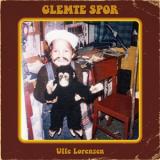
Vierte Auflage - das aktuelle Solo-Album vom dänischen Psych-Rock-Zauberers Uffe Lorenzen aka Lorenzo Woodrose aka... Seit zehn Jahren interpretiert Uffe Lorenzen (bekannt von u.a Baby Woodrose und Spids Nogenhat) auf allen seinen Alben ein altes dänisches Lied. Das gilt für seine drei Soloalben und die beiden Alben seiner aktuellen Rockband Lydsyn. Auf seinem neuen Soloalbum Glemte Spor ("Vergessene Spuren") hat er ein komplettes Album mit 10 Interpretationen von Liedern aus den Jahren 1967 bis 1999 aufgenommen. Einige davon sind dänische Klassiker, andere sind eher unbekannte Lieder, die er sich zu eigen gemacht hat. Viele davon können als Protestsongs betrachtet werden oder haben einen anti-war Charakter. ,Ich habe festgestellt, dass ich die Herausforderung, Songs anderer Leute zu interpretieren und sie zu meinen eigenen zu machen, wirklich mag. Sie zu verändern, zu interpretieren und vielleicht sogar zu verbessern. Viele der Songs werden den meisten Menschen unbekannt sein, während andere dänische Klassiker sind. Was sie gemeinsam haben, ist, dass sie mich irgendwie zu dem gemacht haben, der ich bin", sagt Uffe Lorenzen. Das Album wurde zusammen mit Morten Hart Grabowski in einem kleinen Studio in Kopenhagen aufgenommen. In mehr als 20 Sessions haben sie zusammen eine Liste von 50 Songs auf die zehn reduziert, die schließlich auf dem Album gelandet sind. Laut Lorenzen fanden die Aufnahmen in einer sehr entspannten Atmosphäre statt: ,Wir haben etwas Gras geraucht und Rotwein getrunken, was den Prozess sehr entspannt gemacht hat, und ich glaube, das hört man dem Endergebnis auch an." Später übernahm Flemming Rasmussen den Mix und das Mastering in seinem berühmten Sweet Silence Studio. Die erste Auflage war auf 1000 Exemplare in schwarzem Vinyl limitiert und ist ausverkauft, die zweite und dritte Auflage kamen streng limitiert für den Indie-Handel auf rotem und grünem Vinyl (500 Stück weltweit), die vierte Pressung ist bei Bad Afro traditionell Purple (weltweit ebenfalls 500 Stück).
Euronymous’ Deathlike Silence Productions in 1993, & with each subsequent release, Sigh grew to become one of the country’s greatest & most revered metal exports. With a journey through the strange & the psychedelic, incorporating a whole eclectic mix of genre styles & experimentation throughout their career, Sigh has remained a vital creative force in the avantgarde field whilst maintaining their old school roots, as witnessed with the stellar 2022 album, ‘Shiki’. 2025 also saw Sigh remaking their ‘Hangman’s Hymn’ album for a release on Peaceville as part of the band’s 35th anniversary celebrations, in the shape of ‘I Saw The World’s End: Hangman’s Hymn MMXXV’.
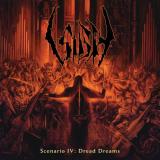
With the ongoing early line-up of Mirai Kawashima, Shinichi Ishikawa, & Satoshi Fujinami, ‘Scenario IV: Dread Dreams’ was the band’s fourth studio album, originally surfacing in 1999. This was also notably the final title in partnership with Sigh’s then-label, Cacophonous Records. Delving evermore into the experimental side of music to conjure an interlinked gallery of twisted soundscapes; ‘Dread Dreams’ became more of a journey into the realm of psychedelia & rock over black metal, with this Zappa-inspired odyssey acting as somewhat of a direct pre-cursor to what was to follow with the celebrated ‘Imaginary Sonicscape’ opus.
‘Dread Dreams’ was once more recorded at Shinjuku On Air Studio with J. Yamada, with a selection of guests including Damian Montgomery of Ritual Carnage lending lyrics plus guest vocals, along with King Fowley (Deceased), & Killjoy (Necrophagia) supplying additional song lyrics. Cover art came courtesy of renowned artist Joe Petagno (Motörhead, Autopsy).
Continuing with Peaceville’s re-issues of Sigh’s classic works, this edition of ‘Dread Dreams’ contains a new master created by Patrick Engel at Temple of Disharmony.
The release also includes a new interview with main-man Mirai Kawashima conducted by Dayal Patterson of Cult Never Dies, with his thoughts, influences & reflections on the album & its challenges.
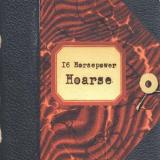
Mit "Hoarse" legten 16 Horsepower 2000 ein Live-Album der Extraklasse vor. Die elf Songs, aufgenommen 1998 in Denver und Paris, zeigen die Band auf der Höhe ihres Schaffens, mehr noch, die hier zu hörenden Versionen der Songs ihrer Studioklassiker "Low Estate" und "Sackloth"n"Ashes" sind nahe der Perfektion. Was für eine Kraft, was für eine Wucht! Von dem von David Eugene Edwards" Akkordeon dominierten Intro des Openers "American Wheeze" braucht es keine zwei Minuten, bis die Band die Hölle losbrechen lässt. 16 Horsepower waren anno 1998 eine Maschine, die alles niederwalzte - nicht brutal, aber immer gewaltig. Dabei blieben sie stets filigran, beherrschten auch die leisen Töne (man höre nur "Bad Moon Risin""!) in gleicher Souveränität wie das volle Brett. Neben dem CCR-Cover gibt es Gun Clubs "Fire Spirit" sowie ein fulminante Version von Joy Divisions "Day Of The Lords". Wer die Band jemals live erlebt hat, weiß um die Magie solcher Momente.
Mit "Olden" liegt eines der wichtigsten Frühwerke von 16 Horsepower wieder vor - erstmals als Oxblood Vinyl Edition. Die Sammlung vereint die ersten beiden Studio-Sessions von 1993/94 und zeigt die Band in ihrer rohsten, intensivsten Form. Klassiker wie "American Wheeze", "South Pennsylvania Waltz" oder "I Seen What I Saw" erscheinen hier in ihren ursprünglichen, ungezähmten Fassungen und werden durch rare, bislang unveröffentlichte Aufnahmen ergänzt. Dazu kommen Live-Mitschnitte aus dem Mercury Café in Denver, die die hypnotische Bühnenpräsenz der frühen Band dokumentieren. Olden ist damit nicht nur ein essenzielles Dokument der "Denver Sound"-Geburtsphase - sondern auch ein zentrales Werk für eine neue Generation von Hörern.
Mariá Portugal has been active in the music scenes of Brazil and Europe as a drummer, composer, singer, and music producer. After graduating in composition, she has focused her research on free improvisation and its possible intersections with popular song. This exploration resulted in her acclaimed album EROSÃO (2021) and in the formation of two groups: the EROSÃO Septet and the EROSÃO Percussion Trio, both based in Germany.
She is also a member of the group Quartabê and has toured and recorded around the world with various artists, moving between pop, free jazz, free improvisation, and Brazilian popular music. She has performed and recorded with artists such as Elza Soares, Anthony Braxton, Joe McPhee, Fred Frith, and Tomeka Reid. She is a member of Fire! Orchestra, Fire! Trio, Endless Breakfast and MONSTER.
In 2020, Portugal was the 13th Improviser in Residence at the Moers Festival. As a curator, she has participated in the Soundtrips-NRW in Duisburg and currently coordinates the concert series “TOMA CHOCOLATE!” in Berlin, besides being the guest curator for this year's unlimited Wels festival. She also composes music for dance, theater, and film, including the award-winning soundtrack for the film “1976”, which earned her the Chilean Film Academy Award in 2025. She was nominated for the 2025 and 2026 German Jazz Prize in the drums and percussion category.
Emilio Gordoa is a Mexican sound artist, percussionist, and composer whose work focuses on sound and performance as primary means of expresion. Based in Berlin since 2012, he has been an active contributor to the city’s Echtzeitmusik scene and is involved in the international avant-garde music community.
His projects include solo and ensemble performances, sound installations, and compositions for film, theater and dance. He has collaborated with a wide range of artists, including Jérôme Noetinger, Ingrid Schomliner, Yuko Kaseki, Burkhard Beins, Don Malfon, John Butcher and Sabiene Vogel. Gordoa’s approach combines experimental percussive techniques with electronic elements, leading to invitations to perform at events such as the Moers Festival, Meakusma Festival in Belgium, A’larme!, and Maerzmusik in Berlin.
He founded WildSonico, a platform for experimental music, and has been part of artist residencies at institutions like the Akademie der Künste and Kunststiftung NRW. He also worked as the Improviser in Residence for the Moers Festival. His discography includes albums such as Substantial Myths (2022), Balderi Variations (2019), and GRIFF (2021), which reflect his ongoing engagement with music. His work has been supported by organizations such as the Goethe-Institut, Musikfonds e.V., and INM - initiative neue musik berlin, and he has received recognition, including an Honorary Mention at the Prix Ars Electronica.
Burkhard Beins was born in 1964 in Lower Saxony and has been living in Berlin since 1995. He is considered a stylistically influential percussionist as a composer/performer, due to his individually developed playing techniques. Additionally, he works with analog synthesizers and live electronics, plays electric bass, and has created various sound installations.
He collaborates as a soloist, as well as with artists such as Chris Abrahams, Keith Rowe, Sven-Åke Johansson, Axel Dörner, Andrea Neumann, and many others. He is also a member of several ensembles including Sawt Out, Activity Center, Polwechsel, The Sealed Knot, Zone Null, Perlonex, Trio Sowari, Vertigo Transport, the NoWave/Krautrock band Slurge, and the Berlin Splitter Orchestra.
Since the late 1980s, he has performed concerts and participated in international festivals for experimental and contemporary music across Europe, America, Asia, and Australia. He has released more than 70 CDs and LPs in collaboration with various artists.
Burkhard Beins has been an Artist-In-Residence at the Künstlerhäuser Worpswede (2009), EMS Stockholm (2014), Muong Studios, Hoa Binh/Vietnam (2015), the Robert Rauschenberg Foundation, Captiva/Florida (2017), as well as at DAR, Drsukininkai/Lithuania (2018), and the Agosto Foundation, Prague (2019).
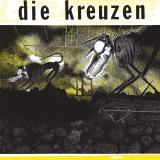
Formed in 1981 by two Rockford, Illinois, and two Brookfield, Wisconsin, natives in the midpoint of Milwaukee, Die Kreuzen (pronounced dee kroyt-zen) chose their name specifically to avoid stereotyping because “no one knows what it means. 'Die Kreuzen' roughly translates out of German meaning 'to intersect' or 'to hybridize,' which is exactly what they did on their five LP's for Touch and Go. Their self titled debut is considered one of the most seminal hardcore records of the early 80’s. As far as October File is concerned, remember that flannel shirt movement in the 90's? This is what those guys were listening to.
Formed in 1981 by two Rockford, Illinois, and two Brookfield, Wisconsin, natives in the midpoint of Milwaukee, Die Kreuzen (pronounced dee kroyt-zen) chose their name specifically to avoid stereotyping because “no one knows what it means. 'Die Kreuzen' roughly translates out of German meaning 'to intersect' or 'to hybridize,' which is exactly what they did on their five LP's for Touch and Go. Their self titled debut is considered one of the most seminal hardcore records of the early 80’s. As far as their second album October File is concerned, remember that flannel shirt movement in the 90's? This is what those guys were listening to.
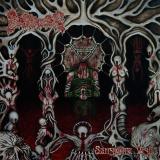
From the swamping lands of Finland death/grind trio Galvanizer emerges with their debut album “Sanguine Vigil” after having paid all their dues with several tapes and a 7″ep like we were used back in the 90s.
Galvanizer have quickly become one of the most promising underground acts around, their old school approach perfectly combines with their youthful energy and their sound will perfectly please both fans of old school Finnish death metal and modern deathgrind sounds.
The artwork is painted by mighty TG Rantanen, a finnish institution famous for his works with Demilich, Demigod, Adramelech, Depravity and many more.
Louisiana Red's "Anti-Nuclear Blues" is considered a classic among acoustic blues albums and comes out on CD (w/bonus tracks) and LP in random coloured vinyl , limited to 500 copies worldwide - for fans of Buddy Guy, Junior Wells, Sonny Terry, Lightnin' Hopkins Louisiana Red was born in Alabama in March 1932 and died in Hanover almost exactly 80 years later. The early life of Iverson Minter, also known as Louisiana Red, was marked by suffering.
His mother died of pneumonia a week after he was born. When he was five years old, his father was executed by the Ku Klux Klan. After that, he lived in orphanages until he was able to spend the rest of his childhood with his grandmother. As a teenager, he was sentenced to hard labor for burglary and subsequently sent by Uncle Sam to the Korean War. Iverson had wanted to become a blues musician ever since he had met Muddy Waters. In the late 1950s, he played in John Lee Hooker's band. In the mid-1970s, he moved to Europe, where he gained recognition among a wider audience through appearances at the WDR Rockpalast and the Montreux Jazz Festival. In the 1980s, Fritz Rau signed Louisiana Red for his successful festival series, the "American Folk Blues Festival." In 1983, he released his acclaimed album "Anti- Nuclear Blues," whose content and message are more relevant today than ever. The original vinyl edition has since become a sought-after rarity. Now, the album is being released for the first time on CD, featuring six bonus tracks from the 1981 "American Folk Blues Festival," as well as a reissue on vinyl with a fresh sound.
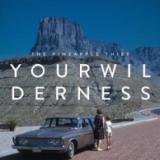
Originally released in 2016, 'Your Wilderness' marked a pivotal moment in The Pineapple Thief's evolution, expanding the band's sonic palette & establishing a creative partnership with renowned drummer Gavin Harrison that would help define the group's next chapter. Widely regarded as one of the band's most ambitious & emotionally resonant works, the album remains a landmark release in modern progressive rock. Now, to celebrate its 10th anniversary, Kscope presents a newly remastered edition of 'Your Wilderness' on clear double vinyl, featuring a 2026 remaster by Steve Kitch &, for the first time on vinyl, the companion album '8 Years Later'. Previously only available as part of the sold- out 'Your Wilderness' Earbook, '8 Years Later' collects material written during the same creative period, offering a deeper insight into one of the most fertile eras in The Pineapple Thief's catalogue.
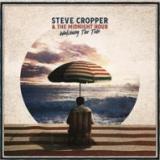
As guitarist, songwriter, producer and engineer - not just for the iconic Stax record label but on a forest of sessions and solo releases - the Tennessee soul man was the DNA that coursed through the post- war era. Little did we know this towering figure had one last ace to play in his lifetime, with Watching The Tide gathering A-list names including Eric Clapton, Brian May, Ronnie Wood and Billy Gibbons for 12 brand- new songs that Cropper ranked amongst the best of his career. "I know this record provided great joy to Steve in the last year of his life," says project leader Jon Tiven. "And I'm so glad he was able to have one last great creative burst...
John Tchicai (1936 – 2012) was one of the most important free improvising saxophonists of the 20th Century: an artist of rare vision and aptitude whose lines soared and stood out even in the most hallowed company, and whose body of work as a leader / composer is among the most singular and distinct within the entire canon of that music. But Tchicai’s importance doesn’t end there. Born in Copenhagen, Denmark, to a Danish mother and a Congolese father, his life and career represent a crucial bridge between the European and American traditions of free jazz. Initially trained on violin as a child, Tchicai shifted his focus to the clarinet and alto saxophone during his mid-teens, and began touring Europe as a professional musician by his early 20s, which landed him at a socialist youth festival in Helsinki, Finland, where he met the trumpeter Bill Dixon and saxophonist Archie Shepp. Impressed by what they heard, Dixon and Shepp encouraged the young saxophonist to move to New York, and in so doing changed the history of jazz forever.
Tchicai’s arrival in New York marks the rare occurrence of a European player joining the intimate circle that was first wave of American free jazz. Following his landing in the city in November of 1962, in addition to regularly sitting in with Don Cherry’s group, Tchicai began playing with Bill Dixon's band alongside Archie Shepp and Roswell Rudd, forming the nucleus of the foundation of the New York Contemporary Five - one of the most important groups of the era - which counted Tchicai, Shepp, Cherry, Don Moore, and J. C. Moses as its members. From the ashes of this group, Tchicai would go on to found the legendary ensemble, New York Art Quartet, with Roswell Rudd, Milford Graves, and Lewis Worrell, as well as working within Albert Ayler's band, recording “New York Eye and Ear Control”, Shepp’s band, recording “Four for Trane”, the ensemble that recorded John Coltrane's “Ascension”, and the Jazz Composer's “Orchestra”.
By the time he decided to return to Denmark in 1966, had Tchicai chosen to record little else, his legacy within the history of music would have been ensured. Incredibly ambitious, his arrival home marked the beginning of an incredible period of activity which saw him radically expanding his creative explorations, which by the end of the decade would include becoming a founding member of Amsterdam's Instant Composers Pool and helping to record John Lennon and Yoko Ono's “Unfinished Music No.2: Life with the Lions”. This, however, was proceeded the formation of a new orchestra, Cadentia Nova Danica, led by Tchicai, dedicated to radical cross-disciplinary exploration. Remaining together between 1966 and 1971, the group and its shifting membership regularly fell into collaboration with artists and composers, notably Musica Elettronica Viva, who existed beyond the realms of jazz, as well as participating within multi-media events that incorporated the visual realms.
Cadentia Nova Danica’s only two LPs - “Cadentia Nova Danica” (Polydor, 1968), and “Afrodisiaca” (MPS, 1969) - are effectively Tchicai recorded efforts as a leader, and are legendary. There’s little mystery, once heard, why the later landed on Thurston Moore’s iconic “Top Ten from the Free Jazz Underground”, published by Grand Royal in 1996. Sadly, despite playing extensively during their five year run, with exception of a CD documenting a performance at Jazzhus Montmartre, in 1966, until now there has been no other publicly available recordings that allow us to capture a glimpse of this astounding band at work. Alga Marghen / Formalibera’s vinyl pressing of a never before released body of recordings, made in Copenhagen between 1969 and 1970, changes that in the most exciting of ways.
Comprising three pieces - “Mc Gub Gub, (I–VIII)”; “Ode to Skt. John”; and “Pladepip” - the material on this stunning LP comes from two specific events. The first, which encompasses the first side, “Mc Gub Gub, (I–VIII)” was recorded by Cadentia Nova Danica - in this instance, Tchicai, Sune Weimar, Theo Rahbek, Christian Kyhl, Niels Holt, Jørgen Thorup, Michael Schou, Morgens Bollerup, Allan Gregersen, Ole Matthiessen, Pierre Dørge, Willy Jaegert, Anthony Barnett, and Jon Finsen - on May 29th, 1969, at the ABC-Theatre in Copenhagen. Penned by Tchicai, the piece is a sprawling, evolutionary composition at the outer reaches of free jazz, rooted in large blocks of colliding tonality and rhythm - a sound only accessible to larger ensembles - that push territories explored by Charles Mingus to previously unimagined heights, threaded by moments of hard blown fire. Writhing like a stormy sea - skronking and devilish - “Mc Gub Gub, (I–VIII)” is a work of profound complexity that singlehandedly illuminates not only Tchicai’s singular vision as a composer, but also the power and uniqueness of Cadentia Nova Danica during the band’s most vital period.
The two pieces - “Ode to Skt. John” and “Pladepip” - taking up the flip side, were recorded on February 21st, 1970, at the Danish Broadcasting Corporation’s Radio House, and are the outcome of Cadentia Nova Danica’s extended residency there between 1969 and 1970. In many ways, these two recordings offer some of the best insights into the broad collaborative approaches that defined the band, in this case encountering them working with Danish experimental composer, Svend Erik Werner, who was among the earliest in his country to embrace stylistic pluralism and the use historical forms within a modern context. “Ode to Skt. John” - based on aspects of Gregorian music - was penned by Werner, incorporating heady improvisation by the members of Cadentia Nova Danica, this time made up by Tchicai, Sune Weimar, Hugh Steinmetz, Theo Rahbek, Christian Kyhl, Michael Schou, Morgens Bollerup, Ole Kühl, Torben Enghoff, Mauritz Tchikai, Kjeld Ipsen, Willy Jaegert, Ole Matthiessen, Ole Thilo, Pierre Dørge, Steffen Andersen, Jon Finse, and Clause Bøje. The piece is a fascinating binary of the composed and improvised, utilising the band’s large scale to introduce a remarkable sound within its slow progressions and furious, driving free moments, in this incredible meeting of worlds.
The album’s final piece, “Pladepip”, is arguably its most historically significant: an entirely singular piece, unlike anything in Tchicai’s recorded canon as his foray into musique concréte. Drawing upon two recordings of full-band improvisations by Cadentia Nova Danica, for its creation Tchicai also gouged the surfaces of 78rpm records in his collection to skip and create repeated phrases and patterns, creating a stunning sound collage of hard angles and abrupt phrase, that creates a striking counterpoint to the band’s flowing improvisations that bookend those passages. The result is an engrossing listen and easily one of the most unique and culturally important gestures in the entire history of musique concréte.
Truly incredible, Alga Marghen / Formalibera’s vinyl pressing of this never before released body of recordings, made by John Tchicai’s Cadentia Nova Danica, in Copenhagen between 1969 and 1970, offers an unprecedented window into one of the most important groups working in Europe during that period, significantly expanding their rare and slim discography to date. Accompanied by extensive exploratory liner notes by veteran jazz writer, Ed Hazell, this is easily one of the most historically important archival releases of the year and is impossible to recommend enough. Absolutely essential on every count.
The latest report from Fader Cap’s Mannequin World suggests rising pressure pon de dance floor.
Conditions continue to deteriorate – percussion has become more insistent, someone keeps messing with the lights, and what’s with all the ducks?
This music was made for a hybrid live set at Miscellania (Naarm) with Skydiver Records.
Heavyweight vinyl.
300 units.
out of Stock
Last delivered 19 days ago available to reorder, subject to availability
The compositions recorded here are a product of work with computers in synthetic speech, song and vocal sounds and were created between 1972 and 1975. The music was realized on two different computer music systems and takes advantage of, and attempts to extend and explore their features. The system employed to realize speech songs was created at the Bell Telephone Laboratories for research in synthetic speech and speech communication. Since the system was not designed for musical purposes, its limitations were severe and its musical use a great (and often rewarding) challenge. The system used for In Celebration and The Story of Our Lives was designed with the expressed purpose of creating synthetic musical voices, and was therefore much better suited to the task at hand. As with any high technology project, there was extensive collaboration in the production of the works.
The works on this disk are called computer music because the sounds were created numerically in a computer before reaching magnetic tape and loudspeakers. The computer did not compose the music. However, it was only used as a sound synthesis and analysis medium. In order to hear the sounds which are represented in the computer as successions of numbers it was necessary to attach a digital-to-analogue converter to the computer. The converter transformed the succession of numbers into a fluctuating voltage which was recorded directly on to audio tape.
The technique used to create the synthetic voices is called speech synthesis-by-analysis. For this method of speech synthesis, only those words, phrases and sentences which have been spoken into the computer previously (via an analogue-to-digital converter) may be synthesized. First the digitally-recorded speech is analyzed by programs which extract the attributes (parameters) of the speech for short time segments (.01 sec.). From these parameters the speech may be recreated in a form which resembles the original recording very closely. But for musical purposes the parameters are most often altered before synthesis. It is possible, for example, to change the natural pitch contour of the speech into a melodic line or to change the speech speed without altering the natural pitch level.
The variety of musical patterns which may be created from the analytic parameters is limited only by the composer's imagination. Most of the speech sounds on the recording were created by changing the pitch and duration attributes of the original on resynthesis, but for a few, the resonances (the formants) of the speech were altered as well. The voice of the book in The Story of Our Lives was created by replacing the program which simulates the sound of the human vocal cords with one consisting of 64 sine tones glissandoing at different rates. All the textures in which more than one voice is heard were obtained by mixing the synthetic voices together digitally.