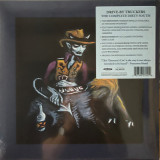
Das damals dritte Album der Punkrock- und Streetcore-Band aus dem Ruhrgebiet. Seit 2008 aktiv, hat sich das Quartett bis 2018 weiter nach vorne gearbeitet, sogar bis in die Charts, und ist kurz darauf erstmal für länger abgetaucht. Ihr "Pottcore" ist eine kompakte Mischung aus zielstrebigem Punkrock und Streetcore, wie man ihn von Acts wie TOXPACK lieben gelernt hat. Mit "Retro In Via" (von 2016) hat die sympathisch bodenständige Band zehn mitreißende, fetten Singalong-Hymnen für den gepflegten Straßenköter abgeliefert. Dabei ist die Bandbreite des Albums musikalisch wie lyrisch extrem weit gefächert: Vom schnellen Gassenhauer mit Gänsehaut-Refrain wie "Das Hat Mit Freiheit Nichts Zu Tun" über den Knaller "Punkrock Allianz" (mit Beteiligung von EMSCHERKURVE 77- und BRIGADE S-Musikern) bis hin zu nachdenklicheren Tönen über Liebe, Freiheit, Andersdenkende oder das Drama der aktuellen Flüchtlingspolitik (richtigerweise aus der Sicht der Opfer) haben HARTE WORTE einen wahren Quantensprung gemacht. Orangenes Vinyl, vollfarbig bedrucktes Insert, limitiert auf 500 Exemplare weltweit.
Bosconi Records is proud to present Tangled Waves, a dynamic split EP that brings together the sonic identities of two emerging Italian talents—Roberto Manolio and Giuseppe Angeloro—each making their debut on the label.
Like currents colliding below the surface, Tangled Waves reveals a natural convergence—where distinct styles drift together in subtle harmony.
The A-side features Roberto Manolio, known for releases on Cosmological, Nugs on Board, and Musek Records. He kicks off with Deeply Red, a UK tech house-influenced stomper driven by a fat, aggressive bassline and dreamy delayed chords. A haunting Russian voice sample adds a cinematic, retro-futurist edge—like a lost transmission from a 60s space mission. Next up is Machine City Road, a raw, gritty weapon where grinding synths and sharp textures drive the track forward with the force of a distorted electric guitar. It’s dark, edgy, and full of tension. On the B-side, Giuseppe Angeloro—previously featured on Cimedirapax, Havalon, and Polarity Records—brings a touch of italo-flavored euphoria with A Night Among the Trees. Lush arpeggios and nostalgic synth lines conjure up a dreamy atmosphere, building into an epic, cinematic anthem. Closing the EP is Mind Trip, a gentle, psychedelic excursion built on floating melodies, delayed vocals, and hazy atmospheres. It’s a reflective, emotionally rich track—perfect for the final moments on the dancefloor. Tangled Waves offers a meeting point of two unique sonic voices, flowing along parallel—but deeply connected—paths, resulting in four essential weapons built to last.
out of Stock
Last delivered 5 months ago available to reorder, subject to availability
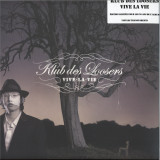
A l’occasion des 20 ans de cet album devenu culte, Record Makers réédite une version spéciale anniversaire limitée (vinyles transparents – 500 exemplaires) qui ravivera la flamme des fans de la première heure, des nouveaux fans et des collectionneurs. "Vive la Vie" est aujourd’hui un album référent pour les amateurs de rap, reconnu par ses pairs lyricistes, c’est un de ses albums qui marquent à jamais une époque, celle des années 2000 et de son rap aux rimes fines et puissantes.
Le 15 novembre 2004 sortait "Vive la Vie" le premier album du Klub des Loosers.
On ne présente plus le Klub des Loosers et son unique membre Fuzati. Pourquoi ? parce qu'on en a un peu honte quand même. Imaginez un jeune versaillais que tout prédestinait à devenir écrivain maudit ou chanteur d'un groupe de pop répétant dans le garage parental le dimanche de 16h à 20h. Le genre de type qui passait ses samedis après-midi à la bibliothèque municipale, ses samedi soir à boire de la bière dans les squats de jeunes où on recense une fille pour dix mecs et où la phrase qui revient le plus souvent est "qui roule un joint ?"
Imaginez maintenant que ce type ait une illumination, au milieu de ces jeunes que tout prédestine à la réussite (HEC, science-po) et qui lorsqu'ils se retrouvent ensemble ne savent pas faire autre chose que de se défoncer. "Nous sommes un klub de loosers".
Comme il n'aime pas trop les gens, Fuzati fondera un klub dont il sera le seul membre. Comme il n'a pas de guitare que le hip hop est son seul ami il se dit qu'il fera ça comme musique. Bah oui c'est sympa le hip hop. Comme on lui a dit qu'il n'avait pas une tête de rappeur et que les casquettes à l'envers lui vont mal il ne montrera jamais son visage et portera un chapeau. S'en suivra un parcours classique de MC underground qui rappe pour la rue (mais aussi les avenues) et représente ses refrés illégalement enfermés derrière les murs des prépas t'as vu. Mixtapes, nombreux freestyles dans l'émission Greckfrite diffusée sur la chaine internet Canalweb, concert à la MJC de Versailles mais aussi dans un entrepôt désinfecté à Dunkerque.
En 2003 Il signe sur le label parisien Record Makers parce qu'on lui a appris qu'il ne fallait pas trop se mélanger avec les gens d'autres milieux. Sortiront deux EP, "Baise les Gens" et "La Femme de Fer" qui sont déjà des classiques pour au moins 32 personnes. La même année sort également l'album de l'atelier "Buffet des Anciens Elèves" auquel il participe avec Tékilatex du groupe TTC, James Delleck, Cyanure et deux producteurs de talent, Tacteel (Lex Records) et ParaOne (Institubes). En juillet 2004 sort le maxi du Klub des Loosers où collaborent MF DOOM, légende hip hop, et Jean-Benoit Dunckel, moitié du groupe AIR.
out of Stock
Last delivered 16 months ago available to reorder, subject to availability
OVERVIEW: DUB TREES is one of Youth’s most revered dub projects, it helped define the Liquid Sound Design sound that fans around the world hold dear. This project is the third in a triptych of albums Youth has made with a specific Celtic / Hindu fusion. Starting out with the classic Celtic Cross ‘Hicksville’ 20 years ago, featuring the mythical Simon Posford (Shpongle) through to ‘East of the River Ganges’ (ft Klaus Shultz / Tangerine Dream amongst many others) in 2004 followed by the last piece of this mystical puzzle ‘Celtic Vedic’ ,released on compact disc only in 2016 , which charts the journey of the Celt from Northern India to Snowdonia. The idea stems from Youth’s firm belief that there is a strong correlation between Celtic and Vedic cultures and their Northern Indian roots. Youth has assembled a host of collaborators to weave their labrynthine magic on ‘Celtic Vedic’: Jah Wobble (PiL) on bass, Matt Black/Coldcut (Ninja Tunes) on warped soundscaping duties, Galician Celtic pipe and flute player Daniel Romar, Bollywood contemporary Indian singer Shridevi Keshavan and Elfic Circle. It features many field recordings made by Youth on his various Indian odysseys and is all harnessed together with cutting-edge electronica that the Liquid Sound Design team pioneered 20 years ago. The team today are still pioneering new directions within ‘Downtempo Electronica Music’ and beats that create 3 dimensional landscapes for the helioscopic imagination to explore and psychoactive maps for the inner astronaut in all of us. ‘Celtic Vedic’ promises unchartered bass annihilation and heliotropic soundscapes, pounding basslines overlayed on 3D holographic beats and wrestles with serpentine melodies and psychedelic textures.
Big up to northern powerhouse Burnski for steering his Constant Sound label to the not-so-insignificant feat of release number 50. More importantly, the sounds remain as vital as ever and always evolve into subtle new sound worlds. The mantle for this one is taken by Locklead who brings some fine drum patterns to 'Backup' and pairs them with sliding hi-hats and bubbly synth motifs. It's garage-infused but utterly fresh. 'Wizzord' is a darker tech house with searching lead synths and plenty of pent-up energy, and 'Motherland' brings nice jazzy chord work and atmospheric samples. 'Pink Skies' is a bright closer with contrasting synths - some farting, some smooth - and more high-speed, catchy drums that span house and tech.
out of Stock
Last delivered 9 months ago available to reorder, subject to availability
Take It Easy! We need more taglines like these in such trying and self-recriminatory times, where the stresses of a part-imagined urgency prevent us from decompressing in the way our social lives really should allow for. But is dance music, whose traditional motto is to "jack", compatible with such a mantra? DJLMP shatters these apparent antinomies of relaxation and danceability with three new edited heaters here, designed for triumphant joie de vives of the kind that do not poke, prod or demand too much from us. A later Diana Ross sample is put on heavy opening rotation on 'Diana's Loop', while similarly echoic verboffs are exchanged on 'Spring Touch', where dub delays haze the mix into something a little more convulsive. Space for wonky downtime is reserved on the B's 'Reggatronic', in a rare case of hip, lo-fi breathing room reserved for a dance record.
out of Stock
Last delivered 14 months ago available to reorder, subject to availability
The record is largely sung in Scots language, one of Scotland’s three official languages along with Gaelic and English. “Scots gives me a way of expressing myself which is connected directly with the landscapes I love. It brings the songs alive and it is a fascinating language. The name of the record is in Scots - Forefowk means the people who came before, or ancestors. When we say ‘mind me,’ we can mean a few things- remind, remember, watch over or care for me. The record explores how tradition needs to be constantly reconnected with, built upon, looked after, and shared.”
Quinie sings with a style inspired by Scottish Traveller singers. “I began singing unaccompanied Scots Song in 2015 after hearing Scots Traveller singer Sheila Stewart on the radio. Initially I felt like I shouldn't sing these songs because I'm not a Traveller, and I saw people around me doing that in a way that made me uncomfortable. But on the other hand this music made sense to me and I felt driven to learn. Over the years I have met Traveller friends who taught me that settled people sharing these songs could contribute to raising awareness. Scottish Travellers are marginalised and discriminated against in modern Scotland, despite being custodians of so many of our important traditions. So I started to perform them and tell this story. From there I built on my repertoire and started writing my own songs”.
To develop this record, Quinie travelled across Argyll with her horse. They went on a pilgrimage of sorts through the ancient landscapes of the West of Scotland to explore the interconnected relationships between people, ancestors, animals, and place. The album’s vinyl release is accompanied by a book and film, documenting this unusual research process.
Forefowk, Mind Me was recorded in August 2024 at The Big Shed in Highland Perthshire with support from Creative Scotland. Quinie is accompanied by an ensemble of musicians: Ailbhe Nic Oireachtaigh (viola), Oliver Pitt (duduk, bouzouki, percussion), Harry Górski-Brown (small pipes, violin), and Stevie Jones (double bass, recording, and mixing). Each of these artists brings their own distinctive voice, bridging contemporary experimental practice with worlds of traditional and early music.
Khadim is a stunning reconfiguration of the Ndagga Rhythm Force sound. The instrumentation is radically pared down. The guitar is gone; the concatenation of sabars; the drum-kit. Each of the four tracks hones in on just one or two drummers; otherwise the sole recorded element is the singing; everything else is programmed. Synths are dialogically locked into the drumming. Tellingly, Ernestus has reached for his beloved Prophet-5, a signature go-to since Basic Channel days, thirty years ago. Texturally, the sound is more dubwise; prickling with effects. There is a new spaciousness, announced at the start by the ambient sounds of Dakar street-life. At the microphone, Mbene Diatta Seck revels in this new openness: mbalax diva, she feelingly turns each of the four songs into a discrete dramatic episode, using different sets of rhetorical techniques. The music throughout is taut, grooving, complex, like before; but more volatile, intuitive and reaching, with turbulent emotional and spiritual expressivity.
Not that Khadim represents any kind of break. Its transformativeness is rooted in the hundreds upon hundreds of hours the Rhythm Force has played together. Nearly a decade has passed since Yermande, the unit's previous album. Every year throughout that period — barring lockdowns — the group has toured extensively, in Europe, the US, and Japan. With improvisation at the core of its music-making, each performance has been evolutionary, as it turns out heading towards Khadim. “I didn’t want to simply continue with the same formula," says Ernestus. “I preferred to wait for a new approach. Playing live so many times, I wanted to capture some of the energy and freedom of those performances.” Though several members of the touring ensemble sit out this recording — sabar drummers, kit-drummer, synth-player — their presence abides in the structure and swing of the music here.
Lamp Fall is a homage to Cheikh Ibra Fall, founder of the Baye Fall spiritual community. The mosque in the city of Touba is known as Lamp Fall, because the main tower resembles a lantern. Soy duggu Touba, moom guey séen / When you enter Touba, he is the one who greets you. After a swift, incantatory start Mbene sings with reflective seriousness. Her voice swirls with reverb, over a tight, funky, propulsive interplay between synth and drums, threaded with one-two jabs of bass. Cheikh Ibra Fall mi may way, mo diayndiou ré, la mu jëndé ko taalibe... Cheikh Ibra Fall amo morome, aboridial / Cheikh Ibra Fall shows the way forward, he gives us strength, he gathers his disciples... Overflowing with grace, Cheikh Ibra Fall has no equal.
Interwoven with Wolof proverbs, Dieuw Bakhul is a recriminatory song about treachery, lies, and back-biting. Over moody, roiling synths and ominous, lean bass, Mbene throws out fluttering scraps of vocal, as if re-running old conversations in her head. The music shadows her despair to the verge of breakdown, at one moment seemingly so lost in thought and memories, that it threatens to disintegrate. Bayilene di wor seen xarit ak seen an da ndo... Dieuw bakhul, dieuw ñaw na / Stop judging your friends and companions... A lie is no good, a lie is ugly.
Khadim is a show-stopper; currently the centrepiece of Ndagga Rhythm Force live performances. The song is dedicated to Cheikh Ahmadou Bamba, aka Khadim, founder of the Mouride Sufi order. Serigne Bamba mi may wayeu / Serigne Bamba is the one who makes me sing. The verses name-check revered members of his family and brotherhood, like Sokhna Diarra, Mame Thierno, and Serigne Bara. Though Islam has been practised in Senegal for a millennium, it wasn’t until the start of the twentieth century that it began to thoroughly permeate ordinary Senegalese society, hand-in-hand with anti-colonialism. The verses here recall Bamba’s banishment by the French to Gabon, and later to Mauritania, in those foundational times. During exile, his captors once introduced a lion to his cell: gaïnde gua waf, dieba lu ci Cheikhoul Khadim / the lion doesn’t budge, it gives itself over to Cheikh Khadim. Deep, surging bass, steady kick-drum, and simple, reverbed chords on the off-beat lend the feel and impetus of steppers reggae. A reed plays snatches of a traditional Baye Fall melody; the dazzling polyrhythmic drumming is by Serigne Mamoune Seck. Mbene compellingly blends percussive vocalese, narrative suspense, exultant praise, introspection, and grievance.
Nimzat is a devotional tribute to Cheikh Sadbou, a contemporary of Bamba, buried in a mausoleum in Nizmat, in southern Mauritania. Way nala, kagne nala... souma danana fata dale / I call upon you and wonder about you... If I am overwhelmed, come to my aid. The town holds special significance for Khadr Sufism. An annual pilgrimage there is conducted to this day. The rhythm is buoyantly funky; the mood is sombre, reined-in, foreboding. Punctuated by peals of thunder, Mbene sings with restrained, intense reverence; huskily confidential, steadfast. Nanu dem ba Nimzat, dé ba sali khina / Let us go to Nimzat, to seal our devotion.
Mbene Diatta Seck: vocals.
Bada Seck: bougarabou, thiol, mbeung mbeung bal, tungune.
Serigne Mamoune Seck: bougarabou, khine, mbeung mbeung, tungune.
Text by Mark Ainley (Honest Jons).
Mastered by Rashad Becker.
Everything else by Mark Ernestus.
out of Stock
Last delivered 3 months ago available to reorder, subject to availability
The House phenomenon of recent years captured in a very nice double vinyl package - Featuring some of the greatest artists of the genre: Kosheen, With U, David Guetta, Bob Sinclar, Themba, Pat Thomas, Ebo, Taylor Sasson, Armin Van Buuren
out of Stock
Last delivered 30 days ago available to reorder, subject to availability
Latency presents "És pregunta", the second album from Catalan vocal duo Tarta Relena. Founded by Helena Ros Redon and Marta Torrella i Martínez, Tarta Relena explores the rich vocal traditions of the Mediterranean, singing in languages such as Classical Greek, Italian, Spanish, Latin, Catalan, Ladino, and more.
out of Stock
Last delivered 16 months ago available to reorder, subject to availability
A6: The Dress; Bass – Gabe Noel, Sam Wilkes (2); Drums, Synth, Written-By – Dijon (7); Guitar – Noah Le Gros; Keyboards – John Keek; Mixed By – Andrew Sarlo; Vocals
B1: God In Wilson; Drums – Henry Kwapis; Guitar, Synth, Mixed By, Written-By – Dijon (7); Mixed By – Jack Karaszewski
B2: Did You See It; Instruments
B3: Talk Down; Bongos – Henry Kwapis; Drum Programming, Mixed By, Written-By – Jack Karaszewski; Drums, Synth
B4: Rodeo Clown; Clarinet – John Keek; Mixed By – Jack Karaszewski; Written-By, Guitar – Dijon (7); Written-By, Guitar
B5: End of Record; Baritone Guitar, Bass, Synth – Michael Gordon (30); Mixed By – Jack Karaszewski; Mixed By
[a] A1 Big Mike's; Drums, Bass, Clarinet, Organ, Mixed By, Written-By – Dijon (7); Guitar, Piano, Vocals [Additional], Organ, Mixed By, Written-By – Michael Gordon (30); Mixed By – Jack Karaszewski; Slide Guitar – Noah Le Gros
[b] A2 Scratching; Mixed By, Written-By – Dijon (7); Producer [Additional] – Michael Gordon (30); Producer [Additional], Mixed By – Jack Karaszewski
[c] A3 Many Times;Drums, Baritone Guitar, Written-By – Michael Gordon (30); Guitar [Additional], Written-By – Dijon (7); Programmed By [Additional Programming], Mixed By, Written-By – Andrew Sarlo
[d] A4 Annie; Acoustic Guitar, Written-By – Dijon (7); Bass – Michael Gordon (30); Mixed By, Written-By – Jack Karaszewski; Saxophone [Casio Sax Replica] – John Keek; Vocals [Additional] – God's Children (11)
[e] A5 Noah's Highlight Reel; Clarinet, Guitar, Mixed By, Written-By – Dijon (7); Vocals [Additional], Bass, Synth, Written-By – Michael Gordon (30); Vocals [Additional], Written; By – Noah Le Gros
[f] A6 The Dress; Bass – Gabe Noel, Sam Wilkes (2); Drums, Synth, Written-By – Dijon (7); Guitar – Noah Le Gros; Keyboards – John Keek; Mixed By – Andrew Sarlo; Vocals [Additional] – Michael Gordon (30); Written-By – John Keuch
[h] B2 Did You See It; Instruments [All], Written-By – Dijon (7); Mixed By – Jack Karaszewski
[i] B3 Talk Down; Bongos – Henry Kwapis; Drum Programming, Mixed By, Written-By – Jack Karaszewski; Drums, Synth [Strega], Mixed By, Written-By – Dijon (7); Guitar, Baritone Guitar – Michael Gordon (30); Keyboards – John Keek; Written-By – John Keuch
[j] B4 Rodeo Clown; Clarinet – John Keek; Mixed By – Jack Karaszewski; Written-By, Guitar – Dijon (7); Written-By, Guitar [Additional], Bass – Michael Gordon (30); Written-By, Slide Guitar – Noah Le Gros
[k] B5 End of Record; Baritone Guitar, Bass, Synth – Michael Gordon (30); Mixed By – Jack Karaszewski; Mixed By [Stem Mix] – Andrew Sarlo; Written-By, Guitar, Mixed By – Dijon (7)
Pain Management welcomes London cult favourite DJ ojo, who arrives on the label with a hazy three tracker of trademark nether zone system music. On his most dubbed out full length to date, ojo span’s the full emotive spectrum of dub sonics with a range of both the eerie and more tender expansions of low end atmospherics, the resulting 12” equally suited for the club and the journey home alike.
‘Tongue Tied’ opens the record, a lysergic offering from the darker edges of dub music. A slippery fugue-state hit of narco-ambience built around a crooning, intelligible vocal refrain and chest shot sub weight. A real nightfall system pusher built to simmer in the early hours. It kicks off the EP on an amorphous, hypnotic note that sustains throughout.‘Oil Dub’ sinks deeper into the fog, melodic kinesis and expansive delays upholding an underworld of feedbacked percussion and tongue in cheek sub motion; a seven minute sound bath of ambiguous dub ASMR.
The B-side balances out the darker strains found on its counterpart with an overtly tender digidub closer. Clocking in at almost ten minutes long ‘Cloud Suck’ is a nebulous bliss of perpetually ascending late-summer warmth. The kind of liminal dream-state embrace that you wish would never end. True to the name, it evokes tender, dusk and dawn hued moments, a quiet ride-home flash of introspection on the way to or from some pursuit of meaning. Pain Management essential right here.
Limited run of 200 hand-stamped 12” records available now.
out of Stock
Last delivered 15 months ago available to reorder, subject to availability
Sneaker Social Club welcome a veritable supergroup of bass heavyweights in the form of Legion. Made up of Trends, Boylan, P Jam and D.O.K., this four strong collective first came to light with the We Are Many 12" on Artikal Music in 2021, and now they regroup for another four-strong payload of soundsystem pressure that embraces the darkness in devastating fashion.
The Sister Abigail EP leads with 'Rastaman', an ice-cold half-step drop that summons the spirit of early dubstep in its raw minimalism, eerie atmospherics and snarling low-end wobble. Without an ounce of fat, it's a lean workout of drums and bass that finds catharsis in simplicity without compromising on high definition detail. 'Souls' locks into a jerky groove to set the dance off at acute angles, nudging the textures up a notch without disturbing the spartan mood of the release. 'Sister Abigail' pushes the underlying malevolence of the Legion sound to the forefront with dissonant sheet-metal tones while packing the rhythm section into a tight, vicious formation of gnashing, chrome-plated teeth. 'Play That Vibe' seals the deal on the EP with a hard-thumping, propulsive groove that calls to mind the techy development of dubstep in the 2010s — a taut, tracky throwdown to keep the intensity on a rolling boil.
Drawing on the grounding principles of OG dubstep with a sharp line in crisp, modernist production and a ruthless economy of arrangement on display, Legion prove many cooks can still result in a potent, brutally focused broth.
out of Stock
Last delivered 15 months ago available to reorder, subject to availability
The Sound of Now...mentioned in 'The Return of Jack Slade' by Derrick Morgan was the sound of 1969/1970 and that sound was the sound of Jamaican Reggae.The look at the time was the Skinhead fashion borrowed heavily from the Jamaican Rude Boy style.
The Skinhead movement started around 1968 and by the following year of 1969 became the style and fashion of many British teenagers.The uniform of the Skinheads consisted of boots,braces and jeans and the upbeat Reggae sound seemed to match the style perfectly.
Never before has a music matched a look more perfectly than that of the Skinhead/Rude Boy and Jamaican Reggae sound.
So stand up and move your feet one more time to the Skinhead Reggae Sound!!!
Hope you enjoy the set....
out of Stock
Last delivered 4 years ago available to reorder, subject to availability
First ever release of pioneering radiophonic / experimental / electronic / soundtrack composer you may never have heard of but really should have by now. 26 tracks in all.
As we began the mammoth task of whittling down material for this album Elizabeth recalled the time she met Delia Derbyshire. It was during a party for existing and former Radiophonic Workshop composers at BBC Maida Vale in the early 1980s. Delia introduced herself with typical energy and exuberance proclaiming "It's up to you now - I'm passing the baton. Show these men how we get things done". That must have been quite an honour and responsibility for a young, female composer establishing herself within the male-dominated environs at Delaware Road.
Looking back over a musical career spanning almost five decades, it's clear Elizabeth rose to the challenge and made her mark. She was consistently in demand with television and radio producers, composing for an array of ground-breaking, critically acclaimed and popular BBC projects. Whilst Delia's legacy has achieved mythical status with her position as an innovator and feminist icon secured, the majority of Elizabeth's recorded work remains unavailable so her contribution to the output of the Workshop and evolution of British electronic music is somewhat under-appreciated.
Perhaps this record will help start to remedy the situation. Included are early tape experiments, home demos and non-BBC commissions from the early 1970's to the late 2000s. Having listened to 260+ digital audio tapes from Elizabeth's personal archive we have barely scratched the surface but hope to provide an indication of the breadth of her compositional and sound design skills.
Classically trained in cello and piano, Elizabeth graduated from the University of East Anglia with a degree in Music in 1973. She was mentored by Tristram Cary who helped her to become UEA's first recipient of a Masters in Electronic Music and later awarded an Honorary Doctorate by Staffordshire University. Joining the BBC as a studio manager in 1975, Elizabeth transferred to the Radiophonic Workshop in 1978. One of her first tasks was to create special sound effects for Blake's 7 using tape loops, the EMS 100 and trusted VCS3.
Her celebrated score for The Living Planet in 1982 featured early use of the PPG synthesizer and earned an Emmy nomination. Over the following years studio technology evolved rapidly, but Elizabeth transitioned from analogue recording techniques to newer digital platforms with relative ease, using samplers, midi sequencing and computer controlled workstations.
With an incredible 1,400 commissions to her name, she created special sound for The Day Of The Triffids, Lord Of The Rings, countless radio dramas including Iris Murdoch's The Sea, The Sea, Harold Pinter's Moonlight, all of Howard Barker's plays, productions of King Lear, Wordsworth's Prelude and The Pallisers. The success of The Living Planet led to further work for the BBC Natural History Unit followed by numerous commissions for The Natural World. At one point in the late 1980's at least five of her signature tunes were being broadcast every week including Points Of View, Horizon, Doctors To Be and Everyman.
After the closure of the Workshop in 1996 Elizabeth became freelance, arranging Faure's Pavane for the BBC World Cup '98 coverage (reaching no. 9 in the UK singles chart). She wrote additional music for Monty Python's Holy Grail DVD, scored Michael Palin's Full Circle and Sahara TV series, The Lost Gardens Of Heligan and The Human Body with Robert Winston.
Retiring from the music industry in the late 2000's, Elizabeth recently returned to her East Anglian roots and now lives near the coast. She walks daily, listening to all kinds of music, new and old, on her beloved air-pods.
out of Stock
Last delivered 16 months ago available to reorder, subject to availability