Wired was an ephemeral improvisational music project formed by Michael Ranta, Karl-Heinz Böttner, and Mike Lewis. On 28 April 1970, the trio recorded an extended studio session of approximately 140 minutes, in collaboration with Conny Plank, who engineered and mixed the recording in real time, incorporating elements of live electronics. This session was subsequently edited to album length and released in 1974 as part of the Free Improvisation 3LP box set issued by Deutsche Grammophon, alongside recordings by Iskra and New Phonic Art.
Owing to its exploratory electric sound world and Plank’s distinctive spatial production techniques, the Wired recording acquired a degree of underground cult status, particularly among listeners associated with krautrock and psychedelic improvisation.
Shortly after the studio session, Ranta and Böttner travelled to Japan, where they spent approximately six months performing with Karlheinz Stockhausen at Expo ’70 in Osaka. In addition to these activities, they engaged in various independent musical projects and performances.
The present release, sourced from the personal archive of Michael Ranta, documents a live duo performance by Ranta and Böttner, recorded on 27 July 1970 in an outdoor setting in Kyoto (the exact location remains unknown), before an audience of approximately 200 music teachers. The recording exhibits sonic and aesthetic characteristics closely aligned with the previously recorded studio material, retaining the distinctive “Wired” sound while situating it within a live, site-specific context.
Michael Ranta: percussion, voice, home-made instruments, tapes, tape delay, effects Karl-Heinz Böttner: guitar, organ, ocarina, voice, effects
Buscar:und
- Vent D'aether
- Réville V
- Levast Ill
- Le Vast Iv
- Le Vast Xiii
- Montfarville V
»Vents d’aether« is the first collaborative album by sound artist Jérôme Bouve and composer-performer Delphine Dora. The six pieces are based on live improvisations on organ and harmonium. They were recorded in different churches on the Cotentin peninsula in France’s Normandy region and later enriched with additional field recordings by SA~RA. This adds an extra layer to compositions which were created both in and out of the moment and which quite literally resonate with the histories of the instruments and the buildings that were so integral to their emergence. »Vents d’aether« is to be understood as a dialogue between sound and space that takes place across time and place.
Bouve carried the idea of working with the organs and harmoniums that can be found in the churches and chapels in the Val de Saire in the Northeast of Cotentin around with him for years. When he got to know Dora, he found the perfect musical partner with whom to finally make a record »about the wind, the wood, the stones of the Val de Saire.« In September 2024, the duo embarked on a short but fruitful journey during which they stopped by at several different churches. They recorded hours-long improvised sessions dedicated to »capturing the moment, letting space and time shape gestures and sound, seizing fleeting epiphanies in their greatest simplicity,« as Dora notes in the album’s linernotes.
She took the lead behind the instruments, however Bouve assisted her on drawbars for the last two pieces on »Vents d’aether,« thus adding an even more unusual touch to the recordings. They formed the basis for an album that Dora calls »the testimony of a sensory quest, a collection of memories suspended in time.« Indeed, starting with the epic 20-minute-long titular piece up until the ringing of church bells near the end of the closing piece »Montfarville V,« this overwhelming yet intimate record blurs the boundaries between different times and spaces altogether.
Carve is the second full-length by Bay Area artist Kathryn Mohr. Written over the course of five years and recorded over several weeks in a rural singlewide in the Mojave Desert, the album centers on love experienced as a form of grief, not as an aftermath of loss, but as a condition of intimacy itself.
Mohr describes Carve as an album about how memory exists outside the body, embedded in places and landscapes. It is shaped by her first return to the American Southwest since a childhood road trip at age five, and by the experience of moving through terrain that holds emotional weight long after its origins fade. The record considers how intimacy feels after years of isolation, and what it takes to carve out a life that allows for trust, presence, and feeling rather than mere survival. The project took form after a difficult tour that ended in Joshua Tree. Mohr pointed her car into the desert and drove alone, crisscrossing the Mojave on dirt roads. Months later, she returned to record the album, working alone with an acoustic guitar, a field recorder, and limited supplies. Following that period, Mohr began to allow for intimacy and connection. The time she spent recording Carve in the desert did not create isolation so much as mirror it. Working alone out of an old, western-themed jail Airbnb, the physical enclosure reflected the emotional conditions under which much of the record had been written: distance, restraint, and long stretches of stillness. In that context, love was not experienced as escape, but as something inseparable from impermanence and the awareness of loss.
This tension between connection and inevitability sits at the center of Carve. Some of the album’s songs were written earlier, during a prolonged period marked by emotional distance and apathy. Over those four years, Mohr was working through unprocessed childhood memories and their long-term effects on her ability to connect with others. The work was slow and difficult, involving a fundamental reshaping of how she related to herself and to the world. Carve was mixed by Richard Chowenhill of Flenser labelmates Agriculture. Rather than offering resolution, the album documents the act of remaining present within tension. Carve is not about escaping grief, but about accepting it as inseparable from love itself. Kathryn Mohr’s previous effort “Waiting Room” received the coveted ‘Best New Music' designation and a score of 8.4 from Pitchfork.
Carve is the second full-length by Bay Area artist Kathryn Mohr. Written over the course of five years and recorded over several weeks in a rural singlewide in the Mojave Desert, the album centers on love experienced as a form of grief, not as an aftermath of loss, but as a condition of intimacy itself.
Mohr describes Carve as an album about how memory exists outside the body, embedded in places and landscapes. It is shaped by her first return to the American Southwest since a childhood road trip at age five, and by the experience of moving through terrain that holds emotional weight long after its origins fade. The record considers how intimacy feels after years of isolation, and what it takes to carve out a life that allows for trust, presence, and feeling rather than mere survival. The project took form after a difficult tour that ended in Joshua Tree. Mohr pointed her car into the desert and drove alone, crisscrossing the Mojave on dirt roads. Months later, she returned to record the album, working alone with an acoustic guitar, a field recorder, and limited supplies. Following that period, Mohr began to allow for intimacy and connection. The time she spent recording Carve in the desert did not create isolation so much as mirror it. Working alone out of an old, western-themed jail Airbnb, the physical enclosure reflected the emotional conditions under which much of the record had been written: distance, restraint, and long stretches of stillness. In that context, love was not experienced as escape, but as something inseparable from impermanence and the awareness of loss.
This tension between connection and inevitability sits at the center of Carve. Some of the album’s songs were written earlier, during a prolonged period marked by emotional distance and apathy. Over those four years, Mohr was working through unprocessed childhood memories and their long-term effects on her ability to connect with others. The work was slow and difficult, involving a fundamental reshaping of how she related to herself and to the world. Carve was mixed by Richard Chowenhill of Flenser labelmates Agriculture. Rather than offering resolution, the album documents the act of remaining present within tension. Carve is not about escaping grief, but about accepting it as inseparable from love itself. Kathryn Mohr’s previous effort “Waiting Room” received the coveted ‘Best New Music' designation and a score of 8.4 from Pitchfork.
- 1: The Show Ain't Over Till The Fatman Swings
- 2: Portrait Of A Fiend
- 3: Just Like A Niguh
- 4: From The Brick Jungle
- 5: It Ain't Easy Bein' Me
- 6: Only In America
- 7: Hustler
- 8: It's Getting Hard
- 9: T.h.i.c.k
- 10: Marrero
- 11: You Said It Couldn't Be Done
- 12: Leave 'Em Out There
- 13: Bitch Contro
Originally released in 1993 on Big Beat/Atlantic, MC Thick’s The Show Ain’t Over Till the Fatman Swings followed his 1991 underground single “Marrero (What the Fellas Be Yellin)” and marked a defining moment for the Marrero, Louisiana rapper. While early ’90s New Orleans was dominated by bounce, MC Thick stood apart with gritty, street-level storytelling and a raw, unapologetic voice.
Featuring “T.H.I.C.K.” and production work involving T-Ray (Todd Ray), known for his work with Cypress Hill, the album remains an important piece of Southern rap history.
Fully remastered and pressed on black vinyl, this is the first vinyl availability in decades. Housed in a full-color jacket with a printed insert and is limited to 500 copies worldwide.
- 1: In Order That The First World May Fail
- 2: Clown Utopia
- 3: Rice Timeshare
- 4 11: Days, 700 Years
- 5: Going To Heaven On The End Of A String
- 6: Ick Fantasia
- 7: Geordie Vision
- 8: Athena Allenby
- 9: World Goodnight
Bunker Intimations II by London-based anti-formalists Index For Working Musik is a sister record to their second album Which Direction Goes The Beam, originally issued as a limited edition cassette with early copies of the vinyl pressing of that record. The 50-minute long collection of recordings was made across an intense three day period in March ‘25 under the duress of a very strict deadline. All tracks were improvised and mixed-down on the spot, a genuine document of a moment in time. Some of us think that it’s better than the record that it was trying to sell. And so here it now stands for wider judgment. Bunker Intimations II is released digitally and on vinyl via Tough Love.
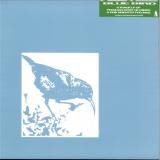
Following the critical success of last year’s ‘Cold Feet’ LP, producer, DJ, and multi-instrumentalist Alek Lee returns to Isle of Jura with his most introspective work to date, the ‘Blue Bird’ album. Across eight tracks, the Athens-based artist explores what he describes as a "Peculiar state of minds & Dub Orientated Feelings," blending his signature guerrilla style production with deep, organic soul.
The album’s centerpiece and title track, ‘Blue Bird’ features the haunting vocals of singer-songwriter Keren Ilan. It is a raw, heartfelt exploration of the aftermath of a breakup. The lyrics speak of a "desert heart" and a "loss that grows tall and loud," eventually finding a path toward healing as the "blue bird sings the dawn." Musically, the track is anchored by hazy, sun drenched guitars, a central instrument that weaves a consistent Balearic thread throughout the LP.
The journey through ‘Blue Bird’ is one of shifting shadows and unexpected textures. ‘Treasures’ is a standout instrumental, leaning into a grit-flecked, bluesy "twang" reminiscent of Duane Eddy, while ‘The Beach Road’ sees long time collaborator and ‘Shame On Us’ bandmate, Yovav, lending his magical bass and guitar work to a track that feels like a slow drive toward the horizon.
Side B shifts the energy toward the dancefloor and the sophisticated leftfield pop of the 80s. ‘First Rain’ is a subtle house leaning gem underpinned by a kick drum and lush, synth heavy emotive chord progression. ‘Thanks to Sade’ is a seductive downtempo groove with epic guitar lines shifting through, while ‘Remember the Good’ brings a subtle reggae skank and a French-influenced organ sound into the mix. The LP comes full circle with a smoked out Dub version of the title track ‘Blue Bird’.
A 180 gram pressing in a 3mm spine full colour sleeve and sticker designed by Bradley Pinkerton.
Tapping into the otherworldly frequencies of the UFO series, UK-born, Lisbon-based prodigy Rene Wise arrives on Dekmantel with an assured demonstration of his position at the cutting edge of real techno.
Andrew Shobeiri appeared in the cut and thrust of the scene fully-formed around 2017, instantly bringing his Rene Wise alias to top-tier labels with a razor-sharp combination of functional minimalism and mind-warping flair. There's no grey area fluctuation in his hypnotic, intentional sound — this is deep, captivating techno for the long haul, music to submit yourself to.
True to his sound, Rene Wise makes his presence felt on Dekmantel UFO with a varied spread of sounds, leading with the melancholic charm of the melodic sequences weaving through 'Johnson's Theme' before sinking into the engrossing folds and low-end rumble of 'Granite Skin'. There's a lighter atmosphere at play in the vaporous impulses that mark out 'Flow' before rolling into the rhythmic urgency and strafing bleeps of 'Kanga'.
This is the Dekmantel UFO experience as expressed by one of the leading lights in modern techno — an artist who understands the psychoactive power contained within the subtleties of production and pursuit of the ultimate loop.
Returning to Winthorpe after a five-year hiatus, Irish electro producer DeFeKT delivers a heavyweight 12-inch packed with four cuts of his unmistakable electro-techno hybrid sound, reaffirming his status as a true underground craftsman. Opening with the low-slung bass bounce of "It's Down", before sliding into the Detroit-influenced groove of "Your Body Will Learn", from there DeFeKT turns up the tension with the twisted, menacing pulse of Overcome before closing the release in epic fashion with the widescreen synth swagger of "Always"! A confident, statement from an artist firmly back in his element.
Italy’s own L.D.F. makes his debut on Shadow Pressings with a fresh slab of raw, analog funk—pressed strictly to wax and destined for selectors who still worship the turntable altar. With contributions from Detroit icons, Javonntte, Gary Romalis, & European groove architects Tilman & Böhm, the EP threads classic motifs through a modern underground sensibility—never nostalgic, always alive.
Delusions Of Grandeur is proud to welcome back emerging producer, multi-instrumentalist, and vocalist Declan McDermott for his standout new EP, Why Don’t You Believe Me? Blending analogue hardware and live musicianship with deep, groove-driven production, the release showcases a confident and colourful voice in contemporary underground house. I:Cube & DJ Nature on remix duties!
Very Limited 7” EP with printed lyric inner sleeve
Purely Physical Teeny Tapes continue to sink their teeth into the fleshy nethers of the contemporary oz
underground, plucking the self-titled ep of vivisected bedroom folk by naarm/melbourne trio Who Cares?
from the recesses of net anonymity for the greatest of good.
Upon appearing out of nowhere back in ‘24, the quartet’s debut registered (feverishly) somewhere
between immediacy & beguilement, the intervening year & change doing little to dull its aura, the
mystique only heightened by their suitably gorgeous appearance in wonderful company on a colourful
storm’s recent ‘going back to sleep…’ compilation-extravaganza. The conceit of these four tracks here is
disarmingly minimal - repetitious loner guitar strummage, oblique vox poetics as lullaby, intermittent
sunken percussion, bass the subtle melodic lugger - all recurring/revolving in delicious pirouette freefall,
un-rinseable within the mind, wayward melodies stuck like heat-warped treacle.
As with the firmest of its diy domestica ilk, there’s something ever so slightly off here, the carnivalesque
nature of this thing being the ‘what?’ that keeps pulling you in. parched ennui drip, fully zonked bacchanal
(anti-)energetics, listlessness rendered bedsit anthem, cooees in the hallway. depending on how your
head is screwed, ‘correct’ or otherwise, one might hear a charmed take on a vein of folk song fallen well
by the wayside/behind the mantle, others a seance for the spirits in the kettle, others more attuned to the
myriad wraiths swirling within the outer reaches of these songs, flights of whimsy foiled by a sticky, gluey
something or other. choose, or rather submit to your own adventure. Miaow miaow miaow.
A new duo and record label based in Madrid lands on the underground techno scene, led by Mike Gómez and José Castillo, the latter known for his aliases Milford and UHF, and also the owner of the electro label Gladio Operations.
Diorama is born with the intention of recovering the soul and essence lost in electronic music, which for some time has become practically homogeneous and predictable. With a timeless, fresh, and warm sound, Diorama produce rhythms close to dub and Detroit techno, mainly influenced by Juan Atkins, UR, and Basic Channel, among others.
This EP, titled Pacific Trak, begins with a nod to the old Scottish school, where they revive a forgotten track by British producer Anthony Scott, adding its imposing main chord to a true sea of melodic textures, bathed in exquisite acid. Spanish techno master Tadeo gives us his vision of Pacific Trak, exploring dub territories that remind us of past pieces released under the incomparable Maurizio label.
The B-side opens with Soul Memories, a manifesto of resistance that vibrates with detuned harmonies and raw bass lines, recalling the origins of Detroit’s primitive sound. The package closes with Polymorphic, a progression of relentless aquatic chords, set among careful and precise minimalist rhythms that oscillate between high-dynamics tech and dub.
Samo DJ, undeniable legend of global oddball house, finally debuts on hometown label Studio Barnhus after a decade-long, winding courtship and frequent collaborations with SB mainstays like Baba Stiltz and Pedrodollar. Every atom of his singular craft is on display as tracks like Third Guitar distill disco
tradition, club futurism and hip-hop attitude into cuts only Samo could deliver. Pressed on DJ-friendly 12'' vinyl, complete with a printed love letter from Stockholm underground hero, Nasty Nate
- A1: The Crystal Ship
- B1: Anna Karenina
Cigarettes After Sex return with a double single that showcases both their future and their past. The single featured on the B-side, “Anna Karenina,” is a quintessential Cigs track, sensual, slow-burning, and emotionally oversized, with lyrics so confessional they verge on too much. But its inclusion of spoken word verses adds a striking new dimension to Greg Gonzalez’s world, expanding the band’s intimate palette. Its chorus (“I cried at the end of Anna Karenina, when she threw herself under the train”) might be the most Cigarettes After Sex lyric ever written. The A-side is a long-rumored fan favorite finally seeing release: a gorgeously faithful cover of The Doors’ “The Crystal Ship,” recast in the band’s signature haze. Jim Morrison’s romantic fatalism never sounded more at home.
"Morning Star" zeigt Kekht Aräkh auf dem Weg zu einer authentischeren, verfeinerten Version seiner selbst. Das Album wurde in Berlin und Stockholm aufgenommen und entstand in einer Phase intensiven persönlichen und künstlerischen Wachstums. Es verbindet aggressive Black-Metal-Passagen mit immersiven, strukturierten Klanglandschaften, die sowohl intim als auch weitläufig wirken. Seit seinen Anfängen in Mykolajiw, Ukraine, hat Dmitry (alias Crying Orc), der alleinige Kopf hinter dem Projekt, einen unverwechselbaren Weg innerhalb des Black Metal gesucht. Diese Vision entfaltete sich durch sein Debütalbum "Through the Branches to Eternity EP" (2018) und die Alben "Night & Love" (2018) und "Pale Swordsman" (2021), die eine charakteristische Spannung zwischen wildem, viszeralem Black Metal und zarten, introspektiven Balladen etablierten. Auf "Morning Star" erreicht diese Dynamik eine neue Tiefe. Das Album entstand in einer Phase künstlerischer Klarheit und erkundet eine rauere, persönlichere Gefühlspalette, geprägt von Stress, Angst und langen Phasen der Schreibblockade, was ihm eine seltene Unmittelbarkeit und Verletzlichkeit verleiht. Dmitry nahm fast alle Instrumente selbst auf, das Schlagzeug stammt von Jonathan (Spira Me, Vanskapth, Olycka). Bladee steuerte den Gesang bei und war Co-Autor der Texte zu "Eternal Martyr", eine unerwartete Zusammenarbeit, die eine intuitive Chemie offenbart. VS--55 und Varg2Ö fügen abstrakte Samples und subtile Texturdesigns hinzu, die "Morning Star" seine unverwechselbare Körnigkeit und analoge Wärme verleihen, während James Ginzburg (Emptyset, Osmium) sich um das finale Mastering kümmerte und die dynamische Tiefe und atmosphärische Fülle verstärkte. Mehrere Tracks greifen früheres Material mit neuen Perspektiven wieder auf. ,Wänderer" und ,Drömsang" wurden teilweise neu aufgenommen oder komplett neu interpretiert. Intensive, treibende Passagen kollidieren mit spärlichen, kontemplativen Zwischenspielen und erzeugen eine Landschaft, die sowohl viszeral als auch eindringlich ist. Themen wie Isolation und Wanderschaft tauchen in "Wänderer" auf, traumhafte Melancholie in ,Drömsang", existenzielle Kämpfe in "Angest" und Reflexionen über Zeit und Transformation in "Three winters away". Mit "Morning Star" verbindet Kekht Aräkh vergangene Erkundungen mit neuer kollaborativer Energie und produziert ein Album, das die Black-Metal-Tradition der 90er Jahre würdigt und gleichzeitig Lo-Fi-Wärme, melancholische Melodien, klangliche Experimente und emotionale Offenheit umfasst. Das Ergebnis ist ein zutiefst persönliches Statement - ein Album, das sowohl eine Ankunft als auch eine Fortsetzung seiner künstlerischen Reise darstellt.
SONO kehren nächstes mit ihrem mit Spannung erwarteten neuen Album "Lost Lovers Motel" zurück, einer nostalgischen Reise durch Synthwave und von den 80ern inspirierte Klanglandschaften. Pulsierende Synthesizer, atmosphärische Melodien und catchy Vocals vereinen sich zu einem eindringlichen, retro-futuristischen Erlebnis. Die erste Single "Like Glass" zeigt, wohin die Sono-Reise geht: fl irrende Synthesizer, gefühlvolle Lyrics und ein eindringlicher, ansteckenden Beat, vereinen sich zu einem Song, der versucht, eine verlorene Liebe einzufangen. Mit "Lost Lovers
Motel" erforschen SONO Themen wie Herzschmerz, Sehnsucht und Eskapismus und huldigen dabei dem pulsierenden Sound der 80er Jahre.
Die allererste 7"-Veröffentlichung von Sylvester ,Syl" Johnsons lebhaftem, groovigem ,Tripping on Your Love" und dem Titelsong ,Foxy Brown", der lange Zeit als Heiliger Gral der Funk-Sammler galt - nie neu aufgelegt, nie zusammengestellt und genau zwischen Boogie und Steppers angesiedelt, eine private Pressung, wie sie nur aus Chicago kommen kann. Diese 45er-Platte kommt in bester Klangqualität und greifbarster Form.
- A1: Slow Scratch
- A2: Neurojuice
- A3: Dosage Correct?
- A4: Data Cops
- B1: Serotonin
- B2: Stimulation Binaire
- B3: Noise Theater
- B4: Bloque Cerveau (I Shouldn't Have Taken Two At Once)
- C1: Lunatic Park
- C2: New Therapy
- C3: Cycling Room
- C4: Dr Malsain's Gonna Measure Your Foam Trace On The Millimetric Paper
- D1: Run With The Dogs
- D2: Farmsex Com
- D3: Die, Vermin
- D4: The Final