Błoto’s bold 2020 debut brought forth three albums in just twelve months. This prolific creative burst, followed by an ongoing tour and involvement in other projects, meant that fans had to wait over three years for the next release. During this time, new ideas took shape, and the vision for their fourth LP crystallized. The wait for Błoto's new album is nearly over. As always, autumn signals the arrival of Grzybnia (Mycelium).
The idea for the album had been simmering within the band since the release of Kwasy i zasady and finally took shape in late January 2023 at Warsaw's Studio Pasterka, under the careful guidance of Piotr Zabrodzki. It was by far the most fruitful session in the group's history, with ideas flowing in abundance. The chosen tracks not only resulted in two well-received singles, Szlam / Ścieki and Bakteria, but also provided enough material for an EP set to drop next year.
The seemingly chemical title of the album Kwasy i zasady (Acids and Bases) ultimately referred to interpersonal relationships, describing traits that prevent harmony. The album embodied the polarization of societies in the 21st century. The metaphor of Grzybnia (Mycelium) goes a step further. It emphasizes the importance of cooperation as a fundamental skill that can yield various results (fruits, fungi)—both good and bad. Above all, it underscores the power of collective action beyond divisions.
In a complex, unstable modern world that is breaking apart into pieces, the concept of mycelium offers a powerful model. Mycelium thrives in degraded, seemingly lifeless environments created by humans. A key aspect of the broader significance of mycelium is that cooperation benefits all involved parties, where each contributes something and receives something in return. Mycelium is a symbiont, meaning it forms a symbiotic relationship with certain tree species through mycorrhiza, where the roots of the trees and the mycelium exchange essential life-sustaining substances. This results in mutual benefits. The world of mycelium exemplifies cooperation.
A single mushroom, like a person, dies, but mycelium endures, much like humanity itself. Thus, similar to culture, it is immortal. Błoto operates in a manner akin to mycelium. It undoubtedly belongs to the underground realm, embodying the essence of the underground. It is also a destructor of music. In what sense? The Polish Nobel laureate Olga Tokarczuk noted in her book Primeval and Other Times that “... Mycelium thrives by drawing the last remnants of life from what dies, decomposes, and seeps into the earth. Mycelium is the life of death, the life of decay, the life of what has died.” In the same way, Latarnik, Cancer G, Wuja HZG, and OlafSaxx, through their collaboration, process cultural products to create entirely new and surprising combinations. The result of this work is both edible and poisonous mushrooms, manifested in the form of fat beats, house, spiritual jazz, improvised music, illbient, organic techno, and genre-defying electronics.
The peak mushroom season in Poland occurs in autumn, which is why Grzybnia will be released on October 11, 2024, via Astigmatic Records.
Suche:underground collective
Plastic Crimewave Syndicate returns with one collective foot in overdriven space-biker scuzz rock, but the other bigfoot kicking upward into new galaxies of synth punk, no-prog, and freek funk. Yes, dare we say it, the new PCWS LP, Tales From the Golden Skull, GROOVES--but from the perspective of the Japan n' Kraut/Eurorock undergrounds, coated in some nasty Windy City grime. Aided by the Chicago Cosmonaut Couriers Crew, ala famed renaissance man Mac Blackout (synths/horns/electronics), Przemyslaw Krys Drazek (trumpet) of longtime zone-jammers Drazek Fuscaldo/Mako Sica, Will MacLean on Moog keytar (!-- of local Silver vocoder-ed Apples lovin' treasures Protovulcan), plus the oldest-school synthlord Bil Vermette, who's been modulating since the 70s. We'll call Tales From the Golden Skull a near-concept lp (aren't they always?) that looks back at fallen friends and collaborators, and then into the unwritten golden future (as PCW himself hit the golden 50). The sonic journey dips into dark textural valleys, and chugging riffs rising to thee fiery heavens, as the thundering-but-subtle rhythm section of Jose "Beast but Best" Bernal and Rob "Dead Feathers" Rodak know when to crash and when to burn (one). Sir PCW lays down his trademark big muff-blastage and echo-cries, to channel the despair and feral bark of the mighty Vega/Hammill/Iggy/Dickie P/Haino/Mojo-Risin/Mizutani, but also knows when to shut up for some layered instrumental Embryo/Harvester/Fausty trance rock and dabbed/dubbed out "not-quite-shoegazin" calmness in the eye of the Ur-storm. This might be the most expansive, detailed yet furious PCWS LP yet, recorded at Rec Room studios with Eric Block, who has done all from a band with Sonic Youth's Steve Shelley to recorded Rhys Chatham 100+-peeps guitar orchestras. So strap the headphones on and absorb the tales of this spaced ritual-rock opus. Artwork - Steve Krakow
Transparent Blue Vinyl. After years of preparation, Marcus Drake emerges from the basement networks of the resistance underground to claim the first save point along his quest ahead. Welcome to Save Point 1, a universe where popular forms of the past collide at warp speed with Marcus's mutant inspirations to produce sounds and genres hitherto unknown. Save Point 1 is a visionary and singular Debut work of Avant Rock & Pop Alchemy, blown apart and reassembled under the laws of Quantum Musical Mechanics. Written, Produced & Performed by Marcus Drake, the album eludes classification, but sounds like a sci-fi fusion of musical DNA from Nine Inch Nails, Prefab Sprout, Nobuo Uematsu (the Final Fantasy video game composer), Animal Collective, Prince, Mr. Bungle, Liars, The Mars Volta, and Lil Ugly Mane. The album marks the first release under Drake's own name, and the latest since his 2017 release as Anthony Fremont's Garden Solutions_his idiosyncratic side-project with Water From Your Eyes' Nate Amos, Options' Seth Engel, and NNAMDI. He has also since scored for film and video, including the Adult Swim short Thoron the Conqueror. Save Point 1 isn't just a new beginning, but a reintroduction to Marcus Drake the artist and composer. Drake experimented with new techniques and approaches for many years while recording Save Point 1, a process that transformed his sound, voice, and artistic identity. The resulting oeuvre is giddy and dreamy, an Olympic-height diving board from which to descend through indie rock and videogame soundtracks, thrilling math-rock riffs that turn experimental, and synths that glow in rainbow hues. Just turn to the glitchpop of "Heaven's in the Rot" or the slow-motion acoustic glitter that is "Dragon It Out" to hear it in motion. And note the two-part "Haunted" suite that funnels his unpredictable experimentation into darker, weirder directions.
- A1: Cookin’ Gumbo Feat. Juli Giuliani & Dj Swet
- A2: Krewe
- A3: The Struggle
- A4: Do It! (Skit)
- A5: Lagniappe
- A6: Lifetime Stories
- A7: Quimbombó Feat. Tumbakin
- B1: Boss Says No! Feat. Samuel Marthe
- B2: Praia De Moreré
- B3: Old School, No? (Skit)
- B4: Dave’s Groove Feat. Escandaloso Expósito
- B5: Vitamina Feat. Cecé
- B6: Thank You 02 37
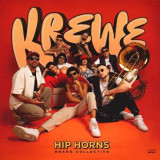
Rooted in the New Orleans tradition and the essence of hip hop, Hip Horns Brass Collective unleashes its powerful sound in KREWE, their debut album. KREWE takes the brass band genre beyond its boundaries, diving into the underground with danceable rhythms like boombap and bounce, full of influences such as afrobeat, gospel and funk. The lyrics, filled with references to hip hop culture, flow in an explosive mix of English, Spanish, and Catalan, sharing their love for the tradition of rap and African American music. KREWE is a manifesto of the positive side of hip hop, a tribute to the unstoppable strength of the collective that a brass band represents in contrast to the solitude of the individual, and a homage to the legacy of hip hop and the vibrant tradition of New Orleans
Mark William Lewis’ acclaimed ‘Pleasure Is Everything’ & ‘God Complex’ receives a limited vinyl press on tastemaker London label Scenic Route Records.
Scenic Route Records is proud to announce the first vinyl press of Mark William Lewis's critically acclaimed EPs Pleasure Is Everything and God Complex. These releases, which have collectively amassed nearly 3 million Spotify streams, capture the raw and evocative sound that has earned Mark a dedicated following within London’s underground music scene. Influenced by left-field pop, ambient, and indie rock, is deeply personal, reflecting his experiences and the unique perspective gained from living on the 18th floor of a tower block in London.
Mark's music has been widely praised for its emotional depth and innovative songwriting, with support from publications such as Pitchfork and The Fader praising his ability to create atmospheric soundscapes that resonate with listeners on a profound level. This vinyl press offers fans a chance to experience these early EPs in a format that enhances the warmth and texture of his music.
As Mark continues to build his presence with sold-out shows at Cafe Oto & and international tours alongside NYC rapper MIKE, this pressing serves as both a celebration of his early achievements and a milestone in his artistic journey. Whether you're a long-time fan or new to his music, the repress of Pleasure Is Everything and God Complex is an essential addition to your collection, offering a deeper connection to the intricate, emotive world of Mark William Lewis.
The year 1996 saw the release of Arab Strap’s first single, “The First Big Weekend,” and debut album The Week Never Starts Round Here. Into an underground rock milieu preoccupied at the time with slo-core, math rock, and all things Pet Sounds, the duo of Malcolm Middleton and Aidan Moffat couldn’t have sounded more alien.
In many ways, The Week Never Starts Round Here bears all the marks of a debut: it’s raw, unguarded, and crammed with ideas. It also firmly establishes the particular set-up that would define Arab Strap’s sound over the course of eleven years, with Middleton handling the music while Moffat provides the vocals and lyrics. Even this division of labor—more common to rap music than to the shoegazers and increasingly ubiquitous “collectives” of indie rock—seemed to defy expectations.
The sound of Arab Strap is a distinct brand of existential miserablism. Middleton’s cleverly arranged foundation of nocturnal guitars and rudimentary drum machines provides a canvas for Moffat to relay, in a thick Scottish dialect, his many sloshed, candid confessions. Long before artists like Mike Skinner chronicled the picaresque days of lads getting pissed and getting laid, Arab Strap’s vivid tales of lovers, lager and shame were being broadcast on college stations everywhere.
The Week Never Starts Round Here is an album full of drugged-up kisses and dried up egos; it chronicles the conquests and knockbacks of weekends that last forever, and it does so unapologetically, poetically, and profanely. Indie rock would never be the same.
Green[23,95 €]
‘What makes Sex Swing so powerful is that they transcend the limitations of rock music. Their sound is so full of possibilities, violence, sexuality, sacrifice, even religion. If there was a future to look forward to for heavy guitar music, this is it’ The Quietus The locals call it Sop Ruak – eighty thousand square miles of mountains and mystery and unholy medicine. “It really is an endless seam of activity,” Sex Swing frontman Dan Chandler explains of Golden Triangle – both the title of their new album and the region between Myanmar, Thailand and Laos that inspired it. To know this contradictory corner of the world is to understand fully why the cult-beloved noise-rock artisans turned to it when writing their hotly-anticipated third full-length. The real-life Golden Triangle is a groundswell of both natural wonder and drug production, and who combines beauty and narcotic brutality better than Sex Swing? For a decade now, this
collective of revered UK underground musicians, comprising members of Earth, Mugstar, The Keep and Jaaw, have been pulling audiences into drug- like slipstreams with their alchemy of pummelling rhythms, towering guitars, and unrelenting saxophone through which glimmers of light occasionally pierce through. No wonder their Golden Triangle is an album telling distortion-shrouded tales from one of the most storied, enigmatic places on the planet, with enough invention within to fill eighty thousand miles and more.
Where does this violent, hypnotic aural travelogue take you within the Sop Ruak? The seven tracks that make up The Golden Triangle see the band – completed by bassist Jason Stoll, drummer Stuart Bell, guitarist Jodie Cox, synthesist/guitarist Oli Knowles and saxophonist Colin Webster – adventure first to ‘The Confluence of the Ruak and Mekong Rivers,’ full of shimmering orchestration and feather-light ambience. Then come stops in ‘Myawaddy’, named after a small town embroiled in bloodshed on the border of Myanmar
and Thailand, and ‘Boten, Route 13’ – sparked by stories of a seemingly endless stretch of road from Laos into China. Before long, listeners are plunged into ‘Hpakant’, one of the album’s most invigorating and singular moments, lyrically inspired by a jade mine in Myanmar, where the spoils of forced labour are exchanged for prostitution and methanphetamine. The result is a mesmerising slow-burn of sax, snaking rhythms and sinister spoken word courtesy of the Scottish-born Bruce McClure, who “took the theme and turned it into a sci-fi story of exploitation and vice,” explains the frontman. It’s a track that, like the rest of Golden Triangle, underlines the evolution Sex Swing have undertaken since forming in 2014. From the raw and primitive sounds of the self-titled debut full-length, followed up by the coruscatingType II in 2020. Sex Swing’s third effort retains those early primitive elements and adds layers of structure and complexity. Golden Triangle initial formation was that of programmed beats and bedroom recordings shared electronically in the height of the pandemic. Those ideas were then completed during intensive writing sessions at a secluded farm in Oxfordshire.
Album credits consist of recording by Stanley Gravett at Holy Mountain Studios in Hackney, mixing by Wayne Adams at Bear Bites Horse, mastering from James Plotkin, and the continued aesthetic collaboration with artist Alex Bunn. Golden Triangle bristles with a rawness familiar to fans of the British sonic punishers, but adds new elements indicative of a group never resting on their laurels or sitting in one place. Why would they, after all? There’s an entire world of mountains and mystery and unholy medicine out there to be explored. The Golden Triangle, it seems, is just the beginning.
Black[23,95 €]
‘What makes Sex Swing so powerful is that they transcend the limitations of rock music. Their sound is so full of possibilities, violence, sexuality, sacrifice, even religion. If there was a future to look forward to for heavy guitar music, this is it’ The Quietus The locals call it Sop Ruak – eighty thousand square miles of mountains and mystery and unholy medicine. “It really is an endless seam of activity,” Sex Swing frontman Dan Chandler explains of Golden Triangle – both the title of their new album and the region between Myanmar, Thailand and Laos that inspired it. To know this contradictory corner of the world is to understand fully why the cult-beloved noise-rock artisans turned to it when writing their hotly-anticipated third full-length. The real-life Golden Triangle is a groundswell of both natural wonder and drug production, and who combines beauty and narcotic brutality better than Sex Swing? For a decade now, this
collective of revered UK underground musicians, comprising members of Earth, Mugstar, The Keep and Jaaw, have been pulling audiences into drug- like slipstreams with their alchemy of pummelling rhythms, towering guitars, and unrelenting saxophone through which glimmers of light occasionally pierce through. No wonder their Golden Triangle is an album telling distortion-shrouded tales from one of the most storied, enigmatic places on the planet, with enough invention within to fill eighty thousand miles and more.
Where does this violent, hypnotic aural travelogue take you within the Sop Ruak? The seven tracks that make up The Golden Triangle see the band – completed by bassist Jason Stoll, drummer Stuart Bell, guitarist Jodie Cox, synthesist/guitarist Oli Knowles and saxophonist Colin Webster – adventure first to ‘The Confluence of the Ruak and Mekong Rivers,’ full of shimmering orchestration and feather-light ambience. Then come stops in ‘Myawaddy’, named after a small town embroiled in bloodshed on the border of Myanmar
and Thailand, and ‘Boten, Route 13’ – sparked by stories of a seemingly endless stretch of road from Laos into China. Before long, listeners are plunged into ‘Hpakant’, one of the album’s most invigorating and singular moments, lyrically inspired by a jade mine in Myanmar, where the spoils of forced labour are exchanged for prostitution and methanphetamine. The result is a mesmerising slow-burn of sax, snaking rhythms and sinister spoken word courtesy of the Scottish-born Bruce McClure, who “took the theme and turned it into a sci-fi story of exploitation and vice,” explains the frontman. It’s a track that, like the rest of Golden Triangle, underlines the evolution Sex Swing have undertaken since forming in 2014. From the raw and primitive sounds of the self-titled debut full-length, followed up by the coruscatingType II in 2020. Sex Swing’s third effort retains those early primitive elements and adds layers of structure and complexity. Golden Triangle initial formation was that of programmed beats and bedroom recordings shared electronically in the height of the pandemic. Those ideas were then completed during intensive writing sessions at a secluded farm in Oxfordshire.
Album credits consist of recording by Stanley Gravett at Holy Mountain Studios in Hackney, mixing by Wayne Adams at Bear Bites Horse, mastering from James Plotkin, and the continued aesthetic collaboration with artist Alex Bunn. Golden Triangle bristles with a rawness familiar to fans of the British sonic punishers, but adds new elements indicative of a group never resting on their laurels or sitting in one place. Why would they, after all? There’s an entire world of mountains and mystery and unholy medicine out there to be explored. The Golden Triangle, it seems, is just the beginning.
If you have put your ear to the ground, you might have heard it coming...
Hailing from Rotterdam, DJ Easy B is one of the co-founders of the subversive renegade collectives ZMK Soundsystem and Move Around Sound. As a producer, Easy B's sonic palette is a raw and vibrant blend, drawing from '90s West Coast Electro, early Rotterdam Gabber and underground bass. Influenced by the infamous Dutch Acid Freeparty scene and the DIY energy of the UK Breakbeat/Hardcore Soundsystem culture.
This EP is Easy's first solo project, and there's more to come.
The principles of pleasure radiate a knowing, carnal heat throughout the genre-fluid sound of LSDXOXO. His decade of dedication to the sensibility of underground club culture has brought forth club classics interwoven with pop music hooks and subversive, tongue-in-cheek lyrics.
After four years of what LSDXOXO, real name RJ Glasgow, calls a period of “healing and self-discovery,” he is consolidating his multiplicitous sound with one compelling masterstroke: the debut album DOGMA, to be released on his own imprint F.A.G. DOGMA marks a complete paradigmatic shift: it is a poetic and fantastical performance, a route for deep escapism through an expanded musical palette including piano and guitar, and a deeply personal confessional through a fresh approach to songcrafting.
Within DOGMA, RJ meditates on the interlinked qualities of fame, infamy, lust and submission, as he rediscovers a pure, unadulterated approach to music-making, all the while adopting a futurist approach to pop music appreciation. RJ’s unmistakable signatures—the smutty dancefloor caller, the maker of irresistible bangers, the latter-day electroclash and DnB nostalgist—take on even more shades and intricacies. Despite his widespread acclaim as a collaborator with and songwriter for other artists, RJ strips DOGMA down almost exclusively to himself, carving out intentional space as a chameleonic vocalist and performer. He breathes life into the album with private thoughts, external fears and a red thread through personal themes that crystallise the album’s narrative from front to back.
The album’s promo single “Bloodlust” offers angsty, intimate indie-tronica, and musings on the intoxicating nature of love and infatuation. The lead single “Ghost” reaches beyond RJ’s Philadelphia origins to find itself in the deep south, in a sultry fever dream of coquettish R&B featuring backing vocals from close collaborator Kelela. Elsewhere on the album futuristic love, pensive pop earworms, evocative vintage dance styles and sleazy club tracks intermingle. While the DOGMA era will eventually explore remixes and reworks, the album is RJ’s purest embrace of himself and his artistry.
RJ first garnered attention as LSDXOXO in New York City with his on-the-pulse Soundcloud edits and then as part of the cult GHE20GOTH1K collective. His DJ sets and productions quickly earned him acclaim across globally-linked underground scenes. His decision to shift from sampled vocals to picking up the pen and microphone pushed his reach out to the stratosphere; his association with XL Recordings via the Dedicated 2 Disrespect EP in 2021 was a turning point for the burgeoning superstar.
This multiplicity of the LSDXOXO sound has led to enviable co-signs. These include being selected as the opening DJ for Beyoncé’s German Renaissance tour dates, remixing Lady Gaga, Pink Pantheress and Shygirl and producing five tracks for Kelela's highly acclaimed 2023 album for Warp Records, Raven. His fully-realised live show has also taken to the stage, serving fierce charisma to huge audiences at festivals including Primavera, Nuits Sonores and Rewire.
- 1: Greetings (Intro)
- 2: Here, Alive (Spirits High)
- 3: Alive And Free (Interlude)
- 4: Magic (Let Yourself Go)
- 5: Clear The Bench (Interlude)
- 6: Butter (Green Light)
- 7: Breathe (Interlude)
- 8: We Are The People (All Around The World)
- 9: Liberation And Love (Interlude)
- 10: Unguarded (Still)
- 11: Still (Love)
- 12: Breathe (Again) (Interlude)
- 13: Always Love (Always)
- 14: Dreaming Out Loud (Outro)
Mystic, member of the legendary rap collective Digital Underground, is releasing her 3rd album Dreaming In Cursive: The Girl Who Loved Sparklers on Vinyl. She is most known for her classic Cuts For Luck and Scars for Freedom which was released on vinyl last year. This new album find a return to her roots working with long time collaborator Walt Liquor to create the sonic landscape she's most known for. There was a crowd-sourcing campaign to create the visuals for this project that was successful and from it came three visuals that will be the foundation for a short film released this summer called A Black Love Trilogy. This project is the healing balm the world needs in these trying times.
GRAMMY-nominated rapper, singer, and Bay Area legend Mystic (affectionately known as the “DU Goddess of Digital Underground”) has returned to bless the world with a new album like only she can. "Dreaming In Cursive: The Girl Who Loved Sparklers" is Mystic’s first new release from her label, Beautifull Soundworks, and is produced by herself and Walt Liquor. With song and voice that resonates with the beauty of unadulterated womanhood, Mystic’s new album is what she coined, “Healed Black woman music.” As a seasoned veteran in the music business, Mystic reminds us of her ability to seamlessly weave together harmonies and vivid lyrics that invoke thoughts of love, community, and healing. Always on time with her offerings, this new project warms the soul as only Mystic can—a perfect reminder to long-time fans of their love for her and a welcoming invitation to music lovers around the world looking for high-quality, meaningful, and banging music at once.
Quote: “I am known for moving in between the intersections of trauma and healing--the beauty and the pain. My healing journey and life journey have brought me to a place where the art reflects my level of healing and the knowledge, wisdom, and joy I passionately pursue. My fans have healed and grown with me, and I look forward to the joy and conversations this album will encourage.”
- A1: Sam Ruffillo & Fimiani - Mediterranea (Party Mix Extended)
- A2: Tommiboy Feat Dm Disco Band - La Sfinge
- B1: M¥Ss Keta & Kapote - Italomania Intermezzo
- B2: Severino & Giacomo Moras Ft M¥Ss Keta - Maledetto
- B3: Stump Valley Feat Femmina - Non Dire Di No (Extended Version)
- C1: Munk & Kapote - La Musica (Hot Dj Version)
- C2: Fimiani & Angeleri - Sessospaghetti (Extended Version)
- C3: Kapote - Sono Tropical (Extended Version)
- D1: Giovanni Damico - Tropica (Feat Martina)
- D2: Lele Sacchi Feat Elasi - Malamore (Extended Version)
- D3: Daniel Monaco Band - Milly
Toy Tonics ITALOMANIA Vol. 2 is a compilation dedicated to NEW ITALIAN DISCO. (Not Italo Disco.)
13 young contemporary Italian producers made new organic disco, indie dance, avant pop and house tracks with Italian vocals.
Everything on this compilation has been produced in 2023. Fresh dance music by Italian indie electronic star Myss Keta together with DJ Severino (of Horse Meat Disco) and newcomers Sam Ruffillo, Fimiani, Magou, Tommiboy, Daniel Monaco, Giovanni Damico. And new music by artists Stump Valley (from Dekmantel), Munk (Gomma records), Rodion (Slow Motion Records) and DJ legend Lele Sacchi,
The ITALOMANIA compilation was initiated by Toy Tonics boss Kapote. The idea is to show the status of Italian Disco of today. It’s like a „manifesto“!
Kapote invited the most relevant Italian producers to make new tracks with Italian vocals and show different styles of modern Italian disco, dance and house music.
with Italian vocals. All tracks compiled by Kapote aka Mathias Modica aka Munk. Italo-German producer, DJ, keyboarder and head of Toy Tonics and Gomma records.
Italian Disco is not Italo Disco.
While the last years the slightly trashy pop music of the 1980’s called Italo Disco (with English lyrics) had a big revival. But now also the attention for more quality and organic dance music with Italian language is rising. This compilation is about this Italian Disco,
It’s a fact that not just in Italy but also in France and Germany there are now artists singing in Italian or using Italian words and names - even if they are not Italian.
Let’s not forget: The world’s culture of party, dancing, showbizness and pop music would be unimaginable without the heritage and creativity that Italians contributed.
Italy is not just the country of good food, beautiful beaches and high fashion, but it’s also the original country of dance music. Since almost 3000 years, since the ancient roman times the Italians have been making (dance) music culture, creating popular culture and being the maestros in organizing parties.
Also the disco wave of the 1970ies and the Pop music of the 1980ies has been co-created by Italians (and Italo-americans in New York).
The ITALOMANIA artists & tracklist:
M¥SS KETA
The most famous artist on the compilation is singer M¥SS KETA. The Italian press calls her "the Italian Lady Gaga“. M¥SS KETA is an edgy performer that reached the top of the charts with indie pop songs, but is also well rooted in the Milan art, fashion and LGTB scene.
To create a song for Italomania she teamed up with DJ Severino. The Italian part of London’s Horse Meat Disco DJ collective. Probably the world leading queer DJ team. (M¥SS KETA recently was invited to perform Berghain in Berlin).
Sam Ruffillo
Sam Ruffilo has contributed a new (party) version of his song Mediterranea. A organic disco track with lyrics in Neapolitan dialect. Sam Ruffillo is an upcoming Italian DJ and producer and one of the lead artists of Toy Tonics (along with Coeo, Kapote and Cody Currie). He had a few underground hits combining leftfield disco and Lofi House with Italian vocals creating a new genre that is finding lot of fans right now. One of his songs (Chiamami Subito) made it into the rotation of big Italian radio station M20. On Instrgam you can see his DJ sets where hundreds of Italians sing his songs at Toy Tonics parties.
Munk
Toy Tonics head honcho Kapote reworked the Munk song ‚La Musica‘ for this compilation. Munk is the former producer name of Mathias Modica aka Kapote. The creative mind behind Toy Tonics and Gomma records. ‚La Musica‘ is an Italo house song that he originally released 2010 when he was doing his former label Gomma records. Now there is this new version of this catchy dance song with the Italian hookline that became almost iconic when first released.
It made sense to include a new version of this track on ITALOMANIA because its a blueprint of italian disco and sounds so fresh again now.
Giovanni Damico
The south Italian DJ, producer made „Tropica“. The song is a tribute to the music of the Italian discos of south Italy of the 1980ies. A Balearic session that can be great at a beach in the afternoon, but also for dancing in the early morning. Damico is part of the new Italian disco scene releasing his dance tracks on international labels like Lumberjacks in hell and White Rabbit records since 2013.
Kapote
His new song „Sono tropical“ is an ironic Latin pop song based on a classic salsa piano riff and a strong Latin soul bassline. It reminds the big tunes from the 1970ies New York Salsa Scene (Tito Puente, Willie Colon, Fania All Stars). The vocals performed by Kapote are a mix of Italian and Spanish. The girl’s voice is also performed by Kapote. But transferred into a female voice by an AI. All instruments played by Kapote who before starting to get into the DJ and label business used to to study jazz piano. Before starting Toy Tonics Kapote he released 3 albums under his former name Munk and produced records with big names from the electronic music scene like James Murphy of LCD Soundsystem, Peaches, The Rammellzee and three albums of Danish band WhoMadeWho. Mathias/ Kapote also worked with artists like Franz Ferdinand, The Rapture and Asia Argento.
Lele Sacchi
Lele Sacchi is an Italian DJ legend and host of Italy's most important DJ radio show on RAI national radio. He has been djing all around the world playing from Circoloco Ibiza to Avalon LA. He has Besides being on Italian national radio he has been doing shows on NTS Radio or guest on BBC Six. He produced for labels like Soul Clap, !K7, Internasjonal, Nervous, Snatch, Crosstown Rebels, Poker Flat and his own Stolen Goods imprint.
Sacchi teamed up with young vocalist Elasi, a new talent from Milano that is making waves in Italy for a few songs she released in a indie disco style. Their song is an interpretation of late 70’s cult slow disco pop classic ‘Malamore’ by the underdog Enzo Carella. A mix of slow house and playful pop with a slight touch of acid!
Tommiboy
Tommiboy made a nasty, disco rock song called Sfinge. Only 26 years old he is one of the most hyped up Italian disco diggers and collectors. Originally from Rimini, the capital of discos, he is the son of a father who was a regular dancer in Rimini’s clubs of the 1980is and fed his son with all things disco.
Tommiboy started to do parties and compilations under the name Disco Stupenda three years ago. By now he and his parties are a big thing in Italy and has fans all around the country. He also is DJ for fashion brands like Gucci and he is the guy who re-introduced 1980s stars like Pino D’Angio.
Fimiani aka BPlan
The DJ und producer from Napoli is part of the new, vibrant disco scene from Napoli. (NuGenea, Mystik Jungle, Manny Whodamanny )
His collabo with italian 1980ies crooner Angeleri called SessoSpaghetti is a remake of a song originally released in 1983, but never became famous when it came out. The drums on the song are played by Napoli legend Tullio De Piscopo and the guitar by Lucio Battisti guitar player Massimo Luca.
The new version is a ironic summer disco with sexy vocals and Italian fun rapping about beach life, beautiful girls and sex on the beach. Fimiani also does edits of rare italo disco under the name of BPlan
Daniel Monaco
Daniel Monaco is a multi-talented artist, producer, and bass player DJ, bandleader and producer from Napoli - but has been living for many years in Amsterdam where he hosted show on Red Light Radio released on Labels of the likes of Rush Hour and Bordello a Parigi. Is one of the key figures of the scene due to unique fusion of Italo Disco, Proto House, Obscure Disco, and a captivating tropical touch. His latest EPs came out on Slow Rush Hour records and Periodica Records contributed the song ‚Milly‘ for Italomania. Played with a 5 person band.
Stump Valley
The two DJs, producers and vinyl collector are experts in all things Italo Disco and Balearic music. Before joining Toy Tonics they released an album on Dekmantel records. One of the guys (Brain de Palma) is the favorite DJ of Peggy Gou. He is regularly opening the shows of Peggy as a warm up DJ and releases his solo records on Peggy's label Gudu records. For this compilation they made Non dire di no. An old school piano house track with catchy vocals in the finest tradition of the piano house style that Italians invented in the early 1990ies.
- A1: Grateful (Instrumental)
- A2: Glorious Game (Instrumental)
- A3: I'm Still Somehow (Instrumental)
- A4: Hollow Way (Instrumental)
- A5: Protocol (Instrumental)
- A6: The Weather (Instrumental)
- B1: That Girl (Instrumental)
- B2: I Would Never (Instrumental)
- B3: Alone (Instrumental)
- B4: Miracle (Instrumental)
- B5: Glorious Game (Reprise) (Instrumental)
- B6: Alter Ego Feat Brainstory (Instrumental)
Sky High Coloured Vinyl[24,16 €]
Blood Smoke Vinyl. The Instrumental version of the underground classic El Michels Affair & Black Thought collaborative album Glorious Game When Leon Michels and El Michels Affair released their rst record, Sounding Out The City, in 2005, it was hard to guess what was next for Michels and his then-introduced, now-patented "cinematic soul" sound. Now, four EMA studio albums and scores of tribute and remix projects later_all while producing for some of the biggest names in the industry_Michels has trademarked his sound, with each project taking audiences somewhere new and pushing the boundaries of what he is known for. The man is a river, not a lake and this time he takes his golden touch into the realm of hip-hop laying down a musical bed for one of the greatest to ever rhyme into a microphone: Black Thought of The Roots crew. Releasing on Big Crown Records, the LP is called Glorious Game and it is a remarkable debut partnership in more ways than one. Michels provides his bottom-heavy, soul-tinged production for Black Thought who gives us some of the more personal and transparent verses we've ever heard from him. Michels and Black Thought have been in each other's orbit for a while now. The two rst met in the 2000s when Thought was rst getting familiar with the contemporary soul scene. "Out of that whole world, Menahan Street Band was probably my favorite," recalling the funk and soul group Michels was a founding member of back in 2007. Fast forward a few years and musicians from that collective_Dave Guy on trumpet and Ian Hendrickson-Smith on sax _are now full time players with The Roots. This connection eventually led Leon and Thought to doing a few fundraising events around NYC and Philly together. "Before long, Black Thought was coming around the studio and would jam with us from time to time," Michels explains. "Then, fast forward to 2020 and COVID lockdowns, he just hit me up out of the blue, wanting me to send him stuff to write to. We both were looking to stay busy." Being that Black Thought is the co-founder and emcee for, hands down, the best live-band group in hip-hop. Michels took a decidedly different approach to this project and instead of sending recorded tracks of live compositions, he pulled out the sampler and sampled himself and some records from his collection. "I'm a big fan of soul music," as if Michels has to remind us. "And part of hip-hop's appeal to me has always been the sample-based production" For Glorious Game, Michels would make wholly composed and recorded soul songs in his studio, sample himself, then chop and/or loop up his sounds and create instrumentals for Black Thought. On some tracks he took a more traditional hip-hop approach, starting from samples of other people's music but then adding live instrumentation on top. But for the most
Hidden Notes Records (Spindle Ensemble, Fran & Flora, Josh Semans) and Tardigrade Records (Cosmo Sheldrake, Howl) are excited to announce a unique collaboration to release ‘Selected Worlds’, the monumental and ambitious debut triple album by composer and pianist Daniel Inzani. Over the past 2 decades you might have seen Inzani performing with dozens of bands from Bristol’s underground alternative and avant-garde scene, blending classical, jazz, contemporary, improvisation, unusual harmony and rhythms as a band leader and collaborator. He’s released an avant-garde collaborative album with Alabaster dePlume, is the musical director and arranger for Cosmo Sheldrake’s 19 piece live band, leads his own critically acclaimed modern chamber quartet Spindle Ensemble and (the now disbanded) 8 piece Ethiopian Jazz meets Frank Zappa group Tezeta, He has toured worldwide as a keys player, collaborated with Canadian ensembles Evergreen Club Contemporary Gamelan and London Symphonia and co-founded Bristol’s experimental collective Bloom, leading to tours and releases with UK rocksteady favourites Count Bobo, the psychedelic space doo-wop of Dubi Dolzcek and many more. After years of recording, touring and eclectic composing he has gathered a trusted set of musicians who are both skilled improvisers and virtuoso players to record an instrumental triple album for release under his own name. The 3 vinyl discs act as albums in their own right, each with different sets of musicians, instrumentations, genres and intentions. The 3 discs were recorded live over 3 day periods in quick succession, with Daniel’s regular collaborator Cosmo Sheldrake engineering the recording sessions. It’s quite possibly the only album you’ll ever hear that starts with a neo-impressionist string quartet, goes on to merge avant-garde symphonic arrangements with group improvisation and ends with an 8 piece cosmic jazz band wigging out, yet Inzani’s voice is clear throughout making for a cohesive 2 hour odyssey from the mind of a composer whose idiosyncratic style thrives through variety Listeners will hear influences from the aforementioned composers including Mingus, Tsegué-Maryam Guèbrou, Ravel and Moondog in Inzani’s music but might also find the soundtracks of Morricone and Jonny Greenwood nestled alongside the loose freeform leanings of Alabaster dePlume, the contemporary jazz of Kamasi Washington and the unique collaboration by Floating Points and Pharoah Sanders (minus the electronics perhaps.) Daniel will be performing a special preview of the album with an 11 piece band at WOMAD Festival (27.07) and a launch concert at this year’s Hidden Notes Festival in Stroud (21.09), with further tour dates to be announced
There is something simultaneously both brand-new and retro about 'All News Is Good News’ - the debut album from Melbourne's instrumental soul group Surprise Chef. It sounds like something dreamt up by lo-fi cousins of David Axelrod and Janko Nilovic, with dramatic Library-music-eqsue cinematic arrangements echoing both light and dark, delving into moments of dissonance and positivity.
There is a meticulous education of 1970’s soul on display that touches on the legacies of the great composer / producers, yet at the same time this is a truly contemporary record that could have only been made now. The first limited pressing of 'All News Is Good News’ was released on the band's own 'College Of Knowledge' imprint in November 2019. It slipped rapidly into the collective consciousness of underground music lovers around the world, with all copies selling out within a week and becoming a firm favourite at Mr Bongo HQ in the process.
We felt Surprise Chef had made something very special, a future-classic, and that needed to be heard well beyond those lucky enough to have bagged those limited first copies. Formed at the end of 2017, Surprise Chef have grown within the fertile, creative, and supportive Melbourne music scene. Whilst the band is comprised of four core members, the album features friends and family as guest instrumentalists on flute, saxophone, vibraphone, congas, and assorted percussion; all adeptly recorded by engineer Henry Jenkins from the band Karate Boogaloo. The warm-raw-authenticity of the album was captured in the recordings live to tape over a handful of sessions in the band’s home studio in Melbourne’s inner-northern suburb of Coburg. As band member Lachlan Stuckey explains “All of the music we record is tracked live to tape, simply because so many of the records we love most were made that way".
The results are a captivating journey of instrumental cinematic-soul that will connect with the hardened Axelrod, Truth & Soul, El Michels Affair, and Daptone's fans, as well as the open-minded first-time listener. We are very excited to share this first slice of Surprise Chef’s world, with plenty more magic from these guys coming around the corner very soon.
Also available on Red Vinyl - Limited Edition of 200 Copies.
- A1: Don't Be Scared (Feat Takura)
- A2: Go
- A3: Censor (Feat Popcaan & Irah)
- A4: Mixed Emotions
- A5: Over & Done (Feat Pip Millett)
- A6: Run Up (Feat Unknown T)
- A7: 5Am
- B1: Headtop (Feat Irah)
- B2: When It Rains (Feat Backroad Gee)
- B3: Hold Your Ground (Feat Ethan Holt)
- B4: Blazer (Feat Irah)
- B5: Consciousness
- B6: Forgive Dark
Last month, Chase and Status returned to the limelight unveiling their hard-hitting and trailblazing singles “When It Rains” ft. BackRoad Gee, complete with a Jack McMullen starring, Hector Dockrill-directed cinematic visual and the addictive smash “Don’t Be Scared” ft. Takura. Today, the duo are making a true statement of intent for the year ahead, with the announcement of their sixth studio album, What Came Before. Created by Crown & Owls, the accompanying artwork captures a truly special and magnetic live moment. Speaking on the concept, Crown & Owls state:
“We wanted to create an image that captured the very human compulsion to gather in a dark room and dance and sweat. Such scenes have a different weight to them after they were off the table for a good while, and we were very interested in capturing a moment of collective catharsis in the shadow of a period of history that pushed isolation on so many. We were really interested in the stories of the individuals in the image - what drives them to want to be in that room? The whole campaign kind of works backwards from that moment in the photo really - the intersecting stories of the dance floor, and the sense of freedom and release it brings to the individual. The record sleeve, the single covers, visualisers and elements of the music videos were all captured at this special night - it’s been a joy to work on.”
Landing alongside the album announcement is new single “Mixed Emotions” - a euphoric and recognisably brilliant dose of true Chase and Status energy that landed alongside an incredible video, filmed in two halves and directed by UKMVA-winning Femi Ladi (Pa Salieu - “My Family”). Femi Ladi states:
“On nights out like this, sometimes you just want to get fucked up. Trying to get to that moment, when you’re out of your head and completely in the moment. Sometimes music gets us there, sometimes drugs and alcohol, sometimes it’s a combination of all 3.
I want to connect our camera to the chasing of that high. A visual metaphor for trying to reach that euphoria. Each time she takes a bump, a line or a pill, the camera closes in on her. The closer she gets to that euphoric moment, the closer the camera gets to her.
By the end I want the audience to have an uncomfortable and claustrophobic feeling as our hero goes slightly overboard, a feeling that most of us know but won't dare to admit.”
Consisting of 13 tracks, What Came Before distills 15 years of unparalleled experiences into a bold, invigorating sixth album; informed by global tours, sold out headline shows, five albums, multiple awards, chart success, underground kudos, top tier collaborations and remixes, and, above all else, that unwavering dance floor energy that remains as tangible and transformative now as it has since the very beginning. This pure, unadulterated exhilaration is the glue that binds all of these experiences together, cultivating a legacy of positive vibes, unforgettable moments and the continued progression of British club culture.
For trailblazers Chase and Status, the story is cyclical - a constant process of regeneration and refinement that comes full circle. Everything that came before, from their inception point to now, has brought them back to their essence.
Landing in the wake of their critically acclaimed specialist album RTRN II JUNGLE, and the more recent news of their headlining ParkLife festival this Summer, Chase and Status’s musical return is highly anticipated. After a series of teasers were published on their social media, the duo directed their fans to whatcamebefore , unveiling a plethora of forthcoming Summer festival dates.
The forthcoming album marks the inception point for the duo’s next phase; while on forced hiatus they also went back to square one with their live show. With What Came Before Chase & Status prepare to embark on the next chapter of their illustrious career as a seasoned act ignited by the same excitement
EMIL GAYLES deep and lovely follow up to his 12" on GLENN UNDERGROUND'S STRICTLY JAZ UNIT EXTENSIONS. As a DJ on Chicago's south side EMIL has shared booths with top selectors like GENE HUNT & THEO PARRISH, and his talents in the booth are translated to wax perfectly on this 4 track EP
As the winds of music blow, a wise heart navigates the spiral, finding wisdom in each of its twists and turns.
As the releases of DUBBLACK’s catalogue pile up, the novelty and exploration for new music keeps on thriving.
A brand-new record is approaching, as always available both on a 12” vinyl – limited to 300 copies – and in digital format, featuring the presence of two Masters from the Electronic Music scene: A2 Abd El Monim and Tocchitek.
The two-track EP baptised “Dark Side” includes the gems “Euriale” and “Steno”; two expansive compositions that, also due to their length, masterly observe the task of narrating two complementary stories, each with its distinct moments, yet marked by a strong rhythmic temper. Both tracks are planned to share similar sonic elements: a pulsating 160 bpm kick drum, ghostly pads serving as an inevitable backdrop, and indispensable rhythmic details enriching the whole structure and arrangement.
A2 Abd El Monim, born Alan Abd El Monim, is an Italian-Egyptian artist/composer. He expresses himself through the creation of music ranging from electronic to purely instrumental, and through the interaction between the arts. His poetics opens in a “dark” dimension that considers and interprets the facts through the notion of shadows and darkness but also through penombre. His “dark” vision stands as a filter through which he reads the world and its interactions, therefore using also the notion of light. His music has been performed in Festivals including Musica d’arte (Riccione – Italy), Luci d’Artista (Salerno – Italy), GAMO (Firenze – Italy), Spazio Musica (Cagliari – Italy), On Air – On site (Den Haag -Netherlands), Sound Spaces (Malmö – Sweden), etc.
He composed songs for the solo exhibition “La pelle degli oggetti” and for works Lui&Lei by the artist Giovanni Oberti. In 2020 he undertook a collaboration with the poet Milo De Angelis , putting to music the lyric “A volte , sull’orlo della notte, si rimane sospesi”. He wrote music for several theatre performances by director Emily Tartamelli and has written music for several directors films including Reto Gelshorn, Enea Francia, Paola Piscitelli and Fabio Corbellini. He collaborated with the London based fashion brand B DODI and was invited as an artist to participate in the collective exhibition “Instructions to Light-Keepers” (Milano – Italy). In March 2023, “Periodo Nero”, its interactive and generative installation music and video, was selected for the tribute to Picasso in the city of Florence, will be presented at the Certosa of Florence in September of the same year. In 2017 he won the International Competition of Composizione Silenzio Musica, in 2020 the diploma from President and Artistic Director of Winterreise International Composition Competition Moscow, in 2021 the Call For Scores banned by the Cultural Association Esecutori di Metallo su Carta. A2 Abd El Monim is signed to international label F.M.T Records and Dubblack Records, with which he regularly publishes his electronic music.
Tocchitek is an underground Tekno producer and performer born in Milan, Italy. He started playing live in 2007 as part of the “Approdo Caronte” sound system based in Milan. His first significant appearance as a live performer was at a “Mayday Parade” in 2008 in Milan. In 2009, he joined the “R909 Records” chapters crew based in Milan, bringing his live set to many local club dance floors. Meanwhile, he collaborated and played with many crews around Europe, spreading his music in the free Underground Tekno movement. In 2021, in Milan, he launched “F.M.T Records”.
Simplicity is often the hardest thing to achieve when producing this type of music, primarily designed for uncompromising dance-floors, but the duo successfully channels their message with purity and truthfulness.
The visual aspects of layout and design are once again entrusted to Vittorio Valigi, who puts a greyscale spiral at the center of the cover. A spiral within which one an eye can be glimpsed – the eye of the musical soul of DUBBLACK harmoniously fused with that of A2 Abd El Monim and Tocchitek, who become worthy ambassadors of the Dubblack’s sonic mission.
Andrea has his roots in the independent musical scene in the first decade of the 2000s. In addition to his compositional and live experience as the first Nadàr Solo drummer, he is one half of the Turin duo Anthony Laszlo with Anthony Sasso, ex guitarist and singer of Milena Lovesick. Andrea Laszlo De Simone made his debut in 2012 when he released his first homemade album, Ecce Homo. Recorded at home by makeshift means and accompanied by the following videos: Solo un uomo, 11:43, I nostri piccoli occhi, Perdutamente.
At the beginning of 2014, he met some experienced musicians from Turin’s underground scene that later, after a few months in a rehearsal room, became his band: Damir Nefat (guitar/backing vocals), Dani C (bass guitar/backing vocals), Filippo Cornaglia (drums/backing vocals), Zevi Bordovach (keyboards/backing vocals) and Anthony Sasso (keyboards/backing vocals/percussions).
Anticipated by the individual tracks Uomo Donna, Vieni a salvarmi and La guerra dei baci on June 9, 2017 - for 42Records - Uomo Donna came out. It’s Andrea Laszlo De Simone’s first real album, a well received work by both audience and critics. It also was pointed as one of the best albums of 2017 by several national music magazines.
Uomo Donna is a complex, articulate and vital album that lives in its own time - where past, present and future coexist. It’s a time in which a sonic world takes shape blending classic and modern, Italian songs with psychedelia, Battisti and Radiohead, Modugno and Verdena, the Beatles and Tame Impala, the magical flight of Claudio Rocchi and the earthly flight of IOSONOUNCANE.
The album was self-produced and then post-produced by Andrea in collaboration with Giuseppe Lo Bue, a sound engineer from Bologna. The recordings were made between October 2014 and the end of 2016 with experimental techniques straddling digital and analogic.
After playing in some important Italian festivals as Siren Festival and TOdays -- that earned him a special mention in the live scores by Rolling Stones -- on October 28, 2017 the first Uomo Donna album tour started in the clubs of the major Italian cities.
On November 30th 2017, Andrea Laszlo De Simone presented his video, Sogno l'amore, during the Torino Film Festival as a short film, shot in Sicily and directed by Francesca Noto and Andrea Laszlo De Simone.
On March 15th 2018 the music video of Gli uomini hanno fame was released, the most political song of the album, an overlook through ferocious human emotions, an eleven and fifty minutes trip within human nature portrayed even in its most ferocious instincts. The music video was directed by Andrea Laszlo De Simone and the mysterious duo Sans. The official cycle of Uomo Donna ends on 31 December 2018 with the music video of Sparite Tutti created by the creative collective Irene&Irene.
2019 was a year of new goals for Andrea, in fact, the album Uomo Donna leaves national borders and got a special mention on social media by the famous American band The Lumineers which included Andrea Laszlo De Simone and Uomo Donna among the most interesting discoveries of the international musical underground and inserts Solo un Uomo in the Spotify playlist “Inspirations”. A few days later, Solo un Uomo was broadcasted by KEXP Radio. On November 4th Andrea and his band were chosen to open for The Lumineers’ only Italian show at Alcatraz, in Milan.
On November 8th Andrea released a brand new work, digitally and on vinyl for 42Records, Immensità, a ‘suite’ of four singles: Immensità, Conchiglie, Mistero and La Nostra Fine. Turned into a medium-length film using Immensità as the soundtrack.
Immensità was presented with four special sold out concerts in Rome, Turin, Padua and Milan. For these shows Andrea Laszlo De Simone was accompanied on stage by a mixed orchestra composed of synths, electronics, choirs, strings and woodwinds. Classic and modern instruments that are intertwined in a nine elements formation: an immersive concert, a contemporary version of chamber music.
In March 2020 Immensità was released also in France, UK, Canada, Belgium and the United States with Ekleroshock/ Hamburger Records (Roster: Benjamin Clementine, Polo & Pan, Limousine and many others). The response of the transalpine press and media, sector and not, was unexpected: major French newspapers and magazines - from Le Monde to Liberation, Vanity Fair and Les Inrockuptibles - dedicated entire pages and rave reviews to Immensità and Andrea Laszlo De Simone. The track Immensità entered, after a few days, at the fourteenth rank of Spotify’s Top viral 50 playlist and broadcasted on France Inter and Radio Nova.
“Immensità” is a complex cross media work of music and images. A project divided into four chapters (the songs) for nine tracks (each chapter has a prologue or a conclusion). A true suite, using the classic term that best describes an instrumental composition in several stages, that can be enjoyed in its entirety only by listening to vinyl or digitally in the innovative single track format, without pauses: a single symphony of 25 minutes and 6 seconds.
In September 2020, Dal giorno in cui sei nato tu was released on all italian platforms, a song dedicated to Andrea’s children, a real love letter in the form of a small speech, where he tries to give them the three keys to approaching life: fantasy, music and irony. Martino, 8 years old, replies to his father’s love letter by making the video accompanying the song, created in Super 8. It's the story of the world through the eyes of the child. It is also an homage to the new little girl in family, Lucia.
We are incredibly excited to release Xena, KLE-KLE's debut EP. Although this is the first release from their new project, GWD and Spok are veterans of the electronic underground. Both have been active in production, as well as live shows and DJ performances for at least the past decade.
They come out guns blazing with music that is focused, mature, and irresistible. Blending breakneck IDM beats with elements of machine-dub and post-punk mutations, the EP maintains a captivating momentum, accentuated by dissonant washes and melodies that will tickle the reptilian part of your brain.
For the stellar remix work, they enlisted fellow scene veteran Dead Janitor, who delivers a glacial, splintered, data-poisoning piece, showcasing his junglist tendencies. Wrong Collective stalwart, Trauma, comes in with his hydraulic twerk monster, to close the EP.
Freerange welcomes Italian via Berlin producer/DJ/label boss Enzo Elia for his debut on the label entitled The Lost Guitar Tapes. Enzo is someone who has been releasing consistently great music for many years, although
often hidden behind a myriad of pseudonyms and underground imprints. For starters he's responsible for a mysterious yet established and very excellent edits label as well as being a member of Balearic Gabba Sound System alongside Bjorn Torske amongst others. Following the philosophy of this collective, Enzo is also producing lovingly and respectfully created re-edits of long lost techno and house tracks as well as many new tunes
for influential labels including Golf Channel and Compost.
But for now we turn to The Lost Guitar Tapes and specifically the original mix of Drifting which opens up the release with a brilliant tension builder. A rolling bassline, crisp minimal drums and a subtly Middle Eastern-influenced melodic line give just a hint of mysticism to this jewel of a track.
For the remix we have none other than the Tel Aviv via Berlin producer Moscoman, fresh from his brilliant debut LP on ESP Institute and releases on Eskimo and his own Disco Halal label. Moscoman's organic, percussion- heavy sound and Middle Eastern roots make him the perfect choice to take
on Drifting and we couldn't have wished for a better outcome. He manages to inject his own identity to the track with newly recorded live guitar and bass parts and taking in elements of techno, new wave and house, he's created a sublime piece of dancefloor drama. Finally we have an alternate Dub version which lays down a firmer four on the floor, extra percussion and dubby stabs for a more driving atmospheric club tool.
“Suddenly it’s ok to be a square” - Twelve Cubic Feet, a clear case of a band which should have been bigger than The Beatles but, for some malignant reason, became a blurry footnote in the history of underground music. Formed from the ashes of Exhibit A in the Spring of 1981, the band disappeared leaving no trace shortly after 1983. During their brief existence they released a series of stickers, a monthly newsletter, two cassette tapes and their incomparable ‘Straight Out Of The Fridge 10”, which was at the very top of our dream records to release since we started Sealed Records. Twelve Cubic Feet released this perfect 22 minute 7 track album in 1982 on Namedrop Records (home to Doof, Philip Johnson and Cold War and ran by Philip Johnson and 12CF guitarist Paul Platypus). It is a glorious scratchy DIY indie pop gem with a post punk spirit. The sound is naive and fragile yet very addictive. Based around jangly clean guitars, drums that are on the edge of falling apart, haunting keyboards and a female vocalist that has a knack for a golden pop hook. Hard not to fall in love with. It’s beautiful with a ragged charm that deserves to be heard by the masses. Anarcho Indie pop anyone?? The band played a lot of the anarcho punk haunts of the early 80’s - Autonomy Centre in Wapping, Centro Iberico and London Music Collective and were equally heralded by punks (Andy Martin from The Apostles released one of their tapes) and the DIY music crowd. The line up changed after the 10” and they recorded a Joe Foster produced demo and fell in with Alan McGee's Communication Club crowd. Twelve Cubic Feet burned bright for just a handful of years and now it’s time to burn bright again. Hopefully this reissue will help them reverse one of their sticker statements “today we’re nobodies but tomorrow you’ll know who we are”. This reissue comes with the 16 page booklet that came with the original 10". Twelve Cubic Feet feature members who did time in bands such as Khmer Rouge, The Reflections, Solid Space, Doof and What Is Oil? Amongst others. For fans of the Marine Girls, Girls at our Best, Hornsey At War, Swell Maps and Postcard Records
Kulku return to Phase Group with the release of their new album ‘Reset To Be’.
Formed in Berlin at the turn of the millennium, Kulku have evolved as a highly unique and free-formed collective of musicians that make trance-inducing, jazz-entwined, percussive and soulful (mostly) acoustic music that takes cues from the rhythmic propulsion of Jaki Leibezeit’s Can, the street-folk of Moondog, the minimalism of Steve Reich, and the droning rock n’ roll of the Velvet Underground, forming a sound that they themselves have coined ‘No-Age Krautrock’.
Following on from last year’s sold out debut LP ‘Fahren’, ‘Reset To Be’ offers 5 new songs across 2 sides of vinyl. This is a record that perfectly showcases the unique identity the band have been developing over the past 20 years, a sound crafted through experimentation and innovation with primarily acoustic instruments; droning harmoniums, repetitive and phasing xylophones, timpani, cello, scrap metal and woodwind reeds, all sitting alongside soulful saxophone and the voice of frontman Andreas Riska, singing in both German and English.
‘Reset To Be’ is a truly special offering that we’re proud to be able to share with you on Phase Group. The album will be available on April 30th 2024 on vinyl and digital, with distribution via Bordello A Parigi.
The collaborative project from Vincent Lemieux and Guillaume Coutu-Dumont, Flabbergast, returns this March with a new EP, entitled ‘Default Mode Network’ and coming via Swiss imprint Adam’s Bite.
Vincent Lemieux is a staple of the Montreal, Canada underground and a widely beloved DJ for his impeccable technique and selections, he’s also offered up productions on the Studio Club and DISDAT labels and a collaborative EP alongside Ohm Hourani for Jigit and co-founding the Musique Risquée alongside Akufen, Deadbeat and Stephen Beaupré.
Guillaume Coutu-Dumont, a fellow Montrealer has long been a prized producer for his unique spin on micro house and
deep house music with his music finding a home on the likes of Mule Musiq, Meander and Dokutoku among others. In 2015 the two joined forces for their Flabbergast debut on Circus Company, have gone on to release with Yoyaku and Copier/Coller, and here makes a triumphant return for Switzerland’s Adam’s Bite with four fresh original cuts.
Opening the EP is the playful ‘Peppermint Poddle’, fuelled by oscillating synth tones, twitchy percussion and saturated bass alongside a spoken word vocal. ‘Manger Du Bon Manger’ then
shifts focus to cinematic organ lines, jazzy drums and a snaking bass groove throughout.
‘Mou D’état’ kicks off the B-side and sees the duo dive deeper via ethereal atmospherics, their signature wonky, mind bending synths and an amalgamation of processed vocal murmurs. Lastly
‘Dans L’oeil’ sees César Merveille join the party, the trio working collectively to create a unique slice of percussion fueled microhouse with intricately intertwined organic percussion, dubby
synth flutters, cinematic pads and pulsating subs.
Full Earth ist das neueste psychedelische Wunderkind aus dem hohen Norden mit Mitgliedern von Kanaan und Motorpsycho. ‘Cloud Sculptors‘ ist ein langes Instrumentalwerk, das Ingvald Vassbøs charakteristisches Schlagzeugspiel, das mit ineinandergreifenden Orgeln und tuckernden Gitarren kombiniert wird. Im Mittelpunkt dieses neuen Quintetts steht Drummer und Komponist Ingvald Vassbø, der vor allem als Rhythmusgeber von Kanaan und seit kurzem auch Motorpsycho bekannt ist. Mit einer tiefen Verbindung zur minimalistischen Musik, insbesondere zu Terry Rileys Orgelwerken, und zu Heavy-Stoner-Rock wie Sleep, High On Fire und Elder, konzentriert sich Full Earth auf ausgefranste Riffs, Klang-Experimente und Noise. Full Earth schaffen dabei auch bezaubernde Orgel- und Synthesizer-Klanglandschaften, die von engmaschigen, rhythmischen Grooves getragen werden, und dem Zuhörer nach und nach ein fesselndes und hypnotisches Bild offenbaren. Full Earth verspricht eine erfrischende und wirklich innovative Stimme im Alternative-Rock-Underground zu werden, und ihr Debüt sollte man sich nicht entgehen lassen. Die Doppel-LP-Erstpressung ist auf transparentem Vinyl erhältlich!
Pink Vinyl[11,72 €]
Dedicated global following with fans of vintage downtempo soul music. Pratt & Moody are cherished in California’s lowrider ballad circles based on their underground soul hits “Lost Lost Lost” and “Wheels Turning”. Enter the captivating realm of Pratt & Moody as they unveil their new deep-as-the-oceans single, ‘Creepin’ Around’. This dynamic duo – consisting of Pratt and Moody – have honed their craft channeling their collective prowess into a singular fusion of dark soul and haunting melodies. Their previous sleeper hits “Lost Lost Lost” and “Wheels Turning” still resonate in spaces where contemporary soul ballads are treated as a valuable commodity. With ‘Creepin’ Around’, Pratt & Moody dive deep into the shadows, crafting a sonic narrative about infidelity that transcends boundaries. The velvety vocals of Pratt wrap themselves around Moody’s evocative guitar, creating a timeless soundscape that resonates with raw emotion. As the instrumental version gracefully embraces the absence of words, the music is left to speak volumes. Accompanied by the rock-solid artistry of Cold Diamond & Mink, ‘Creepin’ Around’ transports you to the hazy realm of late-night introspection, where each note carries the weight of longing and desire. The track immerses you in a David Lynch like world where melancholy, darkness and passion coexist.
Black Vinyl[10,88 €]
Dedicated global following with fans of vintage downtempo soul music. Pratt & Moody are cherished in California’s lowrider ballad circles based on their underground soul hits “Lost Lost Lost” and “Wheels Turning”. Enter the captivating realm of Pratt & Moody as they unveil their new deep-as-the-oceans single, ‘Creepin’ Around’. This dynamic duo – consisting of Pratt and Moody – have honed their craft channeling their collective prowess into a singular fusion of dark soul and haunting melodies. Their previous sleeper hits “Lost Lost Lost” and “Wheels Turning” still resonate in spaces where contemporary soul ballads are treated as a valuable commodity. With ‘Creepin’ Around’, Pratt & Moody dive deep into the shadows, crafting a sonic narrative about infidelity that transcends boundaries. The velvety vocals of Pratt wrap themselves around Moody’s evocative guitar, creating a timeless soundscape that resonates with raw emotion. As the instrumental version gracefully embraces the absence of words, the music is left to speak volumes. Accompanied by the rock-solid artistry of Cold Diamond & Mink, ‘Creepin’ Around’ transports you to the hazy realm of late-night introspection, where each note carries the weight of longing and desire. The track immerses you in a David Lynch like world where melancholy, darkness and passion coexist.
From the propulsive immediacy of the bass and drums’ taut groove, it’s clear something has changed in Broken Chanter's world. Thudding, powerful odes to the strength of collectivity and togetherness, David MacGregor’s Broken Chanter bristle with energy and empathy on their incendiary third album Chorus Of Doubt. Recorded (and produced) by Paul Savage over 2023’s spring and summer months in Chemikal Underground’s in-house studio Chem 19, Chorus Of Doubt is fuelled by a burning desire to resist an encroaching, global tide of misery, informed by a wide-eyed sense of solidarity and the searing truth that a universal humanity is the only path out of darkness.
Featuring frequent collaborators Charlotte Printer, Bart Owl and Martin Johnston, Broken Chanter’s world is populated by hope and vitriol rendered in ecstatic rock music, terse agit-Funk and soaring choruses.
The most immediate Broken Chanter record to date, Chorus Of Doubt is David MacGregor’s open love letter to never giving up, a personal road map out of collective lethargy.
The Diggin' in the Crates Crew, commonly abbreviated as D.I.T.C., is a hip hop collective from New York City. It was founded by Diamond D and Showbiz and its name is from the art of digging for records to sample for production. The members have achieved substantial and consistent recognition in the music industry and Hip Hop circles.
They have collaborated with underground and commercial artists from around the world. All of the members are from the Bronx, with the exception of the late Big L from Harlem, and O.C. from Brooklyn. D.I.T.C., “The Official” Version is an alternative version of D.I.T.C.'s self-titled album D.I.T.C. which was not officially available on vinyl upon its initial release via Tommy Boy when it became apparent that group maintained vinyl rights of the album.
The Official Version has a different track listing with many of the songs being totally different versions than the ones appearing on the first album and also 2 tracks that weren't on D.I.T.C. at all - "All Love" and "We Known For That" (which is actually a remix of the 12" single "Internationally Known"). The album is executively produced by Show and re-released on D.I.T.C. Records with distribution by Fat Beats Distribution -20 years after its initial limited pressing.
Many of the songs appear in remixed forms that had yet to be released, some remixes and some original versions. Highlights include "Where Ya At"; the Big Pun/Milano collaboration but here, instead set over a slamming DJ Premier remix. Likewise, the "Way Of Life" features a totally different Buckwild beat, that is actually the original version of the track, that stands in stark contrast to the B-Boy anthem heard on the Tommy Boy album.
a A1. Thick Rockwilder Mix
b A2. Way Of Life Buckwild's OG Mix (Ft. additional Lord Finesse verse]
[c] A3. Get Yours [Show Remix]
[d] A4. Where Ya At [DJ Premier Remix] (w. Big Pun & Milano)
[e] A5. We Known For That (Internationally Known) [Show Remix]
[h] B1. Ebonics [DJ Premier Remix]
Il Quadro di Troisi presents La Commedia
Everything changes, all things evolve: four years after their eponymous debut, Il Quadro di Troisi return with a new album and a new line-up.
The perfect circle traced by Eva Geist (aka Andrea Noce) and Donato Dozzy (aka Donato Scaramuzzi) becomes a triangle with the permanent addition of Pietro Micioni, who collaborated in the previous recordings and had been part of ll Quadro’s live set.
Nothing stays the same, and the world is a lot different from what it was in 2020. The global crisis generated by the constant escalation of conflict and by the pandemic was mirrored by a time of individual crisis and personal, often irreversible transformation that underscored the entire period of the album’s composition.
The influence of these turbulent times is felt in the writing: La Commedia is about turning a crisis into an opportunity and using change as a catalyst for rebirth. Much like the characters in classic Italian comedies, who are masters in using irony to face life’s hardships, Il Quadro di Troisi explores the vast and unpredictable terrain between the lighter and darker sides of the human experience, matching the magical with the mundane.
La Commedia is about the many facets of life: each song is named after an archetype (e.g. the truth, the night, the Earth, the prophet), as though our existence were a tarot deck and its reading an exercise in collective consciousness.
La Commedia marks the band’s embrace of a more traditional song form, shaped by a very personal and distinctive musical style. The distinguishing elements of Il Quadro di Troisi’s music – classic Italian songwriting with an electronic spin – meld into a unique mix that is both seductive and eerie, elegant and earthy, contemporary and timeless. La Commedia celebrates the band’s cultural roots while constantly moving into new territory, balancing nostalgia with a forward-thinking approach.
La Commedia is a rare gem that confirms Il Quadro di Troisi’s relevance in the international music scene, as demonstrated by the number of top-level artists featured on the album: from Suzanne Ciani, a legend and a pioneer of independent music with a career spanning five decades, to Aimee Portioli, aka Grand River, a Dutch-Italian musician, composer and sound designer based in Berlin, along with Francesca Colombo’s eclectic violin (the de facto “fourth angle” of Il Quadro di Troisi’s frame), Fiona Brice’s strings, cultural agitator and icon of the Roman underground scene Stefano Di Trapani (aka Demented Burrocacao and a member of Trapcoustic and System Hardware Abnormal, among other projects), Maestro Daniele Di Gregorio, an excellent musician and a longtime collaboration of songwriting legend Paolo Conte, and Tommaso Cappellato, whose professional description goes well beyond “drummer” and who has been working with artists like Rabih Beaini and Maurice Louca.
The cover of the album, as well as those of the singles, was designed by Francesco Messina, another icon of Italian music. Messina is a longtime Franco Battiato collaborator and co-author, a cult musician (his Prati Bagnati del Monte Analogo, made in collaboration with Roul Lovisoni, is considered a seminal record by the alternative Italian music scene), as well as a photographer, visual artist and the author of legendary record covers.
"As Bill Orcutt’s most mature and exhilarating LP to date, Music for Four Guitars was a slab of undeniable Apollonian beauty. Its approachability and obvious novelty landed it not only on the year- end lists of every key-pushing codger in the underground in 2022, but also on NPR in the form of the Bill Orcutt Guitar Quartet, an ensemble assembled to perform this music and featuring Wendy Eisenberg, Ava Mendoza, and Shane Parish in addition to Orcutt. But while their Tiny Desk Concert gave a whiff of the quartet’s easy intimacy, the sterile confines of the virtual recital medium still left a puzzle unsolved: how might these brutally mannered bricks of minimalist counterpoint sound on a stage in front of actual breathing bodies?" "This was the question foremost in my mind when I first saw the quartet in San Francisco a few months before this double live LP was recorded. I was already familiar with the prowess of Eisenberg and Mendoza, two of the most technically intimidating shredders to blast out of the noise/improv underground, and knew Parish as the mastermind behind the epic translation of Orcutt's quartet recordings into a fully notated score. I was ready to be 'blown away'—and I most assuredly was. The quartet navigated Orcutt's jaggedly spiraling right angles into the shining core of the compositions with joyous ease, faithful to the originals in nearly every way (though their tempos were slightly ramped up, Blakey style, to communicate their breathless rush). The renditions were flawless, stellar and inspiring. I had expected nothing less." "Which leads us to this album, Four Guitars Live, recorded in November of 2023 at Le Guess Who? festival during the quartet’s first European tour. The true essence of this set is not simply in its faithfulness to the source compositions, but in the group's easy familiarity (no doubt the result of weeks on the road) and the generosity of their improvisations, both collective and solo. Orcutt, clearly cognizant of both the caliber of his collaborators and the singularity of their voices, has given everyone room to stretch out, and all have delivered some of their most moving passages to date." "One of this record's great thrills for me is imagining a listener, perhaps unfamiliar with the outer limits of contemporary guitar improvisation (or the Tzadik catalog), slammed into catatonia by Mendoza's liquefying lines on Out of the corner of the eye, then revived and healed by the languid, breathy lines of Parish's unaccompanied, spaced-out breakdown of the track's main theme, finally only to be crushed by Eisenberg’s staggering extended solo on Only at dusk (somehow channeling both Eugene Chadbourne and Buck Dharma)." "There's another peak, which begins at the end of side B, in Orcutt's own languid solo, encapsulating the flowing focus of his recent solo LPs, and serving as an introduction to the next side's ensemble tour de force, the psychic heart of the album, On the horizon: its melodic core passing first to Orcutt, launching into a sublime solo turn by Eisenberg, a duo of Parish and Mendoza, before parachuting back into the ensemble for a smashup rendition of Barely visible and Glimpsed while driving (renamed Barely driving) knitted together with an softly bubbling ensemble improvisation. The transfer is orchestrated yet seamless, its tonal form undeniable even in the presence of obvious dissonance." "The breadth of Four Guitars Live gives lie to the false notion that agile, polytonal improv is necessarily without soul, is necessarily inaccessible. Rather, Four Guitars posits a human avant-garde music that the most conservative will recognize as virtuosic and revel in its classic intervals, boiling counterpoint, and precisely- layered facets. Even the rockers in your life might dig it, so why not pass it on?"—Tom Carter
Two years after recording an EP on a guitar he didn't know how to play, Ujko releases a piano album without knowing how to play the piano. To add to that, Hudba k filmu is a soundtrack to a movie that doesn't exist.
If Ujko previously played with the clumsiness and exposed intimacy of outsider music, on Hudba k filmu he instead focuses on the emotional and dramaturgical possibilities of a film score. The movie may be hypothetical, but this album still imposes a narrative of melancholy and hopelessness, even more penetrating in the guise of a supposedly background music. It's also mostly instrumental, adding to ambiguity and potential projection // Hudba k filmu sneaks up on the listener and encumbers them with the weight of their own world.
Ujko thereby manages to mediate his despair without being as presumptuously overbearing as most film composers. Even the lack of instrumental skill is barely noticeable, enough so that Hudba k filmu doesn't fall for its own concept, but is instead an accomplished and complete work of film music, lacking nothing.
A musical project with roots in the work of cult underground collective Noize Konspiracy, Ujko is an alias of Mišo Ormos. Hudba k filmu is his second release on the world-weary label Weltschmerzen.
Paperback: 304 pages
Product Dimensions: 12.9 cm x 19.8 cm x 2.1 cm
• Details the story of the legendary DiY Collective in all their eclectic, outrageous and occasionally deranged glory from early acid house to DJ collective, sound system and record label.
• The first autobiographical account of the remarkable and historically overlooked nineties free party/festival movement from someone who played a pivotal role and was involved from the start.
• Covers truly historic events such as the huge Castlemorton free festival and Criminal Justice Bill riots via wild stories of Britain’s rave counter-culture and mass trips to Ibiza, Amsterdam and San Francisco.
Emerging from Nottingham in the summer of 1989, the DiY Collective were one of the first house sound systems in the UK. Merging the anarchic lineage of the free festival scene, the cultural and political anger of bands like Crass with the new, irresistible electronic pulse of acid house, they bridged the idealistic void left by the moral implosion of the commercial rave scene.
From Castlemorton to the Café del Mar, the DiY sound and DJs became internationally renowned and beneath their banners of liberty, collectivism and untrammelled hedonism achieved an underground cult status that endures to this day. Having celebrated their thirtieth anniversary in 2019, DiY continue to challenge the idea that dance music is apolitical and to celebrate the ideology of liberation through fun.
Written by Harry Harrison, one of DiY’s founding members, this book traces their origins back to early formative experiences, describing in detail the seminal clubs, parties, festivals and records that forged the collective. Dreaming in Yellow is an attempt to distil the story of DiY’s tumultuous existence and the remarkably eclectic, outrageous and occasionally deranged story of them doing it themselves.
“Culturally, the most dangerous people in the country.”
Tony Wilson’s In the City Music Festival brochure 1997
Ultravillage is a collective and burgeoning community of new age music devotees, private press fanatics and underground ambient, minimal and progressive electronic aficionados. T
Mark Griffey, the man behind Ultravillage, has recently made the venture into releasing albums, with the intention of reissuing forgotten personal masterpieces of 1980s and 90s private press synth culture on new label Mid-Air Museum. MM’s first vinyl record release is a collaboration with Scottish reissue label chOOn!!.
Together, they present Accidental Music 1987-1991 by Charles Esposito, a career retrospective of the experimental composer from Martha’s Vineyard, Massachusetts. The cinematic and the sacred swirl around on Accidental Music, which gives new life to intriguing self-released tapes that Esposito put out in the 1980s and 90s. Heard by few on its original release, the music featured on this compilation ranges from Palace of Lights percussive sonics to an almost minimal techno palette, a meeting of pop and twisted electronics with the hypnotic immediacy of ancient ritual.
Accidental Music 1987-1991 develops a series of resonant harmonic spaces, by adding layers of instruments and played objects. Rather than work as acoustic maps of specific locations, these pieces eddy and gather into positive physical presences. But Esposito’s real strength lies in creating depth of field. The foreground might be dominated by glassy chimes or resonant prayer bowl-like timbres, but beyond it a series of sonic veils seems to recede towards murky imperceptibility. There’s also a kind of surreal decorum at play, passages that sound like an immaculately laid dinner table being shaken by an earth tremor while the tinkling complaints of the silver, glass and muffling linen are scrupulously recorded.
Available for the first time on vinyl, Accidental Music 1987-1991 by Charles Esposito is an exploration into
many inner worlds and dreamscapes, an analogue mirage of avant-garde gems. Produced in cooperation with the artist for Mid-Air Museum and chOOn!!.
Mastered for vinyl and digital and featuring liner notes from Mark Griffey.
Krafty Kuts and DJ Robert Smith have teamed up to highlight the skills they are best at. Krafty Kuts is known for his unique beats from Hip Hop to Ghetto Funk. DJ Robert Smith on the other hand is famous for his scratches and turntable work. After Krafty passed on a few beats to DJRS about 2 years ago, Smith quickly realized that he wanted to create an EP from these beats with the help of his worldwide connections. The first song to receive rap vocals was "Here I Come" ft. Wildelux, who delivered in no time. The vision was strengthened and more feature requests followed: Supastition, 1773, BambuDeAsiatic and Slimkid3 who took Moonbeam Kelly on board. Within a very short time a masterpiece of first-class artists was created. The "Krafty Smith EP"!
Pen To The Paper featuring BambudeAsiatic:
BambuDeAsiatic is an emcee / producer, a veteran of the Atlanta, GA (USA) underground Hip Hop scene, and former member of the Atlanta based Hip Hop group, Collective Efforts.
EP compilation of essential UK house cuts recorded between 1987 - 1990. TIP!
Before British house and techno found its’ distinctive groove at the turn of the 1990s, one act led the way: Bang The Party, a trio who emerged from London’s vibrant underground party scene in the mid 1980s and proved, beyond any doubt, that UK producers could make music every bit as magical as the pioneering productions put forward by their counterparts in Chicago, Detroit and New York.
By the time long-running DJs and party promoters Kid Batchelor and Leslie Lawrence joined forces with trained engineer Keith Franklin at legendary North-West London reggae studio Addis Ababa in 1987, they’d spent years as DIY dance music activists in Britain’s capital city. They channelled these experiences and their love of imported house and techno sounds into a new project, Bang The Party, in the process becoming the first British act to appear on Transmat, a reflection of the quality and authenticity of their music.
The latest Rush Hour Reissue Series release offers a snapshot of some of the numerous gems nestled in the Bang The Party catalogue, delivering a much-deserved celebration of one of Britain’s most significant early acid house collectives. It features four fully remastered cuts recorded and released between 1987 and 1990 – on-point and far-sighted club workouts that sound as fresh and timeless now as they did when Britain was sweltering under its infamous ‘second summer of love’.
Fittingly, the EP begins with ‘I Feel Good All Over’, the group’s ground-breaking debut single. Dedicated to their home city and one of the earliest UK interpretations of house music, the track exists in the grey area between Chicago house and New York ‘garage house’ – all jaunty organ stabs, jacking Windy City beats, restless bass and soulful vocalizations. ‘Jacques Theme’, which follows, originally nestled on the B-side of that single release. An early, acid-flecked expression of hip-house with a British twist, breakdance-friendly bongo patterns and a dose of Larry Heard-inspired deep house dreaminess, the track remains an under-appreciated classic whose rap verses reflect the popularity of hip-hop in London at the time.
1988’s ‘Release Your Body’, Bang The Party’s most celebrated early release, was reissued in the United States by Transmat, reflecting the strong working relationship between Derrick May and Kool Kat Records’ Neil Rushton. A hypnotising affair propelled forwards by sweat-soaked drum machine beats, jacking fills and an addictive bassline, the track offers another near perfect distillation of the band’s Black American musical influences while delivering something genuinely new and fresh.
Rounding off the EP is a choice cut from Bang The Party’s sought after 1990 album Back To Prison. Doused in the star-lit synth sounds of the Motor City with jaunty organ stabs inspired by the kind of New Jersey jams championed at East Orange institution Club Zanzibar, ‘Let It Rip’ is a superb slice of deep house soul featuring a lead vocal every bit as emotive as anything laid down by Robert Owens. Like the rest of Bang The Party’s output, it has stood the time better than anything laid down by their London contemporaries.
The second crushing, soul mangling, neck bustin' album from Texas hardcore thrashers: Power Trip. Quite possibly the best thrash album you will have heard in the last decade. IMMENSE, MAMMOTH, MASSIVE.
Recorded by Arthur Rizik (Inquisition) , mastered by Joel Grind (Poison Idea, Toxic Holocaust) and features cover art by Paolo Girard.
POWER TRIP is a real band like no other. Their raw energy, musical proficiency, perfect song structure, rich tones, fierce riffs, persecution, and collective attitude have seeded them as one of the most prolific underground staples in the US metal, punk, and hardcore scenes. POWER TRIP has relentlessly toured the world for years with the likes of Anthrax, Lamb Of God, Cro-Mags, Negative Approach, Turnstile, Backtrack, Eyehategod, Bane, Off!, and more, and has performed with countless others, in addition to pummeling audiences at major festivals all over the US, Europe, and beyond. The band will be touring endlessly in support of this new album!
Experimental political pop artist Mary Ocher returns with a musical tourde-force examining the collective dread of the impending future Feat. Barry Burns (Mogwai), Red Axes, Roberto Cacciapaglia, and a homage to Delia Derbyshire. A stunning run-thru the history of experimental and electronic music
- Ramybė
- Autoportretas
Santaka is truly the sound of a culture. The name means “confluence” in Lithuanian, and the project has been exactly that from the moment DJ/producer Manfredas and drummer/producer Marijus Aleksa resolved to work together in the early days of 2020.
Not only does it bring together the talents that Manfredas and Marijus have individually honed over their own illustrious international careers in the club underground and young jazz worlds – but their recordings have drawn on talents from across styles and generations within Lithuania, creating a fusion of experimental sounds that represents the living nation. The highest common factors of post rock, jazz, dancefloor and abstract electronics, classical and more all flow together. Now, they are deepening this further, by reworking recordings by composer Rytis Mažulis and the avant-garde choir Melos Collective.
Over two tracks, they create haunting but hopeful, weird but truly wonderful atmospheres that look back to the deep history of their home nation’s music and culture but also forward to sonic science fictions of their own. In “Autoportretas”, disembodied voices emerge from the air around Marijus’s percussion subtly at first but becoming more and more corporeal as the ritual takes shape.
The eight-minute “Ramybė” is less linear, more dreamlike, with orchestral drones, free jazz fluttering and retro electronics joining the voices and drums. But for all their eeriness and oddness, both are built on the pleasure principle too: this exploratory music joining past and future is thrilling and sustaining in the moment.
- A1: So May I Introduce You
- A2: The Platform
- A3: No Retreat
- A4: Guaranteed
- B1: Right On
- B2: The Main Event
- B3: Service
- B4: Ear Drums Pop
- C1: Years In The Making
- C2: Annihilation
- C3: Expanding Man
- C4: The Last Line Of Defense
- D1: Triple Optics
- D2: The Shape Of Things To Come
- D3: Work The Angles
- D4: Ear Drums Pop (Remix)
2023 Repress
On the West Coast, gangsta rap held sway in hip-hop as the 21st century began. The alternative and conscious rap music of the early-to-mid-90s had all but faded into the underground. The scene was set for a comeback, perhaps as a backlash to the perceived violence and misogyny of gangsta rap's content. Leading the resurgence of alternative hip-hop were groups like Jurassic 5, and recentsignees to Capitol Records, a West coast trio that had been building steam underground since the early 90s called Dilated Peoples. Anticipation was high for the release of the debut album from Evidence, Rakaa, and DJ Babu. (Of the influential turntablist collective Beat Junkies.) When The Platform arrived in May of 2000 it was met with critical and underground acclaim, as well as affording Dilated Peoples their first Billboard chartings. It featured a back-to-basics sound with a heavy debt to the old-school hip-hop ethos, the kind of sound that harkened back to the early days of legends like De La Soul & A Tribe Called Quest. Hits like "No Retreat" and "The Platform" were bolstered by Evidence & Rakaa's subtle, abstract wit, and swift, adroit wordplay, while DJ Babu provided production chops and dextrous scratches. On The Platform the trio were joined by the likes of B-Real, Tha Alkoholiks, Everlast, Planet Asia, and many more providing guest vocals, while boasting guest production from The Alchemist & Kut Masta Kurt, among others. Since its 2000 release this influential record, which heralded the return of alternative hip-hop, has never seen a vinyl reissue. With that, Get On Down-always on top of giving the greatest hip-hop albums their due-is proud to present this re-release of The Platform. The rhymes are still fresh, the production is still pristine, and the album is now back on vinyl for the first time in 17 years.
Five groups, one mythical studio - documenting the emergence of a generation!
The initial postulate was simple: five groups, one emblematic studio and 24 hours for each to imagine and record two unreleased tracks with one objective - the will to document a French jazz scene in the midst of renewal.
In these last few years, several innovative currents have shaken up the world of jazz and attracted new fans. They have bubbled up from Los Angeles, impregnated with hip-hop culture (Kamasi Washington, Terrace Martin, Thundercat), or from London, tinged with African rhythms (Nubya Garcia, Kokoroko, Ezra Collective). Meanwhile, in France, a new scene is emerging, carrying with it more of a dancefloor-oriented sound influenced by electronic music - an obvious kinship with the French Touch explosion of the late 90s.
Historically, every movement has been assimilated to a certain neighbourhood, to specific clubs where late at night, young guns stayed up to imagine the jazz of tomorrow - the Cotton Club for the jazz of the 20s, Minton’s Playhouse in Harlem for Be-Bop, the Black Hawk in San Francisco for West Coast jazz, Birdland in New York for Hard-Bop or a lot more recently, the Total Refreshment Centre which has been the playing field for the new London scene.
In Paris too, this new sound is associated with actual venues, places which have allowed these groups to form, create a repertoire and forge an aesthetic - Le Baiser Salé for Monsieur Mâlâ, La Gare/Le Gore for Photon, La Pêche in Montreuil for Ishkero, La Petite Halle for Underground Canopy and also le Duc des Lombards and le 38 Riv’ for Alex Monfort; it’s in a live context that this music will always continue to evolve.
Keeping this “live” spirit, with all its spontaneity, was actually the guiding line for the elaboration of this Studio Pigalle compilation. Each take was recorded in the most organic way possible, bringing all the musicians together in the same room to limit post-production alterations before the final cut was assembled, in just one day, by studio in-house sound engineer, Felix Rémy.
A feeling of urgency permeates a record guided by an artistic production taking care to crystalise the essence of this artistically free-range generation whose childhoods were rocked just as much by Bill Evans and Roy Hargrove as by J Dilla and Jeff Mills. One of the two tracks recorded is geared towards the dancefloor, and the other, more cosmic/ambient gives freer rein to individual interpretation.
There were therefore many possible ways of interpreting these guidelines for the five formations which number among the most distinctive on the current French musical landscape, and the occasion, for some, to rummage through their archives! With Transe (Mbappé) and Da Verdere (Vella), Monsieur
Mâlâ present us with two unreleased tracks issued from the very first rehearsals of the quintet reworked especially for this compilation. “Seen the aesthetic range of this group, it all worked out very naturally in the studio”, recounts keyboardist Nicholas Vella “Recording like they did in the sixties with all the channels live and working with small imperfections was a very interesting task, even when it came to the mix, we had to make do with the takes we had... “
“Our group is very recent, and with this session, in just two tracks, we had the opportunity to present the entirety of our musical universe,” says Photons pianist Gauthier Toux. “All too often, we assimilate this fusion between jazz and dance music to computers and post-production modifications. For “Dessine”, we kept the first take, and we must have recorded just three or four for the other track with more of a techno bent. In one day, we understood that we could play our entire repertoire live, from A to Z”.
“When the Komos label offered me this project, it immediately spoke to me”, remembers Alex Monfort “Straight away, I thought of “Since I Met You”, a track with a nine/four time signature which really is reminiscent of a new- soul groove, but with this extra cosmic vibe! I wrote the words to the chorus and Nina Tonji placed her voice on the track, adding her own verses. For “Tonight”, the up-tempo track, I wanted to head off in more of a hybrid direction inspired by Kaytranada or the Black Radio series by Robert Glasper. A cross-over between jazz and hip-hop which really does represent my world, and I also tried to place vocals centre stage (Emcee Agora)”.
“We truly resonated with the way Antoine Rajon imagined this compilation and the recording session”, confide Warren Dongué and Jérémy Tallon from Underground Canopy. “When arriving in this studio we felt as if we had gone backtothe70s! Inkeepingwiththespiritofthisera,heknewhowtoletus keep our spontaneity, without recording in too many takes, and that’s how we like to work”.
“We managed to adhere to the themes of the compilation without changing our instrumentation, we wanted to remain faithful to the sound of Ishkero on these new compositions and take them somewhere else” – says drummer TaoEhrlich -“Withoutaddinganyelectronics.Thesessionwassupervisedin a truly subtle and benevolent manner. From a human perspective, it was also a wonderful experience”.
Whether turned towards hip-hop, ethnic or electronic music, the artists featured on this Studio Pigalle compilation represent the eclecticism of a new generation in the process of writing the first chapters of its history. Open to experimentation, these artists continue to hold high an immutable love for improvisation and creation in the moment... another definition of the word Jazz!
DEVO’s Hardcore documents the group’s beginning as pre-punk outcasts in the fertile Akron, Ohio, underground rock scene. Spawned at the nearby college of Kent State, site of the infamous May 4 Massacre, DEVO formed as a conceptual art project armed with the radical philosophy of de-evolution. Brothers Mothersbaugh (Mark, Bob and Jim) and Brothers Casale (Jerry and Bob) along with drummer Alan Myers soon whipped up an otherworldly brand of “devolved blues” that could hold its own alongside the beatnik groove of 15-60-75 (a.k.a. The Numbers Band) or the primal rock poetry of The Bizarros. Recorded on various four-track machines and in tiny studios, basements and garages between 1974-1977, Hardcore reveals their strikingly clear vision: rock ’n’ roll stripped bare of its collective cool and jerked back into propaganda fit for post-modern man. It’s no surprise that these transmissions would soon catch the eye and ear of Brian Eno, who later produced their landmark 1978 debut album. Noisy synth, strangled guitar chops and a primitive rhythmic thud power the early DEVO sound. Threaded beneath it all are lyrical themes of post-McCarthy paranoia, middle-class ephemera and DEVO’s long-running topic of choice: sex, or lack thereof. Few moments in pop music history can match the grinding, pent-up energy of “Mongoloid” and the spastic bounce and sputter of “Jocko Homo” (two anthems presented in their earlier and superior versions here). Cult favorites like “Mechanical Man” and “Auto-Modown” make Volume 1 essential listening. Superior Viaduct and Booji Boy Records are proud to present DEVO’s Hardcore to a new generation of spuds, lovingly packaged with Moshe Brakha’s stunning cover photography. As David Bowie said in 1977, DEVO is indeed “the band of the future.”
New York-based label Kindergarten Records is thrilled to unveil Ayesha’s debut album, ‘Rhythm is Memory’ – 10 boundary-pushing tracks, a shape-shifting percussive journey with electric moments.
While intended for maximum dancefloor impact, Ayesha’s first LP is also conceptually thought-provoking and playful, exploring how bodies store and channel creative knowledge.
A self-taught producer, Ayesha relies on her instincts to make music: sensing what her body wants to feel and hear. To her, essential to building a groove is channeling what is already inside us –
memories – whether they are based on lived experience or coded in the body: culturally, ancestrally, or intergenerationally. The result is this Indian-American producer’s distinct rhythmic voice, with its
many configurations boldly expressed across her debut album.
Kindergarten first released Ayesha’s material in 2020 with her ‘Natural Phenomena’ EP, a four-track journey which she described as “an undulating love letter to nature and the dancefloor, a space
where her biophilia collides with her yearning for the dancefloor.” Subsequently, she continued to build upon her luminous, scintillating sound with a contribution to ‘Fluo II’ titled “Aspara Dub”, followed
by “Varanasi” and “Downpour” on ‘Ether’, a split release with Sha Ru in 2021. With each release, Ayesha's sound evolved, adding shades, layers, and perpetual rhythmic nuance to a mind palace of
dancefloor possibilities.
That is why her and Kindergarten are a perfect match -- driven by their mutual fascination with exploratory sonics and a shared commitment to the community that inspires them. Kindergarten
Records has shaped itself into a trailblazing label, uniting a diverse and innovative collective of local and international producers, while embodying a strong familial atmosphere.This debut LP represents
a significant step-up for both the artist and the imprint, as they strive harmoniously towards a shared goal: delivering a sonic experience full of colorful, otherworldly bass-fueled expansion.
‘Rhythm is Memory’ captures Ayesha’s signature love for driving techno and organic percussion, while at moments veering into newer electro territory while keeping it psychedelic, spacious, dubby, and
always playful. This feels intuitively right for a producer at a crossroads in her career. All tracks intricately weave together pulsing drum grooves, slinky synths, nuanced melodies, and delightfully
unexpected twists. No single genre can do justice to describing this project as Ayesha delicately nods to many, reveling in the spaces between.
Undoubtedly, across A and B sides, 'Rhythm is Memory' imparts the joy of sonic experimentation to listeners and dancers. Ayesha invites us into her creative process and its steady evolution – rooted in
many days and nights of exploration, reflection, and repetition. "The ritual practice of cultivating and tending a garden is what comes to mind if I were to visualize this record. Beautiful things can emerge
from care and consistent attention," says Ayesha. While she refers to her specific experience making 'Rhythm is Memory,' this powerful album culminates a decade of working in nightlife for Ayesha – a
project slated to leave an indelible mark on the underground. To mark this impressive milestone in their catalog, Kindergarten Records is proud to return to pressing vinyl after a hiatus since 2020,
recognizing the significance of putting out a physical release to behold such a moment in both the label's and the artist's trajectory.
Aho Ssan debuts on Other People with second solo album and book 'Rhizomes' featuring Nicolás Jaar, Moor Mother, Angel Bat Dawid, clipping., Blackhaine and more
Paris based composer Aho Ssan, the artist moniker of Niamké Désiré, presents his new full-length 'Rhizomes' on the Other People label following his debut LP 'Simulacrum' (2020) and collaborative record 'Limen' (2022) with fellow musician KMRU.
'Rhizomes' draws inspiration from a concept coined and developed between Gilles Deleuze and Felix Guatarri. The idea of an ever evolving structural model, constantly in motion and spreading out in all directions at once. It has no beginning and no end, but always remains in a middle, through which it grows and overflows.
"The root thought is the one that kills everything around itself while the rhizome is the root that stretches out to meet other roots," Désiré explains considering the works of French writer Édouard Glissant who addresses questions of identity, crossbreeding of cultures and its evolution.
Much like the name it borrows, Aho Ssan's 'Rhizomes' is a multimedia project that embarks on a myriad of disparate, unique musical and artistic partnerships. This piece adapts this concept to explore the influence of sound materials on creation, the appropriation of a sound object, and the collaborative nature of a composition that responds to modernity.
"Rhizome represents an underground stem system that fosters connections between various organisms and allows them to flourish collectively. It's an album that celebrates collaboration and brings together a diverse group of talented artists," Désiré continues.
Aho Ssan collaborated with a comprehensive cast of artists to create a musical rhizome including Nyokabi Kariuki, Josefa Ntjam, Blackhaine, Nicolás Jaar, Resina, R?n C?p ?uôi, Richie Culver, clipping., Lafawndah, 9T Antiope, James Ginzburg, Exzald S, Valentina Magaletti, Moor Mother, Angel Bat Dawid and Mondkopf. Cooperation and community are at the root of this project and the lens through which all the compositions can be understood through.
Aho Ssan will present 'Rhizomes' AV show together with visual artist Sevi Iko Dømochevsky at Berlin Atonal 2023. 'Rhizomes' received a Honorary Mention at Prix Ars Electronica 2023 Digital Music
Ouverture feat Nyokabi Kariuki
PYLAR, one of the best kept secret of the Spanish underground, is a collective formed in Seville (Spain) by members of Orthodox and Blooming Látigo. With an imaginary that feeds on occult sciences, the sacred (with special attention to pagan themes) or hyperstition, PYLAR navigates the depths of mysticism and cosmic horror evoking interdimensional and abyssal sonic scenarios.
An instrumental training that incorporates percussion, guitars, keyboards, horn, violin or mandolin, to which is added vocals that intone texts by the experimental writer and philosopher Francisco Jota-Pérez, fragments extracted from occult sciences and the cult vanguard grimoire Cyclonopedia. PYLAR moves between experimental doom metal, black metal and psychedelia, creating music of dense textures by superimposing elements in the styles of Blut Aus Nord, Swans or Oranssi Pazuzu. Their first work “Poderoso se alza en my” (2013) was their letter of presentation, praised by the very Julian Cope.
Cogan Has Been Part for Many Years of Parisian Collective House of Underground With Whom He Played Records All Over the French Capital as Well as the Country's Main Cities Clubs and Festivals From North to south.
He Recently Joined the Collective and Label Friendsome as a Resident to Take His Career to Another Level, Releasing His First Solo Wax : Power Source EP.
This Ep Is an Extract of His Live Performance, Which He Has Been Working on for Almost a Year, and Will Be Shown for the First Time at Badaboum on September 9th 2023 as Part of Friendsome's 5th Anniversary Party. We Will All Discover a New Side of Cogan's Work, Being More Known for His High Energy House Music, This Ep Takes Us on a Ride of Acid Techno With 90's Rave Inspirations. a Music That Will Not Let the Dancefloors and Audiences Restful !
Opening Up "Softly" on the Track for the Hackers Will Get You Into the Vibe of the Whole Ep, Before Taking Off on the Banger for the Racers. Track 2 and 3, Being for Gamblers and Farmers, Conclude This Beautiful Ep to Keep It Engraved in Your Mind Until the Next Party! Enjoy the Ride......
The influential Detroit pianist’s sole 1970s album. Remastered and lacquered by Bernie Grundman. Now-Again presents the denitive Tribe Records reissues. Deep, Spiritual Jazz of the highest order. The Tribe label, one of the brightest lights of America’s 1970s jazz underground, receives the Now-Again reissue treatment. This is your chance to indulge in the music and story of one of the most meaningful, local movements of the 20th Century Black American experience, one that expanded outwards towards the cosmos. In the words of the collective themselves, “Music is the healing force of the universe.” Included in an extensive, oversized booklet, Larry Gabriel and Jeff “Chairman” Mao take us through the history of the Tribe, in a compelling story that delves not just into the history of the label and its principals, but into the story of Black American empowerment in the latter half of the 20th Century. The booklet features never-before-seen archival photos and rare ephemera from Tribe’s mid-1970s heyday.
The Tribe co-founder’s masterpiece, lacquered directly from his master tapes in an all analog transfer by Bernie Grundman. The denitive reissue of this Spiritual Jazz album, one of the most sought after artifacts of the 1970s jazz underground. The Tribe label, one of the brightest lights of America’s 1970s jazz underground, receives the Now-Again reissue treatment. This is your chance to indulge in the music and story of one of the most meaningful, local movements of the 20th Century Black American experience, one that expanded outwards towards the cosmos. In the words of the collective themselves, “Music is the healing force of the universe.” Included in an extensive, oversized booklet, Larry Gabriel and Jeff “Chairman” Mao take us through the history of the Tribe, in a compelling story that delves not just into the history of the label and its principals, but into the story of Black American empowerment in the latter half of the 20th Century. The booklet features never-before-seen archival photos and rare ephemera from Tribe’s mid-1970s heyday.
Farewell To The Welfare is now available in a limited edition teal vinyl pressing. The Tribe Records co-founder’s lost album, rumored to exist no more. Mastered from the original tapes and lacquered by Bernie Grundman. “As I thought about reflecting on an aggregate of music for this album, I projected my attitude and spirit while living and working here, in Detroit, Michigan. We are earning and learning a new way of life, which explicitly tells us to become self-reliant in taking care of our families and each other. Government hand-outs are not an option for us.” Wendell Harrison. The first ever issue of this Spiritual Jazz album. The Tribe label, one of the brightest lights of America’s 1970s jazz underground, receives the Now-Again reissue treatment. This is your chance to indulge in the music and story of one of the most meaningful, local movements of the 20th Century Black American experience, one that expanded outwards towards the cosmos. In the words of the collective themselves, “Music is the healing force of the universe.” Included in an extensive, oversized booklet, Larry Gabriel and Jeff “Chairman” Mao take us through the history of the Tribe, in a compelling story that delves not just into the history of the label and its principals, but into the story of Black American empowerment in the latter half of the 20th Century. The booklet features never-before-seen archival photos and rare ephemera from Tribe’s mid-1970s heyday.
Woods are in bloom again, inviting you to disappear into a new spectrum of colors and sounds and dreams on Perennial. Formed in Brooklyn in 2004, Woods have matured into a true independent institution, above and below the root, reliably emerging every few years with new music that grows towards the latest sky. Operating the Woodsist label since 2006 and curating the beloved homespun Woodsist Festival for the musical universe they’ve built, Perennial is the sound of a band on the edge of their 20th anniversary and still finding bold new ways to sound like (and challenge) themselves. Perennial grew from a bed of guitar/keyboard/drum loops by Woods head-in-chief Jeremy Earl, a form of winter night meditation that evolved into an unexplored mode of collaborative songwriting. With Earl’s starting points, he and bandmates Jarvis Taveniere and John Andrews convened, first at Earl’s house in New York, then at Panoramic House studio in Stinson Beach, California, site of sessions for 2020’s Strange To Explain. With a view of the sparkling Pacific and tape rolling, they began to build, jamming over the loops, switching instruments, and developing a few dozen building blocks. The album’s resulting 11 songs, 4 of them instrumental, are in the classic Woods mode--shimmering, familiar, fractionally unsettling--but with the half-invisible infinity boxes of Earl’s loops burbling beneath each like a mysterious underground source. From source to seed to bloom, each loop unfolds into something unpredictable, from the jeweled pop of the aching “Little Black Flowers” to the ecstatic starlit freak-beat of “Another Side.” They are blossomings both far-out and comforting, like the Mellotronic cloud-hopping of “Between the Past,” or sometimes just plain comforting, like the widescreen snowglobe fantasia of the instrumental “White Winter Melody,” touched by Connor Gallaher’s pedal steel. Woods have long used the studio as a place of songwriting, naming 2007’s At Rear House after their shared dwelling and recording space. But Perennial also carries with it an even longer view of Woods. Emerging from the process alongside the music was Earl’s reflection that “perennial plants and flowers are nature’s loops,” an idea rolling under the album’s lyrics like the loops themselves. It certainly applies to the band, too, who have quietly tended to a long, committed project of being a band in the weird-ass 21st century, both individually and communally. Though separated by coasts, the communal sprit carries through Earl, Taveniere, and Andrews’ collaboration, a living embodiment of the freedoms rediscovered every time a new collectively created piece of music emerges. For nearly two decades, Woods have survived subgenres, anchored in the fertile soil below hashtags like lo-fi and freak-folk and psychedelic and indie, and built a shared history that’s something to marvel at. As the flagship band for Woodsist, they’ve accumulated a striking extended family of collaborators (and Woods alum) that have made the label one of the most dependable imprints in the kaleidoscopic low-key underground. It’s a glow that’s transferred whole to the blissed-out Woodsist Fests held in Accord, New York in recent years, which have folded in a wide range of diverse sounds, from the the jazz cosmoverse of the Sun Ra Arkestra and adventurous legends Yo La Tengo, to a hard-to-even-count family tree of contemporaries, like Kevin Morby (who served a few tours of duty as Woods bassist) and Kurt Vile (who released his 2009 debut on Woodsist), a living community in sound. Perennial carries all of this, shaped by decades, but made in the moment, and here right now. The smell of the flowers doesn’t remain, but sometimes the flowers do. Jesse Jarnow Recorded and mixed by Jarvis Taveniere at Panoramic House in Stinson Beach, CA with additional recording at The Ship in Los Angeles, CA and Cottekill Bird Sanctuary in Stone Ridge, NY. Produced by Jarvis Taveniere and Jeremy Earl. Mastered by Timothy Stollenwerk at Stereophonic Mastering in Portland, OR. Jeremy Earl - vocals, guitars, drums, percussion, sk-5, mellotron, vibraphone, autoharp, loops Jarvis Taveniere - guitar, bass, upright bass, hammond, vocals John Andrews - piano, organs, mellotron, drums, vocals Connor Gallaher - Pedal Steel Kyle Forester - sax, wurlitzer
ltd 700 copies on black vinyl housed in reverseboard printed sleave with printed inner sleave. Comes with lyric booklet, poster and postcard inserts ** Formed in 1968, The Plastic People Of The Universe – named after a Mothers of Invention song and heavily influenced by Frank Zappa and The Velvet Underground – were iconic figureheads of the Prague Underground, a loose collective of Czech poets, philosophers and artists considered a threat by the Communist government. Banned and jailed under Czech communism The Plastic People Of The Universe are a true story of artistic perseverance, Authorities claimed their music would have a "negative social impact", and they were banned from playing for the public, having to play secret shows in remote locations. The raw DIY sound of their recordings escaped to Europe on tape and was released without the band's knowledge, their first album being a document of artistic defiance against the control of a stringent political environment they lived under.
Egon Bondy's Happy Hearts Club Banned, PPU's debut LP, was recorded in 1973-74, but not released until 1978 (and even then, only in France). A beguiling album of lo-fi experimental rock that falls somewhere between Can, The Fall and Canterbury psych-folk with Ayler-esque sax solos. First-time vinyl reissue and it is limited. Essential.
One of the best band you never heard of
ltd 700 copies on black vinyl housed in reverseboard printed sleave with printed inner sleave. Comes with lyric booklet, poster and postcard inserts ** Formed in 1968, The Plastic People Of The Universe – named after a Mothers of Invention song and heavily influenced by Frank Zappa and The Velvet Underground – were iconic figureheads of the Prague Underground, a loose collective of Czech poets, philosophers and artists considered a threat by the Communist government. Banned and jailed under Czech communism The Plastic People Of The Universe are a true story of artistic perseverance, Authorities claimed their music would have a "negative social impact", and they were banned from playing for the public, having to play secret shows in remote locations. The raw DIY sound of their recordings escaped to Europe on tape and was released without the band's knowledge, their first album being a document of artistic defiance against the control of a stringent political environment they lived under.
Egon Bondy's Happy Hearts Club Banned, PPU's debut LP, was recorded in 1973-74, but not released until 1978 (and even then, only in France). A beguiling album of lo-fi experimental rock that falls somewhere between Can, The Fall and Canterbury psych-folk with Ayler-esque sax solos. First-time vinyl reissue and it is limited. Essential.
One of the best band you never heard of
Following nearly 20 years of working together as a trio, and numerous cross-collaborations in different configuration between them, Ideologic Organ presents Placelessness, the debut full-length by Chris Abrahams, Oren Ambarchi, and Robbie Avenaim, comprising two long-form works at juncture of ambient music, minimalism, rigorous experimentalism and improvisation, and machine music. Having carved distinct pathways across a diverse number of musical idioms for decades, Chris Abrahams, Oren Ambarchi, and Robbie Avenaim are each, respectively, among the most noteworthy and groundbreaking figures to have emerged from Australia's thriving experimental music scene. Ambarchi and Avenaim first encountered Abrahams when seeing the Necks - the project that has served as the primary vehicle for his singular approach to the piano since its founding in 1987 - together during the late 1980s, not long after having met in Sydney's underground music community. The pair's collaborations date back more than 35 years, criss-crossing Ambarchi's pioneering solo and ensemble work for guitar and Avenaim's visionary efforts for SARPS (Semi Automated Robotic Percussion System), robotic and kinetic extensions to his drum kit. In 2004, fate brought the three together in a trio performance at the What Is Music? Festival, the annual touring showcase of experimental music founded and run by Ambarchi and Avenaim between 1994-2012. For the nearly two decades since, Abrahams, Ambarchi, and Avenaim have intermittently reformed in exclusively live contexts, in Australia and abroad, cultivating and refining the fertile ground first tilled in that early meeting. Placelessness is the first album to present this remarkable trio's efforts in recorded form. Placelessness is the joining of three highly individualised streams, working in perfect harmony; the point at which friendship, mutual respect, and decades of creative exploration produce a singular spectrum of sound. Featuring Abrahams on piano, Ambarchi on guitar, and Avenaim on drums, the album's two sides draw on each artist's enduring dedication to long-form composition. Its two pieces, Placelessness I and Placelessness II, initially began as a single, 40 minute work, before being divided and reworked into distinct, complimentary gestures for the corresponding sides of the LP. Beginning with restrained clusters of reverberant piano tones, Placelessness I progresses at an almost glacial pace, with Abrahams' interventions increasing met by sparse responses, darting within vast ambiences, on guitar and percussion by Ambarchi and Avenaim. Remarkably conversational within its convergences of tonal, rhythmic, and textural abstraction, over the work's duration a progressive sense of tension unfurls and contracts, refusing release, as each of the ensemble's members contribute to an increasingly tangled sense of density at its resolve. While an entirely autonomous work, Placelessness II rapidly realises a distillation of the energy hinted at across the length of its predecessor. Following a luring passage of harmonious calm, Abrahams' launches into shimmering lines of repeating arpeggios, complimented at each escalation of tempo by Avenaim's machine gun fire percussion work and Ambarchi's masterful delivery of tonality and texture, as the trio collectively generate dense sheets of pointillistic ambience within which individual identity is almost lost, before slowly unspooling into unexpected abstractions and dissonances that deftly intervene with the work's inner logic and calm. What could easily be termed a maximalist take on Minimalism, Placelessness is a masterstroke of contemporary, real time composition, that blurs the boundaries between ambient music, experimentalism, free improvisation, and machine music. Drawing on Chris Abrahams, Oren Ambarchi, and Robbie Avenaim's decades of respective solo and collaborative practice, and the culmination of nearly twenty years of working together as a trio, it's two durational pieces - Placelessness I and Placelessness II - take form with a startling sense of effortlessness and grace, neither shying away from explicit beauty or rigorously tension within their forms.
"Featuring Nate Morgan on piano, Jesse Sharps on reeds, Danny Cortez on trumpet, Rickey Kelly on vibes, Joel Ector on bass and Derek Roberts on drums. This music was recorded in Santa Barbara in July of 1987. Since the passing of the great pianist /composer / bandleader Horace Tapscott, the Nimbus West label has continued to document the underground L.A. jazz scene that Mr. Tapscott was once at the center of. A number of great musicians who once collaborated
with Tapscott, like Jesse Sharps & Nate Morgan, have recorded albums as leaders on Nimbus West. The short liner notes state that "trying to play serious music in an area as shallow & fad-driven as Los Angeles, were too much for this band to deal with..." so they didn't last too long. No doubt. This LP is proof that this collective's music was strong, spirited, original and had a great deal to offer. I
can't say that I've heard of any of the rhythm section players but all six members of the collective are excellent musicians nonetheless.
Nate Morgan's "Retribution, Reparation" is first and it has one of those McCoy Tyner-like 70's ensemble vibes with spirited piano and Trane-ish tenor sax sailing on top. The entire sextet is in great form with impressive solos from trumpeter Danny Cortez, vibist Rickey Kelly and pianist Nate Morgan. How musicians as incredible as this escaped notice, I will never understand. The sextet is ultra-tight and swings furiously throughout. Bassist John Ector's "Big Spliff" has a most memorable theme that had me smiling all the way through. The long & inspired soprano solo by Jesse Sharps and that great piano interplay & solo makes this piece even more special. The only cover on this LP is Monk's "Well You Needn't" and it too is done exuberantly. There are over 100 minutes of outstanding music on this wonderful release. Another buried treasure to add to your collection of great gifts from the gods." - Bruce Lee Gallanter, Downtown Music Gallery
Following his critically acclaimed debut studio album Frank, Fly Anakin
returns with new offering Skinemaxxx
Produced entirely by Foisey - fellow member of Richmond rap collective Mutant
Academy - with features from founding Mutant Academician Big Kahuna Og and
frequent collaborators Pink Siifu, ANKHLEJOHN and London- based vocalist
Demae.
"After dropping one of 2022's best rap albums, Fly Anakin goes two-for-two in his
Skinemaxxx campaign with another high voltage performance" - Okayplayer
The physical formats feature mind- boggling packaging design by Commission
Studio and illustrations by River Cousin. The vinyl includes a cutout TV screen
cover and pull out 2- channel lenticular that allows fans to reenact the channel
switch moment that inspired the project.
"Features dreamy production reminiscent of the golden era of hip- hop. Anakin
flows effortlessly over the beats, with a flow that's both aggressive and somehow
calming ... an exciting new album from one of the best rappers in the
underground." - HotNewHipHop
Fly Anakin is a rapper from Richmond, Virginia, described by Madlib as "one of the
illest MCs". He's previously collaborated with Freddie Gibbs and Redveiland is cofounder of the Richmond rap collective Mutant Academy.
Press support so far from HotNewHipHop, The FADER ('Song You Need'),
HYPEBEAST, Stereogum, Clash, Okayplayer, Consequence & Brooklyn Vegan.
UK radio highlights include Benji B on BBC Radio 1/ 1Xtra and Tom Ravenscroft &
Mary Anne Hobbs on BBC 6Music
Deena Abdelwahed's first album is shifting the epicenter of contemporary electronic music south: 'Khonnar' will be released on November 16, 2018 by InFiné. Pronounced 'Ronnar' (an essential detail so as to avoid facile misinterpretation by French-speakers) it is a term that makes the most of Tunisia's cultural and linguistic spectrum. It evokes the dark, shameful and disturbing side of things, the one we usually seek to hide, but which Deena instead sticks our noses in with her debut. It is a testament to Deena's coming into her own as a world citizen, and as an artist. A self-construction made of frustrations and constraints, borne of retrograde mindsets, which are not the prerogative of either the East or the West, and which she tirelessly strives to expose and break. Throughout the 45 minutes of 'Khonnar", Deena breaks down the codes of bass, techno and experimental music, and writes the manifesto for a generation that does not seek to please or to conform, taking back control of its identity - with all the attendant losses and chaos. A new creative world order is taking shape, a new tilting point between north and south, the response of a connected and liberated youth who takes the control of the new decolonization. About Deena Abdelwahed A Tunisian producer and DJ, Deena Abdelwahed arrived in France at the age of 26 after earning her stripes on the Tunis scene and as part of the Arabstazy collective.
Das französische Label Infiné ist dafür bekannt, elektronische Musik jenseits ausgetretener Pfade zu veröffentlichen - hier wird Techno und House neu definiert. So passt es ganz gut, dass die aufstrebende tunesische DJ und Underground-Produzentin Deena Abdelwahed bei dem Lyoner Imprint eine Veröffentlichungsplattform gefunden hat. Abdelwahed performte in den letzten Jahren zwischen Boiler Room und Berghain in allen namhaften Clubs und hinterließ bei der globalen Dance-Gemeinde mehr als staunende Münder. Nach der im Frühjahr 2017 veröffentlichten EP "Klabb" präsentiert die Tunesierin mit "Khonnar" jetzt ihr sehnlichst erwartetes Debütalbum.
Was beide Tonträger vereint: sie verbinden nordafrikanische Klangelemente mit elektronischen Sounds, haben jedoch mit Weltmusik nichts am Hut.
The “Nite Dreams” release features remixes (called here Dreamixes) by Emil of one of his own Change Request productions and two by other artists.
The three lustrous Dreamixes on Emil's Nite Dreams are, put simply, irresistible. Chicago-based music collective Artispure (feat. The Remedy) opens the release with the enticingly swinging “Chicago Underground,” its dynamic house groove sprinkled with claps, chunky synth chords, slick hi-hat accents, and soulful vocal interjections.
Made over by Emil, the tune's straight-up fabulous. The snappy Change Request production “Sunday's Best” glides breezily on a tropical wave of claps, a skipping house groove, and gentle melodic figures that give the music a nostalgic, even plaintive quality. The closing cut, Emil's soulful treatment of “Sunlight” by native Chicagoan Elbert Phillips and singer Andre Espeut, shows no drop-off. With a snare-popping groove driving the tune and Espeut laying a beautiful vocal across the percolating backdrop, “Sunlight” rivals the other two tracks for quality and appeal. Vaz keeps bringing them strong.
"Having established themselves as one of the most in-demand acts in the industry, UK electronic duo Gorgon City have returned announcing their upcoming album ‘Salvation’!
With 10 BRIT-certified singles including 1X Platinum and 2x Gold, and over one and a half billion collective streams in their repertoire, the duo have proven their music is equally fitting for both open air arenas and underground raves."
The Tribe co-founder’s debut, lacquered directly from his master tapes in an all analog transfer by Bernie Grundman. The definitive reissue of this Spiritual Jazz album which set the stage for his Vibes from the Tribe The Tribe label, one of the brightest lights of America’s 1970s jazz underground, receives the Now-Again reissue treatment. This is your chance to indulge in the music and story of one of the most meaningful, local movements of the 20th Century Black American experience, one that expanded outwards towards the cosmos.
In the words of the collective themselves, “Music is the healing force of the universe.” Included in an extensive, oversized booklet, Larry Gabriel and Jeff “Chairman” Mao take us through the history of the Tribe, in a compelling story that delves not just into the history of the label and its principals, but into the story of Black American empowerment in the latter half of the 20th Century. The booklet features never-before-seen archival photos and rare ephemera from Tribe’s mid-1970s heyday.
Revered house mainstay Junior Sanchez makes his debut on Carl Craig’s renowned Planet E Communications imprint today with the digital release of his latest EP ‘‘Art O Fact’ out now with a 12” to come this July. Hailing from New Jersey, Sanchez remains a pioneering force in house music for over three decades and a close ally of Craig’s.
‘Art O Fact’ is an exemplar of the energized rhythm and infectious groove that has become synonymous with Sanchez’s work and genre defining productions. The package seamlessly connects scenes and eras, paying homage to the soulful sonic atmosphere of Detroit, Junior Sanchez’s says:
“Art O Fact -- was created purely and simply out of creative inspiration. I walked into the studio one morning not really knowing what to do, so I let my inspiration guide me and my inspiration really was Detroit. I thought about that city, what it meant to me and what techno really meant to my heart. I have loved so many records by Carl Craig, DJ ROLANDO, Derrick May, Kevin Saunderson and Juan Atkins, so the result is something really beautiful and organic, and the fact that it's coming out on Carl Craig's planet E imprint is such an honor.”
In addition to the original mix, the ‘Art O Fact’ EP features a bouncy ‘Luv4Detroit’ Dub, energized edit, and melodic reprise.
Sanchez’s eclectic palette can be credited in part to his time spent in the sonic melting pot of New York City in the 1990s. A pillar of the underground club scene, Junior Sanchez began DJing at iconic New York City institutions such as Limelight and Club USA at the mere age of 13 and released his first track on iconic house imprint Strictly Rhythm at age 15. Sanchez went on to co-found Da Mongaloids collective, composed of the likes of Daft Punk, Armand van Helden, LaidbackLuke, and more which laid the foundation for him to form multi-generational turntablism trio S-Men alongside Roger Sanchez and DJ Sneak.
Sanchez's extensive repertoire of collaborators includes Madonna, Ariana Grande, Good Charlotte, Azealia Banks and more while his own imprints Cube Recordings and Brobot Records have seen releases from the likes of Felix Da Housecat, Sébastien Léger, and Steve Mac.
Led by legendary Detroit techno pioneer Carl Craig, Planet E Communications has been an integral force in shaping electronic music for the past thirty years. Standing testament to the timeless spirit of techno, over the past two years alone Carl has released the leftfield ‘Attenuator’ jazz fusion project from himself and Moritz Von Oswald, DJ Holographic’s multi-genre Detroit Love Vol. 5, and the first electronic music album from Mexican-American percussionist Francisco Mora-Catlett. Planet E continues to transcend the dance floor, as it perpetuates the unifying spirit and unwavering creativity of Detroit.
S Transporter is Izaak S and Ryan Spencer, a pan-American duo of exact origins unknown. With roots spanning from Detroit to San Francisco, the project is somewhere around four years old, though no one remembers exactly when it started. The songs were initially demoed in Ryan's bedroom and promptly forgotten about in the chaotic whirl of both members’ efforts in other music projects, DJing, and party-throwing ventures until Ryan played them at his weekly, Monday Is The New Monday (co-founded with PGS' Ben & Zach). Immediately, the songs burst with new life into our ears, and we excitedly requested to hear more. In a tale every creative can relate to, Ryan simply didn't know if they were any good. We found them extraordinary.
What followed were several months of additional recording sessions in a collective effort to finalize the tracks, done at Ryan's apartment in Southwest Detroit, Izaak's in SF, and the Portage Garage in Hamtramck. Bay area DIY underground luminary Anya Ghiorzi joined the group and contributed her vocal talents to the songs, which began to exhibit a sound representative of the genre-collisions featured at MITNM– from krautrock and boogie to trance, acid, and house– in a way other PGS releases have hinted at, but have not fully expressed until now.
S Transporter is the name of the EP, the project, and all four songs. A maximalist sound with a minimalist presentation, naming the songs - so many years after their inception - would, perhaps, take away from the feeling that struck all three of us the first time we heard them on a club-grade sound system.
Izaak S and Anya Ghiorzi are San Francisco residents, musicians, and DJs in the Loveshadow dance collective.
Ryan Spencer is a Detroit resident, DJ, co-founder of Monday Is The New Monday, and is a member of Freakish Pleasures.
"S Transporter 1"
Uptempo, backspin-laden electro/acid with a winding 303 bassline that reveals itself slowly over the pulsing breakbeat backbone. Immersive, haunting and enchanting.
"S Transporter 2"
Downtempo electro. Slap bass. Heavy boogie. Sensual vocals reminiscent of early Chris N Cosey carry you through this industrial funk heater. Heavy synth lines and rhythmic grooving guitar that is club-ready for dance floors of all kinds.
"S Transporter 3"
A fast paced, percussion forward adventure with balaphone melodies and bending synth pads. Spoken words guide the journey, arriving at a movement inducing Juno ascension that dances into a calm end.
"S Transporter 4"
Encompassing the seemingly disjointed, individualistic styles of S Transporter 1-3, ‘4’ combines elements of the entire release into one final gesture. ‘4’ could be Byrne/Eno ("Regiment"), but it's something else - the product of decades of dance music history, distilled by two musicians & DJs into one song.
credits
releases July 19, 2019
PGS 010
S Transporter
"S Transporter"
EP
2015-2019
Written, Mixed and Produced by Izaak S & Ryan Spencer
Vocals by Anya
Bass on “2” by Lucas De Leon Turner
Percussion & additional production on "3" by Shigeto
Percussion on “3” by Julian Spradlin
Mastered by Josh Bonati at Bonati Mastering
Recorded at Izaak's apartment in San Francisco, Ryan's apartment in Southwest Detroit and the Portage Garage
Records Pressed at Archer Record Pressing, Detroit, MI
Design by Will
MMXVIX
The Tribe founders’ collaborative debut, remixed from the original mutli-track master tapes under the direction of its creators and lacquered by Bernie Grundman. Phil Ranelin’s side has been pitch-corrected and restored to a suite, as was originally intended. Wendell Harrison’s side contains extended, full versions of two songs. The definitive reissue of this Spiritual Jazz masterpiece. The Tribe label, one of the brightest lights of America’s 1970s jazz underground, receives the Now-Again reissue treatment. This is your chance to indulge in the music and story of one of the most meaningful, local movements of the 20th Century Black American experience, one that expanded outwards towards the cosmos. In the words of the collective themselves, “Music is the healing force of the universe.” Included in an extensive, oversized booklet, Larry Gabriel and Jeff “Chairman” Mao take us through the history of the Tribe, in a compelling story that delves not just into the history of the label and its principals, but into the story of Black American empowerment in the latter half of the 20th Century. The booklet features never-before-seen archival photos and rare ephemera from Tribe’s mid-1970s heyday.
Brian Jonestown Massacre, Velvet Underground, TOY. “Upon the highways of Freedom, where Evil is like a Ferrari… “ Unbeknownst to its members, Index For Working Musik was born on an evening in late 2019 amidst the discovery of a collection of faded b&w photocopies that had been marinating on the floor of a urine-alley in the Gothic Quarter of Barcelona. An assortment of sacred and profane imagery were crumpled amongst an essay on early Christian hermits, entitled Men Possessed by God, the meaning of which was enticingly vague. Received together, they planted the seeds for a new endeavour. Though Max Oscarnold and Nathalia Bruno were already engaged in a creative ping-pong of sorts, the results to this point had only totaled a 30 min long ½ inch tape containing one track and four interludes. They needed a page and they needed ink, and they needed a place and it needed energy. Suddenly by chance or divine intervention, their experimental venture had been given form and direction. Back home in London’s cursed smog, they moved themselves and their 8-track studio into a basement in E8, where the project’s gravitational pull gained strength, quickly developing into an unexpected collective with the incorporation of drummer Bobby Voltaire, double bass player E. Smith and guitarist J. Loftus. As the world shifted around them and the Plague Years followed, it became increasingly clear that they were not going to leave that small basement room. The scarcity of light or outer world presence was less a limitation, instead the main tool at hand, allowing the recording to stretch for boundaryless days in architectural isolation, and forcing them to make straight forward free guitar music, adopting a ‘first thought, best thought’ approach. 35 minutes of repeat phrased guitars, slow-clipped drums and dulcet vocals where the recurring landscape is the desert. Reel-to reel-loops of Afghan music compete with the found sound overlays of voices recorded at the queue of the pharmacy and drum machines borrowed from Spanish heroes, channelling both far-off climes and snippets from a closer reality. It’s a strange psychic brew, built of imagined mysticism and domestic realities, of fever dreams and days that stretched into weeks of months. What was sparked by that discovery in the Gothic Quarter was actually a realisation that what they were looking for was with them all the while, buried as it was in piles of voice memos and recorded guitar feedback. Men Possessed By God they may be not: it was self-possession that was to guide their way in the end. “Life, despite all its destructive changes, remains indestructibly powerful and joyful
Japanese folk-rock legend Morio Agata stunned fans with this way-outta-left-field dispatch - a synthesizer-laden, new-wave/post-punk classic. Originally released by Osaka’s Vanity Records in 1980 and back on vinyl for the first time in nearly 40 years, this fully authorized reissue has been remastered from the original analog tapes. In tip-on sleeve, with double-sided insert.
50 years ago, Hokkaido-born singer-songwriter Morio Agata released his debut single, Sekishoku Ereji (Red Elegy), an emotive, shuffling piano ballad that (shockingly) sold half a million copies in Japan. While he would never have another Top-40 hit, Agata would spend the next half century issuing a series of idiosyncratic, experimental pop albums. Today, he’s a beloved cult figure, still actively touring and recording in his seventies.
In his first decade as a recording artist, Agata released a stream of classics right out of the gate — Otome No Roman (1972) melded American-styled folk rock with traditional Japanese melodies, Zipangu Boy (1976) was a sprawling, Haruomi Hosono-produced psychedelic opus, and Kimi No Koto Suki Nan Da (1977) saw Agata tackle slick, lightly funky AOR. While this sort of stylistic schizophrenia might sink your average artist, Agata’s singular voice and magnetic charisma elevates everything he touches, and subsumes it all into Morio Agata World — a joyous, playful and frequently unhinged world.
Arguably the biggest left-turn of Agata’s early career, however, came in 1979, when legendary experimental label Vanity Records’ Yuzuru Agi paired Agata with major players from his label’s roster and the Osaka punk scene for an impromptu recording session. An impressive list of musicians took part (SAB, Yukio Fujimoto (Normal Brain), Masahiro Kitada (INU), Taiqui (Ultra Bide), Jun Shinoda (SS), Chie Mukai (Che-Shizu), and others) and even though they all came from different wings of the underground music scene, together they built an arresting, minimalistic bedrock of synthesized and acoustic sounds for Agata to work his magic over. The recording sesssions were tense and it took a while for the collective to find their footing. But the hard work paid off — Norimono Zukan is a masterpiece of ramshackle new wave and droning dirges, topped off with Agata’s unmistakeable croon, at times delicate, other times twisted. It’s a relatively short album, but a deep one, and Mesh-Key is honored to introduce it to a new generation of music fans.
LA-based event series and DIY music collective New Palm began back in 2017 and in the six years since has turned plenty of heads. It is now a core part of that local underground scene and so here it makes the natural next step of starting its own label. The imprint kicks off with a fresh EP by resident and label co-boss Charles Edward. He shows off his love for dubbed-out rollers with music that captures the essence of the New Palm parties - heady pads, smooth grooves and classy moods. Here's looking forward to many more.
hand-numbered 12" limited to 300 copies
Limited one time pressing of 1000. Raising the bar yet again, Night Owls' first single of 2023 lays yet another set of classic soul songs on you, flipped into the band's signature style. On Side A we find The Flamingo's beloved Doo-Wop/soul hit from 1959, "I Only Have Eyes For You," re-imagined to wind your waistline with Night Owls' longtime friend and collaborator - the one-and-only Chris Dowd from Los Angeles' legendary Fishbone on vocals. Known for tunes like "Pouring Rain" and "Everyday Sunshine" Dowd brings his signature soul drenched delivery with a hint of rude boy grit to match the rhythmic and tonal stylings of the group. Wanting to take things to the next level, producer Dan Ubick called in veteran underground Jamaican legend Tippa Lee (Stones Throw, Dub Club, Jammy's, Greensleeves, etc.) to sprinkle his magic rasta dust on top and deejay/toast on the track and the results are burning hot.
But wait, that's not all!! On Side B we find the beloved beat diggers classic "Live And Let Live," originally performed by Jimmy Jones in 1970 on Deke Records out of Chicago. For the Fender Rhodes-driven reggaefied version here, Night Owls roped in another longtime friend - Los Angeles kingpin and mover ’n' shaker, "Music Man" Miles Tackett to add his soulful vocals to the track and it's as buttery as cornbread from Cracker Barrel! Tackett is the mastermind behind globe-trotting funk/soul collective Breakestra (of which Night Owl Dan Ubick was a member) and legendary weekly L.A. dance parties like Funky Sole, Root Down and The Breaks. This side also includes Destani Wolf, who many will remember was featured on Night Owls’ version of “Let’s Stay Together”, providing the beautiful ‘verbed out backing vocals
Never one to pull inventive punches, Left Coast electronic music producer Dave Aju reassembled this notorious cast of characters for a remarkably fitting album package made during one of the most strange times our world has ever faced in the throes of the COVID-19 pandemic. While things were essentially shutdown, reopened, cycle-repeat worldwide, and every other species in mother nature's kingdom temporarily rejoiced while humans remained still in their caves, Aju and The Invisible Art Trio, his formidable if not-seen-in-a-minute musical team behind such underground anthems as "Be Like the Sun", went to work in the final days of the glorious G-Son studios in Atwater Village LA to record this LP.
Indeed, the same four/five walls and vocal booth that saw the Beastie's iconic Check Your Head and Hello Nasty come to life, became the birthplace of Glossolalia, Aju's fifth studio album and appropriately impressive seven-song set. As always, myriad musical styles and influences are strung together and boldly combined here, to the degree that drawing comparisons or attempting genre references feels futile. There are, however, clear visceral expressions of political provocation, hope and anger, fear and joy laid over twisted yet dedicated grooves in a lockdown era where Aju's imaginary collective dance floor feels in the temporary absence thereof and bizarro sixth-world unification strategy of recording every song's lyrics in complete non-languages aka total gibberish, feels right at home. Even the vocal guests join in the literal chant here, granting us diverse spell-casting and sensual nonsensical lyrical lines over tech-funk mother lodes, before closing the otherworldly proceedings with a powerful grand finale tribute to the US of A's proud boys-in-blue in the wake of George Floyd's very public assassination.
Equal parts timely anti-establishment and uplifting call-to-action, Glossolalia serves as a decidedly coarse yet crucial reminder of the possibilities in collaborative and devoted noise-making, booty-shaking, and alternative world-building during greater global disarray - beyond stylistic, nationalistic, and linguistic dividing lines. An overtly universal and unifying message liberating us from any fixed cultural identities and thus differences, to instead just focus on how the music delivers and we physically respond, together, as the foundation. Perhaps also an inspired response to the talking heads in every corner of the world's media, spewing useless and politically-tainted mouth data at us amidst these turbulent times.
Raising the bar yet again, Night Owls' first single of 2023 lays yet another set of classic soul songs on you, flipped into the band's signature style. On Side A we find The Flamingo's beloved Doo-Wop/soul hit from 1959, "I Only Have Eyes For You," re-imagined to wind your waistline with Night Owls' longtime friend and collaborator - the one-and-only Chris Dowd from Los Angeles' legendary Fishbone on vocals. Known for tunes like "Pouring Rain" and "Everyday Sunshine" Dowd brings his signature soul drenched delivery with a hint of rude boy grit to match the rhythmic and tonal stylings of the group. Wanting to take things to the next level, producer Dan Ubick called in veteran underground Jamaican legend Tippa Lee (Stones Throw, Dub Club, Jammy's, Greensleeves, etc.) to sprinkle his magic rasta dust on top and deejay/toast on the track and the results are burning hot.
But wait, that's not all!! On Side B we find the beloved beat diggers classic "Live And Let Live," originally performed by Jimmy Jones in 1970 on Deke Records out of Chicago. For the Fender Rhodes-driven reggaefied version here, Night Owls roped in another longtime friend - Los Angeles kingpin and mover ’n' shaker, "Music Man" Miles Tackett to add his soulful vocals to the track and it's as buttery as cornbread from Cracker Barrel! Tackett is the mastermind behind globe-trotting funk/soul collective Breakestra (of which Night Owl Dan Ubick was a member) and legendary weekly L.A. dance parties like Funky Sole, Root Down and The Breaks. This side also includes Destani Wolf, who many will remember was featured on Night Owls’ version of “Let’s Stay Together”, providing the beautiful ‘verbed out backing vocals.
Strawberries ripen in the spring. Or so they used to, in a more reliable world, one that seems to be rapidly receding in our collective rearview mirror. Presently, “spring” is a troubled concept — fraught with anxiety. Our seasons, if they are seasons at all, are paradoxical. Crops fail, or they ripen prematurely, all at once, and into a burst of rot. Impossibly, somehow, the supermarket shelves stay stocked (mostly, for now at least), and there are buckets of strawberries on every corner. But, of course, their nature is suspect. And they don’t taste like they used to. Or maybe that’s just ruinous nostalgia. But somewhere along the way we certainly lost something. Everybody knows.
Strawberry Season (Leaving Records, November 9 2022) responds tenderly to this sorry state of affairs, not with false comfort — nor escapism. Rather, the album conveys, often wordlessly, that there remains an abundance of sweetness amidst our increasing unease. While much of twentieth century American popular and folk music may have dwelt on the beauty and plenitude of the prairie, More Eaze applies a similar Romantic focus to the small bursts of fecundity that now hide in plain sight. Blending found sound, generative music, a knack for elegant, classically-informed melodic arrangement, and a sort of Liz-Fraser-by-way-of-hyperpop approach to vocals, Strawberry Season offers unique solace — providing an occasion for the kind of deep listening that our overstimulated and undernourished spirits require if there is to be any hope at all (and of course there must be hope).
More Eaze (serving as composer, songwriter, multi-instrumentalist, producer, and sound artist) guides us incrementally to this locus of attentiveness. Strawberry Season begins with the softly sweeping gentle pets. Early intimations of Velvet Underground give way, indeed, to a string arrangement that John Cale might have saved for Paris 1919. The second track, Suped, features a kaleidoscopic swirl of grocery checkout scanners that eventually coalesce and release with the subtle strumming of a harp. On known, in the midst of a nearly elegiac outflow of feeling, a shower starts to run. Someone steps inside, pulling the curtain back, sending the plastic rings clattering. Moments later, the unmistakable sound of the showerer blowing their nose — an inclusion that is at once light-hearted and jarringly, movingly intimate.
Strawberry Season’s second to last song, low resolution at santikos, serves as a sustained meditation on all that has come before it. Building slowly throughout its nine minutes, teetering, at times, on the edge of danceability, it dissipates suddenly, and Strawberry Season concludes with the rustling of clothes, snippets of distant conversation, creaking floorboards, an exhale and a sniff. There is a feeling of having arrived, of temporary reprieve in the face of uncertainty. A hint of a season yet to come, or one that is perhaps only now accessible in dreams.
- A1: We Are Waiting
- A2: Studio Time
- A3: Will Blast
- A4: Hit A Muthafucka
- A5: Are U Ready 4 Us
- A6: Prophet Posse
- A7: Motivated
- B1: I Ain't Cha Friend
- B2: Watcha Do
- B3: Spill My Blood
- B4: Who Got Dem 9'S
- B5: Gunclaps
- B6: Three-6 In The Morning
- C1: Tear Da Club Up '97
- C2: Late Nite Trip
- C3: Bodyparts 2
- C4: Flashes
- C5: Neighborhood Hoe
- C6: N 2 Deep
- D1: Anyone Out There
- D2: Land Of The Lost
- D3: Weed Is Got Me High
- D4: Tear Da Club Up (Dj Herb's Crunk & Tear It Up Mix - Radio Edit)
- D5: Late Night Tip (Dj Herb's Ride Out Late Nite Remix - Radio Edit)
Repressed again. On the West Coast, gangsta rap held sway in hip-hop as the 21st century began. The alternative and conscious rap music of the early-to-mid-90s had all but faded into the underground. The scene was set for a comeback, perhaps as a backlash to the perceived violence and misogyny of gangsta rap's content. Leading the resurgence of alternative hip-hop were groups like Jurassic 5, and recent signees to Capitol Records; a West coast trio that had been building steam underground since the early 90s called Dilated Peoples. Anticipation was high for the release of the debut album from Evidence, Rakaa, and DJ Babu. (Of the influential turntablist collective Beat Junkies.) When The Platform arrived in May of 2000 it was met with critical and underground acclaim, as well as affording Dilated Peoples their first Billboard chartings. It featured a back-to-basics sound with a heavy debt to the old-school hip-hop ethos, the kind of sound that harkened back to the early days of legends like De La Soul & A Tribe Called Quest. Hits like "No Retreat" and "The Platform" were bolstered by Evidence & Rakaa's subtle, abstract wit, and swift, adroit wordplay, while DJ Babu provided production chops and dextrous scratches. On The Platform the trio were joined by the likes of B-Real, Tha Alkoholiks, Everlast, Planet Asia, and many more providing guest vocals, while boasting guest production from The Alchemist & Kut Masta Kurt, among others. Since its 2000 release this influential record, which heralded the return of alternative hip-hop, has never seen a vinyl reissue. With that, Get On Down-always on top of giving the greatest hip-hop albums their due-is proud to present this re-release of The Platform. The rhymes are still fresh, the production is still pristine, and the album is now back on vinyl for the first time in 17 years.
First Word Records is extremely proud to welcome the legendary New Sector Movements to the label, and the first new release from this moniker in 15 years! A 5-track EP for 'These Times', comprised of street soul, hip hop, jazz and bruk-tinged vibes.
Founded, headed and produced by DJ & musician IG Culture (CoOp Presents / LCSM), this all-new quasi-group project also features the vocal talents of Allysha Joy, Mike City and Natalie May with additional accompaniment from Wonky Logic, Wayne Francis, Alex Phountzi and the NSM Fusion Starship!
New Sector Movements (aka NSM) were the first out the gate at the dawn of the original broken beat movement, releasing their first single 'Groove Now / New Goya' on the People label in 1997, then releasing several singles and EPs through to the late noughties, and dropping a classic album on Virgin entitled 'Download This'. The previous incarnation featured several other artists from the bruk foundation era, including Kaidi Tatham, Izzy Dunn, Julie Dexter and Eska Mtungwazi amongst others.
Awarded a 'Lifetime Achievement Award' at the 2019 Worldwide Awards, NSM's IG Culture is a hugely pioneering prolific artist in the UK music scene. His catalogue of releases over the years has seen numerous aliases, collaborations, remixes and productions. Appearing on the scene in 1990 as part of Dodge City Productions, to producing several solo albums throughout the noughties, to recent years with his hugely-acclaimed cosmic jazz outfit LCSM (Likwid Continual Space Motion), additionally to co-running the CoOp Presents label, continuing the legacy of the award-winning club night whilst showcasing new artists, IG Culture has been omnipresent at every corner of British black music for three decades deep, influencing many a sound.
This is all additionally to projects like NameBrandSound, Likwid Biskit, Da One Away and Son of Scientist to name just a few. His work has appeared on releases by Roots Manuva, Young Disciples, Les Nubians and Monday Michiru, while remix work over the years has included Gang Starr, Femi Kuti, José James, Miraa May, Slum Village, Digital Underground, Luniz, Naughty By Nature, Airto Moreira & Flora Purim.
As a DJ, he's shut down dances all over the world, recently at places like Fabric, We Out Here festival and Summer Dance Forever in Amsterdam, as well as regularly rocking the airwaves on Worldwide FM and combining the two at BBC 6 Music's All Points East stage in the Summer. IG Culture also founded Selectors Assemble; a collective of forward thinking DJs and producers.
So, as we head towards Winter 2022, New Sector Movements has returned (but don't call it a comeback!). After a turbulent few years in the world, it seemed a poignant moment to reinvigorate the soul, and reflect upon 'These Times'. Here we have five brand new tracks, each illustrating a pertinent mood and attitude representing the current climate. Allysha Joy leads the vocal on EP opener 'These Times', a sumptuous slice of street soul with a deeply infectious horn hook. 'Stand' is next - uptempo boom bap for the dancers, this one featuring the soulful pipes of Mike City. 'Hope' is a midtempo jazz-funk dub again feature vocal licks from Allysha, and introducing the mysterious NSM Fusion Starship into the fold. 'H.E.A.T.' picks up the pace with some infectious jazz-bruk business, this one lead by Natalie May on the vocals, who explains "heat = movement, motion". And finally 'Bless' with closes the set on a four-four riddim with bruk sensibilites, inviting Mike City back with an uplifting vocal requesting we "bless the people just trying to make it".
An essential EP of cross-genre vibes to resonate cross-generations, New Sector Movements do not ramp. IG Culture and crew proceed to give you what you need for 'These Times'.
'These Times' is released on vinyl and digital worldwide via First Word Records late February 2023.
- A1: Mercy (Feat Laurel Halo)
- A2: Marilyn Monroe's Leg (Beauty Elsewhere) (Beauty Elsewhere)
- A3: Noise Of You
- B1: Story Of Blood (Feat Weyes Blood)
- B2: Time Stands Still (Feat Sylvan Esso)
- B3: Moonstruck (Nico's Song)
- C1: Everlasting Days (Feat Animal Collective)
- C2: Night Crawling
- C3: Not The End Of The World
- D1: I Know You're Happy (Feat Tei Shi)
- D2: The Legal Status Of Ice (Feat Fat White Family)
- D3: Out Your Window
Violet Vinyl[25,84 €]
For nearly 60 years, John Cale has been reimagining how his music is made, sounds, and even works. MERCY, Cale’s first full album in a decade, moves through true dark-night-of-the-soul electronic torment toward vulnerable love songs and hopeful considerations for the future with the help of some of music’s most curious young minds. Cale has always searched for new ways to explore old ideas of alienation, hurt, and joy; MERCY is the latest transfixing find of this unsatisfied mind.
John Cale announces MERCY, his first new album of original songs in a decade, out January 20th via Double Six / Domino. For nearly 60 years, or at least since he was a young Welshman who moved to New York and formed The Velvet Underground, Cale has been reinventing his music with dazzling and inspiring regularity. There was the bewitching chamber folk of Paris 1919 followed instantly by the gnarled rock of Fear, the provocative and spare song cycle Music for a New Society followed more than 30 years later by mighty and unabashed electronic updates. Once again, here is Cale, reimagining how his music is made, sounds, and even works. His engrossing 12-track MERCY moves through true dark-night-of-the-soul electronics toward vulnerable love songs and hopeful considerations for the future.
On MERCY, Cale enlists some of music’s most curious young minds: Animal Collective, Sylvan Esso, Laurel Halo, Tei Shi, Actress. They’re only some of the astounding cast here, brilliant musicians who climb inside Cale’s consummate vision of the world and help him redecorate there. Cale turned 80 in March, and he’s watched as many peers have passed away, particularly during the last decade. MERCY is the continuation of a long career’s work with wonder. Cale has always searched for new ways to explore old ideas of alienation, hurt, and joy; MERCY is the latest transfixing find of this unsatisfied mind.
The writings and recordings that shaped MERCY piled up for years, as Cale watched society totter at the brink of dystopia. Trump and Brexit, Covid and climate change, civil rights and right-wing extremism—Cale let the bad news of the day filter into his lines, whether that meant contemplating the sovereignty and legal status of sea ice melting near the poles or the unhinged arming of Americans. Lessons from a life (still being) richly lived floated to the fore, too, nodded to on the previously released “NIGHT CRAWLING.” If we’re always regretting our past, aren’t we conscripting ourselves to permanent disappointment?
During “STORY OF BLOOD,” after the piano prelude gives way to a frame-rattling beat and synthesizers that feel like sunshine splashed across a snowfield, the voices of Cale and Weyes Blood’s Natalie Mering slide past one another, two phantoms trying to find a partner amid the modern din. “Swing your soul,” they both sing in aspiration. In the final verse, Cale remembers this existence is not just about himself. “I’m going back to get them, my friends in the morning. Bring them with me into the light.” The accompanying video by Emmy-winning director Jethro Waters is a mix of disturbing and serene featuring both Cale and Weyes Blood. Its deep tones and religious images emphasize the track’s dark, spiritual mood.
Cale elaborates: “I’d been listening to Weyes Blood’s latest record and remembered Natalie’s puritanical vocals. I thought if I could get her to come and sing with me on the ‘Swing your soul’ section, and a few other harmonies, it would be beautiful. What I got from her was something else! Once I understood the versatility in her voice, it was as if I’d written the song with her in mind all along. Her range and fearless approach to tonality was an unexpected surprise. There’s even a little passage in there where she’s a dead-ringer for Nico.”
On his debut 12" EP, Chicago producer and bike messenger DJ HANK captures the feeling of racing against traffic and, as he puts it, "trying to make it out alive with the chaos of the city going around you."
DJ Hank grew up in North Carolina, Eastern USA. As a teenager, he began making rap beats on pirated music software while also DJing and playing keyboards in experimental punk band Whatever Brains. In 2011, at age 18, Hank moved to Chicago to pursue a career as a bike messenger. In a city dominated by 21+ clubs and venues, Hank gravitated to the famous footwork hub Battlegroundz due to it's all-ages inclusivity and raw energy. DJ Rashad, DJ Spinn and other luminary figures of the footwork community spun weekly, while dancers spanning multiple generations and crews battled it out on the dance floor every Sunday.
Through the underground network of Chicago footwork events, Hank became a close and frequent collaborator with international footwork collective Teklife. He has released music on Teklife's record label but isn't a member of the group itself. In similar fashion, he's loosely affiliated with dance group Take Ova Gang (TOG) founded by DJ Manny. Hank maintains a fluid relationship with the footwork culture from which his sound draws. Beyond collaborating with his friends, Hank has collaborated with Chilean rapper Catana, Berlin-based DJ Paypal, and Floridian DJ Orange Julius.
On "Traffic Control," however, Hank explores a wide range of sounds, from melodic to experimental, influenced by everything from UK Garage and Grime to Ghetto House and Snap music (or Southern Hip hop production in general). Artists like Kode9, MachineDrum, and Sherelle have been supporters of Hank's music, playing his tracks throughout multiple recorded sets. In a live setting, Hank has shared the stage with such influential acts as Loefah, DJ Deeon, Sporting Life, DJ Spinn, Traxman, and pioneering footwork artist Jana Rush, who has been both a friend and mentor to Hank during his formative years in Chicago.
- A1: Reka - We Are The Future
- A2: Sdbx - Moon Flight
- A3: Ellen Allien - Reality
- B1: Francois X - Toxic Angel
- B2: Wallis - All You Had, You Wasted
- B3: Thomas P Heckmann - Contagion (Bpc Edit)
- C1: Crystal Geometry - Eyes Closed
- C2: Matasism - Mind Control
- C3: Asec – 2001
- D1: Uncrat - Choco Krave
- D2: Karl Kave - This House Is Burning
- D3: Dollkraut & Dj Europarking - Msb4000-06
Ellen Allien and the We Are Not Alone collective are back with a second edition of the We Are Not Alone series. A 36-track compilation split into 3 parts, each consisting of 12 cuts, dedicated to the infamous We Are Not Alone event series and the best of Berlin’s underground techno talent.
Ellen Allien's innovative party series We Are Not Alone was launched in 2016 and remains committed to inviting an exciting crew of artists to perform at the 36 hour events, now in a new home at RSO.BERLIN, where they returned with bang over 36 hours and 3 floors in May.
- A1: Julian Muller - Got'got
- A2: L.f.t. - Hypothetical Revenge
- A3: Dj Mell G - Juicy Beat
- B1: Brutalismus 3000 - Nightclubbing (Brutalismus 3000)
- B2: Phase Fatale - Surgical Manipulator
- B3: Ur Trax - Br0Ken
- C1: Ufo95 - Pünk
- C2: Gotshell - Decisiones
- C3: False Witness – Nadeshiko
- D1: Callum Magnum - Pressure
- D2: Einsiedler - In A Special Kind Of Space
- D3: Stephanie Sykes - Neo Romance
Ellen Allien and the We Are Not Alone collective are back with a second edition of the We Are Not Alone series. A 36-track compilation split into 3 parts, each consisting of 12 cuts, dedicated to the infamous We Are Not Alone event series and the best of Berlin’s underground techno talent.
Ellen Allien's innovative party series We Are Not Alone was launched in 2016 and remains committed to inviting an exciting crew of artists to perform at the 36 hour events, now in a new home at RSO.BERLIN, where they returned with bang over 36 hours and 3 floors in May.
The We Are Not Alone compilation features artists that have played at the parties, as well as those who will join the line-up for future events. The 4th, 5th and 6th parts include music by Ellen and established names names such as Thomas P. Heckmann, Dollkraut & DJ Europarking, Francois X, Phase Fatale and Etapp Kyle. Rising stars Nene H, Nur Jaber, Stephanie Sykes, Wallis and Métaraph. BPitch signings including Rosa Anschütz, Shaleen, Matasism and Uncrat.
For this installment of the series, Ellen Allien collaborates with esteemed director and photographer Stini Roehrs for the multidisciplinary project ‘’AFTER DARK – Emotional States of Techno’’, consisting of a virtual rave film, book and exhibition produced by AKKURAT Studios, and the We Are Not Alone VA, which is to be released physically and digitally via BPitch.
The next We Are Not Alone parties take place at RSO, Berlin in July, August and October of this year. 22nd July, CSD weekend, is set to be a single night event on two floors. 20th August a We Are Not Alone floor during the RSO Club Festival and then we’ll be back for over 30 hours on 15th & 16th October. Watch this space.
'Xaybu: The Unseen' is the sophomore release from Sélébéyone, the
international avant-rap collective led by saxophonist and composer Steve
Lehman, who has been hailed by The New York Times for his "sure-footed
futurism" in the realms of modern jazz and contemporary classical music
Comprised of MCs HPrizm and Gaston Bandimic, saxophonists Lehman and
Maciek Lasserre, and drummer Damion Reid, their eponymous 2016 debut was
hailed as a game-changing synthesis of underground hip-hop, modern jazz and
live electronic music that was described by Pitchfork as "legitimately new" and a
"revelation."
On 'Xaybu', Sélébéyone - which means "intersection" in Wolof - continues to build
on its groundbreaking work with shifting rhythms and state- of- the art sound
design, now with a newfound sense of effortless fluidity. The word "xaybu" in
Wolof refers to the concept in Islamic mysticism of al- Ghaib - that which is
unknowable and unseeable. HPrizm (a.k.a. High Priest, legend of New York's
underground hip- hop scene and a founding member of Antipop Consortium),
Bandimic (one of Senegal's most distinctive young rap stars), and Lasserre are all
Sufi Muslims, and that spiritual connection and sense of abandon and giving in to
the unknown has been a cornerstone of the group since its inception.
The result is a profound musical statement filled with otherworldly sonorities,
intricate compositional structures, and cutting- edge improvisation that deftly
explores spirituality and mysticism through the lens of experimental music.
Following their debut Glastonbury Festival performance, Broadside Hacks in collaboration with British Underground today announce the UK premiere of The Broadside Hack; a new documentary telling the story of the young vanguard of UK artists sharing radical interpretations, proto-feminist narratives and queer histories through the lens of British traditional folk song. An accompanying live album of the songs performed in the film will also be released in December on LP and digitally. Having enjoyed its US premiere at SXSW in March, The Broadside Hack is a short music documentary produced by British Underground, created with the aid of a grant from Arts Council England and PRS Foundation. Directed by Crispin Parry and filmed by The Northern Cowboys, It explores the influence of traditional folk songs on a new generation of musicians, filmed just as the UK was emerging from the dark days of the pandemic. The documentary was made in collaboration with music collective Broadside Hacks and features influential artists and groups from the new folk scene, including Rough Trade signees caroline, former Goat Girl bassist Naima Bock, whose acclaimed album Giant Palm was released on Sub Pop earlier this year, Shovel Dance Collective, Thyrsis, Broadside Hacks and Boss Morris. Discovering a fresh vitality in the tunes and new histories in the stories they tell, the film includes conversations, dances and intimate performances filmed at Peter Gabriel’s Real World Studios in Box, Wiltshire between 17th and 19th August 2021. The live concert and screening of The Broadside Hack arguably marks the close of the first chapter in the story of the UK’s new folk scene; a story in which Broadside Hacks has been central. Initially formed as a folk night, the pandemic forced it to change its shape, morphing into a collective of young, like-minded musicians who met to play folk music in South London. “An adventurous exploration of traditional music by the young and folk curious” - The Times // “All your favourite players in one Sunday League team” - Loud And Quiet // "The band play old folk songs, those so old their authors have been lost in time, and inject in them such life, depth and emotion that it's extremely affecting" - The Quietus // Side 1 A1 Boss Morris - Up The Hill A2 Interview Shovel Dance Collective - ‘A Collective Authoring of History’ A3 Shovel Dance Collective - The Bold Fisherman / My Husband Has No Courage In Him A4 [Interview] Thyrsis - ‘Collaboration Across Space and Time’ A5 Thyrsis - Single Sailor A6 [Interview] Naima Bock (Broadside Hacks) - ‘Retracing Beginnings’ A7 Broadside Hacks - Gently Johnny. Side 2 B1 Shovel Dance Collective - Merrily Kissed the Quaker B2 [Interview] Shovel Dance Collective - ‘Queering Folk Songs of the Past’ B3 Thyrsis - Godstow Bridge B4 [Interview] Naima Bock (Broadside Hacks) - ‘The Broadside Hacks Folk Club’ B5 Broadside Hacks - Rain and Snow B6 Boss Morris - Young Collins
MILK GREY VINYL
100% GALCHER was by all accounts a game-changer when it landed in 2013 as an hour of original music from a relatively unknown producer ushered in by the beloved mix series Blowing Up The Workshop. Galcher Lustwerk's signature sound _ a smoky stream-of-consciousness baritone shadow-boxing with beats, informed by funk, rap, rhythm, and blues _ felt like an epiphany, impossibly hypnotic and complete. Resident Advisor writes, "100% GALCHER laid out a louche, lysergic and resolutely black take on deep house." Pitchfork remembers the music's immediate impact: "It's the sort of gem you felt inclined to pass around" _ and by year-end list time, word-of-mouth intensified. It was Resident Advisor and Juno's mix of the year, and earned a top-ten placement in FACT Magazine's albums list, as well as Philip Sherburne's personal rundown for Spin." Since then, select songs from 100% GALCHER have seen small-run pressings, while the album has lived primarily on SoundCloud and YouTube as a low-key cult legend. The gateway into Lustwerk's now well-established catalog, known for its reliability as a late-night listen and its prophetic vision for the near future of underground dance music. RA would later name it a mix of the decade, citing its influence and imagination: "Original in every sense _ unknown, unheard and unbelievably good." In late 2022, marking ten years since he first recorded the material, Lustwerk returns to Ghostly International to release 100% GALCHER as a remastered limited-edition double LP. Lustwerk is a product of the Midwest. Growing up in Cleveland, he'd tape over his parents' cassettes and spend hours at his family computer recording loops and designing artwork for the jewel cases of burned CDs. In high school, he turned to Ableton Live and absorbed every electronic music magazine he could find at the local Borders Books store. As a college student at RISD, he played in noise bands, plugged into Providence's DIY scene via Myspace, and started DJing weeknights at bars downtown. There he connected with Young Male and DJ Richard, who would go on to found White Material Records and offer their third release to Galcher Lustwerk, an alias realized via CAPTCHA test, a perfect artifact of its internet age. By 2012, Lustwerk had drifted to New York City and settled into a graphic design job, quickly growing disenfranchised by office culture. "Some days I felt like a token, other days I felt invisible." At night, he and his friends were carving out their own space, throwing parties in small basements, office buildings, and off-beat karaoke bars in Manhattan, influenced by series such as Mr. Sunday in Gowanus and The Bunker at Public Assembly. The lifestyle started to bleed into Lustwerk's musical vision. He remembers the night it clicked in Providence, partying and listening to tunes with Morgan Louis and Alvin Aronson. He went back to New York and pieced together his bedroom setup: a Dave Smith Tempest drum machine, a Waldorf Blofeld synthesizer, and a TEAC cassette recorder. Early snippets went straight to SoundCloud, where Lustwerk tested the crowd. Comments and messages offered instant feedback. One DM proved to be the greenlight: from Matthew Kent, an invitation to his burgeoning mix series Blowing Up The Workshop. 100% GALCHER traveled fast and far. A phenomenon he could only enjoy for a short period before discovering that nearly all the masters of the tracks got wiped by water damage to his computer. "The only copies were now on the 192kbs mp3 mix I sent Matt." Until now, after Lustwerk revived the lost tracks and handed them to Josh Bonati for remastering. "The original mix was never mastered so I hope older fans can find something new here." Hearing the enhanced set for the first time delineated by tracklist reveals this was a proper album all along. Sly synth interludes (all titled "Stem") clear the air for raspy house anthems like "Fifty" and "Parlay," the set's original breakout. Themes present across Lustwerk's catalog first materialize in this iconic run _ the link between the meditative state of Midwest driving and the solitary comedowns of nightlife. Lust- werk, the narrator, is an elusive character, a secret agent of the club, embodied by the hooks: "One minute I'm on / next minute I'm gone," he reminds us on cult-favor- ite "Put On." These narcotic, one-line refrains stick with you; look no further than the original YouTube upload of "Kaint" to know that fans can't let these phrases go. While recorded alone, 100% GALCHER was a collective moment. A decade later, Lustwerk sees the legacy as shared: "Making music can be an alienating experience, especially for DJs who travel a lot, it's all super isolating. It's easy to express lone- liness in the music itself, but when it comes down to getting things done, putting music out, you def should go on that journey w other people, friends, or maybe just a group of people online, build things with your friends then they can build to help you."
1970s/80s San Francisco art-punk band 14-track collection includes
remixed tracks and previously unreleased recordings
It's hard to let go of a good thing
More than four decades after The Mutants first appeared on the San Francisco
underground music scene, four of the original members are still playing shows
together under that name in 2022. After all, mutants are known to mutate, and
that's what this colourful, energetic musical collective has been doing off and on
since 1977.
Perhaps even more surprisingly, the sessions for their lone album, 1982's ‘Fun
Terminal’, continue to bring forth lost nuggets. In punk and new wave lore, ‘Fun
Terminal’ is considered a troubled project. Prior to the album's appearance, The
Mutants had released only one 7-inch single -- 1980s' ‘The Mutants EP’ -- and the
band also had songs featured on two local compilations. Both the EP and one of
the compilations were issued by 415 Records, the legendary Bay Area indie that
made the jump from the new wave trenches to the majors when they signed a
deal with Columbia Records in 1981. Many scenesters felt that The Mutants
should have begun album sessions for 415 immediately after the EP, but that
didn't happen.
Each of the 14 tracks on the new collection, ‘Curse Of The Easily Amused’ has
either been remixed, or sourced from previously unreleased tapes. Eight songs
have never been officially released on vinyl or CD in any form. The versions of
'Think, Think, Think' and 'Tribute to Russ Meyer' feature radically different
approaches than what was heard on the ‘Fun Terminal’ reissue.<
Los Angeles Free Music Society (LAFMS) formed in the mid-1970s as a loose-knit experimental music collective and multimedia publishing vehicle. Founded by teenage Le Forte Four members Chip Chapman, Joe Potts and Rick Potts and soon joined by Tom Recchion of Doo-Dooettes, LAFMS incorporated free improvisation, modular synthesizers, tape music, sampling, musique concrète, homemade instruments, noise, mail art and avant-rock in permissive and anarchic sessions at the Raymond Building and Poo-Bah Record Shop in old Pasadena. Inspired by The Residents, LAFMS self-released records and periodicals, organized performances and connected with fellow outsiders via post in the years before punk. Their uninhibited, egalitarian ideal of music-making and DIY distribution would influence generations of underground musicians.
In 1977, LAFMS released Blorp Esette, one of several compilations tracking the collective's growth and wild-eyed experimentation. Ace Farren Ford, an early LAFMS recruit from the Poo-Bah circle, produced the album and solicited cover artwork by Don Van Vliet (Captain Beefheart). Ford appears in various configurations alongside members of Smegma, Le Forte Four and "unknown artist" (as the credit for more than one piece reads). The Residents, showing their affinity with LAFMS, contributed "Whoopy Snorp" for their first non-Ralph Records release. Blorp Esette shows the artists grasping for new, non-idiomatic voicings and collaborative modes, anticipating LAFMS affiliates and offshoots such as Airway, Human Hands and Monitor. A second volume would come out in 1980, featuring Ford's punk band The Child Molesters. If you're looking for the missing link between mid-'70s art practice and outsider music, then look no further.
This first-time vinyl reissue is limited to 500 numbered copies. Comes with inserts.
Los Angeles Free Music Society (LAFMS) formed in the mid-1970s as a loose-knit experimental music collective and multimedia publishing vehicle. Founded by teenage Le Forte Four members Chip Chapman, Joe Potts and Rick Potts and soon joined by Tom Recchion of Doo-Dooettes, LAFMS incorporated free improvisation, modular synthesizers, tape music, sampling, musique concrète, homemade instruments, noise, mail art and avant-rock in permissive and anarchic sessions at the Raymond Building and Poo-Bah Record Shop in old Pasadena. Inspired by The Residents, LAFMS self-released records and periodicals, organized performances and connected with fellow outsiders via post in the years before punk. Their uninhibited, egalitarian ideal of music-making and DIY distribution would influence generations of underground musicians.
Poo-Bah Records, with its import bins and backroom jam space, attracted the pseudonymous artists forming the initial incarnation of long-running collective Smegma. Early members Ju Suk Reet Meate, Dennis Duck, Cheez-it Ritz, Big Dirty, Amazon Bambiand Dr. Id contributed to various LAFMS compilations and combinations before several core members relocated to Portland, Oregon in 1975, where they recorded their debut album Glamour Girl 1941. Originally released on the LAFMS label in 1979, the LP combines rock instrumentation with tape, synthesizer, horns and voice in a tempestuous cauldron of anti-academy improv and alien noise. Beyond its roots in LAFMS, Smegma would help shape the early Portland punk scene in the late '70s alongside Wipers and Neo Boys. In more recent years, they have collaborated with Merzbow and Wolf Eyes.
This first-time vinyl reissue is limited to 500 numbered copies. Comes with insert.
Los Angeles Free Music Society (LAFMS) formed in the mid-1970s as a loose-knit experimental music collective and multimedia publishing vehicle. Founded by teenage Le Forte Four members Chip Chapman, Joe Potts and Rick Potts and soon joined by Tom Recchion of Doo-Dooettes, LAFMS incorporated free improvisation, modular synthesizers, tape music, sampling, musique concrète, homemade instruments, noise, mail art and avant-rock in permissive and anarchic sessions at the Raymond Building and Poo-Bah Record Shop in old Pasadena. Inspired by The Residents, LAFMS self-released records and periodicals, organized performances and connected with fellow outsiders via post in the years before punk. Their uninhibited, egalitarian ideal of music-making and DIY distribution would influence generations of underground musicians.
LAFMS primarily reached outside Los Angeles via word-of-mouth and the United States Postal Service, foreshadowing the self-publishing and cassette trading networks of post-punk and industrial subcultures. In 1976, Joe Potts solicited recordings from LAFMS affiliates and admirers to edit and compile I.D. Art #2, utilizing correspondence art's technique of "assemblings." (The first installment in this series was a magazine, and the third was a coloring book.) Potts received dozens of pieces by members of Le Forte Four, Doo-Dooettes, Smegma and Ace & Duce as well as painters, filmmakers and non-artists with few recording credits to their name, creating a delirious, winking sound-art collage of field recordings, voicemails and improvisations. Participants purchased time on the record and received one copy each of the finished LP, realizing the philosophy contained in LAFMS' motto: "The music is free, but you have to pay for the plastic, paper, ink, glue and stamps."
This first-time vinyl reissue is limited to 500 numbered copies. Comes with insert.
Los Angeles Free Music Society (LAFMS) formed in the mid-1970s as a loose-knit experimental music collective and multimedia publishing vehicle. Founded by teenage Le Forte Four members Chip Chapman, Joe Potts and Rick Potts and soon joined by Tom Recchion of Doo-Dooettes, LAFMS incorporated free improvisation, modular synthesizers, tape music, sampling, musique concrète, homemade instruments, noise, mail art and avant-rock in permissive and anarchic sessions at the Raymond Building and Poo-Bah Record Shop in old Pasadena. Inspired by The Residents, LAFMS self-released records and periodicals, organized performances and connected with fellow outsiders via post in the years before punk. Their uninhibited, egalitarian ideal of music-making and DIY distribution would influence generations of underground musicians.
Live At The Brand documents the second performance of newly formed LAFMS core groups Le Forte Four and Doo-Dooettes on July 8, 1976 at the recital hall of the Brand Library in Glendale. Le Forte Four (now joined by Tom Potts) did not actually perform live, but rather created 44 pyramid-shaped headphone helmets with internal quadraphonic speakers and countless wires in order to share their latest tape assemblages with showgoers deprived of sight. The recordings delivered in this Fluxus-inspired manner feature the Buchla synthesizer at nearby CalArts, radio interpolations, group improvisations, addled outbursts and splices from source material lost to time. Doo-Dooettes – Tom Recchion, Harold Schroeder, Juan Gomez, Dennis Duck and Fredrik Nilsen – performed a series of alternately droning and chaotic duets with guitar, percussion, piano, tape loops and synthesizer, all improvised around loosely structured compositions and culminating in a spontaneous group composition at the end of the program. Originally released in 1976, the double LP would be LAFMS' third release.
This first-time vinyl reissue is limited to 500 numbered copies. Comes with inserts.
Heralding the release of Memoirs of Hi-Tech Jazz, the forthcoming album by Detroit-born-and-based artist, Waajeed, the 12” features further examinations of the track’s motifs by the vaunted Detroit collective, Underground Resistance, Zambian producer SHE Spells Doom, and a special reimagining by Waajeed himself featuring live drums.
Alongside the LP version the three remixes further explore the links between Techno and Jazz, styles both founded on African traditions that make commentary on the present but are always oriented to potential hereafter.
On the People Mover Remix, Waajeed enlists the talents of Zo!, Tall Black Guy, Michele Manzo, and more to explore one extreme of the track’s musical heritage. Syncopated drums, driven by a full and bright snare drum, firmly place this version in the sphere of contemporary Jazz emanating from Detroit and cities across the US.
Coming from an album inspired by revolutionary efforts against oppression in Detroit and in Black locales around the world it is entirely fitting that Underground Resistance should provide their take on Motor City Madness. UR’s Mike Banks follows the lead of the original’s melange of genres. By thickening the bassline, peppering the mix with extra brass from the Mad Brass Horn Section, and adding strings courtesy of Six Mile Strings, UR further explore the dynamic intersection of music, history, and geography.
SHE Spells Doom closes the remix package with his second release on Tresor after his contribution to 2021’s Tresor30 compilation. The Zambian artist trims Motor City Madness down to the bones of the brass section and infuses them with a gqom beat, simultaneously referring to Jazz and Techno’s deepest roots in Africa, as well as suggesting where they might be headed in the future.
PUBLISHED: 6TH OCTOBER 2022
- A1: Kush Clouds 03 03
- A2: Görlitzer Park 02 56
- A3: Palmistry 02 49
- A4: Fra – Chi 02 22
- A5: 44.20 Fm 03 19
- A6: Sekundenschlaf 02 51
- B1: Gästeliste (Skit) 00 25
- B2: A Dream In A Dream In A Dream 02 11
- B3: Room #421 01 55
- B4: Long Havel Beach 02 44
- B5: Good Bye 02 08
- B6: K-Hole (Skit) 00 21
- B7: You Got Me 02 28
- B8: Rip Txl 03 30
“A Dream In A Dream” is the debut LP by DJ Piper, also known as Felix Wagner of techno superstar duo FJAAK.
One might be surprised about this all hip-hop instrumental album looking at Felix’ all dance music focussed musical resumé. Nevertheless, he has been crafting rap beats ever since he started producing as a teen, but had his childhood friends freestyle over the tracks solely. It took until 2020 when he teamed up with Lukas and
Jonathan Nixdorff of Kommerz Records to release his first solo track “Iluminay”, which was part of “Kommerz Season 1: Anti-Virus” compilation and shared by B-Real of Cypress Hill right away.
Now, 2022, marks the right moment to share his debut album, a waltzing ode to hip-hop’s golden era. The Berlin- Spandau original merges the legacies of both Pete Rock and Dr. Dre, while funky breakbeats meet laid back SoCal “Chronic” vibes. 12 instrumental tracks and 2 skits strong, his album tells the story of a young man, who lives up to his wildest teenage dreams. Most of the track ideas came up while being on tour with FJAAK. Between international transit areas, making inspirational new friends and bizarre encounters all over the world, beat making became DJ Piper’s safe space to process all the positive madness around him. As a result, “A Dream In A Dream” breathes that raw, untamable creative energy around Felix’ extraordinary day-to-day life, while being heavily influenced by the sound of his childhood, 90s and 2000s rap.
To visualize “A Dream In A Dream” DJ Piper and Kommerz Records joined forces with Raman Djafari, a childhood friend of the artist, who illustrated music videos for Dua Lipa and Elton John (no joke!) and worked for New Release Information Adult Swim. Raman’s supernaturalistic aesthetics bring life to DJ Piper’s somewhat psychedelic, somewhat nostalgic fantasy, locating the album in an otherworldly version of Spandau, hometown to both of the artists.
As one half of FJAAK Felix became an icon of Berlin techno conquering major festival stages and mainstream audiences while heavily representing underground D.I.Y. mentality up to this very day. As an initiator of Spandau20 label and collective, Felix pushes his creative family and day 1’s regardless of commercial potentials.
The same ethos and love for culture fuels the DJ Piper project. No matter if it’s FJAAK or DJ Piper, techno or hiphop… Integrity is key!
Green Vinyl
Föllakzoid are nearly unparalleled in the hypnotic lysergic drenched neo-psychedelic experience. On their debut it is mostly a rather bulky one, determined by the downright dirty, distorted electric guitar, which is also usually accompanied by a spacey, howling and herbaceous howling one. In addition, there is fat bass and powerful drums. During the prolific post-napster musical era dominated by myspace, the Chilean musical field opened up so that many bands could broaden their creative spectrum by taking global and timeless references as an aesthetic holy grail. This experimentation had the internet and specialized forums as a search engine, which not only provided the world parameters in trends, but also allowed to find true hidden gems, bands that were adored by a few connoisseurs of the real quality left behind by the record labels. In this context, a group of university students who have known each other from school began to rehearse in the Caracol Vip underground (Santiago, Chile), in a room owned by a local heavy-metal legend, Juanzer. Equipped with tube amplifiers, Marshall and other custom made, the members of that time: Gonzalo Laguna on vocals, Juan Pablo Rodriguez on bass, Domingo García-Huidobro on guitar, Diego Lorca on drums and Francisco Zenteno on second guitar, they began to play endless jams without a strict sense of songs or directed compositional notion. The rule was to follow the noise in a journey through valleys and peaks that allowed the spontaneous appearance of textures, lyrics, phrases and some invented chords that did not resemble anything that had been heard at that time. The rehearsals were transformed into true live performances without an audience, which were only seen by a few curious, among alcohol, smoke and deafening noise, which could only end when the owner of the room (Juanzer) entered to turn off the equipment. Over time he himself stayed as an auditor, witnessing how the musicians stripped themselves in their rehearsals. Considered at that time as play or fun, the idea of forming a band with a name came with the real live performances to which they were invited, without yet having songs made, at the end of 2006. The myth of their first live performance alludes to a numerical superstition, on July 7, 2007, in a small bar in Providencia (Santiago), which also provided the band with an upward recognition for the psychedelic-punk music they were doing, with a voracious vocalist who destroyed everything on stage and a band that stood firm on the endless songs they built. The name that was invented for that occasion was the result of a nonsense about the German word feuerzeug brought to the group by their close friend Alfredo Thiermann (who would later make the cover of the first album and become keyboardist), which the members of that time took and Spanishized at will. This neologism represents the second founding myth of the band since the interest in bands like Can, Neu! and AMON DUUL II and the characteristic motorik rhythm would soon arrive, in the form of kosmische musik. By 2008 the band had already added several live performances and some songs appeared, among which were Directo al Sol and Loop (nod to the English band), which allowed a greater deployment of ambient-noise resources, almost close to the 'concrete' music. The deconstructed rock of Spacemen 3 was also present in the form of repeated sequences on the bass and drums, as the layers of shrill guitars formed the foam of the tide bursting in the darkness of space. With the ideas and general feeling of the sound that they already had, the band made the decision to record their first album with the sound engineer and Juan Pablo's brother, Ignacio 'Nes' Rodríguez, who later together with JP would form the BYM label to make the first CDs of the forthcoming debut of Föllakzoid and other bands that Nes was recording. Sheltered that winter in the studio that Nes had built in an old house in Recoleta, the band recorded the bulk of the songs on the album with a new jam that emerged in that room composed of 1 note and moments of rising intensity: Sky Input I and II appeared to complete a set of songs that came from rock but were slowly passing to a level of trance and cacophony typical of orchestrated and atonal music. With three takes per song but only one take of the jam, the album was finished with a few extra takes and overdubs, some made in the house of Nes himself, who contributed a guitar to Loop, although it does not appear in the credits, and additional takes of "Pelao" Zenteno with delay and reverse for almost all songs. The names of the songs came from the lyrics that Laguna had worked from the live versions to the studio finals, except for Loop, Sky Input and El Humo. The cover of the album, which as mentioned was made by Thiermann, represents well the spirit of those days, when creative magma looked for an outlet through the instruments without any restriction or explicit direction from any of the members of the group. The image of the tree towards the sky speaks of the roots that rise towards the immensity, the nature projected towards the stratosphere. Ideas that the neo-psychedelia of those years seemed to capture well, echoing in the Chilean bands that at that time were gathering around the BYM label. Both the creative fluency and the lack of a musical director ensured that Föllakzoid was an original band that did not impose themselves a way of doing things or sounding, collective music took shape in the most wonderful way, without characters, without a record name, without faces. Just an instant in space. 2022 GALAXY GREEN coloured vinyl
Take To The Sky is a sun soaked EP with four dance floor heaters soundtracking the summer; capturing the euphoria and release of collectively gracing sweaty dance floors again. Inspired by nostalgic 90s UK club music/Summer of Love, incorporating broken-beat, garage and street-soul rhythms carried by melodic ear-worm vocals performed and produced by J. Caesar with co-production and mixing by Z Lovecraft (Rhythm Section). This year the East London based producer, singer/songwriter blessed the BBC airwaves with the EP title track, ‘Take To The Sky’ premiered on 1Xtra by Jamz Supernova originally featured on the well-received Scenic Route compilation and has been testing out dubs at his club night, Space Ghettos co-run by Qendresa and Albertina.
The opening track “I Told You” is a balearic love letter of gratitude to his friends, “ all I had was love, love of my friends, love of music and love of living.” his sentiment of meaningful relationships evoked through his sparse vocal arrangements, sprinkled over downtempo street soul drums. Take To The Sky, similarly paying homage to the underground Black dance music of the 90's, is a tale of escapism whilst Give Me To The Night is a celebration of hedonism featuring Jim’s sultry vocals punctuated by broken-beat drums. Lost In Space co-produced by Z Lovecraft is a moody, Garage/D’n’B infused B-side with disorientating breaks capturing the essence of romantic turmoil he found himself in during COVID. In his words “Take To The Sky EP is an ode to freedom”.
Support from Jamz Supernova BBC 1Xtra, CC:Disco Track IDs, Stamp The Wax, NTS; Anu, Zakia,
What Are People For? make the perfect kind of dystopic dance music for our times. Born from a collaboration between artist Anna McCarthy and musician/producer Manuela Rzytki, the band could be the illicit lovechild of Tom Tom Club and Throbbing Gristle, displaying the ideal balance of hip shaking vibes and dark provocative content.
On their collaborative debut, McCarthy and Rzytki share songwriting duties. The album was produced by Rzytki herself. They are joined by Paulina Nolte on backing vocals and Tom Wu on drums, while Keith Tenniswood mastered the record.
The whole project stems from a publication and exhibition by McCarthy laying the foundations for the content and lyrics of the album, which is humorous, poetic and political. As a lyricist, McCarthy uses her storytelling ability to explore anxieties and desires, digging into free surreal word associations reminiscent of Su Tissues’ tongue in cheek experiments with Suburban Lawns, but also explosive and gripping like a Kae Tempest rap.
Rzytki’s precise sonic palette and talent at penning structured bangers perfectly complement McCarthy’s playful and subversive language manipulations. Rzytki's beats are rooted in old school Hiphop loop principles and an authentic love for the analog. Her use of an array of synthesizers and other "real" instruments adds to WAPF's depth, soul and sincerity.
The album opens with a joyful anthem, full of energy and melodic hooks. The audience is confronted with the quintessential titular question What Are People For? and told that they are just a mere disposable commodity. Throughout the album, lyrical themes revolve around underground aspects of society, violence, political ideologies, sexuality and mysticism. The content is deep but the album is as danceable as it is biting.
73, with its drum machine hysteria and hypnotic synth basses is a a text collage written on the 73 bus through London, consisting of situations and conversation snippets encountered along the way. Drones indulges in the narrator’s paranoia as they feel they are being watched by cigarette machines, whilst the haunting choir is half spoken, half sung, ending on the orgasmic chanting of the word “mummy”. Nursery Rhyme brings more soothing incantations. There is definitely an affinity for fairytales, albeit adult ones and especially the anarchistic ones such as The Moomins, who were a consistent influence on the band. The artwork for the record, created by McCarthy, is a beautiful children's book-style painting of the group in a forest, seemingly about to engage in a magical encounter to which we are invited.
WAPF? have absorbed and digested a variety of influences. Trip hop, Punk and Techno are rubbing shoulders on Party Time. 1977 was coined “Summer of Hate” in the UK and unsurprisingly in WAPF?’s Summer of War, ethereal singing alternates with a powerful marching Garage/Grime chorus reminiscent of street protests and UK culture.
Mz. Lazy starts like an invitation to meditation and references Gertrude Stein’s book Ida in which she develops the idea that publicity is a new religion and people are now famous for being famous. Repressed anger explodes into violence and freedom at the end of the song as our heroine eventually grabs an axe to destroy her oppressors.
Fantasize, on its part, is raw, sexual and liberating while the closing track Bring Back the Dirt is a welcome hymn into a world that is becoming more and more sanitised.
While exploring deep subject matters throughout their album, WAPF? manage to remain satirical, exciting and funny. Each and everyone of their songs have a cathartic quality.
The visual identity of the band is intrinsic to their appeal. Live, they are eccentric, wild and unapologetic, wearing see-through costumes, bright miniskirts and intricate headpieces while delivering their songs with sharp intensity. Their performances radiate queer sexiness and transcend B52's thrift store aesthetics, creating a space for collective dreaming.
WAPF? is a rare combination of contemporary punk energy, irresistible groove, absurdist dry humour and astounding depth of field. They have the mighty power to create a party with their music and soon you will find yourself lifting your arms as if controlled by an external force, to chant: WAPF? WAPF? WAPF?
– Marie Merlet (Malphino, Little Trouble Girls, London)
Copenhagen-via-Bulgaria producer Vixen readies her Lobster Theremin debut. Influenced by the high velocity techno sounds of the Danish capital, Vixen has been gathering momentum within her local circuit in addition to being a member of the renowned DIY collective Fast Forward, and here she delivers four cuts of big-room trance-techno.
‘Vibe Catcher’ is as ghostly as it is alien; a sonic trip through solar wastelands and otherworldly graveyards - unapologetic warehouse techno for the misfits of the underworld.
‘Maladaptive Daydreamer’ follows in a similar vein, the energy becoming a little more urgent as strobe lights flash overhead.
‘High Femme Fantasy’ is a homage to the progressive sound re-rise that has infiltrated so much of the contemporary dance music soundscape; a pulsating cut of atmospheric techno. Fun taken seriously.
Finalising the release is a remix from Danish contemporary royalty - Schacke burst onto the scene releasing on Courtesy’s Kulør label - an imprint dedicated to the sounds of the Danish underground - and an incredible release on Russian label Клуб, and the producers rendition of ‘Maladaptive Daydreamer’ is sure to be a late contender for many people’s track of the year lists.
- A1: In And Out
- A2: Isola Natale
- A3: Black Cat
- A4: Lament For Miss Baker
- A5: Goodbye Jungle Telegraph
- B1: Tramp
- B2: Why (Am I Treated So Bad)
- B3: A Kind Of Love In
- B4: Break It Up
- B5: Season Of The Witch
- C1: A Day In The Life
- C2: George Bruno Money
- C3: Far Horizon
- C4: John Brown’s Body
- D1: Red Beans And Rice
- D2: Bumpin’ On Sunset
- D3: If You Live
- D4: Definitely What
- E1: Tropic Of Capricorn
- E2: Czechoslovakia
- E3: Take Me To The Water
- E4: A Word About Colour
- F1: Light My Fire
- F2: Indian Rope Man
- G1: Ellis Island
- G2: In Search Of The Sun
- G3: Finally Found You Out
- G4: Looking In The Eye Of The World
- H1: Vauxhall To Lambeth Bridge
- H2: All Blues
- H3: I’ve Got Life
- H4: Save The Country
- I1: I Wanna Take You Higher
- I2: Pavane
- I3: No Time To Live
- I4: Maiden Voyage
- J1: Listen Here
- J2: Just You Just Me
- F3: When I Was A Young Girl
- F4: Flesh Failures (Let The Sunshine In)
The ground- breaking, unique jazz/R&B/pop group Brian Auger & The Trinity were formed from the ashes of Long John Baldry’s and Brian Auger’s previous group bandThe Steampacket, an R&B Revue collective, which also featured a then barely known Rod Stewart and Julie Driscoll.
Adding the UKs then greatest soul/pop singer Julie Driscoll to this new collective meant that not only did the band have a unique, beautiful voice and face to front the group – Driscoll also embodied everything about the 1960s fashionable It Girl; her sound, her clothes, hair styles and make up assured that nearly as many column inches were dedicated to her stylish demeanour as much as the band’s genre bending music.
The group were the one of the first too to intentionally set out to break down musical barriers – Brian himself specifically stated in the sleeve notes for 1968s ‘Definitely What!’ album that his concept “lies along a straight line drawn between pop and jazz and aims at the ‘fusion’ of both elements”. ‘Fusion’ at that time was not even a recognised musical term, reinforcing Auger’s credentials as an originator and innovator.
“Back then the jazz audiences were purists. They really looked down on rock and pop,” he explains. “I had people cross the road when they saw me coming, I was persona non grata at Ronnie Scotts because of themusic we were doing and the clothes we were wearing”.
Happily – audiences of the time didn’t take the same dismissive approach, Julie Driscoll, Brian Auger & The Trinity toured the US and had exploded onto American TV screens as guests of The Monkees, and also scored hits across Europe's pop charts via the singles ‘This Wheels On Fire’ & ‘Save Me’ – but simultaneously appeared on the UK’s ‘Top Of The Pops’ in the same month as headlining major European Jazz Festivals – a feat no other act has equalled since.
Between 1967 and ’70, Brian Auger experienced a four year run of unprecedented creativity – 1967’s Open with Julie Driscoll, 1968’s Definitely What!, 1969’s Streetnoise again with Driscoll and 1970’s Befour – taking the Hammond Organ in new directions with their thrilling fusion of club R&B, jazz and psychedelic cool, engaging both the underground and the mainstream, and bringing the group chart success in the UK and Europe. “I look back on my years with The Trinity as aperiod of discovery,” Auger concludes. “I didn’t know what would happen or where it would take me but we were breaking down barriers and going someplace new.”
King Britt “The Multi-Genre Maestro, Brian Auger is every producer and DJ’s secret weapon. A hero who deserves his flower now”
DJ Format “I have more Brian Auger records in my collection than any other British artist, which says more about my love of his music than words ever could"
FOR FANS OF:
Jimmy Smith, Aretha Franklin, The Spencer Davis
Group, Nina Simone, Georgie Fame, Traffic. Sly &
The Family Stone, Jimmy McGriff.
White Vinyl[43,07 €]
Tradition and experimentation are two familiar territories that C"mon Tigre, a duo who find their identity by working with musicians from all over the world, can balance between very well. As they did for their debut album (2014), they have put together a multicolored collective for their second record Racines (2019) and now their third album Scenario. Sailing from the Mediterranean basin and being guided by the fascination for Africa and the Middle East, C"mon Tigre give rise to a personal language, made up of mixtures with jazz, afrojazz, the rhythmics of hip hop, funk, club music. All without ever confining their songs to one style, but pushing the exploration as much as possible, into a dimension that every journey worthy of this name should encompass. With the musicians they work with, the exchange and experimentation continue till the end, the songs can take different directions at any time. The result is a mixed, cosmopolitan record, which escapes from any label for the affirmation of a free attitude. It led C"mon Tigre to seek a connection with dancefloor culture, even if considered only as an evocation to revisit in a personal way. This cinematic imagery pushed C"mon Tigre to translate their musical wandering into a visual form, as they already did in the past with animated videos made with the painter Gianluigi Toccafondo and 3d artist Sic Est for "Underground Lovers" and "Behold The Man", two tracks from the previous record. Now the will to merge music and images is even greater: Scenario is also released in a colored vinyl + book version, including a volume to browse through with a wide selection of photo taken by Paolo Pellegrin. Paolo has spent the last 30 years documenting the world. He lives and testifies to issues regarding living conditions, poverty, sufferance and violence, always implementing an anthropological approach. A subjective but detached gaze, which is both a reflection and an analysis, that coincides with an attitude of openness, respect, and interest in the times of history, an odyssey between human and inhuman. Scenario wants to tell about what defines us as human beings: joy, connection, anger, sense of belonging, pain, anguish, violence, dignity. These are tales of someone observing with stretched ears.
Black Vinyl[28,53 €]
Tradition and experimentation are two familiar territories that C"mon Tigre, a duo who find their identity by working with musicians from all over the world, can balance between very well. As they did for their debut album (2014), they have put together a multicolored collective for their second record Racines (2019) and now their third album Scenario. Sailing from the Mediterranean basin and being guided by the fascination for Africa and the Middle East, C"mon Tigre give rise to a personal language, made up of mixtures with jazz, afrojazz, the rhythmics of hip hop, funk, club music. All without ever confining their songs to one style, but pushing the exploration as much as possible, into a dimension that every journey worthy of this name should encompass. With the musicians they work with, the exchange and experimentation continue till the end, the songs can take different directions at any time. The result is a mixed, cosmopolitan record, which escapes from any label for the affirmation of a free attitude. It led C"mon Tigre to seek a connection with dancefloor culture, even if considered only as an evocation to revisit in a personal way. This cinematic imagery pushed C"mon Tigre to translate their musical wandering into a visual form, as they already did in the past with animated videos made with the painter Gianluigi Toccafondo and 3d artist Sic Est for "Underground Lovers" and "Behold The Man", two tracks from the previous record. Now the will to merge music and images is even greater: Scenario is also released in a colored vinyl + book version, including a volume to browse through with a wide selection of photo taken by Paolo Pellegrin. Paolo has spent the last 30 years documenting the world. He lives and testifies to issues regarding living conditions, poverty, sufferance and violence, always implementing an anthropological approach. A subjective but detached gaze, which is both a reflection and an analysis, that coincides with an attitude of openness, respect, and interest in the times of history, an odyssey between human and inhuman. Scenario wants to tell about what defines us as human beings: joy, connection, anger, sense of belonging, pain, anguish, violence, dignity. These are tales of someone observing with stretched ears.
Tape
Spirit Fest is an underground avant-pop supergroup (for those of us that feel the weight of each member’s individual power), made up of Saya and Takashi (Tenniscoats), Markus Acher and Cico Beck (Notwist), and Mat Fowler (Jam Money). They have steadily been crafting and solidifying a beautifully surreal world since their inception in 2016. Their independent artistic selves have been stripped back to their rawest forms, and they then have become a centralized being. The building blocks used are made with materials that have already started to decompose. It’s familiar, but also “kind of off”. Their sounds become a part of our collective consciousness. Spirit Fest is more than a band. It’s an idea that we can all participate in. A spirit we can all conjure. The freedom and space they give is a gift. This is an invitation into a freedom we can all experience. But first, you have to follow suit, rid yourself of your preconceived ideas and become your rawest form.
Moone Records bring you Spirit Fest’s first live album entitled, “Live at Import Export”. Here are some words Markus Acher shared about this show and the tour surrounding it:
“In 2021 Spirit Fest went on a summer tour to Italy which ended at our favourite alternative venue in Munich, called Import Export. Italy had been like heaven, Through mountains and tunnels with a soundtrack by Morricone, Yo La Tengo and Teenage Fanclub we drove from Autogrill to Autogrill and played outdoor-concerts at welcoming places. Although our dear friend Mat, who is an important part of Spirit Fest couldn‘t come, we felt like a real band and there were many evenings, when the moment and the music, the heart and the hand became one. We visited the tower of Pisa and had the best ice-cream. And the food of course! Another drive + another tunnel and then a last concert in Munich. A new song by Saya about Fuchur from the „Never Ending Story“. Saya‘s singing on Takeda No Komoriuta stopped time. So moving. I will never forget this tour and I am happy, there is a recording of the Import-export concert and Caleb from Moone Records made this beautiful tape from it.” - Markus Acher
Recorded live at Import Export, Munich, on June 27, 2021 by Noel Riedel
Auf seinem dritten Album Stellar Drifting präsentiert George FitzGerald ein Album voller Staunen und Emotionen, voller glitzernder Melodien und schillernder Elektronik. Das Album ist ein echter Fortschritt in Bezug auf Umfang und Komposition und gilt als eines der größten Werke unserer Zeit im Bereich der atmosphärischen elektronischen Musik, das mit den Füßen auf dem Dancefloor steht, aber mit dem Herzen 1000 Meilen über der Erde selbst.
Stellar Drifting ist FitzGeralds Interpretation des Klangs völliger Freiheit, in der er das Bedürfnis anspricht, sich mit seiner inneren Welt zu konfrontieren und dem Gefühl der Begrenzung zu entkommen. Um dieses Gefühl des grenzenlosen Lebens zu erforschen, hat sich FitzGerald vom Weltraum inspirieren lassen und die Bausteine des Albums aus Weltraumbildern und Audioaufnahmen von Raumsonden zusammengesetzt. Auf dem Album sind auch einige der faszinierendsten Künstler und Songschreiber der Welt vertreten. Die für den Mercury nominierte irische Band SOAK leiht "Rainbows and Dreams" ihre Stimme, Animal Collective-Aushängeschild Panda Bear verleiht "Passed Tense" einen poetischen Schwung und London Grammar revanchiert sich mit "The Last Transmission" für FitzGeralds Arbeit an ihrem britischen #1-Album Californian Soil. George FitzGerald ist seit über einem Jahrzehnt eine herausragende Figur der elektronischen Musik, die mit einem Bein im Underground und mit dem anderen im Mainstream steht. Er war an der Spitze der britischen Szene, als er bei Londons kultigem Black Market Records arbeitete, und verbrachte dann ein Jahrzehnt in Berlin, wo er auf renommierten Labels wie Aus und Hotflush Recordings veröffentlichte, bevor er bei Domino unterschrieb und sich vom Club-Produzenten zum Albumkünstler wandelte. Es folgten zwei von der Kritik gefeierte Alben, Fading Love (2015) und All That Must Be (2018), auf denen er mit Künstlern wie Bonobo und Tracey Thorn zusammenarbeitete und seinen Sound zu einem atmosphärischen und weltweiten Status erhob.
Runhild Gammelsæter and Lasse Marhaug are two Norwegian musicians/sound artists. Both started in the early 1990s music underground and have worked in many constellations with a wide range of collaborators.
Despite knowing each other for a long time, Gammelsæter and Marhaug’s first collaborative work was the “Quantum Entanglement” LP in 2014. The album ignited a collective spark that both wanted to pursue further. Still, other commitments got in the way, and the project lay dormant until Stephen O’Malley, and Greg Anderson invited them to open for Sunn O))) for a special gig in the St. James Church of Culture in Oslo in the autumn of 2019. The two gathered for a long series of rehearsals, and after the successful performance, it was clear that it was time to start working on new compositions and recordings. That process initiated in late 2019 and continued to early 2021, encompassing before and after the world went through the lockdown. The result of this long development to be heard accumulated upon their new album “Higgs Boson” on Ideologic Organ Music.
Throughout the profound process of creating “Higgs Boson”, Gammelsæter and Marhaug drew inspiration from various subjects and artists. For Marhaug, it was concepts informed by the structuralist experimental cinema of Japanese directors Takashi Ito and Toshio Matsumoto, futurist worlds of French comic book artists Philippe Druillet and Jean Moebius Giraud, landscape photography of Fay Godwin, Kåre Kivijärvi, and Tamiko Nishimura, amongst others.
It became a metaphysical juxtaposition involving Gammelsaeter’s research and lyrical ideas based on several seemingly unrelated principles. A process of association inspired by “the Glass Bead Game” by Herman Hesse. The discovery of the Higgs Boson as a confirmation of the physical universe. The work of Ernst Schrödinger on the uncertainty principle. The four forces of physics. The Force. Helplessness under armed forces - as the war sailors in World War II. The influence of magic as expressed in tarot.
Gammelsæter experiments with a boundary involving the thresholds amongst various states of focus and legibility by forensic experimentation with techniques such as exclusive expression of consonants, syllabic repetition, retrograde text vocalisations and multi-lingual layering. Her vocal inspirational sources include Sidsel Endresen, Diamanda Galas, Natacha Atlas, the choral works of Rachmaninov, and the bands Carcass and Grave.
Two worlds coming together, making the music special. Mixing hard facts with science fiction helps create a kaleidoscopic cross point between the complex realities of the past and a possible future.
“Quantum Entanglement” featured two long-form pieces centred around a prepared piano and layered voice, while “Higgs Boson” developed a much more elaborate and ambitious compositional work. Across eight parts, the two artists brought a broad palette of instrumentation and sound. Electronic and acoustic, objects and field recordings, and pipe organ define the structures of which the centre is Gammelsæter’s magnificent voice. She has become known for her legendary voice, with her vast and unique range of inflective techniques and affective colour through her 30 years creating music. In the mix, Lasse approached the instrumental elements like landscapes, then Runhild’s vocals as characters that inhabit those worlds. Often, Gammelsæter multiple characters fused with the landscape. Make them occupy space, sometimes blend into it, sometimes dominate it. Constructing and setting visual guidelines helps set focus and open possibilities.
As an album, “Higgs Boson” is direct and focused, drawing on song structures. Within these tracks are vast strata of sound, an immersive multi-dimensional depth of music. Creating a feeling of depth while working with a flat two-channel stereo format - and how dimensions of texture and distortion can help develop the illusion of a space. The album structure is a story-like arc, a malleable subjective path, set as the album traverses oblique and suggestive areas, opening the concepts for the listener to unpack as they like.
– exclusive consultation with Gammelsæter & Marhaug, edited by Stephen O’Malley, June 2022
- A1: Don Cuco - Yuri (Populous Remix)
- A2: Dj Sameer - Return To The Rainforest
- A3: Beatkozina - Soye (Feat Radouan Naim)
- B1: Ben Arsenal & Moktar Gania - Heavy Like A Ton (Feat Akil Apollo)
- B2: Nickodemus - Obeah Woman (Feat Cole Williams - Kiko Navarro Remix)
- C1: Millok & Kingja - Riu (N'dini Mix)
- C2: Megatronic & Edseven - Don't Care
- C3: Oveous & Nickodemus - Nuyominican
- D1: Captain Planet & Dj Drm - Master Plan
- D2: Massimo Voci - Pecorino
- D3: La Dame - Bisous Francais (David Walters Remix)
- E1: Didje Doo - Black Sand (Feat The Spy From Cairo)
- E2: Dj Lenny Air & Abdallah Oumbadougou - Tabsikt (Desert Mix)
- E3: Vitu Valera & Mikongo - Mamakumba
- F1: Wichy De Vedado - Mototanke
- F2: Omeria - Past Is Passed
- F3: Busquelo - 32 Paths
After a sold out 20 Anniversary 3XLP, Turntables on the Hudson returns with a diverse 3 X vinyl set that carries the Inside the Dance series (previously on WONDERWHEEL Recordings) to all new releases made between the international friends & family between 2020 - 2022. It was a call to action for inspiration, creation, motivation & moving your body in response to the depressing times of initial lockdown & continued music gathering closures during the pandemic. What we did instead was invested in music, art, collaborations, videos, remixes hoping to keep the spirits alive & inspiration high for each other. It’s now Spring of 2022 & we’re happy we did it all. Here’s the fruits of those seeds planted. Songs from artists across the sound spectrum from Morocco, Italy, USA, Spain, Argentina, Peru, UK, Montenegro, France, Belgium, Turkey, Dominican Republic, Niger & more. Almost all songs slightly edited to make sure we got enough output on each side of the record to mix the music in the clubs & on sound systems everywhere. Combining the singles artwork of Marcus (Tupi Lab) & the album LP vinyl art of Bodo (Marcial Arts), we have a very special limited edition 400 until pressing of this soon to be collectible. We hope you enjoy the collective effort that makes this look & sound so special. Ever since the party & label began in 1998, its mission was to shine the light on the underground international community making dance music & after 15 compilations, this is another proud example. Thanks for your continued support.
Pye Corner Audio releases a new album, Let’s Emerge!, for Sonic Cathedral. It’s his first studio outing for the label following the acclaimed live recording Social Dissonance, which came out earlier this year, and it features Ride guitarist Andy Bell playing on five of its ten tracks. From the first glimpse of the artwork to the first note of the music it’s a marked deviation from Pye Corner Audio’s more traditional shadowy sounds. Whereas his last outing for Ghost Box (2021’s Entangled Routes) was inspired by the underground fungal pathways through which plants communicate, this one is very much above ground, bathed in sunlight and acid-bright psychedelia.
“This is a departure to sunnier climes, but a departure nonetheless,” says Pye Corner Audio, aka Martin Jenkins. “It’s something that I’d been thinking about for a while. I try to tailor my work slightly differently for the various labels that I work with, and this seems to fit nicely with Sonic Cathedral’s ethos.” Designer Marc Jones’ bold and ultra vivid artwork consciously references the likes of LFO, Spacemen 3 and the early output of Stereolab. “I think it mixes together many of my earliest influences,” explains Martin. “I’ve been a long-time fan of Spacemen 3 and Stereolab.
Their moments of repetition and drone have always seeped into what I’ve tried to create.
“I was living in a small apartment and I’d stripped down my studio set-up when I was recording this album. This enabled me to focus on a few key pieces of equipment and explore them fully.” The recordings were fleshed out by Andy Bell, who Martin first met at the Sonic Cathedral 15th birthday party at The Social in London back in 2019 – the same show that became the live album Social Dissonance.
“New alliances were formed and friendships made in that basement in Little Portland Street,” recalls Martin. “When I met Andy, we agreed that we needed to work together in some way. After I’d remixed a few tracks from his album The View From Halfway Down, he kindly repaid the favour.” The end results – mastered in New York by acclaimed engineer Heba Kadry – are incredible, from the first stirrings of opener ‘De-Hibernate’, via the glorious ‘Haze Loops’ and ‘Saturation Point’, the album slowly but surely awakens, blinking and feeling its way into the light. It all culminates in the epic closing track ‘Warmth Of The Sun’ which, with its vocal harmonies and acid breakdown, is seven and a half minutes of pure release.
“That one’s about life’s simple pleasures,” concludes Martin. “The Beach Boys, tremolo guitars, infinite drones, Spacemen 3. Let’s emerge from this darkened era and feel the ‘Warmth Of The Sun’. “The last few years have seen huge changes, both personally and in a wider perspective. The album title is a reaction to this, a collective (tentative) sigh of relief. Here’s to new beginnings and a sense of hope.”
Introducing Cutcross, created to champion the melting pot of bass-centric sounds teetering around 140 bpm. Heading up the concept is Sicaria Sound, a DJ duo who since their inception set out to explore and expand on the possibilities of these sounds whilst spotlighting underground artists. Cutcross is therefore their next step in supporting the forward-thinking music that they've drawn for when curating sets.
For CXT005 we've curated another compilation EP - "With The Sonant" - stitching together a collectively hazy set of tracks yet each with their own vocal deviations. Epoch's long coveted "2-Door Subaru" is the explosive opener, followed by two distinct approaches to trappier terrains via Woven Thorn's "Loveless" and "Try Me" by zns before descending into the dub-diving murky waters of Soukah's "Don't Care".
140g Black vinyl LP – Printed inner sleeve – Sealed plastic sleeve
In Trux We Pux is an editorial project organized by the Porto based label and collective Favela Discos. Focusing on the city’s thriving experimental and improvised music scene, it sets out to portrait in a series of four volumes some of the characteristic sounds and collaborative practices that have been in development in Porto during the last few years.
Milteto is an informal orchestra born out of the Favela Discos collective somewhere in 2014. The idea, that had been around for a while, was materialized for a concert in one of the first events hosted by Favela, in the extinct Picadilly Pub in Porto, a small strip club turned underground venue. It was one of those wet pre-covid nights where the condensation dripped down the mirrored walls, in a loud endurance contest that resulted in a fainted audience member.
For a very large number of reasons, it would be hard to define Milteto’s whole “career” in an album: the band has always inhabited the live context, trying to create massive immersive sound experiences for both the listeners and the musicians, subconsciously seeking to achieve transcendence by volume.
So, in reality this is a momentary reflection of an always mutating entity, instead of trying to define the several years of drastically different experiences in just 45 minutes, they took to the album as just another live presentation where they adapted to the idea of what a record could be as if they would adapt to a venue.
Faced with the idea of creating an album that reflected the project’s mutability, the band looked at the medium itself for inspiration, as the vinyl record has two sides, they thought that maybe it would be a good idea to reflect that on the music. So the recording sessions were split into two days, with two different groups of guests. One side set to recreate a more physical manifestation of the band, the other a more mental side, the first teeming with percussion, the other with electronic devices and synthesisers.
140g Black vinyl LP – Printed inner sleeve – Sealed plastic sleeve
In Trux We Pux is an editorial project organized by the Porto based label and collective Favela Discos. Focusing on the city’s thriving experimental and improvised music scene, it sets out to portrait in a series of four volumes some of the characteristic sounds and collaborative practices that have been in development in Porto during the last few years.
In Trux We Pux 04 is the last in a series of four records organized by Favela Discos, set out to shine a light on Porto’s thriving experimental and improvised music scene. Throughout the collection the label tries to expose the eclectic sound and collaborative practices that have been in development in the last few years in the city by promoting the collaboration between artists and the creation of new collective improvisation pieces.
As the first album dwelled into the electronic spectre of the scene, this volume veers itself to the physical side of experimental and improvised explorations. Although there is space for outsiders manipulating the sound by electronic means, most of the music in this album is plucked, bowed, percussed or sung. The artists themselves are as varied as the music they played, among the 13 artists that collaborated for the creation of this album are many promising newcomers but also some of the more recognizable and relevant names in the scene, with the presence of the Sonoscopia founder Gustavo Costa, João Pais Filipe one of the most characteristic drummers in Portugal, and the DIY duo and underground staple Calhau!.
As we could suspect, the diverse selection of musicians, while providing us a view on the various kinds of musical languages that populate the city’s scene, also creates a dynamic collection of sounds. Spanning a large gamut of sub-sub-genres, from near-musique concrète to tribal noise, the album is a rollercoaster collage that miraculously achieves logic and cohesion, like a voyeur listener taking us on a journey through an abandoned mall where most of the bands in Porto rehearse, whose halls reverberate with a cacophony of music.
- Z]C To Infinity
- A2: Home Team
- A3: The Pit
- A4: Girl Guide Cookies (Feat Robo Robb & Eddie Quotez)
- A5: Well Wishers (Feat Illgil)
- A6: Translucence (Feat Kamilah Apong)
- A7: Years (Feat Nole)
- A8: To Friend Too Fortunate (Feat Thesis Sahib)
- B1: S Morganstern (Feat Ginzuintriplicate)
- B2: Nothin Fri3Ndly (Feat More Or Les, Wordburglar, Swamp Thing, The Mighty Rhino & Ghettosocks)
- B3: Lush Karma
- B4: Gjhs
- B5: What Would Buffy Ste-Marie Do? (Outro)
- B6:
The Library Steps is a new pairing of an old rapper named Jesse
Dangerously and a young producer named Ambition
The duo is named in remembrance of the now demolished stone stairs of the
Halifax Memorial Library entrance, where among a loose and ragtag assortment
of the city's rappers they would gather across generations every Friday as the
doors locked, to freestyle, beatbox, and play tapes in a cipher called Public Rhyme
Distribution. Jesse and Ambition have been members of the Canada- wide
collective Backburner since 2001 and 2009 respectively, but only started making
songs as a rapper/producer duo in the spring of 2017. It took them more than a
decade of intention to pair off as a team. All of the beats and rhymes for Rap Dad,
Real Dad were created in the next few months as a time capsule of that season's
preoccupations. The beats are jazzy, soulful, and moody, with a prominent nod
factor, and the rhymes are confessional and witty, vulnerable and boastful,
intimate and intimidating. Under their fingernails, no microscope is needed to
detect the DNA of golden era rapper/producer teams like Pete Rock & CL Smooth,
Gang Starr, a gentler Beatnuts, or any group that was part of Native Tongues or
Hieroglyphics. Just as present are the influences of turn- of- the- century
underground boundary pushers like Sage Francis, Aesop Rock, MF DOOM, and
Buck 65, and for that matter, just about everyone who was on Roc-A-Fella at its
peak. Refracted here, those chosen ancestors and more recombinate into a hiphop that challenges, from unexpected angles, traditional modes and narratives of
masculinity. They are your rap dads, and they just may be your real dads, too.
[n] B6 . [A,Z]A+[A,,Z]B+
- A1: Sudden Reverb - Sound Tlakotli (Deadbeat Remix)
- A2: Pitch Black - Transient Transmission (Adrian Sherwood's Delta B(0)=B Remix)
- A3: The Orb - Say Cheese (Gaudi's Dubble Mozzarella Mix)
- A4: David Harrow - In My Head (Inside My Head Mix)
- B1: Subset - The Astrogator (Sub Signals Mix)
- B2: 3Head - Afnaz (Dennis Bovell Dub Mix)
- B3: Groove Armada - Oh Tweak To Me (Gaudi Remix)
- B4: Shpongle - How The Jellyfish Jumped Up The Mountain (Cosmic Trigger Remix)
- C1: Aux25 - Passing Through
- C2: Simm Feat Phelimuncasi - Cracks
- C3: Alpha Steppa - Colour
- C4: Radikal Guru - Badman Skank
- C5: Paolo Baldini Dubfiles - Ethiolò Dub
- D1: African Head Charge - Disciplined And Dignified
- D2: Gaudi Feat Steel Pulse - Cry Dubber
- D3: 100Th Monkey - Fly Higher Dub
- D4: Dub Fx - Dub Everyday (Gaudi's Sub Signals Remix)
- D5: Phonolab Feat Bill Laswell - Where Do Comets Come From
Sub Signals Vol.2 is a deep dive into underground bass, guided by artist and producer Gaudi. Featuring predominantly unreleased originals and versions by some of the biggest names in the worldwide dub collective, it intricately combines analogue elements with digital grooves to stunning effect.
Much more than just a compilation, the Sub Signals series is a celebration of the evolution of the sound of dub, from its original roots in reggae to its fusion with a much wider spectrum of sounds and influences. Gaudi curated the first volume back in 2006 for the cult Canadian label Interchill, sourcing tracks and dubs from High Tone, Zion Train, Manasseh, Almamegretta, Noiseshaper, Creation Rebel, Greg Hunter, Dubadelic and more.
15 years on, Gaudi has created the second volume, blending contributions by established reggae names Steel Pulse, Dennis Bovell and African Head Charge with next generation dub producers Alpha Steppa, Radikal Guru and Paolo Baldini Dubfiles, headline acts Groove Armada, Dub FX and The Orb with underground artists Deadbeat, Pitch Black and SUBSET, to create a seamless 75 minute mix.
“With Volume 2, I wanted to create a deep vibrational experience by shaping an aural trajectory that encompassed the many aspects of dub and its related sub-frequencies. To achieve my goal, I reached out to the artists I regularly work with to ask for contributions, in some cases digging in their archives to find what I was looking for.”
As a solo artist, Gaudi has recorded over 20 albums, while as a producer he has hundreds of productions under his belt. He has worked with legends of the reggae and electronic music worlds including Lee "Scratch" Perry, Horace Andy, Dub Pistols, Hollie Cook, Youth, Mad Professor, Prince Fatty, Lamb, Trentemøller and Nusrat Fateh Ali Khan.
Dedicated to the sound of dub in its many forms, Gaudi’s latest excursion of his Sub Signals series is pure bass therapy, designed to excite your eardrums and worry your woofers.
- 1: Untitled
- 2: Untitled
- 3: Untitled
- 4: Untitled
- 5: Untitled
- 6: Untitled
- 7: Untitled
- 8: Untitled
Justin K Broadrick (Godflesh, Jesu, JK Flesh) breathes new life into his FINAL project for an album on Helm’s ALTER label. Formed in 1984 out of an obsession with the industrial, noise & power electronics acts of the early eighties, FINAL made its public debut at the legendary Mermaid pub in Birmingham when Broadrick was just 14 years old. A string of cassette releases via his Post MortemRekordings label established the name within the underground noise scene of the time until increased activity with his various groups (Napalm Death, Head of David and later Godflesh) meant that FINAL naturally fell by the wayside before the end of the decade. Broadrick reactivated the project in 1993 during the British ambient “isolationism” period and FINAL's sound became focussed more on texture, producing beatless ambient work with a number of albums for labels like Sentrax, Utech, No Quarter and Neurot. ‘It Comes To Us All’ is the first FINAL album to appear on vinyl since 2015’s ‘Black Dollars’ on Downwards and continues to explore the textural nature of Broadrick’s ambient work - this time through a filter of blown-out harmonic noise that reconnects the project with its harsher roots. Rather than channelling the angst of early power-electronics, the noise here rumbles along blissfully through 8 untitled tracks, sombre in tone and at times beautiful. Melodies sampled from pop music are put through a process of decay, stripped of their form and worn down with a rusty, melancholic afterglow. Reducing all its parts to slow-motion shadows of their former selves, ‘It Comes To Us All’ is an exploration of the decay of all living things that we face collectively, day after day.
- A1: The Perfect Crime
- A2: Smilers Strange Politely
- A3: Material Condition
- A4: Butchering The Punchline
- A5: Up To My Elbows
- B1: I'm In The Water
- B2: Tricks On Everything
- B3: Caveats
- B4: Figure Eights
- B5: The Bell
LTD Clear Vinyl[24,79 €]
RIYL: Guided by Voices, Pavement, The Clean, XTC, Flying Nun. The title of The Stroppies' newest LP, Levity, serves as a creative statement of intent and an acknowledgment of the dichotomy between the music they have made and the conditions in which they were produced. For a group that started over an initial idea to "create open ended music, quickly and haphazardly”, the logistical challenges of creating their second album in the midst of a pandemic, in a city that endured the longest lockdown in the world, created a need to redefine process. Levity, The Stroppies strongest creative statement to date, is the result of this new approach to creative process. Playful yet focused, but broader in scope and experimentation than previous efforts, the ten songs that comprise Levity continue the band's exploration of the pop song as both foil for experimentation and conduit for personal reflection. Whereas the group's debut LP Whoosh! demonstrated their ability to craft clean, concise jangle pop, Levity takes a different route by utilizing a darker pallet of sounds to create its impressionistic whole. Fuzz and distortion are employed to add weight to songs built on tape loops and Motorik drum patterns. Warbling synthesisers and modulated keys add new moods and dimensions to The Stroppies unique brand of pop classicism. Thematically, the band continues their exploration of the personal refracted through the lens of the absurd, though this time around the music feels a few shades darker, a somewhat inevitable consequence of the collective trauma of the past 24 months. While the narrative around the 'lockdown record' is increasingly commonplace, there are unavoidable realities involved in making creative decisions under such circumstances that can't be overlooked, especially for a band that thrives on collaboration. "The restrictions around COVID really informed the way we made the record', says Angus Lord, the band's co-founder and guitarist. "It meant that there was a lot less opportunity to meet and build ideas collaboratively, which is how we’ve worked in the past. Instead, ideas were developed in isolation, then shared digitally, developing slowly over correspondence and only bearing fruit when we were able to be in a room together. I think this had a big effect on the songwriting and execution.” This process even extended to the studio, where The Stroppies found a kindred spirit in John Lee of Phaedra Studios, who mixed the record in isolation, somehow managing to synthesise the band's pop sensibilities with their penchant for studio experimentation. Furthermore, the addition of new member Zoe Monk, known for playing in a diverse array of Melbourne acts (Eggy, Thibault, The Opals) contributed both synthesiser experimentation and rock solid rhythm guitar, a huge addition to the band's developing sound, an infectious combination of the off-kilter 90s US underground, British artpunk ala Wire and a more than generous love of classic Pop songwriting. The Stroppies have managed to craft a record of weight and substance. Through Levity the Stroppies have, at least temporarily, found their feet amongst the chaos
RIYL: Guided by Voices, Pavement, The Clean, XTC, Flying Nun. The title of The Stroppies' newest LP, Levity, serves as a creative statement of intent and an acknowledgment of the dichotomy between the music they have made and the conditions in which they were produced. Levity, The Stroppies strongest creative statement to date, is the result of this new approach to creative process. Playful yet focused, but broader in scope and experimentation than previous efforts, the ten songs that comprise Levity continue the band's exploration of the pop song as both foil for experimentation and conduit for personal reflection. Whereas the group's debut LP Whoosh! demonstrated their ability to craft clean, concise jangle pop, Levity takes a different route by utilizing a darker pallet of sounds to create its impressionistic whole. Fuzz and distortion are employed to add weight to songs built on tape loops and Motorik drum patterns. Warbling synthesisers and modulated keys add new moods and dimensions to The Stroppies unique brand of pop classicism. Thematically, the band continues their exploration of the personal refracted through the lens of the absurd, though this time around the music feels a few shades darker, a somewhat inevitable consequence of the collective trauma of the past 24 months. While the narrative around the 'lockdown record' is increasingly commonplace, there are unavoidable realities involved in making creative decisions under such circumstances that can't be overlooked, especially for a band that thrives on collaboration. "The restrictions around COVID really informed the way we made the record', says Angus Lord, the band's co-founder and guitarist. "It meant that there was a lot less opportunity to meet and build ideas collaboratively, which is how we've worked in the past. Instead, ideas were developed in isolation, then shared digitally, developing slowly over correspondence and only bearing fruit when we were able to be in a room together. I think this had a big effect on the songwriting and execution." This process even extended to the studio, where The Stroppies found a kindred spirit in John Lee of Phaedra Studios, who mixed the record in isolation, somehow managing to synthesise the band's pop sensibilities with their penchant for studio experimentation. Furthermore, the addition of new member Zoe Monk, known for playing in a diverse array of Melbourne acts (Eggy, Thibault, The Opals) contributed both synthesiser experimentation and rock solid rhythm guitar, a huge addition to the band's developing sound, an infectious combination of the off-kilter 90s US underground, British artpunk ala Wire and a more than generous love of classic Pop songwriting. The Stroppies have managed to craft a record of weight and substance. Through Levity the Stroppies have, at least temporarily, found their feet amongst the chaos.
- A1: 日が昇る / Higa Noboru / The Sun Rises (2022 Remaster) 04 39
- A2: ひこうき / Hikoki / Airplane (2022 Remaster) 08 12
- A3: 空気の底 / Kuki No Soko / The Bottom Of The Air (2022 Remaster) 04 29
- A4: パパイヤ / Papaya (2022 Remaster) 04 42
- A5: さっぽろんどん / Sappolondon (2022 Remaster) 03 57
- A6: ニュー・シーズンズ・デッド / New Seasons Dead (2022 Remaster) 05 15
- B1: ポー・フローデン / På Floden / On The River (2022 Remaster) 03 27
- B2: 砂漠 / Sabaku / Desert (2022 Remaster) 06 00
- B3: 誕生日の予感 / Tanjobi No Yokan / Expectation Of Birth (2022 Remaster) 04 10
- B4: 濁る空気わるくない / Nigor / Cloudy Air Is Not So Bad (2022 Remaster) 02 11
- B5: Come Maddalena (2022 Remaster) 05 17
- B6: ルーティー・ルーティー / Lutie Lutie (2022 Remaster) 04 17
Just over a decade ago, Japanese indie-pop duo Tenniscoats recorded »Papa's Ear« (2012) and »Tan-Tan Therapy« (2007), two albums made with musical and production help from Swedish post-rock/folk trio Tape. Originally released on Häpna, they are beautiful documents of the exploratory music made by a close-knit collective of musicians, fully at ease with each other, playing songs written by Tenniscoats and arranging them in gentle and generous ways. Released during a particularly productive time for Tenniscoats – during the late ‘00s and early ‘10s, they would also collaborate with Jad Fair, The Pastels, Secai and Pastacas – they have, however, never been available on vinyl. In collaboration with Alien Transistor, Morr Music is now reissuing these albums both digitally and on double vinyl, with extra tracks.
This reissue mini-series starts with »Papa’s Ear«. The second album from this expanded line-up of Tenniscoats, you can hear the musicians are immediately comfortable in each other’s presence, and they’ve almost intuitively understood what they can offer to one another. Saya and Ueno of Tenniscoats bring their magical, gentle folk-pop sensibility, and their winning way with straightforward, yet lush melodies. Johan Berthling, along with fellow Tape member Tomas Hallonsten, plus guests Fredrik Ljungkvist, Lars Skoglund, Andreas Söderstrom and Andreas Werlin, all generous and creative presences in the Swedish jazz underground, shades in the songs with endlessly inventive arrangements, highlighting the warmth and curiosity at the core of the Tenniscoats’ aesthetic – sometimes taking the songs in unexpected directions, other times pillowing the melodies with the softest of brushstrokes and the kindest of tones.
»Papa’s Ear« includes some of Tenniscoats’ most memorable songs. »Papaya« is a lustrous dreamland of a song, with the Swedish musicians singing ‘pa-pa-ya’ as an enchanted tattoo, while Saya’s piano and melodica clank and huff out, further expanding the song’s horizon. It’s followed by the spindly and mysterious »Sappolondon«, where drums and double-bass shuffle and pulse under weeping accordion and bittersweet clarinet. Saya’s voice sighs into the frame while the musicians breathe lungfuls of sweet drones and flick glittering countermelodies across the song’s surface. It reminds a little of the wild kindness of Movietone, or the regal charm of Carla Bley’s compositions.
Elsewhere, you can hear Tape and their friends embracing the freedom offered by the songs of Tenniscoats: see, for example, the glistening electronics in »På floden«, like a keyboard conducting a music box on a distant planet; or the descending phrase for winds on »Sabaku«, dovetailing beautifully into a creek of moon-lit texturology. The double-LP ends with two extra tracks, drawn from the 2008 Tenniscoats/Tape split single, also released by Häpna., »Lutie Lutie« is a sweet delight, driven by a clacking drum machine, the Tenniscoats duo joined by Hallonsten on glockenspiel and synthesizer, and special guest, Japanese indie-pop legend Kazumi Nikaido, as choir. »Come Maddalena« rounds off the set, a brooding cover of an Ennio Morricone tune, the music by Tape, the vocals by Tenniscoats and Nikaido. Open-hearted and full of puckish spirit, »Papa’s Ear« is an album of great tenderness and warm friendship.
Mura were a previously little-known group from Japan, formed by friends Kota Inukai (vocals, guitar), Masaki Endo (bass) and Sho Shibata (drums) in the late noughties. Performing mostly in small events in Sapporo, they were outsiders, and felt a kinship with few other groups, though Inukai mentions rock group Green Apple Quick Step, and hardcore band Ababazure as fellow travellers. This isolation surely feeds into the uniqueness of Mura’s music – they sound little like much that we know of the taggable Japanese underground of their times, and the music they recorded for this, their debut album, spanning a decade, is gloriously all over the shop, from delirious punk wig-outs to strange pop miniatures.
The group formed young – Inukai was only fourteen when they started, and Mura were his first ever band. When pressed on what they were listening to while making their music, Inukai recalls that he “used to listen to the works of Haruomi Hosono a lot”, and you can hear traces of this, perhaps, in the breadth of the sound Mura explores, from the lovely, country-esque shuffle of “In The Talk”, through the garage-y plunk of “Rest” and the reflective, melancholy “Younger Brother”. They were also big fans of video game music – “even orchestral covers of video games”, Inukai smiles – and that’s in there, too, in the split-second responsiveness of the playing, the way they flick through ideas and genres almost impatiently, taking minutes to cover terrain that other groups might spend albums and years exploring.
But the songs were also grounded in Japan’s history, with many of the songs inspired by “old Hokkaidō,” Inukai recalls, “from the Meiji, Taishō, Shōwa periods.” With Inukai coming up with the melodies, and Shibata fleshing out arrangements, all three members then contributed lyrics. You can hear that collective effort in the way the music moves, every player listening carefully to each other, the songs moving gracefully, but not without verve and vim. It’s a delightful album, full of pop songs that take unexpected turns, with glinting melodies sung out, here sweetly, there with gruff candour, guitars tangling together like an unholy union of Tom Verlaine and Jad Fair, every song charged with a new, unpredictable spirit.
The Tribe Records co-founder’s lost album, rumored to exist no more. Mastered from the original tapes and lacquered by Bernie Grundman. “As I thought about reecting on an aggregate of music for this album, I projected my attitude and spirit while living and working here, in Detroit, Michigan. We are earning and learning a new way of life, which explicitly tells us to become self-reliant in taking care of our families and each other. Government hand-outs are not an option for us.” -Wendell Harrison The first ever issue of this Spiritual Jazz album. The Tribe label, one of the brightest lights of America’s 1970s jazz underground, receives the Now-Again reissue treatment. This is your chance to indulge in the music and story of one of the most meaningful, local movements of the 20th Century Black American experience, one that expanded outwards towards the cosmos. In the words of the collective themselves, “Music is the healing force of the universe.” Included in an extensive, oversized booklet, Larry Gabriel and Jeff “Chairman” Mao take us through the history of the Tribe, in a compelling story that delves not just into the history of the label and its principals, but into the story of Black American empowerment in the latter half of the 20th Century. The booklet features never-before-seen archival photos and rare ephemera from Tribe’s mid-1970s heyday.
7 years after debut album “Universes” on Ninja Tune, Seven Davis Jr. returns with the official follow up titled “I See The Future” on his own Secret Angels imprint.
The 11 song adventure provides a fun concentrated blend of deep house, soul, disco, funk, electronica and underground textures. The album brings together Sev’s different flavors into a finely aged familiar yet new atmosphere.
First two tracks “Records” featuring L3ni (member of Natasha Diggs Soul In The Horn collective in New York) and “U Already Know” featuring bassist Neil White (half of Canadian Rock duo The Carps), were originally produced in London early 2016 at a studio provided to Jr. by Domino Publishing located in the basement of a run down home rumored to formerly belong to The Rolling Stones.
Title track “I See The Future” was produced in Houston Texas early 2017 and features fellow Texan Oye Manny (Sure Shot, Secret Angels), who co-produced the track. “Figure It Out” featuring LA soulful house DJ Juliet Mendoza (Dusk Recordings), was recorded early 2021 post-lockdown. While “Escape The Matrix” was a demo produced around 2013 then reworked in 2020.
“Share Your Toys” featuring Toribio (front man of NYC live band Conclave), “Boys & Girls” and “N’Joy” were all produced in Los Angeles late 2019 pre-covid. “Mission Completed” was produced during 2020 in Seattle Washington, where Sev spent lockdown. “Let’s Travel...” the most recent of the recordings, was produced in Houston Texas over the summer of 2021 in a hotel room during a road trip.
Closing track “New Life, Who Dis” was produced in early 2019 and has a different origin. The moody instrumental was first made for a celebrity that Sev had been invited to ghost produce for. We cannot mention said celeb (because, NDA). After many sessions it became clear the celeb only wanted criminally watered down and copy cat ideas. So Sev respectfully declined the invitation and decided to save this track for something special.
All vocals were recorded between 2020 and 2021 after Sev recovered from Covid, gratefully with no long term damage. A situation that caused him to retrain his vocals and breathing skills. An experience that he considers to have had a rejuvenating effect on his life.
Cover art by Carlos Parra (a.k.a Kako, Sure Shot, Secret Angels)
“The album’s called *I See The Future* because it’s mostly a collection of songs I’d been keeping in my vault for whatever reason. Instrumentals I’d been really sitting on, letting cook longer than usual. Songs that needed more time, in this case years, to form. Usually it hasn’t taken too long to get ideas out but for this project I wanted different results. Plus so much happened in the world it’s made me become a different person/artist. So my process is different. All in all it’s fun uplifting vibes about enjoying life and moving on to better, hope people pick up on that. ” - Sev
The Tribe co-founder’s masterpiece, lacquered directly from his master tapes in an all analog transfer by Bernie Grundman. The defnitive reissue of this Spiritual Jazz album, one of the most sought after artifacts of the 1970s jazz underground. The Tribe label, one of the brightest lights of America’s 1970s jazz underground, receives the Now-Again reissue treatment. This is your chance to indulge in the music and story of one of the most meaningful, local movements of the 20th Century Black American experience, one that expanded outwards towards the cosmos. In the words of the collective themselves, “Music is the healing force of the universe.” Included in an extensive, oversized booklet, Larry Gabriel and Jeff “Chairman” Mao take us through the history of the Tribe, in a compelling story that delves not just into the history of the label and its principals, but into the story of Black American empowerment in the latter half of the 20th Century. The booklet features never-before-seen archival photos and rare ephemera from Tribe’s mid-1970s heyday.
Black Vinyl[27,10 €]
Birthed in the bohemian enclave and epicentre of strange vibrations that is Calderdale in West Yorkshire, Hexen Valley’s story began in summer 2021 when a new formation of Gnod came together in a co-op house at the 200-year-old Nutclough Tavern. As always, the line-up of the collective shifted and morphed to fit circumstances, and soon they embarked on intensive jamming that was eventually captured by Sam Greenwood in Hebden Bridge Underground studios. Inspiration struck not only from the chemistry of the four musicians in this confined room but all around - the band’s Paddy Shine cites the likes of shop noticeboard messages and pub conversations in Hebden as lyrical sparks; channeling by his reckoning the ‘valley fever’ that exists somewhere in the chasms and contrasts between the amazing light and vivacity of the valley summit and the comparative darkness of the towns below. Meanwhile, musical shapes were making themselves known seemingly of their own volition, from ‘Still Running’, which takes shape across a sonic hinterland between Daydream Nation-style kineticism and sludged-out aggression to ‘Bad Apple’ - an entirely spontaneous piece of potent and angular post-punk intensity. Perhaps most surprisingly of all, Lou Reed’s tour-bus favourite ‘Waves Of Fear’ is hammered out with fearsome gusto into a salvo of first-take catharsis and alchemy, fit to transcend all or any oppressive atmospheres that surround.Hexen Valley is the sound of a band whose fearsome intensity is only matched by their evolutionary drive. It’s Gnod at full power, and it’s a haunted place you might struggle to leave
Red Vinyl[27,10 €]
Birthed in the bohemian enclave and epicentre of strange vibrations that is Calderdale in West Yorkshire, Hexen Valley’s story began in summer 2021 when a new formation of Gnod came together in a co-op house at the 200-year-old Nutclough Tavern. As always, the line-up of the collective shifted and morphed to fit circumstances, and soon they embarked on intensive jamming that was eventually captured by Sam Greenwood in Hebden Bridge Underground studios. Inspiration struck not only from the chemistry of the four musicians in this confined room but all around - the band’s Paddy Shine cites the likes of shop noticeboard messages and pub conversations in Hebden as lyrical sparks; channeling by his reckoning the ‘valley fever’ that exists somewhere in the chasms and contrasts between the amazing light and vivacity of the valley summit and the comparative darkness of the towns below. Meanwhile, musical shapes were making themselves known seemingly of their own volition, from ‘Still Running’, which takes shape across a sonic hinterland between Daydream Nation-style kineticism and sludged-out aggression to ‘Bad Apple’ - an entirely spontaneous piece of potent and angular post-punk intensity. Perhaps most surprisingly of all, Lou Reed’s tour-bus favourite ‘Waves Of Fear’ is hammered out with fearsome gusto into a salvo of first-take catharsis and alchemy, fit to transcend all or any oppressive atmospheres that surround.Hexen Valley is the sound of a band whose fearsome intensity is only matched by their evolutionary drive. It’s Gnod at full power, and it’s a haunted place you might struggle to leave
Originally planned for issue on Strata-East, Hammond took his collaboration with Durrah to Detroit and issued his masterpiece. Lacquered by Bernie Grundman. Now-Again presents the denitive Tribe Records reissues. Deep, Spiritual Jazz of the highest order. The Tribe label, one of the brightest lights of America’s 1970s jazz underground, receives the Now-Again reissue treatment. This is your chance to indulge in the music and story of one of the most meaningful, local movements of the 20th Century Black American experience, one that expanded outwards towards the cosmos. In the words of the collective themselves, “Music is the healing force of the universe.” Included in an extensive, oversized booklet, Larry Gabriel and Jeff “Chairman” Mao take us through the history of the Tribe, in a compelling story that delves not just into the history of the label and its principals, but into the story of Black American empowerment in the latter half of the 20th Century. The booklet features never-before-seen archival photos and rare ephemera from Tribe’s mid-1970s heyday.
The Tribe co-founder’s debut, lacquered directly from his master tapes in an all analog transfer by Bernie Grundman. The definitive reissue of this Spiritual Jazz album which set the stage for his Vibes from the Tribe The Tribe label, one of the brightest lights of America’s 1970s jazz underground, receives the Now-Again reissue treatment. This is your chance to indulge in the music and story of one of the most meaningful, local movements of the 20th Century Black American experience, one that expanded outwards towards the cosmos. In the words of the collective themselves, “Music is the healing force of the universe.” Included in an extensive, oversized booklet, Larry Gabriel and Jeff “Chairman” Mao take us through the history of the Tribe, in a compelling story that delves not just into the history of the label and its principals, but into the story of Black American empowerment in the latter half of the 20th Century. The booklet features never-before-seen archival photos and rare ephemera from Tribe’s mid-1970s heyday.
Stroboscopic Artefacts is proud to present the debut album of Malaysian born Bangkok based artist Wanton Witch.
Born in an isolated community of Borneo Island in 1993 Wanton Witch is a DJ and producer with a hyper-sensitive connection and approach to sound through performance. Coming of age in the relative isolation of island life, it wasn’t until relocating to Bangkok that she was able to access the different communities of musical genres that she would later travel between. With an early taste for trap and hip hop, she began working in the deconstructed club and techno scene where she found her musical voice, beginning her DJ career in 2018. Wanton is also a cofounder and original member of Queer underground creative collective ‘Non Non Non’ that has become a Bangkok nightlife staple.
Being an “outsider” musician and producer with no formal training, it was the fortuitous crossing of paths online that has sparked the creative collaboration between Wanton and label owner and creative director Lucy. Last year Stroboscopic Artefacts celebrated ten years established between experimental and dance floor spectres and this is the first record the label is releasing after one year break, marking the launch of a new chapter for the imprint. It is with releases like the eponymous debut album from Wanton Witch and the support given to emerging artists like her that the imprint continues to forge pathways within the industry.
Featuring 11 tracks, these recordings are the first body of work from the Bangkok producer, and include many different snapshots of electronic music genres from IDM and experimental to hardcore and rave, using caustic electronics to deconstruct traditional track conventions. This collection of cuts read more as a complete soundscape, like listening to a live set. The phrenetic jump from genre to genre, the mixing of diverse sound textures and landscapes reflect Wanton Witch’s own experience navigating a hostile world as a Queer trans woman in Malaysia. The intense energy with which each track is cut together reminds the listener of the nostalgia of mixtapes and a time in life when identity is being constructed.
Wanton Witch has created an album which feels like a reflection of the aggregation that already exists within musical internet sub-cultures and communities. A place where many diverse and contrasting sound palettes, textures, and structures can fit together to create a new different, Queer way of seeing the world.
Following up on Wanton’s LP, label head Lucy will also present an actual full length album named ‘Lucy Plays Wanton Witch’ featuring re-interpretations of the original material in a whole new body of work. This upcoming follow up release will not represent a mere remix edition, but a recreation from scratch and the rebirth of “one into another” so to say. Expect the quintessential Lucy treatment.
For their 5th volume of the 'Downtownsounds Classics' series, Fatty Fatty Phonographics are proud to present these gems from the West End Records catalogue, the famed underground disco label that gave us so many of our dancefloor staples.
"Tell You Today" is probably the Downtownsounds anthem, a sweet song of yearning, regret and innocent joy married to Arthur Russell's wonky, wobbly percussive genius, with a perfect pop climax that has led to many moments of collective disco joy on the DTS dancefloor.
We didn't need to do much on this edit beyond adding some elements from Arthur's B-side dub, so the joy goes on for just that little bit longer.
On the flip is 'When The Shit Hits The Fan', a no-nonsense, hit-the-floor and forget your troubles disco-rap stompout from 1980.
A favourite with the likes of Theo Parrish and Dave Lee, this one always get the sneaky shebeen vibes a going...Check those lyrics!
- A1: Noriko Miyamoto - Arrows & Eyes
- A2: Mishio Ogawa - Hikari No Ito Kin No Ito
- A3: Yoshio Ojima - Days Man
- B1: Mkwaju Ensemble - Tira-Rin
- B2: Rna Organism - Weimar 22
- B3: Naoki Asai - Yakan Hikou
- B4: Takami Hasegawa - Koneko To Watashi
- C1: Mammy - Mizu No Naka No Himitsu
- C2: Dip In The Pool - Hasu No Enishi
- C3: Wha Ha Ha - Akatere
- D1: D Day - Sweet Sultan
- D2: Perfect Mother - Dark Disco-Da Da Da Da Run
- D3: Neo Museum - Area
- D4: Sonoko - Wedding With God (A Nijinski) (A Nijinski)
LTD. COLORED VINYL
Somewhere Between: Mutant Pop, Electronic Minimalism & Shadow Sounds of Japan 1980–1988 hovers vibe–wise between two distinct poles within Light In The Attic’s acclaimed Japan Archival Series—Kankyō Ongaku: Japanese Ambient, Environmental & New Age Music 1980–1990 and Pacific Breeze: Japanese City Pop, AOR & Boogie 1976–1986. All three albums showcase recordings produced during Japan’s soaring bubble economy of the 1980s, an era in which aesthetic visions and consumerism merged. Music echoed the nation’s prosperity and with financial abundance came the luxury to dream.
Sonically, Somewhere Between mines the midpoint between Kankyō Ongaku’s sparkling atmospherics and Pacific Breeze’s metropolitan boogie. The compilation encompasses ambient pop, underground electronics, liminal minimalism and shadow sounds—all descriptors emphasizing the hazy nature of the nebula. Out–of–focus rhythms wear ethereal accoutrements, ballads are shrouded in static, and angular drums snake skyward on transcendent tones. From the Avant–minimalism of Mkwaju Ensemble and Yoshio Ojima, to the leftfield techno-pop of Mishio Ogawa and Noriko Miyamoto (featuring members of YMO), and highlights from the groundbreaking Osaka underground label Vanity Records, these are blurry constellations defying collective categorization.
These tracks also exist in a space of transition when the major label grip on the Japanese recording market began to give way to the escalation of independents. Thanks to the idyllic economic climate and innovations in domestically–manufactured music gear, creators on the edges were empowered to focus on satisfying their artistic visions in the open headspace of home studios. While labels like Warner Music and Nippon Columbia explored new sounds through traditional channels, it was possible for Vanity, Balcony and other indie labels, not to mention self–released artists like Ojima and Naoki Asai, to publish their work via affordable media such as cassettes, 7" vinyl, and flexi–discs.
Expertly curated by Yosuke Kitazawa and Mark “Frosty” McNeill (dublab), Somewhere Between is a collection of music, much of it released for the first time outside Japan, that is bound more by energetic vibration than shared history, genre or scene. They are the sounds of transition and searching—a celebration of the freedom found in floating.
Note: The track “Days Man” by Yoshio Ojima is only available on the LP and Cassette versions.
Listening to the story of Canadian duo cleopatrick is a bit like hearing the plot of the best, most righteously validating coming-of-age film never made. Two friends meet aged four in Hicksville, Nowheretown (real name: Cobourg, Ontario, population 19,000), grow up completely inseparable, form a band and, against numerous obstacles, blossom into a genuine, global underground sensation. There are heroes and villains, highs and lows and, crucially, some of the most poetic plot twists that could seem almost too perfect, were they not completely true. Take the story of 2017 breakthrough track ‘hometown’ for example. “It’s one of the craziest, most ironic things that’s ever happened,” begins vocalist and guitarist Luke Gruntz. “I was going to college because I was too scared to put all my chips in the band pile, and that’s what ‘hometown’ is about: it’s a song about feeling like we’re doing all this stuff and we’re working so hard and we’re just never going to be heard. It’s literally a song about people probably never hearing our songs. And then by some act of the universe, that song ended up unlocking all the doors for us.” Today, cleopatrick has logged 77 million streams and counting - all from an increasingly dedicated fanbase who’ve found the duo, completed by drummer Ian Fraser, their own way: no major label, no big budget, just two best pals knuckling down, cementing a unique sonic alchemy and filling a space of honest, empathetic yet undeniably heavy-hitting rock music that they’d been searching for themselves for years. Between multiple sold out tours in Canada, the US and the UK/EU and appearances at Lollapalooza, Austin City Limits and Reading/Leeds, the pair have been crafting BUMMER: a debut album that sees cleopatrick harness all the magic they’ve been brewing over their two-decade friendship and funnel it into a record that aims to reinvigorate the rock landscape from the ground up. Taking the ethos of their New Rock Mafia collective - a group of friends and fellow bands, united in making a more inclusive, equality-driven space in rock music - and imbuing it with the sonic ambition and ferocity of a record designed to be played hard and loud, it’s an album about two friends, who’ve been with each other since the formative first steps that adorn ‘BUMMER’’s heartwarming cover image and made something that’s a testament to the power of sticking to your guns.
Summer was conceived as an entry point for Sonae to access and wrestle with difficult themes, to engage with them authentically, artfully, personally. It was also the starting point for a collaborative audio-visual project with video artist Jennifer Trees (the confronting multimedia installation that premiers in September 2021 at Stadtgarten, Cologne).
Summer articulates these ideas using the unique musical and sonic language that Sonae has been developing across previous releases. The expressive textures and tender melodics of 2015’s Far Away is Right Around the Corner; the atmospheric noise and brute unease of 2018’s I Started Wearing Black; the vicious edges of her 2019 remix-tape Music For People Who Shave Their Heads. Summer is haunted by blistered cellos and spectral string drones, the elegant and emotive movement around diatonic harmonies that echo the classicism and bucolic themes of Vivaldi’s The Four Seasons (1775). Like Vivaldi, Sonae’s work is programmatic, presenting a progressive, intensifying narrative and suggesting aural phenomena of the natural world - buzzing insects, breaking rocks, waves crashing, dust and heat rising - and characterising the seasonal spirit as capricious, volatile and punishing. In these ways, Summer is related to pastoral traditions of European classicism, evoking the aura of doomed and dust-blown gothic grandiosity. It also has feet firmly planted within the lean, sound worlds of underground techno - pulsating four-on-the-floor beats with deep, vibrational sine-wave sub kicks; elegantly bleak, distorted atmospherics that straddle the uncanny space between corrosion and euphoria. The result is a visceral and poetic listening experience. Original, highly affecting, fully engaging body, mind and soul. (…)
Sonae’s music evokes imagination, provokes emotion, and disrupts and defies expectations. She explores the edges and intensities of experience, creating audible and embodied sensations that suggest the physical, atmospheric, and psychological effects of global warming on a living organism. We feel the fatigue, the slowness, sweatiness, dizziness, the sensations of uncomfortable warmth and burning; the atmospheres are hazy, dark and heavy, articulations are brutish and tactile, crunchy and sharp; there is restlessness and resignation, desolation and awe.
Summer is not a warning. It is not an explanation or an argument. It offers no answers. Summer simply holds up a mirror and asks us to experience and behold both the beauty and the brutality of our present reality. It is a work of protest, grief and hope, and it functions as a space for the listener to reckon with these truths and sensations for themselves. (Leah Kardos, London, June 2021)
Sonae (Sonia Güttler) is a German electronic producer and DJ, based in Cologne. Her acclaimed debut album was released in 2015 with Monika Enterprise (Berlin) followed on the same label with her second album in 2018 : ‘’I Started Wearing Black’’. Her Third album ‘’Music For People Who Shave Their Heads’’ has been released in 2019 with bit-phalanx (London).
Sonae plays live solo and with the label collective Monika Werkstatt at places like Institut Für Zukunft (Leipzig), Meakusma Festival (Eupen), Ausland (Berlin), Pop Kultur Festival (Berlin), Fusion Festival (Germany), Uh-Fest (Budapest), Cafe Oto (London), 23rpm Festival (London) The Cube (Bristol) and more on the same bill with Squarepusher, Plaid, Darkstar, Kyoka, Frank Bretschneider, Tim Exile.
- 1: Novocaine/Astronaut Mile Thunder
- 2: Novocaine
- 3: The Needle And The Damage Done
- 4: The Little Drummer Boy
- 5: Astronaut
- 6: Treasure Chest
- 7: Furnace
- 1: Bear Catching Fish . Bear Catching Fish
- 2: Rockford Files
- 3: Treasure Chest
- 4: Cabin Fever
- 5: 1/4 Mile Thunder
- 6: Bullfight
- 7: Mountain High
- 8: Winter Time
- 1: Angel Wings . Holes To Fight In
- 2: Windsheildn
- 3: Nailgun
- 4: Fanbelt
- 5: Anchor
- 6: Herbie Hancock
- 7: Expressionists
- 8: Jumper Cables
- 9: Stitches
- 10: A Quinn Martin Production
- 11: Angel Dust
- 12: Lies Like Knives
- 13: Olé
- 1: Split With Iceburn & Everything Left . Trailhead At Lake 22
- 2: Hiking The Circumference Of The Mountaintop Lake
- 3: The Shining Path
- 4: Insulate
- 5: Thigh With A Desolate Thorn
- 6: Breakdown
- 7: The Heater Sweats Nails
- 8: Husk
VERY LIMITED COPIES OF THIS PREVIOUSLY RSD U.S. ONLY RELEASE
Engine Kid, the post hardcore collective featuring Greg Anderson (Southern Lord label owner, also in Sunn O))), Goatsnake & Thorr's Hammer) announce a special Record Store Day 6 x LP box set release Everything Left Inside, featuring the Novocaine/Astronaut 12 inch, Bear Catching Fish 2xLP, Angel Wings 2xLP and Split w/ Iceburn / Everything Left Inside 12 inch.
Almost 30 years since the inception of Engine Kid and the trio find themselves comprehending the enormity of their creation, honouring and celebrating the mountains they formed and the canyons they created.
Engine Kid was born in Seattle, WA 1991. The band's original lineup consisted of guitarist/vocalist Greg Anderson (Southern Lord, Sunn O))), Thorr's Hammer, Goatsnake), drummer Chris Vandebrooke & bassist Art Behrman. The three had all been in hardcore/punk bands around town and all had a burning desire to create a sound that was unlike anything they had done in the past. After just a few months of existence they quickly recorded and self-released the Novocaine 7”. Circa 92’ a close friend and bassist Brian Kraft (Krafty) replaced Behrman, and at that moment the entire aesthetic and execution of sound became heavier, darker and extremely dynamic. The power trio was picked up by local label C/Z records and set out upon recording the new music they were quickly creating. In 1993 the band had two releases on C/Z; their first offering was the Astronaut five song EP recorded by John Goodmanson. The songs were primitive and exemplified the bands worship of Slint and their loud/quiet song dynamic In the summer of 93’ the band drove all the way to Chicago to record with their hero Steve Albini in the basement of his house. They emerged with the eight song album they called: Bear Catching Fish. Albini intuitively captured the band exactly as they were at that moment: raw, vulnerable and mammoth.
Shortly after the albums’ release Jade Devitt replaced Vandebrooke on drums. This transition was extremely crucial in the “second phase” of the group. Devitt was an absolute beast and his power helped launch the band miles beyond where they had ever been before. The sound of “The Kid” started to transform into a sound much more of their own. The three dudes were hellbent on pushing the bounds of sonic exploration to its absolute fullest. Suddenly there was an abundance of depth within the sounds they were creating. Eclectic influences of punk/hardcore (Black Flag, Die Kreuzen), Metal (Entombed, Carcass) and even jazz (Mahavishnu Orchestra, Miles Davis electric era) were in a full collision course with the already dynamically heavy foundation of the band. The levee had broken and the resulting flood of sound completely saturated everything in its path.
Engine Kid toured relentlessly. They were constantly on the road playing every nook and cranny they possibly could. Any moment not spent on the road was instead spent focused on making their new material as potent as possible. Early in 94' the band decided to pay homage to their mutual love of jazz/fusion and recorded three instrumental pieces that would become a split album with like minded powerhouse Iceburn. The Engine Kid/Iceburn album showcased each group's love of jazz loosely framed by the intense enthusiasm of underground music. The album was released by Revelation records in 1994.
During the summer of 94’ the band reconvened with producer John Goodmanson at Bad Animals & AVAST! studios to record the new material that was literally bleeding out of the reinvigorated trio. These recorded songs were much more progressive, heavier, harder and more focused than past works. They even tackled John Coltranes’ “OLE” adding saxophone and trumpet from their brothers in Silkworm. In March of 1995, Revelation Records released these recordings as the Angel Wings album. Unfortunately "the Kid" flew too close to the sun and broke up very shortly after the album's release.
Everything Left Inside 6xLP box set (RSD release) includes:
LORD 288.1 Engine Kid-“Novocaine/Astronaut” 12”
LORD 289 Engine Kid-Bear Catching Fish 2xLP
LORD 290 Engine Kid-Angel Wings 2xLP
LORD 288.2 Engine Kid-Split w/ Iceburn /Everything Left Inside 12”
16-page color photo/liner note booklet.
Spirits Having Fun records are ones made from and for shows and spaces—arrangements rooted in a deeply collaborative process, that come to life through intuitive and locked-in live improvisation. Following their 2019 debut Auto-Portrait, Two finds the New York and Chicago based four-piece continuing to challenge ideas of what a rock band can be, pulling apart their musical experiences and reimagining them as kinetic compositions, equally studied but palpably organic.
Two is constructed around gut feelings and strong grooves, elastic rhythms and playful pacing. Its twelve songs expand, contract, and make sharp turns between melodies under singer-guitarist Katie McShane’s meditative lyrics. “Broken Cloud,” which was also released last year on a compilation in support of Chicago Community Jail Support, offers a glimpse into her reflections on the natural world: "A city grew out of the ground / to a mountain it's only a blur."
True to its name, the internal logic of the band is also just a lot of fun, built on trust and deep-rooted musical relationships. Before there was Spirits Having Fun, McShane, bassist Jesse Heasly, guitarist-vocalist Andrew Clinkman, and drummer Phil Sudderberg had performed together in various arrangements over the years. McShane, Heasly and Clinkman met in a specific corner of the Boston underground in 2013, a time when a scene had coalesced around students from local music conservatories frequently collaborating with punk bands and noise artists, exchanging ideas and warping musical worldviews. Heasly and Clinkman played together in Cowboy Band, making mutant, free jazz-inspired takes on old country tunes. When Clinkman moved to Chicago, Heasly and McShane played in experimental groups like EKP and Listening Woman; in Chicago, Clinkman met Sudderberg playing in projects like jazz scene fixture Ken Vandermark’s high-powered band Marker.
Spirits first came together as an attempt at a long-distance collaboration among friends in 2016, driven by the simple feeling of missing each other; they’d meet up for marathon weekends here and there to practice, playing small loops through dive bars and art spaces around the Midwest—just enough for McShane and Heasly to afford plane tickets back home. Being split between Chicago and New York forced the project into a deliberate pace. “We tried to take it slow and let it be what it was,” said McShane. That sense of patience unexpectedly prepared them for March of 2020, when their planned tours and the release of Two were indefinitely delayed.
Two was mostly recorded in the summer of 2019 with the help of omnipresent Chicago engineer Dave Vettraino and DPCD’s Alec Watson, whose contributions on organ, synths, and piano are laced throughout the record. The album reflects a synthesis of solitary and communal songwriting processes—each song drawing on fragments written by individuals, which McShane threaded together and shaped through her distinct compositional lens, making the songs whole before returning to them to the band to mature collectively. When composing, McShane writes first on the keyboard before adapting parts for guitars played by herself and Clinkman. Their dueling approaches to guitar are complementary: McShane, being a newer guitarist, brings a freshness to the project (“I'm just discovering the whole time,” she says) while Clinkman has been playing since childhood.
“There's a lot more collaboration on this record,” says Clinkman, “in terms of all of us letting stuff bloom a little bit more.” The record’s first single, “Hold The Phone” is a good example of this process—it started with a playful intro riff from Clinkman, a melody and bridge added by McShane, a wobbly outro groove added by Heasly, which Sudderberg brought to life. Another single, the dynamic “See a Sky,” written primarily by Heasly, underscores the rhythm section chemistry at play across the record, the song ebbing and flowing around Heasly and Sudderberg’s eclectic percussive palettes.
“Entropy Transfer Partners” is the only song on the record with lyrics by Clinkman, and the album’s most politically direct—a call for solidarity in the face of systemic failures, an acknowledgment of the shared material devastation caused by our country’s ongoing healthcare and housing crises: “These are not things we're experiencing individually. We struggle through them collectively. And we could actually declare, all of us, that it doesn't have to be this way, and fight and organize to ameliorate some of those conditions.” (“We won't work to create the shit you monetize, to run our lives,” they sing.)
From front to back, Two is an absorbing listen simply for its impressive range. But as the members explain themselves, the complexity of the record is about more than its intricate riffs, or how often they count out an odd time signature, but how they reject the notion of boxing the songs in, letting the melodies take on lives of their own. “Making music that feels alive is important to us,” says Clinkman. “Music feels most powerful to me when it deepens our sensation of feeling alive and connected to other humans. It’s so easy to feel worn down and isolated; that your life’s value is fixed to your productivity at your job, or the things that you have or don’t have. Making music that feels joyful and fun seems like one effective antidote to that feeling.”
Constructed from the brains and limbs of Wayne Adams and Henri Grimes, Big Lad is difficult to frame in words and perhaps much better served by their actions. Their live show having been continually captured, cropped and chopped over the years since their formation in 2015.
The project was rather appropriately founded off the back of a chance email, when Drummer Grimes (formerly Shield Your Eyes) suggested that the duo collaborate on a crossover project, having heard Adams’ vast Breakcore back catalogue. Adams had, somewhat serendipitously, been busy writing a Drum Trigger programme shortly before the email had hit his inbox and he jumped at
the chance to test the creation in a practice room. With Grimes strapped into this new system, songs started to appear thick and fast, and Big Lad was swiftly born.
2015’s recorded debut announced their collaboration, consciously marrying the collective excitement of both underground Punk and Electronic subcultures. 2018’s Pro Rock saw Big Lad extend the euphoria of their live show, using primal energy as an antidote against the jargonistic culture of our present.
After a year away from the heat of the stage lights, 2021 sees the triumphant return of the duo, announcing a brand new LP titled Power Tools. It’s a collection that sits as an unashamed monument, chiselled and stripped back to present the raw strength of what Big Lad has become. The results range from more familiar high octane tracks that nod to history of the rave community, to more brooding moments that appear (and vanish) like the ghosts of warehouses long since vacated.
‘Headsoup’ is a new compilation that deepens the legend of mysterious Swedish psych collective Goat even further. Collecting rarities from across band’s celebrated career, including standalone singles, B-sides, digital edits and two enormous brand new tracks, it’s a globetrotting acid trip of a record that’s even bigger in its scope than their acclaimed studio LPs.From the incendiary heavy psych of their earliest work, like debut B-side ‘The Sun And Moon’, to the serene ‘Requiem’-era alternate take ‘Union Of Mind And Soul’, to the simmering menace of their latest material, it’s a record as multifaceted as Goat themselves, packed with detours in every conceivable direction.Taking in jazz-flute solos, pounding Afrobeat rhythms, ferocious desert blues, drifting Ethio-jazz, this is, as the name of Goat’s first album made clear, ‘World Music’ in its most complete form, a sound unrestrained by genre boundaries. Yet the band are anything but lazy appropriators. They approach their forebears with upmost reverence, articulating a celebratory cultural cross-pollination.And what about these two new tracks? ‘Fill My Mouth’ is a scuzzy psychedelic funk knockout, the sleaziest thing the band have ever recorded. ‘Queen Of The Underground’, meanwhile, is truly herculean, a swaggering psychedelic powerhouse of the very highest order.Sometimes dark and heavy, at others joyous and beautiful, like Goat themselves ‘Headsoup’ is mysterious, and constantly shapeshifting, difficult to properly pin down but constantly enthralling. Almost a decade since they first emerged from the depths of Scandinavia, there is still no other band on earth that sounds quite like them.
Cindytalk is the mercurial, expressionist outlet of Scottish artist Cinder. An evolution of her early 1980's Edinburgh-based punk band The Freeze, she launched the project upon moving to London, inspired by the crossroads of exploratory UK post-punk and early European industrial. Her work thrives on chance and transformation, collaging elements of noise, balladry, soundtrack, catharsis, and improvisation. After a series of celebrated albums for the Midnight Music label as well as collaborations with This Mortal Coil and Cocteau Twins, Cinder migrated to the United States, becoming involved with various underground techno collectives around the Midwest and West Coast. Subsequent relocations to Hong Kong and Japan further expanded Cindytalk's horizons, resulting in a fruitful partnership with Viennese experimental institution Editions Mego, for whom she released five full-lengths of swooning, granular atmosphere. 2021 finds her as engaged as ever, at the precipice of long-awaited back catalog reissues alongside multiple new works, guided by her lasting love of discovery and deviation: “new pathways always being uncovered.”
The 3rd album by Scottish industrial enigma Cinder aka Cindytalk began life as the soundtrack to an experimental film by English director Ivan Unnwin entitled Eclipse (The Amateur Enthusiast's Guide To Virus Deployment), and was originally slated for release via Factory Records' video division, Ikon. Inspired heavily by Alan Splet's eerily disembodied sound design in David Lynch's Eraserhead, the collection's 15 pieces seethe between field recordings, wistful piano vignettes, and lurking metallic haze – a hybrid palette Cinder characterized at the time as “ambi-dustrial.” Unfortunately Ikon collapsed on the eve of the project's completion so the film was never distributed, but the Midnight Music imprint repackaged Cindytalk's score as an LP in 1990 under the name The Wind Is Strong... (full title: The Wind Is Strong - A Sparrow Dances, Piercing Holes in Our Sky).
Cindytalk is the mercurial, expressionist outlet of Scottish artist Cinder. An evolution of her early 1980's Edinburgh-based punk band The Freeze, she launched the project upon moving to London, inspired by the crossroads of exploratory UK post-punk and early European industrial. Her work thrives on chance and transformation, collaging elements of noise, balladry, soundtrack, catharsis, and improvisation. After a series of celebrated albums for the Midnight Music label as well as collaborations with This Mortal Coil and Cocteau Twins, Cinder migrated to the United States, becoming involved with various underground techno collectives around the Midwest and West Coast. Subsequent relocations to Hong Kong and Japan further expanded Cindytalk's horizons, resulting in a fruitful partnership with Viennese experimental institution Editions Mego, for whom she released five full-lengths of swooning, granular atmosphere. 2021 finds her as engaged as ever, at the precipice of long-awaited back catalog reissues alongside multiple new works, guided by her lasting love of discovery and deviation: “new pathways always being uncovered.”
The 3rd album by Scottish industrial enigma Cinder aka Cindytalk began life as the soundtrack to an experimental film by English director Ivan Unnwin entitled Eclipse (The Amateur Enthusiast's Guide To Virus Deployment), and was originally slated for release via Factory Records' video division, Ikon. Inspired heavily by Alan Splet's eerily disembodied sound design in David Lynch's Eraserhead, the collection's 15 pieces seethe between field recordings, wistful piano vignettes, and lurking metallic haze – a hybrid palette Cinder characterized at the time as “ambi-dustrial.” Unfortunately Ikon collapsed on the eve of the project's completion so the film was never distributed, but the Midnight Music imprint repackaged Cindytalk's score as an LP in 1990 under the name The Wind Is Strong... (full title: The Wind Is Strong - A Sparrow Dances, Piercing Holes in Our Sky).
Cindytalk is the mercurial, expressionist outlet of Scottish artist Cinder. An evolution of her early 1980's Edinburgh-based punk band The Freeze, she launched the project upon moving to London, inspired by the crossroads of exploratory UK post-punk and early European industrial. Her work thrives on chance and transformation, collaging elements of noise, balladry, soundtrack, catharsis, and improvisation. After a series of celebrated albums for the Midnight Music label as well as collaborations with This Mortal Coil and Cocteau Twins, Cinder migrated to the United States, becoming involved with various underground techno collectives around the Midwest and West Coast. Subsequent relocations to Hong Kong and Japan further expanded Cindytalk's horizons, resulting in a fruitful partnership with Viennese experimental institution Editions Mego, for whom she released five albums of swooning, granular atmosphere. 2021 finds her as engaged as ever, at the precipice of long-awaited back catalog reissues alongside multiple new works, guided by her lasting love of discovery and deviation: “new pathways always being uncovered.”
Across decades of activity Cinder’s body of work has forever followed its own elusive muse but nowhere is this restless spirit more apparent and ambitious than the 4th Cindytalk LP, Wappinschaw. Conceived as “a call to arms” inspired by Scotland and its struggle for independence, the title refers to an archaic Scottish battle inspection during which clan chieftains surveyed their group's weapons to ensure they were combat ready. A mindset of reflective preparation threads throughout the record, manifested in forms both naked and noisy, ancient and anguished.
Opening with an aching solo vocal rendition of the British folk standard “The First Time Ever (I Saw Your Face),” the album then surges into the Cindytalk classic, “A Song Of Changes,” sparkling and spiraling in strange waves of sorrow and joy. From there the mood fragments, tracing asymmetrical paths of feverish dirge, pensive spirituals, noir abstraction, spoken word (landmark Glaswegian writer Alasdair Gray guests on “Wheesht”), bagpipe drone, and apocalyptic post-punk. Given its aggressive eclecticism, it's not surprising that Cinder describes the creation of Wappinschaw as a “precarious” process, composed from “scraps” with abruptly shifting personnel – a situation only compounded by the impending dissolution of their label at the time, Midnight Music.
Cindytalk is the mercurial, expressionist outlet of Scottish artist Cinder. An evolution of her early 1980's Edinburgh-based punk band The Freeze, she launched the project upon moving to London, inspired by the crossroads of exploratory UK post-punk and early European industrial. Her work thrives on chance and transformation, collaging elements of noise, balladry, soundtrack, catharsis, and improvisation. After a series of celebrated albums for the Midnight Music label as well as collaborations with This Mortal Coil and Cocteau Twins, Cinder migrated to the United States, becoming involved with various underground techno collectives around the Midwest and West Coast. Subsequent relocations to Hong Kong and Japan further expanded Cindytalk's horizons, resulting in a fruitful partnership with Viennese experimental institution Editions Mego, for whom she released five albums of swooning, granular atmosphere. 2021 finds her as engaged as ever, at the precipice of long-awaited back catalog reissues alongside multiple new works, guided by her lasting love of discovery and deviation: “new pathways always being uncovered.”
Across decades of activity Cinder’s body of work has forever followed its own elusive muse but nowhere is this restless spirit more apparent and ambitious than the 4th Cindytalk LP, Wappinschaw. Conceived as “a call to arms” inspired by Scotland and its struggle for independence, the title refers to an archaic Scottish battle inspection during which clan chieftains surveyed their group's weapons to ensure they were combat ready. A mindset of reflective preparation threads throughout the record, manifested in forms both naked and noisy, ancient and anguished.
Opening with an aching solo vocal rendition of the British folk standard “The First Time Ever (I Saw Your Face),” the album then surges into the Cindytalk classic, “A Song Of Changes,” sparkling and spiraling in strange waves of sorrow and joy. From there the mood fragments, tracing asymmetrical paths of feverish dirge, pensive spirituals, noir abstraction, spoken word (landmark Glaswegian writer Alasdair Gray guests on “Wheesht”), bagpipe drone, and apocalyptic post-punk. Given its aggressive eclecticism, it's not surprising that Cinder describes the creation of Wappinschaw as a “precarious” process, composed from “scraps” with abruptly shifting personnel – a situation only compounded by the impending dissolution of their label at the time, Midnight Music.
Re-mastering by: Ray Staff at Air Mastering, Lyndhurst Hall, London
Morgan was one of the most active artists in the Los Angeles underground jazz scene, and a member of the late great Horace Tapscott‘s artist collective Union of God’s Musicians and Artists Ascension (UGMAA). He performed alongside Tapscott, and other Nimbus recording artists like Jesse Sharps, who he introduced to Tapscott. He also performed with Arthur Blythe, Gary Bartz, Azar Lawrence, as well as soul icons Willie Hutch (notably on the Foxy Brown soundtrack) and Rufus & Chaka Khan. Most recently he contributed to Carlos Niño’s 2016 album Flutes, Echoes, It’s All Happening!, and was a part of Niño and vocalist Dwight Trible’s soul-jazz group Build An Ark (which also featured Tribe’s Phil Ranelin).
Journey Into Nigritia was Morgan’s debut as a leader, and the first of three recordings he released for Nimbus West. The album has a strong post-Coltrane spiritual feel, with some modal-based melodies, and some fiery solos from saxophonist Dadisi Komolafe. The record also features a solid rhythm section featuring bassist Jeff Littleton and drummer Fritz Wise.
Review by T J Gorton
At the dawn of the Reagan years, LA jazz pianist Nate Morgan recorded his first album for Nimbus West. Journey Into Nigritia portrays an artist marked by the icons of his day, and striving for reinvention. Although he came from a solid jazz background, coming up through the Pan Afrikan People's Arkestra, Morgan found more exciting work with pop bands in the seventies, including glory years with Rufus w/Chaka Khan. On Journey into Nigritia, Morgan re-embraces jazz. Included in the band are Jeff Littleton on bass, Fritz Wise on drums, and Dadisi Komolafe on alto sax.
The collection opens with the Trane-ish Mrafu. Komolafe blasts off in short order, and while the modal chording recalls Tyner, Morgan shows flashes of the nimble loquacious gift that define him. While Alice Coltrane incense perfumes "Morning Prayer, Morgan's devotional sincerity and personnel expression triumph.
Suitably complex with yearning minors, Mother features the trio performing a memorable composition. Littleton's deep-note sustain contrasts Wise's shimmering cymbals, while Morgan tells heart-wrenching truth. With a somewhat solemn theme, He Left Us a Song regularly bursts through into straight-ahead fast break sprints up and down the court. The unexpected "Study in C.T. offers an homage to Cecil Taylor and Morgan's musical roots with free improvisations on a dense and spiky theme. The exhilarating result has Morgan exploring his own way, with a winking slinging of jagged bass chords halfway through.
While a quarter century's experience has nurtured Morgan's prodigious gifts beyond this ambitious debut, Journey Into Nigritia offers enjoyable insights into his artistic evolution, while adding another precious title to the discography of one of the most woefully under-recorded greats of our time.
- A1: Dissemblance – Capture
- A2: Carcass Identity – Reflexion Ocean
- A3: Fit Siegel – Wayne County Stomp
- B1: De Ambassade – Standhouden
- B2: Wang Inc – Approdo
- B3: Krikor Kouchian – Niños Matadores
- C1: Céline Gillain – Fight Or Flight
- C2: Kreidler – Kannibal
- D1: Moisture – Gammut
- D2: Violent Quand On Aime – Of Course I'm A Liar
Orange Vinyl
Soul Jazz Records new ‘Cold Wave’ is a new collection of current electronic artists who have all been shaped by the early European cold wave artists of the late 70s and early 80s. This is the first release of Soul Jazz Records’ new Cold Wave overview and a second volume will be released just four weeks later. These first artists created new electronic musical landscapes as well as pursuing a stubborn D-I-Y aesthetic, often releasing material on cassette and pioneering use of lo-fi technology, primitive drum machines and home-recording
techniques. As part of this continued evolution today many of the artists featured here also self-release their own material, run labels, publish fanzines, or are part of wider musical collectives. Aside from the first electronic, no wave, and post-punk artists cited as influences – Suicide, Patrick Cowley, The Normal, Martin Hannett, Laurie Anderson, Public Image – this new generation of artists also show an exquisitely open source of electronic and disparate influences, everything from Underground Resistance to Purcell, from Scientist to New Beat and more besides. Most of the featured artists are based in Europe and include Krikor, Dissemblance and VQOA from France, De
Ambassade from the Netherlands, Moisture from Sweden, Kreidler from Germany, Celine Gillian and Carcass Identity from Belgium. One exception is FIT Siegel out of Detroit, connecting the electronic pathways of Europe to the Motor City.
Play On Records is proud to present Flashed Glass, a full length LP from electronic duo Sleep D and mixed chamber ensemble Ad Lib Collective. Culminating from a two-year project borne out of a live collaboration in a Melbourne underground carpark, the LP marries the euphoria of the concert hall and the club, presenting a rich sonic universe for the listener to discover.
Having first been introduced at rehearsals for Play On's 6th series in late 2018, the two groups hit it off, opting to perform a semi-improvised set together, rather than two separate sets as originally planned. They soon realised their pairing could unlock sounds they wouldn't have otherwise found on their own, and their idea for further collaboration was born.
In March 2020, the two groups recorded at Head Gap studios in Preston — layering sounds, building melodies, and striking out what didn't work — until the COVID-19 pandemic cut things short, twice, due to Melbourne's dual lockdowns. This resulted in an accidental hybrid work, finishing as a mix of live professional recordings, and DIY home-recorded samples, with the latter including crushed plastic and pulverised sea shells.
Audio visual sculptor Kero operates the multidisciplinary arts collective Detroit Underground record label and continues to produce bit crushed experimental electronic music with over two decades under his belt.
Demo Vectors showcases Kero's sonic range—bouncing back and forth between IDM fractures, broken electro shapes and an all around low-end forcefield. Splicing machined modular tunes with syncopated rhythms and Detroit-inspired slivers, Kero's fingerprints can be found on imprints like Blueprint, Wild oats, Ghostly International, Shitkatapult, Semantica, Touchin' Bass, BPitch Control, and many others.
Using different studio setups from 1998 to 2021, Demo Vectors culminated from many different locations including Detroit, Windsor, Barcelona, Berlin and Los Angeles and reveals Kero's curriculum vitae packaged in a 60 minute robust collection.
The downtempo groove of "ABSTR_B&B" offers a classic bricolage of collapsed mechanical percussion straight from the foundry as the definitive sound design and glitchy bits of "BLISS" take shape. Fluid robotics and bass jabs progress on "GROUNDZEROBACK" pushing each pixel to their breaking point. You'll also find stark industrial elements on tracks like "PREFREAK.EPS" and spastic acid on "COMOFFICE-1" displaying the wide angle lens Kero employs to capture improvised dark drill'n bass techniques with a Squarepusher sheen. From the slow burning "PILL'LATHE2" humming its way across laid back digitized acrobatics to the aptly titled "COLOR_CUB" that clicks, cuts and collects subtle low frequency modulations, Demo Vectors is a tightly compacted and forward thinking IDM album.
Sandblasted electronics mixed with shattered glass and corrosive blips'n bleeps, Demo Vectors acts as Kero's raison d'etre as each piece eclipses itself.
Nashville underground trio YAUTJA make their Relapse Records debut with their highly anticipated new album, "The Lurch". YAUTJA's new album amalgamates metal, punk and noise rock into a ferocious hybrid that has propelled them from the obscurity of the American South onto the international stage. Recorded by Scott Evans at the legendary Steve Albini's Electrical Audio studio in Chicago, "The Lurch" marks another step forward for the innovative band. From the opening roar of “A Killing Joke” and the ominous noise waves of “Undesirables” to the churning cannonade of “Before the Foal,” "The Lurch" conveys the personal frustrations and sociopolitical observations of its creators. “We’ve got our bubble of friends and artists and businesses, but you drive 30 minutes out of town and you see rebel flags or people wearing t-shirts that say, ‘Redneck Lives Matter,’” bassist/vocalist Kayhan Vaziri explains. “So there’s a lot of frustration there, and the lyrics pertain to that.” Elsewhere on the album, tracks such as "Tethered" and "Wired Depths," discuss the various technologies and systems in place befalling the great populace. Rampant displacement of local communities fuels Vaziri's opening screams in the track aptly titled “Catastrophic” - “Forced under society!” Featuring members of several other musical projects including Thou, Coliseum, Mutilation Rites and more, YAUTJA's collective experiences across the underground and experimental subgenres drive their unique sound. The band's palpable malaise, malcontent, and sharpened edges are matched by the album's production - the attack of noisy, whirring guitars constantly veering on dissonance are met with a destructive, mangled low end, as they march on to some of the most creative drumming in the genre. "The Lurch" showcases a band that is daring, experimental, and unrelenting.
Cavern is a collaboration between Australian artists Sleep D and Ad Lib Collective. Sleep D is an underground electronic music duo and Butter Session label heads. Ad Lib Collective is a classical mixed chamber ensemble.
Cavern is the first record release from Play On, a Melbourne based classical/electronic music events company and now record label. Sleep D x Ad Lib Collective's recorded work is a culmination from a two-year project borne out of a live performance at Play On show in a Melbourne underground carpark. Limited to 150 physical copies, this single is taken from the upcoming full length album Flashed Glass.
Isasa’s fourth LP is a guitar excursion from a skillful, humble guide. Minimal, contemplative songs, rich in atmosphere and warm in spirit.
Some musicians give their name to their first album, signifying introduction. Some hold it in reserve — it took Wire 39 years to get around to calling an LP Wire. But whenever they do so, they are making a statement. For Conrado Isasa, an acoustic guitarist from Madrid, Spain, the decision to call his fourth album Isasa reflects the fact that his music’s relationship to his own identity has evolved. Isasa presents an artist whose work reflects that he knows and accepts where he comes from.
Between 1993 and 2003, he played electric guitar in the hardcore metal band Down For The Count and the post rock combo, A Room With A View. These were collective statements, communications between small groups and a select underground community. After the latter group’s demise, Isasa stepped back from recording, and for a while from guitar playing as well. He spent some time learning to play the trumpet, but was inspired to return to the guitar in 2007 after he heard Geoff Farina play a Mississippi John Hurt song for the encore of a Glorytellers gig. Then came another period of learning, during which he studied the playing of Hurt, John Fahey, Jack Rose, and Glenn Jones.
Performing as Isasa, he made three records, each of which can be heard as confrontation with an artistic challenge. Las Cosas (2015) is between the man and his acoustic guitar; what could he do with his fingers, a slide, six steel strings, and a box of wood? Los Días (2016) faces the broader issue of how to deal with the requirements of the American Primitive guitar style. Like Fahey, Rose, and Jones, Isasa sought to make an album that used a cohesive sequence of guitar and banjo instrumentals to express personal experiences. With its references to the sights, sounds, and tastes one might encounter in Madrid, it is like a poetic diary written with the distance that comes from having mastered a second language. After making that record, Isasa toured parts of the United States, and played at The Thousand Incarnations Of The Rose, a festival that gathered representatives of American Primitive guitar’s past, present, and future in Takoma Park, the town where the style’s original synthesist, John Fahey, was born. Insilio (2019) began to look beyond that style, dealing with Hindustani raga forms and adding other instrumental textures.
And now comes Isasa. The name suggests something very personal, and it’s true that it draws upon Isasa’s closest relationships. Two compositions are either named for or feature the voices of his children, but their presence helps this music to transcend the purely personal. For what could be more universally shared than the joy and love one feels for children? Others invoke concepts — absence, liberty, love, reunion. They may mean one thing to Isasa, and another thing to you, but by sharing his reactions to them, he invites you to recognize yours. Isasa isn’t just using his experiences to tell you about his life; he is using what he knows about life to help us know a little more about ours.
- A1: Various Artists - I Remember All My Lovers
- A2: Aeox - Gruft
- A3: Rouage - Rush Hour
- A4: Aeox - Fragile
- B1: Aeox - Kesseltreiben
- B2: Aeox - Bekifft
- B3: Various Artists - Dreierlei Fickblick
- B4: Cnm - Deform (Rmx)
- C1: Aeox - Guitarmad
- C2: Aeox - Culture Houze
- C3: Rouage - Fierce
- C4: Aeox - Ficken
- D1: Rouage - Touch It (Stellwerk Rmx)
- D2: Aeox - Denksport
- D3: Rouage - Syrinx (In Öl)
First released by Cazzo Film in 2001, ebo hill’s Bonking Berlin Bastards has long achieved the status of an underground punk porn classic. Like the Cazzo productions of director Bruce LaBruce, hill’s vision was both ahead of its time and a playful distillation of 90s and early-2000s Berlin Zeitgeist: queer, industrial, hypersexual, exhibitionist and fueled by electronic music. The story is told in large part by the soundtrack, to be released for the first time on Ostgut Ton sublabel A-TON. The music follows a group of squatters, punks and drag queens as they fuck, party and stumble their way through an empty city at the turn of the millennium. Approaching these themes more through location than plot, the film’s narrative freedom is also a narrative of freedom; between chance encounters and sex in public, atop the maze of roofs in the city’s former East, bent over bridges and moaning in ecstasy at oncoming traffic, pants down in telephone booths, packed into sex clubs, in the shadows of abandoned factories and techno clubs lost in time. Composed by improvisational techno trio AeoX and noise / industrial producer Rouage aka CNM (respectively), the music spans a broad range of appropriately pounding industrial, weird techno, noise, ultra-stoned ambient, improvised dub and electro. It’s a sonic spectrum that connects Berlin’s queer hardcore techno and squatter party scenes from which AeoX and Rouage emerged, drawing a direct line between the likes of Berghain-forerunner OstGut (a primary meeting point for the film’s cast & crew) to the more industrial, breakcore and noise- oriented independent party collectives and locations who provided multiple settings for the film, including Grüne Hölle and Stellwerk.
*Artists:* CNM / Rouage (Kathinka): Born in 1975 and raised in East Berlin. Co-organization of subcultural events since 1998 in Berlin, Potsdam, Leipzig and Barcelona. Experimental music, collaborations, exhibitions and audiovisual shows since 2000.
AeoX: Active between 2001 and 2007. Originally a quartet, then a trio, the group eventually shrank to two permanent members: Alex.E and Hanno Hinkelbein. The latter founded Null Records, where AeoX released two album and numerous EPs. They also released on Mental.Ind.Records founded by former OstGut resident Cora S. Musically, the group experimented with combining improvisational hardware techno, breaks, traditional instruments (guitar, clarinet, piano) industrial and metal.
Ursprünglich 2001 von Cazzo Film veröffentlicht, hat Bonking Berlin Bastards von ebo hill längst den Status eines Underground-Punk-Pornoklassikers erreicht. Wie die Cazzo- Produktionen von Regisseur Bruce LaBruce, war auch hills Vision seiner Zeit voraus und ein spielerisches Destillat des 90er- und Anfang-2000er Berlin-Zeitgeists: queer, industriell, hypersexuell, exhibitionistisch, angetrieben von elektronischer Musik. Die Geschichte wird größtenteils über den Soundtrack erzählt, der auf Ostgut Tons Sublabel A-TON zum ersten Mal veröffentlicht wird. Die Musik folgt einer Gruppe von Hausbesetzern, Punks und Drags, die ficken, feiern und durch die leere Stadt um die Jahrtausendwende streifen. Bonking Berlin Bastards erzählt diese Themen mehr über die Drehorte als über die Handlung. Die erzählerische Freiheit des filmischen Narrativs ist gleichzeitig eine Erzählung von Freiheit: Von zufälligen Begegnungen bis hin zu Sex in der Öffentlichkeit, auf Dächern im früheren Osten Berlins, sich über die Brüstungen von Straßenbrücken beugen, trotz und wegen des Verkehrs stöhnen, mit heruntergelassenen Hosen in Telefonzellen, in überfüllten Sexclubs, im Schatten aufgegebener Fabriken, zeitverloren in Technoclubs. Der Soundtrack wurde sowohl vom Improvisationstechnotrio AeoX als auch von Noise-/Industrial-Producer Rouage aka CNM komponiert und spannt einen weiten Bogen von explizit pumpendem Industrial, schräg klingendem Techno, Noise, ultra-stoned Ambient, improvisiertem Dub und Electro. Das musikalische Spektrum verbindet Berlins queere Hardcore-, Techno- und Hausbesetzer-Party-Szenen, aus denen AeoX und Rouage selbst hervorgingen und zieht dabei eine direkte Linie zwischen dem Berghain- Vorgängerclub OstGut (ein wichtiger Treffpunkt für die Darsteller und Crew des Films) und den eher Industrial-, Breakcore- und Noise-orientierten Independent-Partykollektiven und -Locations wie Grüne Hölle und Stellwerk, welche mehrfach als Drehort und Kulisse des Films auftauchen.
CNM / Rouage (Kathinka): 1975 geboren nd aufgewachsen in Ost- Berlin. Co-Organisation subkultureller Events seit 1998 in Berlin, Potsdam, Leipzig und Barcelona. Experimentelle Musik, Kollaborationen, Ausstellungen und audiovisuelle Shows seit 2000.
AeoX: Aktiv zwischen 2001 und 2007. Ursprünglich ein Quartett, dann ein Trio, dann verkleinerte sich die Gruppe auf zwei permanente Mitglieder: Alex.E und Hanno Hinkelbein. Letzterer gründete Null Records, auf dem AeoX zwei Alben und zahlreiche EPs veröffentlichte. Ebenfalls Veröffentlichungen auf Mental.Ind.Records, welches von der ehemaligen OstGut resident Cora S. gegründet wurde. Musikalisch kombiniert die Gruppe improvisierten Hardware- Techno mit Breaks, traditionellen Instrumenten (Gitarre, Klarinette, Klavier), Industrial und Metal.
The Martha’s Vineyard Ferries - ‘Suns Out Guns Out’ Over the course of two prior releases — 2010’s ‘In The Pond’ (Sickroom) and 2013’s ‘Mass Grave’ (Kiam) — The Martha’s Vineyard Ferries quietly carved out a high-IQ corner of the U.S. rock underground reserved for taut, deathly catchy songs that showcased deft (if get-to-the-point) instrumentation. That the band have been kinda/sorta under the collective radar has more to do with their being otherwise occupied (more on that in a minute) than a lack of artistic ambition; they’ve slayed before and after a long break, they’re back to slay again. So you’re wondering, what could possibly take precedence in real life terms over playing in a band this awesome? Much as I hate to compare and contrast, part of the dilemma is that the principals of The Martha’s Vineyard Ferries — commonly referred to by their fans as “the Fuckin’ Ferries”, “The Martha’s Vineyard Ferries” by everyone else --- are in too many awesome bands already. Guitarist/vocalist Elisha Wiesner has previously set the world on fire with the Massachusetts sextet Kahoots and earlier this year released a 63 song (!) digital masterclass in songwriting under the John Pancake nom de plume. Drummer/vocalist Chris Brokaw has previously pounded on things for heavyweights including but not limited to Codeine, The New Year and Obnox, though there’s a fair chance you’ve also heard his guitar/vocal performances, both solo and with Come (as well as an impossibly long list of contributions to the likes of The Lemonheads, Dirtmusic, Thurston Moore, Consonant and more). Bassist/vocalist Bob Weston is internationally renowned for his sternum-crushing work on behalf of Shellac, Volcano Suns and sound manipulation tactics for Mission Of Burma (I’ve not heard any of the above, but I’m told they’re all “ok, if you’re into that sort of thing”) Add to this workload the tiny matter of the 3 players having spent most of the last 7 years living in 3 different time zones, it’s nothing short of a miracle the 3rd and finest Martha’s Vineyard Ferries album could pass for the sustained effort of 3 men who’ve been locked up together all this time, writing and recording a powerful statement to rival anything in their collective catalogs (I’m thinking of a scenario kind of like “The Lighthouse”, except there’s 3 men instead of two and there’s more guitars than birds, but maybe the occasional bird, as you tend to get a few of them near the water).
- A1: Noriko Miyamoto - Arrows & Eyes
- A2: Mishio Ogawa - Hikari No Ito Kin No Ito
- A3: Yoshio Ojima - Days Man
- B1: Mkwaju Ensemble - Tira-Rin
- B2: Rna-Organism - Weimar 22
- B3: Naoki Asai - Yakan Hikou
- B4: Takami Hasegawa - Koneko To Watashi
- C1: Mammy - Mizu No Naka No Himitsu
- C2: Dip In The Pool - Hasu No Enishi
- C3: Wha Ha Ha - Akatere
- D1: D-Day - Sweet Sultan
- D2: Perfect Mother - Dark Disco-Da Da Da Da Run
- D3: Neo Museum - Area
- D4: Sonoko - Wedding With God (A Nijinski) (A Nijinski)
Somewhere Between: Mutant Pop, Electronic Minimalism & Shadow Sounds of Japan 1980–1988 hovers vibe–wise between two distinct poles within Light In The Attic’s acclaimed Japan Archival Series—Kankyō Ongaku: Japanese Ambient, Environmental & New Age Music 1980–1990 and Pacific Breeze: Japanese City Pop, AOR & Boogie 1976–1986. All three albums showcase recordings produced during Japan’s soaring bubble economy of the 1980s, an era in which aesthetic visions and consumerism merged. Music echoed the nation’s prosperity and with financial abundance came the luxury to dream.
Sonically, Somewhere Between mines the midpoint between Kankyō Ongaku’s sparkling atmospherics and Pacific Breeze’s metropolitan boogie. The compilation encompasses ambient pop, underground electronics, liminal minimalism and shadow sounds—all descriptors emphasizing the hazy nature of the nebula. Out–of–focus rhythms wear ethereal accoutrements, ballads are shrouded in static, and angular drums snake skyward on transcendent tones. From the Avant–minimalism of Mkwaju Ensemble and Yoshio Ojima, to the leftfield techno-pop of Mishio Ogawa and Noriko Miyamoto (featuring members of YMO), and highlights from the groundbreaking Osaka underground label Vanity Records, these are blurry constellations defying collective categorization.
These tracks also exist in a space of transition when the major label grip on the Japanese recording market began to give way to the escalation of independents. Thanks to the idyllic economic climate and innovations in domestically–manufactured music gear, creators on the edges were empowered to focus on satisfying their artistic visions in the open headspace of home studios. While labels like Warner Music and Nippon Columbia explored new sounds through traditional channels, it was possible for Vanity, Balcony and other indie labels, not to mention self–released artists like Ojima and Naoki Asai, to publish their work via affordable media such as cassettes, 7" vinyl, and flexi–discs.
Expertly curated by Yosuke Kitazawa and Mark “Frosty” McNeill (dublab), Somewhere Between is a collection of music, much of it released for the first time outside Japan, that is bound more by energetic vibration than shared history, genre or scene. They are the sounds of transition and searching—a celebration of the freedom found in floating.
Note: The track “Days Man” by Yoshio Ojima is only available on the LP and Cassette versions.
Fabrizio Lapiana continues to offer up deep musical escape from these troubling times with another expertly crafted techno EP, Cantamen, on his own Attic Music label. It features four of his own original cuts and builds on the success of his latest release, Collective Chaos, back in March.
For more than a decade, this Italian artist has been at the forefront of a techno scene that deals in deep and rolling drums, well sculpted synths and cavernous grooves that are rich in ambient detail. His Attic Music label has been at the centre of that thanks to careful A&R and always innovative releases, while he has also released on cult imprints such as M_Rec Ltd, ARTS, Figure Jams and Out-Er and many other collaborations.
Sleek opener 'Demons' is a mind melting and widescreen deep techno groove. Groaning synths creep across the face of the track as all manner of earthy and organic motifs drift by, as if you're racing through an underground network of caves. It's music for the mind as well as the body, and the hugely atmospheric 'Cantamen' is just the same - fizzing synth details and alien life forms fill the airwave with tension as the smooth and supple kick drums pound away down below.
The hypnotic masterclass continues on 'Kura' with rattling snares and harder hitting drums making you move your body before coarse claps and a majestic arpeggiated synth hook repeats up top and takes you to another level of rapture. Last of all is the fantastic 'Back Home', which has a skeletal electro groove run through with late night sci-fi pads. Its vast sense of cosmic infinity leaves you feeling floating adrift amongst the stars.
These are four evocative and cinematic techno tracks that take you into another dimension.
A Colourful Storm presents a piece of the contemporary Australian underground. Suburban Cracked Collective is the project of Shaun Leacy, a figure with ties to Hour House, Castings and Altered States Tapes but otherwise shrouded in mystery. His private-pressed album, Private Failings was a cult hit of 2019, nabbing the attention of The Trilogy Tapes, Free Form Freakout and the WFMU freaks. Swimming Amongst The Dregs is the follow up and is an unbelievable mesh of concrète, electronics and un-pop overtones. Future classic for those into Dean Blunt, Kallista Kult and the subdued projects of James Ferraro. Edition of 250 with full-colour artwork.
East London record shop World of Echo debuts on the other side of the counter with a reissue of Two Wishes, the solitary 12" by Anglo-German collective, Mutabor!. Seemingly lost to time, Mutabor! were first brought to World of Echo's attention when drummer/singer, Gary Asquith, played at the shop's first birthday celebrations while promoting one of his other bands, Rema Rema. And so the story goes...
Mutabor! emerged wraith-like from the monochromatic grit of Berlin's art punk underground late in 1981 when Asquith left London to set up temporary residence in the city following a chance meeting with Malaria's Bettina Koster backstage at a Birthday Party gig at the Lyceum earlier that year. Beguiled by the possibilities of collaboration, musical and otherwise, he was soon to make his own contributions to what was an already fecund scene. Partnering with Koster, and Gudrun Gut and Manon Duursma also of Malaria!, Mutabor! were publicly birthed via an impromptu performance at punk rock polestar the Risiko. Asquith found himself playing percussion in what would be a first, while the rest of the band ossified in front of him in typically idealistic post-punk democracy. Little documentation of the performance survives beyond that which exists in the memories of those playing - that itself shaky enough - though there was clearly sufficient encouragement for them to commit to a recording session.
Later that winter, the four booked time at Music Lab, the studio operated by Harris Johns, for what would ultimately be their only studio visit. Two songs were laid to tape, and soon after a photoshoot was to take place at Koster's flat, resulting in a handful of images that, along with the music, comprise the sum total evidence of the band's existence. 1001 Nights and Treats both found their way to Peter Kent, a co-founder of 4AD who had recently left the label with the ambition of starting his own imprint. Entitled Two Wishes, the two track 12" was to be the first and only release on Loaded. It seems that Mutabor! were to represent a series of firsts and lasts, a trend that continues now as they open the World of Echo imprint.
It's fitting to think of Mutabor! in these prescient terms given how they sounded. Berlin at that time shared a spiritual axis with New York, the conceptual & aesthetic discordance of no wave and a nascent off-beat dance culture underpinning much of the respective creative activity. There are shared signifiers, but even in that context, Two Wishes sounds oddly out of step, moving to its own unusual rhythm. 1001 Nights stutters along on a tribal beat that seems to run independent of skronking sax, spidery guitar lines and deadpan vocal incantations, the ghosts of two songs meeting in some kind of incompatible voodoo union. On the reverse, Treats slows down and dims the lights further, as Asquith sardonically recites desirous threats as an increasingly malevolent sax and guitar grinds behind him. No surprise the darkness within the music given the parent bands and the backdrop of a crepuscular early 80s Berlin, though there remains a complex compositional element to these songs that suggests a broader spectrum of emotion - desire, romance, and ultimately, infinite possibility.
Recut and mastered, Two Wishes is now presented with the original front cover artwork alongside additional imagery, including a 16 page booklet, all culled from Asquith's own archive. A brief bolt of energy at a crucial juncture in music history, Mutabor!'s story is emblematic of the mutli-verse of post-punk and the creativity its ideology necessitated.
- A1: Et Le Vent
- A2: Les Autres
- A3: Première Vie Feat. Hyacinte
- A4: Steve Feat. Léonie Pernet
- A5: L'exode Video
- B1: Une Belle Personne Feat. Oré
- B2: Hope Feat. Hier Soir
- B3: Idem
- B4: Normal
- B5: Parfois
- C1: Walk Feat. Awir Leon
- C2: Sans A Coup
- C3: Minuit
- C4: Tout Ira Bien
- C5: Holy Feat. Pénélope Antena
- D1: Décor
- D2: À Demain
- D3: Aléa (Live Version)
- D4: Huit Jours (Live Version)
After spreading several music videos and EPs all year long, Jumo starts the decade with a first much anticipated album. More than a compilation of his past works, “Et le vent?” extends the artist’s experiments and add new colors to his palette.
Featuring Léonie Pernet, Pénélope Antena, Hyacinthe.
Staying on the line traced by the previous tracks, “Et le vent?” perpetuates Jumo’s taste for narration with all its forms.
Six years ago Clément Leveau gave birth to Jumo a musical avatar with whom he asserted a singular identity characterized by a sophisticated production of heady melodies and a cinematographic atmosphere allowing him to give free rein to his passion for the image. The release of the Radio Nova hit 'Aléa' marked the beginning of a fruitful collaboration with the Parisian label Nowadays Records (Fakear, La Fine Equipe, Clément Bazin, Leska). As a graphic designer Clément makes Jumo a true transdisciplinary project in which sound and video feed off each other, putting his collective Cela at the service of a dark and arty visual universe that perfectly matches the contours of his music.
After spreading several music videos and EPs all year long, Jumo starts the decade with a first much anticipated album. More than a compilation of his past works, “Et le vent?” extends the artist’s experiments and add new colors to his palette.
Staying on the line traced by the previous tracks, “Et le vent?” perpetuates Jumo’s taste for narration with all its forms. “L’exode”, first single of the album, is a perfect example. It gives the album’s tone and also dives us into Jumo’s powerful aesthetic thanks to the music video.
“Steve (Ft. Léonie Pernet), is a tribute to Steve Maia Caniçot, young man who dramatically died during a police charge on Nantes docks on June 21st, 2019. A track on which Jumo confronts with Léonie Pernet’s grunge intonations, an unexpected collaboration sounding like an evidence.
Another main track of the album is “Une Belle Personne (Ft. Oré)” where the producer’s synths converse with the French singer and offer us an original and efficient pop song.
The great Awir Leon, the French rapper Hyacinthe, Hier Soir (Jumo’s side project) and Penelope Antena complete the cast of an album that goes from the calm contemplation of the world to the underground clubs filled with energy.
BSP // Bispebjerg is a record label that presents music from Copenhagen based artists and affiliates. BSP is closely related to the Copenhagen Underground Posse, music and party collective that where active on the Copenhagen scene for the past 8 years.
Behind the label are Philip Jun Kamata, has been making music for nearly two decades, where he, among other things released the underground bass sex anthem "you dont know what love is" on Hyperdub. J Kamata is debuting on this V/A two new alter egoes; the 313 high tech funk inspired Jun Anthony, as well as his raw electro moniker Sequential Hill.
The other half of the label, Daniel Savi has been active in the club scene for a good while, primarily releasing on house labels such as Underground Quality and Tartelet Records. For this release he hits you hard with his bass alias Savi DJ.
With BSP we attempt to build a universe with Jungle, Electro, House, Booty Tech and their derivative genres. The first release is a V/A consisting of 3 different artists as well as remix from local hero Kasper Marott (Kulor, Axces).
Release comes in white discobags w. blue sticker on front and double sided foto insert.
Track descriptions
A1. Jun Anthony - 313 Garage. 06.38
Jun Anthony presents his groovy take on a garage track under a heavy 313- high tech funk influence.
A2. Jun Anthony - 313 Garage (Kasper Marott Remix) 05.53
The second cut holds a dubby, deep and groovy remix from Copenhagen rising star Kasper Marott.
B1. Sequential Hill - Jakd Oscillateurs - 05.29
Jun's alter ego Sequential Hill presents a punk approach to electro - Raw, but with a tiny soft spot for lofty strings and emotional pads.
B2. Savi DJ-Djungle (Slow edit) 06.08.
Savi DJ presents savvy bass grooves on this revivalist jungle cut, in a slowed down version for your mixing pleasure.
Re-release of the record originally released on 2016-02-05!
Remastered and cut by Rashad Becker at D&M Berlin and presented in an exact replica sleeve of the original 1966 release by Stephen O'Malley.
sales information: Black Truffle is honoured to present the first vinyl reissue of the classic debut album from AMM, AMMMusic. Coinciding with the 50th anniversary of its recording in 1966, this reissue makes one of the cornerstones of the experimental music tradition available again in its original form, replete with Keith Rowe's beautiful pop art cover and the terse aphorisms by the group that served as its original liner notes. A testament to the interaction between the experimental avant-garde and the countercultural underground, the album was originally released on Elektra, recorded by Jac Holzman (the label's founder, responsible for signing The Doors, Love, and The Stooges) and produced by DNA, a group that included Pink Floyd's first manager Peter Jenner. (Pink Floyd paid tribute to AMM's influence on their improvisational sensibility with the track 'Flaming' on their debut album, named after the piece that occupies AMMMusic's first side, 'Later During a Flaming Riviera Sunset').
Formed in 1965 by three players from the emerging British jazz avant-garde - Keith Rowe and Lou Gare had played with the great progressive big band leader Mike Westbrook and Eddie Prévost played in a post-bop group with Gare - AMM quickly evolved from a free jazz group into something decidedly more difficult to categorise. By the time these recordings were made, two more members had joined the group: another Westbrook associate, Lawrence Sheaf, and the radical composer Cornelius Cardew. Then at work on his masterpiece of graphic notation Treatise, Cardew brought with him extensive experience of the post-serialist and Cageian currents in contemporary composition. Using a combination of conventional instruments and unconventional methods of sound production (most famously Keith Rowe's prepared tabletop guitar, but also prepared piano and transistor radio), the group performed improvised pieces often running for over two hours and ranging from extended periods of silence to terrifying cacophonies.
Evan Parker famously described the improvisational logic of AMM's music as 'laminal', in contrast to the 'atomistic' approach more common among the generation of British improvisers (Bailey, Rutherford, Stevens and co.) to which he himself belonged. AMM improvised in layers: layers of sound subtly rising and falling or abruptly starting and stopping without being propelled by the implied pulse of free jazz improvisation. Rather than a pulse, AMM's music began with the sound of the room in which it was played, the Cageian anarchy of silence. By embracing the non-synchronous simultaneity of layered sound, AMM was able to create a musical container into which nearly anything could be incorporated at any moment: on AMMMusic, long tones sit next to abrasive thuds, the howl of uncontrolled feedback accompanies Cardew's purposeful piano chords, radios beam in snatches of orchestral music (and, on the LP's second side, an extended fragment of 'Mockingbird').
AMM's clearest break with jazz-based improvisation concerned the idea of individuality. Where improvised music has tended to foster the development of idiosyncratic stylists who move freely from one group to another, AMM, initially through an engagement with eastern philosophy and mysticism and later though a politicized communitarianism, sought to develop a collective sonic identity in which individual contributions could barely be discerned. In the performances captured on AMMMusic
the use of numerous auxiliary instruments and devices, including radios played by three members of the group, contribute to the sensation that the music is composed as a single monolithic object with multiple facets, rather than as an interaction between five distinct voices.
- Francis Plagne
Los Angeles based hardcore punk band Entry shall release their debut full length, Detriment via Southern Lord on 17th July on LP and digital formats. This follows their sold-out 7” No Relief on Dune Altar.
Entry started as a project between Sara G and Clayton Stevens (of Touché Amoré) inspired by the likes of Discharge, Minor Threat, Converge, Tragedy, The Cramps, and The Exploited. The punk community at large is as inspiring as it has ever been to them.
Compact and ferocious, Detriment is a diverse album and a breath of fresh air in the genre. The debut showcases Entry’s appreciation for different aspects of punk and hardcore, and their imaginative songwriting that is condensed into nine succinct musical statements of intent.
As a collective, Entry firm belief in the power of punk and the uniting nature of music, and with Detriment they reflect themselves and their community with integrity and authenticity, this caught the ears of Southern Lord label owner Greg Anderson. He remarks "The unhinged intensity of Entry’s live performance at the last Power of the Riff fest blew me away. They embody many of the characteristics of powerful underground music that I have been obsessed with since my youth!.”
Entry are:-
Sean Sakamoto- Bass Guitar
Sara G- Vocals
Chris Dwyer-Drums
Clayton Stevens- Guitar
Bass player Sean Sakamoto plays in the indie pop band Sheer and is a recording engineer in LA, while drummer Chris Dwyer is also a recording engineer in LA, Sara’s musical origins come from punk bands in Pennsylvania, and Clayton also continues to play guitar in Touche Amore on Epitaph Records.
Entry have played the Olympia Hardcore Festival, and Ceremony's Homesick festival in Los Angeles. Opening for bands like Career Suicide, Krimewatch, Sunn, Dangers, Despise You, Sect, and Show Me The Body.
Legendary Detroit Techno collective, Scan 7's 'Burdens Down' release from 2017 was a true testament to their brilliant ability to merge the soulful house textures with the analogue mechanics. The addition of Maurice Jackson's outstanding vocal stylings topped off the original with a perfect human element. Following the global success of the original version, Elypsia Records has enlisted some of the scene's top tastemakers to deliver a remix package worthy of the original, featuring that same calculated combination of soul and steel.
Leaders of the Parisian underground, DJ Deep & Roman Poncet, provide the first remix which is all about building incredible tension. A tightly squeezed kick drum, short synth chops and cleverly placed vocal samples drive the groove. As the track grows, additional hats and synths arrive, leading up to a quick break before all the floor-rocking energy bursts free. Big!
Dutch Techno legend Orlando Voorn steps up next for his first of two remixes, this one leaning towards a very House-centric shuffle with warm, friendly key stabs and the full use of Maurice's vocals. A truly joyful work of dance music magic here, with a relentless rhythmic drive keeping the party happening at full force.
Underground Resistance's very own Mark Flash takes the remix responsibilities for the B1 with his gorgeous synth-saturated rework of the original. An energetic and stomping kick drum powers perfectly alongside future-facing melodies which shine brightly on top of the tune. This one is guaranteed to serve as an earworm for days after the party has ended.
Rounding out the EP is the 2nd remix from Orlando Voorn, this time peering into the underground with a stripped back jackin' track utilizing a looped key melody on top of carefully placed vocal samples and claps. Some unexpected synths appear at the second half of the tune, putting a bit of new-age funk into the party stomper.
Fabrizio Lapiana's Attic Music label reaches release number 20 on the main series with a new EP from the boss himself: Collective Chaos features remixes from fellow Italian techno luminaries Neel & Laertes.
Rome's Lapiana has been a vital voice in the global techno underground for more than 10 years now. His Attic Music label has played a key part in that, while his own evocative techno soundscapes have come on the likes of M_Rec ltd, Figure Jams, ARTS and Out-Er. This is his first outing of 2020 and is a superbly stylish techno trip.
Opener 'Crystal' is deep, drawn out techno with perfectly smooth and supple drum programming that soon gets you in a state of hypnosis. Subtle synth loops rise up through the mix as things grow more urgent, and once the percussion joins you're utterly locked. The title track is a more turbulent and edgy affair that sound tracks a dystopian urban wasteland - the synths are riddled with static, the hurried drums are punchy and there is an urgency in the molten synth lines that keeps you right on the edge of your seat.
Sound sculptor Neel runs Spazio Disponibile with collaborative partner Donato Dozzy and has an impeccable knack for sound design. Here he links with Laertes (half of Modern Heads with Dino Sabatini), a Mental Modern and Concrete Records associate who produces artful techno. Together, they remix 'Collective Chaos' into a dark and moody techno roller with glitchy textures and high speed synth lines that sweep you off your feet.
Closing out this terrific trip is 'Koyuk', a Millsian adventure into an intergalactic techno future, with polyphonic synths rippling above a rubbery drum line that is both propulsive and pensive.
This is high grade, perfectly distilled and meditative techno from some of Italy's finest exports.
Dublin's Minos makes his debut on DBA with a rich spread of rollers covering the techno and electro diaspora backed by a Claude Young remix. His influences are techno, IDM and metal, from Downwards to Jeff Mills and Drexciya via Slayer. Originally from a live music background, he was converted to techno after hearing Mills play at the now sadly defunct Twisted Pepper in Dublin, and 'Sorry I'm Late' EP will leaves little doubt that it's Detroit's own brand of high energy, sci-fi sounding techno that inspires his work.
Minos has steadily been making moves in Dublin's fertile underground scene for the past few years as both a DJ and producer. He first released music as Urizen on BRW Records and is a part of Dublin collective wherethetimegoes with a number of other local artists. Never one for sticking to the same method, his production setup utilises both analogue gear and software to create music that continues to build on techno's history while looking to the future.
Claude Young Jr. is universally acknowledged as one of the most respected producers and DJ's to come from the legendary home of techno, Detroit. His best known studio mixes include ... AX-033
Claude Young 'Thoughts Of Phutura' (only official mix compilation for Jeff Mills' Axis Records) and his legendary Claude Young DJ-Kicks Mix for K7!
Lost Soul is an uptempo funk song recorded and written in Kunming, China with a killer breakbeat that has already become an underground hit in the b-boy scene, finally receiving a release on 7" vinyl via Dinked Records. DJ DSK, The People's Rhythm & Angela Cory penned ideas for the song while touring the Chinese club circuit together.
DSK then approached different musicians living in different parts of China at the time for their help in recording the song. The song has been played at many high level b-boy battles including the final of the UK B-Boy championships by DJ Renegade.
The second release on Eclair Fifi’s River Rapid Imprint comes from none other than Santiago Salazar.
Following on from the Afrodeutsche RR001 EP - This new release brings 2 brand new tracks from Salazar - Piano Adjacent and Cosmic Powwow both secret weapons from Eclair Fifi DJ sets.
Santiago Salazar relocated to Detroit in the early 2000s to work with the legendary Underground Resistance Collective. Becoming part of Los Hermanos he continued the traditions of Latin Techno established by DJ Rolando in 1997 as well as releasing under his own name and as S², Seldom Seen and as part of Galaxy 2 Galaxy as well as an incredible amount of other music and projects for labels such as Planet E, Rush Hour, Seventh Sign and many more. RR002 Follows his other releases in 2019 including “The Night Owl” Album on Love What You Feel.
River Rapid is the new label from acclaimed DJ Eclair Fifi. Known for her tastemaking dj sets steeped in upcoming exclusives and unknown rarities as well as her essential monthly radio show on NTS.
- A1: James Tatum Trio Plus - Introduction
- A2: Lloyd Miller - Gol-E-Gandom
- A3: Morris Wilson Beau Bailey Quintet - Paul's Ark
- A4: Mor Thiam - Ayo Ayo Nene
- B1: Ndikho Xaba & The Natives - Nomusa
- B2: Positive Force, The With Ade Olatunji - The Akrikan In Winter
- B3: Salah Ragab And The Cairo Jazz Band - Neveen
- C1: The Frank Derrick Total Experience - No Jive
- C2: Hastings Street Jazz Experience - Ja Mil
- C3: Ronnie Boykins - The Will Come, Is Now
- D1: Leon Gardner - Be There
- D2: Ohio Penitentiary 511 Jazz Ensemble - Psych City
Vol.8 PT2[26,01 €]
Vol.9[22,14 €]
Vol.13 PT2[23,40 €]
Vol.13 PT1[23,49 €]
Vol.15[26,47 €]
Vol.16[26,01 €]
'Esoteric, modal and deep jazz from the undergound, 1968-77'
Jazzman Records presents the sound of the unsung musicians who – in the midst of the Vietnam War and the fallout of the Civil Rights struggle – created some of the most beautiful Spiritual and meditative music of the era. Sometimes funky, sometimes mellow, but always trying to say something about the world in which we live.
Existing completely under the critical radar and largely ignored or unknown by music fans and critics alike, most of the musicians featured in this album won't be familiar to even the most seasoned aficionado. Their records, frequently turned down by distributors and record stores, saw little attention when first released - and have seen even less since. But in this era of musical apathy, where so many music junkies look to the past for their musical fix, we have re-discovered hidden, obscure and esoteric jazz musicians who looked to the four corners of the earth - and beyond - for inspiration. Here we evaluate Spiritual Jazz – music that is a snapshot of the era after Coltrane, a time which saw the evolution of an underground jazz that spoke about the reform of the soul, the reform of the spirit, and the reform of society: a music which was local and international at once, which was a personal journey and a political statement, and which was religious and secular in one non-contradictory breath.
The music on this album reflects the social and historical forces at work during the closedown of the '60s dream; music made by close-knit collectives and individual visionaries, by prisoners and eccentrics, by mystics and political radicals. It includes music by acknowledged masters, and moments of brilliance by unsung figures known to us from just one or two recordings. It is the jazz music of America in the age of civil rights, brutal repression, political assassination and war; a music that would guarantee the survival of the spiritual dimension in a society that was angry and traumatized, but nevertheless had seen hope of better days to come.
PGS 011 comes to us from Gustav Brovold, an essential player in Detroit's latest wave of underground electronic music. His début EP, "Hyperbolic Space" is the first release solely dedicated to the local legend, with influences ranging from 90s UK rave, apocalyptic techno, and bright, post-Drexciyan electro. Since the late-aughts, Brovold has been a fixture of Detroit's dance community; first as a member of Randy Chabot's Deastro project, and then a pillar of the after-hours scene through raves with the ADULT Contemporary collective, all the while sprinkling in rare, must-see all-hardware-based live shows around the city. Moments of brilliance have boiled over the surface globally, with appearances on Don't Be Afraid as Radio Brovold in 2015, the Detroit Electronic Quarterly's "DEQ Vol. 7" in 2016, and on the punishing opener of PGS 009's with "Temple of the Circuit" earlier this year.
Following a live show at Detroit's Donovan's Pub in late 2018, Zach (Shigeto) came to the obvious realization–this music is the reason why we started PGS, and needed to release the music to a wider audience. Brovold handed PGS a flash drive with hours of completed music, a gold mine in bits and bites. "Hyperbolic Space" represents a cohesive sampling of the mountain of tracks from Brovold's vaults, propelling PGS into the next decade. Play it in your car, or at unauthorized raves, and dance to the airwaves of Radio Brovold.
"Oakland Ave"
The vibes of forgotten 90s raves: UK techno made with digital synths, resampled as a low-bitrate soundtrack for the night time level of a PlayStation racing game. Building, dancing hi-hats, slow building chord stabs, dubby techno feels. A triumphant finish, 1st place in fifth gear. (*If you play this at 45rpm, you can Jit).
With their third album ‘Fluid Motion’, Melbourne’s 30/70 are set to soar into higher territory as the face of Australia’s newest wave of soul-influenced brilliance.
From the swirling opening pads of “Brunswick Hustle” all the way through to the sax-laden shimmer of “Flowers” at its close, ‘Fluid Motion’ is an instant classic, effortlessly shifting between neo-soul and languid, Dilla-esque tendencies, astral-facing jazz textures and authentic vignettes of UK club music history.
It’s a formula that those already caught in 30/70’s celestial web are fully aware of; first defined on the local heat of their 2015 debut ‘Cold Radish Coma’ and majestically expanded upon with their critically acclaimed 2017 release ‘Elevate’ on Bradley Zero’s Rhythm Section INTL (mixed by Hiatus Kaiyote’s Paul Bender). ‘Elevate’ did exactly that - elevating both the scope of the band’s sound as well as their standing in the local and international community.
Since the last record was released, the music has brought the band on world tours and to the attention of the wider public and key tastemakers alike. Strongly supported by the likes of Gilles Peterson, Tom Ravenscroft, Jamie Cullum, Matthew Halsall and Bradley Zero, the UK has become something of a second home for 30/70.
London in particular has openly embraced the soulful sounds of Melbourne, as evidenced by Gilles’ latest Brownswood compilation ‘Sunny Side Up’ which features three tracks from 30/70 members: Ziggy Zeitgeist, Horatio Luna and Allysha Joy. The record is a follow up to his era-defining survey of the UK Jazz scene ‘We Out Here’, the compilation that kickstarted a whole generation of London’s under-the-radar Jazz kids to global headlining heights. It would appear we’re about to witness this same effect take place for the Melbourne contingent, of which 30/70 lead the charge. The city’s invasion is well and truly upon us.
While London is undoubtedly in love with what’s happening in Melbourne right now, this is no one way love affair. The 30/70 collective have had their ears to the ground and plugged into the sound of the UK underground. This new album takes inspiration from the syncopation of Broken-Beat, the immediacy of Grime’s and Dub’s sonic aesthetic to create something that is a truly global amalgamation of local sounds, finessed by Allysha Joy’s instantly recognisable vocals; the rawest and realest of voices.
For over half a century, Takehisa Kosugi was one of the most unique and enduring figures in the Japanese underground. As an art student in Tokyo in the early 1960s, he joined the Fluxus-styled performance unit Hi Re Centre and then founded the improvisational ensemble Group Ongaku, but his most legendary project was The Taj-Mahal Travelers – a multicellular organism that included Kosugi, Ryo Koike, Yukio Tsuchiya, Seiji Nagai, Michihiro Kimura, Tokio Hasegawa and sound engineer Kinji Hayashi.
With a penchant for long psychedelic jams (some lasting 12 hours or more) The Taj-Mahal Travelers lived up to their name. Touring in a Volkswagen van across Europe and Asia in the early '70s, they eventually reached the actual Taj Mahal in India. Upon their return to Japan, they held a concert to raise more touring funds and released their very first recordings. Their debut album, July 15, 1972, would extend the band's matter-of-fact titling: all the tracks were named precisely for the times they began and ended.
With a grab bag of instrumentation (electric violin, double bass, santoor, vibraphone, harmonica, radio oscillators, sheet iron, etc.), The Taj-Mahal Travelers weave together mesmerizing waves of sonic texture. Featuring longtone concepts that Kosugi discovered while working with sound generators in New York in the mid-'60s, July 15, 1972 remains just as much a collective tone poem as psych workout. These leader-less sounds coalesce into a unified whole that feels both subconscious and sublime, as if the waveforms bypass the listener's ears and land directly inside one's synapses.
Photonz is the alias of Marco Rodrigues a DJ, producer and driving force of Lisbon's underground scene. For little over a decade now, he's been crafting his own deeply personal style of Portuguese house and techno. As a DJ, Photonz grew a reputation for deep crates and intensely euphoric sets and in 2017, together with Violet (co-founder at his Radio Quantica) and Lisbon's own Rabbit Hole collective, he started the now infamous Mina parties - a monthly, sex-positive, queer and intersectional-feminist techno party aimed at using the dissociative potential of intense raving to create a temporary space of suspension away from patriarchal expectations. 'Nuit' is Photonz?s debut album and a simultaneous reference the Egyptian Goddess of the Stars or Night. Marco was really swept away by the concept of ?freedom of form under the night sky?, the accepting embrace of Nuit. Ancestral, but also socially advanced and utopian; a deification of the night time. These ideas manifest themselves as eleven songs spread across two LPs that wax and wane like the moon. Photonz channels early techno, Drexciyan rhythms, balearic & atmospheric house; layering sounds, creating moments. All songs have been mastered by George Horn at Fantasy Studios in Berkeley. The vinyl comes housed in a royal blue and neon yellow jacket with duality/birth symbolism and trance-hieroglyphs designed by Eloise Leigh. Each copy includes a glow-in-the-dark sticker and a postcard with notes
The “Under Frustration” project takes stock of the contemporary Arab electronic scene, and highlights its astonishing diversity, by deconstructing Western clichés that are still fantasizing about a culturally homogenous Arab world.
In a context of post-revolutionary disillusion, this ambitious trilogy sets itself as a manifesto of a new, futuristic, underground wave that aims to uplift the Arab voice, once again. With this new release, Arabstazy allows the listener to walk among Shiite, Shaabi or Stambali lands - revealing new mystical sounds, reserved for trance ceremonies and ancestral rituals; all vivid in the eyes of the collective members, musicians, producers, videographers and photographers, nowadays, scattered between the United States, Tunisia, Germany, France, Sweden, Irak, Lebanon and Poland.
Vol2 includes unreleased tracks of Dj Haram, Praed, Hello Psychaleppo, Okydoki and many more.
Curated by Arabstazy, produced by Shouka, published by InFiné.
TROY TOWN are back with their 3rd release and itʼs another dance floor focussed EP from a South East London mainstay. El Prevost has been a fixture of the underground London dance music scene for nearly 20 years - his first label, Linx Recordings, was at the forefront of the garage and grime crossover at the turn of the millennium signing early tracks by Kano, Wiley and Pay As U Go Cartel. However, over the past decade his productions in the world of house, garage and techno have brought him widespread respect amongst discerning A&Rʼs and DJs such as Third Ear Recordings, Patrice Scott and Ricardo Villalobos whilst building his own label and party series ‘No Speakersʼ. This EP is unmistakably indebted to the sounds of London but equally doesnʼt sound like anyone else out there at the moment. ‘A Little Politicalʼ, dripping in dub effects and toughened up with the immense delivery of poet Kyla Jenee Lacey, is full throttle and combines consciousness with a determination to fill dance floors. The broken beat influence of Ladbroke Grove and the Co-Op collective is given a hefty rejuvenation on ‘Nu Jazzʼ. ‘Wheelʼ and ‘Acid Tonerʼ are heads-down, deep and dubby. Both tracks that would ramp up the temperature in dark basements like Plastic People circa 2011.
- A1: A Roller Skating Jam Named Saturdays - De La Soul Featuring Q-Tip & Vinia Mojica
- A2: Bonita Applebum - A Tribe Called Quest
- A3: Sunshine Men - The Freestyle Fellowship
- A4: Mistadobalina - Del Tha Funkeé Homosapien
- A5: What's Up Doc? (Can We Rock?) (K-Cut's Fat Trac Remix) - Fu-Schnickens With Shaquille O’neal (Shaq-Fu)
- B1: Doowutchyalike - Digital Underground
- B2: Peachfuzz - Kmd
- B3: Doin' Our Own Dang - Jungle Brothers
- B4: Mama Gave Birth To The Soul Children - Queen Latifah Featuring De La Soul
- B5: O.p.p. - Naughty By Nature
- C1: Where I'm From - Digable Planets
- C2: It's A Shame (My Sister) - Monie Love Featuring True Image
- C3: K Sera Sera - Justin Warfield
- C4: All For One - Brand Nubian
- C5: Case Of The P.t.a. - Leaders Of The New School
- D1: My Definition Of A Boombastic Jazz Style (Album Version) - Dream Warriors
- D2: The Choice Is Yours (Revisited) - Black Sheep
- D3: Age Ain't Nothin' But A # - Chi-Ali
- D4: We Run Things (It's Like Dat) - Da Bush Babees
- D5: You're Not Coming Home (Mase's Funkay Recall Mix) - Groove Garden
It wasn’t really a movement, barely even a moment, but the Daisy Age was an ethos that permeated pop, R&B and hip hop at the turn of the 90s. Playfulness and good humour were central to De La Soul’s 1989 debut album, “3 Feet High And Rising”, which would go on to cast a long, multi-coloured shadow over rap.
In Britain, the timing for “3 Feet High And Rising” couldn’t have been better. The acid house explosion of 1988 would lead to a radical breaking down of musical barriers in 1989, and its associated look – loose clothing, dayglo colours, smiley faces – chimed with the positivity of De La Soul and rising New York rap acts the Jungle Brothers and A Tribe Called Quest, all at the heart of a growing collective called Native Tongues.
The Native Tongues’ charismatic, summery aura quickly spread west to the Bay Area’s similarly-minded Hieroglyphics crew (Del Tha Funky Homosapien’s ‘Mistadobalina’); Canada’s Dream Warriors (‘My Definition Of A Boombastic Jazz Style’) used “3 Feet High”’s colour palette and borrowed Count Basie and Quincy Jones riffs; Naughty By Nature (OPP) were mentored by Native Tongues heroine Queen Latifah, while Londoner Monie Love was also adopted by the collective, resulting in her Grammy-nominated ‘It’s A Shame (My Sister)’.
It wasn’t built to last, but the Daisy Age reintroduced Multiplication Rock, bubble writing and the gently psychedelic into the charts. It was a brief, but extraordinarily warm and optimistic moment. The songs on this collection promised that the 90s would be a lot more easy-going than the 80s.
Available on CD and double LP.
The vinyl-only DJ-oriented A&R Edits makes a return with a new 12” EP ‘Disco Mondo’ / ‘In The City’. Following releases from Henry Greenwood, Derek Kaye, Sophie Lloyd, Fingerman, Peza and Twisted Soul Collective between 2013-15, the label stayed on the backburner for four years as other projects took precedent. Now re-emerging with the tenth vinyl release in the series, combining the GW & Henry reworks of El Coco’s smooth grooving esoteric disco cut ‘Mondo Disco’ and Marshall Hain’s brooding Balearic treasure ‘Dancing In The City’.
Courtesy of the influential Rinder & Lewis production team, ‘Mondo Disco’, originally issued in 1975, became a firm favourite with underground DJs and disco lovers, this playful yet purposeful rework boosts the track’s drive with an eye on the contemporary dancefloor.
Marshall Hain’s hazy/lazy ‘Dancing In The City’, a much-loved memento of the summer of 1978, was a huge UK hit, reaching #3 on the singles chart. Offering a perfect soundtrack to sun-kissed beaches and blissed-out festivals, this rework breaths a new lease of life into this sonic delight.
2025 Repress
2019 marks the year that Music for Freaks has officially been running for over 20 whole years. Two decades of topsy turvy, downright Freakish behaviour. How the hell did that happen?
So, what better time to delve deep into the labels vaults again and uncover more of its hidden treasures. Back in 2015, we approached some of today's most discerning producers, those who truly "get" the label's ethos from old, to let them loose on tracks old and new. It brought to the fore the "Freaks - Let's Do It Again" series of releases and we're super chuffed to bring you the 3rd in the series to kick off the label's 20th anniversary celebrations; a new collaboration with likeminded artists and we think you'll agree it's another testament to the divergent & insouciant house music that has always been the beating heart of this label.
First up, we welcome back the Chilean anti-hero Ricardo Villalobos.
When we sent Ricardo the parts to the Freaks album, "The Man Who Lived Underground" a few years ago, he sent back 5 interpretations which blew our collective minds. This is the 3rd of his journeys. Edited by head Freak, Justin Harris, it delivers a tripped out, discordant tech mix of the Freaks track, 'He's Angry' and is a wonderfully warped and highly hypnotic jam, that drives deep down into the subconscious.
The 20th anniversary wouldn't feel right without some brand spanking new music from Freaks themselves.
This track was properly hidden in the Freaks DAT vaults from the 1990's and Justin & Luke have dusted it off, mixed it down and "Unbeknown To Us" will finally see the light of day. It's safe to say Freaks have always had a timeless feel to their music and this track, despite being 20 years old as an original production, is no exception.
Next up, The Martinez Brothers make their MFF debut and to say we're chuffed to be releasing this one after 3 years of it being in the vault, is a huge understatement. There's nothing but good vibes, cranked to eleven, on this cut and the brothers have cooked up a true rip snorting tech house remix of "Time", that will charm the roof off any self-respecting club or festival tent.
And last but by no means least, fellow previous collaborators on Let's Do It Again, Part 1, Gerd Jansen and Phillip Lauer, aka Tuff City Kids, have graced us with another superb remix of a firm Freaks favourite from back in the day, "Turning Orange". The duo have whipped up an excellent stripped 808, electro-hop mix with low slung electro beats, minor key atmospherics and nostalgic 80s vocal pitch-shifts. Villalobos, Martinez Brothers, Tuff City Kidz and Freaks all on the same record? This is the type of house music madness that dreams are made of.
A fitting start to the celebrations - we reckon you'll agree!